Tag: truth

  • The Hardest Person to Be Honest with Is Yourself

    The Hardest Person to Be Honest with Is Yourself

    “You cannot heal what you refuse to confront.” ~Yasmin Mogahed

    At sixteen, I walked out of my mother’s house with track marks and a half-packed bag. No big fight. No slammed door. Just the silent resignation of someone who couldn’t look his mother in the eye anymore. I wasn’t leaving home—I was bailing on it. On everything.

    I didn’t know the word “addiction.” Well, I knew it; I just didn’t understand it. I didn’t know that the flu I kept getting was withdrawal. I thought I was just weak. A loser. A burnout who couldn’t even use the right way.

    Over the next few years, I would burn through twenty-two treatment centers and detoxes. Not metaphorically. I mean actual beds, actual paperwork, actual roommates, each one thinking they’d seen someone like me before. I gave every counselor the same script:

    I’m ready this time. I just need a reset.

    I’d be out within days. Sometimes hours.

    I wasn’t ready. I wasn’t even close.

    The Real Lie

    You’d think the biggest lie I told was to my family. Or the judges. Or to all those people who loved me even when I gave them nothing back.

    But the worst lies? They were internal.

    I told myself:

    “This is just a phase.”

    “I can stop if I want.”

    “I’m only hurting myself.”

    I convinced myself that survival was the goal. Not growth. Not connection. Just survive the day, or at least numb it out enough that it passed quietly.

    That internal voice doesn’t yell. It whispers. It’s slick. And when you’re lonely, exhausted, and chemically dependent, it becomes your best friend. Your only friend.

    A Moment I Can’t Forget

    One night in my early twenties, I found myself strapped to a hospital bed in Delaware after a suicide attempt that didn’t go as planned. I came to with tubes in my arms, the taste of iron in my mouth, and the sterile white ceiling staring back at me like it knew something I didn’t.

    There was no grand awakening. No movie-scene moment with tears and violins. Just silence, and this strange, unfamiliar feeling: I’m still here.

    Something cracked open that night—not in a way anyone else could see, but in the quiet back room of my own awareness. A voice I’d been ignoring for years—maybe my whole life—started whispering a little louder.

    I didn’t listen to it right away. I moved to Florida not long after, trying to outrun the damage and the shame. Spent nearly a decade bouncing through treatment centers, sober houses, friends’ couches—living on repeat. That voice showed up now and then, like a static signal in the background. But I was still too busy numbing out to really hear it.

    And then one day, years later, something changed. I finally stopped trying to shut it up. I sat still long enough to let it speak.

    The first thing it said wasn’t poetic or profound. It was blunt. Look around. So I did.

    And what I saw hit me like a slow-building wave:

    I was in Arizona. Thousands of miles from my family.

    I had a daughter, two years old, living in another state—barely part of my life.

    I missed everyone. I missed myself. And I was scared.

    That voice didn’t accuse or condemn. It just kept going:

    You’re allowed to want more. You can change. Start now.

    Where I Finally Stopped Running

    I got sober in Arizona on September 26, 2010. But the real work, the soul-level renovation, started in the days and weeks that followed.

    There was no lightning bolt, no sudden surge of motivation. Just a quiet commitment to stop lying to myself.

    Healing came in moments that felt ordinary:

    Brushing my teeth in a sober living house and actually looking in the mirror. Making it to a job on time. Letting someone ask how I was—and answering without deflection.

    I learned that sobriety wasn’t just about quitting substances. It was about telling the truth. Especially to myself.

    I stopped performing. I stopped pretending I was fine. I let myself want better, and then, I started doing the boring, uncomfortable, necessary things that actually create change.

    Arizona, the place I’d originally come to because of a fling, became the ground where I finally planted roots. The place where I learned how to show up—not just for others, but for me.

    What I Know Now (That I Wish I Knew Then)

    We don’t change because someone tells us we should. We change because something inside us starts to believe, however faintly, that we’re capable of more.

    The catch is: You have to stop bullshitting yourself first.

    That means:

    Calling out the voice in your head that wants to keep you small.

    Sitting in discomfort without escaping.

    Letting people in, even when it feels like exposure.

    You don’t have to have it all figured out. Most people don’t. But you do need to get honest about where you’re at, and what that place is costing you.

    Sometimes rock bottom isn’t a single event. It’s the accumulation of tiny self-abandonments that pile up until there’s barely any of you left.

    For Anyone in the Thick of It

    If you’re reading this in the middle of your own mess, I won’t throw platitudes at you. Life isn’t a Hallmark movie, and recovery isn’t a montage.

    But here’s what I can offer:

    You’re not broken. You’re buried.

    There’s still a version of you under the pain, the denial, the self-sabotage. And that version doesn’t need to be created from scratch; it just needs to be remembered.

    You don’t need a plan. You need a moment. One honest, gut-level moment where you stop running. That’s enough to start.

    And yes, it’ll be uncomfortable. But growth always is.
  • The Hidden Lesson in Projection: It’s Never Really About Us

    The Hidden Lesson in Projection: It’s Never Really About Us

    “What others say and do is a projection of their own reality, their own dream. When you are immune to the opinions and actions of others, you won’t be the victim of needless suffering.” ~Don Miguel Ruiz

    For most of my life, I didn’t fully understand what projection was. I just knew I kept becoming the problem.

    I was “too much.” Too intense. Too emotional. Thought too deeply. Spoke too plainly.

    Again and again, I was blamed, misunderstood, and cast out for holding up a mirror to things no one wanted to see.

    But in my forties, I began doing shadow work in and out of therapy. At first, I thought the shadow was the broken part. The mess to fix. The thing to hide.

    But I slowly realized: the shadow is where the gold lives. It’s the part of us we disown—but it’s also the most authentic expression of who we really are.

    As a little girl, I was naive and blunt in the way that children often are. I remember saying I didn’t want to share the toys I’d just received for my birthday. My stepmother called me spoiled. But I wasn’t being selfish—I was just being honest. The toys were mine.

    What I didn’t understand then was that my words touched a nerve that had nothing to do with me.

    I think, deep down, my stepmother felt she was always sharing my father—with his past, with his pot-smoking, drug-dealing friends—and there wasn’t much left over for anyone else. Adding me into the equation was one more person who might “take” him from her. And when I voiced a desire to keep something all to myself, it reflected something she couldn’t have: all of him.

    Rather than face that pain, she projected it onto me. I became the one who was “too much,” “too selfish,” “too entitled.”

    My father didn’t know—he was always gone. And I was punished, not for being bad but for mirroring what she couldn’t name in herself.

    And so I learned to shrink. To share when I didn’t want to. To give more than I had. To stop being “the problem.”

    But I wasn’t the problem. I was just being real. And being real in a family built on denial was dangerous.

    Eventually, the truth would always find its way out—on my tongue, in my eyes, in the questions that slipped past my filter. And when it did, I paid for it. With silence. With exclusion. With shame.

    Again and again, I internalized it: I talk too much. I am too much.

    But the truth is—I was never the problem. I was the mirror.

    I reflected what others didn’t want to see in themselves. And people hiding from themselves don’t want mirrors near them.

    When someone’s identity depends on a carefully constructed mask, truth feels like a threat. And most people? They’re wearing masks.

    Therapy helped me see it differently. I stopped asking, “What’s wrong with me?” And I started asking, “What if this isn’t about me at all?”

    That question changed everything.

    When someone’s reaction to me was intense or filled with judgment, I learned to pause. To listen more closely.

    And most of the time, I realized they weren’t telling me about me. They were narrating their own wounds. Their history. Their fear. I just happened to be standing close enough to reflect it back.

    Because that’s what mirrors do. They don’t distort. They reveal.

    Eventually, I stopped defending myself. Stopped over-explaining. Stopped pleading to be understood by people who had already cast me in a role I didn’t choose.

    I just stood still. Reflected what I saw. Sometimes I might say, “You seem really bothered by what I just said—what’s that about?” Not because I’m better. Not because I’m more evolved. But because my gift is clarity. I see and name what’s real.

    I still ask for clarity—and that’s the reason for the question. But the question itself often raises awareness of that person’s own motivations, their own inner truth or knowing. Some people pause and reflect. Most don’t—or at least I don’t get to see it. And that’s okay with me.

    I don’t chase belonging anymore. I don’t shrink myself to fit.

    Because now I understand: this is my gift. I see clearly. I speak clearly.

    My clarity doesn’t always make people comfortable. But it’s mine. And I won’t abandon it anymore.

    Because I now know that when someone reacts strongly to me, it’s rarely about me at all. It’s about what my presence reflects. And I don’t need to defend against that—I just need to stay clear, stay kind, and stay me.

  • Coming Out at 50: Love, Loss, and Living My Truth

    Coming Out at 50: Love, Loss, and Living My Truth

    “The privilege of a lifetime is to become who you truly are.” ~Carl Jung

    We all had a wild ride during the pandemic, am I right? Mine included falling in love with a woman. At fifty years old.

    That’s not something I expected. But isn’t that how life goes?

    One day you’re baking sourdough and trying not to touch your face, and the next you’re coming out to the world and losing half your family in the process.

    I’d been single for over two decades—twenty-five years of bad dates, some good therapy, and quiet Friday nights. I’d survived abuse, betrayal, and abandonment.

    I’d been struggling to make peace with my solitude. My biggest fear was dying alone in my apartment and not being discovered for days. It felt very possible.

    Trying to accept that this was as good as it gets didn’t leave me in state of letting go but in a state of absolute dread.

    Deep down, I was aching to be seen. To be chosen. To feel at home. To belong to someone. Then I met her. And my life cracked wide open.

    This wasn’t just a late-in-life love story. This was a story about becoming who I really am—about peeling back decades of shame, “am-I-gay?” denial, and internalized homophobia.

    It was about stepping fully into my own skin. And the price of authenticity? For us, it was being shunned.

    Neither of us had explored this path before, so when my now-wife came out to her devoutly Catholic family, they told her she was going to hell.

    They called her an abomination.

    Her mother hung up on her and never called back. That was years ago, and the silence still rings in our home.

    That phone call still makes my stomach knot. It wasn’t even my mother, but I felt it in my bones. I’d been orphaned as a teen, and I knew that kind of cutting loss.

    But this was different. This was intentional. This was betrayal in the name of righteousness.

    There are siblings, in-laws, nieces, and nephews who claim to “support us,” but their actions say otherwise. We’re invited to some events and left out of others. They hide the truth from the kids like we’re shameful secrets.

    We show up, smile, make small talk, and leave. No one asks how we’re doing. No one mentions our wedding. We invited them.

    And you know what? I’m angry.

    I’m angry because they get to pretend they’re not part of the harm.

    I’m angry because they preach love and acceptance, but it only extends to the people who fit their mold.

    I’m angry because my wife, the kindest human I know, cries in the dark sometimes and says, “Maybe I shouldn’t have told them.”

    But I’m also angry because we did the brave thing. And bravery shouldn’t cost this much, but it often does.

    We tried to find ways to “pass.” To live a half-truth.

    We discussed keeping things quiet “for the sake of the kids.” But ultimately, we knew any ruse would fall apart. Four kids have big mouths. And love deserves the light.

    We wanted to be models of integrity—for ourselves and for them. So we came out. Fully. And paid the price.

    It’s hard to explain what it feels like to be ghosted by an entire family. It’s grief, yes, but also rage. Deep, blistering rage. It’s the disorienting sense that you are both too much and not enough at the same time. And it brings up everything.

    All the old stories from my childhood: that I had to earn love. That I wasn’t lovable unless I was perfect. That my voice didn’t matter. That taking up space was dangerous.

    Those lies were hardwired into my nervous system. But this new rejection? It cracked them wide open. And inside that crack, I found a painful truth:

    Living authentically can cost you people you thought would never leave. But living inauthentically costs you yourself.

    So, here’s what I’ve learned, for anyone navigating the heartbreak of being rejected for who you love or who you are:

    1. Grieve it.

    Don’t skip over the pain. Feel it. Let it rage. You’re allowed to be hurt. You’re allowed to be furious. You’re allowed to be human.

    Journaling helps. Venting to supportive friends helps. Finding people who get it helps.

    Fear can strip people of their humanity. Fight fear.

    2. Build your chosen family.

    Find your people. The ones who cheer for you, hold you, and text you dumb memes when you’re sad. They are real. They count.

    Thankfully, my siblings were accepting ‘enough.’ They don’t hate. They may not be fully comfortable, but they have never excluded us.

    And my Irish wife has plenty of cousins, aunts, and uncles who have heard our story and have shown up to support us and champion us.

    Our existing circle of friends never batted an eye or skipped a beat in giving us love and support.

    3. Stop performing.

    Even if it feels safer. Even if it wins you approval. It’s exhausting and soul-crushing. You’re not here to be palatable; you’re here to be whole.

    My four stepchildren have adjusted well because we have owned our truth while staying gracious.

    The kids can spend time with their grandma and relatives no matter what they think about us.

    It’s their relationship to develop and foster on their own, and eventually the kids will come to their own conclusions.

    We will continue to model that love is love.

    4. Give your inner child the love she missed.

    Your inner child deserved unconditional acceptance. They still do. Speak to them gently. Show them they’re safe now.

    This took effort for me. And for my wife. It’s been a process of grieving and letting go—of rebuilding our lives and identities.

    Rejection has been a theme in my life, and it hit hard. Especially when I have always longed for family.

    But I realize my family is within the walls of my own home, and there is plenty for anyone else I allow to enter it.

    5. Hold the boundary.

    You don’t have to chase people who can’t see your worth. You don’t have to explain your humanity. You are not too much. They are simply not ready.

    We continue to reach out to my wife’s siblings because they and their children will be around a lot longer than their mother will (their dad died three years ago). They live a mile away.

    And even though they say they are “Switzerland,” and I say they are complicit, I do know they try in their own ways to walk a middle line.

    Sometimes, I’m struck by sadness as this feels like we have lost something, and, other times, I’m open to the ways they show up without needing to judge or quantify it.

    The truth is, I still have days where the sadness grabs me unexpectedly—at weddings, holidays, or when I see how tender my wife is with our kids and wonder how anyone could deny her love.

    But mostly, I feel proud.

    I did something really f***ing brave.

    I stopped asking for permission to exist.

    I didn’t do it at twenty. I didn’t even do it at forty. I did it at fifty. And that’s okay. That counts.

    If you’re out there thinking you’ve missed your chance, or that it’s too late to start over—I promise you, it’s not. You don’t need a pandemic either.

    You’re not too late.

    You’re right on time.

  • How to Start Speaking Up: Find Your Voice and Be Heard

    How to Start Speaking Up: Find Your Voice and Be Heard

    “Your voice is the most potent magic in existence.” ~Michael Bassey Johnson

    In a noisy, crowded world, in a culture that promotes service to others and putting others’ needs before our own, how do we find the courage to share our own voice?

    I’ll admit, I’m still navigating this journey. There are times when a writer can write from a place of knowing. A place where they feel like they have something figured out and want to share it with the world. This is not one of those times.

    This is a sharing of information from a place where I am still figuring it out. What I do know is that this is an important topic, and I don’t want to shy away from it just because I don’t have it all figured out.

    Despite the guilt, selfishness, and fear of disharmony speaking out may cause, the fact is that getting our needs met is fundamental to our well-being, and we can’t get them met without using our voice.

    The Quiet One

    “It took me quite a long time to develop a voice, and now that I have it, I am not going to be silent.” ~Madeleine K. Albright

    Growing up, I was often the quiet one, content to let others speak for me. My mom likes to tell a story of when I was little and my brother would act as my voice, asking for what I (supposedly) wanted or needed, which more often than not was a cookie or some sort of sweet. I’m not sure if I did actually want the cookie or if he did (it was probably both), but nevertheless, he would be my voice.

    As I moved into my teen years, I recall that expressing my desires was sometimes met with skepticism and criticism. My dreams of playing softball were at times dismissed, reinforcing the notion that my aspirations were inconsequential.

    While people were well-intentioned and coming from a place of care for my future, my teenage brain heard that what I wanted didn’t matter and that I should question my wants and needs (especially when, years later, my softball dreams ended up fizzling out).

    These experiences instilled a belief that questioning my own desires was necessary, and self-expression came with the risk of rejection. It’s a mindset I’m still working to overcome. 

    Why Speaking Up Is Essential

    “Self-actualization is realizing personal potential, self-fulfillment, seeking personal growth and peak experiences. It is a desire to become everything one is capable of becoming.” ~Abraham Maslow

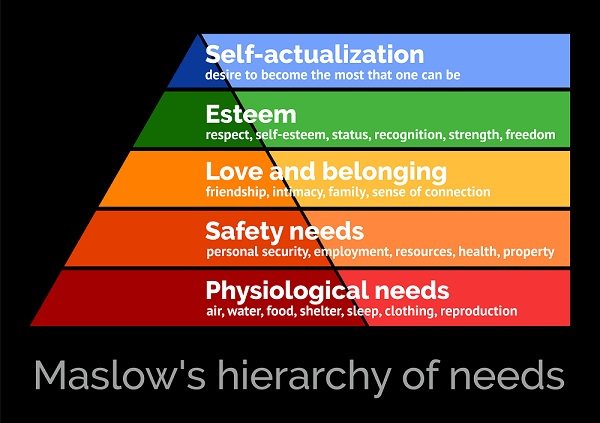
    According to Maslow’s hierarchy of needs, physiological and safety needs come first, followed by psychological needs. This includes intimate relationships, friendships, and esteem needs (esteem for oneself and the desire for reputation or respect from others).

    As we get these needs met, we keep moving up the pyramid toward what is known as self-actualization, or becoming who we are meant to become. However, one of the big stumbling blocks in our relationships and in getting our esteem needs met is our hesitancy to use our voice to express what we truly need or want.

    We hold back. We justify all the reasons why we should not speak up. We feel guilty or selfish. We want to maintain harmony. We don’t think we’re deserving of it. Or we expect others to know what we need and for them to just give it to us. This can lead to exhaustion, resentment, and unhappiness.

    Most of us feel comfortable expressing our needs when it comes to our physical health—I need food, sleep, a walk outside. However, expressing our emotional and spiritual needs feels vulnerable. What if the person in front of us says no, laughs, or dismisses us in any other way?

    The struggle and complexity of this is real, and it goes deep. But, on the other hand, how else can you make your needs and wants known? How else can you truly show up as your most authentic self?

    As the author Edith Layton said, “No one else in the wide world, since the dawn of time, has ever seen the world as you do, or can explain it as you can. This is what you have to offer that no one else can.”

    How to Find Your Voice

    “Stand before the people you fear and speak your mind—even if your voice shakes.” ~Maggie Kuhn

    Maslow outlined several behaviors that lead to self-actualization. Two of these behaviors include listening to your own feelings in evaluating experiences instead of the voice of tradition, authority, or the majority and being prepared to be unpopular if your views do not coincide with those of the majority.

    Taking this into account, I have outlined four steps below that I feel are important in finding our voice.

    Step 1: Get clear on what you want and need.

    You can do this through meditation, contemplation, journaling, and pausing each day to ask yourself: “What do I need right now—physically, mentally, and/or emotionally?” Check in with yourself without judging yourself, knowing that whatever you need is valid. This will help get you in touch with your needs and access that wisdom on a regular basis. 
    Step 2: Reflect on where in your life you can start asking for what you need.

    This might mean asking for assistance when getting the kids ready for school, asking for more focus time at work, or asking a friend for help. Think of one small thing and start asking for it on a regular basis.
    Step 3: Question what holds you back from asking for what you need.
    Reflect on childhood or adult experiences where you didn’t think your voice was heard or acknowledged, and how that impacts your voice now. I know feeling ignored is a huge trigger for me, but I’m starting to learn how triggers point to those places within us that still need healing. Take that information and use it to grow.

    Step 4: Practice.

    Sometimes people will comply with our requests, but sometimes they won’t. Sometimes people will agree with our opinions, and sometimes they won’t. Understand that people don’t have to give you anything and learn how to be okay with that. Ask for what you need, but don’t expect anything. Create a self-love practice that you can fall back on so that, no matter what, you can support yourself.

    And if someone regularly deprioritizes and disregards your needs, consider whether it’s in your best interest to maintain a relationship with them. Although no one has to give you anything, people who truly care will want to step up when they can. 

    Let Your Truth Be Heard

    “Find your voice and inspire others to find theirs.” ~Stephen Covey

    In a world where the volume of voices can drown out our own, finding the courage to speak our truth is a revolutionary act. Each of us holds within us a unique perspective, a story waiting to be told. Embracing our voice is not just an act of self-expression; it’s a declaration of our worthiness, our authenticity, and our right to be heard.

    As you navigate your own journey toward self-expression, remember that your voice matters. Your thoughts, your feelings, your desires—they are valid and deserving of acknowledgment. So dare to speak up, even when your voice shakes. Dare to share your truth, for it is in the sharing that we find connection, understanding, and growth.

    Let your truth be heard. Let your voice resonate with the world. For in doing so, you not only honor your own journey but also inspire others to find the courage to do the same.

  • Why People-Pleasers Lie and What We Gain When We Share Our Truth

    Why People-Pleasers Lie and What We Gain When We Share Our Truth

    “You’re a liar. People-pleasers are liars,” a friend said to me. I felt like I was punched in the gut. “You say yes when you mean no. You say it’s okay when it’s not okay.” My friend challenged me, “In your gentle way, begin to be more honest.”

    I believed the lie that pleasing people would make my relationships better. It didn’t.

    I decided to take my friend’s challenge to tell the truth. People didn’t have a relationship with me; they had a relationship with another version of someone else. They didn’t know me.

    People-pleasing was safe; it was how I hid and protected myself so I could belong. Besides wanting to belong, pleasing-people is a bargain for love. If I kept people happy, I believed I would be loved. If I took care of others, I believed I would be loved.

    Showing up differently in relationships is like learning a new dance. You may feel clumsy and awkward at first, but the old dance, while comfortable, is unhealthy. The old dance creates overwhelm, frustration, and resentment.

    I am now a recovering people-pleaser. My journey started when I faced the truth that I was a liar. The first step in change begins with self-awareness. Once you are aware, you can learn new dance steps. The new dance looked like saying no, tolerating less, and telling my truth.

    As I told the truth, here’s what I noticed in my relationships:

    First, I experienced true intimacy.

    As I was more engaged in being honest, others began to know me, not a fake version of me.

    In his book, Seven Levels of Intimacy, Matthew Kelly describes intimacy as “In-to-me-see.” I started saying things I’d never felt comfortable saying before—like “I see things differently” and “that doesn’t work for me.” Secret-keeping was killing my soul, so I also started opening up about the pain and brokenness I felt regarding my former spouse’s addiction and how I’d protected him at a cost to myself.

    When we share more of who we are with others, then we are known and loved, which is a powerful need in humans. I was not broken as a people-pleaser but broken open. I allowed myself to receive the love of others as I allowed them to see me. As a result, I experienced intimacy in a new way.

    Secondly, when we stop lying to others and ourselves, it builds trust.

    It is hard to love someone when you don’t trust them. Trust is the foundation of all relationships. When we are real, others trust our words and actions, and we become more trustworthy. We are no longer chameleons, adapting and saying what others want to hear when interacting with us, and trust grows.

    Lastly, when we pay attention to being more real, we are more fully engaged in our relationships.

    We are wired for connection. When we are engaged in bringing a greater depth to our relationships, the investment pays off. It’s like we are making a deposit in the relationship when we allow others to “see us,” and they in turn feel closer to us. As I began to share more in my relationships, it helped others to open up. One friend said, “Keep sharing; it helps us too!”

    Being more honest in our relationships is a dance worth learning. It improves intimacy, trust, and closeness in our relationships. After all, the alternative is being called a liar!

  • How I Lighten My Mood by Making a Bargain with the Universe

    How I Lighten My Mood by Making a Bargain with the Universe

    “Pain is what the world does to you; suffering is what you do yourself.” ~Gautama Buddha

    I don’t expect things to be a steady state of bliss.

    In fact, I agree with the Buddha that suffering is pretty much part of the human condition. Our expectations just get in the way of our experiences. I’m talking about your garden-variety suffering here, not the kind that comes with traumatic events that take you out at the knees or devastating clinical depression.

    I see the now-and-then emergence of lethargy or melancholy as part of the whole emotional spectrum. And, like stepping in water in your stocking feet, bound to happen from time to time for most of us. Plus, for me anyway, I think recognizing the difficult days enables me to better savor the wonderful and even the tremendously ordinary ones.

    Still, knowing that the spinning wheel is going to land on grey sometimes does not mean those days aren’t tough. For me, that greyness means my mood, my gait, even my ability to recognize the full bounty that is mine just feels heavier and more arduous. Sort of like moving through muck that slows your pace and clings to your boots.

    Just as I think those emotions are due to sometimes arrive, I also know they will leave—I just want to accelerate that departure. And I’ve found a way that works for me. I make a deal with the Universe.

    I speak this pact out loud—“I’ll try if you try.”

    I commit to trying to pull my boot out the mud by first focusing on my senses.

    Under the header of controlling what I can control, I might actively focus on taking in the smell of fresh coffee—holding the cup in my hands, without expectation, and just experiencing it. The rich smell, the playful bubbles, the warm solace held in a favorite mug. I try to let that singular moment envelope me, seeking nothing specific in return.

    Or I might stand at a window until I can feel the sun’s warmth on my face. I will then imagine my breath carrying that warmth down my neck to my collar bones, down to my fingers and into my belly. I’m not looking to be instantly “fixed,” just to prime the pump to receive and interpret information differently by bringing my senses and my nervous system into the equation.

    The Yoga Sutras, a text from perhaps as early as 500 BCE that codified yogic theory and practice (yoga with  “big Y,” way more than just the poses) reinforce the role of the nervous system in expanded consciousness. We take what we experience to be the truth, but as the theory goes, if you change what you feel/believe you experience, your conception of the truth changes.

    It’s like the ancient parable of the blind men and the elephant—you build your definitions of what is based on what you experience. My rationale proceeds then that if I alter my perceived inputs, the narrative that my nervous system spits out can also be altered.

    So that’s my part of the bargain—to widen the sense aperture and find a better experience. For the Universe’s part, I imagine it sending little gifts in return for my efforts—a great parking spot, the wave and smile of a colleague down the hall, a new local tour date for a favorite band.

    I don’t actually think the Universe is moving cars or colleagues or tour schedules to accommodate me. It’s simply me noticing. That doesn’t keep me from imagining a sort of an equal and opposite reaction in play that generates goodness in response to my attempts to notice goodness.

    I think of this noticing as a reframing of the “Toyota principle.” Long ago when my husband and I got a real car, we got a Toyota. Once we had the Toyota, we suddenly noticed all the other Toyotas on the road and wondered where they’d come from. They hadn’t suddenly flooded the market. It was more about moving the metaphorical antenna to recalibrate the signal—ah, I see things now.

    Actively being open to the light and marveling at its forms still doesn’t serve up a twenty-minute fix. It does remind me of all the good standing in wait for me and reinforces that “this too shall pass.” In fact, someone wise once told me “If you want to change something, you’ve got to change something.” These are my somethings.

    And so I commit to engaging my senses and being open to the beauty and love in my cup (even if my experience meter feels set to “low”). I believe that if I can do my part, I’ll again come into alignment faster with a Universe that offers no promises, but provides plenty of opportunity and wonder.

  • How a Numb, Phony Zombie Started Singing Her Own Song

    How a Numb, Phony Zombie Started Singing Her Own Song

    “Alas for those that never sing, but die with all their music in them!” ~Oliver Wendell Holmes

    Six years ago, I came across a line from an old poem that punctured my present moment so profoundly it seemed to stop time.

    On an average Tuesday, there I was, sitting at my desk, ignoring the stack of papers I was responsible for inputting into a spreadsheet and procrastinating as usual on the Internet instead.

    At this particular time, Pinterest was my drug of choice—anyone else?

    As I was aimlessly scrolling through wacky theme party ideas and spicy margarita recipes, suddenly, here came this old-school poet Oliver Wendell Holmes with these words that leapt off of my laptop screen and stung me like fourteen different bee stings to the heart:

    “Alas for those that never sing, but die with all their music in them!”

    I was floored. It was as if Oliver’s invisible hand had reached into my day and popped the protective bubble of my well-established comfort zone, sending me crashing down to the ground of an uncertain reality that I had so expertly managed to hover above for years.

    When I landed inside of the truth of my life for the first time in a long time, here’s what I saw:

    A recent college grad whose dad had died in the first few weeks of her “adulthood,” who took a job in the marketing department of a reputable company because it “looked good,” who spent her time outrunning looming fears of growing up and grief by seeking refuge in extraneous purchases, greasy slices of pizza, late nights under laser lights, and the bottoms of bottles of wine.

    A numb, phony zombie in red lipstick who had forgotten her own song.

    As a little girl, effortless music oozed from my pores. I could laugh, cry, dream, question, create, and believe in magic, and other people, and myself, with such abandon; it was like I was a tiny conductor leading a spontaneous orchestra of full self-expression, always unrehearsed and totally freestyle.

    And I didn’t just speak, I SANG! And I didn’t just walk, I DANCED!

    Had I put no soundproof walls up around my being then? I could recall what it was like to feel that free. But the memory of my smaller, wilder self marching proudly to the beat of her own drum felt so distant from where and how I was living.

    So instead of continuing on with the endless spreadsheet that I was responsible for completing that afternoon, I decided to take a break. A long break. I found a sunny bench outside of my building where I could go to sit and think.

    Then suddenly, The Little Mermaid swam right into my stream of thought. I closed my eyes and saw the scene where Ariel trades in her powerful voice to the evil sea witch, Ursula, for a pair of legs. She is so certain that becoming a part of the human world is more important to her than speaking her own truth and singing her own song. And I wondered…

    In what ways am I living at the expense of my own inner music? 

    I began to examine the situations in my life where I found myself exchanging an authentic piece of who I was out of fear, in order to achieve a particular outcome in the world. Here are just a few places in my life where I discovered this was so:

    I’d sacrificed my passion, by accepting a job I merely tolerated, because I was afraid of failing and wanted to give the appearance of being successful.

    I’d pushed down my grief, numbing it with shopping, food, and alcohol, because I was afraid of breaking down and wanted to give the appearance of being “fine.”

    I’d sacrificed authentic connection for toxic friendships because I was afraid of being lonely while I found the right friends and wanted to give the appearance of being liked.

    I’d sacrificed my authenticity and ended up living a small life because I was afraid of vulnerability and wanted to give the appearance of being in control.

    That was the moment when I decided I was ready to ditch the legs—everything that was just about appearances—and dive deeply into my own true passion, grief, and longings for connection and authenticity.

    I quit my job and enrolled in a spiritual studies certification and celebrant ordination program.

    I hired a therapist to help me heal and a coach to help me dream; these two women would become some of the fiercest advocates for me and my inner music that I’d ever meet.

    I started taking courses in personal development, joined a business mastermind, and got myself into as many meditation circles and yoga classes as I could.

    I began to play around with my expression again, belting my favorite songs from my childhood, wearing colors that sparked aliveness in me, scribbling lines of poetry till I fell in love with my own heart’s language again, and dipping my fingers in rainbows of paint without a plan.

    It felt so good to seek for the sake of seeking, and to create for the sake of creating!

    I finally started to let some of the people that I loved and trusted in enough to really see, hear, and hold me.

    And I got present, like really, really present, slowing down for long enough to fully inhabit whatever moment I was in. From that place, it became so natural to tap into the very real magic that had always existed within and around me.

    I recognized the miraculousness of my two feet on the ground, the blessing of my breath, and the rhythm of my heartbeat. I started to notice the sound and sensation of my full-body NO and YES. This new level of awareness polished my lens of perception, allowing me to see my life through my child self’s eyes once again—from a place of curiosity, excitement, imagination, and hope!

    My dive has brought me to terrifying places where I’ve wanted to sell myself out to the sea-witch over and over again, but still, I keep on swimming.

    For my song cannot be silenced, and neither can yours, though both of us will spend months, if not years living in fear of what it will take to truly sing.

    There is so much music inside of you and me. And to be the highest expression of who we are here to be, we’ve gotta sing our songs and sing em’ loud! But to live like that, we’re going to have to give ourselves permission to feel, say, and do what’s true.

    So, maybe owning your truth doesn’t look like finally quitting a job or grieving the loss of a loved one. But I challenge you to really take some time to stop and scan through your life with no judgment, just wide-open eyes and a loving heart, and ask yourself:

    What do I desire? What fear arises in the face of my desire? Where am I selling myself out to run/hide from my fear? And what must I do to express the full potential and possibility of achieving my desire?

    Do you remember the fierce and fearless drive that you had as a child to learn and grow? Can you imagine how many times the little you tried and failed and tried again at mastering the skills you needed to really engage with life—walking, reading, writing, using your words to ask for what you want, feeding yourself, tying your shoes, wiping your own bum, etc.? Where does that invincible tenacity go?

    The answer is: YOU’VE STILL GOT IT!

    It has been and always will be within you. You and I have the capacity to thrive in any and all areas of our lives. How? By becoming brave enough to stop and listen to our own music, then allowing ourselves to be truly guided by it as we go!

    Belt out your song like your life and the lives of future generations depend on it, because they do. And if you miss a beat or sing a note or two out of tune, don’t be afraid to own it. It’s all just a part of the dance. 

    If you’re looking for me, I’ll be here, diving deep into the depths of my being, tuning into my own music, swimming through fear, and daring myself to sing. Over and over and over again until my very last breath.

    And you? It is my hope that you will have the courage and the willingness to go deep and begin unleashing the divine music that only you were born to sing.

  • How to Get Through Your Darkest Days: Lessons from Addiction and Loss

    How to Get Through Your Darkest Days: Lessons from Addiction and Loss

    “You are never stronger…than when you land on the other side of despair.” ~Zadie Smith

    In the last years of my twenties, my life completely fell apart.

    I’d moved to Hollywood to become an actor, but after a few years in Tinsel Town things weren’t panning out the way I hoped. My crippling anxiety kept me from going on auditions, extreme insecurity led to binge eating nearly every night, and an inability to truly be myself translated to a flock of fair-weather friends.

    As the decade wound to a close, I stumbled upon the final deadly ingredient in my toxic lifestyle: opiates. A few small pills prescribed for pain unlocked a part of my brain I didn’t know existed: a calm, confident, and numb version of myself that seemed way more manageable than the over-thinking mind-chatter I was used to.

    At first the pills were like a casual indulgence—I’d pop a few before a nerve-wracking audition or first date, the same way other people might have a few drinks before going out on the town. But my casual relationship to opiates was short-lived: soon the pills were no longer reserved for awkward dates or nerve-wracking auditions, and instead necessary for any type of outing or interaction.

    I knew I’d crossed an invisible line when I began to feel sick without a “dose” of medication. The physical pain they’d been prescribed for had long subsided, but they’d created a need that only grew with more use. Soon I became sick if I didn’t take any pills, which is when I began going to any lengths to get more.

    I wanted so much to stop but felt trapped on a terrible ride: I’d wake hating myself for what I’d done the day before, and with deep shame I’d vow earnestly to quit—then afternoon would come and with it, withdrawal symptoms. As my stomach would turn and my head would spin, I’d lose the resolve to stop and begin searching for my next fix. With that fix would come a few hours of relief, followed by another cycle of self-loathing, a vow to quit, and more failure.

    It was a spin cycle that likely would have killed me had life not intervened in ways that at the time felt devastating; in a span of two weeks my “normal” façade collapsed and, with it, most pillars in my life. Like a house of cards toppling, I lost my job, car, relationship, and was evicted from my home.

    It felt like a cliché country song where the singer loses everything, except in those songs that person is usually likeable and innocent—but in my story, I felt like the villain.

    As I watched my entire life crumble around me, I felt no choice other than to return home and seek the shelter of the only person who had always been there for me—my mom.

    The mom who had raised me with morals like honesty, accountability, and kindness, although I hadn’t been living them for a while. The mom who had struggled raising two kids alone, gotten us off food stamps by going to nursing school, and who watched helplessly as I descended into the same cycle of addiction that had taken the life of my father.

    She told me I could stay if I was sober; I vowed to try, though I’d stopped believing my own promises long before.

    In the recovery program I found soon after, there was an oft repeated saying on every wall: “it’s always darkest before the dawn.” If taken literally, it makes you think about how dark the night sky is before dawn breaks… how heavy, looming, and consuming. Before the light returns, it can feel like the darkness will never end.

    That was how my early days sober felt.

    But as I cobbled together a few weeks and then a few months, I began to feel the faintest bit of trust in myself. Through abstinence and therapy, mindfulness and a sober community, the hopelessness that had seemed so all-consuming began to crack open and let in some light.

    I moved out into my own apartment, returned to school to complete a long-sought college degree, and had a waitressing job that I loved. Then, just after I achieved one year sober, I got a phone call from my brother that would change everything.

    “Melissa, you need to come home,” he said, his voice thick with tears. “It’s mom.”

    My stomach dropped as I gripped the phone, suddenly feeling about five years old. I’d find out later it was a heart attack.

    I felt the darkness descend again.

    In the days that followed her death I felt like a dependent child that was unable to care for myself. I dragged myself through brushing my teeth, dressing, and arranging her funeral; it felt like my heart had stopped along with hers.

    The same thought kept circling the drain of my head—how can I live the rest of my life without my mother?

    I couldn’t imagine not having her at my graduation, wedding, or when I became a parent. Her disappearance from my future brought up a dread much worse than that of the previous year— but as I began to settle into my grief, I realized I had a path through this moment, if I were willing to take it.

    The tools I’d forged in sobriety would prove to be useful in the dark days that followed. I share them below as an offering for anyone who travels through a dark night of the soul: simple steps to keep in mind when you can’t see a path forward.

    Take things one day at a time.

    In sobriety, you learn that imagining your whole life without another drink or drug can be so daunting that you just give up and get loaded. So instead of borrowing future worry, you learn to stay in the week, the day, and the moment.

    I didn’t have to know what having a wedding without my mother would be like—I just needed to eat breakfast. I didn’t need to imagine my graduation—I just needed to get myself through one more class. As I pieced my future together one moment at a time, I found that I could handle the emptiness in bite size pieces. I didn’t have to figure it all out—I just had to keep going.

    Allow feelings to come and trust that they will go.

    Much of what I’d been running from as an addict was the discomfort of my feelings. I didn’t want to feel rejection, so I contorted myself to be liked; I didn’t want to feel sadness, so I busied myself with the next activity. In recovery I learned that we can run from feelings all we want, but eventually they catch up to us in some form. Instead of running I’d learned to allow; instead of busying myself I’d been taught to turn toward pain and trust that it wouldn’t last forever.

    Though this was easier said than done, some part of me knew that running from the grief of my mom’s death would only snowball into a freight train later. I’d scream in my car as I seethed with the unfairness of it all; I’d rock with sobs on my couch when the sadness became too much. It wasn’t pretty and it felt terrible, but when I let the grief shake through me. I found that there would always be an end… that at the bottom of my spiral a thread of mercy would appear, and I would be able to go on.

    Tell the truth.

    From a young age, I felt much more comfortable in a mask of smiles and jokes than sharing how I was actually doing at any given moment. Though getting sober had helped me shed layers of the mask, I still found myself trying to likeable, approved-of, and “good.” But as grief zapped my energy and ability to make myself palatable, when people asked how I was doing I started to be honest.

    Sharing the pain I felt after my mom’s death was like standing naked in the middle of the street—I wasn’t used to crying in front of people and didn’t think they’d like me when they found out I wasn’t always “fun and easy going.” But it was exactly this type of vulnerability that allowed true friends to materialize, old connections to deepen, and the support I longed for to appear.

    Allow yourself to be forever changed.

    In recovery from addiction, I began to think of my sobriety date as a second birthday—the start of an actual new life. Though the way my former life had burned to the ground was painful, I welcomed the chance for a new start.

    But when my mom died, I didn’t realize that losing her would again scatter me into a thousand unrecognizable pieces—pieces I kept trying to fit back together but weren’t ever going to be the same, because I wasn’t.

    Once I allowed my life, relationships, and priorities to be changed by my grief, I found a self that was stronger, more resilient, and somehow more tender. I never would have chosen the form of this lesson, but I came through these experiences a more authentic version of myself… an overarching goal of my life.

    *

    It’s now been seven years since my mom’s death, and I’ve been sober for eight. As my journey continues to unfold, I never lose sight of how broken I once was and how dark things seemed. I also know that the struggles of life aren’t over; they’re part of being human and living a full life.

    But something I now keep in mind is that it’s always darkest before the dawn—I know I don’t have to always see the light…

    I just have to keep going.

  • Why Speaking My Truth Is the Cornerstone of My Recovery

    Why Speaking My Truth Is the Cornerstone of My Recovery

    “When I loved myself enough, I began leaving whatever wasn’t healthy. This meant people, jobs, my own beliefs and habits—anything that kept me small. My judgment called it disloyal. Now I see it as self-loving.” ~Kim McMillen

    I like to think of my inner self as a curly-haired stick figure who lives inside my chest cavity. Like most inner selves, mine has a simple, childlike quality. She smiles when she’s happy and cries when she’s sad. She has an intuitive sense of what is right and wrong. She speaks her needs simply, the way a young girl might.

    My inner self and I are on good terms nowadays, but it hasn’t always been this way. When I was addicted to booze, food, and relationships, I treated my inner self like a prisoner.

    For years, I dazed her with whiskey and wine and snuck away to make rash decisions under the light of the moon. Through a groggy haze she would slur warnings: “Don’t drive! Don’t sleep with him! It’s dangerous!” But I had abandoned her, lost in the sweet abyss of another blackout, and left her alone to handle the consequences that met the body I’d left behind.

    As I got older, I sought love in the way the women of my family had for generations: by getting thin. I fed my inner self rations and scraps, barely enough to get by. Her hungry cries were met with six almonds, a tall glass of water, one slice of bread.

    As my eating disorder progressed, I purged after most meals, eyes watery and kneecaps bruising against the linoleum floor. I monitored my inner self with scornful eyes. She shrunk under my gaze.

    As you might imagine, playing captor to my inner self got very tiring. I felt a wave of relief when I became romantically involved with a partner and could focus my attention on him instead.

    Finally, a respite! I was no longer trapped alone with my inner self and her incessant whining, her needs, her uncontrollable feelings! By contrast, he seemed uncomplicated. Unbroken. Better than I could ever be.

    Over the next two years, my visits to my inner self became more and more infrequent. She gathered dust like a china doll.

    Sometimes—after particularly debilitating hangovers, tortured binges, or grueling arguments with my partner—I would recognize, with a sharp burst of clarity, the unmanageability of my predicament.

    Remorsefully, I would vow to do better. I would rush back to my inner self and pant, out of breath, “This is the last time. I won’t treat you so badly again.” But those promises quickly collapsed under the weight of my shame.

    To alleviate my self-loathing, I cracked the whip above my inner self, desperate to improve. “Work harder!” I shouted. ”Do more!” “Be better!” “Fix yourself!”

    Around the addiction carousel I went, stumbling from drinking to eating disorder to codependency to perfectionism. My inner self bore the brunt of my cruelty. Eventually, she stopped trusting me entirely.

    Years of therapy and self-reflection later, I reached an impasse.

    By most definitions of the word, I was utterly free; I made my own work schedule, enjoyed financial security, and could travel any time, anywhere. In the presence of friends, I radiated enthusiasm and laughed straight from my belly. But in my own company, when the afternoon sunlight cast shadows across my carpet and the muted sounds of the city came through my open window, I felt utterly alone.

    I couldn’t deny the truth: I was trapped in a life dictated by vicious, anxious cycles. The life I wanted—the liberated, peaceful, inspired life—would be unattainable until I confronted my addictions. Not just one of them, but all of them. I had to tug the weed from the soil at the very root.

    And so I took a deep breath and stepped off of the addiction carousel. Squinting and dizzied beneath the carnival lights, I took a hard and honest look at my inner self—the first I’d taken in years.

    She had become unrecognizable. Emaciated, exhausted, fearful. Anxiety ran through her veins, rich and red as blood. She was afraid of me. And her voice—the voice that had called out:

    “I’m overwhelmed. Can we slow down for a second?”
    “I’m tired. Can we go home and sleep?”
    “I’m so fucking sad today.”
    “Don’t sleep with him! You don’t even know him!”
    “I’m doing the best that I can.”
    “Can you hear me?”

    That voice had disappeared entirely. Like newborn babies whose cries go unanswered, my inner self’s voice had died. My heart broke as I reflected on the years of neglect I’d shown her.

    I realized then that my newfound sobriety was much more than a refusal to pick up the bottle. It was an uncompromising commitment to rebuild trust with my inner self. After years of neglect, I had to show her, with my words and actions, that I would care for her

    Since then, I’ve come to learn that each of us enters recovery with a traumatized inner self. Every time we acted addictively by taking that drink, or eating all three pints, or spending our savings, or losing ourselves entirely in our lovers, we neglected that quiet voice that was always there, that knew we were harming ourselves, that begged to be treated with love.

    I have been untangling my myriad addictions for almost three years, and this conception of my inner self has been my greatest tool in my recovery. Every time my inner self speaks up, I am presented with a choice. I can listen and act accordingly. Or I can disregard her wishes and begin another cycle of neglect.

    In recovery, my work is to rebuild trust with my inner self by feeling and speaking her truth by:

    • Naming and feeling my feelings instead of numbing them
    • Prioritizing my reality over others’ perceptions
    • Setting boundaries with others

    Naming and Feeling My Feelings

    During my addictions, I became an expert at self-medicating my anxiety, shame, fear, and sadness. A hearty glass of cabernet, I believed, was the respite I deserved after a long, weary day of trying not to feel my feelings.

    When I woke up the next morning with a headache and drinker’s remorse, anxiety was the only emotion accessible to me. Grief, loss, anger, and sadness were buried under layers of shame that hardened over time. I effectively exiled my full spectrum of human emotion.

    Recovery, especially early recovery, has been a process of reclaiming the sensitivities that make me human. Without the vices that numbed my heart like Novocain, my feelings arise swiftly, uncensored and colorful. Not just the painful ones, but the happy and beautiful ones, too. I cry most days with equal parts sadness and joy.

    At times, I feel like there must be something wrong with me, as if someone cranked the volume dial on my emotions to the max and left it there.

    My work in recovery is learning to sit with, and work with, those feelings. What makes this challenging work possible—enjoyable, even—is the relief my inner self feels when, for the first time in ages, her simple truth travels from her heart to my lips without interruption. With every potent emotion comes an opportunity to make her feel seen and heard.

    Prioritizing My Reality Over Others’ Perceptions

    When I was in the throes of my addictions, I became an expert at keeping up appearances. Nightly, my inner monologue went something like this:

    Can I get away with sneaking another drink? I wonder if Joe saw me pour the last two… Probably better to put this one in my water bottle…

    I wonder if this bathroom has a fan to hide the sounds of my purging… I better turn the water on. And fake a sneeze or two to explain my watery eyes…

    Did they notice that I blacked out at the party last night? God, I hope not… How can I find out what I said without seeming suspicious?

    Managing appearances became my part-time job. I cared more about others’ perceptions of my reality than my own reality. White lies and half-truths flooded my conversations, even when I had nobody to impress and nothing to prove. Every time I distorted my story, I became more distant from my inner self.

    In recovery, I uncompromisingly follow my inner self’s judgment. I am accountable to her first and foremost. My friends’, family, and colleagues’ opinions of me are secondary because, at 1AM when I’m sleeplessly staring at the ceiling, my inner self is the one I’m stuck with.

    In recovery, when I’m swept away by the cacophony of others’ needs and wishes –

    “Will you sign up for this?”
    “Want to go back to my place?”
    “Can you help?”
    “Call me back”
    “I need—”
    “Will you—”
    “I want—”

    I get quiet. I listen. And I whisper, “What do you really need right now?”

    And this time, I really listen.

    Setting Boundaries With Others

    As a recovering people-pleaser, I hate disappointing others. I spent most of my life avoiding it as much as possible. As a result, my calendar was packed with tedious obligations and my relationships were all give and no take. I left social interactions to massage the corners of my mouth, which ached from forcing a smile. I hooked up with people I didn’t even like. Basically, I felt like a shadow of myself.

    In recovery, the reason why I say no to that beer is the same reason I don’t go to the party, or don’t sleep with that stranger, or don’t call during my lunch break. The same reason I say “No thanks, I don’t drink” is the same reason why I say “I felt hurt when you said that” or “No, I won’t.”

    Boundaries are honesty in action. Every time I set one, I teach my inner self that she can trust me.

    When I get nervous to set a particular boundary, I remember that my inner self is gaining strength under my protection and care. In this delicate stage of early recovery, she is fragile, like a seedling. She requires a safe, secure, reliable environment in which to grow. If I’m committed to bringing her to life, it’s my responsibility to shape that environment—even if that means erecting a fence to keep the pests out.

    My addiction was characterized by living out of alignment with my inner self. My recovery, by extension, must be characterized by the opposite. For me, recovery and speaking my truth are inseparable.

    I’ve heard folks describe addiction as one’s isolation from others. I think that first and foremost, addiction is one’s isolation from one’s self.

    The more we treat our inner selves with compassion, the less important it becomes to please others and manage appearances. Our emotions thicken, arise, and depart. When we break the cycle of abusing our inner selves, our own company becomes bearable. And when our own company becomes bearable, sobriety becomes possible.

  • 9 Easy Ways You Can Speak Your Truth Today

    9 Easy Ways You Can Speak Your Truth Today

    “We are constantly invited to be who we are.” ~Henry David Thoreau

    When your circumstances invite you to present your true self to others, do you accept the invitation?

    I think of authentic communication as sharing the unfiltered essence of ourselves with others, including our identities, feelings, needs, boundaries, and desires.

    It’s taken me many years to learn how to communicate this way. I’ve written in prior posts that speaking my truth once felt like an insurmountable challenge, like rolling an elephant up a hill or finding another living being who actually likes Nickelback. (Anyone? No?)

    I was plagued by inauthenticity.

    I would leave conflicts wishing I’d spoken up for myself; leave social settings feeling totally drained; over-commit to obligations and under-commit to activities that brought me joy; agree to be intimate with people, only to later regret my decision; and give more than I received in the majority of my relationships.

    Somewhere beneath the layers of people-pleasing, white lies, and insecurity, I knew there was a bold, confident, self-actualized woman. I wanted, more than anything, to become her.

    On the journey to becoming that woman, I have learned that authentic communication is like working a muscle: hard at first, but ever easier with exercise.

    As with all exercises, you don’t run the 400 meter dash right out the of gates. You stretch; you jog a lap; you warm up.

    Here are nine easy ways you can warm up your authenticity muscle today to prepare for a lifetime of authentic communication.

    1. Name how you feel, right now, as you read this.

    “There is something wonderfully bold and liberating about saying yes to our entire imperfect and messy life.” ~Tara Brach

    Let’s start off on the right foot. Take thirty seconds to reflect on how you feel right now. Notice what’s going on in your heart; notice what type of tension you might be carrying in your neck and shoulders; notice how it feels to let a deep breath land in your chest.

    Perhaps you’ve been operating on autopilot since the moment you woke up and reached for your phone. Perhaps you’ve stumbled down an Internet wormhole, and this is the first time in hours you’ve remembered you have a body. In order to communicate your feelings authentically, you first must know how you feel.

    2. When a friend/family member/barista asks how you are, tell them the truth.

    “The speaking will get easier and easier. And you will find you have fallen in love with your own vision, which you may never had realized you had… And at last you’ll know with surpassing certainty that only one thing is more frightening than speaking your truth. And that is not speaking.” ~Audre Lorde

    Social convention tells us that there are only two acceptable answers to the question “How are you?” “Good” and “Fine.” This is a microcosmic example of our cultural disdain for sharing our authentic feelings. Nonetheless, the habit persists.

    Remember: Inauthenticity breeds inauthenticity. Authenticity breeds authenticity. Give yourself permission to say “I’m a little sad today, but I’m hanging in there” or “I’m fantastic; today’s been an inspiring day” or “I’m so stressed I can’t even feel my face.”

    Whatever’s going on for you, give yourself permission to share it. These small moments of authenticity replace the loneliness of emotional isolation with the belonging of vulnerability, and allow you to receive others’ gifts in the form of compassion and empathy.

    3. If you have nothing to say, embrace the silence.

    “To become authentic, we require a thirst for freedom.” ~Don Mateo Sol

    As a recovering people-pleaser, I spent much of my life believing it was my responsibility to facilitate, or ease the tension in, conversations. For many years, I feared “awkward silences” the way someone else might fear spiders or clowns.

    First dates, group gatherings, work parties, and girls’ nights found me paving endless roads of conversation. For every answer, I had a follow-up question, and in every second-long pause, I rushed to find a story to tell.

    Eventually, I realized that my silence-avoidance only led to 1) complete emotional exhaustion, and 2) many moments where I looked back and wondered, “Why did I even say that? I don’t think cybernetics are interesting at all…”

    Free yourself from the pressure to perform. Embrace the silence. Sometimes, the most authentic response is to say nothing at all.

    4. When someone makes reference to a show, movie, or news story you haven’t seen, tell them you haven’t seen it.

    “I have the right to say ‘I don’t know.’” ~Edmund Bourne

    I warn every new friend that I am pop-culture illiterate. If you name a TV series, movie, actor, actress, or rising pop star, the odds are I have no idea who she/he/they are. (I’m pleased to report that last week, I watched The Godfather, and on my list for next week is Breaking Bad. I’m making progress in this department.)

    Anyhow, in the past, when friends made reference to such icons in conversation, I often feigned familiarity to help the conversation flow more easily. These were totally inconsequential white lies, right?

    I’m not so sure. White lies add up, like small bricks laying the foundation for a falsified persona. I hyperbolized my knowledge because I wanted to feel a sense of belonging. (Nothing malicious about that: we all want to belong!) But presenting a false self in order to feel a sense of belonging doesn’t generate a real sense of belonging. It simply makes our authentic selves feel less acceptable.

    Tell your friends you haven’t seen the most recent episode of Game of Thrones. Liberate yourself from the impossible responsibility of being all-knowing.

    5. When someone asks your preference on a simple matter, tell them the truth.

    “You denying your heart’s desires is not noble. It’s a waste of some damn good desires.” ~Jen Sincero

    If you really pay attention, you’ll find that your daily life is chock full o’ simple, tiny choices, like:

    Where do you want to go for dinner?

    What do you want to watch on Netflix?

    Where should we meet?

    What are you in the mood for?

    In the past, my de facto response was: “I don’t care.” (Can you relate?) But by “I don’t care,” what I really meant was: “I really want a burrito, but what matters more to me is that you’re happy with where we get dinner. I would rather sacrifice that burrito and deal with less-than-satisfying pizza than bear the burden of your disappointment. So can you pick?”

    The truth is, I did have a preference. It was just buried under layers of people-pleasing.

    Get in the habit of honoring your preferences, even if they’re seemingly inconsequential. After all, today it’s what to watch on Netflix, but a year from now, it might be what city to move to, or whether or not to have a second kid, or what to do with your lottery winnings.

    6. Tell someone you care for that you care for them.

    “Courage is like a muscle. We strengthen it by use.” ~Ruth Gordon

    A lot of literature around authenticity and truth-telling centralizes around saying no, boundary-setting, and self-care. That’s all well and good, but true authentic communication addresses both sides of the vulnerability coin: speaking truths that are hard, painful, or have the potential to distance others, and speaking truths that are intimate, loving, and have the potential to bring people closer. Such truths are equally courageous.

    When we communicate care for others, we expose the soft underbelly of our hearts. We acquiesce omnipotence over our own emotional state and give another person the power to affect us, sometimes deeply.

    Today, take a moment to tell someone you care for them. It could be your mom, your coworker, or your mailman. Let that sweet heart of yours peek out from its shell.

    7. Acknowledge one thing you really want.

    “A lot of people are afraid to say what they want. That’s why they don’t get what they want.” ~Madonna

    There are a lot of things I want. I want a new blender. I want to enjoy my own company more. I want more friends. I want to make six figures. I want to spend less time working—on my business and on myself—and more time having fun.

    Our desires are a critical part of who we are. They reflect our values and our identities. When we’re not in touch with our own desires, we’re susceptible to putting others’ needs before our own.

    If you’ve been out of touch with your own desires for a long time, saying even one thing you want—something as life-altering as a new job or as contrived as a new blender—can be scary and revolutionary. For now, give yourself permission not to worry about how you might get it. Just notice how it feels, to really want this thing you want.

    8. For fifteen minutes, be without technology. Bonus points if you’re in nature.

    “If you want more time, freedom, and energy, start saying no.” ~Unknown

    At our core, we humans are intrinsically creative and innovative. However, it’s challenging to summon our deepest, truest, most authentic selves when we’re bombarded with stimuli from every direction. Many of us spend hours every day merely skimming the surface of life, hopping from app to screen to notification.

    In such a state, we’re not thinking deeply. We’re hardly here at all. If we’re constantly in response-mode, how can our inner selves emerge?

    For fifteen minutes, sequester yourself. No phone, no screen, no TV. You can drink your coffee while staring out the window. You can sit on the carpet and stretch your legs. You can go sniff your flowers, or dive nose-first into the green, green grass. Give your mind the space to explore uncharted territory, and watch with curiosity what arises.

    9. If you feel uncomfortable, scared, resentful, sad, angry, or guilty, name it.

    “Don’t light yourself on fire trying to brighten someone else’s existence.” ~Charlotte Erickson

    Make your way to any water cooler or happy hour and you’ll find plenty of folks complaining, comparing, and airing their grievances. But genuine expressions of hurt, discomfort, and sadness are far rarer.

    Growing up, I made it my mission to brighten my loved ones’ days and hold space for their unhappiness. With time (and therapy), I realized that “The bubbly one” was a role I had assigned myself—not my God-given duty.

    After so many years of tampering down my sadnesses as if they were pests, I needed to retrain my brain and body to notice my own discomfort.

    Today, give yourself permission to acknowledge when you feel off. You can write how you’re feeling on a post-it note or simply whisper the words “I feel sad.”

    The inner liberation that comes as a result of this simple acknowledgement can feel enormous. It removes the conflict between what you feel and what you portray to the world around you, which is what authentic communication is all about.

    Authentic communication has made my life simpler. No longer do I spend precious moments juggling my false personas and my little white lies. Working this muscle has been worth every growing pain because it’s enabled me to live in alignment with my inner truth and find freedom, self-respect, and confidence along the way.

  • What I Did to Survive: Not Proud but I Forgive Myself

    What I Did to Survive: Not Proud but I Forgive Myself

    “Forgive yourself for not knowing better at the time. Forgive yourself for giving away your power. Forgive yourself for past behaviors. Forgive yourself for the survival patterns and traits you picked up while enduring trauma. Forgive yourself for being who you needed to be.” ~Audrey Kitching

    I used to suffer from survivor’s remorse.

    What does this mean exactly? Well, I was ashamed of the things I did to survive.

    As I reflected back on my life, I’d get filled with sadness, shame, and regret.

    Sadness because I did things that were against my moral values when I knew right from wrong.

    Shame because I did things that I never thought I would have to do, in order to survive.

    Regret because I was involved in drugs, sex, and violence.

    I had kids to feed, and they depended on me. As a single parent, I was willing to do whatever I had to do for them. I would sell tools and electronics for gas money. I would sell plates of food to buy diapers. I even chose to sell my body. I did whatever I needed to do to get by.

    I hurt family and friends along the way and lost their trust with my broken promises. Promises that I would pay back money that I borrowed, knowing I wouldn’t be able to. I used people for my own personal gain. My pain caused other people pain.

    I was risking my whole life, and I didn’t even realize it. I could have gone to jail and lost my kids, all because I was trying to provide for them.

    How Did I Get Into a Life of Drugs, Sex, and Violence?

    Well, I had a rough childhood; I dealt with physical, verbal, and sexual abuse as a child, and witnessed abusive relationships amongst relatives and family friends . I processed this into rejection, fear, and anger.

    I struggled to feel love because I equated it with hurt. My family members said they loved me and then did things that caused me pain. I thought this must be love; this is normal behavior.

    The hurt turned into anger, and then I started to resent people. This caused extreme paranoia.

    Still, despite my relationship fears, through a twisted turn of events, I had a baby at fifteen years old. I told myself I would do anything to make sure my son didn’t have the same life I’d had.

    Then at eighteen years old I was a homeless high school senior.

    My Survival Tactics

    I found myself on public assistance. I was in situations that evoked the exact feelings I’d experienced as a child, when I saw my mother depend on welfare and food stamps to get by. I felt impoverished, worthless, and dependent on a system to survive.

    I found myself wrapped up in an abusive relationship, with three kids now, around drugs, around violence, and I saw no way out. This was my life. I wanted to leave, and I tried to many times, but he held me at gunpoint, locked me in a closet, and even choked me at times.

    Domestic violence is a learned behavior. I witnessed it growing up and he witnessed it as well. This abuse was familiar. I didn’t know if I was prepared for the fight. I needed to be loved, so I accepted any love I could get even when it hurt.

    I eventually chose to break the cycle and free myself from the lifestyle I was caught in, but it left me at ground zero. I had to fight for myself, for my kids, for our future. I had to get out of this abusive relationship before he killed me, or I killed him. I’d had enough!

    But leaving was just the beginning of change, and not the end of my stress. My fight-or-flight response was constantly activated. I was always thinking, “I got to do something. My kids need shelter, food, and clothing.”

    I needed food stamps, I needed public assistance, I needed section 8 housing. I needed everything I could get to survive.

    I was doing things that I knew were wrong—lying and stealing what didn’t belong to me—but I felt like I had no choice. I couldn’t call anyone to come save me. I had already borrowed money from people. I couldn’t depend on help from my kids’ father. No one was coming to protect me. I had to save myself.

    I felt helpless. At this point I had a high school diploma, little job experience, and no stability. I was in complete survival mode.

    I did not possess the language to tell someone that I was hurting, that I was struggling and needed help. My fear (ego) told me that no one would listen, and no one would care.

    I feel so ashamed for lying to my mother, for stealing, for degrading my body. I know this is not who I am, but looking back I can see these were my survival tactics.

    I only wanted to survive, and guess what? I did.

    But eventually I wanted more than that. I wanted freedom. The freedom to let go of the past. These secrets that I was ashamed to say out loud.

    This was over fourteen years ago. I was still holding on to guilt.

    My Accountability

    I never wanted to talk about my past because it was painful. I wanted it to disappear.

    I didn’t want to admit that I was broke with $2.29 in my bank account, with three kids.

    I didn’t want to admit that I was on food stamps because I couldn’t afford food.

    I didn’t want to admit that I’d taken other people’s property for my personal gain.

    I didn’t want to admit I’d used my body for financial gain.

    I didn’t want to admit that I was in pain from different traumas, and I was self-medicating with drugs.

    Still, I had to stop and realize that I’d made it and could now focus on thriving—but I could only do that if I forgave myself. That required self-compassion. But I also realized I couldn’t blame anyone else; I had to take complete and total responsibility.

    I had to take responsibility for my choices. I had to take responsibility for doing what I felt I had to do to survive.

    Note to self: “Beating yourself up for your flaws and mistakes won’t make you perfect, and you don’t have to be. Learn, forgive yourself, and remember: We all struggle; it’s just part of being human.” ~Lori Deschene

    My Forgiveness and Pride

    I had to forgive myself for not understanding my power and for inheriting patterns from the trauma I’d experienced.

    I also had to give myself credit for breaking the cycle.

    I remember once, I was having a conversation with my three daughters, and I was telling them about a time when they were little, and I couldn’t afford to do certain things. One of my daughters said, “Aww, Mom. You used to be poor?”

    In that very moment, I realized that I had survived. And I had created a better future for myself and my kids. Not only did I make it, I provided a lifestyle for my kids without drugs, sex, or violence.

    I apologize if I was toxic energy in anyone’s life, including my own. My forgiveness doesn’t mean that the guilt never existed; it just means I’m letting go of the shame and pain that once controlled my life.

    I used to feel a sense of strength because I’d endured a high amount of abuse, but deep down I was so fragile.

    At this very moment in my life, I now choose to measure my strength by how quickly I release things that threaten my peace of mind.

    I looked at my sadness, I looked at my regret, I looked at my shame straight in the mirror. I acknowledged them, accepted my past, and decided they would no longer control me. This was my first step toward my freedom.

    I made mistakes. I was doing the best I could. I realized I was afraid of speaking my truth, but it’s my truth that’s setting me free.

    Whatever you did in the past to survive, I’m sure you did the best you could too. You were hurting and you used the tools you had based on what you’d witnessed and learned.

    But the past is behind you now. You don’t have to beat yourself up over who you’ve been. Accept your past. Learn from it. Forgive yourself for being who you thought you needed to be. And face your shame so you can let it go. You’ve been through enough. Why torture yourself even more?

    Whatever you’ve been through, and whatever you’re going through now, may your truth set you free and may you heal from your pain.

  • My Needs Matter Too: How I Started Speaking Up and Setting Boundaries

    My Needs Matter Too: How I Started Speaking Up and Setting Boundaries

    “Setting boundaries is a way of caring for myself. It doesn’t make me mean, selfish, or uncaring just because I don’t do things your way. I care about me, too.” ~Christine Morgan

    In my early twenties, I could shout into a megaphone at a political rally of thousands, but I couldn’t decline drinks from strangers at the bar. I could perform original music for an attentive audience, but I couldn’t tell my friends when I felt hurt by something they’d said. I could start a business, advocate for new laws at City Hall, and share deeply personal poetry on Facebook, but I simply couldn’t speak up for myself in moments of conflict.

    At the time, I had no idea that boundary setting and speaking up were systemic issues millions of people struggled with. I didn’t understand that my inability to set boundaries probably originated in my childhood as the cumulative result of my untended emotional needs.

    I just thought I wasn’t trying hard enough.

    I judged myself mercilessly for being unable set boundaries. I spent many mornings scribbling viciously in my journal, unpacking the previous day’s events. These are unedited excerpts:

    “She asked to reschedule our meeting, and even though I promised myself I’d never schedule an early-morning phone call again, I did—for 7:00am. Ugh. Why didn’t I just ask her to reschedule?”

    “I resent him so deeply for how he treated me, but when I saw him in the coffee shop yesterday, I acted like everything was peachy keen. What the hell? I’m so frustrated. How do I get better at standing up for myself??”

    Woven tightly around my self-judgment was a thick mesh of confusion. I was the type of person who looked forward to therapy, hoarded self-improvement books, and spent evenings with girlfriends unraveling the scrappy tangles of our psyches. I liked understanding myself. You can imagine, then, that I was totally and completely flummoxed by my inability to understand—never mind remedy—my people-pleasing habit.

    Most of the time, the thought of saying no—to friends, family, lovers, and colleagues—simply didn’t enter my mind space. No matter how uncomfortable or unsafe I felt, the only future that felt available to me was one in which I pleased the offending person and later felt victimized and resentful.

    Other times, when I felt brave enough to simply entertain the notion of saying no, I felt a heaviness in my chest and a closing in my throat. The words literally couldn’t escape my mouth.

    My friends who had no issues setting boundaries were wary of my explanations. To them, setting a boundary was like swatting an annoying gnat. But to me, it was like battling a saber-toothed tiger.

    I wish I’d known then what I know now: that boundary setting isn’t a simple box to check off of your self-care to-do list. It represents a complicated matrix of issues related to one’s family of origin, socialization, limiting beliefs, and, most importantly, one’s relationship with oneself. Setting boundaries is the final step on an extensive journey of self-reflection and diligent practice. Had I understood this years ago, I would have been able to reassure myself:

    You are not weak.

    You are not stupid.

    You are doing the best that you can.

    We set boundaries to protect ourselves. In order to protect ourselves effectively, we need to know what we’re protecting. Developing a rich understanding of our own needs, desires, values, and vision gives us the firm sense of identity we need to keep from wavering in our commitment to speak our truth.

    When I didn’t have a clear sense of who I was or what I wanted, it was easy to let others define me; wait for others to speak up for me; resent people who didn’t proactively predict or meet my needs; prioritize others’ needs over my own; and seek value from external sources, like whether others liked me or found me attractive. Combined, these tendencies were painfully disempowering. I often felt like a shadow of myself.

    I first began to build a solid sense of identity after I went through a devastating breakup with a long-term partner. My codependency had been a contributing factor to our separation, and I was finally beginning to understand that I couldn’t expect others—lovers, parents, friends, or colleagues—to be my purpose for living.

    I also couldn’t allow external measures of success—like climbing the career ladder, losing weight, or winning awards—to be the driving forces behind my behavior.

    I had to go deeper. Here’s how I did it.

    Step 1: Meet your fundamental needs.

    At first, I wasn’t sure where to begin. I mean, how do you build an identity?

    In that fragile state of post-breakup unknowing, questions like “Where do you see yourself five years from now?” or “What direction do you want to take your business in?” were enough to reduce me to tears. I didn’t know what direction I wanted my career to go in. I didn’t even know how I would get through the weekend.

    What I did know was that I wanted Kava tea before bed, and that I couldn’t sleep without lavender oil in my diffuser, and that going on long walks around the park with my best friend made my heart feel lighter.

    As I explain in my previous post about discovering what you want when you’re a people-pleaser, these mild, uncomplicated wants were sacred whispers from my innermost self. By pursuing these small desires, I learned to trust myself.

    Maslow’s hierarchy of needs gave me a helpful roadmap as I became more accustomed to taking care of myself.

    Recovering people-pleasers like me rarely meet our own needs and/or prioritize others’ needs instead. Oftentimes, we neglect even our most elementary needs at the bottom of the hierarchy.

    In the past, for example, I regularly cancelled dentist appointments and annual physicals, though I fiercely encouraged others in my life to take good care of themselves. I didn’t get enough sleep and postponed trips to the grocery store.

    Only when I began to meet these primary needs did other, more complex desires arise. We must meet our own fundamental needs on a regular basis in order to construct the firm foundation upon which our sense of identity will be built.

    Step 2: Uncover your core identity.

    Over months, I slowly climbed Maslow’s hierarchy, continuing with basic self-care as more vibrant desires surfaced. I began to crave rich social connections, meaningful bonds with family members, travel, and dancing. My natural curiosity, which I hadn’t felt connected to in years, awakened.

    Ultimately, I found myself considering how I could make the most of my life—how I could self-actualize and “become the most that one can be.” I considered the following questions during my morning journaling sessions:

    • Vision: What do I want my future to look like?
    • Identity: Who am I and what roles do I play?
    • Values: Which principles or morals most resonate with me?
    • Skills: What abilities do I possess?
    • Desires: What do I crave?

    Exploring my identity across multiple planes gave me the chance to learn how expansive I actually was.

    For starters, I possessed far more skills that I’d ever given myself credit for! I was uniquely empathic, a good listener, organized, and great at designing systems.

    I learned that I valued personal freedom, self-expression, financial responsibility, and playfulness.

    As someone who was recovering from a codependent romantic relationship, I was stunned to remember that I was sister, a daughter, a coach, a community leader, a best friend, and more.

    Wide-eyed, I realized that I was so much more than the shadow-self I’d felt like months before.

    I’d spent so much time defining myself by others that this simple exercise—putting my pen to paper and exploring myself for thirty minutes—was a milestone: not only because of what I discovered, but because I took the time for myself to do it at all.

    Take some time to explore your own roles, values, morals, abilities, and desires. It’s easier to set boundaries to protect the things that matter to you most when you’re clear on what those things are.

    Step 3: Bring your authentic self to your relationships.

    In retrospect, that early period of self-discovery was the most profound period of my life to date. It was characterized by the uncompromising commitment to prioritize my innermost self. Most importantly, those months provided me the firm foundation I needed to bring my authentic self to my relationships with others.

    Boundary setting is like working a muscle—difficult and exhausting at first, but eventually, second nature. With this new understanding in hand, I began to tentatively set firm and healthy boundaries in my relationships.

    At first, simply saying no to a party invitation was a challenge. But I did it.

    Not long after, I set non-negotiable work hours and withdrew from a few extracurricular commitments that no longer served me. It was hard, but also felt totally righteous.

    As I pocketed these small successes, setting harder boundaries felt less impossible. Eventually, I told best friends when their actions upset me; terminated romantic partnerships that weren’t meeting my needs; and unpacked old childhood hurts with my parents. I’d be lying if I said I didn’t dance around my kitchen once or twice—okay, definitely twice!—totally overjoyed that boundary setting was coming more easily to me.

    After each difficult conversation, rocky though it may have been, a weight lifted from my chest. In the absence of that weight, I could navigate the world more freely. I noticed that I was more present for my clients, more playful with my friends, and more authentic with my family. Relationships that had once been a source of resentment finally felt nourishing because I was bringing my full self to the table.

    Notice when you’re being inauthentic in your relationships so can you start creating this same freedom for yourself. Practice communicating what you think, want, and need and sharing how you honestly feel. Once you start working this muscle, it becomes much easier to set boundaries in all areas of your life.

    It’s A Lifelong Journey

    Putting my truth into action is a lifelong journey because my truth is always changing. My relationships grow, my needs shift, and my identity—the very bedrock of who I am and what I’m protecting—transforms.

    Years later, I still occasionally find myself challenged by moments of confrontation. In those moments, I always harken back to the fiercely empowering truth that I set these boundaries to protect the vibrant inner self that I’ve come to know and respect.

    I like to remember that this journey may not be linear.

    I like to remember the progress I’ve made so far.

    Most importantly, I like to remember to have patience and compassion for this inner self of mine. She has become so brave. She exposes herself to the elements, and risks being seen, known, and loved by herself and by others.

  • How to Love Yourself into Speaking Up When You’re Frozen in Fear

    How to Love Yourself into Speaking Up When You’re Frozen in Fear

    “Always speak the truth, even if your voice shakes.” ~Unknown

    You may not want to admit this to others, but I know the truth about you.

    You freeze, clam up, and shut down when tensions rise and your spidey-sense detects a hint of conflict in the air. You run for cover during the storm, and when it’s over, you judge yourself for not having delivered the perfect soliloquy in the heat of the moment to convey your point and get what you need and deserve.

    And then you collapse into a hot mess of blame and shame.

    I get it. I used to be an expert in hiding.

    I vividly recall finding myself in tears in a colleague’s office after a particularly difficult meeting. My work was sidelined, and it was made abundantly clear that my contribution and presence weren’t valued.

    I felt passed over, ignored, and worst of all, not seen.

    I was too scared to say anything in the moment, and I didn’t even have the right words to express what was on my mind.

    What I wanted to say was nothing out of the ordinary. But when you’re feeling intimidated, that really doesn’t matter. Even sharing something as benign as what you’ve been working on seems impossible, let alone requesting a teeny, tiny amount of air time to do so.

    I left work that day unable to make sense of what had happened and how to move through the emotional state that I was left in.

    Sadly, this wasn’t the only difficult interaction that I came across early on in my career. The other ones involved yelling, passive-aggressive remarks, dysfunctional team dynamics, and me, remaining silent, not knowing how to handle it all, while expertly judging myself for not doing better.

    Yes, I was that person.

    Perhaps you can relate?

    Maybe you’re afraid to confront a loved one who has violated your boundaries because you don’t want to damage the relationship. Or perhaps you’re in an abusive situation and you’re worried that others won’t believe all of the awful things you’ve lived though. Or maybe you’ve been “hiding” in the workplace, not wanting to broach a difficult issue because you don’t want to create conflict or lose your job.

    I get it. There are risks to rocking the boat. And sometimes those risks are worth taking because the cost of remaining silent is too high.

    That cost is carrying the trauma of these negative interactions inside of us. It lingers there, eating away at us, waiting to be released while it leaks out in unhealthy ways. We might take our frustration out on ourselves by overeating or drinking, or we might let our feelings build until one day we explode on some innocent person who doesn’t deserve our rage.

    And so, I’d like to share what I’ve learned about loving yourself into speaking up when you’re frozen in fear. My hope is that this will help you remember who you truly are in those difficult moments.

    So here goes…

    First and foremost—and I know that this is the very last thing that you want to do—stop thinking. Stop wondering. Stop second-guessing yourself and admit that you’re scared.

    I know it’s hard, but accept it. Accept it all—the tension, the anger, the fear, the raised voices, the freezing… all of it. The only way through is to first accept the situation for exactly what it is, and it certainly doesn’t mean agreeing with what happened.

    Then, and this is even scarier, I know, tell someone. Not anyone, but just one compassionate witness. Someone who will listen, not judge, and not tell you what to do next.

    This is one of the best ways to begin your healing. What stays inside of you unacknowledged and unspoken festers and turns into shame and/or rage. When you let someone else in and receive their empathy and understanding, you’re better able to offer these beautiful gifts to yourself.

    You’ll then be ready to understand (not with your head, but with your heart) that freezing is a brilliant response to feeling scared.

    We’re biologically wired to use this survival technique to help us ward off predators. My cat freezes every time I take her to the vet, and it’s no better than fighting or fleeing as a response. So please stop judging yourself for doing what the universe innately programmed you to do.

    And now, for the biggest leap of faith that you’ll be asked to take in this lifetime… To effect any real change, you’ll need to love yourself exactly as you are right now.

    That means loving the frightened, insecure, self-judging little one inside of you who hates herself* (or himself or themselves) for not doing better.

    Yes, her.

    Instead of telling her that she’s not good enough, speak to her in the way you’d talk to a child who froze in fear when confronted with a threatening situation. What might you say?

    “It’s okay… you’re safe now, you’re loved. No one can hurt you. You are enough, just as you are. You don’t need to change a thing.”

    Once that little one feels truly comforted, she’ll be ready to entertain the possibility of speaking up, and then find the courage to do so. Self-love creates strength, confidence, and resilience—and these are the things you need to give yourself a voice. You need strength to speak up, confidence to hold your ground regardless of how you’re received, and resilience to handle the response, whatever it may be.

    This may take a while.

    Have patience.

    When she does find her voice, she’ll stumble.

    Her words will come out all clunky at first. She’ll feel both embarrassment and exhilaration. Just let her be. Let her live through all of those wild and wonderful emotions, while telling her how incredibly proud you are of her.

    Eventually, she’ll come to see the brilliant wisdom in the unique voice that she’s been holding back. And she’ll learn how to finally love herself, even when she was the one who did something wrong.

    Please remember to celebrate her in that moment.

    As that little one becomes wiser, she’ll also realize that “resolution” doesn’t necessarily mean working it out with the other person. She’ll find the courage to speak her truth and walk away with integrity when necessary, finding comfort in the fact that she did her best even when others didn’t agree with her decisions.

    And now for the kicker… you’re seriously not going to believe this one, but trust me, it happens.

    Once you figure out how to speak up while feeling love and compassion for the scared little one inside of you, you’ll almost magically help others move out of their own fight, flight, and freeze reactions.

    And for the most part, you’ll happily discover that you can build bridges where you once saw impasses.

    But deep down somewhere you already know all of this, don’t you?

    My wish for you is that you allow yourself to live it a little sooner, so that life is a little less painful for you.

    But I also know that it’s through this struggle that you become stronger, so as I write these words I hesitate to even suggest taking that journey away from you. Just know that you will get there.

    Dedicated to CDM, the queen of love bubbles who had the infinite patience needed to teach me how to unfreeze.

    *Author’s Note: In this post, I use she/her pronouns because I’m speaking from my own lived experience. However, this message is meant for anyone it resonates with, regardless of gender identity. Please feel free to replace the pronouns with those that feel right for you.

  • The Importance of Finding and Standing in Our Truth

    The Importance of Finding and Standing in Our Truth

    “What I know for sure is that you feel real joy in direct proportion to how connected you are to living your truth.” ~Oprah Winfrey

    If we cannot live in and from our truth, then we cannot be authentic. The process of self- actualization is not striving to become the person we are supposed to be. It is removing what is not true for or about us so that we can be the person that we already are.

    The hardest part of living in my truth was coming to understand and accept that it didn’t matter how anyone else experienced my childhood and my life but myself. That includes my father, mother, and three siblings. It also didn’t matter how others were affected or not. For our recovery only our truth matters

    Why is standing in our truth so important? It is impossible to build a solid life on a foundation of untruths, lies, denial, fabrications, and misinterpretations.

    Many of us have built our lives according to what we were taught and what we gleaned from a childhood spent in dysfunctional homes. We were asked to play a role that served our dysfunctional family system and not ourselves. We learned not to question the status quo, to follow unwritten rules, to live in denial and fantasy.

    Growing up I thought my family was fine; everyone else was messed up. I thought everyone’s mother drank themselves into a stupor on a daily basis and everyone’s father had become a ghost. Neither of my parents was available for support or counsel.

    I was no good, according to my father’s constant criticism, and would never amount to anything. I was a good football player and I would come off the field feeling I’d played a good game. That was until I reached my father and all he wanted to do was to talk about the block I missed or the tackle I didn’t make.

    Slowly, I stopped to try to impress my father, and eventually I stopped trying anything at all. Then I found drugs and alcohol during the summer between ninth and tenth grade. 

    I fell in love with partying and cared little for anything else. I quit football immediately and later quit school altogether. I was a sixteen-year-old boy making life decisions by himself due to his parents’ dysfunction.

    Little did I know that no one looks favorably at partying skills, and they get you nowhere in life. It took me thirteen years to figure that out, after which I went to rehab and have been clean ever since.

    I don’t think that I lost myself; it’s more like I never had myself. I was just pieces of those around me. I had tried so hard to be who everyone wanted me to be that I left myself behind.

    “…human beings universally abandon themselves for five major reasons: for someone’s love, for someone’s acceptance and approval, to keep the peace, to maintain balance, or to stay in the state of harmony. When we abandon ourselves for someone’s love, pretending to be other than who we are in order to get someone’s love, acceptance, or approval, it is a form of self-abandonment.”  Angeles Arrien Ph.D., The Four-Fold Way 

    I had spent my life being who others wanted me to be—who I had to be to get by, to be safe, to fit in, to not make waves. I no longer knew who I was, who I wanted to be, what I liked, and what I believed. I had been a chameleon for so long and had shape-shifted so many times that I didn’t know who I was.

    This never hit me as hard as when I was a new member of an Adult Child of an Alcoholic therapy group. One of the older members confronted me during our check-ins. He said, “I don’t care what your sponsor or father thinks or what anyone else thinks; I want to know what you think.”

    In working with that statement I came to realize that I didn’t have many original thoughts or beliefs. That I had let other people and events decide who I was for me.

    “What you live with you learn, what you learn you practice, what you practice you become, and what you become has consequences.” ~Earnie Larson, a pioneer in the field of recovery from addictive behaviors 

    It is devastating when you realize that you are inauthentic. That in some ways who you are and what you present to the people and the world around you is a lie. On the other hand, this awareness is also a blessing, because without awareness there can be no change.

    I realized that I would not be able to find my truth while being subjected to the influence of my family. That I had to spend time away from them to do the work needed. That doesn’t mean that I had nothing to do with them. I just kept my time with family members short and superficial.

    I also began to spend time with myself contemplating and writing in my journal. I began to question my beliefs, understandings, and positions.

    John Bradshaw talks about coming to realize that the thoughts we are thinking aren’t our own. That it is someone else’s voice in our head and we need to determine whose. For me, I came to realize that so much of the self-critical thoughts were actually criticisms my father had of me that I had chosen to own.

    In recovery, we say that “everything that we know is up for revision, especially what we know to be true.” In my own search I was so confused and uncertain of my truth that I had to start with discarding what I knew was not true—the things my father had told me, for example. The things that I was unsure of, I had to try on and drive around the block for a while.

    Today I am aware that my search for the truth is a spiritual endeavor, which includes prayer, meditation, and contemplation. My hope and prayers are that all who read this will strive to find and live in and from their truth.

  • Speaking Your Truth Even When It Feels Painful and Shameful

    Speaking Your Truth Even When It Feels Painful and Shameful

    “Vulnerability sounds like truth and feels like courage. Truth and courage aren’t always comfortable, but they’re never weakness.” ~Brené Brown

    I was sexually assaulted during my senior year of college. Shortly after, I received a hefty check in the mail from the guy who did it as a “graduation gift.” I spent many nights tossing and turning, debating whether I should cash the check or burn it along with his pathetic graduation card wishing me “all the best” in my future.

    I ended up cashing the check and pretending it didn’t happen.

    This was four years ago, and I still cringe every time I think about what happened—and even worse, what didn’t. I lose sleep over all the things I didn’t say, the action I didn’t take, the people I didn’t talk to afterward. In the end, what didn’t happen is even worse than what did.

    I visited my grandmother recently, and we were sharing stories about her career as an educator for many years. In the midst of our conversation, the “#metoo” topic came up, as it was all over the news at the time.

    She shared with me that in all her years in a supervisory role in the school system, there were two occasions where students reported that their teacher sexually assaulted them.

    After the investigations, my grandmother and her staff discharged these teachers from the school district but chose not to press charges against them. Maybe there wasn’t enough evidence to take legal action. Maybe the times were just different back then. But as she told me all of this, I couldn’t help but notice the subtle trace of regret in her eyes. She gazed out the kitchen window and said, “I wonder whatever happened to those teachers.”

    It bothered me for weeks after our conversation. What had happened to the teachers that were dismissed, all those years ago? Did they get another job? Did they move to a new state? Did they ever start teaching again, this time in a different school district, with new students and a clear slate?

    Were they guilty of what those students claimed? Did they, in fact, cross a line? Or were they simply being blamed for something that wasn’t their fault at all—a scapegoat for issues happening to the students outside their classroom?

    Who knows? Who knows what might have happened, or how those two events that occurred so many years ago might have created a ripple effect out into the world today?

    Every action has a consequence, no matter how big or small. But I couldn’t stop wondering, how did those students move forward from that point on? What beliefs did they adopt about themselves, about authority figures, about life in general, after an experience like that?

    How did the accused teachers wake up in the morning, after such a wicked allegation? Did they tell their friends and family the truth? Did they work tirelessly to become better people, so as to avoid anything like that ever happening again? Or did they go on to assault more children in different schools?

    The questions made my mind numb. The possibilities were so varying, so unknown, and yet, so impactful. I couldn’t understand why it was bothering me so much when I personally played no part in this story.

    But now, I’m starting to see the correlation. I’m starting to understand how all of these stories are connected, how our human narratives string together to create significance and meaning, and how it’s so incredibly important to honor and speak our truth. Especially when it comes to things like sexual assault, violence, and power.

    Looking back to my sexual assault experience, I recognize that I felt more guilt and shame about the action that I didn’t take than anything that did happen that night.

    For years, I beat myself up over the fact that I accepted the gifted money as some weird form of apology instead of telling anyone about what happened that night or allowing myself to actually process the emotions behind the event. I simply pretended it didn’t happen and tried to ignore the problem because I didn’t want to deal with the consequences of what might happen if I did tell anyone about it.

    It felt safer to ignore the issue than to bring it to the surface, as if by talking about it I’d somehow make it more real, and if I could just pretend it didn’t exist, it would go away on its own.

    Four years later, I can confidently say that it did not go away. The pain, guilt, shame, and regret from that one night of my life has exponentially grown, and I am just now feeling strong and brave enough to release it.

    I’m writing this because I want other people to know that it’s never okay to pretend a problem doesn’t exist. It’s never okay to let people mistreat, disrespect, or take advantage of you or others. It’s never okay to stand by the sidelines and watch as injustice takes place, to you or any other human being, and not say or do something.

    The only way we can stop injustice is to call it by its name. The only way we can stop darkness is by shining a light on it. And the only way we can take responsibility for our own individual power is to honestly, bravely, and vulnerably share what needs to be said.

    In several of his lectures and writings, psychologist Jordan Peterson references a children’s book that skillfully demonstrates the point I’m trying to make. It’s called There’s No Such Thing as a Dragon.

    In this story, young Billy Bixbee finds a small dragon in his bedroom. When he tells his mother about it, she says, “There’s no such thing as a dragon!” and the two continue to ignore the dragon’s presence as it grows bigger and bigger and bigger.

    Soon, the dragon takes up the entire house, but his mother continues to repeat, “There’s no such thing as a dragon!” She doesn’t acknowledge that the dragon exists until it gets so big that it carries their whole house away.

    There are dragons in many houses all over the world. There are dragons in office buildings, restaurants, bars, shopping malls, street corners, song lyrics, movies, and on social media. There are dragons everywhere, and yet, so many of us continue to ignore they exist.

    We pretend that problems like sexual assault, racism, bullying, and other injustices aren’t there, because it’s often so much easier to ignore them than to actually speak up about what we know to be true.

    But the issue is that when we silence our truth or when we hold ourselves back from speaking up about these problems, we create an even larger, more harmful issue.

    When you hold yourself back from speaking up about something that is wrong, you allow that thing to take on a life-force of its own. You give it more power. You let it continue to bully, rape, steal, lie, put down, hurt, torture, and commit painful acts, to you or to others.

    That’s how evil spreads: through the subtle ignorance and repression of those who experience it first-hand.

    That’s how people who commit sexual assault move from victim to victim undetected.

    That’s how kids who are bullied over and over again show up one day on campus with a gun and massacre their classmates.

    That’s how things like the Holocaust happened.

    Because regular people, like you and me, decided to keep our mouths shut when we knew better.

    I want you to know that no matter what happened to you, you are not alone. Terrible acts are committed every day, all around the world. There are dragons everywhere. That doesn’t take away from the fact that there is beauty and abundance and love everywhere, too. You just have to know where to look, and to constantly turn your attention toward the things that make you feel light.

    I also want you to know that it wasn’t your fault. I blamed myself for a long time and felt like I was personally responsible for what my assaulter did to me, constantly questioning how things might have been different if I had made better choices that night.

    The thing about the past is that everyone, including those who commit acts of violence or evil, is doing the best he/she can with the tools that he/she has available to them at the time. Does that make it right or wrong? No. It simply means that you can’t go back and change what happened in the past, so you have to find a way to forgive yourself for any blame or guilt you feel about it now.

    Every action has a consequence. Part of being a conscious being includes taking the personal responsibility for those actions, which includes inaction.

    When we ignore a problem or make excuses as to why someone’s behavior is acceptable, when deep down we know it’s not, we make a choice to allow it to happen again.

    When we shove something under the carpet and pretend it doesn’t exist, we allow it to grow and gain power over us, until it becomes so big that many others get hurt.

    But when we stand up and speak our truth, we can create true change. When we stand up and speak our truth, we liberate ourselves from the pain and the evil. We become free.

    So start now. Start today. Look around your life and question, what injustices are taking place? What am I tolerating, from myself or others, that I know is harmful? What have I allowed to happen to me or others that isn’t deserved? What truth have I been keeping tucked away from the world? What can I do differently from this moment forward?

    Our stories are connected. Our pain, and our healing, is one. The more we speak up and share what impacts us, the higher we all rise.

    If I could go back to my senior-year college self, I’d sit her down and let her know that it’s okay. That none of it was her fault, that she didn’t do anything wrong. And then I’d give her a pen and a paper and I’d tell her to write, like the whole world’s healing depended on it.

  • Drop the Mask: The Freedom of Living an Authentic Life

    Drop the Mask: The Freedom of Living an Authentic Life

    “It takes courage to grow up and become who you really are.” ~e.e Cummings

    Here is an unsettling idea: Most of us are not who we think we are. We are not the people we bring to work; we are not the people we show to our parents and children; and sometimes we are not the people we show our friends.

    Most of us go through our entire lives wearing a series of masks.

    We have different masks for different purposes and occasions: the “perfect” mask of someone who’s always strong, positive, and together; the professional mask for today’s meeting; the expert mask that we put on when teaching or advising; the malleable and energetic one we put on when selling our skills or flogging our wares.

    Our masks become so comfortable we lose awareness that we are wearing them. But make no mistake, the masks we wear are not who we are.

    Those masks that we put on to protect ourselves, that we reach for to be taken seriously, that we don because we think we should be that soft-spoken, outgoing, or strong, these masks are not who we are.

    Beneath our masks are real, sentient human beings, people with opinions and passions, people who can be angry and impatient; human beings who can be deeply empathetic and compassionate.

    If we want to be reminded of what a real-life, uncensored human looks like, spend some time with a baby. These little cherubs laugh with their whole bodies, and they do it frequently and loudly. They cry with gusto, their bellies expanding like a balloon when they are building up to a real howl.

    If they are already talking, they voice their opinions clearly and honestly. “Don’t like it. Want more. No, not going.”  

    Their questions are beautiful and profound because of their honesty and completely untarnished way of experiencing the world.

    Most of all, when watching these little humans, we can observe that wherever they are, whatever they are doing, they are fully in it. We work our whole lives to recapture this authenticity and ability to be present.

    Some time early in our development, something tragic happens. Maybe it happens the first time we are given signals that being jealous of a sibling is not appropriate, that crying when we are hurt is being dramatic, or that being loud is annoying. We get signals that the way we are behaving is not making the adults around us happy.

    Little by little, bit by bit, we adopt socially acceptable behaviors, facial expressions, voice volumes, and agreeable ideas that harden into a series of masks.

    In any given moment, our truth lies beneath the masks we wear, sometimes screaming for oxygen. We work really hard to stuff our truth down, to temper ourselves to fit in, to follow the rather rigid rules of social acceptability.

    We need to be authentic to fully express ourselves in the world. When we try to stuff down our inner voice or pretend it doesn’t exist, it fights back. Stuffed inside our body, repressed feelings can lead to depression, insomnia, physical pain, and if we continue, diseases like cancer and heart disease. This is real. Inauthenticity makes us sick.

    Thankfully, our authentic selves have enormous strength. I say thankfully because these breakdowns of our coping mechanisms often lead us to our greatest insights about ourselves.

    The people I know who are fully and authentically themselves have been led there by difficult events, by a crisis that shook their world, by insights that have loosened their masks long enough to reveal the people underneath waiting to breathe and live life fully.

    This has definitely been my experience. My divorce was a crisis point. Although it was over a decade ago, it remains the most transforming single event of my life. In an instant, any ideas that my former life had created were blown to smithereens.

    I saw with glaring clarity how the married person I had become was a role I was playing. For years I had been editing my behavior and my dreams to fit what I thought I was supposed to be. I wasn’t even sure who that person was, but I knew she was more patient and her energy was smaller, and it didn’t overwhelm people.

    Worse, I began to understand that I didn’t even know who I was. I’d been wearing the mask of Olympic athlete, public figure, wife, and mother for so long that I wondered if I was still in there.

    When my marriage blew up, I was possessed with renewed energy. This wasn’t because my husband was a rotten guy who had kept me under his thumb; this was because the pain, the upheaval, and the shock of what had happened broke my mask in one fell swoop. A life crisis put me back on the path of discovering my authenticity.

    If all this sounds a little hokey to you, think about something really difficult you have experienced, like the loss of a loved one, the loss of a job, or the end of a primary relationship. Often in these times of extreme crisis, we make deep connections with others—the friends that support us, the sister who holds our hand by a parent’s deathbed. In crisis, people can drop their masks and simply reach out for one another, human to human.

    There is something so magical and refreshing about this connection that many people never come back fully into their mask-wearing afterward. Life has new meaning, and the desire to live connected and live authentically becomes a motto for life.

    When I shredded the masks I was wearing, I found myself filled with creative energy. It turns out that all that pretending is pretty exhausting. When I stopped trying to be who I thought I was supposed to be, it was like I plugged my soul into a current of electric life energy. I started writing books, taking courses, painting, studying yoga, and doing all sorts of things I didn’t consciously know I wanted to do.

    Through the pain of upheaval and loss, I freed myself of the personas that I’d layered on top of my authenticity for decades.

    Reconnecting with my truth was a new and exciting adventure as well as a coming home. In terms of my mental and physical health, I believe coming home to myself saved my life. It could save yours.

    So say what you really feel. Make the choices you really want to make. Forget who you think you’re supposed to be and let yourself be as you are. At the very least, finding the courage to reconnect with the self inside yourself could be the single most liberating act of your life.

  • Simple Steps to Live a More Authentic (and More Fulfilling) Life

    Simple Steps to Live a More Authentic (and More Fulfilling) Life

    “When one realizes one is asleep, at that moment one is already half-awake.” ~P.D. Ouspensky

    Growing up, the only truth I believed existed was that of the religion in which I was raised. The truth? The world was ending soon. I left it all behind in my mid-teens.

    Little did I know it would take me another twenty-odd years to figure out my own truth and worse, that knowing this truth would initially leave me feeling disappointed.

    Once I became a mum, that’s all I was—mum.

    The concept of knowing my own truth didn’t even enter my mind. I had never asked myself all the questions that force you to dig deeper: Who am I? What’s important to me? What do I really want?

    As far as I was concerned, I had to just get on with it, so the years consisted of a bit of everything. I went from feeling like I was the luckiest person alive for having two gorgeous children, to wishing someone would come along and take over, to feeling like a complete failure, to feeling proud of myself for coping so well.

    In other words, I did life—a mum’s life. Sometimes really well, other times, not so well, but the fact is, I did it. The only problem is, I still had no idea about my truth let alone the fact that I could have one.

    After many more years, a friend lent me a book, The Magic of Thinking Big. That one book opened my mind to a whole new way of thinking. It helped me realize that I didn’t have to live in hope that my life might change someday. It showed me that I could take charge and steer my life in any direction I chose.

    I read about believing in myself, dropping excuses that hold me back, and how I am what I think I am.

    All of the information was new to me, yet it made so much sense. I was overjoyed to have been introduced to these concepts that I believed were guaranteed to change my life.

    So it’s a shame the excitement I felt and the possibilities I saw in my mind for a happy, fulfilled life were fleeting. I returned the book to its owner and within days, the old adage “out of sight, out of mind” came into play.

    I may have read the book twice, but it made no difference. The humdrum reality of my life took over and consumed my mind. I went back to being mum and justified my life with the very excuses I had been excited about dropping. I had forgotten that they were the reason nothing changed.

    The good thing is, once my mind had been opened, it didn’t quite go back to its same level of thinking. Even though I hadn’t changed any habits, I still knew deep down that life could be very different for me and my kids. And then one day, it hit me.

    I realized the world hadn’t ended and I was still very much alive, so I still had a chance to make things happen.

    One day during a personal development course, I experienced an awkward moment that woke me up to what I had been unaware of all those years. During an exercise, I had to answer the question “Who are you?”

    Silence.

    I was so stuck on the question that not even the word “mum” flowed from my lips. On the seconds went as I struggled to come up with something—anything, but imagine someone asking you to say ‘‘my name is…” in a language you don’t know. I had no idea what to say.

    To say I felt embarrassed would be an understatement. I had no sense of my own identity or awareness of the things that matter to me.

    Thankfully, after a few more years of attending personal development related workshops and seminars, taking courses, reading books, and watching videos, I finally figured out my all important truth.

    The truth is that I’m a bubbly, curious, deep, playful introvert, who currently values freedom, fun, health, creativity, family, and honesty—amongst many other things—and wants to make a difference in people’s lives.

    But there’s also an ebb and flow to that truth. Sometimes I’m not bubbly and don’t even want to be. Sometimes, I don’t feel like being playful and would rather show my serious side whether it’s a necessity or not. These are traits that I embody often but not twenty-four hours per day. And over time, my truth may very well change.

    You could argue that I’m so much more than mere labels, which brings to mind the following quote by French Philosopher, Pierre Teilhard de Chardin:

    “We are not human beings having a spiritual experience; we are spiritual beings having a human experience.”

    But in my human experience, right now, this is what I know to be true. Still, just identifying my truth didn’t change anything. I wasn’t feeling any happier, or more empowered. I was feeling quite the opposite: frustrated, confusied, and stagnant. Then one day, I had an insight.

    I knew my truth but I wasn’t owning it. I would think about who I was and everything that’s important to me, but my habits stayed the same. Knowing I would only accumulate a ton of regret, I decided to start doing more of the things that mattered to me and being more “me” in my everyday life.

    I enrolled in dance classes—something I’d wanted to do for a long time. I then took steps to clean up my diet, which resulted in cutting out refined sugar. I even found myself enrolled in a drama course.

    That’s when things started to shift within me. I felt as though I was finally moving in the right direction. And it’s only going to get better from here, with a few challenges thrown in for good measure, no doubt.

    So that, to me, is the missing key:

    Know what’s important to you now.

    This is where we can ask questions such as: What are my values in different areas of my life right now (for example, family, work/career, health, friendships)? What makes me feel alive? What am I doing when it feels like time goes too quickly?

    Thinking about our current regrets may also give us a clue about what matters to us. The point being, without this knowledge, we can’t understand ourselves properly.

    Own it.

    Then, it’s time to celebrate our newfound knowledge and own it. Once at the forefront of our minds, we can start to look closely at our life and how our choices may or may not align with what we value and who want to be.

    Do something about it.

    Nothing will be different if you don’t make changes. It may feel scary, but which is more freeing: keeping a part of ourselves locked away or figuring out how to adopt a “this is my truth” approach to life?

    Whether we make small or big changes doesn’t matter so much, just as long as we actually take action instead of getting stuck in wishful thinking; and we check in with ourselves from time to time as we grow, change, and adopt new values. We may need courage at times, but the payoff will be worth it.