Tag: trust

  • Trusting Yourself to Make Decisions Instead of Always Seeking Advice

    Trusting Yourself to Make Decisions Instead of Always Seeking Advice

    “To thine own self be true.” ~William Shakespeare

    No one knows the real you but you. Sometimes it is true that we don’t know ourselves. That’s because we’ve lost ourselves, or maybe because we never knew ourselves to begin with.

    I grew up a long time ago on a hill on Bentley road in Puyallup, Washington. I was a very quiet, shy, and reserved little girl. Today, I am a forty-two-year-old woman. I am still introverted, but I am learning to be more assertive.

    As a co-dependent people pleaser, I grew up with a lot of self-doubt and shame. I didn’t have a sense of self at all. I was like a leaf that the wind blows away, and I needed to be more of a tree with deep roots, grounded and rooted in love.

    Growing up, I received a lot of conflicting and negative messages from my family, such as “you are loved but you are flawed.” I was hungry for the approval of others.

    I learned not to trust my ability to make a good decision because the people in my life did not validate my view of reality. My brother used to tease me a lot. I tried speaking up about the mistreatment, but my parents didn’t take my complaints seriously.

    They did little to address the situation because of their high levels of shame. It just got swept under the rug, and so I got the message that it wouldn’t matter if I spoke up, because those in authority would not protect me.

    It took me a long time to see that I could have a different opinion than other people and still be loved and accepted.

    When I did make a decision, I got the impression that people are in your life to change your mind, and guilt and shame were good tactics to achieve that.

    This has made it extremely difficult for me to make and stick to decisions.

    If you think you aren’t qualified to make a good choice then you’re going to be afraid to make any choice.

    I have often run around asking multiple people, “What should I do? What should I do?” I invited them to give me input. But then I was angry with them for “telling me what to do.”

    What I was really telling myself is that my opinion didn’t matter. I valued other people’s opinions far above my own. I disowned myself. Somewhere in my mind I thought that they must have known better. After all, what in the world could I know? I grew up believing that if you think you know something then you are very proud.

    But there is no shame in speaking from a place of truth.

    You do know something and that is not a bad thing. In fact, you probably know more than you think you know. But thinking you don’t know anything keeps you from taking the good advice you would give yourself. And it keeps you dependent on other people.

    People seem to lose respect for people who are wishy-washy and can’t make their own decisions. In other words, people who can’t think for themselves are also people who don’t respect themselves because they don’t respect their own opinions.

    It takes a lot of courage to stand up and take personal responsibility for your life and actually “own” your decisions.

    I have let others play the scapegoat by allowing them to be my decision makers. For example, because of my lack of assertiveness in my marriage, I was handing over my brain and responsibilities to my husband.

    I think it was because of fear but also laziness on my part. But no one can really be happy this way. You won’t be happy, and the other people won’t be either when they hear you blame them for your choices.

    Ask for advice if you feel you need it, but take it with a grain of salt. In the end, you are the one who needs to live with your decision. The gurus won’t be the one with the consequences of your choice.

    Don’t be so afraid of making mistakes. Fear of the choice being “bad” keeps you stuck. Accept that you are human. As far as I know, all humans make mistakes. The only ones that won’t give you grace are the ones that have no grace for themselves. So lighten up a bit.

    I know some truths that I need to stop denying and start accepting. That unsettled feeling in my gut is there for a reason.

    It’s time for me to stop sweeping things under the rug and start having the courage to speak up. I need to tell myself that I am relevant and my opinions matter, and that by standing my ground I can be a positive force for change, because I have something to say that someone out there may need to hear.

    I have come to the conclusion that I need to trust my best judgment, stick to my decision, follow through, and let the cards fall where they may.

    I think the important thing to realize is that life has a way of working out. Even if we make the worst possible choice, we still have the freedom to make adjustments.

    So let yourself try what feels right for you, and don’t worry about making the “wrong” decision. One of the best things I have learned is that the world is a place to explore, and it will embrace you if you embrace it.

  • Using Our Passions While We Can And Never Giving Up

    Using Our Passions While We Can And Never Giving Up

    Runner

    “Never underestimate the power of passion.” ~Eve Sawyer

    I am a runner in my heart and in my body. Running has provided me with so many life lessons that I cannot even count them. But having to fight for running has given me the most important ones.

    I still remember that day in September of 2002 when I went to my first cross-country practice. The coach told me it would only be an easy six-miler.

    Only? Easy? And a six-miler?

    “How does that even belong to the same sentence?” I wondered. I didn’t even know what miles were (being originally from Europe I only knew kilometers up until that point), but I sensed that six miles was somehow just way too long.

    You see, until 2002, I was an anti-sport, anti-activity, never-ran-a-step-in-my-life, skinny-fat couch potato. I walked the gym mile and even failed gym. Athletics wasn’t in my genes.

    Yet, there I was, at my first cross-country practice suffering through a so-called “easy six-miler.” It’s something that’s easy and short for me now, but back in 2012 it was a pain every step along the way. But I finished.

    My life forever changed that day. I ran my first race four days later. I fell in love with running forever.

    I improved quickly and steadily. I ended up continuing my college running on scholarship. I was All-State, All-Conference, All-Academic team, and I broke my personal record often.

    I worked extremely hard. I was a little running machine. I was a bit of a maniac.

    Post-college I started road racing: 5K-s, 10K-s, half marathons, and more. I ran my first marathon with a Boston Qualifying time… then I got hurt.

    To this day I am not sure what happened. It wasn’t an acute pain, and I hadn’t run through some pain leaving me with a chronic issue. But from one day to another I had terrible hip pain. I couldn’t run; even sitting was painful.

    The MRIs and bone scans proved that it was not a stress fracture, it wasn’t a labrum tear or other cartilage issue, and it was not tendonitis—but it was an excruciating pain. I saw many doctors and physical therapists. Nothing helped.

    I did all the exercises I was prescribed. I wore the clunky motion control shoes with orthotics and heel lifts, as recommended. I did it all. Yet, I was not getting better.

    I was in pain for over two years. Sometimes it was better and I could sit and walk pain-free. Sometimes getting out of bed was a question mark. Actual running was pretty much out of the question. But I longed for running and remained a runner in my heart.

    I kept searching and finally found my answer.

    A chiropractor suggested to change shoes: drop the ideas from other doctors, physical therapists, and shoe store employees; take the orthotics out, leave the heal lift behind, throw away the clunky motion control shoes, and go more natural. Just get some regular shoes without any fancy inserts and without any “new technology.”

    I had nothing to lose. I tried it. Within weeks I was able to run again.

    It has been two years since then. I’ve been running pain-free. I am training and racing again. I am not only a runner in my heart but also in action. Through this experience, I’ve learned:

    1. Do not take anything for granted.

    I appreciated running from that first six-miler on, but I have to admit, since it was in my life every day I somewhat took it for granted. Now, I say thanks every single day for all my past and present running experiences. I start and finish my runs with gratitude for the happiness, freedom, clarity, and connection to nature and health it brings me.

    You never know what is going to happen in the future, so don’t take things granted. Be thankful for people, activities, things, and experiences in your life. If you love somebody, tell them every day.

    2. There are lessons behind every challenge.

    Throughout the years of being hurt I asked, “Why?” so many times: “Why me? Why now? Why? Why? Why?”

    The reality is that having to fight to get running back into my life taught me so much that I would not have learned without getting hurt.

    I learned that I have an enormous amount of strength and will power. I learned to be patient. I learned to trust. I learned how to find passion in life besides running. And I learned not take anything in life for granted. These lessons were reason enough to go through the pain.

    You don’t have to be religious or spiritual to think that everything has a reason. Just keep in mind that there is a lesson to be learned behind every single experience—and then choose to find it.

    3. Trust the process.

    I always knew I would run again. I didn’t know what my answer would be—how I would heal and when I’d be back on the roads—but I knew that I meant to be running again, so I trusted the process.

    Trust wasn’t just a crutch to help me through the difficult times, but more like an inner-guide and certainty that this, combined with time and effort, would guide me to my answer, whatever that may have been.

    Life can get crazy and chaotic. Sometimes you feel like you are lost in the forest and don’t know your way out. But trust the process. Always trust that eventually you find what you are looking for. If you trust the process, you will.

    4. Be open to try anything.

    Imagine if I had been closed-minded. I would have never trusted my chiropractor’s shoe advice. I would not be running pain-free today.

    No matter how crazy or unconventional something sounds, always keep an open mind. Be willing to give anything a shot that resonates with you even a bit. It just may change your life for the better.

    5. Never give up.        

    I was in pain and out of running for over two years. Yet, I never gave up. I am running today because I held onto my passion.

    No matter how tough things get, never give up on your dreams. Remember, it can’t rain forever. After the rain there is sunshine, everything will be brighter, and you will be happy for having stayed the course.

    6. Live with passion.

    Running is my passion and it makes me feel alive, happy, and free. I am able to transfer the joy, happiness, energy, freedom, and clarity I receive from running to other areas of my life, including relationships and work. Thus, my passion for running makes my other areas of life more beautiful too.

    Having a passion and living passionately is key to living happy and healthy life. So go find you passion. Use your passion. Live with passion.

    Photo by Aaron

  • Honoring Our Inner Voices to Make the Right Choices for Us

    Honoring Our Inner Voices to Make the Right Choices for Us

    Open Arms

    “Our lives improve only when we take chances and the first and most difficult risk we can take is to be honest with ourselves.” ~Walter Anderson

    After high school I moved to the northern tip of Vancouver Island to live with my aunt and uncle and work at their fishing resort. It was a busy tourist destination at the time. Every summer the town filled with young people, home from university and eager to earn money.

    I loved my time up there. I met many interesting, colorful people from around the world who came to fish, whale watch, kayak, or merely experience the exquisite natural beauty this area has to offer.

    My aunt and uncle were incredible mentors, and I developed a strong work ethic from my time with them. I normally juggled three to four jobs, so most of my waking time was spent working in the service industry.

    I stayed there for a couple of winters and went to the community college, while also working at my various jobs. I worked hard to save up money to do a bit of traveling and to go toward my education.

    I went on an amazing adventure to Australia and New Zealand with my best friend from childhood. Afterward, I returned to my life with my aunt and uncle to work and save more money to go to school in the city, which was closer to where I was from.

    During that time I met a young man who had grown up in this small town. He had a nice family and was a good person, and for the sake of this story, we’ll call him Bill.

    While I was working and busy, my life was very unbalanced and there was no time for a social life (outside of traveling). I enjoyed having Bill in my life for companionship and to have some resemblance of a social life that most nineteen-year-olds surround themselves with.

    Naturally, my aunt and uncle weren’t pleased about my relationship with Bill. While I didn’t see it at all at the time, I realize now that they saw something in me I didn’t see in myself. I had big dreams for my life and spent hours talking to my aunt about travel, education, and plans for my future.

    Bill didn’t have these same aspirations for his life. His looked much different than mine. By different, I don’t me better or worse; we just didn’t have the same passions or much in common other than where we lived at the time.

    Nevertheless, Bill and I were convinced it was a good idea for him to move and go to school with me, even though he was most comfortable and happy where he was.

    During this time together, it became clear to me, and him too I’m sure, that we weren’t actually a great fit and didn’t really bring out the best things in each other. However, we were young and didn’t have a lot else to compare our relationship to. We had become a security blanket to each other during this transitional time of life.  

    We separated for a short time and instead of parting ways, which would have been the most natural and reasonable thing to do, we got back together and got engaged!

    Looking back, I so clearly see how lost and stuck I was. My inner voice was screaming at me to take chances, be bold, and chase my dreams, but my lack of confidence and fear of pretty much everything made it so much easier to play it safe with Bill.

    By safe I don’t mean comfortable and content. I mean it was a good distraction and reason to not be true to who I was.

    I was so stuck and suffocated by my fear of being seen and dreaming big that it was much easier to put my blinders on and hide away with someone who didn’t at all want the same things that I truly did.

    I remember our wedding day so clearly. I was twenty-three at the time, and the overwhelming sense of fear and dread was paralyzing, I felt like a fraud in my own life. I was in tears and couldn’t articulate my feelings of regret to my bridesmaids and grandfather, all eager to walk me down to Bill.

    We chalked it up to nerves, and once again I stuffed down my inner voice that was screaming to me to wake up. Besides, at the time I would have never in a million years risked disappointing the people who had come that day to wish us well, even though I knew in my heart it was not right.

    I was so lost that I didn’t want to admit my mistake to myself or to wake up and begin living the life I yearned to live. I am pretty sure I may have carried on unhappily and lost forever after.

    I was so deep in the muck of denial that I don’t know if I ever would have made the brave choice to let Bill know we had made a mistake.

    Instead, we stayed together, he living on one end of the island working, me on the other going to university. After a year of this, it was Bill who mustered up the courage to admit we weren’t a good fit and that he didn’t want the same things I did.

    I’m sure there were many people waiting to see me crumble after being ‘dumped’ by Bill. I was just so relieved that I couldn’t bear to spend time giving thought to anything other than the fact I felt like I could breathe again.

    While it did take a bit of time to get on my feet and back onto my path, I was finally starting to listen and honor my inner voice.

    I made a pact with myself to start trusting myself and begin doing things that were uncomfortable and out of my reach to stretch and grow. I didn’t ever want to return to that place where I allowed myself to lose faith in myself. 

    I use this failed relationship story as an example because it had a huge impact on my life and learning. For me, the lesson isn’t just about what a happy, healthy relationship looks like vs. an unhappy, unhealthy relationship.

    It’s so much more about the importance of allowing our inner voice to be heard and honored, not just in relationships but in everything we do in life.

    Trusting myself has been a huge life lesson and one I continue to practice and learn from.

    Life looks different for me now. I have been very happily married for eight years and am on the path that feels right and natural. We bring out the best in each other and are supportive of each other’s hopes and dreams. I now listen and give my inner voice the respect it deserves.

    Of course, life still presents challenges, but when I find myself feeling unsettled or staying in the place of self-doubt for longer than necessary, I do what I can to get clear and be honest with myself, instead of hiding or stuffing away my true feelings.   

    Writing is an excellent tool that I use to help me gain clarity in situations, or when I need to make big decisions. I also find it helpful to go for a run or exercise to clear busy thoughts and create the necessary space to be able to tap into what feels right.

    I believe that when we allow ourselves to find the space to hear our own truth, more often than not our inner self will have the answers and wisdom that will steer us in the direction we most need at the time.

    Photo by Graeme Law

  • 5 Simple but Often Forgotten Ways to Keep a Relationship Strong

    5 Simple but Often Forgotten Ways to Keep a Relationship Strong

    Couple

    “Good relationships don’t just happen. They take time, patience, and two people who truly want to be together.” ~Unknown

    Out of our six loving years together, my partner and I spent two and a half years in a long-distance relationship. During these years there were times we communicated nearly daily, but there were also times when we couldn’t even email or text for a month at a time while I was living in an African village.

    Being separated by an ocean from the person that is the most important to me was of course difficult and painful, but I believe it also made our relationship stronger.

    We have learned some invaluable lessons about love and relationships from being separated by the distance. These lessons are still crucial in our relationship and allow us to maintain our love, happiness, and harmony.

    After the long-distance part of our relationship, we moved in together. We lived a “normal couple-life,” spending daytime apart, eating dinner together, unwinding with a movie while cuddling, and spending our weekends together.

    Then we set off to travel. For over a year, we volunteered on organic farms, hitchhiked, couchsurfed, and traveled together.

    During this year we spend nearly every hour of every day together, or at least near each other. Talk about making up for the long-distance time. Yet, we still employed what we learned during our years apart.

    I truly believe that we learned and practiced the universal truths that are essential for every relationship regardless of the distance.

    Trust

    When I was apart from my boyfriend people didn’t understand how I remained so calm and never worried that he would cheat on me or leave me. How I did it was so simple: I always trusted him. We would have never made it without our trust for each other and for our relationship.

    Trust is crucial. Period. No ifs or buts.

    If you are in the relationship for the long term, you simply cannot afford to have trust issues. There is no room for doubt. You have to trust with a full heart that your partner loves you.

    Quality time

    As I mentioned before, during our long-distance years weeks passed by without us being able to talk to each other. We had to have quality conversations rather than only chit chatting about meaningless things.

    We even added fun and meaningful activities, like carving Halloween pumpkins or having a meal together through the Internet.

    Quality time is essential. Whether you are in a long-distance relationship or just live a busy life with full-time jobs and outside activities, you may not be able to spend as much time as you’d like with your loved one.

    Do something fun together, do something meaningful, have meaningful conversations, pay attention to each other, and express your love like crazy.

    Communication

    Communication is always crucial, especially when you communicate through Skype. We quickly realized that the way we communicated with each other was key to maintain a loving conversation.

    When you communicate with your loved one, remember that love is the key. Speak from the heart.

    Have good intentions and be clear. Discuss problems in a peaceful and loving manner.

    Practice effective active listening skills; do not interrupt the other person, listen and watch. Be mindful.

    Remain calm. Be respectful. Be loving.

    Small acts of kindness

    Small acts of kindness have always been a big part of our relationship. When we were apart we sent each other postcards, eCards, handwritten letters, and songs over email. When we were in the same country we bought each other flowers and made each other some wonderful meals.

    Small acts are vital. Whether it is a small gift, doing the dishes, or giving a hug, it shows your love and support.

    Send flowers, send an ecard, or leave a small note on the table. Bake cookies or make breakfast in bed. Give hugs and kisses for no reason other than to show your love.

    Express Your Love

    Expressing our love for each other was probably the most crucial thing in our relationship. It still is. We always make sure to tell each other how much we love each other, and do it with meaning.

    Love is always the foundation. It’s nearly obvious, but sometimes so obvious that couples tend to forget about it, and saying “I love you” becomes monotonous. But love is the basis and the reason of your relationship.

    So express your love through actions, words, and non-verbal communication. Don’t make “I love you” a routine, but instead always, and I do mean always, say it from the heart.

    Photo by Helene Valvatae An Das

  • Following Your Internal Compass and Making Your Own Decisions

    Following Your Internal Compass and Making Your Own Decisions

    “Believe nothing no matter where you read it, or who said it, no matter if I have said it, unless it agrees with your own reason and common sense.” ~Buddha

    Dad, who at the time was a fighter pilot in the United States Marine Corps, taught me how to navigate using a compass. The family was on a vacation in the Rocky Mountains of Colorado. I was nine.

    He got me up that morning before dawn. Mom made us a huge breakfast. I was so excited because I knew that day, I would climb my first mountain.

    No, it wasn’t Mount Everest or even a huge mountain in Colorado, but for a kid who had spent most of his life in the flat lands of the eastern seaboard, the small mountain within eye-shot of the cabin was a monument of great proportions. I was pumped (even though that phrase didn’t exist in the sixties).

    Once outside the cabin and on our way, Dad stopped for a moment. He looked down at me from above and handed me his engineering compass, which he had used during his Survival School Training. It was like being handed a bar of gold because before that day I was not allowed to touch it.

    “Son, we are going to climb to the top of that mountain and you are going to get us there using this compass,” spoke Dad with a seriousness not to be ignored.

    “But Dad…I don’t know how,” whined I to a smiling father.

    Other than the fact that we made the climb safely, including an encounter with a black bear, I remember few things about that day, and I wish Dad was still alive so that I could refresh my cloudy mind. What I do know is this: I never feel lost, even to this day.

    Sure, from time to time in life I feel confused about where I am or where I am going, but I never feel like I will not get where I am supposed to go. 

    With a compass—any compass—one can always pause for a moment in time and figure out where you are so that you can continue. All of us must change course from time to time because what is surrounding us is constantly changing.

    To not flow with change will only invite disaster. Sure, you may not notice a difference at first, but if you fight that which does not wish to be fought, you will suffer in the end.

    “What the heck are you talking about, dude?” you ask.

    Beyond the obvious, what Dad was teaching me at the time did not take on meaning for many years. On the surface, knowing how to navigate with a compass at sea or on land will only come in handy if you are in a situation where most people would declare, “I am lost and my GPS is out of battery power.”

    Beneath the obvious is an enormous lesson about independence and the ability to travel along one’s own path of life—a path which will never be a straight line, a path with many bends, hills, valleys, oceans of fog, storms, and dark forests. 

    The cool thing is this: you have a compass within your being. All of us do. Call it whatever you wish; this is your choice as a human. I have chosen and I call it my inner voice.

    “Again, Frucci…huh?  Please bring this home.” 

    Become immune to other people’s judgment. Their thoughts of you do not matter—this is truth. In fact, some will say that everyone is afraid of you, which is why they will lash out with negativity first.

    Your internal compass is truth. The physical compass my father handed me that day when I was nine was truth.

    The directions of a compass cannot be denied, and when you have faith that what direction you take based on what you see on the compass face is the correct one, you will arrive at the destination you are working toward. Even if you have to change course from time to time in order to go around an obstruction. 

    Your internal compass is the same, but you must listen to that voice and you must have faith in what you already have—an internal guidance system.

    “How do you know this to be true?”

    I cannot prove it anymore than anyone can prove the existence of anything unseen beyond a shadow of doubt. Only the individual can do that. I only know what I know, and what I know is this…

    When I was in high school, my guidance counselor advised me to not apply to a certain university because I was a “C” student, and the only ones who were allowed to go there were much smarter than me.

    He said with the smile of one who professes supreme knowledge, “Don’t waste your time and your money applying there because you will not get accepted.”

    I heard his words, thought about them, and decided that I was not going to allow another person to dictate my future. My parents drove me to the campus of Carnegie Mellon University for a portfolio showing/interview with the Head of the Department of Architecture.

    I took an exam and a few months later they accepted me, and not the straight “A” valedictorian of my high school class.

    After graduating with honors in 1984 I went on to get my architecture license, working as an architect for over twenty years. The guidance counselor was flat out wrong. 

    How many people listen to the words of others who profess supreme knowledge? How many fellow humans allow their hopes and dreams to be squelched by people who do not know what is inside of them?

    My internal compass was screaming at me from within—and I listened.

    Choice. Yours is speaking to you now as you read these words. Sure, there have been times when I caved and listened to others—many times. And I can think of the disasters that followed from not listening to my voice. 

    Quiet your mind now for a moment and listen. What do you hear?

    Remaining in the present moment, which flows with time, knowing the moment is not static, this is how one is able to hear clearly the voice within. What is your greatest challenge? Do something about it beginning now.

    Of course we all can take the advice and counsel of others. I will always listen to the words of ones whom I respect. But the final say, the composite of all the words spoken, will be finally judged by that which is inside of me and on the terms of my personal compass.

    Only you know you completely. No other human will ever come close. So why would you ever let another human decide anything for you?

    It was my personal compass that guided me—the same compass that I still reference in the present moment of time, which flows, the same compass that will always guide me home.

  • The Path of Heart: Live a Passionate Life Full of Love and Joy

    The Path of Heart: Live a Passionate Life Full of Love and Joy

    Path of Heart

    “Sometimes the heart sees what is invisible to the eye.” ~H. Jackson Brown, Jr.

    In my late thirties, I attended a workshop that was led by a group of coaches. One of the exercises we did was called the “future self-exercise,” a visualization that took me twenty years into my future.

    During the meditation, I was greeted by my future self: a gorgeous, happy, free older me dressed in purple, one of my favorite colors. Her hair was long, flowing, and brown. (So I guess the future me dyed her hair!)

    She was walking on the beach in Maui near her home. She told me that her name was “Warrior Woman.” I was uncomfortable at first with that word, warrior, as my mind associated it with violence.

    When I told her that, she explained that being a warrior meant feeling one’s power with a relaxed, gentle heart. She was supremely calm and peaceful, and I instantly trusted her in every cell of my body.

    Her energy, like that of a child’s merry-go-round, represents the circle of life: moving around and around slowly and happily, experiencing everything joyfully.

    I still have a ways to go—my current energy is closer to that of Disneyland’s Space Mountain: in the dark, not exactly sure where I’m going yet clearly on the right path, loving action, loving speed.

    But what my encounter with Warrior Woman gave me was a vision of myself to work toward.

    Being human, I fixate on what is outside me. I feel the pain of wanting to control things I cannot control. My ego acts like it’s in charge, which can lead to my complaining or acting like a wounded puppy. It is in these times that I remind myself of the warrior’s path.

    The path of heart, the path that leads to love, is a warrior’s path.

    A warrior protects and empowers him or herself and their world. A warrior is centered in their love and therefore experiences deep peace. A warrior is worthy of love and knows this through and through. A warrior knows how to balance being proactive with simply being.

    But warriors are not born. We are made.

    You have a warrior sleeping within you. He is a master of life, of his domain and body. You sense him when you feel the will to do what’s right in the face of adversity. You hear her whisper when you know deep down that the harder path is the one you must take. You feel her rejoice when you experience moments of worthiness, joy, and love. 

    There are five steps on the warrior’s path:

    1. Know and accept who you are now—the good, the bad, and the ugly.

    This step is about revisiting who we are and seeking what is true, even if it’s challenging. This truth is both where you’ve come from and where you are.

    For example, for years I had denied the truth of my abusive childhood in an effort to protect myself. I refused to reflect on the experience or acknowledge that it had influenced my life. But actually acknowledging it was the way out of my pain.

    I also woke up to the truth of my adult life—the fact that I was still making choices from that place of abuse. Acknowledging the truth empowered me instead of enraging me.

    2. Have something worth striving for.

    As we first move into self-love, we often need something beyond ourselves to strive for. It’s easy to fight for someone you love, but you might not love yourself just yet. So until we can fully experience and know that we ourselves are worth it, we must find what or who is worth it in the meantime.

    It can be a relative, a friend, or a personal goal. Having that motivation helps us to actualize our true potential, and in doing so, we realize our own true worth. 

    3. Take action toward your vision.

    When we identify what in our life is worth striving for, we feel the power of our will. We feel as though we are being carried on the tide of purpose. This energy must be channeled into action.

    Consider what you’re saying to yourself and your life when you identify something worth striving for and then do nothing. That’s like researching a fantastic hike, packing your bags, driving to the mountain—and then sitting in the parking lot.

    If you’re struggling to know what to do, I suggest you get quiet and ask for an answer. “Dear Universe: I am unsure of my next action step. Please help me see it and make it clear to me.” Then watch and notice what begins to show up in your life (observation is action).

    4. Let go of the outcome.

    This seems counterintuitive and maybe even ridiculous.

    You’ve just connected with a powerful desire about what you want your life to be like. Then you found something near and dear to your heart worth striving for. And now I’m telling you that you have to move forward completely unattached to the outcome of whether you’ll get the life you want.

    Growth begins with looking at those things we desire most and finding the bliss in working toward them—not in achieving them. Achievement is still the goal, but you only get there by letting go of the need for it.

    In other words, I invite you to fall in love with the process, with the transformation, growth, and healing you are experiencing for its own worth. 

    5. Choose to contribute. 

    It’s only human to think of ourselves first. But now, grow beyond yourself. We do this to fully become ourselves—yet another irony.

    What can I give? How will my life have mattered? These are the questions that lead our feet onto the path of the warrior.

    Their answers provide the heart. Service is at the core of love. This may be calling an elderly relative once a week, working at a soup kitchen, or volunteering at your child’s school, not out of guilt or obligation, rather out of love.

    Transformation won’t come overnight; periods of obsessing and anger over old wounds are all part of the ride.

    Of course I laugh when I find myself using my frenetic, Space Mountain energy—the energy that says I have to do something, and do it quickly (I have always loved amusement parks, and now I understand why).

    I still talk to my warrior and ask her for her wisdom. She feels like the mother in me. I consider my teaching how I do my mothering in the world. The knowledge that warrior is both someone I aspire to be and someone I already am carries me through this adventure called life.

    There’s a warrior in you too. Can you feel it?

    Photo by h.koppdelaney

  • When You Fear Things Might Not Work Out: 3 Helpful Tips

    When You Fear Things Might Not Work Out: 3 Helpful Tips

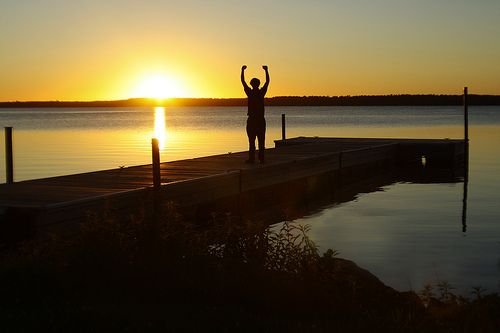
    Hands in the Air

    “Your belief determines your action and your action determines your results, but first you have to believe.” ~Mark Victor Hansen

    This summer, after three years of dreaming, my daughter and I moved from the city I’ve lived in all my life to my dream city six hours north.

    The season of summer is known as a time when plants fruit, grow, and bloom. In order to harvest new crops we have to have a clear field and clean soil to plant in, right?

    Before we can grow new things, we need to look hard at what isn’t working for us, what isn’t serving us, what needs to go to make space for new, better, more deeply satisfying things to come. That could include work, relationships, ways of spending time, and beliefs.

    Then we need to clean and fertilize our own fields and soil so we can intentionally plant what we want to grow.

    This move was preceded by such huge old beliefs, fears, and heartache that I had to face and work through for us to be able to make this move.

    I felt terrified that I wasn’t seeing things clearly and might not make a decision that would work out well.

    Do any of the below feel familiar to you?

    • Where you are isn’t working, but you’re not sure how to change it.

    • You’re drained and exhausted by a part of your life—a relationship, your work, not enough self-care, no down time.
    • You know the change you want to make, but you’re afraid you can’t do it, you’ll be alone if you do it, or you’ll have no money if you do it.
    • You know a change has to be made, but the path isn’t clear. Maybe you’re not even sure what needs to change; you just know something needs to.
    • You’ve decided to make a big change, but the fear and doubt are making you feel stuck and miserable.

    Having grown up in NYC, I have a natural fear of apartment hunting. In NYC you practically have to commit a crime to find a good, affordable, safe place anywhere near where you want to be. For this reason, I had a deep fear around searching in Portland for our perfect home, even though I knew it wouldn’t be as difficult as looking in New York.

    So I did what I always do when I want to call something into my life: I made a want ad.

    I thought about what I wanted in a home and how I wanted it to feel for us. My ad looked something like this:

    A safe, cozy home for my family, in an aesthetically beautiful part of town, that feels amply affordable, has two to three bedrooms, allows dogs, and has space for us to grow, where we can walk to most things we need, with parking for my car.

    Then I started apartment hunting while in Portland for a week.

    Two to three bedroom apartments in the neighborhoods I wanted were more than I could afford, and most wouldn’t allow any “pit bull type” dogs, like we have.

    After running into this over and over again, I got worried. I had given July 1st as the date we’d be out of our current place. It was June 1st and we were about to go back to NYC, leaving me unable to keep seeing new apartments.

    It would have been easy to get sucked into a place of fear and self-doubt—worrying that we couldn’t find the right place, that I couldn’t afford any of the apartments I was seeing, that my dogs wouldn’t be welcomed, that we’d be homeless in four weeks.

    However, instead of staying in the fear place, I decided to use this situation as a wonderful opportunity to practice having faith.

    I did this by using EFT (Emotional Freedom Techniques) videos from YouTube, visualizing myself finding the apartment, and believing the apartment was out there.

    Then a friend connected me with her friend who lives in Portland.

    Portland-friend knew someone who was showing an apartment rental for her father-in-law. It was the neighborhood I wanted and the price I wanted but only a one bedroom, which was too small for us.

    But I talked to Renter-Lady and liked her, and she said there was a weird little room on the second floor that had a low ceiling but could possibly be a kid’s room, so I decided to go see it just for fun.

    The house was exactly what I wanted.

    I filled out the paperwork and gave impeccable references. Her concern was that her father-in-law didn’t want dogs there. I assured her that our current landlord would vouch for my pups, and I’d be happy to give them a security pet deposit.
    I filled out the application and walked away. I waited on pins and needles for five days and heard nothing.

    Five days after I’d last heard from her, I texted her to tell her how much I loved the place and asked if I could give her any further info. She texted back that night and said she was so sorry, but it wasn’t just wasn’t going to work.

    Her father-in-law worried that as a single mama with my own business I wasn’t making enough to cover the rent and utilities.

    I sat up in bed and texted her back furiously. I told her that their place was $600 less a month than any other place I had looked at—that it was $50 more than half of our rent in NYC.

    I texted, “How can I show your father-in-law that I’m more than capable of affording this place? Would you like to see three months records of my income?”

    She wrote back that that might help, so I jumped out of bed, ran to the computer, and emailed her my last three months of income.

    The next morning she wrote back: “The house is yours! I’ll email a lease tomorrow! Thanks for jumping through all those hoops!”

    Little-cottage-whose-windows-I’ll-decorate-with-window-boxes-dripping-with-flowers, here we come. 

    What made the difference between the fear place where everything seemed scary and difficult and an uphill battle, and the flowing place where it all worked out?

    1. Clear vision.

    I had a clear vision of what I wanted, what it would look like, and how it would feel to have it.
    2. Belief in my value and worth.

    I fought to convince the owners of house that yes, I do have enough income to pay the rent. My attitude was, “How can I show you how successful I am at what I do?”

    3. Energy management.

    I didn’t stay in a place of fear and doubt, but instead practiced faith, using tools like EFT, prayer, and visualization to focus my energy on what could be, rather than what might not work out.

    You could easily say, “Well, what if I do all these things and don’t get the house, or don’t get the job, or that person doesn’t want to be with me?”

    Energy management is a long-term, sustainable, inner piece of growth. It doesn’t mean that it’s a magic wand that gives you what you want. It’s a growth tool that helps create inner peace and grounding, no matter the outcome.

    So even if I hadn’t gotten this specific house, energy management would have helped me stay positive, which would have kept me focused and proactive, increasing my odds of finding a home.

    Can you think of a situation in your life where you can apply some or all of these tools? What small step can you take today to create something new in your life?

    Photo here

  • 8 Lessons About Living Fully from a Journey of 500 Miles

    8 Lessons About Living Fully from a Journey of 500 Miles

    Walking

    “The journey is the reward.” ~Proverb

    I should start by clarifying that even though there’s a lot of walking involved in this story, I’m not a walker, or particularly sporty. So what was I thinking going on a 500-mile pilgrimage you may (rightly) ask? I wasn’t. I was feeling it. In my gut.

    You know those butterflies that wreck havoc in your tummy when you have an exciting idea? Well, I had about a thousand of those. Butterflies, not ideas. I only had one idea, and I didn’t even think that one through.

    El Camino de Santiago. St James Way. A long walk, an ancient pilgrimage. Alone. Five weeks and 550 miles from France across Spain to the end of the world. A whole lotta walking! Yeah, why not? Piece of cake, right? Wrong.

    On August 6, 2012 I took my first step into the unknown, armed with nothing but a light backpack, three pairs of socks, a couple of T-shirts, a sleeping bag, and an arsenal of Band-Aids. I walked away from the world and left my old self behind.

    “Yeah, but why?” is the most common reaction I get from people, often accompanied by a confused and suspicious look.

    Well, truth is, I needed to get away.

    “But couldn’t you have gone to Fiji and lie on the beach for five weeks or something?”

    I have to admit, that one always gets me thinking.

    But even knowing how painful, exhausting, and scary walking 30 kilometers every day for over a month with 10 kilograms on my back can be, I wouldn’t change it for the world—or the beaches of Fiji.

    The journey changed my life, both inside and out. I walked it off! I walked it all off. As I got further away form the “real” world—penetrating forests, walking through sleepy villages, hiking up mountains and down deserted valleys—I got closer to my internal world.

    As I detached myself from possessions, got rid of masks, demolished walls, dissolved judgments, and released resentments, I became more open, honest, free, loving, balanced, and, of course, happy.

    I connected with people at an authentic level that I had never experienced before, making lasting friendships in mere hours.

    I started following my instinct and inner voice, not only the yellow arrows pointing west.

    I started being open, believing in myself, listening to my body, and ultimately I realized that all I needed to be happy was right there, inside of me.

    Yep, I was a walking cliché and I loved every painful minute of it.

    This realization came to me the moment I arrived at Santiago de Compostela and stood in front of the cathedral that, a month earlier, had seemed impossible to reach. I had made it!

    And contrary to popular belief, I didn’t want to yell about my accomplishment to the top of my lungs. I didn’t care if anyone knew; I had done it for me. 

    As I sat on the stony square looking up at this magnificent milestone in my life, I was struck by silence, tears rolling down my smiling face, and I let go—of the burden of the past and expectations of the future.

    A year has now passed since I returned, forever changed, and not one day goes by without me having thought about that journey.

    Every day I try to remember the lessons learned. But it isn’t easy, and that is why this article is as much for you as it is for me.

    Let us remember to:

    1. Be present every step of the way.

    The past is over and the future will come, whether you worry about it or not. Make a conscious effort to live in your present. I find meditation of great help. Walking was meditation for me, as it was being in contact with nature, taking in the colors, smells, and textures.

    2. Trust yourself.

    Listen to your gut. Mine told me to walk, that I could do it despite all evidence to the contrary. Yoga and fostering my creativity have been very helpful to block out the outside noises that drown my inner voice.

    3. Be grateful.

    Practice appreciation everyday. At the end of a long day’s walk, that shower would be the best shower I’d ever had. Make sure you appreciate that shower at the end of a long day’s work by thinking of nothing but the touch of the warm, relaxing water. Writing down three happy moments every day also helps!

    4. Open your mind.

    Possibilities are everywhere, but you’ll only see them if you’re open to them. Remember: “Whether you think you can or you can’t, you’re probably right.” Henry Ford. I found the true meaning of synchronicity during the walk, where the “way” or “universe” provided exactly what everyone needed at the exact right time. It’s all around us, if we pay attention.

    5. Let go.

    Of fear, negative thoughts, resentment, the past, limitations. Anything that holds you back, let it go. Dance around like crazy to loud music, have a good cry once in a while, speak your truth, let it out and let it go! While walking, I sang, laughed, cried, laughed until I cried, danced, skipped, limped, ran, fell, got back up, carried someone, and let someone carry me. Sometimes all in one day. That’s living.

    6. Slow down.

    There’s something about walking, about slowing down from 70 miles to hour to 3 miles per hour, that made me realize there’s so much we miss in our daily lives because we’re always in a rush to arrive at our destination or tick the next thing off our to-do list.

    At any given moment of the day, stopping to look (really look) at a flower, or the shape of a cloud, or the way a ray of sunshine hits the trees can make me smile and bring me back to the present. One small minute, stop and take a deep breath, observe the world moving around you while you stand still. It can change your perspective.

    7. Detach from the result.

    Be passionate about the journey, not only about the destination. Do things you enjoy for the sake of them, not only to get something in return. When you’re passionate about what you do regardless of your gain, chances are, you’ll gain a lot more than you expected.

    8. Accept and love yourself.

    You don’t need anyone else’s acceptance but your own. Whatever other people think of you is their problem. What you think of yourself is yours.

    Try this:

    Sit, eyes closed, and open your arms as wide as they can go, as if trying to hug the universe. Hold it for a minute, feeling the freedom, thinking of receiving love with open arms and giving out the best of you. Say that you love and accept yourself. Close your arms tight and give yourself a big, loving hug for a minute.

    Smile! I dare you not to.

    Photo by Moyan Brenn

  • Making Friends When You’re Afraid People Won’t Understand You

    Making Friends When You’re Afraid People Won’t Understand You

    Friends

    “The greatest mistake you can make in life is to be continually fearing you will make one.” ~Elbert Hubbard

    Tonight I am troubled because I have graduated college, and as I am looking back, I am hyperaware of my losses.

    In the past few years, I have had the opportunity to make many friends and lose many friends, largely because of my inability to understand and articulate my bipolar disorder to others. I am ashamed at times because of the mood swings that others seem to dismiss as problems that are “all in my head.”

    I have lost countless friends, have had relationships end, and have had family members retract because of my seemingly endless cycles of depression and sudden elevation that makes it nearly impossible for others to “sync up” with me.

    It feels as though I am eternally trapped sometimes; even with medication and therapy, this illness still manifests itself in subtle ways, making intimacy (which I equate with understanding) very difficult.

    I have personally known friends and family members with disabilities and illnesses of their own who isolate themselves because they think the challenge of relating to others is too much.

    And I sympathize with them—it sometimes really is! These friends have started seeking out others with other illnesses; they’ve decided to select friends with similar traits versus values.

    It may seem like seeking out those similar traits will lead to understanding, but it won’t necessarily lead to solid relationships. Shared illness and disabilities don’t guarantee shared interests and priorities.

    Illnesses and disabilities don’t tell us who people are as people; it’s really about what they do with the cards they are dealt that reveals their character.

    Some people choose to align with others with similar traits because it’s easier than discovering what their values are. However, the connections made with values are a lot more authentic because values are self-made, not pre-determined.

    And as much as I personally want to give up on seeking these connections sometimes, I remember that we are all different in our own way, and most of us feel like there is some sort of deficit in us one way or another.

    If it’s not bipolar disorder, it may be one’s weight that one is unhappy about, one’s health status or family baggage that holds one back from putting oneself out there to the world. Vulnerability is hard!

    I don’t want to limit myself to only those who can understand me because they have the same illness. I am far too curious about the lives of others as well, although sometimes it is disheartening because I haven’t always had this reciprocated.

    I am conflicted about whether I should live a life of transparency and be upfront about my mental illness to those I meet because I am so afraid of being judged.

    The point is, I have put myself out there before, and the fact that I take personal responsibility, admitting that my moody behaviors have shocked, hurt, and offended others before, makes it both liberating and frustrating.

    I almost want to stop letting new people into my life; the weight of rejection feels like too much sometimes.

    There are a few things I remind myself to get out of this rut.

    1. The more I get to know myself, the more I can predict my tendencies and practice self-care.
    2. The more honest I am with others, the more honesty I am inviting from them, and the more likely I can help set the tone for intimacy.
    3. The more people I come to contact with, the more likely I will come across individuals who might be healthier for me and be in a place to work with me.
    4. The more people I come across, the more practice I will have in learning understanding, self-control, and compassion.
    5. The more I obsess about making a mistake with a new person, the more likely I will.

    Therefore, despite my failed friendships and relationships, I have strong conviction that the strongest relationships are those with deep commitment—and that the first and strongest relationship should be that which is with yourself.

    I have committed to not let past fears and rejection hold me back. This commitment is a type of freedom in itself, and a small model of what I can aspire to in relationships with others.

    Have you ever felt limited by the fear that others won’t understand you? What’s helped you overcome it?

    Photo by Nicole Abalde

  • Opening Up to the Possibility of Love: 3 Things to Remember

    Opening Up to the Possibility of Love: 3 Things to Remember

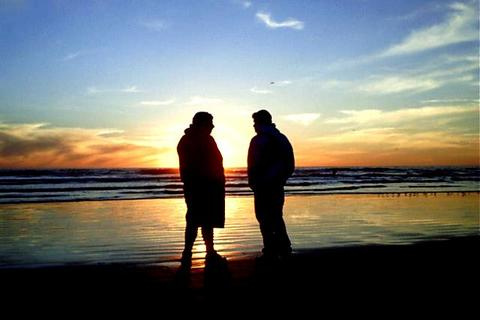
    Sunset Couple

    “Love takes off the mask that we fear we cannot live without and know we cannot live within.”  ~James Arthur Baldwin

    I sat silent on one end of the phone. I could hear my own breath and heart pounding in my ears.  I was sitting on the precipice of greatness, and all I had to do was express what I was feeling. Sounds relatively straightforward, so why did I feel so anxious?

    To say that I have worked hard at rediscovering my authentic self would be an understatement. I have been on this quest in one form or fashion since I was seventeen, so about seventeen years now. And I have made significant progress, if that is the most correct way to label my journey.

    I have struggled with eating disorders and self-acceptance and self-love and compassion and kindness for others. I have done away with meaninglessness in my life for the most part. I have gotten away from placing importance on material possessions and have worked to simplify my life.

    I am more content and sure of myself and who I am than I have ever been. So why would uncomfortable silence throw me for such a loop at this stage in the game?

    To be perfectly honest, although I have demonstrated gains in areas of my life, I have yet to find someone who is a kindred spirit. As I have come to know myself better, I have been better able to express and identify what I truly want in a partner. That being said, dating has been less than successful.

    More often than not, dates have ended with blank stares from across the table when I open my mouth about my spiritual journey. I have never been able to fully express to another the very thing that defines my existence on earth, and have it received in kindness and understanding.

    So, when I met Rob for the first time, he literally took my breath away. I immediately detected his soul, his compassion, and passion for life. I recognized his connection with his feelings, and yet his ability to not take the whole process too seriously.

    In him, I saw myself. For the first time, I did not feel alone. I did not feel different. I felt like I was home. 

    So, back to the phone call: the reason I was so nervous was that, although I had this intense connection with Rob, we were at a crossroads. I could sense that we both wanted to address it, and at the same time neither of us wanted to address it.

    We were so early in our developing relationship, I felt like I needed to let him know how intensely I felt about him and how incredibly special I thought our connection was. And boy, was it scary!

    And in that moment of silence, I reflected back to helpful ideas I had used in learning to love and accept myself. Incredibly, they applied in this new relationship and how I needed to proceed in expressing my feelings.

     1. Stay present and stay you.

    During our conversation, I felt this urgent need to run and hide from the emotion building inside me. I felt like I wanted to crawl back inside my shell and disengage from the desire to open up completely to him.

    We were obviously attracted to one another, but the old voices of fear of rejection and fear of not being good enough crept back into my head. I realized that I had gone through that when I was learning how to love and accept myself.

    I had all of the preconceived notions of who I was or should be, and had to demystify all of that and realize that I am enough just the way I am. As is.

    I had to continuously get myself back to my center, to focus on the present moment and trust in the process of being my authentic self, knowing that the person who was supposed to cross my path, would.

    2. Live openly and honestly and speak from your heart.

    As I learned to accept myself, I found that speaking from my heart became easier. It’s not that we deliberately try to deceive others, but we often do a good job of deceiving ourselves.

    Trying to stop emotion and put up your defenses won’t do anyone any good. It may protect you in the short term, but you are the only one who will be harmed in the end. It will be you who misses out on true happiness and joy.

    Things may not always turn out the way you envisioned, but there is no defeat in living with pure intention.

    3. Go all in and accept that it may fail.

    Part of discovering myself again was learning as I went along. But unlike times before when I was harsh and self-defeating when I made a misstep, I was kind with myself. I gave myself some encouragement, the benefit of the doubt, and got back up and continued the best I could.

    When I finally trusted myself and accepted myself fully, I was able to mess up completely, yet be okay with it, because I knew I was doing my best and had set out with good intention.

    In the same manner, I had to realize that I am not perfect and neither is my partner. Showing compassion when there is a misstep is what will make the bonds stronger. That is how I needed to view Rob and our budding relationship.

    We had established similar core beliefs and journeys and now I had to trust in that as being the foundation for whatever was ahead of us.

    If that meant faltering and deciding we were not as compatible as we first believed, then so be it. I couldn’t be disappointed if I gave it my all and at least attempted something amazing.

    The phone call ended with me bumbling through my feelings pretty inefficiently. And wouldn’t you know it, he reciprocated and expressed relief about me bringing it up. He too felt like we had a connection and had great interest in pursuing it.

    If there is one thing I could leave you with it would be this: Don’t harden yourself to that pure emotion. Open up and welcome it in. Let it flow through you. Let the tears well up in your eyes and say the things your heart whispers. The person who is meant to hear those words will.

    Photo by Darren Johnson

  • Learning to Trust Again When You’ve Been Hurt in the Past

    Learning to Trust Again When You’ve Been Hurt in the Past

    “The only way to know if you can trust somebody is to trust them.” ~Ernest Hemingway

    In a world where it seems as though all we hear about and see is how one person betrayed another, how do we allow ourselves to trust someone to get close at all, let alone trust them to be near the most fragile parts of us?

    Over the course of the last year, I’ve been working as an intern-counselor at a residential high school with around seventy teenagers. Many of them have come from unbelievably challenging backgrounds where they have had to learn to not trust anyone as a matter of survival.

    Imagine having spent your entire life always having to watch your back literally and figuratively, not just because there are strangers who may want to harm you, but also because even those who are supposed to be close to you could turn against you in an instant.

    How difficult do you think it would be to let down the defenses that kept you safe and in some cases, alive, for so long?

    In my own world, I’ve struggled with allowing people to really know me because for most of my life, it felt as though I was burned every time I did.

    Over time, I learned how to seem friendly but kept virtually everyone at a distance, and those who got too close I rapidly pushed away, sometimes completely out of my life.

    I was already struggling to put my pieces back together after several major tragedies in my family, and allowing others in meant (the possibility of) compounding my heartbreak. I just couldn’t handle anymore at the time.

    Eventually I began to open up, but each time found myself wondering why I had been so naive again.

    Then there came a point where, slowly but surely, people began to enter my life who showed me what it meant to be able to trust—trust them to show up, trust them to listen, trust them with commitments, and the biggest one of all, trust them with my heart.

    These people came in the form of friends who are now my family and have had my back in countless ways over the years, and the most surprising and recent of all, a man who is not only telling me, but showing me, what a man does to express his profound interest beyond just the physical.

    If I wouldn’t have begun to take down my walls, I may have never found these amazing people. They didn’t appear because I had perfectly learned to trust already. They appeared because I was willing to learn to trust, even if imperfectly.

    As I’ve been learning to trust and lower my defenses, I’ve been working with my students to do the same.

    Their stories are different in that many of them have come from a history of abuse and/or gang related activities. But we share a similar outcome in struggling to realize that what once protected us is no longer needed, and in some cases, is actually hurting us further by isolating us from the love we need to heal and move forward.

    It’s like taking too much medicine; sometimes a certain amount is necessary to get better, but beyond that it can break our systems down.

    We each come to crossroads in our lives where we have to make the decision to let go of our old survival mechanisms in order to grow and make room for something better.

    Sometimes what used to protect us becomes what harms us and stifles the capacity for our lives to be open and full of joy, love, and peace.

    When it comes to trusting each other, we have to accept that our past is not our present. We have to be able to recognize that what hurt us before is not necessarily what is currently standing before us—even sometimes when the situation looks frighteningly similar, and sometimes even when it’s the same person.

    Does this mean we won’t ever get hurt again? Nope. That’s a part of life. People will let us down, and we will let them down, but that doesn’t mean our efforts to disassemble our defense mechanisms are in vain.

    If we never allow ourselves any vulnerability, we lose out on the opportunity to make incredibly deep and meaningful connections that open up our lives in ways that couldn’t happen any other way.

    Those connections draw out the very best within and create a new reality—one where we learn that the only way to know if you can trust somebody is to trust them.

  • Making Tough Decisions: 7 Steps to Hear Your Own Inner Wisdom

    Making Tough Decisions: 7 Steps to Hear Your Own Inner Wisdom

    Thinking

    “Nobody can give you wiser advice than yourself.” ~ Cicero

    “I don’t know what to do.” “I can’t figure it out.” “How do I know which choice to make?” “Which one is right for me?”

    Sound like someone you know? Here’s one thing I know for sure: You’ve got the power. You’ve got the love.

    You’ve got the innate talent—you gorgeous, loveable soul—to know without a doubt what is right for you. You’ve got the power to know what to do, to figure it out, to know which choice to make. Your soul is calling. And all you need to do is listen.

    At one time not so long ago my innate talent was ignoring my soul. I had developed an acute ability for lasering ahead no matter what my essential self was saying—even when it was “Wrong way!”

    I set goals and made plans and went for it no matter what—and soon I was a stressed-out, exhausted insomniac. So that was fun.

    In fact, fun was exactly what was missing from my life. I put external touchstones ahead of inner happiness. I let my ego tell me what to do, based on what I thought the standards for success were.

    I bought into the mantra: Work, work, work and then work more. You can enjoy your life when you’re retired. It was no wonder my entire system went into revolt; it’s no wonder our systems do that. They’re designed to tell us when we’re off track.

    They’re designed to tell us when we’re on track, too. It’s like magic—except scientifically-proven. The verbal part of our brain processes about forty bits of information per second. That’s pretty impressive.

    The non-verbal part of our brain processes about eight to eleven million bits of information per second. Eight to eleven million!

    That means that the thoughts we hear from the verbal part of our brain actually know less than the physical sensations and emotions that we feel coming from the non-verbal part of our brain.

    So if “I don’t want to make this one choice but everyone tells me I should” seems logical, but every physical sensation or emotion about it just feels so wrong, it probably is. Wrong, that is.

    Wondering how to tap into your own innate talent for knowing how to live the life that’s right for you and be who you want to be? Start small.

    7 Steps for Hearing Your Own Inner Wisdom

    1. Start small.

    Begin with simply noticing physical sensations. Check in with your body from time to time. What physical sensations are you noticing right now?

    2. Fine tune.

    Once you start to check in with your body, you’ll probably also notice emotions, and associations with whether or not the emotions you’re feeling are good or bad. It’s normal—but in this case it’s not all that helpful. Keep on fine-tuning your radar until you’re paying attention to only physical sensations.

    3. Benchmark your “yes.”

    Make a list of times that you knew things were right for you, or felt that things were exactly as they were meant to be, really great, going well, etc. Then do a body scan: What physical sensations do you feel? Write ‘em down and then label them.

    4. Benchmark your “no.”

    Make a list of times that you knew things were not right for you, or felt that things were not as they were meant to be, not going great or well, etc. Then do a body scan: What physical sensations do you feel? Write ‘em down and then label them.

    5. Practice.

    You’ve just created your body compass. Using it is fun. Orange or apple? Imagine making each choice and then see what physical sensations come up—closer to “yes” or closer to “no”?

    6. Trust.

    The verbal part of your brain might come up with all sorts of reasons why you shouldn’t trust your body compass. Practicing on the little things helps to build up enough trust to use it on the big decisions.

    7. Live it in the moment.

    Once you’ve got your compass down pat, keep on using it. Living it in the moment is about remembering your innate talent for knowing, and using it with reckless abandon and firm intention.

    What’s your inner wisdom telling you?

    Photo by mynameisharsha

  • 10 Tips to Help Relieve Depression and Heartache

    10 Tips to Help Relieve Depression and Heartache

    “As soon as you trust yourself, you will know how to live.” ~Johann Von Goethe

    Not long ago I was completely imprisoned within myself, feeling lost without any direction. Sleeping consumed most of my time. I had brief moments when I checked in on Facebook, only to get a glimpse of others’ seemingly perfect lives with holidays, parties, babies, and weddings.

    This made me more miserable, as I felt I had nothing going on in my own life.

    Frustration was building within me because somewhere deep inside, the dreams that I had hidden away wanted me to start pursuing them. Easier said than done of course, but I knew that hiding under my duvet cover wasn’t going to take me anywhere.

    I needed to change my negative outlook on life to a much more positive one. In this new process, I started to apply what I call the 10 “T”s to help with my feelings and fears.

    The 10 “T”s to help relieve depression and heartache:

    1. Trust yourself and the universe.

    Know that the universe has a greater plan for us than we can ever imagine. My first authentic feeling of surrender came by reading self-help books. This gave me the first push toward believing and trusting in the power of the universe. It’s the greatest comfort knowing that you are taken care of. (more…)

  • Learning to Trust: Let Go of Your Fear and Let Your Guard Down

    Learning to Trust: Let Go of Your Fear and Let Your Guard Down

    “The best way to find out if you can trust somebody is to trust them.” ~Ernest Hemingway

    In love and in life, our vulnerability is one of our greatest strengths. We often believe that we risk too much by being vulnerable, but, in fact, the opposite is true. When we build a wall around us to protect ourselves from our big, bad fears, we miss out on so much.

    When we live with the mindset that something may be taken from us (physically or emotionally), or that we need to be in control of everything that happens, we endure fear on a daily basis.

    It’s exhausting to live this way. It makes us cynical, suspicious, and unable to follow our hearts because we are afraid of what might happen.

    So what exactly are we protecting ourselves from when our walls are up?

    • Fear of rejection
    • Fear of being ridiculed
    • Fear of failure
    • Fear of being wrong
    • Fear of committing ourselves and having to follow through
    • Fear of being taken advantage of

    These fears are so normal that, unless we become self-aware, they can permeate our everyday interactions. It’s not just about trusting people either, but also life situations and opportunities that come our way. When the barriers are up, our lives become needlessly limited.

    We don’t bother talking to that person because we’re certain they won’t be interested in a date. We don’t show how much we care about a person because we’re afraid they won’t love us back. We don’t go for that job or that course because we’re scared we won’t get an interview.

    Nobody likes to feel exposed, but if you are someone who has suffered at the hands of betrayal, trust issues become even further magnified.

    Learning to be vulnerable after deep pain can feel impossible. But it doesn’t have to be. If you consciously choose to stay open and trusting, you will find that your world changes for the better in ways you may never have imagined. (more…)

  • Letting Go of Stress Around Your Goals: 4 Tips to Help You Relax

    Letting Go of Stress Around Your Goals: 4 Tips to Help You Relax

    “Control is never achieved when sought after directly. It is the surprising consequence of letting go.” ~James Arthur Ray

    I have always been a bit of a control freak, and if I’m not mindful, it can suck the joy out of my work and my passion.

    I like tasks done a certain way, which means I don’t always do well when it comes to delegating to others and can end up overextending myself.

    I want things to be done on my timeline, which means I may feel a need to micromanage tasks I have delegated to decrease the potential for delay.

    And I sometimes feel a need to know where things are going, which means I often need to remind myself to stay open to new possibilities.

    In short, I like to feel that everything is going according to plan—my plan—so that I leave very little to chance.

    Chance can be a scary place. It’s the realm where things could go wrong because you didn’t steer, compel, or manipulate them to ensure that they went right.

    It’s the place where anything could happen because you weren’t clear or pushy enough to make things happen as you visualized them.

    It’s a space where things are unpredictable, random even, where you don’t feel you have a say or a choice.

    These are things I’ve thought before.

    If you have a controlling instinct like I do, it can be difficult to ascertain when you’re being too heavy-handed, causing yourself stress in the process, and when you’re simply being proactive and taking responsibility for your life.

    It’s a thin line between empowering yourself and taking your power away.

    On one side, you know you’ve done your best but accept that other factors contribute to your outcome; on the other side, you cause yourself immense anxiety trying to foresee and eliminate those factors.

    It can feel terrifying to simply let things happen, particularly when the stakes are high—when you care about something so deeply that it feels like a piece of you.

    But ironically, trying to control things can actually limit their potential.

    Imagine you stood in front of a flower all day, trying all kinds of fertilizer to push it to grow faster. In addition to trying too many things, minimizing the effectiveness of any one, you’d essentially rob it of sunlight while casting your overbearing shadow.

    The fear that it might not grow would all but ensure that outcome.  (more…)

  • 3 Ways to Trust Your Body and Trust Yourself

    3 Ways to Trust Your Body and Trust Yourself

    “Your body is precious. It is our vehicle for awakening. Treat it with care.” ~Buddha

    I trust that the body knows everything. It does. Absolutely.

    Did you ever just get a feeling—maybe something in your body that tells you something is wrong or just not right? Or maybe it gives you hints of unfailing happiness, joy, and earth shattering love?

    If we would stop giving so much power to the mind, the ego, and just sat still and tapped into our body’s wisdom, we’d experience a healing power so great that it could prevent or reverse illness, disease, hate, self-loathing, and perfectionism.

    I’ve learned to listen closely to my lovely friend, my body. In the past I judged her, forced away any pain she tried to show me, and even shunned self-love. I used to beat her up with negativity, judgment, and ridicule.

    I wish I could take back all that abuse. My body didn’t deserve all the mean words, hurtful thoughts, and even constant manipulation with unhealthy diets and exercise.

    You see, I had an eating disorder.

    It’s hard to talk about, but I’ve learned that it is just a part of me—it’s in my cells, and my body remembers.

    I respect this and am able to let go and speak of my experience. This has taken a long time, however, but each time I bring up the truth, my body gives me a gentle squeeze and trust is deepened.

    I’m not sure how my issues with food started, but I would bet it happened sometime in childhood.

    When I was eight years old, someone I loved dearly told me that I was fat. I remember I was wearing my yellow cowgirl dance outfit (as I had a recital that day) when it happened. I was crushed.

    I stopped eating.

    I can remember writing down each item of food in a journal. I only allowed five things a day, such as one piece of toast or one stick of bubblegum.

    Of course I was growing and I was constantly starving, therefore, I’d inevitably take a trip to McDonalds at the end of the day. I would feel defeated, then resentful of my body, telling her to listen and not eat so much. This went on for years. (more…)

  • Give Yourself Some Credit!

    Give Yourself Some Credit!

    “Always concentrate on how far you’ve come, rather than how far you have left to go.” ~Unknown

    After pitching an idea to an international online magazine a month ago, I recently sent the article to the editor. I was quite nervous. It had taken me more than a month. Every time I sat down to write, I didn’t know how to begin.

    I typed and then deleted my paragraphs. I typed again, and then deleted the whole document. I wasn’t happy with what I had written.

    Eventually, I said to myself, I had to submit something because it had taken too long. So in the flurry of two hours, I hammered out the article, sent it to a friend for comments, and went about perfecting it.

    I revised my writing, taking a few of my friend’s suggestions, but still I wasn’t completely satisfied with what I had produced. Yet, I didn’t know how else I would improve it anymore. By then, I was tired of reading, re-reading, and re-re-reading, so I sent it off.

    For three days I waited gingerly by my computer, causing myself needless anxiety over whether or not the article would be accepted.

    This was crucial for me as I was taking the first step in testing the market to see if it was receptive to my thoughts, and perhaps a book about the experiences of a Generation Y female executive overcoming depression.

    Plus, the website was authoritative in its own right and it would give me some exposure and signs as to whether my direction was in on track.

    I was more than ecstatic that the editor came back and said they had already published the post and gave me a link to it.

    You might think I felt proud of myself for this achievement. (more…)

  • Control Less, Trust More: How I Learned to Relax and Let Go

    Control Less, Trust More: How I Learned to Relax and Let Go

    “The closest to being in control we’ll ever be is in that moment when we realize we’re not.” ~Brian Kessler

    My nine-year-old son said something so profoundly right that it kept me awake. He said that in order for him to be happier I would need to let go of controlling him all the time.

    Now granted he is young, and believe me, if I didn’t tell him to get dressed he’d run outside in PJs, but I was struck by his wisdom because this is also my obstacle to becoming happier.

    In the past, the more I felt out of control, the more I tried to control others. We moved many times, sometimes to different continents for my husband’s job. We had children, and not all of them planned.

    My husband and I drifted apart over the years, realizing we are very different and have completely diverging core values. I became sick with an eating disorder, a scary and tricky disease.

    I felt overwhelmed, scared, alone, and lost. This is where the controlling mind came to rescue and took over. In time, my eating disorder became stronger than me, and yet also a familiar friend.

    I tried to control both my eating and my body—and also the lives of everyone around me.

    The emptier my marriage felt, the more I tried and control my husband’s behavior at home. The more I felt overwhelmed with my job as a mother, the more I structured my kids’ activities, often making them do things they didn’t want to do. Needless to say that didn’t help to foster my relationships with them.

    I tried to control every aspect of their lives. Whether it was the lunches that needed to be made with a specific type of bread, or the homework having to be done at this time of the day, or the decision of which movie to watch, I told them how to do it and had a hard time letting them make their own choices.

    I was hardly ever wrong—at least I didn’t think so. I thought control equals security equals happiness, up until the day when I took a close look at my life and found that nobody around me was smiling anymore.

    They were miserable. They lit up when their dad came home because he did things with them that were fun and, best of all they never knew what would happen with him. With me they could foresee everything, and the routines were never fun or joyful. (more…)

  • The Power of Change: How Leaving Home Can Bring You Home

    The Power of Change: How Leaving Home Can Bring You Home

    “To be fully alive, fully human, and completely awake is to be continually thrown out of the nest.” -Pema Chodron

    Seven years ago, I packed everything I owned into my little red Honda Civic and sold, gave away, or tossed whatever didn’t fit. I was 24 years old and I was on my way from Florida to Los Angeles to pursue the American Dream.

    I was consumed with swirls of intense emotions—anxieties, excitement, fear, and joy, all mixing together in one little body. I was crossing the country on a new adventure, filled with hopes and dreams, seeking something I could not define or put into words.

    These past seven years in Los Angeles have transformed me. I landed there so young, so innocent, and so lost, yet somehow I gained a sense of self that I never thought I would.

    None of us gets a roadmap to inner peace and joy, but I’ve made one as I’ve gone. It hasn’t included fast or easy routes, but the journey has definitely been interesting so far.

    When I headed to Los Angeles, I had Hollywood stars in my eyes. I was pretty certain I was supposed to be a famous actress, and I thought that would bring me happiness and clarity.

    As I worked with various teachers at several acting schools, trying on different roles and character traits, I learned a lot about myself. I eventually realized that I wasn’t really interested in pursuing acting. I didn’t want to be authentic on stage; I wanted to create an authentic life. I wasn’t trying to step into a character. I was trying to step into myself.

    I wanted to find my voice—to live on purpose and do something that made me feel passionate. I felt I had something to say, something to share, something within me that was asking for a fair shot at being expressed.

    Acting played a huge role in my personal development in that it led me to understand what I really wanted. It taught me that to play a role, I must first know myself. It was the beginning of learning to live my life in alignment with my highest purpose and self.

    Sometimes, what we think we are being called to do changes. Our intuitive feelings will guide us in a particular direction, but then we have to stay open in order to recognize when it’s time to redefine who we are and what we want. We need to remember that it’s okay to change direction if that’s where our intuition is pointing.

    When we let go of outcomes about how things are “supposed to” unfold, we better allow ourselves to create a life filled with purpose and meaning. (more…)

  • Lose Control to Find Closeness in Your Relationships

    Lose Control to Find Closeness in Your Relationships

    “Always be mindful of the kindness and not the faults of others” ~Buddha

    In these hectic and often chaotic times, for most people (controllers included), the need for intimate, close bonds with friends and family is more important than ever for their overall well-being.

    Yet, most controllers are unaware of how much their controlling actions prevent intimacy.

    Losing Intimacy with My Son

    Twenty years ago I was a massive, obsessive controller. I firmly believed that the best way to satisfy my needs and achieve what I wanted in life was by controlling everything and everyone. At home, Father truly knew best! I knew what was best for my children—and didn’t hesitate to let them know.

    When my son Brandon was a child, I constantly offered my two cents on almost everything he did, thinking it would help him better traverse life’s many challenges. When he was young, he had no choice but to put up with my intrusions.

    In his teens, however, he became very dismissive of me—he didn’t want to hear anymore from me, and he strongly let me know it.

    Our bond remained strained until I was literally brought to my knees by a rapid-fire series of traumatic events (concluding with 5 major cancer surgeries). At that point, I no longer had the desire or energy to continue intruding upon his life.

    Because I no longer offered him my opinions or advice, Brandon began seeking my input on important challenges he faced as a young adult.

    Hence, the very thing I had sought—intimacy—came to me only after I stopped trying to seek it! (more…)