Tag: trust

  • The Strength I Found Hidden in Softness

    The Strength I Found Hidden in Softness

    “You can’t heal what you won’t allow yourself to feel.” ~Unknown

    I used to act strong all the time. On the outside, I looked like I had it all together. I was competent, composed, and capable. I was the one other people came to for advice or support.

    The stickiness was that my version of strength created distance. I couldn’t allow myself to appear weak because I was terrified that if I let myself break down, I wouldn’t be able to pull myself back together.

    Maybe underneath it all, I was so fragile I might actually break.

    So I held it in. All of it—my grief, my fear, my loneliness. This is what strong people do, right?

    I learned to be strong early because I had to.

    My mother was depressed and suicidal for the younger years of my life. From a young age, I felt like it was up to me to keep her alive. I became the caretaker, the one who made things okay, even when nothing was.

    My father left before I was born. I didn’t meet him until I was six, and when I did, it wasn’t safe. He was abusive and schizophrenic. One time, he tried to strangle me. That moment embedded something deep: every moment is a risk. To survive, I learned to stay alert, in control, and numb.

    Later, my mum entered a same-sex relationship—a bold move in the eighties, when that kind of love wasn’t accepted. Her partner, a former homicide detective turned trauma therapist, was emotionally volatile and narcissistic. My home didn’t feel safe. There wasn’t a lot of room for me to be a child.

    So, I became hyper-responsible. A perfectionist. A fixer. I micromanaged not only my life but also the emotions of others when I could. My version of “strength” became what I hid behind and my identity.

    But underneath it all, I was scared. My “strength” was survival, not freedom.

    Years later, I moved to Australia and found myself with a friend in a power vinyasa yoga class. It was hot, sweaty, and intense. I hated it. The carpet smelled. The teacher talked the entire time. I was angry.

    And then it hit me: I was always angry.

    Beneath the appearance of having it all together, I was exhausted and resentful. The yoga mat didn’t create these feelings—it just revealed what I had been carrying all along.

    That night, something shifted. I realized my “strength” wasn’t really strength; it was my wall. A wall that had kept me safe but also kept me from feeling.

    So, I kept going back. First to yoga, then to a deeper journey of healing.

    The process came in layers.

    Along my healing journey, I explored many different modalities. The first was EFT (emotional freedom technique), where I touched emotions I had buried for decades. Later, kinesthetic processing showed me that it was safe to feel everything—every emotion, every memory—through my body. This was the beginning of softness integrating into my life, not just as an idea, but as a lived experience.

    For so long, my strength had been armor—the courage to survive. But softness opened something new: the courage to thrive, because my heart was no longer closed.

    There was no single breakthrough, no magic moment.

    With each layer that fell away, I began to replace resistance with openness, walls with connection. Slowly, I came to trust that softness wasn’t something to fear—it was something I could lean into.

    And what I learned is this: my healing required softness, which meant vulnerability and allowing myself to fully feel.

    Softness isn’t weakness.

    It’s staying open when everything in you wants to shut down.

    It’s allowing yourself to be seen without the mask.

    It’s choosing presence over performance.

    True power isn’t control. It’s vulnerability. It’s feeling your way through life and trusting yourself—trusting your thoughts, your decisions, and your impulses so you stop second-guessing and stop relying on constant external validation. Trust allows you to act from clarity instead of fear.

    It’s trusting your body, noticing what nourishes you versus what depletes you, and setting boundaries without guilt. It’s trusting life’s natural flow, letting go of the pressure to force things to happen according to a strict schedule. It’s trusting your own inner truth. Trust and softness go hand in hand; the more you trust yourself, the more you can stay open and present without fear.

    If you’ve been holding it all together for too long, maybe strength doesn’t look like pushing through. Maybe it looks like slowing down. Like taking a breath. Like feeling what’s been waiting to be felt.

    And maybe, just maybe, your sensitivity isn’t something to hide or harden.

    Maybe your sensitivity is your superpower.

    In a world that teaches us to be strong, brave, and unshakable, we can forget that our greatest wisdom often comes in stillness.

    It comes when we soften. When we listen. When we let go of who we think we should be and come home to who we already are.

    Strength isn’t about being unbreakable. It’s about being real.

    When I started listening to myself, I realized how often I had ignored my own needs and desires, pushing through life according to what I thought I “should” do. I learned to honor my feelings, trust my instincts, and make choices that nourished me instead of drained me. As a result, my relationships deepened, my confidence grew, and I found a sense of ease and flow I never thought possible.

    Sometimes the greatest thing you can do for yourself is listen to the quiet, unchanging wisdom within you and trust what you hear.
  • Vulnerability Is Powerful But Not Always Safe

    Vulnerability Is Powerful But Not Always Safe

    “Vulnerability is not oversharing. It’s sharing with people who have earned the right to hear our story.” ~Brené Brown

    Earlier this year, I found myself in a place I never imagined: locked in a psychiatric emergency room, wearing a paper wristband, surrounded by strangers in visible distress. I wasn’t suicidal. I hadn’t harmed anyone. I’d simply told the truth—and it led me there.

    What happened began, in a way, with writing.

    I’m in my seventies, and I’ve lived a full life as a filmmaker, teacher, father, and now a caregiver for my ninety-six-year-old mother. But as I’ve gotten older, I’ve also felt something slipping. A quiet sense that I’m no longer seen. Not with cruelty—just absence. Like the world turned the page and forgot to bring me along.

    One day in therapy, I said aloud what I’d been afraid to name: “I feel like the world’s done with me.”

    My therapist listened kindly. “Why don’t you write about it?” she said.

    So I did.

    I began an essay about age, invisibility, and meaning—what it feels like to move through a culture that doesn’t always value its elders. I called it The Decline of the Elders, and it became one of the hardest things I’ve ever written.

    Each sentence pulled something raw out of me. I wasn’t just writing; I was reliving. My mind circled through memories I hadn’t fully processed, doubts I hadn’t admitted, losses I hadn’t grieved. I’d get up, pace, sit down again, write, delete, rewrite. It was as if I were opening an old wound that had never really healed. The pain was real—and so was the urgency to understand it.

    Then came the eye injection—a regular treatment for macular degeneration. This time, it didn’t go well. My eye throbbed, burned, and wouldn’t stop watering. Eventually, both eyes blurred. Still, I sat there trying to write, blinking through physical and emotional pain, trying to finish what I had started.

    Everything hurt—my vision, my body, my sense of purpose. I didn’t want to die, but I didn’t know how to live with what I was feeling.

    So I called 911.

    “This isn’t an emergency,” I told the dispatcher. “I just need to talk to someone. A hotline or counselor—anything.”

    She connected me to the Suicide & Crisis Lifeline—a lifeline for people in imminent danger of harming themselves. If you are suicidal, please call. It can save your life. My mistake was using it for something it’s not designed for.

     I spoke with a kind young man and told him the truth: I was in therapy. I was writing something painful. I was overwhelmed but safe. I just needed a voice on the other end. Someone to hear me.

    Then came the knock at the door.

    Three police officers. Calm. Polite. But firm.

    “I’m okay,” I said. “I’m not a danger. I just needed someone to talk to.”

    That didn’t matter. Protocol had been triggered.

    They escorted me to the squad car and drove me to the psychiatric ER. I felt powerless and embarrassed, unsure how a simple call had escalated so quickly.

    They took me to the psychiatric ER at LA County General.

    No beds. Just recliner chairs lined up in a dim, humming room. I was searched. My belongings were taken. I was assigned a chair and handed a bean burrito. They offered medication if I needed it. One thin blanket. A buzzing TV that never turned off.

    I didn’t want sedation. I didn’t want a distraction. I just sat with it—all of it.

    And around me, others sat too: a man curled into himself, shaking; a young woman staring blankly into space; someone muttering unintelligibly to no one at all. Real pain. Raw pain. People who seemed completely lost in it.

    That’s when the shame hit me.

    I didn’t belong here, I thought. I wasn’t like them. I had a home. A therapist. A sense of self, however fractured. I hadn’t tried to hurt anyone. I’d just asked to be heard. And yet there I was—taking up space, resources, attention—while others clearly needed it more.

    But that too was a kind of false separation. Who was I to say I didn’t belong? I’d called in desperation. I’d lost perspective. My crisis may have looked different, but it was real.

    Eventually, a nurse came to interview me. I told her everything—the writing, the injection, the spiral I’d been caught in. She listened. And sometime after midnight, they let me go.

    My wife picked me up. Quiet. Unsure. I didn’t blame her. I barely knew what had just happened myself.

    Later that night, I sat again in the chair where it had all started. My eyes ached less. But I was stunned. And strangely clear.

    The experience hadn’t destroyed me. It had initiated me.

    I also realized how naïve I’d been. I hadn’t researched alternatives. I hadn’t explored my real options. I’d reached for the most visible solution out of emotional exhaustion. That desperation wasn’t weakness—it was a symptom of a deeper need I hadn’t fully acknowledged.

    And I learned something I’ll never forget:

    Vulnerability is powerful, but it’s not always safe.

    I used to think that honesty was always the best path. That if I opened up, someone would meet me there with compassion. And often that’s true. But not always. Systems aren’t built for subtlety. Institutions can’t always distinguish between emotional honesty and risk.

    And not every person is a safe place for our truth. Some people repeatedly minimize our pain or dismiss our feelings. We might long for their validation, but protecting ourselves means recognizing when someone isn’t willing or able to give it.

    Since then, I’ve kept writing. I’ve kept feeling. But I’ve also learned to be more discerning.

    Now I ask myself:

    • Is this the right moment for this truth?
    • Is this person or space able to hold it?
    • Am I seeking connection—or rescue?

    There’s no shame in needing help. But there is wisdom in learning how to ask for it, and who to ask.

    I still believe in truth. I still believe in tenderness. But I also believe in learning how to protect what’s sacred inside us.

    So if you’re someone who feels deeply—who writes, reflects, or breaks open in unexpected ways—this is what I want you to know:

    You are not weak. You are not broken. But you are tender. And tenderness needs care, not containment—care from people you can trust to honor it.

    Give your truth a place where it can be held, not punished. And if that place doesn’t yet exist, build it—starting with one safe person, one honest conversation, one page in your journal. Word by word. Breath by breath.

    Because your pain is real. Your voice matters.

    And when shared with care, your truth can still light the way.

  • When You Stop Forcing, Life Flows

    When You Stop Forcing, Life Flows

    “You don’t have to force the flow—sometimes your only job is to soften and let go.” ~Unknown

    For most of my life, I was obsessed with getting everything right. Planning. Controlling. Anticipating every outcome so I wouldn’t be caught off guard. I saw life as a kind of puzzle: if I just made the right moves in the right order, I’d get what I wanted. Peace, success, love.

    But life doesn’t work that way.

    The more I tried to control it, the more I felt out of alignment. I would burn out trying to make things happen. When something went wrong, I blamed myself for not anticipating it. I couldn’t relax because I was always tightening the reins, trying to steer the unknown.

    Then one day, something cracked.

    It was the winter of 2021. I was staying in a quiet village in southern Portugal, trying to piece my life back together after a painful breakup and the collapse of a startup I had poured years into. I’d gone there thinking solitude and fresh air would help me reset.

    But nothing felt right.

    I couldn’t focus. I couldn’t meditate. I couldn’t even enjoy the ocean—something that once brought me pure joy. Instead of peace, I felt stuck and overwhelmed. My mind replayed every decision I’d made over the past few years like a courtroom drama. “If only you’d done this.” “You should have seen that coming.” “You’ve ruined your shot.”

    I sat on the beach one evening as the sun went down, feeling completely defeated. I remember watching the waves crash rhythmically against the rocks. They didn’t care about me or my mistakes. They weren’t rushing or apologizing. They were just… doing their thing.

    That’s when it hit me.

    Nature doesn’t force anything. A wave doesn’t strive to be taller. A tree doesn’t try to grow faster. They exist in a kind of trust—a natural cooperation with life. And somehow, despite all that ease, they thrive.

    What if I’m the one disrupting my own flow by trying to control everything?

    It wasn’t a lightning bolt. It was more like a soft whisper inside. But something shifted.

    I started asking myself a new question each morning: “What would happen today if I didn’t try to control anything?”

    I didn’t have to force myself to do nothing. I still worked, moved, made decisions. But I tried to stay present rather than five steps ahead. I let myself feel uncertain without reaching for solutions right away. I listened more—to myself, to life, to the quiet.

    And over time, I noticed something strange. My anxiety started to fade—not all at once, but like a fog lifting. I stopped catastrophizing every decision. I felt a little more at peace, even if nothing around me had changed.

    That’s when I began learning what I now call divine flow.

    To me, divine flow is the current of life that we can either resist or surrender to. It’s not passive. It’s not about “doing nothing” or abandoning effort. It’s about cooperating with something deeper—something beyond just logic or planning.

    It’s learning to recognize that there are seasons for pushing and seasons for resting. That sometimes what looks like a setback is actually an invitation to realign. That clarity often comes when you stop chasing it.

    There’s a trust that builds when you live this way.

    You realize you don’t need to have everything figured out. You can still move forward with intention—but without gripping so tightly.

    Since then, I’ve built a life more aligned with who I am. I started creating wellness events focused on community and connection rather than perfection. I met people who inspired me simply by being themselves. I even learned to show up vulnerably, like I’m doing now, without needing everything to be polished or impressive.

    I still have moments where I fall back into old habits—where I try to force outcomes or fix everything too quickly. But I catch myself faster now. I’ve learned that tension is usually a sign that I’m out of the flow.

    If you’re in a space where things feel hard or disconnected, here are a few gentle invitations that helped me reconnect with the flow:

    • Let yourself feel lost. You don’t need to rush to “figure it out.” Sometimes the most fertile growth happens in the spaces where we allow ourselves to feel confused and uncertain.
    • Listen more than you analyze. Instead of trying to force answers, sit with your questions. Journal. Walk. Let thoughts come without needing to trap them.
    • Release the timeline. Things don’t have to happen on your schedule. You’re not late. You’re not behind. You’re just unfolding.
    • Ask for signs—but don’t cling to them. Sometimes life will whisper directions when you’re quiet enough to hear. But the key is to listen without expectation or pressure.

    • Come back to your breath. When your mind spirals, anchor into the present. One breath. One step. One moment.

    We can’t always choose what happens to us, but we can choose how we meet life. With resistance—or with curiosity. With fear—or with trust.

    These days, I still sit by the ocean when I can. I still watch the waves. I remind myself that there’s a rhythm beneath everything—and that my only real job is to stay soft enough to feel it.

    Maybe that’s all we ever needed to do.

  • How I Learned to Trust Myself One Small, Simple Step at a Time

    How I Learned to Trust Myself One Small, Simple Step at a Time

    “Sometimes, the hardest person to trust is ourselves. But when we do, everything changes.” ~Unknown

    For a long time, I thought the key to changing my life was out there—somewhere.

    I thought that if I just found the right program, the perfect plan, or the expert with all the answers, then I’d finally feel in control and like I was doing it “right.”

    So, I chased every plan, bought the books, signed up for the courses, and followed all the steps.

    And for a while, it felt good—safe, even. But deep down, I still didn’t trust myself. Because no matter how much I followed, I was still outsourcing my power. I didn’t believe I could create lasting change without someone else telling me how.

    It wasn’t until I hit a moment of pause—when life got quiet and the excuses disappeared—that I finally asked myself: What do I actually want? And can I trust myself to go after it?

    The honest answer? I didn’t know. I’d been listening to everyone else for so long, I’d lost the sound of my own voice.

    And that realization was equal parts terrifying and freeing.

    Because if I didn’t know what I wanted, I had to figure it out for myself—and that meant letting go of what everyone else thought I should be doing. It meant tuning out the noise and tuning in to something I hadn’t prioritized in years: me.

    Self-Trust Doesn’t Come from Thinking; It Comes from Doing

    That was the turning point.

    I realized that self-trust isn’t something you just wake up with. It’s something you build. And for me, that started with the smallest steps.

    I began showing up for myself in tiny ways—drinking water first thing in the morning, walking for ten minutes, writing for just a few minutes a day. Nothing fancy. But they were promises I made to myself—and kept.

    Each small habit became a tiny brick in the foundation of self-trust.

    And slowly, those micro-wins turned into momentum. I didn’t need a full plan anymore. I didn’t need someone to tell me what came next. I was proving to myself, day by day, that I could count on me.

    When I first committed to writing ten minutes a day, it didn’t feel like a big deal. But doing it every day—even when I was tired, or uninspired, or unsure—was quietly revolutionary. It wasn’t about how good the writing was. It was about showing up for myself and keeping a promise. That shift became a building block not just for my creativity but also for my confidence.

    That consistency created a ripple effect. If I could trust myself to write, I could trust myself to move my body. If I could move my body, I could nourish it better. If I could nourish my body, I could speak more kindly to myself. Each action reinforced the belief that I could do this—that I didn’t need to be fixed; I just needed to believe.

    And let’s be honest—it wasn’t always easy. There were days when I didn’t feel like doing any of it. Days I wanted to hide, to go back to following someone else’s checklist. But I reminded myself that this time, I was building something that belonged to me.

    Consistency Builds Confidence

    It wasn’t perfection that changed me. It was consistency.

    Every time I kept a promise to myself—even something as small as sitting in silence for two minutes instead of reaching for my phone—I sent a powerful message: I’ve got you.

    And the more I showed up, the more my mindset shifted. I stopped asking, “What should I do?” and started asking, “What feels right for me?”

    That’s when everything changed. Not in a dramatic, fireworks kind of way. But in a grounded, real way.

    And that realness is what made the change last.

    I wasn’t becoming someone new—I was returning to myself. And it felt like coming home.

    You Don’t Need Another Plan; You Need to Believe in Yourself

    We live in a world that constantly tells us we need to be fixed. That someone out there knows better. That the answers are just one step away—if only we buy the next thing, follow the next leader, or change just a little more.

    But here’s what I’ve learned:

    You don’t need more noise. You need more trust.

    You need to know that you already have wisdom inside you. You just have to give it room to speak—and find the courage to act on it.

    And that starts with showing up for yourself in small, meaningful ways. Not perfectly. Just consistently.

    When you build a solid relationship with yourself—when you become someone who keeps promises to yourself—that’s where the shift happens. Not because you’ve mastered some fancy process, but because you’ve started living in integrity with the person you’re becoming.

    And in doing so, you step into a quiet kind of power—one that doesn’t need to prove itself to anyone.

    Start Small, Stay Honest, and Keep Going

    If you’re in a season of doubt, or if you’ve forgotten what your own voice sounds like, you’re not alone.

    Start with one tiny habit that reflects the person you want to become. Let that be your anchor. Let that be your proof.

    Because self-trust isn’t a lightning bolt. It’s a quiet build. And one small shift at a time, you’ll hear your voice again—and this time, you’ll believe it.

    And when you do, you’ll find something even better than the perfect plan—you’ll find your power.

    And that’s where real change begins.

  • The Power of Finding Love Without a “How To” Formula

    The Power of Finding Love Without a “How To” Formula

    “Know all the theories, master all the techniques, but as you touch a human soul ,be just another human soul.” ~Carl Jung

    For years, I poured myself into learning about love, relationships, and personal growth. I read every book I could get my hands on, signed up for countless classes, and surrounded myself with affirmations, tools, and techniques that promised me the keys to love. I was on a mission, convinced that with enough knowledge, I could finally unlock the door to a successful, fulfilling relationship.

    But no matter how much I learned, how much I transformed my mindset, or how many positive affirmations I repeated, the pieces never quite fit together the way I expected them to. The advice seemed sound, and the changes I made felt empowering—yet when it came to matters of the heart, the answers were often elusive.

    Despite my best efforts to engineer a perfect love life, I had been trying to control something that ultimately falls beyond any framework, theory, or technique.

    In that moment of realization, I finally understood the true meaning behind Carl Jung’s words. Although he originally used this quote in his work as a psychologist, highlighting the importance of connecting with others on a profound, human level, I now see how deeply relevant it is in romantic relationships. I needed to meet myself on a human level before I could meet others.

    Love, much like life, cannot be mastered through intellect alone. It’s not about perfecting a set of rules or following a specific formula—it’s about surrendering to the mystery of being human together, with all our imperfections and strivings.

    The Pursuit of Perfection

    When I first set out on my journey to “become the one” or to “attract the one,” I was searching for the magic formula that would guarantee my ideal relationship. I believed that if I mastered the right mindset, practiced positive thinking, and applied the latest dating strategies, love would be inevitable.

    But somewhere along the way, I began to lose sight of the fact that love is not a destination—it’s an experience. And that experience doesn’t unfold because I’m the most polished version of myself; it emerges when I allow myself to be authentically human.

    Inadvertently, I became misdirected, shifting from living in the moment to striving to solve a puzzle. The irony was that in my pursuit of perfection, I grew more disconnected from my true self. I wasn’t seeking a genuine connection with another soul; I unconsciously focused on proving to myself that I could solve this.

    The Limitations of the How-To” Guides 

    The more I studied, the more I realized that everything I learned about love came from the perspective of doing. These guides, books, and seminars taught me how to behave, think, or feel in order to attract or maintain love. But none of it resonated with the most important aspect of love: being.

    Love cannot be controlled by a set of principles or techniques. We cannot engineer chemistry, force someone to be the right partner, or create lasting connection through willpower alone. And that’s where I went wrong.

    No matter how much I pushed, tweaked, or optimized myself, something was always missing. And that missing piece wasn’t about improving or refining myself—it was about surrendering to the mystery of love.

    What I needed was a genuine connection to my own heart—raw, messy, vulnerable, and human. It’s about stepping away from our minds and allowing ourselves to engage with each other, body and soul, as the beautiful, complex beings we naturally are.

    Learning the Book Intelligence, But Bringing My Body Along

    I spent years absorbing the wisdom of books, thinking that knowledge would be the key to unlocking love. But while my mind was soaking in all this information, my body was still trailing behind, stuck in old patterns. I realized that no amount of intellectual understanding could transform those deeply ingrained emotional and physical responses.

    And so, I began to lean into them.

    I began to acknowledge my compulsions—those deep, visceral urges I had to seek out drama, romance, and even toxicity. I recognized how I had often fallen into a pattern of addiction to love, driven by an unconscious need to feel validated or to save someone else in order to feel worthy.

    What I came to realize is that we are all, in some way, on the spectrum of addiction shaped by our culture.

    This time, instead of fighting or ignoring those patterns, I chose to work with them. I stopped trying to intellectualize everything and started to listen deeply to my body. I allowed myself to sit with the discomfort—to feel the tension, the longing, the ache—and explore the deeper emotions behind these patterns.

    It felt like I was standing on the edge of the deepest, darkest caverns of my soul, this little girl peering into them, unsure of what I might find. But I knew that to move forward, I had to face what lay within, no matter how frightening it seemed. I allowed myself to feel beyond the fear, pushing past the reflexive bracing that usually stopped me before. Slowly, I began to make peace with them, acknowledging that these were parts of me that needed compassion and companionship.

    By accepting and tending to my body’s responses, I started to shift the emotional energy that had previously held me captive. The more I worked with my body’s sensations, the more I realized that true healing in love doesn’t just come from the mind; it comes from integrating the mind, body, and heart.

    Addiction and the Conditioning of Love

     One huge piece I began to understand as I worked through these emotional patterns was that we are often primed by the world around us to seek out high-intensity emotional experiences, particularly when it comes to love. Our modern world, especially the fast-paced nature of dating today, has trained us to want immediate gratification—both emotionally and physically. We live in such a sensory-driven world that we might not even realize the degree to which we are conditioned to seek intensity in every moment.

    It was like I needed to treat my emotional healing and body healing as a twelve-step process, detoxing from the patterns of seeking quick fixes and instant validation, and instead, focusing on building something deeper and more sustainable.

    It was only when I fully embraced those emotions, instead of avoiding or rushing past them, that a shift occurred. Yes, intellectually I knew the difference, but I had to work with the pulls of my nervous system differently. My body was responding to the signals of “connection” in these instances, but I needed a new discernment about what I was really feeling.

    I began to understand that the addictive pull of romance, drama, and excitement was not the same as true connection. True connection takes time and effort to build—it requires patience, vulnerability, and trust, rather than the constant chase for external validation and peak experiences.

    The Mystery of Divine Timing

    As I began to untangle myself from the addictive cycles of modern romance, I came to realize something even deeper: the magic of divine timing. The pull of romantic desire, with its highs and lows, was no longer the driving force in my life. Instead, I began to see that the beauty of love is not in the chase, but in the quiet, mysterious unfolding of life.

    Divine timing has a way of making us appreciate the journey, the waiting, and the uncertainty of love in a way that we cannot predict. We cannot force love, rush it, or manipulate it into being.

    But when we allow ourselves to be—when we integrate the mind, body, and heart—we create space for the kind of connection that truly resonates with our soul.

    There is sadness in this mystery, yes. The uncertainty, the longing, the waiting—these are all part of the human condition.

    But there is also aliveness in it.

    It is this space of not knowing that teaches us to love harder, to trust deeper, and to embrace the present moment as it is.

    Divine timing is not about waiting passively, but about trusting that when the time is right, love will find us. And when it does, we will be ready—not because we’ve perfected ourselves or our circumstances, but because we’ve learned to lean into the process, to feel every moment deeply, and to trust that love will come when it’s meant to.

    Letting Go of the “How-To” and Embracing the “Being”

    There’s a profound difference between pursuing love through strategies and opening yourself to love by simply being yourself. The former can leave you drained and disconnected from your authentic self, while the latter allows space for genuine connection to flourish naturally.

    When I let go of the idea that I had to do something to make love work, I started to experience relationships in a completely new way. I learned to trust the ebb and flow of connection, allowing the journey to unfold as it was meant to.

    I also began to see love in a more mindful way—no longer limited to romantic love, but as something multidimensional and all around me. Those tender moments of pure kindness, warmth, or generosity from anyone, anywhere, reminded me that I am a human being, not a human striving.

    As I reflect on the lessons I’ve learned, I see that being a human soul” means embracing the unknowns of life—especially in love. No amount of preparation or knowledge will guarantee a perfect relationship.

    What matters most is that we show up as our true, vulnerable selves. And when we do, love will find us—not as a result of our efforts to attract it, but because it’s part of the natural flow of life.

    Simply Be Human 

    Carl Jung’s words ring truer now than ever: we can know all the theories, master all the techniques, but at the end of the day, we must allow ourselves to simply be human. Being a “human soul” also means allowing others to be human souls too—seeing their messiness with grace, accepting their flaws, and not trying to mold them into something they are not.

    It’s about embracing the beautiful chaos of being human, both in ourselves and in others. The journey toward love isn’t about achieving perfection or solving a puzzle. It’s about being present, trusting the process, and embracing vulnerability. It’s about letting go of the need for control and trusting in divine timing.

    The irony is all the “how-to” guides and strategies for love can only take us so far. At some point, we need to move beyond following instructions and allow ourselves to experience love fully—raw, unfiltered, and human, from the inside out.

    I’ve found a deeper connection happens when we integrate our heart, mind, and body—when we stop compartmentalizing and let all parts of ourselves be present.

    It’s about feeling deeply, thinking honestly, and being grounded in our physical experience. When we show up with this kind of alignment, love is no longer something to chase or achieve but something that flows naturally from within.

    I think it’s beautiful—almost transcendent—to think about love this way, as something that exists in the rawness of our true selves, not in some idealized version of who we think we should be or a checklist to be marked, but the power of connection and the incredible expansion it brings when it happens.

  • Trusting the Pause: When Patience Is Better Than Pushing

    Trusting the Pause: When Patience Is Better Than Pushing

    “The most powerful thing you can do right now is be patient while things are unfolding for you.” ~Idil Ahmed⠀ 

    I still remember my last year of college vividly. I was frustrated and disheartened after my application to study abroad was rejected. I had been obsessed with exploring the world through academia, convinced that further study was the best way to achieve my dream.

    While most of my peers were preparing to enter the workforce, I envisioned a different path for myself—one that involved research, intellectual growth, and ultimately a career in academia.

    However, there was one major obstacle: my English proficiency. Since English is not my native language, I struggled to meet the minimum IELTS score required for my application. My first attempt was a disaster. I scored poorly in the speaking part and barely passed the writing section. I never expected it to be this difficult.

    The test was expensive, making it impractical to retake the test multiple times without the confidence of passing it. I felt trapped. If I failed again, I had no backup plan—I had not applied for any jobs, fully investing myself in the dream of studying abroad. The dilemma weighed heavily on me: Should I continue pushing myself to pass the test and secure a scholarship, or abandon my dream and focus on competing in the job market?

    Both options felt like dead ends. I was not good enough to pass the test, nor was I prepared to compete for jobs.

    In my frustration, I sought consolation in books. I read some spiritual books in hope of finding peace. That was when I encountered Rumi’s quote, which he quotes from his mentor: “When I run after what I think I want, my days are a furnace of distress and anxiety. If I sit in my own place of patience, what I need flows to me, without pain.”

    The words struck me deeply. I realized that I had been fixated on a single path, convinced it was the only way to reach my goal. I had never considered any other alternatives.

    I have been a fan of Rumi since high school. When I entered college, I found even more of his works that resonated with me. During this time, I also became interested in spiritualism and self-awareness. That is also when I started practicing meditation as part of martial arts training.

    I decided to take Rumi’s wisdom to heart. Instead of obsessing over the problem, I stopped forcing a solution and, for the first time, embraced stillness.

    It felt unproductive at first, but gradually, I began to understand something: If I was not ready for my dream at that moment, then perhaps it was not meant to happen yet. I accepted that progress would not come instantly and that my journey was not over just because I had hit a roadblock.

    Stillness reduced my anxiety and my self-deprecation at least. It restored the feeling that I was alright, and the sky was still above me. Amidst this realization, a friend from high school called me. She asked if I had graduated, and when I said yes, she mentioned a vacant teaching assistant position at her school.

    I sat up straight. I had a degree in education, so yes, teaching is my forte. More importantly, this particular school is an international school where most of the students and the teachers are expatriates.

    I did not fully understand it at the time, but I felt that this was exactly what Rumi means by “what I need flows to me, without pain.” So I said yes without hesitation.

    Long story short, I got the job. As a teaching assistant, I basically helped the main teacher to prepare the learning material and assisted the students with their work. The environment immersed me in English—I spoke it all day, read documents, read books, and wrote reports in English, improving my English significantly.

    Eight months after I started working at that school, I retook the test. I felt truly confident. The anxiety was gone, and I knew I would at least meet the minimum score. The test was, as Rumi promised, painless. I did not achieve the perfect score, but it was more than enough. I felt relieved, and I knew that the biggest obstacle had been eliminated.

    The test I took was just the beginning of my journey to studying abroad. I completed all the required administrative processes and secured a spot at my desired university just three months after the test. I was also accepted into a scholarship program, so within a year of my initial uncertainty about my future, I experienced a joy that I had never imagined before. Everything fell into place, and I realized it was meant to happen at that time.

    Patience, I realized, is the best cure for anxiety. Yet, most of us—including me at that time—struggle with it. The urge to take control and rush toward our goals is overwhelming. We are always taught to push, to strive, to achieve. Surrender and waiting are never part of the curriculum.

    I now believe that while ambition is important, relentless pursuit is not always the answer. Patience is not about giving up; it is the ability to wait while still focusing on the target. I think it is similar to a lion when it hunts its prey. The lion remains still, observing, waiting for the perfect moment to strike. A predator understands that patience is the key to success.

    So patience is not passive. It is an active projection of trust and readiness. Through this particular experience, I started to understand the differences between stillness and doing nothing.

    When I relax and allow myself to slow down, an alternative path emerges. What I once considered a detour—getting a job—ended up being the very thing that helped me to reach my goal. By not chasing my dream directly but rather waiting patiently while doing something else, I ultimately found my way.

    Now, whenever I am in pursuit of something, I remind myself to pause. I take a step back, observe, and ensure that the odds are not stacked against me. If they are, I wait patiently and explore other possibilities. Because sometimes, the best way forward is to stand still.

  • Escaping a Toxic Relationship: My Intuition Was Right All Along

    Escaping a Toxic Relationship: My Intuition Was Right All Along

    “Owning our story can be hard but not nearly as difficult as spending our lives running from it.” ~Brené Brown

    What is the exact point when you realize you are in a toxic relationship? For me, it was a process that took almost a year. I thought I was mindful and “awake.” I did have an internal dialogue with myself, but I had a thick layer of deception around me. Today, I call it a fog because I’m on the other side, and I see much more clearly.
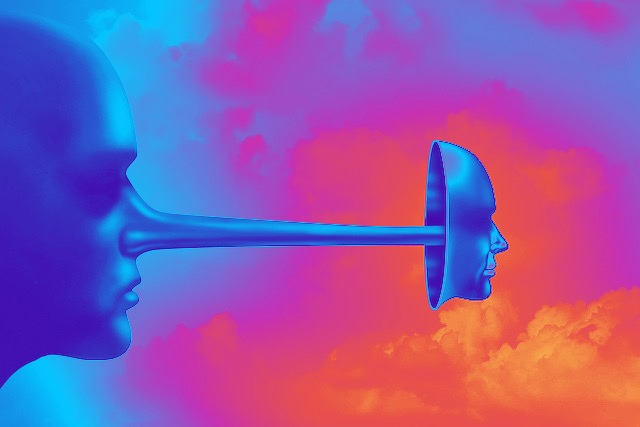
    Looking back, I see that my inner voice was guiding me, but I saw it as self-sabotage then because a part of me wanted to prove that I was right, that I was worthy, that I was a good and kind person who only wanted love and family. Unfortunately, the more I looked to get love from the outside world, the further I was from the source.

    Today, I can confidently say that I can sense the difference between my intuition and the distracting voice of my ego, who wants to be right. Now I can finally hear what my inner guide is telling me. But it wasn’t always this way.

    As a result of the separation from the toxic relationship, I lost everything. I had to give up my old lifestyle to save my soul. I had to let go of my home and all my belongings, escaping with just one bag of clothes and my laptop.

    I lost money in a property settlement and had no car or place to live. I found a refuge in a women’s shelter with my eight-month-old baby and started my new life from a humble place. But I found something through all this—a connection to my inner voice, a connection that gave me the strength to accept the loss, own my story, and say goodbye to the old version of myself. And I’d like to share with you the process.

    September 2021

    Me: Wow, this is beautiful! I’ve always wanted to try new things. I can get used to this kind of life. I feel this thrill in my tummy. It’s fun, it’s exciting, it’s new! What is this? Love?

    My inner self (very quietly): This is a carousel.

    Me: Well, I don’t know what you’re talking about. This is fun. He already said he loves me. I told him it’s too early to say that; we barely know each other. So, I asked him why he’s in love with me. And do you know what he said? “Because you are you.” He gets me; finally, someone who loves me for who I truly am. No doubt, no proving. I’m so lucky.

    My inner self (very quietly): Watch out—it’s too good to be true.

    Me: I don’t know what you’re talking about. I’m finally alive again. This is it. I think I’m in love with him too. He already wants to move in together and have a child. He chose me, and I’m so excited. So please stop being so negative and let me lead.

    Six months quiet

    Me: He’s what I wanted. He’s spiritual and he meditates. He looks after himself, and he’s so assertive and ambitious. He listens to me when I talk. But then when I ask for something, he says, “I think you should check your energy before you speak to me.” It’s really confusing. There are ups and downs, but I guess every relationship is like this… (very quietly): Isn’t it?

    My inner self (very quietly): No.

    Me: What do you know? You haven’t even had a healthy relationship before, so how would you know?

    My inner self (lovingly): Neither have you, sweetheart.

    Me: Well, to be honest, I feel like I can’t get a word in sometimes. It’s never a good time to mention things that are important to me, or he just dismisses the topic quickly, and I don’t know how to introduce it again.

    I guess I just have to get better at communicating. Let’s do some courses for that. I always get this feeling in my stomach—massive pain, like a black hole, when I sense I’m losing him, and I fear that I’ll die not having him in my life. I can only calm down when I know things are good between us and when he hugs me again.

    I’ll just lean in with more love and kindness, and I’ll figure it out. He’ll see how much I love him even though he’s stressed and doesn’t have time for me anymore. He’ll see that I’m here for him through good and bad, and then he’ll be here for me when I need it. I’m sure we just hit a rough patch, and all will be good again soon.

    Actually, stop being so negative. I have everything I’ve always wanted. Now, with the baby on the way, we’ll make such a wonderful family, and I’ll see what a great father he’ll be and how much fun we’ll have.

    Six months later

    Me: It’s still kind of up and down, isn’t it? Some days things go well and we’re happy, but then comes a big fall. One day he says that I’m the best partner he’s ever had because all his exes are crazy. Other days, he comments really hurtfully on what I say or who my friends are. And it goes round and round.

    My inner self (very quietly): Like on that wheel?

    Me: What wheel? The Power and Control Wheel I saw? Nah, not like that. I wouldn’t do that to myself. I was already in an emotionally abusive relationship, and I wouldn’t be so stupid as to repeat it.

    Things are fine. I just need to be nicer to him. It’s kind of my fault. It must be my hormones. It will pass after the birth. He’ll be with us at home, and we’ll restore the peace and calm. Easy. I feel so much love for him. I won’t ruin this relationship by being too sensitive. I’ve got this. I’ll do more visualizations and affirmations.

    Three months later

    Me: Hello, are you there? I’m so confused. I think I’m losing my mind.

    My inner self (very quietly): I know, honey.

    Me: What’s going on? My life is a mess. I don’t know what to do. I don’t know why I’m ruining everything all the time. I used to be fun, happy, and confident… Now all I feel is disoriented and dizzy.

    My inner self: A bit like on a carousel?

    Me: No, I’m not. I told you—he’s helping me. He’s the best. I want him. I don’t have anyone else. And I love him so much I can’t imagine my life without him. It’s impossible. He’s got all the money, he’s signed on the lease, the car is under his name, and I’m not even employed…

    My inner self (patiently): Alright, honey. Go again. I’ll be here when you need me.

    Two months later

    Me: I don’t recognize my life or myself anymore. Everything is kind of fuzzy. I’ve had this headache for the last week or so. I can’t feel or think clearly; I can’t feel my body. I’m unwell.

    My inner self: I know, my dear.
    Me: What’s going on? Please help me, someone.

    My inner self (very quietly): You are on a carousel.

    Me: Why do you keep repeating that? I told you he’s helping. Well, sometimes. He’s just a bit stressed, but it’s also my fault because I’m not as much fun as I used to be. I don’t know why I feel so numb or why I can’t just laugh anymore.

    He’s the only person left. I don’t see anyone else anymore. I’m scared to speak to anyone; no one would believe me anyway. My life is so extreme compared to last year, with court cases and police and debts and signing documents I don’t understand. What am I doing wrong? Why is this happening to me?

    My inner self (barely loud enough to hear): Have you noticed the same things happening over and over?

    Me: Yes. But I’d die not having him. Stop telling me he’s the problem when I know I’m the problem.

    One month later

    Me: Are you there?

    My inner self: Of course.

    Me: The same things are happening over and over again. I thought he was helping and that I was crying every night because I’m depressed and I have so much drama in my life, but I don’t bring up any of that. He always talks and talks until I feel like the worst person in the world.

    The other day he came to me with an idea to have children with other women because he wants more kids than I can give him since I’m turning forty this year. He claims it’s because more women should have children with such fantastic genetic material. This is too much for me, and it’s not getting better but harder and faster. But how do I get out? Please help!
    My inner self: Are you ready?

    Me: I think so.

    My inner self: Then jump.

    Me: Where?

    My inner self: Off the carousel, sweetie.

    Me: Can you slow it down, please!? This is going to hurt.

    My inner self (most lovingly): It will, honey, but you are not alone. I’m here. I will guide you and help you heal.

    And so I did.

    Four Takeaways from Those Conversations with My Intuition

    First: Intuition is usually quiet, gentle, and subtle. I recommend going back in your memory and noticing when you heard your intuition. What was the quality and the tone? What else can you notice and learn about it?

    Second: Intuition doesn’t argue. It often disappears when you disbelieve or argue back. It’s very sensitive to criticism and attitude, meaning what seems to be right or more logical or more convenient. If you want to be guided by intuition, you have to let go of thinking that you ‘know.’

    Third: It grows stronger if you connect with it like your life depends on it. If you surrender and quiet your overthinking, you will be surprised by how quickly your intuition can guide you to where you need to go.

    Fourth: Your relationship with your intuition is like any other relationship; it needs time, care, and attention to build it solid. But once you do, you’ll have an invaluable asset for life.

  • How I Am Learning to Trust My Body More and Control It Less

    How I Am Learning to Trust My Body More and Control It Less

    “I’m a beautiful mess of contradiction, a chaotic display of imperfection.” ~Sai Marie Johnson

    I don’t identify as having an eating disorder. I don’t struggle with anorexia, bulimia, or binge eating.  Yet I exercise precise control of my weight, down to the pound. If I gain a mere two pounds, I can feel it. First in my stomach. Then in my face.

    That’s when the self-loathing kicks in.

    I beat myself up for gaining those two pounds.

    I wear a shirt to sleep at night, instead of being naked like I am when I am two pounds lighter.

    I leave the towel wrapped around me when I get out of the shower, to avoid having to look at my naked body in the mirror.

    I eat only a smoothie for breakfast.

    I go to bed hungry.

    I don’t want to have sex because I don’t feel good in my body.

    I restrict myself from food and pleasure until I lose those two pounds.

    What’s worse is that I desire to lose even more weight.

    Sometimes I google “BMI calculator” and enter my height and weight in the tool. The tool tells me I am a normal weight. I enter a weight several pounds below my actual weight to see what weight I would need to be to be underweight. That weight is 133 pounds.

    I secretly crave to be underweight. Which is why I was so happy when I got food poisoning a few weeks ago and weighed 133 pounds for four days.

    I am disgusted with myself for being happy about this. I was throwing up for two days, was only eating toast, and was extremely weak. Yet I felt happy because I was smaller.

    I didn’t want to return to my normal weight. I wanted to remain small.

    I did slowly regain that weight. I hopped on the scale at the gym yesterday and I weigh 136.8 pounds. “Shit,” I thought. I want to be down to 135 before my wedding in three weeks. I quickly started calculating and felt relieved, knowing it would be easy to lose less than two pounds in three weeks. No problem.

    I’m also disgusted with myself about the amount of time I spend thinking about food and my weight. What did I eat today? Did I have too many pretzels? What will I eat for dinner? Today was my rest day, so I have to eat less. 

    I am slowly becoming aware of how much brain space food and weight take up. I wonder what creativity I could unleash if I devoted less time to thinking about food and more time to brainstorming, dreaming, and problem-solving.

    In addition to all this thinking, I also snack incessantly. Yesterday I counted and I went to the kitchen twelve times to get a tiny snack. A couple of pretzels, a mandarin, a handful of granola, a bite of chocolate, a few blueberries.

    I’m not sure if my constant snacking is due to actual hunger or if it’s connected to a more general anxiety and inability to relax.

    I think it’s both. When I eat a bigger breakfast, I have less desire to snack throughout the day. But I also think there’s an element of anxiety, because I find a moment of calm through the action of putting a bite of something in my mouth. For me this doesn’t show up as over-eating when I’m stressed, it’s more of a daily anxious habit. Perhaps some sort of desire for oral fixation.

    I could go even deeper to say that perhaps I feel like I am missing something in my life and, therefore, try to fill that void with snacks. I’m not sure if that’s the case, because mostly I am pretty happy and content. Yet my snacking behavior could suggest otherwise. Perhaps both things can be true. I can be happy in some ways and still yearn for more.

    I am also assessing my other eating habits. I don’t severely restrict myself from treats. I eat cake when I want to. I eat McDonald’s at the end of a long backpacking trip. I treat myself to an occasional burger. But I don’t enjoy these less healthy foods guilt-free. If I have cake one night, I’ll work out extra hard the next morning. It’s almost like I punish myself for indulging in a treat.

    I’m not sure what’s under my desire to be small. I know some of it comes from messages from society that thin is beautiful, and the insidious design of our culture to distract women with matters of physical appearance, so we have less brain capacity to think about things that really matter. I think it also comes from the positive feedback I receive about how fit I am. As if I’m a better person because I’m thin. I’m not.

    To this last point, I’m making an effort to give more non-appearance compliments to other people. My favorite one to give (and to receive) is: “I love your energy.” Let’s attune more to people’s energy than the size of their waist or definition of their brows or shape of their butt.

    I also know I have perpetuated these unfair beauty standards. I do it under the guise of: “I want people to be healthy.” But I know that thin does not necessarily mean healthy. I know that bigger does not necessarily mean unhealthy. Also, who decided that being healthy is something to strive for?

    Sure, we have a survival instinct, and being strong, mobile, and able to endure will help us survive. But I’m not sure that being healthy is some kind of moral standard. I strive for it for myself, but just like anything else, it’s an individual person’s decision if they want to be healthy, and what healthy means to them.

    Yes, I’m seeing the contradiction here, because I say I strive to be healthy, yet my desire to be underweight doesn’t seem mentally (or physically) healthy. The amount of time I spend thinking about food doesn’t seem healthy either. Which means I am going along with the lie that has been shoved down my throat my entire life: the lie that thin and small is beautiful.

    Of course I know that is not true. Of course I know that a person’s soul is what makes them beautiful. Of course I know that being weak and underweight is not healthy. Yet in some areas of my life, I act as if I don’t know these things.

    I would like to get to a place of trusting and listening to my body. Trusting it when it wants to eat a big burger after a long hike. Trusting it when it wants a piece of cake on a random night. Trusting it when it craves fruits and vegetables. Trusting it when my stomach feels jittery and empty and wants more fuel.

    I would also like to get to a place of not beating myself up if I gain two, three, four, or more pounds. I want to actually believe that I am still beautiful and worthy, no matter what my weight is.

    Wow. It’s weird to write this. Normally I write about my challenges once I’m on the other side of them. After I have unpacked them. But this time I am writing about a challenge right as I am becoming aware of it. Which means I don’t yet have much wisdom for you. But here’s what I do know:

    1. Exercise should be something we do because we love our bodies, not because we want to control them and keep them small.

    Sometimes I do have this relationship with exercise.

    I love being alive, and I do strength and cardio training because I want to be strong and mobile when I’m old. I want to be on this journey of life as long as possible. I do lunges because I want to be able to climb up a mountain and be stopped in my tracks at the beauty of our planet. I run because those endorphins make me feel good.

    Other times, I crank up the incline on the treadmill to punish myself for eating too much popcorn at the movies the night before. Or I try to do all the squats and deadlifts to make my butt rounder. My goal is to release those latter motivations, because those are grounded in control and inadequacy, not love.

    2. Your worth is not connected to your weight.  

    Read that one again. You are talented, strong, and beautiful no matter what your weight is. You can desire to lose weight or gain muscle or strengthen your heart, but doing so gets to be an act of love.

    3. We should stop thinking of indulging as a bad thing.

    To indulge is to allow oneself to enjoy the pleasures of life—eating a sweet fig in June, eating a chocolate croissant just because it tastes good, hugging your partner after being apart for a few days, driving through your neighborhood listening to your favorite song, sitting outside in the sun on a summer day, and sipping your coffee in the morning.

    Life should be pleasurable, and I want us all to indulge more, without guilt.

    4. Get to know your body.

    What I mean by that is not just getting to know how your body looks, but how your body functions.

    One of the most empowering and transformative things for me in the last few years has been learning about my menstrual cycle. Through reading, coaching, talking to my doctor, and being aware of my own body, I know what is happening hormonally each day of my cycle. I am able to pinpoint the day, how I will feel, and what my body will need. And then I (try to) honor what she needs.

    For example, on day seventeen of my cycle I am usually cranky, tired, and hungry. I clear my schedule, sleep more, and eat what I want.

    5. Your relationship with your body might not be black and white.  

    In some ways, I have a healthy relationship with my body. In other ways (as described above), I do not. Both things can be true. I think the goal is to shift toward a place of love and acceptance, and to spend less time thinking about what you look like and more time being aware of how you feel, how you live in alignment with your values, and how you show up for others.

    6. People’s struggles with confidence and self-esteem manifest in many different ways.

    Some people close to me might be surprised to hear about my inner dialogue and complex relationship with food because I look healthy. (And mostly, I think I am healthy.) But it doesn’t mean I don’t fall prey to the social pressures to look a certain way. We all do in some way or another.

    So let’s have grace, empathy, and understanding for each other, and know that we’re all going through stuff, whether it’s visible or not.

  • When You’re Terrified of Conflict: Why True Intimacy Means Speaking Up

    When You’re Terrified of Conflict: Why True Intimacy Means Speaking Up

    “Conflict avoidance is not the hallmark of a good relationship. On the contrary, it is a symptom of serious problems and of poor communication.” ~Harriet B. Braiker

    I walk on eggshells in my relationship. I have for the past ten years.

    I try to design everything out of my mouth to lead to the least amount of friction between my wife and me. And you know what? It’s hurting our relationship.

    You see, I’m afraid of confrontation. For me, confrontation leads to tension and tension can lead to stress and angst.

    When I was a kid, tension, stress, and angst equaled punishment from my father, which usually came in the form of yelling and verbal abuse. As such, I learned to walk on eggshells around my dad.

    It was a defense mechanism. A way to survive my crazy, chaotic childhood.

    Unfortunately, I took this learned behavior out in the world as an adult and perfected it. I tip-toed around people out of fear of someone getting defensive or upset with me. It was exhausting, but in my mind, better than the alternative.

    With my wife, this behavior started innocently at first. For example, if she made a meal that I didn’t particularly like, I wouldn’t tell her the truth out of fear of her getting hurt or defensive about it.

    In my mind, if I was honest with her, she would get upset, and that was something I wasn’t willing to let happen. This seemingly innocent way of interacting led to the deeper core issue in our relationship—not being truthful with how I was really feeling.

    Instead, when I sensed that my wife was getting upset about something, I often shut down emotionally and hid. I was afraid of being my authentic self because I was certain it would lead to conflict, and conflict in my experience, like I said, leads to pain.

    As a child, whenever my dad and someone he was dating had a disagreement or a fight, the relationship would come to an end. Always.

    When one person would leave, another would show up and stay until there was a big fight. Then she would leave and another would be right around the corner and so on. This was the blueprint I witnessed as a child.

    Conflict = pain = endings

    He modeled a behavior for me, a way of being if you will, that I swore to avoid at all costs. Hence shutting down and emotionally hiding around my wife. I didn’t want a big blow up that ended our relationship.

    But here’s the thing, disagreements and conflict are a part of life. They happen over politics, money, and parenting.

    They happen in the workplace, over religion, and in schools. Disagreement and conflict are everywhere, and yes, they even happen in romantic relationships.

    But for those of us with any sort of childhood trauma, we hear a disagreement as a fight. And fights can lead to endings, which is something most of us don’t want. 

    That’s why I designed everything out of my mouth to lead to the least amount of disagreement with my wife. I didn’t want things to end. Little did I know, I was actually hurting things more than helping them.

    When we walk on eggshells in our relationships, we leak without knowing it. Leak meaning our insecurities and fears come out, and they can trigger the other person and give them reason to resent us.

    It’s counterintuitive. There’s no authenticity in it. There’s no connection or vulnerability.

    Intimacy, erroneously for many of us, is only viewed as closeness and feeling good, but that’s not accurate. Intimacy is also discomfort and disagreement and for people to be able to navigate that.

    Being intimate is sharing our reality and accepting the reality of another. When we walk on eggshells, we are not being intimate.

    Unfortunately, this realization is too little too late for me. My wife and I got recently divorced, and according to her this is one of the biggest reasons why. It’s sad and painful but something I felt necessary to share with you in the off chance of it helping someone else.

    The moral of the story? Bring to the relationship what you want your partner to bring to the relationship. Rise above your discomfort and be intimate.

    In tough moments I sometimes turn into a little child who doesn’t know how to articulate things, so I shut down and hide instead. But like I said, that’s not intimacy.

    Everyone is going to disagree or be disappointed in us at some point in time because they are human.  Our work is to be aware that others being disappointed with us does not equate to being in harm’s way.

    Knowing this is the difference between being a functional adult and being in our childhood trauma. It’s the difference between healthy adult pain and the wounded child pain.

    This is where my work is right now. Choosing intimacy and aliveness over people-pleasing and perceived safety. Slowing down in the moment and reminding myself that it’s okay to be scared and, even more so, to express it. The adaptive behavior of closing up and protecting myself doesn’t serve me anymore.

    I imagine there’s an immense freedom that comes with not being afraid of expressing or showing oneself to others. Moving forward, that’s my path (to the best of my ability, of course). Care to join me?

  • How Following Our Instincts Now Can Protect Us from Pain Down the Line

    How Following Our Instincts Now Can Protect Us from Pain Down the Line

    “There is a voice inside of you that whispers all day long, I feel this is right for me, I know that this is wrong. No teacher, preacher, parent, friend or wise man can decide what’s right for you. Just listen to the voice that speaks inside.” ~Shel Silverstein

    Some time ago, a guy I knew suggested I go swimming with him and a friend of his. I accepted.

    I didn’t know him well. Sometimes he would say hello and be warm, while other times he would ignore me. Since he was a longtime friend of a girl I knew, I was looking forward to getting to know him better so we could become friends too.

    He and his friend dived several times from the ten-meter diving board. When it was my turn to jump, I was petrified.

    I was standing on the diving board with a firm will to jump, but the emptiness below me paralyzed me.

    My new friend climbed the stairs of the diving platform, came on the board, and kissed me on the mouth to encourage me. It was cute of him, but the situation stressed me even more. I knew him very little, and the fact that he blew hot and cold did not give me confidence.

    When I finally got off the diving board, without having jumped, I told him how much I appreciated that he came to encourage me, but I preferred that we stay friends.

    In the following months, whenever I bumped into him, he ignored me.

    About six months later, as I was walking down the street, he ran out of a restaurant to greet me and offer to ski with him and his friends, which I accepted. I was surprised at his change in attitude and relieved that he was no longer mad at me for sending him away at the pool.

    We spent a wonderful day of skiing, during which he was particularly friendly.

    In the evening, we met at the local pub, where he told me of his desire to go out with me. I replied, again, that I preferred that we stay friends.

    Later that evening, when I passed him on the pub stairs, he walked straight past without looking at me. It hurt me. I knew he was hurt, but it was unfair to ignore me again. I had spent a wonderful day with him and wished we could stay on good terms.

    Following this, I felt uneasy and ended up telling him that I had changed my mind about him because I wanted things to go back how they were earlier that day, when he was warm and charming. That’s how our relationship started, but I quickly realized something was wrong.

    I noticed that when he needed me or when we were planning to spend the night together, he was warm and generous with compliments. On the other hand, when I was useless to him, he was cold and distant. The sudden shift between the two extremes made me doubt his sincerity and feel manipulated.

    Moreover, he did things secretively, which created an atmosphere of mistrust.

    Also, he always created a busy schedule for himself, in which he assigned me time slots in advance.

    If I suggested that we see each other at a time other than what he had initially planned, he did not let go until I gave in.

    I felt like a pawn on his chessboard, and I was tiring of the lows but growing addicted to the highs.

    When I would bring up issues in our relationship, he was not open to questioning himself. Each time, he managed to convince me that I was the cause of the problem. The argument ended with me crying and begging him to forgive me.

    As a result, after each argument, I felt that the problem was still unsolved, and my frustration escalated.

    He ended up leaving me, which was legitimate since we were constantly arguing.

    The breakups I had experienced with other ex-boyfriends had left me either relieved or heartbroken, or both. This breakup left me with an identity crisis.

    During our relationship, when my ex-partner found a flaw in my personality, he could not help but amplify it and remind me of it all the time.

    That is when I started to doubt myself. Who was right, him or me? Maybe he was right, and I was this person he was describing.

    It took me a while to realize that this relationship was toxic. Looking back, I wondered how I could have come to this.

    How could I have been left by a man I had never wanted to be with and for whom I had never had romantic feelings?

    Also, why had I tried so hard to make this relationship work when I was miserable throughout its course?

    In other relationships, I’ve always had feelings for my partners. Those magical feelings that make you euphoric at the beginning, and every time you see someone who looks a little like your loved one, you think it’s him.

    In this case, the unease after being ignored made me change my mind.

    In his defense, my ex-partner never forced me to be in a relationship with him, and as an adult, I am responsible for my choices.

    Yet, his strong-willed character always ended up defeating my decisions.

    This experience taught me why you should listen to your inner voice and be in tune with yourself. The voice inside tells you what feels right and wrong for you.

    Don’t be afraid to follow your intuition, even when people insist you go against it. Does that mean that you should think only of yourself? No, obviously. However, if what is being asked of you goes against your intuition, and even if you do not understand why, it is better not to do it.

    If I had listened to my intuition and refused to go out with this guy, I would have hurt him briefly but saved him from a relationship that did not suit him. Moreover, I would have spared myself unnecessary suffering.

    When you make decisions with your heart, you have no or fewer regrets if things go wrong.

    It can take time to learn to listen to your inner voice and follow your instincts without feeling guilty—especially if you learned growing up to put other people before yourself, as I did.

    If you feel that someone or something isn’t right for you but worry about upsetting someone else, remind yourself that a little short-term discomfort can often save you a lot of pain down the line.

  • Trust Restored: Why I’m Letting Go of Preconceived Ideas About People

    Trust Restored: Why I’m Letting Go of Preconceived Ideas About People

    “The problems around us are only compounding. We will need to rediscover our trust in other people, to restore some of our lost faith—all that’s been shaken out of us in recent years. None of it gets done alone. Little of it will happen if we isolate inside our pockets of sameness, communing only with others who share our exact views, talking more than we listen.” ~Michelle Obama

    I’m up at the American River, one of my favorite summertime spots. I have a ritual of floating down it, then hiking back up the hill to my clothes. I love how the swift current knows exactly where it’s going, making any paddling unnecessary. I love how you can just lie back and let it take you as you look up at the cloudless blue sky.

    As I float, the sun beats down on my skin, but the river’s coolness counteracts its scorch. Small groups of Canadian geese speckle the shore. The air is still, its quiet punctured only by the occasional train sounding in the distance.

    Once I’ve reached the bottom, I set out back towards my towel—walking along a series of dirt paths consisting of small hills. They’re quick and steep like bunny slopes, coated with golden dust that glints beneath the sunlight.

    While walking them I notice two men picking fruit from a tree in the distance. Feeling exposed in my half-clothed state, I immediately tense up. I realize that having no shoes means I’ll be unable to walk quickly past.

    Bracing myself for discomfort, I continue walking. As the distance between us narrows, I wait for them to whistle, or to jokingly ask  if I need help finding my clothes—or create discomfort in whatever other way, be it through words or stares (as I’d become accustomed to men doing).

    I walk past, armor on, shield up—raising it a little more when one of the men begins to speak.

    His words are, “Hello,” followed by,  “You’ve got some tough feet!”

    They contain no sexualizing, nor any subtle attempt at intimidation. And in response to this comment— the kind one human would make to another, his equal—I find myself reacting with human thoughts in return:

    Yes—this terrain IS pretty rugged. I guess my feet ARE pretty strong. Thank you, Sir.

    **

    I think about how, in Whistling Vivaldi, a black man whistles classical music when crossing paths with white strangers on the street. He does this in hopes of quelling their fear and discomfort that are born from prejudice. Implying benevolent intentions and sophistication, his whistling preemptively wards off prejudicial treatment.

    Perhaps this man’s comment was the (gender) equivalent to this example—an attempt at polite conversation to keep from coming across as threatening.

    Or maybe he’d briefly entertained the same thoughts that often precede the sorts of comments I’d anticipated. Maybe in the past he would have converted those thoughts into unwitting weapon words, then launched them my way. Maybe, though, because our society is growing and learning and its people are evolving, he decided that day not to.

    Either way, I felt relief that the men did not behave in the way I’d predicted.

    It got me thinking about preconceived ideas. How we often develop templates, then apply them to the individuals we regularly interact with. How few encounters encourage us to challenge or expand these templates, because much of our lives are structured around familiarity. And how it’s easy to take one look at a person and file them away into a specified bin inside our minds, perhaps unaware we’re even doing it.

    How often do we go into an encounter with our mind already made up—both about the person and about what they could possibly have to say? Their words pass through a filter in our head, confirming what we already know or believe to be true.

    Sometimes our expectations turn out to be accurate. Other times they do primarily because we expect this of them, therefore never open our minds to the possibility that we might be proven wrong.

    People act in ways that contradict our initial views of them, but we don’t see it when we’re not looking for it.

    When I was a Lyft driver, I drove many passengers I was sure I’d have nothing in common with. One was a seemingly straight-laced white man who worked for a tech company. I thought we’d have little to talk about, but an hour later we were eating In ‘N Out and discussing everything from our country’s quick fix approach to handling emotions to how his brother’s coming out changed their relationship to finding a balance between impactful work and a job that pays the bills.

    So often we decide a person is a certain way. Our mind closes. Thereafter we do, indeed, fail to connect. But not on account of differences, but the fact that no connection is possible when the heart and mind are closed.

    **

    No shift in thinking takes place in a single instance. The fact that those two men at the river pleasantly surprised me, for instance, doesn’t erase the overall pattern. Many more such encounters would be necessary for a true paradigm shift.

    But it’s a start. And from now on when I have the bandwidth, I want to give people the opportunity to act in ways that contradict my preconceived notions of them.

    I don’t want to get to that point anymore where I stop seeing others as individuals. Where I’m blinded to what we have in common because I’m seeing only what they represent; the harm done by the larger group they belong to; the political implications of their behavior.

    For instance, several years ago a young man had approached me while I was reading at a bar—and I completely ignored him. At that time I was so fed up with men, so annoyed with their repeated intrusions on my dates with women, and so frustrated that it was them who approached me in public (never women), that I just kept staring down at my book. I didn’t say anything back. In the moment it felt empowering.

    When I thought about the incident years later, though, I regretted my behavior. The guy hadn’t even been aggressive in the way he’d approached me. He’d been earnest, apprehensive, even shy—the way I imagine I can also be at times when I approach women. He didn’t represent All Men; he was his own person, doing something in that moment that might have made him nervous, or pushed him out of his comfort zone.

    I’m not saying it was my job to ease those feelings, or that I owed him this. It’s more that I realized that now I would have genuinely wanted to. Wanted to have at least said hi. Wanted to have at least politely told him I wasn’t up for conversation. Wanted to, maybe not have smiled, but at least treated him more like a human than an implied enemy.

    I want to take my frustrations with patriarchy and heteronormativity up with the concepts themselves—and with individual humans only when they are truly practicing it.

    I’d like to believe that polarized positions aren’t set in stone. That they can evolve and expand with time. That we won’t be doomed to perpetual gripping of shields while walking this planet.

    This isn’t our climate right now—but I hope and wonder if one day we’ll at least start inching closer.

  • Two Things Not to Do After a Traumatic Event (Lessons from Being Robbed)

    Two Things Not to Do After a Traumatic Event (Lessons from Being Robbed)

    “True emotional healing happens by feeling. The only way out is through.” ~Jessica Moore

    Have you ever loved someone so much that you could no longer see who they really were? Or have you ever been young and naive to the danger that surrounds you?

    I’m the first to raise my hand and say I did that! I’m a person who trusts people until they give me a reason not to.

    Trust

    Trust can be broken in so many ways by those you least expect it from; those you love and thought loved you. In some cases, it may not be that they don’t love you, but just that they have had a temporary moment of madness that has hindered their ability to think clearly—who knows?

    But whatever the reason for their betrayal, it can cause so much pain that you feel it in every part of your body. You know the kind of pain I’m talking about, which is so intense that it feels like you’re being pricked with needles. It’s not a nice place to be.

    Story Time

    For me, that moment came on a quiet night in June 2009, which was the calm before the storm that shook my young life. The month before, I had just turned twenty and was looking forward to the summer holidays after finishing my first year at university.

    At the time, I was with someone, and we had been together for just over a year. I had told him about certain areas of my life that I didn’t like to talk about because I didn’t think anyone would be able to understand or relate to them.

    That’s how much I trusted this person, so when he asked me for my house key, I agreed, although I was hesitant to give it initially. I thought we were cool. I know, before you look at me askance, I was young and stupid. I had been living on my own for about a year and ten months at that point, after moving out of foster care.

    On that horrible day, I remember my friend coming to see me during the day and leaving in the early evening. I then remember that shortly after she left, the guy I was with came into the house and stared at me for quite a while. I asked him why he was staring at me like that. He said it was nothing, I just looked different. I said yes, my hair was straight (I usually wore my hair with a natural afro).

    But I could tell something was wrong, so I asked him if he was okay. He said yes and walked out. I thought it would be like any other night and just lazed around the flat.

    Around 10 p.m. I was lying on my sofa playing my favorite game on the Nintendo DS (Ace Attorney) with my legs up and no trousers on. I heard the key unlock my door, but thinking it was my boyfriend, I didn’t flinch… until the door to my living room opened and I saw a boy with a bandana on his face.

    I jumped up quickly to cover myself, and while one of the boys held me at knifepoint, I watched as several other boys with hoods and covered faces took my things. The last thing they took was my wallet, but one of the boys had to ask me where it was.

    Due to the shock of what was happening, my brain couldn’t think, so I answered with “I don’t know,” which of course the boys didn’t like at all, as you can imagine. I ended up getting smacked in the face to jog my memory.

    It Was Not Over

    When they were gone, I quickly got up and ran to the door to put the chain on so they wouldn’t come back in. Lo and behold, one of them came back to get the remote control for the TV. To his surprise, of course, he couldn’t get in, and that made him angry. So he ordered me through the crack to get him the remote and threatened that he’d break down the door and kill me if I didn’t.

    Can you imagine being killed over a remote control?

    I got the remote and pushed it through the crack. Then he asked me for the password to my laptop, and I didn’t hesitate to tell him. Then he said, “If it’s wrong, I’ll come back.”

    During this exchange, I had the police on the phone in the bathroom. When the boys had left, I checked and found that they had taken my house phone, but I still had a spare phone in the cupboard, which I used to call 999.

    Just a few minutes after I finished talking to the suspect, the police knocked on my door. He had been arrested not far from my door and the police were able to recover some of my belongings (which were now evidence), including my front door key. The other boys managed to escape, but the arrested boy was later charged and convicted.

    That was a tough night for me, but the toughest pill I had to swallow was the realization that those boys wouldn’t have gotten my key without my ex-boyfriend’s consent.

    It seemed too premeditated because only he knew how much some of the stolen things cost.

    It was the biggest betrayal I’d ever experienced. I thought hearts could only be ripped out in vampire shows until it happened to me in real life that night (at least that’s how it felt).

    After the incident, I stayed with friends for the summer, which helped me cope better with the aftermath because I was out of the area for a while. But I also think it took me longer to heal because I was in denial for the first few months.

    I couldn’t fully process what had happened. I was finding it hard to get my head around it, and I didn’t talk about it because I couldn’t formulate the right words to express how I felt. I also felt embarrassed that it was partly my own fault for giving him my key.

    After the summer I moved to another area in time for my second year of university, and I never saw or spoke to my ex again.

    A Little Encouragement

    I’d like to say to all those who experience betrayal or survive traumatic crimes that the memory may never completely go away, but the healing will come with time and effort.

    This means feeling, processing, and accepting your emotions, reflecting on the situation and thinking about lessons learned, and forgiving and letting go so you can continue living.

    The two things I’d advise you not to do:

    1. Don’t suffer in silence.

    2. Don’t suppress your feelings and pretend nothing has happened.

    I did both for many years. It was only when I started talking about what had happened and allowed myself to feel all the different emotions that came with it that my healing journey really began.

    My emotions ranged from confusion, disgust, fear, shame, anger, and rage to sadness. They would be up and down on any given day. Sometimes it could be because something had triggered me, and other times just because I was thinking about what happened.

    Sometimes the event replays in your mind repeatedly like a broken record. Let it, because you’ll eventually come to a place of acceptance and slowly begin to let go of the pain.

    I also found it very hard to trust people after that, especially men. But I realized that the more pain I clung to, the more it prevented me from moving forward.

    Not trusting meant I would keep people at arm’s length. I wouldn’t allow them to get too close to me. I appeared cold and detached and thus had very few friends and no romantic relationship for over five years. So I started to forgive.

    I learned that forgiveness was more for me than for the other person, so I forgave myself first for not listening to my intuition when I was resistant to give him my key in the first place.

    Forgiving my ex without ever getting an explanation or apology wasn’t easy, but it allowed me to trust again. I chose to forgive him firstly for my own inner peace and secondly because I refused to believe that he was that coldhearted; instead, I reasoned that something must have happened to trigger the incident.

    Whatever you’re going through, it’ll get better, I promise. Hang in there and remember that this is just part of your story, not your whole story. If you do the work to heal and allow yourself to grow through the experience, it can only serve to make you better, not bitter.

  • Why I Didn’t Trust Myself to Make Decisions (and What If It’s All Okay?)

    Why I Didn’t Trust Myself to Make Decisions (and What If It’s All Okay?)

    “Tell me, what is it you plan to do with your one wild and precious life?” ~Mary Oliver

    Lately, I’ve been taking time to think about what I actually want. Not what I “should” want or what other people want for me.

    One thing I have learned is that mistakes happen when you choose not to follow your inner guidance system. The problem is that, for many years, I chose not to listen to mine.

    Whenever it screamed and pulled at me, desperate to get my attention (“Don’t purchase a car from that shady car dealership! Don’t go out with that person who makes you feel very uneasy! Don’t spend thousands of dollars on a degree that doesn’t make you happy!”), I would simply override it. I would tune out everything my gut was telling me, and instead, justify in my head why doing xyz would be a perfectly fine idea.

    After enough of these experiences piled up, rather than arriving at the realization that I willfully chose to ignore my intuition and that’s what got me into trouble… I arrived at a somewhat different conclusion. I decided that I simply wasn’t good at making decisions.

    So I stopped trusting myself. Before making an important decision about anything, I’d always have another person “validate” it. You know, just in case. My justification was, if I end up making a totally messed up decision, well, I don’t need to feel too badly about it since it was backed by another human being. Evading personal responsibility at its best.

    Now, short term, this sort of worked.

    The people offering guidance and helping me with my decisions were sound-of-mind individuals who cared about me. In fact, some of their guidance was largely beneficial to me, and I’m glad I listened.

    The thing is, while listening to others can be very helpful, it should not be used as a crutch. If someone gently encourages you to make a decision that you know, deep down, is good for you, that is perfectly fine. However, if you are relying solely on input from others because you’re afraid to make the “wrong decision,” that needs to be examined.

    Three problems started to slowly arise for me.

    One, I started to lose my own voice. I started to forget my own taste and what I liked, disliked, agreed with, or disagreed with. I convinced myself that I honestly didn’t know. But oh, I knew. I just was terrified of admitting it to others, much less myself.

    Two, there were occasionally moments where someone’s advice did not resonate with what I wanted. Wait, disagreeing with someone?! Feeling like I might have a separate, completely valid opinion that is different than another human’s?? TOO MUCH TO HANDLE.

    And three, chaos ensued when multiple people had multiple opinions about how I should live my life. And every single person expected me to honor their advice and guidance. And oh my god, what do I even do now?

    After years of dealing with the anxiety caused by trying to do everything everyone wanted, as well as the deep depression that arose as I realized I had become a former shell of who I was, unsure of who I was or what I wanted, I knew that something needed to change. I was lost and slipping away.

    I started making small decisions. It felt terrifying.

    I would like to buy this shirt. I would like to eat sushi for lunch. I would like to stay in this evening, rather than go out.

    Little wins for self-advocacy!

    Then I started making bigger decisions.

    I would like a new job. I would like to stop “hustling” during my non-work hours and just do things that make me happy. I’d like to take more abstract, nature photos than cookie-cutter family photos.

    With each little decision I made, I also made sure to pay close attention to how I was feeling.

    If I felt a tightness in my chest and a feeling of uneasiness, I would pay attention to that. I’d think to myself, “You know what, brain… I know you might object to this for various reasons, but the heart is telling me to steer clear of this decision.”

    I slowly started becoming much more aware of everything my body was feeling at any given moment.

    I also started to realize something else. Maybe there truly are no “shoulds.”

    No matter what decision you make, there will be someone who is all for it and someone who disagrees completely. There are thousands of choices that a person can make in a day. It’s impossible to guarantee that everyone will like or approve of all of these little choices. From the decision to order a cinnamon dulce latte at Starbucks (yes, I see all you Dunkin’ Donuts diehards out there cringing), to the decision to dye your hair purple.

    What about the even bigger decisions? Such as the choice to work a certain job, have a family or not have a family, follow a certain political party, etc.

    What if the whole point is to simply live in accordance with our values, and honor other peoples’ desire to do the same?

    What if it is literally all okay?

    To plant down roots. To fly with wings.

    To be financially abundant and have more than you could need. To have just enough to live happily and comfortably.

    To be tall, short, skinny, fat, lean, muscular, and everything in between.

    To live on your own or to live with others. To be in a relationship or to be single. To work sixty hours a week or five hours a week. To have a job you adore or a job that pays the bills.

    To be a work in progress. To be sure. To be unsure.

    To still be learning. To still be searching. To be saved. To not believe. To be straight, gay, bi, or none of the above. To love men. To love women. To love animals. To simply love.

    What if it is okay to have hard ambition and dreams that are larger than life?

    What if it is okay to have soft ambition and dreams that are just right, which make us happy and honor our capacity?

    What if it is okay to not have any “ambitions,” per se, and to simply focus on cultivating habits rather than reaching goals?

    To experience satisfaction on our own terms without needing to prove anything to anyone, ever.

    What if being enough isn’t about trying to be everything to everyone? Rather, it is about being who you want to be, unstoppably, and nothing more?

  • Why Codependents Don’t Trust Themselves to Make Decisions and How to Start

    Why Codependents Don’t Trust Themselves to Make Decisions and How to Start

    “Slow, soulful living is all about coming back to your truth, the only guidance you’ll ever need. When you rush, you have the tendency to follow others. When you bring in mindfulness, you have the power to align with yourself.” ~Kris Franken

    Codependency previously created a lot of pain and agony in my life. One of the ways it manifested was in my inability to trust myself. I would overthink decisions to death, fearful that I would choose the “wrong one” or upset someone if they didn’t agree or were disappointed by my choice.

    I was terrified of “making a mistake,” and I exhausted myself trying to collect everyone’s opinion (to ensure they would be pleased with me) before finally settling on a choice.

    As annoying as it was, for me and everyone around me, I couldn’t seem to stand firm in my decisions. I longed to be more confident in my choices but couldn’t understand why it was so hard for me.

    Growing up with an authoritative, controlling parent, I didn’t have the opportunity and support I needed to feel my feelings and let my intuition guide my choices. I didn’t get to learn from my mistakes. When I made a mistake, it felt like death. I was often blamed, shamed, and criticized, all too much for my empathetic system to bear.

    I learned that if I placated and pleased, others were happy. And because I became so others-focused from such an early age, I never learned how to build my muscle for good decision-making.

    Feelings and emotions were not welcome in my world, so my only way through was to disconnect from feeling at all—though I felt responsible for others’ mood swings and feelings. I learned that sharing my needs or opinions was triggering for others, and I didn’t have the skills to navigate the weight of that. All this combined felt mentally paralyzing, so I began to look outside of myself to others for advice and guidance eventually.

    When you’re reliant on other people’s opinions and guidance, you’re much like a feather in the wind—susceptible to any small or big gust that comes along. You aren’t in control of your life, and you give others way too much power over how you feel.

    One of the best ways to begin to build self-trust and heal from codependency is to begin feeling your feelings again, living from the neck down as I like to say. Moving from our cognitive thinking brain (because I know you know making decisions shouldn’t be this hard) to the wisdom of our bodies.

    I believe that in order for us to really build this self-trust muscle, we have to learn how to trust our feelings. And that requires us to build a sense of awareness around why we might be codependent in the first place.

    Perhaps, like me, you were programmed from an early age not to trust your inner knowing, or intuition. This results in low self-worth. And this happens for a number of reasons.

    • You were abused or neglected (physically and/or emotionally).
    • Your feelings and needs were minimized.
    • You were judged, shamed, or mocked for your feelings, maybe even being called “too sensitive.”
    • Your feelings and needs weren’t as important as other people’s.
    • You didn’t have at least one parent or caregiver validating your feelings and sense of worth. You didn’t have someone mirroring back to you your value.

    If you experienced any amount of neglect, or had emotionally unavailable parents, like me, you probably learned to suppress your feelings in order to survive. And what we resist persists, so those feelings that we try to shove down only intensify.

    3 Tools to Build Self-Trust

    These three tips might help you learn to trust your inner wisdom so you can make decisions from an empowered place.

    TOOL #1: Do a daily check-in of your feelings.

    When we check in with our feelings regularly so we can meet our needs, we learn to trust in our ability to do what’s best for ourselves.

    When I first started doing this, I would set four alarms on my phone. When the alarm went off, I would do a quick check-in by asking myself, “What am I feeling? What am I experiencing right now?”

    Often, we run through life, not checking in to see how we are doing and feeling (especially if we struggle with people-pleasing and codependency). We do a lot of things every day, all day—go to work, make decisions, parent our kids—but we often don’t check in with ourselves and ask if we need to shift something.

    This is a big part of self-love, checking in and asking, before I have this conversation with my child, my partner, my boss, or customer service rep for my computer, what’s going on with me? Oh, I’m feeling ornery or hungry; here’s how I can address that before I have this conversation.

    You can also do this by journaling. Keeping track of your feelings in a journal can be a beautiful way to understand, process, and look back on your experiences.

    Here are some journaling questions to help you get started:

    • What do I need to hear from myself?
    • What do I need to do for myself to feel my best?
    • What do I love about my life right now?
    • Today I woke up feeling (fill in the blank).
    • Am I living a life aligned with my values?

    TOOL #2: Reparent your inner child.

    Reparenting your inner child is a beautiful way of giving your inner little one the things that he or she needed and never received in childhood. You become the parent you needed when you were a child. And, by giving to yourself what you didn’t receive then, you free yourself from the past.

    So much of reparenting yourself is about making choices every day in your own best interest. It’s becoming aware of your patterns and behaviors, understanding why you do what you do, and carving out time to give yourself what you really need. When you give yourself what you need, you start worrying less about other people abandoning you because you know you won’t abandon yourself.

    One of my favorite ways to reparent myself is to give myself the words I never got to hear as a small young child.  Words like:

    • I love you.
    • I hear you.
    • You are perfect and complete.
    • You didn’t deserve that.
    • I see that really hurt you.
    • What do you need right now?
    • That must have been very difficult for you.
    • I’m so sorry that happened to you.
    • You are smart.
    • You did your best.

    TOOL #3: Practice creating safety within.

    Because we, as codependents, were raised by either emotionally unavailable or narcissistic caregivers/parents, we developed what I refer to as “a hole in the soul.”

    Our parents’ responsibility is to mirror back to us our worth and value, but when they fail to do that, we will look to someone or something outside of ourselves to show us our worth and, in essence, feel safe.

    It’s an endless battle of trying to fill that hole. Low self-worth, self-value, self-esteem, and self-regard are typical for codependents. We look outside of ourselves for safety and approval, becoming dependent on that next hit or rush. That safety might last for five minutes, five hours, and if we’re lucky, a whole day.

    One of my trusted and reliable systems for safety was shopping. I would spend frivolously, buying things we didn’t need with money we didn’t necessarily have. This created a lot of stress and conflict between my husband and me, and further decreased my self-trust.

    He couldn’t understand why I had this insatiable push to spend, and I didn’t either. I just knew that my system felt safe and relaxed once I made my purchases—until the excitement wore off, which usually happened quite quickly, and I was back in the store, searching and spending, trying to get my next fix.

    I had a lot of stress and guilt because I knew what I was doing wasn’t healthy. Yet it was compulsive. I couldn’t stop.

    I longed for the connection and safety that I never received as a child but didn’t know how to get it in healthy ways. So I suppressed my needs in relationships and tried to fill that hole with shopping.

    It didn’t happen overnight, but once I learned how to create that feeling of safety within myself (with lots of support through trauma-informed coaching, therapy, breathwork, meditation, and proper nutrition, and after learning to speak up for myself), my codependent strategies (shopping, relationship addiction) slowly seemed to disappear.

    I no longer needed to rely on my old strategies because I knew how to trust myself and offer myself what I truly needed.

    I invite you to try this: Close your eyes and imagine something that makes you feel at ease, calm, and safe (maybe your favorite forest or beach, perhaps a little cabin nestled in the woods). Notice where the sensation of ease lives in your body. Be with it for a moment—just sit with and experience it. That feeling you just created was created by you. It is yours.

    Every time you do this exercise you release the belief that you can’t create this feeling alone. That you can’t be trusted, and that you must rely on things outside of you to create safety.

    When I first started this practice, I had to implement it every time I entered a store. I took a few moments while I sat in my car and created that feeling of safety within. That way, I felt a sense of calm and ease as I was shopping, keeping my prefrontal cortex online so that I could make rational purchases that I felt confident and good about.

    I started to build evidence that I could, in fact, trust myself to make healthy decisions. It was incredibly empowering and freeing to walk into a shop and simply admire the textures, patterns, scents, and products without feeling an overwhelming compulsion to put things in my cart that I simply didn’t need.

    Every time we connect with ourselves this way, we prove to ourselves that we can create safety within. And every time we make healthy choices from that place of internal safety, we deepen our trust in our ability to discern and do what’s best for us.

  • How I Stopped Carrying the Weight of the World and Started Enjoying Life

    How I Stopped Carrying the Weight of the World and Started Enjoying Life

    “These mountains that you are carrying, you were only supposed to climb.” ~Najwa Zebian

    During a personal development course, one of my first assignments was to reach out to three friends and ask them to list my top three qualities. It was to help me see myself the way others saw me.

    At the time, my confidence was low and I couldn’t truly see myself. I didn’t remember who I was or what I wanted. The assignment was a way to rebuild my self-esteem and see myself from a broader perspective.

    As I vulnerably asked and then received the responses, I immediately felt disappointed. All three lists shared commonalties, specifically around responsibility. The problem was, I didn’t see responsibility as a positive trait. In fact, I didn’t want to be responsible; I wanted to be light, fun, and joyful.

    Though I understood that my loved ones shared this trait in a positive light—as in I was trustworthy and caring—intuitively, I knew responsibility was my armor. I used it to protect and control while, deep down, I wanted to be free and true to myself.

    I didn’t trust life. I found myself unable to let go out of fear of what may or may not happen to myself and others. I let my imagination run loose in dark places and believed if I thought my way out of every bad scenario or was on guard, I could somehow be prepared to meet the challenges that arose.

    I thought that if I oversaw everything, it would get taken care of correctly and then I’d be safe from the pain of life. The pain in life was not only my own, but my family’s, the local community’s, and the world’s. I wanted to plan and plot a way to fix everything so that everything would be perfect.

    I saw myself as a doer—a person that takes actions and makes stuff happen. I relied heavily on pushing myself and coming up with solutions and, at times, took pride in my ability to work hard, multi-task, and be clever. With time, however, I felt resentful and exhausted.

    Over the years it became too heavy a burden. My shoulders could no longer carry the weight of the world, and I was incapable of juggling so many balls. I had to let go.

    There were so many things that were out of my control, including situations that had nothing to do with me, and yet there were so many people I loved and so many dangerous possibilities.

    Living in a state of constant responsibility meant I had to be alert; I had to be on guard. I was never present and thus unable to have fun. I didn’t understand how to enjoy life while being responsible. I saw these as competing desires and ended up avoiding joy totally.

    I believed I could save joy for a vacation or that wedding coming up next month. I always postponed joy until later so that I could resume being responsible.

    However, being a doer and taking responsibility for things that were not in my direct control had consequences. I was unhappy and drained, constantly wondering why I couldn’t just relax and enjoy life.

    Even when I went away on a vacation, I was unable to calm my mind and have fun. I told myself once x,y,z was taken care of, then I’d feel calm, but then something new would come up and I’d be thinking about that instead of enjoying my trip.

    This left me with a powerful realization: I felt safer feeling anxious and tense than I did feeling happy.

    In some twisted way, it served me. At the time, being happy was too vulnerable, while being on guard for the next catastrophe felt safer. This was not how I wanted to continue living life.

    I wanted to remove the armor. I wanted to trust and enjoy life, and I wanted to believe that whether or not I was on top of everything, things would work out.

    I knew that I could be responsible without carrying the weight of the world on my shoulders. That I could be dependable and caring without being stressed or serious. Those were expectations I had falsely placed on myself, and it was up to me to remove them.

    Once I realized that solving the world’s problems was harming my health and that I was choosing fear over joy out of a false sense of security, I decided to give myself permission to feel the discomfort and vulnerability of happiness. In doing so I found the courage to let go, trust, play, and love life.

    I began setting boundaries with myself. The person that had placed the badge of responsibility on my shoulders was me, and I had chosen to do it out of fear, not love. I had to let go of knowing everything that was going on in other people’s lives and the world and take space from social media, friends, and family to make space for me.

    I began to cultivate joy by practicing presence daily and taking the time to do things I enjoyed doing.

    I took yoga classes, watched comedy shows, went to the beach, and continued personal development courses.

    I learned that although I was great at multi-tasking and pushing through, it wasn’t what I wanted. I wanted to courageously follow my dreams and enjoy my precious life.

    That meant that I had to feel the uncertainty, sadness, and danger of life’s circumstances without jumping in to fix anything. I had to take a step back and bring awareness to my thoughts so I wouldn’t unconsciously join the merry-go-round of solving problems.

    I was a beginner at all these things, but the more I practiced, the more joy I experienced, and this spread onto others. Surprisingly, friends would tell me how I inspired and helped them—not by solving their problems but by being bold enough to enjoy my life.

    If you want to enjoy your life but stress yourself out trying to save everyone from pain, begin to set boundaries with yourself. Stay in your lane and focus on the areas you have direct control over—your attitude, your daily activities, and your perspectives.

    Try slowing down, investing time and energy into activities that light you up. You can’t protect anyone from what’s coming in the future, but you can enjoy your present by letting go and opening up to joy.

  • Why People-Pleasers Lie and What We Gain When We Share Our Truth

    Why People-Pleasers Lie and What We Gain When We Share Our Truth

    “You’re a liar. People-pleasers are liars,” a friend said to me. I felt like I was punched in the gut. “You say yes when you mean no. You say it’s okay when it’s not okay.” My friend challenged me, “In your gentle way, begin to be more honest.”

    I believed the lie that pleasing people would make my relationships better. It didn’t.

    I decided to take my friend’s challenge to tell the truth. People didn’t have a relationship with me; they had a relationship with another version of someone else. They didn’t know me.

    People-pleasing was safe; it was how I hid and protected myself so I could belong. Besides wanting to belong, pleasing-people is a bargain for love. If I kept people happy, I believed I would be loved. If I took care of others, I believed I would be loved.

    Showing up differently in relationships is like learning a new dance. You may feel clumsy and awkward at first, but the old dance, while comfortable, is unhealthy. The old dance creates overwhelm, frustration, and resentment.

    I am now a recovering people-pleaser. My journey started when I faced the truth that I was a liar. The first step in change begins with self-awareness. Once you are aware, you can learn new dance steps. The new dance looked like saying no, tolerating less, and telling my truth.

    As I told the truth, here’s what I noticed in my relationships:

    First, I experienced true intimacy.

    As I was more engaged in being honest, others began to know me, not a fake version of me.

    In his book, Seven Levels of Intimacy, Matthew Kelly describes intimacy as “In-to-me-see.” I started saying things I’d never felt comfortable saying before—like “I see things differently” and “that doesn’t work for me.” Secret-keeping was killing my soul, so I also started opening up about the pain and brokenness I felt regarding my former spouse’s addiction and how I’d protected him at a cost to myself.

    When we share more of who we are with others, then we are known and loved, which is a powerful need in humans. I was not broken as a people-pleaser but broken open. I allowed myself to receive the love of others as I allowed them to see me. As a result, I experienced intimacy in a new way.

    Secondly, when we stop lying to others and ourselves, it builds trust.

    It is hard to love someone when you don’t trust them. Trust is the foundation of all relationships. When we are real, others trust our words and actions, and we become more trustworthy. We are no longer chameleons, adapting and saying what others want to hear when interacting with us, and trust grows.

    Lastly, when we pay attention to being more real, we are more fully engaged in our relationships.

    We are wired for connection. When we are engaged in bringing a greater depth to our relationships, the investment pays off. It’s like we are making a deposit in the relationship when we allow others to “see us,” and they in turn feel closer to us. As I began to share more in my relationships, it helped others to open up. One friend said, “Keep sharing; it helps us too!”

    Being more honest in our relationships is a dance worth learning. It improves intimacy, trust, and closeness in our relationships. After all, the alternative is being called a liar!