Tag: true

  • From Awkward to Authentic: How to Show Up as Your True Self in Love and Life

    From Awkward to Authentic: How to Show Up as Your True Self in Love and Life

    “Don’t make yourself small for anyone. Be the awkward, funny, intelligent, beautiful little weirdo that you are. Don’t hold back. Weird it out.” ~Unknown

    You know that moment when you’re mid-conversation, and your brain throws up a flashing neon sign that says, “Abort mission! Abort mission!”

    Meanwhile, you’re left replaying your words like a bad karaoke performance, cringing at every note.

    Or when you’re swiping through dating profiles and mutter, “Why does everyone here look like they’re auditioning for a toothpaste ad?” We’ve all been there. Here’s the thing… we’re so darn busy trying to present a polished, “perfect” version of ourselves that we forget to actually be ourselves, and that’s where the magic happens. Really!

    Authenticity isn’t just some woo-woo concept; it’s scientifically proven to make you more magnetic! When you show up as the real you, things start to shift—in a good way. Let’s ditch the awkwardness and get real, like, laugh-at-your-own-texts and wear-mismatched-socks real.

    A few years ago, I found myself staring at my reflection, frustrated by the need to always have it all together.

    I’d perfected the art of appearing confident, but inside, I felt disconnected from myself, from others, and even from love. That’s when it hit me—my constant reacting to situations, trying to please people, and molding myself into what I thought would be attractive was working against me.

    First, I stopped reacting and started being proactive. Instead of waiting for people to validate me, I took ownership of how I wanted to show up.

    I made sure my actions matched my words. (That’s the true definition of authenticity after all.)

    If I said I valued deep connections, I wasn’t going to hide behind small talk anymore.

    If I said I was looking for a meaningful relationship, I wasn’t going to waste my time with people who were just looking for something casual.

    Then, I gave my dating profile a reality check. No more vague “I love travel, laughter, and good company” fluff.

    I got specific about who I was, the good, the quirky, and the deal breakers. I made it easy for the wrong matches to filter themselves out before we even got to the first date.

    The result? Instead of random, lukewarm connections, I started attracting men who actually got me…

    Me! The real me! Men who read my profile and thought, “Yes! This is my kind of woman.”

    And you know what? It worked. (Insert my no rhythm happy dance)

    My advice? Get clear on your ‘you-ness.’ What makes you you? Is it your laugh-snort combo? The way you know every word to a nineties boy band song? Whatever it is, own it.

    Authenticity isn’t about being flawless; it’s about being aligned with your values and showing up in a way that feels true. Vanessa Van Edwards calls it your “connection currency,” and trust me, it’s priceless.

    Think of your values as your personal Wi-Fi signal. The stronger it is, the more clearly the right people will find and connect with you. No buffering needed.

    Jot down three values you live by, whether that’s kindness, humor, or never skipping dessert. Now ask yourself: Am I living them loud and proud, or are they stuck in airplane mode?

    Ever felt like you’re auditioning for America’s Got Talent on a first date?

    Nobody’s handing out trophies for Most Impressive Overthinker. The harder you try to impress, the more disconnected you’ll feel. People connect with realness, not rehearsed lines or “look-how-cool-I-am” antics.

    The right people don’t need you to dazzle them. They need you to make them feel comfortable. So, lean into being a little awkward; it’s endearing.

    Remember, connection over perfection!

    Next time you’re meeting someone new, replace “What if they don’t like me?” with “What if I don’t like them?” Now you’re the main character. How good does that feel!

    Here’s a fun fact: Your body language speaks before you do. Slouching and crossing your arms? You might as well wear a sign that says, “Don’t talk to me.” Meanwhile, open, confident body language says, “I’m approachable, and I know where the snacks are.”

    Master the “power pose” before any big moment. Stand tall, hands on hips, channel your inner superhero. Two minutes, and you’ll feel unstoppable (or at least like you can handle small talk).

    Nobody connects over surface-level fluff. People want stories that make them feel something, whether it’s a belly laugh or an “OMG, me too” moment. Share the time you accidentally texted your boss instead of your crush or how you once tried to “play it cool” and tripped over your own feet. Vulnerability wins.

    Vulnerability doesn’t mean oversharing. It means inviting someone into your world, not dragging them into your emotional baggage claim.

    If you’re ever in doubt, ask yourself: Would I enjoy hearing this story? If yes, share away. If no, maybe save it for your diary.

    Perfection is overrated. (And exhausting, to be honest.) Did you spill coffee on your shirt before a date? Laugh about it. Did you accidentally wave at someone who wasn’t waving at you? Congratulations, you’re human. Studies (and common sense) show that people find you more relatable when you own your imperfections.

    Think of your quirks as your personal brand. The spilled coffee? That’s your logo. The laugh-snort? Your tagline. Embrace it. It’s unforgettable.

    My first attempt at online dating was like trying to start a campfire in the rain—awkward, messy, and definitely not warm. My profile had over-filtered photos (hello, Insta face!) and a bio that could’ve been written by an HR bot. It attracted matches, sure, but none who actually matched me. I was looking for MY person.

    Then I stopped trying to be someone else and just showed up as myself: goofy, outdoorsy, and a little obsessed with Nutella. My bio became a reflection of my real personality, and my photos were candid moments that made me smile. It worked. The real, authentic matches started rolling in… real, warm, lovely men! Yes, they exist.

    Showing up as your true self doesn’t mean you’ll click with everyone, and that’s the point. Authenticity isn’t about being liked by the masses; it’s about finding your people (or your person) who love you for you.

    So, go ahead, wear the mismatched socks, tell the terrible joke, and let your quirks shine. Because when you’re real, the right people don’t just notice you; they remember you.

    Because your quirks aren’t just lovable… they’re magnetic.

  • 10 Signs You’re Being True to Yourself

    10 Signs You’re Being True to Yourself

    “The most confused we ever get is when we try to convince our heads of something that we know in our hearts is a lie.” ~Karen Moning

    It’s painful and stressful to feel like you’re living a lie. Like you’re hiding how you really feel, saying what you think other people want to hear, and doing things you don’t actually want to do—just because you think you’re supposed to.

    But sometimes we don’t recognize we’re doing this. We just know we feel off, or something feels wrong, and we’re not sure how to change it.

    It makes sense that a lot of us struggle with being true to ourselves.

    From a young age, we’re taught to be good, fall in line, and avoid making any waves—to lower our voices, do as we’re told, and quit our crying (or they’ll give us something to cry about).

    And most of us don’t get the opportunity to foster or follow our curiosity. Instead, we learn all the same things as our peers, at the exact same time, and we live a life consumed by the mastery of these things, our bodies restless from long hours of seated study and our minds overwhelmed with memorized facts that leave very little room for free thinking.

    To make things even worse, we learn to compare our accomplishments and progress—often, at things we don’t even really care about—to those of everyone around us. So we learn it’s more important to appear successful in relation to others than to feel excited or fulfilled within ourselves.

    This was my experience both growing up and in my twenties. A people-pleaser who was always looking to prove that I mattered, I was like a chameleon, and I constantly felt paralyzed about which choices to make because all I knew was that they needed to be impressive.

    I never knew what I really thought or felt because I was too busy suffocating my mind with fears and numbing my emotions to develop even a modicum of self-awareness.

    This meant I had no idea what I needed. I only knew I didn’t feel seen or heard. I felt like no one really knew me. But how could they when I didn’t even know myself?

    I know I’ve made a lot of progress with this over the years, and I have a mile-long list of unconventional choices to back that up, as well as a number of authentic, fulfilling relationships. But I’ve recently recognized some areas where I’ve shape-shifted in an attempt to please others, and in some cases, without even realizing it.

    I don’t want to be the kind of person who panders to popular opinion or lets other people dictate my choices. I don’t want to waste even one minute trying to be good enough for others instead of doing what feels good to me.

    I want to make my own rules, live on my own terms, and be bold, wild, and free.

    This means peeling away the layers of fear and conditioning and being true to what I believe is right. But it’s hard to do this, because sometimes those layers are pretty heavy, or so transparent we don’t even realize they’re there.

    With this in mind, I decided to create this reminder of what it looks and feels like to be true to myself so I can refer back to it if ever I think I’ve lost my way.

    If you also value authenticity and freedom over conformity and approval, perhaps this will be useful to you too.

    You know you’re being true to yourself if….

    1. You’re honest with yourself about what you think, feel, want, and need.

    You understand that you have to be honest with yourself before you can be honest with anyone else. This means you make space in your life to connect with yourself, perhaps through meditation, journaling, or time in nature.

    This also means you face the harsh realities you may be tempted to avoid. You’re self-aware when faced with hard choices—like whether or not to leave a relationship that doesn’t feel right—so you can get to the root of your fear.

    You might not always do this right away, or easily, but you’re willing to ask yourself the tough questions most of us spend our lives avoiding: Why am I doing this? What am I getting from this? And what would serve me better?

    2. You freely share your thoughts and feelings.

    Even if you’re afraid of judgment or tempted to lie just to keep the peace, you push yourself to speak up when you have something that needs to be said.

    And you refuse to stuff your feelings down just to make other people feel comfortable. You’re willing to risk feeling vulnerable and embarrassed because you know that your feelings are valid, and that sharing them is the key to healing what’s hurting or fixing what isn’t working.

    3. You honor your needs and say no to requests that conflict with them.

    You know what you need to feel physically, mentally, and emotionally balanced, and you prioritize those things, even if this means saying no to other people.

    Sure, you might sometimes make sacrifices, but you understand it’s not selfish to honor your needs and make them a priority.

    You also know your needs don’t have to look like anyone else’s. It’s irrelevant to you if someone else can function on four hours of sleep, work around the clock, or pack their schedule with social engagements. You do what’s right for you and take good care of yourself because you recognize you’re the only one who can.

    4. Some people like you, some people don’t, and you’re okay with that.

    Though you may wish, at times, you could please everyone—because it feels a lot safer to receive validation than disapproval—you understand that being disliked by some is a natural byproduct of being genuine.

    This doesn’t mean you justify being rude and disrespectful, because hey, you’re just being yourself! It just means you know you’re not for everyone; you’d rather be disliked for who you are than liked for who you’re not; and you understand the only way to find “your tribe” is to weed out the ones who belong in someone else’s.

    5. You surround yourself with people who respect and support you just as you are.

    You understand that the people around you affect you, so you surround yourself with people who respect and support you, which motivates you to continue being true to yourself.

    You may have people in your life who don’t do these things, but if you do, you understand their issues with you are just that—their issues. And you set boundaries with them so that they don’t get in your head and convince you there’s something wrong with you or your choices.

    6. You focus more on your own values than what society deems acceptable.

    You’ve read the script for a socially acceptable life—climb the corporate ladder, have a lavish wedding, buy a big house, and make some babies—but you’ve seriously questioned whether this is right for you. Maybe it is, but if you go this route, it’s because this plan aligns with your own values, not because it’s what you’re supposed to do.

    You know your values are your compass in life, and that they change over time. So you check in with yourself regularly to be sure you’re living a life that doesn’t just look good on paper but also feels good in your heart.

    7. You listen to your intuition and trust that you know what’s best for yourself.

    You not only hear the voice inside that says, “Nope, not right for you,” you trust it. Because you’ve spent a lot of time learning to distinguish between the voice of truth and fear, you recognize the difference between holding yourself back and waiting for what feels right.

    You might not always make this distinction immediately, and you might sometimes be swayed by well-meaning people who want to protect you from the risks of thinking outside the box. But eventually, you tune out the noise and hone in on the only voice that truly knows what’s best for you.

    8. You do what feels right for you, even if that means risking disapproval from the people around you.

    Not only do you trust that you know what’s best for you, you do it. Even if it’s not a popular choice. Even if people question your judgment, vision, or sanity. You recognize that no one else is living your life, and no one else has to live with the consequences of your choices, so you make them for you and let the chips fall where they may when it comes to public perception.

    This doesn’t necessarily mean you have everything you want in life. It just means you hear the beat of your own drum, even if it’s silent like a dog whistle to everyone else, and you march to it—maybe slowly or awkwardly, but with your freak flag raised nice and high.

    9. You allow yourself to change your mind if you recognize you made a choice that wasn’t right for you.

    You may feel embarrassed to admit you’re changing directions, but you do it anyway because you’d rather risk being judged than accept a reality that just plain feels wrong for you.

    Whether it’s a move that you realize you made for the wrong reasons, a job that isn’t what you expected, or a commitment you know you can’t honor in good conscience, you find the courage to say, “This isn’t right, so I’m going to make another change.”

    10. You allow yourself to evolve and let go of what you’ve outgrown.

    This is probably the hardest one of all because it’s not just about being true to yourself; it’s also about letting go. It’s about recognizing when something has run its course and being brave enough to end the chapter, even if you don’t know yet what’s coming next. Even if the void feels dark and scary.

    But you, you recognize that the void can also feel light and thrilling. That empty space isn’t always a bad thing because it’s the breeding ground for new possibilities—for fulfillment, excitement, passion, and joy. And you’re more interested in seeing who else you can be and what else you can do than languishing forever in a comfortable life that now feels like someone else’s.

    As with all things in life, we each exist on a spectrum. Every last one of us lives in the grey area, so odds are you do some of these things some of the time, and probably never perfectly. And you may go through periods when you do few or none of these things, without even realizing you’ve slipped.

    That’s how it’s been for me. I’ve gone through phases when I’ve felt completely in alignment and other times when I’ve gotten lost. I’ve had times when I’ve felt so overwhelmed by conflicting wants, needs, and beliefs—my own and other people’s—that I’ve shut down and lost touch with myself.

    It happens to all of us. And that’s okay. The important thing is that we keep coming home to ourselves, and we eventually ask ourselves the hard questions that decide the kind of lives we lead: What am I hiding? What am I lying about? And what truth would set me free?

  • Two Lists You Need to Make If You Want to Be True to Yourself

    Two Lists You Need to Make If You Want to Be True to Yourself

    “If you don’t stand for something, you will fall for anything.” ~Alexander Hamilton

    For over a decade I worked as a paralegal in the corporate world. I worked hard, and I was a dedicated employee, but I was treated poorly by my superiors.

    After a decade of working in this industry I felt lost, without purpose, and I constantly dreaded the next day when I would return to my job.

    One day, an attorney that I had worked for came into my office and screamed at me, leaving me in tears.

    At that moment I politely shut my office door and cried with my head in my hands. After getting out all my frustrations through tears, I told my office manager I was leaving for the day.

    As I sat down in my car, I wondered how I got to this place, where people could take advantage of me and bring me to tears.

    It was the car ride home that made me realize that I had lost my backbone and a sense of what I stood for. I lacked a foundation of what I valued in my life. Throughout the years of working non-stop and losing sight of my values, I was hereby declared lost.

    After I acknowledged that I had lost my backbone, and essentially a say in my life, I broke down. I lost it. I cried my heart out and mourned for my old self, who knew exactly what she wanted in life.

    So, it was time to change.

    When I arrived home, still shaky, I made myself a cup of tea and sat down at the kitchen table with a pen and notebook in front of me. It was time.

    At first, I wrote all the bad things that were happening in my life. Then I elaborated further and grouped them into categories, such as:

    • Injustice
    • Hate
    • Abuse
    • Unkindness
    • Selfishness
    • Vanity
    • Moral corruptness

    After I got it all out, I felt relieved, but I still felt lost. What I had in front of me was a list of the things I could no longer tolerate or even entertain in my life.

    So I took a step further and wrote down all the things that I want in my life and values I appreciated:

    • Love
    • Truth
    • Beauty
    • Happiness
    • Trust
    • Kindness
    • Compassion
    • Intimacy
    • Altruistic values

    This list was worth to me more than gold. I had compiled a list of things I value, my pillars of truth, and a non-negotiable foundation. To this day, this list holds me accountable for all that I want in life.

    It was then that I took a leap of faith and trusted this list I came up with. I neatly typed it up and proclaimed these were my non-negotiable values. If something, someone, or a place did not align with these values, they had to go.

    That pivotal moment at my kitchen table made me realize that in order to have the life I wanted, a life full of laughter, happiness, and love, I had to rearrange my life to align with all the things I stood for and eliminate all the things I didn’t.

    With that said, I slowly changed my participation at my job. I no longer worked overtime, I avidly communicated when my workload was unreasonable, and so on.

    Unfortunately for my employer, it was time for me to move on and quit. So I did, with my list of what I stand for, and never looked back.

    No matter where you are in life, if you’re happy or unhappy, it is essential to know what you stand for. Without this strong foundation you can be taken advantage of and stray from your personal truths and values.

    How to Get Clear on What You Don’t Stand For

    In order to get crystal clear on the things you don’t stand for in your life, you need to set aside some time for reflection.

    Start by creating a list of at least ten things you won’t stand for. There is no wrong answer here. For example, if you don’t care for dishonesty, write it down. If you will not tolerate hate, write it down.

    Analyze your list of what you do not stand for and identify the core reason why you don’t stand for a particular thing.

    For example, if a friend of yours is always putting you down, why is this something you won’t stand for? Is the root of this disrespect? Could it be because the friendship is no longer reciprocal?

    Another example: I could no longer continue working for my employer because I couldn’t stand for unfulfilling work, with no purpose. I also could not stand for daily disrespect and lack of appreciation.

    How to Identify What You Do Stand For

    After you have come up with the things you won’t stand for, it will be easy to identify the things you do stand for.

    There are many ways you can identify the things you stand for in your life.

    You can start by writing a list of what’s important to you. Think about what makes you truly happy. Think of a time when you felt you were living life to the fullest. What ignites a spark in your soul?

    To take it a step further, you can turn the list of what’s important to you into a list of your core values. For example, if you enjoy visiting a specific park on the weekends, the corresponding core value could be adventure, a healthy lifestyle, or personal freedom.

    Another way to identify the things you stand for is to think of three people you value and write down the qualities you admire in them. This could be a family member, a friend, a role model, or someone you may not even know.

    By listing out qualities you value in others, you can open yourself up to expand upon what you value in your life.

    Maybe a pattern will emerge. Maybe a recurrent value is someone who is kind, courageous, or compassionate. It’s important to be mindful of the qualities you value in others, as you most likely wish to embody that same spirit.

    What to Do with These Two Lists

    Defining what you do and don’t stand for allows you the freedom to live your life according to your personal truths. Whenever a situation arises that you’re not comfortable with, you can call upon you what you stand for to guide you forward.

    But what do you do when the answer isn’t so cut and dry?

    For example, if you declared you do not stand for disrespect in any shape or fashion, but have a family member who is disrespectful, what do you do? Do you kick them out of your life? Do you avoid this person in anyway possible?

    In this case, and when it comes to family, the situation is a difficult one to handle. You could have a constructive conversation with the person to move toward a mutual understanding, or set boundaries to ensure you aren’t accepting the unacceptable.

    What if you value a healthy lifestyle, but the majority of your friends like to eat unhealthy food and drink heavily on the weekend? Do you try to change your friends? Do you stop being friends with them?

    Once again, you can safely keep boundaries in check so that you can act in accordance with what you stand for. For example, you could politely remove yourself when heavy drinking begins or make a different decision than your peers when it comes to how you eat.

    Sometimes it might take a while to honor your values, if, for example, you value meaningful work but have a job that feels soulless and unfulfilling. You likely won’t find something new overnight, but what matters is that you’re aware of what you want and need, and you’re working toward it.

    When you define what you stand for in in life, you can begin living a life with intention and purpose, with your values in mind.

    By becoming crystal clear on all the things you do and don’t stand for, you can begin ushering out all the things that do not serve you. It isn’t always easy, but with a firm foundation of what you stand for, you can move forward in life with values by your side.

  • Let Other People See the Awesome Person You Are

    Let Other People See the Awesome Person You Are

    You Are Awesome

    “Sometimes I panic; what if nobody finds out who I am?” ~Billy Joel

    At home, you want to go out and be social. When you’re out being social, you want to go home and be alone.

    At home you feel free, joyful, and ambitious. You’re smart, funny and insightful. Out in the real world, you’re quiet, non-confrontational, and you struggle to connect with others.

    That person you remember from being home alone is a thousand miles away, and you feel like a shell of yourself.

    Does this sound like you? Why does this happen? Who are you really? How will anyone ever know how you feel on the inside?

    First, some good news: All of those wonderful thoughts you have about yourself? They’re true. How smart, funny, and attractive you are? Yes, yes, and yes. I’m not just blowing smoke. We all are amazing at our core, at our true essence.

    What about the negative thoughts? Are those true, too? Here’s more good news: No, those are misconceptions. Simply misunderstandings and wrong interpretations of life situations.

    You know, and I know, that the real you—you at your core—is awesome. If you feel compelled to read on, then this is ringing true for you. Good.

    For years in my teens and twenties, I felt this wonderful person inside me at all times. I was most able to connect with this person when I was alone. This made me an introvert, I suppose. But put me out with people or in a crowd, and I lost that person.

    He was nowhere to be found—hidden behind a plethora of uneasy thoughts and the desire to escape and be alone again.

    At parties, I was the guy who found a quiet spot and stayed there. Unless, however, I was drunk, which was the only way I let my guard down enough to let people see who I really was.

    And that’s exactly the key here—letting people see who you really are.

    As kids, we all did this quite easily. We had not yet learned to censor ourselves or hide our true feelings. We had not yet learned to fear for our well-being in social situations and cope with that by putting on masks or pretending to be things we’re not.

    I specifically remember as a teenager, that going into tenth grade, I made the firm decision to be someone I was not. I pretended to be more social, more outgoing, and more confident, but it was all an act.

    I felt like a fraud. It wasn’t based on true feelings of confidence and the desire to connect with others. It was based on not wanting to be socially ostracized or bullied. I did my best to imitate the behavior of others, and it was exhausting. I preferred to be alone.

    Due to the positive feedback I received from my peers, however, this new effort became an unconscious habit. I spent years and years automatically hiding who I really was, and giving people only a shell of what I am or how I think.

    Shockingly, many years later, I realized that nobody really knew me. And looking back, whose fault was that? Mine. I took my short-term survival tactic of not being myself and made it a lifestyle. It was a Band-Aid that I adopted as a permanent part of my skin.

    So how do we change this now? It’s a pattern so ingrained in ourselves that many of us aren’t even aware we do this. It’s just “normal.”

    So the first step is to become aware. Are you the same person out and about that you are at home? Do you want to be? Great, we’ve gotten that far.

    Next, what’s preventing that? The awesome person we feel like inside—what’s preventing us from letting others see that? The answer is our fears.

    What are fears? At their core, just thoughts. For example, social ostracism. It feels unsafe to be a social outcast, which is why many people seek to avoid it.

    So what if you change your thought about this? What if you began to think, “It’s okay and it’s safe not to fit in with certain groups”? When you change your thought about this, your fear will dissipate. Sometimes slowly, sometimes quickly.

    Once you reach a certain level of awareness, further thoughts and realizations will dawn on you as never before.

    You’ll realize that it’s emotionally painful to subject yourself to the company of people who won’t accept you for who you are. Shortly after that, you’ll come to understand that the awareness and pain are really first steps toward finding those who will accept and appreciate you.

    And it’s fine that some people won’t accept or appreciate you. That’s just life; nobody is perfect. It’s best to let that go and move on to better things.

    These new understandings will have a momentum all their own, and each one will transform your mind, piece by piece, to a new place and a new feeling.

    If you’re the kind of person that can change their mind wholeheartedly on a dime, you can move forward quickly.

    If you’re the kind of person who has to stick their toe in the pool first to gauge the temperature, then their knee, then their leg, it’ll take some time and trial and error for you to commit to changes in thought.

    But once you’ve changed your thought, once you’ve removed your fear about letting others get to know the real you, you’ve opened doors and windows to who you really are—that wonderful, witty, loveable person you’ve always known yourself to be.

    In time, the gap you feel between when you are alone versus when you are out and about with people will shrink. You’ll even consider thoughts like “maybe I’m not really an introvert,” as your desire to let people connect with the real you grows.

    As a bonus, you’ll make stronger, deeper connections with people, because the connections will be with the real you, not a shallow exterior you’ve held onto for so long.

    Many of your current relationships will change for the better, and you’ll begin other relationships anew. These bonds, and the newfound ability to express the real you and let others see it will increase your enjoyment of life and positively affect your experience of it. Your life will be forever better.

    You are awesome image via Shutterstock

  • Stop Trying to Fit In and Start Embracing Your True Self

    Stop Trying to Fit In and Start Embracing Your True Self

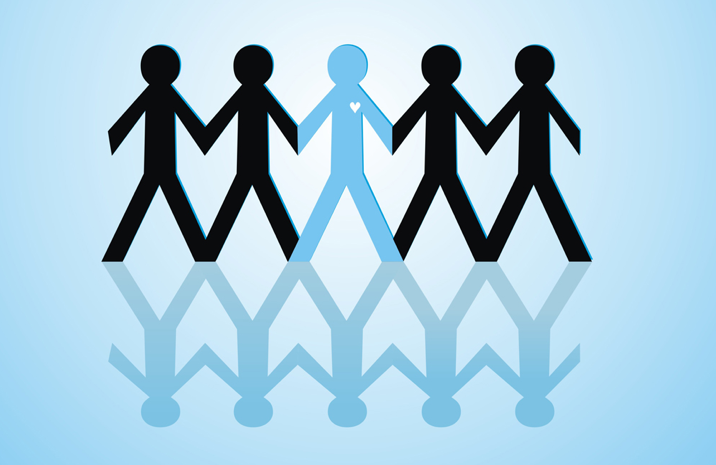
    Stand Out from the Crowd

    “Don’t change so people will like you; be yourself and the right people will love you.” ~Unknown

    I’ve always felt the pressure to fit in. There’s always been a gap between what I want to be and what I think the world thinks I should be.

    I was a tomboy growing up. I climbed trees when other girls played with dolls, I played soccer in my teenage years when other girls wore dresses and went to parties, and even as an adult I preferred to watch the Saturday afternoon game rather than go shopping.

    But the pressure to fit in and be liked turned me into a social chameleon. I tried to be the person I felt I should be so I’d blend in with those around me, whether that meant spending a Friday night at the pub or attending a corporate meeting at the head office.

    Psychologist William James said, “A man has as many social selves as there are distinct groups of persons about whose opinion he cares. He generally shows a different side of himself to each of these different groups.”

    I’ve spent my life trying to fit in. I’ve always wanted to please people, to make my parents proud, and to receive approval from anyone and everyone—my family, friends, partners, bosses, and teachers.

    So without even realizing it I would change myself, my desires, and sometimes even my opinions to fit into whatever mold was required at the time. But if you’re constantly trying to prove your worth to people, it may be true that you’ve already forgotten your value.

    Last year I quit my corporate career to pursue my dream of being a writer and yoga teacher, but it took many years to get to that point. For so long I’d had these dreams in my heart, but the logic of my head overruled.

    There was always a difference between what I wanted and what I thought I should want—my opinion and the norm of society somehow differed—and I’d always assumed I must be the one off beam.

    This leads to a life of sacrificing ourselves to please others, living their dreams at the expense of our own.

    I found the more I listened to, abided by, and fuelled these stereotypes, the more I was defined by them—defined by my career, the clothes I wore, where I was from, how much money I had, and what kind of car I drove. But none of this was really me, so why was I letting it define me?

    We live in a world where we are surrounded by ideals. The media presents us with better versions of just about everything, creating a mindset that we should be striving for more. There’s no wonder so many of us feel like we’re not enough.

    We need to be richer, slimmer, fitter, happier, nicer, different in some way. The point is, we are all different and there is no right or wrong.

    To find true happiness we must be true to ourselves, live our own dreams, and be proud of what makes us unique instead of feeling the pressure to follow the crowd.

    It’s easier said than done, I know. It helped me to ask myself: What makes life worth living? How would you like to be remembered? What do you admire about others?

    It may also help to reflect on what you wanted to do when you were a kid. Often this holds the key to what we held dear before we were influenced by what other people think.

    Take a moment to consider what your strengths are and be clear on your core values. It also helps to seek out like-minded people. Not only do we feel at ease with them, they also help us grow and flourish in accordance with our true selves.

    Remember, everyone has their own version of ‘normal,’ and none of us are right or wrong. We should not expect ourselves to all be alike, but rather respect our differences and value our skills despite them being different.

    When we are comfortable in our own skin, we are not fighting against or with anyone, as we’ve discovered our own true nature and are living in accordance with it. We are courageous enough to live our own truth.

    Unfortunately, there will always be someone more beautiful, clever, talented, or stronger than you, but the reverse is also true. There will always be people less than you in all of these areas.

    So instead of comparing yourself to others, look to see if you’re fulfilling your own potential to the best of your ability. As a nation we seem obsessed with comparing ourselves, but rather than thinking about what you should be like, try just being you. Simply be—as you are.

    You don’t see a sparrow comparing itself with a pigeon, and although we put different prices on timber, none of the trees feel inferior or superior.

    In nature everything is needed and it all has its place. It all fits together and is equal. Whether you’re a blade of grass or a mighty oak tree. it doesn’t matter; you are needed and you have your place in the world.

    The ancient meaning of the word courage is “tell the story of who you are with your whole heart.”

    It is all about being true to yourself.

    Let go of who you think you should be and be who you are. Everyone is coming out of their own closet, emerging to be the person they really are, their true self, and worried about what others may think and if they’ll be accepted.

    That’s why it’s so important to connect with authenticity and compassion, but you can’t be compassionate to others without being compassionate to yourself first. Don’t change so people will like you, be yourself and the right people will love you.

    Stand out from the crowd image via Shutterstock

  • 3 Tips to Help You Stop Saying Things You Regret

    3 Tips to Help You Stop Saying Things You Regret

    Woman with hand over her mouth

    “If you propose to speak, always ask yourself, is it true, is it necessary, is it kind.” ~Buddha

    I initially saw this quote and, in true ego-first fashion, thought of my kids: this’ll be perfect for them. I’ll put it up in the kitchen as a regular reminder to stop pestering each other.

    But then, something a bit deeper poked me gently. Riiight, just for the kids, is it? You’ve got this mastered, then. I guess my true self is not afraid to use sarcasm when it needs to.

    My true self was right (as it always is). When I began to think about those small regrets that plague my running thoughts, so many of them came about because I didn’t adhere to the Buddha’s sage advice.

    Here are a few examples that spring to mind:

    The times I’ve blurted and blathered random nonsense to other parents while waiting for my kids to appear at the school gate.

    The times I’ve made a negative comment about someone.

    The words I’ve chosen when pestering my kids to get things done.

    All my many miserable rants about the usual annoyances in life.

    When I thought about it, I decided there are common themes to the things I say which I later regret. They usually fit into one of three categories:

    • I speak to avoid the discomfort of silence.
    • I speak to unload an ego-driven thought.
    • I speak with negative emotion like frustration or anger.

    Let’s drill down to see where each of these breaks one of the precepts of speaking only good words.

    I speak to remove the discomfort of silence.

    So many times I’ve been in the presence of people when there is an uncomfortable silence and I am desperate to break it. But why? And is it really uncomfortable, or is that just me?

    Inevitably, I end up speaking things that may well be true and kind, but are certainly not necessary. And I end up feeling like a blathering fool.

    Speaking just for the sake of speaking doesn’t help. And sometimes it can hurt, if I’m speaking in a rush, without thinking. So, the next time I’m standing with someone and conversation isn’t flowing, I will always stop myself and ask: is this necessary?

    I speak to unload an ego-driven thought.

    By ego-driven, I mean a thought that makes my self-image feel bigger and better. Gossip fits well into this category. Or bragging. Complaining about a negative situation is another. (Because in the complaining, I’m pointing out what everyone else is doing wrong.)

    If I speak these thoughts aloud, I usually do so with someone I can trust, like my husband, but that does not make it better. Vocalizing something negative about someone else always makes me feel worse, even if I can trust the person I’m sharing it with. It’s just not worth it.

    I speak with frustration or anger.

    This one’s a bit more nuanced, and often comes down to tone. Even if the words themselves are true and necessary (such as: “because you dilly dallied over breakfast, we’re now going to be late for school”), they are not kind. The unkindness often comes through in the tone, if not the words themselves.

    As usual, sage advice seems so simple but is not at all easy to put into practice!

    Here are some strategies to try:

    1. Breathe.

    Take a moment for a conscious breath before speaking. It’s an imperceptible pause, but it allows you the space to consider your comment before it is spoken. Not only does it give you space for second thought, it can somehow magically reframe the situation.

    I’ve found that noticing the simple miracle of breath can cause me to see the current situation in a completely different light.

    2. Respond; don’t react.

    There is a huge difference between a thoughtful response and a knee-jerk reaction. Often, the knee-jerk reaction is fueled by subconscious anxieties.

    Enabling yourself (via #1) to have a thoughtful response means taking control of the situation and not letting your subconscious run your life.

    3. Reflect.

    Use the lapses in judgment when you’ve said something regrettable to consider why you responded the way you did.

    The trigger is usually only half of the problem. It’s worth considering what in ourselves, deep down, was irritated enough to strike back. Being aware of these personal vulnerabilities is what contributes to tremendous personal growth over the long run.

    Ideally the transformation would occur at the level of thought, so words would never have to be checked at the door, as it were. Oh, to have only true, kind and necessary thoughts!

    Until then, this quote is going up on our fridge as a regular reminder for me to tick all three boxes before speaking. I’ll take it one day at a time. (Heck, one hour at a time!) If it rubs off on the kids, all the better.

    Woman holding mouth image via Shutterstock

  • Unbecoming Who You Are and Embracing Your True Self

    Unbecoming Who You Are and Embracing Your True Self

    Woman Silhouette Reflection

    “View your life with kindsight. Stop beating yourself up about things from your past. Instead of slapping your forehead and asking, ‘What was I thinking,’ breathe and ask yourself the kinder question, ‘What was I learning?’” ~Karen Salmonsohn

    I’ve never been particularly risk adverse.

    If you asked my friends or family, they’d tell you I’d be the first person to try something new and challenging. I did things in my twenties with very little thought about the consequences and dove headlong into many situations without batting an eyelid.

    Except, I was avoiding one thing and that was the real me. Each time I signed up for the latest challenge, I upped and moved home for the fifteenth time, or I jumped into a new relationship thinking this would be “the one,” I carried one huge secret with me.

    That secret was my overwhelming fear of being vulnerable.

    I know what you are thinking: “How could I take so many risks, dare to do what other people couldn’t, without being vulnerable?”

    It was easy, the whole time I was pretending to be someone I wasn’t. I wore a mask—a mask of someone who pretended to be adventurous, who lived by the seat of her pants, to make herself look interesting, and who in the end couldn’t pretend any more.

    When you try so hard to be someone you’re not, you lose sight of yourself. You end up doing things to please other people, resulting in living by their expectations. In the end, you become what they want you to be, which can lead anyone down the wrong path to self-destruction.

    I didn’t love myself enough to say, “No, this isn’t me” or “No, I won’t do that because that’s not what I want to do.” I just didn’t feel worthy enough to make my own decisions, to be happy with who I was, so I lived in fear never showing my true self.

    Being vulnerable was opposite to who I was. It mean showing myself to the world, even those bits I didn’t like. It meant expressing my true feelings and taking risks, even with no guarantees. When it came to risking it all in love, I just couldn’t do it.

    Then one day I couldn’t pretend anymore. I remember the moment: I was sitting on my bed crying, I was in yet another disastrous relationship, I was doing a job that sucked the very life out of me, I didn’t have the right people around me, and I was heading for a future of more fear.

    It had to stop now, so I did just that.

    I took off the mask. I ended the relationship, I quit my job, I sold nearly everything I owned, and I moved back home to my mother’s house. I knew I had to start over from scratch, to be reborn and learn how to be me again.

    I started exploring what really made me tick, what I was passionate about and what I loved to do. I ended friendships, I moved away from negative environments, and I worked hard at taking care of myself. I had to become “undone” to do that, to go back to basics and start again.

    It wasn’t easy. It has been a lonely journey at times and very painful, but I’ve come out the other side and I have to say I’ve never been happier. I’ve found a side to myself I never knew existed. I am creative, I am passionate, I am happy to be me, and, most of all, I am single and proud of it.

    Here are a few things I had to do to do to get me to this point and what I have learned.

    It’s possible to be single and happy.

    It’s funny, but each time I ended a relationship I always felt a sense of release, like it was always meant to be that way. I guess for years I thought that I had to have someone else to be happy, yet it turns out that it’s not my only avenue for joy and purpose.

    Since I got single, I’ve learned to love myself. I rely on myself and I no longer look to others to decide my future.

    It’s gotten to the point where I am so focused on my own life that I don’t think I’d have time right now for a partner. The main thing is I that I learned to be happy without being in a relationship, and when it does happen, it will be because it’s right.

    Singleness can be celebrated, as it allows us to truly reconnect with who we really are and uncover who we were all along.

    Sometimes we need to go back to our roots.

    I chose to go back home because it just seemed right. I had no money, my mum was happy to have me back, and I knew it would give me time to work out what I wanted to do with my life.

    I still feel this way today, now six months on, but it hasn’t been easy. Old feelings have come up, past resentments and disagreements.

    But what has been most apparent is the reflecting I have done about my relationship with my mum and myself. It has taught me that trying to change people is fruitless, and that if a situation is going to change, it’s up to me and how I respond to it.

    We don’t all need to move back home, but sometimes we need to go back to our roots to move forward. When we heal old wounds, forgive, and let go of the past, we create space for transformation to occur.

    Loneliness can be the beginning of true connection.

    I didn’t choose to be lonely; it just happened. I had no money, so I had to decide where my priorities were—and spending the money I didn’t have on nights out or other such frivolous things weren’t at the top of the list!

    I had to turn down many an invite out with friends, and the more I did that, the fewer people asked until in the end I never went out.

    That period of time was my lowest point. I’d never felt that lonely, but it taught me so many things. It taught me about those who were there for me, and those who weren’t. It taught me about how I dealt with those feelings, to rely on myself more; yet, in the same breath, it also spurred me on to find other people who got me and accepted the person I was becoming.

    I believe that the people we meet come into our lives to teach us things about ourselves. Some stay for the long haul, while others come and then go just as fast. Being lonely is never easy, but if you decide that it’s not forever and it’s all part of the process, then you’ll be at peace with it.

    Today, I still live at home. I am still gloriously single, but now I hardly ever get lonely. I am still on this journey, except now I am no longer unbecoming who I was; I am finally becoming the person I was all along.

    If you feel that you’ve been pretending for too long, fitting in with those around you, perhaps now is the time to take some steps to change that, to un-become who you are.

    My steps where mine alone, they may not be for you. They were, however, the best things I have done, and I am grateful for that.

    Woman and reflection image via Shutterstock

  • Being True to Ourselves and Forgetting What Other People Think

    Being True to Ourselves and Forgetting What Other People Think

    Dreaming

    “Live your life for you not for anyone else. Don’t let the fear of being judged, rejected or disliked stop you from being yourself.” ~Sonya Parker

    The day that I realized that I was trapped inside of my life was an ordinary day. I woke up, dressed myself, drove to work, and applied makeup to my assigned actors and actresses. It was a groundhog day filled with my usual routine as an entertainment makeup artist.

    I settled into my chair on set and watched as the director directed and the cameramen captured the scenes on tape.

    The vibration from my phone caught my attention. I picked it up and whispered, “hello.”

    The person on the other end asked me why I was whispering. I told them, “I’m on set and I must be quiet.”

    They asked, “So, you can’t speak out loud at your job?” I was perturbed by this question because, of course, I can speak out loud at my job but not when the tape is rolling.

    This question lingered in my mind well after I hung up the phone. So you can’t speak out loud? The more I thought about it, the more I realized it was my truth. I realized I didn’t feel free to truly speak out loud—I didn’t feel free to be me.

    I could not speak out loud during a take but I, honestly, could not speak out in the makeup room either. In my mind, it was a classic case of your voice doesn’t count so keep your mouth shut. The actors and actresses have the floor, and who really wants to listen to a makeup artist?

    It takes a special kind of actor/person to truly take interest in the lives of the people who serve them. I saw clearly that I wasn’t living my life for myself and that I shrunk within the space around me to allow others to shine.

    I was living in the matrix and I needed to take a new pill in order to go on with my life.

    I began to understand the reason depression had come over me that year and, at that moment, I knew I had to make a change. Of course, fear pounded on my head and my heart; yet, I could not allow it to stop me from advancing.

    I knew I wanted to write but I am a makeup artist not a writer. Who would read a novel written by a makeup artist? I also knew that if I didn’t write I would die. So, I made a decision to apply to UCLA as a transfer student.  

    I had walked away from college twenty years before to attend beauty school and since I knew that I wanted to major in English, I thought I’d give college another try, but when UCLA accepted me, fear knocked even harder.

    How could a forty-one-year-old makeup artist, wife, and mother of two return to college and complete a degree in English? 

    I had to walk down a new path and live my life for me and not for anyone else. I had to be free to be me.

    My life began to change when we studied Ralph Waldo Emerson’s essay Pray Without Ceasing. This was where I first heard the concept that we pray without ceasing because our thoughts are our prayers and our prayers are answered and manifested in the person that we become.

    I began to spend time talking with the professor in his office in order to understand these concepts.

    A new world opened up for me, as I understood that I played a huge role in my reality and that my thoughts were my power.

    I began to correlate the relationship my old thoughts had to my past situations. It shook my paradigm.

    I recognized that my thoughts kept me in a state of depression, as I focused on my past and all the bad that had happened in my life. These thoughts also catapulted me into the future as I fantasized about a better life. I could not live in the present moment.

    I also began to see that I chose to please everyone around me. I thought it was a moral duty to take care of others while I neglected the desires of my heart. Before entering UCLA, my heart ached a lot.

    I literally had pains in my chest that woke me in the middle of the night. I had an EKG and while everything looked good, I knew something about me had to change.

    After learning a new way of thinking, I knew I could turn my life around, and I did.

    I began to renew my mind with new thoughts. When a negative thought come to mind, I observed it and then replaced it with a thought that uplifted and affirmed me. In the beginning, it felt like I was lying to myself.

    Although it was difficult obtaining my English degree from one of the top English departments in the country, I graduated and I walked across the stage a month shy of my forty-third birthday. Since then, I have completed my first novel, which I began in 2004 before entering UCLA.

    After graduation I continued to read and practice empowering my mind with uplifting messages. I read books by Louise Hay, Florence Schovel Shinn, and Eckhart Tolle. I began to wrap my arms around myself and embrace me.

    Each day I release my old paradigm and I allow new thoughts to build an uplifting foundation within me. This has saved my life by giving me freedom to exist and unfold in each moment. I now know that if I live for the present and remain in the now, I breathe easier and feel lighter.

    I am free to be me just as you are free to be you. It doesn’t matter what others think or feel about us as long as we are true to who we are.

    So, to those who are living their lives for themselves and no one else, I applaud you, and to those who aren’t, I hope this inspires you to do so. You deserve to fully embrace yourself and to enjoy your existence on this planet.

    Photo by nic519

  • Are You in Love with the Idea of Being in Love?

    Are You in Love with the Idea of Being in Love?

    Love

    “When we can no longer change a situation, we are challenged to change ourselves.” ~Viktor Frankl

    “But no. We can give it another chance; I know we can. We just have to try harder…” were my desperate words to him as he was breaking up with me for the second time.

    As I am reading those words out loud, I feel a little sting in my heart. It’s been a while since I revisited this experience and for some reason, it feels bittersweet.

    It’s been about nine months since he told me that he didn’t see a future for us, that he felt like he was pretending when he was with me, and that sometimes he just didn’t want to be around me.

    But I didn’t hear those words. I heard it, but I thought knew that I could change his mind if I just tried a little harder to convince him that he did want to be with me; he just didn’t know it yet.

    I felt beaten when he firmly said no. I was even more devastated after suggesting that we remain friends when he again said that he didn’t think it would be a good idea, since he didn’t think I could handle it.

    That’s when I knew it was over and I knew that there was no way in this lifetime that I could change his mind.

    A flood of thoughts and emotions ran across my mind and body:

    What could I have done that was so horrible that he couldn’t even stand the sight of me anymore? How could I have missed the warning signs during the last three months that we were together? If he wasn’t happy, why didn’t he just say so?

    There were countless questions that just would not stop.

    I finally realized he’d been telling me all along that he didn’t want to be with me. His actions spoke loud and clear, but I was so involved in trying to change the situation that I didn’t see the reality. And that reality was: He just did not want to be with me.

    Ouch.

    Unfortunately, this wasn’t the first relationship that I allowed myself to get lost in. So how in the world did this happen to me? Again?

    The idea of being in love happened. That’s what.

    I wanted that romance, that fairytale. I wanted to finally know what it was like to be in real. Grown up love and not kiddie, high school love. I wanted all of that.

    I was so tired of always being the bridesmaid and never the bride. I was starting to feel like maybe it just wasn’t in the cards for me.

    And that scared me.

    When I finally woke up from this, I started to ask myself, “Who the hell are you, and why did you allow yourself to go through that?”

    I used to think I was this strong, independent woman who knew exactly what she wanted in life and wouldn’t tolerate any BS from anyone.

    I was always so proud to list all hundred qualities that my future husband would definitely have, and I told every one that I was never, ever going to settle. I was all talk but never walked the walk.

    After much soul searching, I finally had the courage to put my foot down and say enough is enough. That was when the real challenge began.

    Who am I again? I don’t even know anymore…

    I had to find a quiet spot and re-evaluate me.

    I figured out that I’m one person with friends and family but the complete opposite when I’m in a relationship. I try a lot harder to please; I’m less outspoken, less confident, and less of myself. I was scared to let the real me out in fear that maybe they wouldn’t like me.

    I was too scared to say no to something that I knew I was against.

    I felt like I had to create this façade of someone that was fun, loving, and patient, and what I thought was “perfect” in someone else’s eyes. Not saying that I’m not fun or loving or patient; I just tried too hard to be seen that way.

    Far enough that I even agreed to hang out with his ex, who he was good friends with, if that’s what he wanted.

    Don’t get me wrong, many people are still friendly with their exes and their current significant other is fine with it, but I was never fine with their relationship.

    They had a history—friends before dating, four years as a couple, and three years living together. I knew about this from the beginning of our relationship and I was absolutely fine with it.

    In my mind, I thought they broke up on good terms and talked to each other occasionally. I didn’t know about the late night phone calls, meeting each other for dinner, going to the vet together when “their” dog had appointments, and the fact that she still had a key to “their” condo.

    He made an effort in the beginning and assured me that they were just friends and that I didn’t have anything to worry about, and of course I made myself be okay with it.

    I made myself okay with anything if it meant that it would make me the person he always wanted to be with.

    What I didn’t realize was that it was slowly killing my spirit.

    She always came up in conversation, not because I brought her up, but because he wanted to share his past. I put on a brave face and would listen and laugh at some of the stories, but it made me feel like I had to live up to what they had.

    And what I had just wasn’t good enough.

    I’ve come a long way from where I was nine months ago. I’m admitting that I have made huge relationship mistakes, but my biggest mistake wasn’t that I tried too hard or that I would’ve given anything for my relationship.

    My mistake was not being true to myself—not standing up for myself, not keeping true to my morals, and not loving myself enough to just say no when I wanted to.

    I’ve discovered that I am not flawless and that it’s okay to not be perfect. But most importantly, I’ve learned that it’s okay to love yourself first, and if you have to lower your standards to get the love that you think you want from someone else, then it’s not worth it.

    These challenges haven’t been easy but if it’s challenging me to define my true self then why not jump feet first and go all in? I have made a promise to myself that I will love myself first and not be in love with the idea of love.

    Sometimes letting go of someone or something is the best thing that you can do for your soul. Write the last chapter and tuck it away. It’s time to start a brand new book.

    Photo by Chrismatos

  • Dare to be Different: Why It’s Okay to Break the Mold

    Dare to be Different: Why It’s Okay to Break the Mold

    Be Different

    “Criticism is something you can easily avoid by saying nothing, doing nothing, and being nothing.” ~Aristotle

    Who am I? This is a question that haunts us all at some point, especially when the people around us are trying to constantly answer this question for us.

    How do we remain true to ourselves in a world that is constantly trying to make us something else?

    I can tell you that it isn’t easy.

    I work as a full-time police officer in a busy department. In police work, everything is supposed to fit in its right place, and there is an established value system in place. In my experience the police system is founded on one major theme, and everyone is expected to conform to this mold:

    Command is valued over communication.

    This is an area where I have done a great job making myself an outcast.

    You see, I chose to join a career where the belief system of the work is contradictory to my own.

    I genuinely care for people, and I value communication above all else in my work. I prefer to talk instead of yell, and ask instead of tell.

    My way of doing the job greatly differs from almost everyone else in my profession.

    I have also noticed that I tend to get a lot further when I am dealing with people, and get in a lot less confrontational situations than my co-workers. Coincidence?

    The truth is that people will do everything they can to make you conform to their “rules.” Because the police world is such a strong subculture, there is a lot of pressure to conform and breaking the established “rules” is even more taboo.

    It can be exhausting sometimes to remain true to yourself in an environment where everyone expects you to be something else.

    We have established that it is difficult and uncomfortable to be different, so why not just conform? The mold is there for a reason, right?

    I can’t answer that question for you, but I can tell you that the mold didn’t work for me.

    Let me explain why.

    The reason I do things the way I do is because there are people that need and depend on me to be true to myself. The last thing the world needs is one more stereotypical burnt out cop.

    Don’t be so afraid to color outside of the lines that you never pick up your crayon!

    You have a unique perspective to offer that no one else does, so share it!

    I can’t tell you how many thank you’s and phone calls I have received for my openness and helpfulness at work. All because I choose to do things differently.

    I have helped to change people’s lives simply by being true to myself. I have gotten through to people that other officers haven’t been able to by because I don’t fit the mold. I promise you, nothing feels better than following the path in your heart.

    Realize I am not saying that my way is better than any other way. I am simply sharing that the different approach that I bring to work has proven to be invaluable to others.

    Also it is important to realize that being true to yourself means you might bump heads with other people. That is okay!

    If there isn’t any conflict in human interaction it usually means one person is compromising their beliefs in some way. A little bit of conflict is natural; accept it and learn from it.

    There is a sort of catch that comes with breaking the mold though.

    It definitely isn’t the easy road and you are going to face some difficulties. At least I know that I have.

    What can you expect if you choose to break the mold?

    Will you be mocked? You bet

    Misunderstood? Count on it.

    Outcasted? Most likely

    And all of it will be worth it. To the people you help and to your happiness in life, there is no alternative. You have to be true to yourself, against all odds.

    I have had insulting posters made about me and posted up at work and I have been openly mocked for my way of doing things by other officers. I have been told on multiple different occasions walking up to a scene with violent individuals “Why don’t you just go give them a hug”… as if I don’t understand that the world isn’t that simple.

    This is the price I pay for staying true to myself, and I grin and bear it. Because every time someone tells me I was the only person on the scene who really listened to them, and that I made a difference in their life, it makes it all worth it.

    My way of living has been difficult, but also equally rewarding for me. I chose not to compromise my beliefs just to fit in, and I would gladly do it again.

    The choice of who you will be is ultimately up to you.

    If you choose to break the mold, I offer some advice to help you find your way:

    1. Intimately get to know who you are and what you represent.

    Without a crystal clear view of your identity, it will be difficult to survive the pressure and ridicule. Get to know yourself more. Spend time meditating, writing out your feelings, and organizing your thoughts before you make any big decisions.

    2. Try not to take things personally.

    What you need to realize is that humans attack what they don’t understand. It isn’t that they dislike or disapprove of you; it is that they don’t understand what you represent.

    Realize that the attacks are not personal, no matter how they sound. The people attacking you are really just protecting their own ideals, because what you represent makes them question their values.

    3. Realize that you are unique and important, despite what the people around you may say.

    Your opinion and approach matters just as much as everyone else’s!

    Once you start walking your own path, never turn back. Walk through life with your head held high knowing that you never comprised what is in your heart.

    Being true to yourself will eventually earn you respect among many of your peers. I have had this happen to me, and I have more than a few co-workers who understand my approach and respect it. Coincidentally, these co-workers are the officers I always looked up to. We handle situations differently, but we respect each other’s methods. This type of support will go a long way to keeping you on course.

    Even a few of the officers who initially gave me the hardest time have started to be more respectful. It takes time, but it does get easier.

    If you ever feel alone on your path, realize that you are in good company. Almost all the great people in history chose to break the mold and to walk their own path.

    Starting right now, I challenge you walk your own path and don’t compromise your beliefs for anyone.

    Take the first step and never turn back.

    Photo here

  • Dare to Live: 10 Unconventional Ways to Be True to Yourself

    Dare to Live: 10 Unconventional Ways to Be True to Yourself

    Smiling

    “It takes courage to grow up and become who you really are.” ~E.E.Cummings

    Have you ever had a clear sign of who you really are and then totally ignored it?

    Maybe it required too much change or taking a big risk. Maybe you were scared to have to convince a loved one how much you needed this. And so you rationalized that “it wasn’t the right time.” Convinced yourself to “be sensible and put it off for a while.” I know how this feels, because I did it too.

    I was twenty-one then, and in my third year of medical school. We were in one of our first psychiatry classes, and the professor was demonstrating to us a patient with conversion disorder.

    I was hooked. In no other class had I been so completely absorbed. I fell in love with a big thud, reading everything I could on neuroscience and the brain.

    Although exhilarating, in my mind, this was also a disaster.

    You see, my dad was (and still is) a prominent eye surgeon who owned several hospitals and had been waiting to hand over his empire to me. My falling in love with psychiatry wasn’t part of this plan.

    I was raised in a culture where kids obeyed their parents. No questions asked. Even more so if you are the first born; added points if you were female. Unluckily, I was both. And so I ignored the sign and buried my desires.

    Then, tragedy hit and my mother unexpectedly died. And just like that, life was turned topsy turvy.

    That’s when I realized that planning to fulfill obligations first and then chase dreams is an illusion. Even the heady immortality of youth is sobered by meeting death up close. I developed this urgent, almost desperate need to be fully alive and true to myself in the time I had left on this earth.

    It has been more than ten years now since I took the plunge. I have become a board certified psychiatrist in the U.S, my siblings have grown and my dad and I have made up.

    But I would not have changed this journey, difficult as it was in some ways, even if I had the chance. Because it taught me, through trial and lots of errors, how to become real.

    Everyone’s journey is unique. And so this is in no way a generic prescription. These things happened to work for me and I share them with the hope that some may help you in your travels as well.

    1. Cherish those special friendships.

    I had (and still have) friends who knew and loved me unconditionally. This is truly invaluable. Make and keep good friends and be honest with them. They can be your moral compass during stormy times. Not just psychologically, but literally, like in share-her-last-sandwich-while-reading-poetry-on-long-afternoons kind of support.

    2. Don’t hate those who stumble; we all do sometimes.

    It would have been so easy, and actually it was, to hate my dad for a while. But as time passed, I was able to see his side too. This guy was so poor while growing up that he had only one meal a day and wore torn rags to school.

    He had to sneak to elementary classes from his day job herding sheep. From there, he had risen to be one of the top surgeons in the country and built an empire. Me rejecting it felt personal, like I was rejecting him.

    We all make mistakes. It’s part of being human. If you can, forgive and allow compassion into your relationships. It makes the ride more beautiful.

    3. Take responsibility for your own life.

    This is the beginning of self-esteem. Although stuff happens, ultimately you are responsible for your actions.

    When we deeply and utterly understand that to be true, life takes on a whole new meaning. Whatever has happened until the past moment is gone. This present moment is again yours. And you have the power to do whatever you want with it.

    4. Have a big vision and keep your goals aligned with your vision.

    I struggled with this one for a while. First, I had no big vision. In fact, I didn’t even know what that meant. So my goals and actions went in circles for a while.

    Make sure to know what kind of person you want to be and what kind of job/life you would like to lead. Then shape your short-term goals so it is moving you in that direction (or at least not away from it).

    5. Remember that death makes life real.

    In the words of Steve Jobs, “Remembering that you are going to die is the best way I know to avoid the trap of thinking you have something to lose. You are already naked. There is no reason not to follow your heart.”

    Death can come at any moment, to any of us. We don’t have forever to be who we are. In fact, we owe it to ourselves and those we love to be truly alive and authentic in each moment. It is the only legacy we can be proud to leave behind.

    6. Don’t worry too much about making mistakes.

    It is better to have tried and failed than to not have tried at all. Think and analyze your decisions carefully, but once you feel reasonably sure you have made a good choice, just trust yourself. Be bold and go forth into the wilderness.

    Whatever happens, you will have gained an experience from it that only the courageous can boast of.

    7. Know your strengths.

    You are unique. There is only one you in this entire universe. No one has exactly your strange and magical mix of genes and experience. Learn what makes you tick. And keep building on that. You will make wonderful things happen.

    8. Be kind to yourself.

    We all mess up once in a while. When it happens and you finally catch on, drop your ego, admit your mistake fully, and make amends. Learn from it so you don’t repeat that same lesson again. Then forgive yourself and move on. Life is hard and we are not made to be perfect.

    9. Be in the moment.

    This present moment is alive and full of potential. Learning to be mindful has helped me tremendously by keeping me in my life, as it happens.

    Whether you are playing, sleeping, working, lazing, watching TV, or hanging out with someone you love, give your awareness to it 100%. I highly recommend a daily mindfulness practice. It has changed the way I relate to life.

    10. Don’t forget to laugh.

    It has gotten me through many a sticky situation. And created hours of pure fun. Include as much good humor in your day as legally possible. And that’s a doctor’s order. 🙂

    So dear readers and future friends, don’t wait to be who you are. You are special and there is a reason you are on this earth. No matter what your situation is, there is something you can do today to move toward your true self.

    Dare to live; your dreams are counting on you.

    Photo by Mourner

  • The Wisdom of Learning What’s Right and True for You

    The Wisdom of Learning What’s Right and True for You

    “Knowing others is intelligence; knowing yourself is true wisdom.” ~Lao-tzu

    There seems to be a common perception in our culture that knowledge equals wisdom; however, I don’t believe this is true.

    I would say that wisdom is what knowledge becomes when we have brought it into our hearts and experienced it as true.

    Wisdom cannot be gained by passively accepting what we read or by believing what another person tells us. We must take an idea or thought and test it, truly investigate it, before it can become wisdom.

    Wisdom requires awareness and a willingness to ask ourselves—and experience firsthand—what is true for each of us.

    We’ve all read a book, or heard someone speak, and learned ideas and theories that sounded really great; but this information cannot be wisdom until it has been tested in our own experiences.

    In other words, wisdom comes from walking the walk, not just talking the talk.

    According to Buddha, we cannot believe something just because it is written in a book, or because the person who said it is well-known, or a teacher, or an elder. He said to only believe something after you have tested it in your own heart and found it to be true.

    He states, “Those who recite many scriptures but fail to practice their teachings are like a cowherd counting another’s cows.”

    In my early years as a therapist I felt as though I needed to be the “expert.” I would offer my clients, and friends, and family, and people I barely knew, what I thought were wise phrases hoping to impress and impact them with my “wisdom.”

    I thought that I could gain the assurance I was looking for by demonstrating how smart I was, relying purely on my education and the knowledge I had attained from teachers and supervisors.

    However, the harder I tried to prove myself, the less confident and effective I felt. I would stumble over my words, trying to recite some theory that would end up just coming out like advice-giving, leaving the other person feeling confused and uncertain.  

    I thought wisdom meant knowing all the answers all the time. I had been in my own therapy for years and had a high level of insight and awareness of myself; however, I had not yet really begun practicing the principles I was preaching of compassion and self-acceptance. As a result, I felt a bit like a fraud.

    What I’ve since realized is that wisdom does not mean “knowing” all of the answers.

    Wisdom is a state of mind, specifically, an openness of mind, that has explored and experienced truth.  Wisdom requires action.

    Wisdom does not have set answers for everything, but instead has a willingness to learn. Rather than trying to resist or hide my not-knowing, I have learned to embrace it with compassion and use it as an opportunity to consider a new way of understanding something. (more…)