Tag: trauma

  • The Day I Found Out from the Internet my Estranged Father Had Died

    The Day I Found Out from the Internet my Estranged Father Had Died

    “The scars you can’t see are the hardest to heal.” ~Astrid Alauda

    On a lazy Sunday morning as I lounged in bed, I picked up my phone, scrolled through my news feed on Facebook, and decided to Google my parents’ names.

    I am estranged from my parents, and I have not had much of a relationship with them in over fifteen years; however, there’s a part of me that will always care about them.

    I Googled my mother’s name first and found the usual articles about her dance classes, and her name on church and community bulletin boards. From what I was able to find, it appeared she was doing well.

    Then I went on to Google my father’s name. The first item I came across was an obituary posted on the website of a business that provides cremation and burial services. However, there was no actual obituary, only a few pictures of a much younger man and a profile of a much older man.

    Was this my dad’s obituary? It couldn’t be, could it? In shock, I convinced myself that it wasn’t his obituary, but I could not shake the nagging feeling that it was.

    For the last month I had a feeling that something was off, that something terrible had happened or was going to happen. At the time I attributed these feelings to work stress and the global pandemic.

    When I learned of the death of one of my mentors, who had been like a father to me, I attributed these feelings to this experience. Could I have been wrong?

    Later that morning I decided to search for my dad’s name in the obituary section of the online local paper. His name came up instantly, and much to my horror, this was how I learned about his death.

    Shock washed over me as I read the obituary. He had been dead for a month when I began having those intense, unsettling feelings of foreboding, as if something terrible had happened. It all made sense.

    My full name, which I had legally changed several years ago, was mentioned in the obituary under his surviving relatives, which quickly turned my feelings of shock into rage. Did my family think that I didn’t care about him? Did they think that I didn’t have a right to know about his death?

    I reached out to members of my estranged support group only to learn that many others had found out about a parent’s passing in the same manner.

    Years earlier I had feared that I might find out about one of my parents passing through Google; however, I had dismissed the fear and forced myself to believe that someone in my family would tell me if one of my parents had passed.

    In the days and weeks that followed I continued to Google my dad’s name. As I read tributes written by friends and other family members, I was hit with the realization that I did not know the person they were describing.

    He was described as a “simple religious man who was a welcoming neighbor, a devoted friend, family man, and an excellent father.” To me, however, he was none of those things, and as I continued to read the tributes, sadness and anger washed over me, and I was forced to reflect on the painful relationship that I’d had with him.

    In kindergarten I remember him telling me over and over, “You are as dumb as a post.” Later, after a visit to see his father, he repeated his father’s hurtful words, “You’re a wild hair, and you’re going to come to a sad end.”

    He continued to repeat these words on a regular basis throughout our relationship. Every mistake I made was met with harsh judgements, such as “You will never be good at that, you were just wasting your time, you were never going to amount to anything.”

    When I failed, he rubbed my failures in my face, and to this day failure is one of my greatest fears despite becoming a somewhat successful professional and academic.

    Time and time again, he told me:

    “It would be much easier to care about you if you did well with your studies.”

    “You’re illiterate, you’re a delinquent, you’re a dunce, and you are an embarrassment.”

    “You are never going to amount anything; you are going to end up working a minimum-wage job with angry, stupid people.”

    “You are fat, you are lazy, you are unfocused, and you are wasting your time with that stupid piano; you will never amount anything with that hammering.”

    After I broke up with my first serious boyfriend, my father told me, “What do you expect? A person like you is naturally going to have problems with their relationships, I fully expect you to have serious problems in your marriage as well.”

    When I was preparing to move away to go to university, he told me, “When you flunk out, don’t expect to come back here, just find a minimum-wage job and support yourself.”

    It’s taken me years to realize that comments like these are verbal abuse!

    Verbal abuse can be disguised in the form of a parent insulting a child to do better, to push themselves to be more, to lose weight, or enter a particular field. It can be disguised as caring or wanting to push someone to be a better version of themselves. Regardless of the parent’s motive, insults and put-downs are, in fact, verbal abuse, and no number of justifications can change this.

    Verbal abuse can have devastating effects on a child’s life, and these effects can be felt well into adulthood.

    Throughout my childhood and into my teens, my parents’ abusive comments caused me to believe that no one would want me and that I was not good enough for anyone. This limiting belief inhibited my ability to form friendships. As a result, I spent much of my childhood and my teens alone, playing the piano or spending time with my pets.

    The friendships that I did form were often one-sided because I made it very easy for people to take advantage of me, because I believed that I had to give and give in order to be worthy of the friendship.

    I also feared failure more than anything else and became very anxious in any environment where I might fail. This inhibited me from trying new things, and I only engaged in activities I knew I was good at.

    It was not until my mid-teens that I met a mentor who not only saw my work but loved me and nurtured me as if I was his own daughter. For the very first time in my life, I had an adult to support me apart from my grandmother and my grandfather, who believed in me and reminded me every day of my value and my abilities.

    “You are good, you are smart and highly intelligent, you’re capable of doing anything you set your sights on,” he would tell me. At first, I did not believe him, but in time I slowly began to see myself through his eyes.

    He talked to me the way a loving parent would have. When I failed, he didn’t make fun of me; instead, he encouraged me to reflect on what I’d learned from the experience and how I could do better in the future.

    He instilled in me the foundation of shaky self-confidence that enabled me to have the courage to apply to university. Without this relationship, I would likely not be where I am today because I would not have had the courage to break free from the verbally abusive narrative my parents had taught me to believe, or to challenge this narrative.

    As I was reading attributes about my father in tributes from people who knew him, I was filled with a sense of longing. Had my dad been the man who was described in those tributes we could have had a healthy relationship, and I would not have had to make the painful decision to cut him out of my life.

    At the same time, these tributes forced me to accept that we are many things to different people. To some people we are a wonderful friend, a kind neighbor, and a loving parent, but to others we are a rude jerk, a self-centered person, and verbally abusive or neglectful parent. Each one of us has the right to remember the dead as they experienced them and honor their memory as we see fit.

    Years after cutting my parents out of my life I silently forgave them for the hurt they had caused me, and I worked to let go of the pain from the past. However, at times, I found myself fantasizing about what a healthy adult relationship could look like with my father.

    I imagined mutually respectful philosophical discussions, long walks, trips to far off places, and most importantly, being seen not as an unlovable failure, but as a successful adult worthy of love and acceptance.

    My last conversation with my father before my grandmother had passed away was positive, which only fueled these fantasies. Yet in these fits of fantasy, I was forced to accept my father for who he was and acknowledge the painful fact that some people are just not capable being who we need them to be.

    We can choose to plead for a relationship that will never be, or for the person to be something they are not, or we can choose to accept them as they are and accept ourselves in spite of their abuse. But this means we must let go and accept that the future holds time we can never have together.
  • Congruent Depression: What It Is and How to Overcome It

    Congruent Depression: What It Is and How to Overcome It

    “Not all of the depression that people experience is an illness… Unlike clinical depression, congruent depression is actually appropriate to your situation.” ~Dr. K

    ​Every day is the same. Every day I’m stiff. Every day I’m tired. These are the two main things that people with fibromyalgia deal with. It’s been like that for a couple of years now. Six to be exact.

    I’ve faced so much hardship all at one time: no job, no income, no friends, dealing with an emotionally immature/narcissistic mother, and not living where I want to live. All of this is making me sleep poorly.

    It’s all been chaotic and stressful and hasn’t helped my fibro or been helpful since discovering my highly sensitive personality trait a year and a half ago.

    I read that when you have fibro, you’re often depressed. However, anyone would feel mentally down in the dumps if they experienced these painful sensations all the time. Then for a little while, I started to believe that maybe I ​was​ truly depressed. I met all the criteria, after all.

    So I hopped onto the free listener service, 7 Cups. I’ve been using it for almost two months, and it’s helped me somewhat. It‘s good to have somewhere safe to vent, to feel heard and validated. It’s also nice to know someone is actively listening to what you’re saying. Still, despite this intervention I’ve had days where I’ve felt down.

    However, today, the clouds parted.

    I watched a video on YouTube by Dr. K on congruent depression.

    It’s a type of affective depression that occurs​:

    -When you’re in circumstances that you can’t control or have little control over

    -When you have no fulfilling purpose

    -When something is lacking from your life

    This type of depression is actually normal. You’re experiencing a very human reaction to a slew of negative situations that you feel you have no power over. It is your body telling you that something needs to change.

    It can also happen if you feel you have no direction, or the paths you’ve taken have always led to bad outcomes.

    ​Congruent depression can be remedied if one does the following​:

    1. Find purpose of some kind.

    Life purpose is complex nowadays, and our brains haven’t caught up. There’s very little physical labor needed to survive. Most of us don’t have to chop wood, work in fields, or trudge back and forth to a well, and I’m pretty sure no one rides horses on dirt roads. It’s harder to find true purpose when you don’t really need to do anything because everything is done by a machine.

    But we can still find purpose by working on something that matters to us personally, fighting for causes that we believe in, finding ways to help other people, and pursuing our interests and passions.

    2. Connect with people (to deflect loneliness).

    As humans, we are wired to be social/connect, but our modern digital world doesn’t help with this. We’re the most connected we could have ever possibly imagined, yet we are very disconnected. I believe this, aside from social media, is also another factor in the increasing rates of suicide.

    We need to connect with friends and family—face to face. And we need to really be present with them, honest with them, and open to their honest feelings so we can connect on a deeper level. When we can’t connect face to face, virtual connecting works just fine, so long as physical distance doesn’t turn into emotional distance. This is why I’m trying to post more to social media—so I can genuinely connect with people and feel less alienated.

    3. Find some way to deal with mind-numbing boredom (that doesn’t involve gaming, binge watching, social media, etc.).

    Our leisure activities in the hyper-digital age are all about consumption, not creation. There’s less painting, playing instruments, working with our hands—the kind of things that bring pleasure and joy to the person and society at large.

    Find a hobby that you can immerse yourself in, something physically engaging and maybe even creative—something that will get you out of your head and into a state of flow.

    4. Address the issues that contribute to your feeling of helplessness.

    Re-locate, find another job, or break off toxic relationships, if these things are contributing to your depression. None of these things are easy, but just taking steps to create positive change can help you feel empowered and more in control of your life.

    I’m actually considering moving at some point, pending COVID updates and my health, because I know this would go a long way toward improving my state of mind.

    5. Focus on self-discovery/self-help.

    Uncover your past traumas and commit yourself to healing. Work on identifying and overcoming limiting beliefs. Discover how you’re sabotaging yourself or holding yourself back so you can get past the blocks that keep you stuck.

    It’s only by learning about oneself, without the input of others prejudices or judgments, that one can find peace and happiness.

    *Self-help resources are free and plentiful nowadays. There are eBooks, podcasts, YouTube channels, blogs, websites, and Facebook groups to help with your personal development. You can also use astrology, the Myers-Briggs Type Indicator, and the enneagram to get a better look at yourself on an individual level. I personally have been using astrology and tarot to understand myself and have found both very helpful, and I’m loving the book Becoming Bulletproof by Evy Poumpouras.

    You can take all the prescriptions you want, do all the therapy there is out there, but for many, these are costly, time-consuming Band-Aids. They are not fixing what’s actually wrong—the drudgery of working a dead-end job you hate, the pain of staying with an abusive spouse, etc.

    That’s not to say taking medication or doing therapy is wrong. However, if you’re doing therapy and taking medication and nothing seems to improve, then you need to do more. You have to make actual changes in relationships, jobs, and lifestyles, to really feel different.

    Medication and therapies are simply aids to help you regain a better footing in the physiological and psychological sense. The rest is truly up to you.

  • 39 Supportive Things to Say to a Male Survivor of Sexual Assault

    39 Supportive Things to Say to a Male Survivor of Sexual Assault

    One in six men will be sexually assaulted at some point in their life. It doesn’t make us weak or less masculine—nor should it. Rather, we, as men, should encourage other men to speak up, to be courageous, share this burden with others, and to attend therapy and take medication. There is such a thing as healthy masculinity, and we can find that in our fellow men, in comforting those who are having a rough time. Seeking help in a healthy way, wanting to be better, practicing empathy and compassion and caring for each other are ways of practicing healthy masculinity.” ~Anonymous

    Why is it that men are less likely to be supported than female survivors of sexual assault? No matter a person’s gender or sexual orientation, all survivors deserve love and support.

    In 2013, I became an activist for survivors of sexual assault. I was living in New York City, and my method for getting the message out was through chalk art. To reclaim my voice after the NYPD threw out my sexual assault case, I went all over Brooklyn and Manhattan scribbling chalk art messages about consent.

    Since then, I have done thousands of chalk art drawings all over the world, from Europe to South Africa. Using art as a tool of activism has been an extremely powerful way of reaching millions with an important message: It’s time to replace the current rape culture that we live in with a culture of consent.

    It’s a common notion that it’s impossible for a male to be raped. Male survivors who speak up are often met with the response, “How can a boy get raped?” The answer is, if he does not give his consent, it’s rape.

    It doesn’t matter if the rapist was male, female, or any other gender identity. If he denies consent, it’s rape. Any person of any gender can be raped.

    Imagine how hard it is for a woman to speak up and report a rape. That difficulty is doubled for men because the patriarchal concept that “men cannot be raped” ruins any hope for male survivors to get the support they deserve. This concept totally dismisses the real-life experiences of millions of men who actually have been sexually assaulted.

    For fear of not being believed, it’s fair to assume that millions of men hide in silence. Very few heal or recover due to the stigma of male rape.

    Men’s stories matter. Men’s healing is just as important as healing for others. When men heal, the whole world heals, because the world is still run by men.

    Suicide rates are often higher in males because so many of them fail to express their emotions due to the patriarchal concept that crying is a sign of weakness, particularly in men.

    When a man is seen crying, he is often told to “man up.” Due to fear of being called weak, men hold in all their tears instead of releasing them.

    Shaming men and boys out of crying is mental torture for those who truly wish to express themselves. Men who have been raped should be uplifted in their healing, however they see fit. If their healing includes shedding a tear for all the pain they endured, it is their right to do so.

    Here are thirty-nine uplifting messages for male rape survivors.

    1. Your pain is valid.

    2. The person who did this to you is the only person to blame, not yourself.

    3. You are not less of a man for being sexually assaulted.

    4. Being a survivor does not define who you are as a man.

    5. A survivor is anything but weak.

    6. Don’t be afraid to talk about it.

    7. Never blame yourself.

    8. Things will get better.

    9. You are so incredibly strong.

    10. I’m proud of you!

    11. You are not alone.

    12. What you are going through is temporary.

    13. You are loved.

    14. You’ll see the light one day and be happy again, I promise!

    15. You have many people who believe and support you.

    16. You are worthy of love and respect.

    17. You don’t need to feel ashamed.

    18. Talking about it to someone you trust will help.

    19. You are heard.

    20. You are valid.

    21. You don’t have to be strong all the time.

    22. It’s okay to cry.

    23. You’re safe to express your emotions.

    24. Some days may be better than others, but you will get there.

    25. You will grow and survive this current pain.

    26. We support you.

    27. Even if you had an erection, you still weren’t “asking for it.”

    28. Even if you had an orgasm, if you didn’t want it, it was rape.

    29. We applaud you and your courage.

    30. Feel the pain instead of numbing it.

    31. You gotta feel it to heal it.

    32. You’re still manly and I adore you.

    33. Tears are a sign of strength.

    34. The sickness of another is not your burden to bear.

    35. Being a victim is difficult, but in time you will heal.

    36. There are people out there that love you and are willing to listen to you (including me).

    37. Keep staying alive. There is so much to live for.

    38. You are brave for admitting what happened.

    39. We are in this together.
    The idea that men cannot get raped is perpetuated by the false belief that all men want is sex, every hour of the day. While I was doing #StopRapeEducate chalk art in New York City in Union Square one day, a young, Afro-Latino couple stopped to read the message I was writing: “Rape knows no gender.”

    The girl looked puzzled and asked me what it meant. I told her that it means anyone can get raped, whether they are a male or a female.

    She burst into laughter and said, “A guy…. hahaha…get raped?! Ha! How is that even possible? Shit, I’m sure they would love that. That’s every guy’s dream.”

    I gave her the straight-face-emoji-look and said, “Actually, that’s not true. Men who get raped are traumatized just as much as female victims. I’ve met tons of guys who have been raped. It’s a serious problem.” She straightened up quickly.

    Men have freewill to decide if they want to have sex or not. If you are someone who dates men, it’s important to accept that the men in your life may not always be in the mood to do it, and that’s okay.

    Before I understood this, in my younger years, I recall pressuring myself to be readily available for sex with guys. I would even go as far as to pounce on them, thinking that that’s what they wanted. I had seen it a million times in movies as a way of women initiating sex: no questions asked, just pounce.

    One of my friends that I used to hook up with told me once that he was tired of my sexual advances. I felt so ashamed and disgusted with myself because I was caught up in stereotypes about male sexuality that I gave myself to someone that didn’t have interest in me.

    This is why sexual education is so important. It’s unacceptable for us to learn about sex from movies, television, and porn.

    The reality is, men and boys are not sex machines. Nobody is. It’s always okay to say no to sex, and it’s never acceptable to assume that someone wants to do it.

    To create a safer, more loving world for all of us, let us respect and support male survivors of sexual assault rather than reinforcing toxic masculinity rooted in rape culture.

  • 44 Things to Never Say to a Rape Survivor

    44 Things to Never Say to a Rape Survivor

    “It was not your fault, even if you were drunk, even if you were wearing a low-cut mini-dress, even if you were out walking alone at night, even if you were on a date with the rapist and kind of liked him but didn’t want to have sex with him.” ~Joanna Connors

    Child sexual abuse victims who speak up are incredibly brave and vulnerable. If a child comes to you for support, be mindful of your energy and reactions. If you need to ask them questions to get a better understanding, be mindful of your tone, body language, and intonation.

    When I experienced sexual assault at the age of thirteen, I didn’t tell anyone because I was afraid that I would be punished.

    I grew up in a home where I was trained to not show too much skin and to always avoid the male gaze. The day I was raped, I was wearing a skirt. I knew that, somehow, I would be blamed and punished, so I stayed quiet.

    As an adult, I learned through spirituality that I needed to change how I viewed rape survivors and myself. None of us “asked for it.”

    When addressing a rape survivor, it’s important to use consent-oriented etiquette and language. There are a variety of words and phrases you should never say.

    Be gentle with sexual assault survivors. Rape is a delicate and triggering topic. If someone comes to you for help, ask them what they need and if there is anything you can do for them.

    Listen. Check in on them.

    Look past your judgments of the situation and just be there to support them as best you can. Be sure to take care of yourself and your energy while helping others.

    Typically, I would only ask questions if you need to. Some people do not wish to share details of a traumatic experience. This is understandable.

    If you are required to ask some of the following questions for an investigation, be sensitive to your tone. Avoid judgment and any phrases that sound judgmental.

    It can even be helpful to say, “Rape is never the victim’s fault. I just need to ask you a few questions to get a better picture of what happened. Is that okay with you?”

    Only say what needs to be said. Only ask what needs to be asked. You may want to dig deeper, but you might end up saying the wrong thing and retraumatizing them further.

    Rape survivors need to be heard.

    How would you want to be treated if you went to someone for help? Give them the most compassion and unconditional love you can channel from your innermost being.  That’s the best way to support them.

    To shift from our current rape culture and into a culture of consent, we must change the mindless, go-to reactions that we have toward victims of sexual abuse.

    Why is it common to ask, “Was she drunk?” Why do people inquire about what someone was wearing at the time of a sexual assault?

    It’s common because society has taught us to judge instead of love. In a culture of consent, the mindset is different.

    In a culture of consent, we know that it doesn’t matter if someone was drinking. No one deserves rape.

    In a culture of consent, there is less blame and more compassion. Compassion is key when it comes to creating a culture of consent.

    Compassion in a culture of consent means extending unconditional love to sexual assault survivors. We can no longer live as we are as a society. The time for change is now.

    To implement this cultural shift, we can only start with ourselves, our thoughts, and our reactions toward rape survivors.

    I created the following list to help you take one major step in that direction.

    44 Things to NEVER Say to a Rape Survivor

    1. What were you wearing?

    2. Were you drunk?

    3. How did it happen? (Ask them if they are comfortable with sharing what happened. Listen mindfully and don’t oversteer their story. Respect how they share their story. Refrain from interrupting so they know they have the freedom to express themselves. This question is only necessary for law enforcement officials and healthcare professionals who are required to know the details in order to help the survivor.)

    4. Did you scream?

    5. Why didn’t you scream?

    6. You really need to get a gun.

    7. I know a self-defense class that you should go to.

    8. Your outfit was very sexy.

    9. How could that happen to you, again?

    10. Did you say “no”?

    11. Did you fight back?

    12. You’ve already had sex, so, what’s the difference?

    13. You’re a guy, you’re supposed to like it.

    14. Rape is every guy’s dream. (A girl said this to me while I was making consent-based chalk art in NYC in 2015.)

    15. How can a girl rape a boy?

    16. Rape can’t happen during marriage.

    17. There’s no use in crying about it.

    18. You need to let go of your anger.

    19. Are you sure it was rape?

    20. Weren’t you dating?

    21. Why didn’t you get a rape kit?

    22. Have you had sex since?

    23. You should have yelled “fire.”

    24. Why haven’t you reported it?

    25. I thought you liked him/her/them.

    26. It’s your fault.

    27. You shouldn’t have gone with them.

    28. You were asking for it.

    29. You attracted that.

    30. You led them on.

    31. That’s not rape.

    32. That was sex. You could have avoided it.

    33. You should have protected yourself.

    34. You shouldn’t have been out late.

    35. You shouldn’t have been drinking.

    36. You shouldn’t have gone to that party.

    37. That would never happen to me.

    38. You’re smarter than that.

    39. Stop putting yourself in situations like that.

    40. It could be worse.

    41. Get over it.

    42. It’s not that big of a deal.

    43.  I hope you learned your lesson.

    44. There are some things you could have done differently.

    Instead of blaming or shaming someone who has been traumatized, hold back those thoughts. Focus only on how you can be a friend to them in their time of need. If they came to you for help, it means that they trusted you.

    Spirituality helped me see my power and the importance of my voice. It taught me to have compassion for myself and fellow survivors. Sexual assault recovery can be catapulted when the rape survivor has a loving, supportive team of people who they can go to in times of need.

    How can you create this type of safe space for the sexual assault survivors in your life? How can you create this safe space for yourself?

  • Healing from the Conflicting Loss of a Difficult Parent

    Healing from the Conflicting Loss of a Difficult Parent

    “Deep grief sometimes is almost like a specific location, a coordinate on a map of time. When you are standing in that forest of sorrow, you cannot imagine that you could ever find your way to a better place. But if someone can assure you that they themselves have stood in that same place, and now have moved on, sometimes this will bring hope.” ~Elizabeth Gilbert, Eat, Pray, Love

    I had a tumultuous and interesting relationship with my father. He was a strong, proud man in his spirit as well as in his physical appearance. In my younger years, I knew my father as the final disciplinarian, the breadwinner, and the patriarch of the family. Even at a young age, I felt disconnected from him and did not agree with his harsh parenting choices.

    While I do not want to speak too much ill of my deceased father, to put it lightly, he was not always the most sensitive individual regarding other people’s emotions or thoughts.

    Perhaps it was my father’s past filled with deep hurt from abuse and alcoholism in childhood. Maybe it was the manipulation techniques he learned being a psychologist to control people. Either way, abuse, particularly emotional abuse, ran rampant in my home.

    During my senior year of high school, he was diagnosed with a serious, life-changing illness. When his job laid him off due to his failing health, his decline became even steeper. My father, the man who was the epitome of control and strength in my family, lost control of all bodily functions and became very frail and fragile.

    Tasks considered elementary or simple became very hard due to his disease. Activities such as unbuttoning buttons, writing a letter, or eating became very difficult. He started to have severe, deep hallucinations, and his weight started to drop rapidly. These are just a few of the many symptoms his disease caused.

    The year before he died, I took a gap year between high school and college to help my mom take care of him. Due to this, I experienced his journey through sickness and death very closely. That year was the “year from hell.”

    Not only was I helping taking care of a dying parent, but we had an enormous bedbug infestation in our home, as well as a flood that wiped out our entire downstairs. It was one of those years that brought me to my knees. My mother, being the only person who went through the experience with me, often wonders how we got through that year alive and/or sane. It was that bad.

    I saw things that truly broke my heart and diminished my spirit. I picked up my bleeding father when he fell. I witnessed his severe hallucinations. One night, he got a scary look in his eye and screamed that there were people with guns in the house that were going to kill us. I hid in my room with the door locked, afraid of him.

    My most painful memory was seeing him right before his death when he was going in between consciousness and unconsciousness. I have never seen anything like that before. The memory still haunts me.

    When he died during my freshman year of college, I thought I would be fine. I had spent a year watching him decline, so I could just move on, life as normal, right? The grief would not hit me. I had already worked through all of that. BOY, I was in for a wild ride.

    I had spent the last year going through an incredibly difficult experience and because of what I had been through, my maturity was way beyond the normal eighteen-to-twenty-year-old. I struggled to fit into a party school college environment. The things college kids cared about at this point seemed so trivial to me. I was busy thinking about the impermanence of life and funeral plans; my friends were thinking about rush week.

    I fell into the deepest depression of my life. I was in so much pain that I felt the only way out was to not be present on this earth. I would pray that when I went to sleep, whatever existed “up there” would take me and I would never wake up. Getting through the day felt like running a triathlon. The only time I felt solace was when I was asleep.

    So how did I get here? How did I go from being the most depressed I have ever experienced to sitting here at a coffee shop peacefully typing away?

    I want to share some of the most important tools that helped me through my grief journey and helped me through my depression. While they all may not work for you, I am hoping that at least one of them will help you find peace. Most importantly I want to stress, over and over again, you are not alone. There is a light to the end of the tunnel, as cliché as it sounds.

    Be gentle with yourself.

    When I was working through deep trauma and grief, I was surprised how my body reacted. I did not realize that while I was processing what had happened on a surface level, my subconscious was processing the experience as well. Due to this, I was incredibly tired and emotional all the time. I needed so much sleep and time to decompress.

    Giving my body and mind the time I needed to process what I had been through was incredibly important. Working through difficult experiences mentally and emotionally is not a sprint. It takes time. Being gentle with myself and not rushing my healing journey was very helpful in the long run.

    Find a skilled mental health professional ASAP.

    My partner recently asked me what was the best thing that has happened to me in the past ten years. I told them it was my mom getting me a skilled and powerful therapist at sixteen.

    I know there is therapy shaming that goes on in a lot of circles. I have witnessed people who are in the mental health field who refuse to get therapy. While they believe in mental health for other people, they believe they do not need anyone to help them even though they are struggling deeply.

    Speaking as someone who has spent her entire life researching mental health and intends to make it my livelihood, let me just say this once and for all: Everyone, no matter how healthy or “woke” you are, can benefit from seeing a skilled mental health professional.

    Being able to share your problems with a trusted individual, who is educated and trained to handle trauma and difficult situations, is incredibly healing. Therapists will give you techniques and tools to move through your difficult situations and will be a non-judgmental place to hold space for you when processing painful life circumstances.

    That being said, I often tell my friends that finding a therapist is like finding the perfect sweater. Not everyone is going to fit. People have different techniques, energy, and listening styles. Let yourself explore and what is best for you and do not be discouraged if it takes a few people to find a positive fit.

    Share your story.

    The power of sharing your story is profound. The opportunity to claim something that has happened to you and express it to people who will hold space for you is an incredibly healing and cathartic process. When I was able to express what I was feeling, I felt like those feelings did not have power over me anymore. I felt liberated.

    As a caveat, I learned that it was important to carefully consider whom I chose to share my story with. I chose people who I was confident had earned the right to hear my story. So if I knew that Aunt Sally was going to brush my story aside or tell me that my feelings weren’t valid, I didn’t share my story with her. She had not earned the right to be a witness my experience.

    My life journey and experiences are beautiful and valuable. It is an honor for me to share them.

    Depending on your environment and support group, you may want to get creative with who you choose. I know that not everyone has a group of supportive friends or family members. If you fall into this category, I strongly suggest you look for other avenues such as grief support groups, national helplines, group counseling, talking with a mentor, and/or reaching out to a counselor. No matter your situation, you are never alone. There are people out there trained and ready to help.

    Gratitude, gratitude, gratitude.

    When I was in my deepest pit of grief and depression, feeling gratitude seemed impossible. I truly felt there was nothing to be thankful for in my life. My friend recommended that I start writing down ten things I was grateful for everyday when she heard how much I was struggling.

    I did not write down huge things. I wrote about the little joys in life. No matter how sucky things were, there was something that made my life easier every day. Sometimes it was the fuzzy blanket that was draped over me to keep me warm. Or the trashy T.V. show I was binging that made me laugh. Or even though I declined, the invitation that my friend sent to ask if I wanted to get coffee with her.

    The other thing I started making myself to do in the morning was writing the three things I was looking forward to each day. When I was at my deepest point of depression, sometimes the things were incredibly small. However, writing down what I was looking forward to pushed me forward even when I felt overwhelmed. This may seem like a small thing; however, practicing gratitude daily is still one of my most helpful tools to stabilize my mood.

    Be open to receiving alternative forms of help.

    I have always been resistant to taking anxiety/depression medication. This was due to some uneducated biases in my past that I have worked through at this point in my life. However, processing my father’s death and the grief that followed while at college was incredibly painful. I remember being so depressed in the mornings, I would stare at my dorm room ceiling and pray that I would just die. Getting myself out of bed was even harder.

    My therapist suggested I get on depression medication, but I was resistant. Finally, one day my mother said to me, “Angela if your best friend was in this much pain and medication may help her, would you shame her into not taking it?”

    “Of course not,” I thought. “I would absolutely encourage her to take it. Who knows, maybe it could help?” Once I said those words, I knew what I had to do.

    I went to a psychiatrist and he set me with a low dosage of depression medication to make me feel comfortable. You know what? It tremendously helped. In fact, if I hadn’t taken this medication, I do not know if I would be writing this article for you today.

    I write this not to try to push anyone to take a certain kind of medication or to try certain forms of healing. However, I do encourage people to try new ways of healing from your experience. If you have gone through an extraordinary painful experience, sometimes it is going to take more intense measures to get back to a new normal.

    Find a sense of community.

    If this experience, or even 2020, has taught me anything it is that we are not meant to live these human lives alone. It is incredibly important when we are going through difficult times to surround ourselves with people and environments we can lean on and that can support us.

    For me it meant dragging myself to a grief support group every Wednesday, even though I was drowning in homework and had so many things going on in my life.

    It meant pushing myself to go out with my friends who loved me, even when I didn’t really feel like it or felt too sluggish.

    Community for me was making me go to the Unitarian Universalist Church on Sunday. Sure, I did not know anyone and I sat alone; however, I felt deep comfort in a room where people were just focused on spreading love.

    If I needed alone time, I by all means took it. However, making intentional time to spend time with people who made me feel comforted and loved was incredibly important.

    Remember that this is a season, and your pain will lessen over time.

    I remember when I was at my worst point with depression, I truly did not believe it was going to get better. I was in such a dark place that I literally could not even fathom that I would feel like myself again. People would tell me I would be happy again and I would roll my eyes. They didn’t understand how much pain I was experiencing.

    The pain was telling me there was no way I would get through this experience. I would feel this unhappy forever. I was permanently changed. I felt like I had dropped down so low into the pits of it, that there was no way out. I felt helpless, stuck, and alone.

    However, fast forward four years to now, I want to say that those people who told me it was going to get better were absolutely correct.

    Sometimes when working through deep depression or deep trauma the brain can play little mind games with you and tell you things will never get better. I promise with all I have and all I am that at some point you will see the light again. You will be so glad you stuck through the pain and appeared on the other side.

    A Note on Grieving a Toxic Person in Your Life

    Sometimes when we experience the death of a toxic or abusive person in our lives, we have mixed emotions. This is something that is not talked about, and something I really struggled with in my healing journey.

    Let me be clear, I did not want my father to die, and I did not want him to feel pain. I would never wish that on anyone. However, he did cause a tremendous amount of pain in my life, and this, in turn, has caused sometimes conflicting emotions for me when processing his death.

    Sometimes when I miss him, the memory of him slapping me across the face would pop up in my mind. Or when he would emotionally manipulate me over and over again to get what he wanted, and I would finally concede exhausted from the games. It is still hard for me to process and talk about these experiences.

    I want to stress that if you have a similar experience of someone dying who was a painful person in your life and you feel mixed emotions, you are not alone. You are not a bad person. Or evil. Or sick. You have received trauma from an abuser, and it is natural to be angry with them, whether they are dead or alive.

    The emotions and feelings you are processing are valid, and most importantly, they are okay. I am not going to sit here and pretend that I have all of this figured out. To be honest, the complex grief stuff, I am still working through. However, what I can do is hold witness to your feelings and remind you that whatever you are feeling is not strange or a reason to be ashamed.

    With closing this article, I want to express that all these suggestions above, I still implement them into my life even though I am not depressed or feel much grief anymore. The things I learned to help me through the journey of grief, trauma, and depression help me be a happier individual now.

    Maybe I had to go through that experience to learn that, or maybe I would have figured it out eventually without it. One will never know. However, I do know that I have never felt more liberated in my life, and I am truly thankful for those painful years. They led me to my beautiful life today.

  • The Unexpected Impact of Growing Up with a Difficult Mother

    The Unexpected Impact of Growing Up with a Difficult Mother

    “Difficulties in your life do not come to destroy you, but to help you realise your hidden potential and power, let difficulties know that you too are difficult.” ~Abdul Kalam

    Do you sometimes daydream that your mom is gone, and all your troubles disappear along with her?

    I used to imagine that, too.

    When Mom was in intensive care, swaying between life and death, I sat outside, shell-shocked, trembling all over my body, trying to comprehend the doctor’s words: “Her condition is critical, and only time will show if she will make it. I’m sorry.”

    For a moment, I imagined that Mom was going to die right there, in that old hospital building with rotundas, pylons, and stucco ceilings.

    And the thought of her not returning into my life felt like a relief. It felt terrific: finally, I could relax and live my own life… Then, the moment passed, and the muscles tightened around my chest, suffocating me with the energy of a rested beast.

    My mom was a fighter, and she survived against the odds. We had thirteen more years together, drifting between bad and awful. Then, close to the end, it all changed unexpectedly. It was nothing less than a miracle… or was it?

    Don’t Throw the Baby Out with the Bath Water

    The thing is, you can run away or go incommunicado, and it might bring you temporary relief. But sooner or later, history will catch up with you unless you stop running and heal yourself.

    Don’t misunderstand me—in extreme cases, the only way to save yourself is to get away from your tormentor. But in the majority of cases of family tension, it’s about a cavalcade of unhappy, struggling women who never felt loved by their mothers and don’t know how to love us as a result. Generations of unhappiness and needless suffering.

    It’s like being a part of the machinery, a gear in a wound-up clock that keeps running till either someone forgets to wind the clock, or one gear gets out of synchronicity and sabotages the entire mechanism.

    You can be that irreverent, rebellious gear and break out of a generational pattern of mistreatment as long as you have the will to heal. But don’t throw the baby out with the bathwater.

    What on earth do you mean? 

    Let me explain.

    You Are YOU Because of Your Mom

    I’m guessing your mother never really listens, or if she does, she turns it against you. She is critical, hurtful in her remarks, and she controls your life with a hard hand. And she loves to complain about her life all the time, how hard it is, how lonely and unappreciated she feels, and how tired she is, being left without help.

    These complaints drive you crazy—you have enough worries of your own. You may be still too angry and resentful to find understanding and empathy for your difficult mother. I get it.

    At your core, I know that you are kind and sensitive, a good listener, and an empathetic person. You understand the pain of others because you have been there, too. Even if you do not always know what to say, you know how to be there for another person.

    But you are also a fighter. You have to be because your mom tries to run your life according to her plan, but you won’t let her. This life is yours, you are a separate person, and only you know what’s right for you, so you have to prove to her and yourself that you can be happy on your own.

    You fight for your dreams and make them come true, one by one. You don’t wait for a fairy to come and give you everything you need to be happy served on a plate. Instead, you try to change your life for the better, bit by bit.

    You are strong and resilient, more than you give yourself credit for.

    You see, the “side effect” of being criticized and chastened, of having another’s will imposed on you, is your ability to think for yourself. You see that your mother’s behavior is irrational and confusing, and you question her judgment and decisions. You can sense people who potentially can hurt you, and you avoid getting involved with them when you listen to your inner voice.

    Always remember that that resilient and robust part of you is in there, and you can connect with it at any time. It may feel like being angry for a good reason—that anger gives you the energy to stand up for yourself. Use it to protect yourself and grow.

    You may not see it right now, but your trials are gifts to help you become a better person. Just zoom out, and you will see it—the bigger picture of your existence.

    As the Steel Was Tempered

    Each experience we live through is valuable because it teaches us a lesson we need to learn.

    Your mother was responsible for you when you were a kid. Well, you’re not a kid anymore. How you feel about yourself is your responsibility now. Take it, and you will be able to change your life.

    And what has to be done?

    Healing.

    It takes time, but that doesn’t mean you should be on a treadmill working hard all the time. You should live and enjoy your life here and now; doing so will help speed up the healing itself.

    Thinking back, the most important milestones of my healing were:

    #1 Undergoing therapy.

    Before therapy, I didn’t remember much of my childhood, and those memories that I still had were the memories I would rather forget. But the truth is, I didn’t want to remember any good stuff because it wouldn’t support the image of a terrible mother I had back then. My pain and fear so absorbed me that I couldn’t see any good in Mom at all.

    Therapy helped me to clear the anger from my heart, and doing so unfroze the good memories of my childhood: Mom reading goodnight stories for me every night; Mom making pretty dresses for me or buying me an outfit she hardly could afford; Mom spending her vacation at home so that I could take a friend to the Black Sea.

    In time, I realized that pure good and evil don’t exist—we are all mixed up, cocktails of light and darkness. Owning our shadows helps us get off a high horse of righteousness and stop pointing the finger at others. We are all humans, and that means being faulty.

    #2 Studying trauma.

    Educating myself about childhood abuse and other trauma-related topics helped me understand the cause of the problem. It also showed me that I wasn’t crazy, and none of it was my fault. That healing was possible and necessary if I wanted to live a happy life of my own. But probably the biggest takeaway was learning that I wasn’t alone in this situation.

    #3 Getting curious about my family’s history.

    Exploring my mom’s background and understanding her wounds helped me forgive her later and move on with my life.

    #4 Building boundaries and keeping my distance.

    Distancing myself emotionally from Mom helped me rebuild myself as an independent person and not an extension of her, and set up healthy boundaries.

    #5 Becoming a better daughter.

    Learning better communication skills allowed me to connect with Mom at another level, minimizing new hurt. Better communication means choosing your fights and avoiding some of the unnecessary ones.

    For example, if your mother complains about being lonely, you can validate her experience—just like that! After all, she may live alone, and if she feels lonely despite all your help, she has the right to her feelings. So by saying, “I understand, Mom, it must be tough for you,” you can prevent an attack and help her hold on to her feelings.

    P.S. You have to sound empathetic and authentic to get the response you want.

    #6 Continuing with the effort.

    Keeping up your efforts to keep contact alive to the very end, always trying to reach her, can pay off later when you least expect a change.

    Not at all costs, however. Use your judgment. In cases where there is a very malignant relationship, it’s up to you to keep your distance or avoid contact altogether.
    #7 Cultivating positive relationships.

    Making friends with emotionally healthy people can allow you to enjoy sane, healthy relationships and learn better ways of interacting.

    Is it easy? Not in the beginning, but you can learn. It can be scary, I know, but it will be rewarding, too. So, give it a chance.

    Do the Work Only You Can Do

    Losing my mom back in 2005 would probably have made my life easier in some ways, but would it have contributed to my healing and growth? Maybe not.

    And I would’ve missed the opportunity to meet a different Mom that last year of her life—that one who beamed with a smile of delight on her face when she saw me, bottomless love and appreciation in her eyes. Our mutual forgiveness and hugs—she had never hugged me before!

    All the pain and anger toward my mom are gone, and I finally feel at peace. Believe it or not, I miss her. I have pictures of her and Dad that I took from her apartment after she died; they are now in my office. I say “Good morning” to them every day when I step in.

    There’s work that only you can do. Do it not just for you, but for the next generations of your family, and also for the world, which needs kindness and acceptance more than ever. Stop trying to change your mother and use the energy to build yourself up.

    Be angry, sad, and hurt—feel it all. Then, let go and move on. If anyone can do it, it’s you, because thanks to your difficult mother, you are strong, resilient, and have a strong will to change your life for the better.

    Do it!

  • Hate Your Life? 4 Ways to Boost Your Happiness

    Hate Your Life? 4 Ways to Boost Your Happiness

    “Hope is being able to see that there is light despite all of the darkness.” ~Desmond Tutu

    I hate my life. Does this statement ring true to you at all? Do you feel like you’re at rock bottom? The good news is, it might not be as bad as you fear.

    I spent a lot of time feeling afraid of everything.

    I had an emotional collapse, and it made life suddenly seem terrifying. What had happened? Had the town I was living in changed? Had my country suddenly become different?

    No, I had changed the filter through which I saw the world, from one of hope and joy to one of fear and hopelessness.

    My biggest problem wasn’t that I was feeling terrible, but that I had unconsciously bought into the idea that the problem was ‘out there,’ or that perhaps I had lost my mind. It frightened me to experience that level of darkness, where everything looked gloomy and hopeless.

    When We Believe Our Self-Talk and Perceptions of Our Terrible Life

    What had really happened was that, after a series of bad experiences, I got very sad and then a whole lot sadder. I didn’t realize that, after the initial painful problems, I was continuing to create a lot of my upset with my thinking processes.

    I was seeing—through my perception filter—only the darker parts of life. Everything felt greyer somehow. It got gradually worse and I became more and more entrenched in the grip of it.

    Had the bad situations caused it? Perhaps, but the real problem was that they had caused me to change my filter to grey, and I was stuck there. The more I saw the world this way, the more I expected it. The more I unconsciously expected it, the more evidence my senses found for me to confirm my fears.

    Therapists and books, in trying to help me get past my sense of pain and suffering, took me back to the time when the collapse happened, and even back to my childhood.

    I established what the original problem was and ‘worked through it.’ I agree with the necessity to work through old wounds and baggage to a degree, and it is sometimes crucial for mental wellness. However, for me, it was re-traumatizing and mostly just dug up old things I’d already accepted. I found myself back at square one over and over again. Far from recovering, I was in a circle of regression.

    What kept me going back over it was simple: The bad situations I had experienced were long over, and I had done the forgiveness and grieving, but I was still feeling bad. The only reason I could find was that I needed to do more healing work on the past. However, now that I look back, it seems what was really keeping it alive was my own belief that the problem was still there.

    The Wake-Up Call

    Here was a major truth bomb for me: While I’d certainly had experiences that were traumatizing when they happened, I was the one who was now perpetuating my pain. I had a habit of hating my life.

    Did that mean it was my fault? No, I was just doing what we all do. I had practiced feeling terrible every day, and after a month or so it had become habit. I was a professional fearful person.

    Yes, maybe the original upset or difficulties in my life were bad, but they were no longer happening. I kept them alive two ways: 1. Through learned habitual behavior and 2. By constantly picking over them to find out why I still felt bad.

    Don’t Put a Happy Face Sticker Over It

    There’s a lot of talk now of toxic positivity and concerns about putting a happy face sticker over problems. I do get that people sometimes do this. It is irresponsible to run away from a real-life problem, but I do not believe that most people who talk about toxic positivity are really warning about that.

    I believe that many people who talk about toxic positivity are actually stuck with their filter on grey, and they are arguing for their own limitations.

    There is an increased stigma around the idea of “love and light.” It’s become an almost contemptible topic. I agree that it’s ridiculous to think that “love and light” is the answer to everything. But if you feel stuck in old stuff and find that you feel less than happy about your life, I challenge you to give it a try before disregarding it as naïve or evasive.

    Please remember that even some apparently very wise spiritual and transformational helpers or gurus are still themselves very much stuck in their egos. They still want to be the hero battling their pain and discussing their survival. Just because someone is well-known and well-loved does not make them any less human. Just because they claim to know better, does not mean that they do.

    Positivity gets a bad rap in certain places on the internet, but please remember this idea that we don’t have to dwell in the difficulties is age old and has been supported by mystics and gurus since the beginning of time.

    As the old Buddhist saying states, “Pain is inevitable; suffering is optional.” I get that there is a time and a place for facing pain—dealing with circumstances and processing grief is incredibly important. But we do not need to suffer beyond the original pain.

    How to feel the Pain Without Getting Caught in Suffering

    Yes, you’ll encounter difficulties, and sometimes they will be terrible, awful, and shocking. However, once you’ve done the initial processing and the grieving process is well under way, there is a lot to be said for introducing a happy face sticker! Not to go over the wound, but to go alongside it. We don’t need to dwell in toxic positivity or negativity.

    What do I mean by initial processing of difficulties in life? It will be different for everyone and it depends on the circumstances, but what I really mean is this: Allow yourself a reasonable time to feel the feelings and then make efforts to move forward with your life!

    No one would expect you to be happy the day after you witnessed some horrible crime or after the death of a loved one. This is ridiculous and what is really meant by toxic positivity—the notion that you should be happy all of the time regardless of your circumstances.

    But there comes a time when we have to choose to shift our perspective and find reasons to smile, because it only happens if we make it happen.

    Put a Happy Face Sticker Next to it and Start Hanging Out There

    If you really hate your life, you may have gotten to the stage where you have started to believe it will never get better. Take it from someone who knows, this isn’t true. You are awake and breathing now, so there is still hope to turn everything around. I did. I am no more special than you, I have no special skills. If I can, so can you.

    If you are clinically ill, get help, that is a given. If you are unsure, reach out to a medical professional and get assistance and their opinion. This is a must!

    Once you are sure that you do not need medical intervention, be a risk taker and try the much maligned “positive thinking and action” methodology below.

    What I suggest below is what I did, and it worked for me. It has worked for clients. Does this mean it will work for you? No, not necessarily, and perhaps you will do it slightly differently. But hopefully you will be able to understand the essence of what I’m suggesting and give it a try.

    You have nothing to lose and everything to gain.

    4 Ways to be Happier (The Not-So-Magic Formula)

    Firstly, suspend the idea of not wanting to buy into “toxic positivity” and try this twenty-minute morning routine for a couple of weeks. I have never had anyone report that it made them feel worse.

    Exercise as soon as you get out of bed.

    Okay, go to the bathroom first! After that, take two to ten minutes to do some stretches, weights, or aerobic exercises. Put on some music and then get started.

    I do fifteen minutes every morning with two little weights and a resistance band. I do five minutes on my legs with the resistance band, five minutes on my core on the floor or with the weights, and five minutes with the weights on my arms. My body looks better, and it gets my good-feeling chemicals pumping.

    Make a few sheets of goals, quotes, or a vision board.

    Put them up in the area where you will be doing your exercises, and read or look at them as you move to get into an empowered mindset. You can include pictures, quotes, or ideas.

    I have thirteen sheets and a load of sticky notes. I don’t read everything perfectly every day, but I read most of it every day as I work on my arms. I have mainly quotes from my favorite transformational authors, as I’m not a massive fan of setting specific goals, but whatever you choose is up to you.

    Gratitude journal.

    Take one minute and list three things you are grateful for. This is a minimum requirement. If you have time, consider writing intentions for the day or listing the ways in which you feel the universe has helped you lately.

    Even if you feel that there are twenty things that you could complain about, if there is one good thing, write about that.

    A great addition to these exercises is to look back over previous days and notice how much you have to be grateful for or how many of your intentions you have met. If you think you haven’t met any of your intentions, remember that isn’t true! If you are writing your gratitude journal on more than one day, you are showing up for you and keeping it up somewhat. A huge number of people will not even get so far.

    Be compassionate with yourself and grateful that you have shown some dedication to yourself, however small that effort may seem at first.

    Listen to something motivational and upbeat every morning.

    I do this while I am getting dressed or doing my to-do list. I watch something that talks about empowerment, what we can achieve, what is right with me and the world rather than what is wrong.

    Is it to stick my head in the sand or deny that there’s anything wrong in the world? No, it’s so that I am pumped and empowered to actually take on the task of living life.

    There is so much free content out there on social media that you can access. Do a social media search and start finding material that uplifts you and gets you thinking positively and with purpose every day.

    No one gets excited about facing pain or the destruction stretched out in front of them. So, even when there are difficult things to face, it’s crucial that we can somewhat reframe it so that we can see it as a positive challenge rather than solely a painful experience.

    When we do this, it is not to be irresponsible or to avoid the reality, but rather to give ourselves the best chance of being able to embrace what we need to do with enthusiasm and a good energy. This way we are more use to ourselves, the people around us, and the world

    Takeaway: Summary of the Plan to Shift Out of the Pain

    You don’t like your life… Okay, no need to panic.

    Take a moment to check if you might need medical assistance. If you’re not sure, reach out to a health professional. Once you’ve done this and are sure you don’t have a clinical reason for feeling so bad about life, ask yourself if you are expecting yourself to feel better before you’ve had a reasonable time to grieve or recover from a recent event.

    If something bad has happened, you will need time to feel it and process it. The world does seem to encourage us to always feel great, and this isn’t realistic. Our minds naturally want a simple solution and to get away from processing a painful experience, but it only prolongs it in the long run. Make sure you are not rushing a sensible grieving process.

    Equally, if you hate your life today, check in with yourself and ask yourself if you are perhaps just having a bad couple of days. No one feels happy all of the time, and it is unhealthy to expect yourself to do so.

    Once you’ve checked for a medical reason and that you don’t have a temporary and reasonable explanation for why you feel so bad, consider trying the ideas above and seeing what a positive start to your day might do for you.

    Do it for a month and see what changes.

    Perhaps starting your day with movement, motivation, and gratitude will not work, but I’d be surprised if it didn’t! Will it solve all of your problems? No, of course not. But hopefully, it will give you a boost of positivity and a sense of hope and show you that you can make changes that can help you to feel better about your life.

    Once you see that small changes can make a big difference, you will get excited about all the other things you can change and improve in your life. It takes you out of reverse gear and into first. It may seem small, but it’s a start, and a very positive one at that!

  • Healing PTSD One Breath and One Day at a Time

    Healing PTSD One Breath and One Day at a Time

    “Recovering from PTSD is being fragile and strong at the same time. It’s a beautiful medley of constantly being broken down and pieced together. I am a painting almost done to completion, beautiful but not quite complete.” ~Kate J. Tate
    I never considered myself as a trauma survivor.

    I didn’t think I had something as severe as PTSD. I reserved that diagnosis to those who suffered from things far worse than me.

    It felt dramatic and attention-seeking to label myself as a “trauma survivor.”

    First of all, what is trauma? The term tends to be loosely thrown around, and the meaning can be hard to identify. Essentially, trauma is an event that overwhelms the central nervous system and exceeds our ability to cope or integrate the emotions involved with that experience. The more frightened and helpless we feel, the more likely we are to be traumatised.

    PTSD is a mental health condition that can develop after a person has been through a traumatic event or has experienced repeated exposure to trauma. But not every traumatic event will result in PTSD.

    It’s natural to feel afraid during and after a traumatic situation. Our inner “fight-or-flight” response is our body’s way of protecting us from harm. While virtually everyone will experience a range of reactions after a traumatic event, it’s those who are unable to integrate the experience properly, and when it starts to interfere with daily life that it develops into PTSD.

    Symptoms like flashbacks, bad dreams, or frightening thoughts that last for more than a month and are severe enough to interfere with relationships or work are considered to be PTSD.

    I know this area very well because I’ve experienced it, but also because I’ve studied it. I’ve recently graduated as an art therapist and have asked myself whether it’s ‘professional’ to write so openly about something as intense and vulnerable as my own journey through PTSD.

    As a student, it was perfectly fine to write about the pain of my past. I was still learning, developing, healing. But as a graduate, it feels like something I’m meant to have already resolved by now. Unfortunately, though, I’ve come to realize that healing from psychological trauma can be a lifelong journey.

    Those who know me well are aware that my sister died of suicide. While I rarely ever speak of the subject, I have written about my grief and pain extensively. It’s been seven years since she died, and I still feel the trauma from those years leading up to and following her death.

    Anyone who has lost someone they love to suicide can understand the guilt, shame, and isolation that pile on top of the unbearable grief of their loss. We are often plagued with guilt. “Wasn’t there more I could have done?” Suicide is still so misunderstood and stigmatized.

    For years I was oblivious to the accumulation of trauma on my body until I moved to the other side of the world, met the man I am with today, and created a life where I finally felt safe and secure in my home environment.

    Without any actual threats anymore, my mind was bewildered by the stability of my life. For over ten years, I was coping with actual life or death situations, and now there was none. It was just calm and quiet.

    It didn’t last before I was pulled up in another type of storm, a toxic workplace. What made matters worse is that I could not quit or go on stress leave unless I was prepared to leave the country. Essentially, my visa to remain in Australia was tied to that job.

    I saw a lawyer and was told that if I wanted to stay in the country then I would have to stick it out for the next two and half years. Only then could I quit. It felt like I’d been sentenced to prison.

    The feeling of being trapped and helpless triggered memories of my past, when I was fighting to save my sister’s life. After having a panic attack at work and being prescribed three different types of medication, I became seriously concerned about my health.

    It scared me because I was doing everything I was ‘supposed’ to do. I was eating well, exercising, seeing a psychotherapist, and meditating almost daily. I was functioning relatively well on the outside. Yet I had terrible stomach aches, regular nightmares, and severe chest pain.

    Eventually those painful two and half years passed, and the day came where I could finally quit. When I walked out of that office for the very last time, I almost kissed the ground in euphoria. I felt so free and alive. Magically, all of my physical symptoms subsided. I could finally breathe and cherished every single unstrained breath.

    Sadly, it didn’t last. Slowly but surely, all the familiar physical symptoms of anxiety slowly came back. This made it clear to me that all this unprocessed pain is still in my body. I finally understood what Eckhart Tolle was referring to when he talked about “the pain body.” I knew I needed heal myself by gaining more of an understanding of my unconscious triggers.

    Of course, I had no idea how to go about that because, well, they are not conscious. This led me to where I am now; undergoing something called Eye Movement Desensitisation and Reprocessing (EMDR).

    The goal of EMDR is to process and integrate traumatic memories into standard, less emotionally charged memories. I expected the first session would ‘cure’ me and I’d leave a new person, just in time for graduating as an art therapist! But of course, life rarely follows the expectations we have for it.

    My psychologist also explained that EMDR tends to work best for a one-time traumatic event like a car accident. For those like me who have complex PTSD, a few more sessions are usually required. In addition to monthly EMDR sessions, my psychologist recommended that I read The Body Keeps the Score and try out trauma-sensitive yoga. I’m also taking a meditation practitioner course where I meditate daily, and am learning from wise teachers like Tara Brach, Eckhart Tolle and Deepak Chopra.

    While the process has been excruciatingly slow, I can feel a bit more space in my heart. The pace of it still infuriates me at times, if I’m being honest. But I know that hurrying and rushing does not help the healing process. In fact, it seems to have the opposite effect. So now I’m doing what I’ve never done: slowing down. Creating time for deliberate quietness through meditation and connecting to my body to learn its language through yoga.

    I have moments now when I feel overwhelmed by my to-do list and feel my whole-body tense. I can usually pinpoint when I have dropped outside of my window of tolerance because I suddenly have the urge to act immediately on every single thing. Not a moment to waste! Get out of my way!

    In those moments, I stop. I relax my shoulders and take a deep breath. If I’m swarmed with fear-inducing thoughts about all the worst-case scenarios, I then reflect on the opposite of those thoughts. This pause might last for less than a second and then the rush of thinking swarms me again. When it does, I try my best to be compassionate and forgiving to myself for falling back into my old ways.

    We are who we are because of years of repetition, which resulted in habits. I can create a new one. Every single day I’m changing. These moments of stillness and peace throughout the day add up. They are the building blocks for a new way of being. They are the daisies and sunflowers on the road to healing.

    There are no shortcuts or accelerator programs to get ‘healed.’ At least none that I’m aware of. It takes time to break through the fog of the past and settle into the stillness of being. To unravel ourselves from the pain we once endured and return to the life that’s in front of us now. It takes continuous daily effort and requires inordinate amounts of self-forgiveness and compassion.

    I don’t know if I’ll ever be completely healed, and maybe that’s not the point. Maybe the point is to expand my tolerance of all that it is to be human. Maybe the path of being a healer of any kind is not show people the way, but to just be with them. We all experience things so differently, anyway. There is no one size fits all.

    In the meantime, I’ll continue doing what I’m doing. Or, continuing what I’m ‘being.’ Taking each day as it comes. One breath at a time.

  • Free Online Collective Trauma Summit (Starts 9/22)

    Free Online Collective Trauma Summit (Starts 9/22)

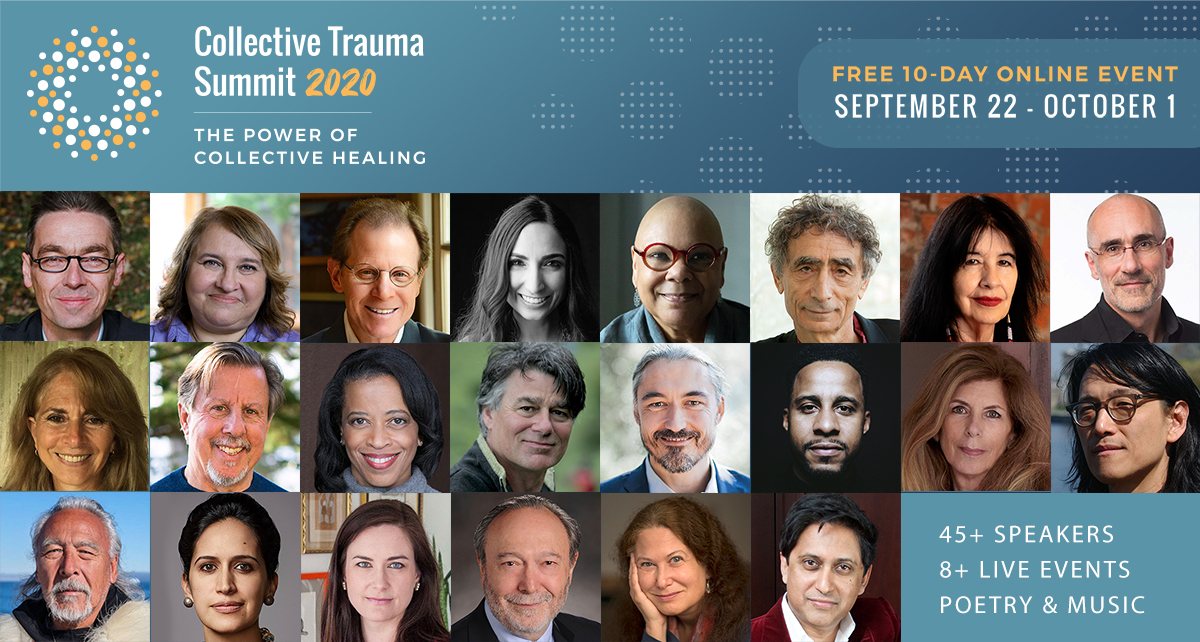
    When I started Tiny Buddha, one of my main goals was to help us all heal the traumas that haunt us and hold us back in life. In much the same way that our personal traumas hinder us each individually, our collective trauma adversely affects the whole world. And healing that trauma is critical for the future of humanity and the planet.

    If, like me, you want to do your part to help us all heal the wounds that are passed down through generations, I highly recommend checking out the Collective Trauma Summit, a free, 10-day online event starting on Tuesday, September 22nd.

    This powerful summit will bring together over 45 experts on the topic of collective healing including leading psychotherapists, visionaries, researchers, performers, poets, and peacemakers in the world.

    With panel discussions, guided meditations, and performances by acclaimed poets and musicians, the Collective Trauma Summit will surely help us find strength and healing through this intense period of massive upheaval and change.

    Click here to register for free and watch a short video about the summit

    During this free event, which you can access from any internet-enabled device, there will 4-5 daily talks, each available for a 48-hour period. The summit will cover a range of collective trauma topics, including:

    • How personal and collective trauma are intimately linked
    • How intergenerational and ancestral trauma operates in individuals and family lineages
    • The triggering of racial and cultural trauma and what we can do to shift and transform it for real change
    • Why healing collective trauma is critical for the future of our planet
    • What we can do to address and resolve war and long-standing conflicts
    • What we can learn from the recent health care and pandemic crisis

    Some of the featured experts include:

    • Gabor Maté – Bestselling Author, Speaker
    • Valarie Kaur – Seasoned Civil Rights Activist & Bestselling Author
    • Daniel J. Siegel, MD – Bestselling Author, Founder of the Mindsight Institute
    • Joy Harjo – Poet Laureate of the United States
    • Rick Hanson, Ph.D. – Psychologist, Senior Fellow of UC Berkeley’s Greater Good Science Center, & New York Times Best-Selling Author
    • Priya Parker – Master Facilitator, Strategic Advisor, Acclaimed Author & Host of the New York Times Podcast, “Together Apart”
    • Mark Wolynn – Director of the Family Constellation Institute
    • Sharon Salzberg – Meditation Teacher, Co-Founder of the Insight Meditation Society, Bestselling Author
    • Angel Acosta – Principal, Acosta Consulting; a leader in bridging the gaps between leadership, social justice, and mindfulness.
    • Margaret Wheatley – Bestselling Author of 10 Books, President of The Berkana Institute
    • Stephen W. Porges – Founding Director of the Traumatic Stress Research Consortium, Indiana University
    • Charles Eisenstein – Speaker and Author
    • Ruth King – Founder of Mindful of Race Institute

    Collective trauma affects every one of us, but not everyone will acknowledge and address it—which is why people like us need to come together with open hearts and minds to explore how we can end needless suffering and heal the wounds that carry through generations.

    To help support and accelerate a much-needed global shift, click the link below to register for free:

    Register for the Collective Trauma Summit

    When you register, you’ll get free access to the first chapter of host Thomas Hübl’s upcoming book, Healing Collective Trauma, that will be published in the fall. 

    I hope you find this event both inspiring and illuminating!

  • Why Joy Is Important for Healing Developmental Trauma

    Why Joy Is Important for Healing Developmental Trauma

    “We all have everything we need within us to create our fullest potential.” ~Abraham Maslow

    Did you grow up with a critical, distant, or ignorant mother?

    She probably made sure that your physical needs were covered, but she never noticed or understood your emotional needs. If she was anything like my mum, she may even have shamed you for having them!

    You’re an adult now, and you have everything you need to be happy. So why aren’t you? Instead, you feel unworthy, disconnected, and lonely even when you’re with people you love. There’s this constant emptiness inside that makes you angry and sad at the same time. 

    Maybe you still long for a loving mother like you did when you were young, hoping that one day she’ll show up, or maybe you’ve given up hope that your mother will ever change.  

    Either way, she left open wounds inside your entire being—invisible traces of the trauma that you sustained. And you need to heal these wounds so that you can rediscover your true nature, activate your full potential, and live a life of your choice—a life filled with joy.

    Healing is crucial for your health—mental, physical and spiritual alike. The good news is, you don’t have to live in misery waiting for the “perfect” day to start being happy. In fact, bringing more joy into your life now will help you heal.

    Think about it this way: Joy is like the sun that eats away grey clouds and opens up the skies. Everything it touches brightens up and fills with the energy of growth. 

    Joy helps minimize the stress of the fight-or-flight reactions that you grew accustomed to because of to your traumatic past. It activates positive patterns in your brain instead, helping you heal and thrive.

    Just like it helped me.

    How I Learned to Speak Joy

    I was thirty-one when I made the life-changing decision to move abroad, far away from the stress of the strained relationship with my mum. On the outside, I was a confident adult woman, the mother of a seven-year-old boy. But inside, I felt like a scared little girl longing for a safe place to hide.

    Moving to a new country brought much positive change into my life. But, like nearly everything in life, with the good came a challenge.

    Running from my narcissistic mum, I left behind everything I knew—everything I had built in my life. I also left Mum alone with my dear sick father in the age before the Internet, when international phone calls could bite holes in a family budget. What I wanted was a break from the pain inflicted by Mum’s behaviour, but I never stopped worrying about her and my dad.

    I swapped my career in one of the country’s best medical centers for the life of a housewife, surrounded by strangers who spoke a language I didn’t understand. I uprooted my little boy and brought him to an unfamiliar place far away. We both felt like two survivors who had landed on another planet, and I needed all my strength just to stop myself from falling apart. 

    So how did I step beyond merely surviving, and begin to thrive? By making a conscious decision to live in the now and enjoy what I have.

    As simple as it seemed, it was a challenge in itself. You see, Mum taught me that life was serious business, and neither fun nor joy belonged there. Fortunately, the healthy part inside of me knew what I needed: to master another “foreign” language—the language of joy. Fortunately, I listened.

    “Even when you didn’t have the mother you needed, there’s a place inside your heart that totally knows how to love.” ~Jette Simon, psychotherapist

    So, there I was, learning to enjoy mundane chores like vacuuming and cleaning bathrooms—what could be less joyful than that? But I would turn on MTV, sing along, and swing my hips to the tunes blazing out of the big black box of a TV we had back then. And that simple trick drizzled my life with positivity, helping me to turn boring, everyday stuff into pleasurable activities.

    After that small success, I learned to seek and find joy in everything I did.

    You may be unable to change every challenging circumstance of your life, but you can bring more balance to your emotional inner world. 

    Being a food lover, I experimented with local recipes, enjoying tickles of creativity and sharing the results.

    My mother-in-law, Kirsten, who called me every day, clearly cared about us. Unfortunately, we didn’t speak a common language, and I needed something to make those conversations come alive. So, I made a list of the stuff I was usually doing—I’m vacuuming, reading, helping my son with his homework, and so on—and my husband translated it for me. This list became not only my first lesson in Danish, but it also brought joy to our connection and deepened our relationship.

    I loved spending quality time with my son with no stress attached and enjoyed the growing feeling of closeness between us. I did my best to help him cope with new people and our new life, and in turn, he helped me.

    I enjoyed my time alone, too—a walk with the dog (another language to learn!), sunbathing on the terrace, or reading a book. For the first time in my life, I could sit there doing nothing, and no one would criticize me for being “lazy” as Mum used to!

    Spice up your daily activities to expand a flow of positivity and minimize reactivity patterns.

    Looking back, I clearly see that I learned to be in the moment, pay attention to what I was doing, and do it with joy.

    Gradually, my overall mood began to improve, and I could see my life in a brighter light. Each day started to look more like an adventure, with endless possibilities for joy presenting themselves.

    It didn’t heal my trauma, of course, but it helped me get the best out of a turbulent time of change and prepared me for a healing journey. 

    Your Brain Still Remembers

    The chronic stress of developmental trauma has a long-lasting impact on the brain. Overloaded with negative bias, some parts of your brain are overwhelmed and “acting out,” while others are numb, taken out of the game. You need to calm the loud ones and reactivate those that have gone quiet. By doing so, you re-center yourself and find a healthier emotional balance. 

    When you laugh, have fun, or simply enjoy the moment, troubles and worries step aside, and you enter another realm where you feel connected, safe, and loved.

    Joy is inside you as a natural part of your true being. You simply need to find and reconnect with it.

    Here’s how you can increase your ability to feel joy.

    Acknowledge your current situation.

    Put in words what you’re struggling with, why, and how it’s negatively impacting you—not to punish anyone but to clarify the challenge. Remember, denial keeps you stuck, but acknowledging things for what they are opens doors for personal growth, healing, and joy.

    Now, knowing where you stand, ask yourself what you want your life to be and what you can do to get there. Possibilities for moving forward always exist; even small steps will take you closer to your goal.

    Find balance in a state of control.

    Either too much or too little control means co-dependency. Many people try to overcontrol their lives. To overcome this, let go of things that are beyond your control, like changing other people. Instead, focus more on self-growth. 

    In other cases, people allow their circumstances to dictate their lives, resulting in too little control or even no control at all. If that’s the case for you, it means taking matters into your own hands. Start with easier things like taking care of your well-being and choosing things that bring you joy. After that, work on saying no and building and defending strong boundaries.  

    Learn to tolerate difficult emotions.

    To achieve a peaceful and joyful state, you must first learn to tolerate your difficult emotions. It’s not easy, but staying with your grief, anger, or shame can turn things around and free space for positive emotions. If you push these difficult feelings away, they will almost certainly eat you alive. Do you want to miss out on all the good stuff in life? I didn’t think so.

    Validate your feelings instead of suppressing them, denying them, or pushing them away. You have the right to all of them! How could you not be angry, sad, or in mourning when you grew up without the loving mother you longed for as a child?

    Working through painful feelings on your own can be tough, so ask your partner, a friend, or a therapist to support you during this time.

    Live in the moment.

    Did you know that multitasking is one of the biggest enemies of joy? It’s true! Taking on multiple tasks at once keeps your mind and body overloaded, and it’s impossible to enjoy yourself when you’re constantly changing activities. Focusing on one thing, on the contrary, allows joy to surface and bloom.

     Learn to calm yourself. 

    Nobody is happy or relaxed all the time, but you can learn the skills and techniques to calm yourself when you need to. By doing so, you help your brain build more positive connections and open up for joy.

    Mindfulness and mediation are two excellent techniques that help you to slow down and focus on the moment. If sitting silently cross-legged on a cushion isn’t for you, don’t worry, there are other ways to get the benefits of these practices. Anything that helps you focus, pay attention, and be present will do the trick.

    Engage yourself fully.

    No matter what you do, get completely involved in it. Even when you do something out of necessity, it’s possible to find joy in the action. Fully engaging in everything you do helps you discover new, exciting sides to boring stuff from your to-do list. And sometimes, adding fun to dull, repetitive activities like washing the dishes or waiting for the bus solves the problem and awakens joy.

    Help or share.

    Social connections bring lots of joy into your life, even if you’re just connecting on Zoom. Help people, or share something with them—a cup of coffee, a smile, or a passion of yours. For example, I like to bake, and blend facial tonics and creams; it helps me relax. But sharing my passions with others is what brings me profound satisfaction and joy. 

    And the effect stays for days and weeks—I promise! 

    Choose joy. 

    More joy means lower levels of inflammation in your body, better health, and greater happiness. You’re no longer a prisoner of your emotions and can consciously choose where you want to use your energy and how. 

    Activating joy helps you reconnect with an authentic, wise part inside of you that knows how to love. It means finally feeling like yourself and safe inside your skin—no matter what traumas you have endured throughout your life.

    “Every moment, if it’s really inside of you, brings you what you need.” ~Rumi

    Choose joy!

  • Trauma Can Make Us Sick: How I Found a Key to Healing

    Trauma Can Make Us Sick: How I Found a Key to Healing

    “Our bodies contain our histories—every chapter, line, and verse of every event and relationship in our lives.” ~Caroline Myss

    I could hear my teacher talking, but I wasn’t listening. Staring at the math homework in front of me, I couldn’t get the sound of my heartbeat out of my head.

    Two times two equals, thump thump, equals thump thump, four.

    The more I focused on my heartbeat, the louder it became. I could even feel beating in my chest.

    Noticing the clock, I had ten more minutes before my mom would meet me in the school office. We had a meeting scheduled with the school nurse. I dreaded it.

    Was I in trouble?

    If so, then why was I meeting the nurse and not the principal? Besides, I was an A+ student. I never got in trouble.

    At the sound of the bell, I made my way reluctantly to the office. As planned, Mom was there. The school nurse, a small woman with a huge smile, met the both of us.

    “Come in,” she said, as she motioned in the direction of her door.

    I looked over at my mom and she looked at me, shrugging her shoulders. We were both clueless about the purpose of this meeting.

    “Uh huh,” clearing her throat, Nurse Smith broke the ice…

    “Let’s get to it. Casey, you are too thin. It concerns me.”

    Looking at my mom, she said, “Mom, do you know why Casey is losing so much weight?”

    My mom quickly described our diet and how she prepared meals for me, “balanced and complete.”

    “Is Casey seeing a doctor?” Nurse Smith followed up.

    My mom, in an agitated voice said, “When necessary we go to our family physician.”

    Looking at me intently, Nurse Smith patted me on the shoulder,

    “Okay, Casey, you eat more of your mom’s good cooking and get some weight on you. I don’t want to see you back in my office until you fill out a bit.”

    This was one of many incidents where people, including professionals, noticed something physical about me, made assumptions, but never asked me about my experience.

    No one asked me about my perceptions of my weight.

    Did I notice changes in the way my pants fit?

    Did I notice changes in my desire to eat?

    Instead, a band-aid approach—eat my mom’s great food—was recommended, and I was sent on my way.

    It was assumed that if I ate more, my weight would increase.

    Was eating more also the solution for my fast heartbeat?

    Apparently not.

    Months later, during a physical education drill, my teacher confirmed my rapid heartbeat. My teacher was not only concerned, but I was banned from taking physical education classes until my heartbeat was “normal.”

    Saddened that I couldn’t take a class that I really enjoyed, no one, including my physicians, offered me any solutions. After wearing heart monitors and complying with many tests, I was diagnosed with tachycardia. This is a medical term, or as I like to call it, a fancy name for not knowing the cause for elevated heartbeat.

    The Importance of our Thoughts, Feelings, and Perceptions

    I went through most of my young adult years being diagnosed with a number of conditions based on my physical symptoms and observations of my outward appearance.

    No one inquired about my internal environment—my thoughts, feelings, beliefs.

    No one asked me about my life either.

    What was it like for me at home?

    What kind of relationship did I have with my parents?

    Did I experience any stress, or even understand the meaning of stress?

    Did I feel safe and cared for physically and emotionally?

    Needless to say, my mom’s excellent cooking didn’t make me gain weight. I continued to lose weight. My heartbeat continued racing too.

    It wasn’t until my mom took me to see a psychologist that I was diagnosed with an eating disorder. The real reason I was losing weight: I was very ill.

    It was during therapy sessions that the psychologist pointed out I would not gain weight or begin to repair my relationship with food until the conflict between my parents remitted.

    She was absolutely right.

    The psychologist made a connection between my weight loss and conflict in my home.

    The focus wasn’t on my diet as the cause. The focus was on the emotional turmoil in my life.

    This was the first time anyone connected my physical symptoms to stress in my environment.

    Trauma Can Make Us Sick

    At the time of my weight loss and rapid heartbeat, my parents were going through a tumultuous, and by my view, traumatic divorce. Conflict was normal in my home, and I was a classic “child the middle of this conflict.”

    As my parents argued over their lost relationship and years of service to each other, I was lost in the midst of their problems.

    Divorce is one of many traumatic events people can experience.

    Any event perceived as threatening, disempowering, helpless, or out of control is a trauma.

    Trauma contributes to physical symptoms in the body.

    In other words, one of my traumas—my parents’ divorce– made me sick.

    After years of therapy, I came to understand that anxiety is a mental health condition. Anxiety can present with many symptoms, one of which is tachycardia, or a rapid heartbeat.

    I was relieved. Suddenly the reasons for my rapid heartbeat made sense!

    Animal Instincts Keep Us Safe But Can Make Us Sick

    When a person’s perception of safety is threatened, the body goes into a natural response called fight-or-flight. Like an animal in the wild who is about to become prey for another, the body mobilizes a response to react and protect.

    People who live in traumatic environments experience threats frequently. Just because we aren’t going to really be eaten, the body doesn’t know the difference, and it mobilizes to save us just the same. Increased heart rate is a side effect.

    I did not perceive my home as safe. The conflict between my parents was traumatic. My body didn’t know the difference between an animal getting ready to eat me or any other threat.

    When my parents argued, my body mobilized a fight-or-flight response, which caused my heart rate to increase. Anxiety, living on edge, and fearing for what was going to happen next, became a way of living for me—even when my parents weren’t arguing. This explains why my heart rate was elevated even while I was at school doing something I enjoyed.

    Making Connections That Help Us Heal

    I am grateful I saw a psychologist at such a young age. She planted the seed for bringing my awareness to connections between illness and trauma.

    However, for decades following these sessions, no one else made these connections, and gradually I forgot about how intertwined our physical symptoms are to our histories of trauma and stress.

    It wasn’t until I was diagnosed with Crohn’s disease, an autoimmune inflammatory bowel disease, that I was compelled to go back through my life and connect the dots in hopes I would find answers to aid in my healing.

    Sure enough, I didn’t have to look very far to discover physical symptoms that were preceded by a traumatic event in my life.

    Empowered by this information, I knew I had found the answers to my healing.

    My only task was to find a professional: a physician, healer, or licensed mental health therapist who could help me integrate my life with my symptoms.

    Once there is an awareness of the connections between illness and trauma, it is possible to find resources.

    Functional medicine physicians, somatic therapies, alternative modalities, and sensorimotor psychotherapists are just several of many options which look at healing as integrative.

    You Are an Expert on Your Body

    I have explored many therapies and I continue to improve. However, I believe healing is a lifelong process. I have to be continuously aware of how sensitive my body is to stress. After all, it had a lifetime of programming to be geared for fight-or-flight.

    When stress is in my life, my body will often have physical symptoms. Sometimes simple interactions with colleagues are enough to trigger my body’s threat response.

    Living with Crohn’s disease has many challenges. True healing began when I recognized that my past history of childhood trauma laid a foundation for disease in my body and continues to contribute to how the Crohn’s Disease shows up.

    Now that I have this awareness, the possibilities for healing are exponential. The more I support my body in healing from trauma, the more my physical symptoms improve and the stronger my immune system becomes.

    Needless to say, it isn’t an easy journey. But never lose hope.

    Even though conventional medical models continue to separate physical from emotional, solutions are plentiful. This means that people like you and I must brave the terrain, making connections about our own bodies and lives and seeking treatments that offer this integration.

    In many ways, we have to educate our physicians and healers about these connections. As we are experts on our own bodies, we hold many answers to our own healing based on a lifetime of living with ourselves.

    No one knows you better than you know yourself.

  • Growing Up with a Narcissist: How I’m Healing from the Abuse

    Growing Up with a Narcissist: How I’m Healing from the Abuse

    “You could have grown cold, but you grew courageous instead. You could have given up, but you kept on going. You could have seen obstacles, but you called them adventures. You could have called them weeds, but instead you called them wildflower. You could have died a caterpillar, but you fought on to be a butterfly. You could have denied yourself goodness, but instead you chose to show yourself some self-love. You could have defined yourself by the dark days, but instead through them you realized your light.” ~S.C. Lourie

    As the memories of my childhood flash within my mind, I am brought back to a place in which I did not know if I was ever going to be happy. Happiness, stability, and love seemed so far away and out of reach that I met each day with overwhelming sadness. I longed for peace, I longed for someone to understand, and I longed for someone to save me.

    No one really knew what was going on behind closed doors with my mom. She was a tyrant who emotionally demolished anyone who got in her path. My siblings and I were her constant targets. Due to her nature, she isolated us from family and friends and only brought us around to make her look good and build up her ego. The classic case of a narcissist.

    You see, it was not until many years later during my adult life that my mom was officially diagnosed with narcissistic personality disorder.

    If you are unfamiliar with this diagnosis, it is someone who lacks empathy and is unable to show love. They appear to have a superficial life, and they are always concerned with how things look to others.

    She was incapable of being loving and nurturing, things we look for mothers to provide. While I was a child, I was always grasping for answers to the constant emotional, verbal, and physical abuse that plagued my household.

    I learned very early on that I was to be seen, not heard, and that any challenge or inquiry of fun would be met with a tongue-lashing and/or strike to my body. When you are the daughter of a narcissistic mother, you internalize every strike and every word laid upon you. You feel dismissed and discounted. You never feel good enough.

    I remember moments in which I wished for the mother-daughter bond that my friends experienced. I would cry whenever I would read about it in books or see it on television.

    When you are a victim of abuse, you always feel as if what you desire is out of reach because you believe you don’t deserve it. How could someone who gave birth to me inflict so much pain? This question flooded my brain on a daily basis.

    Motherhood is a sacred act of love that was not provided to me, and therefore, I suffered. I suffered with lack of confidence, limited beliefs, fear of failure, anxiety, perfectionism, and lack of emotional closeness with romantic relationships and friendships.

    It was at the age of nineteen that I decided that I no longer wanted to be a part of this life. I made up my mind that this cloak of darkness would no longer plague me. I left.

    I left with all my belongings in a laundry bag as well as what little light I had within me and moved in with my now-spouse’s family. I was grateful that they welcomed me with open arms and that I was safe. Little did I know that the real healing began once I decided to step into it.

    Trauma leaves not only emotional scars but also tiny imprints that influence your thoughts and decisions. I was an adult who knew nothing about adulting and lacked the guidance from a parental figure: I was terrified.

    But I realized that sometimes you must mother yourself. In the chaos you learn how to give yourself the love and affection you longed for in your most powerless moments. 

    I needed to show up for myself and the little girl within me that didn’t have a chance to enjoy life. It was time for me to take my power back and ignite my inner being.

    I started becoming increasingly curious and hopeful about this transition I was beginning to step into, so there were a few steps that I began to implement on this journey of transformation. I hope you may find them useful when you are ready.

    Distance yourself from the toxic behavior.

    Sometimes distance and time help heal and give clarity as well as peace.

    I’ve had to take myself out of situations where I knew I had to protect myself. This allowed me to take time out to really focus on what I wanted and the direction I desired to go in.

    At times this meant limited communication, geographic distance, or emotional distance. This is not always easy, but it will help keep you on track if you constantly remind yourself that it is for the development of your highest good and your healing.

    Surround yourself with people who can lift you up and pour into you.

    Coming from a household where love and warmth were not present can leave you feeling empty. Surround yourself with friends or other family that can lift you up while you are sorting things out. Being around people who were able to showcase this for me provided me with the motivation to continue creating it within myself.

    Develop and nurture a spiritual practice.

    Faith and hope were the two driving forces behind my motivation to leave. I just knew deep down that this was not the direction that I wanted my life to go in, and there were better things out there for me.

    Developing a spiritual practice helped me to gain inner peace when moments of fear, anxiety, and doubt heavily crept in. It comforted me when I had no idea if taking a leap would work out, but the valuable lesson that I learned was that when you take a leap, the net will appear. Meditation, prayer, and connecting to a higher power can create stillness within the chaos.

    Start with unconditional love toward yourself.

    Surviving verbal and physical abuse is no easy feat and can tarnish what little confidence you may have had, which is why beginning to develop that within yourself is super important.

    I had to learn that if I loved myself, I could feel more confident in my abilities and continue pushing forward.

    Give yourself those motivational pep talks, read dozens of books, work with a professional, listen to uplifting music or podcasts. Pour into yourself and become your own best friend. No one can take that away from you.

    Give yourself time.

    There is no one-size-fits-all solution to healing. It is a journey that loops and curves, but it all leads to a transformation.

    It can take time to unravel all that you experienced, but be compassionate with yourself as you figure it all out. Set the intention of working toward a positive transformation and gather the tools necessary to facilitate the change.

    It took me years of trial and error to get to the place that I am in right now, but my intention was always to become better than I was yesterday. Nurture your healing; there is a breakthrough on the other side.

    Continue to make that conscious choice every day to grow, heal, and reach transformation. Don’t shy away from the healing necessary to set yourself free and live the life you deserve to live. You have to shed the old in order to let in the new and no longer allow fear to have a strong hold on you.

    There is beauty in discovering a life of inward and outward victory. Throughout my transformation my breakthrough consisted of this one powerful mantra:

    I am not a victim of my circumstance. I am victorious.

    You are too.

  • How to Reap the Benefits of Post-Traumatic Growth

    How to Reap the Benefits of Post-Traumatic Growth

    “The world breaks everyone and afterward many are strong in the broken places.” ~Hemingway

    We all know of post-traumatic stress (PTS) but how many of us know of post-traumatic growth (PTG), a very hopeful and attainable way of life beyond the loss, adversity, and trauma we’ve experienced? It’s a term that was coined in the 1990s and is becoming more popular now as positive psychology and the specific area of resiliency-building have gained momentum in our society.

    What is post-traumatic growth? It’s positive change and growth that comes about as a result of an adversity or loss. It is channeling our pain into something positive.

    It’s more than simply returning to the life we had before the negative event; it involves psychological shifts and changes in ourselves, our beliefs and attitudes, our actions, the meaning and purpose in our lives, our relationships, to an even greater level of functioning.

    This is not to say we don’t suffer and feel tremendous pain. In fact, we first need to allow ourselves to go through the painful and awful feelings that we’d prefer to squelch down. It’s similar to the grieving process where we have to go through it to come through it.

    It is only later on, as the intensity of our negative feelings lessens and softens, that some small bits of sunlight begin to push through the looming clouds and we begin, very slowly, to move forward and integrate the challenge into our lives. We rebuild a new normal.

    Without having a formal concept or name to put to it years ago, I went through my version of post-traumatic growth as an outcome of my daughter, Nava’s miracle: her survival and complete recovery from a near-fatal medical crisis.

    She was on a respirator in a drug-induced coma for four months and then in a rehab hospital for nine months, relearning and eventually, miraculously, regaining every motor and body function.

    Upon her return home from a year-long hospitalization and rehabilitation, I went back to work and resumed my life back home (as I had been living up at the rehab). Needless to say, I was thrilled to have witnessed this miracle—her survival and recovery—and I, as her mother, felt I had been given a second lease on life as well.

    As time went on, however, I felt uncomfortable inside—empty, bored, and filled with angst, feeling like this just wasn’t enough. And then I’d feel guilty over feeling this way; after all, I had our miracle, what more could I possibly want???

    Going back to life as before felt so small to me. I had just witnessed life at its most fragile, sitting by her bedside listening to every beep and bleep of machines that breathed for Nava and kept her alive, with tubes coming out of every opening in her body, on a bed that rotated in all directions.

    One minute she had been eating a blueberry muffin waiting for a procedure and the next she was on a ventilator fighting for her life. If this didn’t make me realize how our lives hang by the thinnest of threads, then nothing would. And I began to feel my inner stirrings and angst more and more. This was slowly becoming clear to me:

    I had just witnessed something miraculous. I had to do something to honor it. As people do things to honor a life that doesn’t survive, I felt a burning need to do something to honor the awesomeness of a life that did, against all odds. 

    It was clearly not enough to just resume, to pick up the pieces where I had left off. That would be like whitewashing away this most traumatic year in my life, not giving the miracle of life the respect and glory it warranted. Not to mention the miraculous complete recovery as she slowly began breathing and eating on her own after more than half a year with tubes and then a tracheostomy.

    And so began the struggle of what to do. I also felt a strong sense of urgency to do and not waste time on this earth where we’re given an unknown and unpredictable amount of time.

    In hindsight this was my angst to grow and push through. It was all percolating inside, and my frustration then became what to do…

    I attempted many different things that I deemed meaningful: from clowning with Patch Adams to foster-raising a puppy for the disabled, to writing a book (which didn’t go anywhere at that point) and other smaller endeavors. I was in search of something big, though, the way some people start organizations and foundations out of their tragedy. But that didn’t happen.

    But what did happen beyond these random experiences of adventurous do-gooding, as I see so clearly now, is that it was all happening on the inside. So, while I was in frantic and frustrated search for that external something, I was living {and continue to do so} more richly engaged than ever. 

    As I stated above, a sense of urgency to doing what I set my mind to now, rather than putting it off, became my M.O.  When I saw a class in the city I was interested in, instead of waiting until the summer when I was off from my school job, I schlepped into the city once-a-week for the class during the school year. A friend of mine would say, “Whatever you say to Harriet, she’ll run with it, so be careful!”

    Now in all fairness I was always a doer and proactive. But this part of me took on a whole new level as I became much more intentional. My interests in various things soared, and I began to feel like there’s just so much out there to learn and do; the world became my oyster.

    Everything I was exploring had meaning to me, and what didn’t, I eventually threw by the wayside.

    After a few more years at my school job, I left, deciding to do what I truly wanted to do in my professional life: work with people going through grief and loss (in all areas) in a clinical setting—my practice—and support them on their journey in coping and eventual growth.

    As someone who was always interested and in awe of people who lived on well despite their hardships,  I developed and curated my own project of finding and interviewing people to learn and put out there for others to see, the qualities and coping tools that led them to grow and thrive beyond their challenges. This eventually became my book.

    And so post-traumatic growth was firing inside me. How can it work for you?

    Drs. Tedeschi and Calhoun, of the University of North Carolina, who coined this term of PTG have identified five main areas where we can experience post-traumatic growth as an outcome of our adversities:

    Relating to Others

    Increased closeness to others, increased compassion and empathy to those going through difficulties, greater authenticity, and connection.

    Connect with people on a deeper and more real level. Recognize where and with whom you feel more understood, connected, and supported. How are you responding to others in pain? Do you feel more sensitive to those suffering? Has your helping hand been extending more to those in need? Have your relationships taken on greater meaning in your life? Are you making more time for them?

    Appreciation of Life

    Awareness and gratitude for what we have, focus on beauty and goodness, living with more presence and intention; the absence of taking things for granted.

    Begin to take pleasure in the ordinary things of life, for it’s the everyday beauty and pleasures that call, nourish, and fill us.

    What are you noticing now that you rarely noticed before? What are you slowing down to really see? Are you being more mindful and reveling in the now? Awe is a positive emotion that fills us with wonder and boosts our well-being.

    What beauty calls out to you? Is it the mountains that give us a perspective of smallness and humility in their grandness; or the expansiveness of the star-filled sky; or the ocean with its ups and downs of the waves in their calmness and subsequent crashing; or the rise and set of the sun that we can always count on for appearing and then disappearing?

    New Possibilities

    Re-evaluating what’s important and what truly matters/priorities; stepping outside one’s comfort zone and taking risks; openness to new ways of living, to new experience,s and learning/taking on new endeavors.

    Take stock of your life and think about your top values and priorities. What now seems unimportant since your tragedy, trauma, or crisis?

    After processing your grief and emotional pain, what new opportunities are you interested in exploring? How are you looking to expand yourself?  What have you realized means more than anything? How can you better honor those things in your personal and/or professional life? How can you spend your time and energy in ways that reflect your values and what truly matters to you?

    Personal Strength

    Greater confidence and self-esteem, recognizing and appreciating one’s abilities and competence, self-pride, greater resilience, and coping abilities.

    Reflect upon your strengths and allow yourself to feel good that you got through your difficulty in ways you thought you never could.

    How did you cope with pain and hardship in healthy ways? What strengths did you use to help get you through the trauma/adversity? Recognizing those strengths, how can you continue to bring them forth in ways to enrich your life? There’s a very interesting free survey you can take here, that lists and puts your character strengths in order. What are your top five; how do they coincide with the way you see yourself?

    Spiritual Change

    Transcendence to things beyond ourselves, renewed purpose and meaning, questioning and searching as we reconfigure our newly designed tapestry. 

    Consider the existential questions of life on a more personal level. Instead of “what’s the meaning of life,” ask yourself, “What’s my purpose and meaning here, and how do I re-create that for myself? How do I connect to my meaning on a day-to-day basis?”

    How are you redefining success and living well? How do you want to spend your days on earth? What mark/impact do you want to leave/have? How has your perspective broadened beyond yourself? Are you more connected to a purpose?

    Once the bad circumstance(s) happen, growth can occur in the aftermath as we seek to create good, find new ways of living that can be enriching and meaningful, and develop and grow in any of the above areas.

    Creating new goals and finding positive ways to adjust to a new reality is the hope and potential for post-traumatic growth.

    Knowing this possibility for change and growth exists and that we’re not doomed to live out the misery of our challenges and losses can give us something to strive for. To some it comes more naturally, to others it’s something to work toward. Either way it points to a better way to live through and beyond our inevitable life challenges.

  • Collective Trauma Online Summit—A Transformative Free Event

    Collective Trauma Online Summit—A Transformative Free Event

    Do you ever feel overwhelmed by everything that’s going on in the world and powerless to help? Even if you avoid the news—which to be honest, I generally do—you’ll still be bombarded with the latest conflicts and tragedies when you log on to social media. We may look to our smartphones for a little break from the chaos, but really, there’s no escape from it.

    It’s not that we don’t care—that’s not why we often try to zone out and tune it all out. It’s just all so heavy and scary and disheartening, not to mention never-ending. Still, we can’t just avoid reality, not if we want things to change. And we can’t simply disconnect from it. Whether we face it head on or not, it all takes a toll.

    We are all affected, in some way, by collective trauma.

    We all bear psychological scars from the many disasters and catastrophes we’ve faced as a society.

    We’re all carrying the weight of traumas passed down from generation to generation, possibly without conscious awareness.

    And many of us are working through our own personal traumas while contending with all the tragedies we see in the world around us.

    The good news is, we can heal our collective wounds, find new ways to address the critical challenges we’re facing as a society, and create a world with far less pain and suffering—if, that is, we’re willing to work together.
    If, like me, you’re committed to healing and helping others do the same, I invite you to join meditation teacher, mystic and systems-thinker, Thomas Hübl for a free global online summit to explore one of the most important issues of our time: collective trauma.

    “When we address and heal collective trauma, we go to the root of problems and conflict that can divide people and nations, while preventing future generations from unnecessary anguish and residual problems that get passed through generations.”  ~Thomas Hübl

    Thomas Hübl created this free nine-day summit, which starts on October 12th, to bring awareness to how trauma is not just an individual issue but also a collective phenomenon. Our traumas stay alive (repeating in our life and our world) precisely because they are unrecognized.

    During the summit, Thomas and other speakers will discuss not only the social symptoms we’re all experiencing, but also the steps we need to take to address our challenges through global collaboration and creativity. The summit will explore the following areas:

    • How each of us is affected by collective trauma
    • How community can be a resource in the healing process and pathways to bringing different groups together for large-scale healings
    • How the current structures hold us back from group healing and what we can do to create new supportive structures
    • How our global immune system operates and what can be done to strengthen it as we move through greater stress on the planet
    • How we can invite humanity into a new future where we have the tools and teachers that can work to heal collective trauma

    When you attend this online summit, you’ll learn new insights from leading experts including:

    • Dr. Gabor Maté – Bestselling author and speaker
    • Dr. Claus Otto Scharmer – Senior Lecturer in the MIT Management Sloan School and founder of the Presencing Institute
    • Rev. Angel Kyodo Williams – Zen teacher, author, social justice activist
    • Daniel J. Siegel, MD –  Best-selling Author, Founder of the Mindsight Institute
    • Woman Stands Shining (Pat McCabe) Diné (Navajo) activist and international speaker
    • Ken Wilber – Founder of Integral Theory
    • Monica Sharma – Best-selling author of Radical Transformational Leadership
    • Richard Schwartz Ph.D. – Developer of the Internal Family Systems model of psychotherapy
    • Terry Real – Best-selling author and founder of The Relational Life Institute

    You can register for the Collective Trauma Summit for free here.

    This is the first even of its kind, and it’s going to be powerful and transformative, accelerating our understanding of health, collective healing, conflict resolution, global governance, and the nature of our climate crisis.

    I hope you emerge on the other side of this summit feeling more aware of our shared wounds, more empowered to proactively heal them, and more hopeful about our collective future!

  • How I’m Healing the Vulnerable, Rejected Kid Inside Me

    How I’m Healing the Vulnerable, Rejected Kid Inside Me

    “In case no one told you today:
 You’re beautiful. You’re loved. You’re needed. You’re alive for a reason. 
You’re stronger than you think. You’re going to get through this. 
I’m glad you’re alive. Don’t give up.” ~Unknown

    I was fourteen years old and it was a holiday of firsts: my first holiday away from my family with my school and my first holiday abroad, where I had my first real crush.

    For the two weeks I was away, I was caught up in a flirtation with a boy from one of the other schools. I had to pinch myself when he said yes after I’d struck up the courage to ask if he would meet me at the disco on the last night.

    The disco was everything I wanted it to be; we laughed, we danced, and I had my first kiss. If there is such thing as cloud nine, that’s where I woke the next morning. Still in a romantic haze (well, as romantic as a fourteen-year-old can get), I went to wave off the boy I’d begun to think of as my “Prince Charming” for what would be our last goodbye.

    But the fairy tale romance didn’t work out the way it had played out in my fourteen-year-old imagination. As I walked up expecting an embrace, he didn’t even want to make eye contact, then he turned his back on me.

    I’ll never forget the feeling of rejection. It was like my whole being was blocked off and cast aside.

    Still hoping for that dream goodbye, I waited until he got on the bus, thinking maybe I had been mistaken. That’s when it happened: surrounded by his friends, looking through the window, he was pointing at me, pretending to stick his fingers down his throat, implying being sick, and making gestures about my weight.

    “Prince Charming” had actually led me on as a bet, as a joke to his friends. I was the joke. I don’t know how, but somewhere inside I had the strength to keep my tears in, probably because I didn’t want to deal with the humiliation of what had just happened in front of everyone (including my friends).

    Twenty-one years on, and for as long as I can remember, when I recall the experience I feel the exact pain—the feeling of rejection and not feeling good enough—as I did at that very moment.

    That, right there, was the beginning of my low self-esteem, which later manifested into an eating disorder, anxiety, and being in toxic and abusive relationships. I accepted physical, emotional, and sexual abuse because I didn’t want to feel the feeling of rejection again.

    It was only recently, when I retold the story to my therapist, that I realized what a life-defining moment it had actually been, and recognized the narrative I had given myself.

    As I began recalling the experience, I started “When I was fat, ugly, and spotty I had this experience… No wonder he didn’t like me.” There it was: that one life-defining moment had played out a narrative that all my being wasn’t good enough. As a result, I sought acceptance and approval from others, and accepted their opinions of me as my truth.

    As I’ve started to process not only what happened but also the huge impact it’s had on my life, these are the things I have learned and what has helped me to begin to heal:

    1. We are good enough, and what really matters is how we feel about ourselves.

    At first I found it difficult, but I had to start believing that I was lovable, good enough, and that the only opinion of me that really mattered was my own. As I began practicing telling myself “I love you,” my whole body would tense, and I’d feel wrong for saying it. As I kept practicing, I slowly began to realize that I could love myself. I even had a small ceremony sealing my commitment to myself!

    Having struggled with self-love for nearly thirty years, I found it easy to slip into seeking approval from others at times. On the days I felt weak I looked at my commitment ring as a reminder of my love and acceptance for myself. On these days I gave myself the permission to feel whatever emotion I needed to feel.

    I’ve learned that we are each the one person we are guaranteed to wake up with for the rest of our lives, so we need to make ourselves our main priority. Instead of putting others on a pedestal and seeking their approval, we need to instead change our hierarchy of love so that we’re sitting at the top.

    We deserve love, but that love needs to begin within us.

    2. What would your present self like to say to the hurt person from long ago?

    As I sat with the pain of my fourteen-year-old self, I had an overwhelming urge to hold myself tight, providing a force field of safety where no one could hurt me.

    As the tears began to flow, I told myself how beautiful I was compared to the boy who had ridiculed me; any person who feels the need to humiliate a person for a joke is not deserving of my love or respect.

    As I stayed with the moment I felt every emotion I could feel—sadness, fear, anger, and then, just as the feelings flooded through me, the weight of the emotions I had held for so many years began to dissolve.

    Talking to our vulnerable self may seem a bit weird at first, I get it, but it’s worked for me. By going back in our minds and being there for our vulnerable younger self, it’s like having a superhero swoop in to protect us, only even more empowering because we are the superhero, minus the spandex and cape.

    No matter what has happened in our pasts, we have the opportunity to give ourselves the wisdom and words of hope we wish we had heard at the time. If it’s difficult to do this, think about what you would say to a best friend if they had a similar experience. We’re often much more compassionate toward our friends, so try to see yourself in that same loving light.

    3. Where has the need for validation from others come from?

    Having committed to love and accept myself, I knew I owed it to myself to go deeper to work out why I had relied so much on others for approval.

    My reflections led me to think of my upbringing, growing up with parents affected by alcoholism. Following violent outbursts I felt I was to blame for what had happened; I felt that I deserved the abuse. In fear of further violent outbursts I began people-pleasing and seeking approval from others in order to feel safe. At my core I felt unlovable.

    I then realized that when the fourteen-year-old boy had ridiculed me it had only reinforced how I had felt inside, and made me further believe that I was unlovable. I was then able to look at how I had acted and behaved from then onward, reinforcing those core beliefs.

    I realized I had accepted poor behavior and abuse from others because I felt I “deserved it.” I also engaged in self-sabotaging behaviors in the form of an eating disorder and drinking to excess.

    Delving deep inside may not be an easy task, and it may be something that we put off, or don’t do at all. We may be connecting to a part of ourselves that we may have kept hidden for years, even decades, for fear of being rejected. But, when we have the ability to do this important work, we are finally giving that vulnerable part of ourselves a voice and an opportunity to say what it needs to heal and finally get its needs met.

    4. Nourish, nourish, nourish.

    For close to three decades I had hidden that vulnerable part of myself and turned to my eating disorder for comfort, believing that others would reject me for being fat and ugly if I let it go. I now know I need to connect to the part of myself that has been abandoned for so long. I need to nourish it, and give it the love it has deserved all this time.

    While hard at first, when I’ve eaten, I’ve reminded myself how the food will nourish me. When I’ve exercised, I’ve remembered how the exercise is nourishing my body. When I’ve sat in meditation, I’ve reflected on how good it has felt to nourish my soul.

    These small acts of kindness have already had a positive impact. I haven’t found the need to emotionally eat or purge. I have more motivation, as I’m doing things from a compassionate place of self-love. I am also finally able to look in the mirror and utter the words “I am enough” and “I love myself” (and mean it).

    No matter what happened to us in the past, we have the opportunity to rewrite our narrative for our future. We have the opportunity to love and accept ourselves as a whole, including the vulnerable parts that we may have hidden as a way of self-preservation.

    With each day we begin to meet our own physical, emotional, and spiritual needs the layers of self-loathing will be replaced with self-love and acceptance.

    Be kind to yourself. xx

  • How Embracing and Loving My “Negative” Emotions Helped Heal My Pain

    How Embracing and Loving My “Negative” Emotions Helped Heal My Pain

    “Do not fight against pain; do not fight against irritation or jealousy. Embrace them with great tenderness, as though you were embracing a little baby. Your anger is yourself, and you should not be violent toward it. The same thing goes for all your emotions.” ~Thich Nhat Hanh

    For a long time, heaviness and dark feelings were very familiar to me. In a strange way they were comforting; I felt safe in darkness. The light felt more painful to me, but I also wanted to change because I wanted to free myself from the limitations of staying in the dark.

    I first started struggling with depression when I was young. From an early age my mother told me there was something wrong with me, particularly when I dared to express “negative” feelings, like anger. It became a mantra that filled my mind all the time. This one statement pervaded my entire life and dramatically affected the choices I made and didn’t make, well into adulthood.

    In my early forties, after much searching, I hit rock bottom. I was lying in bed, wanting to die, my thoughts telling me how wrong I was as a human being, when another thought popped into my mind: “What if depression is a gift?”

    Depression had felt like this never-ending darkness that clouded everything in my life. Even at times that I should have seen as positive, the depression prevented me from enjoying them. Depression was an old friend, one I not only tolerated but believed was the whole of who I was.

    I found my identity in feeling like a failure, and not moving forward meant that my identity was correct; I was confirming that this was who I was—until I understood that I was meant to be so much more than this depressed woman, sad, sorrowful, constantly grieving and frustrated. There had to be more to life.

    Instead of looking at what was wrong with myself, I started looking at the feelings that came up, noticing that my aversion to them was not only perpetuating them, but was affirming that I was not worthy of love, acceptance, or even acknowledgement.

    I could no longer fight who I was. I had to start looking at myself as a whole, including the pain and trauma, so I started to imagine that my repressed emotions were small children—and not just any small children, but orphans.

    They lived in a large orphanage, where nobody cared for them and the only adults that came in to see them were mean, critical ones who would beat them if they showed anger or leave them to cry if they were sad.

    There were many children in there, cowering in their cribs, with no one to hold them or reassure them that they were safe.

    Some of my “orphaned children” were shame and embarrassment. I’d felt these feelings many times in my life, and they’d prevented me from sharing my skills or even recognizing that I had any at all.

    I also had angry orphaned children who had been made to believe that anger was negative and bad, not positive fuel for creativity and healthy boundaries.

    And then there were my sad orphaned children, who had not properly grieved the loss of their father, who’d passed in my late twenties.

    These parts of me didn’t need to be alienated; they needed my love, care, and attention.

    I’d orphaned these feelings because I didn’t want them to be part of me, but because of this, I lived a half-life for a long time. Rejecting my feelings, ironically, fueled my depression, because you can’t selectively numb your emotions. When you numb any, you numb all.

    Instead of embracing these suffering children, I’d created diversions to avoid them.

    As a child, I used food to avoid feeling lonely, rejected, and broken. In my teens and early twenties, I was a binge drinker, consuming huge amounts of alcohol four days a week to repress my emotions. As an adult, this meant too much coffee and sugar, or I overworked to avoid feeling anything.

    At one point I used “positive thinking” to distract myself from these neglected aspects of myself. This was probably the most powerful distraction, because by thinking I needed to be grateful and happy all of the time, I was automatically rejecting all other emotions.

    It was easier to pretend than to make friends with these aspects of myself.

    I eventually realized that I couldn’t do this to myself anymore. I no longer wanted to lie or consider a huge part of my nature, my shadow, wrong.

    Self-compassion and self-acceptance are so important if we are to be balanced human beings. If we are unable to acknowledge and accept the pain inside of ourselves, how can we ever expect that things will change? How can we be less judgmental of other people if we judge ourselves harshly most of the time?

    Embracing pain isn’t easy. It takes courage and commitment to take this transformative path, to begin to reframe depression and other mental health issues as a gift, as an awakening, to help us return to who we really are, which is loving, kind, compassionate, and accepting.

    Though the darkness had felt safe, I eventually realized that I was afraid of the light because it illuminated those dark corners where my orphaned emotions live.

    It was time to stop fighting my feelings and give them a new home in my heart. Here’s how I did just that.

    Embracing My “Orphaned” Emotions

    1. Acknowledge.

    The first thing I had to do was to acknowledge that I had been avoiding my pain, and to accept that it was okay that I did this. If I beat myself up for deserting parts of myself for so long I’d just be putting further shame or blame into that orphanage.

    I had to accept that sadness, fear, anger, and rage were healthy emotional experiences, sometimes necessary, and that I’d previously rejected these feelings as a way to protect myself until I was ready to face who I truly am.

    If you’ve also abandoned your most wounded, fragile parts, decide to break the cycle now. Acknowledge what you did but also why, and have compassion for yourself.

    2. Get to know your feelings.

    Take the time to get to know these pain feelings, but do so as an unconditional mother would, without judgment, without needing to fix or make the feelings anything other than what they are. When sadness or sorrow comes up, take a quiet moment to witness this child within with loving attention.

    3. Accept them as gifts.

    Our feelings are not there to make our lives miserable; they’re there to show us what may not be working in our lives, or what needs to change.

    When I accepted that depression was a gift, I began judging myself less harshly and embracing the feelings I’d repressed for so long. Essentially, I started accepting all of myself.

    I’d gotten comfortable viewing myself as a failure, and I thought my unconventional life confirmed that’s what I was. I was living with my best friend who was in his seventies. I was single, poor in my eyes, and unattractive. I believed that because I didn’t have my life together in my forties—I didn’t have a home of my own, a partner, or a successful career—I wasn’t acceptable or enough as I was.

    My depression was a sign that I needed to change how I viewed myself. This enabled me to see not only that I am enough as I am, but others are enough, exactly as they are right now.

    Instead of stuffing down your depression, anxiety, shame, loneliness—or whatever emotion you’re tempted to resist—ask yourself: What message is it trying to send to me? What would I do differently in my life if I listened to this emotion instead of suppressing it?

    4. Remember it’s not a race.

    When I first started owning my shadow I found it challenging to stop my avoidance practices, but I initially tried to rush through this process. I thought I could immediately accept all feelings, whenever they arose, without ever giving in to my old habits.

    I eventually realized I had to be kind to myself and to take each new step as mindfully as possible. I also had to understand that I would probably fall back into old habits at times and accept this was all part of the healing process.

    It takes regular practice and persistence to welcome those unwanted emotions time and time again. It takes time to internalize that it’s not about getting rid of any feelings, but about welcoming them as part of self-love and personal growth.

    5. It’s all about trust.

    Becoming aware of our painful emotions is only one step. Until we are able to fully welcome and embrace them, life will trigger us to love them further. Things will happen that evoke all the feelings we want to avoid—challenges in our work, relationships, and other aspects of our lives.
    We can turn back and ignore the triggers, or we can trust that whatever shows up is meant to teach us unconditional love. It takes faith and trust to love shame, anger, and fear. We need to trust that this is worthwhile and that we’re capable of re-parenting ourselves in a more wholesome way.
    I know that my old ways of avoiding and distracting myself from the pain never worked—that I had to go through it to go beyond it, and that going beyond it does not mean I will never feel sad or despairing again. I will, but I can do so from a place of trust, knowing I will be okay, because I now understand that all of me is lovable, and I am enough exactly as I am right now.