Tag: trauma

  • Dear Everyone Who Tells Me I Should Reconcile with My Parents

    Dear Everyone Who Tells Me I Should Reconcile with My Parents

    “You are allowed to terminate your relationship with toxic family members. You are allowed to walk away from people who hurt you. You don’t owe anyone an explanation for taking care of yourself.” ~Unknown

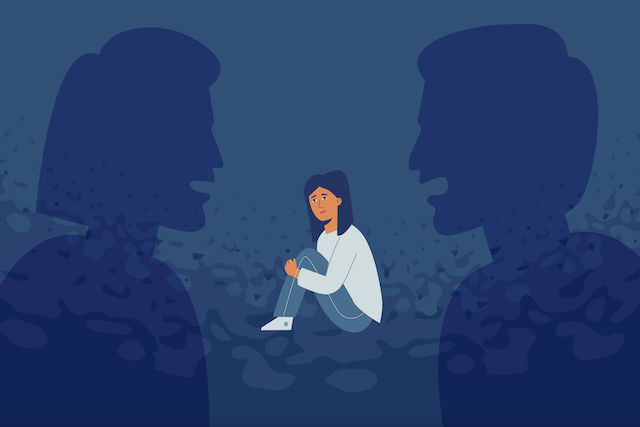
    You might think I’m a monster because I don’t have a relationship with my parents. I don’t spend holidays with them; I don’t call them and reminisce; they don’t know pertinent details about my life, my friends, my family, my work, or even the person I have become. Do these facts shock you?

    It is possible that you have only known loving, supportive parents. Parents who were open to discussing and negotiating your relationship, respecting your boundaries, and truly being a part of your life. That’s probably why you can’t understand how I don’t feel the same way about my parents.

    When you learn that I don’t have a relationship with my parents your instinct is to deny my reality. You try to tell me that my parents love me unconditionally, that my mother still cares about me, and that my parents acted out of love for me. You assert that I should try and reconcile with my family, and tell me over and over that I will regret it if I don’t.

    I don’t agree that they love me unconditionally, that they still care about me, that their actions are based on good intentions, or that they abused me in order to make me a better person. I am sorry if this upsets you or challenges your understanding of what a family looks like.

    You become aggressive telling me that I should try harder, that I should adapt and be accommodating and compassionate toward my parents. You tell me that I should forgive them for the things I claim they have done to me and tell me over and over that forgiveness will lead to peace and healing.

    But you don’t get it; I have already healed by not having them in my life, by accepting my painful reality.

    You think that I should call my parents and have a reasonable conversation that would magically lead to a Hollywood ending filled with apologies, validation, love, and reconciliation. You believe that if I do this, I will have the family I have always wanted, and our relationship will be stronger, healthier, and more supportive.

    I need to stop you and be firm. Your lack of understanding about my situation is re-traumatizing me. I cannot contact my parents and reconcile with them. Do you think I didn’t try to have the conversations that you’re suggesting? Don’t you realize that I tried so hard to adapt, to do what they wanted, to apologize and accommodate my parents, yet nothing ever changed? I was never enough!

    Each interaction affirmed how much they despised me, how little they thought of me, and how reluctant they were to listen to me, get to know me more, or even to take the time to understand where I am coming from. Over and over, I tried harder and harder, my heart breaking each time. The picture of the perfect family shattering off the wall and the reality of my family becoming clearer and clearer.

    These were not parents who loved me unconditionally the way parents should love their child. These were parents that might love me if I was better at school, did more for them around the house, and accomplished something they could brag about to elevate their own social position.

    These were not parents who could be bothered to get to know the person I had become, because they believed they knew the flawed, evil monster they had conjured up in their minds. Yet I was not the evil monster; I was an adult child desperate to have a healthy relationship with my parents. I was a teenager who made a few mistakes, and finally I was an adult who saw and understood the family dynamics clearly and accurately.

    Cutting contact with my parents was one of the hardest choices I have ever had to make in my life. Contrary to what you may think, I did not wake up one morning and decide that I did not want to have a family anymore. Rather, I woke up one morning and realized that if I didn’t end the relationship, I would continue to get hurt by my parents for the rest of my life.

    Cutting contact with my parents, formally known as estrangement, allowed me to accept the reality of my situation and build a life that led to self-validation and healing.

    This path has been painful, and there are times when I question whether I did the right thing. However, there are also times when I realize how much better my life is without my parents’ lack of compassion, respect for my boundaries, or willingness to work with me to have a healthy relationship.

    Each time you cling to the Hollywood notion of reconciliation, you traumatize me. I know that I can’t have a relationship with my parents because this relationship will never be healthy. Yet each time you suggest I reconcile you cause me to question myself.

    Questioning myself is something I have grown good at over the years because society does not affirm my choice as socially acceptable, nor does it condone the reasons I chose to cut contact in the first place.

    Questioning myself and my own self-worth is something my parents helped me to become very good at over the years. You see, I couldn’t be doing what was best for me because to them, I was wrong, I was a bad person, and I never remembered situations and events accurately.

    Maybe you don’t mean to cause me to question myself, but each time you bring up reconciliation and the notion that the relationship with my family could be fixed it takes me back into that space. I’m forced to remind myself of all the reasons why I had to cut contact. I’m forced to relive the painful conversations and the intense, overwhelming longing for apologies, validation, and love I know I will never get from my parents.

    Before you tell me I need to see things differently and that most relationships can be fixed, I’m going to stop you. I’m going to remind you that it is hard for people to change. It is much easier for people to say that they have changed in order to save face or absolve themselves of any feelings of guilt and anguish.

    People don’t change for others; they change for themselves because they realize that there are benefits to adjusting their behavior. An uncaring, disconnected parent is not likely to change for a child they never really could love.

    I know that my choices make you feel uncomfortable. I took your family picture and I broke it into a million pieces, pieces that can never be put back together. I challenged your notions of the loving, supportive, forgiving family because that is not my reality, although for your sake, I am glad if that is yours.

    Don’t tell me that time can heal all wounds or that time fixes relationships. Time has taught me that I made the right choice.

    Incredible longing still washes over me when I see some of you interacting with your parents. You have support, love, and mentorship from your family that I will never know. Instead, I will look through the window at the seemingly perfect family, at your family, longing to know what it feels like to be loved and supported the way that you are.

    I will always feel the pain of not having that picture as my own. Part of me will always question why I was not worthy enough to have it in the first place. A piece of my heart will ache with pangs of longing, longing I have learned and accepted is a natural part of life when you don’t have parents who are loving and supportive.

    Don’t downplay my pain or deny my lived experiences. Don’t tell me that how I feel now will not be the same way I feel six months or six years from now. I don’t mean to be harsh, but you have not lived my life or walked in my shoes, and I am relieved for you.

    Don’t remind me that my siblings have a great relationship with my parents, so therefore, I might be able to improve my relationship with them.

    Let me remind you that in families like mine, not all children are treated the same way

    Some children are the golden children, showered with love and support, while others are the neglected children who are barely noticed yet continue to maintain contact in the hopes that one day the relationship will improve. Other children within the toxic family system are scapegoats. Scapegoats are not really loved, and are blamed for things beyond their control.

    In adulthood, some children in these families choose to deny the reality of the dysfunction because society teaches us that everyone needs a family. They choose to hang on and stay in touch with uncaring parents because the alternative choice is so stigmatizing and painful.

    Stop! Don’t remind me of the way my mother acted when you were over at my house growing up. Don’t tell me that she treated you well over the years and was very interested/invested in your life. Please don’t tell me she asks about me every time she sees you or that she has no idea why I cut contact with her.

    I don’t want to hear about how kind my father was. I don’t want to relive backyard barbecues where my parents acted kind and hospitable. You see, they acted.

    Toxic parents can often be kind, compassionate, and caring to everyone else except for their own children. Behind closed doors, when you and the rest of the world were not watching, they were very different people.

    You may have seen them treating me with kindness or pretending that they cared. This was all an act. I don’t want to show you who they really were behind closed doors because I doubt that you will believe me. I know this makes it harder to understand my perspective, but I don’t want to live in the pain of the past. I want to dwell in the present and look to the future with an open heart and an optimistic mind.

    Let me reiterate this: the choice not to have family is both stigmatizing and painful. The pain and stigma flow from not being understood. From assumptions that there must be something wrong with me for cutting contact, that I must be inherently bad or have done something catastrophic to deserve to be cast out of the family.

    Let me shatter that picture again. The only thing I did wrong is challenge your understanding of a loving supportive family.

    Let me ask you something: If your friend criticized and judged everything you did and did not accept you as a person, would you stay friends with that person?

    What if I told you that after interactions with that friend you were anxious, your entire body hurt, you felt like you did something wrong, you couldn’t sleep, and you questioned your judgment? You replayed the interaction over and over in your head each time, remembering more of the abusive comments, the judgmental actions, and the dismissive words you had endured during your visit.

    Could you really stay friends with that person? No, you couldn’t. So why are you encouraging me to reconcile and stay in contact with my parents given that this is how they make me feel? Is it so hard for you to grasp that an unhealthy relationship can occur between family members?

    Hold on tight to your family picture, but don’t ask me to repair mine. Instead, understand and accept my shattered picture.

    Don’t ask me to cut myself with the shards of glass through forgiveness, reconciliation, and false hopes of unconditional love and acceptance. I’m sorry if what I’ve said makes you feel uncomfortable. Society makes me feel uncomfortable each time I am asked to deny my reality, pick up a piece of glass, and expose my family wound that you could easily help me heal by accepting it.
  • The Power of Reframing: 3 Ways to Feel Better About Life

    The Power of Reframing: 3 Ways to Feel Better About Life

    “Some people could be given an entire field of roses and only see the thorns in it. Others could be given a single weed and only see the wildflower in it. Perception is a key component to gratitude. And gratitude a key component to joy.” ~Amy Weatherly

    I grew up in a deeply negative environment. My parents separated acrimoniously when I was seven, and they were a grim example of how not to do divorce.

    They brought out the worst in each other, and sadly, over time, they also brought out the worst in me. I was depressed as a teen, and had been conditioned to believe that my problems were an unfortunate family trait—one that I had simply to accept and live with.

    And I did, for many years. But of course, I was not happy. And yet I didn’t know enough about the world to understand that my environment and upbringing were very largely to blame.

    I now know that while genetics can account for up to around 40% of the happiness we experience, the rest is within our control.

    I’m aware of this because studies have shown it to be the case. But I know it because I’ve also lived it.

    Deciding to Change My Life

    Over the last ten years, I’ve dramatically changed my life, and I’m the most at peace I’ve ever been.

    When my eldest daughter was a baby, I finally had an important enough reason to want better. I was determined that she would grow up in a fun and positive home. And if I was going to make that a reality, I had to put in the work to make it happen.

    Plus, it had become especially vital at that time since my daughter’s difficult delivery had been traumatic and left me with extreme postnatal anxiety. I was in a very bad place, and I needed to get out of it; I needed, in fact, to get out of my own head. And I didn’t want to rely on medication for that.

    While my husband had already saved me in many ways, the rest was my responsibility—my state of mind, my outlook.

    Desperate but determined, I began an activity that, over time, changed my life.

    While I appreciate that sounds like an exaggeration, it’s really not. Because my life truly has changed. Although it also hasn’t. Allow me to explain…

    The Power of Reframing

    I inadvertently learned how to reframe, and it’s possibly the most profound skill there is for increasing happiness.

    It’s so incredibly powerful because it can change your experience of life—without changing your actual circumstances.

    Here are a few examples of how reframing helped me to feel more positive about my own life…

    A few weeks ago my dad moved, and I planned to visit with my girls during half term to take him a plant.

    We live in the UK, and while the weather is changeable, it’s usually fairly mild. But on the day it so happened to be spectacularly windy. I told my dad we’d make our way and I’d let him know if we couldn’t get there.

    We made it! And after dropping off my dad’s plant, we drove a short way to a restaurant.

    Before we’d even ordered drinks, the winds brought down a pylon and there was a power cut. The kitchen closed, and my young daughters ate crisps for lunch, and I still had to get us safely home.

    But, instead of being mad that the entire day turned into a farce (we encountered fallen trees on the way home!), I was glad I’d made the effort. Most importantly, we were safe, but also it reinforced to my dad that we cared enough to get there despite the challenges.

    Another example is that since Christmas we’ve had one illness after another in our home. First was COVID, and since then we’ve had viruses and two bouts of chicken pox.

    When my eldest succumbed to COVID, I was worried about her, but also on a practical level how I’d get my youngest daughter to school (until my husband also tested positive, at which point I was able to leave the house). The fear that had been silently there for two years had finally caught up with us, and it had the potential to be an enormous source of stress.

    But during the COVID episode—and later with chicken pox too—school mums stepped up without me even asking. I’d never really felt like I’d integrated with the school mum crowd, but as it turned out, I was wrong:

    They totally had my back.

    I felt and continue to feel so incredibly grateful not only for them, but also knowing that I have a support network I did not even realize was there.

    These are just a couple of recent examples which spring to mind, of situations that previously I probably would have experienced negatively and complained about—but I’m now able to reframe to find the silver living.

    So you see, my life is different in terms of how I experience the world, and yet it’s really the very same as it always was. But I feel vastly different.

    I feel at peace.

    And now I want to share my process so others can also learn how to do this for themselves, because it’s basically free therapy, available to everyone, that we can implement alone, and without guidance.

    But how did I do it, without professional help—and without medication?

    How to Tap Into the Benefits of Reframing

    For me, there were really three steps to my journey, which happen to work together in perfect harmony.

    1. Practicing gratitude

    First, I began writing gratitude lists.

    With no comprehension of their value—but with a deep desire to start appreciating the good things in my life, and a desperate hope it was a good starting point. Good enough to help me do better for my daughter.

    I started writing a list of the positive things that had happened each week. Not realizing that this is actually an effective therapeutic exercise, I wasn’t expecting very much to happen.

    But I knew that the fundamental change I wanted to see in my life was more positivity. So I figured the “fake it till you make it” approach might just be beneficial.

    Incredibly, it didn’t just help—it was the turning point of my life to such a degree that it now feels like before and after.

    Writing gratitude lists isn’t difficult. It can be as simple as jotting down three, or five, or ten things you’re thankful for. This can be done when you wake up, to start the day on a positive note, or at the end of each day if you prefer.

    If you have a hectic schedule and can’t find time to do this daily, just be sure to do it regularly.

    And if writing it down seems like too much effort at the end of the day, you could try saying your list of things for the day quietly and privately in your own mind.

    It doesn’t need to a formal practice; it just needs to something you do practice. Because over time, something magical happens…

    2. Positivity

    As time goes by and you continue to acknowledge the good in your life, your default mindset will begin to switch over to a more positive one.

    For me, it was like a spiritual awakening, and I like to use an analogy to describe my experience.

    The idea of rose-tinted glasses is a familiar one for most people. But sometimes they’re actually a blessing. After spending several months practicing gratitude regularly, I felt like I’d removed the only pair of glasses I’d ever known, and the world suddenly looked brighter.

    I also began to appreciate that positivity is often a self-fulfilling prophecy: the harder you look for it, the more you will find.

    And your mood tends to be reflected back to you by others, too. Just as negativity is draining, positive people energize those around them!

    I was recently waxing lyrical to somebody about the positive impacts of gratitude and reframing, but they insisted that offloading onto friends or family is necessary sometimes. I didn’t completely disagree, but I had something important to add:

    By default, increased positivity leads to a decrease in negative experiences, which in turn leads to less often feeling a need to offload. And that’s the magic of this whole concept.

    There’s one final step in my toolkit…

    3. Journaling

    Unfortunately, when you’ve grown up in a negative environment, it can be all too easy to slide back into ingrained behaviors—old habits die hard.

    For that reason, even though I feel very mentally robust these days, I know that if I stop practicing these new skills, it’s almost inevitable that I’ll return to the mindset I developed as a child. (I’ve learned this the hard way.)

    Journaling is my favorite way to stay on track and accountable, because it can easily incorporate each of the above ideas, plus so many more.

    Depending on my mood, I love journaling for its mindfulness, or state of flow, or as a creative outlet. Or all of the above!

    Essentially, these skills each feed into and reinforce one another. And together, they really are life-changing.


  • My Dad Died From Depression: This Is How I Coped with His Suicide

    My Dad Died From Depression: This Is How I Coped with His Suicide

    “Grief is really just love. It’s all the love you want to give, but cannot. All that unspent love gathers up in the corners of your eyes, the lump in your throat, and in that hollow part of your chest. Grief is just love with no place to go.” ~Jamie Anderson

    When I was seventeen, my dad died from depression. This is now almost twenty-two years ago.

    The first fifteen years after his death, however, I’d say he died from a disease—which is true, I just didn’t want to say it was a psychological disease. Cancer, people probably assumed.

    I didn’t want to know anything about his “disease.” I ran away from anything that even remotely smelled like mental health issues.

    Instead, I placed him on a pedestal. He was my fallen angel that would stay with me my whole life. It wasn’t his fault he left me. It was the disease’s fault.

    The Great Wall of Jessica

    But no, my dad died by suicide. He chose to leave this life behind. He chose to leave me behind. At least, that’s what I felt whenever the anger took over.

    And boy, was I angry. Sometimes, I’d take a towel, wrap it up in my hands, and just towel-whip the shit out of everything in my room.

    But how can you be angry with a man who is a victim himself? You can’t. So I got angry at the world instead and built a wall ten stories high. I don’t think I let anyone truly inside, even the people closest to me.

    How could I? I didn’t even know what “inside” was. For a long time, my inside was just a deep, dark hole.

    Sure, I was still Jessica. A girl that loved rainbows and glitter. A girl that just wanted to feel joyful.

    And I was. Whenever I was out in nature. I didn’t realize it at the time, but whenever I was on the beach, in a forest, or even in a park, I’d be content and calm.

    Whenever I was inside between four walls, however, I felt restless, lonely, and agitated. This lasted for a very long time. I’d say for about twenty years—which, according to some therapists, is a pretty “normal” timespan for some people to really make peace with the traumatic death of a parent.

    But during that time, alcohol and partying were my only coping mechanisms. I partied my bum off for a few years. I’d drink all night until I puked, and then continue drinking. Couldn’t remember half of the time how I got home or what happened that night.

    Hello Darkness, My Old Friend

    Unfortunately, all that alcohol came with a price. I had the world’s worst hangovers—not only physically but also mentally. At twenty-one, hungover and alone at home, I had my first panic attack. Many more followed, and I developed a panic disorder.

    I became afraid of being afraid. I didn’t tell anyone, because I was scared they would think I was crazy.

    Those periods of anxiety never lasted longer than a few months. But they were usually followed by a sort of winter depression. In my worst moments, I felt like the one and only person that understood me was gone. I felt like nobody loved me, not as much as my dad did. And I did think about death myself. Not that I actually wanted to die, but at times, it seemed like a nice “break” from all the pain.

    Acceptance and Spiritual Healing

    Finally, in my mid-twenties, I went to see a therapist. She helped me tremendously and made me realize that the panic attacks were nothing more than a physical reaction to stress. Yet, it wasn’t until I did a yoga teacher training a few years later that I finally learned how to stop those panic attacks for good.

    Wanting to know more about the mechanisms of the body and mind, I dove into mental and physical well-being, and started researching and writing about mental health.

    I understand now that self-love, or at least self-acceptance, and a solid self-esteem are crucial for our mental health. And I know that people with mental health issues find it so, so hard to ask for help. Their lack of self-love makes them think they are a burden.

    I understand that, at that moment, my dad didn’t see any other solution for his suffering than stepping out of this life. It did not mean that he didn’t love me or my family.

    The pain from losing my dad actually opened the door for me to spiritual healing. It brought me to where I am now. It taught me to live life to the fullest.

    It taught me to follow my heart because life is too precious to be stuck anywhere and feel like crap. And it made me want to help others by sharing my story.

    I have accepted myself as I am now. I know that I’m enough. I’ve learned what stability feels like, and how to stay relaxed, even though my body is wired to stress out about the smallest things due to childhood trauma.

    Let’s Share Our Demons and Kill Them Together

    But honestly, the pain from losing him will stay with me for the rest of my life. And sometimes it’s as present as it was twenty years ago. I don’t feel like covering that up with some positive, “unicorny” endnote.

    I feel like being raw, honest, and open instead. Depression and suicide f@cking suck. What I do want to do, however, is to help open up the conversation about this topic. I want to make it normal to talk about our mental health, as normal as it is to talk about our physical health.

    There are way too many people living in the dark, due to stigmatization and fear. Life is cruel sometimes. And every single human on this planet has to deal with shit. It would be so good if we could be real about it and share our stories so other people can relate and find solace.

    I do hope that my story helps in some way.

  • How I Healed My Mother Wound and My Daughters Are Healing Theirs

    How I Healed My Mother Wound and My Daughters Are Healing Theirs

    “Your children are not your children. They are the sons and daughters of Life’s longing for itself… You may give them your love but not your thoughts, for they have their own thoughts. You may house their bodies but not their souls, for their souls dwell in the house of tomorrow…” ~Kahlil Gibran

    Now that my daughters are in therapy trying to heal their relationship with me, I have more compassion than ever for my mom. I haven’t felt angry at her in years. But when I was a teen, I earnestly desired to kill her more than once.

    I was in my forties when my mom died. Afterward, I had frequent dreams about her chasing me around, telling me I wasn’t good enough. The dreams lasted nightly for about six months and occurred for a few more years when I felt stressed. The last one I remember, she was chasing me under the covers of the bed, screaming my worst fears—that I was unlovable and unworthy—reinforcing my wounded child.

    About twelve years after she died, I was able to come to a place of comfort with her. While in deep meditation I saw a vision of her spirit bathed with light and love. Freed from her mental and physical sufferings, I saw her as I had seen her when I was a child—my universe.

    Unfortunately, she couldn’t see herself as I did in those days. I knew that she was beautiful. I remember thinking about it as a young child, and when she was dying. How often I’d searched her face, looking for her to see me.

    Like my dad, I have prominent facial features. I wished I had her cute small nose and her pretty lips that always looked beautiful in her Berry Berry Avon lipstick. She had blue eyes, which I rarely saw straight on. She was uncomfortable with her looks. I don’t remember any direct eye contact with her unless she was angry, though I realized there must have been.

    She was born with a crossed eye. Her story was that her parents were accused of having a sexually transmitted disease that caused it, which brought great shame. My mom was also dyslexic. Sometimes at school, she had to wear a dunce cap and stand in the corner or hall because she couldn’t spell. These challenges shaped her self-worth from a young age.

    I loved looking at pictures of her in her twenties with long dark wavy hair, stylish glasses, and a beautiful smile.

    When she died, I didn’t cry. I proclaimed that her reign of terror had ended, and I held on to my anger for twelve more years. That day in meditation, when I was able to break through the veil of outrage that kept me in my darkness, I saw her as a bright light in my life. 

    I had known for years that some of my healing depended on letting go of the story of my time with my mom—one of mental health issues, abuse, and unhappiness. I needed to take time to process our relationship and see her beyond her earthly life. When I was finally able to, I felt better than I expected.

    Through my experience and my work with other women, I’ve learned that the mother wound—our unresolved anger at the flawed woman who birthed or raised us—is two or threefold.

    Our first challenge is processing the actual events that happened as we were growing up.

    The second is letting go of our reluctance to be fully responsible for our mental and physical health as adults.

    And, if we have children, the third is not wounding ourselves—realizing that there was never a scenario where we could be the perfect parent we had hoped to be, no matter how self-sacrificing we were.

    Processing Our Childhood

    Our work as adults is to make a conscious effort to process the hurt, anger, and betrayal that we endured from the female authority figure that raised us (or the figure who was our primary caregiver).

    Even if we resolve that our mother did her best, we are still left to sort through our shame over not feeling loveable or good enough, and the feeling that we missed out on the experience we should have had growing up. Processing and healing could mean seeing a therapist, journaling, or even stopping all contact with our mother.

    I moved far away from my mom, which minimized my contact and gave me space to process. But I kept the past alive in my thoughts. Now when I look back, I see that holding on to my anger well into adulthood added to the years of feeling like I was missing out on a normal life. In the end, I was responsible for my own healing, and it didn’t happen overnight.

    Now, at this place in my life journey, I see the hard parts of my life as the foundation for my life’s purpose, and I don’t feel like I’m missing out.

    I’ve met enough people to know that even those who had the perfect parents—like we all wanted—also have challenges as adults. My work to heal has led me to a deep understanding of the human condition and fueled my passion to love and to help uplift the suffering of all.

    How Our Commitment to Self-Care Helps Heal Our Mother Wound

    We looked to our mother to provide emotional and physical nourishment. Her inability to do this (or do it consistently) created our feeling that we were wronged by our mother. Now, as adults, we need to let go of thinking our mother will take care of us and do our own nurturing work for ourselves. That might seem like a harsh statement, but it enables us to move on.

    The second part of healing my mother wound was letting go of the part of me that doesn’t take care of myself. That little voice in my head that apathetically whispers, “I don’t care” about little things that would improve my health, help me sleep better, or feel successful.

    That little voice doesn’t have as much power over me anymore. So instead of overeating in the evening, which would affect my ability to sleep well, I can override it—most days. I’m also able to notice that when I don’t take care of myself, I open myself up to being the wounded child again.

    We didn’t have a choice when we were young, but now the choice is ours. We need to decide when and how we take up the torch.

    When Our Mother Wound Becomes a Mothering Wound

    My mother wound turned into a mothering wound when I didn’t live up to my hopes of being a perfect parent. Of course, I had intended to be the loving, nurturing, protecting mother, who produced adults without any challenges, but alas, I was not. How could this happen? I tried so hard. 

    I was able to find alternatives to the punitive, violent punishments, shaming, and blaming tactics that my mother used, but as a young parent, I was still challenged with low self-worth issues and an eating disorder.

    Although some of the things that occurred during the three marriages and two divorces that my daughters and I experienced together were horrific, we were luckily able to process a lot of them in real time with therapy and tears.

    Now, with their adult awareness, my daughters are processing their childhood, including my addictions, insecurities, and mistakes. It is almost torture to watch them do that, even though I know they must. And they are so busy with their lives now—as they should be. I miss them.

    To weather this time of my life and continue to grow, I need to employ my practices of understanding, compassion, and detachment, and take deep care of myself. Continuing to love my daughters deeply, to be on call whenever they need me, and at the same time be detached from needing them, has called me to deeper depths of my character.

    We all deserve to be treated respectfully and kindly. As daughters and mothers, we can role model compassion—empathy in action—and boundaries with our mother and our children. We can strive to create relationships that mutually nourish loving-kindness.

    We can focus on healing our past and taking care of our future. We all need to communicate this clearly to our mothers, partners, and children. And, although we can’t walk away from our underage children, we can set boundaries that facilitate healthy relationships now.

    We can be clear—our children don’t need their lives or their mother to be perfect. They need to know that they are loved, and they need to see us love ourselves. Holding on to this love for them and for ourselves when our children are troubled, distant, or even estranged is one of our biggest tests as parents. My heart goes out to any mother dealing with these challenges, especially if you are dealing with them alone.

    I never stopped wanting my mom to be happy. She is now at peace, maybe even joyful. I strive to let myself be at peace. I let myself live in this place of deep tenderness for her—and now for me. I understand that my experience is universal. I needn’t feel alone.

    I realized that this confident and peaceful version of me is the best I can do for my daughters as they heal their mother wounds and take care of themselves, as I am doing for myself.

    To heal our mother wound is to remember that it is ultimately a spiritual journey. Not only are we trying to figure out the depths of our own purpose, but we are bound to the journeys of our kin.

    As with all spiritual journeys, there will be rough passages that tear our heart open and ask us to become more. The journey of the mother is the journey of love. We need to remember, no matter what rough journey is behind us, we are the designers of the path ahead.

  • My Mother’s Abuse and the Two Things That Have Helped Me Heal

    My Mother’s Abuse and the Two Things That Have Helped Me Heal

    “I love when people that have been through hell walk out of the flames carrying buckets of water for those still consumed by the fire.” ~Stephanie Sparkles

    I have a tattoo on my back of Charles Bukowski’s quote “What matters most is how well you walk through the fire.” It spoke to me as I had been walking, often crawling, through a fire for much of my life.

    At times, I took different paths, skipping through fields of flowers, but eventually I would find my way back to what I knew, which gave me a strange sense of comfort—the fire whose roots had begun in childhood, with my abusive mother.

    I used to be consumed by this fire. I have another tattoo on my foot that reads “Breathe.” For years I lived with a very dysregulated nervous system, constantly alerting me to the threats of the flames forming around me, and breath was something that eluded me.

    How could I breathe when at any moment she could walk up the stairs and find something to lash out at me over?

    How could I breathe when no one wanted to hear how I felt, and my emotions were something I did not understand, nor know how to handle?

    How could I breathe when everything was so frightening?

    How could I breathe when no one ever showed me how?

    Those entrusted to my care were in their own fires that they had never learned to come out of. So of course, as I grew, I felt unsafe and uneasy. And I learned to ignore my breath, ignore that others were able to feel it move through their body, and learned to see only flames everywhere. 

    I grew up in a traditional home as a child of immigrants who had come to the USA for work and to give their children a better life. I went to Catholic school, where I threw myself into academics as a way to be seen, and excelled. My parents were excellent cooks and displayed their love for us through the kitchen table. I had all of my physical and academic needs met.

    I spent my early childhood playing with my brother, who I latched onto as a support system. My mother’s inability to soothe us as babies and toddlers created very sensitive, shy children, deeply afraid of the world around us and deeply connected to each other.

    Unfortunately, my brother and I began to distance during our preteen years. We had created different survival strategies to navigate my parents, and he began to view me as the problem, as my mother was teaching him. I then began to view myself through the same lens.

    I was ridiculed, abandoned emotionally, shamed, and made to believe the dysfunction of the family lay entirely on me. There was a period of physical abuse as well, but during these situations, I at least felt seen.

    I was gaslit to question everything I believed to be true and found myself in imposed isolation in my childhood and teen years, later self-imposed. The world felt too frightening to face. As I grew older, I rebelled against the isolation by looking to others to help soothe me, especially romantic relationships.

    If they didn’t soothe me as I wanted, I grew angry and hurt, isolating myself more and more, or lashing out internally or externally.

    I looked to ease the suffering inside with external gratifications, shopping, traveling, and sex. Unfortunately, nothing could soothe the pain I was feeling.

    In my early twenties I went to a therapist and could do nothing but cry. After a few months of not being able to communicate, she insisted I take benzodiazepines or we would be unable to continue working together.

    My symptoms worsened both emotionally and physically, and I now needed “saving” from both. The helplessness I learned early on continued, as did my need to have others make me feel safe. Both my body and brain became impossible to withstand, and proved to me that I was a victim of life and no one cared about me.

    I found relationships to validate this idea, with addicts, narcissists, and codependents who all eventually grew tired of my need to be loved and soothed out of my pain.

    I was attracting the familiar in these people, who could not show me the love and safety I needed. In other words, I was attaching myself to others to regulate, but they too were stuck in a cycle of dysregulation.

    I found various ways to hurt myself, overspending, starving myself, overexercising, and on more than one occasion taking too many medications to calm myself down, and finding myself in an emergency room. The familiar was living in my nervous system and demanded to be entertained.

    After decades of chronic health issues due to emotional and physical trauma, they finally hit a peak when I was forty-seven and no longer able to work, the one area of my life I’d had some control of. I had to learn to breathe or be completely extinguished by the flames. During this time, I began to learn how to put out the fires.

    I worked hard on retraining my nervous system out of the fight-or-flight state it had entered when I was not soothed as a baby, and rewiring thoughts and behavior patterns created as an extension of that state. In this process, I found the authentic part of myself, the inner child, which brought a deep peace, the peace of integration.

    An integral part of my healing came from practices of forgiveness and compassion. As I rewired old patterns living in my nervous system, I learned about how the brain works, how trauma is stored there, and how our realities are shaped by early experiences.

    Each day in my practices I discovered new associations, when new thoughts and behaviors had started, and had to look at these strategies and their results with self-compassion and forgiveness.

    At first, this was difficult, as it was new to my brain, but as I practiced it became easier, and I started feeling self-compassion and self-love for the first time.

    As I worked with my own toxic personality in these practices, I experienced deep grief for the past and what I was not able to enjoy as a result. Anger was holding on, and I knew it was time to let go. So, I began a practice of curious empathy for the woman who had started my fires, my mother. Awareness of my own dysfunction, self-compassion, and now self-forgiveness allowed me to do the same for others, including her.

    In this case, curious empathy meant becoming aware of her patterns and where they came from by connecting to my own experiences and empathy.

    I had observed her throughout my life to learn about what I was experiencing and how to navigate her, as well as others in the world. I also read tons of self-help books about personality disorders and toxic people, but cognitive knowledge wasn’t enough to understand my mother.

    I watched, listened, and heard stories from my father about my mother’s childhood. I drew upon my own strategies and where they originated. I opened myself up to curiously knowing her, at first from a distance (during this time of healing), and then I incrementally exposed my healing nervous system to her with empathy.

    When I felt balanced and regulated enough, I rejoined our relationship, but with strict boundaries—for both of us. And I found a somewhat different human in front of me, one who had softened in her old age but still retained old behaviors when “triggered.”

    I began to identify her triggers and remained strong when she reacted. I now knew no other way; my nervous system and heart had been retrained into compassion.

    I came to understand that she had created toxic survival strategies because of an inability to communicate and soothe emotions and needs in an effective way. She had been stuck in a fight-or-flight state that prevented her from seeing the world as it was, and seeing the motivations of others clearly.

    And I had learned (and now unlearned) similar methods of interacting with the world.

    I often pictured her as a child or a teen and connected with this version of her through my own inner child. In the moment, I was able to change the hurt and anger I felt to compassion for the way she was trying to get what she needed. This was followed by an inner forgiveness and releasing of the negative emotions.

    I made it clearly known what I would accept, and often joked with her about the way she was acting. She responded with smiling or laughter.

    It became clear that she reacted when she felt vulnerable, and I understood that throughout her childhood, vulnerability was not acceptable, and she was shamed in it. 

    In identifying her methods of showing love, I felt loved and seen, and it was easier to react to her with forgiveness and compassion. It became natural to me to speak as the “parent” (adult) when her old armor of defense came up.

    In daily forgiveness and compassion practices, I find enormous love for the woman still stuck in a fight-or-flight state created in her childhood. There are times I pull away to reinforce that her behavior is unacceptable, but these times are not as prevalent as before.

    As I changed my behavior toward her, she began to change hers toward me. As I regulated my nervous system into safety, it seemed to soothe hers, and she inched closer to the idea of vulnerability with me.  As I let go and replaced the anger with compassion, she felt safe. It is with this safety that she is able to chip away a tiny piece of her armor in our interactions.

    I cannot ever change her, and she will pass with the trauma state she is in as her identity. But, for my own well-being, I chose forgiveness and compassion, to bring her a small drop of water each time I see her. Remaining in the fire with her, by being angry, was not an option any longer. 

    I found my way out of a fire that had nearly taken my life and hope to continue sharing my experience of healing. These days I find myself skipping through fields of flowers on a regular basis, and feel it is a blessing to share it with those who have not yet gotten there—and those who may never.

    **I am not suggesting that anyone should keep people in their lives that they feel are “toxic.” We all need to do what we feel is best for us based on our own unique experience.

  • How I Healed from the Trauma of My Father’s Abandonment

    How I Healed from the Trauma of My Father’s Abandonment

    “When another person makes you suffer, it is because he suffers deeply within himself, and his suffering is spilling over. He does not need punishment; he needs help. That’s the message he is sending.” ~Thich Nhat Hanh

    When I was fifteen years old, my dad abandoned my mother, younger sister, and me after a bankruptcy. My mother sat me down at the kitchen table to show me our financial situation scribbled on a yellow legal pad.

    Dad left us with six months of unpaid rent. The landlord threatened us with eviction until mom made a deal to pay extra rent every month to pay off the balance. He agreed to let us live there under those terms.

    Dad’s abandonment included disappearing with everything we had of any value. He took our music, art, records—everything that made the place a home. He even took the blender.

    My mother’s secretarial job covered our housing, car payment, and other bills, but we would run out of money the last week of the month. I would need to find a way to make up the difference.

    My father’s larger-than-life personality made him the center of our universe. With no education, training, or experience, he produced movies, invented a tripod, opened a furniture store, and made a training video for golfers.

    Every few months, a new business occupied his passion. The three of us were lightless planets revolving around his flaming sun. After he left, the absence of his gravity left us spinning.

    My little sister and I walked the neighborhood looking for babysitting, house cleaning, lawn mowing, and car washing jobs. Nobody has money to pay kids to do odd jobs in poor communities. We each picked up one babysitting job for one night—nothing regular.

    One day I answered an ad for a telephone solicitor job a mile and a half from our home. If I made seven sales in two four-hour shifts, they would hire me for a salary plus commission job. At fifteen, I looked thirteen but said I was sixteen.

    I made my seventh sale and felt victorious. We were going to be okay. Instead, the manager told me that one of my sales canceled, so I would not get the job. I had worked from 5 p.m. to 9 p.m. for two days and didn’t get paid a dime. (I would later learn that the company owners stood trial for profiting from unpaid underage labor).

    I walked home crying in the dark. A man in a black car pulled over and offered me a ride. He looked me up and down with a glazed-eyed hunger. I ran across the street and the rest of the way home. The walls of my interior crumbled. I felt my first awareness of the impermanence of all things. I had become a refugee in my hometown.

    Our family of three survived the poverty of financial limits. We made it out. However, the deprivation of abandonment cut more deeply.

    Abandonment, at any age, leaves one gobsmacked by the cold awareness that someone you love no longer cares if you’re dead or alive. You’ve been rendered irrelevant to someone who once benefited from your loving affection. You feel discarded like yesterday’s trash.

    You’re never the same person once you know that someone you love can walk away and not look back. You have eaten from the tree of the knowledge of good and evil. It is a knowing that lives in your bones forever. The poverty of an abandoned heart is hard to shake.

    Therapists talk about “fear of abandonment” as if it were a form of phobic anxiety, like arachnophobia, the irrational fear of spiders. My mother, sister, and I were not left with a fear of abandonment. We were left abandoned.

    When someone is shot with a gun and survives, we don’t tell them they have a “fear of guns.” We call it trauma. The pain lives in the wound. The scars tangible.

    Abandonment by someone we love is relational injury, like being shot to pieces but with no visible scars. Neuropsychologists found that losing someone we love activates pain receptors in the brain. It physically hurts. We suffer symptoms akin to opiate withdrawal.

    Like opiate recovery, eventually, the pain subsides. New experiences offer us hope for relational healing. We learn to love again. Like a soothing balm over a burn wound, love can ease that pain. The nerve endings calm down. Happiness reappears.

    Relational trauma changes the brain. We can experience a thinning in two parts of the brain. One part processes self-awareness (the prefrontal cortex), and the other helps us process and cope with our emotions (the medial temporal lobe). These changes can make us prone to anxiety and depression.

    Both of my parents were abandoned by their fathers as toddlers. My father displayed extreme polarities of emotion, manic bursts of enterprising energy, followed by depressed inactivity. My mother periodically experienced depression, followed by long periods of recovery.

    Trauma changes us on a cellular level and can linger like a ghost memory for generations. The ghosts of intergenerational suffering haunt many families. If you endure, suffering leads to wisdom. Wisdom leads to the alleviation of suffering.

    From suffering we gain: The wisdom of resourcefulness. The confident armor of a survivor. The cellular knowledge that security is an illusion. The ability to bring our own peace to the potluck. The instinct to protect our precious hearts. 

    I had to attempt new things after each failure on my road to healing. Children are naturally self-centered and feel responsible for the bad things that happen to them. The child believes “If I feel bad, I am bad.” With maturity, we learn to differentiate between what our parents bear responsibility for and our own adult responsibilities. I began to recognize that my father’s decision to leave us had nothing to do with us. He chose to abandon responsibility for his family due to his own failures and weaknesses, not ours.

    As I matured emotionally, it became clear that if I wanted a better life I had to make better choices. After several relationships with men who feared commitment and didn’t love me, I made the healthy decision to no longer find that type of man attractive.

    Necessity made me a seeker of opportunity. I sought out tools to help me cope. Here’s what I found helpful:

    • Meditation: At sixteen, I learned how to meditate. I believe that saved me from clinical depression and crippling anxiety. Meditation can repair the damage to the brain stemming from trauma. It provides the experience of non-judging, calm awareness.
    • Friendships: Friendships opened new worlds to me. Friends acted as lateral mentors and taught me how to play guitar, drive, write a resume, and apply to college.
    • Love: Finding loving relationships helped heal the sting of worthlessness. Watching other loving couples served as models for what was possible.
    • Meaning and purpose: Volunteer work, a life of service as a psychotherapist, raising a family, and commitment to a purpose beyond personal ambition increased my happiness and resilience.
    • Compassion: My parents had children at a very young age. They, too, suffered abandonment and loss. I feel compassion for my father’s loss and for what he lost in leaving us. Compassion heals.
    • Gratitude: I’m grateful for my small family and what we built from the rubble. My sister and I raised healthy children who feel secure, having never endured poverty of resources, or abandonment. We broke the transgenerational pattern.

    Today, when our family gathers, I watch our two grandsons play with their pups in the grassy garden. Their father, our oldest, watches the toddlers with alert protectiveness. My husband gives the boys horsey rides on his back to squeals of delight. Our daughter-in-law prepares a lovely meal with fresh produce from their abundant garden. Our other son performs a funny dance eliciting giggles from his nephews. Our daughter and her husband join in an improvised comedy routine to keep the fun going. We savor the meal as the sun slowly sets.

    Love wins.

  • How Embracing a Good Enough Life Gave Me the Life of My Dreams

    How Embracing a Good Enough Life Gave Me the Life of My Dreams

    Acknowledging the good that you already have in your life is the foundation for all abundance.” ~Eckart Tolle

    It was perfect. Well, almost.

    I was doing the work I love, with someone I love, my two boys were thriving, and we seemed to finally be on the road to retirement. What could possibly be wrong with this picture?

    A lot, apparently.

    I was waking up worried and unsatisfied. Always feeling like life was missing something, like I was missing something, not doing enough, asking: How can my business be better? What will my kids do next year? Is my partner gaining weight? Did I run yesterday?

    Anxiety crept into my mind and contracted my body before I had a chance to get ahead of it. It was an unease that something just wasn’t quite right. And if it was, then it wouldn’t be for long.

    I knew enough about neuroscience and anxiety to know what was happening.

    Negative thoughts are a protective pattern that come from scanning our environment for potential threats.

    Our ancestors were wired this way to survive, thankfully, and we are probably in the first generation that can even talk about the word “abundance,” at least in this part of the world. The intergenerational trauma of feeling unsafe is in the recent past and runs deep in our DNA, especially for women.

    But even armed with all the knowledge of trauma and all the best practices of breathing, meditation, and yoga, there was still a missing link.

    My worries seemed trivial given the war that was raging in the world. It seemed self-indulgent to want more, to even consider that this was not enough. Even when it felt enough, it was because all the factors were lining up in that moment, but it felt precarious, like a house of cards—even though I knew it wasn’t.

    All the self-help books promised I could “reach for my dreams” and “have my best life ever” if I only changed my habits and my mindset and lived like I thought all the people around me were.

    In fact, I was so busy working on my life that I felt exhausted and still felt like I wasn’t doing or giving enough. Even when deciding what charity to donate to, to help those in need, I felt like I had to choose the “right” one!

    It was through my work with people in chronic pain that one day something shifted. I was teaching about the difference between acceptance and giving up in the search for a cure, and I said something like “It’s not so much what you are doing but how you are doing it.”

    Doing something from a place of pressure and intensity, with a worry about making a mistake or not getting it right, creates fear. Fear creates more fear in the end, and it creates pain.

    My inner perfectionist gasped and took a step back. She was outed.

    Not only did I see how my inner perfectionist had been running the show, I knew that if I wanted to negotiate with her, I was going to have to come from a different energy other than “getting this right.”

    She had helped me; she had worked so hard to stay on top of everything and got me through some tough times.

    She had guilted me when I felt like a bad mother, a bad friend, a less-than therapist, or a mediocre spouse and showed me all the ways I could be better. She even lent her expertise to my family, telling them how they should behave, what they should eat and not eat, and how they should conduct their lives.

    This was sometimes done directly, but she also worked coercively behind the scenes through people-pleasing, manipulation, and other passive-aggressive behaviors.

    She was based in fear and shame as a trauma response, learned early on in my childhood years, that told me my authentic self was clearly not good enough. So I employed her services to keep me safe, help me fit in at school, get good marks, and be an all around “good girl” on the outside. But the inner pressure of a perfectionist is unbearable and soon morphed into an eating disorder when life felt out of control.

    Many of us live in a nasty triangle that can be difficult to see and even more difficult to disrupt. It goes: shame-inner critic-perfection, and it balances itself precariously inside our mind and body leaving its imprint of “not good enough” to guide our lives.

    This is compounded by a culture that primes us to feel like we’re not okay and there is always something to buy, change, or fix, because it is not normal to just be okay.

    Even though my trauma happened decades ago, the vestiges remained. I could not quite relax into my life without something or someone, mostly myself, feeling “not quite good enough.” I also found this same core belief to be at the root of many if not all of my clients’ struggles with anxiety, depression, and chronic pain.

    It was the constant feeling of being here but wanting to be… somewhere or someone else. A knee-jerk resistance to life or an inability to truly sink into all life has to offer without finding fault or a hiccup somewhere. Or worse, thinking that I had to earn my worth by doing more and being more, and all without effort!

    Not. Good. Enough.

    Not good enough for what? For whom? This is an unanswerable question because it is a lie. But it is one thing to know that and another to let my inner perfectionist know I was safe now and she could take a backseat because, well, I’m good enough.

    I thought about the times I felt free and at peace.

    I thought about the people I knew whose lives had the biggest impact on me.

    I had a chat with my future self twenty years from now about the qualities she had, how she moved, and what she valued.

    And it came down to a word: simplicity.

    Here is where I had to tread carefully. My inner perfectionist would make finding simplicity very, very complicated and approach it with an all-in attitude, as she did everything: live in a tiny house, two chairs, two sets of cutlery, and a bed.

    No, there had to be another way, an easier way.

    It turns out, it was the easiest way possible: Embrace what is here now.

    What if everything was good enough, just as it is, in this moment? What if I was good enough, just as I am, in this moment? What if my body, my health, my relationships, all the ways I tried, were just good enough?

    It felt radical, revolutionary. It felt like I was disrupting all my programming about what it means to live a good life. It was not the energy of giving up or rationalizing that I didn’t deserve more and I should settle for less. It wasn’t even the energy of gratitude or appreciating what I have and how privileged I am.

    It was the opposite.

    Embracing my life as good enough busted the myth of inferiority and superiority that tells us some people are more or less worthy than others. It let me relax into the fact that we are all doing the best we can with what we know at that moment. If I was good enough, then others were too.

    It busted the myth of needing more and being more, because I didn’t have anything to prove to anyone. It also busted the myth that if I truly accepted my life as it is, I would just lie down on the couch and never get up. Again, the opposite happened.

    Energy was freed up for more of what I love, not what I should do. Worry and struggle were replaced with self-forgiveness.

    Embracing my life as good enough gave me the doorway I needed to a quality of life I couldn’t imagine.

    I realized I was good enough to show up just as I am.

    I realized I was good enough to set boundaries around what and who aligned with me.

    I realized I could write, speak, and create in a messy, fun, good enough way.

    I realized I was good enough to rest.

    I realized I was good enough to embrace my own wants, needs, and desires.

    I realized I was already good enough for pleasure right here and now in a million ways I couldn’t see before.

    I realized my life was not about being better, improved, fixed… it was about being who I am, and that was enough.

    I realized I could work less and make more money.

    I realized my body was a remarkable organism that was to be loved and held, not manipulated.

    I realized that every decision I made was right for me because it was good enough.

    I realized that struggle was never meant to be my life, but giving, loving, and contributing were.

    I realized I was already good enough to live a life of joy, comfort, and ease.

    One of the most beautiful parts of this is looking in my children’s eyes and knowing that they, too, are so perfectly good enough just as they are. They don’t need to prove their worth to anyone.

    Embracing my good enough life has allowed me to enter my life, just as I am, and has turned “good enough” into “how good can it get?” It gave me the safety I needed to “do what I can, with what I have, where I am” (Theodore Roosevelt).

    Can you imagine a world where everyone knew they were just good enough? Where we all lived life from a place of forgiveness, grace, and compassion for ourselves?

    What are you already good enough for that life is just waiting to give you?

  • The Unconscious Vows We Make to Ourselves So the World Can’t Hurt Us

    The Unconscious Vows We Make to Ourselves So the World Can’t Hurt Us

    “You cannot protect yourself from sadness without protecting yourself from happiness.” ~Jonathan Safron Foer

    Are you aware that we all make unconscious vows early on, and they become our internal blueprint for life? These vows dictate who we can be and are often deeply engrained.

    Our vows are attached to a deeper need we’re trying to meet—the need for love, acceptance, safety, connection, and security. They’re not bad or wrong, and neither are we for having them; they come from a smart part of us that’s trying to help us feel safe.

    Vows are more than a belief; vows are a “never again” thing or “this is the only way to be because my survival is at stake.” 

    What is a vow, you may ask? Well, let me paint a picture for you.

    When I was a little girl, I was teased for being fat, stupid, and ugly. Soon enough, I started blaming my body for being hurt and teased. I thought that because I was “fat, stupid, and ugly” there was something wrong with me, and that was why I didn’t have any friends.

    At age thirteen my doctor told me to go on a diet, and that’s when I started to believe that I was a “defect” because I was fat. At that point I made a vow: “I will never be fat again.”

    I started cutting back on my food, I became a maniac exerciser, and being thin became the only thing that mattered

    Then, at age fifteen, I entered my first hospital for anorexia, and for over twenty-three years I was in therapy and numerous hospitals and treatment centers. No matter how much weight I gained in these programs, when I left, I went right back to losing weight by limiting my food intake and exercising excessively because I’d vowed to myself “I’ll never be fat again.”

    The process of gaining weight only added to the trauma and fears I was already experiencing. Instead of being compassionate and understanding and helping me offer love to the parts of myself that were hurting, staffers “punished” me when I didn’t eat my whole tray of food by taking away my privileges and upping my meds.

    When we experience trauma like I did as a child, it’s not what happened to us that stays with us; it’s the vows we made and what we concluded it meant about ourselves, others, and life in general that stay.

    We concluded who we needed to be in order to be loved and accepted by our family, and that became our unconscious blueprint that started dictating our thoughts, feelings, and actions.

    “I will never be fat again because if I am I won’t be loved and accepted” was a trauma response, which turned into a vow that carried a lot of fear and anxiety. I used undereating and compulsive exercising as survival tools, and I would not let go of this pattern no matter how much anyone told me I needed to.

    If I couldn’t exercise, especially after I ate, my heart would race and I would panic, sweat, and shake. Those symptoms were my body signaling to me that I needed to exercise so I wouldn’t get fat

    This was the only way I knew how to be. I was living in a trance, an automatic conditioned response. And no matter how much conscious effort I exerted to change my habitual ways, something inside would bring me back to limiting my food intake and exercising excessively.

    When we’re forced to let go of our survival mechanisms without healing the inner affliction, it feels like jumping out of an airplane with no parachute; it’s scary and overwhelming. This was why I became suicidal, too, especially when I perceived I was getting fat again; I would rather leave my body than be traumatized and teased.

    Eating disorders, addictions, depression, anxiety, pain, or illness are often symptoms showing us where our energy is frozen in time, where we’re carrying deep wounds and holding onto vows we made from traumatic or painful experiences.

    When someone is anxious or depressed, it may be because they’re not living their truth, and this may be because they feel they’re not allowed to. They may think they need to meet everyone else’s expectations, because if they don’t, they may be punished and/or abandoned. 

    They may use food, drugs, smoking, or drinking as a way to find ease with what they’re feeling and experiencing. They may be using a substance to numb the pain stemming from traumatic experiences or from the idea of not being “perfect” or not feeling “good enough.”

    Why is it hard for some people to love themselves and ask for what they want and need? Because, if you’re like me, you may have been screamed at or called selfish for doing these things when you were a child, so you may have made the unconscious vow “I’m not allowed to ask for anything or take care of or love myself.”

    The habits and behaviors we can’t stop engaging in, no matter how hard we try and how destructive or limiting they may be, are meeting a need. The goal isn’t to override our impulses and change the behavior; instead, a better approach is to understand why they exist in the first place and help that part of ourselves feel loved and safe.

    No matter how many affirmations we say or how much mindset work we do, our survival mechanisms and vows are more powerful, so a part of us will resist change even if it’s healthy.

    Often, when I’m working with a client who struggles with addiction, anxiety, depression, and/or loving themselves and allowing themselves to have fun, when we go inside and find the root cause, it’s because of a vow they made when they were little, when they were either being screamed at, teased, left alone, or punished.

    They concluded that they were bad or wrong for being true to themselves, asking for things, or wanting to be held and loved. They learned that having needs and acting naturally wasn’t okay, so they started suppressing that energy, which created their symptoms as adults.

    “I don’t need anyone; I’m fine alone” may be a vow and a way to protect ourselves from being hurt again. The challenge with this is that, as humans, we need approval and validation; we need love and caring. This is healthy and what helps us thrive and survive as human beings.

    When trauma gets stored in our body, we feel unsafe. Until we resolve it and reconnect with a feeling of safety in the area(s) where we were traumatized, we’ll remain in a constant state of fight/flight/freeze, be hypersensitive and overreactive, take everything personally, and seek potential threats, which makes it difficult to move on from the initial occurrence.

    So, how do we see what vows are dictating our life journey?

    We can notice our unconscious vows by being with the parts of ourselves that are afraid. They often come as feelings or symptoms in the body. For instance, I would panic, sweat, and shake if I couldn’t exercise, especially after I ate.

    When I sat with this part of myself with unconditional love and acceptance and a desire to understand where it originated, instead of using exercise to run away, it communicated to me why it was afraid. It brought me back to where it all began and said, “If I’m fat I’ll be teased, abandoned, and rejected, and I want to be loved and accepted.”

    Healing is about releasing that pent up energy that’s stored in the body and making peace with ourselves and our traumas.

    Healing is about reminding our bodies that the painful/traumatic event(s) are no longer happening; it’s learning how to comfort ourselves when we’re afraid and learning emotional regulation.

    Healing is about getting clear about where the hurt is coming from; otherwise, we’ll spend our time going over the details and continuously get triggered because we never get to the real source.

    Healing is not about forcing; it’s about accepting what’s happening. It’s a kind, gentle, and loving approach. We’re working with tender parts that have been traumatized and hurt. These parts don’t need to be pushed or told how to be. They need compassion; they need to be seen, heard, loved, and accepted; they need our loving attention so they can feel safe and at ease.

    They’ve been hiding; in a sense they’ve been disconnected. When we acknowledge them and bring them into our hearts, we experience a loving integration. When we experience a loving integration we experience a true homecoming, and in that we experience a sense of inner peace. Then we more naturally start taking loving care of ourselves and making healthy choices.

  • 3 Ways to Help Someone Who’s Recovering from Trauma

    3 Ways to Help Someone Who’s Recovering from Trauma

    “Feeling safe in someone’s energy is a different kind of intimacy. That feeling of peace and protection is really underrated.” ~Vanessa Klas

    I’m now fourteen months into my recovery from complex post-traumatic stress syndrome (c-PTSD aka complex trauma). I’d been in therapy for a number of years before I was diagnosed. I’d been struggling with interpersonal relationships and suffered from severe anxiety and depression, although you wouldn’t have guessed it from looking at me.

    There are so many misconceptions about trauma, and before my diagnosis in 2020 I wasn’t very trauma aware.

    I was your typical millennial thirty-something woman, juggling a successful corporate career with a jet-setting lifestyle. My Instagram feed was filled with carefully curated photos of me adventuring through Europe, eating flashy dinners at Edinburgh Castle or entertaining friends with cocktails in my flat just off the Water of Leith.

    Then 2020 hit. The world was thrust into a global pandemic that saw me lose my job and livelihood, and with it my visa and right to live and work in a place that I had fallen in love with. I went from having a thousand distractions at my fingertips to being confined in a house with nowhere to go and no one to distract me.

    I was facing deportation since I no longer had the right to live in the UK, but wasn’t able to leave, as all flights back to Australia were stopped. I was in purgatory, stuck between where I wanted to be and where I had to go, with no way out

    Everything unraveled. It’s the only way I can describe the slow, torturous unpicking of my carefully pieced together life. Illusions of control disappeared. Choice and freedom were stripped away, and in the prison of isolation I was facing all the shadows I had so carefully avoided.

    In solitary confinement you are forced to face the parts of yourself you can ignore when you have a packed social calendar. We often think of trauma as something that happens if you’ve experienced a sudden violent incident, like a car crash, or if you’ve been assaulted, or if you’ve been in a warzone. Those are all true.

    Trauma can also occur over time with prolonged exposure to incidents and events that dysregulate your nervous system.

    The conflict in my parents’ relationship created the perfect breeding ground for c-PTSD, as my formative years (before I turned seven) were very volatile with a lot of upheaval, travel, and change.

    The stress and anxiety my parents were experiencing, first trying to migrate to Australia from India for five years and eventually going to Canada, resulted in an unfriendly divorce and custody battle. The result: neither parent was available to meet my emotional needs.

    What is Trauma?

    The American Psychological Association describes trauma as an “emotional response to a terrible event such as accident, rape, or natural disaster.” Dr Gabor Mate goes further, describing trauma as “…the invisible force that shapes our lives. It shapes the way we live, the way we love and the way we make sense of the world. It is the root of our deepest wounds.”

    Not everyone who experiences a violent or terrible event will develop PTSD. In fact, only a small portion of the population will develop trauma, even though the majority of people will be exposed to at least one traumatic event during their lifetime.

    What is PTSD?

    Post-traumatic stress disorder is considered to be a “severe reaction to an extreme or frightening traumatic event” and can include flashbacks of the event, intrusive memories and nightmares, avoidance of activities, situations or people that trigger these memories, and hypervigilance and hypersensitivity.

    What is complex-PTSD

    Complex trauma, or complex post-traumatic stress disorder, occurs after repeated and prolonged incidents that disrupt the nervous system’s ability to regulate itself. Complex trauma occurs from events experienced early in childhood development, and it causes problems with memory and the development of a person’s identity and interpersonal relationships.

    Symptoms of complex trauma include negative self-belief, problems maintaining healthy relationships, difficulties expressing emotions, people-pleasing, substance abuse, and ongoing feelings of emptiness.

    My diagnosis of complex trauma in early 2021 felt like coming up for air after being held underwater. It was painful; my lungs burned. But there was also relief.

    At first it felt like I would never be able to fill my lungs with enough oxygen, and then slowly, incrementally, my body started to trust that the oxygen was there, and I could stop gulping, grasping, floundering.

    For years I had been wrapped up in a toxic relationship with a man who was battling his own demons from childhood. For years I never felt like I was doing enough. I was never good enough or smart enough or pretty enough to deserve the relationship, the career, or the life I desired.

    I dipped my toes in the shallows of life; I yearned for community and at the same time I pushed it away. I wanted closeness, but it felt suffocating. I wanted success, but it felt terrifying. Every time life would get good, something would unbalance and everything would crumble, so I would have to pick up the pieces and rebuild.

    I was stuck in a spiral of going one step forward and five steps back in every area of my life. The pandemic only highlighted this as I was forced to move back to Australia, jobless and in debt.

    I didn’t realize it at the time, but this constant spiral of stress and loss was a subconscious play that I kept re-enacting. Subtle, insidious self-sabotaging mechanisms from childhood that had kept me safe now tripped me up and kept me trapped. I kept repeating cycles that triggered familiar responses within my nervous system—ones of unsafety, loneliness, and abandonment.

    Working on my trauma over the last fourteen months with a trauma-informed therapist, rebuilding safety within my nervous system, learning to self-regulate, to reconnect with my body, with myself, has been at times a harrowing process.

    Through it all, it was interesting to see how different people reacted to my pain and loss and grief.

    We’re not taught how to sit with our own uncomfortable feelings, let alone someone else’s. We live in a culture that thinks “positive vibes only” qualifies as a spiritual practice, when in reality, we need to be able to witness and love our shadows in order to fully heal.

    If someone you love is going through a hard time, if you know someone who is struggling, here’s some advice on how to hold space for them, from someone who has been on the receiving end of well-meaning but unhelpful suggestions throughout my recovery.

    Holding space for someone is essentially about being fully present for someone else. This means no agenda, and a judgment-free zone.

    Be Present

    Check in with yourself first. Are you ready, willing, and open to being fully present with this person right now? Are you able to leave your opinions, suggestions, and personal experiences at the door?

    If not, that’s okay. Self-care starts with you, and forcing yourself to be present with someone when you aren’t in the right head space will not help the other person.

    Let them know that you aren’t in the right head space right now and refer them to a helpline or specialist. Check back in with them to make sure they have followed through and have someone to talk to.

    You will be doing both of you a favor. This comes down to co-regulation.

    When you are grounded and fully present with someone who is going through a hard time, you are allowing them to “borrow” your nervous system to down regulate when they are in a heightened state of arousal and activation. If your own nervous system is activated, this will just exacerbate what they are feeling, causing more sensations of dysregulation and unsafety.

    When you are able to sit with someone and be fully present for them, without judging their thoughts or trying to fix things, this can be a profoundly healing experience for the other person.

    Being witnessed in our grief without judgment, pity, or awkwardness removes some of the shame we’re experiencing as we’re processing our difficult emotions.

    Often, those with complex trauma did not have their needs met and didn’t have their feelings validated as children. It’s a deeply healing experience to be with someone who cares about you and to feel seen and validated at your most vulnerable moment.

    Practice Conscious and Reflective Listening

    When we are listening to someone, we’re only half paying attention to what they are saying. Half of our attention is already formulating our response, so we’re rarely ever focused on their words.

    Holding space for someone means being fully present and listening, not only with our ears but with our full attention to what they are saying and how they are saying it. Pay attention to their words, but also observe their body language.
    Allow for pauses. Silence can feel uncomfortable, but when we’re processing difficult emotions, sometimes we need a little silence to gather our thoughts or sit with what we’ve just said. Don’t try to fill the pauses in the conversation straight away.

    Reflect and mirror back what the person has said. This doesn’t have to be verbatim. It could be as simple as “I can see that this situation has really hurt you. I hear that you’re feeling overwhelmed and stressed out because you’ve lost your job. I can image that’s really scary. Can you share more?”

    This allows them to expand and clarify if they want to, or to just feel like they’ve been heard if that’s all they wanted to share.

    Observe Without Judgment

    Be willing to listen without judging what the other person is saying or how they’re interpreting their experience. Those of us with complex trauma grew up being hypervigilant and aware of the emotions of the people around us. This was integral to our survival in childhood.

    This means you need to be aware of your responses, both verbal and non-verbal, to what we are expressing. Listen with empathy and compassion, and stay open to what we are sharing, even if you disagree.

    Even if you think other people have it worse.

    Even if you have a solution.

    You may feel like we are overreacting, but often trauma triggers reactions to something we experienced in the past. When we’re triggered, we’re not only reacting to the situation we are currently facing, but also the unprocessed emotions from the previous situations. We’re dealing with the past and the present simultaneously, and it can feel overwhelming.

    Being witnessed by someone who cares about us without judgment when we’re triggered is a deeply healing experience. Often, those of us with trauma, depression, and anxiety already feel ashamed about our emotions and reactions, so having someone witness us without judgment can be liberating.

  • How Befriending My Anxiety and Depression Helped Ease My Pain

    How Befriending My Anxiety and Depression Helped Ease My Pain

    “‘What should I do?’ I asked myself. ‘Spend another two miserable years like this? Or should I truly welcome my panic?’ I decided to really let go of wanting to block, get rid of, or fight it. I would finally learn how to live with it, and to use it as support for my meditation and awareness. I welcomed it for real. What began to happen was that the panic was suspended in awareness. On the surface level was panic, but beneath it was awareness, holding it. This is because the vital first step to breaking the cycle of the anxious mind is to connect to awareness.” ~Yongey Mingyur Rinpoche
    I have suffered with anxiety and depression for at least fifteen years. I can’t remember a time when I didn’t. They both almost killed me, but I have learned that living with them, rather than fighting them, is far more fortuitous in bringing relief.

    Fortunately, at no stage did I act on suicidal thoughts, but I would be a liar if I said I never had them. Not in terms of making plans, but the general idea did creep up on me, and for a while it was all-consuming. I also reached a stage where I didn’t care if I died.

    Alcohol became a crutch and, in a strange way, beer actually may have been responsible for saving my life. The one day I ever seriously had intentions of ending everything, I walked past a pub after leaving work, went in, and proceeded to get exceedingly drunk. I reached a stage where I was incapable of doing anything worse to myself, and my inebriated state led to my wife telling me I needed to get urgent help.

    Trying to put my finger on precisely why I started feeling anxious and depressed would be like trying to pick up mercury with a fork. It would be equally impossible to pinpoint at what age I began to suffer. I think I was always a worrier, even from early childhood.

    In many ways I had a blessed upbringing. I had loving parents; we weren’t a wealthy family, but we didn’t struggle either. There was always enough food, and I was warm, clothed, and felt cherished.

    That said, things weren’t perfect, as my dad worked away from home a lot. He did it to provide for his family, us; I am proud of him and in no way resentful. It did leave a hole in the home, though, and put a lot of extra responsibility on my mum, and maybe I have separation issues as a result.

    My parents had high standards when it came to behavior. I recognize this now as having made me the person I am today. They gave me strong principles, for which I am grateful.

    It wasn’t always easy to live up to my mum and dad’s expectations, though. I remember being stressed quite often about this and having a fear of being shouted at. In comparison with what some children sadly have to tolerate, I feel a little silly saying that, but I’m trying to give an explanation for my anxiety in later life.

    Bullying was also an unwelcome companion throughout my childhood. Ridiculing, name-calling, and physical abuse all left their indelible mark. I can clearly remember the indignity of being drowned in another, older, bigger, stronger child’s spit.

    The main focus of my tormentors was that I was “ugly”, “nobody would ever fancy me,” and that I would “never find a girlfriend.” I managed to disprove all three as an adult. Well, maybe I am “ugly,” but, frankly, as a happily married man, as long as my wife doesn’t think I am, I’m not sure it matters all that much.

    What does matter, though, are the scars this taunting left. I’ve never really regained my confidence after them. I’m not sure I can, and they cause me to be hard with myself, leading to anxious and depressed thinking.

    Maybe it was the bullying that really fed my depression and anxiety. I’ve been the victim of domineering, abusive behavior as an adult too, and there is a fragility inside me when faced with such onslaughts. I also have a very keen idea of justice and don’t enjoy seeing it being compromised.

    Notwithstanding, I have never felt able to definitely put my finger on bullying as the cause of my, at times, poor mental health. Without the ability to do that, I believe I’m destined for anxiety and depression to be lifelong companions. That may sound defeatist, but my reality isn’t as gloomy as that last sentence might suggest, and the reason for this is something I can definitely point to.

    GPs treated me for years for depression and made no mention of anxiety. The day following my escapism from suicidal thoughts through inebriation, my wife made me go to the A&E Department at our local hospital. There, finally, a doctor listened attentively, made a first, tentative diagnosis of anxiety leading into depression, and suggested things I could do alongside taking medication to aid real recovery.

    Of all the advice that medic gave me, the suggestion that has been most instrumental in regaining my health was to meditate. I’d dismissed meditation in the past as “hocus pocus,” laughing at and pouring scorn on it. Something in me reacted positively to the suggestion that day, and I am eternally grateful for that.
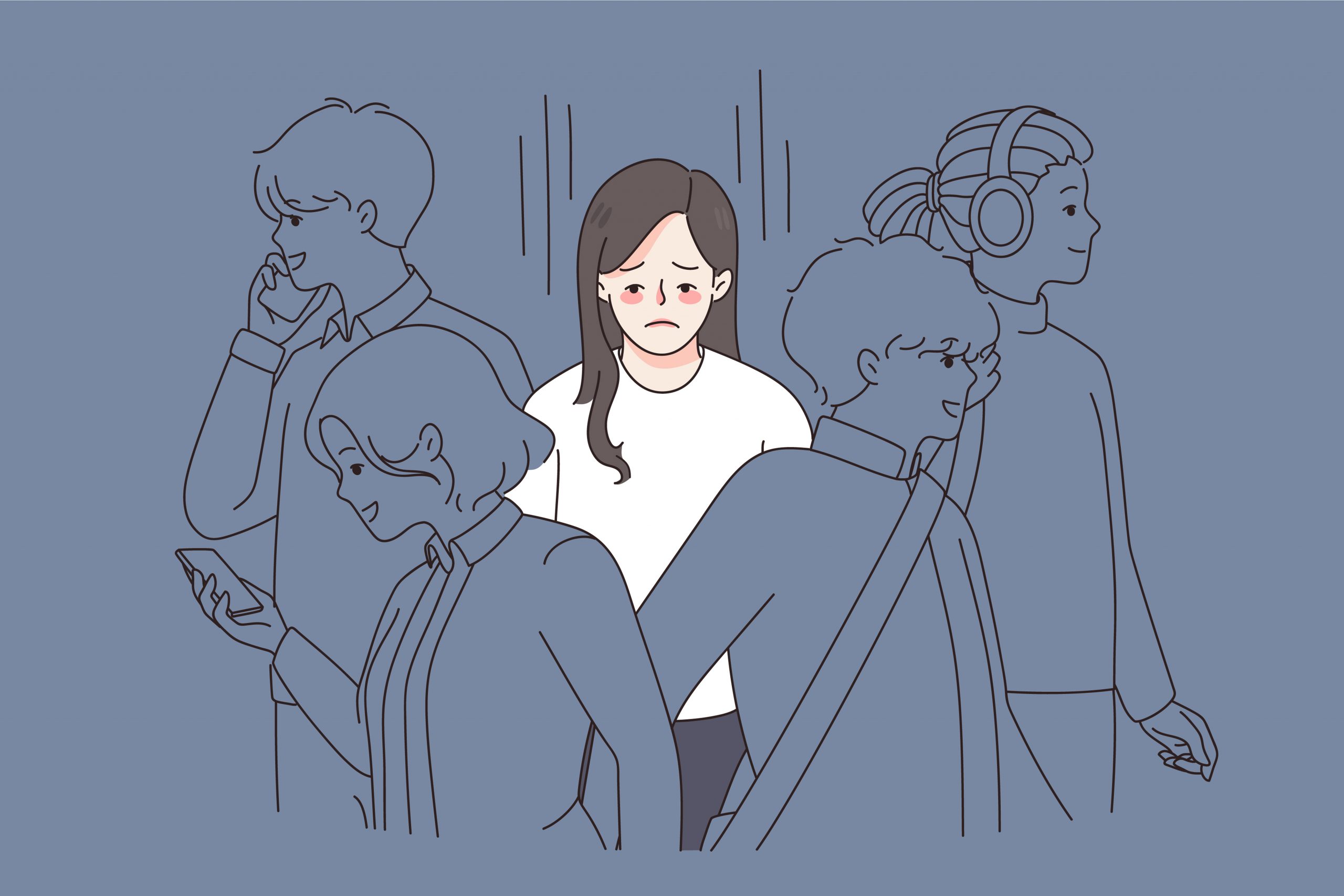
    The hospital, among other things, gave me a list of places where I could find helpful tools for meditating. Apps, recordings, videos. I decided I had nothing to lose and everything to gain, so I started following their guidance.

    I burned through the resources the doctor gave me within a few days. That was enough to convince me that this could really help. I still felt anxious and depressed, but for the period of time while I meditated I got, for the first time in years, a real sense of relief that wasn’t alcohol-fueled.

    Unsure of where else I could find guided meditations, something triggered in my brain and a thought emerged: “I am sure Buddhism has something to do with meditating.” I went onto YouTube and typed in “Buddhist meditation” and got a huge number of results. So began my real journey with mindfulness practice.

    Meditation didn’t miraculously cure my anxiety and depression. As I said, I still live with them. But it offered a glimmer of light through which I felt certain I could better learn to cope and give a quality to my life that had been missing for years.

    I can’t say specifically how meditation has changed things for me. I just know it has. I have read that the brain is plastic. That it can develop and change over time. The idea that activities like meditation help develop new, healthier, neural pathways makes sense to me. It’s almost as if the change has happened subconsciously. What I do know is that, as a result of meditating regularly, I’m calmer and better able to deal with crises than I had previously been.

    As I made meditating a daily practice, I began looking more into Buddhist philosophies. They are what worked for me and it is eminently possible to get the same benefits from other philosophical teachings, both religious and not. One idea I hit on was the concept of not fighting negative emotions but rather befriending them.

    This sounds counter-intuitive. When we get a feeling we don’t like, whether it be anxiety, depression, or anything else uncomfortable, we naturally want to run from it. This only strengthens the emotion, though, and does nothing to relieve it.
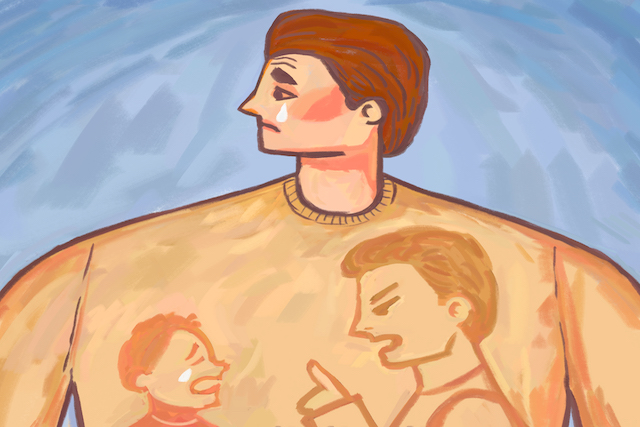
    Perhaps that’s why people get locked in cycles of negativity. They fight the uncomfortable feeling, thereby strengthening it, so they fight it all the more. Round and round goes the vicious circle.

    Instead, by accepting the emotion, letting it be, and recognizing that the feeling isn’t inherently wrong, that it’s just a sensation, it somehow softens it.

    The first person I ever heard talking about this process was Yongey Mingyur Rinpoche whose quote I have cited above. He often speaks about how revelatory it was for his panic attacks, and so it has proven to be for me with my anxiety and depression.

    It was this charming, charismatic Nepalese Buddhist who got me hooked on meditation. I specifically remember the moment I found his video “A Guided Meditation on the Body, Space, and Awareness with Yongey Mingyur Rinpoche,” on YouTube. With his gentle and humorous approach, I could almost feel his arms holding me as he guided me through the process. Despite meditating daily for the last four years, I still return to this video when I feel I need to get back to basics.

    The belief that somehow anxiety and depression will up sticks and leave me is not something I possess. However, they don’t frighten me anymore, and I have learned to cope with them. I would wish them “good riddance” if they did pack their bags and go, but they don’t dominate me anymore. I live with them and they aren’t going to prevent me from enjoying a positive existence.

    There is a wealth of resources available online that both talk through this novel concept and provide guided meditations on it. Some are religious or spiritual, though plenty of others are purely secular. It is an idea that can be used by anyone in whatever format they wish.

    My life has changed because of these few, simple practices. I’m more content than I can ever remember being and like to think of this transformation as proof that anyone who suffers similarly can regain happiness. I would be lying if I said it isn’t hard work, or that there aren’t periods that are more difficult than others, but it is so worth it.

    As a result of these improvements, I was able to kick my alcohol habit over three years ago, something that has also benefitted my mental health. Again, I found I felt better from not drinking, but this is not to say that being teetotal is an elixir for wellness. Plenty of people find a beer or a glass of wine actually helps how they feel, and if this is you, go for it.

    This article is not prescriptive. I don’t believe anyone can offer a recipe for wellness, as it is dependent on the individual, and I strongly doubt that two people would ever find that what works for one, works exactly the same for the other. If the above text offers hope and nothing else, the writing of it will have been worthwhile.

  • The Enduring Pain of Losing Someone You Love to Suicide

    The Enduring Pain of Losing Someone You Love to Suicide

    “The reality is that you will grieve forever.” ~Elizabeth Kubler-Ross and David Kessler

    March is always hard for me. Has been since March 21, 2017. That’s the day my eldest son, then twenty-seven, found his father hanging in our basement. I apologize for being so brutal.  But it was.

    What no one tells you about grief, what catches you by surprise, is the fact that you can be five years out and still, when March comes around, you can find yourself in a fetal position on the ceramic floor of your kitchen—howling like a wounded dog because a memory slashed unbidden across your brain and cut you so deep that your legs couldn’t hold your heavy, heavy weight. And you wonder—no, you know—that this will go on for the rest. Of. Your. Life.

    How to describe what it’s like when your heart breaks… It’s something I’ve been trying to do for five years. Not out loud anymore because others tire of it. More so, I try to describe it to myself. Hoping that by describing it I can move forward, categorize it, and store it; put it away, out of sight, out of mind.

    Sure, I’ll go on. Most of us do. Muscle memory accounts for 90% of how you go on, trust me. In those first days I would say the percentage is even higher. Sleep, get up, make food, eat, feed the dog, put clothes in washer, clean the dirty dishes, put out the garbage, sleep, get up, make food…

    Suicide loss, I’ve found, is unlike any other loss. Oh, this is not a contest of feelings. No, every loss of a loved one is felt deeply, profoundly. No contest. Suicide loss, however, results in countless unending ripples of devastation for the survivors every single day of the rest of their lives.

    I think of my sons. Always. The oldest is forever altered. His father was his best friend. Their relationship had just achieved that rewarding maturity of mutual respect. They enjoyed each other’s company. The youngest, twenty-three, was still working out childhood resentments, but I could see the potential for closeness. He was spared seeing his father’s lifeless body.

    We all now live with the special baggage of suicide survivors: guilt (why weren’t we there? I could have prevented it.), shame, anger (how could he?!), rage, trauma, fear (will my sons, will my mother, will my brother…), regret and deep sorrow for yesterday, today, and what will never be. Every anniversary, every milestone, every holiday, every celebration will rip the Band-Aid off again and again.

    Sometimes, the full impact of a loss takes time. For me, the first year was a “roller-coaster of emotions”—a common, but completely accurate phrase.

    To the outside world, I was pretty darn normal: keeping house, inviting people over, laughing, going about my business. Few, if any, noticed the cracks: gradual isolation, bathing only twice a week, forgetting things more than usual, horrible financial decisions, sudden breakdowns, crying in the grocery store, in traffic, in the shower, on the phone, in the middle of a conversation. Five years out and many of those symptoms remain.

    By year two the full weight of not just the loss, but the way of the loss, the reasons for the loss, the eternity of the loss hit me—a full body slam of something too heavy to survive. Or so it seemed.

    I found a therapist. She let me talk and weep. I was prescribed antidepressants. Nothing helped. I moved through days, functioned at a primal level showing the outside world only the version of myself that made them comfortable.

    No one, I don’t care how well-meaning they are, can understand this loss other than another suicide survivor. It’s true. Just as the surviving parents of a lost child know a uniquely singular, searing pain, so, too, does the suicide survivor.

    It’s important to seek out those who understand our pain. I recommend it. And grief counselors. And therapists who are especially trained in PTSD. Seek them out.

    I found a group of suicide survivors that met monthly. Hearing about their losses, especially the loss of sons and daughters, allowed me to appreciate the importance of finding a community of people who understand. In the hollowness of these survivors’ eyes, however, even as we embraced, I could see the singularity of their respective journeys. We may share, but we are alone in our pain.

    Memories do sustain me, as others so helpfully say. Sunny days at the beach are calming (unless the crashing waves remind me of past vacations with my husband and sons years ago).  Drinks and drugs provide a temporary escape (when I can resist the deadly seduction of blissful nothingness). The company of others can keep my mind from the endless cycles of black thoughts. Music can be helpful. Or dangerous.

    “Stay active! Meet new people! Get out and do something! Time to move on! Get over it!” I can hear the words of concerned family and friends.

    People mostly mean well. Time will pass. Things happen. Kids grow. Other cherished loved ones will die. I have come to understand that death is relentless, and that I must bear other cruel deaths as well as this one. 

    My sons are my reasons for living. Period. In my most desperate times the thought of their pain has been the only thing between me and oblivion. I will never do that to them. And they, in turn, know that either one of their deaths would mean my end. I have no doubt that I could not survive that. I need for them to be okay.

    I will, as they say, put one foot in front of the other every single day, if not for myself, for my sons. Even though they are grown. Even though they have their own lives of which I am but an infinitesimally small part. I have to stay alive because they have already suffered enough.  Suicide survivors understand that.

    And so, I hate March. I begin to dread it in January. By February I am coming up with excuses to stay home. And, on any given night in March, I am balled-up on the ceramic tile of my kitchen floor howling like the wounded animal that I am. But I get up the next day and I try again.

  • If You’re Afraid to Ask for Help Because You Don’t Trust People

    If You’re Afraid to Ask for Help Because You Don’t Trust People

    “Ask for help. Not because you are weak. But because you want to remain strong.” ~Les Brown

    I sat in the doctor’s office, waiting—linen gown hanging off me, half exposed—while going through the checklist in my mind of what I needed help with. I felt my breathing go shallow as I mentally sorted through the aches and pains I couldn’t seem to control.

    Fierce independence and learning to not rely on others are two of the side effects of my particular trauma wounds, stemming from early childhood neglect and abandonment. During times of heightened stress, my default state is one of significant distrust.

    Letting people in and asking for help has never been my strong suit.

    Not only did it prove painful at times, asking for help has also proven to be unsafe. I’ve been given poor and damaging advice from people I assumed knew more than me. I’ve emotionally attached to people who disappeared when I least expected it. I’ve been lied to, betrayed, and left behind when my help was no longer useful.

    I’ve been injured both physically and emotionally when relying on others to care for me and have been let down more times than I can possibly recall.

    I have plenty of reasons to convince myself that no one can help me. That I’m in this life all alone. Some days I feel just that.

    Other days, I sit in my doctor’s office ready to make myself vulnerable one more time looking for support that I’ve been unable to give myself. Hoping, fingers crossed, that maybe this time I’ll be seen, heard, and cared for.

    When the doctor walked in, I was writing a note on the depression screening form justifying why I feel sad some days. I know it’s normal to feel sad doing the work I do as a mental health therapist. Working with people’s sad can be sad. I wanted to be upfront.

    And also, I’ve been focusing on healing the trauma in my body that injured my nervous system starting in infancy. Actively inviting my body to retrieve its pain to set it free and regulate my system to a state that is considered normal. Except I don’t know what normal feels like.

    Her very first questions to me: “Are you getting back what you put into your work? Is it worth it?”

    I blink, unsure if I heard her correctly.

    “Are you asking me if the work I’m doing is more depleting than rewarding? Am I receiving as much as I’m giving?” I ask.

    “Yes,” she responds assuredly.

    I exhale.

    She sees me. She actually sees me. I ask myself this very question every day.

    This one question cracks me wide open. I know I can trust her.

    I hear words pouring out of my mouth explaining the work I’ve been doing with myself. My intention to heal my nervous system and my body, how hard it’s been to feel all the emotional pain that’s come up and the subsequent physical pain that comes and goes to remind me just how deep all this stuff runs.

    I shared with her my most recent discovery—my earliest known physical trauma at nine months old, when my mother gagged me to make me throw up to “protect” me.

    When her behavior was discovered, she was admitted to a hospital for psychiatric services for over a month. My brother and I were placed in the care of anyone who was available to watch us.

    At the most important time for healthy attachment and trust to form, I was taught that survival meant staying clear of those who are assigned to protect you. They can hurt you. And the world was not a safe place.

    This was the first of many experiences in my life that would drill in the same belief. My body spent years trying to protect me by tensing up, shaking, or wanting to flee when I sensed any kind of danger—being trapped, pressured, controlled, or trusting authority figures was high on my list of subconscious nos.

    To me, there was no logic to the way my body reacted to what seemed the smallest threat, so I shamed myself for it.

    I couldn’t understand why driving on the highway put me in an instant state of hypervigilance. Why I would wake up in the middle of the night unable to breathe. Why the bright lights and enormous amount of stimuli in the grocery store made me freeze the moment I walked in. Why perceived conflict made me want to curl up into myself or attack and bail.

    All I knew was I was not “normal,” and I felt like I had no control over it.

    I recall the first infomercial that serendipitously came across the screen during a sleepless night while I was traveling in my early twenties. At the time I always slept with the television on to drown out the noise of my thoughts in the silence of night. A woman talked about her struggle with anxiety and the way it internally took over her life. I immediately tuned in.

    She was talking about me. She was talking about so many of us. I couldn’t believe someone understood what I desperately tried to hide and despised about myself.

    It was the first of many books, programs, methodologies, and practices I would try. It was the first time I felt seen and sought help.

    It wasn’t that I didn’t want help. I just didn’t trust it, nor was I comfortable with being vulnerable enough to ask for it. Particularly because I had proof that when I did rely on people, they could turn on me, or even worse, leave.

    And then there was the cultural push to just “suck it up” or accept that “it is what it is.” Key words to encourage us to abandon ourselves.

    Sucking it up is exhausting, and it doesn’t help. It doesn’t change what’s hard, and from what I can tell, years of sucking it up never made me stronger. Just more certain I was stuck in this mess of myself alone.

    Even though I help people for a living, and fully understand that I am the help I encourage people to seek, I forgot that I, too, was able to ask for help.

    This meant I had to have the courage to let my guard down. To let go of the feeling of burden I was afraid to put on another. To remember that every single one of us has our hardships, and we actually want to be needed and helpful to another when we have the space.

    It’s why we are here as humans. To give love and receive it. When I give someone the opportunity to love or support me, it gives them the chance to feel the fullness of my gratitude. To receive love back from me in return and feel needed and wanted as well. It is also the most solid reminder for both of us that we are never actually alone.

    We need each other.

    It is a practice for me to remember this. It’s also a practice to remind myself that I have been cared for far more often than I’ve been hurt. That those who have harmed me or left me had their own burdens to bear that I was not meant to be a part of. And that every time I do ask for help, like in my doctor’s office, and receive it wholeheartedly, I am able to keep myself filled and balanced to be able to help the people I care about even more.

    I exhaled when my doctor acknowledged me. I knew it was safe to let her in, yet I still swallowed tears while I did so. Her validation of my challenge felt comforting; her support, the extra oxygen I needed. Knowing the value of support has never made it easy for me to ask, but it has made it easier.

    As humans we are regularly encouraged to give, yet it is equally important to learn to receive. We need both to keep ourselves balanced and in flow so we can be the love we want to feel. To give is a powerful feeling, while receiving can make us feel a little vulnerable. That’s okay. The more courage we use to ask for help, the more strength we have to give out in return.

    If you are feeling resistance to seeking help, ask yourself where your fear lies. Is it a current concern or is it one from the past? Does vulnerability make you uneasy or bring up insecurities you have around being judged or feeling like a burden? Or do you feel it’s hard for you to let your guard down and trust another?

    When resistance lingers, choose people who’ve been loyal and consistently supportive in the past. If you don’t have any relationships like that, or if involving your personal relationships feels too uncomfortable, consider professional support. There are affordable and even free resources available, if money is an issue.

    The key is to remember that you, too, deserve a place to be you and invite in the help that everyone needs at times. To release your burdens so you can stand back up and move forward with more ease and a lighter load. So you have the strength to be a support for others and also for yourself.

    When feeling weighed down, ask for help—whatever that looks or feels like for you. The past may have taught you what you don’t want, but you have the power to choose what you do want in the present. There are people out there who you can rely on and who want to be there for you. They are simply waiting for you to ask.

    So go ahead and let someone in. No one needs to or is expected to navigate this wild life alone. Not even you.

  • How I Stopped Feeling Sorry for Myself and Shifted from Victim to Survivor

    How I Stopped Feeling Sorry for Myself and Shifted from Victim to Survivor

    “When we deny our stories, they define us. When we own our stories, we get to write a brave new ending.” ~Brené Brown

    There was a time when I felt really sorry for myself. I had good reason to be. My life had been grim. There had been so much tragedy in my life from a young age. I had lost all my grandparents young, lived in a home with alcoholism and domestic abuse, and to top it all off, my dad killed himself.

    I could write you a long list of how life did me wrong. I threw myself a pity party daily in my thirties, with a load of food and wine. The story I was telling myself was that all this bad stuff had happened and I was unlucky in life and love. I told myself my life was doomed.

    I believed if there was a God, he must have hated me because everybody around me had a perfect-looking life compared to me.

    I felt like I was the only person who felt like this and couldn’t see any goodness in my life. I kept telling myself I was destined to be lonely and unfulfilled in my work life because I was just not good enough.

    I took care of others in my family to give myself purpose, but inside I loathed it. It made me bitter and resentful. I didn’t do these things because I wanted to. I did them because I felt like I had to.

    I thought this was who I was meant to be—the side act in everyone else’s story.

    My peers were moving on with their lives, getting married, having babies, and buying houses. I was stuck in my pity party, in the sadness of the past, unable to move on. I felt like I did as a child—powerless, out of control of my life, and sad.

    For as long as I could remember I felt anxiety and sadness. I would distract myself from these uncomfortable feelings with other people, TV, busyness, food, and later in life, alcohol.

    I was a victim in childhood and then I continued to live as a victim into my thirties, blaming everyone else and God for my poor start in life. I blamed myself as well. If only I was enough, then my life would better.

    There came a time when I couldn’t carry on the way I had been and had to take responsibility for my own life. My own story. It was time to get out of my own way. I was hitting rock bottom, and the time had come to either fight for my own happiness or follow the road my dad had taken.

    My life felt pointless, but I finally listened to a voice within me that told me there was a way forward and got out of my own way.

    This was the start of my spiritual and healing journey.

    It all started with a simple internet search on how to feel better—mind, body, and soul.

    Amongst the tips I found was the suggestion to practice daily gratitude. I started by writing down everything I had in that moment.

    For a long time, I focused on all I didn’t have rather than what I did. But I had so much—great friendships, travel, love, a well-paid job, a nice home, and so much more. I ignored all the good stuff and it robbed me of what I did have. The present moment. But now my eyes were opening to all the light in my life.

    I began to see and appreciate sunsets and sunrises. I looked for the good everywhere. Even in the darkness. I was searching for the light in every day. The more I looked the more I found.

    I practiced gratitude when I found new information and practices. Podcasts, books, teachers, healers, therapy, and so much more. The more I said thank you, the more good things I found.

    The story I was telling myself was changing.

    Then I added meditation and mindfulness to my daily routine and began hearing my intuition more.

    Before all I could hear was my fear, but this inner whisper was getting louder. Ideas would pop into my head like “I just don’t love myself,” and then I would see a quote from Louise Hay that resonated on social media. One led me to her book You Can Heal Your Life. I implemented the strategies in her book and then more tiny steps occurred to me in the quiet.

    I said thank you every single time. I felt more supported by myself and the universe and less like a victim in my story.

    The better I felt on the inside, the more opportunities I noticed.  I saw a job I liked advertised and rather than letting fear stop me, I listened to my intuition, which guided me “to just try.”

    In the past I would have ignored it and thought “I wish.” This time I just went for it. Just like that I left a toxic work environment for a job more aligned with my values, offering more money.

    I attracted better relationships and in time found love. After searching for more ways to feel good on the inside and change the way I saw my life and my world, I incorporated daily affirmations and walks in nature.

    My reality kept changing as I changed within.  

    Have you ever noticed how your body feels when you say, “My life is crap”? Your body contracts and you can almost feel the fear rising. But when you tell yourself, “There’s a lot of good in my life,” your body almost expands, and you can breathe.

    Our words have a profound impact on us. Changing that narrative we tell ourselves changes everything.

    The new information that I discovered through my personal quest helped me to understand my past. I found people like Gabor Maté who explained concepts such as intergenerational trauma and addiction. This information helped me change the story I told myself around my childhood. It helped me understand my trauma.

    I remember knowing from my intuition that my relationship with my dad needed my attention. Then I saw an advertisement for a new book, Father Therapy, by Doreen Virtue, which led me to inner child work. This helped me heal my younger self.

    As I continued my quest to heal and feel better, I found new healing modalities like breathwork, EFT (emotional freedom tapping technique), and eye movement techniques.

    I said thank you again and again and again.

    All those years I spent as a victim to my story kept me stuck and unable to move forward. But now I was ready to change and expressing gratitude for the process. More was always finding its way to me. I now had so many tools that I never knew existed in the depths of my pity party.

    It was not easy. I cried. Fear took over some days and I couldn’t access my intuition. But I would just start my quest again the next day, journaling to connect with myself and see what had happened the day before. What my feelings were and what I needed.

    I showed myself love and compassion for my bad days and celebrated the good ones. No longer was I a victim of childhood abuse but a powerful survivor.

    Yes, bad things happened to me. But they are not who I am; they are just part of my story. That story is what led me here, to this place where I’m now writing to you. I hope to inspire you and show you that it is possible to change your story, whatever it is; that there is so much guidance and support available to you when you are ready to find it. You really will see it everywhere when you start paying attention.

    You too will see you also have an inner voice guiding you and access to everything you need to heal. When you start recognizing all the tools available to you, you’ll feel less alone and supported on your journey.

    I no longer feel bitter about my experiences in my childhood, but proud. They made me who I am and have allowed me to help many others on their journey to heal from their past.

    I have found forgiveness, love, and compassion for the people that hurt me, like my dad, which helps me feel happier. I didn’t have to forgive him. He did awful things, but I understand now they came from his trauma. This has given me great inner peace.

    It takes courage and time to transform on the inside and become a trauma cycle breaker in your family. This means that your children will have a different experience. How amazing is that? What a great gift to give them.

    The information, tips, guidance, and light are waiting for you to discover them. You just need to take the first step and decide to become the hero of your story and find your own heart’s happiness.

  • Sick of Toxic Relationships? Love Yourself Enough to Walk Away

    Sick of Toxic Relationships? Love Yourself Enough to Walk Away

    “There comes a time in your life when you walk away from all the drama and people who create it. You surround yourself with people who make you laugh. Forget the bad and focus on the good. Love the people who treat you right, pray for the ones who do not. Life is too short to be anything but happy. Falling down is a part of life, getting back up is living.” ~José N. Harris

    Letting go of relationships that impact your well-being and make you feel unsafe may seem like a simple act for many, but for those of us who are cut off from our emotions, it is a challenge even to know how we feel around other people.

    Some of us have lived with a feeling of unsafety since birth. It was our normal from the beginning. It was in our first homes and in our first relationships.

    This was my experience for most of my life.

    I was born into a house where my mum had felt unsafe while pregnant with me. That fear she felt living with her in-laws and my dad was real. She had an arranged marriage at twenty-two and had no idea her father-in-law was an alcoholic.

    Her first experience of alcoholism was mine too, but I was a newborn. I have memories of her being too scared to go into the house. My body still remembers how this feels.

    So I came into this world on high alert, waiting for an eruption to occur at any given moment. I remember being terrified in my crib. This experience wired me to be sensitive to energy. As a baby I could feel the tension and would almost hold my breath around my family.

    I learned early that people were unsafe. I learnt about fear and how to contract my body. For me, fear was normal, and I felt constantly on the lookout for any perceived threat.

    My poor little body didn’t know how to survive, and my parents were preoccupied with dramas in our house, so I learned survival skills like freezing, not speaking, and pleasing my adult caregivers to keep the peace. When they were calmer, I got connection and love and was able to survive.

    We all learned young how to survive in the family we were born into, and our nervous systems were wired accordingly.

    As I got older and came in contact with people I felt unsafe with, I would do the same—freeze, rescue, or please others and silence myself. It crushed my self-esteem and made me quite the doormat for other people’s drama.  It made me suicidal, as I wanted to escape the pain yet felt trapped in these patterns.

    I let people talk to me awfully. I let people work out their trauma on me. I saw my parents doing the same and didn’t know it wasn’t normal. I thought being a punch bag for other people’s trauma was okay.

    I didn’t know how to express my truth or have boundaries.

    As I got older it became obvious to me that I had become a magnet for toxic relationships. I was constantly reliving these unsafe feelings from my childhood.

    I gravitated toward people who needed me to help them with emotional regulation, just as I’d learned to do as a child. These relationships drained me and kept me in a constant cycle of pain, yet I was almost addicted to these interactions

    I had become so needless and wantless myself that I didn’t know who I was without these people. I would get a dopamine high from getting their love and acceptance for a small moment after making them feel better.

    I was always chasing the love and safety I longed for in my childhood home. 

    I was attracted to people who required rescuing due to their own trauma and addictions. I was either trying to save them or letting them persecute me.

    I would say nothing when they blamed and shamed me without justification, internalizing their blame—just as I had as a child when my dad persecuted me for all the stress he felt. “If Dad says everything is my fault, then it must be,” I thought.

    I saw it as my job to take care of other people’s emotions. If they were sad, I would help them feel better, and if they were angry, I let them take it out on me, as I always had done. If someone was angry with me, I believed it must have been my fault.

    One day, I came across the drama triangle, and it made me look at my relationships in a whole new way. A drama triangle has three points:

    Persecutor: blames others for their pain

    Victim: feels powerless to a persecutor

    Rescuer: tries to rescue others to manage their emotions

    I found myself in the role of victim and rescuer for many of my relationships. I felt powerless to other people’s emotions and behaviors. Like I just had to accept them.

    The time came for me to take responsibility for my own happiness and build my strength to end this pattern I had been in my whole life. No more being a victim to other people’s trauma. 

    After hitting rock bottom, I finally started to invest my time, money, and energy in myself. I started small with little acts of love—walking in nature, meditating, exercising, and cooking myself healthy, nutritious meals.

    I started to notice feeling calm and relaxed in my body. I became aware of my own feelings and needs. I began to connect with the voice within me, which I couldn’t hear previously. It was always overpowered by other people’s voices.

    This voice guided me to begin to say no to certain events and prioritize my own time. This voice guided me to get therapy, read books on healing, and join support groups.

    There was no way I could make my relationships healthier until I had a healthier, more stable relationship with myself. Building this foundation is what gave me the strength to make more difficult decisions further down the line.

    Over time I became more grounded in my own energy, something I had never experienced before. I noticed which relationships felt safe and when I was getting what I was giving.

    It also became apparent which relationships didn’t feel good and negatively affected my well-being. 

    When I began this journey, I was in a workplace where, unknowingly, I was highly triggered on a daily basis. Once I started to incorporate self-care before and after work and during my lunch breaks, it became apparent that this job had to go!

    I had never expressed my truth in relationships, not even the ones I felt safe in. I just kept it all in and came up with my own stories and assumptions about how the other people felt about me. I drove myself crazy like that.

    I began to change this behavior by expressing my feelings in relationships I felt safe in. I realized how communication can make relationships healthier and more fulfilling.

    Self-expression in relationships created true Intimacy. I had always hidden my true self away.

    I had been single for most of my life because of my previous patterns, but after building a foundation of self-love, I was able to form a relationship with a man who is now my fiancé, who gave me what I’d learned to give to myself—unconditional love and safety.

    As my relationship with myself grew, so did my strength to walk away from relationships that felt unhealthy for me. Some of these were easier than others. I had never been okay with hurting people’s feelings, putting my needs first, or causing trouble.

    I was always the good girl. It took courage not to be.

    I became the one who was seen as selfish or the troublemaker in the family.

    After growing and experiencing relationships in which boundaries are respected, you cannot accept it when people ignore your boundaries and have complete disregard for your feelings. I realized it’s not healthy for someone else to avoid taking responsibility for their actions, blame you, and focus solely on winning an argument.

    You cannot ignore the drama in a drama triangle when you step outside of it.

    Some people just do not want to respect your boundaries because of where they are in their own healing journey.

    You will realize that walking away from some people you have loved your whole life is essential for your own well-being, whether it be for a short period of time or forever. You cannot keep putting yourself last to continue a relationship that does not feel good for your health, no matter who they are. Especially when your inner voice is shouting at you to walk away.

    Many family systems run on the drama triangle with us each taking on our role. But when we step out of it, we give others the opportunity to grow and emotionally regulate themselves.

    It is natural for your family to have a reaction to changes to the family dynamics. But it is not your responsibility to ease that discomfort for them. That is down to each individual.

    My self-love journey empowered me to heal my nervous system from past trauma and stress. My body did not function properly anymore because of the wear and tear from my relationships. I finally listened.

    I invested in body-based treatments such as cognitive breathing, craniosacral therapy, trauma-release exercise, and qi gong. These modalities helped my nervous system heal from the past.

    It took bravery and courage to step away from the toxic relationships in my life, but it’s been my greatest act of self-love to date.

    Begin to tune into the relationships in your life. How do they make your body feel? What is your body telling you? Is it time to set a boundary, express your truth, or step away?

    If that all feels too scary right now, just focus on building that foundation of self-love. And recognize that you don’t deserve to be blamed or shamed for someone else’s issues, and it’s not your responsibility to fix or save them.

    In time, as your love for yourself grows, so will your strength to put yourself first and no longer accept relationships in which you are not treated with kindness, love, and respect.

    You are worthy of relationships that make you feel loved, energized, and happy. Most importantly, you are not responsible for rescuing anyone else or being the place where they project their pain.

  • What Is Stress-Induced Illness? How Trauma Can Cause Physical Pain

    What Is Stress-Induced Illness? How Trauma Can Cause Physical Pain

    “Wisdom is merely the movement from fighting life to embracing it.” ~Rasheed Ogunlaru

    Three years ago, I fell into the blind spot of medicine: America’s unknown epidemic.

    After numerous tests, scans, scopes, and too many doctors to count, modern medicine could not find anything seriously wrong with me. I also consented to have my gallbladder removed. My first and only surgery at age forty, an “experiment” of sorts.

    Six months into the worst nightmare of my life, my spiraling health started to take a huge toll on me physically, mentally, and emotionally. I didn’t want to live anymore, but I was too chicken to take my own life.

    They Cannot See the Forest for the Trees

    If just one doctor had paid closer attention to my backstory and probed it further, the diagnosis would have been obvious and the treatment plan effective. Here’s the problem: My doctors were only focused on my presenting symptoms and not on my whole being.

    Instead, thoughts of the following conditions (in this exact order) became my daily companions: colon cancer, GERD, IBD, IBS, pancreatic cancer, small intestinal bacterial overgrowth, gluten sensitivity, celiac disease, Meniere’s disease, interstitial cystitis, chronic pelvic pain, pelvic floor dysfunction, motor neuron disease, multiple sclerosis, bladder cancer, thoracic outlet syndrome, pudendal neuralgia, peripheral vascular disease, bile reflux, and a few other conditions I’ve surely forgotten. I was one big, hot mess.

    Of the twenty-six symptoms I experienced, the constant bladder pain was the most excruciating and difficult to deal with. Imagine a UTI that never goes away. Nothing could knock it down.

    The pain took me to the edge of wanting to take my life many times. At one point, I told a doctor that I would give him my entire 401k savings if he could make the pain go away.

    It’s Time to Surrender and Trust the Process

    In September 2021, I surrendered to the pain and requested a referral to an academic medical center after fighting it for nearly two years. Somewhere along the way, I made the conscious choice to walk with the pain instead.

    I quickly learned that doctors specializing in pain medicine do not try to cure pain, but they try their best to equip patients with strategies to cope with their pain. Along with the things my pain psychologist taught me, he encouraged me to reacquaint myself with Curable, an app I had actually loaded onto my phone almost a year prior but had quickly dismissed. Stupid mistake on my part.

    Addressing pain at an emotional and psychological level did not make any sense to me. After all, I had a structural problem, not a brain problem—or so I thought.

    Fortunately, during my second round of trying the Curable app, I discovered Howard Schubiner MD and one of his colleagues, Alan Gordon LCSW, a psychotherapist specializing in the treatment of chronic pain through pain reprocessing therapy (PRT).

    Dr. Schubiner is the founder and director of the Mind Body Medicine Program at Providence Hospital in Southfield, Michigan. His program uses the most current research methodologies to treat individuals who suffer from the mind body syndrome (MBS) or tension myositis syndrome (TMS), as described by Dr. John Sarno.

    What is mind body syndrome? I’m going to answer this in a second, but first I need to take this story back to my childhood. This is where the story gets very interesting and revealing.

    The Haunting Effects of a Bad Childhood

    As I started to dig deeper, I was introduced to the landmark 1998 ACE study that, as its abbreviation indicates, explored “adverse childhood experiences.”

    The ACE research concluded that the more adversities a person experienced as a child—whether it be a parental death or incarceration, poverty, neighborhood violence, or abuse—the more likely that person would be to suffer from serious physiological disorders as an adult. I had six childhood adversities: a household with substance misuse, violence, divorce, severe poverty, neglect, and incarceration of a parent, all at or before the age of ten.

    I also discovered a recent meta-analysis showing that individuals with a history of psychological trauma, regardless of the type of trauma, were almost three times more likely to have chronic pain than those who had experienced no trauma.

    Bingo! Just call me Sherlock Holmes.

    Translation: As a child, I was threatened repeatedly—not physically, but emotionally—causing my body to have a stress response. This prepared my body to fight or flee. Because my body stayed in this stress response mode for an extended period of time, crucial neural connections in my developing brain most likely suffered damage, causing me to be hypersensitive to stressful events.

    In other words, my alarm switch is always “on,” unless I can lower the perceived danger in my brain. My divorce was just the tipping point to my spiraling health.

    The Day the SWAT team Visited My Home

    To illustrate how inept society was in the early nineties at addressing emotional trauma, I only need to point to one early morning when the SWAT team jumped my backyard fence and pointed their submachine guns at me while I was feeding our family dog, Smokey. Their target was my dad (he sold drugs), but he was nowhere to be found.

    He had been out partying all night and had yet to return home. I was the only person home at the time. A scared shitless ten-year-old boy. I liked watching the reality show Cops, but this was completely surreal.

    This is the crazy part. The SWAT team left me in the backyard and told me to go to school, like nothing had happened. I never spoke to a counselor or therapist about this frightening event.

    I grew up thinking it was normal to not talk about emotions—or scary things like being stuck in the middle of a drug raid, alone and helpless. I grew up real fast that day.

    Mind Body Syndrome, Anyone?

    Mind body syndrome, or psychophysiologic disorder (PPD), is a certain diagnosis arising the majority of the time in the absence of tissue or structural damage in the body, when nerve pathways become continuously or intermittently activated by past or current life stressors.

    The Psychophysiologic Disorders Association states that the symptoms of PPD are due to altered nerve pathways in the brain that affect the body. Symptoms can include headache, back pain, chest pain, muscle or joint pain, abdominal or pelvic pain, constipation, diarrhea, bloating, nausea, irritable bowel syndrome, discomfort in the bladder or during urination, fibromyalgia, chronic fatigue syndrome, and many other symptoms.

    To illustrate how inept today’s doctor is at diagnosing a psychophysiological disorder, I only need to point to my first-ever encounter with a board-certified gastroenterologist in March 2019. Gastroenterologists are doctors who are highly trained to diagnose and treat problems in the gastrointestinal (GI) tract and liver.

    Basically, they get paid handsomely to look up people’s butts and take pictures all day long. If you ask me, it sounds pretty mundane and not all that creative. The best news you can receive after getting one of their colonoscopies is that you really didn’t need the procedure after all.

    Emotional Tone Deafness

    To help remedy my bowels that had gone haywire (the first of my many symptoms), I anxiously took the slot of the next available doctor at a nearby GI clinic. While on the examination table, I related that I was smack dab in the middle of a horrible divorce and in a lot of emotional distress after being in a dysfunctional marriage for the last ten years.

    The doctor’s response? Nothing. Zip. Nada. You could have heard a pin drop in the room. Instead of acknowledging my unfortunate circumstances, this dimwit doctor went about the rest of his examination and acted like what I had shared with him was the most benign, most boring thing he had ever heard in his life. By my definition, this was a moral injustice.

    News flash: The Holmes-Rahe Stress Scale indicates that divorce is the second highest stressor for humans, second only to the death of a spouse.

    Searching High and Low

    I had secretly wished that my doctor was going to validate my emotional trauma and scars and identify them as the cause of my bowel changes, but his lack of a response only reinforced the fact in my brain that something was structurally wrong with me. And so that’s the path I went down for nearly three years, trying to find something structural to explain one unexplainable symptom after another.

    When I say I turned over every stone, I really did.

    I went as deep as internal pelvic floor therapy to try to cure my bladder pain. That’s right. My physical therapist and I mapped out and explored every nook and cranny of my pelvic floor via my anal canal. As a bonus, I had homework to complete with a funky wand apparatus.

    Remember, I was desperate and willing to try almost anything. Everything except the butt gas. It’s basically ozone therapy gas that is administered into the body. In my case, I would have given it to myself through my butt.

    I can’t help but laugh when I recall the day I was first presented with this option. This is what my life had become. Wacky alternative therapies.

    In my career, I get paid to find solutions and fix problems. Fixing my health was no different, I thought. In my futile attempt to fix my health, I flushed thousands of dollars down the drain in the process and just about lost my sanity.

    Can This Really Be Real?

    At this point, one might ask if PPD symptoms are real or imaginary. The symptoms are real. In fact, the symptoms can be just as severe as those from any other disease. Some patients with PPD are ill enough to be hospitalized.

    Experts like David Clarke MD, a retired gastroenterologist and president of the Psychophysiologic Disorders Association, like to point out that one in six adults and 30–40% of primary care patients suffer from pain symptoms and chronic conditions that are “medically unexplained.” This is America’s unknown epidemic.

    But wait. There is a silver lining that comes with all this unfortunate news. Once PPD is recognized, treatment is available and is often effective in alleviating symptoms. Dr. Schubiner likes to ask: “Why manage your pain when you can cure it?”

    The Best Treatment Around

    So how effective is the mind body syndrome treatment? Dr. Schubiner and his colleagues published an article not too long ago demonstrating that emotion-focused therapy was superior to cognitive behavioral therapy (CBT) for dramatic pain reduction in people with fibromyalgia, many of whom had experienced childhood trauma.

    Dr. Schubiner and Alan Gordon also helped lead the recent study at the University of Colorado–Boulder that showed that not only can chronic back pain be managed, it can be cured using a mind body approach. In their study of 151 total participants, 66% randomized to PRT were pain free or nearly pain free at post treatment.

    Once I heard this, I started to tackle my pain at the emotional and psychological levels. Along with somatic tracking, expressive writing, mindfulness, and reprogramming the brain, my favorite treatment activity has been intensive short-term dynamic psychotherapy (outlined in Dr. Schubiner’s book, Unlearn Your Pain), where deeply buried emotions of anger, resentment, guilt, shame, sadness, and grief are uncovered and released. Healing often occurs rapidly once these emotions are stabilized.

    During this process of intensive short-term dynamic psychotherapy (ISTDP), I have taken several of my most incompetent doctors, and even my dad, behind the proverbial woodshed, and I have given them the worst tongue lashing they’ve surely ever received in their lives. Cursing is highly recommended and encouraged.

    While I couldn’t literally slash the tires of the doctor who appeared earlier in this story, this was the next best thing. And it felt so good.

    You might be wondering what happened to my dad. He eventually turned his life around, and I am so grateful for this.

    Today, while my pain is not completely gone yet, it’s generally at about a two or three instead of a six or seven. I will take this any day.

  • How I Overcame Shame from Sexual Assault and Began to Love Myself

    How I Overcame Shame from Sexual Assault and Began to Love Myself

    “Our lives begin to end the day we become silent about things that matter.” ~Martin Luther King Jr.

    It was Saturday, August 29th, 2020, when I admitted to myself, for the very first time, that I was a victim of sexual assault as a child.

    Twenty-five years of complete denial that this ever happened, and suddenly all I could think of was the fact that my innocence was taken at the age of five. “Why now?” I wondered. “Why does it suddenly matter? Was I so resentful of my trauma that I denied its existence altogether?”

    Between the ages of five and eight, I was repeatedly molested by a family member. Although I wasn’t sure what was happening, I knew two things: This felt pleasurable, and therefore, there was something inherently wrong with me.

    I carried this shameful image of myself into adulthood, unaware of how it impacted my self-esteem, my sexuality, and my overall perception of myself as a woman.

    As the sexual abuse eventually ended, so did any thoughts about it. No one knew that it had ever happened, and I planned for it to stay that way.

    From the time I became sexually active, I struggled. I never felt safe while being intimate, even when I was with my ex-husband. I always carried this feeling of shame, and the more pleasure I felt from having intercourse, the more shame I experienced.

    When I finally stopped denying that I was a victim of sexual assault, I knew there was no coming back. Once I became brave enough to admit the truth and accept the discomfort of it, I remembered all those times when the assault took place. It was terrifying and intimidating.

    I felt disgusted, shameful, and angry. I was upset that this event was suddenly present in my life. My plans were to build my online business, make money, and have fun with friends, while making sure I consistently whitened my teeth and maintained my Florida tan.

    Instead, I was forced to face my demons and address the truth I’d buried so well. All I could think of was “What’s wrong with me?”

    For many victims of sexual assault, especially young children who can’t comprehend what’s happening, it’s easy to develop a belief that we are sick, dirty, undeserving, and not enough. We develop a strong survival mechanism where we pretend, guard up, in some cases become promiscuous while self-sabotaging any real connection with anyone else.

    Our trauma supports the belief that we can’t trust anyone, everyone is out to get us, and that feeling any pleasure for ourselves is bad and sinful.

    What I couldn’t wrap my head around, and what also brought unbearable shame, was the pleasure I felt when the assault happened. Logically, it didn’t make sense to me.

    These were my thoughts: “I didn’t do anything about it, and there wasn’t any force or rebuttal present. I let it happen over and over, and in a sense, I enjoyed it. How can I ever say that I am a victim of sexual assault? If it was wrong, I would do something. Instead, I did nothing. There must be something wrong with me.”

    What you just read is a common thought process for many victims of sexual assault. It is why we stay silent; why we let the shame grow each day and exercise self-hate full force. Many of us truly believe that there is something inherently wrong with us, and this is where speaking your truth and seeking help comes into play.

    Shame was probably the most intense emotion I observed, but I wasn’t sure how to deal with it. So, as a master in denial, I let it go, again. Or so I thought.

    A year went by, and nothing happened. I kept the truth hidden and didn’t talk about it too much while convincing myself that I’d already addressed it and all this messiness was behind me.

    Then a few months ago one of my friends mentioned the nonprofit RAINN—the nation’s largest anti-sexual violence organization that helps survivors and victims of sexual assault heal and recover.

    I knew this information showed up in my life for a reason. My shame was still present, and my sense of unworthiness wasn’t subsiding. It was time to call their hotline and get help.

    I dialed and hung up four times before I was brave enough to stay on the phone. The process was easy, and I was able to get a counselor within a few days, at no cost.

    It was time for my first session. I was nervous and guarded, but I clicked with my counselor, so it eventually became easier to open up and start sharing.

    At first, we started addressing the elephant in the room: How could I feel pleasure while being sexually assaulted, and would my shame ever go away?

    I learned in my recovery that arousal during a sexual assault is common. It is one of the best-kept secrets that prevent us from speaking up, sharing our trauma, and breaking the shame once and for all.

    We are terrified that no one will understand us and will judge us instead. Considering the amount of judgment and shame we already exercise daily, the idea of criticism and more shame is just too much to bear. Therefore, we stay silent and often let the shame get out of control.

    Although I am not a doctor and can’t impress you with some Ph.D. explanation, here is what I now understand:

    Being aroused during any form of sexual assault doesn’t mean we want it, it doesn’t mean we consent, and it certainly doesn’t mean there is anything wrong with us. Physical pleasure is a natural bodily reaction, even during sexual assault.

    As I progressed with my sessions, I was able to open up about things I never said out loud. Things like excessive masturbation during childhood or using self-pleasure and intercourse in my adult life to punish myself and feel disgusted. Without seeking help and getting a counselor, I might have never been able to overcome my self-destructive beliefs.

    This is the best part about therapy: it provides a safe space to say the things you’ve kept inside. And that, in and of itself, provides healing.

    During my therapy, I learned some powerful coping skills. Things like recognizing my triggers, soothing myself with compassion while drowning in self-hate, pausing, taking a step back, and reevaluating the situation before it gets out of control. These skills were especially useful when I spiraled into one of my shame attacks, wanted to punish myself, or felt overwhelmed by self-judgment.

    I learned the importance of self-love in this process; how to approach myself when feeling defeated, sad, upset, or shameful. Mostly, I understood the universal truth every victim of sexual assault needs to understand and focus on: Recovery requires us to stop questioning what’s wrong with us and instead face what happened to us.

    At the time of this writing, my therapy sessions are coming to an end. If I were asked what’s been the most impactful part of my recovery, I would say it’s the ability to speak up and share my story while exercising empathy and compassion for myself.

    As Brené Brown said, the best way to break the shame is to speak about it with those who deserve to hear our story—people we trust, people who have been through the same or similar situations, and people who are educated enough to understand our trauma. People who aren’t afraid to offer empathy and hold space while withstanding the discomfort of the conversation.

    Although my therapy is ending and the time to run solo is approaching, I know that to heal, I must commit and stay committed to my recovery. I understand now that healing is available to all of us, and all it takes sometimes is five minutes of courage to make a phone call and say, “I need help.”

    As my recovery progresses, my hope for living a happier life grows each day. I am beginning to understand that no matter what I go through or how deep my trauma is, I can make different choices and live my life from the most empowering place that’s available to me—from within.

  • You’re Bent, Not Broken: A Mindset Shift That Can Change Your Life

    You’re Bent, Not Broken: A Mindset Shift That Can Change Your Life

    Bent but never broken; down but never out.” ~Annetta Ribken

    I lived for a long time thinking I was broken beyond repair.

    Let me rephrase: I thought I was unloved, unworthy, scarred, and broken. What a package, right?

    It started young, never feeling like I was good enough for anything I did. Being the youngest of the typical modern recomposed family in the eighties, I never knew on which foot to dance and always thought I needed to bend left and right to be seen and loved.

    I carried this baggage under my badge of anxiety, feeling like no one and nothing could ever make me happy, that no one could love the real me, that nothing could ever make me feel worthy.

    It reached a point as I was entering my forties when all I wanted to do was disappear. I wanted to not be who I was. I wanted to die.

    I thought that was my only solution.

    I believed the world would be better without me.

    What I didn’t understand then is that by thinking I was broken, unworthy, unloved, and all the other awful things I told myself daily, I was pouring salt into old wounds that had no chance to mend until I stopped the self-loathing.

    The more I told myself I was broken, the more I was breaking my soul. The more I told myself I was unloved, the less I loved others and opened myself up to love. The more I told myself I was unworthy, the more I interpreted others’ words to mean the same.

    I didn’t know what I could do. I didn’t know how to get out of the storm I was stuck in. I didn’t know what could help me live in the moment and stop hurting from the past or getting scared of the future.

    How do you get out of hurting so much you want to die?

    For me: writing.

    It was the only thing I could do.

    I was losing friends left and right, closing up like an oyster, hurting myself and others with my words and actions—but my pen and paper were my salvation.

    I bled tears and words until the day I could take a step back.

    The pain, the feeling of being broken and unworthy was still here; I could barely look at myself in a mirror, even less love anyone properly. But as I was playing with my pencil not finding words for a poem I needed to write to survive, I kept pushing into a crack it had. And I pushed my nails into it, and I played with it, and picked at it and some more not really thinking what I was doing, desperately trying to find words, until the pencil broke in two.

    No, let me take responsibility—until I broke the pencil in two.

    I looked at the two pieces in my hand.

    I had played with that pencil’s crack until I broke it.

    My fingers kind of hurt, but I smiled.

    This wasn’t me. This couldn’t be me. I really didn’t want this to become me.

    I wasn’t two parts of one entity.

    I was still one.

    And if I was still one, I wasn’t broken, I was just scarred. I was just bent.

    From that moment on, everything shifted.

    I wasn’t broken, just bent. I could learn to love myself again.

    It became like a mantra I repeated daily.

    And if I wasn’t broken, just bent, then maybe I wasn’t unlovable but loved by the wrong people. And maybe I wasn’t unworthy but only surrounded by people who didn’t recognize my worth, or maybe I was blind to my awesomeness.

    And if I wasn’t broken, if I stopped playing with my wounds, then maybe the healed scars could tell a story. And if I could tell my story and help others in any way, maybe, just maybe my pain and hardship and years of anxiety and depression could become more than a feeling of brokenness.

    So maybe I wasn’t broken. Maybe I was indeed just bent.

    It was hard to say it out loud, it was hard to explain, but the moment I shifted my mindset, I felt a relief.

    I knew then I could rise from the traumas I’d gone through. Even the smallest ones.

    I could give myself a second chance at life by healing and sharing my story.

    I wasn’t broken; I was made to break the shell of my past and show that if I could do it, you could too.

    Because here is my biggest secret: I am no one, and I am everyone.

    My story is the same story as most of yours. I didn’t deal with my traumas, and they caught up. I thought I had dealt with the past by putting a bandage on it when I really needed an open soul surgery.

    I thought I could wear a mask and be loved for who I thought people wanted me to be, but this made me feel unloved to the core.

    I thought I was broken when I was only bent by circumstances I needed to untangle. I thought I was unworthy but I was capable of creating art with my scars and shining a light on the most common depression story ever to tell others they weren’t alone and could get out of it too.

    So don’t tell yourself that you are broken.

    Don’t think you need an extraordinary story to help others find their light.

    Don’t believe you are no one, because we are all no one, and we are everyone.

    I’m not a life coach, I’m not selling classes, I’m not even trying to save your soul. I’m just like you, trying to find a light of love and joy. And together, we are healing, and we have a story to write. A story about the power of choosing to see yourself as someone with strength, value, and purpose.

    Change your mindset today. See yourself as just bent, and don’t try to straighten yourself up.

    Allow yourself to be bent, and let the shift happen.

    Broken is irreparable.

    Bent is not.

    It’s not a big difference, but it might change your life.

  • Feeling Weighed Down by Regret? What Helps Me Let Go

    Feeling Weighed Down by Regret? What Helps Me Let Go

    “Be kind to past versions of yourself that didn’t know the things you know now.” ~Unknown

    When I taught yoga classes in jails in Colorado and New Jersey, I would end class with the Metta Meditation:

    May we all feel forgiveness.

    May we all feel happiness.

    May we all feel loved.

    May all our sufferings be healed.

    May we feel at peace.

    The women, all clothed in light gray sweatpants, would be in a relaxed yoga posture, usually lying on their yoga mat with their legs up the wall. The fluorescent lights would be full blast, as they always are in a jail or prison. Some women would feel comfortable closing their eyes. Some wouldn’t.

    With quiet meditative music playing, I led the meditation with the gentlest voice that I could, taking into consideration that the noise outside the room would be loud. Often, we could hear the incessant dribbling of basketballs in the men’s gym. Someone in the complex might be yelling, and we all would have to work past it.

    As I spoke that first line, “May I feel forgiveness,” their tears would start, steady streams rolling down their faces. When we would talk afterward, they said that the most challenging part of the practice was forgiving themselves.

    If these inmates had been allowed to dress as they wanted, they would have seemed like any other group of yoga students.

    I couldn’t tell who had murdered someone—because their life felt so desperate; or who had too many DWIs—because their addictions (the ones that they used to cover up abuse and trauma) were out of control; or who got a restraining order against an abuser, and then violated it herself—because she was sure he would be loving this time.

    Now that they were incarcerated, their parents and children were also suffering the consequences.

    Choices That Become Regrets

    We can all understand that our personal choices have sometimes created challenges for others. Some of us were just lucky that we weren’t incarcerated for our decisions.

    We have all made decisions that we wish we could reverse. We have said things that we want to take back. We neglected something important, sacred, and cherished, and there were consequences. We might have been too naive or too absorbed in principle or perfection, and there were emotional casualties.

    These regrets lurk in the backs of our minds. They are like dark shadows stalking our heart space, with ropes binding our self-acceptance, keeping us from flying high. We might still be feeling the repercussions of choices made twenty, thirty, forty years ago. And even today, the shame and guilt impact our decision-making.

    The mistakes I made that affected my children are the most challenging to process. The abuse in my second marriage was harmful to my children, my community, and me. The fallout took years to unwind.

    When life seemed back to normal, I had time to see my part in the trauma—mainly the red flags that I ignored when I was dating him. Ignoring what went on in his first marriage and the comments that he said, that made me feel uncomfortable, but I didn’t respond to, are my hindsight, my ball and chain, dragging on my self-worth. Time was healing, but I could also be triggered by even little mistakes. Even if I said something wrong in a conversation, like we all do, I could be pulled down the slippery slope to a pile of unresolved remorse.

    I have come to enough resolve not to think about those stories most of the time. I’m not sure that I will ever find total peace with some of them. I know that they still have the power to sabotage my peace of mind.

    I know that it is worth the effort to come to some resolution of our regrets, even if we have to keep chipping away at them over time.

    Processing Regrets Consciously

    One way that I have processed regret is to write out the story. Dump it all out of my head—including the hard stuff. If possible, I write out what I would do or say differently the next time. I find that there is healing in knowing that I have learned from my past mistakes.

    Writing the story out can also give me a clear picture of what amends I need to make.

    Is there someone to say I’m sorry to? Do I need to muster the courage to have a heartfelt dialogue with the other player in the story? Or if I have already said I’m sorry, do I need to forgive myself? Do I need to consciously let the story go now? Do I need to remind myself that it doesn’t do me any good to dwell on the story?

    I also take my regrets to my meditation practice.

    One of my most potent times of processing regret happened when I was sitting on the garden roof of our stone home, early one morning in the spring. I was feeling heavy. The weight of the abuse in my second marriage, and the resulting divorce, was pulling me down once again.

    Listening to the birds singing to each other, I felt a sudden inspiration to recite the Metta Meditation—the one that had brought tears to the inmates’ eyes in those faraway jails.

    “May we all feel forgiveness,” I began. This time, the wonderment of my surroundings combined with the ancient familiar words to give me a feeling of release and freedom I hadn’t felt before. The sound of birdsong let me know that I could let go of another piece of my remorse over what I could have done differently. My tears welled up. My heart relaxed.

    Accepting that I might not see complete harmony with my regrets is, itself, part of letting them go. I have heard this from other clients.

    A common challenge for women in the second half of life is not feeling close to their children. Marcia, the mother of five adult children, regrets how hard she was on her oldest daughter. Her attempts to repair the relationship haven’t had the results she wanted. Accepting that this estrangement might or might not be temporary is challenging. She has assured her daughter that she wishes to be closer, and that is the peace that she can find each day.

    We also might need to find a resolution with someone who has already passed. I came to peace with my mother, twelve years after she died, using the Metta Meditation. That completely surprised me and freed up my heart more than I ever thought possible.

    Becoming Whole

    Every regret, memory of shame, and overwhelming guilt are part of who we are. When we are driven by them, we might make choices that aren’t in our best interest. We might believe that we don’t merit good things or that we deserve to be relentlessly punished. If we fuel our regrets by reiterating them, we reinforce our shame and increase the emotional charge. Our spirit will continue to be fragmented, tethered to the past, and we will feel incomplete.

    If we can process our regrets with tenderness and compassion, we can use these hard memories as a part of our wisdom bank.

    Wholehearted living is accepting ourselves with all the mistakes that we have made. Wholehearted living is compassion for all the times in our life when we made mistakes. It is understanding that we are not alone—every single adult has regrets. When we live wholeheartedly, we can have healthier relationships and make wiser decisions in all our endeavors.

  • Why Belonging Is So Difficult for Survivors of Domestic Abuse

    Why Belonging Is So Difficult for Survivors of Domestic Abuse

    “Our sense of belonging can never be greater than our level of self-acceptance.” ~Brené Brown

    Sitting there watching The Greatest Showman, with tears pouring down my face, I asked myself why does this song, in fact this whole film, make me cry so much? Why does it evoke so much emotion in me?

    “I am brave,

    I am bruised,

    I am who I’m meant to be.

    This is ME.”

    “Look out cos here I come,

    And I’m marching on to the beat I drum,

    I’m not scared to be seen,

    I make no apologies.

    This is ME.”

    I am brave, I am bruised, and I know, after many years of working on myself, that I am who I am meant to be. But if I am honest, I am still not marching to the beat of my drum, I am still scared to be seen, and I am still apologizing.

    The reason why this film makes me so emotional is because it brings up emotional scars that have still not fully healed. It highlights a part of me that still needs work. I watch these people who have lived their lives as outcasts and have never before found somewhere they belong, and I empathize.

    I have never been cast out of anywhere. I grew up in a stable, loving family, but I am familiar with the feeling of not belonging because for many years I have been scared to show the real me.

    This fear or inability to be me started the minute my ex pushed me over for voicing my opinion and trying to argue my point. It grew with every punch, kick, threat, humiliation, criticism, and brush off. It grew as the secrets I was keeping mounted up, as the lies I was telling became bigger and bigger.

    From the moment my relationship became abusive I did not belong anywhere because I was no longer free to be me.

    I hid what was going on, and when it was obvious something was happening because of the bruises, I made light of it and played it down.

    I withdrew from myself, becoming just a shell of a person. When I was at home with my partner, I was who he expected me to be; when I was with my family, I tried to be just like them. When I was at work, I was who I thought they wanted me to be.

    I found some sense of belonging when I gave birth to my first son. As I lay there in hospital with him in my arms this new feeling came over me—nothing else mattered apart from this wonderful little person. However, I quickly learned to be the mum my partner wanted me to be rather than the mum I wanted to be, and that broke my heart.

    Friends disappeared, work colleagues were unsure how to treat me, and on the one occasion I reached out for help (to one of my son’s teachers), I was brushed off. It was a private school, and domestic abuse was not something that was part of their agenda. I did not belong there.

    When I finally left for good, I turned up to a women’s refuge, with my seven-year-old son, in a place that I did not know, miles away from my family and friends. I thought that was it, that all my pain was going to stop. While the physical pain obviously stopped, the pain on the inside has taken much longer to heal.

    Over fifteen years later, after years of inner work and a happy marriage, I still do not feel that I belong in many places. This is because I am still holding myself back from being me.

    My self-preservation tendencies, which were once so vital for my survival, are now holding me back. The fear that kept me on high alert, that helped me to evaluate my words and actions before speaking or acting, to keep me safe, was so strong that even after all these years, it is still there.

    What if I do something to upset my husband, will he leave me?

    If I voice an opinion that is different to someone else’s, will they brush me off and think I am stupid or stop liking me?

    What if I say something and open myself up and no one cares or listens? That will just make me feel worthless and unimportant again.

    If I do what I really want to do and get it wrong or fail, others will think I am useless.

    Why would anyone want to listen to what I say?

    Making decisions that everyone agrees with means I am doing the right thing, even if I am not sure that is what I want.

    This fear has prevented me from finding places I belong.

    Yes, I fit in wherever I go because I speak and act in a way that suits the situation, that ties in with everyone else. I sit on the fence and do my best to understand and accept everyone’s point of view without voicing my own because then everyone will like me, and I will not get hurt.

    But just fitting in is not good for your self-esteem. It just cements the belief that you need to hide the real you.

    Being a good communicator involves adapting to suit the environment and situation that you are in, but it should not be at the expense of your own values and opinions, which are just as important as everyone else’s. Pleasing everyone else at the expense of yourself means that you are not giving them the best of you, because that can only come from being wholly and truly YOU.

    As a result of domestic abuse, I suffer from low self-esteem. It has got a lot better over the years, but it still pops up now and again.

    I go through times when my self-love and self-worth are purely based on what others think of me. One unkind word, one difference of opinion, one moment of feeling ignored has me plummeting into the depths of self-hatred and self-doubt.

    It normally happens when I meet someone new or join a new group. I am overly concerned with what they think of me, so I mold myself into someone I think they want me to be, ensuring that they like me. I still hold back now and again with my husband, preventing a disagreement that could potentially result in him deciding he doesn’t love me anymore.

    The truth is, everyone who meets you genuinely wants to meet the real you. The best you is the authentic, bruised, brave, perfectly imperfect you.

    There are times when I genuinely feel that I belong, when I feel comfortable being my funny, hyper, jokey self, when I can speak up and voice my opinion, when I have the confidence to make a mistake and to listen to and act on my intuition.

    At these times I feel content, my head is not working on overdrive trying to figure out what I should say and do, my heart is open, and I feel safe to be me. And I know that during these times I am able to give the best of me. These are the times when I feel I am just as important as everyone else. When I feel that I am an equal.

    I want to feel like this all of the time! I don’t want to just fit in. I want to belong wherever I go. I want to march to the beat of my own drum. I want to fulfill my potential and be all I can be.

    I know, however, that there is only one place I truly need to belong and feel safe to be me, and that is within.

    I need to know who I am, what I want, what I like, and what I don’t like. I need to be clear on what my values are and what my dreams and aspirations are. I need to be honest with myself about how I am feeling. I need to work on that overpowering self-preservation mode that is still on autopilot by recognizing that I am safe, that I will not get hurt if I open up and let my true self out.

    I need to give myself a break from the ridiculously high expectations I have of myself and treat myself with compassion and respect. I need to love and accept myself for who I am, not just when I have achieved something.

    Only then will I truly belong, will I be able to unapologetically be me and shout from the rooftops “THIS IS ME!”

  • How Our Parents Impact Us: The Childhood Wounds That Shape Our Lives

    How Our Parents Impact Us: The Childhood Wounds That Shape Our Lives

    “The way we treat our children directly impacts what they believe about themselves.” ~Ariadne Brill

    Growing up, I always felt odd. I often wondered what was wrong with me. I compared myself to my friends and always thought they had a better life than me. They had both parents still together, went on family vacations. It was not that I was jealous or bitter, it was just that they seemed to be ‘normal’ and happy. Whatever that means.

    I never remember my parents being together. My parents divorced when I was two. I lived with my mother and older sister, who was eight years older than me.

    My mother was a nurse, and we grew up in various nurses’ residences, as she did not have money to buy a house.

    She was diagnosed with depression, and I remember nights and weekends with her being totally detached from us. She often seemed like a statue just sitting in the lounge chair or lying on her bed watching TV.

    She was morbidly obese and ate to control her emotions. She never went out except to go to work and back home. When we did go out, she was anxious and always worried about everyone around her.

    She was the kindest person I have ever known—she would give her last cent to help a needy person or animal. She was also the most intelligent person I have ever come across. She knew about everything. Her general knowledge was exceptional. But she never believed she was good enough and never had any self-confidence. She was insecure and self-conscious.

    My father was an alcoholic womanizer. Unlike my mother, he needed to be out and about and to be seen. He appeared confident, had hordes of women falling at his feet, and he never seemed shy or insecure. He was the love of my life. I adored him and couldn’t wait for him to fetch me on a weekend to get away from my mother and sister. It was an escape for me.

    My mother would constantly put my sister and I down. She would say we were too fat and could not go out “looking like that.” Or we were too thin—both my sister and I had anorexia nervosa at a stage in our lives.

    Our clothes had to match perfectly. I can still remember her saying that no decent woman goes out without matching shoes and bag. She would say that only prostitutes wore makeup and ask why we would want to degrade ourselves in that way.

    When we did well at school, she told us we needed to work harder and that we would never get anywhere in life if we didn’t. She told us that men were Satan’s children who only ever wanted sex from a woman and that they never loved anyone but themselves. A woman’s place was to just make a man happy while he went off to have affairs.

    Starting when I was a young age, she would say, “You can never trust a man, Samantha. They are all the same.” When we got injured, she would be angry with us for showing emotion. She would say only weak people cried. She would never hug us or tell us she loved us.

    My father, on the other hand, treated me like a princess. He detested my sister and excluded her from everything. I never understood this behavior until many years later. He had written her off as she had bipolar disorder, and he couldn’t deal with that.

    Everything I did was perfect in his eyes. He took me everywhere with him when he fetched me. This would include going to his numerous girlfriends’ houses, bars, clubs. But I loved every minute with him and never felt unsafe. I remember begging him to let me stay with him to avoid going to my mother.

    Unlike many people in this world who blame their parents for how they turn out, I have never done that.

    I know my mother tried her best under the circumstances. She was brought up in a toxic environment herself, so she did not have any positive role models to base her experiences on.

    My father grew up with alcoholic parents who beat the children almost daily. He never had positive role models either.

    My sister committed suicide in 2007, as she was too wounded to carry on in this life.

    I had never thought about how my childhood had affected my adult life until I left a toxic relationship in March this year and finally realized that perhaps it is true that the way I was treated as a child has directly impacted how I am in adulthood. How the choices I have made have been a direct result of my upbringing.

    At forty-eight, I can confidently say the following about myself:

    I trust no one, I am insecure, I have zero self-confidence and self-image. All my clothes are a size bigger to hide my body. The only time I ever wore makeup was the day I got married.

    I push myself beyond my limits to achieve perfection in my work.

    I am terrible at managing my finances.

    My relationships have all been disastrous—I have just had toxic people all around me all my life.

    The only good thing that has come out of my life are my two precious boys.

    When I had my first son, I promised myself that I would not be my mother with him. I hugged him and told him constantly that I loved him. I told him he was good enough, clever enough, that he was doing his best. I did the same with my second son.

    With my new understanding and mindfulness, I am trying daily to shift my thinking and telling myself that I too am good enough and that I too deserve love and kindness.

    We can only try our best, and while it is not easy, we have a choice to break free of our childhoods and become the best version of ourselves. No matter how old we are.

    We have a choice to recognize how our upbringing affected us, heal the wounds they gave us, and break the cycle so we can raise children who believe they’re worthy of love—and treat themselves with love.