Tag: trauma

  • Overcoming Intergenerational Trauma: We Can Break the Cycle of Abuse

    Overcoming Intergenerational Trauma: We Can Break the Cycle of Abuse

    “Our ancestors knew that healing comes in cycles and circles. One generation carries the pain so that the next can live and heal. One cannot live without the other, each is the other’s hope, meaning and strength.” ~Gemma B. Benton

    I thought I had no value, my opinion meaningless. My sense of self was decimated. Finally, I got angry and attacked.

    “You can’t imagine the pain you’ve put me through!” I yelled. “You don’t even know who I am. You can’t see it. You’re refusing to take responsibility for the way you raised me! Not thinking is not an excuse! You don’t even care to try to understand what you’ve done to me!”

    This was me to my retirement-age parents about a year ago. Those yelling sessions happened several times. They called the police on me once.

    None of it did an ounce of good. They can’t see it.

    The more I have experienced with depression, anxiety, and recovery, the more I am convinced that the events and circumstances of my past—and my parents’ past—have shaped me much more than my brain chemistry.

    I’m pretty confident that the problems I’ve suffered from are derived from generations of unhealthy behavior. I believe the effects of intergenerational trauma shape us much more than we might realize.

    I’m not a researcher, so I only have my own experiences to base this on; it very well could be different for someone else. But from what I’ve seen from my grandparents through my kids, this succession of trauma is difficult to break. It takes different forms, but it always rears its ugly head. In my grandparents, it was alcoholism; in my parents, physical abuse; me, emotional abuse.

    I don’t consider any of us to be bad people, but we have each passed horrible things on to our children.

    My mom’s dad was an alcoholic and very strict. Her mom didn’t actively do anything wrong, but she turned a blind eye to what her husband was doing. Mom won’t talk directly about it, but reading between the lines, I believe her brother abused her as well.

    My dad’s dad was killed in a car accident when my dad was five. That left my dad as the man of the house, with no father figure. His mom never remarried and worked full time to support the family, meaning my dad was mostly on his own.

    So then, this is how it all added up for me: Because of the abuse she suffered, my mom became a narcissist with no empathy. My dad became an absentee father who always blindly agreed with my mom. I was raised so that every good thing I did reflected well on my mother, and every mistake I made was my own fault.

    It took me forty-four years to unravel all this. I’m still trying to figure out who I really am. I know I crave attention and approval from women. I’m insecure and selfish. At times, sometimes for long stretches, I distance myself from my wife and kids. But I’m working on it.

    I’m also working on forgiving my parents. It’s not easy, but I know it’s necessary for me to keep progressing. They’re just flawed people, like me, after all. I’m mainly having trouble with my mom, a selfish, self-centered, and ignorant woman.

    If I forgive my parents, it will be for my own peace of mind. I will know then that I did everything in my power to make peace with them. That doesn’t mean, though, I want to keep them or my extended family in my life.

    Some people aren’t going to change, and we each have the right to decide whether we want that kind of person around us. I feel that most of my family is dysfunctional. It’s a really tough decision.

    My mom’s favorite excuses for her behavior, which she refuses to acknowledge, are “That’s the way I was raised” and “I never thought about it.” Must’ve been glorious to live a life and raise a child without responsibility.

    I know I need to do better. I need to take responsibility for creating change and break free from the intergenerational beliefs and behaviors I see as unhealthy. My family sees this as a rebuke.

    To find my hope, meaning, and strength, I may have to leave my entire family behind. That’s a heavy decision, but it’s one I will probably need to make.

    It will mean that I’ve learned the lessons of my parents and used them to bring power and strength to myself and my children. I can only hope that happiness and peace come along for the ride. That would be the greatest gift I could give to my kids.

    I can’t sit around waiting for the negativity and condescension to go away, or for them to make an effort to understand my problems. In order for me to get better and start living my own life, I need to be the one making the rules. I need to be positive and I need to take care of myself.

    In being raised as children and in raising our own children, we receive many messages. Some are helpful, some are hurtful. We need to be aware of those messages as adults, discarding the harmful ones and emphasizing the healthy ones. We need to be honest with ourselves and others, and willing to admit when we’re wrong. We need to constantly question everything.

    Some of the messages I received growing up were “You’re not as good as you should be,” “Conformity is good, being different is bad,” and “You don’t matter enough,” sprinkled in with healthy doses of guilt.

    My wife and I have tried to instill the opposite in our kids. Everyone matters. Your opinions and feelings are valid and important. Be yourself and follow your dreams.

    None of this is easy. It takes awareness, courage, and the determination to live a better life.

    Some will have bigger hills to climb. Some will look around and find the support they need has been around them all along. Others will be alone and will have to dig deep inside themselves to find the strength to live better.

    No matter our situation, we all deserve the happiness that comes with living our best lives. And the secret isn’t money or success; it’s filling our lives with love. This requires us to heal any childhood wounds that prevent us from giving and receiving love.

    Your present may be built on your past, but it doesn’t have to be controlled by it. In order to break the chains of intergenerational trauma, you will most certainly face some serious challenges. Here are some recommendations from my experiences that may help you.

    Have courage.

    If you look at your past with clear eyes, you’re likely to see a fair bit of unpleasantness. Pain, abuse, manipulation, deceit could all be there. And they could be coming from people you love.

    Facing all of that will take courage and energy. It’s difficult and emotionally exhausting to look at your life objectively. You have to keep reminding yourself to see what’s really there rather than what you’ve always thought or what you want to see.

    Going against the tide of several generations of family is a daunting prospect. You might alienate or offend people you love, but you are worthy of living your life your way.

    Things don’t have to be the way they’ve always been. You don’t need to suffer just because your family chose to suffer in the past. But, understand this is difficult work.

    Have confidence that doing this healthy work for yourself is worthwhile. Stay focused on self-care and keep your eyes on the bigger picture.

    Have a support group.

    A support group can be built of any mixture of people. Friends, relatives, co-workers, or even strangers. It can be formal or informal. The best support groups possess various experiences, perspectives, and personalities.

    What you are doing is huge, and it’s going to be a significant help to have at least one or two people you can lean on while you do this. If you have more, great. But don’t try to do this alone; find yourself a support system before you start.

    My support group is patched together from people who have read my articles and responded to them, people I know from online interest groups, and a few people from real life, too.

    My group has layers, an inner circle I hear from often, a group that checks in every couple of weeks, and a group that is just more encouraging when they hear what I’m up to.

    I’ve had the gift of actually growing my support group while I’m going through this. I’ve opened up to some people and found that we’ve been through similar circumstances. This can give you new ideas and solutions to your problems.

    And don’t forget, a doctor, clergy member, or a therapist can be part of this group for you. You can also consider trying organized local support groups if that appeals to you.

    The more love and support you can gather around yourself, the more strength and conviction you will find you have. This love and support feeds off itself. The more you give, the more you get back.

    Have motivation.

    Remember why you’re doing this. You’re setting out to build a better life for you and your children. The thought of overcoming this pain can be a liberating and positive force.

    Being aware of what put us where we are today will not only give us the motivation but also the direction we need to create positive change for ourselves and our children.

    Not all the changes we make will be successful, but if we keep going and correct our mistakes, we can still help ourselves and our kids learn healthier behaviors. We can stop perpetuating a lineage of abuse, domination, neglect, hurt, and unhealthy coping mechanisms.

    There’s no finish line in overcoming intergenerational trauma. Keep being aware. Keep moving forward, and be the force that is constantly pushing toward healthy change in your family.
  • The Most Powerful Tool for Healing: Tell the Right Stories

    The Most Powerful Tool for Healing: Tell the Right Stories

    TRIGGER WARNING: This post deals with an account of sexual abuse and may be triggering to some people.

    “Our wounds are often the openings into the best and most beautiful parts of ourselves.” ~David Richo

    In my mid-thirties, I had what I experienced as a breakdown.

    If you had asked me ten or even twenty years earlier whether I had been sexually abused, I would have said no. But in my mid-thirties, strange and scary memories started surfacing in my body—along with pieces of story and language.

    These pieces of memory and my responses to them seemed to glue together many of the disconnected, unincorporated experiences of my life; it was as if I were connecting the dots and seeing a shape that had been there all along but that I had never perceived before.

    In part, my reading had taken me to recognizing the trauma that I was unearthing. I found myself reading again and again about violence: violence in war, in families, in almost every facet of society. And almost every book I read about violence referenced Judith Herman’s Trauma and Recovery. So finally I took the book out from the library.

    Reading the book, I felt as if I were looking in a mirror.

    I thought I’d had an easy, carefree childhood. Now I needed to reconfront that story and reimagine who I was.

    Herman’s book, published more than twenty-five years ago, is still the bible of trauma studies: it maps out, step by step, how trauma and PTSD affect people; it draws the link between public and private traumas, between PTSD in war veterans and survivors of domestic and sexual abuse.

    It put into language so many of the experiences that I had never been able to name: feelings of dissociation, disconnection between the mind and the body, fear, self-blame.

    At first the experience of reading the book was empowering, and then, as the memories became stronger, I began to have panic attacks. I felt as if I were in the grips of something so much more powerful than myself that I didn’t know if I’d make it through.

    It was as if enormous waves of pain and horror were sweeping over me, and I would lose all sense of myself, all grounding. I felt somersaulted, upside down. I felt as if I was losing the person I had been, slipping away from my old, composed, presentable self into a new identity dominated by this early wounding, scared by the world around me, horrified at what humans do to one another, unable to even imagine feeling safe.

    I felt as if the ground were falling out beneath me.

    Over time, I came to piece together the trauma story: a babysitter had sexually assaulted me when I was very young. Because I was so young and because there were no other witnesses, fear, horror, and shame were lodged in my body without having clear language around them.

    But at first, as the memories started to come, my memories were more physical than verbal: I experienced physical sensations and flashbacks of being pinned down, of not being able to breathe, and piercing sensations of both physical pain and psychological and existential terror.

    It took all of my energy to keep my life from falling apart. I was a mom of two young kids and had a relatively successful professional life as a writer and academic. But now I didn’t have any energy for anything other than raising my kids and taking care of myself.

    I tried to concentrate my energy on bringing my best self forward to get through the day for my kids and to keep up with the daily demands and to be the kind of mom I wanted to be—present, listening, compassionate, even fun. I was able (mostly) to remember how to do this in their company, and the routine of being with them kept me on track and reminded me of the good in the world and, despite my pain, of hope and love.

    But once they went to sleep at night, I was immersed in a dark world of struggle.

    I didn’t know who I was anymore. And my basic trust in my body and in the world felt eroded. Along with the physical memories of the sexual assault and my fear and horror was a deep physical sensation of shame.

    For complex reasons, shame seems to arise as one of the symptoms of sexual abuse, more than in other forms of trauma, especially when the abuse occurs in children. The violation of the body often brings up feelings of self-blame, of separation from the self, and of disgust that gets turned on the self.

    In children especially, it is often easier to blame themselves than to blame the adults who should be taking care of them—it’s a way, subconsciously, to create an image of a safer world, where the adults are reliable, and a sense of control.

    So when these feelings came flooding back with the memories of what had happened, even though intellectually I understood I had not in any way been to blame, I was nevertheless overcome by a physical sensation of shame, spreading from my stomach up into the rest of my body.

    Because the wounding had affected me so deeply, I (irrationally) felt that it had colored every part of me, as if I were covered in filth. I felt as if the very fact that I had been violated as a child spread contamination in my own house as an adult.

    When I wrote, the stories I found myself telling were stories of trauma and horror, violence and violation. And I wasn’t comfortable sharing these stories. These weren’t the stories I wanted to be putting into the world. I largely put my writing career on hold, unsure of whether I’d ever get back to it.

    It was 2009. Sexual abuse was still largely a taboo topic. I felt that I would be judged poorly if I shared my experience.

    I didn’t personally know anyone who was public about childhood sexual abuse. Or if I did, it was something long in the past that seemed no longer to affect them. I certainly didn’t know anyone who was public about being affected by PTSD. And it was clear that what I was suffering from was PTSD.

    I didn’t know anyone who had healed from PTSD. Was this a life sentence?

    At first, I had thought I would get through this breakdown relatively quickly, but I found myself plunging farther and farther.

    Ashamed and scared that I would never heal, my crisis was something I mostly kept to myself. For a long time, I didn’t tell anyone what I was going through other than my husband, my very best friends, and the professionals I reached out to for support.

    I had friends who got sick with other illnesses, and mutual friends looked after their kids, brought home-cooked meals, and the whole community came out in support. But I had no such support, and so in its own way the secrecy around my struggle with PTSD perpetuated the cycle of shame and the silence that I had experienced as a young child.

    One year turned into two and then three. The future that I imagined for myself as a writer and professional seemed forever out of reach.

    Gradually, though, and very slowly, I worked my way out of the crisis. I began to put myself back together, but with a less rigid story of myself.

    I went to therapy. I joined groups of women also suffering from PTSD and practiced speaking about what was happening to me. I developed a strong meditation and yoga practice.

    I began to break the silence and reformulate my own story, and I wrote and wrote in my journal at night, a safe place where no one could see what I was struggling with, but where I could learn to witness all the many different parts of myself.

    Putting into language what had happened and listening to my body with compassion helped me begin to turn the tide.

    As I began to tell just the few people I felt most safe with, many people who I never knew had suffered from trauma began to tell their trauma and healing stories to me, or friends would put me in touch with other friends who had also suffered from sexual abuse and healed. There was a whole underground network of people sharing stories and sharing techniques about how they had healed.

    I was so moved by the stories I was hearing haphazardly that I began to interview people who had suffered any number of different kinds of trauma to understand how they had gotten through their crises. I wanted to learn more for myself if and how people got through the healing crisis and came out on the other side.

    I talked to people who had lost their children and people who had been incarcerated, people who had suffered serious cancers and people who had healed from sexual abuse. I learned from their strength and their ability to make sense of and learn and grow from their own stories—a capacity that I saw made many draw on a deep spiritual sense of self and connection.

    In the people I interviewed, I saw not people broken by trauma, but strong people with great vivacity and much to teach. And I saw that the people who could tell compelling narratives about their life experiences, that is, those people who had really faced head-on, explored, and healed, had a kind of luminosity to them.

    Many had suffered a great deal, but in the face of that suffering, many of them had also found an internal and spiritual richness to meet their challenges.

    Listening to others, I came to have more distance from my own suffering and came to be able to witness my story from the more compassionate space of a witness.

    As I saw how others had grown and deepened in response to their life experiences, I also began to reframe what I was experiencing. I came to develop my own spiritual life more fully. I deepened my meditation practice and was trained as a kundalini yoga teacher.

    Though I had been eager to get on with my life and had perceived the pain and turmoil I was in as harmful and keeping me from all that I wasn’t doing (getting on with my career, etc.), over time, I came to see that that period was not a breakdown, but a time of healing, transformation, and growth.

    And I came to see that I was only able to go through that period of healing and transformation because I was strong enough to bear to look at and process what I had not been able to bear as a child or even as a younger woman. I needed a certain amount of stability in my life and inner strength to face the challenges of my past and allow myself to remember my horror and confusion.

    And as I did this, I began to develop new strength and appreciation within myself.

    What can feel like weakness, confusion, and failure very often is the doorway to courage and resilience.

    Today, I am happy to say that not only have I healed my PTSD, but I also feel much better physically and emotionally than I did before my crisis. I’m able to listen with more openness, compassion, and understanding not only to myself but also to the suffering of others’ around me. And I’m more able to let go of my fear of joy, what Brené Brown calls foreboding joy, and be fully present for the pleasures and beauty of the world.

    I was able to heal because others shared stories that let me know that healing was possible. These stories gave me faith in the ability to heal and were the foundation for allowing me to do the work necessary to get through the crisis. They allowed me to see the disruption in my life and psyche not only as a descent into darkness but also as a path to more light.

    Because I knew to trust the process, even when a part of me found it hard to believe there was ever going to be a light at the end of the tunnel, I kept going.

    From Judith Herman’s Trauma and Recovery to the friends who shared their stories to the therapists who offered trauma support groups to the yoga and meditation teachers who offered their wisdom, I was supported by others who knew about and believed in the possibility of healing from PTSD.

    There were any number of times when I might have turned away from healing in despair, when I might have looked outside myself to solve my problems, turning to substances or throwing myself back into work or even looking to move or change my marriage, instead of staying with the pain inside of myself.

    But I was supported because I knew that the pain and even the shame were part of the process—that they were not unique to me, that there was no way around, but only through, and that when I felt I had hit a wall, it was not time to stop, but instead time to look for extra support and more tools.

    If we believe a narrative that tells us that we need to be moving forward all the time and that feeling pain and shame is a sign of weakness, we will almost certainly miss out on opportunities to heal and grow.

    Like Brené Brown, who calls her breakdown a spiritual awakening, I believe that we can only grow if we allow ourselves to go to those difficult, hurting places, if we don’t expect our lives to unfold in a straight line, and if we share stories not only of the way trauma happens but also of the ways healing happens.

    We need to talk about how healing takes time and energy; the way it often seems to take us down before it can bring us up; the way we sometimes need to go back before we can go forward; and the way, ultimately, it can make us much happier, healthier, more connected to ourselves and others, and more resilient, if we stay with it.

    And we need to make safe places available for healing so that it can run its course. We need to give people time and safety and understanding.

    In the past, cancer was a word that was only whispered, as if the disease itself were somehow secret and shameful. Today, we are public about cancer, but we still often whisper about abuse and PTSD.

    The #metoo movement is starting to change this; more and more people are coming forward to publicly share their stories of abuse.

    And just as our trauma stories are powerful, our healing stories are equally powerful and important. We can and must break the silence and taboo not only around the trauma itself but also around the complicated, messy, long, but ultimately rewarding process of healing from trauma.

    Though PTSD is not often spoken of, it is estimated that 10% of women will develop PTSD in their lifetime and that at any time more than 5 million people in the US are suffering from PTSD. But it’s likely that those numbers are much too low.

    We live in a largely traumatized world, and we can’t heal that trauma if we don’t have the tools to recognize it, name it, witness it, and patiently offer supports for the healing process.

    Denial and shame are natural but immature coping mechanisms and ultimately prevent healing. It can be difficult to break these patterns and look directly at the truth; facing what is difficult can lead to what seems like a crisis and breakdown, but if we stay with our experiences, trusting in the power of healing, we can transform, both as individuals and as a society.

  • Why I Now Appreciate Years of Pain and How Gratitude Healed My Life

    Why I Now Appreciate Years of Pain and How Gratitude Healed My Life

    TRIGGER WARNING: This post deals with an account of abuse and may be triggering to some people.

    “Hope is faith’s impoverished sister, but it’s a start.” ~Maureen Barberio, Gettin’ Out of Bullytown

    My life wasn’t always easy. It’s not always easy now, as a matter of fact. But there was a very long period where it was quite difficult and painful. It is sad how many of us can say that, isn’t it?

    I grew up in a dysfunctional home with two sisters. My father was an alcoholic and was physically and verbally abusive. My mother, herself a victim of my father’s verbal abuse, was very loving and complimentary but could do little about my father’s behavior. My mother, sisters, and I have always been very close.

    Each time I was yelled at, and with each blow I received, a little bit of my spirit was broken.

    Instead of gaining confidence during my grade school years, so I could enter the teen years ready to face the hormonal changes and roller coaster of emotions that go along with them, I went into the teen years feeling unworthy of anything good. I looked at my sisters and saw such beauty in them. I looked in the mirror and saw nothing but flaws.

    In addition, I had done what so many children do: I assumed all blame for the abuse my father was heaping on me. I continued to look up to both my parents, as impossible as that may sound, and I took to heart every word spoken about me.

    The fact that my father found me so imperfect and flawed meant it must be so. And being imperfect and flawed meant I was unlovable. The guilt and shame I felt about this was devastating, although at the time I had no idea that guilt and shame was what I was feeling.

    While other girls in high school got prettier and prettier, while my sisters became prettier in my eyes, I viewed myself as less and less attractive. I watched the excitement others had about boys and dating, and I knew in my heart I would never have those things. I’d never fit in. I was different. I was unworthy.

    There’s nothing like leaving a house of sadness on a sunny day, unable to enjoy the beauty of nature because your heart is so heavy that you want to die. There’s nothing like going to school and seeing how carefree your friends are, all laughing and having a great time, and joining in with them even though inside you feel like a piece of garbage who shouldn’t even have friends.

    I felt phony because I had so many secrets, not the least of which was my unworthiness, which they either didn’t see or they recognized but never mentioned out of pity for me.

    Even the most confident girls struggle in high school with all the changes they’re faced with. Imagine going into it convinced you’re nothing but a hideous thorn in everyone’s side. Those high school years magnify the negatives, but with the help of a loving, supportive family, young women come out of them feeling good about themselves and their future. I came out of those years just feeling worse about myself.

    By the time I hit my late teens I was convinced I would never have what ‘normal’ people have in the way of a life where there’s a man who cares about you and you plan for the future and build a life together.

    I was living in emotional pain, and to lessen that pain, I began drinking and using drugs. I wasn’t resorting to these things all the time, but I was using them as tools to help me instead of seeing the root of my problems and pain.

    In my early twenties, I met a man I thought was simply wonderful. The attention felt incredible. I started feeling better about myself. He loved me! This was as close to feeling loved and carefree as I had ever felt before, and it was so different that I embraced it.

    Six months after meeting, we began living together and then married when I was twenty-six, despite the fact that by that point he was drinking heavily and doing a lot of drugs. I guess it didn’t matter to me, because I was doing the same.

    Somewhere along the way, he began being very critical of me, so I found myself on the receiving end of verbal abuse once again. I tried harder to please him, as I had spent my childhood and teen years trying to please my father while always missing the mark. The little bit of my spirit that remained was constantly chipped away.

    To cope with the reality of increased disappointment and anger on the part of my husband, I went through periods of abusing drugs. During other points in our marriage I decided to live without taking substances, but my husband would push me to join him, and to keep the peace, I did.

    Even though I was a fully functioning adult, had jobs and attended college, I spent more than twenty years in a verbally abusive, alcohol and drug-fueled marriage.

    Each morning I’d wake up and tell myself I wasn’t going to drink or do any drugs, and each day that I failed I grew more and more disappointed in myself. I felt such intense shame about who I was and how I was living that it was difficult to even think about. I spent much time feeling depressed in a place of darkness.

    Growing tired of our lifestyle, we eventually stopped drinking and taking drugs and discovered we had nothing in common. The verbal and emotional abuse continued. So at the age of forty-five, I moved out of our home into another property we owned. I had no faith that my life would ever be better, but I hoped it would, and as the quote above states, that’s a start.

    There is something that is so satisfying about seeing a neglected garden of weeds and taking steps to clear them out to see what you can grow. Or watching a caterpillar move through various stages until a beautiful butterfly emerges.

    There were many uncertainties I was facing, but I decided that the Universe gives us each a garden—our lives—and it’s up to us to tend to that garden to see what beautiful things we can grow. Each of us is a beautiful butterfly, and sometimes we must let ourselves go through the process of getting rid of a hard shell in order to emerge as our true, beautiful selves.

    I was uncertain about who I was, what I wanted to do next, and had a million questions that couldn’t be answered. At the urging of a friend who had mentioned it numerous times, I finally gave in when she once again said, “Why don’t you try Centers for Spiritual Living? I think if you go it will help you.”

    And so I went. As soon as I walked in the door I felt like I was home. I actually felt something within me that was so moved on an emotional level that I cried.

    A wonderful speaker talked about gratitude and challenged us to spend forty days writing down everything we were grateful for, an exercise meant to shift our focus and put it on the good instead of what we felt was lacking in our lives. The Minister handed out a journal to each of us, and the person who walked out of the church that day wasn’t quite the same as the one who had walked in.

    Over the next forty days I diligently did my homework by trying to find something I was grateful for. At first it was hard. I’d sit for five minutes, ten minutes, fifteen minutes, and wonder what it was that I was grateful for.

    Oh wait, I’m grateful I don’t drink and take drugs anymore. I wrote that down. I’m grateful to be out of an abusive marriage. I wrote that down. Those seemed a little bit like I was still putting my focus on negative things, however, and I had to ask myself whether or not I was grateful about anything positive.

    Well, yes, I was grateful I finally took my friends advice and went to the Center for Spiritual Living. I was grateful my friend told me about it. Oh, and I was grateful for my friend! In fact, I was grateful for all the new friends I’d made. I was grateful to be living in a place where there was a Center for Spiritual Living to even go to. I was grateful to be living in a place that is surrounded by beautiful nature. I was grateful for nature!

    This is how it went every day. I would struggle to write something I was grateful for, but once I wrote down one thing, it would lead me to another and another and another.

    Sometimes I would close my journal and notice I’d spent thirty minutes writing and it felt like it was only five minutes. The floodgates would just open and I’d get lost in thinking about how wonderful my life had become. One more thing for which to be grateful!

    I so loved this exercise that I did it for a second time once the forty-day challenge was up. What happened after that was nothing short of astounding. I became more interested in the spiritual aspect of life, and filled with a bit more confidence, signed up for A Course in Miracles. I was starving for this kind of information, which seemed to fill me up!

    I began getting out more. I signed up for a couple of classes at the local university, in order to complete my studies and get a degree. I continued the practice of writing down the things for which I was grateful, only now it didn’t take five, ten, or fifteen minutes before I could think of something, I was already coming up with things while I was still reaching for my notepad and pen. I still found the flow to be the same though. I’d write down one thing, which would lead to another and another.

    I continued spending time at the Center, signing up for classes, and reading books to be discussed. It was a whole new world I was being exposed to.

    In the years that followed the dissolution of my marriage I achieved my goal and actually earned two degrees, graduating Cum Laude. Somewhere along the way, I began looking at my image in the mirror differently. I thought: Deborah, you’re not half bad! In fact, you’re pretty! You’re kind. You have a good heart. You’re lovable!!!!

    I met a wonderful man and got married. I started my own business, and I love the work I do.

    As I continued my spiritual studies and practice of gratitude, I came to be blessed more and more. I became a licensed Practitioner at our local Center for Spiritual Living, started a second business, and have become even closer to my two wonderful sisters, enjoying my time with them laughing and joking as though we’re three little girls.

    My life looks nothing like the life I lived until I was in my late forties, and yet, I’m grateful for that earlier life because the pain of it has led me to so many wonderful places. My heart and spirit have healed, and I am committed to spreading the word about the blessings you will receive through the daily practice of gratitude.

    This doesn’t mean my life is perfect, or without worry, or even absent from the occasional feelings of guilt or shame about something, but I am able to quickly deal with those feelings and put my focus back on the things for which I am grateful. And that has made all the difference in the world.

    Can you relate? Just for today, write down some things you feel grateful for. There are plenty of things. Just look out the window, go for a walk, and you’ll find them. Keep doing that each day and make it a habit.

    Think of some things you’ve always wanted to do but didn’t pursue because of fear, shame, lack of confidence, etc., and commit to doing just one of those things. Baby steps. That’s all it takes.

    And when you start feeling down or worried, open up your journal and read through your lists. It will move the focus from the negatives to the positives. You’ll find that writing about gratitude will lead to feeling more positive about your life, prompting you to take action that brings positive results—and even more blessings and opportunities. I’ve noticed this snowball effect in many lives, starting with my own.

    As I live a life that consists of gratitude, I see where every negative experience has molded me, taught me, made me compassionate, and led me to be the wonderful and best version of me that I can be today.

    Isn’t that a blessing?

  • Why I Drank, How It Destroyed Me, and How I’m Healing My Self-Hatred

    Why I Drank, How It Destroyed Me, and How I’m Healing My Self-Hatred

    TRIGGER WARNING: This post deals with an account of sexual assault and self-harm and may be triggering to some people.

    Hi, I’m Adriana and I’m an alcoholic.

    When I look back at my life, I realize it was inevitable that I’d end up here.

    By the time I was nineteen, I’d already had a history of self-harm through cutting, a byproduct of my depression and anxiety. I was anorexic. I’d had a near cervical-cancer scare not once, but twice within a six-month period, leaving my gynecologist back in Sydney speechless. “I have never had a case like yours.”

    I’d survived an abusive relationship that, I believed, left me with no other choice but to end my life. If I were going to die, I’d rather die by my own accord, not his. So, I swallowed forty Panadol pills, two at a time, within thirty minutes. I felt my body slowly shut down as each minute passed by, and ironically, it was the first time in a long time that I felt alive.

    I’m not writing about the sugarcoated life many have engaged with on my social media feeds over the years. I am here to introduce you to my self-hatred, which you don’t see each time I post a filtered photo on my Instagram page.

    I fell in love with the wrong person when I was seventeen. The first six months together were filled with happiness. I was convinced he was the one I’d spend the rest of my life with, and at seventeen my hunt for a husband was over. Hashtag winning.

    I couldn’t have been more wrong.

    Over the course of the ten months that followed, he routinely beat me, and I covered up the evidence to protect him. He psychologically raped me, repeatedly telling me, “Who’s gonna love you when I’m done with you?” He even sodomized me.

    He threatened my life if I didn’t listen to him or if I dared to tell anyone the truth. I had two friends who begged me to walk away, but no matter how powerless I felt, their concerns meant nothing to me. So over time, they gave up trying.

    He told me when to speak—“Don’t be too funny, Adriana. I don’t want people liking you more than me.” He also told me what to wear, and I had to ask permission if I wanted to go out. Worst of all, he stripped me of my right to feel human, true to the nature of how insidious an abusive relationship can be. In this case, love really was blind.

    I internalized the trauma to such an extent that I carried the shame, guilt, and pain with me throughout my twenties. I forgave him long before I forgave myself, which led me to a path of unconscious self-destruction.

    It was my fault for holding onto those first six months and hoping the real him would return. It was my fault that I let him treat me the way that he did. It was my fault for not leaving, particularly after the first time he hit me. It was my fault because surely I was doing something wrong that would trigger him to hit me. It was my fault because by staying, I was asking for it.

    So I did what most young people do when they’re nineteen and single: I started my clubbing career and my relationship with Jack Daniels. A year before, alcohol repelled me; now it was my savior. This also led to the introduction to a string of dysfunctional people I’d come to call my friends.

    You know, you should never judge a party girl. Every party girl has a backstory, but in my case, no one cared enough to find out. They just bought me more drinks.

    People would say they envied my life—how I had zero Fs for the world around me—but what most people failed to see was that, in reality, I had zero Fs for myself.

    Then I entered the permanent hangover I now call my twenties.

    I started going to festivals and was introduced to ecstasy. I still remember the first time an e hit my bloodstream. Like most users, I tried to relive that feeling every time I popped a pill. Eventually, ecstasy became boring, and I started experimenting with pure MDMA. It was a little bit riskier and more dangerous, but it didn’t matter because I didn’t matter.

    I was then introduced to cocaine when I was twenty, and that became my favorite drug of them all. Cocaine meant that I could drink more. It also meant that I had something in common with people who I usually wouldn’t associate with.

    Cocaine turned me into a version of myself that was confident and unstoppable. When I was high, I used to think to myself, “Imagine you were this confident and unstoppable but didn’t need cocaine to get you there.” Just imagine!

    I often found it funny how the drug was commonly referred to as “the rich man’s drug,” yet it left me feeling emotionally bankrupt.

    At twenty-one, I was partying in Las Vegas with some friends when I got busted with an eight ball of cocaine—and got away with it. Fortunately, I was given a slap on the wrist and banned from entering half the hotels in Vegas for life. Personally, I was more devastated because that meant that I could never be a Playboy bunny.

    I remember the undercover policewoman taking me down to the public toilets, handing me over the bag of coke, and asking me to flush it down. I took this as an opportunity to bribe her into letting me keep the bag.

    You’d think that an incident like that would encourage me to hang up my party dress and clean up my ways. But it didn’t. I continued down this path, playing roulette with my life.

    Not all was tragic. I did find myself in a loving relationship a year later, and for three years lived a ‘normal’ life. He loved me, and I loved him as much as I could. But what is love when you don’t love yourself? This voice inside my head constantly whispered, “You’re not good enough for him.”

    Once that relationship ended, I was straight back to my self-destructive ways, drinking heavily on most nights.

    On one occasion, I decided it would be “cool” to bring a guy home and drink skull cafe patron out of the bottle. Mind you, I was already intoxicated. The next morning I woke up peacefully in my bed. A few hours later, I received a message that read, “I need you to take the morning-after pill ASAP.”

    I thought, hmm, it’s not my ideal situation; sh*t happens, I suppose. It’s $30 in Australia, and you can buy it over the counter, fortunately, but the problem was, I couldn’t remember having sex.

    To this moment, I don’t. I had blacked out.

    I felt so exposed, vulnerable, and disgusted with myself. Then the shame kicked in. Who the hell did I think I was? What was I becoming?

    I decided I needed to stop drinking, and I was successfully sober for three months. I survived parties, lonely nights, and even the ultimate test, a big fat Croatian wedding.

    I never considered that I had a problem with alcohol. I thought that alcoholism was a condition you could learn to control.

    In my late twenties, I decided to move myself from Sydney to London to “find myself.” We all know the saying that you must “lose yourself” in order to “find yourself,” and I did just that.

    London is a fascinating city to lose yourself in. There was always an occasion to drink. I wasn’t one of those wake-up-and-drink-right-away type people. I was more self-respecting than that; I waited till lunchtime and continued until I blacked out! But as a high-functioning alcoholic, I still made my work deadlines.

    I was always around people who didn’t just use drugs; they abused them. And no matter how much I knew the difference between right and wrong, I was perpetually on a quest to distract myself from myself.

    There was no one more delighted to meet another person who was more messed up than me. “Great,” I thought. “Let’s talk about your problems; I’m not ready to talk about mine.”

    I slept my way around, seeking someone who would understand and rescue me. I was bed hopping, using sex as a way to validate myself and feel worthy. It was nothing less than a cheap thrill.

    I attracted males who were misogynistic and dominant and resembled the character of my first love. Everyone had an agenda to take a piece of me. I was aware of this; I just didn’t care.

    I had one who would eventually tell me that maybe I shouldn’t be so upfront and honest about my past with the next guy because “it may turn him off.” But it was okay for him to turn me over in my sleep, get on top, and insert himself inside of me because he was in the mood. This was the many occasions that I was raped.

    Then there was the one who slapped my face as I told him to get out of me, but he kept going, smiling as he watched the tears roll down my face.

    Before I forget, there was another who was more than willing to buy me cocktails all night while telling me he couldn’t wait to take advantage of me later on, but made me call my own cab when I threw up all over his bedroom. Apparently we had sex too.

    We can sit here and go on about my clouded judgment when, in actual fact, this dialogue and connection was just my comfort zone.

    A year ago, completely fed up with myself and my chemically addictive ways, I decided it was time to kill myself. I was emotionally exhausted and starved. My body no longer felt pain, and I could longer taste alcohol. I was so deep in depression I could feel it in my blood.

    I planned my suicide, step by step, over several days and kept reminding myself that the world was better off without me helplessly roaming within it, without a purpose, doing more harm than good.

    I was a bad person because I was a broken person, as many boys had told me. I may not have intentionally hurt those around me, but I had a decade-long struggle during which I perpetually hurt the one person I never knew how to love, myself.

    I started writing my suicide letter and decided I needed some background noise. On the front page of YouTube was a video titled “How to overcome procrastination by leaping afraid,” by Lisa Nichols. This video would end up saving my life and distracting me from my open wounds that were so desperately trying to dry up.

    There is nothing that scares an addict more than sobriety and having nothing to turn to when that darkness from your past begins to appear and say, “Hey, remember me?” But I knew my problem with alcohol was fueling my depression and, therefore, contributing to my self-hatred. I had to break this cycle of hate.

    I sat in my silence and said, “Adriana, you have two choices right now: You can continue down this path, knowing you’re going to keep doing the same thing, getting the same results; and I’m pretty sure that’s what Einstein defined as insanity. Down this path your addictions will kill you or you may do it yourself—whatever comes first. Or, you can do something you haven’t done in the last ten years: give sobriety a chance and see if things are different on the other side.”

    I was twenty-nine when I said enough. My grandfather was sixty. Some people never have an age. Some people simply drown and instead of living to their full potential. They just exist.

    Every year on my birthday, I would blow out my candles and wish for love. Last year, my wish came true, and I started the tumultuous road to recovery, healing, and self-love. It may be a cliché, but it’s true: Who’s going to love you if you don’t love yourself first?

    I knew that the life I dreamed of was on the other side of my fears, and getting sober was a stepping stone. I just celebrated eight months of sobriety, and although this may not seem like long, it’s the longest I haven’t poisoned my blood in ten years.

    It hasn’t been easy. I have cried alone in my room. I had cried walking down the street. I have cried at parties and events. I’ve had breakdowns in several AA meetings. I have cried during a yoga class when the tears were triggered by the damage I had done to my body. I felt it all.

    I heard voices telling me I’d fail and I should just stick to my old ways, the ways I knew best. I almost relapsed twice in the first three months because I was tempted to show my new friends who my old friends knew me to be.

    But I am healing and getting stronger.

    I’ve learned that we find our greatest strengths in our darkest shadows, and there is no way you can know what happiness is until you figure out what it isn’t.

    The relationship we have with ourselves is the longest relationship we’ll ever have. Yet, we spend prolonged periods of time neglecting ourselves to suit the world around us.

    We chase happiness in momentary triumphs instead of simply choosing it by putting in the work to keep ourselves self-aware and on our own paths of personal enlightenment.

    We avoid taboo topics like addictions because they make people uncomfortable, but we are more than willing to engage in these addictions because they make us more comfortable with ourselves.

    We are united by owning our struggles and sharing our stories and divided by our quest for perfection and appearing perfect to the world around us. Perfection is an illusion, and God, did I learn this the hard way.

    I don’t deny my demons because instead of feeling ashamed of them, I’m now proud of how I’ve overcome them. And I know my greatest strengths have surfaced from my deepest struggles. Because of what I’ve been through, I’m more compassionate with others in similar situations, and I’ve also developed a strong sense of determination to do the inner self-work required to get past my trauma.

    How many of you can look yourself in the eye and say, “I love you” without knowing deep down that you just lied? I’m still learning, but courtesy of sobriety, I’m getting there.

  • Post-Traumatic Growth: How Pain Can Lead to Gain

    Post-Traumatic Growth: How Pain Can Lead to Gain

    Butterfly hands

    “When life is sweet, say thank you and celebrate. When life is bitter, say thank you and grow.” ~Shauna Niequist

    It’s been over five years since the unexpected death of my oldest son. The first couple years were fraught with depression, despair, and a sense of hopelessness like I had never felt before. I even kept a notebook in my purse outlining the plan for how I would ultimately end my life.

    It wasn’t until this past year that I told my friends about how close I had been to the edge. After outing myself, I found out they knew way more than I gave them credit for in that first year, and were often on suicide watch (despite the fact that I thought I was being so coy).

    Recently I was talking to a friend about my “list.” It included the things I wanted to have done before I ended my own life (I’m a bit of a planner). Some items were practical things, like “clean the house” and “have the laundry done,” but it also included emotional things, like “write letters to my family” and “distribute special personal items.”

    My friend roared in laughter (not the response I expected) and said, “I’m so glad Brandon (my son who died) kept having you add stuff to your list—you’ll never have all your laundry done!”

    I had to agree, there was no doubt that my angel son, Brandon, had been scheming, along with my other friends, to keep my head above water until I could learn to swim on my own.

    As horrible as those early months and years were, they also led me to deeper spiritual and emotional growth than I’ve ever experienced in my life.

    For me, the loss of my son led me to find my secret super soul powers. For you, it might be a divorce or diagnosis that shook your world to the core and forced you onto the path of what professionals call “post-traumatic growth.” Yes, post-traumatic growth is a real thing!

    Learning about this powerful shift that happens when we’re open to seeing the growth behind tragedy allows us to use these events to evolve into a better, more soul-filled version of ourselves.

    Post-traumatic growth has an organic, innate quality about it, but we have to know to look for it or we might miss it.

    What is Post Traumatic Growth?

    Psychologists Richard G. Tedeschi and Lawrence G. Calhoun originally researched post-traumatic growth (PTG) in the mid 1990’s at the University of North Carolina at Charlotte. The researchers found that 90% of individuals who experience a traumatic event exhibit as least one factor identified as PTG.

    The five cornerstones of PTG include:

    • A desire to be open to new opportunities that weren’t present or didn’t seem like possibilities before
    • An increased sense of connection to others, typically exhibited by being more compassionate or empathetic to other’s suffering.
    • A greater sense of self-reliance or sense that if you lived through that, you can take on anything
    • An increase in gratitude for life in general and an appreciation for things that might have been taken for granted before
    • A deepening of a spiritual connection or purpose, and this could include changing or realigning beliefs

    Examples of PTG

    You may not feel like you’ve changed in all these areas. It’s common to experience your PTG in one or two of them.

    For example, I have a friend who became one of the first women to run the length of the Colorado Trail (486 miles), in order to raise awareness for Parkinson’s disease, after her sister was diagnosed with the disease.

    This is an example of seeing new opportunities and developing an increased gratitude for life. Although I would guess there was also a connection to spirit during those long days on the trail!

    When I speak on this topic I often share the famous icons of PTG—superheroes like Batman and Spiderman, who both were moved to act on their PTG after the loss of a loved one. (Okay, Spiderman had the added benefit of superpowers, but still!)

    Or we could talk about the woman, Candy Lightner, who started Mothers Against Drunk Driving (MADD). The death of her child propelled her to create a drunk driving movement that we’ve all heard of.

    One of my most healing shifts came when I began to feel deep compassion for others who were suffering, and also tapped into gratitude for the beautiful life I still had to live and for the blessings that occur daily when I tuned in to them.

    I have also felt a shift on focusing on what is really important in life and being able to let go of thoughts that no longer serve me.

    Two of my other sons, Brandon’s younger brothers, recently took a year and travelled to Australia. They have both said to me they realize there are no promises in life and want to experience all they can.

    How Can You Tap into PTG for Personal Gain?

    The simplest place to start is checking in with yourself to see if you are stuck asking yourself why something happened to you. If you continue to struggle with a question that, even if it were answered, would not change your current situation, then you start with shifting from the “why me” to the “how.” How can you make something good come of this?

    The next step is starting to practice. All the good stuff we need is labeled practice, not perfect—a meditation practice, yoga practice, gratitude practice. It’s no accident that what we need most we are told to practice, not perfect.

    PTG is the blooming lotus flower in the mud. When we can begin practicing looking for the potential instead of being focused on the mud, our minds begin to shift. Our brains are wired to tune in to what we’re looking for. If we’re looking for the bad stuff, the bad stuff is what we see, and vice versa.

    Remember PTG has an organic element to it, so to help you begin to practice PTG in your own life, start with the most natural shifts. When you consider the five areas above, which one to you feel most drawn to? Perhaps there is one that comes more natural to you.

    For example, have you always felt a connection to spirit? If so, lean into your growth by finding ways to explore your relationship to a higher power.

    Is a part of you that has wanted to take a trip somewhere, but it always felt out of reach or not possible? Why not explore how to make it happen this year? Life is precious; find a way to act.

    I would also encourage you to begin noticing how others you know have shown PTG. Think of friends or other people who handled a crisis in a way that makes you take notice. What action did they take or how did they change themselves?

    PTG has the capacity to take us beyond simply adapting to our current situation. It takes us to new levels of consciousness and being that weren’t available had we not experienced our life event or trauma.

    Think of this as not just making lemonade from your lemons, but having what you need to create a decadent, gourmet, and sweetly delicious lemon chiffon cheesecake with a raspberry swirl topping!

  • How to Reconnect with the Inner Light Below Your Pain

    How to Reconnect with the Inner Light Below Your Pain

    Carefree woman

    TRIGGER WARNING: This post deals with an account of physical abuse and may be triggering to some people.

    “What hurts you blesses you, darkness is your candle.” ~Rumi

    We are all born with it. The beautiful bright light in our soul, filled with love and happiness.

    I remember having that feeling of being so alive and free and untouched by fear or worry.

    This is who we are at the core of our being. This is our true authentic self, from before the world told us who we needed to be and negative outside circumstances started to tear down our self-worth and self-esteem.

    I can tell you exactly what age I was when the light inside of me started to fade. I was seven years old and there was physical abuse at home with belts and hangers.

    From the very first moment it happened, I remember being in my bed and hugging my Snoopy doll, questioning what love and trust really meant.

    Worst of all, I started to believe that I was not worthy of safety and security, and decided I must be a really unlovable girl.

    Having this negative belief about myself, I could no longer hear anything positive from anyone. No matter what compliment someone offered or how much someone would try to show me love, I would go back to this now instilled belief: “You are not worth it. No one will love you. You are supposed to feel pain if love is involved.”

    This false self-perception led me down many dark paths into self-destruction and self-sabotage, and my world in my mind became very small.

    I was attracting circumstances and people in my life that would reaffirm my low self-worth so that I could tell myself, each and every time I was abandoned, rejected, or broken up with, “See, what you think is true—you are not worth it.”

    This eventually turned into a huge black abyss in my soul, and there was no light in sight.

    I tried to fill it with alcohol, drugs, relationships, sleeping pills, and whatever I thought might help me escape this deep darkness that was now my everyday existence, but nothing helped.

    After many years of struggling, running, and numbing, I saw a quote by the great poet Rumi that read, “What hurts you blesses you. Darkness is your candle.” That was it!

    I realized that my pain was not a punishment, and that I could see all this pain as a candle, a guide to bring me back to who I was before I decided I wasn’t worthy or lovable.

    My journey into spirituality began, and I was able to come up with a process that allowed me to heal from each painful incident, no matter how bad it was.

    Here are the steps that I have taken to heal some of my deepest wounds:

    Identify what, exactly, is causing the pain.

    I needed to go back to the beginning, before fear took the place of love in my heart, and remember the specific events that I allowed to negatively affect me. I created a timeline and wrote down everything that had ever hurt me up until my current age.

    Take a quiet moment and sit in a place where you won’t be interrupted. Take out your journal or a piece of paper, and then sit with your eyes closed.

    Bring yourself back to your past and try to recall a time when you felt hurt, scared, or fearful. Write down what happened and how you felt. This process is not an easy one, but the only way we can heal it is to reveal it.

    Acknowledge the pain in the present.

    After allowing myself to get clear about what had hurt me and caused me great suffering, I needed to fully acknowledge how each incident was affecting me in the present.

    Once you retrieve the memory of what caused you this pain, sit with it and visualize yourself saying, “Okay, I am in fear/distress/pain/extreme sadness, and I am going to be okay.”

    You are now acknowledging your feelings in this moment because you felt very alone and helpless before. This allows you to comfort yourself, which will bring you a feeling of peace.

    Accept the pain.

    What I was resisting, numbing, and avoiding was causing my suffering. My detour away from my light happened because I refused to accept that these incidents had so much power over me. I didn’t realize then that acceptance can set you free. I didn’t have to condone or like what happened; I just needed to accept it. 

    It will be a freeing exercise for you to now write, “I fully accept this situation as being exactly how it was supposed to be. I am a stronger person because of this.”

    This will alleviate the hold the pain has on you because you’ll be shifting your belief about what you experienced. Instead of feeling victimized, and consequently hurt or ashamed, you’ll feel empowered for having gained strength and wisdom through your experience. You can do this any time you feel you are holding on to something that is upsetting you.

    Release, forgive, and let go of the pain.

    Before I acknowledged the pain and brought it to consciousness, I didn’t think I had a choice, so the pain became part of my identity. Now I can release it. If I decide to visit it again and identify with it, I know that will be choosing to suffer.

    Now is the time when you can release the situation and the hold it has had on you. In order to do this, you need to forgive yourself for carrying around the dark and heavy emotions.

    You also need to forgive anyone who hurt you. It might help to consider that they, too, were hurting, and that’s why they did what they did. Recognizing that hurt people cause others pain, you now have an even stronger motivation to do this work to heal your own.

    Envision yourself in the situation(s) you revisited with a beautiful white light surrounding you, protecting you, and allowing you to see that you are safe.

    Picture yourself telling the fearful you that it’s okay to let this go because you are not there anymore. You are free from what you hurt you in the past, and it doesn’t mean anything about you or your worth. What happened wasn’t your fault, and you don’t deserve to live a life defined by that pain and shame.

    This is where you detach from your story and choose not to identify with the painful situations.

    You can now write out, “Universe, I am now fully releasing this situation and forgiving (whoever was involved) and myself. I am free from this pain. Thank you for taking this from me.”

    The good news is that once we make the courageous decision to bring these painful memories and emotions into the open, and decide we need to confront the pain head on, we can start this healing process.

    This is not a process that you will only do one time. This is something you will do over and over again until you feel the heaviness lifted from your heart and a sense of inner peace wash over you.

    By shining light on our deepest and darkest wounds, we allow them to come to the surface so we can go through the necessary steps to turn our greatest pain into our greatest power and strength.

    If your goal is to reconnect with your inner light and realign with who you truly are, I invite you on this healing journey that has forever changed my life.

  • How to Make Peace with the Past and Stop Being a Victim

    How to Make Peace with the Past and Stop Being a Victim

    “Never allow yourself to be made a victim. Accept no one’s definition of your life; define yourself.” ~Harvey Fienstein

    Do you usually feel as if everything bad that can happen will happen, and it will happen to you?

    You must be the unluckiest person on the face of the planet. Opportunities never work out. Doors that should open close in your face. Friends let you down. Bosses don’t see your value. There seems to be a universal conspiracy to keep you stuck right where you are now.

    You feel like your life is always going to be like this.

    You feel like a failure as a person.

    You worry that you’re never going to be happy.

    You stress that you have no control to change any of it.

    And it’s all so unfair, right? Why does this bad stuff always happen to you? How come other people get all the breaks, and you never do?

    If this sounds familiar, you’re probably still affected by past events that left you feeling helpless, scared, or inadequate—and you’re going to keep re-experiencing these feelings until you do something to change them.

    My Experience with Self-Sabotage

    Why do I get how this works? It’s no big mystery. I’ve been there myself. In fact, at one time, I was the queen of self-sabotage.

    I went from being a straight-A student to dropping out of school a year before my finals. From being a loved and spoiled child to losing touch with my family. From being confident and self-assured to needy and codependent.

    What happened? I stopped thinking of myself in a positive way in response to events outside of my control. I’d always taken pride in myself, and I felt someone had taken that pride away from me.

    All of these dramatic changes came from something very small—a change in my home circumstances that stopped me feeling like part of the family. Because someone in my life constantly criticized me, I lost confidence in my ability. Because I lost my security, I became chronically insecure.

    Instead of feeling that I was a person of worth, with good prospects, I started thinking of myself as rejected, unwanted, and somehow less-than.

    As a teenager, I was in no way equipped to deal with that. So I rebelled. And from there, my life went very rapidly downhill.

    I sabotaged my jobs; I couldn’t stick anything beyond a few months. I sabotaged my first degree by dropping out. And as for relationships, I attracted every narcissistic guy around, all with the agenda of keeping myself a victim.

    So What Changed—and How Do You Change It?

    I hit rock bottom. My last bad relationship had come to a nasty end, I’d dropped out of University, and I had absolutely nothing in my life to keep me going.

    When you hit rock bottom, you have two choices: You give up, or you say, “enough is enough.” And you start changing the way you’re thinking about things and do something to radically improve your life.

    I took the second option, and my life turned around. From nothing, I went to a happy marriage, motherhood, a lovely home, and a fantastic career. And I promise you, if I can do it, from where I was at that time, so can you.

    The following are some of the things that helped me overcome my negative programming and self-confidence issues. If you feel you were born to be a victim, and to live a life filled with anger and frustration, these steps could work for you too.

    Why “Just Let Go” Is Not the Best Advice

    I hear this advice all the time. People come to me saying they’ve been told to put the past behind them and start over, but they have real problems doing that. If only everything in life were that simple.

    This stuff happened, and it happened to you. You’d need to be some sort of superhuman, or a machine, to think that it’s had no effect on who you are. And letting go, like it never happened, is denying its influence.

    People who try to deny the effect of past experiences use a strategy called repressive coping, and these things have a nasty habit of coming back to bite you when you least expect it.

    Accept what happened, understand how it’s affected you, but make sure you place it where it belongs—in the past. The fact that it’s there doesn’t mean you have to keep playing the same situations over in your life. You can make different choices, think in different ways, and keep moving forward.

    Being Peaceful or Being Strong?

    Of course we’d all like to be peaceful and calm, but sometimes that’s just not possible, especially when you’ve been through traumatic events. Lacking a magic wand, we can’t just make it all vanish. So following on from acknowledging it, we then move to what it gave us—and although it may be hard to see sometimes, it gave us strength.

    There are people in the world who’ve never had to deal with the stuff that you’ve been through. You’ve dealt with things they can’t even imagine. That gives you reason to be proud of yourself, and a whole different perspective on what “tough” really is.

    Losing my family and my identity may have been the cause of my initial problems, but it also provided me with the strength to overcome challenges I encountered in my life, and played a great part in giving me the confidence and ability to achieve my management career goals.

    Accept Who You Are—But Who Are You?

    So following on from the point above, who are you now and how do you see yourself?

    You may have been a victim in the past, but you’re still here, in spite of everything that the world’s thrown at you. In my opinion, that makes you a survivor. You may not feel it, but you’re strong.

    You can take the strength and be proud of the person who survived the challenges. You can choose how you see yourself. Do you want to see yourself as a helpless victim of circumstance, or as someone who is still standing, still fighting, still growing, still on a journey to make your life better and not give in?

    Sure, the insecure stepdaughter is still somewhere inside me. And she’s now also the person who has achieved a really good life and has the security and success she always wanted.

    As We Forgive Those…

    Another piece of common advice that people are given: forgive what was done to you. Unfortunately, some things are harder to forgive than others, so the brain will fight that.

    If someone has maliciously caused you harm and you have to live with the consequences, forgiving what’s unacceptable may seem to keep you in victim mode—as if, once again, you’ve just had to take it.

    Of course, the truth is, by staying angry and bitter, you’re still hurting yourself. It’s irrelevant that they may deserve your bitterness. They aren’t suffering from it; you are.

    So, I don’t advise you to force forgiveness. Instead, accept what happened, acknowledge how you feel about it, then put it behind you. You can’t change the past, but you can change the future, and dwelling and brooding on these feelings will not help you move forward.

    Count Your (Amended) Blessings

    However positively you can spin the past, your life has still been negatively affected. You may have a worse life than you would have done if this thing had never happened, and it’s hard to feel gratitude for something awful! So how can you be grateful for what you do have now?

    Be glad for the person who has come through this—the survivor, even though you may not feel like one.

    Be glad for what you’ve managed to achieve, in spite of everything that’s been done to stop you. You may feel like you haven’t achieved much, but as a person who is reading this and trying to change your life, you’ve achieved the power to make decisions and refuse to give up, which some people never do.

    Be glad for the extra lessons you learned: the ones that made you tough, make new problems minimal compared to past challenges, and put you in a position to be able to help others who’ve been through the same things.

    These are the things that are going to empower you to go out and change your world.

    Playing with the cards stacked against you is just plain unfair. It’s time for you to even the odds.

    Your past is always going to be something that happened to you, but that doesn’t mean it needs to define you, restrict you, and dictate your future life.

    How would your life change if you were only taking what was positive from the past? If you could see yourself as someone who overcame it, who chose to reject the negative self-concepts that were forced on you, who was a survivor, and not a victim?

    You can do this. You, and only you, have the power. And that’s why you’re not a victim. The only person who can control this is you.

    Work through all of the points above. Find out where your blocks are. Deal with them. Move on. You’ve been through enough already. It’s time for things to get better.

    You’ve got this.

  • 3 Things to Remember When Facing Emotional Pain

    3 Things to Remember When Facing Emotional Pain

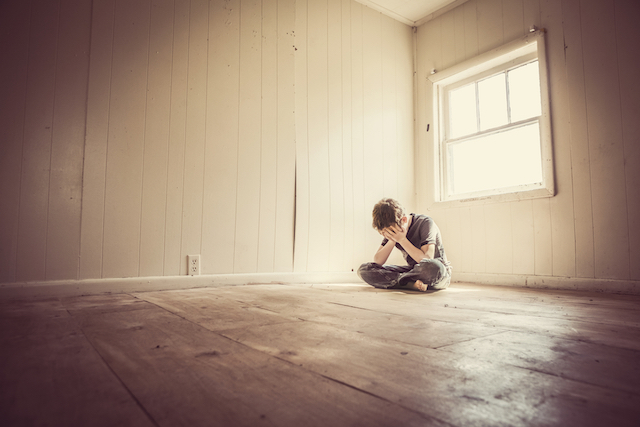
    Sad Boy

    “We cannot tell what may happen to us in the strange medley of life. But we can decide what happens in us—how we can take it, what we do with it—and that is what really counts in the end.” ~Joseph Fort Newton

    Life is messy. Sometimes it’s so beautiful that I feel blinded by the glory I have the privilege of bearing witness to. Other times, I have felt such deep despair that I thought my tears would never end.

    Unfortunately, my husband and I endured the deepest despair we could possibly imagine immediately following what should have been our happiest memory—the birth of our son.

    After he was born he could not take his first breath and we almost lost him. Our beautiful little boy that I had nurtured in my belly, prepared for, sang to, and dreamed about for nine months was struggling to hang on to life before our very eyes.

    He was resuscitated and could not breathe on his own for a number of hours while we waited with baited breath and mostly in silence, praying that he would be okay. Thanks to the brilliant nurses and our amazing hospital, our little miracle took his first breath on his own.

    When the immediate shock was over and he was stable, emotional pain crept in as if it was waiting for the right moment to pounce on us.

    In the days following his birth our brains started to process the horror we witnessed that we could not immediately comprehend when it was happening right in front of us, and we felt the deep despair of it all.

    I wish I could say that was the only traumatic experience in my life, but of course there are many more. This just happens to be one that I will share on a public forum. I am far from alone in this. We’ll all inevitably feel emotional pain many times throughout our lives, but we are hard-wired for this emotional turbulence.

    Yes, that’s what I said. We’re hard-wired and made for this, for any unwelcomed pain and anguish that stumbles on our path. For some reason in today’s society there continues to be a taboo against feeling down, even though it’s a normal and inevitable part of the human experience that we are neurologically prepared for.

    In recent years the taboo against feeling down has somewhat improved. Our willingness to accept that things are not always ‘perfect’ has helped many of us face emotional turbulence in a more honest and effective way.

    Over the years I gradually accepted that emotional pain will come and go. I can now see that the more I accept emotional pain as a necessary part of life, the more I can handle it with grace when the waves of sadness wash over my heart.

    Ironically, the more we accept emotional pain as a natural part of our human-ness, the more emotional freedom we come to find when we are faced with despair.

    I am thankful that, at this point in my life, I can acknowledge my pain and sit with it to heal from my tragedies. Many years ago I would feel miserable for feeling miserable. Today, I am likely to think, “I accept myself even though I feel miserable right now and I know I won’t feel miserable forever.”

    Throughout my life and by witnessing others go through despair, I have come to learn three ultimate truths about handling emotional pain that have nothing to do with denying its existence.

    If you find yourself in emotional pain, keep these truths in mind so that you can navigate the waters of anger, sadness, or hopelessness as peacefully as possible.

    1. Memories cannot hurt you.

    After something terrible happens to us, we might respond to memories with fear, anxiety, or deep sadness.

    Months after my son was born, I still had flashes of the hospital staff rushing in to resuscitate him, and my poor husband had intrusive thoughts about our son turning blue. These memories left us feeling hopeless and fearful, as if it were happening again.

    We naturally want to push those thoughts away as quickly as possible or distract ourselves with anything else that takes our mind off of it. However, the more we push away negative memories, the longer we prolong our emotional freedom from it.

    It often helps to acknowledge that this is indeed a negative memory; however, it already happened and cannot hurt you any more in the present. Sometimes you actually need to talk your way through it and give yourself reassurance that you are okay right now in this moment.

    2. Every emotion is temporary.

    Any emotion known to man is a fleeting, impermanent state (even the happy ones). Think of them like waves. Sometimes you can see it coming, other times it catches you by surprise. Some waves are bigger than others; however, by their nature they come and go.

    It is hard to imagine how my husband and I were able to sit in the same room and get through the hospital staff resuscitating our baby boy, but we did. The emotions that we felt in that moment did not stay with us. They were a temporary state of being. We will never be fully ‘healed’ from this experience, but the emotional state changes with time.

    When you are experiencing despair acknowledge that this, too, is temporary (even if it doesn’t feel like it at the moment) and will inevitably pass or change into a different emotional state.

    3. It’s okay to give yourself a ‘time out’ from your feelings and negative thoughts.

    Even though our emotions are transient states, sometimes we need to temporarily avoid negative thoughts and feelings to get through something specific (like a meeting at work, grocery shopping, or other necessary parts of life).

    After my son was born there was no time to feel sorry for what he went through or for myself to have almost lost him. He had to be fed, changed, held, and loved. When negative thoughts interfered I needed to find ways to stop ruminations quickly (even if only for a few minutes).

    There are many ways to temporarily stop negative thinking. Here are a few things I used to help myself cope when negative thoughts and memories crept in:

    • Deep Breathing: Counting the breath is very therapeutic. I would breathe and count on the exhale up to ten, and then start over at one again. I recommend doing this two to three times until you have successfully stopped rumination. If negative thoughts interrupt you, notice that it happened, let it go, and continue the practice.
    • Soothing Sensations: Comforting sensations such as a hot bath, a warm cup of tea, or a pleasant smell can bring a sense of peace. Focus on this completely to self-soothe and stop negative thoughts.
    • Laughter: I often distracted myself from negative thoughts and memories with humor. Watch a funny clip on the Internet or call a friend that always makes you laugh. In a time crunch, you can simply think of something that always helps you laugh or smile.

    We are stronger than we give ourselves credit for. It’s amazing that we have the power to handle emotional distress by simply acknowledging its presence and giving ourselves permission to feel our feelings.

    At the end of the day, these unwelcomed moments give us rich emotional experience because we couldn’t appreciate the gift of happiness if it were not for moments of despair to compare it to. This is not to say that we should welcome more anguish, but to instead remember the cliché, “no rain, no rainbows.”

    Sad boy image via Shutterstock

  • We Can Get Through It, Even If We Think We Can’t

    We Can Get Through It, Even If We Think We Can’t

    Man in the Mountains

    “I am not what happened to me. I am what I choose to become.” ~Carl Gustav

    It used to be my favorite guided meditation. You know the one about the mountain, where you imagine yourself as the mountain? Strong, tall, standing firm in the face of all that comes at it—rain, hail, shine. Letting it all wash off without getting rattled by it.

    One of the reasons I used to love that particular guided meditation was because I could relate to it. I could relate to it because I love mountains. I love trekking and I love mountains. Big mountains. Immovable. Stable. Reliable. Regardless of what was thrown at them.

    Then the mountains moved. I found myself in Nepal at over 4000m above sea level, scrambling to stop my body from sliding down the side of the mighty Himalayas as a 7.8 magnitude earthquake cracked open these mighty mountains and shook them from 18km beneath the ground.

    I can’t even bring myself to listen to that meditation any more.

    I heard it before I felt it. It sounded like a deep guttural scream, the earth itself crying out in pain. No other sounds, no animals, no people, just this sound unlike any sound I’d ever heard before.

    Stillness and quiet followed—for what was probably only seconds—before my life was fundamentally redefined.

    Before boulders the size of cars came hurtling down the mountain, before the narrow path on the steep ridge I was trekking started to literally disappear beneath my feet, before I could hear someone screaming for me to run.

    I remember every detail. Every little detail. I wish I didn’t.

    Sleep was a luxury not afforded to me as aftershocks continued through that first night, forcing the group of us sheltering in what was left of a Tea House out into the snow and below freezing temperatures time and time again.

    Surviving the actual earthquake was only the beginning and it was a challenging and emotional journey as I made my way, through devastated villages, down the mountain. The aftershocks continued for several days, with one in particular carrying almost as much force as the actual earthquake.

    Patchy reports of what had occurred in Kathmandu, Everest Base Camp (where I had been two days before) and other villages were coming through. I was devastated and bewildered.

    As the days went by I continued to make my way down the mountains. The Australian Embassy was advising that until I got myself back to Kathmandu they couldn’t help me. The Australian Defence Force was being deployed to assist. The reports of casualties and devastation became clearer.

    In all, over 9,000 people lost their lives. I personally knew one of those people, but every day I pray for all of them.

    The trauma, destruction, and death I was experiencing and witnessing every day for five days altered my sense of being entirely.

    Visions that would normally bring me to my knees were becoming commonplace.

    Stepping over the bodies of beautiful souls, crudely wrapped in blue tarpaulins far too small for the job, became just something I had to do to get to safety.

    Watching as a fellow trekker’s body burned in a traditional Buddhist cremation, out in the open on the side of a hill. Watching as his friends gathered his ashes in a bucket to take home to his loving family. Watching, but not really seeing… it was like I was outside of my body, looking on.

    Days went by before I found myself standing outside the Australian Embassy in Kathmandu. You would think I could start to feel safe, but Kathmandu was badly damaged, and mourning the massive loss of lives. There continued to be aftershocks. It was not safe.

    Still, the welcome sound of the Aussie accent and the welcome sight of fresh water, food rations, and tents in the Embassy grounds were extremely comforting. More comforting was the next night, taking my seat on a plane to Malaysia, before a plane to Sydney. However the comfort, the relief, was mixed with bewilderment and much sadness. There was a part of me that didn’t want to leave.

    Coming home was bittersweet. I was, of course, extremely joyful to be hugging my family and friends, but the event had taken its toll and I wasn’t remotely who I was when I had left Australia only a month before.

    Shock and trauma had settled in me now that I was out of immediate danger, my body shut down, and my mind shut down. I was a mess.

    A few months on, and I’ve been able to look back at this time. I learned some things through this experience, mostly about myself, and I’d like to share these:

    Without any warning, things can change. You can change.

    I used to see natural disasters in foreign countries on the news and watch as travelers were urged to get to their Embassy and governments rallied to evacuate their citizens. I never thought it would happen to me though, because these things happen to other people. Right? Wrong.

    Things can change regardless of how well you plan. Things changed, and well, I changed—in that split second where I fought for my own life, and the times in the days to follow where I felt it was likely my end, I changed.

    This experience will forever be a part of who I am, and has irreversibly redefined me and my values. I have learned that as much as we like to think we have it all under control, we don’t, and we need to be prepared to change.

    Embrace surrender and acceptance.

    I now have a better understanding of what it means to accept and surrender. It doesn’t mean that I won’t have goals and I won’t plan, but I now understand what I can control and what I can’t control. Consequently, I know now that there really is very little in this life I can control. I’m not perfect at this, but I am getting better, day by day.

    When life does what it does, we can embrace each situation and accept it as it is, or we can demand that life be some other way. In the words of Eckhart Tolle in The Power of Now, “Whenever you are not honoring the present moment by allowing it to be, you are creating drama.” When we have no control of the situation, demanding it be some other way is a drama.

    Your best, at each moment, has to be good enough.

    The trauma and constant stress of living one minute to the next for five days, along with the situations I found myself in, and witnessed, not knowing if I would live that day or die, took its toll on me.

    Everything came back to basics—safety from landslides and aftershocks, a supply of clean water and some shelter and warmth were the key priorities. My ability to think straight, my ability to comprehend what was happening, my capacity to fathom the extent of the destruction and death—all of these were compromised and this affected my thoughts and my behaviors.

    We all just have to do our best, in every moment, because it’s all we have and that has to be good enough. Let’s be gentle on ourselves.

    That which you think you can’t possibly get through, you can.

    If you had asked me if I could get through the experience I went through, before I went through it, I likely would have said no.

    I have learned that we are capable of so much more than we give ourselves credit for. Not only capable of surviving traumatic experiences, but showing compassion, love, and nurturing along the way; taking the gifts, however disguised they may seem at the time; and allowing change and growth to occur within ourselves. Walking right up to it, leaning in to it.

    We can get through it, even when we think we can’t.

    It’s okay to not be okay.

    I hope to listen to the mountain meditation again one day, just as I hope to trek mountains again one day. The mighty Himalayas are still there. In parts, they look a little different and some are even a bit broken. But they remain, standing strong, in the face of the devastation they have had to witness.

    I aspire again to be like that mountain. I’m a bit broken too, but I stand up again and face this life with a gratefulness that I wouldn’t have, had it not been for this experience. At the sound of a helicopter you will find me under the nearest table, and sudden loud noises bring me to my knees.

    I struggle to hold a conversation about my experience without tears streaming down my face. I’ve learned that even though we might not be okay right now, and we might be a bit broken in places, we can keep getting back up, every day. Every single day.

    I recognize the pull in my heart to return to Nepal; I accept that yearning and commit to returning when the time is right. I breathe in my life every second and I endeavor to practice acceptance in a much more authentic way than ever before.

    I have changed—I’m not who I once was. That thing I thought I would never be able to get through, I did, and it has redefined my entire being.

    I tentatively welcome the gifts from this experience each day, while never forgetting to honor my fellow adventurers who didn’t make it home and the beautiful people of Nepal, who lost their lives that day when the mountains moved.

    A beautiful and wise friend who shared this journey with me has always told me that there are gifts in everything if only we look closely enough.

    Whatever it is you’re going through, have faith that you will get to the other side, and when you do, remember to look closely enough to recognize the gifts from your experience, and welcome the personal growth and change in yourself.

    Man in the mountains image via Shutterstock

  • Take Your Power Back: How to Release Fear and Trauma

    Take Your Power Back: How to Release Fear and Trauma

    TRIGGER WARNING: This post deals with an account of physical and emotional abuse and may be triggering to some people.

    “I say I am stronger than fear.” ~Malala Yousafzai

    “Don’t be scared.” It’s so easy to say, yet sometimes, for many of us, so hard to accomplish.

    When I was about three or four years old, my dad locked me in the chicken coop in our back yard. This was a punishment. I was naked and screaming, literally jumping up and down with terror.

    Another punishment consisted of my mother rubbing human waste in my face.

    There are other things they did, other things I went through, but I’ll let those two examples stand as confirmation of the physical and emotional abuse I suffered as small child.

    Then when I was nineteen, some friends and I were physically assaulted by another group of young men. No reason, no motive. We were ganged up on one at a time and not a single one of us managed any sort of self-defense.

    The police told us “not to bother” pressing charges, so we didn’t. Those guys went home free and clear, but a few months later, I unexpectedly found myself almost convulsing on my bedroom floor, unable to breathe or move, absolutely terrified that the next time I left my house, I would die.

    It was quite the one-two combination for a kid (and as a dad now, I very much consider nineteen as still being a kid). The events of my childhood coupled with the events of that night left me a changed person for the rest of my life.

    Maybe you know what that feels like. Maybe something has happened to you that has impacted your day-to-day existence. Before we go any further, let me just say: I’m sorry. And I understand.

    Between the assault and the things done to me at home (and at school), I eventually was diagnosed with post-traumatic stress disorder (PTSD) and panic disorder.

    My entire life, I had uncontrollable fits of blind rage that led to the destruction of many things around the house—doors, toys, trees, furniture, concrete blocks . . . anything that was handy and would make a good CRASH! when I broke it.

    I would utterly lose control, punching myself and anything nearby. I would scream until I couldn’t speak, then spend three days isolated in my room hating the world and debating the merits of staying alive.

    Eventually I’d “snap out of it” and resume my normal life, but within a few weeks, the whole cycle would start all over again, trigged by something as innocuous as the garage door not opening all the way on the first press of a button.

    I couldn’t handle sudden loud noises; they’d scare me half to death and put in me in a bad mood the rest of the day. If I had a near collision while driving, my entire day would be ruined as the adrenalin pumped through me on a non-stop loop.

    The flip side of my outrageous anger was my paralyzing fear that arose after I was assaulted. I could not leave the house after sunset, and could only go to certain “safe” places during the day.

    I couldn’t walk to the end of my street in the middle of the day without shaking. I once ditched my own birthday party because it was at another person’s house and I couldn’t make myself get in the car to go there.

    I could go on. But if you have ever had an anxiety or panic attack, you know the feeling. And the frequency. Even as I write this, quite safe and secure, my heart is racing and my stomach clenching.

    I didn’t get a professional diagnosis until I was almost forty, and the reason I did not get that diagnosis is because I didn’t tell anyone what really happened. Then when the diagnosis came, I fought it. I argued it and resisted it.

    I didn’t feel I had earned PTSD. That was a disorder for war veterans and first-responders. I’m an author—my most dangerous work is done on a laptop at a coffee shop. And as for panic attacks, that just meant I was a wimp. (I used a different word, though.)

    Here’s what I want you to know, because I want you to have the best life you can. These are the things I wish I had known ten or twenty years ago.

    First, I had to name the trauma.

    I had been to a raft of professional therapists, counselors, pastors, and friends, and even a psychiatric hospital stay, trying to find a way out of my angry and fearful lifestyle. While many were helpful, none really helped me recover because I didn’t tell them the whole story.

    I kept the darkest parts of my past to myself, worried about how I would be perceived. But the more frequently I share my story now, the more validated I feel. It becomes more and more apparent that I’m not some kind of freak or aberration.

    These things really happened, and they really were that bad. Which brings me to the next thing you need to know:

    I had to accept that I did “earn” my diagnoses.

    We mustn’t fall into the trap of comparison. We mustn’t say to ourselves, “Oh, well, Frank was in direct-action combat/had alcoholic parents/got locked in a basement, he had it worse than me.”

    No. Frank’s life is Frank’s life. Your life is yours. PTSD and anxiety are not a human being’s natural state of being. Something bad happened to you, and that is not okay. It left a lasting, damaging impression.

    The only way to begin moving forward, to reclaim our lives, is to let the truth of our story exist in its own authentic way without comparing ourselves to others.

    Third, there is a difference between being scared and being afraid.

    Being scared is a natural and healthy response to danger. It’s healthy because it can keep you alive when your instincts tell you something is wrong. That’s the whole point of being scared.

    Scared is an adrenalin dump, preparing your body to fight, flee, or freeze. If you are scared, there’s probably a very good and sane reason for it.

    “Afraid” is something different. Afraid is how you do life. It’s how you process the world around you: family, friends, career, hobbies, pets . . . everything.

    The night I was attacked, I was scared. And that was perfectly natural. Every night thereafter, I was afraid.

    If you’re afraid, your mind automatically screens every single decision you make through the filter of fear. What happens if I take this job? Go on this date? Travel to this place? Panic sets in, often resulting in complete and total inaction. Afraid is a thief. It steals everything from us.

    Finally, and perhaps most difficult: You will have no forward motion in your life without forgiveness.

    Author and speaker Rob Bell says that to have really forgiven, we must truly wish the best for those who have hurt us. It’s not enough to say the words, even if it’s face-to-face (and face-to-face might make things worse; the person you’re forgiving may have no honest grasp that what they did was wrong).

    What matters is that we truly release them and want the best for their lives. That is how we can know we have forgiven them. When we can do that, their power over us and the power of fear begin to wane.

    It’s been many years since I had a real panic attack. I do still have the symptoms of PTSD from time to time; it’s not like chicken pox that will run its course and leave me with the antibodies to prevent it from roaring back.

    But I am much less angry than I used to be. I don’t break things anymore. I don’t lose minutes, hours, and days nursing my grudges, time that I could have spent with my wife, my son, my friends, or my job. I still jump at sudden, surprise loud noises. It still takes me a while to recover from a near-miss in traffic.

    But the people who hurt me no longer have power over me because I have forgiven them. I want the best for them. It took (and can take) a long time. But it’s essential to becoming whole, to no longer being afraid.

    Remember that forgiveness is not condoning or making excuses for the wrong. You may need to remove yourself from people who have a habit of hurting you. And that is all right. You do not deserve to be hurt. No one does.

    Don’t be afraid.

  • Limited Edition Tiny Buddha “Just Breathe” Shirt (Supporting the David Lynch Foundation)

    Limited Edition Tiny Buddha “Just Breathe” Shirt (Supporting the David Lynch Foundation)

    *Update: This campaign has ended. Subscribe to Tiny Buddha for daily or weekly emails, and to learn about future shirt campaigns!”

    Hi friends! For those of you who don’t know me, I’m Lori, the founder of Tiny Buddha.

    For the past two weeks, I’ve been offering a limited edition “Just Breathe” shirt, and I’ve been excited to see the response from the community! The campaign ends this Sunday, so if you’d like to grab a shirt, this is your last opportunity to do so.

    Lori Deschene Just Breathe Shirt

    A portion of the proceeds will go to the David Lynch Foundation, a nonprofit that helps prevent and eradicate trauma and toxic stress through Transcendental Meditation.

    This cause is quite dear to my heart because of the work they do to help at-risk populations, including children in low-income urban schools, veterans with PTSD, victims of domestic violence, homeless and low-income men and women, inmates in some of America’s toughest prisons, and individuals recently diagnosed with HIV.

    Meditation changes these people’s lives and helps them heal, find peace, and develop the resiliency needed to thrive in spite of their challenging circumstances. And of course, when individuals thrive, that ripples into their communities, helping us all live happier, more peaceful lives.

    You can choose from six styles—including a fitted tee, racerback tank, and a hoodie—with sizes ranging from XS to 5XL (for some styles).


    Don’t see the button? Visit https://represent.com/tinybuddha to place your order. Have an idea or request for a future shirt? Leave a comment and let me know!

  • How Meditation Can Help Us Heal from Trauma, Pain, and Loss

    How Meditation Can Help Us Heal from Trauma, Pain, and Loss

    Man Meditating

    “In the midst of conscious suffering, there is already the transmutation. The fire of suffering becomes the light of consciousness.” ~Eckhart Tolle

    I still remember the first day I met her.

    I was running a bodywork clinic from home at the time, and she came to me one day for a treatment. Let’s call her Miranda.

    Miranda had something about her that I noticed immediately, a palpable sense of peace and clarity that shone through her eyes and radiated out from her very core.

    She seemed to be the most spiritually grounded person I had ever come across. I conveyed these impressions to her and asked if she had some sort of spiritual practice.

    Indeed she did; in fact, she was what I would call a hardcore meditator.

    For more than twenty years she had seated herself on her meditation cushion for three hours every morning from 4:00 to 7:00. I was incredibly impressed with her commitment to her practice, seeing as I had dabbled on and off in meditation for some years, but found it hard to commit to a regular habit.

    After chatting about her practice for a while, I asked her to share the biggest benefit that regular meditation brought into her life. I saw a hint of sadness appear in her eyes as she proceeded to tell me her tragic story.

    A few years earlier, her daughter, who was about eleven at the time, was diagnosed with a type of leukemia.

    The prognosis was not good, and as a last resort, her doctors wanted to try an aggressive treatment that on the one hand could save her life, or on the other, could potentially result in severe side effects, perhaps even death.

    It was up to Miranda and her husband to make the agonizing decision to go ahead with the treatment or not. Her daughter had been raised within a very healthy lifestyle, with mostly organic food and little exposure to chemicals, so Miranda felt worried about exposing her daughter to this intense therapy.

    Eventually, Miranda and her husband came to the difficult conclusion that without the treatment she may die anyway, and so decided to go ahead with it. Sadly, her daughter did pass away after the treatment.

    Miranda and her husband were overcome with unspeakable grief, but also a sense of guilt at having chosen a treatment that ultimately proved too much for her daughter’s body to bear.

    Of course, it was no one’s fault that she passed, just a sad consequence, but nevertheless they were both riddled with guilt.

    For some people, this kind of deep emotional trauma has the potential to destroy their lives forever.

    Some people break in this kind of crisis never to feel whole again. And while Miranda spent most of her days after her daughter’s death consumed with pain and loss, she had the fortitude to continue with her daily meditation practice.

    In those hours of stillness, she let herself surrender.

    She surrendered to her pain, she embraced her grief and guilt fully, riding the waves of her deep emotions until her consciousness was able to drop even deeper, to that still, silent place within that is ever-present, but often obscured by the constant river of thoughts and feelings.

    Those three hours of peace were Miranda’s lifeline and path to healing. They kept her sane, and they kept her strong for the rest of the family.

    Of course, Miranda will always experience a sense of loss and sadness after losing her precious daughter, so please don’t think I am implying that meditation takes away the emotional pain in our lives or helps us to escape our feelings or problems. It doesn’t. But it does help us to get in contact with that part of ourselves that is beyond them.

    Our lives are a series of changing experiences and external conditions that we deem “good” or “bad.” In order to avoid being at the mercy of this seeming chaos, it is essential that we understand the transient nature of our existence. As the Buddha famously said, “All of life is suffering.”

    In other words, all things we hold dear will eventually disappear.

    We look for happiness in our loved ones, our jobs, our possessions, our health and well-being, and our material wealth, but the great truth is that each of these things can and will be taken away from us eventually. Nothing is permanent in our world of form.

    For this reason many of the great spiritual seekers that walked the Earth searched for what is real, or permanent, in our existence.

    They discovered that beyond form, there is an awareness that we all possess that is spacious, calm, and still, and central to our true nature.

    When we learn to access and live from this place within us, we are not so easily thrown around by the changing external conditions of our lives. We are able to meet life’s challenges with a sense of grace rather than resistance.

    Miranda’s story and her palpable sense of peace left a lasting impression on me. I too wanted to search for the eternal, ever-present stillness that lies beneath the petty thoughts, feelings, and dramas of my conscious mind.

    Thanks to her inspiring dedication, I made meditation a regular part of my life also. While I know that loss and emotional pain is as much a part of my human life as joy and happiness is, I have within me now an anchor at the center of my being that keeps me steady throughout life’s rough waters.

    Man meditating image via Shutterstock

  • Healing from Abuse and Feeling Happy and Whole Again

    Healing from Abuse and Feeling Happy and Whole Again

    Woman Standing in the Sun

    TRIGGER WARNING: This post deals with an account of sexual abuse and may be triggering to some people.

    “Scars tell us where we’ve been. They don’t have to dictate where we’re going.” ~David Rossi, Criminal Minds

    When I was in my mid-fifties, I ordered cable television for the first time in my life.

    My husband and I had raised our two sons mostly without TV, but now they were grown and on their own. My husband and I were divorced, and I had moved to a secluded place on the high desert to pursue a writing career.

    My Internet service offered a cable option, so I figured what the hell.

    Reviving the Past Through Television

    One evening, while clicking through the dizzying number of channels, I landed on the series Criminal Minds. Before I knew it, I was hooked.

    For several months, I became consumed with this fictional team of FBI profilers as they tracked down murderers and rapists, probing the very darkest corners of the human mind.

    Sometimes I broke down sobbing. Other times I felt consumed with rage. Usually, these episodes included a young boy or girl who had been raped, molested, or brutalized at the hands of someone, often someone they knew and trusted.

    These weren’t exactly buried memories coming to the surface. My paternal grandfather raped and molested me from an age so young I can’t remember not being abused.

    I was one of the lucky ones though. My grandfather dropped dead of a heart attack when I was seven years old.

    What I didn’t realize even after years of therapy and journaling is how profoundly that early experience affected my life.

    I had taken writing workshops for women survivors of sexual abuse and had been in and out of therapy. For the most part, though, I pushed it to the back of my mind and didn’t talk about it, determined to not let my past define who I became.

    At times I even became scornful of adult survivors of childhood abuse. When do you just become an adult and not a victim? I would respond. When do you move on?

    Like I had.

    And, yet, I kept people at a distance. I had severe night terrors. Some years they were more frequent than others.

    My husband and I had loud, angry arguments. Once I hurled a jar of salsa at his pickup truck. I was barely able to suppress a rage that seemed to simmer just below the surface.

    But I was also practically incapable of standing up for myself and frequently felt overwhelmed and stressed out by life. This wasn’t the way I wanted to live. I was on a quest to find happiness and joy, but at the time it seemed like some highly unattainable goal.

    Taking Steps Through Conscious Choices

    However, I did consciously work on my issues. Then, when I was forty-five, I moved to China to teach English, and in a small Taoist temple next to the Nandu River on Hainan Island I began to meditate.

    Slowly, my inner self began to change. And in response, so did my outer world.

    My husband and I parted ways, and I built a successful freelance writing career. I met a widower and decided to give love another chance. One day I realized I was truly enjoying the journey and was no longer grasping at some elusive sense of happiness. I was happy.

    Then I ordered cable.

    Healing Through Memory

    Every day as I watched rerun after rerun of Criminal Minds, clear, vivid images began to surface. Strange as it sounds, I believe meditation prepared me to take a lesson from that TV show.

    I could no longer diminish what had happened. Sometimes the fragments were so clear I could see the shoes and socks I was wearing as I followed my grandfather, like a sheep to the slaughter, out to the shed behind the farmhouse in Ohio.

    I saw my grandmother watching from the kitchen window and realized she knew exactly what was going on, yet did nothing to protect me.

    And I remembered inside the shed. The horseshoe—for good luck—nailed over the door. The windows looked so high, but I loved the way the light poured in through the glass and how the dust motes floated in the air. I felt like I was one of them, light and free, high above my body, circling in the clear, clean sunlight.

    At times it felt like scenes that had happened fifty years ago had taken place yesterday.

    But I also felt a sense of peace in owning it. I had always remembered my abuse like I was watching a movie. Distant and far away.

    Now I felt it in my body. My cells remembered the fear and revulsion.

    Criminal Minds also helped me put words besides “grandpa” and “maybe not that bad” to what had happened. Now I could finally name it for what it really was.

    Grandpa became rapist. Pedophile. He became a man who should have been locked up for what he did to me and no doubt to many other girls during his lifetime. I may have been his last victim, but I’m sure I wasn’t his first.

    And Criminal Minds finally brought home to me what my own parents had never been able to give me: as a girl child, I should have been worth protecting.

    If I had been a boy I should have been worth protecting as well because both boys and girls can be victims of molest, and both men and women can be perpetrators.

    Gender, class, race, religion, or economics mean nothing when it comes to the levels of cruelty humans are able to inflict on one another.

    Fortunately, the same can also be said for kindness.

    The Path to Wholeness

    You too were worth protecting, and you too have the power to heal. It’s a lifetime journey, but it’s worth it.

    These are some of the things that have helped me over the years. May they help you too.

    Learn to trust appropriately.

    If you’ve been abused or molested, and particularly if it happened at a young age, trust will not come naturally to you. Chances are you have poor boundaries and may open up to the wrong people while pushing away those who can help.

    There’s no pat answer on how to develop trust, but do look for help among those who have experience with abuse.

    My healing began on the floor of a living room in Santa Cruz, California with ten other women pouring our experiences into journals and then reading them aloud to each other.

    Most important of all, trust yourself, your intuition, and your memories.

    Take care of your body.

    For most victims of assault, our bodies have become our enemies. Desires that should be normal and beautiful have been twisted into something sick and ugly, and often we blame ourselves.

    Many victims of rape and molestation develop eating disorders. Maybe you use weight as a barrier against the world, or maybe you’re anorexic as a way to feel some control over your life.

    If you practice good nutrition and exercise even if you don’t really believe you deserve it, you’ll become stronger and eventually your mind will catch up and accept that you are very much worth taking care of.

    Honor your many “I’s.”

    Disassociation is a common defense mechanism for children who are being abused. We go somewhere else.

    I became a dust fairy dancing in the sunlight. Maybe you retreated into fantasy or simply blanked out.

    If your memories of the event are sketchy, this may be why. The downside of disassociation is we feel fragmented, but the truth is, it may have saved your life. With help you can bring those disassociated selves together into one stunningly creative individual.

    Be proud of the courage and imagination it took you to survive.

    The journey toward wholeness is an exciting and gratifying path to follow. Finding a calm center to move out from will keep you safe as you travel through your past traumas.

    Woman standing in the sun image via Shutterstock

  • Finding Beauty After Tragedy: Bad Things Can Lead to Good

    Finding Beauty After Tragedy: Bad Things Can Lead to Good

    “Behind every exquisite thing that existed, there was something tragic.” ~Oscar Wilde

    Have you ever had one of those moments when something devastating happens in your world and it feels like the rug has been ripped out from under you? I know I certainly did last year.

    I thought my life was moving along wonderfully. I had a well-paying job and was slowly growing my dream business on the side. I was happily married and the mother of an adorably cheeky toddler.

    I was only weeks away from moving into our new family home, which had taken us years of drama and a scary amount of money to build. Despite living so far away from my family, my life felt full of friendship, love, and joy.

    Life was progressing along nicely, and my husband and I were confident that we were on track for reaching the dreams we had envisioned for ourselves and our family. We weren’t living the dream yet, but we thought we could see its promise on the far horizon.
    Then we got the devastating news. My father, the man who had been a hero in both of our lives, was suddenly diagnosed with an incurable brain tumor.

    He was one day a healthy and fit fifty-seven year old man. Then the next day, he was suddenly having seizures and losing his sight, only to then be told that he had an aggressive cancer with an average prognosis of one year of life with treatment.

    This news understandably shook our world, and the ripples were felt long and far by many. We were obviously devastated.

    We couldn’t imagine what our lives would look like without him in our corner. And to be honest, I still haven’t allowed myself to fully lean into this, to feel it, or to process it completely. I know this moment will come eventually and it will be messy.

    One thing that we have noticed since the moment the rug was ripped out from under us is that so much beauty and wonder can appear during tragic times.

    It doesn’t detract from the awfulness. At the end of the day, it is still awful. It still hurts. And it’s still tragic. However, it has also brought about so much goodness.

    It caused my husband and me to stop and reflect on our lives. Were we really living the dream? Or were we playing it safe and residing within our comfort zone? Were our decisions and actions really aligned with our values and how we wanted to feel? What was most important to us?

    Before we knew it, we changed our lives dramatically. I quit the well-paying job to pursue my dream business full time. We sold the brand new so-called dream home. We moved interstate to be by the beach and near our family again. My dad’s terminal illness gave us permission to turn our five-year plan into a now plan.

    With my dad’s encouragement, I also started writing about my experiences. People connected to what I shared. It helped people. I could hold a light for others in our darkness.

    Family, friends, and strangers came out of the woodwork from every direction to offer support and love—going above and beyond what I could have ever expected from them.

    I learned so many lessons about myself and others, all this in a short three months. I can only imagine what is still to come.

    Throughout this time, I have also heard of others who have experienced tragedy and, despite this, can see so much beauty in the lessons and life events that followed.

    A friend of mine still suffering from the hurt of losing her brother years ago could recall the good things that came out of this tragedy, including the incredible people that stepped up in support of her and her family.
    Another friend who traveled to Cambodia recently told me about the absolute atrocities the people had experienced but how wonderful and giving they were.

    A client of mine spoke of a job she had thoroughly disliked but how much she had gained from it and how it ultimately contributed to her now being able to successfully follow her dream career.

    We can often hear stories on the news that demonstrate beauty in tragedy also.

    Just recently, when two hostages lost their life in a Sydney cafe, people rallied together to support and protect the Muslim community from revenge attacks with the #illridewithyou hashtag.

    Denise and Bruce Morcombe, the parents of Daniel Morcombe, who was abducted and murdered in 2003, have since dedicated their lives to increasing awareness and teaching children how to be safe. There have already been children who have used these skills to protect themselves in dangerous situations.

    After learning that she had cancer, Jane McGrath and her husband Glenn founded the McGrath Foundation to raise money to increase awareness of breast cancer and fund more breast care nurses in rural and regional Australia. This foundation has achieved so much since its establishment in 2002.

    Now of course these events are still tragic. They still hurt like all hell. And there is still seemingly no reason or purpose behind them. It still seems unfair and unjust how bad things happen to good people.

    But I personally take some comfort in the fact that so much goodness can stem from traumatic events like these.

    What lessons did your tough moments teach you about life, yourself, or others? Did any good things come from them? Can you take any comfort in the fact that they gifted you or others with something that may not have eventuated otherwise?

  • When Your Struggle Has Become Your Identity: How to Rediscover Yourself

    When Your Struggle Has Become Your Identity: How to Rediscover Yourself

    Lonely Girl

    “It ain’t what they call you. It’s what you answer to.” ~W.C. Fields

    For much of my life, I have struggled against the after effects of unresolved childhood trauma.

    For years, I didn’t even know how much of an issue it was. I thought it was completely normal to expect the worst or avoid intimacy like the plague.

    When I finally dragged myself into a therapist’s office and was diagnosed with “significant, complex trauma,” I initially felt free.

    And I admit, it was freeing. I now knew that this “thing” that I had been dealing with my entire life wasn’t just the result of me being “broken” or “born that way,” but it was a significant, understandable, and more importantly treatable response to a less than ideal childhood.

    I was flying high for a while as I attempted to recover with every type of self-help trick out there.

    But then came the fog. Somewhere in the mix I began to break down as I realized the true impact of what my therapist had told me. My entire identity up until that point in my life had been formed around that trauma. I didn’t know who I was without it.

    What did I like to do in my free time? What did I like eating? What was my favorite color, even? Was I funny, or was I more serious? As it turned out I had a lot to learn about myself, and I was going to have to start from scratch.

    I wish I could speak to you from atop a mountain of wisdom, but I can’t. I’m still in the process of figuring it all out. But there are a few things that have helped me remain strong and encouraged through the entire process.

    Release the struggle.

    This is, of course, easier said than done, but it is one of the most important parts of making peace with your past and untangling the trauma.

    The identity and narrative that was forced upon me was one of defeat and self-hate. I stuck to the narrative because that’s all I knew. I might as well have been introducing myself as “the girl whose parents don’t love her,” and “the girl who has failed to secure any meaningful, intimate relationships.”

    Realize, as I did, that the narrative is not yours. It is not your name. It is not what you have to answer to. There’s more to you. So much more. How are you going to start introducing yourself?

    Start from a place you know.

    For many of us—myself included—the onset of trauma was at a very early age, and it can be scary to try and delve into that. But “starting from a place you know” doesn’t necessarily mean the beginning of your life. It simply means picking a place to make your beginning.

    It could be the first time you remember laughing out loud or any positive memory that you have. What were you doing then? How did you feel? Who were you with? What could that experience be saying about you? This can be a great first step on your journey to discovery.

    Start from a place you don’t know.

    Seems like contradictory advice after the last point, right? But in a way, not knowing who you are can give rise to the most unexpected blessings.

    Many people have either defined themselves—or been defined by others—from day one. Some people live their entire lives this way, without ever feeling the desire or a reason to change. But you? You’re a blank canvas now, in a world full of paint. This is your chance to start creating a version of you that feels right.

    Remember what you have gained.

    As we begin this process of self-discovery, it can be very easy to get hung up on how wrong everything is, or was. Despite making significant gains (and if you’re reading this post, you probably already have!), you might find yourself focusing on what is still wrong.

    Take some time out of your day to remember how far you’ve come. Are you less anxious today than you were yesterday? Score! Did you discover a new interest but haven’t worked up the courage to try it yet? That’s still progress. The scoreboard is on your side, because we are counting wins, not losses in this game.

    Have patience.

    Patience, I admit, is pretty much a foreign language to me. I can’t pretend to be great at having it, but I will say, as hard as it is to have, it is absolutely necessary in this process.

    Discovering your new identity will take time. I’m talking months, even years. It can (and will!) seem like a wild goose chase at times, but the key is to remain patient and trust in the good work you are doing. Your efforts will be recognized.

    Take a break.

    As much as I have made my mental health a priority over the past year, it can be exhausting to feel like you have a huge problem you must fix looming over your shoulders at all times. This can lead to obsessive thoughts and dissatisfaction with your progress.

    It is important to stay focused on healing, but it is also important to get out of your own head sometimes. Throw yourself into work for a while. Get involved in an intense project to take your mind off yourself. These things help too, and keeping yourself productive is never a bad thing.

    Above all, the most important thing to keep in mind—and the thing that I keep learning every day—is that our greatest revelations don’t exactly show up in a nice, well-wrapped gift box. That would be great, right? But fortunately for us, they reveal themselves slowly, carefully, and right on time.

    As long as we stay the course, we’ll be able to see the new truths and lessons waiting for us further down the road.

    I wish you luck in your journey! Keep the faith.

  • Recovering from a Difficult Childhood: How to Reclaim Yourself

    Recovering from a Difficult Childhood: How to Reclaim Yourself

    “Our greatness lies not so much in being able to remake the world as being able to remake ourselves.” ~Mahatma Gandhi

    Recently, I had one of those flashes of insight that burn away the illusions I learned as a child in a dysfunctional family and help me see myself in a new light. I saw through an invisible belief that I’ve held for a very long time—the belief that I am not in control of my life.

    Standing in line in the grocery store and twiddling my thumbs, my monkey mind ran through the list of what I could be accomplishing if I didn’t have to wait in line doing nothing. And like a bright gift from above, an idea flew into my mind: If our thoughts create our reality, then I could be creating my next experience of reality right then, while I waited.

    In that moment, I realized that even when I feel like I’m not in control of a situation, by letting go of resistance and choosing to create the next situation with my thoughts, I can be more in command of what happens in my life.

    I grew up with no understanding whatsoever that I could create my life the way I wanted it to be. My father was very rigid in his beliefs and actions, and my mother was very impulsive. Consequently, my world swung back and forth between needing to follow rules and regulations, and suddenly having the rules change mid-stride so that I had no idea what to do next.

    I carried the assurance that life could fall into chaos at any time into adulthood, and though I have consistently moved forward in my life, I have never felt truly in control, because of the way I grew up.  (more…)

  • Dealing with Painful Memories to Find Peace in the Present

    Dealing with Painful Memories to Find Peace in the Present

    Peaceful

    “The practice of forgiveness is our most important contribution to the healing of the world.” ~Marianne Williamson

    I awoke early one morning, the cries and pleas of my dreams slowly dissipating, and though I could no longer hear or see what was happening, it stayed with me as I drifted back to the real world. I knew this story; I had dreamed a memory, and the remains of it stayed with me in my body.

    Like a dark cloud it made me pull my knees into my chest, and it forced salty tears from my closed eyes.  I had dreamed of a day almost two years ago.

    I had dreamed of the day I was raped.

    I was fifteen, and though at first I consented, I revoked that consent, but it happened anyway. That was the dream I had awoken from. The cries were mine; that voice that was begging him to stop was mine. 

    It was like reliving it again, and again and again.

    Memory is a funny thing. Since that day I have gone to many therapy sessions, I have made many changes in my life, I have even come as far as being able to forgive him for what he did, and myself for the choices I’d made to put me in that situation, but the memory remains.

    When that emotion hits me, I feel like I did the day it happened. I revert back to the little girl I once was, and all of the progress I’ve made is somehow washed away with the tears.

    I awake and I don’t feel like I’m living in this body, in this world. I am stuck somehow somewhere else, in the foggy place of memory. And it’s very hard to get out. I feel like it was my fault, like I am not worthy of a good life. 

    I feel broken, and all I want is to be alone.

    I don’t always dream of him. The memories come and go, and I have learned ways to deal with it when the wall of emotion and trauma hits me. I have learned that sometimes it doesn’t get easier with time and that sometimes we have to succumb to the feelings we have in order to release them.  (more…)