Tag: trauma recovery

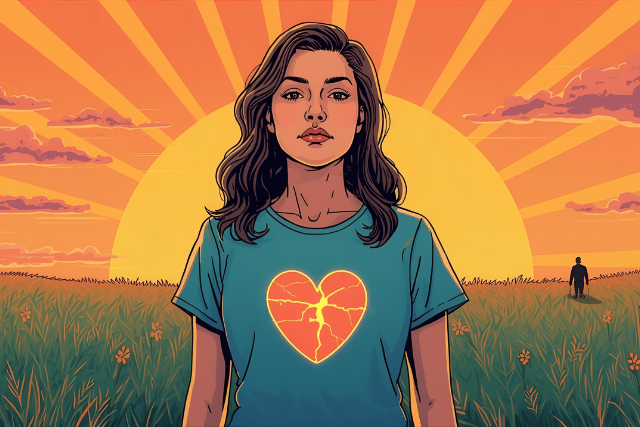
  • Learning to Be Seen After a Childhood Spent Disappearing

    Learning to Be Seen After a Childhood Spent Disappearing

    “The habits you created to survive will no longer serve you when it’s time to thrive.” ~Eboni Davis

    I learned early how to measure the danger in a room. With a narcissistic mother, the air could shift in an instant—her tone slicing through me, reminding me that my feelings had no place.

    With an alcoholic stepfather, the threat was louder, heavier, and more unpredictable. I still remember the slam of bottles on the counter, the crack of his voice turning to fists, the way I would hold my breath in the dark, hoping the storm would pass without landing on me.

    In that house, love wasn’t safe. Love was survival. And survival meant disappearing—making myself small, silent, and invisible so I wouldn’t take up too much space in a world already drowning in chaos.

    In a home like that, there was no space to simply be a child. My mother’s moods came first—her pain, her need for control. With her, I learned to hide the parts of myself that were “too much” because nothing I did was ever enough. With my stepfather, I learned to walk carefully, always scanning for danger, always bracing for the next eruption.

    So I became the quiet one. The peacekeeper. The invisible daughter who tried to keep the house from falling apart, even when it already was. I carried a weight far too heavy for my small shoulders, believing it was my job to make things okay, even though deep down, I knew I couldn’t.

    Those patterns didn’t stay in the walls of my childhood home; they followed me into adulthood. I carried silence like a second skin, disappearing in relationships whenever love began to feel unsafe. I learned to give until I was empty, to lose myself in caring for others, to believe that if I stayed quiet enough, small enough, I might finally be loved.

    But love that required me to vanish was never love at all. It was survival all over again. I found myself repeating the same patterns, choosing partners who mirrored the chaos I had grown up with, shutting down whenever I felt too much. I confused pain for love, silence for safety, and in doing so, I abandoned myself again and again.

    The cost was heavy: years of feeling invisible, unworthy, and unseen. Years of believing my voice didn’t matter, my needs were too much, and my story was something to hide.

    For a long time, I believed this was just who I was—invisible, unworthy, built to carry pain. But there came a night when even survival felt too heavy. I was sitting in the cold, in a tent I was calling home, with nothing but silence pressing in around me. The air was damp, my body shivering beneath thin blankets, every sound outside reminding me how unsafe and alone I felt.

    And for the first time, instead of disappearing into that silence, I whispered, “I can’t keep living like this.” The words were shaky, but they felt like a lifeline—the first honest thing I had said to myself in years.

    It wasn’t a dramatic transformation. Nothing changed overnight. But something inside me cracked open, a small ember of truth I hadn’t let myself feel before: I deserved more than this. I was worthy of more than surviving.

    That whisper became a seed. I started writing again, pouring the words I could never say onto paper. Slowly, those words became a lifeline—a way of reclaiming the voice I had silenced for so long. Every page reminded me that my story mattered, even if no one else had ever said it. And piece by piece, I began to believe it.

    Survival patterns protect us, but they don’t have to define us. For years, disappearing kept me safe. Staying quiet shielded me from conflict I couldn’t control. But surviving isn’t the same as living, and the patterns that once protected me no longer have to shape who I am becoming.

    Writing can be a way of reclaiming your voice. When I couldn’t speak, I wrote. Every sentence became proof that I existed, that my story was real, that I had something worth saying. Sometimes healing begins with a pen and a page—the simple act of letting your truth take shape outside of you.

    It is not selfish to take up space. Growing up, I believed my needs were too much, my presence a burden. But the truth is that we all deserve to be seen, to be heard, to take up space in the world without apology.

    We don’t have to heal alone. So much of my pain came from carrying everything in silence. Healing has taught me that there is strength in being witnessed, in letting others hold us when the weight is too much to carry by ourselves.

    I still carry the echoes of that house—the silence, the chaos, the parts of me that once believed I wasn’t worthy of love. But today, I hold them differently. They no longer define me; they remind me of how far I’ve come.

    I cannot change the family I was born into or the pain that shaped me. But I can choose how I grow from it. And that choice—to soften instead of harden, to speak instead of disappear, to heal instead of carry it all in silence—has changed everything.

    I am still learning, still growing, still coming home to myself. But I no longer disappear. I know now that my story matters—and so does yours.

    So I invite you to pause and ask yourself: Where have you mistaken survival for love? What parts of you have learned to stay silent, and what might happen if you gave them a voice?

    Even the smallest whisper of truth can be the beginning of a new life. Your story matters too. May you find the courage to stop surviving and begin truly living.

    May we all learn to take up space without apology, to speak our truths without fear, and to find safety not in silence, but in love.
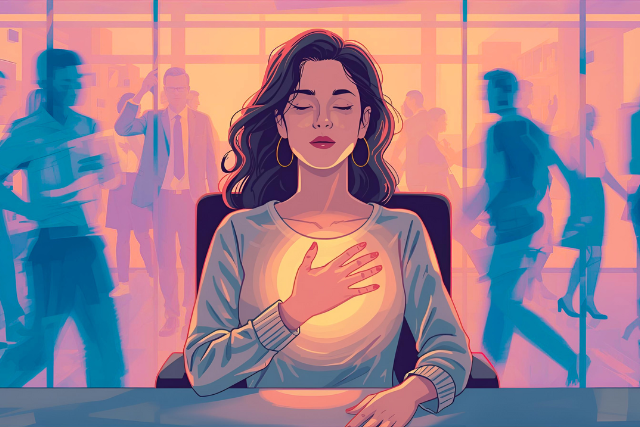
  • Work Is Not Family: A Lesson I Never Wanted but Need to Share

    Work Is Not Family: A Lesson I Never Wanted but Need to Share

    “The paradox of trauma is that it has both the power to destroy and the power to transform and resurrect.” ~Peter Levine

    I was sitting in the conference room at work with the CEO and my abusive male boss.

    The same boss who had been love-bombing and manipulating me since I started nine months earlier, slowly pushing my nervous system into a constant state of fight-or-flight.

    When I was four months into the job, this boss went on a three-day bender during an overnight work conference at a fancy hotel in Boston.

    He skipped client meetings or showed up smelling like alcohol, wearing yesterday’s clothes.

    When I texted him to ask where he was, he replied, “I f**king hate you.”

    When my CEO found out and called me five minutes after I got home, I told him I trusted him to handle it however he saw fit.

    I really believed he would. But over the next five months, the abuse didn’t stop. I just didn’t know it was abuse yet.

    He was over-the-top obsessed with me. He regularly told me:

    • “You’re going to make so much money here.”
    • “You have the ‘it’ factor.”
    • “You know how I feel about you.”
    • “I’m going to fast-track you.”
    • “You’re such a good culture fit.”
    • “This has been your home all along.”

    He told me everything I wanted to hear.

    I had spent the prior fifteen years in corporate America, wondering where I belonged. Wondering where my work family was.

    At first, I felt like I had finally found it.

    Then the attention escalated. What started as friendly check-ins became constant interruptions. The group Teams chats turned into direct messages. The work texts turned into personal texts—at night and on the weekends.

    He asked to go to dinner with me and my husband. He offered to buy me lunch while ignoring my coworkers. He brought in cookies for the office but made sure I knew they were for me. He singled me out in meetings and asked how I was doing while ignoring everyone else.

    I told myself, “There are worse things than your boss liking you.” But over time…I started to feel unsafe.

    My body started to send signals. I was having panic attacks on Sunday nights. I couldn’t sleep. I found myself using PTO just to get away from him. My fight-or-flight response was fully activated, and I finally had to admit I wasn’t in control anymore.

    Eventually, a coworker reported it to the CEO. Which brings me back to the conference room.

    I sat across from the CEO, body tense, heart racing, but filled with hope. I was ready for resolution. Support. Justice.

    That’s not what happened.

    Whatever the CEO said that day affected me in a way I didn’t expect. I felt minimized. Judged. Dismissed.

    Then my body reacted.

    The pressure in my chest started to build until I couldn’t control it anymore. I started shaking—full-body, uncontrollable shaking. I tried to sit still, tried to pretend nothing was happening, but it was too late.

    There was no hiding it. No escaping it.

    Just a forty-two-year-old corporate woman, uncontrollably shaking in a conference room across from the CEO.

    I excused myself and ran to the restroom.

    I lay on the floor of the public bathroom and cried harder than I ever had. My body was forcing the energy out of me. There was nothing I could do but let it come out.

    Once the tears slowed, I left the building as fast as I could.

    What had just happened to me?
    Why did it feel like a gaping wound had opened in my chest?
    Why did I feel physically damaged?

    It would take almost a year before I understood: that was trauma. That was new trauma layered on top of old trauma.

    Almost exactly twenty years earlier, I had been sexually assaulted by a coworker.

    I reported it to the police, and they didn’t even take a statement. I was sent away. Dismissed. Minimized.

    My brain had filed this memory away. But my body remembered.

    That moment in the conference room—being in a position of vulnerability, being ignored, unheard, unprotected—triggered a trauma response that had been waiting quietly inside of me for decades.

    My brain couldn’t tell the difference between past and present. It just knew I wasn’t safe. So it mobilized. It tried to protect me. And it left me raw, shut down, and checked out from the world—including my own kids—for a long time afterward.

    It was the worst time of my life.

    Several months after the conference room incident, I got a new job.

    It wasn’t easy to leave despite everything that had happened. I liked my job. I was good at it. My coworkers were my friends, and we had been through so much together. But I had become a shell of myself, and leaving seemed like the only way to get myself back.

    Even so, the first six months at my new job were not easy. I remained hypervigilant and emotionally reactive. Standard feedback and performance reviews brought me right back to that conference room, no matter what was said.

    That’s when I learned: trauma doesn’t stay with the toxic job. It comes with you. And this was trauma.

    What I Learned About Trauma

    I needed to learn everything I could, so I enrolled in a trauma-informed coaching program and studied my experience through that lens.

    From a trauma perspective, I learned:

    • The brain constantly scans the environment for safety and danger, a process called neuroception.
    • My brain perceived danger in countless ways during my employment and alerted me through my nervous system.
    • I rationalized those signals away, telling myself I could handle it.
    • But the signals—racing heart, insomnia, panic, emotional reactivity—only got louder until they could no longer be ignored.

    It felt like my body was attacking me. In reality, it was trying to save me.

    Trauma is what happens when your system struggles to cope with overwhelming distress, leaving a wound behind. Those wounds don’t need your permission to exist; they only need a trigger.

    That day in the conference room, multiple unhealed wounds surfaced all at once—sexual trauma, financial trauma, friendship trauma, life purpose trauma, and institutional betrayal trauma.

    The new trauma stacked on the old was simply too much for my system to manage. So my body did what it was designed to do: protect me.

    Learning this allowed me to release the shame I was carrying. It allowed me to have compassion for myself and others.

    It made me stop looking backward and start looking forward.

    What I Learned About Work

    While I was learning about trauma, I started asking bigger questions in my new role as an HR consultant.

    I had never worked in HR before, so I studied every conversation, policy, and process to understand how the system works behind the scenes and to view my own experience through the employer’s lens.

    Who really has the power?
    What rights do employees have?
    What responsibilities do employers have to protect them?

    Here’s what I learned:

    • The employment agreement is simple—employees agree to perform the duties on their job description, and employers agree to compensate them for performing those duties.
    • Both parties can end the agreement at any time.
    • HR and employment attorneys are paid to protect the company from risk. Period.

    That’s it. Anything beyond that is optional, unless required by law.

    Work is a contract. It is not a family. It is a system built for labor, not love.

    And this system is not immune to abuse. It is not immune to trauma.

    Just because it’s a professional setting doesn’t mean it’s a safe one. And just because you’re a high performer doesn’t mean you’re not vulnerable to harm.

    The idea that work is a family, that it should provide belonging, meaning, and loyalty, didn’t come from nowhere—it reflects how work itself has changed over time.

    In the past, belonging came from many places at once: tight-knit communities, extended families, faith traditions, and work that was often woven into local or family life.

    When industrialization pulled people into factories, corporations, and offices, many of those community anchors began to lose influence. To fill the void, workplaces leaned into family language—promising connection and loyalty in exchange for more of people’s time, energy, and devotion.

    For a time, many companies did try to live up to that promise with pensions, long-term employment, and mutual loyalty between employer and employee.

    But as work has become more globalized and transactional, that loyalty has faded. Today, organizations still borrow the language of family, but the commitment is one-sided. When it serves them, they lean on employees’ devotion; when it doesn’t, the illusion disappears.

    That’s how we know work is not family—because families don’t withdraw love, belonging, or loyalty the moment it no longer serves them.

    What Helped Me Heal

    The good news is healing is possible.

    For me, healing meant more than just learning about trauma in a classroom and HR policies in an office. It meant implementing daily practices into my life that rebuilt my sense of safety and helped me trust myself again. This included:

    Monitoring my nervous system and honoring my body’s responses to triggers.

    I started noticing the small cues—a clenched jaw, a racing heart, a stomach that wouldn’t settle. Instead of pushing through, I learned to pause, breathe, and respond with care. These moments of noticing became the foundation of feeling safe in my own body again.

    Exploring my past experiences with compassion instead of judgment.

    For years, I believed I had compassion for myself, but it was shallow—more like telling myself to “let it go” than honoring what I had lived through. It wasn’t until I became aware of the experiences that shaped my patterns and behaviors that I finally understood real self-compassion.

    Recognizing the subconscious behaviors that put me at risk.

    Perfectionism, rationalizing red flags, unhealthy coping strategies—these were patterns I had carried for decades. Becoming aware of them gave me the power to make different choices, rather than repeating the same painful cycles.

    Setting boundaries at work to protect my energy and healing.

    I learned how to say no without guilt, how to step away from people who drain me, and how to handle the frustrations of work without getting emotionally activated. Boundaries have become an act of self-love.

    Honoring the complexity of the human body and lived experience.

    This was the hardest lesson of all. I carry a body, brain, and nervous system that remember everything I’ve been through, even the parts I’ve tried to forget. My responsibility now is to honor that complexity in every environment I step into—including work.

    That doesn’t mean molding myself to whatever the workplace demands. It means protecting my well-being first and remembering that I am more than a role, a paycheck, or the approval of others.

    It took time, but these practices slowly closed the wound that had once left me gasping for air on the floor of that bathroom. The open wound in my chest has now been closed for over a year and has been replaced with peace.

    That day in the conference room broke me. But it also cracked me open. I put myself back together, stronger than ever.

    And you can, too.

  • Why Narcissistic Abuse Doesn’t Define You and How I Found the Love I Deserve

    Why Narcissistic Abuse Doesn’t Define You and How I Found the Love I Deserve

    “When it hurts to move on, just remember the pain you felt hanging on.” ~Unknown

    There was a time when I thought my heart would never heal.

    I’d been lied to, betrayed, and broken by a man I thought I loved. A man who turned out to be nothing more than a beautifully packaged nightmare.

    If you’ve ever been hurt by a narcissist, you know that the pain cuts deeper than most people can imagine. You know the way it seeps into your bones, the way it makes you question your worth and replay every moment, wondering if you could have stopped it.

    I’ll never forget that night in Paris when I learned what love is not.

    The Champs-Élysées was alive with golden lights strung high in the air. Shoppers moved slowly, bags swinging in their hands, laughter spilling out of nearby cafés. The smell of roasted chestnuts drifted through the crisp night. And in the middle of that beauty, my world shattered with one heavy punch to the stomach I did not deserve.

    It happened on the balcony of a famous Paris hotel. I had overheard a phone call. His voice casual, almost bored. “I’ll be home in a few days.”

    Home.

    To. His. Wife.

    My blood ran cold.

    The words clung to my skin like ice. Betrayal swelled in my chest, my breath sharp and ragged. I demanded answers. My voice cracked, trembling between anger and disbelief.

    The first slap was so fast I barely registered it. Then another. Then the kick. A sharp, merciless blow to my stomach that folded me in two and dropped me to the floor.

    My lungs emptied. I gasped, but no air came.

    I needed to scream. I wanted to claw, to fight, to make him hurt. But some part of me knew that to stay alive, I had to stay still. My body shook in silence, hot tears sliding down my cheeks, my ears ringing as his voice faded into a blur of meaningless words.

    The carpet felt rough beneath my palms as I steadied myself. My ribs ached with each shallow breath.

    When his rage finally burned out, I slipped away and stepped onto the balcony. The night air stung my face. Through the blur of tears, I saw the Eiffel Tower shimmering in the distance, each light flashing like a cruel reminder of where I was—the city I had dreamed of visiting. In love.

    I gripped the railing, fighting the urge to collapse again. I wanted to disappear. I wanted to wash every trace of his hands from my skin. I wanted to go home, crawl into my bed, and erase Paris from my memory.

    It took months to unravel what had happened that night. Months to understand why I had let a narcissist treat me like that. I wasn’t naive. I wasn’t unloved. I came from a loving family. I cared for people.

    So why did I believe I deserved this?

    Somewhere deep inside, I had confused love with proving my worth. I believed that if I could just give enough, forgive enough, understand enough, I could earn love that stayed.

    That belief had been quietly living in me for years—from the little girl who learned to keep the peace by being “good” to the woman who equated over-giving with strength. I didn’t think I deserved cruelty, but I didn’t yet believe I was worthy of love that came without pain.

    Looking back, all the signs were there. Endless red flags I chose not to see. The charm that drew me in, the constant need for attention, the way he twisted the truth until I doubted my own sanity. The anger when I questioned him, followed by the empty promises meant to keep me hooked.

    The bruises faded in weeks. But the ache inside stayed.

    For a long time, I hated Paris. I had been there with the wrong person. I had imagined us wandering hand in hand along the Seine, kissing on Pont Alexandre III as the city lit up around us. I had pictured mornings in Montmartre with coffee and croissants, sunlight spilling through tiny café windows.

    Instead, I got a nightmare.

    Deep down, I always knew real love was effortless. Not that it didn’t require work, but that it didn’t demand your dignity and your soul.

    After months of healing, I wrote down exactly what I wanted in a partner, and I refused to settle for less.

    Then, when I least expected it, he showed up. One email led to another, and soon we were talking across time zones, our words building a bridge neither of us had seen coming.

    He wanted to meet right away. I stalled. Part of me still needed the safety of distance.

    When we finally met in New York City, the moment felt like something written long before we were born. I had landed early that morning, wandering the city in the winter chill. When I called from a payphone near Bryant Park to confirm, I turned, and there he was, smiling at me like I was the only person in the crowd.

    In the past, I would have rushed in and molded myself to fit his rhythm. But this time, I moved slowly. I asked questions I used to avoid, and I said what I needed without apology.

    My healing had raised my standards, not for others but for how I treated myself in love. I was no longer searching for someone to fill a void, and because of that I could actually see him—not through the lens of fantasy or idealization but through truth.

    His steadiness and confidence didn’t scare me. They grounded me. He met me where I was. I could simply receive his presence without fear it would disappear. And that was brand new to me—being loved without having to abandon myself to keep it.

    Years later, we’re still together. We’ve faced storms, held the line when things got hard, and fiercely protected the magic we built. And we visited Paris together. This time, it was the city I had always wanted—champagne kisses, walks by the river, and a skyline wrapped in light.

    For the first time, there’s safety. There’s no fear in being honest, no punishment for being human. We listen, we repair, and we hold each other accountable without shame. When one of us feels hurt, we talk instead of withdrawing. When one of us makes a mistake, we forgive and learn instead of blaming.

    Love doesn’t take from us. It expands us. It’s steady, mutual, and kind. I can ask for what I need without guilt. I can express my fears without shrinking. We celebrate each other’s successes and hold each other through failure.

    For me, this love feels like finally being able to breathe, like exhaling after years of holding my breath, and knowing I can rest in someone else’s presence without losing myself.

    If you’ve been hurt by a narcissist, I see you. I know the nights you lie awake replaying everything. I know how heavy your chest feels, how loud the silence is.

    You may need to close the chapter that destroyed you, then open a new one and write the story you’ve been longing to live.

    Forgive yourself. Forgive them. Not for their sake, but because you deserve the peace it will give you.

    One day, you’ll wake up and realize the darkness is gone. The fear, the self-doubt, the endless ache are no longer yours to carry. And in that moment, you’ll know the truth: you will never again return to what broke you.

    It took months for my nervous system to finally feel safe around men again. For a long time, my body reacted before my mind could catch up, flinching at raised voices, shrinking from affection, bracing for betrayal even when love was right in front of me.

    This is how I slowly found my way out of the grip of narcissistic abuse:

    Belief work.

    I had to meet the invisible story I’d been carrying for years—that love had to be earned. Rewriting it didn’t happen overnight, but each small reminder felt like a crack in the opening around my heart. I began telling myself, again and again, I am deeply worthy of love. I am enough, exactly as I am. When my mind drifted back to old patterns, I didn’t fight it. I simply offered a new story, one where I was already enough and worthy of calm, steady love.

    Listening to my body. 

    I began to notice how my chest tightened or my stomach knotted when something felt off. Instead of ignoring those signals, I treated them as truth. My body knew what my mind wanted to deny.

    Somatic healing. 

    Breathwork, sound therapy, gentle movement, and trauma-informed bodywork helped me release stored fear and regulate my nervous system.

    I remember one session lying on my mat, my breath shallow, my chest heavy. As the sound bowls vibrated through the room, a trembling began to move through me. First it was rage, then a deep grief for all the ways I had abandoned myself, and finally a relief, like my body was releasing what it had carried for years.

    Something softened inside me. Something I couldn’t name. But what that moment taught me is that healing isn’t about forgetting. It’s about allowing what was once trapped to move through you, until it no longer owns you.

    Boundaries. 

    I practiced saying no. At first, it felt unnatural, even selfish. But every no became a small act of reclaiming myself.

    I started small. I stopped saying yes to coffee dates I didn’t have the energy for or to men who mistook my kindness for an open door. Then it extended into every corner of my life.

    I stopped overworking to prove my worth, stopped letting colleagues pile their tasks onto mine just because I was capable. I stopped replying to work messages late at night, stopped entertaining conversations that left me feeling small, but most of all, I stopped ignoring the quiet voice inside that whispered when something didn’t feel right. Each no created a little more space for truth, for me.

    Choosing safe people. 

    I surrounded myself with friends and mentors who treated me with kindness, who showed me what respect actually looks like. Their presence slowly re-taught my body that love doesn’t always come with pain.

    Clarity in love. 

    I wrote down exactly what I wanted in a partner, not just the surface traits, but how I wanted to feel with them: safe, cherished, seen. That clarity was my compass.

    When we began talking, I noticed I didn’t feel anxious waiting for his reply. I didn’t need to edit myself to earn his affection. There was no chaos, only ease. That peace told me I was finally aligned with what I had written. He embodied nearly every quality I had put on that list—emotional awareness, consistency, integrity, and most importantly, a tenderness that made my nervous system begin to trust again.

    Healing from narcissistic abuse isn’t linear. It’s a thousand tiny steps back to yourself. Some days you’ll stumble. Some days you’ll doubt. But little by little, the pieces come back together, and you realize you were never broken.

    When the right one arrives, you won’t question it. You won’t shrink yourself to fit. You won’t beg to be seen. You will simply know, in the steady, quiet place inside you that this is real, this is love.

    Rejection was never your ending. It was the redirection toward the life you were always meant to live.