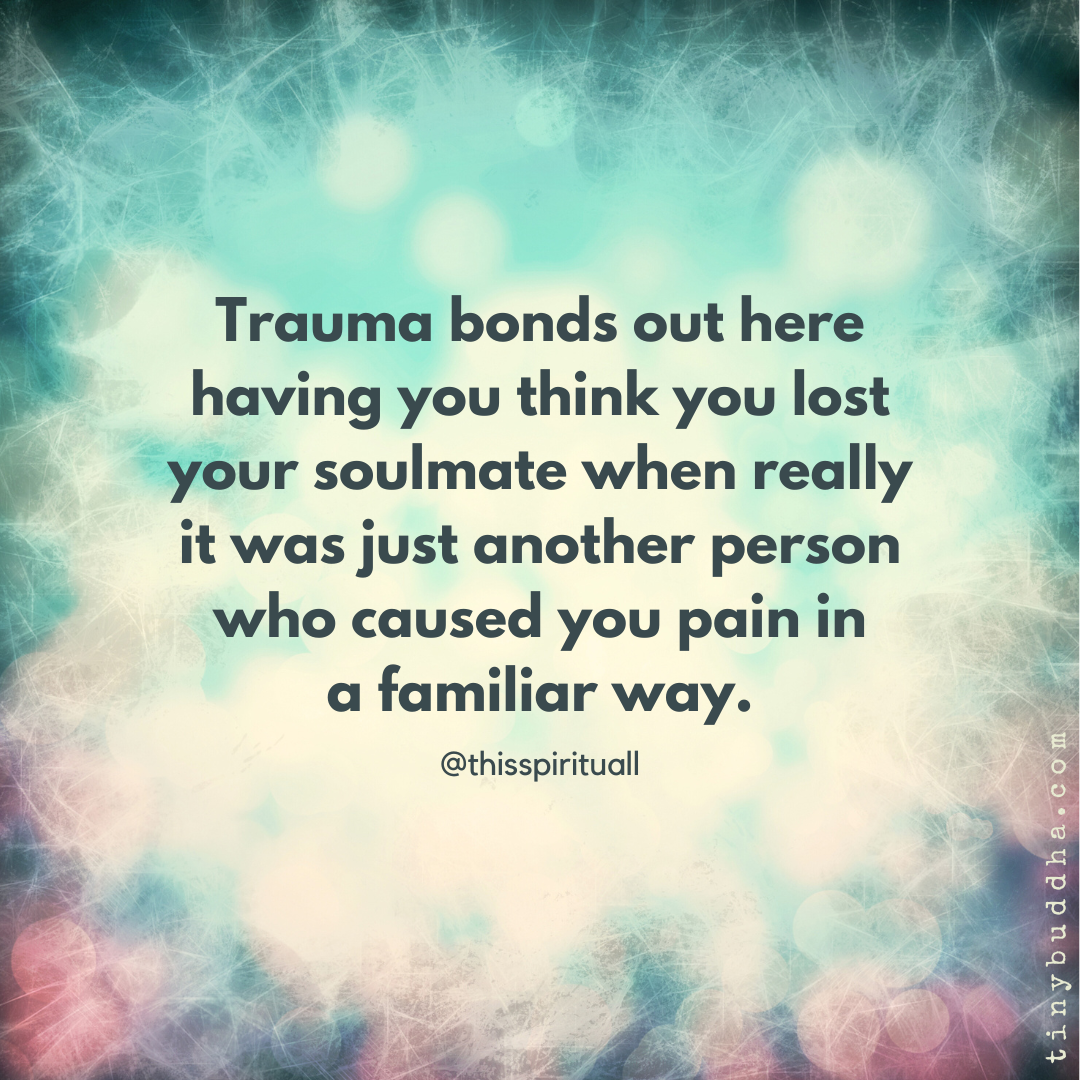
Tag: trauma bond
-
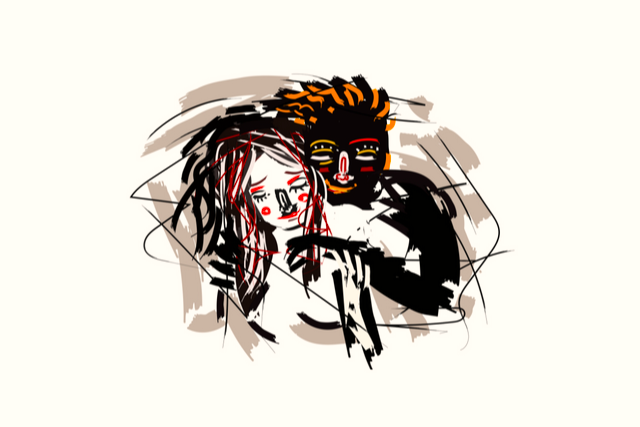
How I Knew It Was Emotional Abuse: The Subtle Signs I Almost Missed
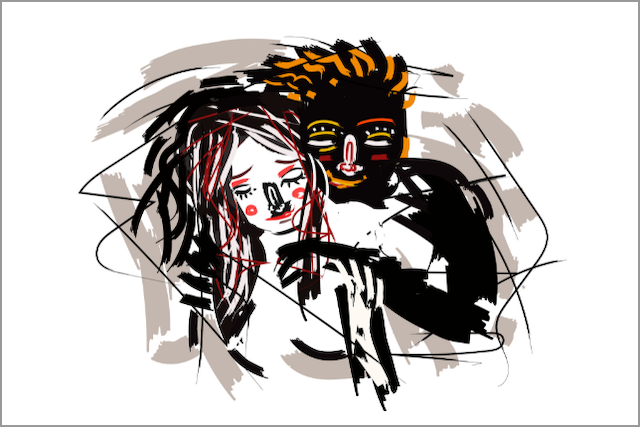
“I hope you find love, but more importantly, I hope you’re strong enough to walk away from what love isn’t.” ~Tiffany Tomiko
A few weeks after breaking up from what I thought was a loving relationship that in reality was sliding into an emotionally abusive one, I had a dream.
In it, I was hiding from a group of dangerous people, but could see the footsteps of one of them coming toward me. Suddenly they saw me, and I pleaded to them, “Please, don’t kill me,” and they turned and left. When I emerged, I could see the victims all around me suffering from a fate I had been spared.
I believe dreams relay information from our unconscious to our conscious mind, and that they hold huge significance in the processing that occurs while we sleep. I have no doubt at all that this dream signified the narrow escape I had from a man who was being emotionally abusive.
The Cognitive Dissonance of Emotional Abuse
I don’t use the term “emotional abuse” lightly, and I have struggled to apply it to the man I shared so much love with. Yet, one of the resources I used to understand what had been happening in my relationship was a podcast called “Love and Abuse,” which sums it all up so perfectly.
Emotional abuse is a cycle that flips between loving moments and abusive ones, sending you on a rollercoaster ride toward a place you never wanted to end up. A result of the constant highs and lows is a state of mind that is unbalanced, ungrounded, and permanently confused. In this state, it becomes very hard to understand what’s happening.
You’re caught between wanting to appease the person whose behavior is so hard to read and staying true to yourself. There is no part of you that wants to connect with your intuition; you only want to fix things and make them go back to the loving part.
My relationship became a fog of confusion, as my brain struggled to understand how one moment it was loving and another it was abusive. This is a state of mind called “cognitive dissonance.” In the immediate aftermath of the relationship I read something that perfectly resonated with me—cognitive dissonance is when your heart needs time to catch up to what the mind already knows.
Once I surfaced from the relationship, I could finally see the abusive part, as subtle as it was, and understand that it wasn’t healthy, without my heart getting in the way.
The Moment I Knew It Was Emotional Abuse
The realization that something was very wrong in my relationship dawned on me in the most fortunate way. We had been watching a program on Netflix called Maid. The series was about a young woman, isolated with a child and an emotionally abusive partner.
You never see him hit her, yet the controlling behavior and shouting are there. Even though she doesn’t know that he’s abusive, she knows she needs to leave.
As we watched, I could feel something shifting in my subconscious. I was seeing something playing out on screen that ran parallel to my life. I wasn’t with someone who was breaking things or yelling in my face, yet I was right on the edge of the cliff and he was about to lead me over the ledge.
I just know, intuitively, that if I hadn’t gotten out of there, I would have slid downward to a place that would have been much harder to leave.
The other lucky thing that happened to me was meeting someone who picked up the pieces of what I told her and showed me all the red flags. I had dismissed them before, not wanting to judge him for his choices, yet they were all there.
He didn’t have any friends, he wasn’t close with his parents, he didn’t like me making plans without him, he got tense and silent, he would raise his voice at me, he was moody, he questioned my beliefs, he spoke badly about my family… all the signs were there.
The Trauma Bond
The trouble is, when you’re deep in it with someone, when they’ve love-bombed you so hard and fast that you’ve barely had time to breathe, when they’ve called you their soulmate and moved you in within months of dating and declare they want to marry you, you just can’t see the wood through the trees.
Being loved feels so good, and that’s dangerous because love can blind you. Worse than that, when you’re in a cycle of love and abuse, whether or not the abuse is emotional or physical, the chemicals in your brain become severely dysregulated. This is called a trauma bond.
The trauma bond is a chemical concoction made up from the abusive cycle—the bonding phase, where you’re showered with love, promises, and romance; the stress during the abuse; and the making up period afterward.
It’s why making up feels so good after they’ve been angry or given you the silent treatment, and it’s why leaving someone hurts so very much. You’ve gone into withdrawal from your dopamine fix, and it’s horrific. You’re also stuck in that foggy state of confusion where you’re trying to align the messages you’re getting from your heart and your brain.
The trouble is, they don’t match, and in this state of cognitive dissonance, which feels so deeply uncomfortable, you reach for the easiest, simplest, and safest answer—you listen to your heart. After all, what the heart wants, it gets.
It’s this trauma bond that keeps people going back to an abusive partner. To add to this confusing chemistry, the emotional abuser will do everything to win you back, from bombarding you with messages and emails proclaiming their love and inability to live without you, to hurling their hurt and anger at you, guilt-tripping you right back into their arms.
For someone whose self-esteem has been slowly whittled down in a relationship, this behavior is like a balm to your fragile soul. You feel so loved and needed that you fall right back into their trap. They say you’re their soulmate and you believe them, but after a period of making up, they can then continue the cycle of abuse right where they left off.
They know you’re fragile, they know what you want to hear, and they are masters of manipulation. They pull at your heartstrings in every way they can, so be ready for it, and stay strong.
Waking Up and Leaving
I had no idea that it was emotional abuse, or what emotional abuse even was, until I started sharing my experience and reading about what others had been through. I think I was extremely lucky, because after seven intense months I gradually began to wake up to the spell I’d been under.
It hasn’t been easy, and the feelings are still fresh and raw, which is why I wanted to write them down so quickly, as it’s powering my resolve to stay away from him.
I also want to share the red flags that were there right under my nose that I couldn’t bring myself to examine at the time. I still have trouble believing that what transpired in our relationship wasn’t normal or healthy, which I think is all part of the process when leaving someone abusive. Recovery is starting to trust yourself rather than the person who was the source of your pain.
Of course, I doubt myself and think I misunderstood it all. Part of me still thinks I’m exaggerating and making a fuss. A part of me also thinks about ways I could have responded to the abuse differently and what might have happened if I had. I also still miss him. Love doesn’t just switch off, but I know that’s my altered brain chemistry rather than true love.
Then I remember the list I made of all the red flags—all the little incidents that happened, all the uneasy feelings of confusion, sadness, and wariness I felt—and I know I made the right decision to leave.
Alarm Bells and Red Flags
One of the main alarm bells that began to ring was how wary I was of what I said. I didn’t know what mood he would be in, so I was always trying to read the signals. If there was a tense silence, I knew it wasn’t good and tried to make myself as inconspicuous as possible to avoid triggering him and making his mood worse.
I also noticed that I was tiptoeing around on eggshells and making myself small and quiet, appeasing him and putting his happiness before mine. Putting someone first through fear of making them angry or upset isn’t love.
I also began to tune into my mood, which was beginning to feel flat and joyless. At times, I thought I could be immune to his moods, but they affected me whether I was aware of it or not.
I remember crying as he stormed out of the house, wondering what had gone so wrong. I remember feeling deeply confused when he picked a fight about something that made no sense to me. I remember feeling sad when he would turn from being gentle and loving to short-tempered and passive-aggressive in the flick of a switch.
Controlling Behavior
Another sign that slowly crept up on me were signs of control.
I once told him about an appointment I’d made for the following day, and he became angry because I hadn’t told him sooner. One time, I was meeting a male friend who wanted to give me an acupressure treatment, and he said he felt uncomfortable having another man’s hands on me. He once mentioned how he didn’t like waiting to receive a reply to his messages, so I became nervous to always message him back as soon as possible.
It got to the point where I felt scared to mention plans to see friends or see my family, and this is very wrong.
The examples go on and on and, as you can see, they are small things, but added together they make up a very clear picture. We should all have the freedom to see who we choose, when we want, yet he wanted to spend every evening together, as that, in his opinion, was what a ‘proper relationship’ was about. It seemed he wanted me to feel guilty for needing my space.
The last red flag was speaking badly of my family, who I am very close to. He used my need for independence from my family as a driving wedge between us. When my parents asked me to house-sit, he got angry, said they were using me, and made very subtle putdowns against them.
Even I noticed how my behavior was changing and how I was spending less and less time seeing my family, a warning sign if ever there was one.
Making the Decision to Leave
Whether all his actions were conscious or unconscious, I know I made the right decision to leave. I thought I loved him, but I love myself far too much to ever put myself in a position like that again.
I have a huge amount of empathy for him and remember the parts of him that are kind and loving, so I feel no anger, just sadness that he’s pushed love away through no fault but his own. I am not here to save or heal anyone, and if anyone places that responsibility on my shoulders or wants me to feel guilty that I am not helping them, then I am walking away.
So my advice for you is this: If you feel like something isn’t right, it isn’t. This is your intuition talking to you, and it may save your life.
You need to get away from the emotionally abusive person as soon as you can and surround yourself with friends and family. This gives you time and space to lift the fog that has been clouding your judgment, and to sever the trauma bond.
Your relationship doesn’t need to contain every sign of emotional abuse for it to be so. Just knowing how you feel—wary, confused, scared, tearful, and all those other emotions—is enough. No one should feel fearful or trapped in a relationship.
There is nothing more powerful in a situation like this than an outside perspective. In an emotionally abusive relationship, you are on a rollercoaster ride of chemicals, emotions, stress, love, and pain. There is very little chance you’re going to be able to decipher this on your own, so speak out, whether it’s to a friend, family member, therapist, or anyone at all—just speak to someone.
As soon as you start to share how you’ve been feeling and what you’ve been experiencing, you will start to see the signs of emotional abuse in your relationship, like I did in mine, and hopefully will get away as fast as you can.
-
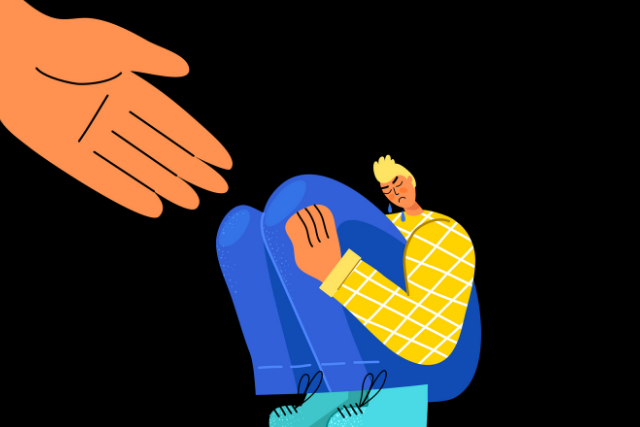
Toxic Help: 3 Signs Your Support Is Doing More Harm Than Good
“There is no exercise better for the heart than reaching down and lifting people up.” ~John Holmes
As someone who people often come to seeking help or advice, I recently encountered a new situation for me: one in which I chose to stop helping someone and walk away entirely because I determined it wasn’t good—for the other person or myself.
It felt like the wrong thing to do, but once I had some distance, I knew I had made the right decision. Throughout the helping, I soldiered on and helped and helped and helped until it no longer felt good, and sometime after that I determined it was no longer help at all—it was enablement.
My good friend—let’s call him Jack—has had a series of extremely toxic relationships. Infidelity, dramatic and very public confrontations, drug abuse, police involvement…. Jack has always played the role of victim in these cases, and in the three relationships I saw him in during the time of our friendship, he was cheated on, dumped, thrown out of the house, and physically abused. He can’t seem to help himself in this regard.
Last year, he entered a relationship that was problematic before it even began. The very first official date with Henry, the guy who later became his partner, Henry stormed out of a dinner with a group of people, got extremely intoxicated, and got into a fist fight (with a legally blind person no less) and thrown out of another establishment later. This was all on the first date mind you!
In a sense, this was very lucky. When someone shows you their worst selves, that is often after years together, a shared home, or maybe even a marriage. At that point, it’s usually emotionally and perhaps even logistically very difficult to walk away. On date #1, not so much!
And yet, Jack persisted.
Over the course of the next few weeks, Henry, who was already living paycheck to paycheck, was fired from his new job (for which he relocated internationally) for having a shouting match with the boss, and had a dramatic fight with his older sister, who was his only acquaintance in this new country and perhaps his only source of financial support.
It also became clear the guy was an alcoholic and drug addict. Without a job or the help of his sister, who do you think he immediately turned to for money? Yup, Jack.
Before too long, Henry’s temper tantrums were directed at Jack’s friends, including myself. The first day I met him, Henry screamed and yelled at me over dinner. In short order, the temper tantrums were turned on Jack, and soon the words became closed fists. He beat up Jack a few times—once leaving Jack with a pair of black eyes—and yet, it was Henry who dumped Jack. Jack kept coming back for more!
This all unfolded over the course of about six months. During this time, Jack frequently sought my advice. Whenever we talked, I of course let him know how unacceptable Henry’s behavior was, but also tried to get Jack to accept the deeper reality of the situation—that no one who was okay with themselves would tolerate this type of behavior from someone else and that Jack needed to really work on himself.
As the situation became more threatening and then violent, I counseled Jack in no uncertain terms that it was time to get the hell out of there. Had I been aware shortly after the physically violent episodes (Jack only told me weeks after the fact), I very likely would have become directly involved and called the police.
After each of these conversations, Jack’s mood brightened from despondent to anywhere from determined to energized. He was going to take action. He was going to see a therapist. He was going to stop giving Henry money and leave him. He was going to make sure not to speak with him alone. And each time… nothing. Same story each time. Each time I saw Jack, Henry was there, often belligerent, and always intoxicated with something.
However, as incomprehensible as Jack’s behavior and decision-making seemed, it’s not uncommon for victims of abuse, who often suffer from past traumas and therefore have underlying emotional and psychological issues that require professional attention. In fact, it has a name: trauma bonding. I was aware of that, so beyond trying to help protect Jack’s physical safety, I was patient in nudging him toward seeing someone.
What finally did it for me—the last straw—was after the second or third incident of physical abuse. Jack’s friends, some of whom I knew, were very happy to gossip and complain about the situation behind Jack’s back, especially insofar as it affected their social plans. However, they didn’t intervene or offer him help in any way that I could see.
Likewise, Jack lived at home with his parents and siblings. Even after coming home black and blue and bleeding, they took no action and never discussed the situation.
A week later, there were social media postings of Jack and Henry back together again, all smiles. The friends who knew of the abuse? They awarded those posts with smiley faces, hearts, and thumbs up.
At that point, I realized that I just couldn’t fight this battle alone. It’s difficult enough to try and help someone who is not able to help themselves and indeed seems intent on hurting themselves, but when such a person’s self-destructive behavior is supported and enabled by a whole community of people surrounding them? That is an impossible situation, so I took myself out of it and broke contact. I was out of the country at the time, so it was easier to do this at that point.
I thought about why I did this. It wasn’t because Jack was so intent on his self-destructive behavior—that just made it difficult, and it’s hardly a unique circumstance. It wasn’t because it was unpleasant—helping someone who really needs it often isn’t pleasant or glamorous, however good it might feel after the fact. And it also wasn’t that I felt in danger from Henry—he was a classic bully, beating up on people weaker than he was, but I didn’t have to see him.
No, this was something else entirely. This was “toxic help,” and I thought about it and figured out three ways to identify it as such. With these conditions, it’s difficult for me to imagine any help actually being helpful, in which case it’s better for you and indeed everyone else if you extricate yourself.
3 Ways to Identify Toxic Help
1. You check yourself and don’t like what you find.
Whenever you help someone, you should always check yourself first to ensure that this help is coming from a good place, from the standpoint of both your mind and emotions.
The ego often plays a critical role in instances of toxic help. If you delve deep, you may find that you are actually pushing some agenda or subconscious ulterior motive on the other person.
For example, you may be helping in part because you are re-enacting some past trauma or mistake you made and trying to fix your past self. Or, you may be trying to impress the person or make yourself feel superior. There are a lot of ways your ego could be manipulating the situation.
In my case, I didn’t find any evidence of a subconscious ulterior motive. However, what I did find was that I had developed a lot of negative emotions around the whole situation.
I was frustrated with Jack for making the same error over and over and over again. I was angry with Jack for constantly disregarding my advice—my advice… and that is where my ego started showing through.
I was furious with his friends and family for allowing and even encouraging the situation to continue and tired of seemingly being the lone voice of care, concern, and sanity. If I was at a more evolved state, that negativity would not have arisen, so that’s probably something I should work on myself. But that was the best I could do at that time.
Help can never come from a place of anger, any more than it can frustration, resentment, or greed. Negative emotions are part of life, but acting on them pollutes the world with that negativity. I realized that my efforts to “help” were becoming increasingly hostile in nature, and at that point nothing I would do was likely to be successful, because it was no longer coming from a place of love.
Moreover, negativity transfers, as life is not compartmentalized. My anger, frustration, and other negative emotions were surely spilling over into other facets of my life—my work, friendships, and causal interactions. At that point, even if I was still in a position to help Jack, I’m not sure if it would have been a net positive for the world if, while doing that, I was not honoring the other people and responsibilities in my life.
2. Your help is causing the other person to stagnate.
Jack, as I mentioned, normally seemed to brighten a bit after each of our little talks. He would come away feeling more determined, agreeing with my analysis, and sure he was going to do something about it. Walking away from each of those interactions, his back seemed a little straighter and his head held higher. And yet, nothing changed in the situation.
However, that’s normal with intractable problems and deep-seated behavioral patterns—they’re difficult to change! I realized that my help was not merely failing to have a positive impact, it was making things worse.
It became clear that each time Jack spoke to me, he mentally tagged that as “doing something.” He felt better that he’d talked through the issues, apparently made some decisions, and probably because he got a lot off his chest—all healthy things. Yet, in his mind, that represented action and progress. When he spoke to me after the fact about what concrete decisions and steps he’d taken, he would offer up our last talk as an example.
In this way, our talks became like a drug—a little pick-me-up that provided a brief high but did nothing to actually move Jack forward.
Our talks were counter-productive in this way because they made him feel better, when in fact it is discomfort that typically spurs people to take difficult action. Our talks made him feel more comfortable, when what he needed was to feel less comfortable with the situation. The result was that Jack was avoiding taking the positive steps he needed, such as seeking professional help.
3. You start role playing “savior” and “person in distress.”
Any truly close relationship with someone must be authentic. It doesn’t involve role-playing or people doing what they’re “supposed to do” just because it’s something they’re “supposed to do.” It is an exchange, a give-and-take, an open dialogue, and a two-way street.
Surely, in a long-term relationship, there will inevitably be periods in which one party is the needy one and the other is the helper. Yet, when those roles calcify into giver and taker, and every interaction is one of helping and being helped, that’s no longer a friendship—it’s a co-dependence.
In my case, Jack had become stagnant. He was not moving forward. If ever he was looking for just some social interaction or “chill time,” he would call Henry or one of his other friends, and this often involved substance abuse. My role just became the helper and advisor, and in truth, our “sessions” had just morphed into pick-me-ups for Jack, so it was no longer even helpful for him.
So, our relationship became boxed in this way with no clear way forward. Jack got fulfilment of his complex and unhealthy emotional needs from Henry, he got his social needs fulfilled by his enabling friends, and he got his help from me. We all had our parts to play, and indeed the other parties in his life encouraged this system to continue by enabling his behavior.
The only way I saw to break the mold was for me to change the dynamic, and so I did.
Not surprisingly, after Henry left the picture, Jack stopped calling for help. He didn’t notice that I wasn’t at his birthday party because I was out of the country, but then again, he didn’t even know that I was out of the country. He hadn’t needed help for a few weeks, so the calls stopped. as my role was temporarily written out of the script… until his next toxic relationship, when he’ll need to find a new helper.
None of this was easy for me, and it didn’t feel good or natural. I am not one to turn my back on anyone in need, especially not a friend. But I learned and came to accept that I can’t do everything and should not take responsibility to fix what is beyond my ability.
I really wish the best for Jack, and it would be nice to one day re-establish a relationship, but I needed to create distance in order to restore my own well-being, break the co-dependence that had developed, and banish the helper/person in distress roles that had hardened. In this way, I could be my best self, which ultimately is what’s most helpful to the world.