Tag: tragedy

  • One Thing We Need to Survive Crisis, Loss, and Trauma

    One Thing We Need to Survive Crisis, Loss, and Trauma

    “What man actually needs is not a tensionless state but rather the striving and struggling for a worthwhile goal, a freely chosen task.” ~Viktor Frankl

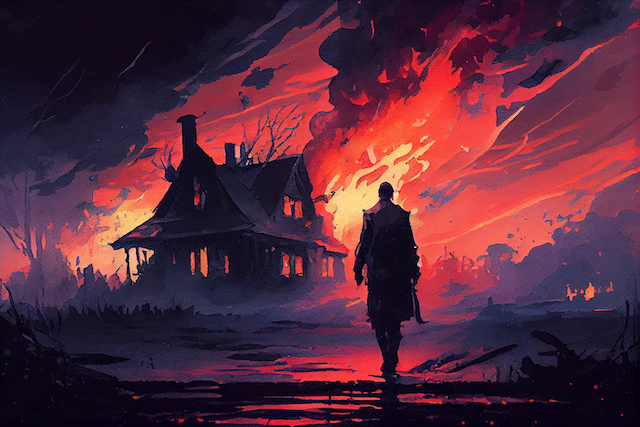
    A couple of years ago, I was sitting in my little mountain cottage, writing away on a new novel. It was a cold and dark February afternoon. So, first, I felt pleasantly surprised when I saw something bright lighting up behind me: I thought it was the sun coming out. But when I turned around, I noticed that my porch was on fire!

    Before I knew what was happening, I was standing out in the snow in my slippers, looking back at the entrance and facade completely engulfed by flames.

    It was like a near-death experience. My mind quickly took an inventory of all the things that were inside the cottage now burning down—pretty much all of my personal belongings. However, in that moment, I realized that nothing else mattered but the manuscript I’d been working on.

    Hours later, after the fire-brigade had left and I took one last look at the charcoaled ruins of what used to be my home, I finally got into the car with Marius, my border collie. (The car key survived by nothing short of a miracle.)

    I was on my way to my mother’s house, nearly 100 miles away, where I would, or so I thought, crash, cry, get drunk, whatever. Any sort of self-care—bathing in chocolate or drugs, massive allowance for self-pity— seemed justified under these circumstances.

    Luckily, it occurred to me that some meditation and self-hypnosis may be a good idea also. And as I tried, I immediately received some deeper intuition about what to do.

    A voice of inner wisdom (or Higher Self, if you want to call it, that has access to cosmic intelligence) gave me some rules to follow in order to remain in a high state of mind, despite the misfortune that had happened.

    These were the rules given to me:

    • Do not, under any circumstances, drink alcohol.
    • Eat a vegan, fresh fruits and vegetables-based diet. Cut all sugar. Your system is under shock and won’t be able to eliminate the toxins without further damage.
    • Go to the gym every day and work out for an hour, vigorously. That will flush out the stress hormones and make you stronger.
    • For now, forget about the house. Live as simply as you can and concentrate on the project that carries the highest energy and greatest hope for the future; i.e., writing your novel. Make it your highest priority, give it regular time and attention, and protect the space in which it is happening.

    For sure, these were words of tough love. Wouldn’t it be, in moments of a great crisis, loss, or trauma, only natural to seek comfort and distraction? However, I’ll remain forever grateful to have received this different kind of inspiration at the right time. Otherwise, it would have been too easy to fall into a dark pit of self-pity, victimhood, and destructive patterns.

    In Andersen’s fairy tale The Little Match Girl, the orphaned child is trying to make a livelihood by selling matches on the street. It’s winter and she’s suffering from the freezing cold, so eventually gives in to the temptation to light one of those matches to warm her hands.

    In the moment of ignition, she feels like being back in her late grandmother’s living room, cozy with a fireplace, roast dinner, and a luminous Christmas tree. Her short-term escape, however, has a price. She gets addicted to lighting the matches; eventually, she wastes all her merchandise and dies. So can we, if we give in to temporary temptations of relief, live up all our resources, and slowly waste away.

    There is, however, a high path out of a crisis. Etymologically, the word crisis goes back to the Ancient Greek κρίσις, which means decision. In moments of great danger, loss, or threat, we are forced to focus our attention and see what really matters

    To me, it was in the moment when I stood there out in the snow, watching my house burn, that I realized what was the most important thing. Even before that, I took writing seriously, but only in the crisis did I learn to prioritize my soul’s calling against all odds.

    The essential question of decision that arises from the crisis is:

    Do we let our lives be determined by the trauma of the past, or do we have a future vision strong enough to pull us forward?

    Once I was at a conference on consciousness where a very interesting idea was brought forward.

    Many of us have heard of entropy: the tendency of closed physical systems to move forward in time, toward increased levels of chaos. (For example, an ice cube being heated up to liquid water (increased entropy as molecules are freer to move) and then brought to a boil (as the molecules in the vapor move around even more randomly.)

    It is, however, less often discussed that—following from the mathematical equations—there also must be a counterforce to it.

    This counterforce is called syntropy. Being the symmetrical law, it moves backward in time toward increased levels of harmony.

    It has been suggested that if entropy governs physical (non-living) systems, syntropy must be true for consciousness (life), which hence, in some strange and mysterious way, must be (retro-) caused by the future.

    Although intriguing, first, this sounded very much like science-fiction to me…

    However, when I began to think about it deeper, I realized how much practical truth there was in this. Psychologically, the future indeed can have a tremendous harmonizing and organizing effect on our present lives.

    Think, for instance, of an athlete who spends several hours a day swimming up and down the pool. When you ask them why they do that, they say because they are training for the Olympics. The Olympics is in the future, but it causes the swimmer in the present to follow an organized and structured training regime instead of just fooling around all day long.

    The life-saving effect of having a worthwhile future goal has been documented ever since the early days of psychology.

    World famous psychotherapist Viktor Frankl observed his fellow sufferers while incarcerated in Nazi concentration camps. Later, he taught that those who had a purpose to keep on living (e.g., a study or manuscript to complete or a relationship to rekindle) were also the ones most likely to survive even under those horrendous circumstances.

    Having worked for years with battered women, I made similar observations. In hypnotherapy we have a set of techniques under the umbrella of future life progressions, which gives the subconscious mind a chance to explore alternative futures. In one exercise, the women were asked to just imagine that overnight a miracle happened, and they were now waking up in their best possible future.

    Shockingly, the individuals most resistant to change were the ones who could not imagine any future day different from their current reality. As it turned out, even more important than healing the trauma of their past, was to teach their brains to imagine a new future

    If we want to take the high path out of a crisis, we must learn that—to imagine our future in the best possible way. It begins by focusing not on the trauma, the pain, and the past, but on the single thing that feels most valuable and worthwhile to pursue in our lives. Once we have found that, our worthwhile goal will serve as a light tower for us to safely sail into the future, no matter how obscure our present circumstances are.

    And what is my most worthwhile goal, you may ask. Ultimately, as Viktor Frankl also said, that is not something we must ask, rather realize that in life it is we who are being asked: “In a word, each man is questioned by life; and he can only answer to life by answering for his own life; to life he can only respond by being responsible.”

    What will your best response be?
  • From Bombs to Bliss: Peeling Off the Layers of Childhood Trauma

    From Bombs to Bliss: Peeling Off the Layers of Childhood Trauma

    TRIGGER WARNING: This post mentions bombs and executions and may be triggering to some people.

    “Into your darkest corner, you are safe in my love, you are protected. I am the openness you seek, I am your doorway. Come sit in the circular temple of my heart, and let yourself be calm.” ~Agapi Stassinopoulos

    I was six years old. My mother and I entered the bus to head home from downtown. Suddenly the sirens went off.

    I felt a knot in my stomach. People started running around. A cloud of dust formed in the air. I could taste the panic. Sirens meant that it was time to seek shelter. They were the very loud sound of the thin veil between life and death. A moment in time where our brief existence on earth felt palatable.

    My father and twelve other family members had been in one of the worst political prisons for almost five years. Ever since his arrest and as far as I can remember, the bitter taste of fear and distrust has never left my side.

    I caught a breath when my mother squeezed my hand. I could feel my little heart racing in my chest. When we finally got home, I saw my grandmother running through the yard. Tears were rolling down her face.

    “I was worried sick,” she said.

    We weren’t sure they had made it either. We all felt temporary relief. We had survived.

    It’s hard to think about life without smartphones in the eighties. You never knew if someone was going to make it back home alive. Not until they physically walked through the door.

    For the years to come, the government ordered the execution of all political prisoners. My father miraculously survived while his family was executed. The war ended when I was eight years old. The sound of the sirens and terrifying moments passed. As a young girl, I witnessed a lot of physical beatings, oppression, and abuse of young people by the religious guard in my country.

    Experiencing war and turmoil in Iran as a child shaped my adult life in so many ways. The feeling of not being safe never left my body, and I continued to live in survival mode as my body carried years of trauma like a heavy weight.

    Living in survival mode meant that I was in a constant state of fight, flight, or fawn. I was angry. I lashed out at people very easily. When things got tough, I either fought or froze.

    For years, I had a tough time getting out of bed in the morning. I also had a tough time with my identity. I didn’t know who I was. I was a people-pleaser. I did anything to keep the peace around me, and when it got chaotic, I got angry and threw whatever I could get my hands on at the wall.

    Suffering was the only thing that made me feel alive. It was the only thing that made sense.

    We immigrated to Germany when I was fourteen years old. A whole lot had happened to me up until that point, but now there also was the added pressure of surviving in a new culture. Two worlds collided. German kids weren’t very nice to the foreign girl from Iran. Once again, I was in complete survival mode.

    Years passed. My family immigrated to the United States, and I met my American husband (a male wounded version of myself) as a twenty-five-year-old exchange student in Arizona. We instantly connected over our childhood traumas.

    Six years into the marriage I got pregnant. I didn’t know it back then, but becoming a mother was the best thing that ever happened to me.

    The birth of my daughters became the turning point in my life. Symbolically speaking, I gave birth to a new me. The process was physically and mentally difficult, and when my first birth didn’t go as planned, I struggled with my post-partum recovery and suffered from depression.

    Experiencing a difficult time meant that I was feeling all my emotions including the anger that already lived within me. And as my anger got louder, I realized that I had given birth to a child who now was depending on me to survive. I saw love for myself through the eyes of that child, and for the first time I saw the possibility of a new life.

    The possibility of a life where I would find the real me underneath all the layers of trauma. The possibility of a life where I could see my childhood in a new light: A light of appreciation. A light of love for who I had become. A celebration of my strength and perseverance.

    I didn’t have to hate myself anymore. “It is safe for me to be me,” I declared to myself.

    Becoming a mother gave me the strength to push through everything from my past that was holding me hostage for so many years. I was determined to break free the cycle of suffering for my daughter. It wasn’t just about me anymore. Healing doesn’t happen overnight, but life conspired to make it happen for me.

    While I was pregnant with my second child, tired from many sleepless nights with my first baby, and stuck in a stressful job in finance, the climate at my corporate job took a turn for the worst. I got rejected from a promotion I was more than qualified for because I was pregnant (or at least that was my perception at the time).

    At the same time, my husband received an incredible out-of-town job opportunity. It was an easy decision. I quit my job, and we packed up and moved.

    Not knowing what I wanted to do with my life, I got my real estate license in hopes for a new career that would allow me to have a more flexible work schedule. This was the beginning of my healing journey.

    Although real estate and healing have nothing seemingly obvious in common, what led to my new journey was the fact that for the first time ever, I was depending fully on myself. 

    I wasn’t going to have a consistent paycheck, PTO, and personal days. I was the only one in charge of what my days looked like. I was in charge of my own mind. If I didn’t wake myself up in the morning, aside from my children, no one else would.

    On the day of my orientation at my new real estate office, the company owner played a motivational video for the class. I remember thinking, wow, this makes me feel good on the inside.

    I felt a fire burning in me that I had never felt before.

    YouTube became my best friend after that. I consumed every motivational video compilation that I could find. I felt alive. Possibly for the first time ever. What came after this time, aside from my childhood, turned out to be some of the hardest but most rewarding times of my life.

    As I learned about how my thoughts and emotions create my reality, I became more self-aware. I was able to distinguish between what was my trauma and what was truly me by observing how certain situations and people made me feel

    I understood that what triggers me comes from a subconscious part of me that needs to be heard and seen. I started to take radical responsibility for my own feelings and emotions.

    For example, if my daughter did something that triggered anger in me, I would explore what within me was unhealed to cause such a reaction. Was it because I wasn’t heard or seen as a child? Was it because I didn’t feel safe to process my anger in a healthy way?

    I would sit with these thoughts and give myself permission to feel my anger, my fears, and my sadness. It was all going to be okay. I am safe. I am loved. I am supported. These became my new daily mantras.

    Underneath the weight of anger, there was that little six-year-old. I could finally see her with new eyes and wrap her in a soft blanket of pure love. I started to appreciate my childhood for making me the person that I am today. Brave. Strong. And worthy of a happy life!

    This work isn’t over yet. It probably never will be. If you have experienced trauma like I did and you have embarked on a healing journey, know that it takes time to become whole again. And that is okay.

    This work is ongoing because the subconscious mind has many layers, and there are always opportunities to explore what is deep within them.

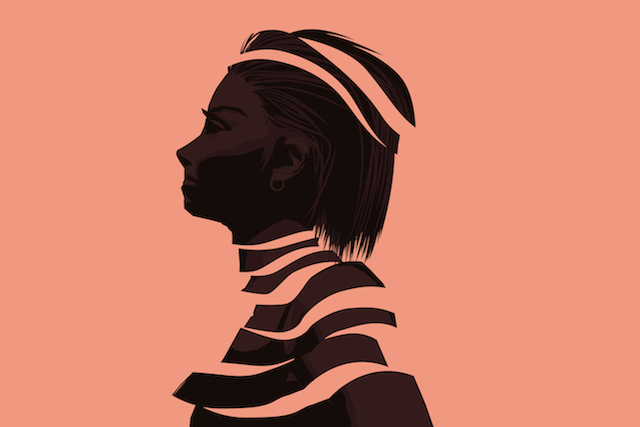
    Just as the layers start peeling off, just as you hear, see, and hold your wounded inner child, you will start to see yourself and your life more clearly and feel safe in your body. By bringing those dark aspects of yourself to the light, you’ll start recognizing and addressing your triggers so you won’t feel so emotionally charged all the time.

    As you try to visualize a different life for yourself—one less limited and defined by your trauma—you will see what emotions pop up to the surface. You will need you to sit with those emotions so you can identify the harmful self-beliefs that aren’t yours. Beliefs about your worth, your capabilities, your potential. Ideas that are hidden deeply in your subconscious mind that you only adopted as your own because of what you endured in the past.

    The more you up level your life and the bigger your dreams get, the more you will unpack. You will unpack all the lies that were fed to you to hold you small, and you will start finding the strength and confidence required to become the person you want to be.

    Healing is a journey, don’t rush it. Trust the process and take time to sit with your emotions to feel them fully. And if things get tough just keep going. One foot in front of the other. One moment at a time. The past is behind you, and it made you who you are today. Love yourself and honor your journey. You can overcome the darkness and see the light. If I did it, so can you!

  • Out of Every Crisis Comes the Opportunity to be Reborn

    Out of Every Crisis Comes the Opportunity to be Reborn

    Woman with arms outstretched

    “Always seek out the seed of triumph in every adversity.” ~Og Mandino

    In November of 2007 my life burned to the ground—quite literally.

    I lost my house, four foster dogs, my sixteen-year-old cat, four pet rats, all of my possessions—and with that, my sense of peace and safety in the world.

    I had called every fear I ever had into my life on that one, dark day. In short order, I was homeless, jobless, and for the most part, friendless.

    I was downsized from my full-time job, let go from my part-time job of five years (on my birthday), and my jeep engine blew up, all within three weeks of the fire.

    But back to that black day in November… I was living in a small rental house on forty-five acres out in the middle of the country, my dream since childhood. It was a place where I could have as many critters as I could feed, and they would be free to run and play and live out their lives in peace and harmony.

    There was even a small lake with a tiny rowboat a few hundred yards from my house. I sat on the front porch most nights and weekends looking out over the cornfields, watching my dogs chase butterflies during the day and fireflies at night.

    I thought life was pretty perfect.

    Then, on the fateful day, as I was driving up the half-mile gravel road, having finished a long day as an ER social worker, I was stunned to find black smoke billowing from the roof of the house. Everything seemed to be moving in slow motion. I couldn’t believe what I was seeing.

    When I came out of my stupor, I ran to the house and promptly did everything I had ever been told not to do in a fire. I ran to the front door, grabbed the red-hot knob, and flung the door open, screaming for my animals that I knew were trapped inside.

    When an orange ball of fire hurled toward me, I ran around to the back door and made my way halfway through the dining room before I had to turn around and go back.

    The smoke was so thick I could neither see nor breathe.

    It was at this time that I noticed three of my dogs, who had been left outside to play and sun themselves on the front porch, had followed me into my burning house. I rounded them up and piled them in the jeep, and called the volunteer fire department on my cell phone between screams and sobs.

    My house burned to the ground, along with my four-legged Chihuahua foster “kids,” my cat, my rats, and everything I owned: irreplaceable family photos, my diaries dating back to the age of twelve, things left to me by my grandparents.

    I had no renters insurance, and so, no ability to replace anything.

    Thanks to the American Red Cross and my sister, Tiffany, and brother-in-law, Gregg, I was able to stay for a week in an inexpensive motel with my Rottweiler, Nikko; Pit Bull, Chloe; and my fourteen-year-old Chihuahua, Solomon.

    My mother, sister, and brother-in-law, who all lived out of state, were there for me when I cried endless tears for my lost animals, and as I tried to move through my fog of grief and depression.

    Other friends and family, including my boyfriend/best friend of nearly four years, vanished in the aftermath. Most did not even call to ask if I was okay, or if I needed anything.

    I came to understand that some people are very inept and uncomfortable in dealing with human tragedy, and so, turn away when life gets ugly.

    The loss of these relationships was as devastating as the fire itself. These were people I loved and trusted—people whom I would have bet my life would never abandon me. I was wrong.

    I was amazed and incredibly grateful for those who did come to my rescue—strangers, really.

    A woman I had never met (and my sister barely knew from a support group she had attended a few times) sent me $1500. With this I was able to put a down payment on a car.

    A local animal rescue group provided blankets for my dogs and six months worth of medication for Solomon, who had congestive heart failure.

    Another sweet soul sent me a gift card for books—always a treasured companion throughout my life.

    A hairdresser volunteered her time and skill putting hair extensions in for six months when my hair broken off at the scalp, due to stress.

    This helped me to learn that not everyone that comes into your life is meant to be there throughout your journey. People will come and go, and sometimes it will break your heart. But you may find sanctuary in the most unexpected places.

    The kindness shown to me by these individuals allowed me to start the long healing process. I came to realize that if I was going to survive this, I was going to have to find meaning in the experience and become determined to grow wiser and stronger as a result.

    I would not allow my animals to have lost their lives for nothing. Their little souls mattered. This would be my way of honoring them.

    I began to let the pettiness of others and the drudgery of every day life fall away.

    What did it really matter if I was having a bad hair day or someone in front of me left their turn signal on for three miles? What if I lost my job? My car blew up? These things were small potatoes in the grand scheme of things.

    I felt like I had survived damn near everything the world could dump on me in a small space of time, and I had made it through the other side.

    I was a survivor. This title came with the mandate of seeing the world, and living in the world, in a very different way than before. Small things had to fall away and my focus needed to shift to what was truly important—the kind of things that would still matter ten years down the line.

    Also in my new way of being was the idea of embracing what truly made me happy, not what I thought other people would admire or approve of. 

    If I wanted to eat ice cream for breakfast and lay under a tree in the park in my bunny slippers reading Stephen King, then by God, I was going to do it!

    A little way down the road I decided that working forty to fifty hours a week in order to have more stuff, a nicer car, and a nicer house wasn’t what made me happy. I began teaching part-time at an area university and opened a small therapy practice.

    My income was cut in half, but I had so much free time to spend going to the park with my dogs, sleeping in, staying up late, and just being out in the sunshine instead of being cooped up indoors. And I was doing something I loved for the first time in my life.

    Ultimately, what I learned is that any human tragedy is survivable if one chooses to find meaning in the experience. And if you choose to become stronger, wiser, and more compassionate as a result, then no experience, no matter how painful, is ever solely negative.

    On the other side of all of the fear and the heartache I found peace and happiness.

    Woman with arms outstretched image via Shutterstock

  • 5 Dos and Don’ts for Surviving a Hard Time

    5 Dos and Don’ts for Surviving a Hard Time

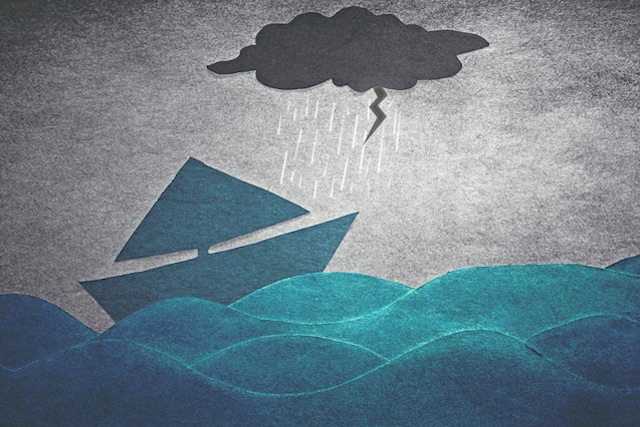
    Boat in a Storm

    “Our ultimate freedom is the right and power to decide how anybody or anything outside ourselves will affect us.” ~Stephen Covey

    My partner was a well-respected bank manager in a small country town. He was rising through the bank hierarchy with good prospects for further promotion. We were thought of as a happy, close-knit family that contributed in every way we could to the local community.

    Unbeknownst to us, the bank was conducting a re-assessment of their country branches. Several of the smaller banks would close and all staff would be dismissed.

    Frightening words were on our lips—redundancy, fear of the unknown, financial difficulties, unexpected change, personal loss.

    Little did we know how much a huge obstacle suddenly dumped in our path would affect us, particularly emotionally. Our hopes and dreams for the future—moving back to the big city to live in a “castle” with a fantastic view—were dashed.

    We started to name and blame bank personnel. We asked lots of questions but the answers remained elusive.

    Our totally negative and blaming attitude kept us stuck in an emotional hole. We couldn’t see how necessary it was to accept the situation emotionally, before we could do the practical stuff required to relocate and rebuild.

    There was a pre-requisite to the rebuild but we missed understanding this, until…

    A close friend started sending us a card every six or so days. In each card was written a quotation, the words of a song, or sentences our friend had read that she thought would be constructively helpful.

    One day when a card arrived, I was feeling very down. I read the words “Could we change our attitude, we should not only see life differently, but life itself would come to be different.” (Katherine Mansfield)

    The word attitude jumped right out. Changing our attitude was the pre-requisite we had missed seeing. What a realization—such a powerful one. It became the catalyst our family needed to accept our situation, stop feeling sorry for ourselves, and start to map out a recovery plan.

    And it all started from a simple, thoughtful act. Our friend had helped us survive.

    How can you, too, be a survivor when loss, health issues, financial challenges, or accidents block your path?

    Not all your problems will be as overwhelming as the one I’ve described. Nevertheless, every problem, including insignificant ones, can be worrying, even numbing. Knowing what to do will ensure that the physical and emotional scars left by your experience will not be very deep.

    Following are my five Dos and Don’ts that I documented from our experience, to help you work through every bump and hump, minor or major.

    This is not your usual list of “five practical steps.”

    Rather, the Dos and Don’ts are what reshaped our attitudes and emotions—a reshaping that was the pre-requisite to solving our practical issues—moving both our location and professional direction.

    5 DOs and DON’Ts to Ensure Your Survival

    1. DON’T bury your feelings.

    Denial, anger, and anxiety are normal feelings that can accompany setbacks. They’re also positive things—stepping stones on the road to acceptance and recovery. It’s natural, too, to feel completely overwhelmed and powerless.

    First, recognize and accept that the situation is real. Allow your feelings to surface and overflow. Have a cry, a yell, and a rave. You’ll empty yourself of the worst of your negative feelings and be quicker to mend and move on.

    We found that taking walks in a nearby park, among trees, provided a peaceful environment for us to clarify our feelings and come to grips with the above emotions.

    2. DON’T act like a victim.

    Things get worse when you focus on yourself and act like a victim.

    Quit blaming yourself, others, or external circumstances for what has happened. Going over and over what you should have done solves nothing. Wallowing in self-pity and beating yourself up takes your power away.

    Believe in yourself and your abilities. Believe that you are awesome enough to push through to a brighter future. Read inspiring books or put sticky notes with motivational quotes around the house. Say them out loud as you walk past. Take back your power over the situation.

    For us, mindfulness was a great tool to help us snap out of the victim mentality. We sat quietly for ten minutes a day and concentrated on our breathing, taking our focus away from our worries. The activity was very calming.

    Being mindful gives your mind a rest. You’ll problem solve more easily with a calm mind. You’ll move from victim mode into action mode, as we did, to hasten the healing process.

    3. DO keep the communication channels open.

    At these difficult times, keep friends and family close by as listeners and supporters. Find someone you can confide in about the challenges you face. Together, brainstorm possible ways to move ahead.

    Talking and sharing helps you see a different perspective so you can come up with creative solutions. It will also help you see that you’re not alone because others have been through equally challenging circumstances.

    I found keeping in touch with my usual contacts on social media helped lighten my load. I enjoyed logging on to sites like Tiny Buddha, where I received encouragement from others in the blogging community.

    4. DO be flexible.

    Accept that ups and downs are an inevitable part of life. Remembering that life moves through cycles of peaks and troughs will help you look forward to the rewarding times that lie ahead.

    These words from Alexander Bell, in one of our cards, gave us both a jolt. “Sometimes we stare so long at a door that is closing that we see too late the one that is open.”

    Be flexible; adjust your thinking and your goals. Becoming paralyzed and inflexible by the reality of your situation might deny you the opportunity to follow a new, exciting direction. Adapt so you can survive and thrive.

    Previously we were choosing to be miserable. Now we started asking empowering questions such as, “What choices do we have here?”

    This form of questioning encouraged flexibility and enabled us to expand our thinking. We found ourselves probing possible alternative— in what employment areas outside banking is financial expertise sought after?

    Being flexible isn’t easy. However, we found it absolutely necessary before we could move forward.

    5. DO focus on the good things in your life.

    Focusing on what you don’t have stops you from seeing all the wonderful things that you do have. Appreciate what you have, and the things that are working out well. You’ll gain a better perspective on life.

    Rejoice in any progress you make. Reward yourself with small treats such as coffee with friends. Each step and celebration provides motivation for the next one. You’ll find relief from the stress that has enveloped you.

    As a family we made a list of things we were thankful for such as good health. We included positive aspects of moving back to the city—more time to spend with our families, wider educational and sporting opportunities.

    Being thankful gave us a more positive outlook. Even the “castle” came back into view.

    We placed the following words where we could see them every day, and that helped too. “If you have nothing to be grateful for, check your pulse.” It’s something to smile about, eh?

    Final Thoughts

    Setbacks, tragedy, loss, and failures are part of life. So the joy and success we find in our daily life depends largely on the way we handle life’s problems—our attitude—as well as on our ability to keep going, no matter what.

    In other words, never give up.

    Setbacks are golden opportunities to learn and grow. It’s up to you to transform the pain into purpose.

    Ship in a storm image via Shutterstock

  • Let Loss Remind You to Live

    Let Loss Remind You to Live

    Man on a Pier

    “Pain can change you, but that doesn’t mean it has to be a bad change. Take that pain and turn it into wisdom.” ~Unknown

    Experiencing a death of someone, no matter how close you were to them, is a shock to the system.

    One moment you’re just drinking your morning cup of Joe and then suddenly, you’ve collided with the uncertainty of existence.

    Daily, we do everything we can to numb ourselves from our own fragility, but sudden death reminds us all that impermanence is still there under the surface, throbbing.

    The other day, I logged onto Facebook and received a message from an old coworker. He asked me how I was and we exchanged the usual pleasantries, until, he dropped a bomb.

    “You should know, Armando was killed in a car accident last week.”

    Armando and I were not extremely close, but we were friends during the eight months I worked at a café with him.

    We got to know each other when I began opening with him on Sunday mornings, me arranging box after box of fresh pastries in the case, him preparing the hollandaise sauces and turning on the ovens.

    Sunday mornings were always slow, so Armando and I got a lot of time to chat and goof off.

    We made a game out of calling each other the wrong names, which Armando especially loved. “Eighty-six croissant, Karla,” he’d yell from the kitchen, and I’d shoot him a, “right-o, Archie,” that would have him doubled over in laughter.

    Armando made the monotony of our workdays colorful and fun, and I was always so thankful when he was on my shift.

    Fast-forward to the day I found out he was gone. My impulse was to lump his death in with the rest of the bad news we are bombarded with every day. After all, I thought, we hadn’t been friends for long.

    I was ready to downplay his impact on my life, to distract myself from the email about his memorial, to numb myself from the pain of loss. Really, I didn’t think I had the right to be upset about the death of someone I barely knew.

    Except, there was still a knot in my gut that these thoughts weren’t helping to unwind. Armando brought joy and laughter into my life during a time when I was worn out from working three jobs and feeling lonely in a new city.

    His light-heartedness often shocked me out of my bad moods, and no, I hadn’t known him well, but I could still be heartbroken the world had lost his light.

    Then suddenly I was driving in my car, the same invention that killed Armando.

    I wound through the streets of Berkeley, past the café we worked at together and the BART station and the library, and I let myself think about Armando. The special strawberry salad he used to make me and a coworker on our breaks, the times I got red-cheeked from catching him and his girlfriend kissing in the storeroom, the night of the wild Christmas party when we all went out and sang karaoke.

    I thought about how he told me he wanted to move back to Mexico City, how much he loved it there. I let myself remember that he was more than a percentage or trending story, but a beating heart. I let myself cry for him.

    Then I reminded myself: it’s okay to let yourself be affected by things.

    Acknowledging tragedy puts our own fragile existences into question, and it forces us to face that we could’ve been the one who died suddenly.

    That is a scary realization, but I say let it scare you. Let it put a fire under you. Let your limited time on this planet propel you toward your dreams with incalculable fervor.

    Perhaps most importantly, let it make you grateful for the people around you who bring joy and laughter and love into your world, however fleeting.

    Man on a pier image via Shutterstock

  • Finding Beauty After Tragedy: Bad Things Can Lead to Good

    Finding Beauty After Tragedy: Bad Things Can Lead to Good

    “Behind every exquisite thing that existed, there was something tragic.” ~Oscar Wilde

    Have you ever had one of those moments when something devastating happens in your world and it feels like the rug has been ripped out from under you? I know I certainly did last year.

    I thought my life was moving along wonderfully. I had a well-paying job and was slowly growing my dream business on the side. I was happily married and the mother of an adorably cheeky toddler.

    I was only weeks away from moving into our new family home, which had taken us years of drama and a scary amount of money to build. Despite living so far away from my family, my life felt full of friendship, love, and joy.

    Life was progressing along nicely, and my husband and I were confident that we were on track for reaching the dreams we had envisioned for ourselves and our family. We weren’t living the dream yet, but we thought we could see its promise on the far horizon.

    Then we got the devastating news. My father, the man who had been a hero in both of our lives, was suddenly diagnosed with an incurable brain tumor.

    He was one day a healthy and fit fifty-seven year old man. Then the next day, he was suddenly having seizures and losing his sight, only to then be told that he had an aggressive cancer with an average prognosis of one year of life with treatment.

    This news understandably shook our world, and the ripples were felt long and far by many. We were obviously devastated.

    We couldn’t imagine what our lives would look like without him in our corner. And to be honest, I still haven’t allowed myself to fully lean into this, to feel it, or to process it completely. I know this moment will come eventually and it will be messy.

    One thing that we have noticed since the moment the rug was ripped out from under us is that so much beauty and wonder can appear during tragic times.

    It doesn’t detract from the awfulness. At the end of the day, it is still awful. It still hurts. And it’s still tragic. However, it has also brought about so much goodness.

    It caused my husband and me to stop and reflect on our lives. Were we really living the dream? Or were we playing it safe and residing within our comfort zone? Were our decisions and actions really aligned with our values and how we wanted to feel? What was most important to us?

    Before we knew it, we changed our lives dramatically. I quit the well-paying job to pursue my dream business full time. We sold the brand new so-called dream home. We moved interstate to be by the beach and near our family again. My dad’s terminal illness gave us permission to turn our five-year plan into a now plan.

    With my dad’s encouragement, I also started writing about my experiences. People connected to what I shared. It helped people. I could hold a light for others in our darkness.

    Family, friends, and strangers came out of the woodwork from every direction to offer support and love—going above and beyond what I could have ever expected from them.

    I learned so many lessons about myself and others, all this in a short three months. I can only imagine what is still to come.

    Throughout this time, I have also heard of others who have experienced tragedy and, despite this, can see so much beauty in the lessons and life events that followed.

    A friend of mine still suffering from the hurt of losing her brother years ago could recall the good things that came out of this tragedy, including the incredible people that stepped up in support of her and her family.

    Another friend who traveled to Cambodia recently told me about the absolute atrocities the people had experienced but how wonderful and giving they were.

    A client of mine spoke of a job she had thoroughly disliked but how much she had gained from it and how it ultimately contributed to her now being able to successfully follow her dream career.

    We can often hear stories on the news that demonstrate beauty in tragedy also.

    Just recently, when two hostages lost their life in a Sydney cafe, people rallied together to support and protect the Muslim community from revenge attacks with the #illridewithyou hashtag.

    Denise and Bruce Morcombe, the parents of Daniel Morcombe, who was abducted and murdered in 2003, have since dedicated their lives to increasing awareness and teaching children how to be safe. There have already been children who have used these skills to protect themselves in dangerous situations.

    After learning that she had cancer, Jane McGrath and her husband Glenn founded the McGrath Foundation to raise money to increase awareness of breast cancer and fund more breast care nurses in rural and regional Australia. This foundation has achieved so much since its establishment in 2002.

    Now of course these events are still tragic. They still hurt like all hell. And there is still seemingly no reason or purpose behind them. It still seems unfair and unjust how bad things happen to good people.

    But I personally take some comfort in the fact that so much goodness can stem from traumatic events like these.

    What lessons did your tough moments teach you about life, yourself, or others? Did any good things come from them? Can you take any comfort in the fact that they gifted you or others with something that may not have eventuated otherwise?

  • Stop Striving for Happiness and Start Practicing It Now

    Stop Striving for Happiness and Start Practicing It Now

    Happy People

    “Happiness is the absence of striving for happiness.” ~Chuang Tzu

    It all started when one of my boys asked me if I was happy, and of course I answered yes.

    Why wouldn’t I be happy? I have a handsome and kind husband, two boys of which I am very proud, I had a successful business, I had a house I loved, I was surrounded by friends, I was a sought after speaker in my community, and blah blah blah.

    Then my son asked why I didn’t have fun anymore. I began defending my happiness to him, explaining all the reasons why I was happy, and I began to realize I wasn’t really happy at all. I was “surface” happy.

    It was that day, almost four years ago, that I started my journey toward finding happiness. Needless to say, there were plenty of bumps in the road.

    The problem was that in typical “type A” fashion, I wanted happiness right then. I did my research and found things that made people happier, like spending time with friends and reducing stress. I made a bunch of changes that were supposed to make me happier but in the end only caused my stress levels to rise.

    It didn’t take long before I realized my quest for happiness made things worse. I spent more time worrying about trying to be happy then just allowing myself the freedom to feel happy. Bottom line: trying to be happy was stressing me out.

    Then my husband lost his job and we were in jeopardy of losing our house. With the circumstances surrounding us, my worry and stress were kicked into high gear. And instead of moving toward happiness, I felt as if I was moving further away.

    Things were getting a bit desperate when my husband was offered his dream job in Bangkok, Thailand. Yes, the same Thailand that is located halfway around the world. I fought it, I ignored it, and I laughed at it, but most of all I worried about it.

    Moving that far away was inconceivable to me. We had two teenagers, a home, and family and friends in a town we loved. How could we just leave?

    With little choice, off to Thailand we went with two suitcases each and my fingers crossed for a smooth transition. Soon after our arrival in Thailand, my life was shattered. I received a phone call from my sister telling me that my brother had been murdered.

    Twenty-seven years ago, my other sister’s life was cut too short because of a car accident. I physically did not think I could endure this pain again. My heart had yet to heal and now the hole in it just got bigger. 

    I immediately headed home to be with mom, leaving my husband and the boys behind, when what I wanted most was to hold them tight.

    It was a very surreal time. It was like I was watching someone else’s life as I went through the motions of supporting my mother, accepting condolences, and trying to wrap my head around all that was going on.

    It is always tragic to lose a loved one, but to have a loved one murdered takes grief to a whole new level.

    The time came for me to head back across the globe and back to my boys. It became clear I couldn’t go back as a barely functioning mother, and I knew my boys would learn about adversity and grief through my example.

    I took the time to re-evaluate my quest for happiness that I started what seemed like a lifetime ago. This time though, I started with some small actions instead of tackling everything at once. Here’s how I did it.

    Practice Gratitude

    You’ve probably read by now that gratitude has the power to change your life. It’s hard to imagine something so simple having such a big impact. It’s also hard to imagine why more people don’t do it.

    I wanted to practice gratitude, I really did, but it always seemed an inconvenient thing to do as I crawled into bed. I had to figure out a way to remind myself to do it every night before my head hit the pillow, because once I crawled into bed all bets were off.

    It dawned on me that I went into the bathroom every night, so I put my journal in the bathroom next to my toothbrush. Not the most glamorous place to write in your journal, but it worked.

    As I brushed my teeth, the journal beckoned and soon it became automatic, better known as a habit. A habit that was helping me focus on the good in my life.

    I am blessed to be surrounded by a loving and supportive family, have meaningful friendships for encouragement and guidance, and my boys have kind hearts. And that’s just the beginning of my list.

    I learned that even in the midst of the darkest day, there are moments of light. Sometimes you just have to search a little harder. Quiet your mind and look for it. Believe me, you will find something wonderful that fills you with gratitude.

    Trust That Things Will Work

    I am not going to lie; trusting that everything will work out is scary and hard—very, very hard. But it does. It might not work out the way you intended, but it usually works out somehow.

    It’s hard to break the habit of worrying because there is no visual cue around the stuff in your head. When I worried, I noticed I played with my hair. I admit I play with my hair when I’m not worried too, but my hands hang out in my hair more when I am.

    Now every time I play with my hair, I ask myself what I am worrying about. Then I remind myself to trust that whatever happens, I can handle it, and I probably will become stronger and happier because of it.

    Look for cues that indicate you might be worrying and when you encounter them, talk yourself through the process. Create a mantra for yourself that calms your mind and helps you release your worry. Your self-talk may take longer in the beginning, but keep at because eventually your mind will get on board.

    Choose Happiness

    I quickly found wanting happiness isn’t enough. You have to choose it and work for it.

    I added one more step to gratitude practice. At the end of the day I began setting my intention for the next day—something that will make me take time to enjoy the moment.

    My first intention was to take pictures of flowers because flowers make me smile. Then afterward, I wrote about how my intention made me feel and added things that filled my heart with gratitude.

    An intention might be something as simple as watching an inspirational video or smiling at a stranger. The key is to choose something that will make your day brighter.

    I learned many things during the first year following my brother’s murder. I learned about forgiveness, grief, and true friendship, but the most powerful thing I learned was that I was in control of how I felt every day

    Practicing gratitude, trusting things will work out, and setting intentions has led me to create my own definition of happiness, a definition that is just right for me.

    Take the time to experiment with practices that work for you. Everyone goes through dark times, but you can find happiness in the midst of darkness by committing to the practices that work for you.

    Happiness image via Shutterstock

  • Love, Light, and Other Lessons That Crisis Reveals to Us

    Love, Light, and Other Lessons That Crisis Reveals to Us

    Inner Light

    “Life always waits for some crisis to occur before revealing itself at its most brilliant.” ~Paul Coelho

    There have been more shocking and devastating world events in recent memory than I can keep up with. Hurricane Sandy. Sandy Hook Shooting. Shooting at Portland Mall. Australian wildfires. Club Fire in Brazil. Hurricane Nemo. Earthquake in China. Bangladesh Factory Collapse. Boston Bombing. Texas Plant Explosion. Floods in Midwest. Tornadoes in Oklahoma.

    So much loss. Devastation. Pain. Piled one on top of the other with little time to regain our footing in between.

    I can hear that fearful place inside me questioning, “Is this how it’s going to happen? Is this the beginning of the end? Is nature finally gonna take us out for what we’ve done, or are we just gonna take each other out?”

    And I fall into that spiral of anger, frustration, and endless questioning, feeling my energy getting dragged down and down. 

    I want to crawl into my hermit-y, safe shell and hide, and resolve in the fact that people are screwed up, and nature is ultimately in control, and there’s nothing I can do about it except wallow and whine about how no one’s doing anything about it.

    And I can hear that fearful place inside me wondering, “Why? Why there? Why those people? Why kids? What’s going to happen? Should I be scared? Prepared? Worrying? Ramshackling together a bunker in my garage? What am I supposed to do?”

    So I do all I can do. Clutching my loved ones a little tighter to my chest, I keep going.

    My fear usually continues until the day after comes. Until we know it’s over. And then the fear and anxiety releases in a flood of relief as love comes in to fill its place.

    On the day after, there is hope. Incredible tales of resilience, courage, and survival. Amazing stories of heroism, selflessness, and grace.

    Suddenly, we feel spared, lucky. Yes, look at all we’ve lost, but look at all there is left to be grateful for.

    Suddenly, we are reminded that life is only about the people around us and that it’s all, and always, about love.

    Neighbors, strangers, communities coming together. Nations rapt in attention, holding their breath. In those moments, we experience our oneness. In those moments, we shift from a modality of competition into one of cooperation. In those moments, we can actually feel the truth that we’re all in this together. It’s palpable. 

    Could that be why these horrific events keep happening? Their rate seeming to steadily increase since 2013 dawned and we were ushered into a new era.

    It seems we need a collective shift in consciousness; our entire energy needs to be raised.

    And unfortunately, it often takes shock to knock us out of our hypnotic day-to-day enough that we wake up, rise up, and come together. It takes a shock for us to start questioning why we’re here and what it’s all about.

    It feels like the something greater out there has two gigantic defibrillator paddles on the Earth’s heart and is trying to shock us back to life. Clear. Hurricane! Shooting! Tornado! Bombing! Come on. Wake up. Come back to us.

    And in those moments when we do wake up and act out of courage, act out of conviction, act out of love, we feel it: lucky just to be alive. Grateful for this moment, this one, right here. We can’t believe how blessed we must be to be alive right now, having this experience.

    We feel connected. On purpose. Like we’re here for a reason. Like it all matters. And that’s how we’re meant to feel everyday. Not just through trauma and pain, but in our good ole, average ordinary.

    Miracles are not extraordinary events; they are happening all around us, all the time. It just often takes extraordinary events for us to see them and realize they’ve been here all the while.

    I think that if we can take one message from the sadness that’s surrounded our world lately, one possible why, is that only by witnessing the dark can we know what the light is.

    That light exists within all of us, and once we know where the switch is, we can turn it on every single day—not just in our darkest moments.

    It is wholly within our power and responsibility to feel lucky, and grateful, and amazed just to be alive. Just to be a part of it all.

    It’s wholly within our power and responsibility to shine our individual lights as brightly as possible so that when we come together, the darkness will have no fighting chance. We’ll obliterate it.

    From my perspective, our response to all these inner-light-switching events as of late just confirm to me, more now than ever, that our future looks positively bright.

    Photo by Hartwig HKD

  • After Tragedy: 3 Reasons And 21 Ways to Find Joy Again

    After Tragedy: 3 Reasons And 21 Ways to Find Joy Again

    “Life’s challenges are not supposed to paralyze you, they’re supposed to help you discover who you are.” ~Bernice Johnson Reagon

    My brother died suddenly, at just thirty-nine years old. One moment he was in the midst of a regular working day. Half an hour later he was gone. Twenty-four hours later he was buried.

    With things happening so fast, I found myself alternating between paralysis and intense waves of pain, anger, guilt, sorrow, and devastation. I guess we all felt this way. Only it didn’t quite look like we all did/

    In between waves of sadness and silence, my brother’s children were playing and having fun and enjoying an ice cream as if nothing had happened.

    It wasn’t just because they didn’t quite understand what was going on. I mean, none of us could really understand this. If you’ve ever experienced a tragedy (and who hasn’t?), you know exactly what I mean.

    Rather, the children were merely being themselves. They were simply going with the constantly changing flow of their emotions and expressing it spontaneously. That’s what children do.

    And so they expressed the wonder of being alive as wholeheartedly and as immediately as they expressed the pain of missing their beloved father.

    We, the adults, were only able to feel and express the latter.

    Does it mean that we are made of different stuff than children, then?

    Not really. It’s just that most adults have great difficulties dealing with certain emotions and situations, and the name of the problem is “judgment.”

    Back then, while watching the children play I found myself kind of baffled. I didn’t really judge them. And yet, there was judgment there. Because, in the face of such loss, joy feels inappropriate.

    I’m sure you know what I mean. Whether we’re confronted by personal tragedy, an act of terror, a natural disaster, or genocide, joy just doesn’t seem to be the right response.

    Even if there might be glimpses of it here and there, we fear that expressing joy might be mocking the tragedy. But that’s not necessarily true.

    In fact, countless people (including myself) have experienced deep joy right in the middle of tragedy, and not just in glimpses.

    Don’t get this wrong. You’re not joyful because of the tragedy. You are joyful because you are “heart-broken open,” as Kristine Carlson calls it.

    In this sudden state of openness there is a sense of deep love and a degree of emotional nakedness that we don’t usually expose to each other. Being in such a space together, being so present, so connected with each other, so united across all differences, is indeed joyful, in a mellow sort of way.

    And yet, many who experience such joy keep it secret, simply because it feels wrong somehow, even if nothing could be more right.

    Remember, “Life’s challenges are not supposed to paralyze you, they’re supposed to help you discover who you are.” And discovering who you are includes discovering that you are all your emotions, not just some of them.

    So let’s replace the idea that joy is inappropriate with something that is closer to truth!

    3 Reasons to Bring Joy Back into Your Life

    Reason #1: Joy is your nature.

    Joy flows from the same source as love and peace; it flows from your heart.

    Would you want to deny your loved ones your love and your peace? Of course not. Then please, don’t deny yourself your joy either.

    Don’t push it, either. When sadness comes, allow your tears to flow. When joy comes, allow your smile to shine. That’s how it is supposed to be. It’s your nature; it’s who you are.

    Reason #2: Joy is your light.

    Joy is the light within.

    Would you want to deny your loved ones that light? Of course not. Then please, accept it for yourself as well. When it shines, you can see the path in front of you, even if just one step ahead.

    One step at a time, toward light—isn’t that a fine way to respond to tragedy?

    Reason #3: Joy is your power.

    The deep joy flowing within you is a healing force. Its warmth has the power to melt the inner paralysis. Its energy has the power to fuel your journey toward a life in alignment with your heart’s desire.

    Would you want to deny your loved ones that? Of course not. Then don’t deny yourself the power of your joy either. Because your heart’s true desire is to live, and to feel joy.

    But how? After tragedy, how do you even open your heart and mind to joy?

    It depends on who you are. In other words, discovering who you really are also means finding your way back to joy.

    In that spirit let me present to you some of the infinite numbers of ways in which you could bring joy back into life. Perhaps even more ideas will show up in the comments section.

    In any case, I invite you to look at all these ways as possibilities, nothing more. Ponder them for a while, and then find out which one you feel most drawn to.

    Pick that one, and then start practicing joy in this way, daily. Here they come, in no particular order:

    21 Ways to Bring Joy into Your Life

    1. Spend time with children (there are children everywhere).

    2. Discover something refreshing (or surprising).

    3. Feel your body (you are a miracle of life).

    4. Read a novel (fiction, stories, not the usual self-improvement stuff).

    5. Travel (any distance).

    6. Look for smiles in people’s faces (on the street and on TV).

    7. Write thank you notes (to yourself too).

    8. Create a rhythm for your daily life (simple things will do).

    9. Exercise (in a way that makes you smile).

    10. Help someone (with something you enjoy doing).

    11. Find a color that makes you feel good (and wear it).

    12. Enjoy your spiritual practice. (Enjoy!)

    13. Spend time with nature (plants and pets are nature, too).

    14. Do something creative (just for yourself).

    15. Accept help from people (strangers, too).

    16. Learn something new. (What have you always wanted to learn?)

    17. Listen to music (and let your body move along).

    18. Walk barefoot (slowly).

    19. Savor simple pleasures. (What’s that?)

    20. Give yourself a break (in every sense of the word).

    21. When you have a choice, choose joy.

    I believe most of these suggestions are pretty self-explanatory. If in doubt, just ask in a comment and I’ll respond ASAP.

    Also know that once you decide to allow joy back into your life, joy will show you the way.

  • Tragedy Can Help Us Find Our Life’s Purpose

    Tragedy Can Help Us Find Our Life’s Purpose

    Alive

    “Sometimes in tragedy we find our life’s purpose. The eye sheds a tear to find its focus.” ~Robert Brault

    Just over two decades ago, I happened to be planted in the Midwest. Chicago. The southside to be exact. A location once recognized as a haven for successful black people handling their business while their kids frolicked throughout the streets, making up secret handshakes, basking in the sun and enjoying their youth.

    And then, as the years progressed, things began to change; our haven was becoming less safe.

    As if a nebulous cloud began to form over our neighborhood with a torrential rainstorm of bullets impending, some parents forced their children to stay inside as the lightening and thundering began to rain down.

    The unfortunate news is that some children of varying generations were left out in the storm, with many, many lives lost due to senseless violence. And I wondered, “Why me?” Why do I deserve such shelter while so many of my brothers, sisters, aunts, and uncles must brave the storm and suffer?

    “Why was I so blessed?”

    You see, I may not have grown up with the riches of the world, but I was indeed wealthy—inundated with support, guidance, education, and love. I was recognized as “one who would make it out,” and indeed I did, but not without the scars, physically and emotionally, to show for it.

    As I journeyed forward, attending a top twenty university, my erudite persona led many of my classmates to believe that my younger years were a cake walk—that I must have come from a rich, wealthy and white neighborhood. But in fact, I was born amongst my own, tender brown, beautiful skin.

    But still, my peers did not believe me. I was in a battle. Lest did I know, it was much with myself.

    So I began to fear and hate where I was from so much that I often cried to my mother, screaming that I did not want to return home during the summer months. But I had to anyway. So I did—in mental steel shackles—going straight from work to the gym to home everyday in fear, feeding the hunger of my hatred even more.

    I was such a frustrated young man who had the world in the palm of his hands, but who had not yet recognized its power.

    It wasn’t until I began traversing that palm that I realized there was a much bigger world out there and that many more people had gone through far more than me, and interestingly enough, still had enough umph to persist and fight on.

    So I decided to give it a shot. Try it out. Test it out and venture to places, near and far away, discovering more of the world while discovery myself. As I did, the pain of Chicago traveled with me. A few years ago, right after I moved to the Dominican Republic, I received this email on January 7, 2010 from my mother:

    Hey babe. Some sad news, Cody was killed on Sunday right down the street. He was with Marlon in a car and a guy walked up and shot them both, but Cody died on Monday with 14 gunshot wounds. So sad. I love you.

    And then later again that year, a few days after I followed my dreams of moving to Los Angeles, I received a phone call from my mother stating these words:

    Marlon was killed just up the block from our house. He was with some people and someone came up and shot him in the neck and back. Be Careful. Love you.

    Out of all the people in my life that had passed on, why were these two more significant?

    Sure, we did not stay in the best of contact past high school, but we shared something much stronger—something much more powerful: childhood dreams. 

    As we played football and baseball in the abandoned lot directly across the street from my house, we dreamed of growing up to become the likes of Randy Moss and Derek Jeter. We had huge dreams—dreams that we knew would one day come true.

    But after I lost both of them, the dream deflated and the big question: “why me—why am I so freakishly blessed?” returned, until I was asked an even greater question: “Why not you, Alex?”

    Instead of counting your blessings and asking why you are so blessed, why don’t you live a life focused more on sharing those blessings?’

    “Sometimes in tragedy we find our life’s purpose. The eye sheds a tear to find its focus.”

    I cried a lot and it was not until others helped me meditate upon it and realize that all the bad and unfortunate events in my life could be leveraged as lessons to help me, instead of destroy me. And indeed, they did, but it took time—years.

    The shedding of those tears did in fact help me find my life’s purpose while understanding life’s purpose, which is to teach us, to expand us, to challenge us, to grow us—to evolve us to show us that nothing is permanent in life, and to be grateful for this year, this day, this moment.

    Gratitude, once taken into practice, can change your life.

    And now, I can honestly look back with a better understanding of my past while holding gratitude for what was and what is. I choose to trust the struggle moving forward, because the more I go through and learn, the more I can help others.

    And the same goes for you. You have the power to help others.

    We are not only here to share our stories of heroism, happiness, and jubilance, but also to share our stories of hurt, pain, and sadness to be an extra shoulder to cry on and to show others that there is someone out there that not only knows their pain, but also feels it.

    So today, I ask you: what lessons have you learned from the hardest times of your life and what would you say to the person who is going through something similar right now?

    Because I guarantee there are some individuals reading your comments that could really use the love and encouragement.

    This article is dedicated to Cody, Marlon, to the children of Chicago (of all generations) and to the world.

    Photo by Leland Francisco

  • Finding Meaning in Tragedy and Moving on Stronger

    Finding Meaning in Tragedy and Moving on Stronger

    “Whenever something negative happens to you, there is a deep lesson concealed within it.~Eckhart Tolle

    I’ve experienced a unique situation that has taught me a surprising lesson about the scope of the human races’ ability to choose love over hate, understanding over anger, and belief over fear.

    I’d rather not have to tell a story like this, and my wish is that no one would ever have to learn lessons from an experience such as this. You see, my husband’s mother passed away just at the end of June.

    But she didn’t just die of old age, or a sickness; she was only 61. She was washing her car in her own driveway and was forced into that car and taken. She was a victim of a violent crime; an unthinkable thing that you only hear about on the news.

    The man that did this has been arrested, ending a nine-day violent rampage affecting many women and their families. Those families, including ours, await the long road ahead that comes with this type of devastation: evidence collection, investigation, trial, and sentencing.

    Taking Steps in the Right Direction

    My husband and I took his 79-year-old grandmother, his mother’s mother, and flew to where his parents and sisters live.

    We were able to be with his father and sisters during this time, and we were able to be there for the beautiful funeral and memorial service. Many friends gathered around the family, as there are no blood-relatives in that area.

    His mother and father are private people, so it was a small and intimate gathering, but much love was shared, and many friends came to the service.

    I had expected there to be outrage, anger, disgust, even hatred for the man who did this, and possibly even for those of his same race, by some.

    I witnessed none of those things. There was, of course, shock. There was sadness, remorse, and perhaps some initial anger.

    I can’t sit here and say I know every emotion that went through each and every person. But I did not encounter outward aggression. I felt only love; a loving presence of unity and togetherness. (more…)