Tag: toxic relationships

  • Why Narcissistic Abuse Doesn’t Define You and How I Found the Love I Deserve

    Why Narcissistic Abuse Doesn’t Define You and How I Found the Love I Deserve

    “When it hurts to move on, just remember the pain you felt hanging on.” ~Unknown

    There was a time when I thought my heart would never heal.

    I’d been lied to, betrayed, and broken by a man I thought I loved. A man who turned out to be nothing more than a beautifully packaged nightmare.

    If you’ve ever been hurt by a narcissist, you know that the pain cuts deeper than most people can imagine. You know the way it seeps into your bones, the way it makes you question your worth and replay every moment, wondering if you could have stopped it.

    I’ll never forget that night in Paris when I learned what love is not.

    The Champs-Élysées was alive with golden lights strung high in the air. Shoppers moved slowly, bags swinging in their hands, laughter spilling out of nearby cafés. The smell of roasted chestnuts drifted through the crisp night. And in the middle of that beauty, my world shattered with one heavy punch to the stomach I did not deserve.

    It happened on the balcony of a famous Paris hotel. I had overheard a phone call. His voice casual, almost bored. “I’ll be home in a few days.”

    Home.

    To. His. Wife.

    My blood ran cold.

    The words clung to my skin like ice. Betrayal swelled in my chest, my breath sharp and ragged. I demanded answers. My voice cracked, trembling between anger and disbelief.

    The first slap was so fast I barely registered it. Then another. Then the kick. A sharp, merciless blow to my stomach that folded me in two and dropped me to the floor.

    My lungs emptied. I gasped, but no air came.

    I needed to scream. I wanted to claw, to fight, to make him hurt. But some part of me knew that to stay alive, I had to stay still. My body shook in silence, hot tears sliding down my cheeks, my ears ringing as his voice faded into a blur of meaningless words.

    The carpet felt rough beneath my palms as I steadied myself. My ribs ached with each shallow breath.

    When his rage finally burned out, I slipped away and stepped onto the balcony. The night air stung my face. Through the blur of tears, I saw the Eiffel Tower shimmering in the distance, each light flashing like a cruel reminder of where I was—the city I had dreamed of visiting. In love.

    I gripped the railing, fighting the urge to collapse again. I wanted to disappear. I wanted to wash every trace of his hands from my skin. I wanted to go home, crawl into my bed, and erase Paris from my memory.

    It took months to unravel what had happened that night. Months to understand why I had let a narcissist treat me like that. I wasn’t naive. I wasn’t unloved. I came from a loving family. I cared for people.

    So why did I believe I deserved this?

    Somewhere deep inside, I had confused love with proving my worth. I believed that if I could just give enough, forgive enough, understand enough, I could earn love that stayed.

    That belief had been quietly living in me for years—from the little girl who learned to keep the peace by being “good” to the woman who equated over-giving with strength. I didn’t think I deserved cruelty, but I didn’t yet believe I was worthy of love that came without pain.

    Looking back, all the signs were there. Endless red flags I chose not to see. The charm that drew me in, the constant need for attention, the way he twisted the truth until I doubted my own sanity. The anger when I questioned him, followed by the empty promises meant to keep me hooked.

    The bruises faded in weeks. But the ache inside stayed.

    For a long time, I hated Paris. I had been there with the wrong person. I had imagined us wandering hand in hand along the Seine, kissing on Pont Alexandre III as the city lit up around us. I had pictured mornings in Montmartre with coffee and croissants, sunlight spilling through tiny café windows.

    Instead, I got a nightmare.

    Deep down, I always knew real love was effortless. Not that it didn’t require work, but that it didn’t demand your dignity and your soul.

    After months of healing, I wrote down exactly what I wanted in a partner, and I refused to settle for less.

    Then, when I least expected it, he showed up. One email led to another, and soon we were talking across time zones, our words building a bridge neither of us had seen coming.

    He wanted to meet right away. I stalled. Part of me still needed the safety of distance.

    When we finally met in New York City, the moment felt like something written long before we were born. I had landed early that morning, wandering the city in the winter chill. When I called from a payphone near Bryant Park to confirm, I turned, and there he was, smiling at me like I was the only person in the crowd.

    In the past, I would have rushed in and molded myself to fit his rhythm. But this time, I moved slowly. I asked questions I used to avoid, and I said what I needed without apology.

    My healing had raised my standards, not for others but for how I treated myself in love. I was no longer searching for someone to fill a void, and because of that I could actually see him—not through the lens of fantasy or idealization but through truth.

    His steadiness and confidence didn’t scare me. They grounded me. He met me where I was. I could simply receive his presence without fear it would disappear. And that was brand new to me—being loved without having to abandon myself to keep it.

    Years later, we’re still together. We’ve faced storms, held the line when things got hard, and fiercely protected the magic we built. And we visited Paris together. This time, it was the city I had always wanted—champagne kisses, walks by the river, and a skyline wrapped in light.

    For the first time, there’s safety. There’s no fear in being honest, no punishment for being human. We listen, we repair, and we hold each other accountable without shame. When one of us feels hurt, we talk instead of withdrawing. When one of us makes a mistake, we forgive and learn instead of blaming.

    Love doesn’t take from us. It expands us. It’s steady, mutual, and kind. I can ask for what I need without guilt. I can express my fears without shrinking. We celebrate each other’s successes and hold each other through failure.

    For me, this love feels like finally being able to breathe, like exhaling after years of holding my breath, and knowing I can rest in someone else’s presence without losing myself.

    If you’ve been hurt by a narcissist, I see you. I know the nights you lie awake replaying everything. I know how heavy your chest feels, how loud the silence is.

    You may need to close the chapter that destroyed you, then open a new one and write the story you’ve been longing to live.

    Forgive yourself. Forgive them. Not for their sake, but because you deserve the peace it will give you.

    One day, you’ll wake up and realize the darkness is gone. The fear, the self-doubt, the endless ache are no longer yours to carry. And in that moment, you’ll know the truth: you will never again return to what broke you.

    It took months for my nervous system to finally feel safe around men again. For a long time, my body reacted before my mind could catch up, flinching at raised voices, shrinking from affection, bracing for betrayal even when love was right in front of me.

    This is how I slowly found my way out of the grip of narcissistic abuse:

    Belief work.

    I had to meet the invisible story I’d been carrying for years—that love had to be earned. Rewriting it didn’t happen overnight, but each small reminder felt like a crack in the opening around my heart. I began telling myself, again and again, I am deeply worthy of love. I am enough, exactly as I am. When my mind drifted back to old patterns, I didn’t fight it. I simply offered a new story, one where I was already enough and worthy of calm, steady love.

    Listening to my body. 

    I began to notice how my chest tightened or my stomach knotted when something felt off. Instead of ignoring those signals, I treated them as truth. My body knew what my mind wanted to deny.

    Somatic healing. 

    Breathwork, sound therapy, gentle movement, and trauma-informed bodywork helped me release stored fear and regulate my nervous system.

    I remember one session lying on my mat, my breath shallow, my chest heavy. As the sound bowls vibrated through the room, a trembling began to move through me. First it was rage, then a deep grief for all the ways I had abandoned myself, and finally a relief, like my body was releasing what it had carried for years.

    Something softened inside me. Something I couldn’t name. But what that moment taught me is that healing isn’t about forgetting. It’s about allowing what was once trapped to move through you, until it no longer owns you.

    Boundaries. 

    I practiced saying no. At first, it felt unnatural, even selfish. But every no became a small act of reclaiming myself.

    I started small. I stopped saying yes to coffee dates I didn’t have the energy for or to men who mistook my kindness for an open door. Then it extended into every corner of my life.

    I stopped overworking to prove my worth, stopped letting colleagues pile their tasks onto mine just because I was capable. I stopped replying to work messages late at night, stopped entertaining conversations that left me feeling small, but most of all, I stopped ignoring the quiet voice inside that whispered when something didn’t feel right. Each no created a little more space for truth, for me.

    Choosing safe people. 

    I surrounded myself with friends and mentors who treated me with kindness, who showed me what respect actually looks like. Their presence slowly re-taught my body that love doesn’t always come with pain.

    Clarity in love. 

    I wrote down exactly what I wanted in a partner, not just the surface traits, but how I wanted to feel with them: safe, cherished, seen. That clarity was my compass.

    When we began talking, I noticed I didn’t feel anxious waiting for his reply. I didn’t need to edit myself to earn his affection. There was no chaos, only ease. That peace told me I was finally aligned with what I had written. He embodied nearly every quality I had put on that list—emotional awareness, consistency, integrity, and most importantly, a tenderness that made my nervous system begin to trust again.

    Healing from narcissistic abuse isn’t linear. It’s a thousand tiny steps back to yourself. Some days you’ll stumble. Some days you’ll doubt. But little by little, the pieces come back together, and you realize you were never broken.

    When the right one arrives, you won’t question it. You won’t shrink yourself to fit. You won’t beg to be seen. You will simply know, in the steady, quiet place inside you that this is real, this is love.

    Rejection was never your ending. It was the redirection toward the life you were always meant to live.
  • “Am I the Narcissist?” How to Tell If It’s You

    “Am I the Narcissist?” How to Tell If It’s You

    “Narcissism is voluntary blindness, an agreement not to look beneath the surface.” ~Sam Keen

    Have you ever found yourself wondering, “Am I the narcissist in this relationship?” If so, you’re not alone. This question can feel heavy and unsettling, especially if you’ve spent years tangled in a toxic dynamic. The more you try to figure things out, the more confusing it becomes.

    But here’s something to hold onto: The very fact that you’re asking this question is a sign that you probably aren’t narcissistic.

    Am I the Narcissist?

    Victims of narcissistic abuse often find themselves questioning their actions, replaying conversations, and overanalyzing their behavior. Meanwhile, the real narcissist rarely, if ever, stops to consider whether they might be at fault.

    Why? Because self-reflection is not in their nature. Narcissists are too wrapped up in protecting their fragile egos and carefully crafted personas to even entertain the idea that they might be the problem.

    So, if you’ve been second-guessing yourself, it’s time to stop. The very act of self-reflection shows that you’re capable of empathy and accountability—two traits a true narcissist lacks.

    My Story

    Throughout our thirty-year marriage, my ex-husband would, out of nowhere, accuse me of cheating. It was absurd. I wasn’t cheating—never had, never would. But time and again, he’d cast doubt on my every move, picking apart my behavior as if it were proof of something sinister. Each confrontation left me baffled. I wasn’t having an affair—I didn’t even have the time or energy for that!

    So why would the man I loved constantly question my loyalty?

    I convinced myself it had to be my fault. Maybe I wasn’t doing enough as a wife, and that’s why he felt so insecure, so suspicious of me.

    At the time, I had no idea I was married to a narcissist. I didn’t understand how narcissists operate, or how they twist reality. More importantly, I didn’t realize how they manipulate you into believing that you’re the problem, not them.

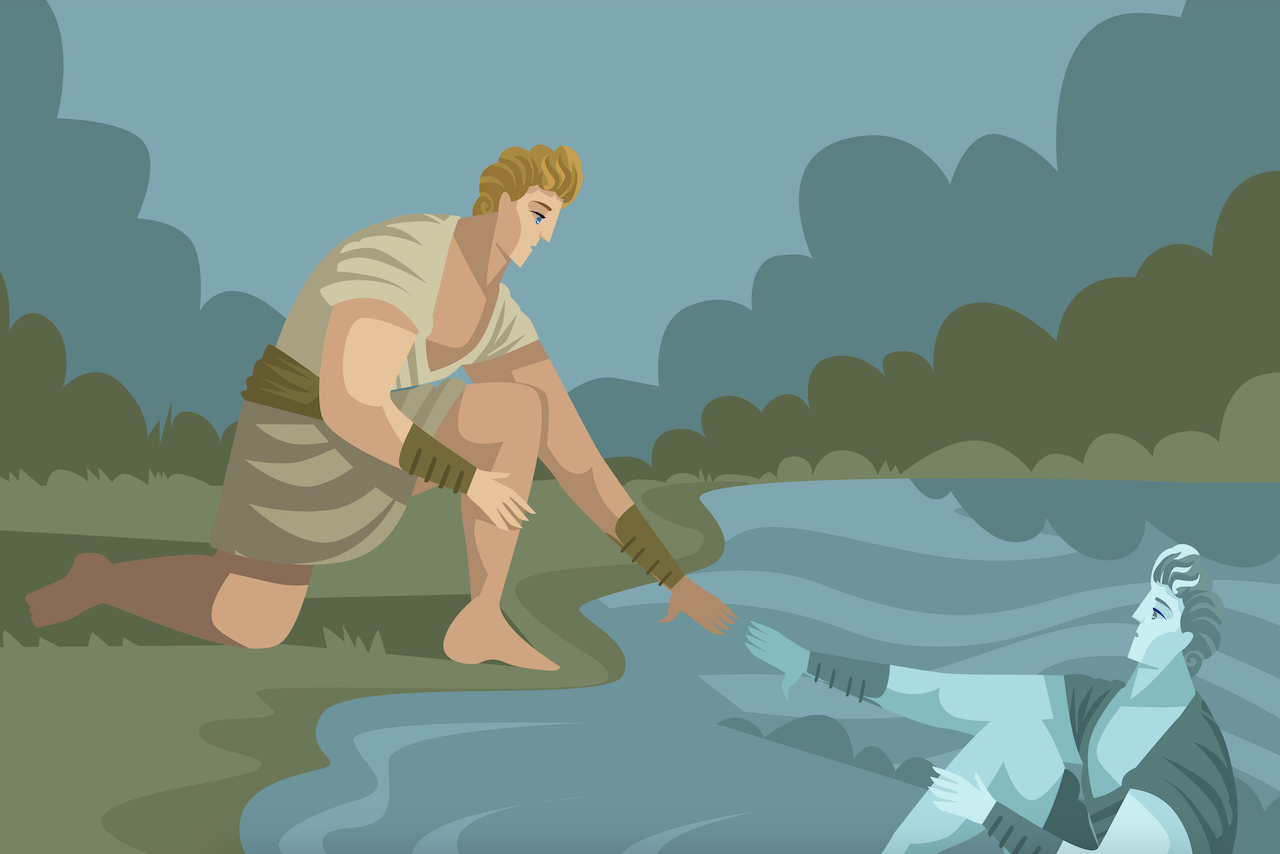
    “Mirror, Mirror on the Wall… Am I Perfect After All?”

    Narcissists have their own version of the enchanted mirror from Snow White—only, instead of seeking the truth, their mirror feeds them the comforting lie they desperately want to hear: “You’re perfect, flawless, and never at fault.”

    This is where narcissistic behavior thrives. While you’re stuck analyzing your every move, they’re busy basking in the reflection of their own grandiosity.

    More Than Being Self-Centered

    Narcissistic Personality Disorder (NPD) isn’t just about someone being self-centered. It’s a deep-rooted personality disorder defined by traits like an inflated sense of self-importance, a desperate need for admiration, and a shocking lack of empathy. Narcissists wear masks of confidence, but underneath, they’re terrified of facing any feelings of inadequacy.

    So why don’t they ask, “Am I the narcissist?”

    They Can’t Handle the Truth

    The truth is, they can’t handle the answer. Their egos are protected by layers of defense mechanisms—denial, projection, and a refusal to accept responsibility. Admitting they might be flawed would shatter the fragile image they’ve built, and that’s not something a narcissist is willing to risk.

    Meanwhile, people like you—who have empathy and care deeply about relationships—are naturally prone to self-reflection. You take accountability for your actions and genuinely want to improve, which is exactly why you’re asking yourself tough questions. And while you’re busy looking in the mirror wondering what you can do better, the narcissist? Well, they’ve already convinced themselves they’re the fairest of them all.

    A Truth Revealed

    Eventually, I uncovered the ugly truth—my ex-husband wasn’t just accusing me out of insecurity; he was projecting his own guilt. He had cheated on me—multiple times. In fact, over fifty times.

    In his twisted logic, he’d convinced himself that if he could pin an affair on me, it would somehow clear his conscience. But when his accusations didn’t stick, he switched tactics, offering up three audacious claims:

    1. His cheating was my fault because I didn’t satisfy him.

    2. I should be grateful he “only” cheated physically, and never emotionally.

    3. I needed to stay quiet about it because everyone would just blame me anyway (he was just looking out for me, of course).

    What didn’t I hear? An apology. Not even close.

    Instead, I was bombarded with deflections, denials, and outright lies.

    He tried to flip the narrative—suddenly, I was the bad guy. According to him, I was the narcissist because I couldn’t see how “wonderful” he was. I was being stubborn for staying angry when forgiveness, in his eyes, was the obvious solution. And his lies? They were all to protect me because, of course, he was such a “great” person.

    Classic narcissist move.

    The Narcissist’s Tactics: Dodging Responsibility Like a Pro

    Narcissists are experts at shifting the blame, turning the tables, and making you question your reality. When things start to fall apart, they’ll do anything to avoid being the “bad guy,” and instead, they’ll paint you as the problem. Let’s break down some of their go-to tactics:

    Projection: “You’re the one who’s selfish!”

    Narcissists often accuse you of the very behavior they’re guilty of. It’s called projection, and it works to distract you from their faults while making you feel responsible. You might hear things like:

    • “You’re so controlling!”
    • “All you care about is yourself!”
    • “You’re the one who’s toxic, not me!”

    This clever tactic puts you on the defensive, and before you know it, you’re questioning your own behavior instead of seeing theirs for what it is.

    My narcissist projected his own guilt onto me, twisting reality to fit his narrative. He even had the audacity to “forgive” me—just in case I had cheated and wasn’t confessing to it. In his mind, he was the noble one, magnanimously overlooking my imagined sins, while I was painted as the villain. He created an alternate reality where he was the hero and I was the problem.

    Blame Shifting: “I wouldn’t act this way if you didn’t push me!”

    Blame shifting is another favorite tool. Narcissists twist situations to make their reactions seem like your fault. They’ll say things like:

    • “If you didn’t make me so mad, I wouldn’t have yelled.”
    • “I only lied because you wouldn’t understand.”
    • “You always make me act this way.”

    By blaming you for their behavior, they avoid taking responsibility and leave you feeling guilty for things you didn’t cause. Narcissists blur the lines between what’s right and wrong, often making you feel like you can’t do anything right.

    My ex-husband didn’t just blame me for his cheating—he actually tried to twist the situation so he could get praise for his behavior.

    During therapy, we uncovered that he was addicted to porn, and that addiction warped his entire view of what a healthy relationship should look like. Once the label of “addict” was slapped on him, he leaned into it, casting himself as the real victim and expecting me to be more understanding and accepting of his choices.

    Even now, he refuses to take any responsibility. Instead, he continues to shift the blame onto me, parading his addiction as an excuse while claiming victimhood.

    Emotional Manipulation: “You’re the reason this relationship is falling apart.”

    Narcissists love to emotionally manipulate you into feeling like you’re responsible for every problem in the relationship. They’ll use guilt and shame to keep you doubting yourself. Expect phrases like:

    • “I’m trying my best, but you keep ruining everything.”
    • “This is all on you. I’ve done nothing wrong.”
    • “If you don’t change, this will never work.”

    By making you feel overly responsible, they deflect attention from their own toxic behavior and keep you stuck in a cycle of self-blame. Narcissists train you to question yourself so often that it becomes second nature.

    After enduring narcissistic abuse, it’s no wonder you’re left feeling confused and full of self-doubt. Narcissists are masters at eroding your sense of self, making it hard to trust your own judgment.

    When my narcissist first cautioned me not to share the news that he was a cheater, I was drowning so thoroughly in his contrived world that I believed the lie that other people would blame me for his cheating. How messed up is that?

    Clear Signs You’re Not a Narcissist

    ✔️Self-Awareness

    You recognize when something is wrong, and you’re willing to reflect on your words, thoughts, and actions. Narcissists, on the other hand, never admit fault.

    ✔️Empathy

    You genuinely care about others’ feelings and how your behavior impacts them. Narcissists lack this trait entirely.

    ✔️Willingness to Change

    You’re open to feedback and want to grow. A narcissist resists any form of personal growth or accountability.

    Time to Stop Questioning and Start Healing

    It’s time to put the doubts to rest and start focusing on your healing. You’ve spent too long in the shadow of someone else’s manipulation, but now it’s your turn to reclaim your sense of self.

    1. Recognize the manipulation.

    Acknowledge that the doubts and self-blame you feel are the result of narcissistic tactics, not reality.

    2. Rebuild your self-esteem.

    Start setting healthy boundaries and practicing self-compassion. You are worthy of kindness—from others and, most importantly, from yourself.

    3. Seek support.

    Don’t be afraid to reach out to a therapist or a support group. Surround yourself with people who validate your experience and can guide you through your healing process.

    The very fact that you’re reflecting, questioning, and growing means you are not the narcissist. You deserve to trust yourself and live free from self-doubt. Start rebuilding your life, and remember—healing is not only possible, but you are already on your way.

    I Am Not a Narcissist!

    After years of living in the shadow of my ex-husband’s narcissistic abuse, I’ve finally stepped into the light—reclaiming my self-confidence piece by piece. It wasn’t easy. It took time, energy, and relentless effort, but I got here by following three crucial steps: recognizing, rebuilding, and reaching out.

    First, I recognized the manipulation for what it was. Then, I began the long process of rebuilding my shattered sense of self. But the most important part? I reached out. My friends and therapists became lifelines, helping me see the truth and guiding me toward healing.

    Now, it’s your turn.

    Time to Believe in Yourself

    If you’ve been asking yourself, “Am I the narcissist?” it’s a strong indication that you are not. It’s time to trust yourself again. You’ve been through the emotional wringer, but now you have the chance to reclaim your confidence and rebuild your self-worth.

    Healing from narcissistic abuse is a journey, but every step you take brings you closer to a life free from manipulation and self-doubt. Remember, you are not the problem—you are capable of change, growth, and, ultimately, healing.

  • How I Used Self-Help to Justify a Toxic Relationship and What I Now Know

    How I Used Self-Help to Justify a Toxic Relationship and What I Now Know

    “You can ignore reality, but you can’t ignore the consequences of ignoring reality.” ~Ayn Rand

    The first person who introduced me to personal development was my ex. He once said, “It’s like you’re already doing some of these things.”

    What a compliment, right? Being a high-level person on the path of constant evolution, self-revolution, always changing and growing. Who wouldn’t want to be that?

    Beyond the compliments, I also felt a kinship with many personal growth concepts because they reminded me of some aspects of psychology and philosophy. If I could watch Seligman’s TED talk about positive psychology, why couldn’t I listen to a Tony Robbins lecture? It didn’t seem like a huge gap.

    The books filled my thoughts with wisdom and magic. The audios filled my grocery store trips and bus journeys with fiery motivation. In so many personal development gurus, I felt I had real friends who truly understood me.

    Self-help, and my ex for that matter, caught me at a sensitive time in my life. I had recently hit rock bottom and decided to change my life. I quit drugs, clubs, and smoking. I stopped pathologically lying and hurting myself for attention.

    I wanted to be alert and lucid. I wanted to explore and reach my potential.

    One thing that empowered me about personal development was getting rid of the victim mentality and shedding my traumatic stories. I didn’t have to carry the past around the way I did. What was the point? It just made me miserable and regretful and vengeful, never leading to anything productive.

    At first, the idea of taking responsibility for my destiny felt like a tough pill to swallow. I was supposed to take responsibility for the abuse I’d endured in various family and romantic relationships? But when I examined the situations closer, I could see that I had a side in co-creating those dynamics. I wasn’t simply a victim of what people were doing to me. I was constantly triggering their actions and reacting to them. I was part of a cycle.

    What was at first difficult evolved over time into a new approach to life. All I had to do was find a way to hold myself responsible for my emotions, for my life, for my behaviors. No matter how other people acted, I always had a choice.

    I carried this empowerment with me day to day; it helped in many ways. It helped me quit a day job I disliked. It helped me take charge of my career. It helped me let go of being annoyed and held back by the toxic actions of grouchy cashiers and judgmental family members. But taking responsibility for my part in everything started harming my life long before I recognized what was happening.

    I carried my victimless self-empowerment to the street corner where my ex drunkenly yelled at me in public, calling me all kinds of names, as I escorted him into a cab. I carried it to his house where he threw coat hooks at my face and cussed at me before passing out in the bed. I carried it the night I woke up to him vomiting all over the bed after another blackout-drunk night. I carried it through the years I lent him thousands of dollars to gamble away on affiliate marketing while paying my bills and our bills, cooking, cleaning, and providing him with unlimited emotional support, day in and day out.

    Back then, I had a blog. I wrote about finding self-love through obstacles in my work, reaching self-understanding in difficult encounters with yoga teachers and friends, learning from negative reviews, and so on. I didn’t blog about my ex’s alcoholism or verbal abuse. It felt like I was being respectful. If I was going through a hard time—which is how he framed it every time I told him I wanted out—I’d want the same thing.

    He kept me addicted to promises of a future where he’d get better. Sunk-cost bias is a real thing. He would cite Elon Musk’s first wife and how she was there for all the awful things and never got to enjoy his success. He wouldn’t want that to happen to me: to see him at his worst, support him through it, and then not get to enjoy his best. At the time, these justifications made perfect sense.

    Personal development taught me to lose myself in the service of others. It felt right to give to him as unconditionally as possible. Most of the time, I honestly felt like a good person. When he was spewing insults in my face as I remained nonreactive, I felt like I was holding space. That’s what holding space is, right?

    The trouble is that when someone yells and screams while drunk, they’re not safe, no matter what kind of space you create for them. By the next morning, all progress is lost. This is something I could see happening, but I denied it. I learned to find tiny shreds of growth and hold onto those as proof that I should stay.

    Taking responsibility for my part wasn’t the only thing keeping me there. It was also the stories about how I’d drawn this situation upon myself.

    Sometimes, I’d bring up that he was a completely different person when I first met him: patient, kind, loving, and curious about exploring my personality, my body, my views. He’d claim the way he was at the beginning was unsustainable. How could I have expected anything else?

    When we met, I was in the middle of healing sexual assault trauma. When he and I would get close to being intimate, I would sometimes freeze up and turn away. He once said this rejection was difficult for him and unsustainable.

    The first time we had sex felt like a violation. The moment I realized what happened, I felt like running away, but I didn’t. After all, I’d had a few drinks and wasn’t on my guard. Besides, I already had triggers about this kind of thing. How could I blame him without also blaming myself?

    The first time he yelled at me, I sat in front of my mirror, crying, looked myself in the eyes, and said, “If he did it once, he’ll do it again. You know that. Run. Go. Now.” But I didn’t. After all, I’d hurt people I cared about when I was at my worst. I changed. How could I deny him the opportunity to do the same?

    I filled up private journals with angry words. Then, I burned them. I thought: Isn’t this what any evolved person would do? Holding onto past traumas and breeding rageful narratives seemed like unhelpful patterns. I reframed my bypassing as patience and kindness and, worst of all, unconditional love.

    Anger, it turned out too many years later, was a useful signal I kept ignoring. This felt strange to discover. How could I have missed it? After all, personal development is crawling with ideas about decoding your emotions, honoring yourself, and respecting boundaries. For a few years after I got the courage to leave, I kept asking myself: How could I have been so intent on practicing self-awareness while ignoring the most blatant issues in my life?

    Ah, but I hadn’t been ignoring them. I was experiencing excruciating chronic pain symptoms and explaining them away with physical causes. Too long after leaving my ex, I began to understand how these unaddressed issues had begun as dissociative symptoms in response to violation. I also realized how much worse these symptoms became from living for seven years with a person whose presence felt like a violation. How could I have stayed in that environment daily while also daily practicing (and, embarrassingly, also teaching people about) the art of self-love?

    It took me years of soul-searching and decluttering and truth-speaking and running around in circles trying to heal the physical and emotional symptoms of feeling chronically unsafe to even begin to understand the answer. It’s simple: There’s a lot of wisdom out there, and there are many contradictory wise messages. We hear what we want to hear.

    I do believe that personal development can be used to truly improve a life, to help people reach their highest potential. I have also experienced first-hand how we can use it to keep ourselves in toxic situations. It’s not like self-help is to blame for me staying with him, but it didn’t help me escape either. It’s not information that helps us at the end of the day. It’s courage. It’s honesty. It’s community.

    Unfortunately, community is something I didn’t have when I began realizing all these things. I thought I did. I thought I had many friends who were deeply into self-healing and self-love and emotional authenticity. But when I started to get real about the things that were affecting me, like sexual assault and repressed rage and the war back home and my indigenous roots and the predators inside the “conscious community,” I felt more and more alone. After years of supposedly inspired living, I had no real friends to turn to when things got rough.

    With all the advice columns and how-to articles and 10-step lists, somehow personal development had left out the most important part: humanity. Learning to be ourselves alone and with each other.

    Again, it’s one of those things that we only see when we want to see them. As Lao Tzu said, “The greatest wisdom seems childish.”

    I read so many books and listened to so many audiobooks searching for answers about how to become the best version of myself, but the opportunities, the lessons, and most importantly, the answers had been there in front of my face all along. I just had to be brave enough and honest enough with myself to see what was already there.

  • How I Stopped Being Everything I Hated About My Parents

    How I Stopped Being Everything I Hated About My Parents

    “The beautiful thing about life is that you always change, grow, and get better. You aren’t defined by your past. You aren’t your mistakes.” ~Unknown

    When I was an angsty fourteen-year-old, I remember screaming at my parents that I never (ever!) wanted to become like either of them. And I meant it.

    My dad was a workaholic who was never at home. When he was at home, he was emotionally unavailable, arguing with my mother, or he’d escape the stress of our house by going to the betting shop to gamble.

    My mother had erratic mood swings, did not allow me to have age-appropriate boundaries, and would talk to me about the lack of intimacy between her and my father. These were, unfortunately, not role models that inspired me.

    As I entered my twenties and experienced adult life for the first time, I continued to carry the ideation that my life would be different. I was determined not to become my parents. And for many years, I naively lived life proudly thinking I had not turned into them.

    Then, one day, I opened my mouth and heard my mother’s voice come out. I can’t even remember what I said, but I recall the feeling of utter despair. Despite all my thinking and wishing over the years, I had become my parents. This prompted me to reflect on my life so far, and I realized that I had repeated many of my parents’ patterns.

    I had become a workaholic to avoid feeling my emotions, was in an abusive relationship but didn’t realize this until well after it had ended, and I struggled to know how to develop healthy friendships due to difficulties setting boundaries.

    Shit. Damn. Bugger it.

    I’d accidentally become my parents! Why was all my thinking and wishing over the years not enough to stop this from happening? I thought that I had more control over my life than this.

    During my own self-discovery journey, I found that there are many reasons why we repeat the same family patterns. I also learned that we can change them.

    Humans learn from watching and copying other people’s behavior, and children are sponges that soak up everything in their environment.

    For example, when I was a child, I remember my dad ordering a meal at a restaurant, and the vegetables on his plate were stone cold. Instead of sending the meal back and asking for hot veggies, he complained about how terrible the restaurant was and ate the cold meal. When I became an adult, I struggled to assert myself in similar situations, which led to a lot of anger and resentment.

    Learned behavior is not just a one-time thing. It is passed down from generation to generation.

    For instance, my paternal grandparents lived through the Great Depression in the 1930s, before my dad was born.

    They taught my dad that food was a scarce resource, so he carried this belief with him into his adulthood, and subsequently passed this down to me through not being able to model assertive behaviors.

    This is called intergenerational trauma because the unhealthy family dynamics continue throughout new generations. Generally, intergenerational trauma is defined by events that affect people profoundly, such as child abuse, parental incarceration, poverty, war, natural disasters, etc.

    Sometimes, we aren’t even aware that our family dynamics are unhealthy, or we might be aware but are too scared to change. This is usually because humans have a strong desire to be accepted and belong. In fact, this is very important for our survival.

    For some people, repeating those family dynamics means that they continue to be a part of the family unit.

    From a young age, I was often labelled as the ‘black sheep’ of the family, because I voiced the unspoken, toxic family rules. It became easier for me to distance myself from my family rather than remain enmeshed in a family environment that was detrimental to my mental health and well-being.

    The good news is we can change our patterns so that we don’t become (or continue to be) our parents.

    The first step is to be aware of the unhelpful patterns that you’re carrying with you. Without awareness, we cannot change.

    I started by asking myself what emotions I experienced frequently and whether they ever seemed like they were out of context or disproportionate to the situation.

    One emotion I often struggled with was jealousy. Whenever a friend would share something positive about their life—if they got a new car, got a promotion at work, or won a competition—my go-to emotion was jealousy.

    This impacted my friendships, as I was constantly comparing my life to theirs and driving them away by trying to find ways to make sure my life was more successful. This led to perfectionism in everything that I did, and let me tell you, it was exhausting! I couldn’t maintain this lifestyle, and I felt like I was drowning.

    When I hit a low point after my relationship ended, I sought therapy. Through therapy, I learned that the reason I compared myself to other people so frequently was due to the beliefs I held about myself. I didn’t feel like I was good enough as I was. This made a lot of sense when we explored the relationship I had with my parents.

    They regularly compared me to other kids and were only proud of me when I performed better than anyone else. It made sense that, as an adult, I would experience strong feelings of jealousy toward other people. Jealousy meant that I was constantly trying to prove my worth to other people rather than living life on my own terms.

    I then looked at my beliefs about this situation/emotion and thought about where and when those beliefs developed. Identifying the patterns behind my behavior was a positive first step in my inner healing journey, because you can’t heal what you don’t know.

    Because I wasn’t taught what emotions were or how to understand my emotions as a kid, I needed to learn how to do this as an adult.

    My therapist helped me to better understand the motivations behind our emotions and develop new strategies to cope with these.

    For example, with my jealousy, I learned that this was a response from fear and insecurity. I was able to learn to identify my thoughts, and when I realized that I wasn’t actually unworthy but rather that was the story I had learned from my parents, I was able to choose different behaviors instead of continuing to follow the same old patterns as before.

    I recognized that perfectionism meant I worked too much, so I learnt how to slow down through mindfulness and yoga. Once I was able to recognize my emotions for what they were, rather than reacting to them without awareness, I was able to make better choices about how I wanted to respond to that emotion.

    Having that space to understand my emotions meant that I could move out of the comparing myself to other people situation, and I was able to step into the entrepreneurial space and create a business that I love. I wouldn’t have been able to do that if I hadn’t done the inner work to change and not become my parents.

    I learned this was why my wishful thinking didn’t work. I knew I didn’t want to be like my parents, but without additional support from a therapist, I didn’t know what to do instead! Therapy helped me learn how to deal with old patterns in new ways.

    From there, it was all about practice. These habits and patterns existed for many, many years. I knew they would not change overnight. However, with perseverance and practice, I was able to make meaningful changes in my life. I found it helpful to keep a journal to record my progress so that I didn’t forget how far I’d come.

    Finally, it was important for me to remember that my parents are human too. In addition to recognizing the unhelpful habits they taught me, I found it useful to remember some of the positive traits or experiences I’ve gained.

    Even though my dad was a workaholic, he instilled a strong work ethic in me, which has helped me when creating my own business. My mother loved to travel, and she has definitely passed that love to me as well.

    Reminding myself of these things allows me to acknowledge my parents’ humanness, especially in moments where I find it hard to offer them grace. For me, reminding myself of the positives is a way to honor my need to have compassion for myself.

  • 7 Ways Childhood Trauma Shows Up in Your Romantic Relationships

    7 Ways Childhood Trauma Shows Up in Your Romantic Relationships

    “Love is the greatest miracle cure. Loving ourselves creates miracles in our lives.” ~Louise Hay

    When you are unlucky in love, you tend to blame yourself for not being enough and maybe blame fate for not giving you a break already! Everyone else around you is in happy, long-term relationships, but you just can’t get there.

    You might come to the conclusion that there is something wrong with you—you’re too old or too fat—and all the good ones are already married, and you will just die alone! You never think for one moment that your relationship history is playing out a dynamic from childhood.

    I felt like this for thirty-seven years of my life. It was like I kept dating the same man but in different bodies. The way I felt was always the same. Always chasing after someone who was unavailable in some way. Some had addictions, some were in relationships, some prioritized other people, but the underlying feeling was the same. I am not good enough to be loved.

    Other times I avoided relationships all together, or I was the one running away from the ones who did want me, telling myself that they were not what I wanted. In all situations it ended in the same way—me single, feeling incredibly lonely and hopeless. Looking at everyone who could manage a relationship wondering what was wrong with me.

    I continued aimlessly looking for love in all the wrong places, completely unaware of how my childhood was impacting my relationship choices. Thankfully, I began a journey of healing that started by reading and listening to self-help content. I became aware of Pia Melody and the concept of love addiction after reading her book by the same name.

    This relationship behavior I kept repeating was actually a trauma response. I had grown up with a dad who was emotionally unavailable and very much focused on his own needs. Unconsciously, I was finding him in these other relationships. It got worse after his suicide.

    Since then, I’ve learned a lot about how our childhood trauma plays out in relationships. Here are seven ways it can happen:

    1. You are in a relationship but don’t feel loved.

    You are in the relationship you once wished for, but you still feel this emptiness and feel like your partner is to blame. If they did x, then you would feel loved and enough.

    You blame them and they trigger you. But are you expecting the love and care from them that you are not even giving to yourself? Are you filling up your own love so that their love is just a bonus? Are you even noticing the ways they show you love? It may be different to your love language. Maybe things are not right, but are you working on repairing the issues rather than blaming or ignoring them?

    Our first relationships (with our parents or childhood caregivers) teach us about attachment. If your relationship with your parents was sometimes really loving but other times they were cold and distant, you didn’t grow up with love being available and consistent. Which is why relationships can make you feel anxious and you can over-give and feel lonely in a relationship.

    2. You are the fixer in love.

    When you date or even marry, your partner tends to be the broken bird that you are obsessed with fixing. Or they might be a narcissist who is all about their needs and you taking care of them. Either way, you have found yourself in toxic relationships that don’t feel safe or good.

    They could be an addict and you pour all your energy trying to save them while feeling depleted and unloved. You become almost obsessed with how you can save this person you love so much. It’s quite possible you’re repeating a dynamic with one of your parents.

    For example, I very much repeated a pattern of finding men to fix because my relationship with my dad was all about his needs and his struggles with his mental health. I was always saving him, and when I did, I would receive love from him. I thought this was love, so I repeated this unconsciously in other relationships.

    3. You chase unavailable love.

    You spend all your time and energy chasing after someone who is not available in some way. They need fixing, have addiction or family issues, are in a relationship already, or won’t commit to you. But you think of them day and night. You are obsessed with getting them to choose you, but they don’t and this spirals you into despair.

    You just keep trying and sometimes use other addictions to numb the pain. I was addicted to a psychic line at the height of my love addiction with an unavailable man because I was looking for confirmation that we’d end up together. This is what launched my healing journey, as it really did make me feel insane at times, especially when the object of my affection kept coming forward and then running away.

    We often will attract people who are playing out their attachment trauma from childhood with us. Often one that is opposite to us. So if you chase love, you may attract someone who runs away.

    4. You avoid relationships entirely.

    Falling in love feels like too much and it just makes you feel so anxious, so you might avoid relationships entirely and seem to function better single. But the loneliness is intense. You wish you could be held at night.

    You will do things to avoid these feelings, like overwork, take care of others, keep your social calendar super busy, numb with TV, drink all the time—whatever you can do to not feel your feelings!

    If you even attempt to go on a dating app your heart races and you feel terrified. So you run back to your safe single life, wondering what is wrong with you that you can’t even go on a date.

    5. You ignore the red flags.

    The object of your affection does things that don’t feel safe, yet you don’t say anything out of fear of losing them. You have no idea how to set a boundary and ignore warning signs that this person may not be good for you—how they talk to you, put you down, deny your reality, or even get physically violent.

    Since you grew up with a parent that did the same to you, it feels almost normal. Even though your body will tense up around them, you are used to that. You stay too long in relationships that don’t make you feel good, where you get very little. You feel like this is the best you can get, so you focus on the good rather than noticing the bad.

    6. You feel suffocated in your relationship.

    You are in a relationship that feels safe and easy, but then your brain starts to question it all. Am I attracted to this person? Do I feel suffocated by them? Are they the right one for me? You will convince yourself that they are wrong for you and end the relationship, as you have no idea what healthy love even is. It makes you feel so anxious to end up with the wrong person.

    7. You don’t think you can get better.

    You are in a relationship because you don’t want to be alone, but it doesn’t make you happy. But you don’t think you deserve any better. The fear of leaving and being alone feels like too much, so you just stay. Resenting the other person for not making you happy but not taking any action to make your situation better.

    Many of us fall into more than one of these categories.

    Without healing and inner work, we unconsciously play out patterns from the past and stop ourselves from having a fulfilling relationship.

    We can’t even objectively see what is wrong because so much of what we are experiencing in our relationships is based on our past trauma wounds. We don’t know what we don’t know, and if no one  modelled a healthy relationship for us growing up, how can we know what it is ?

    I had no ideas my parents’ relationship was unhealthy because the constant fighting was my normal, so I had no idea I could have something different.

    Romantic love felt stressful for me for many years. I was either pining after them or they were driving me mad. I didn’t know there could be any another way.

    But understanding my relationship patterns and where they came from has been a game changer for me.

    Now, after a journey of healing the past relational traumas with my parents through therapy, books, and support groups, I know how to have healthy love. What changed was I learned how to love myself and care for myself the way I wish others would love me.

    This changed everything…

    As my relationship with myself improved, so did my relationship with men. I am now married, and thankful my marriage is nothing like my parents’. When there’s conflict, we have the tools to move through it and come out stronger.

    We have a strong relationship in large part because I have done a ton of inner work and healing. Unlike in previous relationships, I now know my own worth, and I also know how to express my needs and boundaries with love and kindness.

    I finally took responsibility for my behavior and moved out of victim mode. This changed the relationships I attracted, not just romantic. I now knew how to treat myself with love and respect, and this meant the quality of love I received was healthier as a result.

    Our internal issues play out in our relationships. Once we heal on the inside, everything changes.

    Love yourself the way you wish to be loved by someone else. Notice when your relationship is triggering negative emotions and ask yourself, “What do I need?” Start to give yourself what you need and then you will learn to ask others for what you need. Showering yourself with your own love will change everything.

  • The Major Aha Moment That Helped Me Stop Fixating on Fixing Myself

    The Major Aha Moment That Helped Me Stop Fixating on Fixing Myself

    “The real difficulty is to overcome how you think about yourself.” ~Maya Angelou

    My newest friend ended our three-month-long friendship on a July day when I’d just returned from a dreadful summer vacation. Her Dear Jane email read, “It’s not you, it’s me.” The lever had been pulled, I was dumped, and I thought, “Ha!” I’d spent the last three months trying to help her fix her problems. I knew she had more problems than me.

    But then an anxious, obsessive thought loop began. What did it really mean? How could it not be about me?

    This wasn’t the first time I’d lost a friend, so of course, I needed to diagnose, dissect, and determine the origin of this unhappy pattern. My anxieties were ramping up, and I needed to fix something before this reoccurred. So I made an appointment with a therapist named Dr. Mary.

    After an hour’s drive through big city traffic, I arrived late and shaken to that first therapy session.

    Within fifteen minutes, Dr. Mary helped me recognize the parallel between my friendships and my relationship with my mother and and pointed out I didn’t have to parent my mom, a lifelong project due to her unsteady mental health. I was disappointed but relieved to find I wasn’t there to fix my mom’s narcissistic behavior. I was there just to fix myself. I paid her the ninety-five out-of-pocket dollars I owed and left feeling slightly better.

    Two weeks later, I drove that same hour for my second therapy session. I was not prepared for what I would take away this time.

    When I brought up my mother again, Dr. Mary asked me why I needed to change my mother. Couldn’t I allow her to just be?

    I was confused. Weren’t my mother issues the cause of everything? “If it’s not one thing, it’s your mother,” my friends and I always joked. And why wouldn’t my mom want to gain from my knowledge, love, and insight?

    Dr. Mary fed this next concept to me slowly. “Maybe you need to fix people so you can feel powerful, and then no one will be paying attention to your flaws. Maybe you want to distract others from seeing how unlovable you think you are.”

    This concept slowly hummed in my head until tears seeped from my face.

    Eventually I found tissues near my couch spot. And then our time was up.

    “Do you have any books you can suggest reading on raising self-esteem?” I asked as I paid her, needing something more to help process this information. “No,” she said, and then she opened the door and let a different version of me out into the world than the me who’d entered.

    As I drove to meet my friend for a lunch date, my mind screamed, “I’m freaking forty-five years old, and I have low self-esteem!!??” Over our Cuban pork sandwiches with mojo sauce, my friend Terry said, “Who doesn’t have low self-esteem?”

    Apparently, my discovery of my buried dysfunction was the new trendy life hiccup I was now living. When had low self-esteem become the in thing?

    My head was filled with angry bees as I journeyed the hour-plus back home. I didn’t feel good enough to be my kid’s parent that night. I fumed over Dr. Mary’s edict about my sentence of low self-esteem and not okay-ness.

    I had worked hard all my adult life on my self-awareness and self-love with therapy, self-help books, and humility! How dare she rob me of my self-definition and my purpose of showing others how to be okay. Who was I supposed to be now?

    A week and many journal pages later, I wanted to be done marinating in my indignation, so I crossed the grassy field to the library, intending to check out any and all books on self-esteem. When I explained what had happened, the librarians agreed that it’s hard to fill your self-esteem cup up if you don’t know what that cup or its contents looks like. Wise souls those women.

    At home, I read and thought and sat with my low self-esteem verdict. And then unexpectedly, I began to feel a new peacefulness. My anxiety was diminishing. Dissipating. Disappearing.

    If I was off the hook to fix the faults I saw in others, I would no longer have to fix the faults I saw in myself. My low self-esteem and anxieties were allowed. I could be just where I was until I was somewhere else. I was in a new place where I was okay with me, you could just be you, and where judgments no longer served a purpose. By naming the inner beast, I had somehow released it too.

    I am still attracted to people who self-admittedly need a little life tune-up, but I don’t obsess over “their” recipe for success or what “they” could do to be fixed. I make every day count toward my own healing.

    Eventually, with the help of medication, my anxiety felt like a phantom limb, a memory of a part of me that was no longer there, though I also need an occasional therapy tune-up.

    All I had to do was admit and own who and where I was to stop fixating on the fixing. If I saw her today, I’d thank Dr. Mary for the gift of my freedom. And I’d mention a couple of very good books on self-esteem I’d read.

  • Why I Had to Stop Judging Myself to Start Healing from Childhood Trauma

    Why I Had to Stop Judging Myself to Start Healing from Childhood Trauma

    “I now see how owning our story and loving ourselves through that process is the bravest thing that we will ever do.” ~Brené Brown

    A few years ago, when I began recovering from childhood trauma, the first thing I learned was that I needed to master the skill of self-awareness.

    However, becoming aware came with some pretty hard truths about who I was, what I did, and how I acted because of what had happened to me.

    Although I eventually found the courage to face some challenging experiences from my past, I wasn’t ready to forgive and accept myself.

    When I acknowledged the impact of my past trauma and abuse on my current life, I immediately started blaming myself. It was difficult to accept that I pleased people to gain validation and stayed in toxic relationships since I didn’t feel worthy or lovable. Therefore, I went straight for what I knew and was accustomed to—judgment, guilt, and shame.

    As Bessel van der Kolk explained in his book The Body Keeps the Score:

    “While we all want to move beyond trauma, the part of our brain that is devoted to ensuring our survival (deep below our rational brain) is not very good at denial. Long after a traumatic experience is over, it may be reactivated at the slightest hint of danger and mobilize disturbed brain circuits and secrete massive amounts of stress hormones. This precipitates unpleasant emotions, intense physical sensations, and impulsive and aggressive actions. These posttraumatic reactions feel incomprehensible and overwhelming. Feeling out of control, survivors of trauma often begin to fear that they are damaged to the core and beyond redemption.”

    Although self-awareness is the first step toward nurturing change in our lives, many of us reach for judgment when faced with uncomfortable truths about ourselves and our past experiences. Ironically, the lack of self-acceptance blocks us from healing and moving past what happened to us.

    Is it possible we sabotage our healing by being overly hard on ourselves?

    For example, victims of sexual assault are often held hostage by the shame they carry around. Since speaking about the assault is terrifying, they remain silent while secretly taking responsibility for the abuse.

    If guilt and shame are predominating emotions we carry inside, how can we move toward successful recovery and accept our wounded inner child?

    We do it by letting go of judgment for what happened to us and, instead of taking responsibility for the harm we experienced, we become responsible for our recovery.

    I remember when I was about seven years old, my father got angry because my brother and I were playing around the house and making noise. He slammed our bedroom door so hard that the glass shattered. As he was moving toward me with his face red and furious, I urinated.

    Any time I looked back at this experience, I felt an overwhelming sense of shame and promised myself that I would never get weak and scared of anyone.

    As I got older, I adopted a survival mechanism of being a toughie. I would put on the mask of a strong woman while suffocating on the inside since I felt fragile, weak, easily offended, and anxious.

    However, I couldn’t stand facing my weaknesses.

    Anytime I felt sad, vulnerable, or emotional, I would judge myself harshly. In a sense, I became my biggest internal abuser.

    After I got divorced, I was haunted by self-judgment and felt worthless because of what I allowed while being married. Disrespect, pain, neglect, and lies. How can a worthy person allow such things? I couldn’t stop judging myself.

    Eventually, I began working on my guilt through writing and daily forgiveness meditations. Although I started to understand the importance of acceptance and forgiveness in my healing and recovery, I was only scratching the surface.

    The real challenge arose when I confronted who I was because of what happened to me. My focus started to shift from blame to self-responsibility. Although it was a healthy step forward, it was a long and intimidating process. Since I was deeply absorbed in my victim mentality and filled with shame and judgment, accepting myself seemed like a dream I would never reach.

    It was difficult to admit that I had stayed in a toxic relationship by choice, manipulated people with my tears, and created chaos and drama in my closest relationships to gain attention and feel loved. However, the discomfort I felt was a sign that I was on the right track. If I was willing to keep my ego at bay, I could achieve progress.

    Here’s how I overcame self-judgment and began healing my childhood wounds.

    1. I began to open up and speak the truth.

    At first, I had to face how disgusted I felt with myself. Once I began talking about what happened to me while finding the space of refuge with my therapist, coach, and close friends, judgment began subsiding and acceptance took over.

    My favorite piece of advice from Brené Brown is to share our story with people who deserve to hear it. Whether you speak to a therapist, a coach, a support group, or a very close friend or a family member, make sure this person has earned the right to hear your deepest and most vulnerable feelings and memories.

    Speaking our truth in the space of acceptance is one of the most beautiful ways to heal and process traumatic memories and experiences. A safe space and deep connections are fundamental when healing ourselves, especially if we get hurt within interpersonal relationships.

    2. I acknowledged what happened to me.

    The breakthrough during my recovery happened after I read a book by Oprah Winfrey and Dr. Bruce Perry titled What Happened to You? Suddenly, so much of my behavior started to make sense.

    I wasn’t the sick, disgusting, heartless human being I considered myself to be. I was a wounded adult who didn’t address her traumatic experiences from her childhood while acting from a place of survival and fear.

    When we begin healing ourselves and find the causes behind our (often) unconscious and self-sabotaging behaviors, we become more understanding of who we are and move away from judgment. There is a power in asking, “What happened to me?” instead of “What is wrong with me?”

    Understanding yourself from an open and compassionate place allows you to reach for the love and acceptance your inner child craves. I don’t believe that we are broken or need to be fixed. We are worthy and whole souls whose purpose is to find our way back to ourselves and reconnect with who we are at our core.

    3. I learned to silence my inner critic.

    Learning to recognize the little mean voice inside my head was challenging. My thoughts of judgment were so subtle that they passed by me without awareness.

    The easiest time to spot critical thoughts was when I was meditating. Even during meditation, I judged myself: “Sit up, make sure you focus on your breath. Oh, come on, Silvia, do it better. You aren’t good at meditating. Your mind just wandered again!”

    Since we have about 60 000 thoughts in a day, I decided to focus on my feelings. By observing my emotional state, I became better at identifying what I was thinking and was able to step in to change it .

    I remember one particular night when I was feeling very depressed and hopeless. I asked myself, “What am I thinking that’s making me feel this way?” The answer I observed was, “No one will ever truly love you.” It was the first time I decided not to believe these thoughts. I sat down and made a list of people who showed me love, care, and compassion.

    If you often judge yourself, you may need some practice  and loving patience. However, if you are working on your healing, understanding and accepting yourself is a way of telling your inner child, “I love you, I am here for you, and there is nothing wrong with you.”

    Once I discovered the positive effects of self-acceptance on my recovery, I realized that being overly hard on myself had nothing to do with healing but everything to do with the trauma I’d experienced.

    Today I understand that the little voice inside my head giving me all the reasons to stay stuck in survival mode is my inner child screaming, “Someone please love me.” And I am ready to do just that.

  • How I Stopped Chasing Men Who Hurt Me and Found Healthy Love

    How I Stopped Chasing Men Who Hurt Me and Found Healthy Love

    “There are two things you should never waste your time on: things that don’t matter and people who think that you don’t matter.” ~Ziad K. Abdelnour  

    “What is wrong with me?” I asked myself. Crying in the dark of the night. “Why doesn’t he love me?”

    I’d tried to fold myself in all the ways I could to be loved and accepted, but it was never enough. I found myself repeating patterns of chasing men who just didn’t want me. Same cry in the night, different men.

    The more I chased them, the more they ran away, and the deeper I lost my self-worth. 

    I was addicted to them. They were my drug. These men who were wounded and just needed a loving, caring woman to come save them. I wanted to be the answer to their pain so then finally, a man would choose me. Finally, I would get the love I had longed for and chased my whole life.

    I always chased men that were unavailable in some way. They may have been addicts, in other relationships, or just not ready for a relationship. The more they didn’t want the relationship, the harder I would chase.

    I would be up late in the night, full of anxiety, obsessing about them. So preoccupied with trying to make them love me that I forgot to take care of myself.

    I had no boundaries and would accept any kind of awful behavior. It would break my heart and I may pull back for a moment, but then they would notice and come toward me, so the pull-push cycle would begin again.

    I lacked self-love and self-worth, and this pattern was destroying what little I had. I felt like nothing and like there was something fundamentally wrong with me.

    My happiness, my everything, was tied up in receiving validation from these unavailable men. The older I got, the worse it got, and the more obvious it was that something was not right. My friends were getting married, having children, and moving forward. But I was stuck ruminating about my latest obsession.

    I even drove my friends mad! No matter what they said to me, it wouldn’t stop me chasing a fantasy. When they stopped listening, I rang a psychic line multiple times a day for validation that the man I wanted was ‘the one.’ So not only did my self-worth disappear but my bank balance with it.

    It was exhausting and brought me to my knees in my mid-thirties.

    Then I noticed something. If someone was interested in me, available, and wanted to move forward, I would feel suffocated and tell myself there was no chemistry. But if someone showed some interest but was not available, I would want them more than anything.

    I felt like there was something really wrong with me because of this pattern, but I was determined to change, so I could have healthy, loving romantic relationships.

    I read You Can Heal Your Life, by Louise Hay, and decided to change my beliefs.

    Here are the five things I did to heal so I could open up to a healthier relationship:

    1. I adopted a daily self-care practice.

    It became painfully obvious to me that I knew how to love others but not myself. So I began with adding some practices to my day to help me build self-love.

    I listened to affirmations on Spotify and read them to myself looking in the mirror. I tried meditation and hot baths to begin my journey. I was always researching new ways to show myself love. In addition to developing a self-care practice, I invested in support to help me get better, including therapy.

    2. I began doing inner child work.

    I went back to my earlier story through meditation and discovered that younger-me was always chasing after my dad’s unavailable love. Trying to help him, to be seen. Trying to fix him so he would tell me I was enough. Seeking his validation, his connection, because he was unavailable due to his own childhood trauma. My inner child had internalized this to means I was unlovable.

    I began to say affirmations to a photo of my younger self. “You are loveable,” “You are enough,” “You are worthy.” I would literally talk to her and ask her how she felt and what she needed. I would imagine playing with her and showing her love.

    I explored my inner child’s story and learned lots about attachment theory. I realized that I had disorganized attachment from my father’s inconsistency, and that this was not my fault but just part of my old programming. The great news was I could change this! A book that helped me was Healing Your Attachment Wounds, by Diane Poole Heller.

    When I recognized why I sought love from men who couldn’t give it to me, that ache for unavailable love lessened.

    3. I set clear intentions.

    I grew up on my dad’s little crumbs of love. It made me feel starved for love and attention, so later in life, I would accept them from any man who showed me interest. Even if they weren’t the right fit for me. I had no idea what that was!

    When I realized this, I compiled a list of what I didn’t want. I tuned into what brought me pain and unhappiness growing up. Things that made me feel unsafe. These became my red flags. For example, emotional unavailability, anger, shouting, gaslighting, denying my reality, and addiction were a few items from my list.

    I became conscious about what I didn’t want so I wouldn’t blindly go into a relationship that made me feel unsafe again.

    I also compiled a list of things I did want—must-haves like kindness and safety.

    4. I ended contact with unavailable men.

    This was a hard one and felt very uncomfortable. I took a step back from my ‘drug.’ I even unfollowed people on social media to allow myself space to heal. Sometimes I would have a bad day and make contact, but slowly my addiction lessened.

    To support myself through this process, I read books, listened to podcasts, and even trained for a marathon to give me another focus. Books like Father Therapy, by Doreen Virtue, and Facing Love Addiction, by Pia Mellody, helped me to understand my pattern. I also found communities where I could share my story and not be judged.

    I learned how to stop numbing the pain from my past with these unhealthy relationships by learning how to soothe myself and let my wounds heal.

    5. I dated myself.

    I stepped back from dating and focused solely on learning to love and date myself. To start, I took myself on a trip for three days in Italy. I took my books, went on tours on my own, and journaled about my story. I  regularly spent time with myself and even found new hobbies. Before, I had been so obsessed with these men that pleasing them was my hobby.

    I found ways to enjoy my own time and have fun! To feel whole and enough on my own. I took myself to restaurants and treated myself to gifts. I became the person I always wanted. Validating, attentive, kind, and fun!

    Sure enough, in time, I found an emotionally available man who chose me and was everything I wrote on my intention list. He had no red flags, unlike any of my previous partners. He makes me feel safe every day, and most importantly, he gives me space to continue the most important relationship in my life. The one with me.

    If you can relate to this pattern of choosing emotionally unavailable partners, just notice the behavior. It is not you. It is just a behavior you are doing to keep safe. Thank this part and know that it is possible to change and find your healthy love.

  • No One Was Coming to Save Me: The Insignificance I Felt as a Kid

    No One Was Coming to Save Me: The Insignificance I Felt as a Kid

    Never make the mistake of thinking you are alone—or inconsequential.” ~ Rebecca McKinsey

    I can still remember it as vividly as if it happened yesterday.

    Our kitchen was small. Only enough room for a few people, and there were four of us kids scrounging to get our hands on the rest of the leftovers. It wasn’t a fight, but I can say with certainty that there was an underlying assumption that whoever got their hands on it first was able to claim it, so there was competition.

    I grabbed my spoon first and then went to the fridge to get my food when my dad grabbed the spoon out of hand.

    “Dad! Give it back!” I said in my most rude teenage voice.

    Not a second passed and his hand met my cheek with a blow that knocked me to the floor. There must have been a loud noise as I flopped to the floor, hitting the dishwasher, because my mom, who was doing laundry, came running inside to see what was going on.

    I lay there helpless on the floor, not struggling but also not fighting.

    I looked up at my mom, who looked back at me, then at my dad. She gave a sigh of disapproval, turned the corner, and walked away.

    Still on the floor, I looked up at my brother who was eating at the bar that faced where I was lying. He looked at me chewing his food, continued to eat, and said nothing.

    This was the first time I remember feeling alone. It was a reminder that hit me like a ton of bricks that nobody was coming to save me… nobody. 

    Of course, this reality check didn’t come without consequences. It most certainly left a hole in my heart and closed off parts of me that later became nearly impossible to break. But I survived. I just learned to survive without the parts of me that were open to love and compassion.

    While the trauma of getting hit by a parent has repercussions, I believe it was the ignoring of suffering that had more catastrophic consequences for me.

    Having both parents fail me at the same moment and then looking up to see my brother carrying on with his life as if nothing was out of the ordinary was complete devastation for me.

    In that moment, it was a reminder of my worth, and it was a reminder of my insignificance within my family. 

    And that became my voice for a large part of my life.

    It’s funny, though, because I never remember feeling alone as a kid, and it’s probably just because I never understood what that even looked like. It took years of trying hard to sit with my feelings to understand that what I was feeling was insignificance. Years.

    Not having the vocabulary around my feelings made normalizing them so difficult. Now I can look at what I was feeling with confidence and not give it more weight than it deserves. I can label it, feel it, look at it objectively, and move on without taking it personally.

    Today I realize that feeling lonely, unseen, and insignificant was simply a product of emotionally immature parents, not a reflection of who I was. But as a kid, I internalized it as a problem with myself because I couldn’t properly label it and assign meaning to it. Instead, I made what I was feeling a part of my character, and thus I subconsciously became a magnet for all the things that would validate that “character flaw” in myself.

    I dated people who treated me like crap and sought out mean guys. I had friends who were hurtful. And all the while I felt like I had a problem that made me unlovable.

    And I’m not gonna lie, I’m a lot of “too-much-ness” for a lot of people, but emotionally mature people cannot just handle me, they can love me too. Because while I am a lot, I’m also full of a lot of love too.

    I tell this story because I realized that naming our feelings is foundational to learning to communicate without projecting blame onto others. This isn’t just true for children going through a difficult time. This is true for many of us adults who just never learned the vocabulary around what certain feelings even look like.

    When we own our feelings, we’re less likely to blame other people for causing them because we understand where they originated and know it’s our responsibility to work through them.

    My feelings of insignificance will probably never go away when it comes to my relationship with my family. Mother’s Day was difficult for me this year because it brought back those same feelings of loneliness (and a bit of sadness), but they no longer hold the same weight. I now can see my feelings at face value without judging myself and my character as a result.

    Instead, I know that…

    I am not insignificant, and I am worthy of love. And that is why I have created a life full of love and meaning in my own family.

    My “too-much-ness” is only “too much” for those that don’t have the ability to see the beauty in me. And that is why I surround myself with only those who see me through a lens of love.

    There is value in learning what our feelings are, defining them, recognizing what they look like, and realizing how they can run us ragged if left unchecked. If you do one thing this year, learn about your feelings so they no longer can control you.

  • 10 Signs You’re in a Toxic, Unhealthy Relationship and How to Help Yourself

    10 Signs You’re in a Toxic, Unhealthy Relationship and How to Help Yourself

    “Love is never any better than the lover. Wicked people love wickedly, violent people love violently, weak people love weakly…the lover alone possesses his gift of love.” ~Toni Morrison

    Not all relationships are created equal. Some rage in like a storm and leave you far weaker than you were before. As you try to process the wreck that is now your reality, you wonder, how did I end up here?

    I found myself in a toxic and addicting relationship in my mid-late twenties. Now that some time has passed and allowed for reflection, I want to pass on some signs from my previous relationship that I should have paid more attention to, in hopes that this may help others who are in a similar situation.

    Signs a Relationship Has Become Unhealthy and Toxic

    1. You are putting in most of the effort, and your needs aren’t being met.

    Emotionally, I felt drained and exhausted. This frequently happened when I tried to communicate my wants and needs to my former partner. Most of the time, it felt like my efforts were in vain.

    2. You constantly feel like you are walking on eggshells.

    I never knew when I would say something that would be too much for my former partner to talk about and he would shut down emotionally. It made me nervous to bring up my concerns about the relationship, as I felt like he had a wall built around him that I just couldn’t knock down.

    3. You hang on because you think that’s what you are supposed to do when you love somebody.

    Blame it on Disney, romantic comedies, or countless love songs, but how many of us stay in unhealthy relationships because we feel like we owe it to that person to be there for them? But what do we owe ourselves?

    Looking back on my past relationship, I stayed in it for far too long because I thought that’s what you do when you love somebody. You stick with them when they are hurting. But what if it’s one-sided and it’s hurting you most of the time? Is that really love, or is it an unhealthy attachment to that person?

    4. You get addicted to the highs of the relationship.

    When things are bad, they are bad. But when they are good, you forget about the bad. The on-and-off-again pattern makes it passionate and addicting, almost like a game. It also makes it incredibly unstable. I felt like I was taking one step forward and two steps backward, constantly preparing for the next big crash.

    5. You are always giving in the relationship.

    I gave most of my time and energy to my previous relationship because I didn’t think I deserved to be on the receiving end of love. Now I know how wrong I was.

    6. You’re trying to solve problems that aren’t yours to solve.

    I tried too hard to solve my ex’s problems and didn’t focus on myself. I was overwhelmed by huge life transitions like moving and starting a new career, so it seemed easier to try to help him even though he didn’t ask me for help.

    This also allowed me to avoid admitting our relationship was deteriorating. It hurt too much to accept that our relationship was over and that I’d given 100% to someone who no longer cared about my feelings or well-being. After all, to admit is to acknowledge, and who wants to become aware that their relationship has become incredibly unhealthy?

    7. You get stonewalled.

    When I would be vulnerable and try to communicate how I felt, my former partner would go silent on me for long periods of time. This was pure mental torture. It was one of the most excruciating things I had ever experienced emotionally.

    Stonewalling was also incredibly confusing and traumatic. I would feel ignored, helpless, abandoned, and disrespected. This in turn would make me want to try to communicate more. Eventually we would start to talk again, and we got into an unhealthy cycle of me becoming anxious and him being avoidant.

    8. You lose a sense of who you are.

    At the end of the relationship, I felt broken and like a doormat that got stomped on incessantly. The person that I’d been before our relationship was no more, and all I was left with was a deep sense of shame for losing myself.

    I felt like I had fallen like Humpty Dumpty. No matter how much I tried, I couldn’t put all my pieces back together.

    It was hard to admit that I’d enabled my ex to treat me disrespectfully over and over again. I’d worried so much about him that I stopped focusing on myself and became entwined in trying to save a relationship that had fallen apart long ago. I didn’t want to accept that after all the years we were together this was the way that it would end.

    9. You feel like you are in limbo and things are out of your control.

    When my ex stonewalled me, I felt like I was waiting on someone else for my future to start. Everything got placed on pause. I gave him all of the power in the relationship, and I felt like I was waiting for answers that I’d likely never receive.

    10. You feel disrespected.

    My former partner stopped caring about my feelings the moment the stonewalling started. I felt so hurt, shocked, and betrayed. I think part of me stayed in the relationship so long because I couldn’t admit that this person who cared about me in the beginning had stopped showing concern for me and treated me without any kind of dignity.

    That loss of love, communication, and affection was really hard to face. His apathy and lack of compassion made me feel like I was a piece of garbage that he threw out. I felt invisible, degraded, and unheard.

    To get a clearer sense of how an unhealthy relationship is impacting you, ask yourself these questions: 

    • Why am I staying in this relationship? Am I staying because I am scared to be alone and deal with my own problems?
    • How much of the time do I initiate communicating? Am I the one putting in all the effort in the relationship?
    • Am I enabling the toxicity in the relationship by continuing to allow this person to treat me in a disrespectful way? Are there boundaries in the relationship for disrespectful and inappropriate behavior?
    • Am I trying to save my partner? Am I constantly worrying more about them than myself?
    • Why do I want to fix things in the relationship so badly? Do I feel like a failure for having the relationship end?
    • Am I trying to control something that has run its course? Do we both want different things?
    • Am I co-dependent? Am I staying in a one-sided relationship to help care for this person even when my needs are not being met?
    • Am I living the life I want to live? Does this relationship make me feel loved and fulfilled?

    Ending and walking away from a relationship that is unhealthy and toxic may be one of the hardest things that you ever do. Know that you are not alone and that you are worthy of being in a loving and healthy relationship. You deserve a relationship full of mutual respect, love, and healthy boundaries.

    Some activities and resources that have helped me on my journey to self-empowerment and growth have been:

    1. Express yourself; find your voice.

    Holding in all of the hurt from a toxic relationship isn’t going to make it go away. Talk openly to trusted loved ones or friends about what you’ve experienced. It may surprise you to hear that others have similar stories. Talking to a counselor, who can give you tools, strategies, and resources to help you navigate this difficult time, may also be helpful.

    Write in a journal or compose a mock letter to the person who hurt you, or to your past or future self. I wrote a letter to myself ten years into the future in hopes of where I wanted my life to be and found it to be inspiring and motivating.

    2. Educate yourself on codependency.

    I was familiar with the term codependency, but I didn’t truly understand what it was until I heard a podcaster mention the book Codependent No More by Melody Beattie. This book put words to everything that I felt during this turbulent relationship.

    It made me realize that I put all of my energy into a relationship that wasn’t mutual or healthy and lost myself on that journey. The book helped reinforce the notion that we only have control over our actions and not others. It motivated me to always be the driver of my life.

    3. Spend time alone.

    After things ended, I didn’t realize how addicted to the relationship I was and how challenging it would be to not reach out to my ex. It felt like I was going through withdrawal. It was intense and frustrating because, rationally, I knew it was for the best, but when I stopped contact, it was a visceral experience.

    I forgot how important it was to be alone, which is also the hardest and scariest thing. The healing truly began when I was able to sit with myself and all of my thoughts. Meditating and participating in yin yoga helped me recenter and decrease my anxiety while also decreasing built-up stress and tension in my body.

    4. Take responsibility for your part.

    I wasn’t just a victim in the relationship; I was also an enabler. I stayed in something that became incredibly unhealthy and allowed my ex to treat me in an inconsiderate and unkind way. I enabled this pattern to continue, which was the hardest thing to admit to myself.

    5. Be gentle with yourself.

    We are all human and are learning. Be patient and kind with yourself.

    When this relationship was finally over, I wanted to rush through all of my grief and uncertainty in order to move on because it hurt too much. It was too real.

    I knew deep down that this would take time to heal, and I wanted to fast-forward through that phase. Give yourself time and grace. Some days will be worse than others. Just know that eventually you will have many more good days than bad days.

    6. Forgive yourself.

    Initially, I wanted to forgive my ex and felt an urgency to do so because I thought it would stop the pain. However, the person that I was most upset with was myself. How did it take me so long to realize this relationship was unhealthy? Why did I allow someone to treat me so poorly emotionally?

    The person that I really needed to forgive was myself for allowing someone to walk all over my feelings for such a long amount of time. Once that process starts, everything gets easier. You may never get closure from your former partner after things end, but you can find it on your own.

    7. Use this experience as a lesson.

    Every relationship is a lesson. Even if it was a difficult time, learn what worked and what didn’t work. What you want and don’t want. Decide what are acceptable and unacceptable boundaries in a relationship so that the cycle doesn’t get repeated in the future.

    8. Take control of your life and be the author of your own story.

    Don’t wait for someone to change to start living your life. Hit the play button and start focusing on your goals and dreams and where you want to be in the future. You may not be able to put all of your broken pieces together in the same way they were before the relationship, but take time to figure out what person you want to become and rebuild yourself.

    9. Love and believe in yourself.

    Take good care of yourself because if you don’t, nobody will. Have high standards for what you deserve in a relationship and don’t accept less. Practice positive affirmations about your worth. How you perceive yourself will impact how others perceive you.

    We might not have control over others’ actions, but we do have control over our own. It’s time to empower ourselves to live the life we want to live.

    If we take time to truly understand why a relationship was unhealthy and toxic, we can vow to break the pattern and not allow it to happen again. We can love in a secure and healthy way and in turn attract partners who do the same. After all, we deserve to be in a healthy, fulfilling, and happy relationship, with ourselves and with others.

  • Abuse is Like an Iceberg: The Cruelty and Pain You Never See

    Abuse is Like an Iceberg: The Cruelty and Pain You Never See

    “What we see is only a fractional part of what really is.” ~Unknown

    On the surface, in the public eye, it can seem trivial. It might look like the seemingly harmless teasing of a child or romantic partner, joking about words they have mispronounced or silly mistakes they have made. Inane mistakes like putting on a shirt backward, burning something in the oven, or losing their keys. Mistakes that everyone makes.

    Abuse might sound like judgmental comments that appear to come from a place of compassion. Comments like:

    My daughter doesn’t apply herself; she’s lazy, and I wish she would care about her education so she can make something of herself.
    At the moment she likes girls, but I’m sure she’ll grow out of it because I just want her to be happy and get married and have a family.
    I wish he would make plans and stick to them instead of changing careers every five minutes; he would be so much happier.

    Sometimes on the surface abuse can sound like frustration:

    I wish she would just pick up after herself; it annoys me that I have to live in a pigsty.
    She doesn’t do well in school, which is embarrassing for me because I am a teacher.
    He never has any time for me; he’s so selfish, and all he thinks about is his work.

    Abuse can also sound like statements of compassionate control:

    If she doesn’t do better in school, I’m not going to pay for her cello lessons.
    If he doesn’t help out around the house, I’m not going to make time for him.
    If she doesn’t try to dress nicely, then why would I make time for date night?

    I’m not saying that all teasing or comments expressing frustration necessarily mean that someone is being abused. I am only drawing your attention to them and encouraging you to look closer.

    The victim might give you subtle hints. Hints like:

    My parents really don’t care what I do; my parents only care if I do well in school and that’s all.
    My partner is only happy when I’m doing things for him.
    I don’t get a lot of me-time because me-time is selfish.

    The victim might show you emails or texts the abuser has written. Oftentimes, these emails or texts may seem benign or contain subtleties that can be easily overlooked. They might have a few verbally abusive comments and a handful of demands, or they might even be disguised as messages of concern.

    Sometimes these messages may be written so persuasively you might find yourself siding with the abuser or wondering why the victim is so upset about something so trivial.

    Beneath the teasing, the frustration, and the deprecating comments disguised as compassion lies a world of abuse that you are not looking for.

    Behind closed doors teasing turns into putdowns and verbal abuse:

    You will never amount to anything.
    You are incompetent.
    You are lazy.
    You are fundamentally a failure.
    You will never be able to support yourself.
    You’re a fag.
    How can you be so dumb?

    These harsh words may come with physical violence, but even on their own, they can be devastating.

    Compassionate control that appears on the surface may be an indicator of neglect or financial abuse.

    I have the money for music lessons, but you’re not doing what I want, so I’m not going to support you. I’m not giving you money for shampoo because it wouldn’t change the fact that you look ugly.

    You have not become the person I had hoped you would become, so I’m not going to pay for your educational opportunities.

    Sometimes you might look at abuse victims, like me, and wonder why we don’t wear better clothes, get regular haircuts, or take better care of ourselves. However, many times these simple choices were not within our power to make.

    Victims of abuse often make self-deprecating comments. Comments like:

    It was no big deal; anyone could have done it.
    I’m not good at a lot of things.
    I can’t do anything right.

    Over the years we have been groomed to put ourselves down before you do. We have internalized the abuse narratives to the point where we no longer see our lack of self-esteem, or our talents.

    Victims of abuse often don’t know how to accept a compliment and at times can feel uncomfortable in the spotlight. We’ve learned to make ourselves small and build you up so that we can keep ourselves safe. We downplay the favors we have given to you or the kindness we have shown you because we have learned the needs of others matter much more than our own.

    We become overly anxious when we made a mistake, when we’ve expressed an opinion contrary to yours, or when we think we might have offended you.

    We put your needs first, and we act overly agreeable and easy to please. We don’t mind where we go or what we eat when we are out with you. We don’t tell you if we’re feeling tired or cold, and we hyperfocus on you because we have learned that our needs don’t really matter to anyone.

    Because we have been gaslit and our reality has been denied over and over, we have learned to downplay the abuse and even to deny it. We might say contrary things about our abuser, such as:

    My mother loves me; she just doesn’t know how to express it.
    Yes, that was a nasty thing that he said, but if I had been kinder to him or done a better job, he wouldn’t have felt the need to say that.

    You might occasionally hear us expressing frustration about the way our parents have treated us. You might hear our longing for love and acceptance, but in response you may find yourself saying:

    Your mother really loves you; she just wants what’s best for you.
    I know you’re frustrated with your dad, but you should really try and forgive him.

    You might hear us expressing frustration about our partners and you may find yourself saying:

    You should be grateful for all that they have provided for you and done for your family.
    I don’t believe you; he or she doesn’t seem like the type of person to do a thing like that.

    Your comments leave us feeling invalidated, so we become silent.

    Abuse was always there in plain sight, but like an iceberg you only saw the tip. A tip you could easily normalize, rationalize, and dismiss.

    If you suspect that someone is being abused, here are some small steps you can take to protect them.

    First, realize that the victim may not know that they are being abused or that the way they are being treated is wrong.

    Oftentimes, they have been groomed to believe that they deserve to be treated poorly and that the abuse is somehow their fault. If they do realize that they are being abused, they may not be in a position to do anything about it; therefore, their denial serves as a temporary coping mechanism. The best thing that you can do is to treat them with kindness and compassion.

    Ask questions that encourage the person to get in touch with their feelings or needs. For example, I noticed that your mother makes a lot of negative comments about your abilities. How does this make you feel? Or, last night when we were out your partner said some harsh things about your appearance. How did you feel about this? I notice that you look thirsty. Would you like some water?

    By encouraging them to get in touch with their feelings, you validate their lived experiences and help them recognize that the way they have been treated is not appropriate or healthy. By encouraging them to focus on their needs, you help them to prioritize self-care even if only in a small way. This allows them to take back the power they have lost and helps them realize that they deserve to be treated better.

    Sometimes the simplest compassionate questions can help them take small steps to decrease the amount of abuse they are exposed to and eventually take drastic actions to remove the abusers from their lives entirely.

    If you witness someone being teased or shamed during a social event, firmly tell the perpetrator that their behavior is not kind or appropriate. If the perpetrator does not stop, invite the victim to walk with you to another part of the room or engage in a different activity to give them a break.

    Never join the perpetrator in teasing or criticizing the victim even if you believe that the teasing is just for fun.

    When you join the perpetrator in teasing you are engaging in a benign form of abuse and reinforcing their power and control. You are unknowingly teaching the perpetrator that you are a person they can use against the victim. Additionally, you are affirming and normalizing the perpetrator’s opinions of the victim, making it hard for the victim to break free from toxic narratives and limiting beliefs.

    Never engage in discussions about the victim with the perpetrator. Oftentimes, abusers use people who are close to the victim to convince them to do things they are not comfortable doing. Sometimes these conversations are disguised as concern for the victims, their well-being, or their financial future. If you suspect that you are being used in this manner, make it clear that you are not comfortable engaging in these sorts of conversations. Keep your communications with them brief yet firm.

    Never confront the abuser or tell them that you think their behavior is abusive. This may prompt them to encourage the victim to cut you out of their life. If you need to call the abuser out on their actions, talk specifically about why you do not like their behavior or why it is not appropriate. If you suspect that the victim is in serious physical danger, contact the police, a social worker, or a local women’s shelter for professional advice.

    Abusers tend to isolate their victims in order to maintain control over their lives. Invite them to activities you both enjoy so you can spend quality time together and give them a break from their home life.

    If you have a friend or family member who cancels plans at the last minute or frequently declines invitations, they may not be making this choice of their own free will. It is important not to take this personally or wall the victim out of your life. This is what the abuser wants you to do.

    Instead, continue to call your friend and invite them to social events even if you  think that they will not attend. Knowing that you are in our lives even in some small way can make us feel less isolated.

    Make it clear to your friend or family member that you are always there if they need to talk and frequently remind them of this. If you feel comfortable you can also let them know that they are always welcome to stay at your home if they ever need a safe place to go. You can also offer to help them create a safety plan should they ever feel unsafe.

    By taking these small steps you are choosing to see the abuse that lies beneath the tip of the iceberg and helping your loved one make it safely to the surface.