Tag: toxic

  • Healing Without Reconciling with My Mother and Learning to Love Myself

    Healing Without Reconciling with My Mother and Learning to Love Myself

    “Owning our story and loving ourselves through that process is the bravest thing that we’ll ever do.” ~Brené Brown

    Several years ago, I wrote a heartfelt letter to my estranged mother, articulating my deep feelings about her perceived lack of empathy and care. My intention in writing the letter wasn’t to ignite conflict; it was to sincerely share my perspective.

    Rather than lashing out with blame, I expressed my profound sadness about feeling parentless and the struggle of raising myself without parental love and guidance, something I desperately needed at times.

    I bared my soul, detailing the emotional turmoil our relationship has had on me as an adult, and expressed the longing for connection that always seemed just out of reach.

    After completing the letter, I did something I thought at the time was a bit reckless: I mailed it. Now looking back, I realize it was a courageous step toward advocating for my emotional health, confronting my truths head-on.

    I had no expectations and was prepared for any outcome, including silence, which often felt like our norm. However, mailing it felt like a cathartic release and was undeniably liberating.

    Months passed without a response. I had kept my expectations low but remained hopeful that perhaps she would reflect on what I had shared and gain some insight into our dynamic. Then, almost nine months later, I found myself at a family gathering out of state, and she was there. I had a vague notion that she might show up, but I hadn’t put too much thought into it.

    A rush of panic enveloped me, especially knowing my children didn’t even recognize her. My husband supported me, rubbing my back to help me through the initial shock of seeing her after so many years.

    As conversations swirled around me, I felt an odd sense of being at an event together yet acting like strangers. Though it wasn’t much different from before, I had openly shared a vulnerable part of myself in that letter, which she never acknowledged receiving.

    During the gathering, we barely spoke; our unresolved past loomed between us like an unbridgeable chasm. As the event was wrapping up, my family and I collected our jackets to leave, and then she walked over to me.

    With a sincere expression, she said, “You were right, and I’m sorry.” That was all that passed between us, and then I left. As I walked out the door, a wave of sadness crashed over me, not just from the validation but from the acknowledgment of our painful reality.

    In that moment, I recognized that while the deep understanding I’d once yearned for might never materialize, that exchange marked a significant turning point in my healing journey.

    Through this process, I learned invaluable lessons about boundaries—how to say no without guilt, to stop explaining myself, and to recognize when emotional distance is an act of self-respect rather than rejection. I discovered that safeguarding my emotional space was not just essential but necessary for my well-being.

    Although my connection with my mother remains the same, my inner transformation has been profound.

    I still grapple with sadness that my children will not know their grandmother, leaving me with a wound that is still healing. However, I have learned the art of giving and receiving love in healthier ways. I prioritize open communication with my children and partner, ensuring that their feelings are validated, something I wished for during my upbringing.

    Not everyone is fortunate enough to have their experiences acknowledged. Many of us carry the weight of unvalidated pain, silently wishing for recognition that our feelings matter. The journey of writing a letter reinforced the power of self-love as a transformative force, even in the absence of answers or sincere apologies.

    Self-love for me is about nurturing inner compassion for myself and understanding and recognizing the validity of my feelings, independent of external validation.

    The seeds of self-love began to flourish in my twenties with small acts of kindness toward myself, moments of self-forgiveness, and the courage to question the beliefs I’d carried since childhood.

    It was a crucial period when I started to challenge the idea that my worth depended on pleasing others, and I allowed myself to feel fully—to name and honor my emotions without shame or self-censorship.

    During this time, I began seeing a therapist, which offered me a safe space to examine how my sense of worth had been shaped by my mother’s unpredictable affection and the silence that shaped me when it was withheld.

    Books like Adult Children of Emotionally Immature Parents by Lindsay C. Gibson and The Gifts of Imperfection by Brené Brown helped me understand and reframe these patterns, guiding me toward self-compassion and a more stable sense of self-worth.

    With the support of a nurturing chosen family and the continued guidance of therapy, I’ve been able to unravel beliefs that no longer serve me—such as the idea that my worth depends on others’ approval, that my emotions should be contained to keep the peace, and that love must be earned through perfection or compliance. Letting go of these patterns has allowed me to reclaim my sense of self and to honor my feelings as both valid and necessary.

    As I contemplate this recent encounter with my mother, I see the evolution of my perspective since I began advocating for my emotional well-being. I’ve come to understand the delicate balance between expectations and reality—the longing for a different kind of relationship coexisting with the acceptance of what is. It’s a balance that asks me to hold compassion for her limitations while still protecting my own heart.

    Each lesson I’ve embraced about self-love has become foundational—learning to set boundaries without guilt, to speak my truth, and to treat myself with the same tenderness I once reserved for others.

    These shifts have reshaped not only my relationship with myself but also how I engage with the world around me. Now, I give and receive love in healthier, more meaningful ways, ensuring that my relationships are grounded in mutual respect and appreciation.

    This healing journey has profoundly shaped my approach to parenting. I aim to teach my children the significance of setting boundaries and advocating for their emotional well-being, rather than simply seeking to please others or maintain peace at all costs. They see a mother who is honest about her feelings and who takes care of herself instead of abandoning herself, which serves as a powerful lesson that goes beyond words.

    While my relationship with my mother may never be what I hoped for, it has guided me toward a fuller sense of self and a more authentic, balanced way of loving. And I’m committed to continuing on this healing journey. I’ve unearthed the strength within me to heal and evolve—strength that exists independent of external acknowledgment.
  • To My Narcissistic Friend: Thanks for Being My Toxic Mirror

    To My Narcissistic Friend: Thanks for Being My Toxic Mirror

    “It’s okay to let go of those who couldn’t love you. Those who didn’t know how to. Those who failed to even try. It’s okay to outgrow them, because that means you filled the empty space in you with self-love instead. You’re outgrowing them because you’re growing into you. And that’s more than okay; that’s something to celebrate.” ~Angelica Moone

    I’ve had the most unusual, baffling, and frustrating experience with someone recently. And yet, it’s also been a massive catalyst for growth. I’ve seen myself more clearly by observing the behavior of someone who, in some ways, is a lot like me.

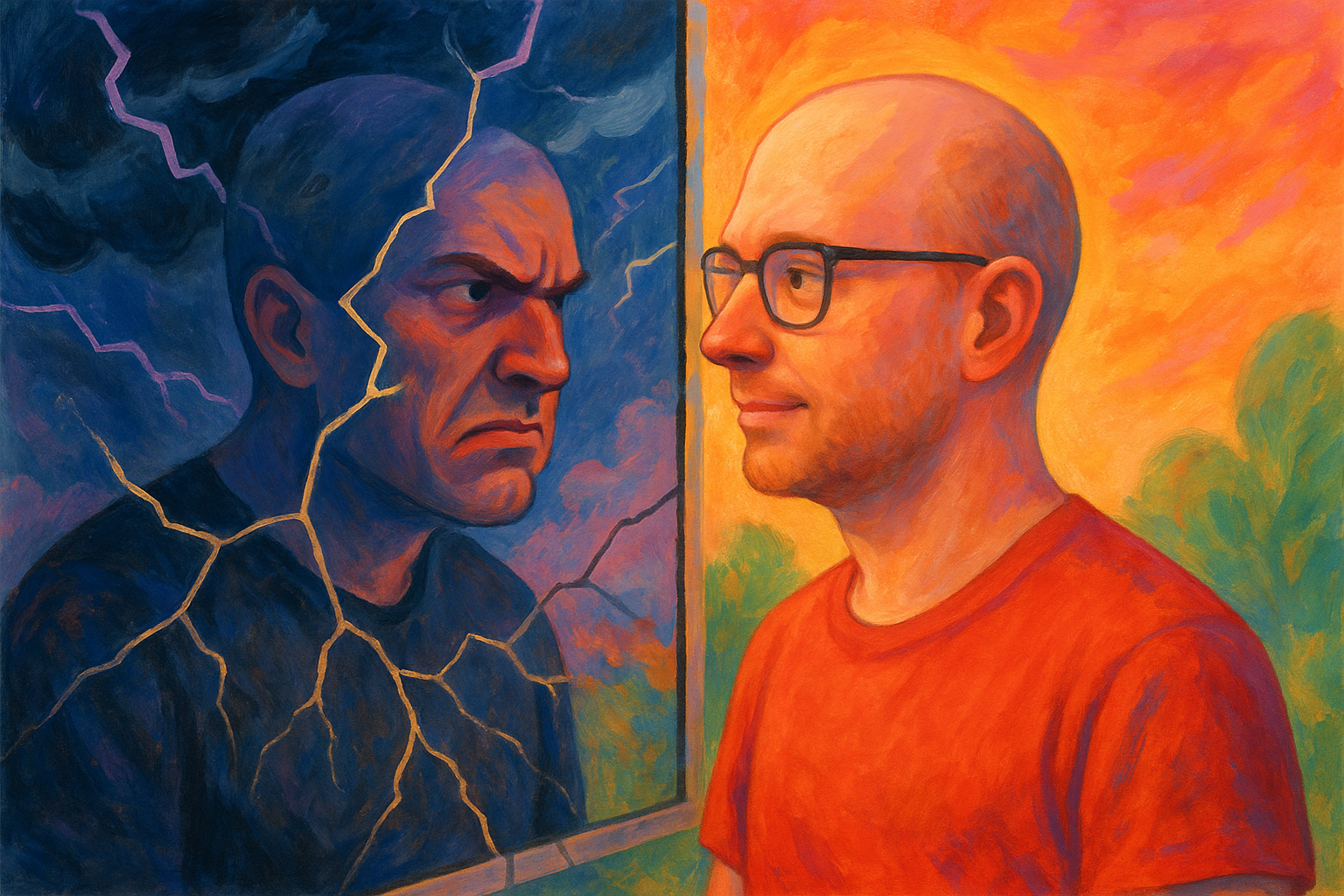
    For me, it’s been the purest demonstration of the phrase “Others are your mirror.”

    This person—let’s call him Simon—has been incredibly toxic.

    He’s insulted me deeply, hurled cruel names, and used gaslighting, manipulation, and blame-shifting to twist reality.

    At times, he cloaked control in false compassion, pretending to help while subtly undermining me.

    He projected his insecurities onto me so persistently, I began to doubt my own sanity—wondering if I really was as terrible as he claimed.

    Thankfully, I’m in a strong place mentally right now. I can see how someone more vulnerable could be shattered by Simon. In fact, I know he’s left a trail of broken relationships behind him. People abandon him left, right, and center—the moment they get close, his toxicity flares.

    At his worst, Simon has been absolutely vile. He ticks nearly every box for narcissistic traits. He can’t handle even mild criticism. When I offered gentle, constructive feedback, his ego erupted, and he lashed out with shocking viciousness. He claims to want self-improvement, but when real opportunities arise, his ego slams shut. Growth is blocked at the gates.

    And yet, despite all this, I feel deep compassion for him. I’ve read enough about narcissists to understand where this behavior might come from. He’s going through hell: job loss, depression, drug use. I’ve been in a scarily similar place. So my empathy kicks in hard. Even though he’s been monstrous, I see pieces of myself in him.

    After clashing with him multiple times, I gave it one final try. I knew by then that avoiding narcissists is usually the wisest route—they rarely change—but I extended one last olive branch.

    It lasted less than a day. He snapped it in half and flung it back in my face.

    It feels like I’m some kind of unbearable truth agent to Simon. His soul just isn’t open enough to withstand my presence. I’m far from perfect, but I’ve worked hard on myself. I try to stay humble, self-reflective, and growth-oriented—and that’s like kryptonite to someone with such a fragile, inflamed ego.

    So now, Simon is blocked. I’m proud I tried. It didn’t work. And for my own well-being, I had to let go.

    I’ve grieved the friendship that might have been. Because, believe it or not, Simon has redeeming traits in spades. He’s brilliant, creative, charismatic. He seems to care about others—though I wonder if that’s driven more by ego than empathy.

    So what good came out of all this chaos? Watching Simon’s worst traits has helped me examine my own.

    Don’t get me wrong—I’m pretty sure I’m not a narcissist, and I don’t think I’ve ever been as vile as Simon.

    But. I have lashed out. Especially when my ego’s taken a hit.

    Back when I was addicted to drugs, I had a devastating fallout with one of my oldest friends—let’s call him Anthony. He was deeply concerned about my behavior. He had a young son, and didn’t trust me—with good reason.

    I’d promised I wouldn’t take drugs on a lads’ holiday, then did it anyway. I betrayed his trust. Later, when we tried to arrange a meetup, Anthony did something incredibly difficult: he told me I wasn’t welcome at his home. He couldn’t risk me having drugs on me—in case his son found them.

    Anthony tried to handle it with kindness and care. But it crushed my ego. My best friend thought I was a danger to his child.

    I exploded. I did a Musk. In a blaze of rage, I told my best friend to go F himself.

    That ended a fifteen-year friendship. I was already depressed, but after that, I spiraled into suicidal depths. Deep down, I knew I was to blame—but my ego couldn’t take it. Blaming Anthony was easier than facing myself.

    He wouldn’t speak to me for years. Eventually, we reconciled, but something had died. The warmth was gone. He kept me at arm’s length, understandably. Now, we don’t speak at all. It’s clear he’s given up on me again. That still stings, but I accept it.

    So can you see why I felt a connection to my new friend Simon?

    Watching him lash out recently awakened something primal in me. It reminded me of my worst moments. And I never want to go there again. I want to master myself; build emotional intelligence; stop letting my volatility hurt people.

    Simon showed me how bad it can get when you’re spiraling—and it’s terrifying.

    All my life, I’ve struggled with emotional volatility. I don’t lose my temper often, but when I do, it’s nuclear. Words are my sword, and when I swing carelessly, the damage is brutal.

    Which brings me to a truth I’ve come to believe: Strong men don’t lack the capacity for destruction—they master it.

    They walk with a sheathed sword, drawing it only when absolutely necessary. It’s restraint, not weakness. It’s honor. It’s the way of the gentleman, the noble warrior. My blade is my voice—sharp, but it’s best when kept in check.

    Weak men lash out at the slightest wound. I refuse to be a weak man.

    Meeting someone as damaged as Simon has clarified my mission. I must continue to heal. I must shed the worst parts of myself. I saw my shadow in him—distorted and exaggerated. It horrified me. And it inspired me to rise above it.

    I’ve started psychotherapy. I’ve even been using ChatGPT as a kind of therapist—surprisingly helpful. This past month has been a surge of self-development. And I have Simon, of all people, to thank.
    Is he doomed to remain toxic? Maybe. The scientific literature suggests that the odds aren’t good. But it’s not my burden anymore. He didn’t want my help. I have to put my own well-being first.

    By cutting him off, I protect myself from future pain.

    And in doing so, I’ve gained greater empathy for those who once cut me off. They saw someone chaotic, unsafe, emotionally destructive. I wish they could see how much I’ve changed in the last ten years. But I respect their choice to keep their distance.

    We can’t change the past. Some bridges are too obliterated and irradiated to ever rebuild.

    But if we choose humility and self-reflection, we can always choose to grow.

  • Escaping a Toxic Relationship: My Intuition Was Right All Along

    Escaping a Toxic Relationship: My Intuition Was Right All Along

    “Owning our story can be hard but not nearly as difficult as spending our lives running from it.” ~Brené Brown

    What is the exact point when you realize you are in a toxic relationship? For me, it was a process that took almost a year. I thought I was mindful and “awake.” I did have an internal dialogue with myself, but I had a thick layer of deception around me. Today, I call it a fog because I’m on the other side, and I see much more clearly.

    Looking back, I see that my inner voice was guiding me, but I saw it as self-sabotage then because a part of me wanted to prove that I was right, that I was worthy, that I was a good and kind person who only wanted love and family. Unfortunately, the more I looked to get love from the outside world, the further I was from the source.

    Today, I can confidently say that I can sense the difference between my intuition and the distracting voice of my ego, who wants to be right. Now I can finally hear what my inner guide is telling me. But it wasn’t always this way.

    As a result of the separation from the toxic relationship, I lost everything. I had to give up my old lifestyle to save my soul. I had to let go of my home and all my belongings, escaping with just one bag of clothes and my laptop.

    I lost money in a property settlement and had no car or place to live. I found a refuge in a women’s shelter with my eight-month-old baby and started my new life from a humble place. But I found something through all this—a connection to my inner voice, a connection that gave me the strength to accept the loss, own my story, and say goodbye to the old version of myself. And I’d like to share with you the process.

    September 2021

    Me: Wow, this is beautiful! I’ve always wanted to try new things. I can get used to this kind of life. I feel this thrill in my tummy. It’s fun, it’s exciting, it’s new! What is this? Love?

    My inner self (very quietly): This is a carousel.

    Me: Well, I don’t know what you’re talking about. This is fun. He already said he loves me. I told him it’s too early to say that; we barely know each other. So, I asked him why he’s in love with me. And do you know what he said? “Because you are you.” He gets me; finally, someone who loves me for who I truly am. No doubt, no proving. I’m so lucky.

    My inner self (very quietly): Watch out—it’s too good to be true.

    Me: I don’t know what you’re talking about. I’m finally alive again. This is it. I think I’m in love with him too. He already wants to move in together and have a child. He chose me, and I’m so excited. So please stop being so negative and let me lead.

    Six months quiet

    Me: He’s what I wanted. He’s spiritual and he meditates. He looks after himself, and he’s so assertive and ambitious. He listens to me when I talk. But then when I ask for something, he says, “I think you should check your energy before you speak to me.” It’s really confusing. There are ups and downs, but I guess every relationship is like this… (very quietly): Isn’t it?

    My inner self (very quietly): No.

    Me: What do you know? You haven’t even had a healthy relationship before, so how would you know?

    My inner self (lovingly): Neither have you, sweetheart.

    Me: Well, to be honest, I feel like I can’t get a word in sometimes. It’s never a good time to mention things that are important to me, or he just dismisses the topic quickly, and I don’t know how to introduce it again.

    I guess I just have to get better at communicating. Let’s do some courses for that. I always get this feeling in my stomach—massive pain, like a black hole, when I sense I’m losing him, and I fear that I’ll die not having him in my life. I can only calm down when I know things are good between us and when he hugs me again.

    I’ll just lean in with more love and kindness, and I’ll figure it out. He’ll see how much I love him even though he’s stressed and doesn’t have time for me anymore. He’ll see that I’m here for him through good and bad, and then he’ll be here for me when I need it. I’m sure we just hit a rough patch, and all will be good again soon.

    Actually, stop being so negative. I have everything I’ve always wanted. Now, with the baby on the way, we’ll make such a wonderful family, and I’ll see what a great father he’ll be and how much fun we’ll have.

    Six months later

    Me: It’s still kind of up and down, isn’t it? Some days things go well and we’re happy, but then comes a big fall. One day he says that I’m the best partner he’s ever had because all his exes are crazy. Other days, he comments really hurtfully on what I say or who my friends are. And it goes round and round.

    My inner self (very quietly): Like on that wheel?

    Me: What wheel? The Power and Control Wheel I saw? Nah, not like that. I wouldn’t do that to myself. I was already in an emotionally abusive relationship, and I wouldn’t be so stupid as to repeat it.

    Things are fine. I just need to be nicer to him. It’s kind of my fault. It must be my hormones. It will pass after the birth. He’ll be with us at home, and we’ll restore the peace and calm. Easy. I feel so much love for him. I won’t ruin this relationship by being too sensitive. I’ve got this. I’ll do more visualizations and affirmations.

    Three months later

    Me: Hello, are you there? I’m so confused. I think I’m losing my mind.

    My inner self (very quietly): I know, honey.

    Me: What’s going on? My life is a mess. I don’t know what to do. I don’t know why I’m ruining everything all the time. I used to be fun, happy, and confident… Now all I feel is disoriented and dizzy.

    My inner self: A bit like on a carousel?

    Me: No, I’m not. I told you—he’s helping me. He’s the best. I want him. I don’t have anyone else. And I love him so much I can’t imagine my life without him. It’s impossible. He’s got all the money, he’s signed on the lease, the car is under his name, and I’m not even employed…

    My inner self (patiently): Alright, honey. Go again. I’ll be here when you need me.

    Two months later

    Me: I don’t recognize my life or myself anymore. Everything is kind of fuzzy. I’ve had this headache for the last week or so. I can’t feel or think clearly; I can’t feel my body. I’m unwell.

    My inner self: I know, my dear.

    Me: What’s going on? Please help me, someone.

    My inner self (very quietly): You are on a carousel.

    Me: Why do you keep repeating that? I told you he’s helping. Well, sometimes. He’s just a bit stressed, but it’s also my fault because I’m not as much fun as I used to be. I don’t know why I feel so numb or why I can’t just laugh anymore.

    He’s the only person left. I don’t see anyone else anymore. I’m scared to speak to anyone; no one would believe me anyway. My life is so extreme compared to last year, with court cases and police and debts and signing documents I don’t understand. What am I doing wrong? Why is this happening to me?

    My inner self (barely loud enough to hear): Have you noticed the same things happening over and over?

    Me: Yes. But I’d die not having him. Stop telling me he’s the problem when I know I’m the problem.

    One month later

    Me: Are you there?

    My inner self: Of course.

    Me: The same things are happening over and over again. I thought he was helping and that I was crying every night because I’m depressed and I have so much drama in my life, but I don’t bring up any of that. He always talks and talks until I feel like the worst person in the world.

    The other day he came to me with an idea to have children with other women because he wants more kids than I can give him since I’m turning forty this year. He claims it’s because more women should have children with such fantastic genetic material. This is too much for me, and it’s not getting better but harder and faster. But how do I get out? Please help!

    My inner self: Are you ready?

    Me: I think so.

    My inner self: Then jump.

    Me: Where?

    My inner self: Off the carousel, sweetie.

    Me: Can you slow it down, please!? This is going to hurt.

    My inner self (most lovingly): It will, honey, but you are not alone. I’m here. I will guide you and help you heal.

    And so I did.

    Four Takeaways from Those Conversations with My Intuition

    First: Intuition is usually quiet, gentle, and subtle. I recommend going back in your memory and noticing when you heard your intuition. What was the quality and the tone? What else can you notice and learn about it?

    Second: Intuition doesn’t argue. It often disappears when you disbelieve or argue back. It’s very sensitive to criticism and attitude, meaning what seems to be right or more logical or more convenient. If you want to be guided by intuition, you have to let go of thinking that you ‘know.’
    Third: It grows stronger if you connect with it like your life depends on it. If you surrender and quiet your overthinking, you will be surprised by how quickly your intuition can guide you to where you need to go.

    Fourth: Your relationship with your intuition is like any other relationship; it needs time, care, and attention to build it solid. But once you do, you’ll have an invaluable asset for life.

  • Life After Abuse: A Story of Hope and Healing

    Life After Abuse: A Story of Hope and Healing

    TRIGGER WARNING: This post deals with an account of domestic violence and may be triggering to some.

    Growing up, I learned early on how to be aware of the little things that spoke volumes. My mom wasn’t just an alcoholic; she was also bipolar, and I never knew if I’d come home to a mom who was cheerful and loving or to one who would say hurtful things and obsess over cleaning.

    I grew up in AA, surrounded by people trying to rebuild their lives. My parents were both recovering alcoholics, and while I didn’t fully understand it at the time, it made sense later in life. The environment made it easier for me to fall into drugs.

    When I was fifteen, my first experience with meth came at the hands of adults who, in hindsight, should have known better. At the time, I couldn’t understand why they would lead me down that path. However, as I’ve gone through my healing journey, I’ve come to realize that those individuals were deeply broken themselves. They were trapped in their own struggles, in a place of darkness and pain, and they simply didn’t know any better.

    For six years, meth controlled my life. My addiction led me into a toxic, abusive relationship with my now ex-husband.

    He was supposed to save me. He was my knight in shining armor, my prince, the person I thought would protect me, love me, and help me heal. He was once my best friend, someone I trusted more than anyone else. But all of that changed.

    I remember the first time he hit me. It was a moment I’ll never forget. I had broken his picture on purpose, trying to send some sort of message, trying to make him feel the anger and hurt I had inside me. But in return, he punched me in the face.

    I went down, stunned, but then I got up. I hit him back. He hit me again, and I got up again, hitting him back in an attempt to defend myself. This went on a few more times before I couldn’t get back up anymore. He stood over me, telling me, “Stay down, stay down,” and in that moment, I felt broken.

    It was the first time I truly saw how deeply our relationship was damaging me, but even then, I couldn’t see a way out. There was something inside of me that had already started to shatter, piece by piece. It was as if the very foundation of who I was was crumbling, but I couldn’t figure out how to rebuild it. I had spent so much time in survival mode that I couldn’t recognize the destruction.

    The abuse had taken its toll on me, eroding my sense of self, and I didn’t know how to escape the cycle. I had once believed in this person, believed that he would protect me, but in that moment, I saw that he was the very one hurting me. Yet, I was still stuck in the relationship, still hoping for a change that would never come.

    Trauma has a way of blurring the lines between love and pain, and in that moment, I couldn’t see that the person who was supposed to be my protector had become my abuser.

    It was a crushing realization, but at that time, I didn’t know how to fight my way out. I was trapped in a world of emotional and physical turmoil, and it felt like a prison I couldn’t escape from.

    I don’t know why I ever allowed it. I know that the person in that relationship was not me. The things I did and the things I allowed were not who I truly was. I was not weak because I was in that relationship, and I was not weak because I stayed.

    Abuse and trauma do things to you that you would never imagine. It’s not just the emotional scars that leave a mark—it’s physical, too. Your body becomes so attuned to constant stress, to the fight or flight that never stops, that it begins to break down.

    The tension, the fear, and the anxiety all build up and stay with you. Your heart races, your muscles tighten and stay that way, your sleep is restless, and your body is in a constant state of exhaustion. Trauma doesn’t just affect your mind; it takes a toll on your body, making you feel physically sick, tired, or overwhelmed without knowing why.

    You are so broken down, piece by piece, that you are just stuck. Every part of you—your body, your mind, your soul—becomes conditioned to expect pain. Your sense of self diminishes, and you start to believe that this is the way things will always be.

    But it’s not weakness. That’s strength. That is survival. The strength to keep going, even when every part of you is begging to give up.

    Trauma rewires you. It changes how you see the world and how you see yourself. It takes away your ability to trust, to feel safe, to love without fear. It leaves you questioning your worth, but deep down, there is a flicker of strength, a small voice telling you that you are more than the broken pieces. It tells you that you are worthy of healing, worthy of peace. And eventually, you start to listen to that voice, even though it feels so small. That voice, that strength, is what ultimately pulls you out of the darkness.

    Our relationship was destructive on both sides. His hands were violent, and my words were sharp, cutting deep into both of us. It wasn’t just the abuse—it was the shame, the hopelessness, and the feeling that things would never get better. But there were also moments of love, moments that reminded me of the three beautiful kids we brought into the world. They were my light, the reason I kept going even when everything around me seemed to be falling apart.

    I couldn’t bear the thought of them growing up in that environment, witnessing violence, and believing that it was normal. My son, only eleven, had to hit his dad with a broom to get him off me—it hit me harder than anything. It wasn’t just about me anymore; it was about their futures.

    If I stayed, I knew my daughters were going to experience the same kind of abuse. They would believe that they deserved it, that this was what love looked like. And my son—he was learning that this was how men treat women. The cycle was being set. It was a terrifying realization, and I couldn’t let it happen.

    That day, when my son stood up for me, it was as if I saw the future laid out in front of me—a future where my children, like me, would be broken.

    That was the moment I knew I had to leave. I knew that getting out was the only way I could protect them—and heal myself in the process. If I didn’t, I would be condemning them to the same broken, destructive life I had lived, and I couldn’t allow that. They deserved better, and so did I.

    We stayed together for twelve years, but eventually, my ex took the kids. I was too scared to fight for them, too broken to believe I could do better. For a long time, I carried the weight of that loss, feeling like I had failed them. But I’ve spent the years since working to repair the damage, to rebuild the trust, and to be the best mom I can be for them.

    After my ex took the kids, I spiraled into a place darker than I ever thought possible. My heart ached, not just from the loss of my children, but from the emptiness that consumed me. I turned to alcohol, a familiar crutch that numbed the pain for a little while. But the numbness never lasted, and the deeper I sank, the more I made terrible choices. My life became a series of bad decisions, one after another, and every one of them felt like a reflection of how broken I was inside.

    My ex-husband used my kids to hurt me. He told them I didn’t want them, twisting the truth to create more distance between us. He took any money I sent them, using it to make me feel powerless, like I had no control over anything, not even the small ways I tried to help.

    When they called to talk to me or I called them, the name “incubator” was what they saw on the phone—it was the name my ex had saved for me. Every time they called, or I reached out, I was reminded of how little I seemed to matter, how distant and cold I had been reduced to in his eyes.

    For a long time, I only saw my kids for six weeks in the summer. The summers were nice, but I didn’t have a car or money, and I couldn’t offer them experiences or fun. I wish I could’ve done more; I wish I could’ve been better for them. I wanted to give them everything, but I couldn’t. It was heartbreaking, knowing I was limited in so many ways, knowing my kids deserved so much more. I felt like I was failing them every single day.

    I finally reached a point where I couldn’t just keep wishing I had done better. I had to take action. I knew I had to work to rebuild the relationship with my kids and show them that, despite all the mistakes I made, I could still be there for them. I started finding ways to improve, to create a stable life, even if it meant small steps forward. I realized that as long as I was trying, I wasn’t lost. And if I could get myself to a place where I was better for them, then that was all that mattered.

    I was diagnosed with complex PTSD, and dealing with it has been a long and painful journey. I still deal with flashbacks and nightmares that take me back to moments I wish I could forget. There are times when I still don’t feel like I can make my dreams come true. I struggle with the feeling that I don’t deserve it, that I’m not worthy of a life beyond the pain I’ve known. Sometimes, I continue to live in fear, afraid of failing, of being stuck, of letting the past define me.

    But I don’t give up. I keep pushing forward. I started with therapy. I began looking inward, facing the things I’d been avoiding for so long. But therapy wasn’t enough. It wasn’t until I started seeking something deeper, something spiritual, that I began to feel like I was truly healing.

    I began exploring meditation, shadow work, and candle work, and these practices began to offer me more than just a temporary escape. They became tools to reconnect with myself in ways I had never imagined.

    Healing wasn’t just about working through the pain—it was about building a deeper connection to something beyond the physical. It was about tapping into a power greater than myself, learning to trust it, and surrendering to the process.

    These spiritual practices helped me find peace and clarity, but more than anything, they helped me rebuild my sense of self-worth.

    For so long, I thought I was just a broken, empty shell of a person. But I wasn’t. I was a strong, loving, and amazing person. I just had to find her again. And that’s what I’ve been doing—slowly but surely. It hasn’t been easy, and it hasn’t been quick, but with each step, I’ve been reconnecting with the woman I was always meant to be. And through it all, I’ve realized that I am enough, just as I am.

    I worked for years, digging into the deep, dark stuff. I thought it all stemmed from my broken marriage, but I soon realized it was much deeper than that—it was rooted in a lifetime of struggles, traumas, and wounds.

    It was years of healing, and there were times when I wanted to quit. The weight of it all felt suffocating, and the journey seemed too long to keep going. But I couldn’t quit. I had to heal for others—more than for myself. I had to show my kids that we could overcome anything, that we could build a new life despite everything we’d been through.

    And as I healed, I also worked on healing my relationship with my kids. I knew I had to be present for them, not just in the physical sense but emotionally and mentally as well. I made sure to show up as the mom they deserved, someone who could be there to listen, to support, and to love them unconditionally.

    The spiritual practices I had learned gave me the tools to create these deeper connections with my children, helping me become the mother I had always longed to be. With time, the bond between us grew stronger, and I began to see that the love we had for each other was unbreakable, no matter what had happened in the past.

    I got a job. I started paying my own bills. I dug myself out of the hole that I had created, a hole that was shaped by both my actions and what I had allowed to be done to me.

    It wasn’t easy, and it didn’t happen overnight. But each day, I became a little more independent, a little stronger. I took responsibility for my life, for my choices, and for the changes I needed to make. And though I still have moments where I struggle, I know I’ve come so far, and I’ve proven to myself that I can rebuild.

    And then, I went back to school. I knew I had finally figured out what I wanted to do with my life. I started working toward a degree in psychology, a field that had always fascinated me and a way I could help others the way I had helped myself.

    I realized that my own healing journey had sparked something inside me. It wasn’t just about recovering from my past; it was about using my experiences to make a difference in the lives of others. I knew this was my path, and it felt like everything I had been through had led me here.

    I will continue to work on myself, healing the parts of me that still need to be healed. We are always working to be better, always continuing to heal, and we are not alone in this world. So many people have stories like mine, stories of pain and survival, and I know we can all rise above it together.

  • 4 Lessons I Learned from Leaving a Toxic Relationship

    4 Lessons I Learned from Leaving a Toxic Relationship

    “It takes strength and self-love to say goodbye to what no longer serves you.” ~Rumi

    I promised myself at a young age that when I got married, I was not going to get divorced, no matter what! My parents had divorced when I was five, and I knew that I didn’t want to put my kids through what I’d experienced as a child who grew up in a “broken” family. I wanted my kids to know what it was like to live in a house with both their parents present and involved in their lives.

    So, when I found myself seven years into my marriage, sitting in a therapist’s office wondering if my husband and I were going to make it, I had no idea what I would be facing if I had to navigate life, let alone parenthood, without my husband. How does one break free from emotional and verbal abuse without it permanently affecting who they are as a person?!

    All I could think about at the time was my three beautiful girls, who deserved to have happy parents in a happy home living a happy life!

    From the outside, our lives looked that way, but our reality was nothing of the sort. The yelling, the name-calling, the threatening, the withholding, and the verbal and emotional abuse were taking their toll on all of us until one day, after five years of trying to make it work, I had had enough.

    The night I will never forget, almost twelve years into my marriage, we were all sitting at the dinner table, and like every time before, with no warning, a switch flipped, and the yelling began. But this time, I packed up my things and I left. And this would be the last time I would leave; after the three attempts prior, I was lured back with promises that everything would be okay and we would make it work, but this time was different. I didn’t go back.
    Okay, I was out; now what?! Little did I know that leaving would be the easy part. Some of the most trying and challenging times of my life happened after I was able to finally break free. But I didn’t know that learning how to love myself again and believe that I was worthy of good things was going to be the real challenge, especially after what I’d faced.
    The storms that happened once my marriage was over would shake me to my core. One particular time was when my middle daughter, only thirteen at the time, was able to find her way down to Tennessee from central Wisconsin without anyone knowing where she was or if we’d be able to find her.

    My daughter despised me for breaking up her family and wanted to get as far away from me as she possibly could, even if it meant entrusting strangers to drive her in a car for fifteen hours while they made their way to Tennessee. Waking up the next morning after she vanished and reading the “goodbye” note she’d left on her bed, I honestly did not know if I would ever see her again.

    To say I was in panic mode would be an understatement for how I felt during the next twenty-four-plus hours while we—my parents, my friends, my siblings, the police, and even strangers—attempted to find my daughter. I can think of no worse feeling in the world than that of a mother who is on the verge of or has just lost her son or daughter. I wondered, “How can this be happening? Haven’t we already been through enough?”

    Exactly twenty-six hours after my daughter had found her way into that stranger’s vehicle, I received a phone call from a deputy in a county in Tennessee saying they had found her. Thank you, Lord, was all I could think—someone is watching over us!

    I realized then it was time to figure out how to love myself again and heal from my divorce so I could be more present for my daughters.

    Are there things I would have done differently? Absolutely! But you can’t go back and change the past; the only thing you can do is learn from it and do your best not to make the same mistakes going forward.

    The best thing I did for myself was sign up for a subscription that gave me access to hundreds of workout programs I could do from home (since I was the sole provider of my daughters at the time). As I completed the programs, I saw improvements in not only my body but also my frame of mind, which pushed me to want to be better and do better with each one after that—not just for me but for my girls also!

    Being able to push through tough workouts and seeing that I could do hard things that produced positive results helped build my confidence at a time when I needed it most! This newfound confidence boost encouraged me to keep pushing forward, even in the eye of the multitude of storms I was facing, which allowed me to start to heal.

    The workouts were just the beginning for me. Ultimately, they led me on a path that would help me discover how to love myself again.

    When I left my now ex-husband, I had no idea what I would be faced with until I was finally able to break free for good. But now that I have been out and have been able to transform my mind and love my life again, I realize just how incredibly powerful some of these lessons that I’ve learned truly are.

    1. Forgiving is the first step to healing. 

    A lot of people believe that forgiveness means you are condoning someone’s behavior, but that is not at all what you are doing when you forgive. Forgiveness is intentionally letting go of negative feelings, like resentment or anger, toward someone who has done you wrong.

    Choosing to forgive when you’re ready means that you are making a conscious and deliberate choice to release the feeling of resentment and/or vengeance toward the person who has harmed you, regardless of whether or not you believe that person deserves your forgiveness.

    You forgive to allow yourself to move on from the event, which also allows you to fully heal from it.

    2. Mindset matters.

    Your thoughts shape your reality, so if you think you don’t deserve good things, you won’t be able to attract them into your life.

    When in a toxic environment, negativity has a way of clouding your judgment, which makes breaking free more difficult. But once you leave and start focusing on a growth mindset and optimism, everything changes. When you focus on the good, the good gets better. This is the foundation of how I rebuilt my life after breaking free from the toxicity of my marriage.

    3. It’s crucial to listen to your gut.

    Ignoring your intuition leads to situations you regret more times than not. Learning to trust my inner voice, the one that whispers to me when something isn’t right, has been my greatest guide to making better choices.

    4. Positive change starts with self-love.

    Self-love is not just a buzzword. It’s the armor you wear against people who try to break you down. It’s telling yourself that you deserve better, even if you don’t fully believe it yet, and taking action to create better, even if it’s just one tiny step.

    For me, self-love started when I left my abusive ex-husband and then grew when I started taking care of my body. Sometimes even the smallest act of self-care can help us feel more confident in our worth.

    If you’ve been in an abusive relationship too, remember—you can rebuild and thrive in a life you love!

  • What I Know About Healing Now That I’ve Ended Contact with My Mom

    What I Know About Healing Now That I’ve Ended Contact with My Mom

    “Not all toxic people are cruel and uncaring. Some of them love us dearly. Many of them have good intentions. Most are toxic to our being simply because their needs and way of existing in the world force us to compromise ourselves and our happiness. They aren’t inherently bad people, but they aren’t the right people for us.” ~Daniell Koepke 

    If someone had asked me a year ago if I would ever cut contact with my mom, my answer would have been a definite no.

    After reconnecting with my dad in 2020 (we didn’t speak for over eleven years), I decided to handle this parent business differently.

    Part of me strongly believed that if I was healing and doing this inner work right, I would be able to find a way to coexist in a relationship with my parents, and that I had to do that at all costs.

    My mom and I were always very close. Although our relationship was toxic, we had a bond that I believed was unbreakable.

    She used to say that I was a rainbow baby since she lost my sister to a shooting accident before I was born. After my sister died, they told her she would never have more children. One year later, she got pregnant, and I was born. Everyone was saying that she was beside herself, and I believed it.

    Although there was a lot of abuse and violence happening in our household, I saw her as someone who was fighting for her life to move beyond the trauma of her past while losing it to a bottle of vodka to numb and escape.

    I believe this is why I always had this unsettling drive not to give up and be defined by the past while never shying away from addressing it. I saw the consequences we face when our souls are unhealed and how unaddressed trauma drives everything.

    The first time I clearly saw how toxic the relationship with my mom was and how it affected me was when I read the book Silently Seduced: When Parents Make Their Children Partners by Kenneth M. Adams, in 2020.

    It was the most difficult but revolutionary book that I had ever gotten my hands on. I remember times when I had to put the book down and take deep breaths to stomach the deeply confronting truth I saw myself in. Reading this book marked a breaking point for me when the dynamic between my mom and I started to change.

    As the years went on, her alcohol abuse became uncontrollable. I think she lost any desire to fight her addiction, which she always had before. Although we live on two different continents, I began to wake up to Facebook messages from her attacking me and calling me names while demanding I send her more money.

    Therefore, in December 2023, after pleading with her repeatedly to seek help and threatening her that I would stop talking to her if things continued the way they were, I decided to act on my word. I ended my contact with her for the first time. Since then, we haven’t been in touch. Here are four things this decision and reflecting on it periodically taught me about healing.

    1. Pain doesn’t always subside.

    Someone once told me that the pain that I feel regarding my mom will eventually subside. Although I am doing a much better job at dealing with this situation internally, I understand that pain of this sort doesn’t always subside. I must learn to carry it with grace.

    When we look at the person we love destroying themselves while not being able to do anything, how can we let go of the pain we feel? This pain comes from love, not from others doing us wrong. And those, to me, are two different types of pain. Although learning how to deal with our emotions is up to us, when we love, we also hurt.

    The two most empowering practices that have been helping me are accepting things I can’t change and allowing myself to release what I feel without stuffing it up. I don’t try to hold my emotions in or lie to myself that I don’t care when, in fact, I do. I choose not to shy away from the emotional discomfort and to take time to reflect on how I am progressing with this no-contact situation as I move through it.

    I also see my pain as a sign of the deep love I am capable of. Understanding that my capacity to feel pain reflects the capacity to feel love helps me ground myself and, in a way, befriend the pain instead of rejecting it.

    2. It’s important that we honor our healing.

    There is no right or wrong way to heal. It is one of the most complex and imperfect paths we will ever walk, and honoring every step of it is the only thing we “should” do.

    For all those years, I felt immense guilt that I couldn’t help my mom. I felt like a failure, working with women from all over the world to heal themselves while being powerless to help a woman who gave birth to me.

    Only those who have ever dealt with an addict close to them can understand the pain this brings. After some time, we realize that the only thing left to do is to sit back and watch the tragedy unfold, as if we are watching some heart-aching movie, while understanding that only an addict can help themselves.

    It took me many years to start accepting that I couldn’t fix this situation while paying attention to the pain I felt.

    Often, when a person struggles with alcohol or drug abuse, the focus is, understandably, on them. However, people around them are affected as well. For as long as I can remember, I battled with the desire to turn my back on my mom while shaming myself for wanting that.

    Eventually, I started to pay attention to the effect this had on me and stayed away from people who said things like, “But it’s your mom.” I was and am fully aware that this is my mom, whom I love deeply. I am also mindful that these remarks come from people who’ve probably never stood in my shoes.

    As Brené Brown said, “You share with people who’ve earned the right to hear your story.” This is especially true when it comes to our stories of shame. There were times when I thought about how easier my life would have been if my mom died and I didn’t have to deal with her alcohol. A few moments later, I felt paralyzed by shame, judging myself for having had these thoughts.

    Today, I choose to own my story of shame and work on forgiving myself. I understand that these thoughts come from desperation and a desire to escape her addiction, which, in a way, I did when I moved to the U.S.

    Recognizing the source of it while offering myself compassion and forgiveness helped me work through my unmet expectations of her recovery while becoming more resilient to face our dysfunctional relationship.

    3. Sometimes we have to love people from a distance. 

    One of the hardest lessons I learned on my healing journey was this: love doesn’t equal presence. Requiring presence to love is attachment.

    Eventually, I understood that I could love my mom while choosing not to be around her because it isn’t healthy for me. This, of course, came after a series of inner battles, and it certainly stretched me beyond my comfort.

    The biggest battle for a person who is in contact with an addict is to choose when to leave or when to keep fighting for them. This often comes with doubts because we don’t want to give up on them, and we constantly question whether we did everything we could to help.

    But when we choose to distance ourselves while keeping love in our hearts, we are honoring our mental health while still loving those who struggle. We understand that their paths are not ours and that our mental health, healing, and life matter as much as theirs.

    4. We heal better when we choose to understand. 

    One thing that helped me while healing my relationship with my mom was looking at her life from a place of curiosity and understanding.

    At first, I used this understanding to excuse her behavior while holding lots of anger and resentment toward her. Although I would call her every day and send her money every month, I resented her for the mother she was. As I progressed in my healing, I realized that I could only understand her actions and heal the pain from my past if I honored what was true for me. And that was to distance myself and go no contact.

    It helped me to look at her with more compassion while considering everything she had been through as a child and the fact that she had done no healing work (coming from the era where mental health was taboo). It also helped to recognize that she really tried. I know she did. And I think knowing that hurts the most.

    Reflecting on my mom’s life and understanding her while healing myself helps me to detach from her actions while knowing that whatever she did, it wasn’t about me. It wasn’t because she didn’t love me but because she didn’t know how to handle her own demons.

    It also shows me the importance of making healthy choices for myself. In a way, I am learning to hold her in my heart while, at the same time, holding my well-being there as well. It teaches me that there isn’t a right way to heal while navigating through our recovery.

    At the time of this writing, my mom and I haven’t spoken in seven months. As I am preparing to come home for Christmas, I am planning to reach out to her to meet and talk face-to-face.

    Although I have no idea how the conversation will go, I know that whatever will be true for me at that moment, whether to reconnect or keep things as they are, I will obey what my soul tells me.

    Because listening to what we truly feel and then honoring it, regardless of what it looks like on the outside, is the only thing that heals us and sets us free.

  • How to Recognize a Toxic Relationship and Know When It’s Time to Leave

    How to Recognize a Toxic Relationship and Know When It’s Time to Leave

    “Your heart knows the way. Run in that direction.” ~Rumi

    Have you ever found yourself questioning the health of your relationship, unsure if what you’re experiencing is normal or if it’s veering into toxic territory? It’s a common dilemma that many of us face at some point in our lives.

    But how do we know when it’s time to walk away?

    Toxic relationships can be insidious, often starting out innocently enough before gradually morphing into something destructive and harmful. The warning signs may be subtle at first, but they can become impossible to ignore over time.

    Flashback to 2016, I was traveling the world with my best friend. I was having so much fun at only twenty-one, and the whole trip felt like a dream.

    One night on my twenty-first birthday, I met a beautiful local boy playing drums in a bar. We had a magnetic and electrifying connection, and it really felt like we were soul mates.

    He was kind, sensitive, and understanding. He looked after me, too, buying me food and coconuts when I said I was hungry. I fell madly in love.

    But time passed, and the relationship came to a heartbreaking end when I realized I couldn’t live there forever. I had to go to university and go back to see my family.

    Seven years passed, and we both had fleeting lovers but kept in contact. Neither of us ever found a connection with another like ours.

    He was my reference point. The one I compared everyone to. “But they don’t love me like he did!” I was frequently in tears, at least once a month, even seven years on, to my parents. Crying my little heart out, petrified that I would never find a love like him again.

    Fast-forward to this past year, and I had the opportunity to go back. We said we were going to be best friends… but obviously, that didn’t happen. We immediately fell straight back into our deep love for one another.

    It was wild to think that after seven years, we were back here again, still tangled up together and wanting this to work.

    The first few weeks were perfect. Full of so much love, joy, and laughter. Until we went out one night, and we were both very drunk. I saw a side to him I never had seen before.

    He got so angry with me for no reason, blaming my culture for ruining their culture, and was so fuming mad that I started to become really scared.

    Who is this person? Why is he so angry? Have I triggered this? What did I do wrong?

    I went to bed feeling pretty gobsmacked and terrified about what I had just witnessed and prayed that it was a one-time, drunken mistake.

    But as much as I tried to tell myself that, the gut-sinking feeling in my stomach had already begun.

    I wish I had a happier story to tell, but frankly, I do not.

    We carried on full of love and magic but also with these drunk outbursts of anger and deep, deep resentment, clearly caused by a lot of unresolved relationships and cultural trauma.

    I found myself constantly trying to mediate the situation and calm him down. That was draining.

    On top of that, I was trying to navigate how someone who claimed they loved me more than anything in the world could use such violent words toward me and belittle my character as much as he was doing.

    I felt confused and heartbroken.

    What is this? Who is this? Is it me? Am I to blame? Is this the man I have loved all these years? Do I even know this man at all?

    These are some of the heart-wrenching questions you might ask yourself if you start to suspect that your relationship is turning toxic or you are starting to see surprising acts of violence from your partner.

    There is no feeling in the world more intense than that of shock, disappointment, guilt, fear, and heartbreak rolled into one.

    And the longer you stay, the harder it gets to leave, more often than not.

    So, what are the warning signs you should look out for?

    Lack of Respect and Boundaries

    This is one of the earliest red flags. In a healthy relationship, both partners should, at the very least, feel valued, heard, and respected. If you find yourself constantly feeling belittled, criticized, or invalidated by your partner, it may be a sign that the relationship has become toxic.

    Manipulation and Control

    Another common warning sign is manipulation and control. Toxic partners may use guilt, coercion, or emotional blackmail to get their way, leaving you feeling powerless and trapped. They may also isolate you from friends, family, and social situations, making it difficult for you to seek support or perspective outside of the relationship.

    Erosion of Self-Esteem and Self-Worth

    Perhaps one of the most insidious aspects of toxic relationships is the gradual erosion of self-esteem and self-worth. Over time, you may find yourself doubting your own judgment, questioning your reality, and feeling unworthy of love and respect. This can make it incredibly difficult to leave, even when you know deep down that the relationship is unhealthy.

    So how do you know when it’s time to leave?

    While the decision to end a relationship is deeply personal and nuanced, there are some clear signs that it may be time to walk away.

    Trust your Instincts

    First and foremost, trust your instincts. If something doesn’t feel right, it probably isn’t. Listen to that inner voice telling you that you deserve better and that you’re worthy of love and respect.

    Pay Attention to Your Emotions

    Pay attention to how you feel in the relationship. Are you happy and fulfilled, or do you constantly feel drained, anxious, and unhappy? Your emotional well-being should always be a top priority.

    Look for their Patterns

    Look for patterns of behavior that are unlikely to change. While people can and do change, it’s important to recognize when your partner’s actions are consistently harmful and toxic. Suppose you’ve tried to address the relationship issues, but nothing has improved. In that case, it may be time to consider walking away.

    Realizing this is what compelled me to finally walk away from my relationship. Desperately wanting someone to change is just fear, trying to hold onto hope.

    Above all, remember that you deserve to be in a relationship that brings out the best in you, not one that diminishes your worth and undermines your happiness.

    It takes tremendous courage to leave a toxic relationship, but the freedom and peace that come with reclaiming your life are worth it.

    Recognizing a toxic relationship and finding the courage to leave is a profoundly personal journey. Trust yourself, prioritize your well-being, and know that you deserve love and respect. The path to healing and happiness may be challenging, but it’s always within reach.

  • How to Break the Cycle of Painful, Dramatic Relationships

    How to Break the Cycle of Painful, Dramatic Relationships

    “No matter how far we come, our parents are always in us.” ~Brad Meltzer

    Had you asked me five years ago, before my healing and personal growth journey began, if my upbringing and childhood wounds were shaping the choices I was making in relationships, I would have scoffed at you and said, “No way. Are you kidding?”

    Somehow, I had normalized the dysfunction I grew up in: the absentee father, the mother with mental illness, the lack of stability and safety, the enmeshment and codependency, the attachment wounds that left me spending a lifetime searching for someone or something to fill the void.

    Somehow, I had overlooked the fact that I had chosen a partner who reflected back to me what had been familiar in my past: the power struggles, the imbalances, the passiveness and emotional disconnection, the unhealthy conflict resolution, the gaslighting and volatility.

    This is not to say that my former partner was all bad, because he wasn’t. No one is. It’s just that together, we became toxic and dysfunctional, unintentionally recreating the patterns we had both witnessed growing up.

    We were so entangled in our patterns and unconscious behaviors that we didn’t see how it was all playing out. I wrote off our unhealthy relationship dynamics as “normal,” something all marriages experience, because I had not yet spent any time diving into my childhood wounds to know any better. I lacked the awareness of what a healthy partnership looked like, because I had never known a healthy relationship—not with my mom, not with my dad, nor in observation of anyone in my extended family.

    Dysfunction in my family (and my former partner’s family), appeared to be the norm. Therefore, I convinced myself that what I was experiencing was normal. Little did I know that I would eventually be the one to break the mold, to become the reasonable and sane one in a sea of insanity.

    This is how I woke up:

    1. The level of dissatisfaction and dysfunction in my marriage reached a breaking point that inadvertently led me to fall for another man.

    2. This started me down a long road of healing, introspection, psychological work, and therapy.

    3. Therapy taught me that my spouse was reflecting back to me the characteristics of both my mother and my father.

    4. My relationship patterns were brought to my conscious awareness.

    5. The knowledge of where my patterns and behaviors originated allowed me to make the changes needed to heal.

    I remember the precise moment the light bulb turned on. It was like the heavens parted and a bolt of lightning came crashing down from the sky, illuminating what had previously been hidden in the dark. I was walking out of my therapist’s office one afternoon when I stopped abruptly in the middle of the parking lot and said aloud to myself, “Oh my God, April! You have married your mother and fallen in love with your father. How in the hell did this happen?”

    During that session, she had pointed out, or rather helped me see, how my partner’s anger issues and harsh disciplinary measures resembled those I had seen in my mother, while his passivity and lack of accountability resembled traits of my father.

    Unbeknownst to me, I had entered that relationship with a sort of subconscious recognition of both of my parents, even though some of these traits didn’t present themselves until later in our relationship. This realization in itself was enough to get me to wake up to the reality I had been living in and decide it was time to end the marriage.

    The knowing is what helped me break the cycle. The knowing is what liberated me.

    Through the painful and bitter process of uncoupling, I was finally able to free myself from the unhealthy and dysfunctional patterns that relationship was mirroring from my childhood. In a strange way, I was grateful for the unhappiness and dysfunction that partnership had created, because it provided me with the stark contrast I needed to experience in order to know what a healthy relationship is NOT.

    Looking back, I couldn’t have seen it coming any sooner. I couldn’t have known what I didn’t know, even though I beat myself up for months after the divorce thinking it was all my fault. Even though my former partner tried to do the same… blaming, shaming, and avoiding any responsibility for his part in the toxicity and dysfunction. Skirting the fact that he was the other factor in the equation.

    Then, I realized, “You know what? No. It takes two to tango.” Both parties need to clean up their side of the street, unpack their childhoods, and take accountability for their own wounding. Relationships are never a one-way street.

    For anyone who has suffered through these types of unhealthy romantic relationships (the ones full of pain, drama, and conflict), please allow what I have learned to save you a little time and a little heartbreak. I’ll cut right to the chase.

    1. We are all longing.

    Deep down, we all have the desire to be loved intensely and wholeheartedly. We desire someone to help us feel seen and adored and to wrap us up in a soft, comfy blanket of protection. We long for the parents we never had, for the love we wished we had received, and for the chance to be loved just once in the most breathtaking, unimaginable way. Sometimes, we are lucky enough to experience this. And other times, we think we have found it, only later to realize that it was just a memento of the past coming to pay us a visit.

    2. We unconsciously choose partners who remind us of our parents, usually the opposite-sex parent.

    This does not have to be tied to gender, but rather whoever embodies the masculine/feminine energy in the relationship.

    As much as we’d like to say that things with our partner “just didn’t work out” or that the problem was all on them, we must learn to admit to ourselves how our upbringing impacts our romantic lives. More often than not, the partners we choose have some obvious, and some not-so-obvious, things in common with our parent of the opposite sex.

    For example, if your dad was a workaholic and was rarely present for you as a child, you may tend to (unknowingly) seek male partners who are also career-driven and perhaps distant or detached. If you are a male, and you grew up with a mother who was meek and submissive and rarely stood up for herself, you may find yourself with female partners who are the same.

    3. We unconsciously seek partners who we think will give us what our parents could not.

    On another level, it can be that we are subconsciously trying to recreate scenarios from our childhood that didn’t meet our needs. We are attracted to people who show us what it could feel like to have the parent we wished we’d had.

    For example, we may seek a partner who is kind and nurturing, because we didn’t receive nurturing as a child. Or we might be enamored by a partner who makes us feel safe and protected, because we didn’t feel safe and protected as a child.

    If you go back to your childhood and think about what you were lacking, and then look closely at your last few relationships, or even situationships, you may come to discover that the person you were dating possessed certain qualities that filled a gap inside. What attracted you to them is that they filled a hole in your heart that was left by one of your parents.

    Keep in mind these dynamics usually play out on a subconscious level. You are often not consciously aware of your choices, because you have not yet done the work to reveal what it is that is driving your behavior and causing you to make these relationship choices.

    This is why it is so crucial to get to know yourself and to dive deep into your past, your wounding, and your patterns and behaviors. Until the underlying nuances are brought into your awareness, you will continue to repeat the same patterns, choosing similar kinds of partners who show up wearing different suits.

    If we truly want to free ourselves from the relationship patterns that we inherited from our caregivers, we must begin by focusing our attention inward. Rather than seeking love outside of ourselves, or looking to another to repair our wounds or mend our broken hearts, we must give ourselves the love we seek. This means healing our childhood wounds and traumas, re-parenting ourselves and our inner child, and cultivating a deeply compassionate self-concept.

    Some of the reparenting methods that helped me the most include:

    • Inner child healing and reprogramming exercises
    • Eye movement desensitization and reprocessing (EMDR)
    • Brainspotting
    • Journaling
    • Visualization

    Be patient with yourself during this process of healing, uncovering, and repairing. It can be difficult to come to new realizations about your past and some of the ways that you didn’t get what you needed as a child. It can stir up feelings of sadness, anger, or grief, so you must hold yourself gently and do the inner work as you feel ready and as you have the necessary support to guide you through it.

    Realizing that we made poor choices in relationships can cause enough shame. We need not strengthen the blow by beating up on ourselves further for something that we were not aware of at the time. However, being in a healthy relationship means that we are willing to own our side of the street, take accountability for our choices, and make the necessary changes to show up better the next time. As the saying goes, “Once you know better, do better.”

    Our parents did the best they could with the tools and awareness they had at the time, as did we. But now, it is time to pave a new path. You get to be the one to rewrite the script. You get to be the person in your family who, despite being surrounded with dysfunction and unhealthy relationship models, breaks the cycle for good. You get to prove to yourself, and to your future children someday, that just as dysfunction can be passed down through your lineage, so can healing.

    You… yes, you.

    Whoever gets to hold your heart will be infinitely blessed because of your courage. Love you. ♥

  • Why I Give Without Expectations (and Don’t Think It’s a “Toxic Trait”)

    Why I Give Without Expectations (and Don’t Think It’s a “Toxic Trait”)

    “Some of the kindest souls I know have lived in a world that was not so kind to them. Some of the best human beings I know have been through so much at the hands of others, and they still love deeply, they still care. Sometimes, it’s the people who have been hurt the most who refuse to be hardened in this world, because they would never want to make another person feel the same way they have felt. If that isn’t something to be in awe of, I don’t know what is.” ~Bianca Sparacino  

    I recently came across a meme that implied that helping someone who would not do the same for you is a “toxic trait.”

    I’ve been thinking a lot about this meme.

    At first, I could totally relate to this; it doesn’t seem fair to give of yourself, your valuable time and resources, to individuals who wouldn’t be bothered to ever do the same in return.

    But then I dove a little deeper into that thought.

    Friends and family in my own life have accused me of having this “toxic trait,” especially regarding how I help people who have been unkind to me; people who have cheated on or wronged me.

    While it’s certainly true, on the surface, and a lot of us are probably “guilty” of giving more than we receive or giving to people who, as illustrated, “wouldn’t do the same” for us, I don’t consider this to be a toxic trait, in the worst sense.

    Let me tell you why…

    When my ex-husband, a man who has arguably caused the most pain and upheaval in my life and in the lives of my children and family, comes to me with a need, most everyone around me encourages me to dismiss it out of spite or “karmic balance.”

    But when I don’t, and instead help when I can, they get angry with me or seem disappointed, as though I have wasted myself and my time on someone unworthy of it.

    I used to have this little cross-stitch hanging on my wall that read “People who need love the most deserve it the least.” That’s always stuck with me. Best $1.50 I ever spent at a thrift shop for home décor.

    All of us, at some point in time (maybe once, maybe on more than one occasion), have been the person “who would not do the same,” the unworthy one.

    Let’s be honest, even the most philanthropic of us can be choosy sometimes with who we give our time, attention, money, and energy to. That’s not necessarily a bad thing, to be considerate of where you spend those treasures.

    But my guess is that we all have benefitted from the kindness of someone we wouldn’t necessarily return the kindness to. But maybe we paid it forward to someone else.

    If we’re living a decent life, the number of those instances will be small.

    But they’re still not zero.

    So when we give of ourselves, maybe unknowingly—but even better, with the knowledge that it will not come back to us—we are making a choice to give purely.

    Does it sometimes drain us? Yes. And that’s certainly an aspect that needs attention; to replenish oneself in order to give is important.

    But is it a toxic trait to be good to someone without the expectation of getting anything in return?

    Some of history’s greatest and most outstanding human beings have done just that. Mother Theresa comes to mind, for instance.

    I don’t buy into the narrative that giving is toxic, nor is giving to someone who wouldn’t do the same for you.

    Genuine, truthful, selfless kindness, that’s what this world needs a little more of—with the understanding that those who are giving need to take time to replenish themselves when necessary. To help without conditions, but rather in love and compassion; that’s the type of person I am trying to make a conscious effort to be.

    We should definitely take time to reboot and fill our cups back up when we need to, absolutely. But no one should be faulted for trying to do better, to be bigger, for taking the high road.

    We should all be encouraged to do so.

  • The Friend I Couldn’t Fix: A Story of Love, Loss and Letting Go

    The Friend I Couldn’t Fix: A Story of Love, Loss and Letting Go

    TRIGGER WARNING: This post deals with an account of domestic violence and may be triggering to some.

    “You can’t heal the people you love. You can’t make choices for them. You can’t rescue them.” ~Unknown

    Every story starts at the beginning. But how far back should I go? Birth?

    I was born at Our Lady of Lourdes Hospital in Camden, New Jersey, in May of 1972…just after three in the morning.

    No, wait. That’s not morning. It’s still dark outside.

    Forgive me. That’s an inside joke.

    You see, just a few years ago a friend of thirty years came to live with me. A down-on-his-luck, unemployed alcoholic that recently battled Stage four cirrhosis, we agreed he could stay with me, rent-free, for six to eight weeks as he sorted himself out.

    Just typing that sentence makes me cringe. How did I ever think he’d sort himself out?

    I believed that with enough love and support people could overcome their troubles. However, it never occurred to me that they had to WANT to overcome their troubles.

    Within a few days of moving into my apartment, he blew the job opportunity that he (and I) counted on by insulting his future boss. Six to eight weeks evolved into eleven and a half months. Sorting himself out morphed into sleeping all day, drinking all night and abusing me in the time in between.

    Which brings me back to the inside joke.

    Don’t Engage

    I woke one day before dawn. “Good morning,” I yawned as I flipped the coffee on.

    Fortified behind a barricade of empties, he launched his daily verbal assault. “Are you really that stupid? It’s not morning; it’s still dark. F*cking moron.”

    “Don’t engage,” I said to myself. Not engaging pissed him off because he wanted to fight, but engaging was so much worse.

    Engaging led to things being slammed. Thrown. Shattered. Time spent searching for every shard of glass and worrying about the eight tiny paws that scampered around my apartment. I didn’t have it in me to see any more of my belongings broken. Any more of my spirit broken.

    His attacks began months prior and consisted of only words at first—a slew of insults he hurled at me as though playing a game of merciless Mad Libs. I was stupid, a moron, a fat blob, ugly, pathetic.

    Then began the screaming, throwing, slamming, backing me into corners, pushing me into walls, grabbing my throat, and finally punching me in the face.

    It’s Not That Simple

    Prior to living with him, I never thought too much about domestic violence. I’d never witnessed it, and to be honest, it never occurred to me that domestic violence could exist in this type of relationship. You see, he wasn’t my father, my husband, or my boyfriend. He was a friend.

    Moreover, and I’m ashamed to admit it, I unfairly thought people in abusive relationships were weak. And I am not weak. I’m strong and independent. I realize now abuse is not that simple.

    It began so slowly I didn’t see it for what it was, nor did I want to. I wanted to see the best in him. Only with the gift of hindsight do I clearly see the picture three decades of brushstrokes formed. For thirty years I loved his potential, not who he really was. Looking back, I see that he had been narcissistic, manipulative, and emotionally abusive since day one.

    The Perfect Storm

    When he first came to live with me, I was his “angel” and could do no wrong. I won’t lie to you—being an “angel” felt wonderful.

    You see, as far back as I can remember I have felt useless and unworthy—the ugliest girl in the room that no one wanted. It’s a paralyzing state of mind that led me to a place of constant giving at my own expense. Of people-pleasing. Doing anything and everything to make those around me happy so they wouldn’t abandon me. So they’d need me. So they’d love me.

    And here was my friend who needed help as desperately as I desired to offer it. My friend whose spiral of mental illness and alcoholism was as destructive as my non-existent boundaries and acute need for acknowledgement. We were a perfect storm.

    The Last Day

    The last morning we ever spoke, he was in the midst of what I can only describe as a reality break. He spewed such nonsense that I secretly recorded his rage on my smartphone in case I needed proof of what was happening. He verbally berated me and threw a heavy pair of headphones across the room, missing my head by inches. The straw finally broke the proverbial camel’s back.

    I kicked him out of my home…out of my life. This man who for so long I loved and admired. This man who in reality lived his life like a forty-six-year-old toddler. Choosing to kick him out was more difficult than living with him. I loved him. But I chose me.

    I had to choose me.

    The Path to Recovery

    Not long after kicking him out, I found myself standing in front of a wall full of light bulbs in Home Depot—with no idea how I got there. I was sinking fast.

    I reached out to my primary care physician, as I realized I was in a situation I was ill equipped to handle. I was diagnosed with compounded trauma, placed on medication for depression, and instructed to seek talk therapy.

    Talk therapy enabled me to unpack the root of the issue of why I’d “allowed” this situation to carry on as long as I did.

    I peeled back the layers of an onion that revealed that I had such a deep-seated fear of abandonment and self-loathing that I was willing to sacrifice myself for breadcrumbs of love, affection, and validation. Only by identifying and facing my core wound head on was I able to make significant progress.

    Additionally, I explored eye movement desensitization and reprocessing (EMDR) therapy, which lifted a weight off of me I wasn’t aware I carried. Reprocessing distressing memories using this technique fundamentally changed my relationship with my trauma.

    I devoured books, podcasts, and internet tutorials on emotional abuse, CPTSD, attachment styles, and so much more. I began eating cleaner, exercising consistently, and prioritizing sleep.

    He tore me to my foundation, but as the architect of my future self, I undertook the painstaking process of building myself into who I chose to be. I chose warrior. Well, that’s who I am on my good days. I also have days when I’m a little scared mouse, and that’s okay too.

    Lessons Learned

    It’s been three years since that final day in my apartment. In that time, I’ve accepted there is a difference between showing someone grace and sacrificing oneself for someone who cares only for themselves.

    I’ve made peace with the realization that I can’t heal or change anyone—that they need to do that work on their own.

    Can I provide love? Yes. Will I hold space? Absolutely. Am I capable of fixing anyone? No. Will I forfeit my sanity and safety? Never again.

    My love could not help my friend. I could not fix him. At the end of the day, only he had the ability to fix his problems, and he was either unwilling or incapable of doing the work.

    The Actual Last Day

    I kept tabs on him in the weeks following him leaving my place. He bounced from friend to friend, to various seedy motels and finally to emergency rooms for psych evaluations and vomiting copious amounts of blood.

    And then the inevitable.

    Every story also has an end.

    My friend of thirty years died at Our Lady of Lourdes Hospital in Camden, New Jersey, in September of 2020 at 7:13 a.m.

    A time I think even he would consider morning.

  • The Allure of Unhealthy, One-Sided Friendships and How I’ve Let Them Go

    The Allure of Unhealthy, One-Sided Friendships and How I’ve Let Them Go

    “The real test of friendship is can you literally do nothing with the other person? Can you enjoy those moments of life that are utterly simple?” ~Eugene Kennedy 

    I could not. When I was with them, we had to be doing something. That is why I didn’t see it. I kept myself too busy to see or feel what was happening.

    It was the panic attack during a long-distance drive home that should have been the sign that something was very wrong.

    I didn’t see or expect that my choice of friendships was ruining my mental health and, in turn, my business.

    It was so much fun, you see. To be with them both.

    We’d stay up late into the early hours drinking, eating yummy food, or watching our favorite TV series. In the thick of a global pandemic, when you could only meet with limited people and had nowhere to go, this felt like the perfect escape. We also did healthy things like yoga and meditations together.

    How lucky I was.

    Or was I?

    I’ve since come to learn about trauma bonds through inner child work, and I’ve recognized there was something seriously wrong with my seemingly perfect and fun life.

    The Drama Triangle

    From a young age I took on the role of rescuer within my family. My mother suffered from severe depression following my birth, and she needed her children’s love and care.

    Fast forward to 2020, during a global lockdown, I was playing the role of rescuer with my friends, completely unaware of the inauthenticity I was creating within myself and how I was neglecting my own needs.

    What does the rescuer look like?

    Warning Sign Number 1: People-Pleasing

    I was constantly people-pleasing and offering solutions to anyone around me, even though they never asked for help.

    I never considered how my friendships would be if I were not ‘useful’ or ‘fun.’

    I could see the red flags—for example, not speaking up when I felt something wasn’t right and instead working even harder to justify or understand one of my friend’s behaviors, and trying to help and save her even more by doing household chores.

    When we’re people-pleasing to gain someone else’s approval, we chose behaviors that are not true to ourselves. And we act in ways that negatively impair ourselves because in rescuing others, we’re neglecting ourselves.

    Warning Sign Number 2: Numbing Through Binge-Drinking and/or Eating  

    I was constantly binge-drinking with my friends, and it was damaging to my health. As a result, I experienced:

    • Sleep deprivation from the late nights
    • A dysregulated nervous system due to hangovers
    • Weight gain due to eating junk food

    And like a catch-22, the bad feelings I had after these episodes made me want to do it all over again to feel better, leaving me in a vicious cycle.

    I wanted to be with these women, like an obsession or craving, but I was using substances to numb the fact I didn’t feel safe with them. Eventually, this set off my internal radar telling me this wasn’t right.

    If you are in a cycle of unhealthy behavior with certain people and you’re developing self-destructive habits, it could very well be a way to cope/numb deeper feelings that you don’t want to face.

    Warning Sign Number 3: They Are Unavailable

    I began seeing our meet-ups as booty calls, enjoying the thrill and drama of rushing to meet them.

    I would drop everything to be in one friend’s last-minute plan, or I would try to make future plans if I saw her and I didn’t want it to end.

    These friendships felt like a drug—I felt addicted to seeing them, despite knowing it wasn’t good for me or my health. I would eagerly wait for one of my friends to tell me when she was available.

    The thing is, she wasn’t available. She didn’t want to make plans in advance or prioritize us on weekends when she had other plans. So I made myself more available. I’d drop things if she was free and wanted to meet.

    Being someone’s last resort and being okay with that are clear signs that a relationship isn’t healthy.

    I’ve come to realize that I’ve carried a mother/daughter wound my whole life—because my mother wasn’t available due to her mental health challenges—and I was desperate to be seen, wanted, and accepted by people who weren’t available as a result. It was all I knew. It’s how I became programmed.

    I was seeking out women who replicated the relationship I had with my mother as a child. I was befriending those who seemed confident, unattached, and unavailable.

    However, the issue wasn’t what they were doing. The real work was asking myself why I was making the choice to be around people who made me feel unsafe. So unsafe that I was numbing myself with food and alcohol when I was around them.

    Due to my mother’s depression when I was growing up, I didn’t know what it felt like to be in a safe relationship. Since drama and dysfunction were all I knew, that’s all I was seeking out.

    Through trauma coaching I learned how to listen to my physical body and then connect to my inner child. To find and heal that little Rav who was looking for love by people-pleasing.

    Here’s how I connect to my younger self:

    1. I take a moment to pause and feel. I close my eyes and breathe calmly. I scan my body for any aches/tension or obvious pains. After locating the pain, I ask myself when I felt like this as a child, and I explore that.

    2. I FEEL the feeling in all its depth. This might mean crying, shouting into a pillow, or even punching a pillow for the hurt I felt as a child during a specific incident, or for the pain I’m feeling now.

    3. I journal it all out of my mind and ‘re-parent’ my inner Rav: “It’s okay—I got you. That wasn’t very nice. You’re safe now. You don’t need to speak to mum right now. You can play with your toys or cuddle your teddy. Let’s help you feel better.” It can be in the form of an imagined conversation or even acting it out in the now after writing it out.

    The power of this process and being able to recognize those wounds is immense. You really start to understand and sense your own sense of self and your worth. And your current patterns and issues become so much clearer to see.

    The questions I went on to ask myself:

    • Were my friends asking me to rescue them?
    • Did they know I was withholding my honest feelings, too scared to tell them how I really felt?
    • Was it my choice to stay with them when I felt unsafe or to drink and stay up late?

    After I took an honest look at what was really going on, those friendships came to an end, and I still find myself grieving them but far less than when it first happened. It’s not easy. It hurts. However, I now have the tools to feel safe and to come back to my true self.

    Throughout the day I take my right palm to my heart, close my eyes, and remind myself “you are safe.” I repeat this as many times as necessary as I slow my breathing and connect to the present moment.

    It is so worth the struggle and the commitment to healing in order to break free. It’s actually created space for me to welcome more aligned friends into my life.

    It’s a process to adjust to a less dramatic, chaotic life than I had with them, but I am much more content within myself. I don’t need to hustle or the drama. It’s okay to be safe.

  • The Agony of Anxious Attachment and How to Attract Better Relationships

    The Agony of Anxious Attachment and How to Attract Better Relationships

    “If you don’t love yourself, you’ll always be looking for someone else to fill the void inside you, but no one will ever be able to do it.” ~Lori Deschene

    There are four attachment styles including anxious, avoidant, anxious/avoidant, and secure.

    Attachment theory teaches us that the way in which we attach ourselves to our romantic partner mimics the relationship we had with our primary caregivers growing up.

    So, if you were like me and had parents who were not physically or emotionally present, you grew up feeling a void within yourself and always worrying if you were lovable. Because of this void, you feel unlovable and unworthy of love, which causes you to be drawn to partners who are considered avoidant.

    An avoidant partner is someone who believes their independence is more important than being in any relationship. They feel uncomfortable opening up to others. They prefer a casual hook up over an intimate relationship. And the moment they begin to feel vulnerable or like they like you too much, they ghost.

    Suddenly that super cute date you both planned gets canceled or pushed back with no explanation, and you are left questioning your worth and what you possibly did wrong. I know because I have been there before.

    In a way, your subconscious is trying to recreate the experiences you had growing up. If, for example, you told your parents you loved them and tried to hug them, and they responded with “Stop being so touchy” and “Get off of me,” you began to normalize being rejected when you expressed love. So now, your subconscious is drawn to avoidant partners who react in the same way your primary caregivers did.

    Our attachment styles play a huge role in our relationships, and our relationships impact our mental health. If you are a person with an anxious attachment style and you’re subconsciously drawn to avoidant partners, you will go from one toxic relationship to the next.

    If you are someone who is anxious, you tend to:

    • Quickly attach; you go from 0 to 100 when you like someone.
    • Worry constantly if they will stop loving/liking you.
    • Worry they don’t feel as deeply for you as you do for them.
    • Fear if they get to know the real you, they will no longer love you and will leave.
    • Think “I will never ever find anyone else” or “This is as good as it gets” when thinking about your relationship, even though you know deep down inside you’re not getting your needs met.

    Back in 2018, I decided to seek out therapy for the first time. I was a young grad student with a bright academic future ahead of me, but this was also the time I decided I was ready to date—and oh boy, did that open a can of worms.

    I went from being this super cool, calm, and collected young woman to constantly feeling anxious. “Why hasn’t my date texted me yet?” “It’s been four hours since I texted him.” “Does he not like me anymore?” These were just some of the ruminating thoughts that kept echoing in my head. I was losing it.

    I didn’t know it at the time, but I kept attracting men who were avoidant, and the more I felt them trying to put distance between us, the more obsessed I became with closing the gap. I wanted to feel close to them; I wanted them to love me because if they didn’t, it meant something was wrong with me.

    You know how people say, “If they’re not into you, it’s their loss?” To me, it didn’t feel that way. To me, it felt that I had to win their love, and if I didn’t win it, it meant I wasn’t worthy of their time and attention. I began to hyperfocus on every detail of our interactions. I began to notice if they texted me back with a period at the end of a sentence or if they added an emoji.

    I would even time how long it took for them to reply to me. If I was dating someone and they usually responded to my texts within two hours, that meant that I was able to feel safe and relaxed for that first hour, but as soon as it was getting closer to hitting that two-hour mark, I would feel the anxiety creep up.

    I could feel the anxiety in my body, starting with my stomach. It would feel tense and tender, then my shoulders would feel tense and my appetite would disappear. I lost about twenty pounds during this time in my life from the stress and anxiety I couldn’t get under control.

    I even developed a bald spot at the top of my head. I was baffled at the quick deterioration of my mental and physical health. A few months ago, I had been a new grad student, excited about life and building a successful career, and now I was barely holding on and smiling to seem sane.

    I have an anxious attachment style, so I become hypersensitive to the tiniest of shifts within somebody’s tone, body, facial movements, the words they use, etc. If my date said, “I love you” one day and the next “I like you a lot,” that was enough for me to ruminate on for the rest of the week.

    I knew that something was wrong and that I needed to get my emotions back under control, so I began to look for help online. I landed on Tiny Buddha many times, and it was extremely helpful to read other people’s experiences so I could better navigate my situation.

    Since I couldn’t force my romantic partners to meet my needs, I thought, It must be me. I need to chill out and not expect so much from them. I can change. And change, I tried. I read countless articles on how to let go of expectations.

    I convinced myself that I was the problem, that I was expecting too much from a boyfriend. I thought that men were just incapable of meeting my needs and showing up for me the way I did for them. Because up to this point in my life, I had never experienced a man being consistently loving. At one point, I even tried to cleanse myself of my “bad energy” by doing a Limpia (cleansing).

    I really wanted to be the issue, because if I was the issue, I could be in control and fix it. But the harder I tried to change and loosen my expectations, the more deeply I fell into a depression.

    As you can see, the way we attach ourselves to romantic partners can affect our mental health, and if we’re not aware of the type of partners we are attracting, we can fall into a cycle of going from one toxic relationship to the next.

    Going to therapy and seeking help was the best decision I made for myself. I was able to have someone point out to me the toxic cycle I found myself in. If you find yourself in this same toxic cycle and are ready to break out of it, there are a few things you can do.

    1. Admit to yourself that you are ready to break the cycle.

    Be honest with yourself. Identify the ways in which you have betrayed yourself by choosing partners that only hurt you. Be committed to ending this cycle.

    2. Begin to do inner child work.

    When you feel hurt and lonely and want to reach out to those toxic partners, instead, visualize the you that you were at five to seven years old and connect with the little you. Write them a letter. What would you tell little you if you were feeling hurt and lonely? I would tell myself  I love you. You are safe. I will always be here for you.

    3. Write a list of all the negative feelings and emotions your partner triggered within you.

    Write a list of all the reasons why you need to stay away from this person and reference it anytime you feel like you want to reach out to them.

    4. Regulate your nervous system.

    When our sympathetic nervous system becomes activated, our fight-or-flight response turns on and that makes it so hard for us to tolerate the discomfort of separation from the person we’re anxiously attached to. A breakup can feel like imminent danger, so we begin to panic and go back to our comfort zone, staying in a toxic relationship.

    Some simple ways to regulate your nervous system include taking a barefoot walk in nature, doing a moderate to intense workout, practicing breathing exercises, and/or listening to music that soothes you.

    5. Begin to develop a self-love and self-care routine.

    You can begin to journal daily for ten minutes as a way to reconnect with yourself, work through your feelings, and identify thought and behavior patterns. You can make a list of your physical, mental, and emotional needs and identify small ways to meet them each day. You can go on weekly dates with yourself; go out to eat and watch a movie.

    Do whatever it is that will make you feel happy and full. When you feel better about yourself and more comfortable being alone with yourself, you’ll be less apt to turn to another person to fill a void inside yourself.

    You get to create the life and experiences you want to live. And while it may feel like you will never find the right partner for you because of your anxious attachment style, that is simply not true. When you begin to fill yourself up with love, even if you attract an avoidant partner, you will leave at the first sign of trouble rather than staying and trying to fix it.

    Eventually, you will meet a partner who is secure and/or willing to become securely attached to you.

    You will find someone to whom you can voice your anxiety, and instead of them dismissing you and telling you to “stop being so sensitive,” they will respond with “What can I do to ease some of the anxiety you’re feeling?” or “What can I do to help you feel safe?” Remember that you are always in control of creating the reality you want to live in.

  • 10 Signs You’re in a Toxic, Unhealthy Relationship and How to Help Yourself

    10 Signs You’re in a Toxic, Unhealthy Relationship and How to Help Yourself

    “Love is never any better than the lover. Wicked people love wickedly, violent people love violently, weak people love weakly…the lover alone possesses his gift of love.” ~Toni Morrison

    Not all relationships are created equal. Some rage in like a storm and leave you far weaker than you were before. As you try to process the wreck that is now your reality, you wonder, how did I end up here?

    I found myself in a toxic and addicting relationship in my mid-late twenties. Now that some time has passed and allowed for reflection, I want to pass on some signs from my previous relationship that I should have paid more attention to, in hopes that this may help others who are in a similar situation.

    Signs a Relationship Has Become Unhealthy and Toxic

    1. You are putting in most of the effort, and your needs aren’t being met.

    Emotionally, I felt drained and exhausted. This frequently happened when I tried to communicate my wants and needs to my former partner. Most of the time, it felt like my efforts were in vain.

    2. You constantly feel like you are walking on eggshells.

    I never knew when I would say something that would be too much for my former partner to talk about and he would shut down emotionally. It made me nervous to bring up my concerns about the relationship, as I felt like he had a wall built around him that I just couldn’t knock down.

    3. You hang on because you think that’s what you are supposed to do when you love somebody.

    Blame it on Disney, romantic comedies, or countless love songs, but how many of us stay in unhealthy relationships because we feel like we owe it to that person to be there for them? But what do we owe ourselves?

    Looking back on my past relationship, I stayed in it for far too long because I thought that’s what you do when you love somebody. You stick with them when they are hurting. But what if it’s one-sided and it’s hurting you most of the time? Is that really love, or is it an unhealthy attachment to that person?

    4. You get addicted to the highs of the relationship.

    When things are bad, they are bad. But when they are good, you forget about the bad. The on-and-off-again pattern makes it passionate and addicting, almost like a game. It also makes it incredibly unstable. I felt like I was taking one step forward and two steps backward, constantly preparing for the next big crash.

    5. You are always giving in the relationship.

    I gave most of my time and energy to my previous relationship because I didn’t think I deserved to be on the receiving end of love. Now I know how wrong I was.

    6. You’re trying to solve problems that aren’t yours to solve.

    I tried too hard to solve my ex’s problems and didn’t focus on myself. I was overwhelmed by huge life transitions like moving and starting a new career, so it seemed easier to try to help him even though he didn’t ask me for help.

    This also allowed me to avoid admitting our relationship was deteriorating. It hurt too much to accept that our relationship was over and that I’d given 100% to someone who no longer cared about my feelings or well-being. After all, to admit is to acknowledge, and who wants to become aware that their relationship has become incredibly unhealthy?

    7. You get stonewalled.

    When I would be vulnerable and try to communicate how I felt, my former partner would go silent on me for long periods of time. This was pure mental torture. It was one of the most excruciating things I had ever experienced emotionally.

    Stonewalling was also incredibly confusing and traumatic. I would feel ignored, helpless, abandoned, and disrespected. This in turn would make me want to try to communicate more. Eventually we would start to talk again, and we got into an unhealthy cycle of me becoming anxious and him being avoidant.

    8. You lose a sense of who you are.

    At the end of the relationship, I felt broken and like a doormat that got stomped on incessantly. The person that I’d been before our relationship was no more, and all I was left with was a deep sense of shame for losing myself.

    I felt like I had fallen like Humpty Dumpty. No matter how much I tried, I couldn’t put all my pieces back together.

    It was hard to admit that I’d enabled my ex to treat me disrespectfully over and over again. I’d worried so much about him that I stopped focusing on myself and became entwined in trying to save a relationship that had fallen apart long ago. I didn’t want to accept that after all the years we were together this was the way that it would end.

    9. You feel like you are in limbo and things are out of your control.

    When my ex stonewalled me, I felt like I was waiting on someone else for my future to start. Everything got placed on pause. I gave him all of the power in the relationship, and I felt like I was waiting for answers that I’d likely never receive.

    10. You feel disrespected.

    My former partner stopped caring about my feelings the moment the stonewalling started. I felt so hurt, shocked, and betrayed. I think part of me stayed in the relationship so long because I couldn’t admit that this person who cared about me in the beginning had stopped showing concern for me and treated me without any kind of dignity.

    That loss of love, communication, and affection was really hard to face. His apathy and lack of compassion made me feel like I was a piece of garbage that he threw out. I felt invisible, degraded, and unheard.

    To get a clearer sense of how an unhealthy relationship is impacting you, ask yourself these questions: 

    • Why am I staying in this relationship? Am I staying because I am scared to be alone and deal with my own problems?
    • How much of the time do I initiate communicating? Am I the one putting in all the effort in the relationship?
    • Am I enabling the toxicity in the relationship by continuing to allow this person to treat me in a disrespectful way? Are there boundaries in the relationship for disrespectful and inappropriate behavior?
    • Am I trying to save my partner? Am I constantly worrying more about them than myself?
    • Why do I want to fix things in the relationship so badly? Do I feel like a failure for having the relationship end?
    • Am I trying to control something that has run its course? Do we both want different things?
    • Am I co-dependent? Am I staying in a one-sided relationship to help care for this person even when my needs are not being met?
    • Am I living the life I want to live? Does this relationship make me feel loved and fulfilled?

    Ending and walking away from a relationship that is unhealthy and toxic may be one of the hardest things that you ever do. Know that you are not alone and that you are worthy of being in a loving and healthy relationship. You deserve a relationship full of mutual respect, love, and healthy boundaries.

    Some activities and resources that have helped me on my journey to self-empowerment and growth have been:

    1. Express yourself; find your voice.

    Holding in all of the hurt from a toxic relationship isn’t going to make it go away. Talk openly to trusted loved ones or friends about what you’ve experienced. It may surprise you to hear that others have similar stories. Talking to a counselor, who can give you tools, strategies, and resources to help you navigate this difficult time, may also be helpful.

    Write in a journal or compose a mock letter to the person who hurt you, or to your past or future self. I wrote a letter to myself ten years into the future in hopes of where I wanted my life to be and found it to be inspiring and motivating.

    2. Educate yourself on codependency.

    I was familiar with the term codependency, but I didn’t truly understand what it was until I heard a podcaster mention the book Codependent No More by Melody Beattie. This book put words to everything that I felt during this turbulent relationship.

    It made me realize that I put all of my energy into a relationship that wasn’t mutual or healthy and lost myself on that journey. The book helped reinforce the notion that we only have control over our actions and not others. It motivated me to always be the driver of my life.

    3. Spend time alone.

    After things ended, I didn’t realize how addicted to the relationship I was and how challenging it would be to not reach out to my ex. It felt like I was going through withdrawal. It was intense and frustrating because, rationally, I knew it was for the best, but when I stopped contact, it was a visceral experience.

    I forgot how important it was to be alone, which is also the hardest and scariest thing. The healing truly began when I was able to sit with myself and all of my thoughts. Meditating and participating in yin yoga helped me recenter and decrease my anxiety while also decreasing built-up stress and tension in my body.

    4. Take responsibility for your part.

    I wasn’t just a victim in the relationship; I was also an enabler. I stayed in something that became incredibly unhealthy and allowed my ex to treat me in an inconsiderate and unkind way. I enabled this pattern to continue, which was the hardest thing to admit to myself.

    5. Be gentle with yourself.

    We are all human and are learning. Be patient and kind with yourself.

    When this relationship was finally over, I wanted to rush through all of my grief and uncertainty in order to move on because it hurt too much. It was too real.

    I knew deep down that this would take time to heal, and I wanted to fast-forward through that phase. Give yourself time and grace. Some days will be worse than others. Just know that eventually you will have many more good days than bad days.

    6. Forgive yourself.

    Initially, I wanted to forgive my ex and felt an urgency to do so because I thought it would stop the pain. However, the person that I was most upset with was myself. How did it take me so long to realize this relationship was unhealthy? Why did I allow someone to treat me so poorly emotionally?

    The person that I really needed to forgive was myself for allowing someone to walk all over my feelings for such a long amount of time. Once that process starts, everything gets easier. You may never get closure from your former partner after things end, but you can find it on your own.

    7. Use this experience as a lesson.

    Every relationship is a lesson. Even if it was a difficult time, learn what worked and what didn’t work. What you want and don’t want. Decide what are acceptable and unacceptable boundaries in a relationship so that the cycle doesn’t get repeated in the future.

    8. Take control of your life and be the author of your own story.

    Don’t wait for someone to change to start living your life. Hit the play button and start focusing on your goals and dreams and where you want to be in the future. You may not be able to put all of your broken pieces together in the same way they were before the relationship, but take time to figure out what person you want to become and rebuild yourself.

    9. Love and believe in yourself.

    Take good care of yourself because if you don’t, nobody will. Have high standards for what you deserve in a relationship and don’t accept less. Practice positive affirmations about your worth. How you perceive yourself will impact how others perceive you.

    We might not have control over others’ actions, but we do have control over our own. It’s time to empower ourselves to live the life we want to live.

    If we take time to truly understand why a relationship was unhealthy and toxic, we can vow to break the pattern and not allow it to happen again. We can love in a secure and healthy way and in turn attract partners who do the same. After all, we deserve to be in a healthy, fulfilling, and happy relationship, with ourselves and with others.

  • How I Found Peace and Self-Love After a Toxic Relationship

    How I Found Peace and Self-Love After a Toxic Relationship

    “Bravery is leaving a toxic relationship and knowing that you deserve better.” ~Unknown

    When my marriage ended, it left a huge void that I desperately needed to fill, and quickly.

    Along with my divorce came the unbearable feelings of rejection and being unlovable. To avoid these feelings, fill the void, and distract myself, I turned to dating. And it turns out, it was much too soon.

    What seemed like a harmless distraction soon became what I needed to feel wanted and loved. This was a way to avoid doing the harder work of learning to love myself instead of needing outside validation to feel good about myself.

    The online dating scene was a complete circus that I didn’t know how to navigate with all of my wounding. I ended up falling for a guy—let’s call him Steve.

    Steve seemed nice enough when I met him. He was quiet and seemed like he may have been a little too passive for me, but he was really into me, so I kept coming back for more. It was nice to feel wanted again.

    We had some things in common, and he was handsome and sweet. We had fun together, and he was always texting me to say hello and chat—again, that made me feel wanted.

    Eventually, Steve grew more distant. When I brought it up, it only seemed to get worse. But at this point, I was addicted to the feeling of being with someone again. I was addicted to feeling wanted and loved, so leaving wasn’t an option I was willing to entertain.

    The unconscious programming in my brain that would do anything to avoid rejection kicked in. I began to justify everything that should have been a red flag. I found myself constantly doing whatever I thought I needed to do to keep Steve from rejecting me, but it never seemed to be enough. I became unconsciously obsessed with being who I thought I needed to be to win his love and approval.

    Steve and I had both been through divorces and were both dealing with mental health issues. The relationship became very codependent, and I began putting my own needs aside to be his caretaker. He would never return the favor unless it was convenient for him, so I would just try harder to get him to want to return the favor.

    It never worked.

    As each day went by, I was becoming less and less of myself to be loved and accepted by someone who would never be able to give me what I wanted or needed. He just wasn’t capable of it. There was no possible way that I would ever be enough for him.

    He ended up breaking up with me, but shortly after we resumed our relationship on a casual basis. Deep down, I didn’t feel this was showing myself respect, but I allowed it to happen because again, I was trying to be who he wanted me to be—a casual friend-with-benefits.

    Our relationship eventually started to get more serious again, and it seemed we were headed back to exclusive relationship status when I found out he was dating other women behind my back. I’m so thankful I found out about this because it was the singular event that made me stop and get intentional about respecting myself.

    I realized how completely I had lost myself in this dysfunctional, codependent, and toxic relationship, where my only concern was avoiding feelings of rejection and being unlovable. It was the last straw for me, and I decided I was done tolerating it. I was done abandoning myself to get something he was never going to give me.

    I cut off all contact with Steve that day.

    You’d think that it would be easy to leave a relationship that is toxic. I mean, who wants toxicity? But the truth is, it isn’t easy.

    Why do we get into these tricky situations in the first place?

    My divorce had left me in so much pain, feeling rejected and unloved, that I was willing to do anything to avoid those feelings. Instead of being discerning and heeding the red flags that were, in hindsight, obvious, I jumped in and continued the pattern of proving that I was worthy of love.

    When you’re always trying to feel loved and accepted, you’ll ask yourself questions like, “Who do you need me to be to love me?” You’ll shape-shift to fit someone else’s needs and abandon your own. You may over-give, or shower your partner with gifts and affection, all in an effort to win their love so you can feel loved.

    The end result is similar to being rejected because you end up feeling alone—except this time it’s because you’ve abandoned yourself and your truth.

    You lose yourself, which, in the end, can be just as lonely as feeling rejected and unloved. That’s how it was for me. I spent so much time trying to prove my worth that I lost sight of who I was and what I deserved.

    I didn’t realize at the time that I needed to come home to myself first and love and accept myself before anyone else could ever give that to me.

    It turned out that leaving that relationship was an act of self-love and the beginning of finding peace.

    Was it easy? No. There were so many feelings that came up for me when I left the relationship. There was embarrassment that I had chosen him over myself so many times. There was the loneliness and pain that go along with the end of any relationship. And, of course, there was fear that I would never find that love and acceptance that I craved so desperately.

    So how did I do it? How did I find inner peace after leaving that toxic relationship?

    What it really came down to was finding peace within myself.

    When there is a void of some sort, we naturally want to try to fill it with something else. But when you try to fill the void with something external, it never works.

    If I had kept looking to fill that void with things outside of myself after my relationship ended, I would have likely bounced from one toxic relationship to another until I learned to turn inward and fill myself up from the inside.

    So how do you turn inward? Part of the reason you’ve gotten into a toxic relationship in the first place is that you don’t know how to do that.

    The act of leaving the relationship was the first step for me. It was a huge step. The feeling you get when you decide you’re no longer going to pretend you’re someone you’re not in order to gain someone’s love is empowering, and gives you a little boost of confidence that you’ve got your own back.

    It’s an act of love toward yourself.

    At the time, I didn’t think of it as an act of love, but in unpacking it later, I can see that it was. It was the first step in rebuilding my relationship with myself.

    The next part of the process for me was to reconnect with myself.

    We tend to get our identities tangled up with our partners’, and it’s easy to forget who we are without our relationships. That happened to me after seventeen years of marriage, and bouncing right into an unhealthy relationship didn’t help. I spent so much time worrying about who I was being and if I was good enough to be loved that I totally lost sight of my true self.

    Reconnecting with myself meant spending a lot of time with myself. I had become great at staying busy to avoid loneliness, but I knew I needed to learn how to sit with the discomfort of being alone in order to heal.

    I spent a lot of time connecting with nature. I started taking myself out on solo dinner dates and I went to movies by myself. And when the loneliness didn’t feel good, I sat with it while I cried tears of sadness, learning how to show myself compassion for what I was feeling instead of pushing the feelings away.

    For someone who has spent a lot of time avoiding rejection, being alone can be difficult. But it’s a necessary part of reconnecting with your truth, and you will learn, like I did, that it’s really not that bad. It’s actually refreshing and beautiful to have time with yourself.

    I also reconnected with my support system. When I was in the relationship with Steve, I didn’t make my friends and family as much of a priority as I once had. In my quest for feeling loved, I became so focused on the relationship that I not only abandoned myself but also some of the most important people in my life. I made some questionable choices when I was being who I thought I needed to be for him, and after leaving the relationship, it was time for me to reconnect with my true support system.

    But the most important thing I did to find peace after this toxic relationship was to learn to love myself.

    I started with a list of all of the reasons I didn’t deserve to be treated the way Steve had treated me, written with dry-erase marker on my bathroom mirror. Every time I looked in the mirror, I was reminded of why I deserved more. I also kept a list of all the things I wanted to believe about myself. I wrote a new list each day and eventually, one by one, I started to believe the things on that list.

    I made the decision not to date for a while so I could focus on strengthening my confidence in who I am without someone else. Through therapy and working with a life coach, I learned that my self-love issues were rooted in perfectionism, so I worked to lower the expectations I had for myself to a more realistic level.

    I learned that I was much happier when I was just focusing on enjoying the moment being an average human. In fact, I adopted the idea that we are all just average human beings. We all have unique gifts and talents, and there is no need to compete with one another to be exceptional. Average is a fine place to be, and I found embracing this attitude helped me navigate life with more compassion toward myself and others.

    The most important step I took toward self-love was learning how to surrender and accept the present moment as it is. If I was feeling a lack of self-love, I learned to sit with it and send love to the part of me that was feeling that way. I learned to not get hung up on the what-ifs and to appreciate who I am being in this very moment, which is all I know I have for certain.

    The journey to loving yourself is the most important one you will ever make. Self-love is a work in progress, of course, but knowing where you’re headed helps to know who you are, know your worth, and remind you to always choose yourself unapologetically.

    While the relationship with Steve was traumatic in many ways, I am grateful for it because I learned and grew so much from it. Needing to heal from the codependency and toxicity of the relationship created a beautiful space in which I was able to ground myself and find peace in knowing that no matter what, I always have my own back and I will always choose myself.

    It’s a serene feeling and I wish this for you too.

  • Dear Everyone Who Tells Me I Should Reconcile with My Parents

    Dear Everyone Who Tells Me I Should Reconcile with My Parents

    “You are allowed to terminate your relationship with toxic family members. You are allowed to walk away from people who hurt you. You don’t owe anyone an explanation for taking care of yourself.” ~Unknown

    You might think I’m a monster because I don’t have a relationship with my parents. I don’t spend holidays with them; I don’t call them and reminisce; they don’t know pertinent details about my life, my friends, my family, my work, or even the person I have become. Do these facts shock you?

    It is possible that you have only known loving, supportive parents. Parents who were open to discussing and negotiating your relationship, respecting your boundaries, and truly being a part of your life. That’s probably why you can’t understand how I don’t feel the same way about my parents.

    When you learn that I don’t have a relationship with my parents your instinct is to deny my reality. You try to tell me that my parents love me unconditionally, that my mother still cares about me, and that my parents acted out of love for me. You assert that I should try and reconcile with my family, and tell me over and over that I will regret it if I don’t.

    I don’t agree that they love me unconditionally, that they still care about me, that their actions are based on good intentions, or that they abused me in order to make me a better person. I am sorry if this upsets you or challenges your understanding of what a family looks like.

    You become aggressive telling me that I should try harder, that I should adapt and be accommodating and compassionate toward my parents. You tell me that I should forgive them for the things I claim they have done to me and tell me over and over that forgiveness will lead to peace and healing.

    But you don’t get it; I have already healed by not having them in my life, by accepting my painful reality.

    You think that I should call my parents and have a reasonable conversation that would magically lead to a Hollywood ending filled with apologies, validation, love, and reconciliation. You believe that if I do this, I will have the family I have always wanted, and our relationship will be stronger, healthier, and more supportive.

    I need to stop you and be firm. Your lack of understanding about my situation is re-traumatizing me. I cannot contact my parents and reconcile with them. Do you think I didn’t try to have the conversations that you’re suggesting? Don’t you realize that I tried so hard to adapt, to do what they wanted, to apologize and accommodate my parents, yet nothing ever changed? I was never enough!

    Each interaction affirmed how much they despised me, how little they thought of me, and how reluctant they were to listen to me, get to know me more, or even to take the time to understand where I am coming from. Over and over, I tried harder and harder, my heart breaking each time. The picture of the perfect family shattering off the wall and the reality of my family becoming clearer and clearer.

    These were not parents who loved me unconditionally the way parents should love their child. These were parents that might love me if I was better at school, did more for them around the house, and accomplished something they could brag about to elevate their own social position.

    These were not parents who could be bothered to get to know the person I had become, because they believed they knew the flawed, evil monster they had conjured up in their minds. Yet I was not the evil monster; I was an adult child desperate to have a healthy relationship with my parents. I was a teenager who made a few mistakes, and finally I was an adult who saw and understood the family dynamics clearly and accurately.

    Cutting contact with my parents was one of the hardest choices I have ever had to make in my life. Contrary to what you may think, I did not wake up one morning and decide that I did not want to have a family anymore. Rather, I woke up one morning and realized that if I didn’t end the relationship, I would continue to get hurt by my parents for the rest of my life.

    Cutting contact with my parents, formally known as estrangement, allowed me to accept the reality of my situation and build a life that led to self-validation and healing.

    This path has been painful, and there are times when I question whether I did the right thing. However, there are also times when I realize how much better my life is without my parents’ lack of compassion, respect for my boundaries, or willingness to work with me to have a healthy relationship.

    Each time you cling to the Hollywood notion of reconciliation, you traumatize me. I know that I can’t have a relationship with my parents because this relationship will never be healthy. Yet each time you suggest I reconcile you cause me to question myself.

    Questioning myself is something I have grown good at over the years because society does not affirm my choice as socially acceptable, nor does it condone the reasons I chose to cut contact in the first place.

    Questioning myself and my own self-worth is something my parents helped me to become very good at over the years. You see, I couldn’t be doing what was best for me because to them, I was wrong, I was a bad person, and I never remembered situations and events accurately.

    Maybe you don’t mean to cause me to question myself, but each time you bring up reconciliation and the notion that the relationship with my family could be fixed it takes me back into that space. I’m forced to remind myself of all the reasons why I had to cut contact. I’m forced to relive the painful conversations and the intense, overwhelming longing for apologies, validation, and love I know I will never get from my parents.

    Before you tell me I need to see things differently and that most relationships can be fixed, I’m going to stop you. I’m going to remind you that it is hard for people to change. It is much easier for people to say that they have changed in order to save face or absolve themselves of any feelings of guilt and anguish.

    People don’t change for others; they change for themselves because they realize that there are benefits to adjusting their behavior. An uncaring, disconnected parent is not likely to change for a child they never really could love.

    I know that my choices make you feel uncomfortable. I took your family picture and I broke it into a million pieces, pieces that can never be put back together. I challenged your notions of the loving, supportive, forgiving family because that is not my reality, although for your sake, I am glad if that is yours.

    Don’t tell me that time can heal all wounds or that time fixes relationships. Time has taught me that I made the right choice.

    Incredible longing still washes over me when I see some of you interacting with your parents. You have support, love, and mentorship from your family that I will never know. Instead, I will look through the window at the seemingly perfect family, at your family, longing to know what it feels like to be loved and supported the way that you are.

    I will always feel the pain of not having that picture as my own. Part of me will always question why I was not worthy enough to have it in the first place. A piece of my heart will ache with pangs of longing, longing I have learned and accepted is a natural part of life when you don’t have parents who are loving and supportive.

    Don’t downplay my pain or deny my lived experiences. Don’t tell me that how I feel now will not be the same way I feel six months or six years from now. I don’t mean to be harsh, but you have not lived my life or walked in my shoes, and I am relieved for you.

    Don’t remind me that my siblings have a great relationship with my parents, so therefore, I might be able to improve my relationship with them.

    Let me remind you that in families like mine, not all children are treated the same way

    Some children are the golden children, showered with love and support, while others are the neglected children who are barely noticed yet continue to maintain contact in the hopes that one day the relationship will improve. Other children within the toxic family system are scapegoats. Scapegoats are not really loved, and are blamed for things beyond their control.

    In adulthood, some children in these families choose to deny the reality of the dysfunction because society teaches us that everyone needs a family. They choose to hang on and stay in touch with uncaring parents because the alternative choice is so stigmatizing and painful.

    Stop! Don’t remind me of the way my mother acted when you were over at my house growing up. Don’t tell me that she treated you well over the years and was very interested/invested in your life. Please don’t tell me she asks about me every time she sees you or that she has no idea why I cut contact with her.

    I don’t want to hear about how kind my father was. I don’t want to relive backyard barbecues where my parents acted kind and hospitable. You see, they acted.

    Toxic parents can often be kind, compassionate, and caring to everyone else except for their own children. Behind closed doors, when you and the rest of the world were not watching, they were very different people.

    You may have seen them treating me with kindness or pretending that they cared. This was all an act. I don’t want to show you who they really were behind closed doors because I doubt that you will believe me. I know this makes it harder to understand my perspective, but I don’t want to live in the pain of the past. I want to dwell in the present and look to the future with an open heart and an optimistic mind.

    Let me reiterate this: the choice not to have family is both stigmatizing and painful. The pain and stigma flow from not being understood. From assumptions that there must be something wrong with me for cutting contact, that I must be inherently bad or have done something catastrophic to deserve to be cast out of the family.

    Let me shatter that picture again. The only thing I did wrong is challenge your understanding of a loving supportive family.

    Let me ask you something: If your friend criticized and judged everything you did and did not accept you as a person, would you stay friends with that person?

    What if I told you that after interactions with that friend you were anxious, your entire body hurt, you felt like you did something wrong, you couldn’t sleep, and you questioned your judgment? You replayed the interaction over and over in your head each time, remembering more of the abusive comments, the judgmental actions, and the dismissive words you had endured during your visit.

    Could you really stay friends with that person? No, you couldn’t. So why are you encouraging me to reconcile and stay in contact with my parents given that this is how they make me feel? Is it so hard for you to grasp that an unhealthy relationship can occur between family members?

    Hold on tight to your family picture, but don’t ask me to repair mine. Instead, understand and accept my shattered picture.

    Don’t ask me to cut myself with the shards of glass through forgiveness, reconciliation, and false hopes of unconditional love and acceptance. I’m sorry if what I’ve said makes you feel uncomfortable. Society makes me feel uncomfortable each time I am asked to deny my reality, pick up a piece of glass, and expose my family wound that you could easily help me heal by accepting it.

  • My Mother’s Abuse and the Two Things That Have Helped Me Heal

    My Mother’s Abuse and the Two Things That Have Helped Me Heal

    “I love when people that have been through hell walk out of the flames carrying buckets of water for those still consumed by the fire.” ~Stephanie Sparkles

    I have a tattoo on my back of Charles Bukowski’s quote “What matters most is how well you walk through the fire.” It spoke to me as I had been walking, often crawling, through a fire for much of my life.

    At times, I took different paths, skipping through fields of flowers, but eventually I would find my way back to what I knew, which gave me a strange sense of comfort—the fire whose roots had begun in childhood, with my abusive mother.

    I used to be consumed by this fire. I have another tattoo on my foot that reads “Breathe.” For years I lived with a very dysregulated nervous system, constantly alerting me to the threats of the flames forming around me, and breath was something that eluded me.

    How could I breathe when at any moment she could walk up the stairs and find something to lash out at me over?

    How could I breathe when no one wanted to hear how I felt, and my emotions were something I did not understand, nor know how to handle?

    How could I breathe when everything was so frightening?

    How could I breathe when no one ever showed me how?

    Those entrusted to my care were in their own fires that they had never learned to come out of. So of course, as I grew, I felt unsafe and uneasy. And I learned to ignore my breath, ignore that others were able to feel it move through their body, and learned to see only flames everywhere. 

    I grew up in a traditional home as a child of immigrants who had come to the USA for work and to give their children a better life. I went to Catholic school, where I threw myself into academics as a way to be seen, and excelled. My parents were excellent cooks and displayed their love for us through the kitchen table. I had all of my physical and academic needs met.

    I spent my early childhood playing with my brother, who I latched onto as a support system. My mother’s inability to soothe us as babies and toddlers created very sensitive, shy children, deeply afraid of the world around us and deeply connected to each other.

    Unfortunately, my brother and I began to distance during our preteen years. We had created different survival strategies to navigate my parents, and he began to view me as the problem, as my mother was teaching him. I then began to view myself through the same lens.

    I was ridiculed, abandoned emotionally, shamed, and made to believe the dysfunction of the family lay entirely on me. There was a period of physical abuse as well, but during these situations, I at least felt seen.

    I was gaslit to question everything I believed to be true and found myself in imposed isolation in my childhood and teen years, later self-imposed. The world felt too frightening to face. As I grew older, I rebelled against the isolation by looking to others to help soothe me, especially romantic relationships.

    If they didn’t soothe me as I wanted, I grew angry and hurt, isolating myself more and more, or lashing out internally or externally.

    I looked to ease the suffering inside with external gratifications, shopping, traveling, and sex. Unfortunately, nothing could soothe the pain I was feeling.

    In my early twenties I went to a therapist and could do nothing but cry. After a few months of not being able to communicate, she insisted I take benzodiazepines or we would be unable to continue working together.

    My symptoms worsened both emotionally and physically, and I now needed “saving” from both. The helplessness I learned early on continued, as did my need to have others make me feel safe. Both my body and brain became impossible to withstand, and proved to me that I was a victim of life and no one cared about me.

    I found relationships to validate this idea, with addicts, narcissists, and codependents who all eventually grew tired of my need to be loved and soothed out of my pain.

    I was attracting the familiar in these people, who could not show me the love and safety I needed. In other words, I was attaching myself to others to regulate, but they too were stuck in a cycle of dysregulation.

    I found various ways to hurt myself, overspending, starving myself, overexercising, and on more than one occasion taking too many medications to calm myself down, and finding myself in an emergency room. The familiar was living in my nervous system and demanded to be entertained.

    After decades of chronic health issues due to emotional and physical trauma, they finally hit a peak when I was forty-seven and no longer able to work, the one area of my life I’d had some control of. I had to learn to breathe or be completely extinguished by the flames. During this time, I began to learn how to put out the fires.

    I worked hard on retraining my nervous system out of the fight-or-flight state it had entered when I was not soothed as a baby, and rewiring thoughts and behavior patterns created as an extension of that state. In this process, I found the authentic part of myself, the inner child, which brought a deep peace, the peace of integration.

    An integral part of my healing came from practices of forgiveness and compassion. As I rewired old patterns living in my nervous system, I learned about how the brain works, how trauma is stored there, and how our realities are shaped by early experiences.

    Each day in my practices I discovered new associations, when new thoughts and behaviors had started, and had to look at these strategies and their results with self-compassion and forgiveness.

    At first, this was difficult, as it was new to my brain, but as I practiced it became easier, and I started feeling self-compassion and self-love for the first time.

    As I worked with my own toxic personality in these practices, I experienced deep grief for the past and what I was not able to enjoy as a result. Anger was holding on, and I knew it was time to let go. So, I began a practice of curious empathy for the woman who had started my fires, my mother. Awareness of my own dysfunction, self-compassion, and now self-forgiveness allowed me to do the same for others, including her.

    In this case, curious empathy meant becoming aware of her patterns and where they came from by connecting to my own experiences and empathy.

    I had observed her throughout my life to learn about what I was experiencing and how to navigate her, as well as others in the world. I also read tons of self-help books about personality disorders and toxic people, but cognitive knowledge wasn’t enough to understand my mother.

    I watched, listened, and heard stories from my father about my mother’s childhood. I drew upon my own strategies and where they originated. I opened myself up to curiously knowing her, at first from a distance (during this time of healing), and then I incrementally exposed my healing nervous system to her with empathy.

    When I felt balanced and regulated enough, I rejoined our relationship, but with strict boundaries—for both of us. And I found a somewhat different human in front of me, one who had softened in her old age but still retained old behaviors when “triggered.”

    I began to identify her triggers and remained strong when she reacted. I now knew no other way; my nervous system and heart had been retrained into compassion.

    I came to understand that she had created toxic survival strategies because of an inability to communicate and soothe emotions and needs in an effective way. She had been stuck in a fight-or-flight state that prevented her from seeing the world as it was, and seeing the motivations of others clearly.

    And I had learned (and now unlearned) similar methods of interacting with the world.

    I often pictured her as a child or a teen and connected with this version of her through my own inner child. In the moment, I was able to change the hurt and anger I felt to compassion for the way she was trying to get what she needed. This was followed by an inner forgiveness and releasing of the negative emotions.

    I made it clearly known what I would accept, and often joked with her about the way she was acting. She responded with smiling or laughter.

    It became clear that she reacted when she felt vulnerable, and I understood that throughout her childhood, vulnerability was not acceptable, and she was shamed in it. 

    In identifying her methods of showing love, I felt loved and seen, and it was easier to react to her with forgiveness and compassion. It became natural to me to speak as the “parent” (adult) when her old armor of defense came up.

    In daily forgiveness and compassion practices, I find enormous love for the woman still stuck in a fight-or-flight state created in her childhood. There are times I pull away to reinforce that her behavior is unacceptable, but these times are not as prevalent as before.

    As I changed my behavior toward her, she began to change hers toward me. As I regulated my nervous system into safety, it seemed to soothe hers, and she inched closer to the idea of vulnerability with me.  As I let go and replaced the anger with compassion, she felt safe. It is with this safety that she is able to chip away a tiny piece of her armor in our interactions.

    I cannot ever change her, and she will pass with the trauma state she is in as her identity. But, for my own well-being, I chose forgiveness and compassion, to bring her a small drop of water each time I see her. Remaining in the fire with her, by being angry, was not an option any longer. 

    I found my way out of a fire that had nearly taken my life and hope to continue sharing my experience of healing. These days I find myself skipping through fields of flowers on a regular basis, and feel it is a blessing to share it with those who have not yet gotten there—and those who may never.

    **I am not suggesting that anyone should keep people in their lives that they feel are “toxic.” We all need to do what we feel is best for us based on our own unique experience.

  • Sick of Toxic Relationships? Love Yourself Enough to Walk Away

    Sick of Toxic Relationships? Love Yourself Enough to Walk Away

    “There comes a time in your life when you walk away from all the drama and people who create it. You surround yourself with people who make you laugh. Forget the bad and focus on the good. Love the people who treat you right, pray for the ones who do not. Life is too short to be anything but happy. Falling down is a part of life, getting back up is living.” ~José N. Harris

    Letting go of relationships that impact your well-being and make you feel unsafe may seem like a simple act for many, but for those of us who are cut off from our emotions, it is a challenge even to know how we feel around other people.

    Some of us have lived with a feeling of unsafety since birth. It was our normal from the beginning. It was in our first homes and in our first relationships.

    This was my experience for most of my life.

    I was born into a house where my mum had felt unsafe while pregnant with me. That fear she felt living with her in-laws and my dad was real. She had an arranged marriage at twenty-two and had no idea her father-in-law was an alcoholic.

    Her first experience of alcoholism was mine too, but I was a newborn. I have memories of her being too scared to go into the house. My body still remembers how this feels.

    So I came into this world on high alert, waiting for an eruption to occur at any given moment. I remember being terrified in my crib. This experience wired me to be sensitive to energy. As a baby I could feel the tension and would almost hold my breath around my family.

    I learned early that people were unsafe. I learnt about fear and how to contract my body. For me, fear was normal, and I felt constantly on the lookout for any perceived threat.

    My poor little body didn’t know how to survive, and my parents were preoccupied with dramas in our house, so I learned survival skills like freezing, not speaking, and pleasing my adult caregivers to keep the peace. When they were calmer, I got connection and love and was able to survive.

    We all learned young how to survive in the family we were born into, and our nervous systems were wired accordingly.

    As I got older and came in contact with people I felt unsafe with, I would do the same—freeze, rescue, or please others and silence myself. It crushed my self-esteem and made me quite the doormat for other people’s drama.  It made me suicidal, as I wanted to escape the pain yet felt trapped in these patterns.

    I let people talk to me awfully. I let people work out their trauma on me. I saw my parents doing the same and didn’t know it wasn’t normal. I thought being a punch bag for other people’s trauma was okay.

    I didn’t know how to express my truth or have boundaries.

    As I got older it became obvious to me that I had become a magnet for toxic relationships. I was constantly reliving these unsafe feelings from my childhood.

    I gravitated toward people who needed me to help them with emotional regulation, just as I’d learned to do as a child. These relationships drained me and kept me in a constant cycle of pain, yet I was almost addicted to these interactions

    I had become so needless and wantless myself that I didn’t know who I was without these people. I would get a dopamine high from getting their love and acceptance for a small moment after making them feel better.

    I was always chasing the love and safety I longed for in my childhood home. 

    I was attracted to people who required rescuing due to their own trauma and addictions. I was either trying to save them or letting them persecute me.

    I would say nothing when they blamed and shamed me without justification, internalizing their blame—just as I had as a child when my dad persecuted me for all the stress he felt. “If Dad says everything is my fault, then it must be,” I thought.

    I saw it as my job to take care of other people’s emotions. If they were sad, I would help them feel better, and if they were angry, I let them take it out on me, as I always had done. If someone was angry with me, I believed it must have been my fault.

    One day, I came across the drama triangle, and it made me look at my relationships in a whole new way. A drama triangle has three points:

    Persecutor: blames others for their pain

    Victim: feels powerless to a persecutor

    Rescuer: tries to rescue others to manage their emotions

    I found myself in the role of victim and rescuer for many of my relationships. I felt powerless to other people’s emotions and behaviors. Like I just had to accept them.

    The time came for me to take responsibility for my own happiness and build my strength to end this pattern I had been in my whole life. No more being a victim to other people’s trauma. 

    After hitting rock bottom, I finally started to invest my time, money, and energy in myself. I started small with little acts of love—walking in nature, meditating, exercising, and cooking myself healthy, nutritious meals.

    I started to notice feeling calm and relaxed in my body. I became aware of my own feelings and needs. I began to connect with the voice within me, which I couldn’t hear previously. It was always overpowered by other people’s voices.

    This voice guided me to begin to say no to certain events and prioritize my own time. This voice guided me to get therapy, read books on healing, and join support groups.

    There was no way I could make my relationships healthier until I had a healthier, more stable relationship with myself. Building this foundation is what gave me the strength to make more difficult decisions further down the line.

    Over time I became more grounded in my own energy, something I had never experienced before. I noticed which relationships felt safe and when I was getting what I was giving.

    It also became apparent which relationships didn’t feel good and negatively affected my well-being. 

    When I began this journey, I was in a workplace where, unknowingly, I was highly triggered on a daily basis. Once I started to incorporate self-care before and after work and during my lunch breaks, it became apparent that this job had to go!

    I had never expressed my truth in relationships, not even the ones I felt safe in. I just kept it all in and came up with my own stories and assumptions about how the other people felt about me. I drove myself crazy like that.

    I began to change this behavior by expressing my feelings in relationships I felt safe in. I realized how communication can make relationships healthier and more fulfilling.

    Self-expression in relationships created true Intimacy. I had always hidden my true self away.

    I had been single for most of my life because of my previous patterns, but after building a foundation of self-love, I was able to form a relationship with a man who is now my fiancé, who gave me what I’d learned to give to myself—unconditional love and safety.

    As my relationship with myself grew, so did my strength to walk away from relationships that felt unhealthy for me. Some of these were easier than others. I had never been okay with hurting people’s feelings, putting my needs first, or causing trouble.

    I was always the good girl. It took courage not to be.

    I became the one who was seen as selfish or the troublemaker in the family.

    After growing and experiencing relationships in which boundaries are respected, you cannot accept it when people ignore your boundaries and have complete disregard for your feelings. I realized it’s not healthy for someone else to avoid taking responsibility for their actions, blame you, and focus solely on winning an argument.

    You cannot ignore the drama in a drama triangle when you step outside of it.

    Some people just do not want to respect your boundaries because of where they are in their own healing journey.

    You will realize that walking away from some people you have loved your whole life is essential for your own well-being, whether it be for a short period of time or forever. You cannot keep putting yourself last to continue a relationship that does not feel good for your health, no matter who they are. Especially when your inner voice is shouting at you to walk away.

    Many family systems run on the drama triangle with us each taking on our role. But when we step out of it, we give others the opportunity to grow and emotionally regulate themselves.

    It is natural for your family to have a reaction to changes to the family dynamics. But it is not your responsibility to ease that discomfort for them. That is down to each individual.

    My self-love journey empowered me to heal my nervous system from past trauma and stress. My body did not function properly anymore because of the wear and tear from my relationships. I finally listened.

    I invested in body-based treatments such as cognitive breathing, craniosacral therapy, trauma-release exercise, and qi gong. These modalities helped my nervous system heal from the past.

    It took bravery and courage to step away from the toxic relationships in my life, but it’s been my greatest act of self-love to date.

    Begin to tune into the relationships in your life. How do they make your body feel? What is your body telling you? Is it time to set a boundary, express your truth, or step away?

    If that all feels too scary right now, just focus on building that foundation of self-love. And recognize that you don’t deserve to be blamed or shamed for someone else’s issues, and it’s not your responsibility to fix or save them.

    In time, as your love for yourself grows, so will your strength to put yourself first and no longer accept relationships in which you are not treated with kindness, love, and respect.

    You are worthy of relationships that make you feel loved, energized, and happy. Most importantly, you are not responsible for rescuing anyone else or being the place where they project their pain.

  • Toxic Masculinity and the Harmful Standards We’re All Expected to Meet

    Toxic Masculinity and the Harmful Standards We’re All Expected to Meet

    Recently I woke up uncharacteristically early for a Saturday to meet a friend and her baby for coffee. I am embarrassed to say that by “uncharacteristically early” I mean 8:30am, which is not that early. I get it.

    As I walked by two chipper twenty-something-year-old girls in skintight leggings either in route to or on their way back from a workout class, I found my mind reeling.

    Why is it that I see so many more women in New York City whenever I wake up early on the weekends? Why do they seem so much more productive than men?

    I first noticed this trend when I graduated from college. I would be out way too late at a local watering hole and overhear a couple girlfriends talking about their plans to wake up in six hours and meet for a workout class. My only plans for the next day were to sleep in till noon and order a bagel (with scallion cream cheese, obviously).

    Reflecting today, I noticed that this tiny, little behavioral difference is so emblematic of society’s varying expectations of men and women.

    Toxic masculinity has bred men to be the life of the party. Drink hard. Smoke cigarettes. Do drugs. Be indomitable. This behavior always necessitates sleeping in to recover afterward and lower productivity.

    For women, on the other hand, there is more of an emphasis on looks, composure, and output. Essentially, on being perfect.

    This may sound misogynistic, backward, and antiquated, but unfortunately, these expectations still affect our society, though they are slowly changing. And the result is not very positive for men or women.

    Women often burn the candle at both ends, affecting their stress levels and happiness, while men try to be tough and unbridled, which often leads in behaviors that are severely damaging to physical and mental health. In fact, toxic masculinity is often linked to why men have a shorter life expectancy than women.

    Looking at these two women this morning, I felt a twinge of envy. I wish I was more of a morning person. I wish I took my fitness so seriously. I wish I was more productive. But I suspected I was zeroing in on the perceived positive side effects of the expectations of women.

    Perhaps these girls were extremely tired from the night before and trying to please everyone and do it all and look beautiful and never complain. Or, perhaps, they did not go out and genuinely are morning people. Perhaps this is simply their way of practicing self-care. Why must I try to define them?

    Nevertheless, I did feel envious. I am still unlearning habits formed at an early age.

    In high school, when I was closeted and trying to fit in, I found one of the easiest ways to do so was to drink. Even more, I would be rewarded for drinking heavily. It was a demonstration of my masculinity. Even worse, the escapism that this provided me from the haunting mental occupation with my sexuality made alcohol even more seductive and compounded the drinking. The habit was forming, the instructions clear. I should drink a lot. The benefits are endless.

    What they don’t talk about is the anxiety and laziness that is birthed from a lifestyle of partying to prove something. Most of my twenties, I would waste my weekends and leisure time imbibing like it was the night before the apocalypse, then feeling sad the next few days. I was stuck in this cycle.

    It took getting cancer to become more reflective on these feelings of depression, due in large part to drinking, to cut alcohol out of my life. And the difference is major. My productivity has skyrocketed. (Though, I still decidedly am not a morning person).

    Seeing these thin, legging-clad women bright and early brought me back to my twenties. Reminded me of this toxicity that I am unlearning. Reminded me that I have made changes, and that it is okay not to live up to the standards someone else put on me. But this morning also reminded me that women have it no easier in terms of what society asks of them. The grass is always greener.

    We all need to come to the middle and find some balance. These expectations on everyone are too much. We all need to define what is meaningful for ourselves—this should not be up to society.

    Who knew Lululemon could trigger me so much?

  • Ending My Toxic Relationship with My Mother Was an Act of Self-Love

    Ending My Toxic Relationship with My Mother Was an Act of Self-Love

    “It’s okay to let go of those who couldn’t love you. Those who didn’t know how to. Those who failed to even try. It’s okay to outgrow them, because that means you filled the empty space in you with self-love instead. You’re outgrowing them because you’re growing into you. And that’s more than okay, that’s something to celebrate.” ~Angelica Moone

    I was taught to love my family and to just accept the love they give. With the passage of time and the dawning of maturity, I began to doubt this kind of unquestioning love. The chronic emotional and mental stress of the relationship with my mother came into a new light after the birth of my youngest daughter.

    I could no longer avoid and just accept a toxic relationship that was void of emotion and affection. I began to look at the dysfunctional familial relationship with her through the eyes of a new parent and started to see things differently.

    I started asking myself questions like “Would I ever purposely treat my child with such indifference and disregard them so callously?” So many more questions I asked myself were met with “no.” So, why would I just accept this behavior? Why was I allowing this constant stress to take up so much energy in my life?

    I can look back and see now that I was holding out hope for a grand gesture while craving to receive maternal feelings of love and security.  My inner child was holding out for love from the person that gave birth to her, but the adult in me sees that the love I was truly needing was love for myself. 

    The walls to unquestioning family loyalty came tumbling down around me about five years ago. My husband and I had been living in the Bay Area and felt strongly that it would be nice to raise a family near family. So, before the birth of our youngest, we decided after fifteen years of living in California to move across the country to Connecticut.

    During our plans to move, I held on to the delusion that if I lived closer, my mother would want to be part of our lives. She even called me while packing up our last few moving boxes to tell me how thrilled she was that we were moving back and that she could not wait to visit us all the time. She never came to visit; I had built up the illusion that she wanted to be part of our lives.

    The coup de grace was when she called me out of the blue on her drive up from Florida, where she vacations in the winter, tell me she was planning on stopping for a quick visit on her way home to Massachusetts. Giving me a time frame as to when she would be arriving.

    As the week passed, she did not call or visit. However, I did receive an out of the blue message three months later to say hi, which never acknowledged the previous plan to visit.

    It was after this final act of indifference that I made the decision, I could no longer allow the hurt and manipulation to continue. What was I teaching my children about boundaries if I was not creating healthy boundaries?

    My therapist once asked me “Would you go shopping at a clothing store for groceries”? When I answered, no, it dawned on me that I wouldn’t, so why was I expecting something different from my mother?

    I once read that people can change, but toxic people rarely do. Toxic individuals, according to this adage, seldom change. Because if someone isn’t accepting responsibility for their acts and lacks self-awareness, how can you expect them to alter their ways? The change I was waiting for was not her to change but my willingness to change.

    At first, I questioned my decision to end this relationship. Was it cruel of me to not allow my children to know their grandmother? However, at the same time the realization came that she was not really a part of our lives.

    Unraveling this toxic tie has been an act of self-love. For myself, for my inner child who is still healing, and for my children, so they can witness their mother loving herself enough to quit letting someone else harm her.

    Since this decision, I have had family try and talk to me about my decision. Telling me stories of how their friends severed their relationship with a family member and regretted it after their passing. When that time happens, I will grieve, I will grieve for what never was.

    Instead of clinging to this toxic relationship, I am teaching my children so much more by ending the cycle of neglect and creating healthy boundaries. I am showing my children how to love themselves.