Tag: together

  • We Don’t Have to Be Confident and Together All the Time

    We Don’t Have to Be Confident and Together All the Time

    “At any given moment, you have the power to say: This is not how the story is going to end.” ~Christine Mason Miller

    Eighth grade was a bit of a bad year for me, if I’m being honest. The dust had settled after the seventh grade popularity battle, and I had some close friends and we were mostly surviving, but there was one class I just could not make a go of.

    I didn’t have any friends in the class, or rather, the one I did have made a choice to hang with the popular girls, and left me to be made fun of. It’s an understandable choice, really, if you can remember high school. I probably would have done the same had it been an option.

    Those girls were pretty horrible. I can’t recall the specifics, but I remember feeling tight across the chest every time I had to walk into that room. Every class I would try my hardest to make myself smaller and more invisible, and yet their unkind words would still find their way, prickling into me.

    So the next year when I took drama class as an elective, I strode into the theater and was horrified to see those girls standing there.

    My drama class! They’d invaded my safe place, the haven for outgoing but also nerdish types like me! Who let them in?

    I was dismayed, but I recall making a decision: I was going to be loud and proud and super-dooper-me all over them. They weren’t going to claim my space and make me feel like rubbish there too.

    I proceeded to do exactly that.

    And it worked. It more than worked: Those girls became my friends. Not hanging out in the schoolyard friends (I’d never be cool enough for that), but in-class-hanging-out-laughing-doing-plays-having-a-ball friends.

    One of them asked me, “Why weren’t you like this last year?”

    The message was clear. Be yourself! Be yourself times fifty and good things will come. You’ll have more fun. Most importantly: people will like you.

    Even Mike McDonald, who relentlessly tortured me in maths class for four years, couldn’t faze me. I just shrugged him off or talked back to him or ignored him with my head held high. Sure, I was scared of him (and clearly I still harbor a minor resentment against him), but he wasn’t going to snuff out my flame.

    And so I continued to be me, pretty much from then on.

    Great story and life lesson, huh?

    Except that it’s not the full story. It’s only a thin story, a half-truth.

    Another truth is that this experience taught me to only be one kind of me: the outgoing, talkative, confident, brave, funny, cool girl who doesn’t take garbage from anyone. The girl who says what she thinks without a moment’s hesitation.

    The girl who is always happy and never miserable.

    The young woman in her twenties who forgot how to cry, and didn’t cry for at least eight years. The woman who had no idea how to be vulnerable, or even what authenticity would feel like. A woman who, as a social worker, could and would help anyone, but didn’t know how to help herself.

    All that changed when a significant relationship ended and I had a mini mental breakdown. Flooded with panic, grief, and an intensity of emotion not experienced before, I was a mess. The confident girl deserted me.

    I remember lying stiff in bed after not being able to sleep for three days. My best friend was lying beside me talking about the relationship. She was trying to be helpful in the ways she usually was, but this time it didn’t work.

    Electricity flooded up and down my body as I began to shake uncontrollably. I felt hot and my heart was thumping. I knew panic was here again, and that I had no control over it. So she simply held my hand and talked me through a meditation, and then something else became clear.

    All I could do was ask for help.

    And help arrived. From family and friends and a great therapist and places unexpected. From nature and mindfulness and a senior manager at work.

    I called my family, and took two weeks off work to stay with my parents in my hometown. My dad took me sightseeing (in my hometown! The most boring place on earth, but I enjoyed it). My mum was a rock, just quietly following family routines, and hugging me when I cried.

    I hardly ate and went on long walks with my beloved dog. I think everyone was worried and bewildered. And I was too. Having no choice in the matter maybe even made it easier to succumb to what my body was telling me. Stop. Be.

    When I went back to work, the tears came as soon as my caseload was being handed back. But the suggestion to take more time off was abhorrent; too much time alone with my thoughts was the last thing I needed.

    The senior then suggested I just come in every day and do all the tasks that usually just sit around and never get done. No clients. It was perfect for a couple more weeks until I found myself naturally drawn back to human contact, and just not so afraid anymore.

    And I continued to be surprised about how thoughtful, supportive, and creative people were in taking care of me.

    It turns out I may actually be lovable without needing the only be one type of person.

    I read books on mindfulness and meditation and practiced every day, sitting by the creek and watching the liquid flow, observing the scary parts disappear around the corner. I saw my counselor more regularly, and with her skilful listening and gentle challenges I began to feel more and more connected to who I was, my history, and what I was feeling.

    It took about a year to fully recover, but I can’t tell you how amazing it was the first time that panic feeling rose, and the mantra “Bring It On” popped into my head. I stopped, breathed slowly, and completely dissipated the feeling before anything else happened. It’s never failed me since.

    And so, amazingly, I came out the other side a much richer person for having been needier, emotional, and human.

    I’ve found a way to be both confident and authentic. I laugh and have fun and freely speak my opinion. But also, tears come easily—sometimes too easily—although these days I am proud of the tears.

    When I’m running a group for women survivors and they share their stories, I find myself getting choked up and I tell them, “What you’re saying has really moved me. I’m so privileged to hear you.” The tears speak to what matters most.

    Being the “confident girl” was useful and gave me a skill for life, and a valuable lesson about being true to who you are and shouting it from rooftops. But it also taught me the lesson that appeared later in life: only being “confident girl” means shutting off from the dark places, from sadness, from grief, and ultimately genuine connection with other humans, and that’s not worth it.

    Finding the girl that can cry and feel and be moody and genuine has allowed me to have richer relationships, connect with lovers, and be myself in all my complications.

    It’s multi-storied, as we all are over our lifetime. One story, one experience, might not mean what you’ve currently chalked it up to.

    I wonder if this particular story will mean something else again in another ten years? I hope so. Because it’s all about a life of meaning-making, and I want that to be as complex and messy and beautiful and human as is possible, for myself and for others.
  • Helping Others Helps Us All: We’re All in This Together

    Helping Others Helps Us All: We’re All in This Together

    breaching

    “Pain is not a sign of weakness, but bearing it alone is a choice to grow weak.” ~Lori Deschene

    I, like many of you I’m guessing, am a wanderer. A student of the soul. At times it can be a bewildering path. Most days I give thanks for the adventure. Many others I wish for clarity and certainty.

    But though I am a wanderer, I am not aimless: I have a path as deep and true as any other. I simply have no map to guide me, only my intuition, and the myriad teachers that cross my path: people, places, books, ideas, synchronicities.

    I have learned to trust my inner senses. When I am on my path, my life feels good and right; off it, I am aware that I am scrambling through the undergrowth and finding my way at the edge of cliffs.

    For a long while I wondered what this path actually was. What was it that defined some actions as “right” for my soul direction, and others “wrong”? Especially when many of them seemed to appear synchronistically, out of the blue, and were counterintuitive.

    The idea of a “path,” or what Lao Tzu calls “the Way,” works for me.

    It’s as though there is a channel through life that is “right” for each of us to take. An invisible highway of least resistance in the midst of white noise, which resonates at the same frequency that we do and seems to draw us forward, exerting some sort of magnetic pull.

    When we are on it everything makes sense, we find flow better, we feel right in ourselves, we have a sense of something larger than our own small ambitions guiding us.

    I have begun to see that the path, this invisible pull to our souls, is in fact our own personal way to wholeness: our own unique healing prescription.

    Our path, I have learned, takes us through the experiences, thoughts, and meetings that will heal every aspect of our selves, even, and especially, those that are hidden from our conscious awareness.

    The words “whole” and “heal” come from the same root. To reach wholeness, we must heal from the wounds and distorted vision that life and our perceptions have wrought on us.

    Therefore, each healing path must be unique, as each of our woundings is unique. And yet they each share many similarities, because in the end we are all humans and our stories cross over.

    This is the part that many of us miss. We are so focused on “finding me,” on healing ourselves, that we walk on our individual paths looking down at our feet. We forget the fellow travellers around us. And this is where our ability to fully heal is lost, because we cannot do it alone.

    The emphasis in Western medicine, the self-help and personal development movements is very much on the individual. “You’re the most important thing in your life” messages have trumped the greater truth, which is that we are tribal creatures and herding mammals.

    We are only as strong as our weakest members. The fate of us all lies in all our hands.

    If you see a group of migrating birds, a shoal of fish, or a herd of wildebeest, there is a constant communication going on between them. They move as one, navigating canyons and predators.

    They listen for the calls of others, and they listen to the instinct within. Both guide and steer them. Both have equal weight. But the overriding aim is to find the path and stay on it together, to find the safe way, the yielding way together—to get through together.

    One day last week, feeling frustrated at myself and the seemingly disparate roles that I could not quite reconcile, I had a realization of immense clarity; I could not let go of any of them because they were all actually different facets of the same thing: healing.

    The internal guidance system that leads my work as a writer, teacher, editor, and artist; my roles as mother, daughter, partner, and friend, are all one big journey of healing myself, and sharing that process with others for their own healing.

    My instinct to heal and to help others heal are equally strong driving forces that determine my whole life.

    This is what I love about all of my heroes: their dedication to healing, and their willingness to reflect on their pain and share what they have learned.

    Then I zoomed out and saw it from a much larger perspective—that this is some human instinct, a basic herd instinctthe need to help to heal the herd, to keep us all together, all moving in the same direction. 

    Like the race that an African tribe does, the aim of which is not who wins or runs longest or fastest, but that everyone finishes together.

    Sue Monk Kidd reflects on this herd healing in her beautiful book, Dance of the Dissident Daughter.

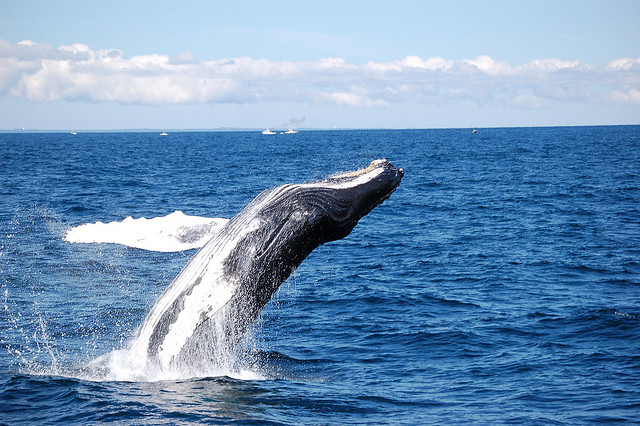
    She recalls watching a nature program about whales and seeing these behemoths throwing themselves out of the water and crashing down on their backs.

    The narrator shared that naturalists believe that breaching, as it is called, might be their way of communicating when the seas get rough. A spectacular way of creating strong vibrations in the water, marking their route so that the others in their group would not get lost.

    She reflects on how women do this too, an example that I feel applies to all humans:

    “Women must have the whale’s instinct. When we set out on a woman’s journey we are often swimming in a high and unruly sea, and we seem to know that the important thing is to swim together—to send out our vibrations, our stories, so that no one gets lost.”

    So here we are, the waters are rising on this precious Earth of ours, the storm waves crashing. Many of our global population are tired, have lost our bearings. But the instinct is strong. Many of us who are aware of the need for healing are calling out, breaching: “This way, this way!” we call.

    We share our stories, show our healing, so that others might find their way onto the path of healing too. So that person by person, community by community, country by country we might find a better way to live. So that we can find healing for our whole herd, and a path, a way through.

    Sometimes I doubt myself. I wonder why I do my work. But now I know. I do it for me just as much as I do it for you.

    I speak or paint or write or dance with One Billion Rising, because I am adding my vibration, which is the most basic thing I can give. Because I yearn to the depths of my soul to be healed. To be free from suffering. To see those I love and those I don’t know free from suffering too.

    So I ask you, every time you feel the instinct rise, like a whale breaching in the center of your soul, with the urge to reach out and share words of love, gratitude, kindness, forgiveness, appreciation, hope, and healing, do it.

    Every time you feel the desire to give a stroke, kiss, hug, gift, or smile, but you think it makes no difference, or that you don’t have time, do it.

    It matters. More than you could ever know.

    In fact, it’s really the only thing that does.

    Photo by Nesbitt Photo

  • Better Together: We Are Not Alone

    Better Together: We Are Not Alone

    “Alone we can do so little; together we can do so much.” ~Helen Keller

    My patient, John Done, rolled in by ambulance from his home in rural Oregon. As his story unfolded I understood why the nurses and ER doctors in the room were slack-jawed and shaking their heads, and I understood why I had been called to see what the nurse called a “DIY’er.”

    I have been a surgeon for over ten years and had never been consulted for a case of do it yourself surgery. John had had a belly button hernia sticking out a couple of inches for many years. It started hurting a few days before I ended up seeing him.

    Somehow, John convinced himself that the hernia had turned in to an abscess, even though it had been there for, as I said, many years. The pain changed his mind about an obvious reality. Once he decided it was an abscess, it made sense to lance it.

    John was not fond of going to the doctor and usually took care of his own medical care.  He opened up his Korean War medic kit and found his sterile scalpel…

    When I got to John he had two stab wounds in his abdomen and was leaking intestinal contents onto the dressings. We took him to surgery, took out a segment of his bowel, and repaired his hernia.

    He did well and was very happy to be free of the hernia. He agreed to call me prior to embarking on another DIY operation.

    Although it seems unbelievable that lancing a hernia could happen, understanding the chain of events is instructive. (more…)