Tag: Tiny Buddha

  • New Tiny Buddha Shirts and iPhone Cases, Just in Time for the Holidays!

    New Tiny Buddha Shirts and iPhone Cases, Just in Time for the Holidays!

    Hi friends! I’m excited to share that I’ve recently launched a new selection of shirts and iPhone cases on Tiny Buddha, with five new designs—meaning nine in total—just in time for the holiday season!

    I’m also happy to share that the new store offers much better shipping times than I was able to offer in the past.

    The new designs are based on some of the most popular memes I’ve shared on social media. My personal favorite is the “Peace Love Music” one.

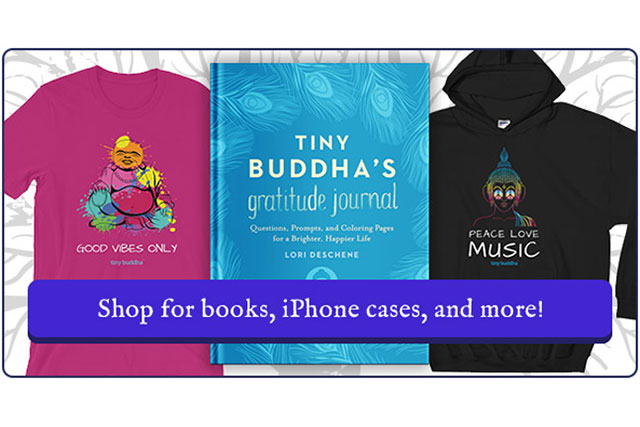
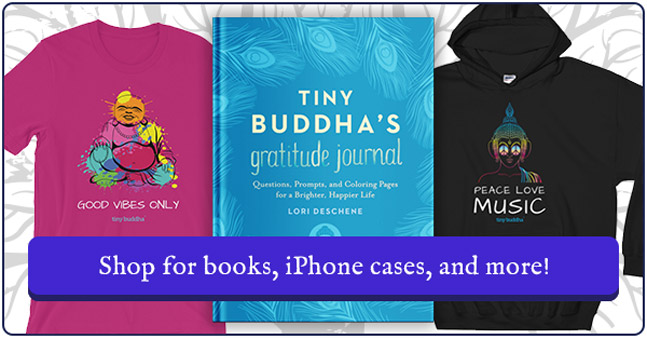
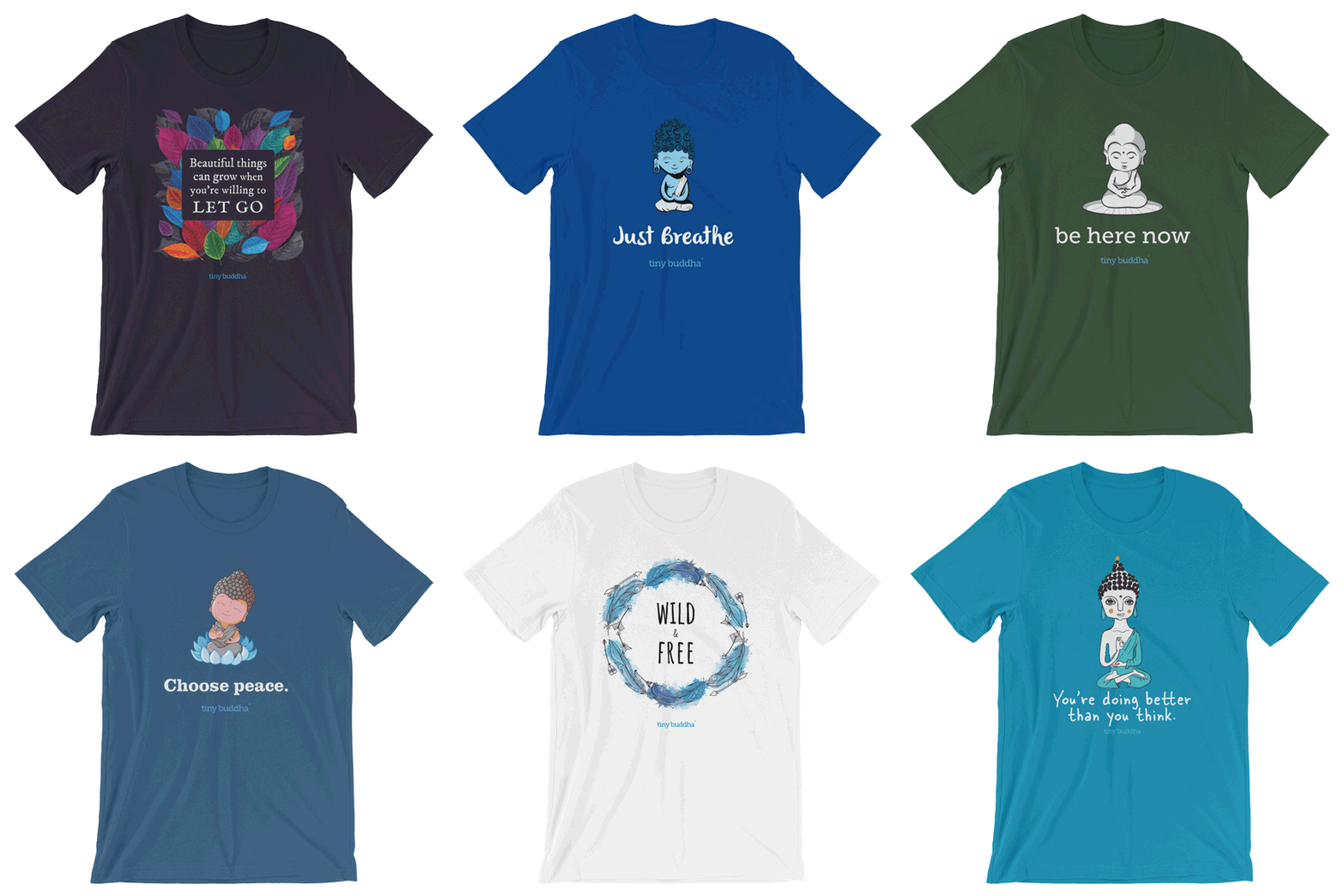
    Each design is available in multiple shirt styles: tee, v-neck, tank, sweatshirt, and hoodie, with a range of colors and sizes, including kids shirts. For simplicity, I’ve include just the tee style below:

    You can grab a shirt or iPhone case for yourself or someone you love, or one of the five Tiny Buddha books (including Tiny Buddha’s Gratitude Journal and Tiny Buddha’s Worry Journal) by clicking the button below. Happy holidays everyone!


    **Please note that this a busy time of year for shipping companies, and shipping times vary based on which option you choose. I recommend ordering before the 7th if you’re purchasing items for holiday gifts.

  • Limited Edition Tiny Buddha “Be the Change” Shirts

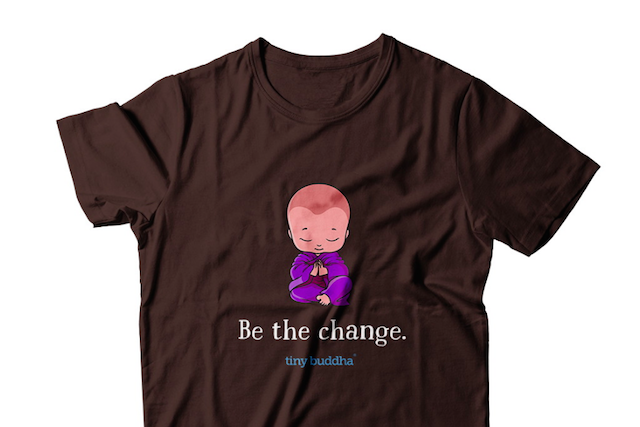
    Limited Edition Tiny Buddha “Be the Change” Shirts

    Hi friends! Earlier this week I sent an email about the limited edition “Be the Change” shirts, which will be available until November 20th.

    For those of you who missed that email, here’s a quick recap:

    I launched this campaign both to time with the holidays and also to fund a series of mini documentaries I plan to film early next year.

    These mini docs will feature inspiring people who are making a positive difference through unique, creative paths. I plan to film these in the spring, in partnership with my co-producer, Ehren Prudhel, and share them shortly after on Tiny Buddha’s social media pages.

    If there’s one thing we need right now, it’s a reminder that there’s a lot of good in the world, and that we can all make a tremendous difference by choosing to “be the change.”

    You can choose a tee, V-neck, tank, hoodie, or 3/4 sleeve shirt, in sizes XS to 5XL for some styles.

    Grab your shirt here, and please share if you think your friends would appreciate this as well!

  • Book Giveaway: Tiny Buddha’s 365 Tiny Love Challenges

    Book Giveaway: Tiny Buddha’s 365 Tiny Love Challenges

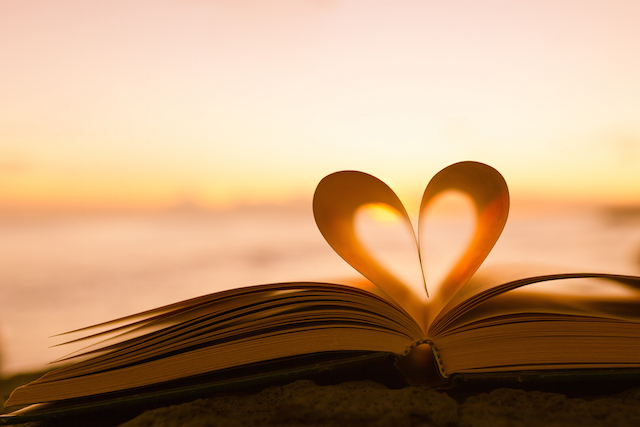
    Book heart

    UPDATE – The winners for this giveaway are:

    • Melissa Ballinger Dees
    • Julie C. Perry
    • Bobby Irion
    • Michael Jon Piper
    • Hannah

    Sometimes the world can feel like a lonely place. There are billions of people on the planet, and many of us encounter hundreds in the course of our daily lives. Yet it’s easy to feel disconnected from most, if not all of them.

    The many strangers we pass on a given day, who may avert their eyes to avoid awkwardness, can start to feel like part of the scenery—like cars parked in a lot or leaves floating in the wind.

    And, of course, we may feel the same to them, when we attempt to busy ourselves right when we cross paths—anything to avoid an intimate moment of locking eyes with someone we don’t know.

    We look at our feet, or our phones, or our friends. We shut down, cave in, tune them out. In that moment, they’re not people, with stories and feelings just like us. They’re strangers. Unknown. And perhaps a little scary.

    The luckiest of us have deep connections with people we do know. But even those relationships can feel distant at times, and maybe more often than not.

    We may feel judged, or misunderstood, or ignored. We may worry about what those people think of us, or wonder if they’ll be there when we need them.

    And worst of all, we may question if they’d still be there if they really knew us, deepest secrets and all. Proximity doesn’t always equal closeness, and closeness doesn’t guarantee trust.

    If it sounds like I am speaking from experience, that’s because I am. I have felt lonely, and insecure, and suspicious. I’ve feared letting my guard down, letting my feelings out, and letting people in.

    As a result, I spent years living on an island in my head, maintaining a physical presence in the world but remaining as much emotional distance as possible.

    The irony is that I thought I was keeping myself safe from pain, when really I was causing it.

    It hurts to feel separate. We are wired to seek connection and belonging—to feel like we are part of something larger than ourselves.

    They say it takes a village to raise a child, but I believe it also takes one to sustain an adult. We were not built to live in isolation, hidden behind apartment doors, phone screens, and dead eyes.

    We thrive when we feel like part of a tribe, when the people we share space with become part of “us,” not “them.”

    I’ve spent my whole life fantasizing about “us,” and years trying to learn what it takes to be part of that.

    I wish I could say I’ve discovered some great secret to forming deep, meaningful relationships and feeling less alone in the world, but that would be a lie.

    I haven’t discovered any one thing that turns strangers into friends, and friends into family. I have, however, identified countless tiny things, which, compounded over time, can make a massive difference.

    And that’s how Tiny Buddha’s 365 Tiny Love Challenges was born. As you may recall, I launched the book in October of last year.

    I wanted it to be a comprehensive list of small things we can do, every day, to create deep, meaningful connections with the people around us.

    I wanted to offer specific, actionable ways to show kindness, compassion, trust, and support; to be authentic, accepting, forgiving, and encouraging.

    They’re abstract ideas, and not always easy to put into practice, especially when you factor in that other people are flawed and scared, just like us.

    Though I still don’t feel as connected as I’d like to be—a natural consequence of moving every two years for the past sixteen—I no longer live alone on the Alcatraz in my head.

    I have healed relationships from my past, dug beneath the surface with people who would otherwise have remained acquaintances, and most importantly, strengthened my relationship with myself so that I finally believe I am worthy of being loved and fully seen.

    And I feel proud that I’ve created a book that, I’ve been told, has helped other people do the same.

    If you grabbed a copy last year, you may be at the halfway point now—meaning you’ve completed six months of challenges pertaining to kindness, compassion, authenticity, forgiveness, attention, and honesty.

    I’d love to know how this experience has been for you—if you feel more connected, if you’ve strengthened your relationships, or if there have been any other pleasant, unexpected side effects of taking these action steps.

    And if you don’t have a copy, I’d like to offer you a chance to win one today. I’m giving away five autographed books, and all you need to do is leave a comment answering one of the following questions:

    -What is one thing you believe most people want to receive from the people they love?

    -What is one thing you believe most people want to hear from the people they love?

    -What do you think it means to love someone?

    Your comment doesn’t need to be any specific length; in fact, it can be one word. However much you choose to write, know that you are giving all Tiny Buddha readers a gift through your time and effort.

    Whatever you choose to write could inspire someone, guide them toward a life-changing epiphany, or help them form deeper, more meaningful relationships with the people around them.

    Your comment is, in itself, a tiny act of love. And I will be the first to say that I am grateful for it.

    You can enter the giveaway until Wednesday, July 13th, and you can learn more about Tiny Buddha’s 365 Tiny Love Challenges, or grab a copy, here.

  • Limited Edition “Just Breathe” Shirt Supporting Project Happiness (Last Day!)

    Limited Edition “Just Breathe” Shirt Supporting Project Happiness (Last Day!)

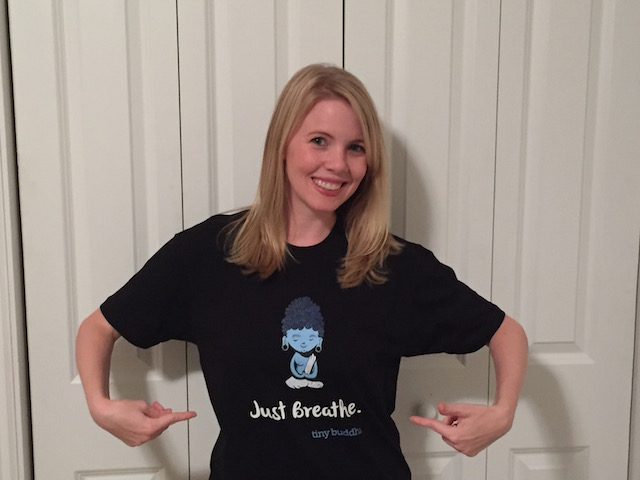
    Lori Deschene Just Breathe Shirt

    *Update: This campaign has ended. Subscribe to Tiny Buddha for daily or weekly emails, and to learn about future shirt campaigns!”

    Happy almost New Year, friends!

    As you may remember, I originally launched a two-week shirt campaign, supporting the David Lynch Foundation, in November. Over 700 people ordered a shirt then, but many of you emailed asking me to relaunch the campaign, so I did! If you’d like to order a “Just Breathe” shirt, hoodie, or pullover, today is the last day to do so.

    This time, a portion of the proceeds will go to the non-profit Project Happiness.

    I first learned about Project Happiness in 2009, when I attended their Cirque de Happiness fundraiser event.

    Their main purpose is to provide students with tools and wisdom, based on positive psychology and neuroscientific research, to create authentic happiness. They work hands-on with kids of all ages, empowering them to feel good about themselves so they can handle life’s hurdles.

    Imagine if we all learned to manage our emotions, develop resilience, and nurture a positive mindset early in life. Imagine a world full of people who recognize and nurture their strengths and feel confident enough to share them with others.

    Project Happiness is helping create such a world, and it’s an honor to support their wonderful work.

    You can choose from six styles—including a fitted tee, racerback tank, and a hoodie—with sizes ranging from XS to 5XL (for some styles).


    Don’t see the button? Visit https://represent.com/tinybuddha to place your order.

  • Limited Edition Tiny Buddha “Just Breathe” Shirt (Supporting the David Lynch Foundation)

    Limited Edition Tiny Buddha “Just Breathe” Shirt (Supporting the David Lynch Foundation)

    *Update: This campaign has ended. Subscribe to Tiny Buddha for daily or weekly emails, and to learn about future shirt campaigns!”

    Hi friends! For those of you who don’t know me, I’m Lori, the founder of Tiny Buddha.

    For the past two weeks, I’ve been offering a limited edition “Just Breathe” shirt, and I’ve been excited to see the response from the community! The campaign ends this Sunday, so if you’d like to grab a shirt, this is your last opportunity to do so.

    Lori Deschene Just Breathe Shirt

    A portion of the proceeds will go to the David Lynch Foundation, a nonprofit that helps prevent and eradicate trauma and toxic stress through Transcendental Meditation.

    This cause is quite dear to my heart because of the work they do to help at-risk populations, including children in low-income urban schools, veterans with PTSD, victims of domestic violence, homeless and low-income men and women, inmates in some of America’s toughest prisons, and individuals recently diagnosed with HIV.

    Meditation changes these people’s lives and helps them heal, find peace, and develop the resiliency needed to thrive in spite of their challenging circumstances. And of course, when individuals thrive, that ripples into their communities, helping us all live happier, more peaceful lives.

    You can choose from six styles—including a fitted tee, racerback tank, and a hoodie—with sizes ranging from XS to 5XL (for some styles).


    Don’t see the button? Visit https://represent.com/tinybuddha to place your order. Have an idea or request for a future shirt? Leave a comment and let me know!

  • Be Part of the Next Tiny Buddha Book: 365 Tiny Love Challenges

    Be Part of the Next Tiny Buddha Book: 365 Tiny Love Challenges

    tb-love-post

    *The deadline to submit a story has now passed. Thank you to everyone who submitted one! You will receive an email by the end of November if I’d like to include your story in the book.

    When I started this site in 2009, after struggling for over a decade with depression, bulimia, and shame-induced isolation, I hoped it would be a place where we could all feel less alone with our struggles and more empowered to overcome them. I’m beyond thrilled to see that’s just what Tiny Buddha has become.

    Over the past five years, I’ve been honored to help over 1,000 people share their stories on the blog, and I’ve also appreciated the opportunity to write two collaborative books, sharing some of my experiences and lessons, along with stories and insights from community members.

    Tiny Buddha: Simple Wisdom for Life’s Hard Questions, published in 2011, includes 150 tweets of wisdom addressing some of life’s most complex topics, like meaning, pain, love, fate, and control.

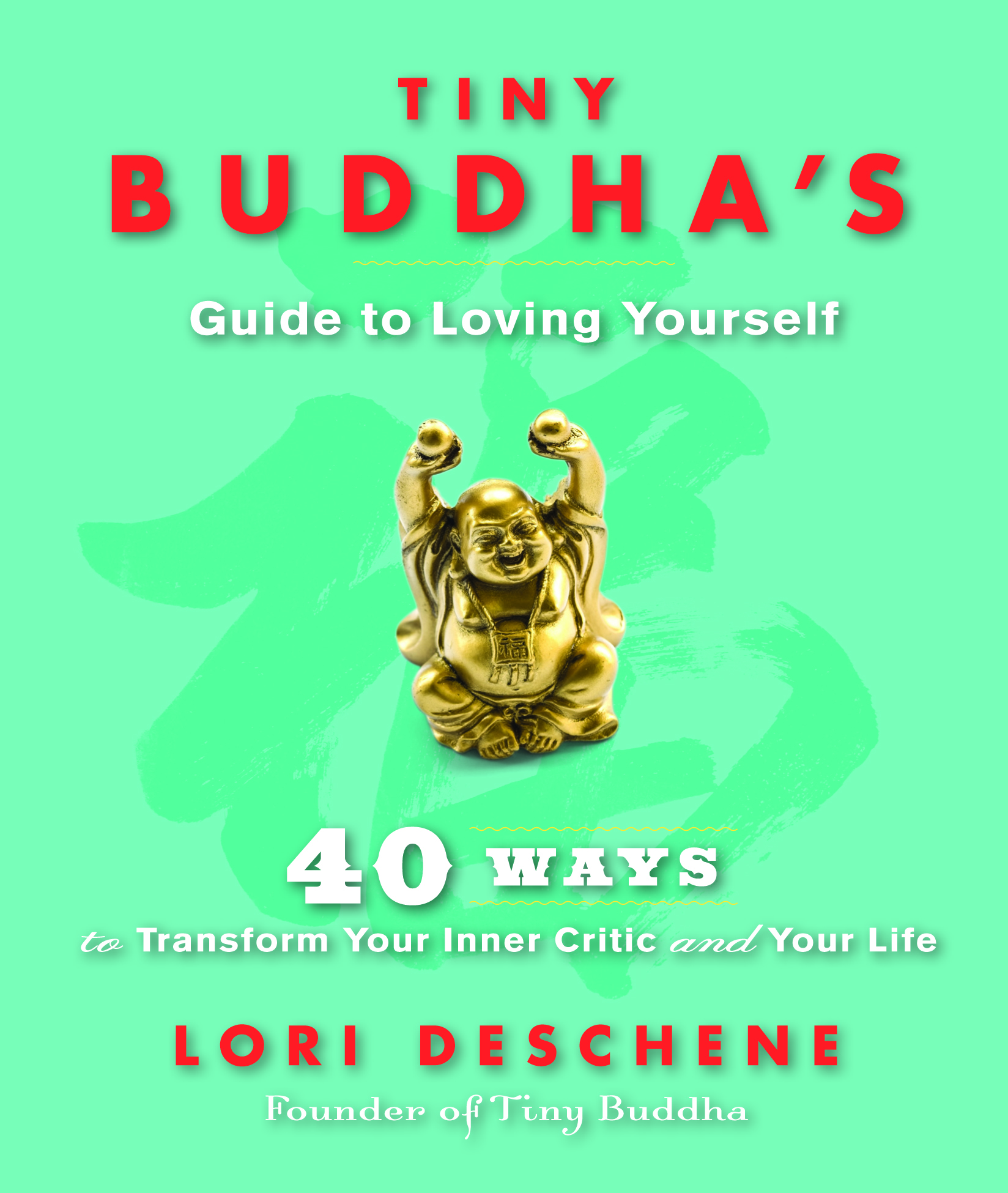
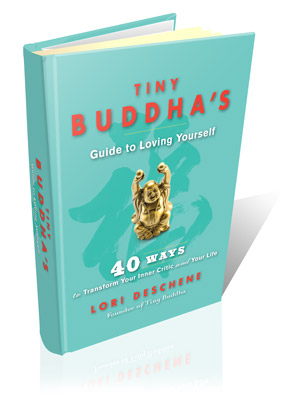
    Tiny Buddha’s Guide to Loving Yourselfpublished in 2013, features forty stories of overcoming challenges related to self-love, including shame, perfectionism, comparisons, and the need for approval.

    The next Tiny Buddha book will hit the shelves in November 2015, and I’d love for you to be a part of it!

    The Book 

    Tentatively titled 365 Tiny Love Challenges from Tiny Buddha, the book will feature a year of simple daily activities to help you give and receive more love.

    I was inspired to write this book after reflecting on the relationships in my life and recognizing how little I’d done for so long.

    For years, I waited for other people to reach out to me, expected them to anticipate my needs, and unintentionally ignored theirs while fixating on myself, my fears, and my insecurities. It wasn’t until I started making an effort to give love that I started feeling loved in return.

    But it wasn’t simply because I got back what I gave; it was because the giving helped pull me outside of myself so I could attract and maintain healthy, reciprocal relationships based not on need, but on mutual respect, appreciation, and understanding. And that’s what this book is all about.

    It will be published by Harper One, an imprint of Harper Collins, and it will be available on Amazon, in Barnes & Noble, and in various stores where books are sold.

    The challenges will focus on increasing self-love, strengthening current relationships (romantic or otherwise), building new relationships, and taking tiny steps to help build a more loving world.

    Sharing Your Story in the Book

    The book will feature short stories related to a number of relationship themes, including:

    • Releasing Anger & Forgiving
    • Acceptance & Non-Judgment
    • Compassion & Understanding
    • Authenticity & Vulnerability
    • Attention & Listening
    • Releasing Comparisons & Competition
    • Kindness & Thoughtfulness
    • Support & Encouragement
    • Appreciation & Admiration
    • Giving & Receiving
    • Fun & Playfulness
    • Honesty & Trust

    You can submit an original short story, never before published online or in print, 400 words or less, with a related lesson, on any of these themes.

    Click here to learn more and submit your story!

  • Love Yourself and Your Life: 7 Reasons to Buy the New Tiny Buddha Book

    Love Yourself and Your Life: 7 Reasons to Buy the New Tiny Buddha Book

    Tiny Buddhas Guide Cover 3D

    10/9/13: The pre-order promotion is now over. You can learn more about Tiny Buddha’s Guide to Loving Yourself here!

    If you visited the blog any time during September, you likely saw some of the many self-love interviews featuring contributors from the new book Tiny Buddha’s Guide to Loving Yourself: 40 Ways to Transform Your Inner Critic and Your Life.

    I’m excited to announce that today is the official launch date! If you already ordered a copy on Amazon, it’s possible that you already received it, as I’ve recently learned they shipped a little early.

    If you haven’t redeemed the free bonus pack yet, please forward your order confirmation email (for hardcopy or digital, from any book vendor) to bookbonus(AT)tinybuddha(DOT)com.

    For those of you who didn’t yet order a copy of Tiny Buddha’s Guide to Loving Yourself, today is the final day to receive the self-love bonus pack—including 8 digital items, valued at over $150—as a free gift with your purchase.

    About the Book

    Including 40 blog posts from tinybuddha.com, Tiny Buddha’s Guide to Loving Yourself offers more than just advice; it offers in a window into our shared human experience, and universal lessons we can all apply to feel happier with ourselves and our lives.

    These posts have reminded more than 1.5 million monthly readers that we are never alone, and we don’t have to live life controlled by our inner critic. They touch upon ideas that will help you:

    • Release shame about your past and the limiting beliefs that keep you stuck
    • See yourself as beautiful and valuable, with all your flaws and weaknesses
    • Accept yourself more and judge yourself less
    • Forgive yourself for your mistakes and stop being hard on yourself
    • Minimize the need for approval to feel more confident
    • Let go of the comparisons that keep you feeling inferior
    • Feel complete so that you no longer look to others to fill a void within yourself
    • Find the courage to share your authentic self for deeper connections with others
    • Learn to take care of yourself instead of putting everyone else’s needs first
    • Believe that you’re valuable so you can start creating a life you love
    • The stories are categorized into 10 chapters, connected to each of these themes.

    At the end of each chapter you’ll find four tips—one from each of the four posts in that section. They’re ideas you can turn to whenever you need help changing your thoughts, and consequently, your feelings and experience of the world.

    About the Bonuses

    Today only, anyone who orders Tiny Buddha’s Guide to Loving Yourself will receive instant access to the “Self-Love Bonus Pack,” which includes 8 digital resources, valued at more than $150.

    Those items include:

    • From Coping to Thriving: How to Turn Self-Care into a Way of Life, by Hannah Braime
    • Flowing Through the Void: Creating Miracles Out of Struggles by Activating Presence, Power, and Passion, by Amyra Mah
    • Complete Confidence eCourse, by Emma Brooke
    • An Awakened Life: A Journey of Transformation, by Julie Hoyle
    • Create a Brilliant Vision for Your Life and Business, by Margie Beiswanger
    • 5 Days of Self-Compassion, by Joanna Weston
    • Be You, Unapologetically by An Bourmanne
    • Tiny Wisdom: On Self-Love, by Lori Deschene (me)

    7 Reasons to Buy Tiny Buddha’s Guide to Loving Yourself 

    If you’re still not sure that Tiny Buddha’s Guide to Loving Yourself is worth the cost ($13.50 on Amazon for hardcover, $9.99 for Kindle—both including the free self-love bonus pack for today only), consider these 7 benefits of owning a copy:

    1. The book features 40 candid firsthand accounts of overcoming physical and emotional challenges…

    …including abandonment, abuse, addiction, depression, eating disorders, and obsessive compulsive disorder, to name a few. If you’ve feared that no one can understand or relate to your pain, this guide will help you realize that you are not alone.

    2. You’ll find practical tips to help you deal with a wide range of issues related to self-acceptance and self-love…

    …including insecurity, perfectionism, jealousy, shame, self-judgment, rejection, confidence, self-care, and the fear of being alone.

    3. It’s Tiny Buddha, off the web.

    You could spend time searching through the archives for posts related to loving yourself, and then print them out for reading at home. Or you could purchase this book to have all those stories in one anthology—complete with summaries of the main insights and a collection of related quotes.

    4. You’ll find one story from my experience in overcoming shame, self-loathing, and self-destruction.

    I’ve never before written about my former battle with bulimia. In addition to exploring the lowest point of my struggle, I shared the main message of hope that’s helped me forgive and accept myself, and not just survive, but thrive.

    5. The book is easy to read—at home or on the go.

    With 40 stories in 10 chapters, you can easily read one story each night before bed, or jump around to the sections that feel most relevant to you. And with its compact size, it’s easy to carry in your purse or bag for a boost of clarity and confidence, wherever you go.

    6. Tiny Buddha’s Guide to Loving Yourself has received wonderful advanced reviews.

    As Amanda Owen, author of The Power of Receiving, wrote: “If you are ever hard on yourself—and who isn’t—you need to read this book.” And according to Dr. Kristin Neff, author of Self-Compassion, “This wonderful collection of personal stories and words of wisdom will help you become kinder and more compassionate to yourself, and ultimately show you how to lead a happier and more fulfilling life.”

    7. It’s a tiny book that can have a massive impact.

    Despite its small size and short stories, this guide explores feelings and challenges that could potentially limit your potential for peace and happiness—and also offers some powerful, effective practices to overcome them so you can feel good about yourself and your life.

    You can order your copy of Tiny Buddha’s Guide to Loving Yourself here. To claim the self-love bonus pack, forward your order confirmation email (for hardcopy or digital, from any book vendor) to bookbonus(AT)tinybuddha(DOT)com.

    I hope you enjoy reading this book as much as I enjoyed the collaborative process of creating it. As always, I thank you for your loving presence here at Tiny Buddha!

  • Tiny Buddha’s Guide to Loving Yourself Interview: Mary Dunlop

    Tiny Buddha’s Guide to Loving Yourself Interview: Mary Dunlop

    Mary

    This month we’re celebrating the upcoming launch of Tiny Buddha’s Guide to Loving Yourself, a book about taming your inner critic that features 40 stories from Tiny Buddha contributors. 

    Throughout September, you’ll have a chance to meet some of them through daily interviews here on the blog.

    Today’s featured contributor is Mary Dunlop, a writer and passionate student of life who believes we all have a special gift.

    In her contribution for the book, she shares how she learned to be comfortable in her own skin, and how we can learn to accept and embrace ourselves, just as we are.

    A little more about Mary…

    1. Tell us a little about yourself and your self-love journey.

    My name is Mary. I am a forty-seven year old writer. And, to me, self-love did not come naturally. I really had to work at it until finally finding my way through meditation.

    2. Have you ever felt there’s “something wrong with you”? If so, why, and what’s helped you change your perception?

    Yes, until I began connecting with myself in meditation I never felt my beauty and, no matter how much validation I received from others, I always felt uncomfortable and self-conscious.

    3. Have you ever thought something was a flaw only to realize that other people actually appreciate that about you? What was the “flaw”?

    Yes, sometimes, my lack of pretense. I had been pretending so much in my life that when I finally let that go and worked toward becoming more authentic, I feared some people would view this as a lack of polish.

    However, it felt good to smile widely and laugh loudly, and soon I discovered that one of the keys to my personal happiness lied in my ability to be myself and feel good about it.  Reaching that level of awareness also helped me attract people who appreciate me and like me just for me.

    4. What was your biggest mistake (that you’re willing to share), and what helped you forgive yourself?

    One of my biggest mistakes was constantly comparing myself to others and often viewing myself as inferior.

    I spent more than a few years of my life doing that, more time than I put into cultivating my strengths and dreams. Sometimes, I feel badly about that lost time and, when I do, I forgive myself quickly by remembering that at every given time I was doing my best with whatever level of awareness I was at.

    5. Complete this sentence: When other people don’t like me, I… 

    I’ve noticed that the more I like myself the more other people like me too, or at least, I tend to attract those who do. However, every now and then an instance will occur where someone may not like me or speak negatively about me.

    When something like this happens, I quickly remind myself of first three paragraphs of Don Miguel Ruiz’s second agreement from his book, The Four Agreements:

    “Nothing others do is because of you. What others say and do is a projection of their own dream. When you are immune to the opinions and actions of others, you won’t be the victim of needless suffering.

    We take things personally when we agree with what others have said. If we didn’t agree, the things that others say would not affect us emotionally.  If we did not care about what others think about us, their words or behavior could not affect us.

    Even if someone yells at you, gossips about you, harms you or yours, it still is not about you!  Their actions and words are based on what they believe in their personal dream. ”

    6. What are some areas in your life where you’ve compared yourself to other people, and what’s helped you let go of these comparisons?

    For me, the biggest problem was feeling comfortable in my skin, so to be comfortable with others I always had to look a certain way.

    If, God forbid, I had a bad hair day or a couple of extra pounds, I would view everyone else as beautiful swans and me the ugly duckling. Finally, I began to focus within through meditation, more specifically heart centered meditation, and slowly this self-consciousness melted away as I began to see myself in a different light.

    7. What’s one thing you would tell your younger self about looking to other people to complete you?

    I would say meditate, look within, find your sacred place! Another person can complement you but they can never complete you. Completeness can only be found in having a loving, healthy relationship with yourself.

    Society places much emphasis on being coupled, on finding that one soul mate, but don’t worry about that. Focus instead on your personal development and, once you’ve grown to a certain point and reached a certain place within, you will find the right mate, or rather, the right mate will find you.

    8. Have you ever felt afraid to show people your “real” self? Why—and what’s helped you move beyond that?

    I used to have a fear of people finding me to be “not enough”—not pretty enough, not smart enough, not sophisticated enough, not successful enough. So, as a result, I would become the world’s greatest actress and show people someone other than me.

    What helped me get past that was taking the time I needed to get to know the real me—my likes, my dislikes, my passions, my talents, and my dreams.

    9. What are the top three things you personally need to do to take good of yourself, mentally and emotionally?

    To take good care of myself mentally and emotionally, I need to take good care of myself spiritually. Consequently, for me, the top three things are:

    • Meditation
    • Running
    • Writing

    Through my journey I discovered that, as long as I don’t neglect it, my highly creative soul will always help me find a way to be happy.

    *Note: I edited this post to remove info about the pre-order promotion, which ended on October 8, 2013. You can learn more about Tiny Buddha’s Guide to Loving Yourself here.
  • Tiny Buddha’s Guide to Loving Yourself Interview: Sam Russell

    Tiny Buddha’s Guide to Loving Yourself Interview: Sam Russell

    sam-russell

    This month we’re celebrating the upcoming launch of Tiny Buddha’s Guide to Loving Yourself, a book about taming your inner critic that features 40 stories from Tiny Buddha contributors. 

    Throughout September, you’ll have a chance to meet some of them through daily interviews here on the blog.

    Today’s featured contributor is Sam E.A.B. Russell, a UK-based writer and photographer who considers himself a cynic by nature but tries to prove through his writing that cynics can be happy and positive too.

    In his contribution for the book, he shares some of the common defeatist, limiting beliefs that stand in the way of happiness.

    A little more about Sam…

    1. Tell us a little about yourself and your self-love journey.

    I’m a writer and photographer and I live with a smorgasbord of mental health difficulties. I started to develop love for myself when I realized that a) it’s okay for me to be different and b) only I can change my circumstances. That sounds so easy: be cool with yourself and take charge. The thing is, love’s not easy.

    Hate and anger—those are easy. They’re easy and comfortable, though painful, which is why it took me a long while to get myself on the path that I’m on today. Accepting my difference means accepting my flaws. Changing my circumstances means developing courage. Doing those things means looking in the mirror and loving the person who looks back, even on my worst days.

    2. Have you ever felt there’s “something wrong with you”? If so, why, and what’s helped you change your perception?

    Yes. I’ve grown up feeling “wrong.” Then I figured out that “inside me” didn’t match “outside me.” I was living the wrong gender for most of my life, which is no easy thing to do.

    I didn’t fit the typical gender role I was raised in and I couldn’t access the one I felt more at home in. I was suspended in a very lonely grey area for what felt like forever.

    The hardest thing was figuring that out, getting the language to express how I felt, but wow! What a great feeling when I did realize it and find those words. Now I’m on the path that feels right for me. I’ve got the love and support of my family and friends, which is all I need to do this.

    3. Have you ever thought something was a flaw only to realize that other people actually appreciate that about you? What was the “flaw”?

    I’ve always perceived and thought about things differently to others. I was the kid in the class who always used to ask the really weird and awkward questions. I used to get bullied for it by kids and adults alike.

    As an adult, I’m the one who turns the everyday into the surreal when I write. I have a habit of saying the wrong thing too, though I don’t mean anything by it.

    I still get criticized for it and some people have been unbelievably cruel to me. I’m lucky that most now recognize that how I see the world is unique and encourage me in my writing and photography.

    4. What was your biggest mistake (that you’re willing to share), and what helped you forgive yourself?

    Ugh, not sorting my awful relationship with my Mum before she died. The last thing I felt for her was resentment. I knew things were bad and I was too busy being angry with her to see that she was sick and needed me more than ever.

    I didn’t take the time to say sorry or care or do anything that would have shown her that she wasn’t without me.

    It’s not been easy but I’ve come to terms with this by first forgiving myself. I recognize that I was in a bad place at the time, and that my feelings toward our relationship were a part of that. Forgiving myself means understanding this.

    I’ve spoken to my sister a lot about how Mum loved me regardless of the arguments we had.

    We laugh about the mental things she used to get up to and share the grief of our loss. My sister is a great comfort to me, and usually the first to remind me that, despite the way I felt then, it’s not the way I feel now.

    5. Complete this sentence: When other people don’t like me, I…

    …instantly get upset and confused but later think, “Eh, there are billions of people on this planet. They can’t all like me.”

    6. What are some areas in your life where you’ve compared yourself to other people, and what’s helped you let go of these comparisons?

    Always with my writing and education. I study so hard and never feel good enough compared to others. I read my favorite authors, find a perfect sentence, and sink into despair. I look at how much work they’ve done, how successful they are and the legacy they’re going to leave behind and think: I can never achieve or live up to that.

    But then I step back, see my life, my illnesses, and my work and think, “Mate, you’re doing damn fine!”

    I’m only able to do this because I read. I’ve been fortunate enough to study writing as a skill so am able to understand how books work, so that helps me get some perspective on my gloomy feelings.

    7. What’s one thing you would tell your younger self about looking to other people to complete you?

    Nothing is ever complete. Being incomplete is being impermanent, which is being a part of the constant change, the flux called life. It’s better to be complemented, that is reflected and contrasted by another person, than completed by them.

    8. Have you ever felt afraid to show people your “real” self? Why—and what’s helped you move beyond that?

    I’m an unusual person, mostly quiet but prone to articulate outbursts on particular subjects close to my heart. I’m intense and emotionally needy but also loyal and generous. This leaves me vulnerable, and so I hide.

    I don’t go out that much and I have a very tight circle of friends. When I have to engage with others who I’m unfamiliar with, I often put on a mask. Several masks, actually. Layer after layer of unseen protection.

    I take risks when I let people in. I remind myself, in the face of fear and uncertainty, that it’s better to have loved and lost than never to have loved at all.

    9. What are the top three things you personally need to do to take good of yourself, mentally and emotionally?

    • Read
    • Eat
    • Create

    I need mental and intellectual stimuli or else I fall apart. The hardest thing for me has been coping without an academic environment since I finished my Masters Degree in 2011. I’ve not been doing a good job of it so it’s even more important that those three things remain constant and strong in my life.

    10. What’s something you do regularly that makes you feel proud of the difference you’re making in the world?

    Probably being honest, and true to myself. If you go through life lying to yourself, you’re lying to the world too and that kind of deceit benefits no one.

    *Note: I edited this post to remove info about the pre-order promotion, which ended on October 8, 2013. You can learn more about Tiny Buddha’s Guide to Loving Yourself here.
  • Tiny Buddha’s Guide to Loving Yourself Interview: Alexandra Heather Foss

    Tiny Buddha’s Guide to Loving Yourself Interview: Alexandra Heather Foss

    Heather

    This month we’re celebrating the upcoming launch of Tiny Buddha’s Guide to Loving Yourself, a book about taming your inner critic that features 40 stories from Tiny Buddha contributors. 

    Throughout September, you’ll have a chance to meet some of them through daily interviews here on the blog.

    Today’s featured contributor is Alexandra Heather Foss. A freelance writer who has overcome countless difficulties—from childhood trauma to health issues—she values both her tears and smiles, because both have made her who she is.

    In her contribution for the book, she shares why she sees beauty in her scars, and how we can learn to value ourselves not in spite of our pain, but because of it.

    A little more about Alexandra…

    1. Tell us a little about yourself and your self-love journey.

    Perhaps not during early childhood but certainly for the majority of my life self-love has been one of my greatest struggles. Lists full of flaws and insecurities about myself, these are easy to fill, but to have reverence for who I am is a challenge.

    I get there sometimes and then I regress, and this cycle continues season after season. That said, I would not choose another path, not even if it were easier, for I own my journey.

    It is the cycles up and down that have taught me about balance, beauty, even breath. When I breathe in, I see an artist, someone who loves the luscious curves of letters and the words they form. I see a creative spark that is untamed by the most torturous traumas, I see potential, excitement, lyricism, adventure.

    I am someone who has never given up on myself. I am my most loyal companion, a plucky island lover who smiles up at the moon and washes away persistent tears with seawater.

    These are my soul trophies, the shining glories that make me believe I am as worthy of love as any other, especially from myself. And I am grateful for the perilous moments when self-love has been absent, for the lack afforded me contrast, the ability to see that I am as beautiful as I can at times be ugly.

    2. Have you ever felt there’s “something wrong with you”? If so, why, and what’s helped you change your perception?

    Of course I have, for most my life actually. I think because of the traumas I have known, I adopted at a very early age the false belief that I must have deserved pain on some fundamental level, that there was something fundamentally wrong with me.

    I felt corrupted and I could not believe that it was the sole result of abuse. That seemed like a convenient excuse for something deeper, but therein was the lie. I can tend to wrong just like I can tend to right, as is true for us all I believe, but I am not wrong just for being alive.

    My perception has changed simply because I have devoted myself to self-work. I spend time—in the tub, at the market, when I am writing, sleeping, talking, traveling—trying to better understand my motivations and quite simply the puzzle that is me.

    The larger goal was to understand others, or at least that is what started me down this journey, probably around the time I knew first real pain, but now the quest is of a far more spiritual, and certainly personal nature.

    With every question I ask of myself, or others ask of me, I have to go a little deeper, and the more I learn the more I know I may be wrong sometimes, but I am not wrong.

    3. Have you ever thought something was a flaw only to realize that other people actually appreciate that about you? What was the “flaw”?

    Yes, many times with many flaws, but what feels most relevant to this question will seem strange in that it is certainly not by definition a flaw. Over half my life I believed I was flawed because I was a woman. There was a lot of sexism where I grew up and I felt my femininity was fundamentally flawed.

    It has taken a lot of work to accept the divine feminine within me, to see my emotions as strengths, to believe without doubt that I am not part of an inferior group of people, deserving of objectification and disrespect.

    Through my writing especially, my readers of various genders have showed their appreciation, seeing the beauty in something I never should have believed was a flaw but sadly did, and I am so grateful.

    4. What was your biggest mistake (that you’re willing to share), and what helped you forgive yourself?

    In an effort to fit in during childhood I lied one night to be with the popular kids. There were these woods where kids used to hang out and I traversed them, by myself, to for once feel as if I were normal.

    That night turned into one of the worst in my life. It was the night my innocence was taken from me, when my soul retracted so far inwards I thought I would never recover it, and I have been trying to forgive myself that foolish decision, the decision to abandon myself for the acceptance of others, ever since.

    5. Complete this sentence: When other people don’t like me, I…

    …feel insecure and vulnerable, and often I hurt myself in an effort to understand.

    6. What are some areas in your life where you’ve compared yourself to other people, and what’s helped you let go of these comparisons?

    I compare myself all the time to others—with looks, career decisions and achievements, with life choices. I cannot say I have yet let go of comparison, but I am most certainly working on it.

    I know I would not want the life of anyone other than myself but that does not mean when I think about a celebrity I admire, or someone I once knew, I am devoid of fear, worry, or judgment.

    I think comparison can be healthy, in that it can help us learn more about how we truly feel when we measure ourselves against others, noticing how we respond after trying on a certain life path, even just via daydream, but it can also be dangerous.

    Whenever something threatens us to lose ourselves, we have to be especially careful. The way I redirect when I get into a toxic comparative session, whether it be on a social media site or after a fight, is to try and think about something I love about myself.

    So if I feel like I am paralyzed compared to someone I consider mobile, let’s say with career, I go rollerblading, charging myself from the inside with positive energy, and I feel a little less stuck.

    7. What’s one thing you would tell your younger self about looking to other people to complete you?

    Good question! I would very gently shake myself out of that philosophy. So much time I wasted feeling like I am not good enough as I am, that I need, the way I need water or air, someone else to integrate all the pieces, to make me feel valuable and complete.

    I may not have been born perfect, and I do love the company of others, especially those I am closest with, but I was born complete—completely me, and that is a beautiful thing.

    8. Have you ever felt afraid to show people your “real” self? Why—and what’s helped you move beyond that?

    Yes! All the time! Because there are all these “flaws” I see in myself, things I think others will not like if they really knew me. For instance, I can be bossy, and picky, I have lots of psychic and physical wounds that are not especially attractive, I do not laugh nearly enough, or they can be “flaws” others have expressed about me.

    I had one boyfriend who hated my knees, another my feet, hundreds of people throughout the years have criticized my career path, and refusal to conform; even the fact that I am a woman has been a problem for many.

    I struggle expressing my honest self because the society I have known has discouraged my honesty, it decidedly unwelcome.

    Someone asks how I am, and I say “sad,” and they squirm in their seat, sloughing off some remark about the weather to change the subject, so I have had to decide whether to lie and say “fine” when I’m not, or only share the company of those who actually want to know, even if the truth is unpleasant.

    It can be lonely and confusing, feeling like who I am really is not preferable to who others wish me to be, but I’ve spent too much time lying to avoid judgment. I am still working on it but I think realizing that people are going to judge one way or another helps me to accept and project more honestly my “real” self.

    9. What are the top three things you personally need to do to take good of yourself, mentally and emotionally?

    • Treat myself as I do my closest loved ones (have empathy for myself)
    • Spend more time in silent solitude
    • Honor the things I love most—travel, nature, creativity…

    10. What’s something you do regularly that makes you feel proud of the difference you’re making in the world?

    My writing makes me feel proud. Hearing from others the impact my words have had on them, it lifts my spirit. I can only hope this feeling continues always.

    *Note: I edited this post to remove info about the pre-order promotion, which ended on October 8, 2013. You can learn more about Tiny Buddha’s Guide to Loving Yourself here.
  • Tiny Buddha’s Guide to Loving Yourself Interview: Madison Sonnier

    Tiny Buddha’s Guide to Loving Yourself Interview: Madison Sonnier

    Madison

    This month we’re celebrating the impending launch of Tiny Buddha’s Guide to Loving Yourself, a book about taming your inner critic that features 40 stories from Tiny Buddha contributors. 

    Throughout September, you’ll have chance to meet some of the book’s contributors through daily interviews here on the blog.

    Today’s featured contributor is Madison Sonnier, who has overcome obsessive-compulsive disorder and depression, and now strives to help others through her writing.

    In her contribution for the book, she offers a few tips to believe in our worth and ourselves and find the right path for us.

    A little more about Madison… 

    1. Tell us a little about yourself and your self-love journey.

    My self-love journey is constant. I’m still learning, growing, and becoming. I struggle with self-love sometimes, but I am adamant about learning to be nicer to myself on a day-to-day basis.

    2. Have you ever felt there’s “something wrong with you”? If so, why, and what’s helped you change your perception?

    Absolutely. I would describe myself as a very unorthodox person. I don’t really live by “rules” and traditional standards. I’m also quite simply a bit strange, although I say that with love.

    I’m self-employed, extremely frugal, and have no idea what I’m doing half the time. I didn’t go to college. I don’t socialize much. I live my life at a slower pace than most people I know. I’m uncharacteristically anxious a lot of the time. I have weird habits such as frolicking around my kitchen and carrying on conversations with myself in my head…The list goes on.

    Because of all the things that made me different from my family and friends, I felt like a black sheep or an ugly duckling. But I’ve slowly learned over the years that what makes you different is a gift, not a curse.

    3. Have you ever thought something was a flaw only to realize that other people actually appreciate that about you? What was the “flaw”?

    I used to think not having much to say was a flaw, but I think some people appreciate that I’m thoughtful and a good listener. I’m not always on the edge of my seat waiting to blurt out my two cents in the middle of a conversation.

    4. Complete this sentence: When other people don’t like me, I…

    …I become very anxious and hurt before eventually remembering that what other people think of me is none of my business anyway. 

    5. What are some areas in your life where you’ve compared yourself to other people, and what’s helped you let go of these comparisons?

    I most often compare my progression in life to other people’s. I also compare my reserved personality and my tendency to become incredibly anxious to other people’s outgoing personalities and fearlessness.

    I tell myself that I should be less anxious, more outgoing, at a different level of growth, etc. I have a habit of looking down on the areas of my life that are less ideal and less celebrated.

    I constantly have to remind myself that beating myself up never leads to positive growth. We’re all unique human beings, and we all progress at our own rate. When we accept who we are and are patient with ourselves, life inevitably unfolds exactly as it should.

    It helps to remind myself that there is nothing wrong with me and that I’m where I need to be at this moment in time. No two journeys are the same.        

    6. What’s one thing you would tell your younger self about looking to other people to complete you? 

    One of the biggest things I’ve come to learn over the years is that other people cannot give you what you’re not giving yourself. It will never feel like enough, and you will feel perpetually frustrated and confused about that.

    When other people tell me they’re proud of me or that I did a good job on something, I have a hard time believing them unless I feel proud of myself and truly believe that I did a good job.

    When other people tell me I’m lovable, I have a hard time believing them unless I view myself as lovable in that particular moment.

    I’ve learned that other people cannot complete the parts of me that I’m not actively completing on my own. No one can fill your inner void except you.

    7. What are the top three things you personally need to do to take good care of yourself, mentally and emotionally?

    • I need to write. Writing gives me a creative and emotional outlet, and I do it every day.
    • I also need an adequate amount of solitude because I function better when I have alone time.
    • And lastly, I think spending time with my dogs or simply spending time with people who make me feel happy and good about myself is essential to my well-being.

    8. What’s something you do regularly that makes you feel proud of the difference you’re making in the world?

    Whenever I consider what kind of good I’m doing in the world, I always think of my writing and how many people have been positively affected by it. Even if I hand out inspiration in smaller doses, I feel like I’m making some kind of difference.

    Writing gives me a voice and an opportunity to let other people know that they’re not alone.

    *Note: I edited this post to remove info about the pre-order promotion, which ended on October 8, 2013. You can learn more about Tiny Buddha’s Guide to Loving Yourself here.
  • Tiny Buddha’s Guide to Loving Yourself Interview: Hannah Braime

    Tiny Buddha’s Guide to Loving Yourself Interview: Hannah Braime

    Hannah

    This month we’re celebrating the upcoming launch of Tiny Buddha’s Guide to Loving Yourself, a book about taming your inner critic that features 40 stories from Tiny Buddha contributors. 

    Throughout September, you’ll have a chance to meet some of them through daily interviews here on the blog.

    Today’s featured contributor is blogger and life coach Hannah Braime. Formerly self-destructive and dependent on external validation and achievement, she turned her life around by embracing authenticity and spending her time doing things that bring her whole-hearted joy.

    In her contribution for the book, she explores why we so often find it hard to do things that are good for us—and how we can work with our resistance, not against it.

    A little more about Hannah… 

    1. Tell us a little about yourself and your self-love journey.

    My name is Hannah and I run Becoming Who You Are, the guide to authentic living. I created BWYA in 2010 as a way to process my thoughts and feelings about different personal development material I was reading at the time. Now, I’m passionate about providing tools and resources for people who are creating the lives they want from the inside out.

    My journey into self-love has been long and rocky. I experienced many years of crippling self-doubt, a vocal inner critic, and a general sense of not being good enough in any way, shape, or form. During that time, I struggled with self-harm, addiction, and depression. At one point in 2007, I even considered suicide as a viable option for escaping myself and my life.

    Coming out of that dark time was a huge turning point for me. For the first time, I decided to put my well-being first.

    I started therapy, disengaged from toxic and dysfunctional relationships, and started devouring personal development books and resources. I learned about internal dialogue, Non-Violent Communication, and dedicated time, energy, and resources to nurturing my self-care, inside and out.

    Right now, I’m happy, healthy, and have never been more satisfied with the adventurous life I’m creating.

    2. Have you ever felt there’s “something wrong with you”? If so, why, and what’s helped you change your perception?

    One of the most challenging thought patterns I’ve wrestled with, and still have to watch, is the “If only…then things would be different” fallacy. This typically goes something like: “If only I was skinnier/had different clothes/was better at X/had more money/etc., then things would be different.”

    This used to be a perpetual thought for me, and I approached life from the default position that I wasn’t enough and needed to change.

    Through therapy and counseling, I found that a lot of the negative beliefs I had about myself weren’t really mine—no one is born believing they are somehow inherently flawed or lacking. I had internalized a lack of acceptance I felt from people around me and turned that on myself.

    When I was able to examine these beliefs and their origins, I could see them for what they really were, without automatically accepting them as hard truth or acting on them. I also came to realize that I was now responsible for re-inflicting this lack of acceptance on myself and, therefore, I alone was responsible for changing that.

    3. Have you ever thought something was a flaw only to realize that other people actually appreciate that about you? What was the “flaw”?

    One of the biggest “flaws” I’ve come to realize, that other people actually appreciate, is my introversion. I used to believe that, in order for people to like me, I had to pretend to be someone I wasn’t, and I carried this belief for years until I met my partner.

    He introduced me to the Myers-Briggs personality types and it literally changed the way I perceived myself overnight. I’m not pro-labeling and I can appreciate why some people don’t like being put in a personality-shaped box, but recognizing myself as an introvert increased my self-acceptance tenfold.

    Once my self-acceptance in this area increased, I was more open to seeing other people’s appreciation of it. My partner, who identifies as an extrovert, has expressed a lot of appreciation for the way I process the world around me, especially because it’s so different to his own.

    Equally, friends and clients have commented on my listening and reflective skills, as well as my self-awareness and level of introspection. Before, I was so mired in self-doubt and the idea that I needed to be different around other people, I was closed off to this kind of feedback.

    4. What was your biggest mistake (that you’re willing to share), and what helped you forgive yourself?

    While I was at university, I got back together with an ex-boyfriend who owed me a lot of money—not because I loved him, but because I was broke. We moved back in together and, unsurprisingly, it was a disaster. The end of the relationship was traumatic, there was a lot of drama, and he never paid me back.

    I felt embarrassed and ashamed for being dishonest about my motivations for reuniting with him and judged myself harshly for not acting with integrity.

    What helped me forgive myself for this was thinking about my choice from a place of compassion, rather than criticism. In particular, I thought about how I’d feel if a friend was telling me this story, and that helped me connect to the empathy that I was struggling to feel for myself.

    5. Complete this sentence: When other people don’t like me, I…

    …trust that their absence leaves room in my life for people who do.

    6. What are some areas in your life where you’ve compared yourself to other people, and what’s helped you let go of these comparisons?

    Hmm, what areas haven’t I compared myself to others?! When I was younger, I didn’t really feel like I fit in anywhere and comparing myself to other people became my barometer for judging whether I was “normal” or not. Therefore, I’ve probably compared myself to other people in pretty much every area at some point or another.

    Self-acceptance has been instrumental in letting go of these comparisons. Once I started feeling inherently okay as myself, what other people were doing stopped mattering so much. When I find myself comparing now, it’s usually because I’m struggling to accept myself in one way or another.

    7. What’s one thing you would tell your younger self about looking to other people to complete you?

    You have everything you need; the right people will complement that.

    8. Have you ever felt afraid to show people your “real” self? Why—and what’s helped you move beyond that?

    Yes, mainly for the reasons I mentioned above. Therapy, personal development, and journaling have all helped me move beyond that, as has remembering that it’s a day-by-day process.

    When I first started my self-love journey, I thought the end goal was to be 100% authentic in every situation. Over time, I’ve come to realize that’s not the goal for me; what’s more important is for me to accept myself as I am, including the fact that I might still struggle to show my “real” self from time to time. When I accept that, it becomes a lot easier to be real.

    9. What are the top three things you personally need to do to take good of yourself, mentally and emotionally?

    • Get enough sleep: It’s the single thing that’s made the biggest difference to my quality of life.
    • Journal: It helps me process the world and my experiences
    • Exercise: I feel a lot better, physically and mentally, when I make time to be active.

    10. What’s something you do regularly that makes you feel proud of the difference you’re making in the world?

    I feel proud of my website. Although the Internet is crowded, climbing onto the digital soapbox and sharing my thoughts and opinions feels like a very vulnerable thing to do at times.

    I also find it easy to convince myself that I’m not really sharing anything that people don’t already know, so when I receive an email from someone who has had a “click” moment or feels inspired by something they’ve read on Becoming Who You Are, it’s incredibly rewarding.

    Even if there’s just one person who can take away something that resonates, that they can use to be more real with themselves and the world around them, then it’s worth the time and energy.

    *Note: I edited this post to remove info about the pre-order promotion, which ended on October 8, 2013. You can learn more about Tiny Buddha’s Guide to Loving Yourself here.
  • Tiny Buddha’s Guide to Loving Yourself Interview: Cat Li Stevenson

    Tiny Buddha’s Guide to Loving Yourself Interview: Cat Li Stevenson

    Cat

    This month we’re celebrating the upcoming launch of Tiny Buddha’s Guide to Loving Yourself, a book about taming your inner critic that features 40 stories from Tiny Buddha contributors. 

    Throughout September, you’ll have a chance to meet some of them through daily interviews here on the blog.

    Today’s featured contributor is Cat Li Stevenson, an avid meditator, a blogger for Think Simple Now, and a Sponsorship Coordinator for the Wisdom 2.0 Conference.

    In her contribution for the book, she explores what it really means to take care of ourselves—not just physically, but mentally, emotionally, and spiritually.

    A little more about Cat…

    1. Tell us a little about yourself and your self-love journey.

    I’ve been in a major shift since June 2012. Well, the inner journey began years before that, but since last year I’ve been making external life changes—like quitting my corporate job, giving away most of my material goods, moving to SF to live in an urban Zen practice center, and working on inspiring events with Wisdom 2.0.

    My self-love (aka soul-searching, self-compassion) journey has included a massive simplifying and stripping down to see the wholeness that’s been buried. I spent the past decade consumed with busyness in chasing things outside of myself—exerting (an exhausting and unsustainable) effort to keep up with things that I thought would make me happy.

    That guiding force has been a desire to live in a way that would fit into an externally recognized, achievement-based life.

    I’m unlearning and re-learning what it means to live from an organic, more fulfilling, human place—how to be where I am, pay attention to what authentic happiness means for me—and ultimately take care of this “one wild and precious life.”

    2. Have you ever felt there’s “something wrong with you”? If so, why, and what’s helped you change your perception?

    Umm, yea. I think these roots began growing up in a mostly Caucasian neighborhood, and being a Chinese American. As the first generation living in the states, I felt like I straddled two worlds—that of being Chinese, that of being American—and I didn’t really find a place where I fit in (within some pre-conceived box I’d created and labeled as “belonging” on either side).

    This thinking pattern still finds its way into my adulthood. Like, today I was at a meeting and didn’t feel warmth from one of the people in the room. And this ignited a familiar, perpetual story of not being good enough at what I was doing, and a sense of not belonging.

    When I’m aware of these feelings, I try to give my inner realm some space instead of fighting with my own emotions and adding more tension to what’s already there—giving spaciousness to be curious and notice what’s happening mentally, emotionally, and in my body.

    I stay right there with that feeling, and drop the mental chatter, usually a habitual story of self-judgment. I identify with where that feeling is in my body, and remember that feeling isn’t actually me. It’s a momentary feeling that comes, and then diminishes.

    Though it seems counterintuitive, actually leaning into the feelings of not belonging has helped me move through it.

    3. Have you ever thought something was a flaw only to realize that other people actually appreciate that about you? What was the “flaw”?

    I’ve always been into many things that don’t usually co-exist together. I love hip-hop and electronica, and also classical and kirtan. I enjoy bowing, chanting, praying—and have also been into Sex In The City lately.

    It used to frustrate me that I couldn’t fit into this one “either/or” box of some sort, and that felt like a flaw. Now, I’m noticing that this dynamic range—this idea of “and”—is okay. Having a love of various things has also gifted me opportunities to connect and harmonize with all sorts of interesting people.

    4. What was your biggest mistake (that you’re willing to share), and what helped you forgive yourself?

    My biggest mistake, I don’t know if I’d phrase it as that. But perhaps my biggest lesson is what I share in my post for the book—that of being so caught up in busyness and “pushing” through my life, not listening to my body or attuning to my intuition.

    What’s allowed me to forgive myself is knowing that this remarkable journey I’m on now likely wouldn’t have happened if I hadn’t experienced that stage in my life.

    5. Complete this sentence: When other people don’t like me, I…

    …try to practice with Don Miguel’s words.

    The habitual reaction when I sense someone doesn’t like me or “get me” is to fall into that same lengthy story of self-judgment. The work comes in remembering his advice from the Four Agreements: “Don’t take anything personally. Nothing others do is because of you. What others say or do is a projection of their own reality.”

    6. What are some areas in your life where you’ve compared yourself to other people, and what’s helped you let go of these comparisons?

    I find it easy to get caught up in thinking everyone else’s life is less challenging than mine. Especially with social media when we get to pick and choose what we display to the world, most of us choose to share that which is only on the surface. And that can both be beautiful and can create an illusion.

    I compare myself to people who might be living an outward life that appears to be flawless. You know, the perfect body, the perfect vacation, the perfect partner, the perfect job, the perfect family—the perfect everything (from my limited perspective)!

    When my comparing mind kicks in, I remember to practice gratitude for my life. I also remember that none of us are exempt from this full range of human experience. None of us are immune to hardship and challenges, no matter how perfectly crafted a life may appear. And we’re really not so different, regardless of what we may “think.”

    7. What’s one thing you would tell your younger self about looking to other people to complete you?

    This entire journey we’re on is really an inside job. This statement is so redundant that I likely would have rolled my eyes at anyone who tried to give me this advice when I was younger!

    Though, I’m noticing, it’s really true.

    The quickest way to unhappiness is looking outside of ourselves. It’s like traveling with a blindfold on with no idea of where we’re headed and why, then getting directions from other people.

    This parallels other pursuits, like finding a partner that you think will make you happy or going after a goal for recognition, or wanting a car that you may feel prestigious in, or an outfit that makes you feel good.

    These things are all fine to want, to have—though, in my experience, no matter how much abundance and happiness we think may exist outside of ourselves, if we are not attuned to the inside we’ll always return to a baseline of dissatisfaction. I know this experience of feeling restlessness and being insatiable firsthand.

    The moment I began the (both challenging and liberating) work on myself through meditation, yoga, contemplation, and community support of good friends and teachers, I began to feel more complete within.

    8. Have you ever felt afraid to show people your “real” self? Why—and what’s helped you move beyond that?

    When I’m afraid to show my real self, it’s usually because there’s an inner judge that is telling me how I should be. Inner Judging Cat says that I’d be more lovable if I were smarter, fitter, kinder, and a more patient friend and partner—and that my worth is earned, hinging on some level of self-improvement.

    I think the world of constant improvement and productivity can be so pervasive that this moment and who we are now doesn’t seem like enough.

    It reminds me of what a friend once said: “My practice is just to keep coming back to myself. To not fixate on who I want to be so much that I miss out on who I already am.”

    I have a strong hunch that self-acceptance may be a large part of the self-love journey.

    9. What are the top three things you personally need to do to take good care of yourself, mentally and emotionally?

    • Sleep
    • Meditation
    • Being active/outdoors with friends

    10. What’s something you do regularly that makes you feel proud of the difference you’re making in the world?

    Taking the time to work on myself and grow with a daily meditation practice with a community of practitioners.

    I think that transformation in the world begins with each individual. And the more each of us pay attention in our own lives, the more we will begin to show up wholeheartedly in other areas of life—from the interaction at the local café or grocery store to our job, family, friends, and then rippling into the larger community.

    I feel like that this work on self, returning to a place of wholeness and self-compassion, is the greatest difference each of us can make. Like what Gandhi said, “Be the change you wish to see in the world.”

    *Note: I edited this post to remove info about the pre-order promotion, which ended on October 8, 2013. You can learn more about Tiny Buddha’s Guide to Loving Yourself here.

  • Tiny Buddha’s Guide to Loving Yourself Interview: Kayla Albert

    Tiny Buddha’s Guide to Loving Yourself Interview: Kayla Albert

    kayla

    This month we’re celebrating the upcoming launch of Tiny Buddha’s Guide to Loving Yourself, a book about taming your inner critic that features 40 stories from Tiny Buddha contributors. 

    Throughout September, you’ll have a chance to meet some of them through daily interviews here on the blog.

    Today’s featured contributor is Kayla Albert, a Social Media Specialist by day and a personal growth blogger by night.

    In her contribution for the book, she shares her experiences with jealousy, along with a few tips to let it go and celebrate our own greatness.

    A little more about Kayla…

    1. Tell us a little about yourself and your self-love journey. 

    My relationship with self-love is a work in progress for me. I will embrace her when I am in tune with my greater purpose and tapped in to my journey, and turn her away when I’m entertaining those pesky feelings of inadequacy.

    Luckily, the latter stopped coming around as often once I established a habit of meditating and checking in with myself on a daily basis.

    2. Have you ever felt there’s “something wrong with you”? If so, why, and what’s helped you change your perception?

    Throughout most of my childhood and up through my teenage years, I always felt as if I was on the periphery of every group. Surface ties said that I belonged, and I had several close friends, but I never fully felt comfortable in my own skin.

    I managed to go through the motions of what other kids my age were doing, but I felt things too deeply and was constantly consumed by my own thoughts. In my mind I was “different” and would never feel quite right around anyone.

    As I got older, I stopped fighting what it was that made me “different,” learned to nurture my spirituality, quiet my spinning mind, and insert myself into groups of people that already spoke my language. It turns out I wasn’t the “wrong” person; I was just in the wrong place.

    3. Have you ever thought something was a flaw only to realize that other people actually appreciate that about you? What was the “flaw”? 

    I’ve always been largely opinionated and passionate about sharing. My family knows how boisterous I can be, but I went through a period where I rarely voiced my opinion—especially if it was amongst people that were already opinionated, or whose opinions I thought would differ from my own.

    I toned down my voice—or turned it off completely—because I thought people appreciated silent agreement more than anything else.

    Throughout the years I’ve learned that my opinions offer a snapshot of who I am and where I’ve come from, and people embrace those who are willing to speak their truth, even when it’s not popular.

    4. What was your biggest mistake (that you’re willing to share), and what helped you forgive yourself?

    I believe that the forgiveness would need to be given for feeling as if something was a mistake in the first place.

    Every decision I’ve made and relationship I’ve participated in was a reflection of where I was at the time, mentally, physically and emotionally. I cannot judge anything I have done in the past with the knowledge and experience I have today.

    I am not privy to the larger picture that is my past, present, and future; I can only have faith that everything is working together in a way that is more powerful than any regret I may have.

    5. Complete this sentence: When other people don’t like me, I…

    …wonder what I spark in them that is pushing them feel to that way.

    Anytime someone doesn’t like me, I know that it’s about that person—their past experiences, beliefs, relationships, not me. I’m just acting as the mirror they’re looking through.

    6. What are some areas in your life where you’ve compared yourself to other people, and what’s helped you let go of these comparisons?

    I’ve always had a deep struggle with comparing where I am in my life with where my peers are. This has led me to feel behind in every area, no matter the fantastic strides I have been able to make.

    Through this struggle, I’ve learned to remind myself that we have all set off from different starting points, we will all encounter different obstacles along the way, and we all have different life lessons to learn. The only productive comparison I can make is between myself today and myself yesterday.

    7. What’s one thing you would tell your younger self about looking to other people to complete you?

    You will always be disappointed.

    The universe has a way of steering us off this path of outside fulfillment, repeatedly, if need be, so there will never be a happy ending as you imagine it. You are on this journey to become whole and no person can permanently fill any hole that needs filling. They have their own journey to tend to.

    8. Have you ever felt afraid to show people your “real” self? Why—and what’s helped you move beyond that?

    This was the theme of my adolescence. I would spend years socializing with the same group of people but feel as if they never really knew who I was at my core.

    The biggest change came when I learned to accept and embrace the time I spent alone. I didn’t use relationships as time fillers; instead, I opened myself to the possibility of positive, new relationships with people that I could connect with on a much deeper level.

    The relationships I found allowed me to express who I really was and, in turn, present that person to the rest of the world.

    9. What are the top three things you personally need to do to take good of yourself, mentally and emotionally?

    • Surround myself with love
    • Meditate (even if it just leads to a nap)
    • Exercise

    I recognize that my mind and body are connected in ways that I may not even be aware of. For this reason I need to care for both my body (with exercise) and mind (with meditation).

    Surrounding myself with friends and family reminds me to express gratitude and gives me hope for what my future may hold.

    10. What’s something you do regularly that makes you feel proud of the difference you’re making in the world? 

    We are all struggling with different challenges on a daily basis. I feel proud when I’m able to offer insight to someone that might lighten their load, change their perspective, or give them hope that there’s a larger plan they might not be seeing at the moment.

    *Note: I edited this post to remove info about the pre-order promotion, which ended on October 8, 2013. You can learn more about Tiny Buddha’s Guide to Loving Yourself here.

  • Tiny Buddha’s Guide to Loving Yourself Interview: Wendy Miyake

    Tiny Buddha’s Guide to Loving Yourself Interview: Wendy Miyake

    wendy

    This month we’re celebrating the upcoming launch of Tiny Buddha’s Guide to Loving Yourself, a book about taming your inner critic that features 40 stories from Tiny Buddha contributors. 

    Throughout September, you’ll have a chance to meet some of them through daily interviews here on the blog.

    Today’s featured contributor is Wendy Miyake, a writer and teacher who blog at Momochan Conquers the World and strives to hold onto her inner child as long as she can.

    In her contribution for the book, she shares her experiences in becoming more authentic, and how we can benefit from being genuine, even when we’re scared to really put ourselves out there.

    A little more about Wendy…

    1. Tell us a little about yourself and your self-love journey.

    I’m a forty-one-year-old writer and teacher. I am the daughter of two elementary school teachers, one of which would love it if I got a full time job as a teacher. The other one, my mother, always talks me out of it and tells me to follow my dream of being a writer.

    I am currently in the process of finding an agent for my picture book manuscript, The Sky Blanket. And I am working through a revision of my young adult novel, The Daughters of Kasumi.

    My self-love journey really began a few weeks before my fortieth birthday when our termite man told me that I was going to love turning forty. I stared at him rather skeptically because if forty was anything like thirty-nine, all I saw in my future was a lot of sighing.

    I didn’t have a full time job. I wasn’t married. I had no kids to my name. I lived with my parents. And my new novel manuscript was going nowhere. In my mind, I thought, this guy may know termites but he knows nothing about a female turning forty

    But you know, he was so right. There was something about turning forty that was magical and almost surreal. I’m not going to say it solved everything and I lived happily ever after. But something big definitely shifted.

    I think it’s because at forty, you can finally see death on the horizon. In your twenties, he’s not even a shadow yet. In your thirties, maybe you can make out a silhouette. But when you hit forty, oh, you see him. And if that’s not motivation to live the life you want to live now, I don’t know what is.

    Suddenly, at forty, I liked who I was and I knew now what I wanted. I wanted to continue to write picture books and novels. I wanted to meet an awesome man in my life who would knock my socks off.

    I wanted to travel and see more of the world. I wanted to continue growing my blog. I wanted to love the people already in my life who have seen me through every obstacle and triumph that I’ve experienced. These were the things that really mattered to me. 

    2. Have you ever felt there’s “something wrong with you”? If so, why, and what’s helped you change your perception?

    When I was in my late thirties and still unmarried, I thought there was something wrong with me because it seemed like everyone else my age was married. I thought, “Why not me?”

    The truth is I don’t think I was ready yet. I didn’t know who I was and I certainly didn’t like who I was at the moment. But when I turned forty, I began to see what was unique and interesting about me and I began to like that girl very much. And when I like me for who I am, that means someone else can.

    3. Have you ever thought something was a flaw only to realize that other people actually appreciate that about you? What was the “flaw”?

    I always used to think I was too honest. I can’t help it. I’m one of those people that when I was three, I announced to the entire doctor’s office that my dad had diabetes. He had a slight blood sugar problem but apparently after I learned the word I needed to tell everyone.

    I don’t know if I’ve gotten any better at forty. But one of my close friends said to me that she thought honesty was one of my best qualities. “If you were just honest, that would be hard. But you’re kind too. You think about people’s feelings before you say something.” Imagine that. Honest and kind.

    4. What was your biggest mistake (that you’re willing to share), and what helped you forgive yourself?

    My biggest mistake has been listening to other people. I think parents and friends really care about you so they don’t want you to suffer the road of a dreamer. They want you to be practical and get a full-time state job and work until you retire and then you can do what you want.

    I listened to them for a while but inside I’ve always known that I needed to do something creative. While I still teach as a day job, I’m moving more and more of my time to writing.

    5. Complete this sentence: When other people don’t like me, I…

    …move on.

    At forty, I just don’t have the patience to care about what every single person thinks about me. It’s too hard to please everyone!

    6. What are some areas in your life where you’ve compared yourself to other people, and what’s helped you let go of these comparisons?

    In my thirties, I felt like I needed to have the house, the man, the kids, the dream job, the whole nine yards of success because the people around me seemed to have that. That seemed to be the standard of happiness. But when you really get to know people, you realize that everyone has some area in their life that they feel insecure about.

    That’s when I started to feel grateful for what I had. Yes, I lived at home with my parents but if I didn’t, I would’ve never known my parents as people and I would’ve never been as big a part of my nephew’s life as I am now. And because I wasn’t married, I had the freedom to dream and travel and have all these experiences that have helped me grow as a person and a writer.

    7. What’s one thing you would tell your younger self about looking to other people to complete you?

    If I could go back and tell my younger self something, I’d tell her to listen to her own voice. Get quiet and ignore everyone else. Take your time and get to know yourself as an individual so that when you do find someone who you want to spend the rest of your life with, you walk together on the path, side by side, not one following the other.

    8. Have you ever felt afraid to show people your “real” self? Why—and what’s helped you move beyond that?

    There have been many instances where I have not wanted to share my real self with others. In some situations especially when I was younger, I was definitely afraid. I didn’t want to show my true self or true feelings because it seemed like a sign of weakness.

    While I do feel like I know my real self now that I’m older, I also feel less of a need to share that person with everyone. I think your real self is very precious and you should also be selective as to whom you share that part of you with.

    9. What are the top three things you personally need to do to take good of yourself, mentally and emotionally?

    Paying attention to my feelings, resting, and dreaming.

    Once I get disconnected from my feelings then I have no compass to navigate everyone else’s voices. I make it a point to journal or meditate when I can. The main thing is to get quiet so I can hear my heart.

    While I say resting is important, it is something I am not good at. I am the daughter of a Type A father. We know work. But I found that when I do rest, I get good ideas, way better ideas than when I keep working at something.

    I think dreaming is one of the most important things in my life. I know it may sound corny but if you have a dream, life does have so much more meaning. I feel very honored to be working as a writer.

    10. What’s something you do regularly that makes you feel proud of the difference you’re making in the world?

    I don’t think I was always about making a difference in the world especially with my writing. But after my favorite uncle died and the earthquake and tsunami happened in Japan, I realized that my intention for writing really changed.

    Writing isn’t just about me anymore. I want to write things that will matter, that will make a positive impact in other people’s lives even if it’s just in a small way. To remind myself of why I write and why stories are so important in healing the heart, I watch NHK documentaries on the survivors of the earthquake and tsunami in Japan.

    I feel a strong connection with the children who were affected. I don’t think any child should have to face loss alone. When I hear their stories, I hold them in my heart and that’s what I write from now.

    In fact, my picture book manuscript, The Sky Blanket, was written with my uncle and the survivors in mind. I want the children to have something to hold onto so that they will know in their hearts that love never dies.

    *Note: I edited this post to remove info about the pre-order promotion, which ended on October 8, 2013. You can learn more about Tiny Buddha’s Guide to Loving Yourself here.

  • Tiny Buddha’s Guide to Loving Yourself Interview: Julia Manuel

    Tiny Buddha’s Guide to Loving Yourself Interview: Julia Manuel

    julia

    This month we’re celebrating the upcoming launch of Tiny Buddha’s Guide to Loving Yourself, a book about taming your inner critic that features 40 stories from Tiny Buddha contributors. 

    Throughout September, you’ll have a chance to meet some of them through daily interviews here on the blog.

    Today’s featured contributor is Julia Manuel, a writer, strategic communications specialist, and assistant with a Baptiste-affiliated yoga studio.

    Her contribution for the book explores how we can live authentically instead of playing roles.

    A little more about Julia…

    1. Tell us a little about yourself and your self-love journey.

    My journey of self-love is a newer expedition. I spent most of my life striving to be the best at everything, piling too much on my plate, and being jealous of others.

    Although I still have an existential crisis occasionally and ask myself, “Why am I not living the slow life on an island rather than hustling around Northern Virginia?” I enjoy sharing my time at home with my husband, our dog, and our friends.

    Being surrounded by others’ positivity is an inspiration to reflect what they emit. I want to help others feel relaxed, appreciated, and loved, and I believe that energy is emitted from within. I work on loving myself so I can give that back to the people I encounter.

    2. Have you ever thought something was a flaw only to realize that other people actually appreciate that about you? What was the “flaw”?

    Someone complained to a mutual friend that I laughed too loud. For years, I’d muffle my laughter, hide my smile, and maintain composure when I was excited. I believed if someone complained, then these traits really were flaws.

    I think maturity was the turning point. The more comfortable I felt in my own skin and the more I loved myself, I realized that laughing loudly is an expression of how much joy and happiness I feel. It’s not the laughter of a hyena, but a deep, boisterous, riotous laugh.

    When people tell me, “I could hear you coming from a mile away you were laughing so hard,” it makes me laugh even more. I could be known for worse, right? Is it wrong to say that you love your own laugh? It reminds me that I live life to the fullest.

    3. What was your biggest mistake (that you’re willing to share), and what helped you forgive yourself?

    Those with tremendous empathy must be careful that other people don’t use our warmth to fill a void, because we’re left exhausted. I let someone sponge off my energy so much that I lost myself. I wanted to help this person realize they were worthy of love and friendship, but it was parasitic, and I was left with nothing.

    The tables turned and I become the person who needed to feel loved and worthy. I clung to a new friend too fast and scared them because my actions were needy, desperate, compulsive, and negative.

    It’s been a slow process to forgive myself, but I remind myself that it is okay to leave the person you were in the past. I’ve learned to take ownership of my mistake and decided the only way to forgive myself would be to live in the present. When you’re present, there is no past or future.

    4. Complete this sentence: When other people don’t like me…

    …I am finally okay with that.

    5. What are some areas in your life where you’ve compared yourself to other people, and what’s helped you let go of these comparisons?

    A friend and I have gone to yoga classes together for three years. We roll out our mats next to each other, and for the first few months, every time we’d hit Warrior One, or crescent lunge, or chair pose, I’d peek over at her and think, “Geez, why am I not that close to my mat?! I’m not bending my knee enough or squatting low enough.” And then I beat myself up over it.

    One day, in the middle of class I realized, “Wait a second, I’m like a foot taller than her!” I know that’s the silliest example ever, but comparing ourselves to others is just that—silly. I was trying to convince my body to do things it simply couldn’t just to mimic someone else because what I saw was beautiful, calm movement.

    It’s so easy to compare. Someone at work dresses nicer than you or is a more eloquent speaker. Your friend is a perfect mother or amazing chef. Your partner always has their head on straight. What we need to recognize is the line between comparison and appreciation.

    One thing I learned from my yoga community is that I am right where I need to be. I’ve always strived to be an individual. When I’m down, I actually make a list of things I like about myself or what I’ve accomplished in the past year. When you love yourself, it’s easier to look at others and acknowledge their strengths rather than be jealous of them.

    6. What’s one thing you would tell your younger self about looking to other people to complete you?

    You are good enough.

    7. What are the top three things you personally need to do to take good of yourself, mentally and emotionally?

    • Finding Solitude. I recharge alone in silence whether that’s hiking, yoga, reading, etc.
    • Yoga. Yoga practice has bridged my mind and body. My thoughts are peaceful and collected and my body is strong. I carry that strength and peace off the mat. I also strive to practice the teachings of yoga toward other to maintain balance. We have to take good care of others too!
    • A good cry. I’m not ashamed to admit it, but I think crying is a great emotional release. I always feel so relaxed after expelling all of that pent up energy and able to take on the world.

    8. What’s something you do regularly that makes you feel proud of the difference you’re making in the world?

    I love being of service to others. Recently, this has been in the form of sharing my knowledge and helping friends write essays or scholarship applications, sharing my teacher training experience with friends who want to become certified, mentoring new hires at work, surprising friends with a good bottle of wine for no reason.

    I love the community built from reciprocating good deeds and sharing.

    *Note: I edited this post to remove info about the pre-order promotion, which ended on October 8, 2013. You can learn more about Tiny Buddha’s Guide to Loving Yourself here.

  • Tiny Buddha’s Guide to Loving Yourself Interview: Lucy H. Pearce

    Tiny Buddha’s Guide to Loving Yourself Interview: Lucy H. Pearce

    lucy

    This month we’re celebrating the upcoming launch of Tiny Buddha’s Guide to Loving Yourself, a book about taming your inner critic that features 40 stories from Tiny Buddha contributors. 

    Throughout September, you’ll have a chance to meet some of them through daily interviews here on the blog.

    Today’s featured contributor is Lucy H.Pearce, who runs Dreaming Aloud.neta blog about motherhood, creativity, and mindfulness; and The Happy Womb.com, a site offering empowering women’s resources.

    Her contribution for the book focuses on ways to overcome perfectionism.

    A little more about Lucy…

    1. Tell us a little about yourself and your self-love journey.

    I am a mother of three young children, author of four women’s non-fiction books, pro-blogger, artist, teacher and contributing editor at a natural parenting magazine.

    Listing that just makes me feel tired, but I am also a life-long perfectionist, and believer that, even when I am dropping dead from exhaustion, I am a lazy ass who needs to get her butt in gear.

    My internal monologue sticks at “You are not doing enough…” I try to counteract this lovingly on a daily basis. My simplest tool for doing this is my “done” list, rather than “to do” list, which lists everything I have accomplished in the day. 

    2. Have you ever felt there’s “something wrong with you”? If so, why, and what’s helped you change your perception?

    I think there is more wrong with me than right. I’m my own worst critic and struggle to stay the right side of sane on a daily basis. I am someone who always tends to take too much on, in a mad bid to stay sane.

    It’s a funny old mix. I have a hundred passions—all leading me in different directions. If I “take it easy” I get miserable pretty fast. I love what I do, and do what I love. But I also live with anxiety, bi-polar, and have three small children in tow.

    Sometimes I find myself getting so mad with them and myself for holding me back. But as a massage therapist once said to me, they are what keeps me grounded; without them I’d be spiraling off too far and fast. 

    3. Have you ever thought something was a flaw only to realize that other people actually appreciate that about you? What was the “flaw”?

    Discovering that I was bi-polar a couple of months back was transformative for me. I was so scared of letting people know, it felt like such a big deal. Like how coming out must feel; I was prepared for rejection.

    What I was not prepared for was the out-pouring of love toward me. Or the fact that no one was surprised.

    Instead, I was getting emails and messages saying that they were glad I had this thing that scared me so much—glad because it was what helped me to do my creative work which they loved so much; glad because I was someone who would be able to share my experiences in managing it creatively and naturally with others; grateful for my giving voice to what is often left unspoken and silent.

    5. Complete this sentence: When other people don’t like me, I…

    curl up in a ball and cry. I’d love to have some big clever answer, but it’s true.

    6. What are some areas in your life where you’ve compared yourself to other people, and what’s helped you let go of these comparisons? 

    Oh, I’m good at the comparison thing. Most especially when it comes to mothering, and tidy houses. I get my knickers in such a knot about my house being a mess—and how it shouldn’t be.

    I know that for someone who does the amount I do, who has three little kids and struggles with health issues that I need to let this go, but I feel so judged, as though not living in a show home makes me some sort of moral failure.

    I make no apologies that I prefer painting pictures or writing books to cleaning my house, but I feel I should. 

    8. Have you ever felt afraid to show people your “real” self? Why—and what’s helped you move beyond that? 

    This is something I’ve really struggled with. I’ve always felt a bit odd, different to “normal” people, a feeling that was certainly reinforced by childhood bullies. I really tried to be normal and keep my weird bits under wraps.

    It’s something I really had to get out of the way in order to be able to publish my first book Moon Time. Not only was it my first book, and self-published, but it was on the menstrual cycle—not the easiest conversation starter!

    But here’s the thing: in order to write it, I had to get over myself as flawed, deeply embarrassing, and requiring hiding away. I had to be open, and honest. Getting over myself was part of the process of writing it.

    The same with starting to paint again and having my first professional exhibition. I felt totally vulnerable and exposed doing this, but that was part of the process.

    The myth is that you get your confidence first and then you live your dream. The truth is that you do your dream, feeling scared, becoming it all the time. And through it you become your dream, you become the you, out loud, that you’ve always been hiding from, and hiding from others.

    It’s an immense act of courage. It feels like you’re going to die. But instead you come out the other side freer.

    9. What are the top three things you personally need to do to take good of yourself, mentally and emotionally?

    What’s helped me most, the past couple of years, is to be able to put “labels” to what I suffer with, rather than me just being a loser.

    When I realize that I am managing conditions, then self-care becomes not a luxury but a necessity. Managing my mental health is as vital for me as for a diabetic or an asthmatic managing their condition.

    The most important thing for me is knowing when to “stop the lights.” Either I or someone I love waves a flag when things are getting out of control, the panic is rising, and I’m getting overwhelmed, and I stop.

    I drop everything go to bed or watch a movie with the kids, postpone appointments, abandon my to-do lists for a few hours, and cull them.

    Though everything feels vital and urgent, I stop. Drop everything, and take care of myself: breathe, force myself outside and away from the computer, have a glass of water and do beans on toast for dinner.

    The world will keep on turning with me on “go slow” for a few hours. The ego won’t let me believe this, but it will. If I died, it really would keep on turning. So I can die to the world for a few hours, it will all be here in the morning. 

    10. What’s something you do regularly that makes you feel proud of the difference you’re making in the world? 

    Sending out orders of my books and moon dials, and getting emails back from women around the world saying how my words have changed their lives. I will never get tired of that, nor forget what a blessing it is to do my work.

    *Note: I edited this post to remove info about the pre-order promotion, which ended on October 8, 2013. You can learn more about Tiny Buddha’s Guide to Loving Yourself here.

  • Tiny Buddha’s Guide to Loving Yourself Interview: Julie Hoyle

    Tiny Buddha’s Guide to Loving Yourself Interview: Julie Hoyle

    julie-hoyle

    This month we’re celebrating the upcoming launch of Tiny Buddha’s Guide to Loving Yourself, a book about taming your inner critic that features 40 stories from Tiny Buddha contributors. 

    Throughout September, you’ll have a chance to meet some of them through daily interviews here on the blog.

    Today’s featured contributor is Julie Hoyle of True Alignment. Having experienced a profound spiritual awakening, she now teaches others to transform self-limiting beliefs, expand in consciousness, and access their innate gifts, skills, and talents.

    Her contribution for the book explores how we can come home to ourselves by embracing our shadow side.

    A little more about Julie…

    1. Tell us a little about yourself and your self-love journey.

    I was born in the UK and have called the Bahamas my home on and off for close to thirty years. In 1989, while living in the capital New Providence, I had a lucid dream.

    In the dream, I was tapped on the head by a Yogi in a white loin cloth. Later, I discovered the Yogi was Bhagawan Nityananda, a revered Indian saint who died in the 1960’s.

    His touch was radical and life-changing in a way that I could never have anticipated.  I was graced with lucid dreams with Saints from diverse paths and traditions who gave teachings and guidance.

    In the waking state I was forced to face my inner demons, or what is now commonly referred to as the Shadow. Through this work I began to wake up to the realization that we can only love who we are if we have the courage to accept and transform the darkness within.

    2. Have you ever felt there’s “something wrong with you”? If so, why, and what’s helped you change your perception?

    I always felt like I never fit in. For example, I could never fathom why most people seemed obsessed with material accumulation and success.

    For a while I tried to be the same, but I could not do it. The result was I began to believe there was something fundamental missing in me.

    This created pain, discontent, and feelings of isolation. The weight of this pain was so wretched, my spiritual search was focused on finding someone or something that could show me what was missing.

    Happily, without consciously realizing it at the time, I began what enlightened masters describe as “the path of return,” the path back to who we are. During the course of this journey, I began to appreciate that “feeling like we don’t fit in” is a blessing. It is typical of people who are mystics.

    3. Have you ever thought something was a flaw only to realize that other people actually appreciate that about you? What was the “flaw”?

    The flaw was being a natural intuitive. As a child, I would know things about a person without him or her saying anything.

    I also had otherworldly experiences and angelic visitations, which I assumed everyone else had too. However, one day I realized that this was not the case. When I was fourteen, I decided it was best to keep quiet about this aspect of my life.

    Following a debilitating back problem in my early thirties (prior to Nityananda’s gift of initiation) I became conscious of trying to “stay safe” by closing myself down. From that moment on, I felt compelled to change the dynamic.

    Changing the dynamic meant having the courage to share. In the beginning I began writing articles for Mind-Body-Spirit magazines. Then I wrote an E-book about my radical awakening. Later, the work grew to online courses and spiritual counseling.

    Looking into the face of my fears has been life-changing. In an organic and beautiful way it has led me to my purpose.

    4. What was your biggest mistake (that you’re willing to share), and what helped you forgive yourself?

    This is difficult to answer. I really don’t believe in mistakes as such. Everything is a lesson we can learn and grow from. Everything has its own perfection, its own grace.

    5. Complete this sentence: When other people don’t like me, I…

    …do two things:

    • I look inside and reflect on whether I may have said something or acted in a way that may be interpreted as being insensitive or unkind.
    • If nothing jumps out in response to #1, I leave it alone. I don’t attempt to change the perception by working to win him or her over.

    6. What are some areas in your life where you’ve compared yourself to other people, and what’s helped you let go of these comparisons?

    I have never been obsessive about material accumulation. However, when I was in my twenties and early thirties, I would look at what others had and feel less accomplished.

    Then I began to realize that appearances are deceptive and that many people live their lives in debt. I did not want that.

    I decided my goal would be to keep things simple. Ever since, I have made a determined effort to make sure that if I die tomorrow I will not be leaving anyone in a financial hole.

    7. What’s one thing you would tell your younger self about looking to other people to complete you?

    The secret to health and wholeness is to value and appreciate yourself; no one else can do that for you. Only you can make you feel whole.

    8. Have you ever felt afraid to show people your “real” self? Why—and what’s helped you move beyond that?

    For a large part of my life I was tentative and circumspect about revealing my intuitive gifts. I was terrified of being judged or thought of as weird, so I kept things pretty much under wraps.

    However, in 2008 my husband and I lost the whole of our life savings when our bank went into liquidation. It was a dramatic wake-up call.

    I decided, “To hell with it! If everything is gone I am going to do what I have always wanted to do (which is write, share and counsel), I am going to let things rip and see what happens.” This was the best decision I ever made or I should say, was made for me by dramatic circumstance!

    9. What are the top three things you personally need to do to take good of yourself, mentally and emotionally? 

    • Meditation.
    • Exercise, which usually includes swimming, hiking, or cycling.
    • Laugh as much as possible and remember not to take myself too seriously

    10. What’s something you do regularly that makes you feel proud of the difference you’re making in the world?

    Proud is not a word I would use. Being aligned with purpose is integral to wellbeing for me.

    Teaching others how to access, listen to, and act on their innate wisdom is incredible. It keeps me in check. It tasks me to be authentic and to reflect integrity.

    I love supporting people to wake up. To realize we have the wherewithal to transform challenges and create positive, lasting changes in our lives is a joy. I am honored and grateful to be a part of this alchemical process of self-recognition.

    *Note: I edited this post to remove info about the pre-order promotion, which ended on October 8, 2013. You can learn more about Tiny Buddha’s Guide to Loving Yourself here.

  • Tiny Buddha’s Guide to Loving Yourself Interview: Emma Brooke

    Tiny Buddha’s Guide to Loving Yourself Interview: Emma Brooke

    emma-brooke

    This month we’re celebrating the upcoming launch of Tiny Buddha’s Guide to Loving Yourself, a book about taming your inner critic that features 40 stories from Tiny Buddha contributors. 

    Throughout September, you’ll have a chance to meet some of them through daily interviews here on the blog.

    Today’s featured contributor is life coach Emma Brooke, a yogini with a passion for figuring out how people tick and using that to help them find space and clarity in their lives.

    Her contribution for the book focuses on letting go of insecurities.

    A little more about Emma…

    1. Tell us a little about yourself and your self-love journey.

    I picked up yoga when I was 19 in university and finally found a place where there was no competition and no expectations. All the pressure I put on myself and all the expectations of my parents and being the first in the family to go to college fell away, and I finally realized what it meant to relax.

    From there, it was years before I had the courage to follow my own path. I’m still walking a tightrope between parental expectations and my own journey, but I’m making great progress.

    I trained in counseling and hypnotherapy part-time alongside a full-time job, and now work with other stressed out women to help them stay present and get in touch with their own inner wisdom.

    2. Have you ever felt there’s “something wrong with you”? If so, why, and what’s helped you change your perception?

    Hasn’t everyone? I often worry that I will always be thinking that the grass is always greener and that I should be like everyone else who accepts that they have to work fifty hours a week for someone else, doing something they aren’t excited about, in order to earn money to live the life they want to live in four weeks a year.

    I hope I never convince myself that settling is acceptable. I want to believe I can do good and have fun and make enough money to eat!

    3. Have you ever thought something was a flaw only to realize that other people actually appreciate that about you? What was the “flaw”?

    I have always been quite analytical and logical, which can come off as unfeeling or emotionally challenged. I spent a long time trying to be more emotional and expressive so people didn’t think I was a heartless cow.

    However, I’ve realized that it wasn’t that I couldn’t feel; it was that I was being mindful and accepting of my feelings rather than letting them control me.

    This is what I now teach—how to not let your emotions or other people dictate how you feel so you can choose how you feel, and feel your emotions from a safe place. People now pay me to teach them my flaw!

    4. What was your biggest mistake (that you’re willing to share), and what helped you forgive yourself?

    This is a hard question for me because I really have trained myself to look at everything as a gift or a lesson—living life without regrets!

    There are of course life decisions that have affected me in a negative way. I was in an abusive relationship when I was 17, which contributed to an eating disorder I developed in my early twenties.

    I also stayed in a relationship with a long-term partner who manipulated me into being someone I neither wanted to be, nor felt comfortable being (and eventually broke up with him—on Christmas).

    Despite these mistakes, I don’t regret them. They taught me so many valuable lessons and made me a much stronger person.

    5. Complete this sentence: When other people don’t like me, I…

    …remember that I’m unique and therefore not for everyone, and that generally the traits you don’t like in other people point to similar traits you want to work on in yourself.

    6. What are some areas in your life where you’ve compared yourself to other people, and what’s helped you let go of these comparisons?

    I used to spend far too much time and energy comparing myself to other people. Work and school were biggies, fueled by parental expectations.

    Through yoga I slowly learned to accept myself for who I was and began to see the value in me, rather than the flaws. This is my journey. It doesn’t matter what course it takes, it will always be mine and for me. 

    7. What’s one thing you would tell your younger self about looking to other people to complete you? 

    It can make a great Band-Aid, but that’s all it is. Sometimes it’s necessary to bolster your self-esteem but try to remember that everyone and everything is transitory.  You may not always have these people in your life.

    8. Have you ever felt afraid to show people your “real” self? Why—and what’s helped you move beyond that?

    For a very long while I hid my hypnotherapy and counseling training from work colleagues and friends in case they judged me.

    As I’ve got older I have surrounded myself with friends who I can be myself around and who appreciate my uniqueness. Finding “your people” and knowing you’re following your own intuition and are on the right path helps you be your authentic self.

    9. What are the top three things you personally need to do to take good of yourself, mentally and emotionally?

    • Yoga and meditation. I generally only take 15-20 minutes a day to practice, but it keeps the practice of mindfulness at the forefront of everything I do.
    • Fresh air and space. I get claustrophobic in London, even though I live by the river, so I go back to my childhood home in North Wales at least every month.
    • My Scottie dog, Sam. He reminds me what it’s like to love unconditionally and have fun for the sake of having fun when he goes mental and runs round in circles for no apparent reason and then curls up in my lap when I need a hug.

    10. What’s something you do regularly that makes you feel proud of the difference you’re making in the world?

    My work makes me proud. I help people find their intuition and relax and I also volunteer as a compassion for an isolated elderly lady. I might not be changing anything on a global scale, but I get to hear the joy in peoples’ voices and see the smiles on their faces when they feel better, and that’s an incredible feeling.

    *Note: I edited this post to remove info about the pre-order promotion, which ended on October 8, 2013. You can learn more about Tiny Buddha’s Guide to Loving Yourself here.

  • Tiny Buddha’s Guide to Loving Yourself Interview: Joanna Z. Weston

    Tiny Buddha’s Guide to Loving Yourself Interview: Joanna Z. Weston

    joanna-weston

    This month we’re celebrating the upcoming launch of Tiny Buddha’s Guide to Loving Yourself, a book about taming your inner critic that features 40 stories from Tiny Buddha contributors. 

    Throughout September, you’ll have a chance to meet some of them through daily interviews here on the blog.

    Today’s featured contributor is life coach Joanna Z. Weston, who formerly struggled with depression and now helps others find a way out.

    Her contribution for the book urges us to celebrate how far we’ve come in life instead of focusing on everything we think we lack or should have done by now.

    A little more about Joanna…

    1. Tell us a little about yourself and your self-love journey.

    I’ve struggled with depression, shyness, and general insecurity most of my life, so self-love has never come easily for me. I doubt that it ever will come very easily, which is why I am so well-suited to helping other people learn to do it; I know just how hard it is to practice self-love, so I will never take it for granted!

    2. Have you ever felt there’s “something wrong with you”? If so, why, and what’s helped you change your perception?

    Something? Try everything! I have hated (in no particular order): my body, my sense of humor, the talents I have, the fact that I lack the talents I lack, my strong opinions, and my general world view (because it was different from my peers).

    Not so coincidentally, those are the exact same reasons why my friends and husband claim to like me so much.  Go figure!

    3. Have you ever thought something was a flaw only to realize that other people actually appreciate that about you? What was the “flaw”?

    I’ve spent most of my life feeling not like a square peg in a round hole, but more like a non-Euclidean peg in a round hole. It’s not anything specific I can really point to.  My whole way of looking at the world is just 15 degrees off from center.

    I do very odd things with words. I get way too excited about things that most people just do not care about, and am bored by the things that other people find fascinating.

    I’m too weird for normal people, but don’t fit in any better with the geeks and the other freaks, because I suck at conforming to their standards almost as much as I suck at conforming to the normal ones!

    But apparently this is what my friends like about me. It’s hard to let go, but the people who don’t appreciate it don’t matter. Not really.

    4. What was your biggest mistake (that you’re willing to share), and what helped you forgive yourself?

    I had a serious interpersonal kerfluffle during college, and I spent years and years dwelling on it. What finally let me move on was a combination of a lot of things, but mostly realizing that, when it was happening, there was really nothing else I could have done, given who I was and where I was in my life.

    There were better ways of handling it, but I didn’t have access to them. Time also helped; it may not completely heal all wounds, but it does allow scabs to form if you can avoid picking them off.

    5. Complete this sentence: When other people don’t like me, I…

    …used to either desperately try to make them change their minds, or else become defensive and bitter. Now I try to take a deep breathe and remember that their opinions are their business, and have little to do with me.

    6. What are some areas in your life where you’ve compared yourself to other people, and what’s helped you let go of these comparisons?

    The only thing I’ve found that helps me to stop comparing myself (negatively, of course) to everyone else is to love myself better. To honor my true strengths, rather than downplaying them as “easy” or “not important.”

    It has been really, really hard for me to learn that the things I excel at are valuable, and also that I don’t have to be good (or even competent) at everything. There is something to be said for improving your weak areas, but there is also a lot to be said for focusing on and honing your strengths.

    Something else that has been helpful is surrounding myself with people who don’t feel a need to put me down in order to elevate themselves. It isn’t necessary and it isn’t healthy, for me or for them.

    7. What’s one thing you would tell your younger self about looking to other people to complete you?

    It’s a lovely idea, but it won’t work. You cannot truly accept anything from someone else that you can’t give to yourself, at least in some small way. That is true for love, forgiveness, acclaim, pride, and pretty much everything else worth feeling or having.

    It’s not that other people can’t give you those things in part—they can and they do and they will!—but you won’t be able to feel the truth of their gifts until you can offer the same things up to yourself.

    Oh, and don’t beat yourself up if you have trouble putting that into practice—nobody really has that one down perfectly.

    8. Have you ever felt afraid to show people your “real” self? Why—and what’s helped you move beyond that?

    I’m actually terrible at keeping my real self hidden, though I’ve often wished it were otherwise—it would make my life a hell of a lot easier! But in reality, I think that has been a great blessing for me.

    If I were better able to hide my true self to fit in, I might never have worked up the courage to let it out. As it is, I struggled a lot in social situations (particularly in elementary school), but I eventually learned how to avoid the people who didn’t understand me and surround myself with supportive friends.

    9. What are the top three things you personally need to do to take good of yourself, mentally and emotionally?

    I absolutely must spend time every day in some sort of spiritual communion—prayer, meditation, and gratitude are essential. Getting enough sleep (no less than 7 hours, ideally 8 or 9) is also critical, as is eating properly (which can vary from day to day, but definitely involves getting enough protein and eating frequently).

    And to be honest, a lot of that changes based on circumstances. I’m ordinarily solitary, so sometimes taking care of myself means forgoing a good night’s sleep in order to stay up late with friends. But if I’m living in any sort of communal setting (even for a day or two), it is absolutely vital that I have some time away from other people.

    For me, it’s important to respect irrefutable truths about who I am, but also to stay flexible and responsive.

    10. What’s something you do regularly that makes you feel proud of the difference you’re making in the world?

    My coaching. I truly believe that helping more people to genuinely know and love themselves, to honor their strengths and bring their potential to life, is the most important thing I can be doing.

    The world needs more people who are motivated by joy and fewer people who are motivating themselves through bitterness, hatred, and fear. Those do not motivate people to live with compassion, and that is what this world really needs.

    There is a myth that happiness causes complacency, but that’s just a story we tell ourselves to justify our misery. If you are truly happy, if you truly love yourself, if your cup truly runneth over, then you will naturally want to help other people.

    Suddenly, it’s no longer hard to loan a friend money, or watch someone’s kids for the afternoon, or make the effort to shop at local stores, or throw out your trash instead of tossing it on the ground. If I can help bring more of that energy into the world, then I’m doing pretty damn well.

    *Note: I edited this post to remove info about the pre-order promotion, which ended on October 8, 2013. You can learn more about Tiny Buddha’s Guide to Loving Yourself here.