Tag: time

  • How I Learned to Be Present—One Sound at a Time

    How I Learned to Be Present—One Sound at a Time

    “Time isn’t the main thing. It’s the only thing.” ~Miles Davis

    When I first read that quote, it hit me right in the chest. Not because it sounded profound—but because it was something I had been slowly, painfully learning over the course of a very quiet, very long year.

    Time used to feel like a race. Or maybe a shadow. Or a trickster. Some days, it slipped through my fingers like water. Other days, it dragged me along like a heavy cart. But always, it was something outside me—something I was chasing or trying to escape.

    I spent much of my life impatient. Not in the obvious, tapping-your-foot kind of way, but in the quiet, internal kind of way: the constant sense that something should be happening, or happening faster, or already have happened by now. I measured life by milestones—achievements, breakthroughs, arrivals. I told myself I was being productive, but really, I was just uncomfortable with stillness.

    The Turning Point: Time Isn’t Linear

    Before all this, I thought of sound as something external—music, noise, conversation. But Nada Yoga transformed that understanding. In the stillness of those long days, sound became an anchor. Even the hum of the heater or the ticking of the clock became companions. When I gave them my full attention, they stopped being background noise and became part of the present moment.

    This is when I began to understand that time isn’t as linear as I had always believed. The past and future were ideas playing out in my mind, but the sound of now—the tone, the breath, the subtle vibration in my chest—was undeniable. And every time I tuned into it, I found myself grounded again.

    Physics agrees in strange ways. Einstein called time a “stubbornly persistent illusion,” and in the language of relativity, time doesn’t pass in the way we feel it does. Some physicists believe that the past, present, and future all exist at once—that time isn’t a straight line, but more like a landscape we move through. What we experience as “now” depends on where we’re standing, so to speak—our frame of reference.

    It’s not that time isn’t real—it’s that our experience of it is shaped by attention, memory, and movement.

    This insight doesn’t make time feel less urgent, but it reframes it. If time is an illusion, it may be less about seconds ticking by and more about awareness itself. What we call “now” isn’t a slice between before and after—it’s a field we enter through presence. That’s why mindfulness and Nada Yoga matter here: they’re not just techniques for coping—they’re ways of seeing.

    In the teachings of the Eightfold Path, this felt most connected to Right Mindfulness and Right Concentration. But instead of striving to perfect these steps, I simply allowed sound to lead me there. Following the thread of vibration was a practice in presence. It didn’t matter what time the clock said. The only real moment was the one I could hear, feel, and meet with openness.

    When Time Moves Too Fast

    Eventually, I began to feel better. My body regained strength, and my thinking was clearer. I started doing more, breathing more slowly, walking farther, making plans. But with that return came a different kind of challenge: the speed of life.

    It’s incredible how quickly we can forget stillness once momentum kicks back in. Emails. Errands. The endless list of things we should’ve already done. I was “back,” but I noticed something curious—I missed the slow time. Not the discomfort, but the spaciousness. The simplicity. The depth I had discovered when life wasn’t asking me to move so fast.

    I tried to hold onto what I’d learned. I’d remind myself that presence doesn’t need to be complicated—listening to a soft drone or resting in the inner hum I could still feel when I paid attention. That tiny ritual became a way to soften the edges of my days. It reminded me that even when life is loud and fast, there is still something quiet underneath, waiting.

    And once again, I turned to the Eightfold Path, this time to Right Effort. Not effort as in struggle, but the gentle discipline to return, to listen, to not forget myself in the rush. Patience, it turns out, isn’t something you master once and for all. It’s something you practice again and again in small, quiet ways.

    The Sound of Patience

    What surprised me most was realizing that patience has a sound. It’s not always silence.

    Sometimes, it’s the low hum of the fridge at midnight. Sometimes, it’s the steady beat of a distant drum in a piece of music. Sometimes, it’s just my own breath or heartbeat or pulse, reminding me that I am here.

    And presence has its own rhythm too. The more I tuned in, the more I saw how much time opens up when I stop resisting it. A few mindful minutes can feel full and rich. A rushed hour can feel like nothing at all.

    We say “time flies” when we’re enjoying ourselves—but I’ve found something deeper: time expands when we’re fully present. When I listen—really listen—to what is here, I don’t feel late. I don’t feel behind. I feel whole.

    This doesn’t mean I’ve figured it all out. I still lose patience. I still check the clock too much. But now, I have a practice to return to—a practice built not on perfection, but on sound, breath, and the quiet trust that everything unfolds in its own time.

    The longer I walk this path, the more I see that my suffering around time wasn’t really about minutes or hours. It was about resistance. It was about the belief that the present moment was never quite enough. That I had to get somewhere, become someone, achieve something before I could rest.

    But through mindfulness, and especially through the practice of listening—whether to the soft whispering tones of the wind in Nada Yoga or to the ordinary sounds of daily life—I’ve discovered a gentler truth:

    The present moment isn’t something we earn. It’s something we enter.

    And when we do, when we stop fighting time and start listening to it, we find something unexpected—not emptiness, but richness. Not waiting, but arrival.

    A Closing Reflection

    There’s a soft drone of reticulated sounds playing as I write this now. A deep tone that barely shifts but somehow holds me steady. It reminds me to breathe. It reminds me to slow down. It reminds me that I am not behind—I am here.

    I think that’s the real gift of both mindfulness and Nada Yoga. Not to help us “make the most of our time,” but to help us feel time differently—not as a pressure, but as a presence.

    And so I leave you with this:

    Next time you feel rushed or restless, stop. Close your eyes. Listen for the quietest sound in the room—or in you. It might not be music, or even beautiful, but it will be real. And in that sound, however small, you might find a doorway to now.

    And now, as Miles Davis said, time is not just the main thing—it’s the only thing.
  • The Changes I’m Making to Stop Wasting My Limited Time

    The Changes I’m Making to Stop Wasting My Limited Time

    “Contentment has more to do with a heart of joy as life unfolds than it ever will with a life filled with stuff.” ~Kate Summers

    Recently, an older friend who was no longer able to attend to life without assistance was placed in a senior care facility. From my observance, she seemed content, and her relatives confirmed that when they visit, they find her awake and alert, propped up in bed or sitting in a chair, peacefully gazing out her window.

    One of my immediate thoughts when reflecting on my visit was, we should all be so lucky to enter our final years in a mind space of inner peace and contentment.

    The hope to be content in the final years of life is not a new concept, but the idea of a “bucket list” and the quest to achieve it is. The term bucket list was introduced in 1999 and solidified into pop culture with the subsequent release of a movie.

    For those who are unfamiliar with the expression, a bucket list consists of a catalog of experiences and adventures that someone wants to have before they kick the bucket, meaning die. The idea is that if someone checks off all the items on their bucket list, their final stage of life will be bearable because they will be satisfied with how they spent their time.

    The visit to see my friend put the time I have remaining into perspective. As I approach sixty years old, the truth that in twenty-five years I will be eighty-five is inescapable. The fact that the twenty-five years between thirty-five and sixty had gone by in the relative blink of an eye caused me to pause and think.

    What did I want to do and experience before my final stage was upon me?

    My mind went immediately to my hobbies and interests, and although I could think of many goals to strive for, nothing seemed important or compelling enough to be considered for my bucket list.

    As examples, I enjoy traveling and have a desire to see all the magnificent natural wonders across the globe and walk in the footsteps of ancient cultures, but I do not see myself in my final years upset because I never made it to Victoria Falls or knelt before the Moai of Easter Island. And I thrive on learning, but earning a master’s degree or PhD will not bring me contentment on my deathbed.

    And what about my friend? I don’t recall her speaking of a list of experiences she desired to have or tangible targets that she strove to hit before her life was over. Yet, as I witnessed, she had entered her final phase of life with an air of inner peace and contentment.

    Throughout our friendship, I observed my friend actively focusing on seeing the glass as half full and consciously concentrating her focus on the bright side of events. She did not cultivate drama within herself, and consequently, she repelled it when others brought it around. And she fostered love for herself and others.

    When the realities of individual agendas and manufactured circumstances triggered a need to respond in a heavy-handed way, she delivered the reprimand swiftly and, as best as she could, without the emotion of hate and thoughts of judgement.

    And the rare time when she fell completely short of her behavioral standards with her thoughts and emotions sinking deep into a dark muck, I observed her climb out, find her light, and move on. She never berated herself for what she referred to as a “little dip.”

    Many times, I asked her how she could rise above the fray of office politics, for example, or shift her focus to what was hopeful and good in an otherwise dreary situation. Her response was unfailingly along the lines of “Why waste time dwelling on unpleasantness?”

    Her words came back to me as I pondered what I wanted to experience and accomplish in the next twenty-five years. How could I spend my time in a way that would leave me content in the final stage of my life?

    Having already run through my goals and desired escapades and determined they were not the answer to what had become a nagging question for me, I reversed the query and asked, “In what ways is my time wasted?”

    My answer came to me the next day. I had just hung up the phone after completing a conversation with a member of my greater social network. Having too little in common to consider her a friend, I find our interactions to be tedious, and we rarely see eye-to-eye.

    She views herself as the victim in all situations and thrives on stress and drama. In this conversation, she expressed that she was feeling left out because a group dinner was scheduled for a night on which she was not available.

    I spent twenty minutes attempting to reassure her the chosen date was not intended to exclude her, that she was a valued member of the group, and similar proclamations. All of them landing on the unfertile soil of her negative self-image. Nothing short of changing the date could convince her the decision was not personal.

    As I terminated the call, I heard myself say, “Well, that was a waste of time.”

    A few days later, I found myself involved in an interaction with a co-worker with whom exchanges typically left me feeling shaken and upset. The pace and tone of that afternoon’s conversation were especially triggering. Once at home, even with the co-worker nowhere near me and the interaction several hours in the past, simply thinking about what had transpired caused my body’s fight-or-flight response system to kick in.

    With limbs ready to spring into action and breath quick and shallow, I hung suspended in a state of physical limbo, waiting to fight a battle perceived and conceived in my head. It took me close to an hour to calm myself down, and afterward the sense of time wasted was palpable.

    At that moment, I committed to not wasting time feeding the unpleasantness created by others and to take responsibility for ways in which I cultivated upset within myself.

    After a bit of reflection, I realized that I disrupted my peace of mind and contentment by:

    • Taking things personally
    • Needing to be right
    • Overreacting by magnifying small issues into major problems
    • Continuing unproductive conversations in my head with others long after they have concluded in real time

    While commitment is the initial action needed for instigating change, practice is the many small steps taken to solidify the habit.

    Over time, I developed a practice that involved morning meditation, journaling, and body awareness.

    • Meditation cultivates a calm mindset, allowing for heightened self-awareness and control of my thoughts and emotions.
    • Journaling gives tangibility to my unpleasant thoughts. By making them visible, I am able to challenge their validity and shift them towards ones that uplift me.
    • Body awareness gives way to enhanced intuition. By paying attention to sensations in my gut and noticing the pace of my heart and breath, I can quickly sense when I am shifting from a responsive, cooperative mode to a reactive, fight/flight approach to a person or situation.

    If you are interested in cultivating a mindset that brings you inner peace and contentment, below are a few tips to get started.

    1. Find a meditation style that works for you.

    My practice utilizes mindfulness, focused, and loving-kindness styles of meditation. Mindfulness meditation allows greater access to my thoughts, focused meditation sharpens my ability to keep my brain from wandering, and loving-kindness meditation cultivates compassion and patience for my ego struggles and those of others.

    Here is a list of the nine most common forms of meditation. A definition of each can be found here.

    • Mindfulness meditation
    • Spiritual meditation
    • Focused meditation
    • Movement meditation
    • Mantra meditation
    • Transcendental meditation
    • Progressive relaxation
    • Loving-kindness meditation
    • Visualization meditation

    2. Write down thoughts and feelings that you struggle with.

    My journal is a loose compilation of thoughts and the emotional responses they trigger. By writing them down, I am able to distance myself from my thoughts and see them from an objective point of view. I am then able to explore alternative thoughts and assess their capacity for cultivating pleasant feelings.

    According to this article, the benefits of journaling include:

    • Stress reduction
    • Increased sense of well-being
    • Distance from negative thoughts
    • Avenue for processing emotions
    • Space to figure out your next step
    • Opportunity for self-discovery

    3. Get in touch with your body.

    Whenever I feel my shoulders creeping toward my ears, my breath becoming shallow, or my digestion being disrupted, I take it as a signal to check in with my brain. A quick scan reveals thoughts and conversations happening in the background that might otherwise have gone unnoticed until they transitioned into action.

    I achieve and maintain my mind/body connection through a combination of contemplative running and intentional stretching. Both of these allow me to focus on my body and become aware of areas where I am holding tension.

    While I chose running and stretching, there are many other methods, such as:

    • Yoga
    • Tai Chi
    • Qi Gong
    • Solo Dance
    • Intentional cleaning

    Above are the ways that I chose to strengthen my commitment to not wasting time wrapped up in someone else’s drama or creating unnecessary turmoil in myself.

    I am far from perfect in this practice. I still catch myself rallying against what I view as someone’s agenda or reacting to what I consider a personal affront, but I am able to quickly identify the thoughts, feelings, and behaviors in real-time and mitigate the damage to my sense of well-being.

    When it comes down to it, the only goal for my life is to cultivate inner peace and contentment. And along the way, connect with and encourage those who, like me, are actively seeking to heal, grow, and live in a space of positivity and love.

  • I Might Fail, but Time Won’t Just Pass Me By

    I Might Fail, but Time Won’t Just Pass Me By

    “It’s not about time, it’s about choices. How are you spending your choices?” ~Beverly Adamo

    You hit a point in life after which choices seem to become less and less reversible. As if they were engraved in stone.

    No matter how many motivational posts about following your own timeline and going at your own pace cross your Instagram wall.

    No matter how much you try to convince yourself that it’s never too late to start a new career, move into a new house, or find the right person. It’s not that you don’t believe it—it just does not work for you. It’s okay for other people to follow their dreams and dance to their own rhythm. But not for you.

    You feel like you’re in school again, falling behind.

    The more you tell yourself that you don’t have to live up to anyone’s expectations, the more you realize the only person you’re afraid to disappoint is the one looking back at you in the mirror.

    I used to listen to this song that goes,

    I wake up in the middle of night

    It’s like I can feel time moving

    And I did. I did wake up at 3:00 a.m., haunted by question marks.

    And to think that I was doing everything right! I had graduated, moved in with my boyfriend, and started working as a teacher. I had a spotless resume.

    Still, I was obsessed with the idea of time moving. Of time unstoppably reaching the point after which I simply would’ve had no choice but to stop seeing my situation as temporary and resign to the fact that no greater idea had come to my mind—and that I was stuck with that.

    With my daily life in the classroom.

    Now don’t get me wrong. I am not one of those people who ended up teaching because they couldn’t get a better job. On the contrary, teaching has always been my passion. It still is.

    The classroom, on the other hand…

    There was not a single day in my four years as a teacher during which I really thought this could be a good fit for me in the long run. Not once.

    There were bad days, good days. “Easy” classes, tough classes. Small victories, daily failures. Parents who wanted to sue me and students who wanted me to adopt them—one of those end-of-the-school-year letters still hangs on my fridge. But each and every one of those days, I knew I wanted this to be temporary.

    I didn’t want to stay in the classroom forever.

    It’s hard to pin it down. All I wanted to do was to be myself and teach something I love. But, as a teacher, you and your students don’t exist in a bubble. You’re very much intertwined with the complicated, emotionally loaded context of the classroom. So, you’re forced to impersonate the role of the Teacher.

    Unlike me, the Teacher was able to come to terms with the pressing matter of relevance. I knew that most of the curriculum I had to teach, and the way in which I had to teach it, was so far removed from the reality of my students that no amount of interactive lesson plans and student-centered methodologies could help me get the point across.

    As the Teacher, I was supposed to feel comfortable in the role, to identify myself with it rather than question it every step of the way. I just didn’t feel at ease. As a facilitator, as a guide, as a tutor, I’d always felt whole—not as a teacher. As much as I admired and respected those who did, I couldn’t do the same.

    I really, really did everything I could to solve my issues.

    I tried to fake it ‘til I made it. I read all the books. Attended all the courses. Shared my thoughts.

    Every time I told someone how I felt, they would reply with all the right things.

    That it’s just the first few years, until you get used to it, and I’m sure it is true—for me.

    That you’re actually really doing something for the kids, that you’re making a difference—and I don’t doubt that teachers do make a difference. Just not me.

    That you need to come to terms with the fact that, no matter what your job is, it is not supposed to be fun or fulfilling. But, as whiny as it might sound, that’s what I needed it to be.

    Maybe not perfect, maybe not idyllic, but please, please, please not meaningless.

    And then the intruding thought: “What, ‘cause you’re special? ‘Cause you’re too good to just get by, day in and day out, like everyone does?”

    I’ve always worried about being difficult, and I really wanted it to work, so that sensation of having to crawl into someone else’s skin every day when I got into the classroom—I just tried to push it aside. To swallow it down and get myself together.

    Still, it was there, and the only way to stop it was to think that it could be temporary after all.

    Just until you find a better job.

    Just until you come up with something else.

    Just until you find out what the hell is wrong with you.

    The only thing that managed to distract me was studying. I would come home and study, trying to keep my mind alive, trying to keep it dreaming, trying to keep it learning.

    I invested time and money, draining all my energies. I was constantly tired from the effort of basically being a full-time student on top of a full-time job. Luckily, I had the support of my boyfriend—later, husband—who had no idea what it all would amount to but could see that I needed it.

    It’s not like I had a project, though. I ached for meaning. I needed to learn something that felt real to me.

    That’s how I started to dig into languages. Here was something that felt relevant, immediate. You could learn it and use it straight away. You could communicate—something I just wasn’t able to do in my classroom teaching.

    I passed exams. I passed more exams. I kept piling up certificates and prayed that one day it would all start to sort of look like a plan. Before it was too late, before I had to admit to just being an overachieving, overqualified teacher.

    I knew the danger—some people, when they’re unhappy, just give up and become passive. Others, like me, do the opposite. They keep spinning their wheels because, as long as you’re busy, you don’t have to face the reality of how you feel.

    That’s what hit me every time I woke up at three am. How much time did I still have to change tracks? How long before it was too late for me?

    It’s like I can feel time moving

    I wish I could tell you that I finally found my way and that this is a story of success. The truth is, I don’t know if it will ever be.

    Last Christmas I suddenly realized my personal hourglass had run out of sand. I just knew that if I set foot again in the classroom in September, it would no longer be temporary. I felt this was my last chance to try and do something different before giving up for good.

    I stopped waiting for the universe to reveal its mysterious plans and took my fate into my own hands. Teaching outside the classroom was something I had always vaguely dreamed of doing but never dared to.

    What if I’m not good enough?

    What if I don’t earn enough?

    What if it feels even worse than in the classroom—and would that mean that the problem was really just me all along, no matter what I do and where I do it?

    What if I messed up my plan B, too? What then?

    I just finally said, “To hell with it.” There must be a bit of truth in all those Instagram motivational posts, right?

    As of now, I am trying to build a career as a tutor and language teacher for adults, and I have no idea if I am going to make it.

    I closed my eyes and jumped right in, expecting the water to be icy cold, but it wasn’t. I braced myself for the anxiety this new uncertainty would bring with it, just to find that I actually feel at peace.

    There are plans to make, problems to solve, no financial stability, and no guarantee of success—something my perfectionist self can hardly manage. And still, it feels far less daunting and menacing than time slowly gnawing at me.

    I wish I could tell you that this story has a moral.

    That you should stop listening to good advice and common sense and just follow your gut, and that you may be surprised by how much unexpected support you receive or how little you need.

    That you shouldn’t try so hard to be something you’re not.

    That there are many ways to find meaning, and no one can tell you how to do it for yourself.

    That sometimes giving up takes more courage than sticking with something that doesn’t fulfill you.

    But, to tell the truth, I don’t feel like it was brave of me to change paths. It wasn’t about choosing the easiest or the hardest thing—it was about choosing the honest thing.
    I wish I could tell you I no longer wake up in the middle of the night, but the truth is, I do, because I’m so caught up in this new adventure that I really can’t stop jotting down ideas and looking for job opportunities.

    I know I don’t have to prove myself to anyone, and I also know that I can’t help but feel like I should, and that’s okay too.

    I know I might fail, and I’m not so bold as to plainly say I don’t care if I do. I actually do care, a lot.

    But one thing’s for sure—I no longer live in the fear of time passing me by.

  • Growing Old Gratefully: How to See Each Year as a Gift

    Growing Old Gratefully: How to See Each Year as a Gift

    Growing old gratefully. Yes, you read that right. Gratefully. Why on earth would I be grateful for getting older, less youthful, and more wrinkly with every passing year?? I hear you cry. Let me tell you why I’m trying hard to do just that.

    One bright Saturday afternoon some years back, while chatting with my uncle, he reminded me that my fortieth birthday was fast approaching. I rolled my eyes and said, “Yes, Uncle, thanks for the reminder.”

    He looked at me for a minute and then said, “You know, you should be grateful for every year of life you get. Some people don’t get to see their fortieth birthday.” That remark was quite sobering, and I felt humbled.

    That conversation made me think. Why do we have such a fear about getting older? Why the almost shameful stigma attached to it?

    Apart from the obvious slowing down, loss of vitality, and general “nearer to deathness,” I realized that much of our fear of aging is set in vanity. We equate youth with beauty, desirability, and happiness. We attach the opposite traits to old age; in fact, we fear that as we get older, we become almost obsolete.

    In a society that worships beauty and vitality, it’s little wonder that we are all panic-buying anti-aging serums, trying anti-aging diets, following anti-aging fitness regimes, and generally trying our utmost to stave off any sign that we are getting older.

    The problem with all of this is, well, we age. It’s a fact of life and it will happen whether you fight it or just allow it. This leads me to wonder… what if I just stop fighting and fearing the inevitable?

    Does that mean I will retire myself to Dr. Scholl’s sandals and elasticated waists? Never!! But what if I just accepted, embraced, or even, dare I say it, was grateful to still be here, enjoying life on our beautiful planet? I mean, really, who—apart from greedy, capitalist, big business—benefits from our aging phobia anyway?

    It’s funny that we use the word anti-aging too. We use that word for things that are considered unacceptable in society like anti-bullying or anti-social, as if we had any control over getting older. Using that small, four-lettered word subtly feeds us the message that aging is not only unwanted, it’s down right unacceptable. How ridiculous!!

    I propose that we change our own narrative. That we embrace aging as a privilege not granted to everyone. To see it as a gift.

    In Japanese culture, the mindset is quite different. Japanese conceptions of aging are rooted in Buddhist, Confucian, and Taoist philosophical traditions that characterize aging as maturity. Old age is thus understood as a socially valuable part of life, even a time of “spring” or “rebirth” after a busy period of working and raising children” (Karasawa et al., 2011).

    That really appeals to me. See each year as it is—a celebration that we are still here, still enjoying life, still with our loved ones, still with a future, in another phase of our beautiful existence with new and exciting opportunities still ahead.

    I believe that grateful and positive aging is all about the mindset, which is true of so many things that affect our attitudes.

    If we cultivate a mindset where we grow older with a grateful heart, living each day to its fullest in our natural bodies and our natural skin, happy that we still get to watch the sunset and feel the warm embrace of those we love and are still a living breathing part of our wonderful universe; then I believe we stand a chance of drowning out the negative messages put out into society that getting older is something to be ashamed of. That we should go and find a rock to crawl under until we die unless we can claw back some semblance of youth, or at least die trying.

    I propose that with a healthy mindset towards growing older, we give ourselves the right to grow old gratefully.

  • How I Stopped Worrying About Running Out of Time to Achieve My Goals

    How I Stopped Worrying About Running Out of Time to Achieve My Goals

    “The only thing that is ultimately real about your journey is the step that you are taking at this moment. That’s all there ever is.” ~Alan Watts

    One thing that is promised to each one of us in life is death. No one will avoid dying or feeling the pain of losing others. From a young age I remember being aware of this fact, and it scared me.

    As I got older, I began to feel a sense of pressure that I was running out of time and loss was imminent. The thought of losing my loved ones and the uncertainty of what may happen worried me. I wanted to avoid the feelings of loss and limitation, so I unconsciously began to move faster.

    There was a deep fear that if things didn’t happen fast, they would not happen at all and that I wouldn’t have enough time.

    Faster became better, and I started the hamster race of working hard to achieve my dreams. Whether that was finishing school, starting a career, being in a healthy relationship, starting a family, being fit… even my spiritual journey became a race to happiness that only existed in the future!

    I realized later in life that this mindset was born out of fear—the fear of loss, the fear of the unknown—and protection from these fears was a quick accomplishment. It created an immense amount of stress and suffering because all goals and dreams take time to build.

    I believed sooner was better, and if it wasn’t fast then it wasn’t happening at all. I began to find reasons for why it wasn’t happening—that I was not good enough, life was unfair and hard, and it was not possible for me. Each time I repeated these limiting beliefs, I took one step away from my dreams and developed more anxiety.

    This led to a cycle of starting, quitting, and then searching for something different. I would garner the courage to start something new only to fall flat on my face when it didn’t happen. The cycle of shame would repeat, impacting my mental health and my ability to move forward.

    I wanted to see proof that I was achieving my goals and searched for tangible evidence to feel good while simultaneously ignoring all the wonderful things that were right before my eyes. Like living near the ocean, spending time with my loved ones, talking walks along the coast, having meaningful conversations with friends, and enjoying moments of quiet with my favorite cup of coffee. These mean so much to me now.

    I wanted the degree, the paycheck, the happy photo of me surrounded by friends, rather than the silence of uncertainty and the impatience I felt in the present. My fear of time took away the only real time that existed, the now.

    When I slowed down and paused, I realized that I had experienced so much growth and expansion in all the years I’d thought I was wasting time. Every roadblock had challenged me to change. In fact, my anxiety, fear, and disappointment around my slow progress led me inward to heal my relationship with time.

    Though many of my dreams did come true, I was only able to recognize them when I slowed down and let go of the “when.”

    I was able to achieve this by practicing meditation, breathwork, and awareness. With time and consistency, the present moment became filled with color, and its beauty swept me away from the ticking time bomb of the future. I began to enjoy each step of my journey, whether it was the beginning or end.

    With the gift of hindsight, I can see that it is not about the “when” but about the “what.” What I’m doing right now in the present. The number of negative and limiting beliefs I placed upon myself and the shame I felt were due to an emphasis on always “thinking forward,” and a lack of being with myself in the present.

    The truth is when we let go of our misconceptions of time and follow our dreams patiently, we see that time is not against us; the process is a necessary part of our journey.

    The time it takes to reach our goals is not empty; it is filled with learning and unlearning so that we find ourselves. In the end it is not the achievement that leads to freedom, but the wisdom that comes from living life.

    If we make the present moment our friend rather than our foe, we can experience and appreciate our present journey rather than focusing on our arrival.

  • 5 Ways to Start Valuing Your Time and Making the Most of It

    5 Ways to Start Valuing Your Time and Making the Most of It

    “It is the time you have wasted for your rose that makes your rose so important.” ~Antoine de Saint-Exupéry, The Little Prince

    Oh, how I loved sleeping when I was a teenager. I would sleep for twelve hours, just as babies do.

    And guess what else?

    Another favorite activity of mine was taking selfies until I finally had a perfect one, editing it, posting it on social media, and waiting for likes. And scrolling through the feed.

    Wow. So unusual nowadays.

    I didn’t care what I was doing with my life. I chose a university degree just for fun and finished it just because I started it. I don’t even like what I chose. I had no goals, no ambitions. I was just drifting through life.

    But then adult life got in the way. Suddenly, I was married and had a child.

    What a turn.

    Now I don’t even have Instagram.

    Do you know why? Because I started valuing my time.

    And I am here to tell you that you need to do it too if you want to live a fulfilling life.

    Why should you value every second of your life?

    When I became a mom, I barely had time to brush my teeth. I didn’t have time to do anything that wasn’t related to my son.

    I started regretting all the time I’d wasted before.

    But let’s be clear: It’s not about productivity. It’s about living your life to the fullest.

    You see, when you value your time, you start valuing your life. You set your priorities straight and start doing things that matter to you. And that’s when life gets really good.

    Although my situation might be different from yours, time is one thing we have in common. And you’ve heard it a million times, but time is our most precious commodity.

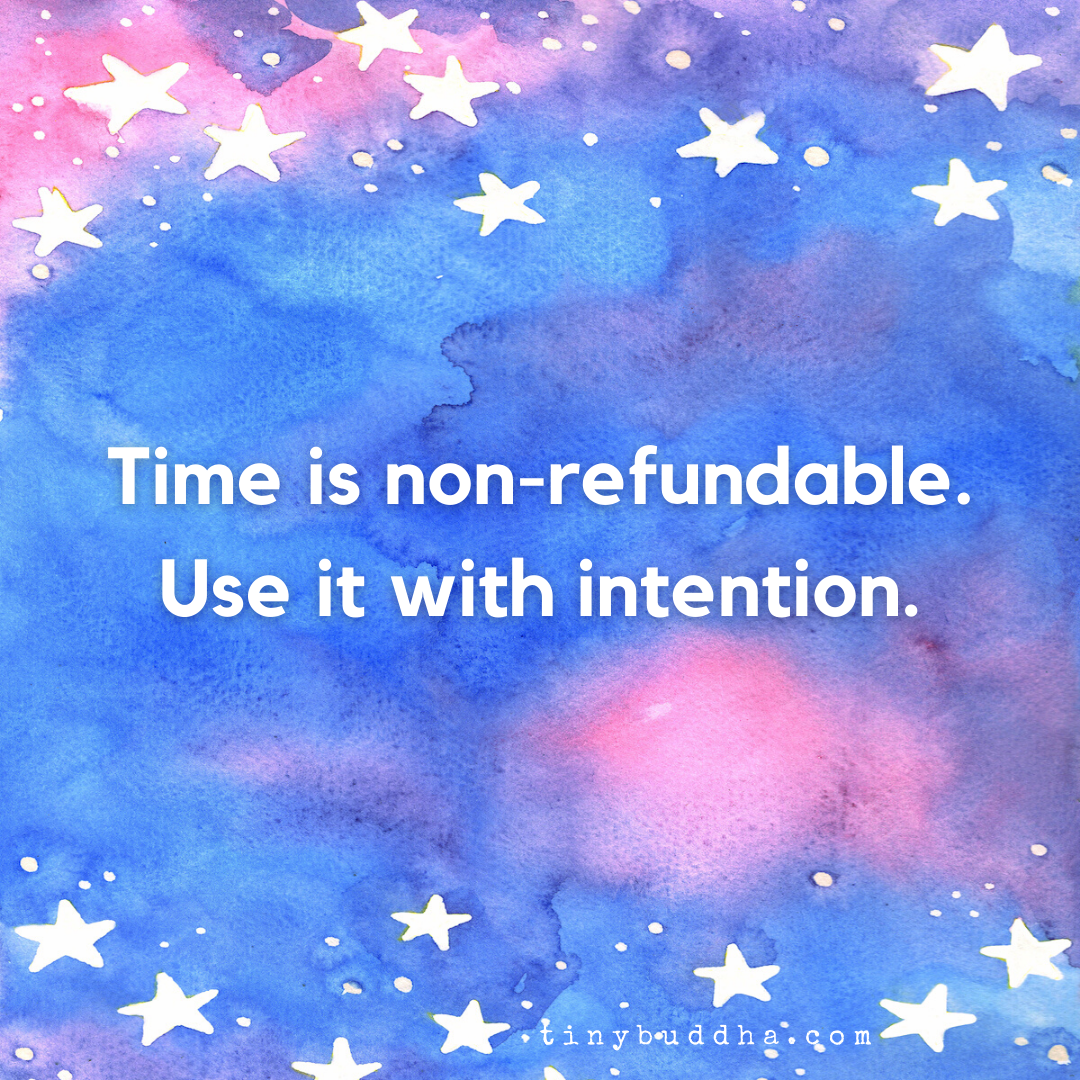
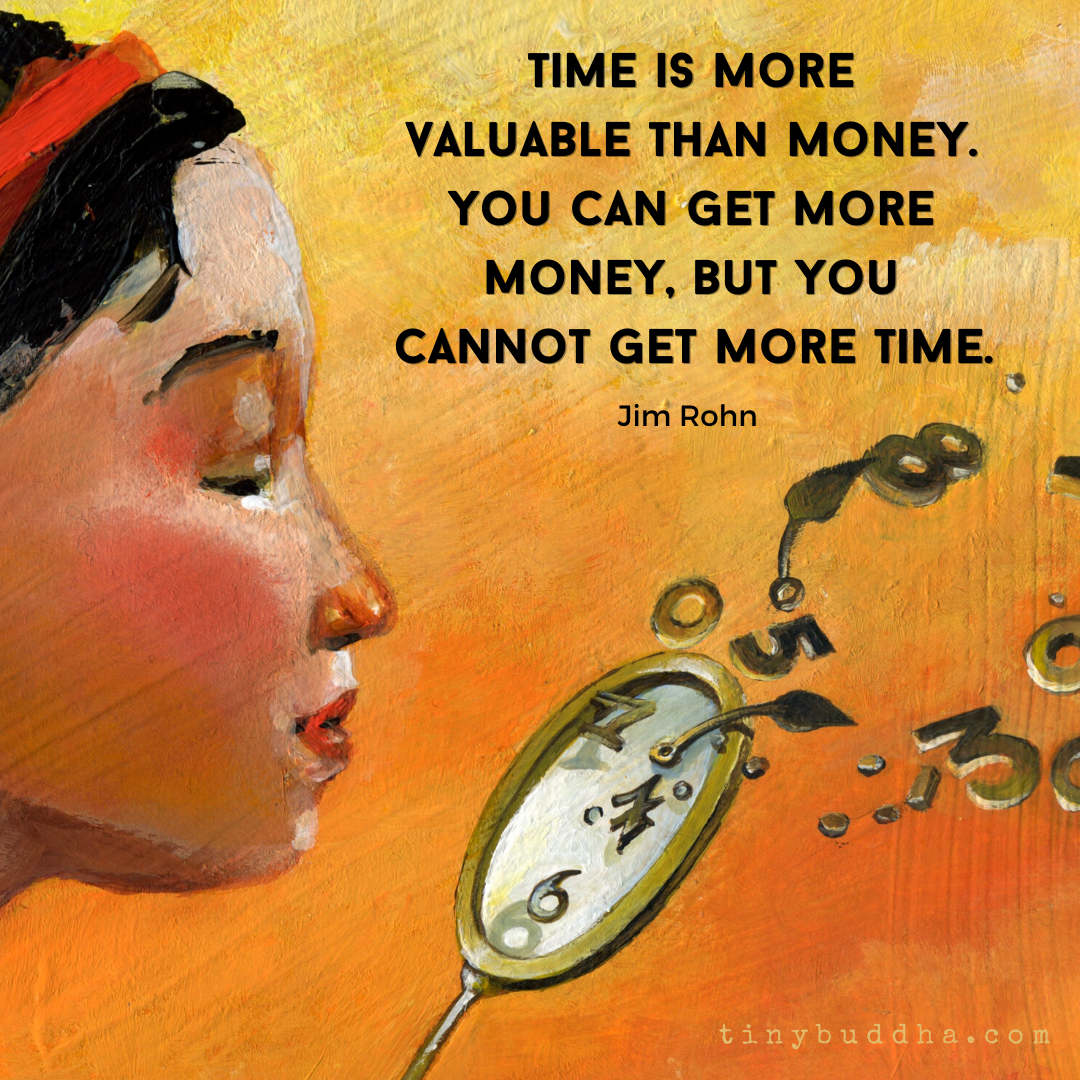
    It is non-negotiable. You can’t buy more time, no matter how rich you are. And you can’t save time either. You can only spend it.

    Time waits for no one. So the sooner you start valuing your time, the better.

    Here are a few things that have helped me start valuing my time and life more that might help you too.

    1. Set your priorities straight.

    Oh, priorities. They are so important, yet we often forget about them.

    If you want to start valuing your time, you need to set your priorities straight. Ask yourself what is really important to you and start making time for those things.

    Ask yourself:

    • What do I want to do, achieve, and experience in life?
    • Who and what matter most to me?
    • What makes me happy?
    • Where do I see myself in five years?

    For me, the answer to these questions was simple: I want to value time with my son more. And I want to find a way to balance work and life.

    What I don’t want is to be glued to my phone while my son is next to me, or to watch movies instead of making small steps toward having my own business.

    Self-care is on my list of priorities too. I make sure to have enough time for myself. Even if it’s just ten minutes a day (to have a cup of coffee in silence), it makes all the difference.

    Self-care keeps me sane and happy. And when I am happy, I can give my best to my family.

    2. Realize the importance of limited time.

    We all have limited time on this earth, and we need to make the most of it.

    The idea of limited time gives so much magic to this life. It makes things more precious. And when you start realizing life is precious, time becomes more valuable to you.

    On top of that, it makes you more aware of your mortality. It might sound depressing, but it’s not. It’s actually very liberating. Just think about it: If you knew you’re going to die soon, what would you do differently?

    Do it now so you don’t end up with regrets about how you spent your time.

    I think about death every day. I accept it. And I thank the universe for being mortal.

    We never know when we are going to die, so the best thing we can do is to live each day as if it’s our last.

    3. Notice what your distractions are and eliminate (or at least minimize) them.

    We all have our own distractions. It can be social media, Netflix, video games, or anything else.

    Here is how I deal with my distractions.

    • My main distraction was Instagram. I deleted it.
    • Then, movies. I decided to watch only one movie per week. No TV series (all they did was make me escape my reality).
    • Internet surfing is another one. I decided to use the internet only for work and research. No more browsing without a purpose.
    • I open the app only if I want to relax for twenty minutes and watch something. Otherwise, it’s a huge time waster (I used to open the app and scroll through it for five minutes with no purpose).
    Once I did that, I noticed that sometimes I even got bored. And I love that feeling of not picking up my phone every time I have a free minute. I just enjoy it.

    4. Consciously choose to do one thing despite countless other activities you could be doing.

    You know those moments when you’re about to do something, but then you wonder, “Should I really be doing this? I could be doing something else.”

    This is a common feeling. We often have so many options that it’s hard to choose just one. But simply do that. Choose one activity and stick to it.

    It doesn’t matter if it’s the “right” choice or not. There’s no such thing as “right” when it comes to how you spend your time.

    I recently listened to a podcast by Oliver Burkeman. He said that we don’t want to make choices. We don’t want to decide. We want to let all the options remain available to us. This is also why we love dreaming about the future. Because all the options are open.

    But we need to make a choice. It is so liberating to make a choice. It gives you a sense of control over your life and your time and it keeps you moving forward instead of standing still.

    So, choose one thing and do it. You will feel so much more in focus because you know where you are going.

    For instance, I am writing this article. I could be doing a million other things, but I choose to do this. And it feels great. I am all in. And I am focused because I am not thinking about other things that I could do.

    5. Know that failure is a sign you’re using your time well.

    When we start a project or an activity, we want to do it perfectly. We need to be the best. Otherwise, we think it’s a waste of time.

    In reality, it is life itself. You can’t prevent failure. You will fail. A lot.

    And that’s a good thing. Failure is a sign that you’re trying something new; that you’re pushing your limits, learning, and growing.

    How can we make the most of our failures?

    • First, accept them. Don’t try to bury your failures or pretend they never happened. Acknowledge them and learn from them.
    • Second, put things in perspective. This one opportunity didn’t work out, but it’s not the last you’ll get.
    • Finally, focus on the successes in your failure. Odds are something good came from it, even if you can’t see it just yet.

    Oh, I failed so many times. I lost years of my life in failure. But I am grateful for every single one of them because they made me grow and become better, maybe even wiser.

    My biggest failure is probably my university degree. It’s three years of my life. I was so naive thinking that I can succeed no matter what bachelor’s I choose. And I chose the easiest one.

    Turns out, there is nothing I can do with my bachelor’s degree. It’s useless.

    I could have spent those three years better, but I am not regretting it. Because if I didn’t fail, I wouldn’t be so motivated today to start my own business and to create something that has meaning.
    As I said in the introduction, I was once horrible at valuing my time. But I am glad to say that I have changed. It certainly wasn’t easy. And I am not an expert at this. I still must remind myself to value my time. To cherish every moment.

    But my alarm doesn’t annoy me when it wakes me up in the morning anymore. It’s a reminder that I get to wake up and enjoy my time on this earth.

    I am grateful to still be alive.

    The time that you took reading this article is valuable. I hope it will make you value your time even more.

    Remember that time waits for no one.

    Remember that it’s non-negotiable.

    Remember that you can’t save it.

    You can only spend it wisely.

  • A Life Full of Favorites: The True Essence of Minimalism

    A Life Full of Favorites: The True Essence of Minimalism

    “Happiness can only be found if you free yourself from all other distractions.” ~Saul Bellow

    What was your favorite toy as a child? Mine was a Spider-Man action figure. The limbs were adjustable, and there was a switch on his back that made his eyes light up.

    I played with that toy for years, even after his fingers broke off and his switch got stuck. While I had plenty of toys as a child, this is the one I remember best.

    Maybe you notice a similar trend in your own children. According to a study conducted by British researchers, the average 10-year-old has 238 toys but plays with 12 daily.

    Even if you don’t have children of your own, maybe you are inundated with your own toys. Outdated electronics that sit on the shelf, trinkets that sit in the closet, or old sweaters that you haven’t touched in the last decade. How many toys do you play with daily, and how many get in your way and cause havoc?

    What if I told you these things are getting in your way of living a happier and more meaningful life? What if you didn’t have to spend time paying off old junk that always needs to be fixed, maintained, cleaned, and repaired? What if you had more time to enjoy friendships, hobbies, and passions?

    As I started to ask myself these questions I noticed others, who called themselves minimalists, asking similar questions. After this discovery, I began my own minimalist journey and never looked back.

    People become intimidated when they discover minimalism because they think they have to sacrifice all their possessions and live like a monk.

    If you think like this, I can’t blame you. I wouldn’t like that either. My five-year-old self would’ve been devastated to get rid of that Spider-Man action figure.

    Fortunately, minimalism doesn’t require such sacrifices. In fact, minimalism doesn’t require anything. There are no rules, judgments, or requirements.
    If the term minimalism is intimidating, think of it as focusing on all your favorite things, every day. This may sound enticing, but what does it look like in practice? Let’s explore together.

    1. Visiting our wardrobe

    If I were to walk with you to your closet, there would be a few different types of clothes.

    Clothes for work.

    Clothes for a formal event.

    Clothes for a night out.

    Clothes for the gym.

    Clothes for lounging and watching Netflix.

    Within each of those categories, which outfits do you usually wear? Which outfits give you the most joy? Which outfits do you gravitate toward, and which outfits sit in the back and collect dust?

    What would your closet look like if you donated the clothes that took up space and hid your favorite apparel? If donating is too daunting, pack them in a box and stash it away for a couple months.

    Giving ourselves space and time helps us realize we never enjoyed, or used, any of that clothing anyways. This gives us the courage to donate the clothes with a sense of pride. If this sounds interesting, but you aren’t sure where to start, look up “Project 333” for some additional tips and support.

    2. Reconsidering our relationships

    In the 1990’s, British anthropologist Robin Dunbar discovered that people can only maintain an upper limit of 150 social relationships.

    Thirty years later, this number sounds like an underestimate. Many people have hundreds of Facebook friends and thousands of Instagram followers. In our everyday lives, this translates into the notion that having more friends leads to more popularity, likeability, and a happier life.

    But the quality of our friendships also matters. Out of hundreds of digital connections, how many people do you spend time with in real life? How many people can you depend on to lend a hand, listen to a problem, or provide feedback to help you improve and grow?

    When I thought about my own friend circles, I realized they were often dictated by proximity rather than by shared values or interests.

    As an avid reader, I like to surround myself with people who are passionate about reading. Using modern technology, I created a book club with members from my local community. What started off as monthly conversations around books turned into regular social gatherings.

    Through discussing our similar values and mindsets, we became close friends who have been a great source of support and joy for each other over the years. Instead of relying on surface level connections that were simply birthed out of proximity, I can now count on these rich and satisfying relationships to help me thrive.

    What would your life be like if you surrounded yourself with people who shared similar values or mindsets? How would your life be different if you spent time with people who enjoyed the same hobbies as you?

    Explore different options, like Facebook groups or Meetup activities, that match your interest. It takes time to foster deep and satisfying social connections, but they can last a lifetime.

    3. Evaluating our time

    I had one of my biggest revelations when I took a hard look at how I was spending my time. I spent all of my time checking my emails and looking productive, while sacrificing the chance to read, write, and spend my time in ways that help me feel happier. I did a lot on any given day, yet none of it was meaningful or fulfilling.

    Does this resonate with you? Look at the commitments and activities taking up your time. Can you delegate anything to someone else, or completely let go of it?

    Are there activities you’re doing because you think you should do them? Ask yourself these questions to pare down your to-do list:

    1) Does this task bring value to my life?
    2) What would happen if I didn’t do this task?
    3) Does this task align with my values?

    Shining light on our habits uncovers fascinating insights.  If someone were to ask me why I was engaging in habits like yoga or meditation, it was because it’s what I thought successful people did, not because I enjoyed those habits.

    Instead of yoga, I now go on walks. Instead of meditating, I express my thoughts through writing.

    Everyone has their own recipes to live a meaningful life, and it will look different for each individual in each season of their life. Consider what you need, what you enjoy, and what habits will be the best tools to help you get there.

    By questioning ourselves, we get better answers that best suit our own needs and desires. Start off with those three questions and add others you see fit.

    What’re your favorites?

    Imagine a life where you only wear your favorite clothing. A life where you surround yourself with people who lift you up and bring joy to your days. A life where you have the time to do the activities that you enjoy most.

    You already have your favorite clothes, friends, and activities. Minimalism isn’t about getting rid of everything, it’s about rediscovering our favorite things—some which aren’t even “things” at all.

    Being surrounded by our favorites can lead us to a happier and more fulfilling life. This switch may even cause our eyes to light up, like my favorite Spider-Man action figure from so many years ago.

  • Why Presence, Not Time, Is Your Most Important Asset

    Why Presence, Not Time, Is Your Most Important Asset

    “Wherever you are, be there. Lifestyle is not something we do; it is something we experience. And until we learn to be there, we will never master the art of living well.” ~Jim Rohn 

    I have been told again and again that our time is our most precious asset. But I disagree.

    The blogosphere is filled with tips on time management—how to get more for our time. I am willing to bet my life that you have come across many such tips online yourself.

    You have probably even adopted some of them.

    I myself am notorious for scouting the internet to find any new tip to help me manage my time better. And yet I find that I am struggling. Yet I find myself constantly being a prisoner to my devices.

    There is one thing that will beat time any day—presence. Time might be important, but our presence is paramount.

    Tell me if you can relate: You are at a family gathering or a reunion, and you cannot help but notice how disengaged everyone around you is. Your cousin is busy taking selfies while your aunt is on the phone with her friend. Your dad is catching up on all the Donald Trump tweets and your sibling is making a TikTok video.

    So, what do you end up doing? You pull out your phone and start checking Instagram.

    I know it because I have been there myself.

    Social gatherings are no longer what they used to be a decade ago. We are constantly connected now. Anxiety kicks in if we cannot find our phones or if the battery is about to die.

    I am sitting in a cafe typing this, and when I look around, I see a bunch of people sitting but busy on their phones. Present but only physically. Technology has made our worlds smaller, yet at the same time made us more distant.

    We have come to believe that just showing up is enough. As if just being present physically will make things better. It rarely ever does!

    It is infuriating and frustrating at the same time—being there, yet not being present.

    We show up to fit in, but if given a choice, we would rather not be there. Physically, we are in one place, but mentally, we are busy wondering how life might be greener on the other side.

    Mentally, we are busy trying to stay “up to date” with god knows what.

    Presence is a big deal.

    Imagine you’ve made a reservation at a fancy restaurant for a special night. You’ve heard good things about the food and the ambience of the place. You’re excited for one hell of a night, only to be served by a preoccupied server who ignores your table, messes up your order, and ruins your dining experience.

    We have all been there, haven’t we?

    Now, think back to the last time you got someone’s full attention. How did that make you feel? Tell me that the experience wasn’t memorable and pleasant.

    It’s easy to tell the difference when someone is mentally absent versus when someone is fully present because presence cannot be delegated. You simply cannot hand it off to someone and get away with it. 

    You also cannot cut corners with your presence, because then you are as good as not there. You are either there or you are not. There is no in-between!

    All of us have to own our presence and choose to be in the moment.

    In a world that is becoming more isolated, presence becomes a big deal because it is now a scarce commodity. There simply isn’t enough of it going around, which makes it more valuable than time.

    As Maya Angelou said:

    “I’ve learned that people will forget what you said, people will forget what you did, but people will never forget how you made them feel.”

    Unlike gifts, our presence cannot be copied, imitated, or replicated. Just like our fingerprints, our presence is unique to us, and without us, there is a void that nobody can fill.

    Every opportunity you get—and trust me, they get fewer and fewer as you grow older—you should make a choice to be present.

    Your relationship doesn’t need time; it needs you to be present. It needs you to take notice of the smiles, the laughter, the hugs, the sadness. It needs you to be an active participant in the uncomfortable moments, the difficult conversations, and the embarrassing pictures.

    Next time, when you find yourself reaching for your phone, reach for it, switch it off, and put it away. This will allow you to, one, be present and, two, catch up with the people present in the room rather than stay up to date with the ones outside. In most cases, the ones that matter are right there with you.

    Next time, choose presence because time only matters if you’re really there to enjoy it.

  • Don’t Waste Your Limited Time and Energy Regretting Your Past

    Don’t Waste Your Limited Time and Energy Regretting Your Past

    “It is better to look ahead and prepare than to look back and regret.” ~Jackie Joyner-Kersee

    We as humans have an incredible ability to help each other in times of need. When things get rough and life gets hard, we tend to come together, step up to the challenge, and provide assistance. Our selflessness shows, and it’s amazing to see everyone work in harmony.

    Need proof? Just look at any natural or man-made disaster in this world, and you’ll see it. We are a species that shows calculated compassion, unlike any other living creature on Earth.

    But as much as we come to help one another, we rarely extend that same compassion toward ourselves. This is especially true when crisis hits us internally; we find it nearly impossible to show ourselves compassion.

    Why is that? Why do we have such a hard time with it? It’s a hard question to answer, but I believe it stems from one simple thing: We have really high expectations for ourselves, and it’s almost impossible to live up to them.

    When someone looks at us from the outside, they can only judge us on our actions. But from our own internal perspective, we judge ourselves based on our thoughts.

    There’s no better example of this than when you fail to take action on something you’ve been wanting to do for a long time. You let fear, uncertainty, comfort, and excuses talk you out of doing it. And looking back, it eats you up inside.

    And naturally, you get upset. I can already see the internal dialogue: “How could you let that happen? You idiot! Why didn’t you do it? Ugh, come on.”

    Then, and without fail, something else happens: Regret creeps in. This is the moment you start asking yourself hypothetical questions. “What if I had done that? Where would I be right now? What would my life look like?” I know what this is like because I’ve been there. And to this day, it can still be a struggle for me.

    I question my abilities at times, and my lack of action. At its worst, it feels like my life has been defined by my inability to take action. Almost like a chain reaction of missed opportunities, one after the other. As a result, I’ve wasted a lot of energy regretting a lot of things.

    Don’t Waste The Limited Energy You Have

    It’s not any kind of breaking news that time flies. We know this. There’s even a popular quote that conveys this sentiment: “The days are long but the years are short.”

    Yet we don’t really understand just how true it is, until the time’s gone. In fact, as I sit here right now, it’s crazy to think just how fast the last decade has flown by. Yes, even when most days seemed really long. Funny how that works. I’m sure you can agree with me here.

    So there you sit, thinking about the eighty-five things you regret not taking action on over the last twenty years of your life. Maybe it goes back even further. Maybe, if you’re lucky, you only regret some things you didn’t try in the last few years.

    Either way, you let the regret stew like a pot of beef that’s been slowly simmering in a Michelin star-rated chef’s kitchen. That’s the best way I can describe my regrets. Hey, if anyone needs a great recipe for regret, let me know: I’ve become a master in letting it stew in the crockpot for months, even years. You’re probably with me on that one.

    But here’s the problem: We only have so much energy every day to put toward our growth. In other words, it’s a finite amount. Every morning, we start with a defined energy level. A lot of it has to go toward running our daily lives; things like work, family, and daily responsibilities drain us of a large amount from our tank.

    After all of what daily life has to take, you’ve got just a bit of energy left. Unfortunately, some of the leftovers have to go toward unexpected things in life on occasion. Things like minor crises, a change of plans, a mild argument with someone, you name it. So now, you’ve got even less left in your tank. This is the crucial area where it can go one of two ways:

    1. We use that small amount of remaining energy fulfilling our passions and growth, or
    2. We use that small amount fighting things we can’t change.

    I’ve experienced extremes on both ends, and I can tell you right now the latter does you absolutely zero good.

    As I round into my mid thirties, I can tell you a number of occasions where I put myself in hot water with regret. I’ve said things I shouldn’t have. I’ve taken steps that, looking back, were obviously not good ones (but helped my growth). I’ve been in the wrong relationships, wasting time (but gaining invaluable insight into who I am).

    I’ve also regretted not making some things a reality. One of the biggest regrets was not moving to a different state when things were easier. What do I mean by “easier”? Well, I had my entire family residing in the same city I was in, including my parents. I had a good job, but one I could easily take elsewhere. I had a bunch of friends, but I had no big responsibilities tying me down.

    The problem? I was also scared, so I talked myself out of it. I was happy to be close to family, friends, and continue at my job. Time went on, and as much as I still thought about it, I didn’t make any big moves.

    Then, my dad passed away, leaving my mom, his partner of over fifty years, alone. And just like that, I suddenly became the only man around. I took on a bunch of responsibilities to help where I could, including being a rock for my mother. Am I glad I was able to provide that assistance? Of course. With absolutely no regrets.

    But did I regret not getting a chance to explore and live in a different city, years prior to him passing? You bet. But anytime it creeps up, I realize one important thing: the best time was twenty years ago, the next best time is now.

    It’s never too late to try something you’ve always wanted to. There’s never a perfect time for it, either. I foolishly tried to have 356 puzzle pieces all fitting together before I made any kind of step. Unfortunately, this is pretty normal. We as humans want to make sure things are lined up perfectly before we make any kind of bigger move.

    But I’m here to tell you it’ll never line up quite like how you want it. If things are in pretty good order in your life, take the action you’ve always wanted.

    Let Go Of Your Past

    More importantly, stop wasting your time regretting your past. Maybe you haven’t (yet) done something you’ve always wanted to do. Maybe you have done something you wanted, but it didn’t work out like you wanted and you wish you could go back and do things a little differently.

    In either case, it’s important to understand the past is just that, the past. There’s a reason your car windshield is so large in comparison to the rear view mirror. You have to be looking forward to drive, and only on occasion do you look backward, before focusing again on what’s in front of you.

    All of us, no matter what our backgrounds and our current situation, are here to learn. And learning happens through failures. Sometimes, failures are inaction. Sometimes, failures are action-gone-wrong. What’s more important than the result is learning from the situation and knowing things can always change going forward. Always.

    Remember, you have a finite amount of energy every day, and you want to use the little bit you have leftover on yourself, not others. This could go one of two ways: beating yourself up, or putting it toward your future and self-growth.

    I would personally choose the self-growth route. Getting mad at yourself is a fruitless endeavor. Instead, use that energy to make the moves you crave. The moves you know you want. The ones you know you need (hello, gut!).

    It’s never, ever too late to experience things and learn from your past. A new city. A new career. A new partner. A new outlook on life itself. Regret won’t get you there. But realization will.

  • Are You Wasting Your Time?

    Are You Wasting Your Time?

    “Life is what happens while we’re busy worrying about everything we need to change or accomplish. Slow down, get mindful, and try to enjoy the moment. This moment is your life.” ~Lori Deschene

    I was on my way to work. At the time I worked at a bar. It was a Thursday night and my shift started at 8:50 PM. I was running late. I was in a hurry. It happened a block away from my job.

    The green light changed and the world stopped. The next thing I remembered I was waking up in an ambulance. The paramedics asked me if I knew what had happened. They asked me if I knew where I was, but everything was a blank.

    I don’t remember how it happened. I don’t remember much of anything to this day. Just that I was driving to work, and next thing I knew there was a woman at my driver side window telling me she was calling for help and an ambulance would be there shortly.

    I was hysterical. I had no clue what was going on. Why was she calling an ambulance? What happened? Was someone hurt? Reality was split. Some part of me was in the car while the other was eons away. I blacked out.

    A police officer came while I was in the hospital. He said I had been hit in the passenger side of my car by a Chrysler Town & Country minivan. There were four eighteen-year-old boys inside. They were all okay.

    I started to remember the accident a few days after it happened. I remembered being slumped over in the passenger seat bleeding and crying.

    At that time I didn’t realize I was hurt, I didn’t even know what had happened. All I remembered were the thoughts going through my head. Not if I would be paralyzed or seriously injured. Not if I would get the chance to go to college in the fall. All I could think was “I’m going to be late for work.”

    At that moment, instead of thinking about the things I cared about, all of my obligations plagued me all at once.

    That experience got me thinking, why was it that the first thing on my mind was work, weekend obligations, and chores? Why would my subconscious draw my attention to these things? Why was my boss, of all people, the first person I called? Were my life and my family less important than my job?

    I did a lot of thinking about that night in the next few months that followed. It was the scariest moment of my life. Not because I could have been badly injured or worse, but because it was the first time I realized my priorities were all wrong. The things I stressed and worried about didn’t really matter in the scheme of things.

    It’s been five years since the accident, but in those years I’ve realized a few things:

    1. Everything is temporary, whether pain or pleasure.

    My eighteen-year-old brain started to realize this after the car accident but didn’t fully grasp it until later five years later. At the time, totaling my car, sustaining the mild but painful injuries, and having to still be an adult and go to work and family events, seemed like the worst thing in the world. I didn’t want to do any of it. At times through college I experienced a similar kind of grief when life just seemed to pile up and crush me under the weight of responsibility.

    Even when the world feels like it will stop, it doesn’t. Life goes on. You figure out a way to move on with it, and the pain it eventually falls away.

    2. Always be grateful.

    Be grateful even when it feels like you have nothing to be grateful for. Be the most grateful when times are hard because it reminds you how lucky you are when things are good. Learning to accept what life gives you and how to love the journey takes practice, patience, and a thankful heart.

    For a while after the accident I went through life feeling really angry. I was mad that I didn’t have my car. I wanted to sue the boys that hit me. It took time but I realized what happened to me wasn’t the end of the world. I had all my limbs and I had the rest of my life to look forward to.

    3. If we waste our time stressing about the little things we will always be stressed.

    Once coming to the conclusion that all things are temporary it’s easier to let go of the little things because you know that they aren’t worth getting stressed about. Give yourself the five-year rule. If it won’t matter five years from now (and most things won’t matter five weeks from now), don’t let yourself get too worked up about it.

    4. We all get the same amount of time each day, and it’s up to us how we spend it.

    I had this teacher in high school, Mr. Fails, who stressed the fact that we all get the same amount of seconds in a day, and it is up to us to use that time wisely. We let our priorities dictate our use of time, but are our priorities in order? Do we use our time to improve? To learn as much as we can and continue to grow?

    I wasn’t in the frame of mind to do that yet, and I wouldn’t be for the next few years. The more twists and turns my life took and the more I saw people change without growing, the more I thought about the constraints time can have.

    I decided that the most important thing I can do with my seconds is what makes me happy, which is seeing myself learn and grow, through writing, through life’s challenges, and through life’s blessings.

    When is the last time you did something that made you happy? I don’t mean temporarily happy; I don’t mean that summer vacation you went on that was exciting for a second. I mean the kind of happiness that lingers, that you can think about and still smile, the kind of happiness that you get from great love, or doing something you never thought possible.

    Too often we base our happiness on tangible objects—houses, cars, clothes, and stupid things that give us a quick buzz of instant gratification. The kind of things that will only give you joy for a blip of time in the scheme of things.

    Real happiness comes from using our time in a way that feels authentic and meaningful to us. For some, that might mean making major life changes, But this also can mean spending more time with the people we love, or enjoying the little things that we might deprioritize when we’re focused on work and our goals.

    Life doesn’t guarantee much, but it does guarantee that there will be 86,400 seconds in a day. You don’t have a right to those seconds and I can’t guarantee that you will get them, but, with you or without you, they will tick by.

    When you are going into your dead-end job every day, when you are in an unhappy relationship that is going nowhere, and when you are spending your time unsatisfied with the life you’ve created, I want you to remember that you have 86,400 seconds every day, and it’s your choice how you use them. Are you wasting your time?

    If you are, because you think you have it to waste, or you think that the seconds aren’t as important as the hours and days, if you are constantly telling yourself that you will do it tomorrow, remember this: in the time it took you to read this article…

    Someone died in a car accident, someone else was abducted, someone just committed suicide, someone was shot, someone was married, someone had a baby, someone was reunited with a loved one, someone was wrongfully convicted, someone was bullied, someone is crying, someone beat cancer, someone died of cancer, someone cheated on their wife, and someone found hope.

    All that and more has happened while you sat there and read this. There are bad things happening in this world, and there are beautiful things happening in this world. You never know what’s coming, so why waste the little time you may have?

    Find what makes you happy and do it! Don’t wait for the right moment; it may never come. Don’t make up excuses because there is always a way. You might not be able to make major changes instantly, but you can make tiny shifts in your daily life and take tiny steps toward the life you want to create.

    Too many people waste their precious time worrying about what might be, could have been, and will never happen. Be the kind of person that spends their time loving, living, and letting go of what is unimportant.

  • The Simplest Way to Make More Time for What Matters

    The Simplest Way to Make More Time for What Matters

    “We’ve all heard the saying, stop and smell the roses. But it would be far better to be the gardener who grows the roses and lives with them constantly.” ~Deepak Chopra

    What would it take to befriend time? To see time as an ally, a friend even—an opportunity?

    Most of us have a much different relationship with time. One that is based on scarcity. The chorus of “I don’t have enough time” reverberates through conversations, social media channels, and personal mutterings.

    Redefining our relationship with time isn’t like flipping a light switch. But it is a bit like pumping gas in your car.

    I am one of those people that forget to make time to stop at the gas station as the fuel gauge in my car starts to veer towards the red E. I’ve never run out of gas, but the fuel light comes on more than I’d like to admit.

    Why exactly would I ignore this gauge? Because of time. I see that the meter traverses from ½ a tank to ¼ of a tank, and I find myself thinking, “I don’t have time to stop and get gas right now. I’ll stop tomorrow.”

    But tomorrow becomes the next day, and then the day after that. And by that point, the taunting orange light has been activated. Even then sometimes I ignore it, believing that I’m in a rush.

    Except that something funny happens when eventually I pull into the gas station and stop long enough to fill up. The process of putting gas in my car doesn’t take very much time. Though I haven’t timed it, my guess is that from inserting my credit card to activate the machine to replacing the nozzle when I’m done, less than five minutes have passed.

    Five minutes is forever. Minds can be changed in five minutes. Heartbeats can be elevated (or slowed) in five minutes. Smiles can be shared, laughter can fill a belly, and bodies can be hydrated in five minutes.

    In fact, it seems to me that filling up my car with gas offers the perfect reminder of why we need to make time an ally. Cars need gas to function. We, like cars, have our own fuel needs to not just survive, but thrive.

    Beyond food and water, we need play, we need sleep, we need connection, we need love. But too often, we tell ourselves we don’t have time.

    We rush and scramble through the day, moving from one thing to the next, trying to check things off our lists as if productivity is the ultimate indicator of joy. And, more importantly, we tell ourselves that the things we crave will take too much time—time that we do not have.

    What if we did have time? What if the things we crave could fill us up, just like gas fills a car, in just a few minutes? What if we could give ourselves permission to savor the unexpected moments instead of just the big, fancy, planned out ones?

    Maybe instead of needing an hour long nap or workout, we could find fulfillment in a shorter power nap? Or instead of a trip to the gym for a workout, we could feel strong from mini-bursts of movements throughout the day?

    What if we saw time as an opportunity for fulfillment like a friend that invites us to be present rather than using the hours on the clock as mile markers for productivity?

    When I think back to the most heart-filling, nourishing moments of the last few months—or even the last few days—they are the ones that I had to allow myself to receive outside the boundaries and constraints of a schedule. The moments where I allowed myself to move slowly, so slowly in fact, that I had the opportunity to notice the dance of life around me.

    Like when my heart smiled from pausing before I left my home office to hear my daughter singing out loud in the shower. Or when I made time for a thirty-minute yoga practice one evening and remembered that sometimes all it takes is a simple twist to let go of whatever I was holding on to. Or the evening that instead of making a run for it, trying to avoid the rain, my daughter and skipped and jumped in puddles on our way home.

    None of these moments took any great length of time. And yet, had I been rushing, or listening to my thoughts run amok with reminders of how much I had on my to-do list, I would have missed them completely.

    In The Big Leap, Gay Hendricks offers the question: “Am I willing to increase the amount of time every day that I feel good inside?”

    So many of us use clocks as measures of progress. How long can I meditate? Can I beat my 5k pace? How many clients can I fit into one day? But these measures ignore all the smaller indicators. The goosebumps on your skin from noticing a sign that reminds you of something you love. Or the peaceful scene that you witnessed that reminded you to take a breath.

    Instead of worrying about a spillover of gas when we pump those few last gallons in our car, how might the day be different if saw time as a way to top ourselves off with fulfillment?

    The Easiest Way to Make Time a Friend Is to Create Space

    Think of it like de-cluttering. What can you release to create more moments to see time as an opportunity? Maybe you need to release expectations or assumptions. Or perhaps you could let go of judgments around what it means to be successful or productive.

    Amplify Abundance

    Just like de-cluttering and release creates space, a focus on what needs to be amplified cultivates abundance. If you are releasing expectations, can you amplify being guided by intuition? Could you amplify stillness by allowing yourself to stop throughout the day to take three breaths? Or six? What might it feel like to amplify nourishment for the mind, body, and soul?

    I’ve heard all of it before. Parents who feel like time isn’t on their sides with schedules and carpools. Or individuals who feel like they are at their best when they are trying to beat the clock. I’ve been there. In my early adult years, I often felt like I was most focused when my schedule was packed and had little time for distraction. But now I wonder.

    Time and fulfillment seem inextricably connected. And I don’t know about you, but life feels much more delicious when you practice time management with your heart and clarity of purpose instead of a to-do list.

  • Rethinking What Really Matters: The Four Most Important Things in Life

    Rethinking What Really Matters: The Four Most Important Things in Life

    “Life is short. Focus on what matters and let go of what doesn’t.” ~Unknown

    Our most precious commodities are not our smartphones, 3D TVs, brand new cars, or even our big and impressive houses.

    Our most precious commodities can’t be found at the bank. They can’t be ordered online. The truth is, they are on a very short list.

    Amongst our most precious commodities are our purpose, time, health, and our relationships.

    How I Came to This Conclusion

    Several years ago I realized I was accumulating more in my life. More things that didn’t really matter to me or speak to me on a spiritual level. More commitments I wasn’t really passionate about keeping. This was all leaving me feeling a little flat and unfulfilled. It felt like something was missing, but I wasn’t sure what that something was.

    A period of fairly deep reflection followed. I then started to take some action based on this reflection. Amongst other things, that action has meant:

    • I have made good on long-term dreams to write creatively
    • I have realized I value freedom and flexibility over the ability to just earn more, and I now seek out ways of living accordingly.
    • I have accumulated fewer material possessions but enjoyed more (travel and holidays, events, life experiences).
    • I have concerned myself a whole lot less with the need to keep up with others (a toxic and empty competition if ever there was one).
    • I have set up my own micro-business so I have more control over what work and clients I say yes and no to.
    • I have met and married a partner in travel and adventure.
    • I have embraced aspects of simplicity, 80/20, and other powerful concepts into my life.

    The upshot of these and other changes has been that the quality of my life has improved significantly. I certainly don’t have everything figured out (spoiler: no one does!), but my compass in life is much more in tune with somewhere I actually want to get to now.

    Alongside this period of internal reflection, I started to question lots about life.

    I started to weigh what I thought I wanted with what I actually wanted. I started to question what I was really seeking. Whether I was on a path that would get me there. Whether I had people in my life that could support me emotionally along the way. I started to question what it was to be successful and fully explore my own definition of it, not just follow a second-hand version.

    I also started to question whether what I thought was important in life was really important at all. I reframed my life and came to the conclusion that there are several areas, commodities if you will, that are vitally important to how we feel, that need careful attention.

    This is what led me to the realization that our purpose, time, health, and relationships are amongst our most precious commodities. Such a simple and obvious realization, you may protest. Well, if that’s the case, how is it that we let these suffer so frequently?

    Purpose

    Purpose is our why. It drives our actions. It fuels our passion. It encompasses our work, our relationships, and our approach to living our lives. It wraps around everything we do. It means living our lives in an intentional way. It gives our lives a sharper focus.

    Our why is what keeps us going when life gets tough.

    Our why gives life extra meaning and richness.

    If we’ve lost our way and are struggling with our why, we can ask ourselves several related questions:

    • Where am I’m trying to get to?
    • What lights me up and gets me excited?
    • What’s my reason for getting up in the mornings?
    • What do I want more of in my life?
    • What do I want less of in my life?

    The answers to these questions can be revealing and can lead us back to the core of what really matters most to us. Listen to these answers and use them as a guiding light. Revisit them often

    Time

    We all have the same number of hours in our day. Why do some of us run around, constantly stressed, complaining we “don’t have time,” while others seem to approach life in a relaxed and happy state but still get plenty done?

    Though we all have responsibilities and obligations, this often comes down to choices.

    Many of us make poor exchanges on our time on a daily basis. Each time we say yes to something, we are effectively saying no to something else. The problem is, we often say yes to too much. This is where a balance starts to tip.

    Instead of feeling in control of our calendar, our time is all accounted for. We rush from this commitment to that, never really feeling like we’re truly present at any of them. We squeeze evermore into our days but feel we have less and less time to do the things we really want to do, or see the people we want to see. We have less space left for ourselves.

    Time is a finite resource; once spent, it’s gone. We can’t get time back, but we can be selective and intentional with the time we have.

    We can take control by saying yes to less and appreciating the white space in our diary. We can protect our precious time for the activities and people that give our lives the most meaning and joy.

    Of course, reclaiming your time isn’t always this simple. Some of us are working several demanding jobs in order to pay the most basic of bills. Maybe we are bringing up a young family, caring for aging parents, or perhaps looking after a loved one who has physical or mental health challenges.

    Finding time for anything in these scenarios can be especially tough. Even if we do have time, we feel a heavy sense of guilt if we spend it doing something for ourselves, because it seems selfish. Besides, exhaustion can hit us right when we have these small windows of time, and sleep or the TV may beckon.

    If we’re limited in this way, a good start is to find small pockets of time to invest in our passion projects, our hobbies, and ourselves. Five minutes here, half an hour there can add up over a period of time.

    Though we may be caregivers or breadwinners for others, we need to remember to care for ourselves along the way. We can do this without neglecting our responsibilities. In fact, the more we can look after our own well-being, the better equipped we are to be of service to others.

    Another step that we can take is to try to change our situation. Maybe we can work closer to home or look to simplify and reduce our bills, and perhaps even work a little less. In the case of loved ones with challenges, maybe we haven’t exhausted our options in terms of additional help (from friends, family, or care groups).

    These are all tough and very real challenges some of us face, and I will not make light of them here. All any of us can do is look to make the very best of our situations and be grateful for what we have instead of focusing on what we don’t have. Sometimes we need a little outside support from others to help us along. Where there is a will, there can be a way.

    Health

    So many of us take our health for granted until we have a reason not to.

    We neglect exercise and then wonder why our bodies complain when we need to climb a flight of stairs. We neglect our diet and then wonder when all this extra weight crept up on us. We neglect our mental health and then wonder why we’re always stressed.

    We can be kinder on ourselves. We can add regular movement to our lives. Walking, the gym, bodyweight exercises, yoga—it all counts and can all be mixed up. Our bodies are made to move, not sit humped over laptops or in front of TVs all day. Embrace the ability to move.

    Eating healthily can also be simple and enjoyable. We can base most of what we eat on plants (fruits and vegetables). If we eat meat, we can treat it like a side dish and ensure most of the rest of our plates are filled with a rainbow of vegetables. No foods need be off limits, and we can still make space for the odd discretion. Healthy eating can and should be delicious eating, and should never feel like drudgery.

    Being outside more, eating well, and making time to decompress can all help our mental health and general feelings of well-being. We can be gentler with ourselves by ensuring we make time to reset occasionally.

    Regular check-ups with our doctors can help pick up the early signs of anything nasty, but we can also do our best to make the most of what we have by trying our best to look after ourselves.

    Relationships

    Our modern obsession with being busy leads many of us to feel we don’t have enough time in our days. This is a particularly sorry state of affairs when it means we “don’t have time” for our relationships.

    The truth is, all this busyness just might be something we have had a hand in creating. This may not be welcome news, but it does mean we can also step back from it and live another way.

    Our friends, family, and loved ones are what really add spark to our lives. We need to make the time to foster these relationships. Being busy is fine, if we’re busy with the things and people that mean the most to us.

    Our relationships are our bedrock, our foundation. We need to nurture them with the love and attention they really deserve.

    Purpose, time, health, and loved ones. These are truly the things that make us richer and make life more complete. Let’s treat them accordingly.

  • 7 Simple Ways to Give Back to the World When You Have Little Time or Money

    7 Simple Ways to Give Back to the World When You Have Little Time or Money

    “I’ve learned that you shouldn’t go through life with a catchers mitt on both hands. You need to be able to throw something back.” ~Maya Angelou

    Being charitable is often seen as a zero sum game, giving away our time or money for the benefit of others. As uplifting as it may be to give to a cause you care about, most of us feel we lack the authority to truly make things happen.

    I discovered the transformative power of helping others when I was eight years old. My friends and I had imaginations like other children, but in the summer of 1989 our ideas became action—we organized an event to raise money for a local leukemia charity.

    Every day, on a patch of grass by the river, in the shadow of a 10th century abbey, my friends and I would play soccer. As it was the summer holiday and we had never stayed up all night, we conceived of a marvelous plan to organize a sponsored, all-night soccer match.

    What we lacked in official charity affiliation, we made up for in enthusiasm. We walked for miles, knocking on every single door to obtain sponsors for our unconventional soccer match. We asked anyone that sponsored us how many goals we’d score during the night. The person who came closest would win a signed ball from the local professional soccer club.

    Within two days we managed to collect over 100 pounds in sponsor funds. More importantly, we had planted a seed in ourselves, a raison d’etre.

    People arrived to show their support, cheering with each goal that we scored well into the balmy summer evening. As the sun set, only we kids were left, with my dad as the sole spectator. Our motivation never waned as we played into the early hours of Sunday morning.

    The pride and sense of achievement we gained from helping that leukemia charity led me to a profound realization: Positively impacting others is far more meaningful than the satisfaction of a personal goal that wears off after a day.

    Time after time I hear people say that either a lack of time or money prevents them from volunteering or donating to a cause. It isn’t that they don’t care; it’s just that they don’t feel empowered to actually do anything. After hearing this collective frustration from so many people who wished they could do more, I decided to compile this list.

    What if there were various ways you could help others without sacrificing your already-tight budget or precious free time? Below are six small changes you can make in your daily life that have a stunning social impact over time.

    1. Amazon Smile

    As the light of the laptop glows upon my face and the dopamine rush of retail therapy hits, my late night Amazon shopping spree is an unexpected source of social good. With their low prices and free two-day Prime shipping, Amazon is my go-to source when shopping online.

    Over 250 million people use Amazon, but only a fraction use Amazon Smile, a simple and automatic way to support your favorite charity. When you shop through smile.amazon.com, you’ll find the same selection and low prices with an added bonus: Amazon will donate 0.5% of the price of your purchases to your favorite charity. The donation is automatic after checkout.

    Over the past twelve months I have spent an embarrassing $2,800 at Amazon, and often, when buying impulsively, I would forget to visit smile.amazon.com. But since installing a Google Chrome extension, I am automatically redirected to smile.amazon.com when I click on any Amazon link or navigate to amazon.com in my browser.

    Annual Impact: $2,800 x 0.05 = $14

    2. Charity Miles

    Most of us walk, some of us run, while others prefer to cycle. What if we could not only improve our health from daily exercise, but also do social good as we sweat? Over the past few years I have been on a quest to run a marathon on every continent to help raise awareness and funds for refugees, and the Charity Miles app has helped to multiply my fundraising efforts.

    Charity Miles sends money to a charity of your choosing for each mile that you walk, hike, run, or cycle. Simply download the app for your Android or iOS device, select a charity, and then perform your exercise as you normally would.

    The charity that you select earns money for every mile completed. Walkers, hikers, and runners earn $.25 per mile; bikers earn $.10 per mile. The app even has an indoor mode if you prefer to use the treadmill.

    Total Effect = 1,200 miles of running = $300
    600 miles of walking = $155
    600 miles of cycling = $60

    Annual Impact: $515

    3. GoodSearch.com

    The most common online activity besides browsing social media is searching. We use search engines to help us at work, with our personal lives, when shopping, and in just about every scenario imaginable. Search engines are how we find information.

    GoodSearch is touted as a philanthropic search engine. Instead of instinctively heading to Google, start using GoodSearch instead and contribute to the millions of dollars already raised for charity. To remember to do this, just replace Google as your browser’s default homepage. In addition, shopping through GoodShop allows you to donate to charity just like Amazon Smile does.

    Annual Impact= 5 searches a day x 365 = $18.25

    4. FreeRice.com

    Brain-training games have become a big business over the past few years with companies such as Lumosity and Elevate dominating the niche. But rather than paying money to exercise your brain, flex your neurons and help a charity at the same time with FreeRice.com.

    For each question you answer correctly, Freerice.com donates ten grains of rice to the World Food Programme. The game is surprisingly therapeutic. It helps me to decompress after a long day, and it allows me to multitask: learning new information while effortlessly donating to charity. After just five minutes of game-time I earned 750 grains of rice for the World Food Programme.

    Annual Impact: 750 x 365 = 273,750 grains of rice or 9.4lbs

    5. The Hunger Site

    The Hunger Site allows users to donate food by simply clicking a button! No actual donation is required. Simply click the yellow button on the main page and repeat daily. After clicking you can see the results for that day – including how many people clicked and how much food was donated in kilograms, tons, and pounds.

    Annual Impact: 0.14 lb x 365 =51lbs of Food

    6. Satorio.org

    The growing body of evidence supporting meditation has already been widely publicized by mainstream media outlets. Not only can meditation reduce stress, anxiety, and blood pressure, but it can also boost creativity, focus, and the immune system.

    Using Satorio.org, you can obtain these benefits while simultaneously helping to end world hunger—no effort or money is required.

    When you start hitting the gym, you observe small improvements and gradual changes along the way. The same is true with meditation. It is a workout for your mind that can have ripple effects on your life and the people around you. The idea behind Satorio is to show, in a more tangible way, the beneficial impact that your meditation can have on others.

    By meditating for twenty minutes a day, you give 73,000 grains of rice to Oxfam annually:

    Annual Impact: 20 x 10 x 365 = 73,000 grains of rice or 2.5lbs

    7. Forest

    As you are reading TinyBuddha, you no doubt appreciate the art of being mindful with your time. Forest, an app I started using recently, not only helps me be more mindful, but also increases my productivity massively.

    Forest encourages you to resist the temptation of leaving the app to check Facebook, text, or to play a game, by making your virtual tree wither away when you do. The Tamagotchi sense of achievement I get from nurturing my forest, motivates me to stay away from the distracting element of my phone when I am supposed to be working.

    I would gladly pay the $1.99 for the app’s productivity boost alone; however, the added social benefit are the real trees that are planted after achieving certain milestones.

    Total Effect:

    2 x 25 minutes sessions per day = 2 trees planted a year

    Over the course of a year, using these websites can provide $547 and over sixty pounds of food. Imagine how many millions of people would be fed and helped if even 1% of the world did this.

    So if you’ve been stuck in a defeatist mindset, assuming there is nothing you can do, think again. These incredibly simple efforts can fuel positive change and support programs that save lives around the world.