Tag: thoughts

  • Relief from Relentless Thoughts: Reclaiming My Mind from OCD

    Relief from Relentless Thoughts: Reclaiming My Mind from OCD

    “Don’t believe everything you hear—even in your own mind.” – Daniel G. Amen

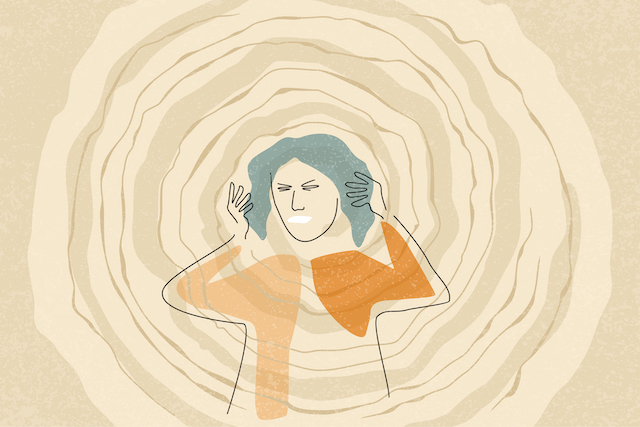
    This quote might sound like something you’d read on a coffee mug or an Instagram quote slide. But when your own mind is feeding you a 24/7 stream of terrifying, intrusive thoughts? That little phrase becomes a survival strategy.

    Sure, I have lots of strategies now. But they weren’t born from a gentle spiritual awakening or a peaceful walk in the woods. They were born out of a relentless, knock-down, drag-out fight with obsessive-compulsive disorder (OCD). A fight that started when I was a kid and stole years of my life.

    Let me be blunt: OCD is not quirky or cute. It’s not about liking things tidy or being “a little type A.” It’s a full-body, panic-inducing disorder where your brain screams, “You are in danger!”—even when there’s no actual threat.

    It’s counting in desperate loops. It’s having rituals you don’t understand but can’t stop doing. It’s fear that feels like a gun pointed between your eyes, triggered by nothing more than a thought. I know because I have OCD, or I guess I should say “had” OCD.

    Life with OCD: A War Inside My Head

    From the time I was young, my brain was hijacked by fear. Fears that something terrible would happen. That I’d lose people I loved. That I’d be misunderstood, unworthy, unforgivable. These thoughts didn’t just whisper—they screamed. And my body listened: sweaty palms, racing heart, shallow breath. Over and over, even though nothing was really wrong.

    To cope, I created rituals—compulsions that promised relief but never delivered. I’d roll my neck a certain way, flex my wrists, blink, swallow, count in rapid-fire succession—anything to feel right again. But it never really worked. Four was my magic number for a long time. I could fly through sixty-four sets of four faster than you’d believe. Still, the anxiety roared back every time.

    Want a picture of what this looked like? Here’s one from high school: I’m sitting at the kitchen table. I glance—again—at the round straw basket on the wall. I roll my neck, flex both wrists, blink, swallow. Damn it. Not right. I start the sequence again. One-two-three-four. One-two-three-four. Again. And again. Four sets of four, done four times. Still not right. I’m drowning in invisible urgency while everyone else is just trying to eat dinner.

    I had objects in every room of the house, each one assigned to a ritual. A cherry wood clock. The edge of a curtain rod. A fluorescent light tile. I didn’t choose this. I didn’t even understand it. And I definitely didn’t enjoy it. OCD stole my time, my energy, and my sanity. If I didn’t do the rituals, I was consumed by dread. If I did them, they were never good enough. It was a damned-if-you-do, damned-if-you-don’t existence.

    Thoughts That Terrified Me

    The content of my fears changed over time, but the intensity didn’t. Sometimes the dread was vague. Sometimes it was specific and disturbing—violent images, inappropriate sexual thoughts, blasphemous phrases. I obsessed that I’d pick up a knife and hurt someone. That someone I loved would die because I breathed the wrong way.

    I couldn’t write without rewriting. I couldn’t look in a mirror without fearing I’d become vain. I drew invisible lines on the floor to protect people. I had to sit a certain way, speak a certain way, think a certain way. And God help me if a “bad” thought popped into my head mid-ritual—I had to start all over again.

    At one point in college, while stuck in an endless loop of trying to put a piece of paper in a folder “just right,” I ended up stabbing a pencil into my thigh out of sheer mental exhaustion.

    I truly believed I was broken.

    Finding a Name—and a Way Out

    I didn’t even know it was OCD until I stumbled across a book and then saw a video showing other people’s compulsions. It was a holy shit moment. You mean someone else can’t fold a towel just once either?

    Once I had a name for what was happening, I could begin to untangle it. I learned that my brain was sending false messages—and that I didn’t have to obey them. A psychiatrist once explained it with a triangle: Most people’s thoughts bounce between points and move on. Mine got stuck in the triangle and just spun endlessly.

    Knowing that helped. But what really changed everything was discovering mantras.

    How Mantras Helped Me Rewire My Brain

    My mom—who also struggled with OCD—started making up little phrases with me to cut through the noise. The one that changed everything?

    “That’s a brain glitch. I don’t have to pay attention to that.”

    It sounds simple, but that phrase became a mental lifeline. It helped me step back, call out the OCD lie, and redirect my focus. It was a way to challenge the urgency of the thought without getting pulled into the ritual. And it worked—not overnight, but consistently, over time.

    Then I read Brain Lock by Jeffrey Schwartz, which broke down the exact same strategy: identify the thought, reattribute it, and refocus. I realized—I’d already been doing that with my mantras. They were helping me rewire my mind. That realization was empowering. I wasn’t just surviving anymore. I was retraining my brain.

    Mantras, OCD, and the Messy Middle of Healing

    Slowly, imperfectly, I stopped fighting my thoughts and started getting curious about them. I began to notice how fear hooked me—and how I didn’t have to take the bait.

    My mantras started piling up on sticky notes everywhere. They were grounding. Sometimes funny. Sometimes serious. Sometimes just sarcastic enough to cut through the noise in my head. But they worked. They reminded me of what was true. They gave me just enough space to respond differently.

    Because here’s the thing: OCD doesn’t run my life anymore. Sure, the tendencies still flare up under stress—but I have tools now. I have perspective. And I have mantras.

    Not the fluffy kind that pretends everything is fine. The gritty, scrappy, fiercely compassionate kind that says:

    • Yes, your brain is being loud right now—and you’re still allowed to rest.
    • Uncertainty is uncomfortable, not dangerous.
    • You are not your brain.
    • You can let go. Even if you have to do it a hundred times.

    If you’re someone who struggles with relentless thoughts—whether it’s OCD, anxiety, or just the everyday noise of being human—I hope this inspires you to craft your own phrases, rooted in your values and the kind of life you want to move toward, or mantras that remind you to ignore that harsh inner critic and the fears that lurk in your mind.

    You’re not alone.

    Your thoughts are not always true.

    And you are allowed to let go of thoughts that do not serve you.

    Even if you have to let go over and over and over again. That’s okay. That’s the work.

    Don’t believe everything you think. But start believing that you can heal.
  • How I Stopped Overthinking and Found Inner Peace

    How I Stopped Overthinking and Found Inner Peace

    “You don’t have to control your thoughts. You just have to stop letting them control you.” ~Dan Millman

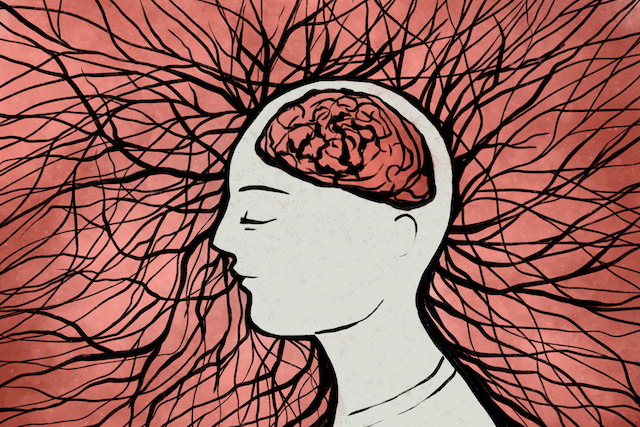
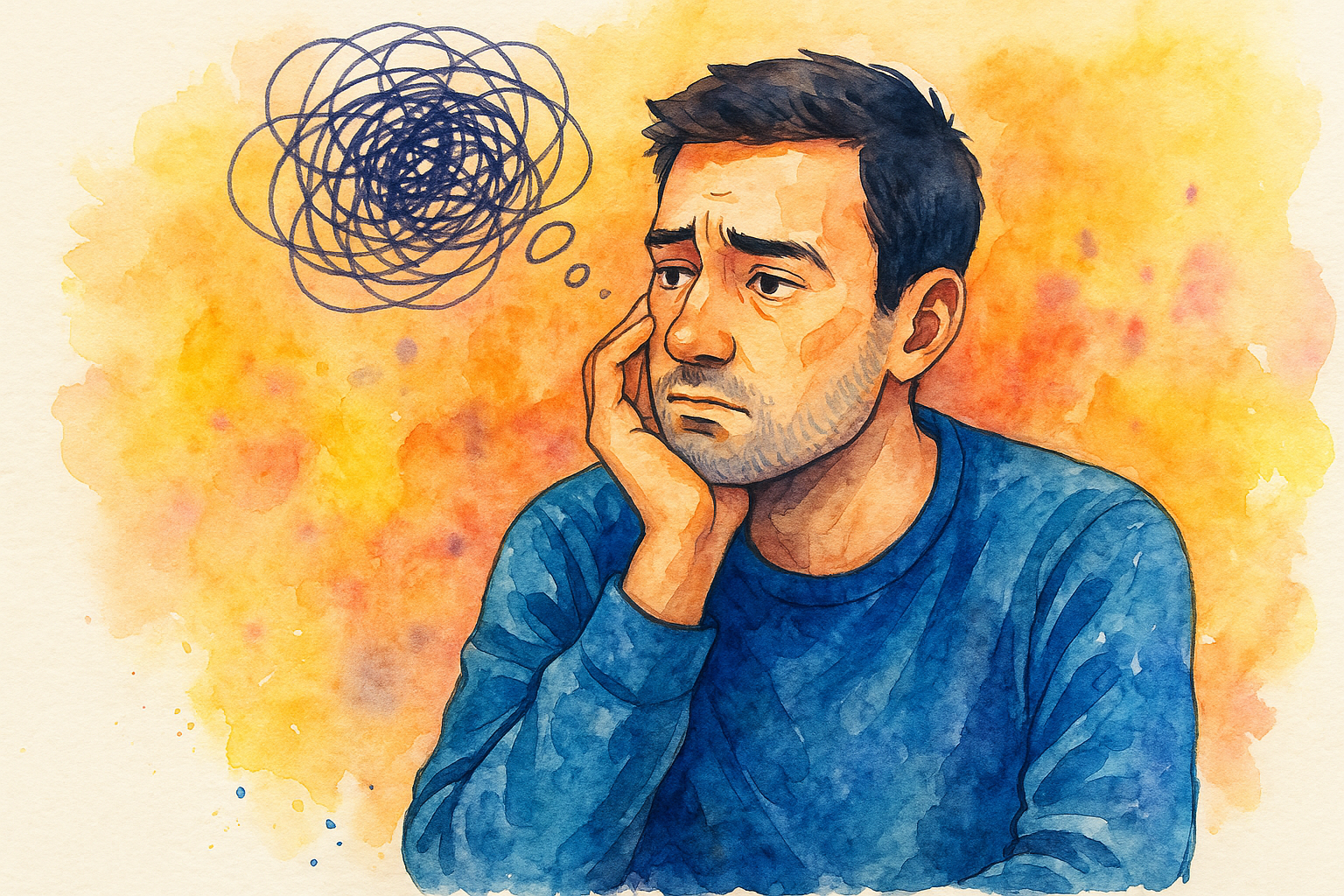
    For as long as I can remember, my mind has been a never-ending maze of what-ifs. What if I make the wrong decision? What if I embarrass myself? What if I fail? My brain worked overtime, analyzing every possibility, replaying past mistakes, and predicting every worst-case scenario.

    Overthinking wasn’t just a bad habit—it was a way of life. I’d spend hours second-guessing conversations, worrying about things beyond my control, and creating problems that didn’t even exist. It felt like my mind was running a marathon with no finish line, and no matter how exhausted I was, I couldn’t stop.

    But one day, I reached a breaking point. I was tired—tired of the mental noise, tired of feeling anxious, tired of living inside my own head instead of in the present moment. I knew I had to change.

    The Moment I Realized Overthinking Was Stealing My Peace

    It hit me during a late-night spiral. I had spent hours replaying a conversation, obsessing over whether I had said something wrong. My heart was racing, my stomach was in knots, and I couldn’t sleep.

    In that moment, I asked myself: Is any of this actually helping me?

    The answer was obvious. My overthinking had never solved anything. It had never prevented bad things from happening. It had only drained my energy and made me miserable.

    That night, I made a decision: I would stop letting my thoughts control me. I didn’t know how yet, but I knew I couldn’t keep living like this.

    How I Learned to Quiet My Mind

    Overcoming overthinking didn’t happen overnight. It took patience, practice, and a willingness to let go of control. But here are the key things that helped me find peace:

    1. I stopped believing every thought I had.

    For years, I assumed that if I thought something, it must be true. But I started noticing that most of my thoughts were just stories—worst-case scenarios, exaggerated fears, self-doubt.

    So I began questioning them. Is this thought a fact, or is it just my fear talking? More often than not, it was the latter.

    By learning to separate reality from the stories in my head, I loosened the grip overthinking had on me.

    2. I created a “worry window.”

    At first, I thought I needed to stop worrying completely, but that only made me stress more. Instead, I set aside a specific time each day (ten to fifteen minutes) when I allowed myself to worry as much as I wanted.

    Surprisingly, this helped a lot. Instead of overthinking all day, I trained my brain to contain my worries to one small part of the day. And most of the time, when my “worry window” came, I realized I didn’t even need it.

    3. I practiced “letting thoughts pass”

    One of the biggest shifts came when I stopped trying to force my thoughts away. Instead, I imagined them like clouds in the sky—passing through, but not something I had to hold onto.

    Whenever I noticed myself overthinking, I’d take a deep breath and say to myself: I see this thought, but I don’t have to engage with it. And then I’d let it go.

    4. I focused on the present moment.

    Overthinking is all about living in the past or the future. So, I started grounding myself in the present.

    Simple things helped:

    • Focusing on my breath when my mind started racing.
    • Noticing small details around me—how the sun felt on my skin, the sound of birds outside, the smell of my coffee.
    • Reminding myself: Right now, in this moment, everything is okay.

    The more I practiced this, the easier it became to step out of my mind and into my life.

    How Life Changed When I Stopped Overthinking

    I won’t pretend my mind is quiet 100% of the time. Thoughts still come, but they no longer control me.

    Now, instead of analyzing every possible outcome, I trust that I’ll handle whatever happens. Instead of reliving past mistakes, I remind myself that I am constantly learning and growing. Instead of worrying about what others think of me, I focus on how I feel about myself.

    Most importantly, I’ve found something I never thought was possible: peace.

    A Message for Anyone Struggling with Overthinking

    If you’re stuck in an endless cycle of overthinking, I want you to know this: You are not your thoughts.

    Your mind will always try to keep you safe by analyzing, predicting, and controlling. But you don’t have to engage with every thought that comes your way.

    Peace isn’t about never having anxious thoughts—it’s about learning to let them pass without letting them rule your life.

    And trust me, if I can do it, you can too.

    While these tools can be powerful, it’s also important to recognize that overthinking doesn’t always come from everyday anxiety. If your thoughts are tied to past trauma or feel too overwhelming to manage alone, please know there is no shame in seeking help. For those living with PTSD or deep emotional wounds, professional support from a therapist can offer safety, healing, and guidance tailored to your experience.

    You don’t have to go through it alone—and needing support doesn’t make you weak. It makes you human.

  • Meditation: A Simple Way to Show Up Fully in Your Life

    Meditation: A Simple Way to Show Up Fully in Your Life

    “The real meditation is how you live your life.” ~Jon Kabat-Zinn

    I never saw myself as someone who would meditate. It wasn’t even on my radar until my wife suggested it while we were both working on our wellness. I chuckled. Like a lot of people, I assumed meditation meant sitting still, trying to clear my mind, whatever that even meant. It sounded impossible and, frankly, frustrating.

    I grew up in the rust belt, part of the baby boomer generation, and I’ve spent my life working hard, showing up, and taking care of my own. I love hard and play hard. I enjoy a good bourbon, an occasional cigar, and being a little stupid with my friends and family. That’s always been part of my life.

    That’s who I was when I started this practice, and that’s still who I am today. Meditation didn’t change me into someone different. It didn’t make me soft, overly serious, or turn me into some enlightened guru. It just made me more aware. The same things I’ve always loved, I still love. The same challenges I’ve always faced, I still face. The only difference is that now, I experience it all with a little more presence. Life didn’t change. I just stopped rushing through it.

    At the time, I dealt with stress the way a lot of people do—by staying busy. If I felt overwhelmed, my instinct was to distract myself. I would work harder, scroll through my phone, watch TV, or find something to keep my mind occupied. The idea of sitting in silence with nothing but my thoughts sounded like torture.

    At the same time, I couldn’t ignore the fact that I was constantly drained. Even when I wasn’t actively dealing with a problem, I carried this low-level tension everywhere I went. My mind was always racing, thinking about what needed to get done, replaying past conversations, and worrying about things that hadn’t even happened yet. It was exhausting.

    So, I gave meditation a shot. Not because I believed in it but because I figured I had nothing to lose. What I learned along the way completely changed my perspective, but not all at once.

    I think a lot of people expect some kind of breakthrough moment with meditation, like flipping on a light switch where suddenly everything feels calm and clear. That never happened to me. Instead, it was more like a dimmer switch—subtle, slow, and almost unnoticeable at first.

    The biggest misconception I had was that meditation was about emptying the mind. That’s not the point at all. And honestly, if that was the goal, I probably would have quit on day one.

    Meditation isn’t about forcing thoughts away. It’s about noticing them without getting caught up in them. It’s about observing what’s happening inside rather than constantly reacting to the outside world. Think of it like sitting on the side of a busy road, watching cars pass by. Cars are your thoughts. You don’t need to chase them or jump in. You just watch.

    Once I stopped trying to clear my mind and instead focused on simply noticing my thoughts, the practice became much easier. More than that, it started to make a difference in my daily life, but not in some dramatic, life-altering way. There was no single moment where I thought, “This is it. Meditation has changed everything.” It was far more gradual than that.

    I started noticing small shifts. I felt shorter bursts of calm in my day, even in stressful moments. Instead of immediately reacting when something frustrated me, I had a split second of space to breathe first. I became more present and less lost in overthinking.

    I realized I wasn’t spending as much time stuck in my head, replaying past mistakes or worrying about the future. And perhaps most importantly, stress didn’t grip me the way it used to. It still crept in, but I caught it earlier and let it go faster.

    That, I’ve come to understand, is what meditation really does. It doesn’t erase stress. It just helps you see it sooner so it doesn’t take over.

    One of the most unexpected benefits was that I became much better at recognizing when I was running on autopilot. Before, I would get lost in thought without realizing it. I would stress about everything, scroll through my phone, or half-listen to conversations while my brain was somewhere else. Meditation helped me break that habit. I started to realize how often I was going through the motions without truly being present. That awareness alone made a difference.

    At this point, meditation isn’t just something I “do.” It’s something that shows up in how I go about my day. And that, more than anything, has been the biggest shift. It’s easy to sit in a quiet room and meditate. The real challenge is remembering to breathe and stay aware in everyday moments. That’s where the practice really matters.

    I’ve also realized that even when I don’t feel like meditating, that, in itself, is a form of meditation. The fact that I check in with myself, notice whether I’m avoiding something or just not in the mood, and allow myself the freedom to choose—that’s awareness. And that’s the whole point. I don’t pressure myself to meditate at a specific time every day because I know awareness isn’t confined to a cushion or a set routine. I am free to be free.

    If you’re skeptical like I was, here’s what I’d recommend. Forget about clearing your mind. Trying to shut off your thoughts is like trying to stop the wind. It’s not going to happen. Instead, just notice your thoughts without getting carried away by them. You don’t have to control or judge them. Just observe.

    Keep it short. You don’t need to sit for thirty minutes. Start with two to five minutes. That’s it. You wouldn’t expect to lift heavy weights on your first day at the gym, right? Meditation is the same. It’s mental muscle that gets stronger over time.

    Make it easy. There’s no need to sit in a perfect cross-legged position or chant mantras unless you want to. Just sit comfortably, whether on a chair, couch, or even lying down, and focus on your breath. No need to overcomplicate it.

    Expect your mind to wander. That’s normal. Meditation isn’t about having a blank mind. It’s about noticing when your attention drifts and gently bringing it back. That is the practice. Stick with it. The benefits sneak up on you. You might not notice a difference at first, but over time, you’ll realize you feel a little calmer and a little more grounded. Give it time.

    Over time, I stopped thinking of meditation as something separate from the rest of my day. It became less about sitting in silence and more about paying attention. Noticing my breath when I felt unsettled. Feeling the weight of my body in my chair while working. Catching my mind when it started spiraling into stress. It all counts.

    At the end of the day, I’m still the same guy. I still work hard, love hard, and enjoy a good bourbon and laugh with my friends. Meditation didn’t make me a different person. It just helped me show up for my own life in a way I never had before. And for me, that’s been enough.

    What moments in your life are slipping by unnoticed? Where can you slow down, even for a breath, and truly be present? You don’t need to change who you are or chase some perfect version of mindfulness. Just notice. Just pay attention.

    As Jon Kabat-Zinn reminds us, “The real meditation is how you live your life.” It’s not about sitting still or doing things a certain way. It’s about showing up—fully—for the life you already have.

    So, take a deep breath, bring a little more awareness into your day, and let the rest take care of itself.

    Always remember to JUST BREATHE.

  • How I Found my True Self in the Space Between my Thoughts

    How I Found my True Self in the Space Between my Thoughts

    “I am not my thoughts, emotions, sense perceptions, and experiences. I am not the content of my life. I am Life. I am the space in which all things happen. I am consciousness. I am the Now. I Am.” ~Eckhart Tolle

    Everything changed the moment I learned I was not my thoughts.

    There I was, reading Eckhart Tolle’s A New Earth, when I read this line: “What a liberation to realize that the ‘voice in my head’ is not who I am. Who am I then? The one who sees that.”

    I felt a shift. Wait, what?!? How can I not be my thoughts? Aren’t my thoughts who I am? They are in my head all day, every day. I thought they were what made me… me!

    This mind-blowing moment hit me deeply. Right then and there, I changed. Once my mind was out of the way, my true self emerged.

    For nearly forty years, I lived on autopilot. I did not like a lot of the thoughts in my head, but I had no idea that I had control over them. Instead, I cringed, tried to push them away, distracted myself by staying busy, and worked hard on my image and contributions to the world.

    My deep, shameful secret was that no one would want to know me if they knew the mean thoughts I was ruminating on in my head. I felt like a truly awful person deep down. Whoa. I am so sorry, past self, that you lived like that. I hold you in love. Deep love.

    Separating me and my thoughts has become my daily practice. I remember the first time I was able to dialogue with my thoughts. Weeks after reading that mind-blowing passage, I accidentally spilled the contents of my vacuum cleaner on the kitchen floor.

    “You’re stupid. What a mess. What a waste of time. Look what you did.” These mean words flew through my mind. I sat in the middle of the floor and put my hand on my heart.

    “Who is saying that?” I asked.

    A swirl of dark energy inside and around me got tighter and darker and meaner as it growled, “Me.”

    “What is your purpose?” I asked with a mix of curiosity and fear.

    “To keep you in line,” it sneered.

    “In line with what?” I asked.

    “You’re such a failure. You don’t know how to do anything right,” it continued.

    The swirl tightened, and I kept my hand on my heart to protect myself.

    “What do you want me to know?” I asked.

    “I have to keep you safe,” it said.

    “Who are you keeping safe?” I asked.

    Immediately, an image of myself, age eight, appeared in my mind’s eye. She was sad, sitting on the floor in the front hallway of my childhood home. My parents were at work, and my babysitter refused to do her hair before school. She had decided that at eight I was old enough to do my hair before school. This left me confused, sad, and lonely.

    “Oh, honey,” I felt my heart open to her. “What do you need?”

    She looked at me through tears and said, “Can you do my hair?” In my mind’s eye, we moved in front of the hallway mirror as I combed her hair and put it into pigtails.

    “I see you and I love you,” I told her. She looked relieved and smiled tentatively from the corner of her mouth.

    I felt my love pouring into her, and the dark swirl lifted, hovering nearby before leaving my energy field.

    As I processed this interaction with this fear of failure part that was protecting my sad inner child, I was able to stay in my conscious, healthy adult mind and release that inner voice.

    I know that the critical, egoic part came online to protect my inner child from feeling sadness and loneliness. As children, rather than judge or dismiss our caregivers as wrong, we blame ourselves, and that is what my younger self did until I reparented her. I assumed I was wrong for asking my babysitter to do my hair instead of recognizing that her neglect wasn’t my fault.

    Now, when I make a mistake or spill something, I do not hear that mean voice as strongly. If it comes up, I know how to dialogue with it.

    I have come a long way since I spilled the vacuum cleaner contents. The mean voice that once dominated my thoughts has lost its power.

    The most profound lesson I have learned is this: We are not our thoughts. We are the awareness of them, the consciousness that observes and chooses them. This knowledge allows me to step out of the stream of negative self-talk and into the spaciousness of the present moment.

    I invite you to try this. The next time you make a mistake or face a challenge, pause. Notice the thoughts that arise, but do not latch onto them. Instead, ask yourself, “Who is saying that?” In that space of awareness, you might discover, as I did, old beliefs that are ready to morph and an inner child just waiting to be noticed.

  • How I Changed My Life by Becoming a Thought Snob

    How I Changed My Life by Becoming a Thought Snob

    “Loving people live in a loving world. Hostile people live in a hostile world. Same world. ~Wayne Dyer

    Driving home from another visit to the pediatrician, Mother reiterated how puny I was: “You’re just like Mommy. She was so frail. You get sick easily.” I’d say I was five years old when I wholeheartedly accepted this hogwash as fact. I’m not exaggerating when I tell you I stayed sick for three decades because I truly believed I was prone to illness.

    I come from a long line of women who never got what they wanted. They settled, conformed, and were submissive to their male spouses. I recall when I was probably eight and witnessed a heated knock-down drag-out between my parents.

    Those fights used to scare me, and I always ended up resenting my father because my mother was no match for him physically or intellectually. As she cleaned up the black mascara that had bled underneath her eyes, she told me something that ended up shaping my relationships with men.

    “Paula, if you care about a man, he’ll treat you like dirt beneath his feet.”

    And just like that, my perspective of men and where I stood with them was ill-fated. My teenage and adult relationships with men mirrored that belief that I accepted as fact when I was still getting bad perms. The bad perms were evidential proof that my brain wasn’t fully developed, so I was far too young to accept any beliefs as facts.

    Let’s flash forward a few years to when my father decided he was too much of a man for one woman. I was eighteen when my parents divorced. Two new women entered and filled our shoes one week after Mother and I left the brick-and-mortar institution we had called home.

    My father had taken on a girlfriend who had a daughter. The daughter set up shop in my bedroom and quickly adapted to answering to my nickname, “Little One.” I felt like I had been replaced because I had been. Very brutally and in true narcissistic form.

    At eighteen, I wasn’t equipped with the emotional intelligence of Mother Teresa, so I blamed myself for not being lovable, a subconscious belief that controlled my behaviors for the next twelve to thirteen years.

    During that time, I went from a size six to sixteen, bought property in Hell on Earth, and dated a drug-addicted criminal with multiple personalities, a mentally ill redneck who self-medicated, and a sex-addicted politician who had five out of the nine defining narcissistic traits. Believing I was unlovable created a string of unlovable experiences.

    At thirty, I realized I had experienced more heartache than love, and I was sick of living a life that wasn’t worth living.

    A couple of years prior, I was introduced to Dr. Wayne Dyer and was evaluating why my life looked the way it did. One day, I heard Dr. Dyer say something that changed the trajectory of my life: “Loving people live in a loving world. Hostile people live in a hostile world. Same world.”

    Holy shit. That’s when I put two and two together and realized I had been a victim of a downbringing, but that didn’t mean I had to stay a victim. Downbringing is a word I created to describe a socialization that taught me how to live in havoc instead of happiness.

    You might be wondering, “Well, Paula, what defines a downbringing versus an upbringing?”

    A downbringing happens when a young person accepts the subjective opinions (aka lies) of the people who influence them most without questioning or awareness of what is actually true (aka objective). In turn, the subjective beliefs creep into their subconscious minds and control their behaviors before they even realize what has happened. After many years, their mind is like a landfill because they have allowed any thought to live there rent-free.

    Using myself to demonstrate what a downbringing does to the mind, here is an overview of my belief systems during the first three decades of my life:

    • Women getting abused by men was normal.
    • Backstabbing friends and family members was normal.
    • Anyone who looked different than me was of lesser importance.
    • People are born lucky or unlucky, and no one has control over that.
    • I was more susceptible to sickness than others, and there wasn’t anything I could do about that.
    • Drinking excessive amounts of alcohol was normal.
    • There was one way to make money, so I had to take any job I could find, whether I liked it or not.
    • Women aren’t capable of making as much money as men.
    • Everyone was better than me.
    • It was wrong to want more. Wanting more meant I was a stuck-up snob.
    • Jealousy is a healthy response to anyone who looks better or has more.
    • Anger is totally acceptable in any situation when someone presents opposing beliefs.
    • The amount of money someone has makes them superior, and they earn the right to control people who have fewer material assets.

    I can keep going, but I think this list is the perfect Polaroid. Notice that what I stated about wanting more meant I was a stuck-up snob. There was something that was said to me repeatedly when I was still getting bad perms and on up until I was in my thirties.

    Whenever I mentioned wanting a better life, I was told I was getting above my raising. If I mentioned admiring someone who was wealthy, highly educated, or beautiful, I was quickly shot down with that statement, usually with a belly laugh from the person who said it.

    Have you ever been around someone who always found a way to humiliate the living daylights out of you? I have. I was raised by a man who used humiliation as a disciplinary tool, and he loved to pull that tool out of his pocket and use it strategically, especially when he had an audience.

    For many years, I stopped vocalizing my big dreams out of fear that he would embarrass me with a cruel, disempowering lie (aka subjective opinion), but one day, I responded differently to his humiliation tactics. This was a few years into my personal growth evolution, and I had figured out the key to living the best life possible. I wasn’t quite there yet, but I had figured it out and was heading toward a better life at the speed of an Amtrak train.

    He was intimidated by that because he could no longer intimidate me. On this day, he told me I was getting above my raising, and I loudly said, “God, I hope so.” His eyes got as big as two cannonballs, and at that moment, I transitioned from a thought slob to a thought snob.

    As I write this article, I am forty-seven. I have spent the last twenty years living the opposite of how I was taught to live. And guess what?

    I’m not frail at all. As a matter of fact, not only am I in optimal health, but I am also asymptomatic from a rare bladder condition called interstitial cystitis that is supposedly incurable. There’s more.

    My husband is the kindest, most supportive person I’ve ever known. I walked away from an employer who wanted to own my soul for a couple of bucks and thrived in my female-owned business. As it turns out, the people I was jealous of ended up being my greatest teachers because it was those people that I admired.

    If I continued behaving like a thought slob, accepting everyone’s opinions as absolute truths, something irreversible would have happened. This inner knowing caused me to pivot from my long, fruitful career in fundraising to helping people overcome a downbringing. While I worked to figure out this career change, I reflected on my past, and the core memories that surfaced made me realize two things.

    1. Young Paula’s mindset was rooted in self-loathing, and that blocked the better life I wanted.

    2. My self-loathing was the outcome of accepting the subjective opinions of others as facts.

    “Whoa,” I thought. “How simple yet so complex.”

    When I analyzed every aspect of my past existence, one word came to mind: slob. Physically speaking, I didn’t look like the stereotypical definition of a slob because I was very well put together and had excellent personal hygiene; however, I had neglected my brain hygiene for almost thirty years. It was corroded with filthy thoughts that nearly destroyed my life.

    “So, if I used to be a slob, what am I now?” As I thought through that, I came to the conclusion that what I had always wanted was better, but instead, I chose self-loathing because of how I viewed the world and my role in it. My newfound awareness led to the creation of two acronyms:

    • SLOB – Self-Loathing Overrides Better
    • SNOB – See New Objective Beliefs

    BAM! There it was—the perfect way to describe my transformation—from Thought Slob to Thought Snob. I had officially gotten above my raising.

    Awareness is the foundation of all change. When I started behaving with mindful awareness, I was able to interrupt thoughts that would turn into some crazy, scary story.

    Here is an example of how I used my Thought Snob method to reprogram my subconscious mind and train my brain to migrate away from negativity bias and toward thoughts and feelings that lifted me up instead of bringing me down.

    Before I met my husband, I had been alone for quite some time, healing from the tormented relationships I had tolerated and endured. During that time, I thought about what I had been taught as a child. Caring about a man is equated to being treated poorly.

    My awakening came from asking one question: Is this true? Always? Do all men treat women badly? Are all women punished for loving a man? The answer to all of these questions was a hard “NO!”

    I am telling you the moment I started viewing my life objectively (aka, looking at the facts), everything changed. I moved out of the hostile world I had always lived in into a loving world and sold that property I bought in Hell on Earth. I became so snobby with what I allowed my five senses to take in that I let go of 90% of the people, places, and things that had once helped create my identity.

    Bye, Felicia.

    Start here if your life isn’t how you want it to be. Examine your beliefs about the most important things to you. For demonstrative purposes only, let’s use money. If you’re broke and you desire wealth, what are your beliefs about money?

    Let’s say you discovered that you don’t believe you are capable of obtaining wealth because you were taught to believe that money was hard to come by. As you self-reflect, you find yourself feeling resentment toward wealthy people because you grew up in a household where people badmouthed the wealthy.

    Now, use SNOB and answer those questions objectively. For example, was it hard to come by when you received money for your birthday? No, it was easy.

    Are all wealthy people bad? No, they aren’t. The truth is, there are some wonderful wealthy people, and resentment comes from wanting what they have.

    Building self-awareness leads to asking self-reflection questions, and the answers that come reveal the culprit. The culprit is the lies you accepted as truths before your brain was fully developed. Those lies have controlled your behaviors, but here’s the good news.

    You’re an infinite choice-maker. At any moment, you can choose peace or hostility. That’s a fact.

    Here’s what I want you to do: Start practicing mindful awareness. Examine your whole life through an objective lens. When you see new objective beliefs, your self-loathing will no longer override better.

    Examine your life without judgment. You know where your beliefs came from. Show yourself tremendous compassion and move forward mindfully with a desire to change.

  • Beyond the Inner Critic: Choosing a New Reality

    Beyond the Inner Critic: Choosing a New Reality

    “To think new thoughts, you have to break the bones in your head.” ~Jean-Paul Sartre

    Respectfully, Mr. Sartre, I disagree. This is that story, and it’s not for the faint of heart.

    Today Was a Bad Day

    Oh no, not again!

    The walls were closing in on me, and I could see their faces all flustered and red.

    Why are they yelling at me? I mean, are they yelling at me?

    I could feel the tension in the room; I just couldn’t hear anything. Well, actually, yeah, I could.

    I could hear her.

    I could hear Annabelle.

    I knew it was my turn to say something. But what if my voice shook? What if they laughed at me? What if I opened my mouth but the words wouldn’t come?

    Seriously?! You’re quoting Eminem now? What the hell… What’s wrong with you? Say something, anything, goddamn it!

    Meet Annabelle, the charming voice of my inner critic. Unlike my parents, she is always… well, there. Unwelcome, but there.

    I could tell it was happening all over again. And I just froze.

    Why can’t you get anything right? You’re such a mistake. No wonder you don’t have any real friends!

    At this point, my thoughts were beyond saving. Annabelle was leading them. And between us? This twenty-something-year-old just wanted a break!

    You better believe that on the ride home, Annabelle kept drilling my mind over and over, like a relentless woodpecker.

    Congratulations! You are now the laughing stock of your cute little debate club. Lol, don’t even bother showing up next time!

    I hurried to my room and slammed the door shut. Maybe that would drown Annabelle out.

    “Okay, okay, start saying your affirmations quick! Maybe that’ll do the trick,” I said to myself, anxiously pacing back and forth around my desk.

    I am confident. I am strong. My life has meaning…

    But nothing worked. No amount of positive thinking did anything for me. So, I did what anyone in my shoes would do. I gave in to Annabelle and wallowed!

    It’s funny how I can almost see her smug face smiling down on me. Good on her. She got what she wanted—a broken plaything.

    Self-pity, check.

    Self-hate, double-check.

    A crushed spirit with no will to carry on? Checks through the roof.

    I had hit rock bottom again. And my once-vibrant eyes turned cold, staring into the void.

    Before I tell you how I moved past this, let me tell you what really went down with me.

    I Was Visited by a Familiar Friend

    … dear ol’ anxiety!

    I like to think of anxiety as this beast with two heads.

    One head always wants to manage other people’s perceptions of us. It craves their thumbs up or nods of approval because it cannot survive without them.

    The other is always in a place of no trust—no trust in ourselves, others, or the process of life. It believes that nothing has ever worked out for us or ever will.

    Maybe that’s what Annabelle was doing to me that day—jumping to the worst-case scenarios, dramatizing the whole thing in my head.

    That’s anxiety for ya.

    My Door Went Knocking a Second Time

    Of course, it’s not a party without depression.

    Depression is like that uninvited guest with a gloom and doom sign stamped on its forehead.

    When I trapped myself in my room for hours after coming home from the club, I felt horrible.

    There was no light at the end of the tunnel for me. This was it. I couldn’t see the point in anything anymore, and I was convinced that the world would be better off without me.

    That’s what depression does.

    Actually, Louise Hay got it right when she defined depression as “anger you feel you do not have the right to have.”

    It is anger stuffed down in the body somewhere—suppressed anger that seeks an outlet for release.

    That’s why, in the middle of my meltdown, saying affirmations didn’t work for me. It was too soon for that.

    I guess the best way I can describe my two companions to you is this: If depression were a person, it would be someone who waves the white flag—someone who feels defeated and all given up. Anxiety, on the other hand, would be someone who tightly holds on to the flag and refuses to let go.

    Now, if you saw glimpses of yourself in my experience, please know these feelings are very real in the body. Chemically speaking, the body would be in a state of imbalance, running on low levels of the happy hormones like serotonin and dopamine and high levels of the stress chemicals.

    These conditions will give anyone the impression that they won’t survive this storm. But that cannot be any further from the truth.

    So, how did I make it to greener pastures?

    #1: I gave myself permission to feel anger.

    Why am I angry?

    When was the last time I felt robbed of a right? The right to feel, the right to mess up, the right to express, the right to make mistakes?

    Is it possible that I am angry with myself for feeling angry because I learned growing up that it was wrong to feel that way?

    Thinking about these things was enough to get me to scream. It was like every part of my soul begged to reconnect with my throat chakra and get my voice back, or at least some of it.

    Within the first minute or so, I felt my lungs give in. Who knew that screaming into a pillow could be this exhausting?

    But I needed to scream. It felt good. Really, really good.

    #2: I accepted my emotions.

    There was no fuel left in me to go against the grain anymore. I couldn’t keep denying what I was feeling. I had to name it to tame it.

    So I looked in the mirror and unburdened: I feel anxious. And I feel depressed. Okay? There.

    But that’s not all I did.

    I reminded myself that depression and anxiety are my body’s way of letting me know that there is a dis-ease within me.

    Dis-ease means a lack of ease or an absence of harmony. It’s how the body signals to a person that they are far from optimal health. Great!

    With that in mind, I accepted these feelings and thanked my body for communicating them to me.

    Even though our feelings are always valid, our assessment of the situation—the thoughts behind those feelings—may not be.

    This led me to my third strategy.

    #3: I observed my thoughts.

    Like I said before, this wasn’t my first rodeo.

    Thanks to my journal, I went over The List—my list of unshakeable truths I had outlined in times of emergency. And this was definitely an emergency.

    That’s when I stumbled upon a quote from Eckhart Tolle:

    “Observe your thoughts, don’t believe them.”

    Eureka!

    It’s very likely that when someone feels depressed or anxious, they will be bombarded with a sea of negative thoughts that ring true for them. Garbage thoughts, really.

    But should they believe their every thought?

    This is also at the heart of Dr. Joe Dispenza’s work. He advocates that not every thought we think is necessarily true.

    “Most thoughts,” he says,are just old circuits in your brain that have become hardwired by your repetitive volition.”

    And so, I didn’t fight Annabelle. I didn’t try to reason with the negative thoughts she was feeding my brain.

    I didn’t even justify them or resist them.

    Like passing clouds, I observed them without judgment. And when I felt ready, I saw them fade into the background.

    It’s common knowledge that when we’re calm and relaxed, we make room for magic and healing. It is the quickest and easiest way to build better habits and restructure our minds.

    #4: I chose better thoughts.

    Thoughts are the mental movies we play in our minds. And the mental movie I was running up there was less than ideal.

    Did Annabelle’s useless chatter help me or hurt me? Did her thoughts empower me or keep me small? Did they breathe life into me or slowly lay me on my deathbed?

    If I really wanted to change this circumstance, I had to change the thought patterns that made me perceive it in the first place.

    Instead of saying affirmations that were lifeless to me, I chose phrases that felt good to say aloud—phrases I had little to no resistance to.

    These are some of my favorites!

    • Divine love in me casts out all discord. I am at peace now.
    • I am guided by the divine presence within me. It created me and is restoring me to perfection now.
    • Infinite intelligence reveals the perfect solution to my problem.
    • I breathe deeply and fully. As I take in the breath of life, I am nourished.

    These affirmations remind me that I am always whole, loved, and supported, even in a moment where I might feel embarrassed or inferior.

    This was my rule of thumb: If a thought doesn’t empower you or fill you with love, question it.

    #5: I made a promise to myself to stay consistent with my new story.

    Consistency is the name of the game.

    Once I decided on my new thoughts, I wanted to repeat them daily.

    I didn’t force myself to immediately accept these new thoughts. I knew Annabelle would fight me on them tooth and nail.

    So the effort was gradual and accumulative. Easy does it!

    As always, a relaxed body and a calm mind are much more susceptible to change than a stressful body and mind.

    I promised myself that whenever depression or anxiety crept in, and boy, how they did, especially in the beginning, I would feel them without entertaining the thoughts associated with them.

    Those were the moments when I’d tell myself: I am capable of change. I can learn new ways of thinking. I am teachable. 

    Bit by bit, through consistent repetition, the old, tired thoughts got replaced with new, vibrant ones.

    Final Thoughts

    Notice how I didn’t say “my” anxiety or “my” depression? How I said, “I felt anxious or depressed,” and not “I am anxious or depressed?”

    That’s because you and I are NOT the depression or the anxiety. We are the beings experiencing these conditions.

    So no, Mr. Sartre. You don’t have to break the bones in your head to think new thoughts.

    You just have to move forward with loving awareness. And the rest will fall into place.

  • The Most Useful Mindfulness Technique I Know

    The Most Useful Mindfulness Technique I Know

    “This being human is a guest house. Every morning a new arrival.” ~Rumi

    When people start out with mindfulness, they want to feel better. They want all the worried, angry, or regretful thoughts to pipe down a little and stop making them feel so bad.

    That’s great, as far as it goes, and mindfulness can deliver it if you practice consistently. But there’s something even better on offer, and it both is and isn’t about feeling better.

    I learned this on an intensive meditation retreat.

    There I was, excited to be there and ready to attain states of bliss, clarity, and insight. I’d been waiting a long time for this and was determined to make it count.

    But my mind just wouldn’t play ball. Instead of delivering the desired bliss, clarity, and insight, all it had for me were bad memories. One after another, in a seemingly endless stream.

    Every embarrassing, disappointing, or otherwise upsetting moment from my life. Things I didn’t even know I remembered, let alone was still upset about. But here they were, both vivid and upsetting.

    This wasn’t what I had come here for at all. I started to feel miserable. I wanted the thoughts to stop.

    On the third day, I had the chance to talk to the teacher who was leading the retreat. We got about fifteen minutes every other day and otherwise had to stay silent.

    I told him about my problem a little despondently, not expecting much from the conversation.

    He didn’t miss a beat. His instructions were clear and specific: “Let the memories come, feel the emotion in your body, and send kindness to it.”

    Huh?

    This wasn’t entirely new to me. At the meditation classes I had been going to, we had been learning to feel our emotions in our bodies. At first, this was impossible for me and seemed, frankly, silly.

    “My emotions aren’t in my body,” I thought, “they’re in my mind.” Feeling them in my body sounded like fanciful hippy stuff.

    But over the months that I’d been meditating, to my surprise, I had started to feel my emotions in my body. First the familiar ones, like anger, fear, or sadness, but also stranger, nameless ones—emotional sensations that I couldn’t pin down.

    So I wasn’t completely non-plussed by what the teacher on the retreat suggested. I had even once listened to a guided meditation that was similar to what he was suggesting. But it hadn’t done anything for me, so I didn’t expect it to now.

    But there I was, stuck on a ten-day retreat with all my bad memories, and the teacher was the only possible source of help and guidance. So I started to do what he said.

    Here came a memory. I noticed it and quickly focused on my body. And there it was—a distinct pang of shame.

    I stayed with that for a few moments, until I realized that the memory had gone.

    Here came another one, and I did the same, this time trying to be kind to the feelings in my body.

    Then another memory, and another. It was a little while before I realized that I was actually wanting them to keep coming. I was so engrossed with my new technique that I couldn’t get enough of the memories.

    Great, I thought. Maybe this is what the teacher intended. I’m almost having fun here.

    But there was more.

    As I continued to focus on the feelings in my body, I realized that they weren’t that bad.

    In fact, they weren’t bad at all. They weren’t painful; they were just sensations of warmth or coolness, lightness or heaviness, sinking or rising, and so on. They weren’t a problem once I was focused on them and not the thoughts that came with them.

    So here, after all, was the insight that I was looking for.

    Emotions aren’t such a problem when we see what they’re made of! When we pull them apart into their component parts—thoughts and feelings—they turn out to be paper tigers.

    This was a revelation, and it kept me well occupied, observing the sensations in my body and trying to catch all the details: the size and shape of the sensations; the ways they changed moment-by-moment. The whole experience had turned into an intriguing rather than upsetting one.

    I kept on going like that for a couple of days, until the memories stopped coming of their own accord. I wasn’t even relieved when they stopped. If anything, I felt a bit bored.

    What I learned was the single most useful thing I have ever learned about mindfulness. But, unfortunately, a lot of people don’t seem to know it.

    I learned that mindfulness isn’t about getting rid of anything or trying to feel better. Really, it’s about learning to feel more fully and directly, to turn toward and explore whatever feelings happen to be arising. Doing so leads to less suffering.

    And, ironically enough, feelings often leave more quickly when you stop trying to make them leave. As I heard another meditation teacher say, “Feelings just want to be heard.”

    Feelings are messengers that are trying to tell us something, and if we could just give them a proper hearing by really feeling them, they’d soon be on their way.

    If you want to try this technique for yourself, here’s a bit more detail on how to do it:

    Sit or lie still, with your eyes closed or your gaze lowered.

    Tune into your breath for a few moments, or some other body sensation if you prefer.

    Then start to think of something that upsets you a bit. Only a bit—not the most upsetting thing in your life.

    Let yourself get caught up in the thoughts; let them really get their teeth into you.

    Once you are feeling a bit upset, let go of those thoughts and focus your attention on your body. See if you can notice how that upset feeling shows up in your body.

    If you can’t feel emotions in your body, you may need to work on sitting or lying in meditation and just trying to notice them there. They’ll start to show up with some practice.

    If you can notice any upset feelings in your body, focus your attention on them. Try to do it with a curious attitude, or even one of kindness.

    Explore the sensations in as much detail as you can, trying to really get to know them rather than get rid of them.

    And if you feel overwhelmed at any point, of course you can just stop.

    Keep going for as long as you feel it’s useful, and then see how you feel after. The feeling may or may not have gone, but the hope is that, even if it’s still there, you’ll be less bothered by it being there.

    Once you have gotten the hang of this technique, you can use it whenever unpleasant emotions show up, whether in meditation or in the rest of your life.

    So, there you go. Now you know the most useful mindfulness technique that I know!

  • How to Find Peace When Your Mind Is Restless

    How to Find Peace When Your Mind Is Restless

    “Within you, there is a stillness and a sanctuary to which you can retreat at any time and be yourself.” ~Hermann Hesse

    When I work with people who are suffering from anxiety, fear, grief, or other challenging issues, I like to take them through a simple exercise I call “The Noticing Exercise.”

    It’s my first port of call when helping people break free from mind-created suffering.

    It’s amazing how quickly, and effortlessly, people can move from suffering to peace, simply through shifting their focus to being aware of the present moment—noticing the sensation of the body touching the chair, the ribs expanding on the in breath, or the sounds in the room.

    Even deeply troubled individuals can experience peace the very first time they try this simple meditation.

    How is this possible?

    It is because peace is already there inside all of us. It’s an integral part of who we are. When the mind’s activity subsides, even for a moment, peace is what remains.

    The ocean provides a good analogy.

    At the surface, the water is constantly in motion. It never stops, even for a moment. But when you drop down into the depths, there is stillness and peace.

    It’s exactly the same with the mind.

    On the surface level, the mind is always active but, in the depths of our being, there is a natural peace and stillness that is unchanging… always present, always available. Being part of our essential nature, it can never leave us.

    Although this inherent peace is always there, it goes unnoticed in most people through the deep-seated habit of giving our exclusive attention to the surface movements of the mind.

    We are so pre-occupied with what’s going on at the surface that we simply fail to notice what’s happening in the depths of our experience.

    And, of course, there is nothing ‘wrong’ with any of this.

    Spending our days lost in thinking is the human condition. It’s what we all do.

    Being swept away by the restless waters of the mind is perfectly normal, particularly when we are faced with intense patterns such as anxiety, trauma, or grief. And yet, the fact remains that, despite appearances, there is a peace inside every one of us that is untouched by what’s going on at the surface, however intense it may be.

    Withdraw your attention from the mind, even for a moment, and it’s there.

    You don’t have to create it; just recognize what has always been there.

    Peace doesn’t leave you. You leave peace.

    Stress, anxiety, and unhappiness exist primarily in the form of thoughts.

    If you are able to become fully present in the moment, thoughts subside, and stress and anxiety are replaced by peace and stillness.

    Of course, most people will pick up their painful stories again as soon as the meditation comes to an end, but the fact they were able to be free of their suffering, even temporarily, provides us with clues for finding a more permanent solution.

    With practice, anyone can learn to withdraw their attention from the mind for longer periods of time and thereby extend the periods of peace.

    Have You Been Barking Up the Wrong Tree?

    Most people are looking for peace where it can never be found—not lasting peace anyway.

    It’s a bit like losing your keys in the house and looking for them in the garden.

    You’re never going to find them… because they are not there.

    Most people I help have been searching for peace through the path of self-improvement, often for years.

    And it makes total sense.

    If my mind is causing me trouble, then the obvious solution is to try to fix it—to ‘work on myself’ and try to convert all my anxious and unhappy thoughts and feelings into pleasant, happy ones. Try to create a new, improved version of myself.

    But, if you’ve been down this path for any length of time, as I have, you’ll know that fundamentally changing the mind is not so easy.

    The problem with this approach is encapsulated in the following quote from the Indian spiritual teacher, Nisargadatta:

    “There is no such thing as peace of mind. Mind means disturbance; restlessness itself is mind.”

    Like the surface of the ocean, the mind is constantly in motion. It is restless by nature.

    And, although there may well be fleeting moments of peace here and there, they will inevitably be followed by moments of agitation and disturbance.

    Restlessness is the nature of the mind. Trying to make it calm and peaceful is like trying to iron the surface of the ocean. It’s simply never going to happen.

    Making Peace with The Mind Just as It Is

    To find a solution that actually works, we must first understand the true cause of suffering. It’s not what most folks think.

    People believe, as I did for years, that the anxious, stressful, or fearful thoughts themselves are the primary cause of suffering.

    They believe that:

    • the mind is broken and needs to be fixed.
    • anxiety, fear, confusion, etc. are inherently bad or wrong.
    • there’s something wrong with them for having these thoughts.
    • they can’t experience peace or happiness until they are gone.

    These beliefs are the main reason people suffer.

    As the Jesuit priest Anthony de Mello said:

    “There’s only one cause of unhappiness; the false beliefs you have in your head, beliefs so common, so widespread, that it never occurs to you to question them.”

    What if, instead of spending years trying to fix the content of the mind, we focused instead on making peace with the mind, just as it is?

    What if, rather than fighting and resisting fear, sadness, envy, or confusion, you were able to accept them as natural expressions of the human condition?

    What would happen to your anxiety if you didn’t see anything ‘wrong’ with it?

    Or your sadness if you didn’t mind it being there?

    They may still feel unpleasant but, in the absence of resistance, they’d lose their power to affect your peace.

    We can wrap our non-peace in the peace of acceptance.

    You Don’t Need to Have a Peaceful Mind to Experience Peace 

    On the path of self-improvement, the goal is to find peace of mind.

    But this approach is unlikely to succeed simply because the mind is restless by nature.

    Here’s the truth:

    You can’t stop bothersome thoughts from arising, but you can stop bothering about them.

    One of my teachers used to say, “You suffer because you are open for business.”

    You entertain your thoughts and invite them in for tea—engage with them, ruminate over them, wallow in them, play them over and over in your head—and create suffering for yourself as a result.

    You don’t need to have a peaceful mind to experience peace.

    You need to stop giving your thoughts so much attention and importance.

    If you are able to accept whatever appears in your head, whether pleasant or unpleasant, with an attitude of non-judgmental acceptance, you will always be at peace.

    Acceptance is like kryptonite to the mind. It loses its power to disturb your peace.

    The Two Types of Peace

    There are two types of peace.

    There is the feeling of peace, which is a temporary respite from feeling restless or agitated. Like all feelings, it comes and goes, like clouds passing across the sky.

    Then there is the peace that exists in the depths of your being; the backdrop of peace that is unchanging, ever-present, and has nothing to do with what is going on in your head.

    Even in the midst of the most turbulent storm at sea, in the depths, the ocean remains calm and unmoving.

    There is a peace inside every one of us that remains untouched by the movements on the surface, no matter how intense.

    And it’s not difficult to find. How could it be if it’s already who you are?

    You don’t need to fix or change anything about yourself to experience what is ever-present inside you.

    You just need to dive below the surface and discover what is always there.

    The peace you are looking for is with you always. But you’ll never find it on the level of the mind.

  • Learning to Have Faith That All Is Well

    Learning to Have Faith That All Is Well

    “If you believe it will work out, you’ll see opportunities. If you believe it won’t, you will see obstacles.” ~Wayne Dyer

    Gwen and I first met at a lactation group for new moms. She seemed like someone I’d get along with, and we talked here and there, eventually becoming Facebook friends, but nothing more.

    Fate (or just good luck) intervened, though, when we met up again months later at the first birthday party of a mutual acquaintance’s daughter.

    Gwen was the only person I knew at the party (other than the hostess, of course), and I was the only person she knew, so we started chatting. I was quickly reminded of how much I liked her, and after she told me she was desperate to hang out with someone other than her retired next door neighbor, we made a plan to meet up.

    We clicked immediately. We talked parenting, politics, relationships, and more, and on a really deep, intimate level. I felt like I’d known her forever, and by the end of our first playdate she said something along the lines of, “I really like you and I’m so glad we had the chance to meet again!”

    I felt so happy and full, and our relationship continued along this way for more than a year. Our kids were close in age, so we’d play at each other’s houses, meet at a playground, or do some sort of activity. One time we went away to a lake for a few nights and I had more fun (and talked more) than I’d had since I was a teenager.

    Then things changed a little bit. We both got busier, and the fact that we lived about forty minutes away from one another made it challenging to hang out. Our visits dwindled to about once a month instead of once a week, though we were always happy to see each other.

    Or so I thought.

    A few months after this shift, we went more than a month without seeing each other. I had contacted her at one point, but she had said she wasn’t available on any of the days I was free.

    Two more weeks passed and I heard nothing. Finally, with her birthday on the horizon, I texted her to say that it was weird not talking to her, and that I missed her. No response.

    I texted a childhood friend, someone whom I’ve known for decades, and asked her what she thought I should do. She said Gwen was probably just busy, and I shouldn’t worry about it.

    A couple of days later I sent another follow up text to Gwen, one that simply said “Hello?” and heard nothing once again.

    I started to get really down whenever I thought about the situation. Even though we’d both been much busier lately, each taking on part-time jobs and working on side businesses of our own, I felt gloomy and worried. I thought we’d be friends for the long haul.

    One night, while I was lying in bed, I talked to myself about just letting it go. Being mad wasn’t going to do anything, being hurt wasn’t going to help, and I’d done my best to reach out.

    And then you know what? I woke up one day and there was a text from her.

    It said, “Did you get my texts?? I think something is wrong with my phone, because I haven’t heard from you at all, but I just saw that all of your recent texts had gone to my iPad!” I immediately texted her back, and we realized the issue had to do with her getting a new phone, a technological glitch.

    We happily texted each other back and forth, with me even telling her how I was wondering what the heck was going on, and quickly made plans for the next week.

    When I went online later that same day, I saw she’d posted a message on my timeline that said something similar to her text: “I don’t think our texts are getting to each other. Message me!”

    Here’s what struck me when I read that: Gwen had faith. In herself, in our friendship, perhaps in life in general.

    I did not.

    Why did I automatically assume she didn’t want to be friends with me anymore after she didn’t respond to just a couple of texts? Why didn’t I send her a message on Facebook? Why didn’t I try calling her? Why did I just give up?

    I realized this was a pattern with me; I was often looking for the bad in things rather than the good. Looking for reasons why things wouldn’t work out rather than why they would. This was something I needed to change.

    The incident with Gwen happened nearly two years ago now, and thinking back on it, I see how much I’ve changed and how much better my attitude is.

    First of all, I’ve realized how much my thoughts and outlook impact every single area of my life. In this scenario, I could have told myself something kind instead of assuming the worst. I could have thought, “It’s been a long time, I bet Gwen misses seeing me, too!” instead of thinking she didn’t want to be friends anymore.

    I had and have no control over someone else’s thoughts or actions, so even if it was true that Gwen didn’t want to have a friendship anymore, I could have looked for things to appreciate instead of automatically jumping to the bad.

    Thinking about how thankful I was to have had the friendship when I really needed it while at home with a young child, or being appreciative of meeting someone I could talk to so easily, regardless of how long the relationship lasted, would have both been more beneficial stories to tell myself than the negative ones.

    Second, I’ve developed more faith in myself and in life. I’ve often struggled to believe that things can work out, regardless of the area of my life I’m thinking about (career, relationships, finances), and focusing on what’s working rather than dwelling on the negative has made a big difference.

    Sure, things can go wrong, but my deep sense of believing it’s going to be okay regardless of what’s happening in the moment has caused a big shift in my world. If the same thing happened today, I have confidence that I would tell myself, “All is well, and no matter how this works out, I can handle it.”

    Third, I’ve worked on changing the “I’m not good enough” story that makes me question my worth as a human being. Talk about a recurring theme in my life! Whether I was stressed about my performance at work or worrying over a guy I liked, I often had the “not good enough” story on repeat in the background. This affected the Gwen situation in a big way, because I was letting myself believe I was somehow unworthy of our friendship and believing something was wrong with me.

    This is still a work in progress, but I’ve come a long way. Catching myself when I have these thoughts is important, as well as reminding myself that it’s just something I’m making up, and humans all have similar thoughts. Getting stuck in them makes things worse; doing something positive for myself, like going for a walk or taking a nap, can make them better.

    Lastly, I’ve tried to just stop worrying. About everything. Yes, that’s a tall order, and no, I’m not completely there yet, but being aware of my worry allows me to channel it into something else.

    For instance, if I found myself worrying over my friendship status with someone now, I’d stop, take a step back, and ask myself if there’s anything I could take action on in that moment. If I decided yes, I’d take that action, whether it was picking up the phone or sending an email, but if I decided no, I’d be diligent about changing my focus to something else. Worry doesn’t solve anything, it only digs you into a deeper hole.

    It can feel difficult to shift deeply ingrained thoughts and patterns, but when you realize they’re making your life harder and sadder than it needs to be, you’ll see they’re worth the work to change them.

  • How I’m Accepting the Uncertain Future (with Less Worry and More Joy)

    How I’m Accepting the Uncertain Future (with Less Worry and More Joy)

    “Life moves pretty fast. If you don’t stop and look around once in a while, you could miss it.” ~Ferris Bueller

    For as long as I can remember, my life has consisted of change.

    I grew up moving around the world. I went from Canada to Pakistan, Egypt to Jamaica, Ghana to Ukraine, and then finally China to Australia.

    Moving to new countries and adapting to new cultures is like a cold plunge to your entire system and way of being. I felt I had no choice but to fit in as quickly as possible.

    By the age of six or seven years old, I pre-empted every move by being constantly prepared. I thought about every possible scenario and planned in detail how I would survive. This technique served me well as I bounced around the world, saying goodbye to my best friends and immersing myself in a whole new culture, time and time again.

    However, when I became an adult and had control over my life, I no longer needed to plan and prepare for my next move. I could live where I wanted. I could stay where I wanted. Yet my overthinking and planning continued.

    Even if I had no intention of moving to another country, my body prepared me for it anyway. It served me up a million scenarios; it prepared me for the heartbreaking goodbyes and the awkward hellos.

    I became addicted to thinking, and not the kind of thinking that earns you academic achievements. It was the kind of thinking that was built by years of worry. But the thing about worry is that it feels like productivity when in reality it’s a depleting sense of anxiety.

    It feels like I’m doing the right thing by planning ahead, and for many years I felt like this was a very good, honest way to spend my time. It seemed very normal to plan every little part of my life in infinite detail and would-be scenarios. I mean, doesn’t everyone do that?

    Apparently not. Apparently, some people deal with every situation as it comes. They don’t spend any time preemptively worrying about things before they happen or imagining all the possible scenarios that could unfold.

    Instead, these particular people go about their daily life, and once they encounter a challenge, they deal with it in the moment. They just handle the situation and then move on. I can’t even imagine how calm and pleasant it must feel to have a mind like that.

    Right now, we are in the middle of a crossroads, yet again. We are expats living in a country far away from any family and raising our young daughter on our own.

    We’re debating whether to move closer to my husband’s family or closer to mine. We’re trying to figure out what jobs we could get and how much they could pay and if we need to go back to school. We want to do what’s best for our daughter, but also for us. We want to stick to our values, but we know we can’t have it all. We’re aware we need to compromise and sacrifice something.

    My old self is rearing to plan, prepare, and organize my potential new life. It’s constantly on overdrive waiting to pounce and dive down a rabbit hole of overthinking. It hates living in uncertainty. But with this many potential scenarios, my head will explode if I sit down and think about every single one of them. Not to mention the life I will miss out on now by thinking about the life that awaits me.

    Right now, it’s summer in Australia. The days are long and warm and humid, just the way I like it. As much as I feel like I need to spend every single waking moment planning and worrying, I also want to enjoy my life now.

    The other day I went to the beach with my husband and one-year-old daughter. It was a sunny, hot day, and as we were getting ready to go, I began worrying if we’d ever find parking. “It’s okay. If there’s no parking, then we’ll just go home,” I told myself reassuringly.

    We drove to the beach, and miraculously we found parking extremely close to the water. I found a little, tiny spot under a rock with shade to ensure no one would get burned. My husband took my daughter, and off they went in the water.

    I stood back under the shade with my long-sleeved shirt and responsible hat, taking photos of them as I always do. A cheerful voice inside of me said, “Go swimming. Let’s enjoy the sun!” For the first time in a long time, I decided to go into the water.

    The water was a bit cold; I prefer when it’s very warm, but I paddled around anyway. I disregarded any fear of sharks, any fears of getting burned, and just enjoyed the water.

    My husband wanted to do a few laps, so I took my daughter and sat on the shore with her. Gentle waves crashed at our feet, and she looked up at me and smiled.

    I grabbed a fistful of wet sand, and my daughter stared in amazement as it formed into intricate blobs on my bare legs. I normally hate the feeling of sand on my body, but in that moment I didn’t even notice. She squealed in delight as I started to build little sandcastles on her legs.

    I remembered that I hadn’t put sunscreen on my back, and I’m very pedantic about sunscreen. I wondered if we should move to the little shady spot I found up on dry sand. But we were having so much fun there I didn’t want to leave. I could tell my daughter didn’t either. So we stayed.

    The waves came again and again, washing away the sandcastles we built. My husband came out of the water and joined us. I felt so much love and happiness in that moment. I wanted to run to my purse and get a photo of how happy we were. But instead, I sat there continuing to build sandcastles.

    When we finally got home, my back was burnt. Normally this would really concern me. I have known people who have died of skin cancer, and I do everything I possibly can to avoid a burn. But on this very day, I let myself be sunburnt. I let it be okay.

    I had so much fun at the beach that reflecting on it left me with tears in my eyes. I cannot remember the last time I was so fully present, alive, and engaged.

    So often the voice of anxiety is pulling me away from my life and trying to protect me by forcing me to think about all the things that could go wrong and how best to avoid them. For once, I didn’t let that voice win, and it wasn’t a battle. It was a natural feeling of allowing another voice, the one of calm, to take center stage.

    I know I can’t plan for everything. But I’m trying to take confident strides in the direction of what feels right, moment by moment. Believing that whatever comes, I can handle it. Life happens fast, and I don’t want to miss these many special moments building castles in the sand with my little family.

  • 7 False Beliefs That Will Keep You Trapped in Your Head Forever

    7 False Beliefs That Will Keep You Trapped in Your Head Forever

    “There is only one cause of unhappiness: the false beliefs you have in your head, beliefs so widespread, so commonly held, that it never occurs to you to question them.” ~Anthony de Mello

    When people come to me suffering from anxiety, fear, anger, self-judgment etc., there are five things they invariably believe to be true.

    Let’s take anxiety as an example. Most (if not all) people with anxiety believe that:

    1. It’s bad or wrong to feel anxious.
    2. It shouldn’t be there.
    3. There’s something wrong with me (for being anxious).
    4. My mind should be peaceful.
    5. I can’t experience peace until my anxiety is gone.

    Pretty much everyone nods in agreement as I take them through this list.

    Few people, if any, would question the truth of these statements.

    They are, as the spiritual teacher Anthony de Mello says:

    “Beliefs so widespread, so commonly held, that it never occurs to you to question them.”

    And I’d say that these beliefs alone produce 98% (if not more) of the unnecessary suffering that most people experience.

    Maybe you’ve heard the expression “pain is inevitable, suffering is a choice”?

    Experiencing anxiety is unpleasant. There’s no denying it’s a painful experience.

    But it’s our beliefs and mental commentary about anxiety that cause most of the suffering.

    “Anxiety is awful. I hate it. I can’t go on like this. What’s wrong with me? I shouldn’t be feeling this way. I’m so screwed up. I’ll never be happy again.”

    The mind’s commentary about the anxiety adds fuel to the fire and turns a painful experience into full-blown suffering.

    Lasting peace can never be found on the level of thinking. The mind is restless by nature. It’s not wrong. It’s simply how the mind is.

    To end suffering, we need to change the way we relate to the mind.

    And to do this, we need to see through the false beliefs that hold us captive.

    As long as you believe that certain thoughts are bad or wrong, that they shouldn’t be there, and that there’s something wrong with you for having them, you will continue to suffer… not so much from the thoughts themselves but because of your beliefs about them.

    The solution is so simple that most people overlook it completely.

    Getting to Know the Mind Better

    There’s a quote from Abraham Lincoln I like to use:

     “I don’t like that man. I must get to know him better.”

    Exactly the same logic applies to your anxiety, depression, fear, or critical inner voice.

    If you don’t like your anxious thoughts, resisting them won’t help.

    The answer is to get to know them better.

    The Two Approaches to Becoming Free of the Mind

    There are two approaches we can take to find more inner peace.

    The first is to try to fix or change our thoughts through “working on ourselves.”

    I tried this approach for years and discovered that change comes painfully slowly… if at all.

    After years of effort, I had very little to show for it.

    Then I had a breakthrough.

    On a six-month meditation retreat, I stumbled upon a completely different approach to dealing with the mind—a way that was much easier, much more effective, and far quicker, immediate in fact.

    Through getting to know my thoughts (and feelings and emotions) better, I came to a completely different understanding about myself, my mind… and the path to peace.

    I saw that:

    It’s not your thoughts, feelings, or emotions that cause you to suffer. Suffering is self-created through the way you relate to them.

    See through the false beliefs that hold you captive, and your troublesome thoughts will no longer have the same power to affect your peace.

    Since then, I’ve outlined 7 false beliefs that keep most people trapped in their heads for life.

    The 7 False Beliefs That Will Keep You Trapped in Your Head Forever

    “Demand is born out of duality: ‘I am unhappy and I must be happy.’ In the very demand that I must be happy is unhappiness.”  ~Jiddu Krishnamurti

    The beautiful thing about beliefs is that the moment you see through them, they lose their grip on you. You become liberated in the seeing alone. It requires no time.

    False Belief #1: The mind should be quiet and peaceful; otherwise, there’s something wrong.

    I love the following quote from the Indian spiritual teacher Nisargadatta:

    “There is no such thing as peace of mind. Mind means disturbance; restlessness itself is mind.”

    Restlessness is the nature of the mind. Expecting it to be quiet and peaceful is like expecting water to be dry or expecting the grass to be pink.

    It’s not the restless nature of the mind that disturbs your peace. It’s the belief that there’s something wrong and that it should be different.

    You don’t suffer because the mind is restless. You suffer because you believe it shouldn’t be.

    Expect the mind to be messed up, crazy, confused, and anxious. Don’t be surprised. There’s nothing ‘wrong.’ It’s called being human.

    False Belief #2: Suffering is caused by negative thoughts, feelings, and emotions.

    What if it were possible to feel down, sad, concerned, anxious even—and to remain perfectly at peace throughout?

    Negative thoughts, feelings, and emotions, although unpleasant, are not the primary cause of suffering. We suffer because we reject them, think there’s something wrong, and believe they shouldn’t be there.

    If you don’t mind feeling sad, don’t think there’s anything wrong with it, and don’t think the feeling needs to go for you to be okay, you can be sad and peaceful at the same time.

    Most people confuse peace with feeling good. It’s not the same.

    Our thoughts and emotions are like clouds passing across the sky. It’s inevitable that there will be dark ones as well as light ones.

    The key to ongoing peace is to embrace them all. Even if they don’t feel good.

    And anyway, what makes a thought negative? Another thought that says so.

    False Belief #3: It’s bad/wrong to be anxious, down, and depressed, or feel unworthy.

    This belief definitely falls under the category of “beliefs so widespread, so commonly held, that nobody thinks to question them.”

    Most of us enjoy warm sunny days more than dark cloudy ones.

    But it doesn’t make cloudy days bad or wrong—less pleasant perhaps, but not wrong.

    In the same way, the challenging thoughts and emotions that cloud our inner sky are not inherently good or bad, right or wrong. Like the weather, they are neutral events—part of the human condition.

    The real problem (or only problem, in fact) is the notion that unpleasant = wrong.

    And this belief, in turn, triggers the mental commentary: “It shouldn’t be there, there’s something wrong with me that needs fixing, I’m unacceptable as I am, I can’t be happy until it’s gone,” etc.—in other words, suffering.

    False Belief #4: I can’t experience peace until this/that pattern is resolved.

    I talk to many people who have been waiting for twenty years for their anxiety to be healed so they can start living again.

    And I’ve seen lifelong anxiety sufferers experience deep peace within a minute or two through seeing through certain beliefs.

    I call it the path of understanding, as opposed to the path of self-improvement.

    Peace is your nature. And it’s ever-present, no matter what is going on in the mind.

    People wait, often for years, for the dark clouds of anxiety, sadness, or self-doubt to move on, before they can get back to living life to the full.

    There’s a powerful meditation called the “Noticing Exercise” that I like to share with people who believe they can’t experience peace just as they are.

    Without going into too much detail here, I ask people to bring a difficulty to mind, and then, through directing their attention to what’s happening right here, right now, I guide them to become fully present in the moment.

    When I ask them afterwards how their experience was, they usually use words like “peaceful,” “still,” or “expansive.”

    And when I then ask what happened to their difficulty during the exercise, people invariably say, “Oh, I totally forgot about it.” More evidence that you don’t have to wait for your issues to be healed before you can live fully.

    Peace is available right here, right now—no matter what is going on in your mind or in your life.

    False Belief #5: Engaging with the mind is mandatory.

    If you had told me years ago, when I was a chronic overthinker struggling to find any peace at all, that engaging with the mind is not mandatory, I would have said you were nuts.

    When thinking is unconscious and running on autopilot, as is the case with most people, it feels like it’s something that’s happening to you—as if you are an innocent victim being bombarded by an unrelenting torrent of thoughts, and that you have no choice but to listen.

    You’re not so much thinking as being thunk!

    But here’s the truth. You are the one in charge, and the mind only has as much power as you give it. It may not seem this way, but it’s true.

    As we saw previously in the “Noticing Exercise,” you are free to withdraw your attention from the mind in any moment. Thinking is a choice. It’s not mandatory.

    Mooji, a teacher I like a lot, says that we suffer because we are open for business. If you choose to close up shop, the mind becomes powerless to affect your peace.

    When you learn to step back and watch the mind objectively, you can choose whether to get involved or not. Overthinking is an unconscious habit you can learn to let go of.

    False Belief #6: I’m responsible for the thoughts in my head.

    Try closing your eyes for a moment and, like a cat intently watching a mouse hole, watch to see what your next thought will be.

    You’ll discover that you have no idea what’s going to appear.

    Thoughts are self-arising. You play no part in their appearance.

    Thinking is a different matter.

    For years, I used to judge myself harshly for the thoughts that appeared in my head. I used to think there was something wrong with me for having angry thoughts, jealous thoughts, sad thoughts, etc.

    The mind is a lot like a computer. It spits out thoughts in accordance with your programming—the cultural impressions you picked up as a child and through your unique life experiences.

    Your thoughts are not who you are.

    Which brings us to the final false belief:

    False Belief #7: I am my thoughts.

    For much of my life, I was compulsively preoccupied with the content of my mind. My thoughts were like a tight ski mask glued to my face, and they pretty much filled up my entire inner space.

    Through meditation, I was gradually able to create more and more space between myself and the thoughts and learn to observe them objectively and non-judgmentally—to see the thoughts, not be the thoughts.

    I discovered that there was another dimension of my being that was untouched and unaffected by the passing traffic of thoughts.

    The analogy of the sky and the clouds is often used in meditation practice.

    All types of cloud pass across the sky—dark ones, light ones, big ones, small ones, fast moving clouds, slow moving clouds—but the sky has no preference and always remains the same.

    I discovered that thoughts are not “me” and that, through learning to remain as the witnessing presence, they lost their power to affect my peace.

    When you leave the mind in peace to do its thing, it will leave you in peace to do yours.

    Peace is your nature; not the peace that comes and goes as passing clouds, interspersed with restless thoughts, but the unchanging peace of your true nature.

    You are not your thoughts. And knowing this is real peace.

  • 3 Things That Turned My Suffering into Blissful Peace

    3 Things That Turned My Suffering into Blissful Peace

    “To experience peace does not mean that your life is always blissful. It means that you are capable of tapping into a blissful state of mind amidst the normal chaos of a hectic life.” ~Jill Bolte Taylor

    I’d just spent over six years trapped in my own worst nightmare. Then in a split second, my whole reality shifted to an experience of exquisite peace and bliss. Walking through the streets of my home city, I seemed to be radiating unconditional love out and into everything around me.

    I didn’t know it then, but I’d just tasted the ultimate state of deep peace and presence that most people on the spiritual path long for.

    Pretty cool, right? But before I give you the low-down on what happened, let’s rewind and put this into context with the rest of my life.

    My first eighteen years on this planet led me to a place of depression, self-hatred, anxiety, and self-harm. After another five years of severe stress and struggle, my body just gave up and my life came to a grinding halt.

    I was in my mid-twenties. Having to rely on state benefits and a team of carers due to severe pain and chronic fatigue syndrome was not what I had in mind for myself.

    So I went from one doctor and alternative therapist to another, hoping that they could fix me. I saw small improvements, but not enough that I could live normally.

    I honestly don’t know how I kept going during those dark days, but I was determined to find the key to my freedom. Through many small insights, I came to see that the answers must be within me, not ‘out there.’ But how could I access them?

    Then one day in 2010, my whole life changed again. A friend gave me a copy of the book A New Earth by Eckhart Tolle. The way he spoke about consciousness and presence infused life into the depths of my exhausted soul. Then a miracle happened.

    One morning, I woke up to that state of total bliss. My mind was silent, the pain and fatigue vanished, and all of my suffering stopped for a full five days. I had just experienced what I really was beyond my mind.

    When that experience ended, I was plunged back into illness and suffering. I knew I had to find a way back home to that incredible deep peace and freedom.

    I spent the next five years devouring countless spiritual books, courses, and YouTube videos. There was a lot of fuzzy talk about that experience, but nothing that told me how to get there.

    The search finally ended when I met a group of monks who taught advanced meditation and consciousness theory. I could feel that exact same blissful peace oozing from every cell of their beings. Knowing they could teach me how to get that state back, I went to Spain to study with them.

    If you want to experience that peace too, you need to understand how to go beyond your mind. Many spiritual teachers talk about this. But what does that really mean?

    1. If you want to find peace, stop believing your thoughts.

    Let me begin with something that may surprise you. You don’t have to stop your thoughts in order to find peace.

    Thoughts don’t interrupt your peace when you learn how to watch them pass through your awareness. The suffering starts when you grab onto them and go off into unconscious thinking.

    When this happens, you’re no longer aware of what’s going on around you in the present moment. The stories in your mind have literally become your reality. Let me explain.

    Have you ever walked a route you know well and when you got to your destination, didn’t remember any of the journey? Instead of paying attention to what was going on around you, you were off thinking about another moment. Maybe it was the fight you had with your spouse that morning or the presentation you’re worried about giving tomorrow.

    Here’s the thing—these thoughts only have power over you if you believe them. If you stop believing the scary thoughts about everything that is going to go wrong, your suffering will immediately stop. Those horror stories aren’t actually happening in the present moment!

    So if you want peace, the first thing you must do is to place your attention on what is real right now.

    Tune into your senses to notice what is going on around you. Give that more attention than whatever your mind is doing. It’ll help you break out of the stress and suffering.

    2. Break the cycle of stress and negative emotions.

    Right now, bring to mind something that makes you happy. Let yourself think about it for a moment. Did that feel good? Maybe you got that warm fuzzy feeling and your body felt lighter.

    Now, think about something you don’t like. How do you feel now? Anxious, angry, stressed, heavy, sluggish, or something else?

    You feel what you focus on, so if you think about good things, you’ll feel good. If you think about painful things, you’ll experience more stress and negative emotions.

    Now, back to the unconscious thinking. Can you see how getting lost in stories about life’s dramas fuels stress and negative emotions?

    Next time you notice you feel bad, see it as a signal that you’ve been off thinking about something you don’t like. Come back to the reality of what’s around you.

    Let the remaining sensations of stress and emotion flow through your body. You should start to feel better within a minute or two.

    But there’s much more available to you than ‘just feeling a bit better.’ The truth is, you can experience peace no matter what is happening in your life. You may wish to reread that statement because the implications are huge!

    3. Connect to the permanent source of peace.

    If you want to access the permanent source of peace, you first need to practice coming back to the present moment whenever you’ve been lost in your mind. Only then will you be able to go beyond your mind entirely and experience what you really are.

    Your true self is the source of that exquisite peace, freedom, and bliss. You are pure conscious awareness, the watcher that’s beyond the mind, negative emotions, and suffering.

    You feel what you focus on. Since what you are is always still and peaceful, if you put your attention there, you’ll feel peaceful.

    You don’t need to stop your thoughts or change anything in your life to do that. You just need to give your thoughts and life circumstances less of your attention. Instead, rest more of your awareness on your true self directly.

    How can you do that? You can use the fact that consciousness is vast and spacious. In fact, it’s the peaceful space in which all things in this Universe exist.

    Look around you now. You may notice lots of objects such as a chair, a lamp, or even the building in which you are sitting. But have you ever stopped to notice the space that these things occupy?

    Right now, put as much attention on the space as you can. Notice the space between you and the objects around you. Then, allow yourself to sense the space in the whole room.

    Now imagine that space within you. Wide, open, scattering your obsessive thoughts so far in the distance you can barely hear them. Do you feel more peaceful?

    If I can connect to that ultimate state of deep peace, I know you can too. We all have the power within us to do this.

    It’s really just a case of remembering to choose where you place your attention. If you forget and get lost in your mind, no worries! Just come back to peace when you do remember.

    The more you practice connecting to the space around you and creating space within you, the more peace you’ll invite into your life. Gradually, the stress and struggle will melt away as you learn a new way of being. Over time you’ll find that you just don’t give as much attention to all the mind drama anymore.

    Keep it light by treating it like a game. Play with being aware of the space as you go through your day. Can you notice the space while you’re brushing your teeth? How about during a conversation?

    For me, this practice has been the gateway to ever deeper levels of peace. By committing to playing with this, I’ve trained my brain to stay in that state for longer periods of time. It’s become easier and easier to pull myself out of any drama when life turns upside down.

    It’s not about perfecting life. It’s about the ability to roll with whatever happens. If I need to take action, I do it from a calm and grounded state of mind. It’s in stark contrast to the desperate struggle I used to experience.

    The answers really had been within me all along. It’s true for you too. This tiny but mighty shift in attention has the power to totally transform your life.

    Since I stopped listening to that voice in my head, I’ve experienced deep and permanent healing. I no longer buy into all the self-criticism, fearful thoughts, or stories about how I’m not good enough. Sure, that stuff pops up from time to time, but I choose to smile and let the thoughts go.

    As it turns out, connecting to my true self was also the key to my body healing. Stress and negativity had been depleting my energy and vitality for years. Now that I’m much calmer, my body has been able to use the extra energy to heal.

    I want you to know that this is not a mystical adventure, reserved for a few lucky people. This experience is for everyone. Living in peace and bliss is your birth right!

    So connect to your own source of peace. I’d love to hear how you get on.

  • 10 Ways to Calm Anxious Thoughts and Soothe Your Nervous System

    10 Ways to Calm Anxious Thoughts and Soothe Your Nervous System

    “Everything you want is on the other side of fear.” ~Jack Canfield

    Freezing in fear is something I have done since I was a child.

    My first home was an unsafe one, living with my alcoholic granddad. Once upon a time, I didn’t know life without fear.

    I learned young to scan for danger. How were everyone’s moods? Were the adults okay today? I would freeze and be still and quiet in an attempt to keep myself safe and control an eruption.

    Unknown to me, between the ages of conception and seven years old, my nervous system was being programmed. The house I grew up in was shaping how safe I felt in my body.

    Living in a house with domestic abuse and alcoholism and losing my beautiful grandmother, who cared for me at five, was enough to make that foundation within me shaky.

    I learned to be on high alert, scanning for danger always, and became incredibly hypervigilant and super sensitive to the moods of others.

    Sometimes this superpower of mine kept me safe as a child. My dad wouldn’t always lose his temper if I was quiet enough. My mum would be available to me if I sensed her mood and provided her with comfort.

    As I grew, this superpower of mine caused me issues.

    I would worry all of the time about the thousand different ways something could go wrong.

    I couldn’t enjoy the moment and what I had right now, as my brain would be scanning for the next problem.

    I couldn’t sleep.

    My anxiety was like this monster in my mind, consumed by all the what-if scenarios, and as a result, I just couldn’t move forward.

    Life didn’t feel safe. Even though I no longer lived in an unsafe environment, my body and my brain were still there.

    This anxiety stopped me from applying for new jobs, challenging myself, dating, healing from the past, changing, and growing.

    I would be frozen by the fear of all that could go wrong. I felt stuck, frustrated with myself, and full of self-hate for living a life that made me miserable.

    The penny dropped one day. I finally realized that this fear was all in my head—99% of the things I worried about didn’t manifest into reality. My anxious thoughts didn’t make anything any better, but they were ruining what I had right now.

    Here are the ten steps that have helped reduce anxiety, fear, and overwhelm and help foster a life of happiness.

    1. Give that anxious, worrying voice in your head a name.

    This creates separation between you and the voice. You are not your thoughts. This is a voice from your ego concerned with survival, and you have the choice to listen or choose a more empowering thought. However, this voice could be sensing real danger, so listen to see if it is a risk to you right now or a potential risk that could happen.

    If real, then of course take action after some deep breaths. Otherwise, continue with the steps.

    2. The minute you hear the voice, recognize it is a sign that your nervous system is dysregulated and moving into fight-or-flight mode.

    Then choose to pause and take a few deep breaths. Coherent breathing can help calm down this response. This means take deep breaths in through your nose, inflating your belly for five seconds, and exhale while deflating your belly for five.

    3. Create a list of tools you can use when your mind and body are about to go down the what-if train.

    This might mean lying on the grass, dancing to your favorite song, EFT (emotional freedom technique) tapping, doing a yoga pose, or journaling to discharge fear. The minute you notice the voice, do something off the list.

    4. Repeat a mantra to calm your nervous system.

    Find a statement that helps calm you down and repeat it when the anxiety voice is back. My favorite is “If X happens, then I will deal with it.”

    5. Get in the present moment.

    What can you hear? What can you see? What can you smell? What can you feel? I like to get outside when I do this. Feel my feet on the grass and take in the moment.

    6. Place your hand on your heart and remind yourself you are safe.

    It probably doesn’t feel that way. But feelings aren’t facts, and your thoughts can only hurt you if you let them.

    7. Notice if you have moved into a freeze state.

    When we first start to worry, our nervous systems go into fight-or-flight mode, and adrenaline and stress hormones pump into our bodies. Then when it all feels too much, we freeze. We’re literally not able to do anything and go into despair.

    You can find the tools that work for you to move from freeze and slowly back up to fight or flight and then up to your calm state. It is a ladder with freeze at the bottom and calm at the top. (It’s called the polyvagal ladder.)

    You can split the list in point three into what helps you through freeze and what helps you out of fight/flight. A great way out of freezing is movement. Even five minutes of jumping jacks will get those stress hormones pumping. Then do something to calm you down, like deep breathing.

    8. Choose to trash the thought.

    Is this something that is a worry for another day? Imagine putting it in a trash bin. Or you can even write it down and put it in the bin physically.

    9. Start to notice your mental state throughout the day.

    Are you calm or triggered by worry? Are you frozen? Or is your heart pumping so your stress response is turned on and you are in fight-or-flight mode? What tool can bring you back to calm or move you up the ladder?

    10. Write what you are grateful for in this moment.

    Noticing what’s going well right now can disarm fear.

    Slowly, these steps can help you to regulate, discharge fear, and allow your nervous system to heal. You may not have been safe as a child, but you have the power to feel safe now.

    You have the power to change your circumstances and remove triggers that are recreating that feeling of unsafety.

    Your fear in your body could be very real and giving you information that maybe a particular relationship, job, or environment is not safe for you. Take notice and make baby steps to create a life that makes you feel safe, as this is the foundation for happiness. Give yourself what you longed for as a child.

    Yes, hypervigilance may be something that got programmed into your nervous system young to help you survive, but you don’t have to let it hold you back now.

    Changing, growing, and healing can feel scary and unsafe, but as you take those baby steps to create a healthier you, your confidence and self-esteem will grow. Your brain will get new evidence that you are safe, and those worrying thoughts will slowly disappear. A new worry may come, but then you can just repeat the process.

    These steps helped me stop living life small and in fear and allowed me to go after my big dreams—finding love, progressing in my career, and even buying a house.

    Anxious thoughts no longer hold me back. I just watch them with curiosity and know the steps I need to take to move through them. I took back the power I lost as a child, and I know you can too!

  • 10 Signs You’re Being True to Yourself

    10 Signs You’re Being True to Yourself

    “The most confused we ever get is when we try to convince our heads of something that we know in our hearts is a lie.” ~Karen Moning

    It’s painful and stressful to feel like you’re living a lie. Like you’re hiding how you really feel, saying what you think other people want to hear, and doing things you don’t actually want to do—just because you think you’re supposed to.

    But sometimes we don’t recognize we’re doing this. We just know we feel off, or something feels wrong, and we’re not sure how to change it.

    It makes sense that a lot of us struggle with being true to ourselves.

    From a young age, we’re taught to be good, fall in line, and avoid making any waves—to lower our voices, do as we’re told, and quit our crying (or they’ll give us something to cry about).

    And most of us don’t get the opportunity to foster or follow our curiosity. Instead, we learn all the same things as our peers, at the exact same time, and we live a life consumed by the mastery of these things, our bodies restless from long hours of seated study and our minds overwhelmed with memorized facts that leave very little room for free thinking.

    To make things even worse, we learn to compare our accomplishments and progress—often, at things we don’t even really care about—to those of everyone around us. So we learn it’s more important to appear successful in relation to others than to feel excited or fulfilled within ourselves.

    This was my experience both growing up and in my twenties. A people-pleaser who was always looking to prove that I mattered, I was like a chameleon, and I constantly felt paralyzed about which choices to make because all I knew was that they needed to be impressive.

    I never knew what I really thought or felt because I was too busy suffocating my mind with fears and numbing my emotions to develop even a modicum of self-awareness.

    This meant I had no idea what I needed. I only knew I didn’t feel seen or heard. I felt like no one really knew me. But how could they when I didn’t even know myself?

    I know I’ve made a lot of progress with this over the years, and I have a mile-long list of unconventional choices to back that up, as well as a number of authentic, fulfilling relationships. But I’ve recently recognized some areas where I’ve shape-shifted in an attempt to please others, and in some cases, without even realizing it.

    I don’t want to be the kind of person who panders to popular opinion or lets other people dictate my choices. I don’t want to waste even one minute trying to be good enough for others instead of doing what feels good to me.

    I want to make my own rules, live on my own terms, and be bold, wild, and free.

    This means peeling away the layers of fear and conditioning and being true to what I believe is right. But it’s hard to do this, because sometimes those layers are pretty heavy, or so transparent we don’t even realize they’re there.

    With this in mind, I decided to create this reminder of what it looks and feels like to be true to myself so I can refer back to it if ever I think I’ve lost my way.

    If you also value authenticity and freedom over conformity and approval, perhaps this will be useful to you too.

    You know you’re being true to yourself if….

    1. You’re honest with yourself about what you think, feel, want, and need.

    You understand that you have to be honest with yourself before you can be honest with anyone else. This means you make space in your life to connect with yourself, perhaps through meditation, journaling, or time in nature.

    This also means you face the harsh realities you may be tempted to avoid. You’re self-aware when faced with hard choices—like whether or not to leave a relationship that doesn’t feel right—so you can get to the root of your fear.

    You might not always do this right away, or easily, but you’re willing to ask yourself the tough questions most of us spend our lives avoiding: Why am I doing this? What am I getting from this? And what would serve me better?

    2. You freely share your thoughts and feelings.

    Even if you’re afraid of judgment or tempted to lie just to keep the peace, you push yourself to speak up when you have something that needs to be said.

    And you refuse to stuff your feelings down just to make other people feel comfortable. You’re willing to risk feeling vulnerable and embarrassed because you know that your feelings are valid, and that sharing them is the key to healing what’s hurting or fixing what isn’t working.

    3. You honor your needs and say no to requests that conflict with them.

    You know what you need to feel physically, mentally, and emotionally balanced, and you prioritize those things, even if this means saying no to other people.

    Sure, you might sometimes make sacrifices, but you understand it’s not selfish to honor your needs and make them a priority.

    You also know your needs don’t have to look like anyone else’s. It’s irrelevant to you if someone else can function on four hours of sleep, work around the clock, or pack their schedule with social engagements. You do what’s right for you and take good care of yourself because you recognize you’re the only one who can.

    4. Some people like you, some people don’t, and you’re okay with that.

    Though you may wish, at times, you could please everyone—because it feels a lot safer to receive validation than disapproval—you understand that being disliked by some is a natural byproduct of being genuine.

    This doesn’t mean you justify being rude and disrespectful, because hey, you’re just being yourself! It just means you know you’re not for everyone; you’d rather be disliked for who you are than liked for who you’re not; and you understand the only way to find “your tribe” is to weed out the ones who belong in someone else’s.

    5. You surround yourself with people who respect and support you just as you are.

    You understand that the people around you affect you, so you surround yourself with people who respect and support you, which motivates you to continue being true to yourself.

    You may have people in your life who don’t do these things, but if you do, you understand their issues with you are just that—their issues. And you set boundaries with them so that they don’t get in your head and convince you there’s something wrong with you or your choices.

    6. You focus more on your own values than what society deems acceptable.

    You’ve read the script for a socially acceptable life—climb the corporate ladder, have a lavish wedding, buy a big house, and make some babies—but you’ve seriously questioned whether this is right for you. Maybe it is, but if you go this route, it’s because this plan aligns with your own values, not because it’s what you’re supposed to do.

    You know your values are your compass in life, and that they change over time. So you check in with yourself regularly to be sure you’re living a life that doesn’t just look good on paper but also feels good in your heart.

    7. You listen to your intuition and trust that you know what’s best for yourself.

    You not only hear the voice inside that says, “Nope, not right for you,” you trust it. Because you’ve spent a lot of time learning to distinguish between the voice of truth and fear, you recognize the difference between holding yourself back and waiting for what feels right.

    You might not always make this distinction immediately, and you might sometimes be swayed by well-meaning people who want to protect you from the risks of thinking outside the box. But eventually, you tune out the noise and hone in on the only voice that truly knows what’s best for you.

    8. You do what feels right for you, even if that means risking disapproval from the people around you.

    Not only do you trust that you know what’s best for you, you do it. Even if it’s not a popular choice. Even if people question your judgment, vision, or sanity. You recognize that no one else is living your life, and no one else has to live with the consequences of your choices, so you make them for you and let the chips fall where they may when it comes to public perception.

    This doesn’t necessarily mean you have everything you want in life. It just means you hear the beat of your own drum, even if it’s silent like a dog whistle to everyone else, and you march to it—maybe slowly or awkwardly, but with your freak flag raised nice and high.

    9. You allow yourself to change your mind if you recognize you made a choice that wasn’t right for you.

    You may feel embarrassed to admit you’re changing directions, but you do it anyway because you’d rather risk being judged than accept a reality that just plain feels wrong for you.

    Whether it’s a move that you realize you made for the wrong reasons, a job that isn’t what you expected, or a commitment you know you can’t honor in good conscience, you find the courage to say, “This isn’t right, so I’m going to make another change.”

    10. You allow yourself to evolve and let go of what you’ve outgrown.

    This is probably the hardest one of all because it’s not just about being true to yourself; it’s also about letting go. It’s about recognizing when something has run its course and being brave enough to end the chapter, even if you don’t know yet what’s coming next. Even if the void feels dark and scary.

    But you, you recognize that the void can also feel light and thrilling. That empty space isn’t always a bad thing because it’s the breeding ground for new possibilities—for fulfillment, excitement, passion, and joy. And you’re more interested in seeing who else you can be and what else you can do than languishing forever in a comfortable life that now feels like someone else’s.

    As with all things in life, we each exist on a spectrum. Every last one of us lives in the grey area, so odds are you do some of these things some of the time, and probably never perfectly. And you may go through periods when you do few or none of these things, without even realizing you’ve slipped.

    That’s how it’s been for me. I’ve gone through phases when I’ve felt completely in alignment and other times when I’ve gotten lost. I’ve had times when I’ve felt so overwhelmed by conflicting wants, needs, and beliefs—my own and other people’s—that I’ve shut down and lost touch with myself.

    It happens to all of us. And that’s okay. The important thing is that we keep coming home to ourselves, and we eventually ask ourselves the hard questions that decide the kind of lives we lead: What am I hiding? What am I lying about? And what truth would set me free?

  • How Our Self-Talk and Language Can Sabotage or Support Us

    How Our Self-Talk and Language Can Sabotage or Support Us

    “Today I want you to think about all that you are instead of all that you are not.” ~Unknown

    “Love the pinecones!”

    This was a comment from a friend on one of my Facebook photos from a beautiful seaside hike filled with wildflowers and other natural wonders.

    When I responded with “It was a puzzle figuring out how to best photograph them” (not what I originally planned to write), she wrote, “Gregg, that’s such a fun part, isn’t it?” That comment was the brightening of a bulb that had already been going off in my head. It led to deeper self-reflection and awareness around my own self-talk patterns.

    We’ve all heard that how we speak to ourselves has a huge impact on our life. If your self-talk is largely negative, it lowers your self-confidence, drive, creativity, spirit, and enthusiasm for life. In short, it limits your self-expression and access to joy. If your self-talk is compassionate, understanding, and loving, it helps you to move through your life with much greater flow and ease.

    There are the more obvious ways negative language patterns show up, and then there are more hidden, subtle, or unconscious ways. Amongst the more obvious are the habitual ways we berate ourselves or call ourselves names.

    For example, if you are making dinner and just as you finish you knock the whole thing on the floor, how might you respond? It makes total sense to be upset or disappointed, but how does that upset manifest within you?

    Perhaps you think, “Geez, I’m such an idiot!” or “I’m so stupid!” If so, rather than simply expressing your disappointment over the action or result, you are taking one moment in your life and using that to malign yourself at your core.

    Even calling yourself clumsy can become a self-fulfilling prophecy. Maybe you feel it’s actually true. Perhaps others have told you that as well. The thing is, whatever we choose to tell ourselves, whether unkind or gracious, our brain looks for ways to prove those thoughts are true.

    You can acknowledge a mistake, express frustration over an experience, or even decide you want to be more careful in the future, all without casting aspersions on yourself. Name-calling or harsh language directed at ourselves is an example of the more readily visible forms of self-talk. But what about those hidden or unconscious patterns?

    That kind of negative self-talk can be far more insidious and more prevalent than you may suspect. I know it was for me. It’s something I’ve been internally exploring lately and why I was struck with my friend’s comment on my post. Discovering the hidden ways I hold myself small has led to developing more empowering language that serves me on a daily basis.

    Though I was affected by ADD (attention deficit disorder) my whole life, it was not until I was in my forties that I was diagnosed. The first book I read on the topic and perhaps my favorite is called You Mean I’m Not Lazy, Stupid, or Crazy?

    I loved the lessons I got from the book and all that I learned about the workings of my brain. For several years, though, I felt at odds with the title. After all, I reasoned, I never spoke of myself in those pejorative terms. At least not that I was consciously aware of anyway.

    Over time, though, I realized there is a part of my brain that has been actively trying to prove I’m not those things. And if part of my brain is trying to prove I’m not that, then another part must in some way be telling me that I am lazy, crazy, or stupid. That’s when I decided it would be helpful to start consciously examining my unconscious patterns for the voice in my head.

    I’ve noticed my persistent stories of “I don’t know how” or “it will be too hard,” which have been a mantra in my head since childhood. I’ve long been mired in those stories, though they can show up in sneaky ways.  For example, if I see a picture of a place I’ve never been, I have a habit of thinking with melancholy “I’ve never been there” or even feeling jealousy or envy for the photographer.

    While it’s not wrong to have such thoughts, and it makes sense for them to come up from time to time, I noticed I was letting a beautiful photograph put me in a state of dissatisfaction, or even feeling sorry for myself. I was perpetuating limiting patterns of victim stories instead of empowering myself. I decided when I recognized that pattern to play with new thoughts.

    That might involve using that beautiful photograph of a place I’ve never been to remind myself of all the amazing places I have been. Or it might be feeling a sense of joy that such places exist or gratitude that others get to enjoy them.

    Or it could be as simple as thinking, “Oh that looks so interesting.” Or even “How do I get there?” That last one could be said with an air of resignation as a way of holding myself small and complaining, or it could be excitement over the possibility, all depending on how I choose to hold that thought.

    It’s not just the specific words we use but what meanings we ascribe to them that give them their energy and power. I’ve found it invaluable to notice my energy as well as the words I choose.

    With the Facebook exchange about my picture and the puzzle of figuring out how to best photograph the pinecones, my first thought was to write, “I was struggling to figure out how to photograph them.”

    But then I thought, “Why am I saying it that way?” I did not feel in struggle. Why would I want to frame it that way to myself or anyone else? So I altered the wording. That change definitely felt more empowered and certainly less stuck in victim mode. But again, it’s not just the words, but noticing the energy as well.

    Because depending on how I choose to hold it, “a puzzle” could be a game or it could be a chore. I was already leaning toward the more positive aspect but with residue from my initial thought of “struggle.”

    So when my friend chimed in with “Gregg, that’s such a fun part, isn’t it?”, I felt light, happy, and energized. And in all honesty, I initially felt a little bit of embarrassment too. Because it really highlighted for me the heavier energy I had been unconsciously creating over an experience I had thoroughly enjoyed.

    That awareness brought excitement for the deepening realization over the ways I can allow my word patterns to create disappointment and sadness or excitement and joy in my nervous system.

    It’s not just about whether we overtly beat ourselves up but what patterns we use. I’ve had a lot of unconscious patterns that have kept me in the mode of victim of the world rather than the creator of my life.

    It’s an awareness that I am continuing to deepen. As I do, I notice I feel more resilient, get stuck in negative emotions for shorter periods of time, and have more access to joy and aliveness. In an instant I can change how I feel just by the way I speak to and about myself.

    You can create that for yourself as well. Here are a few steps to do so. Outside of step one, they are not in chronological order and may even happen simultaneously.

    1. Start simply by slowing down and noticing your patterns.

    Do you berate yourself? Do you use words that feel untrue or create some kind of internal discord or discomfort that would not otherwise exist, as I had when I was going to use the word “struggle”? If so, explore how you can change those patterns and choose more empowering phrasing.

    This is not about denying that sometimes we do struggle or feel sad or have hard things happen. But you might find that your language actually influences your perception and your feelings about your circumstances. You can view the same situation as an obligation or an opportunity; it all depends on how you choose to see it and talk about it.

    2. Revise your word choice.

    On my journey of monitoring my patterns, I noticed that I’d write things like “I can’t figure out xyz” when, for example, I wrote to a company asking for technical support. The word “can’t” has such a disempowering connotation. So I started changing my word choice to things like, “I would like your help to figure out…” or “I would like to understand how to xyz.” This difference can seem subtle, but the impact on my psyche was immense.

    With the word “can’t” I was literally stating I’m incapable of something, whereas in the other two examples, I’m simply acknowledging information that I lack. Which of those feels more empowering to you?

    The language can seem new and uncomfortable or foreign at first. Perhaps you don’t feel sure how to make the shift. Again, the first step is simply to notice. The more awareness you create, the more your brain will automatically start looking for ways to shift toward your desired outcome.

    In the meantime, if you feel comfortable sharing your journey, you can ask a trusted friend, family member, or coach to point out disempowering language when you use it.

    3. Notice how your word choice affects your energy.

    In the example above about asking for technical support, I noticed how my habit of saying “I can’t figure out how to xyz” was subtly chipping away at my self-confidence. It kept me in a state of frustration and my energy small and insecure.

    Making the change to “I would like to understand how to xyz” felt more expansive. I was declaring a desire to make a change rather than declaring what I was not capable of. That feels more empowering in my nervous system, but still not with the aliveness I’d most desire. Now I’d say something more akin to “I’m learning your system” or “I’m gaining clarity around your system. Please explain to me how to xyz.”

    Sharing in that way, I’m speaking to my growth instead of declaring a deficit. In my body, that last one feels powerful and assertive while still asking for the support I need. What feels most powerful for you?

    4. Be kind and compassionate with yourself.

    Don’t expect perfection. Be compassionate with yourself. If you notice you’re reverting to old patterns, rather than berate yourself, use it as an opportunity to be excited. Because it means you are noticing. As in meditation, the idea is to notice your wandering thoughts and come back. Each time you notice you are creating an opportunity for new and more empowering patterns to flow.

    It can be like learning a foreign language. Because in a sense you are. And just like learning any new language can open up whole new avenues of possibility, this one will as well, releasing shame and self-judgment while brightening and uplifting your world.

    For myself, changing my hidden patterns has helped mitigate the impact of historical victim stories that I’ve held. I feel more empowered, with greater energy to achieve my goals. If you give it a try, I’d love to hear what you are noticing.

  • How to Be Present and Peaceful When You Can’t Stop Thinking

    How to Be Present and Peaceful When You Can’t Stop Thinking

    “Rather than being your thoughts and emotions, be the awareness behind them.” ~Eckhart Tolle

    When I first started practicing Zen (or presence), I used to believe I could become completely thoughtless. Making my bed, no-thought. Washing my hands, no-thought. Walking around, no-thought. Imagine the spiritual experience!

    But it wasn’t like what I thought it would be.

    The reality is my mind was on full throttle all the time. No matter what I did, there would be a billion thoughts popping out from my head, preventing me from having even a moment of peace. Then I would yell at myself, “Okay, enough. Get out of your head now! Stop thinking!”

    In a panic, I thought about all those concepts I’d learned. “Now which technique do I use?” I’d think to myself, “What would a master do? There must be something I can do to silence my mind…”

    The harder I forced myself, the noisier my mind became. I tried so hard, but I just couldn’t do it. In fact, it just made things worse. My thoughts and inner dialogue would run even wilder. I was frustrated and angry with myself.

    During my first few years of practicing Zen and meditation, I was never at peace. Not even close. But I didn’t give up.

    As I learned more about spirituality, I finally found the answer. I was too hung up on killing my thoughts. I became obsessed with them, even though they were the very things I was trying to get rid of. As soon I realized that, I finally let go, and now I feel free.

    Here is what I learned, and how you can do the same.

    1. Understand it is impossible to silence your mind.

    It’s human to have thoughts. It means you have a healthy and functioning brain. We don’t need to get rid our thoughts at all. Why?

    Just like our eyes see, our ears hear, our nose smells, our tongue tastes, and our body feels, our mind thinks. If you want to get rid of a specific function, you will have to destroy the corresponding organ. The underlying message is simple: No one has a mind without thoughts, unless he or she is dead.

    When I tried to stop my mind, I was actually doing the impossible. Just as I can’t make my eyes not see and my ears not hear, there is no way I can make my mind not think.

    2. Don’t judge yourself.

    A quiet mind is not a mind with no thoughts. Rather, it is a decision you make to embrace every emotion and thought within you.

    Here’s the irony: When you embrace all your thoughts without judgment, no matter how annoying they are, your mind will calm down.

    So don’t resist your thoughts. Don’t beat yourself up for thinking too much. If you do, you are giving yourself unnecessary stress and anxiety. Thinking is the core function of your mind, and you are going to hear mental dialogue whether you like it or not.

    If you try to fight it, you resist what is inevitable. The more you fight your thoughts, the more you amplify them. Being non-judgmental is the key to stillness. Be okay with whatever thoughts you have, and true inner peace will come naturally.

    3. Separate analysis from action.

    I love to hike. When I get to the foot of the mountain, I don’t really think ahead. I focus only on the individual steps that lead me to my destination. With each step I take, in each passing moment, I admire the scenery and I savor the smell of fresh air. It’s a great way to become present.

    The reason I can do this is because I know where I want to go, how to get there, and the purpose of my hike beforehand. This way, I clear my mind of all analytical thinking—about the past and future—and I can get into the present more easily.

    Whenever you analyze, you are always thinking into the past and future. This takes you away from the beauty of the present moment.

    Of course, challenges and unexpected things happen. But as you deal with them with a defined purpose, your thinking stays within the present rather than thinking ahead, worrying, and giving yourself unwanted stress.

    Separate analytical thinking from action. Plan beforehand. Know exactly what to do before you start. Have a clear purpose and defined steps you would take.

    4. Focus on what you are doing.

    Do you meditate?

    When you meditate, you need a focus. It could be your breath or a mantra. This restrains your mind from wandering. Like the Buddha said, your mind is a dancing monkey. It is always looking for ways to escape from the present. On the other hand, a focus is like an oak tree that grounds you in the present.

    To stop the monkey from breaking away, you tie a rubber band between the two. Whenever the monkey goes too far, the band snaps him back to the trunk of the tree.

    How do you do this in your daily life? Unlike meditation, many of our daily tasks are habitual. Things like using the bathroom, taking a shower, eating, and walking are very hard to focus on.

    This is because your brain automates these tasks to save energy. This isn’t a bad thing, but now that your mind is freed up, it begins to babble non-sense. It starts wandering to the past and future.

    Luckily, you can use these tricks to increase focus and stay present:

    Mentally remind yourself of your present action.

    Use self-talk to direct your focus back to the present moment. For example, when washing your hands, repeat in your head, “I am washing my hands. I am washing my hands. I am washing my hands.”

    Focus on your senses.

    Direct your attention back into your body and out of your head. For example, when taking a shower, observe how water trickles down the surface of your skin. Inhale the fragrance of the soap. Enjoy the warmth. Listen to the sounds of flowing water.

    Do things differently.

    Make things more challenging. A classic technique all Zen masters use is to do everything in slow motion. This may sound easy, but it’s not. You will have a hard time doing things the way you want to. As a result, you are forced to act consciously instead of acting on autopilot.

    5. Return to focus whenever you wander away from it.

    Let’s go back to the oak tree-monkey analogy.

    At the beginning of your practice, your focus may be weak. Instead of an oak tree, it is more like a sprout; a monkey can easily uproot it.

    But don’t give up. Plant another tree. Bring your awareness back to your focus whenever your mind wanders away from it.

    Yes, that tree will probably be uprooted too. But each tree you plant will have its roots deeper and its trunk stronger than the time before. Likewise, your focus becomes stronger each time you return to the present moment.

    In this sense, mental noise is actually a good thing. It is an opportunity for you to become aware and strengthen your presence.

    Presence is One Simple Choice

    More than likely, all this is hard for you right now. All those concepts, techniques, and teachings you learned are complicating things so much that they don’t help you anymore. Worse, they make you even more stressed.

    If you really want a quiet mind, you have to throw all these concepts away, at least for the time being. Instead, start making everything in your life a practice. Learn not to judge yourself. Learn to be okay with whatever happens, and relax.

    You may not be able to do this at first, but it will happen. And when it happens, you will feel a click in your brain. On the outside, you will still be you. But on the inside, you will be overflowing with tranquility.

    This is not because you have silenced your mind. Not because you have banished all your negative thoughts. Not because you have mastered a lot of techniques.

    It is because you are okay with whatever happens. You are okay with negative thoughts. You are okay with a noisy mind. You are okay with interruptions and distractions. And when you are okay with whatever happens, you don’t hang on to them. In other words, you learn to let things go.

    Until then? Change the way you see your thoughts, and change the way you deal with them. All it takes is a little commitment and practice. This is your first step. One simple choice.

    And soon, you will have the inner peace you have always dreamed of.

    **This post was originally published in February, 2017.

  • 3 Reasons to Stop Worrying About Your Negative Thoughts

    3 Reasons to Stop Worrying About Your Negative Thoughts

    Negative Thoughts

    “Whatever you fight, you strengthen, and what you resist, persists.” ~Eckhart Tolle

    Do you ever catch yourself being critical, judgmental, or full of fear and worry? And do you ever worry about how many negative thoughts you have? If you do, this post is for you.

    We’re taught that negative thoughts are bad, that they’re “toxic,” they “lower your vibration,” keep you stuck, and so on.

    We’re taught that in order to feel self-assured and confident, we should banish negative thoughts from our lives. Kind of like, goodbye, negative thoughts; hello, higher vibration, better boyfriend, nicer car, inner peace, and so on.

    So what do you do with all that negative junk in your head? How do you make it stop? And is trying to jam a positive thought over a negative one really the best way to manage the situation?

    The reason I’m thinking about this today is that it’s 7:30am and for the past three hours I’ve been watching Mad Men. Yep. Instead of setting myself up for the day with a restful sleep, I’ve been watching T.V. for half the night.

    To be fair, it’s an unusual thing for me to do, but still, you should hear the rubbish my mind is telling me:

    You’re such a lazy little missy. 

    You’re going to have a bad day.

    You’re not going to get anywhere like this. 

    Yikes.

    People often advise you to trade a negative thought for a positive one using techniques like affirmations. Quick, quell those negative thoughts! But is this really the best way forward?

    Most people misunderstand this whole negative thinking debacle because they misunderstand what thoughts are in the first place.

    Happiness doesn’t depend on how few negative thoughts you have, but on what you do with the ones you have.

    This brings me to the first piece of good news: (more…)

  • How a Simple Action Word Can Guide You Through Even the Hardest Days

    How a Simple Action Word Can Guide You Through Even the Hardest Days

     “Our intention creates our reality.” ~Wayne Dyer

    What if you only had one thing you needed to accomplish today? One over-arching objective that encapsulates the multiple items on your to-do list or the meetings on your calendar? One word that you set in the morning and carry throughout the day to stay in focus and on purpose?

    Actors know that in order to convey a story well, they have to play an action versus an emotion. There has to be a verb involved in order to act. This might include something like provoke, seduce, destroy, or flatter, versus trying to portray an adjective such as humble, confident, or sad, which read neither truthful nor clear on stage or film.

    Simple action words, kept at the forefront of thought, can be powerful allies in keeping our thoughts, intentions, and actions clear as we move throughout the day.

    If you have a morning meditation, study, or stillness practice, the action word can come out of inspiration gained there and can be targeted to what the need of the day is calling for. Words might include focus, bless, or harmonize to name a few.

    What matters is that the word sits as an overlay atop the to-dos and the schedule for the day so that it infuses all of those seemingly disparate actions with a unified purpose, intent, and energy.

    If you hold a verb like harmonize at the top of your mind as you go about the activities of your day, you’ll see how the action of that verb seeps through in your tone, what you say, and how you treat people.

    I have seen action words come in handy when working with public speakers and executives giving presentations because they help to focus the energy, the intention, and the message.

    Most people don’t get up in front of others just to hear themselves speak. Most have an objective that is often obscured by data or too many slides. Identifying an action word at the outset of content creation, and keeping it top of mind as the story develops, is a simple and powerful way to keep a talk on track and achieve the objective the talk wants to achieve.

    Examples might include: motivate them to make their number, inspire them to serve in their community, or educate them on the hazards of too much sitting.

    I remember a time pre-Covid, where holding one word simply helped me to breathe through a perfect storm week of overwhelm and over-scheduling.

    I was in the middle of a tight-turnaround project with a grueling Fortune 10 client that demanded late nights. I was in tech week for a play opening in Silicon Valley. I was preparing a talk for an L.A. entertainment company, which required air travel, and I was trying to be present for a much-needed (and non-refundable) workshop getaway with my husband.

    While all of these commitments were of my choosing and were essentially positive when viewed separately, they were crashing and colliding in my mind. I couldn’t find the hours or the space that each seemed to need.

    My habitual physical reaction to such overwhelm is to lie awake in bed consecutive nights ruminating, catastrophizing, and fixing. And we all know that fixing anything in the middle of the night or during a day following a night of no sleep is about as effective as pouring hot water into a chocolate teapot.

    The word I leaned on? Surrender. I had to surrender the outcomes I wanted, or believed I needed, in order to relax and breathe.

    A wise mentor once used a golfing analogy to say that all we can do is execute the perfect swing and let the ball go where it will. By surrendering, I was allowing the balls to go where they would. I would show up and do the best I could do with each piece one by one as the demands arose and release the outcomes. The word surrender is also a powerful antidote to cortisol surges of stress. And it’s a great word to hold before bed if sleep stress is an issue.

    Holding an action word in mind can be applied to problems and demands as they crop up during the day. Try applying a word like release to traffic jams, cranky customers, or impatient bosses. Calling up the word to the forefront of thought can re-focus how you want to show up in the world. Or the moment. Scribble it on a post-it note and stick it to your monitor, workspace, or dashboard where you can prominently see it to be reminded throughout the day.

    In our distracted, hyper-connected world, sometimes the simplicity of one little word can help to cut through the mental static.

    Be.

    Serve.

    Listen.

    Simple in form, powerful in practice. Choose a word and lean on it for a full month. Or pick three verbs that define your year. Or change your mind at lunchtime and come up with a new verb for the second half of your day. The only rules are to choose something, keep it alive in your thinking, and ensure it is a verb so that it’s actionable.

    My favorite three verbs right now? Connect. Release. Love.

    What are yours?

  • 10 Quotes You Need to Read If You Struggle with Anxiety

    10 Quotes You Need to Read If You Struggle with Anxiety

    Have you ever received well-intentioned advice while facing intense anxiety, only to feel judged, misunderstood, or condescended?

    Like, “Calm down!” Or “Just be positive!” Or “Don’t worry so much!”

    The people who try to help generally want to do just that, but it’s always easier to advise someone when you’re not feeling what they’re feeling, because you have the benefit of rational thought—which goes out the window when fight-or-flight mode takes over.

    And if you’ve never felt the depth of anxiety some of us experience—perhaps because you weren’t conditioned that way through trauma, or you’ve learned to block or resist your emotions—it’s hard to truly understand what it’s like or what it takes to get through it.

    This is why I have appreciated reading stories and advice from people who’ve been there and truly get what it’s like. People who are intimately familiar with anxiety’s blood-pumping, heart-racing, mind-spiraling madness, and have both empathy and insight to offer.

    Reading about their experiences and what’s been helpful to them always makes me feel a little less alone and a lot better equipped to handle the tornados in my head and my heart.

    With this in mind, I decided to amass a collection of powerful quotes from anxiety posts through the years. I hope something here provides you with the same peace and comfort these thoughts have offered me!

    10 Quotes You Need to Read If You Struggle with Anxiety

    1. “Without a doubt, the most important thing to remember is that it’s okay to feel overwhelmed and stressed out. It’s okay to feel lost and unsure. It’s alright to have no idea how you’re going to hold it together sometimes. We put so much pressure on ourselves to be happy all the time. It’s okay to acknowledge when times are tough. It’s alright to feel anxious, even if it’s uncomfortable.” ~Ilene S. Cohen (from When You Feel Bad About Feeling Sad and Anxious)

     2.”When you observe your thoughts, you’re able to choose which to believe and which to let pass. You can choose not to believe that someone else meant to hurt you, that you did something wrong, or you deserve to be judged. You can see these thoughts as nothing more than knee-jerk reactions to a perceived offense, and not reflections of reality or ideas you need to let influence your state of mind.” ~Kimberly Diaz-Rosso (from How to Stop Dwelling: A Simple Practice to Let Go of Anxious Thoughts)

    3. “When you feel like running or fleeing, it’s time to face your fear with courage. Although our automatic response is often to run away, numb our feelings, or somehow distract ourselves, escaping only temporarily relieves anxiety. Fear will return, possibly in a different form, until you choose to confront it with kindness.” ~Carly Hamilton-Jones (from How to Tackle Fear and Anxiety, Cognitively, Behaviorally, and Spiritually)

    4. “No matter how close to home anxiety hits, there is always a lie hiding in it somewhere. Maybe it’s based on a false belief. Maybe the problem doesn’t have to be dealt with as immediately as it feels. Maybe there are options we haven’t considered. But anxiety always—always—contains a lie. It might be big and in-our-face, or it could be small, tricky, and subtle. Look hard enough and we will uncover it… Finding the lie takes the teeth out of the anxiety.” ~Jason Large (from 4 Life-Changing Lessons for People Who Struggle with Anxiety)

    5. “Instead of stuffing down your depression, anxiety, shame, loneliness—or whatever emotion you’re tempted to resist—ask yourself: What message is it trying to send to me? What would I do differently in my life if I listened to this emotion instead of suppressing it?” ~Kelly Martin (from How Embracing and Loving My “Negative Emotions” Helped Me Heal)

    6. “‘I need to be doing something right now.’ This is an incredibly subtle belief that most of us don’t even realize we are holding onto. It stems from our obsession with productivity and achievement, and it manifests as a constant, itching discontent. Though our ego tricks us into believing we need this feeling to get things done, when we can let it go, we see a lot of our anxiety dissolves and our relaxation deepens. We’re also much more likely to enjoy what we need to do without the constant internal pressure of feeling that what we’re doing in this moment is never enough.” ~Benjamin Fishel (from 9 Beliefs You Have to Let Go if You Want to Find Inner Peace)

    7. “When we draw conclusions about a situation without checking the facts first, we can escalate it into a full-blown crisis in our minds. In other words, our negative thinking can spiral out of control, rapidly increasing our anxiety, unnecessarily. That’s called globalizing. How we think about our circumstances can make all the difference in the level of stress we feel.” ~Paula Jones (from To Reduce Stress, Stop Globalizing and Put Things in Perspective)

    8.“Eventually, it passes. It always does. We are left feeling drained or numb or depressed or ashamed. I tend to get angry… We recover, though, and that’s exactly why people who have panic attacks are warriors. We fight battles every day. We know the nature of The Beast. We don’t always know when he’ll strike, but we know that we will survive whatever he throws at us. We’ve faced death in our own way, and it hasn’t beaten us yet. We survived the last panic attack, and we’ll survive the next one. We have no choice.” ~Haley West (from Inside a Panic Attack: What It’s Like When Anxiety Strikes)

     9. “Our primal brain is wired to seek pleasure and avoid pain; and anxiety is often caused by worrying about the potential pain that we might feel in the future. Sometimes we’re so afraid of emotional pain and loss that we forget that they can’t physically harm us. And this is where the saying ‘make peace with discomfort’ will serve you very well, because your ability to be uncomfortable is directly related to your ability to be a relaxed person. Sometimes we assume that we need to be comfortable in order to be relaxed. But sometimes being relaxed simply means feeling uncomfortable and being okay with that. The more discomfort you’re able to tolerate, the less you’ll worry about preventing it from happening.” ~Kari Dahlgren (from 3 Ways to Stop Worrying and Feel Less Anxious)

    10. “In the middle of uncertainty-induced anxiety, our vision narrows, literally and metaphorically. Fight-or-flight takes over and our vision literally focuses sharply while our brain diverts resources to survival, leaving no energy for creative problem-solving. So, relax. Know that this is what is happening and remind yourself that there are options that you can’t possibly see right now. Just because you don’t see them doesn’t mean they aren’t there. Acknowledge that there is a whole lot that you don’t know that you don’t know—and that some of those unknown, currently unforeseeable options will make you very, very happy.” ~Dr. Amy Johnson (from How to Feel Less Stressed About the Uncertain Future)

    Which of these quotes resonated most strongly with you? And are there other quotes you’ve found particularly comforting or helpful?

  • What If Your “Overthinking” Is Actually Good for You?

    What If Your “Overthinking” Is Actually Good for You?

    “The happiness of your life depends upon the quality of your thoughts.” ~Marcus Aurelius

    Overthinking is common. And everyone is asking us to stop it. Articles like these are abundant:

    “7 Signs You Are an Overthinker”

    “13 Strategies to Stop Overthinking”

    “9 Tips to Overcome Overthinking”

    The overthinker in me is starting to question the effectiveness of all this well-meaning advice. If it were that easy to stop, there can’t be so much of it still.

    I can’t help but wonder if we are looking at overthinking too negatively. Could overthinking be a part of human nature that actually has benefits? Otherwise, wouldn’t evolution have weeded out this useless trait by now?

    Surely, the universe has not made a mistake by giving human beings a brain so prone to overthinking. Surely, the overthinkers amongst us are not mistakes?

    Yes, many a times I feel like a mistake when being told “you think too much” and “don’t overthink it.” Is there something wrong with me?

    Years of Thinking Before a Life Decision

    For as long as I’ve known, I’ve thought a lot. This served me well in school and at work, as I was recognized for my analytical abilities and rigor of thinking.

    However, when it comes to personal matters like family, relationships, or career problems, this deep thinking power of mine becomes seen as overthinking.

    Several years back, I was dealing with a failing marriage and a challenging new job posting at the same time. Amidst the stresses and unhappiness, I found my brain constantly thinking about what was happening and what I could do.

    As I thought and thought, the situation appeared rather hopeless. I wanted to leave the marriage—but what about our child, our financial commitments, our religion, our closely-knit families? I wanted to leave the job—what if I could not find a better job because of my age, specialized experience, poor job market, people factors?

    When I tried to share all these thoughts with friends, I often attracted a “you are overthinking” comment.

    Initially, I thought the problem was really me. I wished I wasn’t such an overthinker.

    But was I really overthinking? These were important factors, shouldn’t we be thinking about them thoroughly before making any decisions?

    It hurt when people seemed dismissive of the fears and concerns that arose as I thought deeply about the issues. Since they were not going to try to understand, I guess I just had to stop telling them.

    I can now confidently say, had it not been for the rigor of my thoughts back then, I would not have had a relatively smooth divorce and a change of jobs within the same period of time. They did not come about from luck—they came about from careful, thorough thinking that allowed me to take actions to mitigate possible fallouts.

    I planned and executed my divorce and job switch as I would a multimillion-dollar deal. To others, it might have been overthinking. To me, it was necessary thinking.
    The Definition of Overthinking—Inherently Negative

    Overthinking in itself is already negatively defined. According to Cambridge Dictionary, overthinking is “the action of thinking about something too much, in a way that is not useful.”

    Let me zoom in on the two descriptors in the definition.

    Firstly, “too much” is a very subjective term. It necessitates that there must be a “just right” level as a basis of comparison. Isn’t it a fine line between “thinking too much” and “thinking just right”? Where you draw that line is most likely different from where I draw it.

    And just as there is the possibility of “too much,” there is also the possibility of “too little.” Not giving sufficient thought to issues can be just as, if not more, harmful.

    Secondly, “not useful” is also a very subjective term. Let me give a simple example:

    A young girl goes to a supermarket to buy capsicum for her mother. Her mother had forgotten to specify the color of capsicum she had wanted. The young girl stands looking at the variety of capsicum in the supermarket, thinking for an extended time which color she should buy.

    If you had stood by the girl and watched her, you might think “why is she taking so long to make a decision? She must be overthinking, just pick any color!” To you, thinking about the color of capsicum to buy is definitely not useful.

    But the girl knows different. Her mother has a temper that few can tolerate. The last time she brought home normal carrots instead of baby carrots, her mother had gone into a violent fit, screaming at the top of her voice and lambasting her on her stupidity. Thinking carefully which color of capsicum to buy is definitely useful for the girl to avoid the same punishment.

    Although her mother did not specify the color, the girl carefully recalls what dish her mother might be preparing and whether her mother had used a specific color before. It takes more time than usual but she makes a calculated guess.

    What is useful to her may not be useful to you or me. Do we have sufficient information to judge?

    Incidentally, that little girl was me.

    Why is Useful Thinking So Often Mistaken as Overthinking Then?

    People generally have no time or patience to listen. And we are not particularly effective at articulating and summarizing our thoughts well.

    Without sufficient information and understanding about one another’s lives, the judgment that many of us are overthinking can easily arise.

    Think about it, how many people in your life have truly spent time to understand your problems and thought processes? One or two good friends? And perhaps therapists and counselors who are paid to do so.

    Many a times, after hearing our issues in depth, these friends and therapists understand where we are coming from and help us achieve greater clarity about our issues.

    When we think a lot about an issue, we are likely to dissect an issue to great depths—we see all angles, the positives and the negatives. The problem is that we tend to talk more about the negative aspects of an issue and give the impression that we are only thinking negatively (= not useful, therefore overthinking).

    Speaking for myself, I tend to assume that the positive parts of an issue are obvious and need not be discussed at length. It is the negative parts that warrant focus because they need to be mitigated or resolved.

    So How Do We Engage in Useful Thinking?

    Thinking is a human superpower. Considering how complex the human brain is, should we even be surprised that we are capable of thinking a lot?

    This Scientific American article estimates that the brain’s memory storage capacity is around 2.5 petabytes (or a million gigabytes), with more than a trillion connections between one billion neurons. This roughly translates to storage of three million hours of TV shows (or running the TV continuously for more than 300 years).

    If that is our brain’s storage capacity, what about its processing capacity. The human brain is known to be much more efficient at processing than computers. What might take a computer a few million steps to calculate can be achieved by a few hundred neuron transmissions in the human brain (see “The Human Brain vs Supercomputers… Which One Wins”). In addition, humans are capable of advanced planning and decision-making, humor and morality (BBC Science Focus).

    This superior cognitive capacity sets us apart from other animals. The same brainpower, it seems, also makes us prone to overthinking.

    What we can do to harness this tremendous brainpower is to ensure that most, if not all, of our thinking is useful thinking? Here are four quick principles to keep in mind:

    1. When thinking, consciously push for greater clarity of the issues, with the goal to reach a decision or a plan of action within a certain timeframe. (Kinda like what we do in our jobs.)

    Note: Deciding not to do anything at the moment about a problem (e.g. failing marriage) because there are too many constraints (e.g. children’s welfare) is also a decision. Thinking thoroughly about it allows us to better understand the situation and either choose to accept it or do something to change things.

    2. Recognize when the thinking gets stuck and leads to confusion or anxiety. This is when talking it out with someone can be useful.

    3. It is okay to be selective about who to talk to. Some people will not have the patience or sincerity to hear out our issues and will likely judge us as overthinking.

    4. When talking out issues with someone, it is good to touch on both the positives and negatives. This helps people understand that we have thought through the issue from many angles before zooming in on specific parts that need addressing.

    Differentiating Between Useful Thinking and Overthinking

    Perhaps generally, we can say that the thinking is not useful if it results in extended periods of confusion, anxiety, or inability to make a decision.

    Conversely, if thinking a lot about something eventually leads to greater clarity, careful plans, and robust decisions, then the thinking can be considered very useful.

    The only people who can truly differentiate between useful thinking and overthinking are ourselves and the people who understand us well.

    As the saying goes, nobody has walked in our shoes. Our childhood, upbringing, and decades of life experiences set the context of our thinking patterns.

    Let’s not be so quick to judge that we ourselves or other people are overthinking. Have we truly listened and tried to understand?

    I’m not dismissing the fact that there may be medical reasons if we are frequently engaged in thinking that is not useful. There has been a lot written about overthinking as a symptom of or giving rise to anxiety and depression.

    But we should also refrain from passing judgment or assigning a medical condition so quickly to an action that many of us engage in, at least sometimes if not often.

    I am sure philosophers and sages across centuries (like Seneca, Confucius, and Gandhi) may have been seen as overthinkers in their time. But how useful their thoughts have been to benefit and inspire generations.

    While analysis paralysis is a real problem, when it comes to significant life decisions, I would rather err on the side of caution by thinking too much than thinking too little.