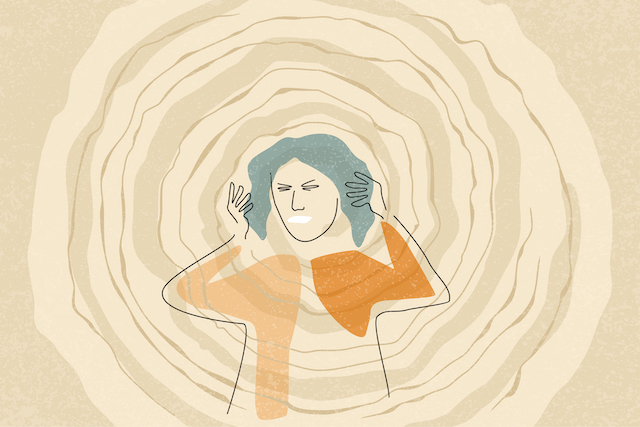
Tag: thinking

  • Relief from Relentless Thoughts: Reclaiming My Mind from OCD

    Relief from Relentless Thoughts: Reclaiming My Mind from OCD

    “Don’t believe everything you hear—even in your own mind.” – Daniel G. Amen

    This quote might sound like something you’d read on a coffee mug or an Instagram quote slide. But when your own mind is feeding you a 24/7 stream of terrifying, intrusive thoughts? That little phrase becomes a survival strategy.

    Sure, I have lots of strategies now. But they weren’t born from a gentle spiritual awakening or a peaceful walk in the woods. They were born out of a relentless, knock-down, drag-out fight with obsessive-compulsive disorder (OCD). A fight that started when I was a kid and stole years of my life.

    Let me be blunt: OCD is not quirky or cute. It’s not about liking things tidy or being “a little type A.” It’s a full-body, panic-inducing disorder where your brain screams, “You are in danger!”—even when there’s no actual threat.

    It’s counting in desperate loops. It’s having rituals you don’t understand but can’t stop doing. It’s fear that feels like a gun pointed between your eyes, triggered by nothing more than a thought. I know because I have OCD, or I guess I should say “had” OCD.

    Life with OCD: A War Inside My Head

    From the time I was young, my brain was hijacked by fear. Fears that something terrible would happen. That I’d lose people I loved. That I’d be misunderstood, unworthy, unforgivable. These thoughts didn’t just whisper—they screamed. And my body listened: sweaty palms, racing heart, shallow breath. Over and over, even though nothing was really wrong.

    To cope, I created rituals—compulsions that promised relief but never delivered. I’d roll my neck a certain way, flex my wrists, blink, swallow, count in rapid-fire succession—anything to feel right again. But it never really worked. Four was my magic number for a long time. I could fly through sixty-four sets of four faster than you’d believe. Still, the anxiety roared back every time.

    Want a picture of what this looked like? Here’s one from high school: I’m sitting at the kitchen table. I glance—again—at the round straw basket on the wall. I roll my neck, flex both wrists, blink, swallow. Damn it. Not right. I start the sequence again. One-two-three-four. One-two-three-four. Again. And again. Four sets of four, done four times. Still not right. I’m drowning in invisible urgency while everyone else is just trying to eat dinner.

    I had objects in every room of the house, each one assigned to a ritual. A cherry wood clock. The edge of a curtain rod. A fluorescent light tile. I didn’t choose this. I didn’t even understand it. And I definitely didn’t enjoy it. OCD stole my time, my energy, and my sanity. If I didn’t do the rituals, I was consumed by dread. If I did them, they were never good enough. It was a damned-if-you-do, damned-if-you-don’t existence.

    Thoughts That Terrified Me

    The content of my fears changed over time, but the intensity didn’t. Sometimes the dread was vague. Sometimes it was specific and disturbing—violent images, inappropriate sexual thoughts, blasphemous phrases. I obsessed that I’d pick up a knife and hurt someone. That someone I loved would die because I breathed the wrong way.

    I couldn’t write without rewriting. I couldn’t look in a mirror without fearing I’d become vain. I drew invisible lines on the floor to protect people. I had to sit a certain way, speak a certain way, think a certain way. And God help me if a “bad” thought popped into my head mid-ritual—I had to start all over again.

    At one point in college, while stuck in an endless loop of trying to put a piece of paper in a folder “just right,” I ended up stabbing a pencil into my thigh out of sheer mental exhaustion.

    I truly believed I was broken.

    Finding a Name—and a Way Out

    I didn’t even know it was OCD until I stumbled across a book and then saw a video showing other people’s compulsions. It was a holy shit moment. You mean someone else can’t fold a towel just once either?

    Once I had a name for what was happening, I could begin to untangle it. I learned that my brain was sending false messages—and that I didn’t have to obey them. A psychiatrist once explained it with a triangle: Most people’s thoughts bounce between points and move on. Mine got stuck in the triangle and just spun endlessly.

    Knowing that helped. But what really changed everything was discovering mantras.

    How Mantras Helped Me Rewire My Brain

    My mom—who also struggled with OCD—started making up little phrases with me to cut through the noise. The one that changed everything?

    “That’s a brain glitch. I don’t have to pay attention to that.”

    It sounds simple, but that phrase became a mental lifeline. It helped me step back, call out the OCD lie, and redirect my focus. It was a way to challenge the urgency of the thought without getting pulled into the ritual. And it worked—not overnight, but consistently, over time.

    Then I read Brain Lock by Jeffrey Schwartz, which broke down the exact same strategy: identify the thought, reattribute it, and refocus. I realized—I’d already been doing that with my mantras. They were helping me rewire my mind. That realization was empowering. I wasn’t just surviving anymore. I was retraining my brain.

    Mantras, OCD, and the Messy Middle of Healing

    Slowly, imperfectly, I stopped fighting my thoughts and started getting curious about them. I began to notice how fear hooked me—and how I didn’t have to take the bait.

    My mantras started piling up on sticky notes everywhere. They were grounding. Sometimes funny. Sometimes serious. Sometimes just sarcastic enough to cut through the noise in my head. But they worked. They reminded me of what was true. They gave me just enough space to respond differently.

    Because here’s the thing: OCD doesn’t run my life anymore. Sure, the tendencies still flare up under stress—but I have tools now. I have perspective. And I have mantras.

    Not the fluffy kind that pretends everything is fine. The gritty, scrappy, fiercely compassionate kind that says:

    • Yes, your brain is being loud right now—and you’re still allowed to rest.
    • Uncertainty is uncomfortable, not dangerous.
    • You are not your brain.
    • You can let go. Even if you have to do it a hundred times.

    If you’re someone who struggles with relentless thoughts—whether it’s OCD, anxiety, or just the everyday noise of being human—I hope this inspires you to craft your own phrases, rooted in your values and the kind of life you want to move toward, or mantras that remind you to ignore that harsh inner critic and the fears that lurk in your mind.

    You’re not alone.

    Your thoughts are not always true.

    And you are allowed to let go of thoughts that do not serve you.

    Even if you have to let go over and over and over again. That’s okay. That’s the work.

    Don’t believe everything you think. But start believing that you can heal.
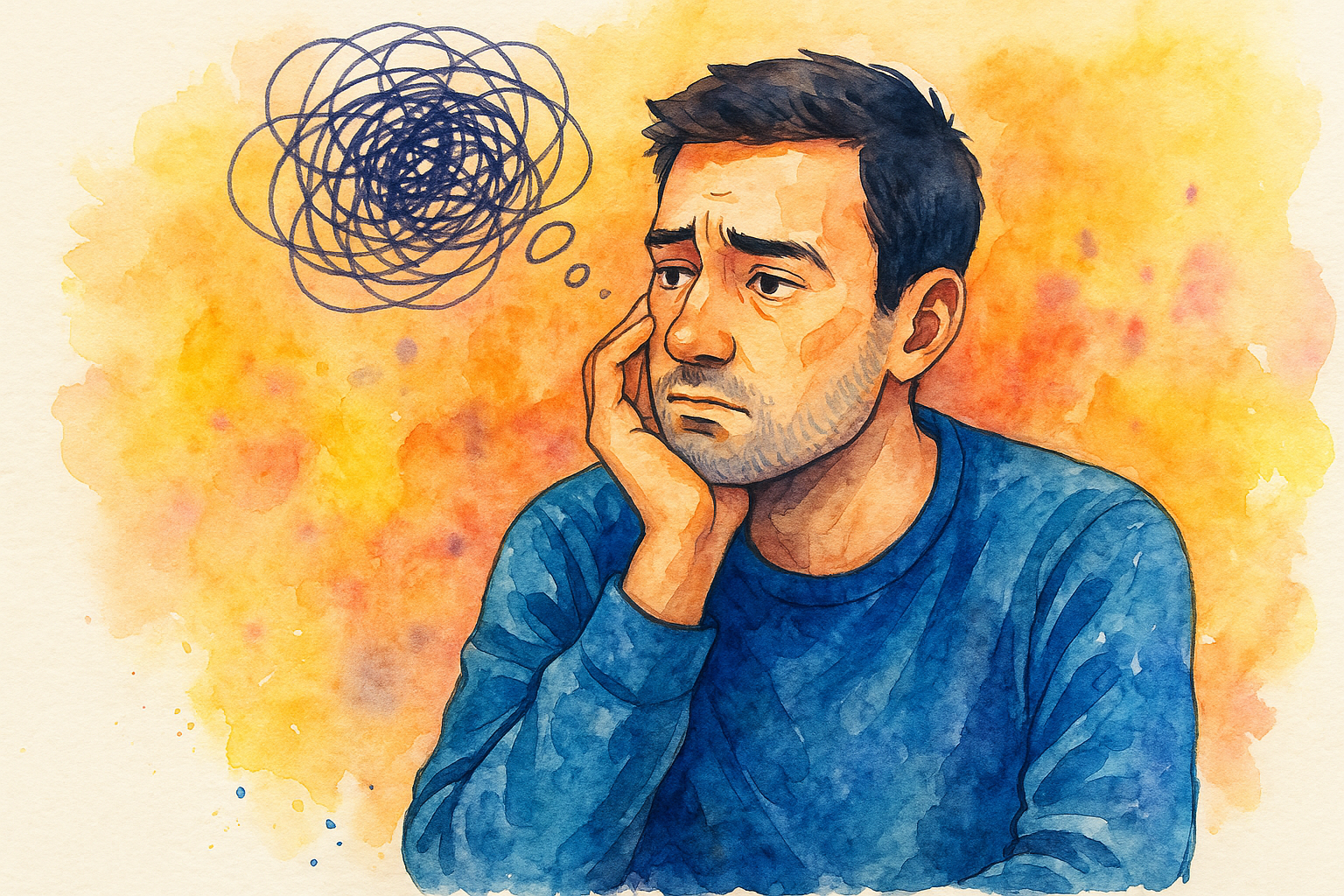
  • How I Stopped Overthinking and Found Inner Peace

    How I Stopped Overthinking and Found Inner Peace

    “You don’t have to control your thoughts. You just have to stop letting them control you.” ~Dan Millman

    For as long as I can remember, my mind has been a never-ending maze of what-ifs. What if I make the wrong decision? What if I embarrass myself? What if I fail? My brain worked overtime, analyzing every possibility, replaying past mistakes, and predicting every worst-case scenario.

    Overthinking wasn’t just a bad habit—it was a way of life. I’d spend hours second-guessing conversations, worrying about things beyond my control, and creating problems that didn’t even exist. It felt like my mind was running a marathon with no finish line, and no matter how exhausted I was, I couldn’t stop.

    But one day, I reached a breaking point. I was tired—tired of the mental noise, tired of feeling anxious, tired of living inside my own head instead of in the present moment. I knew I had to change.

    The Moment I Realized Overthinking Was Stealing My Peace

    It hit me during a late-night spiral. I had spent hours replaying a conversation, obsessing over whether I had said something wrong. My heart was racing, my stomach was in knots, and I couldn’t sleep.

    In that moment, I asked myself: Is any of this actually helping me?

    The answer was obvious. My overthinking had never solved anything. It had never prevented bad things from happening. It had only drained my energy and made me miserable.

    That night, I made a decision: I would stop letting my thoughts control me. I didn’t know how yet, but I knew I couldn’t keep living like this.

    How I Learned to Quiet My Mind

    Overcoming overthinking didn’t happen overnight. It took patience, practice, and a willingness to let go of control. But here are the key things that helped me find peace:

    1. I stopped believing every thought I had.

    For years, I assumed that if I thought something, it must be true. But I started noticing that most of my thoughts were just stories—worst-case scenarios, exaggerated fears, self-doubt.

    So I began questioning them. Is this thought a fact, or is it just my fear talking? More often than not, it was the latter.

    By learning to separate reality from the stories in my head, I loosened the grip overthinking had on me.

    2. I created a “worry window.”

    At first, I thought I needed to stop worrying completely, but that only made me stress more. Instead, I set aside a specific time each day (ten to fifteen minutes) when I allowed myself to worry as much as I wanted.

    Surprisingly, this helped a lot. Instead of overthinking all day, I trained my brain to contain my worries to one small part of the day. And most of the time, when my “worry window” came, I realized I didn’t even need it.

    3. I practiced “letting thoughts pass”

    One of the biggest shifts came when I stopped trying to force my thoughts away. Instead, I imagined them like clouds in the sky—passing through, but not something I had to hold onto.

    Whenever I noticed myself overthinking, I’d take a deep breath and say to myself: I see this thought, but I don’t have to engage with it. And then I’d let it go.

    4. I focused on the present moment.

    Overthinking is all about living in the past or the future. So, I started grounding myself in the present.

    Simple things helped:

    • Focusing on my breath when my mind started racing.
    • Noticing small details around me—how the sun felt on my skin, the sound of birds outside, the smell of my coffee.
    • Reminding myself: Right now, in this moment, everything is okay.

    The more I practiced this, the easier it became to step out of my mind and into my life.

    How Life Changed When I Stopped Overthinking

    I won’t pretend my mind is quiet 100% of the time. Thoughts still come, but they no longer control me.

    Now, instead of analyzing every possible outcome, I trust that I’ll handle whatever happens. Instead of reliving past mistakes, I remind myself that I am constantly learning and growing. Instead of worrying about what others think of me, I focus on how I feel about myself.

    Most importantly, I’ve found something I never thought was possible: peace.

    A Message for Anyone Struggling with Overthinking

    If you’re stuck in an endless cycle of overthinking, I want you to know this: You are not your thoughts.

    Your mind will always try to keep you safe by analyzing, predicting, and controlling. But you don’t have to engage with every thought that comes your way.

    Peace isn’t about never having anxious thoughts—it’s about learning to let them pass without letting them rule your life.

    And trust me, if I can do it, you can too.

    While these tools can be powerful, it’s also important to recognize that overthinking doesn’t always come from everyday anxiety. If your thoughts are tied to past trauma or feel too overwhelming to manage alone, please know there is no shame in seeking help. For those living with PTSD or deep emotional wounds, professional support from a therapist can offer safety, healing, and guidance tailored to your experience.

    You don’t have to go through it alone—and needing support doesn’t make you weak. It makes you human.

  • Lessons from a Former Overthinker: How to Start Really Living

    Lessons from a Former Overthinker: How to Start Really Living

    “Rule your mind, or it will rule you.” ~Buddha

    I used to be trapped in a cycle of overthinking, replaying past mistakes, worrying about the future, and mentally holding onto every thought, just as I physically held onto old clothes, books, and my child’s outgrown toys.

    The fear of letting go—whether of physical items or persistent thoughts—felt overwhelming. But I didn’t realize that this habit of mental hoarding was keeping me stuck in place.

    The Anxiety of Letting GoMy Last Day of School

    One of my earliest experiences with mental hoarding happened on my last day of school in 1996 before my tenth-grade board exams. When my class teacher wished us “All the very best, children, for your board exams,” I suddenly realized—it was my last day in school. This thought had never crossed my mind before, and it hit me hard.

    I’d spent over a decade there—eleven or twelve years—growing up, laughing, learning, crying, sharing tiffins, and living through every moment with my friends. The idea that I would never return to that life left me feeling overwhelmed with anxiety and sadness.

    On that day, when I returned home, I couldn’t eat lunch, nor could I sleep well. I clutched my pillow tightly, as if I could stop time from moving forward. I kept replaying all the moments, all the memories. The playground where I ran and played, the tap I used to drink water from, the desk where I sat every single day, the blackboard where I nervously wrote answers. But what truly gutted me was I would never see some of my friends again.

    Back then, there was no Facebook or Instagram to keep in touch. If you missed a day at school, you had to ask someone in person what happened, what they did over the weekend, and what their summer vacation was like. School was the only way to stay connected. I felt like I was losing a part of myself.

    I missed my evening’s Taekwondo practice. I didn’t even have the energy for dinner. I just went to bed, but my mind was restless, spinning.

    The next morning, I woke up at 3 a.m. I didn’t know why, but I felt like I needed to run. So, I dragged myself to the stadium where I used to train. I ran with all my strength, threw punches and kicks into the air, and let out loud screams with each movement.

    Sweat drenched my body, but I didn’t feel tired. Instead, I felt the tension leaving my body. As I sat on the ground, watching the first rays of the sunrise, I realized that time does not stop for anyone. Every ending is a new beginning.

    This was the first time I truly understood the power of movement and mindfulness in releasing emotional baggage. I had been hoarding memories, but by physically engaging with my emotions—through running, punching, and embracing the new day—I let go of the stiffness in my mind.

    This was my first lesson at the age of fifteen: that sometimes, the hardest goodbyes bring the lightest hearts.

    Unanswered QuestionsLearning to Let Go

    In 2002, I faced another instance of mental hoarding, but this time it was about unanswered questions and emotional attachment.

    There was a girl from my school days who had been more than a friend. After school, we lost touch—there were no mobile phones or social media back then. For five to six years, I never considered pursuing anyone else, always wondering what she would think if I did. Her presence lingered in my mind, keeping me from moving forward.

    Finally, in 2002, after seven long years, I went to the school where she was working as a teacher. There was a function happening that day, and amidst the crowd, I gathered the courage to propose to her.

    Tears filled her eyes as if she had been waiting for that moment, but she neither said yes nor no. Instead, she spoke three lines, turned away, and left. I stood there, unable to move, as if my feet were rooted to the ground. It felt like a part of me had been left behind.

    For days, I couldn’t concentrate on my studies. My mind replayed those three lines over and over, searching for answers that weren’t there.

    One day, while battling my thoughts, I was hitting a tennis ball against a wall, lost in frustration. In anger, I hit it too hard, and it rebounded faster than I expected. I jumped high to catch it, but when I landed, I felt a sharp pain—a hairline fracture in my right foot. The doctor put my leg in a cast, and for forty-five days, I was confined to my home.

    During that time, I had no choice but to sit still. With nothing else to do, I turned my focus entirely to studying for my CA-Inter exam. As I immersed myself in my studies, I noticed something—the memories of that day no longer haunted me. Without realizing it, I had stopped searching for answers. I appeared for my exam soon after my cast was removed and passed successfully.

    At the age of twenty-two or twenty-three, I learned a profound lesson: Some questions don’t have answers, and the more we chase them, the more they consume us. The key is to stop searching for meaning in every unanswered moment and move forward.

    The Power of Letting Go

    A turning point came during my corporate nine-to-five job. I felt like a bird in a cage, desperate to fly but held back by uncertainty. I wanted to quit and start my own business, but I spent two years mentally hoarding fears.

    What if I fail? What about my financial responsibilities to my wife and three-year-old son? The constant loop of overthinking paralyzed me. I finally broke free in September 2012, when I quit my job and became a sub-broker in the stock market. Letting go of fear was liberating. I no longer had to be answerable to anyone, and I had the freedom I had always dreamed of.

    This experience taught me that, just like physical clutter, mental clutter keeps us stuck.

    Another powerful realization came to me in 2020 when my son insisted on buying a 55″ smart TV. I had been holding onto my old CRT TV, the very first thing I bought with my income back in January 2006. It wasn’t just an appliance—it was a symbol of my early struggles and achievements.

    I remembered how I had gone to Shimla for work in a friend’s car and excitedly purchased it on the way. Though outdated, it still worked, and I clung to it, not because of its utility, but because of the memories attached to it. Letting go felt like erasing a part of my journey.

    But in November 2020, I finally gave it away to someone in need and welcomed the new TV. It was only then that I realized that unless you make space—whether in your home or your mind—new things, new opportunities, and new ways of thinking cannot enter. This lesson extended beyond possessions; it applied to thoughts, regrets, and self-imposed limitations.

    Regret is a Waste of TimeLessons from Professional Life

    I started investing and trading in 2009. Back then, I bought stocks that were trading in two figures and sold them after holding them for a few days or months at a 5-10% profit. A decade later, some of those stocks were trading in four figures, and the thought of what I could have gained was painful. The regret of “What if I had held onto them?” haunted me.

    But then, I reflected and realized that every decision I made—both buying and selling—was mine, based on the conditions at the time. Just as some stocks grew tremendously, others that once traded in four figures lost their value completely. I have clients who call me daily, expressing regret about missed opportunities. They saw a stock at a lower level, hesitated to buy, and later saw it jump by 25% or more. The cycle of regret is endless.

    Over time, I have trained myself to stop overthinking past trades. Now, I focus only on my present trades, whether I make a profit or a loss. If an opportunity presents itself today, I act without hesitation instead of dwelling on missed chances.

    This experience taught me an important lesson: If we cannot change our past decisions, there is no use in regretting them. Instead, we should focus on what we can do now.

    The Biggest LessonAccepting Life’s Impermanence

    The biggest lesson I learned came from an unexpected place, one that I never imagined would leave such an impact. In the northern part of India, especially in Punjab, where I live, there is a festival called Basant Panchami, celebrated with much joy and enthusiasm. It usually falls in January, and one of the key traditions is flying kites.

    In 2018, the festival was on January 22nd, and the day before, I went to the market with my younger brother to buy kites and strings. We were both passionate about flying kites since childhood, and that day, we were thrilled, full of laughter and excitement. We spent the morning playing music, dancing, and flying kites together, just like we had done for years.

    But what I didn’t know, what I could never have predicted, was that day would be the last time I would experience this with my younger brother. In June 2018, my brother left this world, and that was the moment I fully grasped the weight of what I had lost.

    From that day until the Basant festival in 2025, I kept the nineteen kites we had bought that day, unable to fly them, because they reminded me of him. It felt like if I flew those kites, I’d somehow be letting go of the only piece left of him. Each year, as the spring festival came around, I would hold on to those kites tightly, preserving the memory of the day we spent together.

    But this year, something changed. At the 2025’s Basant festival, I finally let go. I flew those nineteen kites. As they soared in the sky, I realized that we had bought those kites to celebrate, to enjoy life, and my brother would have wanted me to do the same.

    Holding on to them, keeping them safe, was just a way of avoiding the truth: life moves on, and sometimes, the more tightly you hold on to something, the more you lose in the process. It reminded me that, like the sand slipping from your hand when you grip it too tightly, life too must be lived with openness and acceptance.

    That realization hit me hard: life is like a moving train. We are all passengers on that train, and eventually, each passenger leaves when their station arrives, while others continue their journey. Every living thing on this Earth will vanish one day. Holding on to the past, to memories, to the “what ifs,” only weighs us down.

    I had been hoarding my thoughts and emotions for so long, thinking I could preserve them and keep them safe. But this lesson—through the act of finally flying those kites—helped me realize how destructive overthinking can be.

    It was time to stop hoarding my memories and emotions. Life is constantly moving forward, and holding on too tightly to what’s gone only prevents me from enjoying the present.

    I learned that it’s okay to let go, to free myself from overthinking, and to embrace what is happening now. Just like the kites in the sky, my brother’s memory will always be with me, but I have to live my life fully, without fear of letting go.

    The lesson I learned is simple yet profound: stop hoarding your thoughts, free yourself from overthinking, and allow yourself to truly live. Life moves forward, and so must we.

    Final Thoughts

    Freedom from mental clutter is possible. Once I let go of the thoughts that no longer served me, I made space for clarity, courage, and growth. And just like my career shift, I realized the only way to truly move forward is to stop hoarding and start living.

  • How I Found my True Self in the Space Between my Thoughts

    How I Found my True Self in the Space Between my Thoughts

    “I am not my thoughts, emotions, sense perceptions, and experiences. I am not the content of my life. I am Life. I am the space in which all things happen. I am consciousness. I am the Now. I Am.” ~Eckhart Tolle

    Everything changed the moment I learned I was not my thoughts.

    There I was, reading Eckhart Tolle’s A New Earth, when I read this line: “What a liberation to realize that the ‘voice in my head’ is not who I am. Who am I then? The one who sees that.”

    I felt a shift. Wait, what?!? How can I not be my thoughts? Aren’t my thoughts who I am? They are in my head all day, every day. I thought they were what made me… me!

    This mind-blowing moment hit me deeply. Right then and there, I changed. Once my mind was out of the way, my true self emerged.

    For nearly forty years, I lived on autopilot. I did not like a lot of the thoughts in my head, but I had no idea that I had control over them. Instead, I cringed, tried to push them away, distracted myself by staying busy, and worked hard on my image and contributions to the world.

    My deep, shameful secret was that no one would want to know me if they knew the mean thoughts I was ruminating on in my head. I felt like a truly awful person deep down. Whoa. I am so sorry, past self, that you lived like that. I hold you in love. Deep love.

    Separating me and my thoughts has become my daily practice. I remember the first time I was able to dialogue with my thoughts. Weeks after reading that mind-blowing passage, I accidentally spilled the contents of my vacuum cleaner on the kitchen floor.

    “You’re stupid. What a mess. What a waste of time. Look what you did.” These mean words flew through my mind. I sat in the middle of the floor and put my hand on my heart.

    “Who is saying that?” I asked.

    A swirl of dark energy inside and around me got tighter and darker and meaner as it growled, “Me.”

    “What is your purpose?” I asked with a mix of curiosity and fear.

    “To keep you in line,” it sneered.

    “In line with what?” I asked.

    “You’re such a failure. You don’t know how to do anything right,” it continued.

    The swirl tightened, and I kept my hand on my heart to protect myself.

    “What do you want me to know?” I asked.

    “I have to keep you safe,” it said.

    “Who are you keeping safe?” I asked.

    Immediately, an image of myself, age eight, appeared in my mind’s eye. She was sad, sitting on the floor in the front hallway of my childhood home. My parents were at work, and my babysitter refused to do her hair before school. She had decided that at eight I was old enough to do my hair before school. This left me confused, sad, and lonely.

    “Oh, honey,” I felt my heart open to her. “What do you need?”

    She looked at me through tears and said, “Can you do my hair?” In my mind’s eye, we moved in front of the hallway mirror as I combed her hair and put it into pigtails.

    “I see you and I love you,” I told her. She looked relieved and smiled tentatively from the corner of her mouth.

    I felt my love pouring into her, and the dark swirl lifted, hovering nearby before leaving my energy field.

    As I processed this interaction with this fear of failure part that was protecting my sad inner child, I was able to stay in my conscious, healthy adult mind and release that inner voice.

    I know that the critical, egoic part came online to protect my inner child from feeling sadness and loneliness. As children, rather than judge or dismiss our caregivers as wrong, we blame ourselves, and that is what my younger self did until I reparented her. I assumed I was wrong for asking my babysitter to do my hair instead of recognizing that her neglect wasn’t my fault.

    Now, when I make a mistake or spill something, I do not hear that mean voice as strongly. If it comes up, I know how to dialogue with it.

    I have come a long way since I spilled the vacuum cleaner contents. The mean voice that once dominated my thoughts has lost its power.

    The most profound lesson I have learned is this: We are not our thoughts. We are the awareness of them, the consciousness that observes and chooses them. This knowledge allows me to step out of the stream of negative self-talk and into the spaciousness of the present moment.

    I invite you to try this. The next time you make a mistake or face a challenge, pause. Notice the thoughts that arise, but do not latch onto them. Instead, ask yourself, “Who is saying that?” In that space of awareness, you might discover, as I did, old beliefs that are ready to morph and an inner child just waiting to be noticed.

  • How to Find Peace When Your Mind Is Restless

    How to Find Peace When Your Mind Is Restless

    “Within you, there is a stillness and a sanctuary to which you can retreat at any time and be yourself.” ~Hermann Hesse

    When I work with people who are suffering from anxiety, fear, grief, or other challenging issues, I like to take them through a simple exercise I call “The Noticing Exercise.”

    It’s my first port of call when helping people break free from mind-created suffering.

    It’s amazing how quickly, and effortlessly, people can move from suffering to peace, simply through shifting their focus to being aware of the present moment—noticing the sensation of the body touching the chair, the ribs expanding on the in breath, or the sounds in the room.

    Even deeply troubled individuals can experience peace the very first time they try this simple meditation.

    How is this possible?

    It is because peace is already there inside all of us. It’s an integral part of who we are. When the mind’s activity subsides, even for a moment, peace is what remains.

    The ocean provides a good analogy.

    At the surface, the water is constantly in motion. It never stops, even for a moment. But when you drop down into the depths, there is stillness and peace.

    It’s exactly the same with the mind.

    On the surface level, the mind is always active but, in the depths of our being, there is a natural peace and stillness that is unchanging… always present, always available. Being part of our essential nature, it can never leave us.

    Although this inherent peace is always there, it goes unnoticed in most people through the deep-seated habit of giving our exclusive attention to the surface movements of the mind.

    We are so pre-occupied with what’s going on at the surface that we simply fail to notice what’s happening in the depths of our experience.

    And, of course, there is nothing ‘wrong’ with any of this.

    Spending our days lost in thinking is the human condition. It’s what we all do.

    Being swept away by the restless waters of the mind is perfectly normal, particularly when we are faced with intense patterns such as anxiety, trauma, or grief. And yet, the fact remains that, despite appearances, there is a peace inside every one of us that is untouched by what’s going on at the surface, however intense it may be.

    Withdraw your attention from the mind, even for a moment, and it’s there.

    You don’t have to create it; just recognize what has always been there.

    Peace doesn’t leave you. You leave peace.

    Stress, anxiety, and unhappiness exist primarily in the form of thoughts.

    If you are able to become fully present in the moment, thoughts subside, and stress and anxiety are replaced by peace and stillness.

    Of course, most people will pick up their painful stories again as soon as the meditation comes to an end, but the fact they were able to be free of their suffering, even temporarily, provides us with clues for finding a more permanent solution.

    With practice, anyone can learn to withdraw their attention from the mind for longer periods of time and thereby extend the periods of peace.

    Have You Been Barking Up the Wrong Tree?

    Most people are looking for peace where it can never be found—not lasting peace anyway.

    It’s a bit like losing your keys in the house and looking for them in the garden.

    You’re never going to find them… because they are not there.

    Most people I help have been searching for peace through the path of self-improvement, often for years.

    And it makes total sense.

    If my mind is causing me trouble, then the obvious solution is to try to fix it—to ‘work on myself’ and try to convert all my anxious and unhappy thoughts and feelings into pleasant, happy ones. Try to create a new, improved version of myself.

    But, if you’ve been down this path for any length of time, as I have, you’ll know that fundamentally changing the mind is not so easy.

    The problem with this approach is encapsulated in the following quote from the Indian spiritual teacher, Nisargadatta:

    “There is no such thing as peace of mind. Mind means disturbance; restlessness itself is mind.”

    Like the surface of the ocean, the mind is constantly in motion. It is restless by nature.

    And, although there may well be fleeting moments of peace here and there, they will inevitably be followed by moments of agitation and disturbance.

    Restlessness is the nature of the mind. Trying to make it calm and peaceful is like trying to iron the surface of the ocean. It’s simply never going to happen.

    Making Peace with The Mind Just as It Is

    To find a solution that actually works, we must first understand the true cause of suffering. It’s not what most folks think.

    People believe, as I did for years, that the anxious, stressful, or fearful thoughts themselves are the primary cause of suffering.

    They believe that:

    • the mind is broken and needs to be fixed.
    • anxiety, fear, confusion, etc. are inherently bad or wrong.
    • there’s something wrong with them for having these thoughts.
    • they can’t experience peace or happiness until they are gone.

    These beliefs are the main reason people suffer.

    As the Jesuit priest Anthony de Mello said:

    “There’s only one cause of unhappiness; the false beliefs you have in your head, beliefs so common, so widespread, that it never occurs to you to question them.”

    What if, instead of spending years trying to fix the content of the mind, we focused instead on making peace with the mind, just as it is?

    What if, rather than fighting and resisting fear, sadness, envy, or confusion, you were able to accept them as natural expressions of the human condition?

    What would happen to your anxiety if you didn’t see anything ‘wrong’ with it?

    Or your sadness if you didn’t mind it being there?

    They may still feel unpleasant but, in the absence of resistance, they’d lose their power to affect your peace.

    We can wrap our non-peace in the peace of acceptance.

    You Don’t Need to Have a Peaceful Mind to Experience Peace 

    On the path of self-improvement, the goal is to find peace of mind.

    But this approach is unlikely to succeed simply because the mind is restless by nature.

    Here’s the truth:

    You can’t stop bothersome thoughts from arising, but you can stop bothering about them.

    One of my teachers used to say, “You suffer because you are open for business.”

    You entertain your thoughts and invite them in for tea—engage with them, ruminate over them, wallow in them, play them over and over in your head—and create suffering for yourself as a result.

    You don’t need to have a peaceful mind to experience peace.

    You need to stop giving your thoughts so much attention and importance.

    If you are able to accept whatever appears in your head, whether pleasant or unpleasant, with an attitude of non-judgmental acceptance, you will always be at peace.

    Acceptance is like kryptonite to the mind. It loses its power to disturb your peace.

    The Two Types of Peace

    There are two types of peace.

    There is the feeling of peace, which is a temporary respite from feeling restless or agitated. Like all feelings, it comes and goes, like clouds passing across the sky.

    Then there is the peace that exists in the depths of your being; the backdrop of peace that is unchanging, ever-present, and has nothing to do with what is going on in your head.

    Even in the midst of the most turbulent storm at sea, in the depths, the ocean remains calm and unmoving.

    There is a peace inside every one of us that remains untouched by the movements on the surface, no matter how intense.

    And it’s not difficult to find. How could it be if it’s already who you are?

    You don’t need to fix or change anything about yourself to experience what is ever-present inside you.

    You just need to dive below the surface and discover what is always there.

    The peace you are looking for is with you always. But you’ll never find it on the level of the mind.

  • How I’m Accepting the Uncertain Future (with Less Worry and More Joy)

    How I’m Accepting the Uncertain Future (with Less Worry and More Joy)

    “Life moves pretty fast. If you don’t stop and look around once in a while, you could miss it.” ~Ferris Bueller

    For as long as I can remember, my life has consisted of change.

    I grew up moving around the world. I went from Canada to Pakistan, Egypt to Jamaica, Ghana to Ukraine, and then finally China to Australia.

    Moving to new countries and adapting to new cultures is like a cold plunge to your entire system and way of being. I felt I had no choice but to fit in as quickly as possible.

    By the age of six or seven years old, I pre-empted every move by being constantly prepared. I thought about every possible scenario and planned in detail how I would survive. This technique served me well as I bounced around the world, saying goodbye to my best friends and immersing myself in a whole new culture, time and time again.

    However, when I became an adult and had control over my life, I no longer needed to plan and prepare for my next move. I could live where I wanted. I could stay where I wanted. Yet my overthinking and planning continued.

    Even if I had no intention of moving to another country, my body prepared me for it anyway. It served me up a million scenarios; it prepared me for the heartbreaking goodbyes and the awkward hellos.

    I became addicted to thinking, and not the kind of thinking that earns you academic achievements. It was the kind of thinking that was built by years of worry. But the thing about worry is that it feels like productivity when in reality it’s a depleting sense of anxiety.

    It feels like I’m doing the right thing by planning ahead, and for many years I felt like this was a very good, honest way to spend my time. It seemed very normal to plan every little part of my life in infinite detail and would-be scenarios. I mean, doesn’t everyone do that?

    Apparently not. Apparently, some people deal with every situation as it comes. They don’t spend any time preemptively worrying about things before they happen or imagining all the possible scenarios that could unfold.

    Instead, these particular people go about their daily life, and once they encounter a challenge, they deal with it in the moment. They just handle the situation and then move on. I can’t even imagine how calm and pleasant it must feel to have a mind like that.

    Right now, we are in the middle of a crossroads, yet again. We are expats living in a country far away from any family and raising our young daughter on our own.

    We’re debating whether to move closer to my husband’s family or closer to mine. We’re trying to figure out what jobs we could get and how much they could pay and if we need to go back to school. We want to do what’s best for our daughter, but also for us. We want to stick to our values, but we know we can’t have it all. We’re aware we need to compromise and sacrifice something.

    My old self is rearing to plan, prepare, and organize my potential new life. It’s constantly on overdrive waiting to pounce and dive down a rabbit hole of overthinking. It hates living in uncertainty. But with this many potential scenarios, my head will explode if I sit down and think about every single one of them. Not to mention the life I will miss out on now by thinking about the life that awaits me.

    Right now, it’s summer in Australia. The days are long and warm and humid, just the way I like it. As much as I feel like I need to spend every single waking moment planning and worrying, I also want to enjoy my life now.

    The other day I went to the beach with my husband and one-year-old daughter. It was a sunny, hot day, and as we were getting ready to go, I began worrying if we’d ever find parking. “It’s okay. If there’s no parking, then we’ll just go home,” I told myself reassuringly.

    We drove to the beach, and miraculously we found parking extremely close to the water. I found a little, tiny spot under a rock with shade to ensure no one would get burned. My husband took my daughter, and off they went in the water.

    I stood back under the shade with my long-sleeved shirt and responsible hat, taking photos of them as I always do. A cheerful voice inside of me said, “Go swimming. Let’s enjoy the sun!” For the first time in a long time, I decided to go into the water.

    The water was a bit cold; I prefer when it’s very warm, but I paddled around anyway. I disregarded any fear of sharks, any fears of getting burned, and just enjoyed the water.

    My husband wanted to do a few laps, so I took my daughter and sat on the shore with her. Gentle waves crashed at our feet, and she looked up at me and smiled.

    I grabbed a fistful of wet sand, and my daughter stared in amazement as it formed into intricate blobs on my bare legs. I normally hate the feeling of sand on my body, but in that moment I didn’t even notice. She squealed in delight as I started to build little sandcastles on her legs.

    I remembered that I hadn’t put sunscreen on my back, and I’m very pedantic about sunscreen. I wondered if we should move to the little shady spot I found up on dry sand. But we were having so much fun there I didn’t want to leave. I could tell my daughter didn’t either. So we stayed.

    The waves came again and again, washing away the sandcastles we built. My husband came out of the water and joined us. I felt so much love and happiness in that moment. I wanted to run to my purse and get a photo of how happy we were. But instead, I sat there continuing to build sandcastles.

    When we finally got home, my back was burnt. Normally this would really concern me. I have known people who have died of skin cancer, and I do everything I possibly can to avoid a burn. But on this very day, I let myself be sunburnt. I let it be okay.

    I had so much fun at the beach that reflecting on it left me with tears in my eyes. I cannot remember the last time I was so fully present, alive, and engaged.

    So often the voice of anxiety is pulling me away from my life and trying to protect me by forcing me to think about all the things that could go wrong and how best to avoid them. For once, I didn’t let that voice win, and it wasn’t a battle. It was a natural feeling of allowing another voice, the one of calm, to take center stage.

    I know I can’t plan for everything. But I’m trying to take confident strides in the direction of what feels right, moment by moment. Believing that whatever comes, I can handle it. Life happens fast, and I don’t want to miss these many special moments building castles in the sand with my little family.

  • 7 False Beliefs That Will Keep You Trapped in Your Head Forever

    7 False Beliefs That Will Keep You Trapped in Your Head Forever

    “There is only one cause of unhappiness: the false beliefs you have in your head, beliefs so widespread, so commonly held, that it never occurs to you to question them.” ~Anthony de Mello

    When people come to me suffering from anxiety, fear, anger, self-judgment etc., there are five things they invariably believe to be true.

    Let’s take anxiety as an example. Most (if not all) people with anxiety believe that:

    1. It’s bad or wrong to feel anxious.
    2. It shouldn’t be there.
    3. There’s something wrong with me (for being anxious).
    4. My mind should be peaceful.
    5. I can’t experience peace until my anxiety is gone.

    Pretty much everyone nods in agreement as I take them through this list.

    Few people, if any, would question the truth of these statements.

    They are, as the spiritual teacher Anthony de Mello says:

    “Beliefs so widespread, so commonly held, that it never occurs to you to question them.”

    And I’d say that these beliefs alone produce 98% (if not more) of the unnecessary suffering that most people experience.

    Maybe you’ve heard the expression “pain is inevitable, suffering is a choice”?

    Experiencing anxiety is unpleasant. There’s no denying it’s a painful experience.

    But it’s our beliefs and mental commentary about anxiety that cause most of the suffering.

    “Anxiety is awful. I hate it. I can’t go on like this. What’s wrong with me? I shouldn’t be feeling this way. I’m so screwed up. I’ll never be happy again.”

    The mind’s commentary about the anxiety adds fuel to the fire and turns a painful experience into full-blown suffering.

    Lasting peace can never be found on the level of thinking. The mind is restless by nature. It’s not wrong. It’s simply how the mind is.

    To end suffering, we need to change the way we relate to the mind.

    And to do this, we need to see through the false beliefs that hold us captive.

    As long as you believe that certain thoughts are bad or wrong, that they shouldn’t be there, and that there’s something wrong with you for having them, you will continue to suffer… not so much from the thoughts themselves but because of your beliefs about them.

    The solution is so simple that most people overlook it completely.

    Getting to Know the Mind Better

    There’s a quote from Abraham Lincoln I like to use:

     “I don’t like that man. I must get to know him better.”

    Exactly the same logic applies to your anxiety, depression, fear, or critical inner voice.

    If you don’t like your anxious thoughts, resisting them won’t help.

    The answer is to get to know them better.

    The Two Approaches to Becoming Free of the Mind

    There are two approaches we can take to find more inner peace.

    The first is to try to fix or change our thoughts through “working on ourselves.”

    I tried this approach for years and discovered that change comes painfully slowly… if at all.

    After years of effort, I had very little to show for it.

    Then I had a breakthrough.

    On a six-month meditation retreat, I stumbled upon a completely different approach to dealing with the mind—a way that was much easier, much more effective, and far quicker, immediate in fact.

    Through getting to know my thoughts (and feelings and emotions) better, I came to a completely different understanding about myself, my mind… and the path to peace.

    I saw that:

    It’s not your thoughts, feelings, or emotions that cause you to suffer. Suffering is self-created through the way you relate to them.

    See through the false beliefs that hold you captive, and your troublesome thoughts will no longer have the same power to affect your peace.

    Since then, I’ve outlined 7 false beliefs that keep most people trapped in their heads for life.

    The 7 False Beliefs That Will Keep You Trapped in Your Head Forever

    “Demand is born out of duality: ‘I am unhappy and I must be happy.’ In the very demand that I must be happy is unhappiness.”  ~Jiddu Krishnamurti

    The beautiful thing about beliefs is that the moment you see through them, they lose their grip on you. You become liberated in the seeing alone. It requires no time.

    False Belief #1: The mind should be quiet and peaceful; otherwise, there’s something wrong.

    I love the following quote from the Indian spiritual teacher Nisargadatta:

    “There is no such thing as peace of mind. Mind means disturbance; restlessness itself is mind.”

    Restlessness is the nature of the mind. Expecting it to be quiet and peaceful is like expecting water to be dry or expecting the grass to be pink.

    It’s not the restless nature of the mind that disturbs your peace. It’s the belief that there’s something wrong and that it should be different.

    You don’t suffer because the mind is restless. You suffer because you believe it shouldn’t be.

    Expect the mind to be messed up, crazy, confused, and anxious. Don’t be surprised. There’s nothing ‘wrong.’ It’s called being human.

    False Belief #2: Suffering is caused by negative thoughts, feelings, and emotions.

    What if it were possible to feel down, sad, concerned, anxious even—and to remain perfectly at peace throughout?

    Negative thoughts, feelings, and emotions, although unpleasant, are not the primary cause of suffering. We suffer because we reject them, think there’s something wrong, and believe they shouldn’t be there.

    If you don’t mind feeling sad, don’t think there’s anything wrong with it, and don’t think the feeling needs to go for you to be okay, you can be sad and peaceful at the same time.

    Most people confuse peace with feeling good. It’s not the same.

    Our thoughts and emotions are like clouds passing across the sky. It’s inevitable that there will be dark ones as well as light ones.

    The key to ongoing peace is to embrace them all. Even if they don’t feel good.

    And anyway, what makes a thought negative? Another thought that says so.

    False Belief #3: It’s bad/wrong to be anxious, down, and depressed, or feel unworthy.

    This belief definitely falls under the category of “beliefs so widespread, so commonly held, that nobody thinks to question them.”

    Most of us enjoy warm sunny days more than dark cloudy ones.

    But it doesn’t make cloudy days bad or wrong—less pleasant perhaps, but not wrong.

    In the same way, the challenging thoughts and emotions that cloud our inner sky are not inherently good or bad, right or wrong. Like the weather, they are neutral events—part of the human condition.

    The real problem (or only problem, in fact) is the notion that unpleasant = wrong.

    And this belief, in turn, triggers the mental commentary: “It shouldn’t be there, there’s something wrong with me that needs fixing, I’m unacceptable as I am, I can’t be happy until it’s gone,” etc.—in other words, suffering.

    False Belief #4: I can’t experience peace until this/that pattern is resolved.

    I talk to many people who have been waiting for twenty years for their anxiety to be healed so they can start living again.

    And I’ve seen lifelong anxiety sufferers experience deep peace within a minute or two through seeing through certain beliefs.

    I call it the path of understanding, as opposed to the path of self-improvement.

    Peace is your nature. And it’s ever-present, no matter what is going on in the mind.

    People wait, often for years, for the dark clouds of anxiety, sadness, or self-doubt to move on, before they can get back to living life to the full.

    There’s a powerful meditation called the “Noticing Exercise” that I like to share with people who believe they can’t experience peace just as they are.

    Without going into too much detail here, I ask people to bring a difficulty to mind, and then, through directing their attention to what’s happening right here, right now, I guide them to become fully present in the moment.

    When I ask them afterwards how their experience was, they usually use words like “peaceful,” “still,” or “expansive.”

    And when I then ask what happened to their difficulty during the exercise, people invariably say, “Oh, I totally forgot about it.” More evidence that you don’t have to wait for your issues to be healed before you can live fully.

    Peace is available right here, right now—no matter what is going on in your mind or in your life.

    False Belief #5: Engaging with the mind is mandatory.

    If you had told me years ago, when I was a chronic overthinker struggling to find any peace at all, that engaging with the mind is not mandatory, I would have said you were nuts.

    When thinking is unconscious and running on autopilot, as is the case with most people, it feels like it’s something that’s happening to you—as if you are an innocent victim being bombarded by an unrelenting torrent of thoughts, and that you have no choice but to listen.

    You’re not so much thinking as being thunk!

    But here’s the truth. You are the one in charge, and the mind only has as much power as you give it. It may not seem this way, but it’s true.

    As we saw previously in the “Noticing Exercise,” you are free to withdraw your attention from the mind in any moment. Thinking is a choice. It’s not mandatory.

    Mooji, a teacher I like a lot, says that we suffer because we are open for business. If you choose to close up shop, the mind becomes powerless to affect your peace.

    When you learn to step back and watch the mind objectively, you can choose whether to get involved or not. Overthinking is an unconscious habit you can learn to let go of.

    False Belief #6: I’m responsible for the thoughts in my head.

    Try closing your eyes for a moment and, like a cat intently watching a mouse hole, watch to see what your next thought will be.

    You’ll discover that you have no idea what’s going to appear.

    Thoughts are self-arising. You play no part in their appearance.

    Thinking is a different matter.

    For years, I used to judge myself harshly for the thoughts that appeared in my head. I used to think there was something wrong with me for having angry thoughts, jealous thoughts, sad thoughts, etc.

    The mind is a lot like a computer. It spits out thoughts in accordance with your programming—the cultural impressions you picked up as a child and through your unique life experiences.

    Your thoughts are not who you are.

    Which brings us to the final false belief:

    False Belief #7: I am my thoughts.

    For much of my life, I was compulsively preoccupied with the content of my mind. My thoughts were like a tight ski mask glued to my face, and they pretty much filled up my entire inner space.

    Through meditation, I was gradually able to create more and more space between myself and the thoughts and learn to observe them objectively and non-judgmentally—to see the thoughts, not be the thoughts.

    I discovered that there was another dimension of my being that was untouched and unaffected by the passing traffic of thoughts.

    The analogy of the sky and the clouds is often used in meditation practice.

    All types of cloud pass across the sky—dark ones, light ones, big ones, small ones, fast moving clouds, slow moving clouds—but the sky has no preference and always remains the same.

    I discovered that thoughts are not “me” and that, through learning to remain as the witnessing presence, they lost their power to affect my peace.

    When you leave the mind in peace to do its thing, it will leave you in peace to do yours.

    Peace is your nature; not the peace that comes and goes as passing clouds, interspersed with restless thoughts, but the unchanging peace of your true nature.

    You are not your thoughts. And knowing this is real peace.

  • 3 Things That Turned My Suffering into Blissful Peace

    3 Things That Turned My Suffering into Blissful Peace

    “To experience peace does not mean that your life is always blissful. It means that you are capable of tapping into a blissful state of mind amidst the normal chaos of a hectic life.” ~Jill Bolte Taylor

    I’d just spent over six years trapped in my own worst nightmare. Then in a split second, my whole reality shifted to an experience of exquisite peace and bliss. Walking through the streets of my home city, I seemed to be radiating unconditional love out and into everything around me.

    I didn’t know it then, but I’d just tasted the ultimate state of deep peace and presence that most people on the spiritual path long for.

    Pretty cool, right? But before I give you the low-down on what happened, let’s rewind and put this into context with the rest of my life.

    My first eighteen years on this planet led me to a place of depression, self-hatred, anxiety, and self-harm. After another five years of severe stress and struggle, my body just gave up and my life came to a grinding halt.

    I was in my mid-twenties. Having to rely on state benefits and a team of carers due to severe pain and chronic fatigue syndrome was not what I had in mind for myself.

    So I went from one doctor and alternative therapist to another, hoping that they could fix me. I saw small improvements, but not enough that I could live normally.

    I honestly don’t know how I kept going during those dark days, but I was determined to find the key to my freedom. Through many small insights, I came to see that the answers must be within me, not ‘out there.’ But how could I access them?

    Then one day in 2010, my whole life changed again. A friend gave me a copy of the book A New Earth by Eckhart Tolle. The way he spoke about consciousness and presence infused life into the depths of my exhausted soul. Then a miracle happened.

    One morning, I woke up to that state of total bliss. My mind was silent, the pain and fatigue vanished, and all of my suffering stopped for a full five days. I had just experienced what I really was beyond my mind.

    When that experience ended, I was plunged back into illness and suffering. I knew I had to find a way back home to that incredible deep peace and freedom.

    I spent the next five years devouring countless spiritual books, courses, and YouTube videos. There was a lot of fuzzy talk about that experience, but nothing that told me how to get there.

    The search finally ended when I met a group of monks who taught advanced meditation and consciousness theory. I could feel that exact same blissful peace oozing from every cell of their beings. Knowing they could teach me how to get that state back, I went to Spain to study with them.

    If you want to experience that peace too, you need to understand how to go beyond your mind. Many spiritual teachers talk about this. But what does that really mean?

    1. If you want to find peace, stop believing your thoughts.

    Let me begin with something that may surprise you. You don’t have to stop your thoughts in order to find peace.

    Thoughts don’t interrupt your peace when you learn how to watch them pass through your awareness. The suffering starts when you grab onto them and go off into unconscious thinking.

    When this happens, you’re no longer aware of what’s going on around you in the present moment. The stories in your mind have literally become your reality. Let me explain.

    Have you ever walked a route you know well and when you got to your destination, didn’t remember any of the journey? Instead of paying attention to what was going on around you, you were off thinking about another moment. Maybe it was the fight you had with your spouse that morning or the presentation you’re worried about giving tomorrow.

    Here’s the thing—these thoughts only have power over you if you believe them. If you stop believing the scary thoughts about everything that is going to go wrong, your suffering will immediately stop. Those horror stories aren’t actually happening in the present moment!

    So if you want peace, the first thing you must do is to place your attention on what is real right now.

    Tune into your senses to notice what is going on around you. Give that more attention than whatever your mind is doing. It’ll help you break out of the stress and suffering.

    2. Break the cycle of stress and negative emotions.

    Right now, bring to mind something that makes you happy. Let yourself think about it for a moment. Did that feel good? Maybe you got that warm fuzzy feeling and your body felt lighter.

    Now, think about something you don’t like. How do you feel now? Anxious, angry, stressed, heavy, sluggish, or something else?

    You feel what you focus on, so if you think about good things, you’ll feel good. If you think about painful things, you’ll experience more stress and negative emotions.

    Now, back to the unconscious thinking. Can you see how getting lost in stories about life’s dramas fuels stress and negative emotions?

    Next time you notice you feel bad, see it as a signal that you’ve been off thinking about something you don’t like. Come back to the reality of what’s around you.

    Let the remaining sensations of stress and emotion flow through your body. You should start to feel better within a minute or two.

    But there’s much more available to you than ‘just feeling a bit better.’ The truth is, you can experience peace no matter what is happening in your life. You may wish to reread that statement because the implications are huge!

    3. Connect to the permanent source of peace.

    If you want to access the permanent source of peace, you first need to practice coming back to the present moment whenever you’ve been lost in your mind. Only then will you be able to go beyond your mind entirely and experience what you really are.

    Your true self is the source of that exquisite peace, freedom, and bliss. You are pure conscious awareness, the watcher that’s beyond the mind, negative emotions, and suffering.

    You feel what you focus on. Since what you are is always still and peaceful, if you put your attention there, you’ll feel peaceful.

    You don’t need to stop your thoughts or change anything in your life to do that. You just need to give your thoughts and life circumstances less of your attention. Instead, rest more of your awareness on your true self directly.

    How can you do that? You can use the fact that consciousness is vast and spacious. In fact, it’s the peaceful space in which all things in this Universe exist.

    Look around you now. You may notice lots of objects such as a chair, a lamp, or even the building in which you are sitting. But have you ever stopped to notice the space that these things occupy?

    Right now, put as much attention on the space as you can. Notice the space between you and the objects around you. Then, allow yourself to sense the space in the whole room.

    Now imagine that space within you. Wide, open, scattering your obsessive thoughts so far in the distance you can barely hear them. Do you feel more peaceful?

    If I can connect to that ultimate state of deep peace, I know you can too. We all have the power within us to do this.

    It’s really just a case of remembering to choose where you place your attention. If you forget and get lost in your mind, no worries! Just come back to peace when you do remember.

    The more you practice connecting to the space around you and creating space within you, the more peace you’ll invite into your life. Gradually, the stress and struggle will melt away as you learn a new way of being. Over time you’ll find that you just don’t give as much attention to all the mind drama anymore.

    Keep it light by treating it like a game. Play with being aware of the space as you go through your day. Can you notice the space while you’re brushing your teeth? How about during a conversation?

    For me, this practice has been the gateway to ever deeper levels of peace. By committing to playing with this, I’ve trained my brain to stay in that state for longer periods of time. It’s become easier and easier to pull myself out of any drama when life turns upside down.

    It’s not about perfecting life. It’s about the ability to roll with whatever happens. If I need to take action, I do it from a calm and grounded state of mind. It’s in stark contrast to the desperate struggle I used to experience.

    The answers really had been within me all along. It’s true for you too. This tiny but mighty shift in attention has the power to totally transform your life.

    Since I stopped listening to that voice in my head, I’ve experienced deep and permanent healing. I no longer buy into all the self-criticism, fearful thoughts, or stories about how I’m not good enough. Sure, that stuff pops up from time to time, but I choose to smile and let the thoughts go.

    As it turns out, connecting to my true self was also the key to my body healing. Stress and negativity had been depleting my energy and vitality for years. Now that I’m much calmer, my body has been able to use the extra energy to heal.

    I want you to know that this is not a mystical adventure, reserved for a few lucky people. This experience is for everyone. Living in peace and bliss is your birth right!

    So connect to your own source of peace. I’d love to hear how you get on.

  • Our Creative Genius Shows Us Possibilities the Rational Mind Can’t See

    Our Creative Genius Shows Us Possibilities the Rational Mind Can’t See

    “There are moments in our lives, there are moments in a day, when we seem to see beyond the usual. Such are the moments of our greatest happiness. Such are the moments of our greatest wisdom.”  ~Robert Henri, The Art Spirit

    In my twenties, I worked for a Fortune 500 company at 401 North Michigan Avenue in downtown Chicago. It was fun to work in the city, and my office overlooked Lake Michigan—I never got tired of the stunning view. Weekends were spent with friends eating at unique ethnic restaurants and visiting comedy clubs, blues bars, art galleries, museums, and theater.

    Chicago is a thriving city with a vibrant cultural life. I had a great time.

    I eventually went on to get a Ph.D. at the University of Chicago, and after I completed the degree, everything in my external world nudged me to “get out there and do great things.” Fellow students were receiving grants, fellowships, and prestigious tenure-track positions at major research universities. My advisor (Mihaly Csikszentmihalyi, the author of Flow) was excited about my dissertation research and wanted me to publish.

    Everywhere I went, freshly minted Ph.D.s were busily writing papers, interviewing, and speaking at important conferences. And if that wasn’t enough incentive, my department was being closed by the University, and administrators, faculty, and students were launching a massive fight to try to keep it open. The centerpiece of their argument was to show how their recent graduates (i.e., me…) were doing amazing, brilliant things in the world. Yikes.

    I pushed myself—secluding myself away at a quiet retreat center for a week to try to focus, write a research article, and finally get serious about my academic career. My writing was stiff, contrived, and boring.

    I was miserable.

    So, instead of launching an illustrious academic career, I moved to the wilderness of northeast Montana.

    Montana enchanted me. Everything was so different. I fell in love with the spectacular natural beauty, but also the people who were so different from anyone else I’d ever known.

    There were backwoods hippies living off the grid, musicians who played on homemade instruments, unique one-of-kind handmade houses, and artists of all kinds.

    I moved in with a longhaired hippy in a teepee. My dog and I could hear the wolves howl at night, and we crossed paths with bears during the day. I immersed myself in the beauty of the wild with its craggy mountains and deep dark winters.

    I was far, far away from the world of exalted professional accomplishments. Here’s what happened instead.

    1. I developed self-reliance.

    One day a bird flew in and got stuck between windowpanes when trying to get out. Another day, a neighbor’s stray dog got his eyelid hooked on barbed wire. (Ouch!)

    In the city, my go-to response was to get the nearest person to help. But here in this remote area, there were no neighbors to be called. I managed to successfully extricate both animals on my own and without harming them further.

    2. I developed a wide skill set.

    In rural and remote areas, by necessity, you become a generalist. I did things I never would have done had I remained in the city.

    I was asked to speak at a church service. I started leading creative writing workshops at the yoga center. I was asked by an artist to write a book about her work and the local paper invited me to participate in a community forum.

    3. I developed openness.

    In the city, I held staunch beliefs about issues such as the need for gun control. Living in the country, I developed a deeper and more fleshed out understanding of diverse views. In rural Montana, churchgoers, new-age hippies, and hunters all mix together at the post office, grocery store, and local cafe.

    My perspectives broadened. I was no longer automatically locked into a particular position. Whereas before I saw the world in stark black-and-white, I now saw shades of gray.

    4. I developed leadership skills.

    In the city, civic organizations can feel large and intimidating. In a rural setting, everyone pitches in.

    I was asked to organize a United Way meeting. I became involved in the Rotary club. The employment agency asked me to lead a staff meeting,

    5. I developed passions for different things.

    I became proficient at river rafting. I spent weekends contra dancing. A band needed a bass guitar player and there was no one else around, so I volunteered to give it a try. (I loved it.)

    I had no idea of the fun to be had in the country.

    6. I discovered a freedom of identity.

    I’d spent my life growing up in a conservative Midwestern family, then following corporate rules as a computer scientist before embarking on a rigorous Ph.D. program.

    In Montana, I let myself break the rules for a while, stepping out of everything I had known and trying on something completely new and different. I discovered what it felt like to be free of roles and expectations.

    A friend of mine, a massage therapist, absolutely loved her work. After several years, she decided she wanted to make more money and she made the rational decision to switch to a career in nursing. Since both professions involve healing work, she naturally believed nursing would be a good choice for her.

    Years and tens of thousands of dollars later, she admits that she hates nursing. Logic doesn’t help us find our next step.

    By the way, I also have a dear friend who loves being a nurse. This is not a story about nursing (or academia). It’s a story about uniqueness.

    What are the unique paths that inspire each of us? What are the unique places, people, and situations that help us grow?

    When we’re stuck, it’s often because our minds are dead-set focused on the direction that seems reasonable. It’s the only direction that our minds can see.

    Our creative genius has a much different approach. It offers us unique, peculiar possibilities that our rational mind can’t see.

    Your creative genius will take you in directions that you don’t expect and can’t predict ahead of time. Directions that aren’t a linear, incremental next step. Instead, they open up entire new worlds that you didn’t know existed.

    Here’s a tip…

    When you’d like to make a change, feel blocked, or frustrated that whatever you’re doing is no longer working, consciously step back and imagine opening space for possibilities you hadn’t considered. This can be a challenge—your mind may have a hard time letting go of the reins.

    You are more than your thinking mind. You have another, non-cognitive creative intelligence operating in your life as well. It’s your creative genius and it’s worth listening to.

    Opening space for it will give it a chance to express itself.

  • How to Be Present and Peaceful When You Can’t Stop Thinking

    How to Be Present and Peaceful When You Can’t Stop Thinking

    “Rather than being your thoughts and emotions, be the awareness behind them.” ~Eckhart Tolle

    When I first started practicing Zen (or presence), I used to believe I could become completely thoughtless. Making my bed, no-thought. Washing my hands, no-thought. Walking around, no-thought. Imagine the spiritual experience!

    But it wasn’t like what I thought it would be.

    The reality is my mind was on full throttle all the time. No matter what I did, there would be a billion thoughts popping out from my head, preventing me from having even a moment of peace. Then I would yell at myself, “Okay, enough. Get out of your head now! Stop thinking!”

    In a panic, I thought about all those concepts I’d learned. “Now which technique do I use?” I’d think to myself, “What would a master do? There must be something I can do to silence my mind…”

    The harder I forced myself, the noisier my mind became. I tried so hard, but I just couldn’t do it. In fact, it just made things worse. My thoughts and inner dialogue would run even wilder. I was frustrated and angry with myself.

    During my first few years of practicing Zen and meditation, I was never at peace. Not even close. But I didn’t give up.

    As I learned more about spirituality, I finally found the answer. I was too hung up on killing my thoughts. I became obsessed with them, even though they were the very things I was trying to get rid of. As soon I realized that, I finally let go, and now I feel free.

    Here is what I learned, and how you can do the same.

    1. Understand it is impossible to silence your mind.

    It’s human to have thoughts. It means you have a healthy and functioning brain. We don’t need to get rid our thoughts at all. Why?

    Just like our eyes see, our ears hear, our nose smells, our tongue tastes, and our body feels, our mind thinks. If you want to get rid of a specific function, you will have to destroy the corresponding organ. The underlying message is simple: No one has a mind without thoughts, unless he or she is dead.

    When I tried to stop my mind, I was actually doing the impossible. Just as I can’t make my eyes not see and my ears not hear, there is no way I can make my mind not think.

    2. Don’t judge yourself.

    A quiet mind is not a mind with no thoughts. Rather, it is a decision you make to embrace every emotion and thought within you.

    Here’s the irony: When you embrace all your thoughts without judgment, no matter how annoying they are, your mind will calm down.

    So don’t resist your thoughts. Don’t beat yourself up for thinking too much. If you do, you are giving yourself unnecessary stress and anxiety. Thinking is the core function of your mind, and you are going to hear mental dialogue whether you like it or not.

    If you try to fight it, you resist what is inevitable. The more you fight your thoughts, the more you amplify them. Being non-judgmental is the key to stillness. Be okay with whatever thoughts you have, and true inner peace will come naturally.

    3. Separate analysis from action.

    I love to hike. When I get to the foot of the mountain, I don’t really think ahead. I focus only on the individual steps that lead me to my destination. With each step I take, in each passing moment, I admire the scenery and I savor the smell of fresh air. It’s a great way to become present.

    The reason I can do this is because I know where I want to go, how to get there, and the purpose of my hike beforehand. This way, I clear my mind of all analytical thinking—about the past and future—and I can get into the present more easily.

    Whenever you analyze, you are always thinking into the past and future. This takes you away from the beauty of the present moment.

    Of course, challenges and unexpected things happen. But as you deal with them with a defined purpose, your thinking stays within the present rather than thinking ahead, worrying, and giving yourself unwanted stress.

    Separate analytical thinking from action. Plan beforehand. Know exactly what to do before you start. Have a clear purpose and defined steps you would take.

    4. Focus on what you are doing.

    Do you meditate?

    When you meditate, you need a focus. It could be your breath or a mantra. This restrains your mind from wandering. Like the Buddha said, your mind is a dancing monkey. It is always looking for ways to escape from the present. On the other hand, a focus is like an oak tree that grounds you in the present.

    To stop the monkey from breaking away, you tie a rubber band between the two. Whenever the monkey goes too far, the band snaps him back to the trunk of the tree.

    How do you do this in your daily life? Unlike meditation, many of our daily tasks are habitual. Things like using the bathroom, taking a shower, eating, and walking are very hard to focus on.

    This is because your brain automates these tasks to save energy. This isn’t a bad thing, but now that your mind is freed up, it begins to babble non-sense. It starts wandering to the past and future.

    Luckily, you can use these tricks to increase focus and stay present:

    Mentally remind yourself of your present action.

    Use self-talk to direct your focus back to the present moment. For example, when washing your hands, repeat in your head, “I am washing my hands. I am washing my hands. I am washing my hands.”

    Focus on your senses.

    Direct your attention back into your body and out of your head. For example, when taking a shower, observe how water trickles down the surface of your skin. Inhale the fragrance of the soap. Enjoy the warmth. Listen to the sounds of flowing water.

    Do things differently.

    Make things more challenging. A classic technique all Zen masters use is to do everything in slow motion. This may sound easy, but it’s not. You will have a hard time doing things the way you want to. As a result, you are forced to act consciously instead of acting on autopilot.

    5. Return to focus whenever you wander away from it.

    Let’s go back to the oak tree-monkey analogy.

    At the beginning of your practice, your focus may be weak. Instead of an oak tree, it is more like a sprout; a monkey can easily uproot it.

    But don’t give up. Plant another tree. Bring your awareness back to your focus whenever your mind wanders away from it.

    Yes, that tree will probably be uprooted too. But each tree you plant will have its roots deeper and its trunk stronger than the time before. Likewise, your focus becomes stronger each time you return to the present moment.

    In this sense, mental noise is actually a good thing. It is an opportunity for you to become aware and strengthen your presence.

    Presence is One Simple Choice

    More than likely, all this is hard for you right now. All those concepts, techniques, and teachings you learned are complicating things so much that they don’t help you anymore. Worse, they make you even more stressed.

    If you really want a quiet mind, you have to throw all these concepts away, at least for the time being. Instead, start making everything in your life a practice. Learn not to judge yourself. Learn to be okay with whatever happens, and relax.

    You may not be able to do this at first, but it will happen. And when it happens, you will feel a click in your brain. On the outside, you will still be you. But on the inside, you will be overflowing with tranquility.

    This is not because you have silenced your mind. Not because you have banished all your negative thoughts. Not because you have mastered a lot of techniques.

    It is because you are okay with whatever happens. You are okay with negative thoughts. You are okay with a noisy mind. You are okay with interruptions and distractions. And when you are okay with whatever happens, you don’t hang on to them. In other words, you learn to let things go.

    Until then? Change the way you see your thoughts, and change the way you deal with them. All it takes is a little commitment and practice. This is your first step. One simple choice.

    And soon, you will have the inner peace you have always dreamed of.

    **This post was originally published in February, 2017.

  • 3 Reasons to Stop Worrying About Your Negative Thoughts

    3 Reasons to Stop Worrying About Your Negative Thoughts

    Negative Thoughts

    “Whatever you fight, you strengthen, and what you resist, persists.” ~Eckhart Tolle

    Do you ever catch yourself being critical, judgmental, or full of fear and worry? And do you ever worry about how many negative thoughts you have? If you do, this post is for you.

    We’re taught that negative thoughts are bad, that they’re “toxic,” they “lower your vibration,” keep you stuck, and so on.

    We’re taught that in order to feel self-assured and confident, we should banish negative thoughts from our lives. Kind of like, goodbye, negative thoughts; hello, higher vibration, better boyfriend, nicer car, inner peace, and so on.

    So what do you do with all that negative junk in your head? How do you make it stop? And is trying to jam a positive thought over a negative one really the best way to manage the situation?

    The reason I’m thinking about this today is that it’s 7:30am and for the past three hours I’ve been watching Mad Men. Yep. Instead of setting myself up for the day with a restful sleep, I’ve been watching T.V. for half the night.

    To be fair, it’s an unusual thing for me to do, but still, you should hear the rubbish my mind is telling me:

    You’re such a lazy little missy. 

    You’re going to have a bad day.

    You’re not going to get anywhere like this. 

    Yikes.

    People often advise you to trade a negative thought for a positive one using techniques like affirmations. Quick, quell those negative thoughts! But is this really the best way forward?

    Most people misunderstand this whole negative thinking debacle because they misunderstand what thoughts are in the first place.

    Happiness doesn’t depend on how few negative thoughts you have, but on what you do with the ones you have.

    This brings me to the first piece of good news: (more…)

  • What If Your “Overthinking” Is Actually Good for You?

    What If Your “Overthinking” Is Actually Good for You?

    “The happiness of your life depends upon the quality of your thoughts.” ~Marcus Aurelius

    Overthinking is common. And everyone is asking us to stop it. Articles like these are abundant:

    “7 Signs You Are an Overthinker”

    “13 Strategies to Stop Overthinking”

    “9 Tips to Overcome Overthinking”

    The overthinker in me is starting to question the effectiveness of all this well-meaning advice. If it were that easy to stop, there can’t be so much of it still.

    I can’t help but wonder if we are looking at overthinking too negatively. Could overthinking be a part of human nature that actually has benefits? Otherwise, wouldn’t evolution have weeded out this useless trait by now?

    Surely, the universe has not made a mistake by giving human beings a brain so prone to overthinking. Surely, the overthinkers amongst us are not mistakes?

    Yes, many a times I feel like a mistake when being told “you think too much” and “don’t overthink it.” Is there something wrong with me?

    Years of Thinking Before a Life Decision

    For as long as I’ve known, I’ve thought a lot. This served me well in school and at work, as I was recognized for my analytical abilities and rigor of thinking.

    However, when it comes to personal matters like family, relationships, or career problems, this deep thinking power of mine becomes seen as overthinking.

    Several years back, I was dealing with a failing marriage and a challenging new job posting at the same time. Amidst the stresses and unhappiness, I found my brain constantly thinking about what was happening and what I could do.

    As I thought and thought, the situation appeared rather hopeless. I wanted to leave the marriage—but what about our child, our financial commitments, our religion, our closely-knit families? I wanted to leave the job—what if I could not find a better job because of my age, specialized experience, poor job market, people factors?

    When I tried to share all these thoughts with friends, I often attracted a “you are overthinking” comment.

    Initially, I thought the problem was really me. I wished I wasn’t such an overthinker.

    But was I really overthinking? These were important factors, shouldn’t we be thinking about them thoroughly before making any decisions?

    It hurt when people seemed dismissive of the fears and concerns that arose as I thought deeply about the issues. Since they were not going to try to understand, I guess I just had to stop telling them.

    I can now confidently say, had it not been for the rigor of my thoughts back then, I would not have had a relatively smooth divorce and a change of jobs within the same period of time. They did not come about from luck—they came about from careful, thorough thinking that allowed me to take actions to mitigate possible fallouts.

    I planned and executed my divorce and job switch as I would a multimillion-dollar deal. To others, it might have been overthinking. To me, it was necessary thinking.

    The Definition of Overthinking—Inherently Negative

    Overthinking in itself is already negatively defined. According to Cambridge Dictionary, overthinking is “the action of thinking about something too much, in a way that is not useful.”

    Let me zoom in on the two descriptors in the definition.

    Firstly, “too much” is a very subjective term. It necessitates that there must be a “just right” level as a basis of comparison. Isn’t it a fine line between “thinking too much” and “thinking just right”? Where you draw that line is most likely different from where I draw it.

    And just as there is the possibility of “too much,” there is also the possibility of “too little.” Not giving sufficient thought to issues can be just as, if not more, harmful.

    Secondly, “not useful” is also a very subjective term. Let me give a simple example:

    A young girl goes to a supermarket to buy capsicum for her mother. Her mother had forgotten to specify the color of capsicum she had wanted. The young girl stands looking at the variety of capsicum in the supermarket, thinking for an extended time which color she should buy.

    If you had stood by the girl and watched her, you might think “why is she taking so long to make a decision? She must be overthinking, just pick any color!” To you, thinking about the color of capsicum to buy is definitely not useful.

    But the girl knows different. Her mother has a temper that few can tolerate. The last time she brought home normal carrots instead of baby carrots, her mother had gone into a violent fit, screaming at the top of her voice and lambasting her on her stupidity. Thinking carefully which color of capsicum to buy is definitely useful for the girl to avoid the same punishment.

    Although her mother did not specify the color, the girl carefully recalls what dish her mother might be preparing and whether her mother had used a specific color before. It takes more time than usual but she makes a calculated guess.

    What is useful to her may not be useful to you or me. Do we have sufficient information to judge?

    Incidentally, that little girl was me.

    Why is Useful Thinking So Often Mistaken as Overthinking Then?

    People generally have no time or patience to listen. And we are not particularly effective at articulating and summarizing our thoughts well.

    Without sufficient information and understanding about one another’s lives, the judgment that many of us are overthinking can easily arise.

    Think about it, how many people in your life have truly spent time to understand your problems and thought processes? One or two good friends? And perhaps therapists and counselors who are paid to do so.

    Many a times, after hearing our issues in depth, these friends and therapists understand where we are coming from and help us achieve greater clarity about our issues.

    When we think a lot about an issue, we are likely to dissect an issue to great depths—we see all angles, the positives and the negatives. The problem is that we tend to talk more about the negative aspects of an issue and give the impression that we are only thinking negatively (= not useful, therefore overthinking).

    Speaking for myself, I tend to assume that the positive parts of an issue are obvious and need not be discussed at length. It is the negative parts that warrant focus because they need to be mitigated or resolved.

    So How Do We Engage in Useful Thinking?

    Thinking is a human superpower. Considering how complex the human brain is, should we even be surprised that we are capable of thinking a lot?

    This Scientific American article estimates that the brain’s memory storage capacity is around 2.5 petabytes (or a million gigabytes), with more than a trillion connections between one billion neurons. This roughly translates to storage of three million hours of TV shows (or running the TV continuously for more than 300 years).

    If that is our brain’s storage capacity, what about its processing capacity. The human brain is known to be much more efficient at processing than computers. What might take a computer a few million steps to calculate can be achieved by a few hundred neuron transmissions in the human brain (see “The Human Brain vs Supercomputers… Which One Wins”). In addition, humans are capable of advanced planning and decision-making, humor and morality (BBC Science Focus).

    This superior cognitive capacity sets us apart from other animals. The same brainpower, it seems, also makes us prone to overthinking.

    What we can do to harness this tremendous brainpower is to ensure that most, if not all, of our thinking is useful thinking? Here are four quick principles to keep in mind:

    1. When thinking, consciously push for greater clarity of the issues, with the goal to reach a decision or a plan of action within a certain timeframe. (Kinda like what we do in our jobs.)

    Note: Deciding not to do anything at the moment about a problem (e.g. failing marriage) because there are too many constraints (e.g. children’s welfare) is also a decision. Thinking thoroughly about it allows us to better understand the situation and either choose to accept it or do something to change things.

    2. Recognize when the thinking gets stuck and leads to confusion or anxiety. This is when talking it out with someone can be useful.

    3. It is okay to be selective about who to talk to. Some people will not have the patience or sincerity to hear out our issues and will likely judge us as overthinking.

    4. When talking out issues with someone, it is good to touch on both the positives and negatives. This helps people understand that we have thought through the issue from many angles before zooming in on specific parts that need addressing.

    Differentiating Between Useful Thinking and Overthinking

    Perhaps generally, we can say that the thinking is not useful if it results in extended periods of confusion, anxiety, or inability to make a decision.

    Conversely, if thinking a lot about something eventually leads to greater clarity, careful plans, and robust decisions, then the thinking can be considered very useful.

    The only people who can truly differentiate between useful thinking and overthinking are ourselves and the people who understand us well.

    As the saying goes, nobody has walked in our shoes. Our childhood, upbringing, and decades of life experiences set the context of our thinking patterns.

    Let’s not be so quick to judge that we ourselves or other people are overthinking. Have we truly listened and tried to understand?

    I’m not dismissing the fact that there may be medical reasons if we are frequently engaged in thinking that is not useful. There has been a lot written about overthinking as a symptom of or giving rise to anxiety and depression.

    But we should also refrain from passing judgment or assigning a medical condition so quickly to an action that many of us engage in, at least sometimes if not often.

    I am sure philosophers and sages across centuries (like Seneca, Confucius, and Gandhi) may have been seen as overthinkers in their time. But how useful their thoughts have been to benefit and inspire generations.

    While analysis paralysis is a real problem, when it comes to significant life decisions, I would rather err on the side of caution by thinking too much than thinking too little.

  • How to Get Out of Your Head and Show Up for Your Life

    How to Get Out of Your Head and Show Up for Your Life

    “If you think there’s something missing from your life, it’s probably you.” ~Robert Holden

    Most people would agree that thinking too much can cost you your peace, your happiness perhaps—but your life? Surely that’s a bit of an exaggeration.

    I’ll explain with a story.

    I remember taking my daughter to the park one day when she was around three years old. Like all kids of that age, she was thrilled and mesmerised by her surroundings—the insect crawling up the blade of grass, the ducks squawking in the pond, the dog chasing the frisbee nearby.

    She was fully engaged with the life around her—fully present in the moment.

    All of a sudden, she pointed up to the sky and shrieked, “Airplane!”

    Her shrill voice snapped me out of my reverie and, looking up at the plane high above us, I became aware of my surroundings for the first time.

    I noticed that we’d actually arrived in the park. Although my body had been there for several minutes, I had just arrived.

    Prior to that, I was a million miles away, deep in thought about something or other, totally oblivious to my surroundings.

    Life is always happening now, but, distracted by our thinking minds, we fail to notice.

    Your Body Is Here—Where Are You?

    As soon as we wake up each morning, the mind TV automatically switches on and starts broadcasting our familiar programs.

    And through habit, we give it our full attention. We find the mind’s content way more compelling than the life around us.

    My days used to go something like this. Maybe you can relate?

    I’d be gulping down breakfast and thinking about my to-do list for the day or how the traffic was going to be on the way to work. The next thing I knew, I’d be staring down at the empty cornflakes bowl in front of me, with no recollection of having eaten it.

    I’d totally missed out on the wonderful taste and texture of the food in my mouth, not to mention the warm sun streaming in through the window and the beautiful song of the skylark outside.

    The body would then be driving the car to work while I was busy replaying the conversation I’d had with my sister the night before, missing the clouds, the trees, and the beautiful sky along the route.

    Next thing I knew, I’d be pulling into the car park at work, with no recollection of having driven there.

    The body would then be sitting at its desk, but again, I was somewhere else—counting the days until the weekend or making plans for our next holiday.

    Robert Holden, director of The Happiness Project, sums it up beautifully with these words:

    “If you think there’s something missing from your life, it’s probably you.”

    The Past and Future Have No Life of Their Own

    Being lost in past and future mind-movies pulls our attention away from the present moment, away from life, away from reality.

    The past and future have no reality of their own. What happened yesterday or what may happen tomorrow exist only as ideas in your head.

    The moment is always fresh and alive. The movies that play in our heads are old and stale. They are devoid of life.

    Thinking too much costs you your life.

    When we spend too much time lost in our thinking minds—rushing from one appointment to the next—life, which is always happening now, flashes by unnoticed.

    The days, the weeks, the months, the years all blur into one, as the preciousness of each living moment is lost to a lack of presence.

    We’re left wondering where all the time has gone and why we feel so dissatisfied, unfulfilled, and disconnected.

    Taking time to be more attentive to each new moment as it arises is the key to experiencing more peace, connection, and aliveness, regardless of what is going on in your life or what you believe it should look like.

    When we are absorbed in the present moment, contentment happens by itself. We need not look for it. It is a by-product of being present.

    Out of Your Head and Into Your Life

    So how do you get out of your head and back into your life?

    Present moment awareness is key. This is where life hangs out!

    And the good news is that, because the mind can only be in one place at a time, you don’t have to actively try to stop thinking. Bring your attention to the present moment and thinking will stop automatically.

    To my mind, mindfulness practice is the simplest and most effective way to achieve this.

    Although I had been practicing and teaching other forms of meditation for many years, I became curious to learn more about the mindfulness approach and signed up for an eight-week course.

    During the course, there was one particular exercise, “walking meditation,” that had a lasting impression on me.

    As we walked slowly and silently through the lush gardens of the retreat center, we were invited to be attentive to the present moment—to feel the ground beneath our feet and pay close attention to every little movement and sensation in the body, as we mindfully placed one foot after the other.

    We were instructed to give our full attention to each of the senses, one by one.

    This is what I wrote in my journal afterward:

    “Being attentive to the intricate patterns and colors of the leaves, the spider busy at work on its web, feeling the texture of the grass under the soles of the feet and the gentle breeze on the skin, smelling the soil, the herbs, the fragrant moss, listening to the gentle crackle of twigs underfoot and the rustle of the wind in the trees—transformed what, at first sight, appeared to be a lovely garden, into Narnia, the magical kingdom!”

    It is both astonishing and humbling to really notice the enormity of what is going on around us and within us in every moment—when you pay attention.

    The wondrous transformation of the garden happened through a shift in attention alone. Nothing new or different appeared on the outside. Everything was exactly as before.

    And we can bring this quality into every aspect of our lives.

    We are normally so distracted by the thinking mind that we fail to notice the immense richness that is present all around. Being attentive to the fullness of what each moment contains, as children are, naturally instils a sense of wonder and joy within.

    Our True Home Is the Present Moment

    I’ll finish with these beautiful words about walking meditation from Buddhist mindfulness teacher, Thich Nhat Hahn:

    “Walking in mindfulness brings us peace and joy and makes our life real, enjoying peace in each moment with every step. No need to struggle. Enjoy each step.

    When we practice walking meditation, we arrive in each moment.

    Our true home is in the present moment. When we enter the present moment deeply, our regrets and sorrows disappear, and we discover life with all its wonders.

    Breathing in, we say to ourselves, ‘I have arrived.’ Breathing out, we say ‘I am home.’ When we do this, we overcome dispersion and dwell peacefully in the present moment, which is the only moment for us to be alive.”

    When the mind is quiet, we are able to engage directly with life, as children do. When we really pay attention to the richness of the present moment, we become enthralled with life, as children are.

    Too much thinking will cost you your life.

  • How To Make Peace With Your Noisy Mind—7 Tips From An Ex-Monk

    How To Make Peace With Your Noisy Mind—7 Tips From An Ex-Monk

    “Leave your front door and your back door open. Let thoughts come and go. Just don’t serve them tea.” ~Shunryu Suzuki

    There are few things more exasperating in life than having a noisy chatterbox in residence between your ears—a busy mind that never stops and won’t leave you in peace for a moment.

    You are sitting by the pool on your long-awaited vacation.

    The weather is perfect. Your diary is clear. You settle down on your deckchair with an ice-cold drink and your favorite book.

    Everything is perfect—well, almost everything.

    The message “on vacation” clearly hasn’t got through to the mind department.

    “Man, that drink was expensive. Better suck your belly in, there’s someone coming. You are as white as a sheet. What on earth will people think? Okay, that’s it. I’m starting a diet on Monday. Oops, I forgot I’m on holiday. Okay, I’ll start when I get home.”

    Just writing about it is exhausting enough, let alone living it.

    Being subjected to a relentless torrent of mindless chatter and having no idea how to stop it can be exasperating to say the least.

    I know. It was the intense suffering inside my own head that led me to sign up for a six-month meditation retreat and later become ordained as a monk.

    Happily, I quickly discovered that quieting a noisy mind isn’t nearly as difficult as I’d imagined.

    Hint: You don’t even have to change or fix your thoughts.

    These days, although I still have my crazy moments when the mind shoots off on a mad rant, my general experience is so much quieter and more peaceful than it used to be.

    I’d love to share some (possibly surprising) truths that will hopefully help you achieve the same.

    Here are seven tips you can start applying right away.

    1. Accept that your mind is busy.

    Did you know that the average mind churns out around 70,000 thoughts per day? That’s a lot of thoughts.

    No wonder it feels so busy in there!

    Even people who are relatively laid back have a lot of traffic going on between their ears.

    So don’t be surprised that your mind is busy. Don’t create an additional layer of suffering by thinking there’s something wrong with you for having a ton of thoughts. There isn’t.

    Expecting your mind not to be busy is like expecting the grass not to be green.

    Let it be busy.

    2. Engaging with the mind is optional.

    If I were to choose one thing I learned about the mind in my time as a monk—the one thing that had the greatest impact on my peace, it would be this:

    Engaging with the mind is optional.
    It is not so much the thoughts themselves that cause us to suffer but our fascination and preoccupation with them.

    We spend our days chewing on them, wallowing in them, stewing in them, and generally giving them an inordinate amount of our time and attention.

    And we don’t need to.

    Want to know the secret to ongoing peace?

    The less you get involved in what the mind gets up to, the more peace you will experience.

    Sit back and let the mind do its dance. Your involvement is not mandatory.

    Which brings us to the next point.

    3. Watch your thoughts from a distance.

    In order to disentangle ourselves from our thoughts, we need to create some distance, some breathing space, between ourselves and the mind.

    Most of the thinking patterns that rob us of our peace run unconsciously on autopilot. The same old patterns play over and over, day in, day out—like broken records. And it is so habitual, we don’t even notice we are doing it.

    The key is to bring more awareness to these unconscious patterns.

    The first step when you learn to meditate is to take a step back and watch the mind objectively—with an attitude of curiosity and non-judgmental acceptance.

    You may also find that the simple act of watching thoughts, rather than being wrapped up in them, will stop thinking it in its tracks—or at least slow it down.

    4. Give your thoughts the freedom to come and go.

    If you want to tame an angry bull, the worst thing you can do is to tie him up or try to confine him in any way. This will only make him angrier and more difficult to control.

    The best way to calm him down is to give him a huge open field to run around in. Meeting with no resistance, he will quickly run out of steam.

    And it’s the same with the mind.

    Thoughts themselves don’t cause trouble. Left alone, they appear in your awareness, remain for a moment, and move on again.

    No problem.

    It is when we try to control or manage them—through labelling them as bad, wrong, or unacceptable—that we get into trouble and create suffering for ourselves.

    Let them wander freely through the vast, open field of your awareness and they will quickly run out of steam. Don’t energize them with your resistance.

    If thoughts are there anyway, it is much better to befriend them rather than struggle against them.

    What happens to a sad thought or an angry thought if you welcome it rather than reject it?

    What happens if you don’t mind it being there?

    5. Don’t take your thoughts personally.

    Seeing that ‘my’ thoughts are not personal was another game-changing insight for me.

    For most people, what typically happens is this:

    You feel jealous. You feel afraid. You feel angry. And you then beat yourself up, believing you are personally responsible for the thoughts (feelings and emotions too) that show up in your head—believing there’s something wrong with you for having these thoughts.

    There isn’t. You are not the author of your thoughts.

    If you watch the mind closely, you’ll notice that thoughts appear by themselves, apparently out of nowhere.

    In mindfulness training, we use the analogy of “the undercurrent and the observer” to illustrate our relationship with the mind.

    The key understanding is that the undercurrent—the continuous stream of thoughts, feelings and emotions that pass through your awareness—is self-arising.

    It is not within your control and therefore impersonal.

    What most people do is thrash about midstream, like a crazed thought traffic policeman, frantically trying to control the flow—welcoming this thought, rejecting that one.

    Trying to control the river is futile and exhausting.

    Better to be the observer, sitting calmly on the riverbank watching the river flow by—knowing it’s not personal.

    The less involved you are in trying to control the flow, the more peace you’ll experience.

    6. Know the difference between thoughts arising and thinking.

    Although there’s nothing you can do about the thoughts that show up in your head, thinking is another matter.

    Let’s say the thought appears, “My boss doesn’t like me.”

    It then triggers a dialogue in your head, “He’s definitely going to overlook me for the upcoming promotion. It is so unfair. I’ve been working here much longer than Jane. But he seems to like her a lot. Things never go my way. I’m just unlucky in life.”

    This type of unproductive thinking is the primary cause of suffering for most people—and it is entirely within our control whether we choose to indulge in it or not.

    Replaying the past over and over, catastrophising about the future, wallowing in unfounded beliefs and assumptions—these are some of the patterns that can create so much unnecessary misery.

    And it’s entirely avoidable.

    When you notice you’re caught up in an unproductive mind-movie, STOP.

    There is nothing that can compel you to continue if you choose not to.

    You’re the one in charge.

    Focus instead on being present in the moment. Put your attention on your breath, on the sensations in the soles of your feet, on the sound of the wind rustling through the trees.

    Unproductive thinking is mostly a habit. And like most habits, with a little awareness, it can be broken.

    7. Live more in the present moment.

    One of the main insights in meditation practice is that your awareness can only be in one place at a time.

    If you are lost in your thinking mind, you can’t simultaneously be aware of your surroundings. Likewise, when you shift your attention to the present moment, thinking stops.

    When you are present here and now, the mind automatically becomes quiet.

    Whenever you are aware enough to catch yourself falling into habitual thinking patterns, stop and engage your senses.

    Tune into the sensation of the air caressing your skin, feel the weight of your body coming into contact with the chair, listen to the sounds around you.

    Be intensely aware that now is happening and notice what happens to your thinking mind

    Take Back Control From Your Busy Mind

    The mind isn’t a bad thing of course. It would be pretty hard to get through life without one.

    It can come in very useful for problem solving, writing articles, booking flights, or remembering which house is yours when you get home from work.

    Used productively to carry out specific tasks, the human mind is an incredible tool.

    But it can also be deeply destructive—like an out of control Frankenstein monster with a life of its own.

    The mind can be a beautiful servant or a dangerous master.

    It all depends on who’s in charge.

    The next time you’re sitting on your deck chair trying to relax and the mind kicks off with its crazy dance (as it will do) remind it who’s boss.

    Don’t give it the power to ruin your holiday.

  • A Guide to Peace for Anyone with a Crazy, Messed Up Mind

    A Guide to Peace for Anyone with a Crazy, Messed Up Mind

    “No thought has any power. You have power. And when you identify and believe in the thought, you give power to the thought.” ~Mooji

    It was 2004. I was on day three of a six-month meditation retreat, and my restless and turbulent mind was driving me nuts.

    The prospect of sitting on this wretched cushion for another five minutes (let alone six months) was freaking me out.

    “What on earth have I let myself in for? This is a crazy idea. I want to go home.”

    My restless monkey mind was more like King Kong on amphetamines.

    “No, remember how messed up you were before you arrived—and the crazy synchronicity that led you here,” a second, conciliatory voice chipped in.

    Destiny had indeed dragged my ass across the world onto this bright red meditation cushion in mysterious ways.

    Long story short, my housemate Jack had come to this meditation center after spraining his wrist and having to pull out of a yoga retreat he was supposed to attend in the US.

    A few days later, he called me to say he loved it there and believed he’d found his teacher. He was really excited.

    At the time, I was going through a particularly difficult period in my life. I had hit a brick wall and had no idea where to turn. So you can imagine my delight when I received a message from Jack, saying, “You’ll never guess what happened. I was talking to my teacher about you and he said, ‘Tell him to come to Canada as soon as he can and not to worry about the money. Just come.’”

    Ten days later, I found myself perched on a bright red meditation cushion on a stunning property in the Canadian Rockies.

    And this is where the real story begins.

    As I sat on my cushion on day three, my restless mind was spinning out on overdrive. I needed help.

    Unable to sit any longer, I stood up and approached the head monk:

    “I’m really struggling here. I need to talk,” I said.

    The conversation that ensued remains etched in my mind to this day. It went something like this:

    “What’s the problem?” he asked with a look of compassion.

    “I can’t stop thinking,” I replied.

    “No, you can’t,” he smiled.

    I was taken aback. It wasn’t the answer I was expecting.

    “Nobody can. If you didn’t have a crazy, messed up mind, you wouldn’t be human.”

    “But I’m going nuts. My mind is driving me crazy,” I pleaded.

    “What the mind gets up to needn’t be any of your business,” he continued. “You are suffering because you’re open for business. You need to shut up shop. Just relax, be alert, and focus on your breath. Let the thoughts come and go without resistance. Leave the mind in peace to do its thing and it will leave you in peace to do yours. The mind can only trouble you if you entertain it.”

    If You Didn’t Have A Crazy, Messed Up Mind, You Wouldn’t Be Human

    Boy, that’s quite a statement!

    We tend to see ourselves as special cases.

    Nobody is quite as screwed up as I am, right?

    If people only knew the nonsense that goes on inside my head, I’d have no friends at all, right?

    Over the following six-month period, many of my long-held beliefs about the nature of the mind and the causes of suffering crumbled away.

    When I showed up in Canada, I was riddled with self-judgment. I believed that finding peace (if it was even possible, which I doubted) would be a monumental task, requiring a complete overhaul of my broken mind.

    Here are some of the key points I came to understand:

    • Being messed up is an inevitable and unavoidable part of being human. Don’t beat yourself up over it.
    • Peace of mind is an illusion because restlessness is the nature of mind. Disturbance and mind are one and the same thing.
    • You don’t need to change or fix your thoughts in order to experience peace. You need to recognize the mind for what it is.
    • There is no distance between you and peace. It is available to each of us in every moment… no matter what is going on in the mind.

    Over time, I began to grasp and apply what my teacher meant by shutting up shop and minding your own business.

    I learned that the key to experiencing ongoing contentment is to leave the mind in peace to do it’s crazy, messed up dance—in other words, to mind your own business.

    “Allow thoughts to arise but don’t give them a place to land.” ~Papaji

    Peace is the natural consequence of not minding what the mind gets up to.

    Fast forward six months and I was a person transformed.

    I was now finding my time on the cushion enjoyable and hugely rewarding. I was quite prone to experiencing blissful episodes… even with a chaotic mind. I had never known peace like this before.

    I had also, much to my own surprise, taken my novice vows as a monk and received a new name. I wondered how that was going to go down with my family at home!

    The following are seven key lessons I learned for dealing with an unruly mind to experience ongoing peace.

    1. See the thoughts, don’t be the thoughts.

    The first and most important step toward reclaiming your peace is to create some blue sky between you and the mind—to see your thoughts as objects rather than being enmeshed in them.

    See the thoughts, don’t be the thoughts.

    Thoughts are like clouds floating across the vast sky.

    White clouds come and go. Dark clouds come and go. They are temporary and don’t affect the sky in any way. Every cloud is welcome. The sky has no preferences and remains untouched.

    And it’s the same with the mind.

    Thoughts constantly change but your awareness is like the sky— vast and unchanging.

    Learning to step back and observe the passing thoughts with an attitude of dispassion and non-judgmental acceptance is the key to experiencing peace.

    The thoughts are not the problem. The real issue is your identification with them. Recognizing this can transform your life in an instant.

    2. Know there is nothing wrong with you.

    This was a big one for me.

    An ‘unholy’ thought appears in your head—a judgmental thought, a resentful thought, or a jealous thought—and you beat yourself up for having it.

    You believe that you shouldn’t be having thoughts like these—that there is something wrong with you.

    Well, there is nothing wrong. Everybody, without exception, has these kinds of thoughts. It’s called being human.

    The mind is part of the human apparatus, just like arms or eyes.

    It is very much like a computer. Your cultural conditioning, your DNA, and your unique set of life experiences determine the thoughts it churns out.

    Given your background and history, your mind could not be producing thoughts other than the ones it’s producing.

    Your thoughts are not personal. They are part of your programming, part of the human condition.

    3. Roll out the red carpet.

    When thoughts you label “good” enter your awareness, they meet with no resistance. You are quite happy for them to hang around.

    When you label a thought as “bad” or “undesirable,” you reject it. It’s unwelcome.

    It is this tendency to judge unwanted thoughts as bad or wrong that creates suffering.

    Thoughts are not inherently good or bad. You make them so through your labeling. They are neutral events passing through your awareness and left alone, have no power to make you suffer.

    Let them come and go. Remain as the observer. Don’t give them a place to land.

    Roll out the red carpet for all thoughts—the good, the bad, and the ugly.

    Treat all thoughts as honored guests and watch your peace and happiness blossom.

    4. The mind is a bigger liar than Pinocchio.

    I discovered that when I believed my thoughts, I suffered, but that when I didn’t believe them, I didn’t suffer, and that this is true for every human being. Freedom is as simple as that. I found that suffering is optional.” ~Byron Katie

    Take everything the mind tells you with a large pinch of salt.

    Question, in particular, your beliefs and assumptions.

    Every day, we unconsciously make so many assumptions.

    If you dislike your job, for example, you probably make the assumption, before you even leave the house in the morning, that your day won’t be enjoyable.

    Be innocent. Be prepared for surprises.

    Ask yourself the question: “Do I know for certain that this belief, this assumption, is true?”

    Can you find evidence to support the opposite?

    You may well find that it is surprisingly easy to disprove some of your long-held beliefs.

    5. Don’t allow thoughts to turn into thinking.

    Thoughts are self-arising. They appear by themselves from nowhere. There is nothing you can do to stop them from appearing. It is simply the mind doing what it does.

    Thinking, on the other hand, is a choice.

    A thought such as: “She hasn’t called for two hours” triggers a stream of thoughts:

    “Did I say something wrong? Maybe she’s having second thoughts? She probably finds me unattractive. She looks like she works out a lot. Maybe she thinks I’m not good enough for her.”

    This is thinking (and it is also based on unfound beliefs).

    The original thought arrived by itself. You didn’t choose it. The resulting stream of thoughts, on the other hand, is something you can choose to indulge in or not.

    Thinking is a choice. The more you become aware of your tendency to do this, the easier it becomes to stop yourself mid- sentence.

    Most of our thinking is unconscious. We create so much unnecessary suffering for ourselves through a simple lack of awareness.

    6. Know you are not your thoughts.

    Think of it logically. 
Anything you can objectify cannot be who you are.

    I (the subject) am aware of the book (the object) lying on the table. Therefore, I can’t be the book.

    You can apply the exact same logic to thoughts, feelings, emotions, or the mind. Anything I can observe, I can’t be.

    Anything I call “my”—my thoughts, my feelings, my emotions—cannot be me.

    When you believe you are your thoughts, it is natural that you will judge them as “bad” or “wrong” and judge yourself for having them.

    Another metaphor used in meditation is the analogy of the screen and the movie. If there is a fire in the movie, the screen doesn’t get burned.

    The awareness that you are remains untouched by anything you are aware of. Your thoughts are not you. They are events passing across the screen of your awareness. Who you are doesn’t change.

    The awareness that you are doesn’t know happiness or unhappiness. It is only aware. It is always at peace.

    7. Withdraw your attention from the mind.

    When I first ‘got’ these simple truths, I had a massive Homer Simpson “DUH” moment.

    Why doesn’t everyone see this? It’s so obvious.

    And yet, without having had it pointed out to me, I would never have seen that engaging with the mind is optional, not obligatory.

    Having better understood the nature of the mind and the difference between thoughts and thinking, I now give it far less importance than I used to.

    I am much happier as a result, regardless of what kind of thoughts appear.

    Fear thoughts, doubt thoughts, and anger thoughts continue to arise as before. Now I know it’s simply the conditioned mind doing its thing. There is nothing wrong with any of it. I only suffer when I unconsciously resist or judge.

    Happiness is not about the absence of unhappy thoughts, feelings, and emotions. It comes from understanding that I am not defined by any of these. They are free to come and go as they please.

    The mind has as much or as little power over you as you give it.

    The mind is not your enemy. It is your most valuable ally—an incredible servant that is always there for you to use as you choose.

    “Mind: a beautiful servant or a dangerous master.” ~Osho

  • Why Positive Thinking Drained Me (and How I’ve Found Peace)

    Why Positive Thinking Drained Me (and How I’ve Found Peace)

    “Glimpses of love and joy or brief moments of deep peace are possible whenever a gap occurs in the stream of thought.” ~Eckhart Tolle

    Eleven years ago I read a book that was life changing for me. It taught me something I never considered during the previous twenty-nine years—that I could change my thoughts.

    The book was Loving What Is, by Byron Katie. It set me forth on a journey that included dozens of books that communicated the same thing: We think the same thoughts all day long, over and over, and many of them are negative, filled with worry, and not at all helpful. And we have the power to change those thoughts.

    I’ve lived by that belief ever since—that I have the power to change my thoughts and that reframing negative thoughts to better ones makes my life happier.

    This year, though, I hit a wall. Although my life and confidence and sense of self have improved tremendously in the past decade, some things were still not as I wished them to be.

    I felt unhappy much more often than I would have liked. I felt a low level anxiety on and off most days. I worried about money frequently. I just didn’t feel the way I wanted to feel.

    I kept reading more books. I kept trying to find a way to be consistently positive. I remember one weekend when I was feeling down I just repeated positive phrases to myself over and over all day long, but felt like I was barely keeping my head above water.

    In fact, it was the very next day that I hit a breaking point. My mind was tired from trying so, so hard to be positive all the time. I was struggling to keep it together and to stay upbeat.

    That morning I took my daughter to her swimming lesson, the first after a weeklong break, and things started to unravel. I wasn’t sitting where she expected me to be, she got upset, and after she found me, she clung to me. She wouldn’t get back in the water. She wouldn’t do what I wanted.

    I got frustrated. I got angry. In fact, when I looked back over the previous few weeks, I saw I’d been getting angry a lot lately. It was as if the harder I pushed myself to be positive, the more resentful I got about what I didn’t have.

    Eventually I calmed down. I brought my daughter home but still felt tied up in knots. I expressed anger to my husband, I cried, I felt out of control.

    By the next day the fog had lifted. I knew I couldn’t keep going like I had been. I knew forcing myself to try to be positive all the time was not the answer and was completely unsustainable for the long term.

    That’s when I picked up my copy of The Power of Now by Eckhart Tolle. I’ve had this book on my shelf for probably that entire eleven years I was trying to change my thoughts, but I’d never read it. I guess I just wasn’t ready for it.

    Tolle tells the reader what he knows to be the truth: What’s happening in this moment is the only thing that’s ever real, and the only thing that ever matters. The mind wants us to worry about the future and ruminate about the past. But that is what keeps us disconnected, and separate from inner peace.

    I finally felt, deeply, what I’d been missing for all those years: That for me to feel completely free I didn’t need to keep trying to think positively, I needed to stop attaching to my thoughts at all.

    This has been such an enormous shift for me that it’s hard for me to even put it into words. I spent so much time, so much energy, trying to reframe thoughts, to question if they were true, to choose thoughts that felt better, and now I feel free from that.

    There’s absolutely nothing wrong with reframing your thoughts. Nothing at all. It did improve my life, and it will improve yours if you’re used to believing everything your thoughts tell you.

    But, for me at least, it’s no longer the way to a better life. Noticing my thoughts and just letting them go by brings me greater inner peace than I have ever felt.

    Here’s what I’m doing differently now that I’ve had this realization.

    I’m no longer setting specific goals. I’m a bit start-and-stop on setting goals anyway, but for now I’ve just stopped setting them completely. That doesn’t mean I don’t want to get things done, it just means I’m not putting a lot of energy into letting my mind come up with a big list of things it “should” be doing.

    None of that really means anything. Yes, making more money or being more “successful” in my work might mean more travel or newer shoes, but that does not lead to sustained peace.

    Being right here, observing what’s happening in this moment, is what leads to sustained peace.

    I’m not trying to think positively. This is a big change and a positive one for me (oh, the irony!). Trying to think positively all the time was truly energy draining for me.

    This non-attachment to thought, though, is peaceful. It’s not easy, and it does take some effort, but I don’t feel like I’m trying to push an elephant through a keyhole with my mind anymore. Having glimpses of being truly present is fun and joyful.

    I’m coming back to the present moment over and over and over again. I’ve been saying “be here now” and “be mindful” for years now, but I’m not sure I really, truly got what that meant.

    What it means to me now is this: Breathe in and notice what it feels like. Notice what the inside of your body feels like. Look around you but don’t make judgments about what you see. When thoughts start to fill in the empty spaces, stop them. Refocus on what’s happening in this exact moment.

    I’m noticing when my mind is racing. In the past, I’d probably try to think happier thoughts. If my head was full of thoughts about how much I had to get done, I’d try to soothe myself with “I have time to do what’s most important” or something similar.

    Now when I notice my mind is racing, I see it as a reminder to get back to the present moment. If my mind is running away with thoughts, then I’m mostly definitely not in the here and now.

    I breathe. I look around. I see that my mind doesn’t want to stop thinking. It’s afraid to lose its job.

    No matter what you choose, if you want to live a more peaceful life, you’re going to have to make a change.

    You may choose to observe your thoughts and then switch them to ones that feel better. Or, like I’ve done recently, you may choose to go beyond your thoughts to the moment that’s unfolding right now. To stop letting your thoughts, good or bad, have any power over your life.

  • 25 Things Introverts Want You to Understand About Them

    25 Things Introverts Want You to Understand About Them

    “Solitude matters, and for some people, it’s the air they breathe.” ~Susan Cain

    We live in a culture that celebrates extroversion and sees introversion as a weakness or something to overcome.

    If you’re an introvert, you may have grown up believing there was something wrong with you. You may not even have realized there’s a word for your personality type, that 26 to 50% of the population falls under that umbrella, and that our brains are actually wired differently than extroverts’ brains.

    According to Scott Barry Kaufman, the Scientific Director of the Imagination Institute (which sounds like the coolest place in the world to work), it all boils to down to the neurotransmitter dopamine.

    When our brains release dopamine, we feel more motivated to strive for external goals and rewards, like a raise or an ever-widening social circle. Though we all have the same amount of dopamine in our brains, the reward center is more active in extroverts. That’s why an extrovert might feel energized and excited anticipating a social event, while introverts might feel over-stimulated.

    We introverts rely on a different neurotransmitter, acetylcholine, which makes us feel good whenever we turn inward—something we’re much better able to do in calm environments, with minimal external stimulation.

    Yes, I said “we.” I’m a proud deep thinking, quiet-time needing preferrer of profound conversations over small talk. I’d rather dissect the meaning of life on a rooftop below a starry night, with one close friend by my side, than scream over loud music amid a rowdy crowd at a party or in a bar.

    For years, I felt like a loser because I have fewer friendships than most and spend more time alone. But it’s not that I’m less likable than other people (or at least, I hope that’s not true). It’s just that I detest forced socialization, superficial relationships, and feeling the pressure to ‘perform’ for a group.

    While I’m beyond relieved to finally recognize my personality type isn’t a character flaw, I appreciate when the people around me understand and value my nature as well. And I know I’m not alone.

    I recently asked the introverts within Tiny Buddha Facebook community what they wish people understood about them, and their responses all sounded like pieces of my own internal monologue. Below, I’ve shared a small selection of the 1,000+ comments that came in.

    If you’re an introvert, this list might put into words what you’ve thought many times—from all different angles, while enjoying various solo activities. If you’re an extrovert, this will hopefully give you a little more insight into how your introverted friends feel, what they want and need, and why they do the things they do.

    25 Things Introverts Wish People Understood About Them

    1. I’m never lonely. I love, love, love the time I spend alone (or just with my immediate family). It feeds my soul. ~Kim Kay

    2. I would rather have a deep conversation with one or two people than small chit chat with twenty-five. I value quality over quantity. ~Lyle Hatch

    3. I’m not grumpy or unsociable, I just don’t know how to do small talk. Also, I’m not boring or uninteresting; you just never initiate deep conversations with me. ~Natashia Lee

    4. I do not enjoy forced conversation and situations. They only make me want to retreat back to my own space. Just let me sit back to observe, and I will decide if I should join in. ~Michelle Bush West

    5. I do not think I am better than you. ~Kimmie Nielsen

    6. I mean what I say and only speak when I have to say something. ~Roland Laufer

    7. Not wanting to hang out is not personal. I need way more down time and rest than other people may, and that doesn’t mean I’m lazy. ~Dani Hughes

    8. We’re not all social butterflies; we’re more like social caterpillars. We take a while to open up. When we do, we can either be like a butterfly around you, but if things go south we’ll want to stay in the ‘wrapped up’ phase forever! ~Carole Ann Rickerd

    9. Canceling plans with people less than twenty-four hours beforehand has nothing to do with them and everything to do with my self-care. ~Sahej Anand Kaur Khalsa

    10. Just because I’m not all smiley and enthusiastic doesn’t mean I’m not happy. ~Brandon Logan

    11. When you mention how quiet I am because I don’t talk much in large gatherings or make a big deal when I do speak, it just makes me feel self-conscious and retreat more into myself. ~Angela Eaves

    12. I cannot be “on” when you want me to. There are times when I can join the conversation or party, and times when I simply cannot. ~Sabree Johnson

    13. Just because I’m an introvert doesn’t mean I’m anti-social or stuck up. It just takes me longer to recover from events and big groups of people. ~Angela Stewart

    14. I deeply care and empathize with so many people in my life, even those that I don’t know personally. I can’t ‘turn it off.’ Going home is my way of avoiding overworking my emotions. It’s so I can rest up and be a good friend, colleague, employee, and citizen tomorrow. ~Jayme Taylor

    15. My silence in group conversations isn’t aloofness, indifference, or lack of personality. I’d just rather get to know you one-on-one before I start revealing my thoughts and opinions. ~Amanda Perrett

    16. Just because I’m not loud and don’t share my feelings with everyone in sight, it doesn’t mean that I don’t have them. Quite the opposite. I feel things very deeply. ~Liz Szentendrei

    17. I’m not a flamboyant personality, but I have as much substance as the next person. ~Terrie Lynch

    18. Sometimes I just want to walk in silence, but I am neither sad nor lonely. ~Debra Temple

    19. Just because we keep to ourselves, or we are not talkative, does not mean we do not have an opinion or are less intelligent than others. ~Tony Solis

    20. Just because I’m quiet doesn’t mean I’m upset or mad, so there’s no need to keep asking me “Are you okay?” That gets very tiring. ~Linda Burton

    21. I’m not talking because I don’t have anything worthwhile to say and I’m fine with the silence. ~Amber Lockey

    22. Sometimes I may act extroverted, but it’s kind of a survival skill I’ve adopted in an extroverted-centered world. Still leaves me feeling mentally exhausted and drained. And feels unnatural. ~Dalas McCown

    23. If you ask a question and we don’t respond right away we are thinking through every possible response, how you might react to each response, if it is actually the truth, and then we might get distracted and eventually ponder the meaning of life … even if you just asked how we are doing. ~Michelle Cobley

    24. I don’t hate people. I just save my energy for genuine interactions. ~Sharon Stewart

    25. I want to be invited! I may not always go or have the ability to stay long, but it doesn’t mean I want to be entirely left out. ~Diana Rouge

    Extroverts, is any of this news to you? And introverts, is there anything you’d add to the list?

  • How I Escaped the Negative Thought Loop That Kept Me Down and Stuck

    How I Escaped the Negative Thought Loop That Kept Me Down and Stuck

    “You will never be free until you free yourself from the prison of your own false thoughts.” ~Philip Arnold

    Do you ever doubt yourself? As if no matter how hard you try, it’s never enough.

    Do you always tell yourself that you could do more? Or that somebody else is doing more, so why aren’t you on their level?

    I’m not good enough.

    Do you keep your thoughts to yourself because you feel as though your opinion doesn’t matter?

    I’m not smart enough.

    Or how about when you’re casually scrolling through social media? You see beautiful people taking such awesome photos and they look so happy.

    I’m not attractive enough.

    These rapid-fire negative thoughts incessantly remind us of our faults and flaws. These negative thought loops are like water to fish. We’re swimming through them. Every day. All the time.

    This year I was practically drowning in negative thought loops. My grandmother died. Shortly after, I navigated my parents through a draining divorce process. Post-divorce, my fiancé and I moved back in with my mom to support her. Money was scarce.

    I downward-spiraled into negative thought loops, constantly blaming myself for being a disappointing grandson, son, and partner, and an overall disappointment.

    I didn’t like myself, and you needed more than a powerful microscope to find an inkling of self-esteem within me.

    Negative thoughts that loop on replay are dangerous because when you say something over and over again, you believe it.

    And, if you’re like me, these beliefs can be paralyzing.

    The Comparison Trap

    In today’s age of technology and social media, scrolling is second nature to us.

    Is it really surprising?

    After all, you get to see all the awesome things that other people are doing. Incredible photos and videos taken by beautiful people doing amazing things.

    I wish that were me.

    That awe instantly transforms into envy, and suddenly you feel like your life is lacking.

    But we keep doing it. Every day, we scroll, seeking out our next hit of dopamine and envy—which social media offers in abundance.

    I did this every single day, multiple times a day, and mostly as an escape.

    I immersed myself in somebody else’s carefully curated life to distract myself from mourning my grandmother or quenching the fires of my parents’ divorce.

    From waking up in the morning to going to bed at night, I would scroll endlessly, comparing my life to the lives of others.

    I had fallen into the comparison trap. Like a moth to a flame, I was hopelessly addicted and in awe of the lives that other people lead.

    Why can’t I be happy like that person?

    It’s a terrible thought loop to replay in your mind. To believe that your life is lacking simply because your life is different from somebody else’s life—it’s an awful way to live.

    Struggling to See the Positive

    What’s difficult about negative thought loops is that sometimes you don’t feel like you’re deserving of your victories.

    This year I graduated college, but I didn’t attend my walking ceremony because I didn’t feel proud of myself.

    I don’t deserve this.

    Also, I started working for a law firm, the first of many steps in building my career, but I never celebrated when I got the job because I didn’t feel worthy of it.

    I’m not good enough.

    It’s just so sad that I was unable to celebrate my blessings simply because my mind was flooded with sorrow and disillusionment from tending to my family.

    Instead, I sunk into a miserable slump.

    I think the best way to describe this feeling is like walking through life in haze. Everywhere you look is foggy and distorted. I was unable to realize my victories or be grateful for my blessings because a veil of negativity was draped over my eyes.

    It wasn’t until a conversation with an old friend that the haze cleared and I could see life with clarity.

    Learned Helplessness

    We met for lunch and she shared with me something she’d learned in class.

    Psychologist Carol Dweck performed an experiment in which a fifth-grade classroom was split into two groups to solve a given problem.

    The twist was that one group of students were given a set of unsolvable problems. No matter how hard these students tried, they were unable to succeed at the task.

    In the next round, when they were given a set of easy problems, many students either took longer than the average or gave up entirely.

    What happened?

    The earlier round with unsolvable problems caused the students to equate trying with failing. Helplessness became a learned behavior.

    I think a lot of times we do this to ourselves with our thoughts.

    I would tell myself repeatedly I can’t do this. I can’t do this. I can’t do this. And when it was my turn to bat, I’d run away and quit because I knew that I’d strike out anyway.

    I was entrapped in a fixed mindset.

    I convinced myself that no matter what I did, I would always be destined for failure. That my life would never amount to anything meaningful and I would never be happy.

    It wasn’t long before my frustrations with myself transformed into anger over the unfairness of it all.

    My job performance declined. My relationships suffered. I was at a loss. My moods swung back and forth between flatlined indifference and anxiety-wracked mania.

    I needed to shift from a fixed mindset to a growth mindset—to understand that the past doesn’t have to repeat itself, and that I have a say in what happens if I choose to learn and grow. But I didn’t know that then.

    At this point I realized it was time to seek therapy. This was one of the best choices I made this year because it opened a gateway to the wonders of mindfulness and gratitude.

    Finding Gratitude

    Who knew something as small as practicing gratitude could transform my thought process entirely?

    Too often we allow our negative thought loops to overwhelm and consume us. And it’s because we convince us we are our thoughts.

    However, we are not our thoughts. They’re just ideas floating through our heads that’s we don’t have to believe.

    Practicing gratitude helps you escape the negative thought loop because it encourages you to seek out what is good and right and beautiful in your life.

    With each day I counted my blessings, I was slowly releasing myself from the negativity that had shackled me for several months.

    Life will always be riddled with hardships. It’s inevitable. But to still summon the resilience to tell yourself that everything is okay, things will get better, you have people who love you, you know that you are strong; and most importantly, to truly believe that you have the courage and ability to create a positive shift in your life because you can still practice gratitude despite your struggles… it’s beyond empowering.

    Surround Yourself with People Who Uplift You

    “You cannot change the people around you, but you can change the people you choose to be around.” ~Unknown

    I recently discovered this quote while listening to a podcast, and it resonated with me.

    You really can’t change the people around you. If you try, you’ll end up disappointed. How other people behave, how they feel, what they think—these things are all beyond your control.

    But you can control who you surround yourself with.

    It’s been said that you’re the average of the five people you spend the most time with.

    If you’re mostly around people who complain a lot then, chances are, that you will complain a lot.

    I was exactly this type of person. And these were the type of people I surrounded myself with.

    I would always be moody. I was a true pessimist. I would combat every silver lining with criticism and some statement about how unfair life is.

    And to tell you the truth, being negative sucks. It’s exhausting.

    After hearing this quote, I tried something outside my comfort zone: I met new people.

    Being highly introverted and shy, this was difficult for me. But I did it. I joined clubs at school. I met positive and ambitious people with dreams and goals.

    I am convinced that positivity is contagious. The warm aura gained by practicing gratitude and welcoming abundance in your life touches the people around you. And this gratitude and abundance mindset slowly replaces those negative thought loops.

    I didn’t want to be in a slump anymore. I wanted to be driven, motivated, and well… happy. I learned that the key to achieving this is to seek out other people who want the same things you do.

    A Better Headspace

    It’s reaching the end of the year, and I’m faring far better than I did at the beginning. If I had to name one thing I think you and everybody should do more of, it’s this:

    Be kind to yourself.

    There’s a lot of truth to whoever said that we are our own worst critics. That is why I advocate that we also be our own best fans.

    Every time you criticize yourself, praise yourself for something else.

    Also, practice gratitude and remember your countless blessings instead of comparing your life to others’ lives.

    And realize the past doesn’t have to repeat itself. You can learn, you can grow, and you can do more than you think.

    Reflecting on this year, I now see that I am beyond blessed. I have a college degree. I’m soon to be married to the love of my life. I’m steadily working on my career.

    There are so many things in my life that are going so beautifully right, and so much that is possible.

    The same is likely true for you. You just need to shift your focus.

  • How to Let Go When You’re Dwelling on Negative Thoughts

    How to Let Go When You’re Dwelling on Negative Thoughts

    “There is nothing more important to true growth than realizing that you are not the voice of the mind—you are the one who hears it.” ~Michael Singer

    My husband and I recently moved into a new home. Shortly after we moved in, I left a wooden cutting board in the sink, where it was submerged in water.

    My husband told me, in a tentative voice, that he didn’t want to upset me, but I really shouldn’t leave the cutting board in the water like that, because it would get warped and destroyed.

    In case you couldn’t tell, my husband was actually nervous to tell me he wanted me to do something differently.

    Sure, in this case I didn’t take any offense to his comment—why should I, really? But the disappointing truth is that I often react by becoming sullen and moody and sometimes even defensive and argumentative.

    Luckily, shortly before this conversation I’d been listening to a podcast the subject of letting go, about how our minds are not our souls; they’re our psyches.

    In other words, I was in a pretty peaceful place, easily able to see how any thoughts about how he was wrong or he shouldn’t have said that to me or that I was a horrible person for leaving a cutting board in the sink were very, very easy to let go of.

    It felt great. I didn’t get upset, I didn’t say anything mean; I just said no problem and moved on. Not just on the outside, but on the inside, too.

    It’s still not always that way for me, though.

    In fact, a very recent interaction with my husband was a different story entirely. I’d gone to the store for a few last minute things before Thanksgiving, and when I came home my husband could see that I had purchased a tube of toothpaste—the wrong kind.

    As soon as I walked through the door he said, “Crest? Why did you get Crest? We always get Colgate!” And, at least from my perspective, he didn’t say it in all that friendly of a tone.

    I immediately got defensive and took on his tone and told him he didn’t have to use it if he didn’t want to, then I went into the kitchen and went back and forth between seething and hating myself.

    Luckily, somewhere in that process, I was able to, just for a moment, name what was going on inside my body and mind instead of being completely sucked into it.

    I said to myself, as though I was describing symptoms to a doctor, what was going on. “I feel all jumbled up in my chest, and my stomach feels nervous. I notice that I am feeling really bad about something small, and I’m really, really blowing it out of proportion.”

    To be upset about something so insignificant is probably indicative of a larger problem, of course; in this case, the fact that I was stressed about holiday prep and my upcoming birthday and, well the list could have gone on, I’m sure.

    Still, this is an absolutely perfect example of how the smallest things can unhinge us, even when we’re walking a spiritual path or doing our best to improve ourselves and our lives.

    I know I’m not alone. I see it in my husband, I see it in co-workers and friends.

    We’re so busy trying to be right, trying to keep our egos and sense of self safe, that we don’t let things go. We let thoughts take over our hearts and minds, and often ruin relationships in the process.

    I feel so frustrated at myself when I look back at all the times I’ve not been able to let things go and have reacted negatively, but that doesn’t help me move forward, either.

    How can I consistently be calm? How can I consistently let go of the things, both big and small, that cause so much internal turmoil?

    Always, always return to the stillness inside me, for one. I know it’s there, I’ve felt it. I’m just better at accessing it sometimes more than others.

    That stillness is the place from which I believe our true selves speak, and that true self is not concerned with small things, or worried about keeping our egos afloat.

    I know taking three deep breaths helps me do it. I know simply telling myself that “these thoughts are not me” helps me do it.

    Besides accessing the stillness, naming what I’m feeling, as I mentioned earlier, really helps. It puts a distance between me and the thoughts pulsing through my head, again helping me to remember that I am not my thoughts.

    Acknowledging that I’m spiraling or feeling sorry for myself helps, too. I think it’s something about knocking back that part of me that always has to be right and telling it I see it and I want it to go away.

    Another way to let go is to ask myself if this will matter in an hour, a day, a week, a month, a year. Usually it won’t matter, and that, too, allows me to give myself some space to move on.

    I know there are certain things in life that do need to be dealt with, that are bigger than a tussle over toothpaste. I still think those are best dealt with by first letting go of that negative, insistent voice, though.

    I think back to when I was in my early twenties and a job I was supposed to have was given to a guy who’d recently returned to the inn where I worked, even though he’d abruptly disappeared for another job and left the inn owner in a bind.

    I was so mad, so angry, that I stormed out, packed all of my stuff (I lived on premises), went back to the office, quit, and then drove away.

    I’m not saying quitting wasn’t the right option for me, because it probably was. The owner of the inn was new to the game and extraordinarily disorganized, and I probably would have been miserable for the whole winter.

    Still, there was a better, calmer way to handle things that would have left me feeling more balanced and sure about myself and my decisions.

    If I could go back fifteen years, I think I’d tell myself to take a few deep breaths. To be still. I wasn’t meditating yet, or even aware that I was in charge of my thoughts, but I would tell that younger woman to find her center and go from there.

    I’m genuinely tired of letting my mind run my life. I want to let go, to let decisions come from the deepest part of myself. I think by remembering to find the stillness and let the negative thoughts pass by, and to find any way possible to separate myself from them whenever possible, my life will be much closer to peaceful.

  • Overcoming Defensive Thinking: If You Try to Avoid Criticism, Read On

    Overcoming Defensive Thinking: If You Try to Avoid Criticism, Read On

    “We are used to thinking of thinking as a good thing, as that which makes us human. It can be quite a revelation to discover that so much of our thinking appears to be boring, repetitive, and pointless while keeping us isolated and cut off from the feelings of connection that we most value.” ~Mark Epstein

    I grew up with parents who seemed to love me until I was eight but then turned on me inexplicably.

    Suddenly, my father would hit me, two knuckles on top of my head, yelling, “Why don’t you listen?”

    My parents gave me grudging credit for my large vocabulary, remarkable memory, and precocious reading, so I invested everything in my mind, but it didn’t make much of a difference. I had no real approval, escape, or safety. As a result, I became trapped in my head, always looking for ways to gain their validation and protect myself from the pain of their disapproval.

    I later learned that I was engaging in “defensive thinking”—attaching to favorable situations and trying to avoid anything that might bring criticism.

    “But Dad, what about—“, I’d gulp, hoping he wouldn’t yell or hit me. I’d inevitably fail to get a favorable response, and my inner critic would yell at me, too, “You idiot! Why did you say that?”

    So, before the next time, I’d tell the critic, “This is what I’m going to say,” and he’d respond, “You better hope you don’t make a mistake, like last time, you dope! You’re supposed to be so smart, but you’re stupid!”

    My father’s alcoholism, with its predictable unpredictability, made my ego’s maneuvering useless. No matter how feverishly my mind worked to protect me, the abuse continued.

    In college, for the first time in years, I experienced a healthy emotional life, as my wonderful friends accepted me for who I was, not who I tried to be.

    But when I came home after graduating in July 1977, with time between college and graduate school, I regressed from age twenty-two to age eight.

    I anticipated my father’s rages and insults and struggled to hold on for three months.

    I’d talk with wonder and excitement about Nietzsche and Hume, and my father would sneer at me, “The problem with people like that is that they didn’t do enough dishes.”

    I knew this was a thinly veiled criticism of me, since I’d invested so much in my own mind.

    Worst of all, I knew the sneer compensated for the fact that I was now taller and bigger than he was. He couldn’t reach the top of my head to hit me anymore.

    But words hurt, and those did. The inevitable conclusion: Maybe I was worthless.

    I’d wondered that at age eight. In the same house, I wondered it again at age twenty-two.

    My mind would literally race to stay safe, losing the present, blaming myself for the past, and anticipating the future, with dread, in a futile attempt to escape abuse.

    One night, after returning from a trip I’d taken without my father’s approval, my mind simply stopped its chatter. Perhaps it happened because I realized how little power I had to change my situation. It was the first time I could ever remember feeling safe, despite my environment.

    I was totally absorbed in the present moment.

    At first I thought it was depression. I only realized later it was something else.

    Authenticity.

    Although my mind eventually resumed its chatter, I realized that, even in the most insecure of places, I could feel the emptiness of peace.

    Protection

    We start engaging in defensive thinking because our inner critic works like a prison guard to provide a minimum of safety against some exterior threat.

    If you couldn’t explain the intimate betrayal of your parents, you had to find an explanation for it in your own behavior. The mental alternative, the absolute randomness of the event, was too awful to contemplate.

    Let’s say I was working on my father’s most obsessive pastime, his yearlong quest to ready enough wood to heat the house all winter. I’d cut the wood badly; insecure, I’d hesitate and I’d fumble. I wouldn’t know how to operate tools (I’d become frightened of them, thinking them extensions of his explosive anger).

    For years, my father grabbed tools out of my hands in frustration, insisting on doing tasks himself; so my hesitation, and his impatience, simply got worse. He thought I was lazy. He’d grown up in a tough environment but was unaware that he’d made my environment just as bad.

    Maybe if I criticized myself first, I thought, I’d head off his criticism. The tragic part of this type of behavior is that it creates a lifelong pattern of self-abuse. If you do that often enough, over a long enough period of time, even after the original critic’s death, your inner critic will be only too happy to continue.

    I tried desperately to escape his negativity, as one tries unsuccessfully to escape a wave. I didn’t ride it gently or dive below it, but tried to jump above it. I knew that the inevitable end of such futile jumping was to be dashed against the hard ocean floor, powerless.

    Enforced habits die hard when there’s no escape.

    My own internal critic was, if anything, more savage than my father. Since I couldn’t understand why a loving father could change so completely out of the blue, the problem had to be me.

    I lost too many days to “defensive” chatter, particularly during high external stress. I’d spend hours talking to my ego, trying to justify my likes, such as reading and music, and to avoid dislikes, like physical labor and mechanical challenges, since I knew, from experience, these would always produce father-disapproving results.

    How did I overcome this internal situation that threatened to ruin my life daily?

    1. Seek help.

    My healthier mind became possible through therapy.

    Mentally healthy individuals have an inner parent that talks their internal child through difficult times. Sometimes, due to long-term trauma or a one-time event, that stronger part, that inner parent, becomes unavailable.

    I took on a partner who simply “stood in” for the stronger part of me until I could get control of defensive thinking. My therapist became the nourishing external parent until I could connect again with the nourishing parent inside.

    I was always an extremely gifted advisor to other people, yet I couldn’t provide the same service to myself. Now I can.

    2. Look carefully at the defensive mind and its chatter.

    My first therapist suggested a Buddhist approach and vocabulary to our work together.

    Suddenly, I discovered meditation and slowed down my experiences to review both my reactive and automatic thought patterns. I realized that the mind can uncouple itself from the false self of the ego entirely, observe, and step into core, silent authenticity.

    At that time, I discovered a life-saving book, Joan Borysenko’s Minding the Body, Mending the Mind. I would begin to relax as I’d read her descriptions of how the mind functions, what the mind was made for, and what is was not intended for.

    I’d follow her advice to close my eyes, breathe, and simply watch with inner eyes as my mind became empty; and finally, best of all, I’d remember to slip into the pose of the “witness,” the observer behind my “chatter.” In fact, Borysenko brought home to me the fact that the internal “observer” is the greatest servant of the nourishing inner parent.

    The book also characterized the ego as “the Judge” with its negative protectiveness, and so I began to review how I mediated my thoughts, experience, and existence.

    3. Get in touch with attachment and aversion.

    A book I discovered later, Mark Epstein’s Going to Pieces Without Falling Apart reaffirmed and further explored what Borysenko had introduced me to, the dynamic of “attachment” and “aversion”—the two-headed monster of self-induced delusion and pain.

    Our ego wants to “attach” to external praise, while it wants to “avert” criticism.

    It’s unhealthy to be dependent on outside approval in this way, and it’s also not conducive to healthy relationships. Defensive thinking cuts us off from the present and prevents us from dealing with others authentically, since we’re focused on getting a certain reaction from them, not simply engaging with them.

    Also, it’s fruitless to try to avert criticism, since it’s inevitable. And we can’t always be sure someone’s actually criticizing us. As I dug deeper, I discovered that, all too often, I projected my trauma-induced inner critic into the actions or words of people around me.

    I attributed random talk and actions to some larger rejection of me, when the only person consistently rejecting and criticizing me was, in fact, myself.

    “Even-mindedness,” as Borysenko calls it, is the sure way to peace, since it enables us to disinvest from both external praise and blame.

    4. Re-experience the pain behind the inner critic.

    After decades of therapy, extraordinary persistence, hard work, and courage, I finally re-experienced the dislocation of my father’s rejection of me. I sat in a room with someone I trusted watching me in silent sympathy and support, as my body convulsed with racking sobs.

    I could now be eight again so that I could re-experience the trauma, sympathize with myself, reintegrate, and move on.

    In those therapy sessions I learned that my thinking was a defense mechanism. It was a flimsy barrier against the overwhelming pain in my gut, a life-affirming yet almost intolerable pain I could not approach for decades.

    Suddenly, after violent re-immersion in that eight-year old’s world, I developed the inner holding tank for feelings that healthy people have so they don’t bounce from emotional gut pain into defensive mind-trapped thinking.

    But I could never have reached that place of direct and terrible re-experience without slowly peeling away the layers of defensive thinking.

    Allowing myself the direct pain experience without any attempt to rationalize it freed me from the internal critic, the involuntary product of trauma.

    I could accept the awful truth: I didn’t have an explanation for my father’s changed behavior, and it wasn’t my fault.

    My critic was the tragic misuse of a fine mind never meant to substitute for authentic feeling, whether joy or pain.

    When both my sons were born, despite the overpowering stress that my inner critic subjected me to (I thought I’d be a terrible father due to my own father’s behavior), I felt this incredible peace.

    It was like gentle submersion into a quiet, clear pool.

    The water was warm, the solitude womb-like, and the entire experience felt like perfect peace.

    Only emptiness allows such an experience.

    Everyone suffers from self-criticism, but the healthiest people temper and compensate for their inner critic with a nourishing inner parent.

    If you can peel back the layers of your defensive thinking gently and compassionately, then do so.

    If, as was my case, your inner chamber of emotion is so unreachable due to the terrors that lurk there, then bring in a trusted external partner, a therapist, who can be the surrogate you need in order to patiently rediscover the nourishing inner parent who is your birthright.

    Observation and mindfulness can be keys to unlock the doors of practiced defensive thinking.

    Consistently open the channel to that inner nurturing presence, stay present as you experience life, and get behind the critic’s reason for being.

    As a result, you can liberate yourself from a defensive life.

    Live free, and find a safe and healthy way to feel the joy of fertile emptiness.