Tag: team

  • Why I Never Let Anyone Support Me Until the Day I Almost Died

    Why I Never Let Anyone Support Me Until the Day I Almost Died

    “Why don’t you get up and make the coffee, while I stay in my sleeping bag and plan our ascent route?” I half-heartedly ask my climbing partner Hank.

    He just looks at me with that unassuming, “give-me-a-break Val Jon” look of his. It’s three o’clock in the morning, cold, dark, and damp, and neither of us wants to leave the comfort of our tent. But we’re committed to this climb, so we don our parkas and gloves and confront the bitter cold.

    In silence, Hank and I gather up our gear and join the rest of our climb team assembled at base camp, which is located at eleven thousand feet.

    Thirty-three climbers in all have come together for this extraordinary ice climb to the summit of Mount Shasta in Northern California. During our team meeting, we decide to make our ascent via “Avalanche Gulch,” a treacherous glacier route up a steep icy slope. This particular route is shorter than others, but it’s also notorious for its deep crevasses and unstable blue fractures, so one wrong move could mean sudden death.

    Ice climbing requires crampons for the boots and ice axes for leverage and braking. Ropes, carabiners, and belays are reserved for near-vertical climbs, which we may or may not need for this particular ascent route.

    For those unfamiliar with ice climbing, braking is used when a climber loses their footing on steep slopes. It’s done by grabbing the ax with both hands, flipping onto one’s side, and plunging the sharp metal tong into the ice.

    A firmly planted ax serves as an anchor and stabilizes the fallen climber’s position until they can regain their footing. Everyone on the team has practiced the braking procedure many times over along with other vital safety and life-saving protocols.

    As the full moon casts a bluish glow over the ice, we begin our ascent to the summit. At about twelve thousand feet, we come upon a massive fissure running horizontally across the steep glacier face. We traverse around its left edge and cross back about thirty feet above it. Climbing to the slope’s center, we zig-zag our way up to gain altitude and distance from the crevasse.

    Traversing around crevasses is a treacherous activity. If one climber slips, the entire group could be pulled into the abyss. For this reason, we are untethered and climbing independently. We are, however, organized into small teams of six to provide each other support if needed.

    All goes well as we gain altitude above the crevasse, until one fateful moment when the crampon on my left boot suddenly pops loose and I lose my footing.

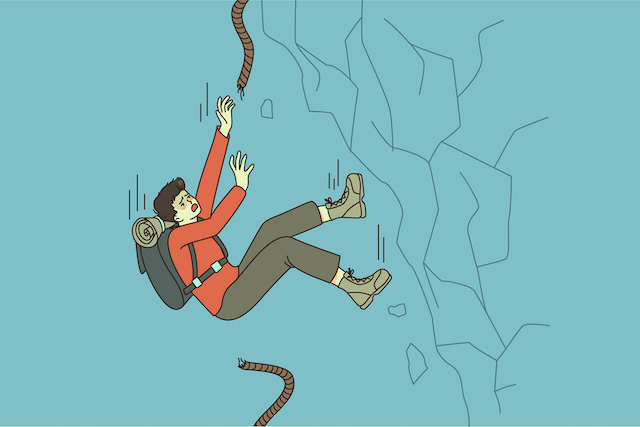
    Tumbling headfirst downhill, I instinctively grab my ice ax with both hands and prepare to stop. Landing hard on my back, however, my ax bounces loose from my hands and I slide uncontrollably down the steep slope towards the crevasse.

    In a moment of frozen terror, my life flashes before my eyes and I am going to die! Then suddenly my flailing body slams into something solid, knocking the wind out of me.

    Stunned and disoriented on my back with my head pointed downhill, I’m unable to get a bearing on how close to the edge I’ve come and how close to death I am.

    Looking up, I see a blur of movement and shifting dark images. Clearing the snow and ice off my glacier glasses, I realize Hank and my fellow climbers have formed a human net, catching me just a few yards before I careened over the edge of the crevasse!

    I’m in shock, numb, and completely speechless. I’m also totally embarrassed and feeling extremely vulnerable. I’ve spent years being a strong and independent man, priding myself on not needing the help of anyone. Needing help always seemed like a sign of weakness to me, so this emergency situation is deeply disturbing.

    “We’ve got you, VJ! Hold on buddy, we’re not gonna let you fall!” I fidget around trying to stand myself up and respond, “Thanks guys, I can take it from here.” “Lay still, you’re pushing us back towards the edge!” Hank barks at me. “No, really, I’m okay guys, I’ve got this.” There was no way I was going to be the weakest link in this chain! This time, however, a number of my team members replied, “No you don’t have it VJ, you need to stop right now or you’re going to kill us all!”

    That message got in. The reality of killing my fellow climbers so I can stay in control is just too much for me to bear. The humbling realization shatters my macho control mechanism and I suddenly relax into letting them help me.

    As they reattach my gear, stand me up and reassure me with pats on the back, I realize it’s nearly impossible for anyone to support me. Experiencing them caring for me this way is both wonderful and wrenching.

    My chest tightens and tears come to my eyes as I realize how many times in my life I’ve not let others help or support me. I would always say, “No problem, I can do it myself.” I didn’t want to burden anyone or put anyone out.

    The deeper truth, however, is that if I let someone support me, I would be obligated to them in the future. The result might be that they could then somehow control me the way my father controlled me as a child.

    Looking into the caring faces of my fellow climbers, I suddenly see superimposed images of my mother, sister, and little brother, my friends, and exes who I’ve shunned and alienated with my stubborn macho independence

    I reflect on the pain and frustration that not being able to help me must have caused all these people in my life. So many opportunities I have had to accept the support of those who love and care for me, but no, I have to be strong and independent.

    How selfish and arrogant of me to rob them of the opportunity to contribute to my life! And how easy it would be for me to slide into humiliation over this display of narcissism.

    Standing here among those who just risked their lives to save mine, I realize I have a choice; I can dramatize my humiliation and hide behind my rugged individualism, or I can humbly open myself to their care and support.

    I choose to set humiliation aside and open with humility, and as I do, a wave of emotion fills me. For the first time in my life, as far back as I can remember, I’m able to see that accepting help from others is not a sign of weakness, it’s an act of humility.

    I also realize that rather than being a burden to people when I’m in need, it allows them to feel useful and to make a difference by offering their support and care. There’s no doubt that my fellow climbers are ecstatic about having just saved my life; I can see the joy and exhilaration on their faces.

    Still surrounded by a human net of care, I thank each member of my team for saving my life, and I apologize for placing them in additional danger. Each one of them nods in recognition, and nearly everyone assures me that having the chance to help save my life was far more important to them than blaming me for being a bit heedless.

    As I allow myself to be vulnerable and let their care in, my defensive armor melts, then drops away. We resume our ascent, and tears fill my glacier glasses as I reflect on the experience of my life being saved by this remarkable group of friends.

    How strange and new this is for me. I don’t need to see out of my glasses because I have the full support of those behind me as well as those in front to help me along if I need it.

    I’ve always been the one to give support to others, but now I can receive support as well. I breathe into this new awareness and suddenly have a profound realization that has remained with me for years.

    As I exhale, it’s synonymous with the movement of giving support, and as I inhale, it’s synonymous with the movement of receiving support. Engaging in both inhaling and exhaling doesn’t mean I’m weak, it means I’m human.

    Without further incident, we all ascend to the 14,179-foot summit of Mt. Shasta where a crystalline blue sky embraces the curve of the earth. The summit perch looks like a small crater and is no more than about twenty feet in diameter. Its outer rim is composed of a ring of rocky crags with one high point that signifies the very pinnacle of the mountain.

    Shining, sunburned faces grinning from ear to ear sit together in a blissful exchange of laughter and tears.

    After celebrating our joint accomplishment, we begin the ritual of reading and signing the register book stowed atop most climbable mountains in the world. The one at the summit of Mt. Shasta is contained inside a green metal canister under the Western crag.

    Each member of the team, like those before us, takes the opportunity with the book. After finishing, Hank hands it to me. As the last to see the register, I flip through its yellowed pages and my eyes fall on a passage written by a climber on October 23rd, 1972. I’ll never forget the inscription:

    “Father, I dedicate this climb to you. I’m standing at the top of Mount Shasta today because of the love, support, and encouragement you gave me as I was growing up. It’s because of your commitment and love that I was able to make it to the summit today. And although you lost your legs in the Korean War and have never been able to stand beside me. Father, I want you to know that today I stand on the top of this mountain for both of us. I love you with all my heart and all my soul, your son John.”

    How beautiful this dedication is! I take in the grandeur of the Earth’s curve from this high summit, close the book, and clutch it firmly to my chest. A wave of inspiration fills me, and I feel deep abiding compassion for all the world’s fathers, sons, mothers, and daughters . . . and I am challenged to act upon the humility that was moving so deeply within me.

    You see, up until this very moment I’ve coveted a deep wound in my psyche. As a boy, I was violently abused by my father, and as a result, I cut myself off from him in my early twenties vowing to never speak with him again.

    But now I am faced with a choice . . . should I maintain my position and continue to empower all the reasons why I should not reach out to him? Or should I humble myself and take a chance by reconnecting after all these years? It is here, within these deeply challenging life choices, that we both test the authenticity of our inspirations and discover what we are truly devoted to.

    I made my choice, and not only did I resurrect my relationship with my father, I affirmed that there is nothing more important to me than living with an open heart and honoring the humility I was gifted with high atop the summit of humility.

  • Create a Team to Battle Fears and Loneliness

    Create a Team to Battle Fears and Loneliness

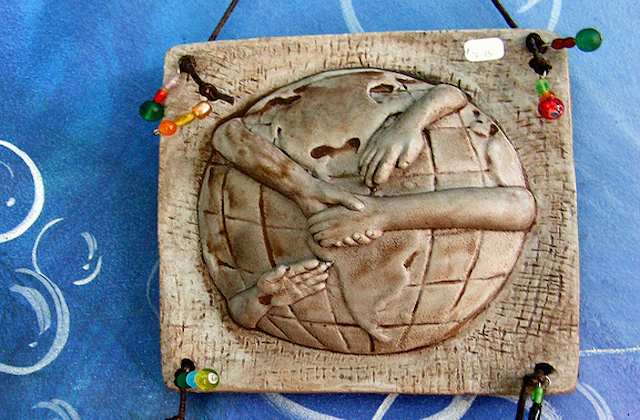
    People Holding Hands

    “When you realize there is nothing lacking, the whole world belongs to you.” ~Lao Tzu

    Five years ago, I found myself rebuilding my life after my fourteen-year marriage ended. During those first months preceding my divorce, crushing feelings of fear and loneliness often consumed me. Thankfully, I began seeing a wonderful therapist named Muriel.

    Each week, I held my breath until it was time for my appointment, when I could curl up on Muriel’s sofa and exhale all my anxieties.

    One week, when I was particularly overwhelmed, Muriel gave me the number of the local Crisis Hotline and insisted that I save it in my mobile phone.

    “I’m not suicidal!” I said, laughing as I dutifully recorded the number.

    A few nights later, I awakened in the middle of the night filled with anxiety and fear. I couldn’t stop crying. I called a good friend, but she didn’t answer. Just as I began to panic, I remembered the number Muriel gave me.

    After pouring my heart out to a complete stranger at the Crisis Hotline Center, an hour later I hung up the phone and promptly fell asleep. (In fact, I felt better from the moment I heard the volunteer’s voice on the end of the line.)

    Having the right resource empowered me to get the help I needed, when I needed it, in an appropriate manner.

    After that night, I realized the value of reaching out to the “right” person to help me through the various challenges I faced.

    In the months that followed, I came to rely upon my attorney to navigate the often rough waters of custody negotiation and property dispersal.

    I called on my accountant to provide me with guidance on my tax return.

    When I became anxious about my financial situation, I tapped the expertise of a financial planner to help me set up long- and short-term goals.

    In my personal life, I knew I could rely on my sisters for parenting tips, and I tapped the wisdom of my (single) friends when I began dating again.

    I also had colleagues with whom I could share ideas about pitching stories, or finding new clients. And I sought out a spiritual community with whom I could study, meditate, and pray.

    After a while, I began to look at every person in my life who helped me with an aspect of my well-being as a member of “Team Brigid.” Soon, my phone was filled with numbers of “experts” who could help me weather any crisis, or celebrate any triumph.

    Celebrities and millionaires have entourages and handlers to take care of their every task and need. But I don’t have to have fame or fortune to put together my own personal concierge service. In fact, having a team doesn’t have to cost me a cent; I only have to identify the people who are most valuable in my life and ask them for help.

    Creating my team roster didn’t take a lot of effort. Most of these people were already helping me in some capacity. But it’s a great source of comfort and confidence to create a list of all the people in various areas of my life who could help me with different tasks.

    For example, the mechanic who changes my car’s oil every 3,000 miles is an incredibly valuable member of my team—if I choose to look at him that way. Same goes for my hair stylist and my dry cleaner and my editor. I can look at each facet of my life—intellectual, physical, and spiritual—and identify people who are already helping me.

    By using the team perspective, I consider everyone who provides me a service as an ally, which makes the world a friendly place.

    The checkout woman at the grocery store who is always so nice to me (and everyone in her lane), and the Zumba instructor at my gym are all members of my team. As I expand my list, I realize how many people contribute to how I get through the day. Sometimes a friendly smile in the checkout lane makes all the difference.

    I don’t have an intimate relationship with every single person on my list. In fact, most of Team Brigid doesn’t know what’s happening in my personal life, let alone that they are on my “team roster,” but I can count on them all to play their part.

    Today, my team is more important than ever. Some days, just remembering that I have a wealth of (paid and unpaid) experts at the ready to support and guide me helps me maintain sanity and perspective when life becomes difficult.

    “Team Brigid” includes: my accountant, financial advisor, therapist, attorney, gynecologist, general practitioner, dentist, spiritual teacher, my neighbors, work colleagues, editors and clients, my car mechanic, hair stylist, 12-Step Sponsor, 12-Step program friends, my sisters and family members, girlfriends, my son, boyfriend, ex-husband*, my son’s teachers, coaches, and school counselors, and my son’s pediatrician.

    (*Yes, my ex is on my team today, as he plays an important role in helping raise our son.)

    Whenever I begin to feel anxious or lonely, I pull out my team roster and call up the appropriate player. For example, if I’m concerned about my son’s math grade, rather than sit and worry, I send an email to his teacher.

    Sharing my team perspective comes in handy when I have a loved one who is struggling with a difficult situation and leaning on me for support. Like my dear friend who (thankfully) slept through my 2am meltdown years ago, sometimes I just can’t be on the end of the phone—or I’m not the appropriate person to provide assistance.

    By helping my loved one develop her own team roster, I’m empowering her with far more help than I could by simply doling out advice based on my limited experience. (Plus, the team approach helps reduce caregiver burn out.)

    Who’s on your team? Spend some time today making a list of all the helpful people in your life who contribute to your well-being. You might find a position or two that needs to be filled. Or you may discover that you’ve “over-hired” in some areas.

    Looking at my life from a team approach helps me be open to the resources that are around me. I don’t have to be completely self-reliant, nor depend on any one person to take care of my needs.

    Ultimately, creating a list of the Most Valuable Players in my life helps me remember that, no matter what comes my way, I am never alone.

    People holding hands image via Shutterstock

  • Dramatically Improve your Relationships by Becoming a Team

    Dramatically Improve your Relationships by Becoming a Team

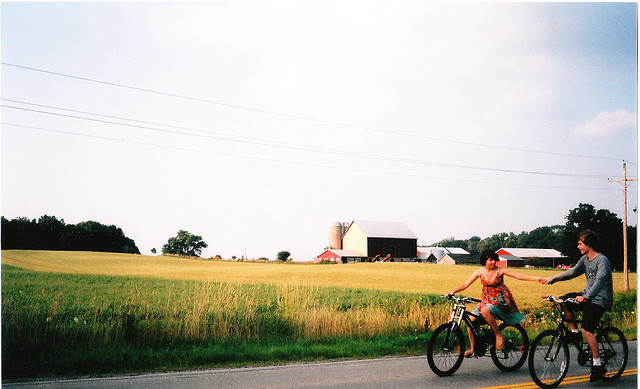
    Team

    “We may have all come in different ships, but we’re in the same boat now.” ~Martin Luther King Jr.

    I once had a totally commonplace, uneventful thought that transformed the way I viewed relationships.

    I’m not sure that it was mine; it certainly wasn’t anything groundbreaking or unique. I may have read it somewhere, I can’t remember now.

    It was the notion that when two people in a relationship think of themselves as on the same team, things get much easier. Positive feelings grow freely. Score-keeping and resentment are nonexistent. 

    Insights are very personal—a simple phrase that turns my world upside down might do absolutely nothing for you, and vice versa. Perhaps this notion was so life-changing for me because I grew up surrounded by people who seemed self-focused, always looking for where they had been wronged.

    They weren’t selfish or egotistical people. They were insecure people.

    My father had insecurities that led him to make everything about himself—if you didn’t say the right thing at the right time, trouble was sure to follow. I spent years walking on eggshells, trying to anticipate my next misstep. It was exhausting.

    And I remember women who constantly, endlessly talked about what was wrong with the “deadbeat men” who never seemed to treat them the way they deserved to be treated.  

    As a kid, it seemed as if adults everywhere put everyone else on the hook for their own happiness. In my childhood innocence and natural wisdom I wondered, why they didn’t take care of their own happiness? 

    Being on the hook for someone else’s happiness not only felt like enormous pressure, it was an impossible task.

    No matter how much my dad approved of something I did one day, he might disapprove of the very same thing the next day. No matter how nice a man was to a woman, he’d inevitably forget to compliment her dress and she’d have him back in the doghouse.

    All of this look-what-you’re-doing-to-me, you-should-be-treating-me-better business is not born out of independent, empowered women (or men) simply refusing to put up with less than what they deserve. That’s often how they like to view themselves, but that’s not it at all.

    Scavenger hunting for all the ways you aren’t being treated fairly is not an act of self-love. It’s an act of insecurity.

    It’s born out of fear and looking to someone else to be your savior. It’s born out of the belief that your happiness comes from what others do, which manifests as manipulation, guilt trips, and passive aggressive behavior aimed at changing them so that you can feel better.

    “Us” Not “Me”

    When you’re focused on yourself, keeping score, and making sure you’re being treated properly, you’re not actually in relationship with another person—you’re in relationship with your thoughts about the other person.

    You’re focusing on yourself, what you can get, and where your partner is falling short.

    Thinking of the two of you as a team shifts your focus. Suddenly it’s not “me versus you”; it’s “us.”

    It’s no longer “I did the laundry every day this week, what did you do?” It’s “We’re a team. I do the laundry more than you at times, and you do a million other things for me at times.”

    It’s not “If you cared about me you’d call twice a day”; it’s “I’d love to talk to you more.”

    The you-and-me-together way of looking at things is exactly what was missing for all of those disgruntled women complaining about their deadbeat men. The extreme look-out-for-myself-first approach is what made my relationship with my dad defensive and inauthentic.

    Teammates

    A couple weeks ago, I was talking with a friend about her marriage when she confessed that she was once a score-keeper. She used to keep a mental tally of what she had done and what her husband hadn’t, and she gave a whole lot of meaning to that score.

    When I asked how she came to leave the score keeping behind, she told me that her husband said something one day that completely turned it around for her.

    In the midst of one of her score reports, her husband said the reason he never thought that way was because he saw them as a team. She gives more in some ways and he gives more in other ways, but why keep track when they are always working together, in the end?

    She instantly knew that was true. He did give more than her in many ways, but her rigid, defensive outlook hadn’t allowed her to even notice what he did for her.

    Although insights are personal, she had the same game-changing one I did. She never looked at her relationship in quite the same way again. When she found herself feeling wronged, she remembered that she and her husband were teammates, not adversaries.

    Being on the same team takes the frailty out of a relationship. My relationship with my father always felt fragile and temporary, like I was one wrong look away from being disowned. In fact, I was.

    Don’t you see this in romantic relationships—especially new ones—all the time?  One or both people are afraid to fully be themselves in fear of what the other might make of their honesty.

    I can clearly remember the wave of relief that washed over my now-husband’s face when we had a disagreement about six months into our courtship. He sat me down to assess the damage and I assured him that we were past the point of breaking up over a petty dissimilarity.

    He says he knew in that moment that we were an “us.” It wasn’t “me” evaluating and judging him,” or “him” deciding whether “I” was right or wrong.

    We were a team, and teams are infinitely more resilient than individual identities trying to coexist.

    I wonder what this shift in perspective might do for you. Even if you aren’t a score keeper always looking for where you were wronged, taking on the team viewpoint can bring a new sense of closeness to your relationships.

    Can you imagine what might happen if we extended this beyond personal relationships—if we saw entire families, communities, or all of humanity as part of the same team?

    Imagine how we’d treat each other.

    Here’s to spreading the insight to our teammates everywhere.

    Photo by ClickFlashPhotos

  • Un-side for a While

    Un-side for a While

    Choosing Sides

    “When you live on a round planet, there’s no choosing sides.” ~Wayne Dyer

    Research shows that rooting for a team, identifying with a group and enjoying the camaraderie you feel with other fans, can increase your sense of personal happiness.

    While it’s satisfying to feel a sense of belonging, it can be dangerous to carry this us-against-them philosophy into other areas of your life. We do it all the time.

    A man connects so deeply to his heritage that he puts up walls with people from different backgrounds.

    Or a woman believes something with so much conviction that people who disagree become immediate adversaries.

    In this way, we shut ourselves into little boxes of people and relate to everyone else as outsiders. The Dalai Lama says we don’t need to give up our sense of belonging to communities; we just have to recognize various levels—the highest connecting us by a fundamental human bond.

    So, rather than relating to others based on what makes us different, we relate based on what characteristics we share.

    If there’s one common theme on this site, and in Buddhism, in general, it’s that people aren’t all that different. We all want to feel good and purposeful. We all want to avoid feeling pain.

    Ironically, it’s painful to see other people as sitting on the other side, believing or expecting the worst in them, holding up a guard, ever-ready for an attack. (more…)