Tag: teach

  • How to Start Teaching Mindfulness (Even if You’re Still Learning)

    How to Start Teaching Mindfulness (Even if You’re Still Learning)

    Sponsored by MindfulnessExercises.com

    A few years ago, I was meditating in silence beneath the canopy of a forest monastery in Thailand, questioning everything.

    I had left my job, relationships, and most of what I knew to live as a Buddhist monk in the Ajahn Chah tradition—eating one meal a day, sleeping little, and sitting with discomfort, doubt, and the rhythms of the natural world.

    But the hardest part wasn’t the mosquitoes or the hunger.

    It was this: I was afraid to teach what I was still learning.

    Maybe you’ve felt this too—that deep yearning to guide others in healing, in presence, in peace… but a lingering fear that you’re not “ready,” not “qualified,” or that your own struggles disqualify you from helping others.

    If that resonates, you’re not alone. And more importantly: it’s not a reason to hold back. In fact, it may be the very reason you’re meant to teach.

    That’s what led me to create the Mindfulness Meditation Teacher Certification Program.

    A Path for People Who Want to Serve—with Heart

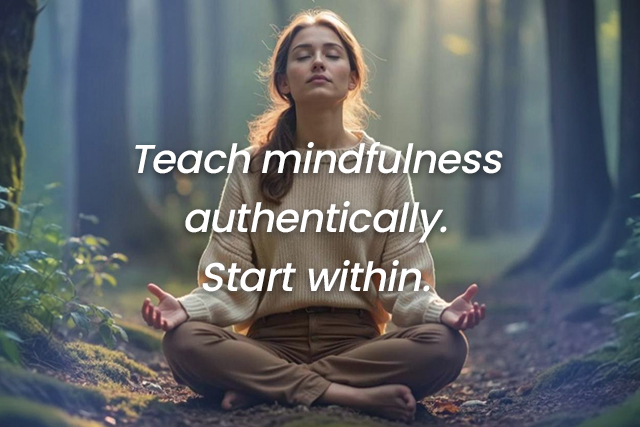
    Whether you’re a therapist, coach, educator, or simply someone who feels called to guide others with compassion, this certification helps you teach mindfulness authentically, without pressure to be “perfect.”

    It’s not about performing or pretending.

    It’s about integrating. Practicing.

    And sharing from a place of lived wisdom.

    What’s Inside the Program

    • Self-Paced Online Learning: Go at your own rhythm with lifetime access to over 300 hours of content.
    • World-Renowned Teachers: Learn from pioneers like Gabor Maté, Rick Hanson, Kristin Neff, and more.
    • Done-for-You Curriculum: 200+ guided meditation scripts, worksheets, and presentation slides you can use right away.
    • Live Mentorship & Community: Weekly live calls, optional small pods, and private community access for real-time support.
    • Business Tools: Guidance on how to offer classes, build a brand, and grow your visibility as a teacher.
    • Accredited Certification: Earn a credible, recognized credential to teach mindfulness and meditation professionally.

    But More Than That… It’s a Journey Back to Yourself

    One graduate said it best:

    “I joined to help others. I had no idea how deeply I’d be helping myself—healing old wounds, softening my inner critic, and rediscovering joy in simply being.”

    That’s the thing about teaching mindfulness: the more you teach it, the more you live it.

    Is This Program for You?

    You don’t need years of experience or a Buddhist background. You do need:

    • A sincere desire to help others find presence and peace
    • Curiosity about your own patterns, habits, and healing
    • A commitment to practicing what you share

    Whether you want to guide clients, lead retreats, offer corporate mindfulness, or simply deepen your personal practice, this program can support your next step.

    A Note from Me to You

    I created this program to be what I wish I’d had: a grounded, flexible, deeply supportive path that honors both your humanity and your calling.

    We’re not training gurus.

    We’re nurturing guides—kind, real humans walking beside others on the path to wholeness.

    If this speaks to you, I’d love to support your journey.

    👉 Explore the certification here

  • Every Imperfect Person Has Something to Teach Us

    Every Imperfect Person Has Something to Teach Us

    Seated Group

    “My experience is that the teachers we need most are the people we’re living with right now.” ~Byron Katie

    I have always been of the opinion that the people around us are our teachers.

    Specifically, I have always seen what I perceive to be negative traits in others as opportunities to develop patience or kindness toward them. I see it as a struggle they are going through, and if I can be patient or kind, then that helps them. It also teaches me how to embody those qualities even when I don’t feel like it.

    If a colleague, friend, or acquaintance is abrasive or aggressive, I try to mentally extend loving thoughts to them.

    I think about what it’s like to be in their shoes and how I can lead by example by being kind to them. I breathe in their perceived negativity and breathe out positivity. I tell myself, this is your opportunity to practice. So I practice.

    And I think without realizing it, sometimes I can be smug about it. Subconsciously, despite all my yogic training, my interest in Buddhism, and my general belief that we are all the same, I inadvertently elevate myself in stature compared to others.

    I am mentally giving myself yogic brownie points—which, in the very nature of yoga, do not exist!

    When you’re on a spiritual path in particular, it can be easy sometimes to fall into the illusion that you’ve made it. You’ve figured it out. You are enlightened and can now teach everybody else how to be just like you.

    One morning recently I had an epiphany about my philosophy that everybody is my teacher. I still believe it to be the case, but I realized that by thinking from my ego, I was always seeing other people as teaching me qualities to help deal with them better. I wasn’t really thinking about how I could be better.

    It was always about being more patient with grumpiness, being more loving toward animosity, opening my heart to a closed one.

    There goes the illusion again, that I have made it—I have learned all I need to learn about my less than desirable qualities, and just need to learn about how to handle other imperfect people. It makes me laugh now as I’m typing it.

    In simple terms, I had basically forgotten that I also had the potential to be quite annoying or difficult too. Just like every other human on the planet. I’m not perfect. And it’s something I have to keep remembering.

    Then I realized in a moment of genuine clarity that one of my greatest teachers is my partner. He will probably scoff when he reads this, as he won’t see himself in this light, but it’s true.

    He loves me for who I am, whether that’s a yogi getting up at 5AM to practice and unwittingly waking him up by chanting quietly in the next room, or someone who proclaims she’s on a vegan diet this week and then sneaks in a bit of cheese in a moment of weakness.

    He patiently (most of the time!) catches spiders for me despite it clearly being an irrational fear that I should probably deal with. He laughs at my jokes even when they aren’t funny, which I shamefully never do for him.

    He forgives and loves people, again and again, in a much more graceful way than I ever have. He knows he is not perfect and that nobody else is. He doesn’t try to attain perfection. He just lives as well as he can in that moment.

    In seeing how he embraces all of me, I realize the goal isn’t merely to learn from other people’s imperfections, but also to accept them—and to accept that I too have room for growth, and that’s perfectly okay. None us will ever have it all figured out, and none of us needs to be perfect.

    Instead of looking at how to deal with qualities in others that I perceive negatively, I now look at how to embrace their positive qualities so I can gradually start to embody them more myself. I still aim to lead by example, but I also strive to follow the many positive examples others set.

    And this is how we can all teach other—by seeing the best in each other and bringing out the best in each other. We are all on equal footing, human and imperfect. Let’s learn and love together.

    Group of meditators image via Shutterstock