“I think something people need to understand is that others disliking you is not a bad thing. When you are embodying your true authentic self, it creates fear in people who still operate from the ego. If you want to grow, heal, and evolve you have to let go of wanting to be liked.” ~Audrey Kitching
Since I was a child, I have always felt a huge need to express myself and let my inspiration flow. I was a creative and playful kid, with a vivid imagination and an enormous passion for writing.
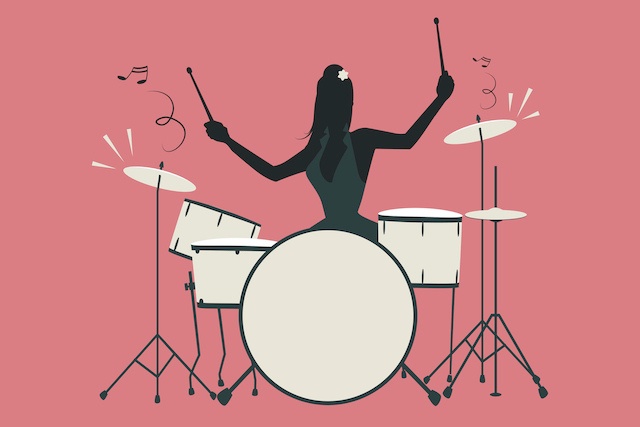
As a teenager, I became interested in music and wanted to be a drummer. It was a spontaneous decision—my intuition suggested to me that, behind those rhythmic patterns that fascinated me, there was something more.
Something meaningful, spiritual, something that was calling me so strongly that my soul wanted to resonate with it.
Knowing that, I asked my parents to take drum lessons, but they eventually convinced me that I was dreaming too big. I began to think that it was too late to start, I would never be good at it, and that playing the drums was something that only privileged people, perhaps with a big soundproofed room, and the right amount of talent, could do.
I gave up on my aspiration and decided to follow my father’s suggestion to take guitar lessons, which would have been more practical and easier to afford.
I thought it could be an opportunity to learn how to play the songs I loved the most, but after a few months of early excitement, my interest started to decrease because I spent most of the time doing arpeggios and playing sheet music without feeling it.
After almost two years taking classes, I realized something astonishingly simple, yet powerful: I was following a path someone else had chosen for me! How could this have led me to joy and fulfillment?
Immediately after that, I gave up on the lessons. Since then, I have played sporadically, mostly alone. Thanks to video tutorials and the right amount of effort, I’ve managed to get a good technique and to play my favorite music. But, several times, a thought snuck into my mind.
You’re not good at music.
The cheerful kid had been replaced by an insecure teenager trapped in the painful process of growing up. I was pulled down by what the others were thinking about me.
For some years I was verbally bullied and mocked from peers and schoolmates, for no apparent reason—I was just trying to be myself. This created emotional and psychological pain and made me believe that I was different and didn’t fit with what others expected me to be.
I went through dark times and repressed my creativity, thinking that I couldn’t give birth to anything valuable or worth being enjoyed. I subconsciously believed that I would have never been as good as others.
With the support of the right people, and through a long and painful introspective journey, I eventually realized that what made me repress myself were sneaky and dangerous limiting thoughts.
More than ten years later, I had the first glimpse of what I could have become if I’d connected to my innermost passions.
After moving to live in Spain I met some guys who owned a rehearsal room. When I first entered the room, my instinct immediately led me to the drum kit. Before that night, I had played the drums only once, but the idea was still fascinating to me.
Soon after, a thought popped up. When I was twelve I really wanted to become a drummer, what became of that dream? After many years spent denying my passion, it was time to become the architect of my own life, as I knew that I’m the only one responsible for my happiness.
A few weeks later, I was able to find a teacher and start taking lessons. The first time I stepped into the classroom I was a bit nervous because an unpleasant dialogue was taking place in my mind.
“What if he notices that I don’t have a musical ear?”
“My level of Spanish is not that high. How could I understand him?”
“Will I ever be able to continue my lessons, or will I be kicked out on the first day because I am hopeless?”
As soon as I started playing, my fears simply dissolved. My heart felt light and joyful. When the lesson was over and the teacher smiled at me, the negative rush of thoughts was replaced by shining and optimistic affirmations.
“I may not have a good musical ear, but I have an amazing sense of rhythm.”
“I could understand everything he told me; my Spanish is good, after all.”
“I am not that bad, and I’m sure the next time will be better.”
That happened four years ago. Since then, I’ve never stopped drumming. Here are some of the most meaningful lessons I have learned in that time.
Talent is not something we are born with.
Better said, talent is something that very few people are born with.
My timid attempts at learning guitar made me believe that I should give up on music because it wasn’t my thing.
Similarly, when I decided to take drums lessons, I thought I could never improve, because it was too late. I was told that all the good drummers started learning when they were children, that becoming good at drums takes way too long to start when you’re an adult.
Time proved to me that my opinions were wrong. I spent the initial months practicing however I could, doing my homework on pillows, in the office, during my lunch breaks. A few months later, I was rewarded with one of the most amazing gifts I ever received—a friend of mine asked me to join a band.
Like many times in my life, the negative self-talk was about to tell me I was not talented enough to play with other people.
It was time to stop that destructive inner dialogue that had been pulling me down for a long time.
I was mature enough to understand that no one was restraining me but myself: I was creating boundaries that didn’t exist.
I joined the band for about five months and had a great time, mostly because, for the first time in my life, I was playing with other people.
Thanks to this opportunity, the idea of being bad at music was replaced by a genuine sense of self-confidence.
Learning doesn’t require us to be a specific age; we just have to be in the right mindset. The world is full of sprightly and passionate people who realize they have a huge enthusiasm for something later in life and want to enjoy this passion. They know they’d have regrets if they didn’t, so they just start doing it.
We tend to think that if someone is successful, it’s because they were born with a unique talent that we will be never able to develop.
We try to escape introspection, avoid analyzing our resistances, and justify our lack of attempts and passive behavior by thinking that we’re not as lucky as the successful people we admire. That might look like self-defense, but that’s actually self-sabotage. We have to be brave enough to understand and overcome whatever is pulling us down.
My negative self-talk was keeping me away from trying something new: I’m not talented. I will never learn how to play because I’m not able to recognize and sing the notes. I am not creative; I can’t make music.
Those limiting thoughts, coming from my past experience of being verbally abused, had been with me for a very long time, and I was almost convinced that they were true. I never considered the possibility that they were just thoughts.
At one point, I felt exhausted, my energy was drained, and I could not move forward.
I started observing my inner dialogue as if I was a spectator and my thoughts were part of a movie, together with sounds and people that surrounded me. I imagined them coming and going, like trains in a station. I finally came to realize that they didn’t define me—my thoughts are part of me, that’s for sure, but they don’t define me. The difference is huge.
Thanks to consistent practice, I became aware that my mind was tricking me. I was not less creative than others; I had just believed it was true.
To live in the present moment is to really live.
For many years, I struggled with anxiety and overthinking. My mind constantly wandered somewhere between my painful past and a scary future. Then I developed yoga and mindfulness practices, which helped me significantly. For the first time in my life, I was able to connect to my emotions and feel a peaceful relaxation of body and mind.
But it was when I first experienced a strong sense of aliveness and a deep awareness of the present moment that I realized that my whole life I’d been living on autopilot.
The first time this happened was during a jam session with my band. I was sweating, my hands were shaking, and my legs were tired, but my whole body was flooded with endorphins.
I was feeling good, my mind was focused and not involved in that hectic monkey dance that kept it busy all the time. My movements were fluid, gentle, and meaningful. And, the most surprising thing of all, I was not thinking any thoughts!
For a moment that could have lasted ten seconds, a minute, or even more, I felt eternal. I was not aware of time. I was simply living.
Sometimes, this wonderful sensation comes in unexpected ways—I never thought I would achieve this enlightened state in the middle of a jam session, with loud noise all around me!
This happened because my whole self wanted to be absorbed into the process of doing something it really resonated with.
If you are feeling lost or purposeless, take some time to talk gently to yourself. Listen to your soul and explore your most genuine passions and desires so you can connect with them, start doing what you love, and experience this enlightened sensation.
To me, this feeling is one of the things that make life worth living.
Follow your intuition, and this will lead you to happiness.
When I stepped into that rehearsal room, sat behind the drum kit, and started to play, I felt like I had been playing all my life.
My desire had been pawing behind the surface for a long time. When I finally became conscious of it, I couldn’t wait a second more. I had to give myself permission to be creative.
Playing music increased my self-confidence. I stopped comparing myself to others and began to get to know and love myself. We can’t express ourselves if we don’t know who we are. My raised inspiration led me to write more regularly, and with a higher purpose. My light started to shine so brightly and inspire the people around me.
Being a drummer made me cherish everything done with love, passion, and effort.
We all are unique, and the way to fully express ourselves is to open our hearts and souls and let creativity flow through our bodies.
It could be through music, poetry, painting… anything. Don’t limit your creative process. Expand yourself. Express yourself.
If there’s something you want to do that you’ve postponed for a long time, don’t wait any longer. Don’t let the fear of failing and judgment define you. Negative self-talk is ego-driven. Don’t trust it. Dig down below the surface, listen to your primal instinct, and practice positive thinking.
Be receptive, stay open to new experiences, and never say no to the opportunities that may develop your potential, as you never know which one could lead to an important turning point in your life.
Trust your intuition and follow your heart, and everything will flow in the direction of your happiness.