Tag: surrender

  • 10 Ways to Let Go of the Hustle and Surrender to the Flow

    10 Ways to Let Go of the Hustle and Surrender to the Flow

    “You can’t control everything. Sometimes you just need to relax and have faith that things will work out. Let go a little and just let life happen.” ~Kody Keplinger

    I have always been an overachiever: straight As, the top of my class; whatever I endeavored, I aimed to be the best at it. I strived through high school, college, graduate school, and in the corporate world.

    My hard work came with awards, accolades, and the feeling of accomplishment. But it also came with burnout, exhaustion, and the feeling of never being good enough.

    Once I achieved a goal, I was happy for a minute. But my next thought would inevitably be, “There must be more to life than this.”

    Even though it didn’t feel good, I repeated this pattern of strive + achieve + repeat at every level in my life, until I had an epiphany.

    It happened a few years ago when I traveled to Bali for a yoga retreat. While exploring the small third-world island, I noticed the locals with modest homes tending their fields, or running their local shop. One thing stood out: They all seemed incredibly happy—or at the very least, content—with their lives.

    This struck me for a couple reasons. For one, they didn’t live lavish lifestyles or have big houses or fancy cars. They weren’t climbing any corporate ladder or angling for a big promotion.

    But this didn’t matter. They appeared to be present, at peace, and enjoying the simple things that life offered.

    What a stark contrast this sentiment and lifestyle was with the one I just traveled from. Despite their lack of first world luxuries, these people seemed to have something we Americans (and I) didn’t: happiness, peace, and a sense of “enough.”

    I started to question my own desire for striving, for perfection. I wondered if all my efforts were actually keeping me away from the peace and acceptance I desired most. It seemed like a vicious cycle.

    After I left Bali, I kept this idea of “maybe it’s okay not to strive” in my head. And instead of embracing my perfectionist tendencies, I started to consider another way.

    Throughout the years since my trip, I haven’t totally abandoned my high-achieving ways (though I’m still working on it). But I’m now able to see that there is a time to strive and a time to let go. A time to make things happen and a time to allow things to happen.

    And, perhaps even more importantly, I learned that you can’t necessarily strive your way to happiness. In fact, it’s often the path of surrendering, accepting, and being at peace with where you are that truly helps you tap into that sense of contentment and ease.

    So if you find yourself over-efforting, working hard, toiling without any respite, it may be time to explore the opposite path: surrender. When you surrender, you invite life to flow as it will and you roll with the current instead of fighting to swim upstream.

    When you surrender to the flow, you open yourself to possibilities instead of forcing opportunities that might not be right. You embrace and honor where you are, without worrying about where you need to be.

    When you notice yourself striving but feel like what you really desire is peace, these ten steps help you to let go of the hustle and embrace the flow.

    1. Trust yourself.

    Cultivating trust in yourself is by far one of the most grounding and stabilizing forces you can experience. Trusting yourself means that you know what’s best for you. In order to trust yourself, you must stop looking outside of yourself for guidance and start looking inside. Even as you seek advice or answers, always run it by your inner barometer to see if it truly resonates with you.

    2. Know that you already have the answer.

    Your answer might be blocked by fear and resistance. But when you find a way to put aside those fears, you can tap into what your intuition is telling you. Know that the answer already resides within you, even if it’s not clear at this moment.

    One way to get better acquainted with your intuition is to ask yourself what your gut is telling you. Over time, the more self-aware you become, the easier it will be to hear the voice of your intuition.

    3. Recognize that what you want to achieve is already within you.

    In order to have conceived a dream, you must already have created somewhere in your mind. When we desire something, we imagine it in great detail, and feel what it would be like to experience it. The simple fact that you’ve seen or imagined that vision for yourself means that the outcome is possible for you. Believing that you can—and will—bring this vision to life is the key to receiving it.

    4. Embrace the resistance.

    Resistance comes to us in the form of fear, self-doubt, procrastination, and other roadblocks. It shows up in our lives when we are at the precipice of doing something important and meaningful to us.

    When you recognize resistance as a sign that you’re about to do something big, you can learn to embrace it as the powerful messenger it is. Instead of letting it debilitate you, you can see resistance as a sign that illuminates where you must go.

    5. Trust the process.  

    The path to your desired destination may be a winding road and not a straight line. It might even have some cutbacks and hills involved. But you won’t get to where you want to go unless you’ve first learned the lessons from the present.

    Play the hand you’ve been dealt and trust that this is all part of your journey. There is something in your experience right now that is critical in helping you to become the person you need to be to move to the next level.

    6. Let it go.

    When we have a dream or a wish for ourselves, we can become very attached to it, and guard it preciously. You conceived your vision and believe in it. Now you can release it and be free from it.

    This doesn’t mean you don’t take any action, but it means you’re not holding so tightly to your vision that you worry about taking only the perfect action. Set your vision free into the universe and trust it will happen in its own time.

    7. Seek joy.

    Remember to play and enjoy the process. “Life is what happens when we’re making other plans,” John Lennon said. When you feel yourself waiting, overthinking, indulging feelings of doubt, take this as an opportunity to seek out what makes you feel good. Ask yourself what would make you happiest in any moment, and go do that. Seek activities that you fill you up. Wash, rinse, repeat.

    8. Take inspired action.

    Inspired action means action from a place of feeling pulled toward something, inspired by something, and from a place of “want.” This is directly opposed to taking action from a place of pushing, striving, or a place of “should.” Follow the pull, not the push. Don’t worry about what you or others think you “should” be doing. Explore what you feel called to, and let yourself be guided by your inspiration.

    9. Tap into your intuition along the way.

    If (when), along the way, you feel disheartened or discouraged, impatient or impotent, anxious or depressed, simply press the “PAUSE” button and take a big, long, deep cleansing breath. This is the perfect time to turn back inward and listen to your intuition: your built-in, always-available inner guide. What is your intuition telling you? What do you need to know right now?

    10. Let the universe support you.

    Sometimes it’s not a matter of making things happen, but a matter of letting things happen. Instead of mucking around in the road, get out of your own way. Sit down on the path and open up to receiving what is meant for you.

    When you stop striving and start surrendering, you will see the infinite possibilities and opportunities that exist in every moment. You’ll tune in to the frequency of the universe, and she’ll show you the way.

    Throughout our lives, there will be periods to achieve and periods to receive. Once you tap into your own self-awareness, you can recognize what pattern you’re currently in, and whether or not it’s serving you. If you’ve been striving for too long, it might be time to surrender to the flow.

    Remember that surrendering is not quitting. It’s honoring yourself where you are at this moment in time, and allowing what you want to catch up with you. It’s taking time out for yourself and reflecting on what’s important. So that once the time to strive comes back around (which it will!), you will be supported with the energy, the purpose, and the guidance you need to move forward.
  • Why Letting Go of Your Tight Grip Actually Gives You More Control

    Why Letting Go of Your Tight Grip Actually Gives You More Control

    “Anything you can’t control in life is teaching you how to let go.” ~Unknown

    I was growing impatient. I wanted an answer about something and it just wasn’t coming, no matter how hard I tried to prod it into happening. I was growing frustrated. And I was growing frustrated with my frustrations about it.

    So I decided to take a walk. The act of breathing in fresh air and hearing birdsong is centering for me. Just putting one foot in front of the other in rapid succession for an hour or two always helps to clear my head. I receive answers and guidance to my greatest questions when I’m walking. Call it a moving meditation.

    As I set out that morning, my eyes were drawn upward to three hawks flying overhead. While their aerial dance looked choreographed and elegant, I realized that the hawks weren’t instigating the choreography. They were simply letting go and floating with the currents. They circled and circled above me, wings outstretched, sailing and drifting.

    It dawned on me as I watched the hawks in flight that I’m rarely successful when I try to push or pull something in order to make it happen. Making an effort is noble and often necessary, but forcing something or worrying about it seldom yields the results you want.

    Sometimes, you just have to let go of your tight grip of how you think things should be or how quickly they should come together and simply let things run their own course. By releasing control and letting the currents carry you along, paradoxically, you gain more control—of your attitude and your response to what’s happening to you at the moment.

    Never was this truer in my life than when my mother was dying of cancer. My husband and I had decided that having Mom live with us would be the best solution. So, we rearranged our home, making one room her little oasis where she would be surrounded by her lovely things. Mom still wanted her independence, but it was no longer prudent.

    I worked well into the night getting everything ready for her arrival from the skilled care facility where she was rehabilitating after a hospitalization. No sooner was she discharged from the nursing home and settled in at our home than circumstances changed and she ended up right back in the hospital again and then back at the nursing home for more rehab.

    Later that same week, the unimaginable happened. I spontaneously and frighteningly became paralyzed from the chest down. My husband and I had been working hard to clean out Mom’s apartment. We’d been dealing as best as we could with her boomeranging back and forth to the hospital and nursing home. Then, all of a sudden, I needed medical care myself.

    At first, there were those medical professionals who thought I was simply exhausted and that my illness might even be psychosomatic. However, an MRI revealed a large benign tumor called a meningioma pressing so severely on my spinal cord that I suddenly became paralyzed.

    I was whisked by ambulance to the nearest large hospital an hour away, where a neurosurgeon who inherited my case soberly delivered the news that he was only cautiously optimistic I would ever walk again. I underwent the first of two surgeries to remove the tumor and release its pressure from my spinal cord.

    While in the hospital, unable to move, I realized that I had no other choice but to breathe, relax, and let go. I found it easier, then, to accept what was, even if I didn’t like it.

    All of my plans to care for my mother in our home were dashed. My mother’s care would have to be handed over to others at the skilled nursing facility. Mom would accept the situation. My work would have to just pile up. My employer would cope. My life was pretty much on hold as we waited to see how my spinal cord would recover from the surgery.

    I never once gave up faith or hope that I would get better. I visualized my return to my sacred evening walks. I saw myself strong and nimble and able to do what I could to support my mother on her final journey.

    But, I couldn’t plan at that point. I had to give in and let go. Like those hawks I saw overhead recently, I couldn’t allow myself to become impatient or to force the outcome. I had to ride on the wind and let the currents carry my wings.

    We all have those times in our lives when we want things to be the way we believe they should be—the way we planned them to be. Alas, sometimes life has another path for us.

    I believe that those things that are meant for us have a tendency to come our way and those doors that are never supposed to be open to us simply will not open.

    Some of our desires will take longer to manifest than we would want. There will be those things that will turn out differently than we anticipated—sometimes better than we could have imagined; at other times, not so much.

    Our difficulties and disappointments, however, have the ability to serve as blessings. Those blessings aren’t always clear at the moment, but with time, they often become visible.

    After months of physical therapy, I did indeed learn how to walk again. And now I walk every day because I can. I am blessed.

    For those of us who like to have a semblance of control over our lives, we will at some point learn that there are those times when we don’t have much say in what happens or how it ends. All we can do is be patient, filled with faith and buttressed by hope.

    Our letting go of the process or the outcome gives us more space to consider what’s happening at that very moment and to control our attitudes and reactions. By being mindful of our thoughts and attitudes, we can avoid getting stuck in draining emotions.

    It’s quite freeing to not have any preconceived notions, to be patient and to just let things flow. When I get out of the way and allow life to happen, the end result is often much better than I could have planned on my own.

    Surely, I want and need to have goals, plans and dreams. That’s what helped me recover from my paralysis and regain the ability to walk. But, I’ve learned that I can’t be shackled by my desires and plans. Instead, I’ve learned to stop the tendency to prod or push. I’ve found that I can ride the currents, allow them to sweep me along, and all will be well.

    When you let go and allow the currents to carry you, you’ll still move forward in life. Things might not turn out exactly as you planned, but the journey may give you more interesting scenery along the way. And in the end, you’ll have mastered control of what really mattered all along: What you thought and how you reacted to your circumstances.

  • Why Surrendering to Life is the Key to Positive Change

    Why Surrendering to Life is the Key to Positive Change

    “Surrender to what is. Say ‘yes’ to life and see how life suddenly starts working for you rather than against you.” ~Eckhart Tolle

    “Surrender” in current colloquial language equals failure. According to the Oxford Dictionary, without an object, surrender means to “stop resisting to an enemy or opponent and submit to their authority.” With an object, it gets even worse: “Give up or hand over (a person, right, or possession), typically on compulsion or demand.”

    How then can surrender be the key to joy?

    At age thirty, I was defeated by life. Down for the count. But, I did not get back up on my feet until I surrendered.

    I had led a charmed life until then. I got into every college to which I applied and went to my top choice. I graduated summa cum laude and got into a similarly impressive grad school, where I also graduated at the top of my class.

    After a White House internship, I landed a job at a top investment bank and had moved to an equally prestigious consulting firm. I had lived in and traveled to dozens of countries. I was a winner.

    Or was I? Life had thrown me a string of curveballs: health problems, friend problems, romantic problems, professional problems.

    While, to an outsider, I might have appeared to be “living the dream,” the “dream” entailed eighty-plus hour workweeks and constant travel. After a few years of this, my life had totally unraveled, and after knowing nothing but success, I encountered nothing but failure.

    The stress and over-work likely contributed to a string of illnesses, hospitalizations, and surgeries.

    I was exhausted after more than ten years of sleeping on average less than five hours a night, and my weight had yo-yoed drastically.

    My partner of three years had left me, telling me, to boot, that it was essentially never “a real thing” to begin with anyway. A second equally intense relationship ended in a similar way.

    All of this happened when I was living as far away from my hometown as you can get on the globe, and after being so busy for so long, I had almost no one to turn to where I was living. I was completely untethered.

    I just wanted it all to end, to make the pain go away. One day, I literally found myself on the floor with a bottle of pills in my hand, contemplating suicide. I almost followed through, but something happened, or actually, a lot of somethings did.

    One of the very first somethings that happened was that I became aware of the self-talk in my head and was able to disassociate from it, listening to it as a separate entity.

    Perhaps its most recurring commentary was some version of “this isn’t how it was supposed to happen.” I had achieved so much so early in life and worked so hard. I should have been rich. Happy. Successful. Instead, I was a mess.

    It was all these “shoulds” that almost killed me because they left me stuck in a mental construct of my own making, set up in opposition to what was actually happening.

    At the beginning of a long recovery process, perhaps the key moment came when I was able, however briefly at first, to occupy a reality without these shoulds and instead face whatever was at that particular moment.

    It was only later that I was able to grasp the significance of that first moment of surrender. Surrender is not giving up on life but giving up fighting with life. And, when you’re not fighting with it, you’re working with life.

    At first, our moral sense is offended by this. In a totally just world, there are a lot of things that should be. People should be nice to each other. Good things should happen to good people. But, if we take this to its logical conclusion, we’re all born innocent, so shouldn’t everyone just get what he or she wants? Shouldn’t only good things happen to everyone?

    Beyond the facts that what is “good” is often in the eye of the beholder, and the “goodness” of what appears to be a “bad” or painful or unfair event is often not revealed until later, all of these good things that should happen are far beyond our control.

    However, there are a lot of shoulds we can control. We can control our own actions and reactions (while of course allowing ourselves to err). We can act in this world how we should according to our own convictions.

    This is how surrendering, far from waving the white flag, becomes the ultimate tool for empowerment and positive action.

    When I was able to stop wallowing in the unfairness of what life dealt me and all of the shoulds that never came to be, my mind was free from the rumination and recrimination that led me into that deep state of depression.

    When I stopped fighting with my situation, my scope and options for positive action became clear, and at that point I was in full control of the little space in life that I actually could control—me.

    I stopped questioning the situation in which I found myself. Some of it was unfair, the result of what I took to be other people’s unjust actions, but at the same time, a lot of it was the result of my own actions, as well as pure chance. While I learned some lessons looking backward, the key to my recovery was accepting where I was and look forward to how to get myself out of it.

    My immediate action was to seek help, first from friends and then from a therapist, something I would have previously stigmatized as self-indulgent. Overcoming the shame of that opened the floodgates of what was possible for me, and everything was up for grabs.

    Within six months of that, I changed so many of the things that were not working for me—my job, my location and my relationships. I crafted a life that worked for me rather than fighting the one that wasn’t.

    By dropping the shoulds, I am now able, in my clear-thinking moments, to act without opposition from life and more quickly move to consider my course of action.

    Not only has this been emotionally liberating, but I know I have made countless better decisions as a result. Each day there are a thousand little victories, all thanks to surrender.

    The logic neat and simple, but the practice is difficult. I get confused and caught up and stuck, but the state of surrender is progressively becoming more and more of my natural default. Some of the lessons and tips I’ve learned to get to this place that I would recommend:

    1. Allow yourself to vent—up to a point.

    As imperfect beings, total, ongoing, and permanent surrender is unrealistic. We will feel negative emotions about experiences not meeting our expectations, and we need to allow ourselves to feel those feelings. It often helps to express them to a sympathetic ear. To a point.

    Venting of negative emotions is useful insofar as it allows us to liberate ourselves of them. However, prolonged or frequent venting can also lend momentum to these feelings. It can actually serve to build up opposition to life by hardening feelings of injury and strengthening those shoulds.

    So, pay attention to your venting. Is it releasing the negative energy around opposition to life, or is it adding to that energy? If you’re the one listening to the venting, ask yourself the same question of the person doing it. If the venting is adding to the negative energy of the situation, consider trying to divert that energy toward something positive and creative.

    2. Remind yourself that surrender is not giving up.

    At the beginning of this blog post I deliberately focused on the commonly used definition and connotations of surrender because of the strong biases language can impart on our subconscious thought.

    Prior to my own awakening, my brief forays into new age thinking and the new consciousness had always ended up with me dismissing it all as a bunch of hokey-ness that turned people into vegetables. If they were always just so accepting of what happened, how could they ever actually accomplish anything difficult or messy or complex?

    I still sometimes revert back to this thinking, but then I recall: surrender is not giving up on life but on fighting with life. Indeed, not surrendering to reality—questioning the fairness, goodness, or logic of the present moment—is crippling. You’re saying “no” to reality: “No, but that’s not fair! It’s not right!” Okay maybe that’s true, but where can you go from there?

    Surrender is saying “yes.” “Yes, I accept that this is a terrible situation, and the way I can make it better is…” This is how surrender becomes the key to taking positive action and frees us from so many of the negative emotions that we strengthen by opposing reality. We don’t say that what’s happening is okay, but we accept that it’s happening and move onto what we can do about it.

    3. Be the happy warrior.

    It’s something of an oxymoron, but the “happy warrior” tends to be more effective vs. the angry warrior, or, what we see more commonly, the person plodding along with grim determination. In fact, the war imagery probably misses the mark altogether, but we all can relate to the happy warrior type, so let’s stick with it.

    When we haven’t surrendered to reality and are still fighting it, negative emotions are inevitable, and we are, by definition, engaging in a futile endeavor. In this case, we become the angry warrior or the grimly determined one. That was me for so many years—I hunkered down, determined to endure all of life’s slings and arrows, all the while missing the joy of the journey.

    Maya Angelou once said, “What you’re supposed to do when you don’t like a thing is change it. If you can’t change it, change the way you think about it. Don’t complain.” If you’re still complaining or not accepting the reality, how can you change that reality? You’re probably still stuck in the complaining phase.

    That aura of negativity or hopelessness that comes with a failure to surrender is, to be blunt, a real turn off for most people. If you want to be the change you want to see in this world and inspire others to a cause, the angry warrior type is probably not going to work.

    This is vitally important in these times of so much social strife, and as fundamental questions of what kind of society we want to be arise every day. Eckhart Tolle has addressed this very point when talking about “angry peace activists” and agents of change.

    Think about some of the most socially impactful figures in the last 100 years—Martin Luther King Jr., the Dalai Lama, Nelson Mandela, Gandhi, Mother Theresa—these are happy warriors.

    Their optimism was infectious in winning people to the cause, and this optimism stemmed from accepting reality as it was and moving on immediately to the “how do we change this?” phase. They began by surrendering.

    Remember the Buddha. While sitting beneath the tree of knowledge, he was able to turn all of Mara’s arrows into flowers and remain in a state of equanimity. In a sense, you too can do that by not turning the obstacles that life puts in your way into personal affronts against you.

    When you accept what life gives you—when you surrender—you avoid creating all of the negativity that rejection entails. You do not disrupt your own peace. From that place of peace, you can affect change.

    In my journey, I eventually wasn’t able to continue fighting life, brought down into depression by the impact of all of those arrows. Nowadays, I can’t say that I immediately accept all that comes my way, but my willingness to surrender to life, if not turning the arrows into flowers, certainly makes the journey more joyful.

    And, when you have joy, you are more likely to achieve the end you seek, or better yet, find peace in the journey regardless of the destination.

    It all starts with surrender.

  • Why Letting Go of What We Want Enables Us to Get What We Need

    Why Letting Go of What We Want Enables Us to Get What We Need

    Seated woman

    “The most exquisite paradox: as soon as you give it all up, you can have it all. As long as you want power, you can’t have it. The minute you don’t want power, you’ll have more than you ever dreamed possible.” ~Ram Dass

    The first time I felt this paradox was in the middle of savasana after a challenging yoga class. I always say that yoga is a metaphor for life, and this is exactly why.

    Savasana is the final resting pose in which you lay flat on your back, close your eyes, and do nothing. A super yummy savasana is just so due after your work throughout the class.

    The more you are challenged throughout the yoga flow, the more likely you are to be pushed to a place of brokenness. You gave your all, and now you are spent. Dizzy and exhausted, you settle into savasana and release your entire body into the earth.

    Lying on the cold, hard ground never felt so good. You lie in silence, let your thoughts and breath go, and completely release. You feel deliciously blissful. And you might actually be feeling emotions for the first time all day, or maybe even all week.

    A slight smile spreads across your face as the sweat beads drip from your forehead. Or tears quietly stream from your eyes as you feel absolute joy and gratefulness. By the end of that savasana, you feel incredible. You feel like yourself again. You know you are whole.

    And it’s a good thing they have you do savasana at end of class, because you need the build up of tension during your yoga flow in order to allow yourself to really let go and just be.

    Could you imagine doing savasana at the beginning of class? Mind buzzing from a long, stressful day, thoughts racing. It’s possible, but much harder to do.

    This was how I came to understand the paradox of letting go in order to become whole. And trust me, it took many years of therapy, meditation, reading, seeking, and savasana to get there.

    We often cling to our desires and fight for them because we think we’ll be happy if we get what we want. But when we let go and accept what is, what shows up for us are often the things we need.

    These things tend to be the ones that really count, creating true happiness and meaning in our lives.

    But let’s face it, letting go on some issues is easier said than done. When it comes to deeper issues and matters of the heart, letting go can feel downright impossible. And on some issues, letting go may never happen. Some burdens may be too important not to bear. That is okay.

    However, even on the more difficult issues you may be facing, there still may be places in which you can soften your grip.

    I have had a strained relationship with my father since birth. From about four years old, I knew that he did not love me.

    All throughout my childhood, my father was both physically and emotionally abusive. My mother was loving, but also put in a position of trying to appease her husband, while at the same time protecting my siblings and me. This inevitably led to a lot of confusion and chaos in the household.

    Things finally came to a head when I was about ten. I was severely depressed, expressing passive thoughts of suicide, and displaying classic behaviors and symptoms of trauma.

    After a couple years of therapy and attempting to repair things in the home, my mother decided to divorce my father.

    Due to the history with my father, the court granted my siblings and me the opportunity to decide for ourselves whether or not we would like to visit him. Perfect timing too; my twelfth birthday was right around the corner as the divorce was being finalized.

    So, it was at the age of twelve when I decided to no longer participate in weekly visitation with my father. I would still see him occasionally for family events and holidays, but I kept my distance and he kept his.

    In my mid-twenties, I had little to no contact with my father, only seeing him about once a year for the holidays. However, I confronted him via email, defending my younger sister on an issue she was dealing with.

    She was only sixteen at the time, and was devastated when my father packed up all her belongings from his home and dropped them off on my mother’s doorstep without any warning. Apparently, she was no longer welcome in his home, and their relationship, too, was ending.

    In my father’s correspondence to me, he verbally confirmed what I had know all along, and stated outright that he did not love me and did not need me in his life.

    I was devastated and inconsolable. Although I had known and felt this since I was a small child, I had not actually heard these words before. Something about those words broke me wide open.

    I spun out of control and began a turbulent phase in my life in which I became severely depressed and anxious.

    I immediately began doing work in therapy, finally addressing the years of trauma that I had experienced, coming to terms with my broken relationship with my father. It was here that I began the long process of healing.

    Ten years later, I am significantly stronger. However, trauma is stored in our bodies, in our tissues, and in our brain chemistry, reminding me at times that it’s still there, but a mere shadow of what it used to be. Like an onion, the layers of trauma must be pulled back one at time.

    Looking back on my recovery process, the most challenging part for me had to do with my clinging to questions of what happened.

    I couldn’t understand why this had happened to me. I couldn’t let go of the fact that I was unloved by my father. I needed to have answers. I had been wrestling with these questions my entire life, and was bruised and broken time and time again, with no end in sight. This deep need and clinging only lead to more pain and hurt.

    Through therapy and yoga, I have come to let go of this ideal. I now know that I may never have the answers to my questions. I likely will never fully understand why this happened, why I had to experience this, or why my father behaved in this way.

    Now, instead of wrestling, I stand beside my questions, I cradle them in my arms, I offer them support, and I show them kindness. The questions, the injustice, the memories of hurt can be there, and I lovingly accept them into my life.

    More than this, I know that I am loved, that I am deserving, that I am kind, that I am a survivor, and I am whole. I always have been.

    In order to find acceptance and wholeness in my life, I had to release my death grip on my ideal relationship with my father.

    Whatever ideal outcome you’re clinging to, could you be open to the possibility of releasing it so that you can breathe, yield, and expand into something that is bigger? Could you give yourself time and create space so that you can become concise and clear about your being?

    If you can do these things, you will get what you need.

    Not unlike that challenging yoga flow I spoke of earlier, the real work comes when your body, mind, and spirit has been fully broken, your heart has been ripped wide open, and there is nothing left to do.

    And, no this is not easy. It will be hard.

    Letting go will make you question your identity, leaving you wondering if you give this one thing up, who will you be? What will you stand for? Will all your stress, worry, pain, hurt, sadness, be in vain? If you let go, who will believe your story? What will others think of you? What else will you have to let go of? What will you do next?”

    And here is where the paradox begins!

    “What will I do next?” is a tough question that can be scary to even consider. But it is here that change happens, and you do have a choice. Wholeness is knocking at your door, and you know what they say, “When one door closes, another door opens.”

    All that is required is to let go of the past and step boldly and bravely into your true self, your beautiful, loving, compassionate, deserving self. It is from this place of being that you may know wholeness.

  • How to Change Your Life When It Feels Like Nothing is Going Your Way

    How to Change Your Life When It Feels Like Nothing is Going Your Way

    “The rose is a rose from the time it is a seed to the time it dies. Within it, at all times, it contains its whole potential. It seems to be constantly in the process of change; yet at each state, at each moment, it is perfectly all right as it is.” ~Timothy Gallwey

    Have you ever wanted something so desperately that you became devastated after many failed attempts to get it?

    Has the same pattern kept repeating itself no matter how you tried to change it?

    Have you ever longed for something so deeply that you lost interest in life when it didn’t happen?

    There was a time when I felt this way. I was at a total loss for what to do next.

    I wanted just one thing in my life, and I knew it would make me feel happy and complete. But it kept eluding me. The harder I tried to achieve it, the further away it became. I felt repeatedly heartbroken and cheated.

    I didn’t think I was asking for too much. Many people had what I wanted. I had searched for years to find it and thought I deserved it. What was wrong with me that I couldn’t have a normal life?

    I wanted to find my soul mate.

    I kept trying, but I kept falling in love with men who couldn’t commit. Each time, my boyfriend and I seemed so compatible. I looked forward to every hour spent together.

    I could envision a life together, and my boyfriend seemed to be on the same track. But one day he would drop the bomb—“It’s time to move on.” I heard the excuse, “The timing is not right” so many times that I resented it.

    After searching everywhere for answers, I kept hearing the same messages:

    • When things aren’t working, you need to stop trying so hard.
    • It’s better not to be so emotionally attached to the outcome.
    • Things will work better if you drop your expectations and work with “what is” instead.

    This contradicted everything I believed in. I’d always gone after what I wanted. It worked while I lived at home and at school. Why wasn’t it working now that I was on my own and the timing was right?

    What Stops us from Getting What We Long For?

    Defeated, I searched further. I learned that often when we feel hopeless and stuck in life, it’s not just that we’re trying too hard, it’s that we’re trying to control things.

    It’s not possible to have everything the way you want it. Too many other variables are involved—primarily what other people want. We all have conflicting wants and needs, and our desires are often thwarted when they conflict with what others want.

    It took me a while to admit that I might be controlling. But we live in a society of achievers. People learn to go after what they want relentlessly, and that’s what I had learned.

    Once in a meditation class I attended, the instructor compared his laid back, Eastern students with his Western students. He said Western students try to grasp in order to achieve stillness in meditation. Eastern students tend to allow.

    With meditation, allowing is the only approach that works. Grasping pushes away the experience of peace. You must let go in order to sink into a state of meditation.

    Next I learned something that was even harder for me to accept—the underlying reason that we try to control things. We do so because we’re afraid. We have deep-seated, often hidden fears about life. By trying to put our lives in order the way we want them, we feel more secure.

    That idea took some serious introspection. But being honest, I finally had to admit that I was lonely and afraid of being alone.

    That’s what made me so intense about finding the right mate. And my result was the same as that of the people who grasped to achieve meditation. I was chasing my potential mates away.

    I was prematurely expecting each relationship to turn into a marriage and acting as if it was a given. I wasn’t being patient and letting things develop. It was too much pressure for the men in my life.

    An Experiment That Can Change Your Life

    After realizing I was suffering from the perils of being a control freak, I realized I had nothing to lose. Out of desperation, I decided to see what would happen if I had goals but let go and let things unfold without directing them toward a specific outcome.

    At this time, I had also been laid off from my job, making things even harder because I viewed my career as the other part of my life that made me complete.

    I started big by vowing to let my next relationship be decided for me. After all, my track record wasn’t so great.

    I viewed this as an opportunity to start over without trying to control—without expectations—with less fear and more faith. I set my mind to believe that things would work out if I relaxed, trusted, and went with the flow instead of against it.

    I began to follow Deepak Chopra’s advice of “being the observer” of my life. I calmed my fears by trying to be conscious that there is peace in the brief moments between our thoughts.

    I began practicing meditation and yoga with a yogi who showed up in my life. I started walking for an hour every day with a girlfriend, Mary, who I’d just met in my company’s outplacement program. She had been laid off the same day I was.

    My life changed markedly in a very short time. For the first time, I realized I didn’t have to be full of anxiety even if I was single and unemployed.

    I checked in with myself and realized that in each moment I was okay. I could handle this. I could slow down, try to find the best course of action, and focus on how to change—how to be more relaxed by allowing rather than grasping.

    I still had goals, but I started going with the flow and being open to other possibilities instead of insisting on specific outcomes I thought would make me happy.

    Incredible Things Materialize When You Learn to Let Go

    Although unemployed, I began to feel far less stress every day. It was like a weight had lifted from my shoulders. I hadn’t been happy with my job anyway, and it felt great knowing I could try something new.

    As a result of meditation, yoga, and exercise, I was able to stop the depression medication I had been taking for several years.

    I had tried to wean myself off of it before, but it didn’t work until I loosened up and started being open to this new way of life—experiencing the possibilities instead of directing things.

    Surprisingly, I was enjoying this experiment. I felt like I was truly living life instead of holding the reins, hanging on, and being thrown off course emotionally when things didn’t go the way I wanted. I started seeing that great things were coming to me.

    Dropping my fear let me experiment with observing what was going on around me and allowing things to unfold. I began to see openings and opportunities I never would have found had I kept trying to make things happen. It was like opening gifts.

    For the first time in my career, I decided to start my own business. And instead of hooking up with another boyfriend, I found a group of like-minded friends who made me feel at home.

    I found them by joining a group Mary told me about. They were studying a book called, “The Quest.” When she told me about it, I said, “That sounds like something I’m on.” It turned up at just the right time—and so did Mary.

    It took quite awhile for the right relationship to appear, but in the meantime something valuable happened. I got to know myself better, and I grew immensely. I became comfortable in my own skin and even grew to love being single.

    Later when I was happy with my life, I met my soul mate and husband, Mike, at a singles event. He is completely different from previous boyfriends.

    I knew he was the type who wanted a commitment from the start. His eyes sparkled the first time we met, and he was genuinely interested to hear as much about my life as I was about his.

    We have so many things in common. We share the same interests, we’re intellectually compatible, and we even like the same food and furniture. Where we differ, we are still compatible. It’s amazing to me how it all turned out.

    There is no other way to know what it’s like to drop your expectations and go with the flow unless you try it for yourself like I did. There definitely is no way to trust it until you experience it working.

    I’ve watched others go through similar disappointments in life trying to make things happen. Many of us are wired to pursue specific outcomes that we believe will give us security. If only we realized we could be happier if we open up and tap in to what comes our way while we’re busy making other plans.

  • Learn To Flourish When You Are Not In Control

    Learn To Flourish When You Are Not In Control

    Woman Throwing Arms in Air

    “Incredible change happens in your life when you decide to take control of what you do have power over instead of craving control over what you don’t.” ~Steve Maraboli

    On December 31, 2011 I experienced something I will never be able to blink away. I watched as my twelve-year-old daughter convulsed, turned blue, and stopped breathing on the floor of our living room.

    Time stood still. I heard my blood whoosh through my ears. I became a helpless observer. This simply couldn’t be happening to us; she was fine only a moment ago.

    I remember the exact moment when I realized that I was thinking that my daughter was dead.

    I will never forget that choking fear that everything in my life had just changed forever. Nothing mattered in that moment other than her. I begged her to breathe for me. I needed her to breathe. Fear dug in hard and wouldn’t let me go.

    After several moments of stillness, she took a very slow breath and then another. Her eyes were vacant and staring beyond me. Her arms and hands still twisted beneath her chin, against her chest. It would be hours before she would know who I was.

    Little did I know this was the beginning of an unimaginable journey.

    While I would lose her to a neurological conditional and medication side effects over the next four years, we would also learn and grow together, find happiness in the little things, and learn how to deal with the things we couldn’t control.

    She was diagnosed with Epilepsy within a few weeks. I was hopeful we could manage this and get on with life. We followed her doctor’s orders diligently, and I was meticulous with her medications.

    She had more seizures. We increased her medications. We changed her diet. I sought out alternative health practitioners and healers.

    Time had a way of slipping by, first in days, then months, and soon years had drifted by without me noticing. We went to the best hospital in the United States and we were told there was nothing more we could do. This was not what I could accept. Instead, I continued to hope.

    Her seizures increased. She couldn’t learn. She slept all the time. Depression and anxiety followed.

    Her medication side effects were brutal, and I didn’t even recognize my daughter anymore. Her beautiful spirit had retreated, held hostage there by the thirty anti-seizure pills she took each day. I knew I couldn’t give up on her.

    As her primary caregiver, I was sleep-deprived, anxious, terrified, and living in fear of the next seizure. She got worse, and I was drowning because I couldn’t control any of it. She required care, supervision and support that I felt I had no idea how to provide.

    One evening, I woke to find her having a Grand Mal seizure in her bed. I sat alone in the dark with her, crying, because I had nothing left to give. I had no way to help her. I had done everything I could and it still was not enough. I couldn’t change things.

    I crawled into bed with her so I could watch her breathe. Exhaustion settled over me, but I awoke with a shot of adrenalin when she began to seize violently against me. Again, I begged her to breathe.

    I crumbled in the fatigue and the stress and knew that something had to change or we were going to be totally destroyed by this.

    Surrender your desire to control.

    In that moment, I knew that I had to surrender my desire to control the uncontrollable. I had tried for four years to manage the things beyond my control. This choice got me nowhere and stole my energy faster than I could refuel. I was now absolutely depleted.

    I had to come to terms that I couldn’t control how long this beautiful child would have on earth. I could not breathe for her. I couldn’t watch her every single moment. This was not for me to determine.

    This was the hardest thing I have ever had to do, but it made the greatest impact on my well-being, and ultimately hers, because I was able to show up differently for her.

    In fact, while focusing on my daughter’s health, my son was hit by a car while riding his bike. This was a wake-up call to me that trying to control the uncontrollable was nothing but an enormous energy leak.

    I couldn’t control the seizures, the side effects, or the memory loss. But I could control where I allowed my energy to flow.

    Shift your focus.

    I decided instead to shift my focus. I could control her schedule. I could make certain she got her medications.

    I could get her to doctor’s appointments and scans. I could be supportive and give her my time. I could help her see moments of joy. I could help her with schoolwork. I could be her advocate at school. I could give her more of what she needed between seizures.

    As I began to focus my energy on the things I could control, I regained some purpose.

    I felt more energized. My hope returned. I was less depleted and more strategic. I began to see new options and opportunities where before my fatigue saw nothing but closed doors. I felt a significant shift. I was spending my limited energy stores in a different way.

    Practice gratitude.

    The other thing I did was I began to practice gratitude.

    When you have something so massive pressing down on you, it becomes very hard to not be focused on that. We had been focused on her being sick. We fed the fears. We lived in anticipation of the next catastrophe. We forgot that we still had much to be grateful for.

    I began to look for things every day that brought me joy: the sun on my face, a warm cup of creamy coffee, or hearing my kids laughing in the other room. The more I looked for these lovely slivers of joy and hope, the more I saw them.

    Soon, I was focused on how blessed I felt and the joy that had always been around me but that I failed to see when I was looking the other way. Even in times of struggle, I continued to look for these simple things, and they were always there for me. I just had to decide to see them.

    What this personal struggle ultimately taught me is that letting go of what you cannot control is hard, but holding on to these uncontrollable things and trying to manage them is much harder. My energy was best spent on things that could bring me desirable outcomes, not on trying to hold the wind in an open hand.

    Our journey has taught me that I am in control of my thoughts, and when I pick my thoughts carefully, I can still flourish in challenging circumstances.

    Over four years has passed since this journey begun, and I am pleased to say that my daughter has recently enjoyed a couple months virtually seizure-free.

    We have begun to reduce her medications and introduced homeopathic medicine into her daily care. I am hopeful, energized and optimistic about her future.

    There is no doubt in my mind that had I not surrendered and let go of the things I could not control, I would never have had the energy and focus to continue our fight for a seizure free life.

    I know it is hard, but letting go of things you cannot control does not mean you do not care. It means you understand that letting go can lead you to a happier, less stressful life.

    Woman throwing arms in air image via Shutterstock

  • The Pain Won’t Stop Until You Accept What Is

    The Pain Won’t Stop Until You Accept What Is

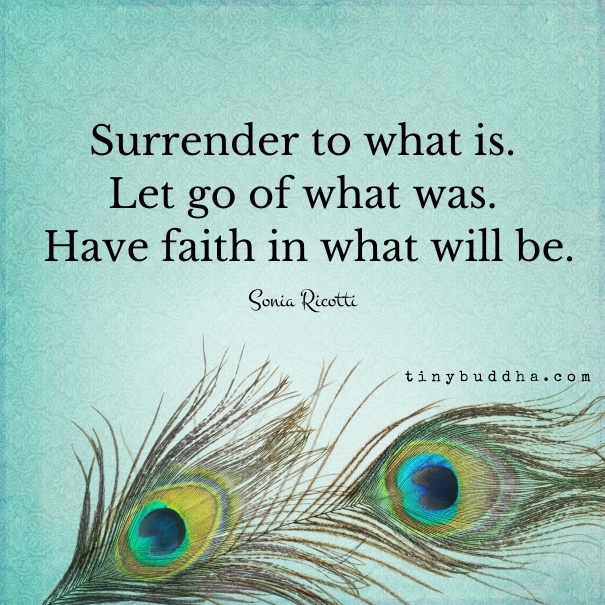
    “Accept what is, let go of what was, and have faith in what will be.” ~Sonia Ricotti

    Life is sometimes ridiculously hard. It sucks. It rips out your heart and your entrails, spins them around the room, and stuffs them back in unceremoniously through the hole from which they were ripped.

    And it expects you to smile and carry on. People expect you to carry on. Because that is what we think people do.

    I felt like this a few years ago when my marriage ended. Luckily, I had good people around me. They didn’t expect that from me.

    I, on the other hand, expected me to get right back on that horse. I had to keep going, to be stronger. To not let it affect me that much. So I berated myself. I got angry with myself. I hated myself (because that was exactly what I needed, right?)

    The thing is, when you are in the thick of it, you don’t know what you need. You know there is pain and you want it to stop. Please, please, just stop!

    And then there is the anger. This is the hurt you don’t understand yet. Hurt without compassion, hurt without direction.

    It explodes. It finds a way, a way out, somehow. Eventually.

    My expectations were so high. Or should I say, it was my hopes that were high. It had to stop.

    I couldn’t function until it stopped. I couldn’t forget until it stopped. And I wanted to forget so much.

    I wanted to forget how I felt now. I wanted to forget how I felt before—because then I wouldn’t miss it so much. I wanted to forget the good things she did because remembering caused pain.

    Conversely, I wanted to forget the bad things she did because those memories caused pain, too.

    In addition, I wanted to forget every small little detail of the stupid things I’d said and done that I wished I hadn’t, the things I went over and over and over in my head. Those sharp, jagged memories I just couldn’t switch off, each one like a fishhook being carefully placed beneath my skin, then mercilessly torn from its grip.

    I scurried desperately for refuge inside my head. I stayed in there. Outside were people.

    People would want to talk to me, to make eye contact. I was incapable of either. I was scared.

    I was frightened and ashamed and I didn’t want to see caring in someone else’s eyes. I didn’t want to hear kind words. I didn’t know how I would respond.

    I didn’t know if I would break down in tears, descending to that place I hated where I was a pathetic, whining fool who brought it all on himself. Or alternatively, to the place where I got so angry at how I was treated that I didn’t want anyone to see the look in my eyes. To see the raw anger and furious energy that burned inside of me.

    I didn’t want to be seen. Being seen asked questions. Questions I wasn’t ready to answer.

    It was like a living volcano raging inside me. I went to counseling because I needed an outlet. I needed to get it out.

    The hope inside of me that we would get back together restricted me from talking to people close to me. “What if we got back together?” What if in my pain and my hurt I said things about her, how would people see her when she came back? That would make it difficult for her.

    In retrospect, I think I knew it was over, deep down, but I was still fighting what was. This false hope also gave me a reason not to open up or face things.

    I look back with gratitude that I somehow found the wisdom in the bottom of that cold, dark place to take that step, to actually do something.

    All of my life I had bottled up feelings. I had been strong. I had controlled my emotions.

    I wasn’t a walking unfeeling marble statue. I did let loose some emotions. But I never really fully let go.

    I never allowed myself to feel it all completely. I never surrendered. I was always fighting reality.

    When I finally relinquished my hold on trying to control everything, it all changed. I allowed it to fall, to break free. I held nothing back.

    It was here, in this moment, I finally grasped that accepting where we are is the most important step in any change process.

    It was the only way through any journey of pain, to allow yourself to feel it without judgment. From the maelstrom of confusion, darkness, hail, wind, and rain in my mind, the storm started to pass.

    It was like waking up lying on a beach after a shipwreck. Battered and bruised, feeling empty inside, lost, lonely, not knowing where you are, where you are going or how. But in the center, deep inside, there is a calm. Something that whispers, “The worst is over.”

    Suddenly, I was able to sleep again. I woke each day without that feeling of readying myself for battle. My food tasted better.

    I still had the hurt, but it was dulled. I still had the memories, but the sharpness around the edges began to blur a little. I had still to figure out what my life was going to be like without her in it, but I had survived.

    All of this I allowed when I surrendered.

    When I stopped fighting reality my mind calmed, and I understood that what has happened outside of me “is what it is.” I cannot change that, only how I respond. Accept.

    My prolonged and persistent pain was coming from my refusal to accept this. When I stopped fighting what was, when I stopped trying to fight against the waves rather than letting them carry me to shore, I finally found peace. Surrender.

    The reality wasn’t different. I still had to deal with my new situation, with my new life. But the storm in my mind had quieted. It was easier to see.

    What I learned here wasn’t just about a break-up. It wasn’t just about dealing with pain. For me, this was a massive life lesson.

    There are still many times when storm clouds amass in my mind. I remember not to fight the reality, whatever is going on in my life. I remind myself, “This too shall pass.”

    Everything is transient. Everything ends. Good and bad.

    So I wait during the bad times. I watch, I observe, I learn. I focus on what I can control and I don’t resist and fight what I can’t.

    And I remember to cherish the good moments because they too shall pass. Life is so much richer when we surrender to it rather than fighting it. It all starts with accepting what is.

  • Why Slow is the Way to Go: 6 Reasons to Take Your Time

    Why Slow is the Way to Go: 6 Reasons to Take Your Time

    Slow Tortoise

    “Stop beating yourself up. You are a work in progress, which means you get there a little at a time, not all at once.” ~Unknown

    I’ve been practicing yoga, on and off, for fifteen years.

    It’s helped me through and out the other side of infertility, kept me company on the long and winding road of adoption, and helped walk me out of the shadows of depression.

    It’s a big part of my life, part of who I am—a faithful friend, the kind that welcomes you back with open arms even after you’ve been inattentive.

    In fact, I’d say yoga always gives me what I call an “Alaskan welcome”—the kind my dearly departed dog used to give me whenever I walked into the house, as though I’d been all the way to Alaska instead of around the corner to the shops.

    Yoga is always willing to give but it’s a slow-burning love, and while it has rewarded me richly, I’ve had to wait for its gifts.

    I have just completed yoga teacher training, at forty-six, proving the truth that you are never too old to teach (or learn).

    While I’m pleased with my pace of learning, ironically, despite my age and experience, there is still so much yoga has to teach me.

    And that’s okay, because I am realizing more and more that some of the best things, in yoga and in life, come to us slowly.

    Here’s why I think slow is the way to go and why staying power is the most powerful kind.

    1. Slow teaches us patience.

    And patience is its own gift, especially during times when things are out of our control and we have no choice but to wait it out. When we bring patience to gently moving toward a goal, we have it in reserve for when roadblocks get in the way (as they inevitably will).

    2. Slow hones acceptance and gratitude.

    When we rush headlong into what we want to achieve, we can get easily frustrated with any hurdle or slight delay. (And frustration is unlikely to get us to our goal more quickly.)

    We also miss the opportunity to accept and be grateful for the small steps we take, those incremental achievements, and for where we are right now—for the good and the bad of everyday life.

    3. Slow allows for small mistakes.

    Rush at something and we run the risk of messing up big-time. Take it slow and we get the chance to experiment with small mistakes, helping us to grow so we can hopefully avoid bigger mistakes in the future. We have to earn our lessons, and we don’t learn until we allow things to sink in.

    4. Slow makes room for other stuff.

    When we want something fast we can become obsessed with that thing, as though the goal has taken on a life of its own.

    While it’s great to prioritize what we really want, it doesn’t make sense to create imbalance in our lives with one overwhelming obsession. Who knows what (and who) you might miss out on if you do.

    5. Slow builds resilience.

    The lyrics “It’s better to die on your feet than live on your knees” might ring true, but I’m betting you’d still like to be around for a long life.

    Slow is about building legacy, and along the way, resilience. That can only be won through endurance.

    Fast is great for igniting passion and showing courage, but who do you think is braver and more passionate—the person who sprints out of the starting block or the one who keeps going over the long distance?

    6. Slow is seasonal.

    Taking things slowly recognizes that sometime we need to sit and deliberate (by a fire or by the beach). We need to wait in faith for the universe rather than selfishly expecting our own desires to take precedence.

    We need to look to nature to realize that the seasons cycle at their own pace, and we should always be willing to take things slower (and faster) as required.

    Slow doesn’t have to be timid, or lazy, or less-than-smart. Slow isn’t a marker for fear and procrastination, nor apathy and indecision.

    There’s a yoga asana (posture) that many people find difficult at first. The Sanskrit name is Supta Vijrasana, also known as Reclining Hero pose.

    Unlike the standing Warrior postures, which are strong and forceful, the Hero pose calls for quiet strength as you kneel down and then surrender backward.

    When I first got seriously back into yoga two years ago, after a sporadic year of practice prior, my knees would groan and my ankle joints scream when I tried to just kneel down and sit my bottom back between my heels.

    I certainly couldn’t recline backward onto my back, while keeping my knees bent and touching each other and my feet close by my hips. But now, having taken it slowly, I can feel a little like a yoga hero.

    I can realize the benefits of slow that have snuck up on me in their own sweet time. And I am most grateful.

    Slow isn’t dull and boring, but contemplative and considered. Slow is the yin in a very yang world.

    Slow is the strength of surrender, and surrender can be the most powerful kind of victory.

    Large tortoise image via Shutterstock

  • Learning to Let Go and Trusting That We Will Be Okay

    Learning to Let Go and Trusting That We Will Be Okay

    Man Jumping

    “You must learn to let go. Release the stress. You were never in control anyway.” ~Steve Maraboli

    While going through some major life changes, I am finally learning to let go. I am learning to relinquish control. And I am learning that everything will be okay in the end.

    I am in the middle of my first pregnancy. I thought I could control my body. I thought I could control my outcome.

    Something I regularly preach to anyone who will listen is that we can’t control the outcome of any situation. We can only control our actions.

    That means we can aim for a particular outcome, and do everything in our power to achieve it, but we cannot control what actually happens.

    We can’t control other people, the weather, bureaucracy, or anything else that is outside of ourselves. Obstacles will always get in our way, and we have no power over them.

    I have always considered myself a fairly fit and active person. I’ve competed in many ultramarathons and powerlifting competitions. I like to go hiking in technically challenging and precarious locations. But pregnancy took this all away from me.

    Working in the fitness industry, I am bombarded with what perfect fitness professionals look like and do. I see fabulously fit pregnant females lifting weights, running marathons, and doing all the things I enjoy doing. But my body just doesn’t want to cooperate.

    I only recently realized that I need to let go.

    I thought I could climb one more mountain before my body had enough, so I chose what I thought would be a relatively short and easy mountain to climb.

    Unfortunately, I completely forgot that my heart rate is now much higher, so I was getting puffed much earlier and had to walk much slower than usual.

    The mountain was very steep toward the top, and I was crawling up on feet and hands, with my awkward belly getting in the way. There were huge fallen trees strewn across my path, and I did my best to climb around, over, or through them.

    But 500 meters from the top of the mountain I got stuck. I was too short to climb over one fallen tree, and too big to climb through the gap where it had split.

    In ordinary circumstances, I would have climbed through and kept pushing until I reached the top. But this time I sat down and realized that the further up I went, the more difficult and uncomfortable sliding down I’d have to do on the return journey.

    My body was no longer the right shape for this sort of activity.

    I sat down and realized I no longer have complete control over my body. My body has control over me. I had to let something go.

    I let go of control over my body. I let go my ability to cover tough terrain. I let go of challenging adventures in the near future.

    I simply let go.

    And I realized that letting go is not so bad. Everything would be okay in the end.

    Later, I would be able to try these things again. I would try to teach my child about the great outdoors. One way or another, everything would be okay. I would be okay.

    I am also in the middle of renovating our house and looking for a new one. Again, I thought I could control the situation and the outcome.

    I thought that we would have a new house and have sold our current one by now. I even thought we would have a nursery set up by now.

    I have searched for houses, I have helped pack up and de-clutter our house, and my husband has done a lot of renovations. But I did not count on finding multiple faults in our house that need repairing. And I did not count on our dream house not showing up yet.

    I have controlled my own actions, and I did my best to control the outcome, but I discovered that I could not.

    So I sat down and I realized that it doesn’t matter where we live or when we move. The baby will come when it is ready, whether we are ready or not.

    Again, I had to let go. And I was set free. Free of control. Free of being perfect. And free of the future. All I can do is live in the present.

    There are so many things in life that we strive to control. We strive to control our future, our finances, our career, our relationships, and our lifestyle.

    We get stressed when obstacles prevent our complete control and things don’t work out as planned.

    Stress causes unhappiness, and no one wants to be unhappy.

    We can only control our actions and be happy and satisfied that our actions have taken us closer to our dream outcome. But in the end, the exact outcome may be slightly different, or not come to us as soon as we’d like.

    If we relinquish complete control over everything and everyone, then we can set ourselves free.

    We gain the ability to live in the present. And when we live in the present, we are able to think clearly. We can realize that we will be okay no matter what happens.

    If we don’t get our desired outcome, we can learn from the experience. We can try something different, and still aim toward a brighter future. There is always hope for us.

    I know that I can no longer physically challenge my body as much as I used to. But in a few months, or maybe even a few years, I can try again.

    I have also learned that although we have not found our next house yet, we can make do where we are now until we are able to move. It’s not our ideal situation, but we will continue to do what we can to move toward that.

    We keep learning, we keep growing, and we can be happy knowing that everything is okay, no matter how our journey pans out. It is quite liberating now knowing that we do not have to stress about losing control of the situation.

    We can only control our own actions, and by doing that, we can rest easy, knowing that in the end, we will be just fine. In the end, we will be better off for our experiences. In the end, everything will be okay.

    Man jumping image via Shutterstock

  • Surrendering to Things We Can’t Control or Change

    Surrendering to Things We Can’t Control or Change

    Surrender

    “Every day brings a choice: to practice stress or to practice peace.” ~Joan Borysenko

    I’ve always sped through life. I’ve always been ready to take on the next moment, that new place, make a new memory.

    I’m an obsessive planner. I love control. Seriously, I love the feeling of researching and executing a plan flawlessly. It makes me feel like it’s all worth something, or it gives my life meaning. Nothing satisfies me more than being able to check that next “life goal” off the multiple checklists I create.

    This idea of getting to the next place and achieving as much success as possible in minimal amounts of time has taken over my life.

    I can’t tell you when it began. But I can tell you that this idea of getting to the next moment has consumed my life for at least the better half of ten years.

    I have never truly experienced a lasting sense of peace. I have the minimal moments of pure, carefree relief, sometimes while showering, swimming, or working out But these moments fade and I’m back to feeling anxious about what to do next.

    Even deciding what to make for breakfast sends my mind into a whirlwind of ifs and buts. What if I make this egg sandwich and then decided I wanted cereal instead? What if I drink too much water and where I’m headed for the day doesn’t have a lot of bathrooms?

    Seriously, these are concerns I wake up with every day. I feel ridiculous just writing them down, and trust me, only a few people are truly aware of how bad my anxiety really is.

    No, I’m not medicated. Maybe half of you think I should be after reading how outrageous my anxiety and obsessive need for control is.

    But if you met me, you would never know these thoughts race through my mind almost every second of everyday.

    People can appear happy go lucky, carefree, and spontaneous. But you never know what demons they are facing inside the confinement of their own thoughts and mind.

    It’s easier said than done, but in order to truly defeat anxiety and this obsessive need for control, we need to surrender. Just let it be. Don’t give up. Don’t sit in your house sending out messages to the universe that you want more money, a better job, or a bigger house.

    You need to wake up each day, do your best, and then accept that after you have done all you can, it’s up to the universe and not you to take on the rest.

    If you take the time to be present, the universe will reward you.

    1. Be fully involved in whatever you do.

    Put all your thought into whatever minimal task you are doing this very moment. It will help to center yourself and keep negative and outrageous thoughts and scenarios from coming into your mind.

    2. Stop trying to control everything.

    It makes me cringe to say these words. But you are not in control. Honestly, we are not. We create this false sense of control, but it’s not reality. We can only be responsible for our own thoughts and actions, so why not make them good ones?

    3. Look at the bigger picture.

    Is any of this going to matter? Okay, so sometimes that deadline and that big test do matter, but when you’re running five minutes late, is it really life or death? Stop beating yourself up. There is so much more to life.

    4. Be kind.

    And I’m not just saying to other people; be kind to yourself. If I treated any of my friends the way I treated and talked to myself, they would be running for the hills. (To be honest, my closest friends have been trying to run for years and haven’t succeeded—and that, my friends, is true love. Just kidding.)

    You can be your biggest critic or your biggest cheerleader. Always choose the cheerleader

    5. Accept.

    Accept yourself, accept others, and accept that the only way we truly leave a footprint on this world is when we impact and change others’ lives for the better.

    It’s easy to write these things down, and a heck of a lot harder to actually do any of them, but if we take the steps toward finding ourselves and surrendering to what we can’t change or control, I promise life will get a whole lot better.

    Surrender image via Shutterstock

  • Release Your Anger by Choosing to Lose

    Release Your Anger by Choosing to Lose

    Surrender

    “Genuine forgiveness does not deny anger but faces it head-on.” ~Alice Miller

    I was quietly watching a documentary with my wife when the phone rang. An icy voice informed me that I was supposed to be at work at 6:00; it was already 7:00 PM. It was my boss.

    Great, that’s all I needed—an unexpected night shift with a resented supervisor.

    In my worst mood, I jumped in my pants at quantum speed and then ran toward the train station on the other side of the street.

    Although the road seemed clear, a car was approaching and the driver didn’t see me. Blame it on the text-and-drive trend. Things went in slow motion, the car wasn’t going to stop, and I was right in front of it. I heard a screeching noise.

    The driver, a guy in his thirties, had managed to stop just in time. His face was livid with shock, and he apologized as much as a man’s pride can decently allow it. But adrenaline had gotten me too furious to listen, and there I was, cursing the hell out of a dude I didn’t even know, very close to starting a fight.

    Sometimes you wonder where so many years of meditation have gone…

    Fortunately, I woke up to my senses. My rational brain got back in control; what was I going to do anyway? The poor guy had apologized, I didn’t get hurt, and no real harm had been done. I decided to give up and let him go.

    Now I was alone in the street. Alone, late for work, and still mad. And I only had thirty minutes to blow off steam before starting my shift. It was time to recall what I had learned about stress reduction. 

    I’d like to share the mindfulness tricks that I used that day to recover from this short burst of insanity. I hope they inspire those among you who unleash the dogs of anger a little too quickly, like me.

    Ground yourself.

    When angry, stop whatever you’re doing and fully open up to your sensations. Give yourself a minute to experience the physical buzz of anger—shaking hands, cold sweat, racing heart. Breathe deeply and bring your awareness down to each part of your body.

    Don’t worry too much if you experience confusion; meeting face to face with the brutality of anger is confusing. The first seconds of doing this exercise will be awkward, yet you’ll regain balance faster than usual.

    Learning to reconnect mind and body is the simplest way to pacify yourself. If you train that skill often enough, it becomes a sane instinct that brings you back to normal quickly.

    Watch the mental firework.

    Anger is a red comet leaving a trail of resentful thoughts. It often stirs up your own habitual rumination, and it’s easy to let it carry you away. Just remember that mental agitation is totally harmless as long as you don’t follow it.

    Let thoughts go, don’t engage in the “How could he be so…?” or “I should have told him…” type of thoughts. The chatter can happen without you, in freewheeling mode.

    Inner peace is not so much a matter of keeping your mind quiet; it’s about how comfortable you become with your own thoughts, regardless of how inappropriate they sound.

    Witness the show anger is giving and let it vanish slowly. Once again, it can’t harm you if you don’t take part in it.

    Offer a little compassion.

    The Buddha said that compassion is the best antidote against anger, but ideally you want to verify that claim for yourself. Your own experience will speak louder than a teaching given centuries ago.

    When you’re upset, practicing compassion means having the curiosity to watch your pain and the pain of those who made you angry.

    In my case, it was easy to relate to the distress of someone who almost ran over a pedestrian, even if I was the pedestrian.

    To put it simply: slip your feet in the other person’s shoes and imagine how it feels to be in their position. It’s probably the best way to dissolve hard feelings.

    Win by losing.

    While we’re often advised to be “stronger than that,” the macho approach doesn’t work too well with anger.

    Actually, anger intensifies when you try to dominate it. Your attempts at fighting aversion will strengthen it, so let it be.

    And when I say let it be, I mean decide to lose the battle, surrender. It sounds obvious, but the key to serenity is to stop the struggle—including the struggle to feel peaceful.

    I guess I should have started with that last piece of advice when scolding a car driver, on a nasty day. I’ll try to remember my own advice next time.

    Photo by Minoru Nitta

  • How Our Addiction to Struggle Holds Us Back

    How Our Addiction to Struggle Holds Us Back

    Held Back

    “Happiness is the absence of striving for happiness.” ~Chuang Tzu

    Do you feel, on some level, that your life is hard work? That you need to struggle in order to improve things in your world? Do you feel that you even need to struggle to reach a desired goal, to overcome adversity before achieving something worthy?

    Our addiction to struggle is an impediment to us feeling the joy of quiet and the now, the place from which subtle and natural development can occur.

    This addiction to struggling—the addiction to striving, always trying to achieve—used to hold me back from experiencing the whole of life.

    My awareness dawned slowly. Once an over-achieving lawyer working sixty-hour weeks (and then ducking off to volunteer my time for another cause), I am now much more relaxed, and able to give from a place of increased abundance and energy. But hey, it’s taken time, and it’s still a work in progress.

    I’ve dabbled in meditation for years and had a daily practice for three years. But it’s not just all about the cushion—getting out and having fun, dancing, enjoying life is what helped me see that I was actually trapped in a pattern of thinking that I had to work hard and reach (and overcome) a crisis point to be successful.

    The more I meditate, the more present I am, even off the cushion. I can even catch the moment at which I start being run by my own subconscious beliefs that life involves struggle.

    Some mornings, in the liminal state between sleeping and waking, I can catch an almost imperceptible shift, where my mind switches from the ease of a sweet dream to a battle with consciousness and being awake.

    Oh really, do I have to get up now?

    (And the deeper revelation: how subtly and consistently I struggle with reality itself.)

    The point at which I am able to accept my current reality is the point at which I surrender to that experience.

    Funnily enough, this is usually the point at which life becomes easier. Not because I have won a battle against my mind, but because I have allowed myself to stop resisting what just is.

    I get up. I go about my day. No big deal; in fact, I enjoy it.

    So, how is this addiction to struggle holding us back? After all, I’ll be the first to put my hand up to say how much I’ve learned from those with the strength of character, creativity, and resilience to overcome the most trying of times. Survivors inspire us and bring us hope when we can only see darkness.

    Yet, it seems that overcoming adversity has become the primary narrative arc in some corners of the spirituality and personal development online worlds.

    Our relationship with mind and ego are often phrased in ‘battle’ terms, and having a gruelling experience has become the necessary precondition to success.

    This is so subtle. But this preoccupation with overcoming struggle holds us back in many ways. It conceals other paths to growth. It even may cause us to devalue presence and surrender.

    Overcoming struggle is only one way to grow and to learn.

    Some of my most significant advancements in my thinking and changes in my life have been the result of product of gentle, consistent effort. In this way, old holding patterns have dissolved quite naturally.

    My decision not to drink alcohol is one example. Upon finding out that I’m a teetotaller, people often assume that my self-destruction precipitated a crisis with booze, followed by hard-won sobriety.

    Of course, I celebrate those who have overcome alcoholism, but I don’t have a victory-over-struggle story with alcohol. Once upon a time, I enjoyed a drink. Years of enjoyable meditation changed my brain, and I now happily don’t drink alcohol because I don’t feel a desire to drink. (And as it turns out, the benefits are innumerable!)

    Accepting that it’s possible to be ripe when you are ripe, that you may not be following a familiar path of overcoming adversity, doesn’t make a riveting story in the manner to which we’ve become accustomed.

    Perhaps we can track the predominance of the struggle trope back to the popularity of the hero’s journey: the tale of the swashbuckling hero confronting and triumphing over symbolic dragons and ogres on the transformational journey.

    To be clear: the hero’s journey is, of course, inspirational. We all have periods of darkness. We all love to win our battles. We all love to be inspired by others who can lead the way.

    My point is that only some journeys are punctuated by ordeals. On other paths, there is no dragon. There may just be a path to walk—even a playground in which to frolic!

    Moreover, we definitely do not need to manufacture a challenging transformation if there was no such ordeal. Our experience is not less worthy or true as a result.

    Noticing my own addiction to struggle has been humbling and revealing. Releasing my own tendency to slip into struggle means that I am more present. (And I have more fun!)

    Our addiction to struggle can lead us to devalue the gentle and humble evolution that can accompany development without drama. It can lead us to miss the happiness that can be found in the here and now, regardless of the circumstances.

    My question for you is: where in your life are you struggling? How are you playing out this subconscious script yourself?

    And what would your life be like if you were able to notice and celebrate your consistent and gentle evolution?

    Would this, in fact, be a quiet liberation?

    Photo by Daniel Lee

  • Letting Go of the Lies That Make Us Feel Bad About Ourselves

    Letting Go of the Lies That Make Us Feel Bad About Ourselves

    Keep Calm and Let Go

    “Genuine forgiveness does not deny anger but faces it head-on.” ~Alice Duer Miller

    The man who I thought was my soul mate walked out on me fourteen years ago. He immediately remarried a lovely, beautiful woman who was everything I was not.

    I am desperate to fall in love. I’m thirty-eight. I want a baby. I want a relationship. I feel alone.

    A year ago, I fell unexpectedly in love with my photographer. Yes, star-struck romantics, it was just like the movies. Shy, awkward woman gets pictures taken for her brand-building website, and she is completely unraveled by his boyish sweetness and the power of his lens.

    I had never felt so beautiful, so free, so seen, so celebrated. It was a wham-bam-thank-you-mam whirlwind romance. We “hung” out only four times.

    But I had felt the life times between us, even if he didn’t.  And he didn’t. He didn’t choose me. But that didn’t stop me from becoming a crazy woman. Obsessed.

    I cried every other day, made up stories, fantasies. Of course we had shared past lives together. He was my “real” soul mate.

    Even if my mind was making up the stories, my body remembered. Why else would I be so upset? I felt like I was dying, my heart was being squeezed into blackness, and all I could do to get past the tears was scream.

    I had many, many moments that looked like this:

    Imagine me, on my bed, with a box of tissues, crying from the pit of my soul. Snot coming out my nose and spit out my mouth, all dripping into a sticky pool on my bed. I’m angrily screaming out and yelling “Why?!? Haven’t I suffered enough pain? I’ve done what I thought was right. I’ve prayed. Meditated. Done good deeds. Challenged myself. Don’t I deserve love? The man I want? What can I do differently? What is wrong with me? Why am I not blessed? What do I have to DO-O-O-O-O-O-O-O?!”

    Not a pretty scene.

    It was gut-wrenchingly painful being in that victim hell realm. I had to get out. But how?

    How do you get out of your own way? How do you survive when you are drowning in a pit of dreadful dark emotions and thoughts? All I could think about was that penetrating question, “Universe, what do I have to do??

    Do? What do I have to do, right? Because obviously, I did something wrong or didn’t do something right to win his love.

    In this two-lettered word, do, I realized everything. It wasn’t about doing. It was about surrendering, letting go, and trusting in the organic flow of life.

    Not easy.

    I constantly forget this, and the universe kindly reminded me of my sticky attachments to the external, yet again. Then, to make matters worse, that little voice crept up and said in its annoying voice, “You need to look inside for love, not on the outside.”

    Who’s heard that before?

    And I say back defiantly, “Easy for you to say. I’m only human. I’m not an enlightened being. I want love, damn-it. Love!”

    Then, I stopped. I took a breath, dropped into my body, and surrendered. And then surrendered some more.

    Finally, I said to myself, “It’s okay to want love. It makes me a loving human being. It’s even okay that I became a crazed, angry woman, mad at the world, making up fantastical, delusional stories. It happens. But, mainly it’s okay because deep, deep down inside myself there was a lie I was telling myself.

    (Breathe)

    I was telling myself that it was my fault for being so unlovable, so broken that these men didn’t choose me. And of course, I know that’s not true.

    At first, I felt like an idiot. Geez, not the stupid loathing-lack-of self-love-thing again. But then I remembered to give myself empathy. I forgave myself for my lie because I know that many of us on this planet have the same one.

    That is what makes us human.

    Self-acceptance, forgiveness, and self-love washed over me. And I felt a little bit better, lighter. I felt like I was thrown a divine rope to pull me out of that pit of despair.

    I went through this routine about 100 more times, until one day, months later, I felt normal, clearer, and joy eventually snuck in again. I haven’t met Mr. Right yet, but I’m hopeful. I’m more grounded, more open, more trusting, and less attached.

    And when I start to feel the chatter of my mind and those icky feelings bubble up again, I remind myself of what I learned months before. There is a universal process of forgiving and letting go. We each have our own way of describing it, but mine goes something like this.

    1. Acknowledge what you are feeling, your anger, your sadness, and your pain.

    2. Release it. Express it (safely, away from blunt objects, and in the comforts of your home). Don’t hold it in your body to fester and turn into disease!

    3. Ask yourself the tough questions, and answer truthfully until you get to the very bottom of your pit of despair. There, you will find the treasure: the lie you have been telling yourself.

    4. Be gentle. Accept your lie. Forgive yourself for telling it.

    5. Lovingly let it go and rewrite your story. For me, it was: “I’m not unlovable. I’m lovable, and love will come to me in its perfect timing! Yahooo!”

    6. Finally, chuckle at the absurdity of it all, and remind someone else of this human process of death, rebirth, and growth through your own sharing, storytelling, and your art.

    Breathe. Breathe. Breathe. And smile.

    Photo by Randy Heinitz

  • Stop Resisting: Surrender to Your Body to Transform It and Your Life

    Stop Resisting: Surrender to Your Body to Transform It and Your Life

    Surrender

    “Whatever you fight, you strengthen, and what you resist, persists.” ~Eckhart Tolle

    Most people don’t realize that your relationship with your body affects your entire life. Why? Because if you are fighting with your body, you are fighting with yourself. And if you are fighting with yourself, you are resisting what you truly desire in life.

    I know too well what it feels like to fight with your body. I had the same fear as most people…

    If I love my body as it is today, it will get worse. I will gain more weight. If I keep my constant attention on it, remind myself hourly how much I don’t like it, it will transform.

    Sure sounds crazy, doesn’t it? Has anyone ever “hated themselves skinny” and had healthy, long lasting results? Or how about the opposite? Has anyone ever “loved themselves fat”? And I am not talking about the love you think you are giving yourself by eating a package of Oreo cookies. I am talking true, authentic love causing the body to gain massive amounts of weight.

    And yet this is our fear: that if we were to love ourselves, love our bodies as they are in this moment, we would get worse. But remember, what you fight you strengthen.

    The more I fought with my body for gaining weight, the more weight I gained.

    Then, one sunny day as I was driving, singing along to my favorite tunes, thinking about what new clothes I wanted to purchase at the mall, I noticed something out of the corner of my eye.

    Before I could comprehend what this thing was, everything went black. To this day, I can’t be fully sure whether everything went black because my eyes were closed or because my airbag deployed, but either way I knew that I was no longer on my path to the mall.

    In what felt like the most extreme game of bumper cars, I finally came to a stop as my Chevy truck flipped on to the side with me on the freeway and my passenger door above me.

    Turns out I was hit by five cars, one car for each lane on the freeway. And although I was able to safely exit my vehicle the next morning, I quickly learned that I was not able to lift my own head and, therefore, couldn’t move freely on my own.

    As I lay on the couch each day, unable to lift my own head, I no longer had the strength to fight against my body and, therefore, my body finally had the ability to let go. And after thirty days of only moving with help to get to and from the bathroom, my body released ten pounds.

    It is safe to say that some people would have gained weight injured on the couch. There are very specific reasons that my body didn’t, one of which was my ability to simply be okay with where I was.

    I wasn’t angry that I couldn’t move. I wasn’t upset that I could no longer work out. I certainly wasn’t fighting with the idea of a much-needed vacation from working. And I decided to treat it as just that—a vacation from my everyday life. The life that I had set up for myself that was so stressful and impossible to maintain.

    I relaxed and enjoyed not needing to do anything but heal.

    I realized that there are more important things in life then losing weight, like being able to lift my head again.

    I allowed my body to rest and stopped punishing it for being the way it was.

    And I finally allowed my body and myself a much-needed break from the stress of trying to lose weight.

    I highly recommend surrendering to your body without being hit by five cars. Here are three tips to get you started:

    1. Become present where you are.

    The first step is to be honest with yourself and admit where you are to establish a starting point for your growth. Otherwise, this would be like trying to drive to New York without knowing if you are in California, Florida, or Mississippi.

    It also follows along with the theme that what you fight, you strengthen. The longer you ignore where you are or pretend you are not where you are, the longer you’ll stay there.

    When you let yourself be in your body without needing to have a different one, you release the resistance and have the ability to move forward toward a life you truly desire.

    When you are desperately clinging to a different body with all your might, convinced that this is what will bring you all the happiness, contentment, and love in the world, you will find that an alternate physical appearance simply doesn’t create the internal feelings you are after.

    Therefore, even if you achieve this physical body that you desire, it will come with a sense of emptiness, as you still must learn how to simply be where you are with full presence and love, no matter what.

    2. Feel your feelings.

    In order for me to find acceptance for myself, I had to feel. I had gone so many months feeling completely numb to everything and then wondering, “Why can’t I just love myself?”

    In order for me to love myself, I had to first admit that I wasn’t happy. In fact, I was out right pissed off. And after a celebratory pity party, followed by many tears, I could finally move forward.
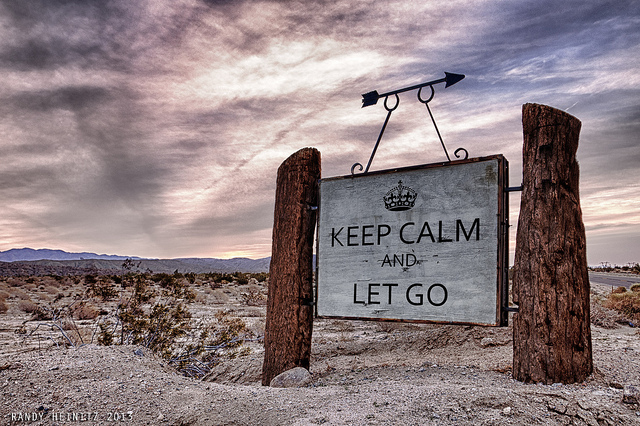
    When we ignore what we feel, we think we can make it go away. However, just the opposite is true. Not feeling our feelings isn’t a way to make sure we never have sadness; it’s a way to start an inner battle for however long it takes you to finally feel sad.

    The minute you admit that you are in fact pissed off, frustrated, and down right suspicious of your body, you will release the resistance, call off the fight, and move toward an overall feeling of lightness.

    3. Find peace and calm.

    It’s no secret that a stressful environment is not conducive for lasting results in your life, yet so many people live each day in a stressed out body, wondering why they can’t release their weight and feel lighter.

    Then to make matters worse, they obsess over their food and spend hours at the gym without even taking a moment to breathe.

    In order to find acceptance for your body and release your weight, you first want to create the most peaceful environment in your body as you possibly can.

    This doesn’t mean you have to lock yourself in a room with your Pure Zen CD for a month; it means you begin to find places in your life where you can introduce more peace and calm easily—for example, your own thoughts and beliefs. Why not zen those puppies out?

    Instead of believing that weight loss is hard and your appetite is too big, why not believe that in the past weight loss has been challenging and now you are open and ready to receive an approach that feels easy and effortless? And your appetite isn’t too big, but maybe you need to learn how to better connect to your body and hear your hunger and fullness cues.

    We tend to take on very stressful thoughts and beliefs about weight that will inhibit our bodies’ ability to release the weight easily and effortlessly. If you believe weight loss is hard, painful, and full of restriction, then it will be. If you believe that weight loss is intuitive, insightful, and transformative, then it will be.

    You get to choose what your weight loss journey looks like. I suggest you choose a path that feels calm and peaceful in order to enjoy each step of the way without being so dependent on the end result to fill you up.

    When you become present with exactly where you are, feel all your feelings, and find your peace and calm, you now have the ability to stop fighting. The battle that you have been facing with your body and weight will finally be done as you wave your white flag and admit that you are tired of the fight.

    This doesn’t mean you aren’t giving up on your true desires. You are deeply aligning with them.

    You are admitting that this whole weight loss thing isn’t something that you want to control anymore. That maybe there is a better way to release your weight that doesn’t suck. And you’re reminding yourself that when you desire something, the ability to have it has to be present.

    Therefore, you have no reason to focus so intently on losing weight anymore. Instead, you get to focus on living your best life in this moment, wherever you are.

    Remember this, you’re not weak or pathetic for surrendering. You are smart and powerful.

    You have the ability to say that you have so much love for yourself that you are willing to do whatever it takes to feel good now, regardless of where you are. And this is the most powerful move you can make for lasting results in your body and your life.

    Photo by Scott

  • Letting Go, Trusting, and Allowing Yourself to Be Happy and Free

    Letting Go, Trusting, and Allowing Yourself to Be Happy and Free

    “Letting go gives us freedom and freedom is the only condition for happiness.” ~Thich Nhat Hanh

    First, let’s be clear about something…

    Surrender is not about giving up, handing power over, or failing. It is not waving the white flag of defeat.

    We are so used to striving and trying so hard for an outcome that anything outside of that formula seems like self-sabotage.

    It isn’t. In fact, surrender is the pinnacle of evolved and enlightened behavior.

    Surrender is the beautiful soft space of acceptance. It is an allowing—allowing life to unfold and to be what it is, irrespective of your agendas, expectations, and judgments.

    It’s that arms-wide-open energy that is deeply rooted in trust. Relaxing and trusting that, even though things might not seem perfect or they might not be according to your plan, that everything will turn out just the way its meant to for your highest good.

    Why do we want to embrace surrender? Because this is how we get out of our own way.

    This is how we experience a life of real freedom. Free from our limiting self-beliefs, emotional blocks, and negative self-talk—all the stuff that prevents real growth and transformation. Ultimately, preventing you from an extraordinary life—a limitless life.

    At first, the journey into surrender can be very destabilizing. Be assured, you will question it, resist, and try to force stuff to happen, but eventually, when you completely let go, you’ll discover that surrender is the space where everything starts to shift.

    Surrender allows us to step into our lives ready to receive, completely able to manifest, and willing to embrace everything—the good, the bad, and the ugly—with an open heart. It’s from this place that real magic happens.

    To really understand surrender we need to look at its opposite.

    Can you relate to any of these scenarios?

    1. Something unexpected has happened and you feel a bit down in the dumps.

    Are you comfortable with moving on quickly? Or, do you get stuck on how you believed a situation should have played out?

    Notice if you notoriously hold a grudge or can’t handle it when things don’t go to plan. The only person that suffers in this situation is you. Turning an annoying situation into a crisis doesn’t help or do anything to change it.

    2. You are working on a project that you really care about. You’ve hit a wall, a plateau.

    Do you see that as a clear sign you need to back off? Or, do you grip the reins tighter and try even harder?


    This one’s for you if you insist on doing more, going further, pushing through, even when it’s time for a breather. This type of behavior will send you straight to Stuck-ville, a place devoid of creativity and joy!

    3. In a discussion or argument, is it possible for you to admit when you are wrong, say you’re sorry, or compromise?

    Or, is it your way or no way at all?

    Take note, self-confessed control freaks and know-it-alls! This type 
of attitude is a direct route to self-sabotage. This narrow-minded behavior will block you from experiencing different perspectives and detaching from limiting ideas.

    Wouldn’t it be so incredible to be free from this energy of control, attachment, resistance, and fear? What kind of life could you live if you were limitless? Free? Wholehearted?

    In hindsight, I see that the universe has been coaxing me to let go from a very young age. I think maybe I was born holding on. To what, I’m not sure—my place in the world?

    But I do know my grip was tight. I’ve always been light-hearted and happy, but underneath that lived a layer of effort, so structured and controlled that in the end I did nothing. At a standstill, road blocking myself. Life was unnecessarily exhausting.

    Ten years ago surrender wasn’t even a concept I was familiar with, let alone one I could fathom embracing. I had no idea that I was about to embark on a master-class in surrender.

    How Do We Come to Surrender?

    There are three distinct ways that we can come to a place of surrender.

    A Lack of Control

    Sometimes you look at your life and ask yourself if you can change or leave a negative situation. When the answer you get back is a resounding no, it’s in that moment that the only thing left is acceptance.

    Honestly, that’s most of the time. We often have no control over the situation, but we do have control over what we choose to do, what we think, and how we feel—that’s surrender.

    When Everything Falls Apart

    All hell has broken loose. Crisis in its many forms, death by fire, stuff is going down. Surrender, whether you realize it or not, has come knocking on your door.

    If you don’t listen you are just going to go down in flames, figuratively speaking. Instead of armoring up, ready to fight, perhaps a deep breath and a reminder to trust will throw you safely into the arms of surrender. A more peaceful response.

    By Choice

    Through awareness, personal growth, and intuition we can invite surrender in when it comes knocking. It’s a choice made in the present moment. Seeing reality for what it is and opening up to it wholeheartedly.

    Over the last thirty-one years, I’ve been tripped up by many moments, but it’s only been in the last ten that I could almost hear the words “Surrender! Surrender!” chiming in my ears with each stumble.

    It sounds like the message had fallen on deaf ears, right? I mean, why else would it keep coming my way?

    Well, we are creatures of habit and habits are hard to break. It’s not a rip-it-off-quick type scenario. We may have to fall down a few times before the message gets through and we realize that the path we are walking is leading to a dead end.

    It wasn’t that long ago that I fell down a few times before I heard the call to surrender. I had a back injury that was preventing me from moving forward in my yoga practice. I tried to manage the injury, but really, I wasn’t listening to its call. I resisted and, of course, the injury persisted.

    Energy flows where attention goes. And my attention was certainly stuck in the limitations of my back. All I could think about was how to fix it. I was so frustrated with my body.

    Surrender finally came to me four weeks before my wedding day when I put my back out, again. I emailed my teacher to let her know I would be back soon. She replied, “Take three months off, practice at home, and break the cycle.”

    As I read her words I could feel my grip tighten on my routine, my practice, my yoga. Even then, a year after I first sustained this injury, I was still resisting and controlling.

    Bizarrely, within days, I realized her email was a divine message. So I listened. The four weeks leading up to my wedding day were the most incredible days. I practiced without rhyme or reason, I went to random yoga classes, practiced outside, or didn’t practice at all.

    The irony was, I felt stronger, more balanced, and more connected than I had in a long time. She was right. I had to surrender to break the cycle

    Today, I know that surrender is part of my divine journey. I am still on the surrender train. I don’t think I will ever stop learning, nor will you.

    The beauty, though, is that now I know what surrender looks like, how it feels and fits in my body, what size and shape I can wear comfortably.

    I now know that letting go—right in those moments when I really don’t want to—is always right for me, so I respond faster when I hear the call. I know that the life I truly want—limitless, free, and abundant—comes from that space of pure, openhearted surrender.

    It’s from that rich territory of surrender that we finally let go of the limiting energy of control and force.

    And when we aren’t controlling, we have completely stepped out of our own way. We are ready to receive, to tap into the abundant possibilities available to us, and to manifest a life free from restraint and restrictions.

  • The Power of Surrendering: Let Go of Control to Be Peaceful and Free

    The Power of Surrendering: Let Go of Control to Be Peaceful and Free

    Let Go

    “The reality is that tomorrow is most certainly uncertain and no matter how many expectations we form, tomorrow will come, tomorrow will go, and it will be what it will be.” ~Lori Deschene

    I have never known how to surrender to just about anything. Surrendering is giving up control, and this is something I have never been good at doing.

    From an early age I coped with tension and negativity by trying to will things to be different. This caused me a great deal of anxiety because trying to will anything to go your way is not only exhausting, but also impossible.

    My efforts always wound up seeming fruitless, and I often felt that many things were out of my control, starting with my home life.

    I am the second of five children, so money was always tight. My mom worked two jobs as a nurse, and my dad had his own struggles. The financial strain at home was bad, but the emotional one was much worse.

    I wanted so badly for my parents to get along, and yet it seemed to always be out of my control. No matter how much effort I put into not creating waves, nothing helped. I never learned to relax. I felt like if I was constantly on some sort of emotional alert, somehow the blows wouldn’t hurt so much.

    That was never the case. Soon it seemed I was anxious even in peaceful moments because I always expected those quiet and happy times to be the calm before the storm.

    School did nothing to help my anxiety. I had a close knit group of friends beginning in junior high, most of whom I am still very close to now; however, I never truly felt comfortable in my own skin as an adolescent.

    I was a beanpole growing up, but then suddenly my body changed in my early teens, and not in a way that I liked. I noticed how much wider my hips were than my friends’, and how I had to wear a size fourteen when everyone else was wearing a size four.

    During this time I made a promise to myself that I would grow up to be much different. One day my life would be mine, and I would be able to control it to be just how I wanted. I would finally surrender to the palpable joy of my wonderful life.

    This mindset did nothing to cultivate a healthy young adulthood, though. Instead, it led to bad relationships (the “I can change him” mentality) and an eating disorder (I thought I could control my body, if nothing else).

    Time did heal some old wounds, and eventually I stepped away from the bad body image and found myself in a happy, healthy marriage. Yet I found that my anxiety had stuck around. I really thought that once I had a wonderful husband and a great job, all of my worries would be over, that suddenly the anxiety I had growing up would cease to exist.

    Why wouldn’t it? Clearly I would have nothing to worry about—except I still find so many things to worry about: My parents getting older, my own finances, my dogs’ health, and even my marriage.

    It doesn’t help that I’m a fixer. You have a problem? Give me a few minutes and I can solve it. Can’t find a job? I am your woman. Need psychological help? I will forward you my counselor’s information.

    The trouble is, most of the time this is unsolicited, and I find myself trying to fix issues I have absolutely no business fixing. These aren’t my problems and, quite frankly, it is exhausting trying to fix other people’s lives while also finding time for my own issues.

    I have a hard time understanding that not involving myself doesn’t mean I don’t care. It means I care enough to believe someone else can solve their problems without me.

    I have never enjoyed trying to control things. I truly want nothing more in life than to just let go, let things happen for what they are. I have just never been able to loosen my grasp.

    The closest I ever came to surrendering myself, mentally and physically, was when I went skydiving. I put my trust and faith (and life) in both the pilot and tandem jumper. I remember the guy I jumped with giving me instructions as we ascended into the sky.

    The instruction I remember the most was that under no circumstance should I try and grab onto any part of the plane on my jump out, especially the wing. If I did, not only would I risk getting hurt, but also would risk the lives of everyone in the plane, including my eventual husband.

    For a split second I panicked: “What if my inner control freak rears its ugly head and tries to grab ahold of something during the jump?”

    But the more I thought about it, the more I realized I would not grab onto anything. I didn’t want to get hurt, and I certainly didn’t want to be responsible for hurting anyone else.

    And so I jumped. I went free falling out of a plane from 10,000 feet in the air, probably plummeting at about 100 miles per hour.

    It was amazing. It was freeing. It was surreal. It was eye opening.

    There I was, falling from the sky without the ability of manipulating anything in my favor. For once, I had absolutely no control of an outcome. I had to accept that, put my faith in someone else for a brief moment, and just let the chips fall where they may.

    It took jumping out of a plane for me to get it, but at that moment I finally felt how freeing it is to let go and surrender control.

    I used to hate people telling me things would be okay. At my lowest and saddest points it seemed like things wouldn’t be okay because I was unable to control any outcome.

    I once had a boyfriend who told me this, even as I sobbed on his porch about how horrible my life was. I asked him how he knew that things would be okay. He didn’t have an answer. I was angry that he would tell me things would turn out all right when he could make no guarantee that they would.

    Looking back on that day, I realize now how unrealistic it is to expect any guarantee you that your future turns out all right. Life makes no promises and is not obligated to guarantee anything. The way things are doesn’t always follow what we want.

    I have spent many of my happiest days clouded by anxiety because I’ve been simultaneously waiting for the other shoe to drop. I need to re-learn the simplest things, like how to just enjoy a moment for what it is without worrying about some impending doom.

    I need to allow myself to trust more instead of panicking about everything that could go wrong. It won’t be easy, and it will probably make jumping out of a plane seem like a piece of cake. But just like with the wing of the plane, I need to allow myself the freedom from constantly grabbing for safety.

    I once sang The Beatles’ “Let it Be” to audition for a high school play. I read that Paul McCartney wrote it after having a dream in which his late mother came to him during a difficult time in his life. She told him to let things be and that they would all turn out okay in the end.

    A simple song has helped me scratch the surface and realize profound beauty in just letting things be what they are.

    It is through letting go that I can finally bid farewell to my anxiety and learn to see this life in a new light, one that isn’t controlled. It will be a life in which I allow things to happen as they do and land just where they are meant to land. It will be a life in which I finally learn to surrender.

    It’s only in surrendering that we can be peaceful and free.

    Photo by Lachian Rogers

  • The One Thing You Need to Know to Overcome Perfectionism

    The One Thing You Need to Know to Overcome Perfectionism

     “You’re imperfect and you’re wired for struggle but you are worthy of love and belonging.” ~Brene Brown

    There’s nothing perfect about me, and I’m okay with that… now. This wasn’t the case for most of my life, though. In fact, I’ve been a perfectionist for almost thirty years. I’m not counting the first five years of my life when I was free to be as messy and magical as I wanted.

    In third grade I asked my mom to buy me a stack of lined notebooks and colored pens. I spent hours neatly labeling each notebook by class, date, and assignment deadlines. If I made one mistake, like a jagged cursive letter or a misspelling, I’d rip out the page and begin again on a fresh sheet.

    This was tiring but it was also a compulsion. Everything had to be neat and ordered or else—or else I’d be out of control, scared, and overwhelmed.

    Before the divorce, my parents rarely fought, but my father’s frequent absences and his coolness toward my sister and me sparked a firestorm in me.

    Expressing anger wasn’t a thing in our family, especially for women. That simply wasn’t Christian enough or loving enough or good enough.

    So I denied my anger and my sadness and, most of all, my fear that my family was breaking apart and I couldn’t do anything to stop it.

    Inside I burned like coals after a long night’s fire. I never let it get too hot. I played the good child, the loving daughter and sister, but my life was out of control. Thus began my long dance with perfectionism.

    In my twenties I tried to be a perfect girlfriend, perfect student, and perfect employee, all the while denying the expression of my full self, imperfections and all. Even when I dressed the part of the disaffected adolescent, I was perfect at it all the way down to my spiked hair and scuffed Doc Martins.

    At parties, I perfected the art of banter and hosted like no one else. All was accounted for, each detail a way for me to control life.

    I never realized that perfectionism was an attempt to avoid all rejection, all criticism, and all failure. It was a matter of life or death.

    Perfectionism saved me from drowning, but it didn’t help me to swim. I was treading water, staying safe, and desperately trying to control my reality, which is never truly possible. What I realized later was at the heart of perfectionism is the desire for love and acceptance.

    Life is a practice and when we practice we make mistakes. The desire for love and acceptance are universal. There is no shame in mistakes, just an opportunity to learn and to grow.

    No matter the root causes of your perfectionism or your desire for it, know that it is a desire for love and acceptance and there is another path to get there. Maybe your family only showed you love and attention when you did everything right. Or your boss only notices your work when you slave over every detail.

    Maybe you feel the need to challenge yourself to be bigger and do better in your work and your relationships. This is not a bad thing. But there’s a difference between excellence and perfection.

    The One Thing You Need to Know to Overcome Perfectionism

    Surrender.

    When we surrender to the moment, to change, to messiness or imperfection, we allow the seeds of excellence to grow. Excellence is that drive toward raising ourselves up to our own highest good thereby allowing our unique gifts, talents, and personalities to benefit the highest good of all.

    Excellence, unlike perfectionism, is about lovingly pushing ourselves to act, think, relate, and create from the highest part of ourselves.

    Perfectionism is about trying to control the outcome in order to receive love and acceptance. It’s all about fear. Surrender is about accepting where we are at in any moment, knowing that we are a work in progress.

    Love and surrender gently tug us toward our own centers and ultimately to the center of the universe, which only knows love. Surrender also invites self-forgiveness, an act all perfectionists need to practice daily.

    3 Tips to Manage Perfectionism

    1. Laugh.

    About anything. Do it often. Having a sense of humor about ourselves and our actions, especially embarrassing or disappointing experiences, doesn’t have to be a shield or form of protection. Humor can heal or at least create enough dopamine and endorphins to get us through the tough moments.

    2. Forgive, forgive, forgive. Most of all, yourself.

    Forgiveness is actually a selfish act. This is not a bad thing. Forgiveness releases us from fear-based thoughts and emotions. It is the gateway to surrendering our perception of control over our lives and over the actions of others.

    3. Surround yourself by free spirits.

    If you can’t find anyone like that in your circle of friends, then read about them or watch movies about dreamers and risk-takers—people who’ve failed or made huge mistakes only to overcome them and create an even better life than they could have imagined.

    This is why mythology was used to help people transition from one phase of life to another in many cultures. There is power in story and identifying with a character who has gone through many trials and adventures only to re-emerge as the hero.

    After thirty years of perfecting perfectionism, I’ve finally learned to let go of controlling every detail of my life. It’s scary sometimes, and there are days when I want to organize and reorganize my desk instead of facing what’s really bothering me.

    But those difficult, uncomfortable, and challenging moments pass much quicker when I simply exhale and surrender to whatever is in my heart and in my mind. A softening occurs, and my body finally relaxes instead of being constantly braced for struggle.

    I may still compare myself to that social media dynamo who effortlessly attracts a huge following on Facebook or avoid looking at myself as I pass a store window for fear of being disappointed by my reflection, but now I just smile and keep going, knowing that this too shall pass.

  • How to Bounce Back from a Hard Time and Come Out Stronger

    How to Bounce Back from a Hard Time and Come Out Stronger

    “How we remember, what we remember, and why we remember, form the most personal map of our individuality.” ~Christina Baldwin

    Look in the mirror. Who returns your gaze?

    Is the face looking back at you a fulfilled being, or a mere shell of longing for something better?

    If you would’ve asked me these questions a year ago, I wouldn’t have been able to tell you.

    Fresh out of college and on a mission to convince my ego of its importance, I began down a path that, unbeknownst to me at the time, would teach me more about myself than I’d ever committed to learning before.

    It taught me who I am.

    As I suffered through recovery from a brain tumor, the wild emotional rollercoaster of becoming a tech entrepreneur, social insecurities, and the straining of interpersonal relationships, my ego assumed the form of a beaten and battered soldier, pushed to the brink of surrender.

    And that’s when the magic happened.

    Three things occurred in this process. If you’re going through a hard time, these may help you come out the other side better and stronger.

    1. Understand your limitations.

    Before my tumor diagnosis and the ensuing melee between my thoughts and the reality of the outside world, I had never really needed to push myself. Success came easily.

    Sure, I worked hard, but nothing like the excruciating mental work and rapid maturation of emotional intelligence required to successfully trudge through to the other side of those trying years.

    I had no need to test my limits before I was actually challenged.

    But amidst the storm, I learned that I’d just begun to push. There was still a lot of room to grow—and nothing to be afraid of.

    So I decided to perform another form of slow torture on myself.

    I started a company.

    Eighteen months later, I was broke. Like “barely pay the rent, eat only oatmeal, and do laundry once a month” broke. Things didn’t work out financially, to say the least. But on the flip side, starting that company was the most incredible, educational thing I’ve ever done.

    I spent eighteen months pushing myself to the brink of what I considered possible—doing things that I never could’ve foreseen myself doing.

    Yet I did them, all in a short amount of time. At times the impossible became possible. Or it was just outside my reach. But I saw it.

    It was as if the mere act of doing opened my eyes to an invisible line that I could not cross, but I could push back—further and further until eventually I was in new, uncharted territory.

    We all have a line like that—our limit. It awaits acknowledgement, and it becomes an opportunity.

    2. Understand your value.

    Before pushing my limits, I never had a grasp on how much value I bring to the table.

    For example, I’ve always been good at science—heck, I’ve got a degree in neuroscience—so I allowed myself to be grouped into a certain categorization, one that I wasn’t particularly content with.

    Because I’m also an artist. With engineer tendencies. And Asperger focus. And I love business, innovation, and technology. And writing about issues as seemingly mundane as fitness by reaching in and pulling them out by the heart, Temple of Doom style.

    I didn’t understand my value before because I had never taken the time to give it away. You cannot give that which you don’t have.

    Taking the time to push boundaries and dive headfirst into things that scared the heck out of me—voluntarily or involuntarily—forced me to reassess just how valuable I actually am.

    I can do a lot of things! And I’m sure you can too.

    Many people fall into the trap of not knowing what their gifts are, or what value they can bring to others.

    And they never actually take any action in terms of seeing just how much they have to give.

    Sitting in a room thinking about what gifts you may have will not help anyone. Going out into the world and succeeding or failing at something will. A gift is meant to be given. How can you know your gifts until you try to give something, anything, to someone else?

    Don’t make the mistake of underestimating your worth.

    It is far better to overestimate yourself and fail, to take that learning experience and recalibrate your direction, than to underestimate your potential and miss out on opportunities in the process.

    When I finally accepted my gifts and embraced the idea that I could use them to not only make a living, but also to create a meaningful life—a congruent existence that mattered—I was instantly free to explore.

    Free to pursue. To create. To add value.

    Will I continue to overreach? Fall flat on my face? Fail?

    Of course; only a fool would expect not to. But at least I can rest easy knowing that I’ll never again under-reach. I’ll never regret a chance untaken.

    Because heck, I’m going for it, and you should too!

    3. Surrender yourself.

    Life is a journey.

    And when, after climbing mountains and enduring valleys, you’ve come to that point in the trail where you’re weathered and beaten, your feet pulse from the incessant pounding, and your mind screams to please stop, you realize that you’ll never reach the end of this journey alone.

    That alone, you’re too insignificant to go on.

    That’s when you surrender yourself.

    You don’t quit, no. Instead, you acknowledge your role in the big picture. That’s when you learn your place in relation to all other things. And you can relate your purpose to the plans of that kingdom.

    So when I fully absorbed the fact that I am here to serve others, to use my gifts selflessly, and in turn reap the goodwill I sow, well, I gained a purpose.

    For the first time ever, life became so overwhelming that I realized I couldn’t go through it alone, like I had been. Growing up, I barely talked to anyone, including my parents. I began reaching back out to them, finally asking for help, and a strong bond resulted.

    I also always focused on my gifts as something to be cherished and cultivated for my own purposes—so I could be outstanding or excellent at something. But this was leaving out a key ingredient to true success: context.

    Without someone else to receive it, a gift is nothing more than a selfish toy. Something we use to amuse ourselves.

    To truly find your relation to other things, you must first surrender your self. Start relying on other people for help and support. Start giving freely of your gifts. Define a religious purpose. Self-discovery is a long, arduous process, but the alternative, complacency, is fatal.

    We already have far too many ill-defined shells of individuals floating through life, not making a difference, not making an impact, and, quite frankly, not even living.

    Ghosts.

    What we need is more warm bodies.

    More passionately congruent, ambitiously purposeful individuals—people who know that what they do matters.

    People who understand their value and limitations, and have not only brushed up against their dreams, but embraced them.

    So from here I breathe my challenge to you: Will you realize that you matter?

    Photo by Zach Dischner

  • Control Less, Trust More: How I Learned to Relax and Let Go

    Control Less, Trust More: How I Learned to Relax and Let Go

    “The closest to being in control we’ll ever be is in that moment when we realize we’re not.” ~Brian Kessler

    My nine-year-old son said something so profoundly right that it kept me awake. He said that in order for him to be happier I would need to let go of controlling him all the time.

    Now granted he is young, and believe me, if I didn’t tell him to get dressed he’d run outside in PJs, but I was struck by his wisdom because this is also my obstacle to becoming happier.

    In the past, the more I felt out of control, the more I tried to control others. We moved many times, sometimes to different continents for my husband’s job. We had children, and not all of them planned.

    My husband and I drifted apart over the years, realizing we are very different and have completely diverging core values. I became sick with an eating disorder, a scary and tricky disease.

    I felt overwhelmed, scared, alone, and lost. This is where the controlling mind came to rescue and took over. In time, my eating disorder became stronger than me, and yet also a familiar friend.

    I tried to control both my eating and my body—and also the lives of everyone around me.

    The emptier my marriage felt, the more I tried and control my husband’s behavior at home. The more I felt overwhelmed with my job as a mother, the more I structured my kids’ activities, often making them do things they didn’t want to do. Needless to say that didn’t help to foster my relationships with them.

    I tried to control every aspect of their lives. Whether it was the lunches that needed to be made with a specific type of bread, or the homework having to be done at this time of the day, or the decision of which movie to watch, I told them how to do it and had a hard time letting them make their own choices.

    I was hardly ever wrong—at least I didn’t think so. I thought control equals security equals happiness, up until the day when I took a close look at my life and found that nobody around me was smiling anymore.

    They were miserable. They lit up when their dad came home because he did things with them that were fun and, best of all they never knew what would happen with him. With me they could foresee everything, and the routines were never fun or joyful. (more…)