Tag: surrender

  • When You Stop Forcing, Life Flows

    When You Stop Forcing, Life Flows

    “You don’t have to force the flow—sometimes your only job is to soften and let go.” ~Unknown

    For most of my life, I was obsessed with getting everything right. Planning. Controlling. Anticipating every outcome so I wouldn’t be caught off guard. I saw life as a kind of puzzle: if I just made the right moves in the right order, I’d get what I wanted. Peace, success, love.

    But life doesn’t work that way.

    The more I tried to control it, the more I felt out of alignment. I would burn out trying to make things happen. When something went wrong, I blamed myself for not anticipating it. I couldn’t relax because I was always tightening the reins, trying to steer the unknown.

    Then one day, something cracked.

    It was the winter of 2021. I was staying in a quiet village in southern Portugal, trying to piece my life back together after a painful breakup and the collapse of a startup I had poured years into. I’d gone there thinking solitude and fresh air would help me reset.

    But nothing felt right.

    I couldn’t focus. I couldn’t meditate. I couldn’t even enjoy the ocean—something that once brought me pure joy. Instead of peace, I felt stuck and overwhelmed. My mind replayed every decision I’d made over the past few years like a courtroom drama. “If only you’d done this.” “You should have seen that coming.” “You’ve ruined your shot.”

    I sat on the beach one evening as the sun went down, feeling completely defeated. I remember watching the waves crash rhythmically against the rocks. They didn’t care about me or my mistakes. They weren’t rushing or apologizing. They were just… doing their thing.

    That’s when it hit me.

    Nature doesn’t force anything. A wave doesn’t strive to be taller. A tree doesn’t try to grow faster. They exist in a kind of trust—a natural cooperation with life. And somehow, despite all that ease, they thrive.

    What if I’m the one disrupting my own flow by trying to control everything?

    It wasn’t a lightning bolt. It was more like a soft whisper inside. But something shifted.

    I started asking myself a new question each morning: “What would happen today if I didn’t try to control anything?”

    I didn’t have to force myself to do nothing. I still worked, moved, made decisions. But I tried to stay present rather than five steps ahead. I let myself feel uncertain without reaching for solutions right away. I listened more—to myself, to life, to the quiet.

    And over time, I noticed something strange. My anxiety started to fade—not all at once, but like a fog lifting. I stopped catastrophizing every decision. I felt a little more at peace, even if nothing around me had changed.

    That’s when I began learning what I now call divine flow.

    To me, divine flow is the current of life that we can either resist or surrender to. It’s not passive. It’s not about “doing nothing” or abandoning effort. It’s about cooperating with something deeper—something beyond just logic or planning.

    It’s learning to recognize that there are seasons for pushing and seasons for resting. That sometimes what looks like a setback is actually an invitation to realign. That clarity often comes when you stop chasing it.

    There’s a trust that builds when you live this way.

    You realize you don’t need to have everything figured out. You can still move forward with intention—but without gripping so tightly.

    Since then, I’ve built a life more aligned with who I am. I started creating wellness events focused on community and connection rather than perfection. I met people who inspired me simply by being themselves. I even learned to show up vulnerably, like I’m doing now, without needing everything to be polished or impressive.

    I still have moments where I fall back into old habits—where I try to force outcomes or fix everything too quickly. But I catch myself faster now. I’ve learned that tension is usually a sign that I’m out of the flow.

    If you’re in a space where things feel hard or disconnected, here are a few gentle invitations that helped me reconnect with the flow:

    • Let yourself feel lost. You don’t need to rush to “figure it out.” Sometimes the most fertile growth happens in the spaces where we allow ourselves to feel confused and uncertain.
    • Listen more than you analyze. Instead of trying to force answers, sit with your questions. Journal. Walk. Let thoughts come without needing to trap them.
    • Release the timeline. Things don’t have to happen on your schedule. You’re not late. You’re not behind. You’re just unfolding.
    • Ask for signs—but don’t cling to them. Sometimes life will whisper directions when you’re quiet enough to hear. But the key is to listen without expectation or pressure.
    • Come back to your breath. When your mind spirals, anchor into the present. One breath. One step. One moment.

    We can’t always choose what happens to us, but we can choose how we meet life. With resistance—or with curiosity. With fear—or with trust.

    These days, I still sit by the ocean when I can. I still watch the waves. I remind myself that there’s a rhythm beneath everything—and that my only real job is to stay soft enough to feel it.

    Maybe that’s all we ever needed to do.
  • From Injury to Insight: A New Kind of Yoga Practice

    From Injury to Insight: A New Kind of Yoga Practice

    “Healing may not be so much about getting better, as about letting go of everything that isn’t you—all of the expectations, all of the beliefs—and becoming who you are.” ~Rachel Naomi Remen

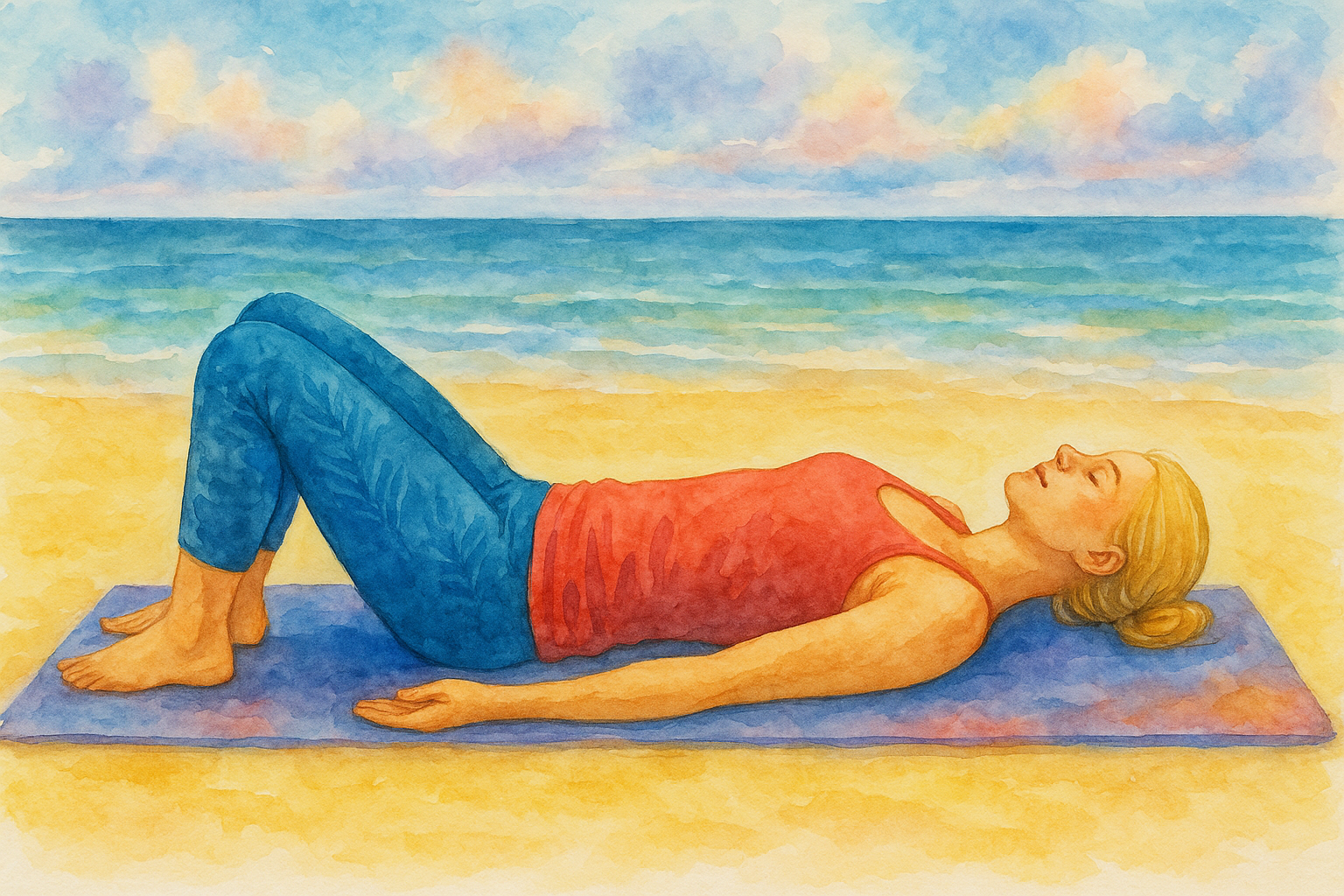
    For years, yoga was my safe space—the place where I felt strong, grounded, and whole. My practice wasn’t just physical; it was my sanctuary, my moving meditation. So, when a shoulder injury forced me to change the way I practiced, I wasn’t just in pain—I was lost.

    At first, it seemed minor. A nagging soreness, nothing I hadn’t worked through before. I convinced myself that more movement would help, that yoga—my forever healer—would fix it. I stretched, I modified, I doubled down on my alignment. But the more I tried to push through, the worse it became.

    Eventually, even the simplest tasks—getting dressed, washing my hair—became difficult. That’s when I finally sought medical help. The diagnosis: shoulder impingement and frozen shoulder. A combination of overuse, aging (a humbling realization as I turned forty), and factors no one could fully explain.

    I asked the doctor how to prevent it from happening again. The answer wasn’t clear. There was no perfect formula, no guarantee. That uncertainty unsettled me.

    Surrendering to the Process

    Healing wasn’t linear. It was slow, frustrating, and at times, disheartening. I cycled through physical therapists, reluctantly took medication, and spent months modifying my movements. But the hardest part wasn’t the pain—it was the mental and emotional struggle of letting go of what my practice used to be.

    I grieved the loss of my old yoga practice. I felt betrayed by my body, resentful that the thing I loved most had, in a way, turned against me. And yet, somewhere in the frustration, I realized—this was part of my practice, too.

    Yoga isn’t just about movement. It’s about presence. Acceptance. Surrender.

    I started leaning into the lessons my injury was trying to teach me:

    • Ahimsa (Non-harming): I had to stop fighting my body and instead extend it kindness, just as I would for a loved one who was struggling.
    • Satya (Truthfulness): I had to acknowledge that my practice would change—and that wasn’t necessarily a bad thing.
    • Aparigraha (Non-attachment): I had to let go of my rigid expectations and open myself to a different, gentler way forward.
    • Santosha (Contentment): I had to find peace with what my body could do, rather than mourning what it couldn’t.

    The moment I stopped resisting, something shifted. My body didn’t heal overnight, but my perspective did. I started seeing healing as an ongoing relationship rather than a destination. I gave myself permission to slow down, to listen, to trust.

    Rebuilding with Compassion

    As I modified my practice, I discovered new ways to move that honored my limitations rather than fought against them. My yoga practice became softer, more mindful. I focused on breathwork, grounding postures, and gentle movement. I let go of the idea that I had to push myself to prove something.

    I also realized something deeper: healing isn’t just about getting back to where we were—it’s about growing into who we’re becoming.

    We all face moments where we’re forced to slow down, to reevaluate, to shift. And in those moments, we have a choice. We can resist and suffer, or we can soften and grow.

    If you’re navigating an injury, a setback, or an unexpected change, know this: Your healing doesn’t have to look like anyone else’s. You are allowed to grieve. You are allowed to feel frustrated. But you are also allowed to find joy in the process. To discover new ways of being. To trust that even in the slowing down, there is wisdom.

    Healing is not about returning to what was—it’s about embracing what is and finding beauty in what’s possible now.

  • What Happened When I Let Go of My Big Plan

    What Happened When I Let Go of My Big Plan

    “Surrender to what is. Let go of what was. Have faith in what will be.” ~Sonia Ricotti

    Turning fifty felt like a milestone worth celebrating—a time to honor myself, reflect on my five decades of life, and embrace the journey ahead.

    For someone who had never believed I was worth the fuss of a big celebration, choosing to honor myself in this way felt like a profound shift. I wanted this celebration to affirm that I am worth the effort and expense.

    The way I envisioned this milestone? Hosting a retreat for women like me, who were born in 1975 and at a similar life stage. But what began as an exciting idea turned into a chance for surrender, growth, and unexpected self-discovery.

    The Vision: A Retreat for Reflection, Celebration, and Pampering

    The idea hit me all at once, clear and undeniable. Why not create a customized birthday retreat experience to mark the milestone? The retreat would be intimate, luxurious, and restorative—a space where women could reflect and celebrate together.

    I spent weeks researching, contacting venues, and considering every detail meticulously:

    • A stunning eco-conscious venue blending luxury with nature
    • A top-rated plant-based chef to nourish us
    • Thoughtfully designed activities that honor our individual and collective needs, including a group birthday celebration and opportunities for deep introspective work

    The host venue I found was a gem, exceeding my list of must-haves, but it was meeting the owner of the venue that felt truly serendipitous.

    From our first conversation, we shared a kindred energy that was both grounding and inspiring, and I knew I was meant to find her. Our connection felt like a sign—one that I wouldn’t fully understand until much later.

    I joyfully secured the dates with a deposit, brimming with excitement to share this beautiful offering with others.

    Every Project Has Its Challenges, Right?

    Despite my enthusiasm, something didn’t feel quite right. The response from my friends and acquaintances was lukewarm. Cost and personal preferences were barriers for some, and others simply didn’t resonate with the idea.

    From others, I received unsolicited advice that the retreat just wasn’t compelling. My ego bristled at their comments, interpreting them as doubts in my capability and vision.

    Adding to this, I encountered bureaucratic issues and had to navigate compliance with the retreat regulating body in my province, bringing unexpected stress and layers of complexity I hadn’t anticipated. If this piece wasn’t sorted, the retreat would put me in the red beyond what made sense.

    I believed in my vision, though, or at least, I believed in that strong feeling of alignment I had whenever I spoke with the retreat venue owner.

    After perseverance and more hours of work, I was able to solve the compliance issue. I also revised the retreat to reduce the cost to attendees and broaden the audience to include women born in 1974 and 1976, editing all of the marketing materials and recosting everything.

    After my modifications, I informally launched to my circle again, and this time… drum roll please… more crickets.

    A Moment of Truth: To Let Go or Double Down?

    I knew that the retreat would be magical for the right women, but I considered calling it off anyway. Anyone who’s marketed a retreat knows it’s no small feat. To make it happen, I’d need to pour in more time, energy, and finances—yet something in me just didn’t want to.

    When I really tuned in, the idea of letting go and surrendering to the quiet message my heart was sending brought an unexpected sense of relief.

    My ego whispered reasons to keep pushing forward: proving the doubters wrong, justifying the time and money I’d already invested, and showing myself I could make it work. But my heart’s quiet, persistent voice urged me to release it.

    The Gift of Letting Go

    After weeks of introspection, I made the decision to cancel the retreat. It wasn’t easy—old patterns of shame and fear of failure surfaced, and I had to really sit with them. But over time, I found peace with my choice.

    Since I had planned so far ahead, I was able to redirect my deposit toward attending a retreat at the same venue—this time, for myself.

    And THAT decision changed everything.

    The retreat opened up a new path in my healing journey, guiding me toward a piece of the puzzle I’d been trying to figure out but hadn’t yet understood. The deep connection that I felt with the retreat host made sense in a new way. She was meant to be one of my guides, and I would be returning to retreat with her many more times in my future.

    A Powerful Learning

    My experience also highlighted an area of growth asking for my attention. In my professional life, giving of myself is at the heart of what I do. I continually work on myself to strengthen my capacity to hold space for others to do their work.

    I love this calling deeply, and I receive so much in return for my giving—but I’ve realized that I still struggle outside of this context with receiving. That is, receiving without feeling the need to give something back. I also find it hard to surrender to others caring for me and holding space for me to be my messy, human self.

    The truth is, my intention behind planning the retreat was misguided. I convinced myself I was finally allowing myself to deserve a celebration, but I still felt I had to earn it by planning something for others. Yes, I would enjoy it, but I would be receiving through giving—which is beautiful, but not the same.

    By trusting my intuition and listening to the message from my heart—that I didn’t need to pursue this—I gave myself permission to let it go. And in doing so, I recognized a deep need to learn how to truly receive.

    What better way to mark the transition into my fiftieth year than by learning this essential self-care skill?

    My Takeaways from a Lesson in Letting Go

    1. Find the value.

    Letting go can feel like you’ve wasted your time, money, or energy when you don’t ‘achieve’ the outcome you set out to create, but if every experience carries value, then it’s not a waste. In my case, I gained impactful insights into the women I serve, learned how to navigate retreat regulations in my province, and met a pivotal person on my path to healing.

    2. Trust your intuition.

    Letting go of control created space for something unexpected: a profound healing experience and invaluable clarity and guidance that wouldn’t have happened otherwise. My decision to cancel wasn’t analytical—it was intuitive. But leaning into that inner voice led me to something far more meaningful than the original plan. I got what my heart knew I needed, not what my thinking self thought that I needed.

    3. Honor the balance of giving and receiving.

    Letting myself receive requires surrender. And while offering space for others to receive is deeply fulfilling, allowing myself to be cared for fills a far-reaching need I hadn’t fully acknowledged. As I enter this milestone year, I realize that true wholeness comes from honoring both sides of the equation.

    Trusting my heart and letting go is an ongoing practice for me, as it is for many women who have been socialized in a ‘fixing’ and ‘doing’ culture such as what is typical of North America.

    The gift of remembering to trust was a deeper understanding of what I truly need in my next phase. Sometimes, the most powerful way to meet our needs is to stop striving and simply allow ourselves to receive—both from others and from the wisdom of our own intuition.

  • 3 Life-Changing Insights for Control Freaks (Lessons from an Ant Infestation)

    3 Life-Changing Insights for Control Freaks (Lessons from an Ant Infestation)

    “Freedom is what you do with what’s been done to you.”  ~Jean-Paul Sartre

    “So did you figure out what your shadow totem is?”

    This was the first thing out of my husband’s friend’s mouth as I sat down to dinner at a local downtown restaurant, across from my husband and a couple friends we were meeting up with.

    I laughed at the choice of question but then paused with wide eyes and replied, “YES, I DID! Oh my gosh. It’s an ant!”

    The backstory is that we had previously had a conversation about animal symbolism, and how figuring out what we identify with (spirit animal) or most fear (shadow totem) can help us gain deep insights into ourselves. I had no trouble with identifying my spirit animal—an eagle—but could not for the life of me pin down my shadow totem.

    As he asked that question that evening, a light bulb in my head went off. I had been battling a multi-week-long ant infestation in my home and it had become the bane of my existence. Every time I saw one of those suckers, I got triggered all over again. It ruined many days. So this made perfect sense! Ants are my shadow totem. But why??

    Upon reflection about this realization, I mulled over the meaning of this and was able to come away with some pretty incredible nuggets. Put simply, the ants struck me at my weakest point: my need for control.

    I know I’m not alone in this quirk—“control issues,” as a lot of us jokingly refer to them. But the truth is, if you’re saddled with this deep urge then you know you live your life on a high wire, trying to balance everything and keep it perfectly just so. And when you are thrown off, you take a pretty deep dive into mental chaos until you right the ship again. Okay, too many metaphors, but the point is, it sucks.

    Back to the ants. Days after the dinner I took time to think about the true meaning of them as my shadow totem. The insights I had about my control issues were not only helpful to me, but I bet will be the same for you!

    I was even able to identify three mindset adjustments as an accompaniment. I noticed they tend toward the Buddhist way of thinking but are just truly solid ways to approach life. So here we go!

    1. The ants were coming out of nowhere. And FROM ANYWHERE. It drove me nuts since I couldn’t identify the source of the problem.

    Insight:

    Upon reflection, I connected this to how I often feel like a sitting duck in life, just waiting for the next blow to come. The unpredictable nature of things feels like a constant threat. Also, I notice I often doggedly search for the “why” of things, but sadly am not always able to come up with an answer.

    I’ve felt this sentiment in many situations, ranging from the trivial to the most profound, with the latter being when I had a miscarriage. It was (as many of them are) not possible to tie to a definitive reason. In this case, my only true course of action (one easier said than done) was to accept and move forward.

    Mindset adjustment:

    Acceptance, though not a sexy response to the above, is really the best one. You’re gonna get ants in your house (especially when it’s in a green community built in 1936!).

    In life, you’re gonna get surprises. And not always happy ones. I once heard that if you can expect the unexpected, when it comes, you will accept it as an “old friend.” Sounds much better than treating life’s downs (the “ups” are more easily handled, right?!) as a monster under the bed.

    2. The dang ants were ruining my days. What a waste! But true.

    I felt silly with my outbursts, exclaiming expletives each time I came across one of those evil little things. My poor husband (who has the patience of a saint, zen master, and probably Jesus, combined!) hearing me from the next room. I didn’t want this for me (or him).

    Insight:

    Just like in my larger life, small things going wrong can really mess me up. The feeling of having a bad day rather than just keeping it a bad moment is one I am familiar with, unfortunately.

    Mindset adjustment:

    Enter mindfulness. This handy strategy allows for a sort of compartmentalization so we can fully be in the reality that is in front of us in the present moment. The truth is, the ants were really only in a couple rooms of the house, and I only encountered them for maybe a couple minutes out of my day. But MAN, you wouldn’t have known it!

    Attaching to our day being or staying a specific way is certain death. Okay, that’s extreme, but it’s cause for certain anxiety. And that’s no way to live this short life. Key principle: impermanence. Funnily enough, I have that word tattooed on me! In permanent ink… but is it “permanent”? I digress.

    3. I chose a treatment option for the ants, but still I walked around in a huff about it. I had done all I could do—why couldn’t I let it go?

    Insight:

    I frequently find myself ruminating on other things in life long after I had chosen a course of action. Sounds like a waste of mental, emotional, and even physical (if you’re pacing!) energy to me.

    Like when I made the decision to switch careers from business to education. Questions lingered, swirling in my head for quite some time after: “Is this a mistake?” “What if I want to change my mind again?” “Did I just waste my bachelor’s degree?” This made the path forward foggy and uncertain when what I needed was clarity and smooth sailing—which would have been afforded to me had I had self-trust at the time.

    Mindset adjustment:

    Hard as it is, the practice—keyword, PRACTICE—must be letting go with the knowledge that you can only do so much. There are so many sources of inspiration for this concept. Take your pick: The famous quote “Let go and let God” or  “Let it goooo” a la Frozen (any other parents in the house?). You get the idea.

    Also, add to the mantra list that nature will always win. This is true with the ants (spoiler alert, they came back) and with life in general, the universe on a broader scale. Think entropy. It’s everywhere in all ways. The sooner we align ourselves with the concept, the better!

    I felt oddly grateful to the ants for the opportunity to reflect. It gave me a chance to gain insights that I (and maybe you!) otherwise would not have had. If you’re worried about us forgetting this wisdom, don’t be. Those little reminders (aka the ants) are always around the corner.

    Post-writing edit: Funny thing is, right after writing this, I walked into my bathroom and saw an ant making its way up the side of my mirror! Poetic, huh?

  • How Releasing Control Opened Me Up to a Limitless Life

    How Releasing Control Opened Me Up to a Limitless Life

    “What the caterpillar calls the end of the world, the master calls a butterfly.” ~Richard Bach

    I have always wanted to create a family.

    As a child, I lovingly cared for my dolls and fell head over heels for my college boyfriend. Kneeling before me with a ring, he said, “I want you to be the mother of our children.” I swooned as we walked down the aisle at the tender age of twenty-two, convinced I was set for life. I had the husband, and I would have the family.

    I entered into our marriage with the expectation and security of certainty. We had vowed to be together for life, so I believed that was the truth.

    But I had another love besides my husband.

    I was in love with performing.

    After a childhood of classes in the arts, I was accepted into the BFA Musical Theater Program’s inaugural year at Penn State University. I soaked every minute up and graduated with summer work already booked and the plan to move to New York City with my new husband and dive into my career.

    Creating a family could wait. Broadway was calling.

    Except I found myself hitting a ceiling. Despite working consistently as a professional, Broadway eluded me. With the exception of two Broadway shows that closed before I would have joined them, I would choke when I was invited back for a second or third audition, and never make it any further.

    I was a true triple threat, strong in my singing, dancing, and acting, but I didn’t know how to deal with the loud and critical voice in my head. When I needed to deliver my best at these big moments, the critic would become deafening and my voice would crack or I would spontaneously “forget” which leg to step forward on while I was dancing. In those moments, it was as if all my training went out the window.

    Over time I was losing confidence. I literally worked at every level except Broadway. I worked off-Broadway, regionally, did national tours and commercials, and kept auditioning in hopes my break would come.

    And then I found myself at the age of thirty-seven staring into my husband’s eyes as he told me, “I don’t think I love you anymore. I don’t think I want to be married anymore. I don’t think I want to have children.”

    The security and certainty I had clung to in my twenties evaporated in smoke. I lost my marriage and the ability to create the family I had desired for the last fifteen years.

    In the face of my divorce, I felt a great urgency arise. It fueled me to heal emotionally, spiritually, and mentally from my heartbreak and to seek the right support to guide me as a single woman. I worked with love coaches and therapists and joined women’s groups to help me make sense of how to find a life partner.

    And then four and a half years later, I went on a first date with a kind blue-eyed man who took me to the Brooklyn Botanical Gardens and gently opened an umbrella over my head as rain began to fall. In all the dates I had been on, I had never felt like this before, and we quickly fell in love.

    Before I became exclusive with him, I asked how he felt about creating a family and was thrilled when he shared that was his biggest desire as well. We were married a year and a half later and began to try naturally to get pregnant.

    Creating a family was now. There was no more waiting. I had the husband and the security. Certainty had returned to my life again.

    Except after a year of trying, nothing had happened. So, we entered into IVF as I had frozen my eggs after my divorce for this very reason. We followed all the steps, and I was convinced this was going to work. With the number of fertilized eggs, I imagined we had two tries and I was completely open to twins. But on the day of the transfer, only one egg was ready, and the other three became unusable.

    The pressure was unmanageable. I was experiencing migraine headaches from the synthetic hormones and was terrified it wouldn’t work. Which it didn’t.

    I vowed I was done with the drugs and our family was either going to happen through natural causes or through adoption.

    A year later, I found myself staring at a positive pregnancy test.

    My husband and I were giddy beyond belief, and began to read children stories to the growing life inside me.

    Creating a family was now. There was no more waiting.

    Except just before my eleventh week, I stared at an ultrasound with no heartbeat. The white light that had fluttered with such ferocity at seven weeks was now a static white dot.

    While we went back to trying, my heart was broken. Nothing was happening, so we entered into the process of adoption.

    Within two months we were matched with a birth mother, and I wept when we got the call. The birth mother had just entered her second trimester, so we had several months to wait.

    Now we could prepare! I dived into podcasts, books, and workshops, learning everything I could about adoption, about being a trauma-informed parent, and what products felt most aligned with our values. I created a registry, and we both planned to take time off work.

    Everything was set.

    Creating our family was now. There was no more waiting.

    And then a month before the baby’s due date, the birth mother changed her mind. In adoption, they call this a disruption, and that is exactly how it felt.

    I found myself reliving every pillar of my journey. Choosing Broadway over family. The divorce. The failed IVF. The miscarriage. And now the disruption. I wasn’t just mourning the recent loss; I was mourning decades of a desire that had burned in my womb.

    I thought it was the end of the world. End of certainty.

    I found myself feeling completely disoriented. I had planned maternity leave from my business and set up an elaborate schedule for my approaching book launch all around the adoption. I had a nursery filled with a stroller, changing table, clothes, and a glider. I had thought of everything.

    I had planned it all out, because I wanted to believe it was going to happen. I wanted to believe there was no more waiting. I wanted to believe in certainty.

    I pulled an Oracle card from Alana Fairchild that read, “This comes with special guidance for you. More love is rushing towards you like a great cosmic tsunami. You will struggle with this blessing to the extent that you will attempt to hold onto what has been. So don’t. Let go. You’ll perhaps get some water up your nose, but nothing will come to you that you cannot handle. Instead, you’ll have no idea what is going on. Oh, how the tsunami will deliver you into your divine destiny!”

    So I did something new. I surrendered. I surrendered all my plans.

    I started coaching my clients again. We went back to being active again with the adoption agency. I started my book marketing tasks again.

    But none of this had any certainty or definitive timeline. After decades of knowing the exact day and time things were going to happen, I embraced not knowing.

    I embraced waiting. Because it seemed there was nothing else to do.
    It felt like a part of me was dying, the part that had planned my family with such ferocity and certainty.

    In my grief, I turned to the Oracle deck’s guidebook and saw Robert Brach’s quote. As soon as I read it, I began to weep in resonance.

    How I had strived to stay the caterpillar.

    The caterpillar of certainty. The caterpillar of timelines. The caterpillar of planning.

    But the caterpillar couldn’t transform with these values. It needed to be washed up on the waves of love, and finally enter the cocoon to grow into a sacred butterfly.

    Robert’s words speak to that profound moment when we recognize that the way we’ve been living our life doesn’t work anymore. If we want to grow, we have to let go of our clinging, specifically our clinging to certainty.

    Because the truth is, our greatest power comes in the acceptance of not knowing.

    If you “don’t know” then you are actually opening yourself to a limitless life, one that is led by divine timing, instead of what your ego wants to believe is “right.”

    What if experiencing the same thing over and over is actually a divine tap on the shoulder to try something new?

    What if being disoriented and not knowing when your desire will arrive is the softly spun silk surrounding your most vital soul?

    For me, the tsunami washed me up on the shore with sacred wisdom. No longer holding onto a timeline was actually a deep relief. Going through the cycle of trying to control every aspect of creating my family had been so taxing and exhausting.

    I had formed a castle of certainty with bricks and stones, only to discover it was actually made of sand. And when the waves crashed through, I saw it was never meant to last. It was always meant to wash away.

    Now I’m opening to something far more powerful than certainty. I’m opening to trust.

    I don’t know when my family will come. I have no idea how my desire is going to manifest. Perhaps my life has actually been working out beautifully, creating a divine path I may not have “planned” but one that has sparked a vital inner transformation.

    One that has opened me to the possibility of my life unfolding in a new direction. And with that, I can let go of crawling on the ground in vain as the caterpillar. Now I can just open my wings and fly.

    Now I can simply receive.

  • 5 Life Lessons from a Brain Tumor That Could Have Killed Me

    5 Life Lessons from a Brain Tumor That Could Have Killed Me

    “Life is a balance between what we can control and what we cannot. I am learning to live between effort and surrender.” ~Danielle Orner

    I was slumped against a wall at Oxford Circus Station early one Sunday evening when an irritated male voice suddenly barked, “MOVE!”

    Moments beforehand, I had lost my vision.

    Without conscious thought, I muttered, “RUDE!” and staggered off without clearly seeing where I was going.

    It was only months later, on retracing my steps at Oxford Circus, that I realized I’d been blocking his view of some street art.

    I’d allowed a guy to bully me out of the way while in a vulnerable state so that he could take a picture for social media.

    Lesson 1: Not all disabilities are visible.

    We can never fully know what someone else is experiencing. Mental health, chronic pain, and disabilities are not always apparent. So, when we come from a place of not knowing and are patient with others by default, we open up a window of possibility that exists outside of our judgment.

    Minutes prior, I’d stepped off an underground train and onto an upward escalator. A pain hit my right temple like a bullet. It took my breath away, everything went black, and I felt I might faint.

    Desperately, I clung to the railing. And as the top of the escalator approached, my right foot went floppy, and my vision disappeared. I could see light and color, but the world was blurry, lacking definition.

    I used what little vision I had to follow the distinctive white curve of Regent Street down to a spot where I’d arranged to meet a friend

    Panic finally set in when I realized that my friend was walking toward me, and I could recognize his voice but I could not see his face at all.

    We sat down in a restaurant, and a concerned waitress brought a sugary drink.

    My mind went into overdrive: “Had I cycled too much? Was my blood sugar low? Had I eaten/drank enough? Given myself a stroke? Was I just stressed?”

    Twenty minutes later, my vision slowly returned.

    Relieved but freaked out, I asked my friend if he thought I should go to A&E (ER). He said, “Only if you think you need to.” I felt silly. Scared to take up space. Afraid of being a drama queen. I didn’t trust myself or my experience.

    LESSON 2: Don’t seek external validation.

    The opinions of others are helpful, but only you see and experience life from your own unique perspective. Learning to trust and validate our own experience first and foremost is how we step in our power.

    Later I went back home but couldn’t shake it off.

    The next morning, I visited my doctor, who sent me straight to A&E (ER). The hospital admitted me overnight, concerned it was a mini stroke or aneurysm. But the following morning they discharged me, citing dehydration as the cause.

    One week later, I was back in A&E. More dizziness, more foot numbness, more blurred vision. A doctor described it as “classic Migraine Aura.”

    My gut leapt; that didn’t feel right. “I don’t get headaches,” I protested. “I rarely take painkillers. Why so many all of a sudden?”

    They seemed confident it wasn’t serious, but booked an MRI scan, just to be certain.

    Twenty-five minutes of buzzing, clanking, and humming later, I glided out of an MRI scanner.

    I thanked the technician. “All good?” I asked.

    “It’s very clear,” she replied.

    LESSON 3: Listen to your gut.

    If your gut says that something is off, listen to it. A gut feeling is typically a lurch from your stomach rather than chatter from the mind.

    My gut knew it wasn’t migraines; it told me so, and if I hadn’t strongly advocated for myself, then I may not have got that MRI scan.

    A week later, I was back with my local doctor, experiencing vertigo and earache.

    Did I have an ear infection? Was that the issue all along, some sort of horrible virus affecting my sight and balance?

    The GP opened my records up on his computer and his face immediately dropped.

    “Do you mind if I take a moment to read this?”

    “Of course,” I said.

    He composed himself but his face was ashen.

    “Has anyone spoken to you about your MRI result?” he ventured at last.

    I found myself detaching from reality, like I was watching a movie.

    He told me that they’d found a lesion on my brain and there was a possibility of brain cancer. “I’m so sorry,” he offered finally.

    I left and immediately burst into tears.

    Six days I lived with the idea of having brain cancer.

    Had it spread? How would they treat it? Could they treat it?

    More dizziness, more vertigo ensued, and a wise friend firmly told me to go back to the emergency room and refuse to leave until I got answers.

    Reluctantly, I entered A&E (ER) for the third time.

    After a long wait, a neurologist sprang from nowhere, took me to a room, and showed me my MRI scan. I was shocked by the large white circle in the middle of it.

    “How big is that?” I gasped.

    “About the size of a pea,” the doctor said casually. “I believe it’s a colloid cyst, a rare, benign, non-cancerous tumor. It can be removed by operation, using a minimally invasive, endoscopic camera.”

    Relief flowed through me. “It’s not cancer?”

    After reassuring me it was not, the doctor sent me away, telling me to await further news.

    Outside the hospital I hung around updating loved ones by phone. Suddenly a withheld number rang.

    It was the neurologist: “I’ve spoken with neurosurgeons, and they think you should be admitted to the hospital for emergency surgery. If the cyst bursts you have one to two hours max, or that’s it.”

    “Okay,” I stammered. “I’m actually still at the hospital.”

    “Not this hospital,” he said. “A different one.”

    A taxi ride later, it was 5 p.m., and I was in an emergency room for the second time that day and fourth time that month. Despite the chaos around me, I eventually curled up and got a little sleep.

    Suddenly it was 3.30 a.m. and I was still in A&E. Staff rushed in, grabbed my bed, and hurtled me through corridors. Bright lights from London’s skyscrapers flashed past windows, everything surreal and movie-like again

    The next day, surgeons explained that they wouldn’t be sure that they could reach the tumor until they operated, and there were four different options for surgery, ranging from a minimal endoscopic camera through to opening my skull up with major surgery.

    I hoped and prayed for endoscopy but wouldn’t know the outcome until I woke up.

    The operation was planned for 8 a.m. the following morning. I said an emotional goodnight to my sister. Suddenly a lady interrupted us and said, “I hope you don’t mind me saying, but I saw you earlier and you don’t look sick enough to be on this ward.”

    And there it was—the trigger again, the gift, the insight, the lightbulb moment:

    “Despite how bad I feel on the inside, I don’t look ill enough to have a brain tumor.”

    I didn’t look ill enough to the guy at Oxford Circus taking a selfie.

    I didn’t look ill enough to my friend.

    I didn’t look ill enough to the doctors who turned me away initially.

    And now I didn’t look ill enough for this lady’s expectations of who should be in a head trauma ward.

    I breathed into that pain. Into the feeling of not being seen. Of not being heard.  Of not being validated. Of feeling like a fraud, an imposter. Of not deserving to take up space. Of not trusting my experience.

    And when I found my center, I quietly replied, “Actually, I’m having surgery to remove a brain tumor tomorrow morning.”

    Her face fell, then she wished me luck and moved on.

    LESSON 4: Our triggers are our gifts.

    When we are triggered, it shows us what needs to heal.

    It was me who felt unworthy of taking up space. It was me who felt like a fraud. She was simply my mirror. It’s up to me to heal those aspects within myself and to believe that I’m worthy of taking up space—and to then take it.

    The next morning, my operation got pushed back. It was a major trauma hospital, and bigger emergencies took precedent. I engaged in mindfulness to stay centered.

    I did an hour of breathwork to calm my nervous system. I listened to uplifting music to raise my vibration. I watched emotionally safe movies to collect warm, fuzzy vibes. I drew on my iPad and alchemized my head tumor into a cute pea cartoon character—benign, polite, and cute, not threatening at all.

    A porter arrived at 5.30 p.m. and whisked me away for surgery. After weeks of surrendering to the unknown, it was now time for the ultimate surrender of any illusion of control. I took a deep breath as anesthetic filled my veins.

    LESSON 5: Surrender.

    We can’t always control what happens to us or the outcome. We can only control what happens inside of us and how we choose to show up. We take our power back when we lean into the unknown and surrender. When we resist our current reality, we suffer more.

    I woke up two hours later and got sick.

    My brain was rebalancing after months of increased head pressure. Clutching a blue plastic bag, I looked up to see one of London’s best neurosurgeons waving cheerfully at me. “Your operation is over. We used an endoscope. Minimal invasion. We think we got it all, and it’s not likely to come back.”

    Relief, nausea, and gratitude flowed in abundance.

    I dozed a little while morphine played tricks on my mind. Delicious little dreams filled my head, and I saw the world as one big, animated garden with flowers as cartoon characters.

    I giggled at the thought of plants acting as humans do and imagined an aggressive rose bush declaring war on all of the other plants and throwing bombs. It seemed ridiculous. Humans should be more like flowers, I thought—less ego, just growing, flourishing, blooming.

    I enjoyed this magical trip a little longer, a welcome respite from the hell of the last month, and eventually they wheeled me back to the ward.

    I arrived in time to see the sun setting across London from the twelfth floor.

    It was magnificent. Its beauty, color, and intensity moved my weary body to tears.

    A nurse came to check that I was okay, and I assured her that I was crying happy tears.

    I silently watched the sun as it made its final slip over the horizon, safe in the knowledge that I’d survived another day.

  • Surrendering Isn’t Giving Up: Why We Need to Accept What’s Happened

    Surrendering Isn’t Giving Up: Why We Need to Accept What’s Happened

    “The first step toward change is awareness. The second step is acceptance.” ~Nathaniel Branden

    I remember the last time I saw him before my world crumbled. I held up my hand with the ASL sign for “I love you” through the window to him as he mouthed the words back and got in his car to leave for work. I found out an hour later that he—my fiancé—had begun cheating on me a month before he had proposed.

    He never fought for me. Even during the course of our relationship, when he would run away due to his insecurities, I would perpetually be the one fixing everything. That should have been a sign. But even as I stood before him and confronted him about his infidelities, telling him we could work it out, his pride was too wild. He didn’t fight for me.

    I am an impulsive and drastic person when I have been hurt. I have a tendency to pick up and move when things have gotten too emotionally rough, looking for the magic pill to happiness in the new places, faces, and experiences. It works for a while…until it doesn’t.

    So I left again. I went from a home-owning, engaged woman in New England to a renting, single, almost middle-aged chick back in my hometown of Los Angeles within three weeks.

    Then everyone around me waited for the other shoe to drop; they watched me closely and expected me to lose it in the middle of dinner, or start crying while watching TV. But nothing of the sort happened, and that’s because I was completely dissociated from the environment around me. I had not accepted a thing that had occurred.

    A month later, I got COVID. I remember in the midst of purging my guts out, I asked the universe to either end it for me or make me better. I was at the mercy of the cosmos, and it was in this total surrender that I began accepting where I was and how I got there.

    In full surrender mode, acceptance has a strange way of finding you without you seeking it out. I began accepting that my relationship was over. I began accepting that I wasn’t, in fact, a failure because I was back in my hometown. I began accepting that I was going to have to pick up what was left of me off of the bathroom floor and start anew.

    More importantly, along with acceptance came personal accountability. I made the choice to end my relationship when push came to shove. I made the choice to sell my house and move across the country. And I was making the choice to pick said shell of a human off the bathroom floor, accept who and where I was at that moment, and move forward.

    I think our natural instinct is to think in circles instead of accepting. We’ll obsess over why something happened, try to find ways to undo it, and exhaust ourselves trying to control the uncontrollable so we don’t have to admit defeat.

    We mistakenly believe acceptance means we can’t feel how we feel—maybe angry or disappointed—or that we’ve given up. Worst of all, we assume acceptance means what happened was okay.

    But that’s not what acceptance means. It simply means you acknowledge reality for what it is and surrender instead of resisting. You lost your teaching tenure because of financial cuts? It’s not okay, but it happened. Your partner left you for someone twenty years younger? Still not okay, but again, it still happened. Your best friend got diagnosed with an incurable disease and is suffering? Nowhere near okay, but it happened.

    Understanding and surrendering to the situation because it happened does not mean that you have to be all right with it or do nothing about it. But at this current moment, what has transpired is already past, and therefore, any move you make is just future planning and action. You cannot change the past; you can merely accept it and go from here.

    As the days continued and my body got stronger, my mind wanted to retreat again. I had to continuously remind myself that I had made these choices, and even though my brain didn’t want to acknowledge that it could do something to hurt itself, I repeatedly told it the situation to get it to finally sink in.

    I sat in my desk chair one day and looked around my new apartment. Even though I had moved most of my stuff with me, nothing seemed familiar.

    I realized that for the months of being in this new space, I still felt like I was just visiting and waiting to go home to my ex-fiancé. Trying to grapple with my new reality, I simply began talking to myself out loud:

    “This is your apartment.”

    “You live in Los Angeles.”

    “You moved here two months ago.”

    “You broke up with so-and-so, and the relationship is over.”

    “You are home.”

    I spoke to myself out loud for about twenty minutes, repeating these phrases over and over with different intonations, until I felt them really settle into the cracks of my cerebral cortex. Since that day, I have not had to do it again, nor have I felt dissociated from my current reality. I was finally able to entirely accept the setting of my life and truly initiate the changes I desired.

    Is it okay that my ex cheated on me? Absolutely not. But it happened. And I can say that now without cringing at the thought. Is it okay that I allowed him to make me feel so unloved that my trauma response flung me back to the west coast? Nope, but at least I’m aware of it and can do things to control my own reactions from here on out.

    All of this means that I am in control now, and it’s purely through taking accountability via acceptance of the situation. Surrendering on the bathroom floor during my bout with COVID may have initiated the wheels of acceptance, but it is continued mindfulness and submission to the present moment that actually ensures that acceptance.

    Whatever happened to you is not okay, but it’s okay to accept it. Acceptance doesn’t mean you’re weak; it means the opposite: You are strong enough to face the reality of the situation you’re currently in.

    Acceptance doesn’t mean you forgive and forget what befell you, but rather that you understand where you are, how you got there, and that you now have the control to make a change.

    And surrendering doesn’t mean you’ve given up. In actuality, it exemplifies that you’re willing to roll with the punches, trust something outside of yourself, pick yourself up off of the bathroom floor, and move forward.

  • How I Stopped Carrying the Weight of the World and Started Enjoying Life

    How I Stopped Carrying the Weight of the World and Started Enjoying Life

    “These mountains that you are carrying, you were only supposed to climb.” ~Najwa Zebian

    During a personal development course, one of my first assignments was to reach out to three friends and ask them to list my top three qualities. It was to help me see myself the way others saw me.

    At the time, my confidence was low and I couldn’t truly see myself. I didn’t remember who I was or what I wanted. The assignment was a way to rebuild my self-esteem and see myself from a broader perspective.

    As I vulnerably asked and then received the responses, I immediately felt disappointed. All three lists shared commonalties, specifically around responsibility. The problem was, I didn’t see responsibility as a positive trait. In fact, I didn’t want to be responsible; I wanted to be light, fun, and joyful.

    Though I understood that my loved ones shared this trait in a positive light—as in I was trustworthy and caring—intuitively, I knew responsibility was my armor. I used it to protect and control while, deep down, I wanted to be free and true to myself.

    I didn’t trust life. I found myself unable to let go out of fear of what may or may not happen to myself and others. I let my imagination run loose in dark places and believed if I thought my way out of every bad scenario or was on guard, I could somehow be prepared to meet the challenges that arose.

    I thought that if I oversaw everything, it would get taken care of correctly and then I’d be safe from the pain of life. The pain in life was not only my own, but my family’s, the local community’s, and the world’s. I wanted to plan and plot a way to fix everything so that everything would be perfect.

    I saw myself as a doer—a person that takes actions and makes stuff happen. I relied heavily on pushing myself and coming up with solutions and, at times, took pride in my ability to work hard, multi-task, and be clever. With time, however, I felt resentful and exhausted.

    Over the years it became too heavy a burden. My shoulders could no longer carry the weight of the world, and I was incapable of juggling so many balls. I had to let go.

    There were so many things that were out of my control, including situations that had nothing to do with me, and yet there were so many people I loved and so many dangerous possibilities.

    Living in a state of constant responsibility meant I had to be alert; I had to be on guard. I was never present and thus unable to have fun. I didn’t understand how to enjoy life while being responsible. I saw these as competing desires and ended up avoiding joy totally.

    I believed I could save joy for a vacation or that wedding coming up next month. I always postponed joy until later so that I could resume being responsible.

    However, being a doer and taking responsibility for things that were not in my direct control had consequences. I was unhappy and drained, constantly wondering why I couldn’t just relax and enjoy life.

    Even when I went away on a vacation, I was unable to calm my mind and have fun. I told myself once x,y,z was taken care of, then I’d feel calm, but then something new would come up and I’d be thinking about that instead of enjoying my trip.

    This left me with a powerful realization: I felt safer feeling anxious and tense than I did feeling happy.

    In some twisted way, it served me. At the time, being happy was too vulnerable, while being on guard for the next catastrophe felt safer. This was not how I wanted to continue living life.

    I wanted to remove the armor. I wanted to trust and enjoy life, and I wanted to believe that whether or not I was on top of everything, things would work out.

    I knew that I could be responsible without carrying the weight of the world on my shoulders. That I could be dependable and caring without being stressed or serious. Those were expectations I had falsely placed on myself, and it was up to me to remove them.

    Once I realized that solving the world’s problems was harming my health and that I was choosing fear over joy out of a false sense of security, I decided to give myself permission to feel the discomfort and vulnerability of happiness. In doing so I found the courage to let go, trust, play, and love life.

    I began setting boundaries with myself. The person that had placed the badge of responsibility on my shoulders was me, and I had chosen to do it out of fear, not love. I had to let go of knowing everything that was going on in other people’s lives and the world and take space from social media, friends, and family to make space for me.

    I began to cultivate joy by practicing presence daily and taking the time to do things I enjoyed doing.

    I took yoga classes, watched comedy shows, went to the beach, and continued personal development courses.

    I learned that although I was great at multi-tasking and pushing through, it wasn’t what I wanted. I wanted to courageously follow my dreams and enjoy my precious life.

    That meant that I had to feel the uncertainty, sadness, and danger of life’s circumstances without jumping in to fix anything. I had to take a step back and bring awareness to my thoughts so I wouldn’t unconsciously join the merry-go-round of solving problems.

    I was a beginner at all these things, but the more I practiced, the more joy I experienced, and this spread onto others. Surprisingly, friends would tell me how I inspired and helped them—not by solving their problems but by being bold enough to enjoy my life.

    If you want to enjoy your life but stress yourself out trying to save everyone from pain, begin to set boundaries with yourself. Stay in your lane and focus on the areas you have direct control over—your attitude, your daily activities, and your perspectives.

    Try slowing down, investing time and energy into activities that light you up. You can’t protect anyone from what’s coming in the future, but you can enjoy your present by letting go and opening up to joy.

  • Confessions of an Extrovert: Why I Now Love My Alone Time

    Confessions of an Extrovert: Why I Now Love My Alone Time

    “Allow yourself to grow and change. Your future self is waiting.” -Unknown

    Not to be dramatic, but I really mean it when I say that solitude changed my life. I am an extrovert who loves humans, socializing, and learning from people and experiences. I’ve always enjoyed being around others, and don’t get me wrong, I still thrive this way. But when I got Covid in 2021, life completely changed, and it’s not the only way I thrive now.

    Before Covid, I’d been living my life in a way that wasn’t serving me. I was partying a lot, not eating well, and living in chaos, with very little rest. I constantly had my schedule booked, leaving no time for self-care. I felt like I was living life for others, ignoring what I needed.

    I made mistakes, like blowing off my priorities because I was in a terrible headspace, and I continued living an unhealthy lifestyle until I finally had a talk with myself and realized this wasn’t right for me (then Covid came along, and sh*t got serious).

    I didn’t immediately enjoy quarantining and being stuck at home, away from friends and family, but before I got sick, I knew change was coming. And though I felt a lot of resistance, I also felt that a new version of myself was on the way.

    While I’m usually not one to fight change, there was so much going on at once, and it was a lot. I also learned that I was one of the people who suffered from panic attacks and anxiety as a side effect of Covid. The aftermath was worse than having the virus itself.

    This lasted almost a year. I felt so bad for myself; I couldn’t believe that this is what life had come to for me. I was even losing my hair. Some days I’d wonder if this dark tunnel would ever come to an end and show me light. Things felt very heavy, but I also had some of the most beautiful things going on at the same time, like living in the city with my now fiancé, so it was all very confusing.

    I began to lose sleep, which was unusual for me. My inner world felt like chaos. There were lots of tears and weekly therapy sessions (which also changed my life). Therapy and journaling became my safe spaces to release and understand myself.

    Throughout the year of that inner chaos, what did I learn? Surrender. I was trying to maintain full control of my life and keeping busy while actively avoiding working through suppressed emotions from times when younger Naila would over-extend for others, and completely forget to take care of herself. I didn’t want to listen because I was afraid. And that’s human nature, to fear the unknown.

    So, here’s a reminder that the Universe forces you to slow down and redirect when you’re not listening. This also means it may hurt more since we didn’t consciously welcome the change.

    Over time, I have gone through so many phases and such inner growth. I began working with my wonderful therapist and quit a job that was not working out for me as expected (which hurt). I’ve lost people and my relationships changed, thankfully most of them for the better.

    As soon as I let go of control and put in the hard work, things got better, and I saw results—even if they were just small victories. I was starting to see that light I’d been waiting for. My body felt lighter as I began to release dead weight from my body and I began to feel like myself again, but this time, better than ever.

    I chose watering myself over destructive behaviors. Instead of focusing on the anxiety attacks and trying to force myself back to sleep at night, I meditated. I chose solitude over socializing. This was the peak of my growth. 

    Sometimes, we get lost in the chaos of this busy world. We get sucked into conversations and company we don’t actually enjoy. Society tells us to be productive 24/7. Our worth is based off money, accomplishments, and what social media sees. Conversations are about what we are instead of who we are.

    Long before this journey, I was used to overbooking my schedule, always very busy. I would work two jobs, scheduling anything I could in between and going to school at the same time. I enjoyed it then.

    Solitude and self-reflection taught me what I truly care about: genuine connections, giving and receiving love, nurturing myself just as I do others, and living, not just surviving.

    My higher self told me that the world’s expectations are not my own, and that it’s okay to choose a different path than I once wanted (or society told me I wanted). As I’ve learned in therapy, I am my own worst critic, so my new path is all about letting life unfold naturally, without constantly criticizing myself for where I thought I’d be in life, especially in my career.

    I began to reflect on my life, my inner child, and current self. Most importantly, I began to heal from things I’d stored away from childhood pains and days long ago during an abusive relationship. I let go of self-sabotaging behaviors and decided to finally listen and release, then the inner turmoil started to calm.

    Because I was spending much more time alone, I learned a lot about myself. Solitude helps us build trust with ourselves and teaches us about our true desires. We begin to tolerate less and prioritize differently. I value very different things now than I once did. I’m getting to know my true self, and that’s something no one can teach you or prepare you for. 

    I also want to emphasize that solitude is possible while you’re in a healthy relationship.

    Throughout my dark days, I had my now-fiancé supporting me through it all while letting me heal and grow. Him supporting my solitude made me that much more successful on my journey. When someone around you offers love, respect, and support, it makes it easier. Their company becomes a bonus and not a burden. Previous Naila didn’t think this was possible, and I’m grateful things panned out differently.

    Overall, I have learned that the “dark” times were actually just lessons and periods that catapulted my growth and healing. The tough times are temporary, and there is strength and clarity in solitude. As of today, I cherish my solitude; it’s a vital part of my being. I also learned that there is light at the end of the dark tunnel. Yes, even when it’s long and scary.

    In this new chapter of my life, rest is high on my priority list, not overworking and overbooking. I am much pickier about who/what I surround myself with, much more productive, and still growing and ever-changing.

    My life is much more peaceful and calm, and my boundary-setting skills are much stronger. These are lessons I couldn’t learn as an unbalanced extrovert. I’m a better version of myself now.

    So, if you’re an extrovert who forgets to prioritize yourself, someone who’s going through a dark tunnel, or someone who avoids change, this post is for you. Instead of being afraid of solitude and change, learn to accept them and watch how they transform your life for the better.

    As my dad once told me, change is the only constant in life, so get comfortable with the uncomfortable.

    I believe in you. ♥

  • How I Find the Courage to Keep Jumping (Even Though the Net Never Catches Me)

    How I Find the Courage to Keep Jumping (Even Though the Net Never Catches Me)

    “The future never comes. Life is always now.” ~Eckhart Tolle

    “Jump, and the net will catch you.” “Leap, and the net will appear.”

    This piece of writing is to make a case for the following argument: there is NO net.

    Before I put forward my reasoning, please bear with me for a moment while my ego rattles off the times I have jumped (but the net never appeared).

    1. I quit my well-paid marketing role and traveled across the world to pursue a humanitarian dream job. I failed at the job interview and was jobless and in despair in a foreign land.
    2. I invested some of my savings into launching an online e-commerce site selling organic products but was diagnosed with blood cancer shortly after launch and had to give it up.
    3. I threw myself into the wellness industry in an attempt to heal my cancer. Nothing worked, and I ended up on the medication I was desperately trying to avoid.
    4. I poured my heart and soul into a memoir but have, so far, only received nice rejections from the publishing industry.

    Okay, I’m glad that is off my chest.

    Point number 4, my current life situation, has got me thinking about “the net.”

    The writing of my memoir felt different to points 1, 2 and 3. The writing process was one in which there was no outcome attached to it. I simply sat down to write the longings and yearnings and realizations that came from within. Four years of writing from that place flowed, quite naturally, into a book. There was no thought of a net. I just had to write.

    The net came later.

    The net came when I had finished my memoir, and people told me to publish it.

    The net came when I started researching the publishing industry and the how-tos and what-not-to-dos.

    My research began to form a perception. That perception started to develop a belief. A belief that said: to be signed by a literary agent and traditional publisher means you “have made it.” You are literary success. That belief grew stronger with every industry blog I read and podcast I listened to. The ropes of belief grew thicker and intertwined and formed what I perceived to be a net. A net in the form of a book deal from one of the top five publishers.

    My mind whirled and looped with the following thought: If I’m brave enough to share my story, if I jump, the net will catch me, I will get a book deal.

    I believed that thought. And I was brave. I put myself out there. I jumped.

    But, as I write, I have yet to be caught by any net.

    My ego looks back up at points 1 to 4 and screams, “FAILURE! The net never catches me. Stay small!”

    It is easy to get stuck in that stream of thought. That place is familiar. The is an almost comfort there. The ego blankets me with perceived safety—safety in the form of remaining small and quiet.

    But then I remember there is another aspect of myself. A place beyond the ego and beyond even thought. It is my core. My essence. The truest, most authentic part of me. When I carve out time for silence, I remember that place. I bring awareness into the present (without hanging on the past or projecting into the future) and get still. When I do that, the thought of a net dissipates.

    From this place, I see that the net was only a future concept. It was no more than a thought about something great that would happen in some distant time. The net was always only a thought about what success should look like: saving the world, a thriving business, healing from an incurable disease, and now a bestselling book.

    But freedom was found beyond the thoughts about how life should be. And every day, I come home to that place, home to myself. I get pulled into ego. I come back. I get pulled into thought. I remember.

    When my true nature aligns with the present moment, there is clarity in knowing what to do.
    Some moments my children want to play. And sometimes, I feel called to send a pitch off to a literary agent. There is a sense of surrendering to whatever is in front of me. When I’m flowing with life, there is no net. Or more, the net is no longer a result but rather a deep trust that everything will happen as it should.

    I have no idea how my book will be published. All I know is that if I keep coming back to the present moment, those seemingly minuscule steps pave the way for my soul to live out its true purpose: to bring awareness into the present and live life from that place.

    There is no net. There are only small awakened steps. Some steps are ordinary. Some ask us to be excruciatingly vulnerable. It is the latter that can feel like a leap of faith into the ether. But I no longer see those moments as a leap.

    Looking back, it was only ever one step, a simple stride on the path home to myself. Inch by vulnerable inch, moment by conscious moment, that is how I have come to feel whole. It is all perfect, even with a rejection letter to boot.

  • How a Simple Action Word Can Guide You Through Even the Hardest Days

    How a Simple Action Word Can Guide You Through Even the Hardest Days

     “Our intention creates our reality.” ~Wayne Dyer

    What if you only had one thing you needed to accomplish today? One over-arching objective that encapsulates the multiple items on your to-do list or the meetings on your calendar? One word that you set in the morning and carry throughout the day to stay in focus and on purpose?

    Actors know that in order to convey a story well, they have to play an action versus an emotion. There has to be a verb involved in order to act. This might include something like provoke, seduce, destroy, or flatter, versus trying to portray an adjective such as humble, confident, or sad, which read neither truthful nor clear on stage or film.

    Simple action words, kept at the forefront of thought, can be powerful allies in keeping our thoughts, intentions, and actions clear as we move throughout the day.

    If you have a morning meditation, study, or stillness practice, the action word can come out of inspiration gained there and can be targeted to what the need of the day is calling for. Words might include focus, bless, or harmonize to name a few.

    What matters is that the word sits as an overlay atop the to-dos and the schedule for the day so that it infuses all of those seemingly disparate actions with a unified purpose, intent, and energy.

    If you hold a verb like harmonize at the top of your mind as you go about the activities of your day, you’ll see how the action of that verb seeps through in your tone, what you say, and how you treat people.

    I have seen action words come in handy when working with public speakers and executives giving presentations because they help to focus the energy, the intention, and the message.

    Most people don’t get up in front of others just to hear themselves speak. Most have an objective that is often obscured by data or too many slides. Identifying an action word at the outset of content creation, and keeping it top of mind as the story develops, is a simple and powerful way to keep a talk on track and achieve the objective the talk wants to achieve.

    Examples might include: motivate them to make their number, inspire them to serve in their community, or educate them on the hazards of too much sitting.

    I remember a time pre-Covid, where holding one word simply helped me to breathe through a perfect storm week of overwhelm and over-scheduling.

    I was in the middle of a tight-turnaround project with a grueling Fortune 10 client that demanded late nights. I was in tech week for a play opening in Silicon Valley. I was preparing a talk for an L.A. entertainment company, which required air travel, and I was trying to be present for a much-needed (and non-refundable) workshop getaway with my husband.

    While all of these commitments were of my choosing and were essentially positive when viewed separately, they were crashing and colliding in my mind. I couldn’t find the hours or the space that each seemed to need.

    My habitual physical reaction to such overwhelm is to lie awake in bed consecutive nights ruminating, catastrophizing, and fixing. And we all know that fixing anything in the middle of the night or during a day following a night of no sleep is about as effective as pouring hot water into a chocolate teapot.

    The word I leaned on? Surrender. I had to surrender the outcomes I wanted, or believed I needed, in order to relax and breathe.

    A wise mentor once used a golfing analogy to say that all we can do is execute the perfect swing and let the ball go where it will. By surrendering, I was allowing the balls to go where they would. I would show up and do the best I could do with each piece one by one as the demands arose and release the outcomes. The word surrender is also a powerful antidote to cortisol surges of stress. And it’s a great word to hold before bed if sleep stress is an issue.

    Holding an action word in mind can be applied to problems and demands as they crop up during the day. Try applying a word like release to traffic jams, cranky customers, or impatient bosses. Calling up the word to the forefront of thought can re-focus how you want to show up in the world. Or the moment. Scribble it on a post-it note and stick it to your monitor, workspace, or dashboard where you can prominently see it to be reminded throughout the day.

    In our distracted, hyper-connected world, sometimes the simplicity of one little word can help to cut through the mental static.

    Be.

    Serve.

    Listen.

    Simple in form, powerful in practice. Choose a word and lean on it for a full month. Or pick three verbs that define your year. Or change your mind at lunchtime and come up with a new verb for the second half of your day. The only rules are to choose something, keep it alive in your thinking, and ensure it is a verb so that it’s actionable.

    My favorite three verbs right now? Connect. Release. Love.

    What are yours?

  • How I Saved Myself by Surrendering When Everything Fell Apart

    How I Saved Myself by Surrendering When Everything Fell Apart

    “And here you are, living despite it all.” ~Rupi Kaur

    “I surrender!” I said this mantra out loud as my life was spiraling out of control.

    I had spent a summer in college as a camp counselor separated from my fiancé. He sent me no letters and did not keep in touch. Still, I held on. By the time I came back home, we were broken. I had also realized he was emotionally abusing me. It took that separation to make me see it.

    I realized I had been truly alone in the relationship. I was never lonelier than being with someone who refused to listen to me. A summer of independence brought me a new love of solitude, but it also made me realize I didn’t have a soulmate in him after all.

    I was forced to face that this life wasn’t perfect. I wasn’t perfect. But… I was enough. I needed to believe that to keep moving.

    When I said my mantra of surrendering, I was on a rollercoaster of emotions. I didn’t know where my life was going. The wedding planning ended. He called it off through text. I was left emotional and without closure. I didn’t know what would happen next. I just decided to be curious rather than try to control it.

    I woke up to the fact that I didn’t have to know everything. I had to just trust. This both terrified me and propelled me forward. I didn’t know if things were going to be okay, but I knew I would make meaning out of whatever would happen.

    I wanted to teach youth how to surrender too. I figured that would be my legacy since it had healed me of so much in life.

    I had already applied to graduate school, and I would start at Brandeis very soon. I was worried about being on top of it all while going through this heartbreak. I was a Type A student, president of four clubs and an honors student. I didn’t exactly have time for love back then, but I didn’t realize I had a choice to let my ex go if I wasn’t satisfied. I put too much effort into trying to make it work when it wouldn’t.

    I didn’t see that my effort to make everything work was actually blocking better things from coming my way. In other words, I had to stop holding on so tightly to life. I had to let go. I had to surrender to survive. I had to go with the flow to find my flow. I had to learn how to be happy for no reason other than to simply be.

    When I did that, my whole life opened up for me. I practiced radical acceptance and realized my place in this world mattered. I stopped white-knuckling through my problems and pain. I stopped waiting for love and decided to love myself. I started to see myself as capable and good no matter how others mistreated me. I decided by letting go, I would not give up. I made a promise to myself to always be authentic.

    Life didn’t go as planned. I left Brandeis MAT program for teaching because I realized I didn’t want to be a high school English teacher anymore. It was the hardest decision of my life because I also did not have a backup plan.

    So, I surrendered again. And again and again through it all.

    I surrendered when I found other ways to help youth. I surrendered through a bipolar breakdown and a relapse to the hospital years later. I surrendered when I went on disability and all expectations of my life were changed. I surrendered through bad side effects to meds and awful doctors. I surrendered all through my life because I knew despite how hard things could be, I was still doing good. I was still helping others. I was still waking up each morning appreciating being alive.

    It came down to the simple things. I didn’t need certain labels or popularity. I needed to rest, to do nothing sometimes. To breathe. To just live.

    I saw myself as rising in my own ways.

    I realized I couldn’t look back. Here’s what I held onto instead:

    1. Finding Purpose

    When I let go of my need to control, I became more mindful. I started to think about how I wanted to spend my time. Was it for achievements or authenticity?

    I had nothing, so I had nothing to lose when I left Brandeis. Serendipitously, I had a branding internship the same time a brand manager of a large TV personality discovered me. The internship taught me how to manage my own image and ideas while the manager wanted to simply own me like a puppet master.

    I had a choice. I could live on my own terms or have someone take over my life. I turned down advances from this man. I wasn’t going to fall for the same red flags as I did with my ex-fiancé. I let go; I surrendered.

    I decided to make my own way and live authentically as a person, not a brand, sharing my story along the way. I used my mental health journey to help end stigma and my writing for sharing insights on life.

    I did not let walking away from the brand manager stop my story. Instead, I redefined it for myself. I was enough as I was. I didn’t need anyone to discover who I was meant to be. I would live my life for me.

    My purpose became in proving him wrong, that I could make it on my own. Then, it became for me, to show myself I was worth it. I focused on living in the moment and just following my passions without a plan. That’s what saved me. But it wasn’t the only thing.

    Purpose dawned on me one day while I was simply walking my dog through the woods in my backyard. I listened to birds chirping. I grounded myself by looking up at the blue sky. I touched the bark on the trees. I felt my inner voice beckoning me to love this life as it was, not as I wanted it to be. I didn’t have to do anything. I just had to be in this moment. That’s all life was asking of me.

    It took simplicity to make me realize my purpose wasn’t just a to-do list. It wasn’t fixing everything. It wasn’t mastering every skill. It wasn’t making things work when they wouldn’t.

    I had to separate myself from the “shoulds.” I had to find the gift in what I was going through. In taking the time to do nothing but think, far away from a stressful schedule, I realized that my purpose was to be happy without needing a reason to be. That took a different kind of bravery.

    2. Forgiveness

    I wasn’t able to move on from the injustices of my life very easily. I had anger in me from living under others’ control and abuse. I had loss, which I felt every day, etched into my skin. I knew what it was to be alone. I had settled too often and always saw the best in people.

    I grew up walking on eggshells surrounded by abusers. It was an endless pattern I stopped in my twenties. After my ex-fiancé left me, I found a new type of strength. I realized the only power anyone could ever have over me was the one I consented. No one could steal the core of who I was. No one could take certain things away. No one could define me but me.

    I took my power back through forgiveness. It didn’t happen right away. I meant “I love you” to my ex, but then I realized it was governed in fear. Fear of doing this life on my own.

    Sometimes life makes you continually face the very thing you’ve been avoiding. You keep getting redirected to it even as you resist. You find yourself with the same lessons you needed to learn before.

    There’s a quote that reads “You repeat what you don’t repair.” Well, I was there. I was back there constantly in my anger and hate of those who I thought stole something from me.

    But when I decided to forgive them, I released it. I gave it back to the universe and pulled my heart from the chaos. They didn’t deserve it. It wasn’t for them. It was for me. I had to let them go and surrender so I could heal myself. I forgave myself in the process, too, for not knowing enough, for not seeing the truth.

    My heart wanted to hold onto the anger so that I could do something with it. I soothed it, though, with self-compassion. I made meaning of the events of my life by helping others through similar things.

    That meant I had to say goodbye. Goodbye to those who didn’t know me enough to love me right. Goodbye to the me that was in survival mode and didn’t know I could just let go and live. Goodbye to the dark nights of the soul where I felt like giving up and suicidal ideations crossed my mind. Goodbye to the past. Goodbye to the insecurities. Goodbye to the pain. Goodbye to the worst of it all.

    And then I said it. “I forgive you.” I salvaged myself from the wreckage of the storms I had suffered. I pulled myself out of the ruins of an old life. I realized I was the one who decided my fate. I was the captain of my soul. I was finally free.

    3. The Reason

    I found my way by allowing myself to go on the detour. I realized that I was meant to go down the wrong road so I would be sure of the right one. My road was brilliant, one of authenticity, that uplifted me above all that I had gone through. I was able to look at my life and see what really mattered. I suddenly knew what I was here to do.
    I was here to share my gift. Any insight I could. To love.

    I started volunteering, writing, speaking to youth, and advocating for mental health awareness.

    I stopped living in the stigma of struggling and became open about my story.

    I surrendered to what was happening.

    I stopped fighting every little thing that came my way.

    I didn’t need to know what would happen with the lives I touched and the good things I did along the way. I just had to follow my path hoping others would follow it too, making it a little easier for someone else.

    All I had to do was surrender—be still, quiet my mind, allow rather than resist, let go, and find myself even when losing it all.

    Surrendering isn’t easy. In fact, it’s one of the hardest things we can do. That’s because we want control. But sometimes, surrendering is seeing uncertainty as beautiful. We don’t have to know what lies ahead in order to move forward.
    What will you do when you surrender, stop fighting reality, and allow yourself to live in your life as it is?

    Can you improve a situation, share a kindness, give to a greater cause, become a better you, and build a better world? Can you dream of doing such things? That is the first step to resilience. Focus on the beauty found in the broken situation and in you. Focus on the light you can bring into the darkness.

    It doesn’t take away from the horror of any hardship to believe in yourself and your ability to make change from it. That takes its own grieving time. But during that time, you can’t let it consume you. The tragedy that befell you, the heartbreak that happened, the hurt inside that you can’t let go… they are indeed senseless. Hence, it is imperative you don’t get stuck on asking why, as many do.
    Instead of viewing yourself as a victim, it’s time to be a victor. Overcome the odds. Let what hurts and irks you be the fuel to your fire.

    Hardships do not define us.

    What you have been through, your circumstances, do not define you.

    There will be days where you need to prioritize self-care and forgiveness for who you had to be to get to this point. Maybe you were white-knuckling through the pain in your self-care journey, maybe you did what you did in order to survive, but the good news is that today is a new day for you.

    Hold space for the sacred gift of simply being alive on those days.

    It works like a cycle. You will feel all the emotions on the spectrum, which means you will feel anger and sadness and doubt, but you will also feel joy and love and hope again the longer you hold on, the more patience you practice with yourself.

    A reason not for why this happened but why to go on will come to you.

    That reason is everything.

    When you want to give up, that’s when you say, “I surrender,” which isn’t the same thing. Giving up is shutting down. Surrendering is letting go.
    When you surrender, you don’t need things to work out a certain way. You accept life as it comes, which leads to a breakthrough. When you give up, you breakdown. Surrendering is the sacred step to realizing your full potential. It’s realizing you are your own hero, and you must not stop now.

    When you let go, you realize everything could change tomorrow. All it takes is choosing this very moment and living it. Mindfully surrendering is about releasing your fears and doubts so you can see clearly and letting the light come through.

    Don’t wait for life to change to create peace, joy, and purpose. Choose to make the best of what you have in your life, right now as it is. Surrender. Say the words, and it will change your life.

  • How to Make Everything Easier by Accepting the Present Moment

    How to Make Everything Easier by Accepting the Present Moment

    “The power of now can only be realized now. It requires no time and effort. Effort means you’re trying hard to get somewhere and so you are not present, welcoming this moment as it is.” ~Eckhart Tolle

    Eight years ago, I was very depressed. I wanted nothing more than to stop feeling this way and dreamed of escaping my body. I had struggled with depression for many years, and I was terrified that I might feel that way forever.

    Someone recommended I do a mindfulness-based course. This turned out to be the one of the most helpful parts of my journey. The therapist suggested I needed to learn to sit with my feelings instead of resisting them, but this terrified me. I was afraid of my feelings, and I thought that accepting them meant accepting they would be there forever.

    But as I practiced the skills of mindfulness and distress tolerance, I noticed that when I accepted my emotions they often shifted more easily. Or at least I didn’t make them worse by worrying about them. I realized that I had been making the depression and anxiety worse by resisting my feelings.

    Connect to the Present Moment

    I’m guessing this is a common struggle, and the solution can feel counter-intuitive. Many people fear that if they let themselves feel their emotions they will be taken over by them. However, when I make space for my emotions without acting on them, sometimes there is pain and I might cry, but it is a clean pain rather than a mental anguish, and it doesn’t last as long.

    I also find that connecting to the present moment helps me create a little space in my mind when my thoughts start stressing me out.

    It’s easy to get caught up thinking about the past, worrying about the future, or wishing the future would hurry up and arrive. When I notice this happening now, I ground myself in the present moment by listening to the sounds around me, noticing my feet touching the ground and my breath flowing in and out, and I feel calmer.

    Observe Your Thoughts and Emotions

    I’ve learned to observe my thoughts instead of attaching a story to them. Emotions can’t last forever on their own. I heard that the natural lifespan of an emotion is about ninety seconds. But we can keep them alive for longer by thinking about them, being afraid of them, and resisting them. Emotions, like everything else in life, come and go.

    Once I had the ability to create distance from my thoughts and not be consumed by my emotions, I was able to take action to make my life better, even when I didn’t feel like it. I did my best to embrace life as it was instead of focusing on how I would like it to be.

    This doesn’t mean I didn’t still struggle at times, but embracing the present moment helps me get through these times more constructively. I don’t think my relationship with my partner would have worked if I hadn’t already started learning these skills before we met.

    Stop Resisting the Present

    Fast forward a few years and I am in Colombia, South America, where my partner is from. I was visiting his family when Covid-19 hit.

    Like many people, I no longer had the freedom and independence that I was used to. Instead of living in the city like we had expected, we were staying in his parents’ town, and my partner was working from home. I didn’t have the option to join a Spanish class or get a job like I had planned, and at times I felt lost. After six months of this I was getting desperate, but I couldn’t travel home to Australia even if I wanted to.

    During a tearful conversation, my partner suggested that maybe I was resisting the situation too much. There was nothing we could do about it, and I was just making it worse for myself by resisting reality.

    The next day my sister suggested I read The Power of Now, by Eckhart Tolle. It totally changed my perspective. I was reminded that in the present moment in front of me everything was actually okay. It was when I thought about the future that I got into a dark place.

    Stop the Mental Time Traveling

    Just like when I was depressed, I thought, “I can’t take this anymore! How long is this going to go on?” And just like then, when I accepted the current situation it didn’t seem as bad. I started to enjoy the free time and relish my time there knowing that nothing lasts forever, good or bad.

    I read books, did yoga, lay in the hammock, and studied Spanish. These were all the things that I was doing before, but it felt different. I wasn’t resisting being in Colombia anymore, I was just there. I stopped wishing to be back home or worrying how long it would be. And that allowed me to enjoy the beautiful, unique things about that season.

    I slowed down and let myself stare up at the trees and listen to the birds. I enjoyed the chance to get to know my in-laws and my fiancé’s culture. Sometimes now, when I stop and listen to the silence, I feel a deep sense of peace and joy.

    Take Action When You Can

    Now, if there had been something that I could have done to change things, of course I would have done it. I’m not advocating for passive submission or fatalism. Sometimes we need to take action, set boundaries, and be proactive. In fact, when you stop resisting the present it allows you to see things as they truly are. This can empower you to focus on the actions you can take right now rather than focusing on the future.

    But when there is nothing we can do, accepting this present moment is often more powerful than worrying about all the moments to come. You’ll know what to do when the time to act arrives.

    Surrendering Saves Energy

    If you are struggling with a situation that you can’t control, can you come back to your body and what is around you here and now? Can you make space for any emotions that are present and allow them to move through you? Focus on the one breath you are taking right now. What can you feel, see, smell, taste, and hear?

    Surrendering to the present is like floating on your back instead of thrashing around in the water trying to get out. Trust that eventually you will drift safely to shore. This not only saves energy, it allows you to enjoy any positives in your current situation, because just like the difficult things the good things won’t last forever either. The present moment is all we have, and in a way it’s all that is real.

    It’s a Practice

    I’m not naive enough to think that I won’t have any more bad days. That’s part of being human, especially when we’re tired, hormonal, or stressed. I may forget this lesson and need to learn it again in a new context. I suspect it’s something I will be practicing for the rest of my life, and that’s okay. But I hope that next time I will be able to catch myself a little sooner when I am resisting instead of simply being in the present moment—where I inevitably find peace.

  • 4 Reasons to Let Go of the Need to Plan Your Future

    4 Reasons to Let Go of the Need to Plan Your Future

    “No valid plans for the future can be made by those who have no capacity for living in the now.” ~Alan Watts

    I went to college a little bit later in life. Because of that, people often mistakenly believed I was operating on a specific (and somewhat urgent) timetable—as though I was running to catch up with the rest of the people my age.

    However, I was already in a career I loved (teaching yoga) that supported me financially. For me, going back to school was mainly about enjoying the process of getting an education without any pressure to get it over and done with.

    As it came time for me to graduate, I frequently got asked, “So, what’s next?”

    I never quite knew how to answer this question, and to be honest, it always made me a little bit uncomfortable. Mostly it made me uncomfortable because I could sense others’ discomfort with my answer, which was: “Nothing’s next.” People seemed to bristle at my reply and worse, give me a list of reasons why they thought it was risky not to have anything lined-up after I graduated.

    Even though their reactions weren’t personal, and for the most part, didn’t really have anything to do with me, the truth was: I was still insecure about making my own way through life and taking the path less traveled—which in this case was teaching yoga full-time and not making any concrete plans for the future.

    People clearly thought I should go out and get a “real” job (as if teaching yoga didn’t qualify as a real job). Another yoga teacher even asked me if I was going to get a “big girl job” when I graduated. Ouch.

    It seemed as though everyone expected me to launch into a new career or go on to higher education, and in spite of myself, I subconsciously agreed that perhaps I should just make a nice solid plan for my life.

    The problem was A) I already had a plan (which was not making any plans) and B) up until that point, my whole life had been spent making plans, and that hadn’t worked out so well. Over-planning had led to a lot of wasted time and energy. Plus, it had become readily apparent that life doesn’t always go according to plan (and thank God for that!).

    While plans aren’t in and of themselves bad, and they can certainly help lend direction to life, equally, I found it was generally in my best interest to leave things wide open to possibility, and here’s why:

    1. Planning tends to solidify life, and life is simply not meant to be frozen solid.

    Cliché as it may sound, life is a lot like water, and making plans is like placing a whole lot of logs and rocks and other obstructions in life’s way—it clogs up the current. Plans create resistance, and life is usually best when not resisted.

    2. When you’re looking for a specific outcome, you’re often not looking at anything else.

    A whole world of fantastic prospects could be surrounding you, but when you have on what I like to call the “focus-blinders,” all you can see is what you think you want, and nothing more.

    3. This one’s sort of an addendum to number two: We might miss out on opportunities.

    For the most part, people are inclined to think they’ll recognize opportunity when it comes knocking, but it’s been my experience that opportunity comes in all shapes and sizes, and it might easily be missed (or severely delayed) if we’re expecting it to look a certain way.

    4. This last one might be the most important, and it’s that over-planning can cause us to overthink and end up second-guessing or compromising ourselves, as well as our values and goals.

    I’ve learned the hard way (on more than one occasion) that having a plan and sticking to it like glue can be a fast path to rock bottom.

    All those years ago, when I was on the eve of graduating from college and on the verge of having a major planning relapse, I looked back at my life so far and could see that everything had always worked out in one way or another, and often in ways I could never have orchestrated (or predicted) myself.

    While the future certainly looked intimidating from where I was standing, I had the sense that I could trust things would continue to work out. Even if I wasn’t the one carefully planning everything out.

    The story we tend to tell ourselves is that if we don’t make plans, then nothing will happen. And if we’re not in control, then things might fall apart.

    But the gentle truth, which is actually the glorious truth, is: we’re not in control, anyway. Not fully. And that’s such a lot of pressure to take off your shoulders. Even if you don’t plan your life down to the last detail, things will still happen. Opportunities will still show up.

    Phew, it’s not all up to you!

    That doesn’t mean you can’t also have some idea of where you’d like to go—there’s nothing wrong with having dreams and goals. But there’s something to be said for staying open instead of being rigidly attached to a specific outcome.

    That compulsive urge to plan comes from the urge to avoid uncertainty, a protective instinct that’s literally hardwired into our biology. Planning is a powerful impulse to minimize risk and ensure our continued safety and security.

    However, if you can find a way of making peace with a future that is largely unknowable, and also recognize that unknowable doesn’t automatically mean bad, it will help soothe that part of your brain that instantly wants to launch into planning mode.

    Ultimately, real security doesn’t come from the outside—from making plans or holding office jobs or earning Master’s Degrees. Real security comes from within.

    The most control we can exercise is to keep on doing the next right thing, taking steps that move us closer to the center of our Self, and living our lives in a way that reminds us of who we are.

    I still occasionally fall under the spell of planning, but every time I get wrapped up in the false sense of security planning offers, I come once more to the realization that life simply does not function according to my made-up agenda (no matter how well-crafted).

  • Why It’s Okay Not to Have Everything Under Control

    Why It’s Okay Not to Have Everything Under Control

    “Relax. Nothing is under control.” ~Adi Da Samraj

    This has been an incredibly difficult, stressful, and uncertain year for me, as it has been for most people.

    If I was told a year ago that in 2020, my work hours as a healthcare professional would be reduced, I would be quarantined for months in a small one-bedroom apartment with my boyfriend of seven months, I’d gain fifteen pounds in a few months, and I wouldn’t be able to travel to other countries, I would have rolled my eyes, laughed in disbelief, and thought to myself whoever is delivering this information had eaten one too many Cocoa Puffs.

    The truth is these past nine months, starting from before the pandemic, have been some of the most challenging times, both emotionally and mentally, that I have ever experienced.

    A little backstory: Prior to early November, I was working two part-time jobs. After some thought and deliberation, I decided that I was going to quit one job (of course the one that provided my health insurance) because I couldn’t keep working eleven-hour shifts while commuting an additional two hours in Chicago traffic to be at this clinic.

    Working these two jobs had drained me, and I’d stopped taking care of myself. So, I took a leap and decided to quit one of them in early November. At least I had until the end of the month to figure out what to do about health insurance. And honestly, how much could really happen in a month?

    I devised a plan to slowly increase my hours at my other job. Come the end of November, I ended up having a surprise “change in my health status.” This really shocked me and threw a curve ball since I would lose my group medical insurance at the end of November. Since I didn’t want to pay $700 a month in COBRA insurance, I decided to pay out-of-pocket so I could keep seeing my healthcare provider in December to address my change in health status.

    What are the chances that this would happen? How unlucky could this timing be? Why now?

    Then in December, my health status changed again. Lucky for me, I did not need to worry about continuing to pay to see my healthcare provider again. However, I did have a nice bill from those December visits with my primary care provider.

    I thought to myself, well this can only get better… right?

    Then in February, I got in a car accident while I was driving to work. My car got totaled. Fortunately, both the other diver and I were fine. But we’ll just say these past few months were off to a rough start.

    So, once the Coronavirus started to accelerate in March and my work hours were reduced, I didn’t even know what to think. With the pandemic, all this uncertainty really came full force. I remember staying up into the wee hours of the morning the week of March 16th with a heavy knot in my stomach reading all the articles I could about Coronavirus to try to make sense of what was happening.

    Instead of it making sense, panic started to fill me. I couldn’t stop texting friends every new article I could find about how the Coronavirus was continuing to affect others and spread. My friends in turn would text me similar articles, which only perpetuated the fear.

    This apprehension and restlessness wouldn’t stop. It grew and grew until it was the only thing in the room with me. It was all I could think about.

    I worried about my family and friends. Every article I read seemed to contradict the previous one. I worried about finances. I didn’t know what to believe. I worried about my job. Even now with the pandemic continuing, it’s still so confusing.

    These past nine months have really reinforced why it is okay not to have everything under control.

    The valuable lessons I’ve learned about control (or lack thereof) are helping to decrease my anxiety levels when I become overwhelmed and stressed. I hope this might help others who may feel similarly in these uncertain times.

    1. Life is full of uncertainties, and that’s okay.

    It’s human nature to want to have control and explanations for pretty much everything. It helps us stay at ease and somewhat sane. However, life really is a series of uncertain events.

    Yes, we have control over some things—like our actions. But when it comes down to it, we don’t have control over many things—like a pandemic, other people, the weather, accidents…

    It’s about being comfortable navigating through uncertainty. The more I am okay with not knowing everything, the more at peace I feel.

    2. Focus on the journey, not the destination.

    During times of stress this year, such as with my car accident, change in health status, or the pandemic, my mind would always go into fast-forward mode. Suddenly in my head I would skip to five years into the future.

    How am I going to buy a house with all this money that I am paying toward bills? With the pandemic, will my loved ones and I be okay? Will I have a stable job?

    This thinking pattern helped me realize that all anyone can really do is stay in the present moment. Especially in a case like the Coronavirus, going too far into the future with my fears and uncertainties will only add unnecessary stress to my life, since I have no idea what’s coming, or when.

    Yes, we can take precautions. However, it is also important to also realize that worrying constantly solves nothing in the long run. It only creates more problems to fixate on and takes us away from life and all the precious moments that are unfolding around us in the present.

    3. Make changes in your life that may be scary.

    Since I am doing contract work, I am now on a private individual insurance plan (which is not cheap). However, because my work caseload has been cut in half, I decided to go out of my comfort zone and take a job halfway across the country for a year because it offers healthcare benefits and the chance to grow professionally.

    I feel like this is taking a big leap traveling across the country with my boyfriend during a pandemic. However, I also believe life is short, and now is the time to continue to make changes to keep evolving.

    4. There are lessons every day.

    Let me tell you, I have not always had the best emergency fund prepared. It’s been in the back of my mind but not a priority until everything hit the fan for me in November. If this isn’t the universe sending some kind of strong message, I am not sure what it is.

    I have learned to start putting money into an emergency fund, and to use it more wisely. To not take my health for granted. To really appreciate and enjoy quality time with family and friends. This year has also taught me that nothing is guaranteed, and in an instant, everything can be taken away.

    5. The only constant in life is inner joy.

    I used to believe the quote that the only constant in life was change. This was before I traveled to Thailand and stayed at a yoga retreat two years ago. One day when my friend and I were taking a meditation class, our teacher, Ulf, told us that the only constant in life is inner joy. The more I think about this statement, the more I agree.

    Nobody can take your inner joy away. No matter how hard life gets, it’s important to find joy. So even though it can be quite challenging at times, that is what I have been trying to do more consciously.

    Taking a walk and finding joy in the sunshine. Talking to a friend on the phone that I haven’t reached out to in over a year. Eating a meal made from scratch. Cuddling with my boyfriend. Joy can be found even in hard and dark times because it comes from within. Nobody can take joy away except for ourselves.

    For all of you out there who are having a difficult time with all this uncertainty, here’s to being okay with not knowing and finding inner joy when everything seems to be unraveling and out of our control. Here’s to dealing with life and all of its uncertainties with openness and awe. Here’s to living.

  • How to Open Your Eyes and Make the Most of Life

    How to Open Your Eyes and Make the Most of Life

    “The real voyage of discovery consists not in seeking new landscapes, but in having new eyes.” ~Marcel Proust

    I was asleep for the first thirty-two years of my life. I was jolted awake when my daughter was born unable to sustain her own breath.

    I sat beside her in the NICU helplessly every day for three months, unable to hold or feed her due to her fragility. I watched as she endured two surgeries before six weeks of age.

    She was diagnosed with a rare muscular disease that required significant medical intervention and around-the-clock nursing care. In those first few months following her birth, the picture of the life I had painted with its carefully selected colors and images, began to bleed into unrecognizable shapes around me. This was my awakening.

    Awakening happens when the veil drops away and we discover we have very little, if any, control over what happens outside of ourselves.

    It’s easy to believe in the fallacy of control when things go according to our predetermined plan. It’s much harder when things do not align with the image we have painted for ourselves. When we don’t get the promotion we have worked so hard for, the lover we have pined for, or the healthy child we always dreamed of. What happens to our happiness when we attach ourselves to these external outcomes?

    Before my awakening my self-worth was tied to the success of my career, the balance of my bank account, and whether others approved of my life and my choices. I had to take a close look at myself and dive deep. What was my heart telling me? I broke open.

    I left a marriage and a job that I had let define me for over a decade. I pursued a path of practicing and teaching yoga. I learned to appreciate the many gifts and lessons my daughter offered me each day. I watched her overcome physical limitations and grow to become a beautiful, sweet, and sassy little girl, full of humor and enthusiasm for life.

    Every day she would wake up and exclaim “I’m so excited!” Whether it was school, errands or a stroll through the park, she saw the beauty of each moment.

    We can never fully realize our potential if we are too stuck in tunnel vision to see the vast expansiveness of possibilities that exist.

    What if not getting that promotion leads us to our true passion? Or that unrequited love creates space to meet our soul partner? Or the disabled child we did not plan for wakes us up to the things in life that truly matter?

    If we’re consumed by our idea of what we want our life to be, or we wallow in disappointment when things don’t go to plan, we close ourselves off from all the blessings that lie before us.

    How can we expand our own perception of reality and surrender to our path?

    1. Stop blaming.

    Every decision you have or have not made has led you exactly where you are. So often we play the blame game with accusations of “this is their fault” or “they made me feel this way.”

    Though we may have been victims in the past, and we didn’t get to choose our circumstances as kids, as adults we are responsible for our own emotions and circumstances. When we choose to no longer hold a victim mindset, we are empowered to take the reins of our own life and make choices in line with our highest path.

    2. Focus on the now.

    When we put our energy into thoughts of past regrets or future fears, we often suffer anxiety or depression. When we shift our thoughts to the present moment, we tune into the blessings that are happening right now. Yoga and meditation are great tools for practicing presence. The more we remain present with each moment as it comes, the less fear and anxiety we experience.

    3. Connect to nature.

    Nature heals. It’s that simple. Go outside. Put your bare feet on the Earth. Dig your hands in the dirt. Climb a tree. Look at the star-filled sky. Learn from the reliability and consistency of nature. The sun always rises and sets each day. The seasons change without fail. These truths remind us of the divine timing of everything, and we too are a part of this universal tapestry.

    4. Connect with a friend.

    We are social creatures. We crave connection—whether it’s FaceTime or face to face. While it is often necessary to go inward, sometimes what we need is to get out of our own head and spend time connecting with a close friend. Practice complete presence. Laugh and be silly. Cry and be vulnerable. Be real. Engage in friendships where you can show up exactly as you are, without judgment. Choose interactions and connections that leave you feeling lighter.

    5. Give to others.

    Often when we feel sorry for ourselves, the best way to get out of our “woe is me” space is to do something kind for someone else. There are so many ways we can give back to others or to the community. Get involved in charitable work. Send a care package to a loved one. Send your energy into something that creates a shift from your own perceived problems to helping those around you.

    6. Live with purpose.

    Engage in work that lights you up. You may already have a career that’s driven by passion and purpose. Or perhaps you have a side gig or hobby that fills you up. It could be drawing or playing music, teaching, or coaching others. Say yes to things that bring you joy and a sense of purpose. Say no to things that drain your spirit, unless they’re responsibilities you can’t neglect, and it will be much easier to find time, even if only small windows.

    7. Establish a daily gratitude practice.

    Gratitude is a daily choice. We can focus on what is missing or we can choose to focus on the blessings right before us. Put pen to paper. It can be something small, like a morning cup of coffee, or something more grandiose, like the ability to love and be loved. Focus your energy on what you are grateful and shift from a mindset of lack to one of abundance.

    Waking up is a process that unfolds the moment we decide to relinquish control and surrender to the flow of life.

    I was asked again to surrender when my daughter passed away at the age of four. Even with deep grief and loss in my heart, her memory floods me with so much light that it is impossible to go back to sleep. Every time I feel sorry for myself or worry about things outside of my control, all I have to do is think of her. Her life illuminated my own path to self-love and surrender.

    The more we trust our own path, the more peacefully we can navigate our way through this world. In each moment we can choose gratitude over disappointment, love over hate, abundance over lack, and trust over fear. Through these daily choices our original painting will transform into a landscape more magnificent than we ever could have dreamed of.

    What are you not seeing because you are seeing what you are seeing? Are you ready to awaken to the illuminated path that is unfolding right before you? All you have to do is open your eyes.

  • How I Learned to Stop Pushing So Hard and Enjoy the Moment

    How I Learned to Stop Pushing So Hard and Enjoy the Moment

    “Life is a balance between what we can control and what we cannot. I am learning to live between effort and surrender.” ~Danielle Orner

    Over a year ago, I boarded a plane and found myself on the beautiful beaches of southeast Asia. My dream was to travel the world, indefinitely, while working independently and living out of a suitcase. I had worked hard in my life to come to this place, and there couldn’t have been a moment that was more positive for me.

    However, as I enjoyed sunbathing on the beautiful beaches, I started to feel weary. It’s hard to describe really, but I slowly started to slip into a deep apathy and restlessness. Everything was perfect, or at least it should have been, and yet I was becoming unsatisfied.

    In a day I would travel to unknown waterfalls, go hiking, and explore mysterious secret beaches, but I was stagnating on the inside and I couldn’t understand why.

    In time, I realized the problem: Before, when I had fought so hard to get to this place, that had been my purpose, and now that I was here in this beautiful paradise I felt purposeless. I had nothing to push for, only something to enjoy, and that wasn’t something I knew how to do.

    To combat the monotony I tried to change things up. One trip found me driving through an Indonesian island weaving in and out of mountain passes with my girlfriend, who I’d met there, on a scooter. It was a complete rush, and I should have been lost in the moment, yet I felt nothing.

    During that day I remember her being completely full of passion. She was exuberant and full of energy. We arrived at the extravagant water temple in the middle of a lake. I was calm and distracted trying to find how things could feel right for me, trying to understand how I could find that purpose again.

    Times before, when I had been deeply challenged, taught me that to overcome such obstacles I just needed to put forth more effort and try harder. Staying true to that pattern, even with all signs telling me not to, I made the decision to drive us back through the mountain pass with the ever dark grey skies clearly delineated.

    Sure enough it started raining lightly on the way back as I drove the scooter through the cliffs. Staying on the same course, I kept driving and pushing forward no matter the obstacles telling me clearly to stop and regain balance. Even the sweet girl’s cough in the rain couldn’t get me to pause for a moment.

    I was a jerk. Arriving back at my home, I knew something was out of place. My beautiful girlfriend’s sneezing and coughing made me feel even worse, though I still didn’t quite get what was right in front of me.

    You see, most things were never easy for me, and what I had learned to be an exceptional strategy was to always push forward. No matter what was standing in my way, I had learned over and over again that I could overcome those obstacles through pure willpower and force.

    I had a lot to learn, and it would be a painful lesson.

    In the following weeks instead of pacing myself, I pushed myself even harder. I went to work earlier, I worked harder, and I exhausted myself. Out of my awareness, my girlfriend started to distance herself from me. She was taking trips by herself, relaxing on beaches and enjoying her time, while I felt like I was running through quicksand.

    At first, it was difficult for me to notice when she was gone completely, but it came hard and fast. I tried to block it out entirely by doing more, but I couldn’t. I recall a half hug one evening that left me feeling empty, but everything else seemed vague and blurry, as I had managed to shut out those feelings.

    As you may have guessed, I continued my same pattern of trying even harder in life; whether that was in my relationships or my work, I believed that was the solution. I increased my working hours, and when that didn’t work, I did the complete opposite and didn’t work at all. Instead, I tried harder in my love life, going on too many dates and exhausting myself.

    Soon I came to look for healing with all my force. I read articles and tried to take better care of myself. I saw a therapist and tried to force the problems to go away with all my will, but it was all too elusive.

    I felt broken down and completely lost when a good friend offered to take me out for a surfing lesson.

    It was a fine day with beautiful weather, and we had just finished applying sunscreen when I looked out and saw all the surfers, young and old, having success on the waves. One that stood out to me and warmed my heart was a child, about eight years old, gliding along the waves so effortlessly.

    On the first run, I paddled out and got ready for the wave to come. I could see the white ripples coming, and excitement filled my untired chest, as I knew this moment was coming for me and I would be ready for it.

    I propelled myself as hard as I could; viciously, I accelerated as the wave came up behind me, and I knew that this was my moment. Looking up and with perfect form, I did exactly as my instructor had taught me. I put my leg in a star against my other leg, kept my arms firm, and pulled up to stand.

    I got on one leg and, with waves all around me, I was doing it. I started to bring my other leg up so I could stand, and just like that, another wave came out of nowhere and knocked me off my board and into the roar of the current. I flailed around just as if I had been a floundering fish.

    I’d almost had it. I was so close. All I had to do was get off of my one knee and onto my other foot, and I would have been standing there, firmly surfing this beautiful wave on this gorgeous day in Southeast Asia.

    You can probably imagine what I did after this. I tried even harder, over and over again, yet it felt like the waves kept hitting me harder and harder.

    I didn’t take the rejection easily either. I kept getting back up and throwing myself into the rough water. The same result kept happening. Over and over I got thrashed by the ocean, beaten down by a bully that I couldn’t defeat.

    After a while, my friend and instructor looked over at me knowing that I had probably had enough, but I wasn’t ready to quit. He watched on as we both saw the biggest wave coming that had been there the whole day. Again, I used the form he had taught me and again I got bombarded by the waves and thrown violently into the dark blue ocean.

    That one hurt. Feeling beat and exhausted, I looked up just in time to see my surfboard smack me squarely in the face, to the point of almost knocking me unconscious. This was the first time the lesson would finally hit me hard enough for me to recognize it.

    Meekly, I found my surfboard and paddled back to the shore. On the way I saw the younger children gliding along the friendly waves and enjoying the thrill of winning. Me, I felt complete exhaustion and utter defeat.

    Collapsing onto my surfboard on the shore of the sandy beach, I took a moment, actually probably many moments, to collect my breath. It would take me even longer to collect my thoughts, but I had taken away something significant from the moment that had came, bombarded me, and left me to think about things.

    Over and over again, I had tried to will myself to victory in every area of my life. My solution was always to try even harder, to be more, and to do more. I had finally realized that the key to life is balance—which means learning when to surrender.

    This same drive that had helped me become so successful in life was the thing that was causing me the most pain and preventing me from appreciating life. Always in a hurry to accomplish the next thing or make the next goal, I had adopted a sense of inadequacy that caused constant misery for me on a paradise island that was full of beauty I couldn’t see.

    This being out of balance and trying harder at everything finally made me have a complete breakdown. Most of the time when we lose our balance it’s too late, and we’re already on the floor before we notice it. This is what happened to me.

    I finally got to see through the illusions that I had been putting up all around me. I understood that I had been hiding my feelings of inadequacy with the hope that they would go away if I just tried harder. I realized that I had shut everyone else out, and most importantly all of these realizations opened me up to feeling again.

    A week later on the plane ride back home I put very black sunglasses on. It was a bright morning, but for the first time in a long while I let myself go and allowed myself to feel again. Most likely no one except for me truly knows how painful that airplane ride was, but after you lose your balance and fall it often hurts.

    My next challenge would be to restore my balance and regain a firmer foundation. This time, however, I would not have to try harder, because often life isn’t even about how hard you try.

    On that sunny day in the ocean surfing, it wouldn’t have mattered how hard I was trying to surf. Nearby an eight-year-old was hardly trying at all, and he was having the time of his life coasting on the waves. Ultimately, we were both going to end up eating water—just as we all fall in life at times—but he was going to be fulfilled and laughing while I was trying to force an outcome and causing myself to be unbalanced.

    Floating is natural, just as the waves in the ocean, and the chaos in life. I now have the ability to let go and find stillness so that I can regain my balance and move forward in life. This all came from having that complete breakdown and teaching myself that it was okay to go slow and take care of myself. I had to.

    I haven’t yet made it back out to the ocean or traveled since then, but I know that when I do I will be able to let go and relax into balance.

    Whatever challenges you are facing, consider that you still have the room to pause, relax, and take care of yourself. You don’t always have to be pushing, achieving, and succeeding. Sometimes it’s just as important to reflect, recharge, and simply be in the moment. With nothing to do or prove.

    When I feel myself trying harder or pushing too much, this is what I do now. Instead of stuffing my feelings down, I slow down, let myself feel them, and learn from them what I need.

    I also remind myself that I don’t have to fight the current so hard to force things to happen. Sometimes it’s far wiser to surrender, relax, and enjoy the ride. When we embrace peace and balance we still move forward in life—just with far less stress and a greater appreciation for everything around us.

  • How to Tackle Fear and Anxiety Cognitively, Behaviorally, and Spiritually

    How to Tackle Fear and Anxiety Cognitively, Behaviorally, and Spiritually

    “The beautiful thing about fear is that when you run to it, it runs away.” ~Robin Sharma

    During my first-grade choir concert, my classmate, Meg, fainted from the top row of the bleachers, and in a subconscious gesture of empathy, I went down right after her, breaking my glasses and flailing on the gymnasium floor.

    It’s possible that this triggered some kind of coping mechanism in my brain, because I started fainting again and again.

    One time I fainted at the dentist’s office—immediately after the dentist injected me with my first round of Novocain—then months later in a hospital parking lot after a small medical procedure.

    I also fainted a few days after getting my ears pierced. I was showing my grandmother my new gold studs, and I happened to look toward the TV just as Nellie Olsen fainted during a Little House on the Prairie rerun, and that was enough, over I went.

    What affected me the most during those early years of growing up was not the tangible act of fainting, but my anxiety anticipating when and where I would faint next. Whenever I wasn’t moving, whenever I tried to be still, my thoughts traveled to the fear of fainting. And because of that, I tried to keep my mind constantly active.

    I had several tests, and the doctors found nothing medically wrong with me. I literally scared myself to the point of fainting. Though I never let fear prevent me from doing things, inner struggles and cautious dread were always present. It made living in the moment very difficult.

    Going to church became a major source of stress for me. I had time to think, worry, and become anxious. These were ideal fainting conditions for me.

    I’d have panic attacks during Sunday mass without anyone knowing. Moments of pulling my hair, pinching my skin, feeling my heart pounding out of my chest were common, all while trying to will myself from fainting.

    This continued for years.

    I seemed to outgrow my anxiety attacks after high school, and I continued through college and beyond, without thinking much about my prior angst. I got married and had three children. Then, during my late thirties, my anxiety returned with a vengeance, escalating to a fear of driving on the highway.

    Things got worse in my early forties when I developed major health concerns. Again, there was nothing physically wrong with me; I was purely manifesting physical symptoms from worrying about a certain disease or medical condition. It was quite a skill—one that I was not proud of, but one that certainly awakened me to the power of my mind.

    My fear ran deep and was so powerful that it physically controlled me.

    The more I tried to ignore my anxiety, the more it escalated until it gradually controlled the person I was becoming. I didn’t like “me” anymore.

    I was afraid of everything. I talked to my doctor, read every Louise Hay book, went to biofeedback, performed EFT, and saw a few therapists. I would do anything to remember who I was before the fear of living got in my way.

    The funny thing was, no one else noticed because this overwhelming anxiety never stopped me from doing anything. It just sucked the spirit out of me. No one knew that, to me, life felt really scary.

    I wanted to crawl up in a ball with my kids. I wanted to control every waking move I made and make sure we were all safe.

    I remember a profound moment one fall day after finishing a run. Out of breath and standing there with my hands on my knees, I looked up at the trees and saw a leaf floating from a tree. I stood and prayed that I’d learn how to let go and release my inner struggles and be as light and free as that leaf.

    That was when I decided I would not consume my every waking moment with this fear. I would be the person who chose to live life fully.

    So this is what I know now.

    To let go of something, you need to lean in.

    This is counterintuitive. We all have a built-in “fight, flight or freeze” response to stress, which is a physiological reaction that occurs in the presence of fear and is exhibited by the urge to flee, run, or freeze and do nothing.

    In many ways, anxiety can protect us from harmful situations. In other ways, when the threat is not harmful, it can prevent us from functioning at our fullest capacity and experiencing all that life has to offer.

    I spent many years of my life trying to push fear away and running as fast as I could from it. But what I needed to do was to allow myself to lean into fear, to work through it, to face it head on. I needed to show my anxiety and fear that I wasn’t afraid anymore.

    This was a frightening act. But the alternative was to continue to run—and this was even more terrifying.

    So I began to allow, to surrender, to trust. I stopped fighting and made a conscious choice to choose love over fear—again and again. Battling and rejecting a part of myself had only caused feelings of isolation and anguish.

    I searched to understand the power of my subconscious and began to process fainting as my defense mechanism. I realized that if I was going to move through this fear, I’d have to love and accept myself, including the anxiety within me.

    I stood firmly anchored in the ground of acceptance. Of all of me. And the result was a newer, more powerful version of myself—one that no longer was afraid to live.

    If you’re struggling with anxiety and/or fear, here are eight ways to move forward. In more severe instances, you may need the help of a medical professional.

    Cognitively

    Acknowledge your fear.

    This is a major first step. We often ignore our fears and anxiety for so long that they progress into a part of us.

    Compartmentalize your fear, separating it from yourself. Then peel back the layers and find out what it is that you fear. Is it disappointing others? Rejection? Failing? Something else? Recognize that it’s holding you back from becoming your true self.

    Fear is sneaky. It can be quite obvious, presenting as physiological symptoms, or it can be much more obscure. Procrastination, perfectionism, and overwhelm can all be forms of fear.

    Explore if any of these are showing up for you and consider how they may be contributing to your lack of progress.  When you pinpoint the underlying fear and how it is presenting itself, you diminish the power it has over you.

    Initially, I believed I was afraid of fainting. After much reflection with my coach and therapist, and as my thoughts evolved, I was able to identify my underlying fear—the fear of dying. Every time I fainted, my blood pressure would drop and I’d lose consciousness, essentially looking death in the eyes over and over again.

    Once I recognized this, even though it was still scary, the awareness allowed me to use coping skills to move forward.

    Lean into your fear.

    When you feel like running or fleeing, it’s time to face your fear with courage. Although our automatic response is often to run away, numb our feelings, or somehow distract ourselves, escaping only temporarily relieves anxiety. Fear will return, possibly in a different form, until you choose to confront it with kindness.

    Bring yourself into the present moment by noticing the sensations in your body. Where Is fear showing up as discomfort for you? In your chest? Your stomach? Your throat? Fully experience it.

    Befriend your fear.

    Let fear know that you’re not afraid of it. Ask it: What are you trying to tell me? What do you want me to know?

    What I learned from asking these questions was that fear was trying to keep me safe from harm. A part of my past needed to be acknowledged and fear was whispering, “You can’t move on and become your most powerful self until you work through this, my friend.”

    Then thank it for trying to protect you in the only way it knew how.

    Behaviorally

    Exercise.

    For me, running has always been a huge stress reliever. Whether it’s running or yoga or something in between, movement calms you down by releasing chemicals called endorphins.

    Make healthy choices.

    When I feel stressed, I limit my sugar and caffeine intake, since sugar crashes can cause irritability and tension, and stimulants like caffeine can worsen anxiety and even trigger panic attacks. A well-balanced diet full of healthy, whole foods will help also alleviate anxiety. Be sure to eat breakfast to keep your blood sugar steady, and stay hydrated to help your mind and body perform at their best.

    Breathe.

    Since I have made yoga and meditation a part of my daily routine, I’ve noticed a difference in how I react to stressful situations. Slotting this time into my morning ensures I get it done before the day gets busy. When you’re in the middle of a panic attack, it’s harder to move into meditation and deep breathing, so it’s helpful to make this an everyday practice.

    Spiritually

    Trust.

    Fear and anxiety can stem from self-doubt and insecurities. If you regularly work on accessing your inner wisdom, and acting on what you learn, you’ll develop more trust in your ability to do what’s best for you and handle whatever comes at you. You can begin to strengthen your relationship to your inner wisdom by journaling, meditating, and sitting in silence. This is an ongoing process that requires exploration.

    One of the most effective ways to build self-trust is to take small steps forward. Know that it can (and most likely will) be scary, but once you step out of your comfort zone, you’ll see that much of what you were afraid of was in your imagination. To make this easier, I often recall a time when I trusted myself, despite my self-doubt, and things turned out positively.

    Surrender

    When you have done all you can, let go. Discern what is outside of your control and find the courage to release all expectations of it. You may just find a sense of relief in allowing life to unfold naturally.

    I still have moments when I get anxious and overly worried. In these moments, I think about the influence my mind has over my body. Perhaps it’s not about resisting my mind’s ability to control me, but rather redirecting its incredible power to work in my favor.

    And with that, I can move mountains.

  • How to Face Uncertainty: Why We Don’t Need to Press the Panic Button

    How to Face Uncertainty: Why We Don’t Need to Press the Panic Button

    “This time, we are holding onto the tension of not knowing, not willing to press the panic button. We are unlearning thousands of years of conditioning.” ~Sukhvinder Sircar

    This morning I awoke feeling uncertain about the direction my life was taking. Was it what I wanted in all areas? Was I right to be living where I wanted to, in London, away from family? Was I doing the “right thing” restructuring my business, and was I doing the “right thing” going away for two months next year?

    I’ve had a few days like this recently, and while I’d like to blame it on my external circumstances, I know differently. I’m simply feeling stuck in thought.

    I learned this in what I perceive as “the hard way.”

    Three years ago, I experienced trauma that left me feeling empty and abandoned. I got married. You wouldn’t think that this was a traumatic experience, but in the space of one month (and for no apparent reason whatsoever), my family told me that I was “no longer part of their family” and that I “deserved” to be abandoned by my dad when I was four, and my new mother-in-law-to-be told me that she had “never liked me but that she would try.” Also, I lost my best friend of ten years.

    It’s safe to say that my wedding day was a blur, and I felt broken. Instead of experiencing wedded bliss, I ended up questioning my relationship and traveling alone to try to “find myself.” Really, I was trying to escape my pain and run from the uncertainty I was feeling about life.

    Fast forward three years, and I now know something different. When we are feeling uncertain or doubtful, trying to predict the future or trying to work out the past—whenever we are not in the moment—it is because we are actually caught up in our thinking.

    Sure, we can blame many of our external circumstances for these feelings and choices—there are plenty of things that have occurred this week that I could say have “made me” feel uncertain. But since I’ve discovered the truth of who I really am, I now know that my uncertainty is, in fact, coming from me.

    Ultimately, our thinking influences how we experience the external world, which means we have a choice in how our circumstances impact us. That being said, it is human nature, and completely normal, to get caught up in our feelings about external events at times. The point is that we don’t need to be scared of our human experience or try to think our way out of it; we just need to accept our feelings until they pass.

    It’s an Inside-Out Reality

    As I journeyed through life after what felt like a breakdown, I came across a profound understanding about the nature of our human experience, which totally transformed the way I saw and danced with life. I now call this my “transformational truth principles.”

    These principles explain how our entire reality is thought-created, which means that everything we see in the world and everything we feel comes from our thinking.

    So, using my current experience as an example: I’ve been feeling uncertain about where I should live, whether I should travel for such a long time, and how I’m going to restructure my business and maintain my finances. I know that I am feeling anxious about these things solely because of my thoughts.

    If I weren’t worried about uncertainty (if I didn’t have an “uncertainty bothers me” lens), then it wouldn’t upset me at all. If I focused on the potential of my business growth, the excitement of the travel journey, and the beautiful feeling of living where I want to be living in London, I’d be feeling that thinking instead.

    So, external events that are happening can’t impact us unless what we believe about them bothers us. It’s the same with anything. If someone criticizes us, it can’t impact us unless we believe it ourselves.

    Say someone criticized my creative talents, for example; I would probably laugh because I see myself as creative. If, like with my wedding, they criticized my worthiness, my ability to be loved, or left me, I might sob into my pillow for days, because at times, like many of us, I doubt my self-worth and question if I’m lovable.

    Just because people thought I was unlovable, that doesn’t mean I am. The only reason it impacted me was because I believed it myself. In this way, the external only ever points us to what we think about ourselves and not to the truth.

    Our Thoughts Are Not the Truth

    We get so caught up in believing our own stories that we often forget to step back and see that what we think is just thought. Thoughts aren’t always facts. What’s more, you might notice how our thinking fluctuates. We can think differently about the same thing in each different moment. That’s because our thoughts are transient, and fresh new thinking is available to us in each moment.

    When you understand this, you might well wonder, “Well, what is the truth then?” The truth is underneath our thinking. Within all of us there is a wisdom—a clarity—that is innately accessible to us, if we just allow the space to listen to it.

    We do this by simply seeing our thoughts as “just thoughts” floating around in our heads. Noticing this allows our thoughts to drop away—without us doing anything.

    Allowing Space and Flowing

    Usually, instead, we are likely to have a whole host of thoughts around how to react when we feel anxious about uncertainty.

    For me personally, I would usually want to force and control things in order to “fix” my lack of certainty over my relationship or whatever my uncertainty might be in the moment—living where I was living, traveling, or restructuring my business.

    You might make lists of action plans, or work out worst-case scenarios, or analyze why it happened.

    This has always been a temptation of mine, and I spent months on this after my wedding, trying to work out if I should be with my husband or not, whether life would forever be difficult if I had children, why my in-laws didn’t like me, and why my dad left.

    But, again, in the same way I now understand that it is not the external that creates my feelings about uncertainty, I also understand that there is no need to force certainty, or even look for the “why.” Sometimes there isn’t one.

    Certainty is an Illusion

    It’s an illusion that there is any certainty in the first place. Life is always evolving, and, as such, there is no safety net beyond the one we imagine. We do this all the time, but the only certainty in life is that there isn’t any!

    Anything we predict is just our mind trying to “fix something,” which is futile. It can seem scary to think that we have no certainty, that we can’t fix things, but when we understand that there is actually nothing to fix—because nothing is broken—we can settle back into the flow of life.

    I’m not saying it always feels easy, but I have experienced how my feelings about my wedding traumas settled down when I began to understand this.

    We are Universally Guided and Already Whole

    We only see that there is something to “fix” because this is, again, our construction of reality. We are unlearning thousands of years of conditioning of how we view the world: ideas that certainty exists and that we need to fix ourselves if things don’t look how we think they should.

    Sydney Banks, the original inspirer of my Transformational Truth principles, said:

    “If the only thing people learned was not to be afraid of their experience, that alone would change the world.”

    Because, actually, there is nothing to fear. I believe we are always exactly where we need to be—because we are part of this amazingly miraculous universe, which is guided by some sort of powerful intelligence that no one really understands. In this way, we are already whole, always connected, and always safe. There is nothing to fix because we are not broken.

    Ultimately, the “answer” we are looking for is pointless. There is no “answer,” and we don’t need one. All we need to do is see how life really works and allow ourselves to accept where we are in each moment, knowing that it is a transient, thought-created experience of life.

    We just need to flow, move with what happens, and sit in our feelings, knowing that they are thought-based, they can’t harm us, and they will soon pass.

    In her poem “She Is a Frontier Woman,” Sukhvinder Sircar explains this well in saying that all we really need to do is hold on to the tension of not knowing and not press the panic button.

    Allow the Creative Force of Life Flow

    And so, this morning, as I woke feeling uncertain, I got out my yoga mat and journal. I stretched, I moved my body, and I sat in the feelings I had, knowing that they would pass, even though they felt horrible.

    I knew that they were not part of me, but simply my thinking, trying to convince me of something I believed that was fundamentally not the truth. I let go. I flowed. I accepted what I didn’t know. I didn’t press the panic button. Instead, I wrote this.

    In the space where I could have (and would have previously) worried and attempted to solve things, the creative force of life—which is actually underneath all of our thoughts—simply flowed through me. In a much more beautiful way than it could have done had I indulged my imagined beliefs about the external.

    When we sit back, creation gifts us with exactly what we need in each moment. We simply need to understand how this works and allow it.

  • What to Do If You Feel Trapped by Your Circumstances

    What to Do If You Feel Trapped by Your Circumstances

    “As long as we know we’re trapped, we still have a chance to escape.” ~Sara Grant

    Talking to someone last week who had to ‘volunteer’ to return to their country of birth, a country defined by the United Nations as one of the least developed in the world in terms of its economic conditions, was humbling.

    While I often find myself feeling trapped by the longevity, monotony, and intensity involved in child rearing, I wasn’t sure what I could say that might help someone who had been the victim of identity theft and, through lack of resources, had no option but to leave their family and the country they considered home.

    Hearing how anxious, depressed, and lonely she felt, I wondered what I could say that might make a difference. Then, as I relaxed, I realized that our situations might not be entirely different after all.

    I won’t deny that my quality of life in terms of living conditions and freedom to move around is fabulous. And I cannot deny, having lived this way, to have that taken away would feel dreadful. But I knew my sympathy would do nothing to change her circumstances.

    Instead, I took a different approach and, after the conversation that followed, I realized that what was being said applied as much to me as it did to her, and pretty much universally to anyone feeling trapped. While one person’s circumstances could be judged harsher than another’s, and there would likely be little debate about that, everything is relative, and we can all feel pain and entrapment in equal measure.

    The question is what to do about it that is helpful right now?

    Well, the overall aim is to feel your inner power, rather than a sense of hopelessness—no one can be free when they feel they are in chains. Regardless of our circumstances, how we think and feel about them is always within our control and our best hope of changing them.

    Here are the aspects we talked through:

    Surrender

    It’s our struggle with ‘what is’ that causes pain. The longer we try to resist the pain, the more it persists. Yet the worst has already happened; our circumstances are what they are.

    On an emotional level perhaps you’ve sunk to the depths of despair, which sits in a pit of hopelessness. Understand that depression is healthier than despair, and anger and frustration are healthier still. So when you are feeling emotions like anger, you have begun to take back your power, to acknowledge your right to have your freedom of choice, and you are going in the right direction.

    Do everything you feel inspired to do from a practical perspective to move in the direction you want to go. It’s also a good idea to sense check this with someone who can be objective about your situation and perhaps even offer other suggestions.

    The key here, though, is inspiration. If something you are doing, or others suggest, feels like a lead weight around your heart, that is your intuition shouting “other way.” In that case, keep to the bare minimum of what you feel duty bound to in this moment.

    I can remember back to trying to conceive and, after four failed pregnancies (my children are pregnancies five and six), there were a number of years when I couldn’t even get pregnant again. The well meaning advice was always “forget about it and it will just happen.”

    That kind of advice infuriated me. I’d think, “How am I supposed to forget something that dispatches a monthly reminder?” My partner and I did everything we could think of that felt right and, in the end, had to leave it to fate. It was at that point I became pregnant with our first child.

    Once you have done everything you feel inspired to do, let it go.

    While we ultimately all want to experience joy and love, as that is our natural state, ease and neutrality are a good goal at this point.

    I remember a scene in Nashville, one of my favorite TV dramas, where one character literally takes another who is wallowing in grief and anger and drops him in the middle of the woods. He was furious. It was actually a beautiful sunny day, but his only choice was to walk for miles. As he walked you could see him physically become unbound and relax more.

    Meditation and getting out into nature are great ways to bring ourselves back into balance, especially if we can do them regularly. This advice should never be underestimated. Our natural world is an amazing companion in the face of feeling trapped.

    Change the Narrative

    In order to feel our power and create change in our lives, we need to stop seeing ourselves as victims. You are in fact the hero of your story, and it’s likely the best parts have yet to unfold.

    You have to stop saying (even to yourself), “I don’t want to be here” because you are making yourself feel worse. That doesn’t mean you can or should start to think, “I love being here,” because you know that is not your truth. It is more about trying to focus on anything and everything that makes you feel better about being where you are.

    For me that’s easy, as child-rearing is fairly paradoxical and, as energy-sapping as it can be at times, it’s just about the most inspiring, enlightening, and fulfilling thing I’ve ever done. For that person I was talking to, while she is currently trapped in a third world country, it is one of the most beautiful countries in our world and there is an abundance of opportunities to help others.

    Take Your Power Back

    Rather than worrying about how to break out of this hole, bring light into it and life will, in its right timing, show you the way.

    In the meantime, look for other ways to find power and be purposeful. I have a friend who was feeling trapped by the need to make money, yet yearned for more meaning in her life. She took a job helping children with special needs, which—while not her calling—holds purpose for her, and she feels like she’s making a difference.

    You must look for ways in which you can be free/ Your thoughts are key, as how you view your situation can make all the difference.

    A powerful way to change your perspective is to consider that, while you may feel trapped right now, life-changing events can happen at any time—but you have to be open to notice them. If you look back on the amazing things that have happened in your life, you’ll start to see the importance of little unpredictable moments: chance meetings, something you happened to read or watch, or something someone said.

    If you can imagine that the new circumstances you dream of require some of these serendipities to line up, and you have an important contribution to make or an important lesson to learn in the process, it may help you feel better about your present circumstances. Think of it as a journey paved with stones that you can only see when you are looking for the best in where you are right now, and then jump from one to the next as inspiration arises; these are your lifeline.

    As you get used to feeling your freedom and power again in the smallest of ways, life will start to respond.

    Fill Your Cup

    To get there we have to focus on anything other than those aspects of our circumstances causing us to suffer. Do things, big or small, that distract you and make you feel better. Read, watch, and listen to whatever fills your cup.

    Again, make it a priority to get out among nature. It sounds cliché, but our natural world is like a strong, steady heartbeat, and it really helps you to gain perspective while holding you in a nurturing space.

    Write down all the things you are thankful for. I used to write out “I am grateful for…” but found it more personal and powerful to say “Thank you for…”

    If you struggle to get started on this, start with things that mostly everyone takes for granted, like the sun coming up each day. Despite our circumstances, there are usually people, places, knowledge, experiences, and other things—aspects of our selves—we are thankful to have had or currently have in our life.

    Reach out and help others in ways that are meaningful to you. Your experiences can help people, which will help you to reconnect with the love within you. It is harder to be lonely when you allow this broader part of you to take its place in the light.

    Trust

    Circumstances change; this is not forever. You have to trust that, in time, solutions will present themselves and you will be inspired to act in ways that lead you where you want to go.

    Here is a practice I learned from Anthony William to rebuild trust. Each evening as the sun is setting, take time just to notice it. This small act, done regularly, helps us to reconnect at a primordial level with the rhythm of life. Just as we can trust that the sun will rise and set each day, as we reengage with that our basic trust in life to support us also restores.

    I believe there are no accidents in this life. This means there is something about your situation that will help you (and likely others) in the long run. While you might not feel it right now, you are powerful, and you are here to make a difference. Do not give up on yourself, this world needs you.

    I also believe you’ve been called to this point for a reason, and you are not ever given anything you can’t handle. You can get through this and even find the best parts of it.

    In the meantime, be strong, be kind to yourself, and know that you are enough and you are worthy.