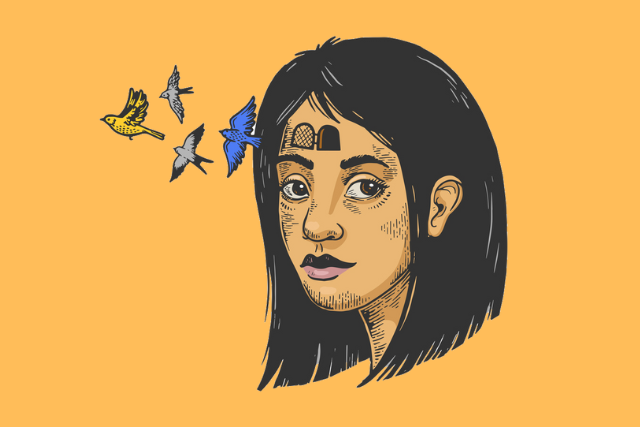
Tag: suppression

  • How I Found Emotional Freedom and 3 Unexpected Benefits

    How I Found Emotional Freedom and 3 Unexpected Benefits

    “We delight in the beauty of the butterfly, but rarely admit the changes it has gone through to achieve that beauty.” ~Maya Angelou

    What if the person you’re trying hardest to please is you?

    For years, I wore a mask—a professional, composed, always-on version of myself that I thought everyone expected.

    My need to please and perform was deeply rooted in my earliest experiences. I was born three months premature, and doctors called my survival a miracle. Separated from my mother and placed in an incubator for weeks, I was surrounded by love but deprived of touch and connection.

    Though my parents adored me, this experience created the foundation for a limiting belief that I had to prove myself to earn love. Then, later in life, my drive to be “enough” led me to push aside my own emotions in favor of pleasing others.

    I thought if I could just keep moving fast enough—working harder, being more present, looking more composed—then my feelings would eventually settle. But the truth is, every time I tried to avoid them, my emotions only became louder and more persistent. They didn’t go away—they built up, each layer adding tension, stiffness, and discomfort to my body.

    I could feel it in my chest—the tightness that wouldn’t go away. In my shoulders, which ached with the weight of emotions I refused to acknowledge. My body was telling me something, but I wasn’t listening. I was too busy keeping up the image that I thought the world needed to see. But the more I suppressed my emotions, the more they controlled me, manifesting as stress, anxiety, and physical discomfort.

    It wasn’t until I realized that I didn’t need to keep pushing my feelings away that things started to change. The truth is, trying to outrun my emotions only left me exhausted. What I needed was to face them, feel them, and allow them to pass through me, just as they were meant to.

    The Trap of Emotional Suppression

    I had spent so many years trying to appear strong, convincing myself that my vulnerability would make me weak. That if I showed any emotion other than calm and composure, I would be judged. But in reality, emotional suppression was taking a much bigger toll on me than I ever realized. As I pushed my feelings deeper into my subconscious, they didn’t disappear. They festered.

    One moment that stands out vividly is when a close friend opened up to me about a deeply personal struggle. While I wanted to be fully present for her, her vulnerability stirred unresolved emotions within me, bringing up memories of a similar experience I had yet to process.

    Instead of acknowledging my feelings or sharing my own story, I chose to hide behind a comforting role, offering support while keeping my emotions locked away. Outwardly, I appeared to be a caring friend, but inside, I felt an overwhelming sense of disconnection. My silence created a wall, leaving me isolated and robbing us both of an opportunity for mutual support and a deeper bond.

    Another time, I had a difficult conversation with a colleague at work. Their criticism stung deeply, but instead of acknowledging my hurt feelings or advocating for myself, I smiled and assured them everything was fine.

    I convinced myself that avoiding conflict was the right choice. But the weight of those unexpressed emotions lingered, showing up as tension and resentment long after the conversation had ended. Suppressing my feelings didn’t maintain peace; it only created internal turmoil.

    I began to feel disconnected from myself—my true self. The tension in my body was the physical manifestation of that disconnection. The more I avoided my emotions, the more distant I felt from who I really was. The pressure was building, just like a pot on the stove, and I could feel the inevitable explosion waiting to happen.

    Emotions Are Messengers, Not Enemies

    One of the most powerful lessons I learned during this process was that emotions are not the enemies I had made them out to be. They are not here to destroy me; they are simply messengers.

    When I felt anger, it wasn’t because I was broken. It was my body telling me that something wasn’t right—that my boundaries were being crossed or my needs weren’t being met.

    When I felt sadness, it revealed that I was grieving a loss or change.

    Fear showed up to remind me that I was facing the unknown, urging me to trust myself and embrace uncertainty.

    The key to emotional freedom is recognizing that emotions are not “good” or “bad.” They simply are. They are part of our human experience, each one carrying important information. When we allow ourselves to feel them fully, we stop labeling them as threats or obstacles. We open ourselves to their wisdom and guidance.

    The Power of Feeling Fully

    At first, feeling my emotions fully felt uncomfortable, even painful. I wasn’t used to sitting with the discomfort that came with vulnerability. But I kept showing up for myself, making the decision to stop resisting and to feel deeply, without judgment. Over time, I realized that, just like a storm, emotions have a beginning and an end. When I stopped fighting them, they passed through me much faster than I imagined.

    Allowing yourself to feel means sitting with discomfort for a moment. It’s about embracing your sadness, your joy, your anger, or your fear—without trying to change them. You stop trying to fix your emotions, and you simply let them be.

    This doesn’t mean wallowing in your feelings or letting them consume you. Instead, it’s about giving yourself permission to experience them fully, without the pressure to change or judge them. By embracing your emotions with curiosity and openness, you release their hold over you. And the beauty of this process is that the emotions are temporary—they don’t last forever. But the freedom and peace you gain from letting them flow are lasting.

    Embodying Your Emotions

    As I continued to practice feeling my emotions fully, I discovered that one of the most powerful ways to do so was through embodiment. I started paying attention to how my emotions manifested in my body. Was there a tightness in my chest when I was anxious? A heaviness in my stomach when I was fearful? A rush of warmth in my face when I felt joy?

    By focusing on these physical sensations, I was able to move beyond the mental stories I had been telling myself. I could feel the emotion itself rather than analyzing it or trying to push it away. I learned how to breathe through the discomfort, how to sit with it until it passed. And in doing so, I was able to release trapped emotions and make space for healing.

    It was as if my body knew exactly what to do once I stopped trying to control it. I just had to stop thinking and start feeling.

    Letting Go of Emotional Attachment

    One of the hardest lessons for me was learning that feeling my emotions fully didn’t mean holding onto them. There’s a difference between feeling your feelings and identifying with them. I had spent so much time tying my emotions to my identity—believing that I was my emotions—that I had forgotten that emotions are temporary visitors. They come, and they go.

    When I stopped attaching myself to every emotion, I began to experience greater emotional freedom. I learned to release my grip on the feelings that I had once let define me. Rather than letting them dictate my life, I learned to feel them and let them pass. It was a liberating experience.

    The Benefits of Emotional Freedom

    Once I embraced the practice of feeling my emotions fully, I experienced a profound shift in my life. I wasn’t overwhelmed by anxiety, stress, or fear anymore. Instead, I felt a deep sense of inner peace and understanding. Emotional freedom meant that I could stop being at war with myself and my feelings.

    This shift brought with it several benefits that I didn’t expect:

    • Increased self-awareness: Feeling my emotions helped me reconnect with my true desires, values, and needs. I stopped second-guessing myself and began trusting my intuition more.
    • Improved relationships: When I stopped hiding my feelings, I allowed myself to form more authentic and meaningful connections with others.
    • Increased resilience: The more I practiced feeling my emotions fully, the stronger I became. I realized that emotions are temporary, and I could ride through them without letting them consume me.

    Final Thoughts

    If there’s one thing I wish I had known sooner, it’s that emotions are not something to fear. They are powerful, transformative, and ultimately, the key to emotional freedom. When we allow ourselves to feel our emotions fully—without judgment, without fear—we free ourselves from their control.

    Instead of running from your emotions, I encourage you to face them with courage and compassion. You may find, like I did, that by releasing old patterns of suppression, you open yourself to a life of greater authenticity, connection, and peace.

  • Why I Love My Anger and How It Can Be a Force for Good

    Why I Love My Anger and How It Can Be a Force for Good

    “Where there is anger, there is always pain underneath.” ~Eckhart Tolle

    “I don’t know why I’m so angry,” my mother said.

    It was 3 a.m., and my mother was standing outside my door. I had awoken suddenly to hear feet stomping up and down the hallway on one of my last visits to my childhood home before dementia and breast cancer really took hold of her.

    “Phht, me either.” I tried to empathize, but inside of me rose my own fear and anger, as my siblings and I had watched her decline over the years, yet at the same time, anger was not new to her.

    Today, when I think back on this night and so many others like it, the question that I ask now is not “Why are you so angry?” but “Why are you not angrier?” 

    The truth is, I didn’t see a lot of anger in my family growing up, but being a highly sensitive person, I felt it all. I saw the occasional outburst, but I felt every one of my mother’s facial expressions, tones, and movements that signalled distress. I felt it in the room, along with the myriad of other emotions that human nervous systems naturally feel but have learned so well are not always appropriate.

    Two things I did see and feel were love and happiness, so I am grateful for that. But we are so much more than that.

    My suppression of anger was learned very young. If you don’t see something reflected in the mirror around you, it can’t exist.

    I remember so clearly, when I was thirteen, my mother came home from the hospital after her first partial mastectomy with a drainage tube attached to her chest.

    We sat in the living room as it was explained to us, as children, what had happened.

    I don’t remember the word cancer, but as a child, I could have blocked it or simply just not understood.

    What I do remember is the feeling in my body. I can still feel it now. The rising sensation of tightness and contraction that rose up into my throat and begged for expression. But as I looked around the room, I couldn’t see that sensation anywhere else.

    I remember pursing my lips together, probably tightening my jaw to reinforce the guards in case the tightness burst out into the room.

    It was one of the most confusing moments of my life. I understand it now.

    The news felt big and the emotions felt big, as did the overlay of rage—at the situation, others, or myself; I don’t know which. But it had nowhere to go. I felt suffocated.

    I excused myself to “go out with my friends,” which must have seemed like an odd response, but it was the only thing I knew how to do. I didn’t go out with friends. I escaped into the cold night air so I could breathe. I walked and walked, unconsciously moving through an internal freeze.

    The emotions never seemed to go away; they only seemed to thicken as I developed more and more armor. I learned that escaping felt good. I loved my family deeply, so it didn’t make sense to me when I felt relief to leave the house and go out drinking with friends.

    It wasn’t just moving toward pleasure as a teenager; it was avoidance of pain.

    I disconnected more and more from myself and my internal turmoil, and the mask on my outside grew more and more protective, smiley, and sturdy. It became who I was.

    Repressing my anger, sadness, and fear felt like the only option, yet it was literally killing me inside as I developed the opposite expression of external perfectionism.

    Flawless, nice, smiling, impeccably high standards on the outside.

    Complete chaos and a raging inner critic on the inside.

    This growing monster morphed into the extreme control of an eating disorder that nearly took my life. The binging and purging of bulimia felt like feeding an insatiable hunger followed by a complete release and restabilization of the perfection.

    In retrospect, I see this was a young girl’s own internal method of coping and self-regulation. Of course, in reality, it was anything but.

    Thanks to an attuned and compassionate doctor, I was able to finally be seen and heard as someone who was more than an acting-out teen, who was really in trouble. This was the turning point, and I wish I could say it all turned around, but the journey ahead of me was long.

    The road to healing has been one of reclamation.

    Slowly reclaiming my body, piece by piece. Nurturing and nourishing her and paying attention to her needs. Including those parts society has deemed not right or unacceptable.

    Reclaiming and feeling my emotions, all of them. But mostly reclaiming my right to anger.

    During my forties, when I experienced a period of burnout, I realized that anger was the last stone to uncover. I had been skirting around it for decades.

    Even as a yoga and mindfulness student and teacher, I never went into the energy of anger fully, always instructed to notice and surf the emotions on the way to peace and happiness.

    Yet anger was the part of me that needed self-love more than anything else. And the rewards anger gave me in return were not what I expected.

    I did not become an angry person. I became a more confident and powerful person who rose above shame and people-pleasing. I set boundaries more easily because I loved myself more. It gave me back my wholeness.

    Access to the energy of anger also afforded me access to the opposite end of the emotional scale: excitement and enthusiasm.

    Research now clearly tells us that repressed anger can contribute to anxiety, depression (repression), chronic illnesses, fatigue, and pain, and I can feel the truth in that.

    But we have learned very well how to cope. We rationalize (it’s not that bad), minimize (other people have it so much worse), and desperately escape ourselves looking for worth in people-pleasing, validation, praise, and permission.

    We leave our bodies in search for perfection that doesn’t exist and end up continually feeling not smart enough, thin enough, healthy enough, young enough, or good enough.

    The fear of expressing anger is compounded by being labeled as “angry,” which leads to further invalidation and invisibility. That is only what happens if you stay stuck in the stories of blame.

    I uncovered my capacity to befriend anger safely and harness its power to speak, protect, and stand up for myself from a place of self-love.

    I now know that:

    • Anger is the energy of healthy entitlement that says, “I have a right to be here” and speaks up against injustice from a place of ultimate, fierce love.
    • Anger is the energy of healthy aggression that protects your own worth and naturally sets boundaries that protect your body, time, and energy.
    • Anger is the place that defines clearly what you value and what you stand for and love.
    • Anger is the healing we need to step out of the program of perfectionism and the “good girl” (or boy) into our true, whole, authentic aliveness.

    I love anger in all its forms. It is a mobilizer for good in the world, and if you are reading this, I’m guessing you are not someone who will use it in toxic ways for war and destruction.

    You can harness it in small ways to access the true power of your voice, your breath. and the full capacity of fierce love.

    There is often a pot of stored anger to drain first so you can then move through it gently, lovingly, and listen to its valuable messages. To do this:

    • Notice where and when you tighten, contract, or feel annoyed or irritable.
    • Breathe into those areas in your body to create space around them.
    • Inhale and contract right into the areas of anger, including your hands and feet, and then release it with a sigh, sound, scream, or growl.
    • Notice what anger is pointing you toward: What needs to be protected that you value? What do you need? What needs to be said? What do you miss or grieve or worry about? See what rises now.

    Remember, you are a living, growing, learning, and expanding human, and we can heal not in spite of our anger, but through it.

  • 4 Things I Needed to Accept to Let Go and Heal After Trauma

    4 Things I Needed to Accept to Let Go and Heal After Trauma

    TRIGGER WARNING: This post references sexual abuse and may be triggered to some people.

    The truth is, unless you let go, unless you forgive yourself, unless you forgive the situation, unless you realize that the situation is over, you cannot move forward.” ~Steve Maraboli

    My family immigrated to the U.S. from India when I was sixteen. Being Indian, my traditional family expected me to have an arranged marriage.

    At twenty-two, as a graduate music student, I fell in love with an American man. When my family found out about our secret relationship, they took me back to India and put me under house arrest. For a year.

    That year of imprisonment and isolation was severely traumatizing. I shut down from my acute distress and pain. I dissociated from myself, my truth, my power, my body, my heart, and my sexuality.

    Two years after they let me out, I escaped to the US but was emotionally imprisoned by my past. I lived dissociated, afraid, and ashamed for eighteen years. Eventually, I broke free from an abusive marriage and my family.

    Since then, I have been on a path of healing and empowerment.

    Beginning my healing journey was like walking through a long, dark tunnel. I was and felt like a victim but was determined to heal.

    To heal from dissociation, I needed to feel again. I felt the bottomless grief, loss, and heartbreak of all that I didn’t get to experience and enjoy.

    I faced and began to address my childhood history of sexual abuse.

    I set boundaries with my family. I started therapy and studied psychology. I learned my mother is a narcissist and my father an enabler.

    Coming from a traditional patriarchal, colonial culture, I had grown up with codes of obedience, sacrifice, and duty. I questioned and challenged my deep internalized beliefs of who I am, what I can do, and what is possible for me as a person of color.

    I learned about my rights. Growing up in India, I had a very different understanding of my rights than those born in Western countries.

    Therapy helped me reconnect with my body, with my needs, wants, and desires. I learned to identify and feel my sensations and emotions. I learned to discern who and what was safe and what wasn’t safe.

    I learned to listen to and trust myself and become more embodied through my dance practice. This allowed me to dance out my rage, shame, grief, and everything I had disconnected from and suppressed. I came alive and opened to pleasure and passion.

    I’ve struggled with low self-worth, people-pleasing, caretaking, perfectionism, fear, shame, guilt, and codependency. One of my most painful realizations was that my inner critic had become as severe as those who abused me. I continue to practice being kind and gentle to myself, loving myself and my inner child and encouraging my artistic self.

    In relationships, it has been hard for me to discern whom to trust and not trust. I had an emotionally abusive marriage and have given my power away in relationships. In romantic relationships, I projected my goodness and integrity and supported my partners’ dreams instead of my own.

    I have finally learned that I can choose myself and honor my needs, wants, desires, dreams, and goals. I continue to shed other people’s projections that I internalized. I am realizing that I am worthy of and can have, dream, aspire for, and achieve what white women can. And finally, I believe in my goodness, of others, and of life.

    Having emerged from the long, dark tunnel of healing, every day is a triumph for my freedom and a priceless gift. Every day I have the opportunity to be true to myself, face a fear, shift a perspective, and love, encourage, and enjoy myself.

    Acceptance

    There are so many steps and milestones on the journey of healing. Of the five stages of grief, acceptance is the final one.

    Acceptance is a choice and a practice. Acceptance is letting go, forgiving yourself and others, and honoring, claiming, and loving every twist and turn of your journey. Acceptance is treasuring all you have learned from your experience no matter how painful it was and how meaningless it seemed.

    Here are some things I have learned to accept.

    Accept the deep impact of trauma

    Coming from a family and culture that valued perfectionism and purity, I wasn’t aware of and wanted to gloss over and hide my trauma, shadow, and coping behaviors. Because I could live a life that seemed relatively high-functioning, I was ashamed to admit and address my childhood sexual trauma to myself for years. I was afraid and ashamed to share my trauma with others because I didn’t want to be seen as broken, damaged, or crazy.

    Once I acknowledged and faced my sexual trauma, I began my healing journey. Healing and acceptance mean seeing, claiming, and loving each and every part of ourselves, however broken or ashamed we feel. As we do that, we liberate ourselves from believing we needed to fit into other people’s ideas to be loved and accepted.

    When we don’t admit and accept our traumas, we can cycle through life alive but not living, succeeding but not fulfilled, and live according to programs we’ve inherited but not from our truths. As a result, joy, pleasure, passion, and true power escape us.

    Accepting that I didn’t get to have the life and dreams I expected

    As a victim, I was stuck in grief, loss, anger, denial, disillusionment, blame, and resentment. Life seemed unfair.

    These feelings are natural after trauma, especially extended severe trauma. But despite years of therapy and healing, I continued to cycle and swim in them and didn’t know how to not have those feelings.

    I was fighting to accept what I had lost. I kept ruminating on who I might have been and what my life would have been like had it not been interrupted or derailed. It was how my subconscious mind tried to control and “correct” the past to have the outcome I desired and stay connected to my past dreams.

    I was tightly holding on to what I had lost—to who I was then and my dreams. I was terrified that if I let go of what was most precious, I would be left with nothing.

    But the reverse happened. When I decided to let go of my past dreams, regrets, and lost opportunities, I stepped into the river of life anew, afresh, and in the now. I opened to who I am now and what is possible now.

    We don’t let go of trauma because, on a deep level, we believe we will condone what happened, and forget or lose what was so precious.

    Not letting go keeps us stuck like a monkey clutching peanuts in a narrow-mouthed jar. We don’t want to let go of what we had then for fear that we will be left with nothing at all. It keeps us stuck in blame and resentment. It keeps us from joy, pleasure, and possibility.

    But to live and breathe and come alive again, we need to unclench our past. By no means is this forgetting, or condoning, but allowing, receiving, and welcoming new, fresh beginnings, possibilities, and life.

    Accepting the character, mental illness, and wounds of my abusers

    Though my family had been brutal, my inner child wanted to believe in their goodness. I couldn’t accept that people I loved, who were supposed to love, care for, and protect me, could treat me that way.

    I was in a trauma bond and in denial. I had to come to terms with and accept that my mother is a narcissist and my father an enabler. And that the rest of my family only looked the other way.

    I had to let go of my illusion of my family, see through the fog of gaslighting, and accept the truth of who they are.

    Acceptance is learning to see our abusers with clear eyes beyond our expectations, illusions, and stories of what we needed and desired from them, and who we want them to be.

    No matter what was done to or happened to me, I am responsible for my life.

    Staying stuck in a cycle of blame, resentment, and anger told me I wasn’t taking responsibility for myself.

    After severe trauma, it’s painful and challenging to look at ourselves and realize that we played a part in it. Trauma is something that happens to us, but we are the ones who make conclusions about ourselves, others, and life because of it. My beliefs and perspectives about myself, especially about my self-worth, self-esteem, body, and sexuality, drastically changed after the trauma.

    I had to take responsibility for creating my beliefs. I needed to accept every time I didn’t choose, value, and honor myself and my gifts. I realized that just as I had adopted others’ projections of myself, creating a negative self-perception, I could shift to regard myself in a positive light.

    Accepting my part in my trauma set me free from blame and resentment. And it set me free from the power my abusers had over me and my connection to them.

    Acknowledge what I don’t have control over

    My inner child and I wanted to believe in the goodness, love, and protectiveness of my family and partners. But I have no control over who my parents, family, and culture are, or their mental health, values, and behaviors. I had no control over my culture’s beliefs and attitudes toward women and sexuality.

    Because of deep shame from childhood abuse, I felt bad at my core and had a low sense of self-worth. Subconsciously, I tried to control how I was seen. I lived a life acceptable to my family and culture and followed what the world defined as successful, believing it would make me feel good about myself and be accepted and loved.

    But my happiness, freedom, and success lie in my own truth. I learned to honor and follow that. I learned to mother and father myself. I learned about mental illness and mental health and reached out for support from therapists and friends.

    As I let go of trying to please others, pursuing my own needs, talents, and interests, I found myself, my joy, and my purpose.

    Forgive myself

    Looking back, I see so many roads I could have taken but didn’t. I see many ways I could have taken help but didn’t. I was filled with regret for past choices and decisions. I was angry with and judged myself.

    We can be our own harshest critics. I needed to forgive myself.

    I learned to see and be compassionate with my inner child and younger self, steeped as she was in family binds and cultural beliefs. I learned to hold her with tenderness and love for all the ways she didn’t know how to protect and choose herself. And for all she wanted but didn’t know how to reach for and have, for what she wanted to say and do but couldn’t or didn’t.

    As I held my younger selves with understanding, compassion, and love, and forgave them, they began to trust me and offer their gifts, which allowed me to open to joy, innocence, freedom, and play again.