
Tag: suicide

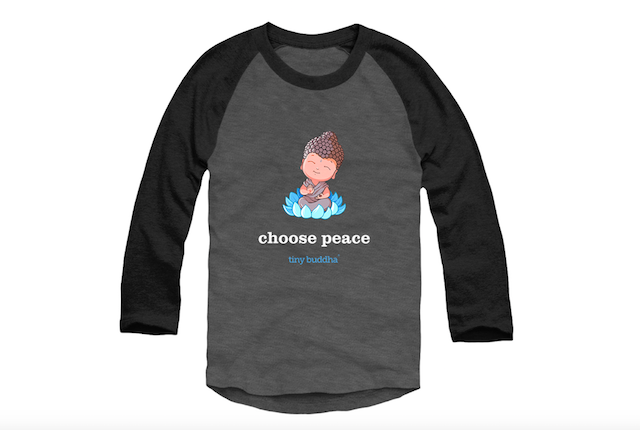
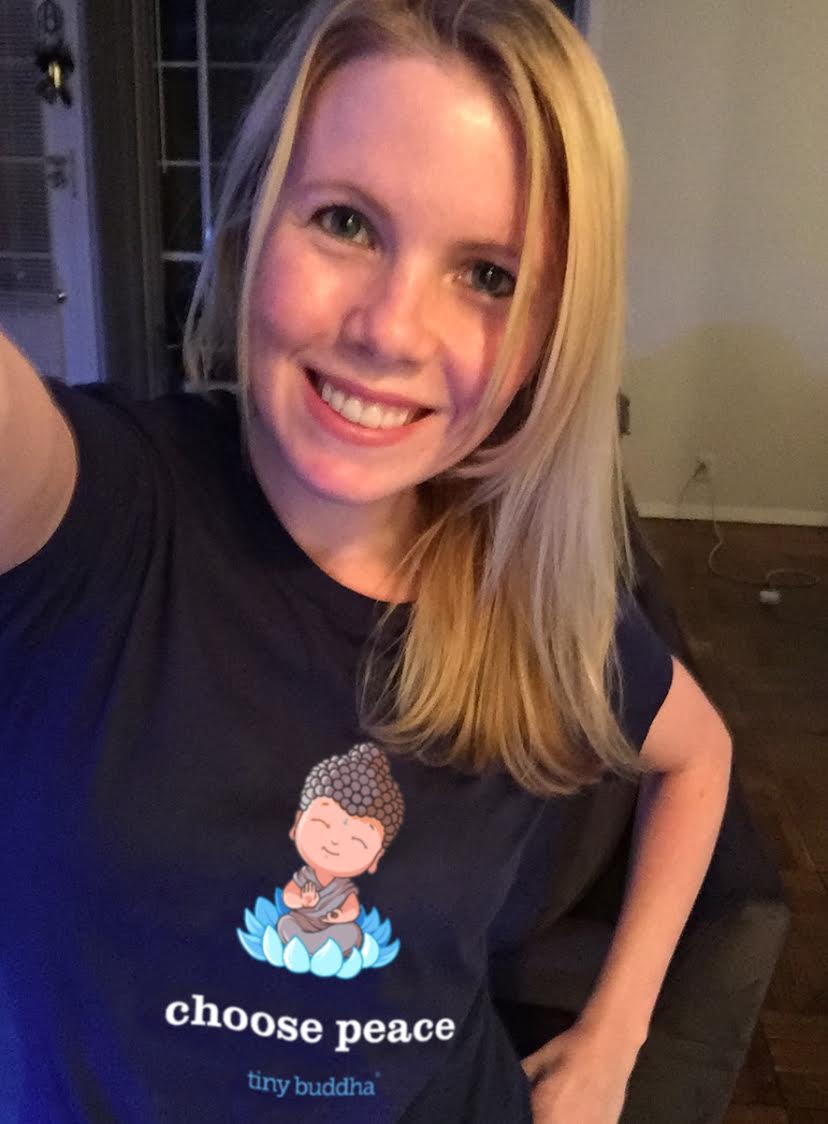
  • Limited Edition “Choose Peace” Shirt Supporting the American Foundation for Suicide Prevention

    Limited Edition “Choose Peace” Shirt Supporting the American Foundation for Suicide Prevention

    If this seems like deja vu, that’s because I first shared this post last week. I’m republishing it today because there’s one week left to grab a limited edition “Choose Peace” shirt.

    A portion of the proceeds will go to the American Foundation for Suicide Prevention, the nation’s largest non-profit dedicated to saving lives and bringing hope to those affected by suicide.

    People often take their lives when they’re struggling with a mental illness, and their stressors surpass their coping skills. Many people suffer in silence because they’re too afraid, embarrassed, or resigned to seek help.

    AFSP funds research to improve interventions, train clinicians in suicide prevention, and advocate for policy that will save lives. The organization also offers help and support for those who’ve lost a loved one to suicide.

    As someone who’s seen firsthand the consequences of undiagnosed and untreated mental health issues, I couldn’t be more passionate about this cause.

    You can choose from five styles—including a fitted tee, racerback tank, and a hoodie—with sizes ranging from XS to 5XL (for some styles).


    Don’t see the button? Visit https://represent.com/tinybuddha to place your order. Have an idea or request for a future shirt? Leave a comment and let me know!

    *This campaign has now ended, but I’ve since added this shirt to the Tiny Buddha store. You can find it at the bottom of the page here.

  • Coping with Suicide Loss: 9 Lessons for Hope and Healing

    Coping with Suicide Loss: 9 Lessons for Hope and Healing

    Man watching the sunset

    “It takes courage to endure the sharp pains of self-discovery rather than choose to take the dull pain of unconsciousness that would last the rest of our lives.” ~Marianne Williamson

    “That boy is one in a million, Jill. He’s one in a million.”

    These were my grandfather’s words to my mum about my brother, Mitch, when he was just a kid. He really was one in a million—a light that shone so bright as a child and early teen, only to then fade into shadows of desperation and defeat as he grew into adulthood.

    No one really knows what’s going on in someone else’s mind, especially when a person refuses to let you in. Mitch never let anyone in. On October 1st, 2002 he decided to leave at the age of twenty-six. We were one short on our team now. Our family puzzle was missing a vital piece.

    That night, I woke up around 1am to my mum sitting at my bedside in her robe. She sobbed and said, “He was such a troubled, troubled soul.” Right then I knew what had happened.

    I held my mum in an embrace that never wanted to end. And as the tsunami of shock and fear crashed over me, I prayed that this was all some bad nightmare I’d wake up from.

    At the time, I thought my world had ended. Little did I know, it had just begun.

    In the beginning after Mitch took his life, I wanted to run and hide. I couldn’t shake the shame and guilt. The societal and cultural stigma attached to suicide as a horrible, selfish act stuck to me like glue.

    I felt like our family had caught some bad disease and any one of us could be next. Like we had the suicide gene and it was only a matter of time another family member or I chose to go against the “normalcy” of a life lived.

    Even though the past eight years of Mitch’s life were shrouded in depression, the guilt of not doing enough kept replaying in my mind.

    I’d imagine saving the day and bursting into the hotel room where he spent his final hours and convincing him there was another way. Grief whispered to me, there had to be another way for him to be happy. I didn’t realize at the time that the only person that can heal you is you.

    Then there was the anger. I couldn’t look myself in the mirror. The bathroom became a torture chamber.

    However, in the midst of my grief something else happened. I felt a closer connection to my own energy at the core of my being. I believe this was due in part to the loss of the physical relationship with Mitch; organically, I switched gears to reconnect on a different level.

    Feeling broken after such a loss, funnily enough, cracked open a channel within me that lay dormant and ignored.

    It was an odd feeling, and one I didn’t welcome because of my inner resistance to change. At the time, I preferred to remain stuck in suffering, but the invitation was there.

    The better part of my twenties was awfully confusing because I allowed myself to wallow in pain. As a result, I lacked intimacy in relationships, I was financially dependent, I lacked commitment to my career, and I lost my old zest for life.

    However, the beauty of confusion is that it allowed me to seek the answers I was looking for. The key was to ask the right questions.

    The right questions led me to lean into my pain head on, address it, and acknowledge the energetic essence within me rising to the surface. Asking the right questions led me to a shift in thinking and helped me learn some valuable lessons.

    At the end of the day I had a choice to make: Was I willing to genuinely look inside? Did I wish to grow from the experience? Did Mitch want me to carry the weight of his loss upon my shoulders until my dying day? Did I want to swim in the continuity of life or sink in my own sorrow?

    Along your own path to healing after suicide loss or personal crisis, these nine suggestions might help.

    1. Be willing to change your concept of yourself.

    This means changing what you believe to be true about your outer and inner self-concept. It means letting go of the old stories, beliefs, thoughts, and patterns that don’t serve you and keep you stuck in the past.

    For me, the old stories, beliefs, and thoughts centered around suicide loss being my eternal crutch to bear, something that was going to forever limit my capacity to find joy in anything I did. I told myself I didn’t have the power to heal my life—that included being successful in whatever I placed my attention on.

    When you redefine what you are capable of on the outside and when you reconnect to your higher power on the inside, you begin to unlock what is authentically you.

    When you honor what is authentically you, void of all past luggage and conditioning, you unlock a greater love within. A connection that self-heals and plants you in the present with gratitude in your heart—that includes the life you have lost. By honoring you, you honor them. There is no separation.

    2. Be willing to externalize your grief.

    Your grief has intelligence. Let it tell you know it knows. Vomit it all up, don’t wretch. Open the latch and let the dam spill over. Sometimes when all the tears are cried there is no room for anything else except a smile and laughter. There is strength in vulnerability and healing in releasing. Talk, cry, write, shout, exercise, and help others.

    3. Be willing to go within.

    This lovely world of ours is a mirror. Your outer state is a reflection of your inner state. Self-healing and self-love start with connecting to your inner source, your higher power.

    Meditate. Meditation will create a clear, open channel between the heart and the mind allowing for them to work in synchrony. Anxiety, addiction, and obsession over your loss will slowly melt away because you are grounded in the loop of life. Where there is grief, there is also relief.

    You don’t have to be spiritual or religious. If you are a skeptic and don’t buy into what ancient traditions and great masters have known for thousands of years, and you rely on scientific fact, then look no further to what the world’s leading neuroscientists and physicists are saying.

    There is an underlying intelligence that binds this whole place together. You are not separate from anything else that exists on this planet. You are made of the same stuff! To think you are any different is the height of arrogance. To tap into its power, sit with it in silence. Join with it.

    In terms of healing after a loss, consistent meditation, day and night, is one of the most powerful practices, if not the most powerful, for self-healing and overall well-being. I have witnessed dramatic shifts in awareness within myself with consistent meditation after loss.

    I have come to recognize that I am not the thoughts in my head. I have become more aware of my own thoughts, as opposed to becoming attached to them.

    Thoughts are neither good nor bad, but the moment I place an emotional attachment to them, that’s when they become problematic. With practice, I’ve learned to step back behind the negative chatter and catch myself buying into thoughts that are rooted in the past. By no means am I master of this, but I am far better than I used to be.

    4. Be willing to process and clear the pain.

    Again, you have a choice. I’d suggest being brave and honest. A whole new world awaits you when you are willing to do the work.

    That is, be willing to externalize your grief, to self-inquire, and feel to heal. To face your hurt head on instead of ignoring it for years. That, I can tell you now, will come back to bite you at some stage.

    You can run, but you can’t hide; sooner or later your hurt will spill out into your relationships, finances, family, health, or career. The wiser choice is to work with it, not against it.

    When you are willing to process the guilt, shame, blame, anger, depression, isolation, and loneliness, you begin to unlock your authentic self. You strip away the layers to your greatness.

    The opportunity to view yourself and this world through a new lens is available to you. You will begin to see that with grief there is also relief. You may not witness it straight away, but life has a way of balancing itself out. It’s always the end of life that gives life a chance. This greatest loss of yours can become your greatest gift. My life is proof of that.

    5. Be willing to see your life beyond your loss.

    A question that needs to be asked after we have grieved our loss: Now that this has happened to us, what are we going to do about it?

    Am I going to use this loss to grow, learn, share, give, create, and love more? It’s up to you. I’ve chosen not to do these things in the past and it led to a depressive state. Swim with life as it continues on and grows or sink in the past that doesn’t exist?

    There is something great for you in the horizon. This loss is your trigger, your catalyst to peel back the layers and discover what music dances in your heart.

    6. Be willing to accept the value of challenge.

    What if life’s greatest challenges and voids were windows into living your most inspired, creative, and authentic self?

    In the words of Dr. John Demartini, “Your greatest voids create your highest values. And your highest values lead you to feel grateful for the synchronous balance in life—both pain and pleasure, challenge and support—that brings you closer to fulfilling what is most meaningful.”

    There is potential value in every situation. Grief is not exempt of this. Grief is a part of life, and to exclude the balance of death leaves us in this lop-sided view of the world.

    Today we constantly seek pleasure, we seek support, and we desire acceptance. The trouble is that grief leaves us with deep pain and with a perceived greater challenge, and if you have experienced a suicide loss, the challenge cuts deep within a family context. In our case, a family of six becoming five felt like a gaping hole deeper than the Grand Canyon.

    I now look at the sadness of losing my brother as the most instructive thing that has ever happened to me. His death didn’t have to remain in the way of my life, but more so, on the way to unlocking how I wanted to live my life and what I wanted to share and contribute.

    Mitch taught me that my time here is limited and to go after what really makes me happy. To find my joy and share it with the world. His death was a reminder to have fun and not take it too seriously. No one knows what’s going to happen tomorrow, so you might as well enjoy the moment—all that we have! For this, I can’t thank him enough.

    I have no doubts he is celebrating with me. I know this because for him to not want me to seek the benefits, opportunities, and inspiring lessons in his passing would be to deny the significance and meaning I have found through the life he lived, and in his passing.

    7. Be willing to generate energy.

    You have to generate it in order for you to have it!

    That’s why in these times of challenge you need to remember to do the things that you love. For me, I needed to swim in the ocean daily, go on long bush walks, hang out with friends even when I didn’t feel like leaving the house, and set aside time to write whatever it was they wanted to spill onto the page.

    You must endeavor to feed yourself joy. Things you love to do and things you loved to do with your loved one that’s passed.

    Don’t become the stale water in the pond. Seek to sit in that rubber tube and flow with the current of the river.

    8. Be willing to forgive yourself and your loved one.

    Their death is not your fault. It’s very easy to blame yourself and others around you. We should have done more! How did I not see the signs? I can’t live with myself—what kind of mother/father am I?

    Hold up! Drop it. Have some compassion for yourself. You did what you could with the awareness you had at the time. It was their choice to go—an end to their own pain and suffering they unfortunately could see no way out of.

    As you forgive others, you begin to forgive yourself. When you stop focusing on their choice to go, you will stop punishing yourself for your own.

    To quote Marianne Williamson, “Forgiveness releases the past to divine correction and the future to new possibilities. Whatever it was that happened to you, it is over. It happened in the past; in the present, it does not exist unless you bring it with you. Nothing anyone has ever done to you has permanent effects, unless you hold on to it permanently.”

    9. Be willing to surrender.

    Here’s a simple equation: Open mind = open heart = living authentically you.

    When you absorb and take action on the other eight lessons, you will become more open to something much bigger than you could have imagined for your life after your loss. You must be willing to give up your attachments to the outcome of your life after suicide loss.

    I does get better. There is light at the end of the tunnel. You will be okay. In fact you will be better than okay. But you must keep moving. This loss has left a giant scar, but scars tell stories. Make this scar the catalyst for you to know and love yourself more than you have ever have before. In the words of Anita Moorjani, “Love yourself like your life depends on it, because it does!”

    There is hope and there is happiness. Life isn’t the same without them, but that’s okay. You’re here now and it’s up to you what you want to do with the precious time you have been gifted.
  • Why I Didn’t Kill Myself and Why You Shouldn’t Either

    Why I Didn’t Kill Myself and Why You Shouldn’t Either

    TRIGGER WARNING: This post deals with an account of sexual abuse and may be triggering to some people.

    “That’s the thing about suicide. Try as you might to remember how a person lived his life, you always end up thinking about how he ended it.” ~Anderson Cooper

    I know what it’s like to want to die. I know the feeling of hopelessness. I know the sense of loneliness. I know the soul crushing despair and longing to fade into nothingness.

    If you are reading this, then you know what I’m talking about. I’m not sure what brought you to the point of wanting to die. But I know you don’t have to make that date with death.

    Death is forever. While you live, you have the power to change things, even if it feels impossible. Once you are gone, your choice is over.

    History

    My date with death started when I was thirteen. Starting when I was four or five until I hit the age of twelve, two separate men molested me on a regular basis.

    When the abuse stopped, I blocked it out. What I couldn’t block out was the misery, anger, and hatred. I had no idea what was really wrong, but I was monumentally pissed off. I had constant nightmares about men trying to kill me and about fires consuming me.

    I was already dead inside, so what was the point of actually living? Those men took my soul. I was no longer a child. I was just a body trying to survive. I felt nothing but pain and grief. I hated my life. I hated myself and everyone else. I wanted to die. Every day. All day.

    But did I really want to die? Do you? I don’t think you really want to die. I am guessing what you really want is for the pain to stop. I know deep down that was what I really wanted.

    Destiny

    One day, in my early twenties, I got to a point where I couldn’t bear it anymore.

    I came to a crossroads. I came to my breaking point. The unrelenting emotional pain had become too much, and I was drowning under its weight. I had to decide.

    I literally said to myself, “Carrie, you either kill yourself today or you need to do whatever you need to do to get better, because this is no way to live.” That was the moment I decided to take back control of my life.

    Live or die? Which will you choose? I’m hoping that you choose to listen to what I’m saying and that you choose to live. I know your pain. I feel your pain. I have lived in your pain. If I can live through it, so can you. You are not alone no matter how alone you feel.

    What Leads Someone to Want to Take Their Life?

    I have come to believe there are three common reasons people want to kill themselves. You may identify with one or with all of them. Personally, I have contemplated suicide over all of three.

    Severe Pain Caused by Abuse/Trauma (Rape, War, Assault)

    This type of pain is acute, but can also be chronic. It can be a debilitating type of pain that keeps you locked in a world of constant hyper-vigilance, trying to survive. If you have been a victim of childhood abuse, domestic abuse, or have been raped or subjected to the ravages of war, then you know what this suicidal ideation looks and feels like.

    I identified with this pain from my teenage years up until my early to mid-twenties. If the only feelings you have are pain, anger, and hurt and they are all turned inward, you will do anything to find relief, and the thought of suicide will become your constant companion.

    Emotional Reactions to Specific Situations (Divorce, Death, Breakups)

    When you go through the death of a loved one, or your spouse cheats on you and leaves you for someone else, you may feel useless, empty, and betrayed. Feeling unworthy can lead you to contemplate doing something that you normally wouldn’t do.

    I experienced this a few years ago when I found out my boyfriend was actually not who he said he was, and had not only another girlfriend, but a wife and a child.

    I felt like such an idiot because I thought he really cared. I thought there must have been something wrong with me that he was able to manipulate me so easily. I thought there was no point in going on. Many nights I would stare at the gun on my bedside table. Journaling is the only thing that kept me going.

    Constant Feelings of Hopelessness (Depression, Apathy)

    This type of pain is quite scary because it is a smart and well-thought-out pain. It isn’t rash and isn’t a reaction to something that happened. This pain is insidious. It seeps into your subconscious and gets you slowly thinking that there’s no point to life.

    Yes, I’ve felt this type of pain. From my late twenties until just recently there were many days when I would wake up and say to myself, “Maybe today is the day.” I would make plans for when and how I would do it. I would weigh the pros and the cons.

    I had gotten to a point where I no longer cared, but I wasn’t really in pain. I was apathetic to the world around me and more importantly, to my own heart. I no longer cared to live. I was not experiencing joy. I didn’t care about anything. I had no passion. Perhaps you understand what I’m talking about.

    So, What Do You Do Instead? 

    For those struggling with the thought of death and dying and for those who see no other way out, here are some things to think about before you swallow that entire bottle of Vicodin.

    This Too Shall Pass

    Remember this saying, because it really is a universal truth. The only thing constant in life is change. Remember when you broke up with your first love and you thought would never love again? You did.

    The way that you are feeling right now will not last. Remind yourself that the awful feelings won’t last forever.

    Your Thoughts About Yourself Aren’t True

    Do you feel misunderstood? Do you feel like no one really knows you, what you’re about, or who you are down to your core?

    I have never really had a lot of friends, and the majority of the friends I have are men. I have always wondered what it was about me that caused girls to dislike me. Was I doing something wrong? I don’t think I’m mean. Why didn’t they like me?

    I’m an INFJ personality type, which represents about 2% of the population, which is another reason that people just don’t get me. My personality is literally different than the majority of the world.

    I never dreamt about getting married, having babies, and living in a house with a white picket fence. So, while most people I know are having grandkids, I’m still living alone and trying to figure out my life. Another reason I think no one understands me: We don’t want the same things or have the same goals.

    But, what if I took all those negative, self-effacing thoughts about myself (I don’t fit in, I’m kind of alone, and no one likes me) and turned them into positive thoughts? What if all those thoughts weren’t really true?

    What if they were something I had created to keep myself in a safe little cocoon of negativity? What if I started to believe that my differences make me unique?

    As I started to work on loving and accepting myself, I came to realize that I’m not for everyone, and that’s okay! So what if everyone doesn’t love you? So what if you don’t have a ton of friends? So what if you need to find a place where you do fit in, and so what if the love of your life might be taking their time finding you?

    Remember what Dr. Seuss said, “Today you are you, that is truer than true. There is no one alive that is Youer than You.” There is only one you. Even if you don’t believe it right now, you are special and unique, and you have a history and a story and talents that no one else on the earth has.

    There Are People Who Will Be Devastated by Your Loss

    I used to tell myself that my mom, sister, and friends really wouldn’t care if I was gone. I figured they would get over it in a few weeks. I would tell myself that everyone would say, “Oh, that’s so sad” and just go on with their lives.

    But again, this can’t be any further from the truth. If you kill yourself, the pain you are feeling will be gone because you will be gone, but now your friends and family will feel your pain for the rest of their lives. They will wonder every day what they did wrong. How they could have helped. Why they failed.

    Is this the legacy you want to leave? Maybe you think no one cares about you, but do you care about them? Do you care about your family and friends? Do you want them to spend the remainder of their years wondering why?

    If you commit suicide, you’ll leave an indelible mark of pain and grief on those you have left behind. If you don’t believe me, go read some stories from mothers, fathers, and sisters who have had a loved one kill themselves.

    Is There More to Do?

    Is your time on this earth over? Do you believe you have nothing to offer? What will people say after you die? It is more than likely they will say, “How sad, such a waste.” Is your death how you want to be remembered?

    Even if you do not see your value, others do. Each one of us is unique and has special talents. Instead of thinking about killing yourself, try thinking about what your talents and your passions are. Maybe you don’t know, and that’s okay. The very act of trying to figure it out will bring some hope for the future.

    For the longest time I had no idea what I was doing and where I was going, and I completely lacked passion, energy, and feeling. Then, one day I realized that I have always had something to say (even if no one wanted to listen), and that became the roadmap for my new life.

    One of the few things that saved me when I was suicidal was writing in my journal. I realize that I needed to write again, and once I did, everything changed. I had a purpose. I had found my passion. Yours is there you just have to find it.

    Your Life Doesn’t Have to Feel Empty Forever

    Maybe your life feels empty today. But that doesn’t mean it has to feel empty forever. I spent years (more years than I care to admit to and more years than I should have) feeling empty, lonely, and unfulfilled. This is an awful place to be, and I would never wish this on anyone else.

    Just because I felt like I was living a meaningless life for over forty years doesn’t mean the rest of my life had to be that way. The past is the past.

    Feeling lonely and unfulfilled doesn’t have to be a forever proposition. It can be a temporary landing if you want it to be.

    If you feel empty and lonely, like your life has no meaning, then I say to you, “What can you do to change it?” Try and focus your energy on what you can change, not what you can’t change. I know it sounds corny and cliché’, but every day is a new day to rewrite the story of your life.

    Usually we don’t know the answer to this question, which is why we stay stuck and hopeless. Everyone has something they love to do, something that is their passion. You have one too; you just don’t know it yet. Find this passion. Search it out. Give your life some meaning. Take yourself on a journey and find out who you really are.

    You Are Not Alone

    Remember that although you are in pain, you are not the only one. Get online. Start talking to people. Call a suicide prevention hotline. Go to the forums and find out what others have done to combat their feelings of loneliness and depression.

    Do not let your thoughts run your life. Thoughts are just thoughts. They are not truth. Remember this. Feeling alone is a belief in your head, and it isn’t necessarily true. I know they feel like they own you, but you have the power to take back your life and own your thoughts.

    Find others who have struggled with your issues and ask them what they did and how they found some peace. Read books. Listen to podcasts. Why reinvent the wheel? If others have been able to succeed, learn from them.

    Maybe you need a friend to talk to. Maybe you need a support group. Maybe you need a therapist. Maybe you need a hobby. Maybe you need to find something, anything that gives you the slightest glimmer of hope. Search. If you can’t find any of those things, then give me a shout (carrie@acinglife.com), because my inbox is always open.

    There Are No Words

    Maybe there are not enough words or not the right words. Maybe nothing I can say will make you change your mind. Maybe I will fail at my task, but I hope not.

    I hope you take my words to heart and understand that I have felt your pain, and not just for a few days or weeks or on occasion. I have felt your pain to the core of my being and to the depths of my soul, for years and years. I have plotted my death too many times to count. Yet, I’m still here.

    So, every day is another chance for me to try to get others to understand that they are not alone, and that depression and loneliness are fixable conditions. The human condition is a beautiful, complex assortment of struggles. You are not alone in this.

    Suicide is not the answer. Death is final. But, you my friend are reading this now, and I believe you have some hope, even if it’s only a tiny little glimmer. I believe you can survive and that you will survive. I believe that, like me, you can also be a voice for change and hope.

    Never give up. Every day is a new day to fight, and every day is a new day to recreate yourself.

    If you are struggling please reach out for help: http://www.suicidepreventionlifeline.org/ (1-800-273-8255).

  • Why Advice Doesn’t Help When We’re Hurting (and What Does)

    Why Advice Doesn’t Help When We’re Hurting (and What Does)

    Couple Hugging

    “Listening is a magnetic and strange thing, a creative force. The friends who listen to us are the ones we move toward. When we’re listened to, it creates us, makes us unfold and expand.” ~Karl A. Menninger

    I remember my first call like it was yesterday.

    I answered the phone, heart beating out of my chest, hand firm on a sheet of local emergency phone numbers.

    The voice on the other end was full of… meek embarrassment.

    Not exactly what I was expecting.

    “Uhh, I’m really sorry… I’m not, uhh… I’m not suicidal…. I just… I just had a huge fight with my girlfriend…. I just… I really need to talk to someone…. Is that okay?”

    If you’re like I was before I became a volunteer in 2011, when you think about a suicide hotline you imagine circumstances so traumatic and unbearable that they bring people to consider ending life.

    But, I soon discovered that everything I expected to be true—everything from what the callers would be like, all the way up to how I would handle them—was completely wrong.

    And what I learned forever changed the way I think about pain.

    My First Big Surprise About Pain

    I became a volunteer because I wanted to help people who were hurting.

    But looking back, I realize that I had a big misconception about what those people would look like.

    I imagined two discreet groups: “normal” people living with minor ups and downs in one bucket; and “broken” people struggling with trauma and unrelenting emotional upheaval in the other.

    (I had imagined I was in the “broken” category, but that is a story for another day.)

    I was sure callers to the hotline would fall into the latter bucket, too.

    Which is why I was very surprised when I found myself speaking with “normal” people over and over again, people who I might easily have met behind my local coffee shop counter or in the grocery store aisle.

    I began to see that we are all vulnerable to pain so big that we might reach out to an anonymous ear in order to pour out our hearts.

    I realized that some of us may struggle with mental illness, but none of us are “broken.” Feeling extreme pain is simply part of the human condition.

    But that was just the very beginning of what I was to learn.

    What We All Need More Than Anything Is to Be Seen

    I thought my work at the hotline was going to be about giving advice. Indeed, I looked forward to it.

    I imagined helping callers develop coping techniques.

    I pictured using my keen insights to help identify root problems.

    I fantasized about offering guidance toward self-transformation.

    But, although I didn’t understand at first, all of these things were actually forbidden at the hotline. My role was to be an attentive listener.

    That’s it.

    This only began to make a little bit of sense when I realized that there was just one thread running through each of the hundreds of stories shared with me by callers: a lack of a trusted confidante.

    What each and every caller had in common was a deep craving to share themselves with a caring listener. Our job as volunteers was to offer this.

    Okay, that made sense to me. In a world filled with busy, stressed out people, it’s too easy to feel like we don’t really matter to anyone beyond fulfilling our obligations, if at all.

    Maybe it was this feeling—the feeling of being invisible—that was bringing so many callers to the brink of despair and onto our phone-lines.

    “Mmm, it sounds like you feel…”

    This simple string of words was taught to volunteers in order to make callers feel deeply seen and acknowledged.

    But are you wondering (as I did) how simple parroting is supposed to do anything substantial?

    Didn’t the callers also need help?

    Yet I found that callers were indeed substantially moved when they received undivided and caring attention.

    Someone might begin a call in a frantic tone of desperation only to end it with a sense of peace and hope, all because a volunteer fully acknowledge their complete being.

    Eventually, I even began to see that well-meaning “help” (like advice or personal anecdotes) could actually be damaging.

    Telling someone in pain about ideas based on our experiences crowds out what a distressed person really needs—a reflection, pure acknowledgement, to be seen.

    We Are All Profoundly Resourceful

    Despite callers’ uplifted moods, for a time I was still skeptical about the usefulness of empathetic listening.

    But if I am being honest with myself, my problem was that it made me feel unimportant.

    If all I was doing was holding up a mirror for callers, how was I supposed to get satisfaction out of my work? Didn’t some of them need my hard-won wisdom?

    But I soon noticed something interesting.

    Since most callers lacked a sounding board for their deepest feelings—buried anger, forgotten hopes, disappointments—many of them started to lose touch with those feelings until they bubbled over into a catastrophe.

    Callers often didn’t even know they were calling the hotline to talk about their uncomfortable feelings.

    They called the hotline to talk about tangible problems—major relationship conflicts, getting fired, losing a friend.

    I started to notice that it was only after having the chance to speak without interruption for several minutes, receiving only empathetic sounds of understanding and reflection in reply, that they would even begin to unpack the twisted mass of pain in their hearts.

    And that’s when I caught a glimpse of the magic beginning to happen.

    Once the mirror I offered allowed callers to glimpse hidden corners of their inner worlds, they were empowered to keep exploring.

    Soon, they were clearing away cobwebs and dusting off all kinds of rusty tools and insights, all as I sat, phone propped on my shoulder and mouth gaping at the miraculous turnarounds that had virtually nothing to do with me.

    The truth was that callers didn’t need to hear about how I fixed my own kinda-similar problem.

    They didn’t need to hear about what my friend did in the same situation.

    Indeed, hearing my own musings would have interrupted the magic process.

    My ego was disappointed at first, but watching someone else regain their footing is immensely more satisfying than patting yourself on the back.

    Instead of my wisdom, I begin to take pride in my ability to convey empathy and ask questions, encouraging callers to dig deeper.

    I was truly happy to be doing my small part in helping callers tap into their immense personal resources.

    Having Our Feelings Validated Is Transcendent

    I was thrilled to be witnessing this new power—the power of skilled and empathetic listening. I saw that it was emotionally replenishing for callers and empowered them to calmly analyze their hearts and their worlds.

    But there was something else going on, too. Something that seemed almost spiritual.

    I felt it, too. When I got off of a call, I sometimes felt a little dizzy, a little euphoric.

    But why was I feeling so uplifted by conversations that started because someone had been feeling hopeless and alone?

    What I came to realize is that empathetic listening offers a lot more than soothing companionship.

    Empathetic listening and acknowledgement also means giving someone the chance to feel like they fit into the order of the world.

    It means allowing someone to feel like a puzzle piece slotting perfectly and seamlessly into something bigger than themselves, like they belong. It is truly transcendent.

    And since the act of empathizing deeply with another person means becoming one with them for a short time, as a volunteer I was experiencing the transcendence, too.

    With every call I felt a part of a bigger whole. I felt connected.

    And by the way the callers often thanked us volunteers, sometimes even through tears of relief, I knew they felt connected, too.

    Connection is the Ultimate Emotional Pain Pill

    Volunteering at the suicide hotline convinced me that listening and connection are so powerful that they can relieve even the deepest pain.

    I might not have found my chance to shine as a skilled sage, but discovering that even the most troubled among us can begin to regain footing was infinitely more satisfying.

    “Yes, absolutely, it’s okay.” I said to my first caller. “It sounds like you feel really, really upset. Tell me more about that.”

    Couple hugging image via Shutterstock

  • How to Move Forward When You Feel Like Your Life Is Over

    How to Move Forward When You Feel Like Your Life Is Over

    Stormy Night

    “When you get to the end of your rope, tie a knot and hang on.” ~Franklin D. Roosevelt

    At seventeen years old, baseball was my life. I played on the top summer Connecticut baseball teams, constantly practiced and trained, and dreamed of being a starter for the high school varsity team. Junior year I was on varsity but didn’t get any playing time, so I was putting all my hopes and dreams into spring of my senior year.

    When I went to college showcases, I was one of the standout players and I received many letters in the mail from interested colleges who wanted me to go and play for them. I had scouts coming up to me saying, “Wow, you are an incredible hitter and ballplayer.”

    Senior year, I did extremely well in tryouts. In live scrimmages against other teams, I was one of the only players on our team to consistently hit well.

    In the last scrimmage of tryouts, I crushed a double against a Division I college-recruit athlete, one of the only players on my team to get a hit off of him. As a soon-to-be college athlete, I was one of the best players in the league.

    Unexpected News in the Locker Room

    On the bus ride back to the locker room after the final day of scrimmaging against another team, I was on cloud nine. I’d had a good game and had proved myself. Years of hard work and sacrifice were finally coming to fruition.

    The coach took out the list and read the names of the players who made the team.

    My name wasn’t called…

    I was cut.

    I was beyond devastated—I was destroyed. On the drive home, all I could think was, I’m nobody, I’m nothing, and I’m worthless. Those horrible thoughts kept playing in my head like a broken record.

    I had all of my self-worth caught up with being on this team.

    The Dark Night of My Soul

    When I got home my parents were loving and supportive, but I pushed them away because I was so upset. I isolated myself, terrifying thoughts running through my mind:

    I’m nothing. My life is over. I will never be able to show my face to the world again. All my years of hard work are wasted.

    With all my self-worth flushed down the toilet, my dreams gone, and embarrassed to the full extent possible, I was ready to take my own life. I was ready to kill myself.

    Have you ever been so zoomed in on something that you completely lost yourself in it?

    That was exactly what I was experiencing, and because it was ripped from me so unexpectedly, I truly no longer wanted to be alive.

    Senior year turned out to be the worst year of my life after everyone told me that it would be the best year. The happy endings we see in movies don’t always exist in reality. At the time, it seemed like my life had become a nightmare from which I couldn’t escape.

    I went to the garage, grabbed the rope from the workbench, and considered hanging myself from the tree out back. But just before taking my own life, one last spark of hope came to me that said, “Put the rope down, go up to your room, and go to sleep. You will get through this.”

    Thankfully, I listened to that intuitive knowing that came to me.

    When You Feel Like Your Life is Over

    We all have things that we care passionately about, sometimes to an unreasonable and unhealthy extent. While our individual situations and circumstances are vastly different, feelings are what connect us and are universal. The feeling of devastating loss is the same.

    When those things that you care about most dearly are taken from you for reasons beyond your control, you don’t need to go to the extreme like I did.

    Through discussions with hundreds of people in travels around the world, extensive research, and my transformation over the last seven years from someone literally on the brink of suicide, I’ve discovered proven tips and insights you can apply to get through your dark night of the soul, that moment when you feel like your life is over.

    Take it one breath at a time—literally.

    Put down the million and one things from your past that you are upset about and the billion and one things in your future that you are anxious about and simplify life down to one moment, this moment.

    Just before I was about to hang myself, I used individual breaths to take me out of my downward spiral of self-hatred.

    Keep it in perspective.

    The tendency of the human mind is to zoom in on situations and lose perspective, especially when your heart and soul are involved in the outcome. We live in a huge world with a vast array of possibilities, and even though it doesn’t seem like it at the moment, your best days are ahead of you and your life is not ruined.

    Instead of trying to think positively, shift back to neutral.

    When you are that depressed—at rock bottom, with no hope like I was—the last thing you want is to be overly positive. Imagine driving your car and instead of putting it into drive, you are slowly shifting from reverse back to neutral; instead of fighting your thoughts, choose to be the observer of your thoughts.

    Recognize what’s happened is not a reflection of your worth.

    Your self-worth is infinite, and it’s not dependent upon external circumstances such as making or not making a team or getting a job, nor does it depend on what others think of you.

    Know that you are loved.

    I know it may not feel like it, and I absolutely understand the feeling of embarrassment that you’ll never be able to talk about what you are going through, but even when you feel most isolated, I promise there are people who still love you dearly.

    Remember that there is a hidden opportunity in every setback.

    When one door closes, another one opens. You can use setbacks to your advantage and a crisis is an opportunity for a breakthrough.

    Realize this situation serves a purpose.

    This unexpected and unfair situation you are going through (or have already been through) is the very situation life wants you to experience to get you to your next level. At the age of seventeen, with my biggest dream of being a starter on the high school varsity baseball team shattered to pieces, I never would have thought, from my limited vantage point, that life could get better, but it did.

    The truth is you can handle any challenge life hands you.

    The temporary feeling of rock bottom will go away when you realize just how connected and important you are. You have a purpose and you will help others.

    Why Did No One Tell Me?

    I’ll never understand, for as long as I live, why not one person told me that my self-worth doesn’t depend on being on some silly team. The people I went to high school with were as brainwashed as I was when it comes to what really matters in life.

    But you know what? I can’t control those people I went to high school with and I peacefully wish them well. But I can control, in this present moment, the experiences and lessons I share with the world. And I’m here to tell you that there is always a solution and a way out, even when you think all possible options and solutions have been exhausted.

    No matter how badly you feel right now, you will get through your predicament and end up using it to your advantage. You will find the silver lining and do incredible things with your life.

    See you at the mountaintop.

    Stormy night image via Shutterstock