Tag: successful

  • How I Found Myself on the Other Side of Survival

    How I Found Myself on the Other Side of Survival

    “Until you make peace with who you are, you will never be content with what you have.” ~Doris Mortman

    For most of my life, I believed my worth was tied to how well I could perform.

    If I looked successful, kept people happy, worked harder than anyone else, and stayed quiet about my pain, maybe—just maybe—I would be enough.

    That belief didn’t come from nowhere. I grew up in a home where fear was a constant companion. Speaking up brought consequences. Being invisible felt safer. I learned early to smile through it all, to stay small, to never be a burden.

    I carried that into adulthood—into my marriage, into motherhood, and into the corporate world.

    I became the high achiever who never asked for help. The professional woman who had all the answers. The mother who always held it together.

    I was the one who volunteered for every project, who stayed late to make everything perfect. At home, I kept up appearances with themed birthday parties, spotless counters, and a schedule packed to the brim—all while quietly falling apart inside. I thought if I could hold everything together on the outside, no one would see the cracks within.

    But inside, I was unraveling.

    The Moment Everything Shifted

    One night, my husband exploded in anger. That wasn’t unusual. But this time, something different happened.

    He lunged toward me, yelling, blind with rage. Our young son, who had crawled quietly onto the floor behind me, was nearly stepped on in the chaos. My daughter, just a child herself, began silently picking up the dining room chairs he had thrown.

    No one cried. No one spoke. We had all learned to go silent.

    But in that silence, something inside me woke up.

    I saw myself in my children—quiet, afraid, coping. And I knew: if I didn’t break this cycle, they would grow up carrying the same invisible scars I had.

    That night, I made a promise to myself: This ends with me.

    The Healing Didn’t Happen All at Once 

    Leaving was hard. Healing was harder. But it was also the most powerful thing I’ve ever done.

    I realized I had been performing my way through life. Even in pain, I made everything look polished. I was afraid that if people knew the truth—about my past, about my marriage, about how little I thought of myself—they’d walk away.

    But what actually happened was this: when I finally allowed myself to be seen, I started to heal.

    What I’ve Learned on the Other Side of Survival

    Healing isn’t a straight line. It’s a process—sometimes slow, sometimes messy, sometimes unbelievably beautiful.

    Here are a few things I now hold close:

    1. You can’t heal what you refuse to name.

    For me, that moment came during therapy, when I finally said out loud, “I was in an emotionally abusive marriage.” It felt terrifying—and freeing. Until I gave it a name, it had power over me. Naming it took the first step to taking that power.

    For years I told myself it “wasn’t that bad.” But downplaying our pain doesn’t make it go away—it buries it. And buried pain finds a way to surface in our choices, our relationships, and our sense of self-worth.

    2. You’re allowed to want more than survival.

    I thought I should just be grateful to have a job, a home, healthy kids. But deep down, I wanted joy. I wanted peace. I wanted to feel like I mattered—to myself.

    For a long time, I believed wanting those things made me selfish. I had spent years making sure everyone else was okay, thinking that was my role. I was the people- pleaser, the fixer, the one who didn’t cause trouble. My self-worth was so low that even imagining a life where I felt fulfilled seemed like too much to ask. Who was I to want happiness?

    But wanting peace and joy wasn’t selfish. That was healing.

    3. Small, daily decisions matter more than big breakthroughs.

    Choosing to journal instead of numbing out with TV. Taking a walk after work to process my thoughts. Pausing before reacting in frustration. These choices weren’t dramatic, but they created steady change—the kind that lasts.

    Leaving my marriage was one bold decision. But the real transformation came from the everyday choices that followed: writing down what I was grateful for, saying no without guilt, and consistently reminding myself to honor my values of honesty and integrity—which I hadn’t done when protecting my ex-husband, keeping up appearances, and pretending everything was fine. Those were the moments that helped me reclaim my life.

    4. You’re not broken—you’re becoming.

    For a long time, I saw myself as damaged and thought healing meant changing into a different person. But I’ve come to see things differently. Healing isn’t about becoming someone new. It’s about removing what never belonged to you in the first place—shame, fear, silence—and uncovering who you were all along.

    I realized this while sorting through old journals, when I found an entry from my teenage years—full of dreams and hope. That’s when it struck me: she’s still in there. Healing helped me reconnect with that part of myself, not erase her.

    If You’re in That Quiet Place Right Now

    Maybe you’re carrying a silence too. Maybe you’re functioning, performing, doing all the things—and still wondering why you feel so far from yourself.

    Please hear this: You are not alone.

    You don’t have to have it all figured out. You don’t need a perfect plan. You just need a willingness to listen to that small, wise voice inside—the one that says this isn’t the end of your story.

    Because it’s not.

    And then, you have to honor it. Even if it’s with one small act. One honest conversation. One brave decision. That’s how the healing begins—not by knowing everything, but by choosing to move forward anyway.

    I know this because I’ve been there—waking up with a heavy heart, going through the motions, wondering if life would ever feel like mine again.

    But I chose to pause. To feel. To begin again. I hope you will too.

  • How I’ve Redefined Success Since ‘Failing’ by Traditional Standards

    How I’ve Redefined Success Since ‘Failing’ by Traditional Standards

    “Once you choose hope, anything is possible.” ~Christopher Reeve

    When I was a child, I wanted to save the world. My mom found me crying in my bedroom one day. She asked what was wrong, and I said, “I haven’t done anything yet!” I couldn’t wait to grow up so I could try to make a difference.

    At fourteen, I joined a youth group that supported adults with disabilities. We hosted dances and ran a buddy program. I helped with projects at state institutions and left saddened by the conditions for the residents. I planned to work at a state institution.

    As a senior in high school, I was voted most likely to succeed. It was unexpected, like so many things in my life. I hoped to find meaningful work that helped others.

    My first year at Ohio State, I fell head over heels in love and married the boy next door. A month after my wedding, newly nineteen, I started my first full-time job as manager of a group home for men with developmental disabilities. I never finished college.

    At twenty-three, I was officially diagnosed with depression after my first baby, but the doctor didn’t tell me. I read the diagnosis in my medical record a few years later. I grew up in the sixties with negative stereotypes of mental illness. I didn’t understand it, and I thought depression meant being weak and ungrateful. I loved being a new mom, and I wanted the doctor to be wrong.

    I was a stay-at-home mom with three young children at the time of my ten-year high school reunion. The event booklet included bios. For mine, I wrote something a bit defensive about the value of being a mom since I didn’t feel successful in any traditional way.

    At thirty, I experienced daily headaches for the first time. I tried natural cures and refused all medication, even over-the-counter ones, while the headaches progressed to a constant mild level. I kept up with three busy kids, taught literacy to residents with multiple disabilities at a state institution, and barreled on. I thought I understood challenges.

    At forty, I went to a pain clinic at Ohio State and received another depression diagnosis. This time it made sense. The diagnosis still made me feel vaguely ashamed, weak. Still, I rationalized it away.

    Which came first, the depression or the headache? Maybe it was the headache’s fault. Anti-depressants were diagnosed for the first time, which managed my depression. Until…

    When I was forty-two, I fell asleep at the wheel with my youngest daughter Beth in the passenger seat. She sustained a spinal cord injury that left her paralyzed from the chest down. I quit my job at the institution to be her round-the-clock caregiver.

    Beth was only fourteen when she was injured. However, she carried me forward, since between the two of us, she was the emotionally stable one. She focused on regaining her independence, despite her quadriplegia. I let her make the decisions about her care and her future. Sometimes we need someone strong to lead the way.

    Every day, every hour, every minute of our new life felt impossibly uncertain. New guilt and anxiety merged with my old issues of chronic pain and depression. Increased doses of my anti-depressants did not prevent me from spiraling down. There was no light at the end of the tunnel. No hope of light.

    I put a tight lid on my feelings, which was a challenge by itself. I didn’t want to give the people I loved more to worry about. I also felt that if I gave in to my emotions, I wouldn’t be able to function. And I desperately needed to help Beth. That’s what mattered the most.

    I started counseling several months after the car accident. At the first session, I thought I would find a little peace, with more ahead. It wasn’t that simple. I felt like a failure, and thought I failed at counseling, too, since I didn’t improve for some time. I should have reached out for help right after Beth’s injury.

    Weekly counseling helped me, along with my husband always being there for me. However, Beth was the one who showed me how to choose hope. I watched her succeed after failing again and again, over and over, on her quest to be independent.

    Beth and I shared unexpected adventures, from our small town in Ohio to Harvard and around the world. She has had the most exciting life of anyone I know. She’s also the happiest person I know because she finds joy in ordinary life, and that’s the best kind of success.

    Since I was voted most likely to succeed in 1976, I learned that success encompasses so much more than I originally thought. Things like being married for forty-five years to my best friend. Raising three great kids. Working meaningful jobs and helping others. Volunteering and mentoring. And learning meditation to better cope with chronic pain.

    Today, my depression is mostly managed with prescriptions, which also feels like a kind of success. I’m no longer ashamed of my depression. It’s part of who I am, and I know for a fact that I’m not weak or ungrateful. There’s light at the end of the tunnel, a bright light.

    Hope is an incredibly powerful thing. And if you never give up? Hope wins.

  • Why It No Longer Matters to Me If My Job Impresses People

    Why It No Longer Matters to Me If My Job Impresses People

    “Do not let the roles you play in life make you forget who you are.” ~Roy T. Bennett

    Wherever I go and meet new people, they ask me, “What do you do?”

    I love talking about what I do because I love what I do, but It’s not what I’ve always done, and it certainly isn’t all of who I am. It’s part of who I am, but there is so much more.

    When we’re young, we’re asked to decide on a career. You know, the question, “What do you want to be when you grow up?” The problem is, does anyone in high school truly know what they want to do for the rest of their lives? I’d venture to say that many high school kids don’t even know who they really are yet.

    When I was growing up, I was a straight-A student, a star athlete, a perfectionist, and an overachiever. I learned at a young age that performing well was my ticket to feeling good about myself. My accomplishments garnered the praise and admiration of many and gave me what I needed to feel good.

    Validation.

    As a senior in high school, it was natural that I chose to go to college for aerospace engineering. I was interested in aviation, but more importantly, when I told other people what I had decided on, they nodded their heads in approval. A smart girl should choose a “smart career,” right?

    Validation and approval drove me forward.

    When I got out of college with a BS in aerospace engineering from the University of Minnesota, I went to work for The Boeing Company in Seattle, Washington. I didn’t love it. Part of it may have been homesickness, or the dreary Seattle weather, but a huge part of it was that the corporate cubicle life was not for me.

    I thought there was something wrong with me. After all, I had worked so hard to reach this point in my life. I should love it, right? Hadn’t I finally arrived?

    I struggled with it so much because on one hand, I dreaded going to work. On the other hand, when I told people what I did for a living, they leaned in and listened a little harder. Even my own father was proud to talk about my engineering career and the fact that I worked for one of the top aerospace companies in the world, but I’ve since moved to less impressive pursuits, he has never once asked me about those endeavors.

    My career looked awesome and interesting and impressive on paper, but I was quietly dying inside.

    My husband and I ended up moving all the way across the country to Savannah, Georgia, where I worked for another top aerospace company—Gulfstream Aerospace. I didn’t really feel any different about my position there, until I transferred into a group called Sales Engineering.

    In this area, I was able to interact and collaborate with sales and marketing to create the technical data they would use to pitch Gulfstream’s fleet to potential customers. I enjoyed the challenge, but I really enjoyed the collaboration with other people that weren’t buried in their computers all day. It was here that I first got a glimpse that I loved connecting with other people.

    When my first child was born, I left the aerospace industry. We had just moved cross-country again to Los Angeles, and it made more sense for me to be a full-time mom since I wasn’t the family breadwinner, and we didn’t absolutely need a second income. Plus, I wasn’t enamored with the whole engineering gig either, so in a sense, it was a way out.

    Quitting the career that I didn’t love was, on one hand, so freeing. But on the other hand, without that thick layer of validation that kept getting piled on every time someone asked me “What do you do for a living?”, I felt naked. I felt inferior. I felt like I was a failure who couldn’t hack it in the real world.

    My identity was wrapped up in my career that looked so good on paper but didn’t feel good in my soul.

    My ex-husband is an attorney, and we’d attend events with lots of other attorneys and highly educated people. At these events, I dreaded the question “So, Kortney, what do you do?”

    My response was always a little timid, almost apologetic.

    “I stay at home with our son.”

    There was typically a slow nod, with a bit of feigned interest, as if they weren’t really sure what more to say about the occupation stay-at-home mom.

    Because I also had a side-gig photography business, I’d quickly add, “and I’m also a photographer.”

    That tended to garner a bit more interest.

    “But I used to be an aerospace engineer,” I’d tack on, in a final effort to gain the nod of approval I so desperately sought.

    Bingo. Alarm bells sounded. The crowd cheered. People were reeled back into something more exciting.

    That good, old familiar friend, validation was back.

    I struggled for a long time to find my identity without all the “stuff” on the outside. It wasn’t until I got divorced and had to figure out how I would financially support myself after my spousal support ran out that I even scratched the surface of “Who am I, really?”

    Who am I without my career, the accomplishments, the external validation?

    All those years, I lived with one foot in the world of wanting to love myself for who I am rather than what I did and one foot in the world of doing more, doing better, doing it ALL.

    I lived in between the worlds of self-validation and external validation. 

    I knew I wanted the former, yet I craved the latter.

    In doing the work of figuring out who I really am, learning to love myself fully, and being able to validate myself without any help from the outside, I realized that I was asking myself the wrong questions all along.

    As a society, we ask the wrong questions.

    Instead of asking our kids, “What do you want to be when you grow up?”, I think we should be asking them, “Who do you want to be?

    I asked my eleven-year-old daughter this, and she looked at me in her quizzical mom-why-are-you-asking-me-such-a-weird-question way and said, “Umm, I just want to be me?”

    Yes!

    Shouldn’t we all just want to be who we are? 

    Instead of pursuing goals that are impressive because they bring us accolades and attention, what if we were to pursue our goals because they lit us up and we were truly passionate about them?

    What if we started asking our kids questions about what lights them up? How do they want to feel? What things do they like to do that make them feel that way?

    Even as adults, we can ask ourselves these questions.

    If you’re in a job that doesn’t feel right, you can ask yourself, “How do I want to feel?

    What’s authentic to you? How do you want to show up in the world? What jobs or careers would allow you to show up that way?

    This is the work I did after my divorce. I’m in a completely different career now, and believe me, as much as I fought going back to a job in the engineering industry, I had to do a lot of work on my thinking about not having a “smart job” like being an engineer. The validation I craved and was so used to was like a drug.

    Through this work, I learned how I want to feel in my life and that guides everything.

    I discovered that I want to feel freedom, ease, joy, and meaning in my life. 

    Going to a cubicle every day didn’t allow me to create those feelings. I want to show up in the world authentically—I want to be able to be a human being who makes mistakes and can share myself with other people. Corporate life didn’t allow me to be that authentic person that I now so deeply love.

    Some of you reading this may have corporate jobs and love them. You may be able to create the feelings you want to feel and show up authentically with that type of career. That’s awesome!

    The goal is to be able to feel the way you want to feel. The goal is to be able to show up in the world in a way that is true to who you are. 

    Because how you show up to do the things you do in the world is what really matters.

  • The Joy and Power of Realizing I Am More Than My Job

    The Joy and Power of Realizing I Am More Than My Job

    “Authenticity is a collection of choices that we have to make every day. It’s about the choice to show up and be real. The choice to be honest. The choice to let our true selves be seen.” ~Brené Brown

    “What do you want to be when you grow up?”

    “It’s so nice to meet you. What do you do?”

    These are the questions we are asked our entire life. When we’re children, everyone always asks about the future. They excitedly ask, “What will you do?” The subtext of this questions is:

    “How will you be productive in society? How will you contribute?”

    Being asked those questions all the time as children turned us into the adults that ask them. We are in the same cycle and do not seem to know to ask instead, “Who are you?”

    For a long time, my focus and self-identity was tied up in what I did. I would tell people, “I am a filmmaker.” When I was young, I knew I wanted to make films. I loved to tell stories. “I want to be a movie director!”

    When I grew up and actually got jobs in Hollywood, I realized that most people are not movie directors. Most people are not even filmmakers. They work in film. It takes many people to make one, but only a handful of people get any recognition or able to consider themselves filmmakers.

    “What do you do?” people would ask. I would struggle to figure out how to explain that I was a production assistant who worked on films. I was basically a glorified secretary, a personal assistant. But I was not a filmmaker.

    I worked on other filmmaker’s films. I personally had not made any art or films for over six years. I was so busy and tired of trying to work in the industry I wanted to work in that I forgot about myself.

    When I could no longer define myself as a filmmaker, I became disillusioned. If I wasn’t one, then what was I? People always got excited when I said I worked on movies. Their eyes would light up, and they would pester me with questions about the famous people I knew or inside secrets.

    They never wanted to know how much sleep I missed or how many friends and family events I sacrificed for the bragging rights of Hollywood. They didn’t want to know what excited me about life or who I was. They only wanted to know “what I did.”

    This discontentment grew. I became angrier and angrier at the film industry as a whole. I felt used. Worthless. The world was nothing but egos and money. I would never be them unless I sold myself and played their game.

    I wasn’t willing to play the game, find the back doors, penny pinch, or be downright cruel. I was beginning to see that the industry was soulless. The art and stories were being dictated by companies that wanted to earn as much as possible.

    The stories were not chosen for their value and need in the world, but by which would make the most money. They profited on these stories and off the handwork and sacrifices of the below-the-line workers that were seen as disposable.

    Celebrities made millions, and I made minimum wage, but I didn’t have the luxury of a free jet ride back home and an apartment for my girlfriend. I was reprimanded for refusing to work on a Saturday after only five hours off.

    Slowly, I began to question if this was who I was. If this “works in the film industry” was really. me. And I felt guilty! I felt like I was being ungrateful. I was working on big movies! How could I not be happy? I had “made it.”

    I could only go up from here. I could get to be the next Stephen Spielberg, the next Tarantino, the next Lucas? Then I worked for one of these types of famous guys. He was just a human. He wasn’t the god I held him up to be. He was flawed.

    Sure, he got the adrenaline rush of making art, but at my expense. I was lucky to have my name in the credits. I wasn’t part of the golden ones, the actors and producers who were the “real” movie.

    If I didn’t want to play the “Hollywood” game I could go independent. But I felt guilty that I called myself a filmmaker when I hadn’t made a film in years! I didn’t even have any desire to even come up with one.

    I had friends who were making films on the weekends. They dedicated every free second to it. All I did was sleep. Then drag myself for dinner or a date and pretend I had a social life before I had to be back at work. I felt guilty and afraid that if left the industry I would be seen as a failure.

    I was afraid that I would be seen as weak or people would think that I couldn’t hack it. The more angst I felt, the more I turned to my unhelpful habit of Googling advice.  There is nothing helpful about hours of reddit and self-help blogs. They are all contradictory.

    This Googling, however, led to some articles with actual facts. This is when I started to read about Americans’ tendency to identify with our jobs. Our self-worth and identity are wrapped up in what we do.

    We say things like, “I am a lawyer.” “I am a physicist.” “I am a teacher.” We don’t say, “I practice law.” “I study physics. “I teach.” We put the emphasis on the job and not the I.

    I started the long, tedious process of separating myself, the me, from the filmmaker and the woman who worked in film. I realized that I was uncomfortable calling myself a filmmaker because I wasn’t one.

    I struggled to define my title to other because I didn’t really believe that it was who I was. I am a woman who enjoys movies and stories. More importantly, I am energized by stories.

    Filmmaking was just a job. The intense zealotry aspect of the film industry had always sat wrong with me. Now I know why. I am not a job. I am more than the work I do.

    Through this process I came to slowly accept that I wasn’t happy with the work I was doing. There was a disconnect between it and the way I saw myself in life. I needed to walk away for a bit and allow myself to heal from the harm I and the toxic industry had infected upon my soul.

    It is not just the film industry that is toxic. American work culture is. We have created an environment where work has to be our passion. Confucius said, “Choose a job you love, and you’ll never have to work a day in your life.” I disagree. Work is work.

    You might enjoy it, but as long as you are giving your time for money you are participating in a business transaction, and it is work. Just accept it as work and accept that you can be a whole person outside of your job. Your job is only a small sliver of the much larger person.

    Our work culture throws around the phrase “We are like a family.” It is encouraged and suggested that your team members and colleagues are family. They aren’t.

    You can get along with them, be friends with them, but by labeling them as family there is a pressure to feel loyal and not let them down. Our alliances are manipulated to be given first and foremost to work. Any time spend doing something for yourself or your actual family is seen as selfish.

    A year after my last film job I still struggle to see myself outside these identities. I am now enrolled in grad school and I want to label myself as a student. But I am not. I am Dia. I study mythology.

    Sometimes I am a storyteller, but that title does not and cannot encompass the whole and vastness that I am as a person.

    Identifying ourselves by our work is like trying to fill a mug with the ocean. At some point the ocean will overpower the mug, and we will be left wet and feeling bad about ourselves.

    The next time you are at a party, after the pandemic, and you meet someone new, maybe don’t ask, “What do you do?” Instead ask, “Who are you?” Create the space to meet the real, whole person; the person who is vast, deep, and full of wonder for the world.

  • How to Be Successfully Content with Your Life

    How to Be Successfully Content with Your Life

    “Success is liking yourself, liking what you do, and liking how you do it.” ~Maya Angelou

    Color within the lines. Math, physics and chemistry—there’s absolutely no point in taking drama. A main meal of straight A’s and a side order of volunteer work. A four-year degree with a “safe” major from a reputable college. Then comes the corner cubicle career at a listed company. What about the four-bedroom house and the annual holidays abroad? We can’t possibly forget about those things

    All through life, from infancy to adulthood, we are told what it means to be successful. We are given a textbook definition, based purely on societal constructs that have existed for far too long without critical questioning, and then expected to attain this success without any consideration given to individualism—a core characteristic of what it means to be human.

    Not so long ago, I would have happily been the poster child for a successful young adult who was on a clear trajectory toward even more success.

    I colored only in my coloring book in a demure manner, using colors that were realistic and often leaving some of the more obscure colors completely untouched, while my younger brother scribbled unhinged and feverishly on just about every reachable surface with absolutely all the colors in his crayon box.

    When I got to high school, I swapped writing and performing in plays for physics and chemistry because I needed something more credible for my college applications. I was rewarded for this choice by being accepted into one of the most revered schools in the country, while some of my peers failed to even graduate from high school.

    And so, I continued with this mindset into university where I spent countless all-nighters studying in lieu of socializing and well, to be quite honest, actually living my life.

    I distinctly remember one night in particular when an old love interest called me up to say that he’d like nothing more than to pick me up and take me out just like he’d done dozens of times before.

    I recall heartily laughing at his admission mostly because of that fact that he’d recently moved across the country. I also vividly recall his excitement as he explained that he was on a surprise trip back in the city. The excitement, however, was short-lived as I insisted on staying indoors to study for a test and in doing so rejected what was one of the most grand and sincerest gestures that has ever been extended to me.

    Once again, my one-track minded behavior was rewarded, and I graduated summa cum laude.

    I entered the workforce with the same vigor and intention to excel that I’d now been wholly ingrained with. I worked long hours, traveled extensively, and missed out on everything from birthdays to bachelorettes. The most horrifying part was that I barely felt a shred of remorse because—you guessed it—my absenteeism was rewarded with more perks and more promotions.

    Everything was going swimmingly. According to my bank account, my LinkedIn profile, and the suburb I lived in, I was successful. And just think, there was even more yet to come.

    Now, I don’t know if you’ve ever been thrown a curveball, but it’s something completely and utterly unexpected. One day you’re casually walking down the street, daydreaming about the perfect outfit for tomorrow’s not at all planned “run-in” with the office building cutie, when a tiny unknown object flies straight into your eye leaving you with the distinct feeling that you’re going to be left permanently blind.

    If you think that this sounds a little too detailed in description to be just a vague and random example, you’re right. Unfortunately, this is exactly what happened to me one bright and sunny spring day on my way back to the office from a quick lunch.

    What I remember most was not so much the excruciating pain but the fear of what was going to happen to my eye as an endless stream of tears cascaded down my face. I walked briskly into the bathroom and tried my best to wash out any debris that may have been the source of my painful discomfort and profound anxiety.

    I looked up at the mirror and anxiously inspected my eye. Never mind bloodshot and red, my eye was an almond-shaped pool of scarlet with absolutely no remnants of any white sclera. No matter what I did, the tears just wouldn’t stop.

    Never one to be a loud alarmist, I made my way into the office and calmly informed my co-workers of what my innocent casual stroll down the road had resulted in. Expecting a rush of panic and swift assistance, I was instead met with questions around my month-end numbers that were needed to compile the final monthly report. Not even the gesture of fetching the first-aid kit which I knew was stowed in a nearby filing cabinet had been made.

    As fiercely independent as I am, throughout my life I have always been, and gratefully still am, surrounded by exceptionally caring friends and family who have always readily come to my aid when the situation demanded it. I was, therefore, seriously shell-shocked by my co-workers’ demeanor of being blatantly unbothered by my medical emergency.

    After the stunned realization had passed, I provided my month-end numbers, grabbed my car keys and announced that I’d be leaving to seek medical attention. I was still deathly scared, but I knew that it was solely up to me to remedy this awful situation.

    I was, thankfully, able to find a nearby medical center, and I hastily made my way into the emergency room. Compared to the cold reception of my coworkers, the staff at the medical center were an absolute Godsend. They warmly talked me through the procedure of needing to flush out my eye with an orange fluorescein dye that would be used to detect any foreign bodies.

    It’s an eerie and especially frightening feeling being all alone on a medical bed with bright lights shining directly on your face while unknown medical professionals try to ascertain your fate. After what felt like hours, the attending doctor confidently announced that my eye was in fact free of any foreign particles and that I was most likely still experiencing the abrasion that the particle had left.

    She prescribed some antibacterial serum and sent me home with a very pirate-esque eye patch. Still visibly shaken and somewhat skeptical of the good doctor’s diagnosis, I slowly drove home all the while continuously trying to calm myself down.

    Just as I got home, I received several messages from work with the main inquiry not centered around my well-being, but rather around the need for me to be at a very important client meeting that afternoon, as I was the only one with the on-the-ground knowledge needed to chair the meeting.

    An incredulous wave of confusion swept over me as I struggled to comprehend my reality. My mom, who had serendipitously been visiting me, expertly comforted and soothed me. After washing my face and changing my clothes, I felt a little more clear-headed and decided to attend the client meeting.

    With an eye-patch and an emptiness I’ll never be able to fully articulate, I drove to the client meeting with a firm resolve that today would be the day I start defining what success means to me, because it surely couldn’t be what I’d experienced earlier that day.

    From here I started, and in many ways, I’m still continuing, my journey of carving out a definition of success—one that truly and indisputably aligns with my authentic self.

    I took the decision to re-evaluate all that I’d been told my entire life about what it means to be successful, all that I’d done so far and all that I wanted for my future.

    I have since cast away the stifling societal definition of what it means to be successful and replaced it with one that better suits my values and true ambitions, which have very little to do with the heftiness of my bank balance or the grand title that I bear as a professional.

    To me, success is consistently showing up for my loved ones and spending meaningful time nurturing the relationships that bring me irrefutable joy, by being truly present and engaging, and not sending a last-minute apology text for missing a date or a pricey present for forgetting a birthday, as I’ve done so many times in the past.

    Success means being healthy. And I don’t mean the “I can hike up that mountain in under an hour” kind of healthy. Well, that would be quite nice, but what I’m referring to goes beyond just physical health. In my mind, being healthy also includes my mental, emotional, and spiritual health and well-being in addition to whether or not I can keep up with my Pilates instructor.

    Success is also my tangible contribution to the world I live in. Not the taxes that I pay or the sporadic donations that I make toward charities with beneficiaries that far outweigh the aid that they receive, but rather the direct impact that my actions have on another human life.

    In practice, my new and still evolving definition of success means that I no longer prioritize work over my loved ones or my health.

    My sense of urgency around deadlines and work commitments has been tempered with the realization that there will always be a fire to put out or a contract to win. I liken the working world to the scene of a rowdy morning fish market with countless fishmongers vying for your attention as you race from one deadline to the next, so it falls upon you to be deliberate about how you expend your energy at work.

    I am also more mindful of switching off from work when I virtually log off or physically leave the office. I can happily admit that I am far more than content to step away from my job should something more pressing in my personal life demand my attention.

    This is not to say that I have resigned myself to a B-grade performance—I honestly think that there is something in my DNA that prevents me from not being the meticulous individual that I am. It’s more the case that I do not spend ludicrous amounts of time perfecting a report and I no longer agree to take on far more than what my capacity allows simply for the sake of wanting to appease my superiors. I continuously strive to maintain my commitment to delivering excellence; however, it is no longer at the expense of my personal happiness and well-being.

    I have also started paying more attention to my mind, spirit, and body.

    If I am anxious about unpleasant thoughts, I spend a few minutes calmly doing some deep breathing.

    If I am disheartened by the actions of the world, I gently remind myself that in the midst of darkness and injustice there are precious slivers of light and goodness that will always prevail.

    If I am tired, I hang up the phone and sleep.

    If I am hungry, I stop what I’m doing and find something to nourish my body.

    All obvious cues that I had once upon a time either been utterly oblivious to or blatantly ignored.

    Most importantly, I have opted to dedicate more of my time—and not merely my careless money—toward aiding causes that resonate with my desire to bridge disparity gaps and advocate for accessible education.

    By far, this has been the most rewarding aspect of the change in direction of my life journey, which I would undoubtedly attribute to my willingness to redefine what success means to me. And sure, there are times when I revert back to old habits, but I am much kinder to myself these days, and so I get up the next day and just try again.

    We’re not often told this, but your definition of success is exactly that—yours.

    We’ve unquestioningly taken the standard societal definition of success, which has left many of us running helter-skelter chasing our own tails trying to win a race we never even signed up for.

    Defining what success means to you may just be the first step in seeking the peace and contentment that we all so desperately desire.

  • How Failure Holds the Key to a Meaningful, Successful Life

    How Failure Holds the Key to a Meaningful, Successful Life

    “Perfectionism doesn’t believe in practice shots.” ~Julia Cameron

    Within each of us lurks a perfectionist. And perfectionists set themselves up for a lot of pain in life.

    How so? I’ll come to that.

    First let me describe how our first child took her first step. She was less than ten months old. A very bright girl, who wanted nothing less than my approval at all times.

    On one occasion, a few months previous to that, she was crawling on the carpet and picked up some small thing. As she started to put it in her mouth, I called out loudly “No!”

    That was the first time she experienced any negative or critical words from me. Otherwise, I had been steadily adoring. What was her response?

    She fell flat on the floor and remained perfectly still. It was as if she had been laid flat by a sledgehammer blow.

    That’s how much she had come to rely on my approval.

    So, what happened when one day she could finally stand up? I decided, as a very proud parent, to teach her how to walk right away.

    Now, walking is easy for someone who’s already confident with standing up. It’s more challenging for someone who’s just learned how to stay on their feet unsupported. I was too young and foolish and overeager to think through all that.

    In my excitement, I stood by her and urged, “You can walk. Just do this. Look at me. Just lift a foot like this and put it forward.”

    In retrospect, I was too hasty and cruel. I’ve grown to recognize that everything happens in its own good time.

    Anyhow, I was young and foolish then. So, allow me to tell you the rest of the story.

    Our baby looked very doubtful. I demonstrated a step once again. She remained hesitant.

    After some more cajoling from me, she decided to do something.

    She took the oddest first step you can imagine.

    Did she lift one foot as I kept urging? No.

    She simply hopped forward, keeping both feet on the ground. Like a baby kangaroo. That was only minutes after she had first stood up without support.

    Of course, not long after that she was walking very confidently, and then running, and has gone on to do amazing things with her life.

    Imagine if we were all so afraid of failure that we always kept both feet on the ground for safety. How much would that interfere with a full and meaningful life? How would that affect our ability to do whatever we considered to be good and important?

    We can see this quite clearly in babies. In order to be able to lift their head, they need to accept that they’ll sometimes flop.

    In order to learn how to crawl, they need to accept that they’ll sometimes fall flat on their face.

    In order to learn how to stand, they need to accept that they’ll sometimes fall in a heap.

    In order to learn how to walk, they need to accept that they’ll sometimes tumble.

    In order to learn how to cycle, they need to accept that they’ll sometimes fall off and get bruised.

    In order to learn how to swim, they need to accept that they’ll sometimes need rescuing.

    In order to learn how to read and write, they need to accept that they’ll get many things hilariously wrong.

    In order to learn to love wholeheartedly, they need to accept that some people will betray their trust.

    Whenever they want to do something that’s good and important in their lives, they need to accept the possibility of failure.

    It’s easy to acknowledge such facts, but it’s more difficult to live by them.

    Why is it that we often struggle with failure? Why do we so often consider it as a full stop rather than a necessary comma in our life story? Why does it seem more like a trap than a springboard?

    It may have something to do with our need for approval.

    Our daughter didn’t want to hear the word “No!” from her beloved parent. It crushed her the first time she encountered it from me.

    Only after I picked her up and comforted her did she loosen up and smile again. She was learning that she could get things wrong and still remain completely lovable to me.

    People can be good to us. They can build us up. They can teach us that it’s okay to fall and fail, because we’ll still be completely lovable.

    However, we’re all human beings. We don’t always do what we set out to do. We don’t stick to doing what we know to be good and important.

    As a result, we often wound others and are too often wounded by them.

    That tends to suck us into the rat race. Not content with being intrinsically and unshakably lovable, we tend to look for reassurance. And too often we seek it by trying to be one up on others.

    We sometimes pounce on the mistakes or flaws of others because it allows us to feel superior despite our own mistakes or shortcomings. We sometimes become overly reliant on praise because we’re terrified that criticism confirms how worthless we are under the surface. 

    All this tends to make life a bit like walking on thin ice. Even when it looks as if we’re winning, we’re on edge because we fear that the ice might give way at any moment. I know, because I’ve struggled with these things myself.

    Imagine a different way of living. A calm and courageous way of reaching for whatever we consider to be good and important in our lives, with full acceptance of whatever failures come our way.

    Paradoxically, the perfectionist is more likely to fail because they’re too afraid to bring out the best in themselves. They’re so hungry for approval, and so afraid of failure, that they often don’t do what they know to be good and important.

    They keep the safety wheels on their bicycles even though it slows them down. That’s because they’re convinced that failure will confirm their worthlessness.

    Imagine a different way. Imagine having a deep, unshakable anchor within yourself. An anchor of self-acceptance. No storms in life can then blow you out of the safe harbor of being intrinsically lovable.

    The baby who’s uncertain of being lovable might be too afraid to attempt anything worthwhile. It’s the same with us adults.

    Our perfectionism goes hand in hand with fear of failure. It’s like a prison. However, we have the key, or we can find it.

    This may be the most important lesson life has taught me, and I’m going to share it.

    You can get the key to calm, courageous living by letting others know that they are unshakably lovable despite their failures and mistakes and flaws.

    When you give this gift to others, you begin to believe it yourself. Not as a sterile principle. But as a reality that you feel deep in your being.

    Once you have this key, perfectionism loses its stranglehold over you. You recognize that you are intrinsically worthy and lovable, just like every other human being.

    Life becomes really good and inviting, failure can no longer terrorize, and you get more good and important things done.

    Once you’re prepared to fall flat on your face, life starts to sparkle.

  • We All Need to Define “Success” for Ourselves

    We All Need to Define “Success” for Ourselves

    “There’s no such thing as what you ‘should’ be doing with your life.” –Lori Deschene

    How often have you thought about what success means to you?

    If you’re anything like my younger self, that would be almost never. It’s not that I didn’t want to be successful. It’s just that it wasn’t something I’d given much thought to. No one ever asked me about it or even encouraged me to think about success. I’d just absorbed it from the people and culture around me, watching how they lived and what was important to them.

    From what I saw around me, I internalized a vague idea of success as looking like a decent job and a house with a dining room and a tidy green lawn. So that’s what I was going to do. I was going to follow that plan for success and live happily ever after. How could there be anything wrong with this plan? Who wouldn’t want these things?

    I was going to make this dream happen. I went to college, got a good corporate job, and waited for happiness to rain down on me. It didn’t. I was miserable in that job and left it to try a different position. And then another different position.

    Along the way, I became a homeowner with a dining room and a tidy green lawn. Okay, happiness—I’m ready for you! But it turned out that I hated the upkeep of a lawn, and the dining room gathered dust because it was hardly used.

    This was not going as I’d planned. I was confused. I’d done all the “right” things, so why wasn’t I feeling better about my life?

    Because I wasn’t really living my life. I was living others’ ideas of how I should live my life.

    That’s a big difference.

    When we’re young, our understanding of who we are and the how the world works comes from what we see around us. For the most part, you don’t question it because it’s your normal. What your normal looks like is defined by your family, friends, community, and culture. Whether it’s told to you explicitly or it’s how you see people behaving, you learn the rules and expectations of your world.

    As a child, your job is to follow the rules, like go to school, finish your homework, do your chores, be good, and do what you’re told. And by following the rules and meeting these expectations, you’re rewarded. You get good grades, praise, maybe a trophy or an allowance.

    It’s expected that you’ll stay on track, hit the education goals you’ve been training for, and make your way in the world as a bona fide adult. Even though the people who steered you on this path meant well, it’s a one-size-fits-all path toward an accepted idea of success that wasn’t questioned.

    And that’s the problem. Because one size does not fit all. That path may be perfect for some people, and that’s great for them. They’re able to take the rules and expectations and run with them.

    But for everyone else, it’s a different story. Does this sound familiar? You did everything just like you were expected, you followed the rules… and yet, you wonder why you’re not happy. You worked hard to get here. Your life looks good on paper, but it doesn’t feel like it looks. Is this what success is supposed to feel like?

    (Hint: No!)

    It’s important to understand that you haven’t done anything wrong. You followed the obvious path that was set before you when you didn’t know any other way. But following someone else’s idea of success is like wearing a toddler’s outfit as an adult: it never fits and it feels really uncomfortable.

    But even at that point, when we’re squirming in the toddler clothing version of our life, sometimes we still go all in on the idea of success we’ve been given. Because what else do you have? You weren’t taught any other way.

    It’s like driving a car into a ditch and stepping on the gas pedal. You put more effort into the thing that isn’t working, pushing yourself further into a rut that seems inescapable. You end up stretched thin, exhausted, working too much, and frustrated that you can’t make this better.

    When the old way isn’t working for you and you’re ready for a change, it’s time to create your own definition of success.

    This means you determine what success looks like for you, on your terms. You stop trudging dutifully along the path that’s not right for you. You uncover what’s important to you and live your life in a way that aligns with your values.

    This is very different from following someone else’s plan for your life. It’s about deliberately and authentically choosing how you want to live and focusing on what means the most to you.

    This doesn’t necessarily mean that you turn your entire life upside down and inside out (though it can). Sometimes small shifts can make a big difference. There’s no right or wrong way—it’s distinctly personal and specific to each of us because we’re crafting our own unique definition. (Like the unused dining room in my house—you may love having a formal space in your home for people to gather.)

    Have you ever asked yourself what you really want? This is a big question. Answering it might take some patience and time.

    And, this might sound a little crazy but you don’t want to think too hard about it. Your mind will likely start yammering about what you “should” do (which will probably look a lot like the old ways you want to change).

    Your deeper wisdom will provide the answers you seek. You’ll feel it in your body—a spark, a sense of freedom, a burst of joy or enthusiasm—as you uncover what’s most important to you.

    Look at the old idea of success you’ve been living. Was the whole idea wrong for you? Or were only parts of it problematic? What parts did you enjoy? Your answers will begin to illuminate your new definition of success.

    Dig deeper into what you value and what you want more of in your life. How do you want to spend your time? Where and with whom? Consider all aspects of your life, not just work, including relationships, intellectual development, spiritual growth, hobbies and leisure, and health and wellness.

    I wish I’d known how to think about success back when I was zigzagging through different careers and dusting the dining room table. But it’s okay, really, because we can always start right from where we are and make choices that move us in a different direction.

    We each have our own journey of discovery. Where we are isn’t who we are; it’s just a step along our path. It’s so important to keep in mind that we’re never too late, too old, or too stuck to change the direction of our lives.

    Sometimes it can feel like the life we want is unattainable, always out of reach, and we’ll never get out of the rut we’re mired in. This is a big fat lie and I urge you to shift “I can’t” to “I can” (or at least “maybe it’s possible”) because you can choose to start doing something different. Even small changes toward your vision of success will start to shift your entire trajectory. It’s a process and a practice. Keep going, one step at a time, in the direction that calls you.

    I now live in a different state, in a house that’s dining room-free and doesn’t have a blade of grass in the yard. It’s a life that’s so right for me. And I know you can find your just-right life too, when you define success for you.

  • What Really Makes Us Feel Successful

    What Really Makes Us Feel Successful

    “Congratulations on becoming successful and best wishes on becoming happy.” ~John Mayer

    I was living the life of my dreams.

    Or so I thought.

    I’ve been very fortunate to have had some very awesome opportunities all over the world.

    I’ve worked to help victims of human trafficking in the shady streets of Thailand, I’ve helped build a positive community with drug traffickers in the extremely violent favelas of Brazil, and I’ve cared for terminally ill patients who were picked up from the streets die with dignity at Mother Theresa’s famous House of the Dying in India.

    I also got involved with the non-profit filmmaking group the Jubilee Project, where I had the opportunity to create films for a good cause. We’ve made films with various celebrities and professional actors, and our work together has received millions of views on YouTube.

    Before all of this, I graduated from pharmacy school in New York City and got a six-figure salary right out of college. I got the nice car, lived in the nice apartment, and went on the fancy vacations.

    I somehow accomplished a big majority of the things I thought I’d always wanted to do, but I still felt miserable.

    And this feeling followed me everywhere.

    It took a lot of these cool trips and achievements to realize I still didn’t have much fulfillment in my life. So I kept on trying to find the next big accomplishment to put under my belt.

    It was a horrible addiction.

    Then one day, I was reading about the famous tennis player Andre Agassi, and I finally came to an eye-opening realization.

    Agassi was arguably one of the best tennis players of all time and he worked his tail off to get there, but there was one huge problem. He hated tennis.

    He candidly shared this in his autobiography, Open: “I play tennis for a living even though I hate tennis, hate it with a dark and secret passion and always have.”

    The reason for this was because he never wanted to play tennis. It was his father who wanted him to. Since an early age, his father pushed him to train for endless hours to continually improve so he could get to the skill level he was at.

    Even when Agassi won his first Grand Slam title at Wimbledon, he called his dad to tell him the great news only to get the discouraging reply, “You had no business losing that fourth set.”

    I saw similar parenting methods to Agassi’s father in the Korean culture I’m from.

    Tiger moms were a real thing.

    Children were pushed to work hard toward a certain path that the parents already had in mind for them. It was usually to become “prestigious” people such as a doctor or a lawyer. These children had to spend much of their leisure time studying so that one day the parents could brag about how “successful” their children were.

    This cultural standard indirectly influenced my life and defined my beliefs of what success looked like. It was very achievement oriented.

    Then the truth finally dawned on me.

    All of my life, I’ve been chasing after other people’s definition of success.

    I tried to become rich, I tried to become respected, and I tried to achieve fame.

    When I dug even deeper in to my own life story, I realized these weren’t the things that mattered to me most to begin with and that’s why no matter what I did to achieve these things, I never felt successful.

    The Truth About Achieving Success

    Simon Sinek, author of Start With Why once shared a very enlightening story.

    “I went to an event for high-performing entrepreneurs and the question was asked of the room, ‘How many of you have achieved your financial goals?’ Amazingly, 80% of the room raised their hand. Then the question was asked, ‘How many of you feel successful?’ and 80% of the hands went down. This example alone shows that there is little to no connection between the standard measurement of success and the feeling of success.”

    When I became a filmmaker and got into screenwriting, I learned that your main character always must have an external goal, but what’s most important is to show clearly what the worthy internal goal is. This is the key element that turns a good story into a great one.

    For example, you may see a hero who wants to save the world, but the movie doesn’t turn as interesting until you learn that maybe he’s trying to save the world in order to find redemption for his past mistakes where many people died.

    If the external goal is something that doesn’t actually help the character achieve his internal goal, then you don’t have a story.

    For most people, there is a severe disconnect between their external goals and their internal goals.

    It took me almost all my life to realize maybe my definition of success was wrong to begin with. Whether it was my parents, my friends, or society, I let others set the standards for me.

    It was never my own goals I was trying to achieve. It was someone else’s, and this was the biggest reason for my unhappiness.

    “’Success’ can only truly occur internally, because it is based on emotion. At the most basic level, success is your relationship with yourself. Most people are living a lie. They purposefully ignore and distract themselves from what they deep down want for themselves.” ~Benjamin P. Hardy

    You can never achieve success, you can only feel it.

    But feelings are hard to tangibly measure, so people tie success to things like money and fame. And these are the types of things people tell you to chase after to solve all your problems.

    Why We Tend to Chase After The Wrong Goals

    I grew up very poor and my father wasn’t the most financially responsible person.

    He once gambled my college savings away. He also threw himself into a ton of debt after multiple business start-up failures. Then when no one would loan him money anymore because of his horrible credit, he started opening up new credit card accounts under my mother’s name. Eventually, he ruined her credit as well.

    This was what led my mother to separate from him.

    I didn’t know it until later, but I realized since a very young age that all I thought about was making money because of these circumstances.

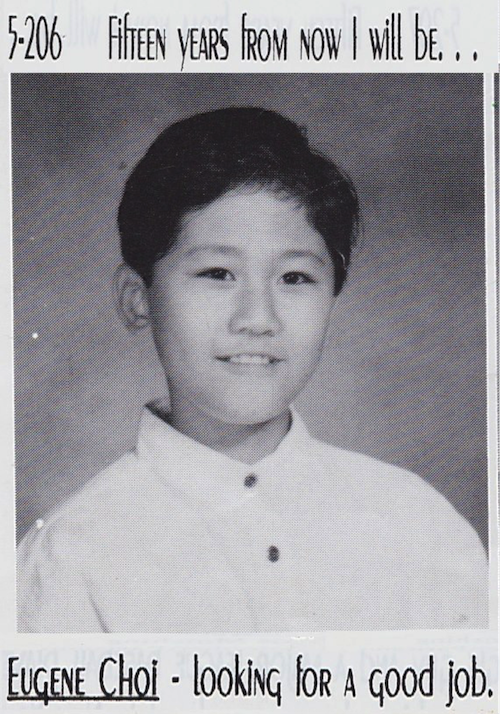
    I remember looking at my fifth grade yearbook and my answer to the question “Fifteen years from now I will be…”

    So I worked a ton growing up. I worked my first job illegally when I was fourteen at the Manhattan mall folding clothes for five dollars an hour. During college, I was juggling my studies and three other jobs.

    I was naive and thought a lack of money was causing the pain that actually came from my parents not getting along.

    When I finally achieved my external goal of making a lot of money, I still had trust issues. I still had the pain from the broken relationships in my life. Things didn’t feel any better.

    I was still hurting from never having a safe space to be myself growing up, and this was when I realized the truth.

    We try to avoid our hurt and pain, and as a result, we often make misguided decisions on what to pursue in order to actually feel successful.

    For example, if you grew up with a father who was mentally abusive and often told you that you wouldn’t amount to anything, your anger might lead you to chase after a well paying job to prove him wrong.

    The unfortunate part is that proving him wrong won’t necessarily make you feel any more successful because what you’re really craving is a supportive father.

    This is why it is so important to be able to develop the skills to be able to accurately assess what is needed to help you truly succeed.

    Ensure That Your External Goals Align With Your Internal Goals

    According to Harvard Professor Daniel Gilbert, known as the happiness expert, data shows one of the biggest reasons for people’s unhappiness is their inability to predict what types of things will make them truly happy.

    He advises us to simply do our research in advance so we can better predict if what we are chasing will make us feel successful or not.

    “If I wanted to know what a certain future would feel like to me I would find someone who is already living that future. If I wonder what it’s like to become a lawyer or marry a busy executive or eat at a particular restaurant my best bet is to find people who have actually done these things and see how happy they are. What we know from studies is not only will this increase the accuracy of your prediction, but nobody wants to do it.” ~Daniel Gilbert, The Truth About Happiness May Surprise You

    My real desire was to have a safe space to be myself and have more authentic connection in my life, but everything I was doing was making the opposite happen.

    Then I started studying and having conversations with people who had what I wanted. I realized the people I’ve met who have great relationships all were continually vulnerable with each other, and when they felt stuck and needed help, they reached out to the right people.

    So to try and build the relationships in my life I so desperately wanted, I started changing my external goals.

    I set a goal to have the courage to be vulnerable when I’m feeling shame.

    I changed my goal for my wife and I to go see a marriage counselor.

    I changed my goal to learning to be more honest with my wife when she hurts me instead of shutting her out and temporarily shunning her.

    These changes made all the difference and I finally started to feel successful.

    I had a skewed perspective on the things I thought would help me succeed. The parable of the Mexican fisherman is a great reminder that we need to define success for ourselves, based on what makes us feel successful, rather than letting someone else define it for us.

    Maybe you don’t feel successful yet because, like me, you’ve been chasing after the wrong things based on what others have told you.

    Take a moment to think about what types of actions will help you attain your internal goals. What might your new success measurements be?

  • My Ordinary Checklist for a Highly Successful Life

    My Ordinary Checklist for a Highly Successful Life

    “In this world, an ordinary life has become synonymous with a meaningless life.” ~Brené Brown 

    As I see it, there are two types of people out there.

    There are those who read goal attainment books and feel inspired, and me.

    The former will read the anecdotes about all those underdogs who beat the odds and managed to achieve wealth and prestige beyond their wildest dreams and will say to themselves, “Wow! That could be me!” They’ll feel enlightened, invigorated, and revved up to make a change.

    And then there’s me.

    While I may initially pick up such a book with genuine interest, my desire to whip my life into shape will invariably do an about-face, leaving me anything but inspired. If I say anything to myself as I read, it’s more likely to be a string of ego-deflating curses than a yearning-filled “one day that’ll be me.”

    I actually discovered my aversion to success books by accident. Charged by work with the task of developing an online course on the topic of goal attainment, I began to do some research.

    At first, it all seemed dandy. To-do lists? I can get behind those. Articulating a vision for the future? Check, check! But then, as I started to delve a bit more, I began to sink into a mire of confusion amid all the contradictory advice:

    Make to-do lists and then prioritize them by urgency. No, not by urgency, by importance, because that’s the way to a meaningful life. Except that to-do lists are actually now passé, so chuck those altogether. It’s the “less is more” mindset that will breed success.

    Just make sure you’re not spending too much time planning your tasks, because that takes you away from working on them. Although most failed projects could have been saved at the planning stages, so planning is crucial before embarking on any project. You would have known all of this had you properly color-coded your task list in the first place!

    The more I delved, the more aware I became of an undercurrent of shame that was slowly simmering inside of me. It was the feeling that something was dreadfully wrong with me if I was not willing to do whatever it takes, like the underdogs in the books.

    Didn’t I have any faith in the universal laws that turned out Oprahs and J.K. Rowlings and an endless stream of other success stories? Why, it might be as simple as manifesting my destiny with positive thinking, or mindfulness, or a cream cheese bagel for all I knew.

    No dice. Guess I’m just not built for success.

    And yet at some point, maybe just for fun, I began to consider an alternative: What if most of the people I know are more like me than them—you know, busy with life, proud of themselves when they hit “good enough,” happy to have work that is more or less satisfying, even if it’s not tremendously lucrative or glamorous?

    What if others don’t view themselves as a rags-to-riches tale waiting to happen and instead walk around with their heads held high simply because they are proud of the ordinary lives they are living?

    It felt subversive, empowering, and indeed nothing short of revolutionary.

    Success doesn’t have to mean a coastal beach house or getting up to speak in front of a crowded audience where everyone knows just who you are, what you do, and how much you’re worth.

    There is a quieter, softer form of success.

    I began crafting my own definitions and principles of success. Things along the lines of:

    * If you have one person in your life you genuinely care about and who genuinely cares about you, you’re successful.

    * If you have one more positive thought today than you had yesterday, you’re successful.

    * If you have just one thing to be proud of, or be grateful for, or to celebrate, even if it’s just the fact that you didn’t rip anyone’s head off even though you had a miserable day, you’re successful.

    Don’t get me wrong; I’m all for setting and achieving goals. I’m also all for striving to become the next one-in-a-million success story, if that’s what floats your boat. But if it isn’t what floats your boat, that’s no indicator of your personal worth, or lack thereof.

    It’s a sad sign of the times that success is measured in extraordinary terms only. It’s as if the benchmarks of ordinary, mundane success have now been rendered obsolete, or worse: something to feel ashamed of.

    It takes heaping amounts of courage to step back from the grandiose expectations of what success books tell you life could be and say that what you already have is enough. Maybe even more than enough. But in truth it is.

    So, if you, like me, are an “unsuccessful” type, the type that reads about the Oprahs of our world with little more by way of reaction than a “that’s nice,” remember that great potential for success lies in your own backyard.

    Success is what you make of it—even if that means simple, boring, ordinary ole everyday life.

  • The Truth About Failure: How Hitting Hurdles Makes You Successful

    The Truth About Failure: How Hitting Hurdles Makes You Successful

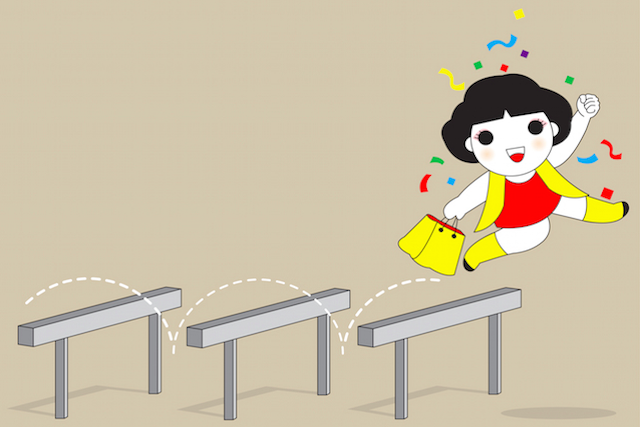
    Woman Jumping Hurdles

    “There are no failures. Just experiences and your reactions to them.” ~Tom Krause

    I had spent years training for this race. This was the big one. If I won and made the qualifying time, I would go on to compete in the Canadian National Track and Field Championships.

    I was burning to win. Only the winner of this race would qualify. Second place wouldn’t cut it.

    Competing at the national level could lead to all kinds of opportunities: sponsorship, athletic scholarships, and a career in athletics.

    My favorite form of self-torture was the 110-meter hurdles. I lived and breathed sprinting and hurdles. Track and field was my life in my last year at high school. In fact, track was probably the only reason I even showed up at class.

    I was good at it too. I had run the fastest time in my event that season and I was on target to win the Provincial Championships.

    I trained four to five days a week on the track, plus I hit the gym two to three times a week. I was in peak form and ready to destroy my competition.

    I was laser-focused on the day of the event in Vancouver, Canada, at the Provincial Track and Field Championships. In my races, I was usually the first one out of the blocks and this race was no different. I exploded out of the starting blocks and was the first one to reach the first hurdle.

    The hurdles for my age category were thirty-nine inches tall (three inches lower than Olympic height), made of thick wood, and were weighted with a metal base. When you hit them, they resist and they don’t move much.

    Best if you don’t hit them.

    I felt powerful in this race. By the third hurdle, I was already taking the race. At no time was anyone in front of me.

    Then, I started hitting hurdles. A lot of them. Each time you hit a hurdle, it dramatically slows you down.

    Some hurdles I smashed into with my knee, while others I hooked with my foot. Painful every time.

    And I didn’t just graze the hurdles. I really clobbered most of them. At times, it almost brought me to a complete stop.

    I hit five hurdles that day. There are ten hurdles in total. It was the worst race I had that season.

    Despite hitting so many hurdles, I still came in second place. I could have touched the winner with my arm, it was that close.

    If I had run a clean race like I usually did, I would have shattered my previous fastest time. I would have easily run the fastest time that year in the province and I would have qualified for the Canadian National Track & Field Championships.

    I was devastated after that race. All my training for nothing. I wasn’t going to get a chance to compete nationally. Game over. Done. I felt like all the life had drained out of me.

    That was the last time I ever jumped over a hurdle.

    I spent the rest of the summer partying and hanging out with friends. I became a bit directionless and I no longer had much interest in going to university (the only reason I was thinking about going was so that I could compete in athletics).

    At the end of summer, I started working full-time in a supermarket and saved up cash. By spring of the following year, I was on a four-month trip around Europe with one of my best friends.

    After that trip, the demands of life took over. I got stuck in low-paying jobs for a few years.

    I had an unhealthy diet and I would sometimes get drunk on the weekends. I barely had time or energy to even go for a short jog once a week.

    Failure Hangs Heavy

    That race is still my biggest failure in life. Seems silly but there it is.

    Over the years, I occasionally thought back to my track and field days.

    “That race was mine and I should have won that. If I had won, maybe I would have gotten sponsored by a sports company. Maybe I would have gotten an athletics scholarship. I might have had a sports career. I totally screwed up my big chance.”

    The concept of failure is very pervasive in most modern cultures. It’s also responsible for a lot stress, poor health and well…basically crazy, unbalanced behavior.

    In our culture, the attitude of “Second place is the first loser” is prevalent. You’re either a winner or you’re a loser. Not much in between.

    We equate “winning” and success with achieving certain milestones such as having high salaries, being in a relationship, or having high-status roles in life. For many of us, not achieving these external successes means we’re failures.

    Additionally, “mistakes” are often not tolerated at work or in relationships with people. There is usually a background, gnawing pressure to always say and do the right thing.

    Failing can feel like an imminently dangerous threat that we must avoid at all costs, and cover it up when it does happen.

    But it doesn’t have to be this way. If we just shift our focus, we can use failure to propel us towards our goals.

    You Must Fail to Have Success

    Quite often, when learning something new, we think that we have to nail it right off the bat. Who wants to look like a rookie, right? A clueless beginner?

    Nope, not me.

    Everyone wants to avoid mistakes and failure. But it is precisely through the path of making mistakes and “failing” that we learn.

    You will hit hurdles in your life. You’ve been hitting them. What matters is what you do after you hit one.

    In my case, I focused on my failure. I focused on hopelessness and I identified myself as being a failure just because I had a bad race.

    I didn’t value coming in second. I ignored what was good and I was dismissive of anything positive that I had achieved.

    I even gave up doing something I really loved doing.

    You can see how dangerous having a “win or lose mindset” is, right? It shuts down our learning, closes off options and causes us to suffer emotionally.

    We need to focus on our little successes, on what we did right and on how to keep learning and improving.

    Let’s get comfortable with the idea that we’re going to make “mistakes” and that we might not always run perfect races.

    If you take on the challenge of cultivating an improvement-oriented mindset, this will help you in all areas of your life.

    You’ll become curious about your mistakes, observing yourself kind of like a scientist might: How can I do this better? What could I do differently so that I can avoid making that same mistake?

    Winners and No More Losers

    I still cringe sometimes when I say or do the “wrong” thing, but I usually catch myself and resolve to do something different the next time.

    If I feel ashamed about making a mistake (or bombing big time), I try to move on as quickly as possible.

    I recognize that my mind is my greatest ally; I’m the one who defines my own version of success, and I re-frame my experiences in a healthy, positive way, whenever I can.

    Everyone deserves to “win” in life, and everyone is capable of reaching their goals in a way that is emotionally and physically healthy.

    Can everyone really be a winner in life?

    Yes, definitely…and you don’t need to come in first place or be the “best” to be a winner. When you love what you’re doing and when you’re focused on learning and making small improvements, anything is possible.

    That’s winning.

    Woman jumping hurdles image via Shutterstock

  • Why We Should All Stop Trying to Be Good Enough

    Why We Should All Stop Trying to Be Good Enough

    Man Sitting Under Tree

    “Only something as insane as human beings would ever asked themselves if ‘I’m good.’ You don’t find oak trees having existential crisis. ‘I feel so rotten about myself. I don’t produce as much acorns as the one next to me.’” ~Adyashanti

    The feeling of not being good enough is widespread among the population regardless of age or social status. Even people who, from society’s standards, are highly successful may very well feel they are not good enough and that something is missing.

    For most of my life, I suffered from that feeling of not being good enough.

    When I joined a master’s degree program a year and half ago, I was shocked to see how smart some students in my class were. I was surrounded by people who had more work experience than me and were way more confident than I was.

    Sometimes I felt stupid in their presence. No matter how hard I tried, I just couldn’t find a way to contribute in class. Never befor had I felt such a deep sense of not being good enough.

    Achieving, learning, or experiencing more never seemed enough to fix my issue. I started to seriously question whether anything I would accomplish could ever help me feel “good enough.”

    I perfectly understood that there would always be people around me that are more confident, more attractive, smarter, richer, or more knowledgeable than I am, but this still didn’t make me feel better.

    Since I always felt that my duty was to contribute to society, feeling that I couldn’t contribute as much as I would like to made it difficult for me to maintain a healthy self-esteem.

    When it comes to self-worth, experts generally recommend using positive affirmations, learning to be more self-compassionate, or achieving small goals to create momentum and build confidence.

    These techniques are certainly good ways to build self-esteem, and I used them personally with some success. However, it’s likely that they might be missing the point.

    Rather than “How can I feel good enough?” wouldn’t a better question be: “Do I need to feel good enough?” or “Is it actually possible not to be good enough?”

    Most people spend their life trying to be good enough, to be liked and appreciated, often without actually succeeding to fill a void within themselves. It’s insane to see how everyone tries so hard to be “somebody.”

    I started wondering if, during all that time I spent trying to be good enough, I wasn’t actually fighting the wrong battle.

    Our society conditions people to tie up their self-worth to how much they “contribute,” and that supposed “contribution” often refers to the amount of money we earn or our social status. Society creates an artificial duality between “successful” people and others.

    Nowadays, the idea of success is a constant obsession. Media and personal development websites are continually talking about what more can be done to become more successful. Success has become the Holy Grail to pursue, the only path to living a life worth living and earning recognition from society.

    However, I could easily come up with names of people that are regarded as “successful” from society’s standards, but are not from an objective point of view.

    Interestingly, the definition of success is rarely explained. It seems as if we have all agreed with society’s definition. There appears to be very little space to question it; however, could the assumption under which we operate our life actually be false?

    To be honest, this whole idea of good enough or not good enough is nonsense. I’m sure the doctor didn’t tell your parents when you were born that, “I’m sorry, but your son won’t be good enough.”

    The entire paradigm of “good enough or not good enough” comes from the misconception that we need to become “somebody” and that other people have the power to determine our self-worth.

    It is a mere product of social conditioning, not of reality, and it certainly doesn’t have to be that way!

    Depending on your belief or reasoning, you could spend your entire life just meditating under a tree, doing absolutely nothing, and you would still be totally relevant as a human being.

    So why don’t we get rid of that concept once and for all, discard it as irrelevant, and rebuild our life on a healthier assumption?

    Being a total “failure” under society’s standards can never ever make you a failure as a human being. Nothing can turn you into a not-good-enough person without your consent, without you buying into the current fallacious assumption that society is telling you to live under.

    Sure, you might have failed at many of the things you’ve tried and some of your friends might be more “successful” than you are, but then, does that mean you are not good enough? Does that really mean you are not worthy?

    If you buy into society’s expectations, yes, probably. If you don’t, the question then cannot be answered, because it’s irrelevant!

    A tree doesn’t have self-esteem issues. A bird doesn’t ask itself, “Am I good enough?” Why should you?

    Are your attempts to become somebody actually working? If not, it might be time for you to stop trying to be “somebody” and just relax.

    Imagine the sense of freedom that you would experience if you were to stop trying to be “good enough.” Suddenly, the burden you’ve being carrying on your shoulders would become lighter.

    You could then enjoy your time with others without trying to impress them. You’d be able to free up your energy for more creative purposes. Suddenly, you could just be yourself.

    The greatest and wisest spiritual teachers of all time stopped trying to be somebody because they realized that it was not possible. If after all those years of inquiry and self-reflection they came to that conclusion, is it possible that they were on to something?

    So do you really need to be good enough? Are you fighting the right battle? This is something you might want to meditate on. It might require some time before you can change your former conception, but isn’t it worth trying?

    Personally, I chose to fight less and to progressively distance myself from the battlefield. I’m not “not good enough” or “good enough.” I am just who I am and that’s more than enough!

    Man sitting under tree image via Shutterstock

  • Why We Need Mistakes and Failures

    Why We Need Mistakes and Failures

    “The greatest mistake you can make in life is to be continually fearing you will make one.” ~Elbert Hubbard 

    A while back, I was invited to attend the Asian Chamber of Commerce’s 22nd Annual Awards Gala. Focused on “The Spirit of Entrepreneurship,” the Asian Chamber of Commerce celebrated individuals who exemplified great leadership skills in the Houston community.

    The keynote speaker, Dr. Lynda Chin, surprised me by talking about failure. A scientist, Dr. Chin is the first to admit medical mistakes. She talked about cancer-related pharmaceuticals having a 95% failure rate, because the medication needs to be tailor-made to the individual.

    I had never heard someone in a high-ranking position admit to failure so freely. But as she put it,  “There is no success without failure. There are no experiments that succeed before first failing.”

    So in essence, failure is the stepping-stone toward success.

    Another person who inspired me that night was Keiji Asakura, an urban design and landscape architect. A botanist, without the degree, he was a lover of plant life. Asakura was another model of someone who was able to take his mistakes and use them as the fundamental building blocks of his successes.

    One day nearly 10 years ago, his company filed for bankruptcy, and on the same day his wife asked him for a divorce. Life couldn’t have been any worse. In the depths of despair he asked himself, “Why do I do what I do?” The answer: because I love it.

    Because he loved it. Hearing those words from someone not in entertainment reminded me of why I do what I do. Because I love it. Without that love there would be no point in enduring this much anxiety in anticipation of something greater.

    People tell me all the time that they admire me for going after what I really want. But people only see what they want to; they forget that behind every truly large success, there are a million failures. For every good sentence that I write, there are thousands more that need to be rewritten.

    So far, in my adult career, where I’m at now is my lowest point. There is nothing on the horizon that promises that the work I’m doing now will pay off. My life is a gamble.

    My dad actually—I say “actually” because he only inadvertently supported my career choice—said, “In every business there is a risk, but without risk there is no potential to prosper. You simply have to take it.” (more…)

  • Define Success to Create Success, Starting Now

    Define Success to Create Success, Starting Now

    “What matters is the value we’ve created in our lives, the people we’ve made happy, and how much we’ve grown as people.” ~Daisaku Ikeda

    Ahhh success! It sounds so good. We all want it, but are you brave enough to define what success means to you and go for it?

    Society conditions us to define success as being the best, attaining prosperity, making a lot money, or having a fancy CEO title.

    I thought I had “success” ten years ago where I spent five years working on Wall Street at Credit Suisse, an investment banking firm in New York City. I started as an associate on the Corporate Bond Sales desk and was promoted to a Vice President.

    I worked at the firm as a summer intern between my first and second years of business school and received a full-time offer. I remember being very hesitant about taking the job because I knew it wasn’t my passion, but I didn’t know what else I wanted to do.

    It was exciting when I first stepped on the trading desk—tons of energy, noise, and people sitting less than three feet away from me on both sides. In an unexpected way, the noise faded into the background and I became used to it.

    I enjoyed the job at first and how fast paced it was, but after a few years, I realized that I was not engaged on this path. I believed that there was something more for me.

    It was confusing because I had a good salary, good title, and a good life, but it wasn’t fulfilling.  Many thought I was “successful” by the traditional definition, but I did not feel like I was on my true path and making a difference.

    I stayed in finance for a while hoping my feelings about the role would change—they didn’t! Although I’m interested in the markets, I’m not passionate about them. I wanted to read personal development books in my free time, rather than Barron’s and Business Week.

    The truth was finance, although a great path for some, wasn’t my path. This took me a while to admit. It’s powerful to face the truth! The job was draining my energy, and after a few years, I wasn’t excited to start my day.

    Often the hardest thing to do is to walk away from something that is good for others but not great for you.

    When I was 40 years old, I made a tough decision to change my life and leave the finance world for real. I opted for a much more fulfilling life as a Business/Life Coach, Speaker, and Author. I had to take a step into the unknown and create another career and life that felt authentic.

    I love what I do now because I get to read and write about things that inspire me and help others make a difference in their life. I feel like I am making a positive contribution to the world and that makes me happy! (more…)

  • One Simple Way to Live a Successful Life

    One Simple Way to Live a Successful Life

    “Whenever you fall, pick something up.” ~Oswald Avery

    There are plenty of people in this world who know how to be successful, but how many of them know how to fail?

    When you fail, that’s when you become stronger—you learn to pick yourself back up, dust yourself off, and move on.

    These are also opportunities to learn and to help others as you come back up. As the quote above says, when you fall, pick something up. I would add that when you fall, you should pick someone up too.

    I used to envy other people, thinking them more successful than I may have been. But I have done a lot in my life, seen a lot of things, worked with lots of different kinds of people. I have been successful and I have failed, and I think it is this that has allowed me to be a more grounded human being.

    I have learned that it takes all kinds of people to run the world, and that the ones running the world are not always the smartest.

    I have worked underneath supervisors who make you wonder how they graduated from high school, and I have met truck drivers out on the road who are smarter, more educated, and more widely read than some of our recent US Presidents and CEO’s of fortune 500 companies. (more…)