Tag: Success

  • Forget “Should” and Live the Life You Want to Live

    Forget “Should” and Live the Life You Want to Live

    Girl Skipping at the Surf

    “To be yourself in a world that is constantly trying to make you something else is the greatest accomplishment.” ~Ralph Waldo Emerson

    There was a time when I “had it all.”

    I was in my tenth year of teaching in a small, rural school. I lived with my husband and daughter in a four-bedroom house in a subdivision in the woods. Life was routine, predictable, and secure. We made plans to fix up the house and figured that I would likely work in my job until retirement.

    However, two things got in the way of those plans.

    First, I felt this constant unrest. My job became progressively more stressful, and I resented the time commitment that seemed to be unappreciated.

    I came home to a house that needed constant attention. Cleaning and yard work brought me no more joy than spending hours completing paperwork in my classroom. I began to procrastinate in both areas, which only increased the amount of stress.

    And then we began sailing. The day we launched our twenty-nine-foot sailboat on Lake Huron, everything changed. We loved the small space. We loved the tight-knit marina community. We loved the traveling.

    We loved it so much that we lived aboard and cruised for ninety-three days in the summer of 2012. At the end of the summer, I physically returned to my job, but mentally I was miles away, still sailing the seas.

    And that is when we decided to move. My tenth year of teaching in the rural school was my last year living up north. My last year living in a house.

    We packed everything we could fit into our Volvo station wagon and drove south. We drove 1300 miles to Houston, where we started a new life. In August 2014, we traded our apartment for a thirty-five-foot sailboat, aptly named Breaking Tradition.

    We have broken away from the script everyone thinks they should follow if they want to be “successful.” We do not own property. We take our showers in the bath house, and we did not own an oven for our first year living aboard. My husband and I started out sleeping together on a twin mattress.

    And yet, we have never been happier. Instead of doing housework or yard work, we walk the docks. Rather than spending the entire day inside a house, we sit on the back deck and talk to our neighbors. Everyone keeps cookies in their boat, in case my daughter comes over.

    Your dream may not be to leave it all behind and live on a sailboat. There is nothing “wrong” with enjoying the creature comforts that a house provides. However, is it possible that the conventions we take for granted as being “the way things are done,” are holding you back? Is there something that you only do because you are “supposed to?”

    Here are some lessons I have learned, from living a life apart from the script:

    1. Rethink “success.”

    The greatest lesson I have learned in our journey is to question everything that we think we need to do in order to be successful.

    “Success” is an arbitrary term, with no meaning on its own. What is the point in being “successful” if it is at the expense of your own happiness? Spending less time working and worrying about material gain can free up your energy for things that really matter to you.

    2. Don’t be a slave to “security.”

    I have met so many people who live mediocre lives, because they think that their situation is “secure.” And yet this is an illusion. Anyone can lose a job at any time, and limiting your experience in order to try and avoid this does not make any sense.

    Trust in your own ability to problem-solve, rather than allowing fear to prevent you from taking risks.

    3. Spend your energy on things that matter to you.

    Do you love maintaining a yard? Does home ownership matter to you? How important is that large paycheck? Ask yourself what you value rather than just doing things because you are supposed to.

    This is your life, and there is nothing that you must do. Everything is a choice, even when you think it is not.

    4. Don’t be afraid of change.

    I loved my teaching job up north when I first started. And that made it more difficult to leave. So many of us look at our current situation as being permanent, when the only thing that is guaranteed in life is change.

    I left the house, and I may not live on the boat forever. Move with the flow of life rather than resisting it. Be ready to move on when it is time.

    5. See judgment for what it is.

    When you do something different, it is likely that you will face criticism. But understand that other people’s words mean nothing about you.

    When someone criticizes or judges your choices, they are only showing their own misunderstanding. It is an insecure person who judges another person’s choices.

    6. Don’t be afraid of failure.

    Just like “success,” “failure” is also an arbitrary term that has no meaning. Trial and error is how we inherently learn, so making mistakes will be inevitable.

    When we attach the loaded word, “failure” to our mistakes, we deprive ourselves of the opportunity to learn from the experience. Things might not always go as planned, and you may change your course as you go. This is all a part of the process and nothing to worry about.

    In our journey, we experienced a great deal of trial and error. I interviewed for jobs that did not result in offers. I made plenty of mistakes in starting my business. We have had repairs to the boat that didn’t go as planned. Last winter, then leaky windows caused our cabin to be filled with mold!

    And still, each of these mistakes led to greater learning. In the end, we are living a life that we had only dreamed of in the past, and spending our time with friends who share our passion. I can think of no better way to live.

    Girl skipping at the surf image via Shutterstock

  • 3 Things That Can Help You Bounce Back from Failure

    3 Things That Can Help You Bounce Back from Failure

    Jumping Man

    “If you could kick the person in the pants responsible for most of your trouble, you wouldn’t sit for a month.” ~Theodore Roosevelt

    The year was 2011 and I had been working as customer relations officer in a private healthcare firm for three years. It was as boring as it sounds, and I had been planning my escape toward self-employment for around a year by working in the evenings as a personal trainer.

    I imagined that on the final day I’d exit the office for the last time in a blaze of happiness and jubilation, thrilled that I’d finally taken the plunge. In reality, as soon as I walked out and the summer breeze hit my skin, I got an instant rush of sweaty palms and an uneasy feeling in the pit of my stomach.

    “Have I done the right thing? Am I making a massive mistake here?”

    The momentum into self-employment had been planned for up to the month before. I’d go into local businesses and offer free sessions thinking that some would convert into paying clients.

    It had worked for another personal trainer I knew. By the time I left my job I had four big businesses lined up to visit with my offer.

    At the start of the week I was confident I was hitting the world of self-employment running. At the end of the week I was staring into the abyss;

    Four businesses visited—zero sign ups.

    I knew I was in a challenging situation when I was sat in my kitchen on a Tuesday morning, rain pouring down outside (I live in the UK, after all!), with not a clue what to do next.

    In resilience science there is a concept called “critical slowing,” which states that a system is most vulnerable after a period of trauma with little time to recover.

    Sitting alone in my kitchen on that Tuesday morning while everyone else was at work, I was experiencing my critical slowing and facing a choice. Do I persevere forward or do I bathe in familiarity (aka – get a job)?

    Now approaching my fourth year of self-employment I frequently think back to that moment, the fear I felt, the uncertainty that suffocated every part of me. I think about where I’d be right now if, instead of brushing up on my marketing, I went straight to the job searching sites.

    What helped me get through?

    1. Burning the boats.

    In 1519 AD Spanish commander Hernan Cortes led his army to invade what is now known as Mexico. As he led his men to land, he instructed one of his officers to burn the boats behind them so they would have no choice but to fight forward.

    While I was in no mood to invade anything, I took a cue from Cortes and made a promise to myself that I wouldn’t go back to the job I’d just left.

    I knew if I gave myself the option of going back, there would be a chance I’d choose it because it was familiar, it was a regular income again, and I would have certainty again.

    I also knew it most definitely wasn’t what I wanted to do with my life, and so eliminating it as a choice meant it freed up my mind to think about what choices were available to me.

    This meant contacting more companies and refining my message about what I was offering.

    Lesson: In the height of emotion it is easy to choose the perceived easiest option. This tends to be what’s most familiar. Hold off on this option, as it could be leading you back to what you don’t want.

    2. Refining expectations.

    It’s very easy when starting out in anything to compare yourself to people who’ve ‘made’ it—become a millionaire, gotten the body people desire, the fun experiences shown across their social media. Their success becomes your expectation.

    I was the same, and it became incredibly draining, especially after my first week of hell!

    I found it important to reassess my expectations. Based on this new feedback of zero sign-ups, I had to reassess what it would be beneficial for me to focus on.

    Lesson: Beware of what you’re comparing your reality with. Look at what you think should be happening and decide whether that’s actually helping you or hindering you. Failing is inevitable at some point; if your expectations are blind to this, it’s going to be a big shock.

    3. Keeping self-talk in check.

    This is where knowing about psychology saved my skin. I knew that, just because I was thinking in a certain way that didn’t mean I had to take it as truth.

    Let me tell you, when I was sitting in my kitchen on that Tuesday morning, people at work earning money, me earning nothing, I was not thinking, “Aaron, you are on fire, you are doing well, this was a great decision!”

    But I knew that thoughts tend to be mood-dependent, so I had the awareness to allow them to pass instead of letting them guide any decisions I needed to make right then.

    As I moved around in different environments and my mood changed, my thoughts became more rational about what I needed to do. I began to think clearly again and developed new ideas on how to proceed.

    Lesson: Just because you’re thinking it, that doesn’t mean it’s true. How you think in a happy mood will be completely different to how you think in a low mood. Recognize what’s the best mood to make a decision in and the moods in which it’s a terrible idea to make a decision.

    Over the years, as I reflected on these three factors that helped me carry on, I noticed they were coping strategies that people chose in others areas as well.

    For me, it was my disastrous first week of self-employment, but I saw it in people experiencing trouble in dieting, having trouble in their relationships, or simply going through a troubling period of their life.

    The path back to control began in their head. The same is true for you.

    Jumping man image via Shutterstock

  • It’s Not All About Money: 5 Ways to Redefine Success

    It’s Not All About Money: 5 Ways to Redefine Success

    “Success is liking yourself, liking what you do, and liking how you do it.” ~Maya Angelou

    When I was thirty I was earning double the salary I am today. I was also stressed, depressed, sick, tired, and hated my job.

    Most media portals want us to believe that in order to be successful we must own a large property, have vacations in exotic destinations, drive a flashy car, and be designer-dressed from head to toe. And that’s just for starters.

    We are bombarded with these falsehoods from an early age and we set out on a mission to acquire the material goods that we believe will cement our success.

    We chase an illusion because we expect it to bring us fulfillment and then we wonder why we’re left feeling unsatisfied.

    Relentlessly pursuing a materialistic ideal is a breeding ground for anxiety and stress.

    Today I’m forty years old and I’m a freelance writer. Fun fact: I don’t always get paid to write. It’s a truth for many creatives. For a long time I found it hard to believe in the virtue of working without financial reward.

    Even though I was in a position to have my voice heard, even though I was able to connect with many likeminded people, and even though I received a wealth of messages from those who were able to resonate with and relate to my work, it still felt like I was falling short somehow. Why?

    Because I’d been conditioned to believe that success was synonymous with a bulging bank account.

    It wasn’t until I started to celebrate my personal achievements for what they actually were, rather than what I’d been told they needed to be, that I began to realize I didn’t always have to attach a dollar sign to everything.

    Shifting my perspective was the first step on a journey to finding freedom and liberating myself from limiting beliefs.

    Here are five ways I’ve learned to redefine success and recognize value:

    1. Understanding that health is wealth.

    Think of food as fuel. What we feed our bodies determines how we think and feel; our output is affected by our input. Paying attention to our diet is crucial to our overall well-being and has a direct impact on our ability to operate at our optimum best.

    I used to feel constantly tired and run down when I was existing on foods that were sucking my energy rather than restoring it. We can’t enjoy life when we’re running on empty. Fill up on energizing foods that are rich in goodness and be prepared to notice the difference.

    2. Creating a self-care system.

    By weaving self-care into our days we feel a sense of reward that doesn’t have to be financial. Set aside time on a regular basis for some love and kindness, just for you—weekly is good, daily is even better.

    Maybe it’s some lunchtime yoga, perhaps it’s finding twenty minutes to sit in peace or an evening ritual of a soaking in the tub with some essential oils. The benefits of holistic therapies are far reaching and make a true difference to how we feel.

    Some of the things I make time for are reading, lighting candles, using lavender oil, and listening to classical music. They are my tools to unwind and de-stress and I love the positive effect they have on me.

    3. Letting go of “should.”

    The media machines love to tell us what we should buy in order to feel good. Countless magazines make their millions by highlighting what we are lacking and what we must purchase in our endeavors to be thinner/younger/sexier.

    Since I’ve stopped being spoon-fed and started my own self-nourishment, I can honestly say I’ve never felt more confident. I make choices that are right for me and I don’t second-guess my intuition. Tune out of the TV and tune into yourself, and you too will feel more confident.

    4. Being grateful.

    When we truly appreciate what we have and make gratitude our starting point, we are far less likely to worry about what we don’t have. It’s actually quite difficult to feel a sense of lack at the same time as feeling a sense of gratitude.

    Mindfulness is a discipline, but the rewards of appreciating each gift that life brings far exceed the momentary pleasure of a new purchase.

    Each night, before I go to sleep, I make a mental list of things that I’m grateful for. It’s so nice to end the day focusing on abundance and joy. No matter what kind of day I’ve had, there is always something I can find to say thank you for.

    5. Paying more attention to life rather than “likes.”

    Success isn’t how many Facebook friends we have or how many people pressed like on our post. Social media is an amazing tool but it’s also a forum where people tend to showcase the best of themselves. We often make big assumptions based on small snippets.

    I used to get so hung up on what everyone thought of my life that I lost out on living it.

    These days I place high value on what I think of my life, not what anyone else might say. And, by doing so, I’ve found that I have not only set myself free, but I’ve also found myself within a community of like-minded people who are intent on raising each other up. It’s a loving embrace and it’s priceless.

    When we make our real life our focus we’re much more likely to feel happy and fulfilled.

    What’s your definition of success?

  • Why Being the Best Is Not the Key to Happiness (And What Is)

    Why Being the Best Is Not the Key to Happiness (And What Is)

    Happy Man

    “A bad day for your ego is a great day for your soul.” ~Jillian Michaels

    A few weeks ago, when I was feeling a bit down on life, I was surfing through Facebook and found myself getting more and more upset.

    There were weddings and vacation photos and posts about promotions and new purchases and all the great things that happen in people’s lives.

    These were my friends, and I couldn’t understand why I felt so unhappy. Why did I feel a pit in my stomach that I wasn’t good enough when I heard about someone getting the job of their dreams? Why was I so thrown by other people’s lives going well?

    That’s when an idea that has been bumbling around my mind for a few months hit me like a ton of bricks. I realized something I’ve always known but never had words for.

    I realized the evil of my own ego.

    Ever since I was young, I was that kid in school who needed to be the best, who needed all the awards.

    I took something I was good at (academic achievement) and created an identity around it, visualizing myself as the Best. And I succeeded. I was valedictorian. I graduated Summa Cum Laude.

    I got the awards, the grades, the standardized test scores, the recognition, all of which was meant make me happier. It never did. 

    With an identity centered around being the top dog in my field, I became obsessed with the people who were better.

    There was always someone who achieved more than me, or someone else who got an award I wanted. Even if I was number one in the class, there were always those points that I missed or the looming fear that I couldn’t do as well on the next test.

    I made myself miserable trying to placate the beast inside me, a beast that was never content, could never relax in the glory of what I had accomplished. It always wanted more, more, more.

    I walked away from that academic life almost a year ago and started writing books. Right away, I realized I had to fight that ego, suppress the beast inside me that still wanted to be the best.

    Writing has always been my joy in life and I didn’t want to do it for money, fame, or success. I wanted to do it because it was something I’d always wanted to do. 

    For months I fought down my ego and tried to focus on the simple joy of creating stories and playing with characters.

    I certainly slipped up a number of times and I still compare myself to others on bad days (like the one described above), especially other writers my age. But on the days I can put that self-image aside and just be, those are times of true bliss, the days I’m happier than I’ve been since I got my first A.

    Perhaps you won’t agree, but I’m starting to believe that a significant portion of the bad things in life stem from our own gluttonous egos.

    We want to be the best, be recognized, be validated and put on a pedestal, but years of research and eons of evidence tell us that those are not the things that make human beings happy.

    Ironically, it’s selflessness that tends to make us most content.

    Doing work for no other reason than because you love it; giving time to your family or a cause that matters to you; luxuriating in the simple pleasures of a good meal, exercise, a book you love, or a beautiful view—these are the things that matter, the things that make our experience on Earth worthwhile.

    Money, fame, glory, accolades, recognition are like heroin to the human brain. Some deep and intrinsic part of our nature wants them, and when we get them it sure is a rush to the system.

    But the rush is fleeting, empty, and immediately requires more.

    Focusing on these material, external things and structuring our lives around them can be just as unhealthy as destructive drugs.

    The trap of vanity can capture a soul and mutilate it beyond recognition. Relationships fail, passions are lost, and years later we find ourselves wondering how we spiraled down to such a point.

    I know because I’ve been there.

    I compared myself to my peers in school. I’ve compared myself to my friends on Facebook. I let competition run my life for years. And never once did it make me happy.

    I’m not perfect and I still fall into the trap of wanting to impress everyone. But I’m fighting that instinct day by day, trying to do what all the sages and wise men advise: Don’t give an owl’s hoot about what others think of you. 

    So kill your ego. Don’t compare yourself to others (a truthful cliché) and do things just because you enjoy them.

    Create work you love. Spend time with people who make you happy, make you better. Enjoy the views, climb the mountains, swim in the oceans, and do all the things you’ll be happy to remember when you’re old.

    I can personally guarantee fighting to “win” the game of life isn’t going to be one of them.

    Happy man silhouette via Shutterstock

  • The Truth About Failure: How Hitting Hurdles Makes You Successful

    The Truth About Failure: How Hitting Hurdles Makes You Successful

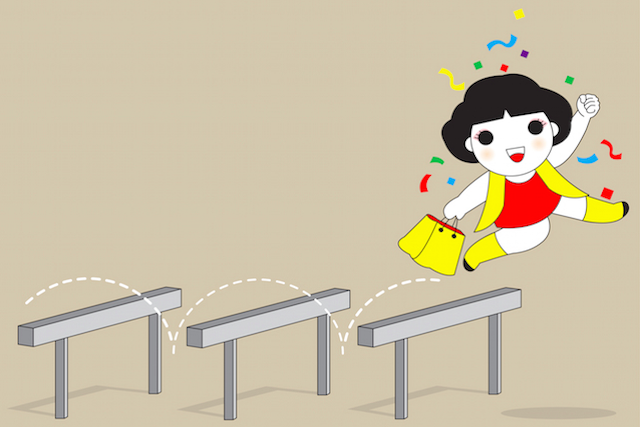
    Woman Jumping Hurdles

    “There are no failures. Just experiences and your reactions to them.” ~Tom Krause

    I had spent years training for this race. This was the big one. If I won and made the qualifying time, I would go on to compete in the Canadian National Track and Field Championships.

    I was burning to win. Only the winner of this race would qualify. Second place wouldn’t cut it.

    Competing at the national level could lead to all kinds of opportunities: sponsorship, athletic scholarships, and a career in athletics.

    My favorite form of self-torture was the 110-meter hurdles. I lived and breathed sprinting and hurdles. Track and field was my life in my last year at high school. In fact, track was probably the only reason I even showed up at class.

    I was good at it too. I had run the fastest time in my event that season and I was on target to win the Provincial Championships.

    I trained four to five days a week on the track, plus I hit the gym two to three times a week. I was in peak form and ready to destroy my competition.

    I was laser-focused on the day of the event in Vancouver, Canada, at the Provincial Track and Field Championships. In my races, I was usually the first one out of the blocks and this race was no different. I exploded out of the starting blocks and was the first one to reach the first hurdle.

    The hurdles for my age category were thirty-nine inches tall (three inches lower than Olympic height), made of thick wood, and were weighted with a metal base. When you hit them, they resist and they don’t move much.

    Best if you don’t hit them.

    I felt powerful in this race. By the third hurdle, I was already taking the race. At no time was anyone in front of me.

    Then, I started hitting hurdles. A lot of them. Each time you hit a hurdle, it dramatically slows you down.

    Some hurdles I smashed into with my knee, while others I hooked with my foot. Painful every time.

    And I didn’t just graze the hurdles. I really clobbered most of them. At times, it almost brought me to a complete stop.

    I hit five hurdles that day. There are ten hurdles in total. It was the worst race I had that season.

    Despite hitting so many hurdles, I still came in second place. I could have touched the winner with my arm, it was that close.

    If I had run a clean race like I usually did, I would have shattered my previous fastest time. I would have easily run the fastest time that year in the province and I would have qualified for the Canadian National Track & Field Championships.

    I was devastated after that race. All my training for nothing. I wasn’t going to get a chance to compete nationally. Game over. Done. I felt like all the life had drained out of me.

    That was the last time I ever jumped over a hurdle.

    I spent the rest of the summer partying and hanging out with friends. I became a bit directionless and I no longer had much interest in going to university (the only reason I was thinking about going was so that I could compete in athletics).

    At the end of summer, I started working full-time in a supermarket and saved up cash. By spring of the following year, I was on a four-month trip around Europe with one of my best friends.

    After that trip, the demands of life took over. I got stuck in low-paying jobs for a few years.

    I had an unhealthy diet and I would sometimes get drunk on the weekends. I barely had time or energy to even go for a short jog once a week.

    Failure Hangs Heavy

    That race is still my biggest failure in life. Seems silly but there it is.

    Over the years, I occasionally thought back to my track and field days.

    “That race was mine and I should have won that. If I had won, maybe I would have gotten sponsored by a sports company. Maybe I would have gotten an athletics scholarship. I might have had a sports career. I totally screwed up my big chance.”

    The concept of failure is very pervasive in most modern cultures. It’s also responsible for a lot stress, poor health and well…basically crazy, unbalanced behavior.

    In our culture, the attitude of “Second place is the first loser” is prevalent. You’re either a winner or you’re a loser. Not much in between.

    We equate “winning” and success with achieving certain milestones such as having high salaries, being in a relationship, or having high-status roles in life. For many of us, not achieving these external successes means we’re failures.

    Additionally, “mistakes” are often not tolerated at work or in relationships with people. There is usually a background, gnawing pressure to always say and do the right thing.

    Failing can feel like an imminently dangerous threat that we must avoid at all costs, and cover it up when it does happen.

    But it doesn’t have to be this way. If we just shift our focus, we can use failure to propel us towards our goals.

    You Must Fail to Have Success

    Quite often, when learning something new, we think that we have to nail it right off the bat. Who wants to look like a rookie, right? A clueless beginner?

    Nope, not me.

    Everyone wants to avoid mistakes and failure. But it is precisely through the path of making mistakes and “failing” that we learn.

    You will hit hurdles in your life. You’ve been hitting them. What matters is what you do after you hit one.

    In my case, I focused on my failure. I focused on hopelessness and I identified myself as being a failure just because I had a bad race.

    I didn’t value coming in second. I ignored what was good and I was dismissive of anything positive that I had achieved.

    I even gave up doing something I really loved doing.

    You can see how dangerous having a “win or lose mindset” is, right? It shuts down our learning, closes off options and causes us to suffer emotionally.

    We need to focus on our little successes, on what we did right and on how to keep learning and improving.

    Let’s get comfortable with the idea that we’re going to make “mistakes” and that we might not always run perfect races.

    If you take on the challenge of cultivating an improvement-oriented mindset, this will help you in all areas of your life.

    You’ll become curious about your mistakes, observing yourself kind of like a scientist might: How can I do this better? What could I do differently so that I can avoid making that same mistake?

    Winners and No More Losers

    I still cringe sometimes when I say or do the “wrong” thing, but I usually catch myself and resolve to do something different the next time.

    If I feel ashamed about making a mistake (or bombing big time), I try to move on as quickly as possible.

    I recognize that my mind is my greatest ally; I’m the one who defines my own version of success, and I re-frame my experiences in a healthy, positive way, whenever I can.

    Everyone deserves to “win” in life, and everyone is capable of reaching their goals in a way that is emotionally and physically healthy.

    Can everyone really be a winner in life?

    Yes, definitely…and you don’t need to come in first place or be the “best” to be a winner. When you love what you’re doing and when you’re focused on learning and making small improvements, anything is possible.

    That’s winning.

    Woman jumping hurdles image via Shutterstock

  • Why We Should All Stop Trying to Be Good Enough

    Why We Should All Stop Trying to Be Good Enough

    Man Sitting Under Tree

    “Only something as insane as human beings would ever asked themselves if ‘I’m good.’ You don’t find oak trees having existential crisis. ‘I feel so rotten about myself. I don’t produce as much acorns as the one next to me.’” ~Adyashanti

    The feeling of not being good enough is widespread among the population regardless of age or social status. Even people who, from society’s standards, are highly successful may very well feel they are not good enough and that something is missing.

    For most of my life, I suffered from that feeling of not being good enough.

    When I joined a master’s degree program a year and half ago, I was shocked to see how smart some students in my class were. I was surrounded by people who had more work experience than me and were way more confident than I was.

    Sometimes I felt stupid in their presence. No matter how hard I tried, I just couldn’t find a way to contribute in class. Never befor had I felt such a deep sense of not being good enough.

    Achieving, learning, or experiencing more never seemed enough to fix my issue. I started to seriously question whether anything I would accomplish could ever help me feel “good enough.”

    I perfectly understood that there would always be people around me that are more confident, more attractive, smarter, richer, or more knowledgeable than I am, but this still didn’t make me feel better.

    Since I always felt that my duty was to contribute to society, feeling that I couldn’t contribute as much as I would like to made it difficult for me to maintain a healthy self-esteem.

    When it comes to self-worth, experts generally recommend using positive affirmations, learning to be more self-compassionate, or achieving small goals to create momentum and build confidence.

    These techniques are certainly good ways to build self-esteem, and I used them personally with some success. However, it’s likely that they might be missing the point.

    Rather than “How can I feel good enough?” wouldn’t a better question be: “Do I need to feel good enough?” or “Is it actually possible not to be good enough?”

    Most people spend their life trying to be good enough, to be liked and appreciated, often without actually succeeding to fill a void within themselves. It’s insane to see how everyone tries so hard to be “somebody.”

    I started wondering if, during all that time I spent trying to be good enough, I wasn’t actually fighting the wrong battle.

    Our society conditions people to tie up their self-worth to how much they “contribute,” and that supposed “contribution” often refers to the amount of money we earn or our social status. Society creates an artificial duality between “successful” people and others.

    Nowadays, the idea of success is a constant obsession. Media and personal development websites are continually talking about what more can be done to become more successful. Success has become the Holy Grail to pursue, the only path to living a life worth living and earning recognition from society.

    However, I could easily come up with names of people that are regarded as “successful” from society’s standards, but are not from an objective point of view.

    Interestingly, the definition of success is rarely explained. It seems as if we have all agreed with society’s definition. There appears to be very little space to question it; however, could the assumption under which we operate our life actually be false?

    To be honest, this whole idea of good enough or not good enough is nonsense. I’m sure the doctor didn’t tell your parents when you were born that, “I’m sorry, but your son won’t be good enough.”

    The entire paradigm of “good enough or not good enough” comes from the misconception that we need to become “somebody” and that other people have the power to determine our self-worth.

    It is a mere product of social conditioning, not of reality, and it certainly doesn’t have to be that way!

    Depending on your belief or reasoning, you could spend your entire life just meditating under a tree, doing absolutely nothing, and you would still be totally relevant as a human being.

    So why don’t we get rid of that concept once and for all, discard it as irrelevant, and rebuild our life on a healthier assumption?

    Being a total “failure” under society’s standards can never ever make you a failure as a human being. Nothing can turn you into a not-good-enough person without your consent, without you buying into the current fallacious assumption that society is telling you to live under.

    Sure, you might have failed at many of the things you’ve tried and some of your friends might be more “successful” than you are, but then, does that mean you are not good enough? Does that really mean you are not worthy?

    If you buy into society’s expectations, yes, probably. If you don’t, the question then cannot be answered, because it’s irrelevant!

    A tree doesn’t have self-esteem issues. A bird doesn’t ask itself, “Am I good enough?” Why should you?

    Are your attempts to become somebody actually working? If not, it might be time for you to stop trying to be “somebody” and just relax.

    Imagine the sense of freedom that you would experience if you were to stop trying to be “good enough.” Suddenly, the burden you’ve being carrying on your shoulders would become lighter.

    You could then enjoy your time with others without trying to impress them. You’d be able to free up your energy for more creative purposes. Suddenly, you could just be yourself.

    The greatest and wisest spiritual teachers of all time stopped trying to be somebody because they realized that it was not possible. If after all those years of inquiry and self-reflection they came to that conclusion, is it possible that they were on to something?

    So do you really need to be good enough? Are you fighting the right battle? This is something you might want to meditate on. It might require some time before you can change your former conception, but isn’t it worth trying?

    Personally, I chose to fight less and to progressively distance myself from the battlefield. I’m not “not good enough” or “good enough.” I am just who I am and that’s more than enough!

    Man sitting under tree image via Shutterstock

  • Life Changes When We Change

    Life Changes When We Change

    Time for a Change

    “We can let circumstances rule us, or we can take charge and rule our lives from within.” ~Earl Nightingale

    Last Christmas, I was jobless.

    With piling bills and debts, I was trying to switch from a freelancer to a full-time employee. I had been job hunting for weeks, with zero results. I started wondering why. I was qualified, I had a great resume, and I was willing to work hard. So why did I feel so helpless, like the reins were in someone else’s hands?

    I didn’t like the feeling, but I couldn’t see how I could take control. Everyone said that’s how the job hunting process is. Endless applications and waiting for responses that may never come. There’s nothing you can do about it. Just remain positive. Hope for the best. Wait. Try harder.

    Well, I had just about had it up to my neck with this kind of advice. I was being inundated with positive messages, and I began to question their effectiveness. What’s the use of being positive if it doesn’t change anything?

    Now, I am an optimist. Glass half full and everything. But as weeks passed by and I hadn’t landed so much as one interview, the whole glass business started to turn sour. Simply remaining optimistic didn’t change anything.

    I wasn’t getting any better results, and I wanted to do something about it rather than sit around with an imaginary glass.

    It was one week before Christmas when I had a breakthrough. I decided to quit ”looking for a job.” I stopped ”trying to remain positive.” No use beating a dead horse. It wasn’t defeat. It was just a change of tactic.

    Someone once said that insanity is repeating the same mistakes and expecting different results.

    Endlessly applying to jobs with no results was indeed driving me insane. It was time I looked for other solutions. After all, I had nothing to lose. Might as well have some fun, explore and experiment with different options.

    Without realizing it, I had taken control. As cheesy as it sounds, I had taken back the power from the mysterious employers behind the computer screen. I stopped caring what they thought and started to focus on what I wanted to accomplish.

    Just a day before, I was searching for things like “how to get a job.” Suddenly, I was forced to search for something else. It was my day off from job hunting. What should I do instead? The mere thought that it was totally up to me gave me infinite control. I was free from the shackles of insanity.

    What happened next was life-changing. Instead of trying to get tips on how to land a job, I started to look at successful people that I wanted to emulate. Because I was no longer worrying about trying to get a job, I was free to turn my attention elsewhere, which led me to think about ways to achieve success and get ahead.

    It may sound like nothing, but in hindsight, it was everything. I realized what I wanted wasn’t a job. It was a fulfilling life. Of course, a source of income was an inevitable part of it, but it was just that. One part of a much larger picture.

    I was curious about how others had done it. I researched people I aspired to resemble one day. I perused advice and life stories of current CEOs and influencers. Then I revamped my application material with all this in mind, sent them in, and continued my exciting research.

    Instead of just looking for a job, I was now clearer about what I wanted and what I had to offer. I was more selective about where I applied, and I wrote my cover letters with a deeper understanding of the companies and how I’d fit within them.

    To my surprise, I landed an interview within twenty-four hours. The next day, I landed another two. I was completely thrown off, but I could not deny the immediate effects of my tiny decision.

    Simply by switching the search terms online, I was getting better results in my own life. The simplicity of it was what shocked me the most. After all, everyone knows that if you aren’t getting results you want from a search engine, you change the terms.

    I was reminded of countless accounts of people who had tried something else and achieved seemingly miraculous success, but until this moment, I never thought it would happen to me. I just thought those people were lucky. I didn’t even realize this was what I thought until I collided head-on with the revelation.

    As it turns out, luck often comes to those who want to create it. Positive thinking is good but ineffective without action. And that action could be as small as simply deciding to change.

    In reality, all I really did was switch from a passive state of mind to an active one. I had made a decision to change, and therefore brought it about. More importantly, the positive messages I discarded weren’t wrong. It was my way of taking them in.

    Now, I don’t stop with listening. I don’t think, ”that’s really good advice” and do nothing about it. What I do now is take the advice and run with it. Think of ways to make it my own. After seeing the difference it made in my life, how could I do otherwise?

    If you want change, don’t wish for it. Create it.

    Time for a change image via Shutterstock
  • 8 Secrets To Developing Confidence (So Self-Doubt Never Sabotages You Again)

    8 Secrets To Developing Confidence (So Self-Doubt Never Sabotages You Again)

    “What you think of yourself is much more important than what people think of you.” ~Seneca

    I can still remember it like it happened yesterday.

    There I was. Ten years old. It was my first day back at school.

    I walked past the enormous church that marked the entrance of the school compound. I passed under this huge tree as it towered over me. I was in a crowd of other screaming school kids. They laughed and cackled loudly.

    Me?

    I just felt overwhelmed.

    See, I was always an anxious kid. Scared. Worried that I hadn’t done my homework properly. Terrified I’d be punished. That was the world I lived in.

    For many years, my fears tainted my vision like prison bars that impose a life sentence on inmates who have long forgotten the bars even exist.

    As I reached adolescence, my fears manifested as a series of failures. My unshakeable belief in my ineptitude stopped me from truly trying to succeed. Unwittingly, I was conforming to a self-fulfilling prophecy I’d set for myself.

    Many years later, I married an amazing woman who truly believed in me—often when I didn’t believe in myself. Her confidence in my abilities forced me to re-examine my limiting beliefs.

    She’d repeatedly tell me that I could achieve my goals, provided I put in the effort.

    Eventually, I did.

    That was over ten years ago. Today, I’m a confident man who stands tall and is comfortable in his own skin.

    You can develop this confidence too.

    Here are the eight secrets to confidence I learned along the way.

    1. Let the dancer become the dance.

    Do you ever feel disconnected from what you’re doing because of that little voice telling you you’re not good enough?

    Does your mental chatter derail your sincere efforts? If so, you’re not alone. We all experience this from time to time.

    The solution?

    Make a decision to lose yourself completely in your work. Get so absorbed in it that you enter a state of flow. Let the dancer become the dance.

    When the dancer becomes the dance, there is no dancer, and therefore no one to suffer from lack of confidence.

    There’s just the dance. The flow.

    2. Choose an emotional state of success.

    Building self-efficacy is a great way to develop confidence.

    Reflect on your past successes. They don’t have to be related to what you’re trying to achieve right now. They just have to be your successes.

    The point here is to reconnect with those feelings and emotions. They’ll set you up for success in your current endeavor.

    When I face self-doubt as a writer, I quietly reflect on the feeling of success I experienced when my mentor (Jon Morrow) sent me an email saying he was proud of me.

    I often go back to that email to reconnect with the feeling of success it evokes. Seeing this evidence of my abilities as a writer drives away the self-doubt every single time.

    3. Empower yourself with visualizations.

    Visualizing yourself succeeding is another powerful approach.

    Have you watched an elite athlete just before a hundred-meter sprint? She looks intensely at the finish line and visualizes herself sprinting down the track faster than anybody else in the field.

    In fact, she’s visualized herself winning the race hundreds and thousands of times to prepare. That’s how she prepares to give her very best over those hundred meters.

    Repeatedly visualizing success can actually rewire your brain. It creates positive neural pathways that restore the natural confidence you had as a child.

    Not only does this stop you from thinking negative thoughts, but it actually replaces negative thinking with (confidence boosting) positive images.

    4. Use your past failures to vanquish self-doubt.

    A large amount of self-doubt arises from our past failures. Each time we fail at something, we develop self-limiting beliefs, which get embedded in our psyche and our thinking.

    Fortunately, we can use these past failures—think the trail of breadcrumbs in the story Hansel and Gretel—to lead us back to these self-limiting beliefs. And once they’re out in the open, we can then challenge them.

    Imagine this: You have this belief that you’re no good at athletics. Maybe the seeds were sown when you did poorly in track and field in high school. And since then you’ve always made a halfhearted effort at athletics because you thought, “Why bother? I’m no good at athletics anyway.”

    See the (self-defeating) belief here? That (one) poor performance early in life created a belief that you’re not good at athletics. And that belief led to a halfhearted approach, which in turn stopped you from getting good at athletics.

    See the vicious cycle?

    Challenge that belief that you’re no good at athletics, and you stop making a halfhearted effort. And that’s how you get good and break out of the cycle.

    Here’s the thing: The past is not a predictor of your future performance, if you make a conscious effort to improve.

    So, examine your past failures and use them to challenge your self-limiting beliefs.

    It’ll do wonders for your confidence!

    5. Edit those sentences in your head.

    Do you think in sentences? Most of us do.

    Imagine this. You’re about to give a talk to a roomful of people.

    If you lacked confidence, the sentences in your head would sound something like this: “Ummm…. Hopefully this talk will be okay. I think I’ll be fine. But what if I crash and burn? No I’ll be okay. Geez I hope I’ll be okay.”

    Do you see the vacillation in that self-talk? One second you’re thinking you’ll be okay and the next second you’re terrified that you’ll crash and burn.

    The good news?

    All you need to do is edit the sentences in your head.

    The sentences you want to hear in your head sound something like this: “This talk is going to go well. Sure, it won’t be perfect. Nothing ever is. But I’m going to absolutely enjoy this and I’ll successfully get my message across.”

    Notice the words absolutely and successfully?

    See the tone in those sentences? There’s no vacillation.

    It’s almost as if you made a decision to be successful. And that’s reflected in your self-talk.

    Of course, this isn’t going to happen overnight. Like anything, it takes conscious effort and consistent practice.

    Is it worth the effort?

    You bet.

    6. Train your body to manipulate your mind.

    Think of the times when you felt a bit low. Most likely, you were slouching, your breath was shallow, and you were staring at the ground.

    Guess what?

    You can use your body language to build your confidence. You get your body to fake it till your mind makes it. The body informs the mind about how to feel, as much as the mind influences the body.

    Start with your posture. Stand tall.

    Breathe deeply.

    Speak purposefully and slowly.

    And then watch the magic happen.

    Don’t believe me? Try it.

    7. Cultivate a positive opinion of yourself and learn to value it over others’.

    We all look to authority figures for approval during our developmental years. In fact, this feedback is essential for our social development.

    But as you grow older and gather life experiences, you must scale this back.

    Now, I’m not suggesting other people’s opinions don’t matter, they do—up to a point.

    You’ve got to recognize that we all have unfounded prejudices based on our individual life experiences—this includes those authority figures.

    It’s one thing to learn from constructive criticism and use it to better yourself.

    But, to get overwhelmed by others’ opinions of you? That’s an unskillful approach.

    There is no expert on you.

    Instead, work on cultivating a positive opinion of yourself.

    Here’s a great way to start. Next time you feel undermined by someone’s opinion of you, make a conscious choice not to get overwhelmed. Take on what’s constructive and discard the rest.

    Now here’s the important part.

    Ready?

    Bring your attention back to your own opinion of yourself. Understand that your opinion of yourself matters as much as anyone else’s because you know yourself better than anyone.

    There’s no reason to be overwhelmed by others’ opinions of you.

    8. Use external stimuli to leverage your way to confidence.

    What’s your favorite song that truly gets you going?

    Several athletes listen to music just before a race to put themselves into a certain state (of confidence) just before a race so they can perform at their best. They get in the zone.

    Another great way to get in the zone is to use external stimuli. Hold a trophy or a certificate of achievement that you may have won in the past.

    Physically connecting with a tangible memento of past successes is a great way to send a concrete message of success to your mind.

    You’ve got this.

    It’s never easy to get started on a new path. But once you develop the habit of confidence, you’ll never look back.

    See, we all have our own vulnerable inner child that feels overwhelmed like I did on my first day of school.

    But over time, I learned to embrace that inner child, acknowledge his fears, and then make a conscious choice not to get overwhelmed. Much like a father reassures his son.

    And I can honestly say I’ve never felt stronger.

    You, too, can acknowledge your inner child’s fears and comfort him or her with love and acceptance.

    And before long, you’ll be the confident person you were always meant to be. Self-doubt will never darken your (mental) doorway again.

  • When Self-Help Doesn’t Help: Doing What’s Best for You

    When Self-Help Doesn’t Help: Doing What’s Best for You

    Man Reading

    “Your inner knowing is your only true compass.” ~Joy Page

    Are you someone who devours self-help books, blogs, and articles?

    Do you take pleasure in checking out the latest advice from this “expert” or that “guru”?

    Are you someone who puts into play the advice proposed but are still left feeling somewhat unfulfilled afterward?

    The Trouble with Self-Help

    The trouble with self-help advice is that sometimes it leads us down the path of us not helping ourselves at all. Sometimes we get so caught up in someone else’s vision that we lose sight of our own.

    Truth be told, what I consider to be a great life may leave you wanting for more (or perhaps less). What you consider to be extremely ethical I may consider less so. And that’s as it should be.

    Our value system, beliefs, ideas, and ideals should be our own—informed by the outside, without a doubt, but we need to process and own them for ourselves.

    Part of the problem with self-help type advice is that we can start to lose sight of what we really see as success or a successful outcome. We get so caught up in what we’re reading that we can start viewing it as the Holy Grail.

    If I lose weight, then I should feel like this.

    If I simplify my life, then I should be immediately happier.

    If I run a marathon, I should feel the greatest sense of achievement I ever have.

    Sometimes these areas do live up to expectation and leave us with a deep sense of accomplishment. However, sometimes they don’t and can lead us all the way back to square one, or actually make us feel worse than we did originally.

    Falling into the Trap

    I personally have fallen into the trap of overdosing on self-help and self-development books, blogs, and writers over the years—reading book after book but then not implementing the changes suggested, or implementing them but feeling underwhelmed by how I felt afterward. This often led me in circles.

    I take my self-development seriously and I love to read about simplicity and lifestyle redesign, in particular. In fact, left unchecked, I could quite happily bury myself in books and blogs that fall under these categories all day.

    However, in my quest for perfection, I have taken paths that were anything but perfect for me.

    One example would be trying to be more minimalist than I am happy being. Reading about others living as minimalists, giving away most of what they own, or living with only fifty items, I had envisioned myself leading a similar life.

    That vision helped me to a certain point on my own version of simpler living, but then I tried contorting myself a little bit too much.

    I liked some of the stuff, even it was just stuff. I like the convenience of a car. I love going away on exotic travels as often as I can afford. I realized a little minimalist suited me, but not too much. Sounds contradictory, perhaps, but hey, that’s me!

    Another example would be working on being more mindful. I read the work of people who sound like they live in a permanent state of calm. I liked this as an ideal.

    I consider myself a pretty calm and patient person most of the time and see those as personal strengths, but I also have my limits, and I’m not above losing my cool at times.

    Rather than accepting this as part of me, I tried to “fix” it. It didn’t work.

    We’re human, not robots, and sometimes we lose our cool. I’m perfectly fine with that now but wasn’t for a time, as I saw it as a weakness. My expectations were unrealistic, and the advice, as well meaning as it might have been, didn’t completely fit me.

    Although these experiences left me a little dejected at the time, they led me to a better place overall. I came to realize that I am the best master of my own destiny with regard to my goals. I learn and take from external sources, of course, but I own the goals.

    I make the output suit me and know that no one person has all the answers. The result is a happier me, and something that I can implement into my own life, making any changes I make more likely to remain lifestyle changes rather than a five-minute fix that then gets discarded.

    Through the above process I started to realize the problem wasn’t the books or authors themselves, but me and my own expectations. Sometimes I was guilty of falling into the author’s view of what a good outcome would be rather than being focused on my own needs and wants. I worked on that.

    These days, I can still regularly be found leafing through books that fall neatly into the self-development area. And my bookshelves are full of such books. I still love the genre and indeed write in that genre myself.

    However, now I am very clear about what it is I want to get from each read. I’m more selective about who and what I read. I’m clearer on the version of my life I’m trying to get to. If someone else’s experience can help me get there quicker, all the better.

    What Does Success Look Like for You?

    To answer this question, we first need to know:

    • What it is and who it is we value most
    • Who it is we want to be in life
    • What kind of life we want for ourselves
    • How we want to feel when we see ourselves staring back in a mirror

    Only we can truly know what that version of ourselves and our lives looks like.

    Self-help should help. Make it your own and it just might do that.

    Make sure you’re building and supporting your own unique vision of what a great life is and are doing your best to make that your reality. Use what helps along the way, but don’t get caught up in comparisons or in someone else’s vision of what your life should look like.

    Set your own compass and live a life very much in line with your own terms.

    Man reading image via Shutterstock

  • Why I Don’t Need Success and Validation to Be Happy

    Why I Don’t Need Success and Validation to Be Happy

    “The way you treat yourself sets the standard for others.”~ Sonya Friedman

    Five years ago I was driven, determined, and thriving. I was in the middle of a career in financial services that had started in sales, led to management, and, at that point, had me pushing myself and competing as a director in the retail banking business.

    I was proud of what I had achieved and what I intended to achieve. I had the trappings of success as I saw them—the house, the car, the salary, and job title that reflected my level of achievement—and I had a huge and very sensitive ego to accompany all of this.

    When I refer to my ego, I really mean that my self-esteem was dependent upon my accomplishments. I perceived that the external and visual signs of success were directly linked to the person I was inside.

    Then, one day, I heard voice saying, “You must leave, you have to get out of this place…”

    Before you imagine that I was hearing things, I’ll add that this was my boss. He was telling me that the company was in a “change process” and I was one of the casualties. At that moment I saw my career leave the room, out the window, with my self-esteem jumping after it.

    Over the weeks that followed, my family and friends, seeing my distress, sought to comfort me with words similar to “Don’t worry, we still love you whether you are refuse collector or a chief executive.”

    While I smiled at these words, my internal dialogue was something different. It went something like: “It doesn’t matter what you think of me. I won’t love myself unless I show how successful I can be.”

    At that time I did not know how true that statement was. I also did not realize that this was both my greatest motivator and, at the same time, the greatest barrier to long-term happiness.

    My Awakening

    Over the years I had been interested in my personal development and had read quite widely. I often came across the concept of loving myself and dismissed it as fluffy, ephemeral, and completely non-masculine.

    Then I started to read about my emotional needs, the needs that I expect the rest of the world to meet in order for me to be happy, such as my need to be loved, respected, validated, and listened to.

    As I reflected, I realized that I used a lot of “needy” behavior in order to manipulate the environment to meet my needs. I would act the victim and the martyr on social media in order to get sympathy and attention. I would over assert myself (aggressively) in order to be respected.

    I would outperform other directors in order to get the validation and appreciation from my boss and peers that I desperately needed. I would tell my wife I love her in order to get the response “I love you, too.”

    I had been relying on everyone else and making it their responsibility to make me happy. If they responded to my hints and nudges, then I was happy and they topped up my self-esteem.

    “What’s the problem?” I hear you ask. “People meet your needs, you feel good, problem solved.”

    Here’s the issue: unhealthy self-esteem is like a monster that grows the more you feed it.

    A four-bedroom detached house with a double garage, once achieved, becomes too small, and you need a five-bed with a pool. Job title inflation becomes the norm, and you must upgrade the ultimate status symbol, the car, as often as possible.

    Soon, I get to the point where telling me you love me is not enough. You have to prove it, and guess what? The more you prove it, the more you have to. Every effort, thought, and gift has to be better than the last one; otherwise, you obviously don’t care.

    Those of you imagining this is a caricature, please examine your own behavior. What little tactics and strategies do you use to get the attention you crave? How do you manipulate your environment to get your needs met?

    So what changed for me?

    I slowly started to take responsibility for my happiness and meeting my own needs. I started to like myself and moved on to respecting myself, and I eventually lost my reliance upon others for validation.

    As I started this slow transformation, a funny conundrum revealed itself to me. When I used to demand respect, validation, and love, I never got enough of them. As I started to respect myself, I found others respected me more, and now I have an abundance of respect, love, and validation.

    Does that sound smug?

    I hope not. By taking responsibility for my needs, I am now able to have healthy, giving relationships that are not based upon giving in order to receive. By having a healthy relationship with myself, I have healthy relationships with others.

    Start with You

    It started for me with a seismic shock wave that rocked my world. It does not have to happen like that.

    Start by raising your awareness.

    Observe the needy, manipulative behaviors in others; it’s easier that way. Then start to notice them in yourself and identify what need you’re trying to get others to meet for you.

    From there, ask yourself: What does it really mean to like and respect myself?

    For me, this means that I make myself a priority, give myself the time I need for my interests, and set clear boundaries around my work and life.

    Next, close your eyes and ask yourself: How would that look? How would that feel? What would I see myself doing and hear myself saying?

    I can see myself setting clear space in my diary and feeling in control, and taking clear steps to make space for family time. I can hear myself saying, “Thanks for the offer, but I have other commitments that day. I can offer you two other alternatives.”

    Finally, ask yourself: What small steps could I take now to start this process?

    My first small step was to set time aside to make sure I was not overcommitted and my time was protected.

    I started this post by sharing that I was successful. This may imply that I no longer am.

    My measurements of success may have changed a little, but I am comfortable with that.

    I am not worried about job titles, and I prefer to measure success by the impact my work has. I drive a twelve-year-old car because I like it. When I tell my wife I love her, it’s because I do and she deserves to hear that.

    In case you are reading this and wondering if meeting my own needs makes me less ambitious, absolutely not. I have great ambitions and plans. Whether those ambitions and plans are successful or not will not be a factor in my happiness.

    To put it another way, I am happy and will be so whether or not I realize my plans and aspirations.

  • 4 Things to Do When You’re Struggling with Your Dreams

    4 Things to Do When You’re Struggling with Your Dreams

    Man Thinking

    “Remember that sometimes not getting what you want is a wonderful stroke of luck.” ~Dalai Lama

    Three years ago I was in the stressful process of applying to colleges. I had my heart set on this one particular school that, apart from being difficult to get into, was perfect.

    I imagined myself wearing the uniform and feeling a sense of accomplishment. I’d finally be able to prove to people that I was clever and worthy of going to this amazing school.

    A few weeks later I got a letter from the school. I remember getting excited and grinning like a maniac—until I opened it. The school had declined me because my predicated grades were not good enough, while the rest of my classmates had been accepted or put on the waiting list.

    I don’t think I’ve ever cried as hard as I did that evening. I’d pinned so much hope on going to this perfect school that the sudden and final rejection hit me pretty hard.

    I lost faith in my academic ability. My best wasn’t good enough; I wasn’t good enough.

    The thought of telling my friends filled me with dread. Even though I was proud of them for getting in or on the waiting list, every time they mentioned going, I had to pretend that it didn’t bring back the feelings of shame and disappointment.

    My exams approached, and even though I was absorbed in my revision, the news that on results day I could reapply if my grades were high enough gave me something to hope for, another chance to prove myself.

    Results day arrived and my grades were high enough, so off I went to the school with my friend.

    We received forms to choose our subjects. I just checked the ones that still had spaces left; that’s how desperate I was to go to this school. What was I, an aspiring film director, doing applying to study chemistry, math, and business?

    In the end I still didn’t get a place, but no tears this time. The six-month ordeal had finally come to an end.

    Here are four amazing things I’m thankful to have learned about going after the things you want.

    1. Check your ego.

    Is what you’re going after really what you want? Are you going after it for yourself or for other people? How will you feel when you do (or don’t) achieve it?

    As much as I hate to admit it, the reason I was so intent on getting into that school was to prove to the people around me that I was smart enough to get in. I’d spent most of my secondary school life feeling as though others didn’t take me seriously academically because I was a bit of a class clown.

    My ego was ready to have me study subjects that didn’t interest me. I’m sure the initial high would’ve worn off pretty quickly upon realizing that I was stuck with them for two years, and if I didn’t do well it would have affected my university application.

    Make sure that your goals are yours. Don’t follow the crowd and don’t feel the need to prove yourself to people who make you feel inadequate, because chances are that you’ll always have “just one more thing” to prove to them.

    I think we often get so caught up in the race against others that we forget why we’re running it in the first place.

    2. Persevere until the end.

    If you want to accomplish something, you have to give it everything you’ve got.

    Although I wasn’t persevering for the right reasons, I did absolutely everything I could to get into the school. I went to every single one of my teachers and asked them for my predicated grades. I sent an appeal letter to my local council, and as I mentioned, I made one final attempt on results day.

    So despite being unsuccessful, when it was over I was able to accept it because there was absolutely nothing else I could have done. If you know in your heart that you did everything you could and you still didn’t succeed, you have no reason to feel bad. You can hold your head up high and say, “I gave it my best shot.”

    3. Embrace failure.

    When you’re going after a big dream, the road will never be perfect. You will fall down and it won’t be pleasant, but don’t let that stop you from going after what you want.

    Often people worry about others laughing at them if they fail, and so they never attempt anything that they aren’t guaranteed to succeed at. But remember, nothing great comes from staying inside your comfort bubble and playing it safe.

    If you want to achieve something you never have, you have to do things you’ve never done.

    The next time you’re stressed because you might fail, imagine what you could learn from your failures. Think of someone you know who is successful. They failed at one point, but you don’t remember them for that because their attempt didn’t end when they failed; it ended when they succeeded.

    4. Explore your options.

    There‘s more than one way to reach your goal. If you’re not succeeding, try another way. Initially, I refused to allow myself to believe that I could do well at my second choice of school because I was too caught up in the perfect idea of the first choice. It wasn’t until I actually got there that I realized how great it was.

    Don’t turn down opportunities because they’re not what you were expecting or because you think you’re above them. You never know where they could lead. Embrace the opportunities that come your way and enjoy your journey to success.

    Photo by Will Foster

  • When Things Go Right: Dealing with Success with Humility

    When Things Go Right: Dealing with Success with Humility

    Jumping for Joy

    “We cannot live only for ourselves. A thousand fibers connect us with our fellow men.” ~Herman Melville

    Recently I experienced a triumph in my career. The details are not important and frankly, many people might even consider it a trivial accomplishment, but it was important to me.

    Usually when things go our way there are two ways someone might react: humility or boasting. I decided to try something completely different.

    Boasting isn’t really part of who I am. Raised to be humble, take praise with many grains of salt, I play down accomplishments. But, this course never seems to get me anywhere.

    Humility leads to self-doubt and self-deprivation. It also gets in the way of future success.

    In the past when I’ve experienced success I told no one, because that might be bragging. What happens then is no one knows of my accomplishments; therefore, I lack credibility, which undermines future efforts. Being too humble is self-sabotage.

    It minimizes my accomplishments in my own eyes. When I say things like, “Gee, it was nothing,” or “Anybody can do that,” what I’m really telling myself is I’ve accomplished nothing.

    So instead, I sit back and watch the loud girl or guy tell everyone how they saved the day or how much their boss loved their report or how smart their dog is, while I sit quietly buying the hoopla and then thinking how mediocre I am.

    This time, however, I had no space in my mind for either humility or boasting. Instead, I was filled with gratitude. And gratitude allowed me to sing praises, not for my own awesomeness alone, but for everyone who assisted in helping me reach my goal.

    From my husband to casual acquaintances, I told each person the part they played in helping me realize this success. I’m not kidding, and I didn’t just do this in my head.

    I told my yoga instructor how her guidance helped me relax in my body so my mind could do its work. I thanked my Facebook friends for giving me small entertaining distractions to lighten my days. I thanked the members of my meditation group for helping me find strength to put myself out there.

    I gave thanks with sincerity, and not just to let people know I’d achieved my goal, but to help others too. I publicly gave recognition to the company that had shown appreciation for my work, besides helping promote their business would ultimately promote my work.

    As I doled out this gratitude, I did lose one thing. I lost the feeling of being alone in my awesomeness. Me, myself, and I! I did it! Instead I felt I was part of a bigger community.

    My small achievement strengthened my connection in the world. Things really had gone right. Even if for one small blip in the history of the world. At that moment, all the people connected to me and I got it right.

    These feelings of love and gratitude paid off like no amount of humility or self-back-patting ever could. Gratitude encouraged me to keep working and keep reaching for accomplishments.

    No One Gets There Alone

    Sometimes we might think accomplishments come only from our effort and hard work. “If you want something done right, you gotta do it yourself.” But the truth is, none of us ever reaches any accomplishment without others.

    You might be inspired by the encouragement of others, or by the poor actions of others. Good or bad, like it or not someone helped you.

    Start being grateful and you’ll feel like you’re running downhill laughing with freedom.

    1. Thank yourself.

    You deserve it. You really do.

    Don’t knock yourself down by minimizing your accomplishments, no matter how small. Doing so constricts your soul with underlying disbelief or inferiority.

    2. Thank the person/entity who recognized your work.

    Outside of yourself, those who appreciate your work are the first you should thank. Without their light being spotlighted onto you, there would be no accomplishment.

    3. Thank all the supporting players.

    When we think of the ways others support us, our hearts open to love. We become encouraged to offer equal support to others.

    You might be grateful for the mechanic who keeps your car in working condition, which allows you to get to work. The barista who makes your morning coffee supports you by helping start your day.

    Being grateful for everyone who assisted your success is true humility.

    Photo by Rama V

  • Why Fulfillment Comes from Being Yourself, and How to Be Okay with That

    Why Fulfillment Comes from Being Yourself, and How to Be Okay with That

    Happy with Yourself

    “To wish you are someone else is to waste the person you are.”  ~Sven Goran Eriksson

    I have been studying business and marketing for quite some time now, watching the most successful men and women very carefully and picking apart how they’ve achieved what they’ve achieved.

    I’ve read every book I can get my paws on and thought long and hard about why they have managed it and others just haven’t.

    I’ve also seen many businesses and online brands mimicking exactly what those super successful people are doing, and I’ve wondered why they are a mere shadow on the wall in comparison.

    I’ve realized one thing: The super-successful people are doing exactly the same things as the not so successful people.

    They use the same tools, blog about the same topics, and have the same personal development techniques. But they still do way better; they have more followers and fans that rave about their work and share it with everyone they know.

    And it’s purely because they are rocking it in their own way. They are being their honest selves.

    But how do they do that?!

    I have been tormented with being myself all my life, struggling with the idea of liking myself and who I am.

    I’ve been on a merry-go-round of trying to be someone or something that everyone will like. But I know that not everyone will like everything, so I’ve set myself an impossible task.

    I also know that self-love and acceptance is the key to everything I want. Not just success, but to be happy with who I am, at last.

    I often have this conversation with myself:

    Hey, I’m weird. I don’t feel like I fit in anywhere. I feel as if people will always judge me for doing what I want and being me and only me.

    What’s wrong with being me? I’m no good at being anyone else, so what’s the big deal? Well, maybe there isn’t a big deal?

    Am I making a big deal?

    Right, that’s it, I’m stopping this nonsense. I’m just going to be me…

    But who the hell is “me”?!

    Can I determine that by what I like? Or by my interests?

    Or is it pure and simple my mannerisms, the way I look and the things I say?

    Maybe it’s the way I think…?

    Then I’m looping. On that never ending cycle of question after question.

    And those questions never get answered.

    The problem is, it’s very difficult to know who you are and why you do things and where your crazy thought processes come from.

    It’s impossible to put yourself into a category, but even so, we’re constantly trying to categorize ourselves. Think of subcultures like goths or punks, and blogging tribes, and football teams. Everyone is trying to belong.

    You see, I don’t have the dialogue above with myself in an attempt to understand who I am, but to try to understand how I fit into this world.

    I want to understand how I can offer something to the world, make a difference, be liked by the people I meet and, ultimately, belong. Just like those super successful people, but not them—just myself.

    I’m not sure if human beings can ever really know themselves. We’re constantly evolving, growing, changing, especially people like us who are into personal development and enlightenment.

    We’re on fast-forward compared to people who don’t take much notice of developing themselves. So every few months we become a different person, who is the same person, with a lot more knowledge and different way of looking at the world.

    It’s actually pretty mind-blowing!

    We know that the beauty of ourselves is our individualism, our differences, and the quirks that only we have. But at the same time, we know that people are drawn to familiarity and like-mindedness. And this is where I personally get confused, because half the time I’m trying to be myself and the other half of the time I’m trying to fit in—or even worse, be someone who I’d like to be like!

    But it doesn’t serve us to be torn like this, and I find that the temptation of trying to fit in is actually my own insecurities sabotaging the possibilities of me being completely myself. Completely free of the constraints of conforming, free of being a reflection of someone else, free of acting out someone else’s story.

    Next time you look at someone successful or beautiful or passionate, and you have those inspired feelings of “Maybe I could be like that too?”, always remember that, yes, you can do what they do, but you can never be like them.

    You can do it all too. But you need to just keep being you.

    I’m reminding myself of this on a daily basis, trying my utmost to convince my pesky brain that it’s safe to be me. In fact, it’s the only way to be if I ever want to be truly happy.

    These are the things I am doing to keep on track with being me. They might not work for you, because you are you, but they could change everything:

    1. Get the Universe in on the plan.

    The first thing I did was stop asking the Universe what my life purpose was, whether I should go traveling or start saving for a mortgage, or if this business idea was the right one. And instead, I started asking it to let me know if I wasn’t being myself.

    I started to get little signs that reminded me that I wasn’t on the right path. And also big ones, like when my last business crumbled into nothingness. Yes, the Universe was serious about me being myself and not something I thought I should be!

    2. Be kinder to yourself.

    You may have heard this a million times, but honestly, it’s working. When my mind chatter goes spinning off into some cruel dialogue along the lines of “I’m not good enough,” I ask myself, “Would I say that to someone I love?’

    The answer is no, I would never say that to someone I love. I would say, “Darling, you’re doing just fine, you deserve happiness and love, and you are perfect just the way you are.”

    And all of sudden I chill out, I stop fretting, knowing that I have my own support in this.

    3. Remind yourself that someone is relying on you.

    There’s nothing like a bit of guilt to motivate you! But really, imagine just one person that needs you to just be you. One person that needs your talent so desperately that it will change their life, move them out of poverty into comfort or sadness into joy.

    By not being you, you won’t be on purpose, you won’t be sharing your gift, you won’t be changing those lives. This makes me dig deep and get real with myself, because someone is relying on me to be me!

    You don’t have to know who you are to be who you are; just do what makes you feel alive, live how you want to live, and don’t let the constraints of other people’s stories hinder you in any way.

    Today, and every day, I’m choosing to be myself. And I’m getting better at it.

    Photo by Scarleth Marie

  • Feel Like You Should Have Accomplished More by Now?

    Feel Like You Should Have Accomplished More by Now?

    If you’ve ever felt a sense of pressure to hurry up and do something you can feel proud of, or if you’ve ever considered that maybe it’s too late, you will appreciate the message in this inspiring video, titled “Nothing Changes.”

  • How to Tackle the Top 6 Fears That Keep Us Stuck

    How to Tackle the Top 6 Fears That Keep Us Stuck

    “Fear is inevitable, I have to accept that, but I cannot allow it to paralyze me.” ~Isabel Allende

    When you think of a fearless person, you might imagine a real-life James Bond who performs death-defying stunts knowing he could die at any second.

    But for most of us living “normal” lives, fear operates at a subconscious level and prevents us from being the best we can be.

    For a long time, I struggled with these fears. I could not get myself to speak in front of people without experiencing extreme nervousness. When it came to talking to girls I liked, I could list 100 reasons why I would get rejected.

    As I got older, I learned that these fears affected me not because I wasn’t talented or likable, but because I was limiting myself with my thinking.

    By training our minds, we can control our fears instead of letting them control us. Below are some tips that have helped me fear less and live more (which I hope will help you too).

    1. Be more vulnerable. (Tackle the fear of rejection and intimacy.)

    None of us want to have our hearts broken, but when we’ve experienced this before, we may be afraid of entering new relationships for fear of getting hurt.

    Being vulnerable means accepting yourself for who you are and accepting your imperfections. Revealing your authentic self is a powerful way to combat the fear of rejection because you don’t try to be an ideal person; instead, you learn to be confident in yourself, regardless of who accepts or rejects you.

    2. Work hard and expect nothing. (Tackle the fear of failure.)

    As harsh as it sounds, expectations set us up for failure. A lot of the things we plan and expect to happen never happen. The potential for failure hurts our egos and keeps us from trying new things.

    Your task is to discover what your heart wants and work really hard at it. Whether things actually work out how you planned is not under your control. Trust that life will take care of that, and that you can be happy regardless of what happens.

    This mindset helps you do your best; and even if you fail, you’ll still feel good about doing what you love.

    3. Know that you are capable of achievement. (Tackle the fear of success.)

    It’s not always fear of failure that stops us. Sometimes it’s the fear of success. As ridiculous as it may sound, sometimes even if we’ve worked hard at something, we are afraid of putting ourselves out there because we feel we don’t deserve it.

    As I mentioned before, I used to be afraid of public speaking and thought it was because of the fear of failing. But really, I was saying to myself, “You are not good enough; just leave it to the experts.” Then I changed my inner voice to, “Why not me? I deserve this and am fully capable of doing this.” This helped me get rid of my fear of public speaking.

    4. Let go. (Tackle the fear of losing control.)

    We like to be in control of everything in our lives. It’s easy to think of someone like Sherlock Holmes who plans everything out in detail; and even when things don’t seem to be going according to plan, he really had that planned all along too.

    But real life just doesn’t work this way. For example, one of the things I liked to control was time. I would try to plan my entire day on Outlook, and when things didn’t go that way, I’d be disappointed. When I stopped doing this, I felt less stressed, and many of the things I feared would happen if I didn’t plan things out never happened.

    I’m sure many of you have had similar experiences trying to control things. It is important to realize that you don’t need to control life to be happy; and if you try to control life, you definitely won’t be.

    5. Focus on the present. (Tackle the fear of the past repeating itself.)

    Sometimes, we let our past experiences prevent us from succeeding. Because you failed so many times before, you start to expect failure this time too.

    You hear people telling you to let go of the past all the time. But how exactly do you do it? By being fully absorbed in the present. Focus on your breathing right now. See what you are seeing right now and feel what you are feeling right now.

    For those who practice meditation, this may sound familiar. This is how you let go of attachment to the past and the fear of it repeating itself.

    6. Realize you can handle whatever happens. (Tackle the fearing of worst-case scenarios.)

    We humans like to picture the worst scenario that could arise out of a situation. In our minds, we may fear going bankrupt or something bad happening to our loved ones.

    I’m not saying we should be naïve and not expect bad things to happen at all. But to live in fear of these scenarios is a waste of time and energy, because many times the things we fear never end up happening, and when they do happen, it’s not quite as bad as we imagined it would be.

    We can’t control whether the worst will happen to us or not. But if it does happen, the only thing we can do is take action, knowing we can handle whatever comes at us, as we’ve handled every obstacle we’ve faced up until now.


  • Change Your Life: Be Honest with Yourself and Make Conscious Choices

    Change Your Life: Be Honest with Yourself and Make Conscious Choices

    Standing in the Sun

    “If you do nothing unexpected, nothing unexpected happens.” ~Fay Weldon

    During the last year I have made significant changes. I have changed my habits, values, thoughts, and perception of life. It has been an amazing journey and I have learned some valuable lessons that I want to share with you about happiness, motivation, and standing up for decisions you believe in.

    I have always loved attention and I have always loved to party. In Denmark, it is not unusual that students drink two to three times a week, and I used to do that, as well.

    Last year I went to Australia for six months to study and travel. I continued this insane habit of drinking, and sometimes we ended up drinking five to six times a week.

    I started to realize the profound negative effects of drinking excessively.

    Concentration became a challenge sometimes and I could feel my brain was slowing down. That made it harder to speak English (as a non-native speaker), and I was never motivated to work hard on anything. Furthermore, I sometimes felt stuck in an endless cycle of emptiness.

    On October 31, 2012, I made a conscious decision that would change my life. I had been drinking for six days in a row and I decided to go for a walk one morning. I walked twenty kilometers in the most beautiful rain forest in Australia, thinking about what I wanted to do with my life.

    I once read a quote that read, “Set a goal so big that if you achieved it, it would blow your mind.” I was trying to figure out what that goal was for me.

    When I read that quote again I realized that I had the potential to live a far more dedicated and purposeful life. I wanted to realize my potential and become proud of who I was.

    I decided that I would stop drinking alcohol for a year and I would do Ironman Copenhagen in 2013. I had never been on a road bike before, I did not know how to swim, and I had bad knees.

    Despite the tiny chances of success, I had a desire to begin this adventure to become more and prove that I was capable of anything.

    Making a conscious decision had a powerful impact on me and I was convinced that I could do it. After that, I started looking for ways to accomplish my goal and people that could help me.

    I went to the swimming pool the following morning and approached the most experienced swimmer there.

    I asked him for the best advice for a beginner, and after three months of intense training, I could swim. I sought advice everywhere and learned new lessons all the time. I was developing and my habits were changing for the better.

    I was training six days a week, sometimes several times a day. When my friends were out partying, I was either training or resting. When my friends were running ten miles, I ran twenty. Everything I did was a reflection of my priority to reach my goal. Nothing was more important to me.

    Even though I felt like snoozing in the morning, I refused and said “no.” Voices kept telling me to stay in bed but I didn’t ask their opinion anymore. Instead, I listened to the voice saying there was a reason I’d set my alarm in the first place.

    I was out running ten miles on New Years Eve at three in the morning, and I felt a motivation that I had never felt before because I was moving toward a goal so challenging, and at the same time running away from the old me. I had a desire to become a better version of me.

    On August 18, 2013, I crossed the finish line of Ironman Copenhagen in eleven hours and twenty-two minutes, finishing forty-three in my age group. I had been sober for ten months and I had never been in a better shape.

    I experienced an increase in focus during those ten months, and I had never experienced that level of happiness before. The feeling of staying true to the decision I made felt amazing.

    Twelve months ago I was capable of drinking a case of beer in eleven hours. Now, I was capable of swimming 3.8 kilometers, biking 180 kilometers, and running a marathon in the same period of time.

    I developed from being a boy, depending on approval and attention from other people, to an Ironman, staying true to the decisions I made and being comfortable about taking my own path.

    I have learned several important things about life over the past twelve months. Today I want to share the three most important lessons I learned:

    1. Others will respect you for making your own choice—and you will respect yourself.

    Going from drinking six times a week to training for an Ironman is a radical change. I had to give up some of the things I used to do. In addition to giving up alcohol, I had to decrease the number of social activities I attended.

    In the beginning, I was scared that people wouldn’t accept my choice and would talk me out of it.

    Some tried to do this, but most of my close friends supported me because they could see that I became happier pursuing this dream.

    Others may accept you if you choose the usual way of life. However, people will respect you even more for making your own choices and sticking to them. More importantly, you will start to respect yourself more, as well.

    2. Success is a choice.

    I was nowhere near the shape of an Ironman when I decided to compete in one. I had never tried to ride a road bike before and I couldn’t swim. How did I accomplish this anyway?

    I made a commitment to myself that no matter what I had to overcome in order to complete an Ironman, I would overcome it. I made sure that success was a choice and not a wish.

    If you commit to seeing something through, you accept no excuses but only results. When people start giving up, you keep going!

    Always remind yourself that with one step comes the decision to take another. Believe the voice that says you can run a little faster and work a little harder.

    When we commit to do this, success is no longer a wish but a choice. Keep in mind that success is not equal to winning or being the best. You are the one who defines what it means. Regardless of what you achieve, waking up every morning and doing what you said you’d do can equal success.

    3. Be honest with yourself.

    After completing an Ironman I was convinced that every success starts with a conscious, honest decision. I made a conscious decision about doing it because I had an honest, deep desire to show myself that I was capable of anything.

    Don’t fool yourself into pursuing goals that do not make sense to you. Chasing goals that align with your values and priorities is what brings happiness.

    I always aim to keep in mind that motivation is like a fire within. If someone else tries to light that fire in you, chances are that it will burn briefly. When we are the ones to ignite that fire inside, we will experience more happiness and increased motivation.

    You can only ignite that fire by being honest with yourself about what needs to change and which choices supports your values.

    I experienced that something temporary can become permanent because we love our new situation more than the previous.

    What I thought would be a year without alcohol is now becoming a more and more permanent choice. I did something unexpected and something unexpected happened. I changed from a boy to an Ironman.

    Living a happy life is about taking responsibility and making conscious decisions. When are you going to change for the better? When are you going to experience more happiness? Start today.

    Photo by fromthevalleys-

  • Why Screwing Things Up Is Crucial to Your Well-Being

    Why Screwing Things Up Is Crucial to Your Well-Being

    “Where there is perfection there is no story to tell.” ~Ben Okri

    Somehow I’d gathered my courage and volunteered from the audience during a local improvisational theater show. And before I knew it, I was up on stage with the troupe, being welcomed, supported, and seamlessly gathered into the scene in a way that only professional improvisers can do.

    I left the stage high as a kite from the adrenaline rush, returning to my seat and enthusing to my friend that I wanted to start taking improv classes right away!

    What I didn’t realize until I was several weeks into my first class was something I have since accepted as a truism:

    Improv theater is basically boot camp for perfectionists.

    A group of which I am a card-carrying member in good standing.

    In class, I understood intellectually that I was supposed to relax and go with the flow, but I didn’t know how to actually do that. All my life I’d learned to do the exact opposite—to prepare thoroughly and know exactly what I was doing whenever I went into a new or challenging situation.

    At first I managed to fake it, mentally choosing a few potential characters and situations before every class so that I could appear to be spontaneous in a pinch. Clever me! I was always ready with a funny line or interesting story.

    The problem was, I was also always stressed about it.

    At first I chalked up the rapid heartbeat and shallow breathing to the rush of performance, until I found myself obsessing after class about what I could have done better. Wondering where I could have been funnier, or reached deeper to bring out more poignant emotions, so that I could make sure that everyone liked me and thought I was a fantastic improviser.

    It was okay for everyone else to be fallible, merely human. I had to be better. In fact, I had to be perfect.

    Like so many perfectionists, I’d internalized the message that my self-worth was based on what I did, not who I was. And if what I did wasn’t good enough—well, then, obviously neither was I.

    At its heart, perfectionism is rooted in feelings of shame and inadequacy.

    Those of us who suffer from it are afraid that we’re not worthy of being respected and loved for our natural, unedited selves. There are many reasons why this happens, but the consequence is that we always feel the need to justify ourselves and our actions.

    We also feel we must prove ourselves, over and over again; we’re never good enough just as we are.

    Talk about a recipe for depression, stress, and burnout.

    A 2008 Psychology Today article titled “Pitfalls of Perfectionism” states, “[T]he biggest problem with perfection may be that it masks the real secret of success in life. Success hinges less on getting everything right than on how you handle getting things wrong.”

    What if we really got that?

    What if we practiced the pursuit of passion rather than perfection?

    When we are very young, everything is play. We don’t worry about failing because we’re so excited about trying. As kids, we haven’t yet learned that we’re supposed to think of ourselves as being on trial before the world.

    Think back to the first time you rode a bike. Or jumped off the high dive. The thrill you felt probably far outweighed any curb-slamming or belly-flopping you might have done.

    You didn’t do it perfectly, but you had a blast making the attempt. And because you had so much fun, you did it again, and again, until you improved. But improving wasn’t the goal. The fun was.

    That’s why it’s so important for us all to mess up once in a while. We must re-learn what we knew as children—that screwing up is not the end of the world. That we can recover, and keep trying, and get better.

    We must learn failure resiliency. We need to know deeply, not just mentally, that we can always bounce back.

    And maybe even have some fun in the process.

    If your sense of security comes from trying to be perfect, or even just “the best”—king or queen of the hill—you’ll be disappointed either when you never get there, or when you do and some newcomer knocks you off your throne.

    In other words, if your sense of self-worth is synonymous with your performance, you will never feel safe.

    Now what happens if you allow yourself to appear fallible? A few pretty nifty things:

    • The intense pressure is suddenly off. You can relax a little. Or even, with practice, a lot.
    • You now have room for improvement. If you score 100% right from the start, how can you ever hope to do better than that?
    • People will not expect 100% of your effort all the time. Now you’ve got some leeway when you’re operating at less-than-normal capacity for any reason.
    • People will feel more connected to you because they’ll feel you’re one of them, not up on top of (or trying to climb) some kind of pedestal.

    Now please understand that I’m not arguing for deliberate mediocrity here. I’m not saying that you should be lazy, or that you should stop setting and striving toward goals. That’s probably not in your genetic makeup anyway. After all, here you are reading a life-improvement blog, right?

    What I am saying is that if you can surrender your need to appear so relentlessly perfect (to yourself as well as others!) then you’ll be able to loosen up and enjoy the ride a whole lot more.

    When you leave perfectionism behind, you also get to define success and happiness by your own internal measurements rather than society’s external benchmarks.

    Granted, this takes practice. A lot of it. You can’t shuck all of your conditioning with a single shoulder-shrug.

    But you can gradually learn through experience that it’s okay to be imperfect—like I did on the day that I finally froze up in front of my entire improv class.

    I ran out of stories. I choked completely. Everyone stared at me, and I couldn’t come up with a single thing to do or say. I got dizzy; I felt my face flush and my pulse pound. I finally looked up, helpless, convinced they all thought I was a loser.

    “Sorry,” I mumbled. “I’m out of ideas.”

    And my entire improv class responded, as one, in the way we’d been trained to do from the first day. When a scene or offering flops, everyone throws their hands in the air and lets out a celebratory whoop, as if to say, “We screwed up, and it’s okay!”

    There I was, convinced that because I wasn’t the perfect improviser I expected myself to be, I was a failure. Then I dared to look up from my feet and out into the audience at my classmates.

    They all smiled at me, threw up their hands, and yelled “Whooooo!!!” at the top of their lungs.

    And in that moment, I understood that I was fine exactly as I was.

    Just like you are.

  • Keep Moving Toward Success, One Failure at a Time

    Keep Moving Toward Success, One Failure at a Time

    Running

    “If you get up one more time than you fall, you will make it through.” ~Chinese Proverb

    I remember clearly the day in March 2003 when I would receive the kind of news that no aspiring musician wants to hear.

    “Sorry, but you aren’t currently at the level needed to enter our school.”

    Five years of blood, sweat, and tears for what? To be told that I sucked? I sat there, lost in my own thoughts. Was I having a bad day? Was I simply not as good as my ego led me to believe?

    There I was, face to face with my assessor in a strange city on a damp and dreary Saturday afternoon. It could at least have been sunny! A bit of warmth and energy to brighten up this horrible feeling, but alas, as with many things that day, it just wasn’t to be.

    I wandered around these unfamiliar surroundings for almost an hour before catching the train home. This was to be one of the longest journeys of my life, not because of the mileage, but because I felt utterly dejected.

    Unfortunately, this wasn’t to be the only type of rejection I would face during my twenties.

    I have genuinely lost count of the number of women who have turned me down. Every “no” was like a hammer blow to my confidence and sense of self-worth. Why doesn’t anybody like me? What am I doing wrong? Am I destined to be alone?

    Yet more questions I didn’t have the answer to.

    The hardest part to take was the fact that a lot of these women were people that I actually knew, not just random strangers in a nightclub but friends, colleagues, and acquaintances.

    I was not some drunken guy that could be easily shaken off when surrounded by a group of friends, fuelled by alcohol and peer pressure. I was a part of their everyday lives, but held at arm’s length, never to get any closer.

    Miss P was one of these women. I had chased her for two years. We had a mutual feeling of affection that was only hindered by a toxic relationship on her part.

    I waited; it was all I could do. There were the occasions when our eyes would meet as we crossed paths, the hugs that lasted a few seconds too long, and the sense of belonging that hinted at what was possible.

    But when my chance came and the universe conspired to bring us together, it was to only be a fleeting moment. Life drove a wedge between us and I felt powerless as I watched her slip away.

    Situations like these are hard to take, but you know what? It toughens you up. There are only so many beat downs that one can receive before something must change, it has to. Eventually the brain will find a solution. When faced with adversity, we can all rise up and meet the challenge head on.

    I returned to that music school a few weeks later, and I had taken on board everything that was said to me. I practiced intently. I refused to allow this person to tell me that I wasn’t good enough. I refused to walk out of there having failed again. This was my time, and it was going to happen.

    It did.

    The audition was a success. I had adapted to the situation by accepting my faults and working tirelessly to correct them, and thus began a period of huge improvement in my day-to-day life.

    I was now ready to adapt this mentality to my faltering love life.

    After being rejected by nine women in a row, it was time to change things up. I would no longer focus on the outcome; instead it was all about the process. I taught myself to just enjoy the interactions and focus on making these women smile instead of my own selfish desires.

    A funny thing happened: The less I chased, the more success I had. I worked on my personality, not so much the core of who I was but in how I expressed the real me. These people weren’t seeing a nervous, needy guy but someone who was happier being who he wanted to be.

    Once I figured out that I held the key to my happiness, nothing would stand in my way.

    I started going on more dates. I had more meaningful relationships and even though I still don’t know what the future will hold for me, I believe 100% that by opening up and sharing the true essence of who I am, the right person will somehow find a way into my world.

    Throughout life we will receive bad news and criticism that will attempt to strip our confidence to the bone, but we can never allow that to happen.

    Failure, or as I like to say, the path to success, is a necessary part of our growth as human beings.

    Some people won’t see how amazing you really are and some people may not agree with your principles, but that’s okay. We just have to figure out how best to display our true selves, regardless of the situation.

    Whether you’re going on a date, attending an audition or an interview, or simply doing something that stretches your comfort zone, it is important to trust yourself and believe that you have what it takes to succeed.

    Mistakes happen. Failure occurs. Things don’t always go to plan but that’s okay, that’s life, and it’s necessary for personal growth. As long as we keep improving and moving forward without compromising our core values and therefore, our integrity, we can achieve almost anything.

    Keep putting one foot in front of the other. Don’t allow anyone to knock you off from the goal that you see in your mind’s eye. This journey is yours and nobody has the right to change your destination.

    Learn from the feedback that you receive, both good and bad, but don’t take it to heart.

    Everything can be improved and modified to fit any situation. People’s opinions can be changed, as can yours.

    Who you currently are, who you want to be, and who you want the world to see are entirely in your hands.

    Perseverance—it’s how we can all keep moving toward success, one failure at a time.

    Photo by Drewski Mac

  • It’s Not Over: Failure Is Success in the Making

    It’s Not Over: Failure Is Success in the Making

    “A man’s errors are his portals of discovery.” ~James Joyce

    Everyone has a story of failure and disadvantage—those things we wish were done differently, better, or not at all. Take these stories for instance:

    A speaker intending to be unifying and encouraging onstage leaves the audience disappointed and bored instead.

    A lone manuscript is rejected by publishing houses over twenty-seven times, dismissed as too fanciful, fake, and “never gonna sell.”

    A poor eleven-year-old boy, deprived of toys his entire childhood, trudges through sleet and snow on his newspaper route in order to help support his family.

    An author struggles to write a novel, while a divorced, jobless, and homeless single parent facing a deep depression.

    Maybe your story sounds a lot like one of these? Is your situation cause to give up or is it motivation to keep pressing forward?

    I, myself, press forward past my bouts of feeling like a failure. Like when I ran for student body treasurer in the seventh grade and lost to my opponent. Or when I got fired from my first job after college. And especially when I had to dissolve my two-year old, bankrupt business at the turn of the 2008 recession.

    No fun.

    Fast forward: At the end of junior high, I graduated valedictorian. Weeks after I lost my job, I found work with a company that was a much better fit for my skill set and personality. And after shutting down my business, I went back to school, earned my Master’s in Business Administration, and graduated with honors.

    Not having perspective vast enough to see how failure could actually help me, I thought I had met my end during those painful days. Each event felt tragic. But I consistently came to find there was something else to be enjoyed after one door closed.

    Looking back, I see it was all good, everything that happened.

    What if we had that hindsight now—amidst the difficult times? Wouldn’t our experience be much more bearable (if not enjoyable)?

    The opportunities that arose after the so-called failures made what I wanted before pale in comparison to what I eventually got. I just had to be patient to see it unfold.

    You and Failure

    Failure is defined by Merriam-Webster dictionary as “the action or state of not functioning.” In other words, failure’s something that stops you; it gets you nowhere. Do you stop moving, stop breathing, or stop living when things don’t go as planned?

    This body only stops when its heart stops beating. So every day it keeps ticking is another chance at progress.

    Don’t you always take another step, even if it was just to pick yourself up out of bed today? Even when you think you failed, you haven’t because you’re still taking in air.

    Failure is a misnomer. It is an attempt to describe an event that leaves us with nothing—no opportunities, no chances, no understanding. When is that ever the case?

    Failure is only failure if you say it is. It only exists if you’re not willing to pick yourself up, dust yourself off, and walk on. Besides, success depends on those struggles, those attempts, those defeats. Success requires that climb up.

    You and Success

    Success is a journey; it consists of every trial and triumph combined. And the best kind of journey…

    • Makes you stronger
    • Teaches you more about yourself
    • Gives you insight and answers
    • Is an opportunity to evaluate and do different
    • Is better than the regret of not doing
    • Puts your goals within reach

    Everything that happens contributes to a new awakening, a new way of life, a new way of being. We just have to see it as such.

    When we don’t stop at failure, we’re bound for success. So really, failure is success in the making…

    Which brings me back to the four stories I mentioned earlier. They didn’t end there. Their journeys continued:

    The speaker was Abraham Lincoln delivering the (now legendary) Gettysburg Address.

    The manuscript was eventually published. It was one of many books written by Theodor Geisel, also known as Dr. Seuss.

    The boy, Walt, went on to create the childhood he never had and opened Disneyland, a take on his last name.

    The author finally finished the novel. Using the pen name, J.K. Rowling, she wrote of a boy wizard named Harry Potter.

    Batteries fail, people don’t. We’re always full of potential to do different, do more, and do better. Failure is what you thought you couldn’t be; what you thought you couldn’t do; what you thought you couldn’t have. Change that thought.

    Start looking at life in terms of what you can and will do from where you are, with what you’ve got right now. Start looking toward success no matter what…and make lemonade!

    Success is our lesson learned. Success is our silver lining. Success is our second chance.

    What failures have you overcome only to find yourself living your own success story? What keeps you pressing forward?