Tag: Success

  • How I Created Opportunities in a World Full of Obstacles

    How I Created Opportunities in a World Full of Obstacles

    “I really want to, but I can’t because [add semi-valid reason here].”

    That’s a template sentence to let yourself off the hook.

    It’s not copyrighted, so feel free to use it any time you want to let go of your dreams and not feel bad about it.

    Honestly, it hurts me every time I hear someone say it. I see it for what it is—an excuse.

    Every single one of us has ambitions, hopes, dreams, and goals. We fantasize about them on our commutes to work and before we sleep. We talk about how we will one day achieve them, but when it comes time to put them to action, we use that template sentence.

    I had every reason to use the template sentence. I live in a third-world country in the Middle East. We suffer from a lack of water, electricity, security, and opportunities—especially for girls.

    In the Western world, if you want to learn a new skill, you sign up for a training course, get a book, find articles online, or join a club. It’s different here. Here, we don’t have training courses, libraries, or clubs, and the internet is slower than a snail crawling through peanut butter.

    During my teen years, I felt stuck in my life. I wanted to learn so many things and achieve my wildest dreams, yet I couldn’t. How was I supposed to impact people when I would only leave the house to go to school on the weekdays and grocery shopping on the weekends?

    I read stories of kids my age winning science fairs and inventing devices to solve the world’s leading issues. Yet, there I was, wasting my time at home, waiting five minutes for a single webpage to load.

    I had always imagined what my life would be like, and this is not what I had pictured. Time was passing me by, and my talents and ambitions were going to waste.

    I wanted to have an impact, but I couldn’t because I didn’t have the opportunities to learn and gain experience and feedback. (Notice the template sentence.)

    This way of thinking was eating away at my soul. Day after day, I found myself sinking into a pit of misery. I would spend my days lying in bed, staring at the ceiling. There was nothing I could do to change my life, so why try?

    One day, I had had enough. I had been lying in bed for days. It had been years since anything amazing had happened to me. I couldn’t take it anymore. I couldn’t accept the fact that this would be my life. There was an itch under my skin to make my life worth living.

    “Life is too short to waste it moping about the hand of cards life had served me,” I thought. I didn’t care what it would take. I would do whatever I could to get myself out of the hole I was in.

    I decided to use the resources I had to create the future I dreamed. “Bloom where you are planted” became my life motto. What I had access to at the time was the internet.

    In order to get out of the country I was in, I concluded that I’d need a scholarship. I set my mind on getting the Japanese Monbusho Scholarship. I found blogs, articles, and books online to become fluent in Japanese. I practiced day in and day out. I tried a plethora of different methods to learn new words and perfect my grammar. In a few months, I was able to hold a simple conversation in Japanese.

    I also realized that I would need money. I wasn’t allowed to go out and get a job. This was an obstacle I had trouble accepting. I tried to convince my parents to let me work, but they refused for my safety. My mother introduced me to the concept of passive income and showed me blogs that were making six figures every month!

    I set out to build a hedgehog care website. Every day, after school, I would research hedgehogs and write detailed articles about how to feed them, groom them, play with them, and anything else one would need to know. I went on like this for 3 years, studying Japanese and writing about hedgehogs.

    I’m sure you’re expecting a spirit-lifting ending where I travel to Japan and live off my flourishing website. That’s not how this story ends.

    I didn’t get the scholarship. The fact is, I didn’t even get the chance to apply. I ended up studying in my third-world country. I was crushed. I didn’t want to, but it was either study here or not study at all. Unwilling to accept the facts, I started an online university the next year. I now study at two universities simultaneously.

    As for the hedgehog website, it made me a total of $60 for the three years of work I put into it.

    I can stand here and tell you that I tried, but it didn’t work out. That’d be a lie. It did work out—just not the way I expected.

    I’m not in Japan, but I know how to speak Japanese and have met many interesting people along the way. I learned from them and gained experience just as I hoped I one day would. And instead of one major, I now have two, both of which I enjoy learning about.

    My hedgehog website didn’t succeed, but I created a new one that’s even better with the expertise I gained. I interact with my readers often, helping them find ways they can live their dreams. I love hearing their stories and learning how I helped them build better habits or make their goals a reality.

    I still live in the same country I did before. I still have to wait five minutes for a webpage to load. However, I know that even though the obstacles are always there—and always will be—they have nothing to do with happiness, fulfillment, success, peace, and satisfaction. Some people have it better than others, and some have it worse, but every single person, regardless of circumstance, can control their mindset.

    I didn’t let my obstacles stand in my way, and I created my own opportunities when I found none. In an instant, anyone can decide to embrace the cards they’ve been dealt and create their own unique way to shuffle, redistribute, alter, or mold them into a winning hand.

  • Why We Often Fail When We Set Big Goals and What Actually Works

    Why We Often Fail When We Set Big Goals and What Actually Works

    “You do not rise to the level of your goals, you fall to the level of your systems.” ~James Clear

    If you pull up any popular motivational video today, you’ll probably hear things like “Set big goals!” and “Aim high and don’t stop until you get there!”

    After watching a video like this, you may get inspired and start mapping out your plan to leave the 99% in the dust.

    And typically, because you’re riding a wave of motivation, you’ll write out these monstrous, Mount-Everest-like goals. These goals paint a picture of your life that is so exciting that you can’t wait to wake up and get to work the next morning. But when you roll out of bed and take a look at the goals you set the day before, reality hits you like a truck.

    Instead of being motivated to take action, you feel a massive wall of internal resistance. You want to take action. You know you need to take action. But for some reason you just can’t force yourself to muster up the discipline necessary to make progress.

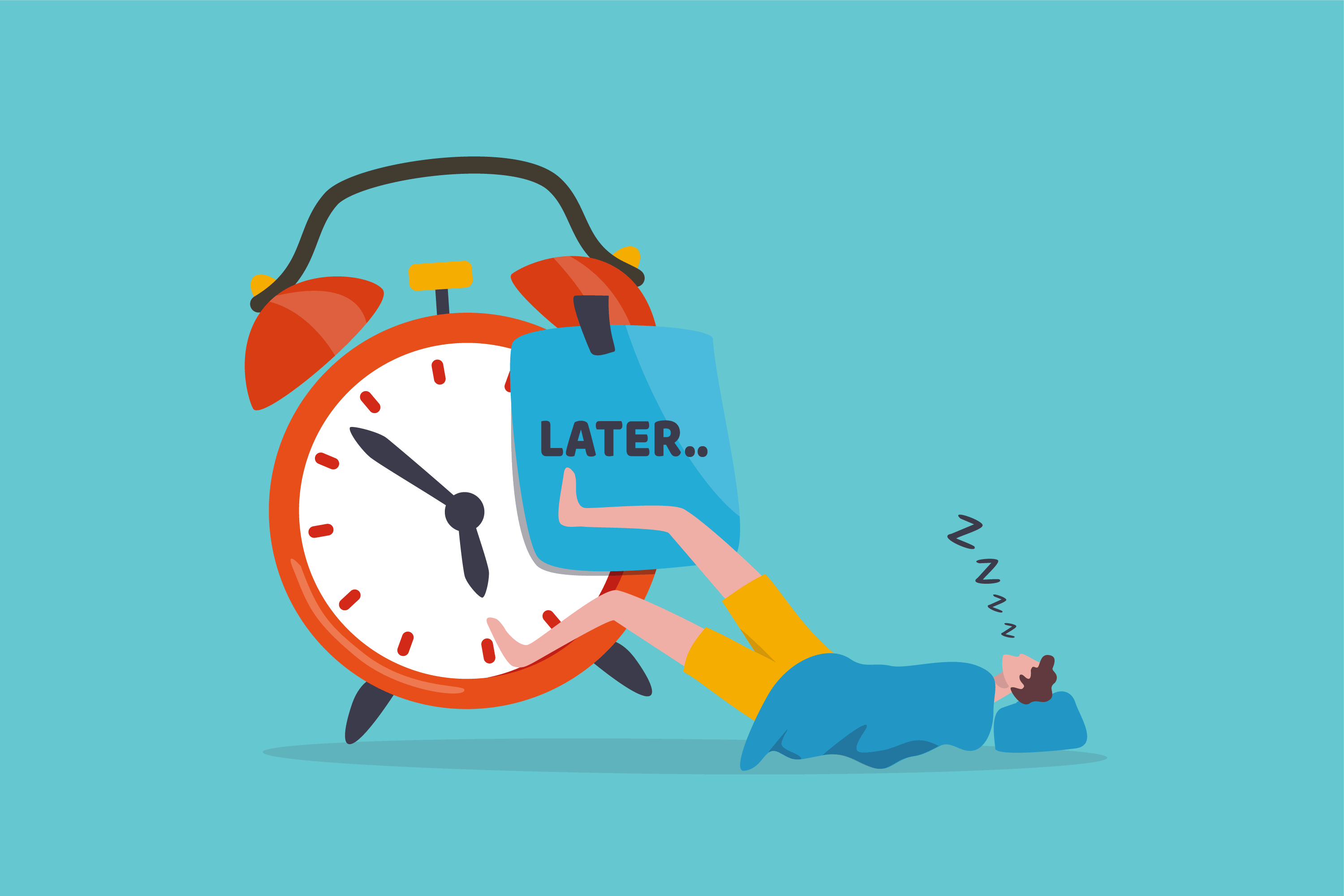
    So instead, you choose the path of least resistance. You retreat to the comfortable and the familiar, and then decide that you’re going to wait “just one more day.” One day turns into two, two days turn into weeks, and weeks turn into months.

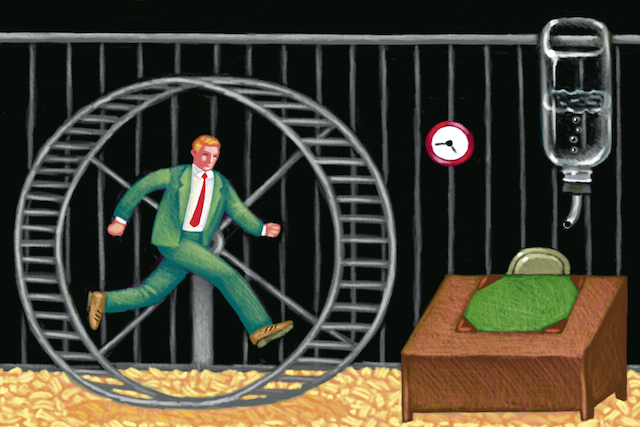
    But luckily, time heals all wounds, and six months later you get another surge of motivation and try it all over again. This is where most people find themselves in life—stuck on the self-improvement hamster wheel.

    How do you stop this vicious cycle? What’s the best way to facilitate lifestyle changes that you actually stick to?

    How Big Goals Ruined My Life

    When I was a sophomore in high school, I had ambitions to become an NBA basketball player. Despite the fact that I was 5 feet 6 inches tall, had below average quickness, and could barely jump over a stack of books, I was determined to prove everyone wrong.

    At this point, I didn’t have my driver’s license yet, so my wonderful mother would get up at 4:30 a.m. and drive me to my school gym early enough to get up shots before class. To make a long story short, I was cut from the team a few months into my sophomore year, and my NBA aspirations died right then and there.

    When I was a freshman in college, my focus had shifted to day trading the stock market. Once again, I had complete confidence that I was going to turn day trading into a full-time income. And once again, I was wrong. The $1,000 I had deposited into my Robinhood account disappeared in about two months, leaving me with no financial flexibility to invest into my dream of becoming a full-time day trader.

    During my sophomore year of college, I made the biggest decision I had ever made in my life up to that point. Despite having good grades, I decided to drop out of school and start my own marketing agency. Let me tell you, that phone call with my parents is undoubtedly the most emotional conversation I’ve ever had in my life.

    I even distinctly remember my own cousin telling me, “I think that you’re going to regret this decision for the rest of your life.” Still, I was unbothered, because I knew in my heart that I needed to give this a shot. A month after telling my parents I wanted to drop out of school, I was on a flight back home to California.

    Yet again, I found myself in a familiar spot—just a kid following his heart with some colossal goals.

    Filled with passion and drive, I set myself a goal to build the agency to $50,000/month in revenue by the following year. To reach that goal, I committed to at least two hours per day of prospecting, and another two hours of educating myself on the real estate marketing industry.

    By now, I think you can see where this is going. For fifteen months, I worked at trying to achieve my goals, but the highest monthly revenue target I was able to achieve was a measly $6,000/month. Despite desperately wanting to taste wealth and success, I had failed yet again.

    It was at this point in my life where I really took a step back and engaged in deep reflection. After all, I had just been following the wisdom that successful people had been preaching for decades—set big goals and don’t stop working until you accomplish them.

    Was it me that was a failure or was it my system? Why is it that so many people including me continually set big goals that they never accomplish? Pondering these questions drove me to explore the world of self-development.

    The Power of Identity

    I had always been passionate about self-improvement, but I had never really delved into the science and research behind what actually facilitates true behavior change. My research eventually led me to reach two life-changing conclusions:

    • Setting big goals does more harm than good for people who want to change their lives.
    • True behavior change occurs when you commit to small, seemingly insignificant shifts in your daily behavior.

    After spending hundreds of hours combing through research on habits, behavior change, and neuroscience, I finally had the “aha” moment that shifted my entire perspective on life. The fatal problem with setting big goals is that they focus on the outcomes we want to achieve as opposed to the type of person we want to become.

    The most powerful force in the human body is the desire to be consistent with who we’ve been in the past. Behavior that is incongruent with the self will not last, which is why big goals are often so hard to accomplish.

    You may have a goal to build a million-dollar business, but if your identity is that of someone who procrastinates on important work, it’s unlikely you’re ever going to hit that goal. You may have a goal to lose weight, but if your identity is consistent with someone who eats fast food regularly and lives a sedentary lifestyle, you’ll continue to be pulled toward actions that sabotage your weight-loss goals.

    You may have some new goals, but you still haven’t changed who you are. I wanted to build a marketing agency even though I was the type of person who procrastinated and refused to get out of my comfort zone. It was the inability to change those underlying beliefs that ultimately led to my failure.

    How to Achieve Your Biggest Goals by Thinking Small

    If big goals aren’t the answer, then what is? The key is to focus on who you want to be as opposed to the outcomes you want to achieve. You need to become the type of person who can reach the standards you have set for yourself.

    Your identity emerges out of your daily habits. You don’t come out of the womb with a preset identity. Whoever you are right now is a direct result of the daily habits that you’ve developed up to this point.

    In order to start forming new beliefs about yourself, you need to start building new habits. The formula for changing your identity is a simple two-step process:

    • Figure out the type of person that you want to become
    • Commit to small changes that align with your ideal self

    First off, you have to decide what kind of person you want to be. When setting goals, most people are guided by the question “What do I want to achieve?” Instead, try asking yourself, “Who is the type of person that can get the kind of outcomes I want?”

    Instead of setting a goal to lose fifty pounds, ask yourself, “Who is the type of person that can lose fifty pounds?” Instead of setting a goal to build a million-dollar business, ask yourself, “Who is the type of person that can build a million-dollar business?”

    The beauty of focusing on identity change is that your success is no longer tied to arbitrary targets. Let’s say that you set a goal to lose fifty pounds in six months. As you pursue this goal, you start walking every day and improve your diet. At the end of six months, you step on the scale and you’ve lost thirty-seven pounds.

    Did you achieve your goal? Nope, you’re thirteen pounds short. However, what if your goal was simply to become a healthy individual? Did you achieve that goal? Absolutely!

    Once you’ve figured out what kind of person you want to become, the next step is to commit to small shifts in your daily behavior. Too often we convince ourselves that massive success requires massive action. This is the principle that guided my life for nineteen years.

    Through constant trial and error, I’ve realized that true behavior change is the product of small, incremental changes compounded over time. We tend to dismiss the effectiveness of small actions because they don’t make an immediate impact.

    If you walk for two minutes per day for a week, you’re not going to see the number on the scale move much. If you meditate for sixty seconds for a few days in a row, you’re not going to turn into the Dalai Lama. However, what you will do is to give your brain concrete evidence that you’re a different person.

    James Clear puts this beautifully when he says, “Every action you take is a vote for the type of person you want to become. No single instance will transform your beliefs, but as the votes build up, so does evidence of your new identity.”

    Once you’ve nailed down your desired identity, come up with a daily habit that you can perform no matter how you feel. When you set big goals, your brain tricks you into thinking that the present level of motivation you feel will carry over to when it’s time to take action. By focusing on shrinking your daily targets, you’re taking motivation and willpower out of the equation.

    Here’s a few practical examples of this concept in action:

    • Meditating for ten minutes per day becomes meditating for sixty seconds per day
    • Walking for thirty minutes per day becomes walking for two minutes per day
    • Reading for thirty minutes per day becomes reading one page
    • Journaling for fifteen minutes every night becomes writing one sentence
    • Writing 1,000 words per day becomes writing fifty words per day

    It really doesn’t matter how successful you are right now, all that matters is that you’re on the right path. Once these small habits are solidified into your daily life, you’ll have mastered the art of showing up and acting in alignment with your desired identity.

    Since your brain now has some new evidence, you’ll be able to stretch yourself and gradually aim higher. That’s the true power of small habits. The same way that money multiplies through compound interest, the positive effects of your habits multiply as they become a part of who you are.

    So, the next time you get motivated to change your life, forget setting huge goals. If you do this, the power of your identity will loom large over you and prevent you from taking action. Harness the power of small, incremental change.

    Have the courage to set the bar low enough and aim at targets that you can actually hit on a daily basis. Solidify this small habit into your life, and then do the same thing with another habit. And then another. And then another.

    Soon enough, you’ll become someone unrecognizable.

  • If You’re Trapped Under a Pile of “Should” and Tired of Feeling Unhappy

    If You’re Trapped Under a Pile of “Should” and Tired of Feeling Unhappy

    “Stop shoulding on yourself.” ~Albert Ellis

    I was buried under a pile of shoulds for the first thirty-two years of my life. Some of those shoulds were put on me by the adults in my life, some were heaped on because I am a middle child, but most were self-imposed thanks to cultural and peer influence.

    “You should get straight A’s, Jill.”

    “You shouldn’t worry so much, Jill.”

    “You should be married by now, Jill.”

    “You should get your Master’s degree.”

    I could go on forever. The pile was high, and I was slowly suffocating from the crushing weight on my soul.

    What’s so significant about age thirty-two? It’s when I decided to divorce my husband of eighteen months (after a big ole Catholic wedding) and ask my parents for money to pay the attorney’s retainer. This is a gal with a great childhood, MBA, and a darned good catch for a husband.

    From the outside, our life looked charmed and full of potential. We’d just purchased our first home, were trying to start a family (despite suffering two miscarriages) and were building our careers. What no one else saw was the debilitating mountain of consumer debt, manipulative behavior, and my intuition’s activated alarm system… sounding off in reaction to the life I’d built and was, for all intents and purposes, stuck in.

    My intuition was done with the low-level warnings. She was sick and tired of being ignored, so she sounded the big one—an alarm that demanded action instead of lip service. I still tried challenging her; what she had presented me with was asinine.

    “But I can’t divorce him. We just got married. What will everyone think? I’m so embarrassed. I should have made better choices. How did I end up here? I did everything right, right? I should suck it up and stick it out; that’s what good Catholics do. This is kind of what life is, I guess… kinda sad, but it seems to work for most everyone else. Ugh, I wanted this… now I’m, what, changing my mind?”

    The alarm was not going to shut off until I sat long enough with those notions to yield honest answers. That was some tough sh*t to sit in. And even tougher to plod through. But it was better than being buried under it.

    This was my first lesson in “There’s only one way out of this mess.” There’s no express lane, no backroad, no direct flight. This ride resembled the covered wagon kind. Bumpy, hot, dirty, and uncomfortable as hell.

    I relented, listened, and tapped into the hidden reserve of courage I didn’t know existed within me.

    The time had come to quit living according to the “should standard” everyone else around me had subscribed to. The time had come to accept this curated life was not the one that would yield happiness for me. The time had come to turn up the volume on this newfound voice and assert to myself (and everyone else) that I was cutting my losses and trusting my inner compass.  

    The time had come to stop shoulding myself.

    Shoulds were my grocery list, my roadmap for life. How was I going to do this adult thing without my instructions???

    I’d already managed to clear a huge should—hello, divorce—and after that, with every should I challenged, another paradigm crumbled. I began to notice shoulds all over the place. After that, my awareness of intention got keener, and I could sniff out the subtle shoulds like a bloodhound.

    SHOULD: When are you having kids?

    CHOICE:  I do not want to have children. (Remember I miscarried twice with my first husband. I was checking boxes on my adulting grocery list. Honesty yielded clarity.)

    SHOULD: He’s too old for you and he has four boys of his own.

    CHOICE:  He is my person. His sons deserve to see their father in a healthy, happy relationship. I can show them love in a new, different way.

    SHOULD: You’re making great money in your job. Why walk away from your amazing 401(k) and great benefits to risk starting your own business?

    CHOICE:  I want to build a life I’m not desperate to take a vacation from. I want to live, serve others, and know when I’m at the end of my life that I chose it and made the most of it.

    Deleting the word “should” is a big first leap in taking ownership of your life. By altering your vocabulary in a simple way, you naturally become mindful of the words you put in its place. Instead of “I should….” substitute with “I choose to….” Instead of “You should…” try “Have you considered…?”

    Keep track of every time you say or hear “should” in a day. Then spend time with each one and get toddler with yourself. Ask why. Ask it again.

    Who says you have to get married or have kids or work a job you hate that looks good on paper? Who says you have to look a certain way or do certain things with your free time that don’t appeal to you? Why are you restless in your life? What idea keeps popping up, begging for your attention? Are you living your truth? What’s in the way? What pile of shoulds are you buried under?

    I get it. We’ve been programmed by our culture and our family traditions to follow the path, stay on course, climb the ladder to success! It’s the only way to be happy, they say. It’s the only way we’ll be proud of you, they insinuate.

    We’ve been indoctrinated with this thought pattern and belief system, and it seems impossible that we have the power to choose otherwise. We have the opportunity, the autonomy, the choice to rewire our iOS and make it what is ideal for ourselves.

    Overwhelm is natural; the antidote is to start small. Find one piece of low-hanging fruit, take a bite, and taste how sweet it is. For example, say no to an invite if you’d rather spend your time doing something else. Allow yourself to do nothing instead of telling yourself you should be doing something productive. Or let yourself feel whatever you feel instead of telling yourself you should be positive.

    Feel how nourishing it is to choose yourself. Experience satiety in your soul. Release restlessness and replace it with intention guided by your intuition.

    Do that and you’ll never should again. Or maybe you will—who says you should be perfect? At the very least you’ll think twice before letting should control you, and you’ll be a lot happier as a result!

  • Why We Need to Be Present to Enjoy Our Lives, Not Just Productive

    Why We Need to Be Present to Enjoy Our Lives, Not Just Productive

    “Presence is far more intricate and rewarding an art than productivity. Ours is a culture that measures our worth as human beings by our efficiency, our earnings, our ability to perform this or that. The cult of productivity has its place, but worshipping at its altar daily robs us of the very capacity for joy and wonder that makes life worth living.” ~Maria Popova

    I was high on productivity. I had one full-time job, two part-time jobs, and a side hustle. I was getting everything done. Sounds perfect, right?

    Then I started hating my life.

    I had read enough books and articles to tell me how I was not doing enough. Enough self-help gurus had told me that what I needed to do was max out every single hour I had to be minutely close to being “successful.”

    My co-workers often got intimidated by my jam-packed calendar. I don’t exaggerate when I say that every minute of my life was scheduled. Sheldon-level scheduled, with dedicated “bathroom breaks” and everything.

    I ran three to-do lists: daily, weekly, monthly. This was my way of setting out for maximum efficiency. I said “yes” to my boss so often I had become his favorite. Work-life balance, what’s that?

    Tasks were flying off my list like never before—so many horizontal breakthroughs! I wore this as my badge of honor for a while, this art of getting it all done. And why not? I was rewarded for it in money, praise, promotions, awe.

    But then it didn’t feel so great. Instead, I became downright miserable.

    Why Busyness-Productivity Is A Mirage

    I don’t claim that productivity is bad. Doing fulfilling work by minimizing distractions and getting deep focus is truly rewarding.

    But it is crucial to stop and question why you’re doing what you’re doing. It is necessary to pause and reflect on the value of your tasks and actions. Otherwise, productivity translates to useless busyness.

    When I became this productivity freak, I never stopped to ask if any of the things I was doing were giving my life meaning. I was doing a demanding full-time job that didn’t provide me any purpose. My days became a blur of mindless task completions. My mind, heart, and soul were absent from my work. Any given Monday didn’t look so different from a Tuesday three weeks prior.

    And it wasn’t even like I was happy.

    I was meeting all my deadlines, but I was spending no time with my family. There were enough accolades to prove all my achievements but not enough art to fulfill my soul. I answered every email I received within twenty-four hours, but I hardly focused on long-term self-growth.

    On the outside, my life never looked better. But on the inside, I was worse than I had ever been. Distraction, schedules, irritability, and deadlines were the monsters that ruled my life.

    After a month-long burnout, I hit the problem nail in the head. I knew I needed to move on. But how? I resolved to take a calculated leap of faith. I found a client willing to pay me for my freelancing services for at least two to three months and made a thick emergency fund by cutting out on expenses. Then, I quit the unfulfilling full-time job and gave my heart to work that I truly found meaning in. I stopped making productivity my goal. I opted to choose presence instead.

    Presence > Productivity

    I read Annie Dillard’s, The Writing Life, in which she memorably wrote, “how we spend our days, is of course, how we spend our lives.”

    After reading this book, I realized that productivity would only be fruitful when coupled with presence. I knew then that presence was what would make my rewards meaningful.

    What is presence? Presence is the art of being in the moment, the luxury of pausing, the virtue of stillness. It is being alert, aware, and alive to this moment.

    There’s a reason why our culture runs for productivity instead of presence. Productivity helps us shut away from reality. It keeps us “busy” into a future that is yet to manifest.

    It is so much easier and convenient to take the shield of productivity against the beautiful, buoyant, and sometimes disruptively painful present.

    Performing one task after next gives us an excuse to not fully live, not completely concentrate, not unbiasedly accept.

    I used to be that way—trying to avoid the truth that I was not finding my work meaningful. I wouldn’t accept that this job was emptying me slowly, living in denial of a reality I was living. Was I not getting things done? I was, more than ever before. But was I happy? I had never been more unhappy with my own choices.

    Being productive every minute of every day meant I could avoid the fact that many of my friendships were depleting, toxic, and unhealthy. I was lying to myself that it was all to have a good social life. In reality, I would go out of my way to avoid being alone, to avoid answering the big questions pertaining to my life that can only be answered in solitude.

    But coupling our actions with productivity and presence can have an astounding effect on our lives. It can make every task we do driven with intention, purpose, and meaning. Presence is what helps us reap the internal rewards that come with doing fulfilling work.

    Choosing Presence

    If you are anything like me, choosing presence over productivity can take some practice. Productivity was my normal mode of operation. It was easy; it came naturally. But opting for presence in my actions wasn’t so simple.

    The art of being present and intentional in all my tasks was like writing with my non-dominant left hand. I searched for help and stumbled upon Tim Ferris. He often says to think of your epitaph to cut through all the noise and maze of productivity. It is a way to find out what truly matters to you by getting a super-zoomed out version of your life.

    As morbid as it sounds, that is what I did. I imagined what I would like to carve on my epitaph, and the important stuff came into a laser-sharp focus:

    I needed to write. I needed to make time for solitude, for serendipity, for hobbies. I wanted to create more memories with my family. I wanted to let go of draining friendships and put all my energy into relationships that filled me with fulfillment, meaning, and growth. Taking it one step at a time, I decided to hand in my resignation. I landed my first writing gig in under two weeks.

    And hey, it’s not like I don’t struggle to write with my left hand anymore. But I am growing each day. It takes some practice and effort to make room in your calendar to “be present.” I am learning to be uncomfortable by turning the volume down of “getting things done.”

    I have noticed that it is the minor changes that count. It is taking a little more time to craft that email mindfully. It is that courageous “no” to a project that can help you surpass your quarterly KPIs but take away from your family time. It is choosing to take a soothing fifteen-minute walk break over checking off another mindless to-do list task.

    Presence is a process. It requires the discipline to focus on the present moment when productivity pushes you to see a non-existent future. Presence is your un-busy existence of utterly unadulterated joy. It is your creativity’s cradle. It is your time to just be.

    So do it. Make the hard choice. Live your life with presence to help you find joy in the now instead of pushing toward some destination in the future. None of us really know where the future will bring us, but we can all choose to enjoy the scenery along the way.

  • One Question for Anyone Who’s Stuck in a Rut: What Do You Believe?

    One Question for Anyone Who’s Stuck in a Rut: What Do You Believe?

    “You become what you believe, not what you think or what you want.” ~Oprah Winfrey

    What do you believe? During the forced stillness of the pandemic environment we’re all living in, this is a question I’ve been faced with more intensely than ever. In particular, I’ve come to question what I believe about myself, and how that impacts every element of my life.

    Coming out of years of self-help for social and general anxiety, a long-standing eating disorder, and several dissatisfying personal relationships, I had to come to question what these external realities reflected back to me. For what you believe about not only your life, but more importantly, yourself, will show up again and again, and yes, again, until you’ve finally addressed the root of the problem.

    In my case, my lack of self-value resulted in many dysfunctions and setbacks in my personal and professional world.

    My deteriorating self-image led to my eating obsessions, a lack of confidence exacerbated anxieties, and the low value I placed on myself was most likely written all over me, judging by the way others showed disrespect toward me in personal relationships.

    Not only was I devaluing who I was, but I also operated from a place of being closed off to others, afraid that if I showed my true self I wouldn’t measure up to their expectations.

    This all came to a head when COVID-19 emerged and led to a global lockdown. Going off of numerous negative relationship experiences, I visited a doctor to discover I had a pelvic floor condition called vaginismus, which results in involuntary vaginal muscle tightening that makes sex and physical exams like pap smears either impossible or extremely painful.

    I spent the next four months going through physical therapy to heal my body from this condition, breaking off a new relationship to focus completely on my own journey. It amazed me how the mind and body go hand-in-hand; my muscle tightening felt like a total embodiment of years of being closed off to others and remaining safely isolated from sharing my true self.

    As I mentioned previously, prior to being diagnosed with vaginismus I’d spent years healing my mental health problems and gaining strength in my career experience.

    After high school, I was lost in my career path for a solid period of time, making lukewarm attempts at artistic endeavors such as acting and modeling, never fully prepared to take a leap and fully immerse myself in any one field.

    Again, this would require a bearing of my true self that would frighten me just to think about. Not only that, it would mean that I had the nerve to believe I was worthy of attempting a profession that’s reserved for an elite group of “special” people, a group I never considered myself to be a part of.

    I did muster up enough courage to move to Los Angeles, however, where I felt I could start a new identity. My Northern California roots felt outdated, and along with some family I sought to better myself with a fresh start.

    One of my first steps toward positive changes was a hostessing gig at a bowling alley, which forced me to get out of my shell and be more social for a change. I still felt very self-conscious, but the more I worked on interacting with customers and coworkers, the more I learned how much I loved people.

    This further developed when, following a chance Intro to Journalism course I took at Pasadena City College in Southern California, I found a new joy that I wasn’t expecting.

    I began to love writing, and not only that, my favorite element of this new career path was interviewing—something I never thought I’d be able to conquer with the severity of my social anxiety, which prevented me from going into grocery stores at its peak

    Deep down, I started to believe that something different could be possible for me. Maybe I could break out of my old mindset and turn into the person I’d always felt I was inside: someone who loved people, longed for and accomplished successful interpersonal relationships, and stood in her power, unapologetically.

    By January of 2020, I had gained a local job news writing in my home base of Burbank and felt optimistic about the future. After the pandemic hit, however, I went through a time of feeling down during isolation. This paired with the vaginismus diagnosis made me become initially quite frustrated.

    “Why is this happening to me?” I wondered. I had done a lot to overcome other personal issues, but now having to do months of diligent, and sometimes extremely painful, physical therapy felt like a punishment that I didn’t deserve.

    After a short bit of contemplation, however, I had a real and sudden shift in perspective. I simply thought, “I’ve been through more than this in the past. I’ll get through it.” I believed I could, and from that moment on dedicated myself to healing not only physically, but emotionally as well.

    Within four months I made enough progress to end in-person physical therapy appointments, I started blog writing and continued with news writing in Burbank, earned a journalism scholarship over the summer, which I contributed toward my studies, and now have just started my own independent journalism writing website.

    The more I believed that I could accomplish my goals, and the more I felt I was worthy of such things, the more I saw everything in the universe work for me, and not against me.

    Today I continue to improve my self-image, and I have a long way to go. But overall, I feel healed from where I once was.

    I’m pursuing my passions, now unashamed to show and share who I truly am.

    I demonstrate a great deal of self-respect in personal relationships, no longer tolerating poor treatment from others who don’t consider my worth.

    My diet and exercise habits are healthier, my vaginismus treatment is complete, and, although I still have to maintain physical therapy exercises, I feel grateful for where I’m at in that regard and in every aspect of my life.

    If you had asked me five years ago, prior to all of this self-improvement, what I believed about myself and my life, I probably would have said I had a promising future ahead, although my actions and interactions continuously showed otherwise.

    This is why I feel I’m at a much more positive place in life at this moment.

    Not only do I propose that I believe positive things about myself, but I now show it through my actions.

    I no longer want respect, I demand it.

    I no longer want to pursue my goals wholeheartedly, I now do it as much as I can every day.

    And not only do I dream of expressing the truth of who I am, I embody it.

    So, if you too feel like you’re stuck in a rut in your life, if you feel that the world isn’t treating you fairly, and if you don’t like what the universe is showing you, then I urge you to ask yourself:

    What do you believe? About yourself? Your worth? Your life? Your potential?

    What do you believe about what you deserve, in relationships and in your career, and what you can accomplish if you try?

    How do those beliefs affect how you show up in the world—the decisions you make, the chances you take, the things you tolerate, and the habits you follow each day?

    What would you do differently if you challenged your beliefs and recognized they’re not facts?

    And what can you do differently today to create a different outcome for tomorrow?

    These are the questions that shape our lives because our beliefs drive our choices, which ultimately determine who we become.

  • How a Numb, Phony Zombie Started Singing Her Own Song

    How a Numb, Phony Zombie Started Singing Her Own Song

    “Alas for those that never sing, but die with all their music in them!” ~Oliver Wendell Holmes

    Six years ago, I came across a line from an old poem that punctured my present moment so profoundly it seemed to stop time.

    On an average Tuesday, there I was, sitting at my desk, ignoring the stack of papers I was responsible for inputting into a spreadsheet and procrastinating as usual on the Internet instead.

    At this particular time, Pinterest was my drug of choice—anyone else?

    As I was aimlessly scrolling through wacky theme party ideas and spicy margarita recipes, suddenly, here came this old-school poet Oliver Wendell Holmes with these words that leapt off of my laptop screen and stung me like fourteen different bee stings to the heart:

    “Alas for those that never sing, but die with all their music in them!”

    I was floored. It was as if Oliver’s invisible hand had reached into my day and popped the protective bubble of my well-established comfort zone, sending me crashing down to the ground of an uncertain reality that I had so expertly managed to hover above for years.

    When I landed inside of the truth of my life for the first time in a long time, here’s what I saw:

    A recent college grad whose dad had died in the first few weeks of her “adulthood,” who took a job in the marketing department of a reputable company because it “looked good,” who spent her time outrunning looming fears of growing up and grief by seeking refuge in extraneous purchases, greasy slices of pizza, late nights under laser lights, and the bottoms of bottles of wine.

    A numb, phony zombie in red lipstick who had forgotten her own song.

    As a little girl, effortless music oozed from my pores. I could laugh, cry, dream, question, create, and believe in magic, and other people, and myself, with such abandon; it was like I was a tiny conductor leading a spontaneous orchestra of full self-expression, always unrehearsed and totally freestyle.

    And I didn’t just speak, I SANG! And I didn’t just walk, I DANCED!

    Had I put no soundproof walls up around my being then? I could recall what it was like to feel that free. But the memory of my smaller, wilder self marching proudly to the beat of her own drum felt so distant from where and how I was living.

    So instead of continuing on with the endless spreadsheet that I was responsible for completing that afternoon, I decided to take a break. A long break. I found a sunny bench outside of my building where I could go to sit and think.

    Then suddenly, The Little Mermaid swam right into my stream of thought. I closed my eyes and saw the scene where Ariel trades in her powerful voice to the evil sea witch, Ursula, for a pair of legs. She is so certain that becoming a part of the human world is more important to her than speaking her own truth and singing her own song. And I wondered…

    In what ways am I living at the expense of my own inner music? 

    I began to examine the situations in my life where I found myself exchanging an authentic piece of who I was out of fear, in order to achieve a particular outcome in the world. Here are just a few places in my life where I discovered this was so:

    I’d sacrificed my passion, by accepting a job I merely tolerated, because I was afraid of failing and wanted to give the appearance of being successful.

    I’d pushed down my grief, numbing it with shopping, food, and alcohol, because I was afraid of breaking down and wanted to give the appearance of being “fine.”

    I’d sacrificed authentic connection for toxic friendships because I was afraid of being lonely while I found the right friends and wanted to give the appearance of being liked.

    I’d sacrificed my authenticity and ended up living a small life because I was afraid of vulnerability and wanted to give the appearance of being in control.

    That was the moment when I decided I was ready to ditch the legs—everything that was just about appearances—and dive deeply into my own true passion, grief, and longings for connection and authenticity.

    I quit my job and enrolled in a spiritual studies certification and celebrant ordination program.

    I hired a therapist to help me heal and a coach to help me dream; these two women would become some of the fiercest advocates for me and my inner music that I’d ever meet.

    I started taking courses in personal development, joined a business mastermind, and got myself into as many meditation circles and yoga classes as I could.

    I began to play around with my expression again, belting my favorite songs from my childhood, wearing colors that sparked aliveness in me, scribbling lines of poetry till I fell in love with my own heart’s language again, and dipping my fingers in rainbows of paint without a plan.

    It felt so good to seek for the sake of seeking, and to create for the sake of creating!

    I finally started to let some of the people that I loved and trusted in enough to really see, hear, and hold me.

    And I got present, like really, really present, slowing down for long enough to fully inhabit whatever moment I was in. From that place, it became so natural to tap into the very real magic that had always existed within and around me.

    I recognized the miraculousness of my two feet on the ground, the blessing of my breath, and the rhythm of my heartbeat. I started to notice the sound and sensation of my full-body NO and YES. This new level of awareness polished my lens of perception, allowing me to see my life through my child self’s eyes once again—from a place of curiosity, excitement, imagination, and hope!

    My dive has brought me to terrifying places where I’ve wanted to sell myself out to the sea-witch over and over again, but still, I keep on swimming.

    For my song cannot be silenced, and neither can yours, though both of us will spend months, if not years living in fear of what it will take to truly sing.

    There is so much music inside of you and me. And to be the highest expression of who we are here to be, we’ve gotta sing our songs and sing em’ loud! But to live like that, we’re going to have to give ourselves permission to feel, say, and do what’s true.

    So, maybe owning your truth doesn’t look like finally quitting a job or grieving the loss of a loved one. But I challenge you to really take some time to stop and scan through your life with no judgment, just wide-open eyes and a loving heart, and ask yourself:

    What do I desire? What fear arises in the face of my desire? Where am I selling myself out to run/hide from my fear? And what must I do to express the full potential and possibility of achieving my desire?

    Do you remember the fierce and fearless drive that you had as a child to learn and grow? Can you imagine how many times the little you tried and failed and tried again at mastering the skills you needed to really engage with life—walking, reading, writing, using your words to ask for what you want, feeding yourself, tying your shoes, wiping your own bum, etc.? Where does that invincible tenacity go?

    The answer is: YOU’VE STILL GOT IT!

    It has been and always will be within you. You and I have the capacity to thrive in any and all areas of our lives. How? By becoming brave enough to stop and listen to our own music, then allowing ourselves to be truly guided by it as we go!

    Belt out your song like your life and the lives of future generations depend on it, because they do. And if you miss a beat or sing a note or two out of tune, don’t be afraid to own it. It’s all just a part of the dance. 

    If you’re looking for me, I’ll be here, diving deep into the depths of my being, tuning into my own music, swimming through fear, and daring myself to sing. Over and over and over again until my very last breath.

    And you? It is my hope that you will have the courage and the willingness to go deep and begin unleashing the divine music that only you were born to sing.

  • How I Found My Place in the World When I Felt Beaten Down by Life

    How I Found My Place in the World When I Felt Beaten Down by Life

    “Some people are going to reject you simply because you shine too bright for them. That’s okay. Keep shining.” ~Mandy Hale

    After I finished school, I was excited about moving forward with life.

    I thought about the career that I hoped to have, where I hoped to live, and the things that I wanted to accomplish.

    After starting off as a secondary high school English teacher and becoming disappointed with the ongoing changes in the public school system, I went to graduate school for law. I thought it would open up a lot of possibilities, but it did not.

    I never had any dream of being an attorney in a courtroom. Instead, I always wanted to work in Europe or South America with people from different cultures, nationalities, and backgrounds. I wanted to make a positive difference in a humanitarian way by working with people personally to implement change and improve their lives.

    Life had something different in store for me, though. I ended up being rejected endlessly, well over a thousand times for every application that I sent out over a period of years.

    Disillusionment set in. There was the feeling of “why even continue to try anymore?” As the rejections piled up, friends that I had known for years began leaving as well. Their calls and visits became less frequent. They moved on with their lives, careers, marriages, and kids.

    I felt left behind and rejected not just by jobs, but by life in general. The hurts and betrayals were leading me to lose my passion and enthusiasm. Then there were the callous remarks from friends, people in the local community, when I asked if they knew of a position, former professors who couldn’t assist in any way now that I’d graduated, college career center advisors, and even extended family members.

    It took time, but I finally came to the realization that those who were endlessly rejecting me weren’t the ones who really mattered. I would keep shining brightly with or without them.

    Here are the four things that helped me to finally “reject” the non-acceptance and rejection that I was experiencing from others.

    1. Realize that “there is no box.”

    Our background, degrees, friends, teachers, families, and the larger culture as a whole try to get us to conform to a narrow set of parameters. If you went to school to be a teacher, you have to be a teacher.  If you studied to be an auto mechanic, you have to be an auto mechanic. And you have to live in this place or this country, because that’s where your family have always lived.

    Someone once told me, “there is no box.” Society tries to “box” us in and to restrict us to defining ourselves within certain narrow limits. However, I realized that there really is “no box,” and that I could apply my skills and talents in other ways and in other places.

    I didn’t have to conform to where I was or seek acceptance from those who were currently around me.

    I started meeting new people and looking at other places and countries, and I stopped trying to seek the acceptance of those who had already decided that they weren’t going to accept me for who I was. The employers, institutions, and agencies told me I was  “overqualified” or that that there were “many qualified candidates” and I hadn’t been considered, or they’d keep my resume on file.

    It was as though no matter what I accomplished and no matter how hard I worked, it was never “the right skill set” or “enough” for the particular place or person that I was submitting to.

    In a way, I came to accept their rejection, because I knew that the answer was getting out of my box and realizing that someone else would be more than happy to accept me for who I was.

    2. Let go of the need for approval by others.

    Letting go of the need for approval opens up exciting new doors. We are finally free to be who we really are.

    I wanted to live up to the expectations of family and society. I think that’s why it hurt so much to receive so many rejections over such a long period of time. I wanted to be “successful” according to society’s expectations. I wanted to follow the path of what everyone told me was a “regular” and “secure” life.

    I’ve since realized that I get to define success for myself.

    Success, for me, means doing what I love—teaching, reading, traveling, meeting and working with people from throughout the world, studying languages, and experiencing different cultures.

    Everything changed for me when I decided to live my life on my terms now rather than looking for a company, agency, government institution, or some other entity to provide me with the chance or opportunity. I wasn’t going to wait for permission from someone or something else.

    I also realized I can use my skills in the world outside of the narrow and limited context of the jobs and people who were rejecting me.

    For example, I can teach, and I can work to help others, but it doesn’t have to be within the rigid structure of the public education system.

    I can use the skills that I’ve acquired to be a global citizen and to learn and grow every day without confining myself to the parameters of one place, country, or culture. I can be an amalgamation of all of them, as I continue to grow as a person, both personally and professionally, but on my own terms, not those that are dictated to be by someone or something else.

    As I let go of the need for others to approve of me, my world expanded, because now I could go after those things in life that I was passionate about rather than just trying to conform and satisfy others.

    3. Start journaling.

    Journaling and connecting with our true selves, and what really brings us joy, can make us value ourselves again in spite of any opposition and rejection that we experience from the world.

    It can also help us reconnect with the things we used to love when we were younger—the passions we lost after going through years of school and trying to do what we thought we had to do in order to be successful in the eyes of society.

    Journaling helped me get back to my uniqueness as a person and was what really motivated and inspired me. It helped me pay attention to what made me happy again and those things that I’d really like to do or accomplish.

    I was inspired by my experiences in the world that were outside of my comfort zone and by the rich and varied cultures and experiences that were waiting out there. As I continued journaling, I also realized I’d always been inspired by the possibility of teaching and helping others, but in an international capacity.

    As a result, I’ve had the opportunity to help students with autism, to teach English to students and adults internationally, and to write for a variety of places abroad that did accept and value my work. However, I would never have explored these aspects of myself if I had been accepted by those who were rejecting me. Which means really, their rejections were blessings in disguise.

    4. Support those who support you.

    “Your circle should want to see you win.  Your circle should clap the loudest when you have good news.  If they don’t, get a new circle.” ~Wesley Snipes

    We can reject rejection by supporting those who support us through both the good and the more difficult times in our lives. Why support those who are only there for you when life is good?

    The hard times made me realize who really was on my side. The people who stayed with me and continued to believe in me supported me through both the victories and the disappointments. There was a tremendous difference between those individuals and others who no longer answered calls or emails, except when I was “successful.”

    Now, I may not have as many friends as I once did, but those that I do have are an important part of my circle and people that I can rely on.

    Someone once told me, “Now I know who the true believers are.” I feel that way about those who have proudly celebrated my successes and have also been there for me during my darkest moments.

    I hope you’re fortunate enough to have people in your life who genuinely support you, even if it’s only one person. If you don’t, try to open yourself up to new people, and stop giving your energy to people who accept you conditionally or regularly disappoint you. Creating a supportive circle begins with that first step of making a little room.

    It wasn’t easy for me to overcome rejection and non-acceptance, and I still struggle with it at times. No one wants to feel left out or like a failure. But I’ve realized I can only fail by society’s terms if I accept them—and I don’t.

    Instead, I’ve rejected the “box” other people tried to impose on me, gotten outside my comfort zone, let go of the need for approval, started rediscovering what excites me, and shifted my focus to those people who have always supported me, regardless of what I’ve achieved. And I’m far happier for it.

  • How I Live My Life Purpose Without Doing Anything Big

    How I Live My Life Purpose Without Doing Anything Big

    “You know how every once in a while you do something and the little voice inside says, ‘There. That’s it. That’s why you’re here’ …and you get a warm glow in your heart because you know it’s true? Do more of that.” ~Jacob Nordby

    Mornings running the busy roads with the echo of what this one or that one said, lying in my bed in the middle of sunlit days staring at a bamboo plant on my dresser, seasonal jobs, getting all dressed up for waste-of-time employment fairs, scribbling in my notebook when my spirit demanded I fight back—at the rejection letters, at the no responses, at the feeling that I simply wasn’t good enough—this is what a lot of my twenties was made up of, but that’s not all.

    I had moments in those seasonal jobs that lit my unique spirit and showed me exactly what I loved and cared about.

    In everything I took action on there were hints of a young woman crying out: “This is a puzzle piece of who you are right here. This is important. Take notice!”

    The rejection letters led to setting myself free through concerts, unforgettable trips, and quality time with those closest to me, and they gave me more writing inspiration.

    The time alone, not feeling that I fit in with any of my peers and that my life wasn’t progressing along the traditional trajectory I was witnessing, pushed me to dive into my emotions and think about what I truly value.

    I wrote it all down. It turns out that all the tears and isolated fears pushed me into creating stories and poetry that are all about love and are essentially a quest to understand and care for each other more.

    In spending so much time alone with my feelings and knowing deep down that there must be others who feel this way too, I developed an even more empathetic nature that caused me to want to reach out to others more than ever before.

    But it took me a while to focus less on the destination and recognize the value in the journey.

    The moment I graduated I felt this compulsion and desire, which I believe stemmed from my past imprinted insecurities, to define myself immediately. I needed to figure out right away who I was going to be, lock it all in.

    No one tells you when you’re setting out on your life that no one’s story works that way.

    I thought life would just tick along like checking off items on a to-do list, especially through witnessing the social media highlight reel of my peers. I didn’t make the connection that it was, in fact, their highlights.

    I only saw a part of the character in these peers of mine, and honestly, who would tune into that show? Who would want to see a perfect life played out day after day with no one being challenged to see how they rise to the occasion and come out an even more beautiful form of their unique self?

    I had watched so many soap operas and TV dramas by that time, and yet, I did not understand that this was clearly not the full picture, just as I was only showing my highlight reel. I wasn’t going around telling everyone about the pain and loneliness I felt. I wasn’t posting about the dozens of rejections I had received.

    Maybe if we did post all of these things we would be more mentally at peace, but at the same time, I think that would also cause us to stagnate as we communicated all our troubles and injustices constantly.

    What we want isn’t always what is best for us. If we were able to be so open, I don’t believe we would be propelled into action through having to sit in those feelings and figure out how we’re personally going to step up and out of a situation to create our own unique story.

    I basically played the victim many times when I would see what I thought was my peers so effortlessly checking off milestones on their personal to-do lists. So, what did I do?

    In some indignant notion that I would be missed, I went on and off Facebook more times than I could ever count, thinking when I came back on, things would be different, and I would be validated when joining my community once again. That’s not what I received, and that’s not what I truly needed.

    I believe this loneliness and question of ones’ life purpose can come at any time. This just happened to occur for me in my twenties, and I’m glad I’m beginning to understand why I felt all that I did.

    I believe we are all unique. None of us are replaceable, and we all have the capacity to fulfill many purposes in our lifetimes, through different stages, as our priorities, interests, and values change.

    I am a very different person than the confused young woman of my twenties because I no longer search for my purpose, as if it’s this one big thing I need to figure out. Instead, I follow what I love and fixate on all the good I have in my life.

    I constantly focus in on all that I am grateful for. I keep a record of my achievements. I read my favorite books over and over again. I watch my favorite TV shows, which are still teen dramas, I must confess. I look at art and listen to music that ignites my spirit.

    When I’m feeling stuck, movement is key, whether it’s running or doing household chores.

    I know that I am following my purpose as long as my heart feels that I am being true to myself.

    I still get insecure. I don’t think that will ever go away, and maybe it’s one of those things you don’t want that is in fact good for you. Without my insecurities, I wouldn’t have to keep reaffirming what I am passionate about, and without reaffirming, there’s a chance I could lose myself.

    I found through searching for my purpose in what I refer to as my “crossroads period” in my twenties that it’s not one thing to be achieved, one path to be fulfilled. My purpose is a continuous journey of loving those closest to me and deeply following what my heart tells me.

    I believe in the search for my purpose I was also able to identify the kind of people I want on my team, the kind of people I want in my life. These people are few and rare but as true as can be.

    I know that the overriding purpose of everyone’s life is to discover your people and keep them close. They will be your guideposts and your encouragement to fulfill the passionate enormity your life is meant to embody.

    This family of mine is what keeps me moving forward and holding the belief that I am living a life of purpose simply by loving and being loved by them, regardless of what else I do with the time I’ve been given.

  • The Joy and Power of Realizing I Am More Than My Job

    The Joy and Power of Realizing I Am More Than My Job

    “Authenticity is a collection of choices that we have to make every day. It’s about the choice to show up and be real. The choice to be honest. The choice to let our true selves be seen.” ~Brené Brown

    “What do you want to be when you grow up?”

    “It’s so nice to meet you. What do you do?”

    These are the questions we are asked our entire life. When we’re children, everyone always asks about the future. They excitedly ask, “What will you do?” The subtext of this questions is:

    “How will you be productive in society? How will you contribute?”

    Being asked those questions all the time as children turned us into the adults that ask them. We are in the same cycle and do not seem to know to ask instead, “Who are you?”

    For a long time, my focus and self-identity was tied up in what I did. I would tell people, “I am a filmmaker.” When I was young, I knew I wanted to make films. I loved to tell stories. “I want to be a movie director!”

    When I grew up and actually got jobs in Hollywood, I realized that most people are not movie directors. Most people are not even filmmakers. They work in film. It takes many people to make one, but only a handful of people get any recognition or able to consider themselves filmmakers.

    “What do you do?” people would ask. I would struggle to figure out how to explain that I was a production assistant who worked on films. I was basically a glorified secretary, a personal assistant. But I was not a filmmaker.

    I worked on other filmmaker’s films. I personally had not made any art or films for over six years. I was so busy and tired of trying to work in the industry I wanted to work in that I forgot about myself.

    When I could no longer define myself as a filmmaker, I became disillusioned. If I wasn’t one, then what was I? People always got excited when I said I worked on movies. Their eyes would light up, and they would pester me with questions about the famous people I knew or inside secrets.

    They never wanted to know how much sleep I missed or how many friends and family events I sacrificed for the bragging rights of Hollywood. They didn’t want to know what excited me about life or who I was. They only wanted to know “what I did.”

    This discontentment grew. I became angrier and angrier at the film industry as a whole. I felt used. Worthless. The world was nothing but egos and money. I would never be them unless I sold myself and played their game.

    I wasn’t willing to play the game, find the back doors, penny pinch, or be downright cruel. I was beginning to see that the industry was soulless. The art and stories were being dictated by companies that wanted to earn as much as possible.

    The stories were not chosen for their value and need in the world, but by which would make the most money. They profited on these stories and off the handwork and sacrifices of the below-the-line workers that were seen as disposable.

    Celebrities made millions, and I made minimum wage, but I didn’t have the luxury of a free jet ride back home and an apartment for my girlfriend. I was reprimanded for refusing to work on a Saturday after only five hours off.

    Slowly, I began to question if this was who I was. If this “works in the film industry” was really. me. And I felt guilty! I felt like I was being ungrateful. I was working on big movies! How could I not be happy? I had “made it.”

    I could only go up from here. I could get to be the next Stephen Spielberg, the next Tarantino, the next Lucas? Then I worked for one of these types of famous guys. He was just a human. He wasn’t the god I held him up to be. He was flawed.

    Sure, he got the adrenaline rush of making art, but at my expense. I was lucky to have my name in the credits. I wasn’t part of the golden ones, the actors and producers who were the “real” movie.

    If I didn’t want to play the “Hollywood” game I could go independent. But I felt guilty that I called myself a filmmaker when I hadn’t made a film in years! I didn’t even have any desire to even come up with one.

    I had friends who were making films on the weekends. They dedicated every free second to it. All I did was sleep. Then drag myself for dinner or a date and pretend I had a social life before I had to be back at work. I felt guilty and afraid that if left the industry I would be seen as a failure.

    I was afraid that I would be seen as weak or people would think that I couldn’t hack it. The more angst I felt, the more I turned to my unhelpful habit of Googling advice.  There is nothing helpful about hours of reddit and self-help blogs. They are all contradictory.

    This Googling, however, led to some articles with actual facts. This is when I started to read about Americans’ tendency to identify with our jobs. Our self-worth and identity are wrapped up in what we do.

    We say things like, “I am a lawyer.” “I am a physicist.” “I am a teacher.” We don’t say, “I practice law.” “I study physics. “I teach.” We put the emphasis on the job and not the I.

    I started the long, tedious process of separating myself, the me, from the filmmaker and the woman who worked in film. I realized that I was uncomfortable calling myself a filmmaker because I wasn’t one.

    I struggled to define my title to other because I didn’t really believe that it was who I was. I am a woman who enjoys movies and stories. More importantly, I am energized by stories.

    Filmmaking was just a job. The intense zealotry aspect of the film industry had always sat wrong with me. Now I know why. I am not a job. I am more than the work I do.

    Through this process I came to slowly accept that I wasn’t happy with the work I was doing. There was a disconnect between it and the way I saw myself in life. I needed to walk away for a bit and allow myself to heal from the harm I and the toxic industry had infected upon my soul.

    It is not just the film industry that is toxic. American work culture is. We have created an environment where work has to be our passion. Confucius said, “Choose a job you love, and you’ll never have to work a day in your life.” I disagree. Work is work.

    You might enjoy it, but as long as you are giving your time for money you are participating in a business transaction, and it is work. Just accept it as work and accept that you can be a whole person outside of your job. Your job is only a small sliver of the much larger person.

    Our work culture throws around the phrase “We are like a family.” It is encouraged and suggested that your team members and colleagues are family. They aren’t.

    You can get along with them, be friends with them, but by labeling them as family there is a pressure to feel loyal and not let them down. Our alliances are manipulated to be given first and foremost to work. Any time spend doing something for yourself or your actual family is seen as selfish.

    A year after my last film job I still struggle to see myself outside these identities. I am now enrolled in grad school and I want to label myself as a student. But I am not. I am Dia. I study mythology.

    Sometimes I am a storyteller, but that title does not and cannot encompass the whole and vastness that I am as a person.

    Identifying ourselves by our work is like trying to fill a mug with the ocean. At some point the ocean will overpower the mug, and we will be left wet and feeling bad about ourselves.

    The next time you are at a party, after the pandemic, and you meet someone new, maybe don’t ask, “What do you do?” Instead ask, “Who are you?” Create the space to meet the real, whole person; the person who is vast, deep, and full of wonder for the world.

  • How to Stop Procrastinating When Things Feel Hard or Scary

    How to Stop Procrastinating When Things Feel Hard or Scary

    “You’ve been criticizing yourself for years and it hasn’t worked. Try approving of yourself and see what happens.” ~Louise L. Hay

    I dreamed of starting my own business for years. Ten years, exactly.

    While there are a few reasons it took so long to take the plunge, procrastination is at the top of the list.

    It’s hard work to change careers, uncomfortable to leave a steady paycheck, and nerve-wracking to think of failure.

    Even after spending months and years learning, studying, and getting certified, when it was no longer a matter of having the skills, the uncertainty of success was enough for me to keep kicking the can down the road to start marketing myself.

    I was afraid of failing. I was afraid of not being perfect. I was afraid that people would think I was a joke. And I was afraid that I wasn’t going to be capable of all the work it entailed.

    So I dragged my feet and kept passing my work off to “Future Me.”

    I did this for everything, though.

    “Tomorrow Sandy” can do the dishes. She’ll take care of scheduling that doctor’s appointment. Oh, and sign her up for that tough conversation I need to have with my mom too.

    At one point I recognized that I often procrastinated because I needed everything to be perfect.

    • I wouldn’t work on a craft project or cook a new recipe unless I knew it would come out flawless.
    • Or I would keep tweaking projects at work up to the last second and beyond, at the sacrifice of getting more work done.
    • Or I would agonize over every text and email I sent, often opting not to send any message unless I knew exactly what to say.

    But, as you can see, I’ve come a long way from that version of me.

    I’ve since started my own business (and I’m loving it!), and I’ve pulled my best tools together on paper for how to stop procrastinating—even though I actually procrastinated on writing this post (ironic, I know!).

    Today, I didn’t let my fear of “good enough” hold me back from sharing actual, helpful advice and mindset shifts to get moving and stop staying stuck.

    Because when we’re stuck, we start telling ourselves stories. So that’s where we’ll start, with this story we tell ourselves about why we procrastinate.

    What We Think Procrastination Is

    We have this misconception that procrastination is laziness.

    But procrastination is an active process. You choose to do something else instead of the task that you know you should be doing.

    In contrast, laziness is not caring. It’s apathy, inactivity, and an unwillingness to act. It’s an “I could, I just don’t wanna” kind of attitude.

    But when you’re procrastinating, you feel even more stressed because you do care about getting the task done. You’re just avoiding stress and having difficulty with motivation.

    Because that is why we procrastinate.

    What Procrastination Really Is and Why We Do It

    Procrastination is a stress-avoidance technique. It is an active process to temporarily avoid discomfort.

    We subconsciously are saying, “Present Me is not willing to experience this discomfort, so I will pass it on to Future Me.”

    (We do this as though we’re asking a stranger to do the work for us. Researchers have seen on fMRI that when we think about our future selves, it lights up the same part of the brain as when we think about strangers.)

    The really cool news is that by working toward overcoming your procrastination habit, you’re building your overall resilience to distress.

    That is how I define resilience: a willingness to experience discomfort.

    Examples of Procrastination

    Procrastination is tricky. Sometimes it’s obvious that we’re doing it. Sometimes we don’t quite realize it (like when I had to water the plants right then and there instead of writing this blog post).

    So here are some examples:

    • Scrolling through Instagram instead of getting started on important tasks
    • Putting off work assignments until the last minute
    • Wanting to start a new positive habit (dieting, exercising, or saving money), but repeatedly delaying it while telling yourself that “I’ll start soon
    • Wanting to start a business but wasting time in “research mode” instead of taking action
    • Doing an easy, less important task that “needs to be done” before getting started
    • Waiting until you’re “in the mood” to do the task

    5 Steps to Stop Procrastinating

    Now that we know what it is and why we do it, let’s look at how to stop.

    1. Motivate yourself with kindness instead of criticism.

    What really holds us back from moving forward is the language we use when talking to ourselves.

    Thoughts like:

    • I don’t want to.
    • It will be hard.
    • I don’t know how to do it.
    • It might not come out as good as I want it to.
    • I’ll probably fail.
    • This will be so boring.

    This is what we think that drives us to procrastinate. I mean, really, when you read those thoughts, they just feel so demotivating, right?

    This negative self-talk has a good intent. It is trying to save us from discomfort.

    Unfortunately, it’s achieving the opposite because it adds to the stress by making us feel bad.

    If you speak to yourself with kindness, just as you would a friend, it will feel so much more motivating.

    So think about what you would say to that friend. It might sound like:

    • I get it, it will be uncomfortable, but you’ll be done soon and then you can relax.
    • Once you get started, it will be easier.
    • You can do it!!
    • If it doesn’t come out perfect, at least you’ll have practiced more.
    • If you fail, you’ll have learned so much.

    2. Create a pattern interrupter.

    That negative self-talk has simply become part of your procrastination habit.

    Because that is what procrastination becomes—a habit—and habits are comprised of a cue, a routine, and a reward.

    • The cue is thinking about a task that needs to be done.
    • The routine is to speak that negative self-talk that leads to procrastination.
    • The reward is less stress. (Not no stress, because avoiding the task is still somewhat stressful because we know it eventually needs to be done.)

    In order to break the habit and create a new one, you need to introduce a pattern interrupter.

    Mel Robbins has a great one she calls the 5 Second Rule. When you think “I should do this,” before the negative self-talk starts in, count backwards, “5-4-3-2-1-GO” and move.

    I find this helpful when I’m having a hard time getting out of bed in the morning.

    If I’m having trouble getting motivated to do something difficult like write a post about procrastination, my pattern interrupter is “I can do hard things.” Not only am I interrupting the pattern, I’m motivating myself positively as well.

    If I’m having trouble doing a boring and tedious task like my taxes, I use something like “I’m willing to be uncomfortable now so that Future Me can be at peace.”

    3. Break down the task.

    One of the big drivers of procrastination is overwhelm. Overwhelm happens when we’re looking at a project in full scope, either not knowing where to start or feeling like all the work involved will be too much.

    If the next task at hand is too big, or if you don’t know where to start, your first task really is to either 1) make a list, or 2) figure out the smallest thing you can do first.

    The whole house is a mess? I bet you know where that one sock goes!

    Another example, I had social anxiety and going to the gym was overwhelming to me.

    So I broke it down into:

    • I just need to put gym clothes in my car, that’s it.
    • I just need to drive to the gym. I can turn around if I want once I get there.
    • I just need to walk in the door. I can always leave.
    • I just need to get changed in the locker room I can do that.

    Honestly, I never turned around and went home. Because once I’d taken the small, easy step, the next small easy step was doable.

    Which leads me to the next step…

    4. Just commit to five minutes.

    Studies show that if we commit to five minutes only, 80% of us are likely to continue with the task.

    Five minutes is nothing. You can do anything for five minutes.

    There is an 80% chance you’ll continue working once you put in those five minutes, but even if you don’t, you’re still five minutes closer to your goal.

    And, you’ve taken one more step to breaking the old habit of not starting.

    It’s a big win-win!

    5. Reward yourself or make the task more enjoyable.

    Another problem with looking at a big task in scope instead of the next five minutes is that the reward is too far away or not satisfying enough.

    When you’re trying to lose weight, twenty pounds is weeks and months away.

    Or, when you’re putting off your taxes, if you aren’t expecting a return then the reward is “not going to jail.”

    So bringing in more rewards sooner will fast track creating the new habit of getting started.

    But also, making the task itself more pleasant will make it a less monotonous task.

    • To write this post, I put on my softest bathrobe and grabbed my baby’s tub from when he was an infant to make an Epsom salt foot bath under my desk while I write.
    • I’ll be starting my taxes in the next few weeks, and I already plan to have a glass of wine and super fancy cheese and crackers while I sit down to do them.
    • I save listening to super nostalgic nineties music for when I’m exercising just so that it makes that time extra special and fun.

    What Would Open Up for You If You Stopped Procrastinating?

    We spend so much more time avoiding the discomfort of a task than we do stepping into what it will be like once the task is complete.

    If you were to stop procrastinating, what would open up in your life?

    • Would you start your business because you’re no longer afraid of experiencing any discomfort if you “fail”?
    • Would you simply enjoy life more if you weren’t in a perpetual state of stress because there is a list of things you’re putting off?
    • Would you finally lose weight or get in shape and feel good once you push through being able to get started?

    The Bottom Line

    Procrastination is an active process to temporarily avoid discomfort (it is not laziness!)

    By overcoming your procrastination habit, you are building your emotional resilience.

    Notice the negative, demotivating self-talk and motivate yourself with kindness over criticism.

    Create a pattern interrupter before the negative self-talk starts weighing you down.

    Commit to just five minutes and you’ll either keep going to do more, or you’ll at least be five minutes closer to done.

    Reward yourself or make the task more enjoyable so there is less discomfort to avoid.

  • Why I Ignored Morgan Freeman’s Advice on How to Live My Best Life

    Why I Ignored Morgan Freeman’s Advice on How to Live My Best Life

    “Don’t be pushed around by the fears in your mind. Be led by the dreams in your heart.” ~Roy T. Bennett

    When I was a college senior, God, or the voice of God (aka Morgan Freeman) came to my campus to give a talk. At the end of the talk, I beelined toward the mic set up in the aisle of the auditorium, excited to ask my question and for him to share his wisdom with me.

    “Hi, thanks so much for being with us today! As a college senior trying to figure out what to do next, I was wondering if you have words of advice for me and other people in my shoes?”

    “Follow your heart.”

    I’d be lying if I said that I wasn’t disappointed by his answer. “Follow your heart” sounded trite, and I felt like my next-door neighbor could’ve told me that. There was definitely a feeling of, “Tell me something I don’t know.” I was expecting a lot more, especially from a man who has played God!

    That was almost a decade ago. Now, with hindsight, I can see that those three words were packed with complexities, and though a seemingly simple ask, people have trouble following through. Why is that?

    Based on my experiences and what I’ve witnessed in others around me, the main reason is as follows: Despite knowing what it is that we truly want, we let our fears get in the way. Whenever fear crops up, our mind, which is evolutionarily designed to protect us from any form of perceived danger, kicks into high gear, drowns out the inner voice that stems from our heart and rationalizes going down a different path instead.

    For most of us, we abandon our dreams and end up following a path of “certainty”—one that usually comes with some sort of financial stability.

    Case in point: When I was a college senior, what I really wanted to do was apply to law school so that I could become a public interest lawyer.

    I had taken (and enjoyed) several law classes and interned at the Legal Aid Society, helping clients fight eviction cases against their landlords. I found the work to be incredibly meaningful and wanted to continue doing it. However, as a first-generation low-income college student, I didn’t know how to reconcile the cost of law school with a public interest lawyer salary, in addition to the expectation that I was going to come out and make “good” money because I went to a “good” school.

    This is when my brain kicked in and convinced me to go into consulting instead. I rationalized this decision by telling myself that consulting would expose me to different industries and enable me to learn, and that after two years, if I wanted to, I could still apply to law school. (In case you were wondering, I ended up hating consulting and never applied to law school, though for several years, I wondered what life would’ve been like had I went down that path.)

    Having gone through this experience and reflecting on Morgan Freeman’s response to my question, I’d like to share some steps that you can take to make it easier for you to follow your heart:

    1. Determine your values and live your life accordingly.

    When you know what your values are, any time you make a decision, you’ll know it’s the right one if it aligns with your values. Take a moment to reflect on the following questions:

    What are three to five values that are important to you? You can find a list of core values here.

    How can you incorporate your values into your day-to-day life?

    For example: One of my core values is personal growth. There have been times when I’ve been scared to take on new opportunities (e.g.: pursue a consulting gig in Zimbabwe). In those situations, in deciding what to do, my guiding question was, “Which decision will allow me to grow?”

    I said yes to Zimbabwe, despite the fears of traveling solo and staying for an extended period of time in a developing country with which I had zero familiarity. However, in choosing to take on the opportunity, I discovered how I had hyped up the fears in my mind and my experience in Zimbabwe instilled in me the courage to buy a one-way ticket to India a few years later.

    2. Do the things that make you happy.

    This seems like a no-brainer; however, it’s actually very easy for us to skip out on the things that bring us joy because other things in life get in the way (working too much, taking care of other people around us, etc.)

    When you actively carve out the time to do the things that make you happy, you are then able to access a different state of mind where new ideas and ways of thinking (that are authentic to you) will pop up because in your happy state, you’re not bogged down by your day-to-day anxieties and worries that stem from the mind.

    Some of the things that make me happy include taking long walks, handwriting letters, and playing with dogs. When I do these things, I’m not only happier, I also get flashes of inspiration for work. New ideas come to me when I let myself do the things that I enjoy—this phenomenon is akin to having shower thoughts.

    3. Pursue your interests and take it step-by-step.

    Maybe you’re considering taking that writing class? Perhaps you’re not sure because you don’t consider yourself a writer and are worried that everyone else in the class will be better than you. Ignore the voice of judgment and follow your intuition—sign up for that class!

    It’s easy to feel discouraged when we look at other people around us who are fifty steps ahead of us at the thing that we’re interested in pursuing and think, “Why bother?” However, the reality is that everyone starts somewhere. If you don’t start today, time will pass anyway and a year from now, you’ll be exactly where you are today if you don’t try.

    The more steps you take toward what speaks to you, the more likely they’ll add up and lay the path for you to follow your calling.

    As an example, in 2017, I rediscovered yoga, something I had first tried several years ago, but didn’t enjoy. Slowly, I built up my yoga practice—I was going to yoga classes, which then turned into yoga retreats and festivals. Before long, I had a strong desire to go to India to complete Yoga Teacher Training (YTT).

    I had no idea what would result from YTT—I wasn’t even sure if I wanted to be a yoga instructor. However, I knew that, at the very least, I wanted to complete YTT for myself because that’s how much I valued yoga! Through the process of YTT, I discovered that I do, in fact, want to teach yoga to others.

    “Follow your heart” is a short and simple phrase, yet it may seem like a tall order for many. May these three steps help guide you to pursue the dreams in your heart.

  • 4 Reasons to Let Go of the Need to Plan Your Future

    4 Reasons to Let Go of the Need to Plan Your Future

    “No valid plans for the future can be made by those who have no capacity for living in the now.” ~Alan Watts

    I went to college a little bit later in life. Because of that, people often mistakenly believed I was operating on a specific (and somewhat urgent) timetable—as though I was running to catch up with the rest of the people my age.

    However, I was already in a career I loved (teaching yoga) that supported me financially. For me, going back to school was mainly about enjoying the process of getting an education without any pressure to get it over and done with.

    As it came time for me to graduate, I frequently got asked, “So, what’s next?”

    I never quite knew how to answer this question, and to be honest, it always made me a little bit uncomfortable. Mostly it made me uncomfortable because I could sense others’ discomfort with my answer, which was: “Nothing’s next.” People seemed to bristle at my reply and worse, give me a list of reasons why they thought it was risky not to have anything lined-up after I graduated.

    Even though their reactions weren’t personal, and for the most part, didn’t really have anything to do with me, the truth was: I was still insecure about making my own way through life and taking the path less traveled—which in this case was teaching yoga full-time and not making any concrete plans for the future.

    People clearly thought I should go out and get a “real” job (as if teaching yoga didn’t qualify as a real job). Another yoga teacher even asked me if I was going to get a “big girl job” when I graduated. Ouch.

    It seemed as though everyone expected me to launch into a new career or go on to higher education, and in spite of myself, I subconsciously agreed that perhaps I should just make a nice solid plan for my life.

    The problem was A) I already had a plan (which was not making any plans) and B) up until that point, my whole life had been spent making plans, and that hadn’t worked out so well. Over-planning had led to a lot of wasted time and energy. Plus, it had become readily apparent that life doesn’t always go according to plan (and thank God for that!).

    While plans aren’t in and of themselves bad, and they can certainly help lend direction to life, equally, I found it was generally in my best interest to leave things wide open to possibility, and here’s why:

    1. Planning tends to solidify life, and life is simply not meant to be frozen solid.

    Cliché as it may sound, life is a lot like water, and making plans is like placing a whole lot of logs and rocks and other obstructions in life’s way—it clogs up the current. Plans create resistance, and life is usually best when not resisted.

    2. When you’re looking for a specific outcome, you’re often not looking at anything else.

    A whole world of fantastic prospects could be surrounding you, but when you have on what I like to call the “focus-blinders,” all you can see is what you think you want, and nothing more.

    3. This one’s sort of an addendum to number two: We might miss out on opportunities.

    For the most part, people are inclined to think they’ll recognize opportunity when it comes knocking, but it’s been my experience that opportunity comes in all shapes and sizes, and it might easily be missed (or severely delayed) if we’re expecting it to look a certain way.

    4. This last one might be the most important, and it’s that over-planning can cause us to overthink and end up second-guessing or compromising ourselves, as well as our values and goals.

    I’ve learned the hard way (on more than one occasion) that having a plan and sticking to it like glue can be a fast path to rock bottom.

    All those years ago, when I was on the eve of graduating from college and on the verge of having a major planning relapse, I looked back at my life so far and could see that everything had always worked out in one way or another, and often in ways I could never have orchestrated (or predicted) myself.

    While the future certainly looked intimidating from where I was standing, I had the sense that I could trust things would continue to work out. Even if I wasn’t the one carefully planning everything out.

    The story we tend to tell ourselves is that if we don’t make plans, then nothing will happen. And if we’re not in control, then things might fall apart.

    But the gentle truth, which is actually the glorious truth, is: we’re not in control, anyway. Not fully. And that’s such a lot of pressure to take off your shoulders. Even if you don’t plan your life down to the last detail, things will still happen. Opportunities will still show up.

    Phew, it’s not all up to you!

    That doesn’t mean you can’t also have some idea of where you’d like to go—there’s nothing wrong with having dreams and goals. But there’s something to be said for staying open instead of being rigidly attached to a specific outcome.

    That compulsive urge to plan comes from the urge to avoid uncertainty, a protective instinct that’s literally hardwired into our biology. Planning is a powerful impulse to minimize risk and ensure our continued safety and security.

    However, if you can find a way of making peace with a future that is largely unknowable, and also recognize that unknowable doesn’t automatically mean bad, it will help soothe that part of your brain that instantly wants to launch into planning mode.

    Ultimately, real security doesn’t come from the outside—from making plans or holding office jobs or earning Master’s Degrees. Real security comes from within.

    The most control we can exercise is to keep on doing the next right thing, taking steps that move us closer to the center of our Self, and living our lives in a way that reminds us of who we are.

    I still occasionally fall under the spell of planning, but every time I get wrapped up in the false sense of security planning offers, I come once more to the realization that life simply does not function according to my made-up agenda (no matter how well-crafted).

  • How to Be Successfully Content with Your Life

    How to Be Successfully Content with Your Life

    “Success is liking yourself, liking what you do, and liking how you do it.” ~Maya Angelou

    Color within the lines. Math, physics and chemistry—there’s absolutely no point in taking drama. A main meal of straight A’s and a side order of volunteer work. A four-year degree with a “safe” major from a reputable college. Then comes the corner cubicle career at a listed company. What about the four-bedroom house and the annual holidays abroad? We can’t possibly forget about those things

    All through life, from infancy to adulthood, we are told what it means to be successful. We are given a textbook definition, based purely on societal constructs that have existed for far too long without critical questioning, and then expected to attain this success without any consideration given to individualism—a core characteristic of what it means to be human.

    Not so long ago, I would have happily been the poster child for a successful young adult who was on a clear trajectory toward even more success.

    I colored only in my coloring book in a demure manner, using colors that were realistic and often leaving some of the more obscure colors completely untouched, while my younger brother scribbled unhinged and feverishly on just about every reachable surface with absolutely all the colors in his crayon box.

    When I got to high school, I swapped writing and performing in plays for physics and chemistry because I needed something more credible for my college applications. I was rewarded for this choice by being accepted into one of the most revered schools in the country, while some of my peers failed to even graduate from high school.

    And so, I continued with this mindset into university where I spent countless all-nighters studying in lieu of socializing and well, to be quite honest, actually living my life.

    I distinctly remember one night in particular when an old love interest called me up to say that he’d like nothing more than to pick me up and take me out just like he’d done dozens of times before.

    I recall heartily laughing at his admission mostly because of that fact that he’d recently moved across the country. I also vividly recall his excitement as he explained that he was on a surprise trip back in the city. The excitement, however, was short-lived as I insisted on staying indoors to study for a test and in doing so rejected what was one of the most grand and sincerest gestures that has ever been extended to me.

    Once again, my one-track minded behavior was rewarded, and I graduated summa cum laude.

    I entered the workforce with the same vigor and intention to excel that I’d now been wholly ingrained with. I worked long hours, traveled extensively, and missed out on everything from birthdays to bachelorettes. The most horrifying part was that I barely felt a shred of remorse because—you guessed it—my absenteeism was rewarded with more perks and more promotions.

    Everything was going swimmingly. According to my bank account, my LinkedIn profile, and the suburb I lived in, I was successful. And just think, there was even more yet to come.

    Now, I don’t know if you’ve ever been thrown a curveball, but it’s something completely and utterly unexpected. One day you’re casually walking down the street, daydreaming about the perfect outfit for tomorrow’s not at all planned “run-in” with the office building cutie, when a tiny unknown object flies straight into your eye leaving you with the distinct feeling that you’re going to be left permanently blind.

    If you think that this sounds a little too detailed in description to be just a vague and random example, you’re right. Unfortunately, this is exactly what happened to me one bright and sunny spring day on my way back to the office from a quick lunch.

    What I remember most was not so much the excruciating pain but the fear of what was going to happen to my eye as an endless stream of tears cascaded down my face. I walked briskly into the bathroom and tried my best to wash out any debris that may have been the source of my painful discomfort and profound anxiety.

    I looked up at the mirror and anxiously inspected my eye. Never mind bloodshot and red, my eye was an almond-shaped pool of scarlet with absolutely no remnants of any white sclera. No matter what I did, the tears just wouldn’t stop.

    Never one to be a loud alarmist, I made my way into the office and calmly informed my co-workers of what my innocent casual stroll down the road had resulted in. Expecting a rush of panic and swift assistance, I was instead met with questions around my month-end numbers that were needed to compile the final monthly report. Not even the gesture of fetching the first-aid kit which I knew was stowed in a nearby filing cabinet had been made.

    As fiercely independent as I am, throughout my life I have always been, and gratefully still am, surrounded by exceptionally caring friends and family who have always readily come to my aid when the situation demanded it. I was, therefore, seriously shell-shocked by my co-workers’ demeanor of being blatantly unbothered by my medical emergency.

    After the stunned realization had passed, I provided my month-end numbers, grabbed my car keys and announced that I’d be leaving to seek medical attention. I was still deathly scared, but I knew that it was solely up to me to remedy this awful situation.

    I was, thankfully, able to find a nearby medical center, and I hastily made my way into the emergency room. Compared to the cold reception of my coworkers, the staff at the medical center were an absolute Godsend. They warmly talked me through the procedure of needing to flush out my eye with an orange fluorescein dye that would be used to detect any foreign bodies.

    It’s an eerie and especially frightening feeling being all alone on a medical bed with bright lights shining directly on your face while unknown medical professionals try to ascertain your fate. After what felt like hours, the attending doctor confidently announced that my eye was in fact free of any foreign particles and that I was most likely still experiencing the abrasion that the particle had left.

    She prescribed some antibacterial serum and sent me home with a very pirate-esque eye patch. Still visibly shaken and somewhat skeptical of the good doctor’s diagnosis, I slowly drove home all the while continuously trying to calm myself down.

    Just as I got home, I received several messages from work with the main inquiry not centered around my well-being, but rather around the need for me to be at a very important client meeting that afternoon, as I was the only one with the on-the-ground knowledge needed to chair the meeting.

    An incredulous wave of confusion swept over me as I struggled to comprehend my reality. My mom, who had serendipitously been visiting me, expertly comforted and soothed me. After washing my face and changing my clothes, I felt a little more clear-headed and decided to attend the client meeting.

    With an eye-patch and an emptiness I’ll never be able to fully articulate, I drove to the client meeting with a firm resolve that today would be the day I start defining what success means to me, because it surely couldn’t be what I’d experienced earlier that day.

    From here I started, and in many ways, I’m still continuing, my journey of carving out a definition of success—one that truly and indisputably aligns with my authentic self.

    I took the decision to re-evaluate all that I’d been told my entire life about what it means to be successful, all that I’d done so far and all that I wanted for my future.

    I have since cast away the stifling societal definition of what it means to be successful and replaced it with one that better suits my values and true ambitions, which have very little to do with the heftiness of my bank balance or the grand title that I bear as a professional.

    To me, success is consistently showing up for my loved ones and spending meaningful time nurturing the relationships that bring me irrefutable joy, by being truly present and engaging, and not sending a last-minute apology text for missing a date or a pricey present for forgetting a birthday, as I’ve done so many times in the past.

    Success means being healthy. And I don’t mean the “I can hike up that mountain in under an hour” kind of healthy. Well, that would be quite nice, but what I’m referring to goes beyond just physical health. In my mind, being healthy also includes my mental, emotional, and spiritual health and well-being in addition to whether or not I can keep up with my Pilates instructor.

    Success is also my tangible contribution to the world I live in. Not the taxes that I pay or the sporadic donations that I make toward charities with beneficiaries that far outweigh the aid that they receive, but rather the direct impact that my actions have on another human life.

    In practice, my new and still evolving definition of success means that I no longer prioritize work over my loved ones or my health.

    My sense of urgency around deadlines and work commitments has been tempered with the realization that there will always be a fire to put out or a contract to win. I liken the working world to the scene of a rowdy morning fish market with countless fishmongers vying for your attention as you race from one deadline to the next, so it falls upon you to be deliberate about how you expend your energy at work.

    I am also more mindful of switching off from work when I virtually log off or physically leave the office. I can happily admit that I am far more than content to step away from my job should something more pressing in my personal life demand my attention.

    This is not to say that I have resigned myself to a B-grade performance—I honestly think that there is something in my DNA that prevents me from not being the meticulous individual that I am. It’s more the case that I do not spend ludicrous amounts of time perfecting a report and I no longer agree to take on far more than what my capacity allows simply for the sake of wanting to appease my superiors. I continuously strive to maintain my commitment to delivering excellence; however, it is no longer at the expense of my personal happiness and well-being.

    I have also started paying more attention to my mind, spirit, and body.

    If I am anxious about unpleasant thoughts, I spend a few minutes calmly doing some deep breathing.

    If I am disheartened by the actions of the world, I gently remind myself that in the midst of darkness and injustice there are precious slivers of light and goodness that will always prevail.

    If I am tired, I hang up the phone and sleep.

    If I am hungry, I stop what I’m doing and find something to nourish my body.

    All obvious cues that I had once upon a time either been utterly oblivious to or blatantly ignored.

    Most importantly, I have opted to dedicate more of my time—and not merely my careless money—toward aiding causes that resonate with my desire to bridge disparity gaps and advocate for accessible education.

    By far, this has been the most rewarding aspect of the change in direction of my life journey, which I would undoubtedly attribute to my willingness to redefine what success means to me. And sure, there are times when I revert back to old habits, but I am much kinder to myself these days, and so I get up the next day and just try again.

    We’re not often told this, but your definition of success is exactly that—yours.

    We’ve unquestioningly taken the standard societal definition of success, which has left many of us running helter-skelter chasing our own tails trying to win a race we never even signed up for.

    Defining what success means to you may just be the first step in seeking the peace and contentment that we all so desperately desire.

  • The Art of Self-Soothing: How to Make Resilience More Sustainable

    The Art of Self-Soothing: How to Make Resilience More Sustainable

    “I’ve missed more than 9,000 shots in my career. I’ve lost almost 300 games. Twenty-six times I’ve been trusted to take the game-winning shot and missed. I’ve failed over and over and over again in my life. And that is why I succeed.” ~Micheal Jordan 

    I believe that self-soothing is the key to accessing all happiness and success. All things being equal, when someone is able to self-soothe, they are more resourceful and more powerful than those who haven’t learned that skill yet. Here’s why.  

    Great success (whether professional or personal) comes with a great deal of responsibility. That responsibility can potentially lead to stress and is often accompanied by failures along the way. Most of us are familiar with that famous Michael Jordan quote—it was even in a ’90s commercial.

    Resilience is a great skill. In fact, that path is clearly recognizable to anyone who has achieved a lot. But it’s perspective that shows you that those failures aren’t “this is the end of everything and we’re all going to die” failures. Instead, they’re just medium or even small-sized stumbling blocks. 

    When you’re not yet at the end of your career or life, how do you know? Well, you don’t. So how can you function when things don’t go your way? How do you stay calm and grounded when something unexpected and shocking happens?

    The more “monodimensional” action-oriented side of resilience is to “power through” the hard times, sharpening your blade with your teeth. And while this might work sometimes, it takes a toll on your emotional well-being—can you feel that cortisol going through the roof?

    It’s easy to miss that monodimensional, action-based resilience is actually very weak, and ultimately unsustainable, if it’s not supported by a strong and playful mind. And I believe that Jordan had such a mind and demonstrated it throughout his career. 

    It’s not just persisting despite failures; it’s also how you feel every day, about your failures and in general. It’s about not allowing all the negative experiences to poison your daily well-being. 

    So how do you make resilience more sustainable? There is a softer way to deal with stumbling blocks, one that hopefully doesn’t lead to too much stress or burnout. One that, when mastered, will keep the emotional well-being floodgates open.

    One that you will want to teach to your friends, your kids, your parents, and your enemies too. This second dimension of resilience is self-soothing.

    I was raised in the household of Ms. and Mr. Stress. Growing up, I watched them take deep dives into (probably unnecessary) pools of stress. There was always something that wasn’t okay, something that needed to be fixed, not enough money or not enough time.

    Here’s a classic scene from my youth: When a piece of equipment, like the washing machine, would break, our whole family had to be part of the sorrow, anger, and anxiety associated with such an unfortunate event. But it wouldn’t be fixed right away (because it mightheal by itself, no?) When it would be absolutely clear that there was no hope for the poor washer, the focus would switch to panicking about the money needed to replace it.

    Once the washing machine was replaced, the problem became that perhaps it won’t be as good as the previous one, or it might take up more space, or it’s louder. It was never possible to relax, for fear that everything wasn’t perfect. It was obligatory to look for potential problems, scanning every single detail with “Terminator vision.”

    When we could finally be certain that everything was okay, we could then move onto the next thing that needed to be fixed.

    I was exposed to chronic stress for most of my childhood and teenage years. I didn’t enjoy the environment, but I didn’t know why. I didn’t have words for it, and I didn’t have the concepts to understand it. I didn’t know that I could live differently. Or better yet, I knew other parents were more relaxed, but I just thought they were luckier individuals. 

    When I moved out, aged twenty-two, I left the country and moved to Holland, to a tiny student city whose pretty canals were filled with swans and ducks, and where most family houses had cute and well-groomed front yards. I watched kids on tiny bikes ride with their parents to school, and people of all ages sit for coffee in wooden decorated cafes. It was nothing like the stress-filled metropolis I was used to, and people seemed to me to be so calm. 

    I loved it instantly, and I felt the well-being flood me, but I didn’t know why. Over the course of the following years, I lived in other places too. For some segments of my life, I even went back to my childhood home.

    It wasn’t until ten years after I first moved out that I was able to finally learn the names and the concepts that defined the emotional dichotomy I kept experiencing when I would go back and forth.

    The understanding came in two steps. During my masters, when studying the brain, I learned how the pre-frontal cortex works as a simulator of experiences. We all, as humans, are capable of imagining in great detail something that hasn’t yet happened and make it just as real as something that happened the day before.

    From psychologist Dan Gilbert, I learned that the brain is also capable of synthesizing happiness (or the cocktail of chemicals that we interpret as happiness). And a functioning brain will return you to a state of happiness withinmonths or within a year even after very traumatic events.

    In a fascinating TED talk (The Surprising Science of Happiness), Gilbert presents data from two groups of people: people who won the lottery and people who lost the use of their legs. One year after the event, the level of happiness of the two groups is identical.

    Very often, we hear people (or even our own selves) say how, with hindsight, some terrible event has revealed itself to be a kind of bliss. The bottom line is that it doesn’t matter what the cause of happiness was; if it feels like happiness, it is happiness.

    The brain is capable of synthesizing happiness (or sadness, or stress, or panic, or even anger, for that matter) independently of the external conditions. This is not surprising. If you think about it, what we attempt to achieve through meditation is nothing but a firmer hold on the steadiness of the brain, which will then lead us (or keep us) in homeostasis, a state of physical balance. This is why meditation feels good, and also why it can be so hard to start meditating when your mind is all over the place if you don’t let yourself ease into it.

    Once I grasped these concepts, I made my first leap into understanding emotional well-being. I saw people like my parents constantly training their minds to see faults and problems, rehearsing negative feelings, and therefore leaving completely to chance their effectiveness at reacting to more significant issues.

    The second leap happened a few years later. I was done with my studies and was anxiously juggling the various areas of my life. 

    Over the course of less than a year, I lost my job in academia. I didn’t manage to get a new one (failure one). I got kicked out of a house where I loved to live (failure two) by a person whom I considered a friend (failure three). The man I had a relationship with left to be someone else (failure four), and I injured myself in such a way that was unable to use my right arm for months (failure five). Forget typing—how was I going to apply to new jobs?

    As soon as I could, I packed my stuff, moved back with my parents to be taken care of, and got the final part of the treatment for my arm.

    This setback happened when I was thirty-three to thirty-four. After the first months feeling loss and mourning for my previous life, I realized I wasn’t making it easy for myself. I was lingering in anger, obsessing over every small thing that wasn’t just right, and being devastated by all the big ones that weren’t right at all.

    Then it clicked. My situation was no different than worrying about broken domestic appliances, stressing over taxes, feeling insulted by bad books or movies, getting annoyed by politicians and by lost socks. 

    I had to make it easier for myself. I had to find the irony in everything and spend more time thinking about what was working. 

    I wanted to “detox” from the victim mentality. I started looking at my life as the blankest of slates. And felt exhilarated.

    In fact, my life was even better than a blank slate. I had all my skills, my knowledge, and my health. I had no ties, no debt, no contracts, and no furniture stored somewhere. Ultimately, I had a very supportive family and a place to stay temporarily in Rome, one of the most beautiful cities in the world.

    Today, this list of positives is easy to make and I could go on. Now it’s easy for me to see how previously I had made myself more miserable, focusing on all that was going wrong. But I can still vividly remember how overwhelming it all felt and how it seemed impossible to stop that snowball from rolling down and becoming more bitter.

    From my new place of clarity, balance, and bliss, I decided I’d devise tricks to prevent myself from ever tumbling down into deep negativity again. If I took care of how I felt every day and developed practical techniques to deflect my attention from the small daily problems, maybe I’d develop enough of a muscle that I could use if and when big problems occurred.

    So I took a “masterclass in myself.” I learned what it is that makes me laugh, what grabs my attention, what relaxes me. Knowing these things will help anyone to stop that negative snowball before it hijacks your thoughts completely. 

    I have a great passion for comedy, and I figured out that, regardless of my mental state, listening to my favorite comedian will reset my mood 100% of the time. I know that nature documentaries (especially those about Space) will hypnotize me and make me slightly detached from my body, so when I’m sick or in pain, these are my go-to’s. I know that when I feel flustered or my mind feels scattered, walking and listening to certain music will bring me closer to calm.

    Coming up with a list of ready-to-use resources like these ones, but tailored for you, is one of the greatest resources a person can have. And the more these resources are on autopilot, the easier juggling your life will become. For me, today, listening to comedy when I’m annoyed is as natural as drinking water if I’m thirsty. And every day, I’m still adding new practices to my arsenal.

    There are two caveats to all this: Be aware of the cause of what makes you feel bad and watch out for escapism.

    If you’re chronically depressed, I would never recommend watching comedy from morning until bed. If you have recurring anger issues, I wouldn’t recommend pumping them away at the gym. You need to seek professional help. Similarly, finding things that cheer you up is great, yet spending your whole day seeking ways to entertain yourself might not be the most constructive way to go about your life.

    Self-regulation is one of those responsibilities that adults have, and it’s a great one to embrace. A rule of thumb is: If you’re still enjoying whatever it is you are self-soothing with, then great. If you’re neutral about it, it’s time to move on. And if you realize you’re not enjoying other things that you could have been enjoying, then your self-soothing has gotten out of hand. Don’t beat yourself up though; next time you’ll do better.

    Generally, though, all it takes is to distract yourself sufficiently from the negative thought/memory of the event. Some other time you might want to consolidate some positivity to that memory. There are many ways (from NLP techniques to meditation techniques to hypnosis, and more), but for simple daily life, what I found works well for me is this three-step process:

     1) Allowing some time for my immediate reaction to express itself. I don’t want to suppress anything, but I don’t want that state of reaction to be the place where I now reside.

     2) I’ll go ahead with my self-soothing technique of choice and try to reduce the amount of time that my mind broadcasts thoughts about the problem.

     3) After a little time has passed, I’ll pick up the topic and briefly discuss it with a trusted friend. Someone who doesn’t have any stake in it, who won’t be triggered by it, and who can provide both constructive and positive comments.

    If you master a basic self-soothing practice, you’ll notice an immediate improvement in how you can handle the small daily hiccups. And with a little time (really not much time at all), you’ll be able to handle bigger and more complex problems with a lot less effort. 

    What’s wonderful about this skill is that it will continue to grow with you. As you add more pieces from your personal growth journey, they’ll strengthen this new skill as well.

    A strong self-soothing practice will enable you to help and be compassionate with the people around you. It will also trickle down to your kids, providing them with one of the greatest resources they can receive from you.

  • It’s More Important to Be Authentic Than Impressive

    It’s More Important to Be Authentic Than Impressive

    “The most fundamental harm we can do to ourselves is to remain ignorant by not having the courage to look at ourselves honestly and gently.” ~Pema Chödrön

    All my life I’ve chased after success, as I was encouraged to do from a very young age.

    When I was six, my father got me my first proper study desk as a gift for getting into a ‘good’ school. The type of desk that towered over a little six-year-old—complete with bookshelves and an in-built fluorescent light. In the middle of the shelf frame stuck a white sticky label inscribed with my father’s own handwriting in two languages. It read: “Work hard for better progress.

    Little did I know those words would set the tone for me and my work ethic for the next twenty years—until I finally began to question them.

    Hard work became my ‘safe space’ whenever I felt insecure. When I struggled to make friends at a new school, felt rejected, or felt like I didn’t belong, I would put my head down and drown out my emotions out by working hard. It became my coping strategy.

    My younger self didn’t yet have the emotional resources to deal with moving around, changing schools, and facing social rejection. When it became too painful, it was much easier to stay in my head than to feel vulnerable with my heart.

    So, whenever I struggled to fit in at school, I just worked harder with the misguided belief that if I did well, then I would be celebrated. If I became impressive, then people would finally accept and like me.

    And of course, my parents encouraged this behavior. I was rewarded for my hard work and I got good results for it too.

    But outside of my home, nobody seemed to care about my results. I still wasn’t fitting in at school. I still didn’t have many friends. My strategy didn’t seem to be working.

    So I worked even harder.

    By the time I graduated from University, I had completely bought into society’s definition of being ‘impressive’ without even questioning it once. If it was a prize everyone wanted, I wanted it too.

    My definition of being ‘impressive’ expanded to include looking good, dressing well, staying fit, and making good money in a highly-competitive field, even if I had zero passion for that profession.

    By then, I’d long forgotten the reasons why I wanted to work hard to be impressive in the first place, other than “That’s just who I am.

    I was drifting further and further away from my true self, and I didn’t even know it.

    For the next ten years, I spent a lot of my waking hours working as a financial analyst, studying for more degrees and certification, and chasing after the next shiny thing so I could sound even more impressive to others. Plus, I was making a decent income while doing so. Tick.

    While on the surface I ticked a lot of those “impressive” boxes I had set out for myself, on the inside I felt emptier than ever. On the outside I looked successful, but on the inside, I felt like a complete failure.

    What Happens When Your True Self Calls You to Come Back

    Cracks started to emerge both in my work and in myself. It became challenging to fully show up for work as I increasingly asked myself: “What am I doing here?

    A soft inner voice whispered, “It’s time to get out of here, you’re not meant to be in finance. What are you doing here?” So I began questioning what I was doing with my life. I mean, if not that, what was I meant to do? I’d invested so much of my time and energy into my profession; I couldn’t just change directions. And who was this voice anyway? Where was it coming from?

    My fake enthusiasm became harder and harder to keep up. This sinking feeling became more visceral by the day, and the feeling of not belonging in my workplace became increasingly obvious.

    Yet I swallowed those feelings down with gritted teeth and kept pushing. Because what else was I meant to do if not keep persisting?

    When I suddenly got fired it was an abrupt wakeup call. I needed to challenge everything I believed in and confront those big questions I’d put off answering for so long: “Who am I really?” and “What am I really about?

    What I Learned Through My Four-Year Journey of Self-Discovery

    I spent the next couple of years immersing myself in a whole range of subjects that covered different angles on self-knowledge, in an attempt to answer the question “Who am I?”

    For most of my seeking, I was still trying to find answers as if they resided outside of me. I was still trying to find where I belonged professionally.

    But what started as a business journey quickly morphed into an inner-transformational journey that became deeply personal.

    This deep inner work allowed me to reconnect to my internal guidance system and my true self once more.

    Through this process I was able to take a good look at myself, confront my shadow side, heal my wounds of rejection, and forgive everyone involved, including myself.

    As I’ve come home to my true self, I’ve realized a few things about the cost of chasing impressiveness:

    When we chase after something external, we lose self-connection.

    When I heard that soft, loving voice inside my head, it was a small glimpse of spiritual awakening. It was a momentary connection to my inner mentor’s light that seeped through my deep dark fog of disconnection.

    We all have our own inner mentor, but we have choose to listen to it instead of trying to be who we think we’re supposed to be.

    When we trust others more than we trust ourselves, we can end up giving our personal power away.

    If we believe that the answers we seek lie outside of ourselves, we can forget to check in to see what’s true for us each individually. The more weight we put on other people’s opinions, the less we trust our own inner knowing.

    People can only speak to what they know based on their own perspective, background, and life experiences. When we allow other people’s opinions to overpower the choices our true selves would otherwise make, we end up giving away our personal power.

    I’ve found that it doesn’t matter how many well-meaning opinions we get; we need to find what resonates with us the most by checking in with our inner authority—which means going against what we learned growing up, when we were trained to ignore our inner voice and do what we were told.

    The pursuit of ‘impressiveness’ is a hunger that can never be satisfied.

    When we keep chasing after ‘impressiveness,’ we are in fact on a hedonic treadmill of always wanting more. As soon as we achieve one thing, we fixate on the next. We keep wanting bigger, better, and more.

    As soon as we attain or do something, suddenly what we have isn’t good enough anymore, and so we must now keep up. We fall into the comparison trap. The external goalpost keeps moving. We keep looking over our shoulders to see how we’re tracking against everyone, and it becomes a tireless pursuit of keeping up with the Joneses with no real end in sight.

    Every ‘win’ is temporary.

    We mistakenly see ‘impressiveness’ as proof that we’re worthy of love.

    When we chase after ‘impressiveness’ we’re really chasing after validation, approval, and a sense of belonging. We think, “If I can be impressive then I can be accepted.” We want others to look up to us, praise us, and ultimately, love us.

    However, the pursuit gets dangerous when we buy into the false belief that we have to work hard in order to prove we are worthy of love; that we need to become ‘impressive’ through our accomplishments and produce tangible proof of our worthiness.

    I’ve noticed that a lot of high achievers, like myself, have bought into this belief, possibly due to the achievement-oriented upbringing we were exposed to from a very young age.

    The danger is that it can become an acquisition addiction, and an arms race to get more degrees, more cars, more houses, more shoes, more toys, and so on.

    We can become addicted to buying ‘cool’ things to impress other people, or work ourselves to the bone just to get those long lists of accolades instead of recognizing that we are inherently worthy of love. Regardless of what we have or have achieved.

    We risk losing our individuality.

    When we chase after external validation and approval, we compromise who we really are in exchange for more respect, more likes, more kudos from our peers. We showcase a more curated, ‘acceptable’ version of ourselves to the world, and we hide other parts of ourselves that we think might be rejected by others. Even worse, we end up chasing after things we don’t even really want.

    Some of us inherit strong beliefs about what ‘success’ means and some of us strive toward pre-approved categories of impressiveness as defined by society, without checking in once to see whether these pathways to ‘success’ fit in with our true selves.

    In the end, we lose our individuality—the essence of who we really are.

    It requires self-connection to recognize what is true for us versus what is conditioned into us. It requires even more courage to step outside of these pre-approved paths to ‘impressiveness’ and live a life that aligns with our true selves.

    How to Reclaim Your Authentic Self

    I’ve discovered that breaking free from the illusion of ‘impressiveness’ and reclaiming your true self is really a constant two-step dance between recognition and courage.

    1. Recognition

    To reclaim your authentic self you have to recognize that you have disconnected from who you really are in the first place. Your achievements, your accomplishments, all the cool stuff that you own, and even your toned physique—they’re not who you really are.

    2. Courage to be your true self

    We have to have courage to stand in our truth and be our authentic selves. Recognition alone is not enough. For many of us, it’s the fear of disapproval that holds us back from stepping out of those curated, pre-approved categories that we have created for ourselves, and fully owning who we are, in all our beautiful, strange glory.

    My wish is that this becomes your permission slip to fully step into who you really are and own it. Being your true self requires tremendous courage, but it’s worth it. And having the courage to fully embrace your true individuality in all its quirkiness? That’s impressive.

  • 7 Ways to Know If Your Sacrifices Are Worth It

    7 Ways to Know If Your Sacrifices Are Worth It

    “The price of anything is the amount of life you exchange for it.” ~Henry David Thoreau

    Have you ever looked at the path you’ve chosen and questioned if your sacrifices have been worth it? If you’ve prioritized the “right” things, pursued worthy goals, and ultimately, made “good” choices?

    Have you ever wondered if you’ll one day look back on your life and regret not only what you did, but also what you didn’t do, because maybe you’ll feel you wasted your time or somehow missed out on something important?

    If you answered no to these questions, you’re my new hero. I admire anyone who lives with such presence they never question what they’re doing because they’re too busy living it.

    But I, a consummate over-thinker, am not that person.

    I started thinking about this just recently after listening to the second episode of Next Creator Up, a podcast I’m producing with my partner in many things and show host Ehren Prudhel.

    In this interview, LA-based actress and filmmaker Melissa Center talked a little about what she’s had to sacrifice for her dreams. And though she got emotional when discussing the very different lives her friends and family are living—lives with houses, children, and financial security—she ultimately concluded that, for her, all the sacrifices have been worth it.

    She explained her reasoning, and I admired her sense of certainty. Because I know how easy it is to doubt yourself in a culture that not only promotes the idea of “having it all” but also bombards us with images of people pursuing alternative, seemingly better paths.

    I also know how hard it is to feel confident in our decisions, particularly because of many of us are disconnected from ourselves. If we don’t know what we stand for, it’s awfully hard to ascertain what’s worth prioritizing and what’s worth giving up.

    With this in mind, I decided to create this list of ways to know if your sacrifices are worth it. A lot of this comes down to knowing yourself.

    If you’ve been questioning your path, perhaps this will help you fully commit to it—or make the tough decision to change directions.

    7 Ways to Know if Your Sacrifices Are Worth It

    1. What you’re doing aligns with your values.

    We all have different core values—things we stand for and regard as crucial for our overall life satisfaction.

    When we live in alignment with our values, and honor them through our choices, we feel a sense of peace, even if our lives are sometimes challenging. When we we’re out of alignment, we feel internal conflict.

    For example, my top values are freedom, creativity, adventure, family, and integrity.

    I could never sacrifice my integrity to make money. Sure, I’d love to roll around on a bed full of cash, but the pain of acting without integrity would override the joy of financial abundance.

    I could never choose a lifestyle that leaves little room for spontaneity or limits my ability to visit my family. No matter what the rewards of said lifestyle, I would ultimately feel conflicted and dissatisfied.

    If your choices require you to sacrifice the things that matter most to you, regardless of the potential rewards, you will ultimately feel unfulfilled. If your sacrifices don’t threaten what’s most important to you—or at least not beyond the short-term—then they’re far more likely to feel worth it.

    2. You’re living your own version of success.

    Much like we all have our own values, we all have our own definition of success. Contrary to what our culture might suggest, there’s no one-size-fits-all scenario.

    My grandmother, who was one of my greatest heroes, lived a life very different from mine to date. She lived all of her eighty-two years in the same city, married young and had four kids, and devoted every bit of her free time to her family.

    She rarely traveled, didn’t have much money, and seemed perfectly content—ecstatic, even—to live the same day over and over again.

    If you gave her a table crammed with her loud Italian kids and grandkids, and a big pot of pasta to feed them, she was happy.

    Because she valued family, she never complained when caring for my grandfather, who ultimately lost both of his legs to diabetes. Caring for him took much of her time and energy, and she rarely did much for herself.

    But this—this love, this loyalty, this generosity of spirit—this is what defined a successful life to her, so ultimately, it was all worth it.

    Ask yourself what success looks like to you, and why. What do you do? What do you give? What do you gain?

    If you’re living your own version of success, then the satisfaction of enjoying what you have likely far outweighs the pain of accepting what you lack.

    3. You’re not trading happiness today for the hope of happiness tomorrow.

    You may have read the story of the Mexican fisherman before, but if not, here’s a condensed version:

    An American investment banker ran into a local fisherman in a small Mexican village and, seeing the several large tuna in his boat, asked the man how long it took him to catch them.

    When the fisherman said it didn’t take long, the banker questioned why he didn’t stay out longer and catch more. The fisherman said he had enough to meet his family’s needs.

    When asked what he did with the rest of his time, he answered, “I sleep late, fish a little, play with my children, take siestas with my wife, Maria, stroll into the village each evening where I sip wine, and play guitar with my amigos. I have a full and busy life.”

    Hearing this, the banker offered the fisherman his help in creating a business—so he could buy more boats, catch more fish, and eventually be at the helm of an empire. This would require him to relocate, but in fifteen to twenty years, he’d be rich.

    The fisherman asked what he would do then, to which the banker responded, “Then you would retire. Move to a small coastal fishing village where you would sleep late, fish a little, play with your kids, take siestas with your wife, stroll to the village in the evenings where you could sip wine and play your guitar with your amigos.”

    I think of this often when making life choices. If there’s nothing about an opportunity that excites me and fills me passion and purpose—if it’s solely about creating some ideal life down the road, or worse, meeting an ego need for success or validation—it’s most likely not worth my time and energy.

    Stop and ask yourself: Is this is a process I can throw myself into with enthusiasm? Or am I sacrificing potential joy now in the hope of finding joy later?

    4. You could be satisfied with your choice even if you didn’t reach your ideal outcome.

    Building on the last point, you know your sacrifices are worth it if you could be content with your choices regardless of where they lead you.

    If you need to make a certain amount of money, or reach your ideal goal exactly as you visualize it, to justify what you’ve given up, then you’re setting yourself up for potential heartache. Because there are no guarantees in life.

    No matter how hard you work, how much time you devote, or how smart or talented you are, you could one day realize that your efforts didn’t pay off in the way you hoped they would.

    Or, they could pay off for a while, and then something could change—you might have to switch gears to care for a loved one, or could lose everything due to circumstances you couldn’t possibly have predicted.

    If you could look at the time spent and conclude it wasn’t wasted—because you enjoyed yourself, felt a sense of purpose, or made a difference for other people—then in the end, your sacrifices are more likely to feel worth it.

     5. You’re still able to meet your needs, despite your sacrifices.

    When asked what surprised him most about humanity, the Dalai Lama said, “Man. Because he sacrifices his health in order to make money. Then he sacrifices money to recuperate his health. And then he is so anxious about the future that he does not enjoy the present; the result being that he does not live in the present or the future; he lives as if he is never going to die, and then dies having never really lived.”

    No rewards—monetary or otherwise—are worth sacrificing our physical, mental, and emotional well-being.

    If you’re working so hard that you have little time to eat well, exercise, and get sufficient sleep—and you end up overweight, exhausted, and on track for a heart attack—would any reward or glory really justify it?

    There are many things I would sacrifice for a cause I believe in or a dream that excites me—I don’t need luxuries, I don’t mind buying used, and I also don’t care if I own a car or a home.

    But I won’t sacrifice the things I need to function at my best. I can’t be present, and I’m no good for anyone or anything, if I’m physically weakened and so stressed that I’m constantly ready to snap.

     6. You only or mostly question your sacrifices when you compare yourself to other people.

    Though I’ve sacrificed a sense of community because I’ve chosen a free-spirited, nomadic life of adventure, I don’t often regret the path I’ve taken for all the reasons listed above.

    But every now and then I compare myself to other people and question if perhaps I should have what they have.

    I see people on Facebook who are a lot like my grandmother—lifers in one town, well connected to many, dialed into local causes—and I wonder if I’ve prioritized the wrong things.

    I’ve lived the life George Bailey fantasized about in the 1940’s holiday classic. But wasn’t his life lauded as somehow more wonderful than the life of an adventure-seeking dreamer and wanderer—and also far more meaningful?

    I see old friends on Instagram building new memories with people they’ve hung around with for decades, and lament that, unlike them, I’d have a hard time creating a large bridal party if I were to ever get married.

    Aren’t connections the most important thing in life? And do mine really count if they involve less face time—if I’m not at every family dinner, every holiday, and every milestone?

    But when I put my phone down and dig my heels into my own life, I remember that no matter what I choose, it’s a choice not to do something else. No one has it all. And those who have what I lack likely envy and glamorize what I have at times, just like I sometimes romanticize their circumstances.

    If you feel happy on the whole when you’re fully present on your path, and only question it when you take your eyes off the road, then odds are, your sacrifices are worth it.

     7. Your current path brings you meaning.

    We are all wired to seek pleasure and avoid pain—what positive psychologists refer to as hedonic happiness.

    This is what we feel when we do something that boosts our mood, and it’s why we often chase varied highs. We sometimes think “the good life” means abundant leisure time, fun, and excitement. And those things are definitely awesome, which is why we’re often willing to make sacrifices in the present in the hope of having more of them in the future (see #3).

    But there’s another kind of happiness that doesn’t depend on hedonistic pleasure. It’s called eudaimonic happiness.

    This is what we experience when we have meaning in our lives. When we devote ourselves to something bigger than ourselves. When we take on new challenges, grow, and use our strengths to contribute to the greater good in some way.

    If you’re doing something that feels deeply meaningful to you—if you’ve dedicated your life to a cause, you feel engaged in your devotion to it, and you feel proud of the impact you’re making—it will be a lot easier to make peace with sacrifices.

    This might mean working at a non-profit that pays you very little but enables you to make a tangible difference in other people’s lives.

    Or volunteering during your free time, which limits some of your social options but fills you with a sense of pride and purpose.

    Or raising children and going without sometimes, knowing your sacrifices are directly benefitting them and enabling them to grow into strong, healthy people.

    Ask yourself: Do I feel a sense of meaning? Am I proud of the person I’m being? Am I doing something that matters not just to me but also the world at large? Odds are, if you answer yes to these questions, you’ll look back without regret for what you gave up in order to give what you gave.

    The number of realities we each could be living is absolutely mind-blowing if you think about it. Change any one choice and, through the butterfly effect, our lives could look completely different.

    And each of those little worlds would have its own gifts and challenges. In every possible scenario we’d have some rewards, some sacrifices, and some occasional doubts about whether the former justifies the latter.

    The good news is, as long as we’re still breathing, it’s never too late to change directions. If ever we recognize we’re not being the people we want to be or doing what we really want to do, we can take a new path, or even pave one where there is none.

    At any time we can decide to rebuild our lives around what we value, live our own version of success, and create a life of joy and meaning.

    If you’re interested in listening to Melissa’s interview, about her experiences with her short and first feature film and the sacrifices of being an artist, you can find it here. And if you haven’t heard the first episode yet, with singer/songwriter Kelley McRae, you can find it here

  • Why I’m Choosing to Be Happy Now, Not When I Feel Like a Success

    Why I’m Choosing to Be Happy Now, Not When I Feel Like a Success

    “The meaning of life is just to be alive. It is so plain and so obvious and so simple. And yet, everybody rushes around in a great panic as if it were necessary to achieve something beyond themselves.” ~Alan Watts

    I love how instant modern life has become.

    When I’m hungry, without really moving, I can instantly get food delivered to me. Pizza, of course. When I’m hungry for knowledge, at the touch of a button on my mobile, I can discover answers to the questions I’m pondering. No need to head to the library to search for and flick through books.

    Some would argue that this instantaneousness is making us lazy. Regardless, I find it astonishing the speed we can get what we want.

    Why, then, have I found myself delaying the one thing I want most—happiness?

    Like many of us, I’m driven. I love to challenge myself, set goals, and do my best to achieve them.

    There’s nothing wrong with being ambitious. It’s only a problem when I tell myself “I won’t be happy until… happens” or “I won’t be happy until I have…”

    When I set goals for myself, they’re naturally future-based, and when I tie my happiness to those goals, it too becomes a thing of the future.

    But is there another way? I’ve been pondering this question for a while, and I’ve decided to choose happiness before success. Here are three reasons why.

    1. There will always be more to achieve.
    In the past, once I achieved a goal, I’ve barely celebrated before setting a ‘’bigger, better’’ goal and moving on to the next thing.
    This focus on the next thing looks suspiciously like the journey we find ourselves caught up in as children. Little school. Big school. First job. Better job. Buy a house. Promotions. Buy a bigger house. Work. Working harder. Harder still.

    Alan Watts said this about getting to the end of our lives after chasing the illusive next thing: “But we missed the whole point all along, it was a musical thing and you were supposed to sing or to dance whilst the music was being played.”

    There will always be more. More success (whatever that looks like for us individually). More money, bigger houses, faster cars. We have to decide, at what point we are ‘’there’’? What if we were there now? What if we already have everything we need to be content and simply enjoy our lives, even if there’s more we’d like in the future?

    2. My happiness now will attract success in the future.

    With this journey we’re on, the assumption is that once we’re “there,” once we’ve “made it,” we’ll be happy. In other words, once we have success we’ll be happy. What if it was the other way around? What if once we’re happy, we will have success? Maybe not society’s definition of success, but success we’ve defined on our own terms.

    I’ve made a conscious effort over the last few months to make my happiness a priority. I’ve started to live my life my way. Prioritizing the habits that are most important to me, like meditation. Doing business in a way that lights me up, rather than what the gurus tell me. Exercising in a way I want to—daily walks in the forest—rather than listening to the experts who insist on joining a gym to get fit.

    As a result, I’m attracting the types of opportunities, experiences, and people I want to into my life. By doing things that feel right for me, I’m naturally aligning with the right people and situations.

    I’m also reinforcing to myself that I have everything I need. I’m already complete, I’m already enough, and I can feel good right now regardless of what kind of success I achieve in the future. I’m dancing to the music now, rather than delaying. And that, to me, is its own kind of success.

    3. It’s not really success we’re after.

    I’ve discovered that the only reason I want to achieve any goal is because I believe it is going to make me feel a certain way. When I set goals now, I ask myself, “Why do I want this?” I’ll continue to ask myself this until I get to a feeling.

    We don’t want more money for the sake of more money; we may want the feeling of security we believe it will give us, or perhaps a feeling of significance.

    We don’t want fast cars for the sake of fast cars; we want the feeling of fun we experience when driving at speed or maybe the sense of freedom the car gives us.

    It’s always the feelings we want. I’ve found that I can cultivate those feelings now.

    My walks in the forest give me a sense of freedom. Appreciating my health—which I often take for granted—can give me a sense of security. There are a million and one ways I can have fun today, without waiting for a fast car to be in my driveway; people-watching over coffee, calling an old friend, reading or watching a movie—the list of simple pleasures is endless!

    I’m not saying I’ve given up on having the success I want. There is nothing wrong with wanting and receiving the objects of our desires. I’ve just given up on the illusion that I’ll be happier once I’m “successful.”

    I’ve given up delaying how I wish to feel in the future and started creating those feelings now.

    I choose happiness now.

  • How to Keep Going When Doubts and Fears are Holding You Back

    How to Keep Going When Doubts and Fears are Holding You Back

    “If you hear a voice within you say you cannot paint, then by all means paint and that voice will be silenced.” ~Vincent Van Gogh

    I don’t think there is anything more liberating.

    At least nothing I’ve experienced at this point in my life.

    I’m sure it’s happened to some of you. Probably more times than you can count.

    The freedom I’m alluding to here is the moment when you do something that a part of your mind didn’t believe was possible.

    Interestingly, the word ecstasy comes from the Greek ekastis, meaning “to step outside of oneself.”

    And when you are able to rise above your doubts and fears, it can be absolutely ecstatic.

    But the process of getting there is not without mixed feelings. You may have a kind of Stockholm syndrome with the parts of your mind that are holding you captive. These doubts and fears are yours; they have been whispering in your ear, dictating your actions; and they’re hard to let go of.

    Last year I went through a period of being heavily influenced by my own doubts and fears. I was juggling some health issues and had recently started a Masters degree, all the while working full-time.

    I was soon exhausted and began to fear that I had taken on too much. This was compounded by a number of setbacks I had at work. The launch of a product that I had been working on for six months fell flat when sales were drastically less than I expected.

    Maybe it would be fair to say that they weren’t just setbacks. Actually, I’m going to call them failures. Because although when I take a step back, I can be diplomatic enough to call them setbacks, at the time, when I was completely involved in the outcome, they felt like nothing less than absolute defeats.

    But I didn’t quit on the project. I kept going forward, whether by my own hard-fought persistence, faith in something greater than myself, or even just a conditioned habit. Probably a bit of a mix of all three.

    And now, this year, things are starting to pay off. But the fruits of my labor are somewhat bitter-sweet, as I realize just how indoctrinated I was by my own doubts and fears.

    So I’ve done some reflecting, and I’ve identified the mental shifts that have helped me keep going and step outside of myself in times of need.

    Here are four ways to keep going when your doubts and fears are holding you back.

    Recognize that everyone has doubts and fears.

    When we are gripped by doubt and fears, they can feel strong, overwhelming, and completely unique to us. We feel we have to believe them because we don’t realize everyone feels these things—even incredibly successful people—and we can actually choose not to give in to them.

    For example, I recently told a friend that I often feel tired when things in my business don’t work out the way I expect. I was momentarily humbled when he replied, “You know that happens to everyone, right?”

    The human brain is wired to invest energy in things that are novel. When we recognize that our fears and doubts are common, we learn to give them less attention when they arise, which slowly drains their magnetic pull. And over time we get better and better at feeling the fear and doing it anyway, whatever it may be.

    What stands in the way, becomes the way.

    This phrase comes from the Roman Emperor and philosopher Marcus Aurelius. It’s a powerful reminder to that we can always work with what’s in front of us, and even use it to our advantage.

    Our brains have the tendency to see the world in terms of objects. We roughly sort these objects into “tools” and “obstacles.” If you look at obstacles as part of the path going forward, they transform into tools. However, if you only see potential tools as obstacles, you’ll quickly become overwhelmed by everything in your life that may stand in your way.

    Over the last few years, I’ve dealt with a chronic back injury, which has meant that I have to take frequent breaks from sitting down in order to manage the pain.

    Initially, I was frustrated that I couldn’t simply work for eight hours straight, without interruption. Fortunately, I’ve come to see the way I work as, well, just that—the way I work. It may be unconventional, but it’s still a tool that gets me to where I need to go, and not an obstacle that stands in my way. In fact, the breaks allow me a mental rest and help me to be just as productive as if I was able to work all day, maybe even more so.

    Come back from the future.

    Perspective is everything. We often feel doubt and fear when we’re fixated on our current situation. The longer we focus on our concerns, the more intense they appear.

    Our thoughts and feelings often change over time, and we can use that to our advantage. One way to do that is by realizing things have often turned out better than we once feared they would. We can take this a step further by coming back from an imaginary future and looking at the present moment through the same lens.

    I do this in my own life by visualising my future self looking back at any worrying situation. Sometimes I like to write down the question “What would the ninety-year-old me think about this situation?”

    For example, three months ago I decided to invest in a course to improve my marketing skills. The price didn’t break the bank, but it did create some anxiety about when money would come in and pay it off. When I asked the question of my future self, I immediately felt relieved, because I realized the anxiety was caused by a story about one month of income, and a lifetime of potential earnings was quick to put the concern into perspective.

    Collect wins somewhere else.

    Whether or not they recognize it or admit it, everybody has thousands of small successes and failures in their life. However, our minds can hone in on the failures and cause fear and doubts to run rampant. If you’ve begun to neglect the part of yourself that is successful, it’s incredibly useful to remind yourself that this part still exists.

    You can do this by intentionally doing something you know you’re good at and know will elicit positive feedback. For example, if you’re a talented artist, but you’re not feeling so confident at work, create something that you know will make you feel proud.

    This works because winning causes a dopamine spike in the brain, which leads to an increase in motivation and risk-taking behavior. The positive feedback loop can start from something as trivial as a board game, and creates the perfect antidote to fear and doubts: momentum and confidence.

    When the product I created fell flat, I spent a couple of weeks meditating for longer periods of time and pushing myself in the gym. This helped remind me that even though something I had invested time and energy in had failed—and I was very disappointed—I was still psychologically and physically strong, and my strength was the only tool I needed to try and try again.

    These four ideas are relatively simple, but that doesn’t mean they aren’t incredibly effective. If you can put them into practice whenever you’re feeling held back by doubts or fears, you’ll begin to have more insights into what you are truly capable of—and you’ll begin to actually reach your potential.

    Doing something you previously didn’t believe possible is truly liberating, and the more you embrace these shifts in perspective, the better you’ll be able to tackle these worries in the future!

  • How Failure Holds the Key to a Meaningful, Successful Life

    How Failure Holds the Key to a Meaningful, Successful Life

    “Perfectionism doesn’t believe in practice shots.” ~Julia Cameron

    Within each of us lurks a perfectionist. And perfectionists set themselves up for a lot of pain in life.

    How so? I’ll come to that.

    First let me describe how our first child took her first step. She was less than ten months old. A very bright girl, who wanted nothing less than my approval at all times.

    On one occasion, a few months previous to that, she was crawling on the carpet and picked up some small thing. As she started to put it in her mouth, I called out loudly “No!”

    That was the first time she experienced any negative or critical words from me. Otherwise, I had been steadily adoring. What was her response?

    She fell flat on the floor and remained perfectly still. It was as if she had been laid flat by a sledgehammer blow.

    That’s how much she had come to rely on my approval.

    So, what happened when one day she could finally stand up? I decided, as a very proud parent, to teach her how to walk right away.

    Now, walking is easy for someone who’s already confident with standing up. It’s more challenging for someone who’s just learned how to stay on their feet unsupported. I was too young and foolish and overeager to think through all that.

    In my excitement, I stood by her and urged, “You can walk. Just do this. Look at me. Just lift a foot like this and put it forward.”

    In retrospect, I was too hasty and cruel. I’ve grown to recognize that everything happens in its own good time.

    Anyhow, I was young and foolish then. So, allow me to tell you the rest of the story.

    Our baby looked very doubtful. I demonstrated a step once again. She remained hesitant.

    After some more cajoling from me, she decided to do something.

    She took the oddest first step you can imagine.

    Did she lift one foot as I kept urging? No.

    She simply hopped forward, keeping both feet on the ground. Like a baby kangaroo. That was only minutes after she had first stood up without support.

    Of course, not long after that she was walking very confidently, and then running, and has gone on to do amazing things with her life.

    Imagine if we were all so afraid of failure that we always kept both feet on the ground for safety. How much would that interfere with a full and meaningful life? How would that affect our ability to do whatever we considered to be good and important?

    We can see this quite clearly in babies. In order to be able to lift their head, they need to accept that they’ll sometimes flop.

    In order to learn how to crawl, they need to accept that they’ll sometimes fall flat on their face.

    In order to learn how to stand, they need to accept that they’ll sometimes fall in a heap.

    In order to learn how to walk, they need to accept that they’ll sometimes tumble.

    In order to learn how to cycle, they need to accept that they’ll sometimes fall off and get bruised.

    In order to learn how to swim, they need to accept that they’ll sometimes need rescuing.

    In order to learn how to read and write, they need to accept that they’ll get many things hilariously wrong.

    In order to learn to love wholeheartedly, they need to accept that some people will betray their trust.

    Whenever they want to do something that’s good and important in their lives, they need to accept the possibility of failure.

    It’s easy to acknowledge such facts, but it’s more difficult to live by them.

    Why is it that we often struggle with failure? Why do we so often consider it as a full stop rather than a necessary comma in our life story? Why does it seem more like a trap than a springboard?

    It may have something to do with our need for approval.

    Our daughter didn’t want to hear the word “No!” from her beloved parent. It crushed her the first time she encountered it from me.

    Only after I picked her up and comforted her did she loosen up and smile again. She was learning that she could get things wrong and still remain completely lovable to me.

    People can be good to us. They can build us up. They can teach us that it’s okay to fall and fail, because we’ll still be completely lovable.

    However, we’re all human beings. We don’t always do what we set out to do. We don’t stick to doing what we know to be good and important.

    As a result, we often wound others and are too often wounded by them.

    That tends to suck us into the rat race. Not content with being intrinsically and unshakably lovable, we tend to look for reassurance. And too often we seek it by trying to be one up on others.

    We sometimes pounce on the mistakes or flaws of others because it allows us to feel superior despite our own mistakes or shortcomings. We sometimes become overly reliant on praise because we’re terrified that criticism confirms how worthless we are under the surface. 

    All this tends to make life a bit like walking on thin ice. Even when it looks as if we’re winning, we’re on edge because we fear that the ice might give way at any moment. I know, because I’ve struggled with these things myself.

    Imagine a different way of living. A calm and courageous way of reaching for whatever we consider to be good and important in our lives, with full acceptance of whatever failures come our way.

    Paradoxically, the perfectionist is more likely to fail because they’re too afraid to bring out the best in themselves. They’re so hungry for approval, and so afraid of failure, that they often don’t do what they know to be good and important.

    They keep the safety wheels on their bicycles even though it slows them down. That’s because they’re convinced that failure will confirm their worthlessness.

    Imagine a different way. Imagine having a deep, unshakable anchor within yourself. An anchor of self-acceptance. No storms in life can then blow you out of the safe harbor of being intrinsically lovable.

    The baby who’s uncertain of being lovable might be too afraid to attempt anything worthwhile. It’s the same with us adults.

    Our perfectionism goes hand in hand with fear of failure. It’s like a prison. However, we have the key, or we can find it.

    This may be the most important lesson life has taught me, and I’m going to share it.

    You can get the key to calm, courageous living by letting others know that they are unshakably lovable despite their failures and mistakes and flaws.

    When you give this gift to others, you begin to believe it yourself. Not as a sterile principle. But as a reality that you feel deep in your being.

    Once you have this key, perfectionism loses its stranglehold over you. You recognize that you are intrinsically worthy and lovable, just like every other human being.

    Life becomes really good and inviting, failure can no longer terrorize, and you get more good and important things done.

    Once you’re prepared to fall flat on your face, life starts to sparkle.