Tag: stuff

  • How to Enjoy Life Without Buying Lots of Stuff

    How to Enjoy Life Without Buying Lots of Stuff

    “Minimalism isn’t about removing the things you love. It’s about removing the things that distract you from the things you love.” ~Joshua Becker

    Over the recent few years of being a digital nomad, I got a chance to live in Spain, Sri Lanka, Mexico, and Canada for a month or longer. As I didn’t have a home base and only had one medium-sized suitcase with me (still do), I couldn’t really afford to buy new things.

    I mean, I would need to put them somewhere, and my suitcase is already over forty-five pounds while most airlines only allow up to fifty.

    Even when I had to go back to my home country and stay there for almost a year because of the pandemic, I knew I’d be on the road again as soon as possible. So I continued to not buy anything other than essential things.

    I was never a shopaholic before, but I still felt miserable wearing the same few-year-old clothes and watching my friends (not even mentioning social media influencers I follow) regularly enjoy new things.

    I didn’t realize that more often than not we only buy things to fill a void or to relieve stress, not necessarily because we actually need or even want them. As soon as I figured that out, I started looking for alternative ways to fill my days with joy that didn’t involve buying new stuff.

    Today I want to share four things that I’m buying now when I want to feel better, which don’t occupy any space in my suitcase!

    1. Online courses

    Maybe it’s just me, but courses that teach me new skills are my favorite things ever! Even my husband knows that giving me a course as a gift will always make me happy.

    I have a ton of hobbies and things that I’m interested in, and each of them could become a full-time thing if I wanted it to. So there is no lack of information to keep learning.

    For example, last year I was into photography and took a bunch of courses on the subject. I learned mobile photography, then normal photography, and even some videography. I studied lots of related things including photo and video editing and even dipped my toes into stock photography.

    This year I’m learning digital illustration. YouTube and Skillshare are my two best friends right now and would probably be the most visited websites in my free time if I were to track my web activity. It just makes me so happy to ace a new thing I couldn’t imagine creating before!

    Honestly, I could never understand people who get bored staying alone at home and don’t know what to do. I wish I had another twenty-four hours in my day just to fit in all the things I want to learn!

    Besides, investing in yourself is never a bad idea. You never know where your new skills might appear useful on your life journey.

    2. Experiences

    You might say that it’s easy to find new experiences when you are traveling, and that’s true. I often go on walking tours, participate in cooking classes, and find other interesting things that my next country has to offer.

    But if you think I didn’t invest in experiences when I wasn’t a nomad, you are wrong.

    My favorite kind was always visiting an escape room. If you aren’t familiar with the concept, it’s a quest where you go into a room full of hints and puzzles, solving which leads you to the next one, and so on until the final thing gives you a key or something to escape the room. Usually, there is a specific theme for the room, you have one hour to escape, and there can be more than one actual room involved.

    Over the years, with my friends and coworkers, I went to almost every room that existed in my city at the time (which is a lot). Some were very easy; some were so hard that we didn’t get out on time. I remember the one which was absolutely dark and another one where they put chains around your ankles and wrists at the beginning, which you have to get out of.

    The feeling of nailing another quest room can hardly compare to anything else; it’s like actually being in an adventurous book for an hour. If you happen to be a nerd and avid reader like me, you know what I mean.

    Meaningful experiences strengthen your relationships and create memories for years to come. Do you remember every shirt you buy or reminisce about it with friends? I doubt that!

    3. Little gifts for friends

    This one is a bit of a cheat, as you might actually get to buy a physical thing.

    But, instead of it piling up in your closet, you give it away and feel good about it. Your friend is happy, you are happy, and your home doesn’t get cluttered. Not bad, huh?

    Just make sure to only buy things your loved ones actually want so they don’t start hating you for cluttering their home. Especially if your friend happens to be a minimalist.

    Wanna know my approach to always giving really good gifts? I swear by wishlists!

    I have had one for many years, and I made each of my friends and family members make one. Not everyone likes the idea at first, but I promise you, everyone loves getting specific things they want as presents! And don’t worry, it can still be a surprise, especially if their wishlist is long enough.

    To support the idea of having less stuff, encourage your friends to add items to their wishlists that aren’t physical things. About two-thirds of my own wishlist consists of specific online courses I’d love to take, new experiences I wish to try one day, and gift cards for fun things like massages and yoga classes.

    When it comes to hobbies and lifestyle choices, people usually know exactly what they want, and you can never go wrong with a wishlist. Without it, unless you know for sure all the details, it’s easy to gift someone a book they already have or a course that is too beginner-oriented (or too advanced) for their level. If you have doubts, better buy them a gift card to their favorite store or learning platform, so they can choose a specific item themselves.

    If you think you need to wait for a holiday or a birthday to give someone a gift, think again!

    The best presents are unexpected ones. Try surprising your friend with something they want for no particular reason, and just see how excited they get! They will feel loved and valued, which is something we can all benefit from.

    And as for you, the process of finding a perfect gift and seeing your friend genuinely enjoying it releases dopamine and endorphins, which basically make you feel happier. Win-win!

    4. eBooks

    The last thing on the list of things I still buy is eBooks.

    I am the person who used to read 100+ books per year and had a full bookcase at home. Now I travel with my tiny Kindle and am more mindful about what I’m reading.

    With that said, I still love the smell of real books and the feeling of actually turning pages! I still have a few of my favorite bookmarks. But I only buy digital books as it would be impossible to travel with “real” ones. I wish I had Hermione’s handbag with an extension charm on it, but sadly I don’t.

    I know many people these days don’t read books. With so many kinds of easily digestible visual content options we have online now, books became something of an old era. However, the process of reading still has a ton of health benefits: from improving your concentration skills and vocabulary to releasing stress and anxiety that is a constant problem in most of our lives.

    Nothing else can take your mind off your routines and worries quite as an interesting book can. It may only weigh a few kilobytes, but it has a whole world inside.

    These were my four things to buy that won’t ever clutter your life! They might, however, make a big impact on your self-development, make you smarter, improve your skills and mental health, and make you happier. Not a bad deal, is it? Especially for things that don’t take up any space.

    I hope you can agree with me now that it’s possible to live happily without buying new stuff all the time. I am not exactly a minimalist, but I like the idea of surrounding yourself with things that bring you joy instead of cluttering your life with things that only bring you instant gratification and then get forgotten.

    Try to fill your days with fun experiences and learning new skills, as your memories and abilities are things you can always take with you, wherever you go.

  • A Life Full of Favorites: The True Essence of Minimalism

    A Life Full of Favorites: The True Essence of Minimalism

    “Happiness can only be found if you free yourself from all other distractions.” ~Saul Bellow

    What was your favorite toy as a child? Mine was a Spider-Man action figure. The limbs were adjustable, and there was a switch on his back that made his eyes light up.

    I played with that toy for years, even after his fingers broke off and his switch got stuck. While I had plenty of toys as a child, this is the one I remember best.

    Maybe you notice a similar trend in your own children. According to a study conducted by British researchers, the average 10-year-old has 238 toys but plays with 12 daily.

    Even if you don’t have children of your own, maybe you are inundated with your own toys. Outdated electronics that sit on the shelf, trinkets that sit in the closet, or old sweaters that you haven’t touched in the last decade. How many toys do you play with daily, and how many get in your way and cause havoc?

    What if I told you these things are getting in your way of living a happier and more meaningful life? What if you didn’t have to spend time paying off old junk that always needs to be fixed, maintained, cleaned, and repaired? What if you had more time to enjoy friendships, hobbies, and passions?

    As I started to ask myself these questions I noticed others, who called themselves minimalists, asking similar questions. After this discovery, I began my own minimalist journey and never looked back.

    People become intimidated when they discover minimalism because they think they have to sacrifice all their possessions and live like a monk.

    If you think like this, I can’t blame you. I wouldn’t like that either. My five-year-old self would’ve been devastated to get rid of that Spider-Man action figure.

    Fortunately, minimalism doesn’t require such sacrifices. In fact, minimalism doesn’t require anything. There are no rules, judgments, or requirements.

    If the term minimalism is intimidating, think of it as focusing on all your favorite things, every day. This may sound enticing, but what does it look like in practice? Let’s explore together.

    1. Visiting our wardrobe

    If I were to walk with you to your closet, there would be a few different types of clothes.

    Clothes for work.

    Clothes for a formal event.

    Clothes for a night out.

    Clothes for the gym.

    Clothes for lounging and watching Netflix.

    Within each of those categories, which outfits do you usually wear? Which outfits give you the most joy? Which outfits do you gravitate toward, and which outfits sit in the back and collect dust?

    What would your closet look like if you donated the clothes that took up space and hid your favorite apparel? If donating is too daunting, pack them in a box and stash it away for a couple months.

    Giving ourselves space and time helps us realize we never enjoyed, or used, any of that clothing anyways. This gives us the courage to donate the clothes with a sense of pride. If this sounds interesting, but you aren’t sure where to start, look up “Project 333” for some additional tips and support.

    2. Reconsidering our relationships

    In the 1990’s, British anthropologist Robin Dunbar discovered that people can only maintain an upper limit of 150 social relationships.

    Thirty years later, this number sounds like an underestimate. Many people have hundreds of Facebook friends and thousands of Instagram followers. In our everyday lives, this translates into the notion that having more friends leads to more popularity, likeability, and a happier life.

    But the quality of our friendships also matters. Out of hundreds of digital connections, how many people do you spend time with in real life? How many people can you depend on to lend a hand, listen to a problem, or provide feedback to help you improve and grow?

    When I thought about my own friend circles, I realized they were often dictated by proximity rather than by shared values or interests.

    As an avid reader, I like to surround myself with people who are passionate about reading. Using modern technology, I created a book club with members from my local community. What started off as monthly conversations around books turned into regular social gatherings.

    Through discussing our similar values and mindsets, we became close friends who have been a great source of support and joy for each other over the years. Instead of relying on surface level connections that were simply birthed out of proximity, I can now count on these rich and satisfying relationships to help me thrive.

    What would your life be like if you surrounded yourself with people who shared similar values or mindsets? How would your life be different if you spent time with people who enjoyed the same hobbies as you?

    Explore different options, like Facebook groups or Meetup activities, that match your interest. It takes time to foster deep and satisfying social connections, but they can last a lifetime.

    3. Evaluating our time

    I had one of my biggest revelations when I took a hard look at how I was spending my time. I spent all of my time checking my emails and looking productive, while sacrificing the chance to read, write, and spend my time in ways that help me feel happier. I did a lot on any given day, yet none of it was meaningful or fulfilling.

    Does this resonate with you? Look at the commitments and activities taking up your time. Can you delegate anything to someone else, or completely let go of it?

    Are there activities you’re doing because you think you should do them? Ask yourself these questions to pare down your to-do list:

    1) Does this task bring value to my life?
    2) What would happen if I didn’t do this task?
    3) Does this task align with my values?

    Shining light on our habits uncovers fascinating insights.  If someone were to ask me why I was engaging in habits like yoga or meditation, it was because it’s what I thought successful people did, not because I enjoyed those habits.

    Instead of yoga, I now go on walks. Instead of meditating, I express my thoughts through writing.

    Everyone has their own recipes to live a meaningful life, and it will look different for each individual in each season of their life. Consider what you need, what you enjoy, and what habits will be the best tools to help you get there.

    By questioning ourselves, we get better answers that best suit our own needs and desires. Start off with those three questions and add others you see fit.

    What’re your favorites?

    Imagine a life where you only wear your favorite clothing. A life where you surround yourself with people who lift you up and bring joy to your days. A life where you have the time to do the activities that you enjoy most.

    You already have your favorite clothes, friends, and activities. Minimalism isn’t about getting rid of everything, it’s about rediscovering our favorite things—some which aren’t even “things” at all.

    Being surrounded by our favorites can lead us to a happier and more fulfilling life. This switch may even cause our eyes to light up, like my favorite Spider-Man action figure from so many years ago.

  • How I’m Freeing Myself from the Trap of Stuff I Don’t Need

    How I’m Freeing Myself from the Trap of Stuff I Don’t Need

    “In the marketing society, we seek fulfillment but settle for abundance. Prisoners of plenty, we have the freedom to consume instead of the freedom to find our place in the world.” ~Clive Hamilton, Growth Fetish

    I come from a time where passbook savings accounts were the norm.

    I can recall skipping along to the bank, aged eight, with one pudgy hand enveloped in my dad’s and the other clutching a little booklet.

    I’d wait my turn in line with butterflies in my belly. The teller was always so far away. But once I got to her, it was magical. She’d open a hidden drawer, extract the exact notes, and scribble the remaining balance into my passbook. Et voilà—cash in hand!

    Everything about this performance was concrete and transparent: Whenever I withdrew money, I immediately saw my bank balance decline. And without the risk of it nosediving into overdraft, it’s how I understood money was a finite entity. It’s how my parents taught me to not spend beyond my means, to only buy stuff I needed or had saved up for.

    Having a passbook savings account in my childhood and adolescence protected me from buying stuff carelessly.

    Fast-forward to 2018, now living in Australia—which equates to residing in opulence for those living in developing nations—I’m not only thirty-six years apart from my eight-year-old self, but also thirty-six worlds away. In this world my eight-year-old self would throw a tantrum if she didn’t get the Barbie doll she wanted. I blame credit cards for that.

    What also saw me come out on top all those years ago was the absence of the advertising glut that now penetrates an eight-year-old’s sphere.

    In 1982 Fiji, TV did not exist. I played outside. I read Enid Blyton. I didn’t read the newspaper. And I can’t bring to mind any specific billboards of that time, even though I’m sure there were a few in the city, where I did not live.

    Today, at forty-four years of age living in the era of affluenza and having a disposable income, advertisers know my attention is priceless. Yet, they get it on the cheap. This is despite my creating an anti-advertising bubble to cushion me: In 2014, I deleted my Facebook account. In 2017, my Twitter account. While I have Instagram, I do not use it. And I rarely watch commercial TV.

    The ads for stuff don’t just infiltrate this bubble—they gush in. Into my inbox, even when I didn’t sign up for the next celebrity’s latest self-help book because I am something to be fixed. On my phone, when I receive a text promoting a sale of 15% off TVs all day today (and today only!). On trams, trains, buses, buildings, freeways…

    The humble bus shelter does not escape from being turned into a billboard either. When I walk my dogs, I pass one that is currently telling me I can “drive away in a Polo Urban for only $16,990.” (Do I need a new car? After all my current one is nine years old, although it is running smoothly. Hmmm…) The posters on this shelter change weekly. It does not allow me the grace to become immune.

    Even if I could construct an impenetrable bubble, it’d be pointless. The Internet and its cookies would see to that.

    These cookies know—and remember with unfailing memory—what I desire (printed yoga leggings!). And they flaunt my desires by dangling carrots in front of me, whether I’m reading an online article, watching a video on YouTube, or searching on Google.

    And if the Internet tempts with its cookies, then it decidedly seduces with its availability. I can now stare at the blue light on my ever-ready smartphone and make decisions to buy yoga leggings whenever I want.

    The perfect time to do just that is before I flop into bed, after a long day’s hard work, cooking dinner, washing dishes, and watching an episode or two of my favorite show on Netflix. I should feel elated when I hit the buy button, but I find myself getting into bed not only with my husband, but also with guilt and a larger credit card debt.

    The grab for my attention and time under the guise of convenience and a better life is, however, simply the tip of the iceberg. What no one can see is that I am waging a war against myself—with the monkey-mind chatter that jumps from one justifying thought to another, convincing me that something is a need not a want. This is an example of what the Buddhists call suffering.

    About two years ago, my husband and I moved into the new house we built. It’s much bigger than one we’ve ever lived in. And as we prepared to move into it months beforehand, the justifications began:

    We need new furniture to match the modern feel of the house. (Danish style, as we had been subconsciously brainwashed by Instagram with everything that was hip in interior design.) And we need a bigger TV for the bigger living space. A new fridge because our old one won’t neatly slide into its allocated spot of the spacious kitchen. And more paintings, since we now have more walls…

    Not only did we ‘need’ all this stuff, but we also had to choose stuff that was ‘us.’ And it all had to look ‘just so’ when put together. So we researched online. Visited furniture, home, and electrical stores each weekend. Read reviews. Let the cookies take our minds into a rabbit hole of stuff we didn’t realize we needed.

    Just thinking about all the time, money, and energy we invested to get it ‘right’ sets my heart aflutter and raises a sweat. It was gruelling—the number of choices, the number of decisions (Did you know that an eight-year-old now has hundreds of different Barbie dolls to choose from?). Luckily my husband and I have similar tastes; otherwise, I’m afraid, adding a number of arguments into the mix might have broken us entirely.

    The evidence continues to pile up in favor of stuff even after the purchases have been made. After decking out our new house, I soon learned that not only did I possess things, but they also possessed me.

    I worried about scuffing the freshly painted walls, staining the white kitchen benchtop with turmeric while making a curry, and my nephews scratching the wooden dining table by racing their toy cars on it. (What’s that saying? Is it “Stuff is meant to be used and people loved”?)

    If I didn’t feel the compulsion to fill in the space, to make everything perfect, simply because the world presents me with the choices and pressures to do so, what would—what could—I do with all that extra time and energy, not to mention money? Read, write, hang out with my mum? See another part of the world? And, more importantly, who would I be? A happier, more relaxed person? The irony.

    So, with the odds stacked completely against me, how do I even stand a chance of coming out on top of all this stuff? (How does anyone?)

    I don’t believe the answer is to cut up my credit cards and get a passbook savings account, or to become a Luddite. The answer lies in cultivating awareness. By becoming aware of my thoughts and feelings, I can regain my power. Asking questions is paramount:

    Will it give my life meaning? Make my life easier, better? Why do I really want it? Is it only because I am chasing a feeling? Or because I want to squelch one? What would happen if I didn’t buy it?

    Failing this, I can always remind myself that almost everything material is optional.

  • A Different Kind of More: The Beauty of Living with Less Stuff

    A Different Kind of More: The Beauty of Living with Less Stuff

    She was all that mattered. I was deeper in debt, legal fees, and uncertainty than ever before, but I held on tight to my vow to give her more.

    I would give her everything. I’d work harder, make more, buy her more, take her to see more, do more, and prove to her that everything would be okay. I had no idea that this new goal would be just as damaging, and just as hard on my heart.

    My desire to give my daughter more wasn’t wrong, just misguided. While I could never have articulated it then, I did want more for both of us, but not more stuff and money.

    What I wanted was more love, connection, laughter, and adventure, but that was too hard to measure. Instead, I made more money, worked more, spent more, and accumulated more. Living with less opened the door to a different kind of more: more space, more time, more light, more freedom, and yes . . . more love. It has always been about love.

    My mom showered me with love on our trips to Boston, and I went into debt loving my three-year-old with Christmas presents she could never appreciate. All of the more . . . it wasn’t just for Bailey. It was for me too because I didn’t just think more + more = more, I thought more + more = love.

    By letting go, I was able to see that love could stand alone. It didn’t have to come attached to presents, shopping trips, or big work bonuses or acknowledgments. I didn’t have to earn or prove love. When I got rid of the stuff, the debt, the busyness, and the distractions that were swallowing me, I was surrounded by love. It was everywhere.

    I had enough.
    I am enough.
    I don’t need more approval.
    I don’t need more money and stuff.
    I don’t need more anymore.

    When I discovered that I was enough without anything else, I saw that I was love. I am love. You are too. We’ve been the love we seek all along. It’s just been hiding beneath all of the layers of clutter, busyness, and show we use to protect ourselves from the pain.

    Diamonds Are Not This Girl’s Best Friend

    Diamonds are not my best friend but they used to be. It wasn’t just jewelry but all the things I bought to lift me up, prove my worth, and demonstrate my love. As I became more and more me and started experiencing the world from this new stuff-less place, I realized that diamonds are not this girl’s best friend.

    My best friend is a magical rooftop sunrise. My best friend is the ocean. My best friend is a hike in the mountains. My best friend is a peaceful afternoon. My best friend is a really good book. My best friend is laughter. My best friend is seeing the world. My best friend is time with people I love. Diamonds have nothing on my best friends.

    So yes, I want more, but not more stuff. I want more early mornings, more hiking and connecting with nature, more meaningful conversations and hand holding. More seeing the world. More creativity. More crazy ideas. More love. Always more love.

    With a soulful simplicity and living with less, my life has become more than I ever imagined. Instead of more money, more stuff, more busyness, and more stepping outside of myself to be who other people may need me to be, I’m enjoying a different kind of more.

    I am more myself and more connected to my heart. I am more available for people I love and projects I care about. I’m more present and focused. I have more space, time, and love in my life along with all of the other mores I craved for so long.

    I am always learning something new about how simplicity works on my heart, changes my relationships, and influences my work. At first my journey was focused on tasks like decluttering, paying off debt, and downsizing. The changes started on the outside while the real work was happening on the inside.

    With each thing, obligation, or assumption I let go of, I remembered who I was. I saw how far I had strayed and made it a priority to come back to myself. Forgetting who you are and living outside of your heart is painful. Do whatever it takes to come back and be more you. Give yourself all the space, time, and love you need to remember who you are.

    Excerpted from Soulful Simplicity: How Living with Less Can Lead to So Much More by Courtney Carver with the permission of TarcherPerigee, an imprint of Penguin Random House LLC. Copyright© 2017 by Courtney Carver

  • When Too Much Stuff Gets in the Way of All the Good Stuff

    When Too Much Stuff Gets in the Way of All the Good Stuff

    “The secret of happiness, you see, is not found in seeking more, but in developing the capacity to enjoy less.” ~Socrates

    When Hans and I relocated from Chicago to Ann Arbor, we wanted to live in a house with a big yard so we could plant flowers and get a dog.

    There were two backstories feeding these wants. I grew up on a farm and we always had a dog or two. And having lived in Chicago three-flats for a decade, I was ready for some green grass.

    There were other things on our wish list, including enough space (to live in and for our stuff) and a garage (for the car and more stuff). And I think granite countertops might have been mentioned.

    After looking at a dozen houses, we found our home. By today’s standards, it was actually on the small side at 1,400 square feet (compared to the average size home of 2,500 square feet).

    There was a living room, family room, dining room, and kitchen. There were four bedrooms and two and a half baths. We don’t have kids, so that’s two bedrooms and a bathroom each—with half a bath left over!

    We earmarked a room for my home office, a workout room for the elliptical, a room at the far end of the house for Hans to loudly watch hockey…

    It seemed there was a separate room designated for every possible activity. And with so many rooms to choose from, it’s a wonder we ever ended up in the same room at the same time.

    Filling the Space

    Conventional wisdom says when you have space, you fill it up. And we did.

    We brought furniture from Chicago and we bought furniture in Ann Arbor. We went to home stores and container stores and hardware stores. We acquired things to fill the space.

    Whether we needed all that stuff wasn’t really discussed. We had the space and it needed to be filled (or so I thought back then).

    But a funny thing happened as we settled into our new home after years of apartment dwelling. We realized a couple things that would have been nice to have figured out beforehand.

    First, we hated yard work. Mowing the lawn felt like a huge waste of a weekend afternoon. My would-be green thumb forgot how much I dislike getting sweaty and dirty and toiling in the soil.

    And the dog? Yes, we really wanted a dog to love and pet and love some more. It would’ve been easy to just focus on the wonderfulness of having a chocolate lab…

    But as we started to notice the disconnect between the dream of a big yard and the reality, we realized the doggie dream was much the same.

    What Freedom Feels Like

    We started to embrace this about ourselves: The less commitment and obligation in our lives, the freer—and better—we feel.

    Initially, this was really uncomfortable for me to admit. I worried not wanting responsibility and obligations made me less of an adult.

    But as soon as I have that thought, the record skips and I say WHHHAAAT?!

    Because I’ve realized being a mature adult is knowing who you are, what makes you comfortable in your own skin and at peace in your own mind—and then designing your life around what’s true for you.

    In our more-is-better consumer culture, it’s easy to buy into all the messages about what we’re supposed to want and supposed to have. But what if you get those things and … meh … they just don’t resonate. Then what?

    Because that’s what happened to Hans and me.

    Everything looked great from the outside, but just didn’t feel quite right. It took us awhile to figure out the disconnect between what we thought we wanted and what we really wanted.

    So, after the first year in our home, no flowers were planted. We paid someone to take care of the lawn. And I made sure to pet other people’s dogs whenever I got the chance.

    But… we couldn’t unknow what we now knew: We’re not house people. Or the landscaping-on-the-weekends type. And while we’re totally dog people, we’re dog lovers—not dog owners.

    So Now What?

    Hans and I started to have the conversation:

    • If we’re not house people, who are we?
    • If we’re starting to have a different relationship to space and stuff, what does that mean?
    • If we quiet the voices about how we’re supposed to live and what we’re supposed to want, what do we hear that’s really true for us?

    We began to realize we wanted less. Less space and less stuff. Less housework and less upkeep. Less overhead and less oversight.

    If you’re on your own, making a life-altering change can be a solo decision. But when you’re partnered up, it would be a tough compromise if one of you wants the McMansion and the other wants to go live in a Tiny House.

    Luckily, Hans and I were on the same page: We had a short list of new wants.

    We wanted to downsize.

    For us, this meant we wanted to significantly reduce our square footage. We made a conscious choice to define “enough” for ourselves.

    We rejected “more is better” as a default and really thought about how much space we need to be comfortable and how many rooms we want to clean.

    All in all, we went from a house of 1,400 square feet to a hotel room of 300 (for six months while our apartment was under construction) to our current abode of 733 square feet. We have a kitchen, living room, bedroom, and bathroom.

    And I can honestly say we’ve never been happier or felt closer. In fact, Hans and I joke that we could easily go lower, perhaps to 500 square feet. But, for now, our 733 square feet is home sweet home.

    We wanted to rent, not own.

    Home ownership has historically been something you’re supposed to want, save, and strive for. For me, renting an apartment equals freedom. Freedom from maintenance, but also the freedom to decide next month I want to move to Denver or Sweden.

    Home ownership, on the other hand, feels locked in, less fluid.

    I’m frequently asked: Don’t you feel like you’re just wasting money renting? Don’t you think you’ll regret not building up equity?

    My answer: No and no. We’re paying rent to buy a lifestyle that works for us. And while we’re not building up equity, day-to-day peace of mind is priceless.

    Of course, I’m not advocating apartment renting over home ownership for everyone. I’m only speaking to what I’ve come to realize is true for me—even as it goes against the societal norm.

    We wanted less stuff. 

    When you halve your square footage it follows you’ll need to do the same with your belongings. In our case, we also gave up a garage (aka: three walls lined with large blue storage bins), which meant dramatically reducing our possessions.

    In a smaller living space, every possession needs to earn its keep. Less square footage necessarily raises the bar for what comes into your home.

    I found these questions useful for deciding what to keep versus what to get rid of:

    • Do I love it? Is it beautiful? Does it enhance my well-being?
    • Is it functional? Do I use it?
    • Does it reflect who I am today and where I’m headed—rather than keep me rooted in the past?
    • Do I only have this out of guilt or obligation?
    • Am I okay with the price I pay for owning it—the overhead to maintain, the time to clean, the cost to insure, etc.?

    I also noticed this about downsizing: Stuff is not just stuff.

    We have all kinds of complicated relationships with the things we own. In fact, at times it can feel like our stuff owns us rather than the other way around.

    When we decided to downsize, I realized I had to stop coping with life’s boo-boos, disappointments, and frustrations by acquiring more stuff. It’s easy to stuff feelings with stuff. They don’t call it “retail therapy” for nothing.

    I also had to untangle my relationship to my belongings. For instance, if I get rid of something my grandmother gave me, does that mean I didn’t love her? Of course not, but it can be challenging to look at items objectively and separate the person from the thing.

    We wanted to live in a walkable downtown.

    When we decided to downsize we were lucky to already be living in a city with great walkability. In fact, Ann Arbor is often rated as one of the most walkable communities in the country.

    We wanted to be able to stroll to a nearby restaurant for dinner on Friday night and walk to the farmer’s market on Saturday morning. We wanted to be able to walk to the post office, library, cafes, and movie theaters.

    We all value different things, so walkability won’t be at the top of everyone’s list.

    The key is taking time to really consider what’s most important and be intentional about the kind of life you create around that.

    We wanted to be car-free.  

    In some ways living without a car has been even more interesting than downsizing. I’ve had a driver’s license and a car since I was sixteen years old. While Hans lived for a time in New York and L.A. without a car, he’d become accustomed to the convenience of 24/7 access to his own set of wheels.

    So why did we want to be car free? We could just have easily changed our living situation and kept our car.

    It was simply the answer to this question “How much overhead do we want to support?” Because even when you own your car (as we did), there’s the ongoing overhead of gas, insurance, registration, maintenance, repairs, parking, etc.

    It comes back to knowing ourselves and embracing who we really are. I’ll say it again: Hans and I are not big on too much responsibility and obligation. Owning a car feels like both.

    If public transportation or walking are not options, we get a Zip car for an hour or two or book a rental car for longer weekend trips.

    We make living without a car an adventure rather than a sacrifice. There’s something fun about figuring out how to get from Point A to Point B when you can’t just step outside and hop in your car.

    And I never say, We don’t have a car—as if it’s about scarcity. I always say, We are car-free to emphasize it’s a choice, an intentional act.

    The capacity to enjoy less 

    Our journey of downsizing and living with less stuff has been one of redefining “enough.” Of figuring out the disconnect between what we thought we wanted and what we really wanted.

    We have far fewer possessions and so much more time and freedom. With less square footage, we have less housework, less upkeep—and less stress.

    Can you say less really is more?

    Here are ten journaling prompts to help you explore your relationship to your stuff and your space.

    1. What do you believe about how much living space you need? Where do those beliefs come from? Have they changed over the years?

    2. Look around your home. Is everything useful or beautiful?

    3. What truth about yourself are you on the verge of embracing? What will be different or possible when you embace this truth?

    4. Do you think we live in a more-is-better consumer culture? How does this play out—or not—in your life? In what ways is less more?

    5. Is there anything about your life that looks great on the outside, but doesn’t feel so great on the inside? What can you do to close this gap?

    6. What is your definition of “enough”?

    7. “Stuff is not just stuff. In fact, at times it can feel like our stuff owns us rather than the other way around.” Agree or disagree? Be specific by stating why.

    8. Have you ever tried to shop away boredom, worry, or pain? What’s your experience with “retail therapy”?

    9. What five factors are most important when it comes to your lifestyle wish list?

    10. We don’t have a car versus We are car-free. How can you use this type of distinction in your own life to emphasize choice and intention?

  • The Benefits of Minimalism: 7 Reasons to Declutter Your Life

    The Benefits of Minimalism: 7 Reasons to Declutter Your Life

    Minimalism

    “Have nothing in your house that you do not know to be useful or believe to be beautiful.” ~ William Morris

    Have you ever noticed that every time you move you need a bigger truck than the last time you moved?

    People love to collect things, and we have a tendency to keep collecting things in order to fill the available space in our homes (and sometimes beyond).

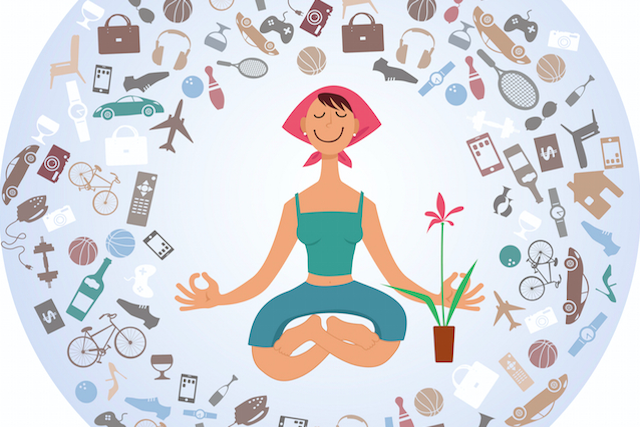
    I’m a firm believer in the idea that material possessions do not equate to happiness, so I recently started to explore the idea of living a minimalist lifestyle, to see if a less cluttered home would result in a less cluttered mind.

    I concentrated on decluttering each element of my life by reducing the amount of material possessions I owned and removing those that were unnecessary. This allowed me to focus on those items I valued most.

    I followed the seven steps below to declutter my possessions:

    Step 1: Categorized my possessions in order to sort through them one at a time (clothes, shoes, bags, jewelry, cosmetics, electronics, books, etc.)

    Step 2: Gathered together everything I own from one category, so I could see the true extent of my possessions.

    Step 3: Immediately discarded anything that jumped out at me that I no longer required.

    Step 4: Analyzed all remaining items to identify whether I loved them. After careful consideration, I discarded anything I didn’t love or need.

    Step 5: This was a step where I pushed myself to be more ruthless. I questioned whether I really truly loved the things in my “keep pile” and removed a few more.

    Step 6: Tidied everything I had decided to keep neatly away.

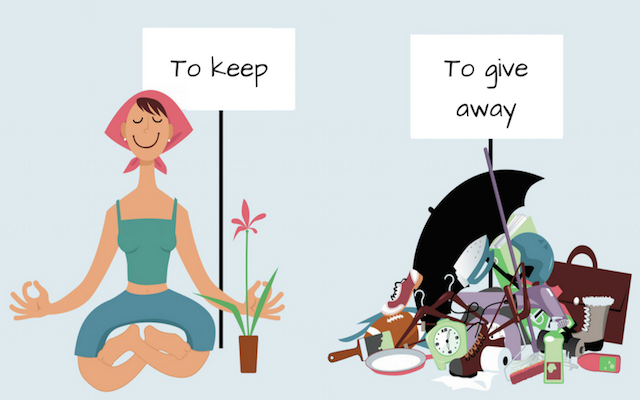
    Step 7: Gave everything I wasn’t keeping to friends and charity shops and sent some things for recycling.

    The process of removing all material possessions I no longer required from my life taught me a number of lessons:

    1. Mindful purchasing

    We purchase many items on a whim, with little consideration of need or desire. What a waste of money to buy something you may not even particularly like!

    A thorough decluttering session teaches you to be more mindful of a purchase and analyze its importance before spending your hard-earned cash.

    When decluttering my clothes, I came across several items that still had the labels attached. I found it really difficult to part with these, as it felt so wasteful given that I had never worn them. This was a great lesson in ensuring that from now on I will only buy items I am sure I will definitely wear.

    2. Money saved from unnecessary and frivolous purchases

    Restricting purchases to only necessary items has the added benefit of saving cash. My biggest overspend in the past has been on clothes.

    Since I have significantly reduced my clothes shopping, I have saved a considerable amount of money. This money has helped to fund my true passion of travel and exploring the world.

    3. Time saved by being able to find things more easily

    Reducing your possessions allows you to find items more quickly, saving precious time.

    No longer will you have to hunt through a stash of necklaces but easily choose one from the small collection you have retained. No fishing around among a mountain of handbags or rooting through hanger after hanger of clothes. The choice is quicker and easier.

    4. Space saved from owning less

    The fewer possessions you own, the less storage space you need.

    Since doing some serious decluttering, I now need half the space I previously did. I am currently looking to move to a smaller apartment, as I now have far too much room for one person and could happily live somewhere much smaller.

    5. Happier outlook

    Surrounding yourself with items you love and displaying only the items most valuable to you will make you feel happier. You won’t have to search through lots of items that you don’t like. Favorite items won’t get lost at the back of the cupboard or the bottom of the drawer.

    Gone are the days of saving your favorite things for a special occasion. Every day is a special occasion now that I am only using the things I love and my life is happier as a result.

    6. Quicker and easier to clean and tidy

    The fewer possessions you have, the neater your house will be and the easier it will be to keep clean.

    Marie Kondo, the decluttering expert, advocates the philosophy that each possession has a place and you should know exactly where to find everything. This is only possible if you reduce the amount of your material items. Now my living space is cleaner and tidier, my mind is less cluttered.

    7. More freedom

    As you begin to detach from material possessions and place more importance on experiences rather than things, you will sense a feeling of lightness and freedom, which can become addictive.

    I love this new sense of freedom I feel from no longer being surrounded by piles of unnecessary items I never use and being less attached to possessions. This allows me to focus instead on people and experiences.

    Now it’s your turn. Choose one category to start with and focus on the seven steps. See how it makes you feel. Try to dispose of unwanted possessions responsibly.

  • 7 Decluttering Tips: How to Release Your Attachment to Your Stuff

    7 Decluttering Tips: How to Release Your Attachment to Your Stuff

    “To change skins, evolve into new cycles, I feel one has to learn to discard. If one changes internally, one should not continue to live with the same objects. They reflect one’s mind and the psyche of yesterday. I throw away what has no dynamic, living use.” ~Anais Nin

    I’m attempting to fit my life into ten large boxes (and one red suitcase).

    As I enter a new phase in my life I’ve decided that now is the time to reduce the stuff that has been sitting in my storage unit while I’ve been house sitting and declutter my world as much as I can. The process has been both satisfying and exhausting.

    Satisfying because I’m finally able to get rid of things that I no longer need, from an ironing board to a box of fifty-plus rubber bands. (I’ve no idea when my rubber band hoarding began!)

    Exhausting because every item of my belongings requires a decision. Keep or release? Sell or gift? Friends or family?

    I found that while some things were easy to be rid of, there were others that I moved from pile to pile, unsure where they should rest.

    I knew that I didn’t need them but felt unwilling to let go. This feeling came up the most with clothes, as it turns out I’d attached a lot of meaning to fabric and thread.

    Like my pink suit. It’s that rare shade that suited me perfectly. The shape was flattering—a random woman once came up to me in the street to say how great my legs looked. I wore it in a corporate law office where black, accessorised with grey, was the norm. (I never did like to conform!)

    That suit reminded me of a time in my life where I lived in an exciting city and felt successful. That beautiful suit also has a stain down the front that dry cleaning won’t remove. It now looks dated, not to mention that I don’t wear suits anymore. Yet I cling onto it.

    Part of my reluctance was due to my scarcity mind set. “What if I never find another suit in that colour that makes me feel as good?”

    Do you do that when you are trying to let go of your things?

    We ask ourselves, “What if I give it away and then need it in a month?”

    Even though we haven’t needed it in the past year and, in most cases, we could borrow or buy a new one if we really needed to.

    As I decluttered I found that following steps helped me. I think they’ll help you too, whether your aim is to empty your junk drawer, your garage, or your wardrobe.

    1. Start with an easy area or the area that annoys or distracts you the most.

    Starting with an easy area is great for instant satisfaction and giving you the motivation to continue. Those old shoes that are so scuffed you can’t see the original color? Out. Those shoes that are lovely but don’t fit you? Out. Give them to a friend and make their day.

    Tackling an area that annoys or distracts you is a fantastic way to free up energy. The garage that you can longer fit the car in. Start there. The sock drawer that you have to push and shove to close because it’s so full of mismatched socks. Start there.

    2. Give yourself a time limit.

    Having a time limit will stop you from being sucked into the time vortex that is your closet. Or garage. Or pantry.

    Focusing on the time limit that I’d set myself to go through a box meant I was less distracted. If I found myself looking through a photo album when I was meant to be sorting through a box full of things for the kitchen, a quick look at the clock got me back on track.

    3. Give yourself a challenge.

    This step may only work if you’re a competitive soul like me. I decided to reduce my boxes from sixteen to ten. Why ten? I thought it was achievable and a stretch. Having that set number really helped me with my decision-making, as I knew I had a set amount of space to work with.

    4. Only keep what is essential or beautiful.

    Imagine having a home that only contained things that were essential or beautiful, or both. That idea fills me with a sense of calm and pleasure.

    This step was the best way for me to make a decision on whether to keep something, as having that guiding idea took away the constant questioning. “Should I keep it? It could be handy in the future.” “You can never have too many pairs of black trousers, black socks…”

    A friend gave me another helpful tip when decluttering clothes and accessories. Does it make you look or feel like a million dollars?

    I love that the bar is set so high. Most of us have far more clothes than we actually need. Having a wardrobe full of things that make you feel like a million dollars is simplistic luxury.

    This doesn’t mean that you keep the most expensive things either. I own necklaces that I bought for a few dollars while on holiday that I feel like a million dollars in.

    5. Get some help.

    Who says that decluttering your world has to be a chore or boring? Invite some good friends over, put some music on, and combine laughter with letting go of what no longer serves you.

    6. Give your things a second life.

    Have you thought about giving some of your stuff a second life? I had a pile of t-shirts that I no longer wear, some sixteen years old. I’d bought them while on traveling adventures, and they reminded me of those trips.

    I decided to get inventive. I sent them to my young nieces and included a set of stories telling them where in the world the T-shirts were from and what I’d been doing there. When my nieces called me, I was thrilled because the youngest said, “Thank you for the T-shirts. I especially loved the stories you told us.”

    Is there another life that your possessions can live?

    7. Connect with your emotions.

    Letting go of possessions can be like letting go of a part of ourselves. When I came across things I knew I wasn’t going to use or wear, but was struggling to release, I deliberately sat down with them and dove into the emotions/memories they raised.

    Dig into why you’re hanging onto that item. What does the item represent to you? What memories have you attached to that item?

    Connecting to those emotions helped me to know that those memories are always with me and don’t need to be triggered by a thing.

    I began to thank those items for helping me to create those memories. That might sound a bit odd, but it really worked. I could then release those things with a smile and a thankful heart.

    I love the way I feel when my possessions have been reduced. There are less distractions and I feel so much lighter and more in control of my stuff rather than having it control me. The same can happen for you.

  • How to Let Go of the Stuff That Keeps You Emotionally Stuck

    How to Let Go of the Stuff That Keeps You Emotionally Stuck

    “The totality of my possessions reflects the totality of my being. I am what I have … What is mine is myself.” ~Jean Paul Sartre

    What kind of relationship do you have with your stuff?

    Embracing who we are naturally requires a letting go of who we aren’t, but perhaps want to be. That ties directly to our physical belongings, which can renew and inspire us in the direction we’re headed—or hold us back.

    Over the years, I’ve found that the objects with the most powerful grip on us are not necessarily those we use frequently and with ease, but the “aspirational” items that we wished we used more.

    The sleek high heels that never come out of the closet, because they’re too impractical to actually wear. The exercise bike that grows rusty in the basement. Or in my case, the high-end digital camera I just sold on eBay.

    The Lightness of Letting Go

    The camera is three or four years old at this point, but it takes amazing pictures. My partner at the time suggested I buy it before a big vacation to Istanbul, though I didn’t need much convincing.

    The idea of capturing the world through a lens and expressing myself creatively excited me. I liked the vision I saw for myself—someone with an eye for detail, with original, hand-crafted art on her walls to boot. This person sounded very clever and interesting.

    But what I quickly came to realize is that the actual process of taking photos, let alone editing them, held less appeal.

    My traveling companion used the camera on that trip far more than I did—he at least knew what to do with all those dials and buttons, whereas I had skipped reading the manual. It turned out my iPhone and a few Instagram filters were really all I needed to be satisfied. (So basic, I know.)

    Still, I held on to the camera for several more years, dutifully lugging it with me on trips and adventures, though it rarely came out of my bag. Even when I did snap pictures, they almost never came off the memory card.

    These unused items can take up a lot of space, but it’s the emotional burden, not the physical one, that really weighs us down.

    Every time I looked at my camera, I was struck by a pang of guilt. For wasted money, wasted potential.

    I’m rational, even ruthlessly unemotional, when it comes to most of my possessions, but this camera had a hold over me. I put off getting rid of it in the hopes that inspiration—or at least some motivation— would strike.

    Finally, this winter, I accepted what had already been true for quite a while: I’m not a photographer. And that’s okay.

    I sold the camera online and instantly felt better. The guilt was gone, my shelf was empty, and my wallet full. This time around, I plan to spend the money on something closer to my heart—an investment in my writing, some yoga classes or even a meal out with friends.

    Taking Stock for Yourself

    Here are a few things I considered when I accepted that my dreams of being a photographer, even a decent amateur one, were just that.

    Listen to your own stories.

    What stories run through your head when you look at an object that you don’t use but can’t seem to part with? How do you plan to use it and is that realistic?

    These stories are illuminating because they help us identify our true motivations.

    I rarely thought about planning my shots or the subsequent hours required in front of the computer to review my work—the nuts and bolts of photography. And when I did consider these tasks, it was not with much fondness.

    Watch out for the dreaded “shoulds.”

    As I’ve learned, it can be far too easy to conflate what we should want to do with what genuinely calls to us. Do the objects you cling to support the person you are and the activities you enjoy, or do they speak to some idealized identity in your mind’s eye?

    Author Gretchen Rubin writes frequently about what she considers the most important of her “personal commandments”—her commitment to just “Be Gretchen.” This has meant admitting she’ll never have a glamorous wardrobe or enjoy late-night jazz clubs, even if she likes the idea of these things in theory and sees why other people cherish them.

    “If something was really fun for me, it would pass this test: I looked forward to it; I found it energizing, not draining; and I didn’t feel guilty about it later,” she suggests in The Happiness Project.

    Let your possessions be physical reminders of what’s really fun for you.

    Consider substitutes.

    It’s possible your desire to hang onto something is telling you more than you think.

    I had a similar experience with a bicycle I bought the better part of a decade ago. It was a beautiful Italian road bike from the eighties, and I snatched it up on Craigslist, putting aside the fact that it wasn’t quite the right fit and that I didn’t feel comfortable riding it.

    I held onto the bike through several moves across states despite rarely using it, thanks to that familiar tug of guilt and desire.

    It was only in the past year that I finally invested in a new bike, one with upright handlebars, fatter tires, and easy-to-change gears. It fits me and I ride it everywhere. This one also has less emotional power over me. It’s functional, a tool I use for getting around—not a symbol for the kind of person I wish to be.

    Can you tweak what’s not working?

    Think about who else might gain.

    When I did finally sell my camera, it helped to convince myself that I was giving someone else the chance to enjoy it at a reduced cost. I hope the buyer finds the joy I’d been seeking, but never actually found.

    Could others use the items you’re clutching so hard? Consider letting go a gift to the world—one that will also free you to embrace your true self more fully.

  • Why Experiences Trump Things and Bring Us Closer

    Why Experiences Trump Things and Bring Us Closer

    Friends Dancing

    “Every experience, good or bad, is a priceless collector’s item.” ~Isaac Marion

    Last year was a thrilling one for my sweet boys, ages eight and eleven. Thanks to birthdays, Diwali, and Christmas, they were fortunate enough to receive most of the things they’d been begging for throughout the year.

    As we sat on our couch on New Year’s day, I asked them what their best memories were from 2014. Surely, I thought, they would rattle off the highly anticipated iPod touch or the Giants jersey that topped their wish lists.

    But much to my surprise (and my joy), my younger one said, “my birthday party.” Really? Your birthday party?

    He was referring to the “baseball party” in our backyard with his friends. The one where an hour before it started, the skies opened wide with torrential downpour, forcing seven active boys to play in our tiny playroom until the storm turned into a small drizzle. That one? Oh. Cool.

    Surely my older son, our tech freak, would have a tough time deciding between his Nexus tablet and favorite Wii game to top his best memory. So I was even more taken aback by his follow up. “Our trip to New York.”

    Now, keep in mind that we’re originally from New York, so a trip home is not about Broadway shows and FAO Schwartz. It’s about hanging out with our family, specifically their cousins, in Westchester. It’s where we barbeque, meet friends, hang out at the pool, and watch movies. Pretty much what we do in our home, but with family we don’t get to see very often.

    Their responses were so unexpected. Hadn’t they just received everything they ever wanted a week earlier? I guess not.

    It’s no surprise to hear that experiences mean more than things. Material items bring us immediate yet fleeting joy. But it’s the memories and the feelings that stay with us forever. Then why was I so shocked?

    For some unexplainable reason, I thought my kids were different. But even at a young age, they, like their parents, proved that it’s their experiences that mean the most to them.

    And it doesn’t have to be week in Disneyworld or a cruise to Hawaii. It can be a fine homemade meal or even your crockpot dinner, served on your fine china.

    It could be something others use to create their own experiences, like a gratitude journal or conversation jar.

    It could be a shoulder massage on your couch or a wine tasting in your kitchen.

    It could be as long as year’s worth of dishwashing or as short as a scavenger hunt in your backyard.

    It could be as a grand as a meditation getaway or as simple as meditative app.

    Because when you think of a specific person in your life, your first thought isn’t, what did they give me? But, how did they make me feel? That sense and impression is what stays with us.

    Emotions, whether good, bad, or indifferent, are immediately brought to the surface when something reminds you of someone. Most “experience” gifts evoke a distinct feeling of love, care, and thoughtfulness—and stay with you long after a physical item has been worn out or forgotten.

    And if the gift is an event you can both participate in, it becomes a shared memory, something far beyond what a physical gift can offer.

    In our world of instant gratification and everything at our fingertips, it’s not difficult to get what you need. But in our hectic pace of life and in the frenzy of consumption, our experiences can fall short. We can add to peoples’ possessions or we can choose to add to memories they’ll hold onto forever.

    So, as occasions arise through the year for gifts, awards, and other reasons for gratitude or celebration, I’m thinking about how I can swap out more stuff with more experiences.

    How I can put my time, energy, and money toward a thoughtful event and create a recollection instead of another physical item in their life.

    I want to give memories, knowledge, and skills to help my friends and family explore or re-discover pleasures in life.

    I want to help someone overcome a fear, and join them in a ski lesson, or check off an item from their bucket list, like a pole dancing class.

    I want to make their ordinary day extraordinary by whisking them away with a bottle of wine and picnic blanket.

    I want to cast a ray of unexpectedness in their workday by delivering a gourmet meal to their office.

    I want to stop cluttering lives with more stuff and start expanding minds with more memories.

    I want my kids to always remember experiences as their best time of the year.

    I want to make friends and family feel. I want to know I helped them experience life.

    What experience can you create for someone this year?

    Friends dancing image via Shutterstock

  • 4 Ways to Know If You’re Ready for a Simpler Life

    4 Ways to Know If You’re Ready for a Simpler Life

    “Be who you want to be, not what others want to see.” ~Unknown

    Growing up in a consumer society has its obvious advantages—technology is abundant, restaurants are everywhere your eyes can see, and grocery store shelves are always full. All of this leads to the illusion that everything is available, in quantity, all of the time, and for the most part it is.

    I was born and raised in a consumer culture and I thought I had it all; the ability to buy whatever I wanted and needed was deeply ingrained in my psyche. In my childhood I had toys, stuffed animals to decorate my bed, Nintendo, a swimming pool in the backyard, a unicycle, my own little black and white portable TV, and a closet full of shoes.

    My tastes changed over time, but until I became an adult at the age of twenty-eight my perception about shopping and acquiring stuff was on the naive end of the spectrum.

    It didn’t matter where things came from, so long as they came and there was a temporary happiness associated with each and every purchase.

    Change. Something must change. I heard whispers in the night.

    The things I had accumulated were not bringing joy; what was more, they weren’t even being worn or used. I thought about the excess, my excess, others’ excess, the excess from stores that never gets sold and has to go somewhere, then I considered for a moment the environment.

    My husband and I moved from a one bedroom apartment in Seattle to the plains of southeastern Hungary to immerse ourselves in quiet country life.

    We had a strong desire to get away from the hustle and bustle of city life. We purchased a five hectare farm with cob buildings, built without foundations and just silt under the tile floors. Electricity, but no running water.

    It was ours—the trials, the warmth of the fireplace, the peace and quiet to reflect on life.

    After five years of spending mornings in silence, listening to the sounds of pheasants, guinea, and owls, our closeness to nature started to become rapidly apparent. Simplicity crept into our lives as an inkling of an answer of previously soft-spoken whispers.

    Drawing water from the well, bucket by bucket, spinning wool, and preserving fruit, the introduction of self-reliance into our lives was profoundly exciting and exhilarating at the same time.

    Paring down and wising up, we slowly became eco-minimalists.

    There are downsides to being “different”: We have lost friends along the way, our parents don’t quite understand our determined stance on living a simple life, and it isn’t easy being green. So, is living an unconventional simple life worth it? By all means, yes!

    The rewards are beautiful when you truly accept gratitude into your heart. Gratitude for the little things in life: the meaningful conversations, the love, the laughter, the roof over your head (never to be taken for granted), the ability to cook for yourself and sew your own clothes.

    How do you know if you are suited for a different kind of simple living? You are ready to live life on your own terms, for your own pursuit of happiness.

    Distancing yourself from society may be necessary to get out of the brain smog, so that you have the ability to think for yourself without the white noises of traffic, bells, and life on the street. Spending time in silence does wonders for restoring the soul and giving you time to emerge into a new persona, a more intelligent version of your former self.

    1. When memories become the real worth in your life, not things.

    Think about your past, your childhood. What memories stand out? The number of toys you owned or the family and friends that you shared those special toys with? That you got to go hiking in a canyon or shopping in a cityscape?

    Chances are good that it was the experiences that made life enjoyable, not the stuff—the people that you remember, the good times and the bad, the memories that last a lifetime.

    2. When connecting with nature is a desire, not a chore.

    Getting outside for fresh air daily is not only good for your lungs, it may help to simplify your life. It gives you the opportunity to walk, ride a bike, and move your limbs, a natural way to keep fit.

    Connect with the earth by walking barefoot, laying in the grass, looking up at the sky and by allowing yourself to feel small in the vast universe.

    3. When you are tired of the chase.

    A life lived slowly is a life well lived. When we rush we miss expressions, we miss flowers in bloom, and we miss moments that will fly right by. Slow down!

    Life is not a race. There is no competition; there is no need to whiz by. There is however a need to enjoy the details, to smile at the clouds and have the ability to wait. Patience is an esteemed virtue that we can all strive for.

    4. Interest-led learning excites you!

    Simple living is all about self-reliance. The ability to learn things on your own shows your determination, flexibility, and open-mindedness. When you learn new things out of your own interest, you are sure to embrace new ideas and take them far.

    We didn’t become the architects and engineers our family and friends wished us to be, we didn’t even become who we thought we would be. Instead, we became us—and we are extremely joyous and grateful for that.

    Wherever you go, be the change you would like to see in the world.

    You don’t need to change addresses or move mountains to discover simplicity. You don’t even need to travel. You can find it right in your own home. Create new memories, go for a walk and connect with nature, explore self-reliance and be open to taking your new life in, slowly.

  • Where True Happiness Comes From: How We Gain by Having Less

    Where True Happiness Comes From: How We Gain by Having Less

    “The things you own end up owning you. It’s only after you lose everything that you’re free to do anything.” ~Chuck Palahniuk

    Small is the new big. That is to say, minimalism and living with less is becoming a growing movement in America and it’s starting to catch on over here in the UK too.

    With the global economic crisis and changes in social attitudes, people are starting to realize that the more stuff we have, the more miserable and trapped we become. After all, stuff leads to debt, stress, and even increases our carbon footprint.

    Plus, living in larger homes with space we don’t really need only equals more stuff, more spending, and more worry. Then, when we run out of space, we move to a bigger property—or even rent storage space.

    Enough.

    Stuff doesn’t make us happy. We might get that initial glow of excitement when we purchase new things, but it doesn’t last. 

    True meaning and happiness come from experiences. From family and friends. From hobbies. It comes from the things that we do, rather than the things we own.

    Like most people, I followed the American Dream. I wanted the big house and garden. The nice car. The expensive clothes. I also wanted to portray an air of success to “get ahead” in the business world.

    As someone who runs their own business, there’s a perception that if you’re not moving along a certain path, you’re not considered to be successful. That if you don’t turn up to a meeting in a decent car or wearing expensive clothes, you won’t be taken seriously. That you’re not worth the money you’re charging.

    I guess this perception of wealth extends to our self-worth and confidence. We feel more empowered if we’re attending a meeting wearing the right clothes and carrying the right handbag, for instance.

    But then this false sentiment extends to our private lives, as well. We want our peers to think we’re successful. We’re embarrassed, for example, if we’re driving an old car or wearing last season’s fashions. We feel like we’re going backward rather than forward if we’re not “keeping up.”

    Of course, it’s easy to fall into this trap—assuming that we really must drive expensive cars, wear designer clothes, and buy things we don’t really need.

    It’s the way brands and big companies want us to feel. They want us to spend money, constantly consume, and place all our self-worth, confidence, and happiness on “stuff.”

    They want us to be on an endless mission to be happy through consumption and spending. I’m just relieved I’ve worked this out now and discovered the truth.

    Through my own endless pursuit to be happy and seemingly successful, I was miserable and constantly running on a treadmill to keep up with my excessive lifestyle. When I say excessive, it probably wouldn’t seem that way to others. Most people would see this typical way of life as pretty normal.

    At some point though, it stopped being normal to us and we had a “Eureka!” moment. We realized that we didn’t need all that space, let alone all that stuff. So, we sold our big house, got rid of our expensive car, and started to think about minimal living.

    What could we get by without? What did we really need anyway?

    Well, we’ve just bought a 600 square foot apartment in the city. It’s got one bedroom, one bathroom, an open-plan living space, and a little balcony.

    We’ve downsized our stuff and now only have what we need. Sure, there are a few luxuries but for the most part we’re a lot lighter than we used to be.

    How do we feel? We have no debt, we have less stress, and we don’t have to work as hard to maintain our lifestyle. Because we live in such a small space, housework takes no time at all. And with no garden, we don’t spend hours maintaining a lawn or borders.

    This means we have more time. And that time is dedicated to ourselves. To hobbies, experiences, and family and friends. We also have more money to spend on doing things like travel, concerts, or even French lessons.

    Because of our new lifestyle, we’ve never been happier or more comfortable. Our lives are rich with meaningful experiences and relationships. And many others who are following this minimalist lifestyle are enjoying the same benefits.

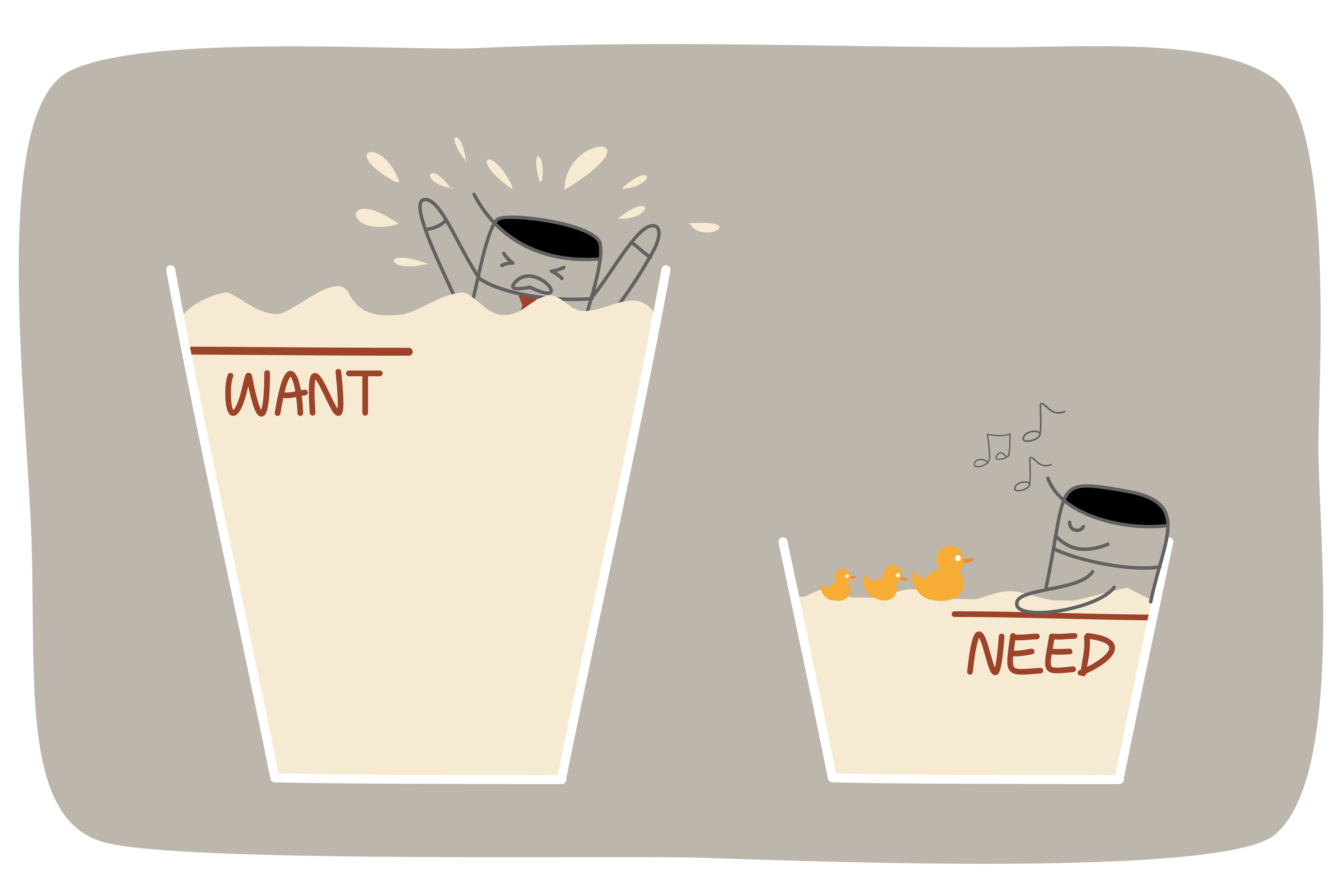
    I personally think the age of consuming could be coming to an end. It’s certainly starting to lose momentum. People are realizing there’s a big difference between “want” and “need.”

    And with an increasing population and higher land prices, the future could be quite small compared to the way we live now. It might be that minimalism becomes a necessity rather than a lifestyle choice.

    Do you feel like you’re weighed down by your things? Do you find yourself constantly working to pay for the expensive things you own? Are you lying awake at night stressed and worried about debt? 

    Why not try a little minimalism? You don’t have to go to the extremes I’ve gone to. You could just downsize a few bits and bobs. Buy less stuff. Or even swap your car for a cheaper mode of transport?

    And instead of spending money on things, why not invest in experiences? In relationships? In the times that set your soul on fire and make you jump for joy? Why not create those precious memories that have you grinning from ear to ear every time you recall them?

    Because you know what they say: You can’t take it with you. But you can certainly be satisfied that you lived a wonderful life.

    The Good Life painting by Tracy Booth

  • The Rabbit Hole of Stuff: Why We Can’t Buy Our Way to Happiness

    The Rabbit Hole of Stuff: Why We Can’t Buy Our Way to Happiness

    “Happiness can only be found if you free yourself from all other distractions.” ~Saul Bellow 

    When I was twenty I bought my first serious piece of furniture.

    It was a sofa covered in a nubby sort of fabric, a creamy shade of white with tan and light brown threads woven through that made the modern style seem warm and welcoming.

    It was beautiful. And on the day my sofa arrived, I celebrated. I celebrated not only a beautiful addition to my little apartment but also a step into adulthood.

    After all, I bought it on credit, and I was thrilled that a social authority as important as a fancy furniture store should give me and my waitress job a nod of approval.

    But my joy was tempered by a sobering thought that felt like a weight on my shoulders: I can’t fit this sofa in my backpack.

    I’d been traveling, working, writing, and figuring out life for a few years already, but I still wasn’t where I wanted to be. And I didn’t have the words to express the feeling that I was only vaguely aware of. But I was feeling something. And I ignored it.

    Over the next ten years or so—and almost as many living situations—my sofa and I took in a bedroom and a kitchen set along with an entire house full of furniture.

    A husband, too. I had just (finally) finished grad school, and my goal was to write full-time as a freelancer instead of part-time as I had been. I wanted to write more poetry. Teach writing. Play my guitar. Travel. Live my life as I’d dreamed of living it.

    The sparkle of shiny new toys pulled me in directions that made my goals almost impossible.

    But two incomes suddenly made lots of other stuff possible: a lavish wedding, a big house, complete remodeling, and a new patio. Redecorating, buying just the right outdoor furniture, planting flowers, trees, and bushes… I even built a koi pond with a waterfall.

    I taught for a few years, but I was hardly writing, and I was losing my focus. I was getting confused with too many choices, no planning, and too little experience. I struggled with time management, and I usually failed.

    I became a wine expert, and I drank it far more often than I wrote about it.

    I fell into the rabbit hole called stuff.

    I’d never had much, but now, closets were stuffed with games and skis and skates and snorkeling gear.

    Expertly organized closets promised to restore order, but they sagged with the weight of suitcases and carry-ons, cameras and camcorders, and clothes for every situation. Tools stuffed a garage and a shed, while the finest wine glasses, china, and gadgets took over the kitchen.

    An enormous 100-year-old piano rolled into place in the mélange.

    The house was bulging and sinking at the same time.

    I wasn’t writing. I was falling apart, and I couldn’t work. I saw doctor after doctor for muscle pain, chest pain, and insomnia. Nightmares, even.

    The hot tub was supposed to help with the stress, but it was just more stuff. There were other problems in my marriage, too, serious problems, and I finally gave up trying to get things back on course.

    And I got rid of the last of the stuff just a few days ago.

    I have other, more important things to do than take care of stuff.

    I’m a bit older now, a bit wiser, and I’m listening to that inner voice I ignored so long ago. I’m catching up on what I should have been doing—writing, improving my writing, and teaching it—what I wanted to be doing but couldn’t because I wasn’t focused.

    It’s time to strap on my backpack again—it was never meant to carry a sofa, but my laptop fits just fine.

    I’m glad I recognized the crazy path I was on while I’m still relatively young.

    My lessons were painful, and I wish someone would have given me a good, swift kick and made me look in a mirror. Why didn’t anyone shout, “Why aren’t you writing? What happened to your goals? Focus!” Maybe I had to learn my own lessons, but I’m not afraid to shout them out now, nice and loud.

    1. The stuff you can buy is a distraction that won’t help you reach your goals.

    It’s like an addiction or a temporary fix. And no matter what you see online, in magazines, or on TV shows that promote home and garden ideas or lifestyles—even simple or minimalist lifestyles—remember, it’s a business trying to sell you products that promise happiness. Don’t fall for it.

    2. Stuff creates a false sense of self.

    I’m creative, and I love beauty. But somehow, unconsciously, by creating a beautiful home—with lots of stuff—I was also fashioning myself into someone I thought I wanted to be, something others wanted me to be.

    But I was already myself, and the path with the least resistance, the path that offered the most immediate reward didn’t leave time for the hard stuff: my goals and my writing.

    3. Stuff can blind you.

    The friends I made back then are long gone. I was naïve, and if I hadn’t been seduced by stuff—expensive dinners, flowers for every occasion, a huge diamond engagement ring that really wasn’t me—I might have seen that my relationship could never work.

    I was the poet in black trying to fit into someone else’s upscale suburban lifestyle, and there wasn’t room for anything else much less me.

    4. Material stuff keeps you busy with…material stuff.

    My life plan didn’t include all the stuff money can buy. But the money spent wasn’t the problem; the problem was that I worshipped at the altar of materialism, and I sacrificed myself and my goals.

    What’s the point of spending time and effort on stuff when it leaves little or no time for your real goals?

    5. Stuff distracts us from ourselves.

    A solid relationship is created with empathy, love, and communication, not stuff. But we nurtured our marriage with Home and Garden TV or the Food Network, furniture showrooms, and glossy magazines with products that promised the good life. And underneath it all, I just wanted the space to work on my own goals, not another set of china, a new TV, or a new iPod.

    Some stuff is important, and there’s nothing wrong with buying what you need.

    But it’s about priorities and the price you might pay for stuff that doesn’t support your goals and dreams. Think about it.

    Are you working toward your goals and the things that truly matter to you?

    Or are you down the rabbit hole?

    Stressed woman shopping image via Shutterstock

  • 3 Ways to Redesign Your Life by Shedding the Excess

    3 Ways to Redesign Your Life by Shedding the Excess

    “Don’t let your happiness depend on something you may lose.” ~C.S. Lewis

    For as long as I can remember, “more” has always been better, but the word “more” is no longer what it used to be.

    Five years ago, I started exercising for the first time in my life. At first, I counted down the minutes until my workout was over. As I got stronger, though, I started staying at the gym longer and longer.

    For a while, I burned more calories than I consumed during meals. It didn’t matter. I worked out as much as I could because I liked the effects it had on my body and mind. I felt healthy and vibrantly energetic.

    But I hardly had time for much more in my life.

    I was burnt out. Some of my other favorite activities—like reading or making plans with friends—took a backseat to putting in hours at the gym. But working out in less time scared me, as silly as that sounds now. Would less time in the gym slow down my health and energy level? Would I lose momentum?

    When my loved ones started complaining, I knew I had to make a change.

    I found I could do more with less at the gym. I found that my body appreciated the extra rest more than I ever expected. I found that, by finding a balance, my life felt more at ease.

    Over time, I discovered that in many areas of my life, less is more. Carrying the excess of my life felt like pulling around a parachute, making every step more strained.

    Focusing on the necessary, on the positive, on the essential may grant you the freedom you desire. Here are three areas in your life you can redesign:

    1. Your Relationships

    Growing up, my friends and I counted and compared how many toys we had, how many books we read, how many good grades we achieved. Only now, decades later, have I dropped that habit of thinking “more” is better.

    When I quit my job and started my own business, I never thought that my biggest obstacle would be the people I chose to accompany me on that path. Once I hit that roadblock, it took great courage to cut the ties that were holding me back.

    The people we come across and spend time with become a part of our lives. That doesn’t mean they necessarily should. It’s up to you to choose.

    Jim Rohn once said, “You are the average of the five people you spend the most time with.” If that is true, could your relationships serve you better? If you could choose, what kind of people would you surround yourself with?

    2. Your Material Goods

    Someone once told me, “The fastest way to get a pay raise is to spend less money.”

    Quitting my job last year meant watching how I spent money. This was a blessing in disguise.

    Every single time I browsed the web for a beautiful new handbag, I stopped myself, thinking: “What am I trying to find in this handbag? What am I looking to feel by buying this?”

    Over time, this spread to the material goods I already have, not just the ones I hoped to purchase. I gave away some things that would be more useful to people in need. Living in a third-world country made that process easier, giving me a chance to give back to the communities around me.

    The items we hold around us pile up over time, but the purpose of that is not always clear. What are you looking for within those items: happiness, status, or is it something else?

    If you are interested in living a life with less stress, try asking yourself why you hold dear the possessions around you.

    3. Your Expectations

    For much of my life, I gave in to my emotions. With a blindfold over my eyes, I stumbled through life at the whim of my mood swings.

    Very often, I spent my days feeling angry, jealous, or doubtful. I was unaware of the reason behind these emotions. I let them run free, untethered inside my heart and mind.

    Until someone introduced me to a book called Man’s Search For Meaning by Viktor E. Frankl.

    In his book, he writes:

    “A man’s suffering is similar to the behavior of gas. If a certain quantity of gas is pumped into an empty chamber, it will fill the chamber completely and evenly, no matter how big the chamber. Thus, suffering completely fills the human soul and conscious mind.”

    Whether the situation is big or small, every single person decides just how much to suffer for it. When faced with the same situation, each of us decides just how to frame and feel that situation.

    The biggest reason I let my emotions run wild was because I was not aware of my expectations. I imagined life to be a certain way, and I was torn when reality didn’t match up.

    Wiping my mind clean of how life should play out, I allow myself to accept each moment as it comes, for better or for worse. The calm I feel at shedding expectations is extraordinary.

    When I set out to redesign my life— quitting my job, starting my own mini-business, spending more time writing—I never thought I would also start a quest to shed many parts of my life.

    None of this is easy, but it is worth it. I grapple with it everyday, but that grappling makes all the difference.

    Are you looking to redesign your life? Share your stories in the comments.

    Photo by The Green Party

  • Decluttering Made Easy: How I Lightened My Load from the Inside Out

    Decluttering Made Easy: How I Lightened My Load from the Inside Out

    “Letting go isn’t the end of the world; it’s the beginning of a new life.” ~Unknown

    Last December I found myself sitting on my floor, having just left my job and a ten-year relationship. As a result, I was about to leave my home too. In front of me was a mountain of possessions that I somehow had to take with me to wherever I was going next.

    Clothes, bedding, books, notebooks, electronic bits and pieces, boxes of ornaments, and sentimental “things,” handbags within handbags, flocks of high heels, tsunamis of paperwork…

    And then there was little me.

    I felt overwhelmed by my possessions. It seemed unnatural to have accumulated more than I could carry alone, or at least fit into my car.

    Outside, it was the run up to the holidays in the middle of a recession. Half the country was unable to afford their heating bills, let alone presents. So to distract myself I brought a handful of things to a children’s charity shop down the road: teddies, pictures, a wicker basket that would be perfect for a child to keep toys in.

    And that unleashed the floodgates.

    I felt good—for me, because my burden of possessions had shrunk, and for the children, who might receive these things at Christmas.

    While the basket was hard to give away—it had been mine since I was a baby—giving it away made me see that I was better able to mentally cope with getting rid of things, than physically cope with trying to take it all with me.

    And so an epic spring clean began in the middle of my winter. Three weeks of rifling through boxes and shipping stuff out to charity shops, friends, family, the trash, and eBay.

    Some things were easy to give away. Others were not. Certain things I had no use for—yet something made me hesitate to let them go. I came to know these hesitations as emotional speed bumps. (more…)