Tag: stuck

  • Breaking the Rust: 7 Tips to Move Forward When You Feel Stuck

    Breaking the Rust: 7 Tips to Move Forward When You Feel Stuck

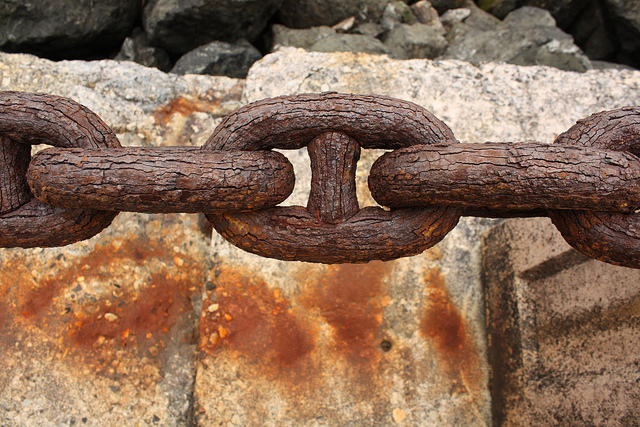
    Rusty Chain

    “Change is inevitable. Growth is intentional.” ~Glenda Cloud

    The squeak emanating from my office chair had finally become unbearable. Like a slow drip of acid on the surface of my psyche, it had finally burned its way into my head.

    I stopped working on the article I was writing and strode into the garage to retrieve my toolbox. Time to replace that rusted out wheel with the shiny new one that I’d bought months ago.

    I leapt into action purposefully. Today, things would change.

    Three of the four bolts holding the wheel in place were out when things ground to a halt, as the last bolt was stuck.

    How many times do you find yourself embarking on a path of change when you are stopped dead in your tracks? You find something has rusted over time and does not want to move.

    You try various methods to loosen that one bolt—you curse it, try several different types of pliers, stop multiple times to make sure you’re actually turning the bolt the correct way. (God forbid you’re tightening it!) Why is this one bolt frustrating your attempts at transformation?

    So what happens?

    You put the bolts back in, liberally apply some WD-40 to the wheel to make the offending sound go away for now, and go on with your life, even though you know the irritation will be back soon enough.

    This scenario surfaces time and time again in my personal life.

    I am a person who does not like conflict and usually tries to find the smoothest path out of drama; I have been called a peacemaker.

    I toiled for years in several jobs that did not allow me to chase my own dreams. I kept my dreams buried under layers of personal rust. On the outside I appeared to be the dutiful husband, father, and employee while on the inside I was languishing. 

    I would decide it’s time to fix my issues only to be turned back by some preconceived notion that had frozen me into an uncomfortable position.

    My first marriage fell apart, a casualty to my own emotional stagnation. My wife pointed it out several times but I refused to change. I was stuck on a path I never wanted to be on. I was unfulfilled and it showed to those closest to me.

    My daughters grew up from infants to beautiful young ladies, yet I still didn’t follow my own path. I listened to the accumulated voices in my head telling me to follow the rules, don’t rock the boat. 

    The ultimate irony was that while I was stuck, I was telling my daughters to follow their dreams. At nights I would lay awake dreaming about the path I had abandoned but was too afraid to follow.

    I met a fascinating woman who challenged all of my ideas of what a partner could be. She dared me, pushed me, loved me, and encouraged me to listen to my heart.

    My first wife loved me, but unfortunately my frustrations—my rust—had helped drive her away. I vowed not repeat my earlier mistakes and slowly learned to trust my heart. In time, I found myself starting to loosen the stuck bolts holding my own squeaky wheel in place.

    How many times in life have you allowed the rust to accumulate around your happiness without realizing it?

    You approach the issue with resolve, vowing that this time you will make that change you’ve been thinking about (finding a new job, moving into a new department, going back to school, chasing a dream you thought was impossible).

    Yet you allow yourself to be turned back due to something that you perceive as being out of our control. You quietly shake your fist at the sky and curse the gods.

    How do you break the rust? How do you move forward in your development and inner peace?

    1. Figure out what the rust is composed of.

    The rust is inside you; you created it, and it’s inside your own head. Figure out what the issues are that allow you not to make this change you so desperately want to make.

    Retreat to a place where you can relax and search your soul. Define your goals, dreams, and aspirations, and realistically list all of the pros and cons for each.

    2. Conquer the “everybody’s.”

    In the book Finding Your Own North Star, author Martha Beck talks about the forces that limit us and hold us back. She refers to these forces as the “everybody’s”—as in “everybody says that is a bad idea,” “everybody tells me to stay in my current job,” “everybody says I am lucky to be doing what I am doing.”

    The question you have to ask yourself is: Who are these people? Are they real or a figment of your imagination? Often, they are the accumulated detritus of messages that have touched upon your psyche over the years.

    Write out your goals, things that make you happy, things you deserve in a fulfilled life, and then create two columns underneath each item. In the left column write down who would want you to achieve your ideals and in the right column, the people who would not want you to succeed in them.

    Hopefully there are no names on the left hand side, but if there are you have some serious soul searching to do. Who are the people restraining you? Do they really not want you to be fulfilled? Do they like seeing you unhappy or are they more encouraging than you give them credit for?

    Talk to them and find out what they really feel. I bet you will soon be able to move their name to the right hand side of your ledger of contentment. If you still have a few names on the left, ask yourself if you should let them direct your life choices. Who would you rather listen to, the large roster of supporters on the right or the few on the left?

    When you find yourself looking at your list you’ll soon realize who is holding you back—it’s you.

    3. Become a positive feedback junkie.

    Remove yourself from negative influences and surround yourself with people and situations that keep you focused on your ultimate goal. Become your own cheerleading squad. I kept a notebook where I recorded my inner thoughts—lists of what made me happy, daily victories, and the eventual objective.

    4. Build up your professional network.

    There are numerous individuals and organizations looking for forward-focused people. Linked In is a powerful tool in today’s business world. Dive into it.

    5. Ask for help.

    Many have changed their lives and are happy to help you. You will be surprised by how many people will step up. It’s human nature to want to help others.

    6. Realize it’s going to be hard, damn hard.

    Only you can change your path. Work on it after work, on weekend, before bed, anywhere you have free time. You owe it to yourself and your loved ones. Remember the age-old question: How do you eat an elephant? The answer: one bite at a time.

    7. Imagine the end result, focus on the good, not the bad, and keep going.

    As Winston Churchill said, “Don’t give up, don’t ever give up.”

    Recently I decided to leave a job I had been out for eight years. I enjoyed my coworkers but found myself uninspired and stagnant. My career had stalled.

    I did not come to this decision easily. It took months and months of soul searching to realize it was time to break the rust and move in a different direction. I gave notice and have not looked back since.

    I am in control of my destiny. My network is pointing out leads for me, inspiring me and advising me.

    What I have found is that people I meet are happy for me and ask how they can help. I’m excited about following the new path in front of me even if a little nervous about the potential to take a wrong turn.

    I am feeling more complete than ever before in my life, but I have to continually watch for fresh rust amassing.

    What a great feeling it is when you’re able to sit back into that favorite chair of yours and know once and for all that you have fixed the annoying squeak that was not allowing you to enjoy it anymore. Imagine a life and career where you are happy. It can happen. Just break that rust.

    Photo by Calsidyrose

  • Getting Unstuck: Work Through Fear and Change Your Life

    Getting Unstuck: Work Through Fear and Change Your Life

    Im Free

    “When you become comfortable with uncertainty, infinite possibilities open up in your life.” ~Eckhart Tolle

    We’ve all been there. Feeling stuck is very distressing, and it can often make a situation feel even more difficult than it already appears to be.

    Many of us may have felt trapped in a job, a relationship, a place; any unfavourable situation, really, that we see little way out of can leave us feeling deeply discouraged.

    The uncertainty of it all becomes overwhelming and, over time, paralyzing.

    I have felt the frustration, the sadness, and the hopelessness that accompany this predicament many times.

    In fact, I’ve lived most of my life feeling stuck in one thing or another—a volatile family situation, unhealthy relationships, various jobs. For a long time, I rarely made proactive decisions about anything.

    I had a number of distractions I used to try to avoid thinking about it. I drank heavily, took drugs, took trips, took on other people’s problems, overworked, over-exercised, over-sexed, under-slept, worried constantly, and generally avoided thinking about the specifics of what I needed out of life, a job, or a relationship.

    Opportunities and endings did flow through my life, as they inevitably will, but they were seldom based on what I wanted.

    After a while, negativity and worry used up much of my energy. I was diagnosed with cancer at twenty-six, and started to have other major physical ailments, not to mention regular nightmares. I knew I had to make changes.

    I started with my diet, something that I felt was within my control. I gained a lot of knowledge about food, health, and lifestyle very quickly and just soaked it all up.

    I also learned a lot more about our inner emotional lives and about taking responsibility for my feelings, my actions, and my words.

    I started practicing meditation and continued to deepen my yoga practice with a new awareness of my mental and emotional environment. I’m now able to observe my thoughts and am quick to see how my thought patterns change when I feel stuck.

    Those negative, self-defeating, fearful thoughts come creeping back into my mind, whispering to me that I don’t have any other choice.

    The depressed feelings and anxiousness come quickly too, and I often start to wonder, if I’d done something differently in the past, would I be here now? I tell myself that only if a certain event happens in the future will I be able to make a change.

    Dwelling on the past and obsessing about the future is a surefire way to stay stuck.

    I now know that I need to be careful not to qualify decisions based on imagined future events happening or not happening, and not to make decisions out of fear. Sometimes doing what is best for you means facing those fears head on.

    When I was diagnosed with cancer, I told myself I’d only take time off work if I started to feel really physically ill. I was afraid I’d face financial difficulties if I took a leave. I didn’t give myself nearly enough space to process the emotional effects, and I didn’t give my physical body the time to rest that it was clearly telling me it needed.

    I got very ill with a string of severe infections in the two years following my recovery because I never proactively made a decision to take care of myself.

    When I start bargaining with myself, I know I’ve given away my power. I’m no longer listening to my intuition or connecting with what’s really best for my well-being.

    I’ve realized that the only way to get unstuck is to detach from the outcome of our decisions and the fears about things not working out, and instead focus solely on what exactly we want and need. In this way, the uncertainty can lead to opportunity.

    There are a few things I did make proactive decisions about over the last ten years—like pursuing a degree in Environmental Studies, moving to Australia, and committing to building a more healthy lifestyle—that have turned out better than I could’ve imagined.

    It has become more and more clear that the decisions I make from now on need to be based on my true desires, not my fears.

    I now recognize that I’ve kept myself in unhealthy situations mainly because I didn’t have the tools to help myself.

    When I’m having trouble getting unstuck, I use some of these small actions that can be helpful in creating space to move through and out of the undesirable situation:

    Take time.

    One of the most difficult things about feeling stuck is that you want to fix it right away. This urge to control the situation really doesn’t help solve the problem.

    If you’re having trouble moving out of a bad situation naturally, you’ll need time to process all the feelings that will come up as you move toward a new phase of your life. Let it happen and enjoy it as much as you can. The best approach you can take in this situation is to trust that things will improve over time.

    Don’t wait for this-or-that to happen.

    This is a big one. If you’re always waiting for something else to happen before you act, you won’t make proactive decisions in a way that’s in line with what you want. 

    Stop thinking about it.

    I like to practice meditation and yoga, read a good book, or take a nap. The trick is to not think about the issue actively, but just take some time to enjoy where you are now.

    Obsessive thinking can do far more harm than good and never actually causes any change. Once you start feeling more present, you’ll take less joy in feeding the mental drama around the situation and naturally be less willing to put up with negativity it brings.

    Get some perspective.

    Taking a short (or longer) time away can break emotional ties in a big way and allow you to see things in a different way. You may also be motivated to make change as you recognize how much better you feel when you’re out of the environment where you feel stuck.

    Get healthy.

    Focus on yourself. Make your physical, mental, and emotional health your biggest priority. Once I started letting go of all the stress I’d been holding onto for so long, I was truly shocked by how great I could feel. I knew I wanted to pursue that amazing feeling.

    The key here is really to figure out what works for you to help you get unstuck. That may be chatting with one of your friends, taking a weekend out of town, or walking by the water. Then do it as much as you need to until you feel better.

    Don’t lose sight of what’s important to you. And if you’re not sure what’s important to you, make finding out a priority.

    I am still stuck, as I write this, in an unsatisfactory situation. I’m far from being able to completely avoid feeling trapped by certain situations I’ve gotten myself into, but I am committed to the personal values I’ve uncovered within myself, and I’m working hard to build the life I want. I also don’t let depressive and self-defeating thoughts take over at these times.

    Over time, you will learn to move past jobs, people, and places that don’t work for you more quickly and with ease.

    In the meantime, it always helps to remind yourself that you’re doing the best you can, as fast as you can. When you’re finally able to let go of your fears and be proactive about your decisions, you will find that life is yours again, to be shaped and lived in any way you like.

    Photo by Rob Lee

  • 8 Limiting Beliefs That  Keep Us Stuck (and How to Overcome Them)

    8 Limiting Beliefs That Keep Us Stuck (and How to Overcome Them)

    “Smile, breathe, and go slowly.” ~Thich Nhat Hanh

    For almost three years, I’d been living out of a suitcase, relocating every three to six months. To some people, this lifestyle sounds adventurous and exciting. But anyone who’s ever lived like this understands how exhausting and scary it can be: I felt unsettled in my career, unhappy in my relationships, and completely alone in the world.

    While I knew I was unhappy and that I wanted to make a change, the truth is that I felt completely stuck in the lifestyle I’d chosen for myself. When I brainstormed about what was preventing me from taking action, this is the list I came up with:

    • I lack motivation.
    • I procrastinate too much.
    • I don’t have time.
    • I don’t have enough resources.
    • It’s too late to change.
    • I have too many responsibilities.
    • I have no clue who I am.
    • I have no clue where to start.

    It was then that I realized the only thing preventing me from making a change was a long list of limiting beliefs.

    So let’s explore how these eight limiting beliefs keep you (and me!) stuck:

    1. I lack motivation.

    Do you really, or are you burned out? This type of burnout usually indicates that you are in an environment that leaves you feeling drained and unsupported. When this happens, you may even start to call yourself “lazy.”

    In my case, it took so much energy to get through the day and to figure out where I was going next that the thought of making changes was exhausting.

    Examine your external environment: What situations and people are draining you? Do you feel supported? Do you really lack motivation, or are you just burned out?

    2. I procrastinate too much.

    Procrastination is a symptom, much like a fever, stomachache, or headache, and it usually boils down to one thing: fear.

    For me, it was the fear of stepping away from the freedom I thought I had in a lifestyle with minimal attachments. It was also the fear of failing, of not having all the answers, and of making the wrong decision.

    What is your procrastination a symptom of? What are you afraid of?

    3. I don’t have time.

    A quote by Lao Tzu says, “Time is a created thing. To say ‘I don’t have time,’ is like saying, ‘I don’t want to.’” Perhaps the real issue is that you don’t really want to change.

    There was certainly a part of me that didn’t want to change; there is something very freeing about having so little stuff. I also liked traveling and seeing the world. But once I clarified what I did and didn’t like about my situation, I was clearer about why I’d actually take the time to make changes.

    What parts of your current situation do you like, and how are they affecting your desire to move forward?

    4. I don’t have enough resources.

    Focusing on external resources, like money, credentials, and skills, is another tactic we use to give ourselves permission to remain stuck. But lasting change starts internally, with things like energy, willpower, clarity, and passion; and as your internal resources start to grow, your external resources will naturally start to grow as well.

    At the time, all of my internal resources were completely depleted, and as a result, I wasn’t using my external resources effectively or efficiently. As I watched my external resources slowly drain, I became more internally drained. So it became a vicious cycle.

    What in your external environment leaves your internal environment feeling uninspired, unsupported, and lifeless? Are you using your external resources effectively?

    5. It’s too late to change.

    Focusing on some arbitrary time and date by which you’re supposed to have accomplished X, Y, and Z means neglecting to enjoy the amazing journey unfolding right in front of your eyes. After all, who created this timeline by which you’re supposed to live your life anyway?

    In my situation, seeing friends getting married, having children, and buying homes left me feeling more and more trapped by my current situation. Eventually I realized that the real frustration was that I was spinning my wheels in directions that didn’t even make sense. I didn’t want what my friends had, but I didn’t want what I had either, so I felt like I was just wasting time.

    Do you hold yourself to an arbitrary timeline by which you’re supposed to have accomplished X, Y, and Z? Do you compare yourself to others? What do you really want to change in your life, and what baby steps can you take in that direction?

    6. I have too many responsibilities.

    If you feel like you have so many responsibilities that you can’t manage to carve out time to start changing your life, then chances are your “responsibilities” have become an excuse for not taking care of yourself.

    At the time, I was taking on way too much emotional responsibility for the people around me, and it was leaving me feeling empty and lost. I was neglecting my own needs, and I was neglecting to take responsibility for my own life.

    Who and what are consuming your time and energy? Are these people and situations really your responsibility? How can you start to take responsibility for your own life?

    7. I have no clue who I am.

    If you feel like you don’t know who you are, then chances are you’ve been neglecting yourself for a very long time.

    When I finally stopped long enough to ask myself why I felt stuck, I quickly realized I’d never taken the time to really figure out who I am or what I wanted in life; instead, I was just bouncing from thing to thing, hoping something would stick.

    What do you want in life? Where do you want to see yourself in 6 months? A year? What are your values and goals?

    8. I have no clue where to start.

    Depending on how you chose to look at it, not knowing where to start can either be liberating or completely overwhelming. But it’s usually just an excuse. If there is no clear place to start, then there is no wrong place to start!

    I developed a daily practice and started spending time alone each day exploring and rediscovering who I am. I tried new things until I uncovered what I wanted, and from this awareness I created an action plan for change.

    Start somewhere—anywhere. Will you commit to spending time alone, each and every day, to explore these limiting beliefs? Because when it comes to making changes in your life, all you need to do is “Smile, breathe, and go slowly.”

  • Stop Asking Yourself Questions That Keep You Stuck

    Stop Asking Yourself Questions That Keep You Stuck

    Jumping

    “Life is inherently risky. There is only one big risk you should avoid at all costs, and that is the risk of doing nothing.” ~Dennis Waitley

    We often see success stories about people who have achieved something big. They inspire us and on some level show us that it is possible to achieve our goals.

    However, they rarely help us deal with what goes on in the middle, the point in between starting something new, when we’re full of energy and excitement, and actually succeeding.

    That middle part is generally not pretty. How do you tackle that middle bit?

    Let’s say you’ve taken that first step toward a big dream of yours. You’ve created your own blog, signed up for that course, or announced your intention to start singing professionally, write a book, or start a business.

    You’re so enthusiastic about the project, and you smile when you think about the future.

    Then suddenly a question or two pops up in your head, stopping you dead in your tracks. Freezing you, sucking away all that enthusiasm and energy you started with.

    “Am I good enough?”

    “Can I really make this work?”

    “Am I too old for this?”

    “Do I have enough experience?”

    “Do I know what I’m letting myself in for here?”

    “What if I fail?”

    “Am I making a fool of myself?”

    Sound familiar?

    If you are doing something that takes you out of your comfort zone, chances are you have heard a version of these questions in your head.

    These questions are nothing but our mind’s strategy to keep us stuck where we are, to stop us from taking risks, to help us avoid danger.

    It’s a remnant of a mind that has yet to catch up with the super-fast changes our lives have gone through in the last 100,000 years. The same strategy would have kept us in our caves all those years ago now stops us from doing what we’d love to.

    The problem is that when we’re busy dwelling on these questions, we’re wasting our mind’s energy. We’re not engaging it to think creatively, or to spot opportunities or to help us overcome the challenges we face along the way.

    We’re focusing south when we really want to go north. So what do we do about it?

    1. The most important thing is to be aware of these questions when they come up.

    Chances are you won’t start by hearing the question but instead you will feel a sudden sinking sensation, a loss of hope or of energy. You might start thinking that the whole idea is stupid or silly or not worth the effort. In short, your state will change. With practice you can become aware of when that changing state happens.

    2. Once you become aware of this change, take a moment to explore what you were thinking.

    This is when you are likely to discover that you were making a statement or asking a question that is taking your focus south, instead of north.

    3. Ask yourself: “Is this question or statement helping me move forward?”

    4. If the answer is no, follow up with “What question can I replace it with that will help me move forward?”

    Here’s an example of how this strategy has helped me in my life.

    Twelve years ago I was working as a Business Psychologist with the BBC. As my experience grew I was asked to start running some training courses for different departments in the organization.

    I remember quaking with fear at the idea. I had countless sleepless nights, serious palpitations, and bouts of anxiety. I was incredibly scared of standing in front of a crowd. It felt awful, but I knew this was something I really wanted to do, so I persevered.

    With time I realized that the questions I was asking myself were taking me south. Questions like “Am I good enough?” “Who wants to listen to me?” “What if I forget what I’m meant to say?”

    They were just unhelpful. I worked hard to become more aware of them, and eventually I changed them. I started asking myself “How can I make this interesting?” “How do I keep my audience engaged?” “How much practice do I need to do to feel confident about the material?”

    As my questions changed, my feelings changed, as did my performance. The major reason was that now I was focusing north, which was where I wanted to go.

    Today, I spend most of my week training groups and I also train other trainers. If someone had told me I would be doing this 12 years ago, I would have laughed.

    This strategy has had a major impact on my life and on any projects I work on. It is one of the key tools I use to help others keep motivated and moving forward. I hope it has the same effect on you.

    What questions are taking you south? And what will you change them to, to start heading north?

    Photo by Zigg-E

  • 7 Steps to Prevent Getting Stuck in an Emotion

    7 Steps to Prevent Getting Stuck in an Emotion

    Stuck-In-Feelings

    “Life is a process of becoming. A combination of states we have to go through. Where people fail is that they wish to elect a state and remain in it. This is a kind of death.” ~Anais Nin

    I bought an ice cream cake for my family to thank them for giving me the time and space to write the first draft of my novel. My husband took photos. I selected my favorite shot as the wallpaper on my computer to remind me of this milestone.

    I was happy and joyous for a week. The second week I fell into despair—hard—and stayed there for months and months and months.

    I could not edit the novel I had completed and I could not start something new. I was stuck. A terminal sense of doom clouded my days and fogged over my nights.

    Eventually, I sought help from a counselor who specialized in treating creative people. Her diagnosis was grief. Some people go through the grief process when they complete a creative project, she explained.

    Apparently, I was one of those people.

    I had fallen into the trap of believing I could sustain the triumphant joy and deep satisfaction I had received upon completing the first draft of my novel and remain in those victorious feelings forever. When I couldn’t, I fell into depression and stayed there.

    I had experienced a kind of death.

    The counselor recommended that I allow the grieving to unfold naturally without force. That meant I had to give myself permission to be depressed. I had to sit with the feeling, day and night, and not wrestle with it.

    Weeks later, I finally emerged from the darkness of despair into the light of hope. I discovered the strength to edit my novel. When that was finished, I started looking for a publisher.

    I had experienced a kind of rebirth.

    Since that first bout of depression, I’ve written and published four books. Each time I finish the first draft, I grieve again. But over the years, I have learned how to process my feelings and create again.

    Here are seven simple steps to help you move through your emotions without getting stuck:

    1. Learn acceptance.

    Acknowledge what you are feeling without judgment. Offer yourself reassurance that it’s okay to feel whatever it is that you are feeling, no matter what anyone says or thinks.

    If you ignore what you’re feeling or pretend to feel something you don’t feel, the charade will prevent you from moving through the emotion. You will remain frozen in denial. The feeling will take hold and anchor you like a dead weight.

    By accepting what you feel when you feel it, you release the possibility of getting stuck.

    2. Practice patience.

    Some feelings last a few moments. Others last a few hours or a few days. Some feelings can last a whole year or longer.

    Let the feeling stay as long as it needs to; don’t force it to leave. It will only come back until it is done.

    3. Seek help early.

    It’s okay to seek help for dealing with a difficult emotion. If you find yourself overwhelmed, call a friend who can listen and offer advice or hire a professional who can provide expert insight.

    It’s better to get assistance as soon as you need it rather than waiting until you are stuck with an emotion you cannot release.

    4. Avoid self-medicating habits.

    Don’t try to mask the feeling. Drugs, alcohol, food, gambling, and shopping may temporarily relieve you from the pain of your emotion, but they will not solve your problem.

    Self-medicating habits create a labyrinth around your emotion. They offer the illusion of freedom while imprisoning you. Eventually, you’ll have to face what you are feeling head on without the benefit of an addiction to cushion the impact.

    By refusing to indulge in avenues of escape, you will learn the invaluable skill of self-reliance. You will grow confident in your ability to process your emotions quickly and efficiently no matter how joyful or painful they may be.

    5. Develop a routine.

    A consistent routine provides the foundation to build a life. Without it, chaos takes over. Feelings will either run rampant or hide in dormancy, both of which are unhealthy.

    Wake up at the same time every day. Schedule your meals. Go to sleep at the same time each night.

    Make sure you have quiet time for prayer, meditation, or reflection. Include hobbies on a regular basis. Spend time with your loved ones on a daily basis.

    The more structured your routine, the more likely your emotions will flow.

    6. Introduce something new.

    Once you have developed a routine, add something new. Boredom leads to apathy, which can encourage an emotion to take root and not let go.

    Variety leads to excitement. Trying something new keeps things fresh and alive.

    Take a class or join a club. Visit somewhere you have always wanted to go. Be adventurous.

    7. Honor the past, present, and future.

    Life is more than random moments. It’s a journey of self-discovery on a continuum of time. You can easily get stuck in an emotion by dwelling on the past or not paying attention to the present or worrying about the future.

    Embrace the whole spectrum of your life: the past with its history, the present with its immediacy, and the future with its potential.

    If you only think of the past, you’ll be stuck in the mire of what once was and miss out on what is going on all around you right now.

    If you focus only on the moment, you will neglect to remember the lessons you have learned through past experience and fail to pay attention to any future consequences. If you only dream of the future, you will become lost in fantasy without a compass to guide you there.

    By honoring the past, present, and future, you can truly live each moment to its fullest.

    Emotions are meant to come and go, not stay with you forever. By following these steps, you will train your mind and your body to process emotions in a healthy manner, leaving you free to explore the next chapter of your life.

    Photo by www.hansvink.nl

  • Freeing Yourself When You Feel Limited or Stuck

    Freeing Yourself When You Feel Limited or Stuck

    The secret of happiness is freedom. The secret of freedom is courage.” ~Thucydides

    The society I was born in—urban, rich, conservative India—did not encourage women to make life choices for themselves. I was not given a vote in my own education, or in the choice of a husband when I turned twenty years old. These decisions were left to the family elders.

    And yet, my heart was always a bit of a free bird.

    Despite being “expected” to be a homemaker after marriage, there was always a yearning in me to be somewhere else, doing something else. I could not cook, and as a wealthy man’s wife, I had no household chores.

    All I had to pass the time were lunches with other young homemakers. And I found those boring—all that talk of mothers-in-law and school admissions. I yearned for intellectual stimulation, which neither my then husband nor these women could provide.

    Within a few years, I had two kids, no income of my own, a dysfunctional marriage, a sickly constitution, and no way out. The free bird inside me almost choked and died—until it asserted itself.

    I began writing after a hiatus of eight years. They were anguished poems, which I posted on a poetry website. The owner of the volunteer-driven portal invited me to edit the site, which I accepted, as I had nothing else to do.

    Soon, he decided to compile those poems into books and I found myself in a part-time book-editing job. Of course, the walls of my tenuous marriage began to show signs of strain.

    Then one day, out of the blue, one of the world’s biggest publishing houses offered me a full-time job—in a real office, with real colleagues, with my own seat and computer, reading books all day. It was mind-blowing. How could I resist?

    As expected, the family did not take it well. My marriage deteriorated into shouting fests and suicide attempts.

    My in-laws complained to my parents about their wayward daughter who wanted to work in a petty job despite having all the money in the world. Why couldn’t I just be happy with all that I had, everyone wondered.

    Within a few months, though, something happened. A colleague at work introduced me to Buddhism. That, and the idea of having my own paycheck and designation, gave me an identity, an inner strength, and an opening of the eyes. I felt like I had just been born.

    Around me, things were falling apart; inside me, they were falling together for the first time in my life. (more…)

  • Tiny Wisdom: On Starting Anew

    Tiny Wisdom: On Starting Anew

    New Day

    “No matter how hard the past, you can always begin again.” ~Buddha

    One of the greatest misconceptions in life is that we are somehow powerless to let go of what’s behind us. That we have to carry regret, shame, or disappointment, and that is has to dictate how today will unfold, at least on some level.

    It doesn’t. At any moment, you can let go of who you’ve been and decide to be someone new—to do something differently. It won’t always be easy, but it is always a choice you can make.

    You can either dwell and stay stuck, or let go and feel free. Give yourself space to fill with good feelings about the beautiful day in front of you—and the beautiful tomorrow you’re now creating.

    Photo here

  • How to Let Go of the Past So It Won’t Anchor You Down

    How to Let Go of the Past So It Won’t Anchor You Down

    “A bend in the road is not the end of the road…unless you fail to make the turn.” ~Unknown

    Let’s face it, we all dwell on the past from time to time. That’s okay—we’re human beings with emotions. As we live life and experience it to its fullest, it’s only natural that we sometimes cling onto what once was.

    But when our desire to cling to the past affects our future, we begin a potentially unhealthy and seemingly endless battle with anchors that can hold us down and sink us.

    For the past six years I’ve dreaded spring. While many would embrace the rain, the newborn green, and the post-winter renaissance, I’d plead with the powers that be to skip past March and April.

    For me, spring is a brutal reminder of a series of unfortunate events. I experienced two subsequent losses that made me think I had to be miserable.

    I carried this burden with me, letting it anchor me down, which made certain locations, dates, and possibilities “off limits.” I dreaded every arrival of spring, afraid that my emotions would spin out of control because of these anchors.

    Sometimes they did, but it took me a while to realize it was because I let them.

    Whether you’ve experienced a breakup, a tragic death, or a streak of bad luck, certain people, places, and things probably anchor you to the past. These tips may help you let go and move forward. (more…)