Tag: struggle

  • The Most Powerful Way to Resolve Conflicts in Relationships

    The Most Powerful Way to Resolve Conflicts in Relationships

    “The heart is like a garden: it can grow compassion or fear, resentment or love. What seeds will you plant there?” ~Jack Kornfield

    I was all set to float effortlessly through life on a cloud of peace. I was trained mediator, had a Masters Degree in Peace Education, led workshops on constructively managing conflicts, and had a lifelong interest in creating interpersonal understanding. Yet, here I was, ready to wring his neck.

    I’ve found it’s always easier to help others solve their conflicts than it is to deal with your own—there’s none of that pesky “emotional intensity” or “personal baggage” getting in the way.

    People sought me out for help with their conflicts, but when I felt attacked or threatened, it was suddenly a whole other ball game.

    When we first started dating, I found that there were things that my husband would do or say that left me feeling really upset, and my responses definitely weren’t constructive. Embarrassingly, my go-to was “the silent treatment.” Sigh.

    Logically, I knew better. More importantly, I had spent years building the skills to do better. So, why wasn’t I using what I knew?

    Simple answer: I didn’t want to. All the skills, knowledge, and tools in the world mean nothing if I lacked the intention to use them.

    So, then the next obvious question is: Why didn’t I want to?

    In conflict literature, there’s a term called a “retaliatory spiral.” As humans, we have a tendency to retaliate to hostile behavior with an even higher level of hostility, thus escalating the conflict.

    Furthermore, even if neither person wants an escalation, each one feels entirely justified in their response, based on how they were treated. It’s the same principle as giving someone “a taste of their own medicine,” and it leads to conflicts that spiral out of control, becoming harder and harder to resolve.

    Clearly this kind of behavior is destructive, yet we’ve all done it at some point and have probably felt pretty justified in doing so.

    See, some kinds of conflict threaten our sense of self. The fact that another person seems to have the power to hurt us makes us feel weak, unstable, and unsafe.

    In order to defend this sense of self and feel stronger, we may attempt demonstrate our own power to hurt them back. Mature? No. Helpful? Definitely not. Kind of understandable? Yes.

    Personally, I hated how vulnerable I felt when my husband did something that hurt my feelings. I felt scared that he had the power to make me feel so upset.

    Giving him the cold shoulder felt like a way to hide this “weakness” and assert my own power to hurt him. It also was a way to protect my ego, because by not talking things out I could avoid challenging my current belief system, thus maintaining the belief that I was right and he was wrong.

    So even though I had all the hard-earned communication and conflict resolution skills I needed to work through the problem, create increased communication, and build understanding, I wasn’t going to use them; creating increased understanding and connection wasn’t my intention. My intention was to defend myself. So that’s exactly what I did.

    The problem was that by focusing on defending myself, I was basically putting all my energy into avoiding what I didn’t want—pain and suffering—instead of into creating what I actually did want. Deep down, I wanted way more than simply not getting hurt, but I wasn’t working toward it.

    What I desired was a relationship of trust, honesty, and openness; one where we each had the courage to share what we were really feeling, and would listen to one another with an intent to understand rather than judge. One where we would have compassion for each other’s failings and work to strengthen one another (even when we were upset) rather than tear each other down.

    This was the future I really wanted for us, and I knew that my current responses to our conflicts, while easy and comfortable, weren’t going to get us there.

    So I started to shift my intention. Instead of having it be about protecting myself in the moment, my intention became to respond to conflicts in a way that would set a foundation for the kind of beautiful future relationship I envisioned.

    It was only then that I was able to start putting all my conflict resolution knowledge and skills to use.

    That isn’t to say that it was easy. Actually, it was hard, especially in the beginning.

    It required me opening up when I felt most vulnerable. Moving toward, when I wanted to retreat. Taking responsibility for my part, when I wanted to dump the blame on him. Trying to listen with compassion when I felt frustrated or fed up. But, with a clear intention in mind, I did all these things and more.

    Now, looking back, I’m so glad I did.

    Today, one of the things my husband and I most prize about our relationship is the way we communicate with one another, especially during conflicts. We do all the things I had envisioned when I first set my intention, and I feel a huge sense of accomplishment in knowing that this was no accident, but something we consciously created.

    Intentions can be conscious or unconscious, but everything you say or do will be based on an intention.

    We all have a lower self that operates mainly from a place of fear, weakness, and limitations; and a higher self, one operating from a place of love, strength, and creativity. Before engaging in a conflict, I recommend setting a clear intention that is aligned with your values and the desires of your higher self.

    Here’s some questions I ask myself in order to do this. I call it the “Where, Who, What, How” model.

    Where is my focus? Is it short-term or long-term? Is it based in love or fear?

    Who do I want to be? What kinds of qualities do I want to embody?

    What do I want to create?

    How do I want others to perceive or describe me?

    What’s helped you work through conflict in your relationships?

  • How Our Addiction to Struggle Holds Us Back

    How Our Addiction to Struggle Holds Us Back

    Held Back

    “Happiness is the absence of striving for happiness.” ~Chuang Tzu

    Do you feel, on some level, that your life is hard work? That you need to struggle in order to improve things in your world? Do you feel that you even need to struggle to reach a desired goal, to overcome adversity before achieving something worthy?

    Our addiction to struggle is an impediment to us feeling the joy of quiet and the now, the place from which subtle and natural development can occur.

    This addiction to struggling—the addiction to striving, always trying to achieve—used to hold me back from experiencing the whole of life.

    My awareness dawned slowly. Once an over-achieving lawyer working sixty-hour weeks (and then ducking off to volunteer my time for another cause), I am now much more relaxed, and able to give from a place of increased abundance and energy. But hey, it’s taken time, and it’s still a work in progress.

    I’ve dabbled in meditation for years and had a daily practice for three years. But it’s not just all about the cushion—getting out and having fun, dancing, enjoying life is what helped me see that I was actually trapped in a pattern of thinking that I had to work hard and reach (and overcome) a crisis point to be successful.

    The more I meditate, the more present I am, even off the cushion. I can even catch the moment at which I start being run by my own subconscious beliefs that life involves struggle.

    Some mornings, in the liminal state between sleeping and waking, I can catch an almost imperceptible shift, where my mind switches from the ease of a sweet dream to a battle with consciousness and being awake.

    Oh really, do I have to get up now?

    (And the deeper revelation: how subtly and consistently I struggle with reality itself.)

    The point at which I am able to accept my current reality is the point at which I surrender to that experience.

    Funnily enough, this is usually the point at which life becomes easier. Not because I have won a battle against my mind, but because I have allowed myself to stop resisting what just is.

    I get up. I go about my day. No big deal; in fact, I enjoy it.

    So, how is this addiction to struggle holding us back? After all, I’ll be the first to put my hand up to say how much I’ve learned from those with the strength of character, creativity, and resilience to overcome the most trying of times. Survivors inspire us and bring us hope when we can only see darkness.

    Yet, it seems that overcoming adversity has become the primary narrative arc in some corners of the spirituality and personal development online worlds.

    Our relationship with mind and ego are often phrased in ‘battle’ terms, and having a gruelling experience has become the necessary precondition to success.

    This is so subtle. But this preoccupation with overcoming struggle holds us back in many ways. It conceals other paths to growth. It even may cause us to devalue presence and surrender.

    Overcoming struggle is only one way to grow and to learn.

    Some of my most significant advancements in my thinking and changes in my life have been the result of product of gentle, consistent effort. In this way, old holding patterns have dissolved quite naturally.

    My decision not to drink alcohol is one example. Upon finding out that I’m a teetotaller, people often assume that my self-destruction precipitated a crisis with booze, followed by hard-won sobriety.

    Of course, I celebrate those who have overcome alcoholism, but I don’t have a victory-over-struggle story with alcohol. Once upon a time, I enjoyed a drink. Years of enjoyable meditation changed my brain, and I now happily don’t drink alcohol because I don’t feel a desire to drink. (And as it turns out, the benefits are innumerable!)

    Accepting that it’s possible to be ripe when you are ripe, that you may not be following a familiar path of overcoming adversity, doesn’t make a riveting story in the manner to which we’ve become accustomed.

    Perhaps we can track the predominance of the struggle trope back to the popularity of the hero’s journey: the tale of the swashbuckling hero confronting and triumphing over symbolic dragons and ogres on the transformational journey.

    To be clear: the hero’s journey is, of course, inspirational. We all have periods of darkness. We all love to win our battles. We all love to be inspired by others who can lead the way.

    My point is that only some journeys are punctuated by ordeals. On other paths, there is no dragon. There may just be a path to walk—even a playground in which to frolic!

    Moreover, we definitely do not need to manufacture a challenging transformation if there was no such ordeal. Our experience is not less worthy or true as a result.

    Noticing my own addiction to struggle has been humbling and revealing. Releasing my own tendency to slip into struggle means that I am more present. (And I have more fun!)

    Our addiction to struggle can lead us to devalue the gentle and humble evolution that can accompany development without drama. It can lead us to miss the happiness that can be found in the here and now, regardless of the circumstances.

    My question for you is: where in your life are you struggling? How are you playing out this subconscious script yourself?

    And what would your life be like if you were able to notice and celebrate your consistent and gentle evolution?

    Would this, in fact, be a quiet liberation?

    Photo by Daniel Lee

  • Your Struggle Does Not Define You: 2 Steps to Start Breaking Free

    Your Struggle Does Not Define You: 2 Steps to Start Breaking Free

    “Your present circumstances don’t determine where you can go; they merely determine where you start.” ~Nido Qubein

    It’s difficult to remember the exact moment when things fell apart.

    By now, so much time has passed that when I think back to that evening, the chain of events is clear up until everything stood still. I don’t remember how I slept after midnight or when he left.

    Just the eerie glow of the flip phone in my darkened apartment as I ignored the calls after I sent the text. The text that set my whole life into forward motion after feeling stuck for years.

    You’d think I would remember the text clearly, but instead I remember how my then-boyfriend rushed into the apartment, reeled when he saw I was safe, and then slid down the wall like a cartoon character, numb with tears.

    I think I sent “I won’t be here tomorrow,” but I can’t be sure. I thought about the tequila that was above the refrigerator and the ibuprofen that was in the medicine cabinet. I did nothing with either.

    It was the second time in my life that I was in such a low, but it was the first time in my life that I realized I had to get help. Because when I saw how much I was hurting someone else, I finally saw how much I was hurting myself.

    I tell this story today and it doesn’t feel like it’s part of me anymore, even though it’s here on this page. After that evening, I drove myself to the doctor and got an antidepressant. Then I drove myself to my first yoga class.

    And this was when things really started to get interesting.

    I considered the possibility that I was not destined for depression my entire life just because it was in my genes.

    In fact, I was not destined to be or do anything I didn’t want to be or do. I was not trapped, not insignificant, not worthless.

    Turns out, our lowest lows reunite us with our resilience.

    A lot of us equate bad days, depression, and whatever else we’re struggling with as roadblocks in our progress toward being a more mindful, happy person.

    Feeling down is not the same thing as moving backward. Depression isn’t regression. Your dis-ease is key to your transformation.

    This is for you on those off-days, those disaster days, those days when you’d rather pull up the covers for no reason at all. This is your two-step process for easing your way into a life that is worth living again.

    1. Identify that you are struggling (with depression or <insert your pain here>).

    You’ve probably heard the first step in the twelve-step program before, proposed by Alcoholics Anonymous: admitting that you can’t control your addiction.

    In this first step, however, it’s all about identifying with your pain without giving up your power to change it. In fact, you’re now fully stepping into your power because you’re present with your problem instead of remaining a victim.

    Hi, hello—yes, I see you there. I feel you and I see you. Now, let’s get on together with this, shall we?

    2. Stop identifying with your struggle.

    This is the most important thing to remember, always: You are not whatever you said you were in step 1. As an example, here’s how I recovered, day by day for two years after I sent the text.

    Every time I felt a spark of hopelessness, I told myself: You are not your depression.

    You may be or have been depressed, but depression is not who you are. That’s difficult to understand, especially when you’re consumed and it feels like there’s no other possible way to feel. Like all the feels have evaporated quicker than sweat on a 100-degree day.

    Until I started taking a yoga class once a week, I didn’t think twice about rethinking who I was at my core. But when you’re laser-focused on bending your body into yoga poses with proper alignment, you have little time to ruminate on what’s happening in your head.

    And so it dawned on me that depression is a temporary experience, just like taking a yoga class. If I could get out of my depressed mind for an hour, I had the potential to get out of my depressed mind all the time.

    You do, too, no matter what’s causing you pain. The pain is the starting point.

    The rest is up to you.

  • Embracing Change and Living with Passion: Awaken your Phoenix Spirit

    Embracing Change and Living with Passion: Awaken your Phoenix Spirit

    Triple Phoenix

    “All the wonders you seek are within yourself.” ~Sir Thomas Browne

    As history claims, the phoenix began as a common bird that’s nest caught on fire by the hand of a god-like figure. As the fire started to consume the bird, instead of suffering, she decided to dance in the flames.

    Eventually, the fire reduced the bird to ashes. However, this was not the end of that wise bird, for she knew her ending was only the beginning—the beginning of something greater than what she ever thought possible, a resurrection.

    The seemingly done-for bird emerged, more powerful and more beautiful than ever. The phoenix represents a rebirth. A rebirth of the body, mind, and soul, that unleashes itself when the spirit is set free from its self-inflicted shackles.

    I can relate to this story. For a long time I wondered if this fire burning inside me would find its way out and lead me to fulfill my own potential.

    With much struggle and countless nights awake, thinking about who I was and what it was that I really wanted to do, I went to University and obtained a business degree. I did this not because I really liked business but because I took the safe route, thinking that this degree would be my best chance of getting a job with a good pay.

    Although I received great grades, I was uninspired and lost, and afterward went from job to job and bad relationship to bad relationship, trying to find my way in all the wrong places.

    After a devastating breakup I realized that I needed some serious self-work. I asked myself: Why was I continuously looking on the outside for acceptance and fulfillment?

    Feeling at my lowest point, I decided I would finally work on what was inside and take a completely different path in order to find myself. I began a yoga teacher training course with a real Indian guru—an 88-year-old man who looked 60 and healthier than I was—who completely changed my outlook and my life.

    Skeptical at first by his humble, simplistic studio and easy yoga positions, I pushed on and stayed dedicated. Through practice, I could finally see through all my negative thoughts and constant worries about the past and the future, and just be—be in the present moment.

    I was freed of my own mind, and emerged as a more confident, self-loving, and less worrisome person. I was closer than ever to finding the real me, my own inner phoenix, my spirit.

    I redirected my thoughts, let go of people and career paths that did not serve my spirit, and embraced these choices as opportunities for growth. I saw it all as a new beginning to put me back on my true path.

    Now, instead of seeking answers and acceptance from the outside, I am true to myself and let my own inner voice guide me throughout my life.

    I learned that the fulfillment I desperately sought began with passion, regardless of what the passion is.

    I realized that my passions always lay in helping others and in the arts, especially music. I decided to join a choir, and to get involved in the community by volunteering at my local YMCA.

    I also found a job in a creative arts company and started teaching yoga, along with doing some interior design on the side.

    I am now in various shows with the choir around my city, am in more shape because of yoga and my free gym membership at the Y, and have a healthier and happier work-life balance.

    You can do something with what you enjoy doing, and it will eventually lead you to a place you never dreamed of. We all owe it to ourselves to put to use our gifts, because that’s why we have them!

    Let me tell you a secret about the phoenix: she’s in all of us.

    She’s there, just waiting to be unleashed. That fiery feeling inside of us, wanting to change our lives, feeling as though something is missing, this is the pre-condition of a radical change that is naturally starting to occur in your life.

    It is the passion within you waiting to be expressed, and ultimately the ending of the old you. Of course, one of the scariest things in life is change, but to embrace change is to embrace life.

    To be true to the feeling inside you, urging you to take another road if you are going down the wrong one is to be true to yourself.

    How do you act upon this inner change burning inside you? The answer is simpler than you think. Start by more frequently pursuing things that make you happy.

    As you move forward, you might start hearing those negative voices inside your head. That is normal and can be helped! Take a yoga class, or simply spend some quiet time alone listening to some soothing music to help clear your mind, and pray.

    Pay no mind to others’ opinions, or what others believe to be the right path for you. You can always start small. Sometimes just being a part of what you love can be enough.

    I have always wanted to be a singer, and just being able to sing for people within a group fulfills my need.

    I always have a need to make a difference in the world, and in my way I am doing so by volunteering for only three hours a week for a cause that I believe in, which to me is payment to my soul.

    Eventually doing these things that I loved uplifted me and set me back on my path.

    No one can know what truly makes you happy and alive except you. Eventually, your happiness will be enough to make anyone who doubted your choices come around—and your joy will be contagious to them, as well.

    Whether it be cooking, decorating, being with animals, or playing music, find a way to awaken that spark within you, and that glow will continue to grow.

    Through that growth you will start to awaken the phoenix within you, inspire others to do the same, and become stronger and more self-fulfilled than ever.

    Photo by Cameron Russell

  • Your Loving Presence Is Enough: Helping Someone Who’s Hurting

    Your Loving Presence Is Enough: Helping Someone Who’s Hurting

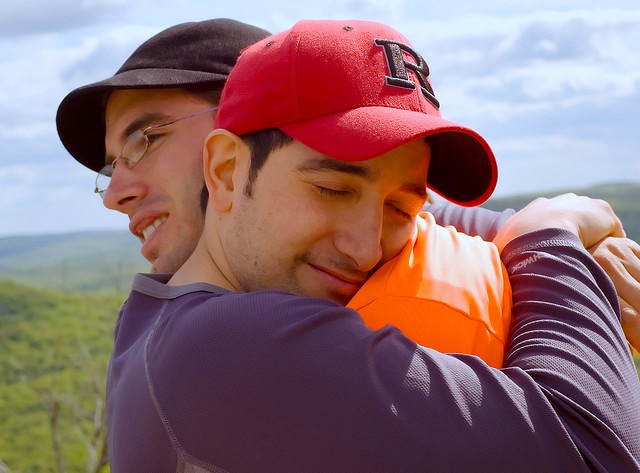
    Hugging

    “Wisdom is nothing more than healed pain.” ~Robert Gary Lee

    As the only child of a single parent, my family of two was small and our relationship could be intense.

    My southern belle mom, with her stories and easy laugh, her quick wit, and her love of all things literary was the mom who all my high school friends adored and loved—the one who my teenage friends could talk to when they were too angry or irritated with their own mother.

    I loved her too, but I also worried about her. A lot. Because I knew a secret about her that no one else did: she was an alcoholic. Not a big, scary, yelling, hitting alcoholic, but a quiet, light dimming, slow fade alcoholic. 

    My mom loved me, she provided for me, but her own grief and story about her past could take over her brain and take her far away, down into her beer bottle, along with her ever present cigarettes.

    When she told me during my senior year of college that she was entering outpatient chemical dependency treatment, that heavy weight of worry felt lifted from my shoulders. I hoped that this would give her a chance at a happier life.

    As my mom healed, I did too, and got more of my own life in action. I went to graduate school and moved across the country and back. I started a relationship with the man who would become my husband. I got my first real professional job.

    So when the pain in her leg was diagnosed as cancer—terminal stage 4 Lung Cancer, spread to her bone, with a prognosis of six months to live—it was a huge blow.

    Through six months of treatments that left her tired and nauseated, she persevered. But then another blow, though not the one I anticipated: leaving a doctor’s appointment, she had a stroke and fell down unconscious in the parking lot.

    The drive from my house to the hospital where she was taken was one of the longest four hours of my life, not knowing what awaited me at the end.

    After three hard weeks of physical therapy, my mom returned home. But she wasn’t the same. The parts of my mom that I and others most valued and relied upon—her humor, empathy, and listening ear—were gone, stripped away by the stroke like a cheap veneer, never to return. 

    And while she wasn’t drinking or smoking any more, my worry returned, not knowing when the proverbial other shoe would drop. Was she really able to live alone in a two-story house? Was I being a bad daughter by not moving back to my hometown to care for her?

    On top of the worry, the impact of the stroke was a bitter pill to swallow. While others marveled at her longevity with such an advanced cancer diagnosis, I felt guilty and angry: the whole situation felt like a rip-off. My mom was still alive, but it was hardly much of a life, in my opinion.

    I wondered why she was still alive, when she was barely able to enjoy the life she was leading. 

    Before her stroke, I’d clung to some romantic notion that her illness might give her opportunity to finally make sense of the hardships she’d endured through much of her life.

    I cared for her the best I could from afar, knowing that it was less than ideal, and I continued to craft my own independent life, as well. Over the next eight years, I married my boyfriend, got promoted at work, and got pregnant with my first child.

    Throughout my pregnancy, my mom had more troubles—a heart attack and increased breathing problems. The day we brought our newborn son home from the hospital, my mom called saying she was in the hospital with shortness of breath.

    Instead of relishing the first sweet days of my son’s life, my first days of parenthood were flooded with the same familiar worry, guilt, and anxiety.

    My mom spent the next three weeks bouncing between home, hospital, and residential hospice.

    She clearly was in denial about what was happening to her: as the survivor she was, she saw it as just another difficulty to overcome, anticipating another victory in her long triumph over cancer. She struggled and resisted what was happening to her.

    This time, she couldn’t outrun it: I held and stroked her sweet hand as she took her last breaths, and nursed my baby five minutes later.

    In the ten years since my mom’s death, I’ve realized the person who needed to learn and transform from her illness and death wasn’t her: it was me.

    My worry, judgment, guilt, fear, and anxiety couldn’t fix the past, cure her cancer, or protect us from the future. Those emotional states and feelings only could inflict more pain, distance, and suffering.

    Throughout my mom’s life, including illness and death, all I could do was be with her and love her, as best I could, from moment to moment. Our loving presence with each other was often the most useful medicine for either of us during the hardest times.

    Because no matter how much we might wish otherwise, there will always be some difficult times in life. It’s pretty much a guaranteed part of the deal with being a human.

    So when you or someone you love is hurting or suffering, rather than trying to outrun any difficult feelings, such guilt, worry, judgment, fear, or anxiety, see if you can stop and find a grounding place within yourself, such as the regular rhythm of your breath.

    See if you can even briefly be present to the hurt or suffering, as unpleasant as it may be, without needing to change it.

    In first witnessing and just simply being present to our own or others’ difficulties, rather than automatically trying to change or fix the situation, we are of great service and can create deep healing in ourselves and others.

    Through being with the situation, as it is, we can also better discern what our next best actions should be.

    Instead of getting caught up and carried away by intense emotions, disappointments, grief, anxiety, or any other difficulty, being with the experience as it is and doing as best we can in that moment is often the quickest and least painful way through challenging times.

    Regardless of what difficulty your loved ones face, trust that your loving presence is all that is required. And know it is completely enough.

    Photo by David Goehring

  • 3 Lessons to Help You Find Peace When Fighting a Hard Battle

    3 Lessons to Help You Find Peace When Fighting a Hard Battle

    “He who has health has hope, and he who has hope has everything.” ~Proverb

    August 3, 2001. I still remember it like it was yesterday. It was around six o’clock in the evening when she sat us down. Luther Vandross was singing in the background on the radio: “And it’s so amazing and amazing, I can stay forever and forever. Here in love and no, leave you never.”

    Quite ironic when you think about the news I would soon receive.

    I had just finished summer school and my sister had just returned from an internship on the East Coast. My mother had such a pensive, yet positive look on her face when she asked us to come into the living room.

    “This is hard for me to say, so I am just going to say it: I have cancer.”  

    Immediately, my sister and I  broke into tears because, up until that point, every single relative or friend who had battled cancer lost. And in my shocked state, I thought it was perhaps time to start saying goodbye because I was already feeling quite defeated.

    The person who had always been the anchor in our family would soon become lighter due to weekly radiation and chemotherapy appointments. Although she physically grew weaker, her actions taught me a few lessons I will never forget.

    Today, I would like to share three of them with you:

    Learn to Let Go

    Impermanence. Everything fades away and nothing lasts forever.

    My mom used to have long, beautiful black hair with a sheen that many envied.

    Unfortunately, the type of chemotherapy she was being treated with slowly killed her hair cells. As for many women, this was very hard for her to accept because it was a part of her identity, her femininity, and it’s generally what society deems to be beautiful.

    But as the appointments stacked up and the strands dwindled away, she had to face a reality that was quite sobering: most of her hair was gone, and she needed to find the courage to ask my father to completely shave her head.

    Then the day finally came.

    As the remaining hair fell to the ground, Black Rapunzel was replaced by a cancer patient who learned to be grateful for what was instead of trying to hold on to something that no longer existed.

    As Steve Maraboli wrote, “The truth is, unless you let go, unless you forgive yourself, unless you forgive the situation, unless you realize that the situation is over, you cannot move forward.”

    My mother learned to let go and finally made the decision to move forward.

    Inspire Yourself with Your Journey

    “That it will never come again is what makes life so sweet” is something my mother would say. “So write it all down—the victories, the setbacks, the magical moments, the not so loving moments, and the moments of complete loneliness. Write it all down to serve as a reminder.”

    Each day we awaken, we are given a pen with 86,400 seconds of ink to write with.

    During her first week of treatments, my mother picked up a journal to write about her fight with the Big C and how she planned to defeat it, even though she was sometimes the one knocked down for a while. Nevertheless, she persisted.

    Sure, she wrote about her hair loss, the pain at night, and the sadness she sometimes felt. But she also wrote about the joys of raising her children, the extra energy she could sometimes muster up to walk a bit further, and the faith and hope that was keeping her grounded.

    She saw her journal as a way to inspire herself when she wanted to look back and see how far she had come on her journey thus far.

    Love Well and Far

    Cancer woke us up to the fact that nothing lasts forever, and words that go unsaid may never be spoken.

    After my mother’s diagnosis, my close family got even closer as she expressed her desire for us to show more love to each other, and to be grateful not only for the fun, easy times, but also for the tougher times.

    That’s what it means to love well and far: loving unconditionally even when it’s hard. Sharing your love even when it’s difficult. Being there for the people you love when they need you the most.

    So I ask you these three important questions: Is there anything in your life that you feel you need to let go of? Are you recording the magic moments from your life? Are you reaching far with your love?

    I wanted to share these three lessons not only to pay tribute to my mother, who has been in remission for the past twelve years, but also to serve as a beacon of hope for those who may be dealing with something similar right now. It’s hard and it hurts, but now is the time to be stronger and more loving than ever.

    Now is the time to love well and far.

    Photo here

  • 4 Lessons on Surviving and Thriving When Times Are Tough

    4 Lessons on Surviving and Thriving When Times Are Tough

    Joyful

    “Every day may not be good, but there’s something good in every day.” ~Unknown

    Five months ago, I was sitting outside with a friend when a mosquito bit me under the arm. I went to scratch the bite and felt a lump on the side of my breast. My doctor sent me for a mammogram, ultrasound, and fine needle biopsy. I had breast cancer.

    I am a 44-year-old single mother of two beautiful young girls with primary custody. I am also Director of a psychology practice and self-employed.

    The day I was diagnosed was the day I lost the carefully constructed control I thought I had mastered in my life. I juggled many balls in the air every day, and they all came falling down.

    I strongly believe in salvaging good from bad, but I struggled with finding the silver lining. The fear and anxiety waiting on test results to find out if the cancer had spread were crippling, and I was haunted by dark thoughts of death.

    I was lucky. The cancer had not spread, as far as they could tell. The tumor was contained and I had a genetic test done that showed minimal benefit from chemotherapy, assuming I had lumpectomy surgery, radiation, and then took a hormone drug called Tamoxifen for the next ten years.

    I think I have found the silver lining in this journey, and my dearest hope, over and above the cancer being gone for good, is that I hold onto these lessons:

    1. Let go.

    My life before breast cancer was highly organized, disciplined, and controlled. Every spare moment was productive. I saw clients back-to-back, I ferried my daughters to activities, I crammed my weekends with social events, and I had multiple to-do lists for each facet of my life.

    I have spent the past five months going where medical people tell me to go, doing what they tell me to do, and waiting. The radiation has made me extremely tired and my brain is simply not functioning.

    I returned to work three weeks after surgery in an advanced state of denial, and kept on trying to be the old me but finally accepted I was not.

    I don’t do very much now. I go to radiation treatment each day. I come home and do some household chores and then rest. For hours. I may read a book, listen to music, play the piano, I even started a painting. I then pick my girls up from school and spend time with them. And it is a revelation.

    Control is an illusion. Letting go of control is liberation.

    2. Stop asking, “Why me?”

    Why not me? That is the profound answer I have come up with to answer this most difficult of questions. Bad things happen to good people and life is not fair. The test is genuinely is how we cope with the adversity thrown at us.

    I am proud of how I have coped with having breast cancer. I have remained psychologically intact, albeit bruised and battered, and allowed myself to be vulnerable. I have dealt with the spectre of dying and have gotten my affairs in order just in case. I also now have a bucket list, and I am crossing things off one by one.

    The purpose of life, I have decided, is not to be happy. It is to realize our potential, to love and to be loved, to do new things and take calculated risks. I do not want to get to the end of my life, be it next year or in forty years, and have regrets.

    The biggest regrets are the things we did not say or do. So focus on what you can do instead of dwelling on why there are some things you can’t.

    3. Ask for support.

    I have never been good at asking for or accepting help. I have asked people to come to appointments with me, to pick up my children, to come and sit with me while I cry. I have never been good at crying either, and I have had crying jags that lasted hours since being diagnosed.

    I had friends over one day and as they were leaving, I slid to the floor and could not get up because I was sobbing so hard. They bundled the girls and me, took us to their home, and looked after us, me weakly protesting that I was fine. The loss of control and identity associated with melting down felt soul destroying.

    So many wonderful people have offered to help, and I am learning to say, “Yes, thank you, that would be lovely.” And it has made me and my relationships stronger, not weaker.

    Sometimes we have to ask for what we need and accept being vulnerable.

    4. Practice gratitude.

    In the blur of normal life, I think we are all guilty of wanting more. We forget to be grateful for what we have, and at its most fundamental, that is life. I would love to be able to write that I am now genuinely grateful for my life, but this would not be entirely true just yet. I slip into denial at times and fall back on old habits, but I am learning.

    I am grateful for the immense generosity of my parents, my friends, and my boyfriend, who have given of their time, money, and emotional energy. The parents at my children’s school who delivered us meals. My work colleagues, who have kept my business going, and acquaintances who have contacted me to express their concern.

    I have let go of the disappointment I felt over those people who I expected to be there for me but were not.

    I have also found myself grateful for things that I took for granted. For my beautiful children, a vase of flowers in the hallway, a good cup of coffee, a flock of birds on my walk, or the ability to pay the bills. I am grateful that I am not dead.

    Mindfulness and gratitude let us stay in the present and ward off anxiety, which comes from living in the future.

    I obviously do not know what the future will hold. My chance of dying from breast cancer related illness is a lot higher than average, but I am so lucky. I am lucky to be alive, and so are you.

    Every day we are not in the ground is a good day, a chance to remake ourselves and our lives into things of value and beauty. Tragedy and trauma can have silver linings. Sometimes it is hard to find them and even harder to hold on to them, but I am holding on tight.

    Photo by geralt

  • The Butterfly Circus: An Inspiring Film about Struggle and Transformation

    The Butterfly Circus: An Inspiring Film about Struggle and Transformation

    What do you believe about yourself, how does it keep you stuck, and how high could you fly if you finally let it go? Poignant, beautiful, and moving, this short film brought me to tears. It’s a story that reminds us that anything is possible, if only we believe it.

  • 3 Ways to Feel Good When Things Seem Bad

    3 Ways to Feel Good When Things Seem Bad

    “It isn’t what happens to us that causes us to suffer; it’s what we say to ourselves about what happens.” ~Pema Chodron

    Have you ever had something happen in your life that completely changed everything?

    Wham. Suddenly you haven’t left your bedroom in days, you can’t remember what it feels like to shower, and it’s clear the only friend you can really count on is your cat. 

    And whether it’s a major life-suck event or a minor one, the question is: How can I feel contented and calm when things don’t go to plan?

    That is what this post is about. Because a while back I had a M. A. J. O. R. Major event. It went like this:

    I’d just graduated from college. I had a Masters Degree. In science. Human nutrition science, in case you’re wondering. I was excited about life!

    Sure, I had a ridiculous door-to-door research job and my roommate was annoying, but I had plans—I’ll move in with my boyfriend, get a better job, travel, start a family, hang out with all my amazing friends, and live an awesome life.

    But then I got sick. The kind of sick where raising your arms above your head makes you want to take a nap. And instead of starting the amazing life I’d planned, I moved home with my parents.

    It was a shock, to say the least. Before that, I was tough. I hiked. My friends liked me. I stayed up late. I wasn’t a sick person.

    And while my parents are sweet and kind, living in their basement in small town New Zealand, watching daytime re-runs of Dr Quinn Medicine Woman, and hanging out with a fluffy cat called Whisky was not the plan.

    It wasn’t so bad at first. But months went by, then years, and it seemed no matter what I did, I was still sick.

    I thought, why did this happen to me?

    I cried. A lot. For seemingly no reason. And if someone asked why I was crying, I’d say, “I’m just so tired.” I cried so much some days that I’d go home and laugh with my sister on the phone over who I’d cried in front of that day. It was comical.

    That was a few years ago now. And, of course, the whole experience turned out to be a huge gift. They often are, in my experience, anyway, but that’s getting ahead of things.

    Here are three insights that helped during those “you’ve got to be freaking kidding me” times:

    1. There’s a healing side to pain.

    When a challenging event happens—a breakup, a sickness, or having your leopard pink car seat covers stolen—the human mind, being what it is, thinks this is why you feel badly.

    You hear it all the time: “Oh, you poor thing for losing your car seat covers.” Or, “She’s such a rat to do this to you.”

    The truth is, it’s your perception of the situation that makes you feel bad. This means that no matter how crumpled-in and dysfunctional you feel, you’re not. It’s just your thoughts that are a bit wonky. And actually, your thoughts on this were always wonky; the situation just exposed them.

    Take my situation. Everything I’d based my self-esteem on was gone: work, grades, friends, boyfriend, the ability to sit up straight for more than half an hour.

    I thought I was upset because I was sick, when the truth was, my situation had triggered every negative belief I had about myself. Things like:

    “I’m only lovable if people like me.” “I’m only worthwhile if I’m busy doing things.”

    I so strongly identified with all the things I did that when you took them away, I felt miserable. I’d been given the opportunity to see what I really thought about myself.

    Someone could have told me “you’re worthy and lovable,” and I might have intellectually known this, but I didn’t feel it.

    What I began to realize was that behind the pain, over time, my faulty beliefs were shifting. My sense of self-worth was beginning to heal by itself.

    The pain is the faulty belief system being ripped out by its roots. You feel like you’re losing something dear. The trick is to understand that it’s just a faulty belief going away. And beneath it lays a pocket of self-love that you haven’t previously been able to access.

    As poet Kahlil Gibran says, “Your pain is the breaking of the shell that encloses your understanding. Even as the stone of the fruit must break, that its heart may stand in the sun, so must you know pain.”

    2. Pain fades when we let go of expectations.

    Most of us live in an intellectual way. We make plans for our life and then we try and follow them through. We think we know the best way for our life to proceed.

    The truth is, a large part of our pain is caused by an attachment to our expectations.

    For example, one of the reasons I felt so bone achingly sorry for myself was because I had a plan for how to have a good life—and it didn’t include Dr. Quinn.

    I thought success came from going to college, getting a good job, and having a family. No one said anything about spending all this time in bed. But actually, it was the best thing for me.

    To illustrate you how powerful your expectations are, try this exercise:

    First, imagine you’re me.

    Now, imagine you’d grown up thinking the best way to have an awesome life was to spend five years in bed cross-stitching cushions. That it was something everyone did.

    “Oh yeah,” you’d say to your friend, “I’m just off to do my five-years-in-bed years.”

    And they’d be like, “Oh cool. I hear you learn such amazing things, like how to feel self-assured, and you get clarity on your life direction, and you start to feel that inner calm we’re always reading about.”

    Seriously.

    Now think about your current situation and imagine that for your whole life, you believed that what is happening to you was going to happen. And not only that, but it’s the absolute best thing to happen.

    So much of the pain we feel is because we can’t let go of how we think life should look. Your mind thinks it knows the best way for your life to work out—but simply put, it doesn’t; the plan it had was flawed in the first place.

    Your mind can only see your life as it’s showing up right now. There is a bigger picture.

    3. You’re doing fine.

    Learning about personal awareness and healing can be such a helpful thing, but remember, there’s no right or wrong way to feel.

    Feeling grateful and “being positive” and so on is perfectly fine, and sure, it can be helpful, but if you don’t feel like it all the time, don’t worry about it.

    Instead of attaching a judgment to how you’re feeling or what you’re thinking, try just noticing it.

    I believe the act of simply noticing and accepting how things are, right now—no matter how messy and dysfunctional they seem—is the most powerful, healing thing you can do.

    Photo by Dahl-Face Photography

  • Reaching Out for Help When The Road Gets Rough

    Reaching Out for Help When The Road Gets Rough

    “Pain is not a sign of weakness, but bearing it alone is a choice to grow weak.” ~Lori Deschene

    There was a time in my life when I struggled to share my pain. I actually took great pride in how stubborn I had become. It wasn’t until I started looking within myself that these prideful attitudes started to shift. Actually, my whole life started to change.

    Once I started my journey of self-discovery, I no longer wanted to deal with my pain by myself. I slowly reached out to others and asked them for help.

    It was in asking for help and sharing my pain with others that I felt myself getting stronger. 

    I didn’t expect, however, that I’d need to ask for help repeatedly.

    In August of 2006, I was with a small group of people inside a airplane hanger that was used as a classroom to give instruction for skydiving. Worn-out couches and old beanbag chairs formed  a circle where we gathered. The décor on the walls was something you’d find in a local head shop that sold 60’s and 70’s paraphernalia.

    A positive vibe filled the room, as a young instructor prepped us on the safety procedures needed for jumping out of the plane.

    It had been sixteen years since I had made my first jump. When I shared this information with the instructor, she asked me, “What took you so long to come back?”

    I didn’t respond out loud, but simply smiled. I wasn’t brave enough to explain why I had come back this time.

    Initially, I jumped in the fall of 1990 as a way for me to turn my life over to  a higher power; that jump marked the beginning of my inner journey.

    Skydiving had helped me change my life from despair to hope. For me, it wasn’t about seeking adventure or adrenaline; it was about letting go and finding myself. I had no intention of making a second jump.

    But I eventually discovered that my first jump was only the beginning of my journey.

    Why did it take me sixteen years to come back? Pride and stubbornness kept me away. I didn’t want to admit that things in my life had become difficult. When I did, I felt that I needed to return to skydiving to help me, once again, let go. (more…)

  • 5 Tips to Overcome a Major Setback

    5 Tips to Overcome a Major Setback

    “Breakdowns can create breakthroughs. Things fall apart so things can fall together.” ~Unknown.

    Just when I thought I was ready to get some of my ideas into motion and action, I have a setback.

    Previously setbacks involved finances (unexpected bills, for example), time delays, and an unresponsive partner or friend when I wanted to make changes.

    My current setback came in the form of a massive health scare.

    When I’ve gotten over some fear and self-sabotage, and I feel like I’m finally ready to take action, it always brings up things for me…

    At that moment of action, when all my hard work starts to pay off, my little voice creeps in to stop me from moving forward. It creates doubt and makes me question my decisions.

    It feels like I’m going to fall—or rather jump—off a cliff. But I know I need to get out of my comfort zone and take that leap. I also know, on some level, that these setbacks show me how close I am to achieving my dreams, if only I can find the faith to push through them.

    Still, this setback is extreme, even for me!

    I am writing this from a hospital. After I wrote my goals for the next six months, and got ready for an action-packed week ahead, I had an “attack” and was immediately rushed to hospital via ambulance.

    Long story short, they found I have a pancreas and liver disease and I needed urgent life-saving surgery. I am now needing to heal from this and will probably need more surgery in six weeks time (although I am researching other natural alternatives too).

    I’m a girl who drinks green smoothies every day, I don’t eat red meat or drink alcohol, and I’m certainly not overweight or unhealthy, yet I am in this health challenge.

    As I write this with tears, I realize that facing and dealing with setbacks is a part of life for all of us. And sometimes when we think we’re ready to unleash on the world, the universe has other plans! (more…)

  • Learning to Embrace Change as Opportunity, Not Loss

    Learning to Embrace Change as Opportunity, Not Loss

    “If you correct your mind, the rest of your life will fall into place.” ~Lao Tzu

    Two years ago my life as I knew it changed forever. No, I was not diagnosed with a disease, nor did I lose someone special or have a near-death experience. I actually gained some pretty amazing things: a new house, two dogs, living with my partner, and the chance to be a full-time stepmom to his two children.

    But I did not initially view this change in a truly positive light.

    After the dissolution of a long-term relationship, I had spent several years living alone in my cozy apartment.

    I cherished my independence and, for a time, the solitude.

    I came and went as I pleased. If I was seized with musical inspiration, no matter what the hour, I played and sang. I had quiet time to read and write.

    My friends dropped by to hang out, I played shows with my band, and I regularly went out for meals and concerts.

    Yes, life was pretty darned good—except for the fact that I was alone.

    After interesting, humorous, and some downright sad attempts at dating, I met my partner, a wonderful man. He lived an hour and a half away, but we made it work, seeing each other on the weekends. His two children were then living with their mom in Quebec.

    My weekends with my partner were like mini-vacations. We kayaked, went out for meals, and laughed with abandon. Relaxation was our default setting.

    Fast forward two years, and traveling was beginning to lose its novelty, especially when poor weather made the roads dicey. Around this time, the kids asked to come and live with their dad. We knew the back and forth wasn’t going to cut it any more; the kids needed stability, so we buckled down and bought a house together.

    This was a lot to take on all at once, and I knew it. I could see it written on the faces of my friends, colleagues, and family when I described our plans. But we loved each other, we were committed to each other, and it seemed like the most practical solution at the time.

    I left my apartment, my partner left his house, and we merged our lives.

    I soon found I was walking on air, but not in the elated type of way—more so that the familiar ground was disintegrating from beneath my feet piece by piece.

    Even before the kids arrived, I started to feel overwhelmed with this new commitment, this new negotiation of space.

    I was used to putting things where I wanted them, eating when I felt like it, and functioning according to my personal schedule, but suddenly I was accountable to someone else—and he had equal right to give input on everything from where the pots should go to whose sheets should go on the bed.

    My relaxed state was replaced with the tension of constant compromise.

    Doubt began to snake its tendrils into my mind—had I made the right choice? (more…)

  • Sometimes We Need to Go Backward Before We Can Move Forward

    Sometimes We Need to Go Backward Before We Can Move Forward

    “Learn from yesterday, live for today, hope for tomorrow.” ~Albert Einstein

    There I was in January, on the floor, physically and emotionally. From the outside, I probably looked like every one else attending yoga class off Robertson Blvd. that Sunday morning, but to me, on the inside, especially within my heart, I was in shambles.

    And then, there was a moment I had not expected.

    The waterworks came as I heard the teacher say, “Sometimes, you feel as though you are riding the bicycle backwards. You feel like you are backtracking and heading in the wrong direction, but really what’s happening is contraction and release. The universe is preparing you for something much greater and like a sling shot, it’s going to shoot you forward—you just have to move backwards for a little bit.”

    I looked over at my roommate, eyes welled up with tears of disbelief and quickly thought to myself, “I’m an independent, successful woman and I get to control what direction my bike ride is going. So listen up universe, get me off this backwards bicycle, pronto!”

    I felt a temporary sense of relief for 90 minutes or so. Then, upon my walk home, my heart was breaking again.

    Why the sorrow? I spent the majority of 2011 really clarifying what I was looking to get out of life: success, giving back, a loving relationship, traveling the world. For the most part, I was successful in these pursuits.

    I completed my 30th Birthday Build for Habitat For Humanity in honor of 9/11. I had been able to cross bi-coastal living off my bucket list and returned back to the home base of LA. I had even started to pick up a few new clients and began exploring additional revenue streams. Sounds good, right?

    What also happened is that I got used to getting everything I wanted and set out to achieve.

    I got used to things working on this magic time frame—put it out there and it will happen exactly as you planned and wanted it to happen. I can hear you thinking, “Um, ok—so what’s the problem with that?” (more…)

  • A Simple Prescription for Natural Healing

    A Simple Prescription for Natural Healing

    “Peace of mind is not the absence of conflict from life but the ability to cope with it.” -Unknown


    When my daughter, Nava, was critically ill, on a ventilator in a drug-induced coma for three months, one of the ICU doctors called me in after a couple of weeks to tell me that if she survives, it will be a long road.

    He started writing out a prescription for an anti-anxiety medication to “help” me through this horrific ordeal.  I certainly don’t fault him here as this was an extreme acute situation and he didn’t know if I could manage without falling apart.

    His offering of “the pill” was an awakening. 

    I realized I better start doing something to keep myself strong so I can function through this and be by Navi’s side. This was my impetus for gearing up into self-preservation mode.

    The next day I began my walking regime around the hospital streets. I started taking 30 minutes off from sitting by Navi’s bedside listening to every beep, bleep, and gurgle, to engage in my non-medicated self-prescription program.

    Truth be told, I’ve been a walker for the past 17 years, since my friend dragged to the gym the summer of my separation.  I guess I was ready because it didn’t take much coercion.  A bit of “c’mon get moving; it’ll do you good” was all I needed. I showed up, and have never stopped.

    It became a way of life, a grounding and healthy reprieve during my divorce, my working and going to school, and dealing with the illness and disabilities of Navi’s earlier years. I found something to hold to that I felt was keeping me healthy and strong, both psychologically and physically; and exercise was it.

     And so when Doctor S. pulled out his prescription pad from his pocket, I pulled my exercise tool from mine; two working legs and I was on my way. 

    I at least wanted to give it a shot. But mind over matter, I knew then I wasn’t starting with any pills. Side effects are a biggie with my sensitive gut.

    And that is how I functioned for the next year as I spent 12–15 hour days by her bedside and through her rehabilitation.  (more…)

  • 9 Guidelines to Get Through Challenging Times

    9 Guidelines to Get Through Challenging Times

    “Life is 10% what happens to you and 90% how you react to it.” ~Charles Swindoll

    I’ve recently dealt with numerous challenges that range from the ridiculous to the life-threatening. I’ve had friends telling me they “can’t bear to hear any more” about illness, financial loss, and an array of physical and emotional accidents that have broken parts of me, but not all.

    Every aspect of my life is changing: career, relationships, health, and beliefs. I have to make the most of every situation and so I’ve created my own set of rules to keep me focused and to remind me that all will be well.

    If you’re also dealing with a challenging time, these guidelines may help you, too.

    Rule #1: Assert your goals.

    When everything seems to have fallen apart, realize you still have options, and then assert exactly what you want for yourself.

    I want to live my life using my natural gifts. I want to create, write, teach, paint, and inspire, and to use my skills to generate the energy to live and love well. I’m working toward my goals, but I understand they might not all come to fruition. If things don’t pan out exactly as I hope, I know I can deal with it positively.

    I’ll give myself a break, discuss it with a friend, and do whatever I need to do to get clarity, and then I’ll re-assess. The important thing is that I know my ambition has to make my heart soar and excite me.

    Where are your instincts guiding you? Assert it to yourself, the people who support you, and the world. This is the first step in creating a life you’ll feel passionate about. (more…)

  • Being Happy in the Present: See the Tree

    Being Happy in the Present: See the Tree

    “Have respect for yourself, and patience and compassion. With these, you can handle anything.” ~Jack Kornfield

    I sometimes find myself smiling for no reason—a good mood, perhaps, or maybe a thought about friends and loved ones. What I notice is that every time I contemplate my own smile, it comes back to the thought of being here, now, and feeling for those around me with understanding instead of judgment and love in place of anger.

    It is in the here and now that I find happiness.

    Contemplate a tree: In the blazing heat of the summer, does it cry and complain, or does it sway in the passing breeze? In the deathly cold of winter, does it shutter and wither, or does it catch the falling snow from the sky and offer us pleasing scenery?

    Now ask yourself the same question: In the crests of life, do you lose your legs and sink, or do you stay afloat with the rolling tides? Oftentimes we forget that happiness is usually a choice, and it is in times of need when we need to be patient with ourselves in order to stay afloat and choose to be happy.

    Last year was rough for me. I felt manipulated by a (now ex-) girlfriend for a year before finally leaving her, was hurt twice again over the summer, and as a result, became slightly jaded. I was prepared to live the next year in solitude, not caring to find romance.

    I experienced something we all experience. Heartache does not discriminate against any particular person, life, or event. How then can you stay strong, positive, and happy in the face of misfortune?

    What I’ve learned is quite simple:

    See the world, free of implication, free of self-deception, for what it truly is.

    It is easier said than done, but once you have the basic mindset in place practice will eventually bear many fruits. So follow these general guidelines to find strength when dealing with troubles:  (more…)

  • 10 Ways Overcome Conflicts in Relationships and Grow Together

    10 Ways Overcome Conflicts in Relationships and Grow Together

    “You can’t stop the waves, but you can learn to surf.” ~Jon Kabat-Zinn

    About six months into a serious relationship with my boyfriend, we started experiencing major conflict. Fighting over small things, flipping out over misunderstandings, we just couldn’t seem to get on the same page about anything. This caused me to think about relationship conflict in general, what causes it, and how to deal with it.

    It’s clear that relationship conflict occurs because expectations aren’t being met. Each person comes into a relationship with certain expectations. These are based on past experiences, childhood, or how you think things should be.

    The problem is that no two people think the same, no matter how much you have in common.

    A lot of couples see conflict as a time to bail—either because they were already looking for a way out or because they freak out and feel threatened. When our ego feels threatened, it activates our flight-or-fight response. Sometimes it may be hard to get resolution on a conflict, making matters worse.

    Instead of seeing conflict as a threat to a relationship, what if we reframed this and saw conflict as an opportunity and a sign of growth in a relationship?

    This requires understanding that conflict will inevitably occur in a close relationship. The only way of getting around it is to not share your opinion at all, which is not healthy.

    So what if we focused on sharing our opinions in a way that is productive?

    To do this:  (more…)

  • Getting Back Up After You Fall

    Getting Back Up After You Fall

    “If you get up one more time than you fall, you will make it through.” ~Chinese Proverb

    Last year I had emergency open heart surgery. Shortly after the procedure, two nurses entered my room and gave me terrible news: I had to walk.

    That may not sound like a big deal, but open heart surgery is brutal. Simple things like being able to sit up or change position once my backside became sore were agony. Getting to the walker, a mere several steps away from my bed, was an extreme effort.

    My goal was to walk around the nurse’s station, and I might as well have been told to walk to the moon.

    Despite a punctured lung (a surgical accident), I concentrated on regular deep breaths and slow deliberate steps. I was so focused on these two things that the pain, while still significant, slipped away.

    By the time I made it back to my bed, I wanted to cry and laugh—I had made it!

    The next day was very different, as I’d been having a difficult time. I couldn’t seem to muster the strength to get out of bed; finally, out of desperation, I cried and gasped out that I couldn’t do it. One of the nurses very firmly but compassionately told me I could.

    With her help, I somehow managed to stand on both feet and stagger to the walker. As I made my tour of the station, the deep breathing and deliberate walking allowed me to calm down enough to cope with the pain and the severe depression I’d been battling.

    It had hurt so much to move that morning, but once I stood up and took that first step, things started to get better.

    From that moment on, I knew that I had the strength to conquer this physical challenge. I walked every day, right up until I was released. By far it was the greatest and most painful thing I had ever accomplished.

    The stumbles and falls we suffer in life can be very much like physical ones. Have you ever actually fallen? Aside from the embarrassment, what thoughts ran through your mind?

    Did you: (more…)

  • How to Help Someone Who Won’t Help Themselves

    How to Help Someone Who Won’t Help Themselves

    “We work on ourselves in order to help others, but also we help others in order to work on ourselves.” ~Pema Chodron

    Recently I got into a hypothetical conversation with someone who very quickly turned hostile and accusatory. Let’s call her Jane. My first instinct was to get defensive, but then I realized this subject was quite raw for Jane, and there was likely something going on below the surface.

    Usually when people are combative seemingly without cause, there’s some underlying pain fueling it.

    As we got to the root of things, I learned that Jane was holding onto anger toward someone she once loved, and she felt a strong, driving need to convince people that this other person was wrong.

    Since she acknowledged that she’d been feeling depressed, lonely, and helpless, I felt obligated to at least try to help her see things from a different perspective. But that ultimately proved futile.

    She was committed to being angry and hurt, and all she wanted from me was validation that she was justified.

    I kept thinking back to how I felt at eighteen years old, reliving scenes of adolescent abuse that I refused to let go of well into my twenties. I spent years stewing in anger because I felt like a victim, and any threat to that comforting sense of righteousness only made me angrier.

    Remembering how badly and unnecessarily I hurt myself, it felt imperative that I help her let go. I wanted to help her get out of her own way. I wanted her to do what I had failed to do for far too long.

    Seeing that stubborn, bitter commitment to pain reminded me of how angry I was with myself when I realized I’d hurt myself far worse than anyone else—and how ashamed I felt when I realized I enjoyed being a victim, receiving pity, attention, and (what felt like) love.

    Suddenly I recognized that I wasn’t just trying to help Jane; I was also judging my former self. (more…)

  • How to Start a Gratitude Practice and Change Your Life

    How to Start a Gratitude Practice and Change Your Life

    “When you realize there is nothing lacking, the whole world belongs to you.” ~Lao Tzu

    Somewhere in the distant past, out here in New Zealand, I recall someone saying to me “Be grateful for small mercies.”

    Back in the 1950s, when I was a small girl, that meant being grateful for the simple things that made up the better part of my life.

    As I grew, I forgot that piece of advice that someone, probably my beautiful grandmother, gave me way back then. But in 2010, I remembered it again.

    Like so many people in the world in 2010, troubles were crowding in on me.

    My American same-sex partner and I had not been able to see each other for over a year, due to both the usual constraints—American immigration law does not recognize our relationship—and the not so usual—the recession, joblessness, bankruptcy, and threatened foreclosure on our American home.

    In July my father died in New Zealand, and it was at that point I threw in the towel. Life was beyond me. Life was too big for me. I was like that small girl back in the 1950s trying to wear her big sister’s wool jersey, only it was way too big for her—she was swamped!

    At that moment I fired off an email to the great love of my life in New York. “Darling, I am beginning a gratitude list. Here are five things I am grateful for. Now you add to that and let’s start letting the universe know we love its small mercies!”

    And so we did.

    We began to shift our focus away from the pain we felt at not being able to be together, from the heartbreaking loss of people we loved, and from the impending loss of the home where we had known such happiness.

    Now I gave thanks for the silence that enabled me to hear the birdsong in my New Zealand garden, for my tea and toast, for my cozy bed, for the clear blue sky.

    She gave thanks for the good deeds she had been able to do that day and for the help others had given her. She gave thanks for the beautiful day, for her pizza, and for the delicious water she was able to gather from an underground spring near her house in upstate New York.

    And then, as the months went on, a curious thing happened. We stopped feeling alone. Together we summoned a power neither of us could have summoned alone. (more…)