Tag: struggle

  • Beyond Cliché Advice: What Helped When I Was Struggling Financially

    Beyond Cliché Advice: What Helped When I Was Struggling Financially

    “When you are in uncertainty, when you feel at risk, when you feel exposed, don’t tap out. Stay brave, stay uncomfortable, stay in the cringy moment, lean into the hard conversation, and keep leading.” ~Brené Brown

    When you think of someone who’s struggling financially, you might picture someone who’s barely making ends meet, living paycheck to paycheck, just getting by. But money trouble doesn’t always look like that.

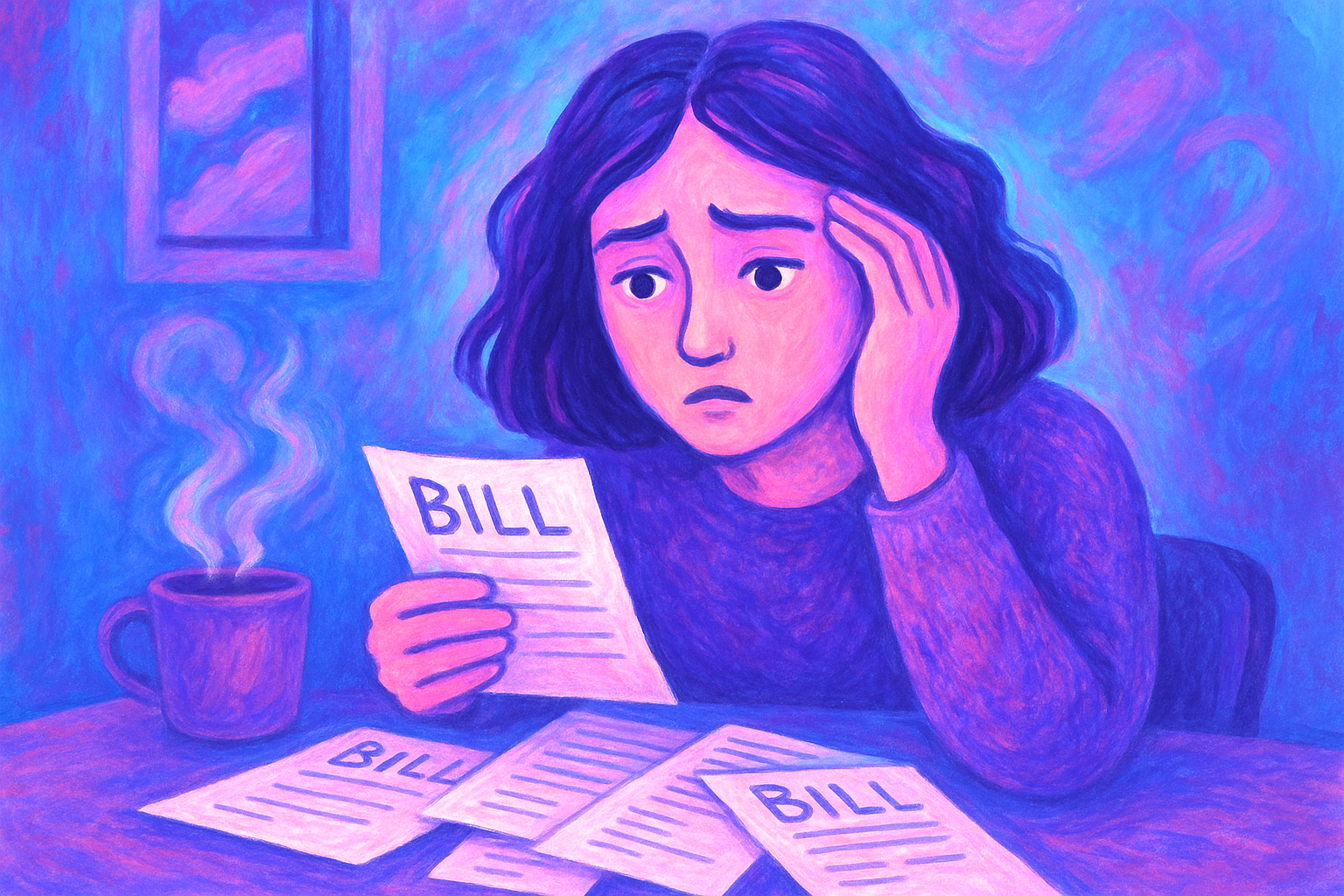
    I was struggling even though it didn’t seem that way. I had a six-figure salary. I owned a home in one of the most expensive cities in the world, having bought a half-million-dollar property in my late twenties. From the outside, I had it all.

    But a year into homeownership, my partner backed out of our financial agreement, leaving me to manage everything alone. Then COVID-19 hit. The government responded to the national deficit by doubling mortgage rates. Suddenly, nearly every penny I earned went toward my skyrocketing payments, insurance, maintenance fees, and property taxes. Selling my home at the right time became an anxiety-inducing gamble.

    That’s the thing about financial struggles—they look different for everyone. And at some point in our lives, most of us will experience them.

    During those years, the weight of my financial burden crushed dreams I hadn’t even had the chance to imagine. Along with my dreams, my mental and physical well-being and vitality were exchanged with mere survival.

    Well-meaning family and friends tried to offer support, but their words often missed the mark. Telling me to “trust the universe” or just stay positive only made me feel more isolated, like I wasn’t truly understood. I struggled to explain why my financial hardships felt like a barrier to my dreams, why I couldn’t simply shake them off and believe everything would work out.

    While I did make it through my financial struggles, I have reflected on this period of my life. Maybe easy was never an option, but did it all have to be so hard? I also realized there’s a massive gap between the complex challenges and struggles that can arise from prolonged financial struggles and the solutions, support, and advice that we receive from others in combating them.

    What Not to Say to Someone Struggling Financially

    “The struggle will end when you learn your lesson.”

    This idea—that struggles repeat until we find meaning in them—might be comforting in some situations, but it doesn’t apply to financial hardship. The idea that I was somehow failing to learn my “lesson” only added to my stress.

    The truth is, sometimes life throws challenges at us that have no lesson attached. Some things just happen. Our job isn’t to decipher a hidden message—it’s to keep moving forward, however we can.

    “You’re strong; you can handle it.”

    While meant as encouragement, this statement often feels dismissive. Financial stress is relentless, affecting not just the big picture but the daily grind of survival. Instead of pushing someone to be strong, ask how you can lighten their load. Let them vent. Acknowledge their exhaustion. Strength isn’t the absence of struggle—it’s surviving in spite of it. And even strong people need a break.

    “Money is just energy—align yourself with abundance.”

    A positive mindset is valuable, but financial hardship isn’t a spiritual failing. People don’t struggle because they’re “out of alignment” with abundance; they struggle because of real-life expenses, job markets, and economic systems. No amount of positive thinking can pay the mortgage.

    “When something changes inside you, your external world will reflect it.”

    After years of financial struggle, I had no aha moment, no inner transformation or miracle, or even a slight mindset shift before my financial circumstances changed. The only thing that counted was my consistent preparation, planning, and execution of all the logistical tasks that were completed over a very long period of time. In my case, it was hard work that paid off. There was no magical moment of liberation.

    “Just work on your passion after your day job.”

    When you’re financially drowning, exhaustion is constant. My job required intense mental energy. Coming home and using the same cognitive muscle to work on passion projects was nearly impossible. It’s like telling a personal trainer to do intense workouts morning, noon, and night—they’ll burn out or get injured. Sometimes, survival means setting dreams aside until you can pursue them without harming yourself.

    What Actually Helps

    Love through Listening

    As someone who has gone through a period of financial struggle, it is even impossible for me not to bring my bias, experience, and perspective into the conversation when someone shares their struggles with me. The key is to remind ourselves that we are not an expert on somebody else’s life. They are, but we can be powerful listeners. It is in our listening that we express love.

    Get Into the Specifics

    One of the most helpful things I experienced was having real conversations about my financial situation. Talking through an overwhelmingly large number of concerns helped me gain clarity and relief. If you want to support someone struggling, ask about their specific plans and course of action. It will help them declutter their mind and ground themselves in something they can actually control.

    Provide Resources

    Support doesn’t have to be financial. Helping someone find a reputable accountant, connect with another homeowner, or compare mortgage rates were all incredibly useful for me. A friend once helped me break down different bank rates and calculate my options—a simple act that made a huge difference. Another friend helped me with repairs and paints. They helped move the plan along.

    Help with Decision Fatigue

    Financial struggles come with endless decisions—which bills to pay first, whether to downsize, how to negotiate better rates. The questions are endless. Having someone to talk through those choices with can be a game-changer.

    Remind Them of Their Leadership

    One piece of advice that truly stayed with me came from Brené Brown:

    “When you are in uncertainty, when you feel at risk, when you feel exposed, don’t tap out. Stay brave, stay uncomfortable, stay in the cringy moment, lean into the hard conversation, and keep leading.”

    At a time when I felt anything but a leader—let alone a good one—these words resonated deeply. They didn’t focus on what should have been or could have been, but on what was: a whole lot of discomfort. My job wasn’t to crumble under pressure or lose my footing with every new challenge. It was to keep leading—myself and everyone involved—through the uncertainty, no matter how difficult it felt. That was my only job.

    My financial struggles are now behind me—something I once thought was impossible. If you’re struggling, know that you are not alone. The weight of it may feel unbearable, but the leader inside you, the people who shoulder the journey with you, and a benevolent force greater than you can see will carry you through. As I recently read, “The horrors will persist, but so will you.”
  • The Greatest Transformations Often Emerge from Hardship

    The Greatest Transformations Often Emerge from Hardship

    “When we are no longer able to change a situation, we are challenged to change ourselves.” ~Viktor Frankl
    Life has moments that completely reshape us, often without our consent or preparation. Trauma, loss, and grief—they don’t wait until we feel ready to handle them. Instead, they arrive unexpectedly, pinning us against the wall and demanding transformation.

    What began as a day like most training days, fueled by focus and determination, unraveled into an unimaginable traumatic event, one that shattered the life I had known.

    Prior to that moment, as a fitness trainer by profession, my world was defined by movement, strength, and the confidence that my body could carry me anywhere. Being active was a way of life for me, both professionally and recreationally.

    In a split second, all of that was gone, leaving me to grapple with an existence that no longer felt like my own. One moment, I was strong, healthy, and in motion. The next thing I would come to know was waking up in a hospital bed—my body broken, my spirit shaken, my heart heavy with grief and fear.

    My femoral artery had been severed. My family was prepared for the worst, told that people who sustain these types of injuries don’t typically survive.

    “We’re fighting with the clock. We’ll do what we can,” the surgeon had said.

    Those words hung in the air, marking the stark reality of how fragile the situation was. Life over limb became the call, and amputation was the response.

    I spent the summer in the hospital, unable to see the light of day or breathe fresh air. Placed in a medically induced coma for several days, I underwent hours upon hours of intricate, life-saving surgeries—four of the eight within the first week alone.

    My body had been through the unimaginable—cut open, stitched, stapled, poked, and prodded—a battlefield in my fight for life. I had been revascularized, resuscitated, and endured a four-compartment fasciotomy that left my limb filleted open.

    Skin grafts eventually covered the damage as machines beeped and buzzed around me, tubes running from my body—feeding tube, catheter, IVs pumping life back into me. I lay in an isolated critical care room under 24/7 watch, caught in a space between survival and uncertainty.

    As I lay in the hospital bed, the reality of my new existence settled in. The loss of my leg was more than a physical alteration. It was a profound shift in my sense of self, forcing me to confront who I was beyond the body I had always known.

    Peering down at the end of the bed, a reality I was not ready for hit me all at once, with an undeniable, unforgiving force. One foot protruded from beneath the hospital blanket, just as it always had. The other side—my leg stopped short.

    The space it once filled was now an absence I could feel as much as see. In that instant, the weight of it all—what had happened, what had been taken, what could never be undone—settled deep within me. There was no waking up from this living nightmare. This was real.

    I faced a new reality. My lower left leg had been amputated below the knee. There was no gradual build-up, no illness, no injury to hint at what was coming. The sudden loss was more than physical. It wasn’t just my leg. It felt like I had lost my independence and any semblance of the life I once knew.

    The weight of it all pulled me into a darkness that felt impossible to escape. And yet, within that darkness, something began to shift. What had once felt like an ending became an opening for self-discovery—a bridge to deeper understanding of myself and a realization of the strength, courage, and resilience that had always existed within me.

    In the weeks that followed, I grappled with despair and uncertainty, only to realize that this darkness held more than pain. It became a catalyst for transformation. Losing my leg forced me to confront truths I had never acknowledged, opening the door to lessons that reshaped my life in ways I never could have imagined.

    Pain and adversity, anger and fear were not the enemies I once believed them to be. Instead, they became powerful forces that propelled me toward growth, leading me down an unforeseen path—not one I intentionally sought, yet one that ultimately offered exactly what I needed.

    I came to understand this through small victories, such as lifting myself from the hospital bed, taking that first step, and learning to balance when the world beneath me felt unsteady and my footing was unstable and unfamiliar.

    Those moments of discomfort became invitations. When met with willingness rather than resistance, struggles turned into progress. With each step forward, I regained both my footing and my confidence, uncovering a sense of empowerment I hadn’t realized was within me.

    The pain, the fear, and the struggle all led me to powerful realizations—lessons that continue to shape how I see myself and how I engage in life.

    Limitations Are Often Stories We Tell Ourselves

    At first, I believed life had betrayed me, that my body had let me down. I told myself I couldn’t do the things I once loved. I hesitated, afraid of looking weak, of failing. As I started pushing my boundaries, learning to move, to stand, to find new ways forward, I realized the greatest obstacle wasn’t my body; it was the belief that I now had fixed limitations imposed upon me. When I challenged that, I uncovered a world of possibilities.

    The mind cleverly builds barriers that seem insurmountable. Once confronted, they reveal themselves as illusions—perceived limits, not actual ones. The only true limitation is the one I place upon myself. I may do things differently now, and in doing so, I’ve discovered the power of adaptability and just how limitless possibilities truly are.

    My Body Does Not Define Me

    For much of my life, I equated worth with physical appearance and ability. I had built a life and career around movement, pushing my body to perform. Losing my leg felt like losing a core part of myself. I struggled with my reflection, with the visible mark of what had changed. I feared being judged, labeled, seen as broken, defined by what was missing. And over time, I began to see things differently.

    My prosthetic leg, once a symbol of loss, became my badge of courage, a testament to all that I had endured and overcome. While the external physical alteration was undeniable, the greater shift was internal.

    My sense of self felt unfamiliar, as if it had been stripped away along with my leg. Lost in uncertainty and overwhelm, I found myself called to look deeper. It took time and reflection to recognize that my wholeness remained intact. Strength, persistence, and self-worth weren’t dependent on the physical; they resided within. Even when they felt unrecognizable, they remained, waiting to be reclaimed.

    Everything I Needed Was Within Me All Along

    It’s easy to believe that what sustains us must be chased, that healing and wholeness come from outside ourselves. I searched for proof of my worth, looking outward for reassurance that I hadn’t lost something essential. But in the quietest moments, when I sat alone in my pain, when there was no one left to convince me but myself, I began to see the truth.

    What felt like loss wasn’t an empty void. It was an opening, an invitation to uncover what had always been within me. I didn’t need to rebuild from nothing or become someone new. I only needed to recognize what was already there. And in that recognition, the rebuilding and becoming unfolded naturally.

    Losing my leg did not break me. It revealed me. It became the doorway to my greatest discoveries, an invitation to meet myself in ways I never had before, to embrace the unknown, and to uncover the depth of courage, resilience, and inner power that emerges through hardship.

    A Final Reflection

    We all carry stories about what is possible, stories influenced by conditioning, fear, and experience. But what if our limits are not real? What if they’re just unchallenged? What if everything you need to rise, to heal, to rebuild is already within you, waiting to be realized?

    The greatest transformations often emerge from the depths of hardship. Life challenges us in ways we never could have imagined, yet within those challenges lie revelations, truths about ourselves we might never have uncovered otherwise.

    Hardship and struggle often go hand in hand, yet within them lies the path to ease. Though they bring pain, they also offer wisdom. They shape us, yet they don’t have to define us. When we stop resisting and lean into what challenges us, we gain clarity, uncover strength, and discover a deeper understanding of ourselves.

    What once felt impossible begins to feel natural. Through struggle, we find empowerment. Through trauma, we find self-discovery. Every hardship carries an invitation to redefine, to rebuild, to reclaim. The question is not what life takes from us, but what we choose to uncover in its place.

  • 4 Reasons to Appreciate Hard Times and How to Cultivate Gratitude

    4 Reasons to Appreciate Hard Times and How to Cultivate Gratitude

    “Thank you for all the challenges that built my character. Thank you for all the hard times that made me appreciate the good times.” ~Unknown

    Gratitude is often associated with joy, blessings, and moments that bring us happiness. But what about the times when life feels hard? Can we still find gratitude in the pain and struggles that challenge us?

    A good friend went through a difficult experience this year, and she taught me that the answer is yes. Her story left a profound impact on me.

    Last month, my friend finished her final round of chemotherapy, and as we sat together, she surprised me by saying, “I’m grateful for this experience.” She explained how cancer, as grueling as it was, gave her a new perspective on life. She now cherished every moment, every connection, and every small joy in a way she never had before.

    It wasn’t about the illness itself but the lessons it brought her: resilience, appreciation for the present, and a sense of gratitude for simply being alive.

    Her words stayed with me after that conversation. Gratitude for chemo? Gratitude for suffering? At first, it felt impossible to reconcile. But as I reflected on her journey, I began to think about my hard moments and wondered if I, too, could feel grateful for them. To my surprise, the answer was yes.

    Reflecting on My Journey

    I immediately thought about my struggles with an eating disorder in my younger years. At the time, it felt like I was trapped in a cycle of shame, self-criticism, and unattainable standards. My worth was tied to my weight and how I looked in the mirror. It was a dark period, one I wouldn’t wish on anyone. And yet, as I look back now, I realize how much I’ve learned and grown because of it.

    That painful journey taught me self-love and self-acceptance.

    I began to understand that my value extended far beyond my physical appearance.

    I healed my relationship with food, learning to nourish my body out of care instead of control.

    The process wasn’t easy—it involved patience and a willingness to confront the deepest parts of myself. But coming out on the other side, I felt stronger, more compassionate, and more connected to my true self. And for that, I am deeply grateful.

    Finding Gratitude in the Hard Lessons

    My friend’s journey with chemo and my struggles with an eating disorder are vastly different, but they share a common thread: both experiences brought profound growth and perspective. Life’s hardest lessons often carry hidden gifts.

    Here are a few reasons why I believe gratitude for life’s challenges is possible:

    1. They teach us resilience.

    Hard moments push us to our limits, but they also show us how strong we can be.

    Overcoming a challenge, no matter how big or small, builds a sense of resilience that stays with us. We learn to trust ourselves, knowing that we faced adversity before and can do it again.

    2. They shift our perspective.

    When life feels easy, it’s tempting to take things for granted. Struggles remind us to appreciate what we have—the people who love us, the simple joys, or even the privilege of good health. Gratitude for these things often grows after we’ve faced hardship.

    3. They help us grow.

    Painful experiences force us to confront parts of ourselves we might otherwise avoid.

    Whether it’s learning self-acceptance, setting boundaries, or discovering what truly matters, the lessons from life’s challenges are the ones that shape us.

    4. They deepen our empathy.

    Walking through a difficult season gives us a unique perspective and compassion for others who are struggling too. Gratitude for our hard lessons can open the door to supporting others with greater understanding, compassion, and empathy.

    Gratitude Doesn’t Mean Denying Pain

    It’s important to note that being grateful for hard lessons doesn’t mean denying or downplaying the pain or pretending everything is fine. Gratitude and pain can coexist. You can acknowledge the difficulty of what you’ve been through while still finding value in the lesson of the experience. It’s not about minimizing suffering but about honoring the strength and wisdom that came from it.

    How to Cultivate Gratitude for Life’s Challenges

    If you’re struggling to feel grateful for a difficult experience, know that it’s okay. Gratitude often comes with time and reflection. The healing process is long and hard, but gratitude can make it easier. Here are a few ways to begin cultivating it.

    1. Reflect on what you’ve learned.

    Take some time to think about how you’ve grown from the experience. What strengths or insights have you gained? How has it shaped who you are today?

    2. Focus on the present moment.

    Challenges often remind us to live in the present. Journaling, breathing, coloring, being in nature, or meditating can help the process. Focus on the small joys in your day—like a kind word from a friend, a good song on the radio, or the warmth of the sun—can help you cultivate gratitude.

    3. Share your story.

    Talking about your journey with someone you trust can be incredibly healing.

    Sharing what you’ve been through and how you’ve grown can help you see the value in your experience.

    4. Practice self-compassion.

    Be kind to yourself as you reflect on difficult times. Gratitude doesn’t mean you have to feel happy about what happened—it simply means recognizing the good that came from it.

    Gratitude as a Way Forward

    As strange as it sounds, I am now grateful for the hard lessons of my life. They have taught me resilience, self-love, and the importance of living authentically. My friend’s gratitude for her journey reminded me that even in the darkest moments, there is light, there is a lesson to be learned, and there is spiritual growth.

    Life’s challenges will always come, but with gratitude, we can face them with a sense of hope and purpose. So, here’s to finding gratitude—even for the hard lessons. They might just be the ones that change us for the better.

  • How to Navigate Loss and Fear and Emerge Resilient

    How to Navigate Loss and Fear and Emerge Resilient

    “New beginnings are often disguised as painful endings.” ~Lao Tzu

    Sailing on a beautiful day in calm seas can feel like a spiritual experience and can convince your senses that life should always be like this.

    My family life was smooth sailing for many years. My husband and I were committed to our family and our responsibilities of building and running our businesses, leaving little time for anything else. Gradually, the weather changed, and we found ourselves in the uncharted, turbulent waters of divorce.

    I was unprepared for the toll it would take. My anxiety caused me to lose weight, and when I felt hypo-glycemic, it was my body’s reminder to nourish myself. I was scared about what life would look like for my three daughters and me and wanted the best for my husband, even though we decided we could not remain together.

    Living separately, we grew to learn how to do things we depended on each other for, such as financial management, cooking, DIY home repairs, etc. We lost some friends, and some family estrangements developed—a ripple effect we didn’t see coming.

    When you lose friends and family members due to divorce or estrangement, it can make you question your worth and stirs up self-doubt.

    Years pass, and life goes on.

    Eventually, we both remarried, and a few years later, my new husband, Bill, was told he had throat cancer. His treatments whittled down his hard-earned military physique to a shadow of his former self.

    During this time, as his caregiver, I was also preparing to take a board exam to practice my profession, and I worked as a science teacher in an alternative school to help make ends meet. The days were incredibly long and hard for both of us.

    Within that year, my father was diagnosed with cancer, which further destroyed our family. His treatments were equally brutal to his body. Eventually, Bill lost his valiant battle with cancer, and my father lost his battle in the following seven months, resulting in two funerals in a year.

    Physically, I was exhausted and gained an unhealthy amount of weight. Whenever I ate, I had gut pain, so I lost the pleasure of eating. Headaches were frequent, and due to a loss of sleep, my energy was so depleted that doing everyday tasks was a burden, never mind having to relocate and downsize yet again.

    I had little support, and this was when I felt genuinely broken.

    In my “brokenness,” I remembered a conversation with a pastor friend who reminded me that life has its seasons: the spring of childhood, the summer of youth, the autumn of adulthood, and the winter of death. So many aspects of life can be viewed that way. With that, I discovered truth in his words and oddly felt an inner peace.

    I grew to understand the phrase “if you hit rock bottom, the only way to go is up” because I hit those rocks hard. I desperately needed to regain my physical, mental, and emotional health, which had been tested repeatedly for years, for myself and my family.

    My sympathetic fight-or-flight nervous system switch never shut off. I realized I had to change that before relinquishing control of my health and well-being, which I have always valued but took for granted.

    Here is what I discovered in my losses and fears, along with some pearls for living with resilience.

    1. Submit to the process.

    Feel the depth of your feelings by allowing them to flow through you.

    When you are in a liminal place, at the threshold of change, it is only natural to have many strong feelings and feelings that you may resist—grief over the loss of a loved one or a relationship, fear of the future ahead, anger that you are in this position, frustration with your own body, or denial of the new reality.

    Feel your feelings and journal to process them or communicate with someone you trust. This is how you start to heal. Far better than suffering silently is being honest with yourself about your feelings tied to the complexities of your process.

    Minimizing yourself or numbing your feelings invalidates the depth and breadth of your experience.

    If possible, consider reframing a sad or difficult experience to put a positive spin on it.

    I may be divorced, but my daughters are the best part of my life. I would not have them if it weren’t for my previous marriage. Also, downsizing into a smaller home improved my financial situation. I rejected it initially, but it made my responsibilities and financial commitments more manageable in the long run.

    Suffering any kind of loss or hardship is never easy and can feel crushing. Meet yourself where you are, go with the flow of your emotions with self-compassion and nonjudgment, and, if possible, open your mind to reframing a negative into a positive result.

    2. Don’t ruminate while looking in the rearview mirror.

    This is so tempting.

    It is so easy to slip into the default pattern of looking at the past when we want our personal losses, challenges, and difficulties to make sense.

    Exercise radical acceptance if you need to accept your life as it is, even if it causes you pain.

    When I learned of radical acceptance, it felt unnatural, something I might have to convince myself to do. But I realized that to be at peace, I could not control everything in my life. Seasons.

    Also, bringing gratitude into your daily life is a valuable, underutilized tool that brings what is good into focus. When we target several reasons for gratitude as a daily habit, we shapeshift our mindset to support our well-being.

    Amassing what has happened to you in the past and bringing it into focus today creates an unnecessary, overwhelming burden. The past cannot be changed, and the future cannot be predicted, but we can choose to accept what is right now.

    This will lessen your suffering and the tendency to look back in the mirror.

    3. Connect with your physical, mental, and emotional needs.

    Prolonged stress affects our hormones, cardiovascular system, gut health, musculoskeletal system, immune health, and every other function and body system with far-reaching, long-term effects.

    There is no reason to neglect or minimize your needs; this is a time to amp up your efforts to honor your needs. Listening to your body’s messages strongly improves your ability to handle and recover from stress.

    When stuck in the stress cycle, mindful self-care practices are even more important to prevent unhealthy habits from forming. Eating nutrient-dense meals, walking in nature, practicing consistent sleep hygiene practices, or spending time with friends or family members who love and support you are effective self-care practices to reduce stress and manage anxiety.

    According to Maslow’s hierarchy of needs, you cannot experience all the potential that your life has to offer if you do not first meet your basic physiological needs. As you meet those needs, you can move through your experience in life more fully, owning and attracting love to you, developing deep connections, and increasing your confidence, self-esteem, and full potential despite setbacks in life.

    It is easy to become more reflexive than in control, an oversight that is not uncommon for highly stressed individuals.

    When I reprioritized myself with self-care practices, my health and well-being improved, as evidenced by my improved blood labs, weight loss, ease of digestion, and increased energy levels. I had a renewed sense of purpose in my work; later in my life, love found me.

    When you connect with your physical, mental, and emotional needs, you can also better honor them in others.

    4. Chart a course that meets your life’s needs at the time.

    Decide what needs to be done to meet important needs. By successfully tending to some of the smaller needs, you can more easily prepare for larger target goals. With that, you develop an adaptable and increasingly more positive mindset.

    Consider small gains as you progress forward.

    As part of my healing and stress management, I knew I could do what I had to do by taking small, manageable, and incremental steps. It was too difficult for me to envision a big-picture view of a whole and healed life following so much loss for a time, but eventually, that changed.

    A day at a time, a week at a time, and a month at a time are now years later.

    Remaining open-minded and building your optimism naturally builds and reinforces your resilience muscle.

    So celebrate the small gains in your life. They naturally lead to more small successes, which builds confidence in planning for larger ones.

    5. Life happens, and when it does, develop a surfing mindset, even if you fear the wind or the waves.

    When the winds of change occur, a sailor must adjust the sail to tack and harness the wind to his advantage. The wind and the waves do not remain the same even on one given day. Sailors hone their skills to have the wind and the waves support their intended direction.

    Life never remains the same. Things constantly change. When they do, step back, breathe, and ask yourself what the next best step is in caring for yourself in the moment and in moving forward.

    Through resilience, you can more easily heal and accept life’s dynamic nature by learning and growing from overcoming challenges and setbacks, and, in the face of uncertainty, you can live more fully with confidence and joy in the present and in the mystery of the future.

    Resilience is a quality that is not earned by having an easy life; rather, it is a testimony to coming through hardship and challenging experiences and feeling whole despite them.

  • One Thing We Need to Survive Crisis, Loss, and Trauma

    One Thing We Need to Survive Crisis, Loss, and Trauma

    “What man actually needs is not a tensionless state but rather the striving and struggling for a worthwhile goal, a freely chosen task.” ~Viktor Frankl

    A couple of years ago, I was sitting in my little mountain cottage, writing away on a new novel. It was a cold and dark February afternoon. So, first, I felt pleasantly surprised when I saw something bright lighting up behind me: I thought it was the sun coming out. But when I turned around, I noticed that my porch was on fire!

    Before I knew what was happening, I was standing out in the snow in my slippers, looking back at the entrance and facade completely engulfed by flames.

    It was like a near-death experience. My mind quickly took an inventory of all the things that were inside the cottage now burning down—pretty much all of my personal belongings. However, in that moment, I realized that nothing else mattered but the manuscript I’d been working on.

    Hours later, after the fire-brigade had left and I took one last look at the charcoaled ruins of what used to be my home, I finally got into the car with Marius, my border collie. (The car key survived by nothing short of a miracle.)

    I was on my way to my mother’s house, nearly 100 miles away, where I would, or so I thought, crash, cry, get drunk, whatever. Any sort of self-care—bathing in chocolate or drugs, massive allowance for self-pity— seemed justified under these circumstances.

    Luckily, it occurred to me that some meditation and self-hypnosis may be a good idea also. And as I tried, I immediately received some deeper intuition about what to do.

    A voice of inner wisdom (or Higher Self, if you want to call it, that has access to cosmic intelligence) gave me some rules to follow in order to remain in a high state of mind, despite the misfortune that had happened.

    These were the rules given to me:

    • Do not, under any circumstances, drink alcohol.
    • Eat a vegan, fresh fruits and vegetables-based diet. Cut all sugar. Your system is under shock and won’t be able to eliminate the toxins without further damage.
    • Go to the gym every day and work out for an hour, vigorously. That will flush out the stress hormones and make you stronger.
    • For now, forget about the house. Live as simply as you can and concentrate on the project that carries the highest energy and greatest hope for the future; i.e., writing your novel. Make it your highest priority, give it regular time and attention, and protect the space in which it is happening.

    For sure, these were words of tough love. Wouldn’t it be, in moments of a great crisis, loss, or trauma, only natural to seek comfort and distraction? However, I’ll remain forever grateful to have received this different kind of inspiration at the right time. Otherwise, it would have been too easy to fall into a dark pit of self-pity, victimhood, and destructive patterns.

    In Andersen’s fairy tale The Little Match Girl, the orphaned child is trying to make a livelihood by selling matches on the street. It’s winter and she’s suffering from the freezing cold, so eventually gives in to the temptation to light one of those matches to warm her hands.

    In the moment of ignition, she feels like being back in her late grandmother’s living room, cozy with a fireplace, roast dinner, and a luminous Christmas tree. Her short-term escape, however, has a price. She gets addicted to lighting the matches; eventually, she wastes all her merchandise and dies. So can we, if we give in to temporary temptations of relief, live up all our resources, and slowly waste away.

    There is, however, a high path out of a crisis. Etymologically, the word crisis goes back to the Ancient Greek κρίσις, which means decision. In moments of great danger, loss, or threat, we are forced to focus our attention and see what really matters

    To me, it was in the moment when I stood there out in the snow, watching my house burn, that I realized what was the most important thing. Even before that, I took writing seriously, but only in the crisis did I learn to prioritize my soul’s calling against all odds.

    The essential question of decision that arises from the crisis is:

    Do we let our lives be determined by the trauma of the past, or do we have a future vision strong enough to pull us forward?

    Once I was at a conference on consciousness where a very interesting idea was brought forward.

    Many of us have heard of entropy: the tendency of closed physical systems to move forward in time, toward increased levels of chaos. (For example, an ice cube being heated up to liquid water (increased entropy as molecules are freer to move) and then brought to a boil (as the molecules in the vapor move around even more randomly.)

    It is, however, less often discussed that—following from the mathematical equations—there also must be a counterforce to it.

    This counterforce is called syntropy. Being the symmetrical law, it moves backward in time toward increased levels of harmony.

    It has been suggested that if entropy governs physical (non-living) systems, syntropy must be true for consciousness (life), which hence, in some strange and mysterious way, must be (retro-) caused by the future.

    Although intriguing, first, this sounded very much like science-fiction to me…

    However, when I began to think about it deeper, I realized how much practical truth there was in this. Psychologically, the future indeed can have a tremendous harmonizing and organizing effect on our present lives.

    Think, for instance, of an athlete who spends several hours a day swimming up and down the pool. When you ask them why they do that, they say because they are training for the Olympics. The Olympics is in the future, but it causes the swimmer in the present to follow an organized and structured training regime instead of just fooling around all day long.

    The life-saving effect of having a worthwhile future goal has been documented ever since the early days of psychology.

    World famous psychotherapist Viktor Frankl observed his fellow sufferers while incarcerated in Nazi concentration camps. Later, he taught that those who had a purpose to keep on living (e.g., a study or manuscript to complete or a relationship to rekindle) were also the ones most likely to survive even under those horrendous circumstances.

    Having worked for years with battered women, I made similar observations. In hypnotherapy we have a set of techniques under the umbrella of future life progressions, which gives the subconscious mind a chance to explore alternative futures. In one exercise, the women were asked to just imagine that overnight a miracle happened, and they were now waking up in their best possible future.

    Shockingly, the individuals most resistant to change were the ones who could not imagine any future day different from their current reality. As it turned out, even more important than healing the trauma of their past, was to teach their brains to imagine a new future

    If we want to take the high path out of a crisis, we must learn that—to imagine our future in the best possible way. It begins by focusing not on the trauma, the pain, and the past, but on the single thing that feels most valuable and worthwhile to pursue in our lives. Once we have found that, our worthwhile goal will serve as a light tower for us to safely sail into the future, no matter how obscure our present circumstances are.

    And what is my most worthwhile goal, you may ask. Ultimately, as Viktor Frankl also said, that is not something we must ask, rather realize that in life it is we who are being asked: “In a word, each man is questioned by life; and he can only answer to life by answering for his own life; to life he can only respond by being responsible.”

    What will your best response be?

  • How to Show Up When Nothing About Your Life Is Perfect

    How to Show Up When Nothing About Your Life Is Perfect

    “I saw that you were perfect, and so I loved you. Then I saw that you were not perfect, and I loved you even more.” ~Angelita Lim

    I’m not a perfect parent. I’m not a perfect partner. I’m not in perfect health. I’m not a perfect friend. And I’m far from perfect with my finances.

    Hell, nothing about my life is perfect. And guess what? I’ll never be able to attain perfection in those areas. And I’m sorry to say it, but neither will you.

    Don’t be fooled by calling yourself a perfectionist. Perfection as a destination is what causes procrastination. And for most of us, it’s nothing more than an excuse to avoid putting in the work, because why try if we don’t have the skills to be perfect?

    Unfortunately, this belief that we can attain perfection is bullshit. It’s an idea adopted from the school system. Grades were meaningless because they had nothing to do with effort. They were a simple way of ticking boxes for the masses.

    Conversely, a meaningful life comes down to your effort when no one is watching.

    What did you do today? Did you show up? Did you make an effort to be a better parent, a better partner, be in better health, a better friend, and better your finances?

    No effort = No progress = No reward.

    We can’t put off living our lives hoping that someday these areas will magically be perfect.

    Yesterday is dead and gone. Tomorrow is nothing more than a dream. So focus on today.

    You’re living right now. This is your chance to be better.

    Want to be a better parent? Want to be a better partner? Want better health? Want to be a better friend? Want better finances?

    Start by putting your phone down and giving each area your undivided presence.

    Be with your kids. Be with your partner. Be with your health. Be with your friends. Be conscious with your money.

    Perfection is horribly discouraging because who the hell has time for their ideal two-hour morning routine? I sure as hell don’t. With a kid who isn’t in daycare, running a business, and paying bills, many days feel like I’m flying by the seat of my pants.

    And that’s also why many of us fail to progress on what’s meaningful. If you get stuck in an all-or-nothing mentality, it almost always means you’re doing nothing.

    But suppose you did something radical and showed yourself empathy in these moments. In that case, you’ll change the entire trajectory of your life by simply showing up.

    Don’t have time to go to the gym? Don’t have time to do an at-home workout? Don’t have time to go for a walk? Don’t have time to do ten squats and a few pushups?

    Pick your kid up, throw on some Taylor Swift, and throw a dance party, you crazy fool.

    Change the scope of what you deem a win for the day.

    When you accept that perfection is impossible, you can get down to the actual work of making improvements because you’ve given yourself a way to show up every damn day.

    Every action you take (or don’t take) is a vote toward the person you’re becoming. Don’t discount the truth that small actions create colossal change.

    Think of a single vote: In a democracy, a single vote can be the deciding factor in an election, which can have significant consequences for the direction of a country.

    Think of a small spark: A small spark can ignite a large fire, which can have severe consequences for people and the environment.

    Think of a tiny seed: A tiny seed can grow into a large plant, providing food, oxygen, and habitat for various living things.

    Think of a simple idea: A simple idea can lead to development of a new technology or product that changes how people live and work.

    Think of a single word: One word or phrase can spark a movement, change public opinion, or inspire others to take action.

    Dedicate today to taking one small action on something that matters to you, even if it’s just five minutes and feels insignificant.

    This small, simple, single step you’ve been putting off could be the catalyst for the explosion that propels you forward and transforms your life (and the world) for the better.

    You got this.

    You deserve a better life.

  • How to Make Things Better When It Seems Like Everything Is Going Wrong

    How to Make Things Better When It Seems Like Everything Is Going Wrong

    “You can never be happy if you’re trapped in the past and fearful of the future. Living in the present is the only way to be happy.” ~Unknown

    Have you found that the local and world events of the last couple of years have taken their toll on you and your family and friends? With fires, floods, shortages of food, fuel, and medicine, illnesses, job losses, and more, all occurring in a short space of time, it can be hard to find anyone who has not been affected in some way.

    Many people are experiencing feelings of hopelessness and living in constant fear about the future. And unfortunately, if not managed, over time these feelings can lead to depression, anxiety, and numerous other health conditions.

    We’ve all heard that a build-up of stress hormones in our body contributes to illness, but how can we possibly improve our health when we are living in survival mode and feel like the situation is hopeless?

    I lived this way for most of my life, wishing I could clone myself a million times so I could get on with changing the world, but feeling sad and frustrated knowing that I could not, no matter how hard I tried.

    I was also in my own little bubble of survival, working way too many hours to prove to myself I could be a mum and have a career and save the world, all while my health was deteriorating.

    From time to time I found myself thinking, why is it that no matter how hard I try to make things better for myself and my family, something else always comes along and makes everything worse? I was always striving, not even for perfection, but to make things better.

    I really wanted a different way, to live a life without the stress, struggle, fear, and health issues.

    Fortunately, a friend introduced me to the benefits of guided meditation and how to shift your mindset, and once I understood how powerful these practices could be in helping me to improve my quality of life, I didn’t look back.

    Even though it was a struggle for a while, as I made the changes I needed to make—which included restructuring my business, moving three times in twelve months, managing my chronic health issues, and working through the trauma—I have now found a place where I can notice and find joy in the small things, and I have hope for the future.

    I learned that, if we can keep a positive outlook and focus on ourselves and how we respond in any situation, we can change how we feel about everything. But how can we do this when we are feeling stuck?

    The first thing to realize is that you can’t change others. You can only change yourself and the way that you respond or react.

    You can only alter the choices you make in your life and how you can make the world a better place. And the good news is you don’t need to do anything big to do that.

    What if you can find small ways to improve:

    • Your relationships with family and friends. (For example, by being more present and listening to their interests and needs.)
    • Your kindness and care in relating to people you meet. (For example, by questioning your judgements rather than reacting immediately.)
    • The way you feel about yourself. (For example, by expressing gratitude for everything you’re doing right.)

    What if you can change the way that you look after your environment in your home and community?

    What if doing these things has a flow-on effect to everyone else you meet?

    What if you say or do something, even a seemingly small thing, that makes others feel more love and joy?

    What if they then go on to change something about themselves that gives them more joy and happiness in their lives?

    What if each person pays it forward a little more?

    We are so much more powerful than we think. Just by changing our perceptions and our actions we have an exponential effect on the people around us.

    Did you know that your thoughts and memories are just perceptions of your reality, based on your own life experiences, with some unconscious conditioning thrown in? Every single person in this world experiences life in a different way based on their past, as well as patterns of behavior that developed from a need to feel loved, nurtured, or a sense of belonging as a young child.

    Studies have even shown that people who witness an event, e.g., a crime, will always have a different interpretation of what happened compared with anyone else, because we all have our own biases. Often, our memories, when compared with actual video footage of the crime, will be completely inaccurate.

    How does this relate to you and lowering your stress and anxiety?

    It means that in any given moment you can choose how to perceive the events going in your life, in the community, and world around you.

    You can choose to wallow in fear and frustration about things that are outside of your control, or you can choose to empower yourself by focusing on the good and all the things within your control. Like the things that make you feel better. Because when you feel better, you do better, for everyone and everything around you.

    Ask yourself, what do I need to do to feel more joy and happiness and hope?

    Be consciously aware of your thoughts and notice what comes to you. What do you want to keep and what does not serve your own happiness and joy?

    For me, I decided to stop spending as much time looking at news feeds and social media. Most of it is not positive or just made me feel like I was inadequate, so I cut it right back.

    I actively sought to change conversations with family and friends that were fear-driven, by changing the subject. Unless the person really wanted help or advice that was going to support them in moving forward.

    I also made the decision to stop working so hard and enjoy whatever time I have left on this earth. I decided to focus on things that bring me health and happiness.

    Here are some of the things I like to do to feel happier, healthier, and more hopeful. Feel free to take what works for you and leave the rest. If none of these resonate, then take some time to sit and ask yourself, what can you do differently? What makes you feel good?

    • Take a bath.
    • Call a friend.
    • Play a musical instrument or create some art.
    • Listen to music.
    • Find a space on your own, even for just a few minutes, and use some gentle background music to soothe your mind and help you gather your thoughts. Doing this can often help us release the tension, even just a little, and give us some space to work out what is important to us.
    • Spend some time creating a dream board, a bucket list, or even a list of things you’d love to have or do in your life. Even though it might seem like some of those things are impossible to achieve, writing down our dreams and desires can lift our mood and gives us hope and something to look forward to.
    • Plan a treat for yourself or your family—go out for ice cream and sit by a river, lake, or beach; find a recipe that you and your family would love and work together to make it; or take a bike ride.
    • Find a spot to sit outside and observe nature and the world around you. Notice something you’ve never looked at properly before. Observe and appreciate its beauty. Look at it like a child might, with wonder and curiosity.
    • Don’t be afraid to ask someone to support you or to help out, whether it’s for a chat or some physical assistance. Most often, people are more than willing and enjoy helping. You just need to ask.

    Choose just one thing that you can do differently to improve your mood and outlook and commit to making it happen. Trust the ripple effect will happen and be proud that you are making a difference for yourself and others.

  • How Releasing Control Opened Me Up to a Limitless Life

    How Releasing Control Opened Me Up to a Limitless Life

    “What the caterpillar calls the end of the world, the master calls a butterfly.” ~Richard Bach

    I have always wanted to create a family.

    As a child, I lovingly cared for my dolls and fell head over heels for my college boyfriend. Kneeling before me with a ring, he said, “I want you to be the mother of our children.” I swooned as we walked down the aisle at the tender age of twenty-two, convinced I was set for life. I had the husband, and I would have the family.

    I entered into our marriage with the expectation and security of certainty. We had vowed to be together for life, so I believed that was the truth.

    But I had another love besides my husband.

    I was in love with performing.

    After a childhood of classes in the arts, I was accepted into the BFA Musical Theater Program’s inaugural year at Penn State University. I soaked every minute up and graduated with summer work already booked and the plan to move to New York City with my new husband and dive into my career.

    Creating a family could wait. Broadway was calling.

    Except I found myself hitting a ceiling. Despite working consistently as a professional, Broadway eluded me. With the exception of two Broadway shows that closed before I would have joined them, I would choke when I was invited back for a second or third audition, and never make it any further.

    I was a true triple threat, strong in my singing, dancing, and acting, but I didn’t know how to deal with the loud and critical voice in my head. When I needed to deliver my best at these big moments, the critic would become deafening and my voice would crack or I would spontaneously “forget” which leg to step forward on while I was dancing. In those moments, it was as if all my training went out the window.

    Over time I was losing confidence. I literally worked at every level except Broadway. I worked off-Broadway, regionally, did national tours and commercials, and kept auditioning in hopes my break would come.

    And then I found myself at the age of thirty-seven staring into my husband’s eyes as he told me, “I don’t think I love you anymore. I don’t think I want to be married anymore. I don’t think I want to have children.”

    The security and certainty I had clung to in my twenties evaporated in smoke. I lost my marriage and the ability to create the family I had desired for the last fifteen years.

    In the face of my divorce, I felt a great urgency arise. It fueled me to heal emotionally, spiritually, and mentally from my heartbreak and to seek the right support to guide me as a single woman. I worked with love coaches and therapists and joined women’s groups to help me make sense of how to find a life partner.

    And then four and a half years later, I went on a first date with a kind blue-eyed man who took me to the Brooklyn Botanical Gardens and gently opened an umbrella over my head as rain began to fall. In all the dates I had been on, I had never felt like this before, and we quickly fell in love.

    Before I became exclusive with him, I asked how he felt about creating a family and was thrilled when he shared that was his biggest desire as well. We were married a year and a half later and began to try naturally to get pregnant.

    Creating a family was now. There was no more waiting. I had the husband and the security. Certainty had returned to my life again.

    Except after a year of trying, nothing had happened. So, we entered into IVF as I had frozen my eggs after my divorce for this very reason. We followed all the steps, and I was convinced this was going to work. With the number of fertilized eggs, I imagined we had two tries and I was completely open to twins. But on the day of the transfer, only one egg was ready, and the other three became unusable.

    The pressure was unmanageable. I was experiencing migraine headaches from the synthetic hormones and was terrified it wouldn’t work. Which it didn’t.

    I vowed I was done with the drugs and our family was either going to happen through natural causes or through adoption.

    A year later, I found myself staring at a positive pregnancy test.

    My husband and I were giddy beyond belief, and began to read children stories to the growing life inside me.

    Creating a family was now. There was no more waiting.

    Except just before my eleventh week, I stared at an ultrasound with no heartbeat. The white light that had fluttered with such ferocity at seven weeks was now a static white dot.

    While we went back to trying, my heart was broken. Nothing was happening, so we entered into the process of adoption.

    Within two months we were matched with a birth mother, and I wept when we got the call. The birth mother had just entered her second trimester, so we had several months to wait.

    Now we could prepare! I dived into podcasts, books, and workshops, learning everything I could about adoption, about being a trauma-informed parent, and what products felt most aligned with our values. I created a registry, and we both planned to take time off work.

    Everything was set.

    Creating our family was now. There was no more waiting.

    And then a month before the baby’s due date, the birth mother changed her mind. In adoption, they call this a disruption, and that is exactly how it felt.

    I found myself reliving every pillar of my journey. Choosing Broadway over family. The divorce. The failed IVF. The miscarriage. And now the disruption. I wasn’t just mourning the recent loss; I was mourning decades of a desire that had burned in my womb.

    I thought it was the end of the world. End of certainty.

    I found myself feeling completely disoriented. I had planned maternity leave from my business and set up an elaborate schedule for my approaching book launch all around the adoption. I had a nursery filled with a stroller, changing table, clothes, and a glider. I had thought of everything.

    I had planned it all out, because I wanted to believe it was going to happen. I wanted to believe there was no more waiting. I wanted to believe in certainty.

    I pulled an Oracle card from Alana Fairchild that read, “This comes with special guidance for you. More love is rushing towards you like a great cosmic tsunami. You will struggle with this blessing to the extent that you will attempt to hold onto what has been. So don’t. Let go. You’ll perhaps get some water up your nose, but nothing will come to you that you cannot handle. Instead, you’ll have no idea what is going on. Oh, how the tsunami will deliver you into your divine destiny!”

    So I did something new. I surrendered. I surrendered all my plans.

    I started coaching my clients again. We went back to being active again with the adoption agency. I started my book marketing tasks again.

    But none of this had any certainty or definitive timeline. After decades of knowing the exact day and time things were going to happen, I embraced not knowing.

    I embraced waiting. Because it seemed there was nothing else to do.

    It felt like a part of me was dying, the part that had planned my family with such ferocity and certainty.

    In my grief, I turned to the Oracle deck’s guidebook and saw Robert Brach’s quote. As soon as I read it, I began to weep in resonance.

    How I had strived to stay the caterpillar.

    The caterpillar of certainty. The caterpillar of timelines. The caterpillar of planning.

    But the caterpillar couldn’t transform with these values. It needed to be washed up on the waves of love, and finally enter the cocoon to grow into a sacred butterfly.

    Robert’s words speak to that profound moment when we recognize that the way we’ve been living our life doesn’t work anymore. If we want to grow, we have to let go of our clinging, specifically our clinging to certainty.

    Because the truth is, our greatest power comes in the acceptance of not knowing.

    If you “don’t know” then you are actually opening yourself to a limitless life, one that is led by divine timing, instead of what your ego wants to believe is “right.”

    What if experiencing the same thing over and over is actually a divine tap on the shoulder to try something new?

    What if being disoriented and not knowing when your desire will arrive is the softly spun silk surrounding your most vital soul?

    For me, the tsunami washed me up on the shore with sacred wisdom. No longer holding onto a timeline was actually a deep relief. Going through the cycle of trying to control every aspect of creating my family had been so taxing and exhausting.

    I had formed a castle of certainty with bricks and stones, only to discover it was actually made of sand. And when the waves crashed through, I saw it was never meant to last. It was always meant to wash away.

    Now I’m opening to something far more powerful than certainty. I’m opening to trust.

    I don’t know when my family will come. I have no idea how my desire is going to manifest. Perhaps my life has actually been working out beautifully, creating a divine path I may not have “planned” but one that has sparked a vital inner transformation.

    One that has opened me to the possibility of my life unfolding in a new direction. And with that, I can let go of crawling on the ground in vain as the caterpillar. Now I can just open my wings and fly.

    Now I can simply receive.

  • Does It All Feel Too Hard? Tiny Buddha’s Inner Strength Journal Can Help

    Does It All Feel Too Hard? Tiny Buddha’s Inner Strength Journal Can Help

    Do you ever feel like calling into the day? And I don’t just mean work. I mean everything. I mean turning it all off for a while. Freezing the full gamut of this messy human experience—the regrets, the fears, the adulting, the drama. The constant onslaught of anxiety-inducing news and personal problems to face.

    When everyone needs you and everything worries you and nothing helps you feel better, it’s tempting to disconnect. To numb out, shut down, or give up.

    But we can’t, at least not for long. And really, that’s not what we want. Or at least, that’s not what I want when I’m overwhelmed by it all. I don’t really want life to stop.

    When my relationships are triggering, my workload is mounting, and my kids’ needs feel hard to meet, I don’t really want to escape it all. I want to rise above it all. I want to respond wisely and make best of what’s in front of me instead of reacting impulsively and only making things worse.

    I don’t want to disconnect; I want to reconnect—with the still voice inside me that reminds me, if I listen, to breathe, take a step back, and take care of my needs so I can handle whatever life throws at me.

    Because I know I can. After all I’ve overcome, I know I’m strong, and I know you are too. I know, like me, you have stories of trauma, tragedy, and terror. But I also know we all have the capacity to not only handle life’s stressors and challenges but also learn from them and be better for it.

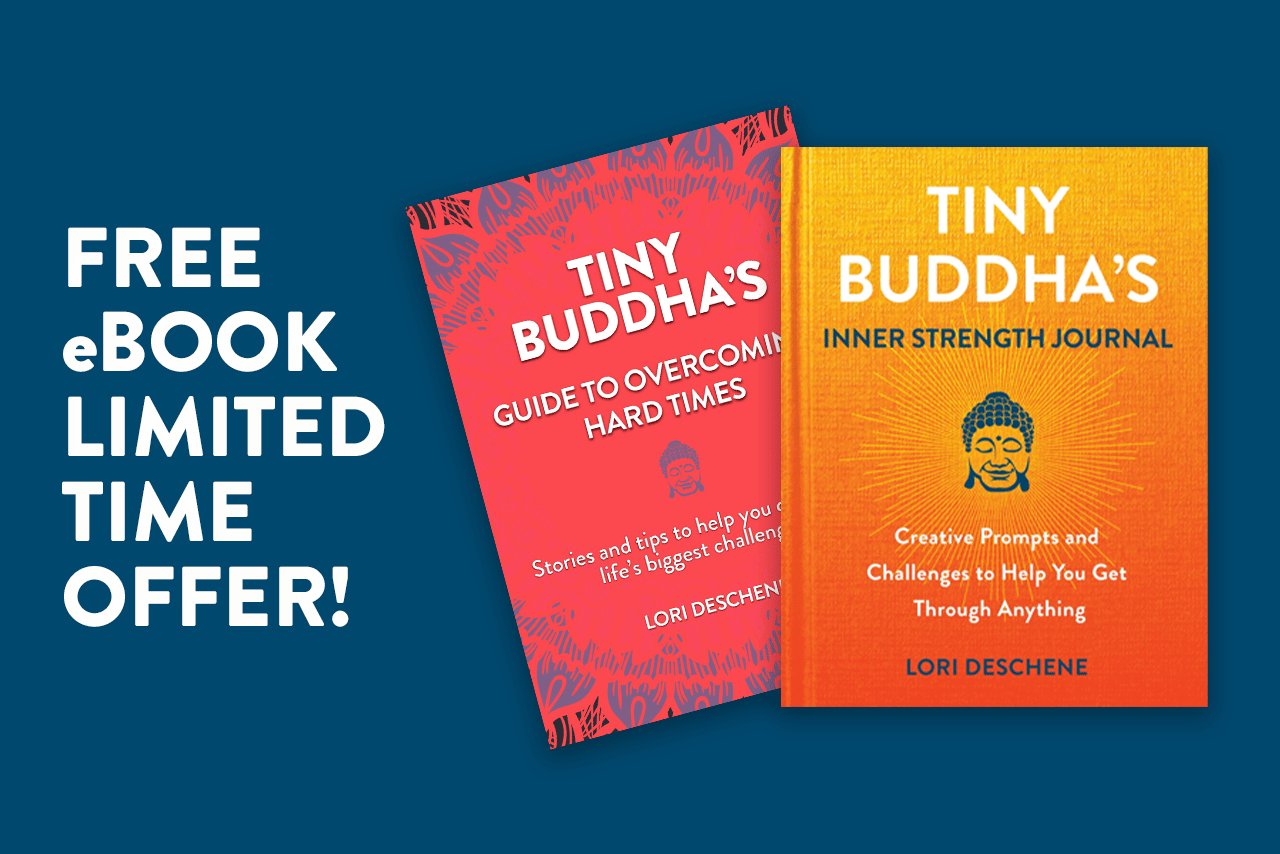
    That’s why I created Tiny Buddha’s Inner Strength Journal: Creative Prompts and Challenges to Help You Get Through Anything.

    I started working on this journal during the height of the pandemic, when I was exhausted from nights with a poor-sleeping toddler, drained from a high-risk, “geriatric” pregnancy, and overwhelmed by a new work project that ultimately failed in the end. And that’s not to mention all the Covid-related concerns and challenges we all had to face.

    I also knew from emails and comments that many of you were grappling with intense challenges and feelings of your own and struggling to get through each day.

    Since working things through on paper has always helped me feel less stressed, more confident, and more in control—all well-known benefits of journaling—I focused on prompts and questions that can help us access our personal power. Exercises that can help us protect our energy, manage our emotions, and take good care of ourselves so we feel our best—and feel prepared for the worst.

    I also put together a companion eBook—a free gift when you pre-order, for a limited time only—with forty of the site’s most helpful posts on overcoming hard times.

    The process of creating this journal was deeply healing to me, as I did each exercise as I went, and I have a feeling it can help you too. This isn’t a book of answers; it’s a framework to help you create your own personal roadmap to resilience so you can not only get through anything but also get the most out of life.

    As a mother to two young children, I’ve often wished I could prevent them from struggling. I’ve spent hours thinking about how I can insulate them from pain and ensure they never hurt as I have.

    But I realized a while back that if I protected them from pain, I’d also prevent them from gaining the wisdom and growth that accompany it. They’d live a flat, one-dimensional life, without the pride and confidence that come from doing hard things; and they’d never feel the sense of purpose we often find when we overcome something that once felt insurmountable and feel a burning need to help others do the same.

    What I really want for my sons, and for anyone I love—including myself—is the strength to handle life’s greatest challenges and the capacity to recycle their pain into something beautiful. Something meaningful. Something that makes all the darkness in life feel like a pathway to the light.

    I believe we all have that strength inside us, even if sometimes it all feels too hard. Even if sometimes we need to shut down for a while. We just need to learn how to access it.

    Whether you’re hurting, healing, or somewhere in between, I believe Tiny Buddha’s Inner Strength Journal can help you do just that. Click here to pre-order and get instant access to Tiny Buddha’s Guide to Overcoming Hard Times: Stories and Tips to Help You Cope with Life’s Biggest Challenges.

  • How to Thrive in Life after Surviving Cancer

    How to Thrive in Life after Surviving Cancer

    “Have a little faith in your ability to handle whatever’s coming down the road. Believe that you have the strength and resourcefulness required to tackle whatever challenges come your way. And know that you always have the capacity to make the best of anything. Even if you didn’t want it or ask for it, even if it seems scary or hard or unfair, you can make something good of any loss or hardship. You can learn from it, grow from it, help others through it, and maybe even thrive because of it. The future is unknown, but you can know this for sure: Whatever’s coming, you got this.” ~Lori Deschene

    Isn’t it amazing how some days are etched in your mind forever and other days are just lost in the wind? One day that is etched in my mind forever is December 27, 2006. This is the day I was told I had breast cancer. While breast cancer is common, being twenty-six years old with breast cancer isn’t that common.

    So here I was, twenty-six years old with breast cancer saying to myself, “Well f*ck, that sure throws off the plans I had for basically anything.” I quickly fell into fear, worry, and “why me?”. I will spare you the details of treatment; it wasn’t any fun. I lost my hair and my dignity and fell into depression when life returned to “normal.”

    Whatever normal is, I was living it. However, nothing was normal. I didn’t know how to live without a doctor’s appointment to go to. I mean, all I wanted was an end to the endless appointments and here I was without them, and I couldn’t figure out what to do.

    So, I took lots of naps because I was exhausted, or so I thought. Well, it turns out I wasn’t exhausted; I was depressed. I was alone with thoughts of wondering when my cancer would come back. I was sucked into a pit of despair that I had never seen before. Who was I becoming? The person who sat in their pajamas all day while I worked from home—yep, that was me.

    I wanted to scream, “I survived cancer, now what?” Where was the manual on how to live after cancer? Who helps me get back to living? I just go back to what I was doing, as if nothing happened? I was tired of saying to myself, “But I’m supposed to feel better, right?”

    As the stream of appointments, scans, lab draws, and phone calls from friends and family continued to slow, I tried hard to be well and remain optimistic. Continue doing my job, walking the dogs, and dragging myself to the gym. Life just didn’t seem real, and depression overwhelmed me for days or weeks at a time. A quick nap turned into a four-hour slumber; my physical body was healing, and my mental body was spiraling downward.

    The difficulty of shifting back to life was not what I expected, and thank goodness for friends. My dear friend Rebecca asked if I wanted to run a half-marathon, but my visceral reaction was no. Then I learned the race took place one year to the date after I finished chemo, so I thought, “Heck yea, take that cancer!” It was perfect timing. One foot in front of the other, I trained for my first half-marathon.

    I kept myself going by trying to run when I could. Running was my go-to mental health fix pre-cancer, and it was starting to work post-cancer too. I remember there were days when I would drag myself to run and come back home in minutes. Then there were days I felt like I had superpowers and it felt so good.

    Rebecca and I crossed that finish line, hand in hand, and celebrated with margaritas and Mexican food, my other go-to mental health fixes.

    So why do I feel inclined to share my story? It’s not just about cancer, depression, running, and margaritas. It’s about making something good come from something bad. 

    Cancer taught me a lot of things. The biggest lesson was to control what I could. That looked like taking a long way home instead of sitting in traffic, not getting worked up about long lines in the grocery store, taking risks like rock climbing in Utah, trying new things like fly fishing in the mountains of North Carolina, singing in my car on the way to work to pump myself up for the day, going on camping trips with my girlfriends, and leaving behind a soul-sucking career.

    I can’t say I am exactly happy I had cancer, but I can’t imagine life without it. It’s a love/hate relationship. Looking back, it was an opportunity for growth and learning that I can do hard things. It was a reminder to focus on being truly alive.

    There is not a guidebook for cancer survivors, no way to time travel to the person you were before your diagnosis, no way to return your body unscathed, or quick way to restore your trust in your body again.  It’s a journey that you must figure out for yourself, one minute, hour, and day at a time.

    You must accept what has happened and discover a new self.

    I learned more in the year after cancer than I had in the previous twenty-six years. You don’t need a cancer journey to do this.

    Life is short; learn to live life to the fullest. However, if cancer is part of your journey back to living, you are not alone in your quest to learn to live again. You can do this. One tiny step at a time, you will learn to truly live again. You will stumble back and take huge leaps forward.

    You can have a life full of purpose, happiness, gratitude, and adventure. Don’t merely survive cancer, thrive after cancer! What are you waiting for? Let’s do this.

  • 4 Ways to Save Your Sanity When Life Gets Hard and Overwhelming

    4 Ways to Save Your Sanity When Life Gets Hard and Overwhelming

    “You can’t stop the waves, but you can learn to surf.” ~Jon Kabat Zinn

    In December of 2020, we noticed Mom’s speech seemed difficult. Like she had stuffed cotton balls in her mouth, and someone was restraining her jaw from moving. We asked her about it, she said it was nothing.

    We hadn’t seen each other since we got together over the holidays. On New Year’s Day 2020, we clinked glasses filled with sparkling wine and shared bold predictions about how this was going to be our best year yet (spoiler alert, it wasn’t).

    With every passing week and conversation, it got worse. We brought it up many times, my sister and I. We pleaded with her to see a doctor. We were separated by thousands of miles and a closed border. My sister in Virginia, me in California, Mom in Canada.

    She said no, it wasn’t a big deal, it was getting better (spoiler alert again, it also wasn’t). She insisted she was fine. She could eat, drink, work, and speak. It was all good. She repeated this message as our worries grew. We felt powerless to help, especially in the face of her denial and refusal to get care.

    In March of 2021, I got an odd message on Facebook messenger. It was from a woman who said she worked with my mother, asking me to call her. She had taken my mother to the hospital the night before, where she was admitted for extreme dehydration and exhaustion.

    Her symptoms made no sense to them either, so she endured a battery of tests. Ultimately, it was revealed that what ailed her was amyotrophic lateral sclerosis, also known as ALS or Lou Gehrig’s disease. A horrible progressive nervous system disease that causes loss of muscle control. It is always fatal, with no known cure.

    Her disease first attacked her ability to speak and swallow, an unusual first set of symptoms. When she was hospitalized, she finally admitted she hadn’t eaten a real meal in thirty days and had been able to drink less and less.

    My sister and I are both career women with young families. I work for a tech company. The work is fast moving, complex, and nuanced. I used to pride myself on my “meeting endurance.” I often tackled days with ten to fourteen meetings, with enough energy left to crank out work deliverables, do an intense workout, and spend time with my six-year-old twins.

    With my mother’s diagnosis and the new responsibilities of caregiving during a pandemic, I had to revisit many of my previous beliefs and assumptions. Here’s what I learned. I hope it helps you too.

    Lesson 1: Out with stretch goals, in with baseline goals.

    I’m a (sometimes) recovering overachiever. I have a history of establishing huge stretch goals and basking in satisfaction when I smash them. For years I was motivated by the striving to do more, be better.

    Until I wasn’t.

    With my mother’s diagnosis and the challenges of parenting and working in a pandemic, overwhelm swallowed me whole. It felt like I was surrounded by fuzzy darkness. Like I was moving through molasses.

    I wasn’t alone, of course; mental health issues skyrocketed globally. Rates of depression and anxiety are rising. The term “languishing” was introduced to express the lack of thriving many more experienced.

    I had to rethink my relationship to accomplishment.

    I have given myself a break from stretch goals. I now set what I call baseline goals. Baseline goals are super small, completely achievable objectives. They are daily or weekly practices that have compounding impact when practiced consistently over years. Simply put, baseline goals are the smallest possible thing you can commit to that will support your well-being.

    Instead of an overwhelming big picture, you create a concrete short-term focus.

    Instead of a lengthy, high-intensity fitness routine or a stretch goal (let’s train for a marathon!), the baseline goal is fifteen minutes or more of movement six days a week. Walking counts. Slow yoga counts. Dancing in the living room definitely counts. I can do fifteen minutes.

    Instead of kicking off a complex transformation project (let’s reinvent how we interact with our customers!), the baseline goal is each morning to determine the biggest priority for the day, and the absolute minimum action that needs to be taken. Then do that thing first. I can figure out one priority. I can do one thing.

    It turns out that when you’re super clear on your minimums, it frees up a lot of the capacity used up by trying to do it all. It releases the guilt from impossibly high standards.

    Lesson 2: Separate your future problems from your current problems.

    It has become almost a mantra for me to say, “That’s not a problem I need to solve today.” There are SO. MANY. PROBLEMS. So many decisions to make.

    I had to learn to be discerning about which problems I needed to tackle now and acknowledge that there were many I didn’t have enough information to figure out, so it made no difference to think about them.

    When my sister and I moved my mother into an assisted living community, our minds were invaded by the “what ifs,” and “what will we do when?”.

    “What if she needs more care than they can give?”, “What if we can’t support the costs?”, “What if we need to move her again?”, “What if they close the borders?”, “What if they disallow visitors?”.

    We started asking ourselves, “What problems do we need to solve right now?”.

    The only problem we needed to solve was immediate care and needs. We didn’t need to know the future. We could respond to new needs as they emerged.

    It’s clearly not a healthy long-term behavior to ignore the future, but in crisis, clarifying where action and decisions are needed has been helpful in deescalating anxiety.

    Lesson 3: Self-compassion is the new black.

    There are many days when I feel like I’m failing in every dimension. No matter where I am or what I’m doing, I am racked with guilt and self-criticism because I’m not somewhere else, doing more.

    Self-compassion is when we give ourselves the same kindness we’d extend to a good friend. When the guilt comes (and I haven’t yet figured out how to keep it at bay), and the self-critical talk starts, I pretend I’m talking to a dear friend. I’m doing my best. That’s all I can do.

    Lesson 4: Embrace the suck.

    It’s easy to become overwhelmed. To let my thoughts spiral into fear, worrying about the future in anticipation of what’s to come. I’ve now come to realize that when I do this, I am borrowing problems from the future. I am suffering in anticipation of things that may or may not come to pass.

    All I have to do is be here, now. That’s all. I don’t need to live the future yet; I just need to live the present.

    Jon Kabat-Zinn said, “Give yourself permission to allow this moment to be exactly as it is, and allow yourself to be exactly as you are.”

    And right now, there are many moments that are difficult and painful. And I am often sad, depleted, and upset. That’s okay.

    I can’t skip the hard parts; I have to experience them. And only by experiencing the most excruciating parts can I also fully experience the joyful moments.

    You only ever have to deal with the moment you’re in right now. We can do hard things.

  • If You Think You Can’t Be Happy Until All Your Burdens Are Gone

    If You Think You Can’t Be Happy Until All Your Burdens Are Gone

    “As rain falls equally on the just and the unjust, do not burden your heart with judgments but rain your kindness equally on all.”  ~Buddha

    Our burdens come in many forms. They are our relationships, our responsibilities, and our pasts that haunt us from beneath our consciousness. They weigh us down and prevent us from experiencing life’s true joy.

    Some people have to care for a sick family member most of their life. Some women give birth to stillborn babies. Some soldiers get their legs blown off while deployed.

    My story is unextraordinary: I’m a white, middle-class woman. My life has been easy, and I have no reason or right in this world to feel emotionally oppressed. And yet, for all my life, I’ve felt I was a burden to those around me.

    It all started, as many stories have, with my parents.

    My mother always told me about how she had to purchase books on strong willed children because I was “too much” as a toddler, and she didn’t know how to handle me.

    Both of my parents pushed me to be independent: do it on my own, regardless of whether I was ready. Often, I was. But on the occasion I wasn’t, I wanted to be a good daughter, so I tried and tried until I could do it independently anyway.

    They praised my independence. I also watched them dole out criticism to anyone who relied on others or let others take advantage of them.

    Because I love my parents fiercely, I took this to heart and vowed never to be a burden to them.

    I have spent most of my life fighting to control how others viewed me so that I could assure them that I was not going to be a burden.

    When I was a young adult, a few years out of college, I was forced out of my first (beloved) teaching job. I had nowhere to go and was waiting to hear back from the graduate programs I had applied to.

    Although I never asked them to move back in, my parents told me, “Well, you better not think you’re moving back in with us, because that’s not happening.”

    After picking up the pieces of my broken self, I set off for grad school with my then-husband in tow.

    I married my first husband at twenty-four, mistaking pain for love. He was profoundly troubled—touched by depression, anxiety, and deep-seeded self-loathing, and I was going to save him. I was going to be the force that moved him from “burden” to “power.”

    We fought and struggled and suffered, and as you probably guessed, I did no saving of any kind. I did, however, endure relentless emotional and verbal abuse for years. I wish I could say that our toxic relationship was fully his fault, but unfortunately that’s not the way things work.

    After years of poor emotional regulation skills and believing everything in life is a burden, I treated him like one, too. Communication is a two-way street, and I was an excellent emotional manipulator. After completing grad school and our third year of marriage, I finally acknowledged that our relationship was built on pain, and I divorced him.

    I got a new job and moved to a new state, away from my failed marriage and away from my parents. I met a man who made me feel, for the first time in my life, like I wasn’t a burden.

    As Thich Nhat Hanh said, “You must love in such a way that the person you love feels free.”

    To this day, my husband makes me feel light and free. He sits with all of my emotions, my good ones and my bad ones. He takes my poor communication and bad emotional self-regulation skills in stride and gently calls me out when I make him feel like he is a burden.

    My husband has taught me what it means to love unconditionally and give support without the expectation of anything in return. And he has taught me how to give unconditional love as well.

    Over the years I’ve become progressively better at acknowledging my feelings about being a burden to others and how others can be a burden to me.

    A couple years ago, my mother turned her criticism to one of her best friends who gives money to her adult daughters by paying some of their bills. My feelings of being a burden burned in my heart as my mom raged for over a half an hour about how her friend was wrong to give them money because her daughters would never know how to stand on their own two feet.

    I bit my tongue. Telling her to stop raining judgment on others would only make me a burden on her.

    But it was at that moment that I experienced a turning point. I realized that avoiding becoming a burden to people was becoming a burden to me!

    It’s like the adage, “Don’t be too busy worrying about whether they like you that you don’t even consider whether you like them.”

    The very thing I was avoiding in my life had become the heaviest burden that I was carrying with me, day in and day out.

    Last summer, I watched my dad—after finding his eighty-nine-year-old mother passed away one morning—fail to acknowledge any emotions or grief. Instead, he complained about having to cancel her cable, hire painters for her condo, and the burden of being her executor. And then he commented how much time my mother spends taking care of her ninety-seven-year-old mother.

    He said how much time they’ll have when my maternal grandmother passes away. How much time they’ll have when my brother’s children are in school, and they don’t have to babysit. How much time they’ll have when my mother can retire and doesn’t have the burden of having to work… the list goes on.

    I will not wish away someone else’s life or my time to make my own life a little easier. I will not spend my life waiting for all my burdens to disappear, only to learn that all the joy is gone and there is nothing left.

    The opposite of joy is not pain: it’s numbness.

    If you take away the pains, the joys will be gone too, and you’ll be left feeling empty.

    You cannot remove yourself from being someone else’s burdens (that’s on them). You can’t even remove all your own burdens. But you can move through your burdens and transcend your pain to find more joy in life.

    If you feel you’re a burden on others, understand that every person on this earth deserves connection and support, including you. Needing and asking for help doesn’t make you a burden, and if someone implied this to you or even said it directly, they were wrong.

    If you’re feeling hopeless that people exist who love without any expectations, take heart: they are out there. And when you find them, learn from them how to give unconditional love, and give them that in return. You don’t have to go through life alone.

    If you’re waiting on a time that you will never have any burdens, remember that you can choose where your focus is. It’s easy to ruminate on our burdens and pains. When you find yourself obsessing over what’s weighing you down, gently release the thoughts.

    Find things in your life to build upon joy: relationships, creative practices, or hobbies. These are great ways to interrupt the pain and make you feel lighter.

    And remember that judgments are burdens. Before you judge others, ask yourself what kinds of burdens they might be carrying. You can’t get rid of their burdens for them, but you can help them carry them, simply by being there and listening.

    Rain will fall on your life. We all have burdens and feel like we’re the burden from time to time. But if you can shift your perspective, you can stop your burdens from weighing you down and you can experience all the joy life has to offer. And if you’re lucky, you can rain your joy and kindness on others, too.

  • Pain is Not Purposeless: How to See the Meaning

    Pain is Not Purposeless: How to See the Meaning

    “Life will give you whatever experience is most helpful for the evolution of your consciousness. How do you know this is the experience you need? Because this is the experience you are having at the moment.” ~Eckhart Tolle

    Have you ever felt a general dissatisfaction with where you are in life? Ever felt like you can do something better than what you’re doing, but you’re not sure exactly what or how?

    I have. In fact, I still feel this way, although I am slowly working my way toward creating a more purposeful life for myself. This can feel distressing. Painful. I feel your pain. But take heart that your pain is not purposeless.

    If these feelings are familiar, this piece is for you.

    Over the course of a few years, my naïve sense that I was one of those people who would just sail through relatively easily and find my way to fulfilled life, without much effort, was shattered. It left me exposed and vulnerable. Feeling weak and pathetic. It brought the realities of life into sharp focus, and I had to work hard to find peace with the long game of life.

    For several years I worked with a great bunch of people in a field I was passionate about. But the job itself became monotonous and stale. I felt I was stagnating and needed to cultivate my passion elsewhere and use my talents more fully. I applied to train as a secondary school teacher and took a place later that year.

    I was under no illusion that it would be easy, but my naivety led me to believe that I would be the exception to the rule and would take it all in stride.

    The first belief to break. And break me, it did.

    After three months I felt the reality that I was no stand-out person anymore. I could feel a mountain of expectation threatening to take over my life and leave me with nothing but work, work, work.

    For the first time in my life, I didn’t finish. I quit the course. And I was left soul searching for months.

    Eventually I got a temporary job in a country park, working outdoors and engaging with the public doing fun things like pond dipping. The summer was beautiful that year and it healed my soul a little.

    But that came to an end after a few months and I had to find another job very quickly. I didn’t want to be left with nothing again. Partly out of desperation and partly because it was a convenient fit to previous experience, I took a job at a waste treatment plant.

    It was a stark contrast to the country park.

    It was grey. It was ugly. It smelled. The people weren’t unfriendly but weren’t exactly welcoming either. I felt trapped and began to despair about what life was all about. The daily grind ground me down. Was this all there was?

    I was walking an emotional knife edge nearly all the time, and I couldn’t see through the fog. I felt like I was being punished for my relatively straightforward, stress-free life so far.

    Fulfillment was not my destiny after all. I had failed. Or so it felt. This all began when I was twenty-seven and the worst of it between twenty-eight and twenty-nine. Hardly the end of my life.

    So, if pain is not purposeless, then what is its purpose? How can there be opportunity in feeling so unhappy?

    If I had known how to deal with the feelings evoked in me from the start, then I wouldn’t have felt the pain so intensely. The fact that I had to learn how to cope was the very purpose of it all.

    Looking back now, this was all necessary because I have learned so much during this process (in fact, I’m always learning).

    Even though I’m still not sure exactly where I want to be, I’ve learned to be more present and intentional in the everyday process of life. In fact, because I don’t have a definitive idea, I have learned these things. Because I realized I needed to learn to appreciate the moment or I’d live my whole life waiting for the future.

    So, if you’re reading this in the midst of something similar to what I have described, realize that what you’re going through is part of a greater process.

    Make dealing with the pain the reason for the pain.

    Whatever you’re going through, choose to see this as an opportunity to learn about yourself and hone your coping skills. And consider that maybe you need this exact experience to heal, grow, and thrive.

    If you’re dealing with a breakup, this could be an opportunity to heal your relationship patterns and learn to be alone.

    If you’ve just lost your job, this could be a chance to reflect on what you really want and what might make you more fulfilled.

    If everything is falling apart all at once, this could be a challenge to find peace and strength within yourself so you’re able to better weather any storms that come your way.

    To adopt this kind of perspective, we must accept life in its entirety. We all want to feel “good” about life, but there is opportunity in all sadness.

    Accepting this and discovering the opportunity in your challenge will help to improve not just your short-term mental health, but your outlook on life overall.

    And when you embrace this shift in perspective, it will improve your patience with life. A patience to allow life to unfold without having to know exactly how or what or when. Particularly when we’re young we are impatient to get to where we feel we ought to be or to feel how we want to feel. This leads us to feel resentful and entitled to better.

    You do deserve better, but it won’t happen in an instant.

    Be grateful that you are aware of your desire for greater fulfilment. That’s the first step. The next is to wield it effectively to make it a reality.

    But we need to learn to deal with the pain along the way. Seeing the opportunity in painful experiences starts with the small things.

    Take the next daily irritation and turn it on its head—being stuck in traffic on the way to work, for example. What is the positive side? Can’t find one? Keep thinking. Maybe it’s a chance to practice patience. Or an opportunity to practice not sweating the small stuff.

    Our natural tendency is to gravitate to the negative (evolution’s fault). Keep at it and you will train your mind to focus more on the light than the dark. If we allow ourselves to be consumed with the negative, we are not seeing the whole.

    You can also hone this empowered mindset by being grateful for the little things in your life. Have you ever been consumed with frustration from work at the end of an otherwise beautifully sunny day? Or rushed through your coffee in the morning thinking about the rest of the day? Or missed the sounds of nature or the fresh air on your skin because you’re in a rush?

    Make an effort to notice these things and appreciate them. Write them down at the end of the day and you may surprise yourself at the length of the list of simple pleasures that dotted a day that you perceived as a “bad.”

    Then, when whatever you are going through resolves (and it will, in time), you will have appreciated the good amidst the not-so-good.

    We will resolve our problems one way or another. We can either resolve them and choose misery through the pain or resolve them and choose positivity through the pain. The choice is ours to make.

  • The Power of Compassion: How to Make Do in an Unfair World

    The Power of Compassion: How to Make Do in an Unfair World

    “A good head and good heart are always a formidable combination. But when you add to that a literate tongue or pen, then you have something very special.” ~Nelson Mandela

    Ever thought, “Life is so unfair!”

    Is it, really?

    Has life given you circumstances that keep you in a deep, dark hole of disadvantages that seem impossible to clamber out of?

    Has life decided that you need to live in abject poverty and watch everyone in your life suffer from being denied everything a human needs to be human?

    Has life put you in a position where you wouldn’t dare to dream of something better, for yourself, for your family, about anything, ever?

    My story is specifically about my home, Cape Town, South Africa.

    A place so breathtaking, it reminds you constantly that a higher power must truly exist.

    A place filled with the friendliest people, with a strong sense of family and community.

    People who smile easily and see the bright side of even the darkest realities.

    And, under it all, we have all been touched by the far-reaching hand of hardship.

    Elders have seen extreme poverty and prejudice, while raising large families as best they could under unrelenting circumstances.

    Families have lost loved ones in struggles for a better world at the southernmost point of the African continent.

    And the struggle continues.

    In 2020, the struggle persists.

    Sixty million voices go unheard every single day, with a slew of injustices hurled at them every so often, for good measure.

    Senior citizens have no means to support their modest lives, and no one to care for their needs.

    Unfair, with a lifetime of regrets.

    Able-bodied, competent, grown men and women are forgotten by the system, and left as easy prey to life-shattering temptations.

    Unfair, with daily desperation.

    With an unemployment rate pushing 30%, what will they do, and what will become of them and their families?

    The youth stare a bleak future straight in the face.

    Unfair, with overwhelming depression.

    Children lack the little they need to blossom into the future of this world.

    Unfair, with blissful oblivion.

    How long must they be happy in the little they all have?

    Every family has a story to tell.

    And sadly, the vast majority all sound like a broken record, playing the same tune over and over again.

    My family’s story is no different.

    Grew up in poverty, shared a home with ten other people, had very little to eat, had no gas or electricity, no vehicle, walked long distances in harsh conditions just to get to school every day, no telephone, no television, no appliances, no hot water, problematic plumbing in an outhouse, no healthcare, no dental care, one pair of shoes per person, worn until their soles were irreparable, clothes made from offcuts by the matriarch of the family, left school before the age of fourteen, helped support the family by taking on manual labor, stayed home to take care of eight to fourteen growing children…

    And the list of unimaginable challenges goes on.

    Sounds like a village situated in the remote parts of an undiscovered jungle somewhere, forgotten by time and progress.

    Yet, they survived.

    And tragically, so did the circumstances.

    In the age of social media, digital business, and limitless telecommunications, harsh circumstances still exist.

    While some miraculously overcame unbelievable odds, beat the system, and thrived, others were left at the mercy of history chasing its tail in a vicious cycle.

    And today, millions of people in South Africa still live this way, with no way to step out of the madness.

    As a kid, I remember both my mother and grandmother employing domestic workers who lived in an informal settlement (either with their families, or apart from their families who lived in a faraway state), in a makeshift dwelling that could go up in smoke, literally, at any moment, from a neglected candle.

    As an adult, I do the same as my mom and gran before me, and the very same set of criteria exists that has existed for four whole decades.

    No one has come to the rescue.

    Delving into the lives of those loyal domestic workers, it is not hard to imagine that the younger generations of their families walk the paths they always have.

    Unfair, hopelessly so.

    Same story goes for the gardeners, and brick layers, and handymen, and janitors, and security guards, and petrol attendants (who?), and car guards (huh?), and caretakers, and garbage collectors, and…

    But wait, there’s more. Devastatingly, there’s more.

    Add to the list, that layer of society who, until now, have managed to live marginally above the breadline (living pay check to pay check) and have a relatively “comfortable” life, who have now lost their gainful employment and don’t know where to start to earn a living wage to keep their families fed, clothed, and cared for.

    How do they get to win and rise above these life-altering, unexpected curveballs?

    The only immediately viable solution for them all that I can see is compassion, kindness, and generosity.

    Compassion from others, kindnesses from strangers, generosity of family and friends.

    And let me just assure you right now, in case you’ve ever wondered, that there is enough to go around on this magnificent planet.

    Interest in the well-being of others—the children, the youth, the family men and women, the seniors.

    Thankfully, this place called Cape Town has scores of beautiful people who practice compassion as a part of everything they do.

    Parents and siblings protect each other from the wolves at the door.

    People make the best of their dire conditions, and are grateful for all that they have, even if all they have is their health.

    Families and friends check that their family members and friends are “okay.”

    And would you believe that, even though you now know almost everyone’s story, they’ll do all that they can to convince you that they actually are okay?

    There’s a term for that: “making do.”

    They make do with what they have, they make do with what has been given to them, they make do with what they receive, they make do with what you can spare them, they make do with how they live, they make do with what they get paid for their hard, often physical, work. They make do.

    Their dignities are intact, in their minds at least, if not in reality.

    Unfair, to you and I, definitely.

    To them, it’s just life.

    And it’s in all of our hands.

  • What to Do When Someone You Love is Struggling

    What to Do When Someone You Love is Struggling

    “Sometimes the easiest way to solve a problem is to stop participating in the problem.” ~ Jonathan Mead

    I don’t think I’m alone in having someone in my life whom I wish I could change. Someone I see struggling, who ignores or resents any lifesavers I send their way. I can clearly see how this person contributes to their own struggles, but they remain totally unaware of it. Sometimes, I want to shake some sense into this person; I think, “If only they would get their life together…”

    For many of us, this person is a relative: a sister, brother, parent, or child. For others, it’s a close friend or coworker. A lot of times, it’s someone we want in our lives, even if it’s painful to keep them there. No matter who it is, it certainly isn’t easy to see someone you care about struggle.

    Being in the presence of another’s pain used to provoke a deeply emotional response from me. And I know others feel the same. Sympathy and the desire to help someone in distress are naturally instinctual responses.

    According to Darwin, humans and animals alike take comfort in one another’s company, protecting one another and defending each other against threats.

    I get that. It makes total sense to me. I would have gone to the ends of the earth to see the people I care about happy. I did just about anything to try and change them; I read books and articles, reaching out for experts’ advice on how I could get them to see the light. In fact, I became one of those “experts” myself, and if I’m honest with myself, it’s because I was looking for a way to help the ones I love.

    You see, I didn’t just have one person in my life who was struggling. At one point, it seemed like the majority of my family members were having a tough time. That led me to feel desperate and helpless, unable to live my own life while sensing their pain.

    I always hung on to the hope that the people in my life would somehow change. That something I had overlooked would prove to be the magic bullet to help them live a good and fulfilling life.

    I kept buying more books, reading more articles, and encouraging them to go to therapy, whether they wanted to or not. I reasoned, pleaded, led interventions. Dreamed of my ideal relationships with them, imagined them happy and full of life. Yearned for their smiles and enthusiasm for life. Believed that I couldn’t be happy until they were.

    I made it my life mission to change others, becoming a therapist to help make changes in other people’s lives, fixing what was broken.

    Well, as you can imagine, that never worked. When you have people in your life whom it hurts to love, the only logical solution seems like trying to help them change. But I had to learn the long and hard way, by running into dead ends and facing many disappointments, that you can’t make other people change. You can’t make other people happy. And you can’t rescue another person.

    The only person you can change is yourself. So that’s what I did. I learned to manage my anxiety around other people’s discomfort. I decided that other people’s struggles and journeys were just that: their struggles and journeys. I stopped trying to be helpful and instead decided that I had a right to be happy.

    It’s so important to understand that you can’t make somebody change. You can inspire them to change. You can educate them toward change. You can support them in their change. But you can’t force them to change just so that you can feel more comfortable around them.

    Maybe that sounds like giving up. Maybe that even sounds a bit uncaring. However, I didn’t stop trying to be helpful to those struggling because I stopped loving them. I stopped because I saw it was not only not working, it was also contributing to their problems.

    When I made efforts to take on other people’s problems I would do too much. I relieved them for a moment of their pain; however, I wasn’t providing them with the space they needed to solve their own issues. If I kept jumping in to help them, they would keep relying on me, instead of themselves, which wouldn’t allow them to better deal with life’s many difficulties on their own.

    After years of doing the same things over and over again, with very little result, I decided it was time to change my approach. I was doing the very thing I wanted to see other people stop doing: I was contributing to my own problems. And it was time to stop doing that. It was time to be happy, not only for me, but for those that I cared about. It was time to be less helpful.

    Our efforts to be helpful might be based on good intentions, but those good intentions don’t always yield good results.

    By committing to learning what real help is, I came to understand that if I could manage my anxiety about other people’s problems and invest my time thinking about real solutions, I could change my responses and do something that was legitimately helpful.

    As the first step in this process, I began to define my true beliefs, values, and ideas about helping others.

    I’ve learned that in crisis situations, it’s best for me to calm myself down and respond as wisely as possible—when it’s needed and, of course, when it’s welcomed. The ability to manage my emotions in the highly anxious and emotional presence of another, especially a loved one in pain, is a lifelong mission of mine, because I truly believe it’s what will be helpful.

    If we can all manage ourselves in the face of other people’s problems, we can truly be present and accountable.

    On my journey to find out what it means to be truly helpful, I’ve found some tools I keep in my back pocket when the going gets tough.

    First, stay in touch.

    This isn’t easy to do in the presence of someone who’s very anxious and upset. Some people naturally create distance when anxiety is high. Thinking that you can’t help, or that the situation is too large, can lead you to run in the other direction.

    I try to stay in contact with people I care about, even if their problems are too big for me to solve or aren’t solvable at all, like having an illness. Staying in touch helps me manage myself around the big stuff I can’t solve, and learn to accept people as they are.

    Second, see the person past the problem.

    When I was walking around with a hammer, I was basically seeing everyone in my life as a nail. There was more to them than the issues they were facing, but I wasn’t relating to them as whole people. Now I look for other people’s strengths, and their ability to solve their own issues. People are more resilient than we tend to think.

    Third, respect others’ boundaries and ability to solve their own problems.

    Many people are vulnerable when they face life’s stressors, and some people look to others to solve their problems for them. These days, I try to respect other people enough to let them come up with their own answers.

    Determining how much to say or not say in each situation we face is not an exact science. I respect others’ boundaries by supporting their autonomy, being there for them but staying out of the way when my opinion isn’t needed. I make sure that any ideas for possible solutions come from them. I offer useful information without telling anyone what to do.

    Fourth, know your own limitations.

    It was humbling for me to find out how little control I have over the way others decide to live their lives. I changed my thought process from thinking I knew what’s best for my loved ones, to defining what I really could and couldn’t do; then my responses became clearer.

    I was able to be more open and honest about the reality of my own life and how available I could be for others. I learned the hard way that, most of the time, my limits of time and energy were reached before other people’s needs were met.

    Fifth, become more objective.

    Boy, is it hard to think objectively when it comes to our important relationships. In intense emotional situations, it’s easy to get pulled into it all and feel pressured to do something instead of taking a step back and seeing the bigger picture.

    With each situation I face, I work on getting more objective about it, reflecting on how I can remain calm and not feel the need to solve anything immediately.

    Remaining objective is about seeing the difference between reality and what you feel. So, for example, instead of thinking you need to break your best friend’s unhealthy relationship pattern because it hurts you to see her in the same painful situation over and over again, you might step back and recognize she’s making progress, even if it’s slow, and we all need to learn our own lessons in our own time.

    Sixth, work toward being open and honest.

    We all have a need to feel seen, heard, and understood. However, way too many people aren’t open and honest in their relationships. When we can be open about our vulnerabilities and share our own experiences, it can be healing and calming. We can let others know that we can relate to them. When we’re trying to solve and fix everything, we aren’t connecting with others at a deeper level. We’re acting as if we’re above them.

    By making an effort to stop trying to be helpful, I saw many changes in my life. I no longer felt the pressure I once put on myself to be responsible for other people. I no longer made other people’s struggles about myself. And through all of that, I was able to foster better relationships with the people I care about—relationships based on reality, versus fantasies of who I wished they would be.

    What I describe here is my own personal experience. I share it as a way to get you thinking, but there’s no one-size-fits-all method for determining what real help is.

    The biggest lesson I learned in all of this is that I wasn’t helping anyone when I was swooping in trying to solve every problem without looking at the bigger picture. I understand now that when my “helping” is rooted in anxiety and an urge to smooth things over, it isn’t coming from a genuine place.

    I now know it’s okay to not have all of the answers; it’s okay to take my time to think things over; it’s okay to throw my hands up and say, “This situation really stinks right now, and it’s going to be hard for a while.”

    It’s okay for you to do all those things, too. Not every struggling person needs saving. Knowing that, and accepting it, might be the most helpful thing you can do.

  • 5 Things to Stop Doing When You’re Struggling and Feeling Drained

    5 Things to Stop Doing When You’re Struggling and Feeling Drained

    “There is nothing in nature that blooms all year long, so don’t expect yourself to do so either.” ~Unknown

    Recently I’ve been spread incredibly thin, and, at times, I’ve felt stressed to the max.

    In addition to being at the tail end of a high-risk pregnancy, with complications, I’ve been working toward various new projects—not just for fulfillment but also because I’ve allowed the business side of running this site to slide for years. And I have a baby coming soon. It’s crucial that I revive what I’ve allowed to deflate because I’ll have a whole new life to provide for.

    There’s a lot I need to do over the next six weeks, before my scheduled C-section, and a lot I’ve failed to do over the previous weeks, largely because I’ve had many days when I’ve felt physically and emotionally incapable of rising to the challenge.

    To be fair, there’s also been a lot to enjoy and appreciate, and I know I am incredibly fortunate to be pregnant at all, and to have the opportunity to do so much professionally. But life has felt somewhat pressure-filled as of late, and along with many small wins have come many hours and days when I’ve felt drained and defeated.

    I recently realized that my best days all have certain things in common—little things I choose to do for my well-being, and a number of unhelpful habits I resist the urge to indulge. If you’re also struggling, personally or professionally, and feeling drained, perhaps my lessons will be helpful to you too.

    5 Things to Stop Doing When You’re Struggling and Feeling Drained

    1. Stop comparing your struggle to anyone else’s.

    Over a year ago an old friend of mine was diagnosed with breast cancer. She’s the same age as I am, and she’s someone I’ve long admired, even though we’ve fallen out of touch beyond occasional interactions on social media.

    She’s left unfulfilling jobs, despite the financial risk involved; walked away from relationships that weren’t right for her, even while engaged, when it would have been easier to stay; and jumped out of more than 100 planes, each leap representative of the courage that guides her every inspiring, bold life choice.

    She’s faced cancer with the type of bravery I’ve come to expect from her, coupled with an honesty and vulnerability about her fears that, to me, displays even more strength. But still, I know it’s been grueling.

    As I sit here in my own very fortunate circumstances—at the same as age as her—I often tell myself I have no reason to be struggling. My current experience couldn’t even be termed a struggle compared to what she’s been through. I should just suck it up when I’m having a hard day and push myself through any tiredness or discomfort. Because I’m lucky.

    But the reality is, I still have hard days. I am still going through a high-risk pregnancy, juggling a lot, and dealing with a host of fears and physical symptoms that require my compassion.

    I wouldn’t compare my hard days to her devastating year—there’s clearly no comparison—but the point is, I don’t have to.

    I’m allowed to experience the feelings and struggles associated with my current life circumstances even if someone else’s are far more tragic. And so are you.

    Many may have it “worse,” but why compare and judge? If it helps alleviate self-pity so you can find the perspective and strength you need to keep going, then by all means, make comparisons. But if it only serves to minimize your feelings and needs, try to remember that two people can have completely different situations, and both can need and deserve compassion equally.

    2. Stop focusing on things that aren’t priorities.

    When we’re going through a tough time, we need to get extra-discriminating about what truly matters and what doesn’t. If we exhaust ourselves with the non-essential, we’ll have little energy for the things that can actually move the dial in the areas of our life that most need our attention.

    I remember when I had surgery to remove uterine fibroids seven years back. I knew I needed to take it easy or else I’d prolong my healing, but I also felt the overwhelming urge to maintain order in my environment. I’m a control freak. It’s what I do.

    I remember there was a pair of shoes next to the door, where shoes didn’t usually go, and not only that, they were askew. The horror!

    I was one day out of surgery, my lower stomach stitched together after being sliced across the middle, yet I still felt the need to slowly lower myself so I could put those shoes in the closet—even though it was painful to do so. My mother, who was visiting to help me, pointed out the insanity, and I knew she was right.

    I now think of those shoes whenever I am struggling physically or emotionally, and I ask myself, what else really doesn’t need to be immediately done, or do I not actually have to do myself?

    Can the dishes wait till the morning? Or can I get someone else to do them? Does every email in my inbox need a response—and immediately? Can I say no to some requests? Can I simplify my daily routine? What do I really need to do for myself, physically, emotionally, and professionally? And what do I just want to do because I think I should, to feel ahead of the curve, or on top of things, or good about how much I’m checking off my to-do list?

    Scaling back can feel like failure, especially if you’re Type A, like me, but sometimes we have to prioritize so we can use the limited energy we have wisely. If we don’t, we risk busting open our “stitches,” whether that means physical burnout or an emotional breakdown, and then we set ourselves back even further.

    3. Stop expecting yourself to do what you could do before.

    Maybe you were far more physically active or productive before (I know I was). Or you were the person anyone could call any time, any day, whenever they needed an ear or a hand. Or you were everyone’s go-to person for a night out when they needed to blow off some steam.

    It’s easy to cling to our sense of identity when we feel it slipping away. Not only do we mourn who we used to be, fearing this change may be permanent, we worry other people may not like this new version of ourselves—this person who’s far less fun or far more needy.

    But the thing is, we’re not who we were before. We’re in a new chapter, facing new circumstances and challenges, and our evolving needs won’t go away just because we ignore or neglect them.

    I’m not going to sugar coat this: It just plain sucks when you can’t do the things you once enjoyed. My boyfriend has had multiple knee surgeries and ongoing knee problems, and my heart breaks for him knowing he may never be able to do certain things he loves again, like playing basketball.

    But he’s accepted his limitations and found new things to do that check off some of the same boxes. He works out on an elliptical to stay in shape and rehab his knee. He throws himself into fantasy football to scratch his competitive itch. And he sweats it out in the sauna to help blow off some steam.

    As for me, I’m not going to yoga classes at the moment because I don’t have the time or energy, and I’m also not getting as much done as I once did on a daily basis. But I count my lucky stars that I’ll someday be able to do these things again, even if not for a while after the baby comes.

    It’s natural to grieve losses, temporary or permanent, big or small, but eventually we need to accept reality and then ask ourselves, “How can I work with the way things are instead of resisting them?” Otherwise, we cause ourselves a lot of unnecessary stress—and it doesn’t help or change anything.

    4. Stop pushing yourself when you need to take it easy.

    We all do it, or at least I suspect we do: We minimize our physical and emotional needs because we judge ourselves for having them. We think we should be able to do more. Maybe because other people in similar situations are doing more. Or because we just plain expect a lot from ourselves.

    But the thing is, telling yourself you shouldn’t be exhausted doesn’t make you better able to function through your tiredness. Demeaning yourself for needing a break doesn’t make you any more productive or effective. And belittling yourself for feeling whatever you feel doesn’t immediately transform your emotions.

    If you’re tired, you need rest. If you’re drained, you need a break. If you’re hurting, you need your own compassion. And nothing will change for the better until you give yourself what you need.

    I get that we can’t always instantly drop everything to take good care of ourselves, especially when other people are depending on us. But we can usually create small pockets of time for self-care by alleviating our self-imposed pressure and prioritizing our needs.

    Recently I’ve been embracing the idea of mini-self-care practices. It’s not easy for me, because I have a tendency to be very all-or-nothing. But sometimes, small things can make a big difference.

    I might not have time for an hour nap, but I can rest my eyes for fifteen minutes. I might not be able to clock in 10,000 steps, but I can take a walk around the block. I may not have the time to journal about my feelings for an hour, but I can jot down three worries and three potential solutions to help calm my mind.

    And sometimes, I just need to find a way to do more for my own well-being, whether that means cancelling a commitment or asking someone for help.

    It’s tempting to push ourselves, especially if this has been our pattern. But some days aren’t for moving forward. They’re just for honoring where we are.

    5. Stop reminding yourself of how you’re “falling behind.”

    I think it all boils down to this. When we minimize our struggle, try to do too much, and push ourselves despite our desperate need for self-care, it’s generally because we’re afraid we’re somehow falling behind.

    We think about everything we want to accomplish, everything we believe we need to do in order to become who we think we should be, and we panic at the thought of losing momentum.

    Most of us are accustomed to living life like a race to some point in the future when we imagine we’ll be good enough—and our lives will be good enough. Any threat to our sense of progress can feel like a threat to our self-esteem and hope.

    We also live in this constant bubble of comparison, as if we need to keep up with everyone else in order to make the most of our lives.

    But none of this is true. While we may want growth and change, we don’t need it in order to be worthy or happy, and certainly not on a pre-determined timeline. We also don’t need to keep up with anyone else because we’re never behind; we’re simply on our own path.

    What’s more, wherever we are right now, this is a valid piece of our life experience, and perhaps even a valuable part. We don’t need to rush through it to catch up to everyone else or to where we thought we’d be.

    Most people would agree that some of their most immense growth came from their greatest challenges, and in some cases, even their sense of purpose.

    I would never have guessed, during the ten-plus years I struggled with depression and bulimia, that that period of my life would be the catalyst for this site.

    I could never have imagined how profoundly my pain would shape the trajectory of my life, and how this chapter would lead to new chapters that were equally as exciting and fulfilling.

    Wherever you are right now, be there fully. Accept it. Open up to it. It’s only when we accept the lows that we’re able to grow through them and rise to the highs.

    Yesterday was a tough day for me. I was tired. I hurt. I did little, got down on myself, and cried. But today was better. Today I was kind to myself, I did what I could, and I gave myself what I needed.

    Whatever you’re going through, I wish the same for you: self-compassion to help alleviate your pain, permission to do only what you reasonably can, and space to take good care of yourself.

  • How I Learned to Stop Pushing So Hard and Enjoy the Moment

    How I Learned to Stop Pushing So Hard and Enjoy the Moment

    “Life is a balance between what we can control and what we cannot. I am learning to live between effort and surrender.” ~Danielle Orner

    Over a year ago, I boarded a plane and found myself on the beautiful beaches of southeast Asia. My dream was to travel the world, indefinitely, while working independently and living out of a suitcase. I had worked hard in my life to come to this place, and there couldn’t have been a moment that was more positive for me.

    However, as I enjoyed sunbathing on the beautiful beaches, I started to feel weary. It’s hard to describe really, but I slowly started to slip into a deep apathy and restlessness. Everything was perfect, or at least it should have been, and yet I was becoming unsatisfied.

    In a day I would travel to unknown waterfalls, go hiking, and explore mysterious secret beaches, but I was stagnating on the inside and I couldn’t understand why.

    In time, I realized the problem: Before, when I had fought so hard to get to this place, that had been my purpose, and now that I was here in this beautiful paradise I felt purposeless. I had nothing to push for, only something to enjoy, and that wasn’t something I knew how to do.

    To combat the monotony I tried to change things up. One trip found me driving through an Indonesian island weaving in and out of mountain passes with my girlfriend, who I’d met there, on a scooter. It was a complete rush, and I should have been lost in the moment, yet I felt nothing.

    During that day I remember her being completely full of passion. She was exuberant and full of energy. We arrived at the extravagant water temple in the middle of a lake. I was calm and distracted trying to find how things could feel right for me, trying to understand how I could find that purpose again.

    Times before, when I had been deeply challenged, taught me that to overcome such obstacles I just needed to put forth more effort and try harder. Staying true to that pattern, even with all signs telling me not to, I made the decision to drive us back through the mountain pass with the ever dark grey skies clearly delineated.

    Sure enough it started raining lightly on the way back as I drove the scooter through the cliffs. Staying on the same course, I kept driving and pushing forward no matter the obstacles telling me clearly to stop and regain balance. Even the sweet girl’s cough in the rain couldn’t get me to pause for a moment.

    I was a jerk. Arriving back at my home, I knew something was out of place. My beautiful girlfriend’s sneezing and coughing made me feel even worse, though I still didn’t quite get what was right in front of me.

    You see, most things were never easy for me, and what I had learned to be an exceptional strategy was to always push forward. No matter what was standing in my way, I had learned over and over again that I could overcome those obstacles through pure willpower and force.

    I had a lot to learn, and it would be a painful lesson.

    In the following weeks instead of pacing myself, I pushed myself even harder. I went to work earlier, I worked harder, and I exhausted myself. Out of my awareness, my girlfriend started to distance herself from me. She was taking trips by herself, relaxing on beaches and enjoying her time, while I felt like I was running through quicksand.

    At first, it was difficult for me to notice when she was gone completely, but it came hard and fast. I tried to block it out entirely by doing more, but I couldn’t. I recall a half hug one evening that left me feeling empty, but everything else seemed vague and blurry, as I had managed to shut out those feelings.

    As you may have guessed, I continued my same pattern of trying even harder in life; whether that was in my relationships or my work, I believed that was the solution. I increased my working hours, and when that didn’t work, I did the complete opposite and didn’t work at all. Instead, I tried harder in my love life, going on too many dates and exhausting myself.

    Soon I came to look for healing with all my force. I read articles and tried to take better care of myself. I saw a therapist and tried to force the problems to go away with all my will, but it was all too elusive.

    I felt broken down and completely lost when a good friend offered to take me out for a surfing lesson.

    It was a fine day with beautiful weather, and we had just finished applying sunscreen when I looked out and saw all the surfers, young and old, having success on the waves. One that stood out to me and warmed my heart was a child, about eight years old, gliding along the waves so effortlessly.

    On the first run, I paddled out and got ready for the wave to come. I could see the white ripples coming, and excitement filled my untired chest, as I knew this moment was coming for me and I would be ready for it.

    I propelled myself as hard as I could; viciously, I accelerated as the wave came up behind me, and I knew that this was my moment. Looking up and with perfect form, I did exactly as my instructor had taught me. I put my leg in a star against my other leg, kept my arms firm, and pulled up to stand.

    I got on one leg and, with waves all around me, I was doing it. I started to bring my other leg up so I could stand, and just like that, another wave came out of nowhere and knocked me off my board and into the roar of the current. I flailed around just as if I had been a floundering fish.

    I’d almost had it. I was so close. All I had to do was get off of my one knee and onto my other foot, and I would have been standing there, firmly surfing this beautiful wave on this gorgeous day in Southeast Asia.

    You can probably imagine what I did after this. I tried even harder, over and over again, yet it felt like the waves kept hitting me harder and harder.

    I didn’t take the rejection easily either. I kept getting back up and throwing myself into the rough water. The same result kept happening. Over and over I got thrashed by the ocean, beaten down by a bully that I couldn’t defeat.

    After a while, my friend and instructor looked over at me knowing that I had probably had enough, but I wasn’t ready to quit. He watched on as we both saw the biggest wave coming that had been there the whole day. Again, I used the form he had taught me and again I got bombarded by the waves and thrown violently into the dark blue ocean.

    That one hurt. Feeling beat and exhausted, I looked up just in time to see my surfboard smack me squarely in the face, to the point of almost knocking me unconscious. This was the first time the lesson would finally hit me hard enough for me to recognize it.

    Meekly, I found my surfboard and paddled back to the shore. On the way I saw the younger children gliding along the friendly waves and enjoying the thrill of winning. Me, I felt complete exhaustion and utter defeat.

    Collapsing onto my surfboard on the shore of the sandy beach, I took a moment, actually probably many moments, to collect my breath. It would take me even longer to collect my thoughts, but I had taken away something significant from the moment that had came, bombarded me, and left me to think about things.

    Over and over again, I had tried to will myself to victory in every area of my life. My solution was always to try even harder, to be more, and to do more. I had finally realized that the key to life is balance—which means learning when to surrender.

    This same drive that had helped me become so successful in life was the thing that was causing me the most pain and preventing me from appreciating life. Always in a hurry to accomplish the next thing or make the next goal, I had adopted a sense of inadequacy that caused constant misery for me on a paradise island that was full of beauty I couldn’t see.

    This being out of balance and trying harder at everything finally made me have a complete breakdown. Most of the time when we lose our balance it’s too late, and we’re already on the floor before we notice it. This is what happened to me.

    I finally got to see through the illusions that I had been putting up all around me. I understood that I had been hiding my feelings of inadequacy with the hope that they would go away if I just tried harder. I realized that I had shut everyone else out, and most importantly all of these realizations opened me up to feeling again.

    A week later on the plane ride back home I put very black sunglasses on. It was a bright morning, but for the first time in a long while I let myself go and allowed myself to feel again. Most likely no one except for me truly knows how painful that airplane ride was, but after you lose your balance and fall it often hurts.

    My next challenge would be to restore my balance and regain a firmer foundation. This time, however, I would not have to try harder, because often life isn’t even about how hard you try.

    On that sunny day in the ocean surfing, it wouldn’t have mattered how hard I was trying to surf. Nearby an eight-year-old was hardly trying at all, and he was having the time of his life coasting on the waves. Ultimately, we were both going to end up eating water—just as we all fall in life at times—but he was going to be fulfilled and laughing while I was trying to force an outcome and causing myself to be unbalanced.

    Floating is natural, just as the waves in the ocean, and the chaos in life. I now have the ability to let go and find stillness so that I can regain my balance and move forward in life. This all came from having that complete breakdown and teaching myself that it was okay to go slow and take care of myself. I had to.

    I haven’t yet made it back out to the ocean or traveled since then, but I know that when I do I will be able to let go and relax into balance.

    Whatever challenges you are facing, consider that you still have the room to pause, relax, and take care of yourself. You don’t always have to be pushing, achieving, and succeeding. Sometimes it’s just as important to reflect, recharge, and simply be in the moment. With nothing to do or prove.

    When I feel myself trying harder or pushing too much, this is what I do now. Instead of stuffing my feelings down, I slow down, let myself feel them, and learn from them what I need.

    I also remind myself that I don’t have to fight the current so hard to force things to happen. Sometimes it’s far wiser to surrender, relax, and enjoy the ride. When we embrace peace and balance we still move forward in life—just with far less stress and a greater appreciation for everything around us.

  • Why I’ve Stopped Hiding My Struggles

    Why I’ve Stopped Hiding My Struggles

    “The moment that you feel, just possibly, you are walking down the street naked, exposing too much of your heart and your mind, and what exists on the inside, showing too much of yourself… that is the moment you might be starting to get it right.” ~Neil Gaiman

    The road seemed to go on forever.

    Although it was only about 8:30 a.m., the summer sun was already blazing in the sky, shining down with such intensity I felt like an ant under a merciless magnifying glass.

    Seven miles into an eight-mile run and growing more and more tired with each step, I faced the final stretch along a tarmac path bustling with fellow runners, dog walkers, cyclists, and the occasional rollerblader.

    “Not… far… to… go,” I repeated to myself, as I trudged along with all the grace of a baby elephant. As faster and leaner runners passed me, I noticed my mind was slipping into self-comparison mode, but then I pulled myself back to the present moment.

    As I became more present, I observed.

    I observed the slight twinge in my left shin and the sound of birdsong from nearby bushes. To my surprise, I observed another more interesting phenomenon, an old pattern I thought I had beaten.

    As I passed other people walking, running, cycling, and blading in the opposite direction, I noticed my demeanor changed. I went from running like a baby elephant to galloping like a gazelle, from looking like the newbie runner I am to pretending to be a seasoned professional athlete.

    In the brief moments my path crossed with strangers, I hid my struggle.

    My posture improved and the grimace on my face turned into a confident smile.

    But why?

    Why did I feel the need to hide my struggle and present a more “I have it all together” version of myself?

    I pondered this question for a few days after this intriguing observation. Why do any of us feel the need to appear more together than we are?

    The answer I came up with is this…

    We hide our struggles because we’ve learned that showing signs of struggle or weakness is a bad thing.

    However, I believe this couldn’t be further from the truth.

    In our early lives, we were more than willing to show signs of struggle. When we were tired, upset, or frustrated, we communicated exactly how we felt (through cries and tantrums). A little bit older, when confused in the classroom, we were more likely to put our hands up and ask for help.

    We knew at a young age that struggling was a part of life, and a sign we were soon going to learn something new.

    Sadly, as we became older, it became more and more unacceptable to struggle and fail. Teachers and parents became less sympathetic and patient as their expectations increased. We began striving for perfection, which, of course, is unattainable.

    To wash away the false idea that showing signs of struggle is a bad thing, we need to remember these three important truths.

    1. Struggling is normal.

    It seems so darn obvious, but when I’m hiding my struggles, I’m denying the truth that struggling is normal. I’m buying into stories like “I should know better,” “I shouldn’t feel like this,” and “I should look like I have it all together.”

    The bottom line is, we’re human, meaning we’re all imperfect and we all struggle. No one has it all together. No one has a perfect life. And no one feels happy, confident, and positive all the time.

    Rather than feel ashamed and hide our struggles, we need to recognize that struggles are human and appreciate ourselves for doing our best in any given moment.

    2. Unless we show we’re struggling, we’re unable to receive help.

    Whenever I pretend I’m not struggling, the door to receive help is closed.

    In my early twenties, I went through a hard time. Facing financial struggles, daily anxiety, and dwindling confidence, I felt like I’d fallen down a deep, dark hole. I’d wake each day feeling helpless. But for almost two years, I lived a lie, in complete denial about my life situation. To the outside world, all was well.

    Eventually, it got too much and I had to get real. It started with a simple phone conversation with a lady from a debt agency. In two minutes, I felt like a huge burden had been lifted from my shoulders. This was the start of admitting I was struggling and getting some help.

    No matter what our struggles are, right now there are people who can (and want to) help. No one could help me unless I helped myself first, and it started with getting real.

    3. Showing we’re struggling gives others permission to show they’re struggling too.

    The moment we take off the masks and make ourselves vulnerable, we give others permission to do the same.

    After tackling my financial struggles, I began to open up about my anxiety. I remember being sat in a pub with a close friend of mine when I decided to share with him how I’d been struggling with an anxious mind.

    His response shocked me: “That’s exactly how I’ve been feeling.” For years, we’d both been struggling with the same thing but had never once spoken about how we’d felt. How sad.

    When we share our struggles with those around us, we give them permission to voice theirs, if they wish to share. We may never know just how life-changing that permission may be to someone. They may feel alone, overwhelmed, or even at the end of their rope, and we could change it all by giving them an opportunity to receive our understanding and support.

    Now when I lace up my running shoes, I leave the mask at home. And if I’m struggling at work, in my relationships, or in any other area of my life, I let other people in.

    I no longer pretend to be fine when I’m not because when I’ve been honest in the past, only good has happened.

  • Accept Yourself Unconditionally (Even When You’re Struggling)

    Accept Yourself Unconditionally (Even When You’re Struggling)

    “Self-acceptance is my refusal to be in an adversarial relationship with myself.” ~Nathaniel Branden

    Have you ever thought that you accepted yourself fully, only to realize there were conditions placed upon that acceptance?

    There was a point in my life when I realized I had stopped making tangible progress with my emotions, self-esteem, and habits. I’d made some profoundly positive shifts that remained with me, like eating healthier, practicing yoga, and phasing out negative friends. You could say I was “cleaning house” in a sense—getting clear on what I wanted my life to look like and discarding the rest.

    I began my first truly healthy relationship in years, had a small freelance business that was thriving, and even became a certified yoga teacher. I was no longer a slave to self-doubt and social anxiety like I was in college. However, I didn’t feel like I could vulnerably bare all like other yoga teachers seemed to do so effortlessly.

    I was still experiencing some of the same old negative feelings I always had, like dreading social situations and feeling somehow “behind” in life despite all my progress.

    I would still slip into self-sabotaging thoughts, mentally talking down to myself when I didn’t teach perfectly. I would still compare myself to other women my age, coming up with stories as to why they were “better” or “further ahead” than I was.

    Despite knowing how critical it was to stop doing this, the sense of self-doubt seemed overwhelming and inevitable at times. Upon realizing that these issues were still present, I promptly abandoned myself. Rather than practicing self-care, I “relapsed” into shame. I was ashamed of feeling shame.

    “I’m a yoga teacher. I’m not allowed to get in these moods anymore. I should not still struggle with these feelings,” I thought.

    During this period, I dwelled hard. I didn’t reach out to anyone. I felt a nauseating fear in the pit of my stomach that made me want to give up on everything. The light at the end of the tunnel had all but flickered out. Convinced that I was alone in these feelings, I stubbornly forgot that other people went through these same emotions all the time.

    “I’m not normal. I’ve learned nothing after all this time. I’m foolish and completely hopeless. Who would even want to be around someone like me?”

    These may seem like words from the journal of a severely depressed, or maybe even suicidal person. When you read these words you might think, “Eek. I can’t believe she shared that publicly!” Or you might wince and turn away in discomfort, briefly recalling your own dark and “ugly” thoughts. But in truth, these are just two of the sentences I spewed out into a Word document on a particularly bad day.

    I no longer buy in to the belief that these kinds of thoughts make me “bad” or a “failure” as a teacher. Years ago, I wouldn’t have admitted to such heavy thoughts. However, I’ve learned not to restrict myself when I’m venting onto a blank page. I dig deep into the negativity I feel, because if I don’t, I truly don’t know what emotions lie beneath the surface—or why they exist.

    Writer Flannery O’Connor once said, “I write because I don’t know what I think until I read what I say.” I know this is true for me, and I’m sure it probably applies to many of us. Sometimes we don’t really know how we feel until we start expressing it, whether it’s through writing or speaking. We can surprise ourselves with beliefs and emotions we didn’t know existed within us.

    This practice of exploring the darker thoughts led me to the realization that I still wasn’t completely showing up for myself. In other words, I needed to consciously support myself and engage in positive self-talk more often.

    As a self-proclaimed self-aware person, this realization initially caught me off guard. I thought I knew myself inside and out. But as shadow work practitioners would say, nobody really knows their shadow—not until it is carefully lured out into the light.

    It takes time, effort, courage, and brutal honesty to get acquainted with your darker emotions. Our instinct is to run, but we need to dedicate ourselves to our shadows rather than condemning them.

    Whether you work through heavy feelings in a blank Word doc like me or with a trusted friend or coach, it’s important to stop shying away from the “ugly” stuff, like anger, jealousy, fear, and judgment.

    These things shouldn’t be off limits. Furthermore, these things don’t make you bad, they don’t make you worthless, and they don’t mean you’re crazy. They are simply the heavier, unacknowledged sensations waiting to be heard and healed—waiting for their moment in the spotlight.

    In addition, it’s crucial to realize that this self-awareness process never ends. You will never get rid of all the negative you experience, and frankly, wouldn’t life be boring if you did?

    Dark emotions rise up not so we can feel ashamed, but so we can integrate them and forgive ourselves. This process is the foundation of healing, self-care, and self-acceptance.

    A good way to tell if you are conditionally or unconditionally accepting of yourself is to look at your expectations and attitudes.

    • Do you only cheer yourself on when you feel positive and/or accomplish external goals?
    • Are you “allowed” to have an off day or an unproductive week without lapsing into self-judgment and self-loathing?
    • Do you stand up for yourself when others discourage you?
    • Do you give yourself the benefit of the doubt in difficult or confusing times?

    Answering these questions will reveal if you accept yourself only conditionally. Conditional acceptance means you only love yourself when you’re performing well. (Spoiler alert: In this case, it’s the achievements you love rather than your actual self.)

    This is an incredibly easy trap to fall into, especially in the beginning of any self-acceptance journey. For many of us, self-acceptance is a foreign path that we only embark on after years of self-rejection. A lot of the things you must allow yourself to do will seem counter-intuitive, like expressing dark thoughts or letting yourself surrender to pain rather than fighting it.

    So, what can you do if conditional self-acceptance is the only kind you know how to practice?

    For one, don’t berate yourself for it! Any berating or negative judgment just keeps you in the vicious cycle. Think about it: Yelling at yourself for yelling at yourself? Not effective.

    Secondly, admit to any feelings that oppose unconditional self-acceptance. Don’t deny them or refuse to look at them. Instead, explore them. Let them coexist with the positive stuff until they have taught you whatever they needed to teach you.

    And lastly, incorporate self-care when it is easy. When your mood is light and you are full of energy, use these periods to wholeheartedly implement self-care routines. I like to implement self-care through everyday sensory experiences, like lighting some incense, taking a hot shower when it’s cold, or taking the time to cook a really good healthy meal.

    The momentum of positive habits will make your lows less treacherous. Having that stable foundation of self-respect already built into your daily life will remind you that it’s ok to struggle.

    Struggle is temporary. Struggle makes you human. And it certainly doesn’t make you any less whole.

  • A Most Difficult Lesson: People Are Just Doing Their Best

    A Most Difficult Lesson: People Are Just Doing Their Best

    “People are doing the best that they can from their own level of consciousness.” ~Deepak Chopra

    My father passed away suddenly and not so suddenly several weeks back.

    He had been sick for a long time, but it was a gradually progressing illness and not what ultimately caused his passing. So, it did come as a shock, and the last few weeks have been filled with all the random things you need to do when someone dies—change the names on insurance policies and automobile titles, call social security, etc.

    The list seems endless, but now that the tasks are winding down, the silence that is settling in is leaving both my mom and I alone with our feelings.

    I knew this silence would come, and I dreaded it. I was afraid I’d think terrible thoughts about him, and that in turn would make me feel like a terrible person. It’s a long story…

    There’s no sugarcoating it: My dad was not a great father to me. He provided for our family and didn’t do drugs or drink. He bought us nice presents for the holidays. He did teach us a healthy respect for the rules. He also made it very clear he had a favorite child, and it wasn’t me.

    He wasn’t affectionate to me, and he once told me as a child that he wasn’t interested in me as a person because I wasn’t interested in what he liked to do, and he followed through with that by withdrawing from participation in my various childhood pursuits. He occasionally, though not often, beat me with his hands and objects.

    Nothing I did ever seemed to please him. When I got a job in addition to taking a full suite of university courses in high school (I was the only child of four who did that), he said I didn’t make enough money.

    When I got into the university of my choice (an elite one), he said I should have chosen a secular school, and the one and only time he visited (it wasn’t too far from our house), he said it was “full of crosses.” I cannot remember him ever saying he was proud of me.

    He was rarely affectionate with me, and he was loath to comment on my successes while he frequently reminded me of my failures and, above all, the expense I was costing him. The list of the scars I bear from my relationship with him could go on and on and on.

    So, though I have always had a problem with the phenomenon of people being beatified when they pass away, I feared not responding to his passing with compassion and instead being accosted by negative thoughts and feelings about him during the silence that followed.

    Silence of course invites in the ego, that often very negative voice in the head. I feared feeling and acting like an insensitive, ungrateful person and wondered how I would feel if my own family thought such things about me if I died.

    Like so many times when we face a spiritual test, I surprised myself. Once the initial shock and overwhelming grief I felt passed, I found that my disposition toward him was surprisingly kind.

    First and foremost, I just feel sorry for him—he suffered for a long time and died too young. Beyond that, I feel grateful for having him as a father because I know he did his very best, and I recall that as perhaps the most important lesson he taught me years before: people are always just doing the best they can.

    This lesson is a very difficult pill to swallow. Most everyone knows lying and stealing are wrong, and yet so many people do them anyway. Violence and aggression are among society’s universally believed wrong, and yet our world has way too much of them. In the grip of feeling oppressed or victimized, it’s almost impossible to hold this thought in our head—we’re too logical for that.

    But consider for a moment: That lady in the store knew that hurling invective at the cashier who couldn’t figure out the correct coupon code is impatient, unkind, and probably unreasonable. The guy on the road who cuts people off knows he doesn’t like it when people do that to him, and he knows his actions make a road accident more likely. They do it anyway. How can we even think they’re doing their best?

    One way is to think about it very cleanly: What would you say about someone who knows something to be wrong and yet cannot summon the self-control, patience, compassion, or whatever it may be to stop themselves from doing it?

    In that moment, the person is not conscious enough to refrain from the hurtful action. The person is not connected enough to identify with those his or her actions are harming. Something is holding that person back from showing up fully and achieving his or her full human potential for goodness.

    The maddening fact for those of us who skew to the hyper-logical side of the spectrum is that in 99.9% of cases, you’ll never know what that something is. In fact, no matter how well you know someone, the best you can do in terms of understanding his or her motives, subconscious thoughts and emotions driving behavior is an educated guess.

    However, I knew my dad as well as he allowed anyone to, and I was very familiar with his personal history, so I had a pretty good idea what those somethings holding him back were.

    He grew up in an abusive household, and his dad eventually abandoned his mom and him. He was poor. He lived in a tough inner-city neighborhood and was bullied terribly as a child.

    His mom was a cold and distrustful woman with few if any friends and estranged from almost her entire family. She relentlessly hounded him about his every dollar of expense.

    Not surprisingly, he carried the pain of this upbringing with him throughout his whole life, and he had no example of what good parenting looked like.

    Without that example and with all the wrong lessons and accumulated pain he carried, is it any surprise Dad had difficulty expressing affection?

    Given how little positivity and support he had growing up, how would he have known how to or even that he should have expressed those things to his family? With his mom being estranged from so many people, how could we not expect him as a child to have learned this as a normal state of affairs?

    Indeed, he struggled to improve on key parts of what was lacking in his childhood. He was singularly focused on materially providing for all his children—even after he strongly established his financial security—because he knew what it was like to be without material well-being.

    Though he definitely was abusive to me at times, this was something that was not a normal state of affairs in our household the way it was in his. Thus, the ways in which he was traumatized most reflected in his parenting, in some way for the better and in some for the worse. It must have been difficult for him.

    I can’t say that this realization came easily to me. It took time and distance and only came to me after I had left home for years, during which my time personal hurt gradually faded.

    As my life began to fall into place literally on the other side of the world, I saw from afar all the dysfunction unfolding in my family. Not only did I realize that I should be thankful I was removed from it, but I understood it was the best they could do.

    As an outsider in the family, I had observed the various inter-personal dynamics at work, and I could identify with how powerless and ill-equipped Dad must have felt to deal with all of it.

    This understanding gave me such peace and even empathy, and it freed me from my youthful anger and resentment toward them. Nevertheless, it was only years later when I had my own spiritual awakening that I fully understood the implications, universal applicability, and power of this lesson.

    But the truth is that you’ll never know most people that well, and even if you did, you may never even think you understand the ways in which they’ve been damaged. Some of the most unfortunate people are against all circumstances among the most joyful, while many of the wealthiest and most popular celebrities are miserable and lead tumultuous lives.

    The mind and the ego are capable of creating their own narratives, which their hosts typically completely identify with. We can never fully understand, but that’s just it—people themselves are rarely aware of their reasons for doing what they do and feeling what they feel.

    And there it is: People’s level of consciousness—their awareness of their own feelings and mind (i.e. their ego), as well as those of the people around them—determine how well they can see their own actions and behave with grace.

    Dad had a lot of accumulated pain, which had never been given voice, and he didn’t even realize it to be able to strive for better. What he did realize, for example the insecurity of poverty, he tried mightily and indeed succeeded in improving upon.

    Likewise, when I beat myself up for responding to others’ plight with coldness and distance, I need to remind myself that this was the model I had growing up, and unless an outside observer was really familiar with the dynamics of our family, there’s no way he or she would understand that about me.

    When I feel shame at failing to recognize others’ efforts and accomplishments, I need to remember that’s how I was raised. This was the next step I made after my spiritual awakening—I was able to broaden the whole “they’re doing their best” lesson to myself and others.

    And now the next step—the most challenging one—is to try and remember this each and every day.

    When faced with that lady yelling about the coupons or the guy who just cut you and four other people off as he sped down the highway, in the midst of your indignation, can you take a breath and remember that they’re doing their best?

    How do you know if that lady is maxed out on her credit cards or has a sick husband or just lost her job? Perhaps the angry driver is rushing home to see his sick son or has an anxiety disorder. Whatever the circumstances—and in these cases you’ll never know what those are—that is quite simply the best they can do in that very moment.

    When your coworker takes credit for your work and tries to hide it from you, can you accept that she’s operating from a place of pain or fear and that you will likely never understand what exactly that looks like?

    Knowing that the coworker is still doing his best doesn’t mean you can’t respond appropriately to right the situation, but can you do so from a state of compassion and not anger? If you can summon the empathy to do so, you’ll likely realize how much more effective your response will be.

    So, though it may annoy you to no end, you’ll never know how people process their own past and how that past is expressing itself in the present. In the grip of a terrible situation when you just want to wring someone’s neck, try to remember that. Moreover, when you find yourself remembering, give yourself credit. You may surprise yourself, as I just did with my father’s passing.

    I’m still grieving and will be for some time. The pain and fear my dad felt for so long… it just isn’t fair. He didn’t deserve that, just like I didn’t deserve my lonely childhood.

    None of us deserve what happens to us, right? We’re born innocent, and yet we all suffer through a lot, whether that be physical or emotional—totally in our own heads. Just try to remember that—we’re all in this together.

    Thanks, Dad for teaching me that lesson to live by, and so long.