Tag: strong

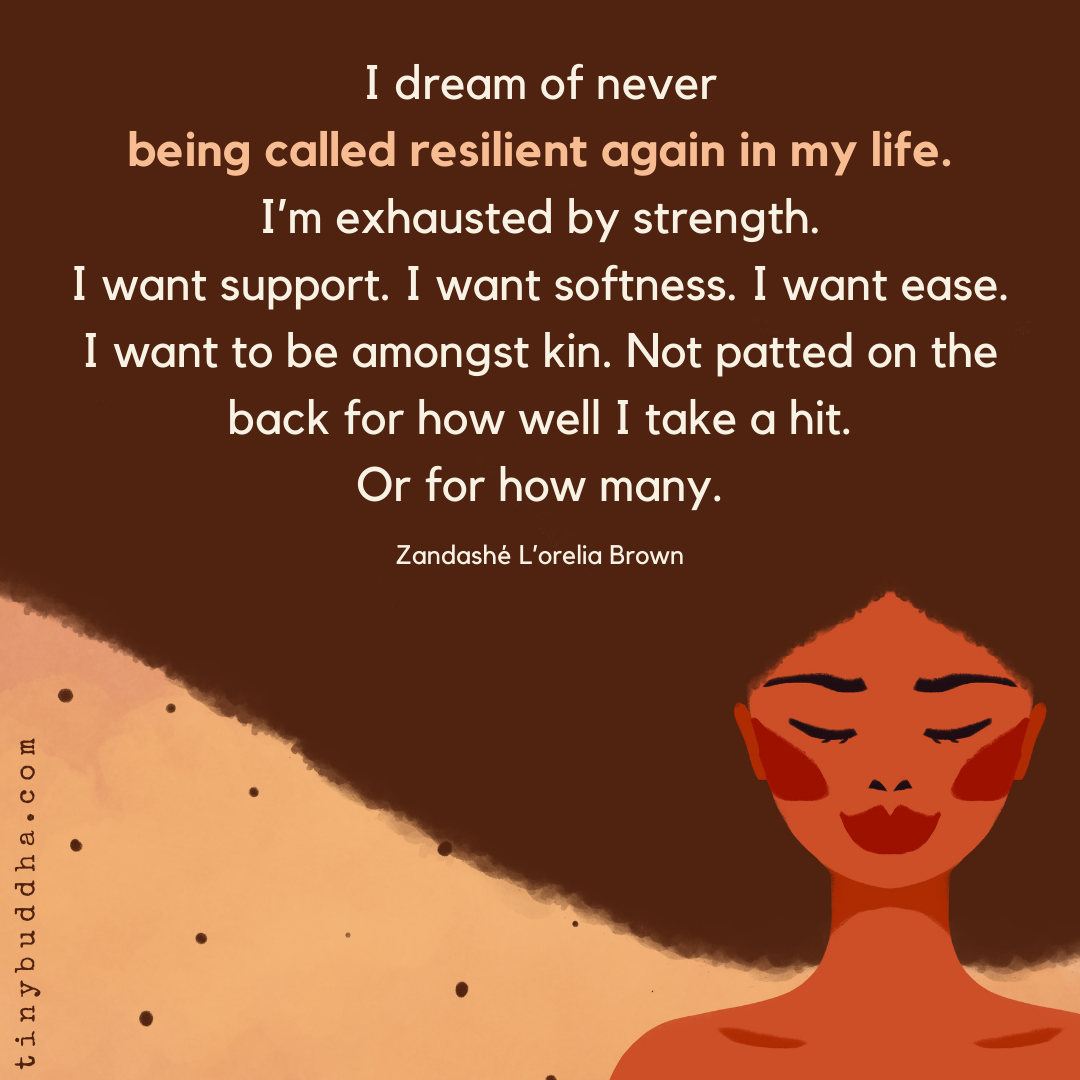
  • You Don’t Have to Be Strong All the Time

    You Don’t Have to Be Strong All the Time

    “Sometimes the strongest thing you can do is to ask for help.” ~Unknown

    We live in a world that praises strength—especially quiet strength. The kind that shows up, gets things done, and rarely complains. The kind that’s resilient, dependable, productive. But what happens when the strong one quietly breaks inside?

    “You are a superwoman!”

    “You’re so reliable!”

    “You’re the glue that holds everyone together.”

    I wore those compliments like badges of honor. For years, I believed them. Not just believed them—I built my identity around them.

    I’ve always been a multitasker. A jack of all trades. I managed work, home, relationships, and a hundred moving pieces in between. I cooked elaborate meals, remembered birthdays, bought thoughtful gifts, checked in on friends regularly, showed up for strangers when needed, pursued hobbies, supported others’ dreams, and pushed through physical pain or emotional fatigue without complaint.

    I was the one people turned to. And if they didn’t turn to me, I turned to them. If someone was going through a hard time, I’d show up with soup, a handwritten card, or a call that stretched for hours. I’d intuit needs before they were spoken.

    And when people said things like “Wow! How do you even manage all this?” or “You’re incredible,” my heart swelled with pride. It felt good to be seen. It felt powerful to be needed.

    But over time, I began to realize something quietly tragic.

    Underneath all that strength was someone tired. Not the kind of tired that sleep could fix—but the kind that comes from years of overriding your own needs for others. The kind that comes from confusing love with over-giving. The kind that sneaks up when you’ve worn the strong-one mask for so long, you don’t know who you are without it.

    I didn’t see it as people-pleasing back then—I truly loved being helpful. I believed that if I could ease someone’s burden, why shouldn’t I? Isn’t that what love looks like? Isn’t that what kindness does?

    But slowly, quietly, invisibly, it was taking a toll on me. My skin had withered, my hair had thinned, and I’d put on weight around my waist.

    As I grew older, I began to feel the shift. The same enthusiasm that once lasted until midnight now faded by sunset. The fatigue wasn’t just physical—it was emotional, spiritual. My body wasn’t breaking down, but my soul was whispering, “You can’t keep carrying everything.”

    And eventually, I listened.

    Because something beautiful and painful hit me all at once:

    Strength isn’t about holding it all together. Sometimes, real strength is in knowing when to let go.

    It’s in saying, “I don’t want to be strong today.”

    It’s in resting, without needing to earn it.

    It’s in telling the truth when someone asks, “How are you?” and answering, “I’m actually not okay.”

    It’s in giving yourself permission to be fully, messily, unapologetically human.

    The world doesn’t tell us that. It tells us to hustle. To push. To keep going. That rest is a reward, not a right. That slowing down is weakness. That softness is fragility.

    But now I know that softness is a kind of strength too. A brave kind. A kind that doesn’t scream or perform—it just is.

    So, How Do You Begin Letting Go of the “Strong One” Role?

    Letting go doesn’t mean giving up on your values. It means loosening the grip on the pressure to be everything to everyone. It means rewriting what strength means to you. Here’s how I began doing that:

    1. Check in with yourself daily.

    Ask: What do I need today?

    Not what’s on my to-do list or who needs me, but what would make me feel centered right now?

    Sometimes the answer is water. Sometimes it’s stillness. Sometimes it’s movement, or tears, or music. You won’t know unless you pause to ask. Even five minutes of silence—before bed, in the shower, or while sipping your tea—can reconnect you to yourself.

    2. Learn to receive help.

    You don’t have to carry everything alone. Let someone else cook the meal. Let someone else take the lead. If someone offers support, don’t reflexively say “I’m fine” or “I’ve got it.” Say thank you. Let them show up for you.

    I remember one day telling a friend that I was exhausted and just not in the mood to cook. She offered to send over food, and I accepted it—with gratitude and relief.

    Letting someone care for you like that doesn’t make you weak; it makes you human. Accepting help builds connection, allows others to show love, and often brings a quiet joy that’s just as nourishing as the support itself.

    3. Let go of the applause.

    Here’s the hard truth: validation feels amazing—but it can also be a trap. You start doing things not because you want to, but because others expect it from you. The cycle is addictive.

    Ask yourself: Would I still do this if no one noticed or clapped?

    If the answer is no, give yourself permission to step back. Choose joy over performance. Choose peace over praise.

    4. Set soft boundaries.

    You don’t need to explain or justify your “no.”

    For years, I would justify mine, feeling the need to explain or defend it. Slowly, I began changing the narrative. Now, I gently and unapologetically say, “I’d love to help, but I don’t have the capacity right now.” “Can I get back to you on this?”“I need some time for myself this weekend.”

    Boundaries aren’t about pushing people away—they’re about protecting your inner landscape. The more you honor them, the more spacious, calm, and kind your life becomes.

    5. Redefine what it means to be strong.

    We’ve been taught that strength is about endurance, resilience, and never showing weakness. But real strength can also be quiet, tender, and human.

    I remember one day, completely overwhelmed, a close friend came to check on me. When she asked how I was, I couldn’t hold it in—I just broke down. She didn’t try to fix anything; she simply held me, letting me pour out everything I’d been carrying. And in that moment, I felt lighter than I had in months.

    Strength isn’t always in doing more. Sometimes it’s in being fully present with yourself, in your softness, in taking a pause, and in saying “not today” without guilt.

    6. Prioritize rest like you would a deadline.

    Rest isn’t laziness. It’s fuel. It’s sacred.

    You don’t need to wait for burnout to rest. You don’t need to finish everything on your list to earn stillness. Schedule it. Guard it. Honor it.

    Make rest a daily ritual—not a rare luxury. Your body, mind, and spirit will thank you.

    Once I began prioritizing rest, I noticed a shift—not just in my energy, but in my clarity, mood, and ability to truly show up for myself and others. Life felt lighter, and I finally understood that honoring my body wasn’t selfish—it was necessary.

    To Those Who’ve Always Been the Strong Ones

    If you’ve always been the caregiver, the doer, the reliable one… I see you. I honor you.

    But I want to remind you of something you may have forgotten:

    You don’t need to prove your worth through over-functioning. You don’t need to sacrifice your well-being to be loved. You don’t have to keep showing up as the “strong one” when your heart is quietly asking for a break.

    You were never meant to carry it all.

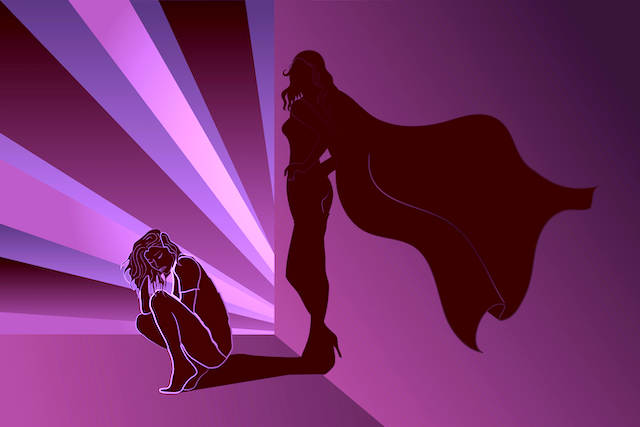
    You can take the cape off now. You can exhale. You can cry. You can be soft. You can ask for help. You can choose rest. You can let someone hold space for you.

    Because you’ve already done enough. Because you are enough. And because strength isn’t about how much you carry—it’s about knowing when to let go.

    Let your new strength be rooted in gentleness. Let your softness lead. Let your heart exhale.
  • The Strength I Found Hidden in Softness

    The Strength I Found Hidden in Softness

    “You can’t heal what you won’t allow yourself to feel.” ~Unknown

    I used to act strong all the time. On the outside, I looked like I had it all together. I was competent, composed, and capable. I was the one other people came to for advice or support.
    The stickiness was that my version of strength created distance. I couldn’t allow myself to appear weak because I was terrified that if I let myself break down, I wouldn’t be able to pull myself back together.
    Maybe underneath it all, I was so fragile I might actually break.

    So I held it in. All of it—my grief, my fear, my loneliness. This is what strong people do, right?

    I learned to be strong early because I had to.

    My mother was depressed and suicidal for the younger years of my life. From a young age, I felt like it was up to me to keep her alive. I became the caretaker, the one who made things okay, even when nothing was.

    My father left before I was born. I didn’t meet him until I was six, and when I did, it wasn’t safe. He was abusive and schizophrenic. One time, he tried to strangle me. That moment embedded something deep: every moment is a risk. To survive, I learned to stay alert, in control, and numb.

    Later, my mum entered a same-sex relationship—a bold move in the eighties, when that kind of love wasn’t accepted. Her partner, a former homicide detective turned trauma therapist, was emotionally volatile and narcissistic. My home didn’t feel safe. There wasn’t a lot of room for me to be a child.

    So, I became hyper-responsible. A perfectionist. A fixer. I micromanaged not only my life but also the emotions of others when I could. My version of “strength” became what I hid behind and my identity.

    But underneath it all, I was scared. My “strength” was survival, not freedom.

    Years later, I moved to Australia and found myself with a friend in a power vinyasa yoga class. It was hot, sweaty, and intense. I hated it. The carpet smelled. The teacher talked the entire time. I was angry.

    And then it hit me: I was always angry.

    Beneath the appearance of having it all together, I was exhausted and resentful. The yoga mat didn’t create these feelings—it just revealed what I had been carrying all along.

    That night, something shifted. I realized my “strength” wasn’t really strength; it was my wall. A wall that had kept me safe but also kept me from feeling.

    So, I kept going back. First to yoga, then to a deeper journey of healing.

    The process came in layers.

    Along my healing journey, I explored many different modalities. The first was EFT (emotional freedom technique), where I touched emotions I had buried for decades. Later, kinesthetic processing showed me that it was safe to feel everything—every emotion, every memory—through my body. This was the beginning of softness integrating into my life, not just as an idea, but as a lived experience.

    For so long, my strength had been armor—the courage to survive. But softness opened something new: the courage to thrive, because my heart was no longer closed.

    There was no single breakthrough, no magic moment.

    With each layer that fell away, I began to replace resistance with openness, walls with connection. Slowly, I came to trust that softness wasn’t something to fear—it was something I could lean into.

    And what I learned is this: my healing required softness, which meant vulnerability and allowing myself to fully feel.

    Softness isn’t weakness.

    It’s staying open when everything in you wants to shut down.

    It’s allowing yourself to be seen without the mask.

    It’s choosing presence over performance.

    True power isn’t control. It’s vulnerability. It’s feeling your way through life and trusting yourself—trusting your thoughts, your decisions, and your impulses so you stop second-guessing and stop relying on constant external validation. Trust allows you to act from clarity instead of fear.

    It’s trusting your body, noticing what nourishes you versus what depletes you, and setting boundaries without guilt. It’s trusting life’s natural flow, letting go of the pressure to force things to happen according to a strict schedule. It’s trusting your own inner truth. Trust and softness go hand in hand; the more you trust yourself, the more you can stay open and present without fear.

    If you’ve been holding it all together for too long, maybe strength doesn’t look like pushing through. Maybe it looks like slowing down. Like taking a breath. Like feeling what’s been waiting to be felt.

    And maybe, just maybe, your sensitivity isn’t something to hide or harden.

    Maybe your sensitivity is your superpower.

    In a world that teaches us to be strong, brave, and unshakable, we can forget that our greatest wisdom often comes in stillness.

    It comes when we soften. When we listen. When we let go of who we think we should be and come home to who we already are.

    Strength isn’t about being unbreakable. It’s about being real.

    When I started listening to myself, I realized how often I had ignored my own needs and desires, pushing through life according to what I thought I “should” do. I learned to honor my feelings, trust my instincts, and make choices that nourished me instead of drained me. As a result, my relationships deepened, my confidence grew, and I found a sense of ease and flow I never thought possible.

    Sometimes the greatest thing you can do for yourself is listen to the quiet, unchanging wisdom within you and trust what you hear.

  • How to Navigate Loss and Fear and Emerge Resilient

    How to Navigate Loss and Fear and Emerge Resilient

    “New beginnings are often disguised as painful endings.” ~Lao Tzu

    Sailing on a beautiful day in calm seas can feel like a spiritual experience and can convince your senses that life should always be like this.

    My family life was smooth sailing for many years. My husband and I were committed to our family and our responsibilities of building and running our businesses, leaving little time for anything else. Gradually, the weather changed, and we found ourselves in the uncharted, turbulent waters of divorce.

    I was unprepared for the toll it would take. My anxiety caused me to lose weight, and when I felt hypo-glycemic, it was my body’s reminder to nourish myself. I was scared about what life would look like for my three daughters and me and wanted the best for my husband, even though we decided we could not remain together.

    Living separately, we grew to learn how to do things we depended on each other for, such as financial management, cooking, DIY home repairs, etc. We lost some friends, and some family estrangements developed—a ripple effect we didn’t see coming.

    When you lose friends and family members due to divorce or estrangement, it can make you question your worth and stirs up self-doubt.

    Years pass, and life goes on.

    Eventually, we both remarried, and a few years later, my new husband, Bill, was told he had throat cancer. His treatments whittled down his hard-earned military physique to a shadow of his former self.

    During this time, as his caregiver, I was also preparing to take a board exam to practice my profession, and I worked as a science teacher in an alternative school to help make ends meet. The days were incredibly long and hard for both of us.

    Within that year, my father was diagnosed with cancer, which further destroyed our family. His treatments were equally brutal to his body. Eventually, Bill lost his valiant battle with cancer, and my father lost his battle in the following seven months, resulting in two funerals in a year.

    Physically, I was exhausted and gained an unhealthy amount of weight. Whenever I ate, I had gut pain, so I lost the pleasure of eating. Headaches were frequent, and due to a loss of sleep, my energy was so depleted that doing everyday tasks was a burden, never mind having to relocate and downsize yet again.

    I had little support, and this was when I felt genuinely broken.

    In my “brokenness,” I remembered a conversation with a pastor friend who reminded me that life has its seasons: the spring of childhood, the summer of youth, the autumn of adulthood, and the winter of death. So many aspects of life can be viewed that way. With that, I discovered truth in his words and oddly felt an inner peace.

    I grew to understand the phrase “if you hit rock bottom, the only way to go is up” because I hit those rocks hard. I desperately needed to regain my physical, mental, and emotional health, which had been tested repeatedly for years, for myself and my family.

    My sympathetic fight-or-flight nervous system switch never shut off. I realized I had to change that before relinquishing control of my health and well-being, which I have always valued but took for granted.

    Here is what I discovered in my losses and fears, along with some pearls for living with resilience.

    1. Submit to the process.

    Feel the depth of your feelings by allowing them to flow through you.

    When you are in a liminal place, at the threshold of change, it is only natural to have many strong feelings and feelings that you may resist—grief over the loss of a loved one or a relationship, fear of the future ahead, anger that you are in this position, frustration with your own body, or denial of the new reality.

    Feel your feelings and journal to process them or communicate with someone you trust. This is how you start to heal. Far better than suffering silently is being honest with yourself about your feelings tied to the complexities of your process.

    Minimizing yourself or numbing your feelings invalidates the depth and breadth of your experience.

    If possible, consider reframing a sad or difficult experience to put a positive spin on it.

    I may be divorced, but my daughters are the best part of my life. I would not have them if it weren’t for my previous marriage. Also, downsizing into a smaller home improved my financial situation. I rejected it initially, but it made my responsibilities and financial commitments more manageable in the long run.

    Suffering any kind of loss or hardship is never easy and can feel crushing. Meet yourself where you are, go with the flow of your emotions with self-compassion and nonjudgment, and, if possible, open your mind to reframing a negative into a positive result.

    2. Don’t ruminate while looking in the rearview mirror.

    This is so tempting.

    It is so easy to slip into the default pattern of looking at the past when we want our personal losses, challenges, and difficulties to make sense.

    Exercise radical acceptance if you need to accept your life as it is, even if it causes you pain.

    When I learned of radical acceptance, it felt unnatural, something I might have to convince myself to do. But I realized that to be at peace, I could not control everything in my life. Seasons.

    Also, bringing gratitude into your daily life is a valuable, underutilized tool that brings what is good into focus. When we target several reasons for gratitude as a daily habit, we shapeshift our mindset to support our well-being.

    Amassing what has happened to you in the past and bringing it into focus today creates an unnecessary, overwhelming burden. The past cannot be changed, and the future cannot be predicted, but we can choose to accept what is right now.

    This will lessen your suffering and the tendency to look back in the mirror.

    3. Connect with your physical, mental, and emotional needs.

    Prolonged stress affects our hormones, cardiovascular system, gut health, musculoskeletal system, immune health, and every other function and body system with far-reaching, long-term effects.

    There is no reason to neglect or minimize your needs; this is a time to amp up your efforts to honor your needs. Listening to your body’s messages strongly improves your ability to handle and recover from stress.

    When stuck in the stress cycle, mindful self-care practices are even more important to prevent unhealthy habits from forming. Eating nutrient-dense meals, walking in nature, practicing consistent sleep hygiene practices, or spending time with friends or family members who love and support you are effective self-care practices to reduce stress and manage anxiety.

    According to Maslow’s hierarchy of needs, you cannot experience all the potential that your life has to offer if you do not first meet your basic physiological needs. As you meet those needs, you can move through your experience in life more fully, owning and attracting love to you, developing deep connections, and increasing your confidence, self-esteem, and full potential despite setbacks in life.

    It is easy to become more reflexive than in control, an oversight that is not uncommon for highly stressed individuals.

    When I reprioritized myself with self-care practices, my health and well-being improved, as evidenced by my improved blood labs, weight loss, ease of digestion, and increased energy levels. I had a renewed sense of purpose in my work; later in my life, love found me.

    When you connect with your physical, mental, and emotional needs, you can also better honor them in others.

    4. Chart a course that meets your life’s needs at the time.

    Decide what needs to be done to meet important needs. By successfully tending to some of the smaller needs, you can more easily prepare for larger target goals. With that, you develop an adaptable and increasingly more positive mindset.

    Consider small gains as you progress forward.

    As part of my healing and stress management, I knew I could do what I had to do by taking small, manageable, and incremental steps. It was too difficult for me to envision a big-picture view of a whole and healed life following so much loss for a time, but eventually, that changed.

    A day at a time, a week at a time, and a month at a time are now years later.

    Remaining open-minded and building your optimism naturally builds and reinforces your resilience muscle.

    So celebrate the small gains in your life. They naturally lead to more small successes, which builds confidence in planning for larger ones.

    5. Life happens, and when it does, develop a surfing mindset, even if you fear the wind or the waves.

    When the winds of change occur, a sailor must adjust the sail to tack and harness the wind to his advantage. The wind and the waves do not remain the same even on one given day. Sailors hone their skills to have the wind and the waves support their intended direction.

    Life never remains the same. Things constantly change. When they do, step back, breathe, and ask yourself what the next best step is in caring for yourself in the moment and in moving forward.

    Through resilience, you can more easily heal and accept life’s dynamic nature by learning and growing from overcoming challenges and setbacks, and, in the face of uncertainty, you can live more fully with confidence and joy in the present and in the mystery of the future.

    Resilience is a quality that is not earned by having an easy life; rather, it is a testimony to coming through hardship and challenging experiences and feeling whole despite them.

  • 5 Ways to Stay Mentally Strong, No Matter What

    5 Ways to Stay Mentally Strong, No Matter What

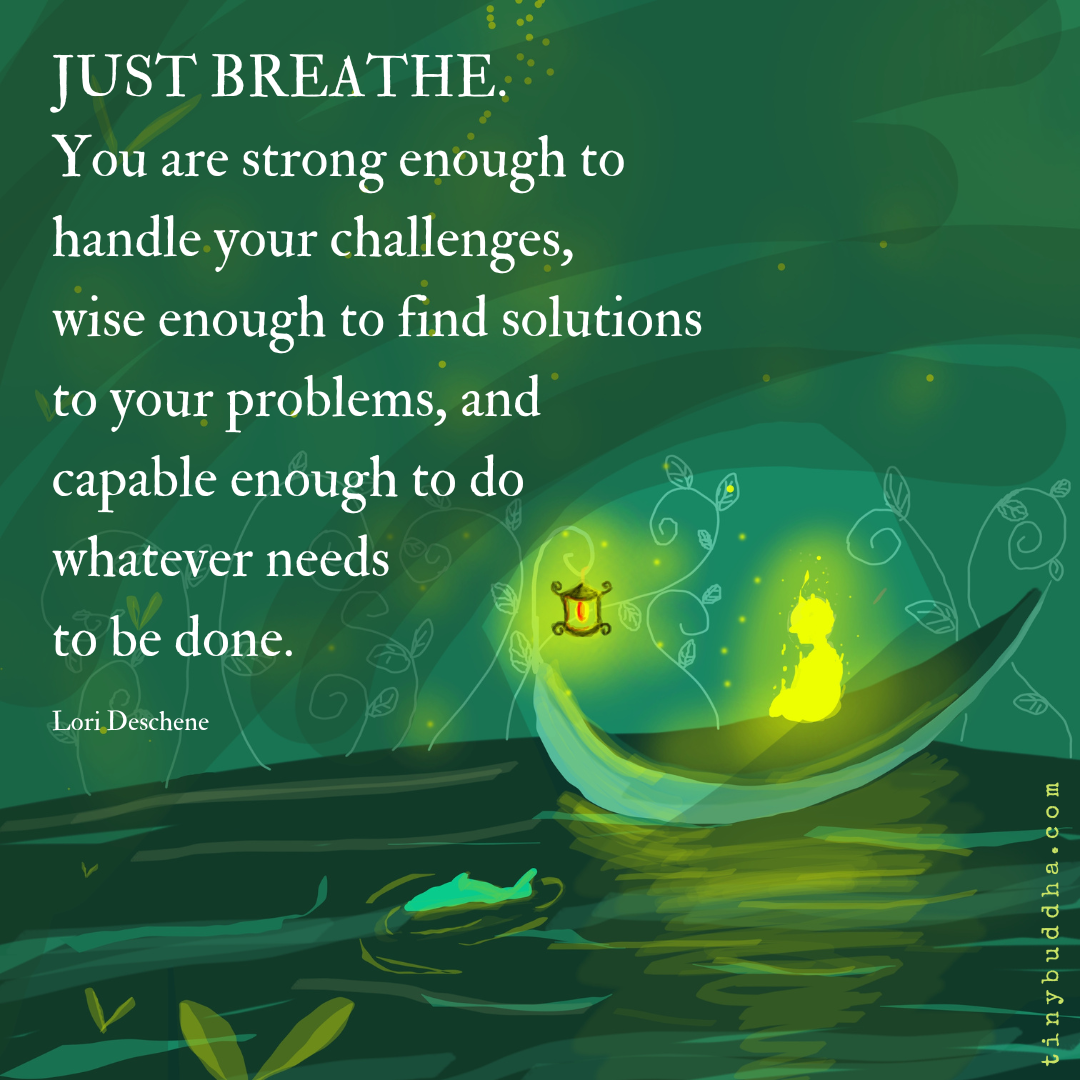
    “Have a little faith in your ability to handle whatever’s coming down the road. Believe that you have the strength and resourcefulness required to tackle whatever challenges come your way.” ~Lori Deschene

    My life is unpredictable.

    These days, it feels like I wake up not knowing what obstacles I’m going to be facing or how to manage it all. Is the world getting more challenging, or is it just me?

    There doesn’t seem to be a magic carpet ride to rescue me, or any of us for that matter, ready to whisk us off into the sunset for a rendition of Aladdin’s “Whole New World,” with “shining, shimmering splendor.”

    Do you, like me, wonder, “How is everyone else navigating life these days?”

    Attempting to put my mind into a semblance of order the other day, I pulled out my self-development toolbox. I began digging around to see what I had on hand from all the self-development books and blog posts I’ve read, therapists I’ve seen, and workshops I’ve taken.

    I came up with the usual suspects: Embrace change! Practice mindfulness! Find your purpose! Reclaim your power! While these fab four sound like a great tried-and-true collection, it felt like I was trying to use the rules of Candyland to navigate the fire-breathing dragons in Game of Thrones.

    Help.

    Like so many others I interact with, such as family, clients, and friends, I sense uncertainty building up on a consistent basis. The hardest part is not having the luxury to curl up and shut the shades and hide under the blankets because there are bills to pay, jobs and careers to sit up straight for, and families to attend to.

    So where do I draw confidence in my ability to handle life?

    I think back to my childhood as a Gen X kid. Growing up in a small town on a dead-end street with ten siblings, I had to figure out how to fend for myself from a very young age. Food went quickly, and I had to forage and make sure I got my share. If there was a school project, I had to find odds and ends in the house to paste together and create an appropriate report to present to the class on my own.

    My parents didn’t get down with glue and popsicle sticks. Ever.

    Using the words “I’m bored” got you a broom and baby handed to you, so I kept myself busy and out of sight of the adults. Anytime I needed a ride anywhere, it was up to me to figure out how to get there and home, and I got stranded many times.

    The superpower I developed as a kid so I could survive was resourcefulness.

    This was, by definition, the ability to find quick and clever ways to overcome difficulties and make use of that which others would normally overlook or discard. If I didn’t have what I wanted or needed, I would have to create possibilities using limited or no resources.

    I developed curiosity, an ability to take care of myself, and the determination to find solutions in the face of any adversity and solve problems for myself and my younger siblings. I put together costumes, learned to sew my own clothes, cooked meals, and became an expert storyteller and little-white-lie fabricator.

    Hypervigilance developed so I could figure out how to read the emotional state of the adults, who were consumed with their responsibilities and their own unfulfilled dreams. Keeping out of harm’s way, such as avoiding my father’s wrath or the teacher’s punishment, became my expertise. Friends were everything, and they, along with the outdoors, helped me have a pretty incredible childhood with lots of fun memories.

    What I learned from my childhood is this: It’s not always a lack of resources that is the problem; it’s a lack of resourcefulness that causes failure.

    There are resources that we think we need, such as money, the right technology, the right contacts, enough time, the best lawyer, etc., and while there’s truth to that, we struggle because we lack the ultimate resource—which is emotional resourcefulness, something we could all access. When you dig deep and utilize your emotional resources,you can get almost any other resource on earth.

    It’s Time to Develop Emotional and Practical Resourcefulness

    Here are my five tips to stay mentally strong and navigate anything that comes your way in life.

    1. Use what you have.

    When I was a kid, no one went to the store to buy me supplies, trendy trinkets, or even necessities like pajamas, pencils, and enough socks. We used and reused what we had around.

    Even when I can afford things I need, I like to take a look at my Amazon cart and double check to see if I have anything at home that I could makeshift or ask a neighborhood WhatsApp group for. You’d be surprised at what people offer up for free, both goods and services. You just have to ask.

    Bartering works as well. I have gotten vacations paid for, kids’ school tuition in exchange for marketing services, and plane tickets for use of my home for a night or two.

    2. Develop your hustle.

    If I wanted the latest thing the other kids had or wanted to go for pizza with my friends, I babysat, raked leaves, and hustled my grandmother for money. I found that if I played her a song on the piano and told her I was the best and prettiest in my class, she would give me $5. It made us both happy!

    Obtain invitations by befriending people you admire and want to be like. Worm your way into communities of your choice by shopping in those neighborhood grocery and coffee shops and talk to people there. Sign up for training and meetings in the town-run parks and recreation centers in those neighborhoods as well. Don’t stop the hustle mindsetwherever you go.

     3. Practice self-talk.

    All through my childhood, I used to constantly tell myself, from the top bunk bed in a crowded bedroom with my sisters, that one day I would be a writer like I read about in my favorite book, Anne of Green Gables. I knew I would one day sell my stories and have the money I wanted. I do that today!

    When I would see things around me that I didn’t like, and there were many, I reminded myself that I would one day be like the well-dressed women in my mother’s magazines: colorful clothes, big white smiles. Seek outside inspiration for this and speak positive, goal-oriented dialogue to yourself.

    When something is not as you would like, tell yourself, “I don’t like it, it’s an inconvenience, and it’s temporary.” Not BUT it’s temporary; say and, or furthermore. “And it’s temporary.” That’s how you talk to yourself, according to former prisoner of war Edith Eger, author of The Choice. “No matter what happens, it’s temporary and I can survive it.”

    4. Trust your intuition.

    Trust that you have the intuition to figure it out. We made it home from school, found our friends outside to hang out with, kept ourselves alive, and sensed when to avoid dangerous adults (most of the time).

    Trust that your instincts will kick in at the precise moment needed, and it may be last-minute, but you’ll always figure it out.

    5. Know that you have a unique purpose.

    I knew my purpose was to be a writer, and I did a good job on my writing assignments in grade school. Never underestimate your power to make a difference with your talent or your purpose, and believe that you have something to offer the world—and offer it.

    I used to volunteer for just an hour a week at a recovery center when I was at my lowest, just to feel purposeful, and I reaped magical rewards from that experience.

    Bonus Tip: Build a Support System

    No one can navigate life’s challenges alone, and building a strong support system is crucial for mental strength. As a Gen X kid, we had our friends on the street to hang out with all the time; we were always there for each other.

    Surround yourself with people who uplift and inspire you. Share your thoughts and feelings with friends or family members (and/or professionals) that you trust, who can provide valuable perspectives along with emotional support. Having a support system not only lightens the load but can also reinforce your much-needed mental fortitude to develop a strong mind.

    While life is unpredictable, by incorporating these five practices into your life, you can build a foundation of mental strength that will serve you well in any circumstance.

    Remember, staying mentally strong is not about avoiding challenges but about facing them head-on with resourcefulness, courage, resilience, and a positive attitude. With these tools in your arsenal, you’ll be better equipped to navigate the unpredictable journey of life and emerge stronger on the other side.

    “Know that you always have the capacity to make the best of anything. Even if you didn’t want it or ask for it, even if it seems scary or hard or unfair, you can make something good out of any loss or hardship. You can learn from it, grow from it, help others through it, and maybe even thrive because of it. The future is unknown, but you can know this for sure: Whatever’s coming, you got this.” ~Lori Deschene

  • How I Learned the True Meaning of Strength After My Son’s Death

    How I Learned the True Meaning of Strength After My Son’s Death

    “Breathe. Let go. And remind yourself that this very moment is the only one you know you have for sure.” ~Oprah Winfrey

    I tried to stay strong after my fifteen-year-old son Brendan died in an accident. It shattered my world. The shock of it numbed me but when that wore off, I knew I needed to be there for my husband and two other children. Zack and Lizzie were only ten and thirteen and needed my strength. So, I built a wall around my heart and pushed through my day. I went back to work, teaching piano students in my studio.

    But at night my throat burned from unshed tears. My neck muscles ached from holding myself rigid. I had half-moon bruises across my palms; I didn’t even realize I spent the day with my hands clenched in fists, my nails digging into my flesh.

    Still, I stayed strong. Until Matthew ran into my piano studio and I discovered the real meaning of strength.

    Each week he burst into the room, eager to play me his new song. He was a six-year-old boy with freckles bouncing across his cheeks. He threw his bag onto the table, uncaring that books and pencils slid out. He wiggled onto the bench and grinned at me before crashing his hands into the keys.

    He played me his own story about aliens and a spaceship that hopped from planet to planet. He threw his whole body into his song, attacking the keys until he built a wall of sound that screamed throughout the room.

    I smiled. “I love your story.” I gave him a sticker that he proudly placed on his shirt. But then I reached for my lion.

    Leo the Lion was a stuffed animal that sat on the shelf above my piano. He was so soft that students couldn’t resist reaching up and stroking his velvety fur. His arms and legs—filled with tiny beans—drooped over the shelf.

    Sometimes, he sat on the side of the piano, listening to a student play when they felt a little shy. Other times, I put him on a student’s shoulders. Make him fall asleep, I’d whisper, a gentle reminder to keep their shoulders relaxed and down.

    With Matthew, I reached for the lion so I could teach him how to play loud and soft. Playing soft requires a lot of control. Students lean in gently, their fingers brushing the keys, like tickling with a feather. They’re so tentative they barely make a sound. But not when it comes to playing forte.

    Most students love to play loudly. They crashed their fingers into the keys, digging into the note until it sounded like a punch. I wanted the note to sound full and rich, but not like a scream.

    I pulled down Leo and wiggled him so that his arms flopped around. I lifted one lion arm up and let it drop down on its own. “Leo doesn’t try to attack the  keys,” I said. “He just lets the weight of his arm fall into the keys.”

    I let his paw fall a few times on Matthew’s arm so he could feel the weight. Then I put a rubber bracelet around Matthew’s wrist and gently lifted his arm up by the bracelet. I held it up in the air. “Don’t try to fight it when I let go. Just let your arm fall.”

    It was hard for him to let me direct his arm. He couldn’t let it just flop around. “You have to give up control,” I said. “Let me move your arm and then just let it go.” After a few times, he surrendered to the weight of his arm and let it fall into the keys. He looked up at me and grinned.

    “That’s the secret to playing forte,” I said. “Forte actually means strength in Italian. And in order to play a note with strength, we need to give up control. We lift our arm and then let go.”

    And that’s when I realized I was doing strength all wrong

    I tried to stay strong by controlling my grief. I stood tall and stiffened my shoulders, my muscles tight. I swallowed my sorrow until I could barely breathe. And still, I didn’t surrender to the weight of grief. I stayed strong. And if I couldn’t, I hid inside my house and let myself shatter. I refused to let anyone see me without my shields.

    But Leo the Lion reminded me that I had the wrong definition of strength. Staying strong can mean surrendering to the pain. It can mean being strong enough to let go and show my heart even when it’s filled with sorrow.

    I needed to learn how to let go. It didn’t come easy for me. Just like Matthew, it was something I needed to practice over and over.

    I started with becoming more aware. I scanned my body for signs of tension, knowing it was a sign of emotions trapped within my tissues. I stayed patient with myself, just like I did when Matthew played with too much force. I reminded myself to be aware of the tension without judging it.

    I no longer swallowed my emotions. Instead, I leaned into them, naming each one, acknowledging their presence. I felt the tension in my shoulders. Yes, this is grief. I felt the muscles in my arms quiver. Yes, this is anger. I felt my stomach tied in knots. Yes, this is anxiety.

    Once I acknowledged my emotions, it became easier to release them. Some days, I meditated and then journaled. Or I walked in the forest, listening to the leaves whispering in the wind. I wrapped myself in a blanket and listened to music, sinking into each note until it melted away some of my feelings. And some days, I simply let myself sit in sorrow without judging it as a “bad day.”

    I’m not perfect. There are days I forget and put on my mask of strength and pretend everything is fine. But just like my students, I’ve learned it’s a practice. When I forget, I remind myself to stay patient. And I keep Leo the Lion on my shelf as my reminder what strength really means. I stop trying to stay in control. I surrender to my feelings.

    I stay strong by letting go.

  • Why Trauma Doesn’t Always Make Us Stronger (and What Does)

    Why Trauma Doesn’t Always Make Us Stronger (and What Does)

    “Literally every person is messed up, so pick your favorite train wreck and roll with it.” ~Hannah Marbach

    You’ve probably heard this before: “What doesn’t kill you makes you stronger.” A beautiful saying, based on what Nietzsche wrote in one of his books (Twilight of the Idols). It always makes me feel like life can’t go anywhere but up. Forward and up.

    According to Nietzsche, suffering can be taken as an opportunity to build strength. No matter the pain, sickness, or trauma you experience, you will come out stronger for itas long as you take the opportunity to grow.

    But what if you fail to seize that opportunity? What if suffering and emotional trauma don’t result in strength but instead make us weaker?

    I lost my dad to suicide a bit over twenty years ago. His disease and death left their marks on me. Even now, on some days, I feel insecure, not good enough, weak. This usually happens when I’ve been way too stressed.

    On those days, I forget that all I need to do is relax. To deal with that insecurity, I activate my survival mechanisms—and subsequently stress out even more. I keep people out and worry frantically about all sorts of things.

    Workwise, it makes me stick to ‘safe’ jobs, like working for clients I don’t really enjoy working for (I’m a content writer).

    I’d much rather be doing something truly creative, something that comes from my heart. Like writing this article or writing another book. Or reaching out to people to collaborate on projects.

    That’s scary, though! So when I’m stressed out, I put all of that to the side and choose safety.

    Self-Protection or Self-Destruction?

    Doesn’t that mean that trauma then stops us from growing?

    Because if you look at it, if you look at how most of us adults react after suffering trauma in our childhood, what do you notice?

    It makes us more protective. It strengthens our survival mode. Our walls. It stops us from living fully because to live fully means to live fearlessly.

    And I don’t mean without fear; I mean “fearless” as in not being controlled by fear. Because fears are always there. Fears are part of existence.

    When you experience trauma, especially in your younger years, it’s more likely that you will develop a sensitive stress system and become a self-protective adult.

    Eric Kandel, Nobel Prize winner for Physiology, has researched this topic by watching slugs react after getting their tails slapped. He found that they retreat faster if the first slap is the strongest, even when the slaps after that are softer.

    If the first slap is gentle, though, they retreat less quickly. So the trauma of the initial, stronger slap makes the slugs react more violently to neutral stimuli (the softer slaps).

    Humans show similar hypersensitivity. Childhood trauma can make you react more violently to certain situations as an adult. You can have difficulty dealing with rejection, worry about what others think of you, and might be less likely to trust others—or yourself.

    You can do all the work, read all the self-growth and self-help books, and do all the inner child therapy in the world to mend the cracks in the vase that houses your soul.

    But you will forever have this hurt little you inside that enters the stage when you least expect it. It stops you from being your unique, vulnerable self, without you realizing it.

    Your self-defense mechanisms have become so strong that you can’t see how they’re digging your own grave. A grave for your ambitions, your dreams, your expressions, your creativity, your youniqueness.

    Embracing Your Trauma

    It doesn’t have to be this way. Not if we realize that it’s not the cracks that make us vulnerable. It’s not the trauma.

    It’s our desire to be crack-free, trauma-free, that does. We tend to ignore the cracks, not wanting to see—nor show—these imperfect parts of our pretty little vase.

    And then one day, something bad happens again and it all falls apart. You pick up the pieces and try to glue them together with transparent glue so other people won’t notice it’s broken.

    But it’s no use. The original strength of your vase, your soul’s home, is gone. It will forever remain sensitive and in need of protection.

    What if you would do the opposite? What if, instead of using glue that you hope nobody notices, you use gold?

    A beautiful, eye-catching gold that not only gives your vase incredible strength but also makes the cracks the most beautiful and unique part of the whole structure.

    This is called kintsugi: the Japanese art of repairing broken pottery with gold. It teaches us to celebrate flaws and imperfections instead of hiding them. The broken parts are what make the pottery more valuable!

    This perspective doesn’t only free us from the constrictions we place upon ourselves: of always wanting to be perfect, avoiding anything that causes fear, and never being our true selves. It also helps us to connect with others as they see they’re not the only ones who are broken.

    Maybe, for us to truly shine and live a colorful, connected life, we need to embrace our trauma, our cracks. I know it’s hard. And it may take a long time before you reach that point and feel able to let go of the pain, the broken bits, the story.

    But when you do, you’ll see that what remains shines brighter than ever before.

    You’ll be able to use your story and help others deal with theirs.

    That’s when trauma can actually make all of us stronger.

  • Giveaway: New Inner Strength Journal – A Tool to Help You Get Through Anything

    Giveaway: New Inner Strength Journal – A Tool to Help You Get Through Anything

    The winners have been chosen! If you see your name here, please email me at email@tinybuddha.com so I can send you a copy. The winners (chosen at random) are:

    Hi friends! Today, I’m running a giveaway for my new Inner Strength Journal.

    I created this journal because I know life isn’t easy for any of us.

    Maybe you’re in a dark place right now, perhaps healing from trauma, illness, addiction, or loss. Or maybe things have always been hard for you, and you don’t know much longer you can go on.

    Whatever you’re going through, you have the capacity to not only get past it but also grow through it and even find something good in it.

    Tiny Buddha’s Inner Strength Journal can help you do just that.

    Including writing and doodle prompts, challenges, and colorable quote pages, the journal will help you create your own personal roadmap to resilience so you can change what you can and make the best of the rest.

    How to Enter the Giveaway

    To enter to win one of three free copies, leave a comment sharing a quote, mantra, reminder, or word that helps you when times get tough.

    You can enter until midnight PST on Monday, October 17th.

    ~~~

    “This little book was surprising for me but totally what I needed at this moment. For me this one is more like a journey than a book, and in these trying times, I think it’s exactly what we need to center ourselves and build inner strength in ourselves and project it to the world.” ~Joselyn Moreno

    “Tiny Buddha’s Inner Strength Journal by Lori Deschene is the companion you will want as you weather the personal struggles of the day to day.” ~Andrea Pole

    “This may be my favorite journal I’ve picked up. All the prompts really made me pause and think before I answered them. I also loved that each section started with a lovely quote.” ~Joni Owens

    “As someone that loves to journal, I have found this journal to be very insightful and helpful. Beautifully written HIGHLY RECOMMEND.” ~Michelle Wightman

    ~~~

    If you’d like to grab a copy now, for yourself or a friend who’s going through a hard time, you can find the journal on Amazon.

  • Does It All Feel Too Hard? Tiny Buddha’s Inner Strength Journal Can Help

    Does It All Feel Too Hard? Tiny Buddha’s Inner Strength Journal Can Help

    Do you ever feel like calling into the day? And I don’t just mean work. I mean everything. I mean turning it all off for a while. Freezing the full gamut of this messy human experience—the regrets, the fears, the adulting, the drama. The constant onslaught of anxiety-inducing news and personal problems to face.

    When everyone needs you and everything worries you and nothing helps you feel better, it’s tempting to disconnect. To numb out, shut down, or give up.

    But we can’t, at least not for long. And really, that’s not what we want. Or at least, that’s not what I want when I’m overwhelmed by it all. I don’t really want life to stop.

    When my relationships are triggering, my workload is mounting, and my kids’ needs feel hard to meet, I don’t really want to escape it all. I want to rise above it all. I want to respond wisely and make best of what’s in front of me instead of reacting impulsively and only making things worse.

    I don’t want to disconnect; I want to reconnect—with the still voice inside me that reminds me, if I listen, to breathe, take a step back, and take care of my needs so I can handle whatever life throws at me.

    Because I know I can. After all I’ve overcome, I know I’m strong, and I know you are too. I know, like me, you have stories of trauma, tragedy, and terror. But I also know we all have the capacity to not only handle life’s stressors and challenges but also learn from them and be better for it.

    That’s why I created Tiny Buddha’s Inner Strength Journal: Creative Prompts and Challenges to Help You Get Through Anything.

    I started working on this journal during the height of the pandemic, when I was exhausted from nights with a poor-sleeping toddler, drained from a high-risk, “geriatric” pregnancy, and overwhelmed by a new work project that ultimately failed in the end. And that’s not to mention all the Covid-related concerns and challenges we all had to face.

    I also knew from emails and comments that many of you were grappling with intense challenges and feelings of your own and struggling to get through each day.

    Since working things through on paper has always helped me feel less stressed, more confident, and more in control—all well-known benefits of journaling—I focused on prompts and questions that can help us access our personal power. Exercises that can help us protect our energy, manage our emotions, and take good care of ourselves so we feel our best—and feel prepared for the worst.

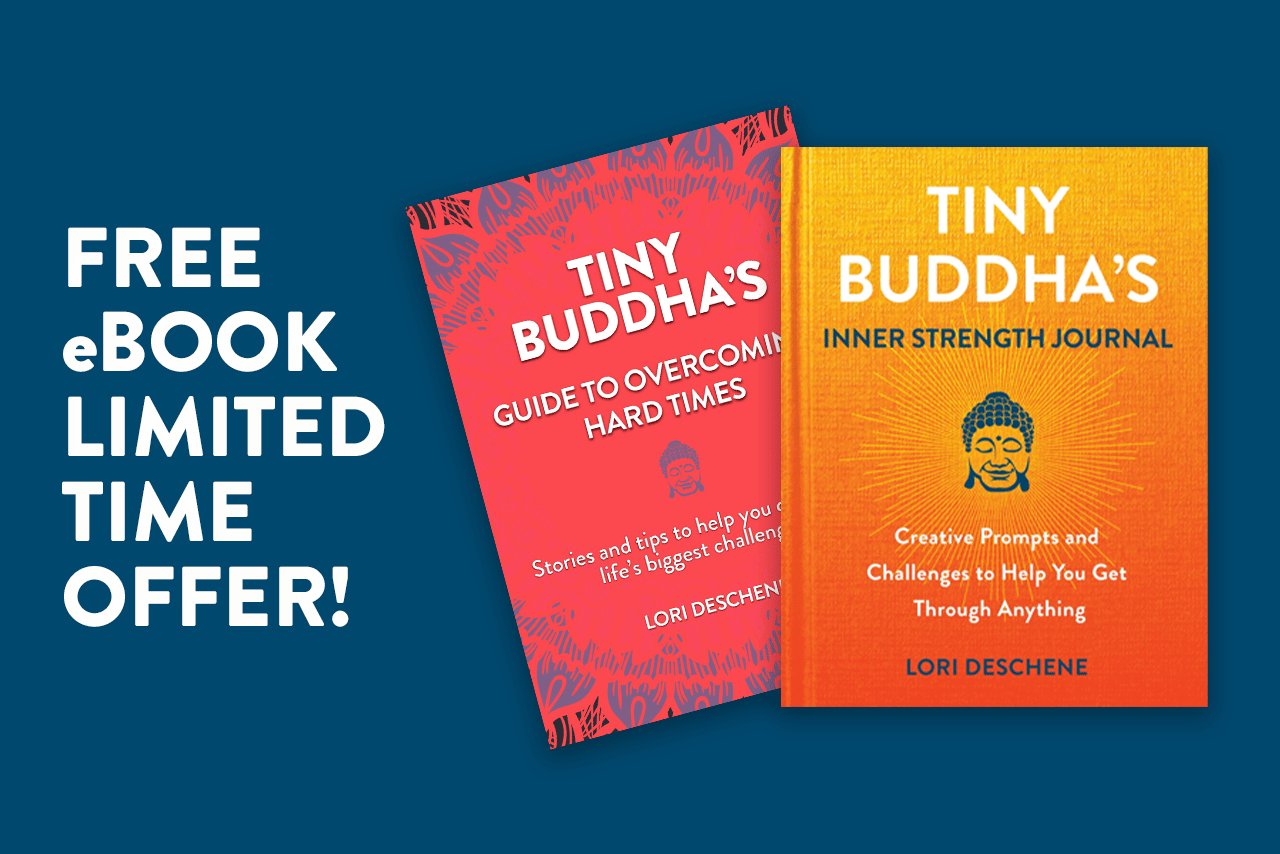
    I also put together a companion eBook—a free gift when you pre-order, for a limited time only—with forty of the site’s most helpful posts on overcoming hard times.

    The process of creating this journal was deeply healing to me, as I did each exercise as I went, and I have a feeling it can help you too. This isn’t a book of answers; it’s a framework to help you create your own personal roadmap to resilience so you can not only get through anything but also get the most out of life.

    As a mother to two young children, I’ve often wished I could prevent them from struggling. I’ve spent hours thinking about how I can insulate them from pain and ensure they never hurt as I have.

    But I realized a while back that if I protected them from pain, I’d also prevent them from gaining the wisdom and growth that accompany it. They’d live a flat, one-dimensional life, without the pride and confidence that come from doing hard things; and they’d never feel the sense of purpose we often find when we overcome something that once felt insurmountable and feel a burning need to help others do the same.

    What I really want for my sons, and for anyone I love—including myself—is the strength to handle life’s greatest challenges and the capacity to recycle their pain into something beautiful. Something meaningful. Something that makes all the darkness in life feel like a pathway to the light.

    I believe we all have that strength inside us, even if sometimes it all feels too hard. Even if sometimes we need to shut down for a while. We just need to learn how to access it.

    Whether you’re hurting, healing, or somewhere in between, I believe Tiny Buddha’s Inner Strength Journal can help you do just that. Click here to pre-order and get instant access to Tiny Buddha’s Guide to Overcoming Hard Times: Stories and Tips to Help You Cope with Life’s Biggest Challenges.

  • The One Thing You Need to Make the Best Decisions for You

    The One Thing You Need to Make the Best Decisions for You

    “If you are not living your truth, you are living a lie.” ~Joseph Curiale

    Her sobs break my heart. We have all been there. When the relationship starts feeling like a war-torn city as opposed to home.

    I close in for a hug. “You can’t go on like this,” I whisper.

    “Well, I don’t know what to do. Please don’t tell me to break up,” she looks up pleadingly. “I can’t do it. I won’t be able to bear it. I am not as strong as you.”

    A familiar musical refrain from Tina Turner comes to mind albeit with a slight word twist…

    “What’s strength got to do, got to do with it?

    The Oxford Dictionary defines strength as “the emotional and mental qualities necessary in dealing with difficult or distressing situations.” It almost seems as if these set of qualities are innate—something you are born with, like blue eyes or curly hair.

    Those in possession of strength flit about larger than life, surmounting all obstacles without a strand of bother, achieving Herculean glory. They can do just about anything, bear just about anything. Nothing stands in their way.

    That was my assumption as well until I realized some people actually considered me part of this mythical group. My response to that? Utter incredulity.

    I am scared of literally everything. I am scared of public speaking. I am scared of the dark. I am scared of ants. I am scared of meeting new people (I have been known to hide behind bookshelves at loud parties). Most of the time before I start something new or need to do something confrontational, I spend hours under my duvet or eating an entire chocolate fudge cake from Sainsbury’s to soothe my nerves.

    If anything, fear has been my faithful partner since Day One. Yet, despite this, I have made what can be considered difficult decisions; taken risks, explored the paths less traveled, moved myself out of comfort zones, acted contrary to advice from friends and family, etc. And that’s not because I am strong. But it is because I choose courage.

    And courage, my friend, is not strength.

    Courage is Simply Your Truth

    According to American author and professor Brené Brown, an early definition of courage is “To speak one’s mind by telling all, one’s heart.”

    The root word of courage offers a telling clue. “Cor” in Latin or “coeur” in French means—the heart. So being courageous is nothing more than being true to your heart, or in other words, telling your truth.

    But speaking your truth is tough since most of the time, we often aren’t on good terms with our own truths. We get caught up with keeping up appearances, where or who we ought to be, what others expect of us, what is socially acceptable, what is convenient, etc. Our truths wander lost amongst this crowded landscape.

    A long, long time ago, when I was still in the corporate world, my then-boss asked me where I saw myself in a year’s time. I knew he was keen to promote me. And I was convinced I wanted to be promoted as well. After all, I was due one, and well, who says no to a promotion? All I had to do was give the ‘right’ answer—something about wanting to grow further, taking on more responsibilities, I was ready, etc.

    Yet that afternoon sitting across from him, an unanticipated response sprung to my mind instead—“Anywhere but here.

    That floored me. Until that point, it never had dawned on me that I was that dissatisfied at work. I mean, was I deliriously fulfilled? No, but I wasn’t never expecting fulfillment.

    I was comfortable, I loved my colleagues; the money was good and enough to support a lifestyle that I loved. I thought that I had struck a sweet spot; a happy compromise I was willing to put up with for the rest of my life. But my heart apparently seemed to disagree. This sweet compromise started to feel like a huge mistake—as if I was on the wrong train.

    Sometimes when faced with an inconvenient truth, our first reaction is to will it away. And that’s exactly the strategy I adopted. I pleaded with this feeling; tried to cajole it into disappearing. But it never did. It stood, simple and unwavering in the deep cave of my being.

    And that’s what you will realize about The Truth. It comes from the reservoir of wisdom, and like everything from those parts, it never shouts or screams. Your fears do. Your ego will screech. Panic attacks will roll like devastating hurricanes through you. But your truth is like a meditating monk, sitting quietly, waiting for you to catch up with it. A steadfast signal for your life.

    Courage is a Navigation System

    Courage is not a set of qualities. You don’t pursue courage. Courage beckons you. It is your life sat nav or true north (to use a Martha Beck term). A lighthouse that guides you through the sea that is your life.

    It is true what they say, you cannot serve two masters. When you orient your decision-making around what is true to you, fear stops factoring in. It doesn’t disappear from the landscape completely, but it gets more muted in the distinct light of your truth. You will stop moving to whirlwinds of opinions and projected futures. Your life will instead be propelled by your unique, sacred truths.

    I hate having my writing read by other people. It feels like someone has peeled off all the skin on my body, and I stand facing the world with nothing to protect me. Yet I continue to write despite my fear of the cauldron pot of criticism, judgments, and embarrassment because that’s what my heart wants. Writing is what I have do to fully inhabit myself. It is more necessity than a want. Everything else such as my fear and shame fades in significance.

    The Path of Courage

    The path of courage is usually not one of grand feats; it is woefully undramatic. It will never demand you break up today, or else. Instead, it will guide you to go and sleep, sign up for a retreat, dance to Kate Bush, sit quietly to watch the clouds, or even watch a particular YouTube video.

    The path is gentle because your heart is all about love, and gentleness is the language of love. Unsurprisingly, walking the path of courage will also soften you and make you gentler.

    The path of courage is also utterly simplifying. When I centered my life around my heart, I stopped hankering after certain things I had previously assumed I liked or would make me happy like learning a new language, doing tango, traveling, going out with friends, etc.

    It became easier to admit that these activities never actually fed me, and I wasn’t really enjoying them that much. With clarity, no became an easier word to articulate. So did my needs.

    There is no guarantee that the path of courage will lead you to a happily-ever-after. Oftentimes, it will lead you to situations where you will struggle to find meaning. It will drag you through the mud, tempt you to promising roads, and then fling you against a dead-end. But I promise, even when you wander with no map in sight, you will never feel led astray. Or that you are on the wrong train.

    What is courage calling on you to do right now?

  • Where Our Strength Comes from and What It Means to Be Strong

    Where Our Strength Comes from and What It Means to Be Strong

    “Strength doesn’t come from what you can do. It comes from overcoming the things you thought you couldn’t.” ~Rikki Rogers

    A friend recently asked me: Andi, where does your strength come from?

    It took me a while before I had a good enough answer for her. I sat contemplating the many roads I’ve traveled, through my own transformational journey and the inspirational journeys of all my clients who demonstrate incredible strength for me.

    I moved to a different country, alone, at eighteen years old and have changed careers, battled a complex pain diagnosis with my child, and lost loved ones. I am now living through a global pandemic, like all of us, and most recently, I am recovering from a traumatic, unexpected surgery. Life has many surprises for us, indeed.

    So where does strength really come from?

    I wish I knew the precise answer to this question so that I could share the secret sauce with you right now, and you could have full access to all the strength you’ll ever need to achieve whatever it is that you really want. (Even the deeply challenging stuff and the tremendously scary stuff. All of it.)

    I do know this:

    Strength is a personal measurement for a truly unique, subjective experience. It’s entirely up to you to decide what strong means for you.

    And I also know this…

    Strength comes from doing hard things. It comes from showing up despite the pain or fear and going through the struggle, the endurance, and then building on that, to keep going forward and upward.

    Strength comes from taking the time to notice and acknowledge what you have managed to do and accomplish until now. So much of the time we go through things without realizing what massive effort something took, and we minimize the entire experience because we only focus on the end result and not the process.

    Strength comes from paying close attention to the small but significant steps and wins and incremental gains along the way. Strength comes from tracking progress and celebrating it one tiny bit at a time.

    Strength comes from within—from moments of activating your highest faith and belief. Knowing why you do what you do, even when it’s not easy.

    Strength comes from aligning with your core values and living with integrity even when no one is watching, and you aren’t in the mood. When we connect to what truly matters to us, we are stronger. When we believe there is a bigger plan and are hopeful about an outcome, we feel stronger. Even if we don’t know why.

    Strength comes from without—by surrounding ourselves with people who lift us up and see our worth, even when we sometimes forget. It comes from choosing to envelop yourself with kindness, inspiration, motivation, and gratitude. It comes from selecting role models and learning from them. It comes from seeing ourselves through others’ eyes—especially those who see our greatness and light when all we see is our flaws, weaknesses, and shortcomings.

    Strength comes from grabbing lessons and blessings, often dressed up as awful mistakes and painful failures.

    Strength comes from collecting moments you are genuinely proud of and taking the time to truly recognize these events for what they are and what they enabled you to accomplish. Don’t overlook them. You get to use these strengths in countless ways and in other areas of your life as much as you want to.

    Strength comes from knowing yourself. As you begin to discover and unmask more of you, you get to make choices that honor more of you, and you get to live your purpose and be more of who you really are. When we know better, we do better.

    The strongest people I know have had insurmountable trials. They know what to say yes to and how to say no. They know how to be proud of themselves with humility and honesty. They know how to pick their circles wisely and accept help, compliments, and advice.

    The strongest people I know cry a lot and feel everything.

    The strongest people I know are the kindest.

    The strongest people I know have wells of inner resources that are invisible to the naked eye.

    The strongest people I know can say sorry and forgive others.

    The strongest people I know can forgive themselves.

    The strongest people I know fall down hard, and slowly, with every ounce of courage, bravery, and might, find a way to get back up again, battered, bruised, and aching.

    The strongest people I know have incredible hearts that expand wider with each hurdle.

    The strongest people I know have endured so much and yet still find their smile to light up the world for others.

    The strongest people I know teach me every single day how to try and be just a little bit stronger myself.

  • Dear Estranged Adult: You Are Strong and Worthy of Love

    Dear Estranged Adult: You Are Strong and Worthy of Love

    Dear estranged adult,

    What I want you to remember is that it was never really about you, although it might have felt like it at the time and it might feel that way now.

    When your parents told you over and over you weren’t good enough, that you would never amount to anything, they were just projecting their own feeling about themselves on to you because deep down, they do not feel they are good enough and don’t believe they have amounted to anything.

    Maybe these feelings were passed down from their parents, or maybe your parents have regrets about their lives that they transfused on to you, but these reasons are not that important. Not as important as that fact that what was said to you, what was done to you, was never your fault. It was not about you.

    You were always good enough; you were always going to amount to something. and that might have threatened them. No one is born unlovable or unworthy of love, no one.

    Over the years I have learned that people’s words, actions, and beliefs have very little to do with me and are more about themselves.

    As people interact with others, they project how they think, what they believe, and how they feel on to others. In fact, we all do this, even you and I do it. But what sets us apart is the fact that we can reflect on how our actions and words impact others. We can see the world from our own perspective and can also understand how others might see it.

    If you grew up in an environment like mine, you were taught the incorrect belief that how others see things and how others see you is more important than how you see yourself. You were likely taught to put your own thoughts and feelings aside and instead engage your parents’ thoughts and feelings.

    In some cases, you might have mistaken their thoughts and feelings as your own. You might have heard their voices in your head over and over, and you might have found yourself saying their words.

    Over time, if you were at all like me, you began to experience dissonance with what your parents told you, and you began to connect with your own ideas, thoughts, and feelings.

    In some cases, you might have felt doubt about your ideas, and you might have tried to suppress them. In other cases, you might have found yourself on a teeter-totter between your thoughts and their paradigms of you on the other side. But either way, you found your truth, and even though it caused you pain you found your voice.

    As you found your voice you found yourself and started to speak your truth. As you started to speak your truth you were told over and over “But they are your parents, they love you, you can’t cut them out, you can’t let them go. They are getting older, they need you.”

    In your heart you know the truth, but because you were taught to listen to and believe the voices of others you questioned yourself and tried over and over to reconcile. With each attempt to fix a broken relationship, your heart ached until you knew you could not take it any longer. You had to listen to your own voice, or you would break.

    You likely wrestled with guilt and you might feel guilty now. If you are struggling with guilt over going no contact with your parents, let me ask you a few questions:

    How do you feel after you have interacted with your parents in any form? Be honest with yourself.

    Do your parents respect your boundaries?

    Is there healthy reciprocity in the relationship?

    Do you feel you can be who you are, and state your truth without judgment?

    Do you feel respect or love or acceptance from your parents?

    If the answers to these questions are painful, know in your heart you have made the correct choice for you. You have made the choice that is best for your health and well-being.

    Now here you are, an estranged adult child. You are navigating the world without connection to your family of origin. You might be stronger than you have ever been, in some cases happier, healthier, and more confident then you have ever been.

    Every day you confront the childhood trauma that brought you to this choice with clarity, resolution, and strength to work through it.

    You might have done things you did not know you were capable of doing; you might have built a supportive family of your own and/or helped others in the ways you needed help. You might be taking small steps every day to live as your best self. Take a moment to celebrate that!

    You have done something that no one should ever have to do, you have made one of the most painful choices you will ever have to make, and you have been misunderstood by so many—and yet you remain strong. You remain true to yourself and your story!

    Maybe you are desperate for people to understand your story, to validate your lived experience. You might long for your parents to say that they are sorry for the pain that they have caused you. I know because I have felt and longed for these things, but the truth is you don’t need these things.

    You might question why. Why will my parents not understand the pain they have caused me, say they are sorry, and love me the way I have needed to be loved all my life?

    I wish I had an answer that would satisfy these questions and somehow take away that pain. The best answer I can come up with for you and for myself is that some people are not ready to accept that they are the villains in your story, and they might never be. Rather than reflect on what you have asked, they lash out, desperate to protect their narrative as kind and loving parents.

    Parents often don’t want to experience any cognitive dissonance, or things that cause them to question who they believe they are as parents and as people. This may be why you do not get the validation you deserve. The truth is, you don’t need that apology you might never get, and begging and pleading with them to validate your truth is likely hurting you.

    Some people will never understand you; some people will hurt you in more ways than you can imagine, and they’ll walk away as if it was all your fault or as if nothing ever happened. This is about them; it’s not about you. You know your story and you are prepared to own it. You are living it despite adversity. and I am proud of you for that.

    Please try not to focus on those who don’t understand, don’t try and convince them to see it your way. You will be better off emotionally if you abandon those fruitless efforts. Sometimes people can only understand what they themselves have lived through.

    If your friends or extended family grew up with supportive parents, they might not even be able to picture what you went thought, and that is okay. Instead, try to surround yourself with people who do understand and do your best to validate your own lived experiences. Write or record notes about your experiences, and when you start to question yourself, look back at these and self-validate. This helped me when I questioned myself, and I still do this today. I know this is not easy.

    Take time to celebrate you, because you deserve it. You have discarded the story your parents tried to write for you, and you have started to write your own. You have walked away from abuse and adversity in a society that sees you as the problem, and you continue to stay strong every day.

    Tell your story, live your truth, and never be ashamed of the painful choice you had to make. The abuse and the way you were treated was never about you, it was about them. You have virtues, insights, and values. You are lovable and you deserve to be celebrated and loved for the person you are and the person you are becoming. You are not alone.