Tag: stressful

  • Why We Need to Be Present to Enjoy Our Lives, Not Just Productive

    Why We Need to Be Present to Enjoy Our Lives, Not Just Productive

    “Presence is far more intricate and rewarding an art than productivity. Ours is a culture that measures our worth as human beings by our efficiency, our earnings, our ability to perform this or that. The cult of productivity has its place, but worshipping at its altar daily robs us of the very capacity for joy and wonder that makes life worth living.” ~Maria Popova

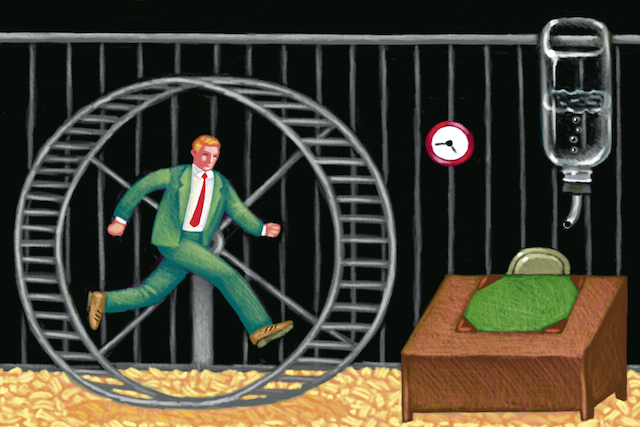
    I was high on productivity. I had one full-time job, two part-time jobs, and a side hustle. I was getting everything done. Sounds perfect, right?

    Then I started hating my life.

    I had read enough books and articles to tell me how I was not doing enough. Enough self-help gurus had told me that what I needed to do was max out every single hour I had to be minutely close to being “successful.”

    My co-workers often got intimidated by my jam-packed calendar. I don’t exaggerate when I say that every minute of my life was scheduled. Sheldon-level scheduled, with dedicated “bathroom breaks” and everything.

    I ran three to-do lists: daily, weekly, monthly. This was my way of setting out for maximum efficiency. I said “yes” to my boss so often I had become his favorite. Work-life balance, what’s that?

    Tasks were flying off my list like never before—so many horizontal breakthroughs! I wore this as my badge of honor for a while, this art of getting it all done. And why not? I was rewarded for it in money, praise, promotions, awe.

    But then it didn’t feel so great. Instead, I became downright miserable.

    Why Busyness-Productivity Is A Mirage

    I don’t claim that productivity is bad. Doing fulfilling work by minimizing distractions and getting deep focus is truly rewarding.

    But it is crucial to stop and question why you’re doing what you’re doing. It is necessary to pause and reflect on the value of your tasks and actions. Otherwise, productivity translates to useless busyness.

    When I became this productivity freak, I never stopped to ask if any of the things I was doing were giving my life meaning. I was doing a demanding full-time job that didn’t provide me any purpose. My days became a blur of mindless task completions. My mind, heart, and soul were absent from my work. Any given Monday didn’t look so different from a Tuesday three weeks prior.

    And it wasn’t even like I was happy.

    I was meeting all my deadlines, but I was spending no time with my family. There were enough accolades to prove all my achievements but not enough art to fulfill my soul. I answered every email I received within twenty-four hours, but I hardly focused on long-term self-growth.

    On the outside, my life never looked better. But on the inside, I was worse than I had ever been. Distraction, schedules, irritability, and deadlines were the monsters that ruled my life.

    After a month-long burnout, I hit the problem nail in the head. I knew I needed to move on. But how? I resolved to take a calculated leap of faith. I found a client willing to pay me for my freelancing services for at least two to three months and made a thick emergency fund by cutting out on expenses. Then, I quit the unfulfilling full-time job and gave my heart to work that I truly found meaning in. I stopped making productivity my goal. I opted to choose presence instead.

    Presence > Productivity

    I read Annie Dillard’s, The Writing Life, in which she memorably wrote, “how we spend our days, is of course, how we spend our lives.”

    After reading this book, I realized that productivity would only be fruitful when coupled with presence. I knew then that presence was what would make my rewards meaningful.

    What is presence? Presence is the art of being in the moment, the luxury of pausing, the virtue of stillness. It is being alert, aware, and alive to this moment.

    There’s a reason why our culture runs for productivity instead of presence. Productivity helps us shut away from reality. It keeps us “busy” into a future that is yet to manifest.

    It is so much easier and convenient to take the shield of productivity against the beautiful, buoyant, and sometimes disruptively painful present.

    Performing one task after next gives us an excuse to not fully live, not completely concentrate, not unbiasedly accept.

    I used to be that way—trying to avoid the truth that I was not finding my work meaningful. I wouldn’t accept that this job was emptying me slowly, living in denial of a reality I was living. Was I not getting things done? I was, more than ever before. But was I happy? I had never been more unhappy with my own choices.

    Being productive every minute of every day meant I could avoid the fact that many of my friendships were depleting, toxic, and unhealthy. I was lying to myself that it was all to have a good social life. In reality, I would go out of my way to avoid being alone, to avoid answering the big questions pertaining to my life that can only be answered in solitude.

    But coupling our actions with productivity and presence can have an astounding effect on our lives. It can make every task we do driven with intention, purpose, and meaning. Presence is what helps us reap the internal rewards that come with doing fulfilling work.

    Choosing Presence

    If you are anything like me, choosing presence over productivity can take some practice. Productivity was my normal mode of operation. It was easy; it came naturally. But opting for presence in my actions wasn’t so simple.

    The art of being present and intentional in all my tasks was like writing with my non-dominant left hand. I searched for help and stumbled upon Tim Ferris. He often says to think of your epitaph to cut through all the noise and maze of productivity. It is a way to find out what truly matters to you by getting a super-zoomed out version of your life.

    As morbid as it sounds, that is what I did. I imagined what I would like to carve on my epitaph, and the important stuff came into a laser-sharp focus:

    I needed to write. I needed to make time for solitude, for serendipity, for hobbies. I wanted to create more memories with my family. I wanted to let go of draining friendships and put all my energy into relationships that filled me with fulfillment, meaning, and growth. Taking it one step at a time, I decided to hand in my resignation. I landed my first writing gig in under two weeks.

    And hey, it’s not like I don’t struggle to write with my left hand anymore. But I am growing each day. It takes some practice and effort to make room in your calendar to “be present.” I am learning to be uncomfortable by turning the volume down of “getting things done.”

    I have noticed that it is the minor changes that count. It is taking a little more time to craft that email mindfully. It is that courageous “no” to a project that can help you surpass your quarterly KPIs but take away from your family time. It is choosing to take a soothing fifteen-minute walk break over checking off another mindless to-do list task.

    Presence is a process. It requires the discipline to focus on the present moment when productivity pushes you to see a non-existent future. Presence is your un-busy existence of utterly unadulterated joy. It is your creativity’s cradle. It is your time to just be.

    So do it. Make the hard choice. Live your life with presence to help you find joy in the now instead of pushing toward some destination in the future. None of us really know where the future will bring us, but we can all choose to enjoy the scenery along the way.

  • How to React Calmly in Stressful or Frustrating Situations

    How to React Calmly in Stressful or Frustrating Situations

    “Ships don’t sink because of the water around them; ships sink because of the water that gets in them. Don’t let what’s happening around you get inside you and weigh you down.” ~Unknown

    Working in an office requires us to spend more time with our co-workers than anyone in our personal life. How those co-workers act can have a big impact on us. Noticing a co-worker’s interactions during a recent marketing job gave me insight into how I react in stressful or frustrating situations outside the office.

    My cubicle sat next to a team of individuals who were required to be on the phone nearly every minute they were at their desks. It seemed unimaginable to me that a person could work this way day after day.

    I could listen to their conversations as I worked, and was impressed with their finesse at handling difficult conversations, or tact when delivering unfavorable news to their clients on the other end of the phone. I sincerely admired their talents.

    One particular day evoked a light-bulb moment for me. A young man named Dan was frustrated with the person he was speaking with on the phone. He stepped into the break room and unloaded his frustration loudly, with hand gestures, a flushed face, pacing, and a string of not-so-kind words.

    I didn’t think anything of this type of behavior. To me, it seemed like a natural reaction. It was only after he left the room that I realized no one else saw the situation this way.

    I listened to my friends talk about this young man’s behavior as unprofessional and imbalanced. It even caused them to question his worth as a team member. They expressed how this had happened in the past and how he obviously had some problems.

    Wow. I knew I had behaved this same way many times in the past.

    After that, I started noticing how I reacted to difficult situations. I realized that when my peers were complaining about work, management, co-workers, etc., I took on those feelings. I also could react similar to Dan did when I was frustrated with something I couldn’t control.

    I could see it in my home life too. I realized that my reactions to small life occurrences were much more pronounced than my boyfriend’s. This caused friction.

    For example, if my boyfriend made a comment about another woman, I would yell, slam doors, and exaggerate about how much the comment had hurt me.

    My behavior made me look small and out of control to my mate. He said nothing after the first time, but after the twentieth time, he didn’t want to deal with it anymore.

    Why did I blow things out of proportion? Looking back, I realize I was feeling vulnerable and scared when I behaved this way.

    How could my responses be more in line with my mate, co-workers, and others? I knew what it was like to be around irritated, riled people, since that was my experience growing up. Not much fun. I didn’t want to be that person for anyone else.

    It helped me to realize I’d been modeling the over-the-top reactions I’d witnessed during my early years. It’s what I’d been taught.

    After asking my friends how they would have handled certain difficult situations, and tuning into myself, I found six techniques that help me react calmly. As a result of applying these ideas, I’m now leading a much happier life.

    1. Train yourself to notice your physical feelings in stressful situations.

    Notice when you start to feel clammy, fidgety, tight in the chest, outside of yourself, or any other physical discomfort. The more you practice noticing how you feel physically, after someone has said something upsetting, for example, the better you will be able to understand and alter your reactions.

    In time, you will be better able to sense when something is emotionally affecting you by noticing the physical manifestations.

    As you feel them, visualize the negative physical feelings running down your body and out your fingertips and toes.

    For instance, your co-worker gets high praise for a project for which you provided key input. You receive nothing. You might notice your breath start to quicken and recognize that this physical reaction is a sign of defensiveness. You could then visualize your breath slowing and the defensiveness running down your body and out your toes.

    2. Be aware of when people around you begin to get upset.

    Once you’ve trained yourself to notice your physical feelings, look outwardly to how others react physically. Is your co-worker speaking more quickly, or does he maybe have a flushed face? Has she started to re-arrange items on her desk, or is she fidgeting in her chair?

    As you become aware of physical behaviors that can signal agitation, dislike, etc., you can train yourself to leave that negative feeling with the person feeling that way.

    That negative feeling is theirs. Let them have it. Don’t engage.

    Visualize the negative feeling as a box, and leave it squarely on the other person’s lap. Think to yourself, “Let go,” then slowly blow out air while thinking, “gooooo.” This is an instant calming technique.

    I eventually became able to use this “box” technique in my relationship with my boyfriend. If he’s upset with me, I now quickly assess whether I’ve been unkind, inconsiderate, judgmental, or whatever he’s accused me of being.

    If I know I have, I own up to it right away and apologize. But if his accusation isn’t true, then I can see his it’s coming from how he’s feeling about himself. If that’s the case, I leave the box with him.

    I try to to help him figure out how he’s feeling. I speak calmly and leave a lot of room for him to speak, so as to be a good listener. But I don’t take on his feelings as my own.

    Remember their feelings are not your “box”—not your problem.

    3. Spend plenty of time quiet and alone.

    Another technique to calm how you react in difficult situations is to build up your bank of quiet, stress-free air. Visualize the air surrounding you when you’re calm, thinking positive thoughts. Give the calm air a color—pale blue, pink, or whatever.

    Now, visualize the air going into a large bank. Test out different amounts of quiet time each week. Maybe for you, ten minutes a day fills up your bank. Maybe thirty minutes of quiet reflection each Saturday is enough to calm you throughout the week. Make it right for you.

    For centuries monks, clergy, nuns, and lay people have practiced silence. When quiet, a person can reflect, re-charge, and center oneself. Each time you sit in silence, remember, you’re depositing more quiet, calm air into your serenity bank.

    4. Commune with nature daily.

    As you hear the quiet, notice the natural breeze and visualize it carrying away any heavy emotions that weigh you down. I guarantee you will start to feel physically lighter as the breeze blows your troubles away.

    Researchers found a decrease in both heart rate and levels of cortisol in subjects in the forest when compared to those in the city (as reported in the Environmental Health and Preventative Medicine).

    Take in nature through your pores so you can carry it with you to that boardroom, with fluorescent lights and stale air.

    5. Journal about worries.

    Journaling through any worries can diffuse negative thoughts. When worry is becoming prominent, first write down the concrete facts of the situation. What do I know for sure? Not what I think may be the case, just the facts. Can you see why this is upsetting to you? Next, write the worst possible outcome.

    After seeing the worst-case scenario, walk through the solutions that are available to you. Have you ever been in a situation where you felt as helpless or worried? Remind yourself how you made it through that situation, and that you’ll find a solution for today’s worry too. If you don’t have time to write, use these same techniques in your thoughts.

    6. Keep your muscles strong.

    We’ve all heard that we release endorphins when we exercise. Let this be a reminder to consciously use these hormones when you need it.

    I find it easier to work out when I think of the emotional benefit I’ll receive from the physical exercise.

    For example, while practicing yoga or Pilates, the stretching, the slow muscle movement, the blood flow to large muscles as they work hard, all bring our thoughts to the present. Focusing on your body movement is a great way to let go of whatever is on your mind.

    It may have taken me four decades to realize I reacted unfavorably because of my early home environment, but I’ll hopefully have four decades to practice a new way of reacting.

    If we foster calm in our lives as much as we can, when a situation occurs, we will have the tools and techniques to react calmly and wisely.

  • 10 Ways to Lift Your Spirits When You’re Having a Tough Week

    10 Ways to Lift Your Spirits When You’re Having a Tough Week

    “True happiness is born of letting go of what is unnecessary.” ~Sharon Salzberg

    You are exhausted. Every force in the universe seems to be conspiring against you.

    You pick yourself up just to be knocked down again by more bad news.

    It’s not fair!

    You want to crawl in bed and wait for the week to be over.

    But you know you can’t hide.

    Sometimes our lives get tough. It happens to all of us. You know things will eventually get better, but it’s hard to get through a ruthless week in one piece.

    When you are having a horrible week, do you succumb to pressure, or have you learned how to keep your spirits up?

    Back when I was in college, we used to have horrible jam-packed finals weeks. We’d usually start Monday and finish on Saturday. We’d have five final exams during that week.

    It was rough.

    Like most of us, I’d study ahead but usually had to cram a lot during that week. They were nightmare weeks with sleepless nights. I thought crazy times would end with college.

    But I was wrong.

    Years later I took a job as a project manager. It was a lot of fun in the beginning, until it became intense. My team and I had an ever-growing amount of projects with insane standards we were handling.

    Soon, I was working sixty to eight hours a week. I’d put out a fire and fifty more were waiting for me. I was barely able to keep my head above water.

    My fuses were extremely short during those days. When something at home didn’t go as I expected, I’d blow up. I’d get angry, yell, and end with a dagger-to-the-heart kind of comment.

    It was the grown-up version of a toddler’s temper tantrum.

    Letting off my steam in an unhealthy way would later come back to haunt me. I felt ashamed of my behavior, and somebody I loved was in pain because of me.

    Eventually, I realized that this was extremely damaging to me and my loved ones. I had to make dramatic changes in my life.

    I admit, it did take a few months to make the changes, but at least I could see the light at the end of the tunnel. In the meantime, I learned a better way to deal with extremely stressful times.

    Here are ten tricks I used, or later learned, that will help you stay happy in the middle of a crazy week:

    1. Picture your life a month from today.

    You will overcome your problems and your life will go back to normal, but most of the time it won’t happen overnight.

    It helps to have a long-term perspective to get detached from the overwhelming stress of today.

    When I was swamped with problems and piles of unanswered emails, I’d often get very discouraged. I found that daydreaming about my future, about things being normal again, would calm me down.

    Fast forward a month from now. Think about you living a happy, normal life again. It will lift up your spirit, and in no time you’ll be living there once more.

    2. Create a peaceful space for yourself.

    Your environment matters.

    The last thing you want when you are under stress is to sit at a sad-looking desk with piles of paper and clutter.

    While being under a lot of pressure, I was lucky enough to come back home to a Zen, clutter-free bedroom. I’d instantly feel peace.

    The same can happen to you. When you are surrounded by chaos, you add unnecessary stress to your life. If you create a peaceful space around you, you’ll be able to breathe deeply and relax more easily.

    So even if you feel like you have no time, spend fifteen minutes to put stuff away and create a quiet surrounding. You won’t regret it.

    3. Remove yourself from negative, draining conversations.

    It’s impossible to isolate yourself from “negative people” all the time. We all have hard days and get a little negative every now and then.

    When you’re having a rough week, it might be tempting to fall into that self-pitying place. Increase your odds of maintaining a positive mindset by avoiding negative, emotionally draining conversations.

    Back when I was working crazy weeks, I was not able to ignore my negative customers. But I learned to stay out of other negative conversations or switch to positive topics, even if the only positive thing I could think of was the weather.

    Don’t let negativity suck up all your energy. You’ll end up in a depressive conversation, and your day will go further south.

    4. Celebrate your small wins.

    When you are in the middle of a storm, it may be a while till you have a big win. But you can celebrate the small things and lift up your spirit.

    It may be a task accomplished, a good report, or that you took the high road when somebody criticized you.

    Purposely find the small things that made you proud of yourself throughout the day. Make a mental note about them.

    Reflect on your small wins and let that cheer up your weary spirit.

    5. Selfishly set your limits.

    You are ultimately responsible for your own well-being. Nobody will care about you the way you do.

    When I was working over sixty hours a week, I realized no matter how many hours I’d put in, or how efficient I was, I was not going to be able to meet my deadlines. I decided to let my boss know.

    You know when you are reaching exhaustion better than anybody else. You need to start saying no, way before you reach your limit.

    Be selfish about your time.

    When you see a stormy week on the horizon, it’s time to cancel all the nice-to-do things that snuck into your calendar (unless it’s something that would refresh your soul).

    6. Make someone delightfully happy.

    Something interesting happens when you focus on somebody else’s happiness. When you make someone else happy, it comes back to you.

    You’ve experienced that before. Maybe you wrote someone a heartfelt note, or you put a special effort in giving someone a present. And they loved it! That act of love and kindness filled your heart the way nothing else would have.

    So think about calling a friend to tell them how much you appreciate them, or taking a break to invite someone you love for dinner. It will transform your week, and it might brighten their week, as well.

    7. Wake up twenty minutes earlier.

    It may seem counter intuitive, because of course you want to sleep as much as you can. But you’ve got to trust me on this one.

    The first hour of your day sets the mood for the whole day.

    If you start your day having to rush to wherever you are going, things will go downhill from there.

    On crazy weeks you are already on edge, so don’t push yourself even more. Instead wake up a little earlier. Get ready and have breakfast slowly. Don’t rush.

    Your peace during the first hour of your day will go a long way.

    8. Accept the imperfect.

    When your life feels like a sinking boat, it’s the wrong time to insist on every detail being perfect.

    Of course, some things will need to be finished perfectly, but many others won’t.

    Is dinner slightly overcooked? Then nobody will get food poisoning. Your shoes don’t match your outfit? Unless you are the editor of Elle Magazine, nobody will care.

    You only have twenty-four hours a day, but now your plate is much fuller than last week. You need to accept some things won’t be accomplished the way you’d like them to be.

    Be kind to yourself and let some high standards slide.

    9. Lean on an authentic friend.

    It’s hard to be an objective observer when you are going through tough times.

    Having a good friend to help you is invaluable.

    During my tough times, I often lean on my husband. He is sensitive enough to let me vent, but he’s able to show me the positive side of things too.

    You have to be careful selecting this friend. If you find yourself getting more and more depressed when you are talking to your friend, you should stop talking to him or her for now.

    You need a friend that can listen and sympathize with you, and at the same time help you get out of the hole.

    10. Focus on your awesomeness.

    It’s hard to see ourselves through a positive lens in the middle of a storm.

    But you haven’t changed. If anything, you are growing stronger and more resilient during tough times.

    You need to remind yourself about your amazing qualities.

    List them. Ask your best friend to help you. Keep them in front of you at all times.

    Because that’s the true you, not the overwhelmed, stressed out version you see in the mirror.

    You Can Stay Happy Even During Crushing Times

    It’s hard to see the light at the end of the tunnel when you are going through the valleys of life.

    You wish life were always good. But tough times are inevitable.

    They will happen every so often, even if you put your best foot forward to try to avoid them.

    So, sooner or later, you’ll need to learn how to stay happy in the middle of a storm.

    The pay off is astronomical. Your heart and mind will thank you.

  • 5 Essential Practices to Enjoy a Stress-Free Life

    5 Essential Practices to Enjoy a Stress-Free Life

    Calm Man

    “Stress happens when your mind resists what is.” ~Dan Millman

    A troubling thought, isn’t it? That most of us are too stressed out to even sleep through the night. You try to relax and decompress after a stressful day, but all you do is fight with your frustrations and worries all through the night.

    As much as we’d like to, it’s hard to let go of nerve-racking tension. We get caught up in the notion that the world will stop turning if we don’t play our integral part. I know what a burden stress can be.

    When I graduated from college, I moved to south Texas armed with an empty resume and two wildlife degrees. Most wildlife jobs are seasonal. Depending on what was migrating or nesting or being hunted that year, I’d move all over the country working three months at a time. No sooner had I celebrated my new position when I had to dive right into my next job search.

    I didn’t have a permanent address. My home was furnished with whatever I could fit in my car. And I rarely got reliable phone service.

    I was surrounded by breathtaking outdoor views and the wonders of wilderness. But all I could do was stress out wondering where my next housing and paycheck were coming from.

    Eventually, I let myself enjoy everything I loved about nature. But first, I had to relieve the stressors that I dealt with. Here are a few pivotal habits that will help significantly if you’re dealing with stress in your life, too.

    1. Do work you love.

    Your job can be stressful. But not liking your job is different from not liking your life. It takes more than just an income to be happy and stress-free in your life.

    After college, I thought that if I got a job doing something I liked, I’d never work another day in my life. But sometimes the work you love and your job are two separate things.

    I love being outside. I enjoy maintaining trails and outdoor areas for others to enjoy too. It’s how I find solitude. But I realized that I wanted to do it on my time, not an employer’s. Eventually, I found ways to indulge in nature and keep up with the rigors of a demanding job separately.

    One of the best ways to de-stress is to do what you love outside of your job. Whether you indulge in a hobby or a business venture on the side, enjoy the fulfillment of doing something that matters to you.

    2. Take a toxicity vacation.

    Avoid people and situations that inflame you. If you cannot avoid them entirely, take a break from them and decide later if you want to invite them back into your life.

    Toxic people are like bad investments. They rob you of the hopes and dreams you worked so hard for. They’ve got a problem for every solution.

    Don’t waste another minute turning into a nervous wreck over people who stress you out. Instead, take time to relax and de-stress around the people who show you the support and respect they say they have for you.

    3. Declutter.

    Clutter leads to overcrowding. There’s nothing more stressful than feeling like you’ve lost control of the space around you.

    My friend Doronda stressed out over being alone in her forties. By herself in her bedroom one day, she got sick of doing nothing but complain about it.

    She started cleaning the mess under her bed. Pile after pile, she sorted and trashed until she cleared out what she called her “marriage space.” Doronda wasn’t just tidying up. She was reclaiming her space and deciding to stop stressing over dating. Not surprisingly, she met a man soon after whom she still dates to this day.

    Clearing away the clutter gives you a sense of expansiveness and spaciousness. When you feel like you have room to grow, you can relax and relieve stress around you.

    4. Find your voice.

    One of the worst ways to stress out is to hold everything inside. Get a creative outlet. Whether it’s through art, writing, dance, or music—express what’s inside you.

    One of my favorite excuses used to be, “But I’m not a creative person at all.” Using that line absolved me of ever having to risk looking like I wasn’t perfect. But using that line also silenced me. It kept me invisible, like I didn’t matter.

    Just because you’re not Picasso does not mean you’re not creative. It’s time to let go of the stress of feeling invisible and find your unique way to invent being heard.

    5. Just say no.

    Stop stressing yourself out with everyone else’s busy work. Trying to tackle everything that’s thrown at you is like trying to digest an elephant in one gulp. At the end of the day, all you’ve accomplished is swallowing an elephant.

    Don’t worry so much about what you “should” do. De-stressing is all about saying no to what’s not essential for you and yes to all that moves you closer to where you want to be. Address your priorities and say no to the rest.

    Life has de-stressed for me. I’ve enjoyed the same home for almost ten years, I’ve got a job that I love, and I run a consulting business on the side. It took some effort, but I finally subtracted what wasn’t getting me near my goals and added what worked.

    Stress can rob you of your chance at happiness. When is that ever worth it? Do whatever it takes to practice a stress-free lifestyle. Wherever you get your income, fulfill yourself with work you love. Don’t put up with toxic people. Find your voice and be heard. You’ve got a lot of life to live. Why not enjoy it stress-free?

    Calm man image via Shutterstock

  • How to KISS Your Way to A Less Stressful, Overwhelming Life

    How to KISS Your Way to A Less Stressful, Overwhelming Life

    Zen Woman

    “Simplicity is about subtracting the obvious and adding the meaningful.” ~John Maeda

    The past few months of my life were a myriad of things, to say the least: busy, chaotic, overwhelming, exhausting, frustrating, and stressful. I felt like my fuel tank was on zero, but I had to get up and do it all over again the next day.

    I wasn’t stopping to take it all in and check in with myself to see how I was doing. It took catching up with a friend in town on a whirlwind trip to give me a big, smack-bang wake-up call. I was filling her in on everything I was currently juggling (which looked like this):

    • Studying twenty hours per week
    • Working two part-time jobs
    • Running my little love bomb of a website
    • Packing our life into boxes as our rental was being sold (and dealing with open houses and constant intrusions to our physical space)
    • Being Mum to a four-year-old and six-year-old and everything that comes with running a family life (when the workweek entails solo parenting, as my hubby works long hours)
    • Having no family support to help with any of the above

    She looked at me like I was crazy, and asked with kindness, concern, and a little bit of disbelief, “How are you managing all that?”

    The fact of the matter was, I wasn’t. I wasn’t at all. And trying to answer her stumped me a little bit, because I hadn’t stopped to ask myself the same thing.

    I was so caught up in doing that I wasn’t being. I felt like I was constantly tired, stressed, and unhappy. And that’s not fun for me or anyone I love.

    I had to stop. Something had to give, and I needed to make the right kind of changes. I needed to start listening to my inner voice—because she was talking loud and clear, giving me all the signs and telling me how she was feeling, but I wasn’t listening.

    So I said “sorry” and poured as much loving compassion and self-kindness as I could into me.

    I started with resigning from the part-time job that I was struggling with the most. The days were long, my kids were finding it hard with a full day of school and daycare around my working hours, and I didn’t have weekends off to spend time with my family.

    I loved the people I worked with, but I knew that I wasn’t going to work a minimum wage job for the rest of my life, because I wanted to dedicate time to my dreams.

    It was scary to take that plunge from safety because I was comfortable. And I felt guilty and bad—like I should just be able to get on with it and make things work—but I had to shut down that mean girl voice stat and crank up the volume on the loving, kind, Oprah’s-got-your-back voice, pronto.

    Once I pressed send on my resignation email—sitting, eyes squeezed shut, and trepidation running through my veins—I checked in with my feelings.

    My authentic feelings, which I started to pluck from the weeds of guilt and doubt, began to surface. This felt good. This felt really good. I knew I was on a winning track and I wanted more.

    One by one, I started to make changes that were more in line with simplifying my life.

    I’d had a taste of authenticity and tuning in to my inner frequency, and it was amazing.

    Some things in life are non-negotiable, but it’s okay to work with the things that are flexible and be kind to ourselves with the things that aren’t as easy to maneuver.

    We have a choice, all the time, in everything we do. Was I choosing to do all of the crazy, hectic nonsense my life was filled with? I sure was. But I needed to make some different choices because they weren’t working out so well for me.

    So began my journey to getting a little extra loving in my life. I got busy KISSing. Anywhere and everywhere I could, I learned to K.I.S.S.

    How do you do that?

    Keep. It. Simple. Sweetheart.

    When things are getting too complicated for you, stop. And K.I.S.S.

    When things are getting out of control and you’re not sure where your head is at or what’s going on where and when and next and OH MY GOD! Just stop. Breathe. And then K.I.S.S.

    When you’re starting to feel like a rag doll being pulled in a million different directions and all your stitches are about to come undone, and your cute, mismatched buttons are ready to pop, just stop. Slow down. Give yourself the most loving, kindest gift of all. And that’s to K.I.S.S.

    We need to start checking in with ourselves more and listening to our inner voice. What is it saying? What does it want? What needs to give/stop/surrender/be put on pause in order to simplify and feel free?

    How are you coping with things, and what is in your power and in your choice to change?

    You have so much more strength and authority than you probably give yourself credit for to make choices that benefit you. And you’re allowed to make those choices.

    When I thought about leaving one of my jobs, I considered what my options were. I would have less income but the trade off for me was also less stress and more time with my family (and doing other things I enjoyed). That, for me, was priceless.

    I still had one job to help pay the bills and had to stick to a tighter budget, but my schedule became more manageable to do this. By far, the most important change was that I felt happier. That was how I really knew it was worth doing.

    It can be daunting at first, but learning how to simplify your life can start by simply being aware of the changes you want to make.

    Practice saying “no” when you feel you are overextending yourself. Start asking for help more often when you feel overwhelmed. Outsource anything someone else is capable of doing for you instead, and downsize or upgrade whatever it is that would make your life less complicated.

    As much as we love everyone in our lives and care about not letting others down, who is going to take care of you in the best way possible? You got it, sweetheart. You.

    You are the most qualified and most entitled to do just that, nobody else. And you can K.I.S.S. away anything you need, whether it’s in your relationships, work, or parenting.

    Where do you need a loving K.I.S.S. right now? Plant those babies everywhere and start feeling more aligned, more in tune, and way more freakin’ happy with what you’re doing in this lovely life of yours.

    Zen woman image via Shutterstock

  • 4 Easy Steps to Deal with Difficult People

    4 Easy Steps to Deal with Difficult People

    “There is a huge amount of freedom that comes to you when you take nothing personally.” ~Don Miguel Ruiz

    It seemed like a simple task. Please switch my gym membership from gold to silver level. I’m not cancelling, just switching.

    That was now the third time I repeated my request, each time a little more calmly and a little more slowly, despite the beginnings of blood boiling feelings.

    The person on the other end of the phone could not have been ruder. It was as if I was asking for a kidney instead of a membership change. A harsh tone and harsher words ensued. Why, I still have no idea.

    You have undoubtedly met them. You have maybe been one, once or twice.

    Why are some people continually difficult to deal with? What makes Joe easy to get along with and John such a struggle? Here are the major reasons and what can be done about it.

    1. We feel triggered when our needs aren’t met.

    We love it when we are acknowledged. We may not be crazy about when we are criticized, but it beats Option #3: being ignored.

    Being ignored is a terrible feeling for humans and one that we avoid like the plague. When this occurs, some people revert to “problem child” mode. These are the set of behavioral responses that are so ingrained that it is a reflexive series of actions. It is the default mode.

    When you find yourself in such a situation, ask the big question: What is my positive intention here? What am I trying to accomplish? (Or: What is the other person trying to accomplish?)

    If you can leave enough of the heated emotions aside, clearing enough space for some patience and I dare say, compassion, the root cause of the behavior often becomes crystal clear.

    What are you trying to accomplish? Great. Let’s find a way of getting what you want in a healthy fashion… (more…)

  • 5 Ways to Find Your Center When Life Feels Overwhelming

    5 Ways to Find Your Center When Life Feels Overwhelming

    “Within you, there is a stillness and a sanctuary to which you can retreat at any time and be yourself.” ~Hermann Hesse

    We’ve all had moments when life’s demands left us feeling stressed and scattered. In these moments, it’s helpful to have some simple tools to help us gain composure and come back to our center.

    Let me paint a picture for you of a scene from my daily life at its most overwhelming.

    On a recent Tuesday, I drafted my evening’s “to-do” list, which contained the following items: Go clothes shopping for my son, get groceries, cook up some dog food, cook dinner, give my son a bath, put laundry away, walk the dog, and prepare for a workshop that I was to present that weekend.

    Like most working parents, I have to fit a lot of tasks into a brief period of time on weeknight evenings.

    Clearly all of those items weren’t going to get accomplished. But I felt compelled to try.

    And then, mid-afternoon, a feeling of illness began to creep over me, starting with a headache and progressing into nausea and profound fatigue. By the time I got home, I had revised my list, and whittled it down to: Bathe my son.

    I felt incapable of anything else.

    Still, even with a truncated list, my evening became chaotic very quickly. Our newly-acquired dog was dripping blood all over the house, including the white slipcover. She was not sick—she was in heat.

    As I tried to attend to the mess, my son called to me from the kitchen. He held his cupped hand out to me, and proudly exclaimed, “I caught it so it wouldn’t fall on the kitchen floor!”

    I will allow you to draw your own conclusions about what his hand held, but I’ll give you a hint: He’s potty training.

    In the mean time, my head was throbbing, my stomach was retching, dishes from the previous day were piled up in the sink, laundry from the week sat haphazardly on my bedroom chair, and the workshop I was to present in four days had not been planned or prepared for. Not to mention, I had a hungry child and dog to attend to.

    Sometimes, when external factors like these seem overwhelming, we feel unable to remove ourselves from the situation long enough to gain perspective and compose ourselves in order to move forward.

    Very often, these external factors become internalized, and our minds start reeling. “I’ll never get it all done, my life is spiraling out of control, I can’t get myself together…” The internal loop can be loud, persistent, and ultimately paralyzing. And once it begins, it is hard to stop. (more…)

  • CD Giveaway, Relax: 6 Techniques to Lower Your Stress

    CD Giveaway, Relax: 6 Techniques to Lower Your Stress

    Update: The winners for this giveaway have already been chosen. Subscribe to Tiny Buddha to receive free daily or weekly emails and to learn about future giveaways!

    The Winners:

    Last year, a representative from More Than Sound reached out to me to share the publishing company’s new mindful driving CD, Awake at the Wheel.

    As someone who frequently deals with Los Angeles traffic, I especially appreciated the opportunity to hear and share a CD focused on making the roads more peaceful.

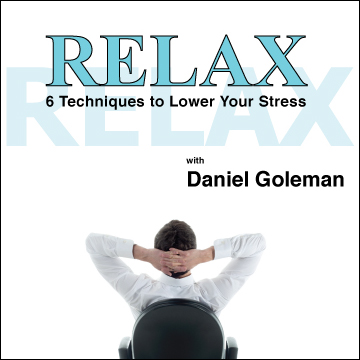
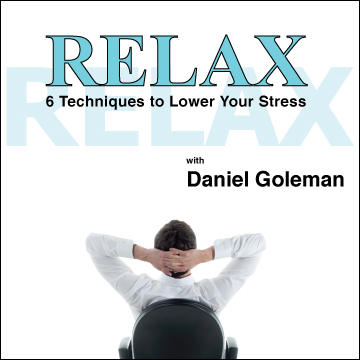
    Recently, More Than Sound connected with me again to introduce their latest offering, a CD by emotional intelligence expert Daniel Goleman titled Relax: 6 Techniques to Lower Your Stress.

    I’m grateful for the opportunity to share it with you and offer 5 free copies as a giveaway!

    The Giveaway

    To win one of 5 free copies of Relax: 6 Techniques to Lower Your Stress:

    • Leave a comment on this post.
    • Tweet: RT @tinybuddha Giveaway – Relax: 6 Techniques to Lower Your Stress http://bit.ly/vr9r6O

    You can enter until midnight PST on Friday, November 11th. If you don’t have a Twitter account, you can still enter by completing the first step.

    About Relax: 6 Techniques to Lower Your Stress

    Chronic stress can disrupt almost all of your body’s processes. It’s been shown to increase the risk of numerous health problems including heart disease, sleep issues, digestive complications, fatigue, depression, anxiety and obesity.

    Daniel Goleman, Harvard-trained psychologist and author of Emotional Intelligence, developed Relax, a 45-minute audio program to help listeners effectively and naturally reduce stress. Since there’s no one universal antidote to stress relief, Dr. Goleman’s guided session offers several exercises to suit a variety of personal preferences:

    • Deep breathing exercises
    • Deep muscle relaxation techniques
    • Guided auto suggestion exercises
    • Relaxation countdown
    • Breath focus and tension release techniques
    • Breath count exercises
    Learn more about Relax: 6 Techniques to Lower Your Stress at More Than Sound. You can also “like” the Facebook page for Relax for stress reduction tips.