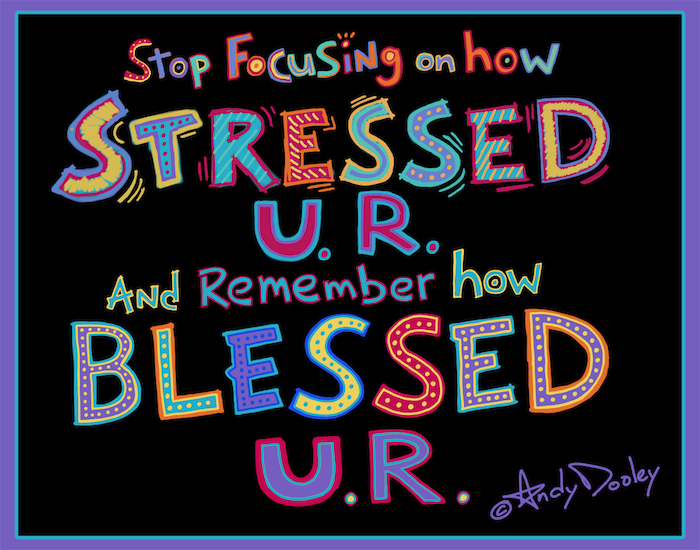
Tag: stressed
-
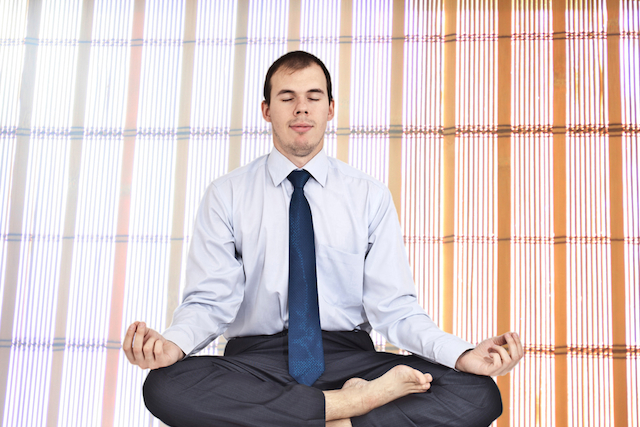
4 Things to Keep You Going When You’re Stressed at Work
“Life is 10% what happens to you and 90% how you react to it.” ~Charles Swindoll
I remember working at a job where I absolutely could not do anything right.
This was one of those jobs where it was extremely fast paced and you received 100 tons of work that must be completed by an unrealistic deadline. And here’s the kicker: your time at work was spent in meetings, all day. I’m talking about four to seven hours of your day. You get the picture.
So you may ask when I had time to do the work. Unfortunately, after work hours, in the evenings at home or on the weekends, when I was supposed to be spending time with my family.
Now don’t get me wrong, at times I was able to steal a half hour to an hour on the job to work on tasks that needed to be completed; however, I found it tough to consistently focus and devote my undivided attention when I was shifting gears all day, every day.
It almost seemed impossible to win against an environment of nonstop “busyness” with no real progression in sight. I was losing fast.
I did not perform well during my time there and did not have the impact I thought I would and wanted to have in my work, and within the organization. I failed (or so it seemed to me).
One day, I finally decided it was time for me to leave. While I initially had mixed emotions about leaving, I knew I wasn’t helping myself by staying at the organization; I was totally out of balance!
I needed to breathe, I was drowning at work, too busy doing the work at home, not fully paying attention to my daughter, and I became a stressed out monster, having emotional meltdowns far too often.
Upon leaving, I received a card from my department staff and some people shared their reflections with me, which revealed that I had done so much more than what I knew. How could I have shared my light with others after falling short in my role?
What I learned is, people are always watching how you respond and react in tough situations. Your character is revealed when going through darkness.
I was able to reach out to others and bring out the best in them through in-depth conversations during supervision or in morning talks with colleagues. Even though I was dying inside, I always came to work with positive attitude, a smile, and people picked up on that energy.
I provided guidance to some with their career goals, assisted with developing their voice and professionalism in the work environment. I had somehow helped others become acclimated to the job and feel like they were productive and contributed.
When I reflected on what kept me going, I remembered the four things listed below were key:
1. Shift gears with your thoughts.
We can control our thoughts by monitoring them, and when we find ourselves having negative thoughts, change it to something positive. With self-talk we can be proactive and plant the thoughts we want.
For example, there were times I would feel sick before heading into the office and I told myself how much I hated being there. But changing my thought from “I don’t want to be here” to “What can I do to help someone today?” allowed me to open myself up to the possibilities for each day.
2. Meditation is key.
Spend at least ten minutes in the morning quiet and doing nothing before starting your work; prepare your mind for the day. A prepared mind will help you to sustain the stresses that life will place on you. You will feel the pressure, but when you are mentally prepared it will be much easier to cope with them.
3. Get pumped up.
Before heading into the office listen to a song that motivates you, makes you feel good, and will push you. This can be your song of the day to play at your desk to keep you going. Two of my songs were “Happy” by Pharrell and “Walking on Sunshine” by Katrina and the Waves.
4. It is what it is.
When challenges are out of your control at work, don’t beat yourself up. Accept what it is. By accepting the things that you have no control over, you will have the energy to concentrate on the things that you can control. You will end up maintaining your happiness, and perhaps even your sanity.
When you find yourself in a situation where there’s too much that you simply cannot accept, or that is unhealthy to accept, it is time to take responsibility for making a change. Instead of staying in a situation that will build bitterness and resentment, start looking for something new that will contribute more positively to your life.
—
In the end, through my unhappiness, I had somehow been encouraging, supportive, and motivating to others. I shared my sense of humor and brought out the humor in others. In what I deemed as a professional failing nightmare, I unknowingly had brought positive energy and a boost to others.
How you respond in tough situations may unknowingly help others, as well.
Man meditating at work image via Shutterstock
-

Are You Too Busy to Enjoy Your Life?
“It’s not enough to be busy; so are the ants. The question is: what are we busy about?” ~Henry David Thoreau
I was slipping deeper into a dark spiral after my fortieth birthday, looking for anything to grab onto and pull myself out of the darkness. Some said I was having a midlife crisis, but I believe it was actually the beginning of an awakening for me. For the sake of argument, I’ll call it a midlife awakening.
This by no means meant that I understood the meaning of life and was all of a sudden enlightened and happy—quite the contrary. I was seeing for the first time the “me” that everyone else saw and had no idea who that person was or wanted to be.
Try as I might, I could not remember much about my thirties. I know worked a lot and was raising my daughters as well as coaching; I was staying busy but definitely not living. I became numb to my surroundings: feeling no pain, no happiness, nothing but a big empty hole inside.
Still, the real wakeup call came after returning to school as a forty year old. Working on an assignment for a speech class I watched a video tape of an overweight, sad, negative person.
This led me toward the beginning of my journey and the first challenge was to rid myself of negativity. It was a journey to be positive and learn how to “live” my life as each moment presents itself to me.
Setting out on a quest to find a spiritual balance that was not tied to labels and judgment, the biggest test was still being around people that knew the old me as I continued my transformation. It’s easy to get dragged back into old habits and feelings, so I separated myself from as many “triggers” as I could.
In 2007 after my youngest daughter turned twenty-one, I made the decision to separate and later divorce, since the relationship was a major source of negativity.
I was nineteen when this relationship started, so I never had a chance to know myself and, as selfish as it sounds, I needed to know me. One of the first things I learned was that I did not know how to be alone. As a matter of fact, this was my first time in my life with my own apartment.
There was a lot of reading and soul searching going on and still going on, but little by little I got better at being me.
In the fall of 2009 I met my soul mate, and although I previously said I would never marry again, in June of 2010 I asked and she accepted. We once wondered why we couldn’t have met sooner in our lives, but I know the answer is that we were not the people we are today, so it would not have been the same.
I have never pretended to possess all the answers but I do freely give some advice when the opportunity arises, especially when people bring a child into the world. That is not take one moment for granted and enjoy their child or grandchild every chance they have.
We spend so much time being busy and not enough time just being.
I rarely look at the news, television, or read a newspaper because many times when I do I feel bad, and common sense tells me if something feels bad, don’t do it.
Outside of work I try to surround myself with positive, good hearted people and do activities that help keep me centered.
Exercise and running have become my best centering activities. Trail running particularly meets all of this criteria because it seems to draw these people, and if you run a rocky, root bound, hilly trail you had better be in the moment.
There are moments that I know are gone forever and I can’t go back and try again to live them. I will strive to live every minute I am afforded and try to share what I have learned with anyone who is willing to listen.
My intent is to pass on my love for the beauty and serenity of nature and the satisfaction of learning from everyone we meet along the way.
I would love to tell you that I live in complete peace and harmony all the time now and I have my life in perfect order. But that wouldn’t be true. Still, living is a more positive and open-minded process now and I feel like I am a better person—one who does not have to be faultless.
Also by having a more positive group of friends, I have help on the days when the ego wants the negative side to make an appearance.
As our responsibilities grow it is increasingly easy to retreat into busy mode, overloading our senses, and lose touch with those around us.
Staying busy as a defense mechanism leaves you stagnant; not growing, not solving anything, and not living your life. It is the equivalent of looking the other way and thinking that if you don’t see something it is not real.
I try to remind myself to cherish every moment I am given with my family, friends, and people I care about. I fight the urge to excuse myself from experiences, from this moment, because if I tell someone “I’m just too busy” I will never get that time back.
I read somewhere that if you stick your hand in a river you can never touch the same water twice, because by the time you stick your hand back in the water has moved on. It is like that with time and being busy simply for the sake of being busy; once that moment is gone you can never get it back.
Happy guy image via Shutterstock
-

How to Keep Our Thoughts from Making Us Miserable
“Nothing is either good or bad but thinking makes it so.” ~William Shakespeare
I thought I knew what happiness was. I experienced it, and did so for a while—that is, what I thought was happiness.
What I was calling happiness was merely an emotion. Emotions, feelings that arise in the body, come into existence when we have thoughts related to them.
When I have certain thoughts having to do with anger, then I will feel, actually physically feel, angry. When I have thoughts that are positive, then I will feel the feeling, or emotion, that we call happiness.
In the past, whenever I felt that feeling, I thought, well I am happy. And how sweet it was. The world seemed perfect, in harmony; nothing needed to change. And I felt it most of the time. When I did, everything was good. But then the feeling would leave. The world wouldn’t seem so balanced or peaceful anymore.
The feeling would be gone, and I wouldn’t know why.
I would be able to guess why—maybe I had spent a lot of money recently and didn’t have much left, or a relationship with a woman I liked a lot ended, or maybe I was feeling fearful of the future for whatever reason. I would guess that things like these were the reasons for my lack of happiness.
I looked closely at my mind. I tried to figure out the patterns. But they weren’t so clear-cut. Sometimes, good things were happening in my life, yet I didn’t feel happy. And then sometimes when things weren’t go so well for some reason, I felt that everything was all right.
It didn’t make sense. To add to the mess, I couldn’t always control if things were going well or not. Sometimes, I did everything I could, the same things I did when I was happy, and yet the feeling of happiness would escape me. The patterns escaped me until I read an article that told me to look toward thought.
I looked at what impact my thinking had on my happiness. The article suggested that the thoughts arising in my head were only thoughts and to let them quiet softly.
I practiced this and new patterns emerged.
This time, the patterns were easy to see. Every time I was down, it was because I was thinking so much. The voice in my head would ramble uncontrollably, and I would listen to everything as if it were fact.
The thoughts would pressure me to live and act in a way that would benefit me in the future. They would focus on things I needed to do, things that I wanted, things that would make me happy if I did or attained them.
They would tell me that I was uncomfortable, to change this, to change that; when I was driving, to drive fast so I could hurry up and get to where I was going; when somebody said something mean, the thoughts would be about how awful this person was.
But sometimes I would meditate. I’d become aware that thoughts are only thoughts and let them quiet.
I set time to meditate, but also I tried to do it when I was amongst the regular activities of my life. When I would do this, there would be a period of time when my thoughts became slower, less loud, and they didn’t seem so important that I needed to listen and obey them at all costs.
Those were the times when I was happiest.
But then again there were some times in my life when things were going really well. I was on fire. I was killing it in my career; I had good relationships with friends and a woman I came to love. Everything was great. When things went well, I would feel happy for sure.
I had a hunch, however, that I shouldn’t get too happy just because things were going well. I knew that they could easily change, and they would often; and when things weren’t going great, I would feel miserable. I didn’t want my happiness to become dependent on the circumstances of my life.
Still, it was hard. The way things were going made me feel happy or didn’t. I couldn’t help it. They would bring about the way I felt.
When I looked closely, I saw that this was because my thoughts reflected how I was doing. I realized that however I was doing, if I let go of the thoughts about the circumstances of my life, the feelings would go away. I tried to do this even when things were going well and I felt happy.
I did this because I felt that the happiness that came from the times when I quieted and slowed my thoughts was deeper and more complete than happiness based on my circumstances. It felt more real and less easily shaken.
And so that brings us to the present. I still struggle to stay centered and avoid becoming connected to my thoughts.
I try not to focus my energy on making sure things are going well, but I still struggle with this too. When things do go well, I feel happy, but I try not to get too excited about that happiness. I have seen circumstances change in my life so often that it seems silly to be too caught up in them.
I see others who seem to be going through the same cycles. They seem to get wrapped up in their thoughts, which affects their moods. I see friends whose normal states of mind I know, but when they get caught up in what is going on in their lives and start thinking about it too much, they seem to morph into different people.
We are all in the same boat. We all have this struggle to stay centered instead of responding emotionally to life in a way that pulls us from the present moment.
But if we can try to remember that our thoughts are just thoughts, they will fade away and grow silent, and we’ll be filled with a deep feeling of peace and joyousness.
Photo by Visit Greenland
-
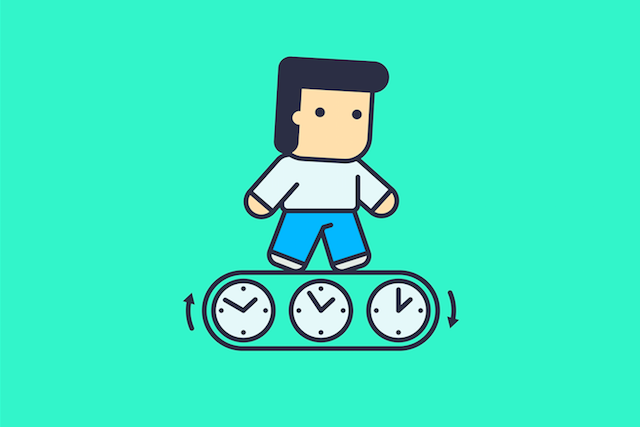
Jump Off the Busy Train for a Simpler, More Passion-Filled Life
“What you do today is important, because you are exchanging a day of your life for it.” ~Unknown
A few years ago I was on the busy track. I was working a corporate nine-to-five job, studying at night, and trying to keep up a busy social life. I thought I was achieving it all by doing so many things at once, but really, I was just burning myself out.
My life was a busy blur. I’d start my weeks feeling tired and end them completely exhausted. Time was a constant challenge. I was always rushing from one thing to the next, and in the little down time I gave myself off, I’d be so completely exhausted that all I could do was slump into the lounge chair and fall asleep in front of the television.
Between working a high-pressure full-time job, studying my nights away, and maintaining a busy social life on the weekend, there was little time for me to just be. In the midst of the daily rush, there was no reflection or alone time. There was just busyness.
Feeling this way, it didn’t take me long to realize that it was not what I wanted for myself. I was rarely happy or at ease, and I was feeling the strain big time. I pushed myself for answers and I realized that my pursuit of “doing it all” was in vain. I simply wasn’t happy.
I wasn’t enjoying my job, and although it paid well and had some great career prospects, it drained every ounce of enthusiasm I had and left me dry.
It would leave me feeling so dry that I’d throw myself into action during every ounce of time I had spare, to the point of exhaustion, as if to try and salvage those wasted forty-plus hours a week I’d spent at work.
I was studying a design course three nights a week to make up for my lack of passion for my job and I was out all weekend drowning my sorrows, rewarding myself for just getting through another lackluster week.
It was madness and something I couldn’t keep doing. Every day drained me and ate away at me just a little more, but still, time went on. The days became weeks and the weeks flowed into months.
I wanted to jump off the busy train, but making a change was hard. Though I knew that my job wasn’t where my passions lied, I couldn’t just throw it all in and quit. I had bills to pay and my love of design was just that at the time—a love, not a moneymaker.
I struggled for months with this decision, thinking of every possible way I could make things work. But none of them compelled me to action. The truth was, I was scared.
Right when I was almost at breaking point, salvation came for me in the form of a company restructure. Cuts were being made and I was called up for retrenchment.
My retrenchment was a blessing in disguise. While I was worried about how I would make it work, I knew it was the push I needed to live a simpler life, more in tune with my passions.
With this in mind I was convinced I could make it happen. I decided, then and there, that I would pursue my studies full time to do what I loved and work whichever other jobs I needed to work to make it happen. I started looking for part-time office jobs, and to my surprise, there were some great ones.
Within a month I’d found the perfect part-time job that would let me launch into my studies with full force while still making ends meet. I’d have to make some tough cuts to my spending to make it work, but I knew I could.
The tradeoffs were tough at first, and living my newfound modest lifestyle wasn’t always easy, but it was more than worth it. What I soon realized was that for all the material things I’d lost, I’d gained the most valuable thing of all: the freedom of my own time.
I now had time to breathe, think, and live.
Today I’m living a simpler life, one of freedom and choices. I’m still actively doing things every day, but I’m doing things I truly love.
With my design diploma in hand, I’m working as a fashion designer and writing about my creative journey on my very own website. I’m living with joy and I no longer feel busy and stressed. Instead, I am energized and passionate.
We can get so caught up in the pursuit of busyness that we forget what we are losing. In busyness we lose our freedom, our options, and a little piece of ourselves.
Time is freedom. It enables you pursue your dreams and go after what you love. How you spend it determines whether you experience happiness or not. And at the end of the day, it’s all you really have.
Jump Off the Busy Train and Reclaim Your Joy
If you want to jump off the busy train to make a change to a simpler, more passion-filled life, here are three things you can do:
1. Take the change step by step.
Instead of launching right in and quitting your job without a solid plan, make sure you have everything in place to make it work.
Look into your options for part-time work or more flexible working arrangements, like working different hours or from home. Weigh up your viable options to free yourself from busyness and determine how you can make it work financially.
2. Accept a better outcome, even if it’s not the perfect one.
We would all love to jump in and pursue our passions full time but often it’s not practical, at least not from the outset. Instead of striving for perfect, find a better outcome in the short term.
It doesn’t need to be an all-or-nothing approach. Right now, it might mean pursuing a passion on the side. In a years time, it might mean transitioning to a part-time working arrangement. Sometimes, good things take time.
3. Scale back in other areas of your life.
There is always give and take in life, and if you want to move toward a simpler, more passion filled life, there are going to be tradeoffs.
Scaling back might involve selling your car, moving into a smaller house, and cutting back on meals out. These might all sound like big changes, but the reward you will receive every day from living in tune with what you love will far outweigh the sacrifice.
If you’re feeling the weight of busyness in your life, challenge yourself to slow down. Don’t sell your life to the highest bidder, trading your time for dollars at the expense of your own happiness and joy. Reclaim your freedom and find a way to do what you love. Your happiness depends on it.
-

How to Take Care of Yourself During Tough Times
“Have respect for yourself, and patience and compassion. With these, you can handle anything.” ~Jack Kornfield
Several years ago, within a matter of months, I experienced the death of a parent, the breakdown of a committed relationship, and the death of a treasured animal companion.
I’d been doing okay with “normal” life tension, but when all that crap hit the fan… Wow.
I handled it okay. Just okay. I’m not sure it was a time to expect myself to be amazing.
Life is much better now.
One of the biggest lessons I learned going through those experiences was that I really had no idea how to take care of myself.
I’m great at taking care of others. I, like many of us, could give you loads of examples of how wonderfully supportive and understanding I can be. However, I’d neglected to take the time to understand me and what sorts of things helped me to feel nurtured, supported, and cared for.
I’ll skip the “yoga, getting enough rest, and chocolate” portion of the list (since you can find those kinds of self-care tips here). They’re super important, and the fact is, I already knew about them, but on their own they weren’t cutting it at that time in my life.
Here are some lessons I learned that I hope we can all benefit from when we’re going through a tough time.
Stay out of other people’s business.
It’s really easy to get wrapped up in the situations and emotions of those we care about.
When our partner is having a difficult time at work, we tend to feel their frustration and disappointment. When a loved one is going through a divorce, we may get caught up in their stories about how they’ve felt mistreated or how their spouse is being unfair.
While doing these things is very common and considered a normal part of friendship, it’s not the time. These behaviors can be draining to our own energy. Listening to the emotions of others can cause those emotions to be stirred up in ourselves, especially if we relate to the situations they’re talking about.
It’s simply not the time to use our energy reserves feeling other people’s emotions. We have our own to harmonize.
Accept ourselves.
Yeah, we know this one already. But how many of us are actually doing it?
Here’s the thing: We can absolutely accept where we are at any given moment, while also holding space for wanting more; for being more compassionate; for having a better education, a more successful business, or for meeting a loving partner.
Accepting where we are at doesn’t mean we don’t have goals, or can’t visualize a different, presumably even more fulfilling life. It means that we recognize there are times in our life where we won’t be amazing (see above). That there are times when we’ll do the minimum to get by, because that’s all the energy we have.
Sometimes, that’s just how it’s going to be.
Accepting where we are at is always a priority, but particularly in times of intense strain. No beating ourselves up allowed.
Recognize what helps us feel good when we’re stressed.
Again, seems like a no-brainer. However, when I was going through these experiences, I assumed that having coffee or drinks with a good friend would help me feel better.
Normally, I really enjoy this and find it relaxing.
Surprisingly, I found I was not enjoying these get-togethers. It wasn’t that my friends weren’t sympathetic. It was simply that I needed me (and me alone) time to process and heal. The very greatest friend simply could not offer me what I could offer myself at that time.
We’re all different. Some of us will find great comfort in surrounding ourselves with friends; others will benefit from immersing ourselves in our hobbies or in our work. There’s no right answer here. It’s a matter of paying attention to our own needs and what works for us, not what general opinion says that we need.
This is also not a time to cave to social or family obligations if we don’t find them to be nourishing. If the weekly family dinner is fun and supportive, go for it. If it’s more of a “dredging up the past” fest, then let that routine go until you’re feeling stronger.
Re-learn how to focus.
Many of us feel busy, busy, busy. And it’s true—we are busy. That said, taking the time to really assess our Internet and social media time can be enlightening.
If I’m honest, I spend one to two hours of a “work” day cruising Facebook and Twitter, checking and answering email, and reading posts on different news outlets.
There’s absolutely nothing wrong with this. It is, for some of us though, a behavior that has “trained” us to not be as focused as we could be.
Instead of sitting down and spending an uninterrupted two hours on a particular task, getting sidetracked online can cause that same task to take me three to four hours (or more!).
Great focusing skills also apply to our “me” time. It’s not just useful when working or studying. Focus can also help to optimize the time we do spend relaxing or self-nurturing. I can’t tell you how many times I’ve “intended” to meditate or nap, and have found myself obsessively checking email instead.
Using apps to limit one’s access to social media can be a great way to start the process of shifting our online habits.
In times of stress, compassion for self, in the manner that is the most soothing and fulfilling for us, is a priority. To be present in our lives, and for our loved ones, and yes, for ourselves, this self-care is imperative.
What do you pay attention to when you’re in an intense period of self-care?
-
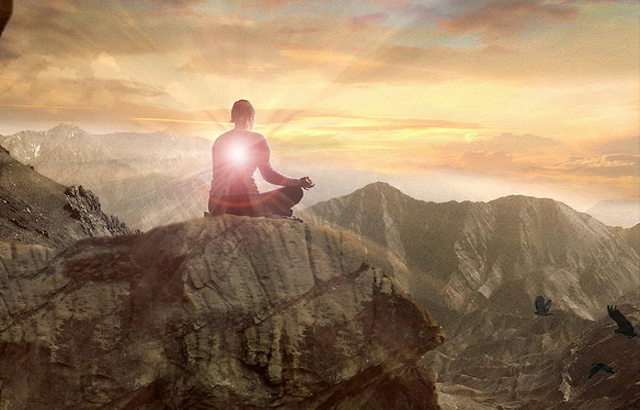
Let Yourself Be Instead of Pushing to Get Things Done
“When you try to control everything, you enjoy nothing. Sometimes you just need to relax, breathe, let go and live in the moment.” ~Unknown
Recently I went to an annual fall retreat for my graduate program. This was exactly what my heart was longing for up until this point. I felt overworked by school and overwhelmed by the busyness of the city and suburban life. I needed something different, something that would help me feel more grounded and at ease.
We went out to Middle-of-no-where-on-top-a-mountain, California, where the only sign of civilization was the four-way highway down below. I’m originally from Middle-of-no-where, Illinois, so being in nature felt like home to me.
I’m very familiar and comfortable with nature, and I felt I had been greatly neglecting that deep desire to connect with nature once again.
This was not the first time I felt disconnected. During my eighteen months living abroad in Korea, I hardly spent time in nature. With so many buildings, cars, and people, I felt easily overwhelmed with other people’s energy and completely out of balance.
Many of us feel this way in our modern day technology and go-go-go lifestyles. We tend to feel drained, tired, easily irritated, and stressed.
Because of this imbalance, I noticed it was common to have fleeting thoughts like:
“Agh, why the heck can’t I find a parking spot?!”
“Darnit, I’m going to be late. People, get out of my way!”
“Why on earth does this line have to be so long?”
Though I noticed that many of these thoughts come and go rather quickly, the energy produced from them would “stick” and make it harder to be present.
These types of thoughts are very common because our habitual minds (or egos) want things done now rather than to simply be during the experience and get things done in our own time.
Our ego is the part of us that likes to reject the moment and focus on the future rather than accept what is in the present so we can experience joy.
So rather than being anxious and frustrated about not finding a parking place, we accept the moment and trust that, regardless of this minor obstacle, everything is wonderful and as it should be.
Although my intention for the retreat was to feel relaxed, rejuvenated, and refreshed, by the end of the day I didn’t quite feel this way. I felt my time there wasn’t long enough. I wanted to spend time being present with the sound of the crickets and to marvel over the smells of nature so much more.
Despite my inner longing for more time to connect with nature, I felt my responsibilities were forcing me to go back.
However, once I returned to suburban life, I didn’t fall into typical morning and day routine. I kept feeling my body pushing me to do something else. I woke up and went for an early morning walk. This time, without my phone—just my keys.
As I walked, I noticed and marveled over the large evergreens outside of my apartment. I noticed the maple leaves on the ground with beautiful fall colors. I listened closely to the sound of water fountains and allowed myself to feel peace from the sounds.
This peaceful feeling carried into the afternoon, when I avoided watching television or doing any work. Rather, I simply did yoga—and not in a structured, routine video kind of way but simply a “do the move I feel I need to do right now” kind of way.
I realized I didn’t need an escape from the city; all I needed was an escape from myself—my own mind. All I needed was to just sit back, relax, and just be without any motive or push to do things.
In our society we are hardwired to always be doing something. We tell ourselves that we have to go grocery shopping, do laundry, take out the trash, exercise, work, study, watch TV, and so on. How often do we do things without the pressure to do but rather to be?
Why don’t we simply be when we take out the trash? Why don’t we simply be when we exercise? Why don’t we simply be when we clean our house or apartment?
To “simply be” means to be connected. Ultimately, it doesn’t matter what we are doing but rather the feeling behind the action. In other words, what thoughts are you having during the activity?
Are you in your mind, rejecting the moment, or accepting what is? Are you complaining about having to do the activity or are you making the most of it? Are you all preoccupied with all the other things you need to do today or are you simply being present with what you are currently doing?
When we reject, complain, or are preoccupied with thoughts about the past or future, we create this inner pressure within ourselves that causes the symptoms of stress. However, if we simply accept what is and choose to enjoy and really take in what life has to offer, at that moment, then we can be stress-free.
When we let go of the need to push and “get things done now,” we can actually enjoy ourselves. When we choose to accept the present moment, we can then experience a sense of peace, calm, and joy of life. We can enjoy the moment for what it truly is.
Think of all the various things you need to do today, tomorrow, or this week. What tasks can you shift yourself from “pushing to get it done” into simply allowing yourself to be so you can simply enjoy the moment?
Perhaps you can focus on the present while…
- Exercising
- Cleaning the kitchen floor
- Doing dishes
- Watering your plants
- Feeding your pet
- Walking in the morning
- Driving to work
When we choose to let go and just be in the moment, we can fully enjoy what life has to offer us right now, with no formal nature retreat required!
I challenge you to choose a daily task this week where you are going to try to simply be while doing it. What can you start doing today to help you be more present?
Photo by Hartwig HKD
-

4 Questions to Help You Know When to Say No
“It is not enough to be busy; so are the ants. The question is: what are we busy about?” ~Henry David Thoreau
A couple of years ago my friends and I went on a weekend retreat to honor our dear friend’s fortieth birthday. It was supposed to be a relaxing weekend filled with yoga and meditation at an ashram in the mountains.
But I had a serious problem with the retreat: I actually brought work with me! As an educator, it seems I am perpetually behind with my grading. And so I brought a whole stack of midterm exams with me to grade in my “free time.”
There I sat, alone in the cabin, while everyone else was hiking or chanting or taking a yoga class.
After grading just a few exams, it hit me just how wrong the whole scenario was. I was at an ashram in the mountains, for goodness sake, and here I was working.
I had so many obligations connected with my job and my children and my community that I felt my only option was to keep going.
And then I broke down. I started to cry as I thought about what I might be doing to myself. Can I go any further living like this, I asked myself.
I started to doubt my ability to handle the life I had created for myself.
I continued to cry until my friend Karen came back to the cabin. I confided in her that I was at a loss about what to do. I was extremely stressed out and saw no way out.
She asked me about what I had going on. Well, one issue was I had committed to attend a meeting months before I knew that my daughter’s band concert was the same night. And I felt obligated to go to the meeting.
Karen asked me what I was doing at the meeting: Was I running it? Was I speaking at it? Would it fall apart without me? Well, no, I admitted. I was just supposed to attend.
And what would happen if you canceled, she asked next. I thought for a moment and realized that nothing would happen.
So when I got back from the weekend, I emailed the meeting organizer and told her I had to go to my daughter’s concert. And guess what? It was fine; she said she completely understood.
Then I started really getting into the saying “no” mood. Next, I declined to take on a project I was asked to work on. I stopped myself from agreeing to be on a church committee.
I was going “no” crazy. But it felt wonderful. My stress level dropped dramatically and I felt free.
I still have a lot on my plate. But I’ve gotten to the point where I can differentiate between what I must do, what I really and truly want to do, and what I don’t need or want to do.
Another way of saying this is that I have learned to prioritize my time.
So if you tend to over commit like I did, slow down for a minute and ask yourself the same kinds of questions Karen asked me:
1. Do you absolutely have to do whatever it is you are contemplating taking on?
We do have to do many things… for our families, our friends, our jobs. But a lot of times we just think we have to do something because of a sense of obligation or because we’ve always done it that way.
To gain a different perspective on the situation, try taking a step back from the automatic thinking of “I have to do this” and ask yourself a few questions:
What would happen if I didn’t do it? Would everything fall apart? Or could things go on without my help?
2. Do you really and truly want to do it?
Sometimes we don’t even know the answer to this question. What do we really want out of life?
In order to prioritize our time, we need to know ourselves well enough to know what matters. And getting to know ourselves takes time, but a good starting place is again asking some key questions:
What kinds of activities make you happiest or relaxed, free, focused, content, connected, alive?
It helps me to think about the big picture of my life: What do I want to be able say I did with my life? This is kind of like my vision statement for my life. And then I can ask myself how individual activities fit into that overall plan.
3. What will you get out of it?
This doesn’t have to be a financial benefit or a plus for your career; it could be helping out the community or learning something new or spending time with your family.
But whatever you might get out of it, just make sure that it is really important to you.
It can be difficult to sort out when to put your priorities first over obligations to others. Sacrificing our time and our own wants for others is a part of life.
But if you sacrifice too much of yourself for others, there is nothing left over for you. And pretty soon you have nothing left to give others.
A balance between doing for yourself and doing for others is necessary. You can gauge if you are striking this balance by paying attention to your stress levels and how often you allow yourself to do something just for you.
4. How much time do you have to devote to something new?
The flip side of this question is: What will you have to give up to spend time on this new endeavor?
In the end, the very bottom line is whether or not it is a priority for you. Think about what you want to do with your life, how you want to spend your time, and what would make you happiest.
Discover that saying “no” to some things is absolutely liberating. It frees you up to focus on the things that are most important and really mean something to you.
Don’t follow my lead by getting so overwhelmed with commitments that you break down and see no way out. Follow my lead with my new approach and prioritize your commitments.
And don’t be afraid to say “no” even after you’ve said “yes.” Things happen; people change their mind; schedules change. That’s life, and most people understand that.
Asking yourself a few key questions about priorities will start you on the path to more freedom and more time for the things you really want to do with your life.
-

Are You Stressed, Rushed, and Aggravated?
“Meaning is not what you start with but what you end up with.” ~Peter Elbow
As a boy, I had a romantic notion about having a job where I traveled for business. It sounded so important and stylish. I liked the idea of dashing through airports to my next big meeting.
I thought it meant that mine would be a wider world. And so it was.
Be Careful What You Wish For
As often happens, what you think about comes into being. I found myself on my very first “business trip.” I was going to the exotic location of Moline, Illinois.
In my fantasies I was thinking more along the lines of NYC or London, but hey, it involved an airplane. Actually, it wasn’t even a jet; it was this very loud, somewhat cramped prop plane.
So a couple hours later, after flying at a surprisingly low altitude and slow rate of speed, I had traveled from a semi-rural location with corn and cows to…another semi-rural location with corn and cows. It seems my dreams of importance and style were still in my future.
Dashing Didn’t Turn Out To Be So Dashing
My life and work continued down this same path, so occasionally schedules were tight. Once, I remember literally running through an airport so as not to miss a flight.
It looks good in the television commercials but let me tell you, running in a suit and tie, toting a briefcase and an overnight bag isn’t so sexy. It’s more sweaty and disheveling. I must confess, I felt less than debonair.
The Illusion of the “Good Seat”
Every flight (and there were many), I vied for a good seat with the rest of my fellow business travelers. I gloated over my exit row seat or my aisle seat. I glared enviously at the first class passengers, already seated with their complimentary mimosas.
When it came time to disembark, I leaped to my feet the moment the “Remain Seated” sign went out. I mean, you’re supposed to. At least you must be, because that’s what everyone else was doing.
I told myself it was important that I leave the plane immediately. After all, I had pressing business. That’s why I’m flying.
And Then I Woke Up
This dream of being a business traveler turned out to be not so dreamy after all. Traveling is a hassle with the hotels and cabs and parking garages and strange cities and expense reports. Airplane seats are tight and fellow travelers are sometimes surly.
This isn’t what I signed up for. I started to wonder about the ground rules I had assumed regarding flying for a living.
Questioning the Unstated
What is a good seat? I’ll tell you. There’s only one on the plane: it’s the one the pilot sits in.
The rest of us, no matter where we sit, are getting basically the same experience. Once I accepted that, I have never had a bad seat.
What’s the rush to get off the plane? When I wait until everyone else has cleared out around me, it is far easier to collect my things. I don’t hack anyone else off by getting in their way to rush off the plane either.
I generally go for the window seat now, not because I prefer it particularly. It just means I am not in any hurried person’s way when it comes time to deplane.
This leisurely attitude means I spend perhaps 10 more minutes aboard if I am seated near the front. If I am seated near the back, it costs me virtually no time at all. And I still get to the baggage claim area before my bags.
I get to airports early. I check in and kick back. Did you know they put bars in airports? I find this highly convenient for this back kicking.
I pack light. I generally travel to places that sell just about anything I regularly use. I have found that even developing countries have food and toiletries for sale.
Sharing My New Found Travel Ease
Once I found myself on an overbooked flight. Five people were in front of me in line trying to get boarding passes. As each one of them in turn berated the gate agent, all she could do was apologize and say she couldn’t give them a boarding pass at this time.
When it was my turn, I saw her steel herself for the next verbal assault. But I figured something out as I stood in line: berating the poor lass wasn’t resulting in a boarding pass for anyone.
So I just said, “Tough day, huh? Listen, if you can get me on this flight I would really appreciate it. Just do the best you can.”
Five minutes before they closed the jet way doors, she called one name to give out a single boarding pass—mine.
I wanted to throw a fit as much as the next guy as I stood in line. But what would be the point of ranting at the last person who could help me who, incidentally, was not responsible for causing my problem?
I didn’t see one glimmer of recognition out there amongst those envious faces of the grounded either. They all had the same chance as me and they had it first. We make our own reality. Own it, or don’t.
The Traveler, Well Seasoned
The bottom line is this: air travel, or anything else, is what you make it. I got to live my illusions until I decided they no longer served me.
I have a far different experience now, even though the external details remain basically the same. I have no stress and I get where I want to go when and if I have a notion to go anywhere at all.
I am a fan of destinations, but the journey happens too. While I may not have always taken the road less traveled, these days I always choose the travel encounter less experienced.
Photo by plantronicsgermany
-

How Anger Leads to Anxiety and What to Do About It
“Holding on to anger is like grasping a hot coal with the intent of throwing it at someone else; you are the one who gets burned.” ~Buddha
I have a confession: I’m mildly obsessed with anger.
Not the negative feelings, the volatile outbursts, or the fly-off-the-handle reactions, but rather how humans express anger.
I’ve largely made my living by dealing with various states of anger. More on that in a bit…
Years ago I was shopping at a bookstore with my friend Alex. We were first time parents with toddlers at home.
The idea was to find resources on how to raise emotionally healthy children and how to avoid the parenting mishaps we witnessed too often at work.
As school social workers, we provided family counseling to young children and wayward teens in the inner city.
As Alex obsessively scoured the aisles for the latest research-based writings on emotional intelligence, my eyes gravitated toward an entirely different topic.
The black, matte-textured book with the blood red title practically screamed at me: Hatred: The Psychological Descent into Violence.
I devoured it that night.
It’s not that I didn’t want my kid to learn to soothe himself when upset, to resist peer pressure, or to misread social cues. But in that moment I felt a stronger pull.
Part of the fascination stems from my ancestry; I’m half-Italian and half-Irish. A DNA hotbed, if you will.
Meals were eventful. When I would lose my cool at the dinner table, my dad would wildly gesticulate in my mom’s direction. She, in turn, would shrug and reply “It’s The Fighting Irish in her, I suppose.”
Additionally, I’m a psychotherapist who specializes in anxiety issues—generalized, panic, and social anxiety disorders.
Do you want to know the quickest way to get a handle on your anxiety? Get ahold of your anger.
I realize this may sound counter-intuitive. After all, we don’t normally associate anxious people with bad tempers and loud voices.
The anger management connection is not exactly linear.
It takes courage to express anger—to stand up for yourself and your values, which sometimes includes taking an unpopular stance.
Bravery is valiant, strong, and admirable, while anxiety is cowardly, weak, and anything but enviable.
Because many anxious people have a problem asserting themselves, feelings of helplessness, avoidance, and frustration take residence.
Compounding the issue is the fear that if you express anger, you might lose control.
And since many anxious individuals are people-pleasers and caretakers, these feelings are especially unwanted.
But feelings go somewhere.
And typically, when you take on too much responsibility, you inevitably feel exhausted, taken advantage of, and angry.
If you don’t have a firm grasp on your anger responses, you’re going to hold it in until it explodes, or you’re going to yell, scream, stomp your feet, and possibly say and do things you regret.
Then comes the guilt. And next, the overwhelming urge to fix the situation. And before you know it, the cycle repeats itself again.
All the while, you’re wasting precious emotional energy that could be better used on enjoyable tasks.
The good news is there’s strategies you can do today to help you feel more calm.
I included five common ways I help us go from anxiety to zen below:
1. List the places in your body where you feel anger.
Is it in your chest? What happens to your heart rate? How does your stomach feel?
It’s important to recognize the physical cues of anger in order to alert youself that it’s time to calm down.
2. Visualize different behavioral responses. How do you react when you feel angry?
Do you scream, tantrum, throw things, bottle it inside, or pretend that everything is fine?
Write down three different reactions you will do instead, such as:
Calmly assert your needs, deep breathing, count to ten, walk away rather than stick around for a fight, and close your eyes to reduce visual stimulation, etc.
3. Make friends with the word “no.”
Many nice people have a hard time with this one. The association with conflict makes us feel mean, insensitive, or too direct.
Know that “no” means you respect yourself, your time, and your values. Practice saying it in the mirror until it sounds deliberate and natural.
4. Ask yourself if you value expressing anger over getting along with others.
It’s a fact that some people enjoy the adrenaline rush of letting go and projecting their uncomfortable feelings onto others.
Recognize that the short-term feelings of power are no match for the sleeplessness, headaches, and despair, which endure long after the “anger high” wears off.
5. Think about the last time you got angry. How did you go from anger to a calmer place?
You’re probably really good at getting angry already, so let’s focus on the other side. Be specific. What behaviors did you call upon to get to zen?
This will reinforce your coping strategies, and it will serve as a reminder to focus on solutions rather than stewing in anger.
The more you practice reacting in positive ways, waiting until the anger subsides, and considering your options, the more skilled you will become at managing anger.
It’s possible that your body is wired to be more anxiety-sensitive, and you’ll have to work harder than others to calm yourself. And that’s okay.
These are temporary solutions, and you’ll still need to control the anxiety itself. But they’ll get you started in learning to respond with more awareness, and less emotion.
You’re the expert on your life. And you get to choose how much anger to allow in your heart, mind, and body every day.
With intentional focus on doing things differently, you can feel more calm, confident, and in control.
Photo by skyseeker
-
4 Tools to Reframe Stress to Feel Less Overwhelmed
“I know but one freedom and that is the freedom of the mind.” ~Antoine de Saint-Exupery
Stress, strain, tension, worry, overwhelm, nerves, feeling wound up, freaking out. Whatever we call it, the effects are universal.
Our adrenals rev up, uneasy thoughts cycle on the brain’s hamster wheel, butterflies flitter in the stomach, our moods swing. There are many different ways that stress manifests, and none of them are particularly enjoyable.
Stress is basically an emotion. It’s the way we feel when things aren’t going our way. “Things” can be as insignificant as feeling annoyed because we woke up two minutes before our alarm goes off; they can also be of the off the chart “I’m getting a divorce/changing jobs/applying to grad school/moving” variety.
Question: Why do we attach importance to certain experiences (and therefore feel stress in regards to them) and not to others?
Certainly there are the categories of events almost everyone would agree feel stressful: dealing with illness, starting a new job, or getting held up in traffic on the way to an important appointment.
However, most of us have had the experience of feeling stressed about something we rationally know is not that important, is not the end of the world, yet, there we are, experiencing those telltale signs that let us know we are tense.
What about the fact that one of us could feel excessive stress because we cannot get the particular brand of insert-favorite-food we want at the supermarket? Or that another one of us may feel a lot of tension because we have to wait in line at the bank?
Others of us may not find these events stressful in any way. However, we all have our own triggers.
What does this imply?
It implies we have more power over “stress” then we may realize. (more…)
-

The Surprising Secret to Being on Time
“Smile, breathe, and go slowly.” ~Thich Nhat Hanh
For many years, the only way I knew to get from one place to another was to rush. I was chronically “running late.” In fact I couldn’t conceive of managing time in any other way. I usually would get to an appointment in the nick of time, but never without a rush.
Now, if rushing occurred in a vacuum, perhaps it wouldn’t be so bad. But the truth is, when we rush, it’s not just about moving faster. It’s an entire frame of mind. The world becomes our enemy—a jungle to machete through on our way to wherever. The nicest person can behave like a demon possessed.
There’s an old Disney cartoon from the 50’s called Motor Mania, starring Goofy. Baby Boomers will remember Goofy, a not-too-quick-witted but exceedingly amiable fellow with long black ears. But once Goofy gets behind the wheel of his car, he becomes like Dr. Jekyll and Mr. Hyde.
His entire personality changes. His eyes begin spiraling in his head, his sweet smile turns into a vicious snarl, and every other driver on the road is in peril.
We all laughed at Goofy’s crazy behavior because it rang true. We’d seen our parents behave like this, and we would grow up to do the same. In our culture, being in a rush is an excuse to become less than human.
It’s common to treat each other terribly when we’re “in a hurry.” We get a pass if we’re in a rush. It’s considered “normal” behavior.
When my kids were young, I believed my job as a good parent was to teach my children how to hurry. My son Charlie was a particularly slow learner in this department. When he was in elementary school, every school day began in a rush. Well, mom would be in a rush; the kids, not so much. This would only add to my internal sense of pressure.
Arriving at school just before the bell, Charlie would casually start the long walk across the playground to his classroom.
The kid was infuriatingly slow.
“Hurry Charlie!” I would yell from the car. (more…)
-

Are You Too Busy? 5 Signs of Chronic Stress
“Beware the barrenness of a busy life.” ~Socrates
A few years ago, the focal point of my life was my work. It took up and made up a huge portion of my life. In retrospect, I would even say that work became a sort of obsession. I became so obsessed with being productive that I set aside almost every minute of my waking hours for some work-related activity.
I even coupled meals with work; toilet breaks meant mentally drafting reports and traffic jams signaled the start of phone meetings. You may look at this picture and think of me as an efficient multi-tasker. I honestly hope I was that, but no. I was nothing but a person trapped inside “too busy” cycle.
Some people perceive being “too busy” as a sign of success or a flourishing career. Although this can be true, being constantly overworked and overwhelmed has more detrimental than positive effects. Being crazy-busy implies stress, and our body can only take so much pressure before it activates its stress response and runs on “survival or panic mode.”
Stress can be helpful and motivating to some degree, but substantial evidence shows that chronic exposure to high levels of stress prompts the body to release hormones called glucocorticoids, which can potentially damage several body systems.
When I learned about the gravity of chronic stress and my overly busy life, I made an effort to change my habits and keep everyday stress to a minimum. There are so many ways to effectively manage stress, but you can do so only after you actually notice and admit that you are indeed too busy and too stressed out.
I have listed below some of the things that have made me realize that my “busyness” was out of hand.
1. I was always looking for something.
Searching for my car keys, phone, wallet, jewelry, eyeglasses, and documents became a part of my daily routine. Things seemed to be misplaced or lost all of the time.
Cortisol, the hormone released when you are stressed, damages the brain over time and can lead to memory problems. But aside from that, when we are stressed out, our thoughts tend to be all over the place, and this lack of focus and the disorganized thoughts could very well cause us to lose track of things. (more…)
-
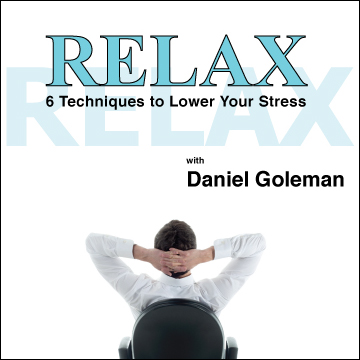
CD Giveaway, Relax: 6 Techniques to Lower Your Stress
Update: The winners for this giveaway have already been chosen. Subscribe to Tiny Buddha to receive free daily or weekly emails and to learn about future giveaways!
The Winners:
Last year, a representative from More Than Sound reached out to me to share the publishing company’s new mindful driving CD, Awake at the Wheel.
As someone who frequently deals with Los Angeles traffic, I especially appreciated the opportunity to hear and share a CD focused on making the roads more peaceful.
Recently, More Than Sound connected with me again to introduce their latest offering, a CD by emotional intelligence expert Daniel Goleman titled Relax: 6 Techniques to Lower Your Stress.
I’m grateful for the opportunity to share it with you and offer 5 free copies as a giveaway!
The Giveaway
To win one of 5 free copies of Relax: 6 Techniques to Lower Your Stress:
- Leave a comment on this post.
- Tweet: RT @tinybuddha Giveaway – Relax: 6 Techniques to Lower Your Stress http://bit.ly/vr9r6O
You can enter until midnight PST on Friday, November 11th. If you don’t have a Twitter account, you can still enter by completing the first step.
About Relax: 6 Techniques to Lower Your Stress
Chronic stress can disrupt almost all of your body’s processes. It’s been shown to increase the risk of numerous health problems including heart disease, sleep issues, digestive complications, fatigue, depression, anxiety and obesity.
Daniel Goleman, Harvard-trained psychologist and author of Emotional Intelligence, developed Relax, a 45-minute audio program to help listeners effectively and naturally reduce stress. Since there’s no one universal antidote to stress relief, Dr. Goleman’s guided session offers several exercises to suit a variety of personal preferences:
- Deep breathing exercises
- Deep muscle relaxation techniques
- Guided auto suggestion exercises
- Relaxation countdown
- Breath focus and tension release techniques
- Breath count exercises
Learn more about Relax: 6 Techniques to Lower Your Stress at More Than Sound. You can also “like” the Facebook page for Relax for stress reduction tips. -

Need Less, Have More: Life Expands When We Eliminate the Excess
“Knowledge is learning something new every day. Wisdom is letting go of something every day” ~Zen Saying
Simplicity, at its heart, comes down to eliminating the excess in our lives.
Excess needs, wants, possessions. The list goes on.
Society tries to sell us on the idea that having more in our lives should be the goal and is the answer. But is more really improving the quality of our lives?
Do more possessions beyond a certain point really add value to our lives?
Do more commitments in our diaries really help us feel less stressed and rushed?
Does always wanting the latest gadget really improve the quality of what we have now?
Is more even feasible for many of us who are struggling just to make ends meet and pay basic bills in these challenging economic times? Many can barely afford enough, let alone more.
Living in the Moment
Having more in our lives or buying into the concept that more is better can mean we miss living in the moment. We’re constantly waiting for our lives to be complete with more and striving for a day that will never come.
We’re in a state of deferred living. Always assuming what we have now is not enough. Always wanting more.
My Journey to Simpler and Less
My own path to wanting to live a simpler life is, I’m sure, fairly typical.
Around four to five years ago my life was going pretty well with little to complain about in the grand scheme of things. I had great friends and family, a good job, a roof over my head, and certainly knew where my next meals were coming from.
However, I had also started to accumulate more in my life. More material possessions, more commitments, more meetings, more financial responsibilities, more hassle. Alongside this I felt like less and less of my time was, well my time.
The quality of my time was decreasing as more was added to it.
I was busy and in motion a lot of the time but wasn’t really getting what I truly wanted out of life. I had bought into the concept of more and that more would be the answer. I had lost track of my own goals a little.
A period of reflection followed. In this period of reflecting, I started to identify more of what I truly wanted in life. I also started to uncover those things in life I would rather be without.
I started to seek out books on the subjects of simpler living and lifestyle redesign. I had the good fortune to come across the work of some truly great authors and thinkers (Leo Babauta, Chris Guillebeau, and Tim Ferriss, amongst a few). These books challenged my thinking but also encouraged me further into the rabbit hole I was starting to disappear down.
I also started to take action.
I started to peel back and eliminate what didn’t matter.
I started extracting myself from commitments and meetings I really had no interest in being at or didn’t feel I could add value to.
I learned the value and power of a polite “no thanks” when requests on my time (meetings, social gatherings) didn’t excite me, add value, or help my goals along in some way. Importantly, I started to feel less guilt about saying no in these cases.
I started to see that conventional wisdom doesn’t always have to be followed.
I started to remove distractions and excuses I was making to myself.
I started to focus more on the things and people that were important to me.
I realized I value freedom and flexibility over the ability to just earn more and started to try to seek out ways of living accordingly.
I started to accumulate fewer material possessions but enjoyed my money more (holidays, events, great dinners, etc.).
In short, the quality of my life has improved since I have sought to simplify things and intentionally live with less.
Was Making the Change Easy?
In short, no. This is very much a journey and not an overnight fix. However, in my own case the process of working toward a focus on less has already made some powerful changes in my life. It has meant:
I have set up my own one-man consulting company rather than chasing the corporate dream that never seemed to fulfil me with each climb up the ladder. This gives me an increased sense of flexibility, empowerment, and freedom in my work.
Because I’ve spent less on stuff, I have been able to travel more for fun in the past two years than at any other time in my life (and the more amazing places I travel to the more I want to travel).
I have realized that life can be rich and full of small pleasures without having to spend lots or buy more. For example, I love taking early morning, long walks before dawn breaks and then coming back to a make some freshly brewed coffee.
I feel like I have more time to do what I want to do and to spend with the people I want to spend time with. (In reality, I have the same amount of time available to me but have been more selective in how I fill my time and what I say yes to.)
For you, the list will of course look very different depending on your own circumstances and goals. However, a commitment to banishing the “more is better” mindset will, I’m sure, improve the quality of your own life in equally significant ways.
Eliminate the Excess
Eliminating the excess means living a life that can be slightly unconventional by modern standards.
Perhaps we don’t change to the latest smartphone every other week.
Perhaps we don’t fill our homes with clutter.
Perhaps we don’t check our email obsessively.
Perhaps we focus on and are grateful for what we do have rather than on what we don’t.
Perhaps we think more carefully about clothes we purchase going for quality over quantity (or indeed have a very simple wardrobe of a few clothes we enjoy).
Perhaps we intentionally create space in our diaries and life so you can breathe a little and enjoy the moment.
Making changes is not necessarily easy initially. We are so programmed to think a certain way that making changes can involve a significant shift in thinking. However, what we get back by eliminating these false wants and needs makes any initial effort more than worthwhile. It can literally transform our lives for the better. It can mean:
- More free time to do what we want to do (hobbies, passions, etc.)
- More quality time with those we care about
- Less stress
- Less spending
- Ironically, more quality possessions that we truly enjoy and give us value
- More savings (for holidays and other things you enjoy doing)
- Less pressure to keep up with those around us
Now ask yourself, what is stopping you trying to find your own path to less and forever banishing the more is better mindset?