Tag: stress
-

10 Ways to Lift Your Spirits When You’re Having a Tough Week
“True happiness is born of letting go of what is unnecessary.” ~Sharon Salzberg
You are exhausted. Every force in the universe seems to be conspiring against you.
You pick yourself up just to be knocked down again by more bad news.
It’s not fair!
You want to crawl in bed and wait for the week to be over.
But you know you can’t hide.
Sometimes our lives get tough. It happens to all of us. You know things will eventually get better, but it’s hard to get through a ruthless week in one piece.
When you are having a horrible week, do you succumb to pressure, or have you learned how to keep your spirits up?
Back when I was in college, we used to have horrible jam-packed finals weeks. We’d usually start Monday and finish on Saturday. We’d have five final exams during that week.
It was rough.
Like most of us, I’d study ahead but usually had to cram a lot during that week. They were nightmare weeks with sleepless nights. I thought crazy times would end with college.
But I was wrong.
Years later I took a job as a project manager. It was a lot of fun in the beginning, until it became intense. My team and I had an ever-growing amount of projects with insane standards we were handling.
Soon, I was working sixty to eight hours a week. I’d put out a fire and fifty more were waiting for me. I was barely able to keep my head above water.
My fuses were extremely short during those days. When something at home didn’t go as I expected, I’d blow up. I’d get angry, yell, and end with a dagger-to-the-heart kind of comment.
It was the grown-up version of a toddler’s temper tantrum.
Letting off my steam in an unhealthy way would later come back to haunt me. I felt ashamed of my behavior, and somebody I loved was in pain because of me.
Eventually, I realized that this was extremely damaging to me and my loved ones. I had to make dramatic changes in my life.
I admit, it did take a few months to make the changes, but at least I could see the light at the end of the tunnel. In the meantime, I learned a better way to deal with extremely stressful times.
Here are ten tricks I used, or later learned, that will help you stay happy in the middle of a crazy week:
1. Picture your life a month from today.
You will overcome your problems and your life will go back to normal, but most of the time it won’t happen overnight.
It helps to have a long-term perspective to get detached from the overwhelming stress of today.
When I was swamped with problems and piles of unanswered emails, I’d often get very discouraged. I found that daydreaming about my future, about things being normal again, would calm me down.
Fast forward a month from now. Think about you living a happy, normal life again. It will lift up your spirit, and in no time you’ll be living there once more.
2. Create a peaceful space for yourself.
Your environment matters.
The last thing you want when you are under stress is to sit at a sad-looking desk with piles of paper and clutter.
While being under a lot of pressure, I was lucky enough to come back home to a Zen, clutter-free bedroom. I’d instantly feel peace.
The same can happen to you. When you are surrounded by chaos, you add unnecessary stress to your life. If you create a peaceful space around you, you’ll be able to breathe deeply and relax more easily.
So even if you feel like you have no time, spend fifteen minutes to put stuff away and create a quiet surrounding. You won’t regret it.
3. Remove yourself from negative, draining conversations.
It’s impossible to isolate yourself from “negative people” all the time. We all have hard days and get a little negative every now and then.
When you’re having a rough week, it might be tempting to fall into that self-pitying place. Increase your odds of maintaining a positive mindset by avoiding negative, emotionally draining conversations.
Back when I was working crazy weeks, I was not able to ignore my negative customers. But I learned to stay out of other negative conversations or switch to positive topics, even if the only positive thing I could think of was the weather.
Don’t let negativity suck up all your energy. You’ll end up in a depressive conversation, and your day will go further south.
4. Celebrate your small wins.
When you are in the middle of a storm, it may be a while till you have a big win. But you can celebrate the small things and lift up your spirit.
It may be a task accomplished, a good report, or that you took the high road when somebody criticized you.
Purposely find the small things that made you proud of yourself throughout the day. Make a mental note about them.
Reflect on your small wins and let that cheer up your weary spirit.
5. Selfishly set your limits.
You are ultimately responsible for your own well-being. Nobody will care about you the way you do.
When I was working over sixty hours a week, I realized no matter how many hours I’d put in, or how efficient I was, I was not going to be able to meet my deadlines. I decided to let my boss know.
You know when you are reaching exhaustion better than anybody else. You need to start saying no, way before you reach your limit.
Be selfish about your time.
When you see a stormy week on the horizon, it’s time to cancel all the nice-to-do things that snuck into your calendar (unless it’s something that would refresh your soul).
6. Make someone delightfully happy.
Something interesting happens when you focus on somebody else’s happiness. When you make someone else happy, it comes back to you.
You’ve experienced that before. Maybe you wrote someone a heartfelt note, or you put a special effort in giving someone a present. And they loved it! That act of love and kindness filled your heart the way nothing else would have.
So think about calling a friend to tell them how much you appreciate them, or taking a break to invite someone you love for dinner. It will transform your week, and it might brighten their week, as well.
7. Wake up twenty minutes earlier.
It may seem counter intuitive, because of course you want to sleep as much as you can. But you’ve got to trust me on this one.
The first hour of your day sets the mood for the whole day.
If you start your day having to rush to wherever you are going, things will go downhill from there.
On crazy weeks you are already on edge, so don’t push yourself even more. Instead wake up a little earlier. Get ready and have breakfast slowly. Don’t rush.
Your peace during the first hour of your day will go a long way.
8. Accept the imperfect.
When your life feels like a sinking boat, it’s the wrong time to insist on every detail being perfect.
Of course, some things will need to be finished perfectly, but many others won’t.
Is dinner slightly overcooked? Then nobody will get food poisoning. Your shoes don’t match your outfit? Unless you are the editor of Elle Magazine, nobody will care.
You only have twenty-four hours a day, but now your plate is much fuller than last week. You need to accept some things won’t be accomplished the way you’d like them to be.
Be kind to yourself and let some high standards slide.
9. Lean on an authentic friend.
It’s hard to be an objective observer when you are going through tough times.
Having a good friend to help you is invaluable.
During my tough times, I often lean on my husband. He is sensitive enough to let me vent, but he’s able to show me the positive side of things too.
You have to be careful selecting this friend. If you find yourself getting more and more depressed when you are talking to your friend, you should stop talking to him or her for now.
You need a friend that can listen and sympathize with you, and at the same time help you get out of the hole.
10. Focus on your awesomeness.
It’s hard to see ourselves through a positive lens in the middle of a storm.
But you haven’t changed. If anything, you are growing stronger and more resilient during tough times.
You need to remind yourself about your amazing qualities.
List them. Ask your best friend to help you. Keep them in front of you at all times.
Because that’s the true you, not the overwhelmed, stressed out version you see in the mirror.
You Can Stay Happy Even During Crushing Times
It’s hard to see the light at the end of the tunnel when you are going through the valleys of life.
You wish life were always good. But tough times are inevitable.
They will happen every so often, even if you put your best foot forward to try to avoid them.
So, sooner or later, you’ll need to learn how to stay happy in the middle of a storm.
The pay off is astronomical. Your heart and mind will thank you.
-
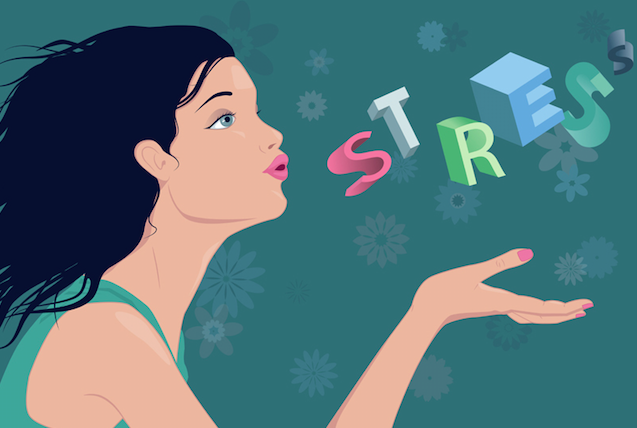
How to Deal When You’re Overwhelmed: 5 Ways to Turn Stress into Joy
“When we meet real tragedy in life, we can react in two ways—either by losing hope and falling into self-destructive habits, or by using the challenge to find our inner strength.” ~Dalai Lama
You’re overwhelmed and stressed by all the things that need to be done. All your best-laid plans for becoming a better version of yourself are feeling very tenuous at the moment.
You still want to be healthier, more present in your relationships, and able to appreciate and express gratitude for all the things you have instead of worrying about the things you don’t. But, you are strongly considering putting off the work it takes to create those things in your life until things slow down.
If you do that, you will be missing an opportunity to bulletproof your changes and make the joy that will come along with them inevitable.
My wife recently had our second child. It has been great, and in a lot of ways easier than when we had our first. However, there is no doubt that between having a newborn in the house and an energetic toddler running around, overwhelmed is an accurate description of my life.
At first I felt that at any moment the stress would be too much and I would say something I didn’t mean, use a tone I shouldn’t, or forget that showing patience and love to my family is the most important thing to me.
But then I realized, each moment is practice for all the moments that will follow. And, if I maintain my composure, continue to show up for my loved ones, and be a positive example for my oldest kiddo, then this time of overwhelm can be a time of incredible growth.
As life normalizes, and things are more predictable, it will be easier to be the person I want to be because I will have done it in much more difficult circumstances. It is just like training for anything else. If you train in harder conditions than you expect to compete in, once the competition gets there, it feels like a breeze.
I haven’t been 100% all of the time, but I am definitely building a resilience that will make sticking to my habits and values that much easier going forward.
Here are the five ways you can turn overwhelm into a practice and guarantee your future will be full the joy living an intentional life brings.
1. Take mental breaks.
If you are in the middle of a stressful situation, it can be very difficult to see the big picture of what you want for your life and act in accordance with it. You are just trying to triage your way out of the moment because it seems like survival is the best you can hope for.
But despite what it feels like at the time, you can do much better with the situation than just surviving it. You can turn it to your advantage.
To do that, when you feel blinded to your big picture by a desperate need to just survive the moment you are in, take a beat. Literally, take fifteen seconds, two deep breathes, then ask yourself what your next action would be if you were going to act in line with the vision you have for yourself in the future. Then do that.
The other day, as I was corralling my three-year old son to go to school so I could make an appointment, disaster struck. A stick that he was saving (because certain sticks are a treasure to him at the moment) got chomped by our dog.
My son lost it. It was very much like the worst thing in the entire world just happened.
Between my dog chopping a stick to bits in the house, my three-year old howling uncontrollably with tears streaming down his face, our new baby joining in because all the noise woke her up, I was very much ready to follow my son’s lead and lose it.
Then I stopped and took a beat.
Instead of escalating the situation, yelling at the dog, and dragging my wailing three-year old out the front door, I hugged him and waited.
Eventually he calmed down. I asked him if he wanted to go see if there was a new stick outside on the way to the car to go to school. He said yes. We gathered our things, he found a suitable replacement, and the day went on.
Those few seconds allowed me to see that the most important thing in that moment was taking the opportunity to help my son learn to get control back over his emotions, and to let him know that I will be there for him when they are a little out of control.
Just putting a little bit of room between my reaction and the stressful situation gave me a chance to reflect.
Try it next time you are feeling overwhelmed and like you are just reacting. It will make a world of difference in how you react to stress.
2. Smile.
You know how it is when you get stressed; it seems like the world piles on. Yet another thing comes up that you have to deal with on top of everything else you already had on your list.
You weren’t sure you were going to get everything done as it was. Now you can’t even imagine how it is possible that you could finish.
And there’s no way you are going to be able to workout, or meditate, or journal, or whatever other good habit you are trying to start for yourself.
Smile.
Just smile.
Know that time will pass, you will do as much as you can with it, and you can either have a furrowed brow and be short with everyone around you as you go, or you can smile and pleasantly do as much as you can.
You will get whatever you can get done either way. But the chances that you do whatever you do in a way that aligns with who you want to be go way up if you are smiling while you are doing it.
3. Remember this will pass.
Life is going to continue. Things will change. Things always change. You are overwhelmed now. You won’t be at some point. Then you will be again. That’s just how it works.
View the time you feel overwhelmed as just a season of life. Not something you’ve been cursed to experience in perpetuity.
Whatever is causing it will pass.
It may sound trite. But try it. It is amazing how much easier it is to deal with stressful situations while sticking to your habits and your values when you don’t view it as something that you will always have to deal with, but instead as just a period you have to get through.
4. When In doubt, don’t.
When you are overwhelmed, you are very likely to make a bad decision, to act in a way you regret, and generally derail a lot of the good stuff you have going.
So, when you are really stressed, don’t follow your gut. That’s right, your gut is probably leading you astray.
When you know you are overwhelmed, be on the lookout for those quick, off-the-cuff reactions. If it makes sense in the moment to eat the whole bag of potato chips (your gut literally leading you astray) or fire off a heated rebuke in an email, you probably need to tell your gut to take a break. So when you feel yourself wanting to react like that, stop.
I was driving my son to school recently (not the same day that the Great-Stick-Chomping Incident occurred), and the car in front of me kept slowing down, then speeding up, then slowing down, then swerving, and at one point just stopped in the middle of the road.
We were late, I had somewhere I needed to be after dropping my son off, and, as I mentioned, life in general is a tad more stressful these days than normal.
So when that car stopped, my gut very strongly told me to lay on the horn, roll down my window, and string together quite a few explicit terms. This guy was being completely disrespectful to everyone else on the road, and was the direct cause of me being even later than I already was.
But, instead of following my gut, I gave a short honk to let him know there was someone behind him and said nothing. He looked up in his rear view, waved apologetically, and scooted on, driving like a reasonable person.
If I had followed my gut, I would have not only chastised what seemed like a nice person who just didn’t know where he was going, but I would also have modeled for my son that when you are annoyed, you should lash out to deal with it, which is obviously not something I want him to learn from me.
So when you are in a place that you know makes your gut more likely to lead you astray, be very intentional about whether you listen to it. Take a second to consider if what it is telling you aligns with how you want to behave and portray yourself. If it does, great, but if not, ignore it and do nothing.
5. Practice, practice, practice.
If you believe in the habits you are trying to create or the values you are trying to exhibit with your life, then you can override the reflex to let stress derail you by reminding yourself that now is the time to practice being the version of yourself you want to become.
While it will never be something you seek out, when you view stress and overwhelm this way, they become the vehicle to ensure your long-term success.
You will turn negative situations into positive ones and, as a result, you will be far more likely to come out the other end stronger and better for it.
—
No one wants to be overwhelmed or stressed out. But that doesn’t change the fact that all of us will be at some point.
We can plod through those times only to come through them needing to re-establish the good habits and way of life we had started before the challenging time came, or we can cement the person we want to be during those times.
You can use the five techniques above to choose the latter, and guarantee that you will be the joyous person you want to be, no matter what season of life you are in.
Reducing stress image via Shutterstock
-
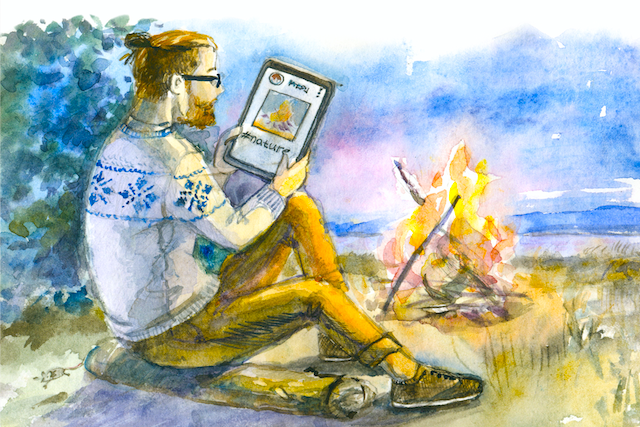
How to End Your Stress and Live a Life of Peace and Balance
“To experience peace does not mean that your life is always blissful. It means that you are capable of tapping into a blissful state of mind amidst the normal chaos of a hectic life.” ~Jill Botte Taylor
I used to be a stress bunny. Something was always driving me to want to do better—to be more, to have more, to compete and win at everything.
I thrived on pushing myself, thinking achievement was a great thing.
I was also restless. I always had to be going somewhere—doing something—never sitting still. I was bored, frustrated, and trying to find happiness outside myself.
One day after I graduated from college, I became totally paralyzed by a rare syndrome and landed in the hospital. The doctors couldn’t tell me when or if I would ever walk again.
I soon understood why I pushed myself so hard. I was running from myself so I didn’t have to face all the inner thoughts that were fueling my stress.
Suddenly I couldn’t even walk away. I still wanted to run, but I was forced to lie there—tortured by my own racing thoughts.
Talk about stress! This frightening experience taught me many valuable life lessons. One of them is that stress has no redeeming value. You can live a much happier, more successful life by transforming your stressful inner thoughts.
Tying Our Emotions to Specific Outcomes Trips Us Up
We’re all striving for certain things in life. Security, love, happiness, purpose, success, and independence are among our top goals, however we define these for ourselves.
We live our lives trying to find happiness. But, as John Lennon sang, “Life is what happens while we’re busy making other plans.”
Sometimes our disappointments can be extremely jarring, like when I landed in the hospital. Other times life is on a roll, and we become elated. But then things turn, and we’re headed for a crash landing. Life’s ups and downs can be so distressing.
When we feel like we’re being torn apart, we learn to protect ourselves by not getting our hopes up about anything. But then we’re living a life of resignation, which isn’t fulfilling, either.
Tying our emotions to all the ups and downs is like stepping onto a perpetual roller coaster, riding through multiple dips every day. Why live with that kind of stress when a better alternative exists?
How to End Stress and Achieve a Life of Peace and Balance
Wayne Dyer said, “Peace is the result of retraining your mind to process life as it is, rather than as you think it should be.”
If that sounds like giving up or giving in, that’s not what Dyer meant. He was referring to the flow of life. We can train ourselves to take advantage of this flow and stay in balance regardless of any temporary elation or dismay.
1. Loosen up on expectations and attachments.
When we expect something great to happen, we begin to set ourselves up for the roller coaster. We’ll be disappointed if it doesn’t happen, or happy if it does. Pair that with being emotionally attached to the outcome and wham—there’s an even bigger charge. You just stepped onto life’s roller coaster.
If you realize every situation offers growth and opportunity, you can more easily live without expectations. You can feel confident being open to whatever happens, knowing that you can appreciate good events and accept the challenge of things you feel are negative.
Some of us have a general fear that bad things might be just around the corner. Try to detach yourself from fear of what might happen and experience life as it unfolds.
2. Remember, nothing is permanent.
When life is great, we hope it continues forever. When we’re in a dip, we can’t wait until it ends. But nothing is permanent. That’s hard to remember when we’re stuck in a bad situation and hard to accept when life is good.
Reminding yourself that all things must end (and new situations will replace them) is a great way to begin detaching, and maintaining balance no matter what.
Being paralyzed and not knowing what was in store was terrifying. But I faced each day with hope that the paralysis would stop progressing. When it did, my doctor told me I had actually willed it out of myself because nothing he had given me had the power to stop it.
3. Catch yourself when you’re judging and evaluating.
Life just is. It’s easier to relax and meet it with a smile when you can. If you practice living and being in the moment, rather than evaluating how everything is affecting you, events will lose their grip.
Human beings experience physical pain differently than animals do. We exaggerate pain by thinking about how bad it is and how much we don’t want it. But we can get control of our pain by focusing on the actual size of the area it covers and how it truly feels. Observing instead of judging can help us see reality.
The same applies to events we label as bad. Next time, try to take your focus off of feeling bad long enough to assess the reality. Then shift your mind to finding a positive aspect of the experience or thinking about something good that is also happening.
For example, when I was still adjusting to being paralyzed and in the hospital, coworkers and neighbors who I thought were just acquaintances came to see me. I was amazed that so many people I hardly knew cared about what was happening to me. Experiencing this was a great comfort.
4. Use the signs life provides to guide you.
Life is like a flowing river. We can do three things when we jump in: We can go with the natural flow, letting the current carry us forward; we can try to go upstream; or we can hang onto a rock to try to stay put.
If we go with the flow, we’ll be carried along peacefully. If we try to go upstream, we’ll have a real battle on our hands. If we hang onto a rock, we’ll risk being battered against that rock.
Why not take the easy route and go with the flow? This doesn’t mean you can’t shoot for your goals. It means be aware of signs that your chosen path is on or off target. If you’re struggling too hard, try a different approach.
For instance, if you’re beating your head against the wall trying to convince someone to love you and it’s not happening, try finding a different wall with an open door.
5. Find the natural flow of life.
With more practice, you’ll begin to see solid evidence of the flow of life. Experiment to find it so you can really trust and let go.
Maybe you have far too much on your plate for one person to handle, and you always end up completely stressed over not being able to get things done. This is so common today.
Stress further slows your progress as you worry about whether you can ever catch up.
Try stepping back, relaxing, and taking a bigger view. Focus on believing that everything will get done in its own time if you take one step at a time. When you do this, you’ll find that things will fall into place with less effort on your part. You’ll experience the flow of life.
Every day, give yourself a simple list of two important things you want to work on that day. This will ensure that you get to those two important items, which likely isn’t happening if you’re reacting to all the little distractions. Doing so also allows time to handle most of those little items too.
I’ve done this for several years, and I’m amazed at how much more I accomplish, with less stress.
Ending your stress is in your power—what a relief!
—
I survived my ordeal with paralysis and healed perfectly in a few months. This experience was a wake-up call that taught me to stop stressing so much, appreciate life, and live it to the fullest. To do that, I slowed way down and learned what a gift it is to live in the moment, open to whatever life brings.
Like any major challenge, the experience showed me how strong I can be. This helped me reduce general fears of what might happen in the future.
It was a great reminder that even horrible situations are only temporary, and since I can learn so much from them, it’s better to look for the lessons than to focus on how bad things seem.
Life can’t always be just the way we want it. But if we go with the flow and work with each situation as it is, we will often be surprised that things turn out better than we wanted.
A balanced life that is far less stressful makes everything more enjoyable.
-
How Short Rests Can Make You Healthier, Happier, and More Productive
“Rest is not idleness, and to lie sometimes on the grass under trees on a summer’s day, listening to the murmur of the water, or watching the clouds float across the sky, is by no means a waste of time.” ~John Lubbock
Do you ever fear taking breaks?
Maybe you think that if you stop working, everything is going to come crashing down?
Sometimes it feels like you’re riding a train of momentum, and if you try to stop or slow down you’re just going to come off the tracks.
I know the feeling. Believe me, I used to feel the same.
I wanted so badly to achieve everything I could, and would beat myself up if I didn’t. Coffee would fuel my mornings, deadlines and adrenaline my afternoons.
At the time I wasn’t completely oblivious to the problems with my lifestyle. No matter how tired I would get, I still wasn’t sleeping well, and I’d often spend weekends thinking about work.
I could be out at lunch on a Sunday, only half engaged in a conversation with friends because I was already mentally rehearsing Monday.
I knew that I was always just a little bit too stressed. And to make it worse, I was confused, caught between the fear of slowing down and the fear of allowing stress to damage my health.
The problem is, it already was. I started getting headaches at work and waking up with chronic tension in my neck and my back. At a certain point I realised it just wasn’t worth it.
Finally I decided it was time to do something.
So I read a few books on how to better manage my energy. Once I started learning about how important breaks were to my body, mind, and well-being, I began to start taking them seriously. And I noticed something strange—I was becoming more and more productive and I had less stress.
So today I want to tell you something, and I really want you to listen.
You need a rest.
I know what your brain is telling you. How will the kids get to school? How will the bills get paid? I have three to-do lists—and that’s just this morning. How on earth am I going to find time to rest?!
Fortunately, short rests can become a part of anyone’s lifestyle, no matter how busy they are. And the truth is that if you don’t rest, you’ll never feel like your body is recharging properly.
You might collapse at the end of the day and fall into a deep sleep every once in a while, but that feeling of being refreshed and ready to take on the day when you wake up just won’t be there.
So Why Is Rest Important?
Our modern idea of success is to work longer and longer hours until we crash. Companies who praise the ‘hardest workers’ fuel this. It sets a precedent where everyone gives all their energy, but very little of their best work.
The result is that we have a society where rest is considered to be a reward, or even worse, indulgent. But this is not the case at all; rest is a cornerstone of a healthy, happy, and productive life. In fact, rest throughout the day is as important as food, water, and sleep.
Getting in Tune with Our Natural Rhythms
In the mid-twentieth century physiologist Nathan Kleitman discovered that our energy levels rise and fall in ninety-minute sleep cycles. What isn’t as widely known, though, is that he also found that we have ninety-minute wake cycles.
These are called our ultradian rhythms, and if we don’t take proper rests to manage our arousal, we end up less creative, our stress hormones stay elevated, and our dopamine levels can get out of balance—leading to mental illness.
What happens with most people is that as their focus starts to wane, they continue to push themselves to work. In the process they start to draw from their reserves of adrenaline and cortisol to get through the fatigue and maintain enough arousal to work. While some release of these stress hormones is natural, if you don’t rest enough to allow your body to balance them you’ll end up fatigued and unproductive.
So what you need to do is make sure you take mindful, non-work related breaks, at least every ninety minutes.
Here are some ways to make sure you take effective rests throughout your day.
Take decent size rests.
Rests should be at least five to fifteen minutes long. They should also include an activity that is completely detached from work or technology.
Some effective ways to rest are through mindfulness practices, deep breathing, yoga, light walks, or exercise. Creative activities are also a good way to clear your mind, such as sketching, free-writing, or journaling.
Add it to your calendar.
Treat your commitment to rest with as much respect as you would any other daily task. Put the restful activity in your schedule or to-do list and try to find an accountability partner to make sure you stick to them.
Time your work.
If you can time your work and follow the natural cycles of your body you’ll immediately see a huge improvement in how you feel. Try to stick to the advice above and do no more than ninety minutes of straight work without a break.
Get to know yourself.
We all have certain periods during the day in which we experience dips in our concentration. For a lot of us it is between 2 and 4pm. This is a great opportunity to take a slightly longer rest, such as a short nap, if the option is available.
Remember, rest isn’t an excuse to work less, it’s a natural method to help you work better, and more importantly, feel better!
-

How to Overcome Fear and Live Your Dream by Changing Your Brain
“Too many of us are not living our dreams because we are living our fears.” ~Les Brown
Fear used to be the driving force in my life.
I didn’t even know that I was living in fear at the time. I hid behind labels like “stress” and “anxiety,” but those are just clinical terms for fear.
Truthfully, my dreams terrified me because they seemed way too big to achieve. At the time, I wanted to excel in my new career, get into the best shape of my life, and create meaningful relationships—and I felt like I had a long way to go.
So naturally, I got really stressed out.
And why, oh why, did it feel okay?
It seems like stress is such commonplace now that we think we’re slackers if we don’t feel tense all the time. But that’s just our fear finding excuses to stick around.
Once I finally realized that stress was just an option, I started looking for a way through it. And I found the answers in a simple Japanese philosophy called Kaizen, which is the practice of continuous improvement through small, consistent steps.
I learned that whenever we’re scared about making change it’s because the steps we’re taking are too big, and these leaps of faith will trigger a life-saving biological response: fear.
But luckily, there’s a way to turn that fear off, and it all starts with your brain, specifically your amygdala.
Shut Down Your Amygdala by Asking Tiny Questions
Your amygdala plays a heavy role in your fight-or-flight response, a physiological reaction to something threatening (like those big dreams of yours).
When you come across a scary thought or situation, your brain will enter flight mode and your amygdala will literally stop your brain from producing new thoughts. Most artists know this as creative block, but it’s really just fear.
So your big dreams aren’t the problem—your amygdala is. And you can turn your amygdala off by asking tiny questions.
When I decided that I wanted to excel in my career, I didn’t start out with a question like “How can I help my company revolutionize the world?” No. That question would terrify even the most capable person.
Instead, I took a step back and asked tiny questions. I thought about things like “What one benefit do I hope to deliver to our audience?” Or, “What can I do for ten minutes today that will bring me closer to completing this project?”
Tiny questions like that aren’t intimidating at all.
In fact, they’re quite doable.
Eradicate Fear by Taking Small, Relentless Steps
Once you start asking tiny questions, then you can start taking tiny actions.
The key is to pick things that are small enough to keep your amygdala from getting in the way.
And that’s why New Year’s Resolutions never work. For example, on January 1st we decide that we want to lose twenty pounds and completely give up chocolate; so we restrict our calories and give up our vice all at the same time.
When you put yourself up against a mountain, the big steps you’re forced to take will trigger your flight response and ultimately lead to stress and burnout.
If you want to achieve a big goal, you have to break it up into tiny steps.
I used this tiny-step tactic when I started focusing on becoming healthier. I didn’t do anything radical—although that’s how it started out, and I had to fail over and over until I realized radical wouldn’t work.
Instead, I took the slow and steady route, and it was brutally slow. It took me about two years to really gain momentum, but it trained me to reject instant gratification and just go slow.
First, I started avoiding processed foods, and I focused on that until I mastered it. Then, I started focusing on only eating until I’m full, and I focused on that until I mastered it.
Then I started going to the gym two days a week and I kept it up until I gained the momentum I needed to go four days a week.
I didn’t realize what I was doing at the time, but I proved to myself (and hopefully to you) that small steps are much more successful at making big change.
And I’ve become the healthiest version of myself because of it.
Get Excited—It’s a Fearless Emotion
But what about the people who don’t do tiny things? What about the people who do really big things and do them exceptionally well?
These people have a very special talent: They know how to get really excited about their goals, and excitement is another way to keep your flight response off.
So if you want to successfully achieve your dreams, you need to get excited about them! It will help you avoid fear and take projects on with enthusiasm.
For example, my boss just gave me approval to write a book, which is something I’ve always wanted to do, and I was absolutely thrilled!
Instead of letting myself become overwhelmed by the size of this project, I chose to get over-the-moon excited about it, which helps me stay focused and creative.
Have you ever felt so fired up about an idea that you can’t wait to start working on it? If so, don’t ever let that feeling go. It will propel your dreams faster than anything.
But if you can’t make the excitement last (and that’s okay—fear likes to creep in any chance it gets), then try using visualization.
Train Your Brain with Visualization
To get yourself to do something that scares you, you need to visualize yourself doing it first. And you need to visualize it over and over because repetition is how your brain masters new skills.
And if you consistently visualize it every day (and all you really need is just thirty seconds daily), you’ll start to mentally master the action. Then all your body has to do is follow through.
The key to effective visualization is to involve excruciating detail.
You need to visualize what it’s going to look like just as much as what it’s going to sound, feel, and emote like. You also need to imagine how you’ll react to different possible scenarios, including the worst possible outcome.
What will you do if you fail? What will the alternative actions be? How will you feel?
When you mentally train yourself to deal with potential failure, you won’t give up when that bump in the road actually happens.
Apply These Concepts to Big and Small Goals
You can use visualization to accomplish anything and everything, even the super small stuff, which is where everyone should start.
One of the best ways I’ve used visualization was to mentally train myself to say hello to strangers. It’s such a small thing, but that’s how I knew it could make a profound difference in my life.
Saying hello to strangers was always something that I wanted to feel comfortable with, but I felt this unshakable resistance to it. And it all boiled down to being scared of rejection—something we people pleasers fear most.
Ah yes, I was terrified of how I would feel if people didn’t say hello back. It’s so silly and almost petty, but that’s how my mind was programmed at the time.
So I started visualizing myself doing this super simple task that I was afraid of. I would visualize myself saying hello to strangers in the supermarket while smiling and feeling whole (i.e. not seeking their approval).
I would also visualize the worst possible outcome, which is that they ignore me (sooo scary, I know), and I would visualize how I felt when that happened: still smiling and still whole.
Then I took this visualization into the real world.
I started smiling and saying hello to strangers, and I felt genuinely happy while doing it. Sometimes it would turn into engaging conversation, other times it would turn into absolutely nothing. But no matter what the outcome was, I was always smiling.
Using visualization this way helped me gain the momentum I needed to create meaningful relationships in my life. Today some of the most amazing people I know were once strangers that I simply said hello to.
Sometimes we resist small changes and small habits because they seem too easy to make a profound difference in our lives. But I challenge you to reject that notion.
Every mental, physical, or spiritual block you’re facing can be softened with the Kaizen mentality. Life will become a beautiful opportunity to create something meaningful, and you can do it with confidence and ease.
What passion project have you been putting off?
And what tiny action can you make today that will get you one step closer?
-
What Causes Panic Attacks and How to Stop Them for Good
“You empower what you fight. You withdraw power from what you release.” ~Alan Cohen
Panic attacks can seem to come out of nowhere, without any warning. There is no obvious logical connection between a panic attack and what is happening around us at the time they arise.
Is it really possible to be free of them, without medication? In my personal experience, the answer is yes. I used cognitive, emotional, and physical methods that eradicated my panic attacks.
What Causes Panic Attacks?
The short version of my story is that I experienced a less than peaceful upbringing and had a fair amount of anxiety and panic attacks as a result.
A trusted therapist explained to me that panic attacks develop out of a psyche that is overloaded with repressed feelings. Panic attacks are like the psyche’s release valve.
My earliest memories were comprised of the adults in my life walking out the door, seemingly for good. Sometimes they threatened to leave unless I promised to behave. As a toddler, I believed they were absolutely leaving and never coming back. There were many such incidents, leaving me with a lack of security or trust in my environment.
In addition, there was no room for my emotions in my highly charged toxic environment. Even quiet times held no respite because I knew they were only the eye of a storm that would soon roar to life again.
As a result, I automatically developed a stance much like a soldier in battle. When in a storm or bracing for the next one, I remained locked in survival mode, shutting down the expression of authentic emotions.
As my high school days were coming to an end, I finally managed to move away from my family and find a place of my own. It was small, I had no money, and I was working all the time, but I had finally found a drama-free environment where I could learn to let my guard down.
Retrain Your Brain
Even after a long battle is over, many of us continue operating as if we are still in it.
We remain in survival mode, automatically repressing emotions without even realizing it. So, panic attacks can continue after the stress that caused them in the first place is long gone.
It isn’t the original stressful event that caused the attacks anyway—it was the lack of processing the fearful feelings surrounding the stressful event.
You can actually retrain your brain to realize it is safe in the present moment, and that the past trauma is vastly skewing your perception, which is why you are panicking.
A really effective exercise is to write down all the fears that are voiced during a panic attack. Then, write down as many reasonable responses as possible that refute those fears.
This exercise actually trains your brain to form new neural pathways based in reality rather than in the skewed unprocessed feelings and beliefs that come from trauma. A terrific detailed guide for these cognitive exercises is in the book Feeling Good, by Dr. David Burns.
As a teenager I worked with a trusted therapist on this. It takes time, but it really does change your perception of things. Each time a reality check proved my fearful thoughts false, I felt stronger and more positive in my interpretation of any situation.
Feel It To Heal It
If you’ve had panic attacks for a while, you’re probably sick of them. You may even tell that panicked voice of yours to just shut up and quit bothering me! However, if unprocessed feelings are what caused the panic attacks in the first place, then expressing and processing them is what will eventually cause them to disappear.
Once I realized that my panic attacks were rooted in consistent abandonment by the adults around me, I could allow that very wise and mature part of myself to listen closely and compassionately to the scared toddler inside, who got spooked anytime something resembling abandonment would arise in my life.
Instead of telling that panicked voice to be quiet, I learned to ask, “What are you afraid of? What do you need? How can I help?” Listening to that scared part of your younger self without judgment finally gives her a voice—no matter how crazy, stupid, or immature that voice may seem.
Only then can the adult part of ourselves provide the comfort to that toddler that should have been provided, many years ago. We could double check to make sure no one is leaving us or being taken from us—or that if they are, knowing that we are going to be just fine.
Act as you would want a parent to act when their children come to them, insisting there is a monster under their bed. It is comforting when parents indulge their children in checking that there are no monsters there rather than insisting that their children be quiet and go back to sleep.
You can be the comforting adult now that you really needed back then.
It is also helpful to remind the scared younger version of ourselves of all of the support and resources we now have as adults.
Adults can get jobs, earn money, drive cars, decide where to live, educate ourselves, form relationships, and break off relationships. These are all tools adults have to provide themselves with the safety and security they need, so, no matter what is happening in the present, we will never feel as helpless as we felt as a child.
Giving my inner toddler a voice finally allowed her to grieve the loss of a safe and stable environment—something I never had space to do before.
Every now and then I would make a point to sit down, pop in a sad movie, and have a good cry for the sole purpose of listening to and comforting the toddler who needed to grieve the absence of a secure place in which to grow up.
Employing these methods on a regular basis gives the scared, younger version of yourself the opportunity to express fears and needs regularly. Responding to that child in a compassionate way ensures that he or she will not have to scream to be heard in the form of a panic attack.
Reprogram Your Body
I had always assumed that one had to have calm thoughts and emotions in order to feel calm physically. It turns out that calming the body is a path to calming thoughts and emotions. As someone who is generally stuck in my head, this was a very foreign concept to me, but one I was willing to explore.
I started doing bodywork with a therapist, getting a massage occasionally, and taking yoga. The point of the bodywork was to reverse my body’s bracing reaction to stress. Intellectually, I could understand that concept, but once I put it into practice, over time, I fully realized this concept.
Being in a physically relaxed state connects every part of us to what is real rather than what we fear. The more often we can bring ourselves back to a physical place of relaxation, the more connected we are to the peaceful perspective instead of the skewed fearful perspective that fosters panic attacks.
Keep At It
Eradicating panic attacks does not happen overnight. Not even close. I found it impossible to picture a panic-free life when I was in the midst of my process, but it did happen after about two years of all of these efforts.
It’s important to be compassionate with yourself and the process for taking so long. It’s also important to engage in extreme self-care during all of it so you don’t get exhausted.
Remember that as strong as your fearful thoughts may seem, they are not your intuition. They are the reaction of your psyche to feelings that have been silenced. As painful as this process is, it is nevertheless an opportunity for healing a wound that has been buried for too long.
Give yourself and your body all the tools possible, cognitive, emotional, and physical, to support your healing.
Have you overcome panic attacks without medication, and if so, what methods did you use?
Calm man image via Shutterstock
-

Why Stress and Pressure Can Actually Be Good for Us
“A diamond doesn’t start out polished and shining. It once was nothing special, but with enough pressure and time, becomes spectacular.” ~Solange Nicole
It’s one of the last days of summer, and I wake up to my mother screaming.
I’m ten, and I pull off the covers and sneak to my door. Opening it slowly, I peek out and look down the stairs.
Men have stormed into our house. Ignoring my mom, they head into the living room, pick up the sofa, and throw it out on the lawn. They do the same with the dinner table and the rest of our furniture. But they’re not thieves; they’re not here to rob us.
They’re here to evict us.
There was no notice mailed to inform us that they’d be coming, no note plastered on the door.
Our first notice was the ding dong of the evictors ringing the doorbell.
As a kid, I had no idea what to do. The amount of stress was overwhelming. I didn’t cry. I just sat down on the stairs, held my knees to my chest, and watched, numb.
All our rent had been paid on time, but the landlord pocketed the cash instead of paying the mortgage. We spent the next six months homeless, living in a motel.
It was one of the best things to ever happen to me.
It took me twenty years to realize it, and when I did, I grieved. I had forgotten about it for a long time, but when I remembered the details and how the eviction had shaped me, the tears came.
When you’re evicted like that as a kid, it changes you in a funny way. It creates a lot of stress, and a lot of fear.
For a long time I lived in fear that people might come in at any moment and take everything from me… but I didn’t know it. I just stopped trying at a lot of things.
Teachers at school would tell my mom I needed to “apply myself.” I didn’t work toward much; why bother when all your progress might be snatched up the next day?
Fear can hold us back without us realizing it. We might not call it fear, but maybe we say we’re “tense,” “feeling nervous,” or “stressed.” They’re often the same thing. It’s just a shadow hanging behind us, following us through life.
But what if it doesn’t have to?
When we were evicted, I didn’t know what to do and sat on the stairs. I froze.
But what about my mom? The source of the stress was the same for both of us, so did it make her sit down and give up?
After the initial shock, my mother went to work. She was a single mom taking care of her brain-injured brother and me. She had no time for a breakdown.
She picked up the phone and called friends and relatives for help. Out on the lawn she boxed up what she could and organized what we needed to get through the next few months in our motel room. Movers came and took the rest into storage.
The stress and fear my mother felt didn’t paralyze her. It motivated her to action.
The Power of Stress
For a long, long time after, I avoided stress as much as I could. I avoided it through school, and in college always took light class loads so I would never feel any pressure.
Like those movers had done to us, I evicted my stress.
But my life, empty of stress, was also empty of meaning. The two go hand in hand. If you want to life a meaningful life, stress is going to come with it.
We only feel stress toward the things we care about. As Dr. Kelly McGonigal, a health psychologist at Stanford, says, “Stress only arises when something we care about is at stake.”
In college, living a stress-free life, I started to feel worthless. For six months, I hated myself.
Whenever I had class, I rode a train to and from campus. The train tempted me. All I had to do was step in front of it. Easy.
I held myself back, and I don’t really know why. The self-destructive feelings didn’t go away until I started putting myself under pressure. For me, it was writing. At the time I wanted to be a novelist, but wasn’t writing.
Starting to write put pressure on me. That gave me stress I needed. The depression lifted, and I started feeling happy again.
Give Your Stress a Home
Stress and fear are often the same response, and we can’t truly get rid of them (as much as we might like to). Being human, they’re always going to be there.
Being evicted was one of the best things to happen to me, even if I didn’t realize it for years.
On one level, living in a motel room for six months brought us closer as a family.
But on the other, it taught me how to work with my stress and fear (even if it took twenty years to learn it). It taught me to give my stress and fear a home.
We can run from our stress and fear all we want. It’ll chase after us, never letting us escape.
We don’t break free by getting away. We break free by turning around and seeing the stress and fear for what they really are.
They’re not there to hold you back; they’re there to point the way you have to grow.
I started looking at my stress and fear differently. Whenever I felt anxiety, stressed, or afraid, instead of seeing those feelings as warning signs to run away, I saw them as signs pointing me in the direction I needed to go to grow as a person.
Become like Diamond
Diamonds are one of the hardest materials we know of. They don’t get that way by sitting out in the sun.
Diamonds are formed under intense heat and thousands of pounds of pressure.
Your diamond self is waiting for you. Your stress, your fears, they don’t stand between you and what you want. As uncomfortable as they may feel, they’re the lanterns lighting your path.
You don’t have to leap down that road; you don’t even have to take a running start. You just have to start walking that path, one small step at a time.
Stressed woman image via Shutterstock
-
4 Tips for Managing Stress from a Combat Veteran
“Buddha was asked, ‘What have you gained from meditation?’ He replied, ‘Nothing.’ ‘However,’ Buddha said, ‘let me tell you what I lost: anger, anxiety, depression, insecurity, fear of old age, and death.’”
“I never get stressed.”
I used to say and think this all the time when I saw someone freaking out about an upcoming test, a bad grade, relationship problems, or a boss or coworker.
I had a false sense of being “carefree” because I wouldn’t get stressed over the trivial things that most people did.
I was a “battle hardened” soldier recently back from a deployment in Afghanistan. When I saw people worry about those inconsequential things, I would think to myself, “Please, you have no idea what it means to be stressed.”
As it turns out, my understanding of stress was wrong. It’s also wrong for a lot of people who believe they aren’t stressed.
It wasn’t until I started meditating three years after my deployment that I started to realize that I was stressed—just in a different way and from different things than most people.
After meditating every day for a couple months, my “ah-ha” moment finally hit me.
I was sitting in traffic, late for an appointment (I hate being late), watching all the people around me freaking out. For once, I was calm and collected sitting in that traffic, thinking, “Why freak out about something I can’t change?”
That was when I really started to see the benefits and began reflecting on my past.
I realized that since returning from my deployment, I had become very irritable, not a great people person, and had very little patience.
The reaction time between something happening and my response was almost immediate.
If my girlfriend confronted me about a problem, I would immediately either get defensive and blame her or just shut down and ignore her.
Literally all of this started to change, just from consistently meditating for eight minutes a day!
My life has been drastically different since then. I am much more calm and collected. I don’t get upset over little things, especially if they’re out of my control.
My response time to a stimulus has greatly increased so I can choose the type of reaction I have and think about what to say.
My relationship with my wife (the same girlfriend from before) is incredible, and we know how to communicate like mature adults by allowing time to see the reality of a situation and choose how we respond to it.
I’ve brought about an awareness that allows me to continually grow as a person and manage the hidden stressors that often go by unnoticed.
This is just part of a long list of benefits from meditation, and I could go on and on… like how nice it is to be able to travel in third world countries without constantly keeping an eye out for ambushes or looking for my next piece of cover (a habit I had from deployment).
Although it’s great to talk about meditation and its benefits, what I really want people to understand is that there may be a lot more stress in your life than you realize, and when you meditate you become aware of that stress and are able to shift how you respond to it.
When it comes to this type of stress, the older you are, the worse it gets.
If you have ten, twenty, thirty-plus years of having negative experiences without intentionally prioritizing positive ones, you are much more likely to easily become stressed and have a negative view of the world.
The more hidden stress you experience, the more efficient your body gets at activating your physiological stress response, commonly known as “fight or flight” mode.
Ask yourself this: Were you, or someone you know, once “carefree” but are now afraid of heights, flying, and think natural disasters and shootings are about to happen whenever you leave home?
Well, you can thank your body’s efficient adaptability for that. The more stressful situations you have (and yes, watching all the negative things on the news is stressful), the more your body thinks it needs to switch into the fight or flight response to keep you safe.
That means your brain becomes more efficient at recognizing even the smallest of stressors, and less efficient at calming down or noticing positive things.
For me, it was a condensed time period that required a lot of worst-case scenario thinking. When you are constantly exposed to driving on roads with IEDs (improvised explosive devices), that stress response will condition your physiology to tell you that roads are a very dangerous place.
The same thing happens if you only watch the news; you’ll have a very misconstrued perception of the world, and you’ll be constantly feeding the bias your brain has for negative experiences.
Evolutionarily, your brain has needed to remember negative experiences to protect you much more than it needed to remember positive experiences. It takes time to undo this wiring of neural pathways that your brain has put in place. But it can be done, and meditation is a great way to build new “positive pathways” in your brain.
There’s an enormous amount of ways to meditate so I’ll share what I’ve personally done and am still doing, in the hopes that it will help you as well.
1. Basic mindfulness meditation
I started my practice with a book called 8 Minute Meditation. It takes you through a series of different styles, most of which I liked. But from this I continued to do a simple meditation every morning of focusing on my breath. Just doing this lead me to the “ah-ha moment” I mentioned earlier.
2. Meditation apps
I also use a couple different apps now that I like to use mid-day or at night. In particular, I like the “loving kindness” options, also known as “focus on positive”. This is perfect for trying to counteract the negativity bias and rebuild positive neural pathways. There are a lot of options out there, including Calm, which is free.
3. Reading
This may not be thought of as meditation, but if meditation can be doing one task effortlessly with focused concentration on that one particular task, then reading is a type of meditation for me.
I easily enter what’s called “flow state” when I read. Not only that, I’m reading positive things which helps shape the way I think. The other end of this could also be “not watching the news”, just like I don’t like putting junk in my body by eating it, I don’t like putting junk in my body by watching/hearing it.
If reading isn’t quite your thing, then try listening to podcasts. Preferably podcasts that lift you up and feed your brain with positivity and learning. These can be easily listened to on your way to work, at the gym, cooking, walking, or you can just sit down and listen.
4. Walking
Walking is such an undervalued way to de-stress. I love walking for a lot of reasons, pretty much any major life decision my wife and I have made in the past few years has been made while walking.
In terms of meditation, walking meditation is an awesome practice. It’s a great way to bring about your awareness while getting the benefits of moving your body. Odds are, you walk at some point in your day. So if you’re strapped for time, use walking from the car to work as time to practice mindfulness.
After hating being late to the point of stressing out, I now tell myself, “I’m exactly where I’m supposed to be. In the here, in the now.” This has helped me drastically. Check out Thich Naht Hahn’s How to Walk for more.
There are a number of other ways to help you de-stress and become a more relaxed, positive person. These are just some ways to get started and feel less anxious, worried, and negative.
Start to use some of these strategies and it’ll feel like a weight has been lifted off your shoulders that you didn’t even know was there.
Meditation vector image via Shutterstock
-
12 Ways to Turn Your Crippling Stress into Happiness
“More smiling, less worrying. More compassion, less judgment. More blessed, less stressed. More love, less hate.” ~Roy Bennett
You are a slave to stress.
I can relate. Stress crushed my life and dreams.
I started a business and faced intense criticism over this decision.
Everyone was sure I’d fail. My friends and family attacked me while I was combating my own self-doubt.
My stress level was insanely high.
Then the worst happened. My business failed and I lost all my savings. I was crushed.
It took a long time to finally accept this failure.
Today, whenever I work, stress still lingers in my body like the shadow of my dark past. But now I know how cope with it. Let me teach you how.
1. Consider getting a pet.
Sharing negative feelings with close friends can significantly reduce stress. Studies show that spending time with pets relieves stress in the same way. Also, when you’re accompanied by a pet in stressful situations, it prevents your stress level from rising.
I have a cat. He was my only friend when nobody was supporting me. I’m grateful to have him by my side.
If you don’t have a pet, consider getting one. It may change your life in surprising ways.
2. Stop dwelling on your problems.
Kant State University had an eye-opening discovery. Apparently, the more you talk about your problems, the more you’re likely to suffer from depression.
Of course, it’s healthy to share what you’re going through. But when you’re mindlessly dwelling on your problems, it doesn’t solve anything.
I never talk to anyone about my problems because no one supports me. This propels me to actively seek solutions instead of blindly mulling over things that could stress me out.
If you’re fortunate to have supportive friends, do seek their support. What’s important is that you don’t just whine about your difficulties, but actually act.
3. Shower yourself with gifts.
You’re being brutally hard on yourself.
You take success for granted. Worse, you exaggerate failure.
When you’ve reached a goal, you move on nonchalantly. If you don’t, you torment yourself mentally. You scold, devalue, and deprive yourself.
I’ve been there. I know this is self-destructive.
Reward yourself for reaching goals. Research shows that when you’re rewarded for an action, you’re likely to repeat it. This is called a positive feedback loop. It’s much more effective than punishment.
If you gain stress from failure, without happiness from success, the only outcome is stress.
If you earn happiness from success, without stress from failure, the only outcome is happiness.
4. Exploit bad habits to your advantage.
I used to run away from problems. When stress hit, I’d instantly give up on whatever I was working on and resort to escapism.
You may have experienced this too.
Escapism may entail over-eating, indulging in unhealthy foods, TV, Internet, porn, smoking, and drinking. Over time, they form destructive habits.
Exploit escapism by using it as an anchor.
Pick healthy alternatives, such as meditation, stretching, listening to motivational talks, napping, or light exercises.
Before you escape, do thirty seconds of an alternative first.
Say you’re angry with your boyfriend. You think you need to eat some junk food to calm down. Before that, meditate for thirty seconds. Then you’re free to indulge.
Do this for two months. Then increase good habit time weekly, until the good habit completely drowns out the bad.
This way, I built new automatic responses to stress and broke my escapist habits completely. Now when I feel stress, I either take a short nap or move along to uplifting music.
After a few minutes, I’m recharged and motivated to face new challenges.
5. Unleash your anger (and cry yourself to sleep).
Don’t always try to appear perfectly calm. You need to express difficult emotions—anger, for example.
Discuss your frustration with friends. Journal your rage and analyze it objectively on paper. You can even confront the object of frustration assertively.
Remember to release your anger under control. Don’t throw tantrums or yell impulsively. Express it as a means of problem solving.
This applies to other difficult emotions, as well, like sadness. It’s healthy to express these “negative” emotions.
6. Reach great heights by letting yourself suck big time.
I’ve learned to accept my devastating failure. I have to. Otherwise, I’d be completely destroyed and discouraged from pursuing anything ever again.
Some people cannot accept mistakes. Everything has to be perfect from the start. They think others will look down on them if they appear to be flawed.
These people are frequently stressed.
The happiest and most successful people focus on improvement. They love mistakes and flaws, because they see them as opportunities to grow.
Learn from these people.
Have lofty goals but have realistic standards. Don’t judge yourself based on the results of your actions. See them as feedback and seek improvement from there.
7. Be shameless about not doing things.
You don’t have the time and energy to do everything you want to do.
Inevitably, things are left undone, and you beat yourself up. This creates stress.
Consider what’s truly important to you. Kill the rest shamelessly.
This way, you gain more time and control over your life while making more progress.
I focus only on my career and my relationships. I’ve postponed other ambitions, like becoming a martial artist and a calligrapher, because they’re comparatively unimportant.
8. Declare war on useless crap.
I’m clearing up my apartment. It’s now clean and spacious. When I’m inside, I feel more relaxed, concentrated, and in control.
Psychologists found that clutter competes for your attention and overloads your brain. This makes you stressed and even damages your ability to think.
Trash this useless crap ruthlessly.
Begin with discarding one item per day, for two months. It’s easy, and it trains you to detach emotionally from your possessions. Later, you can expand to junk more items daily.
9. Learn how to use your body wisely.
I always keep my back straight and try to appear confident.
Why? Because posture has a direct relationship with your mood and behavior.
When you position your body in a natural and comfortable way, you feel less stressed.
Also, when you appear confident, you feel more powerful and in control. Confidence balances out stress.
Read books on correct posture and body language. These skills not only reduce stress reliably, they also keep your body healthy.
10. Extract everything from your overloaded head.
When your mind is overloaded, you feel agitated, you malfunction, and then you collapse.
Extract all your mind clutter in one place, out of your head.
Observe your thoughts for five to fifteen minutes, and let information resurface from your mind.
You’ll be surprised how much stuff pops up. Things you have to do, things you’re waiting to do, open loops, creative ideas, long-term plans, and many more.
Write down everything as soon as they come up, no matter how trivial they may seem.
This helps organize your life and clears even the smallest mind clutter. When you can see everything on paper, you’ll find them more actionable. Life becomes less overwhelming.
I personally prefer pen and paper for this. A sophisticated to-do system works too, but avoid spending too much time on that. You might create stress in the process.
11. Learn from the Chinese: the spectator’s eyes.
Stressed people are masters at exaggeration. They magnify every little problem.
You can’t see the big picture when you are caught up inside a problem. Then you begin to exaggerate and freak out.
A Chinese saying goes, “The spectator’s eyes are always clear.”
Ask a friend for his honest opinion on your problems. This will likely help you recognize when something truly isn’t a big deal. Learn from spectators, and analyze your problems objectively. Then you can see problems as they are, and act wisely.
12. Laugh: meet apocalypse with humor.
I watch comedies a lot. They give me a brief escape from my stressors.
One day I had a revelation.
Visualize these scenarios: bombing a job interview, getting fired, being unemployed, getting robbed, getting sued, getting rejected by the opposite sex.
Disasters. But they’re all funny in comedies. There’s something funny in every problem.
Maybe you burned your food. Maybe you dropped your phone into the toilet. Have a laugh!
Once you can do this, you’ll completely turn your perspective around. You’ll see the positive in every situation, and face problems happily.
This Second, You Can Transform Stress Into Happiness
It’s not impossible. Many people have done it.
Pick one lesson that looks appealing to you, do some research on it, then act.
You’ve let stress dominate you long enough. Now is the time to live differently.
Do you want to stay crippled by stress? Or do you want to turn life into happiness?
The choice is yours.
Happy meditating woman image via Shutterstock
-
What Anxiety Can Do to Your Body & How to Calm Your Mind
“Our bodies communicate to us clearly and specifically, if we are willing to listen.” ~Shakti Gawain
I woke up screaming—not just any scream, but a blood-curdling sound that could have woken the dead.
My throat was searing with pain, and my pajamas were stuck to me from being so damp. After a minute or two, my heartbeat slowed and I lay back down, still shaking. It wasn’t a nightmare; I couldn’t even remember what I had dreamt.
This behavior sounds weird, but it was not an infrequent episode in our house. The week prior I’d woken up in the bathtub.
My mum would often say, “Do you remember what you did last night?” I would have no recollection whatsoever—unnerving and also frustrating.
I was experiencing what doctors refer to as “night terrors.” As a child it was just the norm—sleep walking and waking up screaming in the middle of the night. It’s only looking back now that I can provide a logical explanation for it.
You see, I had a fairly average upbringing, nothing traumatic about it, except I was always a worrier.
I felt different from other children and liked to keep myself to myself. There I would be in the playground reading a book, while others played. I was a bit of a loner and I got singled out for it. I was also quite plump as well.
The Beginning of My Anxiety
I went through many changes with my parents getting divorced, moving a few times, and both my mother and father remarrying again very quickly, all within a short space of time.
I took it all in my stride and never consciously felt any real stress or tension—or so I thought.
In hindsight, I am well aware that my brain was in constant overdrive and found a way of dealing with the anxiety that I had managed to suppress. This all came bubbling to the surface subconsciously during times of deep sleep.
Although from time to time I still wake up screaming, the sleepwalking has stopped and the night terrors have subsided. What helped? I’ve learned how to calm my mind, and now I no longer have heart palpitations and panic attacks during the night.
The brain is so powerful, and the one major organ in the body that cannot be fully explained. Through my own personal experiences, have discovered ways to work with my brain so I have more control over my thoughts and behavior.
I will elaborate on this, but first I would like to tell you another story to prove just how powerful our minds are.
The Mind/Body Connection
Last year, one of my closest friends began to feel tingling all over her body. It would come and go in waves but was mainly focused on her hands, feet, and back.
I’d known my friend for years, and she always struck me as confident, strong, and ‘together.’
For months she suffered these symptoms and saw several doctors, consultants, and neurologists. She had numerous blood tests and scans, just to be told there was nothing wrong with her.
My friend was at her wits end, constantly on Google and convinced she had a severe neurological condition such as MS. Nobody believed her and everyone (including myself) assumed she was being a hypochondriac.
My friend did not give up. She continued in her pursuit, getting a third, fourth, fifth, and sixth opinion—as many as it would take until someone could give her an accurate diagnosis and actually help her.
Eventually, she found a specialist and neurological consultant in London, who explained that she did have a neurological condition, but it was more of a disorder than a disease.
My friend had an unstable childhood and always felt unloved and unwanted. Having carried around many insecurities for years, and having excessively worried about everything, she had developed a disorder whereby her nervous system was in a constant state of shock, known as the “fight or flight mode.”
She was diagnosed with a psychosomatic illness and then referred to a counsellor.
In laymen’s terms, there had been a severe psychiatric disturbance in my friend’s brain, which had built up over years primarily due to stress and anxiety. With no means to channel or express these feelings, her nerves had become highly sensitized, mimicking symptoms similar to those of MS and Parkinson’s disease.
Also known as Neurological Anxiety Disorder, this disease affects many who are not even aware they have it.
For example, you could be suffering from severe headaches. You go to work every day to do a job that you detest. Eventually, you leave this job and find another one. Simultaneously, your headaches stop. It wouldn’t occur to many individuals to connect the dots.
There are countless of examples just like this, which affect thousands all over the world, every day—all because of built up stress.
I’m sharing my friend’s experience and mine because I believe it is important for such conditions to be openly discussed and understood.
Although liberal in most parts, we still live in a society that thinks a mental condition defines the individual as being mad and unhinged—it’s a taboo subject. Unfortunately, this compels victims to suffer in silence due to the fear of being judged.
Calm Your Mind
We all have our emotional issues to bear. During the whirlwind of daily life, it is paramount that we learn to relax more frequently. Relaxation and peace are qualities that are neither expensive nor difficult to obtain, if we prioritize and make time for them.
The best time to relax, I find, is in the evening, a few hours before I go to sleep. I have a routine that has helped me to have more of a restful sleep, enabling me to feel refreshed when I awake in the mornings. Very straightforward, it can be applied by anyone.
Three Tips to Relax Before Bed
1. Unplug.
At least two hours before sleep, stop watching TV, using your phone, or engaging with any technology. Get into the habit of winding down by reading, listening to relaxing music, or having a hot bath. Any creative hobby is good, as long as it’s relaxing.
2. Keep a journal.
Reflecting on your day and writing about your problems, worries, and irritants can help unload your mind so you can go to sleep with a clearer head.
This process can also help you find solutions. Try writing all your problems in order of priority and deciding how you will tackle them, one by one. This will give you a sense of control, help you seeing what is really important, and enable you to put the smaller worries into perspective.
3. Meditate lying in bed.
Here’s a simple technique I use: Imagine being in your favorite place. Travel to the most idyllic location or scenario you can picture in your mind’s eye. Visualize all your worries and concerns becoming more distant, a world away from you and your blissful, special place.
These steps are simple but extremely effective.
So often we go to sleep emotionally charged, with our brains still buzzing. Finding time daily to unwind prevents long-term anxiety, stress, tension, and, yes, illnesses.
A restful sleep has a big influence over our brain activity and determines how focused and energized we are physically, mentally, and emotionally the following day.
Incorporating Serenity into Your Day
1. Practice deep breathing.
Our breathing and physical state have a huge influence over our mental state. During the day, when you are feeling overwhelmed, get into the habit of stopping and focusing on your breath.
Take five minutes and do nothing—be still, try to quiet your thoughts, and focus only on your breathing; in through your nose, out through your mouth. Do this a dozen times and you will feel better and more composed.
2. Tap your way to peace.
Tapping several times on pressure points such as your wrists, the inside of your finger tips, neck, and chest can also help relax you. While tapping, imagine you are sending tranquil energy directly into your body. It only takes a few minutes, and you can do it anywhere and as frequently as you like.
—
If you believe that you suffer from an abnormal level of anxiety or have experienced symptoms like my friend’s or mine, is important that you seek help.
We all need to de-stress and focus on becoming more balanced. If we don’t get into the habit of fostering inner peace, we could experience severe consequences that take a lot of time to rectify in the long run.
We need to nourish our minds by providing the tranquility it needs to function efficiently and proactively.
Meditation silhouette via Shutterstock
-

A Relaxing Yoga Practice for People with High Stress and Low Energy
“We must always change, renew, rejuvenate ourselves; otherwise we harden.” ~Goethe
Nine years ago after I had my twins, I was eager to get back into a routine of a weekly yoga class and daily home practice. However, I didn’t account for the soul-sapping fatigue I felt as a new sleep-deprived mum!
I simply did not have the energy or ability to leave the house for a satisfying active class. And truly, I did not want to venture far from my precious babes.
That’s when I discovered a soothing style of yoga that met me exactly where I was. I could do it at home, using equipment that I already had, and it made me feel refreshed and pampered.
I fell in love with restorative yoga—a deliciously yummy practice where I could gently move my tired body, but with the support of comfortable props to help me feel completely supported, beautifully nurtured, and best of all, deeply rested.
As soon as my babes slept, I would clear the floor, gather some props, and sink into a few slow, rejuvenating poses.
As an avid yoga practitioner and instructor, I had a variety of specialty yoga props at hand—cork blocks, bolsters, and blankets. However, not wanting to miss my chance for some downtime, I would often improvise with whatever lay around, grabbing sofa cushions and towels to use as a bolster, a stack of small books wrapped in a pillowcase for a block, and a clean sock to place over my eyes.
Even if I could spend just five minutes in a pose every other day this time became invaluable. It was time just for me. With every melting moment I could feel some of the resentment from having so little time to myself slip away. I would emerge rested and (mostly!) ready to begin again, feeling great at having moved my body.
Restorative yoga is the super chilled-out member of the yoga family. This slow, passive practice combines the elements of time, warmth, comfort, support, and soft light to create a sequence accessible to most bodies and trigger the body’s natural healing responses.
Just as an active yoga practice, a good restorative sequence aims to mobilize the spine, moving it backward, forward, laterally, and in a twisting motion.
What make restorative yoga poses different to its more vigorous cousins are the longer holds (five to thirty minutes) and the use of props to cradle and hold the body in position.
There’s no physical effort required; instead, blankets, pillows, bolsters, and blocks serve as a nurturing landing pad into which tired, achy bodies can dissolve.
The longer timings and supports encourage tight muscles to let go and mental tensions to ease. Warmth is also important; as the body relaxes it cools down, so it’s a good idea to cover up with a blanket in the poses. Soft lighting also encourages relaxation. Draping an eye-pillow or washcloth over the eyes can further soften tensions around the eyes and reduce visual stimulation.
When we’re relaxed, the parasympathetic branch of the nervous system switches on and begins the job of healing and restoring the body. In this rest-and-digest mode, the heart and respiration rates slow, busy thoughts subside, and a wonderful pause descends over body and mind.
This delivers a much needed mini-break from the usual busy-ness of life, where the sympathetic or fight-and-flight mode of the nervous system can be habitually stuck in overdrive. Too much time here can cause stress, which could lead to negative states such as anxiety, sleeplessness, or adrenal fatigue.
Ready to sample a restorative a pose or two?
Start by gathering your props. Here’s what you’ll need, plus some “DIY” tips to make your own!
Mat – A yoga mat is helpful, as it provides a non-slip surface, but it’s not essential. Substitute with a towel, blanket, or a carpeted floor space.
Block – Store-bought yoga blocks can be made from solid cork, bamboo, wood, or foam and measure 9″ long x 6″ wide x 4″ thick. Make your own by making a stack of books to approximate this size, then secure with rubber bands or wrap in a pillowcase.
Bolster – Bolsters are long, oval, or round firm pillows measuring about 26″ long, 7″ wide and 3″ high. DIY by folding a firm blanket or two into this shape, or substitute sofa cushions.
Blankets and towels – use what you have around the house.
Roll – roll up a bath towel, blanket, or space yoga mat until it’s around 31″ long and 6″ in diameter.
Eye-pillow – these block the light and provide a subtle, soothing weight over the eyes to promote relaxation and sense withdrawal. A folded washcloth works well.
Constructive Rest Pose
A great place to start, this basic pose rests the spine, head, and limbs symmetrically. The neutral position invites us to check in with breath, body, and mind before moving on to more poses.
What to do: Lie down on your back, with the head and neck supported by a folded towel or blanket. Bend the legs, space the feet hip-width apart, and ground the feet into the mat. Rest the arms beside you, an even distance from the mid-line, palms facing up. Let the head be heavy; relax the eyes, face, and neck.
Descend the shoulders and allow your weight to drop into the floor. Notice how your body feels; notice the activity of the mind, notice the emotions, notice the breath. Stay five minutes or more. To come up, hug the knees to chest, roll to the side and press yourself up to a seat.
Upper Back Booster
This refreshing backbend helps to counter rounded shoulders and a slumped chest. It lifts the heart and encourages full, easy breathing. The entire front body receives a nice stretch.
What to do: Place a roll across your mat. Take constructive rest pose again, this time with the roll underneath the nipple-line. Do any wriggling and adjusting till you feel comfortable, with a sense of lift at the chest. Straighten the legs, if desired.
Stay five minutes or more, then remove the roll and revisit constructive rest pose again for a few moments. Hopefully, you feel like you have a brand-new back! Exit the pose as for Constructive Rest Pose.
Legs Up the Wall
Try this pose for a full body/mind refresh. The reversed blood-flow from toes to torso particularly benefits tired legs and the back is positioned nicely for rest and length.
What to do: Clear some space and sit side-on to a wall. Take the outer shoulder to the floor, then gently roll onto your back and swing your extended legs up the wall.
Rest your head on a pillow/folded blanket for extra comfort, and cover your eyes if you like. Stay for five minutes or longer. When ready to come out, bend the knees to chest, roll to the side and press up to a seated position. Observe how you feel.
Child’s Pose
This is a beautifully grounding, nurturing pose perfect to counter busy-ness and over-stimulation. It also helps to soothe a cranky lower back.
What to do: Rest one end of your bolster on your block. Kneel at the other end with the bolster between the knees. Bend from the hips, fold forward slowly, and lay your whole front body along the length of the bolster. Turn your head to rest on one cheek.
Place your hands and forearms either side of the bolster. After a few minutes, rest on the other cheek and stay in the pose for an even amount of time.
When you are ready to come up, ground your hands either side of your bolster and slowly lift up. Come to a seat and see how you feel.
Savasana – Corpse Pose
This is a simple way to complete your practice and allows the mind and body to soak up all the goodness from your sequence. You can also take this pose anytime as a stand-alone pick-me-up.
What to do: Rest your entire back-body along the mat. Insert a bolster or roll under the knees to take any pressure from the lower back, and a position a support under the head and neck.
Pop an eye-pillow or cloth over the eyes, and cover up with a blanket to keep warm. Once warm and comfortable, make a commitment to be still. Give yourself permission to let go of physical tensions and mental chatter. Simply rest and enjoy the gift of relaxation. Stay in Savasana for ten minutes or more.
When you are well-rested and calm your whole family will feel it too!
Child’s pose image via Shutterstock
-
Declutter & Destress: How to “Live Tiny” in Your Not-Tiny House
“Not what we have but what we enjoy constitutes our abundance.” ~John Petit-Senn
I love the tiny house movement because it embraces simple living and diminishes the spiritual and financial burdens of materialism. However, I don’t really want to trade in the 1,700 square foot house I love for something that’s 200 square feet!
If you’re like me, you may have felt the same pleasure watching shows like Tiny House Nation, but not known how to apply the ideas they present to life in your larger house.
Well, I’ve found you really can “live tiny” in a not-so-literal way, and reap some of those tiny-living benefits in your bigger home!
Step 1: The ruthless pare-down
First of all, no one transitions to tiny living without trimming down the stuff they possess. I decided I didn’t need a living space reduction to inspire me to undertake an extreme pare-down.
I commenced systematically sorting through everything in my seemingly uncluttered and organized home. (Those qualities were really only on the surface.) I didn’t give a pass to spaces that never got assessed because they seemed fine as-is. I went through my house thoroughly, basement, garage, and gardens included—no drawer, cardboard carton, or crawl space was exempt.
A tiny-living-style purge requires something stricter than the usual “have I used it in the last year?” rule applied with frequent exceptions. For example, of course I hadn’t used my high school prom dress in the last year, but it always got spared in pare-downs due to sentimental value. This time I put the dress on, took a picture, and said goodbye to it.
Here’s a tip regarding clothing reduction: You can easily see how often you use items in your closet by turning hangers to point to the front rather than the back when you wear something. If you find a long time goes by with many pieces on unturned hangers, you’ll see what a small sacrifice it would be to donate them to the needy.
Now don’t be fearful as you purge! This process isn’t nearly the challenge tiny living requires. You have the leeway to take into account how your belongings contribute to your individual quality of life.
Most people have glassware or coffee mugs gathering dust, making them perfect candidates for chucking. Me, I kept a few of every kind of bar glass imaginable—because mixology is one of my passions and I actually use them. But I gave away the eighteen duplicate tools we had between our upstairs tool drawer and our basement tool chest—because you don’t need two drills to be a home handywoman.
The key is simple: As you evaluate each item, ask yourself, Can I have an excellent quality of life without this?
Step 2: Don’t buy new when you can enjoy the old
So, you’ve completed your purge and feel a great weight lifted from your soul. Now the task is to keep things that way! Again, look to the example of the tiny house lifestyle.
I used to love finding a way to justify buying something new—don’t we all? Well, tiny house dwellers don’t have room to expand, so they think twice before making new purchases. And if you do that too, here’s what happens: First, you save a ton of money. Second, you keep your possessions level down. And third, you discover just how great the stuff is that you already have!
Do you even fully know what you already have? I thought I did, but no. I found clothes, décor items, hobby supplies, dishes, etc. that I had forgotten completely but saw had real value. So now I use them! Odds are you too have a ton of possessions that could be a joy to rediscover and use, and it costs nothing.
So, maybe the workhorse old mixer you own isn’t as exciting as a new Kitchenaid, but the money you save by living with it could pay for a month of groceries, a weekend getaway, or fifty eBooks. And why not revert yourself to the wise lifestyle of your grandparents? Mend and repair whenever you can!
In those moments when you used to think, “Oh goody, we could use a new one of these!” ask yourself, Can I have an excellent quality of life without replacing this?
Step 3: One in, one out
So maybe you really do need that new item. You can still adopt the “one in, one out” principle employed by tiny homeowners. They literally have no choice but to make room for new items by removing the old, and that’s the way they keep their belongings at a steady level.
You can discipline yourself to do the same, by finding an unnecessary item to “open a berth” for something new. This is something I’ve traditionally done right before the holidays, to make space for incoming gifts. Even better to apply the principle all the time; you’ll never have to do an extreme pare-down again!
When you bring in the new purchase ask yourself, What can I spare to open up the space for this—who might make far better use of that item than I?
Step 4: Maximize your space
Tiny house dwellers have to get absolutely everything they can out of every square foot of space. They find hidden storage under beds and on the ceiling, and they have brilliantly clever furniture that does double duty as couch/bed or dining table/desk, etc.
Take a good look around your house and make sure you are using all the space you own. (You may even find this inspires you to move to a smaller house!) Your purging could free up a closet that could become a modular home office space. A kitchen can double as a crafting room—I have my crafting materials in rolling storage that I can bring into the kitchen, and the table folds out into a larger size for claying or painting.
One excellent way to gain storage space is by reducing your inventory of books. Keep a small library of special volumes to cherish, of course. Then consider collecting eBooks instead, which take up no physical space at all. Love to read books on paper? They are free at your local library! Or take a tip from Tiny Buddha founder Lori: buy used books and sell them back to the store later (one in, one out).
If you’re short on closet space, look to the challenges met by tiny homeowners. Use an old trunk as a coffee table, under-bed boxes for clothing, and shelving added to vertical spaces. You don’t need to move to a larger home in order to have the space to meet your needs.
Ask yourself, in HGTV parlance, How can I Love It rather than List It?
Step 5: Discover the zen in being minimized and organized
Living tiny in your big house isn’t just about reducing expense and consumption. You’ll be amazed at how following tiny house principles enhances your relationship with your belongings.
Here’s a lesson from our cat toys. Previously we had cat toys in two drawers, two baskets, and four closets—they are now purged, mended, and organized. Now it’s easy to put away stray toys, I know where our stock of new ones is, and I’m not tempted to buy more. And better than that: I’m also more inspired to play with the cats!
In other words, I’m more in tune with my home and all who dwell within it. With distractions reduced, I am more mindful of my environment and how I interact with it. Meanwhile, I don’t miss out on what I already own, and get more enjoyment out of my belongings.
For example, I created a meditation corner with objects incorporating the feng shui elements. I found nearly everything I needed among my current stuff (I did treat myself to a Himalayan salt lamp). Not only do I now have this inspiring, Zen space, but things that were previously hidden away now have a purpose.
Every day or so, find something in your house you haven’t engaged with in a while. Ask yourself gratefully, What is it about this that I really love—and how can I enjoy it even more?
No pain, all gain
If you’re like me and find the tiny house movement really inspiring, the reasons why are clear. Tiny is a great way to live! And in a bigger home, applying these ideas to your lifestyle is all upside. You won’t sacrifice necessary items, space, or privacy. All you give up are things like this:
- Not knowing what you own or where it is
- The stress of clutter and crowding
- Not making full use of your stuff and your space
- Unnecessary consumption and expense
And you gain things like this:
- Sharing your abundance by giving away what you don’t need
- Gratitude for and appreciation of your possessions
- More complete utilization of what you already have
- Increased peace and serenity
So join me in discovering the wonderful aspects of tiny living that we bigger home-dwellers can enjoy. Think tiny…and live large and well!
-
Why It’s Okay to “Fail” at Meditation 90% of the Time
“Giving up is the only sure way to fail.” ~Gena Showalter
So you want to meditate.
You can’t help but notice the benefits touted everywhere: a clearer mind, more focus, better sleep, and better health and happiness. What’s not to want?
But then you try it out. And dang, it’s not easy.
When you sit down on that cushion or chair, your previously normal human brain has turned into a crazy swirl of thoughts.
Did you have this many thoughts before? Isn’t this meditation thing supposed to be about clearing your mind and getting focused?
The next thought that comes to mind is usually this one: “I’m failing at meditation. I can’t do this.”
Welcome to the club! All experienced meditators know this feeling. We’ve all had this experience. We’ve all thought at some point that we’re failing at meditation.
When you sit still to stop doing and start being, your brain doesn’t cooperate easily. Its job is to think. Our brains will think about the breakfast, plan the day, even have imaginary conversations.
This is the legendary “monkey mind,” and it’s totally normal. However, bump that into our expectations of clarity and bliss, and we believe we are “failing” at meditation.
Want in on a little secret?
Ten-plus years into this meditation thing, I still “fail” at it 90% of the time. My mind wanders somewhere between often and constantly during my daily morning practice. Planning, mostly!
So my practice is to notice the thinking. I label it “thinking,” or “planning.” Then I bring my attention back to my breath.
And I’m not the only one.
Even experienced meditators’ minds wander—a lot.
A monk from Blue Cliff Monastery joined my meditation group one evening for practice. We did twenty-five minutes of sitting meditation, ten minutes of walking meditation, and ten more minutes of sitting meditation.
During the discussion time, he shared about his practices. He related that he had about two minutes of clarity during our session—just two minutes!
It was incredibly freeing for me to hear. If the mind wandered for a monk who spent his whole life in an atmosphere that supported his practice, then I could accept that my mind wanders too.
Once I accepted that, my practice became even more fruitful. And I knew I wasn’t failing after all.
You’re still benefiting.
After years of reading about mindfulness, I finally began to practice at home.
I’d suffered from waves of deep lows for all of my life. They would hit me on a regular basis. Dad told me that this was just how life was. That I had “an artistic temperament.”
My life would be going along, with its ups and downs, when the stressors became too much. I couldn’t handle it all anymore. I’d break down with tears and an inability to do anything much for a few days. My ways of coping weren’t healthy—binge eating was my dirty little secret.
I thought that something was wrong with me. That somehow, I wasn’t strong enough to handle life the way other people seemingly did.
I’d been reading about the benefits of mindfulness to soothe myself for years. Finally, I decided to step into the area and do it. I had built up my strength and resilience with yoga. I could do this.
I began to practice meditation by sitting at home for ten minutes almost every day. In a few weeks, I bumped it up to fifteen minutes.
And I had this thought:
This is not working. I’m just sitting here basically thinking the whole time. This isn’t doing anything for me.
But, several months into it, I looked back at my life. I realized that I had not fallen into the pit of a deep low. At all.
It was an amazing revelation for me. Even though I thought I was doing a crap job at this meditation thing, I was receiving the benefits. It was working!
Amazingly, I haven’t had those regular series of lows in the ten years since.
It’s practice, not perfection.
Mindfulness is a lovely thing to think and read about, but it’s really all about practice.
Practice doesn’t mean perfection or performance. It’s about making friends with our wandering, imperfect minds.
Try this now:
Set a timer for sixty seconds. Sit tall and put your attention on your in-breath and your out-breath. Feel it at the nose, chest, or belly, whatever is most accessible to you. When your mind wanders, label it “thinking,” and come back to your breath until the timer rings.
You did it!
Practice diligently. Practice with persistence. Accept that your human mind wanders. It’s an essential part of the learning.
Keep practicing and keep “failing.” You will still benefit.
Man mediating image via Shutterstock
-

Why Stress Is Good for You and How to Respond to It
“Between stimulus and response there is a space. In that space is our power to choose our response. In our response lies our growth and our freedom.” ~Viktor Frankl
These days we can’t seem to get away from stress. We all feel it, and we all hate it. Even my sister’s two dogs are on a special diet for their stress-induced digestive issues, and I’m pretty sure they hate stress too.
Recently it hit me: Our relationship with stress is dysfunctional. No wonder we’re stuck in an anxiety-ridden existence!
Stress is Love
Stress has gotten a bad rep, but it serves an important function—it keeps us safe from danger. Closely linked to our ability to feel fear, stress enables us to be alert and respond to perceived threats in our environment.
When we perceive a threat, the amygdala in our brain sends a distress signal to our hypothalamus, which activates our sympathetic nervous system. This switches our body into “fight or flight” mode, triggering a series of physiological responses to help us get away from whatever is threatening us.
Stress hormones like cortisol and adrenaline are released, and our heart rate and blood pressure increase. Our blood sugar levels rise to give us more energy, and our breath quickens. This sharpens our senses and gives us a temporary boost in energy, strength, and reaction times.
All of this happens in the name of increasing our chances of survival and keeping us alive. We wouldn’t be here as a species if we were not able to feel stress and react accordingly in dangerous situations.
Bottom line? Stress loves us and wants to keep us safe. We owe stress a big fat thank you wrapped up in an apology for bad-mouthing it all the time.
This realization was a tough pill to swallow. A few years ago burnout brought me down to my knees physically, mentally, emotionally, and spiritually. I blamed stress and hadn’t quite forgiven it for all the suffering it caused me.
The truth? Stress wasn’t to blame. If I had properly acknowledged it, seen the red flags, and reacted sooner then maybe I never would have burned out in the first place.
This was hard to accept, but it was also incredibly empowering.
The Timing Problem
Historically, being able to pick up on external stressors such as predators and fighting, hiding, or running away was a matter of life and death. The problem is that what stresses most of us these days is very different from what used to stress our ancestors, yet our bodies respond to these stressors similarly.
In other words, our bodies overreact to stressors that aren’t life-threatening. This includes internal stressors like negative thoughts and external stressors like deadlines or, in my case, toddler tantrums.
It’s a timing issue. We live in a modern time where we experience stress 24/7, but we’re armed with a primitive stress response with which to cope. This stress response is activated so frequently that our bodily functions and stress hormones rarely have a chance to return to normal levels.
If fighting or sprinting away from deadlines, relatives, bills, responsibilities, toddlers, and traffic police was a socially acceptable way to deal with our daily stressors then we’d be all set. In most cases though, running away, hiding, or fighting makes matters worse.
And so we get stuck—bombarded by stressors and experiencing the physiological symptoms of stress that we’re biologically programmed to experience, yet unable to cope by responding how we’ve historically responded.
It is this prolonged stress that has a negative effect on our health and our life. Long-term effects can include disrupted sleep, a compromised immune system, poor digestive function, increased abdominal fat, blood pressure changes, brain fog, low mood, sugar cravings, inflammation, and chronic pain to name a few.
I’ve experienced most of these and they aren’t pretty. The hardest part was clawing my way out of bed every morning because I was so wiped out and exhausted down to my core.
No wonder I hated stress!
Reset Your Relationship With Stress
When it finally hit me that stress comes from a place of love and protection, I decided once and for all to mend my dysfunctional relationship with stress.
I’m now convinced that our relationship to stress is one relationship we can’t afford not to heal. Our health, happiness, and sanity are riding on it.
Here are three steps you can take to reset your toxic relationship with stress and restore its rightful place as your ally.
1. Shift your stress mindset.
Stop badmouthing stress and blaming it for ruining in your life. It’s not an external evil force out to get you, so show it a little bit of respect. To get it on your side, you need to first believe that it is on your side and that you are in control.
Believing that stress has my best interests in mind, I now ask myself: What is my experience of stress right now trying to tell me?
For me, it is often a signal that I have taken on too many things at once and need to slow down. Or, that I have been prioritizing everyone else and haven’t been taking good enough care of myself.
2. Mend your relationship to stress.
Instead of judging stress, start making more of an effort to get to know your stress response. Like any supportive relationship that is based on trust and mutual respect, the first step is to listen. Pay attention and get curious:
- How does your unique experience of stress feel?
- What are your triggers?
- Where does stress show up in your life?
I experience stress as back, neck, and shoulder pain, coupled with a tightening sensation in my stomach that is often accompanied by digestive issues.
Some of my triggers include work deadlines, the travel hustle (scrambling to get a million things done before a trip), sleep deprivation, the deadly combination of gluten and dairy, my email inbox, feeling rushed, and having to get my son into his car seat.
3. Change how you engage with stress.
Learn how to de-escalate your stress response. Most of us don’t know how because we weren’t taught. It’s as simple as learning a few new skills to put to use when you feel stress getting the best of you, and committing to actually using them.
Mother nature wouldn’t have given us a highly sensitive stress response if we didn’t need it. She also wouldn’t have done so without equipping us with simple ways to switch it off. Breathing, laughter, meditation, and changing our internal dialogue are a few examples of this.
We’ve become so busy in our lives that we’ve lost touch with this and turned stress into the enemy. This is disempowering because we’re actually in control of our mind and body, so we’re in control of our experience of stress.
I use different techniques to switch off my stress response depending on the stress trigger I’m facing, how desperate I am, and where I am. Some are more conducive to being done in public than others. I recently did an eleven-minute kundalini meditation with my arms up in the air on an airplane, but many would find that awkward!
When it’s a person causing me to get flustered—like my toddler when he is in tantrum mode—I’ve found that it’s important to stay present, connected, and “be cool.” In these instances I choose techniques that don’t involve closing my eyes or doing anything outwardly visible or obvious with my body.
For example, I’m currently loving silently repeating the phrase “all is well” in my head when I feel my stress levels escalating, and combining this with belly breathing.
First, I bring awareness to my breath. Breathing from my nose, I consciously start to slow down and deepen my breath, making sure that my abdomen is also expanding out (on the inhale) and contracting in (on the exhale) with every breath. Placing my hand on my belly helps.
Then, I begin to repeat the phrase “all is well” in my head as I inhale, and repeat it again as I exhale. As I do this, I retain my awareness on my breath and on the movement of my abdomen. I keep repeating this phrase and breathing pattern for a minute, or longer if necessary.
Slowing down my breath connects me with the present moment and automatically turns off my body’s stress response. Repeating “all is well” reshapes my thoughts and signals to my mind that I am safe, also switching my body out of “fight or flight” mode.
Basically, I’m assuring myself that there is no predator in the room, so it’s okay to relax!
Do you have any go-to techniques you use to regulate your stress response? I’d love to hear them in the comments below.
Stress image via Shutterstock