Tag: stress

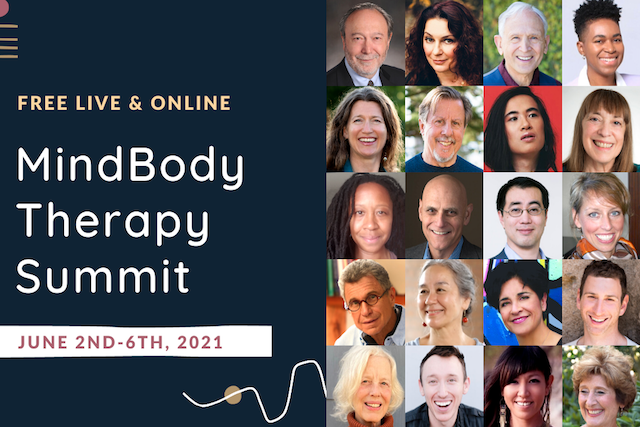
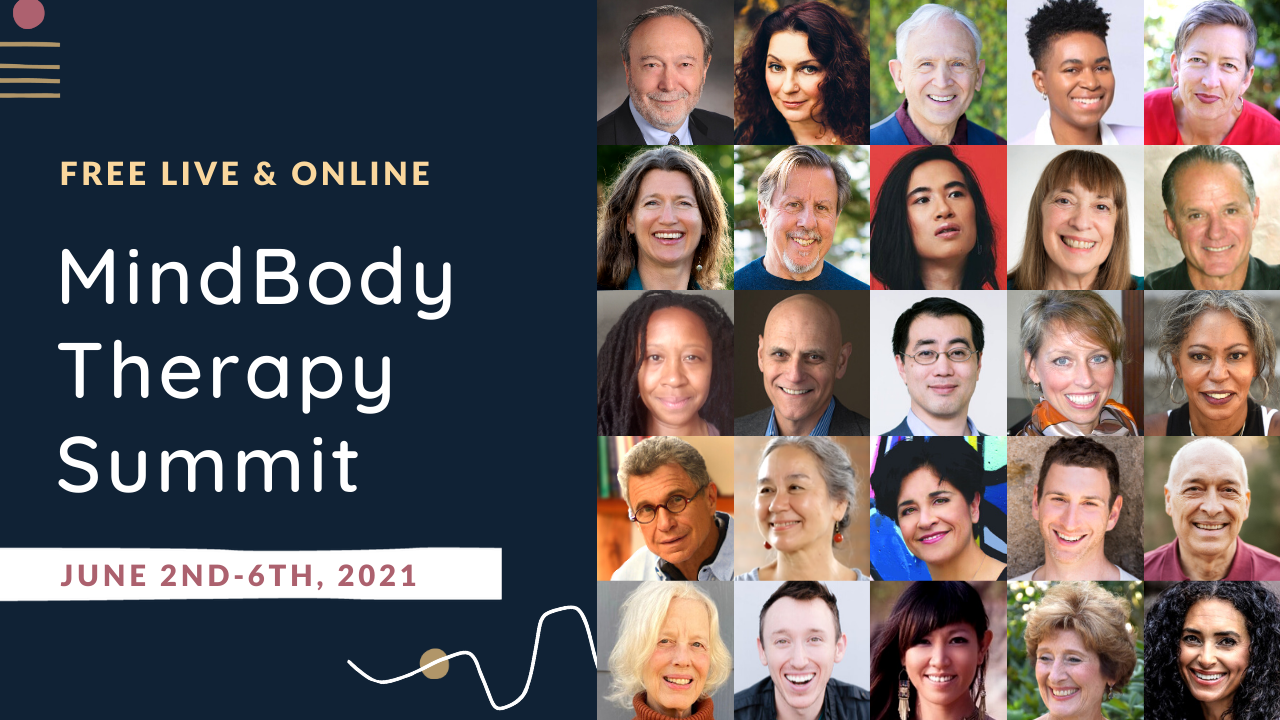
  • FREE Online MindBody Therapy Summit for Healing and Well-Being, June 2-6

    FREE Online MindBody Therapy Summit for Healing and Well-Being, June 2-6

    Hi friends! I’m excited to let you know about the MindBody Therapy Summit, a FREE online event, presented by the Embody Lab, that’s coming up next week.

    In this inspiring 5-day summit, running from June 2nd through June 6th, you’ll hear from some of the most impactful healers, teachers, and researchers at the intersection of wellness, spirituality, psychology, embodiment, and somatics.

    What Is MindBody Therapy?

    MindBody therapy helps us understand and shift what gets in the way of being free, happy, and fully alive.

    While traditional therapy focuses on verbal processing and cognitive meaning making, MindBody therapy invites us into the wisdom of our body as the intuitive place of healing and well-being.

    How Can This Event Help You?

    Blending traditional wisdom and embodiment practices with contemporary neuroscience and psychology, MindBody therapy supports healing and transformation while working with every aspect of an individual—psychological, psychical, spiritual, energetic, and social.

    Through methodologies such as Somatic Experiencing®, Hakomi, Body-Mind Centering®, Gestalt, Sensorimotor Psychotherapy, Integral Somatic Psychology, and many other body-oriented approaches to psychology, you’ll gain practical tools to connect with your body and your true self.

    Who Is This Summit For?

    The MindBody Therapy Summit is for you if:

    -You’re seeking knowledge about psychology, somatics, trauma therapy, plant medicine, attachment/intimacy work, internal family systems work, experiential developmental psychology, social/cultural justice and therapy, stress and resilience, and applied poly-vagal theory.

    -You feel like you’ve hit a wall in your talk therapy and you’re looking for a fresh perspective on healing.

    -You’re interested in incorporating somatic methods of healing into your daily practice.

    -You’re ready to fulfill the highest expression of yourself and bring a new dimension of joy into your life.

    -You’re looking to connect with like-minded people engaged in psychology, embodiment practices, and self-inquiry.

    If you’re ready to access a new level of healing and wholeness, click here to register for the MindBody Therapy Summit and get FREE access to all 5 days of inspiring talks. I hope you find them healing and transformative!

  • How a Simple Action Word Can Guide You Through Even the Hardest Days

    How a Simple Action Word Can Guide You Through Even the Hardest Days

     “Our intention creates our reality.” ~Wayne Dyer

    What if you only had one thing you needed to accomplish today? One over-arching objective that encapsulates the multiple items on your to-do list or the meetings on your calendar? One word that you set in the morning and carry throughout the day to stay in focus and on purpose?

    Actors know that in order to convey a story well, they have to play an action versus an emotion. There has to be a verb involved in order to act. This might include something like provoke, seduce, destroy, or flatter, versus trying to portray an adjective such as humble, confident, or sad, which read neither truthful nor clear on stage or film.

    Simple action words, kept at the forefront of thought, can be powerful allies in keeping our thoughts, intentions, and actions clear as we move throughout the day.

    If you have a morning meditation, study, or stillness practice, the action word can come out of inspiration gained there and can be targeted to what the need of the day is calling for. Words might include focus, bless, or harmonize to name a few.

    What matters is that the word sits as an overlay atop the to-dos and the schedule for the day so that it infuses all of those seemingly disparate actions with a unified purpose, intent, and energy.

    If you hold a verb like harmonize at the top of your mind as you go about the activities of your day, you’ll see how the action of that verb seeps through in your tone, what you say, and how you treat people.

    I have seen action words come in handy when working with public speakers and executives giving presentations because they help to focus the energy, the intention, and the message.

    Most people don’t get up in front of others just to hear themselves speak. Most have an objective that is often obscured by data or too many slides. Identifying an action word at the outset of content creation, and keeping it top of mind as the story develops, is a simple and powerful way to keep a talk on track and achieve the objective the talk wants to achieve.

    Examples might include: motivate them to make their number, inspire them to serve in their community, or educate them on the hazards of too much sitting.

    I remember a time pre-Covid, where holding one word simply helped me to breathe through a perfect storm week of overwhelm and over-scheduling.

    I was in the middle of a tight-turnaround project with a grueling Fortune 10 client that demanded late nights. I was in tech week for a play opening in Silicon Valley. I was preparing a talk for an L.A. entertainment company, which required air travel, and I was trying to be present for a much-needed (and non-refundable) workshop getaway with my husband.

    While all of these commitments were of my choosing and were essentially positive when viewed separately, they were crashing and colliding in my mind. I couldn’t find the hours or the space that each seemed to need.

    My habitual physical reaction to such overwhelm is to lie awake in bed consecutive nights ruminating, catastrophizing, and fixing. And we all know that fixing anything in the middle of the night or during a day following a night of no sleep is about as effective as pouring hot water into a chocolate teapot.

    The word I leaned on? Surrender. I had to surrender the outcomes I wanted, or believed I needed, in order to relax and breathe.

    A wise mentor once used a golfing analogy to say that all we can do is execute the perfect swing and let the ball go where it will. By surrendering, I was allowing the balls to go where they would. I would show up and do the best I could do with each piece one by one as the demands arose and release the outcomes. The word surrender is also a powerful antidote to cortisol surges of stress. And it’s a great word to hold before bed if sleep stress is an issue.

    Holding an action word in mind can be applied to problems and demands as they crop up during the day. Try applying a word like release to traffic jams, cranky customers, or impatient bosses. Calling up the word to the forefront of thought can re-focus how you want to show up in the world. Or the moment. Scribble it on a post-it note and stick it to your monitor, workspace, or dashboard where you can prominently see it to be reminded throughout the day.

    In our distracted, hyper-connected world, sometimes the simplicity of one little word can help to cut through the mental static.

    Be.

    Serve.

    Listen.

    Simple in form, powerful in practice. Choose a word and lean on it for a full month. Or pick three verbs that define your year. Or change your mind at lunchtime and come up with a new verb for the second half of your day. The only rules are to choose something, keep it alive in your thinking, and ensure it is a verb so that it’s actionable.

    My favorite three verbs right now? Connect. Release. Love.

    What are yours?

  • The Simple Path to Change When You’re Not Satisfied with Your Life

    The Simple Path to Change When You’re Not Satisfied with Your Life

    “Making a big life change is scary, but you know what’s even scarier? Regret.” ~Zig Ziglar

    Fifteen years ago, I made one of the biggest changes in my life. It was something I had wanted to do for so long but had never found the right time, right plan, or courage to do.

    You see, ever since I was in my teens, I had always felt I was meant to be somewhere else.

    The town where I grew up was pretty perfect for raising young kids, but it just wasn’t for me as I entered adulthood. I always envisioned myself somewhere else doing something different than those that stayed and replaced the generations before them.

    When I came back from school in my twenties, I was eager to get my career going and was not in a rush to settle down and have kids like most of my circle. I wasn’t even sure I really wanted to raise a family. I was more interested in exploring this world and not being tied to one way of life.

    At twenty-five I thought, WOW, I finally feel like I’ve got it all figured out.

    I had lived away from home, finished school, had relationships both good and bad, and had a strong work ethic that was instilled in me from a young age. So here I was, ready to take on the world. Build my career, travel, and maybe eventually settle down and start a family… then BANG! Just like that my world started to crumble.

    Within a span of one year, I was dealt some devastating news. My mother and sister were both diagnosed with different devastating diseases.

    My world was crushed. I can still remember the impact I felt on the day I received the news.

    I was in my office when I got the call about my sister, who had lost her speech and ability to move one of her arms and possibly needed emergency brain surgery.

    I was in shock. I had no idea how I felt, what I was supposed to do, or where I was supposed to be. I just sat there with a blank stare for what felt like an eternity but really was likely just five minutes.

    After weeks of testing, it was discovered my sister had MS (Multiple Sclerosis). A life-long debilitating disease, or so I understood at the time.

    Fast forward six-plus months later, my sister was on track with rehabilitation and signs of a full recovery in speech and limb mobility. Then WHAM! My mother received a stage 3 cancer diagnosis.

    I was absolutely devastated and completely torn apart. My mother is everything to me, the woman who inspires me to stand tall and strong no matter what life throws my way. A woman of pure integrity and authenticity, loved by so many.

    After emergency surgery and intense chemo, I am glad to say that both my mum and sister survived their devastating ordeals and have been living life to the fullest since that awful time. But during that time my world was upside down and I was an emotional wreck.

    I had no idea how to unravel all the emotions I was feeling then. I kept myself busy, though, with work, too much partying, and hitting the gym hard. You see, I kept myself looking good on the outside, but I was a complete mess on the inside. I was no longer thriving; I was just surviving.

    I began taking inventory of my life and realized I was not living the life I’d envisioned for myself. I was scared to make a change and also to not make a change.

    Seeing what my family had endured made me realize how precious life is and that I didn’t want to waste mine living a life that didn’t fulfill me in fear I was next for a diagnosis. So, I decided to seek out professional help to gain control and clarity, to heal, and to push through the emotions I was suffering from. Only then would I be able to truly move forward with my life in a positive and productive way.

    Once I had done the “work” on sorting out my emotions, I was able to start creating real change from a healthy, sound perspective.

    I started creating the life that resonated with me one step at a time. You see, change doesn’t happen overnight. It takes time to build. It is a process, and anyone who has made significant change in their lives will tell you that. Their change likely started way before anyone was really aware.

    I wasn’t living the life I wanted, so I thought long and hard about what needed to change and finally took the leap.

    I moved across the country on my own, away from my most significant support, with no job, to start building a life that resonates with me. It wasn’t without challenge or bumps in the road, and it certainly wasn’t perfect. But it’s been absolutely amazing, and I’ve never looked back.

    Besides the emotional trauma, there were so many things holding me back at first—family, friends, familiarity, and fear. But what I’ve come to realize is when you start making positive change in your life, for you, things fall into place over time and you look back and realize the change was worth it.

    People speak from their own feelings, experiences, and fears, don’t let that hold you back from what feels right to you.

    I now live in a place that felt like home from the first time I landed here. I live by the ocean and mountains, which inspire me every day.

    My sister now lives in the same city (in fact, we live the same complex). My brother and his family moved a one-hour flight away now as opposed to across the country. My mother still resides back in the town where I grew up so, I feel I get the best of both worlds. Living in a place that inspires me while having the chance to revisit a vibrant city and old friends to reminisce with whenever I choose to.

    So, what are the top things people say they regret as they get older? I wish I’d….

    • Saved more money or made better investments
    • Worked in a job or career I was more passionate about
    • Treated my body better and had better self-care
    • Spent more time with loved ones
    • Traveled more

    And the list goes on…

    Why do so many people rush through life without taking the time to recalibrate and ensure they are focused on the right things that mean something to them or will enrich their lives? It’s an intricate topic yet simple. Life. Life gets in the way, responsibilities get in the way, others’ opinions, and our own doubts and fears get in the way.

    We’ve all been there, navigating life as it unravels each day, and as things happen, we go with the flow. But have you ever stopped to consider, what’s my “flow”?

    How do I want this day, month, year to go? Why do I keep getting dragged in other directions or the same direction only to live each day with no change? Why does it seem like others are thriving while I am on repeat or treading without progressing?

    You will never know for sure until you take the time to explore what is going on in your life and create awareness around what might be holding you back. With the right support and guidance, you can create change both big and small. In fact, making little changes frequently will add up to making a big change overall.

    Not sure where to start? Here are five proven tips to begin creating change in your life today.

    1. Break the routine.

    Think about what you can give up or take out of your day to switch up your daily routine and do this for a two-week period. This could mean not scrolling mindlessly through social media on your lunch break or not watching TV at night, then seeing what else you could do instead. Which brings me to my next point…

    2. Bring back doing something you love and make it a deal breaker in your week.

    No excuses, make it happen, even you only have a fifteen-minute window for this activity. Same as above, do this for a two-week period, and this next one, as well.

    3. Discover something new.

    What have you always considered trying out or have an interest in that you’ve never explored? Give it a try now.

    4. Journal.

    Keep notes on how you are feeling through the two weeks. Then do it all for another two weeks.

    5. Build intention.

    Each week set the intention that there is time, this is worth it, and you are worth it!

    The purpose of this process is to help you see how even small shifts can change how you feel and add to your life and well-being. This sets the foundation for believing that change gives more than it takes, which helps you find the motivation to seek out new opportunities so you can make larger life changes. Move if you don’t feel thrilled with where you live, sign up for a course to help you change careers, or finally leave the job you hate to do something you love.

    It takes focus, consistency, and perseverance to make change, but everyone has the ability to do it, especially if they start small and take it one day at a time.

    Surround yourself with those that will respect you and the changes you are making. I bet you’ll be surprised to see how many people are inspired and/or motivated to begin making their own changes after watching you. So don’t wait—start today and open up to change so you can live the life you want to live!

  • Where My Depression Really Came From and What Helped Me Heal

    Where My Depression Really Came From and What Helped Me Heal

    “How you do one thing is how you do everything.” ~Unknown

    One afternoon, during a particularly low slump, I was getting out of the shower. Quickly reaching for something on the sink, I knocked an old glass off the counter, shattering it onto the floor.

    In most cases, one might experience stress, frustration, or sadness upon accidentally breaking an object that belongs to them. They might feel agitation on top of their already poor mood. But in the moment the glass shattered, I felt instant relief.

    It was an old item I’d gotten at a thrift store, and the image on the glass was all but worn off. In the back of my mind, I’d wanted to get rid of the whole glass set, and the shattering of one of its pieces served as a firm confirmation it was time to let go.

    In that unexpected moment of relief, I realized I was holding on to the glasses out of some strange obligation and a fear that I wouldn’t have the money to replace things if I gave them away.

    I marveled at this interesting aspect of my consciousness I had not noticed before, wondering, “What else am I doing this with? How many things in my life are subtle burdens that I tolerate out of some vague sense of obligation? Does it really make me a “good person” to tolerate so much, to hold on to so much unwanted baggage from the past?

    Suddenly, I remembered something I had recently learned from one of my mentors about depression: We must stop clinging to people, places, and things that no longer deliver the joy they once did. Even more importantly, release things that never delivered joy, even when we thought they would.

    This sacred practice is all too underrated. We must cut the dead weight in our lives, even if it is unnerving. Whether it is a negative relationship, a job in which you are disrespected, a habit that is draining your health, or even some unwanted items in your home that are taking up too much space.

    It is our stubborn unwillingness, our fear of letting go, that keeps us in low spirits, day after day. In these instances, we are waiting for the impossible. We are waiting for things to miraculously improve without us having to do anything different.

    Even though I was in a bad mood, I thanked the glass and the sudden shattering for its lesson. The humbling realization was that I was a clinger—someone who stuck with people, places, and things long after they’d proven they were not right for me.

    As the saying goes, “How you do one thing is how you do everything.” The glasses that I didn’t really want any more were a small symbol of how I was an energetic hoarder. I kept things until life forcefully yanked them out of my hands.

    Often, I clung to subpar situations out of fear. I was afraid of being left alone, with nothing, so I’d gotten myself into the habit of anxiously settling. And as we all know, settling is no way to live a satisfying, dignified life.

    When we settle, the parts of us that aspire to grow are denied respect. We subconsciously tell ourselves it is not worth it—we are not worth it.

    My habit of settling had gotten me into more binds than I could count—low-paying jobs, incompatible relationships, boring days, and restless nights wondering what I was supposed to be doing. Why weren’t things better?

    The simple answer was, I didn’t choose anything better. I didn’t know how.

    When we don’t know ourselves, we don’t know what we want and need. And when we doubt our worth or our ability to make things happen, we hold ourselves back from what would make us happy. This is where depression breeds, along with burnout, stress, and apathy.

    So how can this painful spiral be prevented? And if you already find yourself in this predicament, how can you climb out of the hole?

    1. Assess everything in your life.

    What just isn’t working, no matter how hard you try, in work, your relationships, your habits? These are the areas where you need to make a decision. Either let something go or make a change that is significant enough to transform how you feel about the situation.

    2. Find the hope.

    Hopelessness is a huge aspect of lingering depression. The problem is, people often try to talk themselves into being hopeful about something that actually isn’t going to work (e.g.: a relationship that was meant to end). Instead of clinging, let go and seek out new things that feel truly hopeful instead.

    It’s not always easy to let go, especially when it pertains to relationships, and particularly when you’re not hopeful there’s anything better out there for you. Start by asking yourself, “Why do I believe this is the best I can do, or what I deserve?” And then, “What would I need to believe in order to let go of this thing that isn’t good for me and open myself up to something better?”

    3. Change anything.

    When we are stuck in a rut, it usually means things have been the same way for too long. Routine and consistency can be a poison or a cure, depending on the situation. If you’re feeling stuck, look for how doing the same thing every day isn’t working. Sometimes, making any random change is enough to shake you out of that rut.

    This could mean taking a new route to work or doing something creative when you usually binge watch Netflix. Sometimes little changes can give us a surprising level of new insight and self-understanding.

    4. Lastly, admit to what you really want.

    If you won’t risk being hopeful and taking action toward what you really want, you will default to a life of tragic safety. You will shy away from the truth, clinging to all the things that don’t really resonate with you. Ironically, you have to be willing to risk loss to in order to acquire valuable things in life.

    So start by being brave enough to admit what you really want in all aspects of your life, and perhaps more importantly, what you need. What would make you feel fulfilled and excited about life again?

    We often think of depression as a vengeful disease that robs us of our joy and vitality. But when we begin to look at our lives with more honesty, we can see depression for what it really is: a messenger.

    I like to think of depression as the first phase of enlightenment—a reckoning we must endure to come out the other side with clarity. When we stop pushing negative feelings away, we can discover why they exist and what steps will resolve them.

    For me, this meant letting go of how I thought my life should be and embracing how it was. Rather than lamenting about the past or obsessing about the future, I started taking practical steps to improve the present. This included cleaning up my diet, giving up a job that no longer worked for me, and digging into attachment styles to learn how to improve my relationships. The more action I took, the more hopeful and empowered I felt.

    The road to happiness isn’t nearly as direct as we would like it to be, but this gives us the opportunity to access what we truly wanted all along: self-understanding, self-acceptance, and self-empowerment. Depression isn’t a problem, but a road-sign. The question is, will we ignore it, or let ourselves be guided?

  • Why We Need to Be Present to Enjoy Our Lives, Not Just Productive

    Why We Need to Be Present to Enjoy Our Lives, Not Just Productive

    “Presence is far more intricate and rewarding an art than productivity. Ours is a culture that measures our worth as human beings by our efficiency, our earnings, our ability to perform this or that. The cult of productivity has its place, but worshipping at its altar daily robs us of the very capacity for joy and wonder that makes life worth living.” ~Maria Popova

    I was high on productivity. I had one full-time job, two part-time jobs, and a side hustle. I was getting everything done. Sounds perfect, right?

    Then I started hating my life.

    I had read enough books and articles to tell me how I was not doing enough. Enough self-help gurus had told me that what I needed to do was max out every single hour I had to be minutely close to being “successful.”

    My co-workers often got intimidated by my jam-packed calendar. I don’t exaggerate when I say that every minute of my life was scheduled. Sheldon-level scheduled, with dedicated “bathroom breaks” and everything.

    I ran three to-do lists: daily, weekly, monthly. This was my way of setting out for maximum efficiency. I said “yes” to my boss so often I had become his favorite. Work-life balance, what’s that?

    Tasks were flying off my list like never before—so many horizontal breakthroughs! I wore this as my badge of honor for a while, this art of getting it all done. And why not? I was rewarded for it in money, praise, promotions, awe.

    But then it didn’t feel so great. Instead, I became downright miserable.

    Why Busyness-Productivity Is A Mirage

    I don’t claim that productivity is bad. Doing fulfilling work by minimizing distractions and getting deep focus is truly rewarding.

    But it is crucial to stop and question why you’re doing what you’re doing. It is necessary to pause and reflect on the value of your tasks and actions. Otherwise, productivity translates to useless busyness.

    When I became this productivity freak, I never stopped to ask if any of the things I was doing were giving my life meaning. I was doing a demanding full-time job that didn’t provide me any purpose. My days became a blur of mindless task completions. My mind, heart, and soul were absent from my work. Any given Monday didn’t look so different from a Tuesday three weeks prior.

    And it wasn’t even like I was happy.

    I was meeting all my deadlines, but I was spending no time with my family. There were enough accolades to prove all my achievements but not enough art to fulfill my soul. I answered every email I received within twenty-four hours, but I hardly focused on long-term self-growth.

    On the outside, my life never looked better. But on the inside, I was worse than I had ever been. Distraction, schedules, irritability, and deadlines were the monsters that ruled my life.

    After a month-long burnout, I hit the problem nail in the head. I knew I needed to move on. But how? I resolved to take a calculated leap of faith. I found a client willing to pay me for my freelancing services for at least two to three months and made a thick emergency fund by cutting out on expenses. Then, I quit the unfulfilling full-time job and gave my heart to work that I truly found meaning in. I stopped making productivity my goal. I opted to choose presence instead.

    Presence > Productivity

    I read Annie Dillard’s, The Writing Life, in which she memorably wrote, “how we spend our days, is of course, how we spend our lives.”

    After reading this book, I realized that productivity would only be fruitful when coupled with presence. I knew then that presence was what would make my rewards meaningful.

    What is presence? Presence is the art of being in the moment, the luxury of pausing, the virtue of stillness. It is being alert, aware, and alive to this moment.

    There’s a reason why our culture runs for productivity instead of presence. Productivity helps us shut away from reality. It keeps us “busy” into a future that is yet to manifest.

    It is so much easier and convenient to take the shield of productivity against the beautiful, buoyant, and sometimes disruptively painful present.

    Performing one task after next gives us an excuse to not fully live, not completely concentrate, not unbiasedly accept.

    I used to be that way—trying to avoid the truth that I was not finding my work meaningful. I wouldn’t accept that this job was emptying me slowly, living in denial of a reality I was living. Was I not getting things done? I was, more than ever before. But was I happy? I had never been more unhappy with my own choices.

    Being productive every minute of every day meant I could avoid the fact that many of my friendships were depleting, toxic, and unhealthy. I was lying to myself that it was all to have a good social life. In reality, I would go out of my way to avoid being alone, to avoid answering the big questions pertaining to my life that can only be answered in solitude.

    But coupling our actions with productivity and presence can have an astounding effect on our lives. It can make every task we do driven with intention, purpose, and meaning. Presence is what helps us reap the internal rewards that come with doing fulfilling work.

    Choosing Presence

    If you are anything like me, choosing presence over productivity can take some practice. Productivity was my normal mode of operation. It was easy; it came naturally. But opting for presence in my actions wasn’t so simple.

    The art of being present and intentional in all my tasks was like writing with my non-dominant left hand. I searched for help and stumbled upon Tim Ferris. He often says to think of your epitaph to cut through all the noise and maze of productivity. It is a way to find out what truly matters to you by getting a super-zoomed out version of your life.

    As morbid as it sounds, that is what I did. I imagined what I would like to carve on my epitaph, and the important stuff came into a laser-sharp focus:

    I needed to write. I needed to make time for solitude, for serendipity, for hobbies. I wanted to create more memories with my family. I wanted to let go of draining friendships and put all my energy into relationships that filled me with fulfillment, meaning, and growth. Taking it one step at a time, I decided to hand in my resignation. I landed my first writing gig in under two weeks.

    And hey, it’s not like I don’t struggle to write with my left hand anymore. But I am growing each day. It takes some practice and effort to make room in your calendar to “be present.” I am learning to be uncomfortable by turning the volume down of “getting things done.”

    I have noticed that it is the minor changes that count. It is taking a little more time to craft that email mindfully. It is that courageous “no” to a project that can help you surpass your quarterly KPIs but take away from your family time. It is choosing to take a soothing fifteen-minute walk break over checking off another mindless to-do list task.

    Presence is a process. It requires the discipline to focus on the present moment when productivity pushes you to see a non-existent future. Presence is your un-busy existence of utterly unadulterated joy. It is your creativity’s cradle. It is your time to just be.

    So do it. Make the hard choice. Live your life with presence to help you find joy in the now instead of pushing toward some destination in the future. None of us really know where the future will bring us, but we can all choose to enjoy the scenery along the way.

  • How 10 Minutes of Daily Meditation Can Calm Your Mind and Relax Your Body

    How 10 Minutes of Daily Meditation Can Calm Your Mind and Relax Your Body

    “Peace. It does not mean to be in a place where there is no noise, trouble or hard work. It means to be in the midst of these things and still be calm in your heart.” ~Unknown

    I began the morning with a meditation. After taking my dog out and brewing the coffee, I sat in my sunny living room, my little dog Frankie nestled beside me. I perched cross-legged, a blue pillow on my lap for warmth. I closed my eyes and began to focus on my breath.

    When ten minutes passed, I raised my hands in appreciation. “Thank you for this day. Thank you for my family and for our health. Give me strength, wisdom, and love.” Then I extended my hands forward, “So that I may give strength, wisdom, and love.” Finally, I stretched both arms out sideways, wiggling my fingers in my peripheral vision, a reminder to be fully aware. This is how I start every day.

    It wasn’t always this way. My older brother Marc tried to get me to meditate when I was fourteen. Although he was a patient teacher, I didn’t understand the point of the exercise.

    “Let’s sit together. Close your eyes and concentrate on your breath.”

    “Why do I have to do this?

    “Just sit, Lise. It’s good for you to learn. We will do it together.”

    “OK, but why?”

    Marc tried, but I resisted. I stopped meditating as soon as he went back to college.

    Years later, as part of my psychology training, I took classes which touted meditation as a stress-reducing technique. During the classes, there were demonstrations which I always enjoyed. I sat back, breathed deeply, and felt a deep flow of relaxation inside me. But, back home, I had no follow-through. Once the classes were over, so was my meditation.

    My breakthrough into daily meditation happened in 2020, one of the few good things that arose from that dreadful year. I was home, virtually every minute of my life. I didn’t have to dash from of the house, brave traffic, and arrive at the office by 9:00. Mornings stretched more languidly. It was easier to find those ten minutes to breathe every morning.

    Now I sit every day. I scan through my body, noting points of tension, areas of pain and pressure. Simple awareness of the tension shifts any pain, and my body settles.

    My mind, free from my constant to-do lists, drifts along, as if floating on the waves of a gentle sea. I hear the sounds of the house around me, the heater outside, working mightily to warm our home; Frankie the dog beside me, sighing. My stomach muscles unclench. I notice thoughts drifting in. I don’t attend to them. The thoughts fade away. Peace.

    Of course, that’s when meditation goes well. Sometimes every minute slogs on. My scalps itches. “I forgot to return that phone call,” I think, and my body tenses into high alert. “Oh no, I have to write that woman back!” My throat tightens. “What if that editor doesn’t like my submission?” My stomach jams into a knot. I cannot let these thoughts go. “I suck at meditation. Why can’t I just breathe? When will these ten minutes be over?”

    Sometimes meditation goes like this. It isn’t always peaceful, and it doesn’t always feel good. The key, I’m told, is to keep at it. Like any skill, the more we practice, the better we get at it. It is no accident that we say one “practices meditation.” I didn’t get decent at writing in one year either.

    If you are like the fourteen-year-old me, you might be asking, why meditate at all? There are so many benefits I don’t even know where to begin; here is a partial list. Meditation…

    • Soothes anxiety: When you learn to focus the mind, your thoughts don’t spin off into anxious “what-ifs,” spiraling into anxious ruminations.
    • Calms anger: Focusing on breathing calms the mind, stopping our internal tirades over people who have wronged us.
    • Improves the immune system: The body is not designed to be in a constant “fight or flight” mode. When we are tense, our immune system works poorly. When we relax, our immune system resumes its work.
    • Lowers blood pressure: Meditation is a proven technique for improving hypertension.
    • Manages emotional reactivity: This is a big one. It is easy for me, sensitive soul that I am, to feel hurt and wounded by other people. Meditation allows me to detach from the provocations of the moment, and to tap into inner peace. Once I have calmed myself, I find freedom from reacting emotionally. I can bring more thoughtfulness and wisdom to my relationships.

    Happily, the benefits of meditation extend past the ten minutes into the whole day.

    Now that I practice regularly, I notice when my shoulders leap to attention. With mindfulness, I can lower those shoulders down.

    I notice when my stomach tenses up, and I can breathe that tension away.

    I notice when my mind anxiously swirls around my to-do list and I can tell my mind to relax.

    The awareness that comes from a regular ten-minute mediation follows me throughout my day, helping me stay calmer and more serene.

    A while ago, I was getting ready for a radio interview, as part of my recent book promotion. I had an hour to spare, and I thought I’d make a quick phone call to an insurance company.

    This “quick” phone call dragged into an infuriating forty minutes. I was on hold, listening to inane music, on some incessant torture loop. Finally, the customer service rep came on, but we had with a terrible connection. I could barely hear her, as she was undoubtedly on another continent, and I couldn’t understand her either.

    After a brief exchange, which I barely fathomed, she declared she couldn’t help me. I got off the phone in disgust.

    “I’m so aggravated! I just wasted an hour on the phone with this stupid company and now I have an interview in fifteen minutes. What a colossal waste of time! I have this radio interview and I am so upset I can barely think!”

    My husband gazed at me. “Why don’t you do your meditation thing?”

    I glared at him. I really just wanted to righteously complain. But my husband was right; I was a wreck.

    I sat in my bedroom and closed my eyes, focusing on my breath. Immediately I sensed my body’s distress. My heart rate was elevated. I breathed rapidly. My shoulders were raised and my stomach was in spasm.

    “My god,” I thought. “My body is completely dysregulated, all from one stupid phone call.”

    Quietly, I focused. I felt my muscles relaxing and my heart rate slowing. I ended the meditation, feeling like a different woman, and started the interview with a smile on my face.

    That is the power of a regular ten-minute meditation practice.

    Let’s be clear. Everyone, no matter how busy, has ten minutes to spare. You can do this, and build yourself a calmer, more peaceful life, in a healthier body.

    One final tip: it is best to find a regular time of day for your meditation practice. Do your breathing every morning, or every bedtime, or every evening after work. Otherwise, you will keep putting it off until later. If you are like me, you might even put it off for forty years.

  • 10 Things to Do When You Feel Sad, Hopeless, and Defeated

    10 Things to Do When You Feel Sad, Hopeless, and Defeated

    “Rock bottom became the solid foundation on which I rebuilt my life.” ~J.K. Rowling

    I’m no stranger to feeling hopeless and defeated. After many failed relationships, physical, sexual and emotional abuse my entire life, two bankruptcies, and the recent loss of my online business (October 2020), you could say I’ve been through enough to last two lifetimes.

    I’ll admit, there were many times I wanted it all to end. There were many days I just didn’t know how much more I could handle. My recent loss has devastated me beyond words. Everything I’ve worked so hard for in the last three years has completely been obliterated. I’m numb and feel defeated almost every day.

    At fifty-eight years old, starting over doesn’t interest me, but I have no choice. I know what to expect. I’ve been here before. It’s ugly, messy, frustrating, stressful, and exhausting. Every day I wake up I don’t really feel like getting to the computer to work.

    I don’t really feel like doing anything, to be honest, but lay in bed and cry. I go through serious waves of anxiety throughout the day. They hit me fast, hard, and without warning. I want to throw up. I want to curl up in a ball and die. I want someone to tell me this is all a bad dream and tomorrow things will be back to normal.

    None of that happens. And I force myself to get to work and start a new day.

    Your Struggles and Pain Are Real

    Pain is pain, chaos is chaos. No matter what it looks like to you. Never let anyone tell you your feelings are ridiculous. Don’t ever think that you’re overreacting. What your feeling is real, and you need to honor your emotions, feel all the feels. Just don’t stay there. The longer you stay down, the harder it is to get back up.

    Here are ten things to do when you are feeling defeated, hopeless, helpless, and sad—all things that have helped me, that I hope help you too.

    1. Cry your eyes out.

    Too many of us hold back our tears because we think it’s a sign of weakness. It is absolutely not, and it’s almost mandatory to get those tears out. Go back to the last time you had a good cry fest and try to remember how you felt afterward. I’m guessing you felt like a ton of bricks was just lifted off your shoulders.

    Crying is very therapeutic. Do it. As often as you have to. Scream and cry into a pillow if you have to but get those tears out.

    2. Call a friend.

    While this almost sounds too simple, most don’t even think about doing this either because they don’t want to burden their friends, or because they’re too stuck on their problems to consider talking about something else.

    Pick one person you absolutely love talking to and just chat your cute little face off. You can talk about your problem if you think it will help, or you can use this as an opportunity to get your mind off of things. Just talk!! About anything, everything, silly things and nothing.

    I remember the day my business crashed, and I was so angry and upset but also embarrassed because I didn’t want anyone to know what happened to me and that my business was gone. After a week I decided to call one of my dear friends, and not only was he great at comforting me but also reassuring me that things were going to be okay. It was such a huge relief to get this confirmation from a friend.

    Sometimes we need to hear comforting words!

    3. Volunteer.

    I tell everyone this. If you’re sad, go volunteer. Like right now. You can’t even imagine the power behind helping someone or something (aka furry critters) in need. Your heart fills up and then explodes, you cry happy tears, and it honestly just gives you so much joy.

    Find an organization that resonates with you and call them. Go spend an hour a week there. This will soon become your happy place and something you will look forward to every week.

    4. Write yourself a love letter.

    I’ll be honest, I haven’t written one in a while, but I think it’s time.

    A love letter to yourself is so powerful and therapeutic. In this letter you tell yourself all the amazing and awesome things about yourself. You list all the reasons you shouldn’t feel like a loser. You tell yourself to brush off your bum and pick yourself back up again.

    You can go on and on about how wonderfully amazing you are. Write out all the things you love about yourself and all your radiant and redeeming qualities.

    Now before you say, “Oh, I don’t love anything about myself,” stop right there.

    Go look in the mirror right now. I bet you have the most beautiful eyes and the most sweet smile ever. Or maybe you are a feisty, determined person. Or maybe you have a heart of gold! I bet there are a million awesome things about you. Find them and write about them.

    5. Put on some loud music and sing and dance.

    Oh yeah. Choose the loudest, thrashiest music you have (and love) and crank up the stereo. Or maybe you love country or jazz or whatever! Turn it up and rip off the knob. Dance, sing, jump around your house like a silly fool.

    Sometimes when I’m feeling down, I put on the saddest music with the hardest hitting lyrics, sing loud, cry my heart out, and remarkably afterward I feel a million times better!!

    Let loose and lose all your cares and woes in your favorite music. You’re gonna feel amazing, you’ll even get a little workout in, and your adrenaline will be pumped up a wee bit, so you’ll maybe even feel unstoppable! Go you!

    6. Go for a walk.

    Another simple thing to do that we often overlook. For many of us, when we’re feeling really sad, we don’t want to get dressed and go out. We want to stay inside and cry and eat junk food (more on that later), but you can’t stay there forever.

    You have to get yourself out of your dark place. You have to take action steps (pardon the pun) to move forward and be happy again.

    Get your shoes on and get outside. You never know who you’re going to run into or what kind of super cool things can happen to you. Be open to surprises and chance meetings. Or maybe you’ll just find and see little things that bring a smile to your face.

    7. Watch funny movies and eat junk food.

    Yes, I said it. Eat junk food, aka comfort food. They call it comfort food for a reason. Because that’s exactly what it does. And yes, I get that we may have a teeny sore belly in the morning, all depending on how much comfort food you consumed the night before, but really, chocolate and chips and donuts and cake really do the soul good.

    A small word of warning here, though: Only do this if you can let yourself enjoy eating and aren’t mindlessly binging to numb your feelings, and please don’t make this a daily habit. We all know eating junk food is bad for us. It’s a nice quick fix on a really sad day but not something you should do all the time. Remember, life is all about balance too. That includes your eating habits.

    So find your fave movies—I usually opt for funny ones or super action thrillers—and lose yourself in it. Forget your cares and woes even if only for two hours or so and let yourself indulge a little.

    8. Write a truth letter.

    Yes, I love writing letters. It’s the best therapy out there, I swear! Much like a love letter to yourself, a truth letter is a letter you will write to someone or something that is causing you grief and sorrow.

    This is where you get to write out all your anger, all your hurt; every damn emotion you feel about this person/thing, get it all out! I know some people who have written truth letters that were thirty pages long. You write until you can’t write anymore!

    This is something you can do every time you have hateful or angry thoughts about this person or thing. Eventually the thoughts won’t show up so often.

    9. Set a timer.

    We already know we can’t stay in this sad dark place for too long, or it will consume us. After a few weeks of feeling like this set a timer for fifteen minutes, twice a day. In this time slot, feel angry, sad, cry, scream, or do whatever else you have to do, but when the timer is up try to compose yourself and shift your attention elsewhere—on your work, a hobby, helping a friend, anything other than your own problems.

    Negative thoughts will arise outside of your time slot. But remember, you can choose whether or not to engage with them. You always have a choice to let your thoughts pass without getting caught up in your mental stories. That’s up to you to do.

    Yes, this is hard to do, but the benefit is that you are allowing yourself time to grieve without allowing your grief to totally consume you and dominate your days.

    10. Have a ‘me’ day.

    Even if you can’t take the whole day, try to take at least a few hours to pamper yourself. Get a manicure or pedicure or do one for yourself at home. Get your hair done, take yourself out on a date. Do something you enjoy, something that gets you into a state of flow.

    Whatever it is that you do, do it in honor of yourself and how amazing you are. Take this time to love yourself, as hard as that may be, and just be present with you and only you.

    As I go through my difficult time, I keep telling myself that this is temporary, I’m gonna be okay, and to keep the faith. I believe everything always works out in the end, exactly the way it’s supposed to, whether we understand it or not, and this brings me comfort.

    But don’t deny your emotions.

    I think the most important thing to remember is that you must honor and feel your feelings, but you can’t stay there. It’s important to take steps to get back to your ‘normal,’ whatever that looks like for you, or to accept that it’s time to create a new normal.

    Baby steps are better than no steps at all. Do one or two little things every day and before you know it, you’ll be smiling and feeling better about yourself and life again.

    You got this, babe!

  • How I Overcame the Stress of Perfectionism by Learning to Play Again

    How I Overcame the Stress of Perfectionism by Learning to Play Again

    “What, then, is the right way of living? Life must be lived as play…” ~Plato

    I am a recovering perfectionist, and learning to play again saved me.

    Like many children, I remember playing a lot when I was younger and being filled with a sense of openness, curiosity, and joy toward life.

    I was fortunate to grow up in Oregon with a large extended family with a lot of cousins with whom I got to play regularly. We spent hours, playing hide-and-seek, climbing trees, drawing, and building forts.

    I also attended a wonderful public school that encouraged play. We had regular recess, and had all sorts of fun equipment like stilts, unicycles, monkey bars, and roller skates to play with. In class, our teachers did a lot of imaginative and artistic activities with us that connected academics with a sense of playfulness.

    I viewed every day as an exciting opportunity and remember thinking, “You just never know what is going to happen.” My natural state was to be present with myself, enjoying the process of play

    Unfortunately, my attitude began shifting from playfulness to perfectionism early on. Instead of being present and enjoying process, I started focusing on performance (mainly impressing people) and product (doing everything right). The more I did this, the less open, curious, and joyful I was.

    Instead, I grew anxious, critical, and discouraged.

    I first remember developing perfectionist tendencies when I was in elementary school and taking piano lessons. For some reason, I got the idea that I had to perform songs perfectly, or else I was a failure.

    Eventually I became so anxious, I would freeze up while playing in recitals. I started hating piano, which I once had loved, and eventually quit.

    My perfectionism spread into other areas of my life, too. In school, I pushed myself to get straight A’s, and if I earned anything less, I felt like a failure. I often missed out on the joy of learning because I was so worried about getting things right.

    My perfectionism also negatively impacted my relationship with myself. I believed I had to look perfect all the time. As a result, I often hated the way I looked, rather than learning to appreciate my own unique appearance and beauty. I also remembering turning play into exercise at this time of my life and using it to pursue the “perfect” body.

    Movement, which I loved when I was a child, began to feel exhausting and punishing.

    Perfectionism also hurt my relationships with other people. I felt like I had to be smooth and put together and that I always had to put everyone else’s needs above my own. Not surprisingly, I often felt unconfident, anxious, and exhausted around other people.

    At this time in my life, I believed that if I tried and worked hard enough, I could do everything right, look perfect, and make everyone happy.

    My perfectionism increased in young adulthood until eventually it became unsustainable. In my early thirties, I became the principal of a small, private middle school where I had taught for eight years. I loved the school and was devoted to it.

    In many ways, I was the ideal person to do the job. But I was also young and inexperienced, and I made some big mistakes early on. I also made some decisions that were good and reasonable decisions that, for various reasons, angered a lot of people.

    To complicate matters, the year I became middle school principal, the school underwent a massive change in our school’s overall leadership, and we suffered a tragic death in the community. I worked as hard as I could to help my school through this difficult time, but things felt apart.

    My school, which had largely been a happy and joyful place, suddenly became filled with fighting, suspicion, and stress. These events were largely beyond my control and were not the fault of any one person, but I blamed myself. For someone who had believed her whole life that if she worked hard enough, she could avoid making mistakes and could make people happy, my job stress felt devastating.

    I felt like my life was spinning out of control and that all the rules that once worked no longer applied. I crashed emotionally, and I remember telling my husband at this time, “I will never be happy again.”

    That was one of the darkest times of my life.

    It took me several years to find happiness again. One of the major things that helped me to do so was recovering a sense of playfulness.

    After my emotional crash, I decided I was done with perfectionism. I understood clearly that focusing so much on avoiding mistakes and pleasing-people was the source of much of my suffering. 

    I realized I needed a different way to approach life.

    About this time, my friend Amy and I started taking fencing lessons together. I was quite bad at it, but it didn’t matter. Because I had given up perfectionism, I didn’t care anymore about impressing people at fencing class or performing perfect fencing moves.

    Instead, I cared about being present with myself in the process and staying open and curious, and focusing on joy.

    I had a blast. I felt free and alive, and something flickered to life inside me that had felt dormant for many years. I felt playful again. And I realized that I had been missing playfulness for many years, and that it was part of what had caused me to become so perfectionistic.

    Playfulness is the attitude we take toward life when we focus on presence and process with attitudes of openness, curiosity, and joy. Perfectionism, on the other hand, makes us focus on performance and product and encourages anxiety, criticalness, and discouragement.

    Fencing helped me rediscover play and leave perfectionism behind.

    I fully embraced my newfound playful attitude. It touched every area of my life, and I hungered for new adventures. I began reconnecting with dreams I had put on hold for a while. Eventually I decided to leave my job as a middle school principal and return to graduate school to earn my PhD in philosophy, a goal I’d had since seventh grade.

    Earning a PhD in philosophy may not seem like a very playful thing to do, but it was for me. For six years, I immersed myself in the ideas of great thinkers like Plato, Aristotle, Kant, Hegel, Rousseau, Herbert Marcuse, and Paulo Freire.

    It felt like I was playing on a big, philosophical playground. But I also faced some significant challenges.

    I was thirty-seven when I returned to grad school and was a good ten to fifteen years older than most of my colleagues. Most of them had a B.A. and even an M.A. in philosophy, while I had only taken one philosophy course in college. I had a lot of catching up to do, and I faced some major challenges.

    One of the biggest challenges I faced early on was our program’s comprehensive exams. We had two major exams over thousands of pages of some of the hardest philosophical works ever written. The exams were so difficult that at one point, they had over a fifty percent fail rate. If students didn’t pass them by the third time, the graduate school kicked them out of the program.

    I was determined to pass these comps and spent all my Christmas and summer breaks studying for them for the first several years of graduate school. But I still failed both exams the first time I took them, and I failed my second exam twice.

    It isn’t surprising I failed them, given the high fail rate for the exams and the fact that I was still learning philosophy. But it was painful. I had worked so hard, and I was afraid of getting kicked out of the program.

    I was tempted to revert to my old perfectionist habits because they had once given me a sense of control. But I knew that would lead me down a dead-end road. So, I began applying all the lessons I had learned about playfulness to the comprehensive exams.  

    Rather than focusing on performance and the product, I focused on presence and process. I also focused on practicing habits of openness, curiosity, and joy. Mentally, I compared the comps to shooting an arrow into the bull’s eye of a target. Every test, even if I failed it, was a chance to check my progress, readjust, and get closer to the bull’s eye.

    This turned the comprehensive exams into a game, and it lessened the pain of failing them. It helped me accept failure as a normal part of the process and to congratulate myself every time I made progress, no matter how small it was. This attitude also helped me focus on proactive, constructive steps I could take to do better, like meeting with faculty members or getting tutoring in areas I found especially challenging. (Aristotle’s metaphysics, anyone?)

    I also taught myself to juggle during this time. Juggling not only relieved stress, it was also a playful bodily reminder to me that progress takes time. Nobody juggles perfectly the first time they try. Juggling takes time and patience, and the more we focus on openness, curiosity, and the joy of juggling, the more juggling practice feels like a fun game. 

    I began thinking of passing my comps like juggling, and it helped me be more patient with the process. I eventually mastered the material and passed both my comps.

    Studying for the comps taught me to bring playfulness into all my work in graduate school.

    Whenever I felt stressed out in my program, I reminded myself that perfectionism was a dead-end road, and that playfulness was a much better approach. Doing this helped me relax, be kind to myself, accept failures as part of the learning process, and to take small consistent steps to improve.

    This playful attitude kept me sane and helped me make it to the finish line.

    Playfulness was so helpful for me in graduate school that I have tried to adopt this spirit of playfulness in all areas of my life, including the college classrooms in which I teach. I have noticed that whenever I help students switch from perfectionism to playfulness, they immediately relax, are kinder to themselves, and increase their ability to ask for help.

    I am dedicated now to practicing playfulness every day of my life and to help others do the same. Playfulness isn’t something we must leave behind in childhood. It is an attitude we can bring with us our whole life. When we do so, life becomes an adventure, even during difficult times, and there is always something more to learn, explore, and savor.
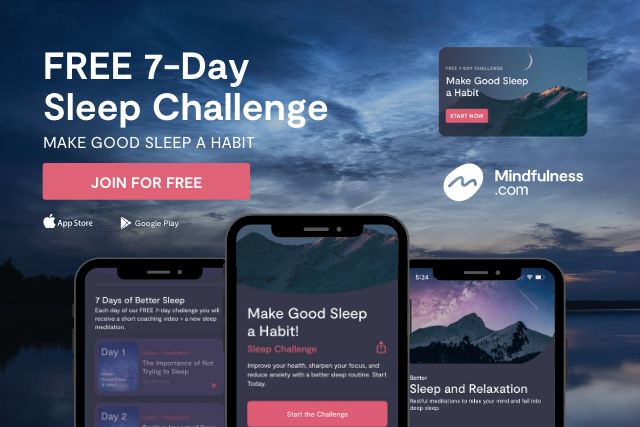
  • Free 7-Day Sleep Challenge: Meditations, Tips, and Tools for a Restful Night

    Free 7-Day Sleep Challenge: Meditations, Tips, and Tools for a Restful Night

    Does stress cause sleepless nights, or does a lack of sleep cause stress?

    Both have been true for me, especially since becoming a parent, and I’m guessing for you too.

    When life gets challenging, it’s hard to shut your brain off at night.

    You know it’s important to get a good night’s sleep. You know you feel better in the day when you’re well-rested. But it’s hard to relax, physically and mentally, when you have a lot on your mind. It’s like there’s a tornado inside your head, and all the sheep-counting in the world couldn’t pull you out.

    And when you haven’t gotten adequate rest, it’s hard to function and deal with, well, anything. You feel on edge, easily irritated, and perhaps both foggy and jittery—like you can’t think clearly, and yet you can’t stop thinking… because you have a lot to do and figure out, and you can’t afford to stop just because you’re tired.

    If you’ve experienced your share of restless nights and exhausted days, and you’d like to improve your sleep routine, I highly recommend the 7-Day Sleep Challenge, from Mindfulness.com.

    This challenge was designed to help you make good sleep a lasting habit so you can become a healthier, happier you.

    Led by mindfulness teacher and international speaker Cory Muscara, the challenge provides daily emails with practical advice to quickly improve your sleep, nightly audio coaching sessions, and a corresponding meditation for each, to guide your mind and body toward better rest.

    This FREE 7-Day Sleep Challenge is for you if:

    • You can’t go to sleep at night, and you wake up tired
    • You wake up in the middle of the night and lie there for hours trying to get back to sleep
    • You feel reactive throughout the day and small things set you off
    • You don’t have the energy to do the things you enjoy
    • You frequently complain about lack of focus and poor memory
    • You are ready to make good sleep a habit

    Benefits of Better Sleep

    When we get the recommended seven-plus hours of sleep, we enjoy a wide range of benefits:

    • Increased focus and productivity
    • Strengthened immune system
    • Lower risk of heart disease and stroke
    • Decreased risk of diabetes
    • Improved memory
    • Decreased stress, anxiety, and depression
    • Balances excessive weight fluctuations
    • Decreased risk of chronic diseases

    Life is just plain better when you’re well-rested.

    You feel calmer, more energized, and better able to focus and enjoy your day, and you’re far less likely to say and do things you’ll  later regret. Which means good sleep not only boosts your physical and mental health, it can also improve your relationships.

    And odds are you’ll also feel better about yourself when you’re showing up as the person you want to be—not an easily irritated zombie who can’t wait to collapse into bed (only to toss, turn, and stress about how few hours you have left to sleep before another draining day).

    Ready to sleep your way to a healthier, happier you? Click here to take the FREE 7-Day Sleep Challenge and get the tools you need to wind down and fall asleep more easily and get the restorative rest you need to be your best!

  • How I Finally Healed When I Stopped Believing a Diagnosis of Incurable

    How I Finally Healed When I Stopped Believing a Diagnosis of Incurable

    “The quieter you become, the more you are able to hear.” ~Rumi

    The quarantine has felt oddly familiar. That’s because I spent thirteen years largely homebound with a mysterious, viral-like illness. It even started with a cold on a flight back from Asia in 2005.

    My nose was an open faucet, and my head felt like the cumulus clouds outside my window. When I returned to San Diego, I was so weak and exhausted, I could hardly get out of bed. My brain and body were on fire.

    I couldn’t focus or recall names of coworkers. Although I’d previously been able to fall asleep in action movies and moving vehicles, I suddenly had severe insomnia. I existed in a perpetual state of tired and wired.

    I tried desperately to return to my profession as a broadcast journalist. But what good is a reporter who can’t show up for the evening news? Eventually, I lost a career and life I loved and retreated into my house.

    Well before the word quarantine splashed across TV screens, I began to live inside my four walls. I left merely for trips to the grocery store, if that.

    Doctors diagnosed me with chronic fatigue syndrome. Untreatable, incurable, hopeless. Labs showed high titers of Epstein-Barr and other obscure viruses.

    Specialists homed in on faulty mitochondria or bad genetics. They had ancillary diagnoses, too: fibromyalgia, post-viral syndrome, leaky gut syndrome, candida overgrowth, adrenal fatigue, interstitial cystitis. Etcetera.

    They stacked up like weights on my shoulders. I collapsed into an unrecognizable me.

    At thirty-five, in the prime of my career with hopes of having my own family, I was deflated. My scant strength went into researching remedies, fighting health insurance denials, and trying to save my house from foreclosure.

    My life as a TV news reporter went into an endless commercial break. Then, dead air. I was stuck in this morass for years, trying everything from anti-viral IVs to energy healers.

    I saw the best specialists in CFS/ME. Plus, Tibetan and Chinese doctors, shamans, and therapists. I rewrote the traumas and tried to flush them out with enemas.

    Nothing moved the needle on my symptoms much—not diets, supplements, or medications. Some made it worse.

    After more than a decade of dashed hopes—and finally, a pipe-smoking healer who charged $200 to tell me about her cat—I let go of hopes that someone else could fix me and turned to simple and small reliefs. It’s not that I gave up on healing. I stopped frequenting sterile doctor’s offices and smoky dens.

    That freed up long afternoons to watch ravens and snails, read poetry, and write my own poems. I’d sink into the words of Rumi, Rilke, or Eckhart Tolle. I’d meditate, chant Sanskrit, take short walks, and stretch into restorative yoga poses.

    I luxuriated in simplicity and slowness as if there were nothing better on earth. I looked for what was given rather than what was taken away. A still and contented mind replaced my busy and accomplished life.

    There was an intrinsic connection with the living world. From this messy, real, surrendered state, something magical happened: I recovered.

    Through an online writing class, I met a woman who healed from CFS. Kathy told me her story and heard my story. She explained how she did it, and I had an instantaneous remission.

    I went from being bed-bound to running around the block. Many times!

    How could words make my symptoms disappear on the spot? Kathy told me about the little-known but groundbreaking work of Dr. John Sarno. The late physician from New York University Medical Center helped tens of thousands of patients recover from chronic pain, fatigue, headaches, and other stress-related conditions by teaching them the origin of their symptoms: the way the brain is processing stress due to overwhelming emotions.

    I’d heard the only truth that made sense about my symptoms. They were physical manifestations of tension and trauma, not so different from PTSD.

    I felt them in my body, but the cause was in my brain. This explained why the sensations moved around, came and went, and shifted in intensity. Tissue damage doesn’t act that way.

    If you’re walking on a broken leg, it doesn’t suddenly stop hurting. If you have a tumor, it won’t wax and wane.

    My nervous system was trying to warn me of danger. It had become stuck in fight, flight, or freeze mode. Like a broken record with a deep rut, my brain had learned patterns of pain and fatigue.

    But brains are neuroplastic. I could rewire mine to feel well again! Hope filled me like spoonfuls of medicine.

    Over the next year, I retrained my brain with gusto. It had associated so many things with harm: foods doctors told me not to eat, activities they warned me not to do, anything that reminded me of the initial trauma and all the dominoes to fall in its wake.

    I started feeling my body sensations with curiosity, while reminding myself I was safe. I spoke to my brain as one would a frightened child, with kindness and confidence.

    “I know you’re creating these symptoms, but they are not dangerous. There’s nothing wrong with my body. I am not sick. I am resilient and strong!”

    It may sound woo woo, but imaging shows self-affirmation activates the more logical prefrontal cortex over the reactive amygdala. You could say I became the adult in the room rather than the skittish kid or the catastrophizing parent.

    Next, I began challenging my triggers, doing things that brought on symptoms, which is to say almost everything. I took baby steps back into the world, with indifference to the fatigue, pain, and brain fog. Slowly but surely, they subsided.

    It was working! I was retraining my very own brain.

    I also started feeling my emotions, instead of my lifetime habit of repressing them. I mourned the loss of my career, child-rearing years, ability to climb a mountain or feel okay in my body.

    After years of being frozen, I started thawing. That brought tears, along with sadness, shame, and anger. I wrote angry letters (and didn’t send them). I started telling myself it was okay to feel whatever I feel (and pausing long enough for that to arise).

    It took thirteen years before I understood that healing does not happen in a disempowered state. We must take back our power. We must believe in our resilience, despite evidence to the contrary.

    We must connect with the part of us that is already well and keep our attention trained on that. It could be our little toe, the energy inside our body, or a connection with something divine. We must not listen to those who tell us we are sick and broken beyond repair.

    When someone says there is no cure, we conclude that they do not have the answer for us and move on. We do not listen to those who make us feel scared or small. We seek that which makes us courageous and hopeful.

    As we gain confidence in our self and our inner wisdom, we start to feel safe and empowered. This works wonders for our nervous system, which works wonders for every other system in our body.

    Modern medicine offers life-saving therapy for acute conditions, such as infections, tumors, blood disorders, and illnesses with tissue damage that can be repaired. My beloved mom is alive twenty-three years after battling an advanced case of ovarian cancer, thanks to medicine derived from the Pacific yew tree.

    But allopathy has little success with stress-related symptoms, such as chronic back pain, pelvic pain, fibromyalgia, and irritable bowel syndrome. Dr. Sarno said that’s because it doesn’t yet recognize them as physical manifestations of emotional stress.

    There is little scientific evidence to show that viruses cause chronic fatigue syndrome. I relied on doctors armed with small-scale studies and their own best guess. Of course, I would have been thrilled if their treatments worked.

    But then, I wouldn’t have discovered the joy of healing, which I now see as a skill for life. It’s a self-written prescription for a more authentic and empowered experience.

    DISCLAIMER: This post represents one person’s experiences and beliefs, and one route to healing. It is not intended to diagnose, treat, or cure any condition or disease. Please consult a professional if this doesn’t speak to your personal experience.

  • How to Stop Procrastinating When Things Feel Hard or Scary

    How to Stop Procrastinating When Things Feel Hard or Scary

    “You’ve been criticizing yourself for years and it hasn’t worked. Try approving of yourself and see what happens.” ~Louise L. Hay

    I dreamed of starting my own business for years. Ten years, exactly.

    While there are a few reasons it took so long to take the plunge, procrastination is at the top of the list.

    It’s hard work to change careers, uncomfortable to leave a steady paycheck, and nerve-wracking to think of failure.

    Even after spending months and years learning, studying, and getting certified, when it was no longer a matter of having the skills, the uncertainty of success was enough for me to keep kicking the can down the road to start marketing myself.

    I was afraid of failing. I was afraid of not being perfect. I was afraid that people would think I was a joke. And I was afraid that I wasn’t going to be capable of all the work it entailed.

    So I dragged my feet and kept passing my work off to “Future Me.”

    I did this for everything, though.

    “Tomorrow Sandy” can do the dishes. She’ll take care of scheduling that doctor’s appointment. Oh, and sign her up for that tough conversation I need to have with my mom too.

    At one point I recognized that I often procrastinated because I needed everything to be perfect.

    • I wouldn’t work on a craft project or cook a new recipe unless I knew it would come out flawless.
    • Or I would keep tweaking projects at work up to the last second and beyond, at the sacrifice of getting more work done.
    • Or I would agonize over every text and email I sent, often opting not to send any message unless I knew exactly what to say.

    But, as you can see, I’ve come a long way from that version of me.

    I’ve since started my own business (and I’m loving it!), and I’ve pulled my best tools together on paper for how to stop procrastinating—even though I actually procrastinated on writing this post (ironic, I know!).

    Today, I didn’t let my fear of “good enough” hold me back from sharing actual, helpful advice and mindset shifts to get moving and stop staying stuck.

    Because when we’re stuck, we start telling ourselves stories. So that’s where we’ll start, with this story we tell ourselves about why we procrastinate.

    What We Think Procrastination Is

    We have this misconception that procrastination is laziness.

    But procrastination is an active process. You choose to do something else instead of the task that you know you should be doing.

    In contrast, laziness is not caring. It’s apathy, inactivity, and an unwillingness to act. It’s an “I could, I just don’t wanna” kind of attitude.

    But when you’re procrastinating, you feel even more stressed because you do care about getting the task done. You’re just avoiding stress and having difficulty with motivation.

    Because that is why we procrastinate.

    What Procrastination Really Is and Why We Do It

    Procrastination is a stress-avoidance technique. It is an active process to temporarily avoid discomfort.

    We subconsciously are saying, “Present Me is not willing to experience this discomfort, so I will pass it on to Future Me.”

    (We do this as though we’re asking a stranger to do the work for us. Researchers have seen on fMRI that when we think about our future selves, it lights up the same part of the brain as when we think about strangers.)

    The really cool news is that by working toward overcoming your procrastination habit, you’re building your overall resilience to distress.

    That is how I define resilience: a willingness to experience discomfort.

    Examples of Procrastination

    Procrastination is tricky. Sometimes it’s obvious that we’re doing it. Sometimes we don’t quite realize it (like when I had to water the plants right then and there instead of writing this blog post).

    So here are some examples:

    • Scrolling through Instagram instead of getting started on important tasks
    • Putting off work assignments until the last minute
    • Wanting to start a new positive habit (dieting, exercising, or saving money), but repeatedly delaying it while telling yourself that “I’ll start soon
    • Wanting to start a business but wasting time in “research mode” instead of taking action
    • Doing an easy, less important task that “needs to be done” before getting started
    • Waiting until you’re “in the mood” to do the task

    5 Steps to Stop Procrastinating

    Now that we know what it is and why we do it, let’s look at how to stop.

    1. Motivate yourself with kindness instead of criticism.

    What really holds us back from moving forward is the language we use when talking to ourselves.

    Thoughts like:

    • I don’t want to.
    • It will be hard.
    • I don’t know how to do it.
    • It might not come out as good as I want it to.
    • I’ll probably fail.
    • This will be so boring.

    This is what we think that drives us to procrastinate. I mean, really, when you read those thoughts, they just feel so demotivating, right?

    This negative self-talk has a good intent. It is trying to save us from discomfort.

    Unfortunately, it’s achieving the opposite because it adds to the stress by making us feel bad.

    If you speak to yourself with kindness, just as you would a friend, it will feel so much more motivating.

    So think about what you would say to that friend. It might sound like:

    • I get it, it will be uncomfortable, but you’ll be done soon and then you can relax.
    • Once you get started, it will be easier.
    • You can do it!!
    • If it doesn’t come out perfect, at least you’ll have practiced more.
    • If you fail, you’ll have learned so much.

    2. Create a pattern interrupter.

    That negative self-talk has simply become part of your procrastination habit.

    Because that is what procrastination becomes—a habit—and habits are comprised of a cue, a routine, and a reward.

    • The cue is thinking about a task that needs to be done.
    • The routine is to speak that negative self-talk that leads to procrastination.
    • The reward is less stress. (Not no stress, because avoiding the task is still somewhat stressful because we know it eventually needs to be done.)

    In order to break the habit and create a new one, you need to introduce a pattern interrupter.

    Mel Robbins has a great one she calls the 5 Second Rule. When you think “I should do this,” before the negative self-talk starts in, count backwards, “5-4-3-2-1-GO” and move.

    I find this helpful when I’m having a hard time getting out of bed in the morning.

    If I’m having trouble getting motivated to do something difficult like write a post about procrastination, my pattern interrupter is “I can do hard things.” Not only am I interrupting the pattern, I’m motivating myself positively as well.

    If I’m having trouble doing a boring and tedious task like my taxes, I use something like “I’m willing to be uncomfortable now so that Future Me can be at peace.”

    3. Break down the task.

    One of the big drivers of procrastination is overwhelm. Overwhelm happens when we’re looking at a project in full scope, either not knowing where to start or feeling like all the work involved will be too much.

    If the next task at hand is too big, or if you don’t know where to start, your first task really is to either 1) make a list, or 2) figure out the smallest thing you can do first.

    The whole house is a mess? I bet you know where that one sock goes!

    Another example, I had social anxiety and going to the gym was overwhelming to me.

    So I broke it down into:

    • I just need to put gym clothes in my car, that’s it.
    • I just need to drive to the gym. I can turn around if I want once I get there.
    • I just need to walk in the door. I can always leave.
    • I just need to get changed in the locker room I can do that.

    Honestly, I never turned around and went home. Because once I’d taken the small, easy step, the next small easy step was doable.

    Which leads me to the next step…

    4. Just commit to five minutes.

    Studies show that if we commit to five minutes only, 80% of us are likely to continue with the task.

    Five minutes is nothing. You can do anything for five minutes.

    There is an 80% chance you’ll continue working once you put in those five minutes, but even if you don’t, you’re still five minutes closer to your goal.

    And, you’ve taken one more step to breaking the old habit of not starting.

    It’s a big win-win!

    5. Reward yourself or make the task more enjoyable.

    Another problem with looking at a big task in scope instead of the next five minutes is that the reward is too far away or not satisfying enough.

    When you’re trying to lose weight, twenty pounds is weeks and months away.

    Or, when you’re putting off your taxes, if you aren’t expecting a return then the reward is “not going to jail.”

    So bringing in more rewards sooner will fast track creating the new habit of getting started.

    But also, making the task itself more pleasant will make it a less monotonous task.

    • To write this post, I put on my softest bathrobe and grabbed my baby’s tub from when he was an infant to make an Epsom salt foot bath under my desk while I write.
    • I’ll be starting my taxes in the next few weeks, and I already plan to have a glass of wine and super fancy cheese and crackers while I sit down to do them.
    • I save listening to super nostalgic nineties music for when I’m exercising just so that it makes that time extra special and fun.

    What Would Open Up for You If You Stopped Procrastinating?

    We spend so much more time avoiding the discomfort of a task than we do stepping into what it will be like once the task is complete.

    If you were to stop procrastinating, what would open up in your life?

    • Would you start your business because you’re no longer afraid of experiencing any discomfort if you “fail”?
    • Would you simply enjoy life more if you weren’t in a perpetual state of stress because there is a list of things you’re putting off?
    • Would you finally lose weight or get in shape and feel good once you push through being able to get started?

    The Bottom Line

    Procrastination is an active process to temporarily avoid discomfort (it is not laziness!)

    By overcoming your procrastination habit, you are building your emotional resilience.

    Notice the negative, demotivating self-talk and motivate yourself with kindness over criticism.

    Create a pattern interrupter before the negative self-talk starts weighing you down.

    Commit to just five minutes and you’ll either keep going to do more, or you’ll at least be five minutes closer to done.

    Reward yourself or make the task more enjoyable so there is less discomfort to avoid.

  • 20 Powerful Self-Care Quotes to Help You Feel and Be Your Best

    20 Powerful Self-Care Quotes to Help You Feel and Be Your Best

    Hi friends! I decided over this long holiday weekend to give myself a break for some much-needed self-care, which I imagine we could all use right now.

    We’ve all been pushed, stretched, and challenged this year. We’ve all given our all, done our best, and perhaps wondered at times if it was good enough.
    That’s the thing about difficult times—we often make them so much harder by expecting a lot from ourselves, pushing ourselves, and beating ourselves up when we fall short.

    We expect ourselves to always be happy. Or productive. Or confident. Or present. Or there for other people.

    We expect ourselves to always be at the top of the game even if we sometimes put ourselves at the bottom of our priority list.

    But we can’t possibly be all of these things all the time, because we’re not perfect, we’re human. And to be human is to be messy, inconsistent, and full of contradictions. To have days when we knock it out of the park and days when we stare at the park from our window. In pajamas. With chocolate stains. If we even make it to the window at all.

    If you can relate to any of what I wrote above—if you hold yourself to a ridiculously high standard, push yourself to the point of exhaustion, or drain yourself trying to be everything for everyone—take a few minutes to reflect upon these twenty self-care quotes. Read them, absorb them, carry them into your day. Because you deserve a break. And you need it to feel and be your best.


  • When Life Feels Too Hard: How to Mindfully Get Through the Day

    When Life Feels Too Hard: How to Mindfully Get Through the Day

    NOTE: This post contains a giveaway – details at the bottom of the post!

    “If today gets difficult, remember the smell of coffee, the way sunlight bounces off a window, the sound of your favorite person’s laugh, the feeling when a song you love comes on, the color of the sky at dusk, and that we are here to take care of each other.” ~Nanea Hoffman

    I am currently exhausted. Absolutely beat. I’ve taken on more work than I can comfortably accomplish in my available time, I’ve been feeling under the weather for a while, and my eighteen-month-old son is in yet another sleep regression.

    Whether I’m caring for him or working, I am almost always doing something, seven days a week. And like many of us, I feel I have very few outlets for fun and relaxation, even if I do find the time, given the limitations of the pandemic.

    I know I have little to complain about. I am relatively healthy, and so are the people I love. I have all my basic needs met. And I have a lot to appreciate. But still, my days feel overwhelming and hard.

    Maybe you can relate—and maybe for you it’s even worse.

    Maybe you’re struggling with mental health issues from months of isolation. Or you’re trying to figure out how to pay your bills because you’ve lost your job or some of your hours. Or you’re dealing with a sick loved one, and the responsibility feels like far too much to bear.

    If you’re in that overwhelmed place right now—if you’re frustrated and burnt out or at the end of your rope—I get it. I really do. And I don’t have any simple answers for those very real, and perhaps seemingly insurmountable problems.

    I can say, though, that things aren’t always what they seem. And no matter what’s coming down the road, there are a few things we can all do to help ourselves get through this day. Our sanity intact. So we’re less harried, more grounded, and better able to handle whatever the future may bring.

    Here are a few mindful ways I approach the day when everything feels like too much:

    1. Only do what you can accomplish by single tasking.

    I find it incredibly hard to be present when I have to do multiple things at once because I feel like I’m failing at all of them, and inevitably get caught in my head, judging myself and my efforts.

    I also don’t enjoy anything when I’m overlapping tasks—even if some of them could otherwise be enjoyable, like spending time with my son or writing. It’s like having twenty tabs open in my mind, with music and video clips and Netflix shows playing simultaneously. All good things, but not all at once!

    Even in normal times, parents in particular have to multitask—there’s just so much to do between childcare, housework, and actual work. But still, I’ve realized I can ask for help with a lot and simply let some things go. I can wash the dishes later. Or make a non-cook lunch. Or not do some of the little things I’d like to do but don’t actually have to do for this site.

    This isn’t easy for perfectionists. We want to think we can do it all—and do it all well. And if we can’t, we’re hard on ourselves. But I’ve begun to tell myself, at the end of the day, if I can’t reasonably accomplish everything on my to-do list, the problem isn’t me, it’s my workload.

    So do one thing at a time, and if you feel you simply can’t, ask yourself if that’s really true, or if you’re just attached to your busyness—because you feel productive, or it gives you a sense of control, or it allows you to avoid emotions you maybe don’t want to face.

    2. Allow yourself to enjoy the little things.

    It sounds cliché, and I know it is, but this really is a lifesaver. When your days feel overwhelming, those little moments can go a long way toward creating a feeling of balance, even if life isn’t so balanced right now.

    Take the five minutes to savor your tea or coffee instead of scrolling and swiping your way through it. Dance to your favorite song and belt out the lyrics, really feeling them in your heart. Take a few minutes to look at the moon and stars at night and get lost for a minute in the evening’s beauty and the vastness of the universe.

    The other night, after a particularly taxing experience with my son, I noticed that the moon looked like someone had painted it. It was truly stunning—full and far more orange than usual—and I can’t remember having seen it quite so beautiful ever before.

    So I stared. I didn’t try to stop thinking, I just did because it was so spectacular. And after a few minutes I felt calmer. I had meditated without even trying simply by appreciating something I may otherwise have missed—despite it being massive and right up in the sky for me to see.

    Take a little time to be amazed by something you won’t enjoy unless you consciously choose to focus on it. See the things you can’t see when you’re rushing. Hear the things you can’t hear when you’re stressing. Get so caught up in your senses that everything else seems to stop for a moment—because things don’t actually stop. So we have to be the ones to do it.

    3. If you start worrying about the future or regretting the past, make an inventory of your current strengths.

    Hard days are infinitely more difficult when we relive hard days past or worry about potential hard days coming. But our minds are like magnets to negative things when we start indulging defeatist thoughts. It’s like we put on a grey filter and then look back and forth through time with a dark, depressing spotlight.

    So instead of rehashing the past or worrying about the future, focus on all the strengths you have right now that will prevent you from making the same mistakes and help you handle whatever is coming.

    Think about all you’ve overcome and how that’s shaped you. Maybe you’re resourceful, or adaptable, or open-minded. Maybe you’re determined, or disciplined, or empathetic in a way that helps you connect with people and create strong support systems.

    Instead of worrying about what the world can do to you, find strength in who you’ve become because of what you’ve been through—and trust, in this moment, that you can rely on those strengths to serve you well, no matter what the future holds.

    And then, even better: Find a way to use one of those strengths right now.

    The other day I started worrying about my plans for early next year because a lot is up in the air right now and—as always—there’s a lot I can’t control.

    Then I remembered that, because I have put myself in many new situations throughout my life, I am always adaptable and resourceful. I find a way to make things work and make the best of things, even if I don’t always trust I will be able to do it in the future.

    So right in that moment, when I was feeling overwhelmed and spread too thin, I chose to make the best of my situation by putting on music I enjoy and taking a break from work to watch my son dance. The day wasn’t perfect, but that moment was, because I made it so.

    4. Practice tiny acts of self-care.

    There was a time when I had abundant opportunities for self-care. Pre-baby, I could easily do an hour-and-a-half yoga class and also fit in a walk on the beach and maybe even a bath.

    These days I am more likely to do ten minutes of stretching or five minutes of deep breathing to ocean sounds (since I no longer live near the beach) or take a mindful shower.

    There was a time when I thought those things weren’t worth the effort. I’m an all-or-nothing person! But a day with twenty-five minutes of self-care, spaced out, feels far better than a day with no self-care at all.

    Here are a few more of my favorite tiny acts of self-care:

    • Reading one chapter or a few pages of a book for pleasure
    • Doing a facial mask to feel cleaner and rejuvenated
    • Doing absolutely nothing for five minutes—just sitting and letting myself be
    • Calling someone I love to catch up
    • Lying with my legs up a wall to soothe my muscles and relax my mind
    • Applying lotion to my hands and massaging it in to relieve tension
    • Eating something healthy or drinking a green juice instead of having a processed snack
    • Doodling for a few minutes and reconnecting with my creative brain
    • Checking in with myself and asking, “What do I need right now?” Then giving it to myself, whether it’s a break, a glass of water, or a walk around the room.
    • Doing something I enjoyed a kid, like making up a stupid dance to a song I love

    5. Practice radical self-appreciation.

    I find that hard days are a lot easier when I’m easier on myself. Not always easy to do when the day feels hard because I often find a way to blame myself for the difficulty. Like I’m just not good enough or strong enough. Or I didn’t make the right choices, and that’s why things feel so hard now.

    To counter this, I try to imagine I’m watching someone I love living my life and think of what I’d tell them if they felt overwhelmed or down on themselves.

    I have even gotten into the habit of mentally calling myself “sister” sometimes—kind of weird, I know—because I am always highly empathetic toward my sister.

    So when I’m struggling, I might say, “Sister, you’re doing great! No one I know can do as much as you, or as well!”

    And then as a more preemptive act of self-appreciation, I try to check in with myself throughout the day to note things I’m doing well. And sometimes it’s not about doing, but about being.

    Great job being understanding when you really wanted to judge.

    Good on you for being thoughtful when you could have been swept up in your own stuff.

    Way to go on cutting yourself some slack—right now—even though you feel like you sucked at life today!

    I know from personal experience that hard days feel even more draining when we beat ourselves up every step of the way. It’s like walking through a storm carrying your own flailing, screaming twin on your back.

    The storm won’t be any less ferocious because we’re kinder to ourselves, but the journey is much less taxing when we consciously choose to love ourselves through it.

    **This was post was edited to remove a giveaway that has since ended.

  • What You Need to Know Before You Start or Quit Meditating

    What You Need to Know Before You Start or Quit Meditating

    “Many paths lead from the foot of the mountain, but at the peak we all gaze at the single bright moon.” ~Ikkyu

    I was the kid who didn’t like to sleep. In nursery school, I would pretend to be asleep at nap time, while the other kids were sleeping. I’ve always thought life was full of exciting things to explore and learn, and I didn’t want to sleep through it.

    So, it shouldn’t surprise you that traditional meditation didn’t sit well with me (pun intended). I remember my Buddhist grandmother chanting and meditating twice a day. Yet I never had any interest in mantra meditation until I was in my forties. I thought it was boring, and I didn’t have the patience to sit still.

    Meditation helps to lower stress, improve concentration, and increase emotional intelligence. It helps to connect you with your subconscious—also referred to as higher self, intuition, or inner self. There are two concepts to understand before you embark (or disembark) on your journey:

    1. There are many ways to meditate.

    Just as there isn’t one correct religion for everyone, there isn’t one correct way to meditate. There are hundreds of ways to reach a meditative state.

    As a teenager, I experienced an altered state sometimes when I played the piano. Even though piano playing isn’t recognized as a meditation, I knew I was in a meditative state. It felt like my brain was producing more alpha waves, which is what happens with some types of meditation.

    My fingers felt nimble. I released my emotions into my playing. Everything seemed to flow. I wasn’t thinking—it was as if my higher self or intuition commanded my fingers.

    When doing repetitive chores such as washing the dishes, sometimes I would zone out. It seemed contradictory to zone out while zooming in to focus on the act of washing the dishes. This was my first exposure to mindfulness.

    In my twenties, I started learning tai chi and yoga. Iyengar yoga bored me. I enjoyed Ashtanga yoga, also known as Power yoga, but didn’t feel meditative doing it. It felt like an intense stretching class for me.

    Likewise, with tai chi, which made me feel like I was doing choreography in slow-mo, but I didn’t feel an altered state. In fact, I studied tai chi for about three years and never felt chi energy. Yet in my first reiki class, I felt the chi. Go figure.

    Meanwhile, I was a Polynesian (mostly Tahitian and Hawaiian) dancer. Unlike with tai chi and yoga, I experienced a variety of meditative states when dancing.

    High energy dancing to live Tahitian drumming felt like a shamanic meditation of primal energy. Dancing to traditional hula chants felt like a spiritual combination of mantra and moving meditations.

    Modern hula songs are usually about love or nature. Dancing about love was an emotion-releasing meditation. Dancing about nature felt like a spiritual nature meditation without being outdoors.

    After ten years of Polynesian solo dances, I switched to Latin partner dances such as salsa and Argentine tango.

    Improvised, non-choreographed social dancing is enormously fun! It makes me completely focused on the present moment. I get into a meditative state and feel creative and playful.

    Dance leaders can’t be as completely in the moment as I can as a follower. They have to think a few microseconds ahead. After all, they’re “driving.”

    My favorite partners create with me and give me the space to express myself. They don’t dictate all the moves and try to control me like a puppet.

    I imagine that musicians feel a similar flow when they’re jamming spontaneously. In fact, when I dance to live music, the musicians and I often feed off of each other.

    They play music that inspires me to dance a certain way. In turn, the energy I give off inspires them. It’s a win-win feedback loop!

    When I dance Brazilian samba, even dancing to recorded music can make me feel high. Likewise, African drumming has a shamanic trance energy. I was doing ecstatic dance meditation before I knew there was a name for it.

    Going back to mainstream forms of meditation, I’ve taught mindfulness in health education classes. As a communication coach, I’ve taught breathing meditation to help clients relieve public speaking anxiety. I’ve even taught meditation to help develop assertiveness in my ESL (English as a Second Language) students.

    In short, there are many ways to get into a meditative state. Don’t let anyone convince you that their method is the only correct way. You may find more than one way that works for you.

    2. Don’t judge yourself.

    Meditation helps you pay attention to your subconscious and intuition. Yet, paying attention isn’t enough. Your inner self also has to feel comfortable enough to share its thoughts with you.

    Your subconscious voice has probably been suppressed for years. As if you were earning the trust of a shy child or a skittish animal, you have to be gentle and kind with yourself.

    Don’t judge your thoughts or feelings. Acknowledge and accept them without judgment. They are what they are.

    Being critical of yourself counteracts the benefits of meditation. Don’t agonize over how you look when you’re doing yoga. Don’t beat yourself up if you lose track of the number of repetitions you’ve chanted.

    Don’t focus on playing the right notes or dancing the right moves. When you relax, you will be more likely to enter a state of meditative flow.

    Most importantly, don’t ever feel that you’re doing a meditation wrong. Or feel that a meditative activity isn’t a “real” meditation because it hasn’t been codified and practiced for thousands of years. If grooming your cat or brushing your dog with a flea comb puts both of you into a meditative state, it’s legit.

    Listen to your inner self for guidance on what kind of meditation you feel like doing and when you want to do it. Trust that your inner self knows what’s best for you.

  • How to Reap the Benefits of Meditation Without Meditating

    How to Reap the Benefits of Meditation Without Meditating

    “Absorb what is useful, discard what is useless and add what is specifically your own.” ~Bruce Lee

    The benefits of meditation are far reaching and have been well known for centuries. However, the idea of formal meditation doesn’t sit well with some of us.

    The idea of sitting cross-legged for extended periods and delving inward puts many of us off before we’ve even got started. Even the word “meditation” can be a very real barrier to entry for some. What a shame, as the many benefits of meditation can be good for us all.

    Those benefits can include:

    • A reduction in the stress we feel
    • A deeper sense of calm and relaxation in our lives
    • Reduced feelings of anxiety
    • A better understanding of what we truly think/feel/want
    • Less feelings of anger, hurt, or disquiet
    • Being more present
    • Being more content
    • A better understanding of who we really are

    This little list is just starting to scratch the surface. Meditating can be that powerful.

    If meditating in a more traditional way for extended periods feels right for you, all power to you— please continue with your journey. If that isn’t you, don’t worry, I’m here to tell you it doesn’t have to be.

    If you recoil a little when meditation is mentioned but still want to reap some of the rewards, I hope to offer several ideas that might work for you. But first, a bit of personal reflection.

    I Confess I Do Not Have a Formal Meditation Practice

    As someone that writes books and a blog all under the broad umbrella of simplicity and that can often be found leafing through books and words by Thich Nhat Hanh, Bruce Lee, Sun Tzu, and Lao Tzu, it may surprise you to know I do not consider myself to have a formal meditation practice.

    Perhaps somewhat out of step with the trend of our time, my morning routine (if I even have one) does not have time carved out for sitting cross-legged in a quiet room, reflecting on the universe at large.

    Don’t get me wrong, I admire that others do this, but it never really felt like a fit for me. I’ve tried to make it a habit, at a few points in my life, but it just hasn’t stuck.

    If I’m honest, I think the word “meditation” itself intimidates many of us. We perceive it to mean we need some special point of entry, or skillset, to reap the rewards.

    All this said, perhaps paradoxically, I am also totally sold on the benefits of meditation and I want them to be a part of my life. I just happen to believe you can get those benefits in other ways. Your formal practice doesn’t have to be formal, and you don’t even have to call it a “practice.”

    This is where the art of meditating without meditation comes in.

    Meditation without Meditating in Action: My Top 6

    Here are some of my favorite ways to achieve some of meditation’s powerful benefits without actually feeling like I am meditating.

    1. Walking

    Walking is my ultimate reset. It blows away the mental cobwebs that can accumulate. It provides new stimulus and re-energises a tired mind. Complex problems I’ve been struggling with can suddenly feel like they fall into place on a good, long walk. A fresh perspective can somewhat magically drift into view.

    I like to walk early, before the rush and before the noise of human traffic drowns out the birds singing. Depending on where I am, I like to walk as close to nature as possible (a nice park, a beach, a hike over rolling hills). This is as close as I consider I get to a formal meditative practice.

    2. Being at one with the outdoors and nature

    The natural world is a passion for me. Something that breathes life and color into any day, if I just make time to stop and notice what is going on around me. I find it grounding and uplifting all at once.

    Nature presents us with a constant wonderland. It’s easy to take this for granted. We can fix this by spending some time just being at one with nature and reconnecting with the great outdoors, and we’ll feel so much better for it.

    Be amazed by that spider’s web glistening with the morning’s dew.

    Take in the sun rising and setting.

    Make time to watch the clouds moving overhead, soak up the inspiration that comes from the view.

    Be endlessly in awe at nature’s ability to evolve, adapt, and deal with challenges.

    Enjoy the offerings of new life and renewal each and every spring, by making deliberate time to stop and notice.

    3. Losing myself in music (art)

    Some would say this is cheating, as you are using outside stimulus to get a response; I say call it what you will. The benefits that people claim to get from meditation, I have and feel from losing myself in music.

    Music is transformative. It can lift our mood on our darkest days, it can ease anxiety when we feel on edge about something, it can shift our mindset.

    We can leverage different music at different times to support our state of well-being. Music is one of life’s true pleasures for me, one of the very last things I would want to give up.

    However, if music isn’t quite as powerful a force in your own life, perhaps there is something else that is. Literature can, and does, serve the same end. Or a beautiful painting or sculpture that really moves us, or even a really great movie. All of the above can be transformative, life-affirming, and even life-changing ways we can apply ourselves.

    4. Seeking stillness

    Seeking stillness may sound like a total contrast to the earlier suggestion to listen to music; maybe it is or isn’t, but this time is necessary for me. This is time to let my mind just drift without expecting too much of anything from it. Letting it wander where it wanders. In a results-orientated culture, we can spend too little time here.

    Cut to the core, this is actually what meditation is all about. For me, all it really means is taking the time to get in touch with our own thoughts and finding a point of reflection. It’s cutting out the external world for a while and tuning into frequency us. It’s about reconnecting with the signal, amongst the noise.

    This is time to turn off the phone, unplug from the internet, and make space for some calm in our day.

    Disconnecting a little from the busy world around us, to reconnect with ourselves.

    No special cushion necessary, unless you want one, no special seating position necessary unless it helps trigger the state. Just make a commitment to be mindful and find some stillness in your own way.

    5. Creating

    For me this means writing and playing guitar.

    Writing, in particular, is something I spend much time on. I feel better on days and weeks that I have made time to write creatively. Ideas flow freely and come out on the page. I make sense of thoughts and words and try to communicate as effectively as I can, then I refine (edit). When I am truly in a writing flow, this creative process can definitely feel meditative.

    6. Exercise (calisthenics, yoga, and breathwork)

    I am a fan and practitioner of calisthenics (working with one’s bodyweight as the weight). I find this form of training both physically demanding and endlessly interesting. I enjoy the raw simplicity.

    Learning new moves or practicing well-worn moves, trying to perfect them, also has a meditative effect. I’m totally in the practice, and often have to be if the move in question is getting hard or has a balancing element. Trying to create whole body tension for some moves also means I need to be aware of where my breath is (am I holding it somewhere or letting it flow?).

    Yoga is relatively new to me and I have been slow to embrace it, perhaps somewhat surprisingly as my wife is a yoga practitioner and teacher and has encouraged me to give it a proper go for years.  Knucklehead that I am, I finally took note and I’ve come to really enjoy this time. I now make time for working on the mat through my week, amongst other exercise I do.

    As I am new to the yoga poses themselves, and how different teachers teach, I find I have to be totally present for yoga. No time to think about what comes after or what has just happened; to keep up with the class I have to listen. This has a calming effect on body and soul on the best days.

    The breathwork, and constant queues to focus on breath, have also made me aware of where I tend to keep tension (physically and mentally).

    Reframing Meditation

    What’s great about this list is that you can use these practices interchangeably, and they can happily co-exist at the same time.

    I think the “meditation” label puts as many off as it attracts. In busy and distracted times, this is a missed opportunity for us all to feel the benefits.

    When we forget the labels, all we’re doing with the practices above is resetting a little. The art of meditating without meditating if you like.

    Give it a go. String these resets together on a regular basis and feel the benefits for yourself. Who knows, maybe you’ll even be open to further experiments in formal meditative practice after doing so. If not, just find your own way. Keep what works for you, discard what doesn’t, and call it what you want, or call it nothing at all.

  • The Skills You Need to Survive Stress When It Hits

    The Skills You Need to Survive Stress When It Hits

    “The greatest weapon against stress is our ability to choose one thought over another.” ~William James

    Have you ever been in a situation where you felt your world was ending? When the stress was overwhelming and you were so miserable, all you wanted to do was wallow in it and growl at the world from underneath the bed covers?

    Or maybe you worry about things that might happen in the future. Do you see a minor accident on the road and have those flashes of imagining that your partner or your child died in a car crash?

    Does your imagination crawl in horror over how you might survive such a terrible event?

    Or maybe your cousin has had a stroke, and you wonder if it runs in the family and you’re next.

    Do you wonder how you would cope if that were the real situation? Do you think that you have the resources and strategies you need to get yourself through the crisis?

    My coping mechanisms were severely tested recently. Here’s my story and what I learned about gratitude and coping with stress.

    Waking Up with Only Half My Face Working

    Three weeks ago, I woke up to find I was suffering from semi-facial paralysis. My right eye did not blink or close. My mouth could barely open on the affected side. And when I tried to smile, I could only manage a very crooked grin—the right side just didn’t move.

    The pain was bad, shooting up into my head like an electric shock landing in the center of my brain.

    I woke up my husband. The ambulance came, and I was rushed off to A&E, or ER, or, in my case in Portugal, the Sala da Emergência.

    I thought I’d had a stroke. I lay on the trolley, feeling sorry for myself and wondering what kind of life I might have by the end of the day.

    How Learning to Cope with Stress is Like Learning to Fish When Hungry

    Some people seem to cope effortlessly with whatever life throws at them—maybe it’s genetics, maybe it’s upbringing. But most of us struggle. We have to work hard to find peace amidst a storm of chaos.

    Sometimes it feels too overwhelming, and we sink into despair, anxiety, and depression. We turn to crutches such as comfort food, sleeping pills, or alcohol.

    But a crutch is a temporary fix to tide you over. Long-term crutches can mean you forget how to walk. We need to embody skills that work for the rest of our lives.

    It’s like teaching a man to fish. Show him how to use a fishing rod, and he has a means of getting food for the rest of his life. It’s the same for coping with stress. We need skills, strategies, and tools we can use on a daily basis so that when the blows strike, we’re ready and resilient.

    So where can we look for the skills and fishing rods that help us cope with overwhelming stress?

    Learning to Use 5 Fishing Rods That Hook You Away from Stress

    Here are basic skills that I drew on when I was waiting to hear the medical verdict in the hospital.

    Don’t get me wrong, I’m not an expert on any of these skills. But these are the ones that worked for me. There are others. But maybe you wouldn’t have thought of these basic things as skills or tools that actually work to cope with life-threatening events.

    1. Breathing is the simplest tool.

    Yeah, well, we all do that all the time, don’t we?

    Yes, we do. But stress tends to make us breathe more shallowly, so getting into the habit of regular deep breathing when you’re not stressed can help dissipate the crippling effects of stress when it strikes you hard.

    Deep breathing triggers your parasympathetic nervous system and quietens the fight or flight response. (I did deep breathing in the MRI machine.)

    2. Meditation is another.

    Down the millennia, learning to meditate has started with concentrating on breathing, but you can take it further. With practice comes peace and transforming happiness. It takes time and regular practice. Then meditation gives you a place to go to find the calm to cope with harrowing life events. (I used this as a means of getting through the pain to sleep.)

    3. Exercise.

    When you’re feeling that miserable, the last thing you may feel like doing is going out walking or running or going down to the gym. But exercise triggers endorphins in your brain, so it’s a great tool to help you cope with stressful events. It can be as effective as drugs in controlling pain and stress.

    See it as a tool you can use to lift a mood, even just a little bit, and soon you’ll see exercise as a great stress buster. (Actually, I didn’t use this tool, as I could barely walk because my balance was affected. But I’m starting to use it as I improve.)

    4. Talk to friends and family.

    Just telling people about a problem can help you. You’ll feel supported if you feel someone’s listening. Feeling acknowledged gives you strength to cope. Developing your social network is a vital life skill. (Can’t thank my friends, neighbors, and family enough for the support they’ve given me. They were wonderful!)

    5. Choose your reaction.

    You may have no choice about being flung into a stressful crisis, but you do have the choice of how you’re going to react. Our immediate reaction might be fight or flight followed by a large dose of panic. Much better to pause and engage the brain to give yourself mental space to concentrate on choosing how to react.

    Mastering the Skill of Choosing Your Reaction: The Power of Gratitude Journaling

    What I have found hardest is the skill of choosing your reaction.

    For the last year, I’ve grappled with the concepts and practice of gratitude journaling. It seemed such an alien practice to me, kind of false and insincere, merely going through the motions. In a half-hearted way, I’ve kept a gratitude journal.

    On the other hand, there is a lot of science as well as celebrities endorsing its effectiveness.

    It’s dead simple: All you do is write down three to five things for which you’re grateful or thankful or that brought you joy. You can do it every day or every few days—just do it regularly.

    According to the science, it opens your mind to looking for the positive in everything. It trains your mind not only to look for happiness but actually to be happy with what you already have. It stops you from taking what you have for granted. You learn to appreciate people, possessions, and events in new ways.

    Eventually, it alters the structure of your brain and even changes your personality to one more positive in outlook.

    It takes time, but the benefits abound—better sleep, better health, better social relationships, less pain, lower blood pressure, and more energy.

    So, does it really work? Let me take you back to the hospital where I was lying on the trolley feeling miserable.

    Not Dead Yet: The Tide of Gratitude Turns

    After I’d seen the triage nurse and been sent for blood tests, I started to realize I couldn’t just wallow in self-pity. Okay, I was sick, very sick, but not dead yet.

    I started to look around and see how the hospital system worked. I saw how the truly kind staff worked so hard to make everyone comfortable. I watched and marveled at their skill at changing beds with patients still in them. I saw the care they put into dealing with a fractious old lady. (No, it wasn’t me!).

    They sent me for a CAT scan. I marveled at the machines that helped find a diagnosis, at the pain relief from drugs. I could see the system working, for others and for me.

    Suddenly, I was able to rise above the misery of my own illness. It was a shift in perception. All these people and all these facilities surrounding me were devoted to helping me and the other patients. And help me they did!

    Boy was I grateful!

    I felt better, even though I couldn’t close my eye or blink, my sight in that eye had faded, I couldn’t hear in one ear, my speech was slurred, and sitting or standing up saw me in a tizzy of vertigo.

    I was so grateful for a health system that could deal with my emergency.

    The Flood of Well-Being from Gratitude

    As I was flooded with this powerful feeling of thanks, I learned that you have to dig deep into the emotions to reap the benefits of gratitude, to feel the benefits of optimism. But when I needed it, it came bubbling through.

    And that flood of well-being hasn’t left me. I’m slowly and cheerfully recovering.

    Yes, it will take time, but already my smile is returning as the paralysis recedes. Each day I’m grateful for my happy life in this lovely country I’ve recently moved to.

    I realized that all the effort I’d made trying to reap the elusive benefits of gratitude journaling did actually work. I chose to look at my own situation, to reject the self-pity, and see the positive. I chose my reaction to my crisis, and it pulled me into recovery.

    Stress Busting: Practice Makes Perfect

    So how about practicing the skills for when you need them?

    Take a few deep breaths every day so that when you start to feel stressed, it’s natural to start breathing that way.

    Put the effort into supporting your friends and family. Maybe try a bit of meditating.

    Take the time to keep your gratitude journal. Just write down a few things you’re really grateful for: the splash of cheerful color from that flower blooming in the garden, the chatty email you got from your friend, the delicious piece of cake your neighbor brought you.

    Then, the next time that disaster scenario leaps into your imagination, imagine how you’ll choose your reaction. You won’t go into panic mode. See yourself using the skills that you’ve been honing, dealing with the crisis in a positive way, or even preventing the crisis in the first place.

    Then imagine that it happens for real: You scarcely need to think of the skills you need, as your daily practice makes it natural for them to kick in straight away. That’s just the way you operate these days.

    Starting with a few words that recognize a benefit and pleasure that you’ve enjoyed, you’ll learn a skill that can, in the end, make a difference to your whole life.

    Get writing today.

  • My “Stress” Was Actually High-Functioning Anxiety

    My “Stress” Was Actually High-Functioning Anxiety

    “Anxiety is like a rocking chair. It gives you something to do, but it doesn’t get you very far.” ~Jodi Picoult

    Many years ago, I worked in the technology sector in Austin, Texas, which is a big “tech town.” I was incredibly focused on building my career and earning a higher and higher salary.

    I also have two daughters, who were in elementary school at the time. I’m divorced and am the primary care giver for them. Like so many divorced moms, I was doing a lot.

    I would run through a mental list of daily to-dos from the time I woke up and continue to do so throughout the day. I didn’t want to forget anything. I was juggling home life, work life, and trying to have a personal life too.

    Overwhelmed? You bet I was.

    I frequently felt like I was rushing from one thing to the next, all day long. Rush to get the kids and myself out the door in the morning. Rush to work.

    At work, I would be focused on getting everything done so I could be out the door in time to get home to make dinner and help with homework. I usually also had some sort of housework to do in the evening.

    I rushed to get my daughters to bed on time and hoped I would have enough time for some “me time” so I could actually relax and have some quiet time before bed.

    But, I’d already be thinking about the list of things I had to do the next day, and the cycle would start all over again.

    What I thought I felt was stress. We all hear the phrase “I’m so stressed out,” particularly when we have a lot going on. That described me perfectly. I was constantly busy, so I was constantly stressed.

    Or so I thought.

    What I actually was suffering from was high-functioning anxiety.

    High-functioning anxiety isn’t a specific type of anxiety, but rather a term that refers to anxiety where the individual is still highly functioning, with the anxiety “just below the surface.” 

    Think of high-functioning anxiety as hidden anxiety, where others may not realize someone has anxiety at all.

    Individuals with high-functioning anxiety are often very successful and tend to be high achievers. Their anxiety doesn’t prohibit them from accomplishments. In fact, their anxiety may be part of the reason they are successful.

    Their anxiety drives them to do more in both their personal and professional life. To outsiders, they will appear put-together, competent, and often appear calm.

    But on the inside, those with high-functioning anxiety spend a lot of time overthinking and ruminating. They are afraid of failure and worry about what others think of them.

    This described me perfectly.

    I had never heard of high-functioning anxiety and had a perception of those with anxiety as people who are fearful, wide-eyed, and maybe even shaky or jittery. I thought that people with anxiety couldn’t function “normally” and that their anxiety would perhaps even be debilitating.

    I didn’t think that anxiety applied to me at all.

    But I am high-achieving and successful, and anxiety is a big part of what got me to where I was at that point in my life. I didn’t realize that I had anxiety, and no one else would have either.

    That constant mental to-do list I mentioned? That was me overthinking. And it wasn’t just my daily to-do list that I was overthinking, it was everything.

    I overthought regarding my daughters and their school work. I overthought about what needed to be done in terms of housework. I overthought about other people and their motivations, why they said specific things or why they didn’tsay things.

    My mind was constantly going, chattering away.

    I had my sights set so high, particularly as it pertained to my career, that I was afraid of failure and thought the mental obsessions at work were me just “pushing myself” or me doing a good job.

    Truly, I thought that the way I felt was part of what gave me my edge, and that people I thought of as less successful were people who were lazy, or didn’t spend time thinking enough about how they wanted to be and how they wanted to get somewhere in life.

    The problem is that those with high-functioning anxiety are just as at risk as others with an official mental health diagnosis of an anxiety disorder. They are prone to mental and physical fatigue, and could be likely to use alcohol or drugs as a coping method.

    And I did get mental and physical fatigue. In fact, I wound up developing a severe autoimmune reaction that was triggered in part by the anxiety. I had been operating at a heightened state for so long that my body and nervous system could no longer cope.

    My body just “gave out.”

    That illness was a huge wake up call for me and led me down a path to healing myself that I never could have anticipated. I took a holistic approach to healing that included a radical diet change, journaling, and energy healing.

    I also started to do a lot less. I let things go because I had to.

    It took me about a year and a half to heal my body and along the way, it was my mind that healed too.

    I started to really assess who I had been and the path I had been on, and frankly, how unhealthy I had been in my mental churning and preoccupations. I still didn’t realize that I had been in the throes of high-functioning anxiety (I stumbled upon the concept later), but I did realize that I didn’t want to be the person that I was before.

    I wanted to be at peace.

    If you suspect that you have high-functioning anxiety, know that you can heal also.

    One healing technique I often use, still to this day, is the “feet on the floor” method, which is a very simplified but highly effective alternative to meditation. It can be done either sitting or standing.

    With your feet on the floor, focus on feeling your feet touching down. Feel your entire foot as much as you can: heel, sole, ball of foot, and toes. Still focusing on your feet, take a few deep breaths.

    When you feel your feet on the floor, you become very present to the moment and get out of your head. This technique brings you into the moment and can help calm you down, particularly when you feel yourself spiraling with racing thoughts.

    Plus, this technique is super sneaky. You can do it anywhere and no one knows you’re doing it. You can be sitting at your desk at work, standing in line at the grocery store, etc. and no one around you will have any idea you are using this technique.

    The more you practice feeling your feet on the floor, the more often you’ll automatically do it without having to remind yourself to do it. Once you feel yourself start to get anxious, you’ll use the technique almost like second nature, because you’ve trained yourself to do it and it is so effective.

    Another way to manage your high-functioning anxiety is to make abstract art that represents how you want to feel instead of anxious.

    You don’t have to consider yourself an artist to use this technique. A simple blank white sheet of paper and some markers are all that are needed. Just let your hand flow with colors, shapes, and patterns that represent how you want to feel. If you do happen to be artistically inclined, you could draw a self-portrait or you in some scene or setting where you feel calm and joyous.

    When you’re creating art, you’re accessing a totally different part of your brain than you use when you’re in the midst of anxiety. Being artistic is a way for you to tap into another part of you that is outside of the anxiety. Plus, it can be very cathartic to create.

    Use these two techniques often, plus focus on making small changes and know that it will take time to heal. You’ll have good days and bad days. In working through your anxiety, focus on the good feelings when you have them and tell yourself that you want more of them.

    They will be your anchor.

  • How to Avoid Emotional Burnout This Holiday Season

    How to Avoid Emotional Burnout This Holiday Season

    Whether you celebrate or not, the holiday season can be stressful for many reasons. From experiencing difficult emotions like grief, anger, or resentment that seem to resurface out or nowhere, to the pressures of making everything perfect for everyone, there’s a lot of opportunity for emotional burnout.

    I’m no stranger to painful emotions re-emerging around this time of the year. Christmas used to trigger in me the feelings of loneliness and guilt for years, following my move across the country and away from my family and friends.

    Moving was a conscious choice my husband and I made soon after we married. We were no strangers to uprooting our lives—we left behind most of our families, friends, and even parts of ourselves moving to America a decade earlier. But it’s one thing to do that when you’re single, and another when you’re growing as a new family and don’t have your parents and siblings supporting you through the thick and thin of building a life.

    One of the unintended consequences we had not considered was not being with our families around the holidays, birthdays, and other important moments in our lives. Once we had children, it was often impossible to travel home, and as much as we tried to make the best of it, holidays had an underpinning of sadness, isolation, and depression.

    The most painful for me was that our children had no grandparents, aunts, or cousins around throughout most of the year—and this pain was magnified around the holidays.

    In the early years especially, I felt an enormous amount of guilt for taking that feeling of community and familial support away from my children. The sadness was often crippling. I tried to put on a happy face for my babies, but inside I was often lonely and depressed.

    I also had to face the mounting sense of abandonment I felt every time my family couldn’t or wouldn’t spend the holidays with us. For many years I felt unsupported, unimportant, and unloved. This only brought my childhood experiences of feeling neglected and unseen to the surface. Eventually, I realized I had to heal my past in order to shift how I experience the present.

    Over the years I learned to step back from my pain and look at it differently. My perspective slowly shifted as I learned to set healthier boundaries, have more realistic goals and expectations, resolve my past traumas, reach out for support, and take care of my own needs. Mindfulness and the willingness to do the work is what made it all possible.

    1. Practice mindfulness.

    When things get hard, we must try to accept and allow what is happening in the moment—this is the core of mindfulness. Blinders off, we can learn to observe what is happening and ride the wave of our feelings around that.

    This is difficult work, so we tend to avoid it. We run in the other direction. We bury ourselves in work, get a drink to take the edge off, or turn our TV on to distract ourselves. We pretend we’re fine and we push through, thinking we’ve outsmarted our feelings. But the pain is still there, lingering, festering, ready to explode in the least opportune moment.

    It’s important to practice mindfulness during less tumultuous times and learn to observe our thoughts and feelings when things are relatively easy. Then, once we build our mindfulness muscle, we can practice bringing it into more difficult moments to ride them out.

    Don’t be afraid to feel your feelings—the more you resist the stronger they get. If you’re tend to get overwhelmed easily, plan ahead. Schedule time to feel bad, to rage, to cry, to talk to someone, to journal. Do it in a safe space and preferably with the support of a friend or a professional.

    The goal is to feel whatever feelings you’re holding onto and release that pressure in a mindful way, so it doesn’t come out inappropriately (or misdirected) around the holiday table.

    2. Validate your feelings.

    Allowing, accepting, and validating your feelings is vital to emotional well-being. Whether it’s guilt, anger, or grief you are feeling, they have their place and are all valid. Neither good nor bad, our feelings are messengers—they inform us as we go about our lives. And we need to listen in.

    Growing up in an invalidating environment, this was my weakest link. My feelings were never accepted, and I was often threatened to stop displaying them or I’d get in trouble. It was incredibly invalidating to have no one say, “I understand.” Instead, my displays of emotions were met with disdain, anger, and punishment. I learned to bury my feelings and disconnected from my emotional self.

    As an adult, I kept looking to other to validate me. This was frustrating, and often left me feeling rejected, lonely, and insecure. Eventually, I learned to listen to my feelings and acknowledge that it was okay to feel the way I felt, that I had a right to feel this way, and that it made perfect sense I felt the way I did given what happened. I learned to allow my feelings to just be.

    Let yourself feel and listen to what the feeling is trying to tell you. Maybe you need to apologize and repair a lost connection (guilt). Maybe it’s time to draw new boundaries to restore balance or protect your mental or physical well-being (anger). Maybe you need to accept that an important relationship failed and move on (grief).

    Our feelings are there to guide us, to help us make the most informed decisions. The better we listen the faster we learn and recover.

    3. Practice self-compassion and body-mind self-care.

    We tend to revert back to our pre-programmed patterns and behaviors around our nuclear family, replaying our childhood roles and falling into habits we thought we shed long time ago. Don’t beat yourself up when this happens—it’s natural and your awareness of it is the first step to changing it. And we can start by putting ourselves first, practicing self-compassion, and taking care of our needs.

    My programming was that of the perfect daughter/wife/mother who would bend over backwards to take care of everyone’s needs, to my own detriment. I neglected my own needs, both physically and emotionally. I planned elaborate menus, invited friends out of obligation, and tried to be everything for everyone: cheerful, helpful, supportive, forever patient and giving, saying “yes” to everyone but myself. It was physically and emotionally draining.

    Through reflection, and a lot of journaling, I realized I was on a path of self-destruction. My overfunctioning was harming me both physically and emotionally, and I had to do something different. The one thing that made a huge difference was learning to put myself first and set healthy boundaries in my relationships with others.

    It’s beautiful to have a giving personality and want to be there for others, but when we do that to our own detriment everyone suffers. Neglecting yourself is not a virtue. Everyone is responsible for their own feelings and needs—you can’t do this work for others. Your job is to take care of yourself, body, mind and heart. When you fill your own tank, you then can be there for others, but not before.

    Don’t neglect yourself. Take a long, soothing bath or shower, walk your dog, eat protein-rich breakfast, spend time in solitude, bake your favorite cookies, reconnect with yourself though journaling and meditation, practice gratitude, learn to say “no,” reach out for support, take a nap. Pay attention to what you need and respond with love and nurturance.

    And when you stumble, love yourself. When you make mistakes, talk too much, get sucked into family drama, lose your way—this is when it’s really important to love yourself anyway. Love your shadows and your imperfections remembering they once helped you survive. In time, you will transform them into strength, change, and growth.

    4. Tap into your resilience.

    You will be challenged around the holidays, that’s a given. Trust that you are strong enough to ride the waves of emotions mindfully. This shift in perspective will empower you to make better choices when faced with difficulty.

    Before I built my resilience toolbox, I would get emotionally reactive to something as simple as mean comments, bickering children, or people being late, simply because I was under a lot of stress (a lot of it self-imposed).

    With mindfulness, I learned to take a pause between trigger and my reaction. I watched as my body tensed, my heart started racing, and negative thoughts came rushing in. And I breathed through it, watching it change, and eventually pass. If it didn’t pass, I’d take some action to take me out of the situation and reset, like go for a walk. Or I’d ask myself, “What do I need right now?” and gave that to myself. Then, I could come back and respond, typically from a much calmer and supportive place.

    Chose to be kind to yourself when you’re struggling. Learn few coping strategies you can employ in time of need: embrace yourself when you feel like falling apart, take five extra deep breaths to reset your nervous system, step outside to catch some fresh air, put headphones on and play your favorite resilience song really loud (mine is “Unstoppable” by Sia).

    There are many things you can do to soothe your nervous system and strengthen your resilience muscle, practices that will help you explore, sort out, and process your emotions. Yoga, journaling, long walks, sitting in silence for five minutes every day, or dancing are all beneficial.

    The point is to pay attention to your inner world, recognize when you’re struggling, and give yourself what you need to recover.

    5. Avoid unhealthy coping mechanisms.

    Temptations are always around—food, alcohol, binge-watching Netflix, scrolling social media, holiday shopping, etc. These are perfectly fine in moderation and often handy as a short-term break from the heaviness.

    But we must be mindful of when we try to distract and numb ourselves in order to escape, because that only prolongs our suffering and delays the healing process. When we numb, we avoid vulnerability—the core of meaningful human experience—and we never resolve and move past our issues. Engage in your life consciously, be open, and accept what is. No more escaping. Trust that you are strong enough to walk through the pain and come out the other side.

    I used to feel like I had to survive the holidays somehow. I was perfecting and overfunctioning to counter the internal feelings of lacking, guilt and abandonment.

    It was most difficult when I was a new mom, didn’t have adequate support, and had unresolved feelings from childhood that were being triggered without my conscious awareness. These days, holidays are a mixture of joy and sadness, cherishing, and letting go, and I don’t get so easily overwhelmed by it all.

    I now focus on growth and health, on building my own family traditions, cherishing sweet memories, and enjoying the moment. I no longer wallow in self-pity and feeling like a victim of circumstances, and I no longer let negative thoughts and feelings take over my head and my heart. I stay mindful, and when I stumble, I remind myself that even though I’m imperfect, I am enough.

  • How to Reduce Holiday Stress by Setting Strong Boundaries

    How to Reduce Holiday Stress by Setting Strong Boundaries

    I love the holidays. I eagerly anticipate the first snowfall, adore the scent of pine, and watch It’s A Wonderful Life every year without fail.

    That said, even the merriest among us know that the holidays can be emotionally, physically, and psychologically taxing. In addition to buying gifts, negotiating travel plans, and shuttling from gathering to gathering, many of us spend extended time with our families—and every family, no matter how loving, has its fair share of challenges.

    When these difficult family dynamics combine with holiday-season stress, we may find ourselves at a crossroads. Do we burn out, freak out, and spend the holidays in a state of discomfort? Or do we set boundaries around our time, space, and energy?

    Setting Boundaries With Family Members

    For many of us, breaking the people-pleasing pattern and setting boundaries poses a unique challenge. Personally, I was taught that my value lay in how much I gave, and so speaking up for myself—or setting limits on my giving—at first felt mean and inconsiderate.

    Setting boundaries among family members can be doubly challenging. For years, we may have felt burdened by unspoken expectations that have made it hard to put our own needs first.

    For most of my life, I struggled to set boundaries with my parents because they raised me, fed me, clothed me, and supported me financially until I reached adulthood. At first, it was hard to instate boundaries because I felt I owed them everything.

    Likewise, many parents would leap out in front of a train for their kids, and many siblings would go to great lengths to keep one another safe and happy. As a parent or sibling, you may feel obligated to offer your time, money, space, or energy without limitation.

    Boundaries illuminate and challenge these unspoken expectations. Whereas before you may have been the resident people-pleaser or over-giver, setting boundaries changes your role in your family system. They enable you to prioritize your own needs and give at a sustainable rate.

    Boundaries can protect your material possessions, your emotions, your physical space, or your spiritual beliefs. They are not “mean.” They simply draw a line between what belongs to you and what belongs to others.

    As I prepare to have difficult conversations about boundaries, I like to keep these four key principles in mind:

    When we refuse to set a boundary, we prioritize other people’s comfort over our own needs. Setting boundaries is a courageous act of putting ourselves first. It’s a great way to break the people-pleasing habit and practice the art of self-care and verbal self-defense.

    Difficult honesty is not unkindness. It’s not mean to stand up for yourself. It’s actually the most truthful and authentic way to interact with others.

    You can manage your boundaries or manage other people’s feelings, but you can’t do both. The bottom line is, your boundaries might make people feel frustrated or resentful. That burden is not yours to bear.

    Other people are not mind-readers. Don’t expect them to be. There is no shame in directly asking for your feelings to be acknowledged or your needs to be met. Even our loved ones need ongoing instruction in how to care for us because we are always changing—as are our needs and boundaries.

    This holiday season, practice setting boundaries in your family to give yourself the gift of feeling joyful, peaceful, and empowered. Here are some common holiday scenarios in which boundaries might come in handy:

    Example #1: It’s okay not to go home for the holidays.

    Maybe your adult children have finally fled the nest and you want to spend the holiday in Cancun with your spouse. Maybe you want to visit your fiancé’s family instead of your own. Maybe home is a toxic environment and you’d prefer to stay home and enjoy the company of your dog, Bobo.

    You are not selfish for wanting to spend the holidays in the way you’d like. You are allowed to have desires that differ from your parents’ or siblings’. You are allowed to have a different understanding of what makes the “perfect” holiday.

    It can be tough to buck traditions that have been in your family for decades. Sometimes, finding the right language is the hardest part.

    My favorite way to communicate a boundary is the “I-statement” approach developed by clinical psychologist Thomas Gordon in 1970. It centers your feelings and experiences, reduces the likelihood of defensiveness in the listener, and offers concrete suggestions for change.

    Here’s how it works:

    • I feel _________________________________________.
    • When you _____________________________________.
    • Because _______________________________________.
    • I need ________________________________________.

    In the case offered above, you might try this: “I feel sad and overwhelmed when I come home for Christmas because there’s a lot of unresolved tension in our family. I need to spend a peaceful Christmas on my own this year.”

    Example #2: It’s okay to need a break if you’re hosting.

    Holiday hosting is no small feat. In my extended family, Christmas Eve was always a bonanza, complete with platters of hors d’oeuvres, mountains of gifts, and screaming kiddos hopped up on Neapolitan cookies. My grandma, our gracious hostess, would start preparing the moment summer vacation was over. It was a big deal.

    Whether you’re hosting the extended family for one evening or hosting your kids for two weeks, you are offering your time, space, and energy in a big way. It’s taxing for your nervous system and your body, and it’s okay to take a break. “Taking a break” might mean spending a day by yourself, enjoying an afternoon nap, or outsourcing host responsibilities for an hour in the midst of the party.

    Try this: I feel stressed when I host the family for Christmas Eve because it’s a ton of work to cook the food, mingle with guests, and clean up afterwards. I need someone to help me clean up when the guests start to leave.

    Example #3: It’s okay to need alone time if you’re visiting.

    Visiting entails fewer responsibilities than hosting, but it’s not always a walk in the park. As a visitor, you’re out of your comfort zone. You’re in a new environment, away from your routines and creature comforts. Even if you haven’t seen the folks you’re mingling with in months or years, it’s perfectly normal to take some time to be alone.

    Try this: I feel overwhelmed by the non-stop festivities when I visit for Christmas because I’m used to having a lot of time to myself at home. I need one day where I can be alone so I can rest and recharge.

    Example #4: It’s okay to disengage in controversial conversations.

    Despite the litany of horror stories that illustrate the dangers of talking politics/religion/etc. around the dinner table, some of our loved ones can’t seem to help themselves. I know from personal experience: Some family members get a kick out of instigating uncomfortable conversations.

    This year, you don’t have to choose between entering a heated conversation or forcing a chuckle on the sidelines. You can set a boundary that simultaneously protects your values and limits your involvement.

    Try this: I feel uncomfortable when you talk about politics over Thanksgiving dinner because it creates an atmosphere of tension. Let’s change the conversation to something less controversial so we can enjoy one another’s company.

    Example #5: It’s okay not to be okay with your family’s dynamics.

    Every member of every family changes over time. Habits or routines that you loved as a child might not feel comfortable as you get older. Certain family tensions may have worsened as the years have passed.

    Bottom line? Just because you accepted these behaviors and dynamics before does not mean you need to accept them now.

    Maybe your brother always comments on your weight, and you’d really like him to stop. Maybe your grandmother constantly asks you why you’re going to school for music instead of medicine. Maybe certain family members get really drunk at your annual Christmas party and, this year, you’re not comfortable with them attending.

    By addressing these discomforts in a straightforward manner, you can give yourself the gift of prioritizing your own feelings and needs.

    But What If They Don’t Like My Boundaries?

    The question I get most often is, “Okay, so I set a boundary. But what if they don’t like it? What if they don’t do what I ask?”

    Your family members might not like your boundaries. Your boundaries may activate their deepest fears and insecurities, and they might wonder, “Does she still love me? Is he angry? What does this mean for our relationship?”

    Your family members may get angry or upset. They may need time to adjust. They may even use guilt in an attempt to make you change your mind.

    It’s important to enter these challenging conversations with realistic expectations for how your loved ones may react. Preparing for surprise, anger, or sadness will make it easier to hold firm to your boundary when faced with resistance.

    During the conversation, acknowledge that your boundary may be difficult to hear. This helps your loved one feel seen and included in the process.

    I also like to offer positive alternatives to the behaviors I’m trying to quelch. I want to make clear to my loved ones that I care about our relationship and I’m willing to work to find ways of interacting that feel good for both of us. For example:

    • “I will be staying at a hotel when I come home for Christmas this year. I would love to carve out a day to spend together, just the two of us.”
    • “Talking about this topic is difficult for me. Can we change the conversation? I’d love to hear how work’s been going for you.”
    • “It’s really important to me that I meet my need for alone time. That said, time with you is really important to me. Can we work together to find a balance that works for both of us?”

    Sometimes, no matter how firmly you hold to your boundary, others will be unwilling to change. Perhaps you express that your brother’s toxic behavior is no longer acceptable to you, but he carries on anyhow. Perhaps you explain that you’re no longer willing to host the annual holiday party, but nobody else steps up to volunteer.

    You cannot change other people. You only have control over your own reactions and behavior. Sometimes, you may have to choose between tolerating the unacceptable behavior or evacuating the environment (e.g., not attending the family’s holiday gathering, ceasing contact with a family member altogether, etc.)

    Though deeply challenging, making the bold decision to evacuate a toxic environment is a phenomenal act of self-care. Organizations like Stand Alone offer support and community to individuals who have had to make that difficult decision, and can be a wonderful resource this time of year.

    Remember: you can simultaneously set boundaries and be loving, compassionate, and kind. You can sit with your loved one’s pain, hold space for their reaction, and reiterate how much they mean to you—all while making clear that your boundary is non-negotiable.

    It takes a great deal of courage to speak up and alter old ways of relating to others, especially in your family. Every time you set a boundary, you bring your outer world into alignment with your inner needs. It is a gift that only you can give yourself—and a gift unlike any other.