Tag: stress

  • Giveaway and Author Interview: The Misleading Mind

    Giveaway and Author Interview: The Misleading Mind

    Note: The winners for this giveaway have already been chosen. Subscribe to Tiny Buddha for free daily or weekly emails and to learn about future giveaways!

    The Winners:

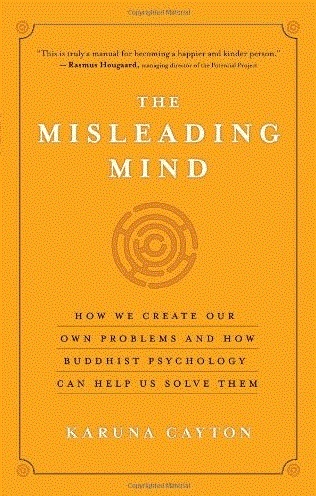
    Have you ever felt like your mind was controlling you, dragging you along for a persistently bumpy ride?

    Research shows the majority of us feel this way, but the good news is that we can do something about—and Karuna Cayton’s book The Misleading Mind teaches us how.

    A psychotherapist and practicing Buddhist, Karuna has written an easily digestible book that offers solutions to the mental anguish we often perpetuate through misguided thinking.

    Its full title is The Misleading Mind: How We Create Our Own Problems and How Buddhist Psychology Can Help Us Solve Them, and it delivers on that promise.

    I’m thrilled to share this long but illuminating interview and offer two free copies as a giveaway!

    The Giveaway

    To enter to win 1 of 2 free copies of The Misleading Mind:

    • Leave a comment below.
    • Tweet: RT @tinybuddha Book GIVEAWAY & Interview: The Misleading Mind http://bit.ly/K8UDcj

    If you don’t have a Twitter account, you can still enter by completing the first step. You can enter until midnight PST on Friday, June 1st. (more…)

  • Giveaway and Interview: The Mindful Manifesto

    Giveaway and Interview: The Mindful Manifesto

    Note: The winners for this giveaway have already been chosen. Subscribe to Tiny Buddha to receive free daily or weekly emails and to learn about future giveaways!

    The winners:

    If you read this site regularly, odds are you’re familiar with mindfulness, and you may even meditate regularly.

    It’s a simple practice that can dramatically improve our physical, mental, and emotional well-being, since it helps ground us in the present moment, and frees us from the burden of dwelling on the past or worrying about the future.

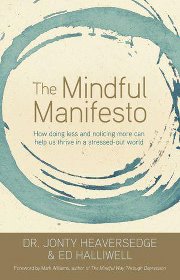
    Whether you’re new to mindfulness or not, you’ll likely find some helpful tools in The Mindful Manifesto: How Doing Less and Noticing More Can Help Us Thrive in a Stressed Out World. Straight-forward and comprehensive, the book offers detailed instructions to retrain our minds—and be kind to ourselves in the process.

    Mindfulness teacher Ed Haliwell, who co-authored The Mindful Manifesto with Dr. Jonty Heaversedge, took some time to answer a few questions about the book; and he generously offered to give away 5 copies to Tiny Buddha readers.

    The Giveaway

    To enter to win 1 of 5 free copies of The Mindful Manifesto:

    • Leave a comment below.
    • Tweet: RT @tinybuddha Book GIVEAWAY & Interview: The Mindful Manifesto http://bit.ly/H7vMTw

    If you don’t have a Twitter account, you can still enter by completing the first step. You can enter until midnight PST on Friday, April 6th.

    The Interview

    1. Tell us a little about yourself. How did you come to teach mindfulness?

    I came to mindfulness practice when I was experiencing a lot of stress, depression and anxiety. I kept searching for ways to change how I was feeling, and several people suggested learning to meditate. (more…)

  • Maybe We’ll Never Arrive

    Maybe We’ll Never Arrive

    “Every day is a journey, and the journey itself is home.” ~Matsuo Basho

    Once, one of my friends shared a line of wisdom that summed up the dance of wholeness and aspiration I often find myself absorbed in:

    “Everything is quite all right; our worth secure and true. Everything’s not quite all right; we’ve worthy work to do…”

    Part of the longing and neediness I tend to feel comes from a rift between who or where I am, and where I believe I should be to be “successful.”

    My life has been colored by this dichotomy: the strange see-sawing dance between achievement and room to grow.

    I’ve struggled endlessly with the concept of my “potential” and the frustrating feeling that potential will always add itself on to the top of any ceiling I break through, creating only more upward space in which to aim, aspire, and yearn.

    And yet, any spiritual practice will allow us to see that we are whole, complete, and perfect just as we are in the very moment.

    For me, yoga has been a bridge between these two places—where I am and where I want to be.

    It encourages me to be grounded, to deepen, to see and experience my wholeness, to accept myself for all my facets—just as I am. It allows me to be a work in progress, allows my life to be a journey, and my emotions a process.

    I have utilized yoga and meditation as a tool of self-love, one that then immediately opens into compassion for others, and an expansive sense of self. I live my day with more love, more serenity, and more grace, when I actively dedicate time and energy to tapping into a calmer sense of being. (more…)

  • Keep Moving Forward: 4 Tips to Enjoy the Journey More

    Keep Moving Forward: 4 Tips to Enjoy the Journey More

    “If we are facing in the right direction, all we have to do is keep on walking.” ~Proverb

    Five years ago, I decided to fulfill my dream of getting a doctorate. I knew from talking to friends who took on the same endeavor that it would mean many sleepless nights and tons of reading and writing. But nothing prepared me for the path that lay ahead.

    Graduate school is often compared to a marathon. Why? At each moment, when you think you’ve completed a major milestone, you realize you have a long road ahead. You just have to keep going and going.

    First, there’s the coursework. I took on a full load and worked two part-time jobs.

    Second, you really have to develop a thick skin because part of the experience of graduate school is humbling yourself before your professors and peers and learning to take constructive criticism. This also becomes an exercise in tuning into your own voice by learning how to distinguish between useless and useful feedback.

    Third, your patience is tried and tested because it’s such a long road–an average five to seven years to completion in the United States.

    I went into graduate school because I loved learning and I had a passion for my research. Along the way, as I buried myself in books, grading, and academic dialogue with my colleagues, I lost sight of this passion.

    I became so focused on the destination that I forgot about the journey.

    For my dissertation, I had to travel abroad to collect data. At first, I was enthused about the act of discovery. What kind of data would I find? What would I learn about the country, culture, and people living there? I was excited about the prospect of my research contributing to the good of mankind, even in some minute way. I harbored high hopes. (more…)

  • Control Less, Trust More: How I Learned to Relax and Let Go

    Control Less, Trust More: How I Learned to Relax and Let Go

    “The closest to being in control we’ll ever be is in that moment when we realize we’re not.” ~Brian Kessler

    My nine-year-old son said something so profoundly right that it kept me awake. He said that in order for him to be happier I would need to let go of controlling him all the time.

    Now granted he is young, and believe me, if I didn’t tell him to get dressed he’d run outside in PJs, but I was struck by his wisdom because this is also my obstacle to becoming happier.

    In the past, the more I felt out of control, the more I tried to control others. We moved many times, sometimes to different continents for my husband’s job. We had children, and not all of them planned.

    My husband and I drifted apart over the years, realizing we are very different and have completely diverging core values. I became sick with an eating disorder, a scary and tricky disease.

    I felt overwhelmed, scared, alone, and lost. This is where the controlling mind came to rescue and took over. In time, my eating disorder became stronger than me, and yet also a familiar friend.

    I tried to control both my eating and my body—and also the lives of everyone around me.

    The emptier my marriage felt, the more I tried and control my husband’s behavior at home. The more I felt overwhelmed with my job as a mother, the more I structured my kids’ activities, often making them do things they didn’t want to do. Needless to say that didn’t help to foster my relationships with them.

    I tried to control every aspect of their lives. Whether it was the lunches that needed to be made with a specific type of bread, or the homework having to be done at this time of the day, or the decision of which movie to watch, I told them how to do it and had a hard time letting them make their own choices.

    I was hardly ever wrong—at least I didn’t think so. I thought control equals security equals happiness, up until the day when I took a close look at my life and found that nobody around me was smiling anymore.

    They were miserable. They lit up when their dad came home because he did things with them that were fun and, best of all they never knew what would happen with him. With me they could foresee everything, and the routines were never fun or joyful. (more…)

  • Releasing the Urge to Push and Being Kind to Yourself Instead

    Releasing the Urge to Push and Being Kind to Yourself Instead

    “Slow down and everything you are chasing will come around and catch you.” ~John De Paola

    Pushing has always been the way I get things done.

    Actually, I should be more specific: pushing myself harder has been the way I get things done.

    I grew up believing that life was hard, and that the only way to survive was to give up indulgences, buckle down, and trudge forward. Uphill. Against the wind.

    In my small, suburban high school, I spent hours after my classes ended wrestling with quadratic equations.

    I had the overwhelmingly generous help of my teachers, who tutored me for free in their after-school time. I had the patience of an incredibly gifted best friend to accompany me at study sessions.

    Still, I felt alone in it all. I cried (weekly, probably) over math and science. Other subjects came easily to me, but the black-topped tables of the science classroom consumed my experience of school. I still remember how smooth and cold they were under my elbows.

    I continued on to college at one of the most expensive private schools in the U.S., sinking into student loan debt with every lecture. When depression swept me away during my first college semester and my grades suffered, the only solution I saw was to work harder, to sleep less.

    The results weren’t good: I exited the school year with deepening depression and a blossoming eating disorder.

    It seemed the harder I tried, the worse things got.

    Over the next several years, things improved, though I still didn’t feel like I had much control over my life. Happily, I fell in love at first sight with the prettiest (and kindest) girl I’d ever seen, and she shone her light into many of my dark corners. (more…)

  • Why Too Much Choice is Stressful and 7 Simple Ways to Limit It

    Why Too Much Choice is Stressful and 7 Simple Ways to Limit It

    “Every day brings a choice: to practice stress or to practice peace.” ~Joan Borysenko

    When I bought my car, I visited only one showroom. I’d made the decision that this was the car for me in around one hour, and chose not to spend more hours or days of my time going from one place to another to check other deals and different cars.

    If I hadn’t have found this car, I would have gone to another dealer. However, I’ll never know if I could have saved money by haggling elsewhere, and I don’t care.

    I’ve had my trusty and reliable vehicle for over six years now and so far, I’ve never had to pay more than general maintenance and upkeep. So it was worth every penny.

    You may be shocked that I made such a large and important purchase in this manner (and I’m not a wealthy person by any means). But I was confident it was a good deal when I found it and it’s never let me down.

    I now make most of my purchases like this. I’ll give myself a single option (like shopping at just one store), or will limit them (such as browsing four vacation brochures instead of fifteen), and once I’m happy with the decision, I’ll stick with it.

    Why? Because I think too much choice is stressful. And you can quite literally send yourself crazy with it, like I did.

    Choice anxiety!

    At one time, my need to “shop around” and my desire to keep options open before making decisions was bordering on obsessive. I dithered. I wore myself out. I got confused, and even anxious, when I needed to buy stuff, even if it was just a new winter coat. (more…)

  • 6 Ways to Find Composure When You Feel Panicked

    6 Ways to Find Composure When You Feel Panicked

    “Every day brings a choice: to practice stress or to practice peace.” ~Joan Borysenko

    I had a terrible morning. I needed to make a short YouTube video to promote my therapy practice, and I thought it would take twenty minutes at the most.

    The technology was more complicated than I thought. I struggled on, wanting to do it by myself. Half an hour later, I surrendered and asked my husband Kaspa for help.

    Two hours later, we were still trying to make it work.

    I started thinking about all the other things I was meant to be doing that morning. A tense knot formed in my stomach.I started snapping at Kaspa—if only he knew how to make it work, I’d be finished by now. Grr!

    I finally finished the video (with the help of a very patient husband!), but I was in no state to do any more work. I felt panicky and rushed, and my brain kept talking me through the list of all the things I needed to catch up on, like a stuck record.

    Once I allow myself to get into this kind of state, it takes me a while to “come down” again.

    After some time sitting at my desk and feeling agitated, I decided to go out into the garden.I walked slowly up the path, noticing the bang of my heart. I looked at the baby pink roses, the inner-most petals still holding onto drops of dew. I heard the clear song of a blackbird. I took a deep breath. And another.

    These are the things that help me when I get panicky. (more…)

  • Being Happy in the Present: See the Tree

    Being Happy in the Present: See the Tree

    “Have respect for yourself, and patience and compassion. With these, you can handle anything.” ~Jack Kornfield

    I sometimes find myself smiling for no reason—a good mood, perhaps, or maybe a thought about friends and loved ones. What I notice is that every time I contemplate my own smile, it comes back to the thought of being here, now, and feeling for those around me with understanding instead of judgment and love in place of anger.

    It is in the here and now that I find happiness.

    Contemplate a tree: In the blazing heat of the summer, does it cry and complain, or does it sway in the passing breeze? In the deathly cold of winter, does it shutter and wither, or does it catch the falling snow from the sky and offer us pleasing scenery?

    Now ask yourself the same question: In the crests of life, do you lose your legs and sink, or do you stay afloat with the rolling tides? Oftentimes we forget that happiness is usually a choice, and it is in times of need when we need to be patient with ourselves in order to stay afloat and choose to be happy.

    Last year was rough for me. I felt manipulated by a (now ex-) girlfriend for a year before finally leaving her, was hurt twice again over the summer, and as a result, became slightly jaded. I was prepared to live the next year in solitude, not caring to find romance.

    I experienced something we all experience. Heartache does not discriminate against any particular person, life, or event. How then can you stay strong, positive, and happy in the face of misfortune?

    What I’ve learned is quite simple:

    See the world, free of implication, free of self-deception, for what it truly is.

    It is easier said than done, but once you have the basic mindset in place practice will eventually bear many fruits. So follow these general guidelines to find strength when dealing with troubles:  (more…)

  • Prescriptions for Peace: How to Combat Anxiety

    Prescriptions for Peace: How to Combat Anxiety

    “When the crowded refugee boats met with storms or pirates, if everyone panicked, all would be lost.  But if even one person on the boat remained calm and centered, it was enough. They showed the way for everyone to survive.” ~Thich Nhat Hanh

    Without realizing it, I spent the majority of my childhood in a constant state of anxiety. In my early twenties, after a break-up with a man I dearly loved (albeit a little obsessively) I tried to medicate my grief with too many cups of coffee, bottles of wine, and many cigarettes.

    I found myself one absurd sunny afternoon with shaky, sweaty hands, palpitations that felt like a heart attack, and an overwhelming sense that I was crazy. I called the emergency room and they informed me I was having a panic attack.

    Although I tended toward depression and struggled with not wanting to get out of bed, I didn’t realize depression and anxiety can go hand in hand.

    At one point, my doctor prescribed anti-anxiety medication, but it numbed me out to such a degree I could barely function. Realizing that this was not the answer for me, I made it a life-responsibility to care for and self-treat my anxiety.

    Back then, if someone suggested that I find “peace,” I would toss it away with a roll of my eyes thinking they were some sort of hippie trying to save the planet, or a born-again with a bumper sticker of a white-winged dove. What was peace anyway? I was just trying to survive my inner turmoil.

    Over time, I discovered more about what peace really meant for me. If I could be at peace, I knew then that I could better understand and have compassion for others. But I had to start small and stay simple in order to face the stressors of my life.

    I began with the basics and slowly built my foundation over the years. My pattern for so long was trying to build my ship out at sea. The realization was to learn how to build my mast on stable ground.

    Once I built a basic foundation, I got a little fancier: I kept journals to have a place to put my rapidly thinking mind. I learned how to meditate, slowly increasing from ten to forty-five minutes a day.

    I studied and read countless spiritual books before going to bed (sometimes an excellent remedy for sleep) and found time each week to be creative. I changed my eating habits, learned how to eat more vegetables, legumes, grains, and olive oil, and juiced delicious concoctions to ground me.

    Over a long period of time, I created a daily structure that would include all of the above and more, which solidly holds me and gives me inner-strength. Then, I could start thinking about the bigger things, like the views of the world and how to help make it a better place.

    Today, inner-peace is tangible and real for me. Even when the going gets tough, even when life slams me with loss and difficulties, I have my tried and true structure to come back to. (more…)

  • How to Stop Being a Neat Freak & Stressing About Keeping Things Tidy

    How to Stop Being a Neat Freak & Stressing About Keeping Things Tidy

    “Life’s challenges are not supposed to paralyze you; they’re supposed to help you discover who you are.” ~ Bernice Johnson Reagon

    Have you ever hung up a towel and not straightened it or folded it or arranged it in some way as you did so? Have you ever just casually tossed a towel over the towel rail?

    I did that last weekend and it was a big event. I had to laugh at myself for having this obsessive quirk, but doing that was almost impossible. I was in a hurry putting away the laundry, and there were those two clean towels to be hung back in the bathroom.

    I thought about just stuffing them over the towel railings—but I just couldn’t! However, when I realized how hard it was to do this, I made myself do it.

    I wonder if you are the same as I am about hanging towels “correctly” every time?

    When I asked my sister that question, her reply was, “Gasp! Wash out your mouth with soap!” And then she asked, “How long before you went back and straightened it?”

    The towel stayed in its tossed position until I used it after my shower that night. After I got away from it after tossing it on the rail, it didn’t bother me. I soon forgot about it—the towel itself wasn’t calling me back in there to fix it.

    I went to the bathroom later and managed to leave the towel as it was and just walked away again. It was a good exercise in self discipline.

    I’ve learned that I can make untidiness affect me less by doing my ignoring practice, just like during the towel incident.

    My partner thinks it’s hilariously obsessive to have to hang towels straight and tidy each and every time. Some people think habits like this (in others) are annoying. I wonder if it’s just as obsessive in another way to be annoyed by somebody who needs to tidy?

    My partner hangs his towels nicely most of the time, although not the way I would. I have made myself get used to leaving his towel the way he last hung it—I don’t even notice it any more. (more…)

  • 5 Ways to Find Your Center When Life Feels Overwhelming

    5 Ways to Find Your Center When Life Feels Overwhelming

    “Within you, there is a stillness and a sanctuary to which you can retreat at any time and be yourself.” ~Hermann Hesse

    We’ve all had moments when life’s demands left us feeling stressed and scattered. In these moments, it’s helpful to have some simple tools to help us gain composure and come back to our center.

    Let me paint a picture for you of a scene from my daily life at its most overwhelming.

    On a recent Tuesday, I drafted my evening’s “to-do” list, which contained the following items: Go clothes shopping for my son, get groceries, cook up some dog food, cook dinner, give my son a bath, put laundry away, walk the dog, and prepare for a workshop that I was to present that weekend.

    Like most working parents, I have to fit a lot of tasks into a brief period of time on weeknight evenings.

    Clearly all of those items weren’t going to get accomplished. But I felt compelled to try.

    And then, mid-afternoon, a feeling of illness began to creep over me, starting with a headache and progressing into nausea and profound fatigue. By the time I got home, I had revised my list, and whittled it down to: Bathe my son.

    I felt incapable of anything else.

    Still, even with a truncated list, my evening became chaotic very quickly. Our newly-acquired dog was dripping blood all over the house, including the white slipcover. She was not sick—she was in heat.

    As I tried to attend to the mess, my son called to me from the kitchen. He held his cupped hand out to me, and proudly exclaimed, “I caught it so it wouldn’t fall on the kitchen floor!”

    I will allow you to draw your own conclusions about what his hand held, but I’ll give you a hint: He’s potty training.

    In the mean time, my head was throbbing, my stomach was retching, dishes from the previous day were piled up in the sink, laundry from the week sat haphazardly on my bedroom chair, and the workshop I was to present in four days had not been planned or prepared for. Not to mention, I had a hungry child and dog to attend to.

    Sometimes, when external factors like these seem overwhelming, we feel unable to remove ourselves from the situation long enough to gain perspective and compose ourselves in order to move forward.

    Very often, these external factors become internalized, and our minds start reeling. “I’ll never get it all done, my life is spiraling out of control, I can’t get myself together…” The internal loop can be loud, persistent, and ultimately paralyzing. And once it begins, it is hard to stop. (more…)
  • CD Giveaway, Relax: 6 Techniques to Lower Your Stress

    CD Giveaway, Relax: 6 Techniques to Lower Your Stress

    Update: The winners for this giveaway have already been chosen. Subscribe to Tiny Buddha to receive free daily or weekly emails and to learn about future giveaways!

    The Winners:

    Last year, a representative from More Than Sound reached out to me to share the publishing company’s new mindful driving CD, Awake at the Wheel.

    As someone who frequently deals with Los Angeles traffic, I especially appreciated the opportunity to hear and share a CD focused on making the roads more peaceful.

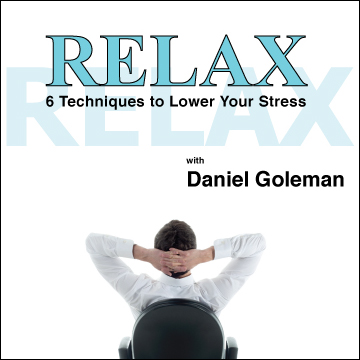
    Recently, More Than Sound connected with me again to introduce their latest offering, a CD by emotional intelligence expert Daniel Goleman titled Relax: 6 Techniques to Lower Your Stress.

    I’m grateful for the opportunity to share it with you and offer 5 free copies as a giveaway!

    The Giveaway

    To win one of 5 free copies of Relax: 6 Techniques to Lower Your Stress:

    • Leave a comment on this post.
    • Tweet: RT @tinybuddha Giveaway – Relax: 6 Techniques to Lower Your Stress http://bit.ly/vr9r6O

    You can enter until midnight PST on Friday, November 11th. If you don’t have a Twitter account, you can still enter by completing the first step.

    About Relax: 6 Techniques to Lower Your Stress

    Chronic stress can disrupt almost all of your body’s processes. It’s been shown to increase the risk of numerous health problems including heart disease, sleep issues, digestive complications, fatigue, depression, anxiety and obesity.

    Daniel Goleman, Harvard-trained psychologist and author of Emotional Intelligence, developed Relax, a 45-minute audio program to help listeners effectively and naturally reduce stress. Since there’s no one universal antidote to stress relief, Dr. Goleman’s guided session offers several exercises to suit a variety of personal preferences:

    • Deep breathing exercises
    • Deep muscle relaxation techniques
    • Guided auto suggestion exercises
    • Relaxation countdown
    • Breath focus and tension release techniques
    • Breath count exercises
    Learn more about Relax: 6 Techniques to Lower Your Stress at More Than Sound. You can also “like” the Facebook page for Relax for stress reduction tips.
  • Stop Pushing: The Art of Relaxed Achievement

    Stop Pushing: The Art of Relaxed Achievement

    “Some people think it’s holding that makes one strong—sometimes it’s letting go.” ~Unknown

    A few weeks ago, I took a sip of my morning tea hoping that the day would be better than the prior ones. I had somehow tripped over the cracks of life and couldn’t seem to pull myself back. I had woken up feeling eager to start a new day, but like every other day of my life, within the first few hours, things had gotten off track.

    I was stuck in a downward vortex of fear, anxiety and self-ridicule. I read my Yogi tea bag message, “It’s not life that matters; it’s the courage that we bring to it.”

    I held back my tears because my courage was feeling impossibly deflated. I was sick of trying so hard.

    How much courage do we really need to live our lives?

    I realized then that my entire life I’d felt like a fraud. I was renting someone else’s life, trying to pretend that it was me. My only consistency was my inconsistency with not being true and honoring myself. It is exhausting to be someone you’re not supposed to be.

    Society conditioned me to believe if you want something you have to work hard to get it. And I worked really hard accepting the fact that life was supposed to be an uphill struggle. All my relationships were superficial. I forced a smile to hide the fact that I felt all alone.

    Everyone I knew wanted to talk about the latest fashion buzz, who won American Idol, or what Snookie’s latest drama was. I pretended to be interested, but I was more curious about the pull on my heart. It kept prickling and nagging as to say, “There is more than this, honey.”

    For over a decade I lived this delusional nightmare of codependency and a search for security with success.

    I chose all my romantic relationships carefully to escape the painful reality of my anxiety. I’d pick partners who were addicted to numbing their pain, too. We’d escape life by doing drugs together and drinking over the fear.

    I finally got up enough courage to recognize that the relationship was unhealthy and I would end it only to find myself back in the arms of another addiction—overeating, over exercising, overworking; more men, more drugs. I stayed in a constant state of denial, consumed by my fear-based mind.

    I was always waiting for the next thing to happen— the next promotion, the next boyfriend, the next anything to drag me out of the depression. It never occurred to me that “pushing” was the problem. My inner drive was really just a cry for help—a call for love.

    I believed the root of my depression was my job in marketing. So after many attempts I finally left that position to pursue a new dream. Again the pushing overtook my world. I declared I would be a travel writer and pushed my way into that industry.  (more…)

  • Simplify Your Life by Eliminating These 7 Problems

    Simplify Your Life by Eliminating These 7 Problems

    Life has a tendency to become overly complicated and stressful, particularly because things change so quickly. I’ve identified seven problems that you can eliminate to make your life a whole lot simpler (which doesn’t mean boring or less interesting).

    Problem #1 – Too Much Responsibility

    Think back to a year or two ago. How much extra responsibility has come into your life since then? You may have too much stuff, too many possessions, too many projects, and too many commitments.

    Spreading yourself too thin reduces focus, increases stress, and lowers overall performance.

    Too much stuff could include anything from a new cell phone to a new swimming pool to a bigger house. It might be nice to have more possessions and new gadgets, but they often come with responsibilities and maintenance. Ask yourself if you’re being owned by the things you own.

    It’s also exciting to get caught up in many new hobbies or projects. I did this when I got into building websites. Before I knew it I was working on twenty projects at the same time and seeing minimal results across the board. It took me a while to realize that I was working like a maniac, yet none of my projects were anywhere near completion.

    These days I’m only working on two to three projects in total. Not only do I feel more relaxed because it’s easier to keep track of what I have to do, but I can also see significant progress in my work month after month since I am doing less.

    Try to simplify your life. Cut down your possessions, projects, and hobbies to relieve some of the responsibilities that you don’t really need to have. (more…)

  • How to Carve Time for Yourself and Pursue Your Dreams

    How to Carve Time for Yourself and Pursue Your Dreams

    “Sometimes the most important thing in a whole day is the rest we take between two deep breaths.” ~Etty Hillesum

    There was a time that I wished I had more than 24 hours a day to finish everything in my long to-do list. I have a full-time job editing news stories for a media agency while tending to my side business as a content marketing strategist for entrepreneurs.

    That’s just the work thing. Like most single women in Asia, I live with my parents, so I do my share of household chores. I’m also writing my thesis for my masters in anthropology.

    I had such a crazy schedule that I had this feeling of being literally crushed under a heavy pile of work. I wondered if I was just spinning my wheels, or if it was even worth it.

    I decided then to make some changes so I’d feel less overwhelmed. After reading books and blogs on time management, goal setting, and productivity, I accepted that, while I can’t have more than 24 hours a day, I can give myself one day each week to forget my workload and just focus on myself.

    My free day is my time to read, watch DVDs, and go to the gym. This me-time is as important as my work days, as it recharges my energy. It also clears my mind so I can focus on my goal of transforming my current side gig into a full-blown business.

    (more…)
  • Improving Your Reactions to Mishaps from the Inside Out

    Improving Your Reactions to Mishaps from the Inside Out

    “Peace of mind is not the absence of conflict from life, but the ability to cope with it.” ~Unknown

    I am confident. I am content. I am complete. I am calm.

    I decided that this was going to be my new mantra. I decided this at 8:26 a.m. I repeated it to myself over and over while showering, getting dressed, and driving to work.

    I ascended the stairs to my office, singing the words in my head. I am confident. I am content. I am complete. I am calm.

    This was going to be a good day. I would stay focused, yet aware; productive, yet relaxed. Yup, I was on top of the world, strutting my stuff in my maxi dress and strappy sandals.

    And then I spilled my water bottle. My dress was blotched in awkward areas for a significant amount of time.

    Needless to say, I forgot my mantra.

    I forgot that I was supposed to be confident, content, complete, and calm.

    For the first hour of my work day, I drifted in and out of an anxious haze of unrest, just because of that stupid water bottle. That spilled seven ounces of water triggered a tidal wave of unease and insecurity.

    They say not to cry over spilled milk. “They” didn’t mention spilled water because it’s so insignificant.

    I realize that spilled water is a really stupid thing to get worked up over. Logically, I know that.

    But it wasn’t the spilled water that was really the problem. Anxiety is something I know all too well. I often allow small and insignificant disruptions to cause me a lot of distress. I blow things out of proportion; I know this.

    But that doesn’t mean I have to live with anxiety-on-call for the rest of my life.

    “Spilled water bottle” incidents happen. (more…)
  • How to Reduce Stress by Doing Less and Doing It Slowly

    How to Reduce Stress by Doing Less and Doing It Slowly

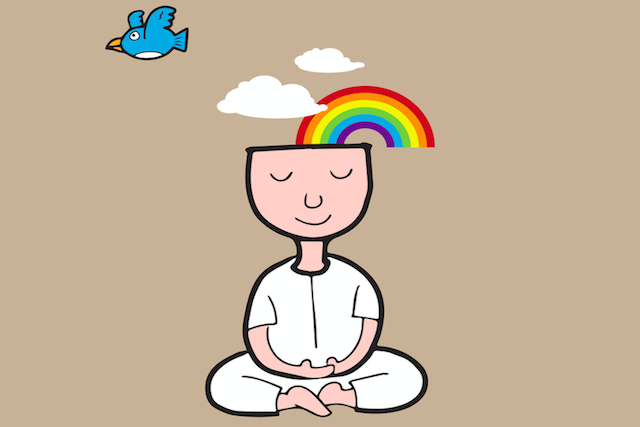
    Zen man

    “Beware the barrenness of a busy life.” ~Socrates

    In April, NPR ran a story titled, “The Slow Internet Movement.” It reported that hipster cities, like Portland, Oregon, are sprouting Internet cafés that only offer dial-up access to the web.

    These cafés give customers, “Slow pours and slow Internet. Here, you can order your coffee and spend four hours checking your email, all for $.99 an hour.”

    “Wow,” I thought.” That’s just my speed!” (No pun intended.) But the story didn’t just run in April. It ran on April 1st and was NPR’s little April Fools joke at the expense of gullible people like me.

    It got me thinking, though. Life would be much less stressful if I embraced the spirit of the Slow Internet Movement. So, here are four tips for slowing down:

    1. Double the time you think it will take to complete a task.

    How often do you clock in at or under the time you’ve allotted for a task? I rarely do. Take my raised ivy geranium bed. Periodically, the geraniums spill over onto the walkway and I need to cut them back.

    Every time I assess the task, I estimate it will take twenty minutes at most. But it always takes at least twice that long. By the time I’m done, due to chronic illness, I’ve used up my energy stores for the day. I’m “trashed” as we call it my household.

    Inspired by The Slow Internet Movement, when I tackled the task a few weeks ago, I doubled my twenty-minute time estimate. Forty minutes is more than I can handle at one time, so I cut back half the geraniums on Saturday and the other half on Sunday.

    Sure, the box looked odd for twenty-four hours—like half of a buzz cut—but no one seemed to notice. Not only did I spare myself burnout, but I truly enjoyed the activity both times. (more…)
  • Be Stress-Free: Eliminate 5 Common, Unnecessary Stressors

    Be Stress-Free: Eliminate 5 Common, Unnecessary Stressors

    “Some people think it’s holding that makes one strong – sometimes it’s letting go.” ~Unknown

    The human mind loves to find things to stress about.

    There seems to constantly be something in our lives that causes us to worry. And when the thing that caused the worry disappears, we feel happy, but only for a short period of time until we find something else to stress about.

    I’ve witnessed this pattern many times in my own life. As soon as I was able to solve one of my problems, my mind found me a new one.

    Compared to other guys, my body is very skinny. It has been that way since I was a little kid. My friends used to tease me because of it. I laughed at their jokes, but inside I always felt horrible.

    I felt like there was something wrong with me because I was different.

    As I got older I started going to the gym so I could gain weight. Progress was slow since my body naturally leans towards the skinnier side. But slowly I began seeing results in the size of my muscles.

    This is, however, where the results ended. I didn’t really get happier with my body at all, which was the main purpose of the training anyways.

    I still felt skinny and there was always something in my body that wasn’t quite right yet.

    At that point I realized that I was participating in a game that I couldn’t win. My body wasn’t the problem. The problem was what my mind was telling me about my body.

    In essence, as long as you are identified and run by your mind, it will come up with “problems” for you to focus on.

    Every single time a dilemma is solved, you can be sure of a new one arising that feels equally stressing as the previous one.

    The good news is that there is a way to break free from this endless loop of stress. It starts by realizing how pointless and harmful this useless worry actually is.

    Once you become aware of the negativity that these thought patterns create, it will be much easier to let go of your “problems” once and for all. (more…)

  • How to Let Go of the Need for Approval to Start Thriving

    How to Let Go of the Need for Approval to Start Thriving

    “Criticism is something you can easily avoid by saying nothing, doing nothing, being nothing” ~Aristotle

    The need for approval kills freedom.

    Trust me, I know, because I spent my entire life seeking approval until I realized it was a waste of time and didn’t work anyway. The desire to get people to like me motivated the majority of my choices and actions in early life.

    Queen of social chameleons, I mastered the art of telling people what they wanted to hear and being someone they would find impressive—all the while worrying incessantly about what others thought of me, fearing criticism, and holding myself back as a result.

    When I first started building my coaching business, this craving for acceptance caused me to hide from opportunities where the potential for reward was high, but the possibility for criticism was equally large.

    As an example, one of my first client referrals was to coach the CEO of a major corporation. It’s painful to admit that I told my client I wasn’t the right person for the job and referred the person to someone else.

    My need for approval created immense anxiety about the value I provided for my clients and caused me to spend far too much time on tasks in order to perfect them.

    It got to the point where I was wasting so much time and losing so many opportunities that I had to make a big decision: either let the business go or learn how to get over myself!

    Fortunately I chose the latter option. I created a plan to learn to let go of needing others’ approval (well, at least letting go enough that it would no longer sabotage my success). Here I am, seven years later, running the same business with much greater ease and success as a result.

    Can you relate to these issues? (more…)