Tag: stress

  • 4 Tools to Reframe Stress to Feel Less Overwhelmed

    4 Tools to Reframe Stress to Feel Less Overwhelmed

    At Peace

    “I know but one freedom and that is the freedom of the mind.” ~Antoine de Saint-Exupery

    Stress, strain, tension, worry, overwhelm, nerves, feeling wound up, freaking out. Whatever we call it, the effects are universal.

    Our adrenals rev up, uneasy thoughts cycle on the brain’s hamster wheel, butterflies flitter in the stomach, our moods swing. There are many different ways that stress manifests, and none of them are particularly enjoyable.

    Stress is basically an emotion. It’s the way we feel when things aren’t going our way. “Things” can be as insignificant as feeling annoyed because we woke up two minutes before our alarm goes off; they can also be of the off the chart “I’m getting a divorce/changing jobs/applying to grad school/moving” variety.

    Question: Why do we attach importance to certain experiences (and therefore feel stress in regards to them) and not to others?

    Certainly there are the categories of events almost everyone would agree feel stressful: dealing with illness, starting a new job, or getting held up in traffic on the way to an important appointment.

    However, most of us have had the experience of feeling stressed about something we rationally know is not that important, is not the end of the world, yet, there we are, experiencing those telltale signs that let us know we are tense.

    What about the fact that one of us could feel excessive stress because we cannot get the particular brand of insert-favorite-food we want at the supermarket? Or that another one of us may feel a lot of tension because we have to wait in line at the bank?

    Others of us may not find these events stressful in any way. However, we all have our own triggers.

    What does this imply?

    It implies we have more power over “stress” then we may realize. (more…)

  • 3 Tips to Escape the Perfectionism Trap and Feel Good Enough

    3 Tips to Escape the Perfectionism Trap and Feel Good Enough

    Looking Down

    “I have done my best. That is all the philosophy of living one needs.” ~Lin-yutang

    Perfectionism—the word brings to mind images of order and organization, of effectiveness and efficiency. This is what society expects from a “perfectionist,” and this is what is projected as desirable and attainable. There is an aspirational value to being a “perfectionist.”

    Many people believe that perfectionistic tendencies motivate people to do their best and achieve their goals.

    However, I can vouch for the fact that it actually feels like being caught in a trap. There is a feeling of suffocation and dread at not being able to escape. The joy of living is sucked out leaving one feeling inadequate and incompetent all the time.

    I don’t remember how or when I fell into the trap. All I know is that I have suffered the pain of trying to be the perfect daughter, the perfect student, the perfect sister, the perfect friend, so on and so forth.

    And I remember the exact moment when I realized I was trapped.

    It was when I was fifteen and in the tenth grade. In India, the tenth grade examinations are considered extremely important. These are the examinations that would decide whether or not I got into a college of my choice.

    I always did well academically, and needless to say there were expectations from those around me to perform well in these exams. I had to live up to these expectations—or so I thought.

    That thought was enough to drive me into what was unarguably the darkest period of my life. As a teenager I was already dealing with issues of body image, being bullied, and trying to make friends. Added to this mix, my desire to excel academically pushed me over the edge.

    I cried myself to sleep. I had suicidal thoughts. I wanted to run away from home.

    I rebelled against my parents. I magnified even the smallest of my mistakes and obsessed over imagined flaws in my personality. I simply wasn’t good enough. 

    I was constantly depressed and wouldn’t tell anyone why. This worried my parents, especially my mother. She took me to see a guru she trusted in the hope that maybe he could help me.

    The guru, a kind and wise man, just asked me one question. (more…)

  • Letting Go of Fears and Worries About Getting Things Done

    Letting Go of Fears and Worries About Getting Things Done

    “Each time we face our fear, we gain strength, courage, and confidence in the doing.” ~Unknown

    As the days have continued on past the beginning of the New Year, my discontent has been growing as I’ve been thinking (or worrying) about how unmotivated I feel.

    The holidays have come to a close, the New Year began, we made wonderful goals for ourselves, and yet, I’ve begun nothing. I wanted to write another article, keep up with my blog(s), organize my house, work on my finances and my fitness, and start new projects.

    The holidays were rough to get through this year, but they are over now, and though I know it’s early in the year so I shouldn’t be too hard on myself, I still feel a sense of urgency and disappointment that I’m having trouble getting started.

    This created more discontent and frustration. What could I possibly share with anyone with my head in this state? So, I did the only thing I thought I could—I let it go.

    Sometimes realizations hit you like a ton of bricks, and this one did. Once I let that urgency go, I was able to approach the situation more calmly.

    I was then able to realize that I was forgetting one of the most important lessons I’ve learned on my journey to better living: everything is happening as it should be.

    This does not mean to live life with complete inaction.

    You can’t, for example, bring in your mail, toss the bills on the table, and “let it go.”

    The universe isn’t going to pay your bills for you. But letting the fear that you “don’t have enough” to pay your bills keep you from opening them, so as to avoid the scary situation inside, will only help you dig a deeper hole for yourself.

    The “letting go” that I am referring to here pertains to the fear and worry.

    No matter what the situation is, try to let go of the fear of what’s going to happen. Know that you really do have the power to take care of it. There is always a solution. You are not powerless. (more…)

  • Rituals for Renewal: 7 Steps to Lower Your Stress

    Rituals for Renewal: 7 Steps to Lower Your Stress

    Walking at Sunrise

    “Every day brings a choice: to practice stress or to practice peace.” ~Joan Borysenko

    Every day I meet with people who are stressed and want things to be different. I also encounter people who are so distressed they’ve accepted suffering’s dominion over their life. Almost all, however, are interested in the concept of change.

    Still, taking small, conscious steps toward a healthier emotional, mental, and physical life can sometimes seem overwhelming. More people have told me “I’m so busy—I can’t fit one more thing into my day!” than not. But what’s the alternative? It’s being just happy enough to be miserable.

    Take it from me. Early in my career, I decided to take a position with a new for-profit, up-and-coming business, determined to climb the professional ladder quickly. Immediately I moved my family from our safe, rural life to fast-paced, competitive Washington, DC.

    I became obsessed with work, committed, and my boss recognized my energy level and capacity to manage by awarding me with, of course, more work.

    At the time, I took this as a compliment; I saw it as evidence that I was achieving a goal. I did not recognize what my work was extracting from me physically, emotionally, and mentally until, ironically, I took a long overdue vacation.

    Walking out to the pool, my wife mentioned that we had forgotten the suntan lotion. Offering to retrieve it, I suddenly began to feel dizzy as I approached the lobby, anxious waiting for the elevator.

    I was sweating in the air-conditioning, and there was a sense of impending doom as I approached our room. I was afraid to walk inside, fearful there might be a blinking red light on my phone indicating a message from my boss about work.

    Seeing no red light, I was able to breathe again and regain my balance. But the truth was clear: The red light was a metaphor. If I didn’t begin caring for myself, soon enough I would be in a van with red lights whirling all around me.  (more…)

  • 3 Ways to Transform Anxiety into Positive Energy

    3 Ways to Transform Anxiety into Positive Energy

    “Today is the tomorrow you worried about yesterday.” ~Proverb

    A few months ago, I moved from the metropolitan east coast to rural Indiana and bunked up with my grandparents to help them sell their house.

    The house has finally sold, and now I am faced with options for where to go next. In other words, my future is completely uncertain at this point, and I’m experiencing quite a bit of anxiety over it.

    On the real, I’m silently, and at times not so silently, freaking out.

    Anxiety is so annoying in that it can be completely paralyzing. It is for me right now.

    My anxiety has taken over my productivity and has almost completely shut down my creativity. Also, my sleep is suffering, which impacts my skin, eating habits, and energy. It’s a yucky downward spiral, my friends.

    The major bummer is that my anxiety doesn’t solve any of the things I’m worried about, and the blocked energy flow this negative emotion generates only creates more problems. What is a distressed girl to do?

    Today I dragged my anxiety with me to my meditation pillow, and had a piece of paper where I quickly jotted down all of my greatest fears surrounding this move that’s upon me in just a few short weeks. I sat for a moment and wrote down anything that surfaced.

    What came up was that I am fretting that I won’t have enough money to support my upcoming move, I’m wondering what would happen if my car breaks down, and I’m worrying that I might not be happy in my next environment (and so forth). All valid fears, I would say.

    But then I realized that I really needed to dissect those fears further. (more…)

  • Overcoming Anxiety: Moving from Fear to Presence

    Overcoming Anxiety: Moving from Fear to Presence

    Screen shot 2012-12-20 at 11.50.19 AM

    “I learned that courage was not the absence of fear, but the triumph over it.” ~Nelson Mandela

    When I was a trainee teacher at a Cambridge University, I attended one of the oldest, most sought-after colleges, where most of the other graduate students were astrophysicists and economists, and 90% male.

    They also seemed to come from families that were in some way related to the Queen of England, whereas I was a young, pregnant, trainee high school teacher whose nearest connection to Queens was owning a Freddie Mercury single, and I was a little shy.

    Formal college dinners were a regular occurrence, and you were expected make small talk as you sipped your cream sherry in the medieval banquet hall in your black robes before dinner.

    When I tried to talk honestly about what I was studying or what I was interested in, it tended to lead to embarrassed mumblings and a quick escape.

    So one day, when someone asked me what I did, I said I was a lion tamer.

    Their eyes lit up. “Really?” they asked, intrigued. “Oh yes!” I replied, “Each day I have to have nerves of steel as I enter a room of caged brutes and try to get them to perform tricks!”

    I am no longer a teacher. But I am still a lion tamer.

    In fact, it was the lions that stopped me teaching, the same lions who were hiding under the table at those grand banquets, when I couldn’t think of anything to say.

    Yes, you heard me right, I live in close proximity to a caged lion. Wild, unpredictable, untamable, he longs to roam the plains. But instead, it’s just him and me, locked in my head together. His name? Anxiety!

    I have learned what makes him roar, what feeds him. He smells blood and out he comes, lured by deadlines, taxes, financial issues, illness, death, or medical professionals. So far, so normal.

    But he’s a strange type. He doesn’t like parties and social occasions, talking on the phone, images of me, swim suits, nudity, heights, or criticism.

    And so anxiety and I live together. I know how to keep him sweet, and keep myself safe. We have learned to make deals. And I avoid his territory like the plague. (more…)

  • 6 Steps to Release Your Fear and Feel Peaceful

    6 Steps to Release Your Fear and Feel Peaceful

    Screen shot 2012-12-20 at 1.25.45 PM

    “We are not what we know but what we are willing to learn.” ~Mary Catherine Bateson

    It was a balmy spring morning and I started my day as per usual, but I soon realized that my mind was entertaining fearful thoughts about my financial insecurity.

    With many new ventures within the seedling stage, my income flow was erratic and unpredictable, while my financial responsibilities were consistent and guaranteed. At the time I ignored these thoughts as “petty,” like a parent dismissing a crying child after a mild fall on the pavement.

    What I didn’t realize was that my mind wanted to entertain these fear-based thoughts like a Hollywood blockbuster, and as you may know, what you focus on expands. 

    Before I knew it, my body was in a state of complete anxiety and fear. I literally felt my cognitive and creative centers shutting down. I felt completely powerless, a hostage to my own mind.

    My body felt paralyzed, and I felt disconnected from my talents and gifts. I felt separate, isolated, and vulnerable. I became a victim of the fear.

    In this moment I realized the powerful impact thoughts can have on how we feel, mentally and physically. Here is what unfolded through me, and the lessons I treasured from this experience.

    Fear is a closed energy, referred to as inverted faith. Fear exists when we do not trust our connection to the infinite part of who we are and buy into a story about what’s unfolding in our life.

    The emotions we feel are created from the thoughts that we choose to focus on, consciously or unconsciously. The emotions act as markers to let us know if we are focusing on expansive, empowering thoughts or fearful, limiting thoughts.

    If I were to relate this in a story, it may be like a pilot believing he no longer had any guidance or support from the airport control tower in a large storm, and no instruments on board to detect if he was on a collision course with another airplane.

    If the control tower represents the infinite part of who we are, which always knows what’s best for us, it can be understandable why the pilot with no other guidance except for his own eye sight would be fearful of the situation at hand.

    An alarm on the plane beeping at the pilot would represent the emotions. The alarm’s purpose is to get the attention of the pilot so he can focus and realize he is off the path.

    Once our emotions start to take a grip of our physical body, what can we do to move from a state of limitation and fear into an open, tranquil, peaceful state?  (more…)

  • How to Choose Peace Instead of Stressing About the Future

    How to Choose Peace Instead of Stressing About the Future

    “If you worry about what might be, and wonder what might have been, you will ignore what is.” ~Unknown

    I was entering a completely new stage in my life. It could have been the beginning of something great, but it was entirely foreign to me. I could handle being productive, I could handle struggling to survive, but what was hard to handle was wading through the unknown.

    After working for six months in Italy and six months in Brazil I was back in the US—floating. I didn’t feel any closer to having a career. I was without a car, job, and permanent housing. My boyfriend still lived in Brazil, and my friends were scattered around the globe.

    I didn’t yet have the answer for who I wanted to be or what I wanted to do.

    I had such high expectations for my return to the US. I had spent the last year working small jobs in Italy and Brazil like teaching English, being a personal assistant, and whatever freelance crumbs I could gather.

    I was sure coming back to my home country would give me the luxury of landing a job I would love with an international company. No such luck.

    So, for the first month I was helping my mom settle in her new apartment, and then I was on the other side of the country for two weeks to give some emotional support to my sister while she finished up her last semester of college.

    I was helping people make it through their daily processes. So far, that’s all the direction and answers I had.

    I was happy to be helpful and supportive of my loved ones, but to my goal-oriented mind, I felt like a failure.

    I was having trouble sleeping at night. I found myself awake in the wee hours of the morning, with thirteen tabs open, trying to research and apply for jobs while emailing contacts and just generally having a panic attack.

    The days were passing rapidly as I sat numbly pecking at my computer from dawn to dusk, without significant results and definitely no peace of mind. I was busy, but not productive.

    My mind was divided between trying to solidify my future and beating myself up for not having made a solid plan sooner. Would I ever be successful? What if I never found a job I liked? How could I live around the world and make money at the same time?

    I didn’t have answers and it was driving me crazy. I was in uncharted waters and I felt totally lost.  (more…)

  • 3 Things Panic Attacks Don’t Want You To Know

    3 Things Panic Attacks Don’t Want You To Know

    “Whatever you fight, you strengthen, and what you resist, persists.” ~Eckhart Tolle 

    Sunday started out with a panic attack.

    It wasn’t little butterflies in the stomach like right before a first kiss. It wasn’t the feeling of anticipation as a rollercoaster slowly climbs the big hill before the drop.

    This panic attack felt like I was about to jump off a cliff, while being chased by clowns. Not cute clowns—scary ones. The kind of clowns that were in the paintings at my pediatrician’s office when I was a kid. The clowns that smiled at me smugly when I was getting emergency asthma shots, unable to breathe.

    Panic attacks are my suffering at its most profound. Over the years, I’ve become an expert on them.

    I was twenty-nine when I had my first major panic attack. I was sitting in a hotel room in Sunnyvale, California, getting ready to drive to the beach, and I couldn’t decide whether to eat at a local restaurant or wait until I got to Santa Cruz.

    Bang! It hit me out of nowhere.

    That’s how it happens for me. I can handle a major crisis like a medical emergency or aiding in a car accident with unthinking grace. It’s the day-to-day living that sometimes gets me.

    Suffering the break-up of a romantic relationship a few months ago brought the panic attacks back out of hiding. Instead of going through a depression, I felt riddled by anxiety.

    A lot of the anxiety had to do with the fact that I was going to have to deal with my ex in a working situation. It was compounded with the awful things I was telling myself over and over again in my head. It was extremely painful and maddening.

    At least I have some skills and resources for dealing with panic and anxiety, and I’ve gotten a lot better at using them.

    I’ve found meditation and present moment awareness to be effective in dealing with panic attacks. (more…)

  • How to Drop the Extra (Mental) Weight and Set Yourself Free

    How to Drop the Extra (Mental) Weight and Set Yourself Free

    “Letting go gives us freedom and freedom is the only condition for happiness.” -Thich Nhat Hanh

    Most people I know are carrying extra weight—and I’m not talking about gaining a few pounds.

    I’m talking about the mental and emotional weight we lug around with us. We carry it everywhere—like a backpack full of bricks—and it weighs us down.

    Personally, much of my extra weight comes from the expectations I have for myself to be more—more present, more productive, more enlightened. Although these might be wonderful things to work toward, wanting to be more can easily translate to not being enough now.

    In that way, each desire to be more than what I currently am equates to a few more bricks in my backpack. An extra load to haul around on my back, making life a little harder to navigate.

    For me it happens to be expectations, but our habits can weigh us down too. Watching television that doesn’t nourish our souls, eating foods that don’t nourish our bodies, and holding on to thoughts that don’t nourish our minds. The effects add up.

    And let’s not forget the hand-me-down beliefs. Beliefs like “Good things don’t happen to people like me,” or “I’m just not lucky in love.”

    Or the old memories we replay, or the feelings we refuse to feel that bubble under the surface.

    They are all heavy, needless weight.

    So what?

    Maybe you’re wondering, what’s the big deal? So what if you’re a little weighed down; it could be worse.

    Or maybe you’re thinking that backpacks and bricks go hand-in-hand with responsibility. It’s your burden to bear; best to suck it up and carry on.

    You certainly can go about your life with your backpack loaded up. The weight is rarely debilitating—and that’s exactly when it can be most harmful. (more…)

  • Are You Too Busy? 5 Signs of Chronic Stress

    Are You Too Busy? 5 Signs of Chronic Stress

    Busy

    “Beware the barrenness of a busy life.” ~Socrates

    A few years ago, the focal point of my life was my work. It took up and made up a huge portion of my life. In retrospect, I would even say that work became a sort of obsession. I became so obsessed with being productive that I set aside almost every minute of my waking hours for some work-related activity.

    I even coupled meals with work; toilet breaks meant mentally drafting reports and traffic jams signaled the start of phone meetings. You may look at this picture and think of me as an efficient multi-tasker. I honestly hope I was that, but no. I was nothing but a person trapped inside “too busy” cycle.

    Some people perceive being “too busy” as a sign of success or a flourishing career. Although this can be true, being constantly overworked and overwhelmed has more detrimental than positive effects. Being crazy-busy implies stress, and our body can only take so much pressure before it activates its stress response and runs on “survival or panic mode.”

    Stress can be helpful and motivating to some degree, but substantial evidence shows that chronic exposure to high levels of stress prompts the body to release hormones called glucocorticoids, which can potentially damage several body systems.

    When I learned about the gravity of chronic stress and my overly busy life, I made an effort to change my habits and keep everyday stress to a minimum. There are so many ways to effectively manage stress, but you can do so only after you actually notice and admit that you are indeed too busy and too stressed out.

    I have listed below some of the things that have made me realize that my “busyness” was out of hand.

    1. I was always looking for something.

    Searching for my car keys, phone, wallet, jewelry, eyeglasses, and documents became a part of my daily routine. Things seemed to be misplaced or lost all of the time.

    Cortisol, the hormone released when you are stressed, damages the brain over time and can lead to memory problems. But aside from that, when we are stressed out, our thoughts tend to be all over the place, and this lack of focus and the disorganized thoughts could very well cause us to lose track of things. (more…)

  • 5 Amazing Blessings from Being Fired

    5 Amazing Blessings from Being Fired

    “Sometimes the wrong choices bring us to the right places.” ~Unknown

    I was fired via email as my plane touched down at LAX.

    I am not the kind of person who gets fired, who gets dismissed, who is asked to leave and is not welcomed back.

    This was not my track record, no. What was happening?

    I had seen the ad on Craigslist, and it looked perfect. An educational theater program for kids was seeking instructors and administrators to help revitalize the company. They needed someone with current experience in the entertainment industry who was an educator and also had the business vision to help them grow.

    Application. Interview. Second interview! This was looking good. The company would soon be expanding into a beautiful, big, new building. They were interested in new ideas. I knew I could bring a lot to the table. 

    They wanted to hire me part time, as a contractor. I was okay with that. I asked if there was any kind of contract or written agreement. In my past experience, contractors had, you know, contracts.

    They said that they didn’t do contracts because they trust the people they hire, but if I wanted one, I could write it up and then we could go from there.

    So I did. I based it off a contract an employer had provided to me in the past and, of course, asked my attorney father if there was anything else I was missing. I made a couple adjustments and fired it off to them. Nothing overly litigious, just making sure we had in writing what our agreement was.

    Days passed. I started to worry. Things had been moving so quickly and so well. Finally, I got an email. Could I come in and talk about the contract?

    So I went in for a third meeting. This time, they had me sit in one of the classrooms. With a faux-paternal furrow in his brow, the owner asked me why I didn’t trust them. Why had I written up such a formal document? 

    Then came the PowerPoint presentation, highlighting each dagger I had thrown at them with my contract, line by line.

    This, ladies and gents, is when I should have picked up my purse, politely exited, and never looked back.  (more…)

  • The True Meaning of Patience: Let Go and Take Your Time

    The True Meaning of Patience: Let Go and Take Your Time

     “Patience is not passive; on the contrary, it is active; it is concentrated strength.” ~Edward G. Bulwer-Lytton

    Patience sucks!

    Well that is what I used to think.

    I was taught growing up that it was a virtue, but I was never taught why.

    In my experience, patience had meant I would miss out on something I desired. So I became the hare in the race and would fast track myself through career choices and opportunities and even relationships for fear that I would be forgotten and miss out again.

    But in the story, it is tortoise that wins the race, because he is constant and sure-footed.

    With all my “hurry up” and haring around I may have seemed to the outside world to be go-getting and achieving great things that seem so valuable in our materialistic world, but because I was so busy rushing to the next big thing, I was actually missing out on my life.

    I’m 36, and I was brought up in an era that has been all about get it, have it, and then throw it away. For a long time, this left me feeling empty.

    What I hadn’t learned was the true meaning and purpose of patience.

    So I took up the piano.

    After many years of wanting to play, and making endless excuses because I was scared of the hard work and the commitment it would involve, a time came when I was ready to face up to my fears.

    I told my piano teacher that if it took me until I was 70, that would be fine, as I believed it was a skill I would like later in life.

    All good words; however, not how I behaved…

    As soon as I sat down on the stool and started to learn my first notes, I felt a building impatience.

    I would get so frustrated with my fingers and hands for not working independently. Every time I took a small step forward and improved, I would barely savor the achievement and would once again get upset at anything I saw as failure. (more…)

  • Your Thoughts Create Your World: Patrol Your Mind

    Your Thoughts Create Your World: Patrol Your Mind

    “Since you alone are responsible for your thoughts, only you can change them.” ~Paramahansa Yogananda

    In my second year of residency, I went through my internal medicine rotation. I had just been assigned to a particular patient and was responsible for his care during that part of his stay. His medical chart stated he had multiple systemic issues, including more than one terminal condition.

    He had been admitted to the hospital numerous times, but this was our first encounter. As I entered his room, I wasn’t sure what to expect. After all, this was a man with a limited amount of time left.

    In the past, I’d had a few patients turn their anger toward me simply because I came into their space. Others were indifferent. Who could blame them? They were facing difficult circumstances—some of them potentially fatal. I just assumed this gentleman would fall into one of the two categories.

    I was wrong.

    When I walked in, I was met with a heartwarming smile and genuine welcome. This soft-spoken gentleman greeted me in the way one would a friend. I immediately felt a warmth and connection to him, and over the next few days he became the highlight of my day.

    Looking back, I had to wonder what made this man face his situation in a completely different manner than others. He was able to keep the most pleasant disposition despite the fact that his body was slowly shutting down under the strain of his multiple ailments.

    I understand now that he simply made a choice.

    He could have easily chosen to think that life was unfair. He could have chosen to think he had a right to have a nasty attitude. He could have chosen to die bitter and broken.

    He didn’t. He chose to think differently of circumstances most of us would consider dire. He chose not to dwell on the negative but instead made an effort to create positivity around him. If he had the power to choose a higher thought about his situation, it stands to reason that we all do.  (more…)

  • How to Deal with Unfairness and Change the Things You Can

    How to Deal with Unfairness and Change the Things You Can

    “If you don’t like something, change it. If you can’t change it, change the way you think about it.” ~Mary Engelbreit

    Many times in the past, I’ve complained that things weren’t fair.

    Sometimes I was legitimately wronged—like when I was a kid and an adult in my life regularly told people lies about me, seemingly to justify her disdain and mistreatment.

    Other times, I victimized myself to avoid taking responsibility—like when I didn’t prepare well and bombed at a community theater audition but attributed my failure to favoritism.

    As an indignant adolescent, I blamed many of my difficult early experiences for the perpetual chip on my shoulder. I bemoaned the injustices of the world because I felt so many befell me.

    It wasn’t my fault that I was angry all the time; there was just a lot to be bitter about. At least that’s what I thought back then.

    One day, when I was commiserating with a friend who was upset about a seemingly unfair situation in her life, I wondered: What good does this do us?

    Grumbling about injustice doesn’t make things just, and the ensuing hostility doesn’t help us effectively address things that need fixing.

    You can’t create positive change from a negative mindset. You have to heal your pain before you can set out to heal the world. And you have to stop seeing yourself as a victim if you want to access your personal power.

    Still, despite knowing this and making a conscious effort to change, I still feel an instinctively strong and irate response to perceived unfairness at times.

    If a friend gets passed over for a promotion because it went to the boss’s daughter, I feel outraged for that friend.

    If I see someone hit a parked car and speed away, I seriously consider following them and issuing a citizen’s arrest.

    If I believe someone is earning boatloads of money unethically, I ruminate on how it’s not right, and wish I could do something to stop it.

    I think it’s wrong when someone cuts in line; it’s wrong when someone bucks a system; it’s wrong when systems don’t do what they’re supposed to… the list goes on and on.

    I’m learning to understand my strong emotional response so that I can challenge the feelings and thoughts that disempower me. If you’d like to do the same, you may find this post helpful.

    Our Biological Response to Unfairness

    While we all learned about fairness in childhood, scientists have proven we’re actually hardwired for it.

    Studies have shown that the reward centers of our brains activate when we recognize fairness, even when it pertains to someone else. When we witness unfairness, it triggers our amygdala, the primitive part of the brain that controls fear and anger.

    This means that when we feel like we’ve been treated unfairly, we go into fight-or-flight mode, with its resulting sense of anxiety.

    Psychologists suggest that when we fight for fairness for others, it’s actually self-interest in disguise, meaning we’ve recognized it provides us with some type of advantage to be fair.

    No matter how you slice it, we experience a strong, instant physical and biological reaction to perceived injustices, and this can limit our ability to think rationally and respond proactively.

    Life Isn’t Always Fair

    Every day, we have abundant opportunity to recognize injustice, on scales large and small, in our own lives and the lives of people we love.

    You could find out you make less than someone else in the same job.

    You could lose a promotion to someone else who is far less qualified.

    You could lose a court case when it feels obvious someone else was in the wrong.

    You could discover that a friend of yours is losing her savings because her accountant mismanaged her money.

    You could learn that someone you trusted to care for your mother took advantage of her good nature.

    You could find out that your sister’s losing her home because of predatory lending.

    And this doesn’t even touch upon the massive injustices happening all over the world, far outside the scope of our everyday experience.

    Life isn’t always fair. Whether it’s self-preservation, basic human decency, or a combination of both, we want to change that.

    In some cases, we can. We are not powerless, and we don’t have to simply accept every injustice as an unavoidable part of life.

    We do, however, need to accept that our response to perceived wrongs affects our ability to right them.

    Dealing with Unfairness

    Those people who don’t let unfairness make them bitter aren’t somehow better than others.

    They aren’t necessarily people who haven’t experienced severe injustice or inequality, and they also aren’t people who simply accept whatever happens without ever taking a stand.

    The people who handle unfairness well possess three things in common:

    • They think rationally before they act.
    • They recognize the difference between what they can control and what they can’t.

    Stopping Obsessive Thinking

    Dwelling on unfairness doesn’t do anything to change it; it actually affects our ability to do that since obsessive thinking drains our energy, magnifies our emotions, and keeps us more focused on problems than solutions.

    This has been the biggest challenge for me, as I’ve found it almost satisfying at times to think about things that seem wrong, as if this is productive.

    If you struggle with this as well, recognize when you start fixating on blaming thoughts, and visualize a stop sign in your head. Then repeat an affirmation along the lines of, “This isn’t productive. It is what it is, and I can either accept it or try to change it.”

    Thinking Rationally Before Acting

    In order to think rationally, we need to recognize that our biological reaction is just that, and consciously choose not to let it dictate our actions.

    According to psychologist and author Marcia Reynolds, when we feel slighted or cheated, and react emotionally, we then use our logical brain to rationalize that response. For example, we may tell ourselves, “I snapped, but he deserved it!”

    We can be far more effective if we use our logical brain first, before we do something we’ll later regret.

    In some cases, when we think rationally, we may realize an unfair situation is not a big deal in the grand scheme of things—when someone cuts us off and runs a red light, for example.

    It’s annoying, but is it really worth fuming during a car ride that could otherwise be pleasant?

    Other times we’ll still feel strongly that we need to fight for justice, but this doesn’t require us to act with aggression. It requires calm, careful planning and acting… if it’s something we can, in fact, control. This leads to the last step.

    Knowing What We Can Control and Doing Something About It

    We can’t change mistreatment that happened in the past. We can address mistreatment that’s happening now.

    We can’t change someone else’s decision or behavior if they aren’t willing to change. We can change how we respond to them (and choose to help educate and positively influence them).

    We can’t change that tragedies have occurred, in our own lives or in places across the globe. We can support causes that seek to prevent future tragedies, or even spearhead our own.

    And we can’t guarantee specific outcomes for our actions, but we can increase our odds of making a difference by being clear-headed, patient, and consistent.

    Sometimes there will be unfair things that we simply need to accept, and it might feel instinctive to fight that. We’re only human, and we will sometimes give in to our emotional responses.

    What’s important is that we try to move beyond them so we don’t let the things we can’t control take control of us.
  • How Worrying Makes Life Less Joyful

    How Worrying Makes Life Less Joyful

    “Worry never robs tomorrow of its sorrow. It only saps today of its joy.” ~Leo Bucaglia

    As I stood on the street corner, tears streaming down my face, I called friends for confirmation that what I had just been told wasn’t true.

    My meeting with my “friend” had gone horribly wrong. And when I say gone wrong, that’s because she was wrong. Wrong, wrong, wrong!

    But what if she wasn’t wrong?

    What if her words, which stung so badly that I couldn’t stop myself from crying publicly, were true?

    Two weeks prior to this fateful day, three families had gotten together for what was supposed to be a wonderful reunion of friends and a celebration of the beginning of summer.

    One family lives on a beautiful property with a huge man-made pond. Spending time at their house is just the way you would envision the perfect childhood summer.

    With acres of green grass and a beautiful blue sky as a backdrop, you hold onto a rope, swing off a landing, fly through the air, and plunge into the pond. The sound of birds chirping tickles your ears, and the smell of fresh air fill your lungs.
    Ah, the idyllic beginning to a wonderful summer.
    Since we would be outside, it seemed the perfect place to bring our dog, Sunshine. Sunshine is part Australian Shepard, which means she has spent many an afternoon desperately trying to herd my kids together.

    As the afternoon progressed, the kids ran around. Sunshine barked and barked and barked some more. My son was so anxious that she would run off.

    Several times at home, Sunshine had escaped through the front door. Although we always caught her, the moments watching her chasing squirrels, oblivious to our offers of treats, were a little nerve-wracking for me and my son! (more…)

  • Creating Peace by Finding a Connection to the Earth

    Creating Peace by Finding a Connection to the Earth

    “You get peace of mind not by thinking about it or imagining it, but by quietening and relaxing the restless mind.” ~Remez Sasson

    In a world that constantly barrages us with information, it becomes a daily struggle to unplug and find peace. The “need to” and “should do” and “must do” of our ever-frantic lives overwhelms us and creates a stress that threatens to unravel.

    As a child my happiest days were those spent outdoors. Even then, peace came while watching the flowers bend in the wind and the clouds stretch across the sky.

    As an adult it became a struggle to unplug and “justify” time to do these simple, fulfilling activities that truly are life’s happiest moments. Even hiking in the mountains close to home, I couldn’t get away from myself and my thoughts about “hurry up and get back to”… the email, business, website, or whatever was waiting on my desk.

    So in order to find true quiet I ventured to the ends of the Earth. The answer for me to find this peace was to become an explorer, seeking peace over the edges of the world, the literal edge of human existence. My soul sought the extreme.

    There is a line that marks the edge of the survival zone of our species. I found that stepping over that edge is both the scariest thing in the world and the most peaceful. The knowing that I am “beyond” allows me to release all “human” thoughts and concentrate on simply “being.”

    In my search, I have found four of the most incomparable and inhospitable places on earth that represent “over the edge” for me. Being in these places, means truly disconnecting with “man’s world” and fully embracing and connecting to the natural world and its rhythms.

    It is immensely powerful and a strange dichotomy, balancing on that line, more alive than ever, yet so near to possible death.    (more…)

  • How to Feel Less Stressed About the Uncertain Future

    How to Feel Less Stressed About the Uncertain Future

    “The quality of your life is in direct proportion to the amount of uncertainty you can comfortably deal with.” ~Tony Robbins

    “Uncertainty” may be one of the least popular places to hang out.

    I hear this all the time from my clients, friends, and truth be told, from the voice inside my own head. Certainty is almost always preferable to uncertainty. Humans like to know.

    I wanted to know when our house was on the market last year. Would it sell? When would it sell? How much would we get? Should we start packing up closets now, or wait until the offers start rolling in?

    I found it difficult to be in the moment with all of that uncertainty swirling around. It felt so difficult, in fact, that I found myself creating action steps that were not yet necessary—such as packing up closets—in an attempt to distract myself from the uncertainty-induced anxiety I didn’t want to feel.

    Similarly, I really wanted to know when I was forming my business a few years ago.

    Rather than revel in the excitement of the unknown, I wanted certainty. I wanted to know what it would look like in one year and in ten years. Where would my clients come from? What would my days feel like? I wanted to know exactly how everything would fall into place.

    Mostly, I wanted a guarantee that it would “work” the way I hoped it would. Faith wasn’t going to cut it. The thrill of anticipation? No, thank you.

    I had no interest in fuzzy details or that wide open place where you’re not sure what’s happening but anything is possible. I would have taken certainty any day of the week.

    Wide open views and unlimited possibilities aren’t all they are cracked up to be.

    Most of us, it seems, want to know. We want to know where we’ll live, what our next career will look like, and how it will all go down.

    It almost doesn’t matter if what we know is accurate, beneficial, or true.

    We aren’t searching for truth or clarity or insight as much as we’re simply searching for something reliable to grab ahold of.

    But the more I’ve worked to foster inner peace and the more I’ve tested the uncertainty waters with curiosity and a little less fear, the more I  think uncertainty gets a bad rap. Maybe it doesn’t have to be so bad.

    Here are four steps we can take to make uncertainty bearable. Exciting, even. (more…)

  • 5 Meditation Myths and the Benefits of Starting Today

    5 Meditation Myths and the Benefits of Starting Today

    “Freedom is instantaneous the moment we accept things as they are.” ~Karen Maezen Miller

    My personal rock-bottom wake-up call came a few years ago when, despite having achieved all of my personal and business goals, I found that I still wasn’t content or experiencing peace of mind.

    Feeling frustrated, I realized that I could no longer rely on my future to fulfill me. I knew continuing to work so hard to accomplish bigger and better goals wasn’t going to relieve my eternal itch that there must be more to life than this.

    To make matters worse, my increasing frustration led to a rocky time in my relationship, which inevitably ended with my partner leaving. Along with the beautiful child I’d been raising, the great house I was living in, the fancy car I was driving, and the pile of money we’d jointly secured as projects fell away too.

    Rock bottom, needing peace, I started exploring alternative ways of thinking, being, and living.

    It was around about that time when I met a group of meditation teachers that changed my life. I saw in their eyes a peace and joy that I had rarely seen before. And the more I spent time with them, the more it became obvious to me that their inner peace was consistent.

    Hungry to experience the same, I packed my bag and headed off to meditate with them for a few months. I spent ten weeks on the island of Patmos in Greece, followed by a further fourteen weeks in the mountains of Mexico.  

    During my time meditating I had a total turnaround in thinking. I discovered the real cause of my persistent problems had never been my failings at “thinking positively.”

    Instead, my habit of thinking was the ultimate cause of my problems. When I was busy thinking, I was missing the peace that’s always present. And by learning to think less and be present, I found life much more enjoyable.

    Meditation serves many purposes, from stress relief to self-awakening. Personally, I started meditating because I was fed up with my mind working overtime. I wanted peace, and through meditating regularly I have become less focused on the movement of my mind and more aware of the pristine peace that is always present. (more…)

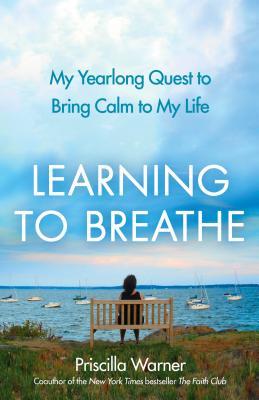
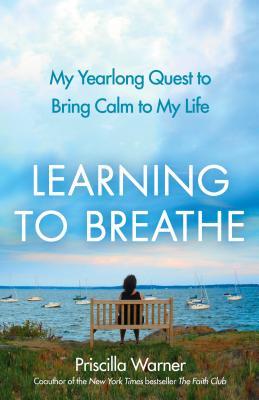
  • Giveaway and Interview: Learning to Breathe by Priscilla Warner

    Giveaway and Interview: Learning to Breathe by Priscilla Warner

    Note: The winners for this giveaway have already been chosen. Subscribe to Tiny Buddha to receive free daily or weekly emails and to learn about future giveaways!

    The Winners:

    In the past decade, I have read more than my fair share of self-help books.

    Though I’ve enjoyed the ones with countless action steps and workbook sheets to change my life, I’ve felt the most moved and inspired by honest, personal stories of overcoming adversity.

    That’s how I felt in reading Priscilla Warner’s brave book, Learning to Breathe—like I was seeing straight into the heart of someone else who’d had her fair share of personal struggles, and receiving the profound gift of her experiences and insights.

    Priscilla Warner struggled with debilitating anxiety for most of her life, and formerly self-medicated with vodka, before a doctor prescribed Klonopin. After four decades of overwhelming panic attacks, Priscilla adopted the mantra, “Neurotic, Heal Thyself.”

    In her memoir, Learning to Breathe, Priscilla chronicles her journey through various healing modalities—including meditation, chanting, and other lesser-known alternative treatments—and offers readers hope for peace and lasting change from the inside out.

    Since I hold the utmost respect and admiration for Priscilla, I’m grateful that she took the time to answer some questions about her book and offered to provide two free copies for a giveaway.

    The Giveaway

    To enter to win 1 of 2 free copies of Learning to Breathe:

    • Leave a comment below
    • Tweet: RT @tinybuddha Book GIVEAWAY & Interview: Learning to Breathe http://bit.ly/LxzDNS

    If you don’t have a Twitter account, you can still enter by completing the first step. You can enter until midnight PST on Friday, June 29th. (more…)