Tag: stress

  • 6 Lessons from Nature on Living a Peaceful, Fulfilling Life

    6 Lessons from Nature on Living a Peaceful, Fulfilling Life

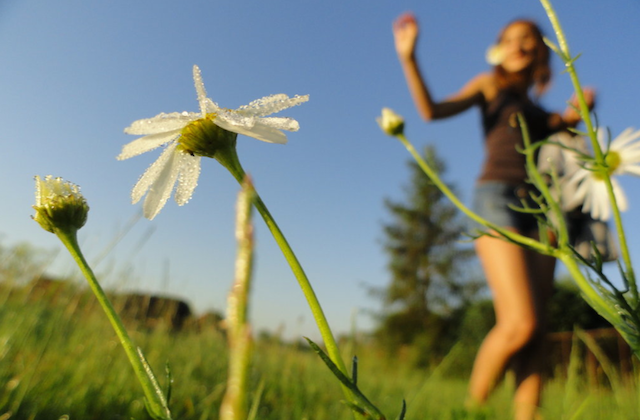
    Dancing in a Field of Flowers

    “Nature does not hurry, yet everything is accomplished.” ~Lao Tzu

    Five years ago, I was feeling really stressed (like millions of other people in the world). I was working full time in a job that was draining me of every single ounce of energy I had.

    I had nothing left to give to myself or those I loved at the end of each working day; life had turned into an incessant cycle of getting up, going to work, coming home, working, and going to bed.

    During this time, I read about so many people who were also unhappy with their lives. People who had reflected upon their existence and realized that this was not harmonious with who they were.

    I read about these people who inspired me with awe yet at the same time felt a sense of desperation. That could never, would never, be me, I thought. And while these conflicting thoughts existed, I became increasingly stressed out and more and more unhappy.

    There were things I enjoyed about my job (and still do). I became a teacher because I felt fortunate in having had such amazing support throughout my own education and wanted to offer young people that same help and guidance in return.

    But at the same time, I was changing as a person and I wasn’t the same being I had been six years previously when I had chosen that path. For my own sanity, health, happiness, and the happiness of those I loved, I knew something had to change.

    And then it did. My partner and I decided to move to a rural area of Herefordshire and buy a hundred-year-old cottage.

    There is no quick fix for happiness and I realized that the most important way to become less stressed was to change my way of thinking. But living in the countryside has undoubtedly contributed to my increased levels of calm.

    There is nothing like walking down a tranquil country lane, whatever the season, and just observing the sounds, smells, and landscape.

    I walk the same route regularly but this never bores me. With every single day, let alone season, something has changed and yet there is also a sense of constancy in nature, which I find incredibly comforting.

    The Lao Tzu quote about nature not hurrying embodies something I find I’m continually trying to work on—slowing down my daily pace. All too often we rush through our days, anxious to get things done at the fastest speed.

    When I’m aware that this is happening, I make myself stop and think: Why am I doing this?

    The pace of our world is frantic and seems to be constantly increasing. Despite this, I support the belief that life is not a race. 

    Going faster doesn’t necessarily equate with accomplishing more or better. In actual fact, the opposite is usually true. If you slow down, you make fewer mistakes, are able to think more clearly, and act with purpose.

    For me, this also results in feeling calmer and being more aware of my surroundings and those around me. This can only be a good thing.

    Frequently, we might tell ourselves that we must do such and such but in most cases, this feeling of having to do something is only a result of pressure from within.

    I personally believe that it’s important for our own sanity and health to slow down (and I apply this to driving, walking, and breathing on a regular basis).

    So this quote got me thinking about what we can learn from nature…

    1. Determination

    Nature is pretty hard to stop. Weeds and grass grow with dogged determination (much to the frustration of the lazy or time-pressed gardener). Many baby birds and other young offspring grow up against a huge number of odds; they are determined to survive.

    With determination, it doesn’t matter how fast (or slowly) you move through life. If you are determined, if you have a goal and a plan to reach that goal, you’re already a long way toward it.

    2. Strength in adversity

    Have you ever pruned or cut back a plant only to wonder whether you ever actually did, because now the greenery has exploded into an amazing array? I used to be reluctant to cut any plants back until someone told me that they actually ‘like’ it.

    I suppose it’s nature’s fight for survival; you cut it so it puts even greater energy into growing more.

    Nature could decide to give in and plants could just shrivel up and die. But they don’t. In life, when things seem tough, we usually have two choices: give in or give more.

    Choose to mirror nature and decide to face problems rather than run from them.

    3. Adaptability

    Nature can be incredibly adaptable. Just think about the four seasons. Animals and plants alike adjust to cope with the changes in climate and meteorological factors.

    Humans are no different. We put on an extra sweater or two in the winter but can be less adept at managing with changing circumstances. Since change is one of the only certain things in life, try to accept this and see it as a positive thing as far as possible.

    You might not be able to control life events, but what you can control is how you respond to them.

    4. Storing inner strength

    When autumn arrives, nature seemingly goes into shut down. But actually, wonderful things are going on, ready for when the plant and animal kingdom come into full swing once more.

    Take a leaf out of nature’s book and nurture inner strength when times seem sunny so that when the clouds appear, you don’t give in.

    5. Collaboration

    One thing nature does really well is working together. Bees and flowers are just one of the many examples of this. Bees collect nectar from flowers to make their honey while the flowers get a good deal out of it by their pollen being spread by their furry winged companions.

    You might be a real people person or perhaps you prefer your own space. Either way, the world is one huge partnership of human beings.

    There are so many things that we simply could not do without the help of others. Look around you; everything you see has been thought of by a human, designed by a human, made by a human (okay, perhaps with the help of a machine, but still). I find that thought pretty amazing.

    I’ll never meet most of the people who somehow are connected to my life, but knowing that every single thing I do I am able to do because of someone else is pretty awe-inspiring. In so far as you can, see people as teammates rather than competitors or adversaries.

    6. Consistency

    With the exception of an extreme weather occurrence, nature is pretty darn consistent. Want to be a super fit runner? Jogging every three months isn’t going to get you there; try to stick to a once weekly routine.

    It doesn’t matter if the day or time has to change as long as you hit that road/treadmill/country lane once a week. Maybe you want your garden to look pristine and something to be proud of. Again, get out there regularly rather than spend five hours slogging away once a month.

    Whatever your thing, be consistent.

    Whether you live in a rural area, town, or city, nature is all around us. Harness the power of nature to live your life and slowly accomplish your dreams.

    Photo by Mint-Flower

  • How to Reduce Stress and Focus More on What Truly Matters

    How to Reduce Stress and Focus More on What Truly Matters

    “Beware the barrenness of a busy life.” ~Socrates

    Did you ever wish you could just take off from work and get away from it all?

    This past summer I had the opportunity to do just that.

    I was wrapping up a twenty-four-year career in the Air Force and had saved up two months of vacation time. So my wife and I decided to visit Rio de Janeiro and live by the beach.

    The tropical weather was everything you would expect it to be: sunny, warm, and gorgeous.

    But surprisingly, the time off gave me so much more.

    Being away from the daily grind of work prompted deep reflection on my part. As a result, I came to some unexpected insights about my career and my life. The lessons I learned are:

    Ambition can make you miserable.

    When you’re on the fast track, you’ve always got this nagging, stomach-knotting anxiety that you’ve got to go and make it happen or else you’ll be left behind, unable to take your place at the table of materialistic plenty. Worse yet, you start to worry that others will elbow you out and grab your share.

    For sure, our competitive society is full of this kind of attitude. And it’s easy to get pulled into it yourself.

    I’m not saying that ambition is bad—especially when pursued for good reasons, like taking care of yourself and improving your state in life.

    But the dark side of ambition is that it can pile on the stress. Remember that knot in the stomach I talked about?

    I learned that only when you take a break from the grind can you realize the impact of your ambition on your spirit.

    Only then can you discover what’s driving you and sort out whether it’s truly important or not.

    For my part, I discovered that “climbing the ladder” in an organization was no longer important to me.

    What emerged as most important was using my strengths and experience to coach leaders, help them solve their problems, and make their own marks.

    You may be more stressed than you realize.

    After about two weeks of sleeping in and waking up to the sound of waves and tropical birds, I realized the knot in my stomach was gone. What’s more, I didn’t realize how big of a knot it was.

    A good chunk of the stress knot was present because of my own doing.

    For many of us, this knot of stress is the price we pay for trying to make a living and get ahead. The price includes responsibilities that bear down on you. Maybe over time your health and wellness starts to slip away.

    The next thing you know you’re in the grind.

    But what’s being ground up is you.

    At this point, I learned I had a choice: I could go back to the grind or I could use the strengths I developed over my career to serve others in a more balanced way.

    I’ll give you one guess what I chose.

    You really don’t need a lot to live well.

    While we were in Rio, my wife and I rented a tiny one-bedroom studio apartment. All of our household goods had been packed up and stored, so the sum total of our possessions amounted to a couple of suitcases of clothes.

    And that was plenty. In fact, it was more than enough.

    Living this stripped-down lifestyle removed the hidden burden of having material things to worry about. I’m talking about things like a house, two cars, furnishings, bikes, golf clubs, lawn mowers, washers and dryers, and all the other things we buy to simplify our lives.

    The radical downsizing opened me up to experience the rhythm of a simpler life.

    And it wasn’t boring at all.

    On the contrary—with the hustle, bustle, noise, and possessions gone, I had time to notice the little things that make life rich and enjoyable.

    Like the cooling ocean breeze or the small monkeys that jumped from branch to branch in the trees outside our apartment window.

    Like connecting more with family, friends, and the transcendent.

    Living with less clears away the clutter of our go-go modern lives and allows us to get reacquainted with our authentic human selves.

    The Big Lesson: Taking Time Away to Reflect Can Change Your Life

    Extended time away from work can improve your life. It certainly did mine.

    However, my circumstances were unique. For the vast majority of people, getting away from work for an extended stretch is a challenge.

    So what can you do to incorporate reflection in your life?

    If you can’t take extended time off, you can take small breaks. These breaks can come in all shapes and sizes such as:

    • Meditation
    • Turning off the TV
    • Setting aside your smartphone
    • Journaling
    • Going on a hike
    • Taking a run
    • Getting away for a weekend

    Use these small breaks to progressively gain perspective on what truly matters.

    Even these little breaks away from the routine will bring insight and understanding. Over time, they will grow into tools that you can use to transform your life.

    Plan your small breaks (or a big one) now.

    And move toward a life that is simpler, less stressful, and more fulfilling.

  • Let Yourself Be Instead of Pushing to Get Things Done

    Let Yourself Be Instead of Pushing to Get Things Done

    Just Be

    “When you try to control everything, you enjoy nothing. Sometimes you just need to relax, breathe, let go and live in the moment.” ~Unknown

    Recently I went to an annual fall retreat for my graduate program. This was exactly what my heart was longing for up until this point. I felt overworked by school and overwhelmed by the busyness of the city and suburban life. I needed something different, something that would help me feel more grounded and at ease.

    We went out to Middle-of-no-where-on-top-a-mountain, California, where the only sign of civilization was the four-way highway down below. I’m originally from Middle-of-no-where, Illinois, so being in nature felt like home to me.

    I’m very familiar and comfortable with nature, and I felt I had been greatly neglecting that deep desire to connect with nature once again.

    This was not the first time I felt disconnected. During my eighteen months living abroad in Korea, I hardly spent time in nature. With so many buildings, cars, and people, I felt easily overwhelmed with other people’s energy and completely out of balance.

    Many of us feel this way in our modern day technology and go-go-go lifestyles. We tend to feel drained, tired, easily irritated, and stressed.

    Because of this imbalance, I noticed it was common to have fleeting thoughts like:

    “Agh, why the heck can’t I find a parking spot?!”

    “Darnit, I’m going to be late. People, get out of my way!”

    “Why on earth does this line have to be so long?”

    Though I noticed that many of these thoughts come and go rather quickly, the energy produced from them would “stick” and make it harder to be present.

    These types of thoughts are very common because our habitual minds (or egos) want things done now rather than to simply be during the experience and get things done in our own time.

    Our ego is the part of us that likes to reject the moment and focus on the future rather than accept what is in the present so we can experience joy. 

    So rather than being anxious and frustrated about not finding a parking place, we accept the moment and trust that, regardless of this minor obstacle, everything is wonderful and as it should be.

    Although my intention for the retreat was to feel relaxed, rejuvenated, and refreshed, by the end of the day I didn’t quite feel this way. I felt my time there wasn’t long enough. I wanted to spend time being present with the sound of the crickets and to marvel over the smells of nature so much more.

    Despite my inner longing for more time to connect with nature, I felt my responsibilities were forcing me to go back.

    However, once I returned to suburban life, I didn’t fall into typical morning and day routine. I kept feeling my body pushing me to do something else. I woke up and went for an early morning walk. This time, without my phone—just my keys.

    As I walked, I noticed and marveled over the large evergreens outside of my apartment. I noticed the maple leaves on the ground with beautiful fall colors. I listened closely to the sound of water fountains and allowed myself to feel peace from the sounds.

    This peaceful feeling carried into the afternoon, when I avoided watching television or doing any work. Rather, I simply did yoga—and not in a structured, routine video kind of way but simply a “do the move I feel I need to do right now” kind of way.

    I realized I didn’t need an escape from the city; all I needed was an escape from myself—my own mind. All I needed was to just sit back, relax, and just be without any motive or push to do things.

    In our society we are hardwired to always be doing something. We tell ourselves that we have to go grocery shopping, do laundry, take out the trash, exercise, work, study, watch TV, and so on. How often do we do things without the pressure to do but rather to be?

    Why don’t we simply be when we take out the trash? Why don’t we simply be when we exercise? Why don’t we simply be when we clean our house or apartment?

    To “simply be” means to be connected. Ultimately, it doesn’t matter what we are doing but rather the feeling behind the action. In other words, what thoughts are you having during the activity? 

    Are you in your mind, rejecting the moment, or accepting what is? Are you complaining about having to do the activity or are you making the most of it? Are you all preoccupied with all the other things you need to do today or are you simply being present with what you are currently doing?

    When we reject, complain, or are preoccupied with thoughts about the past or future, we create this inner pressure within ourselves that causes the symptoms of stress. However, if we simply accept what is and choose to enjoy and really take in what life has to offer, at that moment, then we can be stress-free.

    When we let go of the need to push and “get things done now,” we can actually enjoy ourselves. When we choose to accept the present moment, we can then experience a sense of peace, calm, and joy of life. We can enjoy the moment for what it truly is.

    Think of all the various things you need to do today, tomorrow, or this week. What tasks can you shift yourself from “pushing to get it done” into simply allowing yourself to be so you can simply enjoy the moment?

    Perhaps you can focus on the present while…

    • Exercising
    • Cleaning the kitchen floor
    • Doing dishes
    • Watering your plants
    • Feeding your pet
    • Walking in the morning
    • Driving to work

    When we choose to let go and just be in the moment, we can fully enjoy what life has to offer us right now, with no formal nature retreat required!

    I challenge you to choose a daily task this week where you are going to try to simply be while doing it. What can you start doing today to help you be more present?

    Photo by Hartwig HKD

  • We Have the Strength to Move Through Pain and Uncertainty

    We Have the Strength to Move Through Pain and Uncertainty

    See the Light

    “Suffering is not caused by pain but by resisting pain.” ~Unknown

    Earlier this year our beloved puppy got sick. Not just a poorly tummy kind of sick, but proper, life-threatening, blood transfusion-requiring sick. Suddenly. Unexpectedly. She was at death’s door.

    The vet was talking to us in quiet and kindly tones. Using words like “grave.”

    Her illness was apparently unusual in a dog her age. Her prognosis was uncertain. She would require months of treatment that may or may not work. We were to watch her for signs of deterioration. Note changes in her appetite and energy levels.

    And then it was our son’s turn. He didn’t get sick. But something in his physiology concerned the doctors. That meant he had to undergo surgery in order to rule out a cancer that the consultant told us would be extremely serious for him.

    Like the puppy, we were asked to monitor his energy levels, his appetite, his sleep. We were advised to keep a close eye on him while the tests were completed. To report any changes.

    Twice in quick succession, life threw us a curve ball. Twice, the otherwise hunky-dory life we had been enjoying became something altogether less comfortable.

    We’d been happily plodding along in a bit of a smug bubble. We seemed to have it all going on. Not perfect—not by a long shot. But pretty darn good.

    Bad things, it seemed, happened to other people. It’s just how it was…until we abruptly found ourselves living in a far more anxiety provoking reality—a reality that looked nothing like the shiny existence we’d been enjoying.

    At times my anxiety was crippling. The uncertainty felt hideous. My desire to rush to the safety of certainty, and answers, was overwhelming. I was desperate to define what I was feeling, and what we were experiencing.

    Online searches of both conditions were terrifying. Hopeless. My stomach would lurch as I read yet another firsthand account of a dog, or a boy, facing these illnesses.

    There was no certainty. No answers. No comfort to be had. Answers, good or bad, would take time. I was in pain. I felt like I was falling. I felt an intense kind of shame at our overt imperfection as a family.

    We were becoming other people. The other people who I had always had sympathy for, but apparently no empathy.

    I had protected myself from their pain, and my fear, by subconsciously telling myself they were different somehow. I jealously looked on, as those around me appeared to be enjoying a carefree existence filled with a certainty that I was being denied.

    Fortunately, this story has a happy ending. The dog recovered, against all the odds. Our boy was found to be cancer free. I am grateful beyond measure for both these outcomes.

    But I am also profoundly grateful for what these experiences taught me.

    They showed me that when adversity hits, there’s no value in running or hiding. While the drive to do this is so incredibly understandable, and our instinctive need to take flight to keep ourselves safe can feel overwhelming, it just doesn’t help.

    I realized that despite my deepest held wish for all the hideousness to disappear, to be relieved from the pain I was in, there was no way around it.

    When life throws you a curve ball, I realized that you have to feel the feelings. You have to sit with the deep discomfort of the uncertainty you face. You have to breathe through it, even when it feels like it may swamp you entirely.

    It’s like sitting at the water’s edge and letting a big wave hit you. It’s like allowing yourself to be swept up, tossed around in the water and dumped mercilessly, sandy and undignified on the shore.

    And here’s the thing that was the biggest revelation for me: All the while this is going on—when life appears to be showing you no mercy—you have it in you to give yourself the soothing comfort you so desperately crave.

    You can sit in solidarity with yourself in your pain. You can rub your own back as you sit, head in your hands, despairing at the edge of the road.

    You can encourage yourself to breathe in and out. Remind yourself that you’re not alone. That all humans know the pain of uncertainty and fear. That while your circumstances may be unique, your suffering is not.

    Which ultimately gives you strength to look your pain in the eye. To sit with it, acknowledge it, and move through it.

    My experience has left me changed—humbled, and a little bruised by having to recognize my utter vulnerability in the face of life’s randomness. But it’s also left me hopeful that when adversity does strike again (and I have no doubt that it will) I have it in me to see my way through the pain.

    And so do you.

    Photo by Martin Fisch

  • 4 Simple But Powerful Tips to Reduce Stress and Anxiety

    4 Simple But Powerful Tips to Reduce Stress and Anxiety

    “Life is 10% what happens to you and 90% how you react to it.” ~Charles Swindoll

    I found Tiny Buddha because I have never dealt with stress and anxiety all that well, and once I became a full-time working mum of two, this had become a real issue affecting my quality of life.

    It was one day earlier this year when I was battling yet another bout of the flu, and I’d just learned about something out of my control at work that would make life even harder, that I went rushing by a group of my friends, not even seeing them.

    One rang later and asked if I was okay, adding that I had rushed by them with a face “grey with stress,” and had not heard them calling out to me. I realized something had to be done, and that’s how I found this site.

    I have never blogged or written publicly in my life, but if any of these help someone out there, I will be so happy to have contributed to the light and peacefulness coming from this site. So here goes.

    If you’re also feeling overwhelmed by stress:

    1. Think “Poor thing…” when you’re aggravated with someone.

    Part of the rushing-about modern-day-life thing is the constant irritation and even anger of bumping into other people as you go about your business.

    Someone cuts you off in traffic. Someone beats you to the last seat on the train. Your spouse forgets to turn on the dishwasher and now there are no clean plates or cups for the kids. Argh!

    Well, I came up with this to help me be more compassionate toward others, and peaceful in myself.  Every time I’m aggravated with someone, I say to myself “Poor thing…” and then fill in the blank.

    So now I say, “Poor thing, my spouse must have been so stressed and addled that he forgot to turn on the dishwasher.”

    “Poor thing, they must be exhausted to need that seat on train. I’ll go stand by the window; besides, it’s easier to pretend dance to my iPod when I’m standing.”

    Or sometimes when I can’t think of anything, I’ll say, “Poor thing, it must be painful to be in such a rush that you end up cutting people off in traffic.”

    This makes me nicer to everyone, and more importantly, happier in my own day-to-day existence.  Because being irritated, angry, or in a rush is painful, and that’s punishment in itself.

    2. Decide “I don’t do blame.”

    This one came out of the blue—well, that is, after reading so many of your amazing posts.

    I grew up in a family where there was constant blame, and it was always something or somebody else’s fault that something negative had happened.

    I then worked in places where you sent emails to the person sitting a meter away, just so you could dig them out later and forward it up higher, to show it was their fault something had happened, not yours. Awful way to live.

    Out of the blue, I suddenly said to myself, “I don’t do blame.”

    When something negative happens and my brain, out of habit, starts looking for who or what caused it, I step away from the blameful thoughts and tell myself, “That’s just an old habit.”

    I just ignore them entirely. I then look at what that negative thing is, and I think of practical ways to deal with it. As a result, my relationship with my husband, my work colleagues, even my parents, has improved immensely.

    I no longer get that awful feeling of resentment that comes when you live constantly blaming everything else around you.

    3. Next, decide “I don’t do urgency.”

    After reading this post about the surprising secret to being on time, I was thinking about how I rush around a lot, and how I can’t find a way to stop. Then I thought, well, sometimes you need “urgency,” and I tried to think of when. I thought, in life-and-death situations, like in a hospital Emergency Room, surely you need “urgency” then.

    But then I thought about shows like ER or the times I’ve been in hospital, and I remembered how the doctors and nurses always seem decisive, super-efficient, cool, collected, but never urgent.

    “Urgency” to me connotes awful feelings of desperation, being rushed, helplessness. When I get something done, even in a situation where time is of the essence, it is done because I am decisive, calm, and efficient—not because I’m “urgent.”

    So I reasoned that if ER doctors and nurses can handle life-and-death situations without “urgency,” then “urgency” is never required. I never, ever have to be “urgent”!

    I haven’t slowed down to the extent that I walk around in a constant feeling of being on a beach holiday, but I don’t have that stressed-out, hurried feeling anymore. When I need to, I act like an ER doctor or nurse with super-efficient and calm action. (And when I don’t, I try very hard to act like I’m on a beach holiday!)

    4. Change “I have to” to ” I will.”

    Like a lot of full-time working parents, I’ve lived with a lot of “have-to’s” permeating my life. From the little things (I have to do another load of laundry) to the big things (I have to find a new job) to the guilty things (I have to spend more time with my kids), I could feel these tugging away at me all the time.

    There is always a “… but” at the end of those sentences. “I have to do another load of laundry…but I don’t feel like it/have run out of washing powder/also need to cook the kids dinner.”

    The “but” causes all the stress, but I realized it wouldn’t be there if it wasn’t for the “have to.”

    Again, out of the blue I decided to swap “I have to” with “I will,” as in “I will do another load of laundry.”

    “I will” sounds like I’ve decided to do it, rather than “I have to” with all its connotations of coercion, pressure, stress, and resentment. This thing is now in my control. There is no room for “…but.”

    Suddenly, life is full of things I have decided that I will do, for whatever reason, rather than a thousand things out there making me feel anxious, pressured, and guilty because I’m not doing them.

    These are four tiny things that have made a big difference for my everyday peace and living experience. I wouldn’t have come up with any of them if it weren’t for all the fabulous other posts I’ve read here.

    I hope sharing them here might now give a little something back to someone out there, and make their daily lives a little lighter and brighter, as well.

  • How to Release Anxiety and Feel Peaceful, Calm, and Free

    How to Release Anxiety and Feel Peaceful, Calm, and Free

    “I vow to let go of all worries and anxiety in order to be light and free.” ~Thich Nhat Hanh

    For a long time I have struggled with episodes of anxiety. At times, I’ve gotten a feeling of crushing fear that occurs even in situations that most people consider to be safe.

    The first episodes I remember were from my early childhood, when I was so frightened that I used to cry all the way from home to kindergarten because I didn’t want to go, although I apparently had no reason.

    As I grew up, I learned to hide this anxiety by doing the things I was good at. During high school I discovered that I loved computers, and I felt confident and safe, as I knew that I could achieve something in this field.

    When it was time to go to college, I decided to study computer science. I wanted to build applications, as many as possible. But I soon discovered that school was not like that; long classes of mathematics and physics were ahead of me, classes that had nothing to do with my dream.

    During my second year, my anxiety started to strike back. I was feeling exhausted, and I had a feeling that everything I did was worthless.

    After some months of living with the fear, I decided to do something about it: I took a shot at one of the local software companies. Although there were a lot of obstacles, I was willing to fight them all, as I had the feeling that I was on the right track again.

    The next hop was during my fourth and final year when I started to feel that I was stuck in one place.

    The tasks I’d been given at work were very similar, and I started feeling bored. But behind this feeling of boredom, my anxiety grew again. Along with this anxiety came a feeling of frustration, because I thought I wasn’t able to change my job.

    When I finally decided to go, I found out that the step was too big for me. My body suffered under the huge amount of stress that I had put on myself over the years.

    Although my colleagues at my new workplace were friendly, I couldn’t break the feeling of fear. I quit after three weeks, deciding to take a long break to think about my future.

    What I didn’t know at the time was that my anxiety would come with me wherever I went.

    I needed a brand new way of dealing with it, so I decided to break it once and for all by developing a healthier mindset.

    Here are some of the realizations and choices that helped me release my anxiety, along with how I put them into practice. Anxiety can have many different causes, but perhaps something from my experience will be helpful to you:

    1. Remember that good enough is the new perfect.

    I’ve always tried to be the best in everything I’ve done, and this has led to a huge amount of anger and stress. I decided that it was okay to let go from time to time. I didn’t have to get nervous for every exam; I didn’t have to win all the time. It was okay just to play the game.

    Doing this, I also managed to develop better friendships and relationships. I discovered that my “I want to win everything” attitude was placing everyone in an enemy position.

    When you focus less on being the best, you release the pressure you’ve put on yourself.

    2. Stop multitasking.

    Although this may not seem to have anything to do with anxiety, it’s related. I used to do a lot of things at the same time: work, check my phone, answer emails, make small talk with somebody, and so on.

    These interruptions made me lose track of where I was standing, and those times when you feel lost are a great place for anxiety to settle in.

    Focus on one thing at a time and be mindful in that one activity, and you’ll naturally feel less anxious.

    3. Stop avoiding things that you don’t like.

    I was always afraid of going to crowded places, such as supermarkets and malls. I’d tell myself, “This time it’s okay not to go. Next time you’ll feel more confident.”

    But that never happened. The next time I had to face the situation, my body knew that the previous time, I had let fear win. So instead of dealing with the feelings in one situation, I had to deal with feelings from two.

    Now, instead of avoiding things when I am scared, I always tell myself, “This is the best time to face my fear! Bring it on!”

    Don’t hide from the unavoidable situations that make you anxious; little by little, condition yourself to work through your feelings.

    4. Find a passion that calms you.

    I noticed that in periods of great stress I seemed to have nothing to enjoy. Friends would tell me to take a day off or do something I liked, but I had a hard time finding things I liked.

    During these days I’d sit in my bed, turning from one side to another, and then return to work more tired than I was when I left.

    One day I remembered that, as a kid, I had a dream of running every morning before everybody woke up.

    After a month of daily runs, I can say that I feel awesome. Whenever I feel anxious, I picture myself running, take a few deep breaths, and I calm myself down instantly.

    5. Focus on the things that you can control.

    In the past, I often complained about not feeling well. I was convinced that I was ill, even though I had lots of medical tests all stating that I was healthy. The symptoms that I encountered were dizziness, lightheadedness, and tension all over my body.

    As frightening as these were at the time, I realized that it was my obsession with control that was causing them. I was always asking myself, “Am I feeling well?“

    In worrying about the symptom, it became real.

    I’ve learned that I cannot control my body. I can only control my thoughts—but my thoughts directly influence how I feel physically. Now and then when I feel dizzy, I take a moment to ask myself, “Am I causing this by worrying?”

    6. See anxiety as an opportunity.

    In retrospect, I see that anxiety was probably the best thing that ever happened to me. It was when I felt anxious that I knew that I had to make changes—with my approach to my work, my passions, and my mindset.

    Anxiety goes away only when we learn what it’s teaching us. That is when we can move on.

  • Transforming Panic Into Peace: 3 Steps to Relieve Anxiety

    Transforming Panic Into Peace: 3 Steps to Relieve Anxiety

    “No matter how hard the past, you can always begin again.” ~Buddha

    Growing up, I was one of those people much more concerned about what you thought of me than what I thought of me.

    With my focus being on how I was being perceived by those around me, it left me feeling extremely unsettled.

    I was desperate to be liked and accepted.

    “Be who you are and say what you feel, because those who mind don’t matter and those who matter don’t mind” was a nice idea for the fortunate, but certainly not for me.

    I was convinced that Dr. Seuss was living in fantasyland!

    This social anxiety spread to my work life, too. I wondered why I was never truly happy or successful. I wondered why I didn’t enjoy the rich relationships that so many around me seemed to enjoy.

    Then I discovered Zen.

    I read that Zen means awareness, and being with what is, as it is.

    What I loved most about Zen is its utter simplicity in recognizing what is really true. Not what is partially or sometimes true, but what’s always true.

    It didn’t compromise.

    I liked that. I wanted that ability to recognize what was always true. That sounded like real emotional freedom to me.

    Zen kept telling me truth was simple, so simple that it was often overlooked by the mind that loved to judge, condemn, compare, and resist.

    Zen meant to be in alignment with reality as it actually unfolded, not as I wished it would unfold.

    Simple indeed!

    I saw how my mind loved to complicate things. I saw how my mind resisted so much of what was actually happening.

    And I was miserable and stressed out.

    I failed to see the inseparable connection between panic and peace—and how resisting one would never reveal the other.

    However, as I began to incorporate what I was learning, I found that when I met the anxiety symptoms without running from or avoiding them, my experience began to change, too.

    They no longer had control of me.

    I had new life.

    And I wanted more of it.

    Here are the three things that dramatically reduced or eliminated the anxiety and panic I had been experiencing. Consider implementing the following and see if it brings you more peace.

    1. Meet your panic and anxiety head on.

    Zen is essentially about who we’re being in relation to something or someone, and this includes needless anxiety. It also includes this very moment. In fact, especially this very moment, as it shows up, and not as I wish it would show up.

    Inherent in anxiety and panic attacks is the belief that it shouldn’t be happening. But this is never true.

    No amount of wishing a particular moment to be different than it is can ever change that moment. Many actually think it’s a good strategy, but it rarely ever works out.

    Upon closer examination, I saw that whenever I ran from anything, that thing chased me. This included thoughts and feelings.

    I found that whenever I faced and embraced anything, it eventually dissolved and left my experience. I was encouraged because I knew I was onto something significant.

    I walked around with a new mantra: “What I run from must chase me.”

    It served as a great reminder and often snapped me back into being in alignment with what was actually occurring.

    Whatever I met head on lost its power, every time. Resistance would often magically drop away. And it was palpable.

    I learned that I can either live with the laws that govern me (and all of life) or I can resist them and suffer.

    Seeing that I couldn’t escape the consequences of how I met anything, I began to face what was facing me. And that insight, I found, was the difference between living a life of peace versus a living a life of stress.

    I began to consciously choose peace.

    In fact, any challenging situation (or emotion) that arose wanted to be met by my loving attention.

    Stress manifested only if I avoided the negative thoughts and feelings.

    If I shined the light of gentle awareness on what wasn’t at peace within me, it had to come out of hiding and release me—because I met it.

    2. Allow it to be as it is.

    Notice how your mind in its infinite wisdom will tell you that any particular thought, feeling, or experience should or could be different than it presently is.

    Is it ever true? Can it ever be true? As much as the mind will try to use logic and reason, it’s never true.

    Things are often different than they were, but they are never different than they are!

    This may seem counterintuitive, but the reality is we must first accept our present lot if we wish to experience something different in the next moment. We can’t expect to resist our current situation and simultaneously be at peace.

    It won’t happen.

    The essence of Zen is about being with whatever arises without offering any resistance whatsoever. It’s about being neutral emotionally so that we are in a position to respond appropriately.

    Alternatively, resistance is the energy that gives life to what we don’t want.

    If we simply allow our symptoms of anxiety to be as they are, we find that they don’t hang around long enough to torture us.

    By taking the backward step (as they say in Zen) into this present moment, we discover that peace never left us in the first place.

    It just seemed that way.

    Allow your anxiety to be as it is, as you look to overcome it.

    3. Be compassionate with yourself.

    Sure, you’ve heard it before. Be nice to yourself! Get off your back! Stop blaming yourself! The key to effective transformation—turning panic into peace—is to stop beating yourself up and to make yourself the most important person in your life.

    Wouldn’t you treat someone who really needed support with kindness and compassion?

    Why are you any different?

    Perhaps the greatest quality of spirit that the Buddha spoke most about was compassion, not only towards oneself, but to others as well. Compassion is the great neutralizer that has a way of dissolving old wounds, as well as new ones.

    The truth is you’re not to blame for your anxiety, but that doesn’t mean you aren’t responsible for it.

    You aren’t “crazy” or “weak”—and you’re no less worthy a human being for experiencing it, either. Your mind may tell you different, and even sound very convincing, but is it really true?

    No, it isn’t. Not even a little bit.

    Work with yourself, not against yourself, if you truly desire to transform your panic into peace. It’s all in how you relate to your current condition. Self-condemnation only gets you more of what you don’t want.

    The truth is, you are much more than any thought or feeling that arises. Within you is the power to transform your panic into peace.

    As the Buddha said, “Be a light unto yourself.”

    Transcending anything never involves rejection, but it always involves acceptance.

  • When Things Fall Apart: Breakdowns Can Create Breakthroughs

    When Things Fall Apart: Breakdowns Can Create Breakthroughs

    “Breakdowns can create breakthroughs. Things fall apart so things can fall together.” ~Unknown

    “I’m sorry,” the email said, “but our phone call left me feeling uncomfortable, and we’ve decided to work with someone else.”

    I felt like I’d been punched in the gut. Even though I saw it coming. Even though I’d brought it on myself.

    It was February 2010, and I didn’t have the money to pay my mortgage. My savings were gone, burned through in a misguided attempt to breathe life back into my ailing business by “throwing money at the problem.”

    As a ketubah artist—a maker of Jewish marriage contracts and other wedding artworks—sales are always seasonal, but ever since the economy had tanked in 2008, even spring and summer “wedding season” was slower than I was used to.

    After two years of lean sales, without the savings normally socked away from fatter months, I was feeling desperate.

    It was that desperation that had made me try to hurry along an imminent sale to an enthusiastic bride and groom by offering a special upgrade—but “only if they bought now.”

    Big mistake.

    It was the worst, most humiliating mistake in my whole business life, in fact.

    The couple had been in correspondence with me for weeks, and was on the verge of buying not just a ketubah, but also a Quaker wedding certificate and matching invitations. The sale was virtually guaranteed, and would bring in more than enough to pay my mortgage.

    But in my fear that they’d delay making a final decision until after my mortgage due date had come and gone, I panicked. I tried to create a sense of urgency to get them to buy today, and lost the sale.

    Then I lost my grip.

    The Liberation of a Breakdown

    When the contents of the bride’s email sunk in, I physically collapsed, my body wracked with sobs. I remember the rational part of my mind watching, as if from someplace on the ceiling, thinking, “Wow, this is what hysteria looks like!”

    I was the definition of a breakdown.

    It was one of the worst moments of my life.

    In a way, it was also one of the best moments of my life, though it sure didn’t feel good at the time!

    With hindsight, though, I can now see that this horrible crisis was exactly what I needed to break out of the miserable rut I was in and break through to something better.

    The truth was I’d been burned out on my business for years. I needed a change, but like a horse with blinders on, I couldn’t see that there might possibly be a different path available to me. So I kept plodding along, while my business fizzled and my zest for life fizzled along with it.

    My breakdown finally ripped the blinders off my eyes. It was as if I emerged from a dark hole into the light and saw the vast possibilities of the world suddenly before me. Maybe I could do something else, even (gasp!) get a job.

    Casting about for other ways to earn money felt surprisingly liberating. I didn’t realize how chained I’d felt to my identity as a ketubah artist. It may sound funny, but it was a revelation that I didn’t have to do the same thing forever!

    Pay Attention to Messages from the Universe

    As I was tenderly making my first baby steps forward on a new, yet-to-be-defined path, just one week after my big breakdown, my boyfriend and life partner announced that he was moving out, taking his contribution to the living expenses with him. No thirty-days notice, no nothing.

    Can you say “double whammy”?

    (Thank goodness for my very supportive parents, who helped me pay my mortgage that month.)

    Now both my work life and my personal life were in tatters. It was as if the universe had sent me a telegram, special delivery, with the message “Time to change your life -(STOP)-”

    No, strike that: It was as if the universe had walloped me upside the head with a two-by-four!

    In fact, the universe had been sending me little notes and whispering in my ear for years. Burnout doesn’t happen overnight, but I simply hadn’t been paying attention.

    And when you don’t pay attention to notes from the universe, it starts to speak louder. Then it starts to poke you. Eventually, if you still don’t pay attention, out comes that two-by-four.

    This time I listened. Everything had fallen apart, and clearly there was no going back. The only way out of the breakdown was through.

    Change Is Painful and Scary, but Also Exhilarating

    Let me tell you, that wallop from the universe hurt. It’s disheartening when everything you’ve worked hard to build tumbles down like a castle made of children’s blocks, and it’s scary to start down a new path.

    Along with the fear, though, was an incredible sense of possibility. It was exhilarating! I didn’t know exactly where I was going, but the fact that I was no longer stuck in a rut brought my zest for life back.

    Sometimes things have to fall apart in order to fall together.

    Change is hard, so unless the pain of not changing is worse than the pain of changing, it’s all too easy to stick with the status quo. My breakdown turned out to be precisely what I needed to finally break through to the life I really wanted.

    Without my humiliating client disaster, who knows how long I might have continued to cling to my ketubah business as my only option? Instead, with my castle-of-blocks leveled by crisis, I was suddenly free to build an entirely new castle.

    No more settling! Within two months I’d started my blog and was on my way toward building the big, bold, creative life I longed for.

    The Key Is In the Letting Go

    Finding my way on this new path hasn’t happened overnight (and of course the path is continually evolving), but getting from breakdown to breakthrough—from hopeless and miserable to hopeful and excited about life again—happened rather quickly once I let go of what had been.

    That’s what breakdowns are good for: They help you let go so you can try something different.

    Clinging to what had worked well or made me happy in the past was only keeping me stuck in my rut. I had to let everything break down in order to build it up again. Only after my life fell apart were things able to fall together for me.

    I keep hoping that I’ll get better at paying attention to those whispers from the universe, so I don’t have to feel the pain of another two-by-four to the head.

    If I do get walloped again, though, hopefully I’ll remember that breakdowns can create breakthroughs, and that things fall apart so they can fall together again.

    Have you had an experience of a breakdown leading to a breakthrough? How did things fall apart for you, and how did they fall together?

  • Are You Stressed, Rushed, and Aggravated?

    Are You Stressed, Rushed, and Aggravated?

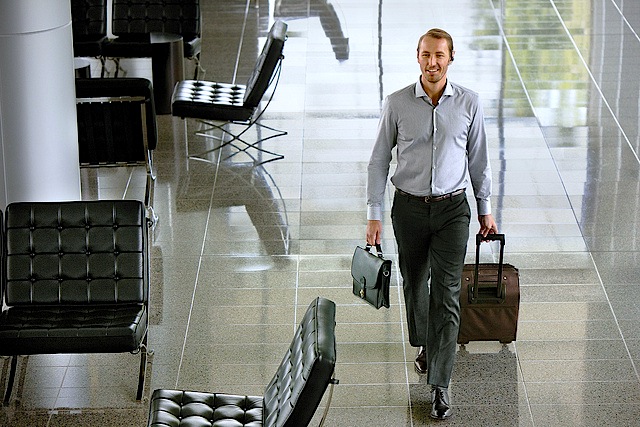
    Walking Through Airport

    “Meaning is not what you start with but what you end up with.” ~Peter Elbow

    As a boy, I had a romantic notion about having a job where I traveled for business. It sounded so important and stylish. I liked the idea of dashing through airports to my next big meeting.

    I thought it meant that mine would be a wider world. And so it was.

    Be Careful What You Wish For

    As often happens, what you think about comes into being. I found myself on my very first “business trip.” I was going to the exotic location of Moline, Illinois.

    In my fantasies I was thinking more along the lines of NYC or London, but hey, it involved an airplane. Actually, it wasn’t even a jet; it was this very loud, somewhat cramped prop plane.

    So a couple hours later, after flying at a surprisingly low altitude and slow rate of speed, I had traveled from a semi-rural location with corn and cows to…another semi-rural location with corn and cows. It seems my dreams of importance and style were still in my future.

    Dashing Didn’t Turn Out To Be So Dashing

    My life and work continued down this same path, so occasionally schedules were tight. Once, I remember literally running through an airport so as not to miss a flight.

    It looks good in the television commercials but let me tell you, running in a suit and tie, toting a briefcase and an overnight bag isn’t so sexy. It’s more sweaty and disheveling. I must confess, I felt less than debonair.

    The Illusion of the “Good Seat”

    Every flight (and there were many), I vied for a good seat with the rest of my fellow business travelers. I gloated over my exit row seat or my aisle seat. I glared enviously at the first class passengers, already seated with their complimentary mimosas.

    When it came time to disembark, I leaped to my feet the moment the “Remain Seated” sign went out. I mean, you’re supposed to. At least you must be, because that’s what everyone else was doing.

    I told myself it was important that I leave the plane immediately. After all, I had pressing business. That’s why I’m flying.

    And Then I Woke Up

    This dream of being a business traveler turned out to be not so dreamy after all. Traveling is a hassle with the hotels and cabs and parking garages and strange cities and expense reports. Airplane seats are tight and fellow travelers are sometimes surly.

    This isn’t what I signed up for. I started to wonder about the ground rules I had assumed regarding flying for a living.

    Questioning the Unstated

    What is a good seat? I’ll tell you. There’s only one on the plane: it’s the one the pilot sits in.

    The rest of us, no matter where we sit, are getting basically the same experience. Once I accepted that, I have never had a bad seat.

    What’s the rush to get off the plane? When I wait until everyone else has cleared out around me, it is far easier to collect my things. I don’t hack anyone else off by getting in their way to rush off the plane either.

    I generally go for the window seat now, not because I prefer it particularly. It just means I am not in any hurried person’s way when it comes time to deplane.

    This leisurely attitude means I spend perhaps 10 more minutes aboard if I am seated near the front. If I am seated near the back, it costs me virtually no time at all. And I still get to the baggage claim area before my bags.

    I get to airports early. I check in and kick back. Did you know they put bars in airports? I find this highly convenient for this back kicking.

    I pack light. I generally travel to places that sell just about anything I regularly use. I have found that even developing countries have food and toiletries for sale.

    Sharing My New Found Travel Ease

    Once I found myself on an overbooked flight. Five people were in front of me in line trying to get boarding passes. As each one of them in turn berated the gate agent, all she could do was apologize and say she couldn’t give them a boarding pass at this time.

    When it was my turn, I saw her steel herself for the next verbal assault. But I figured something out as I stood in line: berating the poor lass wasn’t resulting in a boarding pass for anyone.

    So I just said, “Tough day, huh? Listen, if you can get me on this flight I would really appreciate it. Just do the best you can.”

    Five minutes before they closed the jet way doors, she called one name to give out a single boarding pass—mine.

    I wanted to throw a fit as much as the next guy as I stood in line. But what would be the point of ranting at the last person who could help me who, incidentally, was not responsible for causing my problem?

    I didn’t see one glimmer of recognition out there amongst those envious faces of the grounded either. They all had the same chance as me and they had it first. We make our own reality. Own it, or don’t.

    The Traveler, Well Seasoned

    The bottom line is this: air travel, or anything else, is what you make it. I got to live my illusions until I decided they no longer served me.

    I have a far different experience now, even though the external details remain basically the same. I have no stress and I get where I want to go when and if I have a notion to go anywhere at all.

    I am a fan of destinations, but the journey happens too. While I may not have always taken the road less traveled, these days I always choose the travel encounter less experienced.

    Photo by plantronicsgermany

  • How Anger Leads to Anxiety and What to Do About It

    How Anger Leads to Anxiety and What to Do About It

    Calm

    “Holding on to anger is like grasping a hot coal with the intent of throwing it at someone else; you are the one who gets burned.” ~Buddha

    I have a confession: I’m mildly obsessed with anger.

    Not the negative feelings, the volatile outbursts, or the fly-off-the-handle reactions, but rather how humans express anger.

    I’ve largely made my living by dealing with various states of anger. More on that in a bit…

    Years ago I was shopping at a bookstore with my friend Alex. We were first time parents with toddlers at home.

    The idea was to find resources on how to raise emotionally healthy children and how to avoid the parenting mishaps we witnessed too often at work.

    As school social workers, we provided family counseling to young children and wayward teens in the inner city.

    As Alex obsessively scoured the aisles for the latest research-based writings on emotional intelligence, my eyes gravitated toward an entirely different topic.

    The black, matte-textured book with the blood red title practically screamed at me: Hatred: The Psychological Descent into Violence.

    I devoured it that night.

    It’s not that I didn’t want my kid to learn to soothe himself when upset, to resist peer pressure, or to misread social cues. But in that moment I felt a stronger pull.

    Part of the fascination stems from my ancestry; I’m half-Italian and half-Irish. A DNA hotbed, if you will.

    Meals were eventful. When I would lose my cool at the dinner table, my dad would wildly gesticulate in my mom’s direction. She, in turn, would shrug and reply “It’s The Fighting Irish in her, I suppose.”

    Additionally, I’m a psychotherapist who specializes in anxiety issues—generalized, panic, and social anxiety disorders.

    Do you want to know the quickest way to get a handle on your anxiety? Get ahold of your anger.

    I realize this may sound counter-intuitive. After all, we don’t normally associate anxious people with bad tempers and loud voices.

    The anger management connection is not exactly linear.

    It takes courage to express anger—to stand up for yourself and your values, which sometimes includes taking an unpopular stance.

    Bravery is valiant, strong, and admirable, while anxiety is cowardly, weak, and anything but enviable.

    Because many anxious people have a problem asserting themselves, feelings of helplessness, avoidance, and frustration take residence.

    Compounding the issue is the fear that if you express anger, you might lose control.

    And since many anxious individuals are people-pleasers and caretakers, these feelings are especially unwanted.

    But feelings go somewhere.

    And typically, when you take on too much responsibility, you inevitably feel exhausted, taken advantage of, and angry.

    If you don’t have a firm grasp on your anger responses, you’re going to hold it in until it explodes, or you’re going to yell, scream, stomp your feet, and possibly say and do things you regret.

    Then comes the guilt. And next, the overwhelming urge to fix the situation. And before you know it, the cycle repeats itself again.

    All the while, you’re wasting precious emotional energy that could be better used on enjoyable tasks.

    The good news is there’s strategies you can do today to help you feel more calm.

    I included five common ways I help us go from anxiety to zen below:

    1. List the places in your body where you feel anger.

    Is it in your chest? What happens to your heart rate? How does your stomach feel?

    It’s important to recognize the physical cues of anger in order to alert youself that it’s time to calm down.

    2. Visualize different behavioral responses. How do you react when you feel angry?

    Do you scream, tantrum, throw things, bottle it inside, or pretend that everything is fine?

    Write down three different reactions you will do instead, such as:

    Calmly assert your needs, deep breathing, count to ten, walk away rather than stick around for a fight, and close your eyes to reduce visual stimulation, etc.

    3. Make friends with the word “no.”

    Many nice people have a hard time with this one. The association with conflict makes us feel mean, insensitive, or too direct.

    Know that “no” means you respect yourself, your time, and your values. Practice saying it in the mirror until it sounds deliberate and natural.

    4. Ask yourself if you value expressing anger over getting along with others.

    It’s a fact that some people enjoy the adrenaline rush of letting go and projecting their uncomfortable feelings onto others.

    Recognize that the short-term feelings of power are no match for the sleeplessness, headaches, and despair, which endure long after the “anger high” wears off.
    5. Think about the last time you got angry. How did you go from anger to a calmer place?

    You’re probably really good at getting angry already, so let’s focus on the other side. Be specific. What behaviors did you call upon to get to zen?

    This will reinforce your coping strategies, and it will serve as a reminder to focus on solutions rather than stewing in anger.

    The more you practice reacting in positive ways, waiting until the anger subsides, and considering your options, the more skilled you will become at managing anger.

    It’s possible that your body is wired to be more anxiety-sensitive, and you’ll have to work harder than others to calm yourself. And that’s okay.

    These are temporary solutions, and you’ll still need to control the anxiety itself. But they’ll get you started in learning to respond with more awareness, and less emotion.

    You’re the expert on your life. And you get to choose how much anger to allow in your heart, mind, and body every day.

    With intentional focus on doing things differently, you can feel more calm, confident, and in control.

    Photo by skyseeker

  • Facing Life’s Big Challenges and Coming out on Top

    Facing Life’s Big Challenges and Coming out on Top

    On Top of Mountain

    “Life always waits for some crisis to occur before revealing itself at its most brilliant.” ~Paul Coelho

    I will never forget that day.

    It is still as clear in my mind as if it were yesterday.

    My son was just a little over three. He was going to a mainstream kindergarten and, well, his teacher had very gently suggested we seek a professional’s help.

    You see, he didn’t understand what the teachers were saying to him. He was restless and fidgety. He also bounced form activity to activity.

    This was our first ever visit to a speech pathologist, and she suspected autism. The possibility that our child has a life-long disability seemed like a death sentence.

    So we did what any normal, self-respecting parent would do: we dismissed her concerns.

    We were outraged. How dare she say this? What right did she have? Our son is not autistic. He just has a language delay; he’s just tad over active.

    Then we did the next best thing: we put him in an early intervention center.

    Although we were sure that it wasn’t this thing that was wrong, we knew something was. And we had to do something. We had to be responsible parents. Now he was getting help with his sensory issues (something I understood much later), fine motor, play, and language skills.

    In retrospect, I wonder how I could have missed those early signs. I guess that was the greatest form of a denial—only a mother could find a justification for every symptom of what could be wrong.

    It’s quite ironic, actually. We had an appointment with the developmental pediatrician and been waiting for this day for over two months. And then we had to cancel

    My husband called in to let them know, and the receptionist asked, “Are you sure you can’t make it today? It will take a long time to reschedule.”

    My husband said, “Yes, my wife has just given birth to our second son.”

    And so amidst all the chaos of having a newborn, my first born got diagnosed and I felt as if my life was completely shattered.

    I felt cheated—for me, my son, and my family.

    He did not deserve this.

    We did not deserve this.

    How could it happen to us? What did we do wrong?

    There was time for grief and acceptance. (Don’t know how many days I cried for.) Then it was time to get to work.

    And so I did.

    I decided to leave my job in academia. I did not care about any of that any more. All I cared about was my son. I wanted to make everything right.

    And the only way I knew was to become an expert myself. This is something I excel it— researching, synthesizing, and becoming a self-proclaimed know-it-all on a topic of my choice.

    Only this time, the stakes were high. And the goal was to save my son’s present and his future.

    I bought 30+ books on Autism spectrum disorders and therapies, and memoirs of parents living with these special children. I got informal training in speech, occupational, and ABA therapies and hired my own therapists to do the work.

    And my son made progress by leaps and bounds. He went through two years worth of therapies in six months, shocking his therapists and consultants alike. How could he do this, they wondered. They had never seen any child do this before. Ever. They called him gifted.

    We were so grateful for his learning ability.

    This was the kid who “might never catch up,” communicated to us by a helpful early intervention staff member.

    Two years of tears and sweat, a big chunk of our joint savings, and lack of any social activities went into this story.

    He surpassed all their expectations. He outperformed all his fellow classmates in math and reading. He is a kid who is eccentric—the emotional age of kids half his age, loud, always happy, always fun. And he is going to a mainstream school.

    His diagnosis was formally changed to Asperger’s, which has a better prognosis in terms of social and emotional well-being.

    Because I ended up staying at home for over five years (my second child also started speaking late), I had time to re-evaluate my life.

    I decided to let go of all that I was expected to do—a job that didn’t feed my soul, a social circle that started to disappear, and flashy stuff that we simply couldn’t afford anymore.

    My son’s diagnosis turned our lives upside down. But it also taught us to appreciate both of our sons for who they are and to be grateful for each and every blessing in our lives.

    At the end, I came out on top because I adopted the following beliefs:

    Awful things might happen to you; take all the time you need to face the reality.

    You need to grieve; do it.

    Need to cry, not come out of your house, stay in bed all day? You can do that.

    What you can’t do is keep it all bottled up inside, pretending it never happened. That your life is the same as it was a day before.

    You need to face your emotions and deal with them. But don’t rush. Take your time. Healing takes time. It will happen when you come to terms with it.

    It is not your fault.

    I am sure you are thinking that it’s your fault—that whatever you’re going through, you caused it somehow.

    We all feel that way. We scrutinize our life. We go over every inch to try and see if we did anything wrong.

    It’s not your fault—and it’s also not going to do you any good thinking like that and torturing yourself in the process.

    If you need to hear it, ask somebody you trust. And then really listen. Say it with me: It is not your fault.

    Let go of what you don’t need anymore.

    You have faced a setback. Your life is different, so you have to do things differently.

    What is it that you don’t need in your life anymore? Is there a job that isn’t working for you? Any commitments you made? How many things do you say yes to that you could just pull back from?

    Bow out gracefully.

    Your husband loses his job. Your teenager has been in an accident. Your mom’s tumor is malignant. Your brother lost his house so his family has to move in temporarily.

    Whatever it is, it needs your attention, which means the unimportant must go. Now.

    Start believing and discover possibilities.

    Your life is different now but that doesn’t mean it has to be worse. It can be better. Don’t listen to the naysayers and anyone else who tells you otherwise.

    Don’t listen to the experts who tell you that your chances are not good. Listen to your gut. Do the work.

    You might feel like you are all alone in this, or that you don’t have all the resources. You might feel trapped or feel like you don’t have many choices. Become resourceful. Do the best you can.

    Amidst that chaos, can you discover any truths about your life and your dreams?

    Now that you have let go of stuff that doesn’t matter, stuff that didn’t work, what could you do to bring normalcy to your life? What can you do to stay sane?

    You don’t have to go through a major life change to appreciate what you have. All it takes is a wake up call. Mine was major; yours doesn’t have to be.

    It took a diagnosis for my oldest son and give years of rethinking my life to find my priorities.

    What will it take for you?

    Photo by Tristan

  • 5 Meditation Tips for People Who Don’t (Yet) Like to Meditate

    5 Meditation Tips for People Who Don’t (Yet) Like to Meditate

    “Don’t wait for your feelings to change to take the action. Take the action and your feelings will change.” ~Barbara Baron

    I own a series of CDs called “Classical Music for People Who Hate Classical Music.” We know we should like and listen to classical music—they’re the classics after all! But when I actually find time to listen to music, I reach for Mumford & Sons, not Mozart.

    Some of us have a similar relationship with meditation.

    We know we should meditate—it has so many mental, emotional, and physical benefits, and who couldn’t use a bit of slowing down in their busy life? But when we actually find that bit of time to ourselves that could be used for meditation, we instead turn on the TV, reach for the iPad, or mindlessly page through a magazine.

    When I first became interested in establishing a meditation and mindfulness practice, I approached it intellectually: I read a lot of books, downloaded apps for meditation, and even considered taking a class at a local Zen meditation center.

    The more I learned about it, the more I knew I had to incorporate these practices into my life. So I read even more, and I did so much reading that I didn’t actually meditate!

    Why not? Well, honestly, meditation seemed a bit boring. And I didn’t think I was very good at it. I’d close my eyes, count my breath, and then start making grocery lists in my head and worrying about the un-crossed-off items on my to-do list.

    I found I loved the idea of meditation, but I didn’t want to practice meditation. I consider myself a left-brain, idea-loving gal, and if I have some free time, I want engage my mind, not quiet it!

    Has this happened to you? Is meditation your equivalent of a great classic of literature, which Mark Twain once described as something that everyone wants to have read, but no one wants to actually read?

    Ultimately, I came to develop a meditation practice in conjunction with my therapy for depression and anxiety, and it has changed my life for the better. I’ve learned that with meditation, the process of doing it, is the whole point, not checking the “done” box.

    I would like to share some tips to help those of you who, like I did, want to meditate, but don’t actually want to start meditating! Each tip combats one of the reasons we may give for not starting a meditation practice.

    1. I don’t have time!

    Yes, we are busy with careers, children, homes, and social obligations, but we all have five minutes to stop during our day and breathe.

    If you wanted to train to run a 5K, you probably wouldn’t start your first workout with a thirty-minute hard run. To begin a meditation practice, start slowly. Start with five minutes a day, then work up to eight, then to ten, and so on.

    You can also practice mindfulness meditation while eating (paying attention to the tastes and sensations as you eat), walking, cleaning, or any other task you do in your busy day. Can you find times in your day to bring meditative and mindful attention to what you are already doing?

    Additionally, you may find that regular meditation actually saves you time. By becoming more mindful, you’ll be less likely to make forgetful mistakes that take even more of your precious time to fix!

    2. It’s so boring! If I’m going to take time for myself, I am going to read and think!

    Yes, we love to think, but there is also beauty in quieting the mind. If you really want to get your thinking fix through meditation, however, there are meditative practices that engage your mind.

    For example, you could meditate on a short reading or scripture, or focus on a mantra for your meditation. Meditation and mindfulness are not just “sitting there thinking of nothing.” There are a variety of ways to practice.

    You can also find plenty of guided meditations online that give you something to focus on and help you develop your practice.

    3. I’m not good at it!

    Well, that’s kind of the point! Meditation is not about “emptying the mind,” but about observing the mind.

    If you find in your meditation session that your mind has wandered to the events of the day, or planning for the future, you simply bring your attention back to the breath. And the fact that you have noticed that your mind is wandering is great!

    It means you are good at it. You observed the actions of your mind. You are become more mindful. (And there’s a reason it’s called a practice—it’s something you’ll continually work on improving.)

    4. But when my mind wanders, it’s to planning, and worrying, and that seems far more important than meditation.

    Yes, we have to live in the world. We have to plan and organize—but not all the time. A strategy that has been effective for me (especially in yoga class) is to allow myself about five to ten minutes for the planning, thinking about what I need to do when I get home, or whatever else is occupying my mind.

    By getting it out of the way, I can then focus mindfully on my practice. When you sit down to meditate, write down those concerns or the to-do list items before you begin. Then set them aside—they’ll still be there when you’re done, and you can approach them with a fresh perspective!

    5. I don’t know where to begin!

    Take your cue from Nike and Just Do It! You won’t improve your cardiovascular health by reading about Zumba classes, you won’t start liking classical music if that CD collects dust on your shelf, and you won’t experience the amazing benefits of meditation until you begin your practice.

    Start small and go easy on yourself. In fact, it might be easier if you change Nike’s advice: don’t just do something; sit there!

    And just like with exercising, you may find that after a few weeks of continuous practice, meditation doesn’t feel like effort, but it becomes something you want to do, and something you truly like doing. Maybe even while listening to classical music.

  • When Everything Goes Wrong: Getting Through One of Those Days

    When Everything Goes Wrong: Getting Through One of Those Days

    Stressed

    “You may not control all the events that happen to you, but you can decide not to be reduced by them.” ~Maya Angelou

    Sometimes you just have one of those days, where things happen to you over and over again, as if someone up above is testing to see if you really want to have a good day. Unfortunately, 95% of us give in and decide that it’s just going to be one of those days.

    What if one of those days really meant the happiest day of your life, despite the fact unfortunate events temporarily plague your existence?

    A few weeks ago, a highway patrolman took pity on me because I was having one of those days.

    It all started with a trip to the accountant. After spending a decent amount of time procrastinating on finding an accountant to dive into my complex taxes (freelancer, two businesses, consultant, full-time job, multi-state), I was finally behind the wheel hopeful for a decent return as I drove myself to a small town an hour away because of a terrific referral from a friend.

    Rushed as normal due to an extended, discipline-extinct session on Facebook, I didn’t notice that the address I entered into GPS was not actually where I wanted to go.

    (Note: Whenever dealing with directional streets, make sure your GPS doesn’t drop the actual name of the street and decide to take you to 109 West Street instead of 109 West Main.)

    Because I was listening to a business podcast, trying to multitask instead of wasting precious time in my day, I didn’t notice my final destination was a dirt road in the middle of a ranch until I actually arrived there. Now I was lost and very late.

    I called the accountant’s office for directions, mad at myself for not realizing earlier that something was not right. Because I had no idea where I was, the accountant’s office couldn’t tell me where to go. I begrudgingly re-trusted my GPS, extra careful to double-check that the directions were taking me to the real address.

    Operating with a faint trace of panic in the pit of my stomach, I pulled back out onto the highway from the dirt road, only to find myself in between an oversized truck and his escort car.

    The truck driver was not pleased that I broke his chain, and passed me a little too zealously. While I don’t think he intended to run me off the road, he did lack a basic understanding of how oversized his load actually was and off the road I went to save my car (and my life) from damage.

    Slightly annoyed, I pulled back onto the road, knowing I would now be a little later than I already was—except this time I was in between the oversized truck and his exterior escort. Not wanting to be a part of this relationship any longer, I decided to pass all of them. At 85 mph…on a 75mph highway.

    Enter the state patrol. At this point, I laughed. I really just wanted to get my taxes prepared; I wasn’t expecting getting lost on a dirt road in the middle of a ranch, getting run off the road by a wide-load truck, and getting pulled over by the highway patrol. It gets better.

    Obviously unhappy, the highway patrolman brusquely let me know that I was breaking the law and he would have none of that on his watch.

    He requested my driver’s license as standard procedure. As I rummaged through my oversized purse, I tried to explain that I was lost, late, and had just been run off the road by that wide-load truck in front of us, and I was just trying to get out of the way. My wallet was missing.

    With a smile, I politely informed the patrolmen that I didn’t have my driver’s license. It was at this point that he chalked up the events of the previous hour to one of those days.

    I nodded and proceeded to produce every form of document I had to help him find me in their “system.”

    We eventually found it, though it took a good ten minutes (hint: provide your full name, including middle initial if you’re ever in a situation where a police officer needs to find you in his “system”).

    I luckily got off with a warning, and went on my way. Miraculously, I arrived at the accountant’s office only thirty minutes late for my appointment.

    The meeting was easy because my rudimentary organization for filing my income and expenses was apparently all that the accountant needed. In less than fifteen minutes I was headed home.

    It was at this point that I realized how nutty the past hour and a half had been. It was only 11:00am. I had a full day ahead of me. It’s also at this moment when 95% of the population would have chosen to let these events define their day. I had too much to accomplish to let that happen.

    The secret to making it out of those days with a sense of peace and calm? A sense of humor, deep breaths, and an appreciation for the story.

    The thing is, I was able to understand that I am not my stories. I have good ones, but they don’t define me. They make others laugh and they make great blog posts and Facebook fodder, but they do not define me. I am more than my stories, my body, and my mind. I am better than that.

    Give yourself more power than your stories. Rewrite them, edit them, trash them, and rearrange the plot. Allow what comes to come as it may, and then take what works and let go of the rest.

    My story is a battle scar, but I cleansed my mind to allow the wound to heal quickly. I didn’t hold on, hold grudges, or hold back. I experienced it all—the panic, the fear, the laughter, the despair. And I moved on.

    The rest of my day was not bad at all, but it was funny to watch the reactions on Facebook. To the commenter who observed, “What a day,” I simply replied, “That was only the morning.”
    Don’t be so quick to bundle your unfortunate moments with your entire day. Think of all the moments you’re missing out on if you pre-assign them to the same fortune that found you in the past.

    P.S. It was worth it. My tax return will pay for a plane ticket to Europe!

    Photo by andronicusmax

  • Dance Through the Storm of Uncertainty: 5 Tips for Grace and Peace

    Dance Through the Storm of Uncertainty: 5 Tips for Grace and Peace

    Dancing in the Rain

    “Make the best use of what is in your power and take the rest as it happens.” ~Epictetus

    I am in an unfamiliar place and I find myself waiting. It is not clear who or what I am waiting for.  I then hear a gentle tapping at the door. I approach the door, but stand before it in silence.

    My pulse quickens as I wait. I make no attempt to answer the knock until a voice whispers, “It is me.”  This is when I open the door. 

    I awoke from this dream feeling a bit unsettled. I couldn’t remember the exact quality of the voice. Whether it was male or female remains a mystery. But I did recognize this dream as a metaphor for all that was happening in this particular period of my life.

    I was faced with a life-altering decision—something I had emphatically said “no” to at an earlier time.  My best childhood friend had offered to be a gestational surrogate for my husband and me after multiple miscarriages and two pre-term birth losses, but I wouldn’t even consider it.

    That is not the way nature intended it, was my initial thought. A child should be created out of love, I had said in response to her offer.

    In time, my perspective began to shift and I recognized that this was truly an act of love. A trusted friend was willing to help me in bringing a desired child into the world. Why would I not accept this beautiful gift? 

    It was easier for my husband to come to this decision than it was for me. I had to replace a long-held dream—the natural childbirth experience I had once imagined.

    This would also be the ultimate lesson in letting go. So much would be beyond my control.

    After months of introspection, research, guidance, and prayer, it then felt right to walk through this new door that had opened up to us.

    Saying yes to this process was creating an opportunity for new life. It was an opening to another experience that the hand of life was extending in my direction.

    Still, there was much uncertainty in daring to venture onto this new path of assisted reproduction. The series of legal and medical steps seemed enormous before we actually experienced them. But each step leading up to the actual procedure went better than expected.

    Now after two unsuccessful outcomes, I have had to again re-adjust to a different reality than the one I had come to embrace. It has been a process—releasing what should have been in order to accept what is.

    “The odds are in your favor,” the doctor had originally said. I knew there were no guarantees, but I hadn’t truly considered this daunting possibility. Why then was I led down this road of uncertainty? 

    I have come to see that at times there is no definite answer to the question “why?” Life is not a straight, newly paved highway where we can clearly see in the distance. Even when we intuitively get a glimpse of what’s ahead, we still have to deal with how best to get to where we hope to be.

    Instead, life appears to be more of a dance with its twists and turns. There is a rhythm and flow to each step, even though we may not yet be comfortable with all the transitions. Each movement leads to a fuller expression of our greatest potential. 

    How do we best learn this dance? Experience is the greatest teacher I know. Still, we need guidance. Life is not a solo act.

    Here are five guiding principles to assist you in your dance with uncertainty:

    1. Practice integrity, intention, and purpose.

    That is the basic choreography. It requires that you pay close attention to your beliefs, thoughts, words, choices, and actions. What lends purpose and meaning to your life? Natural talent matters, but practice is what develops skill.

    Integrity: Be honest in all aspects of your life. Seek to know who you are and who you ultimately want to be.

    Intention: Be clear about what you most desire and take steps in the direction of your dreams.

    Purpose: Know why you want this new reality. Does it add meaning to your life?

    2. Be flexible. 

    See every challenging step as an occasion to stretch. Stand tall as you grow in resilience. Breathe deeply and rise to the occasion when presented with new choreography.

    3. Know when to “freestyle.

    Freestyle is improvisational dance. We are creative beings and while there are necessary steps to be taken, there is still plenty of room for spontaneity and artistic expression.

    Take risks and embrace your unique style. You might step on a few toes, but always remain true to what is essential in you.

    4. Trust your partner.

    Whether you practice a traditional religion or view spirituality in universal terms, trust life to lead the way. Unleash your greatest effort and then relax into the arms of grace.

    Know that there is divine order to this dance we call life. Whatever is meant to happen, will. Whatever is meant to be, will be. Do what is within your power and surrender the rest.

    5. Enjoy the dance.

    Life is meant to be fun. Lighten up and release the need to get it right the first time. Perfection is subjective and trophies collect dust. Laugh at yourself and keep moving. It will all come together. At times, better than you expected.

    Photo by Angela Gonzalez

  • Are Your Expectations Setting You Up for Disappointment?

    Are Your Expectations Setting You Up for Disappointment?

    “Waking up to who you are requires letting go of who you imagine yourself to be.” ~Alan Watts

    For a long time, I felt like I was standing on a riverbank just watching the water of life go by, too scared to jump in and play. I was waiting for the perfect current to come along that I could ride all the way to the completion of my intensely detailed life goals.

    I didn’t want to move until I felt like success was guaranteed and I was certain it was the “right” thing. Life was flowing, and I wasn’t doing anything. You can never be certain about the future.

    Around this time, I graduated engineering school, and instead of feeling excited and free, I felt like a large weight was dropped on my shoulders. I had a lot of expectations to meet, all of which were self-imposed.

    After all, I had an engineering degree. By the world’s standards, I was bound to be successful, get a great job, and make money.

    The thing is, I couldn’t shake the feeling that the path of engineering in the traditional sense was not right for me. I also couldn’t seem to function with the weight of these expectations. I got depressed, frustrated, and disappointed with myself for not pursuing engineering right way.

    I expected myself to be successful, which eventually escalated into expectations of perfection in all the areas of my life.

    One day, I was on a walk with my dad and he said to me, “Amanda, you just have to jump in the river and swim! You might wash up on the shore of the riverbank a little ways down, but at least you’re moving. Plus, you never know who or what will be there on the shore waiting for you. Just jump in and stop trying to set expectations for the future. Jump in and ride whatever current looks good now.

    That’s exactly what I did. Instead of focusing on what to do, where to go, and how I was going to accomplish everything I thought I wanted in life, I focused on releasing the expectations I had about it all.

    I focused on what I wanted to and could do now. I finally jumped in. 

    The following are some tips and lessons I learned while making the transition from expectation overload to the lightness of exploration.  (more…)

  • 7 Tips to Challenge Perfectionism: Enjoy More and Worry Less

    7 Tips to Challenge Perfectionism: Enjoy More and Worry Less

    “Perfectionism is the voice of the oppressor.” ~Anne Lamott

    I originally planned to write this post a month ago. The topic was interesting, and it was one that I was sure most people could relate to. I mean, who hasn’t wrestled with the issue of perfectionism at some point?

    One after another, notions and examples of perfectionism flowed steadily from my mind onto my notepad. And when I ran those ideas by a few friends, each of them shared their own stories about how the need to be perfect at something had negatively affected their lives.

    Simply put, there was no shortage of material, and this post, I just knew, would be a breeze to write. A slam-dunk. A no brainer.

    Until I sat down at the keyboard. When I tried to weave my thoughts into a coherent post, the flow slowed to a trickle. Then, it just stopped. I was frozen, scattered, and unsure of how or where to begin.

    “You’re such a perfectionist!”

    I had fallen victim, yet again, to my own brand of perfectionism—the kind where I scrutinize every thought/phrase/sentence/punctuation mark circling through my head. The kind where everything has to be perfect, even before it’s typed onto the screen.

    If I was going to write this post, it had to be witty, intelligent, and insightful. But in my attempts to get there, I became frustrated, anxious, and creatively blocked. In my effort to be perfect, I nearly missed my deadline.

    Deep down, I’ve always felt proud to be known as a perfectionist. Working diligently to deliver excellence, being highly organized and detail oriented has served me well. All the while, however, I’ve often felt plagued, rendered semi-paralyzed, rooted in fear—petrified to take that leap for fear of making a mistake, for fear of failure.

    Am I, perhaps, more rigid, obsessive, and controlling than I’ve realized?

    Bottom line: The dividing line between admirably high standards and the painful distress of perfectionism is exceedingly thin. Alas, I’ve officially arrived at paradox junction.

    It’s time to determine when perfectionism pays off and when it becomes the villain, the saboteur.

    So wait: Perfectionism isn’t a good thing? (more…)

  • When You Feel Terrified: Come Out of the Panic Zone

    When You Feel Terrified: Come Out of the Panic Zone

    Meditation

    “Fear is a natural reaction to moving closer to the truth.” ~Pema Chodron

    Are you as scared as I am?

    I’m terrified.

    I’m not talking horror movie terrified either. This isn’t the kind of scared where you jump, but then realize it’s just your friend who’s surprised you. This isn’t even the kind of scared when you realize you left your iPhone in a public bathroom.

    This is the kind of scared where your gut churns and churns. You feel shaky, hungry, and out of sorts. It’s a visceral, palpable fear.

    Who’s Afraid Of the Big Bad… ?

    You’re probably wondering what it is that I’m so afraid of. Perhaps my house is haunted? It isn’t. Perhaps I have a stalker? No. Zombie apocalypse? Seriously, I wouldn’t be blogging at a time like that.

    I’m scared because I’ve decided to work full time on my own business. It’s a big step to start your own company and even bigger when you decide to do it without a  “back-up job” net.  If you have any doubts, let me assure you it’s mind numbingly scary.

    What if I can’t get clients? What if no one wants to read my blog or my books? What if I fail miserably, pathetically? What if my family and girlfriend abandon me because I have shamed them beyond repair?

    Change is Scary

    A bit too dramatic? Yes, very much so, but whenever we start to transform our lives it’s scary. Risk and vulnerability are essential qualities of transformation.

    Deep and fundamental change requires us to step outside of our comfort zone. The trick is not to step too far out. We need challenge, but we don’t need panic.

    Get In The Zones

    There are 3 zones that can describe most of our experiences.

    1. The Cool Zone. This is where we know the landscape, can predict many outcomes, and function with some sense of ease.

    2. The Change Zone. This is where our edges are being pushed, we might feel slightly uncomfortable, and there’s a bit of pressure, but we can handle it.

    3. The PANIC ZONE! This zone is all like AHHHHHH!! We are freaked out and we tend to react, shut down, or run away. (more…)

  • 4 Ways to Remain Centered Amid All of Life’s Chaos

    4 Ways to Remain Centered Amid All of Life’s Chaos

    Centered woman

    “Every day brings a choice: to practice stress or to practice peace.” ~Joan Borysenko

    Right now I’m in a tight squeeze. I’m in the process of making some big changes, and it’s bringing a lot of chaos, uncertainty, insecurities, and fears into my life, as changes will do.

    One of my deepest desires is to be able to look chaos in any form, of any magnitude, square in the eye, and levitate up to the next level of not letting any of the anarchy affect my inner homeostasis. Whatever the drama—work, family, friends, worldly, financial, school, natural disasters—I don’t want any of it to harsh my mellow.

    My desire is for peace or bust, on the inside and all around me.

    When we recognize that life is our mirror, we begin to understand that the outer chaos merely represents our mental state. If we can quiet our inner chaos, our outer chaos will simmer.

    However, too often we get this process backward, and that is why it takes us so long sometimes to tame all of the ruckus: We don’t take the time to first quiet our mental noise.

    I often say that I desire to be the glowing yogi in a mosh pit, untouched and at ease. My biggest fear is someone knocking me off balance and getting trampled.

    So, my fantasy is to be just kind of floating there in the lotus position in the middle of it all, with pushing and shoving going on all around me, yet I am untouched. I remain at ease and guarded by my peaceful light.

    I crave that kind of serenity in my day to day. When situations arise that aren’t going according to my plan, I want to transcend into the glowing yogi in the mosh pit and remain perfectly centered, unfazed by the drama going on all around me.

    Keeping this vibe of peace is hard to do sometimes when we are faced with the challenges of life.

    Winds of change blow through our lives daily, and unpredictable circumstances happen on the regular that are beyond our control. How do we handle it all?

    Personally, my brain rushes to “fix” everything. If something comes up that doesn’t go according to my plan, I spend sleepless nights trying to figure out what to do.

    I will solicit advice from friends, loved ones, colleagues, my dog. I will scour the Internet for any hints and solutions I can find. I do anything other than assimilate myself as the peaceful yogi who doesn’t worry, and again that is approaching the issue backward. (more…)

  • 3 Simple Steps To Stop Worry In Its Tracks

    3 Simple Steps To Stop Worry In Its Tracks

    Sitting

    “Worry never robs tomorrow of its sorrow.  It only saps today of its joy.” ~Leo Buscaglia

    For as long as I can remember, I’ve been the worrywart extraordinaire.

    Worry: verb: To give way to anxiety or unease; allow one’s mind to dwell on difficulty or troubles.

    Fret, be anxious, brood, stress, panic.

    If worry came with a degree, mine would be a PhD.

    As a child I worried about my schoolwork. I worried if other kids would laugh, or not, as the case may be. I worried if I’d pass the test, miss the bus, make the team, or fall on my face.

    As I grew, so did my worries. Not only did I worry about myself, I also worried about my friends and family. I even worried about complete strangers.

    My worry became paralyzing.

    As soon as I decided on a course of action, my worry went to the other extreme. I’d worry that I’d be late to an interview, and when I arrived in plenty of time I worried that I was too early. And when my family and friends began to bring it to my attention, I worried about how much time I spent worrying!

    It seemed that nothing was right, that there was no way to stop this endless cycle.

    Then one day, as I sat in a little cafe (worrying if I had ordered the right thing), I over heard a snippet of conversation from the next table over.

    Two older women were seated there, one obviously of the nervous nature, conservatively dressed, worrying about doing everything right. The other, flamboyantly dressed, seemed as comfortable as if she sat in her own living room. By the ease with which they talked, it was obvious they had been friends for a long time.

    “You’re such a worrywart,” flamboyant said. “I’m surprised that you don’t worry about where your next breath of oxygen will come from!”  (more…)

  • 7 Tips to Love Where You Are Right Now

    7 Tips to Love Where You Are Right Now

    Smiling Woman Outside

    “Happiness is not a station you arrive at, but a manner of traveling.” ~Margaret B Runbeck

    It had been months since I’d gotten a good night’s sleep.

    I’d wake up gasping from bad dreams throughout the night, and I’d feel an immediate knot in my stomach as soon as it was time to get up and face the day.

    When the morning beckoned, all I wanted to do was hide under the covers.

    But even when hiding from the physical world, my thoughts could still find me, belaboring on in an incessant stream of “have-tos” and “should-bes.”

    I’d wake up feeling guilty about all the things I hadn’t done the day before, and overwhelmed by the mounting goals that still loomed before me.

    I’d roll out of bed and go straight to the computer, with a frazzled and weary mind, to start attempting to do all the work that all those thoughts kept reminding me about.

    My work was stressing me out to the point where I felt depressed, always anxious, and completely unhappy with where I was in my life.

    If you looked at it all on paper, you might have thought I was living a pretty awesome life: married to my best friend, living in a town I adore in a great little house that we own, successfully self-employed for more than five years, with the freedom to decide how I want to spend my time each day.

    Problem was, I wasn’t present enough to truly enjoy any of it. Instead, I was stuck in my head, wrapped up in a big ball of expectation.

    Caught in a spiral of all the things I had to do so I could be who I should have been, I forgot about the things I wanted to do so I can be who I am.

    I felt jealous of where others were in comparison, weighed down by self-doubt that I wasn’t good enough to accomplish all the things I wanted, and so scrambled, with my energy dispersed into too many things at once.

    Then, I went and saw Ms. Renee, an empath who could see right through me.

    She could see the anxiety, overwhelm, and self-imposed burdens that I had created. She reminded me that I needed to take care of myself in order to have the energy to do this work, and that all I had to do to get out of my head was to get into my body.

    I came home with a whole new attitude and belief in myself, and got dedicated to making some real shifts in my life.

    I made it a priority to meditate regularly, exercise, and get my veggies. I changed course with my business to escape the stressful elements and get closer to what my heart really wanted all along. (more…)