Tag: stress

  • How Using Your Hands Creatively Can Reduce Stress and Anxiety

    How Using Your Hands Creatively Can Reduce Stress and Anxiety

    Painting

    “Making something, even imperfectly is empowering because it’s an expression of the self.” ~Alton & Carrie Barron MD

    Do you ever suffer from stress or anxiety?

    If so, you’ve probably tried to find relief, but finding something that works for you can be quite hard. We all react differently to different remedies, and what works for one person may not be the best remedy for you.

    I used to suffer from stress and anxiety a lot. After trying lots of different remedies, I finally found relief in an activity I never considered would help.

    I was locked into a life dependent on templates for everything that wasn’t basic living. Without clear instructions, clear steps, and a clear understanding of the desired end, I couldn’t get myself to start a project, journey, or activity, no matter how big or small.

    At every seminar or webinar, I asked a million questions. I needed to know everything in excruciating detail. The thought of missing or misunderstanding something would send me into a panic.

    Just the thought of doing anything without knowing every step in advance caused me tremendous stress and anxiety. Even in something as innocuous sounding as in creating art.

    I always loved art. Art materials always made me salivate, but I never made the time for it because I didn’t know what to do with those gorgeous materials.

    Years ago when I was a kindergarten teacher, I used to love watching how the kids expressed themselves creatively in their art. It brought me so much joy that I eventually became an art teacher.

    This got me involved in reading any and every book on art and creativity I could find.

    How I First Heard of This Unlikely Cure for Anxiety and Stress

    Not until I started reading voraciously about all kinds of creative art for adults and how healing it was did I discover the connection between stress, anxiety, and using your hands to create.

    If I could bottle its effects, I would make a fortune.

    I read a wonderful book called Painting Your Way out of a Corner about the amazing meditative effects of different types of unplanned and improvisational art.

    Then I read The Creativity Cure by Alton and Carrie Barron, both doctors who talk about how healing creative hand use is, which is the act of using your hands along with your imagination to create something new.

    From those books, I learned that creative hand use that focuses on process rather than result can relieve anxiety and stress. I also learned that the creative activity couldn’t rely on following a template.

    Creative hand use is supposed to help you by expressing yourself. When you follow a template, you are not expressing yourself; you are expressing the person who designed the template.

    When we make something, even imperfectly, especially imperfectly, we are truly expressing ourselves, which is what helps us relieve our stress and anxiety. This is why art that focuses on the process as opposed to the product is so much better.

    According to the books, creative hand use, when done right, could relieve anxiety and stress in the following ways:

    You gain more self-awareness.

    Painting and doing art from imagination evokes thoughts, feelings, and behaviors that block us in normal day-to-day experience. It loosens up our thinking and leads to notice how we make decisions.

    Do we hide from our mistakes or try to cover them up? Can we let go and be responsive to the moment or do we need stay in control? Are we scared of making a mess, looking silly, not being good enough? All of these things come into play as we create without preconceived ideas and embrace the results.

    Once you have this new awareness, you can use it to make better choices and be more effective. This will help clear up your anxieties thus making you happier and less stressed.

    You become more resilient.

    As you create, you might find that sometimes you try something that doesn’t work out quite as you thought it would. You learn to accept this and simply continue with the process. You continue and try to make the best of what you’ve got. After a while, you’ll notice that when things in your life don’t go as planned or when you’ve made a mistake, you can more quickly recover and move on.

    You become more confident in your decisions.

    By valuing the process of what you are doing, you learn how you make decisions. Simple projects need many small decisions that lead to larger ones. As you make decisions and notice that you can deal with any of their outcomes, you begin to have less anxiety and more confidence in your decision-making.

    You experience peace of mind, tranquility, and sense of well-being.

    Certain types of creative work put you into a meditative state as you focus on what you are doing by being strictly in the moment. This will also give you all the benefits that meditation promises, like peace of mind, tranquility, and a sense of well-being that leads to a less stressful life.

    So Did Creative Hand Use Heal My Stress and Anxiety?

    I had to see for myself if it was true.

    I chose mixed media as my creative activity because it seemed to fit the criteria the best; you need no skill or template to do it. It uses a combination of painting, doodling, pasting, stamping, and stenciling, and there is no wrong way to do any of it.

    Creating without some guidelines can lead to chaos and anxiety, so to begin, I gathered the most exciting project ideas that I found from all of my notes, bought some materials, and then started a small class in mixed media art with some neighbors.

    As we started, I quickly realized that I needed everything to be perfect even before we got started. I needed to check my materials and my notes to see if we had everything I might need; just beginning was quite a hurdle for me to overcome.

    When I began, a refrain would run through my mind, “It’s not perfect, but it doesn’t have to be,” over and over again as I struggled with things not being exact.

    Only as I continued with the art did my anxieties start to resolve over time.

    What a freeing, relaxing feeling.

    Over time, I also noticed I had fewer problems with my stress and anxieties in everyday life. I noticed I could start projects earlier without obsessing over every little detail. I found that I wasn’t as anxious in the face of big decisions. I discovered that, in general, I felt more calm, relaxed, and at ease.

    Get Rid of Your Stress and Anxiety Once and for All

    Just because I chose mixed media art to be my art vehicle does not mean that you cannot get the same benefits with other forms of creative hand use as well.

    Unplanned watercolor painting (as discussed in the book Painting Your Way Out of a Corner), sculpting, or clay work can give you the same benefits.

    If art is not your thing, then other types of creative hand use are available such as gardening, crocheting, knitting, woodworking, or even cooking.

    You will express yourself, and you will become more self-reliant, productive, stress-free, and happier as you get absorbed in something greater than yourself—your creative handiwork.

    The important thing is to choose one of these creative activities that you feel drawn to and then to make serious time for it.

    Once you get hooked, you won’t know how you handled your stress before you got creative.

    And a wonderful new world will open before you.

    Painting image via Shutterstock

  • 5 Everyday Places Where You Can Find Presence

    5 Everyday Places Where You Can Find Presence

    Woman Meditating

    “Realize deeply that the present moment is all you ever have.” ~Eckhart Tolle

    Presence. It’s something that used to be an absolute mystery to me.

    During my five years working in the fast-paced world of public relations, I was frequently running from one meeting to the next, nose in my cell phone, barely coming up for air and completely oblivious to the world around me.

    Little did I know, I was missing out on so many moments during my day where I could feel grounded, grateful, and present instead of stressed out and anxious.

    Today, life is much different. I strive to feel present on a daily basis, and while there are still moments where I’m challenged, I’ve found that with commitment and practice, it’s possible to weave small moments of mindfulness into my day.

    I love meditation, but mindfulness doesn’t always have to be closed-eyes, cross-legged experience, either. I’ve found it really helpful to tie my mindfulness practice to everyday activities.

    Here are five places where you can find presence as you go about your daily routine.

    Drinking your morning coffee

    It’s a fair assumption that we all look forward to our morning cup of joe—and as a Brit, I confess I am partial to a cup of tea first thing in the morning. This may not seem like the obvious place to create a spiritual practice, but it’s almost perfect.

    It’s one of the first things you do when you step out of bed and it sets the tone for your day. You can continue racing through this simple activity, if you wish, or you can set aside five minutes (set an alarm on your cell phone) and sit down with your coffee and just be.

    Leave your cell phone alone. Don’t check social media. Ignore your email. Just take in the flavors and aroma of your morning beverage and enjoy the moment.

    In the shower

    My absolute favorite morning ritual is a long shower, and it’s the perfect place to relax and be free. Left unchecked, however, this morning routine can provide a breeding ground for your mind racing through the day’s laundry list of tasks and ‘what ifs.’

    Bring your mind back into the present by becoming aware of the physical sensations of the water on your skin and the smell of the shampoo in your hair. Feel grateful that you have access to fresh, clean water. Breathe in. Relax.

    When you step out of the shower, you will feel rejuvenated not only physically, but in your mind and spirit, too.

    Commuting to work

    Traveling to the office doesn’t have to be a ho-hum activity; it can be an opportunity to fit in a mini-meditation. And granted, this does depend on which mode of transport you take to work and it typically fits a bus or train ride best.

    All you need to do is this—close your eyes and breathe deeply. It sounds simple, I know, but it makes the world of difference.

    If you’re driving, you will of course need to stay alert and aware at all times, so use this as your meditation. Turn off the radio, allow your thoughts to fall away, and simply focus on driving your car as you take in the sights and sensations around you. For me, driving feels incredibly grounding.

    Waiting in line

    Forever short on time during my PR days, I would rush to the bank during my lunch break and inevitably become stressed out at the sight of the long line. I would huff and puff, check my cell phone, and generally panic as I felt my heart rate increase and noticed beads of sweat form on my brow.

    It doesn’t have to be this way. Instead of feeling frustrated at the wait time, take it as an opportunity to relax. Look around you. Connect with your fellow human beings. Smile at the person in line next to you. It can be a simple and beautiful experience.

    During exercise

    I truly believe exercise is a spiritual practice, but if you’re attending a class at the gym after work, it’s so easy to let your mind race and mull over the events of the day and run through your to-do list for the evening.

    Instead, be mindful of which parts of your body you are working and focus on that. Bring your attention to your legs, your shoulders, the muscles in your back. Not only is this meditative, but it also helps bring focus to your workout and improve your form. It’s a win-win.

    By applying these tips, you will invite presence into even the most mundane of daily chores. This not only transforms each moment an opportunity for stillness, it also helps you to be less stressed and more peaceful, no matter what is happening around you.

    Woman meditating image via Shutterstock

  • The Power of Literal Listening: Take the Stress Out of Communication

    The Power of Literal Listening: Take the Stress Out of Communication

    Listening

    “When people talk, listen completely. Most people never listen.” ~Ernest Hemingway

    If I’m honest, I don’t think I listened to another person until I was in my thirties. I wasn’t really listening, not completely. It’s not that I’m super selfish or vain; I was just so busy doing the mental gymnastics that I thought I had to do to keep up in conversations that I missed what was actually being said to me.

    I grew up in a family where it felt like nearly everything that was said had another, unspoken meaning. I remember feeling really confused as a child, not sure why the things that were said to other people were so different from what I’d heard in private and why what was said was not always what ultimately happened.

    There was definitely an element of “do as I say and no as I do” in there, but it was more than that too. It was like there was a hint of secrecy underneath those conversations. Even though I couldn’t articulate it or understand it at the time, I certainly remember that I felt it, and that it had a big impact on me.

    I often felt like there was something else that wasn’t being said, and that if I could just figure out what that something was, all the pieces would fit together and everything would finally make sense.

    This created so much uncertainty for me: Why wasn’t I good enough and trustworthy enough to be told? Why did they think I wasn’t I strong enough to handle it? Why wasn’t I smart enough to figure this out?

    In the end, I never could make all those pieces fit, even after years and years of trying. Now, looking back on those experiences and those messages I got while I was growing up, I can see what happened instead was that I developed some very unhealthy habits and beliefs about people and the world.

    I learned to be hypersensitive to other people and their emotions, and perfectionism took over all areas of my life. I was just a kid, but I was trying so hard to read other people’s minds, interpret and analyze their words, and to prepare myself (mostly through endless worrying) for the other shoe to drop, so to speak.

    Let’s skip a few of the messy middle bits where I failed miserably at perfectionism and mind reading (and I’m so grateful that I did!) Fast forward to me as a grown up, having kids of my own, to me loving them so fiercely and wanting to always be able to communicate with them, no matter what.

    So I did what anyone in my situation would do—I searched desperately for someone to tell me what to do; I googled, I read self-help books, and did coaching and counselling. All that helped bit by bit, but it wasn’t quite enough.

    It wasn’t quite the right fit for me and I needed to figure out a way to make it my own. Thankfully, kids start out as babies, so I had a bit of time to try out a bunch of different things and put my own unique spin on what I’d been learning about before my kids started having bigger, more complicated emotions and asking me Why? all the time.

    I’ve done all kinds of self-development work around mindfulness, forgiveness, and gratitude, which has given me a new appreciation for my family, for those skills I learned in childhood, and for my own sensitivity. After all, they’re part of what makes me really good at helping people and at being an amazing parent, wife, and friend.

    Even though I was able to change a lot of my old beliefs, the way I was communicating, and the way I was parenting my own kids, it still took me a really long time and a lot of practice to learn to trust that what people say is what they mean.

    It turns out that this practice is an actual practice. It’s called “literal listening,” which may sound all fancy, but it’s really quite simple and you don’t need anything special to do it—just another person who is talking and some patience.

    Basically, when you’re having a conversation, you focus on the actual words that the other person is saying and respond to them from a place of sincere belief that this is what they actually mean.

    Definitely try this out with your partner, if you have one, and your kids! It might feel a bit strange or difficult at first, but it’s a much simpler way of relating to other people and it’s totally worth putting in the effort to learn.

    Just listen. Listen to the words that are being said to you. And ask yourself, What is the literal meaning of these words? If I believed these words are true, how would I respond?

    The caveat: People don’t always know how they feel, what they need, or what to say. Sometimes, for any number of reasons, they choose to be extra careful or extra vague with their words. And sometimes, no matter how sincere your efforts at literal listening are, there are other unspoken things going on underneath their words.

    The truth is, listening and understanding will never be exact; language is messy and words are shaped by individual experiences. But it can get so much better, and this is the way!

    So, if you find yourself stuck, or if you’re having trouble following the other person’s literal meaning, just ask. Ask for clarification, ask for more information, or ask them to repeat what they’ve said. The other person will be so happy you cared enough to ask, and then you can practice your literal listening skills on whatever they say next.

    When I first started doing this with my husband and kids, I had to explain that I needed more concrete responses from them (it’s really hard to work with grunts, maybes, and I don’t knows!) and sometimes even ask them to explain things to me again, using different words.

    I also have a few things I started saying to them over and over: I trust that what you say is what you mean (because I really do!), I don’t know anything you don’t tell me (because I really don’t and guessing gets us nowhere!) and I’m not upset, I just need more information from you (because asking for an explanation can sometimes leave the other person feeling like you’re trying to start an argument).

    With practice, you’ll realize you no longer have to try to read between the lines, guess at the other person’s ulterior motives, or mind read. And that you can let go of trying to squeeze that one conversation or one sentence into the context of an entire relationship, let go of holding on to the past, and let go of all that judging, second guessing, and over analyzing.

    There’s an extra added bonus too: You’ll also start to notice that you trust yourself more, because you’ll learn to say what you actually mean too. You’ll start to communicate more clearly and confidently, and other people will notice (and probably thank you for not expecting them to read your mind like everyone else does!)

    Just think about how much time and mental energy you could save by using literal listening—not to mention how much more honest and trustworthy the other person will feel and how much more safe and certain you will feel.

    Let’s be real here, I’m not saying literal listening is going to fix every communication problem you’ve ever had and that you’ll never be upset or disappointed by someone else again. You are, after all, a human being talking to other human beings and we’re all beautifully complicated and sometimes changeable.

    What I’m saying is, we all have hundreds of little exchanges and conversations every day, so give literal listening a try. Try it today with the next person you talk to. You have nothing to lose, no one will ever know you’re doing it, and it will absolutely change your relationships for the better.

    Listening image via Shutterstock
  • Giveaway: Let It Go Coloring Book for Stress Relief

    Giveaway: Let It Go Coloring Book for Stress Relief

    Let It Go

    Update: The winners for this giveaway are:

    • Lyndsay G
    • Beth Casey
    • Marsha Lawrence
    • Claudia Menger
    • Teejayhanton

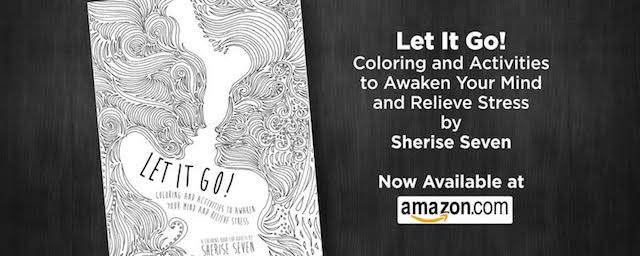
    You can get a copy of Let It Go, Coloring and Activities to Awaken Your Mind and Relieve Stress on Amazon here.

    When I was a kid, I could color for hours. I could be a little Type-A about it; if I went outside the lines, I would often rip out the page and throw it away, and I may even have yelled, “I hate coloring!” while cursing my imperfection.

    But that was a lie—I loved it. So it was only a matter of time before I way lying on my stomach in the living room, humming the Gummy Bears cartoon theme song, and trying again for a crayon masterpiece.

    Years later, in my early twenties, I did the exact same thing in my living room while my boyfriend (at the time) played video games. I remember thinking we were both regressing, but I didn’t care.

    We’d each battled depression before, and were always on the lookout for something to numb the pain. I don’t think we consciously realized it at the time, but that’s exactly what we were doing right then, in a far healthier way than usual.

    There was something so calming about doing these mindless, childlike activities, free from the burden of our usual stresses. Bills were piling up, neither of us had a career path, but for that short time, our minds felt free.

    In my late twenties, having lost touch with my coloring habit for years, I went to a visit a friend who had a toddler at the time. Sure enough, I found her coloring with what she called “Mommy’s markers.”

    Unlike her son’s, these ones had fine point tips, ideal for coloring intricate pictures. I sat down, pulled out a page, and once again I was hooked.

    Still, I didn’t keep the habit for long. I remember thinking she had an excuse—she had a son. But it was a little embarrassing for me to color, alone, in my free time.

    That’s what I thought back then. Now, however, I’m not afraid to admit it: I love coloring. I love my fine point markers. I love my stack of coloring books.

    I love the time I take for myself to clear my head and focus on something fun and creative. I love that this enables me to relax, recharge, and not reflect, as I do all too often throughout my day.

    And I love that adult coloring is all the rage now, and there are so many awesome coloring books to choose from.

    I’m still a little Type-A about it—I admit I’ve ripped out a few pages after coloring outside of the lines. But I’ve also learned to turn “mistakes” into interesting details, challenging my sometimes-judgmental mind to turn the “bad” into “good.”

    Since I’m always on the lookout for new coloring books (a sentence I never thought I’d write as an adult), it was quite serendipitous when I received an email about Let It Go, Coloring and Activities to Awaken Your Mind and Relieve Stress.

    Illustrated by Sherise Seven, the book includes forty one-sided, hand-drawn, perforated coloring pages and eleven activity pages that will “push your brain toward happiness and inspirational positive thoughts.”

    I love how this book is filled with unique, intricate images and uplifting messages. And I especially appreciate that it comes with a color protector page so I don’t ruin any of the awesome pictures from color bleeding through the page.

    Lori-Deschene-Let-It-Go-Coloring

    Yes, that’s my work above. (Look Mom, I stayed in the lines!)

    If you too are looking for a fun, creative, stress-relieving hobby, I highly recommend grabbing a coloring book—and fortunately, I have five copies of Let It Go to giveaway. 

    The Giveaway

    To enter to win one of five free copies:

    • Leave a comment below.
    • For an extra entry, share the giveaway on Facebook or Twitter, and include the link in your comment.

    You can enter until Friday, December 25th.

    Want to grab a copy now? You can get a copy of Let It Go, Coloring and Activities to Awaken Your Mind and Relieve Stress on Amazon here.

    FTC Disclosure: I receive complimentary books for reviews and interviews on tinybuddha.com, but I am not compensated for writing or obligated to write anything specific. I am an Amazon affiliate, meaning I earn a percentage of all books purchased through the links I provide on this site. 

  • How to Stop Pushing and Stressing About Your Goals

    How to Stop Pushing and Stressing About Your Goals

    Skipping Man

    You must learn to let go. Release the stress. You were never in control anyway.” ~Steve Maraboli

    I’ve encountered many people who live by the belief that in order to be successful, one must “go out and make things happen.” I used to feel the same until I realized that we don’t actually have control over most aspects of our lives.

    We can attempt to make things happen, but doing so doesn’t guarantee anything—it only develops yearning, which leads to suffering.

    Take my recent job search, for example. I spent nine months looking for a job. I applied to over 200 open positions and took part in more than thirty interviews. After several months I became desperate and out of this desperation, began to become depressed.

    It seemed that no matter how hard I tried, my job search wasn’t going anywhere. I needed a different approach.

    As I usually do during trying times, I turned to my beliefs for insights. I read Pema Chodron’s When Things Fall Apart, Thich Nhat Hanh’s You Are Here and Dr. Wayne W. Dyer’s Change Your Thoughts – Change Your Life: Living the Wisdom of the Tao.

    Dyer interprets the Tao Te Ching to state that our desires can create stress and anxiety, and that happiness comes not from pursuing goals, but by finding joy in everything we encounter.

    “Stop pushing yourself,” Dyer writes. “And feel gratitude and awe for what is.”

    Once I read this line, I realized that I had much to be thankful for, even during a time of unemployment.

    This understanding allowed me to change how I perceived my life. As a result, I began to experience happiness from small experiences, such as walking around the neighborhood or making a cup of coffee.

    This shifted my attitude and allowed me to become more receptive to life’s greatness. No longer did I feel depressed because I believed that by letting go of my desire to find a job, I was opening myself up to the plans that would manifest organically.

    One may say that I put faith in finding work and believed that the right position would come along at the right time. My new philosophy: let go and let the universe do it.

    I continued to apply for jobs and interview, but I knew that I couldnt force myself into a job offer. I had to go with the flow—to learn to ride the waves instead of trying to change the tide.

    This new perspective allowed me to release the stress relating to my job search and to accept that great things would happen at the right time.

    During interviews, I no longer felt desperate and nervous. I knew that if it were meant to be, I would receive an offer. This created a more positive environment and one that increased the likelihood of finding work.

    Just weeks after I changed my views and let go of negative emotions, I received a job offer.

    Looking back, I realize that my desire to find work was not only stressing me out, it was creating a wall that prevented me from achieving my goal of securing a job.

    When we’re working toward a goal, we often push ourselves to the point of desperation. We know what we want, and while that’s a good thing, stressing ourselves out to achieve that desire only develops resistance toward that aspiration.

    We might feel that if we don’t stress and push ourselves, we’ll be opening ourselves up to bad things that could happen.

    For me, this belief led to a feeling that if I didn’t find a job, I was going to be evicted from my apartment and forced to live on the street. I’ve since learned that stressing out doesn’t necessarily prevent negative consequences.

    In order to truly experience what the universe has in store for us, we need to let go of the need to control every aspect of our lives and focus instead on showing up and putting our best foot forward. Here are three tips to help put us on the path to achieving our innermost desires.

    Set your intention.

    Setting your intention is the first step in reaching your goals. When I was job searching, my intention was to find a position that was the next step in my career. No matter your intention, place it in your mind, see it in your mind’s eye, or meditate on it.

    Let go of your attachment to the outcome.

    Once we set our intention, we have little control over the outcome. Often others are involved, and we can’t force them into helping us achieve our goals. Realize that no matter what happens, you will be okay. And know that adopting this mindset will free you up mentally so you’re able to focus on controlling what you can control—your own choices and actions.

    Trust that your efforts will pay off.

    Trust is essential in manifesting our goals and desires. Once we realize this, our faith strengthens and we open ourselves up to many new opportunities in the process.

    As simple as these steps seem, actually following them is more challenging. It takes practice to learn to let go and trust that great things will happen.

    But as Lama Surya Das writes in Make Me One with Everything, “Buddha said that transcendent peace exists in things left just as they are.” Das adds that “I have found that all things are already at rest and at peace, inasmuch as one’s own inner life remains fit, flexible, and attuned.”

    We must remain flexible and attuned with life’s changes, as Das states. As soon as I realized this with my job search, beneficial things began to manifest.

    We can all benefit by learning that life’s greatness doesn’t require that we “get out and do,” but that we simply accept the wonderful things we already have and then adjust our expectations, while trusting that everything we need either is already within us, available to us, or in our future.

    Skipping man image via Shutterstock

  • Limited Edition Tiny Buddha “Just Breathe” Shirt (Supporting the David Lynch Foundation)

    Limited Edition Tiny Buddha “Just Breathe” Shirt (Supporting the David Lynch Foundation)

    *Update: This campaign has ended. Subscribe to Tiny Buddha for daily or weekly emails, and to learn about future shirt campaigns!”

    Hi friends! For those of you who don’t know me, I’m Lori, the founder of Tiny Buddha.

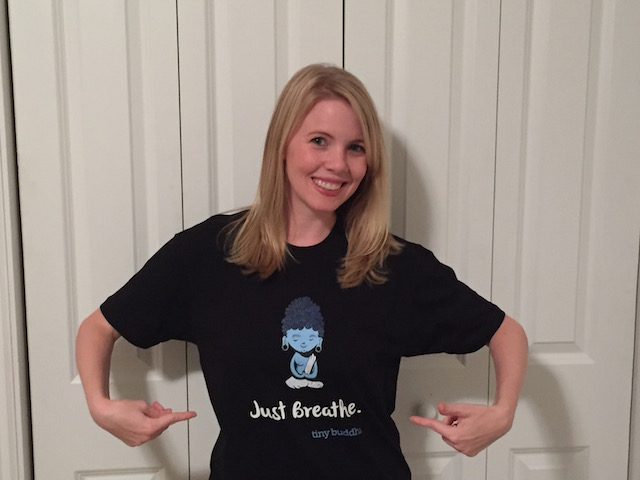
    For the past two weeks, I’ve been offering a limited edition “Just Breathe” shirt, and I’ve been excited to see the response from the community! The campaign ends this Sunday, so if you’d like to grab a shirt, this is your last opportunity to do so.

    Lori Deschene Just Breathe Shirt

    A portion of the proceeds will go to the David Lynch Foundation, a nonprofit that helps prevent and eradicate trauma and toxic stress through Transcendental Meditation.

    This cause is quite dear to my heart because of the work they do to help at-risk populations, including children in low-income urban schools, veterans with PTSD, victims of domestic violence, homeless and low-income men and women, inmates in some of America’s toughest prisons, and individuals recently diagnosed with HIV.

    Meditation changes these people’s lives and helps them heal, find peace, and develop the resiliency needed to thrive in spite of their challenging circumstances. And of course, when individuals thrive, that ripples into their communities, helping us all live happier, more peaceful lives.

    You can choose from six styles—including a fitted tee, racerback tank, and a hoodie—with sizes ranging from XS to 5XL (for some styles).


    Don’t see the button? Visit https://represent.com/tinybuddha to place your order. Have an idea or request for a future shirt? Leave a comment and let me know!

  • Surviving Life’s Storms: Have Hope That Life Will Carry On

    Surviving Life’s Storms: Have Hope That Life Will Carry On

    Woman in a Storm

    “I’ll never know, and neither will you, of the life you don’t choose. We’ll only know that whatever that sister life was, it was important and beautiful and not ours. It was the ghost ship that didn’t carry us. There’s nothing to do but salute it from the shore.” ~Cheryl Strayed

    I have weathered my fair share of storms.

    When I was in college, I met a boy a month after arriving on campus. I was eighteen, naive, and completely in love. The red flags were there by the truckload. As each red flag appeared, I darkened the tint on my blinders and convinced myself this was the person I was meant to be with. And so,  the storm began.

    About a year later, Mother Nature unleashed a storm of her own on my college town and surrounding areas. It was a hurricane that didn’t seem like a big deal as it meandered through over the course of a day or two.

    I shrugged it off and kept on going like nothing was happening. Only something was happening—a flood of epic proportions.

    The morning after the storm I woke up at 5:00 and couldn’t figure out why. My pets, two dogs, and three cats were running around in a panic.

    I got up to see what the fuss was about, and that’s when I smelled the rancid floodwaters. I peered down the stairs of my loft apartment, and to my shock realized half of the front door and several stairs were completely submerged.

    The night before I had laughed at the puddles and bit of street flooding. Now those puddles had amassed and invaded my home.

    I woke up my sleeping boyfriend. He angrily waded down into the water and tried unsuccessfully to open the now swollen shut front door. As he announced that we were stuck, I picked up the phone to call for help and heard the entire building lose electricity. It was audible and eerie. Everything went quiet.

    We ran to the windows and saw some people across the street moving belongings out of their not yet flooded apartments. Quickly, we opened the windows and screamed for help. Two guys came over, waded through the water to our door, and helped my boyfriend get it to open. I instantly began walking around grabbing things and putting them back down.

    I was in complete shock and had no idea how to pack, what to pack, and what to leave behind.

    First thing, we got the animals out of our apartment. I led my scared and yelping dogs through the water, which was about waist high on my small frame.

    My boyfriend carried the cats over his head in a carrier. I found a place willing to board them that still had space available and returned to my apartment.

    I packed clothes, photos, cards, and special items I knew couldn’t be replaced. We put the TV on top of the refrigerator. Some kind strangers floated by in a boat and rescued the computer I used for school. A few friends showed up to help us carry the garbage bags I packed to dry ground. Eventually, my boyfriend left and went with his friends.

    I was alone and the floodwater kept rising.

    I took as many trips through that water as I could. I was terrified and determined to save as much as possible.

    A fireman arrived and warned a group of residents that dams had burst in other parts of the state and soon the waters would be too high for us to walk through. He urged us to leave, reminded us that it was just stuff. “But it’s my stuff” I replied, my throat filled with tears.

    I looked at his high-waiters and equipment and begged him to help. He wouldn’t.

    Eventually, my boyfriend came back for me and what I had managed to put on dry ground. The water had reached my chin and it was time to let go, to accept that I could save nothing else.

    The months after the flood were incredibly difficult. The water rose over fifteen feet on my building alone. Entire towns were destroyed, lives forever changed.

    I stayed in a hotel and with family while I contacted FEMA and the Red Cross and looked for a new place to live. Many students quit college because of the flood, but I didn’t even entertain the idea. I was going back. I would start over, somehow.

    Once I found a new place to live, we moved in and slept on an air mattress. We went to food banks and stood in line for free canned goods and bread. I was humbled in those moments more than I had ever been in my life. I felt alone, scared, and poor. I wondered if my life would ever be normal again.

    With the help of groups like FEMA and the Red Cross, I was able to get furniture. My car was flooded out and I had to get something new. I reveled in these bright moments and felt my heart nearly burst with gratitude.

    School started up again and I returned to classes. I was still struggling financially, and had lost most of what I owned, but I had what was important to me. I leaned on school counselors when I needed to and tackled my mental health. I knew getting my anxiety and PTSD under control was paramount to moving forward and finishing my degree.

    I was proud of what I had been through and the newfound determination that couldn’t so easily be washed away. Life wasn’t exactly as it was before, but it was normal again, a new normal.

    Eventually, I graduated and ended up in graduate school. To say I was proud would be an understatement. My boyfriend moved with me, and I thought that finally the storm between us would subside as we began our new, more responsible lives. At least that’s what I told myself.

    And, like all storms, ours had an ending. After over a decade of me tolerating his severe physical, mental, and emotional abuse, I finally told him it had to end. Things were obviously never going to change. I could no longer keep wearing those blinders.

    When that relationship ended, I was truly devastated. It was another hurricane that left me wondering if my life would ever be normal again. We kept seeing each other on a regular basis, and I knew I would never cut ties with him if we kept living in the same town.

    So, with much tortured contemplation, I walked away from the graduate program I had nearly completed. I walked away from a near perfect GPA. More importantly, I walked away from the hurricane that was him.

    People often ask me if I regret not finishing my degree and if I will ever go back. My answer for a while was yes. I didn’t want to accept that I had not completed the degree. I was someone who finished college despite a flood, after all.

    But as time passed, I accepted it for the reality that it was. I had made a decision and I had to live with it. I chose freedom from a toxic and harmful relationship over finishing a degree. I knew in the end only one of those would truly save me and it meant starting over. Again.

    Starting over after that relationship wasn’t easy but I had weathered a flood. I had practice. Slowly I rebuilt with the pieces left and the perseverance that guided the way. I went from being too embarrassed to ask for help, to humbled at the help received, to completely grateful for all of it.

    The key for me in both hurricanes, the flood and my relationship, was to know that life would go on after the storm subsided. To breathe through the anxiety and remember that I had survived that far for a reason and would continue to long after these storms were memories.

    It took persistence and so much gratitude. Gratitude for the learning experience, for the fact that I was still standing, and for all of the people that were there to help along the way. And where there is gratitude for even the smallest bits of light, there is hope. Where there is hope, there is the will to carry on.

    Find your bits of light in the storm and cling to them. It doesn’t matter how small it seems. Find it and be thankful and watch it expand to a new horizon.

    Always remember that you deserve a stable, hurricane-free view. And if walking away feels scary, ask yourself what would hurt more: the pain of letting go or the pain of staying stuck in the storm forever?

    You, dear reader, can do this no matter what storm it is you are facing. Choose the life away from the hurricane and wave goodbye to the one you didn’t choose from the shore of your new normal.

    Happy sailing.

    Woman in the rain image via Shutterstock
  • 5 Essential Practices to Enjoy a Stress-Free Life

    5 Essential Practices to Enjoy a Stress-Free Life

    Calm Man

    “Stress happens when your mind resists what is.” ~Dan Millman

    A troubling thought, isn’t it? That most of us are too stressed out to even sleep through the night. You try to relax and decompress after a stressful day, but all you do is fight with your frustrations and worries all through the night.

    As much as we’d like to, it’s hard to let go of nerve-racking tension. We get caught up in the notion that the world will stop turning if we don’t play our integral part. I know what a burden stress can be.

    When I graduated from college, I moved to south Texas armed with an empty resume and two wildlife degrees. Most wildlife jobs are seasonal. Depending on what was migrating or nesting or being hunted that year, I’d move all over the country working three months at a time. No sooner had I celebrated my new position when I had to dive right into my next job search.

    I didn’t have a permanent address. My home was furnished with whatever I could fit in my car. And I rarely got reliable phone service.

    I was surrounded by breathtaking outdoor views and the wonders of wilderness. But all I could do was stress out wondering where my next housing and paycheck were coming from.

    Eventually, I let myself enjoy everything I loved about nature. But first, I had to relieve the stressors that I dealt with. Here are a few pivotal habits that will help significantly if you’re dealing with stress in your life, too.

    1. Do work you love.

    Your job can be stressful. But not liking your job is different from not liking your life. It takes more than just an income to be happy and stress-free in your life.

    After college, I thought that if I got a job doing something I liked, I’d never work another day in my life. But sometimes the work you love and your job are two separate things.

    I love being outside. I enjoy maintaining trails and outdoor areas for others to enjoy too. It’s how I find solitude. But I realized that I wanted to do it on my time, not an employer’s. Eventually, I found ways to indulge in nature and keep up with the rigors of a demanding job separately.

    One of the best ways to de-stress is to do what you love outside of your job. Whether you indulge in a hobby or a business venture on the side, enjoy the fulfillment of doing something that matters to you.

    2. Take a toxicity vacation.

    Avoid people and situations that inflame you. If you cannot avoid them entirely, take a break from them and decide later if you want to invite them back into your life.

    Toxic people are like bad investments. They rob you of the hopes and dreams you worked so hard for. They’ve got a problem for every solution.

    Don’t waste another minute turning into a nervous wreck over people who stress you out. Instead, take time to relax and de-stress around the people who show you the support and respect they say they have for you.

    3. Declutter.

    Clutter leads to overcrowding. There’s nothing more stressful than feeling like you’ve lost control of the space around you.

    My friend Doronda stressed out over being alone in her forties. By herself in her bedroom one day, she got sick of doing nothing but complain about it.

    She started cleaning the mess under her bed. Pile after pile, she sorted and trashed until she cleared out what she called her “marriage space.” Doronda wasn’t just tidying up. She was reclaiming her space and deciding to stop stressing over dating. Not surprisingly, she met a man soon after whom she still dates to this day.

    Clearing away the clutter gives you a sense of expansiveness and spaciousness. When you feel like you have room to grow, you can relax and relieve stress around you.

    4. Find your voice.

    One of the worst ways to stress out is to hold everything inside. Get a creative outlet. Whether it’s through art, writing, dance, or music—express what’s inside you.

    One of my favorite excuses used to be, “But I’m not a creative person at all.” Using that line absolved me of ever having to risk looking like I wasn’t perfect. But using that line also silenced me. It kept me invisible, like I didn’t matter.

    Just because you’re not Picasso does not mean you’re not creative. It’s time to let go of the stress of feeling invisible and find your unique way to invent being heard.

    5. Just say no.

    Stop stressing yourself out with everyone else’s busy work. Trying to tackle everything that’s thrown at you is like trying to digest an elephant in one gulp. At the end of the day, all you’ve accomplished is swallowing an elephant.

    Don’t worry so much about what you “should” do. De-stressing is all about saying no to what’s not essential for you and yes to all that moves you closer to where you want to be. Address your priorities and say no to the rest.

    Life has de-stressed for me. I’ve enjoyed the same home for almost ten years, I’ve got a job that I love, and I run a consulting business on the side. It took some effort, but I finally subtracted what wasn’t getting me near my goals and added what worked.

    Stress can rob you of your chance at happiness. When is that ever worth it? Do whatever it takes to practice a stress-free lifestyle. Wherever you get your income, fulfill yourself with work you love. Don’t put up with toxic people. Find your voice and be heard. You’ve got a lot of life to live. Why not enjoy it stress-free?

    Calm man image via Shutterstock

  • How Accepting Anxiety Can Lead to Peace

    How Accepting Anxiety Can Lead to Peace

    “People have a hard time letting go of their suffering. Out of a fear of the unknown, they prefer suffering that is familiar.” ~Thich Nhat Hanh

    My unwillingness to accept my anxiety disorder (there, I said it, I have a disorder) results in panic.

    It results in waking up at night, heart racing, body tingling and trembling.

    It results in driving down the road in a thunderstorm thinking I am having a heart attack—but I just keep driving and talking to my beloved on the phone because “if I can just keep driving away from it, it will be okay.”

    Instead of accepting anxiety as a family member of sorts, I resist and resent her visits. She’s always forced into drastic measures to get my attention.

    When the panic and physical symptoms of anxiety start, I assign it to something else.

    My heart races and I must have a heart condition. I’m dizzy and I must have a neurological condition. If it’s not me I assign it to, it’s my children. My son has a horrible bruise; it must be Leukemia. Life is too good; something awful is going to happen to someone I love.

    It always happens just like this, I’ve realized recently.

    Anxiety shows up over and over the course of my lifetime, yet my expectation is that it won’t.

    Instead, I expect that I will always be happy, stress-free, compassionate toward others (but not myself), kind, thoughtful, smart, successful, fit, skinny, wrinkle-free—the list of things I “should” be goes on for miles. That word, “should,” is something that I need to eliminate from my vocabulary.

    I convince myself that anxiety can’t be the cause of these physical symptoms, because that would mean that I am something less than happy.

    Ah, there it is. Feelings other than happiness are bad, and I should (there’s that word again) be happy all the time; so therefore, if I’m not happy, I’m not perfect and I’m a failure. See how that works?

    Yeah, I see how irrational, uncompassionate, and unforgiving that is when it’s on paper, which is one reason I’m writing this. The other reason is because I realized I’m not being true to who I am without accepting this part of me.

    People who know me describe me as an open book. I would have described myself that way until recently.

    This is a part of me that I’ve hidden for years. I tuck anxiety away like that black sheep of the family and make sure no one, not even those closest to me, know her.

    I’ve been ashamed of my anxiety and I’ve realized that all along that black sheep family member just needed me to accept her.

    To sit with her and maybe give her a hug and say, “I see you. I know you’ve visited before. Feeling something other than ‘perfectly happy’ is a normal part of life and I should expect to feel anxious, worried, upset, or even sad sometimes. You’re here to help me figure out what feeling is really behind this anxiety and what actions I can take to feel better.”

    Recently, my children went out of state with their father for a week. This was the first time I had been that far away from them for that long.

    Every day I would wake with a jolt, heart beating fast, wondering why I felt so anxious. I finally realized that being away from my children and worrying about their safety was causing these feelings of panic.

    After recognizing this, I decided to focus on the fun things they were doing every day and how this trip would provide them great memories for many years to come instead of thinking about all of the “what ifs” associated with their trip.

    I see this recent epiphany as progress in my lifelong journey of self-acceptance.

    I am going to try hard to see anxiety as the gift she is, because every time she leaves, I’m a little more enlightened. I feel more capable of managing my anxiety and I realize that I am in control of my thoughts, not the other way around.

    I am able to be more compassionate to others when they are feeling less than “perfectly happy.” I’m able to dig a little deeper into what is causing my anxiety versus denying I have it at all.

    When I do that, I can develop a plan, which either addresses any legitimate concerns or dispels any irrational ones. It’s a lot easier than continuing along just being a victim of my own thoughts.

    The next time anxiety shows up, I’m going to try to embrace her visit so she doesn’t have to go to such drastic lengths to be seen and heard. I’ll simply say, “Oh, it’s you again. Come on in and sit a spell. We have work to do.”

    If you also have a family member named anxiety that’s visiting you more often than you would like, sit with her for a while. Think about why she’s there. What are your anxious thoughts?

    Write down any irrational, anxious, or self-defeating thoughts on one side of a piece of paper. On the opposite side, list any actual evidence that the thought is true.

    An example for me would be “I’m a weak person because I have anxiety.” To challenge that thought is easy—I can list 100 examples of how I am not weak, and have a hard time coming up with even one that proves my thought is true.

    Most of the time writing it down takes away the power of the thought and brings some clarity. If you do have a thought that’s true, figure out some steps you can take to address it. Put yourself back in control. Try it the next time anxiety visits and see if it shortens her stay.

  • The Simplest Way to Create More Calm in Your Life

    The Simplest Way to Create More Calm in Your Life

    Man Relaxing on Beach

    “I vow to let go of all worries and anxiety in order to be light and free.” ~Thich Nhat Hanh

    This particular week, I flunked. I’d be lucky if you gave me a D grade in assessing my calmness.

    Generally, nobody can question my commitment to leading a life of less stress. I try hard. I try very hard.

    You might even be impressed with my healthy diet, my abundance of sleep, and my regular exercise. You couldn’t fault the careful thought and planning that go into my days and weeks. Hell, I can even claim meditation, mindfulness, and self-awareness as long-time, well-practiced skills.

    But some weeks you take your eye off the ball, don’t you.

    And I can’t blame any common stressors that predictably make life tougher: no illness or injury, no family or relationship conflict, no extra pressure at work or excessive financial strain.

    That particular week I failed because I didn’t stop. I didn’t let go. Too much rushing, too much on my mind, too much scheduled.

    And of course I was on edge, with that irksome and uneasy agitation that plagues you when stress gets the better of you.

    It feels unshakeable, lurks about robbing you of simple pleasures, sapping any joy from your day. Left unchecked it will escalate. We all know that stress may pass with little consequence, but let it go and go, and it mutates, into depression, anxiety, or destructive behaviors, ruining work, relationships or your health.

    Despite working hard over the years to build my repertoire of tricks and techniques to restore calm, on this occasion it was more luck than effort that turned things around for me.

    The surprising antidote arrived on the Saturday afternoon.

    Unplanned, Unexpected Calm (and How It Happens)

    “Tilt your head forward so that you’re looking down,” Claire instructed, and boy, did it feel weird. “Yes, it will feel strange, as though you’re swimming downward,” she went on.

    Ugh. What was I doing here? And why?

    Well, I had signed up my husband and I for a swimming instruction session—determined to choose a shared experience that he’d enjoy for his birthday rather than buying more stuff.

    But here I was near the end of a hectic week, with a very full head, stacks of unattended emails, and loads of washing to do. The swimming thing had seemed like a good idea at the time and I knew he’d love it, but maybe I could have skipped it, got some jobs done, and joined him afterward for dinner.

    Then it happened.

    Claire again: “Swim a short distance that you can manage without a breath, go as slow as you can, and try to minimize any splash. How does it feel, what do you notice?”

    I noticed I was beginning to feel better!

    She had my attention now, and with each instruction, she dragged me out of my head (with all of its worries and preoccupations) and into my body, full of new muscle, body-position and watery sensations.

    I let go and resigned myself to the present moment. And why not? The emails and washing were out of reach and my work worries would still be there when I got back to my desk. Anyway, in order to follow Claire’s instructions, I had to tune in!

    I had to listen and interpret her words with my body and my movements.

    Claire is a Total Immersion swimming coach, and this method of swimming is all about slowing down at first to improve the accuracy of your stroke: to get balance and movement right, in order that you maximize propulsion and minimize drag. It’s very mindful. It requires that you commit to the present moment and focus inward.

    Calm was upon me, hooray.

    Take a romantic view, and envisage the sensory experience of the cool and quiet of the water, the slow and rhythmic movements of the body. Or the simple science of it: the activity required me to engage my pre-frontal cortex, thus redressing the dominance of the stress-fuelled, and stress-fuelling, limbic system.

    Your Way is the Best Way

    The swim session reminded me of a lesson I’ve learned before, my pursuit of mindfulness and meditation. Many years ago after the traumatic loss of a loved one, I survived on yoga and walks on the beach.

    Even earlier in life, during anxious exam periods, I had a taste of it when I got some physical and mental relief from dancing around my room and singing along to Thelma Houston and The Pressure Cookers’ “I Got the Music in Me.”

    Some of my friends are also devotees of yoga and meditation, but many of them aren’t. They have their own way of getting out of their heads and into their bodies. Out of the angry memory trap of yesterday’s argument with the boss, or out of the anxiety-ridden imaginings of tomorrow’s tense family gathering.

    They find their way into the present moment and into their bodies via all sorts of sometimes forgotten, yet always relished activities, like surfing, guitar-playing, gardening, painting, baking.

    They rediscover and commit to these cherished activities, and learn as I did again in my swimming lesson, that they rebuild your depleted stores of calm and stop the ravages of stress.

    What is your calm-restoring activity? When was the last time you did it? Or is it time to take up something new?

    (It ought to go without saying that escapist distractions, like the game you play on your phone on the way home, don’t cut—they do nothing to bring you into the present, or into your body!)

    I’m certain you want more calm in your life, and I could give you a long, long list of ways to achieve it. But the simplest and best way to begin is to find your own way and commit to it. But beware.

    The trick to getting started on the path to more calm.

    Finding your way, your chosen activity, is not hard. Making it happen is harder. You must stop. You must stop and let go. Certainly, when I get it wrong, that’s where I go wrong—I don’t stop.

    You won’t find the time for it; you must make the time for it. Thank goodness I booked that swim session weeks before.

    You must stop and give yourself permission to let go of your troubles, even just for a short while.

    It won’t solve your problems, but it will, in the very least, ground you and let you feel better. And it will likely leave you better equipped to deal with your challenges.

    By all means develop your meditation skills and practice. But the simplest way to get more calm right away is to choose your calm-restoring activity, and make a time for it. That’s the trick.

    Calm will happen.

    When you struggle to get out of your head and let go of all that’s in there nagging at you, your activity is the way to go. And this easy indirect way of letting go is, happily, habit forming.

    You will get better and better at stopping. Better and better at returning to the present moment. Better and better at restoring calm.

    Thich Nhat Hanh said: I vow to let go of all worries and anxiety in order to be light and free.

    Hear, hear. I am renewing my vow to let go of all worries and anxiety in order to be light and free. I will do my best. And to that end, and especially when I struggle, I will make time to swim, or do yoga, or whatever it may be that will bring more calm.

    How about you?

    Man relaxing on beach image via Shutterstock
  • How We Create Problems for Ourselves (And How to Stop)

    How We Create Problems for Ourselves (And How to Stop)

    Man Lying in the Grass

    If you think you’re enlightened, go spend a week with your family.” ~Ram Dass

    I just returned from a four-day trip with my family. It was my own family of four (my husband and two kids), plus my mom, my two sisters, and my brother-in-law.

    It was great. We get along well and have fun together.

    And, it was four days with family.

    It’s a funny thing…although you grow up with your siblings, listening to and being influenced by your parents, you all end up so unique—different from each other and different from the adults who raised you.

    Of course we’re all unique. But our differences seem to be a little harder to accept or dismiss when we’re talking about family. These are the people you care about most in the world, and that usually means they can get under your skin like no others.

    We tend to have the most opinions about, and agendas for, the ones with whom we have the deepest emotional connection. Unconditional love and all of that good stuff aside, four days with family can be the perfect breeding ground for I-can’t-believe-she-said-that and I-must-be-adopted.

    A Shift in Understanding

    In the past, when I’d think about the frustration and annoyance that would come up around my family, it looked very real. It looked like it was definitely about—and caused by—them.

    I would have described it something like this: “Being around my family stirs stuff up. That’s normal, right? I experience some frustration, but it’s relatively minor. We get along great for the most part, and whatever annoyance there is tends to fade as soon as we go our separate ways.”

    Basically, it looked to me as if there was an actual issue with my family, but I was grateful that it was minor. I was good at seeing the bright side.

    Bright side-looking isn’t all bad. That was the best way I could see our “issue” for a long time and it served me. It kept me showing up and it allowed me to mostly enjoy our time together.

    But on this most recent trip, I was blessed with an insight that gave me a different understanding of the exact same circumstances.

    What I saw is that there is no problem with my family. There never was.

    We don’t have an actual issue. If you looked at us from the outside, you’d see eight people hanging out with each other. There is no problem.

    The “issue” I was feeling and attributing to my family all these years was nothing more than my own thinking. It’s just where my mind tends to go.

    My mind likes to tell stories and get quite overactive when it comes to my family. It’s been doing that for decades, actually.

    When I’m around them, my mind tells predictable, old tales tinged with frustration and fear, full of why-do-they-do that, and they-don’t-ever, and what-about-me. On this particular night, my mind was full of stories of how we should feel around each other, how we should be on the same page, how people should listen to me more.

    And those stories have nothing to do with my family. They have to do with my own unmet expectations and my own biased mind in the moment, not with my family at all.

    What a relief! The moment I saw this, the tension was gone. This may sound like a strange reaction, but I found it hilarious, actually, to see that I’ve spent thirty-some years in a mental dialogue about something that was never about what it looked to be about.

    The mental dialogue was the source of my angst all along.

    The Same May Be True for You

    The same may be true for you and your family, or whatever you think your outside “issue” is, as well.

    Part of why my insight had such an impact on me is that it wasn’t just about me and my family. It showed up as I found myself lying in bed ruminating about what someone had said earlier that day. But the problem wasn’t what they had said.

    It hit me like a ton of bricks that the rumination my mind happened to be doing was the only “problem” I had ever had.

    Your opinionated, personal mind is either being quiet or loud. When it’s quiet, it looks like all is well in the world outside. Actually, all is well on the world inside—the peace you’re feeling is your own inner peace.

    And when your mind is loud, it looks like all is chaotic in the world outside. Actually, it’s just a little chaotic internally, at the moment. It may have nothing to do with what it looks like it’s about. Or, as they say, it’s not what you think…it’s what you think.

    This difference may sound insignificant, but it’s been really huge for me. I thought I was getting off good by putting a nice spin on our family “issues.”

    To see that there are far fewer issues than I think—that often the main source of frustration is the show my mind is putting on in any moment—that’s freedom. When my mind gets tired or the show ends, it’s done. No issues to get over, just seeing thought as thought.

    You might wonder: but what if there is something that needs to change? The beauty of seeing how your mind ruminates and replays and creates problems is that when it stops doing that so much, you know if there’s something to do and you do it, drama-free.

    It’s like if you’re driving across the country with a filthy windshield. That’s kind of what an I-can’t-believe-she-said-that opinionated mind does—it muddies your inner windshield and taints everything you see.

    So going on a road trip with globs of dirt and mud on your windshield, well, that’s going to affect your judgment, right? Things won’t look as clear. You’ll probably miss turns because you can barely read the signs. You might mistake a town as “dirty” or “blah” because you’re seeing the windshield more so than the city.

    From a very busy mind that believes everything is a big issue to be solved, you’re not seeing clearly.

    You’re might try to intervene on things that might naturally blow over; and fear, self-doubt, or resentment might have you staying quiet when there is a place to intervene. You’re seeing from a dirty windshield so you’re not getting an accurate view of things.

    Seeing that your mind is constantly running what are essentially re-runs of this story about your family (or whatever your story happens to be about) lets you discount those stories. You naturally disconnect from them because you see the truth about them. That clears your windshield.

    From that place, you handle any actual problems you might want to handle calmly and peacefully. It’s a night-and-day difference. From a clear mind, you simply know what to do and you go about doing it the best you can.

    When you see that a gigantic proportion of your “issues” are caused by a dirty windshield, the windshield is wiped clear and anything that needs to actually be dealt with in the real world is dealt with. It’s as simple as that.

    I can breathe deeper knowing that. I hope you can too.

    Man lying on grass image via Shutterstock

  • 5 Steps to Change Your Perspective and Overcome Your Challenges

    5 Steps to Change Your Perspective and Overcome Your Challenges

    Astronaut in Space

    “Look again at that dot. That’s here. That’s home. That’s us. On it everyone you love, everyone you know, everyone you ever heard of, every human being who ever was, lived out their lives.” ~Carl Sagan

    I’m there with a hundred other people. The lights fade to a whisper then vanish, leaving us in darkness. Stars appear. Thousands of them, projected onto the dome screen above.

    In the center of the screen is Earth with its emerald and amber lands and sapphire oceans frosted by clouds. We watch the planet’s rotation, and then we’re flying backward through space, and the Earth becomes small, tiny, nothing more than Carl Sagan’s pale blue dot…

    It’s only a planetarium show. One of many that lays the whole universe bare at this museum. By this time, I’ve seen it almost a hundred times.

    I was the guy in back who ran the shows. A couple touches on the screen and you sent the audience to space. Easy. For now.

    My job at the museum was nearly stress free. I was finishing up my undergrad, and it worked well with my schedule.

    Then I graduated and got promoted. My position completely changed to involve heavier guest relations. I didn’t think I would enjoy it, but I let the money, benefits, and coworkers sway me to it.

    The next six months were some of the most stressful in my life.

    Every day I left work exhausted, overwhelmed by the amount of guests I helped on a daily basis—on one particularly busy day the computer told me I had helped over 1,000 guests in an eight-hour period.

    I was meditating and exercising regularly, and couldn’t keep up with the stress. I rarely had enough energy to go out after work, and I stopped seeing friends; I was too tired to be around anyone but my girlfriend.

    I looked for ways to change the situation: I made suggestions to try and improve the positions, spoke to supervisors about what I could do to use my strengths in more effective ways, and even brought up the idea of creating a new position for me.

    Between personnel departures and red tape, it didn’t go anywhere. I became more and more frustrated, and worse, just pulling up to the building in the morning or checking my email from home called up waves of anxiety.

    I didn’t know what to do.

    I was stuck in my thinking. I just didn’t realize it.

    My anxiety and stress levels got so high, I almost got into a fistfight with a guest over a misunderstanding while on a break.

    I’ve never punched at anyone outside of a martial arts class, and I was about to snap and throw the first one. With my whole body shaking like an airport massage chair, I walked away and left for the day.

    What I should’ve done instead was walked into the planetarium for some new perspective.

    There’s something called the “Overview Effect.” This happens to astronauts when they go into space, all the way out to the moon, and see the pale blue dot that is Earth in all of its entirety.

    No borders. No conflicts. Just the beautiful rock hurtling through space that we all live on.

    Anousheh Ansari, a space tourist who went to the international space station said, “If people can see Earth from up here, see it without those borders, see it without any differences in race or religion, they would have a completely different perspective. Because when you see it from that angle, you cannot think of your home or your country. All you can see is one Earth….”

    If you’re anything like me, you probably can’t afford to be a space tourist, and you’re probably not working on a homemade rocket in your backyard to shoot yourself into orbit (always a bad idea!)

    So how can we use this experience to get new perspective and relieve stress? Like Mr. Rogers helped me do as a kid, we can imagine it (or visualize it, for all the adults out there).

    1. What challenge are you facing?

    As much as we sometimes want to skip to the end, we have to start somewhere.

    What’s the situation that’s challenging you? Was it a stressful event earlier in the day? Maybe it’s something that happened in the past that still upset you. Or maybe it’s something you’re in the thick of, like my stressful museum job.

    Picture yourself in the situation. Don’t just see it, but hear it and feel it as well. Bring in all the details you can to make it more real.

    2. Blast off.

    The problem with our own perspective is that it’s limited. Time to expand it.

    Imagine yourself leaving your body. Your homemade rocket could be taking off, or maybe you’re gently floating out of yourself into the air.

    Before leaving the atmosphere, look down with a bird’s-eye view. See yourself all the way down there. See everyone else involved, and see the challenge or situation in its entirety.

    What do you see that you didn’t before? How does your perspective change from way up here?

    Feel free to see how your perspective changes in relation to yourself, each person, and the challenge as a whole.

    3. Leave Earth behind.

    When you’re ready, it’s time to continue on your journey. Leave Earth behind, and head out into space until you can see the whole thing.

    Ask yourself the same questions from #2 and any other that come to mind.

    From way out here, what do you notice that’s new about your situation? What changes do you notice in your stress level?

    4. Come on back.

    If you need to, you can always go farther out, until Earth is just that tiny blue dot. But just like astronauts we can’t (yet) stay out there forever. If you’re ready, time to come on back.

    But don’t float back into your own body. Instead, with your new, all-encompassing viewpoint, imagine yourself floating into the bodies of the other people first. See the situation with their viewpoint as well.

    What do you learn?

    This may be tough, especially if you’re feeling ill-will toward them. But often, the larger, total-Earth view helps with that.

    When you’re ready, come on back to yourself. From your own eyes, check one more time. What do you see that you didn’t before? How has the situation changed for you?

    5. Take action.

    So you have a newfound perspective. What do you want to do with it?

    What action can you take to improve the situation or do things differently? We usually can’t change other people, but we can change what we do and how we react to others.

    Sometimes it might be something big—for me, since I couldn’t change my job, I left it. It took me awhile, and took a shift in my stuck thinking.

    If I had used this exercise at the time, I might’ve left much earlier. Instead, it came down to my girlfriend seeing me stressed out, day after day, and telling me, “It’s not worth it.”

    Picturing it now from high above, I can see how right she was. My work meant me no harm; in fact, the people there wanted the best for me.

    I committed to a job and outgrew it. It was time to move on to bigger and better things, but I kept myself stuck out of fear of what would happen if I left.

    From out here in space, the fear seems a little bit funny, but there are no harsh judgments. I see why I did it, so there’s compassion for both myself and for my managers and coworkers stuck in the same situation.

    Up here, there’s no borders, no conflict. Just feeling present in the moment with love for a pale blue dot and its people hurtling through the universe.

    Astronaut in space image via Shutterstock
  • Overcoming Fear-Based Thinking and Creating a Happy Mind and Life

    Overcoming Fear-Based Thinking and Creating a Happy Mind and Life

    Happy Brain

    “Everything you want is on the other side of fear.” ~George Addair

    My parents were teenagers when they had their first of three children. I was the middle child. They were uneducated, poor, and had very difficult upbringings.

    As I recall my childhood, most of what I remember is how fearful both of my parents were.

    They were constantly stressed out about money, the kids, the tattered house, the rusty car, and everything else in their lives.

    My mother, my first role model, was so scared of the world. She definitely had an undiagnosed anxiety disorder. She was afraid to drive a car, afraid to eat in restaurants, afraid to go shopping, afraid of strangers.

    She was completely crippled by fear.

    In order to cope with all their anxiety, my parents often turned to binge drinking and smoking.

    I remember watching the cigarette smoke form a thick haze throughout the house. My siblings and I had no choice but to inhale the second-hand smoke every day. Even our clothes and school books smelled like an ashtray.

    I hated to see them drink because it often led to angry outbursts.

    Throughout my childhood, I witnessed many painful and sometimes tragic events. My parents’ reaction to such events was always overdramatized and downright scary at times. They never knew how to cope in a civilized or peaceful manner.

    Needless to say, my childhood was filled to the brim with fearful experiences.

    I desperately wanted to free myself from all the pain and fear. I just wanted to break free and be happy.

    I vividly recall, at the age of eleven, making a promise to myself that I would do my best to get out of that mess. I knew my only escape route would be to study hard, go to university on student loans, and get a good job.

    I locked myself in my bedroom, wearing sound blocking earmuffs, and studied every day until I graduated from university at the age of twenty-three.

    Graduation day was one of the best days of my life. I finally got my ticket to freedom and happiness. At least, that was what I thought….

    After that, everything fell neatly into place. I got a good job, got married, bought a nice house, and had two beautiful children.

    But, despite all of these wonderful external experiences, I hadn’t escaped the clutch of fear. It was like a leech from childhood that wouldn’t let go.

    I often cursed my parents for saturating me with such fear.

    I made sure to hide it, especially from my loved ones and coworkers. I didn’t want my children to suffer like I did, and I didn’t want my employer or coworkers to see my weakness.

    But the fear was building. It was starting to beat me up. I wouldn’t be able to hold it in much longer.

    I had to figure out how to deal with this fear, and I had to do it fast.

    My heart and soul told me to dive deeply into the spiritual aspect of life.

    I diligently consumed a huge amount of spiritual/self-help/philosophical literature, attended numerous classes and retreats, and faithfully practiced much of what I had learned.

    I was enthralled by it all and genuinely excited. This world wisdom resonated to the core of my being.

    I finally found the tools necessary to help catapult me to the other side of fear.

    Over the past several years I’ve adopted many spiritual practices. They have not only helped me deal with fear, but have improved every aspect of my life.

    Here are the top lessons I’ve learned:

    1. The present moment is powerful.

    There is so much clarity, peace, and joy in the present moment. To truly let go of the past and stop fearing the future is liberating. It’s the doorway to freedom.

    Daily meditation is one of the best ways to fully experience the present moment.

    I have a handful of meditation techniques in my toolbox, but I often resort to simple breath meditation for thirty minutes a day to help ground me in the present moment. As well, I practice mindfulness daily.

    One way I practice is to eat mindfully for one meal each day. I am fully present while I eat. I eat slowly and I engage my senses. I pay attention to how the food looks, tastes, and smells. I feel it in my mouth and how it settles in my body. I try to experience the food as though it was my first time ever tasting it. With such focus, I inevitably slip into the present moment.

    It doesn’t matter if you meditate, practice mindful eating, or turn any other daily activity into an opportunity for mindfulness; what matters is that you create time to practice living fully in the present moment.

    2. Awareness is essential.

    We are not what we think we are; we are not our thoughts. With this higher level of awareness, you can step outside of yourself and watch your mind as it races from one thought to another. And you can witness your habitual emotional reactions to those thoughts.

    You become the empowered watcher of your mind instead of being lost and entangled in the web of thoughts and emotions. You realize that you have a choice in how you react to your thoughts and feelings.

    To give you a more concrete description of what I’m talking about here, I will give you an example of how I use a higher level of awareness to deal with potentially stressful situations in everyday life.

    I had an important work project to complete and I started to feel overwhelmed because I thought I wouldn’t be able to meet my deadline.

    Rather than automatically defaulting back into my fearful feelings, thoughts, and reactions, I stopped myself immediately. I took a few slow deep breaths and focused on the sensations of my breathing. This helped me connect with the present moment and offered space between my thoughts and my actions.

    Then, I spoke statements to myself that made me feel better, including: “It’s not the end of the world if I can’t finish this,” “My boss knows I’m a good worker and he may extend the deadline,” and “If I take a few minutes to relax my mind, I will work more productively.”

    The simple acts of stopping myself, focusing on my breath, and talking positively to myself brought me to a higher level of awareness. I realized I had a choice in how I could think and react. Within a few minutes I calmed myself down completely and I successfully finished the project on time.

    3. Happiness is within.

    All of the great spiritual teachers, masters, and philosophers of the world share the same message that happiness cannot be found outside of us, in the external world. There is no person, place, material possession, or amount of money that will bring you true, lasting happiness.

    Rather, happiness is found within. You have to spend time taking care of yourself and closely evaluating what makes you feel happy. It will vary from person to person.

    My first encounter with true inner happiness occurred during meditation. I had been practicing for about a year at that point.

    As I sat in stillness, I felt myself gently go beyond the tangle of thoughts and emotions. I shifted from a baseline of worry to a feeling of peace and happiness. It was wonderful. I finally tapped into a state of consciousness that was hiding inside of me my whole life.

    I also feel happier inside when I eat well, exercise, sleep well, practice gratitude, spend time with loving friends and family, and listen to uplifting music.

    Shift your focus from externals and you’ll be better equipped to identify the little things that bring you peace and joy.

    Final Thoughts

    I was dumped into the depths of fear when I arrived on this planet. But with courage, focus, belief, and desire I ploughed myself a path to happiness.

    My life today is quite the opposite to that of my childhood. Now, I enjoy my life. I appreciate and love my family, friends, and the life I have built.

    Please don’t get me wrong—my life has its challenges. Challenges are a normal part of human existence.

    But now, I have the tools necessary to prevent myself from defaulting back to my old, habitual, negative, and fearful way of thinking. Instead, I try my best to focus on the good in life and consistently reach for the valuable lessons in every difficulty.

    Today, when I look back at my childhood, I feel love and forgiveness toward my parents. I now realize that they tried their best from where they stood. They were just human beings lost in the whirlwind of fear and struggle.

    In fact, without my childhood, I wouldn’t be who I am today. I feel that my childhood clearly showed me what I didn’t want and, in turn, it forced me to focus on what I really wanted in life, what we all want—to be happy.

    Happy brain image via Shutterstock

  • 7 Habits That Keep You Strong (Even When Things Go Wrong)

    7 Habits That Keep You Strong (Even When Things Go Wrong)

    “I’m stronger because of the hard times, wiser because of my mistakes, and happier because I have known sadness.” ~Unknown

    It’s happened to most of us.

    Despite our best intentions, something goes dreadfully wrong.

    You suffer a heartbreaking loss, make a terrible mistake, or get blindsided by an injury.

    In disbelief your mind cries, “Wait. What?”

    And then, “No, no, no, this can’t be happening.”

    After the initial shock, when the surge of stress hormones has subsided, you realize that yes, this is happening.

    And you can’t help thinking: “But how could this happen? It’s not fair. I can’t bear it. Why me? Why now? How will I ever get through this?”

    Your mind is reeling. You feel anxious and dejected.

    Well, something like this just happened to me too.

    After eight days away and a grueling fifteen-hour return trip, my husband and I were relieved to finally arrive home at 1:00AM on a Wednesday.

    But as soon as I opened the front door, I knew something was terribly wrong. My beloved cat Tiffany had come to greet me, but she wasn’t purring in her usual comforting way.

    She was yowling in distress in a way I had never, ever heard before.

    “Wait. What? What’s wrong, what’s wrong?”

    And then somehow, I just knew. I ran further into the house and discovered evidence that confirmed one of my worst nightmares.

    My trustworthy, longtime pet sitter had not been in to care for Tiffany.

    My sweet, sixteen-year-old cat had been home alone with no food, water, or heart medication for eight days. How was she even still alive?

    As a devoted animal lover, witnessing Tiffany’s trauma and subsequent physical and mental decline has been heartbreaking for me.

    I’ve had plenty of negative, angry, and despairing thoughts vying for my attention over this. And I definitely felt weakened by the experience.

    But as soon as I could, I consciously returned to the habits I’ve created over time that keep me strong no matter what shows up in my life.

    1. Use your power of choice.

    No matter what your circumstances, you have the power to choose your direction and how to use your energy. You can choose to use your energy in positive, productive ways or in negative, destructive ways. Either way, the choices you make now determine your future.

    As soon as I opened my front door and saw Tiffany’s suffering, I had some choices to make. I could choose to stay devastated, distraught, and depressed. Or I could choose to embrace the miracle that my cat was still alive and empower myself to give her the loving attention she deserved.

    Practice choosing to focus your energy in positive directions until it becomes a habit. Once it does, you will be more empowered and experience less trouble in your life. You will feel like you are living on purpose, taking charge of your direction rather than viewing life as something that just happens to you.

    2. Accept what is, no matter what.

    Practice not mentally labeling what happens as good or bad; just let it be.

    Accepting what is, instead of judging it, puts you in a state of inner non-resistance. You can still want to change things, but you have a calmer attitude, and any action you take to improve your situation is more effective.

    I rated my Tiffany’s circumstances as terrible at first. But by quickly accepting the situation instead of raging against it, all my mental and intuitive energy was available to discern what she needed most so that I could help her right away.

    Allow things to be as they are rather than resisting them. Once this becomes a habit, you’ll find yourself calmly thinking of effective solutions for problems that used to be overwhelming.

    3. Be grateful.

    Besides enhancing your everyday life, finding things to be grateful for can help you cope during hard times by giving you a wider perspective that helps you feel less overwhelmed by difficult circumstances.

    An eight-pound, sixteen-year-old cat with a heart condition could easily have died from such a trauma. So I had three things to be grateful for that night.

    First, Tiffany was still alive. Second, I got home just in time to rescue her. And third, I was grateful that my pet sitter had taught me to leave extra water out when going on a trip. This is probably what saved Tiffany’s life.

    Practice focusing on what’s going right. Notice things to be grateful for every day. Soon, finding something to be grateful for will become your automatic response to anything that happens. And eventually you’ll find that your gratitude habit brings more joy into your life.

    4. Neutralize the negative.

    Sometimes our thinking is directed by our inner critic, who can say some harsh things. But when you pay attention, you can recognize unhealthy thoughts and change them to more positive statements.

    My inner mean girl spoke up that night. “Tiffany counts on you to keep her safe. How could you let this happen?”

    I immediately cut this off by replacing the unhelpful thoughts with words I often say out loud to my sweet cat: “I love you, Miss Tiffany.”

    Always question your negative thoughts, and practice changing them to positive, helpful statements. Once this becomes a habit, you’ll find that negative thoughts lose their power to upset you. Over time, you will be able to more easily let them go, and your mind will become more peaceful.

    5. Return to the present moment.

    As human beings, one of our favorite mental activities is to get lost in thinking about the past or the future.

    Remembering to bring your attention back to “now” sweeps the debris from your mind and returns you to a state of simplicity.

    Throughout that long night, I did my best not to get lost in thoughts of how this could have happened or what Tiffany’s health would be like from then on. I just kept bringing myself back to the present moment with, “I love you, Miss Tiffany.”

    As you go about your daily activities, keep your full attention on whatever is happening here and now rather than getting lost in thought. Once this becomes a habit, you will be more connected to your inner wisdom. You will notice that decisions are easier to make, and life begins to flow more smoothly.

    6. Trust yourself.

    It’s better to trust in your own feelings and intuition—even if you make mistakes along the way—than to look outside yourself for guidance.

    Even though this felt like an urgent crisis, I took my time considering the options.

    I could put Tiffany in the pet carrier and go for a forty-five-minute drive to the emergency veterinary hospital. Or I could quietly care for her myself for a few more hours until my local vet’s office opened.

    It was the middle of the night, and she had already been through so much. My intuition said that keeping her home would be less stressful, so that’s what we did.

    Remember to always tune in to your inner wisdom for help. Once you make this a habit, you will feel less stressed and more positive. You will have a sense of inner security and self-contained confidence that is not based on the approval of others.

    7. Forgive.

    True forgiveness means that you accept the reality of what happened without an emotional charge. You recognize the healing and growth you have achieved from working through the upsetting experience, and you wish healing and growth for the other person.

    My pet sitter was distraught by her scheduling mistake and begged me to forgive her. I knew she would never intentionally cause harm to any living thing. I also knew how devastated I would be if I was the one who had made such a mistake.

    And so I did. I forgave her.

    Practice forgiving others and releasing the toxic resentment that hurts your heart. Forgive yourself too; we all make mistakes at one time or another. Making a habit of forgiveness frees you to move on with your life and experience higher levels of inner peace.

    You: Calm, Clear, and Confident

    Life’s hard when things go wrong.

    Feeling shocked, anxious, and dejected is no fun.

    But practicing these habits when times are fairly good will enhance your life and help you stay strong during the hard times.

    Imagine being in the middle of a disappointment or a crisis and being able to move swiftly through the shock and stress rather than getting stuck there.

    Imagine feeling calm, clear, and confident during difficult circumstances instead of confused and overwhelmed.

    Imagine even reaching a state of inner peace as you take action to make things right again.

    Some of these concepts are easier to turn into habits than others, and they all take time to master.

    But if you will pick even one and start practicing, you will become stronger, wiser, and more resilient no matter what life throws at you.

    If I can do it, you can too.

  • What to Do When You’re Panicking Because You Can’t Make a Decision

    What to Do When You’re Panicking Because You Can’t Make a Decision

    “No one saves us but ourselves. We alone must walk the path.” ~Buddha

    I got a frantic message from a friend last night.

    Everything was going wrong—her job, her relationship, her life—and she didn’t know what to do.

    “Help me, please,” she kept saying. “I don’t know what to do.”

    I tried hard to stifle a giggle. I know, completely inappropriate. But I found it really funny.

    Why? Because I’m the last person anyone should be asking for advice. If I knew what to do, if I knew how to help her, I’d have:

    1. implemented this a long time ago in my own life to solve issues that I, myself, have been grappling with
    2. created a website and published a book and video tutorials with the answer
    3. bought my own island in the Caribbean just from the proceeds of the book sales (I’d give the money from my website ad sales and video to charity, obvs)

    I’d be rich, because this is what every human being confronts at some point in their lives—what should I do?!

    We all hate the unexpected. We all hate uncertainty. These situations usually mean we haven’t gotten what we want or things aren’t going as we wanted them to go. We know we need to make a decision. We know we need to do something. But making a decision is hard, especially when things are uncertain.

    In moments like this, we become frantic, we flail, we panic. I know because I’ve done all three. Several times.

    And then we become obsessed with our problems. We think about them.

    All. The. Time.

    And then we think about them some more.

    Sometimes my brain actually starts to ache from all this thinking and analyzing. We get exhausted, mentally, physically, and emotionally. And when we realize we are no closer to solving our problems or making a decision, we start becoming more frantic and we flail and panic even more.

    So of course, it makes sense that we turn to others for answers at times likes this. Because in this moment, we are in no state to save ourselves. My friend is not an exception. Most of us have turned to others at some point or another.

    I couldn’t give my friend any answers that night. I knew she wanted a specific solution to address her issues. But I didn’t have any. And here’s the scary news: no one does.

    You are the only one who can save yourself. You are the only one who can solve your problem.

    Hearing that probably wants to make you hide under your duvet and never come out.

    I don’t know what to do, remember? How am I supposed to save myself?? I don’t even trust myself to change a light bulb!!

    I hear you. And you can stop hiding now and jump out of bed, because here are three simple things you can do in times like this.

    (Note: These three ideas aren’t solutions to your problem. But they help you, they help the situation, and they allow you to get to a place where you are better able to pin down the right decision.)

    I know they might not seem like much, and it’s easy to dismiss them. It might even seem like I’m not taking your problem seriously. All I can say is that I’ve gone through these situations time and time again, and doing the things below has definitely helped me.

    It stopped me from being completely consumed with my problem. It helped me create much-needed space and clarity.

    Also, if you are being put out of balance by one part of you life, your best hope is to bring in some balance from another end.

    What’s the alternative? Thinking more about the problem at hand?

    We both know how that usually works out.

    1. Be frantic, flail, panic … then get it out.

    Whine to your amazing friends who listen to you patiently with nothing but love and empathy, even though you’ve been putting them through this time and time again.

    Then go jogging, go to the gym, go for a swim. Write in a journal. Do something to get all that anger, resentment, fear, and pity out of you.

    You’re in over-active child mode right now—tire yourself out.

    2. Go spend some time outdoors.

    Go for a meander in the woods, walk along the ocean. Observe the birds in action, pay attention to the trees, watch the clouds in the sky. Basically spend some time in nature.

    I’m not sure what it is, but there’s something calming about nature. It slows us down. It tires us out (see point 1). It gives us perspective. It shows us that there is more to life than our problems and worries. Mary Oliver’s beautiful poem, The Shore comes to mind;

    I go down to the shore in the morning
    and depending on the hour
    the waves are rolling in or moving out,
    and I say, oh, I am miserable, what shall—
    what should I do?
    And the sea says in its lovely voice:
    Excuse me, I have work to do.

    3. Do something else.

    Worried about whether you should end a relationship? Go learn to play a new musical instrument.

    Worried about how you are going to make your mortgage at the end of the month? Go volunteer at your local charity. Or:

    • Read something uplifting every morning, afternoon and right before going to bed
    • Watch YouTube clips that crack you up
    • Meditate
    • Write five things you are grateful for every morning
    • Start a new habit (i.e.: get up an hour earlier, drink more water)
    • Learn origami
    • Spend some time cleaning your closet
    • Offer to babysit for your friends (kids are amazing distracters!! It’s hard to focus on your problems when you are constantly trying to keep them from falling over or hurting themselves.)

    As humans who lead very human lives, mud gets thrown at us at some point or another. And when you stop flailing and panicking, when you calm down, when you focus on something else, you give the mud a chance to slide off and settle down; you allow the waters to get less murky. And things get clearer.

    Maybe in this clarity you’ll know what to do. Or maybe you will have made your peace with what’s happened.

    More likely, you’ll probably have moved on to something else and forgotten what was winding you up in the first place. Or something else might have happened to completely transform the initial situation.

    That’s the other thing about life. It’s full of surprises.

  • How to Maintain Peace and Joy Despite Your Everyday Struggles

    How to Maintain Peace and Joy Despite Your Everyday Struggles

    Floating Man

    “In the midst of movement and chaos, keep stillness inside of you.” ~Deepak Chopra

    For years I allowed everyday struggles, like slight disturbances from schedule, to steal my happiness, peace, and energy. Whenever something disrupted my plan, I got negative and started complaining.

    When I realized this, I began taking steps to accept the daily chaos. I shifted my focus to how I percieve my daily life and how I spend the twenty-four hours I get.

    I started asking questions, like: Am I being positive? Am I spending my hours in a way that’s productive yet joyful?

    And I began working on changes that enabled me to be at my happiest, most optimal self.

    Gradually, I was able to regain my lost calm and restore my lost energy.

    If you’d also like to experience more peace and joy in your days, these steps may help.

    1. Add fun to your daily chores.

    What are the most boring tasks in your daily routine? How can you make them more enjoyable?

    Minor changes like this can make a large difference in your day.

    One idea is to couple boring chores with more pleasurable activities. My favorite way to do this is by turning on some music while doing tedious tasks.

    Another idea is to plan fun-time as a reward for after work. Or, do a task that makes you feel accomplished just before you handle a mundane one so you’re in a better mental space when you tackle it.

    Completing your tasks in a more exciting manner enables you to have fun, while staying more productive as well.

    2. Be grateful.

    Once we start complaining, we keep listing everything, small or big, that frustrates us.

    Meanwhile, we ignore the good altogether, as if it does not exists.

    Recently, I was planning to meet with an old friend after not seeing her for a long time. But she cancelled the day before and said she was going out of town, so we wouldn’t be able to get together for at least a month.

    Because I was so frustrated, and fixated on this one thing that went wrong, I couldn’t enjoy the movie I watched with my family that day. I kept dwelling on how upset I was, which pulled me out of the moment.

    If you want more peace, stop getting into this vicious cycle of dwelling and complaining.

    The next time you find yourself counting the bad, stop to count some good as well. The good things you find might seem ridiculously tiny—like a shared movie with someone you love—but so are the complaints, if you think about it.

    Staying grateful keeps the negative balanced with the positive, thus preventing you from taking a glum view on life.

    3. Go slightly out of routine.

    When someone asks you what you are doing today, do you say,Oh, the usual,” with a sigh? Or, do you feel excited as you count off things on your fingers?

    If you do the former, then maybe following the same routine has become too monotonous, and you could benefit from some unpredictabilty.

    Take a different route to your office, do something on the spur of the moment, or pick up a task that’s scheduled for later and finish it beforehand.

    When you voluntarily break your timetable, you can adapt better to the sudden changes that happen.

    Besides, If you finish an important chore, it will give you a sense of early achievement!

    4. Set aside compulsory “me time.”

    In our busy life, it’s easy to forget to take breaks. But working around the clock doesn’t necessarily make you more productive.

    Instead, it ends up making you more negative and reluctant to work.

    On the other hand, having something refreshing to look forward to makes it easier to get through even the worst of days.

    What makes you happy instantly? Include it in your compulsory to-do list.

    Enjoy some music, read a book, go for a morning stroll, or savor a cup of coffee. Anything that helps you relax can qualify as your “me time.”

    5. Take care of your mind and body.

    If we are not in our top form, mentally or physically, we get exhausted easily. We are also unable to deliver our best.

    You don’t need to spend hours in a gym, follow a strict diet, or be an expert in meditation.

    Here are quick examples of activities for a healthy body, wise mind, and contented spirit:

    Body: Go for a walk, eat fruit daily, and ensure that you get enough sleep.

    Mind: Indulge in quick mental exercises—solve a puzzle, do easy math, or memorize a number without your phone’s help!

    Spirit: Spend a few quiet moments with yourself—focus on your thoughts, think of the minor goals you accomplished, or recall a moment that made you happy.

    6. Cut down the negative sources.

    Spend more time with the friends who encourage you instead of the ones that make you feel low.

    Limit the activities that unnecessarily stress you out.

    When you need to face something negative, decide in advance that you won’t allow that negativity to leak into your entire day.

    I have a friend who used to put me on the defensive. I couldn’t understand why; she had a nice manner, after all.

    I eventually realized it was because she’s the kind of person who expects everyone to conform to the society’s views.

    She was actually being judgmental and criticizing, but with a disguised exterior. She was also coercing me into being like her.

    I used to get drained because I was constantly making excuses or giving explanations for my differences.

    When I understood this, I started spending less time with her and kept conversations general.

    Now, when we do meet, and she finds something to criticize, I simply leave it at “Oh, that’s just the way I like it” instead of wasting my energy trying to justify my views.

    7. Remove extra clutter.

    One of the reasons we feel so drained is because we focus our attention on too many things.

    Clutter doesn’t necessarily mean your posessions. Your clutter can be material, digital, or even emotional.

    Whatever it is, take a while to understand what’s occupying your space, time, and thoughts.

    Think deeply about what you really need and get rid of what you are uselessly holding on to.

    Go ahead and do the house/office cleaning that you’ve been putting off for so long.

    Limit your time on social media and utilize that time reading useful sites/watching informative videos instead.

    Or go even deeper—let go of the grudges and negativity and focus your thoughts in a direction that benefits you.

    8. Stop looking at the ideal things that could be.

    We all have things we don’t like and situations we want to be different. But if we can’t change them, it only ends up making us unhappy.

    Quit giving these external circumstances the power to affect your joy.

    Appreciate what is present, use the resources you have, and accept the few things that are not the way you want.

    I felt very lonely during the first year of college. I’d had to leave old friends behind and start afresh. I was okay with that—I’d always considered the possibility that we might go our separate ways.

    But I believed that I would make new friends—ones who were totally like me—to share my dreams and passions with.

    That was not what happened. I couldn’t find anyone I truly connected with, and I became hyperaware of how different I was. As a result, I felt shy and vulnerable, which further prevented me from getting close to people.

    Eventually, I got tired of being aloof. I decided to focus on the fact that I had good people around me instead of comparing everyone to the ‘ideal friend’ image I had.

    Accepting my situation didn’t change it, but it helped me appreciate others and gain true friends in spite of our differences.

    Utilize any opportunity you get, even if it doesn’t looks perfect, or you don’t feel ready to use it.

    Don’t expect things to be better; take steps to make them so. And when they are beyond your control, channel your thoughts into what you can appreciate about how things are and what you can improve.

    A busy life doesn’t have to be a stressful life. By adding, subtracting, and modifying a few of our daily tasks, we can prevent the day from stealing our energy. Similarly, by fine-tuning our thoughts, we can find more peace in our days, months, and years.

    Floating businessman image via Shutterstock
  • How to Cope and Keep Going When Times Get Tough

    How to Cope and Keep Going When Times Get Tough

    Man in a Storm

    “If you’re going through hell, keep going.” ~Winston Churchill

    The day started out beautifully. My friends Shaun, Tina, and I decided to take advantage of a sunny Saturday afternoon with a hike along Ontario’s Bruce Trail. We parked our cars at the trail access, laced up our boots, and headed out for a day of wandering through sun-dappled fields and forests.

    A couple hours later, we agreed we had probably gone far enough and turned around to head back.

    That’s when the weather changed. Fast. Ominous clouds rolled in, blotting out the blue skies we had been enjoying. The trees started to creak and sway as the wind whipped up. We picked up our pace, but even before the first thunderclap, we knew we wouldn’t be outrunning this storm.

    It was a doozey.

    We felt the first drops of rain as the trail ran along the grassy edge of a farmer’s field. A moment later, we were drenched as the sky opened up and the torrential downpour began.

    Soaked to the bone, miles from our vehicles, we pressed on through the howling wind. There was no sanctuary from the storm—nowhere to hide and no sense trying to wait it out, sopping wet as we already were.

    The only option was to keep going. To put one squelchy foot in front of the other and hope the lightning bolts around us didn’t get any closer. As we made our way in single file along the now-muddied trail, my mind flashed back to a few years earlier, when I was navigating a much different kind of storm.

    It was October 2008, and I was in isolation at Princess Margaret Hospital in Toronto after the bone marrow transplant I received to treat my leukemia.

    The incredibly complex medical procedure boiled down to the doctors decimating my defective blood-producing cells with heavy-duty chemo and radiation. Once the crappy stuff was destroyed, they transplanted new stem cells from a healthy donor.

    There were some risky and unpleasant consequences of the transplant. Until my new transplanted stem cells engrafted, I was left with virtually no immune system and prone to all manner of infection. Hence the isolation. A simple sneeze from someone in the room could spell disaster.

    With no immune system, the usually harmless bacteria in my mouth were able to take hold and do some damage.

    Large sores formed on my tongue that filled me with excruciating pain with every breath I took. I couldn’t eat. I had a hard time talking. The nurses made me sleep with the head of the bed raised up so I wouldn’t choke on my massively swollen tongue.

    When I saw Dr. Galal the next day, I begged him to do something about the mouth sores. He was, of course. I was being treated with antibiotics and a mouth rinse to speed recovery along, and they had my morphine jacked as high as they safely could.

    A warm and compassionate man, Dr. Galal looked at me and assured me that they were doing everything humanly possible. “The only thing I can do,” he said, “is promise you that you’ll be feeling much better when I see you again next week.”

    In the midst of the hurt the pain meds barely seemed to touch, “tough it out” wasn’t the answer I wanted to hear. But sure enough, in a few days time, the swelling went down and the sores started to shrink in response to the treatment. Slowly but surely, day by day, I eased off the morphine.

    And when I saw Dr. Galal the next week during his rotation, I smiled at him and thanked him for keeping his promise.

    Like our walk through the woods or my mangled mouth, there are times in life when the only thing we can do is keep going.

    Caught in that thunderstorm with our cars still miles away, we just had to keep putting one foot in front of the other. Stuck in the hospital with a mouth full of sores, I just had to endure and wait for the medications to work their magic.

    But I’ve found that there are always things we can do to help us along as we attempt to get through the storms in our lives. Here are some that have helped me.

    1. Lean on your friends.

    No one is an island. There is strength in numbers. Two heads are better than one.

    Whatever your preferred cliché, having the right people by your side makes a world of difference. No matter who you are, there will be times when your motivation flags, when everything that needs doing overwhelms you or when a way out seems impossible.

    At those times, you’ll need to lean on the strengths and support of others. Who do you know who can provide you with motivation? Expertise? Distraction? A listening ear? On the flip side, who’s getting in your way of achieving your goals? Be mindful of negative people who might be draining your mojo.

    2. Surround yourself with the good stuff.

    Related to the point above, using little techniques to keep your spirits up can help a lot. Whether it’s a silly song you’re belting out while hiking through a rainstorm, a copy of Robert Service’s inspirational poem “The Quitter” taped to your hospital room wall or a list you’ve made of all the awesome things life has to offer, find ways to keep yourself motivated.

    3. Break it down and celebrate the little milestones.

    My journey from cancer diagnosis to recovery seemed to stretch on forever, with no end in sight. When you’re faced with an absurdly large problem, breaking it down into manageable chunks can keep it from overwhelming you.

    Set milestones for yourself along the way and celebrate your successes. Making a point to acknowledge the little achievements along the way—getting through the first phase of chemo, remission, finding a donor, being able to do a push up or walk up a flight of stairs—helped me see that I really was making progress.

    4. Be flexible.

    Also, be flexible. Plans change, things happen, projects get derailed. Acknowledge that setbacks are inevitable so you won’t be too discouraged when they do happen.

    Sometimes whatever storm you’re traveling through can put you on an entirely different course. Adapting to a new reality means letting go of the past. There’s nothing wrong with a little bit of nostalgia and reminiscing about “the good old days.” But when that devolves into whining and fixating on how things used to be, then you probably need to refocus and get back to the business at hand.

    5. Come up for air.

    At one point, Shaun, Tina, and I found a good spot to take cover from the driving rains for a few minutes. Breaks allow you to regroup and recharge your mental, emotional and physical batteries. They’re an opportunity to check the map and think strategically. Stepping back lets you take stock of the bigger picture and remind yourself that you will get through this.

    Where possible, take breaks. Whether it’s meditating, taking a little vacation or just turning off your brain for a couple hours to watch a mindless movie, balancing the “one-foot-in-front-of-the-other” grind with beneficial pause is crucial.

    Life is full of unexpected rainstorms. But the trick isn’t to avoid or try to hide from them. There are some you simply won’t be able to outrun. No, the trick is to find ways to cope—to bring the right umbrella, so you’re equipped to deal with the storm when it inevitably rolls in.
    Man in a storm image via Shutterstock