Tag: stress

  • 3 Surprising Causes of Burnout That Most People Miss

    3 Surprising Causes of Burnout That Most People Miss

    “Love yourself first and everything else falls into line.” ~Lucille Ball

    The first time I experienced burnout, I was twenty-six.

    I was at the height of my career in London, doing it all, and yet I somehow found myself back at my parents’ house, sobbing in my mom’s car, after signing myself off from work, not having a clue how I landed there.

    Burnout isn’t just about being tired from overexertion. It’s when we reach physical, mental, and emotional exhaustion after pushing ourselves past our capacity for too long.

    When we finally stop, often against our will, all the confusing symptoms surface. We feel overwhelmed, out of control, like we’re going mad. That was me at twenty-six, right when I thought I should have been thriving.

    To give you some background, I was managing several boutique fitness studios in London, working under a highly demanding boss whose mood could swing and affect the whole office. I wasn’t much of a party girl, but I was still burning the candle at both ends, socializing with friends on the weekend and running around meeting demands during the week.

    The burnout crept in slowly, starting with crying over the smallest things, gaining weight despite all the exercise I was doing, never being able to switch my mind off, and feeling constantly wired and overwhelmed with emotions I didn’t understand.

    Burnout shows up differently for everyone, and I believe many of us live with a chronic, low-level version we don’t even notice until our well-being starts to fall apart.

    At the time, I thought burnout was just about long hours and stress. But over the years, I realized there were deeper, less obvious reasons behind mine.

    So, let’s get into the three not-so-obvious causes of burnout that most people miss.

    The Hidden Pressure to Prove Your Worth

    One of the biggest things I’ve learned about myself in the last ten years is that I’ve always had a need to prove myself. I’ve never quite felt good enough, and it’s always affected my confidence.

    I know I’m not alone in feeling this way. We all struggle with our confidence and worth, wanting to prove ourselves—to the people we work for, to our parents, to our partners, and to the world.

    However, I wasn’t conscious of this when I was younger. I knew I had a strong drive within me to work hard and meet other people’s demands, but I didn’t think it had anything to do with needing to prove myself.

    I’ve come to see that many of us have a core wound around self-worth, even the most confident among us, and we all need to work on accepting, embracing, and loving ourselves exactly as we are.

    But when we’re not conscious of our inner drivers, we can blindly rush into life, not understanding what’s really motivating our actions. For me, my lack of confidence played out in my need to please my boss, to the point where I was no longer conscious of my needs or desires.

    Her disapproval terrified me. I dreaded missing her calls or not replying to her emails fast enough. I anticipated her demands constantly, beating myself up if I misjudged a situation or fell short.
    It was a constant strain on my nervous system.

    I pushed myself harder and harder until I simply couldn’t cope with the pressure. I couldn’t bear to let her down in any way, and if I did, I chastised myself for not doing better, for not being better.

    The straw that broke the camel’s back was when I had to leave work early, to her great annoyance, to meet my mom, who’d booked a mother-daughter photoshoot (something I definitely wasn’t looking forward to, given the state of stress I was in).

    All I remember is crying on the subway on my way there and not stopping even as the concerned makeup artist was trying to sort out my puffy eyes. I didn’t want to disappoint anyone, and it was too much.

    That’s when I began to understand that burnout isn’t just about physical overwork. It can come from the emotional pressure we place on ourselves, such as the pressure to meet expectations, to keep people happy, and to prove our worth to those that we feel we constantly need to impress.

    It’s only when we realize that our well-being is far more important than our productivity that we can start to recognize how our need for approval is driving our actions and start to gently and lovingly address the deeper root cause.

    Why Burnout Thrives Without Boundaries

    One of the worst things about this need to prove myself was that my boss also recognized it and took advantage of it.

    At the time, I didn’t even know what boundaries were. I wanted to keep everyone happy, spinning plates and spreading myself thin.

    We’re conditioned to believe that it’s wrong to be selfish, that we shouldn’t say no, and that we need to put others’ needs before our own, but at what cost? Well, the cost is often our own happiness and well-being.

    We often think of boundaries as physical, but they are also mental and emotional.

    We may have shut our computer, but are we still thinking about the meeting tomorrow morning? We may have left the office, but are we anxious that we’ll forget to send that important email?

    I used to feel this dread in the pit of my stomach every morning on my way to work as I wondered what I might have gotten wrong or forgotten to do. It was like my mind couldn’t switch off, and it drove my stress levels higher and higher.

    One of the reasons why boundaries can feel so challenging is when we attach ourselves to the thing that we do, making it our identity, our purpose, and all that we are.

    Whether our burnout comes from being a parent, being a caregiver, being an employee or entrepreneur, or any other roles we hold, we need to remember to create a sense of healthy separation from what we “do,” because that is not all that we are.

    This is such an important boundary for us to create.

    We are human beings, not human doings. When we mistakenly attach our worth, our identity, or our purpose to what we do rather than who we are, that boundary becomes blurred.

    How Denial Keeps Us Stuck in Burnout

    Another major cause of my burnout was my inability, or unwillingness, to be honest with myself.

    I wasn’t conscious of how much I was struggling, and even if I had been, I wouldn’t have admitted it. To do so would have meant facing changes I wasn’t ready to make.

    While change is a constant in all of our lives, it is still something that most of us fear. After all, it’s messy, unpredictable, and uncomfortable.

    Yet, it’s always needed, especially when we suffer from burnout.

    If we don’t change our circumstances, our attitude, or our boundaries, then nothing will change. So, we have to be willing to be honest about what’s not working and start making those all-important changes.

    We can also struggle to be honest about our motivations for staying in burnout.

    I’ll admit that at the time I really liked my life. Or rather I should say, I liked how my life looked. When I turned up late to dinner with friends due to work, I used to complain about work always making me late, but secretly I felt busy, important, and special.

    There’s always a deeply unconscious part of us that becomes attached to the things that hurt us. It’s almost as if we become a martyr in our suffering. Yet, this is just reflective of the deeply unconscious desire to be seen, recognized, and taken care of.

    That’s the tricky thing: when we’re in burnout, we often crave recognition and care from others. But waiting for someone else to rescue us keeps us stuck.

    When I was struggling with burnout, I just wanted someone to notice and tell me what was wrong. I complained about my job to anyone who would listen, but I refused to take any advice. I just kept pushing myself, secretly hoping that one day someone, anyone, might notice.

    Burnout isn’t a cry for help, but it is a cry from within to be taken care of, supported, and nourished. And first and foremost, we need to start looking after ourselves.

    This Is Where Burnout Ends

    If you’re struggling with burnout, please know that you’re not alone. Start by being honest with yourself. Recognize where you’re needing to prove yourself and where you need better boundaries so you can start taking care of yourself.

    These subtle causes may not look like overwork, but they take just as much out of us, sometimes even more.

    The turning point for me was when I admitted I wasn’t coping, signed off from work, and sought support from a holistic practitioner. That was the first time I began to listen to myself, and it opened the door to healing and growth I never could have imagined at twenty-six.

    Ten years later, I’m so grateful for what it taught me. As cheesy as it sounds, it was the breakdown that became my breakthrough. While I still struggle with setting boundaries, feeling “enough,” and being honest with myself at times, on the whole those lessons have made me who I am today.

    It all began with the simple realization that I needed to learn how to take care of myself with the same urgency I once gave to everyone else. And maybe you do too.

  • Micro-Faith, Huge Benefits: Reasons to Believe in Something Bigger

    Micro-Faith, Huge Benefits: Reasons to Believe in Something Bigger

    “Faith is taking the first step even when you don’t see the whole staircase.” ~Martin Luther King Jr.

    My grandmother passed away a few years ago after a long battle with cancer. Even as her health deteriorated, she never lost her spirit. She’d still get excited about whether the Pittsburgh Steelers might finally have a decent season after Ben Roethlisberger’s retirement. She’d debate the Pirates’ chances with the kind of passionate optimism that only comes from decades of loyal disappointment.

    But what I remember most are the afternoons she’d spend napping in her favorite chair with my son curled up against her. He’d drift off clutching some random object, like a wooden spoon or random toy from my parent’s basement. She’d just smile and close her eyes too. Even when she was tired, even when the treatments were wearing her down, she found joy in those stolen moments.
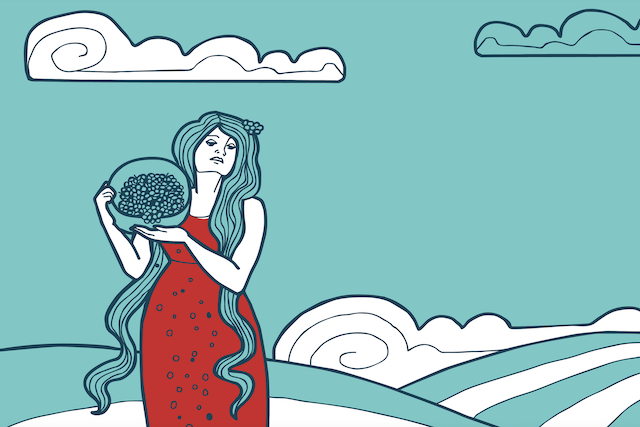
    In her final years, she lived with my parents, but she brought her faith with her.

    Her rosary beads found new homes on nightstands and windowsills. Her worn Bible sat open on the end table, bookmarked with a picture of her husband. The little curio cabinet filled with angels followed her too, a portable shrine to stubborn hope. Wherever she was, the air around her carried that same indefinable quality that I later realized was simply peace.

    My grandmother had the kind of faith that could part emotional storms with a single glance. She didn’t need to preach it. She lived it. You could feel her belief before you even stepped through the front door. She believed in prayer, in miracles, in second chances. In the Steelers. And in Diet Pepsi.

    After she was gone, I expected to feel completely untethered. Instead, I discovered something surprising. Things seemed to hold together. The sadness was real and deep, but underneath it was something solid. A foundation I’d never realized she’d built in me.

    My mother always said I “lived with my head in the clouds,” and it wasn’t until after Grandma passed that I understood where that came from. While I was raised in the Catholic church and spent years as an altar boy, my faith had always been fuzzier than hers. Less certain. More questions than answers.

    But it was there, hidden under the surface, because of her. I’d been benefiting from her quiet influence in ways I never fully understood or appreciated until she was gone. Her faith hadn’t just surrounded me. It had somehow taken root in me, even when I wasn’t paying attention.

    Learning to Recognize What Was Already There

    The months after her death weren’t filled with the existential crisis I expected. Instead, I found myself noticing things. How I naturally looked for the good in difficult situations. How I held onto hope even when logic suggested otherwise. How I moved through the world with a kind of quiet optimism that I’d never really examined before.

    I was still a professional overthinker, still a card-carrying worrier. But underneath all that mental noise was something steadier. Something that whispered, “This too shall pass,” even when I wasn’t consciously thinking it.

    It took time to understand that this wasn’t something I needed to build from scratch. Grandma hadn’t just modeled faith for me; she’d been quietly cultivating it in me all along. Through her example, through her presence, through those countless afternoons when she’d choose hope over fear, even when the odds were stacked against her health and her beloved sports teams.

    Discovering My Own Messy Version

    What I came to realize was that my faith was never going to look like Grandma’s. Hers was rooted in tradition, in ritual, in the comfort of centuries-old prayers. Mine was more scattered, cobbled together from different sources and experiences.

    My faith, I discovered, is held together with hope, a healthy dose of skepticism, and about six different kinds of sticky notes. It’s not the neat, organized kind. It’s more like a spiritual junk drawer full of useful things, but you’re never quite sure where anything is.

    I believe in second chances and fresh starts. I believe in the power of afternoon sun to reset your entire day. I believe that kindness is contagious and that sometimes the universe sends you exactly what you need, even if it arrives late, confused, and covered in cat hair.

    Some days, my faith is a whisper: “Maybe things will get better. Maybe I’m not alone. Maybe I can try again tomorrow.” Other days, it’s louder: “This is hard, but I can handle hard things. I’ve done it before.”

    My faith doesn’t look like Grandma’s, but it carries her DNA. It’s messier, less certain, but it has the same stubborn core, a refusal to give up hope, even when hope seems foolish.

    The Science of Belief

    Here’s what I wish I’d known during those dark months: You don’t have to be religious to benefit from faith. Science shows that belief in something greater than yourself can be a powerful tool for mental and emotional well-being.

    Faith literally reduces stress. Studies show that people who report a strong sense of meaning or spiritual belief have lower levels of cortisol, the hormone associated with stress. Translation? Faith helps your brain pump the brakes on panic.

    It improves emotional regulation by activating the brain’s prefrontal cortex, which helps you pause before spiraling. It builds psychological resilience by reminding you that you’re not at the center of every catastrophe. Whether you believe in God, the universe, karma, or cosmic duct tape, faith acts as a buffer against hopelessness.

    Acts of spiritual reflection can trigger the same brain regions involved in feelings of safety and joy. And faith often leads to rituals or conversations with others, building the connections that are crucial for well-being.

    Here’s the kicker: You don’t have to get it right. Wobbly faith counts. Uncertain, whispered-in-a-closet faith is still valid. Half-hearted “Okay, Universe, I trust you… kinda” mutterings are welcome here.

    The Power of Micro-Faith

    Big transformations feel great in theory but hard in practice. That’s why I’ve learned to embrace what I call “micro-faith,” these small, digestible moments of intentional belief. Like appetizers for your spirit.

    Today, try believing in something small:

    • The possibility of a good cup of coffee
    • The strength hiding inside your own weird little heart
    • The fact that what you need might already be on its way
    • The idea that this difficult season won’t last forever
    • The chance that tomorrow might feel a little lighter

    Faith doesn’t have to be grand or glowing. Sometimes it’s just showing up anyway, even when you’re not sure why.

    What Grandma Taught Me

    Years later, I realize Grandma didn’t just give me faith; she showed me how to live it. She taught me that faith isn’t about having all the answers. It’s about trusting that you’ll find your way, even in the dark.

    She taught me that belief can be quiet and still be powerful. That faith isn’t a destination but a traveling companion. That sometimes the most profound act of faith is simply getting up and trying again.

    Most importantly, she taught me that faith isn’t about perfection. It’s about showing up. Showing up to your life, to your relationships, to your own healing, even when you feel completely unprepared.

    I carry pieces of her faith with me now, mixed in with my own messy, imperfect beliefs. Some days I feel like I’m floating through life with my head in the clouds. But thanks to Grandma, and a whole lot of trial and error, I’ve learned to float up here without getting totally fried by the sun.

    If your faith feels fractured, fuzzy, or faint, you’re not doing it wrong. You’re just human. Faith isn’t a finish line. It’s a floating device. It won’t always steer you straight, but it might keep you above water long enough to find the shore.

    So go ahead and believe in something today. Even if it’s just the idea that the clouds will eventually clear… and the coffee won’t taste burnt this time.

  • From Burnout to Bliss: The Beauty of Therapeutic Art

    From Burnout to Bliss: The Beauty of Therapeutic Art

    “It takes courage to say yes to rest and play in a culture where exhaustion is seen as a status symbol.” ~Brené Brown

    “You have burnout.” I listened to these three words in a trance, said thank you, and got off the call with the doctor.

    Part of me had known.

    The endless days I spent in bed staring at the ceiling with no motivation to do anything. The inability to focus on my screen. And the sudden bursts of tears when I saw yet another meeting pop up in my calendar.

    I knew all of this wasn’t normal. That something was going wrong.

    But another part of me was in disbelief. Burnout?! How can I be burned out if I’m doing what I love?

    Just three years ago, I co-founded a company to help chronic disease patients. I was here to change the world, to help others, to build something meaningful.

    How is it possible to burn out following your own dream? That’s something that just happens to miserable people in their nine-to-five jobs.

    As I dove deeper, I learned how wrong I was.

    It’s actually much more common to burn out when you’re running your own company than when you’re an employee.

    The financial rollercoaster, the rejections along the way, the countless weekends spent working without ever really taking a break—we are not made for that.

    No matter if we’re following our own dream or someone else’s.

    So, like the perfectionist and hustler I was, I thought: Let’s fix this fast so I can get back to feeling joy for what I’m building.

    I read the self-help books, did talk therapy, started mindset coaching, tried different productivity techniques, but the void inside me, the demotivation, the inability to feel joy—none of it went away.

    And underneath all of this was a crippling fear: What if I’ll only get healthy if I leave everything I’ve built behind?

    The turning point came one day, out of the blue.

    I was sitting at the beach watching the sunset, and as I watched the sun setting in its glamorous colors, I heard a voice inside my head say, “Go and buy paint.” At first, I dismissed it, but it got louder and louder until it was practically screaming: “GO AND BUY PAINT.”

    And so, I did. I went to the nearest dollar store, bought cheap acrylics, a small canvas, and a few brushes.

    At home, I put a plastic bag on my bed, and without much thought, I started painting.

    The first brushstroke hit me deeply. I felt my body and heart exhale: finally, you have come home!

    I painted for hours. And when I finished, I was exhausted, but it was a good exhaustion, like after a long hike, when you’re filled with a quiet love inside.

    For the first time in months, I fell into a deep, long sleep. When I woke up the next afternoon, the void didn’t feel so big anymore.

    I felt… I couldn’t quite describe it at first. Until I realized: I felt happy.

    I spent the next months painting every single day.

    I learned different techniques, invented my own, and with each drawing, I left behind traces of overworking, criticism, judgment, perfectionism, and self-pressure.

    After a while, I got curious. I wanted to understand what the art had actually done to me. Was it possible to heal burnout “just” by painting?

    So I went down the rabbit hole: studying, learning, experimenting. The deeper I went, the more I realized it wasn’t really about the art at all.

    The art was just the tool. A tool to create space to feel, to process, to change the internal narrative.

    Maybe you know what I mean. Maybe you’re completely drained and exhausted by your work, whether in a demanding job or in your own business, and you’re questioning why this is happening to you. Maybe you already know it can’t go on like this, but you feel trapped in the situation you’re in.

    If so, here are a few things that helped me in my process using art and that might help you, too.
    And no, you don’t need fancy materials or specific techniques.

    The type of art I found most healing is called therapeutic art. It’s not about the outcome; it’s about the process. The paintings don’t have to be pretty. Sometimes they’re just black scribbles, circles, undefined shapes. It’s all about expressing yourself onto the paper.

    So here they are—the five lessons that helped me in my quest to heal from burnout.

    1. Connect to your creator self.

    Your creator self is the part of you that exists beyond the roles, responsibilities, and pressure of your work. The part of you that’s here simply to create and express.

    Burnout disconnects us from that part of ourselves. Through mindful painting, we can make space to turn inward, explore freely, and reclaim a sense of agency over our own experience.

    When you use art therapeutically, there’s no need to prove anything or achieve a result. It’s about being present in the moment, feeling your hands move across the paper, and letting yourself just be.

    That’s what helps reconnect you to your sense of aliveness and to the real you beneath all the noise.

    2. Release stress from your body.

    Burnout and overworking aren’t just mindset problems. All the stress, all the emotions you chose not to feel along the way, get stored in your body.

    Your body literally goes into survival mode, and no amount of thinking or talking will fix what’s happening in your system.

    Therapeutic art is a mind-body practice that helps process tension, emotions, traumas, and stress that have been stored for years.

    The act of painting, moving your hands, and letting emotions flow through color onto the paper allows your body to exhale and relax. It gives your system the break it has been screaming for.

    3. Rewrite the success story running in your subconscious.

    Most of what drives our actions doesn’t come from conscious thought, it comes from the subconscious, which shapes 90–95% of how we think, feel, and act.

    This is where all the hidden beliefs live that drive us into overwork and burnout: “Rest is lazy,” “If I slow down, I’ll fail,” “Success has to be hard.”

    Even if you logically know these aren’t true, your subconscious doesn’t. It keeps running on these old programs.

    Through painting freely and intuitively, you can project these thought patterns onto the paper. You may catch yourself wanting to control the outcome, judging the process, or feeling anxious when things get messy.

    And in those moments, you have the chance to soften, challenge the old stories, and show your system that there’s another way to live and create.

    4. Let go of what’s no longer working.

    Burnout is a sign that something you’ve been carrying—a habit, a role, a belief, an idea—is no longer aligned with your highest self.

    Art gives you a safe space to practice letting go. On the canvas, you can release control, let things get messy, and allow what wants to emerge to show up without needing to fix or force it.

    This mirrors what we need to do in life: loosen the grip, experiment, and trust the process. When you practice surrender in small ways through art, it becomes easier to loosen your grip on the bigger things draining you.

    5. Rediscover your joy again.

    One of the most painful things about burnout is losing your sense of joy. Everything becomes dull, gray, and heavy.

    Therapeutic art invites you back to joy without a goal. It’s not about making something pretty or useful. It’s about playing with colors, being fully present, and simply observing yourself.

    When you paint just for the experience, you remind your system what it feels like to have fun and be here without needing to earn anything.

    And that, in itself, is a powerful way to heal.

    Burnout doesn’t mean you’ve failed or are broken. It’s often a sign that something in your life or in you is ready to change. For me, painting became the safe and joyful space back to myself.

    The best thing is that you don’t need to be an artist to use painting in your healing process.

    What matters is making space to listen inward, to let your body exhale, and to soften the old stories you’ve been carrying.

    And when you do, you might be surprised at what’s still alive inside you, just waiting to come home.

  • More Energy, Less Regret: Your Guide to a Sober Summer

    More Energy, Less Regret: Your Guide to a Sober Summer

    “Believe you can, and you’re halfway there.” ~Theodore Roosevelt

    We are used to people talking about Dry January or Sober October but rarely a Sober Summer. That doesn’t seem to be a thing—but what if it was? What if it could be your reality this year?

    I knew I wanted my relationship with alcohol to be different at many points in my twenties, thirties, and forties, and in the summer of 2017, I decided, “This is it—I am going to choose a different path.”

    That day in June left me with a terrible hangover the next morning. I didn’t parent well, I ate all the foods I wouldn’t normally, I underperformed at work, and I went to bed early in a fog of regret, shame, and guilt.

    I’d love to tell you that was my last drinking day, but it wasn’t. It took me another two and a half years from that point to get to the start of my sober life. One thing holding me back was thinking about all the things I was going to miss out on. I knew I could do a month of not drinking—I’d done that before—but three months, six months, a year… that felt like a big deal.

    January is sometimes seen as a reset time of year. Perhaps finances are a little tighter, maybe you already drank enough over the winter period, and a break from alcohol is seen as ‘socially acceptable’ in January.

    October has gained traction over the last few years as another ‘break from alcohol’ month. It fits neatly in that point between summer and Christmas and lends itself to a month of non-drinking because we might need a reset after the excesses of the vacation period.

    What I now know, after more than five years of being a non-drinker, is this: We don’t need to be confined to other people’s expectations of when it’s a good time to have a break from alcohol, and also, it doesn’t have to be for a fixed thirty days. We are allowed to make our own rules, challenges, or well-being experiments when we want to and for however long we want to.

    When I initially decided that I was going to set myself an experiment and choose not to drink for one year, I really worried about all the summer fun I might miss out on. I usually switched my regular drinks around for the summer. Red wine and heavy cocktails were out, and rosé wine and spritz cocktails were in… in abundance.

    That first sober summer I worried about how I would navigate a friend’s wedding without champagne for the toast, how I would do a festival without a bottle of beer, and what other people would think of me if I didn’t bring a bottle of wine to a BBQ.

    It all seemed like too much to process and too much to try and work out. In the end, I decided to come up with some strategies to support myself. I had worked for over twelve years in a local government role, supporting people with their substance use and misuse, and it was time to start listening to my own good advice.

    I realized I needed some compassionate self-talk, some scripts to use for other people’s comments, and some practical steps to follow to navigate events where alcohol was going to be served.

    If a sober summer sounds like a good idea for you, then here are five pointers (and some journal questions) to support you in finding your sober serenity.

    1. Be intentional.

    Don’t see drinking as inevitable. Give yourself plenty of joyful thoughts, feelings, and choices around being a non-drinker.

    Choose: How would you like to think about alcohol?

    Examples: I chose to see alcohol as an unnecessary addition to this day. I know that alcohol won’t help me connect authentically with those around me today.

    Choose: How would you like to feel about alcohol?

    Examples: I feel empowered in my choice not to drink today. I feel joyful about being hydrated and clear-headed through this weekend.

    Choose: How would you like to behave around alcohol?

    Examples: I behave in a neutral way around alcohol; I neither want it nor think about it. I behave as if alcohol has little meaning to me.

    Picture it all in your mind’s eye, write it down, and talk to yourself about it. This will support you to make it your reality.

    Know that you are likely to enjoy some physical benefits from a sober summer quite quickly—think improved sleep, better cognitive function, clearer skin, and more.

    2. Have answers ready for social situations.

    What will you say to other people when you arrive at social events, and they ask why you’re not drinking? Do you need to say anything? Will you make it no big deal that you’re not drinking?

    Perhaps you’ll just say, “Thanks, I’ll have a ginger beer,” or “Thanks, I’d like a sparkling water.”

    Do you need or want to say anything at all? You will never owe anyone an explanation for your behavior around choosing not to drink.

    What you drink when you get to a party/gathering/dinner might feel important to you. Is it an event where you will have to choose from the drinks on offer, or is it an event where you can take your own? If you know the answer upfront, you can decide on a plan.

    Want to know what is super important about answers to questions like these? Planning them and then following through. It will do wonders for your self-esteem and confidence to arrive home from a social event knowing you can rely on yourself to follow through on what you decided.

    3. Avoid summer stress and overwhelm.

    What can you do to simplify your life this summer? Can you reassess the social activities that you were thinking of? Can you say no to some invitations that don’t fill you with joy? Can you do more of what you really like doing?

    See this time as an experiment. If you are not 100% sure about what you love doing in the summer, now is a great time to explore and find out.

    The emotional space created by removing alcohol allows you to reconnect with yourself and identify which social situations truly energize you versus those you merely tolerate with a glass in hand.

    4. Find your peace or your emotional middle point.

    So often we drink in the summer to relax, distract, numb out, or relieve boredom. You can find better habits that support your emotional, physical, and spiritual health in other ways.

    Are you going to enjoy a meditation practice? Are you going to spend more time outdoors? Are you going to start journaling?

    Will you recognize what you want to distract or numb yourself from? Will you recognize why you might need alcohol to make events feel more fun or exciting? What are the things that feel uncomfortable for you?

    5. Try these ideas as an experiment.

    You don’t have to commit to quitting drinking forever if that feels wrong or too difficult right now. Just enjoy what is ahead for the next couple of months. See how you feel doing a sober summer. See if you feel more serene and then reassess in autumn.

    Experiment and explore new drinks. How about a ginger beer, a lime cordial and club soda, or a Shirley Temple? The alcohol-free beers, no-alcohol sparkling wines, and botanical drinks are worth exploring too.
    A sober summer can serve as a conscious experiment in intentionality. It doesn’t have to be about permanent abstinence but rather creating space to re-evaluate your relationship with alcohol on your own terms. Enjoy!

  • How I Stopped Overthinking and Found Inner Peace

    How I Stopped Overthinking and Found Inner Peace

    “You don’t have to control your thoughts. You just have to stop letting them control you.” ~Dan Millman

    For as long as I can remember, my mind has been a never-ending maze of what-ifs. What if I make the wrong decision? What if I embarrass myself? What if I fail? My brain worked overtime, analyzing every possibility, replaying past mistakes, and predicting every worst-case scenario.
    Overthinking wasn’t just a bad habit—it was a way of life. I’d spend hours second-guessing conversations, worrying about things beyond my control, and creating problems that didn’t even exist. It felt like my mind was running a marathon with no finish line, and no matter how exhausted I was, I couldn’t stop.

    But one day, I reached a breaking point. I was tired—tired of the mental noise, tired of feeling anxious, tired of living inside my own head instead of in the present moment. I knew I had to change.

    The Moment I Realized Overthinking Was Stealing My Peace

    It hit me during a late-night spiral. I had spent hours replaying a conversation, obsessing over whether I had said something wrong. My heart was racing, my stomach was in knots, and I couldn’t sleep.

    In that moment, I asked myself: Is any of this actually helping me?

    The answer was obvious. My overthinking had never solved anything. It had never prevented bad things from happening. It had only drained my energy and made me miserable.

    That night, I made a decision: I would stop letting my thoughts control me. I didn’t know how yet, but I knew I couldn’t keep living like this.

    How I Learned to Quiet My Mind

    Overcoming overthinking didn’t happen overnight. It took patience, practice, and a willingness to let go of control. But here are the key things that helped me find peace:

    1. I stopped believing every thought I had.

    For years, I assumed that if I thought something, it must be true. But I started noticing that most of my thoughts were just stories—worst-case scenarios, exaggerated fears, self-doubt.

    So I began questioning them. Is this thought a fact, or is it just my fear talking? More often than not, it was the latter.

    By learning to separate reality from the stories in my head, I loosened the grip overthinking had on me.

    2. I created a “worry window.”

    At first, I thought I needed to stop worrying completely, but that only made me stress more. Instead, I set aside a specific time each day (ten to fifteen minutes) when I allowed myself to worry as much as I wanted.

    Surprisingly, this helped a lot. Instead of overthinking all day, I trained my brain to contain my worries to one small part of the day. And most of the time, when my “worry window” came, I realized I didn’t even need it.

    3. I practiced “letting thoughts pass”

    One of the biggest shifts came when I stopped trying to force my thoughts away. Instead, I imagined them like clouds in the sky—passing through, but not something I had to hold onto.

    Whenever I noticed myself overthinking, I’d take a deep breath and say to myself: I see this thought, but I don’t have to engage with it. And then I’d let it go.

    4. I focused on the present moment.

    Overthinking is all about living in the past or the future. So, I started grounding myself in the present.

    Simple things helped:

    • Focusing on my breath when my mind started racing.
    • Noticing small details around me—how the sun felt on my skin, the sound of birds outside, the smell of my coffee.
    • Reminding myself: Right now, in this moment, everything is okay.

    The more I practiced this, the easier it became to step out of my mind and into my life.

    How Life Changed When I Stopped Overthinking

    I won’t pretend my mind is quiet 100% of the time. Thoughts still come, but they no longer control me.

    Now, instead of analyzing every possible outcome, I trust that I’ll handle whatever happens. Instead of reliving past mistakes, I remind myself that I am constantly learning and growing. Instead of worrying about what others think of me, I focus on how I feel about myself.

    Most importantly, I’ve found something I never thought was possible: peace.

    A Message for Anyone Struggling with Overthinking

    If you’re stuck in an endless cycle of overthinking, I want you to know this: You are not your thoughts.

    Your mind will always try to keep you safe by analyzing, predicting, and controlling. But you don’t have to engage with every thought that comes your way.

    Peace isn’t about never having anxious thoughts—it’s about learning to let them pass without letting them rule your life.

    And trust me, if I can do it, you can too.

    While these tools can be powerful, it’s also important to recognize that overthinking doesn’t always come from everyday anxiety. If your thoughts are tied to past trauma or feel too overwhelming to manage alone, please know there is no shame in seeking help. For those living with PTSD or deep emotional wounds, professional support from a therapist can offer safety, healing, and guidance tailored to your experience.

    You don’t have to go through it alone—and needing support doesn’t make you weak. It makes you human.

  • Meditation: A Simple Way to Show Up Fully in Your Life

    Meditation: A Simple Way to Show Up Fully in Your Life

    “The real meditation is how you live your life.” ~Jon Kabat-Zinn

    I never saw myself as someone who would meditate. It wasn’t even on my radar until my wife suggested it while we were both working on our wellness. I chuckled. Like a lot of people, I assumed meditation meant sitting still, trying to clear my mind, whatever that even meant. It sounded impossible and, frankly, frustrating.

    I grew up in the rust belt, part of the baby boomer generation, and I’ve spent my life working hard, showing up, and taking care of my own. I love hard and play hard. I enjoy a good bourbon, an occasional cigar, and being a little stupid with my friends and family. That’s always been part of my life.

    That’s who I was when I started this practice, and that’s still who I am today. Meditation didn’t change me into someone different. It didn’t make me soft, overly serious, or turn me into some enlightened guru. It just made me more aware. The same things I’ve always loved, I still love. The same challenges I’ve always faced, I still face. The only difference is that now, I experience it all with a little more presence. Life didn’t change. I just stopped rushing through it.

    At the time, I dealt with stress the way a lot of people do—by staying busy. If I felt overwhelmed, my instinct was to distract myself. I would work harder, scroll through my phone, watch TV, or find something to keep my mind occupied. The idea of sitting in silence with nothing but my thoughts sounded like torture.

    At the same time, I couldn’t ignore the fact that I was constantly drained. Even when I wasn’t actively dealing with a problem, I carried this low-level tension everywhere I went. My mind was always racing, thinking about what needed to get done, replaying past conversations, and worrying about things that hadn’t even happened yet. It was exhausting.

    So, I gave meditation a shot. Not because I believed in it but because I figured I had nothing to lose. What I learned along the way completely changed my perspective, but not all at once.

    I think a lot of people expect some kind of breakthrough moment with meditation, like flipping on a light switch where suddenly everything feels calm and clear. That never happened to me. Instead, it was more like a dimmer switch—subtle, slow, and almost unnoticeable at first.

    The biggest misconception I had was that meditation was about emptying the mind. That’s not the point at all. And honestly, if that was the goal, I probably would have quit on day one.

    Meditation isn’t about forcing thoughts away. It’s about noticing them without getting caught up in them. It’s about observing what’s happening inside rather than constantly reacting to the outside world. Think of it like sitting on the side of a busy road, watching cars pass by. Cars are your thoughts. You don’t need to chase them or jump in. You just watch.

    Once I stopped trying to clear my mind and instead focused on simply noticing my thoughts, the practice became much easier. More than that, it started to make a difference in my daily life, but not in some dramatic, life-altering way. There was no single moment where I thought, “This is it. Meditation has changed everything.” It was far more gradual than that.

    I started noticing small shifts. I felt shorter bursts of calm in my day, even in stressful moments. Instead of immediately reacting when something frustrated me, I had a split second of space to breathe first. I became more present and less lost in overthinking.

    I realized I wasn’t spending as much time stuck in my head, replaying past mistakes or worrying about the future. And perhaps most importantly, stress didn’t grip me the way it used to. It still crept in, but I caught it earlier and let it go faster.

    That, I’ve come to understand, is what meditation really does. It doesn’t erase stress. It just helps you see it sooner so it doesn’t take over.

    One of the most unexpected benefits was that I became much better at recognizing when I was running on autopilot. Before, I would get lost in thought without realizing it. I would stress about everything, scroll through my phone, or half-listen to conversations while my brain was somewhere else. Meditation helped me break that habit. I started to realize how often I was going through the motions without truly being present. That awareness alone made a difference.

    At this point, meditation isn’t just something I “do.” It’s something that shows up in how I go about my day. And that, more than anything, has been the biggest shift. It’s easy to sit in a quiet room and meditate. The real challenge is remembering to breathe and stay aware in everyday moments. That’s where the practice really matters.

    I’ve also realized that even when I don’t feel like meditating, that, in itself, is a form of meditation. The fact that I check in with myself, notice whether I’m avoiding something or just not in the mood, and allow myself the freedom to choose—that’s awareness. And that’s the whole point. I don’t pressure myself to meditate at a specific time every day because I know awareness isn’t confined to a cushion or a set routine. I am free to be free.

    If you’re skeptical like I was, here’s what I’d recommend. Forget about clearing your mind. Trying to shut off your thoughts is like trying to stop the wind. It’s not going to happen. Instead, just notice your thoughts without getting carried away by them. You don’t have to control or judge them. Just observe.

    Keep it short. You don’t need to sit for thirty minutes. Start with two to five minutes. That’s it. You wouldn’t expect to lift heavy weights on your first day at the gym, right? Meditation is the same. It’s mental muscle that gets stronger over time.

    Make it easy. There’s no need to sit in a perfect cross-legged position or chant mantras unless you want to. Just sit comfortably, whether on a chair, couch, or even lying down, and focus on your breath. No need to overcomplicate it.

    Expect your mind to wander. That’s normal. Meditation isn’t about having a blank mind. It’s about noticing when your attention drifts and gently bringing it back. That is the practice. Stick with it. The benefits sneak up on you. You might not notice a difference at first, but over time, you’ll realize you feel a little calmer and a little more grounded. Give it time.

    Over time, I stopped thinking of meditation as something separate from the rest of my day. It became less about sitting in silence and more about paying attention. Noticing my breath when I felt unsettled. Feeling the weight of my body in my chair while working. Catching my mind when it started spiraling into stress. It all counts.

    At the end of the day, I’m still the same guy. I still work hard, love hard, and enjoy a good bourbon and laugh with my friends. Meditation didn’t make me a different person. It just helped me show up for my own life in a way I never had before. And for me, that’s been enough.

    What moments in your life are slipping by unnoticed? Where can you slow down, even for a breath, and truly be present? You don’t need to change who you are or chase some perfect version of mindfulness. Just notice. Just pay attention.

    As Jon Kabat-Zinn reminds us, “The real meditation is how you live your life.” It’s not about sitting still or doing things a certain way. It’s about showing up—fully—for the life you already have.

    So, take a deep breath, bring a little more awareness into your day, and let the rest take care of itself.

    Always remember to JUST BREATHE.

  • What I Learned When My Brain and Body Shut Down

    What I Learned When My Brain and Body Shut Down

    “Almost everything will work again if you unplug it for a few minutes, including you.” ~Anne Lamott

    I used to believe that success meant always being available. Always saying yes. Always responding immediately to emails, Slack pings, texts, whatever was thrown my way. Because if I stopped—even for a second—I might fall behind. And if I wasn’t working harder than everyone else, was I even working hard enough?

    For years, that mindset worked. Or so I thought. Every win, every promotion, every new milestone felt like adding fuel to the fire. The more I ‘succeeded’ by society’s standards—the title, the career, the financial stability—the more I pushed myself to do more, to be more.

    My perfectionism kicked in, too. I didn’t just want to succeed; I wanted to be perfect at everything—career, leadership, motherhood, marriage, friendships. And I never removed anything from my plate—I just kept stacking it higher.

    I climbed the corporate ladder, became the first female VP in a 300-person marketing org at a Fortune 500 company, and checked every success box that should have made me feel accomplished. But instead of feeling fulfilled, I felt… empty. Exhausted. Like I was running on fumes but too scared to stop.

    And then one day, my body gave me no choice but to stop. It wasn’t a slow fade or a warning sign I could ignore—it was like someone pulled the plug. I went from a high-functioning overachiever to someone who couldn’t even form a sentence without feeling mentally drained.

    Not just stress. Not just exhaustion. A full-body, full-brain shutdown. Emails didn’t make sense. Conversations felt like static. I couldn’t process thoughts.

    My brain hit the off switch, and I didn’t know how to turn it back on. I sat at my desk, staring at my screen, and for the first time in my life, I physically couldn’t push through.

    That moment scared me more than anything.

    Five years before my full breakdown, I had already been on a collision course. In that short span of time, I became a mother, got promoted to director, took on more teams and responsibilities, lost my sister and grandmother, and moved into a new house—which promptly caught fire.

    But I still kept pushing, still kept performing, because slowing down wasn’t an option. Until my body made it one.

    I remember sitting in my car after work, gripping the steering wheel, staring blankly ahead. I had nothing left.

    It wasn’t just exhaustion; it was something deeper, something that made me feel like I had lost control over my own mind and body. I had built my entire identity on being productive, on being the go-to person, the one who always delivered.

    But now I had nothing left to give. And I had no idea how to fix it.

    What I Learned from My Breaking Point

    But how did I get to that point?

    How did I go from thriving on the hustle to completely shutting down?

    Looking back, the signs were all there—I just ignored them.

    The late nights, the skipped meals, the creeping exhaustion I kept brushing off as ‘just part of the job.’ My body had been warning me for years, and I didn’t listen. Until I had no choice.

    That breaking point forced me to ask myself something I had spent my whole life avoiding:

    What am I chasing, and at what cost?

    Here’s what finally made me realize I couldn’t keep going like this (and what I wish I had figured out before I hit rock bottom):

    1. Rest isn’t a reward. It’s a requirement.

    For the longest time, I thought sleeping more would fix everything. I watched a MasterClass with Dr. Matt Walker (a sleep expert) and learned all about chronotypes—morning larks vs. night owls. I knew I was a morning lark, so I figured, Great, I’ll just get to bed earlier, and that should do it!

    Except, it didn’t.

    I’d lie there at night, my body still, but my brain running marathons.

    • Did I give my kiddo his medication?
    • Did someone feed the dog?
    • Is my team member feeling better after being out sick?
    • Crap, I forgot to move the laundry. Now I have two choices: leave it and deal with the stink tomorrow, or drag myself out of bed to fix it.

    That’s when I realized that rest isn’t just about sleep. It’s about giving your mind and body a real reset.

    I found that when I spent time in my garden, I had more patience with others.

    I picked up crocheting for the first time in twenty-five years, making beanies like my life depended on it. They were adorable—and it brought me a peace I hadn’t felt in years.

    I started playing board games with my kids, laughing around the table instead of rushing them to bed just so I could jump back online and “get ahead.”

    For years, I treated parenting like a responsibility (which, to be fair, it is), but I never just let time be. Everything had been a task to complete, a schedule to follow. But slowing down, being present, laughing with my family—THAT felt like true rest.

    Rest isn’t just about stopping. It’s about resetting in a way that actually fuels you.

    2. Ambition and balance can co-exist.

    Let’s be real—I’m still a work in progress when it comes to boundaries. But one of the biggest shifts I made was realizing that everything in life is a season.

    I used to overthink every decision. Saying no felt heavy, like I was closing a door forever. But once I started thinking in seasons, everything changed.

    • Instead of “no,” I started saying “not right now.” This made boundaries feel lighter and easier to stick to.
    • I got clear on my non-negotiables. If something filled my cup, it got priority time. If something drained me? It was time to let it go.

    For years, I was the kind of leader who said things like “I support your decision” when someone needed time off—but the undertone was always “but we really need you here.” The unspoken pressure to overwork was real.

    Now, I build my life around people who encourage me to invest in myself—not just support it, but push me to do it. And that makes all the difference.

    3. If stopping feels scary, that’s a sign you need to stop.

    I was terrified to slow down. I had built my entire reputation on:

    ✔ Always being available (Praised!)
    ✔ Always performing at the top (Praised!)
    ✔ Living every aspect of hustle culture (Praised!).

    It was my identity. So, if I stopped… who even was I?

    What if I had worked my butt off for nothing?
    What if people stopped seeing me as “successful”—would they think I was a failure?

    I’m still in this transition, and honestly, it’s still scary. But leaning into the unknown is part of redefining success. That’s what makes it feel less terrifying.

    I used to believe success = status, power, money.
    Now, I see success as something bigger—health, joy, presence.

    And while I won’t pretend it’s easy, I can tell you this: it’s worth it.

    What This Means for You

    If you’re reading this, wondering why—despite all your effort—you still feel exhausted, stuck, or empty… I get it. I’ve sat in that same place, running on fumes, convinced that pushing harder was the answer. But it’s not. It never was.

    You don’t have to break before you start making changes. Small shifts—pausing, setting boundaries, rethinking what success actually means—can save you from ever reaching that breaking point.

    Take the break now. Reclaim your energy now. Redefine success now. Because the life you want isn’t waiting on your next achievement—it’s waiting on you to stop running long enough to actually live it.

  • What You Need to Know If Decisions Stress You Out

    What You Need to Know If Decisions Stress You Out

    “There are no right or wrong decisions, only choices.” ~Sanhita Baruah

    When I was younger, everything felt simple. Not necessarily easy, but simple in the sense that there was always a next step. A clear direction. A right way to do things.

    If I studied, I’d pass the test. If I practiced, I’d get better at my sport. If I followed the rules, I’d stay on track. Life moved forward in a straight line, like climbing the rungs of a ladder—one foot after the other, up and up and up.

    I didn’t question this structure because it was all I knew. And honestly? It was comforting. The certainty of it all. The feeling that as long as I did what I was supposed to, things would work out. Teachers handed out syllabi at the start of the year, neatly mapping out what was coming. Coaches had game plans. Parents had advice. Even when things got hard, there was always a framework. A way forward.

    I think about how movies portray childhood memories—colors cranked up to impossible brightness, the world rich and saturated, full of warmth. Because when you’re a kid, things feel solid. The rules make sense. The paths are laid out. You don’t realize how much of your life is being decided for you, and in a strange way, that makes things feel safe.

    Then, at some point, it all disappears. The structure. The guideposts. The sense of certainty. And suddenly, life stretches out in front of you like a blank map, and you’re holding the pen, unsure of what to draw.

    That moment—the moment you realize no one is handing you the next step anymore—is terrifying. Because if there’s no clear “right” choice, what’s stopping you from making the wrong one?

    There wasn’t a single moment when it all changed. It happened gradually, like the end of a song fading out until you realize there’s no music playing anymore.

    At first, I kept waiting for the structure to return. I thought maybe adulthood had its own version of lesson plans and progress reports, that someone—anyone—would step in and hand me a checklist of what to do next. But that never happened. Instead, I was met with an unsettling quiet.

    No more automatic next steps. No more guarantees.

    And with that silence came an unexpected weight.

    I started second-guessing everything. Not just the big, obvious life decisions, but the small, everyday ones too.

    Was I supposed to stay where I was or move? Take this job or hold out for something better? Was I wasting time? Making the wrong choices? Shouldn’t I know what to do?

    I realized then that I had spent years assuming every decision had a right answer. That life was a series of multiple-choice questions, and if I just looked hard enough, I’d find the correct one. But now, it felt like I was staring at a blank page, trying to write in pen, afraid of messing it up.

    No one told me how heavy uncertainty could be.

    And the worst part? I started believing that not knowing meant I was failing. That if I wasn’t moving in a clear direction, I must be doing something wrong. I looked around at other people—some who seemed so sure of their path—and wondered why I couldn’t feel that same clarity.

    But then I asked myself: What if they’re just as unsure as I am?

    What if we’re all just making it up as we go?

    For so long, I thought the goal was to figure out the right path. To make the right choices. To avoid the wrong ones at all costs. But lately, I’ve started wondering: What if there isn’t a right choice? What if there’s just… a choice?

    That question should feel freeing, but for a long time, it paralyzed me.

    I became so obsessed with making the “right” move that I stopped moving altogether. Every option felt like a risk. If I picked wrong, I’d waste time, waste effort, maybe even waste years. What if I chased the wrong career? Moved to the wrong city? Invested in something that wouldn’t pay off? Every path had its unknowns, and instead of picking one, I stood still, overthinking every possibility.

    And the longer I stood still, the harder it became to take any action at all.

    I convinced myself that not deciding was better than making the wrong decision. That staying in place was safer than stepping in the wrong direction. But that’s the thing about waiting—nothing changes. The fear doesn’t go away. The answers don’t magically appear. You just sit in the same uncertainty, hoping for clarity that never fully comes.

    At some point, I had to ask myself: What if the only way forward is to move, even if I’m not sure? What if the worst outcome isn’t choosing wrong, but never choosing at all?

    So maybe the next thing isn’t the “right” thing. Maybe it’s just something. A step. A choice. A movement.

    And maybe that’s enough.

    At some point, I realized that life wasn’t black and white—but it also wasn’t gray. Gray implies balance, a predictable mix of extremes. Something stable. But that’s not what life feels like. Life is more like an off-white—uncertain, shifting, something that looks different depending on the light.

    I used to think uncertainty was something to fix. A problem to solve. But what if uncertainty isn’t the enemy? What if it’s just part of being alive?

    The truth is, I don’t know if I’ll ever feel 100% certain about anything. And maybe that’s okay. Maybe I don’t need to know. Maybe the point isn’t to eliminate doubt but to learn how to exist alongside it. To accept that I can move forward without having every answer.

    Some days, that’s easier said than done. On those days, I remind myself:

    • Not knowing doesn’t mean I’m lost. Just because I don’t see the full path doesn’t mean I’m not on one.
    • No decision is final. Even if something doesn’t work out, I can pivot. I can start over. I can change my mind.
    • Other people don’t have it all figured out either. Some just got better at pretending.
    • Waiting for clarity won’t bring clarity. The only way to figure out what works is to try something. Anything.

    I used to think confidence meant being sure of everything. Now, I think it means being okay with uncertainty.

    Life is never going to be neat or obvious. It’s never going to fit into clear categories of right and wrong. But maybe that’s the beauty of it—maybe life is meant to be lived in the off-white.

    I think back to all the times I agonized over a decision, convinced that one wrong move would ruin everything. I stressed, I overanalyzed, I played out every worst-case scenario in my head. And yet, when I look back now, most of those choices—whether they turned out “right” or not—don’t carry the same weight they once did.

    Some of the things I worried about didn’t matter at all. Other things didn’t go how I expected, but they still led me somewhere meaningful. And the most surprising part? Some of my so-called “mistakes” ended up being the best things that ever happened to me.

    At the time, I didn’t see it that way. At the time, I was convinced I had taken a wrong turn. But looking back, I can see that every decision—good, bad, uncertain—shaped me.

    The job I took because I thought I had to? It taught me what I didn’t want.

    The opportunity I turned down out of fear? It made me realize I needed to be braver.

    What I once saw as missteps were actually just steps—part of the path, part of the process.

    I wonder what choices I’m agonizing over right now that, in a few years, I’ll see differently. I wonder if I’ll laugh at how much I overthought things, how I was so afraid of getting it wrong when, in the end, everything was just unfolding the way it needed to.

    It makes me think: If I’m going to look back someday and see that everything worked out one way or another, then why not trust that now? Why not let go of some of the pressure?

    Maybe I don’t need to know if I’m making the perfect decision. Maybe I just need to make a decision and trust that I’ll figure the rest out along the way.

    I used to believe that one day, I’d wake up and just know. That clarity would arrive like a neatly wrapped package—here’s your answer, here’s your direction, here’s the certainty you’ve been waiting for.

    But that day never came.

    And I don’t think it ever will.

    Because life doesn’t work like that. There’s no singular moment where everything clicks into place. No guarantee that the path we’re on is the one we were “meant” to take. No cosmic confirmation that we’re doing this whole life thing correctly.

    And maybe that’s not a bad thing.

    Maybe the goal isn’t to have everything figured out. Maybe the goal is to get comfortable not knowing. To make peace with the ambiguity instead of fighting it. To stop treating life like a problem to solve and start seeing it as something to experience.

    So what if I don’t know what’s next? So what if I don’t have a perfect plan? I’m still here. I’m still moving. I’m still learning.

    And maybe that’s enough. Maybe I’m enough. Right now. In the middle of the uncertainty. In the middle of the mess. In the middle of the off-white.

  • The Magic of Mindfulness: It’s Never Too Late to Find Peace and Balance

    The Magic of Mindfulness: It’s Never Too Late to Find Peace and Balance

    “If you want to conquer the anxiety of life, live in the moment, live in the breath.” ~ Amit Ray

    On December 12th, 2019, I found myself in a hospital undergoing an exploratory heart catheterization, a wake-up call I could no longer ignore. My health had reached a critical low. I was battling high blood pressure, high cholesterol, prediabetes, and obesity.

    At just fifty-five years old, my long career in automotive manufacturing, with its relentless deadlines, high-pressure demands, and long hours, had caught up with me. The stressful grind had become unsustainable, and I had to make a choice: continue the same path or reclaim my health and happiness.

    That moment in the hospital marked the turning point in my life.

    A Career of High Pressure and Its Costs

    For decades, I poured everything into my career. The industry demanded perfection, quality, efficiency, profitability, and strict adherence to schedules. It was a high-stakes environment that left little room for personal well-being. My mantra of “work hard, play hard” defined me, but over time, the cracks began to show.

    Deadlines left me sleepless; stress fueled poor dietary choices; the constant push for productivity eroded my ability to relax. Though I achieved professional milestones, the cost to my health was staggering.

    Turning to Mindfulness to Heal

    After that fateful day in the hospital, I overhauled my lifestyle, not just physically, as many would do, but mentally and emotionally. While I embraced changes in diet, exercise, and sleep, one of the most transformative practices was mindfulness.

    Mindfulness taught me how to slow down and be present in a fast-paced world. Through meditation and yoga practices, I learned to quiet the mental noise, find stillness, and reset my perspective. This became a lifeline, helping me navigate stress, reduce cortisol levels, and foster resilience in the face of challenges. It wasn’t just about managing stress but about fundamentally reshaping how I experienced life.

    I leaned into the simplest practices, ones that felt natural and sustainable:

    • Breathing deeply: A single, mindful breath calmed my nervous system and reminded me to stay present, no matter how overwhelming life felt.
    • Noticing the now: I focused on what I could see, hear, or feel in the moment, anchoring myself in my senses rather than being swept away by anxiety.
    • Practicing gratitude: Even in life’s storms, there were small moments of light, a kind word, a peaceful morning, or the chance to rest. Finding and holding onto those moments kept me grounded.

    These lifelines weren’t about perfection or rigid routines; they were about creating space for calm in the chaos. Every breath I took reminded me that change was possible.

    Lessons Learned

    Looking back, I recognize that had I incorporated mindfulness earlier in my career, my journey might have been different. The tools I’ve since adopted could have buffered me against the relentless pressure.

    If I had stayed the course without change, I likely would have been on endless medications or facing even worse outcomes. Mindfulness gave me a way out, a healthier, happier path that prioritized my well-being without sacrificing my ambition.

    From Automotive to Biotech

    Today, I am thriving in a new career in biotech, where my passion for innovation is matched by my commitment to maintaining balance. At sixty, I am medication-free and healthier than ever. Mindfulness has become a cornerstone of my daily life, and I’m proud to share its benefits with others as a certified meditation facilitator.

    I share my story because I believe in the power of change at any age. Whether you’re in a high-pressure career like automotive manufacturing or simply feeling overwhelmed by life’s demands, mindfulness can offer clarity, calm, and control.

    It’s never too late to reclaim your health, happiness, and peace of mind.

  • How I Found Emotional Freedom and 3 Unexpected Benefits

    How I Found Emotional Freedom and 3 Unexpected Benefits

    “We delight in the beauty of the butterfly, but rarely admit the changes it has gone through to achieve that beauty.” ~Maya Angelou

    What if the person you’re trying hardest to please is you?

    For years, I wore a mask—a professional, composed, always-on version of myself that I thought everyone expected.

    My need to please and perform was deeply rooted in my earliest experiences. I was born three months premature, and doctors called my survival a miracle. Separated from my mother and placed in an incubator for weeks, I was surrounded by love but deprived of touch and connection.

    Though my parents adored me, this experience created the foundation for a limiting belief that I had to prove myself to earn love. Then, later in life, my drive to be “enough” led me to push aside my own emotions in favor of pleasing others.

    I thought if I could just keep moving fast enough—working harder, being more present, looking more composed—then my feelings would eventually settle. But the truth is, every time I tried to avoid them, my emotions only became louder and more persistent. They didn’t go away—they built up, each layer adding tension, stiffness, and discomfort to my body.

    I could feel it in my chest—the tightness that wouldn’t go away. In my shoulders, which ached with the weight of emotions I refused to acknowledge. My body was telling me something, but I wasn’t listening. I was too busy keeping up the image that I thought the world needed to see. But the more I suppressed my emotions, the more they controlled me, manifesting as stress, anxiety, and physical discomfort.

    It wasn’t until I realized that I didn’t need to keep pushing my feelings away that things started to change. The truth is, trying to outrun my emotions only left me exhausted. What I needed was to face them, feel them, and allow them to pass through me, just as they were meant to.

    The Trap of Emotional Suppression

    I had spent so many years trying to appear strong, convincing myself that my vulnerability would make me weak. That if I showed any emotion other than calm and composure, I would be judged. But in reality, emotional suppression was taking a much bigger toll on me than I ever realized. As I pushed my feelings deeper into my subconscious, they didn’t disappear. They festered.

    One moment that stands out vividly is when a close friend opened up to me about a deeply personal struggle. While I wanted to be fully present for her, her vulnerability stirred unresolved emotions within me, bringing up memories of a similar experience I had yet to process.

    Instead of acknowledging my feelings or sharing my own story, I chose to hide behind a comforting role, offering support while keeping my emotions locked away. Outwardly, I appeared to be a caring friend, but inside, I felt an overwhelming sense of disconnection. My silence created a wall, leaving me isolated and robbing us both of an opportunity for mutual support and a deeper bond.

    Another time, I had a difficult conversation with a colleague at work. Their criticism stung deeply, but instead of acknowledging my hurt feelings or advocating for myself, I smiled and assured them everything was fine.

    I convinced myself that avoiding conflict was the right choice. But the weight of those unexpressed emotions lingered, showing up as tension and resentment long after the conversation had ended. Suppressing my feelings didn’t maintain peace; it only created internal turmoil.

    I began to feel disconnected from myself—my true self. The tension in my body was the physical manifestation of that disconnection. The more I avoided my emotions, the more distant I felt from who I really was. The pressure was building, just like a pot on the stove, and I could feel the inevitable explosion waiting to happen.

    Emotions Are Messengers, Not Enemies

    One of the most powerful lessons I learned during this process was that emotions are not the enemies I had made them out to be. They are not here to destroy me; they are simply messengers.

    When I felt anger, it wasn’t because I was broken. It was my body telling me that something wasn’t right—that my boundaries were being crossed or my needs weren’t being met.

    When I felt sadness, it revealed that I was grieving a loss or change.

    Fear showed up to remind me that I was facing the unknown, urging me to trust myself and embrace uncertainty.

    The key to emotional freedom is recognizing that emotions are not “good” or “bad.” They simply are. They are part of our human experience, each one carrying important information. When we allow ourselves to feel them fully, we stop labeling them as threats or obstacles. We open ourselves to their wisdom and guidance.

    The Power of Feeling Fully

    At first, feeling my emotions fully felt uncomfortable, even painful. I wasn’t used to sitting with the discomfort that came with vulnerability. But I kept showing up for myself, making the decision to stop resisting and to feel deeply, without judgment. Over time, I realized that, just like a storm, emotions have a beginning and an end. When I stopped fighting them, they passed through me much faster than I imagined.

    Allowing yourself to feel means sitting with discomfort for a moment. It’s about embracing your sadness, your joy, your anger, or your fear—without trying to change them. You stop trying to fix your emotions, and you simply let them be.

    This doesn’t mean wallowing in your feelings or letting them consume you. Instead, it’s about giving yourself permission to experience them fully, without the pressure to change or judge them. By embracing your emotions with curiosity and openness, you release their hold over you. And the beauty of this process is that the emotions are temporary—they don’t last forever. But the freedom and peace you gain from letting them flow are lasting.

    Embodying Your Emotions

    As I continued to practice feeling my emotions fully, I discovered that one of the most powerful ways to do so was through embodiment. I started paying attention to how my emotions manifested in my body. Was there a tightness in my chest when I was anxious? A heaviness in my stomach when I was fearful? A rush of warmth in my face when I felt joy?

    By focusing on these physical sensations, I was able to move beyond the mental stories I had been telling myself. I could feel the emotion itself rather than analyzing it or trying to push it away. I learned how to breathe through the discomfort, how to sit with it until it passed. And in doing so, I was able to release trapped emotions and make space for healing.

    It was as if my body knew exactly what to do once I stopped trying to control it. I just had to stop thinking and start feeling.

    Letting Go of Emotional Attachment

    One of the hardest lessons for me was learning that feeling my emotions fully didn’t mean holding onto them. There’s a difference between feeling your feelings and identifying with them. I had spent so much time tying my emotions to my identity—believing that I was my emotions—that I had forgotten that emotions are temporary visitors. They come, and they go.

    When I stopped attaching myself to every emotion, I began to experience greater emotional freedom. I learned to release my grip on the feelings that I had once let define me. Rather than letting them dictate my life, I learned to feel them and let them pass. It was a liberating experience.

    The Benefits of Emotional Freedom

    Once I embraced the practice of feeling my emotions fully, I experienced a profound shift in my life. I wasn’t overwhelmed by anxiety, stress, or fear anymore. Instead, I felt a deep sense of inner peace and understanding. Emotional freedom meant that I could stop being at war with myself and my feelings.

    This shift brought with it several benefits that I didn’t expect:

    • Increased self-awareness: Feeling my emotions helped me reconnect with my true desires, values, and needs. I stopped second-guessing myself and began trusting my intuition more.
    • Improved relationships: When I stopped hiding my feelings, I allowed myself to form more authentic and meaningful connections with others.
    • Increased resilience: The more I practiced feeling my emotions fully, the stronger I became. I realized that emotions are temporary, and I could ride through them without letting them consume me.

    Final Thoughts

    If there’s one thing I wish I had known sooner, it’s that emotions are not something to fear. They are powerful, transformative, and ultimately, the key to emotional freedom. When we allow ourselves to feel our emotions fully—without judgment, without fear—we free ourselves from their control.

    Instead of running from your emotions, I encourage you to face them with courage and compassion. You may find, like I did, that by releasing old patterns of suppression, you open yourself to a life of greater authenticity, connection, and peace.

  • The Power of Finding Hidden Opportunities in Our Problems

    The Power of Finding Hidden Opportunities in Our Problems

    “The solution to every problem is to be found on a level that is slightly, or even greatly, above the conflicting perceptions. As long as you are eye to eye with the difficulty, you will fight the problem rather than resolve it.” ~Glenda Green

    Years ago, my city was in the middle of a heatwave. My home had no air conditioning. It was so hot indoors that I was sticking to my office chair. Even well after 11 p.m. I was still sweating away at the computer.

    Then the office lamp overheated and shut off. Sudden total darkness. Did I get up, take a break, and do something else? Nope.

    Did I relocate to a cooler part of the house? Nope. I wasn’t paying attention.

    Then it got worse.

    Several website pages I had created suddenly vanished into cyberspace. Poof! I was in the middle of a promotion that was directing people to those very sites.

    My frustration level was rising fast—almost to panic levels—which of course, naturally led almost immediately to the next disaster: I locked myself out of the house.

    Now it was serious.

    I had gone into the garage for something and soon discovered that the door back into the house had closed and locked behind me. My hidden spare key was nowhere to be found.

    Fortunately, one of the windows around back was open, so I managed to get into the house by hilariously climbing through the kitchen window like a Cirque du Soleil performance gone wrong. It was just the thing to bring me back to my senses.

    It’s a rare person who, when presented with what looks like a problem, thinks, “Great, how is this amazing? How is this an opportunity?”

    Albert Einstein once said that a problem cannot be solved at the same level of mind that created it. So, it’s helpful to zoom out and look at the issue from a higher and wider perspective. When we do, we can see the hidden opportunities.

    When we take a step back, we often realize those less-than-awesome things were happening for us, not to us.

    During my three-part problem of the heatwave, website crash, and the lockout from my house, there were the obvious lessons of “always know where your spare key is” and “go somewhere else when the office is sweltering.” The bigger opportunity, though, was to be reminded that:

    There is very little in life that is worth panicking over. In fact, little is as bad as our minds would have us believe.

    So what if the web pages vanished? They can be recreated. Big deal if it’s hot in the house and there’s no air conditioning. At least I have a house.

    Someone once said that “life is largely a matter of paying attention.” Had I fully paid attention to the first two events—the rising temperatures and the vanishing web pages—and paused to consider what the message might be, I likely could have avoided the trip through the back window.

    The truth is, opportunities are around us all the time. But we must look for them.

    When I sleep through my alarm, for instance, I end up running late for appointments, and then the whole day feels off. But perhaps arriving late for an appointment is really a gentle nudge from the universe to reassess my expectations of how much I can realistically do in a day. Maybe sleeping through my alarm meant I avoided a car accident that happened during my usual drive time.

    Within every problem is an opportunity, even if it might not seem that way at the time.

    Recently I drove over a nail, only to discover my car needed not one but all four tires replaced. Here was another opportunity to observe my default mode when unfortunate things happen. The natural tendency is to react. “How did this happen?” “What do I do now?” “This is awful. I can’t believe it.”

    For many of us (myself included), our automatic reaction to a setback is fear, worry, and frustration. Although it is important to acknowledge and validate these totally normal feelings and accept that they are there, these automatic reactions do little to find a solution and fix the problem.

    We can train ourselves to meet each perceived problem with the question, “How might this be a good thing?”

    After that initial moment of frustration and sticker shock at the price of the four new tires, I actively searched for the silver lining. Since I was going on a long road trip in a few weeks anyway, it made sense to have the car in top condition now.

    Replacing all four tires also led to discovering a more serious problem with my car—something that would have gone unnoticed had I not driven over that small nail.

    When confronted with what looks like a problem, the mind wants to jump in and run endless doomsday and what-if scenarios. One way to interrupt this tendency is to give your mind a funny name.

    For example, imagine your mind as an annoying neighbor who loves to complain. The next time it starts rattling off how things are terrible, you can tell that mind, “Thanks for sharing, Buzzard.” Seeing your mind as something separate from you allows you to acknowledge its concerns and simultaneously interrupt its negative patterns.

    Another way to release yourself from a downward mental spiral is to grab a slip of paper and write down how that unpleasant event or circumstance might be a good thing.

    Start by sitting quietly and taking some slow, deep breaths to calm your mental Buzzard down. Once you’re in a more neutral, centered place, look for any hidden opportunities. Write down one or two potentially positive things that could come of this.

    Writing them down vs. just thinking about them or typing them on your phone or computer is important, as physically writing something interrupts the conditioning and habits of the mind. Writing them down with your non-dominant hand is even better since it engages the often-underused side of your brain. It’s a great method for receiving creative insights about the perceived problem.

    Our daily activities offer countless opportunities to notice how we react and to practice looking for the hidden opportunities. In fact, a few hours after I started writing this article, my computer suddenly stopped working. It was a chance to practice the very thing I was writing about: awareness and opportunity.

    I noticed how my mind still wanted to frantically imagine a variety of worst-case scenarios if I weren’t able to recover all my files. When I ignored the mind and looked for the opportunity, I decided I was being forced to take a much-needed timeout from my computer. I suddenly had plenty of time to spend on other activities I had been putting aside because the computer work seemed more important and urgent.

    If you have a problem in your life right now, take a step back, grab a piece of paper, and consider it with a wider and brighter lens. Get creative and brainstorm until you find at least two ways that situation might actually be a good thing. Look for the opportunity!

  • How to Ease Pain and Anxiety Through Meditation

    How to Ease Pain and Anxiety Through Meditation

    “If nothing changes, nothing changes. If you keep doing what you’re doing, you’re going to keep getting what you’re getting. You want change, make some.” ~Courtney C. Stevens

    If someone looked at my life when I was younger, they would think that I had it all together. I went to college to obtain my bachelor’s in psychology and social work, followed by my master’s in social work. I have always had good friendships and family relationships. I traveled regularly. I was and still am young and living my life. Little would they know that so much was brewing inside…

    The perfect storm of overachieving, perfectionism, stress, and anxiety was brewing until I developed chronic pelvic pain in college.

    As an overachiever, I had all of my homework and essays done a week before they were due because if I waited until the last minute, my anxiety would be higher than it already was. I always wrote more pages for my assignments than I needed to. I studied more than I needed to. I always did the most.

    As a perfectionist, I bawled my eyes out when I got my first 88% in my child development class. I bawled my eyes out when I got a 20 on my ACT, thinking that I wouldn’t even get into college with that score.

    Anxiety. I was a tight ball of anxiety. Always worrying, anxious, and catastrophizing, with whole-body muscle tension, trouble sleeping, and intense restlessness.

    A perfect storm.

    After graduating from my master’s program, I started working in community mental health in order to obtain my 3,000 clinical hours for my clinical social worker license.

    This whole time I was going from doctor to doctor, trying to figure out what was going on with my body. I was looking for every solution under the sun. I finally found one after working at my first job for about a year. I was so burned out, anxious, and in pain that I took a sabbatical and went to California.

    There was a clinic in California that specialized in chronic pelvic pain and anxiety. I thought, “Finally, a place that can help me.”

    This is how my meditation journey started. A journey that I now can say changed my life. I do not know where I would be without this powerful practice.

    Let me paint the picture of what the clinic looked like for you. I was in a room of about eight to ten fellow anxiety and chronic pelvic pain sufferers lying down in what looked like sleeping bags, tucked in like caterpillars in cocoons.

    The psychologist at the clinic started to teach us how to meditate.

    He started doing a guided meditation without a script and told us to focus on the feeling of “sinking” when we exhaled, the “ahhhh” feeling. Can you imagine how hard that would be if your anxiety and pain were off the charts?

    After what felt like thirty seconds of this exercise, my first thought was, “WE ARE DONE, RIGHT??? That’s all for today. Time to go!!” Being someone who was a tight ball of anxiety, with a million thoughts running through my mind, and lying there in excruciating pain, it felt like torture. I thought I was going to explode.

    The worst part was that he kept going. I do not remember how long the meditation lasted. It felt like it lasted for twelve hours when in reality we may have done ten to twenty minutes. Throughout the rest of the clinic, we kept repeating this guided meditation, and it honestly kept feeling awful.

    Through dedication and practice, it took me a year and a half, twice a day every day, to be able to do that guided meditation for forty-five minutes. I can say now that the practice of meditation saved my life and dramatically calmed down my nervous system and anxiety.

    Here are the lessons that I learned throughout my meditation journey.

    1. Start small.

    When you want to start something new or create a new habit, start small. Starting big is overwhelming; starting small feels more manageable.

    When I first started to meditate, I began with a couple of minutes and worked my way up. After a couple of months, I was able to do ten minutes, then fifteen minutes, then twenty minutes, and so on, until I could meditate for forty-five minutes and it felt like only fifteen minutes went by.

    Be compassionate with yourself if it takes a while to be able to master those first couple of minutes. Meditation is difficult when you are first starting out, as is anything you are trying in the beginning. Give yourself the grace to be a beginner, knowing that you are engaging in a powerful practice, and that already is enough.

    After putting in the work for over a year and a half, I felt calmer and more present, more able to notice my thoughts without holding onto them, and better able to sit with the sensations in my body with ease.

    2. Long-lasting consistency is key for any change you want to make in life.

    Trust me, I struggled with consistency for a very long time. I would try out something new for three to four days, and after that time, I would say, “Oh, well, this doesn’t work” and stop doing the thing. I didn’t give the technique time for it to work.

    I realized that was the part of me that was impatient and wanted instant gratification and results. I would always tell clients that I worked with, “Trust me, if I had a magic pill that would take away all of your problems, I would give you one and then myself one. Then I would live on a private island and have my own personal dolphin to play with.” Wouldn’t that be cool if life worked that way?

    This was a cycle for me that lasted a very long time. It takes a little over two months to create a habit. Once I started to see the effects of meditation, I made sure to make it a daily lifestyle habit, something that I do for my physical and mental health.

    3. Change is uncomfortable. Meditation was and still is comfortable.

    Change sucks. Learning something new sucks. I also learned that in that moment, I could do something that was going to be hard and in the end be helpful, or I could stay stuck. I had a choice, and I knew that I could not stay stuck in super high levels of anxiety and chronic pain. I knew something needed to change despite feeling uncomfortable.

    “Life is the difference between what hurts and what hurts more.” ~Nicole Sachs, LCSW.

    Meditation was SO uncomfortable in the beginning. My brain felt like a game of ping pong with so many thoughts and sensations going on in my body. I had a really hard time focusing on the sinking feeling of my body during meditation because I became distracted with anxious thoughts and pain. Over time, it became easier until I was able to just focus on the sinking sensation or my breath. As with anything in life, practice makes progress.

    I do not meditate for forty-five minutes anymore. I use the Calm app and do the daily meditation for ten minutes. There are days that focusing on my breath is still challenging because of anxiety, pain, or the thoughts running through my mind.

    As with life, there are moments where days are harder and easier. What has helped me is to accept whatever is happening in the moment, which also takes practice. I have created compassion for myself when meditation feels harder for me. No judgment. I am human.

    4. You cannot run away from your mind and body.

    What I learned from my meditation practice is that you cannot run away from what is happening inside your mind and body. Your mind and body will keep giving you a thought or sensation until you are fully able to sit with it and accept it in the moment rather than sweeping it under the rug because it feels uncomfortable or scary.

    It is uncomfortable and scary. By running away from it, it’s also reinforcing the pattern and showing your brain and nervous system that the thought or sensation in your body is a threat.

    During my meditation practice, I had to sit with whatever was happening in my body: intense pain, tightness in my chest, queasiness in my stomach, “what if” thoughts in my mind, tightness in areas of my body—you name it. I had to feel all of it.

    At first, I hated it and it was terrible, but then it became easier. I had to learn to accept my body and its protection, because that is what it was doing. That acceptance turned into compassion, which turned into reduced symptoms.

    Your body and brain will keep giving you symptoms until you have processed them, accepted them, and turned off the danger signals.

    As with anything that you do, it will get easier with time and practice!

    I want to add a caveat that if you are having chronic pain, please consult a medical professional to rule out anything structurally happening with your body. I had every test and scan done under the sun, and my body was and still is normal, physically. Also, with anxiety, if you need support, there are many wonderful places to receive it, whether through therapy or online forums.

  • The Benefits of Vipassana Meditation and How to Start Your Practice

    The Benefits of Vipassana Meditation and How to Start Your Practice

    “Meditation is not a way of making your mind quiet. It’s a way of entering into the quiet that’s already there.” ~Deepak Chopra

    Have you ever felt overwhelmed by the chaos of daily life, longing for a sense of calm and clarity? That was me a year ago, trapped in a cycle of overwork and unhealthy habits. It wasn’t until I rediscovered meditation, particularly Vipassana, that I began to find true peace and transformation. Here’s my story and how Vipassana changed my life and how it could change yours too.

    My Personal Journey with Meditation

    I’ve always been drawn to self-improvement activities like meditation, exercise, and healthy eating. However, I often ignored my own advice and indulged in moderate-to-heavy drinking and overworking, embodying a “work hard, play hard” mentality. In college, I was introduced to meditation and yoga, but my practice was inconsistent, lacking the structure or commitment needed for lasting change.

    About a year ago, I became determined to transform my life. I was drinking more than I liked, eating poorly, overweight, and overstressed from my highly demanding job as an actuary. I committed to a daily practice of meditation, exercise, and healthy eating.

    After browsing for books on meditation, I discovered 10% Happier: How I Tamed the Voice in My Head, Reduced Stress Without Losing My Edge, and Found Self-Help That Actually WorksA True Story, by Dan Harris.

    The book’s simple approach—eyes closed, focusing on the breath—resonated with me. My OCD tendencies made mantra-based meditation daunting; I worried a mantra might exacerbate my symptoms.

    The Limits of Breath-Based Meditation

    After a few months, the commitments were paying off, but I wasn’t getting the mental calm and peace I’d read so much about with meditation.

    As I started listening to podcasts about meditation and sober living, I noticed a recurring theme: Many people, including myself, found it challenging to stay committed to focusing solely on the breath because it can become monotonous. This led me to question, “Is all I get just 10% happier? Why not aim for 100%?”

    Breath-based meditation has become incredibly popular and is often seen as the beginning and end of meditation practice; however, there’s a common perception that it is the ultimate form of meditation. While it is great for beginner meditators or for those comfortable with a more casual practice, it may be insufficient for those seeking more. Vipassana offers a deeper, more transformative experience.

    Discovering Vipassana Meditation

    During my exploration, I found The Art of Living: Vipassana Meditation as Taught by S. N. Goenka, by William Hart. Vipassana meditation is believed by some to be the actual method of meditation practice used and taught by the Buddha over 2,500 years ago. Vipassana takes meditation to the next level by addressing the deeper layers of the mind.

    According to The Art of Living, breath awareness is the foundation, but true progress comes from observing bodily sensations. It emphasizes maintaining equanimity, or mental calmness, while experiencing these sensations. Practitioners maintain a balanced mind in the face of physical and mental discomfort, heal past traumas, and foster mental resilience.

    The book is organized into ten chapters, in sync with the typical ten days of a Goenka-style meditation retreat, described more below. To put the importance of breath-focused meditation, or Anapana meditation, into perspective, seven chapters are dedicated to Anapana, while only three focus on Vipassana. Breath-based meditation’s importance is fundamental to a successful Vipassana practice.

    Vipassana in Practice

    My own experience with Vipassana has helped me tremendously. As one who has struggled with severe anxiety, panic attacks, and hypochondria, it has helped me break the cycle of interpreting daily aches and pains as life-threatening illnesses and to accept the bodily sensations with more equanimity.

    By observing sensations without reacting, I have trained myself to dissociate minor physical discomforts from anxious thoughts. As a result, the frequency and severity of my anxiety and panic attacks have been significantly reduced.

    Even on the days I do have stronger aches and pains, I focus on the pain itself and notice the physical sensations are constantly changing. They don’t feel as bad as what my brain tells me the pain should feel like.

    I continue meditating on the pain and let the physical sensations come and go. Eventually, the pain becomes more tolerable and often forgettable.

    Another benefit is that I feel more at peace with childhood traumas and that some of the experiences I’ve clung to for all these years aren’t as bad as I’ve made them out to be. When a memory of these bad experiences arises, I observe and feel my bodily sensations with equanimity. I permit the feelings to be with me until they subside.

    It isn’t always easy. Recently, there was a meditation session where I had a more profound realization that brought forth deep-rooted feelings of fear and terror.

    I began to struggle to breathe and started to hyperventilate. I was scared. Goenka teaches during these times to refocus back on the breath until the emotion and sensations subside and equanimity returns.

    I rode that wave and trusted the process, and my breath eventually calmed down. That session was one of the most profound experiences of my life and really helped me on my spiritual journey toward peace and calm.

    Mechanics and Technique of Vipassana Meditation

    For those interested, the technique of Vipassana meditation involves several steps:

    1. Preparation

    Sit comfortably with your back straight and eyes closed. Take a few moments to settle and focus.

    2. Anapana

    Start with Anapana meditation, focusing on your breath. Observe the natural flow of breath as it enters and leaves your nostrils without trying to control it. This helps calm the mind and prepares it for Vipassana.

    3. Body Scan

    After calming the mind, begin the Vipassana practice by systematically scanning your body from head to toe. Observe each part of the body in turn, noticing any sensations—tingling, heat, pressure, etc. Keep your attention moving without lingering too long on any one sensation.

    4. Equanimity

    As you observe sensations, maintain a sense of equanimity. Understand that sensations are transient and try not to react to them with craving or aversion. This helps in developing mental balance and insight.

    5. Focus

    When strong emotions and thoughts come, return the focus to the breath until they subside and equanimity can be regained, then go back to the body scan.

    6. Regular Practice

    Consistent daily practice is essential. Start with short sessions and gradually increase the duration as you become more comfortable with the technique. With repeated practice, some of the strong traumas begin to lessen and fade as you become more at peace with yourself.

    The Ten-Day Vipassana Retreat

    To deepen my practice, I hope to attend a ten-day Vipassana retreat. These retreats provide an immersive experience in Vipassana meditation with a structured schedule of meditation, instruction, and silence.

    The retreat offers a unique opportunity to disconnect from daily distractions and focus entirely on the practice. It is intense but promises profound insights and lasting benefits for those who complete it. It includes a strict schedule of meditation, instructions, and “noble silence,” providing a conducive environment for deep mental purification.

    The retreat is free of charge, funded by donations from previous participants. More information can be found on the dhamma.org website.

    My Progress to Date

    Since committing to meditation last year and strengthening my practice with Vipassana, I’ve seen significant improvements in my physical and mental health. I have weaned off all my prescription medications, lost twelve pounds, and gained a newfound energy I haven’t felt in years. I even went for a run the other day just for fun and to let off some extra energy, something I haven’t done in a long time.

    Even more dramatic, I realized my actuary job wasn’t worth the stress and long hours, and I quit. I bought an RV and have been traveling with my dog, exploring the country and having adventures. I’ve also started a blog dedicated to my passions in health and travel.

    Final Thoughts

    For me, maintaining a balanced sense of work and play where I can enjoy life’s rich pageant is what truly matters. Vipassana meditation is quickly establishing itself in my life as the doorway through which I am free to drop my past baggage at the door, step through, and live in the present moment like it was meant to be lived.

    I’m excited to see what the next year brings for me. If you’re curious about Vipassana, I encourage you to give it a try.

  • The Subtle (Yet Huge) Perspective Shift That Changed My Life

    The Subtle (Yet Huge) Perspective Shift That Changed My Life

    “Dear self: Don’t get so worked up over things you can’t change or people you can’t change. It’s not worth the anger buildup or the heartache. Control only what you can. Let go. Love me.” ~Unknown

    When I was furloughed from work back in the early months of 2020, I suddenly found myself with more time on my hands than I knew what to do with. I realized it was the freest time I’d had since I was a child on my summer holidays.

    But that Covid-related break was much longer than six weeks; it was three long months. The world felt as if it were in limbo. What was going to happen? Was everything going to change forever? Would I go back to work at my desk like before?

    I had no idea. Everything ground to a halt.

    After the first few days of distracting myself by binge-watching TV shows and playing video games, I was suddenly left with my thoughts and far more time to think than I was comfortable with.

    The sudden stop in momentum forced me to think about where I was in life. I’d been riding that wave momentum for fifteen years, never really feeling as if I’d ever stopped to face where I was in my life or where I was going.

    I looked around me and noticed I’d been stressed for a long time, and I’d put on twenty-two pounds of weight. I’d stopped exercising, and my diet was making me feel sluggish and tired. My life had become working, sitting, and eating junk.

    It hadn’t always been that way, though. Between the ages of fourteen and twenty-three, I was active in the gym, I watched what I ate, and I looked after myself.

    The years had taken their toll on me. I had become someone I didn’t recognize.

    I was suddenly so anxious about the future, worrying about my health and money and whether I would ever be able to own my own place or reach the heights in my career that would make me proud of myself.

    I felt trapped, as if suddenly seeing my true position in life for the first time, and that made me feel depressed.

    This period in my life taught me that too much thinking isn’t good. It’s not particularly helpful. What does help? Action, movement, and forward momentum.

    But I didn’t want to go back to the old momentum; I wanted a more mindful one, one that I felt more in control of. I learned that if you don’t happen to life, life will happen to you.

    My Lightbulb Moment

    The one subtle (yet huge) perspective shift was this: There are things within my control and things that are not. I can influence the things out of my control somewhat, but my time is much better spent focusing on the things I am in control of.

    I am not in control of everything that happens. There are simply too many variables at play in my life.

    I realized that much of my anxiety was tied to things I couldn’t control at all. And the time spent worrying was stealing from what I could actually change and control.

    So I began to outline the things that I could control, and I think this is a healthy exercise for anyone.

    It went something like this:

    • How much I exercise
    • The type of exercise I do
    • What I eat
    • When I eat
    • What time I go to bed
    • What information I allow myself to consume
    • How much time I spend watching TV
    • The people I spend my time with
    • How I decide to react to something

    The things I could not control were:

    • How long the pandemic would last
    • What other people think of me
    • My genetics
    • If something happens to someone I love
    • The rainy days that make me feel low
    • How others behave and act

    And the list went on and on. The things that were in my circle of control were the small yet important habits I had each day. These were things I could change.

    So I began to think about what I could do myself to improve my life, one tiny step at a time.

    I was fortunate enough to have access to fresh foods, so I looked up some healthy recipes for lunches and dinners. I made those meals over and over again for weeks. I felt lighter, lost a few pounds, and had more energy, along with a new appreciation for nutrition.

    I bought a cheap exercise bike from a seller online. I rode that thing consistently, three times a week for months, and felt my legs become stronger. I also learned to enjoy the sensation of my heart pumping faster as I worked harder.

    I began to write more about my experiences and reached out to others. I found likeminded people who were feeling the same as me, and it reminded me that I wasn’t on my own.

    I stopped watching the news as much to give myself a break from the chaos of the outside world so I could focus on my own world.

    I eventually stopped going on social media and spent that time researching and listening to mind-expanding podcasts that offered me new perspectives.

    All of these lifestyle changes made me feel good. They made me feel much better in my body and mind.

    Making These Habits Stick

    These habits and routines changed my life. But I had all the time in the world to keep them up. After all, I had nothing else to do with my time except spend it with my family or stare at the walls. The real change would be making them a habit over time.

    And sure enough, the world began to head back to the way it was before.

    Before I knew it, I was asked to work from home. My work gave me a laptop and told me I would be working Monday to Friday once again from the comfort of my kitchen table. This, in itself, was anxiety-inducing.

    I felt blessed to still have a job, yet I had gotten so used to my new healthy habits that I also suddenly felt that dedicated time was threatened.

    Would I be able to keep my healthy lifestyle going while working a traditional job?

    And then it dawned on me that the real challenge we all have is making the most of the things we can control while we are preoccupied and sometimes overwhelmed by the daily hustle and bustle of life.

    We all know what is good for us, but there are so many things that we have to deal with and think about that it doesn’t take much to tip us back into bad habits.

    One stressful day can cause us to go home and binge on junk food. One stressful morning can cause us to go and grab a ready meal instead of packing our healthy lunch. One hectic week makes us feel too tired to exercise.

    Fast-forward three years, and I’m back in the office, back to getting up at 6.30 a.m. and sitting in traffic. Back to having less money and back to being tired after work and not so motivated to exercise.

    This was the real challenge—keeping perspective and a firm hand on what I could control among the increased noise of life.

    But it’s okay to have less time. You and I have to work, and many of us have family to take care of. We have responsibilities and things we cannot control, but we should never forget about ourselves amongst it all.

    Take care of yourself. Make a list of what you can control and what you can’t. Figure out the gaps in your day—the free time where you can do things that nudge you closer to where you want to be.

    Start small; go for a ten-minute walk once a week before you head off to work.

    Change one meal a week for something new when you have half an hour to cook something healthy.

    Look at your daily screen time and become mindful of how much time you spend scrolling. Cut that back and do something else.

    Do ten push-ups in the evenings. Notice over time if you feel stronger.

    Write 1,000 words once a week.

    Practice mindfulness when you’re feeling stressed.

    Notice how capable you are of changing your life through small, regular actions. You truly are more capable than you realize as you sit here reading this.

    You likely won’t see much change at first, but that’s okay. Changing things in your life is difficult, and it requires a certain degree of trust in the process until you see results.

    Although life is pretty much back to how it was five years ago, I’ve learned a lot. A difficult situation that made me feel anxious and depressed at first gradually helped me grow. It helped me realize that I am worth taking care of. I don’t need to mindlessly stumble through life if I choose not to.

    While life can be hectic, some things will always be within my control if I deem them important enough.

    I can intervene when I need to. I can make the things I can control positive. And when I let go of the things I can’t control, I have more space to grow.

  • The Problem with Meditating to Become More Productive

    The Problem with Meditating to Become More Productive

    “Stress is caused by being ‘here’ but wanting to be ‘there,’ or being in the present but wanting to be in the future.” ~Eckhart Tolle, The Power of Now

    I started learning yoga and meditation when I was eighteen years old, in the late nineties, in the car garage of one of the few yoga teachers in Puerto Rico. I took to it like a duck to water.

    By the time I was twenty-five, I had spent months on Buddhist silent retreats, living in ashrams in the USA, India, and Burma.

    Meditative practices and retreats provided me with great moments of insight and healing and allowed me to have profound realizations about the goodness of my nature, my connectedness to others, and life itself.

    They gave me access to states of wisdom, deep compassion, and loving kindness and brought me back again and again to the sacredness of the present moment. They also helped me heal from a painful eating disorder I suffered from at the time.

    I fell in love with the Buddha’s teachings. I went on a pilgrimage a couple of times through India, visiting the historical sites related to the Buddha. I also went ahead and visited Myanmar and Thailand, where I meditated in temples and met truly remarkable teachers and practitioners.

    Something about the connection between mind and body that I discovered through insight practices, the astounding beneficial effects of concentration practices in calming the mind and getting some detachment from painful and intrusive thoughts, and the healing effects of loving-kindness practices had me fascinated with the teachings.

    I then went on to get a master’s degree in Buddhist studies so that I could learn some of the ancient languages and go more in depth into the history and principles of Buddhism.

    Yet, these experiences often took place in the midst of a frenzied lifestyle. I was, at times, working as a waitress, saving money so that I could go on one more retreat, or having various jobs on the side to finance my studies and travels.

    It was often the case that as soon as I stood up from my cushion or left the retreats, I would be in the “getting things done” mode, going back into an agitated routine—as if the practices were there to make me more productive and to catapult me into a high-performance state, as if the peace was there to help me accomplish even more.

    I remember my university days when, for weeks on end, I decided I wanted to meditate for three hours a day. I would rush through my day, turn down social invitations, and maximize the use of my time so that I could get my precious 180 minutes of silence.

    I hope not so many people can relate to this, but I remember times when I would get home, drop the keys on the table, put on my meditation alarm clock, sit for sixty minutes, and hop up just in time for my next appointment. Needless to say, there were many days when those three meditation hours were not the most peaceful hours of my day.

    Granted, I was young and a bit extreme, but this was before the advent of the smartphone. Thereafter, I would sprint from meditation to check all my messages and notifications, lacking the self-discipline or awareness to give myself space and time to integrate things. This habit went on well into my adult years.

    Eventually, it started to be the other way around. The productive and achieving attitude I had outside of meditation periods started to infiltrate my spiritual practice, and I became determined and hurried to “reach the ultimate spiritual goal.” (Not quite sure what that was at the time—maybe becoming enlightened, or fully healed, or at least in a permanent state of equipoise… reaching nirvana if you would have allowed me to dream big.)

    This really did NOT work very well. It was like trying to go down the river by swimming against the current. Not only was this not effective, but it actually became harmful—grinding my being into a stressful, achieving state for hours on end, guided by a sort of FOMO on enlightenment. I would finish some meditations agitated on good days and very overwhelmed on bad ones.

    As it turns out, there are many good reasons why many spiritual teachers emphasize the importance of letting go of spiritual agendas in one’s practice and engaging with the present moment as it is without aiming for a future moment.

    It is not like I did not know this. I had undertaken graduate studies on Buddhism and had heard more spiritual talks than my brain could ever remember. But I found there are very good reasons as to why workaholism is considered a serious addiction that is rampant in industrialized modern societies, with some estimates suggesting that 25–30% of the population suffers from it to some degree.

    Talking with the spiritual buddies I practically grew up with, I realized that, in productivity-focused cultures like ours, creating a serene lifestyle where meditation can take place easefully can be even more daunting than establishing a regular meditation practice.

    Interestingly, workaholism doesn’t just refer to profitable activities relating to one’s livelihood. I have spoken to plenty of colleagues as well as clients who report a big drive to get things done.

    I have heard it called “activity addiction,” and a friend recently described her exhaustion predicament as having a “spiritual burnout.” She was meditating regularly and doing her self-growth activities, listening to inspiring podcasts, and participating in profound spiritual workshops, and she found herself exhausted and confused by all the excessive input.

    These are not just personal dilemmas. If we mix a cocktail of modern economies, digital overload, FOMO-inducing social media, and the need for positive actions to mitigate some of the major social challenges of our times, even some of the most Zen among us might end up with some degree of an overloaded nervous system that finds it difficult to slow down and let go of activity.

    A friend once said that he used to meditate in order to live a peaceful life. And after many years of practice, he now lives a peaceful life in order to meditate.

    I now know that to maintain the calmness and ease of my treasured spiritual practices, I also need to live in a way that allows space for peace  to arise. It might seem like an obvious statement, but what happens in all those hours off of the cushion (at least twenty-three of them for most of us) has a major influence on the fruits of our meditation practice.

    Even though meditation can assist us in living healthy and active lifestyles, the common emphasis on increased productivity as a benefit might lead some of us to believe that meditation is an activity that we need to check off our to-do list in order to get more done.

    And even if we have the right attitude and understanding of meditation, when the hectic habit of constant activity predominates in our days, letting go of it and allowing for presence and insight might be a challenging process.

    My sense is that the direction of presence and stillness is where our being naturally seeks to go, as if it were our neurological mandate to turn to them. Or perhaps it is the other way around—presence and stillness organically seek to go in our direction, as if it were their mandate to manifest themselves in us.

    In that sense, meditation is not something that only happens when we focus our attention in formal meditation. That balance of the fine art of doing and not-doing, of effort and effortlessness, of striving and letting go, and of meditating in stillness and living a serene, genuine life has now become a more refined compass for my meditation practice.

    I still meditate daily (mostly), but I now make sure that I include a good bit of puttering around and slowing down into the rhythms of life.

    And, if I am honest, I would have to confess to missing my evening meditations once in a while for a good Netflix indulgence. I am not quite sure whether this will lead to a delay in me getting fully liberated, but it sure helps me to eventually close my eyes with more joy when I approach more formal practices.

  • How I Found the Good Within the Difficult

    How I Found the Good Within the Difficult

    “Inner strengths are the supplies you’ve got in your pack as you make your way down the twisting and often hard road of life.” ~Rick Hanson

    “I had a rough day. Can we talk?” I asked my husband in 2015 after coming home from work. He nodded, and we sat down on the couch.

    I continued: “I got really challenging performance feedback from my manager today. It was hard to hear because I know it’s true.”

    It was the most significant critical feedback I had received at once. All afternoon, I’d ruminated on the conversation. I had sat in the meeting speechless, with my heart pounding, as my manager, kind as he could, gave examples of ineffective ways I had been showing up.

    While we discussed what I was doing well too, I couldn’t stop thinking about the opportunities to improve. All I remember being able to say at the end is: “I need time to process what you’ve shared.”

    I hadn’t realized until that conversation how much what I was feeling on the inside translated to how I behaved.

    Inside, I constantly felt frustrated, stressed out, and overwhelmed. And that was the basis for how I interacted with others. I often reacted poorly when things didn’t go smoothly. I repeatedly interrupted others, not fully listening in the first place. I complained a lot in and outside of work. It felt so far from what I knew I was capable of.

    Underneath, I was in pain, and I had just become aware that I was taking it out on myself and others.

    I had recently been diagnosed with “unexplained infertility” and was preparing to start fertility treatment.

    I was having a difficult time coping: I blamed everyone and everything, including myself; I was so self-critical and beat myself up; I felt deeply ashamed; I tried to resist my painful feelings.

    When I look back, I have a lot of self-compassion for my past self throughout this experience. I didn’t yet know how I could cope better, and it was incredibly hard.

    I shared the feedback I received with him and went onto say, “What happened to me? I used to show up better: calmer, kinder, more approachable. I know I’m capable of showing up like that again. I want to try to improve. I want to learn how to meditate. I think it will help.”

    This was my moment of noticing.

    In the noticing, I had a choice. I could choose to take responsibility for my behavior. I could choose to try to improve.

    I had tried meditating previously and thought I was a “bad meditator.” My husband, on the other hand, meditated daily and taught meditation workshops. He had exposed it to me for years. I had seen how he had benefited from it. However, I had thought meditation wasn’t for me. Until now. I was at a point where I knew I couldn’t keep operating the same way. So I figured, why not try again?

    In the few months prior, we had started listening to podcasts and Dharma talks focused on mindfulness that resonated with me. It helped me realize mediation could benefit me.

    Taking in the Good

    One of the first things I did was to look at psychologist and best-selling author Rick Hanson’s book Hardwiring Happiness. I learned about what Hanson calls the brain’s red and green zones.

    The red zone, Hanson explains, is the brain’s reactive mode, where you go into fight, flight, or freeze. It’s when your mind focuses on fear, frustration, and heartache. It serves an important function when there is a threat, but it’s supposed to come in brief spurts.

    Unfortunately, Hanson shares, in modern life, the reactive mode has become a new normal for many people. I suddenly realized: it had become too common for me. I felt like my brain was in the red zone much of the day.

    The green zone, in contrast, is the home base of the brain, according to Hanson. The brain’s responsive mode. Your mind in this mode experiences peace, contentment, and love. When you are in this state, you can respond to life’s challenges without getting overwhelmed by the stress of them.

    Through Hanson, I discovered there is a lot we can do to strengthen our responsive mode by taking in the good, no matter what is going on in our lives.

    And that’s what I wanted to start doing. I would need to be intentional to take in the good, I learned, since the brain has a negativity bias.

    I wanted to take in more contentment—the antidote to frustration. I started with committing to thirty-day daily lovingkindness and gratitude practices.

    In the morning, I did a ten-minute lovingkindness meditation. In the evening, my husband and I would say three things we were grateful for, really soaking them in.

    At the end of the thirty days, I did feel more contentment toward myself and others. I felt less frustrated. I became more aware of when I was getting triggered. And sometimes, I would remember to pause and give myself space before responding. Other times, I would catch myself after reacting negatively and apologize. It was a start.

    I was surprised that there was so much I could do to change internally without changing my circumstances. Did I suddenly become monk-like, where nothing fazed me? No. And that was not my aim nor is it realistic.

    Dan Harris, a former ABC News anchor and prior meditation skeptic turned advocate, asserts in his book 10% Happier that practicing mindfulness and meditation will make you at least 10% happier. That was something I could attain.

    Perhaps I was 20% less frustrated after a month. Perhaps I had 10% more awareness of my triggers and reacted that much less.

    Whatever the exact amount, the changes made a noticeable difference to me. And, over time, I heard positive feedback at work that I was “showing up better.”

    The thing with practices is once you start them, to maintain the benefits, you need to keep them a part of your life. In my case, I kept taking action to build upon what I was learning.

    Next, I began a daily mindfulness meditation practice, which I continue today. Jon Kabat-Zinn, the founder of Mindfulness-Based Stress Reduction, defines mindfulness as: “awareness that arises through paying attention, on purpose, in the present moment, non-judgmentally… in the service of self-understanding and wisdom.”

    Three months later, I attended the “Search Inside Yourself” mindfulness and emotional intelligence two-day program. As the name suggests, I learned tools and did exercises to grow inner resources for accessing my own self-awareness, empathy, wisdom, and resilience—the me in the green zone. It was the spark that catalyzed more deeply nurturing my well-being.

    That was the start of me taking ownership of my experience to improve my well-being. What began as wanting to show up better became so much more than that.

    Reflections on the Noticing

    Those examples of actions, along with many others over time, transformed my relationship with myself and my life.

    They were the first steps for me to develop a more nourishing relationship to myself—one that was more self-compassionate, kind, and loving; one where I could be present enough to take in and enjoy the good; one where I allowed myself to experience the difficult emotions I was facing without judgment.

    It was from this place that I could then show up more whole, responsive, and kind.

    Within a year period, I grew more than I had in the previous five years combined. This experience of profound growth gave me something positive and exciting to focus on. Something I did have agency over, during an incredibly challenging time in my life. Where much felt out of my control. And it gave me greater skills to get through the hardships that I would continue to face, including burnout and fertility challenges.

    I’ve reflected on this time as one that woke me up. It was when I stopped acting like a victim to my circumstances, became more aware, and started doing inner work to grow. Choosing this path was a gift I gave myself.

    While my experience with career burnout was complicated and would continue to have ups and downs, it became more manageable after the noticing. It was another two years before I became pregnant naturally, after choosing to stop fertility treatments when it no longer felt right following failed IUIs.

    I don’t want to know what those years would have looked like without my focus on inner work. It taught me how to cope. It enabled me to focus on what I could control, which made it all the more endurable. It showed me how to experience goodness—peace, contentment, and love—daily, no matter what was going on. Most of all, it gave me something meaningful to focus on.

    I did not wait until I had a child for the next phase of my life to begin, my original mindset when we started trying to get pregnant. I lived more fully than before the noticing. I learned how to experience the beauty along with the brokenness.

    It was the moment of noticing that started me on a path that would significantly transform my life. And it would set me up for creating a life and career more on my terms, with well-being at the center, in the next phase of my life.

  • A Little Hope and Encouragement for Hard Times

    A Little Hope and Encouragement for Hard Times

    “If your path demands you to walk through hell, walk as though you own the place.” ~Unknown

    Trigger warning: This content contains references to self-harm and suicide.

    It was in the spring semester during graduate school. I was living alone in a one-bedroom apartment and working nearly full-time hours at night.

    The anti-depressants weren’t working so well. I was keeping up with my therapist, but I suppose it was too much.

    I felt too much. It hurt so much and couldn’t handle it. You could list out the symptoms of depression, and I had them all.

    Unable to deal with the stress of college, broken relationships, or other life events, any added stressor seemed unbearable. I cried a lot, had terrible neck pain, and even failed one of my classes.

    I’d hurt myself more with wild hope that the physical pain would outweigh the emotional. It was a low point at the bottom of the pendulum swing.

    When I began to feel like eternal sleep was the only peace in sight, I turned myself in by telling my therapist exactly what I was planning to do. They wasted no time and had me in safe hands quickly.

    That was the second time I went to the mental hospital within a year. I stayed in my room mostly and cried a lot, but the staff were kind and helpful.

    My psychiatrist was concerned about the underlying cause. He eventually landed on clinical depression and general anxiety disorder. After a three-day stay and medication adjustment, I was released.

    Over the next while, I did well enough. Eventually finishing my graduate degree had a positive effect on my chronic migraines.

    I’d had multiple treatments to ease the headaches. Once a migraine attack lasted for two weeks. When they suddenly eased, my doctor basically shrugged and attributed them to stress.

    About a year later, I had a new therapist and psychiatrist. Finally, I was diagnosed with treatment-resistant depression, general anxiety disorder, and borderline personality disorder.

    It explained why I had been through so many medication adjustments, the bouts of insomnia, and the frequent mood swings. I believe that simply having some answers helped.

    My medication was adjusted again, and I began to feel much better. There was no more self-harming, and I grew my support group. I am with the same therapist and on the same medication several years later.

    During all of this, I changed jobs twice, lost a mentor to COVID, and moved to a new house. There were also things going on in my family that were out of my control.

    What was obvious was that I was able to cope with life events much better than before. I learned to adopt a lot of tools to help combat old habits.

    For example, instead of freaking out over a situation, I could take a moment and meditate if able. I was able to considerably lower my stress and anxiety this way.

    Instead of isolating after a rejection, I could seek out a close friend to talk to or go out with. To help me stop thinking negative thoughts about myself, I’d write positive things on sticky notes and place them around the house. Like:

    “You have a good work ethic.”

    “You are a loyal friend.”

    “You have a beautiful smile.”

    Yes, they felt like lies after listening to self-hatred for so long, but perseverance made the difference.

    At some point, I had a moment. A realization.

    Sometimes we go through things and feel like we don’t have the strength to make it through.

    “This is how I go out,” was often a phrase I’ve uttered to myself in defeat. It’s easy to focus on the negative and let ourselves be overwhelmed. That’s why reflection is so important.

    The beauty of it is that if we can push through, the current struggle will shrink behind us like a bend in the road.

    Everything we endure serves to make us stronger and much more fit to face the next challenge.

    Currently, I’m experiencing some things that would have crushed the old me. Obstacles I’ve never faced before. People have repeatedly asked if I am all right.

    “I will be,” is a favorite response of mine. It signifies faith and the belief that things are not static. Things always change.

    Sure, I get sad sometimes, but giving up is out of the question. I’m constantly reminded of the saying:

    “I didn’t come this far to only come this far.” ~Matthew Reilly

    Hope is a beacon I keep burning in my soul. I feed it daily, and it illuminates an otherwise deep darkness.

    I had to go through all of that to be strong enough for right now. All of this—the waiting, the sleepless nights, the hard work—it’s all going to be another bend in the road. A story to share. It’s muscle to climb the next hill.

    I guess you could say I’m owning this struggle. Walking through ‘hell’ like I own the place.

    When new stressors and worries come up, I put them in the pile of things I can’t do anything about. If so-called obligations arise, I am at liberty to decline for my peace of mind.

    When good news comes around, it’s a glimmer of light. Daylight piercing through the other end of my dark tunnel.

    It combines with the light of hope inside and urges me onward and upward. I’m expectantly moving toward it and looking for the next stage in my journey.

    As a final thought, those tough experiences made it possible for me to help and encourage people today.

    There were times that I thought no good could possibly come from the pain. Looking back though, I feel only gratitude. I’m grateful for myself for persevering, for the professionals that helped me, and for my support people that listened.

    If you are facing something difficult, own it in the knowledge that you will get through it. One day you will look back on it and smile.

    Live it.

    Feel it.

    Own it.

    Overcome it.

  • Why I Love My Sober Life: Everything I Gained When I Quit Drinking

    Why I Love My Sober Life: Everything I Gained When I Quit Drinking

    “Sobriety was the greatest gift I ever gave myself.” ~Rob Lowe

    I tried and failed to have a fabulous relationship with alcohol for many years.

    When my children were tiny, I drank far more than was good for me, thinking I was relaxing, unwinding, socializing, and having fun. I’d seen my life shrink down from a world with lots of freedom and vibrancy to a socially restricted void, and I wanted to feel normal. I wanted to join in with everyone else.

    All my birthday cards had bottles of gin or glasses of fizz on them, all the Friday afternoon memes on social media were about “wine o’clock,” and I wanted to be part of that world.

    The opening of a bottle in the evening had me thinking I was changing gear, moving from stressed to relaxed, and treating myself to some self-care. Nothing could have been further from the truth; the alcohol made me wake during the night and gave me low-level anxiety and an almost permanent brain fog.

    I’m not proud of the drinking I did when the kids were small. I now feel a deep sense of shame about that time. I’d created such a happy life for myself—lovely husband and kids, nice house in a great town, wonderful friends. What was I drinking to escape from?

    On the outside I looked like I had it all, but I didn’t—I had overwhelm.

    I was a wife and family member, a mum to two small children, an employee, and a freelancer… I had all the roles I’d longed for, and yet it was all too much.

    I didn’t know how to let go of some of my responsibilities, and I didn’t know how to cope with everything that was going on in my life. Alcohol felt like the treat I deserved. It took me a while to figure out that alcohol was the common theme in my rubbish decision-making, tiredness, and grumpiness.

    I’d spent a long time feeling trapped and stuck. I knew I wanted to stop drinking, but I was worried about what others would think of me, how I would feel at parties without a drink in my hand, and whether I’d be able to relax properly at the weekends.

    I kept going back and forth, deciding I’d stop, then changing my mind, thinking I wouldn’t or couldn’t. It was a hellish merry-go-round. When I was forty-one, I finally made the decision to quit alcohol for a year as a little life experiment. I wanted to see how I would feel without it for an extended period of time.

    I decided to take a bold action in autumn 2019. I told a group of online friends that I was not going to drink alcohol for the whole of 2020, and once I had said it out loud, I knew I would have to do it.

    This step toward accountability really helped me to move forward with my sober mission. I started to count down to 2020 (still binge drinking), wondering how this experiment was going to go!

    Toward the end of 2019, my mindset began to shift. Instead of dreading the start of 2020, I started to look forward to it. I made plans that I knew would lead to a successful sober year. I read books about quitting, listened to inspiring podcasts, and watched films or documentaries that didn’t show alcohol consumption in a glamorous light. I followed people who were a few steps ahead of me on their sober journey. I asked questions and I followed advice.

    I had my last drink on Dec 8th, 2019—nothing monumental, out with a few friends and no hangover the next day. It was a total non-event!

    I wanted to have a year without alcohol to know if life would be stressful, lonely, or boring like I’d led myself to believe, or if it was possible to relax, connect with others, and have fun without a drink. The hangovers and brain fog were getting worse. In my late thirties and early forties, I just couldn’t get away with it like I had in my twenties.

    I wanted to be a more patient parent—no more selfishly rushing the kids through bedtime because I wanted to get back downstairs to my drink.

    I wanted hangover-free weekends to enjoy my time away from work.

    I wanted to maximize my nutritional choices—no more rubbish food choices dictated by low-level hangovers, or high-level ones for that matter.

    I wanted to sleep deeply and wake up feeling rested and ready for the day ahead.

    I wanted to know I was giving myself the best chance at not getting high blood pressure, heart disease, liver disease, cancer, dementia, or a compromised immune system.

    I went through the whole of 2020 without a drink. There were some tough days to navigate, some challenging events to negotiate, and awkward conversations to have with friends, but I did it all, and I did it all sober.

    When 2021 rolled around, I knew I wasn’t going to go back to how I’d drunk before. I had changed my relationship with alcohol for the better. I was physically, emotionally, and spiritually a different person, and I didn’t want to go back to numbing my feelings.

    It’s easy to name all the benefits to our bodies and minds when we cut alcohol out—deeper sleep, clearer skin, better mood, more energy, and less anxiety, to name a few—but for me, the real shift has come a couple of years down the line. I feel more spiritually open than I’ve ever felt before, and I cannot wait to see what unfolds next for all of those of us on this sober-curious journey.

  • Stop Catastrophizing: How to Retrain Your Brain to Stress and Worry Less

    Stop Catastrophizing: How to Retrain Your Brain to Stress and Worry Less

    “Don’t believe everything you think.” ~Unknown

    A couple of years ago, I entered a depressive state as I sat through many long, eventless days while on partial disability due to a bilateral hand injury. I was working one to two hours a day max in my job, per doctor’s orders. The medical experts couldn’t say if or when I would feel better.

    As I sat in pain on my sofa, day after day, running out of new TV series to occupy my time, I couldn’t help but catastrophize my future.

    What’ll happen if I can’t use the computer again? My whole career is based on computer work. 

    Will I ever be able to cook, clean, and drive like normal without pain?

    Do I have to give up my pole dancing hobby—a form of self-expression that I love so dearly?

    Shortly before my injury, I was preparing to change careers, and I was particularly excited about it. But worker’s compensation required me to stay put in my current job because I relied upon them to cover my medical expenses. I felt stuck, and I didn’t know how to get out.

    If you’re familiar with the slippery slope of catastrophizing, then you’re no stranger to how quickly you can get swept up in a thought that takes you down a dark tunnel. When you fixate on a problem and the worst possible outcome, it can feel viscerally real in your mind and body.

    There’s no mystery as to why any of us catastrophize. Perhaps you do it more than other people, but the truth is that our brains and nervous systems are evolved to keep us safe through protective measures, such as assuming the worst in order to prepare for it or to avoid taking risks altogether.

    If your brain judges a certain situation as potentially dangerous to your physical or social survival, it will not hesitate to activate the stress response in your amygdala, pumping the stress hormone cortisol throughout your body.

    Everyone’s brain also has a negativity bias, so it likes to err on the side of caution—in other words, you often experience more anxiety over a problem than is necessary or even helpful.

    When I was on disability, my nervous system downregulated my body into a depressive state, where I assumed nothing good was possible and I didn’t have to feel disappointed if the worst came true—which it never did.

    When you’re immersed in an anxiety episode, you have less access to the conscious, wise part of your brain that can solve problems. The biochemicals produced in your body generate more similar thoughts and feelings, which makes it easy to spiral into an even worse state of anxiety or depression. Your stories about yourself and the world become increasingly negative. It’s like the stress response is hijacking your brain and nervous system.

    Understanding how your brain functions when you’re engulfed in a catastrophizing episode is important for a couple of reasons.

    First of all, your body is doing what it knows to do best—mobilizing you to stay safe. The stress hormone helped us escape wild animals in our evolutionary past, but we’re not facing life-or-death situations anymore. The problem is that our brains haven’t updated to modern times.

    Once you know that your body is just trying to spin a doomsday story to protect you, then you can drop any beliefs you have about yourself—like “There must be something wrong with me for picturing such horrible possibilities!” Because there is nothing wrong with you.

    Secondly, the key to returning to reality and stopping the habit lies in your ability to reverse the stress response and regain control of your thinking brain, where you have clarity. Regulating your emotions and nervous system will biochemically allow you to change your stories and beliefs about yourself and the future. When you’re regulated, the narrative shifts into hope, possibility, and inspiration.

    How to Change Your Stories

    There is no shortage of somatic and mindfulness practices that regulate the nervous system, allowing you to reduce stress hormones and climb out of the non-existent future catastrophe.

    The first step is deciding you want to change.

    You have control over how you want to feel and what you want to do differently. If you’re ready to let go of catastrophizing your future, then the next step is to start noticing when you’re going down that old habit road. Catch yourself in the moment and try the following techniques to shift out of the problematic state so you can put an end to those unhelpful thoughts.

    Shift into Peripheral Vision

    If your inner dialogue is running rampant and you know it’s not serving you, peripheral vision is a great way to silence those thoughts immediately. Find a focal point in your room or the space around you. Without moving your eyes, soften your gaze like you’re diffusing your focus. Expand your awareness to all the space around that focal point. Continue to slowly expand out, as if you can almost see behind yourself. Try this for about twenty seconds. Shift back into focus and repeat at least once more.

    Palpating + Self-Touch

    Bring your palms together and start rubbing them one against another, creating some warmth and friction. Bring your full attention to your hands, noticing what you’re feeling in between your fingers and palms. Play with speed and pressure. Notice the temperature of your own hands. Maybe you even want to stretch the fingers back and forth.

    Do this for about thirty seconds, and then bring both hands to opposite shoulders, like you’re giving yourself a hug. Let both hands trace down your arms to the elbows in a sweeping motion. Then bring them back to the shoulders and back down again. Repeat for as long as it feels good.

    Build a Case for Possibilities

    As you build a practice of resourcing your body, get curious about what you’re moving through and moving toward. As you find moments of hope and possibility, write down what you’re excited about, looking forward to, and ready to change. Provide the written evidence to yourself that you know how to feel differently about your future. Remember this feeling, because you have control over finding your way back to it.

    Remember That Things Can Always Turn Around

    Recognize that your brain thinks anxiety will help you prepare for the worst, but that too much anxiety limits you. And remember that it’s possible things will turn out far better than you imagine.

    Challenge your own thoughts, and teach your mind how to imagine best-case scenarios instead of tragedies. What’s everything that could go right? This isn’t about hinging your happiness upon a narrowly defined marker of success, because no one knows how the future will unfold. Rather, consider that the future might pleasantly surprise you, so you can have a frame of mind that’ll make it easier to keep moving forward, pivot when needed, and develop resilience for the uncertainty of life.

    Your Brain is Paying Attention

    The incredible truth about interventional self-regulatory practices is that your brain is paying attention. In other words, it’s noticing that you’re cutting short an old habit and taking a turn down a new path. With repetition, this rewires the brain.

    Your brain is always learning, always picking up how you’re feeling and responding to the same old triggers and stressors. Thanks to neuroplasticity, your brain and nervous system are changing. Be tenacious about stopping the self-limiting patterns, and your body will have no other choice than to update.