Tag: strength

  • How To Make Yourself Stronger When Facing Health Challenges

    How To Make Yourself Stronger When Facing Health Challenges

    “The beautiful thing about setbacks is they introduce us to our strengths.” ~Robin S. Sharma

    This has been the worst year of my life. Financial stress. Relationship problems. Being separated from my family because of the pandemic. Mentally I’m a mess. I thought I had hit rock bottom. But the worst was yet to come.

    I had been ignoring health issues for years and finally dragged myself in for an ultrasound. I already knew I had a fibroid and had booked the ultrasound to check on it. However, as the sonographer explained, I now had innumerable fibroids. They had taken over my uterus and ultimately my life.

    I remember starting to feel numb as she talked me through my scan. I knew there was no other option. I needed a hysterectomy, and I was terrified. I was scared about what this meant for my body and my future, but I also have extremely high anxiety about doctors and hospitals. You can imagine how I felt about surgery.

    One of my favorite motivational speakers, Eric Thomas, talks about how pressure creates diamonds. Just when you think you’ve had enough pressure and all you can bear, life turns up the heat. I felt like I was burning.

    I knew surgery was inevitable and I needed to get my mindset right. As much as positivity eluded me the past year, I had to be mentally and physically strong going into the surgery because I wanted to come out a diamond.

    The Japanese call this kensho, which means growth through pain or finding positivity in life’s challenges. If you want to become a diamond or a stronger version of yourself from whatever you are facing, here are some strategies that will help.

    1. Allow yourself to feel everything. It’s normal.

    When coping with health challenges, you’ll probably filter your feelings with shoulds:

    I shouldn’t feel anxious (angry, sad).

    I shouldn’t act so irrationally.

    I should think more positively.

    I should feel grateful it’s not worse.

    I should hold myself together for those around me.

    Truth is, though, you are going to feel all the emotions. You’re also going to feel your body’s symptoms. It’s easy to get stuck in the pain because, until it stops, it’s hard to see the good in life.

    Give yourself permission to feel everything. If life is continually knocking you down, of course you’ll feel angry. In fact, some anger is probably going to help. It’s the fuel you need to rise up and change things.

    When I started to cry in theatre before surgery, I felt guilty and embarrassed. The nurses kept telling me it’s perfectly normal. And, you know what? It is perfectly normal to feel scared before surgery. It would be weird if you weren’t.

    Allow yourself to feel every miserable thing without the guilt. It’s part of grieving and healing. You may need some time to grieve the loss of something physical or a way of life you imagined that now has to change. You may need to set aside some quiet time to check in with yourself and feel whatever you feel. Grieve what you need to let go.

    But the way you make sure it doesn’t consume you is by allowing yourself to feel the good too. And it’s the good that you want to blow up and make bigger in your mind.

    I bet there are so many little things you can appreciate about your life. You can take a moment to savor a healthy meal or feel the sun on your skin. I find a lot of happiness in my cat’s funny antics and cuddles, so I always make sure I am fully present around him.

    Small goods won’t fix your big problems. Believe me, I know how hard it is to find the positives when anxiety takes over. No amount of mindfulness is ever going to fix the misery of a health problem that confines you to bed or the house. Nor will it take away the physical pain that you have to endure daily.

    But the good can soften the bad and give you strength to keep going.

    2. Build your mental fortitude.

    You have a choice as to how you are going to face this health problem. You can let it take you down or you can use it as an opportunity to become a stronger version of yourself.

    Surgery was inevitable. Anxiety was inevitable. Pain was inevitable. Despite all this, I made a promise to myself that I would face it with strength and hope for a better future.

    Unfortunately, after a really difficult year, I knew I wasn’t in the right headspace for it. I had to start “training my brain” in the same way you might train your body for a big mountain climb or fitness event.

    You can train your brain in a variety of ways. You can get support from positive people in your life. You can get counseling. But you also need something you can do daily on your own.

    One of the best ways to train your brain is through selective use of social media and Google.

    If you Google your health problem, you’ll find positive stories, but you’ll also find a lot of negative and scary information. In my case surgery was inevitable and I knew the risks. Why needlessly worry about outcomes I couldn’t control?

    Instead, I ignored my inclination to over research everything, and in preparation for surgery I decided to read or watch one positive hysterectomy story each day. That’s all I allowed myself to look at. This was one of the best things I did for my mental health.

    I also trained my mind by going for a walk everyday and listening to a motivating video or podcast. This was a way to calm and connect with myself and to keep building my mental strength for surgery and recovery. I really felt the benefits of this practice the day of surgery.

    You have to find videos and speakers that speak to your soul, and everyone will be different. I prefer a tough love approach, and as I mentioned before, one of my favorite speakers is Eric Thomas.

    On the day of surgery, whenever I would feel a wave of anxiety, I would say to myself “pressure creates diamonds.” This idea gave me strength and reminded me that this surgery was a gift I was giving myself so I could have a better future.

    3. Put one foot in front of the other.

    There will be days it seems impossible to get out of bed. You will start to feel better and then you’ll feel worse. You will get overwhelmed and discouraged. No one is perfect, but you can be better day by day even with setbacks.

    In the gym you build strength through progressive overload. This means doing a bit more each time you train. When I coach my clients, I teach them that little steps lead to big results. It’s all about consistency and patience.

    When I was recovering from surgery, I had to apply the same principles. First, I had to learn to sit up. Then I was able to walk around my hospital room. A few days later I was walking around my yard and eventually I started walking down the road. Each day I literally walked a few more steps. I set my sights on being able to walk to a bridge down the road and two weeks post surgery I got there.

    Before surgery I was hitting personal bests in the gym with big deadlifts, squats, and presses. I know it will be a long time before I have that strength again, but I will get there. Step by step I will build myself up to be even stronger than before.

    Along the way I will be patient and kind with myself and give my body what it needs. Some days I have to give in and just sit in the sun with my cat because that’s all I can manage.

    I know how hard it can be to deal with health challenges. Sometimes you have to let yourself cry and feel angry—or whatever else you feel. In the face of setbacks always remember this is your opportunity to get stronger and healthier than ever before. Pressure creates diamonds, and you are on your way to becoming the most beautiful gem.
  • It’s Okay to Feel Scared: How to Stand Up to Fear by Standing Down

    It’s Okay to Feel Scared: How to Stand Up to Fear by Standing Down

    “It’s okay to be scared. Being scared means you’re about to do something really, really brave.” ~Mandy Hale

    When it comes to plane travel, I frequently quip: “I’m not a nervous flier, but my bladder is.”

    In a way, this is true. Aside from brief freak-out moments when there’s a patch of turbulence or when a flash from my catalog of gruesome “what-if” scenarios forces its way into my mind’s eye, I remain blissfully disconnected from my fear. Meanwhile, my bladder takes the brunt of it, with hourly pit-stops to the lavatory alongside a persistent, dull ache.

    While this is physically annoying, my strategy has its utility: it conveniently shifts the blame and shame for my irrational fear onto my bladder so that I don’t have to face up to it. (Otherwise known as somatizing my emotions, if you or my therapist want to get technical.)

    So, as you might imagine, when I recently boarded my first plane flight in two years amidst a still-very-present Covid pandemic, my bladder felt even twitchier than usual. Especially at the abrupt jolt of going from socializing at a distance to being packed like sardines into a confined space with a bunch of breathing, coughing, possibly infectious humans.

    At least, that is, until a little boy said something heart-stopping.

    A Cry for Help

    No more than six years old, the slender boy with a mop of golden-blonde hair had just clambered into the window seat of the empty row in front of me, trailing his white satin-trimmed fleece pillow and blanket.

    While the boy fiddled with his seat belt, I noticed that his mother and grandmother—each equally youngish-looking with lemony hair and tanned skin—were still lingering in the aisle, conversing in hushed tones. As I casually eavesdropped, I learned that they were debating which of them would sit with the boy versus with the rest of the family located several rows up.

    At first, I cursed my luck to be seated right behind a kid too young to be vaccinated or keep his mask up. Thanks a lot, universe, I grumbled internally.

    But as his mother began walking away to sit with her younger child (presumably expecting that her older son was in good hands with his grandmother), the boy wriggled upward in his seat, shoulders tensed, assessing the situation. Then, he called out quite loudly, without a hint of self-consciousness or shame: “Mom, I want you to sit here with me, because I’m scared and I need you.”

    Instantly, the radius of chatter around Row ten fell mute.

    Like a silent lightening strike, the boy’s words charged the atmosphere with an almost electric energy. For two long seconds, they hung there in the air above us, almost too sacred to desecrate with sound. During that time, I swear, you could practically feel our collective hearts opening. Then, a sincere chorus of “Awww”s and “Bless his heart”s rang out, cushioning the silence.

    A Permission Slip

    As I marveled at what had just transpired, I realized that, in one simple sentence, this young boy had done something remarkable: he’d given us permission to be human.

    After all, how many times had many of us felt just as fearful in life yet pretended we didn’t? How many times had we wanted to cry in the midst of overwhelm (if not wail like hell for our mommies), yet told ourselves to “buck up” or “be an adult”? And how many times had we rushed to the side of a friend in need yet readily denied ourselves this small grace?

    Perhaps the reason the little boy’s words stirred us so deeply, it struck me, was that he reminded us of what we already knew yet stubbornly denied: Of the power in vulnerability. Of the courage in asking for support. Of the importance of honoring our feelings, especially our fear—meeting it with acceptance, rather than my preferred method of hastily swatting it away like a poisonous wasp.

    Meeting Fear with Acceptance

    Fortunately, the boy’s mother was much more adept at dealing with fear than me.

    Making a beeline back to her son’s side, she enveloped him in a warm embrace, murmuring, “I’m so sorry, honey. It’s okay, I’m here for you,” (a relational repair that was powerful in itself).

    Spying through the narrow slat between our seats, I watched as the boy’s shoulders immediately unknotted. Seconds later, he began chattering to his mother about the character on his video game player—his fear a seemingly distant memory.

    It was then that I realized something even more remarkable: to the boy, the preceding moment was likely just an ordinary moment.

    Too young to be fully conditioned by our cultural garbage around fear or gender “norms,” he had no idea that he’d done anything profound, much less impacted a plane full of people much older and “wiser” than him. He was simply acknowledging his fear and taking care of himself.

    Okay, Lisa, I told myself. If that little boy can unabashedly proclaim for all to hear that he’s scared, then the least I can do is acknowledge my own fear to myself.

    Especially considering that, the very day before, a beloved teacher of mine had providentially reminded me about the power of acknowledgement. How, oftentimes, just acknowledging our feelings can considerably ease our unease. And sometimes, she claimed, it’s the only thing we need to do.

    Huh, I realized with a wink to the universe. You’re giving me an opportunity to practice this right now, aren’t you?

    And so, I did. Closing my eyes as the plane taxied down the runway, I felt into my fear and whispered: Okay, fear. I see you. I hear you. And it’s okay that you’re here. In fact, it would probably be abnormal not to feel you on my first post-pandemic plane ride after two years of semi-hermitude.

    From there, I stayed quiet and present in my body. I didn’t try to do anything with the fear, other than “stand down” so that its stifled energy could move through me.

    A minute or so later, wouldn’t you know it, the tight ball of yarn that was my bladder muscle magically slackened. Even my abdomen, I noted, no longer bloated out like I was carrying a small fetus. My entire body felt lighter too, as if I’d released a leaden weight I didn’t know I was carrying. Holy moly! I boggled, gazing down at my body in both awe and glee.

    “Alrighty, folks,” the captain’s disembodied voice announced over the PA system just then. “We’re about to head out, so sit back, relax, and enjoy the flight.”

    Grinning to myself, I silently replied in my head: You know what? I think I will.

    *A Magical Postscript*

    Incredibly, the story doesn’t end there.

    Toward the end of the flight, I tentatively caught the attention of the boy’s grandmother, whose name I’d soon learn was Beverly.

    “Um, pardon me,” I started, “but I’m a writer, and I was so inspired by what your grandson said before the flight that I actually just wrote an article about it!”

    “Oh, really?” Beverly replied in surprise, my unanticipated admission taking a few seconds to sink in. Then, her surprise gave way to delight, as her eyes crinkled into a smile above her mask and she added, “Wow, that’s so wonderful!”

    “I’m happy to email it to you if you like,” I continued, “but I really just wanted to thank your family. For providing such a powerful moment for me—as I’m sure it was for many others.”

    “Well, let me tell you something,” Beverly responded, leaning toward me with an unanticipated admission of her own. “That moment was a bigger deal than you know. You see, my grandson has autism, and for him it was a very big deal to express his feelings like that.”

    Straightaway, goosebumps traveled up and down my arms. Of course, the writer in me couldn’t help but be tickled by the added significance to the story. But the real eye-opener for me was the extent of my own ignorance. That I assumed the moment was important to everyone but the boy. That I assumed there was only one “giver” and one “receiver” in the equation. As if the universe ever worked that way.

    When the plane touched down soon after, tears sprang to my eyes as the full-circle nature of the experience hit me.

    Thank you, universe, I humbly mouthed—this time meaning it.

  • Where Our Strength Comes from and What It Means to Be Strong

    Where Our Strength Comes from and What It Means to Be Strong

    “Strength doesn’t come from what you can do. It comes from overcoming the things you thought you couldn’t.” ~Rikki Rogers

    A friend recently asked me: Andi, where does your strength come from?

    It took me a while before I had a good enough answer for her. I sat contemplating the many roads I’ve traveled, through my own transformational journey and the inspirational journeys of all my clients who demonstrate incredible strength for me.

    I moved to a different country, alone, at eighteen years old and have changed careers, battled a complex pain diagnosis with my child, and lost loved ones. I am now living through a global pandemic, like all of us, and most recently, I am recovering from a traumatic, unexpected surgery. Life has many surprises for us, indeed.

    So where does strength really come from?

    I wish I knew the precise answer to this question so that I could share the secret sauce with you right now, and you could have full access to all the strength you’ll ever need to achieve whatever it is that you really want. (Even the deeply challenging stuff and the tremendously scary stuff. All of it.)

    I do know this:

    Strength is a personal measurement for a truly unique, subjective experience. It’s entirely up to you to decide what strong means for you.

    And I also know this…

    Strength comes from doing hard things. It comes from showing up despite the pain or fear and going through the struggle, the endurance, and then building on that, to keep going forward and upward.

    Strength comes from taking the time to notice and acknowledge what you have managed to do and accomplish until now. So much of the time we go through things without realizing what massive effort something took, and we minimize the entire experience because we only focus on the end result and not the process.

    Strength comes from paying close attention to the small but significant steps and wins and incremental gains along the way. Strength comes from tracking progress and celebrating it one tiny bit at a time.

    Strength comes from within—from moments of activating your highest faith and belief. Knowing why you do what you do, even when it’s not easy.

    Strength comes from aligning with your core values and living with integrity even when no one is watching, and you aren’t in the mood. When we connect to what truly matters to us, we are stronger. When we believe there is a bigger plan and are hopeful about an outcome, we feel stronger. Even if we don’t know why.

    Strength comes from without—by surrounding ourselves with people who lift us up and see our worth, even when we sometimes forget. It comes from choosing to envelop yourself with kindness, inspiration, motivation, and gratitude. It comes from selecting role models and learning from them. It comes from seeing ourselves through others’ eyes—especially those who see our greatness and light when all we see is our flaws, weaknesses, and shortcomings.
    Strength comes from grabbing lessons and blessings, often dressed up as awful mistakes and painful failures.

    Strength comes from collecting moments you are genuinely proud of and taking the time to truly recognize these events for what they are and what they enabled you to accomplish. Don’t overlook them. You get to use these strengths in countless ways and in other areas of your life as much as you want to.
    Strength comes from knowing yourself. As you begin to discover and unmask more of you, you get to make choices that honor more of you, and you get to live your purpose and be more of who you really are. When we know better, we do better.

    The strongest people I know have had insurmountable trials. They know what to say yes to and how to say no. They know how to be proud of themselves with humility and honesty. They know how to pick their circles wisely and accept help, compliments, and advice.

    The strongest people I know cry a lot and feel everything.

    The strongest people I know are the kindest.

    The strongest people I know have wells of inner resources that are invisible to the naked eye.

    The strongest people I know can say sorry and forgive others.

    The strongest people I know can forgive themselves.

    The strongest people I know fall down hard, and slowly, with every ounce of courage, bravery, and might, find a way to get back up again, battered, bruised, and aching.

    The strongest people I know have incredible hearts that expand wider with each hurdle.

    The strongest people I know have endured so much and yet still find their smile to light up the world for others.

    The strongest people I know teach me every single day how to try and be just a little bit stronger myself.

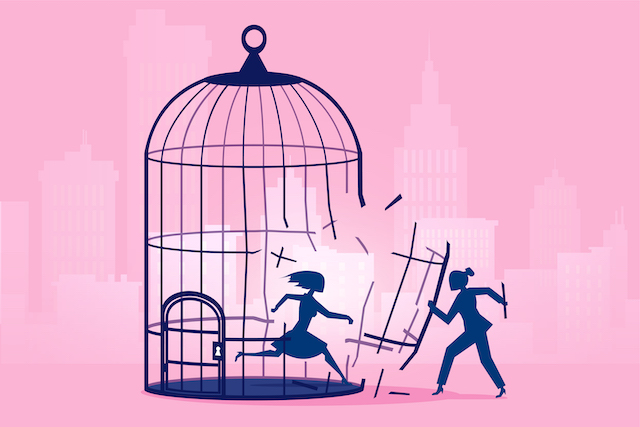
  • The Cages We Live In and What It Means to Be Free

    The Cages We Live In and What It Means to Be Free

    “Cages aren’t made or iron, they’re made of thoughts.” ~Unknown

    I recently read Glennon Doyle’s Untamed, and like many who have read it, I felt as if it had changed my life—but not because it made me think of all the things I was capable of (as was the case with many of friends who read it), but because it made me realize how capable I had already been.

    The book on the whole is beautiful and inspiring, but the part that stuck with me the most was the story about Tabitha, a beautiful cheetah that Glennon and her kids saw at a safari park and a lab named Minnie that had been raised alongside Tabitha, as her best friend, to help tame Tabitha.

    Glennon watched as Minnie sprinted out of her cage and chased a dirt pink bunny that was tied to a jeep.  Shortly after, Tabitha, who had been watching Minnie, ran out of her cage and chased the “dirty pink bunny” just like her best friend had just done.

    Born as a magnificent, wild beast, Tabitha had lost her wild by being caged. She had forgotten her own power, her own strength, her own identity, and had become tamed by watching her best friend. But remnants of Tabitha’s inner wild came back to life when she walked away from the pink bunny toward the perimeter of the fence that was keeping her caged in. The closer she was to the perimeter, the more fierce and regal Tabitha became.

    Glennon insightfully notes in the book that if a wild animal like a “cheetah can be tamed to forget her wild, certainly a woman can too.” And that’s when I wondered, had I also forgotten my own inner wild?  Was I spending my time trapped inside a cage when I could be pacing the perimeter instead?

    I beat myself up over that story for days while desperately trying to think of how I could break free of my metaphorical cage so I could find my way to the seemingly elusive perimeter that others seemed to have easily found and were already pacing.

    I questioned why I hadn’t worked harder, pushed further, and done more to create the life I truly wanted, especially when it became painfully clear that the one I was living didn’t fit that description.  And that’s when it suddenly hit me. Like a ton of bricks falling on me out of nowhere:

    I didn’t need to make my way to the perimeter. I was already there. Truth be told, I had been there for most of my life, and it was so familiar to me that I didn’t even notice it anymore.

    As I sat there in the midst of this comprehension, I looked back on my life and suddenly the steps to the perimeter all seemed to fall in place.

    When I fell in a bucket of boiling water at two years old and put aside my own discomfort to comfort my mother who had broken down at the sight of my burned body, I took a step towards the perimeter.

    When I moved to America at the age of seven and couldn’t understand the language and was instantly labeled as “stupid” but kept going anyway, refusing to let them define who I was, I took another step towards that perimeter.

    When I watched my younger sister die of an incurable illness and kept her light alive inside of me by recognizing the beauty of her life and not just the heartache of her death, I moved closer to the perimeter.

    When I said no to becoming a teacher or a doctor—an unfathomable and disgraceful choice for women of my culture during those times—I took another step toward the perimeter.

    When I refused an arranged marriage, again disgracing my family in the process, the perimeter was directly in my sight.

    By the time I took off for law school (much to my parents’ continuing dismay), the perimeter and I were practically face to face.

    For a while I stayed at the perimeter, quietly stalking my surroundings with the same pride and inner fierceness as the cheetah who inspired these ramblings. But I now realize I was never meant to stay at the perimeter—I was always meant to go beyond it.

    Until I did, I would remain trapped inside my own inner chaos. And the calm I was so desperately seeking would continue to evade me. That inner restlessness that just wouldn’t go away, that indescribable lack of fulfillment and the hollow feeling in the pit of my stomach… those were all signs that I was ready to move beyond the perimeter. I was ready to uncage more than just myself—I was ready to uncage my soul.

    That’s why I was repeatedly drawn back to certain people, programs, and even books. I was ready to free myself of all restrictions and for that matter, all perimeters.

    The process hasn’t been easy. And at times, it has been beyond lonely. But it has also been rewarding, deeply healing, and transformative at the same time. And perhaps most importantly of all, it has allowed me to understand that in one way or another, we are all here to break free of the cages that have encased most of us for the majority of our life.

    Some cages are imposed upon us by the thoughts and ideas of those around us, and other times we put ourselves into them, willingly. So we can avoid discomfort, pain, suffering, change, growth, and our own rebirth.

    Sometimes they can even be helpful, but other times they do nothing but hold us back. The steel cages often tell us who to be, where to live, what we “should” do for a living, how to behave, and even who to like or dislike.

    Often, the cages come in different colors, shapes, and sizes. Some are made of gold and filled with expensive toys and bribes to keep us from going outside of them.  Their allure is simply too hard to resist for some people, even though they are often accompanied by gold shackles.

    Others are sparkly and filled with all that glitters. The shine is so intense that their occupants don’t even know they’re in a cage. They’re so fixated with the glitter that they spend their entire lives confined inside and never even realize they’re no freer than the people they’ve been looking down on as being “trapped.”

    And of course, there are some who live in small, dark, and dingy cages that they desperately want to escape but dare not try to because they’re so convinced that it’s safer, easier, and more comfortable to just stay.

    Those are the people that are so afraid of their own power and the taste of true freedom that they probably wouldn’t leave even if the cage door was opened for them.

    And then there are the brave. Those that are truly courageous and have no desire to be confined by any cage or any limits. Those are the people who will do whatever it takes to break the cage so they can set themselves and all of humanity free.

    Those are the people who are roaming beyond the perimeter and have uncaged far more than their physical body—they have uncaged their very soul, and along with it, the many lifetimes of memories, wisdom, and truth it holds inside.

    Those are the people I want to run with. Those are the people I want to call my tribe. Those are the people that, when I meet them, I’ll know I have found my home.

  • What If There’s Beauty on the Other Side of Your Pain?

    What If There’s Beauty on the Other Side of Your Pain?

    “The important thing is not to stop questioning. Curiosity has its own reason for existing.” ~Albert Einstein

    “I don’t want to live anymore. I don’t want to be here. I can’t do this. It hurts too much. It’s too hard.”

    I’m curious how many times I’ve heard these words over my lifetime. From different people, ages, genders, ethnicities, and walks of life. The words the same, the heaviness no different from one to the next. Hopelessness has a specific tone attached to it. Flat, low, and empty.

    Being the child of a parent who committed suicide, there is a familiar inner fear that washes over me when I hear these words. A hyper alertness and tuning in, knowing it’s time to roll up my sleeves.

    As a psychotherapist, there is a checklist that goes through my head to make sure I ask all of the right questions as I assess the level of pain they are experiencing.

    As a human, a warm wave of compassion takes over as I feel around for what this particular soul needs.

    After asking the typical safety questions and determining this person is not at significant risk of ending their life, I ask, “So what is the end goal here? What do you think happens after you die? Where will you go? How will you feel? What will feel different when you’re dead versus how you feel right now?”

    The answers vary from “It will be dark and nothingness, no feeling, no existence” to “I’ll be in heaven and done with this,” but more often than not they say, “I don’t know.”

    I sometimes question, “Well, if you don’t know how can you guarantee it will be better than this? What if it’s worse? What if you have to relive it all again? What if you are stuck in a dark abyss and can’t get out?”

    More times than not they have not thought this through. They are not thinking about what is next, mostly because what they are really saying is “I don’t want to feel like this anymore.”

    I get that. We all have those moments.

    Then I dig in further:

    “How do you know your miracle is not around the corner? How do you know relief will not come tomorrow if you allow the opportunity for one more day? What would it be like to be curious about what’s next instead of assuming it will all be just as miserable?

    Since you have not always felt like this, is it possible you may one day again feel joy and freedom?

    If you look at your past, you’ll see you have had many fears and low moments. Did they stay the same or did they change? Most of your fears did not come to be, and if they did, you survived them—you made it through. You may have even learned something or strengthened your ability to be brave.

    If you turn around, you can see there is a lifetime of proof that your world is always changing and shifting. You’ll see many moments when it may have felt like things were not going the direction you wanted, but you’ll likely see an equal number of moments that led you to exactly what you needed. Use those as evidence that your surprise joy may be just around the corner.

    During these conversations, my own curiosity resurfaces. I often ponder if my mother held out a little longer what her life would have looked like. I wonder if another medication would have helped her. Or if the words of an inspiring book may have offered her the hope to keep holding on. Or if the feeling of the sun on her face would have kissed her long enough for her to want a little bit more.

    What if she held on to the curiosity of what was to come instead of deciding there were no surprises or joy left? Would she have felt the bittersweet moment of watching me graduate from high school? Would she have been there to cheer me on when I earned my master’s degree hoping to help people just like her? Would she have held my daughter, her first grandchild, and wept tears of joy knowing she made it?

    Who knows what her life would have been like if she held on for one more day? I will never know, but I am curious.

    I have sat with countless children and adults while they are deep in their pain. I ache for them, cry for them, and also feel hope for them. I wonder out loud what will happen next that we cannot see.

    I’ve seen pregnancies come when hope had left, new relationships be birthed when the people involved were sure they would never feel loved again, new jobs appear out of nowhere at just the “right” time. I’ve seen illnesses dissipate once people started paying attention to themselves, and moments of joy build in the hearts of those who were certain there was no light left.

    The truth is, we don’t know what will happen next, but we know we have made it this far. How do we know tomorrow won’t be exactly what we’ve been waiting for?

    I believe our baseline feeling as humans is peace. The loving calm that fills us when we are in the presence of those we adore. The kind of whole that we feel when we’ve done something we feel proud of and we reconnect to the love we are made of. The way we feel when we are giving love to others and the way we feel when that love is returned.

    I also believe that the human experience is filled with struggle and hardship and challenge. I don’t think we are getting out of it. I believe we are equipped with the power to lean into our pain to let it move through us. To use our experiences as our strength and our knowledge for the next wave of frustration.

    I don’t believe we are supposed to suffer, but rather learn to thrive in the face of hardship and use hope as the steering wheel to guide us through… knowing even though the light may not be right in front of us, it’s just around the corner.

    And the more we employ this faith and our practices that support us, the quicker we are able to return to the peace that lies underneath.

    In the moments of hardship, what would it be like to allow for curiosity? To not only acknowledge the feeling in front of us—and feel it—but to also allow for the possibility of what is to come.

    All of our experiences come with the free will to choose how we will respond to them. With openness and wonder or dismissal and resistance. It’s also okay to feel it all at once. The feelings will pass. They always do.

    The next time you feel stuck in a feeling, or what feels like a never-ending experience, consider thinking: I wonder what will come of this. I wonder what I will gain. I wonder what strengths I will develop and how I will support myself. I wonder what beauty lies on the other side of this pain. Don’t push through it but surrender into it.

    Then allow for curiosity. Be open. You never know what surprises the day may bring. Maybe today is the day it all changes. Or maybe tomorrow. You may not know the day, but you can be ready and open for it when it arrives.

  • Calling Out Bullies: Why You Need to Stand Up for Yourself

    Calling Out Bullies: Why You Need to Stand Up for Yourself

    “Standing up for yourself doesn’t make you argumentative. Sharing your feelings doesn’t make you overly sensitive. And saying no doesn’t make you uncaring or selfish. If someone won’t respect your feelings, needs, and boundaries, the problem isn’t you; it’s them.” ~Lori Deschene

    In Harper Lee’s To Kill a Mockingbird, the main character Atticus Finch says, “I wanted you to see what real courage is, instead of getting the idea that courage is a man with a gun in his hand. It’s when you know you’re licked before you begin, but you begin anyway and see it through no matter what.”

    What real courage is. 

    The message Atticus Finch provides is simple yet poignant and so often overlooked in our homes, communities, businesses, and society today.

    A quick search on Merriam-Webster reveals their definition of courage to be “mental or moral strength to venture, persevere, and withstand danger, fear, or difficulty.”

    That definition fully supports the message Atticus Finch has been sharing with readers and viewers since the early 1960s.

    However, what it doesn’t support is our society’s narrow-minded view that courage is about being tough, domineering, combative, uncompassionate, and even violent.

    These stereotypes are continuously portrayed in movies and television shows, tolerated in our workplaces, prevalent in politics, and sadly, instilled in our children.

    What real courage means to me is the ability to go against the grain—to stand up for what may not be popular, for what may even get you ostracized, for the betterment of others and yourself.

    I would say a good representation of real courage are those who make the difficult decision to speak out against the bullies on the playground, who grow up and become bullies in the workplace. Something I sadly know a few things about.

    I’ve spent much of my life battling personal insecurities. While professional help has certainly aided in my continual journey to lessen their presence, as anyone who’s struggled with insecurities very well knows, you’re never completely rid of them. You just find ways to manage through and around them.

    My insecurities—like a loyal though unwelcome companion—rendered me timid, non-confrontational, unworthy, fearful, and quiet. When compounded with the reality that I was never athletic—a stereotypical and seemingly necessary characteristic when measuring manliness in society—I was often branded as an easy target for bullies.

    My grandparents, who were always there to offer a compassionate ear without judgment, offered the following advice when I was being bullied at school: “Just walk away and they’ll leave you alone.”

    While my grandparents undoubtedly meant well, their advice didn’t build my self-esteem as much as extinguish what little I had. While their advice did in fact pause the bullying for a short duration, the cycle would continue not long after.

    As I got older, married, and matured naturally with age, my insecurities subsided in many areas, and my days of being bullied seemed like another place and time in an existence now void of such challenges.

    But it wasn’t long before I started to realize that bullies don’t just exist on the playground.

    Sadly, I’ve experienced workplace bullying throughout my career to varying degrees. Through it all, I continually adopted my grandparents’ advice to “just walk away.”

    With workplace bullies often influential and powerful in organizations, it seemed like sound advice, especially given that the ultimate purpose for Human Resources is to protect the company, not its employees.

    But all that changed recently when I volunteered to take some professional development courses on communication, in order to better interact with my peers, as I’m currently a remote employee.

    While we’re taught reading, writing, and arithmetic during our undergraduate education, we’re rarely taught the skills to be an effective communicator.

    Oftentimes what we learn comes from witnessing an exchange of dialogue between those around us—in our homes, our schools, our communities, on television and in the movies, and yes, at our places of employment.

    However, not all the traits we absorb for being an effective communicator are rational or authentic.

    The online platform I’m utilizing suggests other courses to take after completion—one of which was “Bullying in the Workplace.” At first, I was going to bypass the suggestion altogether, but thought maybe there was something I needed to read.

    As it turns out, purposely isolating someone, making it known that you refuse to work with them even though the relationship is warranted, is in fact a bullying technique often referred to as “social bullying through intimidation.”

    Society believes that bullying fits into a neat little compartment. That it has to be aggressive and physically or verbally abusive in nature in order to be branded as such.

    But the reality is that bullying takes on many forms in schools, in businesses, and even in our homes. It’s so much more than just the violent behaviors we see popularized in news headlines and on TV shows, and therefore is often dismissed as nothing more than “personality conflicts.”

    While many consider being bullied as a test of one’s courage, I personally believe the measure of one’s real courage comes after you’ve accused the attacker.

    Sadly, many organizations fail to see bullying as a legitimate complaint, and often show little compassion toward those who bring bullying to their attention. My situation was no different.

    When I finally got up enough courage to make an official accusation that this refusal to work with me was, in fact, bullying, my superiors implied I was being paranoid and overly sensitive, fabricating observations in my head, as though my feelings weren’t warranted at all.

    With the exception of my direct manager, everyone implied I was wasting the companies’ time on a complaint that I suspect they already rendered baseless before a single in-person interview was conducted.

    They never asked me how I was feeling throughout the process. They never told me how courageous it was to bring such a difficult matter to the forefront of the company’s attention in the hopes of making things better for everyone.

    I never felt the company applied empathy to my circumstance, dismissing the consensus from cited research which was meant to provide credibility to my accusation, by claiming they simply couldn’t find any evidence supporting what I was talking about.

    I wish I could say that my workplace bullying complaint was taken seriously, but it wasn’t. It was quickly swept back under the rug after it was brought to management’s attention, leaving me to question if anything positive actually came from the experience.

    Admittedly, my bullying experiences have never reached the incredible magnitude others have been forced to endure, and truthfully, they are more of a shining example of courage than I can ever proclaim myself to be. But I do understand how it feels and that connectedness helps us realize we’re not alone in our plight.

    It’s important to remember that courage doesn’t mean you emerge victorious. It doesn’t mean that the so-called winner in our competitive hierarchy has really won much of anything.

    Courage is standing up for yourself when the risks are many and the possible rewards are few.

    I now know firsthand why so many cases of bullying in the workplace go unreported—why so many wonderful people choose to remain silent and instead leave organizations they truly love rather than stand up for themselves.

    It’s because the organizations they work for have shamefully failed them during times when it mattered most.

    What’s important is that you never give up on yourself, that even when you know you’re licked before you begin, you begin anyway and keep trying to do the right thing, while holding on and moving forward.

    But I want to be clear that unburdening yourself from the suffering of bullying is what real courage is. To risk alienation and retaliation to not only benefit your own life, but the lives of others this person may bully in the future. That’s truly selfless and shows incredible bravery, which often goes unnoticed.

    Those who are bullied and choose to come forward are often blamed and demoralized rather than acknowledged and applauded. What does that say about society when we dismiss these courageous individuals while supporting and promoting the bullies of the world?

    I wish I had the answer, but I don’t. All I can say with certainty is that anyone who comes forward with a claim of bullying is a crowning example of what real courage is. They deserve our trust, compassion, praise, and support, not our judgment.

    Fred Rogers once said, “It’s not the honors and the prizes and the fancy outsides of life which ultimately nourish our souls. It’s the knowing that we can be trusted, that we never have to fear the truth, that the bedrock of our very being is good stuff.”

    I stand behind my truth, regardless of the fact that the organization has denied it. And the truth, whether believed or not, is now out there subliminally haunting the accuser and hopefully forcing necessary changes to benefit everyone in the organization.

    Be proud of your truth and firmly stand beside it. Take solace in the fact that even if others do their best to try to discredit what you’re saying and how you’re feeling, at the end of the day the truth is still the truth.

  • How I Know I’m Strong (and You Are Too)

    How I Know I’m Strong (and You Are Too)

    “If there’s ever a tomorrow when we’re not together, there’s something you should remember: You’re braver than you believe, and stronger than you seem, and smarter than you think. But the most important thing is, even if we’re apart, I’ll always be with you.” ~A.A. Milne

    Two years ago, I was anticipating a monumental shift. I couldn’t tell you what had changed around that time, but my mindset was moving away from the brasher side of my natural, projected extroversion and seeking solace in the comforts of solitude.

    It felt like the waves drawing back before a tsunami, and over the following two years, I certainly felt I was drowning more than once.

    My dad was diagnosed with cancer; I went through breakups, work challenges, struggles with family and friendships; I was diagnosed with depression and had my first real experience of debilitating stress and panic attacks; then, last month, my dad (now, thankfully, cancer-free) had a heart attack, weeks after a very brave friend lost her own father to one.

    I felt I had made peace with my version of bravery, understanding that sometimes the mere act of survival is itself a brave middle finger up to life’s relentlessness.

    But alongside “brave,” another adjective I’ve struggled with over the past two years has been “strong.” I certainly feel like my strength has been tested.

    When you are often described as “strong,” it can become a millstone around your neck. How do you live up to your duty of being strong for others when you’re struggling to be strong yourself?

    In my darker moments, I perceive myself as very weak. When I sat down to journal about my dad’s heart attack, I was surprised that I wrote down how I felt too weak to withstand what could have happened to my dad, how I felt too weak to support my family at this time, how I felt too weak for life in general.

    There have been many similar moments over the past two years where I have felt anything but strong. And yet, many beloved friends and mentors have described me as such. Sometimes I want to tell them I’m a fraud, projecting cheery strength, when some days, inside I’m just mustering up all I can to get by.

    And then, as I was journaling, it hit me. This is strength. If we are still here, we are strong. We are Darwin’s fittest. If we are living through personal struggle, if we are coping with this anxiety-inducing pandemic, if we are still capable of doling out however small a portion of love to ourselves, our family, our friends, our neighbors, our community, our strangers, then surely we must be strong?

    Strength is not always an action. Strength is daily bravery; strength is allowing yourself to feel; strength is choosing to love.

    Strength is my mum carrying on and stroking my hair as I slept in her bed; strength is my dad allowing me the space to cry when he has his own pain. To be strong is to be “able to withstand force, pressure, or wear.” What are we doing as a species right now if not choosing to withstand?

    So in the midst of my much-needed mope, I realized I had two choices: to buckle under the force of my fears of this pandemic and what it could do to the more vulnerable members of my family, the pressure of all that has occurred over the past two years, the wear of my reserves, or, inevitably, to choose to withstand.

    And, as the word implies, that requires standing with others. Letting my loved ones see my tears, sharing my sadness with them, giving them the space and the safety to share their own, allowing moments for hope and positivity to emerge from our shared anxiety. Choosing, in other words, to stand as the lighthouse in the storm.

    The world is going to present you with a lot of fear and reason for panic at the moment. Withstand the depressing onslaught of the media; withstand the urge to clear the shelves of penne; withstand the mental self-isolation that these times could bring.

    Stand with your community (even if you’re two meters apart): if you are well, reach out to people who may need your assistance; if you’re not, share messages letting people know they’re not alone. There’s strength in numbers.

    Notwithstanding, there will always be moments when we feel our strength and our capacity to withstand is just not enough. In those moments, I turn to the immortal words of A.A. Milne. If even Winnie the Pooh needed reminding of this sometimes, then it’s more than okay that we do too:

    “If there’s ever a tomorrow when we’re not together, there’s something you should remember: You’re braver than you believe, and stronger than you seem, and smarter than you think. But the most important thing is, even if we’re apart, I’ll always be with you.”

  • How to Reap the Benefits of Post-Traumatic Growth

    How to Reap the Benefits of Post-Traumatic Growth

    “The world breaks everyone and afterward many are strong in the broken places.” ~Hemingway

    We all know of post-traumatic stress (PTS) but how many of us know of post-traumatic growth (PTG), a very hopeful and attainable way of life beyond the loss, adversity, and trauma we’ve experienced? It’s a term that was coined in the 1990s and is becoming more popular now as positive psychology and the specific area of resiliency-building have gained momentum in our society.

    What is post-traumatic growth? It’s positive change and growth that comes about as a result of an adversity or loss. It is channeling our pain into something positive.

    It’s more than simply returning to the life we had before the negative event; it involves psychological shifts and changes in ourselves, our beliefs and attitudes, our actions, the meaning and purpose in our lives, our relationships, to an even greater level of functioning.

    This is not to say we don’t suffer and feel tremendous pain. In fact, we first need to allow ourselves to go through the painful and awful feelings that we’d prefer to squelch down. It’s similar to the grieving process where we have to go through it to come through it.

    It is only later on, as the intensity of our negative feelings lessens and softens, that some small bits of sunlight begin to push through the looming clouds and we begin, very slowly, to move forward and integrate the challenge into our lives. We rebuild a new normal.

    Without having a formal concept or name to put to it years ago, I went through my version of post-traumatic growth as an outcome of my daughter, Nava’s miracle: her survival and complete recovery from a near-fatal medical crisis.

    She was on a respirator in a drug-induced coma for four months and then in a rehab hospital for nine months, relearning and eventually, miraculously, regaining every motor and body function.

    Upon her return home from a year-long hospitalization and rehabilitation, I went back to work and resumed my life back home (as I had been living up at the rehab). Needless to say, I was thrilled to have witnessed this miracle—her survival and recovery—and I, as her mother, felt I had been given a second lease on life as well.

    As time went on, however, I felt uncomfortable inside—empty, bored, and filled with angst, feeling like this just wasn’t enough. And then I’d feel guilty over feeling this way; after all, I had our miracle, what more could I possibly want???

    Going back to life as before felt so small to me. I had just witnessed life at its most fragile, sitting by her bedside listening to every beep and bleep of machines that breathed for Nava and kept her alive, with tubes coming out of every opening in her body, on a bed that rotated in all directions.

    One minute she had been eating a blueberry muffin waiting for a procedure and the next she was on a ventilator fighting for her life. If this didn’t make me realize how our lives hang by the thinnest of threads, then nothing would. And I began to feel my inner stirrings and angst more and more. This was slowly becoming clear to me:

    I had just witnessed something miraculous. I had to do something to honor it. As people do things to honor a life that doesn’t survive, I felt a burning need to do something to honor the awesomeness of a life that did, against all odds. 

    It was clearly not enough to just resume, to pick up the pieces where I had left off. That would be like whitewashing away this most traumatic year in my life, not giving the miracle of life the respect and glory it warranted. Not to mention the miraculous complete recovery as she slowly began breathing and eating on her own after more than half a year with tubes and then a tracheostomy.

    And so began the struggle of what to do. I also felt a strong sense of urgency to do and not waste time on this earth where we’re given an unknown and unpredictable amount of time.

    In hindsight this was my angst to grow and push through. It was all percolating inside, and my frustration then became what to do…

    I attempted many different things that I deemed meaningful: from clowning with Patch Adams to foster-raising a puppy for the disabled, to writing a book (which didn’t go anywhere at that point) and other smaller endeavors. I was in search of something big, though, the way some people start organizations and foundations out of their tragedy. But that didn’t happen.

    But what did happen beyond these random experiences of adventurous do-gooding, as I see so clearly now, is that it was all happening on the inside. So, while I was in frantic and frustrated search for that external something, I was living {and continue to do so} more richly engaged than ever. 

    As I stated above, a sense of urgency to doing what I set my mind to now, rather than putting it off, became my M.O.  When I saw a class in the city I was interested in, instead of waiting until the summer when I was off from my school job, I schlepped into the city once-a-week for the class during the school year. A friend of mine would say, “Whatever you say to Harriet, she’ll run with it, so be careful!”

    Now in all fairness I was always a doer and proactive. But this part of me took on a whole new level as I became much more intentional. My interests in various things soared, and I began to feel like there’s just so much out there to learn and do; the world became my oyster.

    Everything I was exploring had meaning to me, and what didn’t, I eventually threw by the wayside.

    After a few more years at my school job, I left, deciding to do what I truly wanted to do in my professional life: work with people going through grief and loss (in all areas) in a clinical setting—my practice—and support them on their journey in coping and eventual growth.

    As someone who was always interested and in awe of people who lived on well despite their hardships,  I developed and curated my own project of finding and interviewing people to learn and put out there for others to see, the qualities and coping tools that led them to grow and thrive beyond their challenges. This eventually became my book.

    And so post-traumatic growth was firing inside me. How can it work for you?

    Drs. Tedeschi and Calhoun, of the University of North Carolina, who coined this term of PTG have identified five main areas where we can experience post-traumatic growth as an outcome of our adversities:

    Relating to Others

    Increased closeness to others, increased compassion and empathy to those going through difficulties, greater authenticity, and connection.

    Connect with people on a deeper and more real level. Recognize where and with whom you feel more understood, connected, and supported. How are you responding to others in pain? Do you feel more sensitive to those suffering? Has your helping hand been extending more to those in need? Have your relationships taken on greater meaning in your life? Are you making more time for them?

    Appreciation of Life

    Awareness and gratitude for what we have, focus on beauty and goodness, living with more presence and intention; the absence of taking things for granted.

    Begin to take pleasure in the ordinary things of life, for it’s the everyday beauty and pleasures that call, nourish, and fill us.

    What are you noticing now that you rarely noticed before? What are you slowing down to really see? Are you being more mindful and reveling in the now? Awe is a positive emotion that fills us with wonder and boosts our well-being.

    What beauty calls out to you? Is it the mountains that give us a perspective of smallness and humility in their grandness; or the expansiveness of the star-filled sky; or the ocean with its ups and downs of the waves in their calmness and subsequent crashing; or the rise and set of the sun that we can always count on for appearing and then disappearing?

    New Possibilities

    Re-evaluating what’s important and what truly matters/priorities; stepping outside one’s comfort zone and taking risks; openness to new ways of living, to new experience,s and learning/taking on new endeavors.

    Take stock of your life and think about your top values and priorities. What now seems unimportant since your tragedy, trauma, or crisis?

    After processing your grief and emotional pain, what new opportunities are you interested in exploring? How are you looking to expand yourself?  What have you realized means more than anything? How can you better honor those things in your personal and/or professional life? How can you spend your time and energy in ways that reflect your values and what truly matters to you?

    Personal Strength

    Greater confidence and self-esteem, recognizing and appreciating one’s abilities and competence, self-pride, greater resilience, and coping abilities.

    Reflect upon your strengths and allow yourself to feel good that you got through your difficulty in ways you thought you never could.

    How did you cope with pain and hardship in healthy ways? What strengths did you use to help get you through the trauma/adversity? Recognizing those strengths, how can you continue to bring them forth in ways to enrich your life? There’s a very interesting free survey you can take here, that lists and puts your character strengths in order. What are your top five; how do they coincide with the way you see yourself?

    Spiritual Change

    Transcendence to things beyond ourselves, renewed purpose and meaning, questioning and searching as we reconfigure our newly designed tapestry. 

    Consider the existential questions of life on a more personal level. Instead of “what’s the meaning of life,” ask yourself, “What’s my purpose and meaning here, and how do I re-create that for myself? How do I connect to my meaning on a day-to-day basis?”

    How are you redefining success and living well? How do you want to spend your days on earth? What mark/impact do you want to leave/have? How has your perspective broadened beyond yourself? Are you more connected to a purpose?

    Once the bad circumstance(s) happen, growth can occur in the aftermath as we seek to create good, find new ways of living that can be enriching and meaningful, and develop and grow in any of the above areas.

    Creating new goals and finding positive ways to adjust to a new reality is the hope and potential for post-traumatic growth.

    Knowing this possibility for change and growth exists and that we’re not doomed to live out the misery of our challenges and losses can give us something to strive for. To some it comes more naturally, to others it’s something to work toward. Either way it points to a better way to live through and beyond our inevitable life challenges.

  • Inside a Panic Attack: What It’s Like When Anxiety Strikes

    Inside a Panic Attack: What It’s Like When Anxiety Strikes

    “Those who suffer from mental illness are stronger than you think. We must fight to go to work, care for our families, be there for our friends, and act ‘normal’ while battling unimaginable pain.” ~Unknown

    It’s strange having a panic attack while surrounded by people. I’m experiencing something so private and so personal, but unless I externalize it, they are completely unaware. It’s almost an art to be able to hide it—to train myself well enough to function in front of others to the point that, if I do reveal to them the nature of my anxiety, they reply, “I had no idea.”

    If you’ve never experienced a panic attack, they are almost impossible to explain. But I’m going to try.

    Panic attacks are often pre-verbal, animalistic, and very, very private. No two people experience a panic attack in the same way.

    It’s not always rocking back and forth in the fetal position (though I’ve been there). Some people zone out and become almost catatonic. Some can’t breathe. Some have chest pains. Some become aggressive. What happens to all of us, though, when we have a panic attack is the feeling or thought that either something catastrophic is about to happen or we are going to die. And as far-fetched as it sounds, I can assure you that it is very, very real.

    It often starts with feeling dizzy or woozy. The room doesn’t spin, but I feel off. Like the earth is tilting. My blood runs cold and I get a chill up my spine. I feel like I’m going to pass out. The thoughts that run through my head are almost incomprehensible—a steady stream of screeching and wailing. My brain flips its switch and I go from being able to think and function logically to oh god I’m going to die I’m about to die I have to get out of here I’m going to die this is it oh god oh no no no no.

    I have to sit down, or I have to walk, depending on how close I am to fainting. Typically, my fight/flight/freeze response is flight, so I usually want to get the f*ck out of there—wherever “there” is. I want to be alone, but I’m terrified of being alone.

    No one can see me like this.
    What if I pass out? What if I die? Will anyone find me?
    But what if it’s just a panic attack? Then you’ll feel stupid.
    Should I get help? Should I call 911?

    I walk out if I can, and if not, I fake needing to go to the bathroom and text my husband.

    I’m about to pass out. I don’t know what to do. I’m freaking out. Can you come home?

    I’m crying by this point and I’m having a hard time taking a deep breath. I hug myself and rock if I’m sitting down or I shift my weight from leg to leg if I’m standing up. My throat is closing. Everything is too loud and too bright. I’m pinging between sheer panic and despair.

    When I’m on the panic side of the spectrum, I go off instinct. My instinct is to escape. When I’m on the despair side of the spectrum, I’m able to form thoughts. Real sh*tty thoughts.

    What is happening? Is this a panic attack or am I dying? Am I going to faint? Do I have a heart problem? What if it’s something really bad that’s undiagnosed? I haven’t eaten anything in a few hours, maybe it’s diabetes. HOW CAN EVERYONE ACT SO NORMAL CAN’T THEY SEE I’M DYING???

    I flip-flop between panic and despair for the duration of the attack. It never lasts longer than ten minutes, but the effects of it last the rest of the day. I’m exhausted, but I’m on guard in case it comes back. I’m wary. Is this just a random panic attack or am I about to go through another season of hell?

    I know it can be hard to imagine a panic attack if you’ve never had one. It gets portrayed in a humorous way on TV, usually involving breathing into a paper bag, and it can seem a little dramatic. I’ve had someone tell me that they used to think people who had panic attacks were weak (why couldn’t they just pull themselves together and snap out of it?) until they had one themselves.

    If you’ve never had a panic attack, first I want to thank you for reading this far. Either you love someone who has had panic attacks, or you’re genuinely curious, and both make you an awesome person. Let me paint a picture for you.

    Imagine you’re driving your car in the mountains of Tennessee. It’s a sunny day and you’re listening to your favorite band as you steer your car around the bends. You’re enjoying the ride and thinking about your family or friends or whoever you’re going to see.

    Then, out of nowhere, your power steering goes out and you plow straight through the railing. You grab the e-brake just in time, but the front end of your car is hanging off the mountain and the back tires are hanging by the railing you ran over. One wrong move and your car will slide off of the edge toward a 200-foot drop, and you will die.

    Do you try to climb out of the back? Do you sit still and wait for rescue? Do you accept your fate? What do you do? The car seems to be sliding forward slowly. Or is it? It’s hard to tell. You can’t think. You have to get out of here, but you can’t move. You’re helpless.

    This is a panic attack. It comes out of nowhere usually, which makes it so cruel. We aren’t expecting it. We are living life. Then, in a matter of a second, we truly feel that we are on the brink of death. I can’t stress enough just how utterly real this feels to us.

    Our bodies believe we are about to die. Our brains send a flood of adrenaline into our bloodstream. Our heart beats fast, sending more blood to our muscles. Our breathing becomes shallower, allowing us to take in more oxygen. Our blood sugar spikes and our senses sharpen. Our body is trying to help us confront danger or get out of harm’s way, but it doesn’t realize that there is no real danger.

    That’s why panic attacks are so exhausting. We are having a near death experience. We aren’t facing the reality of death, but we are facing our perception of it.

    Eventually, it passes. It always does. We are left feeling drained or numb or depressed or ashamed. I tend to get angry.

    This is BULLSH*T. I HATE this. Why does this keep happening? I was a therapist, for Christ’s sake. I should not have panic attacks. F*CK THIS. 

    We recover, though, and that’s exactly why people who have panic attacks are warriors. We fight battles every day. We know the nature of The Beast. We don’t always know when he’ll strike, but we know that we will survive whatever he throws at us. We’ve faced death in our own way, and it hasn’t beaten us yet. We survived the last panic attack, and we’ll survive the next one. We have no choice.

  • 3 Thoughts That Bring Me Hope, Perspective, Peace, and Strength

    3 Thoughts That Bring Me Hope, Perspective, Peace, and Strength

    “Wake up today knowing that whatever happens, you can handle it.” ~Unknown

    Tears filled my eyes, and an angry wave of despair washed over me. I just wanted to wear the jeans I had worn for a couple years. The cute ones with the jewels and deep pockets.

    I’m guessing many of you can relate; clothes don’t always fit the way we want them to.

    Four years ago, a doctor told me I was dying because of anorexia. It’s been a long journey, a story for another day, but I am here and I am alive.

    This past year, I finally reached the weight that doctors had been urging me to reach for four years. I dug in, worked with a life coach, and I did it! I finally healed. But wait, shouldn’t the healing process feel great? Shouldn’t I feel proud instead of pudgy?

    I should be proud, and I am; yet I still find myself battling with the voice that whispers, “You’re not good enough. You’ll never be enough.” And perhaps that’s what frustrates me the most about my negative attitude some days. Everyone would be proud if they knew why I put on twenty pounds this year, but I am neither eager nor vaguely willing to disclose everything.

    It would be convenient if everything were permanently sunshine and roses after we reach a goal, but this is just not the case oftentimes. We reach a goal, and then more challenges arise. That’s okay. That’s life.

    In my moments of shame, when I want to crawl under my bed and hide from the world, there are three thoughts that pull me out and help me find hope and perspective. The more I live, the more I am convinced that living fully is a just a matter of perspective. It’s not about taking certain actions or reaching specific results; it’s about experiencing life through an open and positive perspective.

    You are a fighter. Whatever you’re going through, may these three thoughts bring you peace and help you find strength.

    1. This is temporary.

    My mom always told me, “You will not always feel this way.” And she was right. Happiness, sadness, anger—it all passes.

    In my own battle with body image and feeling discouraged by my bigger jeans or curvier figure, this thought gives me so much hope. As real as discouraging feelings feel, they are only part of the picture.

    At other moments, I could care less about what my jeans look like, much less the number on the tag (which no one sees by the way). I’m too caught up in enjoying the sunshine outside, hiking on the weekends with friends, focusing on my job, and planning lessons for my students.

    There are moments when I feel comfortable in my skin, when I feel at peace. These moments give me hope that any temporary feeling, no matter how strong and painful, will pass. That feeling will pass. Afterall, after a good workout, or a refreshing night’s sleep, or a good shower, don’t you feel like a new creature?

    Everything is temporary. Every hard week at work, every hellish project, or stressful trip to the in-laws, it will pass. You are resilient, and you can ride this wave knowing it will wash on shore to the sandy beach eventually.

    2. Expect good things.

    This thought has changed my mornings. I wake up and tell myself to expect good things for the day. Maybe this seems like a no-brainer, but it’s a far stretch from how I formerly approached life—expecting the worst and battling with anxiety and fear about going to work or accomplishing everything.

    Repeating “Expect good things” to myself has helped me notice the good things in my life.

    I think awareness is powerful. If we remind ourselves to “expect good things,” we’re more apt to consciously look for them (for example, the sunshine, the flowers blooming, that stranger who held the door open).

    Beyond noticing good things, we’re more likely to create them when we expect them to happen. The expectation makes us braver, more compassionate, and more love-filled.

    If you don’t believe me, try it. I’ve found that it takes a certain pressure off my day when I trust that good things will happen. I feel more space for love, for creativity.

    As a teacher, I tell myself to “expect good things” in the classroom. It helps me create more authentic dialogue, to trust that my students will be engaged and have valuable ideas to offer.

    Finally, expect a healthy relationship between your mind and body. Maybe you’re asking, how? Sure, you can wish you were a different weight. A different jean size. Naturally hourglass-shaped. Whatever your ideal shape is.

    But what if you expected to have a good relationship with your body and an enjoyable life right now, not after you’ve reached a certain size or diet? You get to pick the kind of attitude you cultivate with yourself, much like you cultivate a certain relationship with the people you love.

    I can fight myself for gaining weight to be at my body’s natural set point, or I can “expect good things” at this (or any healthy) weight. More love. More adventures. More mental energy to do the things that I truly care about: learning, teaching, laughing, spending time with those I love.

    We get to choose. Expect good things.

    3. Find something to be excited about every day.

    Sometimes, when I’ve been told to focus on gratitude, I feel guilty. Wow, I have an amazing partner, family, job… yet, I feel so ungrateful or unappreciative. When I focus on the things that excite me, however, I feel less guilty and just plain happier.

    When I focus on what brings me joy, I’m able to focus less on my body and more on what I value. Again, learning, teaching, experiencing the community I’m in, spending time with the people I love. Memories that will last longer than jeans.

    Maybe you’re excited about an upcoming vacation. Maybe you know you can go home and walk your dog. Maybe your children bring you joy. Maybe it’s a beautiful day and you can see the flowers blooming. There’s something that excites you in life. Focus on these things and you’ll likely feel less weighed down by your struggles.

    I know that’s been true for me. Though I sometimes fixate on my size, what I really want isn’t to fit into those jeans. I want to feel strong and confident, and to have a perspective that embraces life and shares joy with others.

    I don’t know what your story is, but I promise you’re not alone. You can face whatever you’re going through. It doesn’t have to be pretty or perfect. You don’t have to feel like a superhero. In my experience, the healing process is messy. It doesn’t have an uplifting soundtrack like in the movies. But you can do it. I promise. Anchor yourself in hope. You will not always feel this way. Expect good things. And think about what excites you.

  • How to Honor Your Sensitivity (Because It’s Actually a Strength)

    How to Honor Your Sensitivity (Because It’s Actually a Strength)

    “The opposite of sensitive is not ‘tough.’ It’s insensitive. Sensitivity is a gift. Let’s nurture it, not squash it.” ~Glennon Doyle

    I would run no matter how much snow and ice there was, no matter how tired I was or how much my joints hurt. Even if I was hungover. It didn’t matter. Sometimes I would be in incredible pain, but I wouldn’t stop.

    I worked as a tree planter in the summers and got paid per tree. I would push as hard as possible, sometimes planting as many as 3,000 trees in one day. And, not surprisingly, I had my first back spasm at age twenty-one.

    That’s how I lived my whole life in my early twenties. Pushing. I barely had enough time to get everything done with college, volunteering, and a part time job. I would consistently end up exhausted.

    On top of this, bright lights and loud noises easily overwhelm me, but I pushed through that too. I didn’t really want to go to my friends’ loud parties, so would drink to the point that the loud noise didn’t bother me anymore.

    Years later I learned I was a highly sensitive person (HSP) and it all made sense. HSPs are sensitive to loud noises, bright lights, and other people’s emotions.

    And because HSPs only make up 15-20% of the population, it sometimes seems like the basic needs of quiet, space away from family members with big emotions, and soft lighting are self-indulgent or greedy. So HSPs often push through their sensitive nature.

    In my twenties, despite my sensitivities, I pushed through. I didn’t feel like my life was worth much unless I was highly productive, getting good grades, and pleasing my friends, family, professors, and pretty much anyone I met. I was determined to be perfect, and it was killing me.

    It finally came to a head during my first job after college. I was working hard to please my supervisors, co-workers, and the youth that were our clients. It was my dream job, but I ignored my own needs as a highly sensitive person to the point that I couldn’t do it anymore. I was exhausted and didn’t want to get out of bed in the mornings. I quit but I didn’t know what to do.

    Are You Highly Sensitive?

    Does any of this sound familiar? If you sometimes push through your own needs it could be a sign that you’re highly sensitive. Other signs you’re an HSP include:

    • You feel the tragedies reported on the news very deeply
    • You sometimes get overwhelmed by beauty—a breathtaking view or the kindness of a friend
    • You’re sensitive to bright lights and loud noises
    • You’re highly empathetic
    • If someone’s in a bad mood, you feel the energy in the room
    • Sometimes when a coffee date gets cancelled, you’re ecstatic that you get to stay hiding under the covers
    • You love creativity whether it’s music, dance, photography, writing, visual art or interior design

    And when an HSP tries to fit in, it takes a lot of energy. Ignoring your sensitivity will leave you drained. You’ll end up exhausted without much to give.

    What Happens When an HSP Ignores Their Sensitivity?

    HSPs often end up ignoring their sensitivities because they’re pressured to do so. Whether it’s a cubicle where you can hear 100 other people talking or your group of friends that want to meet in a noisy restaurant as an HSP, you’re constantly being asked to ignore your sensitivity.

    And so many HSPs end complying and pushing through. You don’t want to disappoint your friends or inconvenience your boss, so you say yes even though your nervous system is over stimulated. Or other times you want to save money, so you’ll share a hotel room with your noisy and emotional cousin even though it would be better to have your own room.

    The problem is, when your nervous system is constantly over stimulated, you end up exhausted. Your exhaustion might start out small, but if you continue to push, you may end up with a complete breakdown like mine. And because I’ve been through it, I really don’t want this to happen to you!

    The good news is that it’s possible to protect your sensitive nervous system. It takes time and practice, but step by step, you can start to take better care of yourself and not worry about other people’s expectations.

    How HSPs Can Heal After Years of Pushing

    1. Rest when you’re tired.

    The first and sometimes most difficult step is to get some rest. If you’re determined to fit in, you’re probably exhausted. You’ve been going and going and going and never stop to take a breath. You could:

    • Take a five-minute walk outside
    • Look out the window and breathe
    • Nap
    • Make time for meditation
    • Take a day completely off to recharge
    • Spend time in nature

    So start small and see if you can schedule even five minutes today to be quiet and rest.

    2. Learn about your sensitivity.

    The fact that you’re reading this article means you’re already on track to completing this step!! The more you learn about your sensitivity, the easier it will be to take time to rest, to say no to that overwhelming party invitation or to walk around downtown wearing giant headphones playing white noise to block out the sound.

    And it doesn’t matter whether it’s through reading or podcasts or watching videos. Whatever format you like best will get you on track. Some of my favourites include the Highly Sensitive Refuge website and the Introvert, Dear podcast which is hosted by an HSP.

    3. Honor your needs.

    I know this is difficult to do especially when there are other people involved, but as you begin to honor your needs, you’ll begin to get your energy back. You’ll feel calmer, more relaxed, and more excited about life.

    And so, even though it will involve some difficult conversations with your friends, your partner, you family and co-workers, I promise you it’ll be 100% worth it.

    When I was in a new relationship where my partner was definitely not an HSP we would have a lot of conversations that went something like this,

    Sweetie, you have to remember you’re dating someone sensitive.

    If my blood sugar crashes, I won’t be able to recover.

    OR

    I’m getting really overstimulated by that music.

    OR

    It would really help me if you just sat quietly with me for a minute.

    You can send your loved ones articles to teach them about highly sensitive people and what’s really happening for you. And sometimes, you just have to explain it to them step by step.

    Some common HSP needs include:

    • A slow pace of life
    • Beautiful spaces
    • Time in nature
    • Deep and meaningful relationships
    • Time to cry and feel your emotions
    • A good night’s sleep
    • Physical space after a conflict or challenging discussion
    • Nourishing food

    And yes, I get it; it’s hard to ask for. It’s taken me a decade but I’m learning to take better care of myself and now am able to share my supportive nature more fully with others. And you can too.

    The less you worry about fitting in and the more you can take care of your HSP needs, the more you’ll be able to bring your sensitive strengths forward to make the impact you were meant to make.

    Your Sensitivity is Your Strength

    As a highly sensitive person, you have the real gifts of empathy, creativity, attention to detail, and bringing quality into everything you create. Because of this HSPs like you make the world’s best writers, therapists, coaches, interior designers, actors, caretakers, and artists.

    According to an article by Jim Hallows, famous HSPs include Nicole Kidman, Edgar Allen Poe, Leonardo Di Vinci, Bob Dylan, Princess Diana, and Mother Teresa.

    You’re meant to protect and bring forward your sensitive strengths.

    By taking care of yourself you’re not being a diva. You’re not being selfish. You’re not being greedy and you’re not crazy. You’re being gentle with yourself so you can share your beautiful, powerful sensitive strengths with the world.

  • Moving Through Grief: I’m Strong Because I Feel It All

    Moving Through Grief: I’m Strong Because I Feel It All

    “Grief is the last act of love we have to give to those we loved. Where there is deep grief, there was great love.” ~Unknown

    It’s been almost six months now. Half of a year without my brother and the grief still visits. I’m pretty sure grief doesn’t actually go away; its visits just get further and further apart.

    People continue to ask me how I am so “strong” through all of this, mistaking my happy moments as the full picture.

    I continue to tell them strength comes because I feel it all.

    The story in itself is my therapy, my chance to relive the amazing memories, my chance to show you the waves of grief I ride.

    The last thing I told my conscious brother was “But I believe in miracles, I really do.”

    To be fair, the last thing I really told him was a travel story about me using a Squatty Potty in Thailand, in hopes that humor would bring him back to responsiveness.

    The thing is, I really did believe a miracle was possible, or at least I wanted to believe. Surely it wasn’t his time to go. The all-divine higher power wouldn’t take away my big brother, my role model, my mom’s baby boy. It simply wasn’t time.

    The tumor on his spine seemed to disagree with me, though.

    My brother is gone now, and there is a human-sized hole in the universe that I am living in, and yet I survive; in fact, I am thriving in this life that I have now.

    But let’s back up a little, because I can’t just tell you about how I move through this season of grief without totally and completely honoring the human my brother was. He called me his little buddy, and though my oldest brother was the babysitter, Kirk always whispered into my ear that he was the real one in charge.

    He liked Dungeon and Dragons, donuts, finishing a great book, and writing and doodling in a brown journal probably made of suede or something cool like that. He loved to flip me upside-down or hold me down and tickle me until I was completely sure I would pee my pants. He would say things that didn’t make any sense to me until later when I would sit and contemplate in stillness.

    Something about Kirk’s soul was so playful but inspired me to be still and live in the presence that I have. He did things like build houses out of mud for sustainability and turn medians into produce farms. He took killer photos and made clay statues that I used to think would move in the night and haunt me.

    Kirk told me to “try everything once, unless that one thing will kill you, then skip that one.” Which is why you can catch me building a business that makes zero sense to who I am, traveling to foreign countries when I should probably be building a 401K or something else adults do. But when there’s a human-size hole in your universe, you do things for joy. Maybe it’s to honor them; maybe it’s because you live life to the fullest possible amount there can ever be. Either way, I’ll keep moving only for things that light my soul on fire.

    And then there was the cancer.

    You know how if you endure something just the right amount, it kind of becomes your normal? Repetitive chaos in your life has a way of doing that. And after watching my grandma battle cancer and win, my mom battle cancer and win, and Kirk beating it over and over again, it felt like the norm. Like it was just a thing that plagued my family, but we always moved out of it.

    Everyone handles something like this differently; personally, I’m that “ray of sunshine, glass half full and hey, I’ll help you with your glass too” kind of girl. Sunshine and cancer don’t blend well together. I got really good at smiling, cheering people up, and ignoring the invader in our lives.

    When I opened my phone and received the text that read, “He took a turn for the worse,” my soul didn’t believe it. I hopped on a plane, believing my sunshine would be enough to stop this spiral.

    My sunshine was not enough to bring him back to life.

    My sunshine was dimmed to its darkest.

    My glass was tipped over.

    Grief overwhelmed my soul. Gut wrenching, unexplainable, dynamic grief.

    It has been almost six months now since this hole was created in my universe, and every day someone asks me how I am so “strong” or “positive.” I will tell you exactly how.

    When I’m mad, I get mad. I allow myself to hear why I am mad because I know answers are on the other side of that. I don’t place my anger on anyone or anything. I just let it out as it is, even if it doesn’t make any sense.

    When I’m sad, I get sad. Even if that means I cry in my car because I walked past someone eating a flavor of ice cream that he enjoyed. Even if that means crying on my birthday because I realized it was the first year I wouldn’t hear from him. Even if that means I cry for no other reason besides missing my brother. I let it flow because I am alive and I can feel.

    And when I’m happy, you best believe I’m happier than a three-year-old in between meltdowns. Because of all the human emotions that I get to endure, the one he would want me to amplify the most is wild, epic, unleashed happiness.

    They say grief is like waves, and I honestly couldn’t explain it any more eloquently than that. As a professional beachgoer, the thing I can tell you about waves is that they have two extremes: If you work with the waves, they are flowing and forgiving; if you fight against them, they will pull you under to the depths.

    This is how you move with grace through grief. The fight creates a deep abyss of suffering; the flow creates a space for forgiveness. I’m not saying there won’t be pain; there will be deafening pain to endure on this ride. And on the other side of that pain is forgiving and wild happiness that I like to think our lost pieces are sending to us. This is how I am strong through my grief.

    I am mad, sad, and happy sometimes all in one day. I feel pain and yet I live so passionately, exactly the way my brother would want me to. I am not strong because I am positive; I am strong because I feel it all. Strength hides in the depth of every emotion. Tap into each flow.