Tag: strangers

  • How to Set Boundaries in Awkward Situations with Strangers

    How to Set Boundaries in Awkward Situations with Strangers

    “Boundaries aren’t about punishing. Boundaries are about creating safety for yourself.” ~Sheri Keffer

    The person sitting beside you at the bar keeps talking to you despite your obvious disinterest. The flirty Uber driver mentions—three times—how beautiful you are. Your cousin’s new boyfriend gives you a too-long hug with wandering hands.

    In awkward situations with strangers, we tend to hope that non-verbal cues will be sufficient to set a boundary. We use silence, crossed arms, uncomfortable laughter, and glares to communicate discomfort. But some folks cannot—or will not—take the hint.

    Here, we find ourselves at a crossroads: We can either set clear verbal boundaries or tolerate the uncomfortable behavior indefinitely.

    For the longest time, I struggled to set boundaries in awkward situations with strangers. Throughout childhood, I was taught how to be kind, nice, and open-minded—but never how to have difficult conversations and advocate for myself. I worried that setting firm boundaries was mean, so I tolerated uncomfortable behavior in silence, which allowed the awkward situations to escalate even further.

    Eventually, I realized that setting firm boundaries is a form of verbal self-defense. It is our responsibility to advocate for, and protect, our time and space.

    My goal for this article is to demystify the process of boundary-setting and offer concrete suggestions of language you can use to be clear and direct. These are phrases I’ve crafted, edited, and re-crafted over years of boundary-setting practice. My hope is to help you make awkward situations as not awkward as possible.

    Before we dive in, let’s get clear on five key principles for boundary-setting:

    1. When we refuse to set a boundary, we prioritize other people’s comfort over our own needs. Setting boundaries is a courageous act of putting ourselves first. It’s a great way to break the people-pleasing habit and practice the art of self-care and verbal self-defense.

    2. Difficult honesty is not unkindness. It’s not mean to stand up for yourself. It’s actually the most truthful and authentic way to interact with others.

    3. You can manage your boundaries or manage other people’s feelings, but you can’t do both. The bottom line is, your boundaries might make people feel frustrated or resentful. That burden is not yours to bear. As the saying goes, “The only people who get upset about you setting boundaries are the ones who benefited from you having none.”

    4. It’s not your job to protect people from feeling uncomfortable. Remember: the folks imposing on your space aren’t giving your comfort a second thought—so don’t twist yourself into knots trying to protect their feelings. As Registered Clinical Counselor Jordan Pickell says, “It makes sense for people to feel bad and weird when they have crossed a line.”

    5. Safety first. If you ever feel unsafe or threatened, do whatever you need to do to get to safety. Don’t be a boundary-setting hero.

    For consistency, the examples below use “Bob” as the generic name of our boundary-violator. However, folks of all genders, ages, races, etc., violate boundaries.

    Certain suggested phrases are direct and firm. Others are lighter and playful. Experiment with the language to find the tone that works best for you.

    Case #1: The Handsy Hugger

    Maybe it’s an eager fan who approaches you after an open mic performance. Maybe it’s your step brother’s uncle who you see twice a year at family barbecues.

    Handsy Huggers comes in many shapes and forms, but they all have one thing in common: they hug you for an uncomfortably long time with wandering hands.

    My recommendation: In a scenario that runs the risk of uncomfortable physical contact, it’s better to avoid a hug altogether. Next time a Handsy Hugger approaches you, give yourself permission not to enter his outstretched arms. Hang back, offer a smile (or not), and when he looks at you quizzically, say, “I’m not in the mood for a hug today, Bob.” In the next breath, redirect the conversation to literally any other topic.

    Case #2: The Flirty Uber Driver

    I have been asked, by two separate Uber drivers, if I would consider marrying them. I’ve sat in the backseat as Uber drivers have commented on how much they liked my clothing and eyed me from the rearview.

    When you’re in someone’s Uber, you can’t exactly escape to the ladies room. Some drivers will continue bantering with you even if you put headphones on and stare blankly out the window.

    My recommendation: Depending on your mood, you can use a casual or direct approach.

    • Casual: “It’s been nice talking with you, but I’ve had a long day and don’t really feel like talking right now.”

    • Direct: “To be honest, your comments are making me uncomfortable. I’d prefer not to talk right now.”

    (Note: If your rideshare driver makes you feel unsafe or threatened, report them through the app immediately.)

    Case #3: The Non-Stop Texter

    You meet a nice man named Bob at the bar or on a hike. You exchange numbers. Within hours, your phone begins buzzing. Bob asks you a litany of questions. He sends a greeting every morning. Throughout the day, your phone erupts with Bob’s favorite Youtube videos of tap-dancing cats.

    You don’t reply, but your silence doesn’t deter Bob from sending text after text after text. You consider ignoring his messages wholesale, but you’re concerned that if you run into Bob in public, you’ll feel guilty and awkward.

    My recommendation: Despite the rising popularity of cell phone boundaries, some folks seem to feel entitled to your time and space via your inbox. They’re not. You’ve got two options:

    • If you hope to keep this person as a friend but adjust how often you text, try this: “Bob, I like to have healthy boundaries with my phone and I’m not interested in texting this often. Next time we meet up, let’s have a conversation about our expectations for communicating when we’re not together.”

    • If you feel overwhelmed and want to cut the cord entirely, try this: “Bob, I’m not open to a friendship with you at this time. You’ve been reaching out a lot recently and I feel overwhelmed by it. I have no hard feelings toward you and I wish you the best.”

    Case #4: The Person At the Bar Who Won’t Stop Talking To You Despite Your Obvious Disinterest

    I like to write in my journal at bars. I’m a sober lady and I don’t drink, but I love feeling comfortably anonymous in a social atmosphere.

    Despite my hunched posture, downcast eyes, and scribbling hand, many a barstool neighbor attempts to strike up a conversation with me. The first one or two questions are fine—a pleasantry, really—but often, my bar neighbor will continue on, chatting at me despite my obvious disinterest.

    I can’t count the number of times I have diverted my eyes and offered muttered “uh huhs” and “yeahs” before throwing a twenty onto the bar and escaping into the night, feeling resentful.

    My recommendation: Especially when alcohol might be involved, it’s best to set a firm boundary as clearly and directly as possible. Turn to your barstool neighbor and say, “I appreciate the chance to chat, but I don’t feel like talking right now.”

    Case #5: The “Harmless Older Person”

    Ah, yes. The older lady or gentleman who uses your age difference to justify being “harmlessly flirty” with you. Any of this sound familiar?

    • “If I was your age, I’d have swept you off your feet by now!”

    • “You’re a real beauty, you know that?”

    • “I just love the sight of a spry young man.”

    • “As my father used to say: Just ‘cuz you’re married doesn’t mean you stop lookin’.”

    It doesn’t matter if the speaker is 20 or 200—if someone’s flirtation makes you uncomfortable, you have every right to shut that commentary down.

    My recommendation: Keep it simple. Try this: “I know you’re trying to be kind, but please don’t make comments like that. They make me feel uncomfortable.”

    Case #6: The Uninvited Mansplainer

    There’s nothing quite like the particular fury of having a man 1) assume you know nothing about a certain topic because you’re a woman, 2) explain said topic authoritatively, indefinitely.

    Merriam Webster defines mansplaining as “when a man talks condescendingly to someone (especially a woman) about something he has incomplete knowledge of, with the mistaken assumption that he knows more about it than the person he’s talking to does.”

    Ladies, you might be familiar with mansplaining if you’ve ever bought strings at a guitar store, watched a sporting match, or discussed anything related to cars, electronics, or grilling. Opportunities for mansplaining abound.

    My recommendation: Make it clear that not only do you know this information already, but you’d really like them to stop. Try this: “I’m really familiar with (insert topic here) and I don’t need any more information. Thanks anyway.”

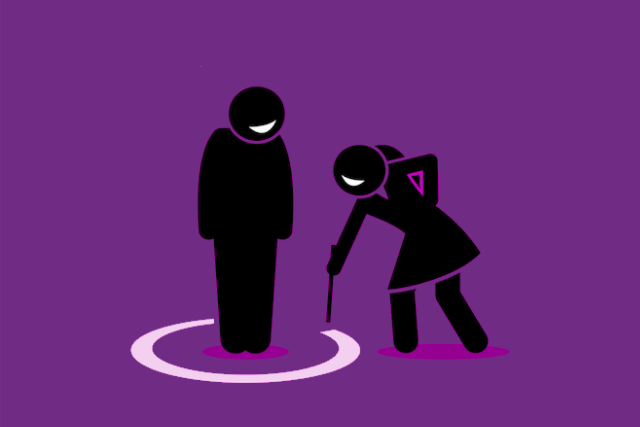
    Case #7: The Personal Space Invader

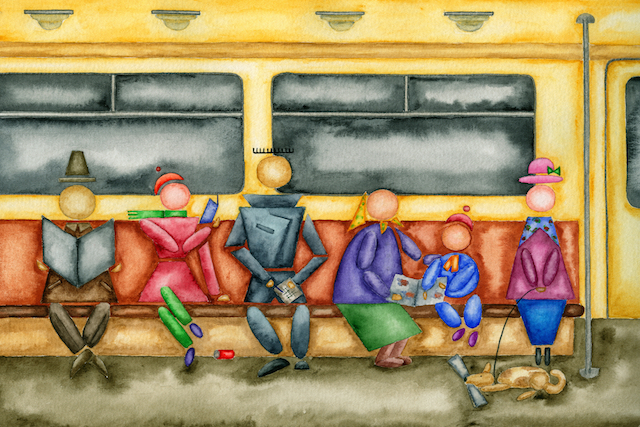
    You’re standing on the subway, or in the check-out line, or at the club, and someone’s body is too close for comfort. Maybe it’s intentional, which is creepy. Perhaps they aren’t aware of the space they’re occupying. Regardless, you’re not enjoying their front near your back / the smell of their breath / their odor.

    It’s time to set a boundary.

    My recommendation: “Excuse me, could you please move back and give me some space? Thanks.”

    Case #8: “Can I Have Your Number?”

    You’ve been chatting with a stranger, Bob, for a few minutes. As he gets up to leave, he asks for your number. You’re not into it.

    This circumstance tends to elicit boundary-white-lies, such as “Sorry, but I have a partner,” or “Oh, I don’t give out my phone number to strangers.”

    I understand that white lies might be your most comfortable entry point into boundary-setting. I am, at heart, a boundary-setting pragmatist. That said, when you’re ready, experiment with a firmer approach. It might be scary, but it will certainly be empowering.

    My recommendation: “I’ve enjoyed chatting with you, but I’m not going to give you my number. Have a nice rest of your day!”

    Bringing Boundaries To Life

    By now you’ve probably realized that, in each of the cases above, the words you can use to set boundaries are pretty straightforward. It’s actually saying them that’s the hard part.

    With this toolbox of phrases in hand, you can bring these boundaries to life using three simple steps:

    Step 1: Practice boundary-setting aloud.

    Many of us have never fathomed speaking up this directly. Our ability to boundary-set is just like any other skill: it takes time, effort, and practice.

    In the comfort of your own home, practice stating your boundaries aloud. Get used to wrapping your tongue around the words. Consider standing in front of a mirror and using a firm, confident tone.

    At first, it will be uncomfortable and strange—guaranteed. You may find yourself worrying about being “mean,” “rude,” or “harsh.”

    These reactions are totally normal and totally surmountable. Practicing your boundaries alone makes them easier to retrieve when you’re feeling burdened by the tension of an uncomfortable situation.

    Step 2: Role play with your friends. (Yes, really.)

    Once you’ve developed an arsenal of failsafe boundary phrases, practice with a friend or two.

    Give each other feedback. Tell your friend when she sounds overly apologetic. (“Stand in your power, girlfriend!”) Tell your friend when she’s sounding like a huge, mean jerk (“Okay, maybe take that down a notch.”) Have fun with it.

    If you want to uplevel your boundary-setting game, ask your friends to push back against your boundary. (Psychologist Harriet Lerner refers to this as a countermove: a “change back!” reaction.) Practice re-asserting yourself in the face of annoyed reactions. This way, when you begin setting these boundaries out and about, it will feel natural and familiar.

    Step 3: Practice

    As with all new skills, don’t expect perfection immediately. Your first few boundaries in the real world might be clunky, awkward, or embarrassing. Maybe you’ll speak too quietly and the offender won’t be able to hear you. Maybe you’ll boil over in rage and feel terribly guilty afterwards.

    All of this is normal. Be patient with yourself as you strengthen your boundary-setting muscle.

    P.S.: What About Silence?

    Is silence ever an effective form of boundary-setting? To answer this question I like to refer to writer Courtnery J Burg’s take, which she published on Instagram this year. She writes,

    “I’m all about boundary work. But sometimes the healthiest, best way to keep your sanity is to just walk away. To not respond. To not answer that text or that call. Sometimes the answer is no answer at all. This isn’t the same as avoiding. It’s acknowledging what is yours to carry + what isn’t. It’s remembering that not all situations must be handled with delicate gloves and deep, heartfelt energy. That occasionally, no response CAN BE your response and that you have nothing to feel guilty for and no one to explain yourself to for it.”

    Generally, I advocate verbal boundaries because 1) they’re most effective, 2) I spent many years trying to be “good” and “quiet” and I’m rebelling, and 3) they’re a great way to practice your boundary-setting muscle. However, certain awkward situations with strangers are most effectively curtailed with silence.

    As a rule of thumb, I use silence as a boundary with:

    • Catcallers. Silence or the middle finger tends to do the trick.

    • Strangers who message me insistently through social media. Most folks with public social media profiles will occasionally receive a deluge of creepy messages from strangers. Don’t engage. Block the account.

    • Arguers. Suppose I set a firm boundary and the stranger argues my point — asking me “Why?”, urging me to reconsider, etc. You do not owe a stranger any justifications or explanations. Your work is done.

    With time, boundaries that once felt impossible or too-awkward to assert will be second-nature. By practicing this skill of verbal self-defense, you will give yourself the gift of moving confidently and powerfully through the world. You deserve it!
  • Why I’m Trying Harder to Be Kind to Strangers

    Why I’m Trying Harder to Be Kind to Strangers

    “Too often we underestimate the power of a touch, a smile, a kind word, a listening ear, an honest compliment, or the smallest act of caring, all of which have the potential to turn a life around.” ~Leo Buscaglia

    From uttering unkind words to sleeping with unkind men, I’ve had many moments of shame in my life. Still, there is one particular moment of shame that stands out from the crowd. It happened at least ten years ago, but I remember it as if it were yesterday.

    I was strolling around downtown Toronto with a visiting friend when a rough-looking fella suddenly approached me. What he was planning to do or say to me, I’ll never know, because my knee-jerk reaction was to take the widest of wide births in order to avoid a face-to-face interaction.

    My girlfriend laughed at how quickly I’d dodged him. While she managed to keep her observation light and non-judgmental, I knew she wasn’t just talking about my ability to spin on a dime. Rather, she was commenting on how this human being had so obviously scared the living crap out of me.

    It’s not as if we were walking down a deserted alleyway. It wasn’t dark outside. The guy wasn’t wielding a knife or coming at me with raised fists. For all I know, he wanted a quarter, or a cigarette, or directions.

    Maybe he wanted to hurl some verbal abuse at a stranger because he was having a bad day. Possibly, or quite likely, he was a resident of the mental health facility across the street. Is that a crime? The fact is, I didn’t know. So I chose to pretend that this human being wasn’t even being.

    How often do you walk down the street and avoid the gaze of a stranger because it feels uncomfortable?

    Here’s what I’ve realized in the years since that incident.

    My discomfort is nothing compared to the discomfort of the panhandler who’s parked day after day in his wheelchair outside my local grocery store because finding work is tricky when you have no legs.

    It’s nothing compared to the discomfort of the physically disfigured man who can’t hold somebody’s gaze for longer than a couple of seconds and knows exactly why.

    And it’s nothing compared to the discomfort of the lonely old woman who wants but fails to find someone to chat with on the bus because when she gets home, there’ll be nobody to talk to. For hours. Maybe days.

    My big moment of shame has been top of mind since returning from vacation.

    My husband and I have just come back from Newfoundland, where we spent one of seven nights bunked up in a teeny blue cabin looking onto a fisherman’s wharf. The cabin was sweet. The view before us was stellar. The community was one I would never choose to live in.

    Behind and adjacent to our cabin were twenty or so simple homes. None had the charm of our picture-perfect Airbnb. As I sat outside sipping wine, enjoying the view before me, and contemplating life, an older, heavy-set, weathered-looking woman stopped at the end of our driveway and started chatting.

    I could barely understand her, partly due to the noisy ocean waves and partly due to her thick Newfie accent, so I rose from my Muskoka chair and greeted her halfway down the drive.

    Her name was Patricia, she told me. She loves it when new guests check into the blue cabin. “Yesterday, there was a couple from France. I meet all kinds of people. I love meeting people.”

    She asked me where I was from. I answered, “Toronto.” Detecting my accent, she responded, “that’s where you’ve come from but is that where you were born?” I explained that I was born in Toronto but grew up in London, England, and moved back to Canada as an adult.

    She held her hand to her chest. “Seriously, you and your husband are from England?” I nodded yes. She beamed a big grin. “For the love of God!” I’d blown her mind.

    Patricia insisted that I step inside her humble house. She wanted to show me something she was positive I’d never seen ever before.

    After walking through her gloomy vestibule and being greeted by Charlie the dog, I saw no fewer than 500 coffee mugs. About 450 were hanging on her kitchen wall. Fifty or so had been relegated to a table in her living room because real estate was lacking.

    I laughed with delight. Patricia laughed with me. “Crazy, right?” she said. Crazy hadn’t even entered my head. Charming had. I was instantly smitten by Patricia and the cups that adorned her bright orange, wood-panelled walls.

    I had Patricia pegged for eighty or so. She told me she was sixty-six and that she’d lived in that house since birth. She was raised by her dad after her mother died when she was five months old. Her dad died twenty-five years ago. She’s lived alone ever since.

    The nearest shop is fifty kilometres away. Patricia pays someone to pick up groceries for her. It’s a pain, she admitted. And lonely. That’s why she loves it when the tourists come to stay.

    I asked if she had ever considered leaving her small community. “God, no!” she said. “I love it here. In two weeks, the whales will come into the bay. When you walk to the end of that pier, you can feel the spray from their blow holes, they come in that close.”

    Did I mention Patricia has no teeth?

    I didn’t? Well, now you know. Patricia has no teeth.

    After our most memorable encounter, I imagined a similar but different scenario.

    I’m on the streetcar in Toronto, heading downtown. A heavy-set women gets on carrying a large plastic bag. Her skin looks old and leathery.

    She’s wearing an orange Dollar Store T-shirt. If she’s wearing a bra, it’s not a good one; her breasts hang low and heavy. She plops herself down in the seat next to me.

    I can smell the cigarette she just stubbed out. She smiles a big toothless grin and asks if she can show me what’s in the bag. What do I do?

    Do I say yes and then make eye contact with other passengers to ensure someone sees me engaging with this ‘crazy’ woman. You know, just in case she decides to grab my purse and run?

    Do I pretend I didn’t hear her and just keep checking my Instagram?

    Do I ring the streetcar bell, get off at the next stop and jump on the one that’s following close behind?

    Or, do I respond to her exactly as I responded to Patricia? By that I mean do I give her my full attention, embrace her with curiosity, and treat her like a human being?

    Because here’s the thing. Whether she’s living in the cabin next door to my hut by the beach or sitting beside me on a streetcar, she’s exactly the same woman reaching out for exactly the same thing: just a little human warmth.

    Be kind to strangers.

  • Why We Should Always Be Kind to Strangers

    Why We Should Always Be Kind to Strangers

    Make Someone Smile

    “Carry out a random act of kindness, with no expectation of rewards, safe in the knowledge that one day someone might do the same for you.” ~Princess Diana

    Recently I was reminded of the importance of kindness, particularly kindness to strangers.

    I was given the opportunity to film the wedding of a family friend. As a videographer, I’m always looking for ways to build my client base and enhance my professional experience, so naturally, I agreed.

    Most of the guests at this wedding were friends of my parents, many of whom I hadn’t seen in years. Although I recognized a lot of the people, most did not recognize me, particularly with a camera in my hand and “on the other side of the fence,” so to speak.

    A few kind souls were extremely friendly, looked me in the eyes, sparked conversation, and spoke to me with dignity. But to my surprise, the vast majority of guests at this wedding pushed past me, bumped into me, or spoke down to me. Again, these were people that I knew!

    If we had been in any other situation—if perhaps, for example, my parents had been there with me—I’m certain these very same people would be giving me hugs and asking about my life with convincing interest.

    But instead, I was treated as I was seen, like just another person in the service industry. It was as if an invisible fence existed between “us” and “them.”

    What bothered me most was not the poor treatment I received, but this notion of separateness that was so pervasive in the once familiar atmosphere around me. Here I was amongst families with whom I grew up, and those who did not recognize me treated me as though I was not worth recognizing. As if I wasn’t even here.

    While the looks I received symbolized separateness, what they provided for me was an instantaneous sense of wholeness.

    Almost immediately, I’m reminded of the homeless man who holds a sign beside me as I wait for the stoplight to turn green and try to keep my eyes averted. Or the clerk at the McDonalds drive-thru, at whom I roll my eyes when I’m late for a meeting and she’s slow to deliver my vanilla iced coffee.

    In this moment, we are one. And that’s when it hits me.

    We’re each a part of a whole, and everything we do (every thought, word, and deed) affects the whole. My mind wanders to the countless individuals who are disregarded in some way, shape, or form, every minute of every day. We’ve all experienced it and we’ve all been a party to it.

    Why do we do this to each other? What is this invisible fence dividing us vs. them? Where did it come from? And why is it popping up across all areas of our lives?

    Safe in the confines of our car, we feel distant from those who stand on cold corners asking for our help. In our own bubble of a morning ritual, we forget that our coffee servers have morning rituals of their own. A false reality exists around us, and most often, without even giving it a second thought, we choose to live in it.

    Like a prison built on the delusional foundation that we are somehow separate from one another, we’re trapped. But what if we chose to live in truth instead? If we can recognize the intrinsic unity of humanity, perhaps we can finally be free.

    Much like disregard, kindness for others is cyclical by nature. Kindness begets further kindness. And you never know how a simple “thank you” or smile could affect someone on any given day.

    To be acknowledged and appreciated are among two of the greatest and most basic human needs. If we can fulfill this in one another with small acts of kindness that perpetuate themselves, why would we ever choose to do otherwise?

    It’s the simple, unexpected acts of generosity that change lives, and a culmination of these small acts can change the world.

    Let’s acknowledge the security guards and say, “thank you” to the janitors. Let’s start acting as if the conversation we have is the most important one we will have all day. Let’s look for the good in other people, and when we find it, let’s treat them as though that’s all we see.

    We don’t have to expect anything in return in order to be kind. With kindness, the giver benefits just as much, if not more, than the receiver.

    Let’s make it our goal to make at least one person’s day, every day, and see how our own lives are transformed in the process. After all, we’re all in this together…

    Make someone smile image via Shutterstock

  • Touching Strangers: Humanity As It Could Be

    Touching Strangers: Humanity As It Could Be

    We all have a certain level of comfort with our friends and family that we may assume we could never feel with a total stranger. Photographer Richard Renaldi wanted to see what would happen if he created unlikely pairings and positioned them in intimate poses. The result was far from awkward and surprisingly touching.

  • What Do Strangers Think of You?

    We all hone in on our “imperfections.” Most of us are harsher toward ourselves than other people would ever be. But what if those imperfections are actually things others might find beautiful? And what if other people see us for so much more than just our skin and body type?

    BuzzFeed asked people to look in a mirror and describe what they saw. What they didn’t know was that there were strangers on the other side of the mirror, giving their first impressions.

  • Two Strangers in a Sandbox: Lessons for Life

    Two Strangers in a Sandbox: Lessons for Life

    Soul Pancake, one of my favorite sites, built a sandbox with the sole purpose of connecting strangers and enabling them to share life lessons. Though it certainly makes it more fun, you don’t need a slide to ask yourself: what do you wish you knew as a child?

  • Street Compliments: Sharing Love on the Side of the Road

    Street Compliments: Sharing Love on the Side of the Road

    Soul Pancake (the site started by Rainn Wilson, from The Office) set up a compliment station on the side of the road, and the exchanges they captured on film are both beautiful and touching.

    When was the last time you told someone how you feel?

  • The World Is a Kinder Place When You’re Kind

    The World Is a Kinder Place When You’re Kind

    Friends

    “Don’t wait for people to be friendly. Show them how.” ~Unknown

    Sometimes I stop to think about how in the world I ended up where I have. I started off with very little, and somehow along the way I have ended up generally happy and on my own two feet.

    My adolescence up to my early twenties had its share of dark days. Whether or not we are lucky enough to have a small handful of people that stick by us no matter what, more often than not we can find ourselves feeling incredibly lonely.

    For a long time through my rough days, I held a sort of grudge against the rest of the world. I had convinced myself that everyone was only looking out for themselves, and I had lost faith in the idea that people were mostly good.

    Where was that feeling of community? Or helping out your neighbors? What about equality and accepting others’ differences?

    The world felt large, dark, and lonely. I felt very let down.

    What I didn’t realize at the time was that as much as those close to me have influenced my growth and my life, those I consider strangers have made just as strong an impact. By closing out the rest of the world, I was really hindering my growth and happiness. Let me explain.

    I had an accident a few years back, and unfortunately, I was far from home and by myself when the incident occurred.

    Many strangers witnessed the accident and casually passed by. Two people who could have just as easily done the same, leaving the accident for someone else to take care of, chose to step in and come to my aide.

    They had no obligation to help, and in fact, had places to be. Instead, they stopped to help me, waited until the paramedics arrived, helped to contact someone I knew, and confirmed that I would be okay.

    I was shocked that people who didn’t even know my name were spending so much time taking precautions to ensure my safety.

    My world was jolted—and I kind of liked it. (more…)

  • A Little Care Can Go a Long Way and Make Someone’s Day

    A Little Care Can Go a Long Way and Make Someone’s Day

    “Be kind, for everyone you meet is fighting a hard battle.” ~Plato

    Ever since elementary school, I have had a built-in network of friends, family, and colleagues who make up my rock solid foundation of support.

    But recently, I’ve been struggling with being alone and desperate for human interaction—more specifically conversation and affirmation; and conversation that includes affirmation of my creative choices would be the holy grail of friendship.

    Two months ago I moved to a new city where I knew exactly two people; one was my cousin who I hadn’t seen in over fifteen years and the other was an old co-worker’s sister (which, come to think of it, doesn’t really count as knowing someone, does it?)

    Both have become wonderful companions, who I see every other week or so and share many commonalities with. But I wanted a deeper friendship, someone to tell me that, yes, I had gained a little weight and tomorrow we’d go the gym.

    Normally I shied away from strangers, skeptical of their intentions, but if I kept that up I’d meet no one. So, in a bit of a social experiment (forged by pure desperation), I decided to strike up a conversation with someone new every day.

    So far, about 90% of the conversations end with a simple thank you and us parting ways, never to meet again. But the other 10% of my attempts have been eye-opening.

    Today, for instance, while at the gym, I met this stunning woman, whose legs were reason enough for me to hate her. But I smiled sweetly and asked her how she was doing. Ten minutes later I had learned that she ate extremely healthy and worked out every day (hence the amazing figure), but also that she was the mother of a five-year-old girl.  (more…)

  • Look Longer

    Look Longer

    Eye

    “Could a greater miracle take place than for us to look through each other’s eyes for a minute?” ~Henry David Thoreau

    You’re riding on the subway, immersed in a book. You’re running in the park, lost in your iPod. You’re waiting in line at Starbucks, fixated on the menu.

    Sometimes we act like we’re completely alone, even when  surrounded by lots of people. It’s like we’re following an unspoken rule that suggests we shouldn’t look at each other, at least not for too long.

    It happens all the time…

    You suddenly make eye contact with someone you don’t know and your discomfort compels you to avert your eyes. If you do manage a smile it’s probably perfunctory, without real joy and affection behind it. Those are emotions you reserve for people you  know—people you’re more intimate with.

    Some studies have indicated people who live in cities are less apt to make eye contact with strangers than people who live in suburbs. This may be a response to crowding; when you feel you don’t have enough personal space, you’re more protective of it.

    If there’s truth to that hypothesis, it’s somewhat ironic. You move to a city to experience the life that pulsates through it, and then respond by shutting down in everyday situations.

    Resist the urge to shutdown. Instead of walking with your eyes glued to your feet, hold your head high and connect with people. Really see them and let them see you. If you’re not a confident person, connecting for more than one second may feel incredibly difficult. Just try. (more…)