Tag: still

  • The Value of Doing Nothing in a Hyperproductive World

    The Value of Doing Nothing in a Hyperproductive World

    “Allow yourself to be bored a little. In our world full of distractions, create some space for nothingness.” ~Unknown

    My roommate sat in the kitchen, eating his late home-cooked dinner, and commented with a half-mocking smile, “Ah, you’re still living.”

    The words hung in the air, awkwardly playful but sharp enough to sting. They echoed something larger: the subtle judgment that creeps into our culture of relentless productivity.

    Confusion bubbled up inside me, followed quickly by shame. My cheeks turned red. I had spent most of this sunny Saturday alone in my room—reading books, listening to music, writing a little, and, to be honest, staring out the window, feeling restless.

    “What do you do all day?” he asked, genuinely curious.

    Yes, what I felt was definitely shame. In a world that glorifies busyness, I often feel like a criminal for spending an entire day at home, or for strolling through the city without real plans. The implicit expectation to do something, to make the day “count,” feels suffocating.

    “Reading and writing,” I replied, suppressing the urge to explain myself.

    He looked puzzled. “You can’t fill a whole day with writing, can you? Isn’t that boring?”

    Here it was: the quintessential clash between introversion and extroversion. He didn’t understand me, though, in fairness, I think he wanted to. I was tempted to agree, to downplay my day and say, “Yes, it’s boring sometimes.” But I stopped myself.

    Because recently, I’ve realized something important: I need that stillness.

    The Shame of “Doing Nothing”

    His confusion wasn’t just personal; it felt like a question society constantly asks people like me: What are you doing with your time? In a culture that glorifies constant productivity, the idea of having unstructured time is almost heretical. If you’re not ticking off items on a to-do list or working toward a measurable goal, then what exactly are you contributing?

    This shame runs deeper than personal insecurity—it’s rooted in a culture that values productivity above all else. The industrial revolution reinforced the belief that time is money, a resource to be maximized. Today, even our leisure activities are judged: hobbies are monetized, vacations become opportunities for curated Instagram posts, and relaxation feels like something we must earn.

    For me, this shame shows up in subtle ways. If I spend an afternoon reading or writing without a clear goal, I catch myself justifying it: It’s practice for my craft. When a friend asks how my weekend went, I feel compelled to list the “productive” things I did—chores, errands, something quantifiable—before admitting that I spent hours simply being. It’s as though I need permission to slow down, even from myself.

    But this obsession with busyness comes at a cost. It fuels burnout, anxiety, and a relentless sense of inadequacy. It leaves us disconnected from ourselves and the quiet, unstructured moments that bring clarity and peace. What happens when we’re always striving to prove our worth through what we achieve? We lose the ability to simply be.

    Stillness as a Portal to Creativity

    What I’ve come to understand is that restlessness isn’t the enemy. It’s the hum beneath the surface where creativity brews. When I sit still or let myself feel bored, something unexpected arises: a fleeting thought, a fresh perspective, or a spark of an idea. Those unhurried moments, I’ve learned, are where the magic happens.

    Our culture teaches us to fear downtime, to see it as wasted hours. However, it’s often in those “empty” moments that our most meaningful insights emerge. I’ve had some of my best ideas while folding laundry or lying on the couch doing nothing in particular.

    As Julia Cameron writes in The Artist’s Way, creativity requires spaciousness. She even prescribes a full week of media deprivation—no social media, no podcasts, no books—to help artists reconnect with their inner world. By removing distractions, she argues, we create the room to truly sit with our feelings and thoughts.

    In my own life, I’ve noticed this truth. Some of my favorite moments are not grand or planned—they’re the small, unexpected joys that arise during quiet days. When I’m doing dishes, I’ll start humming, then singing, and maybe even dancing. What felt like a mundane chore transforms into a moment of aliveness.

    Why We Need Unstructured Days

    The irony is that the days I spend without clear plans often end up being the most productive—not in a traditional sense, but in the way they nurture my inner world. These are the days when my thoughts settle, untangle, and expand. They’re not lazy days; they’re spacious ones.

    In fact, I’ve started to see quiet time as a quiet rebellion against a world that demands constant output. When I allow myself to slow down, to let go of the need to perform or produce, I’m pushing back against a culture that equates worth with busyness.

    But this isn’t easy. Society tells us to fear idleness, to run from it with endless distractions: a scroll through Instagram, a new TV series, a side hustle. Slowing down feels countercultural, even indulgent. But I believe it’s necessary.

    The next time someone questions how you spend your time—or when you catch yourself feeling guilty for slowing down—try reframing the question. What if restlessness isn’t wasted time, but the soil where creativity and self-discovery take root?

    A New Definition of Productivity

    So, was my roommate right? Is it boring? Sure, sometimes. But that quietness isn’t a problem; it’s a gift. It’s the pause between notes in a symphony, the blank page before a story. It’s not laziness; it’s space where something always stirs.

    What if we saw stillness differently—not as something to avoid, but as a doorway to clarity, creativity, and reflection?

    Maybe it’s time for your own experiment. Turn off the noise, let yourself stare out the window, and see what stirs in the quiet. You might be surprised at what emerges.

    What about you? How do you feel about unstructured time? Is it something you avoid, or have you discovered its unexpected value? I’d love to hear your thoughts.

  • How to Be Like a Tree: Still, Strong, and Uniquely Beautiful

    How to Be Like a Tree: Still, Strong, and Uniquely Beautiful

    “This oak tree and me, we’re made of the same stuff.” ~Carl Sagan

    I was hugging trees long before it was cool.

    Recent research suggests that spending time in nature can reduce your blood pressure, heart rate, and stress level, not to mention cut down your risk of type II diabetes, cardiovascular disease, and premature death.

    But when I began hugging trees, it was an undeniably weird thing to do.

    I risked the odd looks of strangers, however, because trees felt so calm and welcoming to me. When I wrapped my arms around their broad trunks, it felt like I was being gathered into the protective embrace of a beloved elder, as if their steadfastness imparted strength, and their rootedness helped me find my own solid ground.

    Recently, however, I’ve realized that their benefits extend far beyond momentary stress relief; it’s from trees that I’ve learned the most powerful lessons about how to deal with chronic depression and anxiety.

    Here are the biggest and most unexpected things I’ve learned so far from trees:

    1. When in doubt, don’t do.

    Every time I hug a tree, I’m struck by how still it is. There’s a silence, a spaciousness, and a total lack of movement that boggles my mind.

    I mean, it can’t be easy to be a tree. If you’re not getting enough sunlight, you can’t just pick up and walk a few steps to the right. If some animal builds its home too close to your roots, you can’t do anything to move it.

    I, on the other hand, respond to any perceived threat by jumping into action. That’s the nature of my anxiety; when I’m afraid, I want to do something—anything.

    But because I’m not acting out of clarity or wisdom, and because listening to fear makes the fear grow stronger, almost every action I take just makes things worse.

    Like the time when I was anxious about leaving my therapist because I was about to move back to Atlanta after fifteen years away. Jumping into action, I decided to go off my anti-depressant medication before I left so I would have her help, but I did it at a time when I was also changing careers, starting a business, and getting ready to move cross-country. Needless to say, it made a difficult time even harder for me.

    When I don’t get the results that I want, I feel even more out of control, my anxiety grows—along with my compulsion to act—and the negative cycle reinforces itself.

    Trees show me how to break this cycle by demonstrating the value of not doing.

    When I’m smart enough to imitate a tree, I get still. I feel. I listen.

    When I do this for long enough, one of three things happens: Either the problem resolves itself, or a wise response becomes clear to me, or I realize that it wasn’t really a problem in the first place.

    2. Support all of life.

    I’m often awed by how much trees give to the creatures around them, from the moss that grows on their bark, to the birds and squirrels they feed and shelter, to the humans who breathe their oxygen and enjoy their shade.

    When I’m depressed and anxious, I usually feel both overwhelmed by my own misery and guilty that I don’t have the resources to give more to others.

    It’s another negative cycle whereby my misery makes me unable to focus on anything or anybody else, which causes me to feel horribly self-centered, which makes me feel even more wretched and less able to give. What makes things even worse is that supporting others is one of the few things I’ve found that reliably helps me feel better.

    The effortless generosity of trees offers a way out.

    When trees have something to give, they share it with everyone, no matter how small or undeserving. But they don’t beat themselves up for not having acorns in the spring, or leaves in the winter. They simply extend whatever’s there to extend.

    Sometimes all I have to give is an apology for not being more considerate. Other times it’s a smile, or appreciation for someone’s support. Over time, if I give what I have, I have more to give, but the key is never to believe that it should be more than it is.

    That way, I can support all life, including my own.

    3. Don’t be afraid to get big.

    I’ve never been one to take up too much space.

    I’m talking physically: I’m over six feet tall and always felt awkward jutting up above most of the people around me, so I subconsciously slouched and made myself smaller.

    But I’m talking emotionally and relationally as well: I never used to like to call attention to myself, ask for what I needed, or speak up about my opinions. I went out of my way not to negatively impact anybody else, even if that meant sacrificing my own happiness or well-being.

    After years of always making other people’s needs and opinions more important than my own, it was hard not to feel depressed, helpless, and hopeless. By that point, however, making myself small wasn’t so much a choice as a well-ingrained habit.

    When I began to hang out with trees more, I started to notice how unapologetic they are about the space that they take up. They don’t worry that growing tall will cause somebody else to feel inadequate, or that stretching their limbs out wider will mean they’re taking up too much room. They just are who they are. When I stood next to them, I could feel their expansiveness begin to bloom in my own chest.

    Acting on this newfound sensation, I gave myself permission to get big. When I needed something, I asked for it. When I had an idea, I shared it. When I wanted something, I moved toward it. Not worrying about how others might perceive me, I stood tall and enjoyed the unique view.

    The best part is, after a long time of feeling powerless over anxiety and depression, I finally saw that I was bigger than either of them.

    4. Being crooked is beautiful.

    I’ve made plenty of wrong turns in my life.

    I used to feel ashamed that I had ten jobs over ten years before finally finding one that felt like a fit. Or that I had so many failed relationships before getting married nearly a decade after most of my friends. Or that fear made me wait twenty-five years to write a second novel when I knew after finishing my first at age twelve that I was born, in part, to write.

    Most of us (including myself) tend to think that the straight path is the best one. We beat up on ourselves for our false starts and slow progress.

    But have you ever noticed how beautiful trees are? And how crooked?

    I’ve come to believe that it’s precisely because of their odd angles and unexpected curves that trees appear so graceful. A tree made of straight lines would hold no appeal.

    Looking back, I can see that every job I had taught me more about what I wanted and brought me one step closer to work that I loved. Every relationship prepared me in some small way to be with the man I would eventually marry. And every time I negated my desire to write, that desire grew stronger, and I had more material to work with once I finally was ready to say yes to the call.

    We can’t undo our wrong turns, but we can appreciate their gnarled beauty.

    5. It doesn’t matter who you are.

    When I was younger, I thought that it was what I did that made me worthy. I pushed myself hard to do well in school, excel in sports, and achieve as much as I could.

    Eventually that strategy led to an unsavory mix of perfectionism, anxiety, and depression. Desperate, I got help from others and re-evaluated my beliefs. I soon concluded that it wasn’t what I did but who I was that mattered.

    At first this new belief seemed helpful, but eventually it brought its own set of anxieties. I was trying my hardest, but was I really calm enough? Or kind enough? Or wise enough?

    Then one day when I was hugging a tree, I tapped into a truth that made such questions irrelevant.

    I’d just gotten curious about what a tree’s energy felt like. Opening up to it, I was immediately flooded by a sense of expansive serenity. Peaceful as it was, it was also vibrant and strong. Welcoming and warm, it pulled me in. Suddenly I felt as if I were filled with, made of, and surrounded by sunlight.

    The energy was coming from the tree, but I realized that I could feel it because it was stirring something already within me. In other words, the tree and I shared the same true nature. Beneath my body, beneath my personality, and beneath my small identifications, I am this beautiful energy. So are you. So are we all.

    Unified in this way with every other living thing in the world, even I have to admit that the idea of being unworthy doesn’t make any sense. It’s not only irrelevant; it’s impossible.

    That’s when I realized that the magic lies not in what we do or even who we are, but in what we are, and how often we remember that.

  • The Power of Silence: How to Free Yourself from Painful Thoughts

    The Power of Silence: How to Free Yourself from Painful Thoughts

    “Within you there is a stillness and a sanctuary to which you can retreat at anytime and be yourself.” ~Hermann Hesse

    As a child, I hated when someone told me to sit still and be quiet, and rightly so. I was young and full of energy; every minute of being still and silent was a minute of missing out on this magnificent life.

    Then, as I grew older and entered into teenage and young adult years, it grew into a fear with a capital “F” of being still and silent; for as soon as I was quiet and still, the noise in my head got increasingly louder and more powerful.

    If the chatters of my head were beautiful, joyful, and empowering, that would have been uplifting. But they were voices of judgment, negativity, and self-loathing, nothing else.

    To me, those chatters, voices, and thoughts were me. My head would chatter day and night, even in my sleep. Noise, heaviness, thinking, and more thinking, sometimes my head felt like it was about to explode.

    I wasn’t even aware I was thinking. I was just on autopilot. I would act and react and get triggered into waves of emotions and feelings, which churned into more turbulence, heaviness, and weariness.

    Everything became dysfunctional because I couldn’t interact effectively with people or life. My whole reality, both inside and outside, was warped.

    I was a paranoid, fearful, self-loathing, neurotic human being, so my life and world were full of fear, anger, and depression. Life was an endless battle, as everyone and everything was always against me.

    I got to the point of total exhaustion. I eventually lost all coherence and overdosed on pharmaceutical codeine painkillers, just so I could have peace, silence, and rest. I was totally depleted, and I felt I had lost my battle with life.

    Lying in the hospital, slipping in and out of consciousness, I deprived someone else who was probably critically injured and in need of the bed. But I had a moment of peace and silence because I left my body and head.

    As I stood and looked at my weary body and still very heavy head, I was in the silence. At that moment, the question arose, “If I can see and look at the ‘me’ lying on the bed, then I must not be ‘me,’ so who am I?”

    Of course, I never spoke about this or they would have said I was having hallucinations and sent me straight to the loony bin.

    Amazingly, I survived and took off far away where I couldn’t be found, nor forced to take medication. It was inevitable; I had started on the quest. I had to find that silence again, for it was real.

    What was that silence and stillness that I glimpsed? I knew from that day on there was something more. Over the course of the following years, I rediscovered and nourished that silence, and it grew to be my anchor, healer, and guide. Here’s what I learned.

    Nature’s core is silence.

    Make time for yourself every day to connect in some way with nature. Walk barefoot on the grass, swim in the ocean, watch the sunset, stroke an animal, or even weed the garden. Submerge yourself in nature, and you will experience silent, unconditional, utter bliss and peace from your core.

    Every time I’m in nature, I find that time literally stops and thoughts quiet. All that’s left is the beautiful sounds of birds chirping, water trickling, winds howling, and all the gaps of nature’s silence in between.

    Feed and grow that silence.

    Reading spiritual books or articles, listening to enlightened masters, practicing yoga or qigong, listening to music that you resonate with, dancing and moving your body will feed and nourish your silent core within.

    Meditation is the ultimate channel and food for inner silence. However, unlike nature, which is effortless silence, meditation may be slightly more challenging. Sitting or lying there unmoving and in quietude, the brain may seem anything but silent or still.

    I used to find that whenever there was drama in my life, my brain would get louder. The thoughts were more controlling and dominating, the emotions more intense, and my energy zapped. It was almost like my thinking brain was sucking up all the energy from my entire body.

    But I continued to feed and grow that silence by persisting and holding in quiet meditation, or nourishing it through active meditative activities that anchored it.

    Trust the silence.

    Even if the silence was minuscule, I always chose to stay in it. The less attention I paid to the thinking mind, the softer and dimmer the thoughts became, and the more the silence and stillness grew.

    Instead of resisting or fearing your thoughts, simply be aware. Allow them to be, but don’t attach to them. You have a body that feels and a brain that thinks. They are a part of you, but they are not you.

    In silence, you become aware that you have the freedom and power to choose the types of thoughts you wish to entertain and empower, and the thoughts you wish to ignore and diffuse.

    Silence and stillness came hand in hand. Together, they were my best friends. I loved my early mornings and nights just before bed, for when I shut my lids in meditation I disappeared into the void of peace, stillness, and silence, my essence.

    Silence and stillness are teachers.

    In silence, my head was lighter and clarity emerged on its own accord. Unfathomable strength revealed itself, which helped me let go of my painful past, forgive those who had hurt me, release pent-up emotions, and unfold into compassion and my true nature of unconditional love. Through the healing, my silence is now infused with deep wisdom.

    Sometimes, like myself, you may find yourself careless and allow this connection with your silence to lapse. Perhaps your excuse might be, “No time, too hard, later, tomorrow, next week, after I finish this project, after I solve that issue. Life’s too good right now, I’m fine so I don’t need it.” Then bang!

    A big wave inevitably comes along, catches you off guard, and dumps you straight into the mouth of the controlling mind again. The silence may shrink and disappear. That’s only human.

    Hold yourself in the space of compassion and return to the voice in the heart. That will lead you back into silence and stillness. The voice in my heart is the silent voice, no words, simply a knowing.

    The more I listen and follow, the stronger it becomes. It has about it an air of strength, love, wisdom, and joy. It works magic, it leads me to meet people I am meant to meet, go to places I am meant to go, and do things I am meant to do.

    With devotion and commitment, the work of maintaining and sustaining your silence will naturally become a joyful routine and not a chore.

    There will also come a day when there is only silence and stillness, and that is all. All else arises out of that silence. And flow emerges. The result: Reverence, unconditional peace and love, and infinite possibilities.

    What does this mean? You transcend your limited physical reality, know the true bigger picture, and now integrate your wisdom and truth into manifesting your soul purpose in life.

  • Slow Down: Join the Stillness Revolution for More Peace and Joy

    Slow Down: Join the Stillness Revolution for More Peace and Joy

    Slow Down

    “There is more to life than increasing its speed.” ~Mahatma Gandhi

    I recently treated myself to a retreat in the mountains, with the intention of pulling out of the busyness of every day life so that I could spend time healing and in reflective writing.

    Setting off, I anticipated an easy drive as traffic looked light, but when I reached the mountain pass, I experienced something I had never experienced before:

    I was completely blind to my surroundings.

    In fact, I realized I had driven into the clouds themselves, engulfed by a pure white energy.

    Not fog. Not mist. Just pure white.

    For a moment, I was gripped by fear, as one of my recurring dreams involves me speeding around steep, curvy roads until I lose control and drive completely off the edge.

    But I noticed the fearful energy quick enough to rein it back in and surrender to the beauty of what I was experiencing.

    In order for me to surrender without fear of driving over the edge (or into another car), I had to slow down and become hyper present and aware.

    Slow down. Be still.

    Creeping along at two miles an hour, I quickly recognized the message the universe was sending me through my experience on that mountain pass that day, and it reignited a passion in me to share this message with you.

    Our lives seem to travel at warp speeds these days, with our minds taking in and spewing out information faster than we can keep up with, and our bodies running ragged with the intention to get up early and stay up late in order to get it all done.

    Everything around us screams, “Go, go, go” not “slow, slow, slow.” Modern society simply doesn’t promote this kind of “radical” behavior.

    So it’s going to take rebels like you and me to fuel this stillness revolution.

    Yes, I wrote “rebel” because you are going against the stream, and you are most certainly going to feel a little “different” in doing so.

    Your own ego might even resist the very idea of a stillness revolution—rejecting it as being ridiculous, unreasonable, and completely insensible.

    Here’s the response from my higher self to that ego doubt (and trust me, my ego is shouting it too).

    What if creating a more peaceful and more joyful life means taking actions that seem a bit ridiculous, unreasonable, and insensible?

    There is an exercise I use that might shift your perspective called “When I’m 92.”

    You can read the below and then close your eyes to really practice the meditation or you can simply follow along now with your eyes open.

    Take 3 conscious breaths to settle back into your body and into the now.

    Imagine yourself lying in a bed in the hospital when you’re 92 years old.

    You are surrounded by love—loving doctors and nurses and most of all, your loving family

    You’ve lived an amazing life and you are filled with gratitude for all of the experiences you’ve had.

    Your 32-year-old grand-daughter, a self-proclaimed “workaholic,” rushes in, apologizing for running late, and explaining she only has about 15 minutes to stay, as she really must get back to another meeting.

    Your 92-year-old self smiles at her and radiates peace and love around her busy energy.

    She sits down and takes your frail hand, softening and opening to receive.

    The wisdom flows through you to her, as you say:

    “My beautiful grandchild, if there is one piece of wisdom I can leave with you before my soul returns to the light, it’s this:

    Slow down and be still.

    Every single moment that you spend in a space of stillness will be worthwhile and make your life richer than you could have ever thought possible.”

    Take a conscious breath—and now imagine you have become the 32-year-old granddaughter.

    As that young and busy soul, receive the energy of these words and absorb the meaning into your very core.

    Allow yourself this stillness as you’re in this meditative space right now to begin cultivating the practice of stillness in your every day life.

    When your intuition tells you that the exercise is complete, send gratitude to your higher self and 92-year-old self, then bring yourself back to this conscious moment with another easy breath (and gently blink your eyes open if they were closed).

    Take out your journal, or just a piece of paper if you don’t have a journaling practice, and free write how grounded and peaceful you felt during the above exercise.

    Allow your intuition to guide you to choose one action you can take to support your own stillness revolution.

    Perhaps, like me, you want to formally create the space for an extended period of slowing down and being still by scheduling a retreat in nature?

    Or maybe you want to begin with a simpler practice such as writing the words “Slow Down and Be Still” on a post-it note and putting it up on your car dashboard so that it can remind you of this wisdom as you hustle to and fro?

    The specific action isn’t as important as simply taking any action, so choose one and share in the comments below how you are going to slow down and play your part in the stillness revolution!

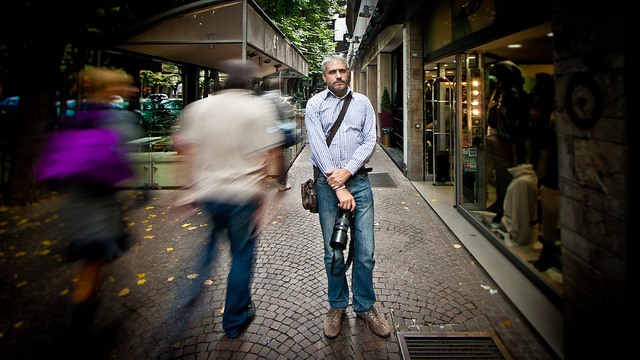
    Photo by N I C O L A