“A journey is a person in itself; no two are alike. And all plans, safeguards, policing, and coercion are fruitless. We find that after years of struggle that we do not take a trip; a trip takes us.” ~John Steinbeck
Around six years ago I started to meditate. I had a spiritual awakening, and life started to look really different.
I have always been a feeler and reader of emotion, but this was different. It was like I was synchronized with everyone around me, as if everyone else was connected to me in some strange and mysterious way.
It later turned out to be the case that everyone is connected to me, the same way everyone is connected to you. That we are all made up of the same stuff and really we are just one giant organism connected to the same sphere of consciousness.
I believe that if you project hate, hate is what you will receive, and if you project love, you will be showered with love.
This is a strange concept, and one that I am sure many of you think is a little crazy, but everyone is entitled to their own opinion, and what is a reality to me may not be a reality to you.
For me to claim my version of reality is the one truth that exists from over seven billion minds on the planet would be pretty egotistical and naïve.
The fact is science could account for everything, in the same way a higher power could or evolution or the collective consciousness of humanity.
We could have been put here by a lifeform more intelligent than ourselves, or our planet could indeed be just a cog in a bigger organism that we do not understand. We could be a hologram or a hallucination or something conjured up in the mind of someone or something. The truth is we really do not know!
But when I had this moment of spiritual enlightenment six years ago, I did know. There was clarity, things made sense, and the world seemed like a better place. I thought that I had stumbled upon secret wisdom and that I was in some way elevated to a deeper level of mind than most other people.
I knew this was the answer not only to my own problems, but the problems of every man, woman, and child on the planet. The only problem was no one who I knew was sharing my enthusiasm.
Over the last six years since that first moment of clarity, I have come to realize that when you have a spiritual awakening it is only the start of a journey that has no end. You learn more and more about yourself as the days go by, but with each new answer multiple questions will be asked.
If I had written about spiritual awakenings six years ago or even one year ago this article would have been very different, and if I write one six years from now, I am sure I will have many more revelations and differences from the opinions I have now.
When I started out, I was certain that everyone else needed to meditate, that everyone else needed to jump on the spirituality bandwagon. And if you were not into spirituality you were in some way less enlightened than I was. But I now know this was my ego getting in the way.
Because of this I alienated myself from friends, my behavior became erratic, and it nearly cost me my relationship with my girlfriend. Something that I learned from this experience is: you should never force enlightenment, information, spiritual beliefs, or a way of life on anyone else.
I wrote this article because after coming to this realization, I noticed that it was not all that uncommon for people just starting out on the spiritual journey and even those who have been living it for a very long time to develop this spiritual snobbery and an aggressive need to inform people who are really not that interested in this way of life.
The fact is people need to come to their own conclusions in life. No matter how big an opportunity, no matter how easy it is, even if something is so painstakingly obvious, it doesn’t matter. People want to make their own decisions and we have no right to force our way of life upon them.
One of the main reasons we seek to recruit others when we go through transformation is to seek validation. The spiritual journey is a cosmic experience that can sometimes leave you questioning reality. If you have someone to join you it seems less scary. But you have to embrace the fear and do it anyway!
The same rings true for a lot of other things—we may want our partners to come and see a show with us even though we know they are not interested, or we may need a buddy to join us at a martial arts class because we do not have the confidence to attend alone.
However you dress it up, human beings generally crave acceptance and validation of their decisions.
The truth about spirituality is that while it is one of the most connecting things that you can do, it is also one of the most solitary and individual experiences that you sometimes need to face alone. This is not to say that you should not seek guidance (you should), but a good teacher will lead you, not show you, and every conclusion and realization that you come to should be your own.
This is why you cannot force your beliefs onto others, because while spirituality is a personal experience for you, it is also a personal experience for others; and if you do convince someone else that it is the right thing for them, they will only be doing it in an attempt to seek your approval.
The best thing to do is be available to those who want your help and are asking questions. It can be very fulfilling to help someone who is just getting started, but ultimately they will still need to find their own way.
There are plenty of people and communities where you can connect with those who are on the same path as you are. People who have experienced a spiritual awakening are usually pretty friendly, so don’t be afraid to reach out to others who have common goals and interests as you.
They will usually (not always) have more of an understanding of what you are going through than your friends and family, so sometimes it is just good to be able to chat with someone whose beliefs are in line with yours.
To wrap up, the things I have spoken about in this article do not only hold true for spirituality, but also any other journey that goes against the grain. The opposite could be the case; you are not spiritual in nature and are surrounded by people who are deeply spiritual and do not understand you.
Maybe you have escaped the rat race and found a great business opportunity, which is being met with the same kind of resistance. Or maybe you have found out that you can reverse disease naturally and no one wants to listen to you.
Whatever it may be, remember the only life you can live is your own; you cannot control anyone else’s destination or path. So get to know those around you, connect with people with common goals, stop seeking approval of others to validate your journey, and get out there and start living!
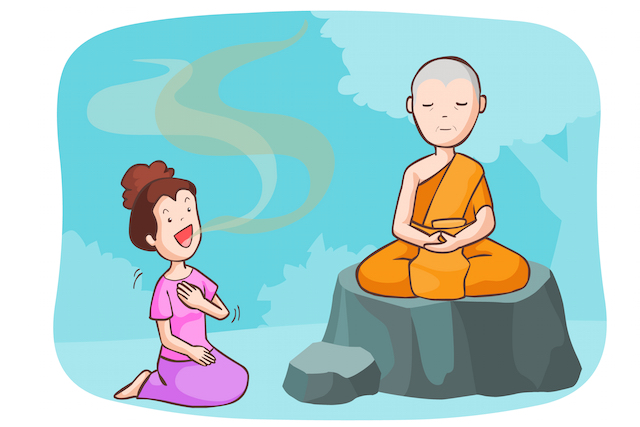
Monk meditating image via Shutterstock