Tag: spiritual

  • 4 Ways to Get Better Sleep for Increased Spiritual Wellness

    4 Ways to Get Better Sleep for Increased Spiritual Wellness

    Happiness in simplicity can be achieved with a flexible mindset and nine hours sleep each night.” ~Dalai Lama

    It happened again. I got up after being awake all night, wondering where I’d gone for the past nine hours. I remember laying my head on the pillow, exhausted, happy to finally close my burning eyes. My body settled sweetly into the mattress, and I thanked the universe for our heavenly bed.

    Just moments away from slumbering bliss, I said my prayers and did my usual practice of releasing energy from the day and honoring my blessings. For the moment, my mind was still and peaceful.

    I fell into a space between the dream state and wakefulness. A place I know well. It’s not necessarily a bad place to be, but when I’m in it, I’m fully aware of the fact I’m not sleeping; my brain isn’t in REM. I tried breathing exercises and meditation only to feel like I was ready to run a marathon. After a few hours of this, sleep anxiety crept in, bearing gifts of thoughts and frustration.

    The countdown of the hours until it would be time to get up began. The list of things I needed to do the following day danced in my mind like a marching band tooting its horn and ringing bells—because if I couldn’t sleep, somehow running through my to-do list felt productive. When the morning came, I was not the calm presence I aspire to be. The Tiny Buddha inside was napping.

    When I was a kid, I had no problem falling asleep on the bus, in class, watching TV… pretty much anywhere I could lay my head down and close my eyes. But as Ive grown older, sleep hasnt always been as accessible. In fact, with everything going on in the world over the past few years, sleep has become a modern-day luxury.

    As a spiritual seeker, I find that when I dont get a good night of sleep, its harder to drop in for meditation. I’m more irritable. Less sharp. My intuition feels clouded. And my ability to focus on my goals and manifest my visions can be hindered.

    I wondered if I’d spend the rest of my life chasing sleep to catch up to my dreams.

    Then, I started talking to friends. They’re struggling too. Whether the problem is falling asleep or staying asleep, almost every person I talked to is suffering from some form of sleep deprivation. Is this a natural part of aging or an unspoken epidemic? Even my daughters in their early twenties wrestle with insomnia.

    These types of problems always make me ask, “What is the lesson here?” But as I started to look for answers, what became more interesting was the link between sleep and spirituality.

    As it turns out, there is a parallel between sleep quality and spiritual connection, which means prioritizing sleep hygiene is not only important for biological processes but for spiritual wellness.

    During sleep, the body repairs muscles, organs, and tissues. It also regulates hormones, detoxifies, and boosts the immune system. Sleep also bridges the conscious and subconscious mind. This allows us to process the experiences of our day, the emotions that may have arisen, and the spiritual insights that help us create meaning in our lives. Therefore, prioritizing sleep hygiene can be an act of spiritual self-care that nurtures the mind’s capacity for deeper spiritual insights and greater overall wellness.

    Its clear that sleep hygiene is extremely important both to our biological and spiritual processes, but lets take a closer look into the sleep-spirituality connection.

    If we are sleep deprived, we are not thinking clearly, and, therefore, we are less connected to our intuition, which is directly linked to our imagination. Studies have shown that a lack of sleep can have a major impact on our ability to access creativity and problem-solving skills, so it makes sense that struggling in these areas has a negative influence on our spiritual well-being. So, what can we do to ease this struggle that many of us share?

    4 Ways to Improve Your Sleep Hygiene for Increased Spiritual Wellness

    Nighttime routine

    Set a consistent time to go to sleep and wake up every day, even on weekends. A more structured sleep routine helps to align your circadian rhythm, resulting in more consistent sleep. 

    Sleep sanctuary

    Design your environment to support your sleep goals by reducing screen time, turning lights on low an hour before bed, mitigating noise pollution with healing frequency music or a white noise machine, and turning the thermostat to sixty-five degrees.

    Preparation practices

    Create a spiritual bedtime ritual that you devote yourself to every night in honor of sleep. My ritual includes taking a bath or shower, gratitude journaling, prayer, and yoga nidra. I spray the sheets with a lavender water and essential oil blend before I lay my head on the pillow and rub magnesium oil on the soles of my feet as a final good night. The key is to create a simple process that feels nurturing and peaceful.

    Track your sleep and spiritual practices for a month.

    Journal every morning with just a few words about the quality of your sleep and every evening about your meditation results for the day. By tracking how your sleep and spiritual wellness connect, you will be more motivated to stick to best practices for a good nights sleep. Ultimately this will benefit your mind, body, and spirit.

    The biggest lesson I’ve learned in this exploration is that we’re not alone in our quest for a nourishing night of sleep. We need to have compassion for ourselves on the nights where we find it challenging to drift off into dreamland.

    If you realize you’re in the pit of sleep anxiety, cut yourself some slack. You are not failing. Accept and surrender to the moment, and trust that simply resting will be enough to get you through the next day.

    Sleep restores a sense of peace and divinity within, but rest is just as important. By making sleep a priority, your mind will feel calmer, quieter, and more focused during meditation, allowing you to feel more spiritually connected to your life mission, every day.

  • How to Find the Gold When Everything Falls Away

    How to Find the Gold When Everything Falls Away

    “To stay with that shakiness—to stay with a broken heart, with a rumbling stomach, with the feeling of hopelessness—that is the path of true awakening. Sticking with that uncertainty, getting the knack of relaxing in the midst of chaos, learning not to panic—that is the spiritual path.” ~Pema Chödrön

    Sixteen years ago, when everything familiar fell away, I felt desperate for spiritual answers. I bartered with a woman who called herself a quantum healer. When I explained I didn’t have enough money to cover rent, bills, and food, she scoffed, “Well, you have to have money to be spiritual.”

    Say what, now?

    In our culture, this myth is pervasive, yet we only have to look at the life of the Buddha (or Jesus or Muhammad) to see that’s untrue. The Buddha left a life of wealth and privilege in order to awaken.

    What this woman probably meant was that people need money to attend retreats in exotic locales, or to purchase expensive courses on manifestation, or to hire coaches who promise them seven-figure incomes.

    To awaken to our true nature requires nothing. It doesn’t even require a teacher, because life is the teacher.

    For many of us, spiritual growth is propelled by a falling away of everything familiar, including income. Admittedly, it’s difficult to focus on spiritual growth when we’re hungry or facing other survival challenges. The paradox is that these can be a crash course in awakening if we allow them to be.

    In my experience, these challenges are designed to humble our egos and show us that all our doing and egoic effort aren’t going to work; only surrender can. Begging and taking a victim stance (historically, one of my areas of specialty) doesn’t work either.

    The Jedi trick is to find peace despite all this, to discover the freedom of emptiness, or, as it’s called in Christianity, “the peace that surpasses all understanding.”

    Prioritize Inner Peace

    “If you get the inside right, the outside will fall into place.” ~Eckhart Tolle

    One year, despite sending 200+ emails, I couldn’t find work. If I hadn’t felt so frustrated, the sheer volume would have made it comical.

    Then, after listening to many, many hours of Eckhart Tolle’s talks, I decided to stop trying so hard. I began practicing a fierce form of presence, staying only on the razor’s edge of this very moment, because to consider anything other than the present moment brought panic.

    I prayed and meditated near-constantly, which helped me become aware of even the smallest signs of grace: seeing the first cherry blossom on a tree, making eye contact with a starling, or receiving a free baguette from a local baker. Each of those moments—and thousands more—brought inexplicable joy.

    In those moments, I felt deeply connected to the network of life. I’d believed I needed a baseline of money to feel inner peace, yet without money, I’d found inner peace anyway.

    The moments that brought up immense fear in our relative world became expansive in the absolute. When I fully accepted and inhabited each moment, life showed me the next step. And the next.

    Life isn’t quid pro quo. Capitalism is. Whatever we put out always comes back, though not always in the same form.

    How to Find the Gold When Everything Falls Away

    Cultivate joy with a giving practice.

    In 2014, amidst a round of financial challenges, I heard about the 29-day Giving Challenge, based on Cami Walker’s book 29 Gifts: How a Month of Giving Can Change Your Life. The book is based on instructions she received from a medicine woman named Mbali Creazzo. The idea is to give something away freely every day for 29 days—and also to pay attention to what flows in.

    These gifts don’t have to be material, though it helps to give what you would like to receive. Because I was hungry and behind on rent and bills, for me, that was money.

    One day, I was able to purchase a $10 gift card for the local grocery store, and I gave it to a woman I saw frequently on the street. Other times, when I was down to less than $5, I left a dollar coin on a wall where children love to climb.

    Being broke had made me feel less than human. Recognizing that I could help someone feel seen and valued again, even briefly, was a revelation. Knowing that a child would find that dollar made me smile all day.

    Giving became, and remains, the most euphoric practice I’ve ever had. This isn’t virtue-signaling or bragging; it completely transformed my life, or rather, the way I experience life.

    We all need something, and we all have something others need. That’s the definition of interdependence.

    Many times, I gave patience, directions, or thanks. Other times, when I could afford it—and this is still one of my favorites—I would leave a chocolate bar on a public bench with a note that read, “Please accept this random act of chocolate.”

    Other times, I wrote notes on Post-its with words I needed to hear and placed them in public areas. Things like “You are loved” or “You make a difference in the world.” Writing each of these gave me a hit of dopamine and helped me feel more like a part of the world rather than forgotten.

    Try community giving.

    For several years, I bartered with an independent coffee shop to be able to eat one meal a day.

    Inspired by an Italian trend called caffé sospeso, we created a practice of “suspended coffee.” If a customer was financially able, they could pay ahead for someone else’s coffee. If someone wanted a coffee but couldn’t afford it, they could request a “suspended coffee.”

    Being able to co-create a giving practice that benefited everyone in the community made me giddy.

    At the same coffee shop, baked goods were typically thrown out after two days. I began taking bags of leftover muffins, scones, and banana bread to a local soup kitchen, where they were a treat for guests more often served soup and stale bread.

    On holiday weekends, instead of throwing out food, we gave whatever pre-made salads remained, as well as day-old baked goods, to people in transitional housing.

    I was flat broke and trying to pay off a five-figure debt, $10 at a time. These giving practices evoked such joy in me that my anxiety about money all but disappeared (okay, mostly). And when that happened, life stepped in to support me.

    Be open to receiving.

    What does it mean to be open to receiving? A complete lack of resistance to what is. Many people feel resistant to receiving financial help because there’s a myth in the dominant culture that accumulated wealth equals an individual’s value, and not having money makes someone ‘less than.’ Those are both false human constructs.

    It’s important not to give in order to receive, nor to give because you believe you have to. Those cancel out the energy of giving. If you can give freely, though, miracles unfold.

    For me, these ranged from a neighbor who spontaneously offered me money to cover rent to an acquaintance who gave me the cash back from her credit card so I could pay down more of the five-figure debt. I saw clearly that flow is always at work in the world. And I stopped feeling ashamed about receiving.

    Giving helps me see what I do have: people who care about me, a roof over my head, a meal that day. It gets me out of my head and my ‘poor me’ stories.

    To my delight, giving helped me rediscover the feeling of oneness, emptiness, or “the peace that passes all understanding.” Because I felt so peaceful, I felt less resistant to my own situation, and that allowed the situation to change.

    We think of items and money as “ours,” but really, we’re just stewards. Indigenous cultures have known for millennia what we settler-descendants need to learn: What we have is to be shared with others, not hoarded.

    Money Can Make Us Forget

    Once income began flowing in, I was mortified to discover how easily I slid back into wanting to keep what I had (after all, I rationalized, it wasn’t much). I began grasping again and believing in the collective delusion of stability. Awareness—access to the experience of emptiness, oneness, or the “kingdom of heaven”—shrank.

    My ego had been so thoroughly humbled, even fractured, during the broke times that it grasped at anything that could help it rebuild a sense of identity—which is antithetical to emptiness and peace.

    It’s not just me. Sociologist Paul Piff, Ph.D., of the University of California, Irvine, ran a game-based experiment in which he found that “rich” players hoarded their fake wealth far more than “poor” players, who tended to be more generous. This aligns with research that demonstrates that, on average, wealthier people donate less than their less-affluent counterparts.

    By maintaining a giving practice, I can reconnect with that expansive feeling of joy at being able to meet someone else’s need, whether that’s a friend, a stranger, or some random child walking along a wall who finds a dollar coin.

    It’s a Process and a Practice

    The gold in the title of this post refers to awareness. That is the experience that all spiritual teachings point toward (and which no words can capture).

    When things fall away, life is inviting us to awaken. As long as we resist what is, the doorway remains closed. When we prioritize inner peace and then generosity, miracles can happen.

    After nearly three years of bartering with the coffee shop, I was offered a contract—out of the blue—that helped me pay off the five-figure debt within six months. This was unusual, though not unheard of.

    More typically for me, and probably for many, when we give from what we have, smaller amounts begin to come in that enable small payments or a few days of groceries. It doesn’t always come back as money. Receiving food by bartering with the coffee shop was a complete gift to me. Be open to different ways of receiving.

    It’s not easy when things fall away, but it is an opening. If we can learn to prioritize inner peace, let go of our egos, and become part of the flow, we can find peace and even happiness greater than we ever imagined.

    If you’re hungry and broke, the apps Too Good to Go (US/Canada), FlashFood (US/Canada), and OLIO (global) may be able to help.

  • 4 Tips for Failing Better in Your Spiritual Practice

    4 Tips for Failing Better in Your Spiritual Practice

    “Ever tried, ever failed, no matter. Try again, fail again, fail better.” ~Samuel Beckett

    I felt an enormous sense of relief when I discovered that he was a total mess! I’m talking about one of the most revered Buddhist monks of our time. I learned this from a short autobiography, A Mountain in Tibet: A Monk’s Journey. It was written by the current abbot of the Kagyu Samye Ling Tibetan Buddhist monastery in Scotland (UK), Yeshe Losal Riponche.

    Having escaped from his war-torn home country (Tibet) and after much other trauma, he found himself in the West, entirely immersed in the sex-drugs-rock’n’roll culture of the 1960s. “Selfish and full of pride,” “surly and miserable,” is how Yeshe Losal Riponche describes his younger self in the book. He didn’t part with this way of being until his late thirties despite having grown up in, and having been surrounded by, the Buddhist culture his whole life.

    I too have had an intense period of being “selfish and full of pride,” “surly and miserable” recently.  I was overworked, stressed, snappy, judgmental, critical, disappointed with myself, and constantly blaming others. With zero daily practice to carry me through the inner and outer chaos.

    Why is it still happening to me? After years’ worth of pursuing a different way of being. After years’ worth of seeking a life free from craving, aversion, and the usual human insanity. Why do I have to go through this never-ending cycle of feeling more mature and more at peace, and then hitting a low point when my mind is as unruly as that of any random person who’s never been exposed to any dharma whatsoever?

    The autobiography was a timely gift. It reminded me that I was not in it alone.

    We all, every single one of us, travel the same path. With its “ups and downs.” And this whole thing is called life. Ram Dass says that aiming to stay on a spiritual “high” all the time is not just unrealistic. It is a form of spiritual materialism. I become a consumer who wants this one thing (being high and holy) and has a tantrum every time she doesn’t get the goods. The more you fight it, the worse it becomes.

    Ram Dass shares the most hilarious and uplifting stories of enjoying (?!) seven hours’ worth of sexual fantasies while pretending to be in deep meditation. Or spending the first nine days of his thirty-day silent retreat watching tv for twelve hours a day. While it’s fun listening to his confessions, one can feel how utterly painful it would have been for Ram Dass to observe himself engage in such behavior.

    His advice? Simply keep watching but do it with compassion. This too shall pass.

    Even if I’ve failed to learn much else on the path, I think I have managed to figure out this one thing. It is not about getting holier each day moving in a neat trajectory. I’m not sure what it’s all about. But it’s not about that.

    Now, when I catch myself sleep-walking through life, I no longer feel deflated, discouraged, or dismayed. I am much more at peace with it. And that weakens the power of the monkey mind. Non-resistance is a great source of strength. I could never really understand Mooji’s call to “be at peace with a chaotic mind.” I now know that it is definitely possible.

    You can watch yourself do mental acrobatics with self-righteous guilt and blame, and think, “There there…this too shall pass.” Once the child has exhausted itself and collapsed after the tantrum, it’ll naturally calm down. And the Buddha is waiting on the other side. There is nowhere else to go. There is no escape from our Buddha nature.

    This is not to say that discipline doesn’t matter, that sustained whole-hearted commitment is not necessary, or that “anything goes.” But I strongly believe that neither lack of discipline nor commitment, nor any other force under the sun, as Christians put it, “not even the powers of hell can separate us from God’s love.” (Romans 8:38, NLT) The Buddha’s heart overflows with compassion for me; his faith in me and commitment to me is unshakeable. Nothing can ever change that.

    All of the above is just to say do not be discouraged. Ever. If you are reading this, rest assured, you’ve been trapped! You are secure on the path. You may get off track, do a U-turn or whatever, but you simply cannot choose another path. The path has chosen you. You are safe.

    What follows are a few simple tools and suggestions to create an environment and a lifestyle that continue to remind you that you are a student, a disciple, a pilgrim. Always. Even when your life is filled with anything but peace, contentment, and equanimity.

    The Environment

    I like to draw living water from out of the well that is fed by the rivers of every tradition. I am quite eclectic in my spirituality and my home reflects that. Among my precious possessions are

    • a small statue of Ganesh, the Elephant God, from an ashram near NYC,
    • a beautiful Orthodox icon Mary and the baby Jesus (that reflects my cultural heritage),
    • incense sticks from London Buddhist Centre that I pop in for puja now and then,
    • a string of beads from the London Self-Realisation Society,
    • an audio-Bible on my phone,
    • an e-version of Ekchart Tolle’s The Power of Now on my laptop,
    • a magazine on spiritual accompaniment on the bedside table…

    The list goes on. The point is, my flat and my environment in general are flooded with reminders of where I’ve been, what I’ve heard, who I’ve met, and what matters most to me.

    Sometimes some of these reminders become like fridge magnets and I stop noticing them. Then I may introduce something new. But most of the time, these things are not wallpaper. I’ve given them a function. They are meaningful. They keep reminding me of who I am.

    What does my weird collection represent to me? It reminds me that my past has been filled with spirituality, and so is my present and my future. No area of my life is free from meaning and purpose, as every moment in time and every place in space are part of my practice. I am never alone.

    I am surrounded by fellow pilgrims even when I don’t have anyone physically present next to me. Behind the awe-inspiring diversity of beliefs and practices, there is unity and oneness underneath it all. Every one of us is part of the lineage. May we continue practicing in gratitude to those who came before us and in guarding the tradition for those who are yet to come.

    Does your environment reflect your path, your identity, your truth? How can you make small changes to your bedroom or workplace to introduce a few things that would remind you of who and where you belong?

    The People

    Life is forever dragging me into some human drama where people and situations trigger me, and my behavior acts as a trigger for others. There’s no sense of perspective or wisdom or equanimity in my life. No one models any of that to me, and I fail to model it to others.

    Without spiritually significant others in my life, I’d be entirely lost, thinking that the grown-up world really is just about bills and “commitments.” In the more balanced periods of my life, I may have a more stable relationship with such people (e.g., taking part in a meditation group regularly). At other times, I still try to make sure that these people are still in my life even if I’m not in regular contact with anyone in particular.

    The longer you stay on the path, the more fellow pilgrims enter your life. Then there’s other people who are just naturally joyful, or naturally perceptive or compassionate. Talking to them reminds me to seek after what’s true and beautiful, and to not just stay a passive participant in the rat-race of life.

    It’s important that I get an occasional email or message from those people. It’s vital that they get to hear from me once in a while. This infrequent contact isn’t too heavy to maintain, yet it punctuates one’s life with tiny reminders of who one really is, or rather who one isn’t.

    If you are able to, just pop into any spiritually meaningful place that’s local to you. Even a five-minute chat with someone there would help you to feel like you’re on the right path again.

    Send a quick “hi, how are you” to someone you met on a retreat or someone that you’ve connected with in another way, watch a YouTube video with someone who has been a long-term teacher or source of inspiration for you, or attend a live talk, online or in person.

    Even a random one-off visit and a very occasional catch-up with someone who is after the same thing as yourself does miracles. This is especially so because you get to see how other people fluctuate between the states of being spiritually awake and asleep. They too occasionally fall asleep without falling off the path.

    The Doing

    It’s good if you are able to do things “properly” (e.g., you meditate once a day every day; you are part of a community where people deepen and grow in their practice together, etc.) But chances are, you want to do these things, but half the time you can’t get yourself to do much or anything at all. That’s fine. Just do something.

    Pretty much anything goes. Watching inspirational videos, listening to thought-provoking podcasts, journaling, walking, doing mindful coloring, listening to relaxing music or sacred chanting, meditating, or sleeping. Anything that adds color to your life counts (e.g., a heart-warming film or a powerful theater performance, or enjoying a nice meal or learning the basics of self-massage).

    You are in a classroom, so every life experience is part of the path, part of your practice. Just try and have a brief moment of mindful appreciation for whatever it is that you are doing. Give thanks. And just relax, enjoy it, have fun.

    Remember also that rest is resistance in a world where we’re expected to do more, better, faster. So, be rebellious. Do nothing.

    The Timing  

    Yes, that is the most annoying and painful question. Just when do I get the time to stop and do anything vaguely spiritual?! I’d say this is about being creative and generous in your interpretation of what counts as spiritual practice. If your daily routine allows you to have a five-minute cup of tea or coffee first thing in the morning, that’s an awesome start to the day. That’s your practice.

    When I can’t do it (most days), I make myself a cup of coffee at work and try to not turn my work laptop on until I’m done with my cup of coffee. At the end of the day, when I’m too tired to meditate, pray, read, or do anything else, I just turn on the pretty fairy lights and curl up on the little sofa for ten minutes. Just staring into space.

    My other mindful pause is while air-drying my hands at work. It takes a little longer than doing it with a paper towel and gives me a couple more seconds of peace and quiet in the bathroom. Occasionally, I’d stand up and stare outside the window in my office. Two- to three-minute-long micro-breaks are powerful tools for grounding yourself in the moment.

    Naturally, some days are so full-on, I don’t even have the luxury of taking the time to dry my hands properly. I just do it when I can. When I remember. Bringing attention back to the breathing is something that I find relatively easy and very helpful as this is how I meditate anyway.

    Little but often is certainly best. In my books, “occasionally” and even “very occasionally” are still better than “not at all.” If you can take one mindful breath a day—even once a week—this is still a precious moment of mindfulness. It counts; it does make a difference.

    No matter how much or how little “spiritual stuff” you manage to do on any given day, it’s the intention that counts, as the old saying goes. It really does. While the intention is there, the flame is burning. So, just keep it burning by taking those micro-breaks and filling your life with mini reminders to ground and strengthen you. In conclusion, let me remind you of my precious mantra:

    Ever tried, ever failed, no matter. Try again, fail again, fail better. (Samuel Beckett)

  • 9 Self-Guided Meditation Courses to Deepen Your Practice and Supercharge Your Spiritual Growth

    9 Self-Guided Meditation Courses to Deepen Your Practice and Supercharge Your Spiritual Growth

    In a culture that teaches us we need to prove our worth through achievements, it can be challenging to prioritize peace, well-being, and spiritual growth.

    We’re bombarded by marketing messages that tell us we’ll be enough, if only we “buy this—do this—look like this,” making it difficult to simply relax in who we are and feel a sense of contentment in our lives. But there is a way out of this cycle of discontent, anxiety, and constant striving.

    If you’re yearning to connect with life more deeply and feel a sense of greater peace and acceptance, I highly recommend developing a regular meditation practice.

    Before I began meditating, I was constantly agitated, anxious, and self-conscious, trapped in a mind that always found fault with myself—and everyone and everything around me.

    Meditation is the closest thing I’ve found to a magic bullet in life. It can replace stress with calm, confusion with clarity, ignorance with self-awareness, and bitterness with grace.

    There’s a lot we can’t control in life, including our thoughts and feelings—but we can control how we engage with them. And that’s how we can find a little sliver of peace in this complex, chaotic world. It all starts with mindfulness.

    Not sure where to start, or how to take your practice to the next level? Tiny Buddha sponsor Shambhala Online has you covered!

    The nine courses I’ve shared below will allow you to learn from anywhere, on any schedule, and to revisit the content whenever you’d like to be refreshed or re-inspired. They’re also great for when you feel your anxiety ramping up and need a de-stress tune-up, and something that reminds you that you are enough just as you are.

    All of the courses feature authentic and deeply experienced teachers from Shambhala’s global community, and offer teachings from their Tibetan Buddhist heritage in forms that are direct and relevant for Western students.

    As a special gift to Tiny Buddha readers, the Shambhala team has included a unique 10% off code for each course.

    I hope you find something below that speaks to you!

    To Start or Resume a Regular Meditation Practice

    Mindfulness meditation can change your life. It’s a transformative practice that offers relief from anxiety and stress, a more grounded life, better general health and wellness, stronger relationships and connections (with others, the world around us—and ourselves!), a more spacious and accommodating mind, and innumerable other benefits.

    If you’re looking to begin, or resume, a regular meditation practice, the course Learn to Meditate can help.

    Led by senior teacher, movement artist, and pioneer Arawana Hayashi, Learn to Meditate covers both sitting and walking meditation, equipping you with the tools necessary to integrate meditation into your daily life—bringing you greater well-being and connection with yourself and others.

    Use the code TBLEARN10 to receive 10% off Learn to Meditate.

    To Develop Self-Love

    Learn to Love Yourself with Sabine Rolf will help you discover warmth and kindness for yourself—a beautiful quality known as loving-kindness in Buddhism (maitri in Sanskrit).

    Through meditation, experiential exercises, and talks, you’ll learn to embrace and accept your authentic self; manage stress, anxiety, and difficult emotions, leading to a more balanced and resilient state of being; and develop self-confidence and trust in yourself.

    By investing in your own self-love and self-compassion, you’ll pave the way for personal growth, increased happiness, a more harmonious life, and stronger and healthier connections with others and the world around you.

    Use the code TBLOVE10 to receive 10% off Learn to Love Yourself.

    To Cultivate Compassion and Love

    If you want to explore the Mahayana Buddhist path of universal compassion, Melting the Ice and Getting Unstuck: Talks On The 37 Practices of a Bodhisattva is the perfect jumping-off point.

    This course uses as a reference a classic 14th-century Tibetan Buddhist text called The Thirty-Seven Practices of a Bodhisattva. A “bodhisattva” is any ordinary person who makes a commitment to live like the Buddha: to help others discover their fundamental goodness and be free from suffering. This course explores what it means to live on the bodhisattva’s path, and offers invaluable guidance for cultivating a strong heart and a compassionate approach to life’s challenges.

    Use the code TBUNSTUCK10 to receive 10% off The 37 Practices of a Bodhisattva.

    To Explore Buddhism and the Buddhist Path

    Shambhala’s yearlong Foundations for Freedom: The Hinayana offers an in-depth exploration of foundational Buddhist teachings, providing you with a clear understanding of the core principles and practices.

    Foundations for Freedom has five parts, each led by experienced teachers, and covers core Buddhist teachings, such as:

    • The nature of suffering,
    • The origin of suffering,
    • That freedom from suffering is possible, and
    • The path of Shila (discipline), Samadhi (meditation), and Prajna (wisdom).

    By engaging with these teachings, you’ll develop mindfulness, compassion, wisdom, a deeper connection to your spiritual journey, and a true understanding of foundational Buddhist teachings and the Buddhist path.

    Use the code TBFREEDOM10 to receive 10% off all Foundations of Freedom courses.

    To Discover a Spiritual Path in Everyday Life

    If you’d like to bring mindfulness into your daily life and discover the “ordinary magic” in your everyday- experiences, check out Meditation in Everyday Life and Contentment in Everyday Life.

    Meditation in Everyday Life

    Led by Janet Solyntjes, Meditation in Everyday Life is a five-week introduction to mindfulness meditation.

    You’ll learn about peaceful abiding meditation, receive guidance on establishing a meditation practice, and explore ways to improve your daily life through meditation. The course also offers meditation posture instruction, shamatha yoga instruction, and downloadable guided meditations.

    Through simple instructions and support, you’ll discover your mind’s innate stability, strength, and clarity.

    Use the code TBMEDITATION10 to receive 10% off Meditation in Everyday Life.


    Contentment in Everyday Life

    Contentment in Everyday Life invites us to explore the art of finding happiness within ourselves, regardless of our external circumstances. It helps us understand that even in the most difficult of circumstances in life, we are enough—just as we are.

    In this five-week course led by Eve Rosenthal, you will learn how to cultivate contentment through meditation and contemplation practices. You’ll also learn how to relax with yourself, appreciate simple human experiences, and face life’s challenges with gentleness and mindfulness.

    Use the code TBCONTENT10 to receive 10% off Contentment in Everyday Life.

    To Explore Human Goodness and How to Build a Good Society

    If you’re looking to connect with your own worthiness and contribute to a more compassionate, enlightened society, explore the Basic Goodness series. Together, these three courses delve into the principle of basic goodness as it applies at the level of the individual, society, and reality itself, offering a roadmap for personal and social transformation.

    Who Am I? The Basic Goodness of Being Human

    In Who Am I? The Basic Goodness of Being Human, you’ll embark on a journey of contemplative inquiry, exploring the timeless question “Who am I?”

    Through Buddhist teachings and meditation practice, you’ll learn how our sense of self arises moment by moment, and how to use meditation to contact and express the basic goodness that lies within you.

    Use the code TBHUMAN10 to receive 10% off Who Am I? The Basic Goodness of Being Human.

    How Can I Help? The Basic Goodness of Society

    In How Can I Help? The Basic Goodness of Society, you’ll explore your relationships with others, your aspirations to help the world, and specific aspects of social transformation.

    This six-session course delves into what an “enlightened society”—a society that is based on and nurtures the goodness of all—might look like. The teachings focus on transforming four aspects of society: family, professional life, entertainment, and economy.

    Use the code TBSOCIETY10 to receive 10% off How Can I Help? The Basic Goodness of Society.

    What is Real? The Basic Goodness of Reality

    In What is Real? The Basic Goodness of Reality, led by acclaimed teacher John Rockwell, you’ll delve into the magical nature of reality, learning the progressive stages of discovering non-dual perception of the elements and, consequently, the nature of the mind.

    This experiential course encourages you to engage with sense perceptions and the elements as your teachers, enabling you to see, hear, touch, taste, and smell reality anew. You will awaken your innate capacity to directly experience the basic goodness that is the essence of reality.

    Use the code TBREALITY10 to receive 10% off What is Real? The Basic Goodness of Reality.

    No matter what aspect of meditation and spirituality you wish to explore, Shambhala Online offers courses that cater to your unique needs and interests. As you engage with these teachings, you’ll not only deepen your personal practice, but you’ll also contribute to the creation of a more compassionate, enlightened society.

    Shambhala Online also offers a regular calendar of live online courses with personal interaction, from monthly and quarterly mini-retreats to programs with revered teachers from the Tibetan Buddhist tradition. To see their upcoming courses, view their course calendar.

    If you have any questions or requests, you can contact the Shambhala team at registrar@shambhalaonline.org.

  • Conscious Escapism: The Benefits of a Spiritual Cheat Day

    Conscious Escapism: The Benefits of a Spiritual Cheat Day

    “The road to excess leads to the palace of wisdom… You never know what is enough until you know what is more than enough.” ~William Blake

    Many people discover spirituality through suffering. I found the path due to years of depression, anxiety, and psychosis. Part of the awakening process is identifying behaviors, traits, habits, or thoughts that don’t serve you. As your behavior changes, so does your diet. Not just what you eat, but everything you consume, including what you listen to, watch, read, and pay attention to.

    Orthorexia is the term given to an unhealthy focus on eating in a healthy way. This sounds like a paradox, as a healthy diet improves overall health. However, there’s a tipping point—eating well can become an obsession. You might develop anxiety around eating junk food, and your desire to eat well influences your social life, or you feel guilty for the times you indulge.

    Your spiritual diet isn’t free from its own form of orthorexia. A healthy spiritual diet—such as a practice of meditation, reading spiritual texts, spending time in nature, serving others—boosts your spiritual health. But there is a tipping point.

    What if you guilt yourself for wanting to spend an evening watching Netflix? Or eating without being mindful? Or being distracted and unfocused? Or not having the energy to serve? Or not catching yourself before reacting in anger?

    What if when you feel anxiety, you don’t want to journal or meditate or unpick and dissect its root cause? What if you don’t want to spend the energy to “raise your vibration” or reframe your thoughts? What if all you want is to eat ice cream or go out with friends or have a glass of wine or watch the Champions League?

    The time will come where you no longer crave junk food, for the nourishment of the path itself satiates you more than anything. Until this point, rather than trying too hard to resist, it’s much more beneficial to allow yourself to indulge, and give yourself the occasional treat, without guilt or shame.

    Unconscious Escapism vs. Conscious Escapism

    In psychology, escapism is defined as a behavior or desire to avoid confronting reality. I place escapism into two categories: unconscious and conscious. This is an important distinction, because most people who practice meditation and mindfulness are, to some degree, aware of when they are engaging in unhelpful behavior.

    Unconscious escapism lacks self-awareness. It is a default, auto-pilot reaction to certain uncomfortable feelings. It’s not wrong, or bad, it’s just a way we learn how to cope. But in the context of spiritual growth and healing, unconscious escapism perpetuates suffering. It distracts us from discomfort and ultimately distracts us from ourselves.

    However, conscious escapism explores and acknowledges underlying emotions with compassion, before choosing to indulge. Maybe you’re just tired or require a feeling of comfort, or simply want to enjoy a movie. All of these options are okay, and don’t make you any less “spiritual.” Quite the opposite: choosing to do a mindless activity can be a great act of self-compassion.

    Conscious Escapism Is the Cheat Meal

    Conscious escapism is choosing conventional distractions, knowing the occasional cheat meal doesn’t reflect your overall diet. It’s acknowledging where you’re at and allowing yourself to lean on mechanisms behaviors that provide temporary solace, fully aware this isn’t the ideal solution.

    To get physically fit, a manageable and balanced routine and diet are better than an extreme, high-intensity routine and crash diet. Start off with high intensity, you’ll likely burn out and return to old habits. Instead, as you progress and form new habits, you might increase the intensity, or find that eating well becomes easier.

    There’s no reason the spiritual path has to be any different. Over the years, I’ve experienced the extremes of depriving myself due to the belief around a spiritual person wouldn’t… (get angry, eat nachos or other unhealthy food, binge watch Netflix when feeling down, argue with their partner, enjoy buying new clothes, curse, procrastinate on tackling their finances…)

    It’s only when I allowed conscious escapism that I’ve discovered what really benefits me.

    Mostly, I was encouraged to try this route by supportive friends and family who could tell I needed time off. I’ve always pushed myself, I’ve always placed high standards on myself, and these traits of perfectionism were absorbed into my spiritual practice.

    Over time my need for conventional escape has reduced. But that doesn’t mean I won’t skip a meditation session or watch a few episodes of Community to lighten my mood if it feels right to do so. Going too far in the other direction creates a feeling of stress or even resentment towards my practice, a result of spiritual orthorexia.

    The Spiritual Diet and Discernment

    A word of warning: Conscious escapism isn’t an excuse to choose the path of least resistance. The ego can hijack this concept, too, weaving a narrative of deceit that finds excuses and reasons as to why you deserve to not meditate, or why your unique spiritual path is finding enlightenment through Game of Thrones.

    Be cautious of this and apply the principle of a standard diet. Understand which foods are good and which aren’t. I know that a healthy diet requires me to eat well most of the time. I know that if I always indulge in high-fat, high-sugar junk food, it’ll lead to reduced health. But I know the occasional treat is fine.

    Knowing when to indulge and when to do the work is a matter of trial and error. It takes time, practice, and self-honesty. It requires self-compassion for the moments you over-indulge, knowing sometimes the road to excess leads to the palace of wisdom.

    When you find momentum with your practice, you might experience a tendency to go all-in. The joy and inspiration that comes from meditation, or spiritual discussions, or insights, or noticing areas of growth or healing, create a sense of wanting more. You might feel the spiritual path is your life’s calling, and you’ll do all you can to honor it.

    This is beautiful, and it’s worth appreciating the innocence of this intrinsic motivation. However, I’m here to tell you—you can take the day off. You can breathe, pause, and take time away from growth or development.

    You can, unashamedly, give yourself permission to indulge in conscious escapism.

  • How to Access Your Intuition by Listening to Your Favorite Music

    How to Access Your Intuition by Listening to Your Favorite Music

    “Sometimes music is the only thing that takes your mind off everything else.” ~Unknown

    All major art forms can be a way to experience a deeper part of ourselves, but there is something unique about music. Perhaps it’s because music is a frequency with no physical form, so it can easily become a pathway to the formless realms of intuition and our higher selves or soul. We may never know for sure, but it is clear that music has a powerful effect.

    I have had experiences of feeling whole, connected, and complete when listening to music. However, I was not consciously aware of these experiences for a long time.

    I can remember driving my car, listening to my favorite songs, and being “transported” someplace. It was an experience of complete euphoria and wholeness. At the time, these were mainly subconscious experiences, and all I was aware of while listening was that I felt good.

    As I started to develop and use my intuitive abilities, I began to have many conscious experiences of my higher self. Only with this reference point did I become aware of how many times I connected with my higher self while listening to music. It was the same experience!

    Not all music will feel like a spiritual experience, and the pieces that do will be specific to the person listening, as we’re all unique. You may have said, without thinking much about it, that a particular song “speaks to your soul.” It does, and you will want to listen for its helpful guidance.

    Have you ever heard a song and then put it on repeat for the whole day or even a week? I sure have, many times. It seems like each time I play a favorite tune, it opens my heart a bit more to reveal hidden emotions and desires. These are the types of moments and songs you will want to observe to see what your inner wisdom is showing you.

    Over the past four months, I have been atypically listening to some of my favorite music from the 1980s; “Time After Time” by Cyndi Lauper, “Hazy Shade of Winter” by The Bangles, “Cherish” by Madonna, to name a few. Even current songs with an ’80’s feel find themselves first on my playlists.

    I began to internally investigate why the sudden ’80s music craze in my life when I received a knowing from my higher self that I was homesick and needed to talk more with family. I then started to recall childhood scenes of me playing with the family and neighborhood friends.

    I was in my formative years during this decade, and my siblings were still living at home. The ’80s was the only decade my entire family lived in the house before my older siblings moved away. It was a fun and joyful time in my life.

    My whole family now lives all over the country, and I live in Hawaii. We usually travel several times a year to see each other, but not this year because of the pandemic. I have been suppressing sadness about not being able to travel easily and safely to see my loved ones for many months without realizing it.

    The ’80s binge I’ve been experiencing these past few months was a way for me to emote this sadness and experience the childhood nostalgia associated with this music genre. Once my higher self revealed the deeper feelings around my recent propensity towards ’80 music, I began to reach out to my family more, which has helped with my feelings of isolation.

    Next time while listening to this music, take some time to reflect internally on what is happening and if any high levels of intuitive information are coming through. What I mean by high levels is direct guidance coming from your higher self or soul.

    There are ways to tell if you are getting intuitive guidance from your higher self while listening to music. You can observe specific characteristics right away that indicate you are receiving soul-level information.

    For example, intuitive information from your higher self is always accepting and loving. This loving feeling is inclusive and leaves none of you feeling left out or unworthy. Soul-level guidance will not come with harsh judgments and guilt trips.

    Another characteristic of soul-level information is that it will often come in very quietly. You may have heard phrases like “whispers of the soul” or “the still inner voice.” This is often the case when your soul is speaking. Music naturally stills your mind, which creates a quieter internal environment for higher guidance to come through.

    Guidance from your higher self is enveloped in peace. I notice that this peace is often present when listening to music I love. Even if a song’s message is heartbreaking, it still rides on a wave of peace if it’s speaking to my soul.

    Being in motion while listening to music, like on a bike ride or dancing, can heighten this experience of connecting to soul-level intuitive information. Movement helps “loosen” your spiritual body so you can become more open and receptive. Intuitive information will often become conscious when the physical body moves, especially if you are relaxed.

    If you’ve ever had an epiphany with your earbuds in, on a jog or an elliptical—with your mind clear, blood pumping, and heart open—you know what I mean.

    A relaxed nervous system is vital for hearing high levels of intuitive information. If the nervous system is on high alert, your internal environment will be very noisy. Information coming from the higher self is gentle and quiet, so having a relaxed nervous system will foster a space within you to hear your soul’s guidance.

    Listening to music while exercising outdoors is a great combo for hearing your intuition. We are intimately connected to the natural environment, and exercising outside in beautiful areas will naturally quiet and relax your body’s nervous system.

    I’m guessing you may have already experienced this as well. You’re at the beach, or in a park, your earbuds creating a perfect soundtrack to the beautiful, peaceful scenery, and suddenly life becomes clearer.

    If you don’t live in a place with a lot of natural outdoor beauty, put on some relaxing or heart-opening music in headphones and go for a walk. Do what you can to create a peaceful inner environment as you move around.

    Additionally, if moving around is something you can’t do, try taking a long bath or sit next to a body of water. Make the environment pleasant by lighting a candle or putting on your favorite soothing music. Water is a strong current for intuitive information. You may be surprised how much intuitive guidance will come through in these therapeutic settings.

    I have had many revelations in the tub or after a dip in the ocean. I often will get into a body of water when I’m feeling scattered, anxious, or confused. After soaking for a while, my nerves and mind will relax, and the next step I am looking for will appear.

    Whether you listen to music while exercising, at a concert, or just lounging around the house, I encourage you to think about the kinds of intuitive messages you get while listening. Is your higher self calling you to hold a different perspective, forgive, or acknowledge your true feelings about something?

    If you love lyrics, pay attention to words you’re drawn to and note what is happening in your life at that moment. Do the two relate? I tend to gravitate toward listening to instrumental songs. I feel they give me a blank canvas to interpret soul-level guidance more clearly. You may find that too.

    You will want to write down the soul-level information you receive while listening to music, apply it to your life, and then see if it has value for you. You can measure value by whether something is uplifting, useful, and helps you grow in character.

    Remember that if you closely observe your internal environment while listening to your favorite songs, you can intuitively reveal what your soul is saying to you. And then you can act on it and change your life.

  • How Conflict in Relationships Can Be a Catalyst for Growth

    How Conflict in Relationships Can Be a Catalyst for Growth

    “The mind is the place the soul goes to hide from the heart.” ~Michael Singer

    “You think you’re so much better than me!!”

    As this phrase—laced with contempt—exited my mouth, I recognized the familiar words. I had grown up hearing this phrase often. The “rich people,” the girl who won the competition, the inconsiderate neighbors, the rude supervisor… “They think they’re so much better than us.”

    So, I diligently spent my childhood trying to prove them all wrong.

    I wore myself out trying to be the smartest, the best, the prettiest… you name it. I wasn’t going to let all those losers be better than me, or my family. No way!

    But who was I really fighting against?

    The answer is no one.

    In truth, I was fighting against my parents’ belief system, which came from their own childhoods. I was fighting their ghosts from the past. But I didn’t know that at the time.

    I had no idea I had carried this belief system into my own adult life. After exhausting myself trying to prove I was worthy as a child, I then spent decades working on self-improvement and personal growth. I had moved beyond all that silly limited thinking.

    Or so I thought.

    Until that day in the kitchen with my husband…

    In my mid-forties…

    When he politely declined to eat the meat I had prepared for dinner.

    Suddenly an uncontrollable rage welled up inside me, and I screamed at him, with tears streaming down my face…

    “YOU THINK YOU’RE SO MUCH BETTER THAN ME!”

    My mind immediately starting playing endless clips of all the times my husband had demonstrated his assumed superiority over me. I was completely triggered and unhinged, so I bought into it.

    As I continued on with my ridiculous fit, another part of me, a more detached part, asked this simple question: “Where is all this coming from?”

    Immediately, I recognized the familiar phrase. I knew exactly where it came from. I stopped my raging in an instant and excused myself to the bedroom.

    Once there, I took the energy away from the mind and into the heart. There was no need to analyze it. No need to further engage the mind in its joyous rebuke of my innocent husband.

    Michael Singer has a quote that I love. “The mind is the place the soul goes to hide from the heart.” We don’t want to feel those painful feelings, so we rationalize them endlessly in the mind. But, there’s another option. I placed my attention in the heart, disengaged from the continuing chaos in my mind, and allowed the energy to release.

    Minutes later, I went back to the kitchen, feeling much calmer, and apologized to my husband. Peace was restored. I had also progressed spiritually by releasing some of the stored garbage that had been hiding in my heart for decades.

    I’m now to the point where I can be grateful when my husband hits a nerve, presses my buttons, triggers me, or whatever you prefer to call it. I’m only able to release that old stuff when it gets hit and brought to the surface. Otherwise, it just lays there, dormant, silently waiting for the perfect opportunity to erupt. Like a volcano.

    We all know the feeling of that volcano when it erupts without notice. Those closest to us are the most adept at causing an eruption. They can so skillfully and predictably hit our stuff.

    We eventually realize that an intimate relationship is like a mirror. Our partner has an uncanny ability to reflect back to us the parts of ourselves that need the most healing. If we understand this, we can learn to use the conflict in our relationship as a catalyst for spiritual growth.

    We can stop the blame and anger. Instead, we feel immense gratitude when we find yet another old wound in need of healing. This is how we grow spiritually together. And, in the process, we create great connection and intimacy.

    In an intimate relationship, we are like two rough pieces of sandpaper, constantly rubbing up against each other. Over time, if we use this process to our benefit, we become smoother. Then, our relationship reflects back to us this smoother, gentler, happier version of ourselves.

    We don’t get so triggered anymore. We chill out. We are able to enjoy life and each other. Peacefully. Joyously.

  • How to Free Yourself from Your Spiritual Drama

    How to Free Yourself from Your Spiritual Drama

    “You have no friends. You have no enemies. You only have teachers.” ~Ancient Proverb

    My very wise aunt, a talented psychotherapist and one of my spiritual teachers, has told me many times that the people, places, and things that trigger us are just “props in our spiritual drama.”

    This phrase has stuck with me for years because it’s catchy and it rings so true to me. If we are struggling, it’s not a matter of the external force, it’s about what it provokes in us.

    We don’t heal by trying to change others. We heal through breaking cycles; through knowing and honoring ourselves by creating healthy boundaries, processing the past, and living presently to make different choices.

    We don’t grow by staying in the same circumstances and hoping they will be different, or by leaving one set of circumstances only to repeat the same patterns with new people and places. We grow by stepping out of our inner default programming and into discomfort, and by consciously shifting away from the patterns we know and choosing different environments and dynamics.

    The people, places, and things that come into our lives are there for our spiritual journey, learning, and evolution. We can use these ‘props’ for good, we can use them to stay stuck, or we can use them to spiral down. As adults, the choice is ours.

    The props in our spiritual drama are what trigger us the most. They may be people, situations, or even certain qualities we notice in strangers.  

    My most challenging relationship is with my father, and while I could get stuck in that hardship story, I believe that he was placed in that role to assist me in the lessons I needed to learn while growing up and into young adulthood.

    The guy that I just dated, who I fell hard and quick for, was a prop in my relationship practice and process in continuing to clearly define what I want in a partner and what healthy boundaries I need to set.

    When I feel pain in my heart and want to stand up for the child who is being yelled at by a stressed mother on the subway, it shows me my own emotional hurt and the ways I haven’t expressed my truth about how my young inner child was treated poorly.

    When I feel anger when confronted with economic inequality, inconsideration/lack of caring, and other injustices in this world, it teaches me that I am not doing enough to feel satisfied and proud of the ways in which I contribute positively to society.

    Anything that I have not made peace with, found forgiveness around, or worked out within me yet continues to be a prop that encourages my spiritual growth.

    As I’ve contemplated the props in my spiritual drama, I trust they are there to assist me on my path.

    Challenging people and situations can be very difficult to live with and through, but I believe they serve an important purpose. If we are conscious and choose to move toward growth, freedom, and love, we can take this adversity and turn it into empowerment so we are more capable of being our best selves.

    Two main points have stuck out to me as I try to evolve through my spiritual drama.

    1. Situations repeat themselves until we learn the lessons.

    The lesson is ours to be learned, so if we don’t learn it the first or the tenth time, the pattern will continue in a vicious cycle until we finally get the message and choose a different way.

    Sometimes if we examine where or by whom we are triggered, the lesson is clear right away. Other times we need some guidance because we recognize something doesn’t feel right, yet we can’t get out of our own way enough to see it clearly.

    Friends, mentors, and family members we have healthy relationships with can be great at helping us understand our cycles and patterns so we can break free. Other times, we need to go within.

    When confronted with a low point, we have the opportunity to acknowledge what isn’t working and figure out in what direction our gut wisdom is guiding us.

    Personally, I had a habit of choosing men who were very passionate about their career or a serious hobby, and they would prioritize this passion over me, which led me to feeling hurt and uncared about.

    When I held up the mirror to examine myself deeply, I was able to see that as long as I wasn’t prioritizing myself and showing up to fully love for myself, I would attract partners who would partially reject me in the same way.

    A second layer of this was that I was subconsciously living vicariously through my partners’ aliveness and passion because I was missing that in my own life. Once I developed my own passions and started doing work I love, the need to feel this joy vicariously faded away and I started desiring partners who are more balanced and can have multiple priorities.

    The change may be uncomfortable, but usually quite rewarding in the end. And the discomfort we feel moving into the unknown is better than the despair we feel when repeating the same pattern over and over and staying miserable in the ‘known.’

    2. Our triggers can help us discover unmet needs, and meet them.

    Oftentimes we feel triggered by certain people, qualities, or situations because they represent ways we feel consciously or subconsciously uncared for, attacked, neglected, and rejected.

    For example, let’s say your boss gives you some constructive feedback regarding your work, and you feel like it’s a personal attack or a criticism instead of feedback intended to support you to help you succeed.

    In this scenario, instead of feeling attacked or rejected by your boss, you could ask yourself why you’re feeling such intense emotion. Is it because you’re hypercritical of yourself? Or do you feel shamed for not getting praise or approval because that’s a pattern you were taught growing up? In this instance, the trigger might teach you that you need your own approval.

    The more we can meet our own needs and lovingly re-parent ourselves, the more these triggers will fall away. So the inquiry becomes the key to moving through this spiritual drama.

    We need to ask why to understand our triggers more deeply, shift the immediate emotional response to curiosity, and eventually release the trigger by clearing past baggage and learning the lesson to show up for ourselves differently.

    Whenever, I’m feeling particularly triggered by a person or behavior, I take a few minutes to sit quietly, go within, and ask myself what it’s about and what I need to do to take care of myself.

    Maybe my inner child needs some reassurance that she is safe and loved.

    Maybe my body needs some relaxation because my nervous system is over-stimulated or stressed.

    Maybe I need to play, dance, and move energy through my body because I’ve been too much in do/go/on mode.

    Once I take care of my own needs, I’m not focused on the other, the prop, the trigger anymore. I am peaceful and present.

    This realization has served as a helpful reminder as I’ve moved through my life and felt the range of emotions that have come up. It’s never all about the other person; on some level, it’s about me. It serves me well to keep the focus on myself, what’s going on for me when the triggers come up, and what I can learn and process so that those triggers no longer live inside my body, mind, and soul.

    As we own and clear what is within us, the props in our spiritual drama fall away and we become lighter and can live more peacefully.

    May this serve you and may you be free.

  • It’s Not All Love and Light: Why We Can’t Ignore the Dark and Just “Be Positive”

    It’s Not All Love and Light: Why We Can’t Ignore the Dark and Just “Be Positive”

    “The dark night of the soul comes just before revelation.” ~Joseph Campbell

    If you frequent Instagram or any other social media platform these days, you may notice countless posts about positivity, self-help, yoga, and green juice. And gluten-free everything.

    Most of us equate these messages with spirituality and good vibes. I won’t disagree. These messages do promote good vibes. But, the problem is these posts don’t tell the whole story, and once we log off, many of us still feel incomplete, fearful, and insecure because all of these “influencers” and gurus seem to have it all figured out.

    I’m going to let you in on a little secret: None of us has it all figured out. We cannot possibly summarize the complexity and fluidity of our lives in one post or yoga pose. And from experience, I can tell you that before you get to the love and light part, there’s a lot to muddle through. As they say, Instagram posts are oftentimes just someone’s highlight reel.

    It’s easy to get enticed by gurus because they seem to have all the answers and to always be positive no matter what. When I followed a few well-known, self-proclaimed spiritual teachers, I put them on a pedestal and ignored my own inner guru. I also constantly compared myself to them because I wasn’t blissful 24/7, as they seemed to be.

    Thankfully, that was short-lived. While I honor and respect everyone’s journey, I now realize that I resonate with a vibe of authenticity, not one that only allows others to see the positive without ever discussing the dark side of life.

    I’m inspired by the teachers who share their struggles and transmute them in the name of love and healing, not the ones who claim to always be happy and positive, or who claim they have all the answers.

    The spiritual journey is extremely personal. It leads you to connect to your true essence so you can start making choices from your highest self. The self that’s rich with love, joy, and wisdom. The self that knows which course is best for you. The self that wants you to learn self-love and self-fulfillment and to experience joy and overcome challenges with grace.

    You cannot capture all of this on Instagram, I promise you.

    On this journey, every day is a new discovery and adventure, and yes, there will be days where you feel completely off and perfectly human. So, don’t stress; you are still on a spiritual journey even if there are times when you seem “negative” or swear off positive practices like yoga.

    You are still precious.

    You are still loved.

    You are still so incredibly worthy.

    The beauty of the spiritual journey is that while you discover the infinite love inside of you and tap into your beauty and uniqueness, you also fall in love with your humanness. You start to accept that you are meant to feel all emotions, while also finding ways to be in alignment with what feels good to you.

    In my experience, the work—returning home to yourself—begins by simply acknowledging that something is missing and that you feel disconnected, off, or incomplete. From there, you need to lean into the darkness instead of denying it with positivity (what’s known as a “spiritual bypass”).

    The journey will involve facing your beliefs head on and learning to release and reshape the ones that don’t serve you.

    It will ask you to visit parts of your life and mind that you are ashamed of and would rather ignore or kill off.

    It will ask you to release old wounds and drop the revenge-like mentality against people and circumstances that have hurt you.

    It will require you to visit painful memories and comfort that inner child in you who needs to be nurtured.

    It will require you to be honest with yourself about how committed you are to change.

    These are just some of the questions that I have had to answer thus far:

    Am I truly willing to forgive and move on? Am I willing to see a past hurt as a messenger or a lesson?

    Am I willing to make new mistakes with the understanding that no one is perfect?

    Am I willing to question the beliefs that keep me stuck and feeling depleted?

    Am I willing to let go of relationships that drain me?

    Am I willing to change my lifestyle in the name of healing?

    Am I willing to trust life, accept what needs to go, and embrace what needs to stay?

    The answers came with many tears, and there were many days that I didn’t want to get out of bed because all I could do was relive my mistakes. I was cleansing my soul and at times reliving some painful moments.

    I embarked on this journey to connect with myself again, to connect with my divine essence and the joy that had previously eluded me.

    This connection didn’t magically appear. I had some homework to do. I started to slowly change my diet, although I still struggle with that, I had uncomfortable conversations when I needed to speak my truth, and I found new routines that helped me stay connected with my body, including qigong.

    I found peaceful ways to be creative and have fun, like painting. I also showed up to every coaching session with an open heart, an eagerness to learn something new about myself, and a willingness to release old patterns, habits, and thoughts that were keeping me trapped.

    Though I will continuously evolve every day that I am alive, I feel much closer to my personal truth. And I feel more comfortable expressing it. That’s the true journey.

    Many realizations came to me when I slowed down enough to connect with myself. For example, I realized I’d lived my entire life as an extrovert when in fact my deep essence is stillness and introversion. I recharge in the quiet spaces and I nourish myself when I disconnect for a bit.

    This was not an overnight revelation, but a long journey with many layers. I got to my truth (just the tip of it for now) by releasing emotions and beliefs that were just plain heavy and rooted in fear and doubt.

    This took time.

    So, the truth is that no matter how much green juice you drink or how many yoga poses keep you in shape, if the emotional release is not part of the routine, it will be challenging to maintain lasting change. The emotional healing is the hardest part. It’s the part that I resisted for a long time until I became comfortable facing my shortcomings, my past traumas, and my conditioning.

    Change only occurred when I developed a genuine curiosity about my life and how I live it. I was eager to meet my traumas and brave enough to understand my triggers.

    While I have not magically eradicated all of my fears, I have a new perspective and I maintain a daily routine that keeps me feeling loved and protected so that when challenges arise—because they will—I have a foundation of self-love and self-compassion, knowing that we all struggle.

    I try to eat well to balance my moods. I stay creative every day. I pick one tool daily—mantras, my own customized prayers, salt baths, sitting and breathing, walking in nature—to help me with any challenges. And I try to move my body daily. These little efforts keep me centered.

    It’s easy to recite positive mantras and flash the peace sign, but the real transformation begins inside. Once you expose the darkness, love and light can then enter. And when darkness comes to visit again, the light within you will give you strength to face any challenge.

    The light in you will always guide you home. Keep moving—you’re doing great!

  • Introducing Backpack Buddha: Meditation Tools and Spiritual Gifts

    Introducing Backpack Buddha: Meditation Tools and Spiritual Gifts

    Hi friends! Since we’re well into December now, I imagine many of you may be either starting or rounding out your holiday shopping. If you’re not yet familiar with Backpack Buddha, I highly recommend checking them out!

    What I love about Backpack Buddha is that they not only offer beautiful fair-trade, eco-friendly products, supporting craftsmen and women in Nepal, they also donate 10% of their profits to a number of worthy causes.

    Started in 2015, they base their entire business model on good karma, and it shows in how they operate.

    Below I’ve shared a number of their products, starting with my personal favorite (which I’m currently using daily):

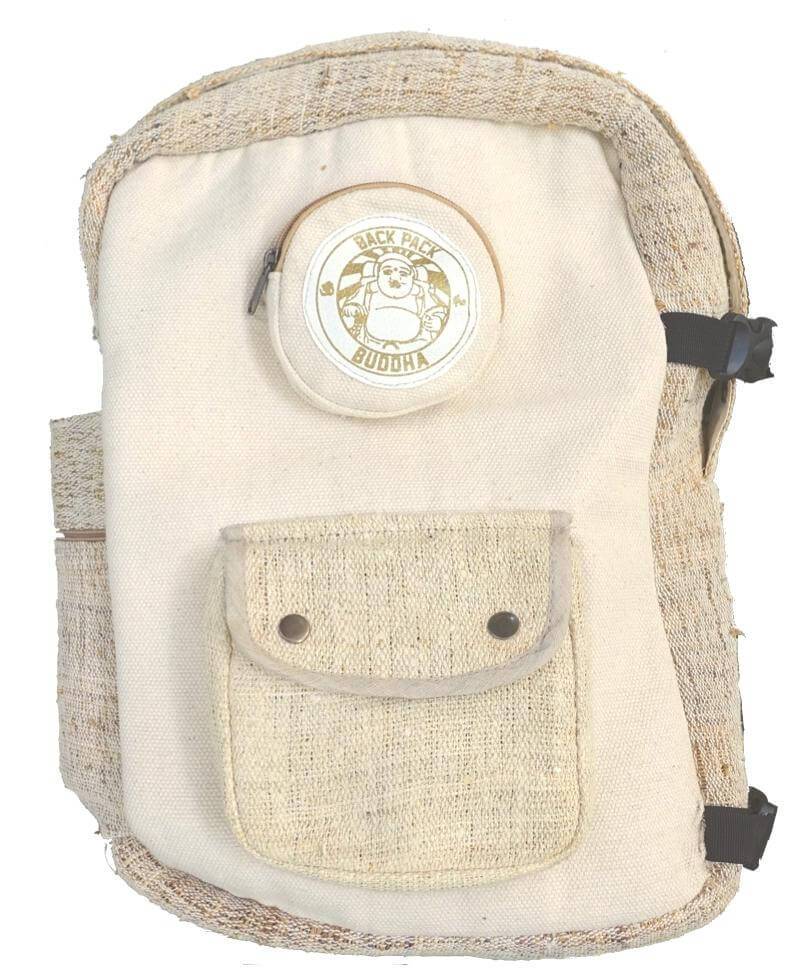
    Buddha Packs

    These come in four sizes, ranging from $27 to $57. I own the Himalayan Hemp #1, pictured here. Handcrafted from 100% Himalayan hemp and cotton from the foothills of the Himalayas, this practical day bag can carry up to two full mala strands in a dedicated Mala pouch, a laptop up to 15 inches, a standard sized yoga mat, and a reusable water bottle.

    The Chakra Collection

    This unique collection of chakra crystals, jewelry, and tools includes a number of beautiful options including a 7-chakra dream catcher that’s currently hanging right next to my front door and the 108-bead chakra mala pictured above ($37).

    As you’ll see if you click through to the site, each of the seven crystals corresponds with a different mantra, which can be a nice addition to your daily meditation practice.

    Each mala comes with a 7-page eGuide to help you use your beads as a medium for mindfulness, tranquility, and contentment.

    Buddha Bear’s Enlightenment Coloring Book

    As a huge coloring fan, I’ve seen some pretty cool coloring books in recent years, but none by Jim Hensen’s cartoonist. World-renowned illustrator Guy Gilchrist had a hand in Fraggle Rock, Looney Tunes, Muppet Babies, Tom & Jerry, and more, and has illustrated over sixty children’s books.

    His latest offering, recommended for kids age five to twelve, is intended to foster positive emotional growth through concepts of compassion, gratitude, and love.

    Kids will love following the adventures of Buddha Bear, whose goals are to be kind to everyone he meets, to breathe and stay calm when he’s frustrated, and to appreciate all his blessings.

    For every copy of Buddha Bear’s Enlightenment Coloring Book sold, Backpack Buddha will provide a school grade notebook and pencil for an underprivileged student, grades 2-8, in the Kathmandu valley.

    Enlightenment Journals

    While the Everyday Enlightenment Journal is designed to help you calm anxiety, find purpose, and love your life in twenty-one days, the Everynight Enlightenment Journal can help you relax your body and mind and get better sleep—and it may also inspire positive dreams.

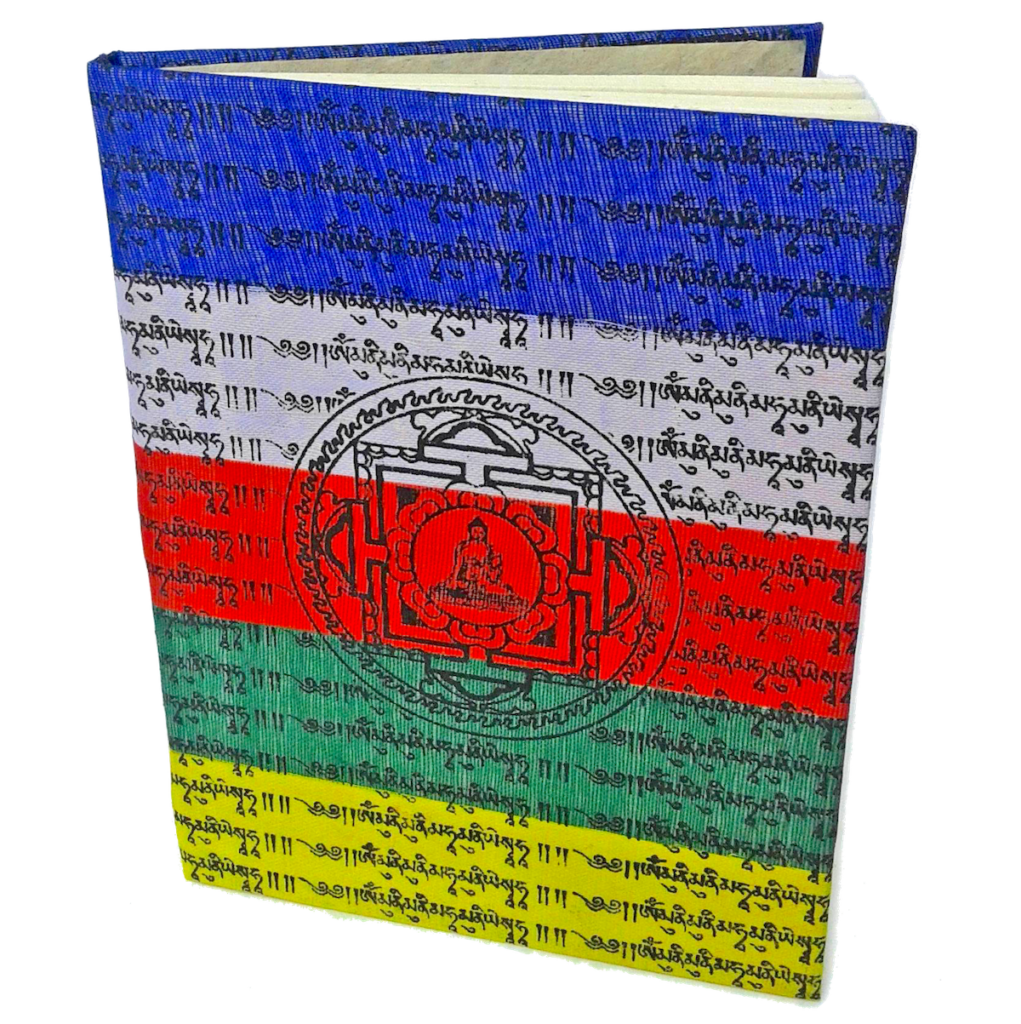
    Above you’ll find the Prayer Flag Journal ($14), which I recently gave to my boyfriend as a gift. Made from Lokta bark paper—by hand, in a village with a 2,000-year history of making this special paper—this journal is covered in the five elements of traditional Buddhist prayer flags: sky, air, water, fire, and earth.

    Monk-Blessed Malas and Jewelry

    Blessed by monks from the Woechen Thuk-Je Choeling Monastary, Swayambhu Temple, in Kathmandu, Nepal, these unique mala offerings include the conch shell mala above ($97).

    These beautiful malas come with 108 om-engraved shell beads.

    I’m a huge fan of Backpack Buddha, and their founder Leif Harum, who’s been a pleasure to connect with. I hope you, or your loved ones, will enjoy their offerings as much as I have!

    **Though this is a sponsored post, you can trust I only promote products and services I personally love!

  • How to Find That Something That Feels Missing

    How to Find That Something That Feels Missing

    “The spiritual path is simply the journey of living our lives. Everyone is on a spiritual path; most people just don’t know it.” ~Marianne Williamson

    I remember it as if it happened yesterday. I woke up in the middle of the night with the worst tightening of my chest that I had ever experienced. My heart was racing uncontrollably, my hands were clammy and cold, and nothing I did brought relief.

    I prayed. I chanted. I tapped. I prayed and then prayed some more.

    I thought I was going to die. I started to immediately regret all of the things I hadn’t said, all of the things I hadn’t done, and all the ways I’d failed to truly enjoy my life.

    After what seemed like an eternity, I finally fell asleep just to wake up in another panic because my entire body was wired from head to toe. To make matters worse, I needed to be in court bright and early (more on that later).

    I remember walking into my cardiologist’s office in a panic. He insisted nothing was wrong and that I should consider quitting my job.

    “Quit my job?” I laughed out loud several times.

    His face was stoic. He was not joking. Sh** just got real.

    After wearing a heart monitor for thirty days because I needed to get to the bottom of these debilitating episodes, thankfully, I learned that my heart was functioning just fine. But, the symptoms were a message about a much bigger problem.

    I needed a makeover. I needed a blank canvas.

    Up until that moment, I had lived my life checking items off a list—a list society tells us we need to tackle if we want to be happy and successful, both extremely subjective words.

    The list looks something like this:

    • Get the degree. Check.
    • Buy the expensive property. Check.
    • Be a “good” person. Translation: overextend yourself and be everything to everyone. Check.
    • Dive into a soul-sucking career for the sake of prestige and money. Check.
    • Play it safe. Check.

    Well, I had pretty much checked off the whole list. Yet, I could not shake off this deep desire to find something that felt missing. I felt empty, sad, and angry most days, yet I covered it up with a smile and fake gratitude.

    I’d lost my connection. I’d lost myself. I had no idea who I was. I did not know what to believe in.

    It was like I was waking up from a deep sleep. My soul was craving meaning, depth, and connection. I needed to release all of the beliefs that had kept me hostage to fear and zombie-like comfort.

    My day job as a lawyer was adding a layer of stress to my life that I could not shake off. I knew that this was not the path my soul intended, yet I needed the money, so it was not time to leave just yet. And to make things more confusing, I was good at it. My brain would trick me into thinking I needed to stay in that career.

    While I managed my responsibilities during the day, most nights I consume more spiritual material than most do in a lifetime. I was in search mode. Although I learned many beautiful philosophies and teachings, this consumption of information was not the answer I was seeking.

    I sought coaches, attended seminars, and read almost every book under the sun, yet the feeling of connection eluded me.

    Why? Because I was trying to soothe myself from the mental plane and I forgot to feel my way through the process. I did not know how to connect to my body, and I certainly was not in touch with my right brain—the center of intuition and creativity.

    From that point onward, I committed myself to soul work. The road was long and windy. There were rivers of tears along the way.

    During this time, I discovered things I’d kept hidden from myself and got to know myself in new ways. I was peeling back layers that slowly revealed my true self.

    One of my biggest revelations during my journey is that, although I was living like an extrovert, my essence is one of an introvert. I discovered that I am highly sensitive and empathetic. It was difficult for me to accept this because I associated introversion with shyness, weakness, and weirdness, but the more I felt into this truth about myself, the more I started to love the real me.

    My introversion taught me about the beauty of downtime. It helped me feel into my body and learn all the things she needed at any given time to feel relaxed and nourished.

    I realized I’d been living too fast, checking off lists, too busy “being productive” and making sure that I was pleasing everyone. But, I rarely checked in with myself to process my feelings, or to feel into what I really needed. I learned that I had abandoned my needs most of my life in the name of acceptance.

    Much of this process involves facing what we have denied to ourselves for so long. It is painful, but extremely powerful. The gold at the end of the rainbow: I feel more inspired, refreshed, and connected. That is the theme of my life.

    Connection.

    So, what are some of the lessons that you can expect when you say yes to soul work?

    Embrace your feelings—even the dark ones.

    You can’t be happy all the time. It’s not possible, so please do not try. Do not chase happiness.

    This beautiful universe is all about duality. How could you possibly love the light without experiencing the dark?

    You can’t. Because you would not have a reference point.

    And, what is the fastest path to the light?

    Feelings.

    They are the gateway to your soul.

    I’m not referring to your everyday emotions, which can feel like a rollercoaster at times. I’m talking about deep reflection. I am talking about the feelings that are trying to deliver messages to you all day long.

    The good. The bad. The ugly.

    An amazing mentor taught me one of the most powerful processes for releasing negative emotions.

    It just requires breathing and focus on the feeling. Once you feel the energy of an emotion, it shifts and moves as you breathe into it. There are so many insights that come to the surface when you remove the initial layer and make room for the expression of the pain.

    Once the veil of pain is removed, you reach a higher perspective, where you see any situation from a higher plane and not just with your limited human eyes.

    Ask yourself:

    What am I constantly thinking about that’s bringing me down?

    What do I long to release but haven’t been able to?

    Then ask your feelings:

    What are you here to teach me and breathe?

    Feel the feeling; breathe into it. Feel it shift and move inside of you.

    Listen. And then write whatever insights you receive. Do not judge yourself at any point. These are your feelings and they are real to you.

    When I asked these questions, I had to admit to myself that I was continually expecting people to behave and feel like me, and when that did not happen, I felt disappointed. This way of processing the world was bringing me down, so I reevaluated my relationships.

    I realized that I had resentment because I felt like I was a giver in most of my relationships. Why? Because over-giving stems from not checking in and slowing down. I stopped being only a giver. I learned how to receive. I started to express my feelings and most importantly, I started to feel into my needs and say yes to them.

    At first, it felt selfish, but then it became necessary. The more I connected with myself and learned about my true needs, the more available I was for deeper and more authentic connections with the world.

    Let your inner wisdom be your guide. It knows how to best navigate your life.

    We listen to opinions all day long, unconsciously and consciously. People with good intentions want to tell us how we should do things, or how we should feel, think, and act.

    While I personally believe that the universe delivers messages through others sometimes, the ultimate filter of your life must be your inner wisdom, that piece of unconditional love that guides you.

    This guidance is available to all of us.

    Ask yourself:

    What am I refusing to see?   

    What am I ignoring?  

    What am I hiding from myself?

    You may not get answers at first, but you will start to build a connection to your inner world.

    Our brains will always have a conditioned response to these questions, but when we breathe and feel into the answers, a new message may emerge for you. A new perspective may be shown to you.

    One of the biggest revelations for me when I asked these questions is that my true nature is one of a healer and someone who wants to help others heal and get in touch with their hearts. Although my entire life has been all about getting things done and building a career, my true nature is all about feeling and flowing. A very different energy than the one I was creating in my day-to-day life.

    There is no better place than here, than now.

    Being present is one of the most challenging tasks we can undertake, but if we want to transform, we need to learn to master the present. Otherwise, we are forever chasing the next thing.

    I am currently living a reality where I wish I was doing what I love full time, but apparently, I still have lessons to learn from my current day job. I stay present by being a light warrior all day, even in the courtroom. I shine my light everywhere, and I allow it to lead me.

    Although I am transitioning, it has been very challenging to stay present and bring my light to my day job, because the truth is that I want to be there, but I am here for now. But if I can be present here, I can be present anywhere. Because being present means that you are connected to your body.

    To stay present, every so often during the day ask yourself these questions (courtesy of Tosha Silver):

    Where am I?

    What am I doing right this minute? 

    Where has my mind taken me?

    And most importantly, am I breathing fully?

    Love your rest.

    This is huge. It’s essential to your health. Say no as often as possible in the name of rest!

    If my body does not feel like doing something, I honor that now instead of forcing myself to do things out of obligation or pressure. If I am tired and overwhelmed, I no longer have a problem retreating and declining to attend any events, including family commitments.

    At one point, I thought I needed to be everything to everyone. This led to my mini breakdown. While I still have certain obligations because that’s just life, I check in way more often now to feel into whether something is a yes or no.

    This takes some practice, so please be patient with yourself and do not expect everyone to understand your journey. It’s okay, we all have our own path. This is about what feels right to you.

    My new mantra is rest. refresh. repeat.

    The words that come out of your mouth when you’re angry or resentful are not the deep truth.

    Mental truth is reactive and layered with stories from past experiences. Mental truth is often wrapped in deep pain and insecurities.

    Your soul truth is the deeper truth that’s born from self-awareness and personal insight.

    For example, your mental truth may cause you to react to your partner by shouting at them or shutting down when they fail to come home at the time you expected. Your mental truth may make a million assumptions like, “They do not love me or they aren’t there for me ever or they are cheating on me.”

    If you can get to your soul truth, however, you may recognize that your feelings stem from past experiences and your assumptions lie in your own insecurities.

    Your soul truth may ask you to voice your concerns or speak to your partner instead of defaulting to anger or blame. Your truth may ask you to forgive yourself for any past experiences that hurt you.

    Your truth will always ask you to take responsibility for how you feel, and it will always encourage you to speak from your heart and inquire from the source if you are prone to making assumptions. Your truth will also warn you if something is off and will invite you to see things for what they are.

    Breathe and ask silently, put your hand on your heart and ask:

    What is my message about this situation?

     How can I see this differently?

    What is this moment trying to teach me?

    What is my inner truth showing me?

    Your truth will feel profound and anchored in love and wisdom.

    Creativity is the language of your soul.

    When I started to color and draw portraits from YouTube tutorials, I entered the magical world of the right brain. This is where the magic lives.

    Our left brains work hard to analyze and provide logic. Sometimes, this part of our brain can go into a loop because the logical part in us does not take into account our heart’s wisdom, nor does it take our feelings into consideration.

    The right brain is more intuitive and abstract. The right brain is creative. It’s a place where we feel and interpret events through our gut, colors, and senses.

    For example, if I were to express anger through my left brain, I would use words like “volatile,” “pissed off,” or “explosive.” If I were to describe anger using my right brain, I might say it looks like the color red and it feels tight in my chest.

    And if I ask my right brain what anger is here to teach me, most of the time, it will feel like the message is that I am not being honest with someone or myself (of course there are a million other reasons why one can feel anger).

    The right brain offers more depth. Being in my right brain has taught me to feel my body and the sensations and feelings, since these are messages and nudges from our inner wisdom.

    So it is important in order to reach equanimity, to find your creativity and call it forth. You will feel more connected and more centered. Find activities that do not require thinking so you can start to feel the difference.

    As you embark on your own path, which begins with willingness and the realization that something is missing, you will undoubtedly say goodbye to who you thought you were and you will fall in love with the gift that you are.

    You may feel depleted some days, but for the most part you will experience a reorganization of your life and energy. You will feel like a child learning to see the world with new eyes. You will feel a deeper feeling of peace and happiness than you ever could have found by working through society’s list. This is soul work. Are you ready for it?

  • How to Be Whole on Your Own and How This Strengthens Your Relationships

    How to Be Whole on Your Own and How This Strengthens Your Relationships

    “Only through our connectedness to others can we really know and enhance the self. And only through working on the self can we begin to enhance our connectedness to others.” ~Harriet Lerner

    Three decades ago, I married the man with whom I knew I would spend the rest of my life. We each had a rough childhood and had learned a lot about surviving, defending, and protecting ourselves. However, we did not know much about how to maintain a successful relationship.

    We took numerous classes on communication, learned to fight fair, and filled our goodwill bank accounts with lots of positive actions. However, despite our best efforts, something was still missing.

    There were times that the relationship felt smothering, and new types of problems kept arising. I got sick of saying “we” all of the time instead of “I.” Once when I was sick and slept in a different room, I was equally fascinated and worried by how much I enjoyed being by myself.

    Yes, we had learned to reconnect, to repair our troubles, and to deepen our intimacy. However, we had not yet figured out the crucial step necessary for keeping your relationship healthy.

    When it comes to love, we have two essential tasks. One, as most of us know, is to learn the skills and practices that allow relationships to thrive. The other lesson is less familiar to most people, but it is even more important. We must also learn how to love ourselves.

    By self-love, I do not refer to the type of vanity that is fed by money, power, influence, a gym-toned body, and the admiration of others. What I mean is the kind of love that leads to self-care, not only of our physical health but also of our minds and hearts.

    It’s the kind of love that creates for ourselves the time and space to develop and to use our talents. It’s the kind of love that frees us to discover and to foster our true purpose in life.

    To become truly wholehearted in our loving, we have to look at when we have acted in a “half-hearted” manner and when have we been “closed-hearted.” Also, we have to examine when it is that we have responded in a “hard-hearted” way.

    Our biggest challenge is to achieve the “whole” in wholehearted. In order to love anyone in a wholehearted way, we need to make ourselves whole first. We must integrate the two forces—the “me” and the “we.”

    Let me be clear about the three things that are not wholeness:

    • A constant state of happiness
    • An ongoing state of acceptance, love, and balance
    • A perpetual feeling of well-being

    Wholeness truly means accepting “the whole enchilada.” The hard, the sad, the mad, the scared, and the glad are all parts of you. The gratitude and the resentment together make you whole.

    Your acceptance of all the pieces of yourself makes you whole. Here are five practices that can each help us find our wholeness.

    1. Spend quality time with yourself.

    I once heard someone say that spending time with yourself is the greatest practice you can do, and I didn’t understand at the time what the speaker meant.

    While alone, I always felt like I was “by myself.” I mistook being alone for loneliness. It took me years to discover the pleasure of walking in nature, exploring an art museum, or hanging out at a farmer’s market loving my own company as much as with another person.

    2. Each day, check to make sure your self-esteem is balanced by your self-criticism.

    People sometimes mistake self-love for self-indulgence. Challenging myself when I am not living up to my own standards is important, but it must be done with compassion. Learning to love yourself despite your imperfections allows you to accept other people’s imperfections.

    3. Find a practice that centers you.

    Sitting in a lotus position and concentrating on breathing allows some people to find focus; there are also other practices like Zen meditation, walking meditation, Vipanassa meditation, and many more.

    In addition, there are methods of centering that are just as powerful for self-reflection; dance, art, writing, and prayer are just a few examples. What they all have in common is that we can use them to check in.

    4. Take an inventory of where you are right now. Explore it in your mind.

    Body: Am I satisfied with the ways I nourish my body? How can I make even better choices? Examine your nutrition, exercise for strength, flexibility, endurance, and cardiac wellness as well as all of the other kinds of self-care you can practice.

    Mind: Am I feeling fed, challenged, expanded, and interested? Am I growing?

    Spirit: Am I satisfied with the definition I have for spirit? How can I get more in touch my spirit? Is there a place within me where I can find peacefulness, wisdom, and guidance?

    Emotional: How am I coping with my current challenges? Is there a flow of different feelings, or do I find myself stuck on one emotion? Do I feel balanced?

    Social: How am I connected with the people in my life (family, friends, partner, coworkers)? What’s working, and where do I want to make changes?

    5. Develop a daily gratitude practice and begin by showing yourself appreciation.

    Ask yourself about the victories you have had during the week. Acknowledge when you did something that was brave. Thank yourself for taking the time to feel gratitude.

    As you explore these five techniques, you might discover others. You will find you already have wholeness inside; you just have to find the keys to open the door.

    When we feel good about ourselves, we’re more likely to feel generous toward others; it’s a symbiotic relationship. We feel grounded and centered enough to take risks and to reach out to others. We feel safe by acknowledging our shortcomings and forgiving ourselves, so we are able to open up to our partners wholeheartedly.

  • Introducing Buddha Groove: Meditation, Yoga, and Inspirational Gifts

    Introducing Buddha Groove: Meditation, Yoga, and Inspirational Gifts

    Hi friends! I hope you’re all enjoying the holiday season so far. Since I know a lot of us spend the beginning of this month looking for the perfect holiday gifts for the people we love, I wanted to take this opportunity to introduce you to Tiny Buddha partner Buddha Groove.

    A family-owned business, Buddha Groove was one of Tiny Buddha’s first sponsors many years back.

    Buddha Groove partners with artists all over the world to offer products that feed the spirit, inspire the mind, and revive the body. Many of their designs originate from artisan traditions in places such as South America, India, Indonesia, Tibet, Nepal, Thailand, and several other world regions. Buddha Groove also partners with many independent artists across the U.S.

    Their wide assortment of spiritual and wellness items and meditation gifts include…

    Buddha statues, like this:

    Translucent Blue Buddha Statue

    Cold Cast Bronze Medicine Buddha Statue

    Meditation malas, like these:

    Chakra Wrist Mala

    Knotted Amethyst Meditation Mala

    Singing bowls, like these:

    Blue/Gold Tibetan Singing Bowl

    Blue/Gold Tibetan Singing Bowl

    Spiritual jewelry, like these pieces:

    Breathe Pendant

    Abstract Chakra Figure Pendant

    Books and coloring books, like these:

    Inspirational Quotes Coloring Book

    Mindfulness Guidebook for Kids/Parents

    Yoga gifts, like these:

    Namaste Blessings Card Set

    Yoga Frog Figurines

    Although I consider myself a minimalist, I know that creating a tranquil environment can go a long way in fostering a sense of inner peace. And I also know that it’s much easier to be mindful and consistent with my meditation practice when I have lovingly chosen tools to support me.

    The same is true of the people we love. What better gift to give than a gift that aids in creating calm and comfort?

    Buddha Groove offer free shipping within the continental USA and ships internationally through a third party company. They also offer no-hassle returns within 30 days on all items except media, books, cards, and products containing plants.

    You can browse their full collection here and read a long list of reviews from happy customers here.

    I hope you’ll enjoy browsing through their site, and also hope you find something that speaks to you for the spiritually inclined individuals on your holiday gift list!

    **This is a sponsored post containing affiliate links. That means that a small percentage of each sale supports Tiny Buddha and helps keep the site going.

  • 5 Common Mistakes People Make on Their Spiritual Journey

    5 Common Mistakes People Make on Their Spiritual Journey

    “I still have a long way to go, but I’m already so far from where I used to be, and I’m proud of that.” ~Unknown

    Just like any student, I’ve made mistakes throughout my spiritual journey. Although I prefer to see mistakes as learning opportunities, below are a few things I’ve learned not to do through my years of meditation and detox weekends and constant effort to stay on the divine side of life.

    1. Constantly looking for answers externally

    When I started meditating regularly, I experienced heightened intuition. Triggered by this, I constantly tried to find signs to guide every decision I made. While waiting for 11:11, feeling a butterfly landing on my shoulder, or simply finding a four-leafed clover, I was trying to find the answer outside.

    I went from one spiritual teacher to another, trying to find the one who would give me the “answer.” This “the universe owe me an explanation” mind-set paralyzed me from being self-sufficient in determining my own life direction.

    You know what finally works? The regular sit down, close your eyes, and focus on your breath method. Yes, that good ole technique. Apparently our heart always knows the answer, but our minds are often too clouded to listen.

    2. Thinking I am above those who are “unenlightened”

    When I first started on my spiritual path, I condemned those who didn’t meditate. I didn’t like hanging around those who could not keep up in conversations about positive energy and the law of attraction. I thought of them as unfortunate mortals who would never live the fulfilling life I was living.

    But then I met unspiritual people who are warmer and nicer than many spiritual people I know. Although they never keep a gratitude journal, they’re happy and contended with their life. They might not consciously choose to walk in the path of love, but they are demonstrating every aspect of having it in abundance.

    I figured out that spirituality is not about how much you know about chakras or how cruelty-free your diet is. It’s about how you have incorporated positivity in your life, sometimes even without realizing it.

    3. Being attached to your spiritual practice

    A year ago, I joined a walking meditation class. We were advised to practice it every day, but the lazy me often failed to do so. Then I would feel bad about myself, so I eventually stopped doing it altogether because I didn’t want to be reminded of my failure.

    Did you ever start a daily meditation ritual to reduce your anxiety, only to be even more anxious on days when you couldn’t find time to meditate? It was kind of like that.

    When we rely on rituals to feel better about ourselves, sometimes we become too attached to them. Next time you’re doing your daily meditation, ask yourself, are you doing it out of self-love or out of fear of not doing it?
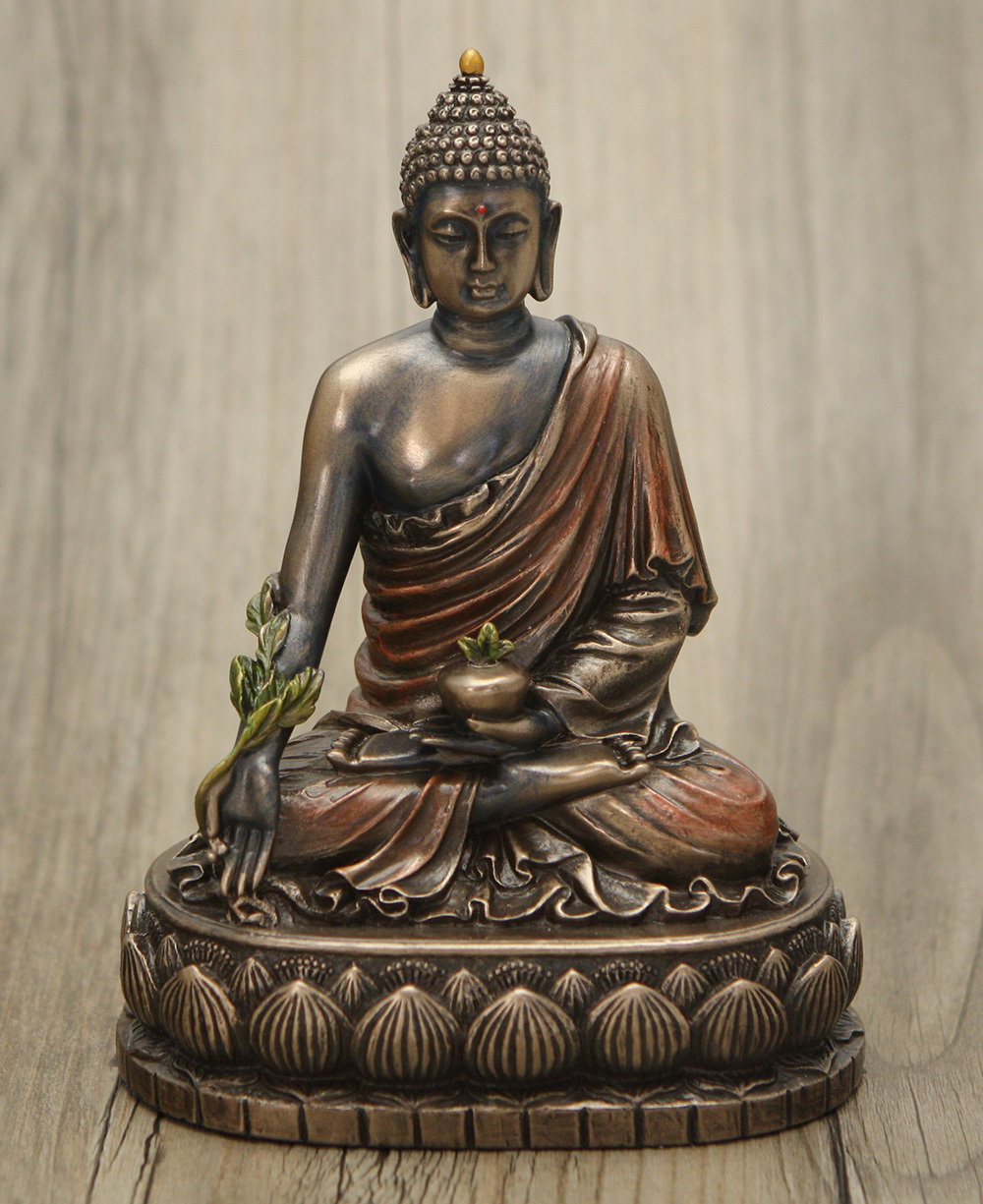
    One easy way to answer this is to observe whether you’re meditating as an act of self-care or so you can feel good about checking it off your to-do list.

    The key to healthy spiritual practices is doing it to enhance your well-being, not for a sense of accomplishment or to build your self-worth.

    Do you remember the cliché but true saying “When you truly love someone, you love them in spite of their shortcomings, not only because of their good qualities”? Now I feel enough despite not doing my rituals, not because of my rituals.

    So what if I don’t have thirty minutes to spend in silence today? I realize I am still the functional, magnificent creature I am. It’s just that when I do spend the thirty minutes focusing on my breath, it even further boosts my already awesome self.

    4. Doing good things just to feel significant

    This is just another form of attachment, although from the outside it looks very positive. Yes, your surroundings would probably benefit from this. However, have you ever gotten angry because someone rejected your nice gesture? If yes, then that’s your issue.

    You felt that way because you weren’t doing it for them, you were doing it for you. Maybe you hoped they would pay you back, or maybe you were using them as a tool to rack up good karma.

    I too was guilty of this. A few months into my first job out of college, I really wanted to be liked and wanted to “spread love.” I would send long, overly nice emails to my colleagues—which turned out to be ineffective, since it took a lot of time to read them. Also, I would voluntarily help people without assessing whether my assistance would benefit or burden them.

    In my fourth month, I was wondering “Why am I not loved by everyone already?” In retrospect, I suspect they could smell my insincerity and felt uncomfortable about it.

    The key to doing good deeds is remembering you are doing it for others, thus your focus should be on them, not you.

    5. Thinking of spirituality as a destination, not a journey

    I have met many spiritually enlightened gurus, and none have claimed that they’re done with improving themselves. Spirituality is a long, ever-changing journey.

    I used to believe that if I were spiritually awakened, no bad things would ever happen to me again. I would never feel sad, only be surrounded by nice people, and from there on life would always feel positive.

    I could not be more wrong. Spirituality is not about suppressing or diminishing your dark side. Spirituality is about raising your mindfulness to a level where you can always make the conscious choice to do the right thing, in spite of what happens and what you’re feeling.

    Along the spiritual journey, you will finally accept that you always have options. And that, my friend, is the true meaning of freedom.

  • Getting to Know Yourself: 5 Ways to Discover Your Joyful True Nature

    Getting to Know Yourself: 5 Ways to Discover Your Joyful True Nature

    “Knowing yourself is the beginning of all wisdom.” ~Aristotle

    Four years ago I left a corporate career, belongings, a nice home, and family and friends, ejecting myself from the outer world and fiercely diving into an inner journey.

    Jumping into the deep end of the pool—an inner terrain I was wildly unfamiliar with, having been very oriented to the outer world—has been quite the adventure.

    I wasn’t totally sure what I would be looking for (myself possibly?), but something about the way I had been living my daily life, with angst in the backdrop, told me that this was the right move.

    Extreme, and yet right.

    Having been steeped in a spiritual practice and inner work these past four years, it is clear to me that one of the biggest purposes this type of journey serves is to help us really meet ourselves. It pushes us to take responsibility for understanding ourselves, our patterns, and habits so they don’t unconsciously run our life and relationships.

    Some would call this mindfulness.

    With mindfulness—a loving, non-judgmental moment-to-moment awareness—we have a tool to personally mature, become more intimate with our inner workings, and create space to cultivate wisdom.

    To take it a step further, in knowing the depth of our body, heart, and mind, our ego can drop away and we can show up more present for life.

    Or, as Dogen says, “To study the self is to forget the self. To forget the self is to be actualized by myriad things. When actualized by myriad things, your body and mind as well as the bodies and minds of others drop away.”

    This process of actually studying the self—sounds great, right? Who wouldn’t want to know themselves at a deeper level? But how do we actually go about this?
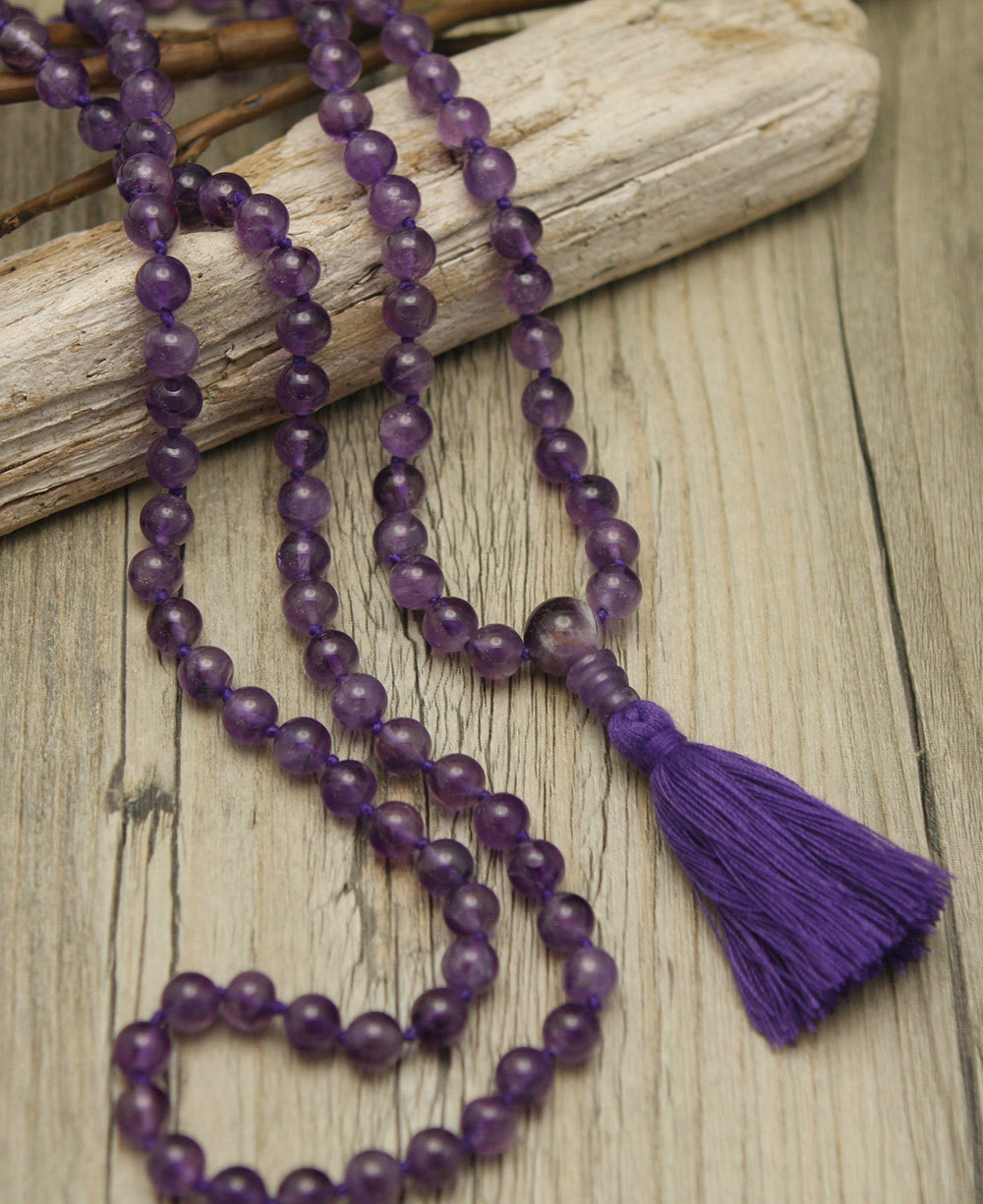
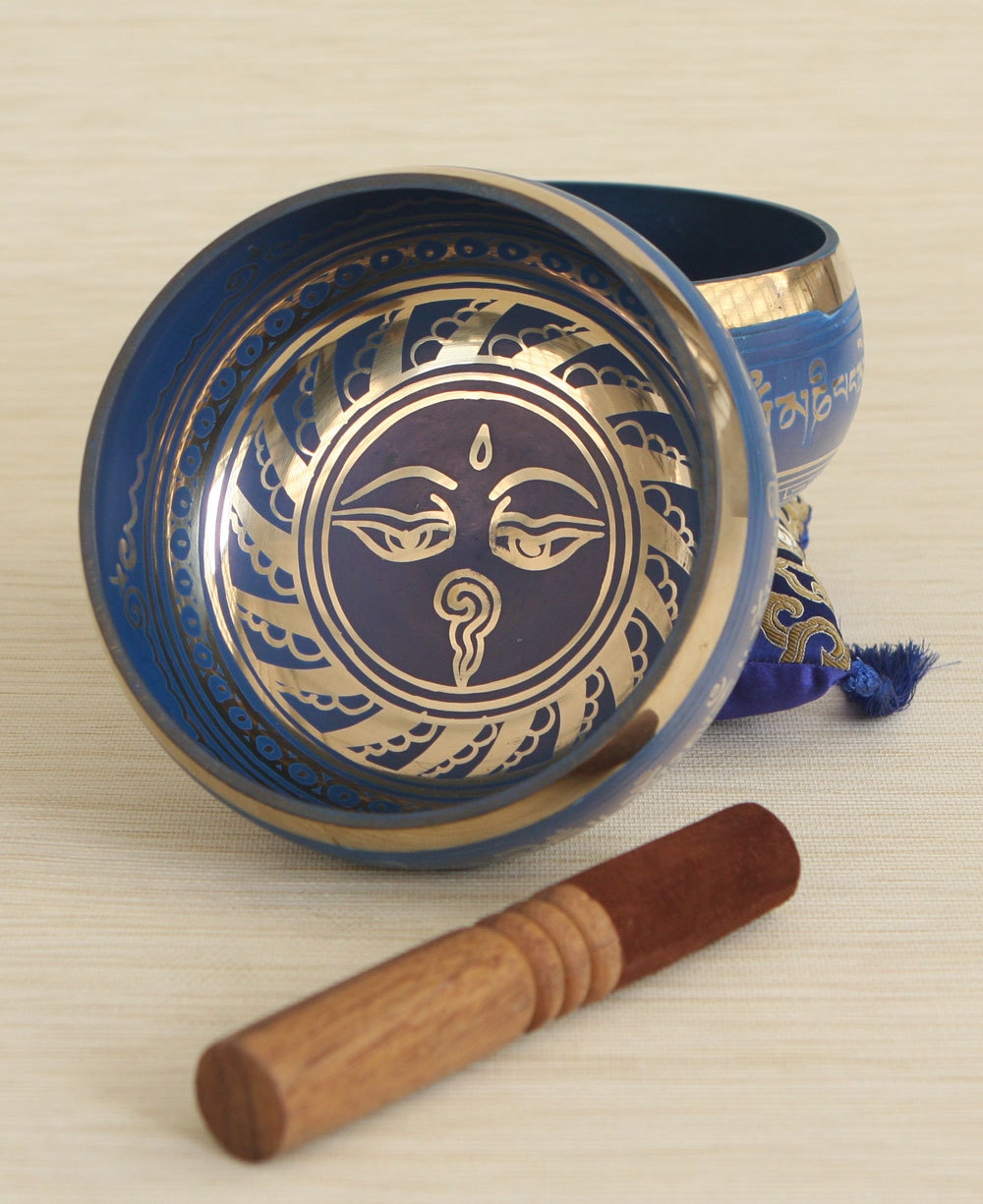
    Through my committed journey of self-discovery—including months of meditation retreats, weekly somatic coaching sessions, living in a Zen Center the past four years, and working in an industry that supports this work—I’ve discovered five valuable tools that help in getting to know ourselves:

    1. Becoming familiar with the mind, its relentless habits, recurring stories, intricate workings

    Take the time to totally stop and get to know the mind. Know that you can witness all that arises without having to react or do anything with the content of what’s arising. Instead, you can watch it and see how thoughts, sensations, feelings, and images come and go, like clouds passing by in a vast sky.

    The mind is a phenomenon that is always producing thought, and oftentimes, they are just that—thoughts, not truth. When we learn to bear witness to our experience, we learn that we do not have to identify with it.

    Instead of thinking “I’m not good enough” and feeling down or “It won’t work out” and feeling anxious, we can observe what’s going on in our minds and choose not to get caught up in it.

    There are countless resources out there to help you start a meditation practice, which will help you develop mindfulness. You can find a local sitting group or utilize online resources. Two of my favorites are HeadSpace and UCLA Mindful Awareness Research Center.

    2. Getting to know your younger self—the child you, teenage you.

    There is so much wisdom in these earlier versions of yourself.

    A friend and I recently discussed how we need to let go of the past in order to be our highest and best self. While I think this is true, I don’t know if it’s possible to consciously let go of the past without first knowing it.

    Growing up, I had rough teenage years in a broken home. After my mom died when I was twelve, my new step-mom created an unsafe, chaotic environment. As a teenager, I was defiant, sassy, rebellious, fierce, independent, and angry.

    Not until recently, when revisiting the past, did I realize that I felt ashamed of teenage Cat and thought she no longer served a role in my life. I had this belief that I needed to “grow up” teenage Cat instead of meet her.

    When I asked her for her wisdom in meditation, she had so much to tell me. While I saw that certain patterns from that teenager version of myself no longer served me, I also recognized warriorship, strength, and survivorship that are all large parts of who I am today.

    By meeting and honoring her, I could transform her from the “useless, rebellious teenager of the past” to the fierce, courageous risk taker who protects this precious life.

    I invite you to find an old photo of a time in your childhood—any age range—and ask that child what wisdom s(he) has to show you. Let yourself be surprised by what comes forth.

    3. Meeting grief 

    Oh, grief. The word itself seems to have a sigh and unfamiliarity automatically built into it.

    In our American culture, we don’t frequently acknowledge this natural wellspring in life. But there is tremendous value in doing this; as Rumi wrote, “Joy lives concealed in grief.”

    My sense is that many of us spend our days avoiding the grief we have all experienced from being human—our broken hearts, crushed dreams, and dashed hopes. And this grief, unfelt, accumulates.

    The past several years, I’ve shed more tears than I ever thought possible, and my life is better for it. Grief has a way of clearing out the staleness of the heart and opening it; of healing wounds that continue to hurt only because they have not been attended to.

    You don’t have to go hunting for grief to know yourself. If you naturally allow yourself to find compassion and patience for yourself, it will show itself. And while you may have this belief (like I did) that once it starts, it doesn’t stop, the truth is actually the very opposite.

    Once this grief is felt, there is a clearing that makes room for joy. And a clearing away of old stories and unexamined ‘stuff’ is a beautiful way to know the self; it makes room for the true nature and effortless joy within us to arise.

    4. Getting clear with the ego

    “You need to get really clear about your small self,” a Zen teacher told me not too long ago.

    I would’ve been terrified by her directness months before this, but at this time in my life, I felt ready to meet truth.

    One way to get to know the self is to really understand where we get caught. For example, I saw that I worried about what people thought. Because of this, I couldn’t really show up authentically and instead showed up in the mask I thought would be most liked.

    Another small self (aka ego) I saw was the part of me that’s drawn to status and power as a way to feel safe and secure. I also recognized that growing up, I’d formed the belief that certain classes of people with particular material possessions, degrees, and job titles were better than other types of people.

    Ultimately, I have found that our small self is steeped in old, dated, unexamined stories and beliefs that keep us fearful and suffering.

    Find the courage to get to know the conditioned parts of yourself that constrain you and get you stuck. Be gentle. There’s no need to judge it or shame it; all these parts of yourself are welcome, and all is okay when held with compassion and patience.

    In my experience, you can usually feel this somewhere in your body—for example, the way the jaw or hips tighten when a certain stressed pattern arises.

    5. Finding honest relationships—those you trust who are committed to self-awareness in the same way you are

    The reflections and support from a good friend, a therapist, a spiritual teacher, or coach can be an invaluable resource. Without the resources I’ve sought out over these past few years, this journey of knowing myself wouldn’t have been possible.

    It is with the compassion, love, and support we receive from others when we show up honestly that we begin to learn how we can meet ourselves in the very same way.

    We all have access to knowing ourselves. We’ve just layered ourselves under habits of thinking, avoiding, running, and being busy and distracted instead of meeting what is—our beautiful, joyful true nature.

  • Why We Should Never Force Our Spiritual Beliefs on Other People

    Why We Should Never Force Our Spiritual Beliefs on Other People

    Monk Meditating

    “A journey is a person in itself; no two are alike. And all plans, safeguards, policing, and coercion are fruitless. We find that after years of struggle that we do not take a trip; a trip takes us.” ~John Steinbeck

    Around six years ago I started to meditate. I had a spiritual awakening, and life started to look really different.

    I have always been a feeler and reader of emotion, but this was different. It was like I was synchronized with everyone around me, as if everyone else was connected to me in some strange and mysterious way.

    It later turned out to be the case that everyone is connected to me, the same way everyone is connected to you. That we are all made up of the same stuff and really we are just one giant organism connected to the same sphere of consciousness.

    I believe that if you project hate, hate is what you will receive, and if you project love, you will be showered with love.

    This is a strange concept, and one that I am sure many of you think is a little crazy, but everyone is entitled to their own opinion, and what is a reality to me may not be a reality to you.

    For me to claim my version of reality is the one truth that exists from over seven billion minds on the planet would be pretty egotistical and naïve.

    The fact is science could account for everything, in the same way a higher power could or evolution or the collective consciousness of humanity.

    We could have been put here by a lifeform more intelligent than ourselves, or our planet could indeed be just a cog in a bigger organism that we do not understand. We could be a hologram or a hallucination or something conjured up in the mind of someone or something. The truth is we really do not know!

    But when I had this moment of spiritual enlightenment six years ago, I did know. There was clarity, things made sense, and the world seemed like a better place. I thought that I had stumbled upon secret wisdom and that I was in some way elevated to a deeper level of mind than most other people.

    I knew this was the answer not only to my own problems, but the problems of every man, woman, and child on the planet. The only problem was no one who I knew was sharing my enthusiasm.

    Over the last six years since that first moment of clarity, I have come to realize that when you have a spiritual awakening it is only the start of a journey that has no end. You learn more and more about yourself as the days go by, but with each new answer multiple questions will be asked.

    If I had written about spiritual awakenings six years ago or even one year ago this article would have been very different, and if I write one six years from now, I am sure I will have many more revelations and differences from the opinions I have now.

    When I started out, I was certain that everyone else needed to meditate, that everyone else needed to jump on the spirituality bandwagon. And if you were not into spirituality you were in some way less enlightened than I was. But I now know this was my ego getting in the way.

    Because of this I alienated myself from friends, my behavior became erratic, and it nearly cost me my relationship with my girlfriend. Something that I learned from this experience is: you should never force enlightenment, information, spiritual beliefs, or a way of life on anyone else.

    I wrote this article because after coming to this realization, I noticed that it was not all that uncommon for people just starting out on the spiritual journey and even those who have been living it for a very long time to develop this spiritual snobbery and an aggressive need to inform people who are really not that interested in this way of life.

    The fact is people need to come to their own conclusions in life. No matter how big an opportunity, no matter how easy it is, even if something is so painstakingly obvious, it doesn’t matter. People want to make their own decisions and we have no right to force our way of life upon them.

    One of the main reasons we seek to recruit others when we go through transformation is to seek validation. The spiritual journey is a cosmic experience that can sometimes leave you questioning reality. If you have someone to join you it seems less scary. But you have to embrace the fear and do it anyway!

    The same rings true for a lot of other things—we may want our partners to come and see a show with us even though we know they are not interested, or we may need a buddy to join us at a martial arts class because we do not have the confidence to attend alone.

    However you dress it up, human beings generally crave acceptance and validation of their decisions.

    The truth about spirituality is that while it is one of the most connecting things that you can do, it is also one of the most solitary and individual experiences that you sometimes need to face alone. This is not to say that you should not seek guidance (you should), but a good teacher will lead you, not show you, and every conclusion and realization that you come to should be your own.

    This is why you cannot force your beliefs onto others, because while spirituality is a personal experience for you, it is also a personal experience for others; and if you do convince someone else that it is the right thing for them, they will only be doing it in an attempt to seek your approval.

    The best thing to do is be available to those who want your help and are asking questions. It can be very fulfilling to help someone who is just getting started, but ultimately they will still need to find their own way.

    There are plenty of people and communities where you can connect with those who are on the same path as you are. People who have experienced a spiritual awakening are usually pretty friendly, so don’t be afraid to reach out to others who have common goals and interests as you.

    They will usually (not always) have more of an understanding of what you are going through than your friends and family, so sometimes it is just good to be able to chat with someone whose beliefs are in line with yours.

    To wrap up, the things I have spoken about in this article do not only hold true for spirituality, but also any other journey that goes against the grain. The opposite could be the case; you are not spiritual in nature and are surrounded by people who are deeply spiritual and do not understand you.

    Maybe you have escaped the rat race and found a great business opportunity, which is being met with the same kind of resistance. Or maybe you have found out that you can reverse disease naturally and no one wants to listen to you.

    Whatever it may be, remember the only life you can live is your own; you cannot control anyone else’s destination or path. So get to know those around you, connect with people with common goals, stop seeking approval of others to validate your journey, and get out there and start living!

    Monk meditating image via Shutterstock

  • How to Kickstart a Healthy Habit When You’ve Gotten Off Track

    How to Kickstart a Healthy Habit When You’ve Gotten Off Track

    Man Meditating

    “Come, come, whoever you are. Wanderer, worshiper, lover of leaving. It doesn’t matter. Ours is not a caravan of despair. Come, even if you have broken your vows a thousand times. Come, yet again, come, come.” ~Rumi

    Our spiritual, meditative, or other self-care practices can easily be interrupted, back burnered, or seemingly lost when one of life’s whammies happen.

    Sickness has thrown me off track more times than I care to count. Coming down with something again, swirling in negativity because once again my body had failed me, my immune system weak, I could not perform in the world the way I wanted for myself or for others.

    I was angry at sickness, couldn’t feed myself any nurturance, just wanted it to go away, and would stay mad until it did.

    I know that my over-the-top reaction to being sick has deep roots that require healing, and I’m working on it. But nothing propelled me faster into healing my mental baggage about being sick than my meditation practice when I did it during the down times.

    A teacher once asked me, “Do you meditate when you’re sick?”

    The question was profound and caused a resounding no. When rudely interrupted by sickness, I hadn’t yet fully grasped the concept of bringing all I am in the moment to meditation. Meditating while sick: remarkable, the bridge between a seemingly intractable mind state and a shift toward healing.

    It’s that it just wasn’t okay to be sick. As a mom to young children, it was not something I had time for. And I didn’t just get the sniffles or a little two-day thing; it was years of knock-down, drag-out, week-long illnesses that followed one after the other, sometimes with high fevers and flu symptoms. This brought me to despair.

    In meditation, I had the space to explore and acknowledge the roots of this despair, and my all-or-nothing thinking: “Oh no, I’m sick again, the world is going to collapse” held some painful attachments for me.

    I had to hold it all together. Who else would do it for me? How would I get my work done? How could I prove I was worth something if I wasn’t doing, being, making, becoming?

    My self-worth was wrapped up in how much I could do, clean, produce, or make right in the world. Self-care was just another “to-do list” item rather than a true refuge.

    At the time I was reading a lot about meditation but not quite doing it regularly yet. Life sure changed when I got out of the book and onto the meditation cushion!

    Since that low point in my well-being I’ve gotten a lot better. I’ve not only taken care of a lot of what was causing such immune system blowouts, but also healed my sleep problems through my meditation practice.

    Now that my kids are older I have the time to prioritize self-care. The crown jewel in that self-care is that I’ve become a daily meditator. And yes, I now meditate when I’m sick. What a difference.

    When you start doing your practice even when you’re sick, down, interrupted, or off kilter in some way, you know you have a true refuge in that practice. It may take you places that surprise you.

    Your practice may look different when you’re sick or going through a hard time. It might be shorter, smaller, softer. 

    Part of the self-care involved here is being flexible, and loving enough to yourself to give yourself the amended version, the lying down version, the restorative version. To know when it’s time for that and know that your practice is wide enough to encompass that flexibility.

    Your practice is not a narrow way of having to always be the same, or a measuring stick of how well you performed it that day.

    I still get sick and I still have that same old negative thinking crop up, a deeply rutted neural pathway that I luckily now know how to practice re-routing.

    I try to acknowledge that the voice of panic and negativity needs nurturance, rest, and meditation, even when in the past that voice has been my torturer and enemy.

    Your practice has healing and goodness for you that you can’t conceive of when you’re down. You don’t have to have a performance, just a practice. Some of these practices have been around for thousands of years for a reason—they work! And they work despite our protesting minds.

    Using a mantra to feed myself loving and healing words, lying down and listening to a guided meditation, allowing myself true rest while practicing the most basic of meditations—just watching my breath without engaging in the ups and downs of my thoughts—are all ways to still stay connected to my positive feelings despite the negative feelings being sick dredges up for me.

    It’s a whole new world to contemplate positive practices in times of sickness and derailment.

    Many things can pull us off track: family obligations, travel, stress, life’s unexpected difficulties. During all these times a little taste of the habit that has given us so much refuge can be a real comfort.

    I’ve had the great privilege of partnering in meditation with chronically ill and dying people. They were great teachers to me, showing me, in depth, that the practices we abandon in difficult times are the very things we need to comfort us the most.

    My practice doesn’t ask me to be perfect; it asks me to notice what’s going on and give to myself from its endless bounty of positivity and transformation, even when times are tough.

    No matter how long we’ve been away or how serious the interruption, there is a way to bring healthy habits and self-care practices back into our lives.

    Thoughts for bringing an interrupted practice back into your life after difficulty:

    1. Start small.

    Don’t make crushing goals that are all about self-improvement. If you used to meditate, exercise, or practice yoga for half an hour but your practice stopped or feels derailed, take it back down to five, ten, fifteen minutes, whatever is do-able and can set you up for success.

    There’s no pass or fail, here. Start somewhere and let that be good enough. It is good enough.

    2. Practice self-compassion.

    Life can throw us. Coming back to meditation or self-care is an act of self-compassion in the midst of turmoil. Have compassion for yourself, acknowledging that whatever happened that made you abandon your practice was difficult. You deserve compassion, not chastisement.

    3. Let your practice work for you.

    Maybe you’ve changed, maybe what you need and how you do it has changed. It’s okay if you don’t want to or can’t do it the way you used to. Maybe this is an invitation to find something that fits your life better now.

    4. Have the intention to return tomorrow and the next day.

    Setting small goals or intentions can be real movements toward self-care.

    Interruptions happen, whether it’s the phone ringing, a sick day, or a tragedy.

    You can return to your practice even in the imperfect world going on around you. You can choose to come back no matter how long you’ve been away.

    5. Know that you can rebuild.

    Most practitioners in their lifetime have had doubts, interruptions, path changes, and life changes that took them away from a practice at times. These can also be open doors that point you toward a new direction.

    6. Being on the road to making a discipline out of it will change your life.

    As you consider setting small goals and intentions for your newly re-hatched practice, know that the best way to nurture all the benefits it gives you is to return, often. You can have a practice that feels like a refuge.

    7. Find something you enjoy and do it in an enjoyable way.

    Look for a teacher, class, or method that speaks to you if you need a little inspiration or guidance after time away.

    Life is going to interrupt us, sometimes rudely. Having healthy habits and self-care practices to fall back on can be a lifeline. We don’t need to judge ourselves for why and how we fell away, we only need to return.

    Man meditating image via Shutterstock

  • Why We Don’t Need to Be Like Anybody Else

    Why We Don’t Need to Be Like Anybody Else

    Man Looking in Mirror

    “The thing that is really hard, and really amazing, is giving up on being perfect and beginning the work of becoming yourself.” ~Anna Quindlen

    When I first committed to becoming more spiritual, I decided that I wanted to be ‘perfect.’ I avoided red meat, cheese, alcohol, and sugar (and anything else that was considered “low vibration”), and ate organic food.

    I never complained or uttered a negative word about anything or anyone. I meditated three to four times a day, when I woke up, in the afternoon, and at night before I went to sleep.

    You’d never see an emotion on my face. I didn’t cry. I didn’t scream. And when I got angry, I quelled it like a storm that was forming in the distance that just didn’t have enough power.

    I was serenity incarnate. I did everything I thought that true spirituality was.

    And I fought and strained for my identity of perfection. This was how I was going to show up in the world.

    The truth was, I preferred eating healthy. But at times I wanted to eat chocolate chip cookies, brownies, and cheeseburgers and watch mind-numbing reality television. I wanted to cry, get mad, and just have a good rant. But I suppressed it all.

    While I was living in Los Angeles I went to a three-hour meditation event. I had no idea that it was going to change my entire life.

    I paid at the front desk, walked to the back of the Metaphysical center, took off my shoes, and entered the room.

    It smelled of sage and those instant light charcoals they burn in hookahs. There was a large copper triangle hanging from the ceiling. Pictures of chakras and angels hung on the walls. No music was playing, nor was anyone talking; all I heard was the shifting of people in their seats.

    There were three rows of semi-circle seats. I sat in the back row. Each chair had one sheet of paper with a prayer to create sacred space. I picked mine up, folded it in half, and placed it in my lap.

    I could feel my bare feet against the smooth carpet, the cold metal armrests against the forearms of my chair, and the remnants of sweat drying on my forehead.

    The first two rows were almost full by a group of people in their late twenties and early thirties dressed in loose fitting white clothing. They wore cotton, arm length V-necks. Their pants flowing, cuffs ending just below the ankle bone.

    A few minutes later, the workshop leader entered the room. He looked to be in his early thirties. From where I sat, no creases lined his eyes. He had chocolate brown hair that bounced as he walked, brown eyes, and olive skin.

    He also dressed in white, loose fitting clothes, with black mala beads hanging around his neck.

    Everyone in white greeted him. He smiled and greeted them.

    He introduced himself, thanked us for attending, and led a prayer to create sacred space. His voice seemed to echo off the walls. Despite everyone else saying the prayer, he was the only one I could hear.

    He asked everyone to sit down at the close of the prayer.

    He sat at the front center of the room in an armless metal chair with a black cushion and crossed his legs. The mala beads around his neck shifted and clicked as he got into position.

    The light from the ceiling seemed to shine down just right, illuminating the front of his face.

    When he spoke, it felt kind.

    He taught in stories and shared with us all of the places he’d traveled to and the lessons he’d learned along the way. He gave us mantras that we could use to bless the energy of a room and showed us ways that we could connect with our soul’s purpose.

    Almost every sentence he spoke contained wisdom or something deeply profound.

    My idea of ‘real spirituality’ and what I was working toward becoming was right in front of me.

    But…

    I felt a pang of sadness. I stared at him speaking, back straight in his chair, relaxed chin, and his hands rested, one-on-top of the other in his lap. He never said an, “um” or an “oh.” Everything he did seemed effortless.

    And the other people dressed in white (which I realized were his students) looked at him intently. No one spoke, looked at one another, or checked their phone. They all focused their attention on him.

    My eyes dropped, I sank in my chair, slouching. My head hunched over staring at my lap. I realized I would never be like him. I’d never reach his level of spiritual awareness and composure.

    But then it hit me.

    Suddenly, me eyes widened, my mouth parted slightly, I took a deep breath and I felt a knowingness come over me. In my sadness, I realized that I didn’t want to be like this man.

    It was absolutely impossible to attain his level of awareness because that was his unique expression in this world. I would never be like him because I wasn’t him, and he would never be like me, and that was the best part about it.

    I had my own awareness to attain, my own mark to make upon this world. I wasn’t going to accomplish it trying to be someone else or an idea of perfection. I just had to be me and the rest would fall into place.

    I sat straight up, neck straight, feet flat on the floor. I smiled, and then closed my eyes, knowing that I was absolutely perfect being myself. We all are. We just have to believe it and stop trying to be someone else.

    Man looking in mirror image via Shutterstock

  • The Experiences That Keep Repeating: Finally Learning the Lesson

    The Experiences That Keep Repeating: Finally Learning the Lesson

    Man on Mountain

    “Humbleness, forgiveness, clarity and love are the dynamics of freedom. They are the foundations of authentic power.” ~Gary Zukav

    I love the way the universe doesn’t let us get away with anything. Its loving energy allows us to repeat similar life experiences over and over again until we learn that spiritual lesson. Lately, I have been having the most profound healing around my stepson James.

    This one particular night, the universe was offering a chance to love my own father and forgive myself for how I treated my brother, through my relationship with James.

    When he got home from his weekly visit with his grandparents, where he sometimes sees his father, James was a bit off.

    “Hey James, can you get your jammies on please? It’s time to get ready for bed, buddy,” I said as nice and firm as possible.

    Instead of listening and responding to me, he continued to play with his ninja turtle.

    “Hey buddy, can you pick out your clothes for tomorrow and get your jammies on? It’s bed time.”

    He continued to ignore me and his mother’s prompts to get going with his night business. Instead, he started asking questions about random things.

    Five minutes later, with his negotiating skills increasing, I told him I was about to carry him to bed since it was time. He resisted, and when I placed him in bed, he cried, swung at me, and screamed profanities that would shock anyone hearing such language from a little person.    

    This is the moment I grew spiritually. I became a container. I held space for James. I didn’t run out the door. I didn’t prevent him, in the million ways I could have, from expressing those feelings. I didn’t emotionally shut off and hide.

    I was beginning to see in James my own “inner child” that did not have his father in his life. I also began to see my little brother that I raged on and abused at times during childhood, releasing all the violence I saw in our home and in the streets around me.

    James eventually began to wind down. He still flung his arms and legs at me and there were still random cuss words that trickled to one every few breaths. Sage, my daughter, was nervous this whole time and near the end was crying herself.

    “Daddy, I don’t like when he talks to you like that. It hurts my feelings!” she exclaimed in tears.

    “Oh, honey, he’s having big feelings. You don’t have to be afraid for me. You’re safe. I’m safe. He’s safe.” I tried to comfort her. She seemed to calm down a bit.

    Part of our nightly routine is to remove their bad dreams. I do an animated show of pulling all the bad dreams from their head and swirling them around in my hands, tossing them out the window, and cutting the loose ties to their body. This night was no different. I was sticking to our regular routine.

    I asked James if he wanted me to take his bad dreams out. He declined and sat with his arms crossed on his bed. “I hate you,” he kept softly repeating.

    Sage wanted her nightmares out, so I continued as normal. I decided to be even more lovingly animated so James could see what fun we were having.

    At the end they usually ask to take my dreams out and fill me with love. After blasting love in our chests we give one last strong push and it’s over.

    This night, when Sage pushed my heart that final time, I flew back in a dramatic flare and fell to the ground full of love. I could see James unlocking his arms, and he had a small smile on his face. I got up and asked James one last time if he wanted me to take his bad dreams out.

    He whispered something. “What did you say, buddy?” I asked.

    “Yes, I want my bad dreams out,” he said calmly and quietly.

    “Sure,” I joyfully responded.

    At the end of removing his nightmares, he was his normal self, excited to blow me away with his love. He pushed me and I flew harder and bounced around the room.

    He laughed and laughed and I thought, “I did it. I got him out his funk.”

    What I didn’t expect was the greater healing. After, I lay on the floor waiting for them to fall asleep. I heard James whimper and softly cry. I got up and rubbed his back and legs and was silent for a long moment.

    “You miss your dad, huh, buddy?” I asked gently.

    He was curled up facing the wall and shook his head.

    “I’m so sorry you didn’t get to see him tonight.”

    I just stood there, caressing his back for a few minutes until he relaxed his mind and body. Then I lay down and cried.

    I finally got it.

    Love is the only answer. I forgave my own father on a deeper level in that moment. My brother and I needed our dad too. I did the best I could and failed at loving my father and not harming my brother. Now, I can forgive myself, and be a dad to James, Sage, and most importantly, to myself.

    When we recognize that life provides countless opportunities to heal and develop unconditional love for those that fell short, we feel a sense of freedom.

    With that comes humility to face our own spiritual lesson to overcome. If we take the opportunity, there is a release that is deep and everlasting. What spiritual lesson keeps repeating for you?

    Man on mountain image via Shutterstock

  • When Nothing Feels Like Enough: Filling the Void of Spiritual Need

    When Nothing Feels Like Enough: Filling the Void of Spiritual Need

    Spirituality

    “When you arise in the morning, think of what a precious privilege it is to be alive—to breathe, to think, to enjoy, to love.” ~Marcus Aurelius

    I recently met a woman at a friend’s dinner party. She was tall and attractive, yet had a glowing, inviting energy about her. I liked her nearly immediately even though I had no concrete reason to. In my myopic mind, attractive and genuinely inviting energy do not combine, and I was naturally drawn to her for this combination.

    Just as the Universe would have it, the woman and I were seated next to each other for the duration of the evening. With a warm smile, she introduced herself and we engaged in courteous, commonplace “what do you do for work?” and “where did you grow up?” dialogue.

    Quickly, because we are the unique kind of soul-breed that we are (and perhaps due to many glasses of wine), we began divulging stories about our pasts, laughing together, and identifying with similarities. She manifested the three S’s I strive to embody; she was smart, sassy, and successful.

    The conversation eventually made its way to spirituality, as they always seem to do in my case. I sensed we had a deep knowing that we were both cut from the same cloth in terms of our spiritual energy.

    She began sharing with me about her spiritual healer and the work that they do together. Since I am a spiritual person and curious to learn from others’ experiences, I inquired more about it and came to find that she works with the same spiritual healer as Madonna.

    As in Madonna Madonna. Eighties. Multi-Grammy Award winner. Sold over 300 million records worldwide.

    That one.

    Instantaneously, I was struck with great surprise upon hearing that this prolific performer, the most successful woman in the music industry to date, has a spiritual healer, which indicates that she must need spiritual healing.

    Why in the world would the woman who has everything need that? What could she possibly be lacking?!

    I looked at my new friend and said, “Pardon if this question comes across as uncouth, but why would a woman who has everything have a healer?”

    She smiled.

    “When you have everything you could possibly want, and have accomplished everything you’ve ever dreamed, and it’s not enough to fulfill you, you realize you need something else developed deeper inside of yourself.”

    I was caught in my judgment. It makes sense in my mind once I focus on it, but my automatic assumption, my internal belief, is that people with money and celebrity don’t suffer or experience true hardship. I don’t have significant wealth or fame; therefore, I am an appropriate candidate for spiritual work. I am the one who needs it because I have nothing else to hold onto. Woe is me.

    This is a scapegoat for my ego. As long as I try to find wholeness and happiness outside of myself, I am off of the hook and don’t have the responsibility of working for it.

    How often I get caught in the belief that fulfillment is out there instead of within me.

    As real as my spiritual practice is, perspective proves to be a real challenge. My humanity is often at war with my divinity.

    I wish I could say I am evolved or enlightened enough not to worry. Worry about what other people think, worry about wearing the right fashion for the present season of the year, worry about my level of attraction, appearance of financial income, and career importance. But I am not.

    As quickly as one click on a photo on social media, with one passing of the magazine section at the grocery store, with a few minutes of window-shopping, or with one drive through a wealthy neighborhood, I find myself riddled with fantasy and victimization.

    I separate myself from what I perceive to be the Good, Rich, and Beautiful Life, putting things out there on a pedestal.

    Despite my “successes” in over three decades of life—traveling the globe, teaching in developing countries, earning two Masters degrees, being published, praised for beauty and brains—I still have to work on my spiritual landscape.

    I have to address that chasm deep in my chest that cannot be filled and that ebbs with fear; that part of me that says it’s never enough. Just like Madonna, the need is there for me, too.

    Moments after my new friend at the dinner party responded to me so graciously, I thought to myself, “Oh, Sarah. You still believe that there is a difference between people, that some have spiritual need and some do not. We all are in need. We are all the same at our core.”

    We are just people, spirits with bodies as our casing, and we are all in need of something more, even Madonna. After all, money and fame cannot buy personal healing, happiness, or wholeness.

    What I get to observe about myself in this situation is that I still all too easily fall prey to idolization of others and grandiose ideas of perfectionism. If only ___________, then I would be fulfilled and life would be good all the time.

    However, when I am engaged in my daily spiritual practice, I am not as concerned about external matters.

    When I am meditating, praying, sharing with others, being true to myself, and responding to life from a perspective of gratitude, I don’t take things personally. I enjoy the present moment. I notice the various ways laughter dances, the color of my barista’s eyes, and the flowers poking up from cracks in the sidewalk.

    Those practices provide perspective for me and allow me to appreciate the art of living. I do not experience lack when I am aware that each moment is a gift along with everything that moment offers—that is truly my spiritual practice. When I am tuned in to that spiritual frequency, which requires effort and discipline, I experience life with abundance.

    Often times we compare other people’s outsides to our insides, and it’s simply not fair to us or to them. When we compare at all we are robbing ourselves of the present moment, the most spiritual moment to be in, and we miss out on the beauty that is ours to cherish.

    No one is better or worse than another person yet we cling to labels, social status, and mainstream media to tell us who we should be and how we should appear.

    When we are connected to ourselves and we are actively engaging our spiritual work, we care little about out there. We learn how to define our own fulfillment and exist in a state of contentedness. We find we are enough for ourselves just as we are.

    In the words of Madonna herself, “Poor is the man whose pleasures depend on the permission of another.”

    Meditating man image via Shutterstock