Tag: sound

  • How I Learned to Be Present—One Sound at a Time

    How I Learned to Be Present—One Sound at a Time

    “Time isn’t the main thing. It’s the only thing.” ~Miles Davis

    When I first read that quote, it hit me right in the chest. Not because it sounded profound—but because it was something I had been slowly, painfully learning over the course of a very quiet, very long year.

    Time used to feel like a race. Or maybe a shadow. Or a trickster. Some days, it slipped through my fingers like water. Other days, it dragged me along like a heavy cart. But always, it was something outside me—something I was chasing or trying to escape.

    I spent much of my life impatient. Not in the obvious, tapping-your-foot kind of way, but in the quiet, internal kind of way: the constant sense that something should be happening, or happening faster, or already have happened by now. I measured life by milestones—achievements, breakthroughs, arrivals. I told myself I was being productive, but really, I was just uncomfortable with stillness.

    The Turning Point: Time Isn’t Linear

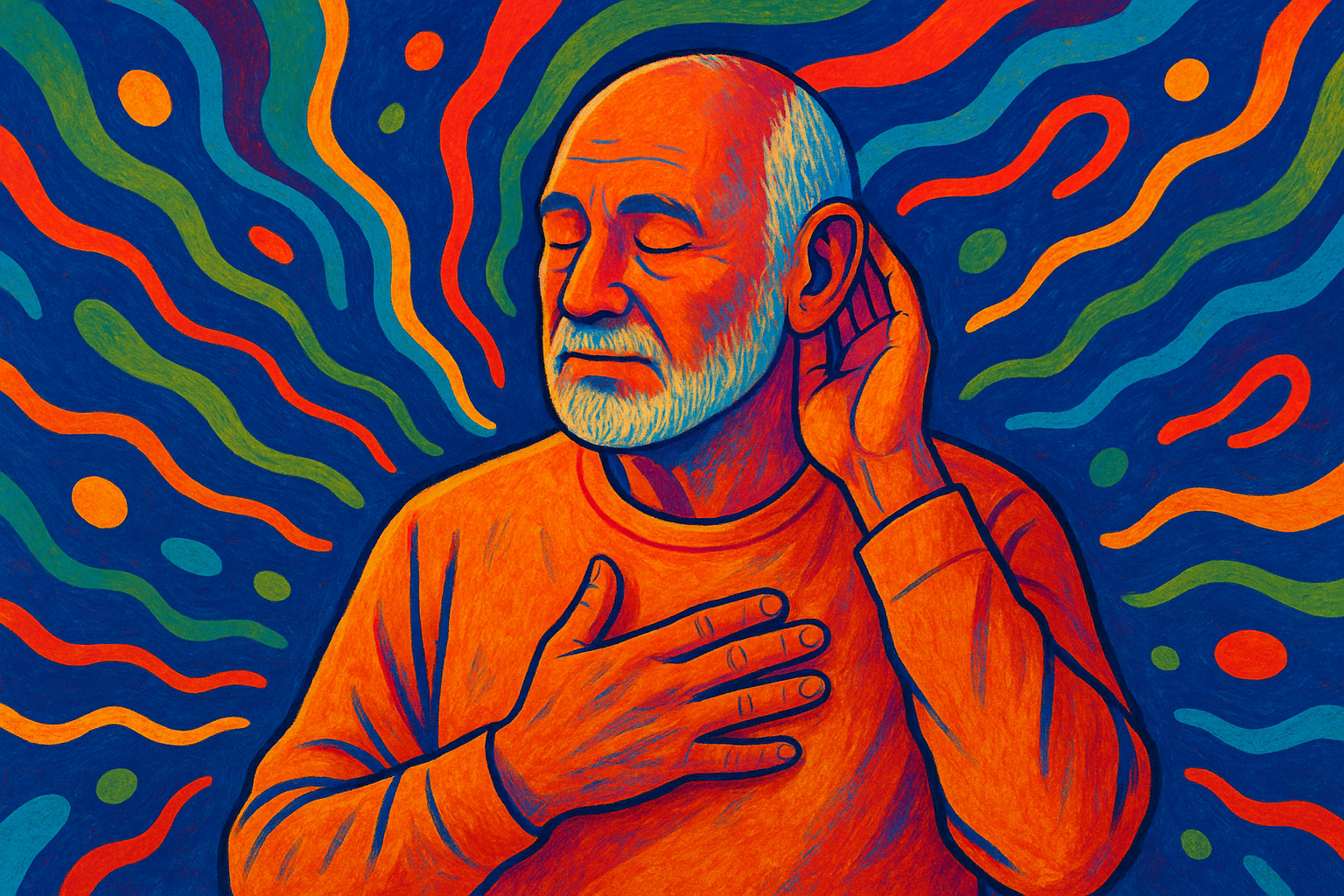
    Before all this, I thought of sound as something external—music, noise, conversation. But Nada Yoga transformed that understanding. In the stillness of those long days, sound became an anchor. Even the hum of the heater or the ticking of the clock became companions. When I gave them my full attention, they stopped being background noise and became part of the present moment.

    This is when I began to understand that time isn’t as linear as I had always believed. The past and future were ideas playing out in my mind, but the sound of now—the tone, the breath, the subtle vibration in my chest—was undeniable. And every time I tuned into it, I found myself grounded again.

    Physics agrees in strange ways. Einstein called time a “stubbornly persistent illusion,” and in the language of relativity, time doesn’t pass in the way we feel it does. Some physicists believe that the past, present, and future all exist at once—that time isn’t a straight line, but more like a landscape we move through. What we experience as “now” depends on where we’re standing, so to speak—our frame of reference.

    It’s not that time isn’t real—it’s that our experience of it is shaped by attention, memory, and movement.

    This insight doesn’t make time feel less urgent, but it reframes it. If time is an illusion, it may be less about seconds ticking by and more about awareness itself. What we call “now” isn’t a slice between before and after—it’s a field we enter through presence. That’s why mindfulness and Nada Yoga matter here: they’re not just techniques for coping—they’re ways of seeing.

    In the teachings of the Eightfold Path, this felt most connected to Right Mindfulness and Right Concentration. But instead of striving to perfect these steps, I simply allowed sound to lead me there. Following the thread of vibration was a practice in presence. It didn’t matter what time the clock said. The only real moment was the one I could hear, feel, and meet with openness.

    When Time Moves Too Fast

    Eventually, I began to feel better. My body regained strength, and my thinking was clearer. I started doing more, breathing more slowly, walking farther, making plans. But with that return came a different kind of challenge: the speed of life.

    It’s incredible how quickly we can forget stillness once momentum kicks back in. Emails. Errands. The endless list of things we should’ve already done. I was “back,” but I noticed something curious—I missed the slow time. Not the discomfort, but the spaciousness. The simplicity. The depth I had discovered when life wasn’t asking me to move so fast.

    I tried to hold onto what I’d learned. I’d remind myself that presence doesn’t need to be complicated—listening to a soft drone or resting in the inner hum I could still feel when I paid attention. That tiny ritual became a way to soften the edges of my days. It reminded me that even when life is loud and fast, there is still something quiet underneath, waiting.

    And once again, I turned to the Eightfold Path, this time to Right Effort. Not effort as in struggle, but the gentle discipline to return, to listen, to not forget myself in the rush. Patience, it turns out, isn’t something you master once and for all. It’s something you practice again and again in small, quiet ways.

    The Sound of Patience

    What surprised me most was realizing that patience has a sound. It’s not always silence.

    Sometimes, it’s the low hum of the fridge at midnight. Sometimes, it’s the steady beat of a distant drum in a piece of music. Sometimes, it’s just my own breath or heartbeat or pulse, reminding me that I am here.

    And presence has its own rhythm too. The more I tuned in, the more I saw how much time opens up when I stop resisting it. A few mindful minutes can feel full and rich. A rushed hour can feel like nothing at all.

    We say “time flies” when we’re enjoying ourselves—but I’ve found something deeper: time expands when we’re fully present. When I listen—really listen—to what is here, I don’t feel late. I don’t feel behind. I feel whole.

    This doesn’t mean I’ve figured it all out. I still lose patience. I still check the clock too much. But now, I have a practice to return to—a practice built not on perfection, but on sound, breath, and the quiet trust that everything unfolds in its own time.

    The longer I walk this path, the more I see that my suffering around time wasn’t really about minutes or hours. It was about resistance. It was about the belief that the present moment was never quite enough. That I had to get somewhere, become someone, achieve something before I could rest.

    But through mindfulness, and especially through the practice of listening—whether to the soft whispering tones of the wind in Nada Yoga or to the ordinary sounds of daily life—I’ve discovered a gentler truth:

    The present moment isn’t something we earn. It’s something we enter.

    And when we do, when we stop fighting time and start listening to it, we find something unexpected—not emptiness, but richness. Not waiting, but arrival.

    A Closing Reflection

    There’s a soft drone of reticulated sounds playing as I write this now. A deep tone that barely shifts but somehow holds me steady. It reminds me to breathe. It reminds me to slow down. It reminds me that I am not behind—I am here.

    I think that’s the real gift of both mindfulness and Nada Yoga. Not to help us “make the most of our time,” but to help us feel time differently—not as a pressure, but as a presence.

    And so I leave you with this:

    Next time you feel rushed or restless, stop. Close your eyes. Listen for the quietest sound in the room—or in you. It might not be music, or even beautiful, but it will be real. And in that sound, however small, you might find a doorway to now.

    And now, as Miles Davis said, time is not just the main thing—it’s the only thing.
  • The Power of Silence and How to Really Listen

    The Power of Silence and How to Really Listen

    “The silence between the notes is as important as the notes themselves.”  ~Wolfgang Amadeus Mozart

    When I was younger, I thought knowledge was something you could capture—something you could write down, measure, and prove. I believed that to understand something, I had to explain it. And for a long time, I tried.

    But then, life—through film, through music, through long conversations with people whose wisdom couldn’t be found in books—taught me something else: the most powerful truths don’t always come in words. They exist in the space between them.

    I learned this lesson in the mountains, where the sky stretches wide, and silence is not empty but full of presence. I had traveled there to document a group of elders who carried the history of their people in their voices, in their stories, in the songs they sang to the younger generations.

    One elder, in particular, stood out. He didn’t speak much, but when he did, the others listened. Alongside his fellow elders, he would chant in a rhythmic, sing-song cadence, weaving the origins of the universe into the fabric of their small mountain community. But what struck me most wasn’t his voice—it was his silence.

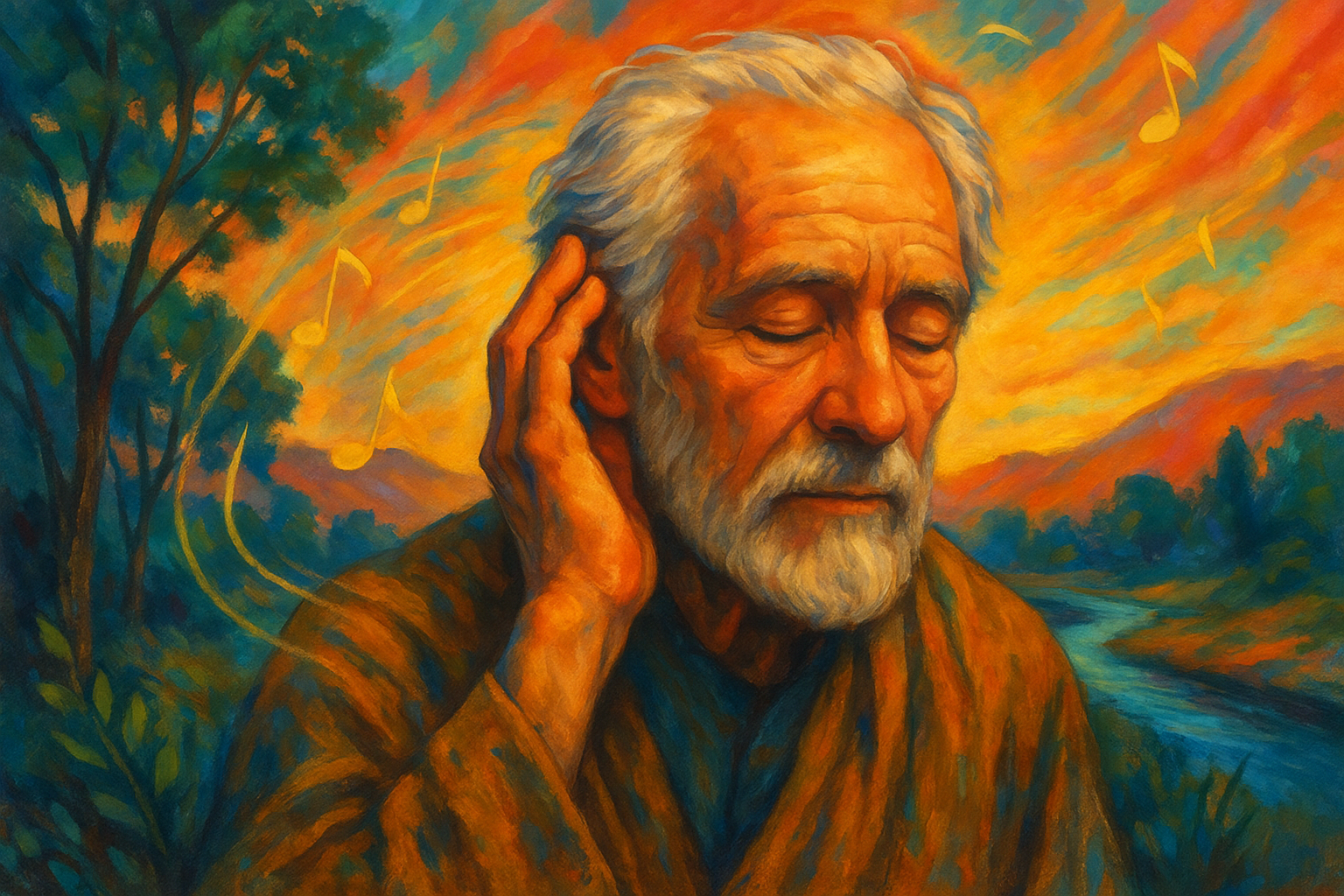
    As the camera rolled, he sat in stillness. The wind whispered through the trees. The river murmured its eternal song. In that quiet, there was something deeper than speech, something that pulsed with meaning.

    Later, when I played the footage for a colleague, they asked, “But what is he saying?”

    I wanted to answer, Everything.

    Listening Beyond Words

    If you’ve ever felt like the world moves too fast, like people are speaking over each other instead of really hearing, then you already know how rare true listening is. We live in a time when everyone wants to be heard, but few know how to listen.

    Listening—real listening—isn’t just about hearing words. It’s about feeling presence. It’s about noticing what isn’t being said. It’s about sensing the weight behind someone’s silence, the emotion in their breath before they speak.

    I didn’t always know how to listen this way. In my early years as a filmmaker, I focused on what was visible—the shot, the framing, the dialogue. But over time, I realized that the most powerful moments weren’t always what was said aloud. It was the glance between two people who had known each other forever. It was the way someone’s hands trembled before telling a difficult story. It was the pause between sentences, where something unspoken begged to be understood.

    This kind of listening—deep listening—is a skill, just like any other. And like any skill, it can be practiced. It requires patience. It requires presence. And it requires a willingness to be quiet yourself, to let go of the need to respond, explain, or control the conversation.

    The Silence That Speaks

    There is an old teaching in Nada Yoga, the yoga of sound, that says silence is not an absence, but a vibration. It is a resonance that allows meaning to unfold.

    I have felt this in the editing room, cutting together scenes, realizing that what moves people is not the dialogue but the spaces between it—the quiet before the revelation, the moment of stillness before the truth lands. I have felt it in music, when a musician allows a note to fade just long enough for it to sink into the listener’s bones.

    And I have felt it in life, in conversations where someone shares something so raw, so deeply personal, that all you can do is sit with them in silence.

    That silence is not empty. It is full of acknowledgment, of understanding, of respect.

    The Power of Presence

    One of the greatest challenges I faced in my work was convincing people that this kind of knowledge—this ability to sit with silence, to notice, to be present—is just as valuable as facts and figures, as theories and analysis.

    Academia, where I spent much of my life, doesn’t always recognize the kind of knowledge that is felt more than written. The kind of scholarship that comes through film, through sound, through experience. There, knowledge is measured in citations, in publications, in things that can be counted. But how do you count a pause? How do you measure the impact of a shared silence?

    I have spent years trying to advocate for a broader understanding of what it means to know something. To understand that presence—the ability to be fully here, fully aware—is its own kind of intelligence.

    And here’s what I want you to know: You don’t have to be a filmmaker or a scholar to develop this skill. You don’t have to travel to distant mountains or sit in long hours of meditation. You just have to start paying attention.

    How to Listen Deeply

    If you want to learn to listen—to truly listen—try this:

    1. Pause before responding.

    Next time someone speaks to you, don’t rush to fill the space. Let their words settle. Notice what else is there—their body language, their expression, what they aren’t saying.

    2. Listen without planning your reply.

    Too often, we only half-listen because we’re already thinking about what we’ll say next. Instead, try just absorbing what’s being said. Let the response come naturally.

    3. Pay attention to the silences.

    In music, the rests are just as important as the notes. In conversation, the pauses carry meaning. Notice what happens in those spaces.

    4. Be comfortable with not knowing.

    Some of the most profound moments in life don’t come with clear answers. Be open to sitting with uncertainty.

    5. Practice with sound.

    Spend time listening to the world around you—really listening. Close your eyes. Notice how many layers of sound exist at once. The wind. The hum of a distant car. The rhythm of your own breathing.

    The more you develop your ability to listen, the more you will understand—not just about others, but about yourself.

    A Different Kind of Knowing

    I write this now, not as a call to arms, but as an invitation.

    To the artists, the thinkers, the ones who feel deeply but don’t always have the words—know that there is a place for you. There is value in the way you experience the world.

    You don’t have to explain everything. You don’t have to put it all into words.

    Sometimes, the most powerful things we know—the things that change us—exist in the space between words.

    And if you ever find yourself doubting whether your way of seeing, of listening, of feeling has a place in this world, remember this:

    Some of the greatest wisdom isn’t spoken.

    Some of the most powerful messages are never written.

    And sometimes, the best way to understand is to simply be present.