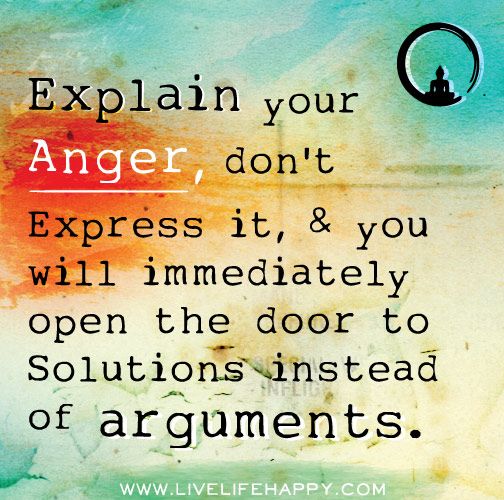
Source: Live Life Happy

“Letting go isn’t the end of the world; it’s the beginning of a new life.” ~Unknown
The summer I turned twenty, I worked as a camp counselor at an educational camp with strict rules. As one of my responsibilities, I escorted groups of fifteen to twenty students, ranging in age from middle school to high school, to and from their classes and activities across a large urban campus.
I was in charge of a group of spoiled, rebellious sixteen and seventeen-year-olds who would rather be spending their summer anywhere but at an academic camp.
Because I was only a few years older than them, I had some difficulty controlling their behavior—camp rules required that I confiscate cell phones, discourage talking during class, and deal with a shoplifting incident at the campus store.
After a few weeks on the job, I was feeling overwhelmed. The older students would sabotage us by making us late for every class. They’d goof around, stall by pretending to tie their shoes, or stand in traffic.
My tactics—telling them repeatedly to hurry up, calling out to them that we’d be late as they lagged far behind crossing streets, and listing the reasons we had to walk faster—weren’t doing me any good. I was sick of repeating myself, I was losing my voice, and my approach wasn’t getting the results I wanted.
So one day, out of desperation, I tried the opposite of what I had been doing. Instead of putting so much energy into trying to control them and be on time, I let go.
I continued walking with the younger kids and let the older ones walk behind us at whatever pace they wanted. I pretended to ignore them (while still keeping an eye on them since I was solely responsible for their safety). By letting go, something strange happened: we all arrived at the class faster than ever.
Giving them a little space and taking my attention off them probably made them feel more mature and independent, like they were walking on their own. Instead of leading by micromanaging, I stepped back and tried to care less in order to get the results I wanted.
If you find yourself up against a wall, maybe you’re trying to force things. Paradoxically, letting go and loosening your control can pave the way for you to achieve what you desire.
It’s not about un-attaching yourself from the outcome you want. I still wanted compliance and respect from the campers, but I decided to go about achieving that in a different way. This shifting mindset is like a tiny gear changing, but it can make a profound difference.
When was the last time you hit a wall and tried shifting your perspective to reach a solution? How can you cultivate and encourage such a mindset in your daily life to think differently? Here are five small practices to help you learn to embrace change and harness your creativity.
You may be stuck in ruts you don’t even realize. Brush your teeth with your non-dominant hand. (It’s surprisingly difficult, and it enhances creativity by building new neural pathways in the brain.) If you’re right-handed, try using your left hand to move your mouse cursor for an afternoon.
Shift the arrangement of the apps on your phone, or change up the order and organization of the files on your computer desktop. It can be very disorienting at first, but just try something new and getting over your initial resistance is the hardest part.
At the start of each month, make a list of foods (guava, figs, buffalo jerky) that you’ve never tasted. It can be as simple as sampling a new kind of cheese.
It’s reassuring and comforting to hold on to our old, trusted standbys, but you never know what could become your new favorite food. I didn’t try mango or pomegranate seeds until last year, but now they’re two of my all-time favorite fruits.
The next time you’re at a coffee shop or restaurant, why not order with a British or Indian accent (if you’re not British or Indian)? Stick to your accent the whole time, or switch it up in mid conversation and try to keep a straight face.
Or, if you’re shopping for clothes, pick one item to try on that’s something you’d never wear. You’ll (hopefully) at least get a laugh, but being playful can also open you up to considering new ways of doing routine tasks, helping to gently expand your perspective as you see more possibilities than the obvious, logical ones.
Let go of any inclination to be too inwardly focused by observing and commenting on your surroundings. Compliment a stranger on a piece of jewelry he or she is wearing, or ask a stranger for directions somewhere.
If you seek out interactions each day or each week that you wouldn’t otherwise have had, you may be surprised by the cumulative effect they can have on your creativity. It can also open you up to more opportunities that you otherwise would have missed if you hadn’t stepped out of your own headspace.
For twelve years, I had an alarm clock that was a comforting presence since it was the first thing I saw each morning. I realized I no longer needed it, but I didn’t want to abruptly let go of it.
So, I took baby steps by first just unplugging the alarm clock. Then, I moved it down on the floor. After a few days, I put it in a brown bag so it was out of sight. A few days after that, I put the bag by the door, and then the next day I donated the alarm clock.
If we resist the little changes in our lives, we have a much harder time dealing with the big changes. When a certain method isn’t working for you, take a step back, clarify what you want to accomplish, and open yourself up to approaching the problem in a different way. Letting go can feel scary, but it can also bring you to something better.
Man with arms outstretched image via Shutterstock
“At any given moment, you have the power to say: This is not how the story is going to end.” ~Chris Mason Miller
I was faced with an impossible problem, so like all the great thinkers throughout history, I shut myself in the bathroom and vowed not to come out until I had solved the problem.
It had plagued me for two-and-a-half years, and for seven years—the length of time during I’d lost my voice for and had suffered from chronic tendonitis respectively.
Such was the consequence of an obsessive guitar habit, one that saw me practicing up to fourteen hours in a single day as I worked my way through three years of my Bachelor of Jazz Performance Degree.
I never made it to year four, the year I would have graduated. Year three had seen my pain increase to the point that I only played my instrument at performances and in classes requiring it.
On my own, I practiced in my head, imagining both my instrument and the sounds it would produce.
I developed a strong imagination alongside a strong case of tendonitis.
But at the end of that year, my body quit. Shut down. It got so bad that I ended up unable to drive or hold a knife and fork. I even ended up having a friend push me around the Chicago Museum of Science in a wheelchair because the muscular dysfunction had become a whole-body issue.
So there I was, several years later, with no voice and no use of my arms.
I’d seen doctors, physiotherapists, massage therapists, and all manner of other people who poked and prodded and tried to figure out what was wrong with me. I’d tried all the treatments, taken all the advice, and done plenty of my own research.
None of it had worked.
So that sunny afternoon in June, I turned to the only resource I had left…
There are only two ways to change the quality of our lives: change the quality of the events, or change our perception of the events. Most of us opt for the former. I’d been doing this for the last seven years.
Now, it was time to try out the other option. We can all change the way we perceive events by changing the words we use when we talk to ourselves. There were three phrases in particular that gave me my life back; they have untold power to have a positive impact in yours.
This phrase saved my life. When we fight long and hard, trying to escape our pasts or reach our futures, we inhibit our ability to find joy, contentment, and inner peace in the present.
And this is the only place where we can ever have it.
When we ground ourselves in the here and now with a phrase like “I am here,” and put all our intent and focus into the words, we become accepting of where we are. We cease to judge ourselves as good or bad, as a success or failure. We are simply where we are. And that’s okay.
The seriousness of what we’ve gone through and the gravity of whatever we’re trying to achieve diminishes, and we’re able to safely and securely assess our current situation and take one step in the direction we want. A step taken without fear, stress, or tension—without anything except the joy of taking that step and seeing what will come of it.
We are conditioned from an early age to rationalize, justify, and explain things, whether we’re studying for a biology exam, writing an essay, or trying to get out of detention.
This attitude can have serious consequences later in life as we become set in our patterns of thinking and behaving. We understand the world—we have the answers—so new information gets filtered out before it has any opportunity to impact us.
By adopting the stance “I don’t know,” we open ourselves to the possibility that there are different ways of seeing the world. We give ourselves new opportunities to learn, grow, and evolve—to become okay with the uncertainty and humility of not always having the answer.
When we suffer, and particularly if we’ve been suffering for a long time—whether that’s through health problems, workplace issues, relationship troubles, or anything else—it is easy to feel as if life is simply one prolonged struggle, and that getting by is the best we can hope for.
But all this changes when we adopt the idea that life is easy!
For instance, I had my laptop stolen when I was traveling in Malaysia. I lost several months of writing I had saved up, fairly significant for someone whose income relies upon his portfolio. Not only that, but with no computer I had no way of doing any freelancing work to help support myself.
This was incredibly stressful until I decided to see this as an opportunity; with my old work gone, I had the chance to write something even better than I had created before.
I had an interesting experience—a challenge and adventure—recovering from the setback that I could use in my future work. That was an amazing realization that made it simple to move on from the setback and enjoy the ride.
When we turn obstacles and barriers into opportunities and adventures, stress and discomfort disappear, we need less motivation to act, procrastination affects us less, and the creative part of our minds responsible for lateral thinking and problem solving stay active.
As a result, solutions start to appear as if from nowhere, simply because we put our minds in a position to find the answers. And life does become easier.
—
These phrases, with enough time, were major reasons why I can talk and write today. They are the reasons I was able to solve the impossible problems that dumbfounded medical professionals, and they can be the reason that your life changes for the better in the coming weeks and months.
Photo by Davide Restivo

“What lies behind us and what lies before us are tiny matters compared to what lies within us.” ~Ralph Waldo Emerson
With the New Year approaching, resolutions are on everyone’s mind.
I’ve never liked the word “resolution.” As defined in the dictionary, resolution means “a firm decision to do or not do something,” and anyone who’s ever done, well, anything knows that life rarely works like that.
I prefer to think of my January decisions as New Year’s solutions. Defined in the dictionary as “a means of solving a problem or dealing with a difficult situation,” solutions are useful and practical. Thinking about them now helps us find peace in whatever may happen in the year ahead.
The best solution I can think of, and one that is especially helpful after the excess of the holiday season, is letting go.
I often hear stories from people who decide at the beginning of a year that this will be the one when they’ll be able to fix their bodies.
They want to “fix” themselves; they want to look like their high school pictures or their super fit best friends or whoever’s on the cover of Vogue.
My feedback for all who are constricted by a negative diet mentality: let go.
This seems counterintuitive, ironic, cruel, and maybe even ridiculous. You’ve just connected with a powerful desire about what you want your life to be like, and now I’m going to tell you that you have to move forward completely unattached to the outcome of whether you’ll get the life you want and will now be working toward.
The crux of this philosophy is that in order to get that which we want, we must let go of our need and desire for it.
This may sound impossible, unattainable, and completely contradictory; however, this is where freedom lies.
I know firsthand that letting go is the path to freedom and joy. My struggle with weight started when I was a toddler. When I got older, I thought that if I could only lose the extra weight, I would be happy.
I did lose the weight—a hundred pounds—between my twenty-fourth and twenty-fifth birthdays. I had finally achieved what I thought was my goal; I was thin, so I should be happy, right?
I was more miserable than ever. I was so worried about gaining the weight back, so scared that I might relapse, that I couldn’t enjoy my newfound health.
I was stuck living in fear that the future would not be what I wanted, that I would lose control, that my hard work would be for naught.
It was only when I figured out how to live in the present, how to be focus on the now and not concern myself with worrying about things that had not even yet happened, that I was able to be happy.
After learning to do that, not only was I content for the first time in my life, but I also was able to keep the weight off without worrying about it. I have kept that a hundred pounds off for twenty-four years.
We achieve the life we desire when we begin living for the moment, in the moment, and because of the moment. Finding happiness in this New Year will not be an outcome or a result. It is doing; it is being.
How can your foster this way of being in your life? It begins with looking at those things we desire most and finding the bliss in working toward them in the present—not in achieving them in the future.
Achievement is still the goal, but ironically, you only get there by letting go of the need for it. (more…)


“We all have problems. The way we solve them is what makes us different.” ~Unknown
We all have problems, don’t we? There isn’t a single person on this planet who doesn’t have one, even if they’re the Buddhist monk living their life peacefully. Everyone has something to overcome.
There’s nothing wrong with having a problem. Life would be pretty dull if they weren’t around, and we’d never learn anything new or grow from our mistakes.
Sometimes, though, we create problems that have no real foundations. These are the ones that can cause us the most suffering because it seems like they’re unsolvable.
I’m thinking a lot about problems at the moment because having one is integral to writing a good plot in a story. If my main character doesn’t have an obstacle, then what is she going to overcome? What will she achieve despite it? What’s going to make her act? Nothing. She’ll wander about aimlessly on the page and there won’t be any story.
However, I can’t just throw any old problem at her because it has to be tangible, plausible, and something that can be realized and tackled. Having abstract problems in this novel will lead to the story being incoherent and useless.
But isn’t this the same type of thing we face in our own lives? Aren’t the problems that seem unsolvable, the ones that make life seem senseless, the problems that mean that our own stories lead nowhere? (more…)
“No problem is insurmountable. With a little courage, teamwork, and determination, a person can do anything.” ~Unknown
Some problems seem far too overwhelming to solve. When you’re buried in debt or trying to bounce back from a huge error in judgment, it can feel like there’s no way out.
I remember when I first learned about my fibroids last year. Since I didn’t have health insurance at the time, I feared I wouldn’t be able to afford treatment, and I was tempted to beat myself up for allowing myself to be uninsured.
On top of that, I worried about my health. I wondered: Why did I develop those growths in the first place? What if they grew uncomfortably large before I was able to remove them? And what if I had other undiagnosed conditions?
Overpowered as I was with fears and regrets, it felt nearly impossible to identify a solution. But there was one—and it was far simpler than I realized at first.
As soon as I focused and stopped getting caught up in “should haves” and “what ifs,” I started researching insurance plans and found one for people with pre-existing conditions.
Of course, that was only the first step. I needed to find a good doctor, pick the best treatment, and find the money to pay for my part of the surgery. But it was all doable.
It may have taken several months, but eventually, I made my way to the other side of that challenge.
Now, three months post-surgery, I’m healthier and more energized. And though I know my fibroids can grow back at any time, regardless of what I do, I’m prepared to handle that if and when it happens.
I know that if the problem comes back, I can overcome it.
When we’re knee-deep in the messiness of an obstacle, it can feel like there’s no way around it. There isn’t—if we aren’t open to discovering it. We can only create and follow a plan if we believe it’s possible.
If your current challenge seems insurmountable, it might help you to step back and try to see things differently.
These questions may help you change your thinking about this problem and discover the action steps to solve it. (more…)