Tag: smartphone

  • How Our Smartphones Are Disconnecting Us and What to Do About It

    How Our Smartphones Are Disconnecting Us and What to Do About It

    “These days, whether you are online or not, it is easy for people to end up unsure if they are closer together or further apart.” ~Sherry Turkle, Alone Together

    There was rarely a time when my partner didn’t have her phone in her hand or, at the very least, in a place she could quickly grab it.

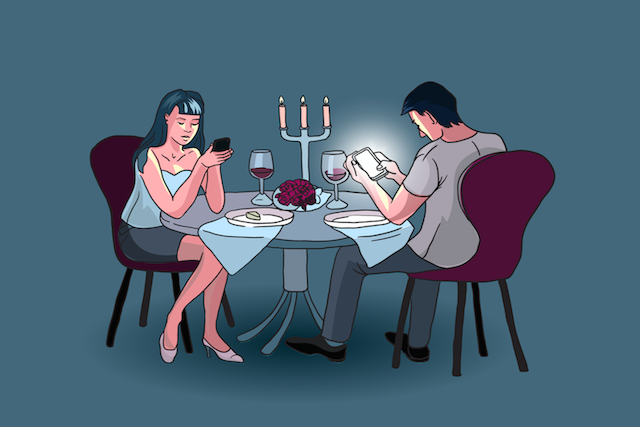
    We’d go out for a meal and it’d be there by her plate, positioned so she could dip in and out at any lull in the conversation.

    We’d take a walk and she’d have me in one hand and it in the other, ready to take a photo or catch the next Facebook notification.

    Even when we were in bed, if it wasn’t glued to her face, it’d be right by her side, lying between us like a small child who’d snuggled in for the night and ruined any chance of intimacy.

    It wasn’t good for our relationship, to say the least. Especially considering that, however unhealthy her relationship with her phone was, mine was worse.

    I didn’t realize it at the time. But in hindsight, I can see that most the time she retreated into her phone was when I’d long zoned out and been absorbed by mine: some random article or new app I’d downloaded, updates on the game, or a group chat with work colleagues.

    In that sense, we were perfect for each other. And looking around us, there didn’t seem anything too strange or excessive about our behavior. All our friends and the couples around us were also interacting with each other from beyond their screens, and they seemed perfectly happy—at least according to their Instagram posts.

    But something wasn’t right. Sure, we had our problems, I knew that. But it was something more than that: we were missing that deep feeling of connection. You know, that feeling you get when your partner understands you, without having to say a word. Or the fulfillment of being alone together and feeling like you’re the only two people in the world.

    Surely this fundamental pillar of how you feel about someone had nothing to do with our little glowing screens. So, none the wiser to what was going on, things gradually got worse and, eventually, we broke up.

    I wasn’t blind enough to see our phones had something to do with it, though. I mean, not being able to talk for two minutes without one of us phubbing the other was clearly an issue. And the non-stop messaging whenever we were apart couldn’t have been good for us.

    So when a similar thing started to happen with my current partner—both of us spending more time with our devices than each other and a feeling of disconnection growing between us—I knew there was something going on. And if one thing was for sure, whatever it was, I wasn’t prepared to let it ruin another relationship.

    I started to look more closely at our phone use and put it under the microscope: Why was it happening? Why did I prefer Candy Crush over spending time together? Why did we talk more via text than real life?

    What I found completely changed our relationship. Not only that, it changed my relationships with friends, family, and everyone I meet. And what’s best about it, I haven’t had to disconnect from social media or give up any of my beloved devices.

    I discovered the real issue wasn’t the physical presence of the phone, but rather how it had changed our idea of communication and influenced how we interact together.

    A prime example of this is phubbing—when your partner uses their phone while you’re talking.

    This was an everyday occurrence in my relationship. My partner would often ask me, “How was your day?” and start phubbing the hell out of me just moments into my response. I always thought she just wasn’t interested and was just being rude, but that wasn’t half the story.

    Because instant messaging was now our primary mode of communication, we’d trained ourselves to take words solely on face value—like you would a text or email.

    And so we would never stop to look beyond what was being laid out on the surface and consider all the other information-rich signals that make up the majority of communication—facial gestures, eye contact, tone, body language, and the emotions driving them all.

    Whenever we spoke, it was more like a means to an end. Something we did because we had to. Conversation was a chore that consisted of generic, predetermined questions and equally humdrum answers. All delivered in a way that was monotonous and unappreciative of the other’s attention and contributions.

    So it’ll be no surprise to hear our conversations were never stimulating and meaningful. And because of this, we robbing ourselves the chance to foster that deep sense of connection and understanding that’s so vital to a healthy relationship.

    Phubbing was only the tip of the iceberg. But it was enough to realize the fundamental effects phones were having on my relationships and wake me up to how they were undermining my ability to connect with people.

    Today, by simply being more aware of how we use our devices, me and my partner are closer than ever.

    What’s more, now we don’t use our phones as much as the average couple, but it’s not because we’re following orders from a couples therapist or because some rule from a relationship handbook told us to. We do it because we stay up all night talking and forget about them. Or because we go on a long walk and accidentally leave them at home.

    We do it because we’ve got back in touch with those deep, visceral feelings that nothing on Twitter or Facebook could ever come close to. And because there’s no way we’re going to let them fade away again.
  • Look Around (Not at Your Phone) and Be Present in Your Life

    Look Around (Not at Your Phone) and Be Present in Your Life

    Friends on Cell Phones

    “Enjoy the little things because one day you may look back and realize they were the big things.” ~Robert Brault

    Ten years ago I moved from the urban metropolis of London, where I grew up and spent the early part of my adult life, to the rural Mediterranean idyll of the coast of the Costa Brava in Northern Spain, in my quest to find the ultimate “quality of life.”

    I was able to make this move largely because I could be digitally connected to the rest of the world from anywhere.

    For me, digital technology in its early form provided a whole new series of life choices.

    Although it was during the pre-smartphone and WiFi era, I was able to be digitally connected via an ADSL cable that magically appeared from a field and connected to my studio, enabling me to work from there, nestled on a remote hill top location, surrounded by languid hilltops and lingering forests, underscored by a sea that merged with the sky like a pair of faded jeans.

    Perfect live/work balance achieved, or so I thought.

    But that was before. That was before something that is five inches tall and a quarter inch thick transformed every aspect of the way we live. The smartphone.

    The advent of the smartphone changed my life, but not in the way that you might think. It actually took me away from life, because it took over my life.

    Suddenly I didn’t need to be in my studio on my laptop to be connected, or to get my emails or to send projects through to clients, as I could do that from anywhere. I was free, no longer desk or studio bound.

    I could access information wherever I was. It was a revelation and totally life changing. However, although it was an incredible, life-enhancing tool in many ways, I think I was slow to realize that having access to the world in the palm of my hand also means the world had access to me.

    As my euphoria at being able to be connected anywhere and at any time began to wear off, it was replaced by the debilitating dependence of needing to be connected anywhere and everywhere, at all times.

    The more I became digitally connected, ironically I began to feel more and more personally disconnected from my surroundings, as my virtual life was not giving me any real nourishment.

    It provided a lot of ‘noise’ but I could no longer find the inherent ‘melody’ and rhythm of my daily life.

    Given that I was living in the sort of surroundings that are viewed as the ultimate off grid environment (the sort of place actually where weekend digital detoxes take place), I realized that the problem could not only be viewed as relating to a purely urban demographic.

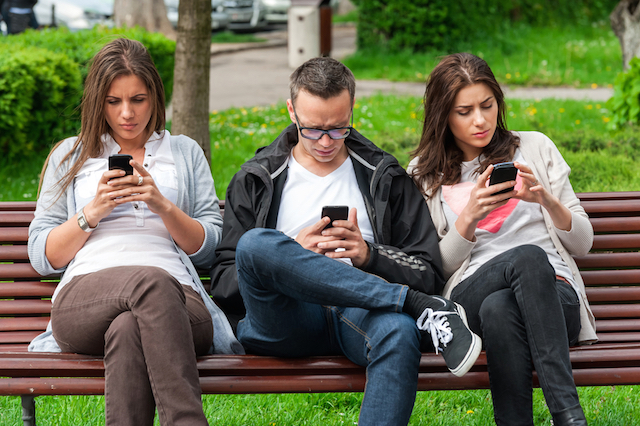
    I looked around me, at my friends and colleagues, and realized that we would get together for lunch on a beach or at someone’s house and we would all have our heads buried in our smartphones, oblivious to each other or the breathtaking beauty that surrounded us.

    It was a problem that was wide spread. I realized that what had at first been my life line had little by little started to strangle me.

    My digital dependence had become a habit filled with avoidance techniques, providing constant distraction to avoid being with myself. I found that, without realizing it, my reliance on my digital devices had gone from expanding my life to disabling it.

    When we created the smartphone it was designed to be a tool, albeit a very useful tool, but I was using it for everything it wasn’t designed to do:

    • Distraction
    • Taking me away from awkward situations
    • Making me feel busy
    • Make me feel important
    • Not making me feel alone
    • Anything in fact to avoid spending time with myself

    I took a hard look at myself and found that, despite living in an exquisite natural landscape, I was actually living a digitally reductive, hands-free, edited life, where nothing was messy, chaotic, or emotive.

    My epiphany came on a Saturday morning in my local market, where I had gone to get some vegetables for a dinner I was giving that evening. I arrived at the market, which was a bustling, vibrant gathering of the whole neighboring town, the meeting place for everyone to get together once a week.

    Walking amongst the throngs of people looking at the kaleidoscope of recently picked, sun ripened fruits and vegetables, was a heady, textural experience.

    The air was filled with the aromas of basil, ripe fruits, locally made honey, and soft goats cheeses, but I was oblivious to that, as I was on a mission to get some tomatoes to roast with some fresh fish for the dinner I was making that evening.

    I joined the endlessly long line at the fruit and vegetable stall I usually get my produce from and was checking my emails while I waited, and waited, and waited.

    The line didn’t seem to be moving. The only thing that seemed to be moving were the numbers on the digital clock of my smartphone showing me that I had been standing in line for twenty minutes.

    I was getting more and more stressed thinking, How long can it take to buy a pound of misshapen tomatoes?

    I stepped outside of the line to try and find out what was going on. Looking to the front of the line I saw an elderly lady, with her dog, chatting with the woman who ran the stall.

    They were discussing the stew she had made last week from the marrow she had bought from there, the plight of her neighbor who had had a fall, and the wedding cake she had made for her niece’s wedding.

    They were talking, communicating face to face, sharing the stories that made up their daily lives.

    As I looked along the line I noticed that actually everyone was talking to each other, animated, interested and alive. 

    That was the tipping point for me when I realized that I was physically there but was not present. I was missing in action from my life and missing all the little things.

    For me really being present meant giving myself times to disconnect from digital technology and instead taking time to connect with the seasons, learn the names of the different winds, recognize the cycles of the moon, and read the ever changing personality of the sea.

    Ultimately I learned how to be from going to local farmers’ markets. There, I learned to appreciate the beauty of imperfection. The splendor of a misshapen tomato, appreciating the real meaning of “slow.”

    I had to learn a new rhythm, one without a preset time limit for every thing. Where queuing for twenty minutes to buy some fruit was just how it was, and was something to be savored and appreciated, because every one in the line spoke to each other and wanted to share their stories.

    It was there, waiting to buy my imperfectly shaped, local, seasonal produce, that I began to really connect with where I was and learned to appreciate all the moments and experiences that really matter—those unique fleeting moments that bring us joy.

    If you are finding you are missing in action from your life, try adopting some of the practices that were game changers for me.

    Remember to take some time out every day to put your smartphone away, pause, breathe, look up, and embrace the art of slow by living in the now.

    Scheduling in fifteen minutes of mindfulness meditation practice every morning will set you up for a day of centered calmness, and will encourage a reconnection with yourself and your natural surroundings.

    In order to be more engaged in your life, try to do things more mindfully by concentrating on being present and in the moment.

    These small changes to your daily practices are manageable and meaningful, and will shift your focus from “faster, bigger, better” to an appreciation of the micro moments, the little things that punctuate our daily lives, which ultimately, in the words of Robert Brault, “we realize are the big things.”

    Friends on phones image via Shutterstock

  • Are You Missing Out on Life While Checking Your Smartphone?

    Are You Missing Out on Life While Checking Your Smartphone?

    Distracted by smartphone

    “The present moment is filled with joy and happiness. If you are attentive, you will see it.” ~Thich Nhat Hanh

    “Yeah…Uh huh…Uh huh…Yeah…No way! Uh huh.”

    This was the response I got when talking to a friend the other day. I could tell he wasn’t really listening, because he was browsing Facebook at the time.

    Why was his smartphone more important than me? It didn’t used to be this way.

    I know I’m at risk of sounding out-of-touch and technophobic. But I really do think this is a much bigger problem than we perceive.

    We’re talking about our lives here. Do we really want to dedicate them to an iPhone?

    Another Smartphone Shocker

    The other day I saw a man on his Blackberry during an entire meal with his family. He was with his wife and young children (although they’ll be adults before long).

    How rare are moments like this? How precious are they?

    Yet, the man let this moment pass him by forever. If only he’d brought his attention to the present moment, he’d have experienced something far more valuable than anything displayed on a three-inch screen.

    And is there any joy in a stroll through the park or along a bustling city street?

    Last year I roughly counted one in five people glued to their phones while walking. And this was on New York’s 5th Avenue—one of the most exciting, alive, beautiful streets I’d ever walked on.

    Was it really so mundane to these people?

    Let me be clear. I’m not suggesting you throw away your smartphone and communicate with telegrams. The smartphone is an extremely useful tool, no question.

    What I’m saying is this: Bring attention to the moments when you reach for your smartphone.

    There are three questions I suggest you ask yourself every time.

    Question 1: What’s the emotion behind this decision?

    I work from home most days, and this wasn’t easy at first.

    I spent a good couple of years completely addicted to my email account. If there was an opportunity to check my inbox, you can bet your best socks I’d have taken it.

    But once I began meditating, I became much more aware of my emotions.

    I soon realized I didn’t check my email to check my email. I checked my email because I wanted fulfillment. I wanted somebody to praise me for good work, send me a dream brief, or tell me something fascinating.

    As you check your smartphone, try to pinpoint the emotion behind your decision.

    Is it anxiety? Boredom? Or are you subconsciously putting off something more important?

    Once you know the emotion, ask yourself: Can this emotion be fulfilled by something else?

    I realized I got the same feeling of fulfillment from writing. So I stopped checking my email first thing in the morning and would write for two hours instead. Since I’m a copywriter, this was doubly beneficial, because it made me better at my job.

    Question 2: What value do I place on this present moment?

    If you show gratitude for the present moment, you might think twice about using your smartphone.

    Riding the bus is a common place to start checking Facebook. The bus is, admittedly, quite boring. You follow the same route every day, and not much seems to happen.

    But what if riding the bus became a wonderful in-the-moment experience? Rather than grab your phone on instinct, notice the passing scenery, the feeling of movement, and the different people who hop on and off.

    This is a moment in your life. Never forget that.

    If you need to check your phone, the bus is a good time to do it. But if you don’t, why not experience the journey?

    Also, remember, if you’re with a friend or relative the present moment has twice as much value. You have someone else to consider.

    Personally, I don’t think it’s ever appropriate to check your phone in someone else’s company. (Unless you have something very serious going on in your life, of course.) Show people how much you value them instead.

    As Thich Nhat Hanh said, “The most precious gift we can offer others is our presence. When mindfulness embraces those we love, they will bloom like flowers.”

    Question 3: Can my smartphone really add value to the present moment?

    Before the smartphone, we had something very precious indeed—the unanswered question.

    Your smartphone can answer any question in a couple of seconds. That’s true. But don’t you find it’s the unanswered questions that spark the most interesting conversations.

    Unanswered questions start debates. They enrich friendships.

    The other day I mentioned that the author Jack Kerouac was Canadian.

    “You’re wrong,” a friend jumped in. “He was American.”

    “Are you sure? I swear he was from Quebec,” I replied.

    “I’ll find the answer,” another friend said, withdrawing their smartphone. Presto! Two seconds later, the conversation was over.

    Another time, at dinner, a group of us wondered who composed the Lord of the Rings score. All sorts of interesting topics popped up along the way—from Hans Zimmer to John Williams to Star Wars and back to Lord of the Rings again.

    “I’ll find the answer,” someone said. And again, it was a smartphone that killed the conversation.

    Unanswered questions are uncomfortable.

    Reaching for your smartphone is understandable. Perhaps it’s even human nature. But it’s important to stop, reflect, and question what might happen when you do.

    I believe mindfulness is more important today than ever before. Unless we take control of ourselves, our gadgets will take control for us.

    Notice the present moment. Understand it. Be grateful for it.

    And if you decide it’s not a good time to use your phone, please resist the urge. You’ll feel much happier.

    Distracted by smartphone image via Shutterstock