Tag: slow
-
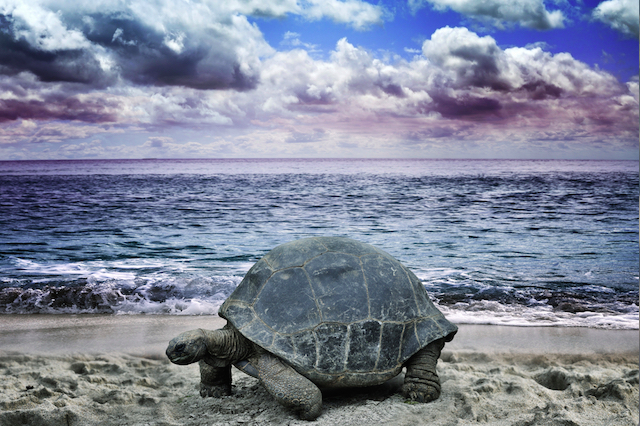
Why Slow is the Way to Go: 6 Reasons to Take Your Time
“Stop beating yourself up. You are a work in progress, which means you get there a little at a time, not all at once.” ~Unknown
I’ve been practicing yoga, on and off, for fifteen years.
It’s helped me through and out the other side of infertility, kept me company on the long and winding road of adoption, and helped walk me out of the shadows of depression.
It’s a big part of my life, part of who I am—a faithful friend, the kind that welcomes you back with open arms even after you’ve been inattentive.
In fact, I’d say yoga always gives me what I call an “Alaskan welcome”—the kind my dearly departed dog used to give me whenever I walked into the house, as though I’d been all the way to Alaska instead of around the corner to the shops.
Yoga is always willing to give but it’s a slow-burning love, and while it has rewarded me richly, I’ve had to wait for its gifts.
I have just completed yoga teacher training, at forty-six, proving the truth that you are never too old to teach (or learn).
While I’m pleased with my pace of learning, ironically, despite my age and experience, there is still so much yoga has to teach me.
And that’s okay, because I am realizing more and more that some of the best things, in yoga and in life, come to us slowly.
Here’s why I think slow is the way to go and why staying power is the most powerful kind.
1. Slow teaches us patience.
And patience is its own gift, especially during times when things are out of our control and we have no choice but to wait it out. When we bring patience to gently moving toward a goal, we have it in reserve for when roadblocks get in the way (as they inevitably will).
2. Slow hones acceptance and gratitude.
When we rush headlong into what we want to achieve, we can get easily frustrated with any hurdle or slight delay. (And frustration is unlikely to get us to our goal more quickly.)
We also miss the opportunity to accept and be grateful for the small steps we take, those incremental achievements, and for where we are right now—for the good and the bad of everyday life.
3. Slow allows for small mistakes.
Rush at something and we run the risk of messing up big-time. Take it slow and we get the chance to experiment with small mistakes, helping us to grow so we can hopefully avoid bigger mistakes in the future. We have to earn our lessons, and we don’t learn until we allow things to sink in.
4. Slow makes room for other stuff.
When we want something fast we can become obsessed with that thing, as though the goal has taken on a life of its own.
While it’s great to prioritize what we really want, it doesn’t make sense to create imbalance in our lives with one overwhelming obsession. Who knows what (and who) you might miss out on if you do.
5. Slow builds resilience.
The lyrics “It’s better to die on your feet than live on your knees” might ring true, but I’m betting you’d still like to be around for a long life.
Slow is about building legacy, and along the way, resilience. That can only be won through endurance.
Fast is great for igniting passion and showing courage, but who do you think is braver and more passionate—the person who sprints out of the starting block or the one who keeps going over the long distance?
6. Slow is seasonal.
Taking things slowly recognizes that sometime we need to sit and deliberate (by a fire or by the beach). We need to wait in faith for the universe rather than selfishly expecting our own desires to take precedence.
We need to look to nature to realize that the seasons cycle at their own pace, and we should always be willing to take things slower (and faster) as required.
Slow doesn’t have to be timid, or lazy, or less-than-smart. Slow isn’t a marker for fear and procrastination, nor apathy and indecision.
There’s a yoga asana (posture) that many people find difficult at first. The Sanskrit name is Supta Vijrasana, also known as Reclining Hero pose.
Unlike the standing Warrior postures, which are strong and forceful, the Hero pose calls for quiet strength as you kneel down and then surrender backward.
When I first got seriously back into yoga two years ago, after a sporadic year of practice prior, my knees would groan and my ankle joints scream when I tried to just kneel down and sit my bottom back between my heels.
I certainly couldn’t recline backward onto my back, while keeping my knees bent and touching each other and my feet close by my hips. But now, having taken it slowly, I can feel a little like a yoga hero.
I can realize the benefits of slow that have snuck up on me in their own sweet time. And I am most grateful.
Slow isn’t dull and boring, but contemplative and considered. Slow is the yin in a very yang world.
Slow is the strength of surrender, and surrender can be the most powerful kind of victory.
Large tortoise image via Shutterstock
-

4 Simple Ways to Slow Down So You Don’t Rush Through Life
“If you surrender completely to the moments as they pass, you live more richly those moments.” ~Anne Morrow Lindbergh
Throughout my life, a deep voice within has constantly asked me to slow down.
Don’t get me wrong; I thrive when I have deadlines, when I have to push myself to get somewhere. I love being quick in what I do.
However, over the last ten years of living like a workaholic and then having to find a semblance of quiet after the birth of two adorable babies, I have begun to realize that being quick in what we do is in itself not worrisome; feeling rushed is.
I began experimenting with slowing down after several episodes of sickness that resulted from the stress I accumulated in my rushed life.
The struggle between being in ten places at once and being in just one place at one time was immense.
Even today, I still feel the urge to check my mobile and send out a quick email as I walk my little ones to the park. Yet I cannot stand to miss the little tumble walk of my toddler and my big talking kindergartner as I walk with them.
Slowing down just a little has taught me the power of pausing and gathering perspective.
This is an invitation from my deeper self to yours to slow down, just for a few moments, to pause and breathe. Here are four simple ways to do that.
1. Morning drink.
For most of us, the morning tea or coffee has become somewhat of ritual that we rush through. Just for today, allow the morning drink to wake you gently. Sit with it as if you were participating in loving yourself.
Eventually, allow your morning beverage to help you set an intention for your day, gently and with care.
Set an intention about how you want to feel during the day, and after you finish your morning drink, intentionally rise and take good care of the cup that helped you slow down and gather perspective.
2. Write/journal.
Experiment with writing. When you take a few moments of your day to write, you allow for space to pause and reflect. You slow down the speeding thoughts of what is to be and what should have been to accept what is now.
Write about the sense of feeling rushed in your everyday life and how you struggle to balance. Write then about how you yearn to feel and how that life you yearn for can begin now.
3. Pause to observe.
In this moment, pause and look around you.
On the surface of things there might be chaos—the tooting of horns from the street, your children screaming for you, or your coworkers having an argument. Take a deep breath anyway, look around, and see how there is stillness in the objects around you.
The earth that is bearing us; the furniture, still and sturdy; the air, present and quiet. Observe the nature of stillness around you and allow your thoughts and actions to slow down just a little.
4. Embrace now.
In any given moment there are one or more things around us that we like, be it the color of the blinds or people around us that we love. And yet, we are often overwhelmed by the things that happened to us or the things that didn’t happen.
In this moment, identify three things you like. Once you identify them, allow the realization to sink in and enjoy it for a few seconds before you move on. Hence starts the experience of slowing down to embrace now.
Experimenting with slowing down is an invitation to try out living in the now, because honestly, it is a pain to live in the past and too scary to think about the future.
Now is all we’ve got. And experimenting with these practices helps us be everything we want to be in a more quiet, peaceful, and joyful way—in a more present way, with deep intention.
There is utter beauty in taking refuge in our senses, in opening up to the small miracles that we always rush through. Take a day or more to experiment with slowing down and, as difficult as it may be, you’ll find it expands the time that we often think we lack.
Woman drinking coffee image via Shutterstock
-
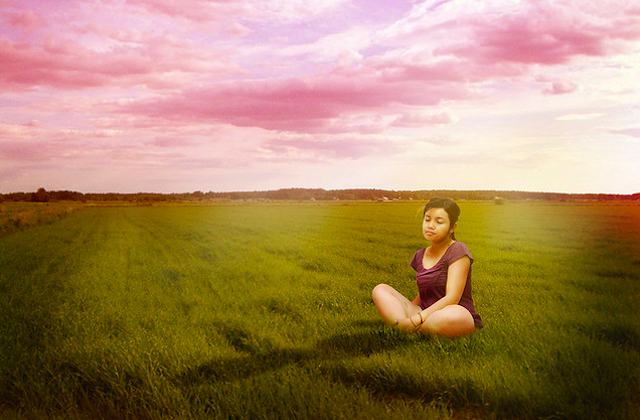
Some Things Take Time: Slow Down and Stop Pushing
“Smile, breathe, and go slowly.” ~Thich Nhat Hanh
As life speeds up, as we check our phones and Twitter feeds for instant gratification, as we seek out another spiritual practice in the promise of evolving even faster, we have lost sight of something quite fundamental.
Some things just take time. This can apply to relationships, business, and, in my experience, it especially applies to spiritual awakening.
Yes, our practices such as meditation, dance, service, and energy work can support us on our soul journey. But rushing our development can even result in us taking one step forward and two steps back.
And, most importantly, it will likely just happen anyway—if we get out of the way and allow it.
I know this firsthand.
When I felt the call to start developing my spiritual practice, the quirks of my overachieving personality took center stage. I quickly found out that there were sankharas to pluck out, energy centers to unblock, past life traumas to heal, and old soul contracts to wrap up.
And I wanted this all sorted out ASAP, thanks.
So I went from an occasional meditation practice to spending upward of two hours on the cushion every day, and chanted several times a week.
I spent every single spare moment practicing and developing my newfound energetic skills. I declined social invitations so that I could concentrate totally on the latest text that had fallen into my hands.
I don’t regret any of this. I learned a lot and it was my path.
But after a couple of years, I realized that my approach to my practice was perhaps a bit obsessive; that it could just be another manifestation of the way that I had been living before “waking up,” as I had termed it.
I thought that if I threw all my might at my spiritual evolution, then I might master this new way of being more quickly, and more effectively. Yet under the guise of spirituality, I was just playing out my old patterns.
The result? I was increasingly ungrounded. I spent days feeling totally knocked around by major energetic “clearings.”
I was slowing myself down, or at least not really assisting the flow of what wanted to move through me. And I was just as over-the-top about succeeding as ever, this time, at my practice rather than in my career.
I eventually realized that spiritual evolution is not like a report or book that you can write faster if you stay up late. You can’t force this type of evolution. It’s not the type of thing that you can control.
This type of evolution is perfect. It’s like a delicate flower, which unfolds at its own pace, to the rhythm of its own internal clock.
I came to this gradual realization, surprisingly, while pursuing a doctorate in women’s well-being and justice after violence.
This involved deconstructing everything I knew—being prepared to ask the hard questions and receive the answers; asking some big questions of myself, too, and being prepared to hear the answers.
It really involved a deepening of my understanding of myself and my spiritual practice. I started to appreciate which of my old patterns I had been inadvertently repeating, and which of my tendencies were actually not serving me.
The doctoral process also taught me how to play the long game and how to let go—working alone every day and inching along with my ideas; waiting for months, sometimes, to receive any feedback from my supervisors; spending months and months writing thousands of beautifully edited, referenced words that never made it into the final product.
Now, there are much less resource-intensive ways to learn this than through pursuing an advanced degree. Just bringing your awareness and being honest about whether you are playing out your existing patterns is the first step.
And if you notice that you have a tendency to rush your process, make the decision to slow down. Once you realize that the timing of your expansion, or growth, or awareness is perfect, you will relax.
When you fully internalize that the journey is just as important as the destination, you’ll know that you’re on the right path.
In relaxing, and in getting out of my own way, I’m much more receptive. I don’t worry about how long things will take. I trust that it will all happen perfectly.
I don’t push as hard now, and yet more opportunities seem to fall into my lap. My creativity flows. My life is much more fun. And my experiential understanding and my practices continue to deepen.
It’s actually quite magical.
Life becomes easier and far more fulfilling when we slow down and let things happen instead of pushing ourselves to make things happen.
Photo by Lisa Omarali
-
When You’re Frustrated by a Delay: 8 Reasons to Appreciate It
“All great achievements require time.” ~Maya Angelou
We all have a picture of what we want in our heads.
We get attached to a timeline for achieving it. We fantasize about the results and how it will bring us happiness.
We begin to work hard to attain it.
But when we don’t get it right away, we get frustrated. We want things to move as quickly as possible.
If we want a relationship, we want to find our perfect partner as soon as we can. If we’re building a career or a business, we want success in months. If we want to master a skill, we expect to get good after several weeks.
Right now, I’m in this in-between stage.
I’m in between getting my dream off the ground and where I want it to be. Because my dream hasn’t materialized yet, there are days where I lose motivation, because deep down I feel that if it’s not happening yet then maybe it isn’t for me.
I hate waiting; I hate this grey area zone that I’m in.
I want the results now. I want the validation. I want to make sure that I’m not wasting time and that what I’m doing means something.
But I’m learning that it doesn’t work like that.
When we resist this period of time, it creates a lot of anxiety, but if we look closer we may find that the delay actually contains great lessons for us.
I’ve been trying to live a more intentional life of happiness and meaning. But the anxiety I’m feeling doesn’t align with what I say I want—and it’s not even getting me closer to it. In fact, I’m creating more delay. I procrastinate, I resist, and I sulk.
So I’ve made a conscious decision to understand the lessons.
It was difficult at first, especially since I felt that “must have it now” feeling. The last thing I wanted to hear was that I needed to wait some more. I resisted this because I deluded myself into thinking that if I ignored it, perhaps things would move along at a faster speed.
But over time, as the lessons got clearer, I got more inner peace and reassurance that things are moving at the right time.
What can we learn from delays?
1. A delay is an opportunity to let go of attachment to outcomes.
When we let go of our attachment to specific outcomes, we’re better able to concentrate on our craft.
This is something to appreciate, because what happens if the result isn’t what you imagined it to be? Will you stop creating? Will you stop working on your passion?
2. A delay can help us realize how badly we want it.
Do you want it badly enough to keep working at it despite not getting the immediate result you want?
3. A delay can help us build a stronger foundation.
It prepares us and helps us develop our muscles.
Get better at your craft. Figure out ways you can better use it to serve others.
We practice and learn during this waiting period so that when the time comes, we are equipped to handle it better.
4. A delay can teach us to think outside the box.
When our way is not working and we’re cornered, it can force us to come up with new ideas and new ways of doing things.
5. A delay can teach us to accept that anything worthwhile takes time.
It takes time for things to grow. It takes time to build trust. It takes time to build anything.
The sooner we get this, the sooner we’ll free ourselves from anxiety, and the faster we’ll focus on doing what we need to do.
6. A delay can teach us to be productive while waiting.
When we’re able to accept that some things are out of our control and that things don’t always happen as fast as we’d like them to, we’re better able to be productive, since we’re not overwhelmed and distracted by fear and anxiety.
7. A delay can teach us to acknowledge and appreciate progress.
With conscious effort, I am able to see my accomplishments and all the progress I have made so far instead of discounting it just because I’m not yet where I want to be.
This is important because it’s removed the resistance that kept me from doing the work I needed to do; plus, I feel more fulfilled.
8. A delay can teach us to be grateful for what we will receive.
Because I have put in my sweat and tears in starting my dream from the ground up, I will make sure I will do whatever it takes to nurture it and not take it for granted.
—
A delay it not a denial. Just because something isn’t happening now, that doesn’t mean it’s not for us.
I still get impatient but it’s getting easier, because I know that a delay can serve a greater purpose, and our greatest good.
So, if you’re going through a tough time right now and something isn’t quite materializing yet, hang in there. Find reassurance in knowing that a delay can actually benefit you.
You may not see it now, but hold on to this faith. This will help you find inner peace and enable you to keep taking action so you can get closer to what it is you want.
Photo by Luz Adriana Villa
-
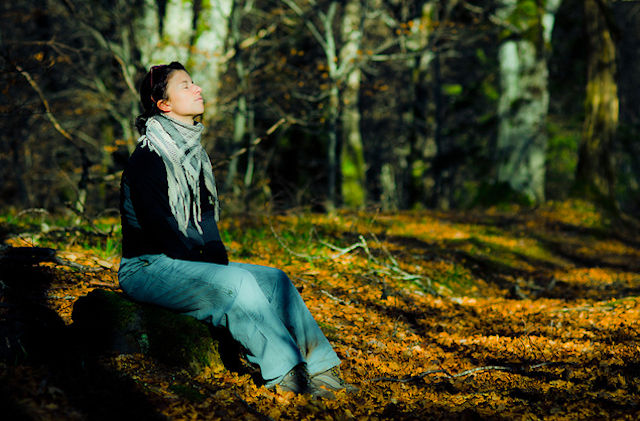
4 Lessons from the Forest on Dealing with Difficult Times
“Change your opinions, keep to your principles; change your leaves, keep intact your roots.” ~Victor Hugo
This week I revisited a favorite national park, some fourteen years after my last visit. Despite the long hiatus, the reason for both trips was the same.
When I last visited in 2000, my goal was to seek out the solitude and beauty of the rainforest, the creeks rushing headlong through shade-dappled gorges, and the vast rocky cliffs overlooking the distant ocean.
I had suffered a recent breakup and wanted to spend some time in nature, in solitude, in a place where I could find and heal my emotional scars.
This time I returned to the same place to spend hours in walking meditation in the forest, trying to understand what had gone wrong with my latest, and longest lasting, relationship.
After the first trip, I then went to spend a week at music festival, where I met a wonderful man, on New Year’s Eve of all times. We shared thirteen years of friendship, love, and companionship, and enjoyed similar activities, such as hiking, camping, and travelling.
We also shared similar values and a similar outlook on life. He’s a hard-working, wise man, and together we raised a blended family of four boys and one girl. We loved nothing better than to sit around a campfire in some national park, sharing a glass of wine and resting after a long hike over a mountain.
But something happened in the last year, and he changed. We went from the couple that everyone thought had the perfect relationship to two people who could not spend five minutes together without arguing.
To this day, I cannot understand what happened. Why had the man I loved gone away and been replaced by this stranger?
It’s been a long and difficult twelve months, and I’ve learned a lot of hard lessons. Perhaps he never did change. Perhaps I was the one who changed him, and he had just gone back to how he was before he met me. Perhaps I will never know.
I don’t know what is going to happen in our future, whether we will ever end up back together again, even though I desperately hope we can rekindle our friendship and love. And of course, most relationship breakdowns cannot be blamed on only one person, and everyone can try and improve themselves, if not to fix their past, then to fix their future.
These are some of the valuable lessons I learned in the forest. I hope they can help others deal with difficult times in their lives.
1. Slow down. Life is not a race.
Despite the fourteen years that had passed, the forest looked exactly the same. Of course it had changed, but imperceptibly, slowly, and incrementally.
On my first walk, I found myself hurrying to get to my destination, getting impatient when I caught up with slower walkers. I would mumble “excuse me” and hurry past with a quick hello, then walk on at an even faster pace so that I would not hear them talking.
I kept looking at my mobile phone, worried that I had no reception and couldn’t check my email or upload a picture to my Facebook page.
After an hour of this, I said to myself, “Stop it!” I was in the forest to learn, to experience, to think. I had no destination and no deadline. I was there for the journey, and for the lesson.
I turned off my mobile phone and slowed down. I stopped whenever I wanted to, whenever I need to rest. I looked at tiny, beautiful flowers and watched a brilliant blue spiny lobster wave his claws at me, furious that I wanted to walk past his territory.
I saw fungi of all shapes and colors, breathed deep the leaf-mold compost fresh-rain smell, and listened to the call of the whip-bird echoing amongst the trees. I walked eight hours a day and was never tired.
I realized that I had spent much of my life planning for some deadline or other, never enjoying the moment, always looking to the finish line. No wonder we had drifted apart. We were both Type A personalities, always impatient, always rushing, always stressed, and always tired.
2. Have a strong foundation.
In the forest the trees grow so tall and wide, some over 50 feet wide and 300 feet tall. But the forest soil is thin and has few nutrients, especially in mountainous areas. How can such huge trees grow so tall?
They grow so huge because they have built strong foundations, vast thick trunks, networks of stilt roots, and wide buttressed roots. They are also part of a system, of the forest itself. In the suburbs, carved out from where forests once grew wild, solitary trees often fall, toppled by the smallest wind, for they have no support from other trees, and their foundation has gone.
If you are going through troubled times, for whatever reason, you need to have a strong foundation. This foundation could be a network of trusted friends and family, a valued work colleague and confidante, a counselor or spiritual teacher, a strong faith in a higher power, a supportive local community, even a loyal pet.
Just as in the forest, we are all part of one human community, and we depend on one another. If you have a strong foundation, you can weather the strongest storms. Branches might break and fall, fires might rage, but you will survive.
3. Disturbance is not bad.
But the forest also needs disturbances. In the forest, disturbances are an integral part of the system, to bring in new life. In a mature forest, the taller trees absorb nearly all the sunlight, so the forest floor is permanently shaded.
Nothing new can grow until something happens, perhaps a lightning strike, or a flash flood, and then one tree falls or drops branches. This creates a gap where the sunlight can pierce the darkness.
Within days, new life takes root; pioneer species make way for the forest giants of the future. And the giant felled tree will rot and provide food and habit and shelter for other species. The forest is not static, and it needs disturbance to bring new life.
Perhaps the problems that you are facing will disturb you and force you to change and to grow, to bring new light into your life.
4. If you can’t get over it, grow around it.
Many of the giant trees have grown around enormous rocks, their roots piercing the very stone, breaking down the rock into new soil. The trees cannot move the rocks, so they just grow around them.
If you have a problem or are suffering a relationship breakdown, grow around it. Do things to break down the problem into new fertile soil.
For example, you might find yourself separated and unemployed, in which case you could go back to school and get some qualifications so that you are no longer dependent on anyone.
Or, through self-analysis or counselling, you might discover some unyielding rock within yourself, such as an unresolved issue from your childhood, which might have contributed to your relationship breakdown; then you can address that problem, and grow around it, so it is no longer the huge obstacle of the past.
In time, even the deepest wounds heal, and the hardest rocks break down; and new life, and a new forest, can grow from the smallest shoot.
Photo by Gregory Tonon
-
6 Lessons from Nature on Living a Peaceful, Fulfilling Life
“Nature does not hurry, yet everything is accomplished.” ~Lao Tzu
Five years ago, I was feeling really stressed (like millions of other people in the world). I was working full time in a job that was draining me of every single ounce of energy I had.
I had nothing left to give to myself or those I loved at the end of each working day; life had turned into an incessant cycle of getting up, going to work, coming home, working, and going to bed.
During this time, I read about so many people who were also unhappy with their lives. People who had reflected upon their existence and realized that this was not harmonious with who they were.
I read about these people who inspired me with awe yet at the same time felt a sense of desperation. That could never, would never, be me, I thought. And while these conflicting thoughts existed, I became increasingly stressed out and more and more unhappy.
There were things I enjoyed about my job (and still do). I became a teacher because I felt fortunate in having had such amazing support throughout my own education and wanted to offer young people that same help and guidance in return.
But at the same time, I was changing as a person and I wasn’t the same being I had been six years previously when I had chosen that path. For my own sanity, health, happiness, and the happiness of those I loved, I knew something had to change.
And then it did. My partner and I decided to move to a rural area of Herefordshire and buy a hundred-year-old cottage.
There is no quick fix for happiness and I realized that the most important way to become less stressed was to change my way of thinking. But living in the countryside has undoubtedly contributed to my increased levels of calm.
There is nothing like walking down a tranquil country lane, whatever the season, and just observing the sounds, smells, and landscape.
I walk the same route regularly but this never bores me. With every single day, let alone season, something has changed and yet there is also a sense of constancy in nature, which I find incredibly comforting.
The Lao Tzu quote about nature not hurrying embodies something I find I’m continually trying to work on—slowing down my daily pace. All too often we rush through our days, anxious to get things done at the fastest speed.
When I’m aware that this is happening, I make myself stop and think: Why am I doing this?
The pace of our world is frantic and seems to be constantly increasing. Despite this, I support the belief that life is not a race.
Going faster doesn’t necessarily equate with accomplishing more or better. In actual fact, the opposite is usually true. If you slow down, you make fewer mistakes, are able to think more clearly, and act with purpose.
For me, this also results in feeling calmer and being more aware of my surroundings and those around me. This can only be a good thing.
Frequently, we might tell ourselves that we must do such and such but in most cases, this feeling of having to do something is only a result of pressure from within.
I personally believe that it’s important for our own sanity and health to slow down (and I apply this to driving, walking, and breathing on a regular basis).
So this quote got me thinking about what we can learn from nature…
1. Determination
Nature is pretty hard to stop. Weeds and grass grow with dogged determination (much to the frustration of the lazy or time-pressed gardener). Many baby birds and other young offspring grow up against a huge number of odds; they are determined to survive.
With determination, it doesn’t matter how fast (or slowly) you move through life. If you are determined, if you have a goal and a plan to reach that goal, you’re already a long way toward it.
2. Strength in adversity
Have you ever pruned or cut back a plant only to wonder whether you ever actually did, because now the greenery has exploded into an amazing array? I used to be reluctant to cut any plants back until someone told me that they actually ‘like’ it.
I suppose it’s nature’s fight for survival; you cut it so it puts even greater energy into growing more.
Nature could decide to give in and plants could just shrivel up and die. But they don’t. In life, when things seem tough, we usually have two choices: give in or give more.
Choose to mirror nature and decide to face problems rather than run from them.
3. Adaptability
Nature can be incredibly adaptable. Just think about the four seasons. Animals and plants alike adjust to cope with the changes in climate and meteorological factors.
Humans are no different. We put on an extra sweater or two in the winter but can be less adept at managing with changing circumstances. Since change is one of the only certain things in life, try to accept this and see it as a positive thing as far as possible.
You might not be able to control life events, but what you can control is how you respond to them.
4. Storing inner strength
When autumn arrives, nature seemingly goes into shut down. But actually, wonderful things are going on, ready for when the plant and animal kingdom come into full swing once more.
Take a leaf out of nature’s book and nurture inner strength when times seem sunny so that when the clouds appear, you don’t give in.
5. Collaboration
One thing nature does really well is working together. Bees and flowers are just one of the many examples of this. Bees collect nectar from flowers to make their honey while the flowers get a good deal out of it by their pollen being spread by their furry winged companions.
You might be a real people person or perhaps you prefer your own space. Either way, the world is one huge partnership of human beings.
There are so many things that we simply could not do without the help of others. Look around you; everything you see has been thought of by a human, designed by a human, made by a human (okay, perhaps with the help of a machine, but still). I find that thought pretty amazing.
I’ll never meet most of the people who somehow are connected to my life, but knowing that every single thing I do I am able to do because of someone else is pretty awe-inspiring. In so far as you can, see people as teammates rather than competitors or adversaries.
6. Consistency
With the exception of an extreme weather occurrence, nature is pretty darn consistent. Want to be a super fit runner? Jogging every three months isn’t going to get you there; try to stick to a once weekly routine.
It doesn’t matter if the day or time has to change as long as you hit that road/treadmill/country lane once a week. Maybe you want your garden to look pristine and something to be proud of. Again, get out there regularly rather than spend five hours slogging away once a month.
Whatever your thing, be consistent.
—
Whether you live in a rural area, town, or city, nature is all around us. Harness the power of nature to live your life and slowly accomplish your dreams.
Photo by Mint-Flower
-
4 Ways to Embrace Slow Change When You’re Feeling Impatient
“Change is not a process for the impatient.” ~Barbara Reinhold
I love it when change happens quickly. Sometimes things just click, and everything shifts all at once.
When I met the man who’d become my husband, we were married only thirteen months later, and in those thirteen months we both transformed to our very cores.
The problem is that those thirteen months aren’t the entire story. They cut off the three years of intense personal work I did before I met him, all the while wishing to be in a healthy relationship.
Without those three years of work (and the years of work he did before meeting me), we couldn’t have moved that fast from a healthy place. We would have been living a fantasy.
I’ve done that before in relationships—pretended that I was changing faster than I was. Eventually the bubble would burst, and we’d need to see where we really were.
Real change usually takes a long time.
So how do we deal with this? How can we embrace three (or one, or five, or thirteen) years of working on a change without caving in to our impatience?
1. Find ways to get the qualities you’re wanting right now.
Some of the qualities I wanted out of my changed relationship pattern were love, companionship, and adventure.
There are plenty of ways to connect to those qualities without actually being in a relationship. I went on adventures with my roommates, talked things over companionably with my best friend, and learned to accept love from myself and those around me.
Not only does this help you feel better in the moment, it also helps you begin the inner changes that lead to outer change.
(Sneaky benefit: sometimes we only think we want something, and that’s why it hasn’t happened yet for us. When we connect to the qualities behind the change we’d like to make, we get what we’re really wanting, whether it goes according to plan or not.)
2. Trick yourself back to the present moment.
When my “internal committee” is throwing a small fit about how long something seems to be taking, I call its bluff.
So you think it’ll take me ten years to get to the place where I can have the kind of relationship I’m wanting?
Well in five years, would I rather be five years closer to that desire or not? In eleven years? In two months?
Usually even my most stuck-in-the-mud resistance answers “yes” to all those questions. So then I bring us back to the present.
Since I know I want to move forward on this no matter how long it takes, what’s one action I can do now to embrace the change I’m making, slow as it may be?
(Sneaky benefit: though you’re focusing on the future, this gets you back into cultivating the qualities you’d like in the present moment, which is the only place you really live anyway.)
3. Make friends with your resistance.
If you could wave a magic wand, right this moment, and have the change you’re wanting, would you feel 100% satisfied with it?
Hopefully at least part of you says “no,” because that means you have information on where to work.
If a small part of you thinks that a relationship sounds rather terrifying, then you can ask it what needs to change so you can feel safe.
Maybe you need to learn better boundaries. Maybe you need to choose better partners. Maybe you need to feel more comfortable receiving love from yourself first.
Repeat this often enough, and you’ll have connected with all the parts of you that need to change.
(Sneaky benefit: this helps you make a change from a place of wholeness and alignment, instead of running roughshod over parts of yourself to get what other parts of you want.)
4. Let it be hard.
Positivity is a wonderful thing, but forced positivity puts you in resistance to what’s really going on in you.
So take ten or fifteen minutes to let it be hard.
Write a rant in your notebook.
Ask a friend for a hug.
Listen to a sad song and cry a bit.
When you free up the energy trapped in the sadness (or anger, or fear—whatever you feel), you may find it easier to embrace change with grace.
(Sneaky benefit: this is also a backdoor to wholeness. While wallowing in negativity is usually counterproductive, giving yourself time to grieve helps you heal.)
How about you?
What changes are you working toward that you really wish would just happen already? What helps you deal with your impatience?
Photo by Hartwig HKD
-

Learning to Enjoy the Process and Stop Worrying About the Outcome

“Slow down and everything you are chasing will come around and catch you” ~John De Paula
Remember the Tasmanian Devil?
That crazed Loony Tunes cartoon character spinning out of control, crashing into everything in his path? Arriving in a blur. Leaving chaos in its wake.
That was pretty much me and my approach to “living my passion.”
This is hard to write but here goes (deep breath)…
Not too long ago I was seriously trying to accomplish all of these things at the same time:
- Play in a rock and roll band of middle aged men living in New York City, rehearse regularly, play live shows, tour, and still play dad to a family of four.
- Engineer and produce our own albums while simultaneously attempting to produce other artists to help them realize their artistic vision
- Start my own blog to inspire awesomeness in other creators
- Guest post for major blogs and write epic content regularly to help their audience and build up my own blog audience
- Shoot my own videos, create graphics, and edit them (though I have little to no skills in any of these areas) for my blog
- Write a novel and multiple eBooks
- Design cool music themed apps
- Stay gainfully employed (a day job I desperately wanted to quit to make more time for all of the above)
- Practice meditation and find the deeper meaning to my life
The idea was that my brilliant plan would eventually pay off and sustain my family completely so that I could:
- Pay a New York City mortgage
- Put food on the table
- Make time for my two young children
- Spend some quality alone time with my wife and stay married
- Have the freedom to create more awesome art
So how did that all work out, you might ask. Total disaster. Here’s a glimpse into my crazy Tazmanian lifestyle:
I would commute to my day gig and write blog posts while standing up on crowded subway cars. I’d come home and have a quick dinner, hang out with the children, and pretend to listen as they would excitedly recount their day. But I wasn’t really present. Then I would dash off after their bedtime to my studio man cave to work on my music until the wee hours.
Then I would collapse into bed every night, only to get up a few hours later and do it all over again. At the end of my self-imposed exile of several months, I would finally return home victorious, the proud father of a shiny new CD.
But there was no applause in my household. Only a very chilly reception from an ever more distant wife who understood my passion but couldn’t accept its all-consuming nature or my many frazzled creative endeavors.
Then I would spend the next few months trying to stitch back together our relationship. But the chasm between us was growing and heading to the point of no return, having repeated this scenario at least three times before since we had known each other.
I knew something needed to change, and quickly, if I was going to try and stay married.
How did I arrive here, you might ask.
Simply put, I became a casualty of the Digital Revolution. A world where faster is better, multi-tasking is the national anthem, and technology will set you free to be more productive and make you more intelligent.
Where you don’t need human interaction anymore. You can simply “connect” to your global audience, which was almost as good as being there with them.
Except that it’s not.
I was duped into believing that I could accomplish so many more tasks with all this technology and achieve incredible feats by simply sitting in front of a computer screen.
I was also following several successful bloggers and online marketers and learning everything I could from them. But this only amplified the delusion that I could accomplish all these things at once because they had done it.
Only all those marketers seemed very focused on just one thing and they were doing it really well. The problem for me was that I had many irons in many different fires and none of them were getting very hot.
I call this The Flailing Effect.
But thank God (or Buddha as it were) that somewhere in the midst of all this chaos I began practicing meditation. You could say I finally caught my breath. I quickly began to slow down and see a different perspective.
It didn’t happen overnight. There were no tectonic shifts in my crazy lifestyle. In fact, I had to get up even earlier to now fit my meditation into my already insane schedule.
But it was the best thing I ever could have done.
Slowly, through the practice of quieting my mind, I began to find clarity.
I clearly saw my attachment to this desperate need to accomplish something important in this life and be recognized by the world for it; and how these external accomplishments would somehow validate me as a person, as though who I was already wasn’t enough.
It didn’t take long before I recognized the insanity in my ways.
It became clear that I really needed to define what I wanted my life to stand for. Then I needed to eliminate everything else that didn’t serve that end.
But the most important discovery was learning to finally let go of all expectations that any of these aspirations needed to come true. Or if they were meant to be, I needed to stop worrying about when they were going to happen, which it turns out was a huge source of frustration.
Attachment, worry, frustration—these things don’t exist in nature. Things unfold as they are supposed to in nature.
Sometimes the rains come. Sometimes they don’t. Sometimes one storm can change the course of millions of lives in just a few minutes.
A river runs its course based on the lay of the land. When it meets an obstacle, it doesn’t fight with it. It simply goes around it…eventually.
How long it takes is of little consequence. After some six million years or so, it might carve something as magnificent as the Grand Canyon. Nobody’s watching the clock in nature.
A tree is happy wherever it grows. It doesn’t secretly wish to sprout legs and run off to some other more happening part of the forest. (Robert Frost wrote a pretty great poem on this subject.)
In Buddhism, they call this patient acceptance.
Life happens in spite of your wishes. This is the nature of all things. When I began to accept this, my frustrations started to melt away.
When you can see yourself as a part of that nature, not separate from it, and start behaving as nature does, you will become more peaceful.
I’ve learned to embrace the work now.
The day to day. Nothing else matters, except my family. When I’m with my kids or my wife now, I try to really be present, to enjoy the now in each moment.
When I finish a post or a song after many hours of editing and polishing it to a fine shine, I can stand back and smile. Another child is born. Then I put it out into the world.
I do wish for it a happy, prosperous life as any father would. I just don’t worry so much any more about how it all turns out.
It all turns out fine.
Photo by Nguyen ST
-
8 Lessons About Living Fully from a Journey of 500 Miles
“The journey is the reward.” ~Proverb
I should start by clarifying that even though there’s a lot of walking involved in this story, I’m not a walker, or particularly sporty. So what was I thinking going on a 500-mile pilgrimage you may (rightly) ask? I wasn’t. I was feeling it. In my gut.
You know those butterflies that wreck havoc in your tummy when you have an exciting idea? Well, I had about a thousand of those. Butterflies, not ideas. I only had one idea, and I didn’t even think that one through.
El Camino de Santiago. St James Way. A long walk, an ancient pilgrimage. Alone. Five weeks and 550 miles from France across Spain to the end of the world. A whole lotta walking! Yeah, why not? Piece of cake, right? Wrong.
On August 6, 2012 I took my first step into the unknown, armed with nothing but a light backpack, three pairs of socks, a couple of T-shirts, a sleeping bag, and an arsenal of Band-Aids. I walked away from the world and left my old self behind.
“Yeah, but why?” is the most common reaction I get from people, often accompanied by a confused and suspicious look.
Well, truth is, I needed to get away.
“But couldn’t you have gone to Fiji and lie on the beach for five weeks or something?”
I have to admit, that one always gets me thinking.
But even knowing how painful, exhausting, and scary walking 30 kilometers every day for over a month with 10 kilograms on my back can be, I wouldn’t change it for the world—or the beaches of Fiji.
The journey changed my life, both inside and out. I walked it off! I walked it all off. As I got further away form the “real” world—penetrating forests, walking through sleepy villages, hiking up mountains and down deserted valleys—I got closer to my internal world.
As I detached myself from possessions, got rid of masks, demolished walls, dissolved judgments, and released resentments, I became more open, honest, free, loving, balanced, and, of course, happy.
I connected with people at an authentic level that I had never experienced before, making lasting friendships in mere hours.
I started following my instinct and inner voice, not only the yellow arrows pointing west.
I started being open, believing in myself, listening to my body, and ultimately I realized that all I needed to be happy was right there, inside of me.
Yep, I was a walking cliché and I loved every painful minute of it.
This realization came to me the moment I arrived at Santiago de Compostela and stood in front of the cathedral that, a month earlier, had seemed impossible to reach. I had made it!
And contrary to popular belief, I didn’t want to yell about my accomplishment to the top of my lungs. I didn’t care if anyone knew; I had done it for me.
As I sat on the stony square looking up at this magnificent milestone in my life, I was struck by silence, tears rolling down my smiling face, and I let go—of the burden of the past and expectations of the future.
A year has now passed since I returned, forever changed, and not one day goes by without me having thought about that journey.
Every day I try to remember the lessons learned. But it isn’t easy, and that is why this article is as much for you as it is for me.
Let us remember to:
1. Be present every step of the way.
The past is over and the future will come, whether you worry about it or not. Make a conscious effort to live in your present. I find meditation of great help. Walking was meditation for me, as it was being in contact with nature, taking in the colors, smells, and textures.
2. Trust yourself.
Listen to your gut. Mine told me to walk, that I could do it despite all evidence to the contrary. Yoga and fostering my creativity have been very helpful to block out the outside noises that drown my inner voice.
3. Be grateful.
Practice appreciation everyday. At the end of a long day’s walk, that shower would be the best shower I’d ever had. Make sure you appreciate that shower at the end of a long day’s work by thinking of nothing but the touch of the warm, relaxing water. Writing down three happy moments every day also helps!
4. Open your mind.
Possibilities are everywhere, but you’ll only see them if you’re open to them. Remember: “Whether you think you can or you can’t, you’re probably right.” Henry Ford. I found the true meaning of synchronicity during the walk, where the “way” or “universe” provided exactly what everyone needed at the exact right time. It’s all around us, if we pay attention.
5. Let go.
Of fear, negative thoughts, resentment, the past, limitations. Anything that holds you back, let it go. Dance around like crazy to loud music, have a good cry once in a while, speak your truth, let it out and let it go! While walking, I sang, laughed, cried, laughed until I cried, danced, skipped, limped, ran, fell, got back up, carried someone, and let someone carry me. Sometimes all in one day. That’s living.
6. Slow down.
There’s something about walking, about slowing down from 70 miles to hour to 3 miles per hour, that made me realize there’s so much we miss in our daily lives because we’re always in a rush to arrive at our destination or tick the next thing off our to-do list.
At any given moment of the day, stopping to look (really look) at a flower, or the shape of a cloud, or the way a ray of sunshine hits the trees can make me smile and bring me back to the present. One small minute, stop and take a deep breath, observe the world moving around you while you stand still. It can change your perspective.
7. Detach from the result.
Be passionate about the journey, not only about the destination. Do things you enjoy for the sake of them, not only to get something in return. When you’re passionate about what you do regardless of your gain, chances are, you’ll gain a lot more than you expected.
8. Accept and love yourself.
You don’t need anyone else’s acceptance but your own. Whatever other people think of you is their problem. What you think of yourself is yours.
Try this:
Sit, eyes closed, and open your arms as wide as they can go, as if trying to hug the universe. Hold it for a minute, feeling the freedom, thinking of receiving love with open arms and giving out the best of you. Say that you love and accept yourself. Close your arms tight and give yourself a big, loving hug for a minute.
Smile! I dare you not to.
Photo by Moyan Brenn
-
Slow Down and Fully Enjoy This Moment
“Don’t miss all the beautiful colors of the rainbow looking for that pot of gold.” ~Unknown
Have you noticed that time seems to go by faster as you get older? Holidays, birthdays, and anniversaries all come and go—and before we know it, here they come again.
One theory neuroscientists have is that when we are young we have more novel experiences. These novel experiences create more vivid memories. As we age, we have less “new” or “first time” experiences. There are no unique memories to stand out.
We can also look at it another way. When we’re doing something new, we’re very focused and “in the moment.” Time seems to stand still because we’re not thinking about the past or the future. We are truly living in the present.
So then by being present in our lives, no matter what we’re doing—cleaning dishes, writing a paper, or watching a sunset—or how old we are, we can experience it like it’s a “first time.”
How often are we truly present in our lives? It’s hard, isn’t it? We have so many things to do, places to be, people to see.
We all know that we should slow down and enjoy life more. We may try for a little while, but then we’re off to the races again, filling our lives with more busyness and distractions.
We start our day with well-meaning intentions: kindness, compassion, patience, and love. Then stuff happens—we hit traffic, computer goes on the fritz, or have an argument with our significant other. By mid-day, we often find ourselves worn down, defensive, and depleted.
As a massage therapist, I’ve had the opportunity to work closely with many interesting people, from actors and musicians to teachers and retirees. We share life’s ups and downs—joys and sorrows from birthdays and weddings to sickness and death.
Our perspective determines how we see and judge everything in life. And try as we may, we cannot run from the perspective that comes from growing older.
I’m lucky to work with many older clients who remind me of what’s really important in life. And what I hear most is how fast life passes you by. And the advice I hear most often: to really try to enjoy every moment.
Which then boils down to presence—presence with people, with activities, with whatever’s in front of us.
PRESENCE WITH OTHERS
Be gracious.
No matter what you’re dealing with in life, be gracious to others. Be grateful for what you have in your life and be willing to “pay it forward.”
Be present with your loved ones.
With all the distractions around us, it’s easy to get sidetracked. We may be tempted to “multi-task” by checking email or sending text messages while talking to them. But it’s so important to let your loved ones know that they’re being heard and that you value your relationship with them.
Be present with everyone you encounter.
Whether it’s a clerk at a grocery store, your neighbor, or a co-worker. Oprah has said that after talking to almost 30,000 people on her show, she’s found that everyone has the same desire—to know they are seen, they are heard, and that what they say matters.
Be yourself; don’t try to impress.
We waste a lot of time worrying about finding the right outfit or making our hair look just right to be “presentable” If you want to wear a muumuu with tennis shoes, do it!
Nurture your friendships.
As we grow older, it’s so important to have our friends to lean on, to cheer us up, and keep us going.
Always have a good joke to tell.
Everyone loves a good joke and laughter can be healing as well as contagious!
PRESENCE WHEN IT’S NOT EASY
Don’t sweat the small stuff.
Know what’s absolutely important in your life and don’t get caught up in the petty things.
Choose happiness.
Don’t let your happiness depend on circumstances. You can decide to be happy, no matter what’s happening around you.
Keep music in your life.
Music can be very therapeutic and can help boost your mood. You can take a dance class, learn how to play an instrument, or just rock out at home to your favorite music.
Let go of grudges.
Do yourself a favor and find a way to forgive and move on. Holding on to bitterness and anger will only hurt you. It doesn’t mean you necessarily forget what happened, but forgiveness allows you to release the negative and make more room for the positive.
It all boils down to remembering what’s important in life. And we definitely don’t have to wait until we’re retired to do that. We can decide today, no matter what we’re doing or whom we’re with, to let this moment know: yes, I see you, I hear you, and you matter.
Photo by Alice Popkorn
-
Slow Down: Join the Stillness Revolution for More Peace and Joy
“There is more to life than increasing its speed.” ~Mahatma Gandhi
I recently treated myself to a retreat in the mountains, with the intention of pulling out of the busyness of every day life so that I could spend time healing and in reflective writing.
Setting off, I anticipated an easy drive as traffic looked light, but when I reached the mountain pass, I experienced something I had never experienced before:
I was completely blind to my surroundings.
In fact, I realized I had driven into the clouds themselves, engulfed by a pure white energy.
Not fog. Not mist. Just pure white.
For a moment, I was gripped by fear, as one of my recurring dreams involves me speeding around steep, curvy roads until I lose control and drive completely off the edge.
But I noticed the fearful energy quick enough to rein it back in and surrender to the beauty of what I was experiencing.
In order for me to surrender without fear of driving over the edge (or into another car), I had to slow down and become hyper present and aware.
Slow down. Be still.
Creeping along at two miles an hour, I quickly recognized the message the universe was sending me through my experience on that mountain pass that day, and it reignited a passion in me to share this message with you.
Our lives seem to travel at warp speeds these days, with our minds taking in and spewing out information faster than we can keep up with, and our bodies running ragged with the intention to get up early and stay up late in order to get it all done.
Everything around us screams, “Go, go, go” not “slow, slow, slow.” Modern society simply doesn’t promote this kind of “radical” behavior.
So it’s going to take rebels like you and me to fuel this stillness revolution.
Yes, I wrote “rebel” because you are going against the stream, and you are most certainly going to feel a little “different” in doing so.
Your own ego might even resist the very idea of a stillness revolution—rejecting it as being ridiculous, unreasonable, and completely insensible.
Here’s the response from my higher self to that ego doubt (and trust me, my ego is shouting it too).
What if creating a more peaceful and more joyful life means taking actions that seem a bit ridiculous, unreasonable, and insensible?
There is an exercise I use that might shift your perspective called “When I’m 92.”
You can read the below and then close your eyes to really practice the meditation or you can simply follow along now with your eyes open.
Take 3 conscious breaths to settle back into your body and into the now.
Imagine yourself lying in a bed in the hospital when you’re 92 years old.
You are surrounded by love—loving doctors and nurses and most of all, your loving family
You’ve lived an amazing life and you are filled with gratitude for all of the experiences you’ve had.
Your 32-year-old grand-daughter, a self-proclaimed “workaholic,” rushes in, apologizing for running late, and explaining she only has about 15 minutes to stay, as she really must get back to another meeting.
Your 92-year-old self smiles at her and radiates peace and love around her busy energy.
She sits down and takes your frail hand, softening and opening to receive.
The wisdom flows through you to her, as you say:
“My beautiful grandchild, if there is one piece of wisdom I can leave with you before my soul returns to the light, it’s this:
Slow down and be still.
Every single moment that you spend in a space of stillness will be worthwhile and make your life richer than you could have ever thought possible.”
Take a conscious breath—and now imagine you have become the 32-year-old granddaughter.
As that young and busy soul, receive the energy of these words and absorb the meaning into your very core.
Allow yourself this stillness as you’re in this meditative space right now to begin cultivating the practice of stillness in your every day life.
When your intuition tells you that the exercise is complete, send gratitude to your higher self and 92-year-old self, then bring yourself back to this conscious moment with another easy breath (and gently blink your eyes open if they were closed).
Take out your journal, or just a piece of paper if you don’t have a journaling practice, and free write how grounded and peaceful you felt during the above exercise.
Allow your intuition to guide you to choose one action you can take to support your own stillness revolution.
Perhaps, like me, you want to formally create the space for an extended period of slowing down and being still by scheduling a retreat in nature?
Or maybe you want to begin with a simpler practice such as writing the words “Slow Down and Be Still” on a post-it note and putting it up on your car dashboard so that it can remind you of this wisdom as you hustle to and fro?
The specific action isn’t as important as simply taking any action, so choose one and share in the comments below how you are going to slow down and play your part in the stillness revolution!
Photo by N I C O L A
-
Find the Courage to Be You: 4 Ways To Live Authentically
“Live your beliefs and you can turn the world around.” ~Henry David Thoreau
Authenticity is a buzzword these days. We hear all kinds of advice on how to live it, breathe it, and get more of it. Maybe this is because we are actually drowning in inauthenticity.
Advertising bombards us with promises of bigger, better, faster, and easier. But the dream life of effortless comfort and problems that fix themselves is just a fantasy, a running away from the truth of life:
Everything is impermanent.
Right now, at this moment, this life is all we have.
More and more people are fearlessly embracing this truth. As a result they are living their lives in accord with what their hearts are telling them rather than what the dominant paradigm dictates as “safe,” “normal,” and “true.”
People are beginning to live their dreams with more passion and purpose than ever before. The focus isn’t on money or the accumulation of things but on living with integrity. And though it’s not the always the easier road, they are far happier for it.
This is the kind of happiness we all crave. I know I do.
We know in our hearts that there is something missing in our lives these days. But we also know that life can be rich, deeply satisfying, and meaningful.
I just got back from a yearlong sabbatical in India.
At the end of it all, I was riding the overnight bus from Dharamsala to Delhi on my way home.
In front of me were a dwindling savings account and an uncertain future. But as I looked out the window at the Himalayas shrinking into the distance, I didn’t feel one scrap of regret at all.
I had done what I has set out to do, and I felt more satisfaction and sense of accomplishment than I had at any other time in my life.
Five years ago, if you had told me I would be living in a foreign country, learning a foreign language, I would have laughed in your face. I was so bogged down with my own insecurities and fears that I couldn’t even have imagined such a thing.
I lived my dream of spending a year in India because I worked hard on making it happen. I set a clear goal and faced all of the challenges to that goal with an open mind and the determination to overcome them.
But most importantly, I listened to my heart.
My heart told me this: I had to do it. And what’s more, if I didn’t I would have regretted it for the rest of my life.
But learning how to listen to your heart takes practice and effort. It’s not as simple as it sounds. But it’s not impossible either.
So what are some steps you can take to start listening to your heart and living a more authentic life?
Here are four of them that work for me.
1. Slow down.
Slowing down is a meme that seems to be (ironically, very quickly) working it’s way through the culture these days.
Supposedly, we need to be taking it easier, to be letting go of the compulsion to work ourselves to the bone every hour of our lives.
But one look out the window during rush hour traffic and we see that’s exactly what most of us are still doing.
It’s not that we shouldn’t work hard or be productive. Goodness knows, as a writer I’ve got to spend a lot of time in the chair.
But we need to honor the fact that down time is essential if we really want to get in touch with our authentic selves.
So listen to this: Finish this article then take a long, deep breath. Close your laptop and go for a walk. Go in a direction you’ve never taken before and just take your sweet time.
Give yourself some space to be you.
2. Unplug.
We live in a world drenched in information. Whatever we want to know, we can find out instantly. This can be very exciting and even useful.
But one of the things that prevent us from staying in touch with our true selves is the constant barrage of cultural programing we are dosed with everyday.
Advertisements, news programs, and television shows all tell us what and how to think, what products to buy, what opinions are in style, what life goals we should be achieving.
It’s not necessarily that Big Brother is watching us, but it’s good to unplug from all of this from time to time and give your own voice a chance to pipe in.
So take a break from the intake of information. Pick a time during the day, or even a whole day off during the week, to turn off the computer, the television, the radio.
Take some time to listen to what you really think and feel.
3. Explore and experiment.
Part of the reason that we live inauthentic lives is that we get stuck in a rut. We lull ourselves into a false sense of security by following the same old routines.
New ideas and experiences are what keep us fresh and alive. Our authentic selves thrive on them, and when we expose ourselves to new things we have the opportunity to grow.
Visiting new places, putting ourselves in new situations, exposing ourselves to new points of view can all challenge us to understand who you truly are.
So get out of your rut. Even if it just begins with ordering something different off the lunch menu, make an effort to keep an open mind to what possibilities are out there waiting for you.
4. Cultivate fearlessness.
Living authentically doesn’t always mean a life of comfort and bliss. Often it means just the opposite.
When we show our true selves to the world, when we dare to live our dreams, we might just run into many obstacles we didn’t expect.
We might experience ridicule. We might find that our authentic life isn’t what we expected at all.
We might even “fail.”
But what is “failure” but the opportunity to learn and grow?
If you are truly being authentic then you may find that even the falling down is more fulfilling than anything that’s normally considered to be “success.”
So work with challenges from a place of fearlessness. Know that even if you fall down, this is impermanent too. You can always get up and start anew.
Living authentically takes courage and bravery. During the past year in India I met a lot of inspiring people.
Some of them had packed up their families to pursue their dreams of traveling the world. Some were there were, like me, learning a new language only because they knew it would enrich their lives.
Many more were devoting themselves to a spiritual way of life that, despite its uncertainty and difficulty, was far more fulfilling than anything they had tried before.
I truly believe that we all have this kind of courage and bravery hiding somewhere inside us. And if you just take the time to look, you will find that you do too.
Photo by Summer Skyes 11
-

5 Tiny Steps to Move Away from Unnecessary Busyness
“It’s not enough to be busy; so are the ants. The question is: what are we busy about?” ~Henry David Thoreau
I’m sitting on my porch watching the line of ants trail up the wall until the black line above me starts to fade into the roof. I wonder what they think about.
Do they question the busyness of their tiny lives? Are they determined to get somewhere, or do they just focus on each tiny step forward? Do they fear the long road ahead?
I remembered learning from my mother—when my sister and I were homeschooled in third grade—about ants’ inability to see with their eyes. I remember my mother telling me that ants see through their sense of smell.
In order to better learn how they saw, my mother placed small pieces of homemade brownies around the house and covered our eyes with blindfolds. Hungry and determined, my sister and I scrambled around the house on all fours, sniffing for our hidden treasure.
While I am still grateful for this lesson my mother taught me about ants, I am starting to recognize a more important lesson that has taken a bit longer to learn.
In high school I spent countless hours with my head down studying and using my hands for various volunteer organizations. In college I worked tirelessly from class to work to home.
Little did I know I was just like the ants marching toward some destination, but I was blind as to where I was going and why.
It wasn’t until I reached complete burnout in my young professional career that I really started taking a look at the time I spent staying busy and getting things done. I had to take a step back and look at what I was doing with my time.
In my younger years I could push through mild illnesses to finish term papers and tests, so I thought this would be the case with my career.
But long hours of keeping busy at work and extracurricular activities turned into days, weeks, months, and years until my body forced me to stop.
I suffered a neck injury that kept me from my job. In search of the answer as to how I injured my neck, I went from doctor to doctor and they told me the injury was merely overwork, not enough rest, and too much stress. The doctors simply directed me to stop being so busy, something that is much easier said than done.
Since the injury kept me from work, chores, exercise, and most of my demanding activities, I faced the startling realization that I had to slow down. I had to start questioning why I was keeping myself so busy.
I discovered that if I stayed busy I could ignore the pain I felt of not being good enough. I recognized that if I continued to do things, I thought I would like myself more. I recognized that I didn’t love myself for just being me.
That injury saved my life. It made me question why I was busy.
I still have to come back to Thoreau’s question: What am I busy about? What are we all busy about?
First, ask: What am I doing in the day that does not serve me? Do I need to spend three hours every weekend cleaning the house or can my family divide, conquer, and clean in only one hour?
Do I need to spend two hours each day updating my social media status or can I update my profile once a week? What am I willing to sacrifice for internal sanity and calm?
Second, ask: Why do I do all that I do? You might be shocked to see that you cling to a number of superfluous tasks for money, pride, power, or recognition.
Third, ask: What would happen if I stopped doing this? Clearly, if you abruptly quit your job you might face immense challenges. Maybe start by identifying something small to erase from your over-packed day.
Be as specific as writing down each hour in your day to see where you spend most of your time and what you can remove from your day. You might surprise yourself when you see how much television you watch or how much time you spend driving around to do errands.
Tiny Steps to Move away from Unnecessary Busyness
1. Challenge yourself to take a few minutes to stretch your legs or to close your eyes and concentrate on slowing down your breathing.
Clearing your head and slowing down your heart rate will allow for clearer thinking, planning, and decision-making.
2. Take a step back and look at your life from another perspective, as if you were a friend or a colleague looking at it.
It can help you let go of emotional attachments and see why you are hanging onto pointless tasks and activities that once appeared significant.
3. Pay attention to your dreams.
Besides my strong advice to take a nap everyday (something we should continue to do no matter how old we are) our dreams can be indicators of many things in our lives if we slow down to recognize what they are telling us.
4. Unplug.
Limiting use of computers and cell phones can open up many more hours of free time, creativity, and relaxation.
5. Allow yourself to feel and be mindful.
Do you feel tension in your shoulders? Are you clenching your jaw?
When we are busy, we forget to feel what’s going on with our own bodies. Let us not be the ants, blind to our own lives, oblivious to what’s in front of us.
Let us continue to question why we “do.” There are some things that are important to “do” in life, but there are also times when it’s important to just “be.”
It is up to us to take more breaks in our busy days and really ask, why am I doing this? Does it matter?
Tonight I decided to stop working a bit early. I did not respond to all the emails in my inbox. Instead, I asked myself what I want to do tonight and why.
I spent my evening reliving my childhood and made a fresh batch of brownies. I savored each bite knowing there is really nothing left for me to do but sit back and watch the trail of ants.
-
Have Faith That Slowing Down Will Be Good for You
“It’s not enough to be busy; so are the ants. The question is: what are we busy about?” ~Henry David Thoreau
Four years ago, I couldn’t relax to save my life. The ability to slow down completely eluded me. I could start a company, train a pit bull, or hike 12 miles, but I sucked at taking a day off.
Looking back, I now know that I was terrified. I was certain that if I slowed down I would never get going again. “My ‘to do’ list will fall apart! My friends and clients will be angry with me! My life will come crashing down around me!” screamed my brain as I imagined every catastrophe possible.
These fears kept me running at 100% all the time—until I crashed. My life ran in “full-speed then crash” cycles. My brain and body would just shut down because I wasn’t taking care of myself.
I had to learn to slow down. I began to occasionally take a little time off here and there, and to my surprise my “relaxing” time was miserable. During this new downtime, I would be flooded with powerful emotions that my busy schedule kept away.
The quiet time allowed the things I was running from to catch up with me. At the same time, the things I was running toward seemed like they slipped further from me. Slowing down was terrible!
Except that it was necessary. I built an on-off switch into my life that I could control, and bit by bit, I began to enjoy my life more. Emotions would come and I had time to listen.Some days slowing down meant having 12 hours of work and activities instead of 14. Sometimes it meant numbing out with television when my brain and body needed to rest. I began to realize that no one was asking me to slow down drastically, just a little at a time. (more…)
-
We Are All Creative: Slow Down to Connect with Yourself
“Beware the barrenness of a busy life.” ~Socrates
As a people, we are busy. Busy is our mantra. Busy equals successful. Busy equals value. Sometimes all busy really equals is busy.
It’s important to be engaged, and we need to do what it takes to survive and thrive, but sometimes what we are seeking has less to do with being busy and more to do with just being.
Most of us experience an over-scheduled, hypercompetitive world. We’re constantly bombarded by images and messages that mold our thoughts, minds, and ultimately the way we live our lives.
This can make it difficult to cultivate our own thoughts and create from our inner selves. We get so wrapped up in the messages, ideas, and perspectives presented to us that we may become disconnected from our own source of original thought and creativity.
It’s easy to fall into the habit of being a consumer of what already exists rather than becoming the source of our own creative ideas and beliefs.
We need to unplug from the vast network of what already exists and tap into our inner source and creative well.
It’s wonderful to engage in the outer world and absorb what others have already created, but that is only a part of the whole experience. Absorbing and learning from what exists and combining it with our own creative thought is a powerfully dynamic interaction.
Socrates was a classical Greek philosopher who spent countless hours in deep reflective thought. It was from this quiet space of universal creativity and deep thought that he brought forth some of the most fundamental philosophical contributions to society.
He engaged in, observed, and absorbed the outer world in which he lived and then tapped into his own creative inner workings. If Socrates were always on the go, the world would never have received his unique creative gifts.
During a period of time in my life, I was going to graduate school, working, settling into my new role of being a mom and a wife, taking care of a home, and running around try to keep pace with my busy schedule. (more…)
-
7 Tips To Help You Slow Down and Enjoy Your Life As It Is
“There is more to life than increasing its speed.” ~Gandhi
I have always been a person who wants to be one step ahead. I think my parents would say that I liked to push the boundaries. I wanted to experience many things, and I wanted to experience them quickly.
When my brother went to sleep-away camp, I had to go the next year despite being three years younger than him.
At age thirteen I had to ski with the older kids, racing faster and harder than I was ready for.
When I was fifteen I pushed to take a trip to Mexico with a friend despite my parents’ better judgment (and when I look back on this I realize I really was too young).
In college I continued to push the limits. This seemed okay at the time because everyone was doing it.
By the age of twenty-four I had broken away from the safety of my home state and moved myself out west and back again, living in some of the country’s most exciting places.
I wouldn’t’ stay long though—two years here, one year there.
I rushed through each amazing place, taking in as much as I could. I landed great jobs but didn’t stay long. I wanted more and I wanted change. What was I seeking?
Two years ago life shifted for me, and I was forced to slow down a bit.
I found myself in pursuit of a life-changing career. I became a teacher. I spend my days with nine year olds. Nothing makes you live in the moment like being surrounded my children. They require your complete presence and attention.
I don’t think many would call the teaching profession a stress reliever, but I find it makes me slow down and appreciate every day.
I also met a man who completely changed how I saw the world. He is older, and has experienced more of life than I have (not just in years, but in challenges and experiences I cannot imagine).
He provides me with unconditional love. He loves my best and accepts my worst. He challenges me to look at the most difficult aspects of myself. I love him and cannot imagine life without him.
At times I still find myself speeding ahead through life. I see friends getting married and having children, and I know I want that too. I struggle to not want that immediately.
Here I am at age twenty-nine, two semesters away from a master’s degree, working at my dream job, living in a wonderful city, in a wonderful and loving relationship, and yet I am constantly seeking the next thing. When will I get married? Buy a house? Have kids?
Why can’t I just live in the moment? Appreciate my life for what I have now?
This is something I have been working on over the past six months and I have found a few steps that are helpful when I have that particular “rushed” feeling.
1. Notice the small things.
I live in a small but urban city on the coast. The other night my boyfriend and I came back to my parked car after dinner to find a praying mantis sitting in the middle my windshield. We both just stared in awe and surprise—where did it come from?
I consider myself to be an open-minded skeptic when it comes to things like spirit animals, but I was not surprised to learn that praying mantis’ bring with them the idea of mindfulness and a reminder to slow down.
2. Count your blessings and keep perspective.
Chances are your life is pretty great. Yes, we all have struggles. But my “first world” problems are not life threatening, are they? Do I have an unsafe living situation? No. Do I struggle to find clean drinking water? Do I have a life-threatening illness? No and no.
I have everything I need to survive (and more)—and I bet you do too.
3. Do not compare.
Things aren’t always what they seem. That friend who just got married may not be totally happy in her career. That couple that just bought a house might be feeling strapped financially. There are ups and downs to every situation.
Trust that you are where you are supposed to be and that everything happens for a reason.
4. Find joy.
There is a lot of joy in each day; you just need to look for it. That toothless grin from a nine-year-old? Joy. Your cat pouncing on the nearest moving target? Joy. Leaves beginning to get their golden hue? Amazing. Pasta with homemade pesto? Awesome.
There are simply amazing things that happen every single day. Just open your eyes.
5. Control the controllables.
This is something my boyfriend always says, and I really like it. Change what you can and don’t stress about the rest. You cannot change traffic but you can change how you react to it. So you have an extra ten minutes in the car? See it as down time.
You cannot change others but you can change how you react to them. Your friend is late for dinner plans? Grab a beer and relax. Chances are it isn’t on purpose, and what is wrong with a little extra me-time?
6. Live in the moment.
I am a planner. I like to know when and where for pretty much everything that happens in my life. It is limiting, to say the least.
For some reason I seem to think that making plans will decrease my anxiety. But you know what makes me really anxious? When plans change. The thing is, plans change all the time! Life happens and you cannot control it.
Go with the flow. Plan only what you need to, and learn to take the day as it comes.
7. Trust the universe.
You don’t have to believe in a higher power for this one. You just have to notice all the good around you. There is proof right in front of you that things do turn out how they are supposed to. Find inspiration and hope in the happiness that surrounds you everyday.
-
The Surprising Secret to Being on Time
“Smile, breathe, and go slowly.” ~Thich Nhat Hanh
For many years, the only way I knew to get from one place to another was to rush. I was chronically “running late.” In fact I couldn’t conceive of managing time in any other way. I usually would get to an appointment in the nick of time, but never without a rush.
Now, if rushing occurred in a vacuum, perhaps it wouldn’t be so bad. But the truth is, when we rush, it’s not just about moving faster. It’s an entire frame of mind. The world becomes our enemy—a jungle to machete through on our way to wherever. The nicest person can behave like a demon possessed.
There’s an old Disney cartoon from the 50’s called Motor Mania, starring Goofy. Baby Boomers will remember Goofy, a not-too-quick-witted but exceedingly amiable fellow with long black ears. But once Goofy gets behind the wheel of his car, he becomes like Dr. Jekyll and Mr. Hyde.
His entire personality changes. His eyes begin spiraling in his head, his sweet smile turns into a vicious snarl, and every other driver on the road is in peril.
We all laughed at Goofy’s crazy behavior because it rang true. We’d seen our parents behave like this, and we would grow up to do the same. In our culture, being in a rush is an excuse to become less than human.
It’s common to treat each other terribly when we’re “in a hurry.” We get a pass if we’re in a rush. It’s considered “normal” behavior.
When my kids were young, I believed my job as a good parent was to teach my children how to hurry. My son Charlie was a particularly slow learner in this department. When he was in elementary school, every school day began in a rush. Well, mom would be in a rush; the kids, not so much. This would only add to my internal sense of pressure.
Arriving at school just before the bell, Charlie would casually start the long walk across the playground to his classroom.
The kid was infuriatingly slow.
“Hurry Charlie!” I would yell from the car. (more…)